
Hey There! Before You Go. 😧
Get the best vintage content straight into your inbox!

Don't worry, we don't spam

Fascinating Vintage Photos Show the Trams System of Porto from the 1970s

Porto’s tram network has one of the longest histories of any transit system in Portugal. It began in 1872 when Carril Americano opened a mule-drawn line connecting Foz to Matosinhos. The following year, a branch line from Massarelos to Cordoaria was added. Through the rest of the 1870s and into the 1880s, the network kept growing, adding more lines across the city. By 1904, the mule-drawn trams were retired entirely, replaced by electric trams that would define Porto’s streets for the next several decades.

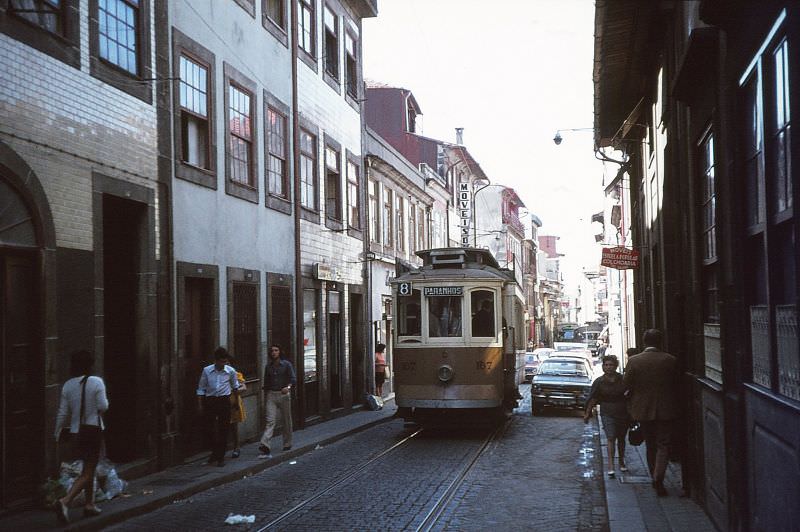
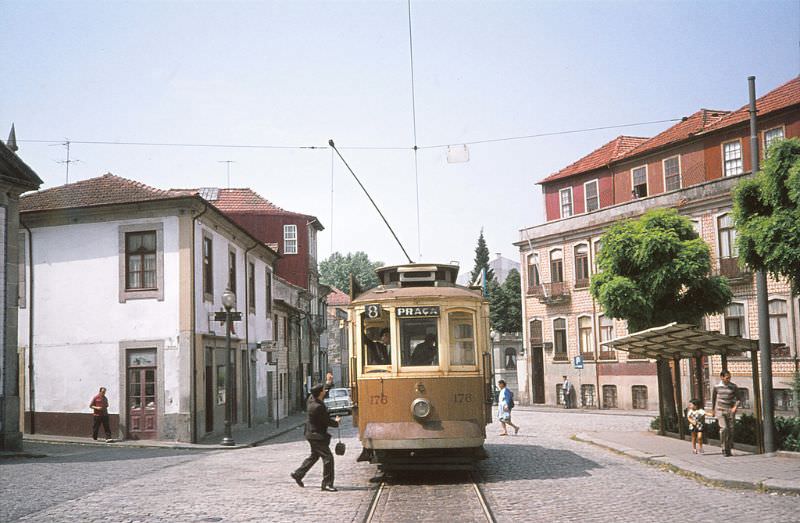
Porto STCP 167, a 1934 Brill 28 type 4-wheel semi convertible tram on Rua dos Martires da Liberdade on route 8 to Paranhos, 11 June 1974

The electric tram network reached its peak in 1946, spanning 81 kilometers of route length on 150 kilometers of track. Dozens of cars operated across the city, threading through Porto’s narrow streets and steep hillsides. The fleet was a mix of locally built cars and imported models, including trams from American manufacturer J.G. Brill and Belgian builders like Ateliers de Construction de Familleureux. These machines were rugged, practical, and became an everyday fixture of city life.

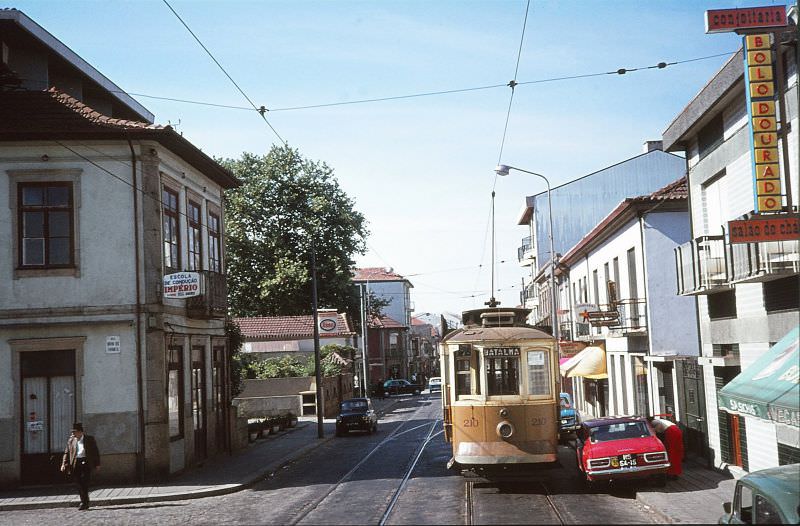
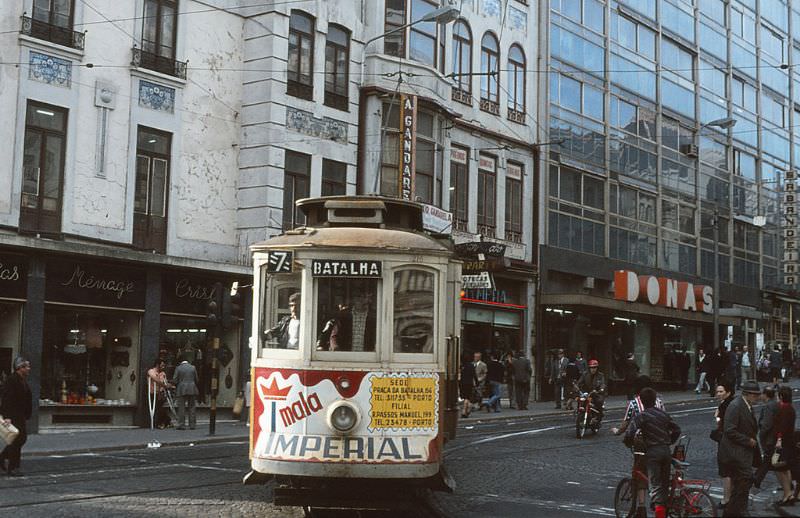
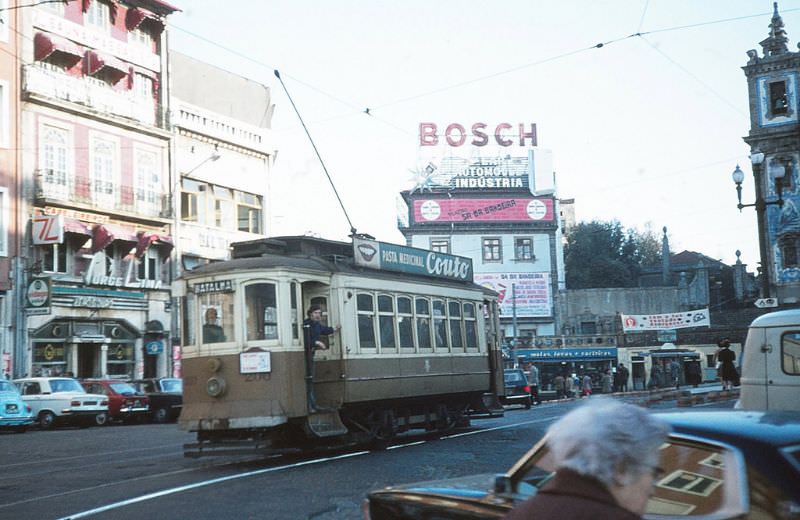
Porto STCP 210, a 1940 CCFP built Brill 28 type 4-wheel semi convertible tram at Amial crossover on route 7 from Batalha to Sao Mamede on 10 June 1974

The 1960s brought a major shift in thinking. City planners across Europe were turning away from trams in favor of buses, which were seen as cheaper and more flexible. Porto followed the same path. What had been 81 kilometers of tram routes with 192 cars in 1958 was cut to just 38 kilometers and 127 cars by 1968. The tracks were being ripped up and the fleet was shrinking fast.

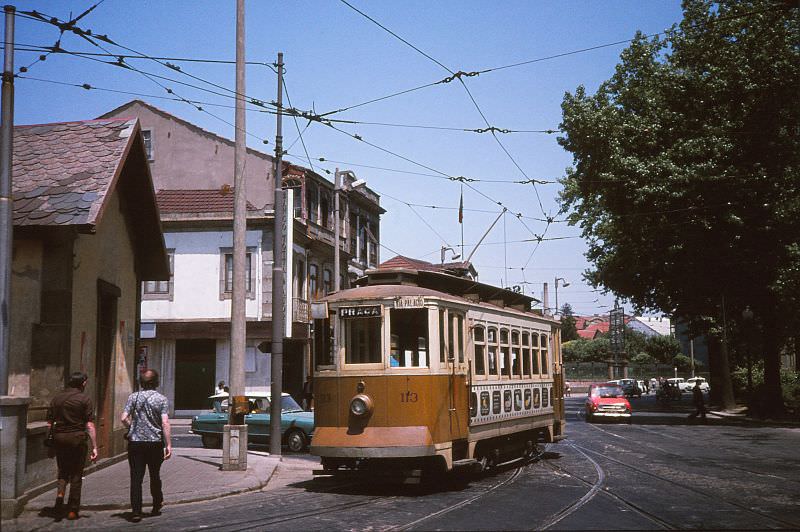
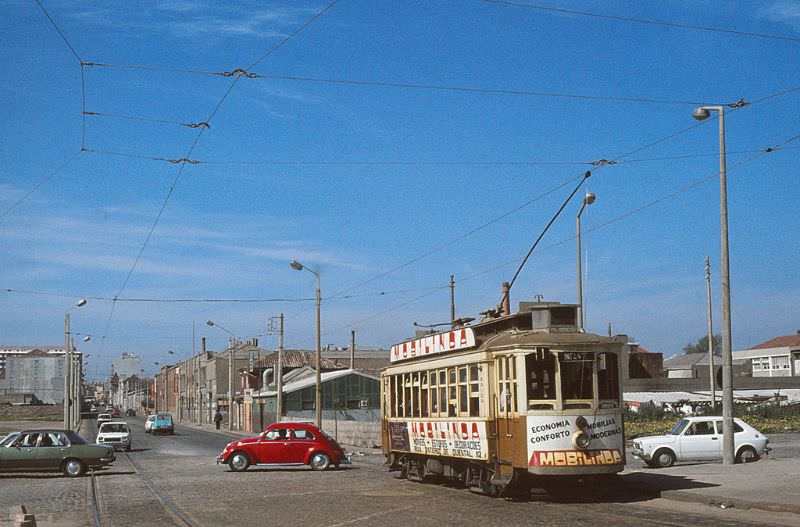
STCP 113, a 1908 locally built 4-wheel tram shunting at Boavista Depot on 11 June 1974
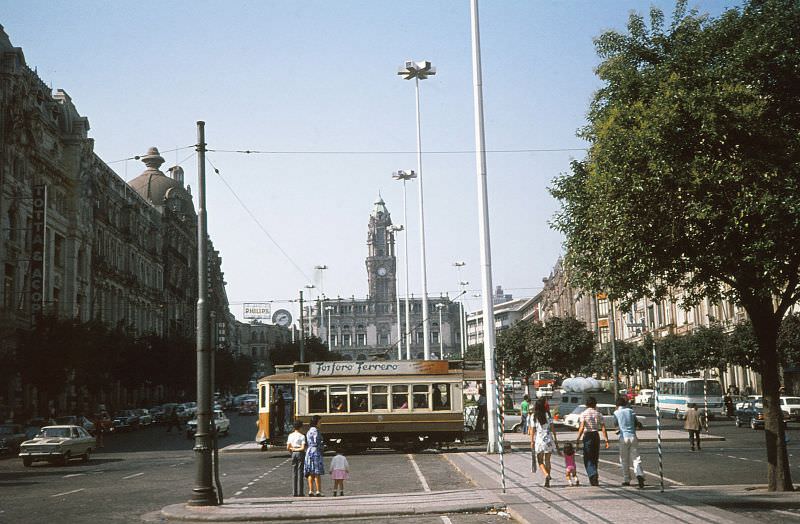
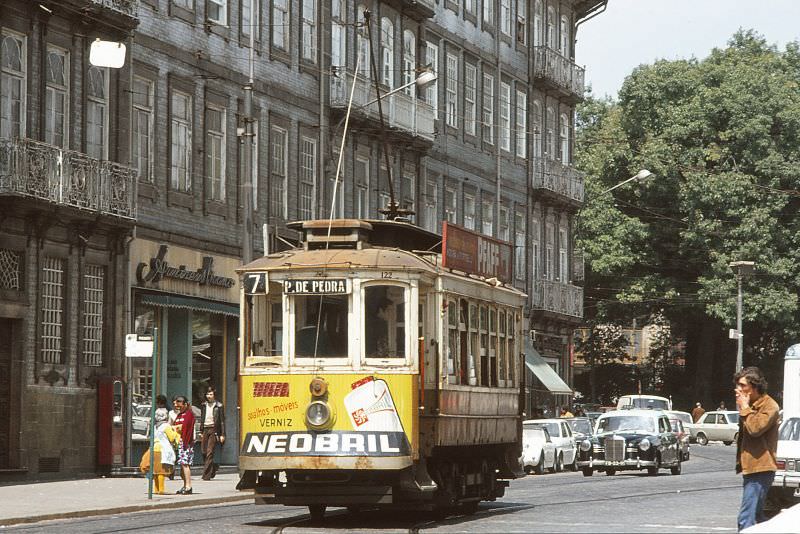
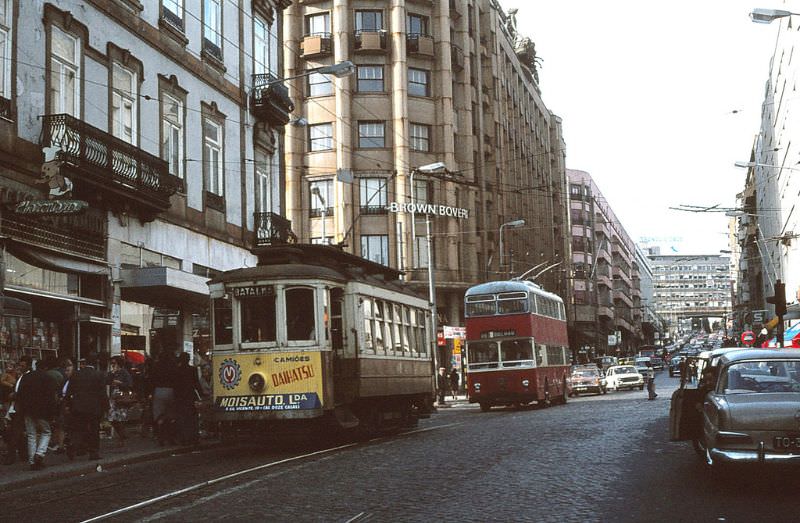
STCP 122, a JG Brill built 4-wheel semi convertible tram probably of 1912, turns at Praca de Liberdade in front of Avenida do Aliados on 12 June 1974

By the time these photographs were taken in June 1974, the system was still running but clearly in decline. Route 7 connected Batalha to São Mamede and Ponte de Pedra, while Route 8 pushed north toward Paranhos. The cars photographed on these routes were already decades old. STCP 167, a 1934 Brill 28 semi-convertible, and STCP 210, a 1940 CCFP-built car, were both still in regular daily service despite their age.

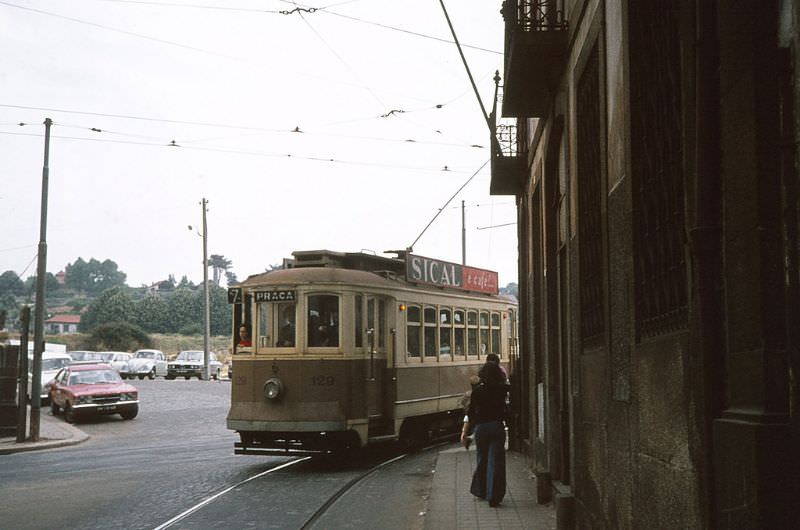
STCP 129, a 1910 Brill 23 semi convertible platforma salao 4-wheel tram, turning from Rua da Boavista into Travessa Figueiroa to Praca on 12 June 1974
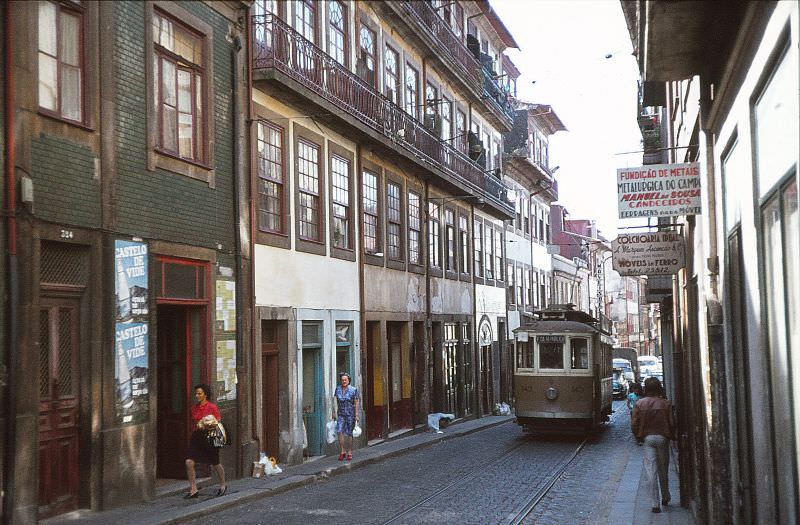
STCP 143, a 1910 Brill-23 semi convertible platforma salao 4-wheel tram on Rua dos Martires da Liberdade on 11 June 1974

Some of the cars still operating in 1974 dated all the way back to 1908 and 1910. STCP 113, a locally built 4-wheel tram from 1908, was photographed shunting at Boavista Depot. STCP 129 and 143 were both 1910 Brill 23 semi-convertible platform cars still turning corners and carrying passengers through the city’s streets. These vehicles were over 60 years old and still in working condition — a testament to how little investment the network had received.

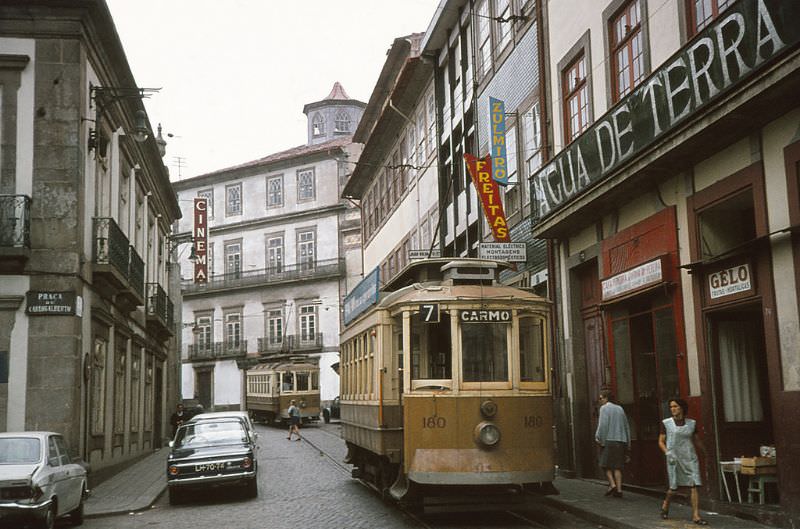
STCP 180, a Brill 28 type semi convertible 4-wheel tram on service 7 to Ponte de Pedra on Rua das Oliveiras on 12 June 1974
STCP 212 turning at Carmo on route 7 to Ponte da Pedra gives way to 205 on on route 7 from Praca to Amial on 10 June 1974

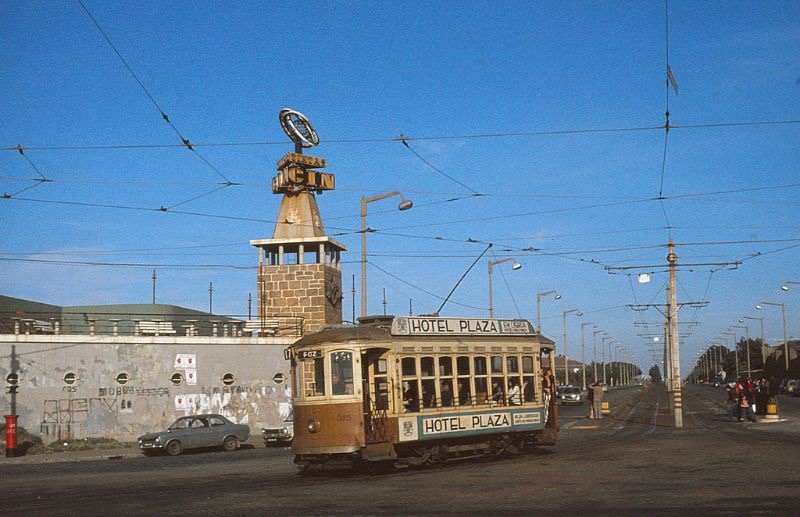
Route 7 was one of the busier surviving lines in 1974, with multiple cars running between Batalha, Amial, and Ponte de Pedra. Photographs from that June show trams at Carmo, Rua das Oliveiras, and Largo da Lapa — intersections that saw regular tram traffic even as the wider network contracted. Among the larger vehicles still running were the Belgian-built bogie trams, like STCP 288, a 1929 car from Ateliers de Construction de Familleureux, which operated on service 16 between Rotunda da Boavista and Batalha.

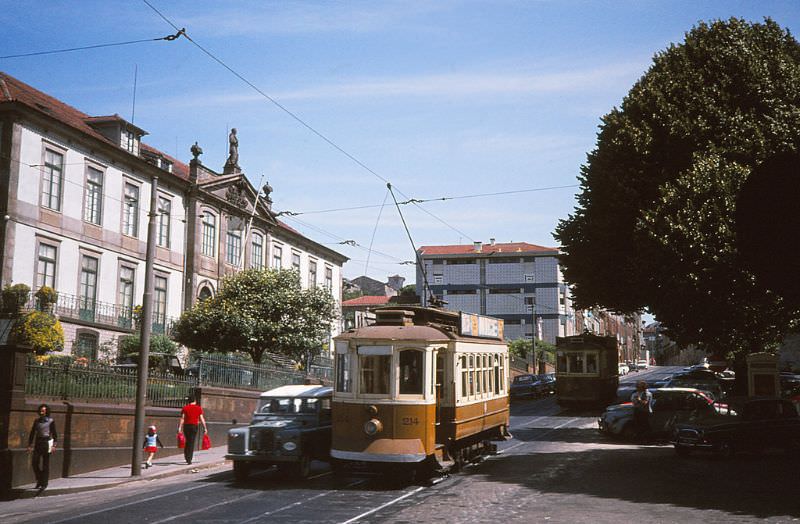
STCP 214, a 1946 Brill 28 type 4-wheel semi convertible tram passing Largo da Lapa on service 7 to Ponte de Pedra on 11 June 1974
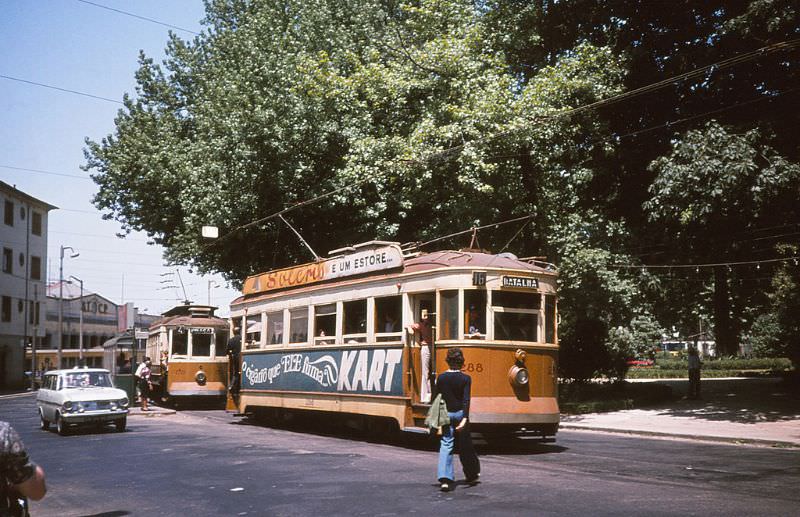
STCP 288, a 1929 Ateliers de Construction de Familleureux Belgian built bogie tram, leaving Rotunda da Boavista on service 16 to Batalha on 11 June 1974

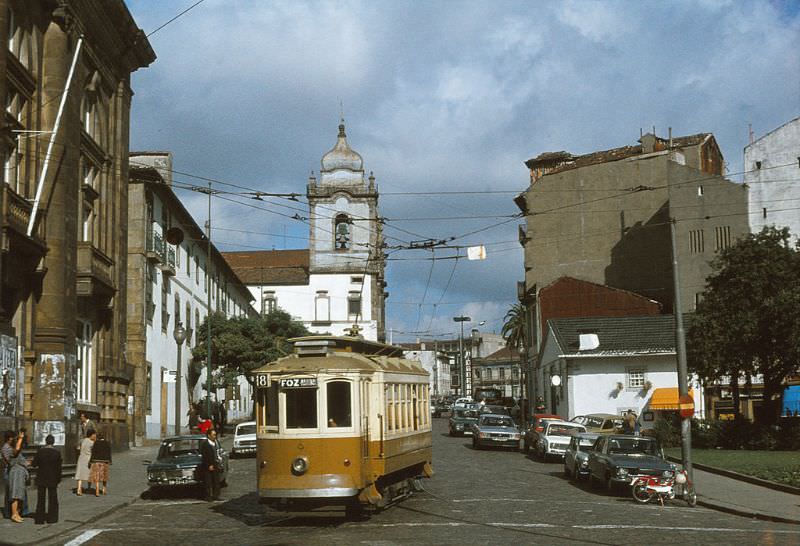
Photos from March and September 1976 show the network continuing to function across multiple routes and termini. Service 18, one of the lines that would eventually survive into the heritage era, was running Brill-type 4-wheel trams between Foz and Praça da Liberdade. STCP 154, photographed arriving at Praça da Liberdade on service 18, represented the kind of car that still carried paying passengers on a daily basis well into the mid-1970s.

Porto STCP 154, a Brill type 4-wheel semi convertible tram on arrival at Praca da Liberdade on service 18 from Foz on 12 June 1976
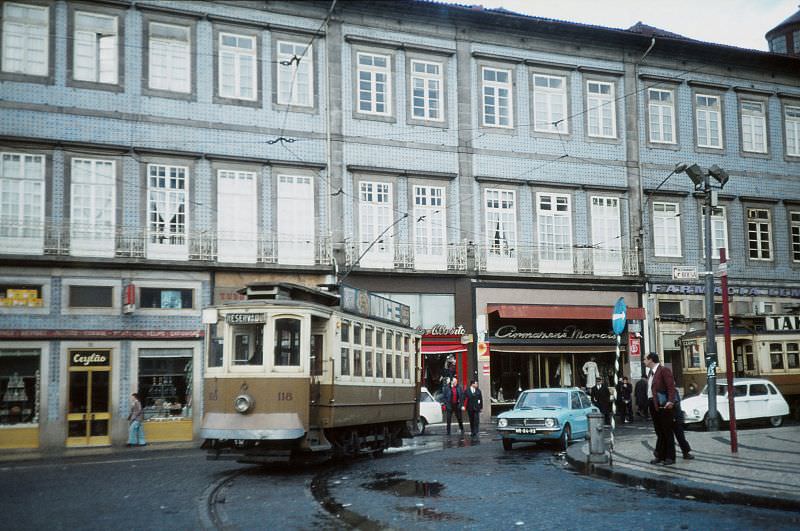
STCP 118, a 1909 United Electric Car Company of Preston 4-wheel tram on private tour at Praca de Carlos Alberto on 7 March 1976

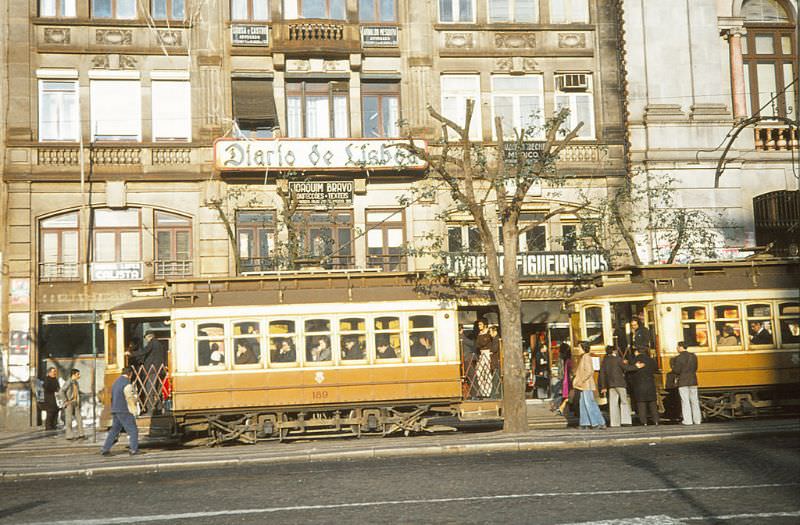
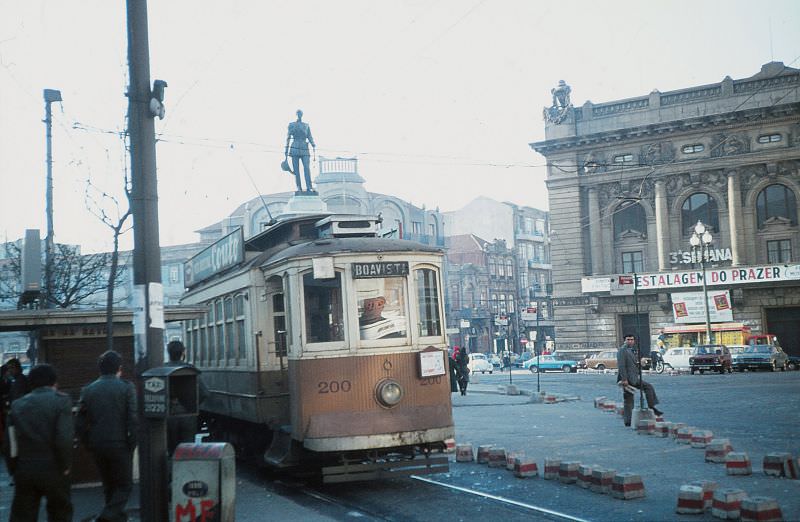
Not all trams on the streets in 1976 were in scheduled service. STCP 118, a 1909 tram built by the United Electric Car Company of Preston in England, was photographed on a private tour at Praça de Carlos Alberto in March 1976. Meanwhile, regular service cars like STCP 189 — a 1929 Brill 28 type — were still loading passengers at Praça da Liberdade, and STCP 200, a 1940 model, was turning around at Batalha terminus before heading back to the Boavista depot.

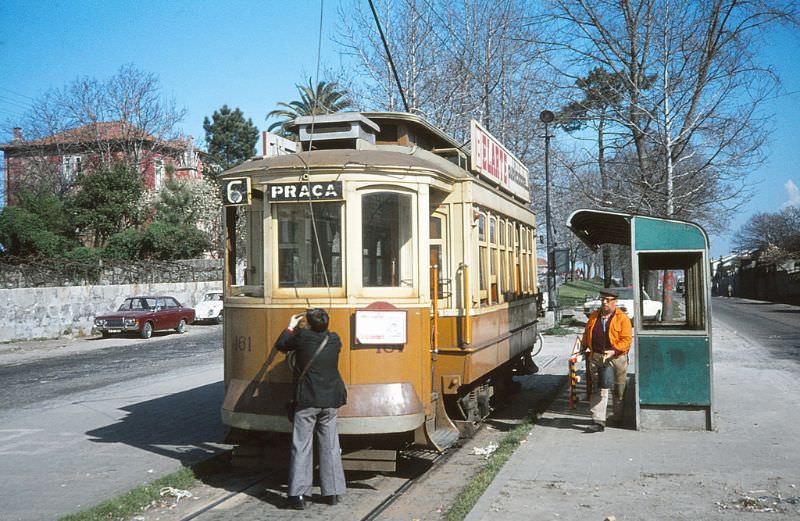
STCP 161 Monte dos Burgos, 1976
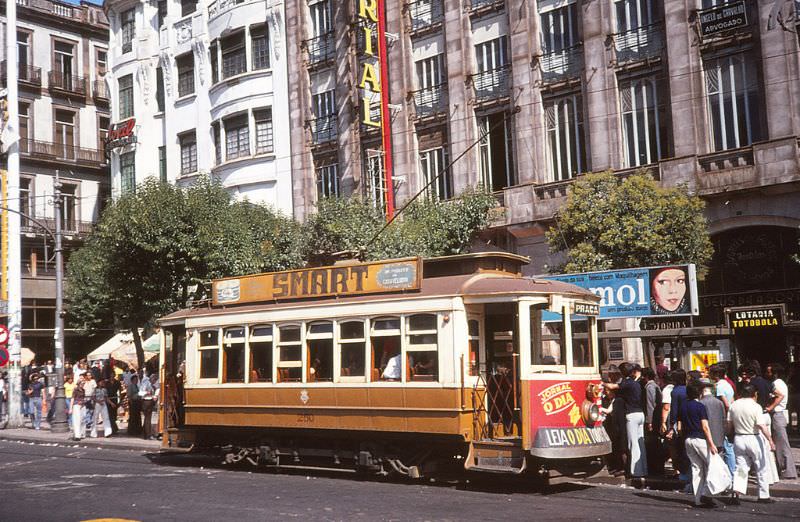
STCP 189, a 1929 Brill 28 type 4-wheel tram loading at Praca da Liberdade on 5 March 1976
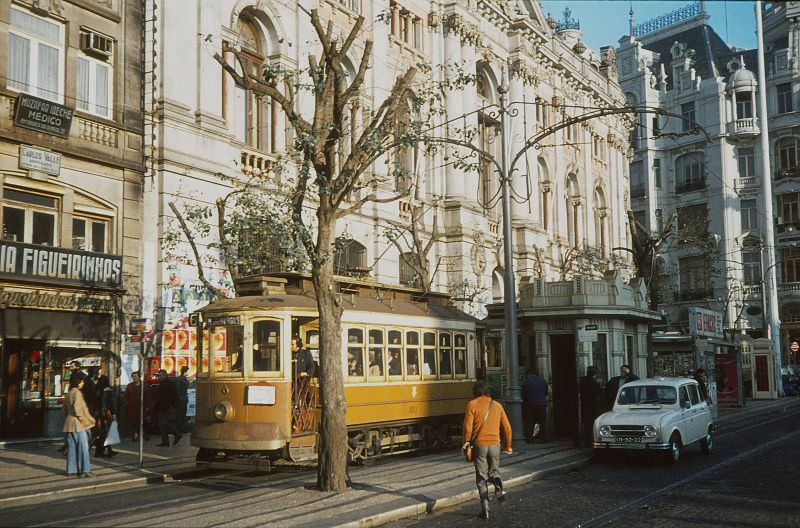
STCP 193 Praca da Liberdade, 1976
STCP 200, a 1940 Brill 28 type 4-wheel tram at Batalha terminus about to return to Boavista depot on 5 March 1976

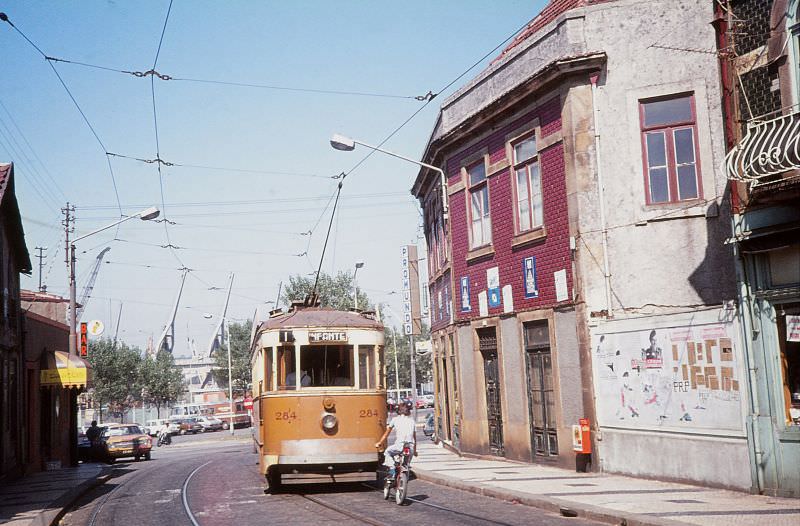
September 1976 added more variety to the photographic record. A Fumista-type 4-wheel tram was captured on service 17, running between Batalha and Foz via Praça República. STCP 284, another of the 1929 Belgian-built bogie trams, was photographed at Matosinhos on line 1 from Infante. These bogie cars were noticeably larger than the standard 4-wheel Brill models and handled the longer routes that extended to the coast.

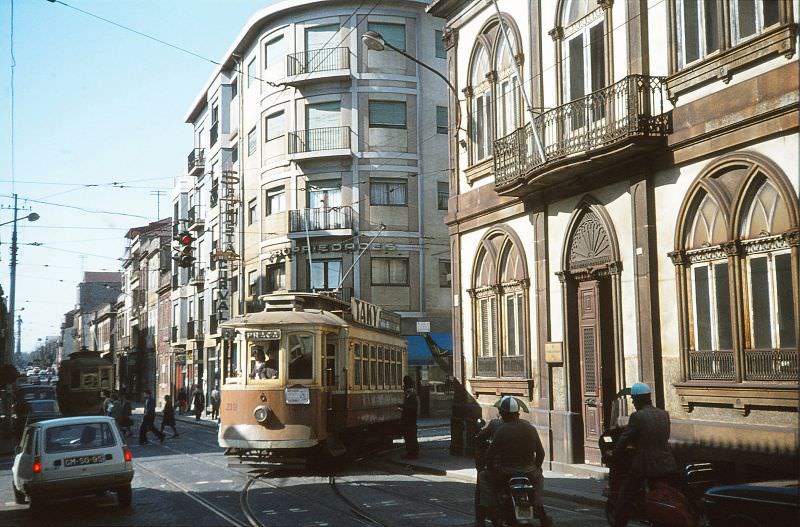
STCP 219, a 1939 Brill 28 type semi convertible 4-wheel tram at Carvalhosa on 5 March 1976
STCP 284, a 1929 Ateliers de Construction de Familleureux Belgian built bogie tram at Matosinhos on line 1 from Intante on 6 September 1976
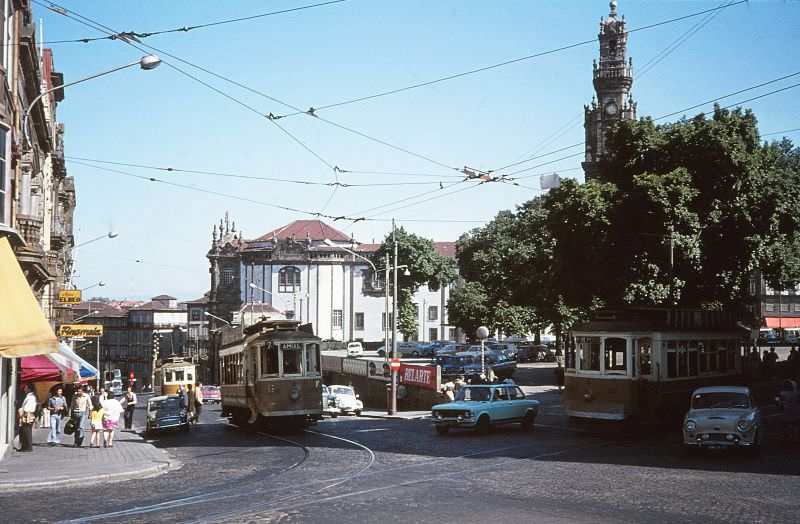
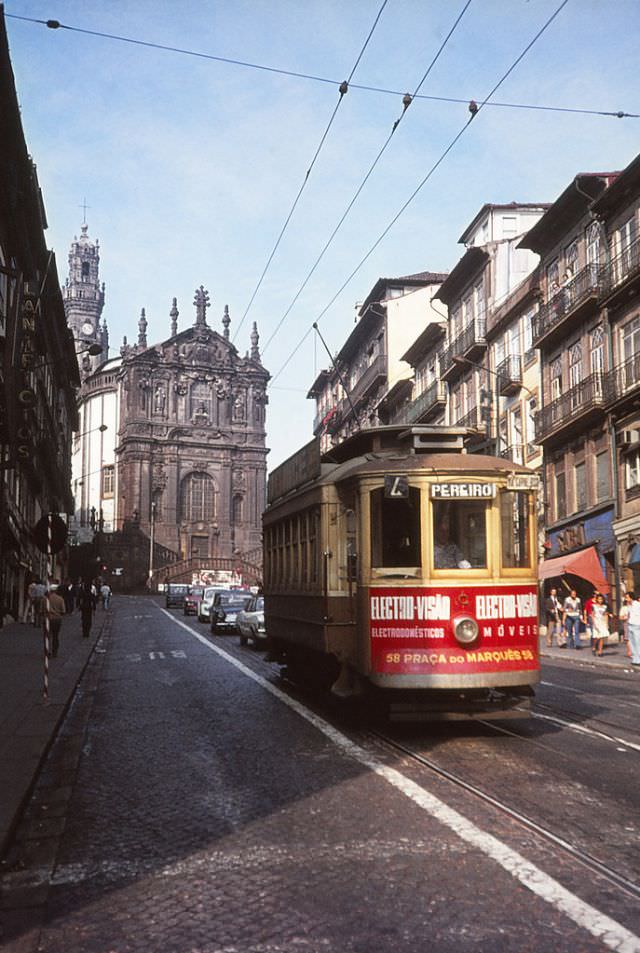
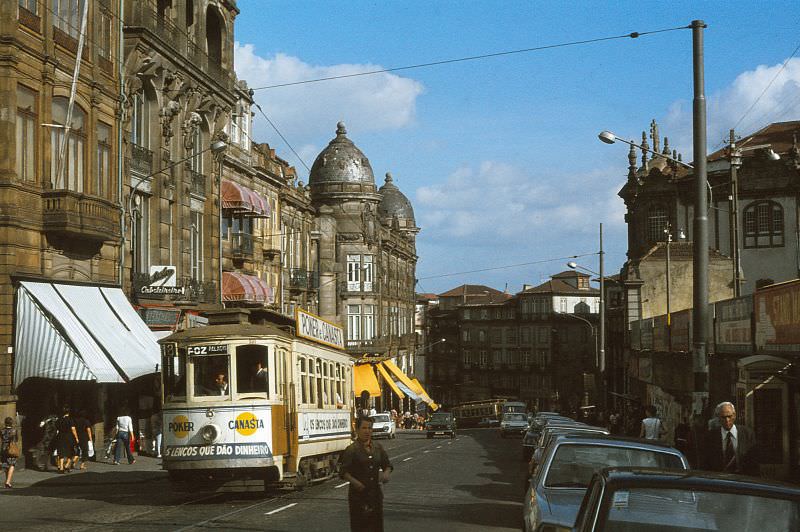
STCP Brill 28 type 4-wheel tram desending Rua dos Clerigos to Praca on 7 September 1976
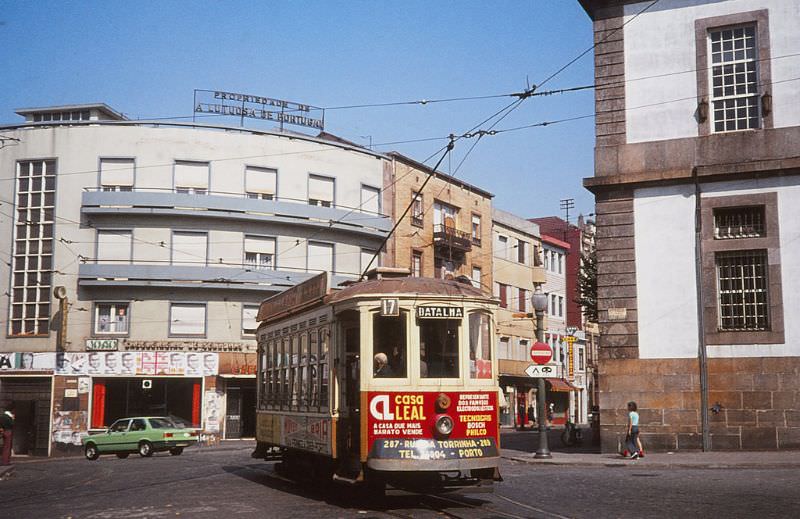
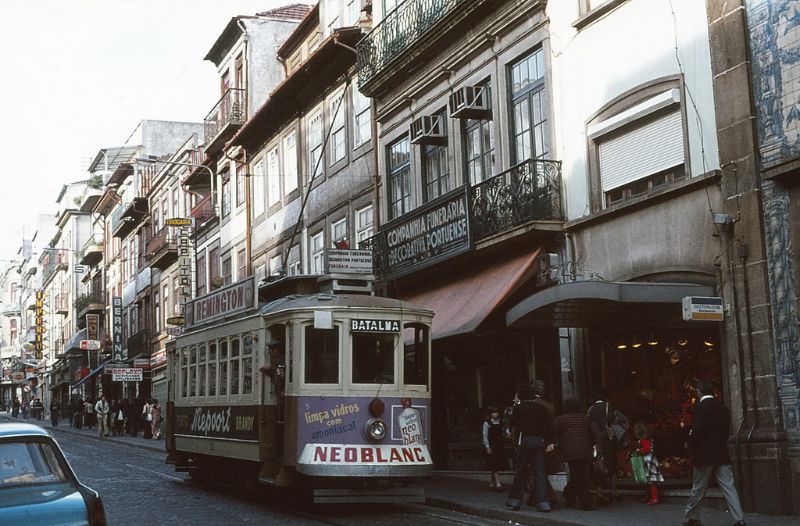
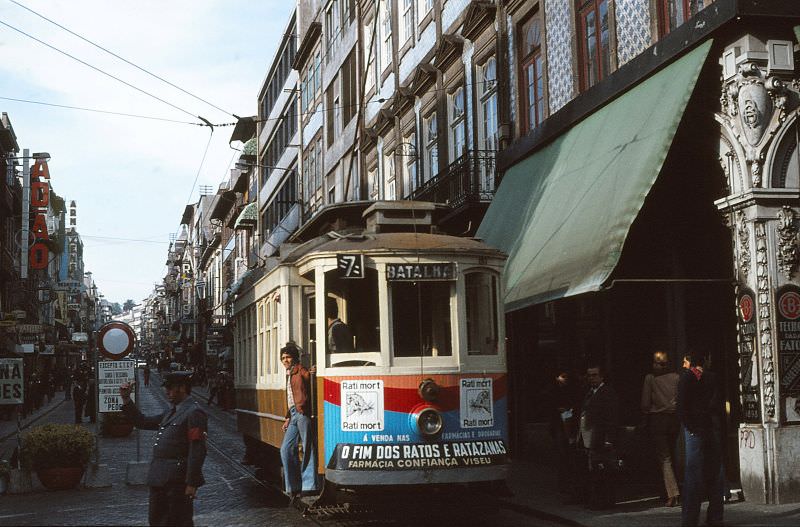
STCP Fumista type 4-wheel tram on service 17 from Batalha to Foz at Praca Republica on 7 September 1976

By April 1977, the street scenes captured by photographers showed trams mixing with trolleybuses and pedestrians on some of Porto’s most recognizable streets. On Rua de Santa Catarina — already pedestrianized by this point — STCP 193, a 1932 Brill 28 semi-convertible, was running toward Amial. On the same day, STCP 138 was photographed running from Batalha along the same street at Bolhão, and STCP 122, a 1912 Brill 23, was leaving Carmo on Praça de Carlos Alberto.

STCP 122, a 1912 Brill 23 semi convertible 4-wheel tram leaving Carmo on Praca de Carlos Alberto on 27 April 1977
STCP 138 running from Batalha along Rua de Santa Catarina at Bolhao on 27 April 1977
STCP 193, a 1932 Brill 28 type semi convertible 4-wheel tram on the pedestrianised Rua de Santa Catarina to Amial on 27 April 1977

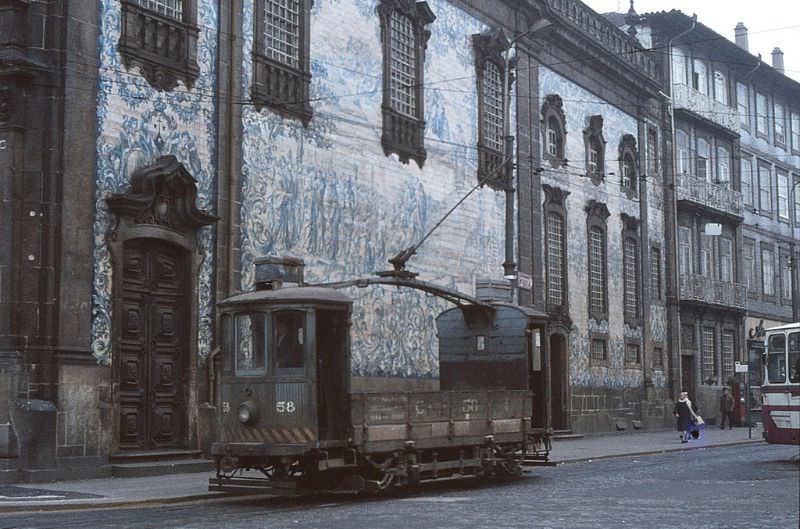
Also on April 27, 1977, a rare piece of working history was photographed at Praça de Carlos Alberto. Zorra 58, a former coal freight tram, was carrying out works duties near the Igreja das Carmelitas at Carmo. Freight trams had once played a practical role in Porto’s logistics, and this car’s continued use as a works vehicle showed how deeply embedded the tram infrastructure still was in the city’s daily operations, even as passenger lines were being cut.

STCP 200, a 1940 Brill-28 type semi convertible 4-wheel tram leaving Batalha on 27 April 1977
STCP 216, a 1946 Brill 28 type 4-wheel tram, turning from Rua Sa da Bandeira into Rua Formosa at Bolhao to Batalha on 27 April 1977
STCP 270, a 1928 CCFP semi convertible maximum traction Brill 39E bogie tram at Godinho on line 1 to Matosinhos on 25 April 1977
STCP 315, a 1930 Fumista type semi convertible 4 wheel car at Castelo do Queijo on service 17 from Batalha to Foz on 25 April 1977
STCP tram and trolleybus on Rua de Sa da Bandeira at Bolhao on 27 April 1977
STCP Zorra 58, a former coal freight tram on works duties on Praca Carlos Alberto passing the Igreja das Carmelitas at Carmo on 27 April 1977

The final set of photographs in this collection comes from September 1978. By this point, the network had shrunk to just 21 kilometers with 84 cars — a fraction of what it had been two decades earlier. Line 18 to Foz, which would later become the sole survivor of the entire system, was still operating. STCP 131 was photographed on Rua das Carmelitas running line 18 to Foz via Palácio, while STCP 222, a 1939 Brill 28 type, was on Rua do Carmo heading to Foz via Marginal. The system kept shrinking through the following years, reaching just 14 kilometers and 16 cars by 1996, with line 18 becoming the foundation of Porto’s current heritage tram operation.

STCP 131 on Rua das Carmalitas operating line 18 to Foz via Palacio on 6 September 1978
STCP 222, a 1939 Brill 28 type 4-wheel tram on Rua do Carmo on line 18 to Foz via Marginal on 6 September 1978
Enjoyed this post? Get new ones in your inbox.

4 thoughts on “Fascinating Vintage Photos Show the Trams System of Porto from the 1970s”

Leave a Comment

Your email address will not be published. Required fields are marked *

Share this Post 🥺

Please take a moment to share this content. Your support is greatly appreciated! 🙌🙏

Share this Post 🥺

Please take a moment to share this content. Your support is greatly appreciated! 🙌🙏
Scroll to Top
 
Hey Friend, Before You Go.. Please like & follow for more interesting content