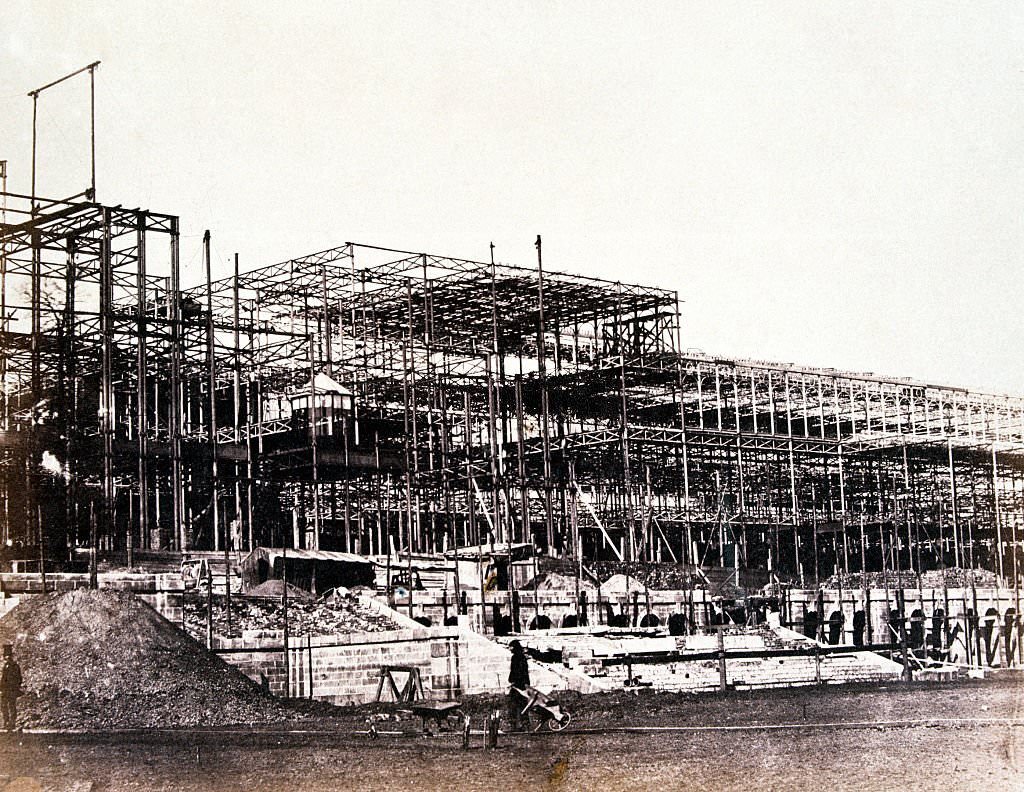
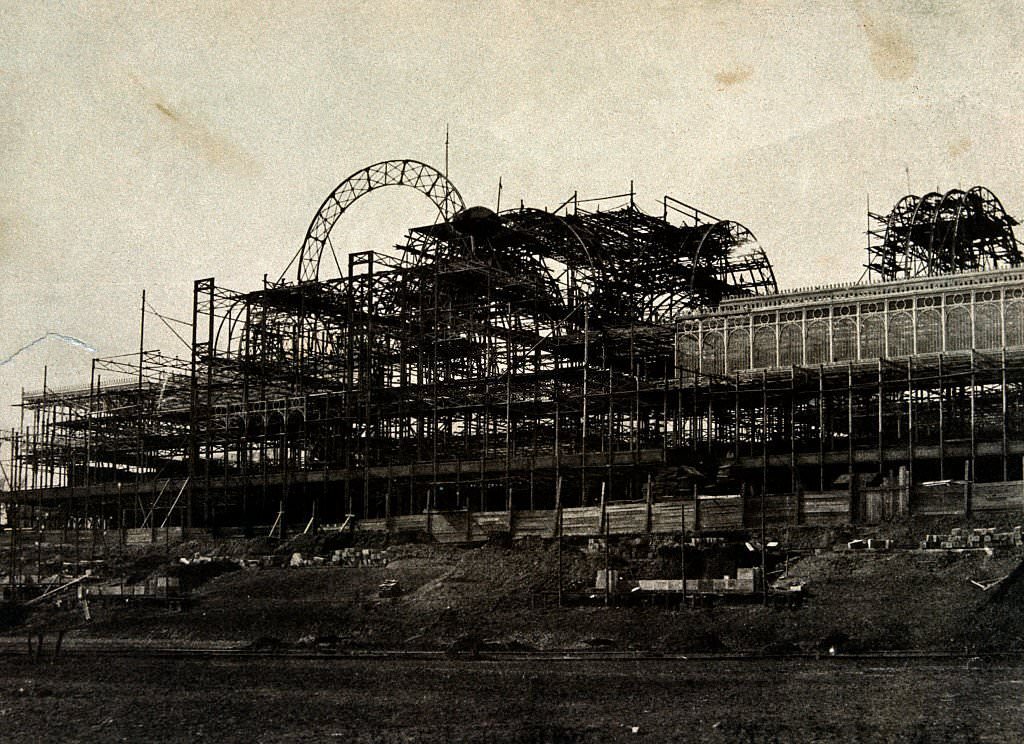
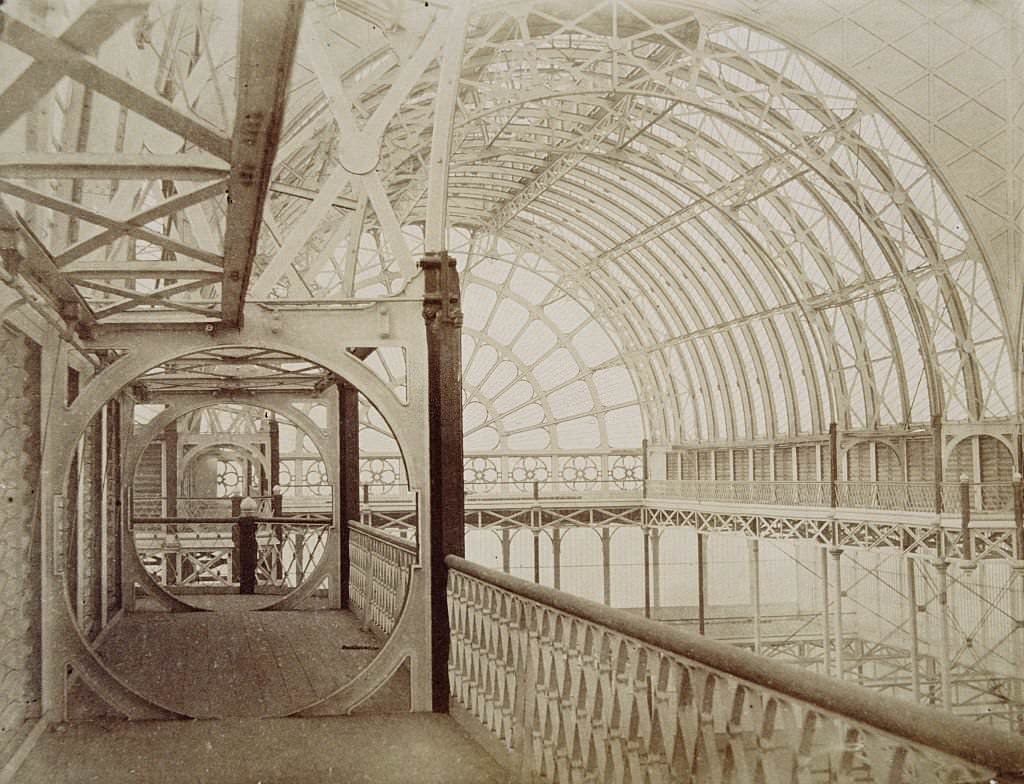
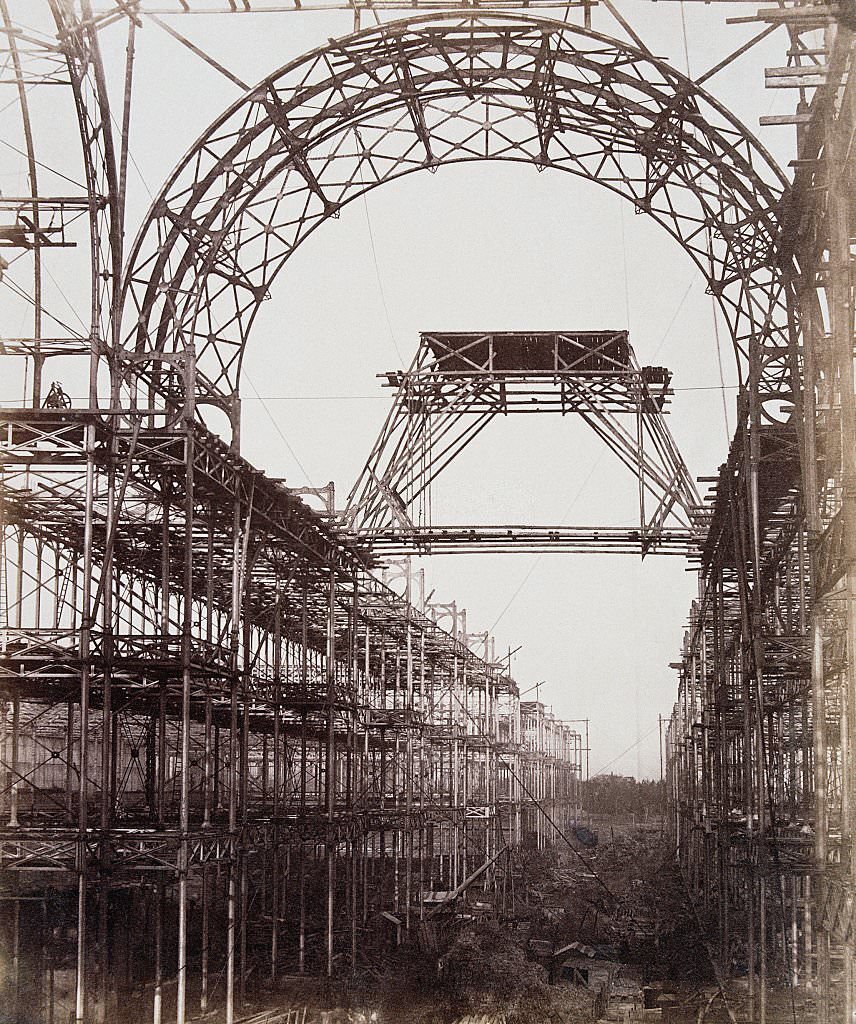
The Great Exhibition of 1851 was held in Hyde Park, London, from May 1 to October 15, 1851, organized by Henry Cole and Prince Albert, consort of Queen Victoria. Housed in the spectacular Crystal Palace — a vast iron-and-glass structure designed by Joseph Paxton — the event drew exhibitors from across Great Britain, its colonies, and 44 foreign states, displaying the finest achievements in industry, art, and technology the world had to offer. Over six million visitors passed through its doors before the exhibition closed, and the £186,000 profit it generated was used to found the South Kensington museums. The images below capture the building, its exhibits, and the crowds who came from around the world to witness what was described as a celebration of human progress.
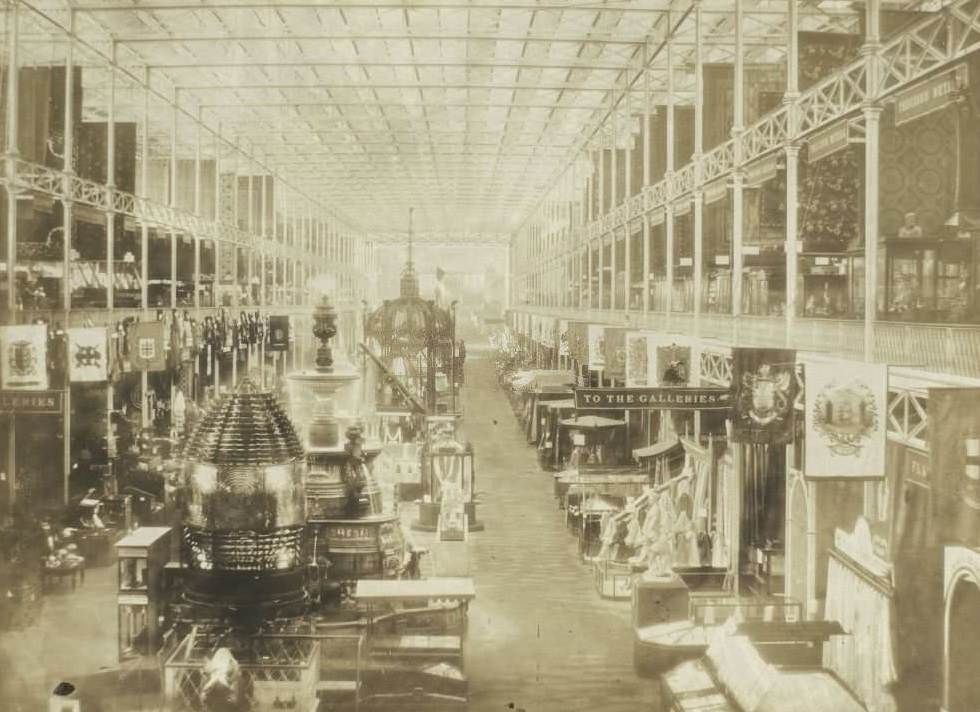
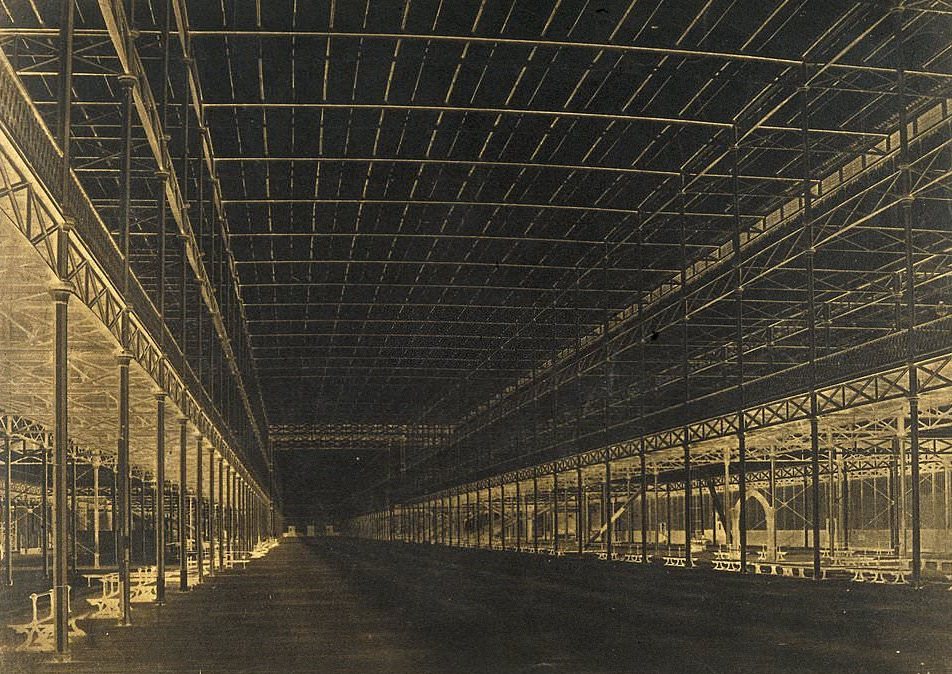
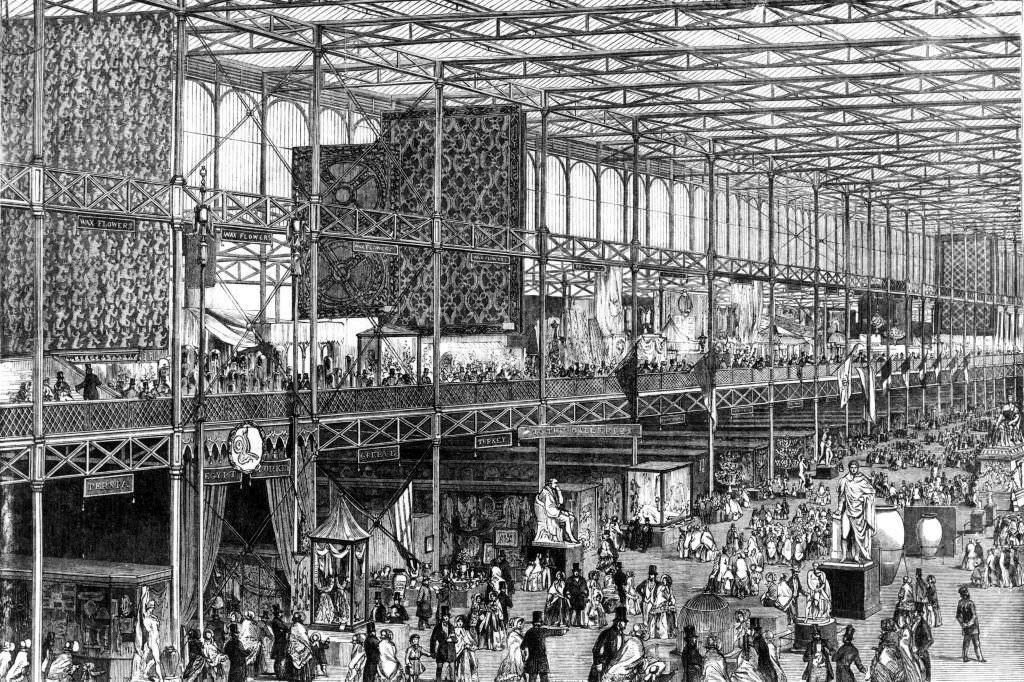
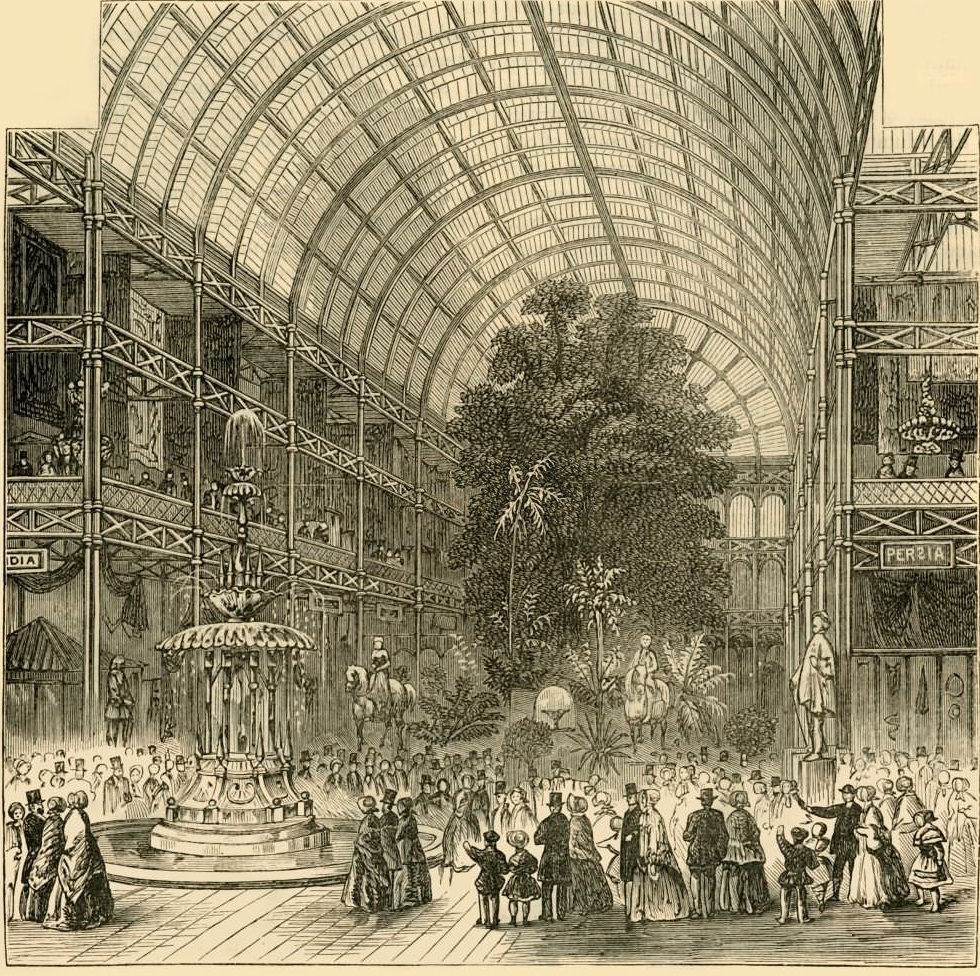
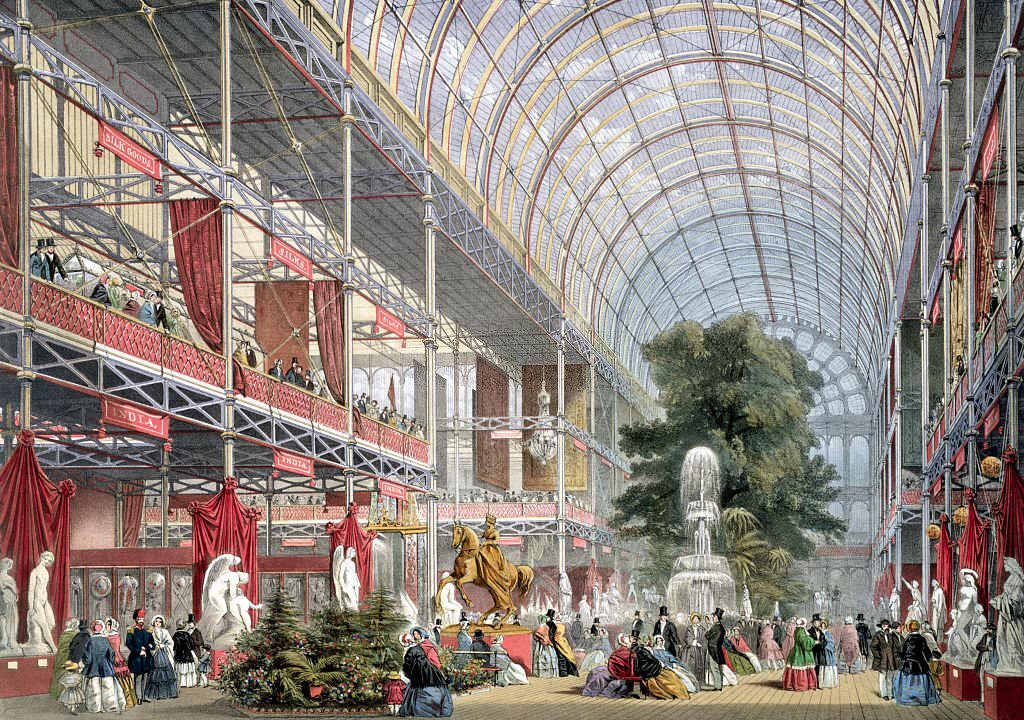
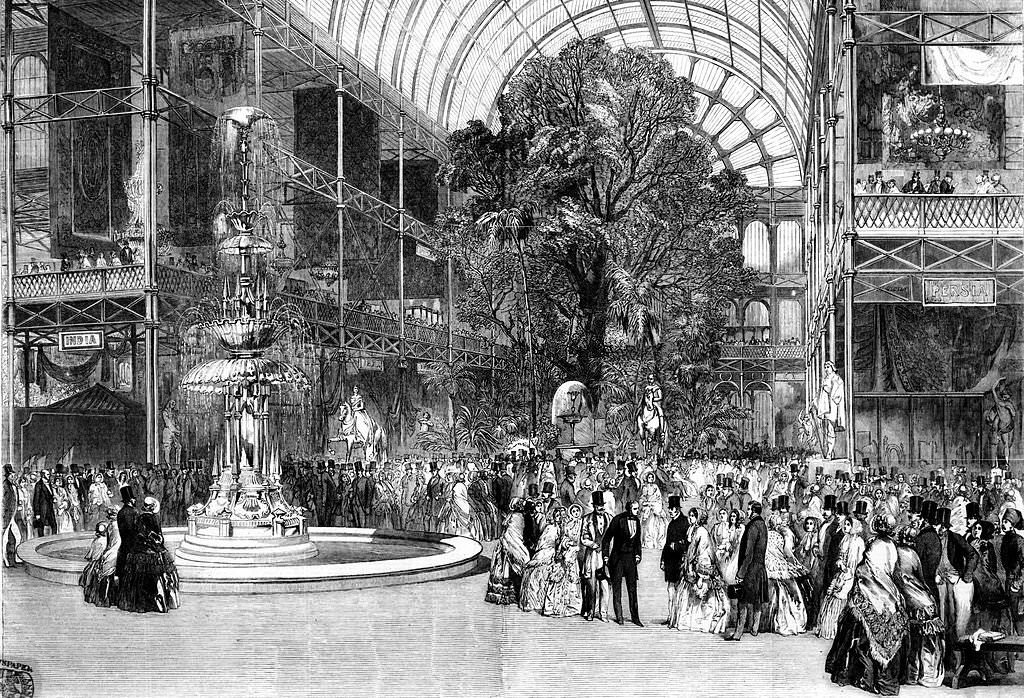
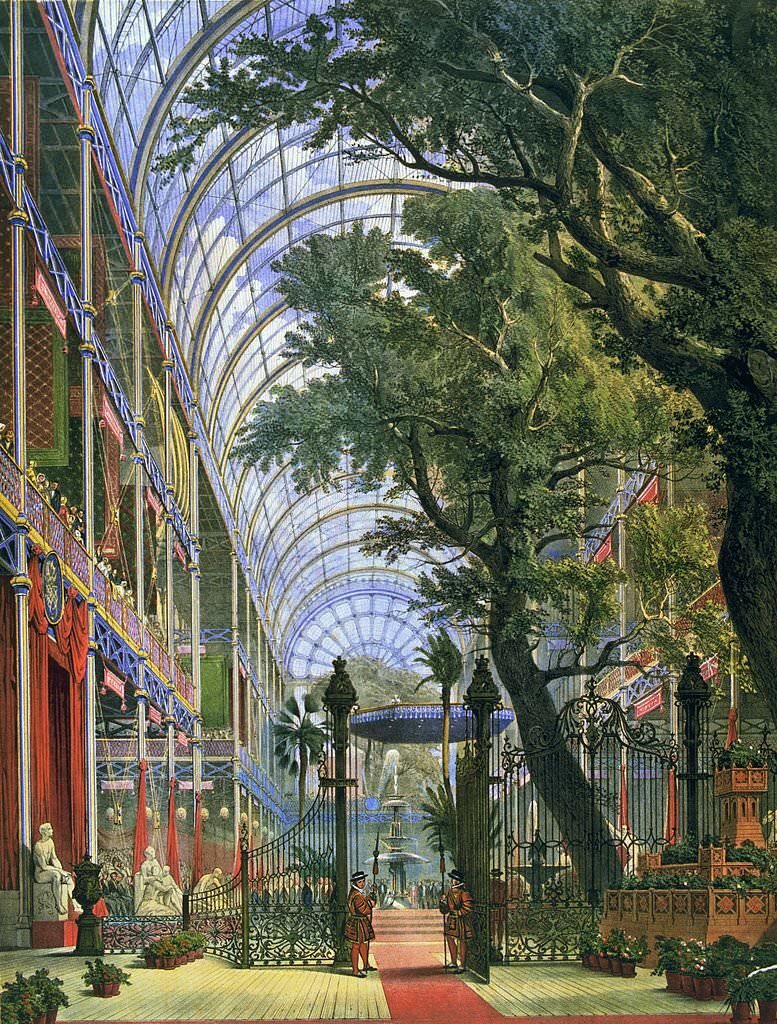
Interior of the Great Exhibition Building, Hyde Park, London, 1851.
Benjamin Brecknell Turner was one of the first British amateur photographers. Originally a painter, he took up photography in 1849. Using William Henry Fox Talbot’s (1800–1877) calotype process to make large-format waxed paper negatives, Turner produced some of the finest early photographs of rural England, working very much in the tradition of English watercolor artists.
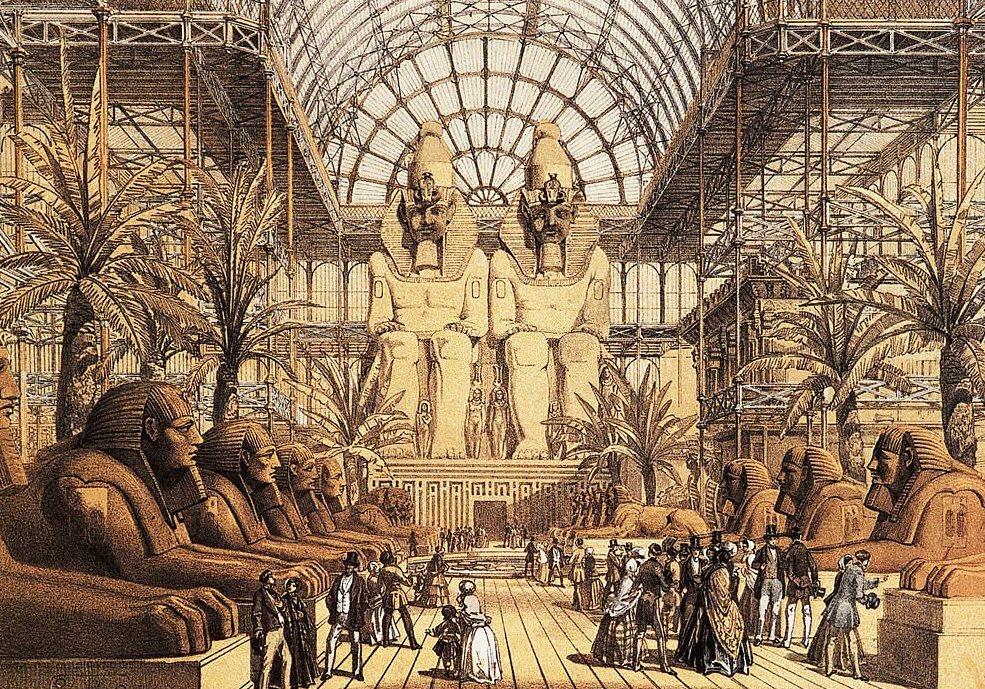
Egyptian Court, North Transept of the Crystal Palace, Sydenham, 1854.
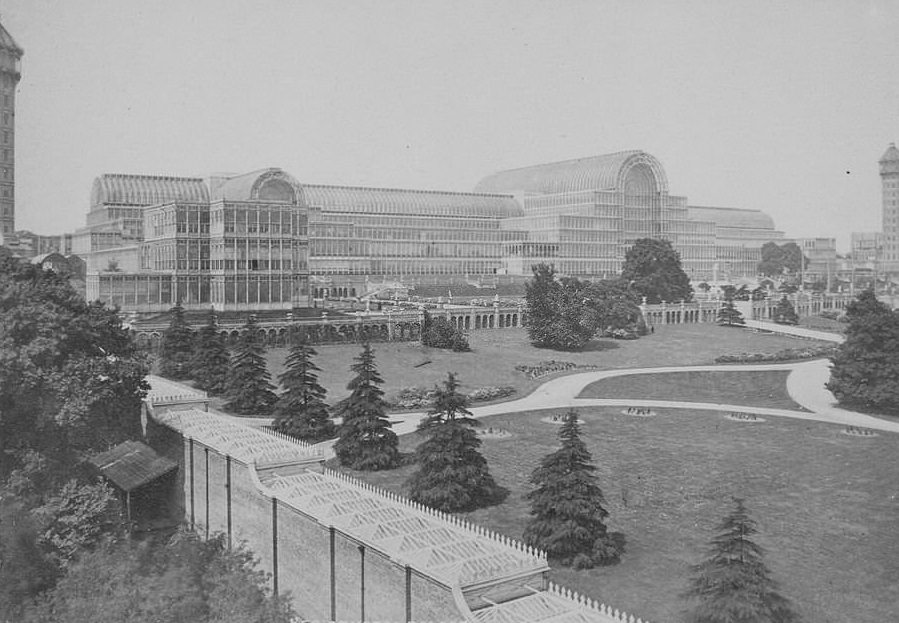
A popular feature of the Crystal Palace was a series of ‘courts’, each illustrating the art and architecture of a great period in history. Wyatt and architect Owen Jones collaborated on the design of these courts. The most spectacular of these was the Egyptian Court, complete with sphinxes and enormous statues. After housing the Great Exhibition in 1851, the Crystal Palace was dismantled in Hyde Park and rebuilt on a site at Sydenham, southeast London, reopening in June 1854.
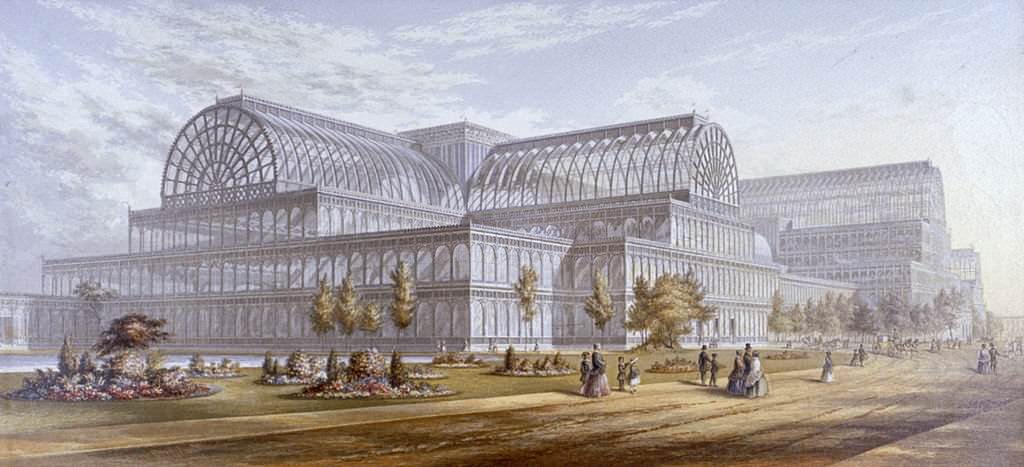
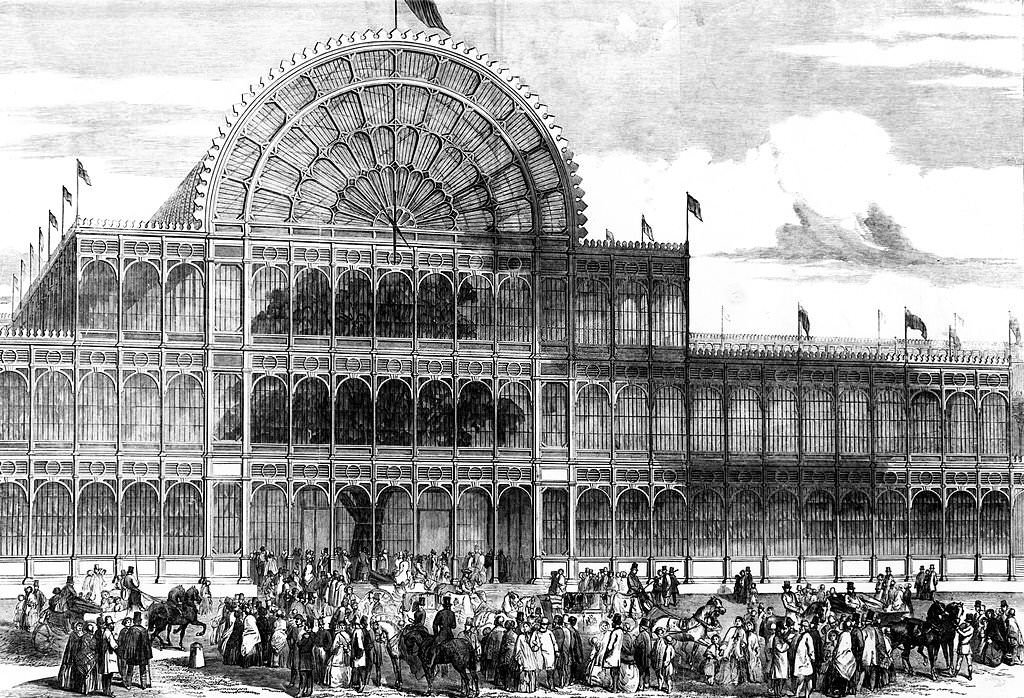
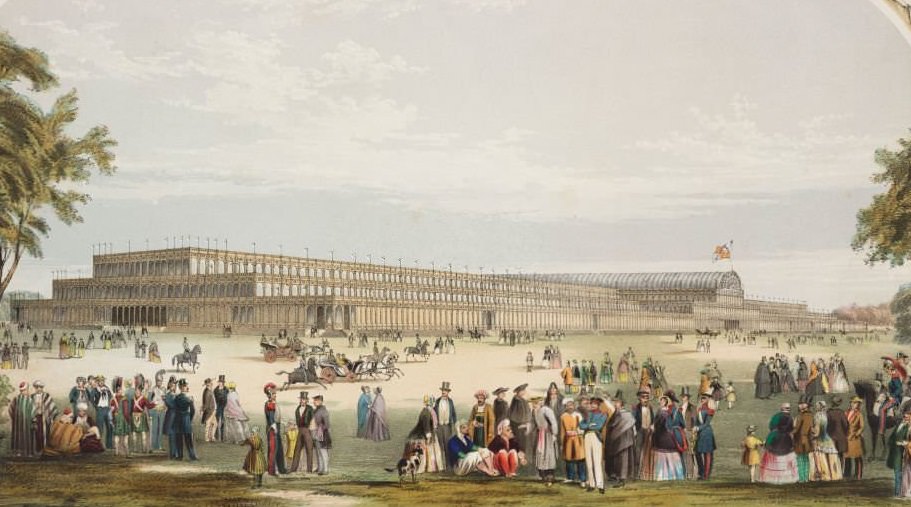
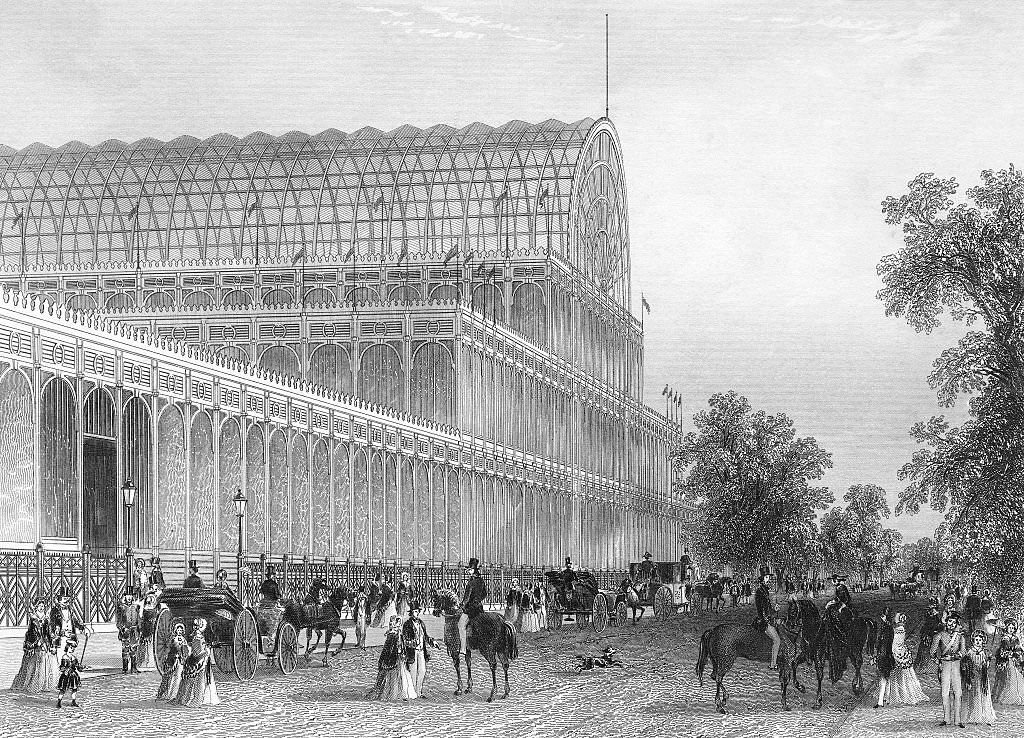
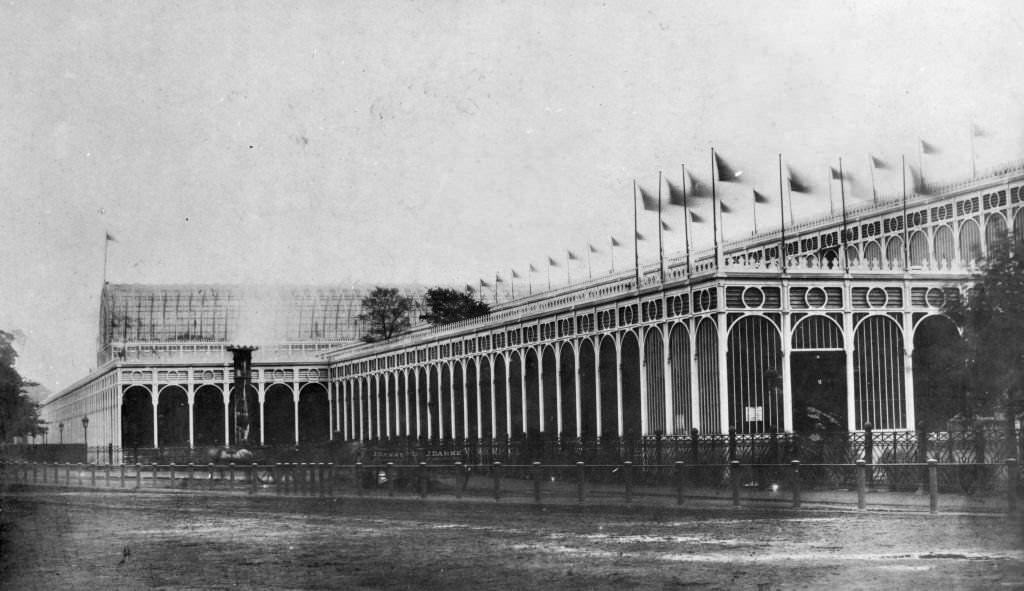
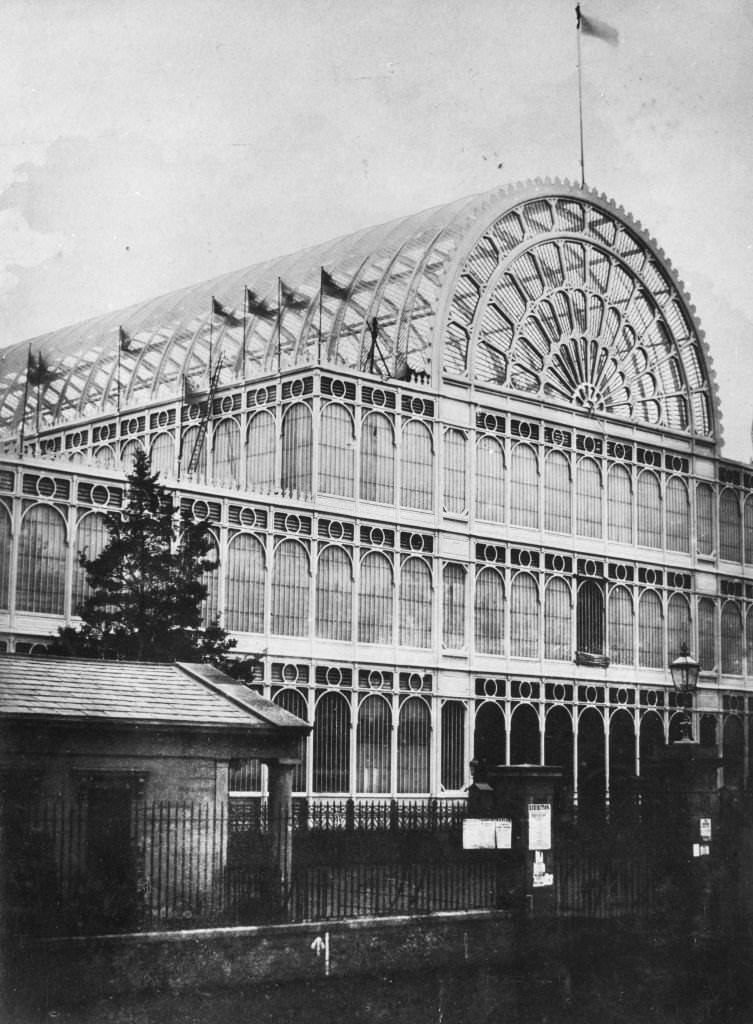
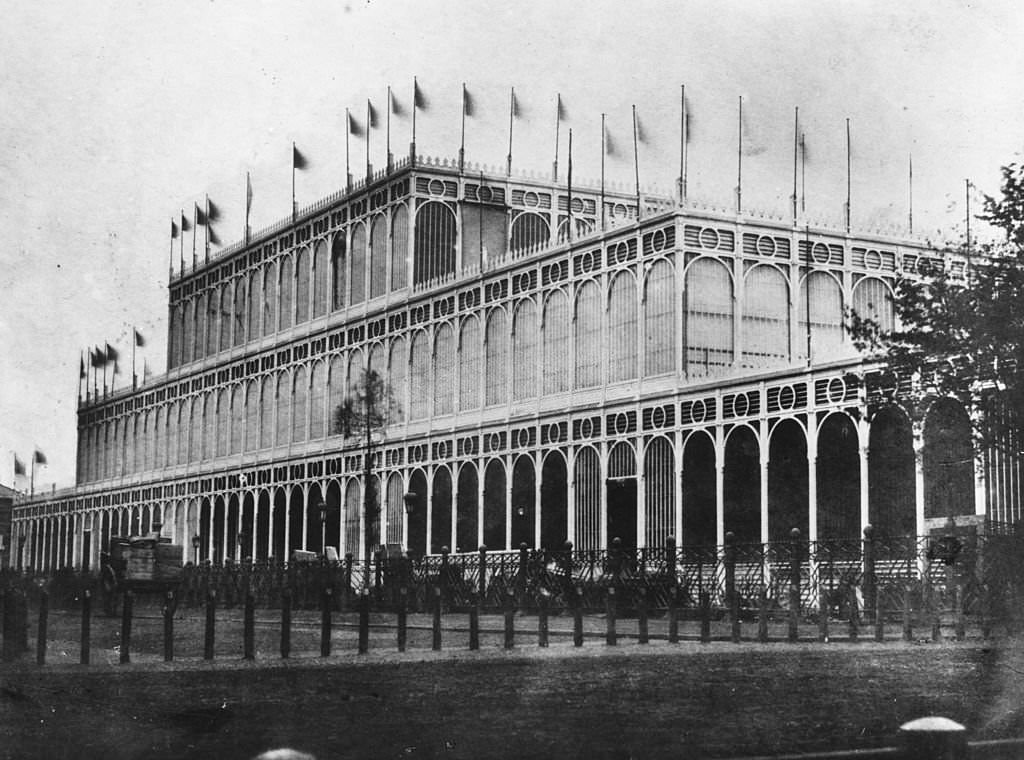
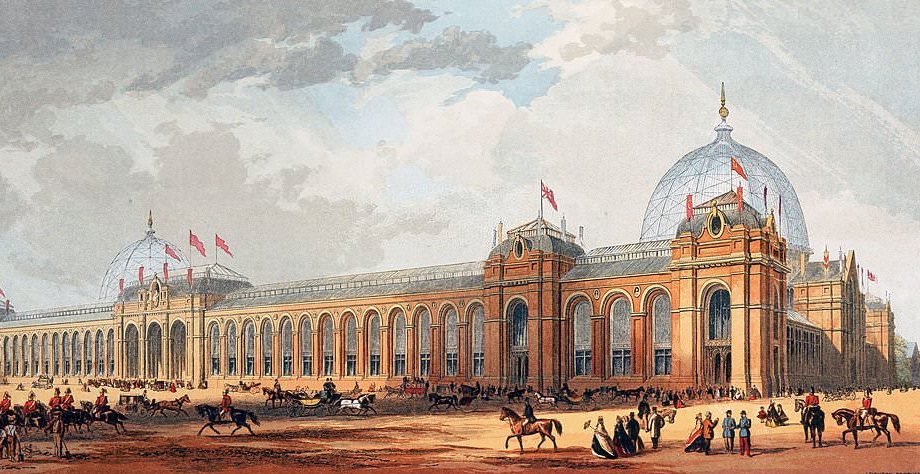
Crystal Palace, Hyde Park, London, 1851.
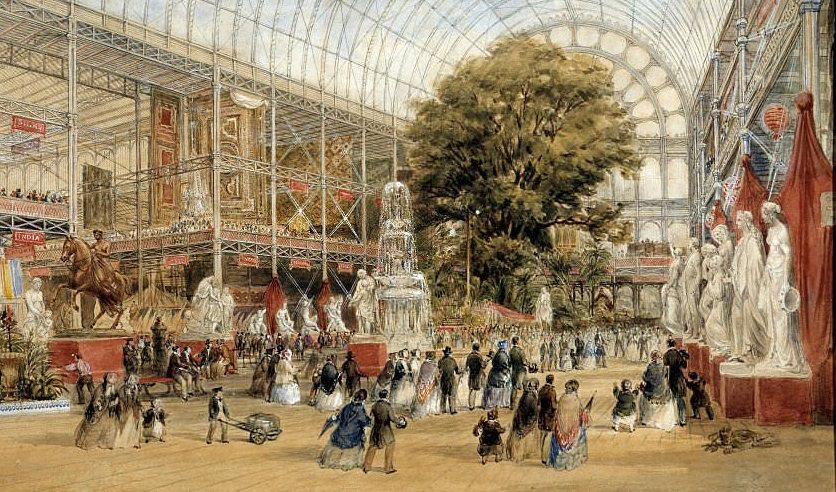
Crowds gather for the Great Exhibition of 1851. Joseph Paxton (1801–1865) designed what Punch named the Crystal Palace, the first large-scale prefabricated ferrovitreous (iron and glass) structure, a feature which later aided its dismantling. Here, the building is shown seen from the front, with one of the giant elms visible through the glass.
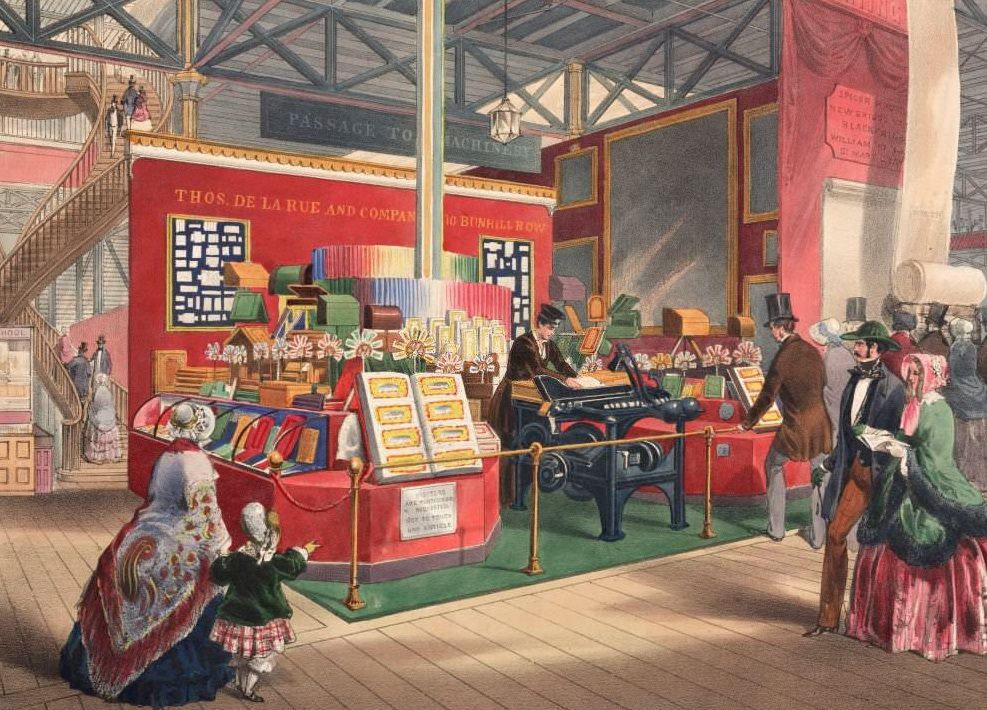
Inside Crystal Palace in Hyde Park, visitors admire the ‘Great Exhibition of the Works of the Industry of all Nations’, an idea conceived by Prince Albert (1819-1861), 1851.De la Rues Stationery Stand and Envelope Machine, 1851.
Chromolithograph from ‘Recollections of the Great Exhibition of 1851’ by C T Dolby. On show at De la Rue’s stand at the Great Exhibition is an enveloping machine, colored paper, boxes and cards, and examples of printing and bookbinding. To the right of the stand a Spicer’s paper roll is hanging down. On the left-hand side Langley Bank’s twin geometrical staircase to the galleries beyond can be seen. The ‘Great Exhibition of the Works of the Industry of all Nations’ was conceived by Prince Albert (1819–1861). The Crystal Palace, designed by Joseph Paxton (1801–1865), was purpose-built for the occasion. It was the first large-scale prefabricated ferrovitreous (iron and glass) structure.
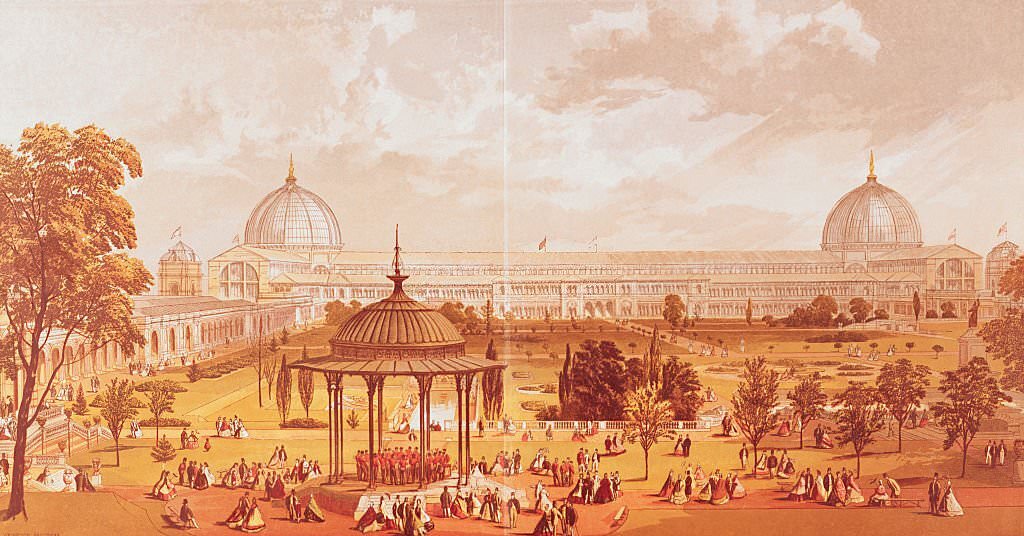
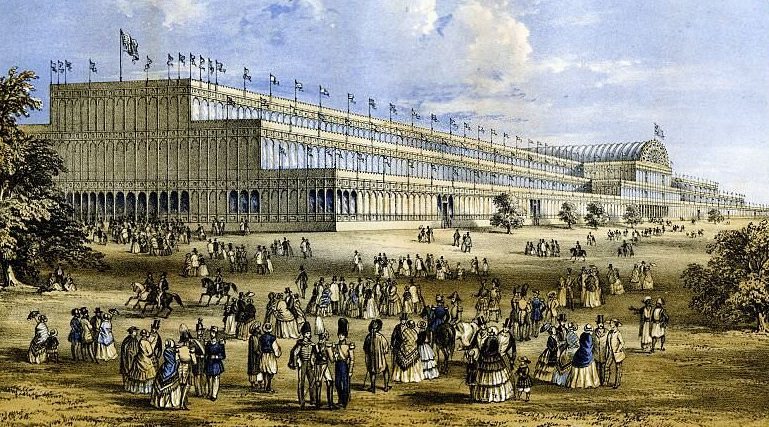
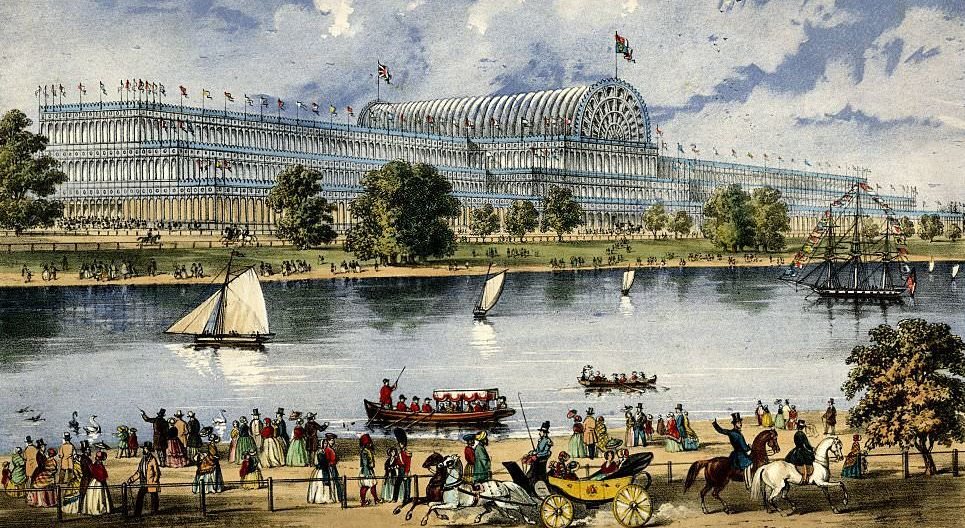
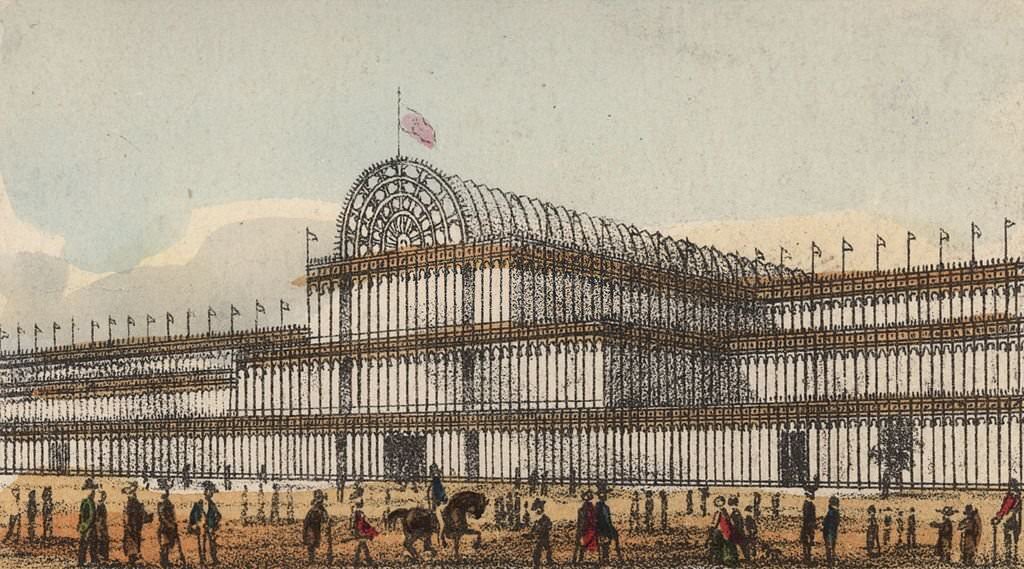
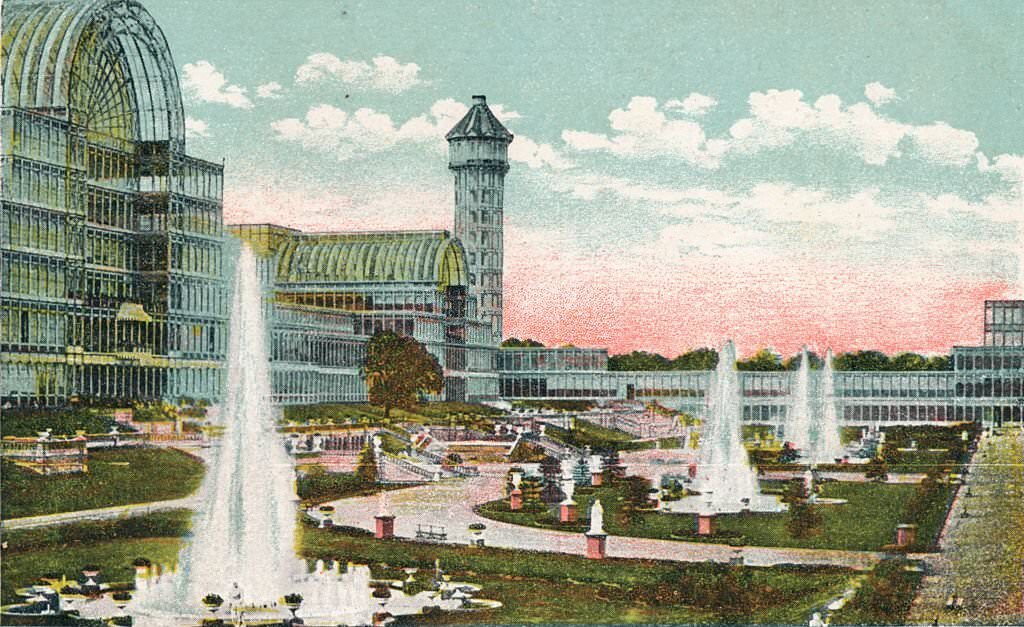
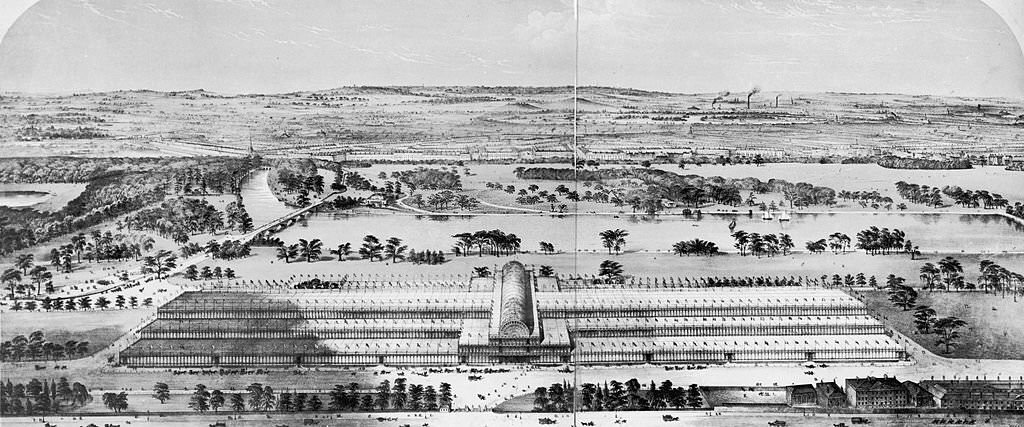
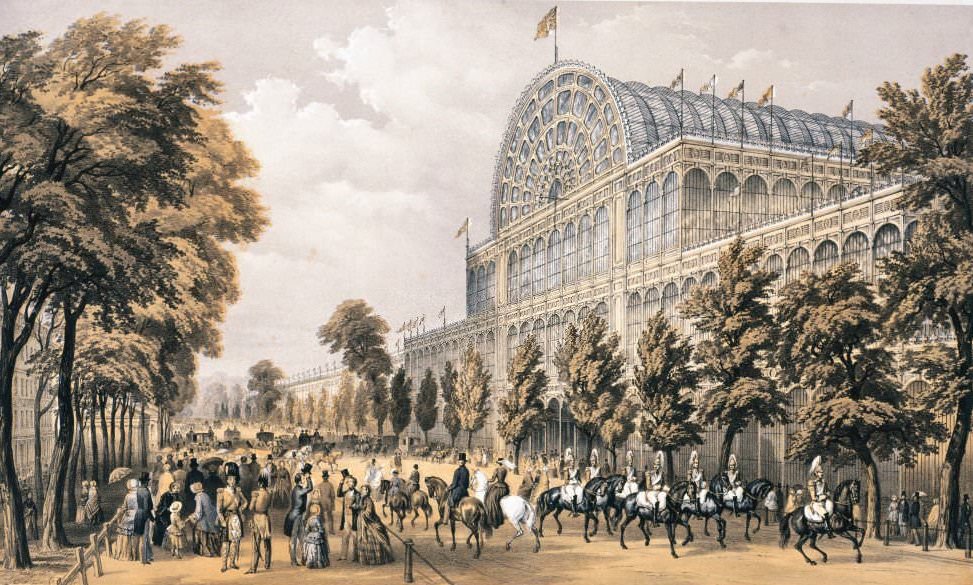
Print bordered with gilt showing the exterior facade and gardens of the Crystal Palace, 1851
In the foreground, visitors of many nationalities can be seen in front of carriages arriving and departing.
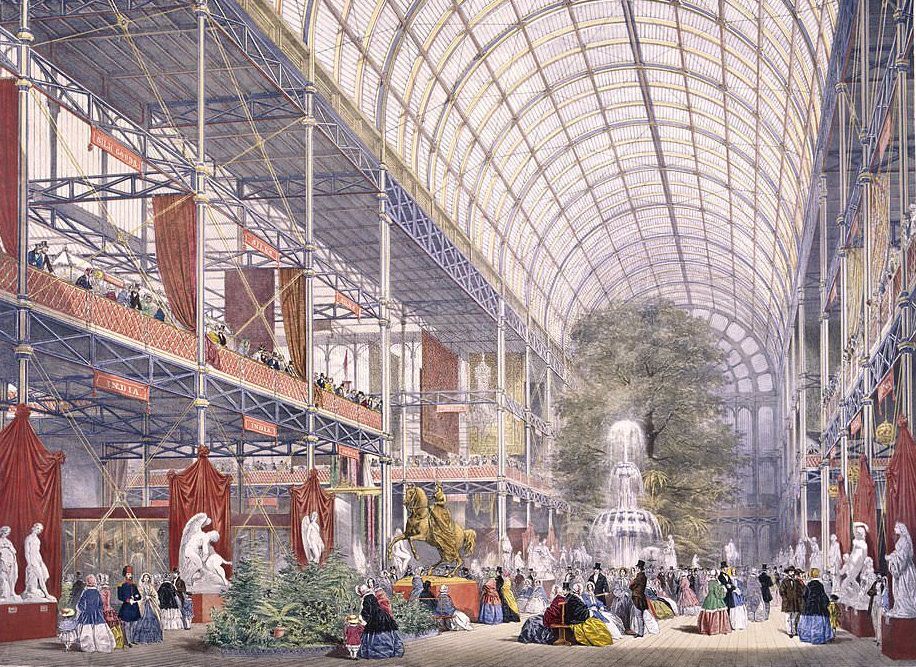
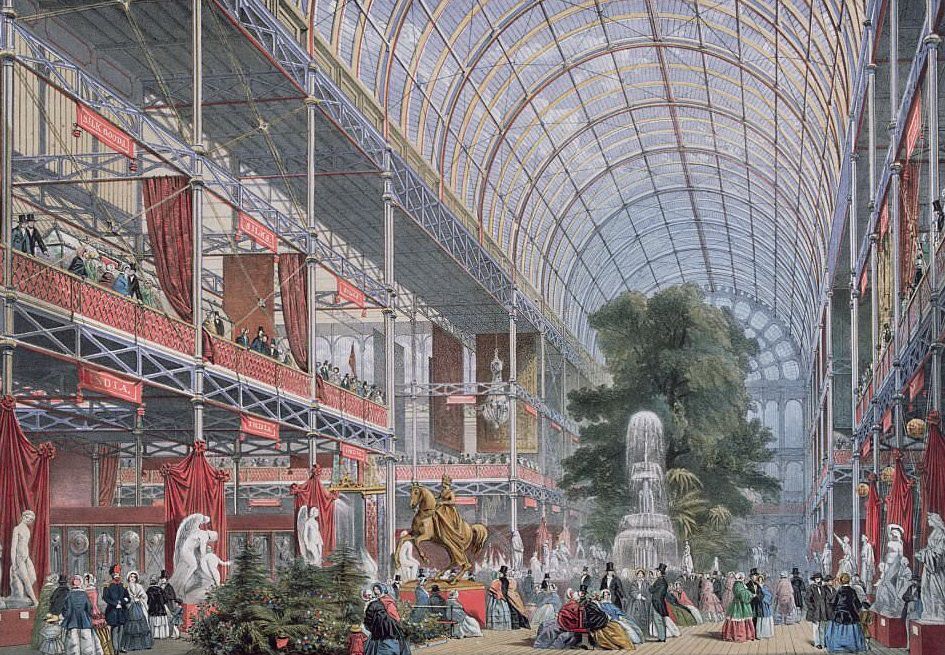
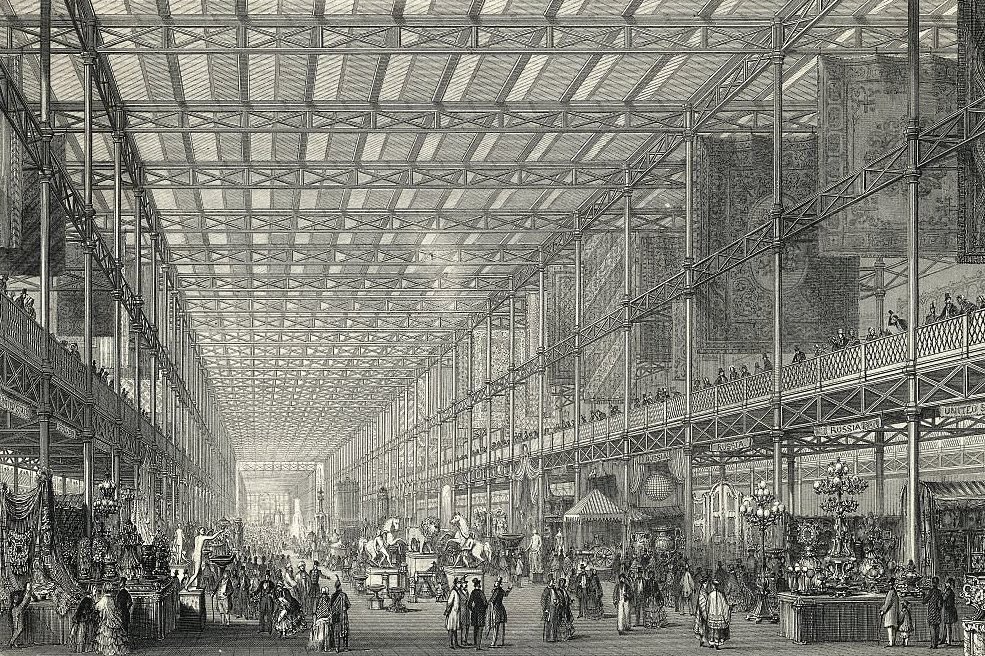
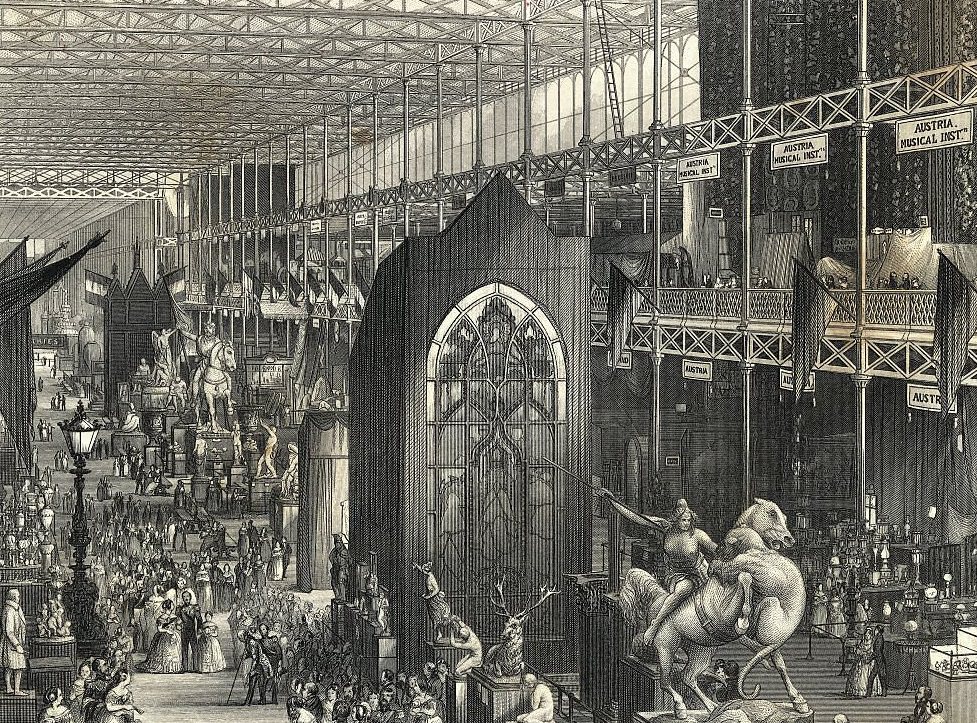
Great Exhibition, Crystal Palace, Hyde Park, London, 1851. Interior view looking west. From the Mayson Beeton Collection.Nave of the Great Exhibition, 1851.
The Great Exhibition, or Crystal Palace Exhibition, took place in Hyde Park, London, from 1 May to 15 October 1851, organized by Henry Cole and Prince Albert. The structure was designed by Joseph Paxton.
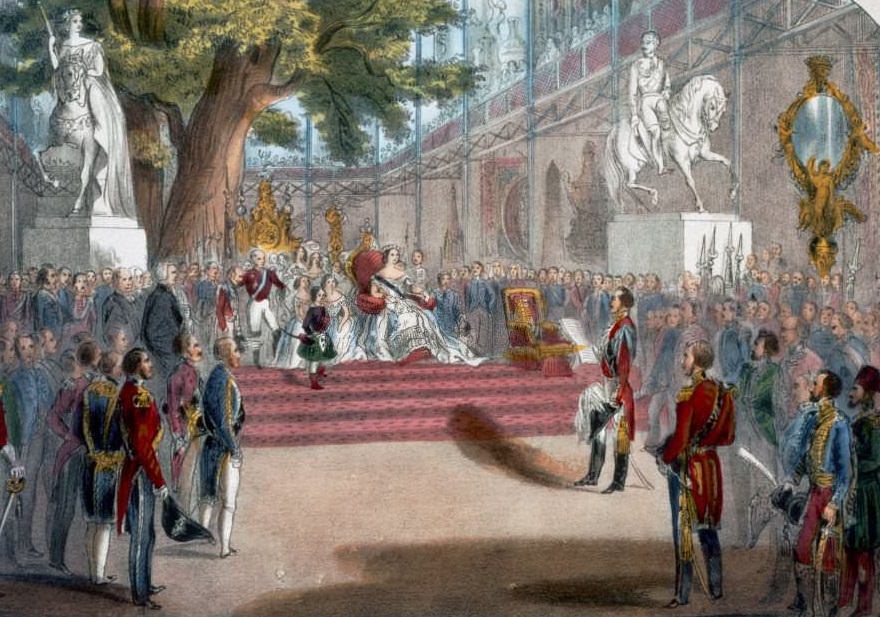
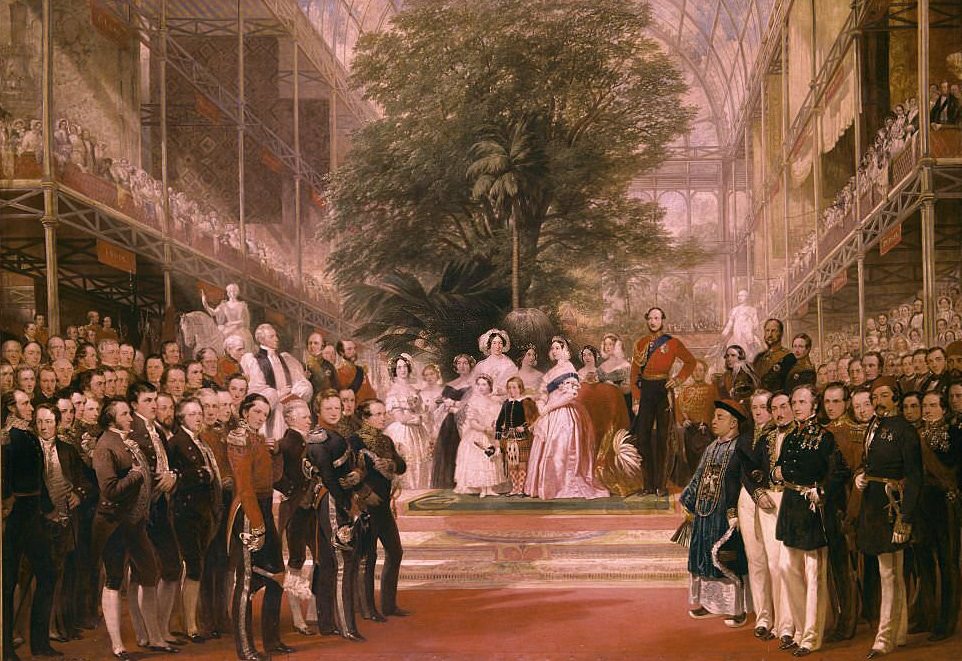
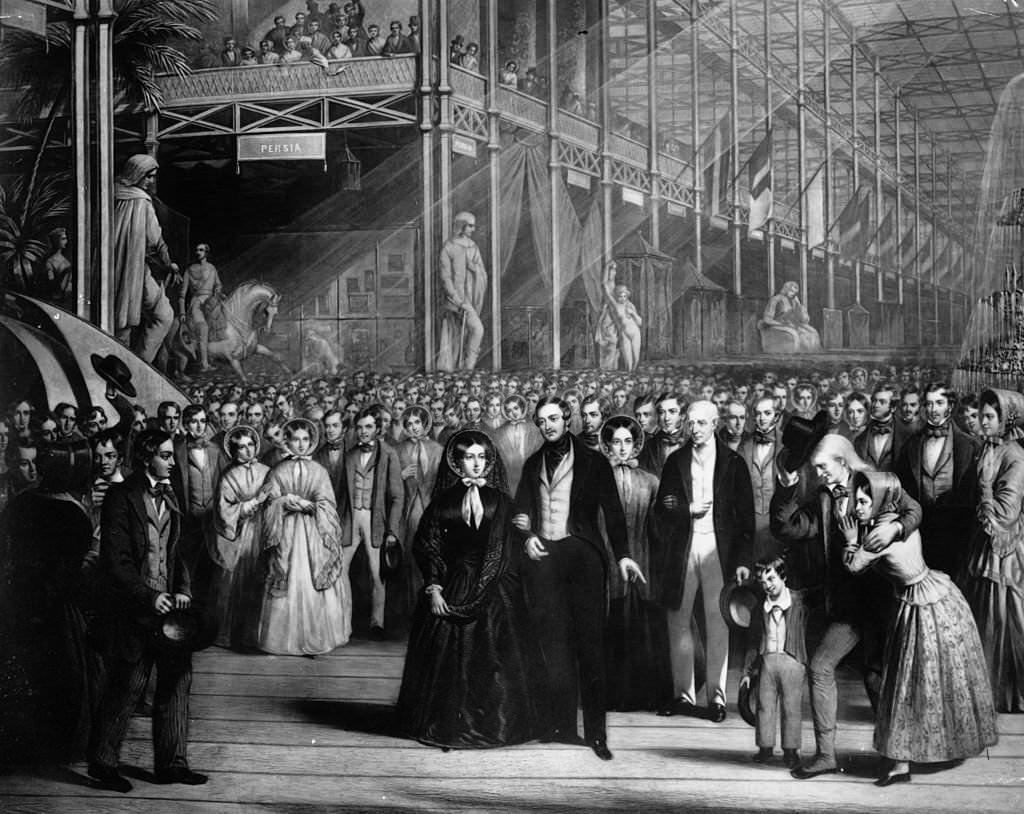
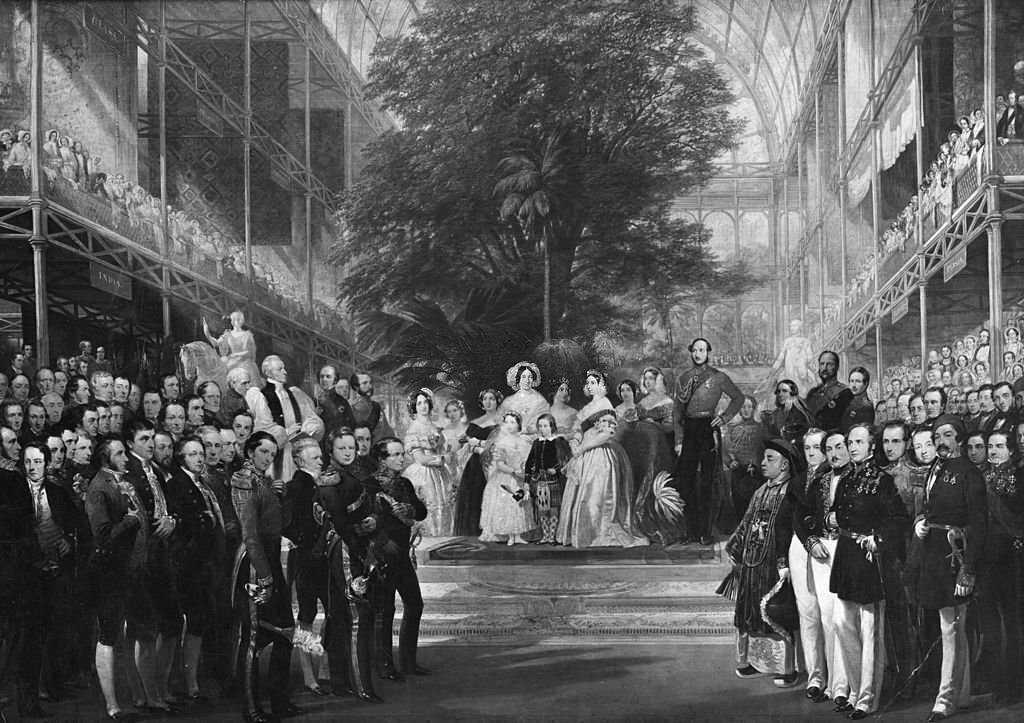
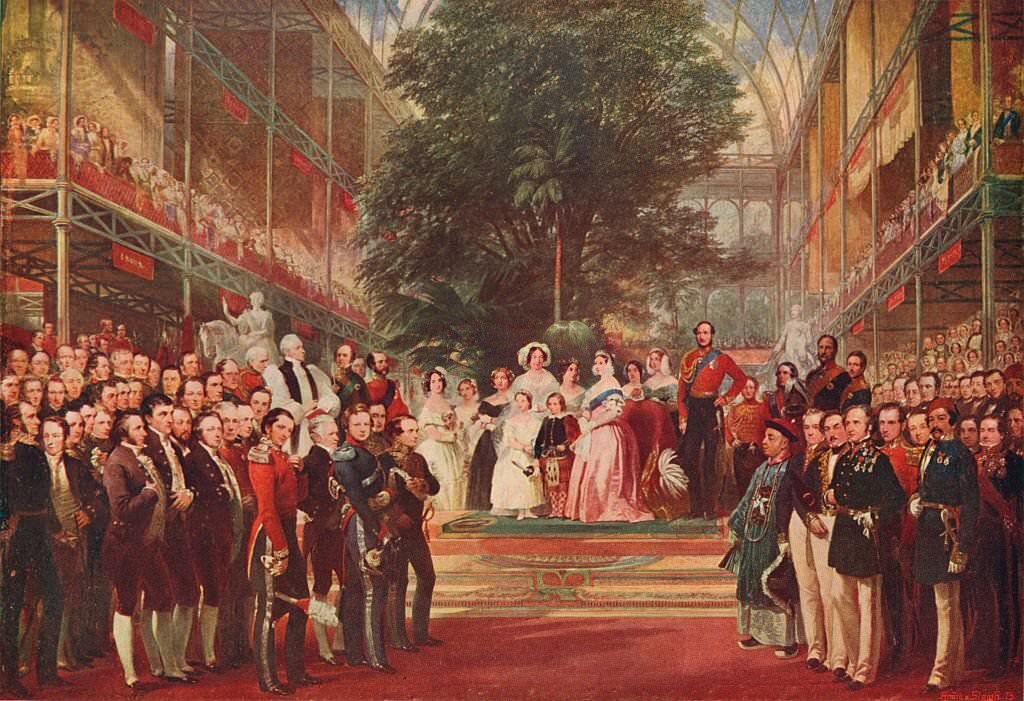
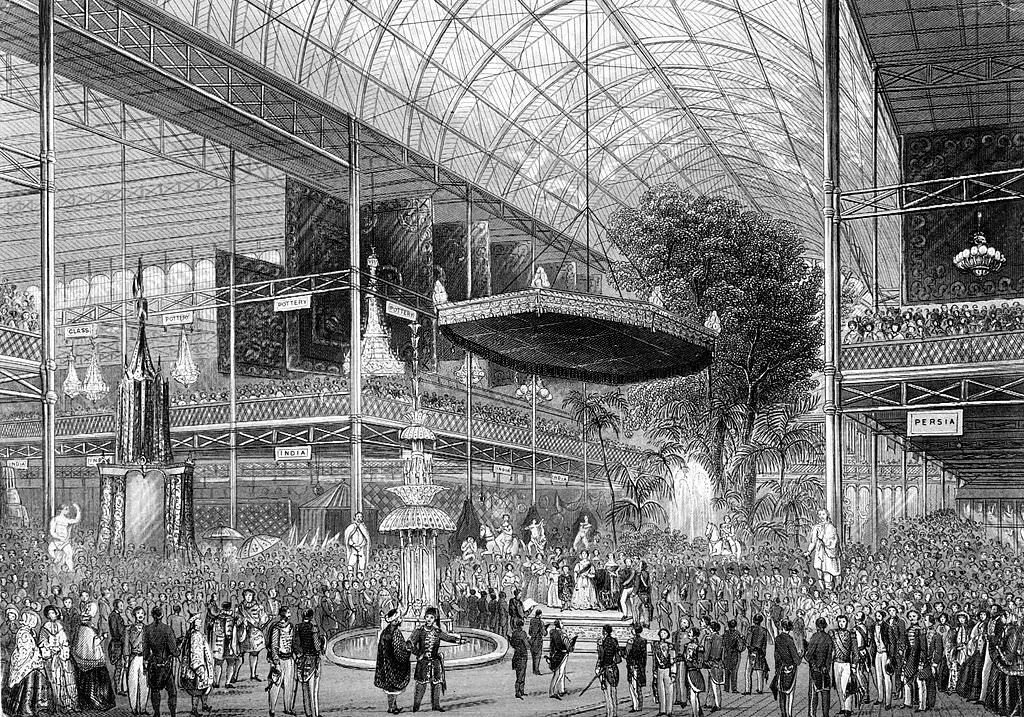
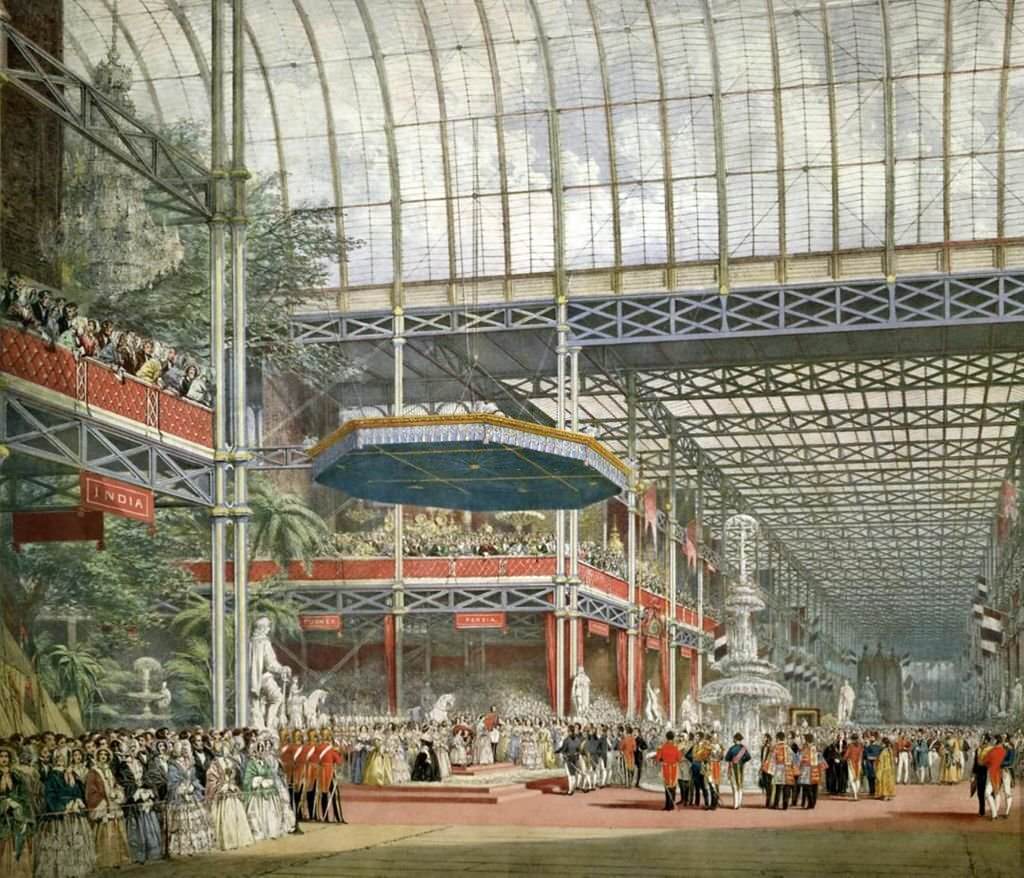
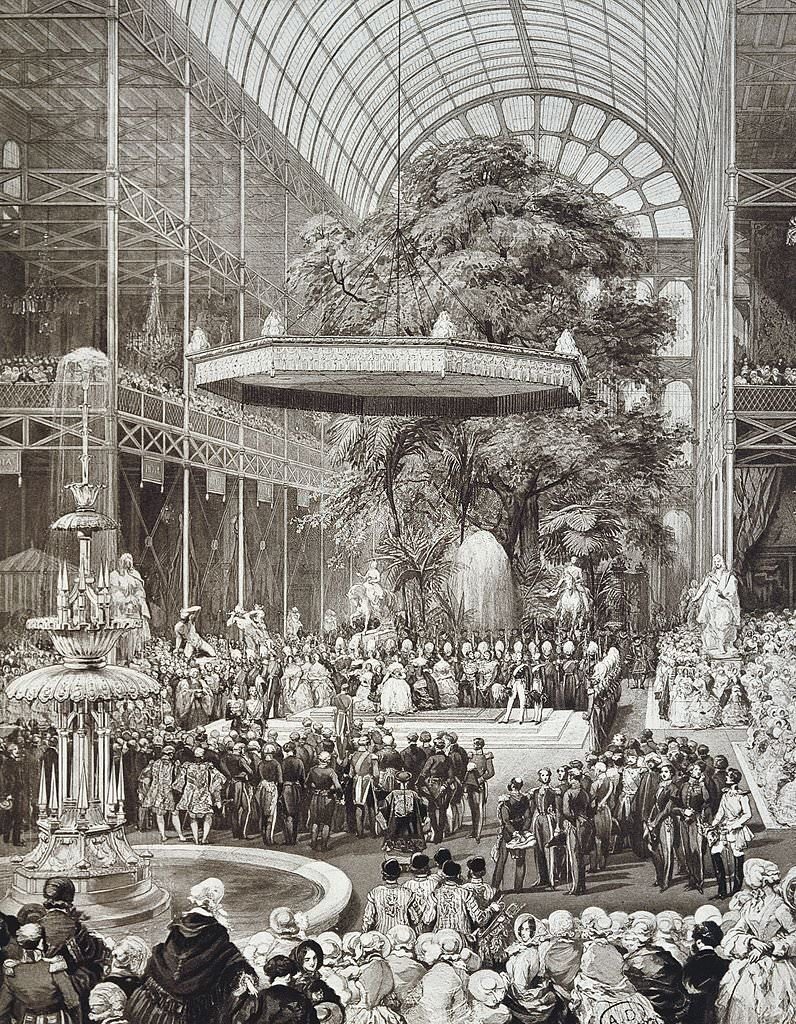
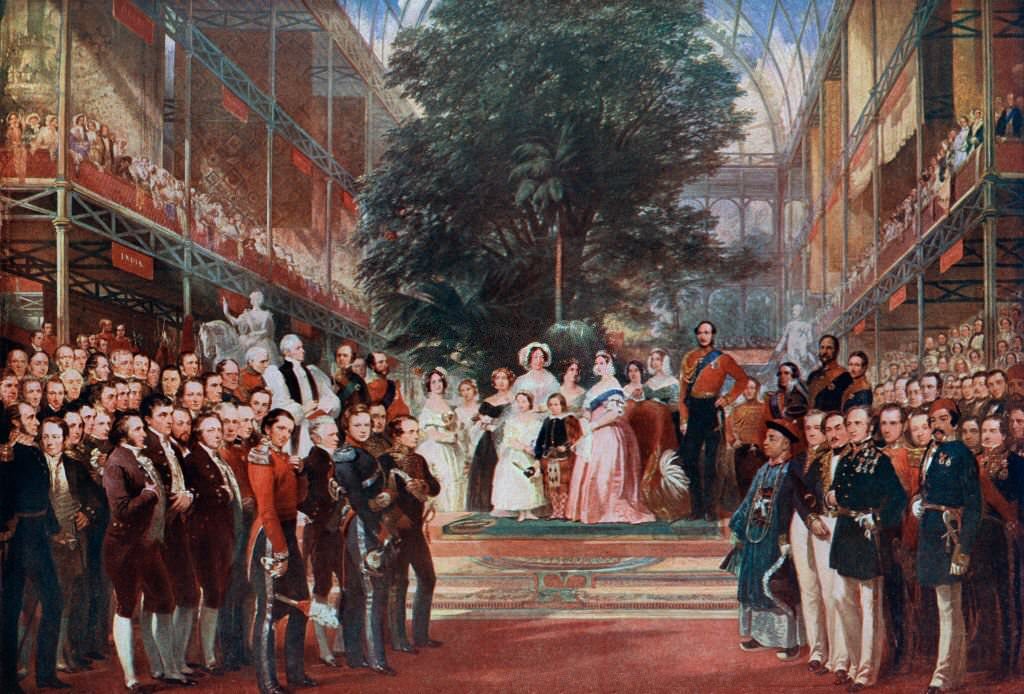
Queen Victoria visiting the Great Exhibition of 1851 at the Crystal Palace by Thomas Abiel PriorThe opening by Queen Victoria of the Industrial Palace in Hyde Park, May 1st 1851.
Conceived by Prince Albert, the Great Exhibition was intended to showcase the ‘Works of the Industry of all Nations’. It was housed in the purpose-built Crystal Palace, the first large-scale prefabricated ferrovitreous (iron and glass) structure, designed by the landscape designer Joseph Paxton. The prefabricated design made the construction, and later dismantling, of the building easier and quicker.
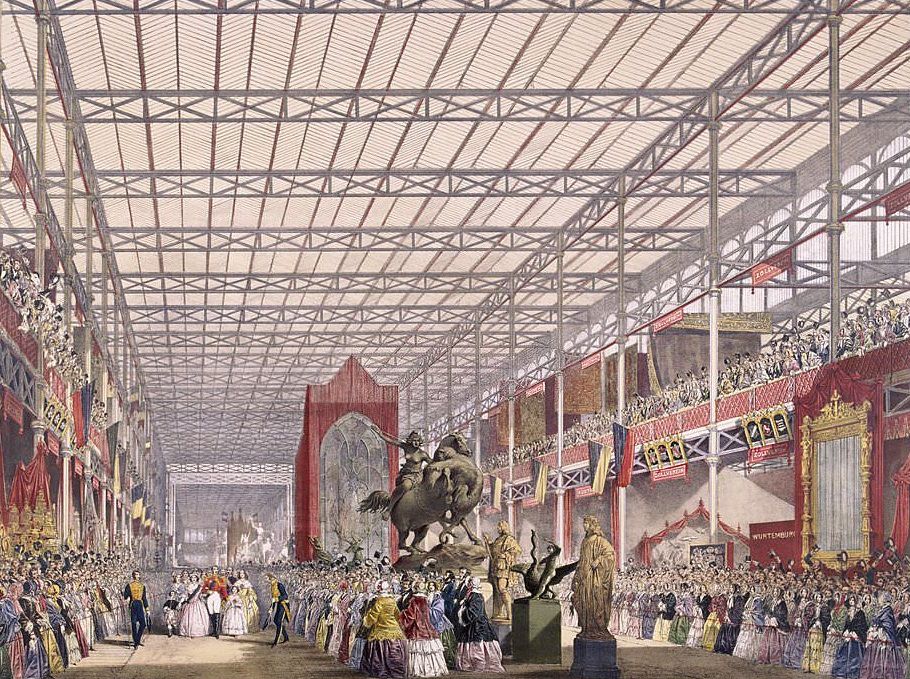
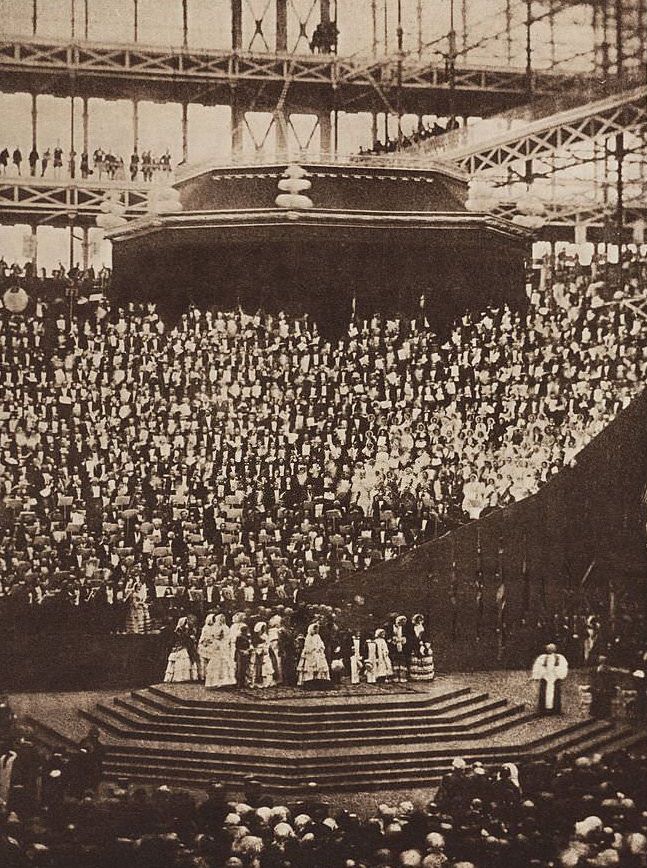
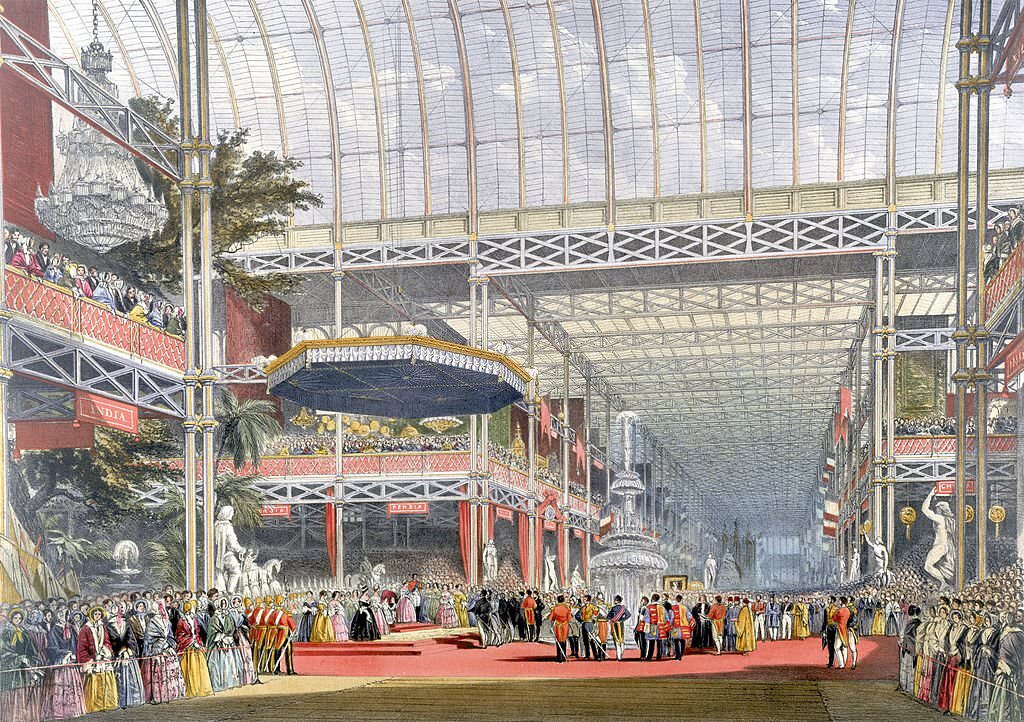
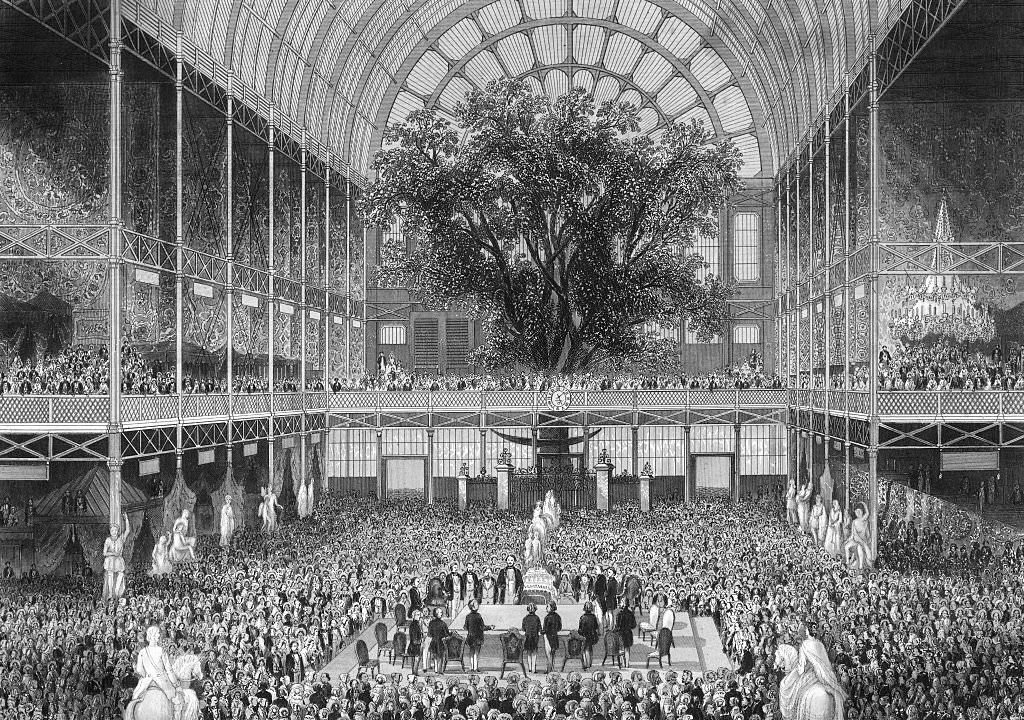
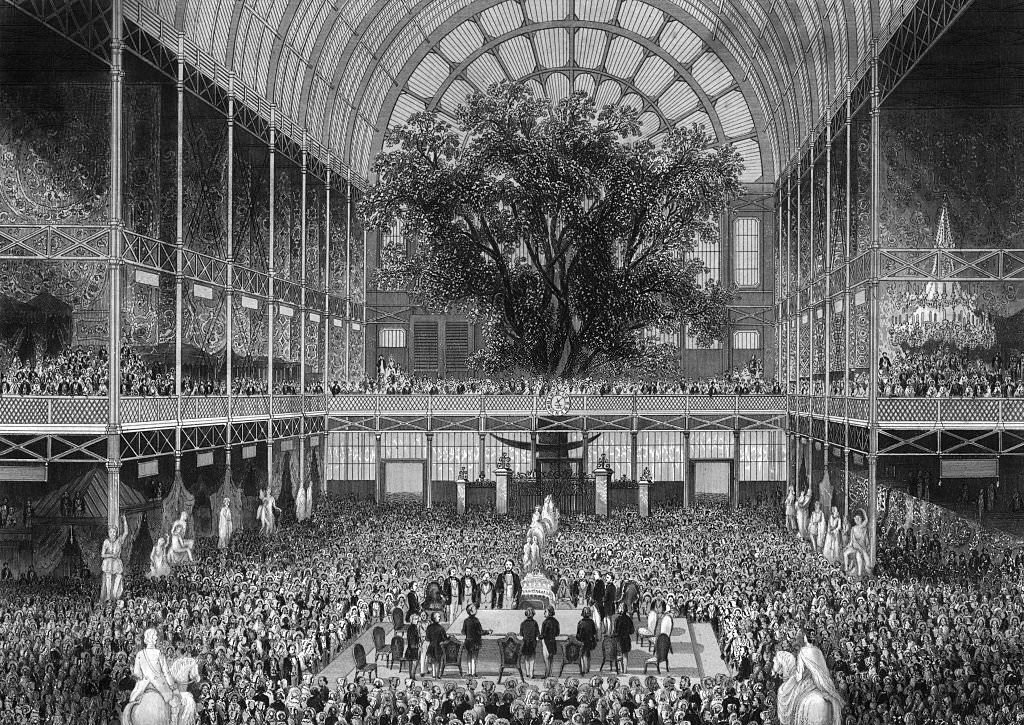
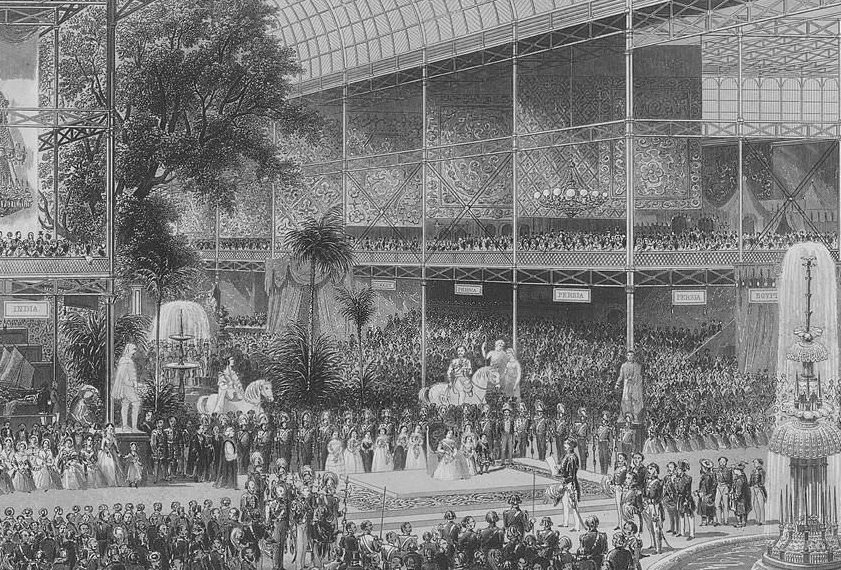
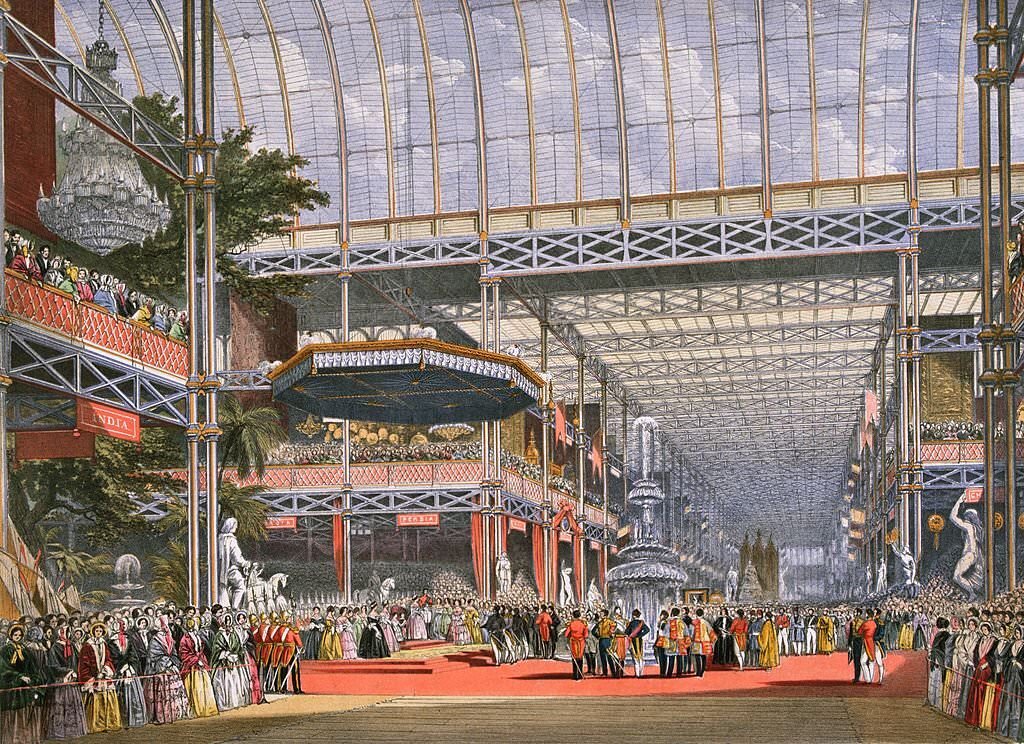
Opening ceremony, the Crystal Palace, London, 1851-1854.
Huge crowds at the opening ceremony of the Crystal Palace, either at Hyde Park in 1851, or at Sydenham where the building was re-erected in 1854. The Crystal Palace was built to house the ‘Great Exhibition of the Works of the Industry of all Nations’.
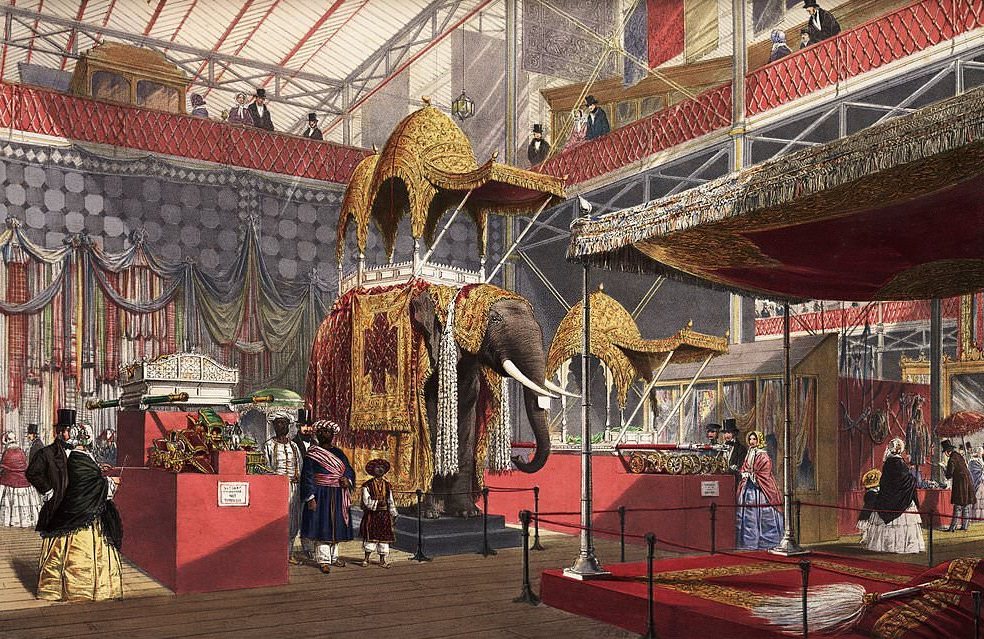
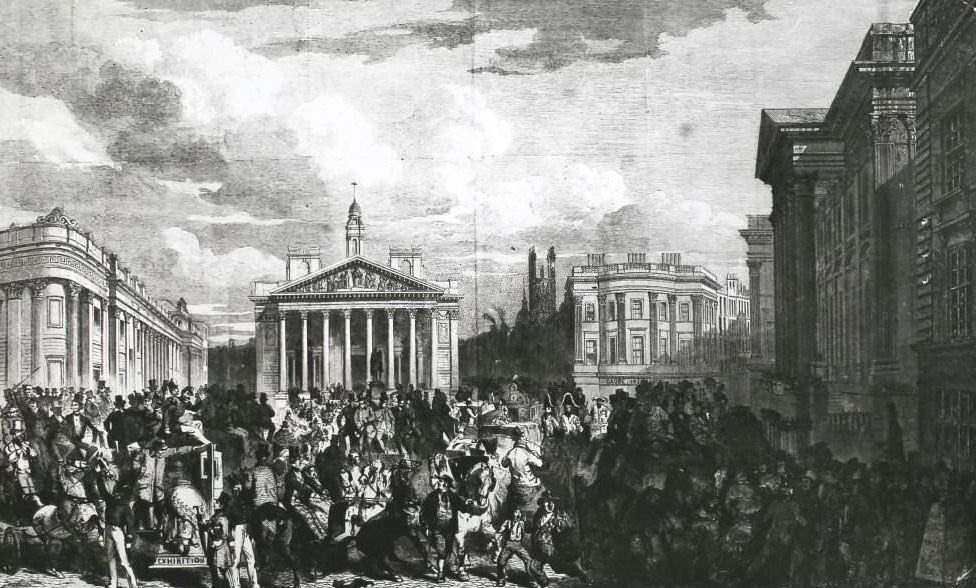
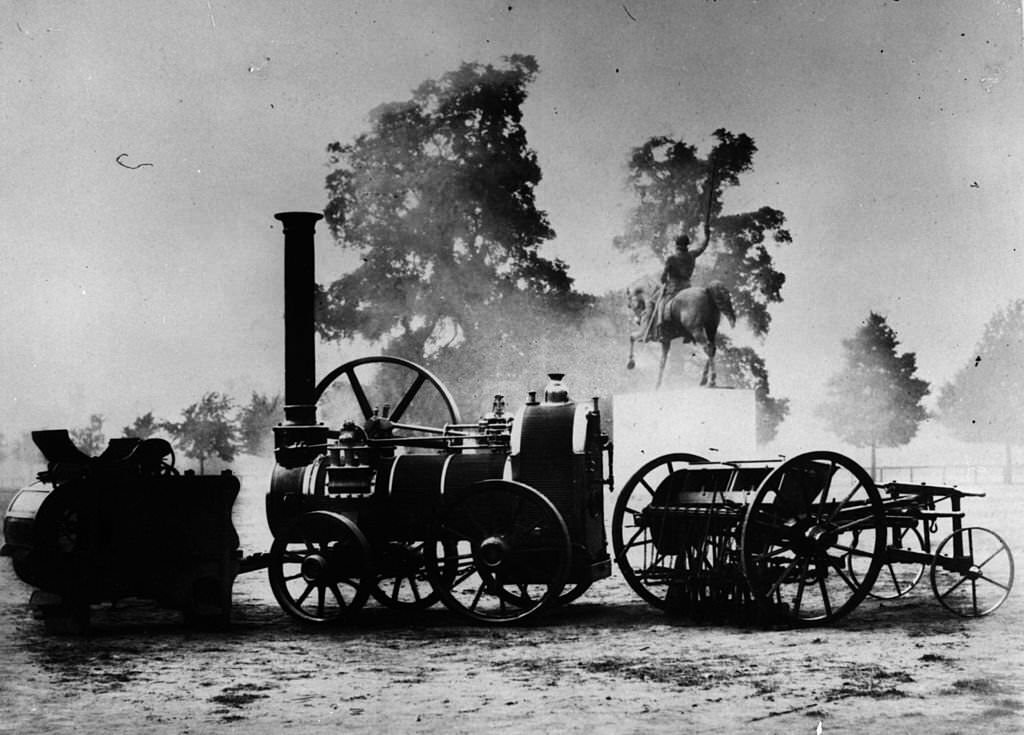
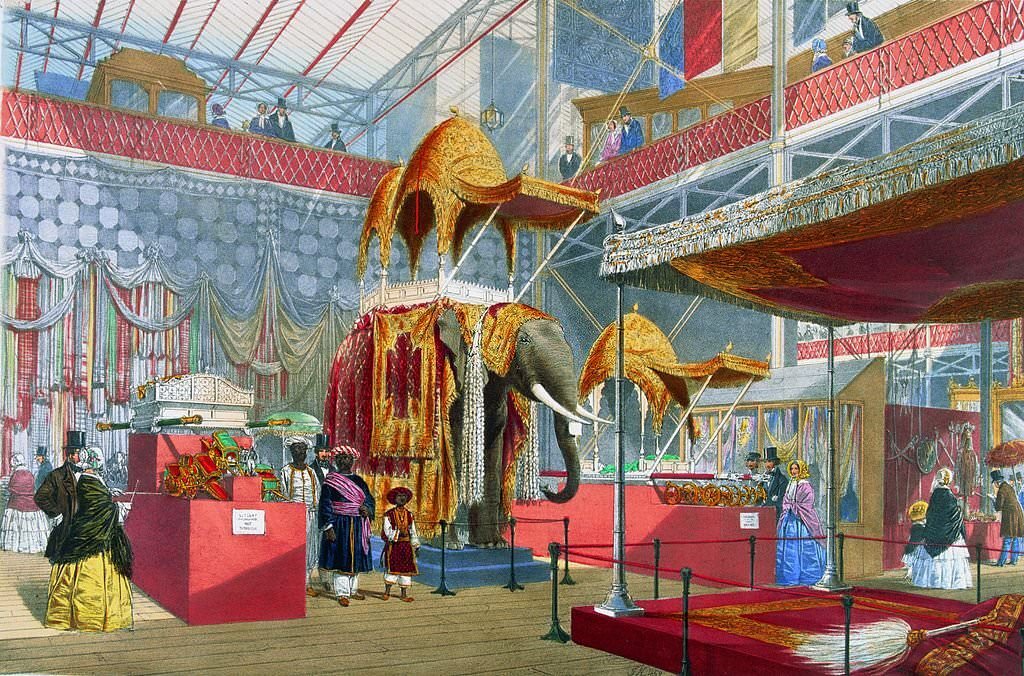
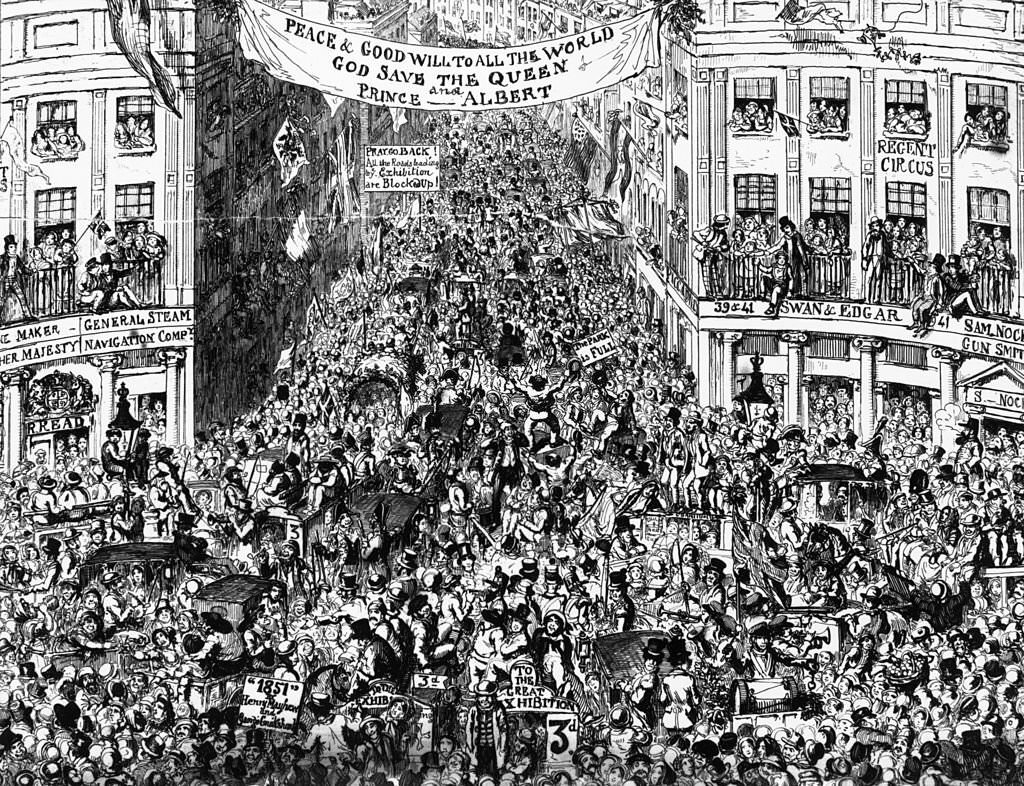
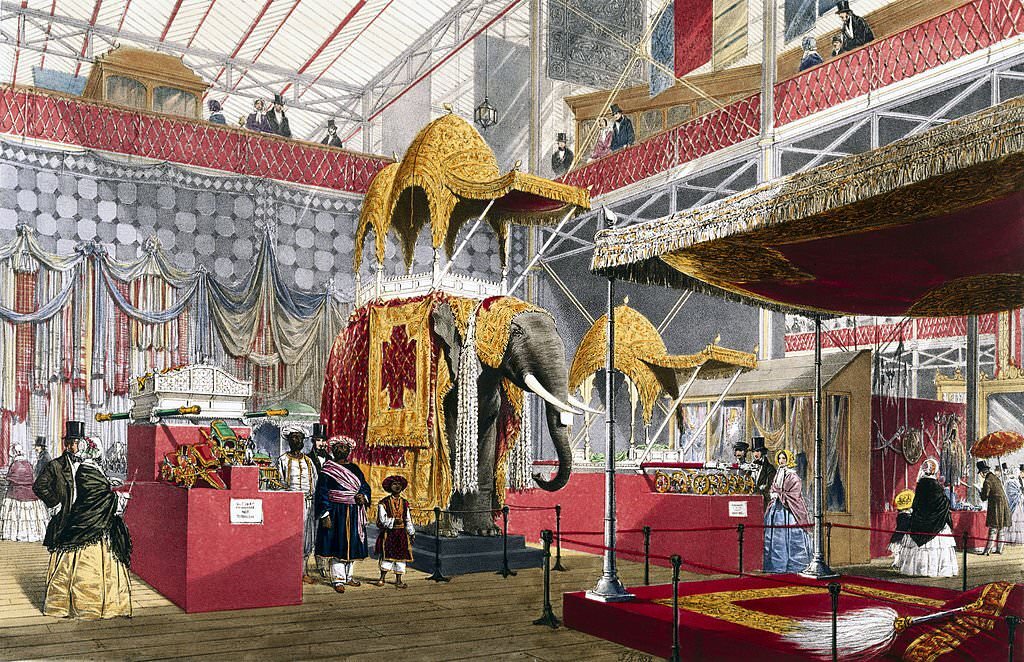
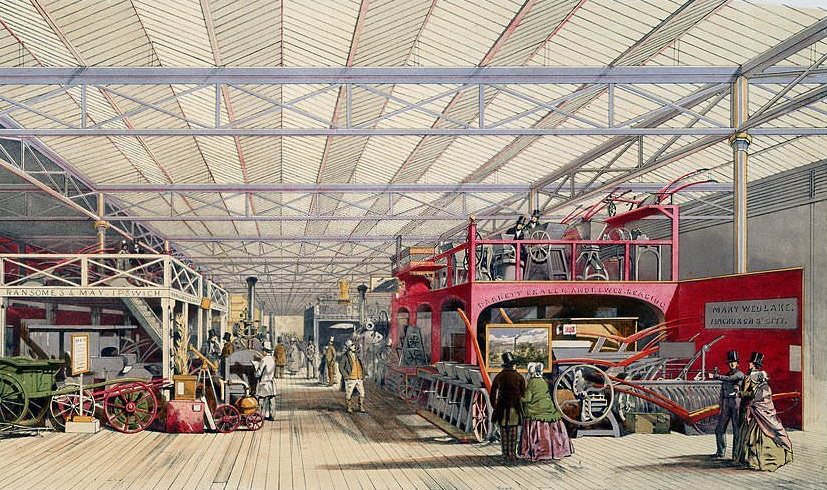
A coloured lithograph of a model elephant with howdah in the Indian Court in the Crystal Palace, Hyde Park, London, 1851.Crowds and traffic in the City of London during the Great Exhibition, 1851.A display of a portable steam engine corn threshing machine and a seed drill on show at the Great Exhibition, Crystal Palace, Hyde Park in London.The India stand at the Great Exhibition in Crystal Palace, the glass and iron building designed by Joseph Paxton, at Hyde Park, London.Inauguration ceremony, Crystal Palace, London, 1851.
The Crystal Palace was built to house the ‘Great Exhibition of the Works of the Industry of all Nations’, conceived by Prince Albert (1819–1861). This was the first large-scale prefabricated ferrovitreous (iron and glass) structure and was designed by the landscape designer Joseph Paxton (1801–1865). The prefabricated design made the construction, and later dismantling, easier and quicker.
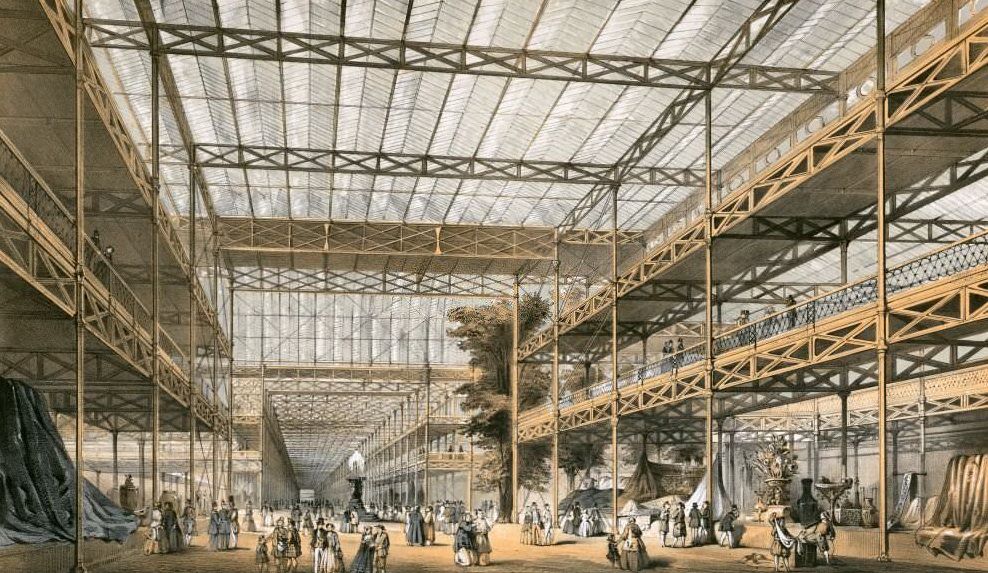
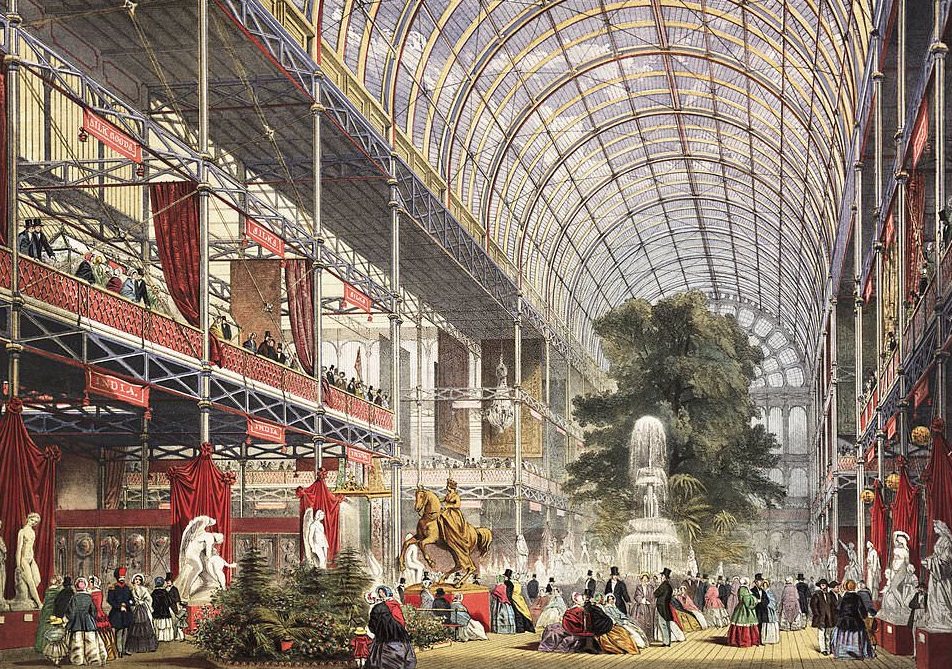
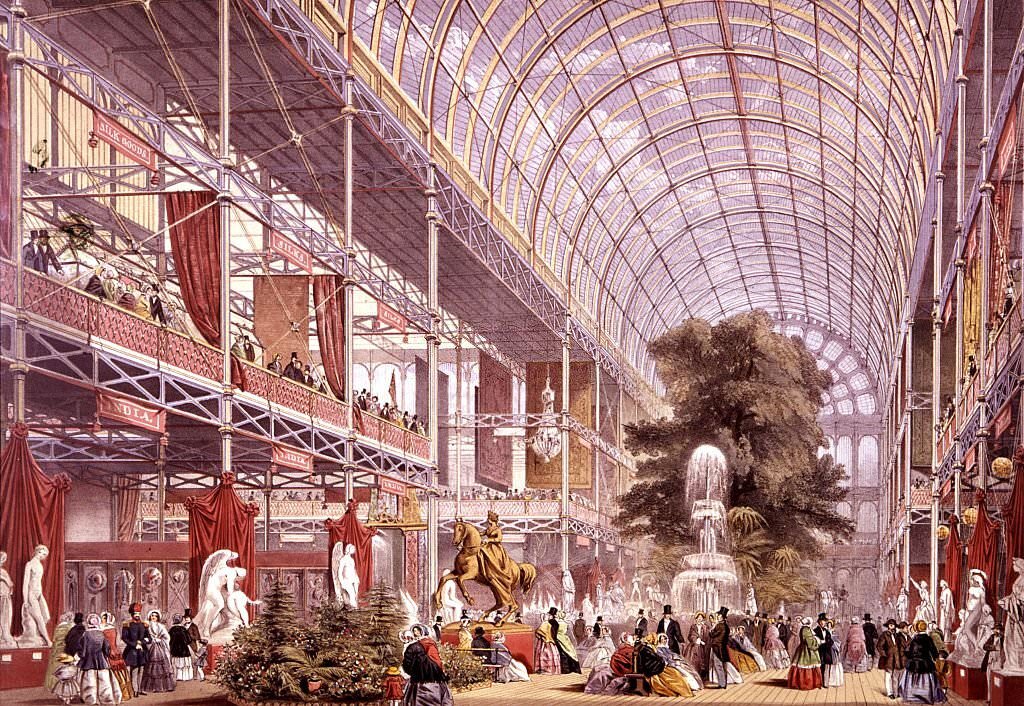
The transept of the Crystal Palace, Hyde Park, London, from ‘Dickinsons’ Comprehensive Pictures of the Great Exhibition of 1851′
Published in 1854, this book contains lithographed copies of original paintings by Nash, Haghe, and Roberts, commissioned by Prince Albert [Factually Corrected: dates changed from (1841–1910) to (1819–1861)]. The Great Exhibition of the Works of Industry of All Nations, held in 1851, was the first industrial exhibition. It was housed in the spectacular Crystal Palace, designed by Joseph Paxton [Factually Corrected: birth year changed from 1803 to 1801] (1801–1865) and built in London’s Hyde Park. Over 100,000 exhibits were shown from around the world.
The opening of the Great Exhibition in Crystal Palace, the glass and iron building designed by Joseph Paxton, at Hyde Park, London, 1851The Opening of the Great Exhibition in Hyde Park, May 1, 1851Interior view showing products at the Great Exhibition of London, 1851.The Great International Exhibition, (Crystal Palace), seen from the Horticultural Gardens.Closing of the Great Exhibition, Crystal Palace, 1851.Crowd Inside the Crystal Palace at the Closing of the Great Exhibition, 1851Engraving of the South Transept of the Crystal Palace, 1851The Main Avenue at the Great Exhibition in London, 1851.Interior Of The Great Industrial Exhibit.
Interior of the Great Industrial Exhibition of the Crystal Palace during the Great Exhibition of 1851.
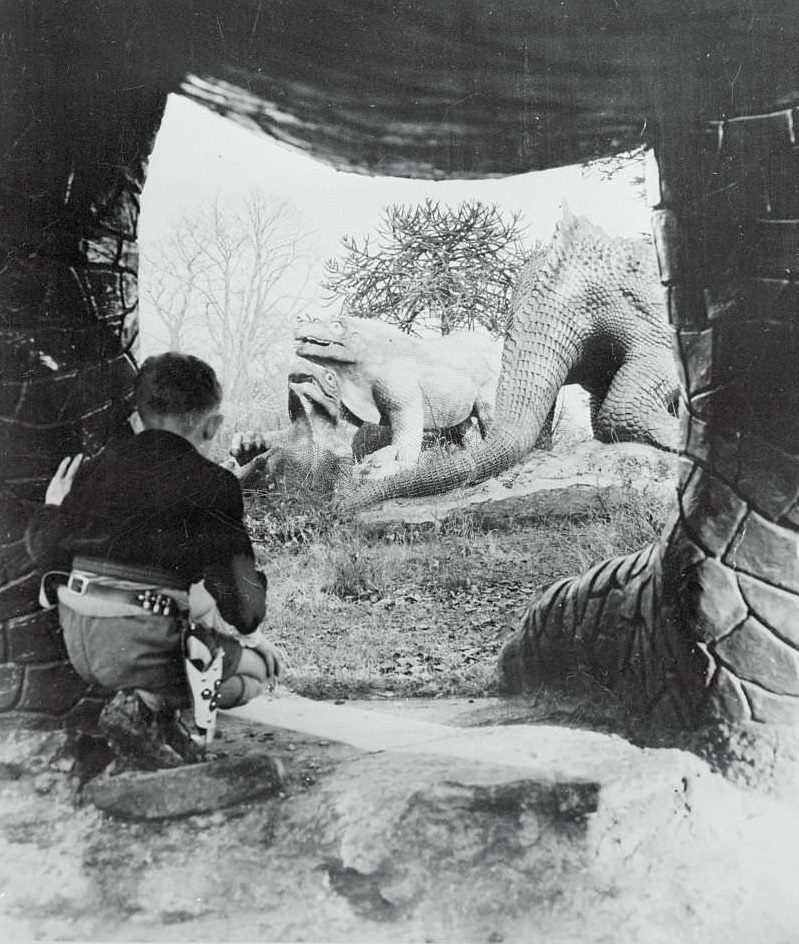
John Burwood Looking at Dinosaurs.
Most boys today concentrate on the future, playing space men and building rockets and atomic ray guns for that trip to the moon. But eight-year-old John Burwood, of London, England, turns his imagination to the remote past.
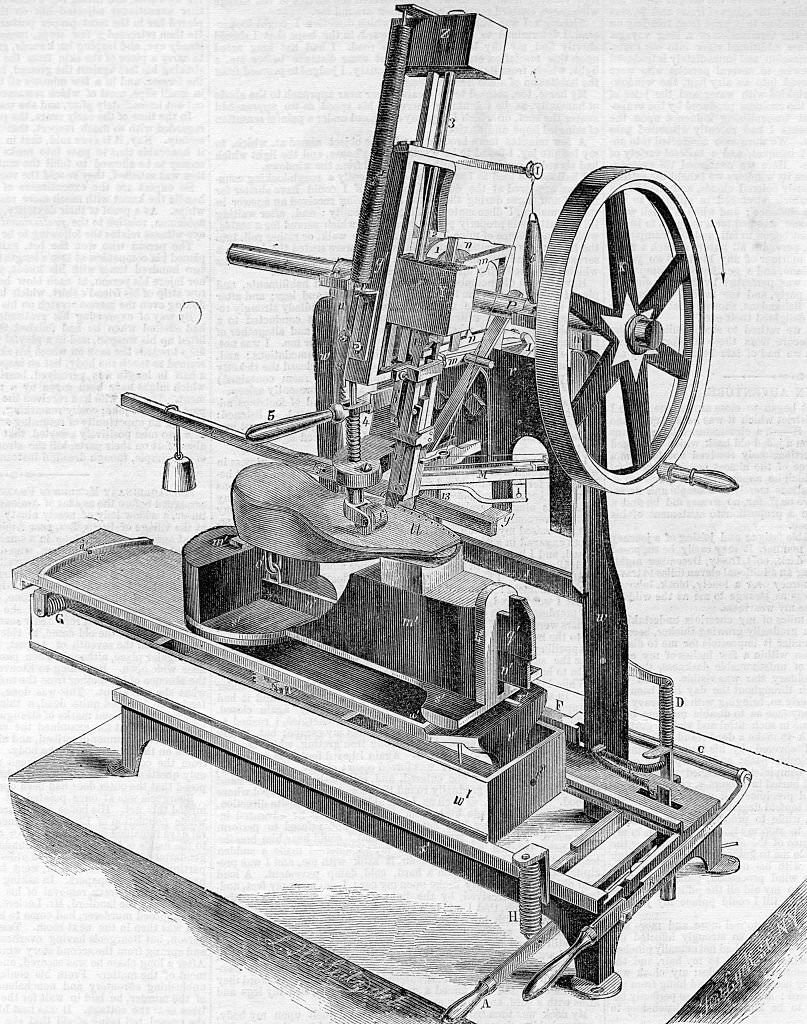
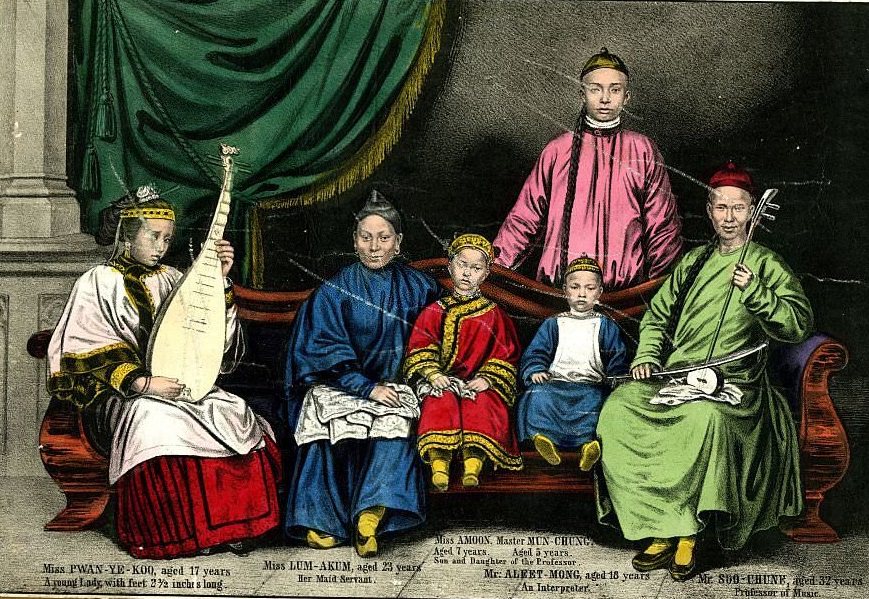
Engraved illustration of a Boot And Shoe Pegging Machine, at the Crystal Palace, a cast-iron and plate-glass structure originally built in Hyde Park, London, England, to house the Great Exhibition, 1851.Visitors entering the Crystal Palace during the Great Exhibition, 1851.Chinese musicians at the Great Exhibition, 1851.Crystal Palace Interior
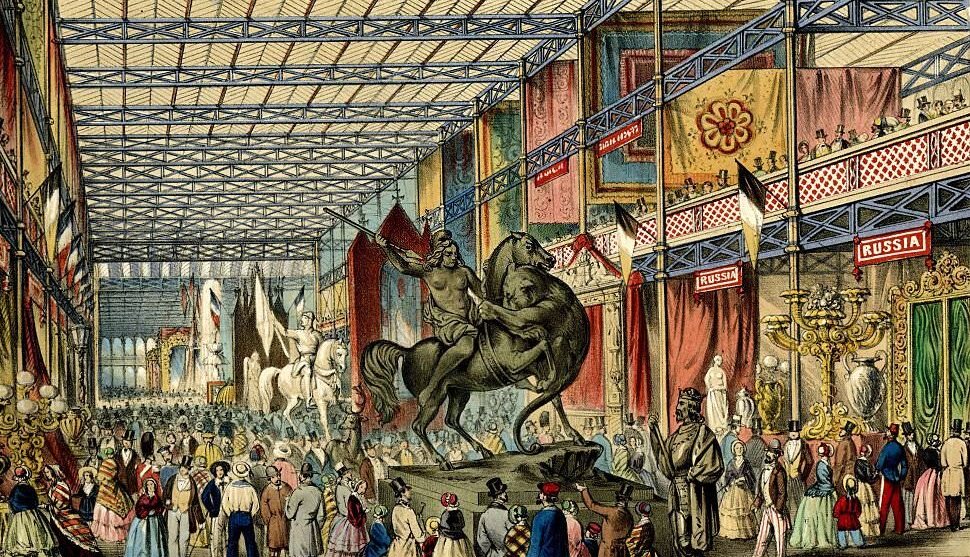
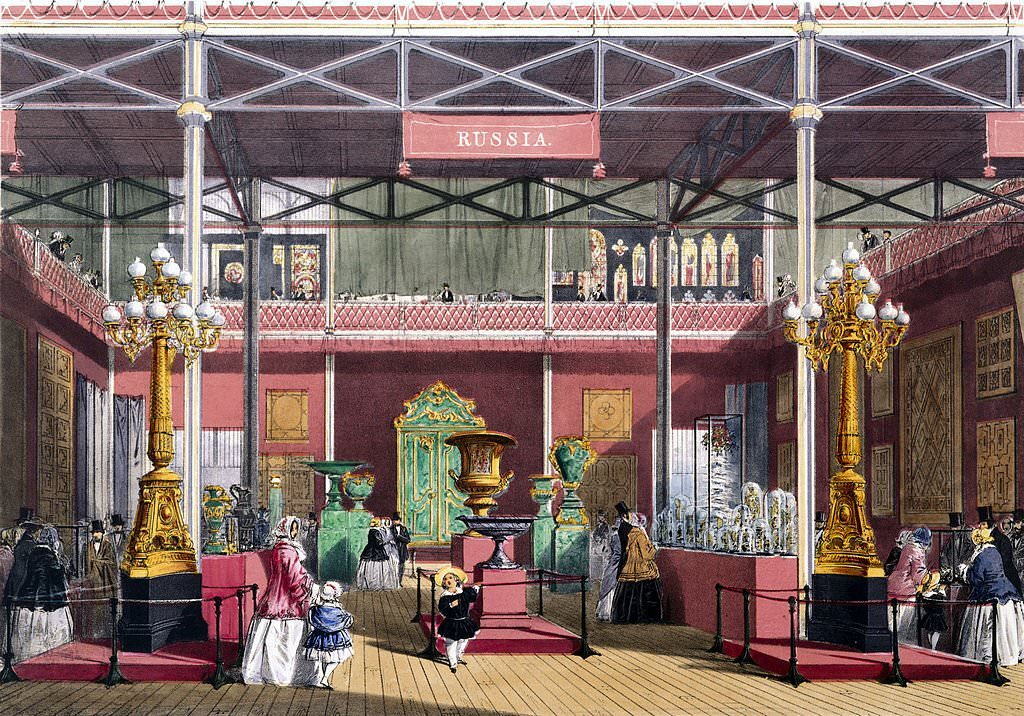
Chromolithograph of the interior of the Crystal Palace depicting Russian displays at the Great Exhibition, 1851.
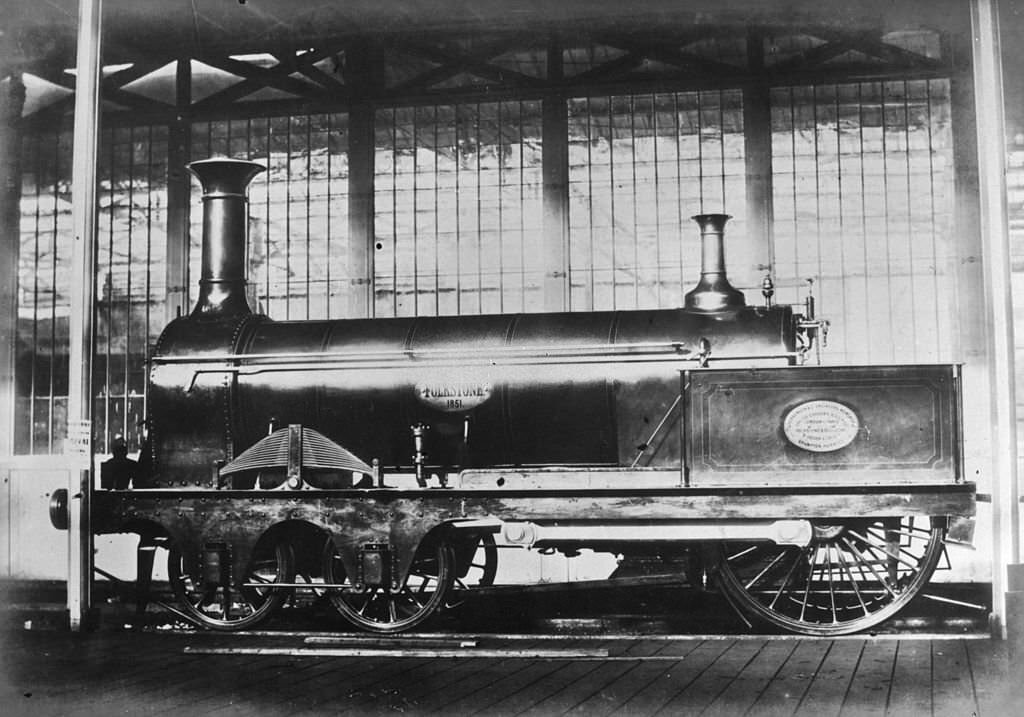
Visitors viewing the Crystal Palace across a reflecting pool at the Great Exhibition, 1851. Boats and carriages in the foreground.The opening of the Great Exhibition by Queen Victoria, Crystal Palace, London, May 1st 1851.The opening of the Great Exhibition at Crystal Palace, London, 1851.General view of the interior of the Great Exhibition, Main Avenue, Crystal Palace in 1851.Interior of the Great Exhibition in Crystal Palace, the glass and iron building designed by Joseph Paxton, at Hyde Park, London, 1851A display from China at the Great Exhibition in Crystal Palace, the glass and iron building designed by Joseph Paxton, at Hyde Park, London, 1851The Inauguration of the Great Exhibition in Crystal Palace, the glass and iron building designed by Joseph Paxton, at Hyde Park, London, 1851The closing ceremony at the Great Exhibition in Crystal Palace, the glass and iron building designed by Joseph Paxton, at Hyde Park, London, 1851Sheffield Hardware on display at the Great Exhibition in Crystal Palace, the glass and iron building designed by Joseph Paxton, at Hyde Park, London, 1851‘France No 2’ at the Great Exhibition in Crystal Palace, the glass and iron building designed by Joseph Paxton, at Hyde Park, London, 1851‘India No 1’ at the Great Exhibition in Crystal Palace, the glass and iron building designed by Joseph Paxton, at Hyde Park, London, 1851Furs on display at the Great Exhibition in Crystal Palace, the glass and iron building designed by Joseph Paxton, at Hyde Park, London, 1851The interior of the Great Exhibition, at the Crystal Palace exhibition, Hyde Park, London, 1851Crowds outside the Crystal Palace in London’s Hyde Park, venue of the 1851 Great Exhibition.A collection of sculptures in a southern transept of the Crystal Palace in London’s Hyde Park, 1851An ivory throne and footstool presented to Queen Victoria by the Rajah of Travancore, on display in the ‘Industrial Arts of the 19th Century’ gallery of the 1851 Great Exhibition.Flags flying on the north-west corner of the Crystal Palace in London’s Hyde Park, 1851The front of the Crystal Palace in London’s Hyde Park. The massive iron and glass structure was designed by Sir Joseph Paxton as the venue for the Great Exhibition of 1851.Queen Victoria (1819 – 1901) with her consort Prince Albert (1819 – 1861) and the Duke of Wellington (1769 – 1852) at the opening of the Great Exhibition at Crystal Palace, Hyde Park, London.London’s Piccadilly Circus heaving with crowds on their way to the Great Exhibition in Hyde Park, 1851A variety of stalls at the Great Exhibition in the Crystal Palace, London, 1851Some of the sculptures, trees and fountains which filled one wing of the Crystal Palace in London for the Great Exhibition of 1851.Monday visitors crowd the antiquities room of the South Kensington Museum in London, 1851.The South Eastern Railway Company’s express train ‘Folkstone’ designed by T R Crampton on display at the 1851 Great Exhibition in the Crystal Palace, London.Flags flying on the eastern side of the Crystal Palace in London’s Hyde Park. The massive iron and glass structure was designed by Sir Joseph Paxton as the venue for the Great Exhibition of 1851.Accompanied by Prince Albert and her children, Queen Victoria (1819 – 1901) opens the Great Exhibition in the Crystal Palace, London, 1Crystal Palace, Sydenham’, 1910
The Crystal Palace was erected in Hyde Park, London, England, to house the Great Exhibition of 1851. The building was rebuilt in an enlarged form on Penge Common, at the top of Penge Peak, Sydenham Hill.
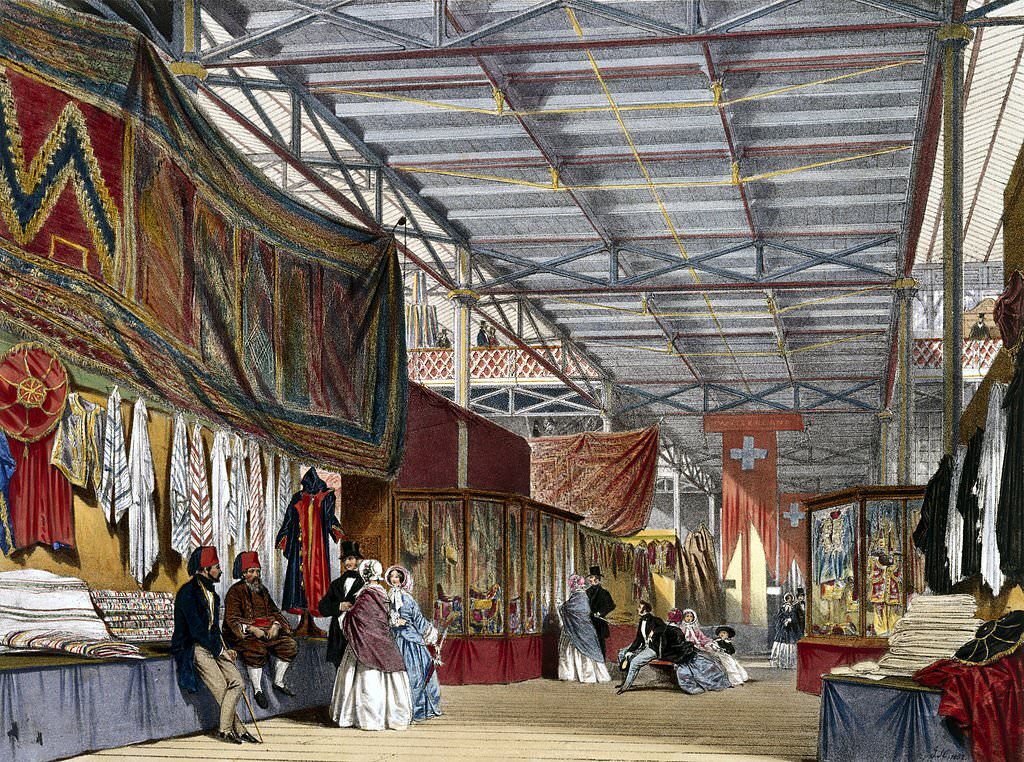
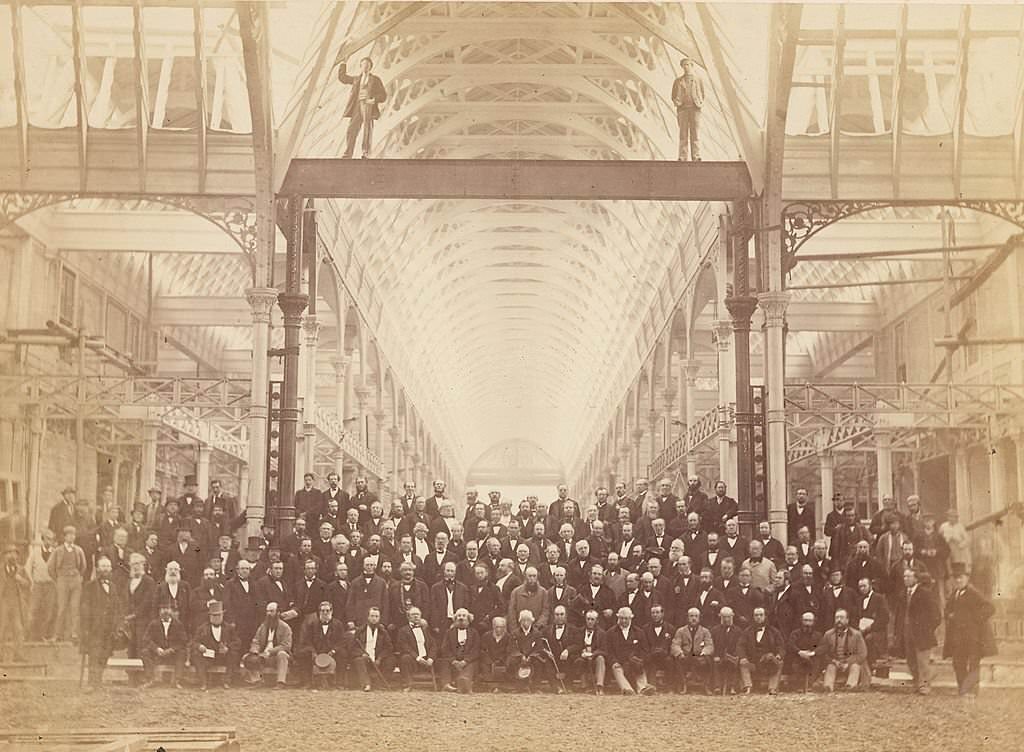
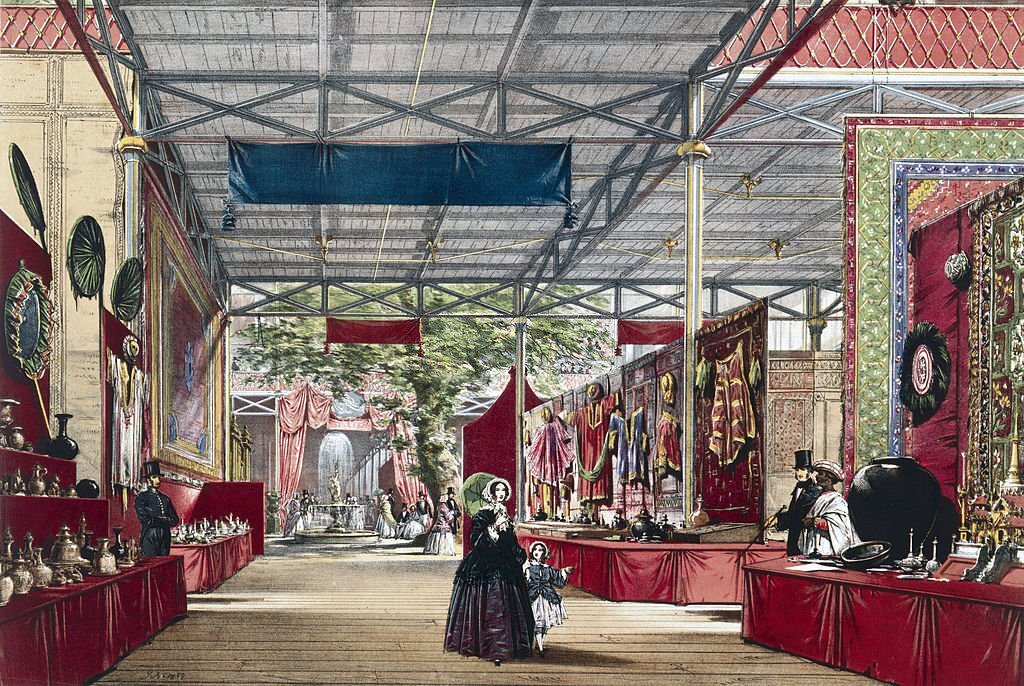
A hand-colored lithograph showing the India display at the Great Exhibition of 1851.The opening of the Great Exhibition by Queen Victoria on 1 May 1851The British Nave at the Great Exhibition of 1851 The Crystal Palace c 1854.A group photo of some of those responsible for building the Crystal Palace for the Great Exhibition of 1851 in Hyde Park, London.A view looking south over the site of the Great Exhibition at the Crystal Palace in Hyde Park, London, 1851.Engraving of the inside view of Crystal Palace when it was open for the Great Exhibition 1851Turkish No 2 stand at the Great Exhibition, Crystal Palace, London, 1851.
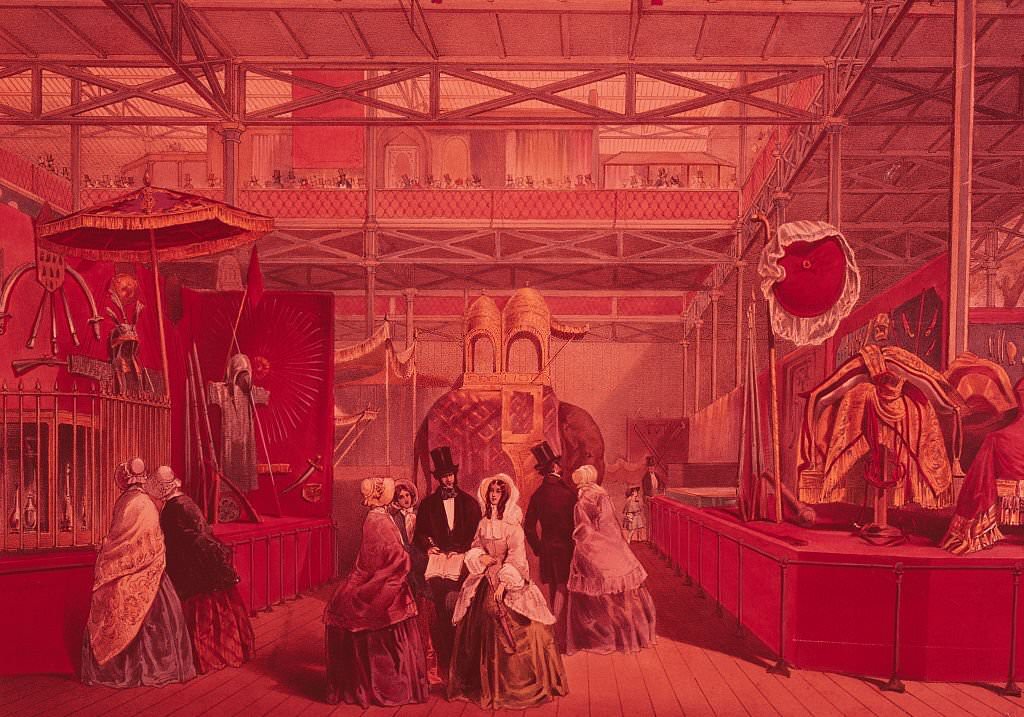
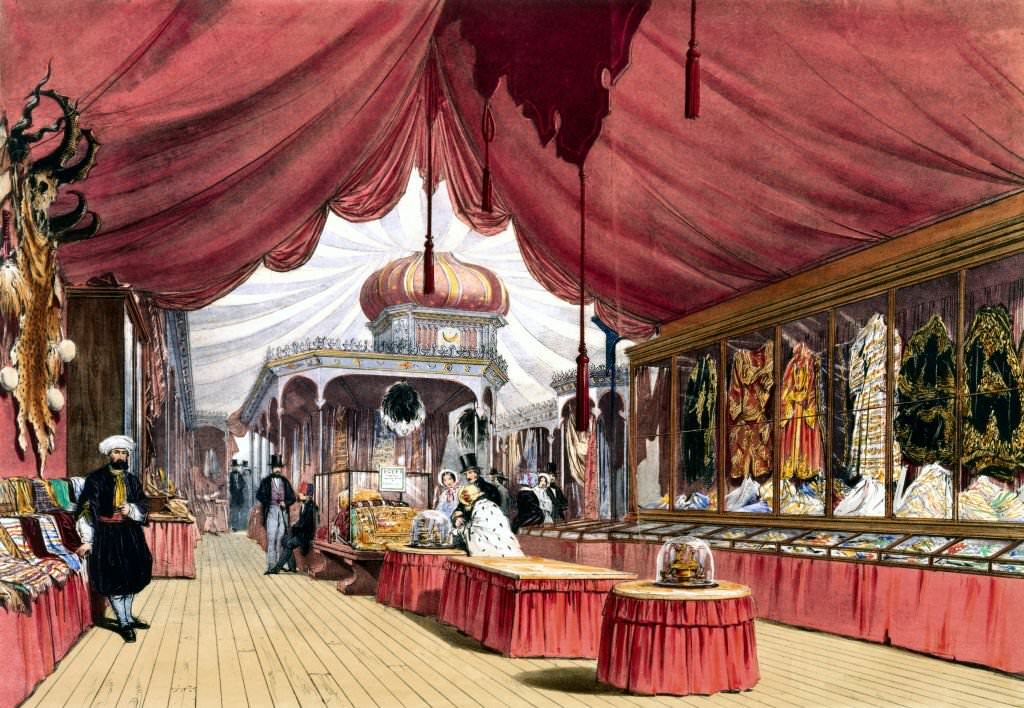
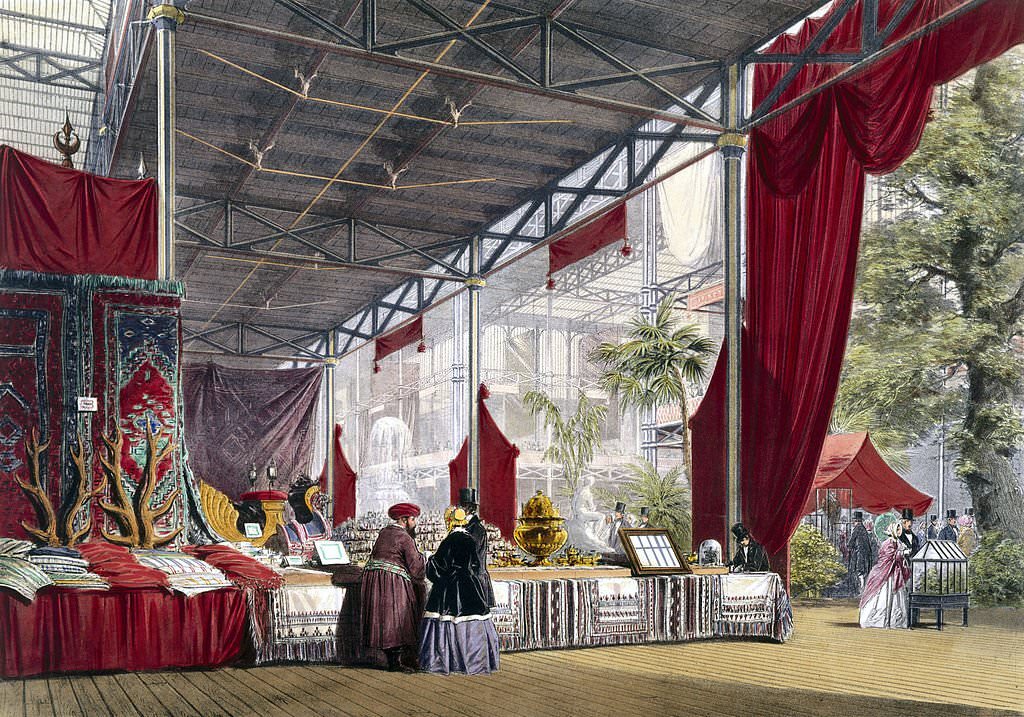
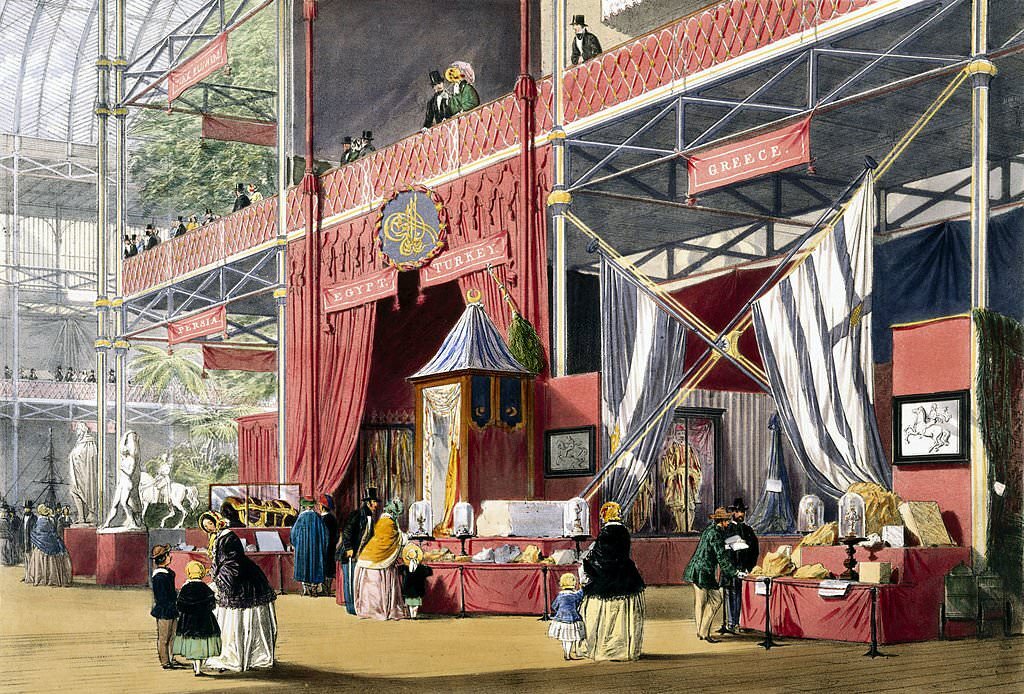
Cases of embroidered goods, a Turkish tent, embroidered saddles and trappings. The ‘Great Exhibition of the Works of the Industry of all Nations’ was conceived by Prince Albert (1819–1861).
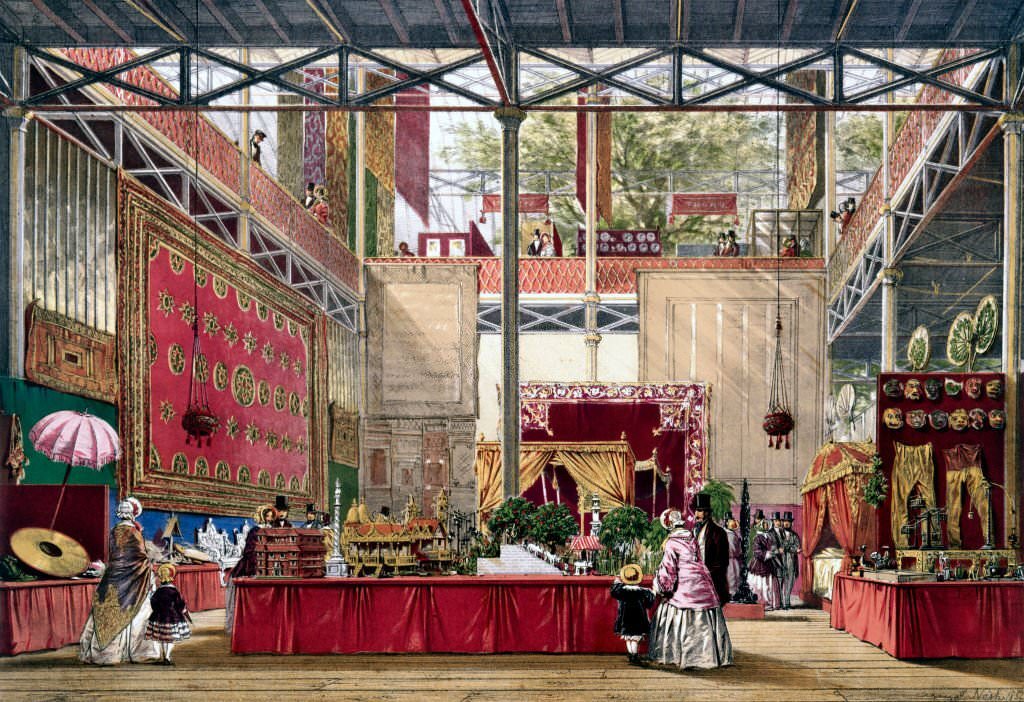
Indian No 5 stand at the Great Exhibition, Crystal Palace, 1851.
Prominent objects on display included a needlework carpet cover from Lahore and a bed from Cashmere with a bedstead of solid silver.
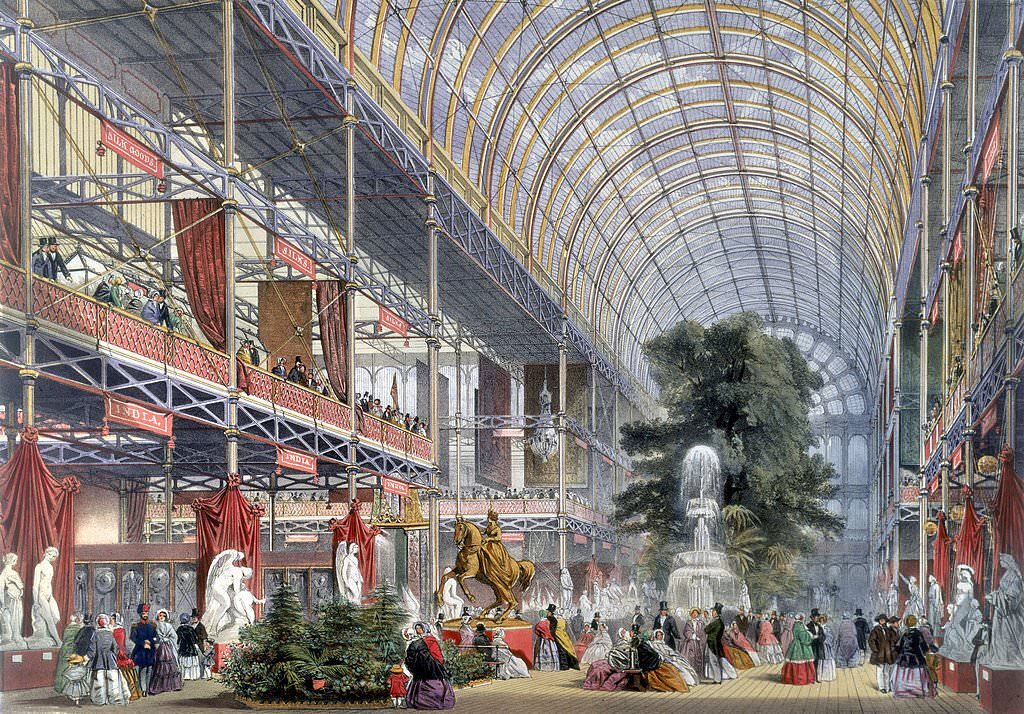
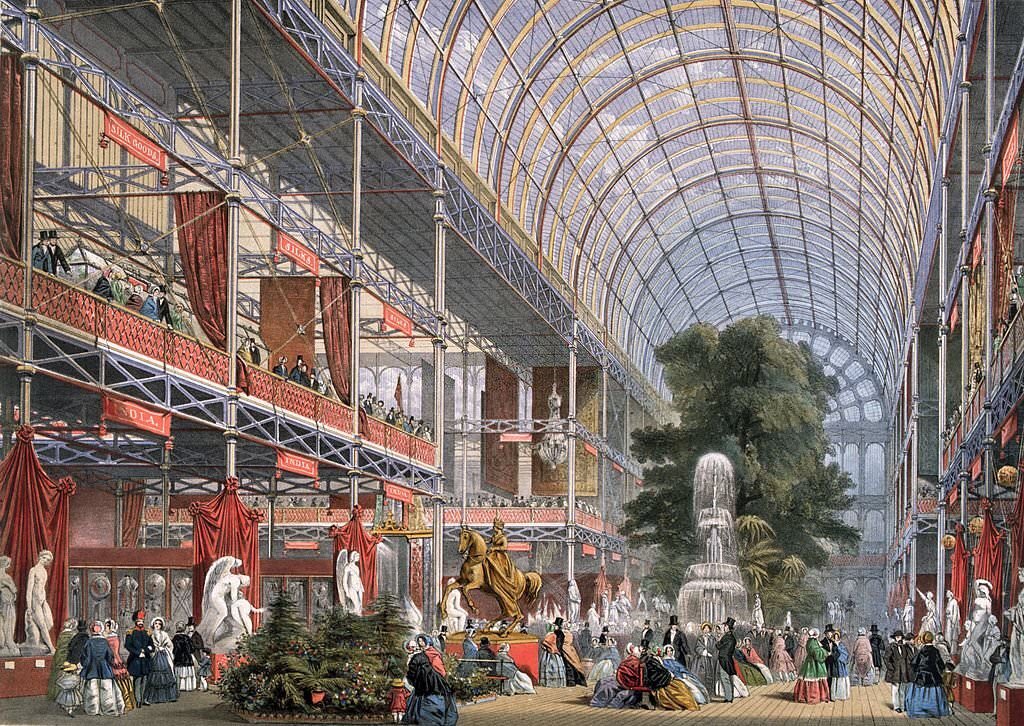
Transept of the Crystal Palace, London, 1851.
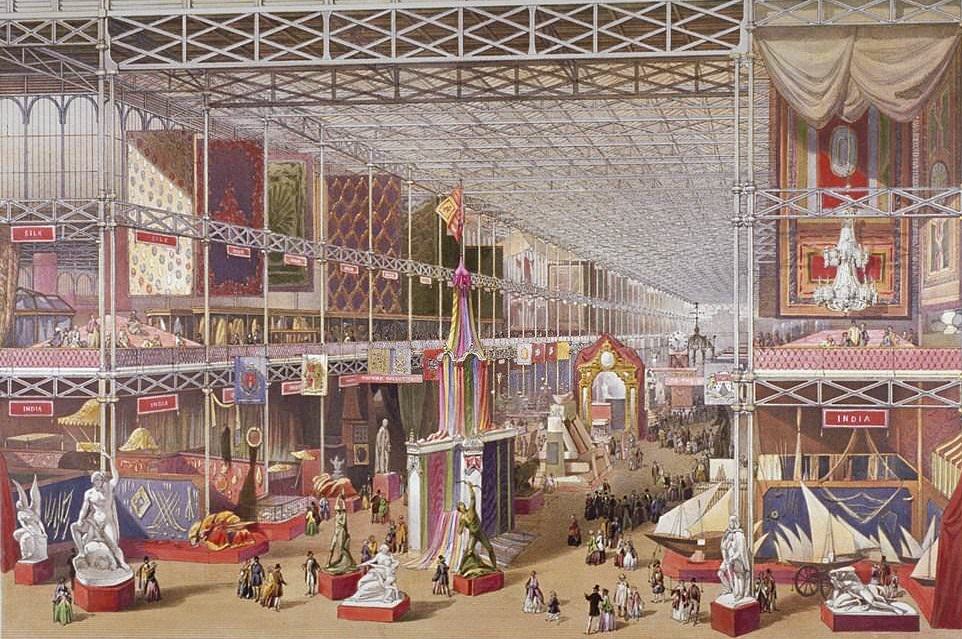
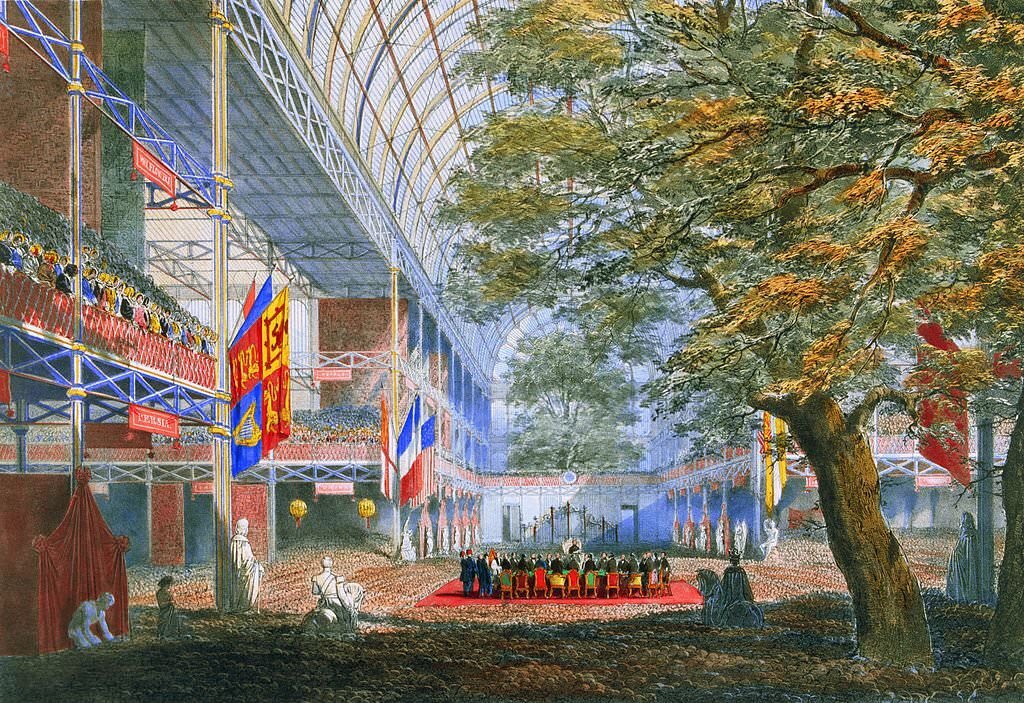
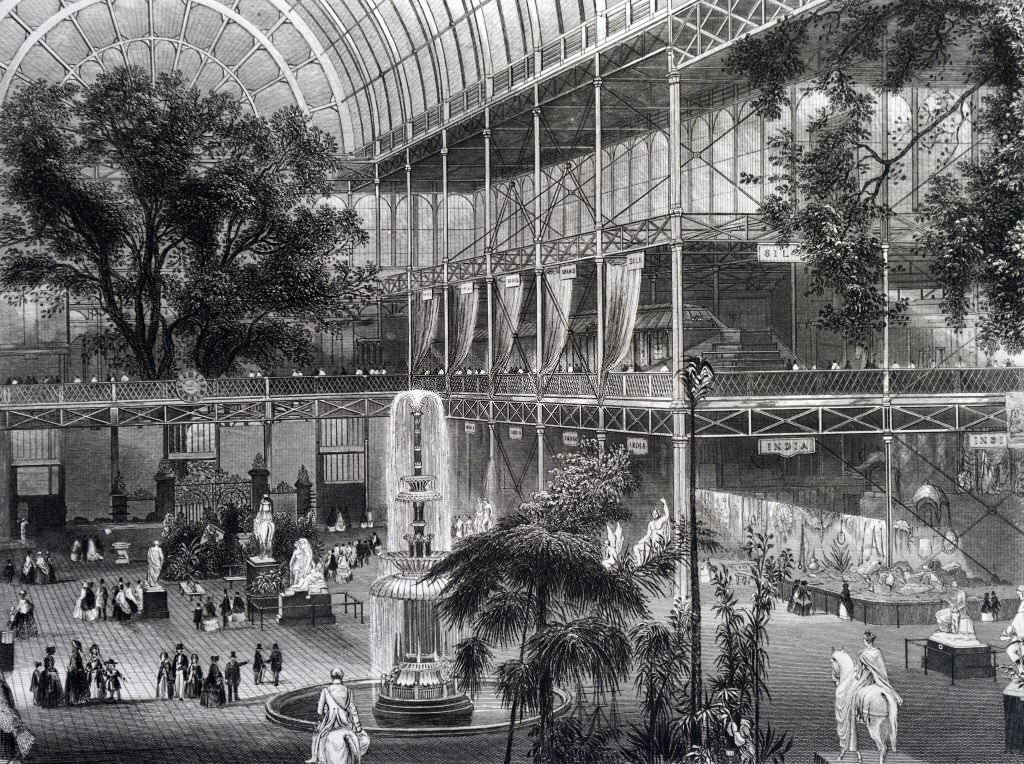
Illustrated plate taken from Dickinson’s ‘Comprehensive Pictures of The Great Exhibition’ (1854), depicting either the opening ceremony or just after it. At the junction of the India stand a crystal glass fountain is visible, and in the foreground visitors sit or parade among the tropical plants, elm trees, greenery, and exhibits. The Crystal Palace was built to house the ‘Great Exhibition of the Works of the Industry of all Nations’, conceived by Prince Albert (1819–1861). This was the first large-scale prefabricated ferrovitreous (iron and glass) structure and was designed by the landscape designer Joseph Paxton (1801–1865). The prefabricated design made the construction, and later dismantling, easier and quicker.
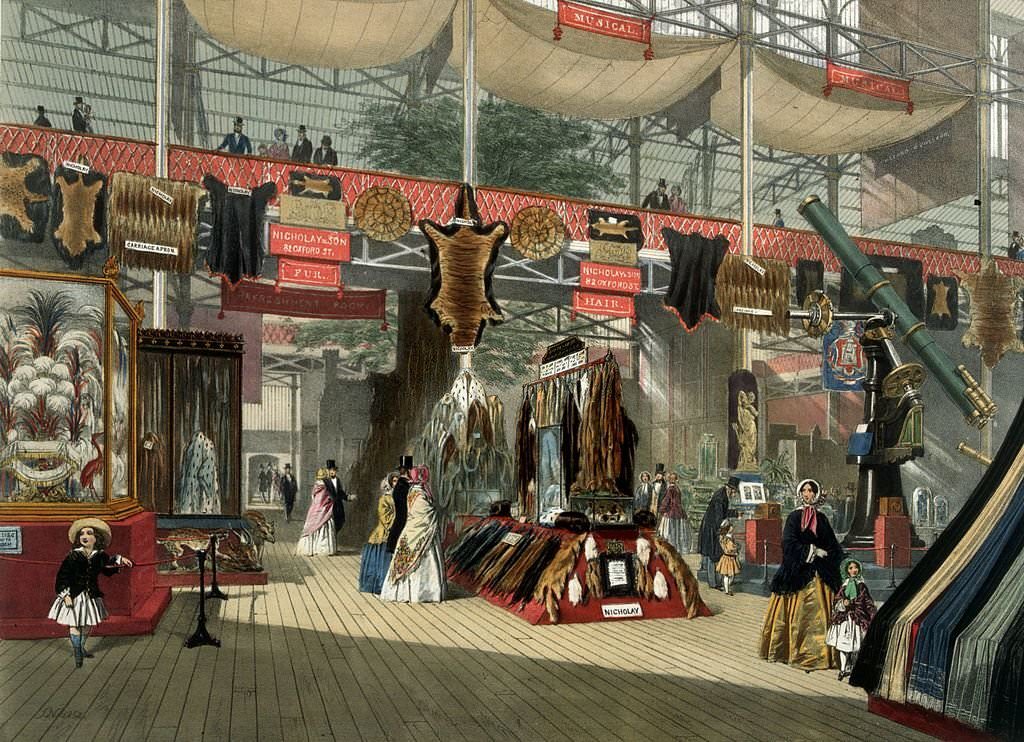
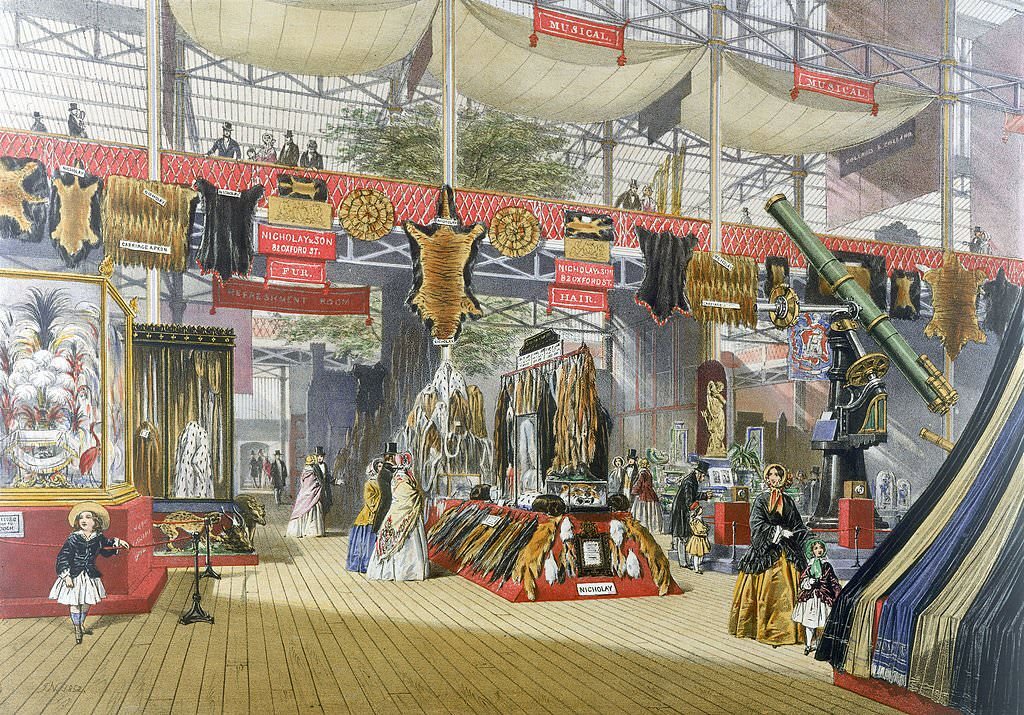
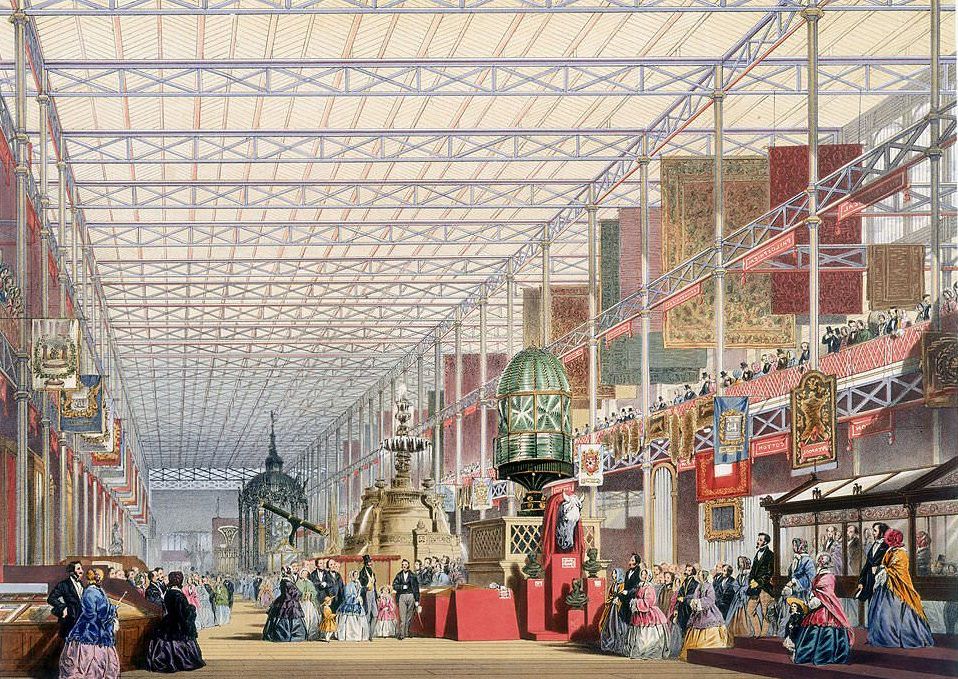
The Great International Exhibition , London, 1862.Stand showing furs at the Great Exhibition, Crystal Palace, London, 1851.The British Nave at the Great Exhibition, Crystal Palace, London, 1851.
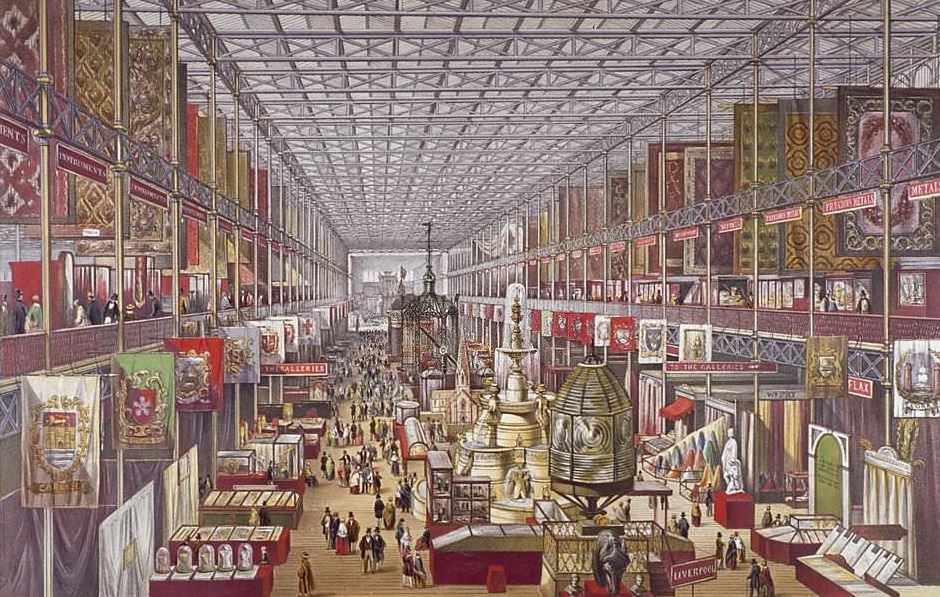
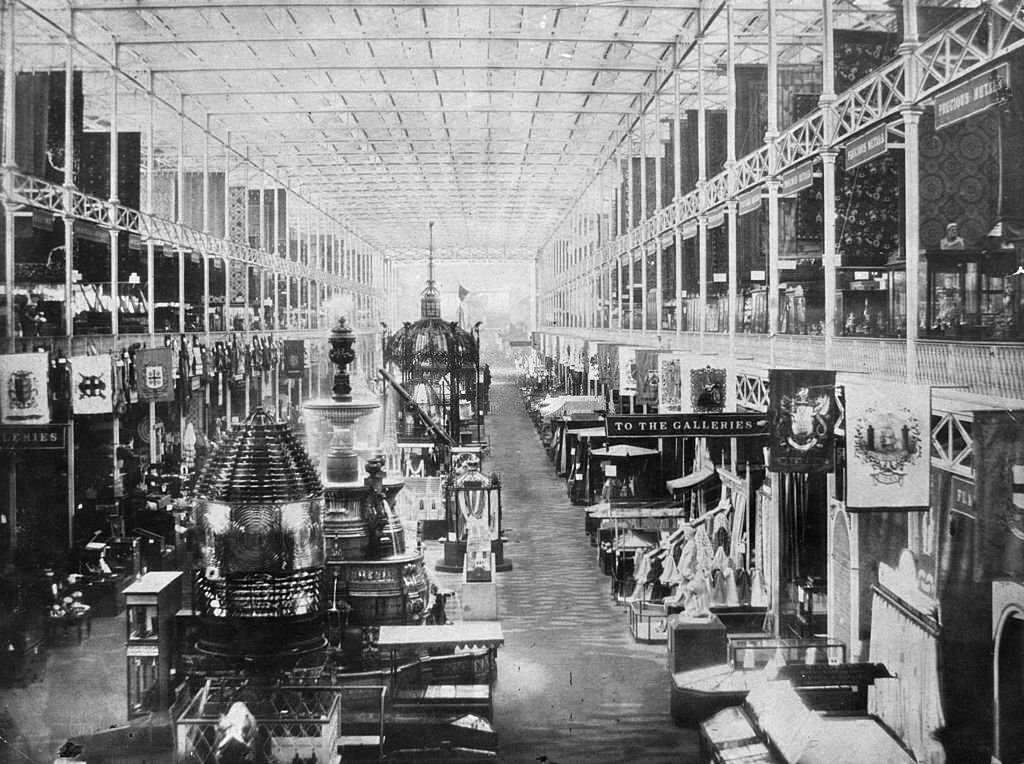
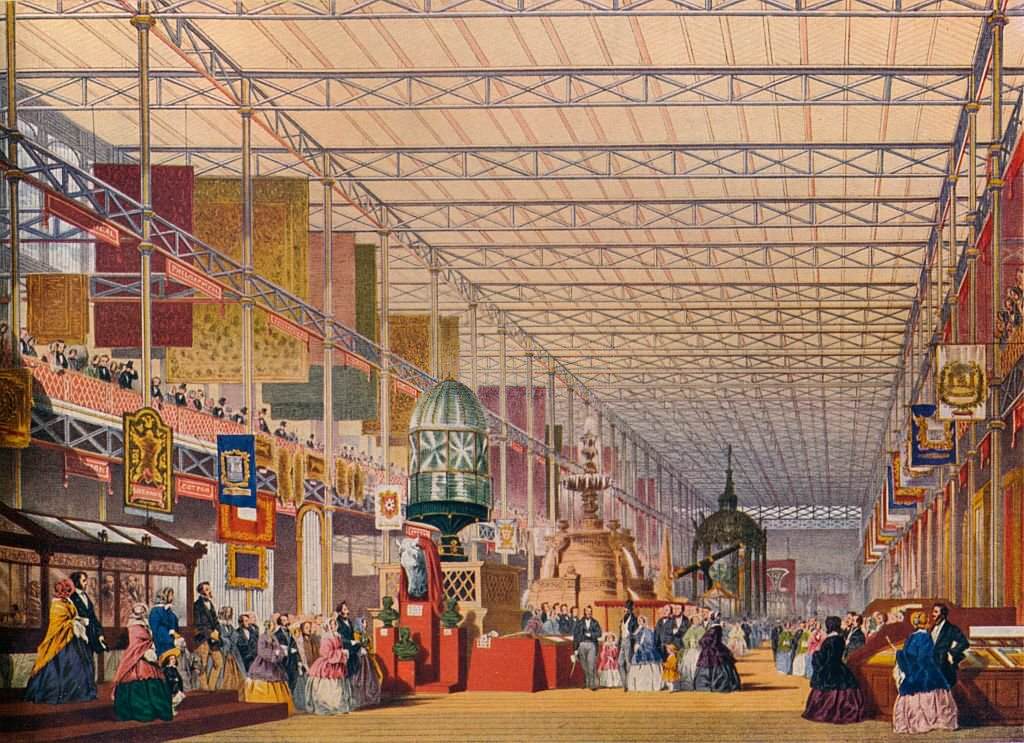
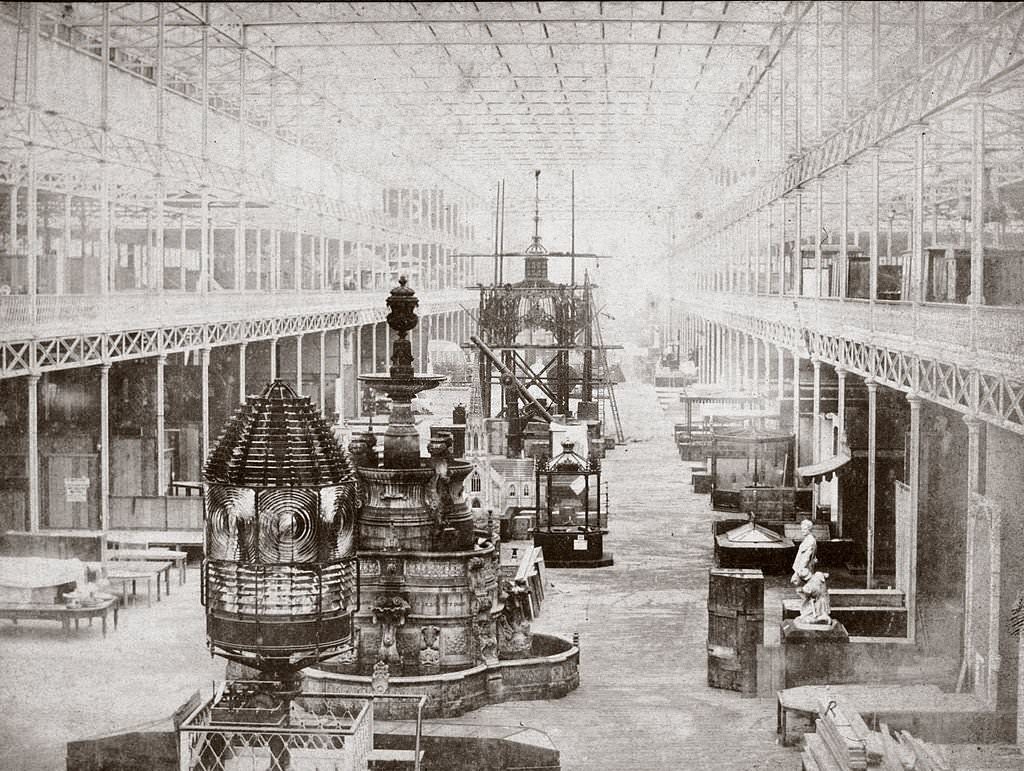
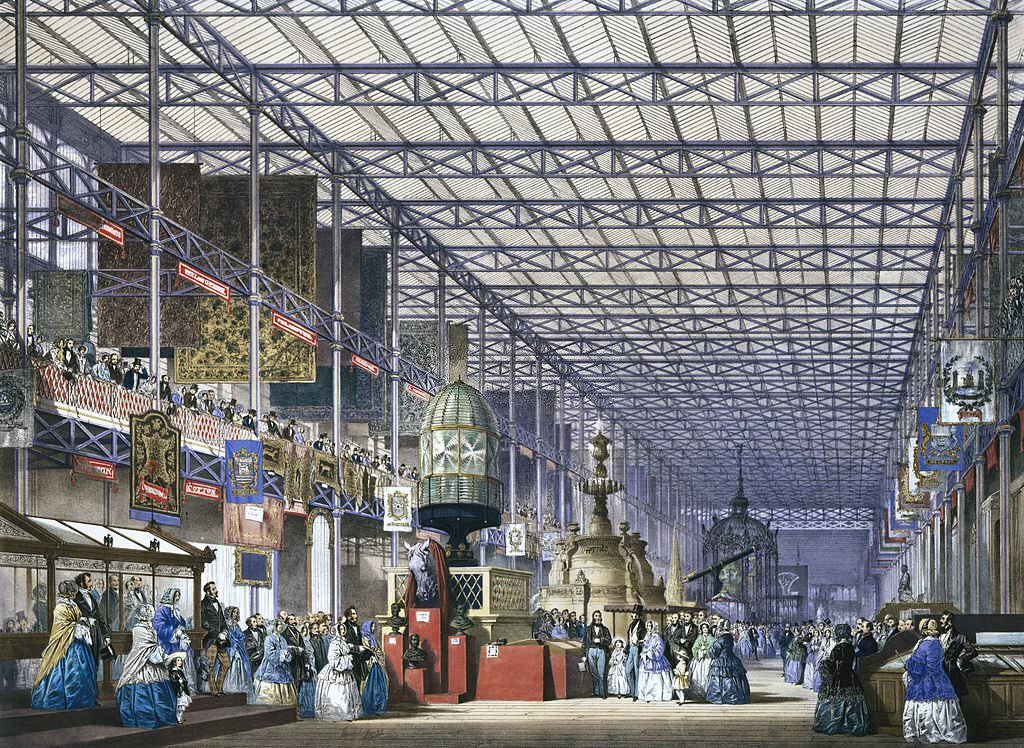
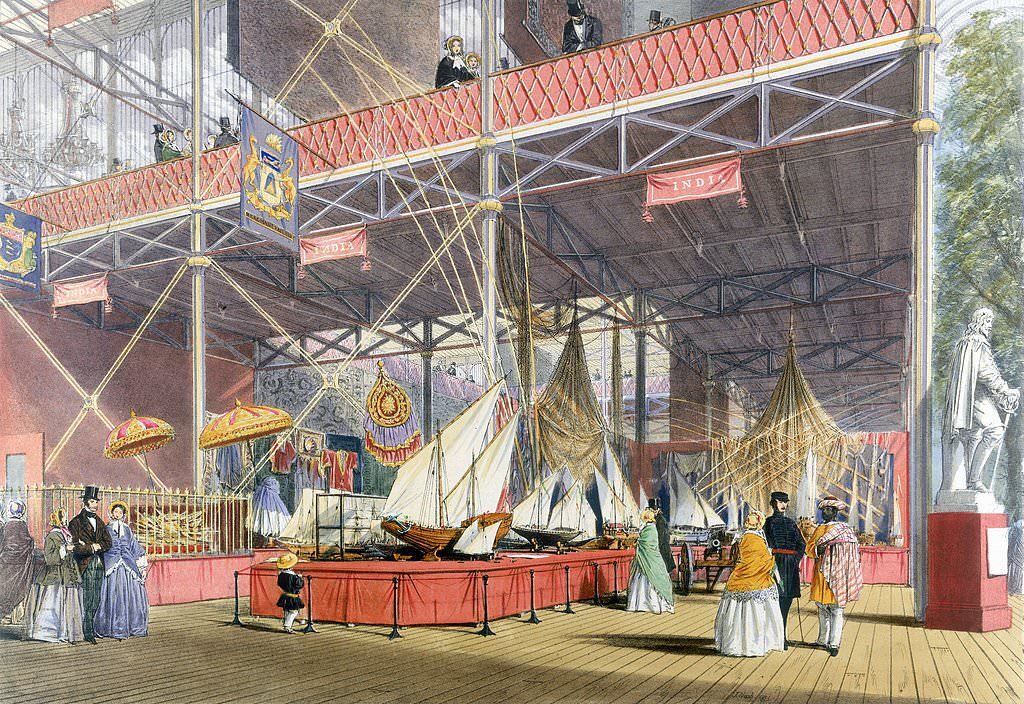
The exhibits shown include a horse’s head, above which is displayed a dioptric revolving lighthouse reflector mechanism by Chance Brothers & Co. Banners hang from the balconies bearing the arms of cities of Britain, with York at the front on the right.
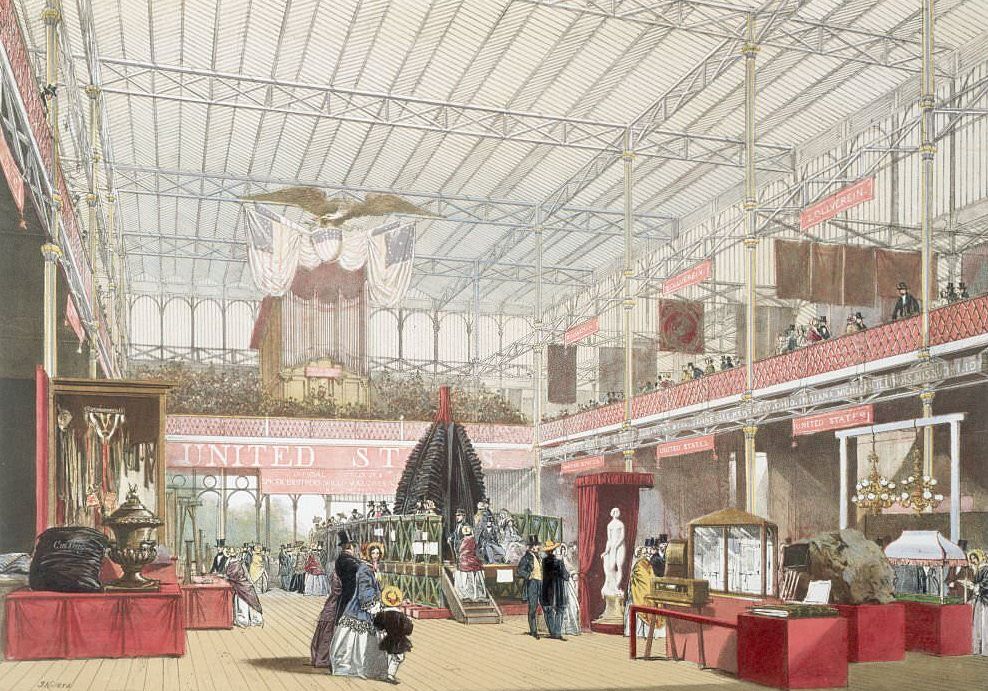
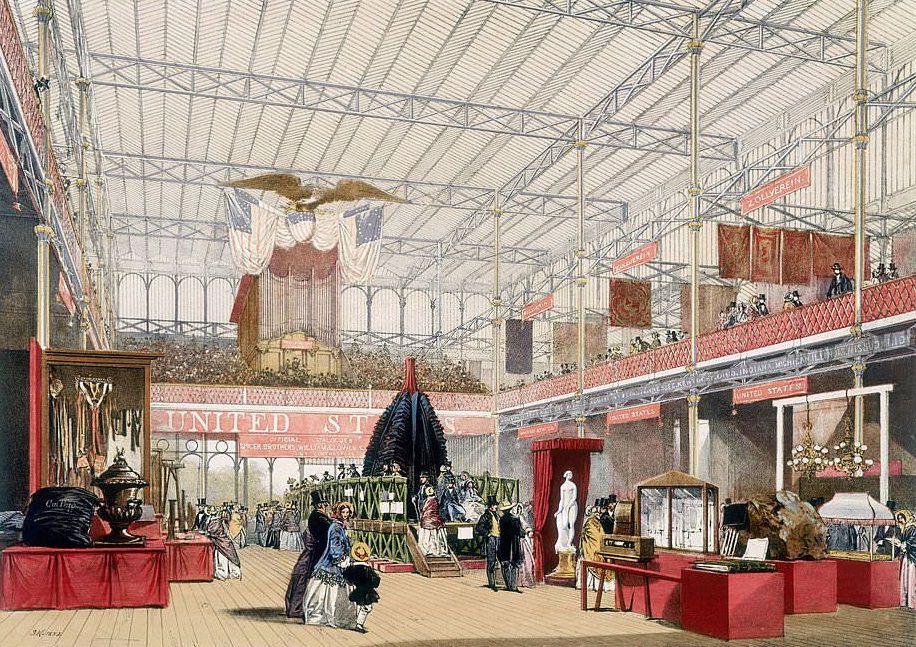
The America stand at the Great Exhibition, Crystal Palace, London, 1851.
Prominent objects on the stand included a model of the ‘Falls of Niagara’, the ‘Rider’ iron truss bridge, and a vulcanized India Rubber trophy, ‘Goodyear’. The Crystal Palace was built to house the ‘Great Exhibition of the Works of the Industry of all Nations’, an idea conceived by Prince Albert (1819–1861).
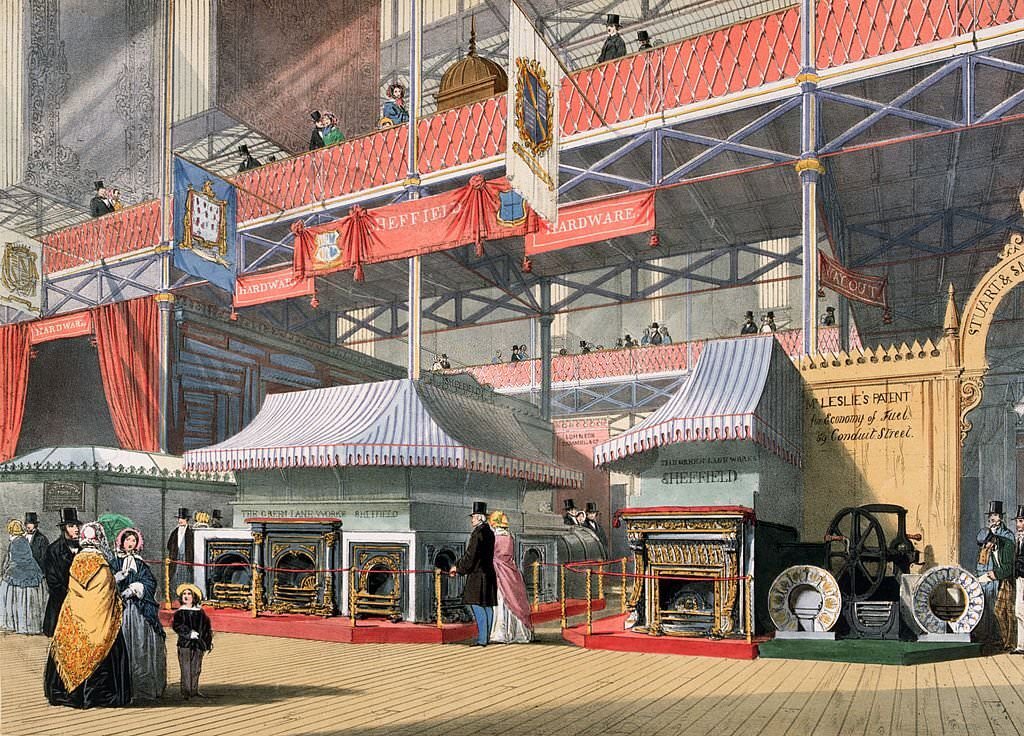
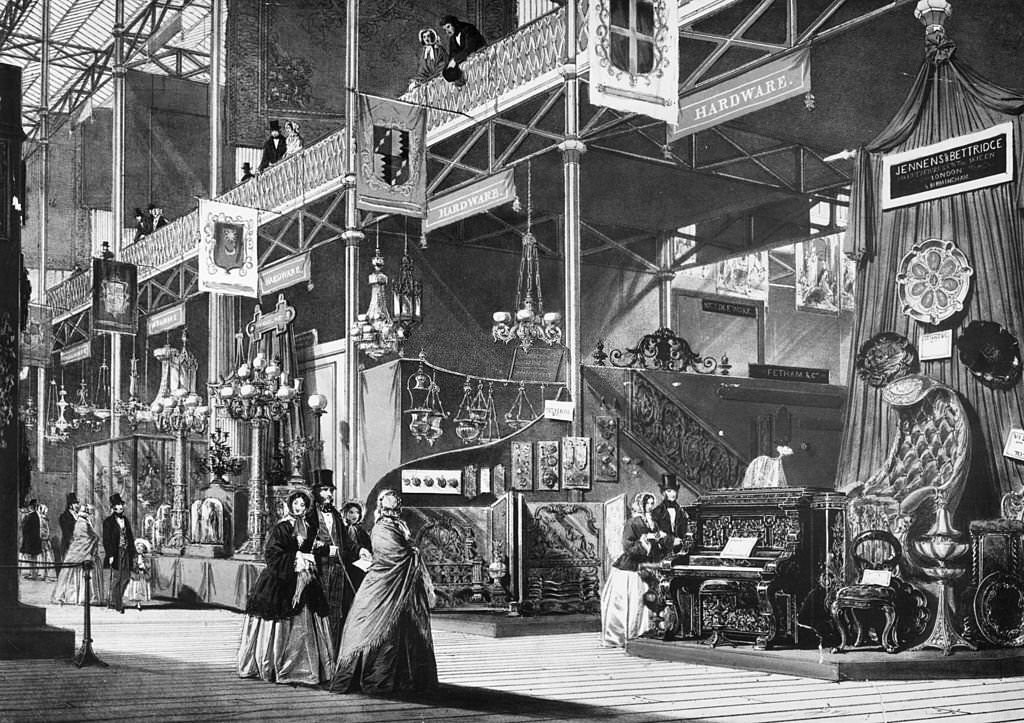
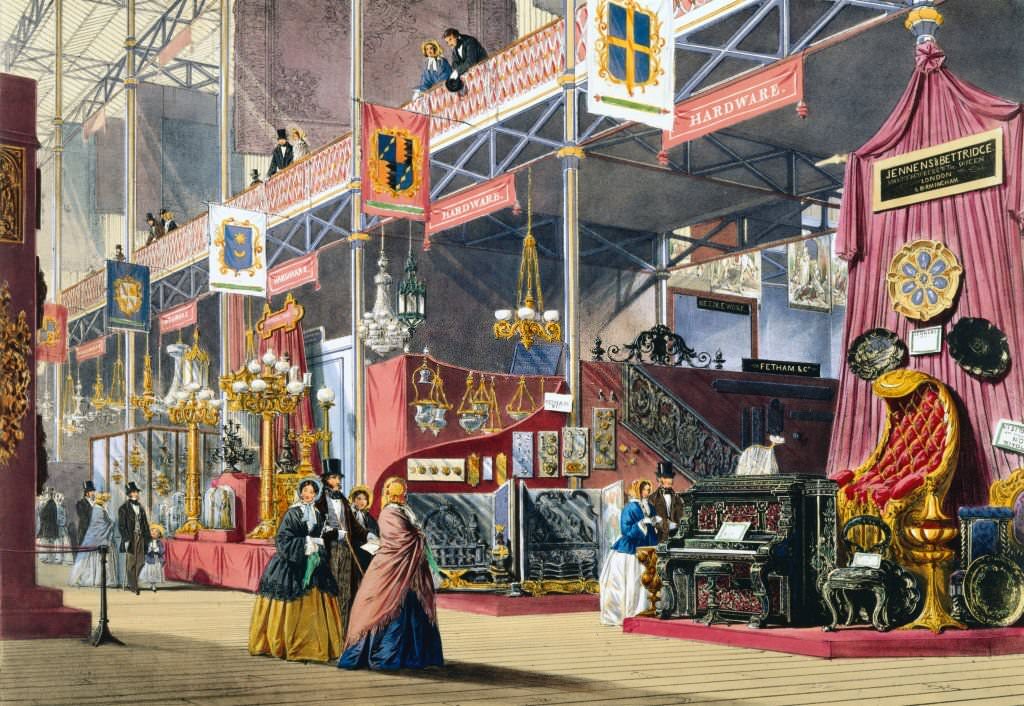
Hardware at the Great Exhibition, Crystal Palace, London, 1851.
Wood carving by machinery and Leslie’s patent gas fittings. The ‘Great Exhibition of the Works of the Industry of all Nations’ was conceived by Prince Albert (1819–1861).
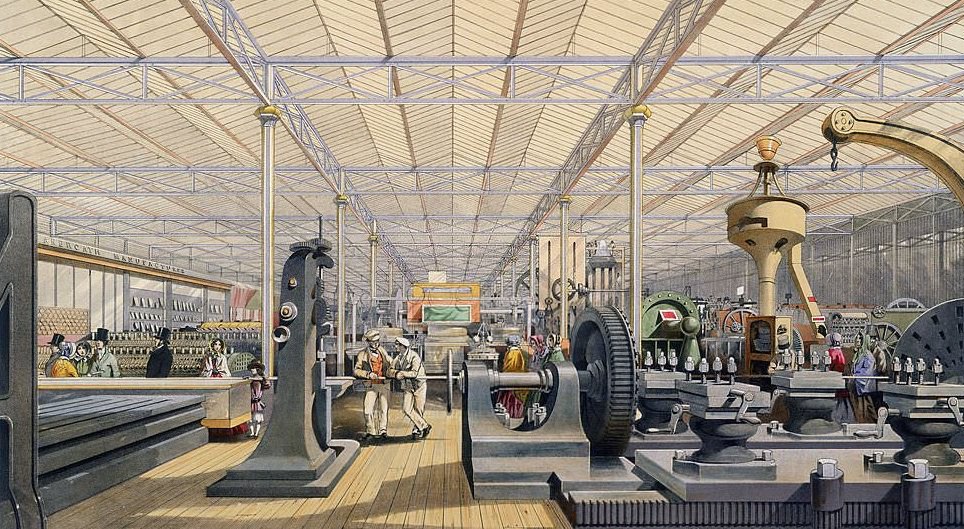
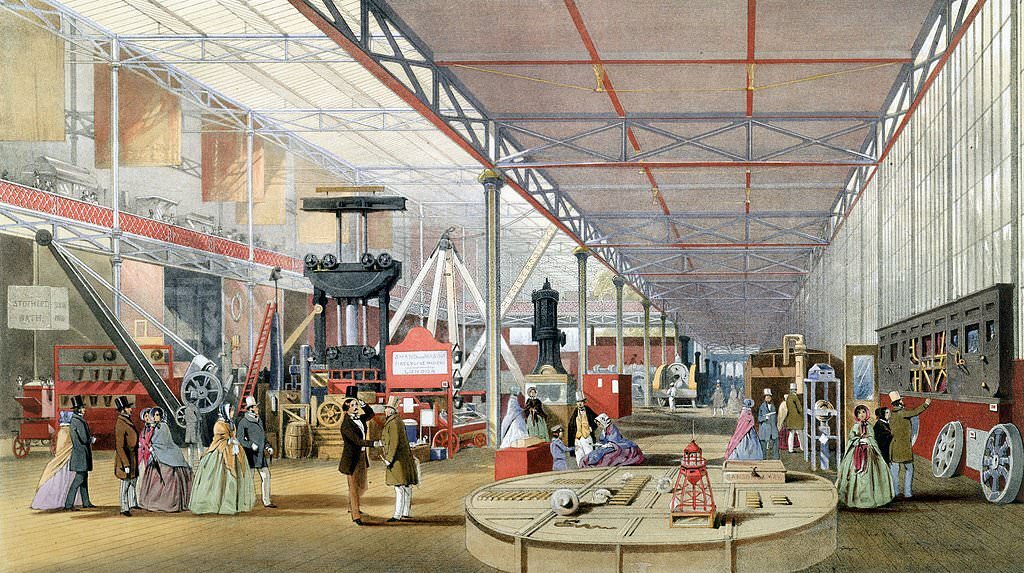
Whitworth stand of machine tools at the Great Exhibition, London, 1851.
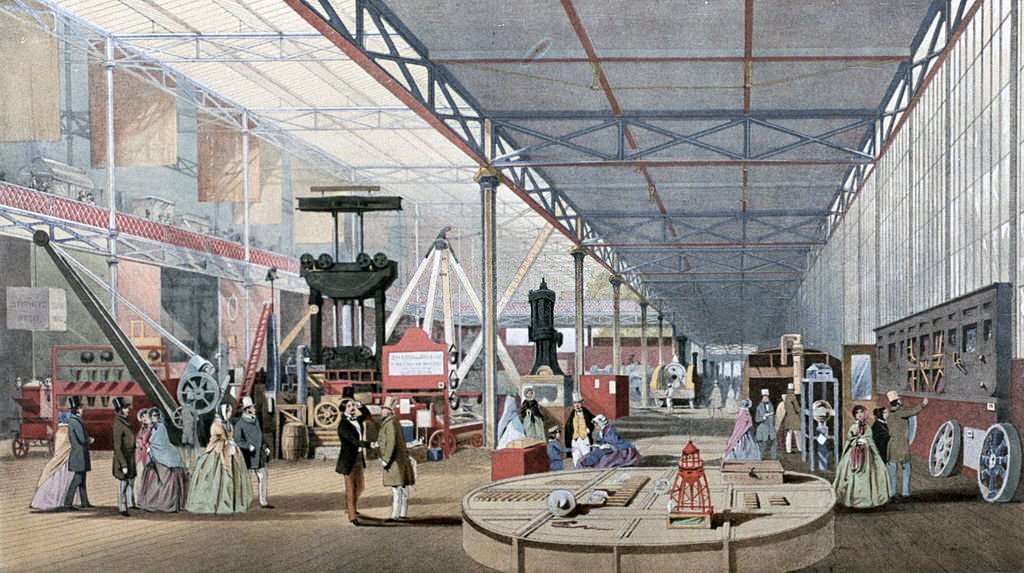
Prominent objects on display include tools for planing, slotting, drilling, and boring, a wrought iron crane, and spinning machinery.
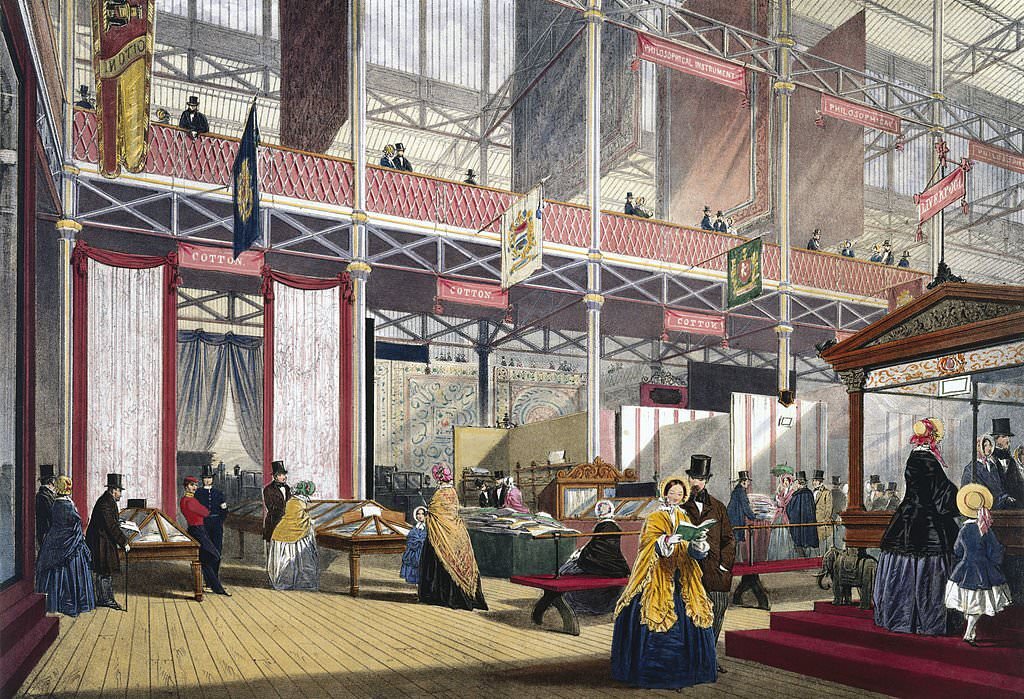
Cotton, carriages etc at the Great Exhibition, Crystal Palace, London, 1851.The north transept, waiting for the Queen to open the Great Exhibition, 1851.
The Great Exhibition was conceived by Prince Albert (1819–1861) to showcase Britain’s industrial and technological achievements. The Crystal Palace was purpose-built to house the 30,000 exhibits.
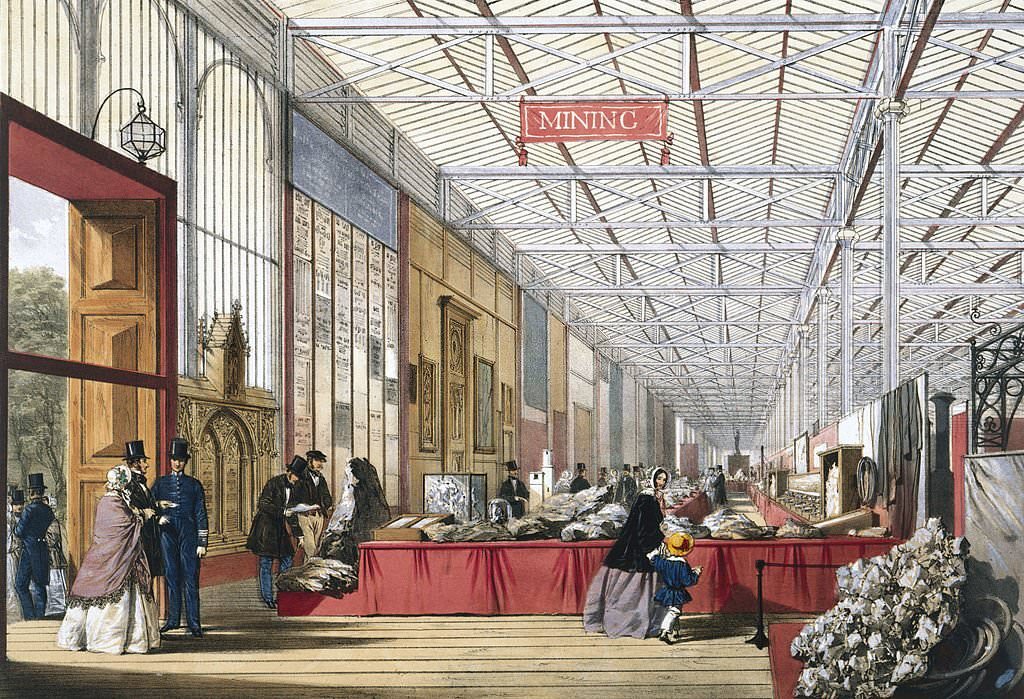
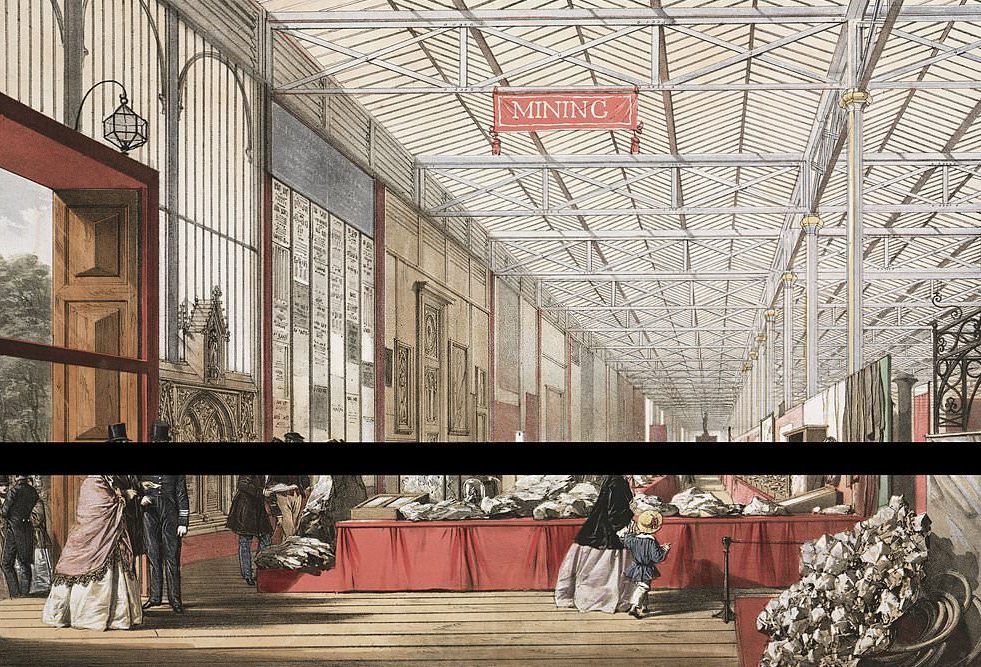
Mining stand at the Great Exhibition, Crystal Palace, London, 1851.
Prominent objects on display included: minerals, specimens of silver, Arkans’ mining company, lead ore, Galena from the Isle of Man, and imitation marbles on the wall by Hopkins.
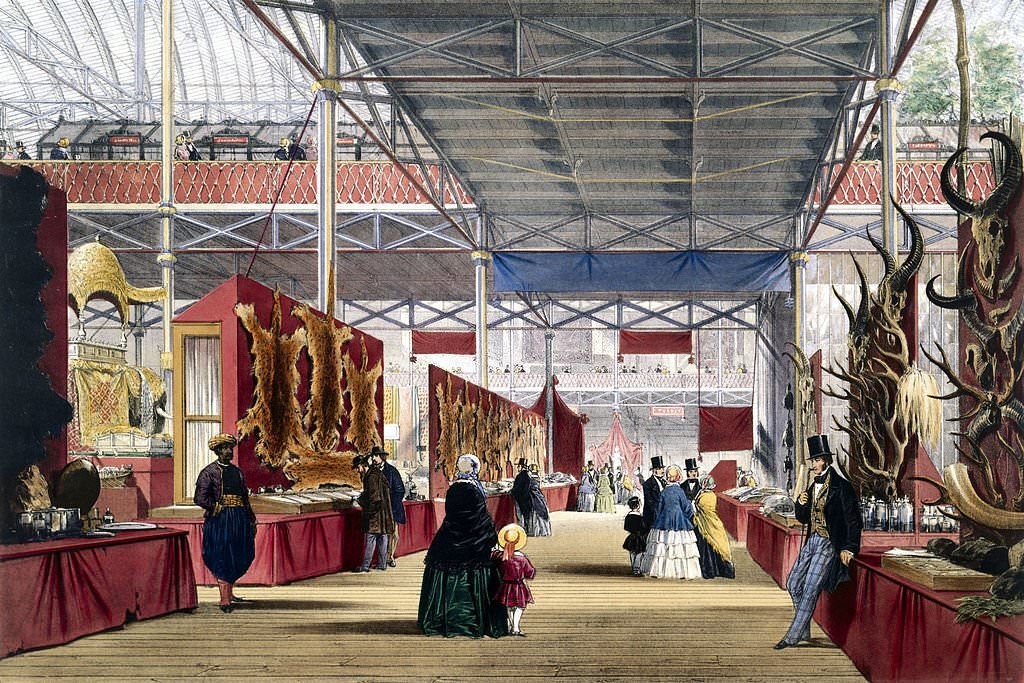
View of the South Side near the Princes Gate, Looking West , 1851.Interior view of the Great Exhibition, Crystal Palace, London, 1851.Turkish No 1 stand at the Great Exhibition, Crystal Palace, London, 1851.
Prominent objects on display included deer horns, Koulah carpets and rugs, and a mangal for warming apartments.
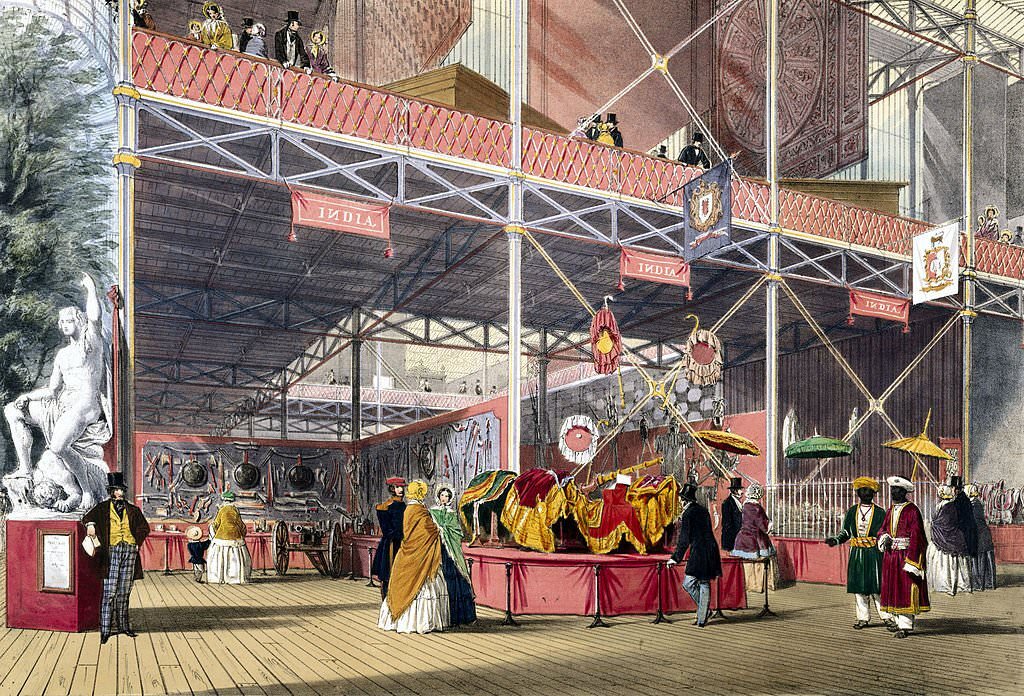
The British Nave in the Crystal Palace , Hyde Park, London, 1851.Indian No 2 stand at the Great Exhibition, Crystal Palace, London, 1851.
Prominent objects on display included state Punkahs (fans), a statue of ‘Michael and Satan’, and a collection of arms of various territories in India.
Indian No 4 stand at the Great Exhibition, Crystal Palace, London, 1851.
Prominent objects on display included: state carriages, a royal canopy, a stuffed elephant, and embroidered muslins from Dacca.
Indian No 6 stand at the Great Exhibition, Crystal Palace, 1851.Indian No 7 stand at the Great Exhibition, Crystal Palace, London, 1851.
Prominent objects on display included a complete collection of Indian pottery, silk carpets, and various items of tribal dress.
The Shand and Mason stand, Great Exhibition, Crystal Palace, London, 1851.
Visitors admiring the equipment made by the fire engine company, Shand and Mason.
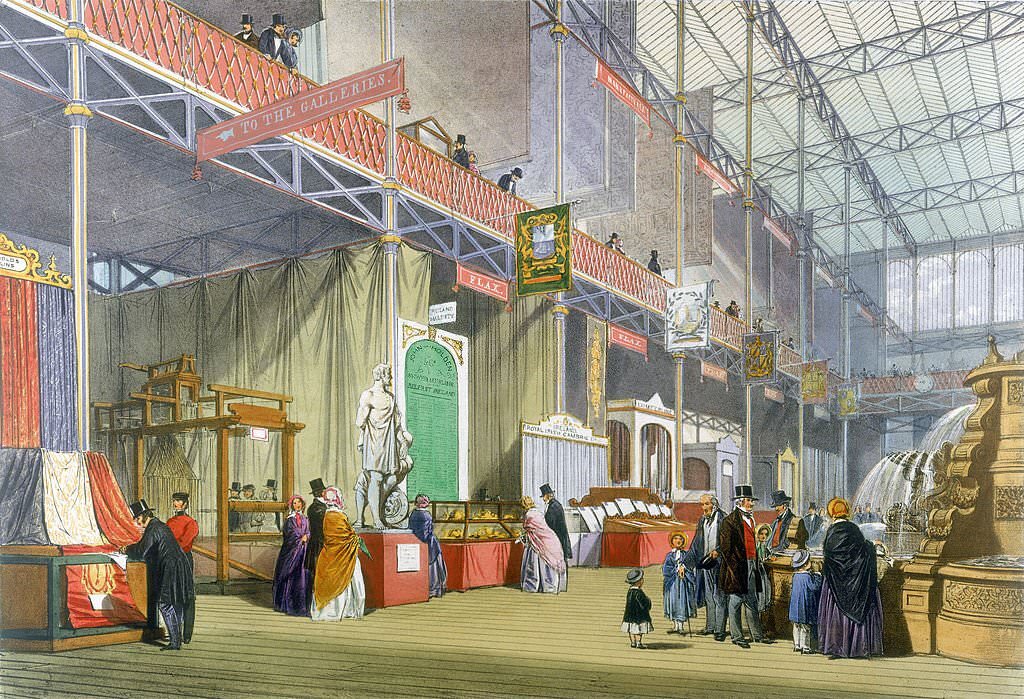
Agriculture stands at the Great Exhibition, Crystal Palace, London, 1851.Area representing India at the Great Exhibition, Crystal Palace, London, 1851.Area showing flax at the Great Exhibition, Crystal Palace, London, 1851.Greek stand at the Great Exhibition, Crystal Palace, London, 1851.
Prominent objects on the Greek stand included the marble bas-relief from the Parthenon and a carved cross in the old Byzantine style.
Russian stand at the Great Exhibition, Crystal Palace, London, 1851.
Prominent objects on the Russian stand included gilt bronze candelabras by Krumbigel; a case of jewels by Seftyzer and Bewzershon; inlaid flooring; and a large vase from the Imperial China Manufactory.
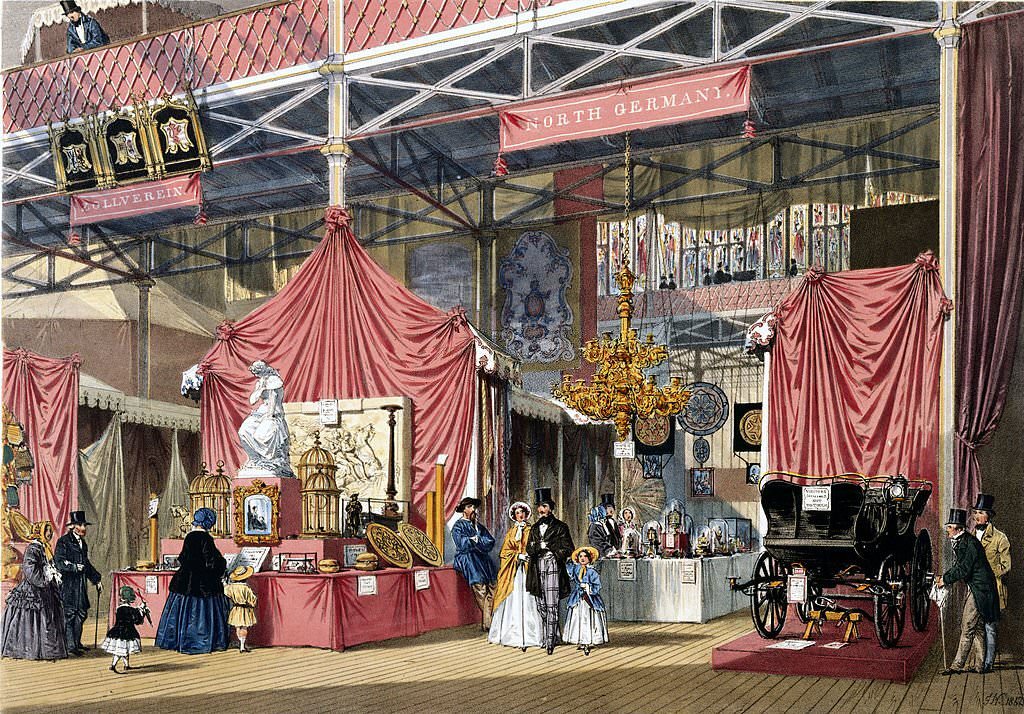
North German stand at the Great Exhibition, Crystal Palace, London, 1851.
Prominent objects on the North German stand included mosaic table tops, a brass chandelier by Bernstorff and Erchwede, and Miss Berendine’s portraits of Queen Victoria and the Prince of Wales.
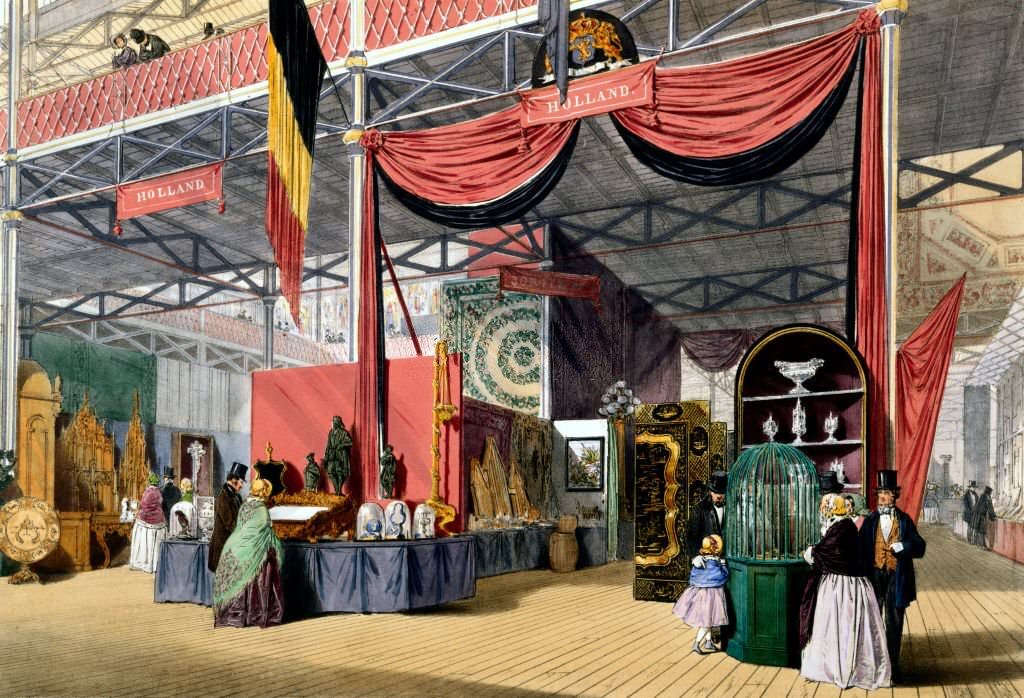
Dutch stand at the Great Exhibition, Crystal Palace, London, 1851.
The Dutch stand included such prominent objects as Van Hampen’s case of silver ornaments, a corsage made of diamonds, and a bronze statuette of Prince William of Holland.
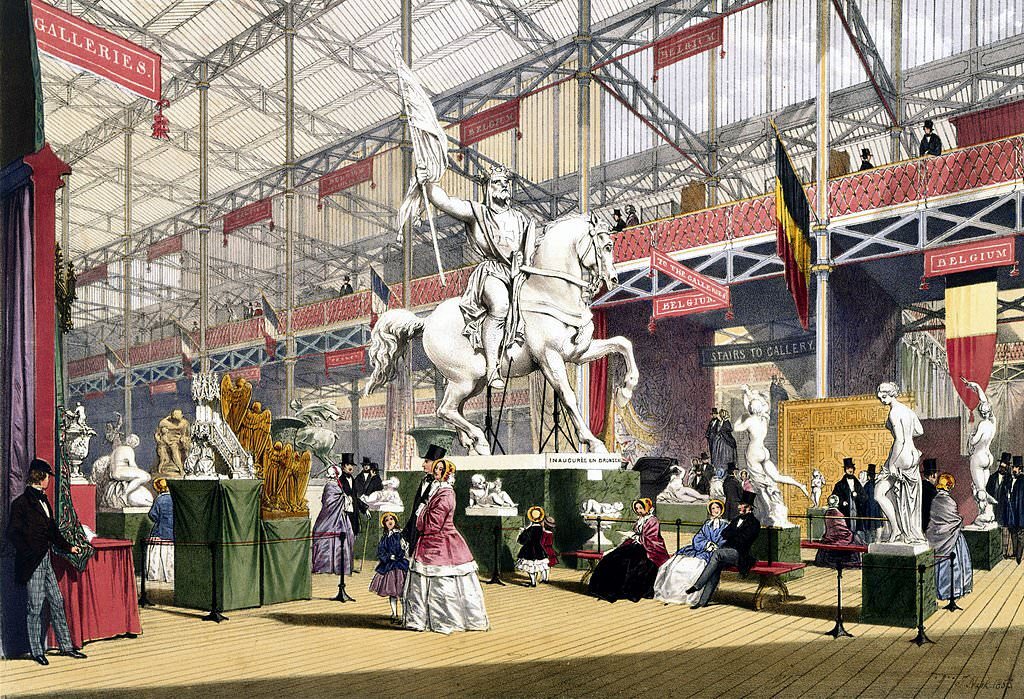
Belgian stand at the Great Exhibition, Crystal Palace, London, 1851.
Prominent objects on the Belgian stand included the statues: ‘The Lion in Love’, ‘Godfrey de Bouillon’, ‘The Happy Child’, and ‘Psyche and Cupid’.
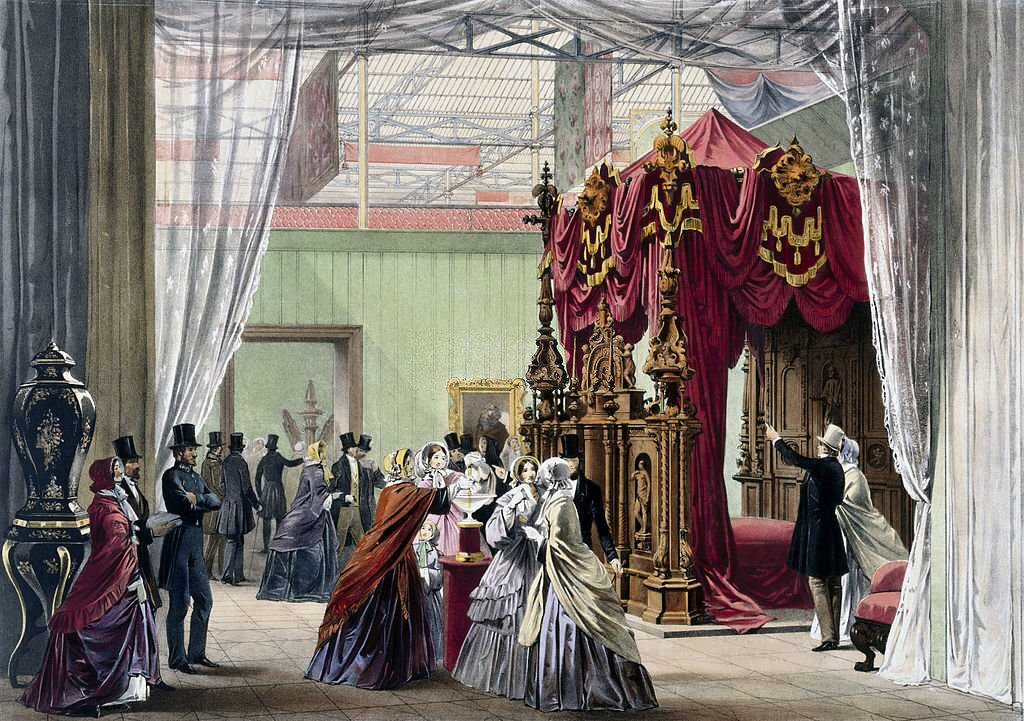
Austrian stand No 1 at the Great Exhibition, Crystal Palace, London, 1851.
Prominent objects on the first Austrian stand included an elaborately carved bedstead and an Eau de Cologne Fountain.
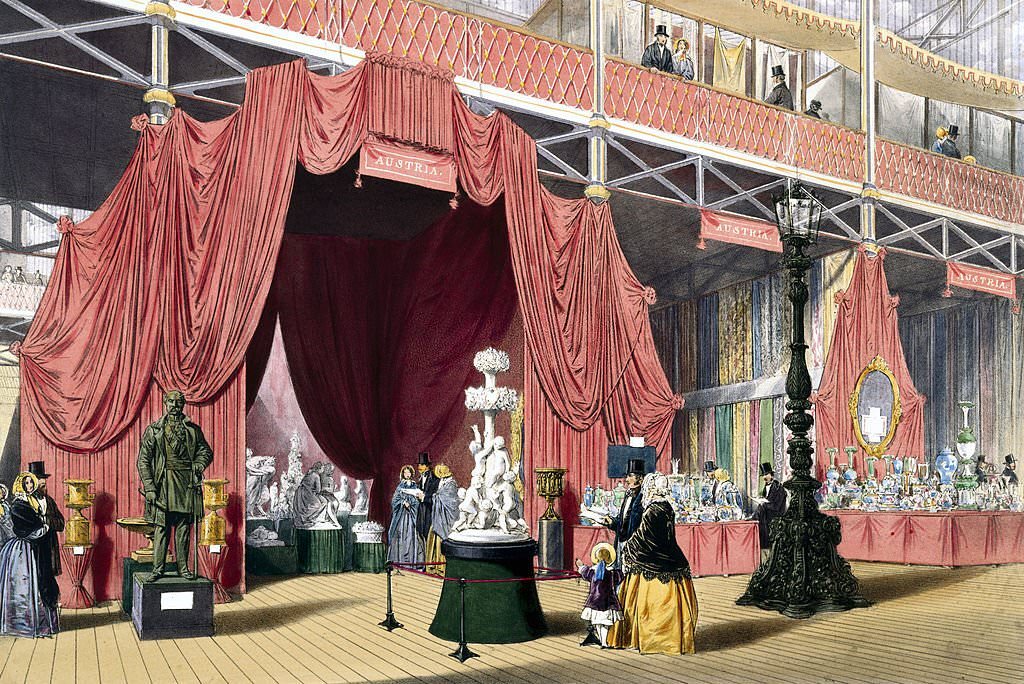
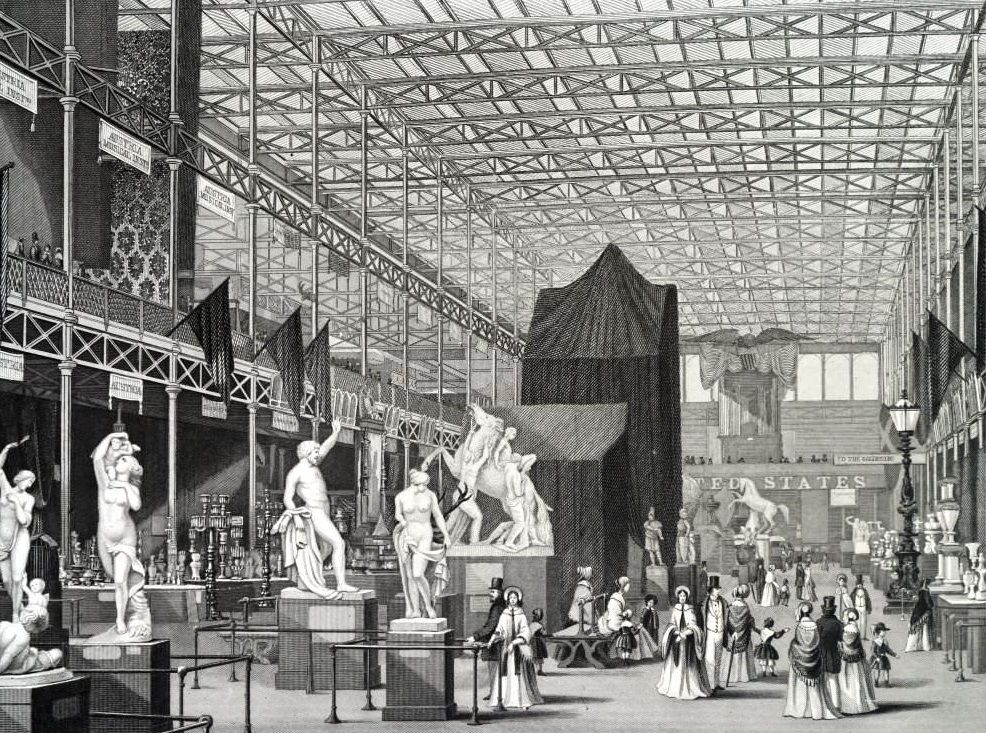
Austrian stand No 2 at the Great Exhibition, Crystal palace, London, 1851.
Prominent objects on the second Austrian stand included mosaic vases by Gottl, a veiled vestal, ‘David’ in marble, and a candelabrum in cast iron.
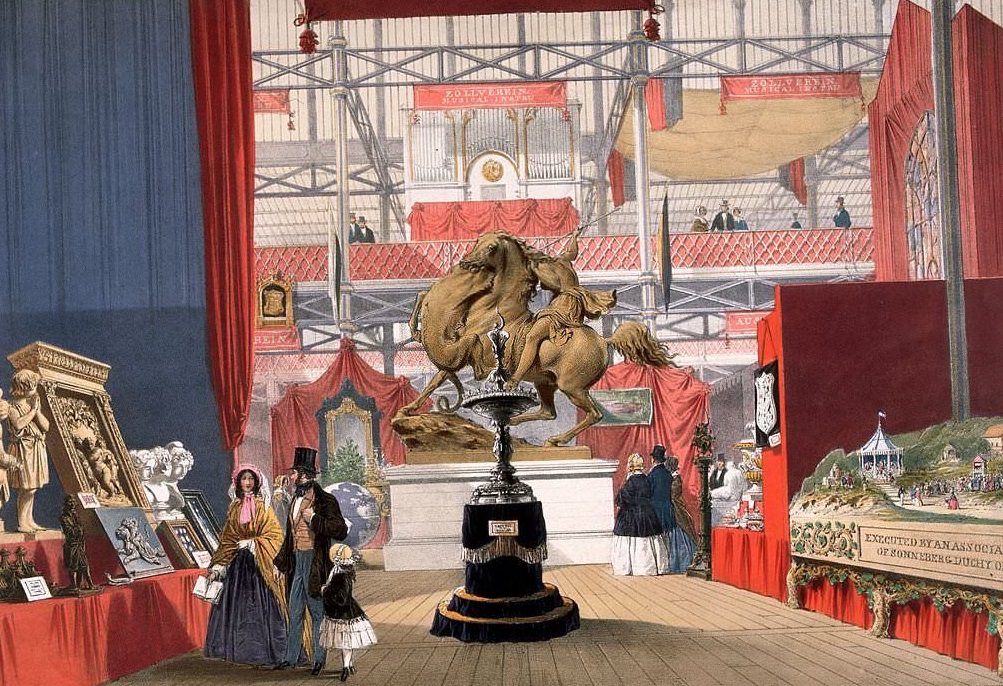
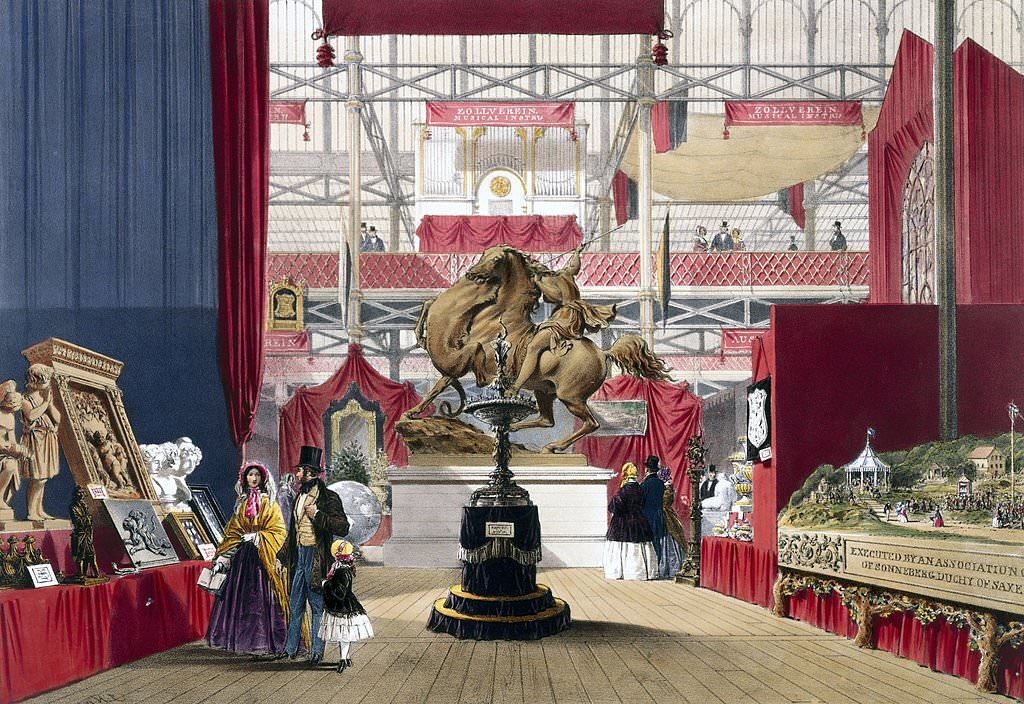
Zollverein stand at the Great Exhibition, Crystal Palace, London, 1851.
Prominent objects on the Zollverein stand included: Amazon by Kiss, statuettes from the Prussian iron foundry, an oxidized silver vase, and a German organ.
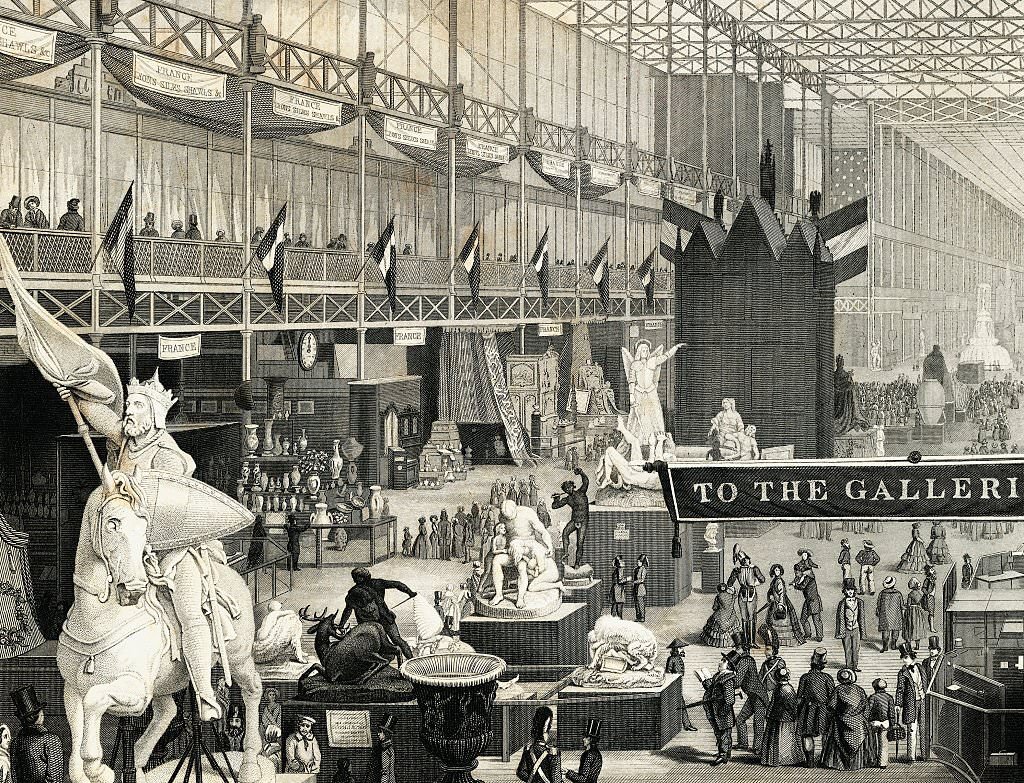
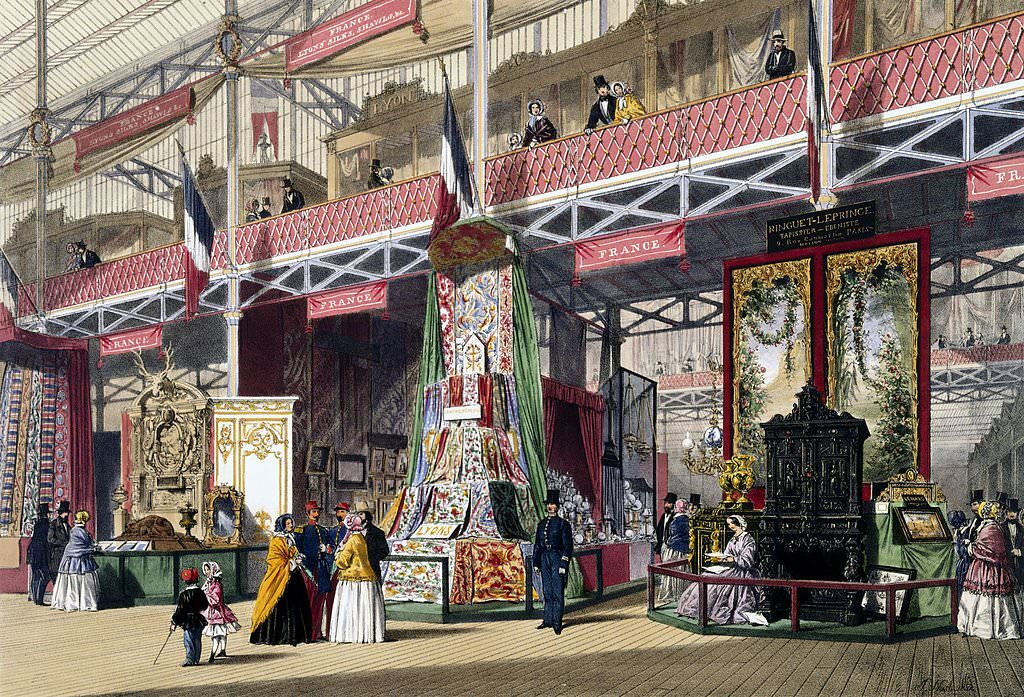
French No 1 stand at the Great Exhibition, Crystal Palace, London, 1851.
Prominent objects on the first French stand included Lyons silks for curtains; books in the oriental languages from the National Printing Establishment of France; tissues for hangings, and furniture.
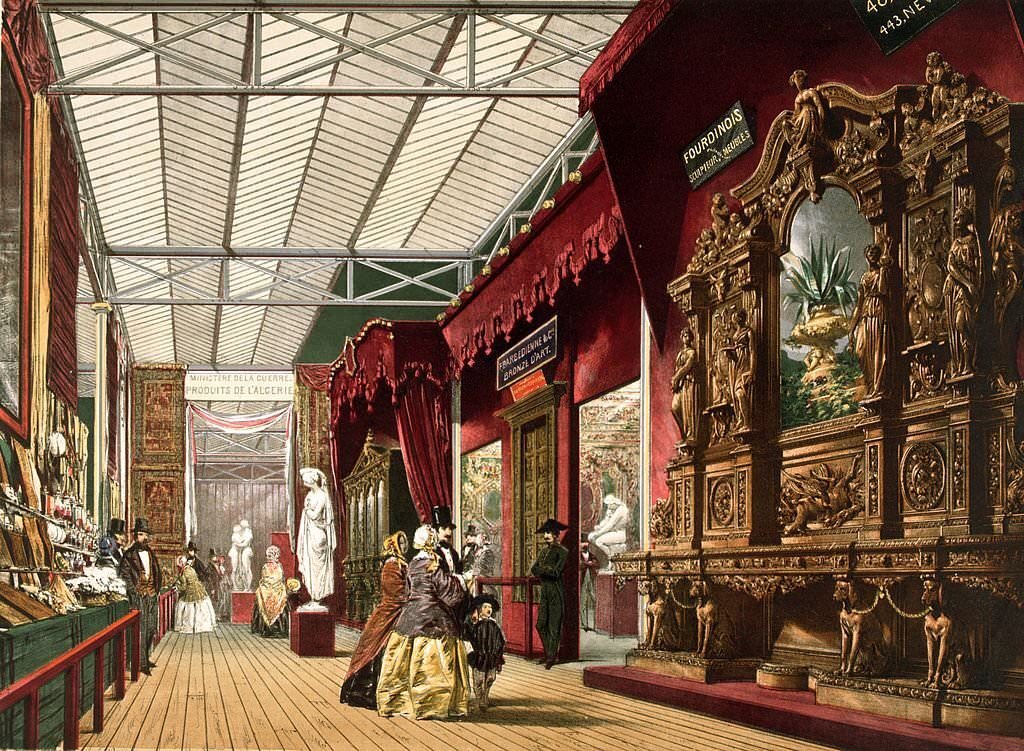
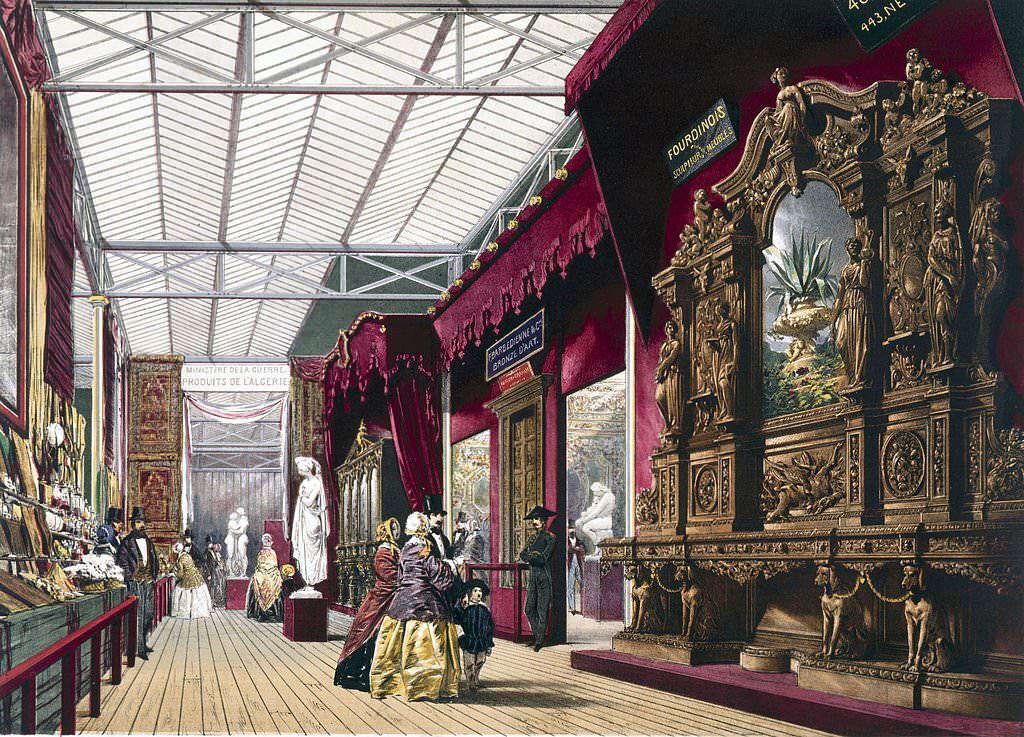
French No 2 stand at the Great Exhibition, Crystal Palace, London, 1851.
Prominent objects on the second French stand included Fordinois’ prize sideboard, the gold doors of the Baptistry of Florence, a Barbedienne bookcase, and bronzes.
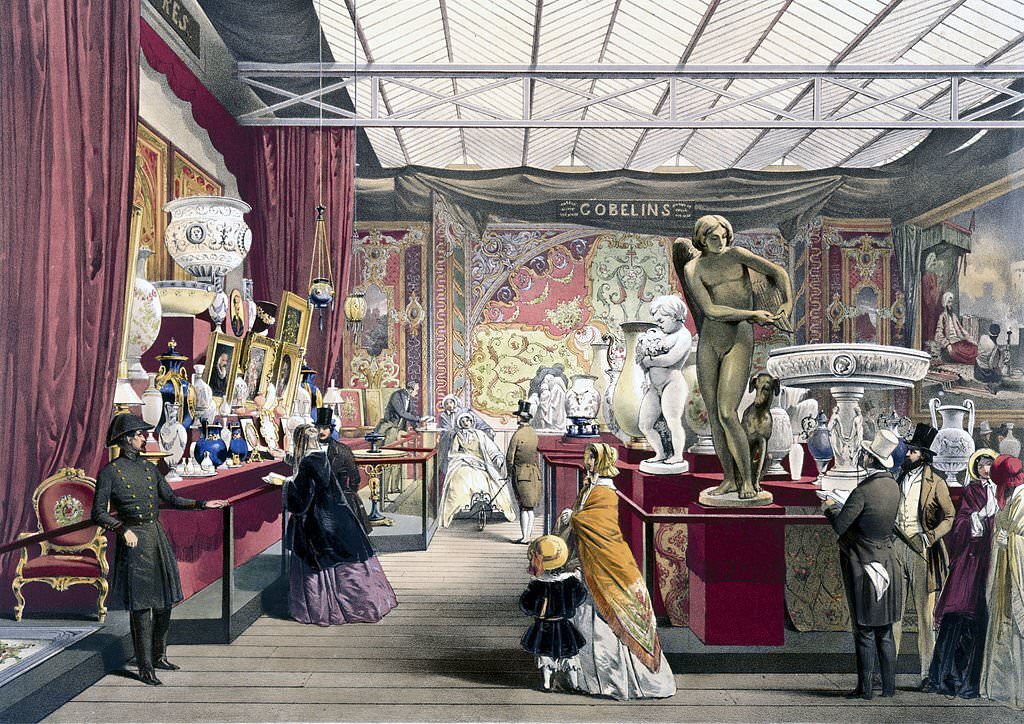
French No 3 stand at the Great Exhibition, Crystal Palace, London, 1851.
Prominent objects on show on the third French stand were a collection of vases and paintings from Sevres; the gates of the Baptistry of Florence; ‘Cupid cutting off his wings’, and other marble statues.
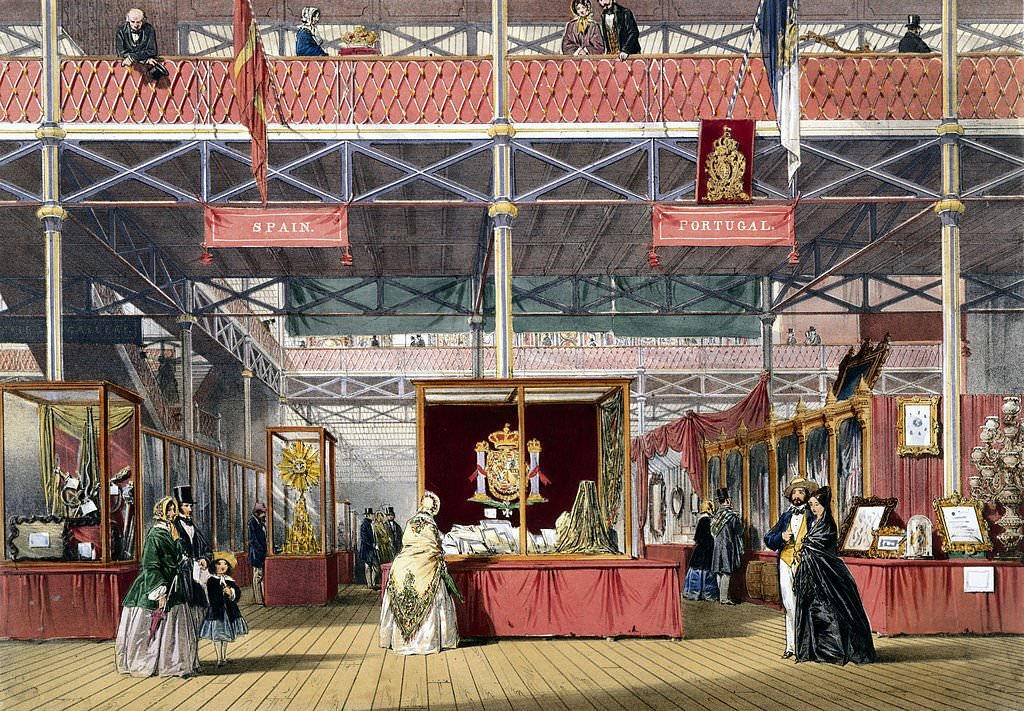
Spanish and Portugese stand at the Great Exhibition, Crystal Palace, 1851.
Prominent objects on display on this stand included a silk shield of the Royal Arms of Spain; gold and silver; baby linen made for the Prince of Austria; Portuguese snuff, and a case of Spanish arms.
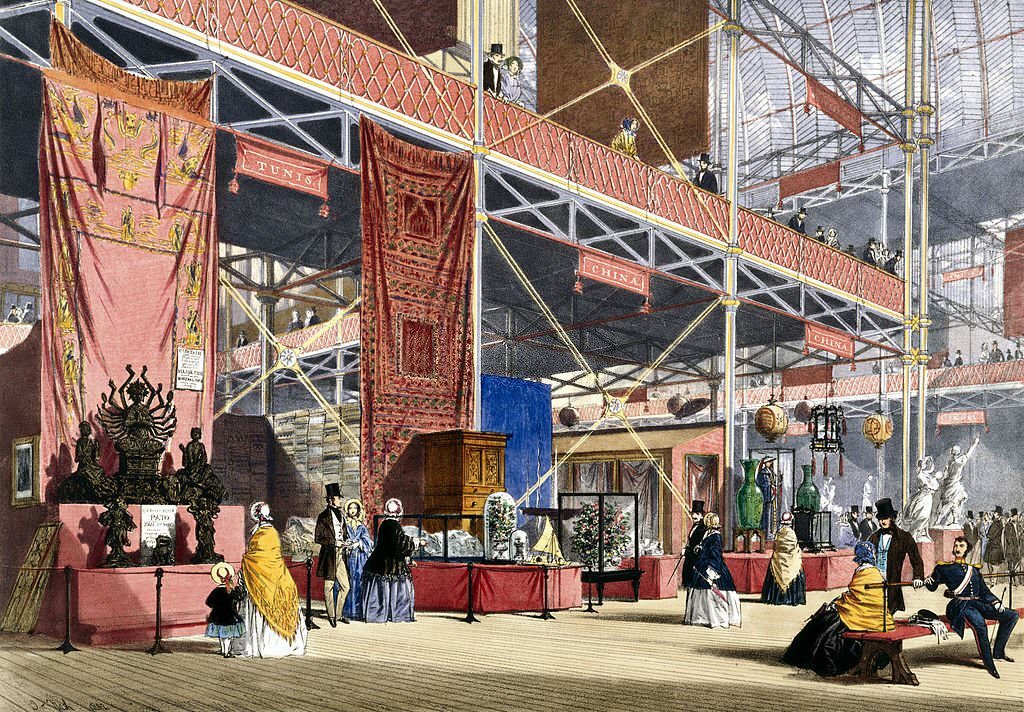
Tunisian No 3 stand at the Great Exhibition, Crystal Palace, London, 1851.
Prominent objects on display included Chinese deities, Brazilian products, and statues of ‘Zephyr’ and ‘Aurora and Virginius’.
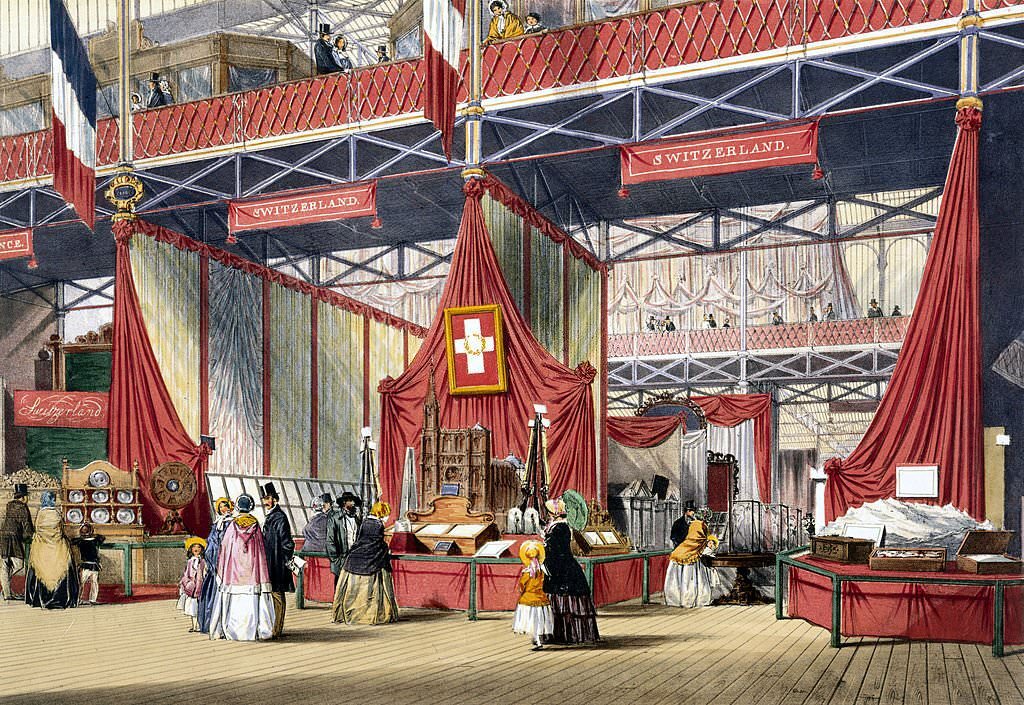
Swiss stand at the Great Exhibition, Crystal Palace, London, 1851.
Prominent objects on display included a model of Strasbourg Cathedral and a collection of firearms. The ‘Great Exhibition of the Works of the Industry of all Nations’ was conceived by Prince Albert (1819–1861).
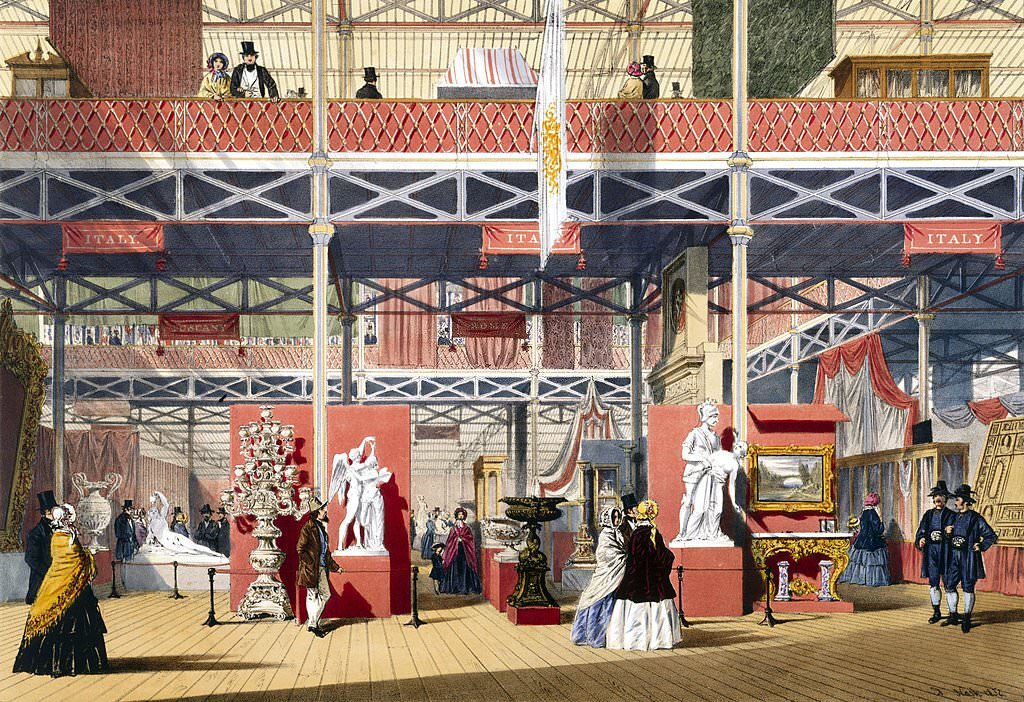
Italian stand at the Great Exhibition, Crystal Palace, London, 1851.
Prominent objects on display included the marble statues ‘Bacchus Reclining’, ‘Psyche and Cupid’, ‘Rinaldo and Armido’, a candelabra, and a flower stand.
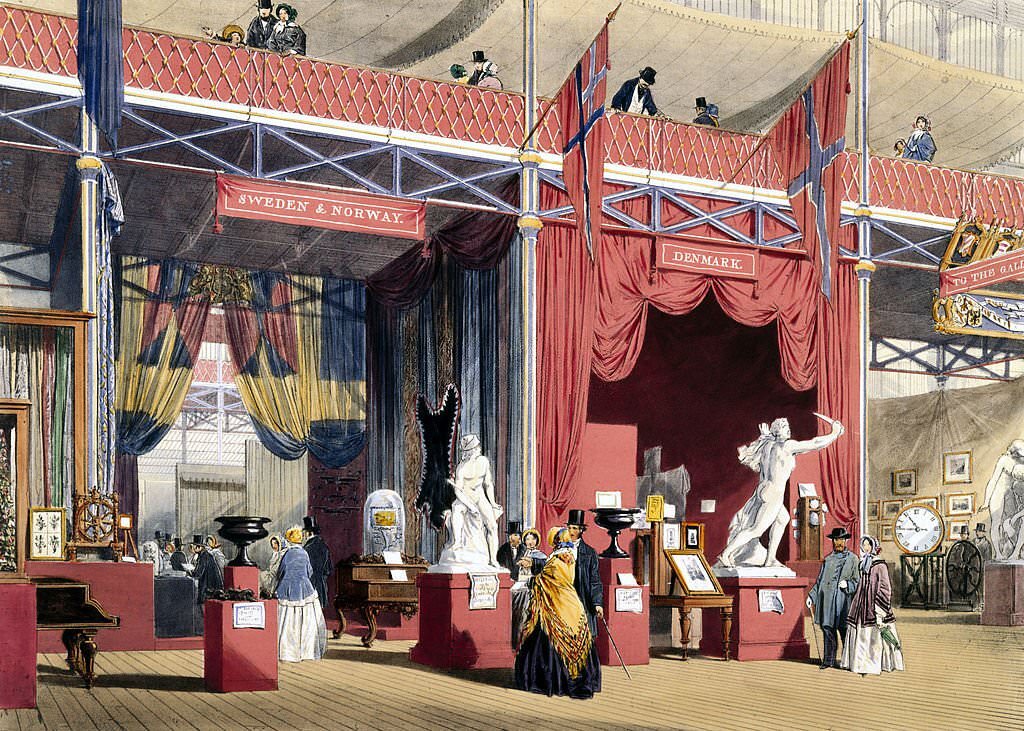
Swedish and Danish stand at the Great Exhibition, Crystal Palace, London, 1851.
Objects on display included ‘Orcestis’; a statue in marble by Professor Bissen, and a stuffed silver bear skin.
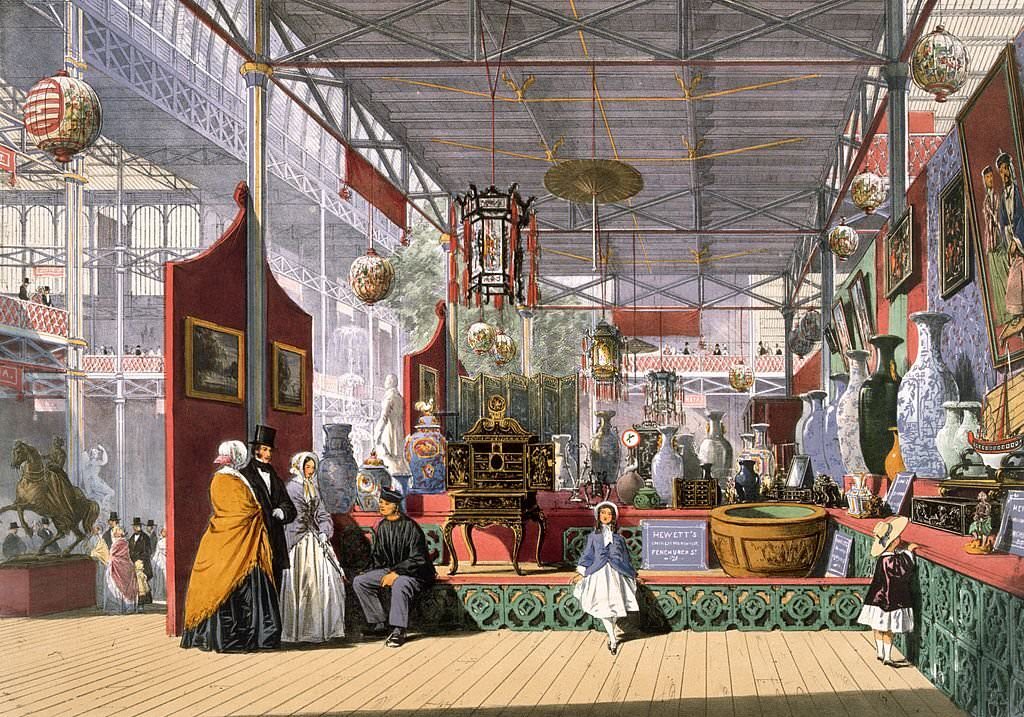
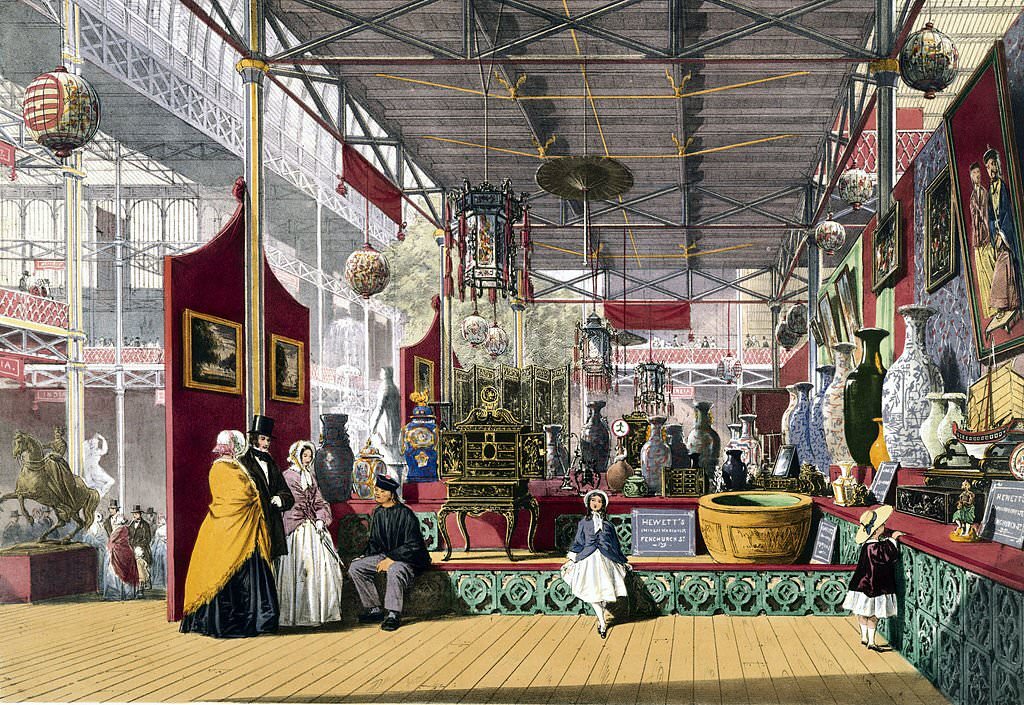
Chinese stand at the Great Exhibition, Crystal Palace, London, 1851.
Prominent objects on display included cabinets, vases, lamps, tiles, and screens.
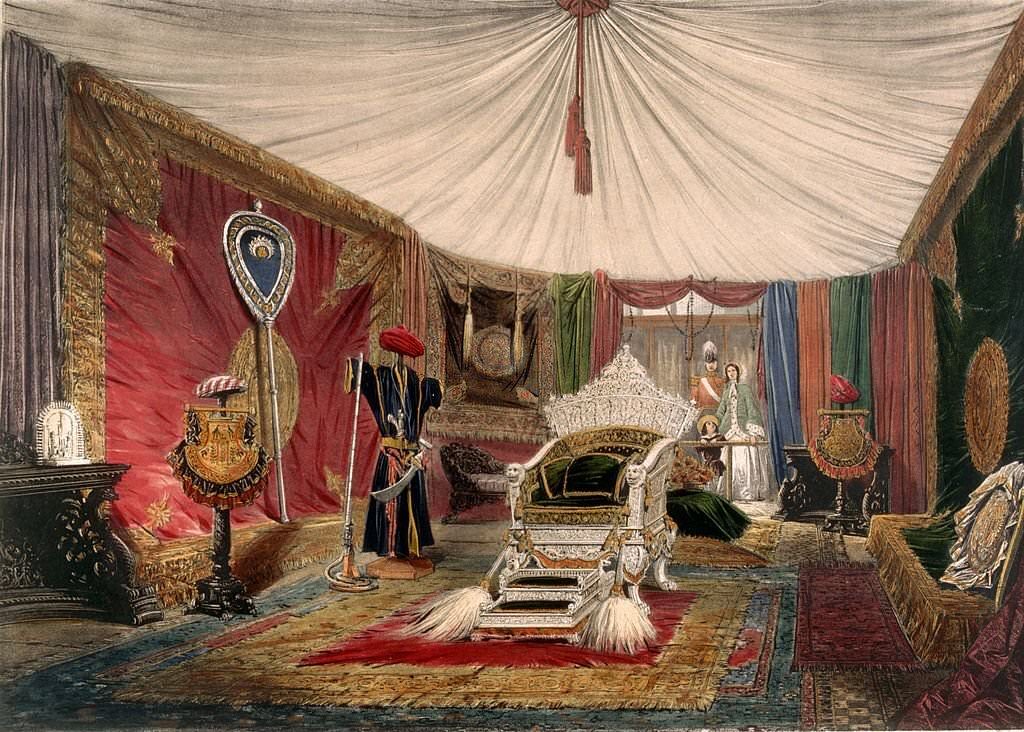
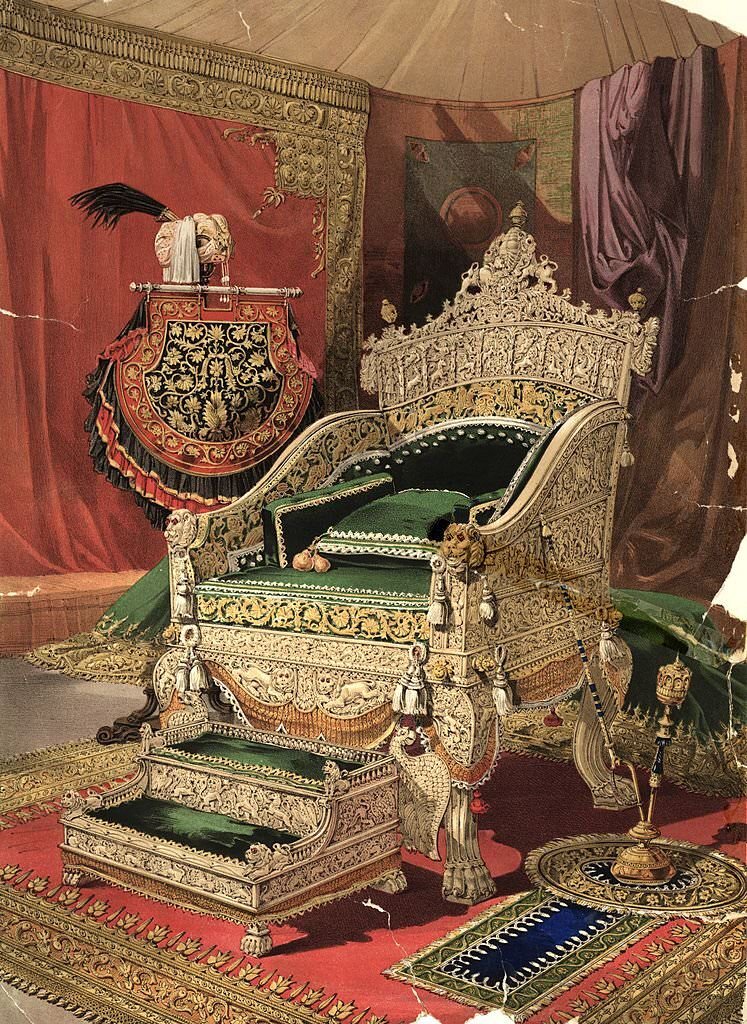
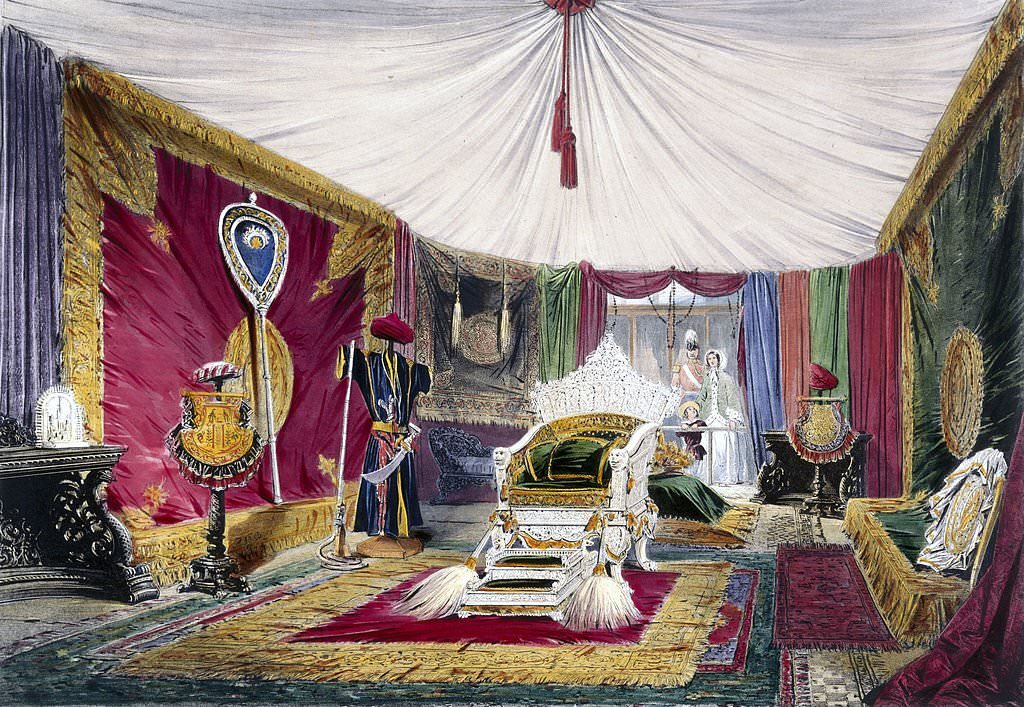
Indian No 1stand at the Great Exhibition, Crystal Palace, London, 1851.
Prominent objects on display included a costume of an Indian chief, carved rosewood furniture, and an ivory throne.
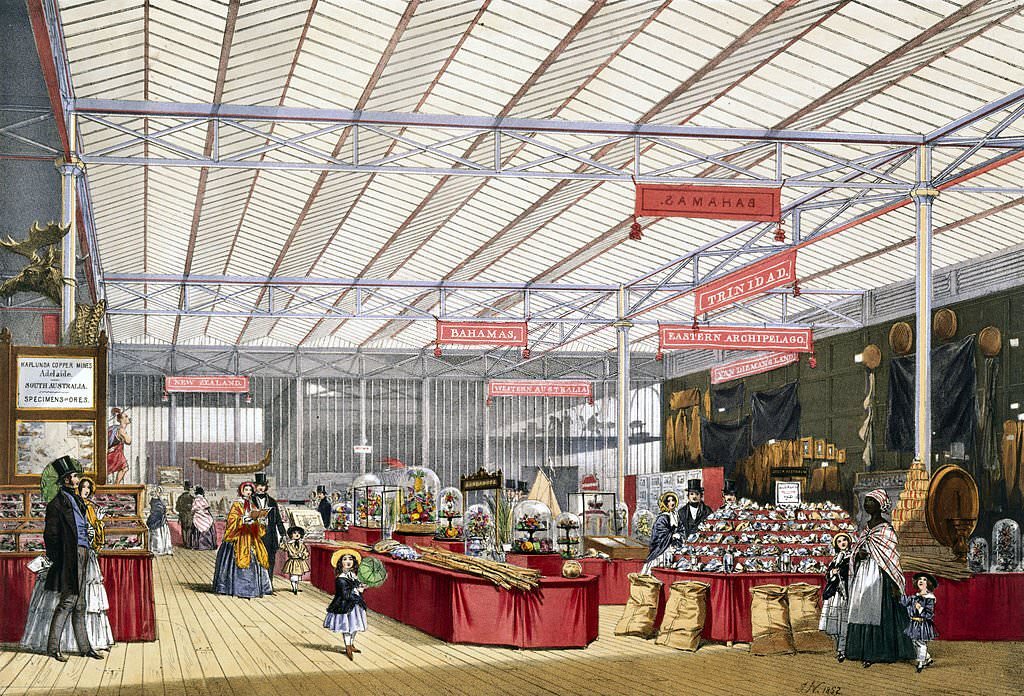
West Indian and colonies stand at the Great Exhibition, Crystal Palace, 1851.
Prominent objects on display included a case of artificial fruits and flowers by H Elwell of Barbados; a pedestal and crown in shellwork by Miss Nichols; and articles made from the leaves of palm trees.
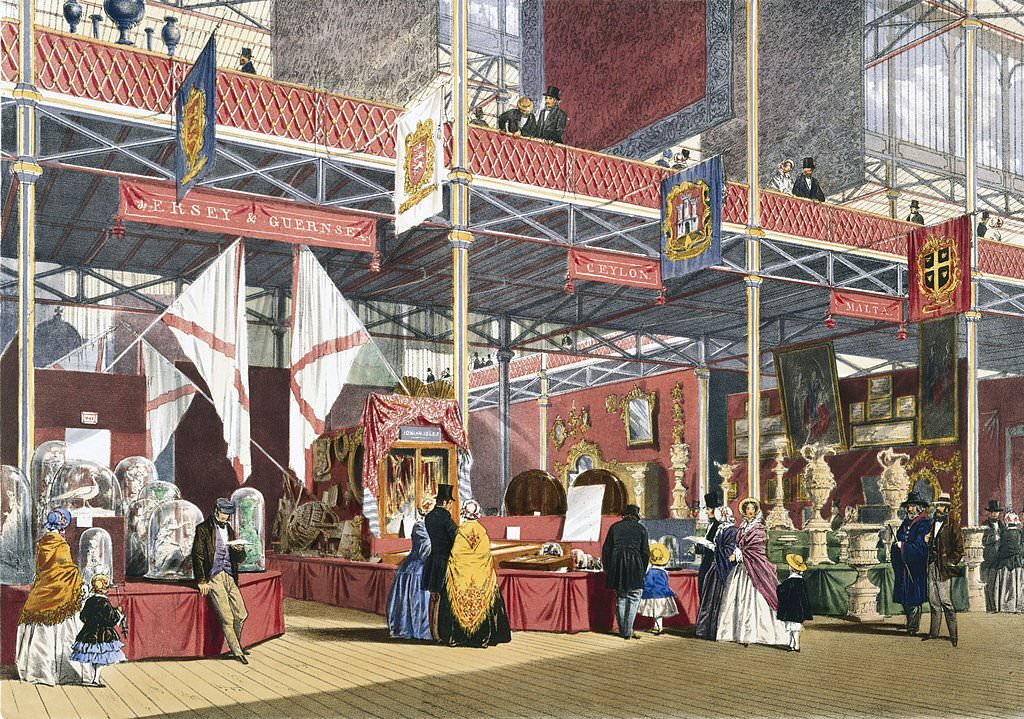
Jersey and Guernsey, Malta and Ceylon stand at the Great Exhibition, 1851.
Prominent objects on display included stone carvings by F Dimech, F Testa, J Foler, and P Degesare from the Ionian Islands, and original designs for statuary in porcelain by T and R Boot of Burslem.
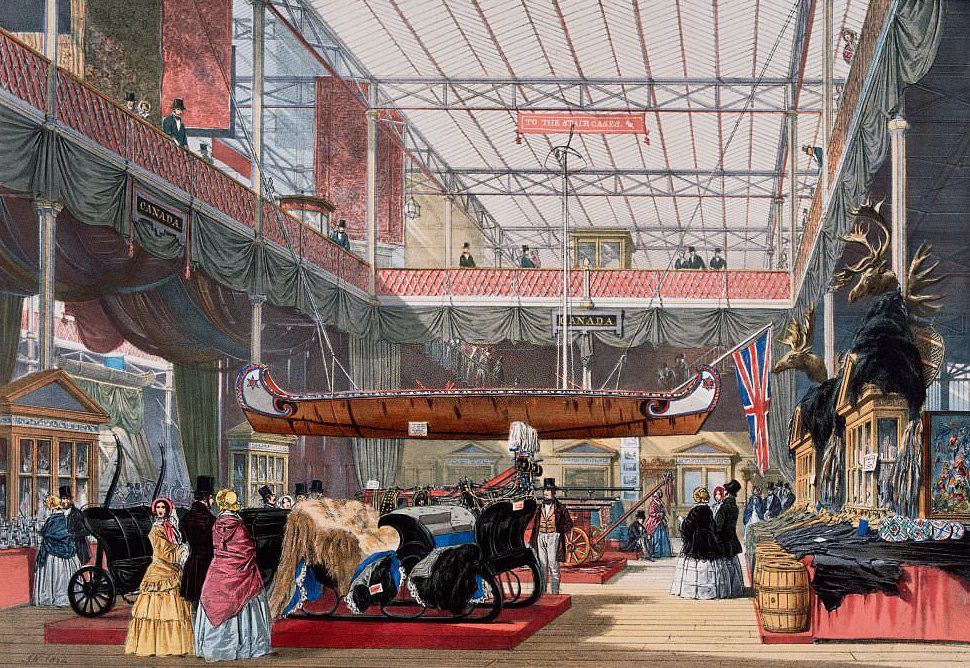
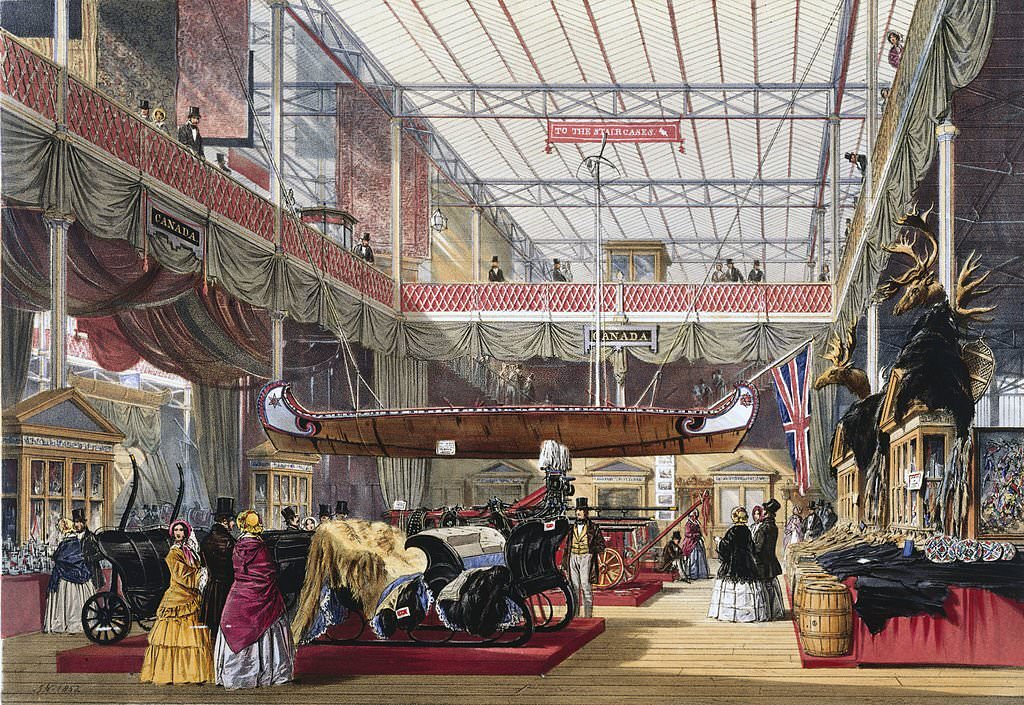
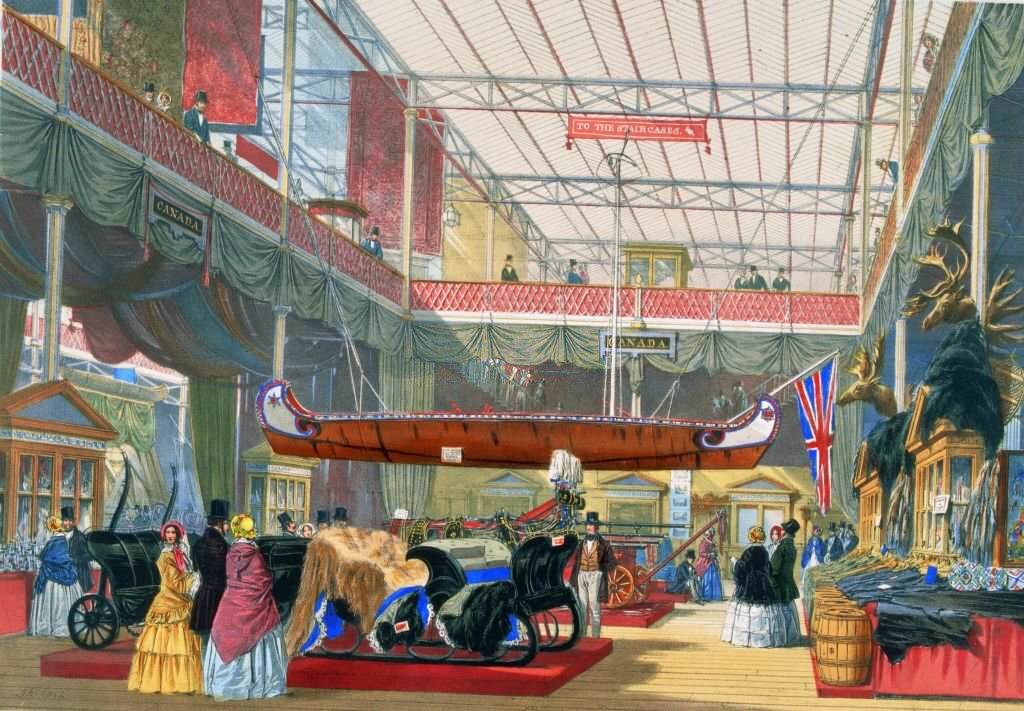
Canadian stand at the Great Exhibition, Crystal Palace, London, 1851.
Prominent objects on display included an Indian canoe; sledges, carriages, and chairs presented from the ladies of Montreal to Her Majesty the Queen; and a case of linen and woollen goods.
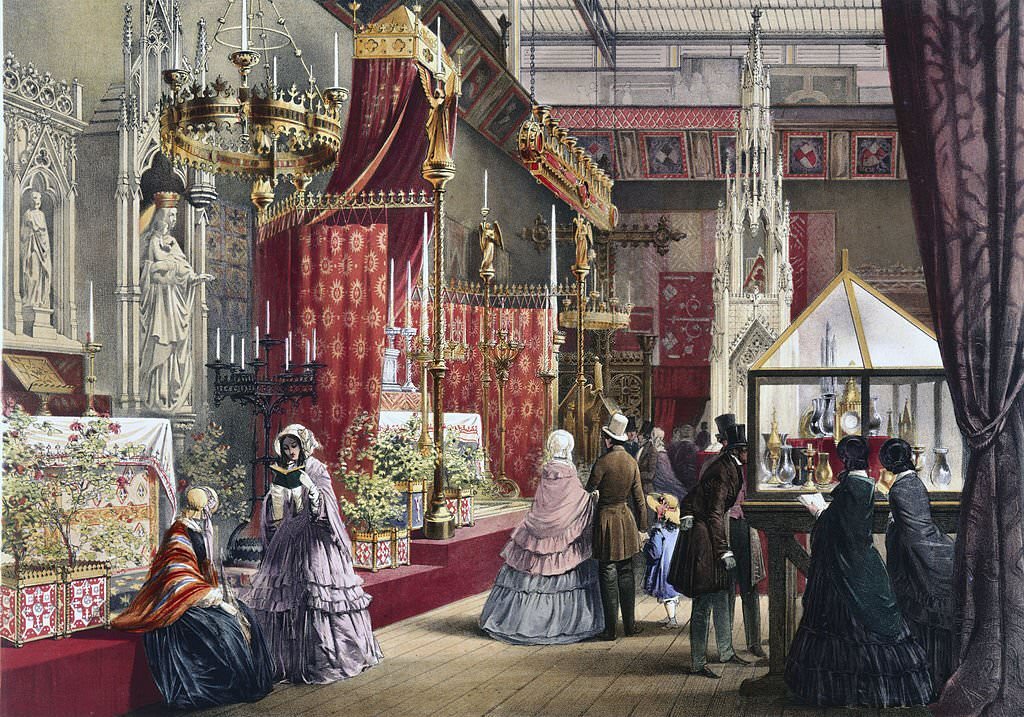
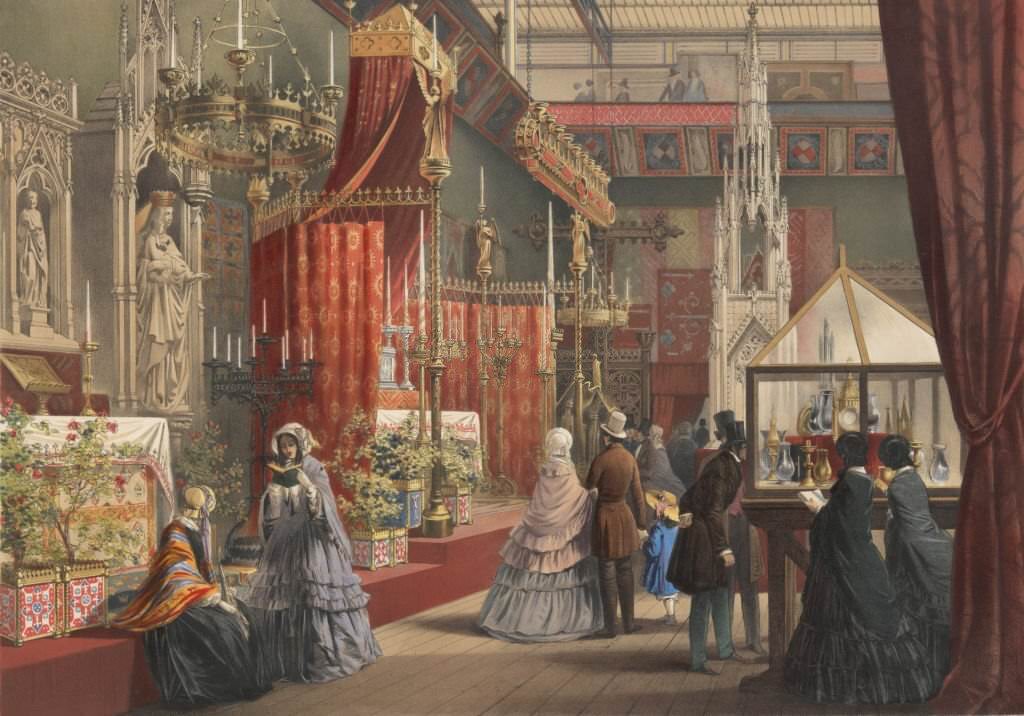
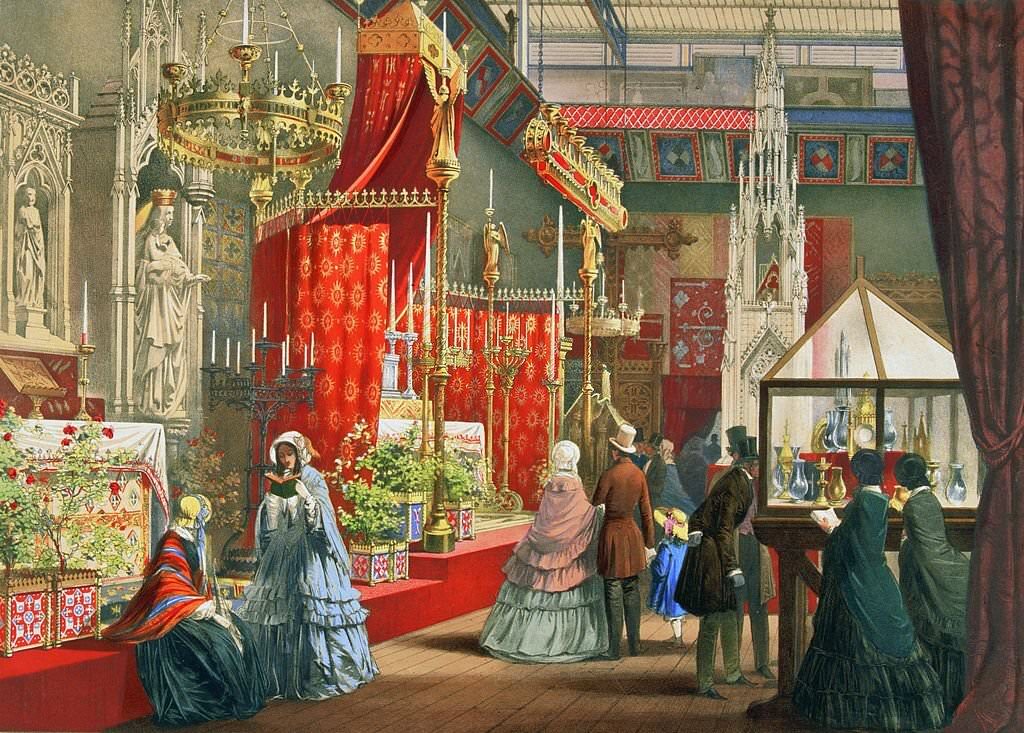
Medieval Court stand at the Great Exhibition, Crystal Palace, London, 1851.
Prominent objects on display included Hardman’s church plate and brasswork, and Myers’ stone tabernacle and font.
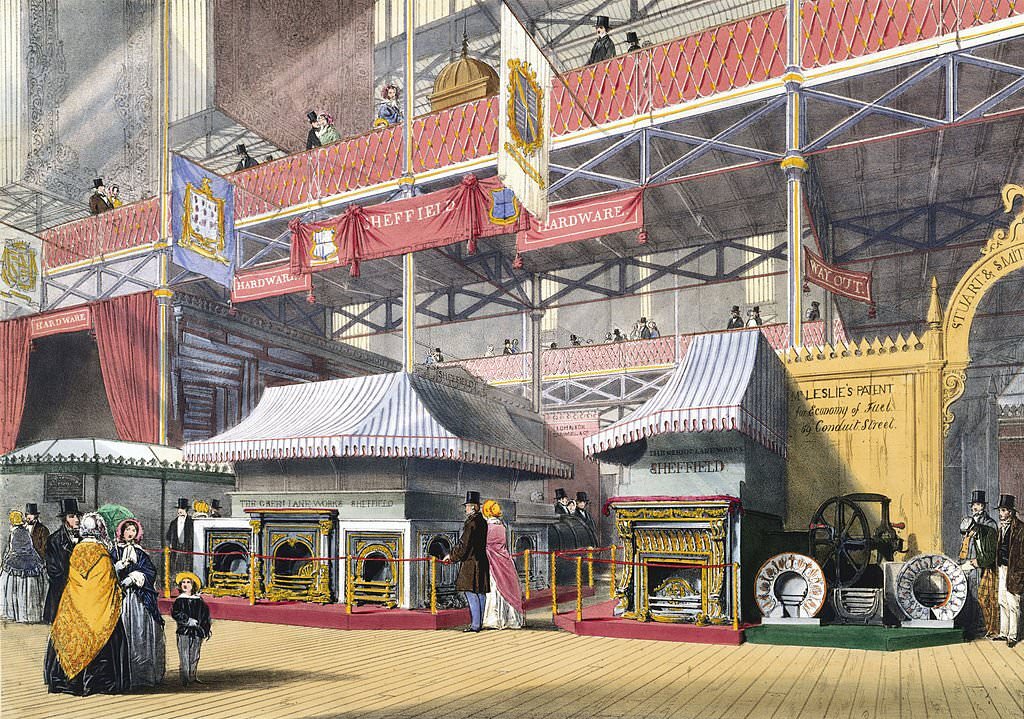
Sheffield hardware at the Great Exhibition, Crystal Palace, London, 1851.
Prominent objects on display included fireplaces and steel work.
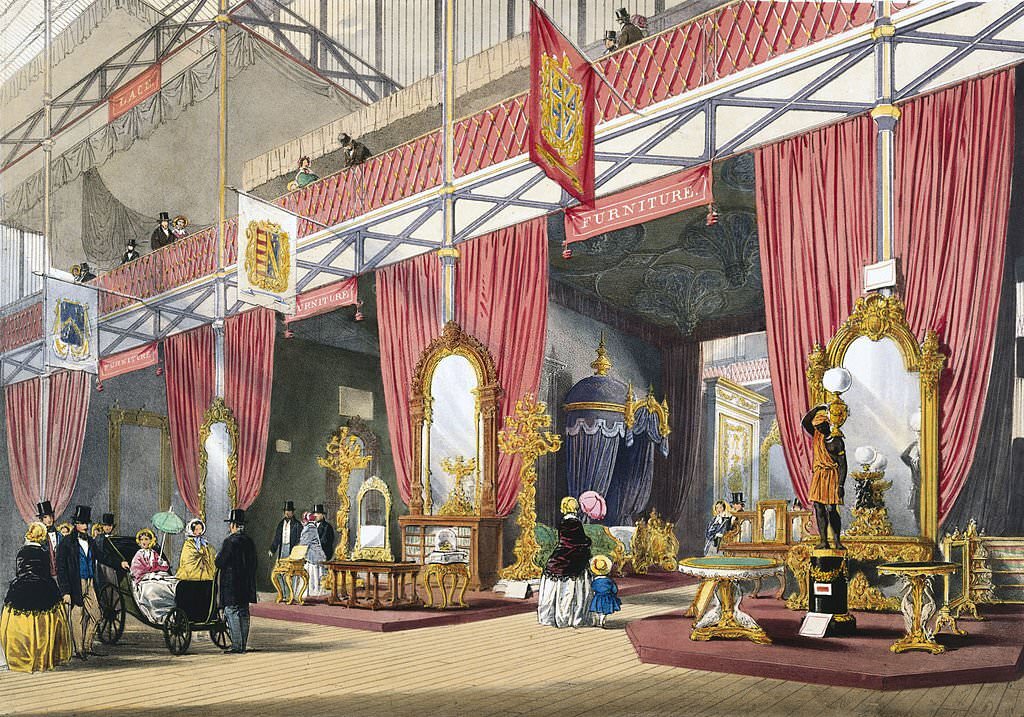
Furniture at the Great Exhibition, Crystal Palace, London, 1851.
Prominent objects on display included loo tables and sideboards by Morant, and carved oak looking glasses by Snell and Co.
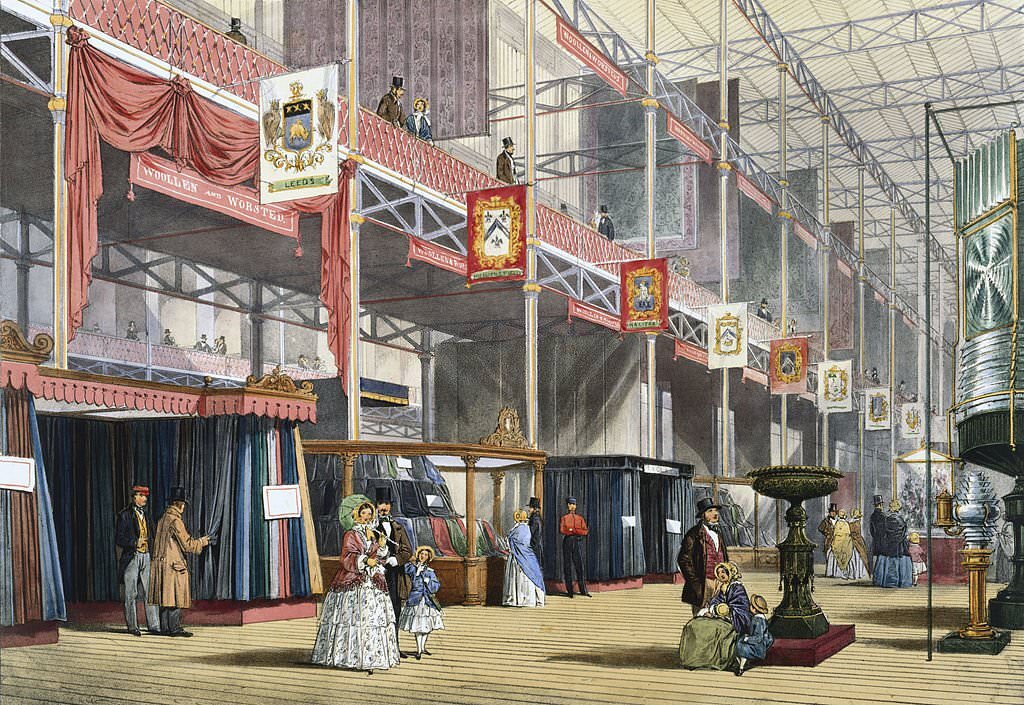
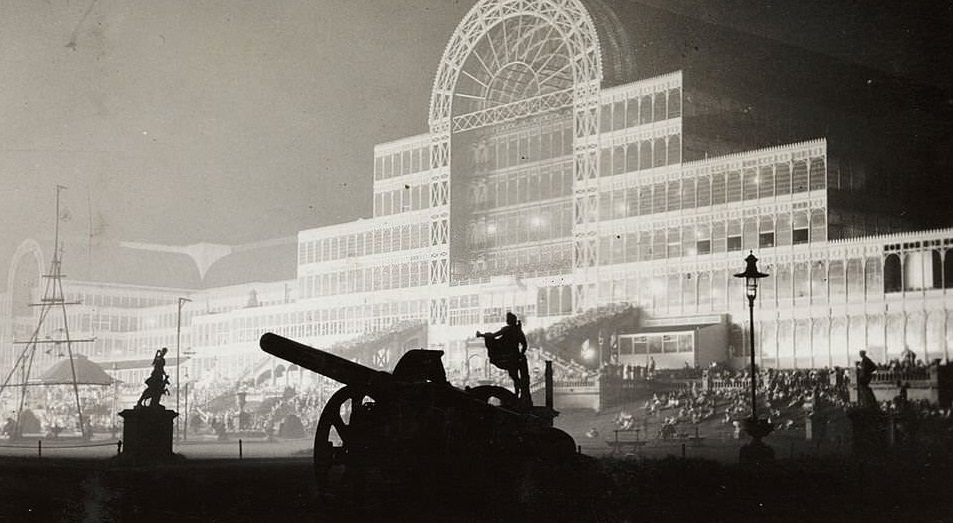
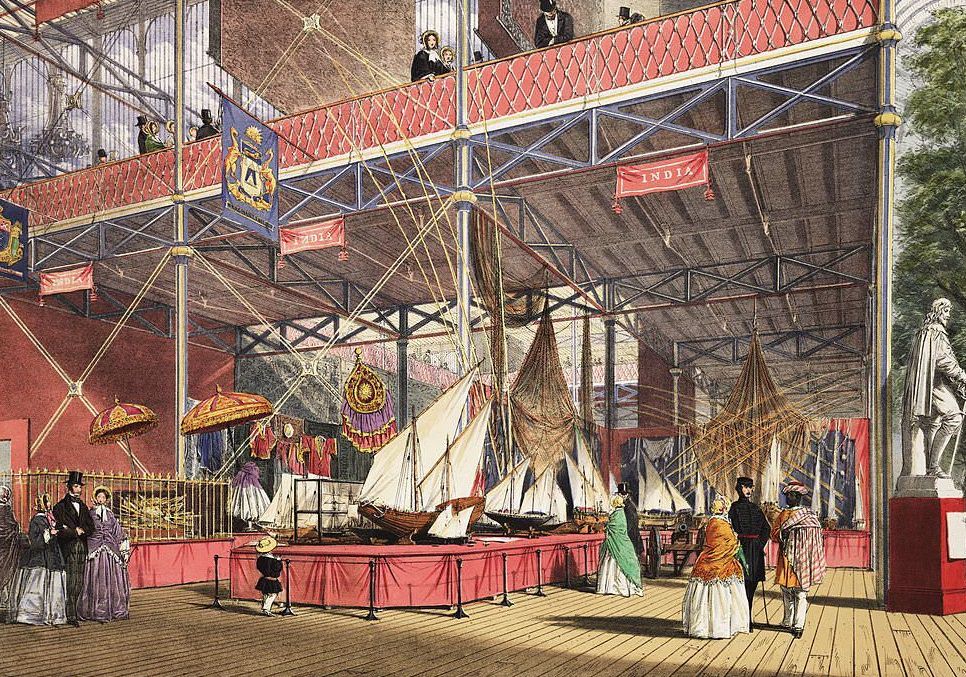
A wool stand at the Great Exhibition, Crystal Palace, London, 1851.Crystal Palace at night.Boats in the Indian Court in the Crystal Palace, Hyde Park, London, from ‘Dickinsons’ Comprehensive Pictures of the Great Exhibition of 1851′.Transept, Great Exhibition, Hyde Park, London, 1851.
Inside Crystal Palace in Hyde Park, visitors admire the ‘Great Exhibition of the Works of the Industry of all Nations’, an idea conceived by Prince Albert (1819–1861).
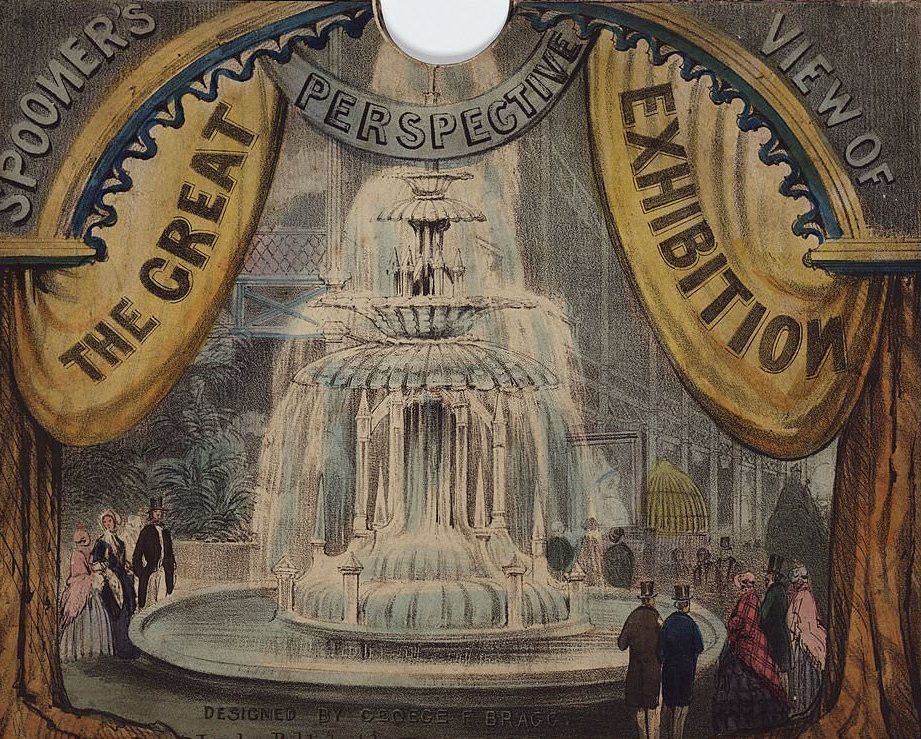
Spooner s perspective view of The Great Exhibition, 1851.
Box cover for a peepshow designed by George F Bragg showing a view of The Great Exhibition held in Hyde Park in London in 1851.
Mining stand at the Great Exhibition, Hyde Park, London, 1851.
Prominent objects on display included: minerals, specimens of silver, Arkans’ mining company, lead ore, Galena from the Isle of Man, and imitation marbles on the wall by Hopkins.
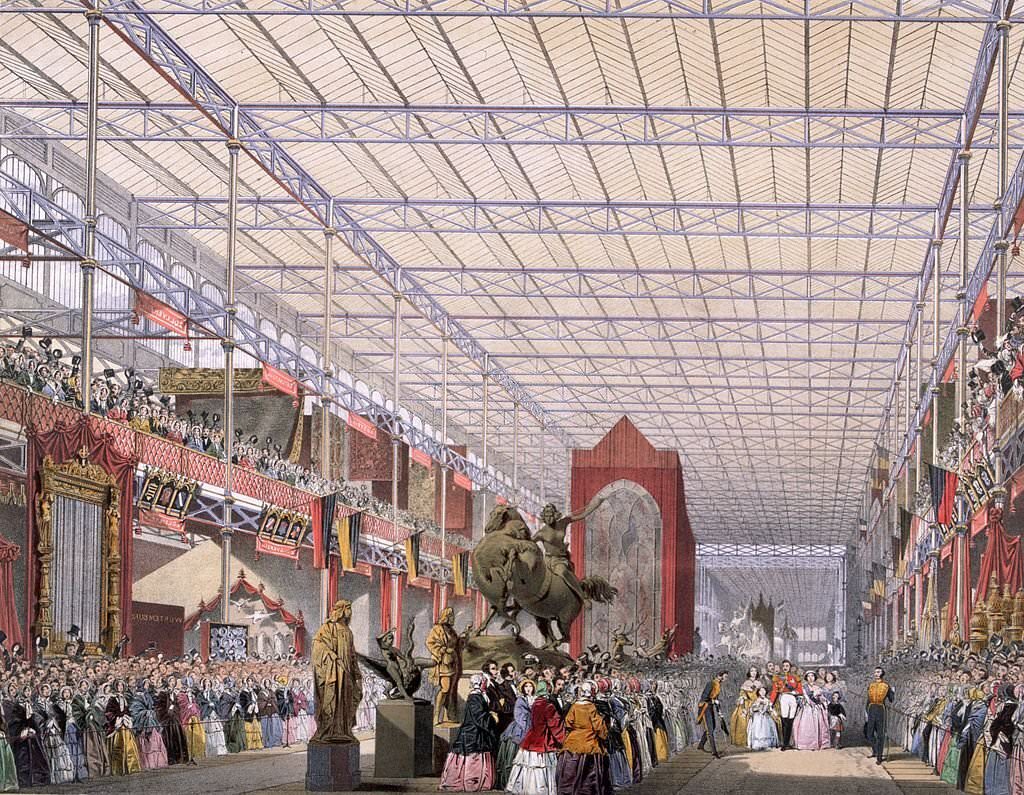
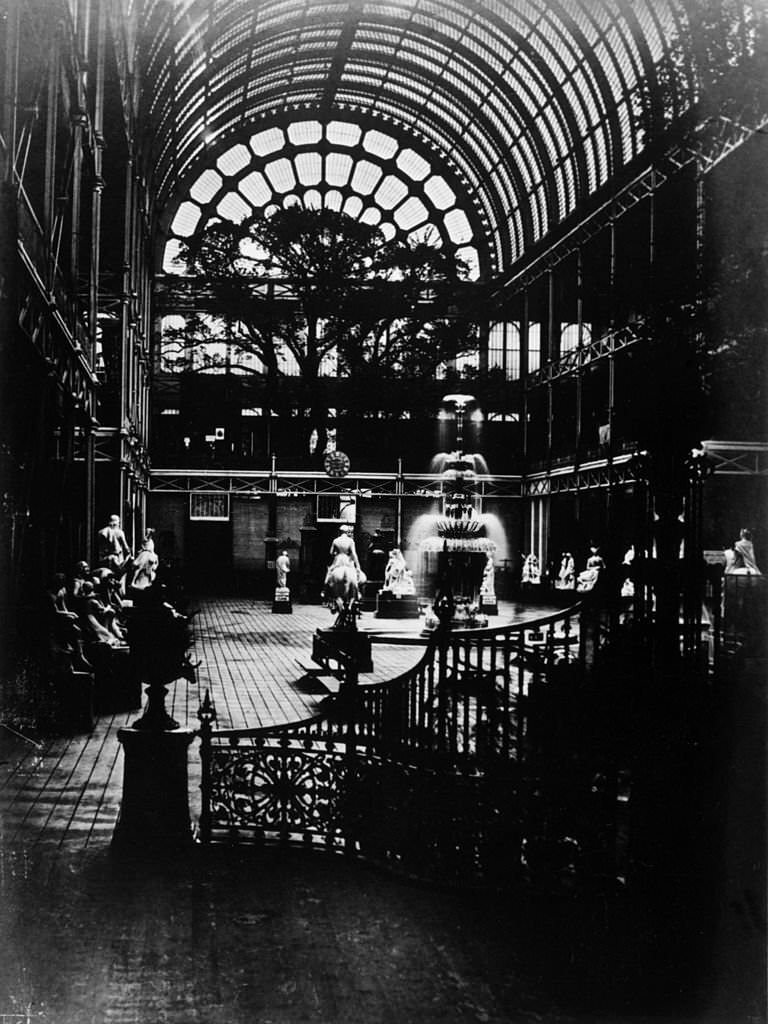
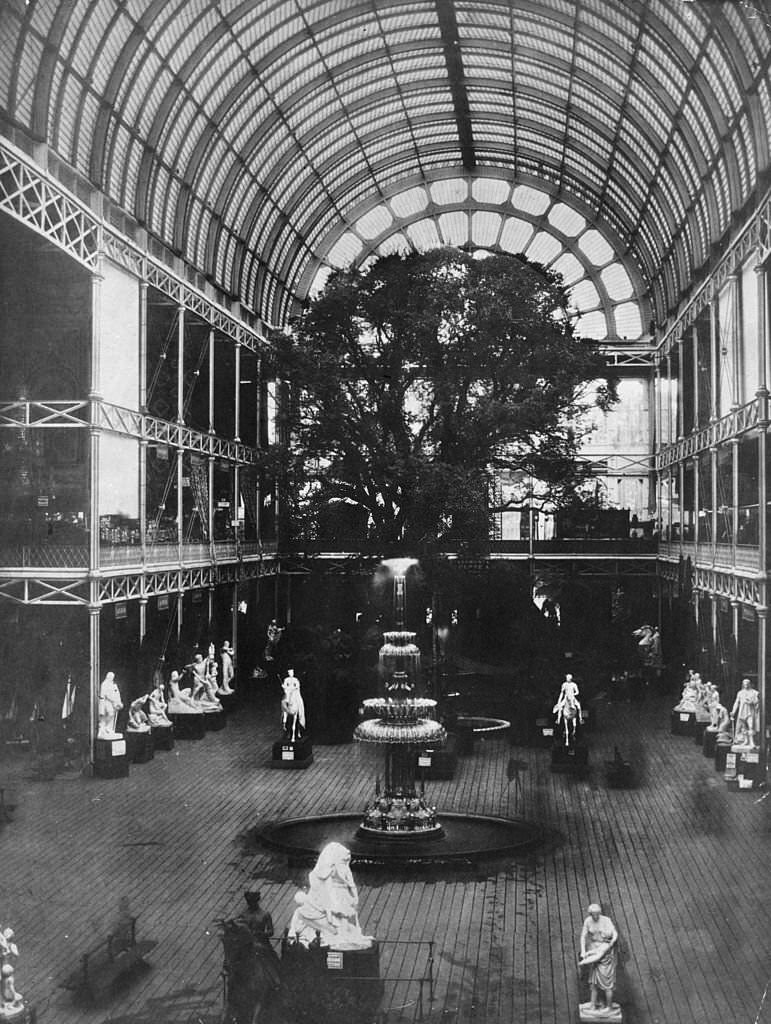
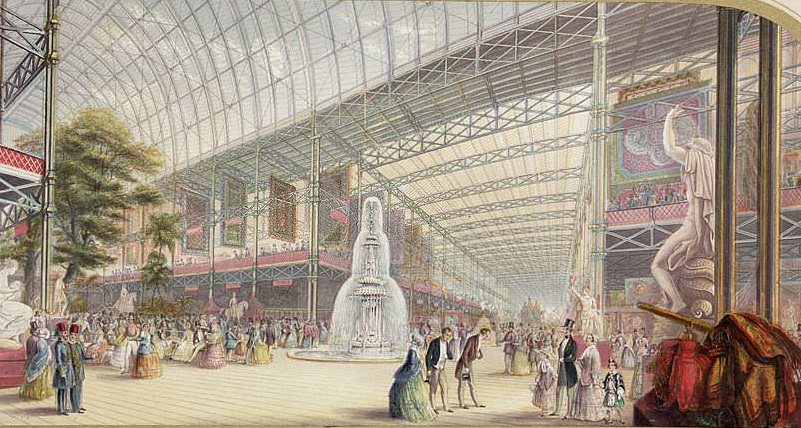
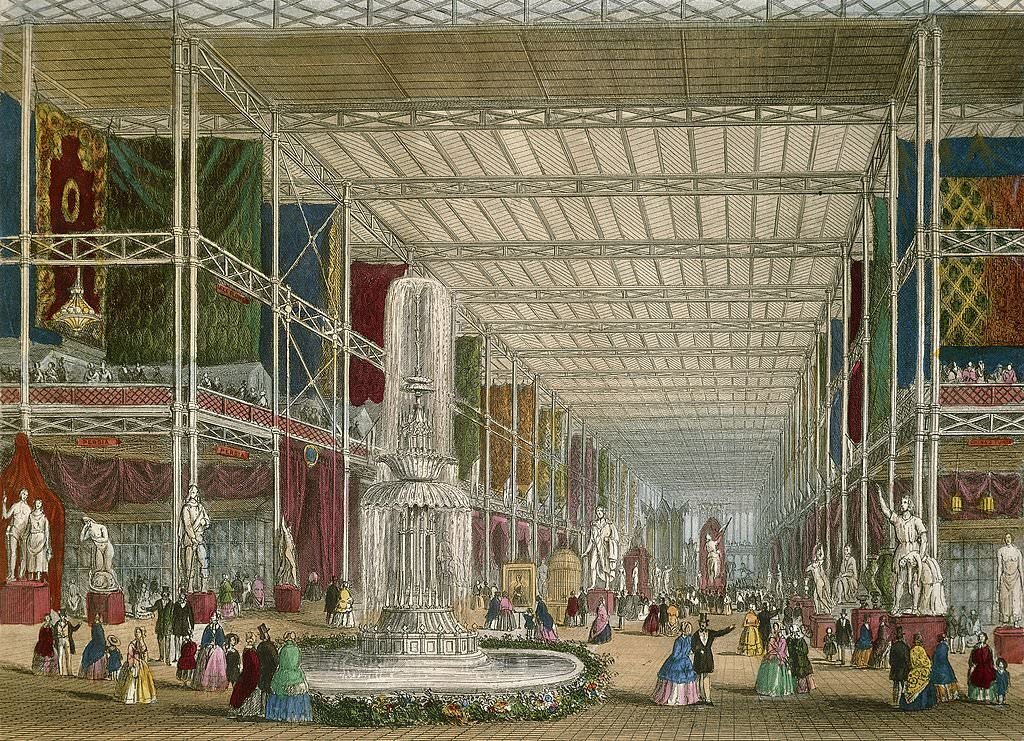
Interior of the Great Exhibition , 1851.
From George Baxter’s ‘Gems of the Great Exhibition’ book. This illustration shows statues, a fountain, and visitors in the main exhibition space of the Great Exhibition.
Engraving depicting the interior of The Crystal Palace (the Main Transept) during the Great Exhibition of 1851.Engraving depicting the interior of The Crystal Palace (the Main Avenue) during the Great Exhibition of 1851.Illustration of Queen Victoria opening the Great Exhibition in the Crystal Palace, 1851Great Exhibition, Hyde Park, London, 1851.
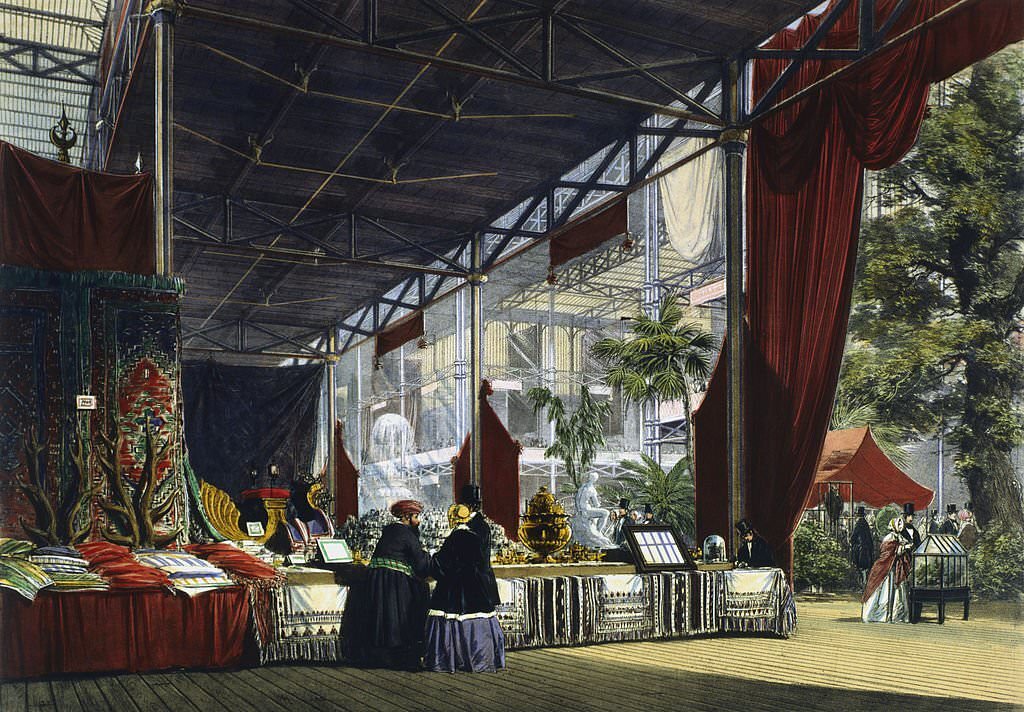
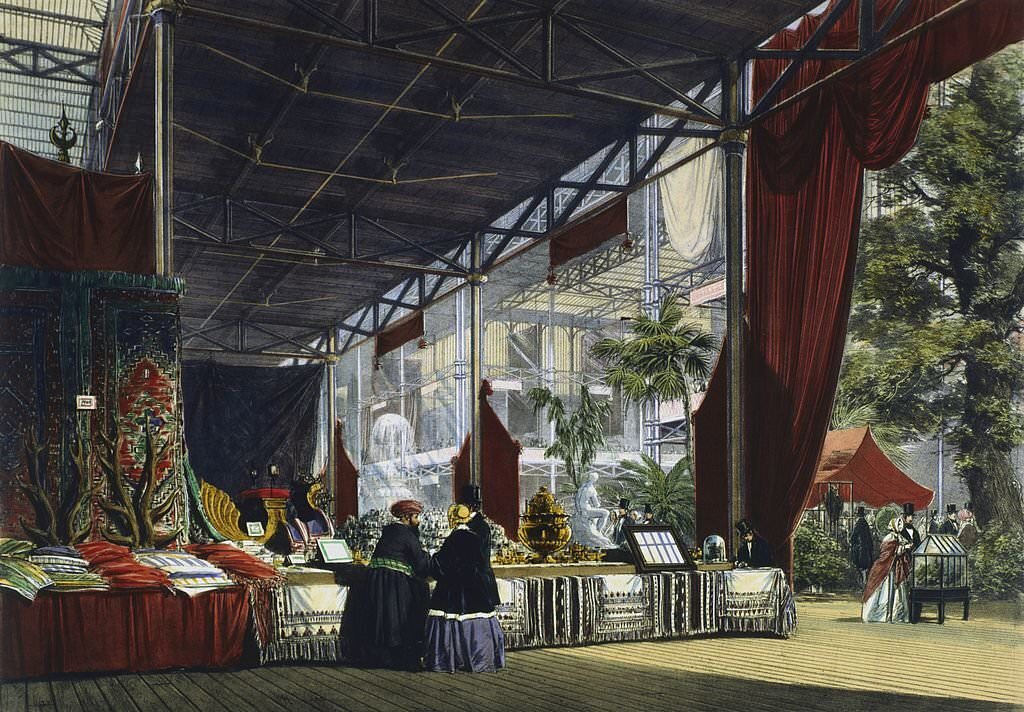
Interior view of the Crystal Palace showing two visitors being shown a stand of oriental products.
Conceived by Prince Albert, the Great Exhibition was intended to showcase the ‘Works of the Industry of all Nations’. It was housed in the purpose-built Crystal Palace, the first large-scale prefabricated ferrovitreous (iron and glass) structure, designed by the gardener and architect Joseph Paxton.
Great Exhibition, Crystal Palace, Hyde Park, London, 1851.
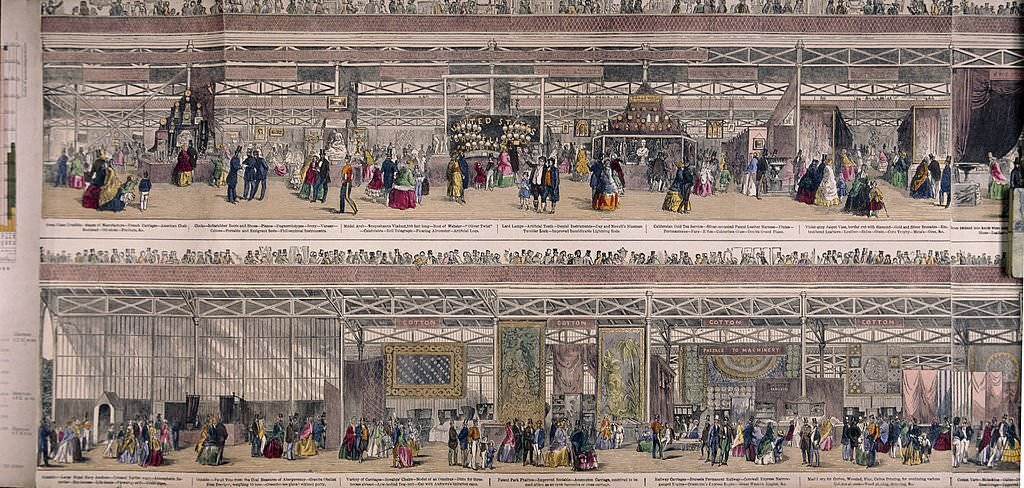
Panoramic view of the Great Exhibition of 1851, held at Crystal Palace in Hyde Park, London. The upper half shows exhibits from the United States of America and Russia; the lower half shows an exhibition of cotton goods, with a passage to machinery.
Queen Victoria opening the Great Exhibition at the Crystal Palace in London, 1851.Queen Victoria and Prince Albert inaugurating the great 1851 exhibition.The Great Exhibition at the Crystal Palace in London, 1851.The opening by Queen Victoria of The Great Exhibition in Hyde Park, London, England, 1st May, 1851A general view of the interior of the Crystal Palace, London, during the Great Exhibition of 1851.Mediaeval Court. The Great Exhibition Of 1851Moving machinery at the Great Exhibition in Crystal Palace, the glass and iron building designed by Joseph Paxton, at Hyde Park, London.Victorians attending the Great Exhibition at Crystal Palace, the glass and iron building designed by Joseph Paxton, in Hyde Park, London.The Transept at the Great Exhibition in Crystal Palace, the glass and iron building designed by Joseph Paxton, at Hyde Park, London.Waiting for Queen Victoria to arrive at the Great Exhibition in Crystal Palace.
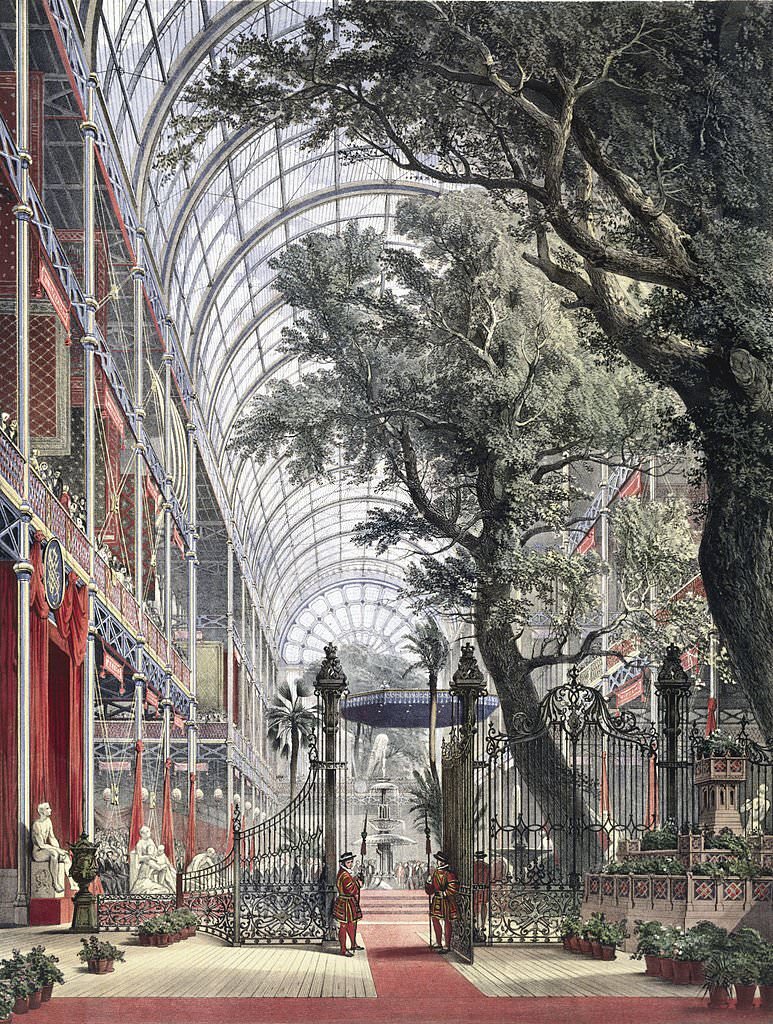
The glass and iron building was designed by Joseph Paxton and initially erected in Hyde Park, London. Elm trees were incorporated into the structure, along with sparrows and sparrow hawks to control them.
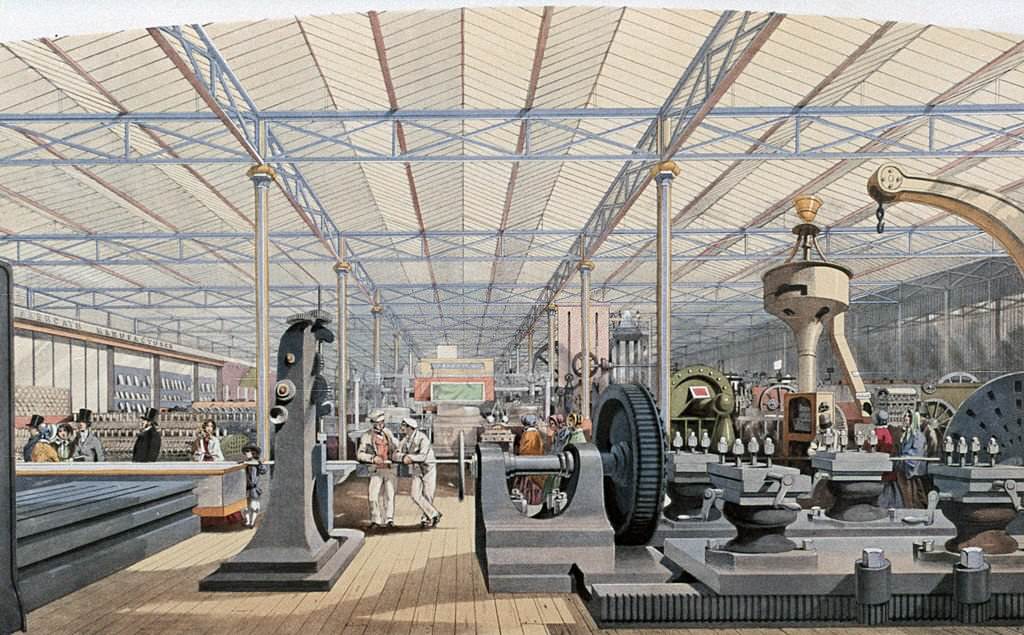
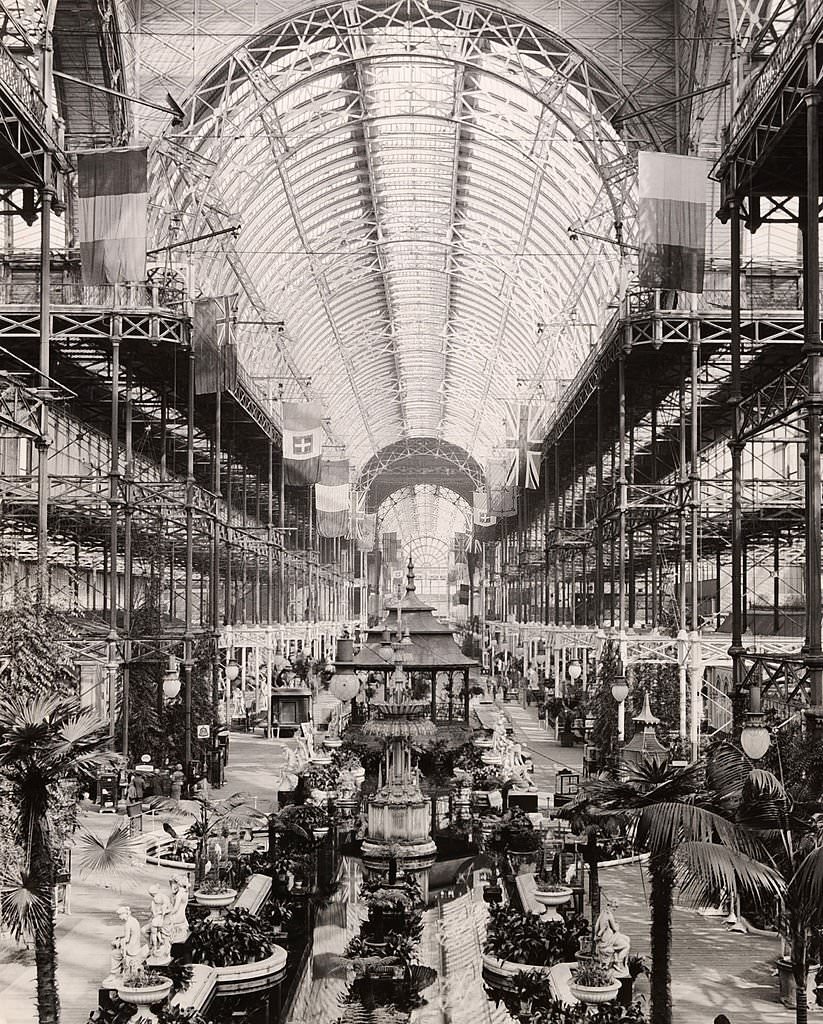
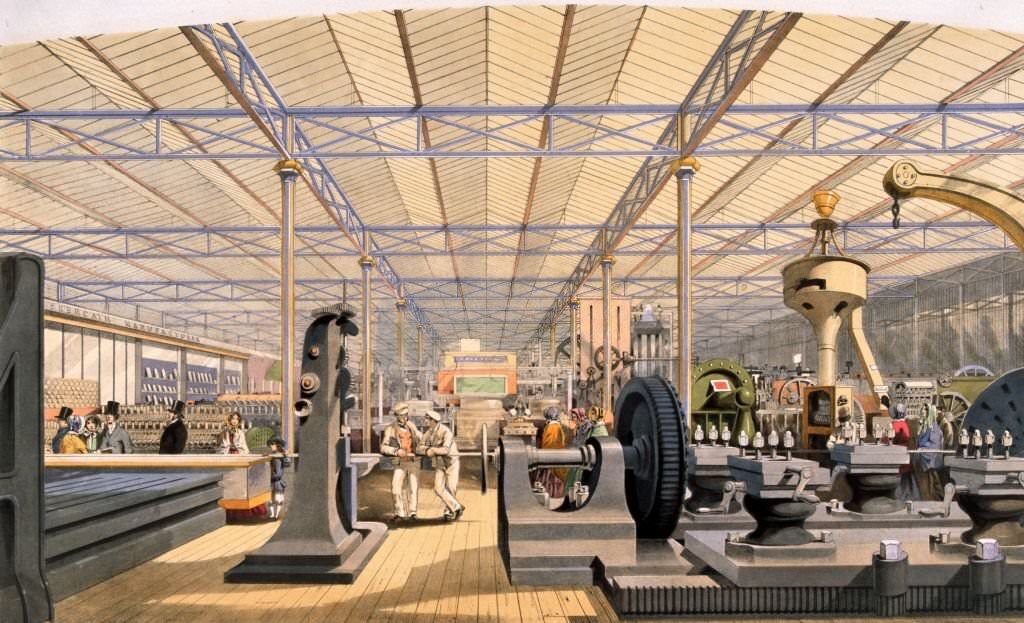
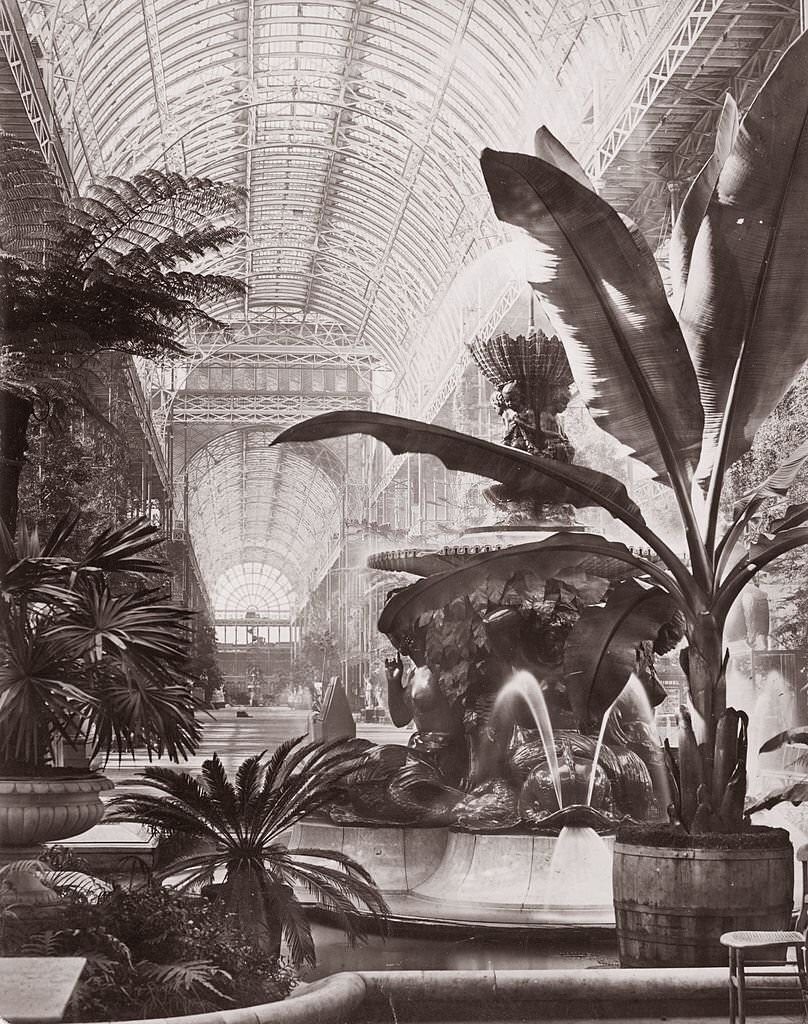
A display from Canada at the Great Exhibition in Crystal Palace, the glass and iron building designed by Joseph Paxton, at Hyde Park, London.An ornate fountain surrounded by plants in the Crystal Palace at Sydenham, London, the site of the Great Exhibition of 1851.[Factually Corrected: Caption changed from ‘French Machinery in Hyde Park, London, 1851’ to ‘French Machinery in Paris, 1855’] French Machinery in Paris, 1855
This celebration of progress — iron and glass architecture and steam engines shown in powerful perspective — records the displays in the Palace of Industry at the 1855 Universal Exposition in Paris.
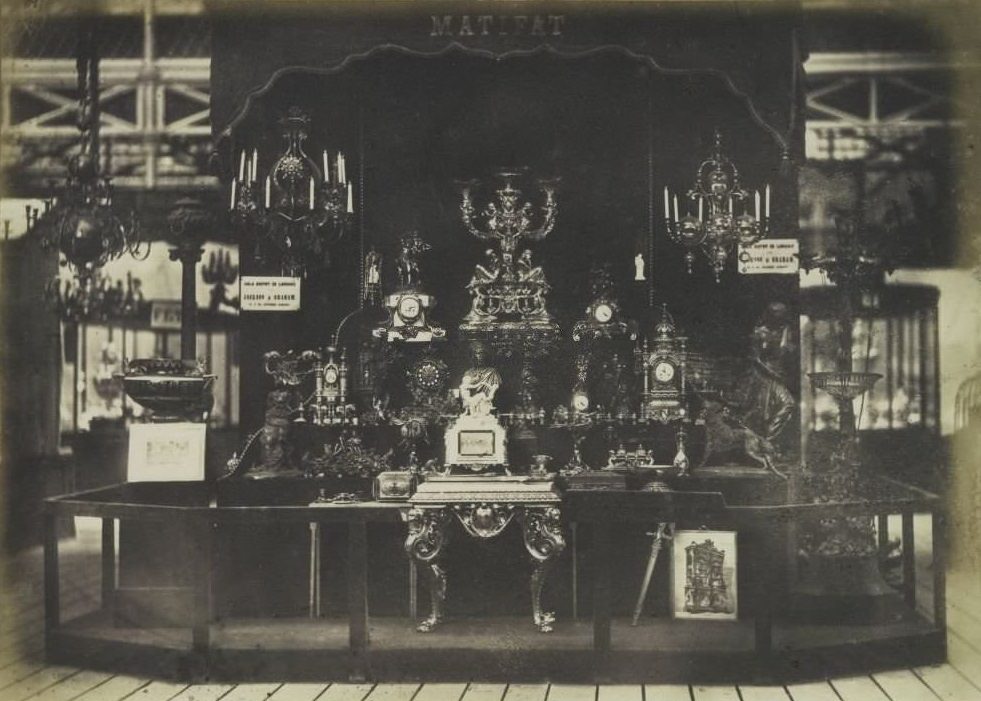
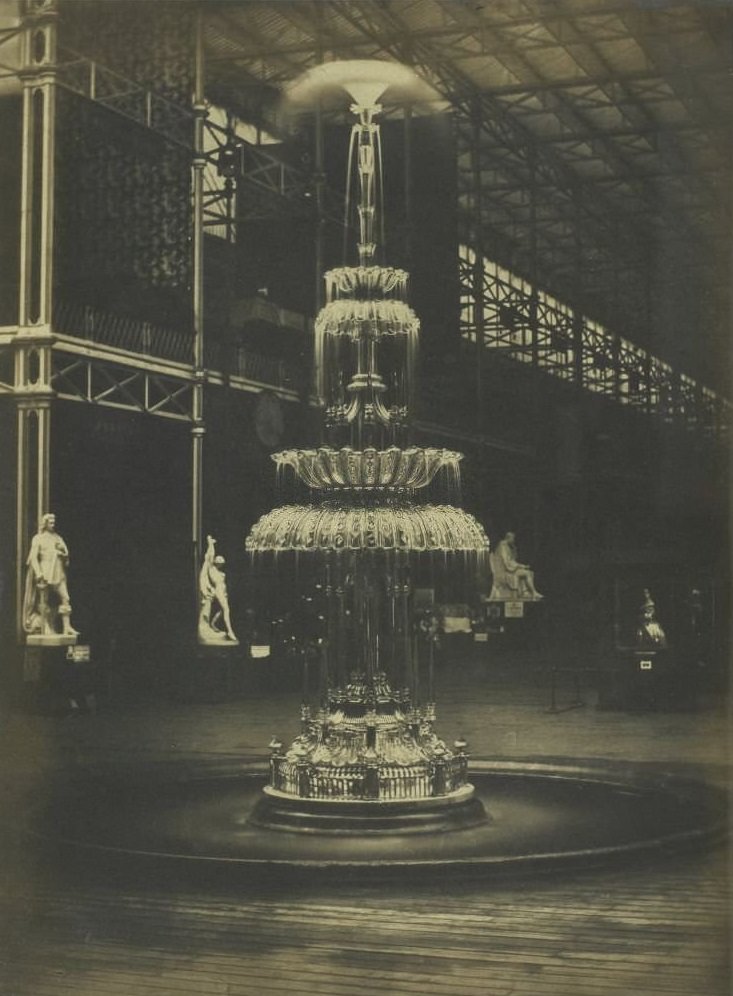
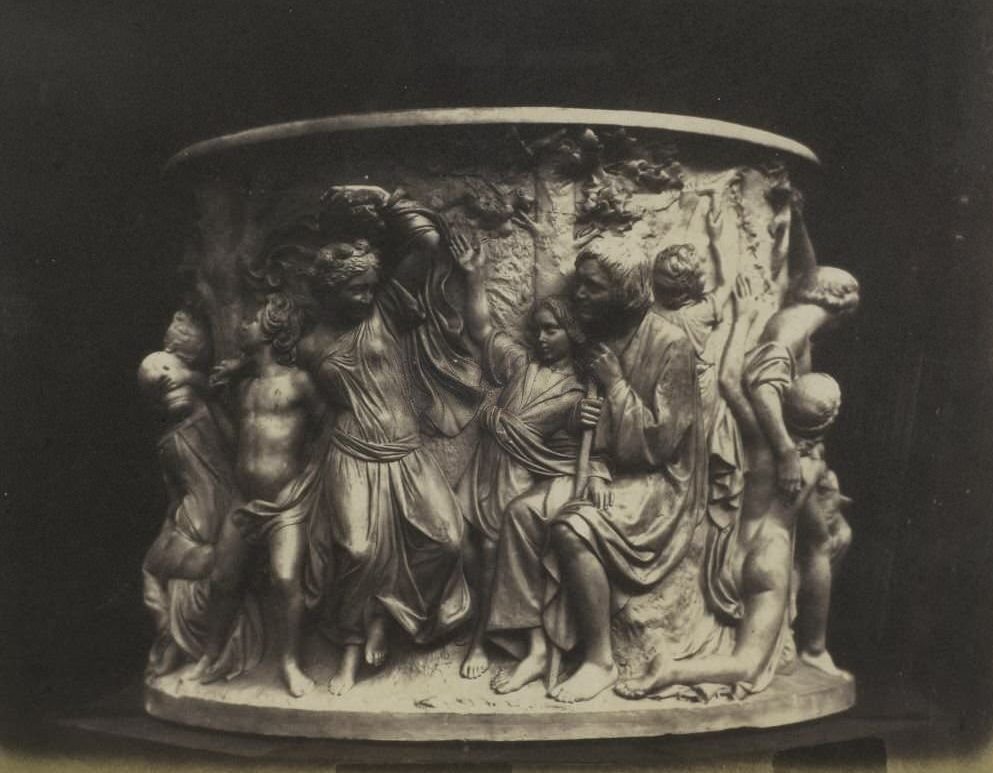
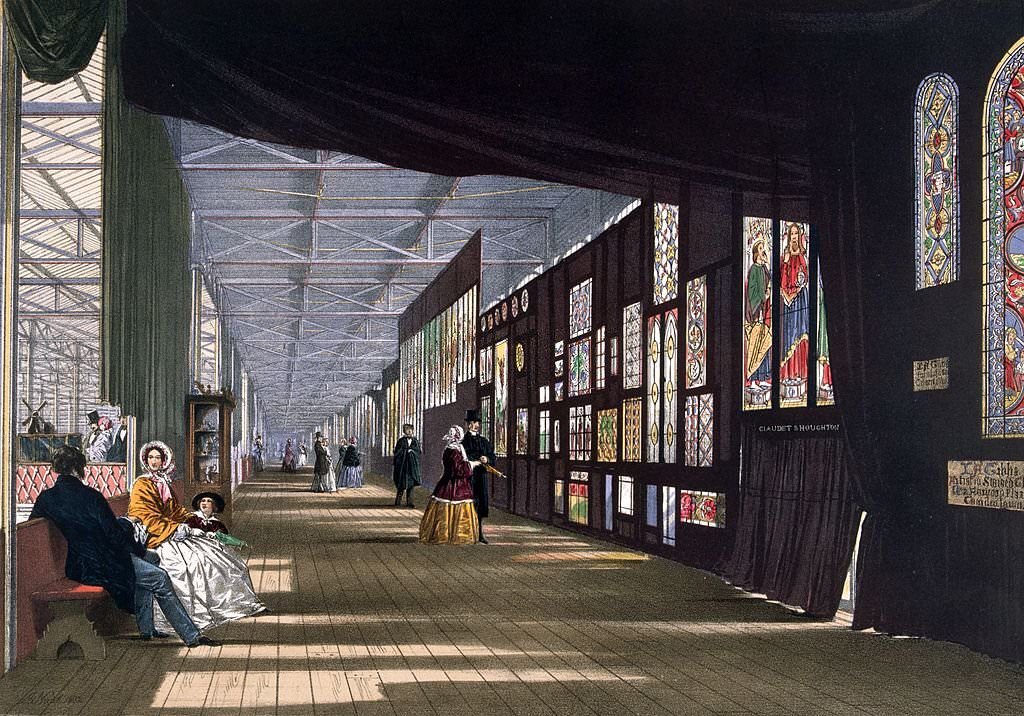
Interior of the Great Exhibition of the Works of Industry of All Nations of 1851 at the Crystal Palace in LondonArrangement with clocks, candlesticks by Matifat at the Great Exhibition of the Works of Industry of All Nations of 1851 in LondonGlass fountain by Follett Osler exhibited at the Great Exhibition of the Works of Industry of All Nations of 1851 in London at the Crystal Palace.Pedestal of a monument to King Frederick William III of Prussia by Friedrich DrakeThe Stained Glass Gallery at the Great Exhibition in Crystal Palace, the glass and iron building designed by Joseph Paxton, at Hyde Park, London.Great Exhibition, Hyde Park, London, 1851.
Interior view of the Crystal Palace showing two visitors being shown a stand of oriental products. In the right-hand front corner a man and woman admire plants in a Wardian case.
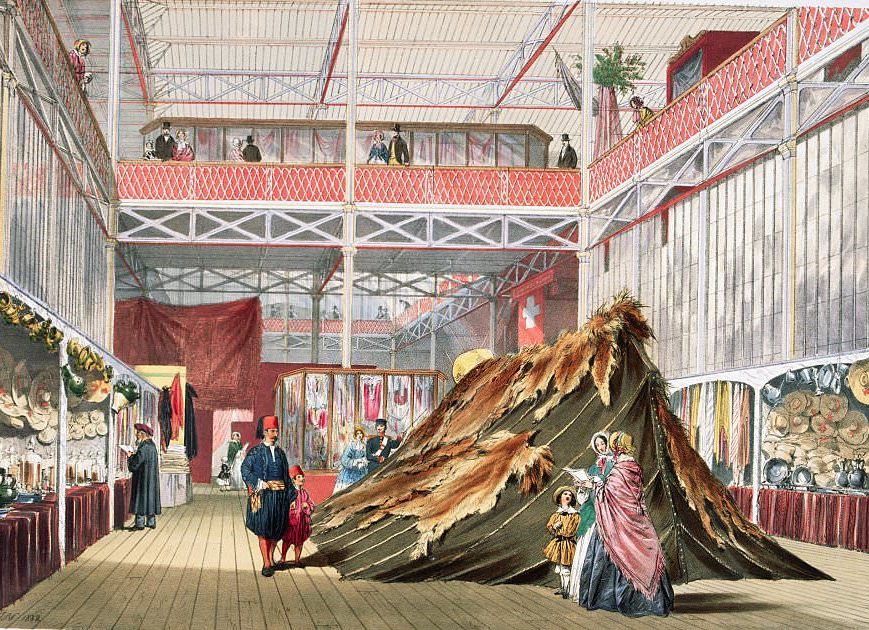
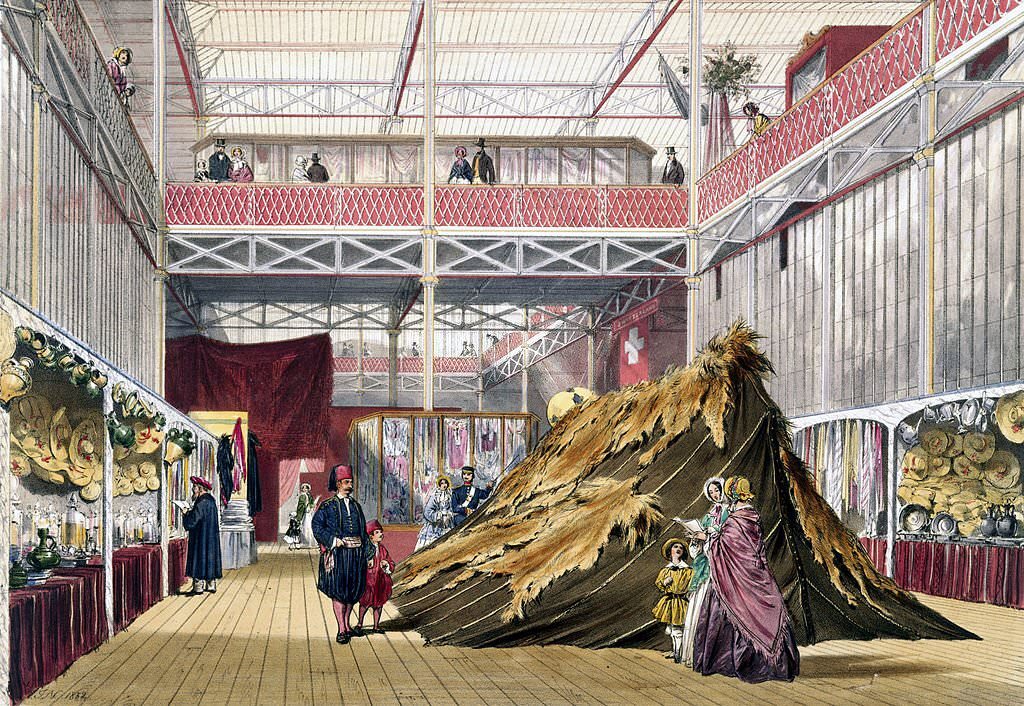
The Great Exhibition, Hyde Park, Westminster, London, 1851.The Great Exhibition, Hyde Park, Westminster, London, 1851. Artist: Robert Kent ThomasView of the Crystal Palace and its surrounding park, Sydenham, Bromley, London, 1854.Interior view of Crystal Palace during the Great Exhibition at Hyde Park, London in 1851.Great Exhibition, Crystal Palace, Hyde Park, London, 1851.The Crystal Palace from Dickinson’s Comprehensive Pictures of the Great Exhibition of 1851Reassembling the Crystal Palace, 1851A view of the south transpet of the Crystal Palace built for the Great Exhibition of 1851.The upper gallery of the Crystal Palace, built for the Great Exhibition of 1851.The nave and north transept of the Crystal Palace being reconstructed.Interior View of the Great Exhibition of 1851Tunis No 1 from Dickinson’s Comprehensive Pictures of the Great Exhibition of 1851Interiors of an exhibition, from Dickinson’s Comprehensive Pictures of the Great Exhibition of 1851Tunisian No 1 stand at the Great Exhibition, Crystal Palace, London, 1851.
Prominent objects on display included an ‘Arabian’ tent with lions’ and leopards’ skins, domestic and culinary utensils, and Jewish and Algerian garments.
Tunisian No 2 stand at the Great Exhibition, Crystal Palace, London, 1851.
Prominent objects on display included: Arabian mantles and shawls, blankets of Tunisian manufacture, saddles, embroidery, dresses, and cushions.

![[Factually Corrected: Caption changed from 'French Machinery in Hyde Park, London, 1851' to 'French Machinery in Paris, 1855'] French Machinery in Paris, 1855](https://www.bygonely.com/wp-content/uploads/2022/08/The_Great_Exhibition_of_1851_139.jpg)