
In the spring of 1889, Paris opened its doors to the world. The Exposition Universelle — what most people simply called the World’s Fair — ran from May 6 to October 31, 1889, and drew millions of visitors from across the globe. France had chosen this moment deliberately. The year 1889 marked the one hundredth anniversary of the French Revolution, and the French government wanted an event that matched the weight of that milestone. What they built on the Champ de Mars was unlike anything the world had seen before.
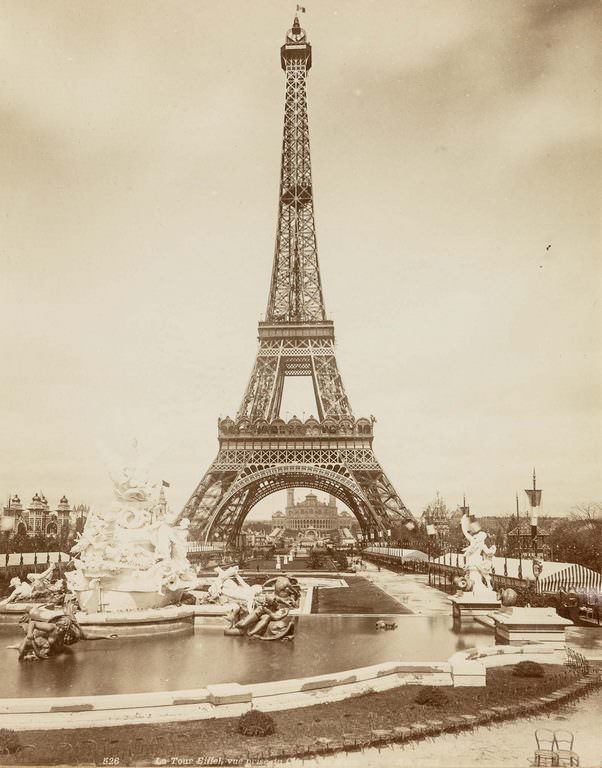
The Eiffel Tower was the undisputed centerpiece of the Fair. Designed by Gustave Eiffel, it stood at the main entrance and served as the grand arch through which visitors passed into the exposition grounds. At the time of its construction, it was the tallest man-made structure in the world. Many Parisians initially opposed it, calling it an eyesore. By the time the Fair closed, it had become the most visited structure on the grounds. The tower was not just a landmark — it was a statement about what modern engineering could achieve.
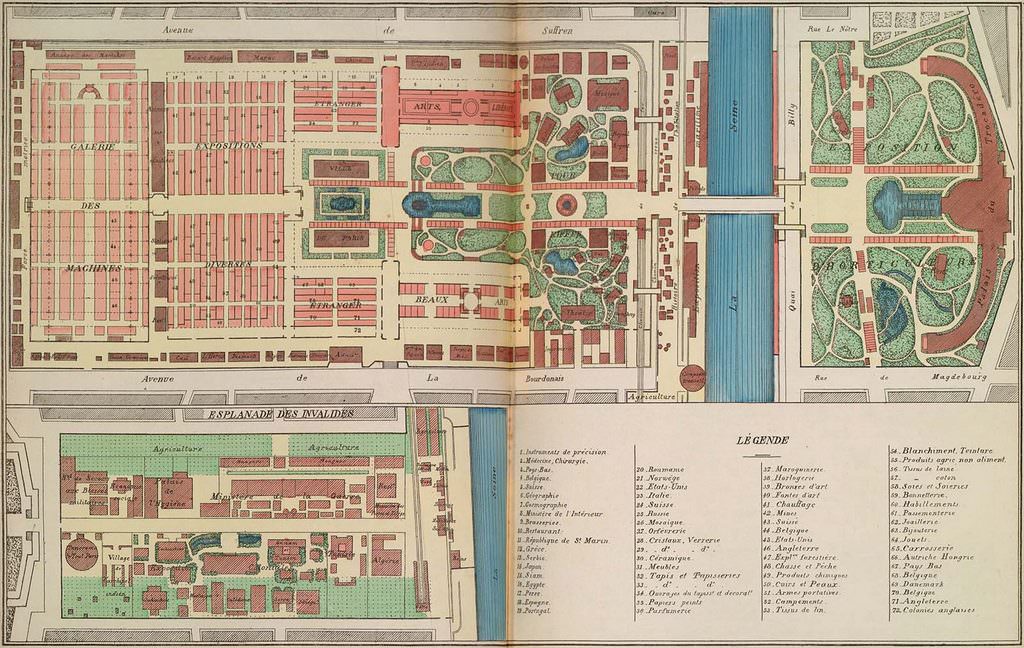
The Exposition spread across two main sites. The Champ de Mars stretched from the Trocadéro Palace all the way to the Galerie des Machines, near the École Militaire. About half a mile away, the Esplanade des Invalides hosted a second major site, which included the Exposition Coloniale and an agricultural fair. Together, these two areas formed a sprawling complex connected by the life of the city around them. The Fair had twenty-two separate entrances positioned around its perimeter, allowing the massive crowds to flow in and out without bottlenecks.
The main ceremonial entrance stood at Les Invalides, marked by two towering pylons decorated with colorful ornaments that resembled giant candelabras. Once inside, visitors encountered a city within a city. The Palais des Beaux-Arts displayed a large collection of Naturalist paintings, while the nearby Palais des Arts Libéraux hosted exhibits covering geography, musical instruments, medicine, photography, and education. Along the banks of the Seine River, a dedicated exhibit traced the entire history of human dwelling, from prehistoric shelters to modern homes.
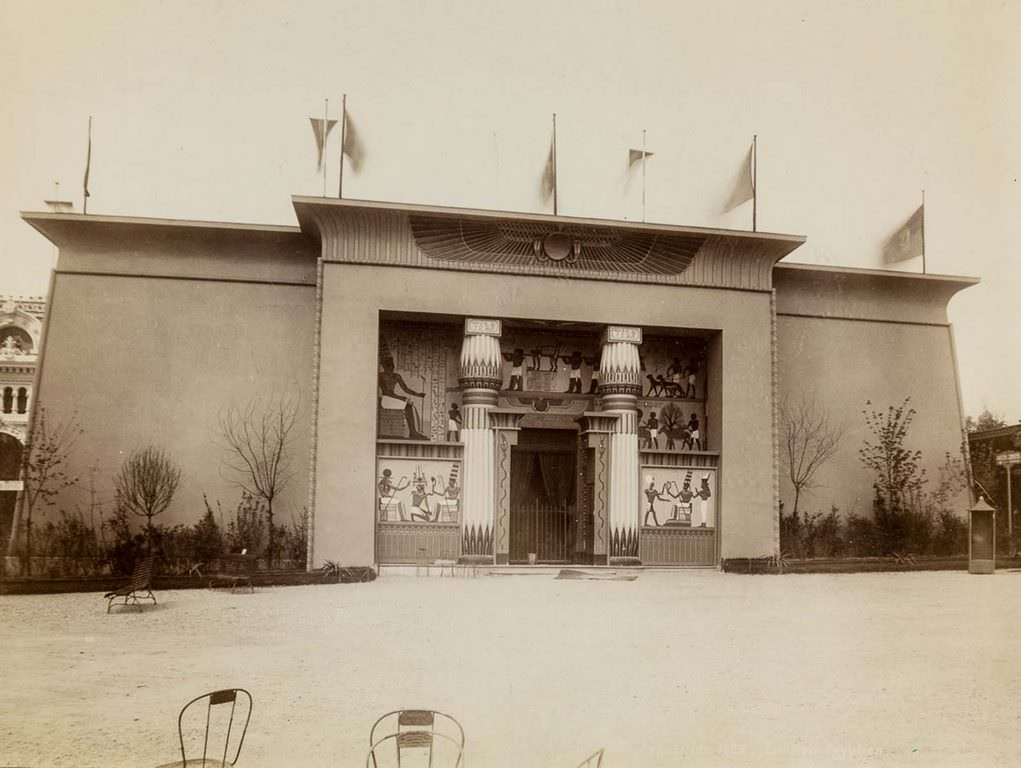
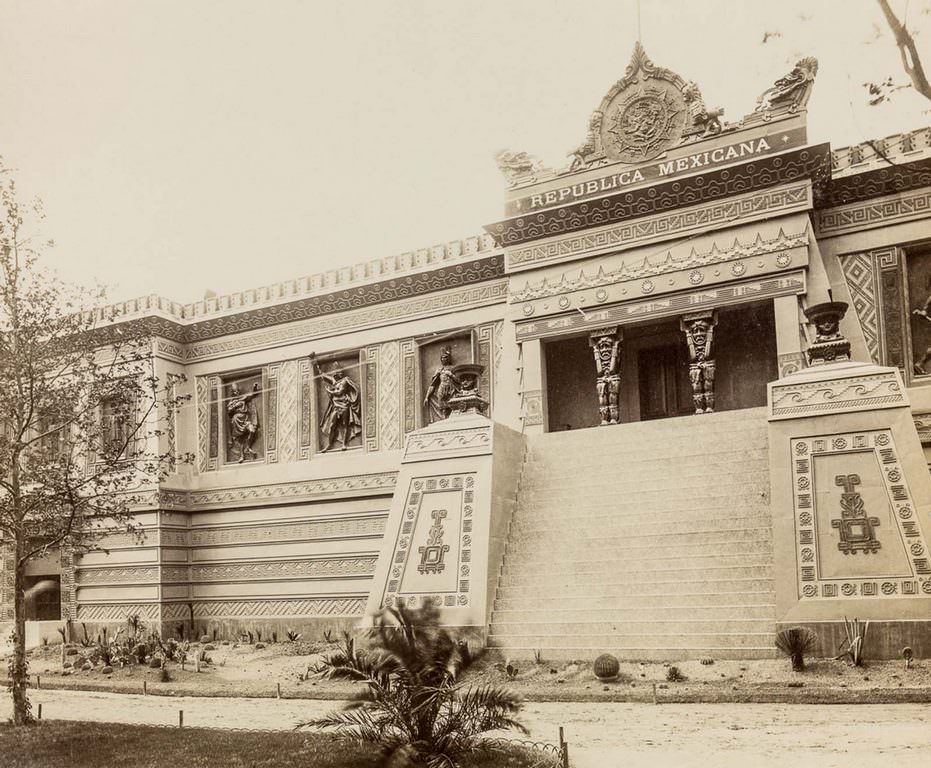
Nations from around the world constructed their own pavilions on the fairgrounds, each designed to reflect the architecture and culture of its home country. The Egyptian pavilion brought the visual language of ancient North Africa to the heart of Paris. These national buildings were one of the most popular draws of the entire exposition, giving ordinary visitors a rare chance to experience the aesthetics of distant countries without ever leaving France.
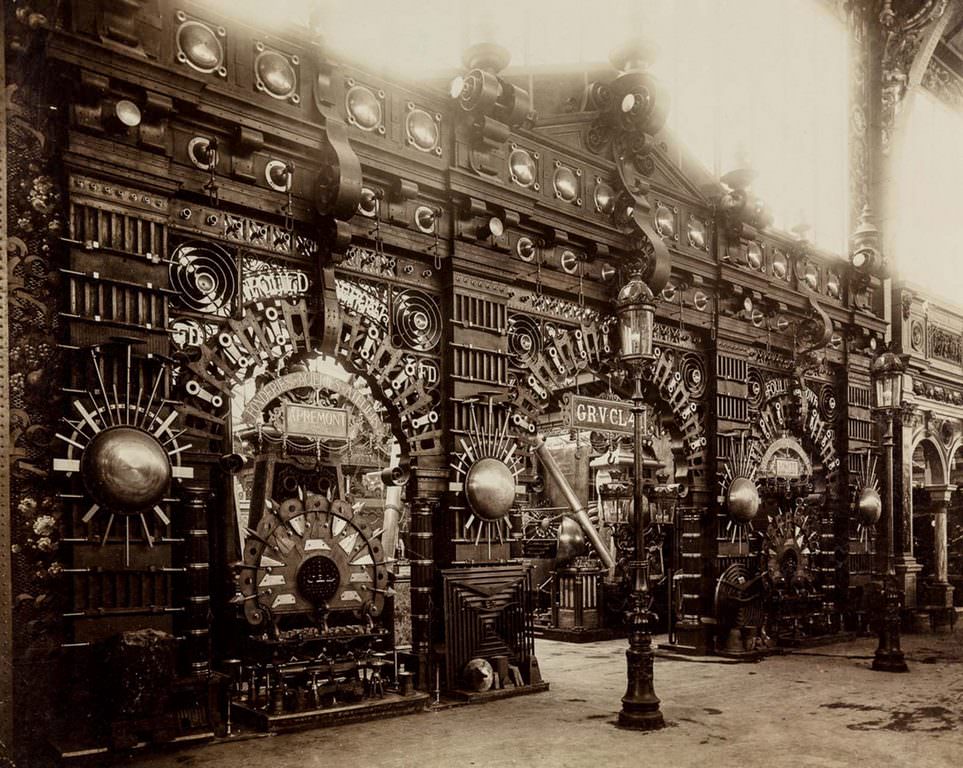
Industry and technology were just as prominent as art and culture. The iron and steel works exhibit showcased the raw materials and manufacturing processes driving the industrial age. Heavy machinery, metallurgical displays, and engineering demonstrations filled large sections of the fairgrounds. These exhibits reflected the broader ambition of the Exposition — to present progress itself as something worth celebrating.
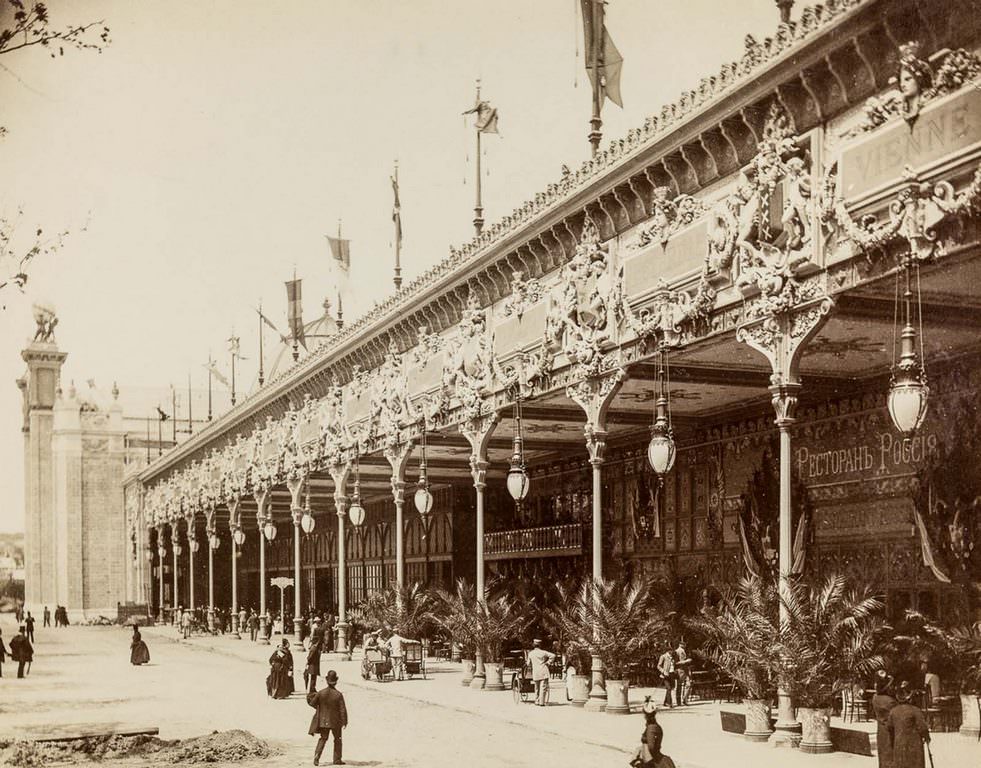
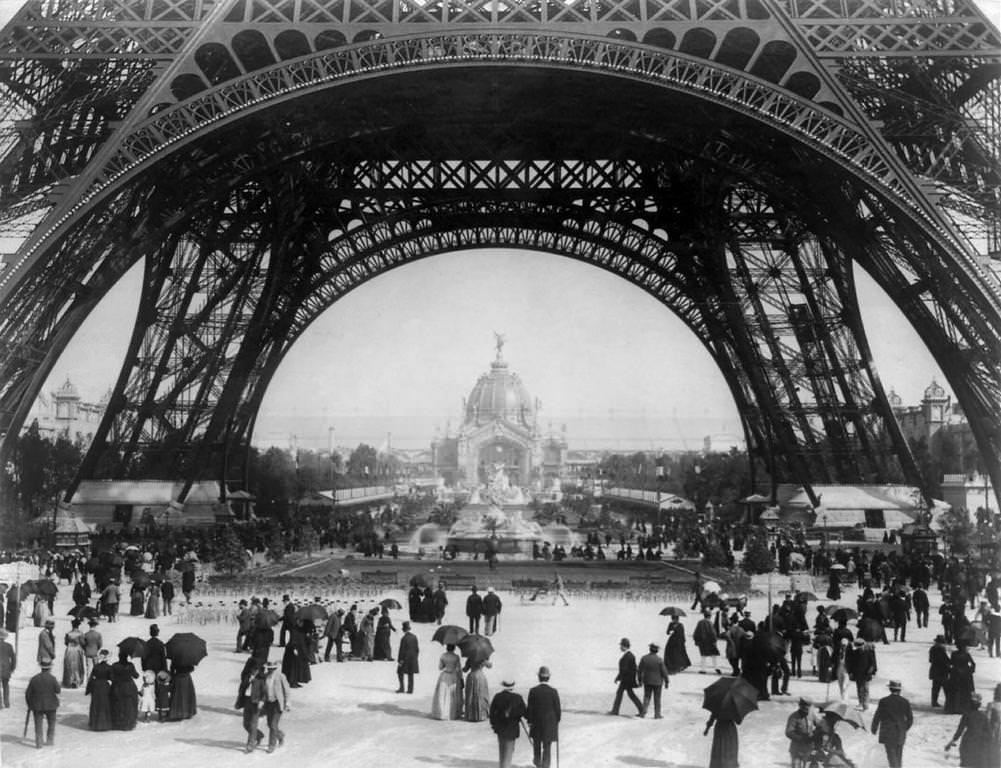
The crowds at the 1889 Exposition were enormous. Parisians and tourists alike strolled through the grounds day after day, moving between pavilions, galleries, and open-air exhibits. The atmosphere combined the energy of a street festival with the seriousness of a museum. Families walked beneath the iron legs of the Eiffel Tower, vendors sold food and souvenirs, and uniformed attendants guided guests through the more complex technical displays.
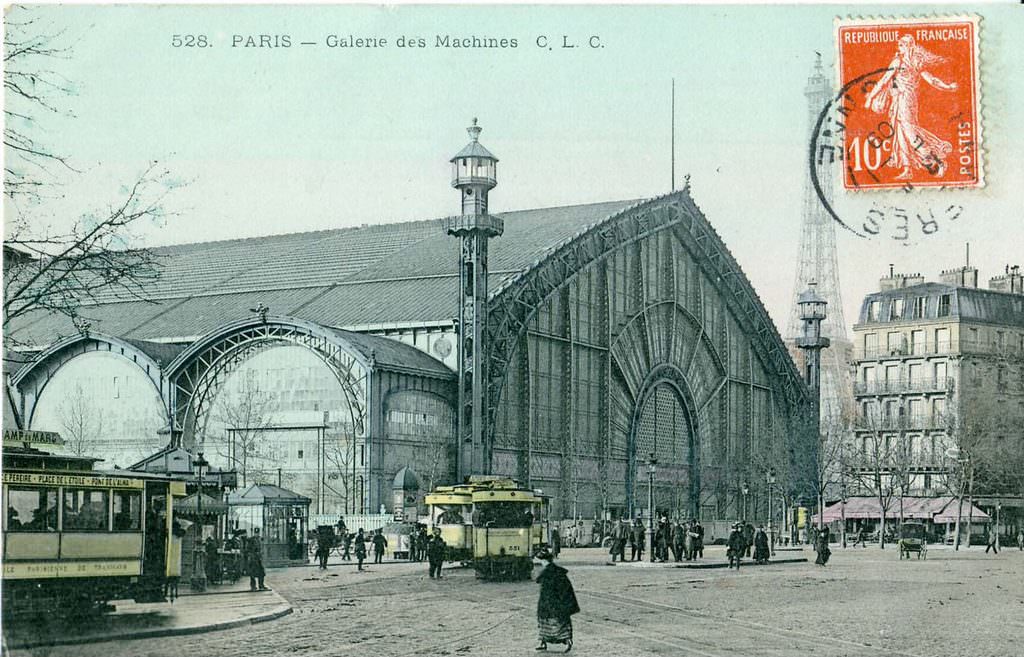
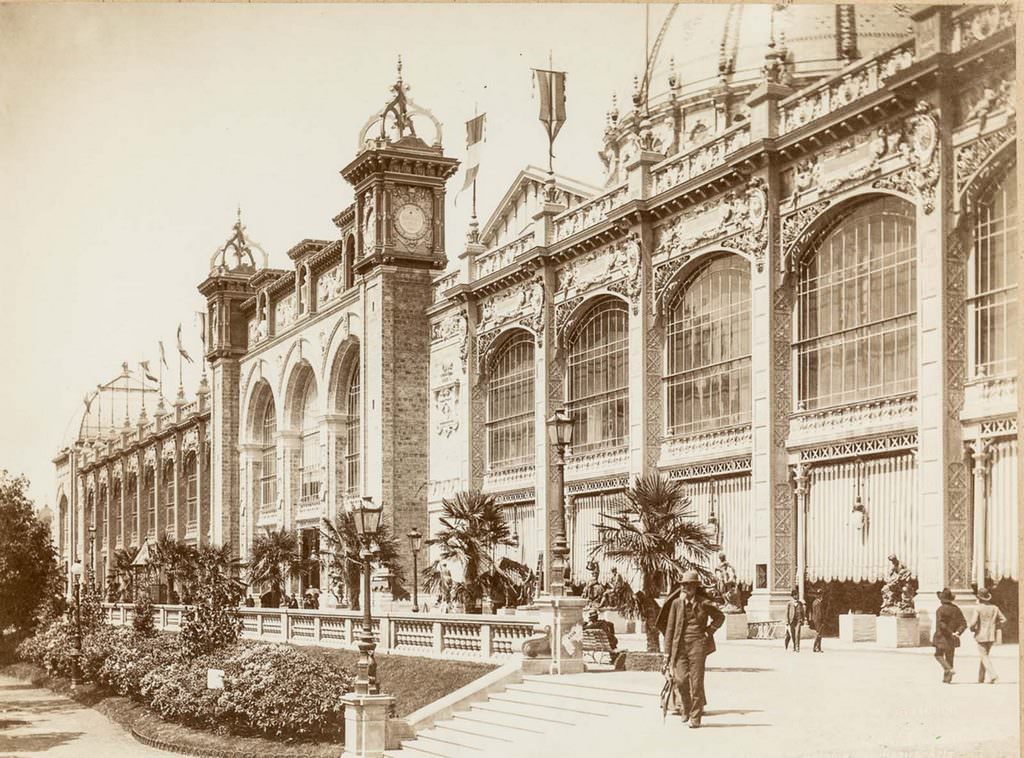
The Galerie des Machines was one of the most striking structures on the fairgrounds. Built with a vast iron and glass frame, it housed working machinery from some of the world’s leading manufacturers. Visitors could watch engines, looms, and mechanical systems operating in real time. The building itself was an engineering achievement — its wide, column-free interior space was made possible by a bold use of structural steel.
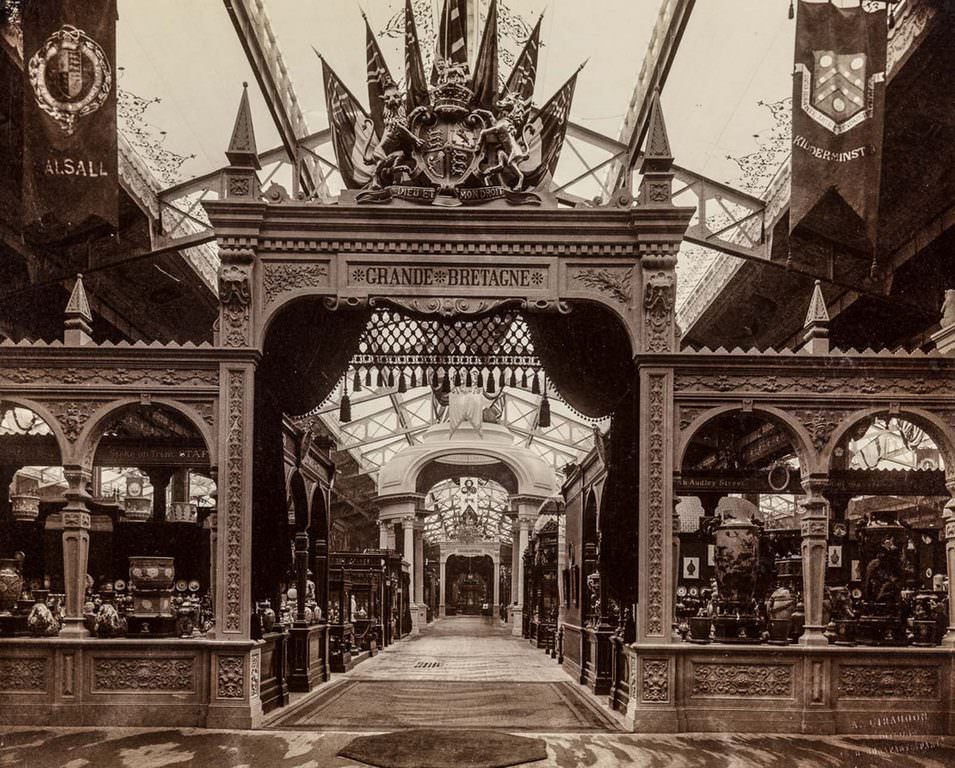
Although most European governments officially boycotted the Exposition — largely due to political tensions with France following the Franco-Prussian War — their absence at the governmental level did not stop private citizens and companies from those same nations from participating. Great Britain, for example, had a pavilion on the grounds, filled with commercial and cultural exhibits. The boycott was more symbolic than practical. Businesses saw opportunity regardless of what their governments decided.

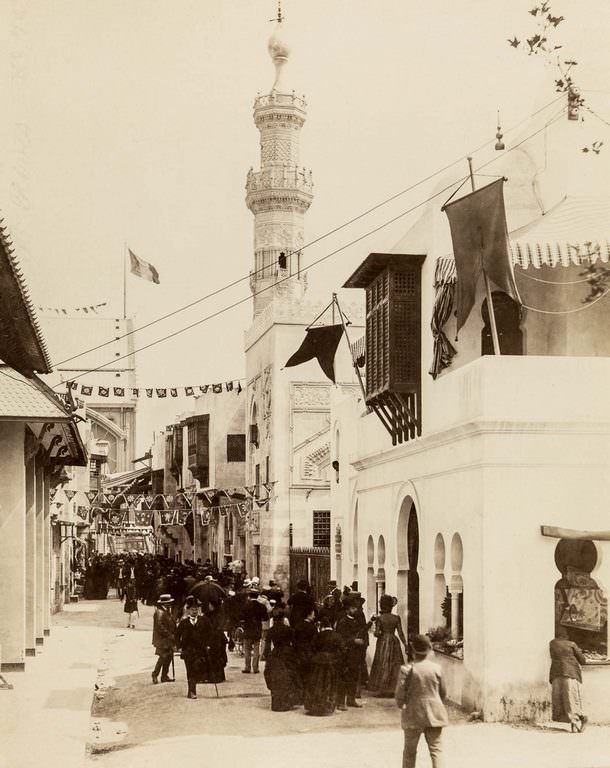
Latin American nations sent strong delegations to the Fair. Paraguay, Brazil, Mexico, Chile, and Venezuela each built their own dedicated pavilions. These countries used the Exposition as an opportunity to attract European investors and immigrants, presenting their natural resources, agricultural output, and cultural heritage to an international audience. The North African exhibits, meanwhile, drew heavily curious crowds who moved through reconstructed streets and displays of regional crafts and goods.
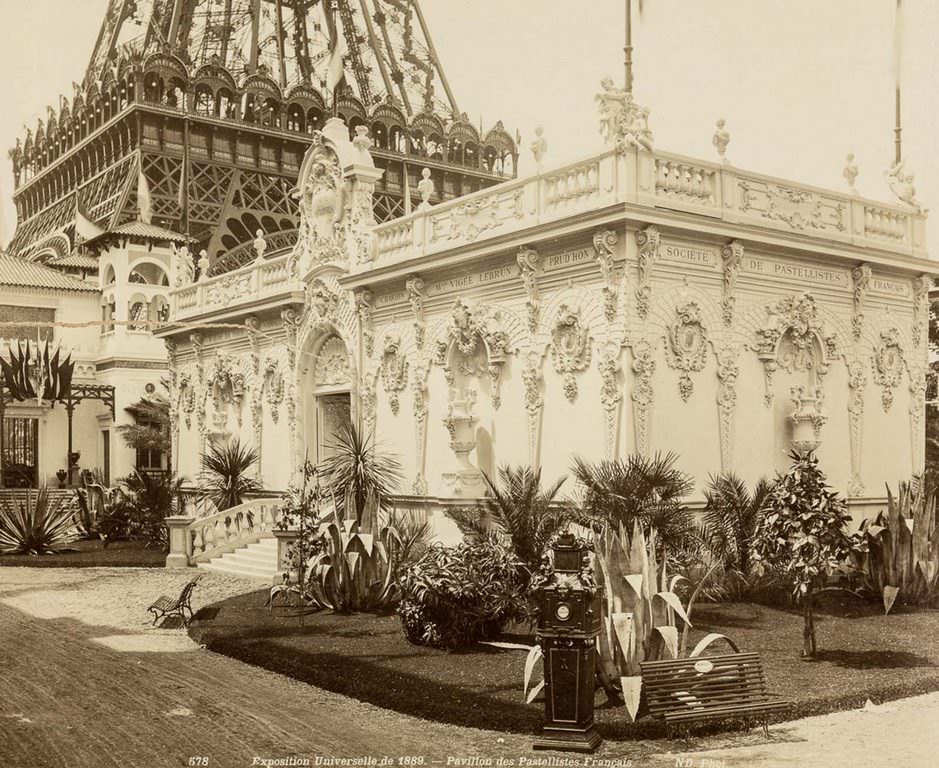
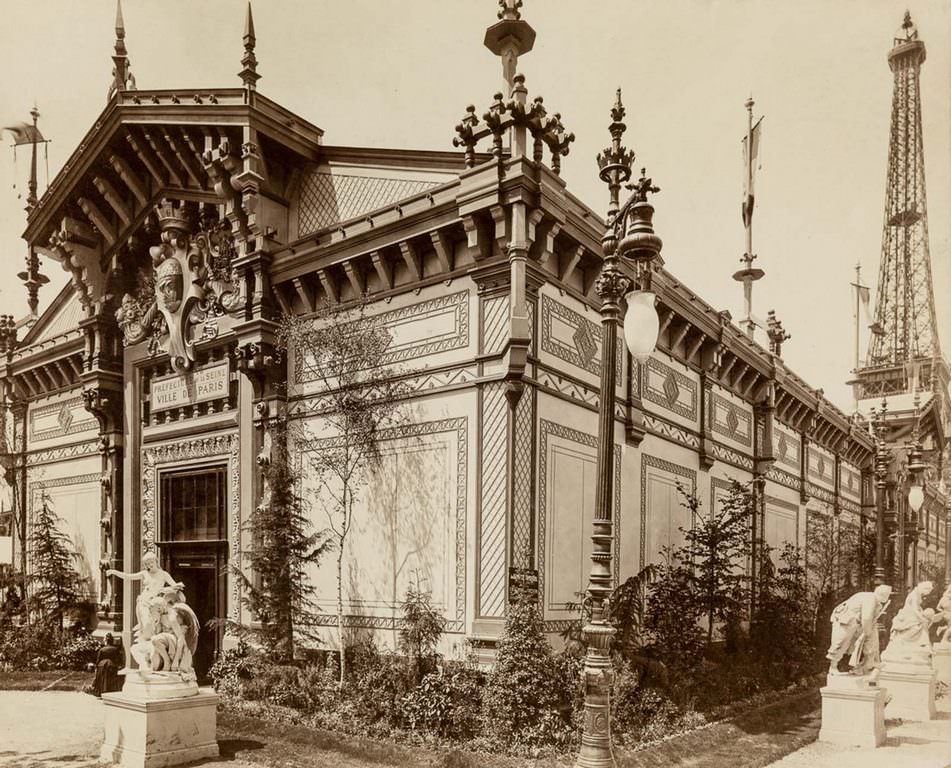
French art was prominently featured throughout the grounds. The pavilion dedicated to French pastellists showcased works in pastel — a medium that had enjoyed a strong revival in the late nineteenth century. The Prefecture of the Seine mounted its own exhibit highlighting the administration and development of the Paris region, with the Eiffel Tower rising unmistakably behind it. Art, governance, and engineering existed side by side throughout the entire exposition.
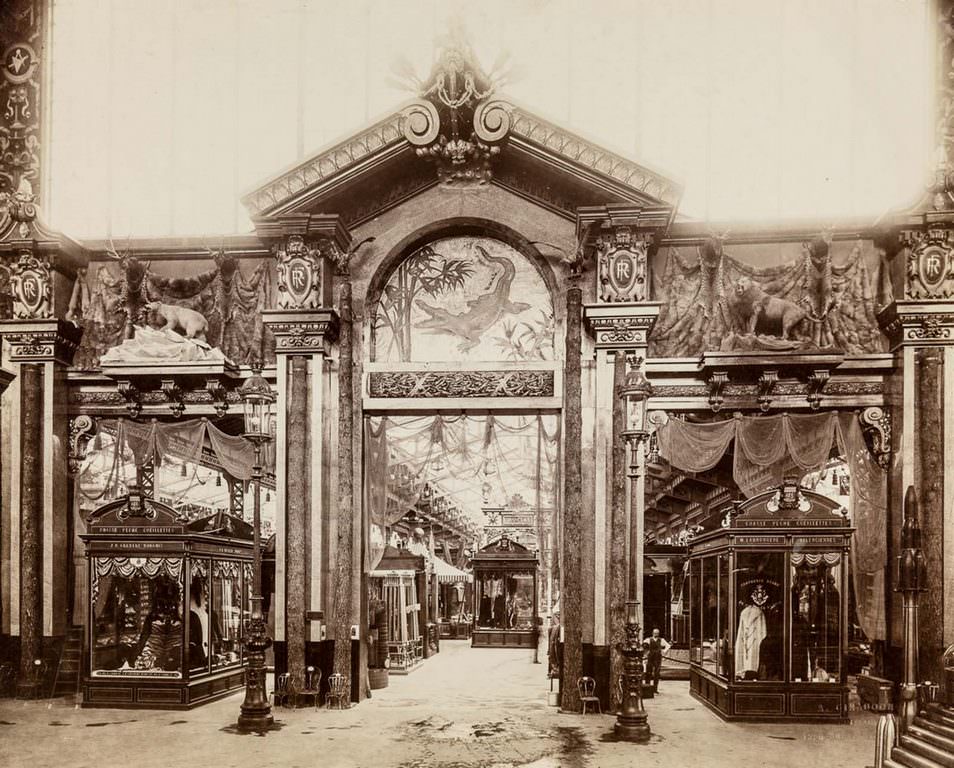
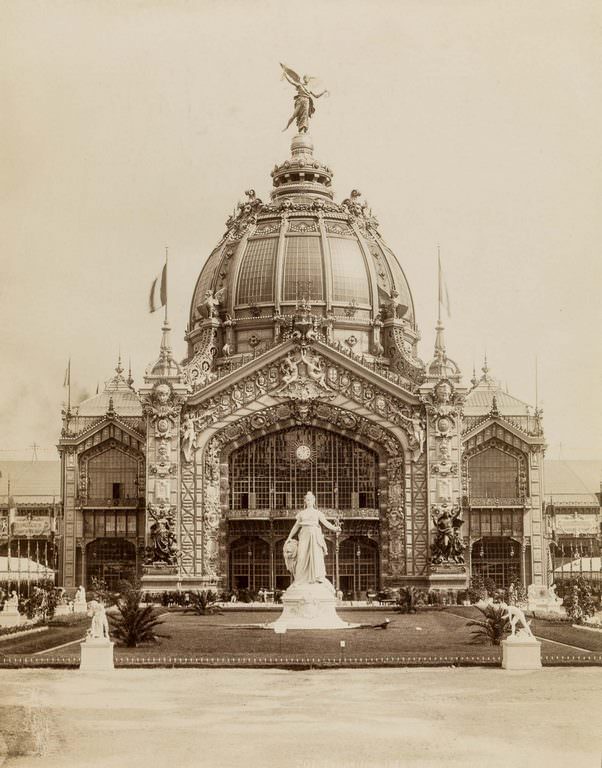
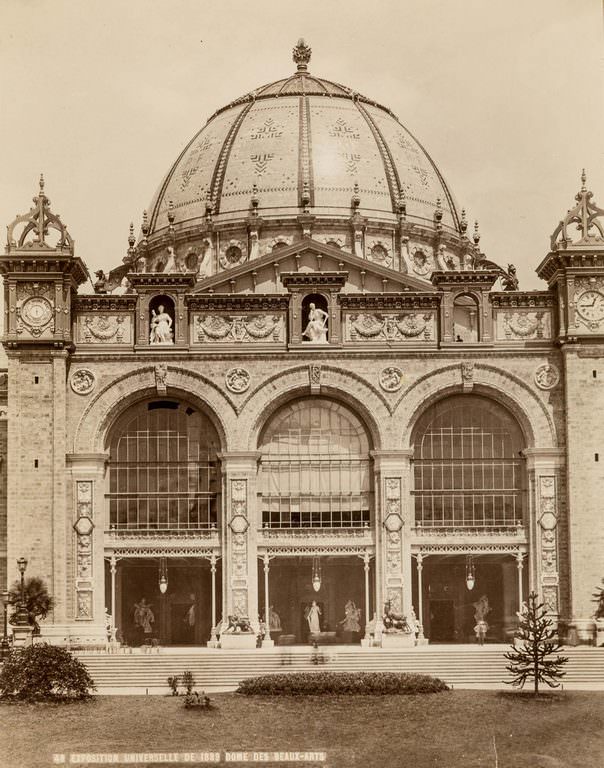
The Central Dome served as one of the architectural anchors of the main exposition hall. Beneath it, visitors could take in exhibits from multiple wings of the complex. Nearby, foraging and hunting displays presented the traditional and modern methods humans used to gather food and manage wildlife — a subject that carried practical weight in an era when rural life was still the norm for most of the world’s population.
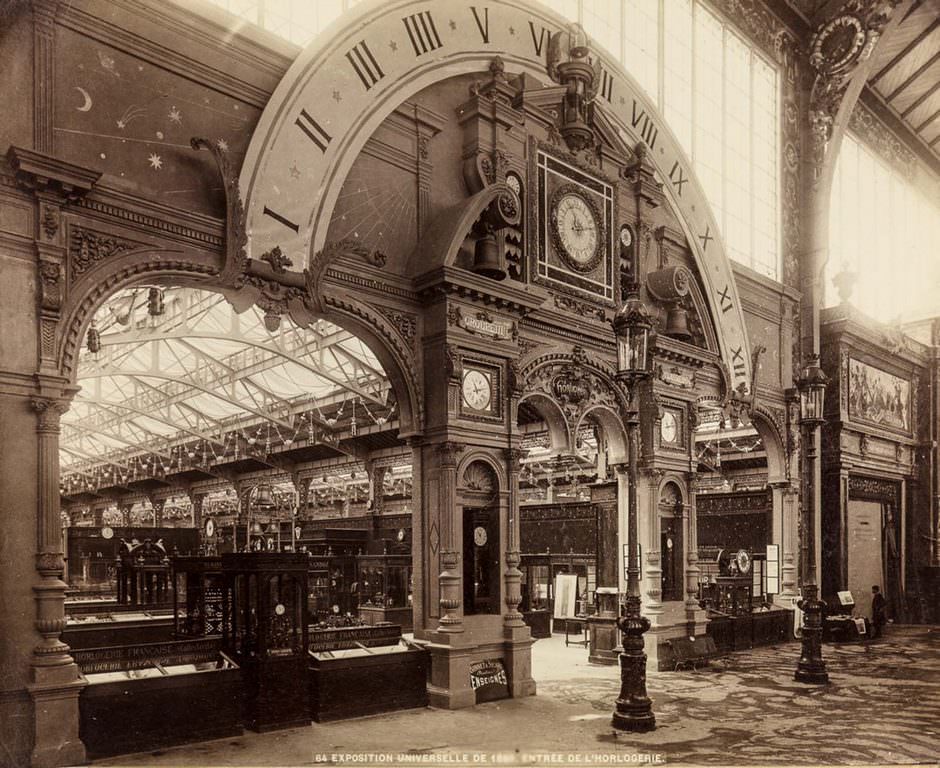
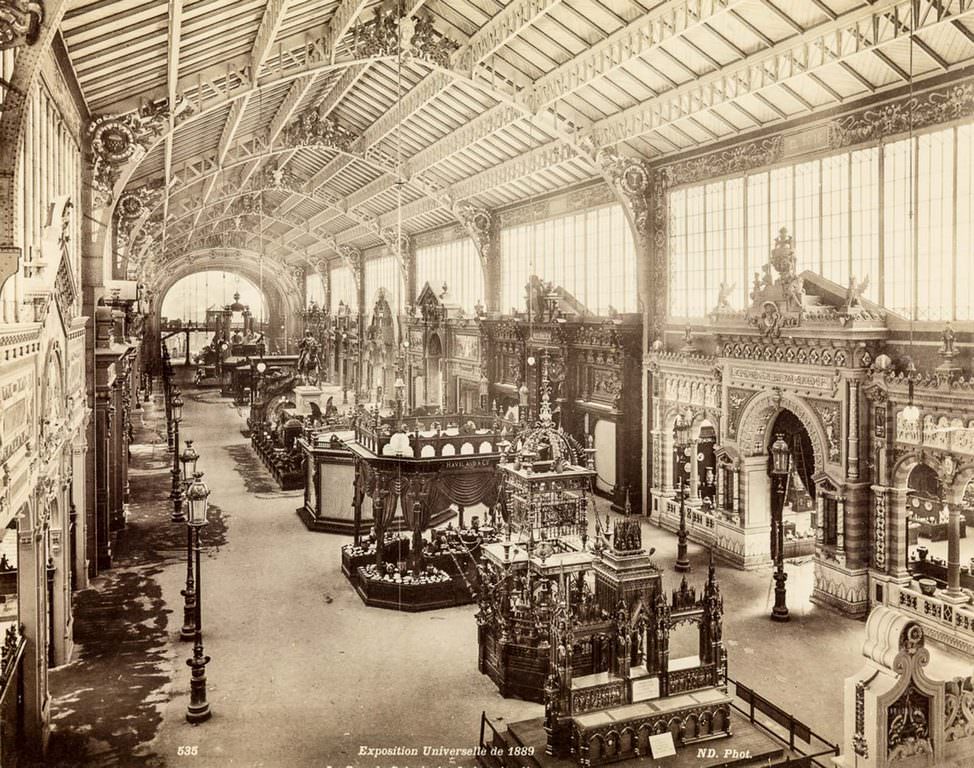
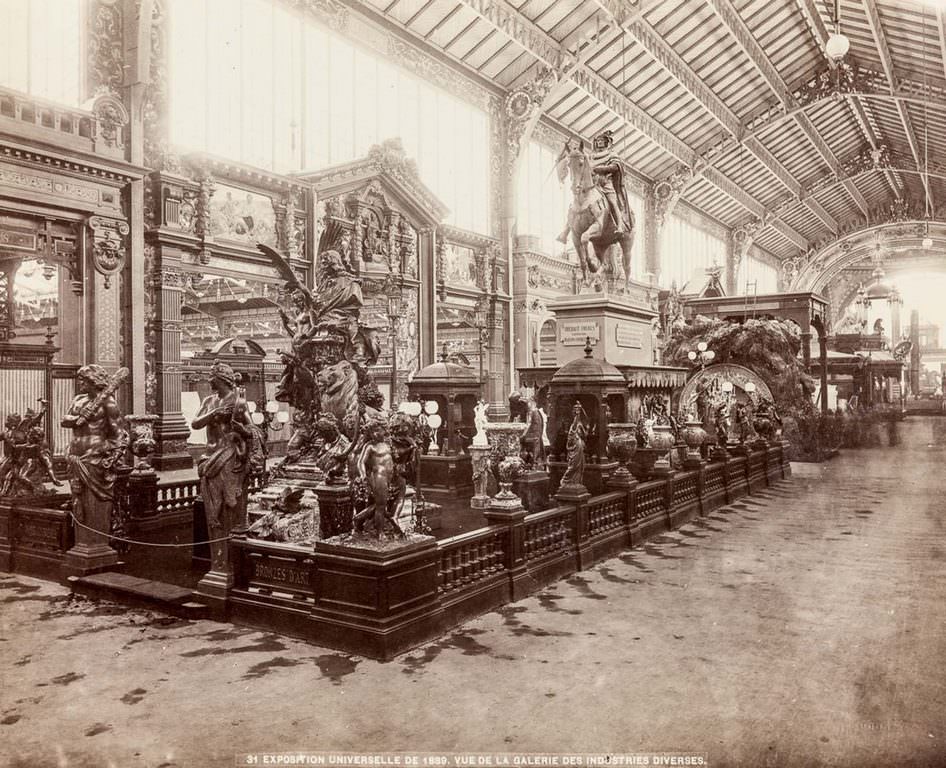
The horology exhibition focused on the craft and science of timekeeping — clocks, watches, and precision instruments of every variety. France had a long tradition of clockmaking, and this exhibit placed that heritage in an international context. The Grand Gallery of Various Industries connected many of these specialized displays, forming a long corridor of commerce and craft that visitors could walk through to move between different sections of the Fair.
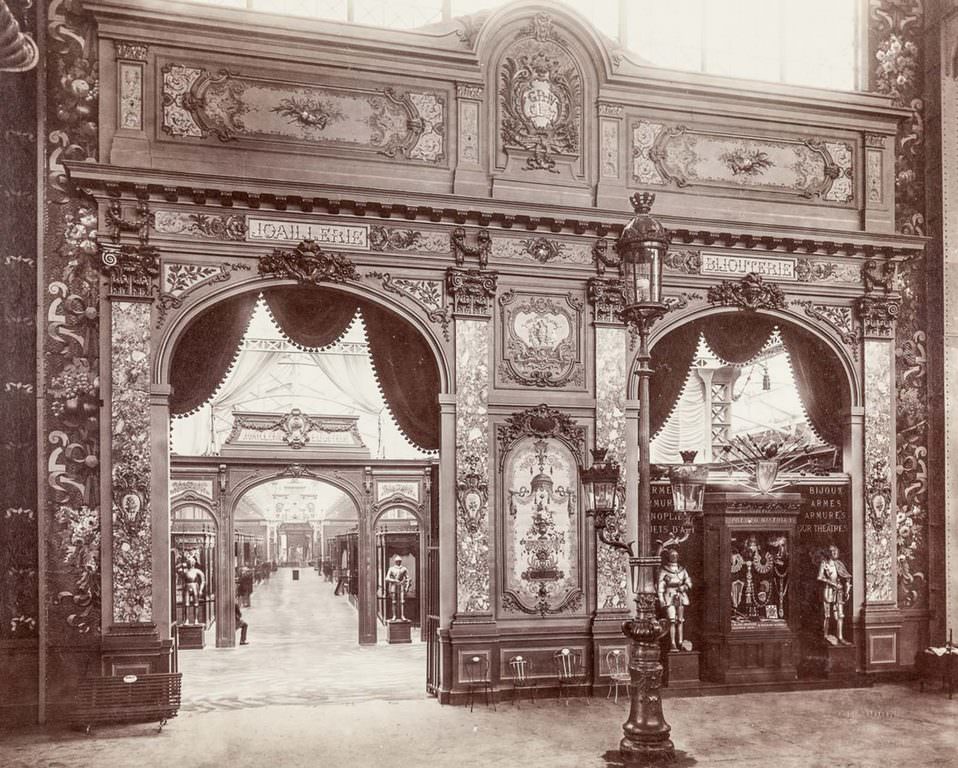
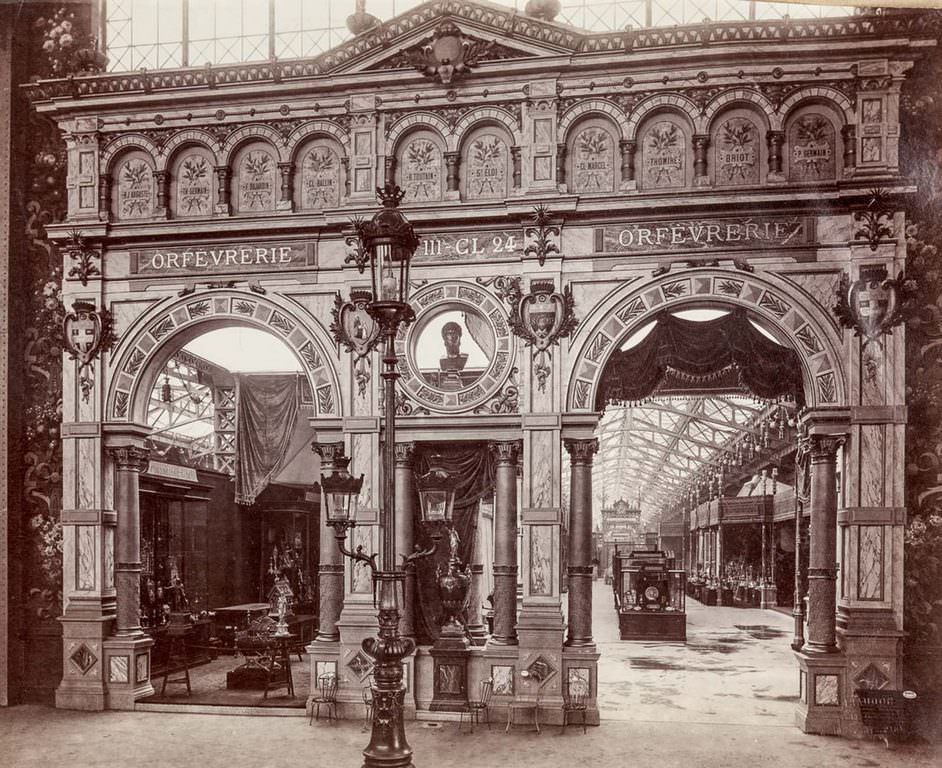
The decorative arts sections drew some of the Fair’s most admiring crowds. The jewelry exhibition displayed fine pieces from French and international makers, set against richly decorated backdrops. The goldsmithery pavilion went even further, presenting the full scope of metalworking skill — from raw casting to finished decorative objects. Paris was already the global capital of luxury goods, and these exhibits reinforced that reputation at the highest possible level.
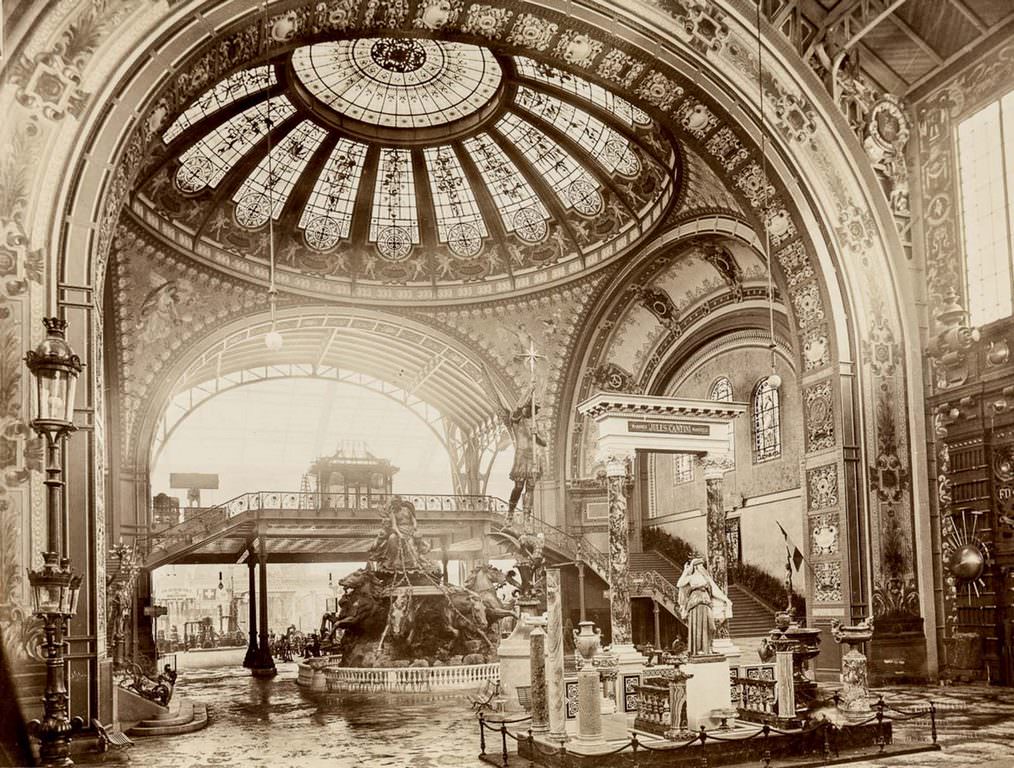
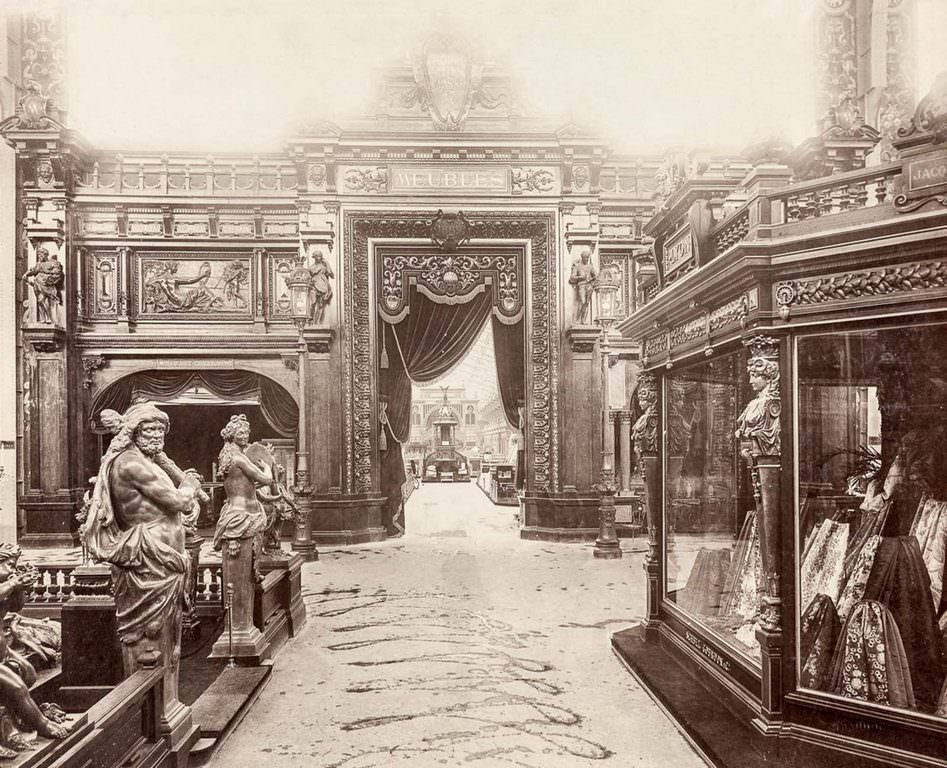
Sculpture also held a major presence at the Exposition. Jules Cantini, a prominent French sculptor of Marseillais origin, exhibited a collection of marble works that drew considerable attention. The furniture exhibition, housed behind an ornately decorated entrance, featured pieces ranging from functional domestic designs to elaborate showpieces crafted by France’s finest cabinetmakers. Both exhibits reflected the Fair’s commitment to placing fine craftsmanship alongside industrial innovation.
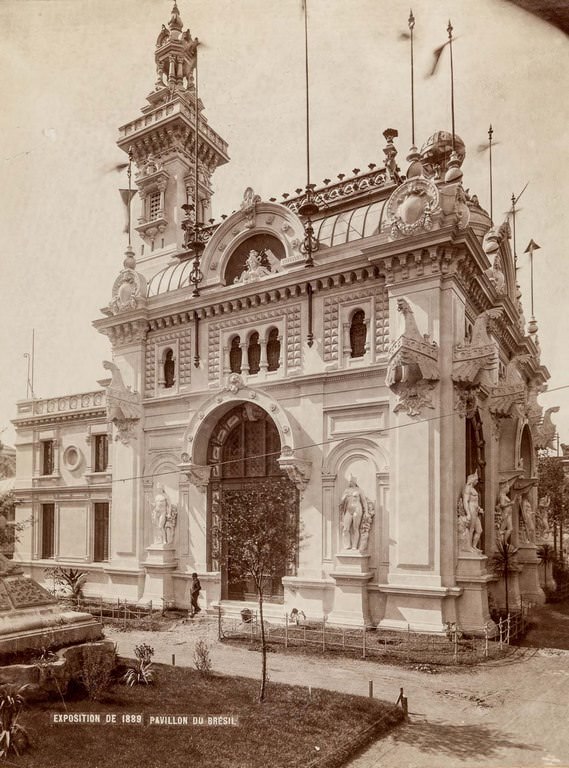
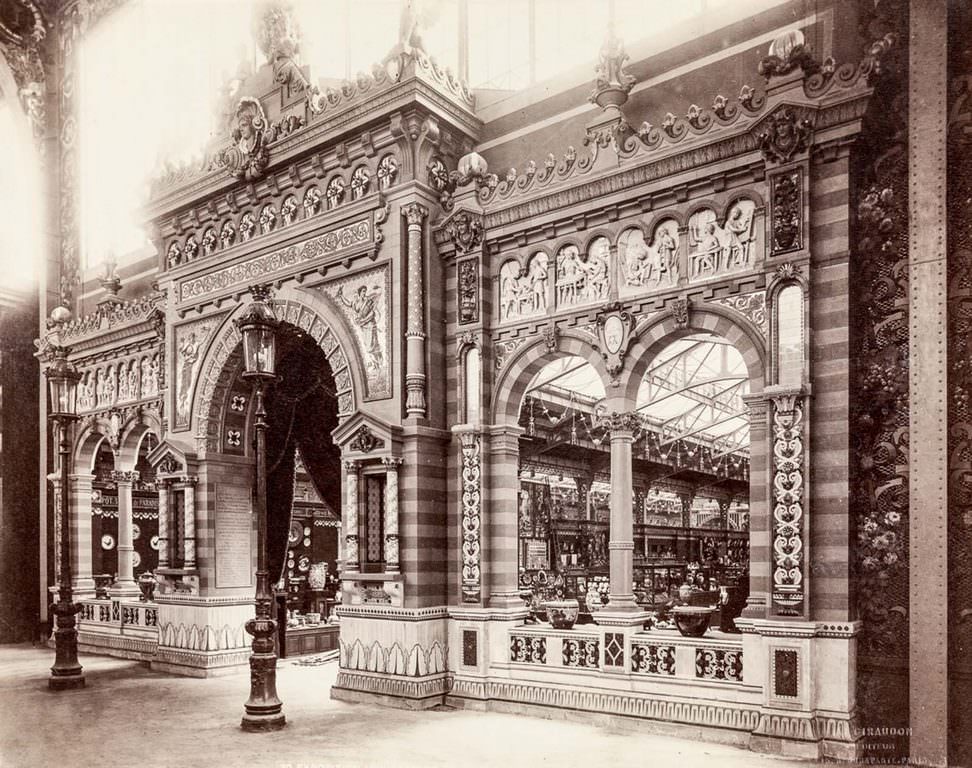
Brazil’s pavilion was one of the more prominent among the South American national buildings. The country had only proclaimed its republic in November 1889 — just weeks after the Exposition closed — but its presence at the Fair was confident and well-organized. The ceramics exhibition, nearby, displayed pottery and tile work from French and international producers, covering both the artistic and industrial sides of the craft.
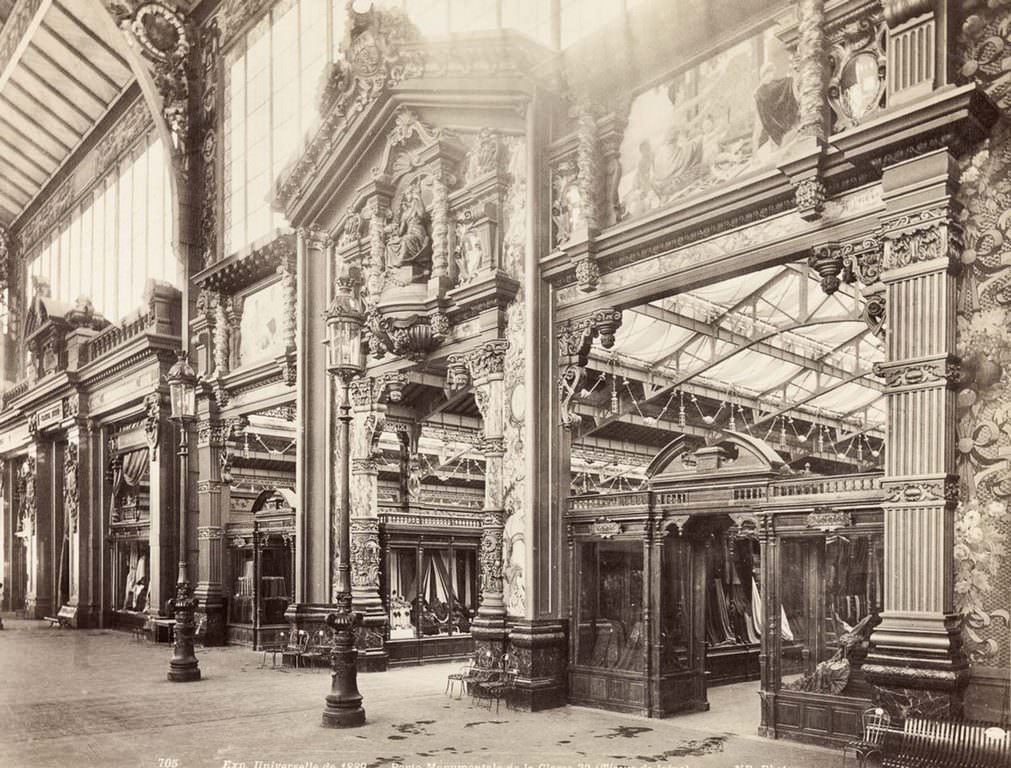
Textile production was a cornerstone of nineteenth-century industry, and the Exposition reflected that. The woolen fabrics exhibition presented fabric samples, looms, and finished goods from producers across France and beyond. Its ornamental gate signaled the importance the Fair’s organizers placed on the textile sector. France’s weaving industry — particularly in Lyon and in the north — had global reach at this time, and the Fair gave manufacturers a direct line to international buyers and press.
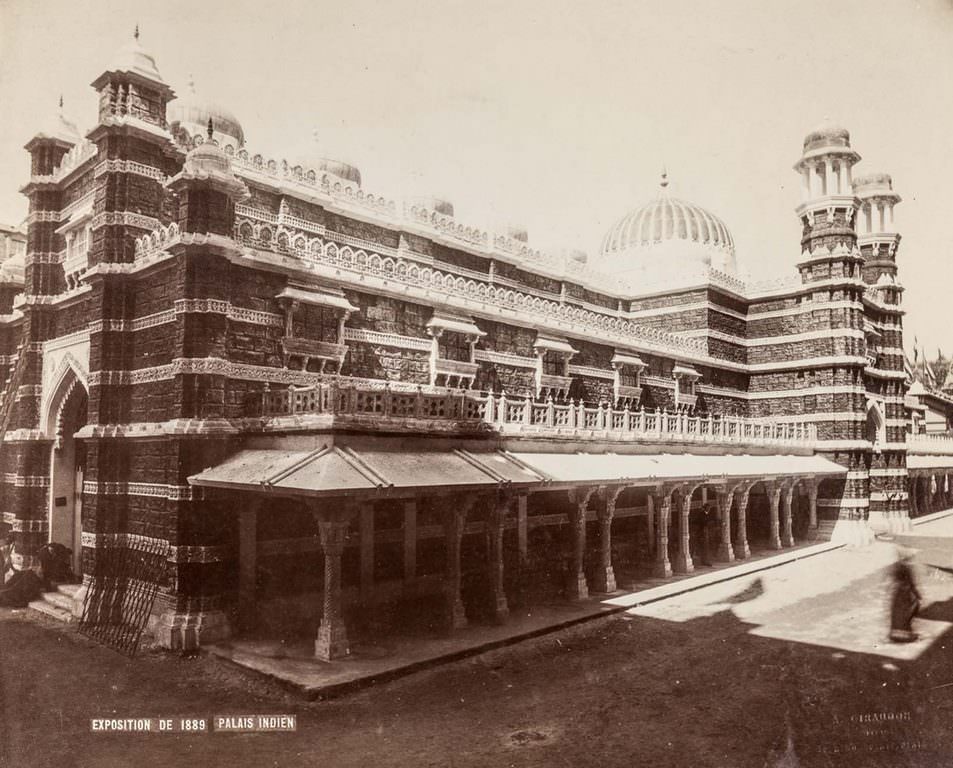
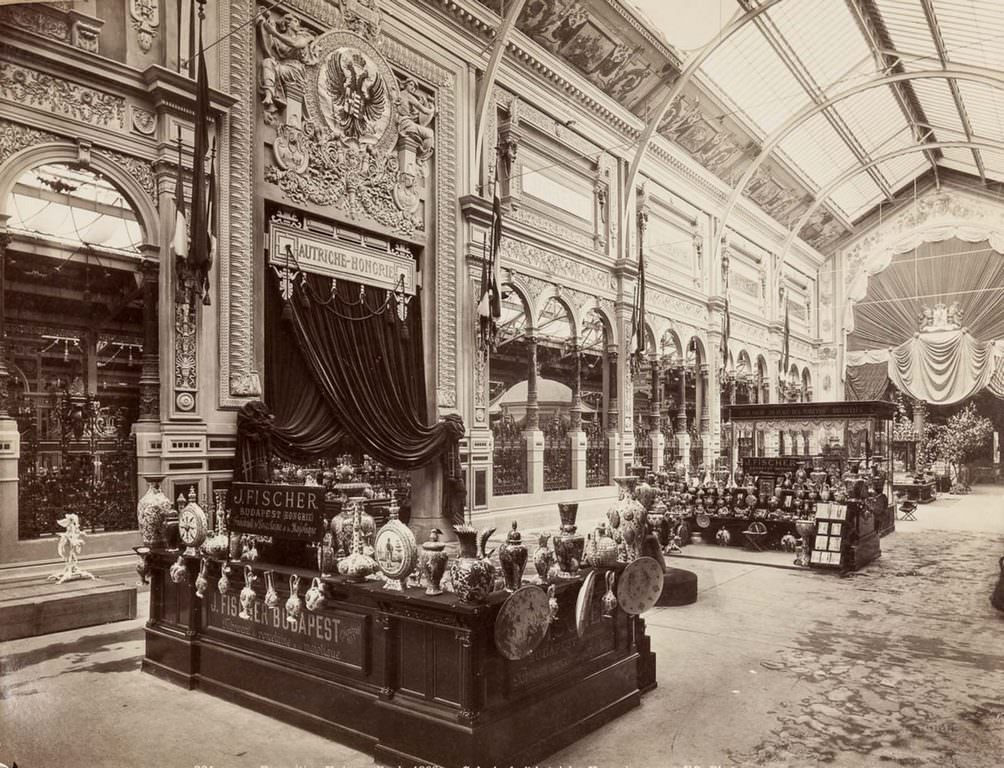
The Palace of India brought South Asian architecture and goods to the fairgrounds, presenting a richly decorated structure that stood apart from the European and Latin American buildings surrounding it. The Austria-Hungary exhibition, despite the broader European boycott at the government level, still managed to feature exhibits representing the dual monarchy’s industrial and artistic output. It was a reminder that commerce and culture found ways to move even when politics tried to block them.
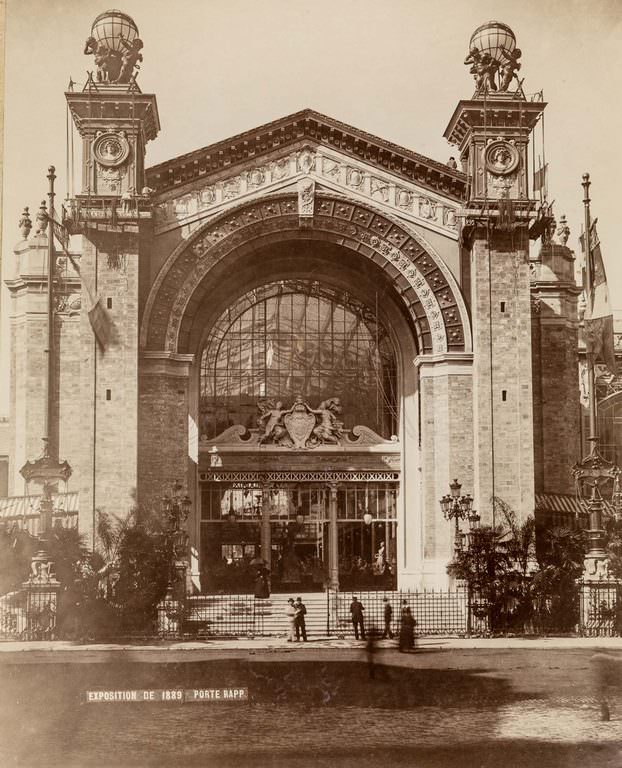
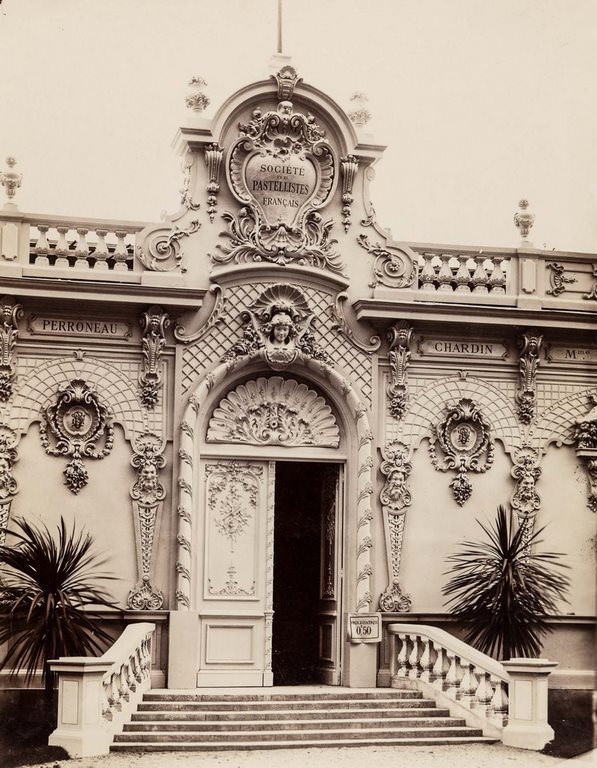
Throughout the grounds, the entrances to each hall and pavilion were designed as attractions in their own right. Architects and decorators treated doorways, gates, and facades as opportunities to draw visitors in and signal what they would find inside. The entrance to the French pastellists’ exhibition, for example, was finished with details that echoed the delicate, refined quality of the artwork displayed within. This attention to presentation was deliberate — every element of the Fair was meant to impress.
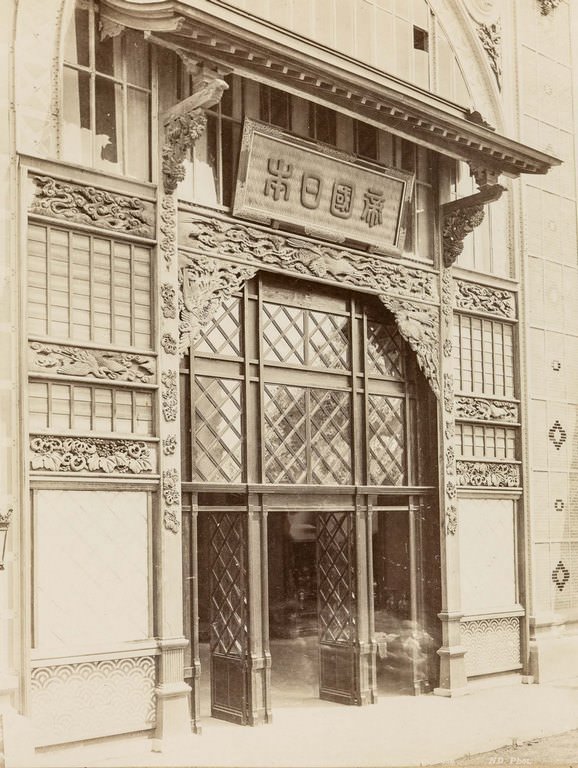
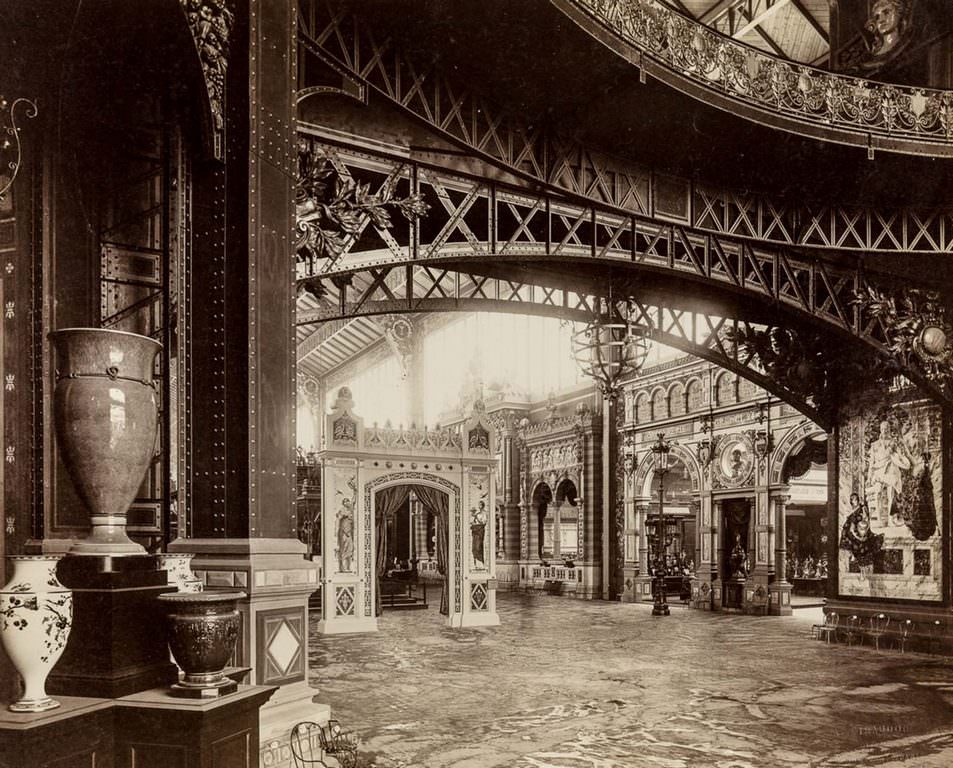
Japan’s presence at the Exposition was significant. The Japanese pavilion displayed traditional crafts, lacquerwork, textiles, and ceramics that fascinated European audiences. Japanese aesthetics had been influencing French art since the 1860s — a movement known as Japonisme — and the 1889 Fair deepened that cultural exchange. Inside various pavilions, richly decorated interiors revealed how much thought went into the arrangement of each display, with lighting, furnishings, and layout all carefully considered.
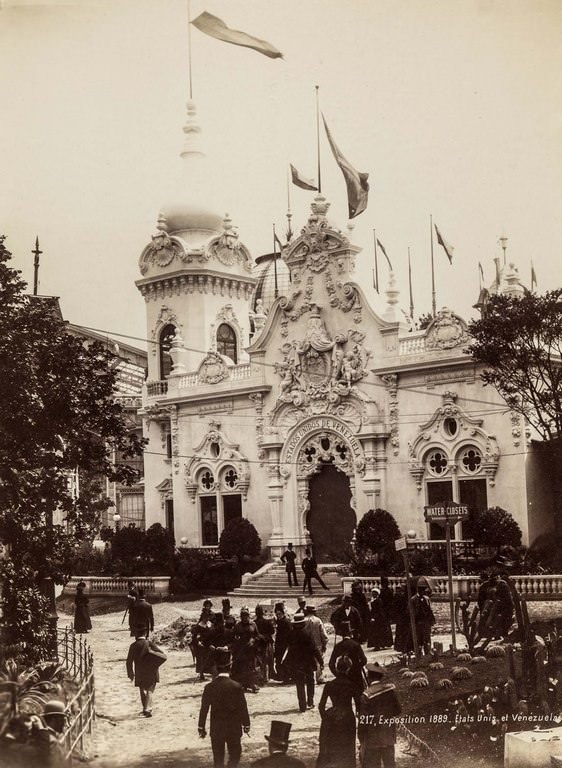
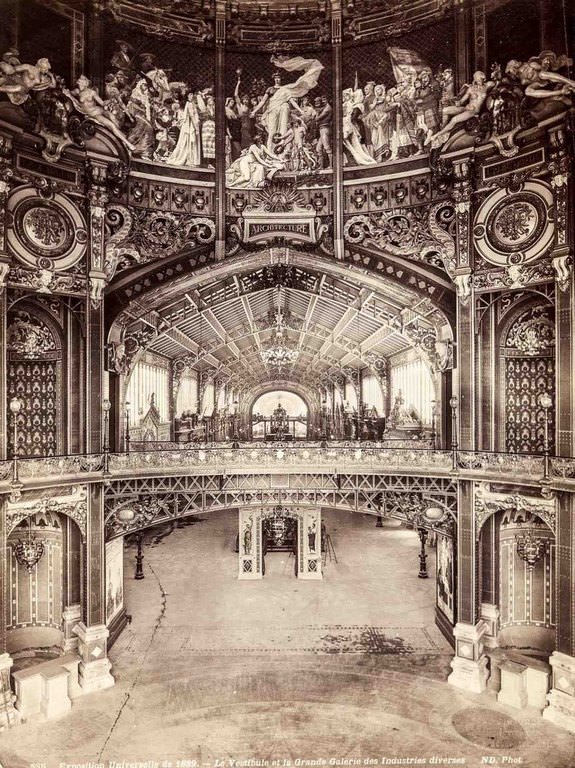
Venezuela joined the growing list of Latin American nations that used the Exposition to build their international profile. The Grand Gallery of Various Industries ran as a continuous spine through the commercial sections of the Fair, linking countless exhibits in a single monumental space. It gave the sprawling range of goods on display — from chemicals to furniture to textiles — a unified home, making it easier for visitors to move between categories without losing their bearings.
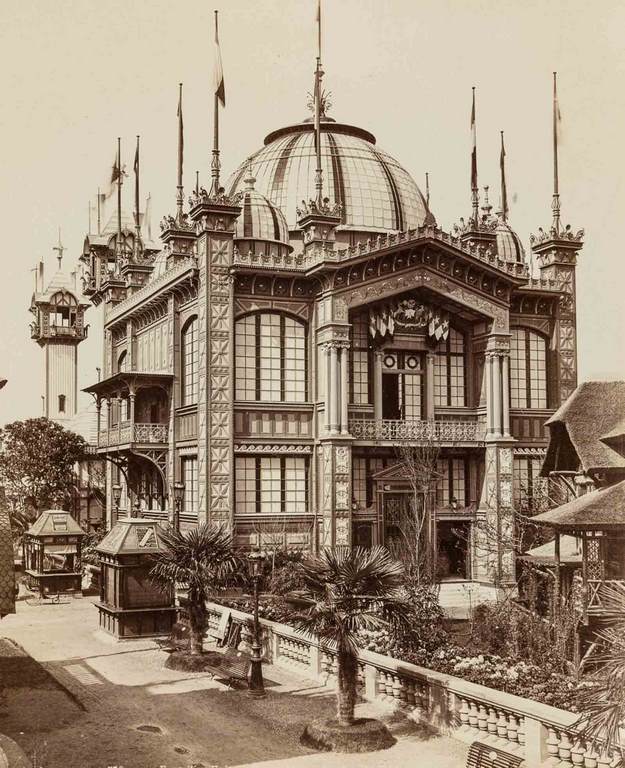
When the Exposition Universelle closed on October 31, 1889, it had generated a profit of 8,000,000 francs for the French state and had secured significant real estate in the process. The numbers alone told part of the story. But the photographs that survive — of the pavilions, the galleries, the crowds, the machinery, and the tower — tell the rest. For six months, the Champ de Mars became the center of the world, and the images captured there remain one of the most vivid records of the nineteenth century’s ambitions.




