A single photograph can freeze a moment in time. But when you place that image beside a photo of the exact same spot taken decades later, something remarkable happens — the full weight of change becomes visible. These side-by-side comparisons of London’s streets and landmarks, spanning from 1868 to 2014, do exactly that.
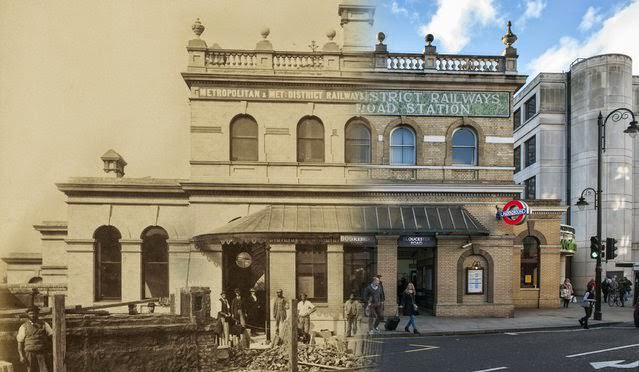
Some of London’s oldest infrastructure has outlasted generations of change. Gloucester Road Station, photographed in its completion year of 1868, still stands in 2014 — but its surroundings have grown up entirely around it. The same is true across much of the city, where Victorian-era bones sit beneath layers of modern life.
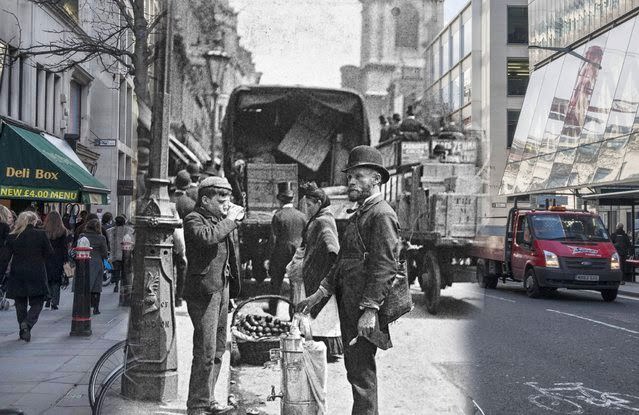
Street life tells its own story. In 1893, a street seller of sherbet and water worked the pavements of London, serving passersby in a city where such vendors were a common sight. By 2014, that same stretch of street shows no trace of that trade — replaced by modern retail, signage, and a completely different rhythm of foot traffic.
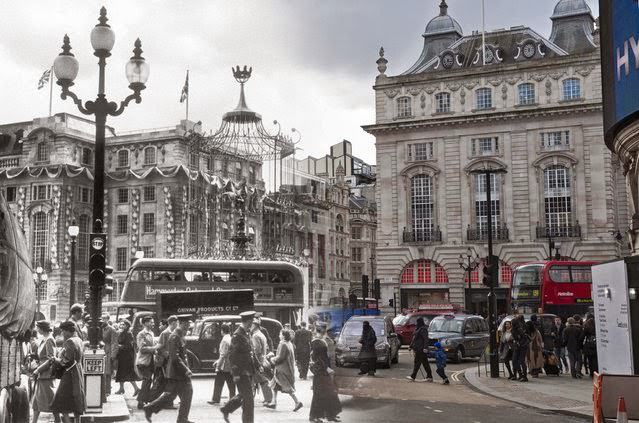
Piccadilly Circus has always been one of London’s busiest junctions. In 1953, its famous advertising boards and central fountain drew crowds in post-war Britain. Six decades on, the scale of everything — the signage, the volume of people, the noise — has multiplied considerably.
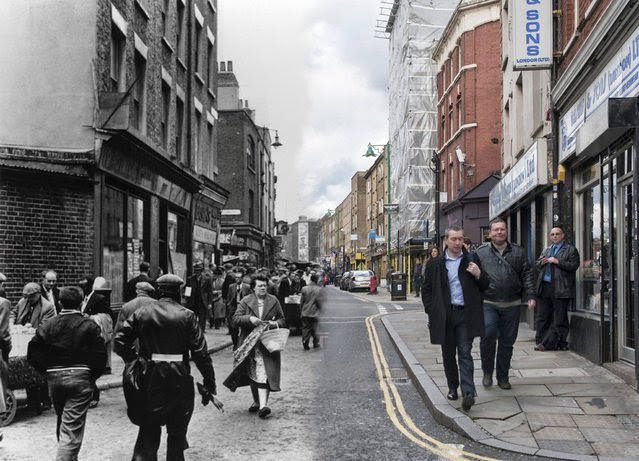
Brick Lane in Spitalfields has undergone one of the most dramatic cultural shifts in the city. In 1957, it was a working-class East End street lined with modest shopfronts. By 2014, it had become a destination known for its Bangladeshi restaurants, vintage markets, and street art — a completely different identity built on the same road.
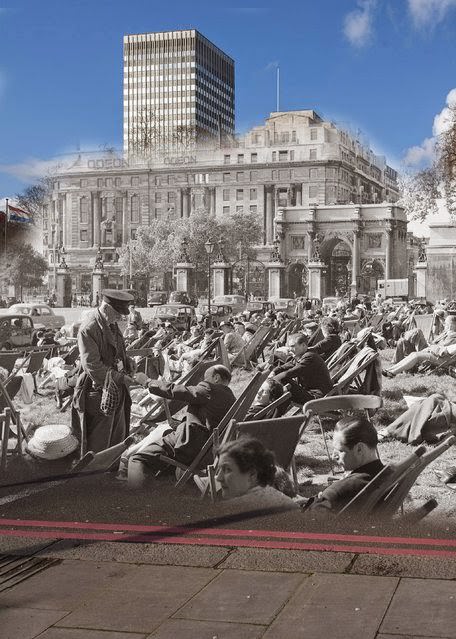
Hyde Park has offered Londoners an escape from the city for centuries. In 1956, sunbathers stretched out on the grass with Marble Arch and the Odeon cinema rising behind them. The park itself remains largely unchanged, but the backdrop has shifted — the cinema gone, the surrounding architecture altered.
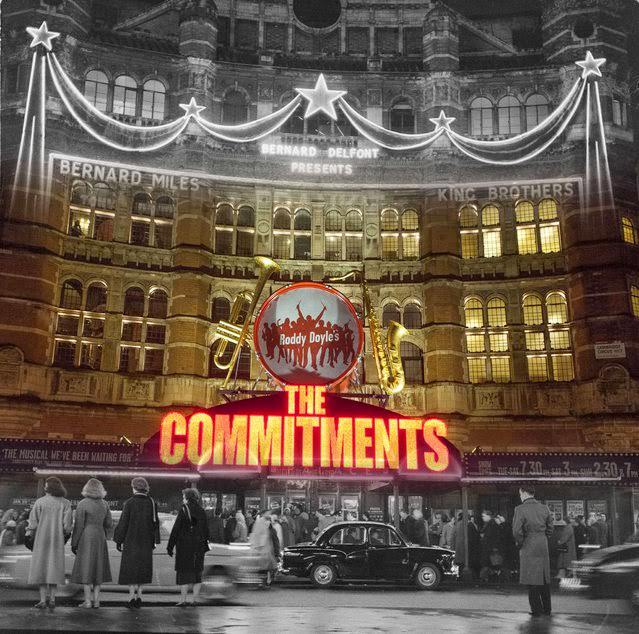
Shaftesbury Avenue has been London’s theatre heart for well over a century. Outside the Palace Theatre in 1958, crowds gathered in evening dress before a night’s performance. The 2014 version of the same scene replaces formal coats and hats with casual clothing, but the theatre — and the tradition of gathering outside it — endures.
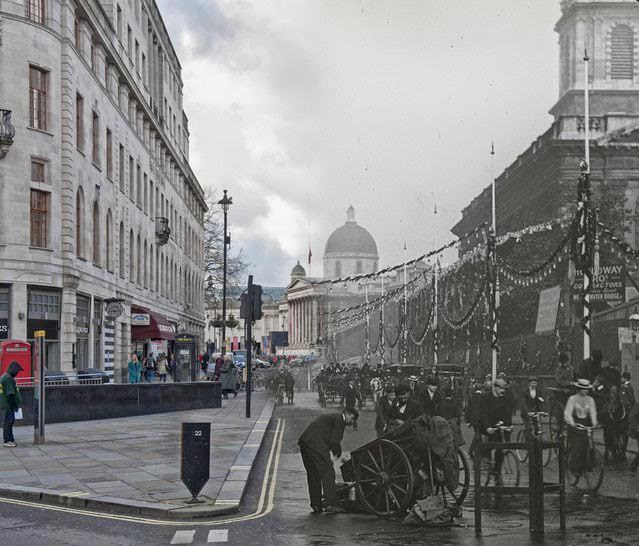
In 1902, Duncannon Street was draped in bunting and banners for the coronation of King Edward VII. Horse-drawn vehicles and formally dressed pedestrians filled the foreground, with the National Gallery visible in the distance. In 2014, that same view shows the National Gallery still standing — a rare constant amid everything that has changed around it.
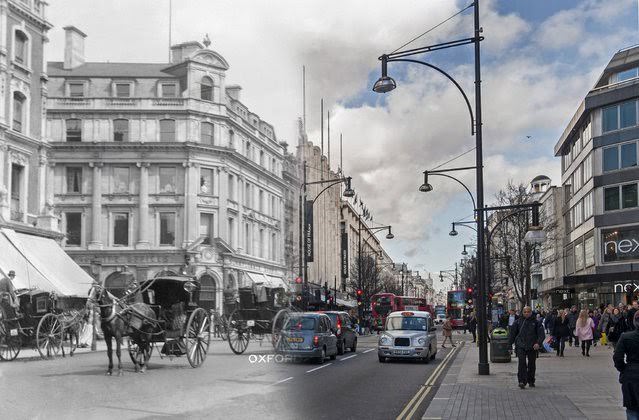
Around 1905, Oxford Street carried horse-drawn carriages, early motor vehicles, and pedestrians sharing a relatively quiet road. By 2014, it had become one of Europe’s busiest shopping streets, with double-decker buses, delivery vehicles, and thousands of shoppers moving through it daily.
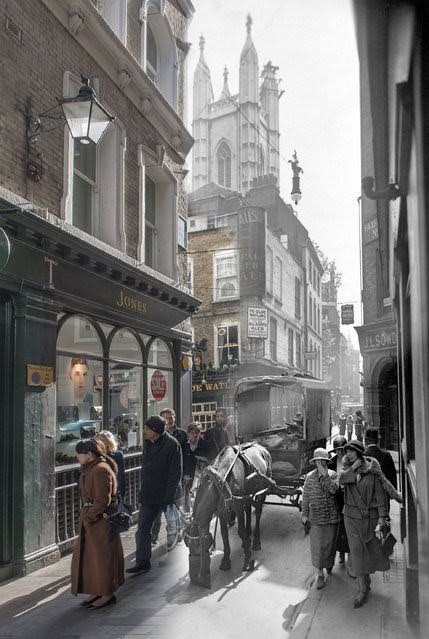
Bow Lane, tucked off Cheapside in the City of London, was a narrow, quiet lane around 1930. Shopfronts were modest and the street was largely empty. In 2014, it operates as a pedestrianised lane lined with cafés and small businesses, busier but still intimate by City standards.
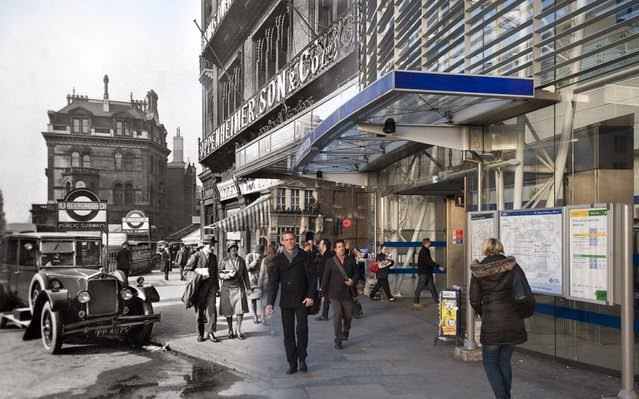
The entrance to Blackfriars Station on Queen Victoria Street looked considerably different around 1930 — smaller in scale, with period architecture framing the entrance. The 2014 image shows a station that has been rebuilt and expanded, its facade a product of late 20th and early 21st century redevelopment.
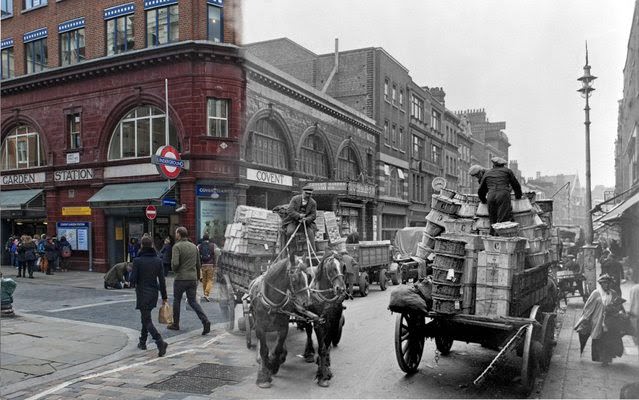
Around 1930, Covent Garden was still a working fruit and vegetable market. A horse and cart appears in the background alongside the Underground station entrance — a combination that captures London mid-transition between old and new transport. By 2014, the market had long since moved, and the area had transformed into a tourist and retail destination.
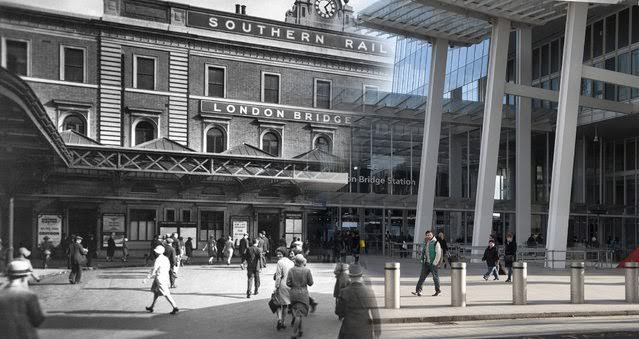
London Bridge Station’s forecourt in 1930 belonged to the Southern Railway, with period vehicles and travellers moving through a more open, unhurried space. The 2014 view reflects decades of expansion and modernisation, with the station now serving as one of the city’s major commuter hubs.
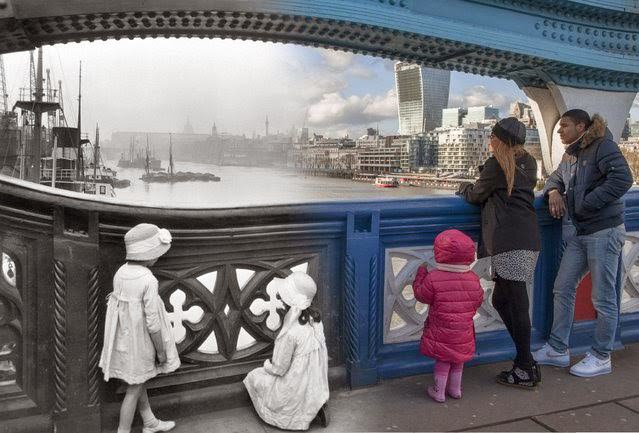
Tower Bridge itself has changed little since its construction in 1894. But the view from its west side tells a different story. Around 1930, the Thames south bank was lined with warehouses and working docks. By 2014, that same riverbank had been redeveloped into walkways, restaurants, and modern buildings — the industrial riverside replaced entirely.
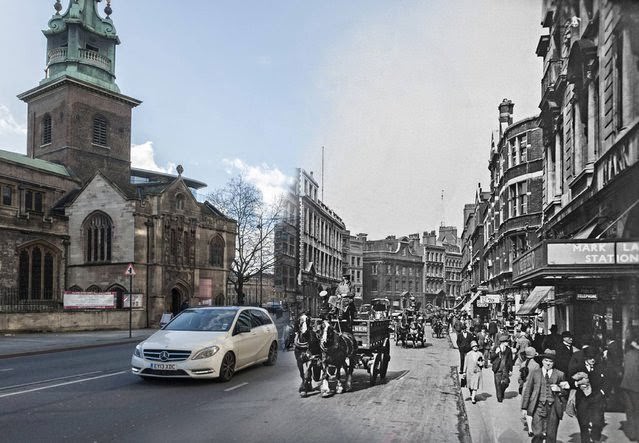
Byward Street near Tower Hill ran through a quieter, less congested city around 1930. Vehicles were sparse, and the road itself felt wider for it. The 2014 image shows a street compressed by signage, bus lanes, and a steady flow of traffic — the physical road unchanged, but the atmosphere entirely different.
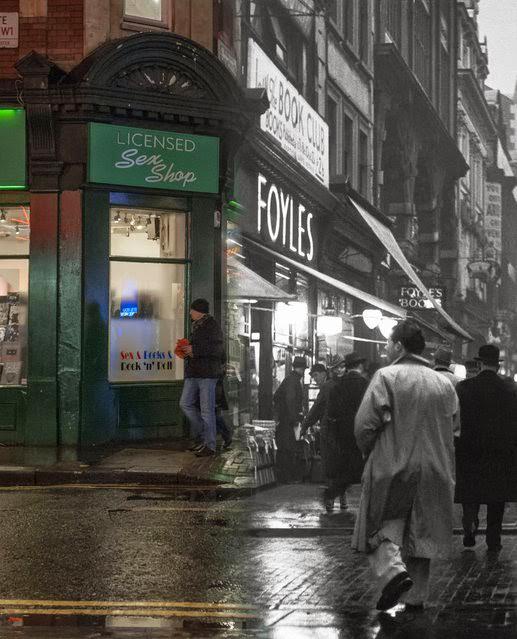
Foyles bookshop on Charing Cross Road has been a London institution since 1906. In the mid-1930s, an evening scene outside its doors showed a quieter street with period storefronts and few pedestrians. In 2014, Foyles still occupies the same road, though the street around it has filled in considerably with modern shopfronts and heavier evening foot traffic.
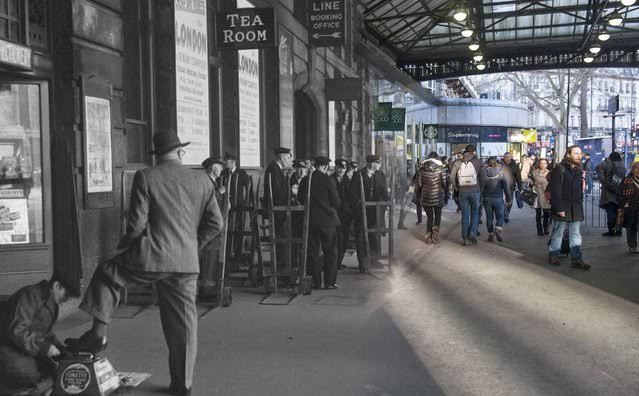
In 1950, a young boy shined shoes for a living outside the Tea Room at Victoria Station. It was an ordinary sight in postwar London, where street trades like this were still part of daily city life. By 2014, that same spot outside Victoria Station shows no trace of the tea room, the shoe shine stand, or the boy — replaced by the infrastructure of a modern transport terminus.