

New Orleans is one of the most visually distinctive cities in America. Its streets have been photographed for well over a century, leaving behind a rich visual record of how the city has shifted — block by block, decade by decade. When you line up an old photograph next to a modern one taken from the same spot, the results are striking. Some corners look almost frozen in time. Others are barely recognizable.
The French Quarter is where many of these changes — and surprising consistencies — are most visible. Take Bourbon Street, one of the most photographed corridors in the South.
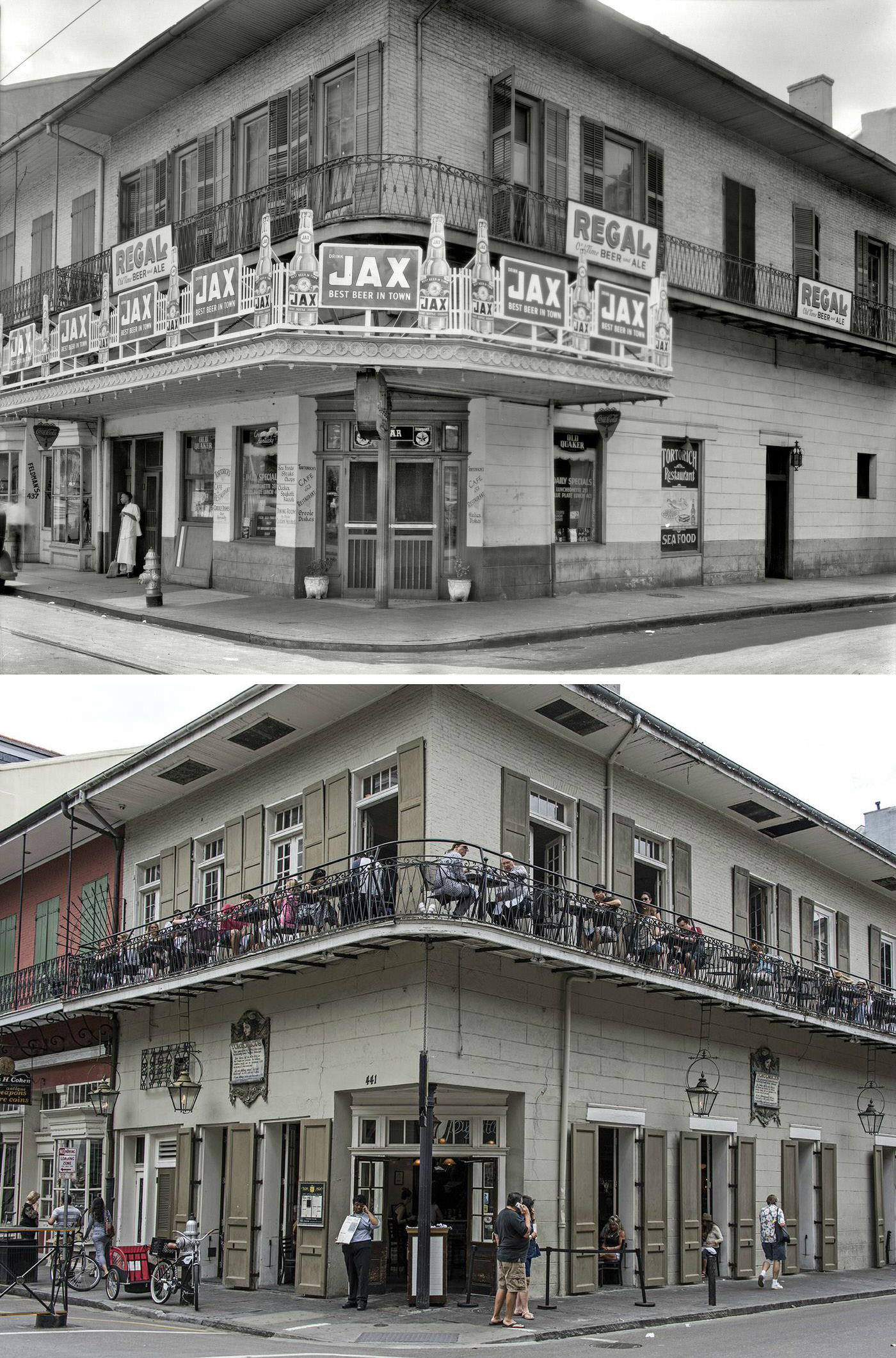
By 1937, Bourbon Street already carried the worn, lived-in character it’s known for today. The storefronts, iron balconies, and narrow sidewalks seen in photos from that era match the bones of what stands now. Moving just a few blocks down tells a similar story.
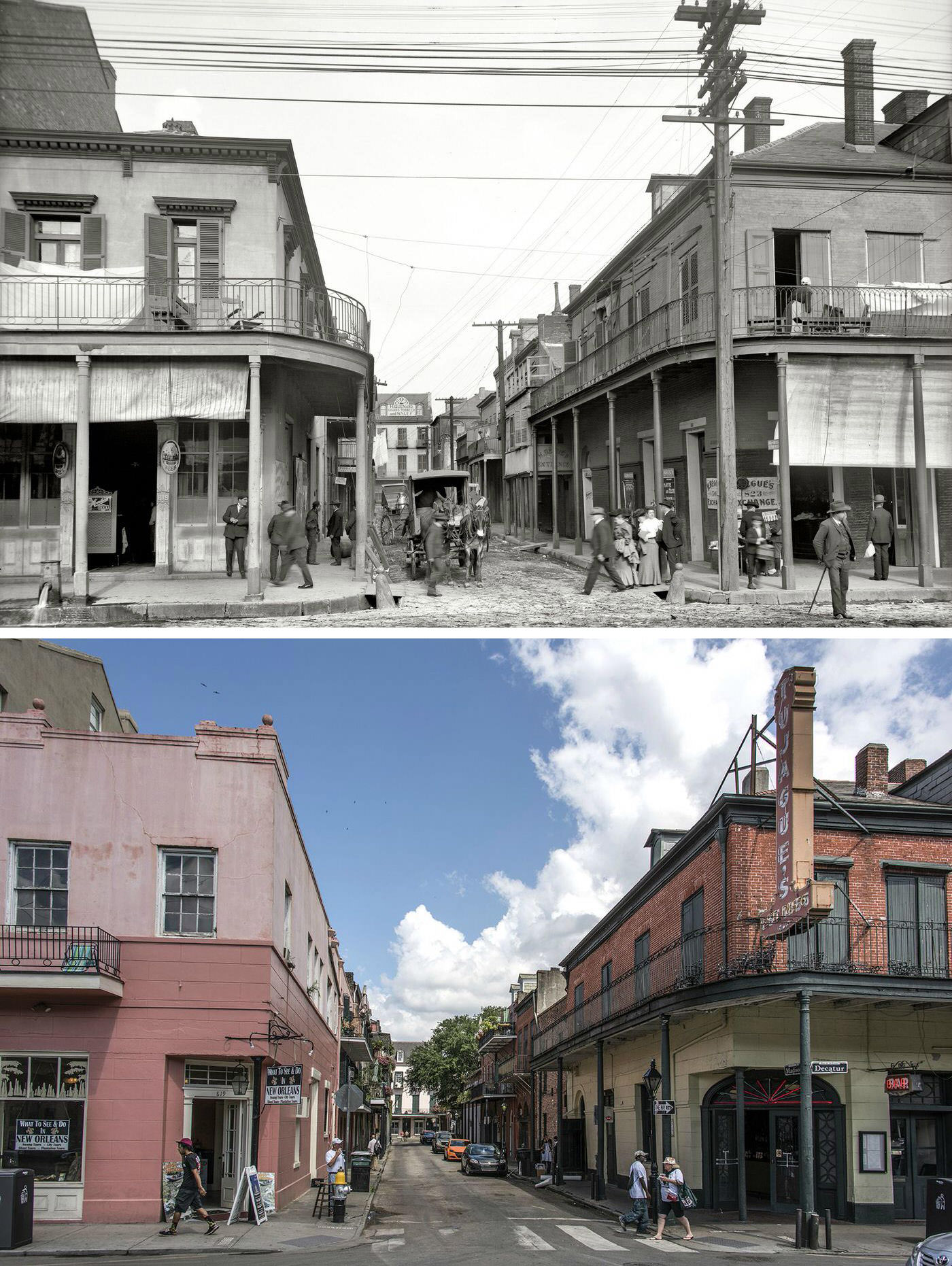
Decatur Street in 1906 was a working waterfront corridor — utilitarian, busy, and commercial. Over a century later, tourism and renovation have reshaped its personality while many of the same buildings remain standing. The French Quarter’s strict preservation rules have kept wholesale demolition largely at bay.
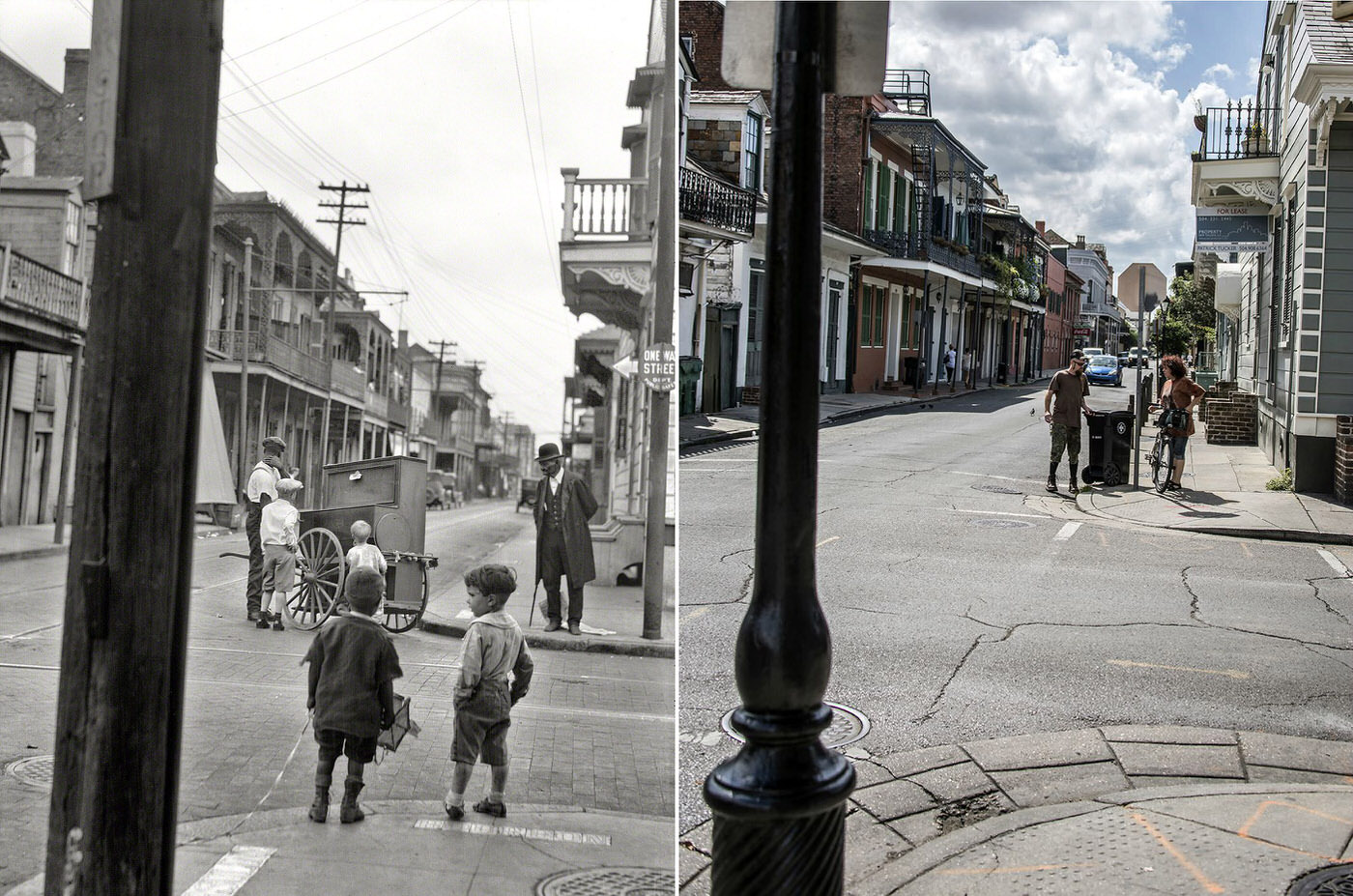
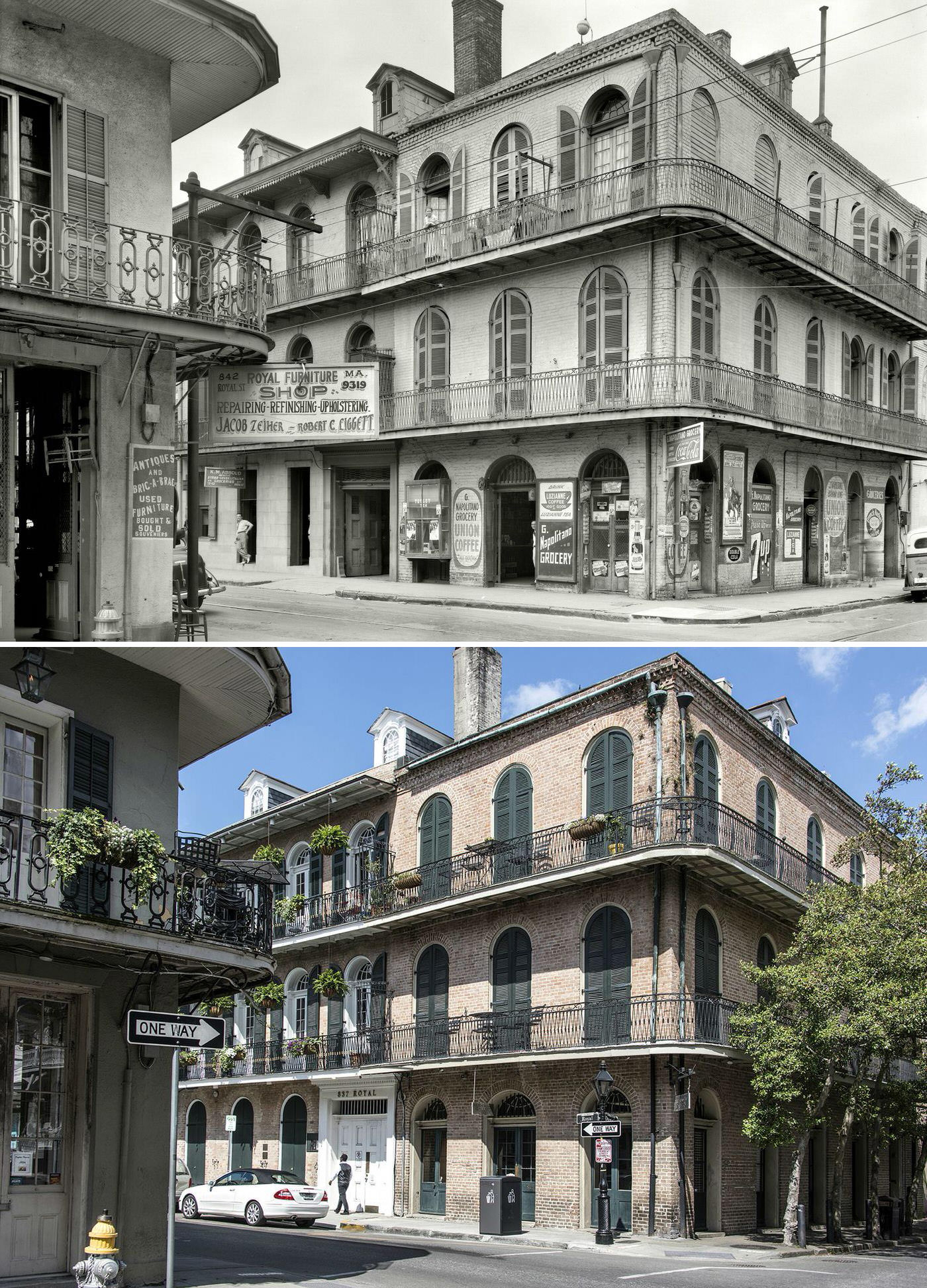
Royal Street has always been a quieter, more refined stretch compared to Bourbon. The 1937 photographs show a street already lined with antique shops and elegant facades — a character it has maintained into the present day. The French Market, one of the oldest public markets in the country, offers its own window into this long arc of continuity.
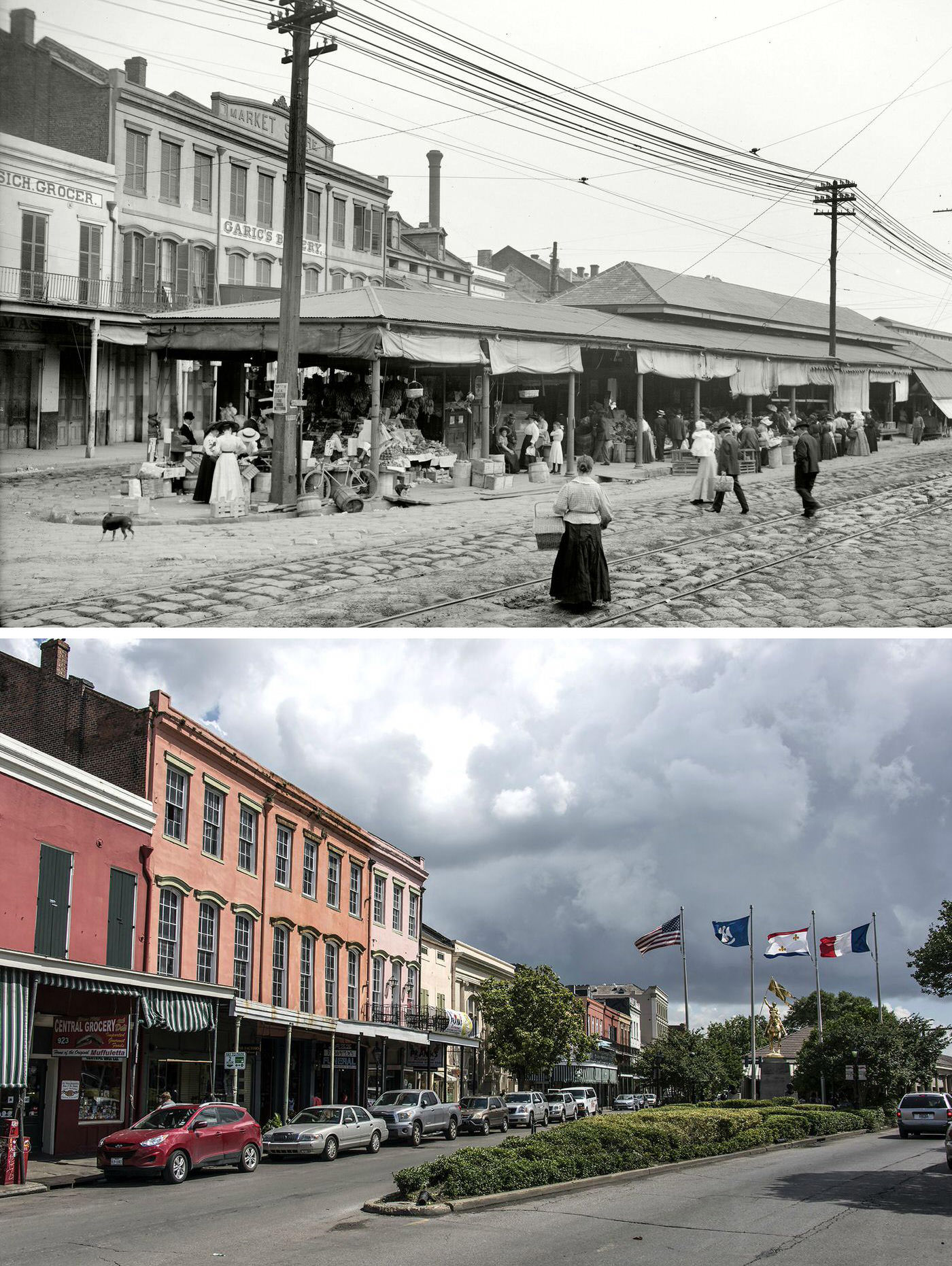
Photos of the French Market from 1905 and 1910 show a bustling open-air hub where vendors sold produce, meat, and goods to locals. The structure itself has been rebuilt and renovated multiple times, but the site has operated continuously since the late 1700s. Individual addresses tell their own stories too.
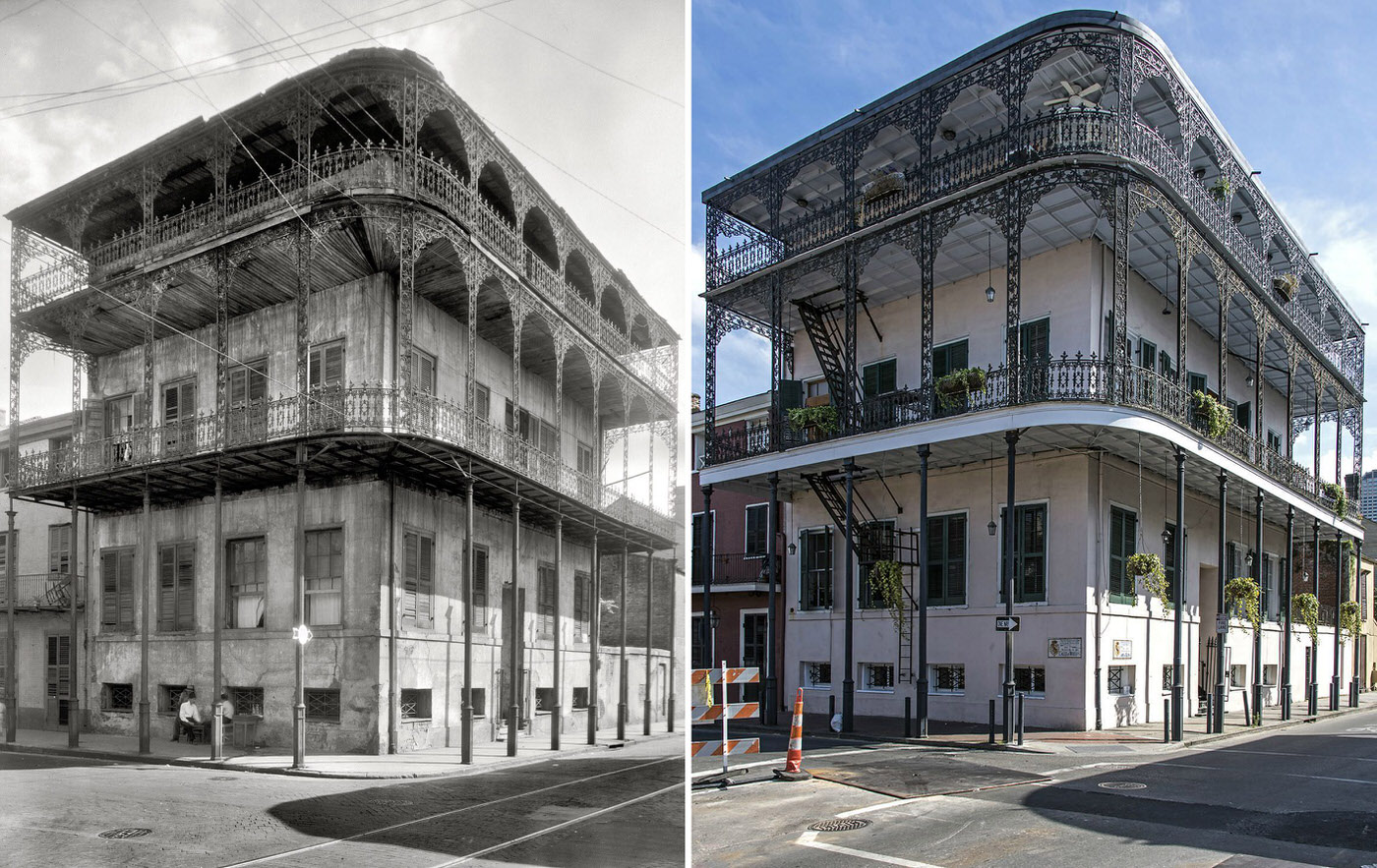
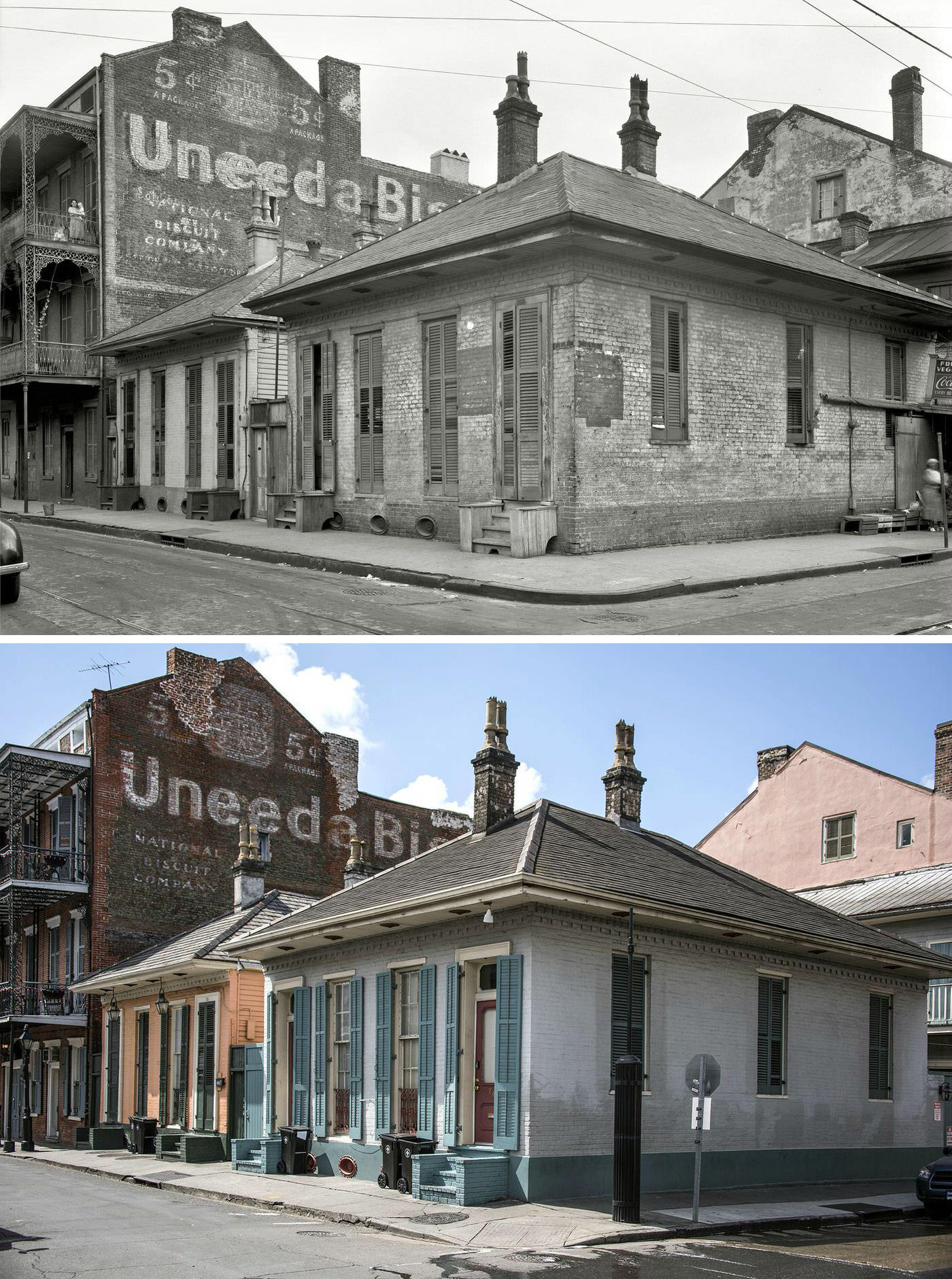
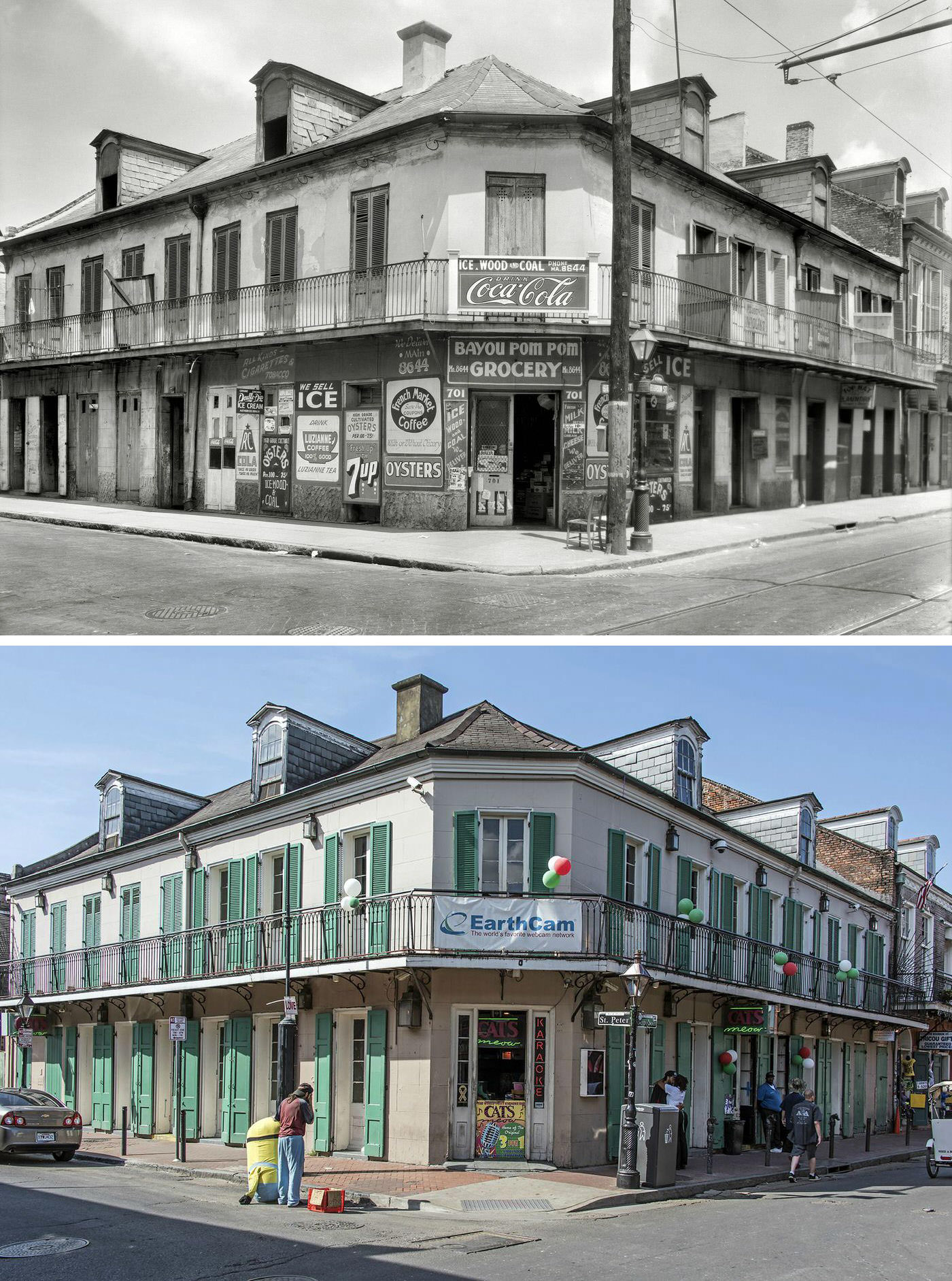
A single address on Dauphine Street, photographed in 1937 and again in 2015, shows just how much — or how little — a building’s exterior can shift across nearly 80 years. Back on Bourbon, the intersections with St. Peter and Iberville each tell a story of a street that grew louder and brighter as the decades passed.
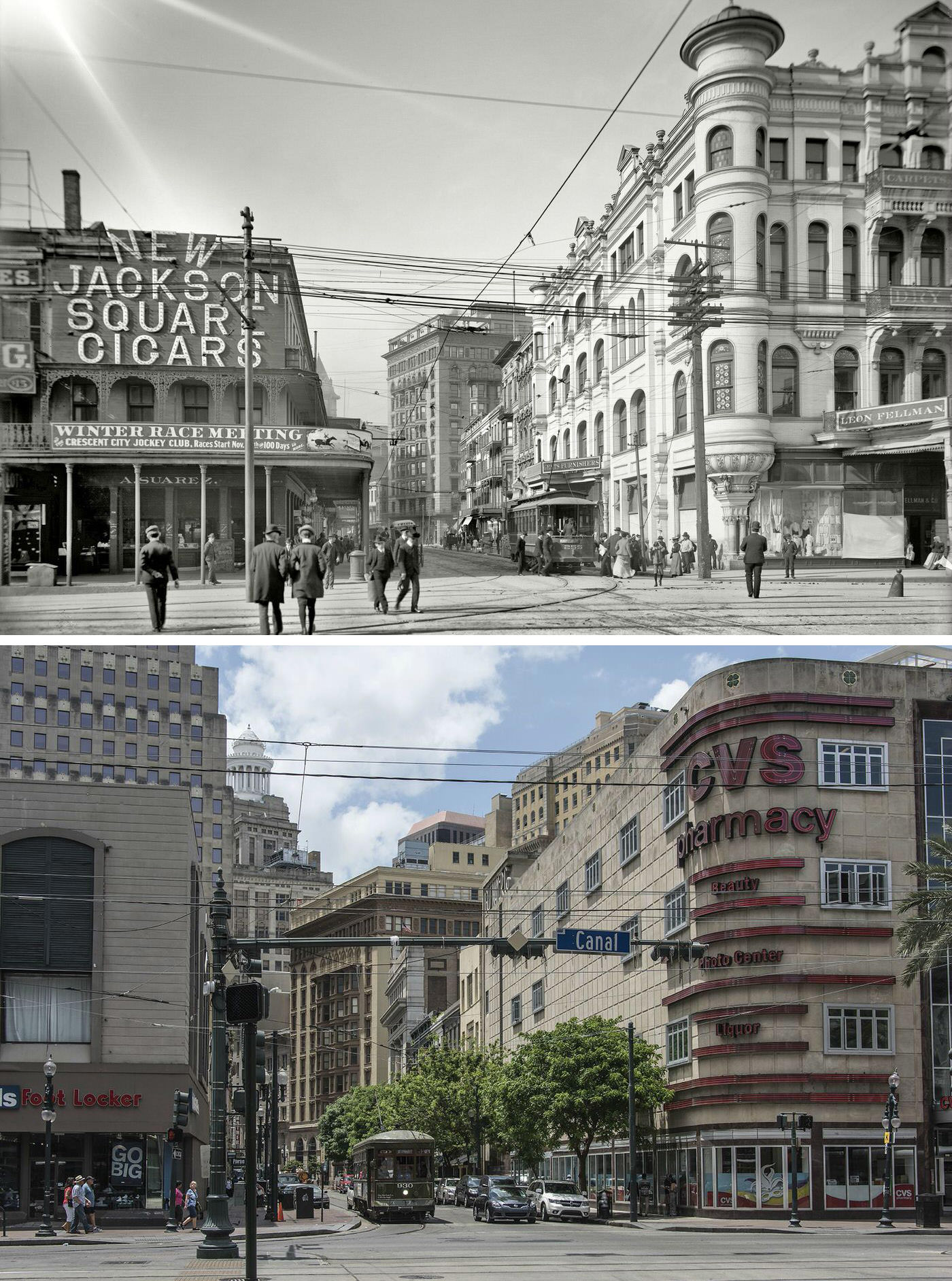
Canal Street is where the changes become most dramatic. In 1937, Canal was a wide boulevard shared by streetcars, automobiles, and pedestrians. The streetcar lines were eventually removed from most of Canal before being partially restored decades later. The commercial towers that now anchor the street were still decades away from being built.
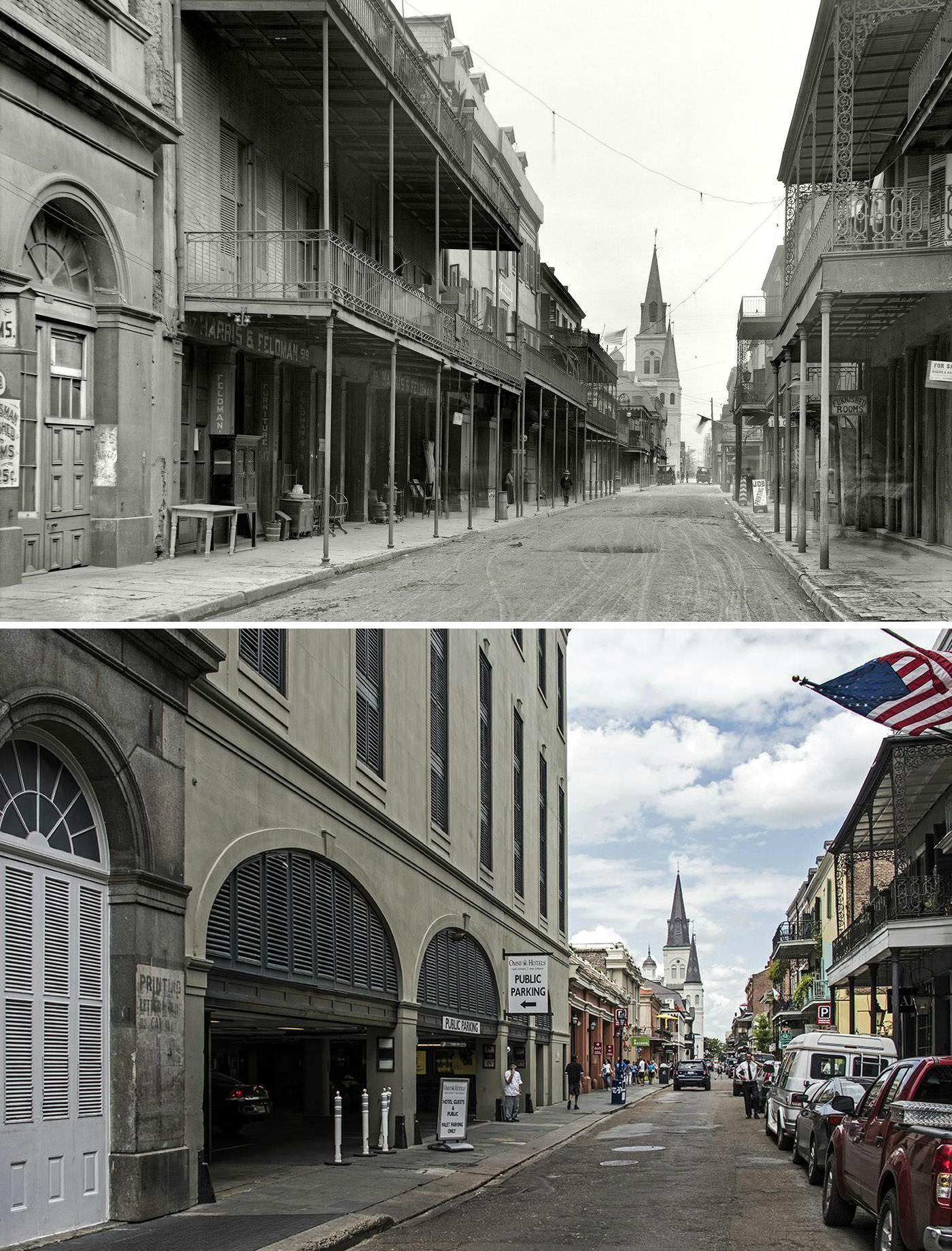
The intersection of Chartres and St. Louis in 1906 was already anchored by the kind of ornate architecture that defines the Quarter. The Old Absinthe House on Bourbon Street is another landmark that has held its ground across more than a century of change.
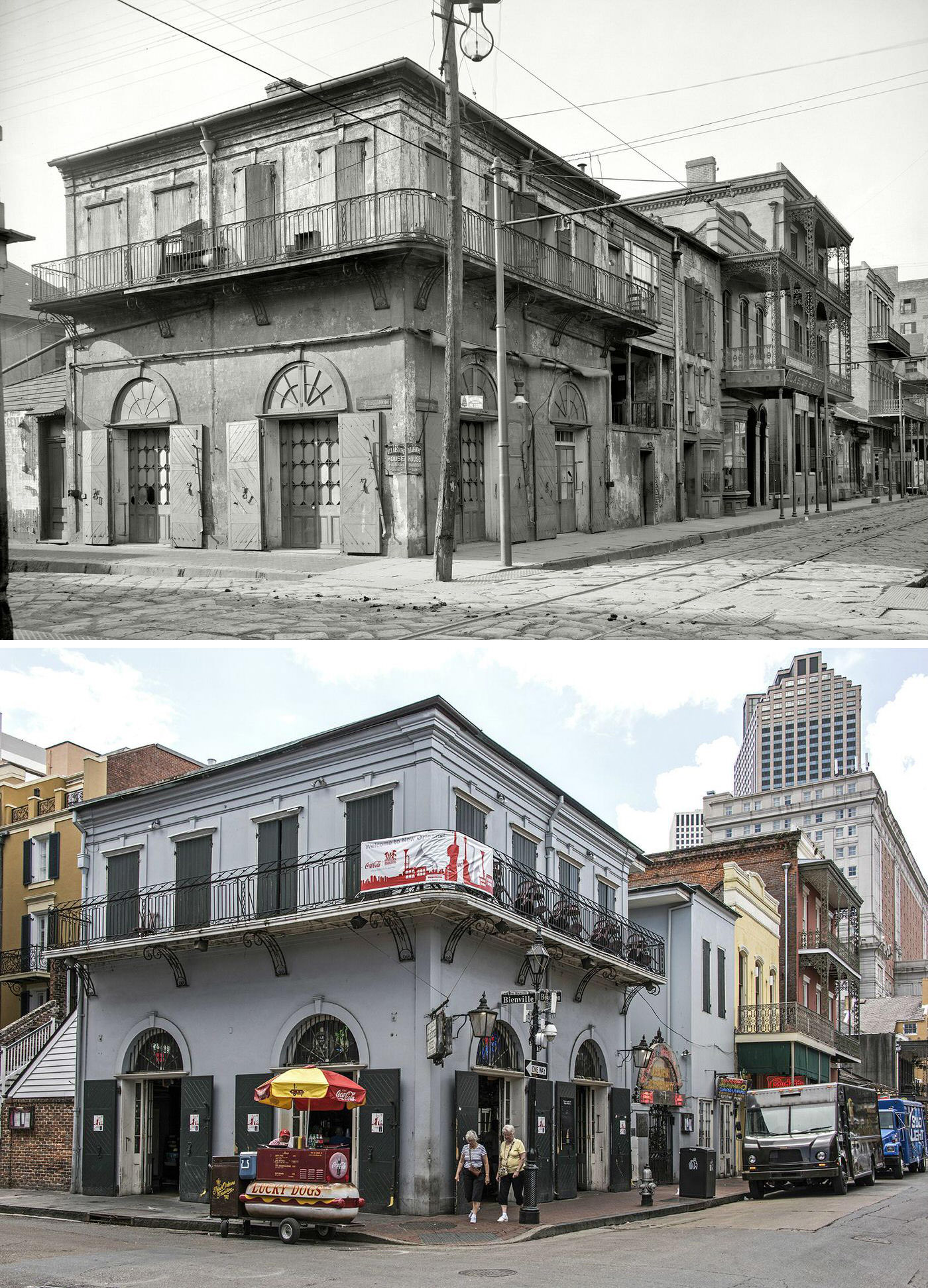
Built in 1806, the Old Absinthe House has operated as a bar and gathering place for most of its existence. The 1903 photograph shows a building already a century old — and it would go on to survive another 112 years to be photographed again in 2015. Bourbon Street’s transformation over those same decades was relentless.
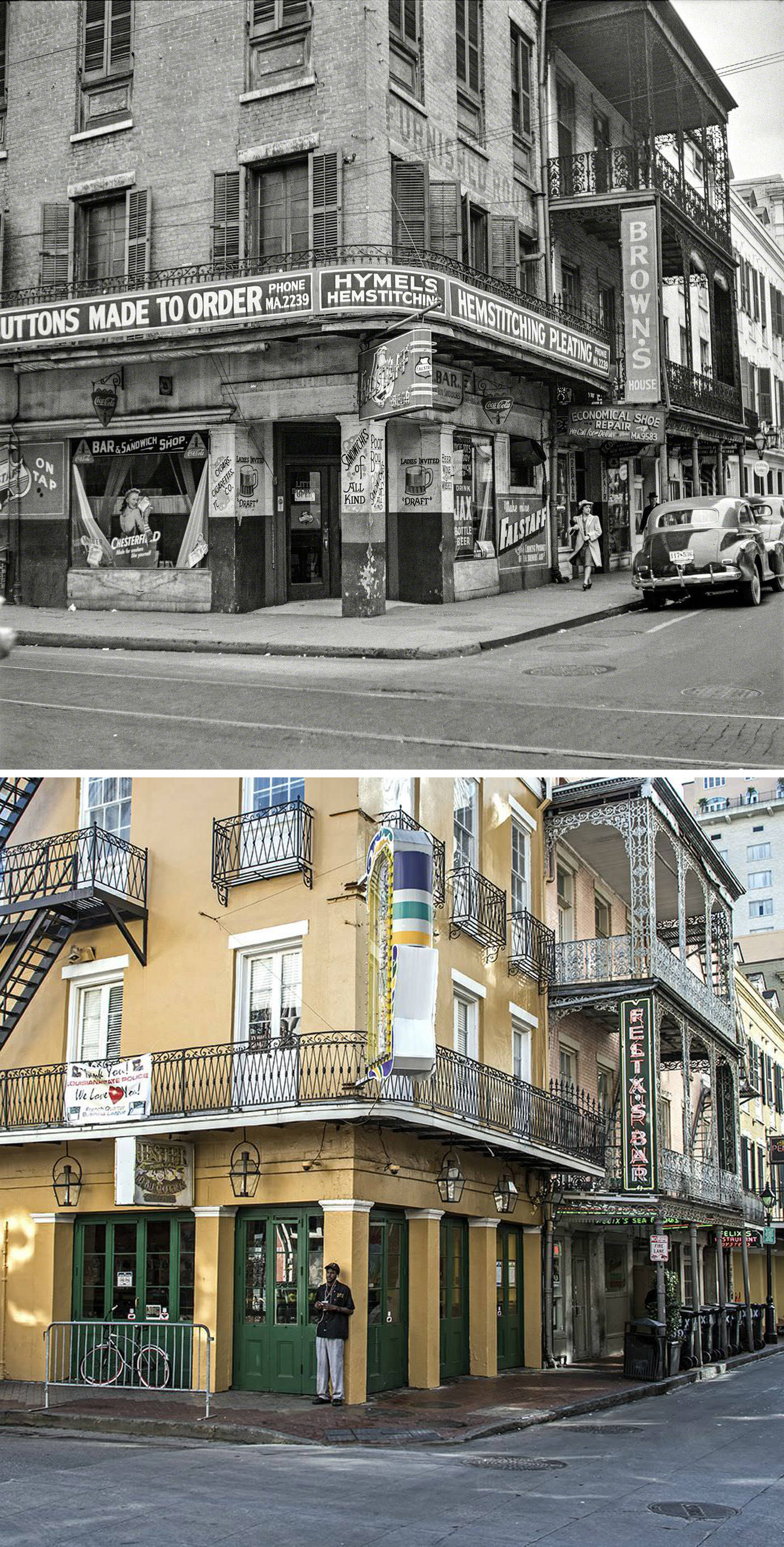
By 1941, the block at Bourbon and Iberville still had a relatively low-key commercial character. Decades of tourism growth turned that stretch into one of the busiest nightlife corridors in the city. Meanwhile, Canal Street’s connection to the riverfront shifted too.
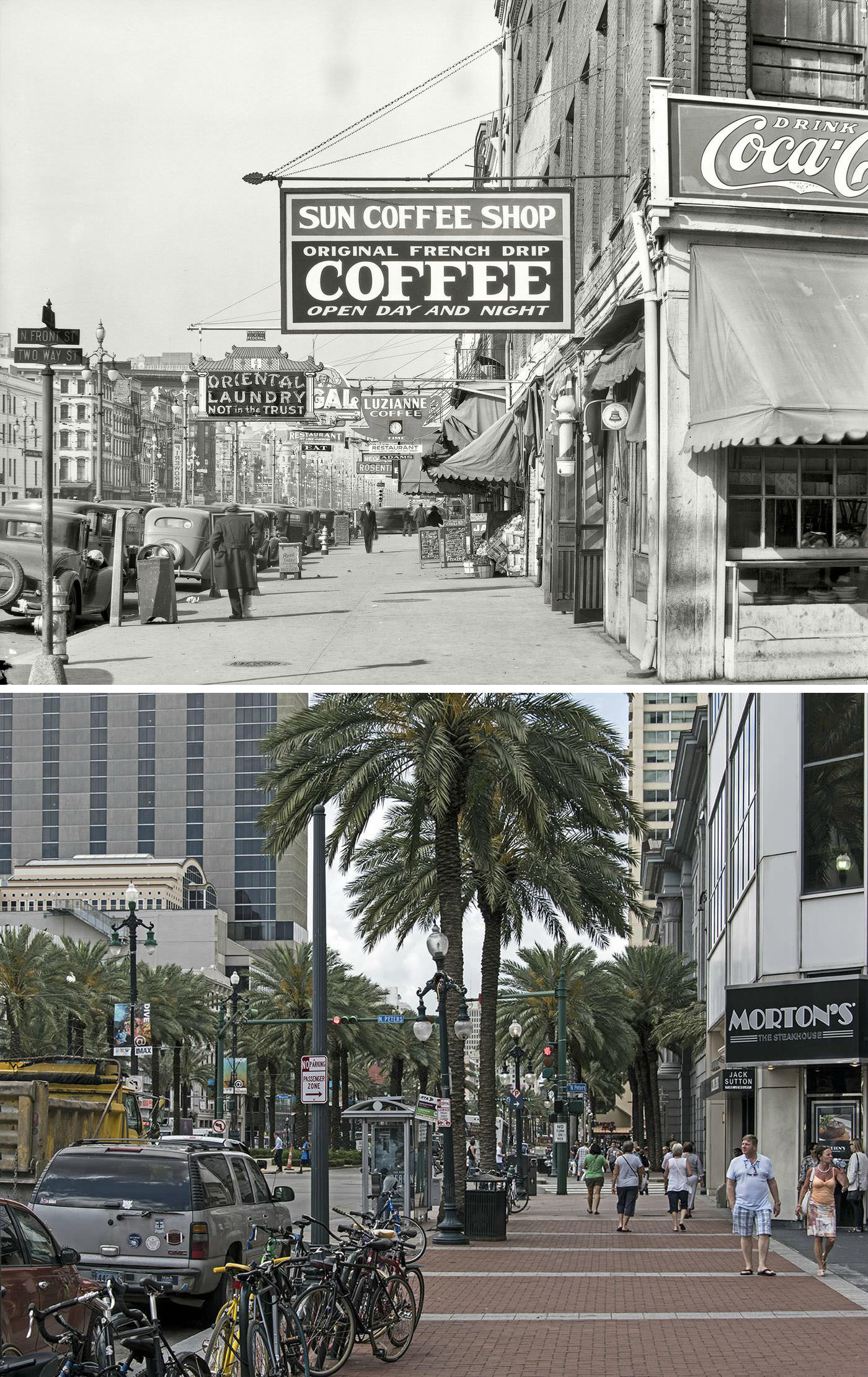
Front Street no longer exists as it did in 1937. Riverfront development and road reconfiguration erased it from the map, making this particular then-and-now comparison one of the most visually dramatic in the set. Royal Street continued to evolve with more grace.
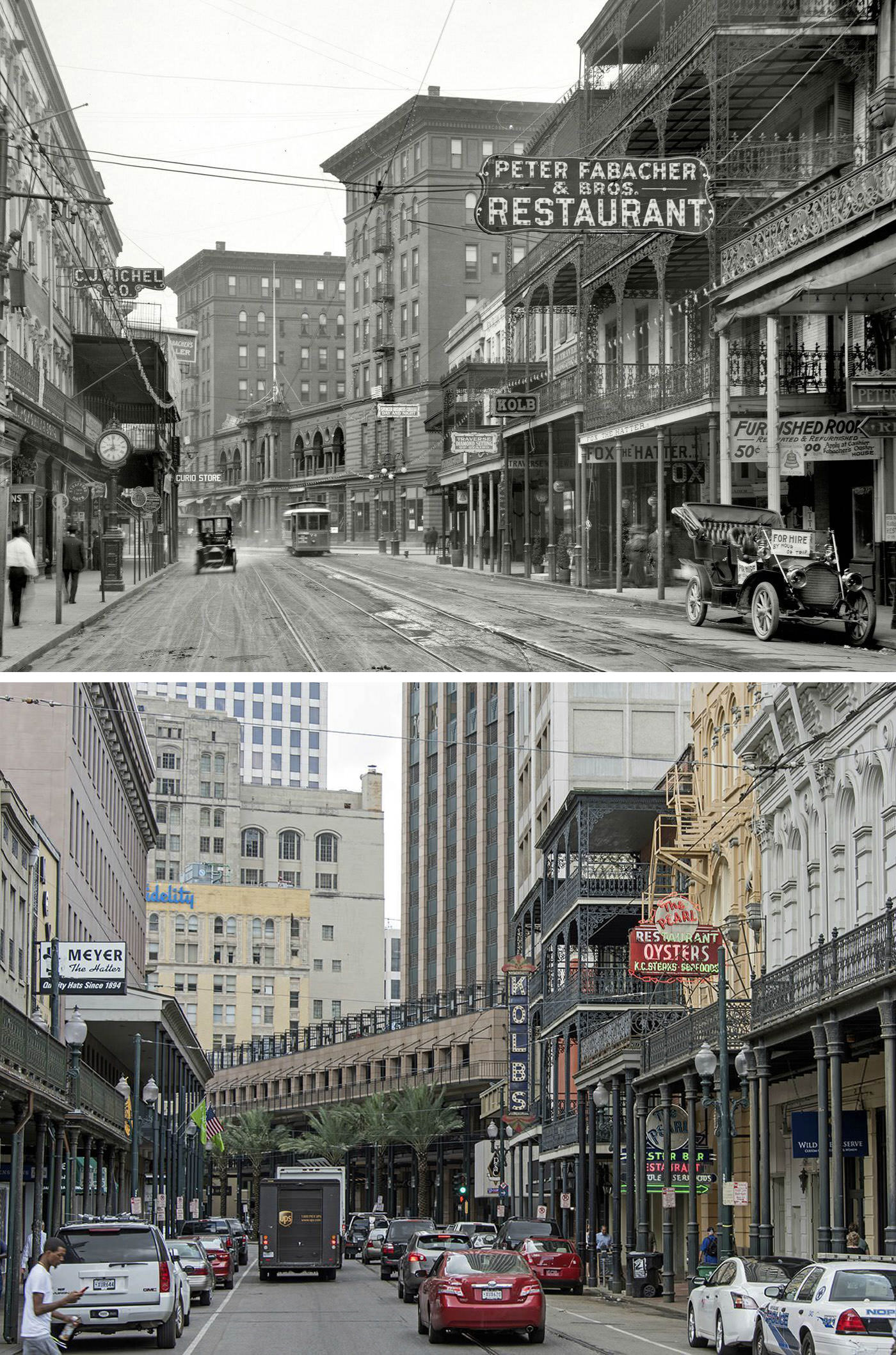
The corner of Canal and St. Charles in 1937 was a major transit hub, with streetcar lines converging at one of the city’s most trafficked intersections. The physical scale of the buildings there has grown considerably since. Chartres Street in the mid-1930s rounds out this visual journey through the Quarter.
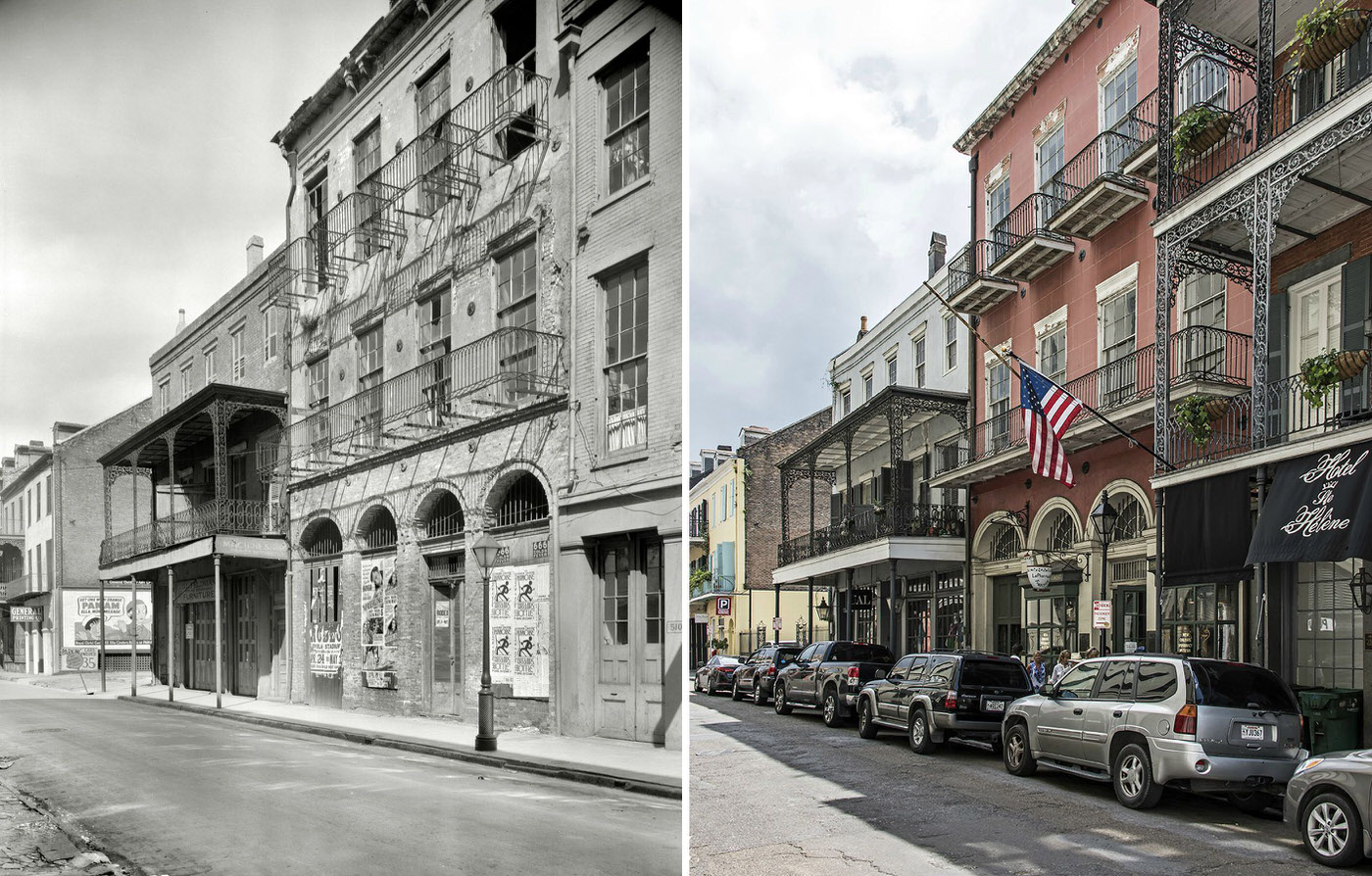
Photographed in 1936 and again in 2015, Chartres and St. Louis shows how the same stretch of pavement can absorb nearly 80 years of history while keeping its fundamental character intact. New Orleans doesn’t erase its past easily — it layers new life on top of old bones, and the photographs prove it.

I haven’t been to many places in America, but I was in New Orleans shortly after Katrina in 2008 and it was my favorite American city even at that time. The scenery is so picturesque and extravagant yet cosy at the same time. There are some tree-lined streets that seem like something out of a movie. Saxophones, trumpets, and trombones were played by buskers. I felt like Huckleberry Finn as I rode a big Mississippi riverboat. A guy named Captain Tom took us out on the bayou and handed us marshmallows to feed to alligators. I didn’t know alligators liked marshmallows. His wife kept a raccoon as a pet.
It was my first time there the week before Katrina hit. Watching the news of the place I just visited at home was very surreal.
Did you watch Treme???? it’s one of the best shows ever!!
I definitely poked around the neighborhood, but I didn’t know Tremé was a show.
There was still a lot of devastation three years later. Driving outside of the city center, I remember seeing condemned houses abandoned and boarded up, and neighbourhoods that looked like ghost towns. Things seem to be getting better these days, I imagine.
Also, I was there around that time. Like you said, parts of the city were very nice. Other parts, however, were very sad and depressing. There was great food and music everywhere.
This was a wonderful thing to read today.
The CVS sign looks like one of their receipts
Seeing the original building smoothed out, streamlined, and pasted with a huge advertisement was very sad.
It’s incredible how many of these comparisons are so similar to a century ago. There is no doubt that some of the new structures were designed with the city’s aesthetic in mind. I am not sure how often you see such a level of urban design preservation in such a big city in America, but this is just wonderful.
Rdr2 anyone?
That was where my thoughts went. They really nailed it.
The first time I visited NOLA during Alternative Springbreak in high school, I immediately fell in love with it. We went to help with Hurricane Katrina Relief. I went 3/4 years and it was the best trip of my life! I’ve always wanted to return there.
The CVS photo was depressing