
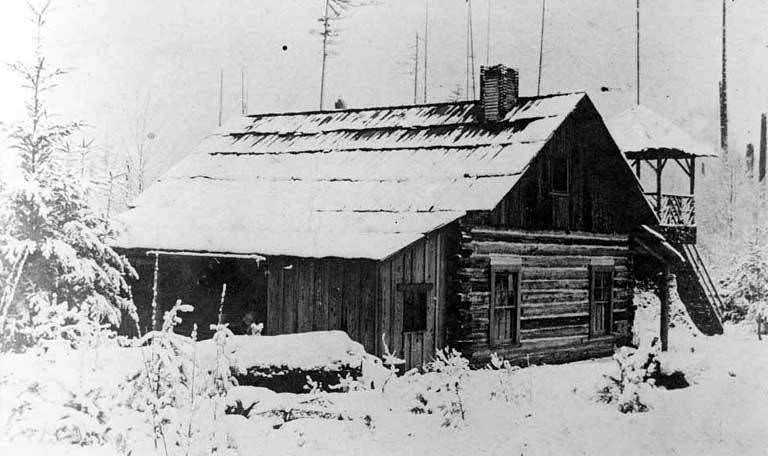
Long before Bellevue became one of the fastest-growing cities in the Pacific Northwest, it was a quiet stretch of forested land on the eastern shore of Lake Washington. The first European American settlers to stake claims there were William Meydenbauer and Aaron Mercer, who each took homestead tracts several miles apart. Neither man stayed permanently. The first permanent settlers arrived in 1879, and by 1882 a small community of logging homesteaders had taken root. By 1900, Bellevue had around 400 full-time residents.
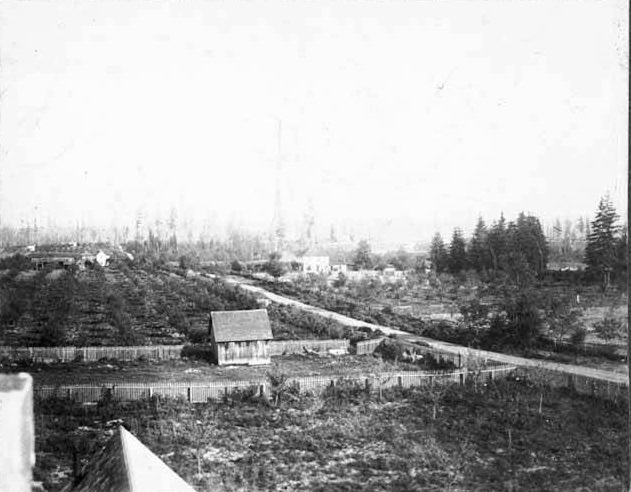
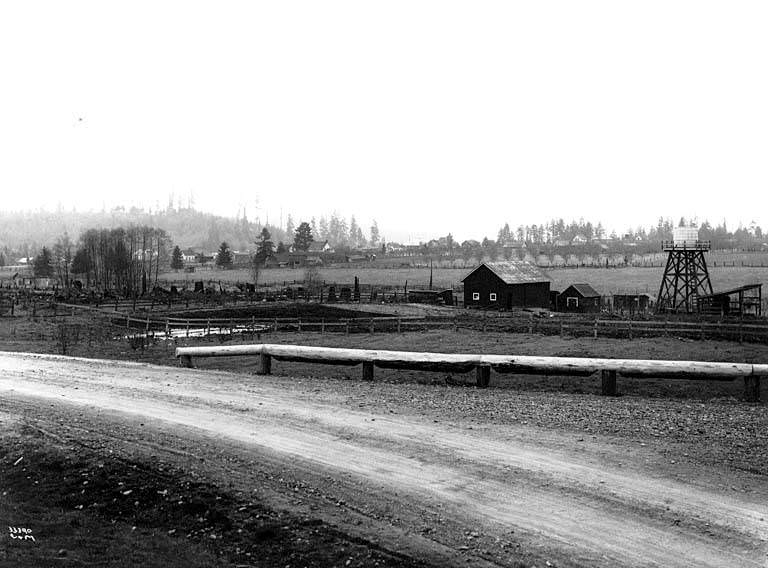
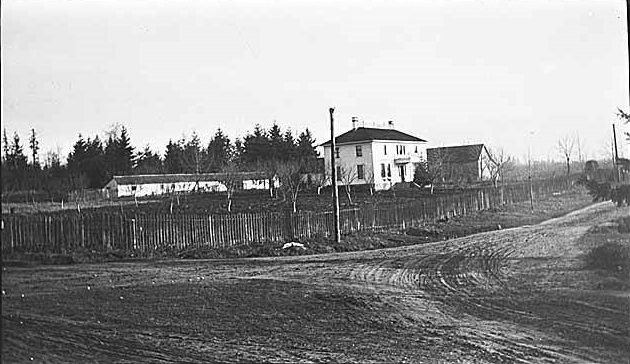
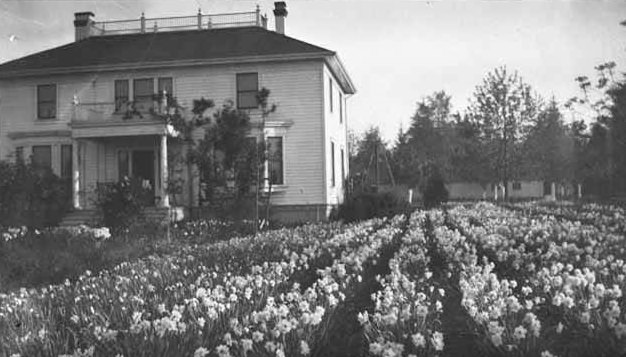
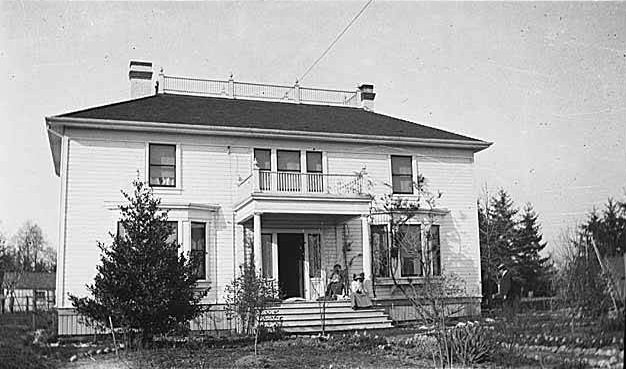
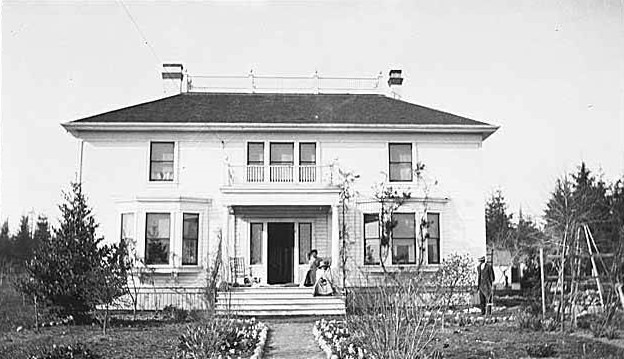
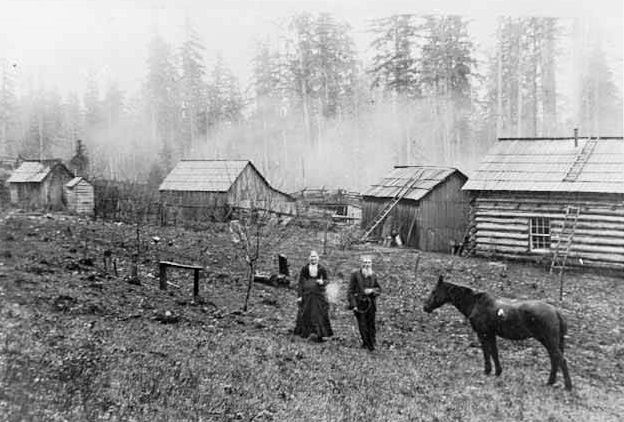
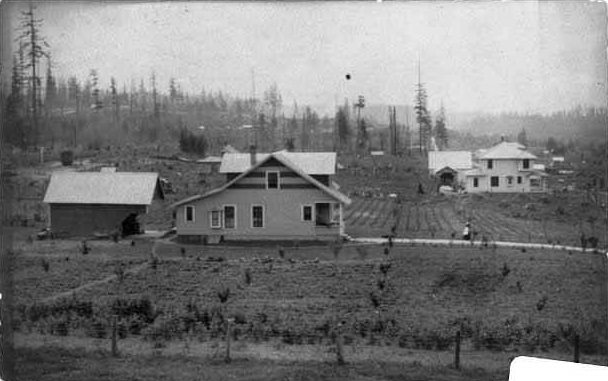
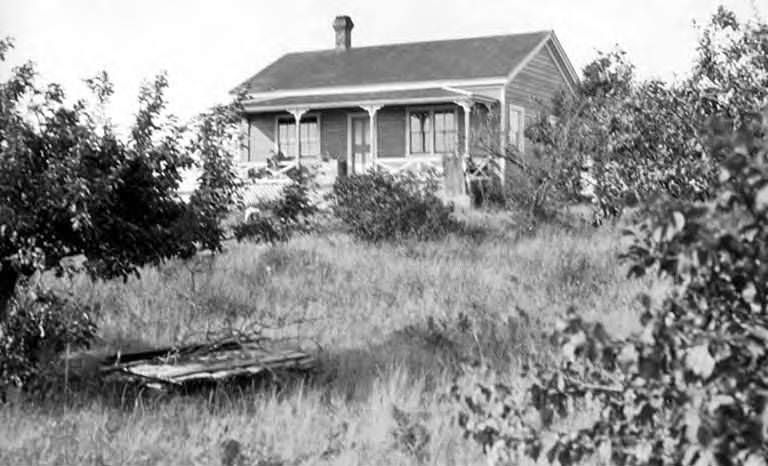
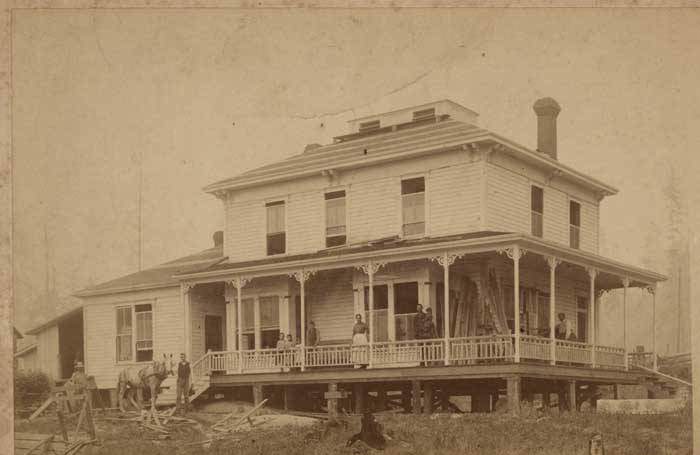
During the early 1900s, the land around Bellevue was gradually cleared for farming. Japanese immigrants did much of this work, leasing plots of land and operating small-scale farms. Their labor helped transform dense forest into productive agricultural land. The Albert S. Burrows house, built in the 1880s, was one of the earliest established homes in the area. It stood until 1925, when it burned down.
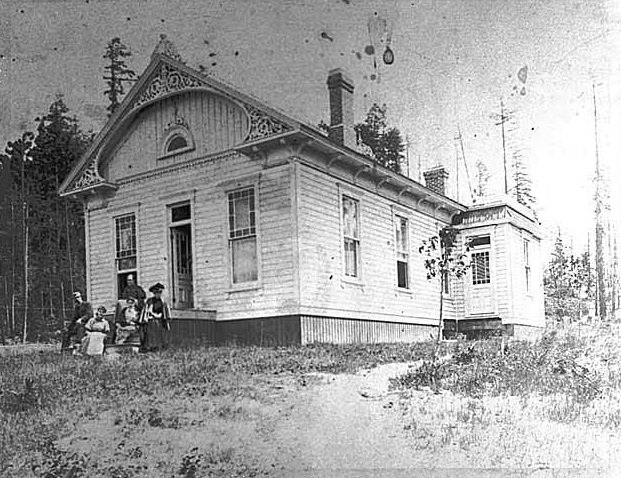
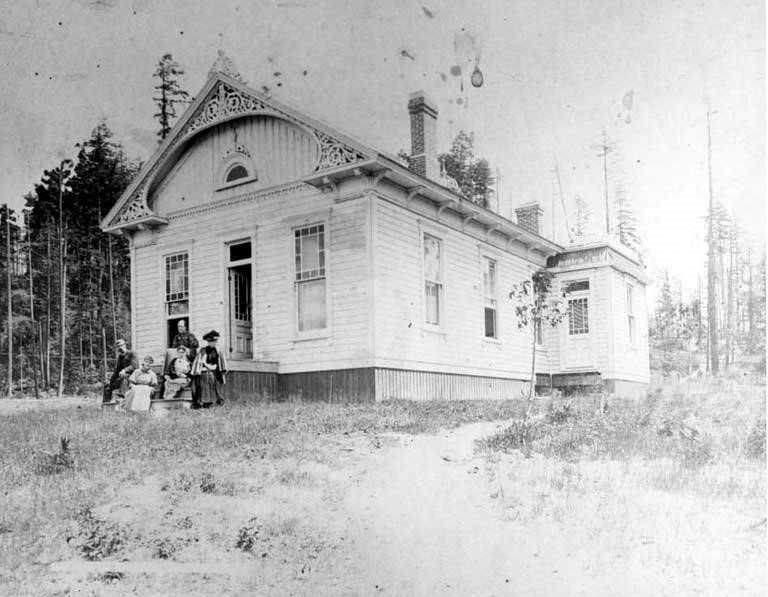
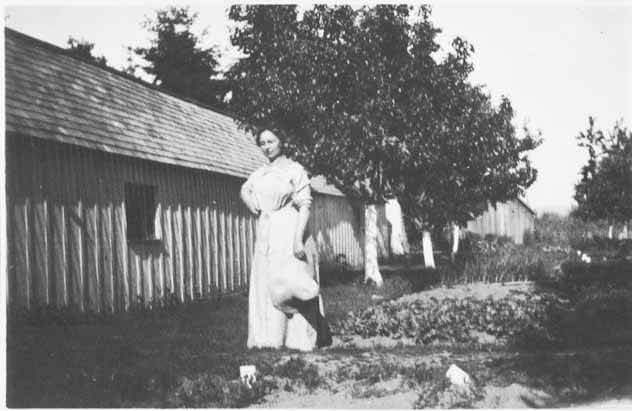
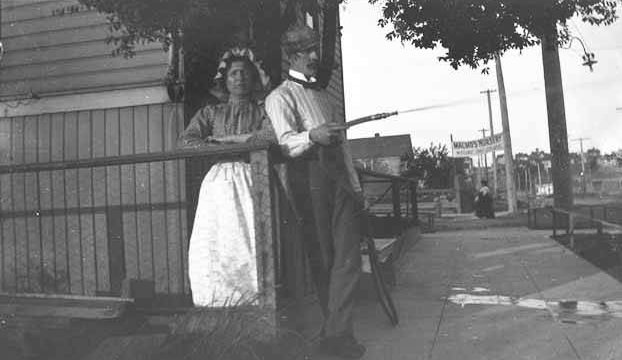
The Burrows family had deep roots in the community. An earlier photograph from 1880 shows the family gathered on the front porch of their home at the lake end of S.E. 15th. The woman wearing the hat in that photo was Bellevue’s first schoolteacher, who began teaching in 1884.
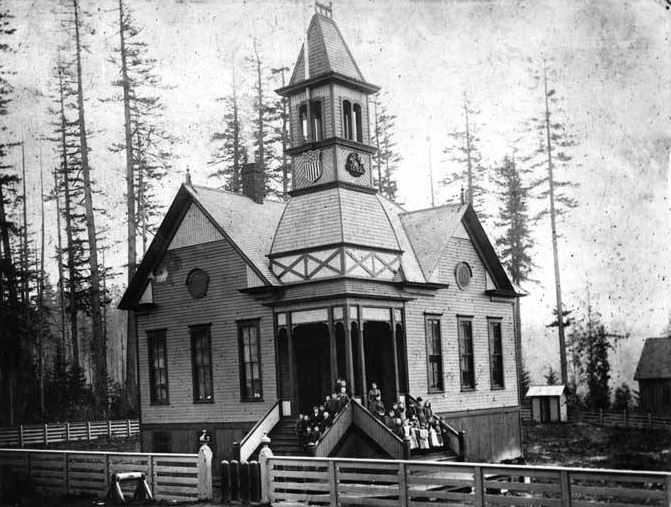
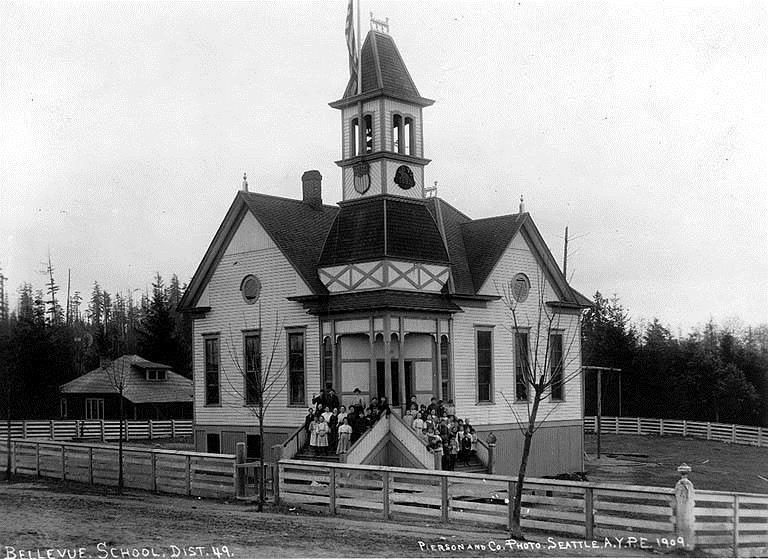
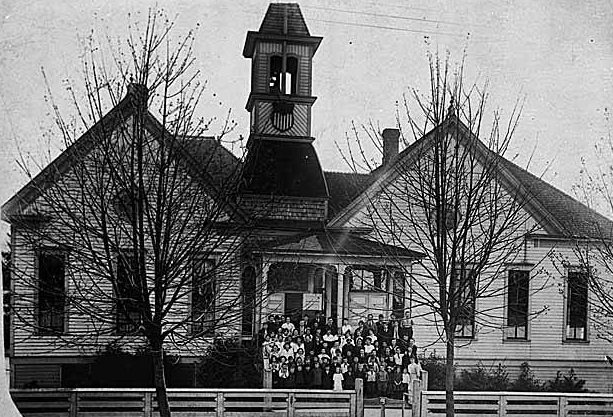
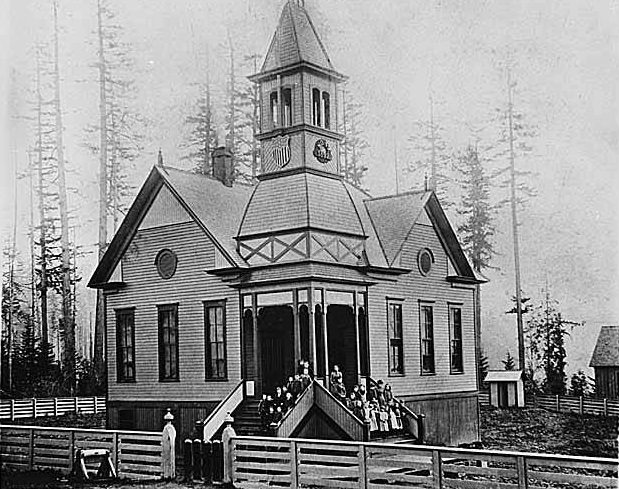
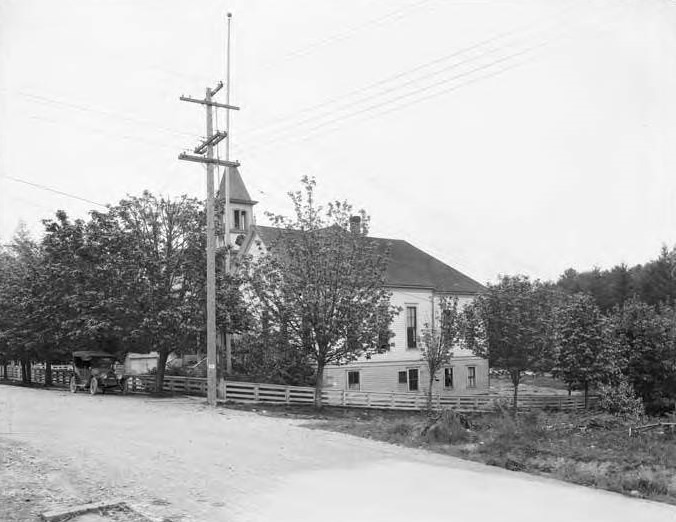
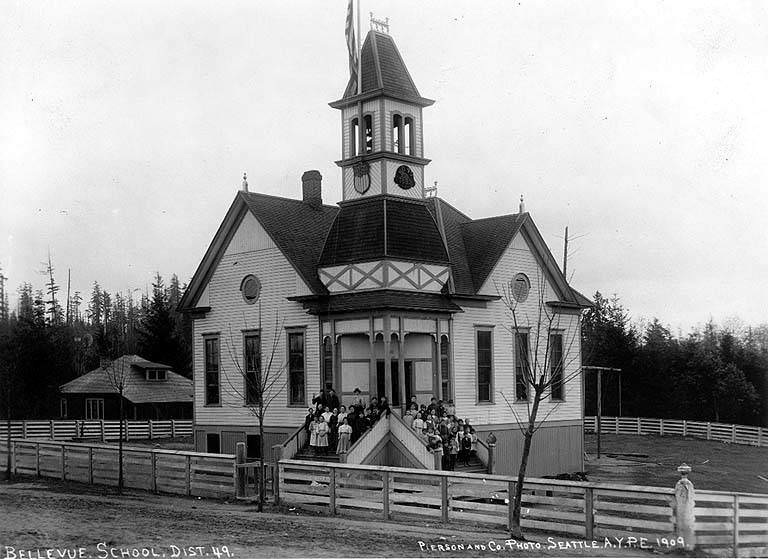
Education was an early priority for the community. Bellevue School was built in 1892 after the town passed its first school levy. Students entered under an ornate bell tower at one corner of the building. It stood at roughly today’s Main Street and 100th Avenue, and it later served as Bellevue’s first city hall. By 1912, the building had been expanded to double its original size to keep up with a growing student population. Teachers offered some high school classes in Bellevue starting in 1910, but many older students still had to travel to Seattle to finish their education.
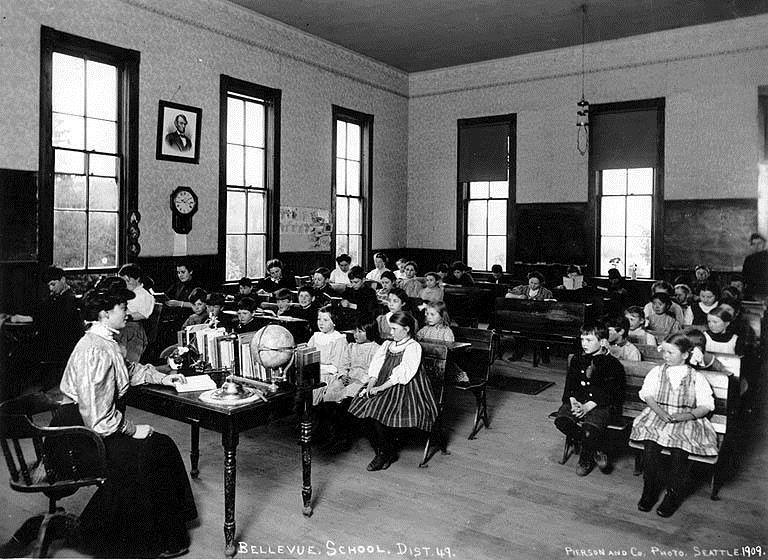
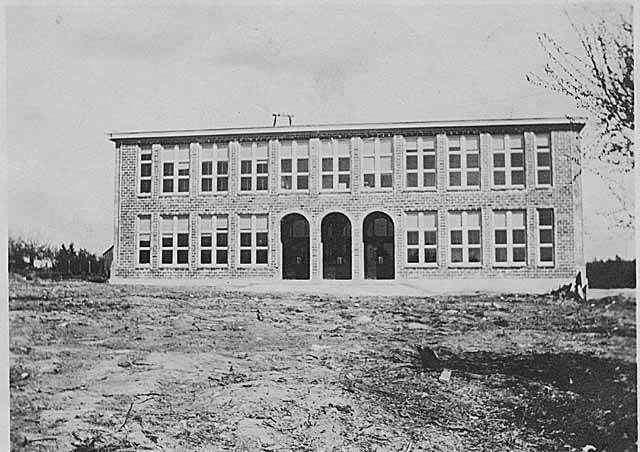
Inside the schoolhouse, students sat in a tidy classroom fitted with wooden desks. The school served children from across the surrounding farms and homesteads. By 1920, a new Bellevue Grade School building was under construction to replace it, reflecting just how much the area had grown in less than three decades.
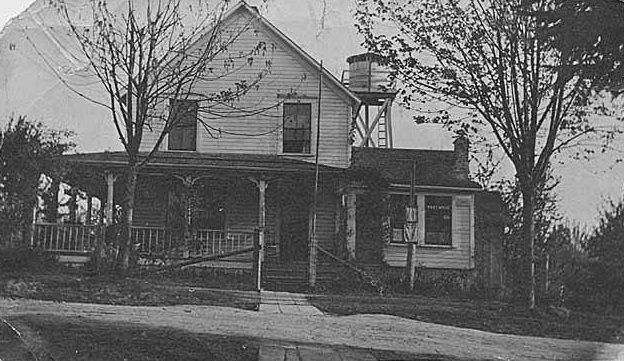
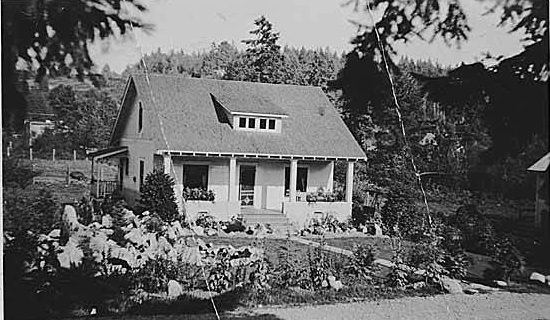
One of the most important institutions in early Bellevue was William T. Ivey’s home, which doubled as the local post office. Ivey held a remarkable range of civic roles — justice of the peace, postmaster, notary, and insurance agent. He took over as postmaster in 1891 when Isabel Bechtel retired and held the position for 23 years. His residence was the administrative heart of the young community.
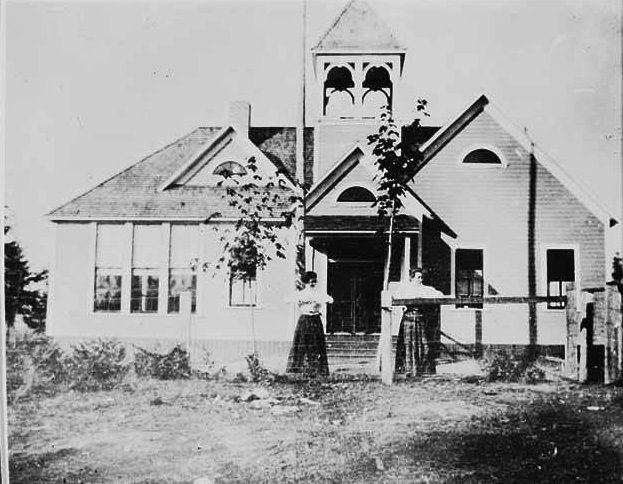
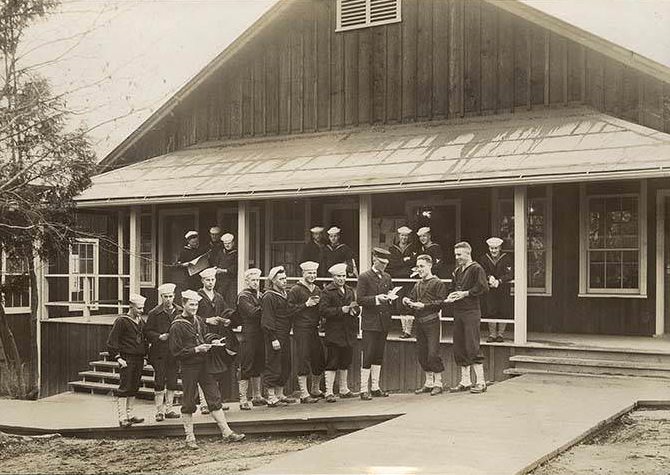
Highland School, built in 1887, served students in the Highland area just outside Bellevue. It remained in use until 1934, when a new Highland School opened to replace it. The old building was later used as a home, then offices, then a floor covering business. It was moved in 1972 to make way for State Route 520 and was ultimately destroyed by fire in 2001. The school’s bell is now preserved at Stevenson Elementary in Bellevue.
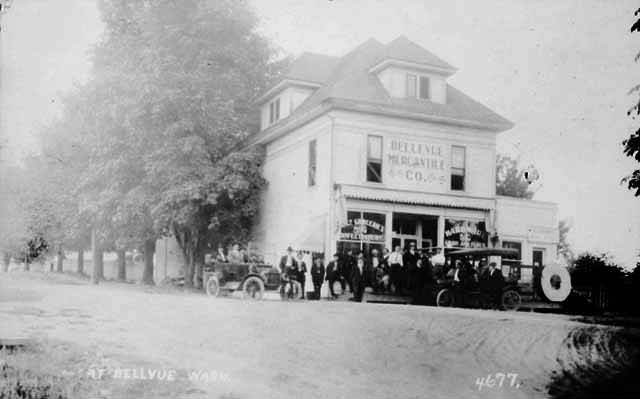
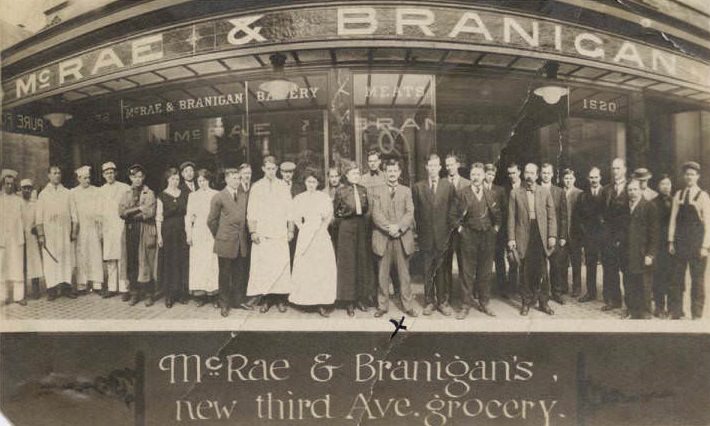
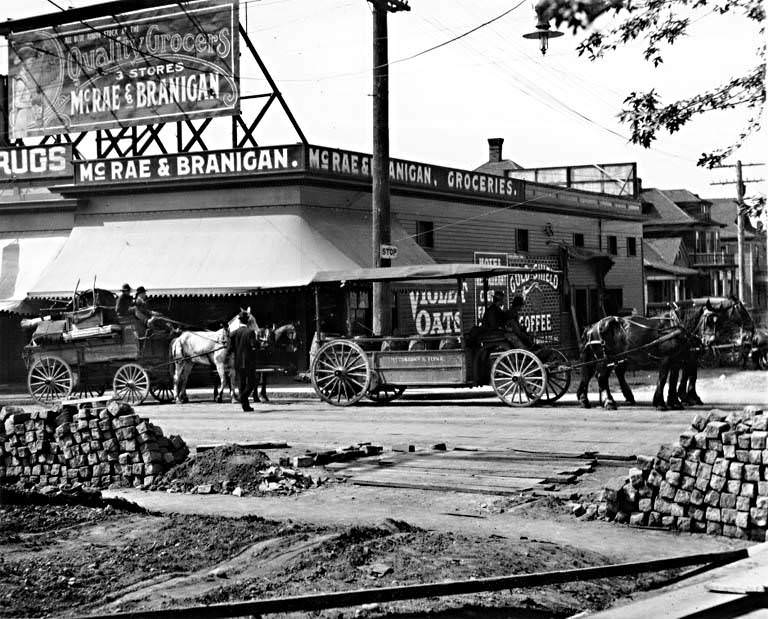
Phone service came to Bellevue in 1907, and mercantile stores opened in both Medina and Bellevue around the same time. These developments signaled the beginning of a more connected, modern community. The Bellevue Mercantile Company became a central part of town life, and the McRae & Branigan grocery was among the early businesses serving local residents.
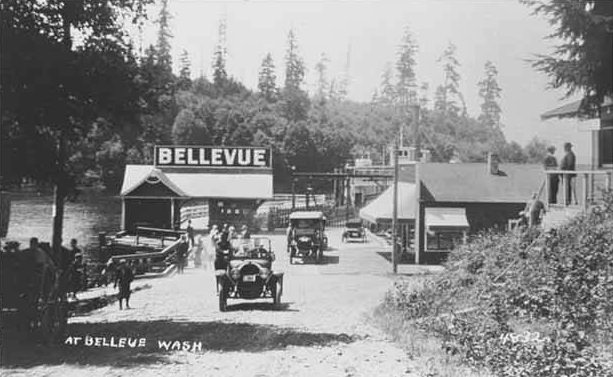
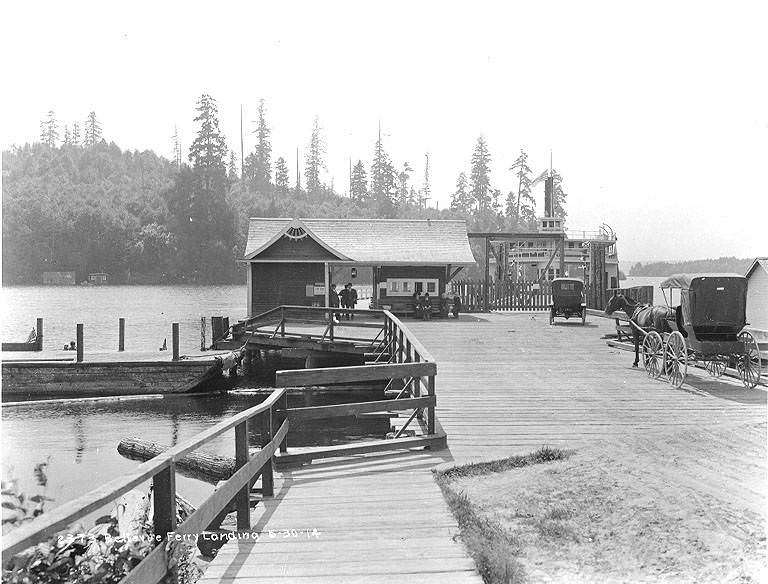
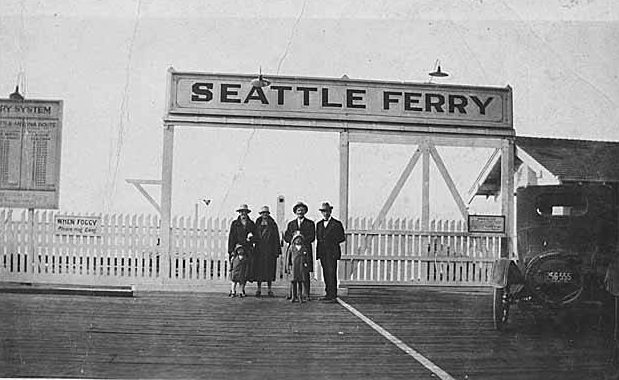
In 1913, car ferry service launched aboard the Leschi, connecting Bellevue and Medina to Seattle across Lake Washington. Buses departed the Leschi dock in Seattle every 15 minutes, stopping at Medina and Meydenbauer Bay. The ferry dock at Meydenbauer Bay became a busy hub. Medina itself was platted as Medina Heights in February 1914, and the community relied heavily on ferry and steamer service from Leschi, four miles across the lake to the southwest.
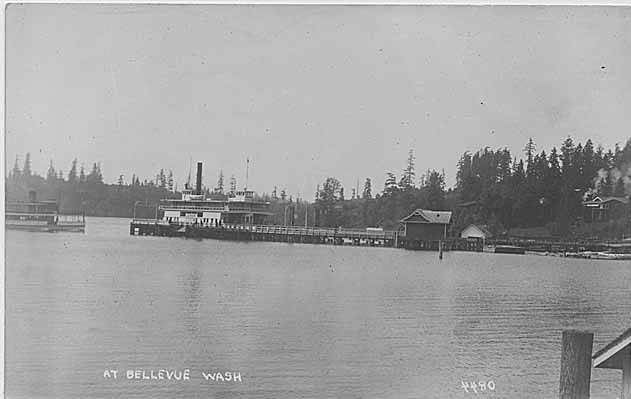
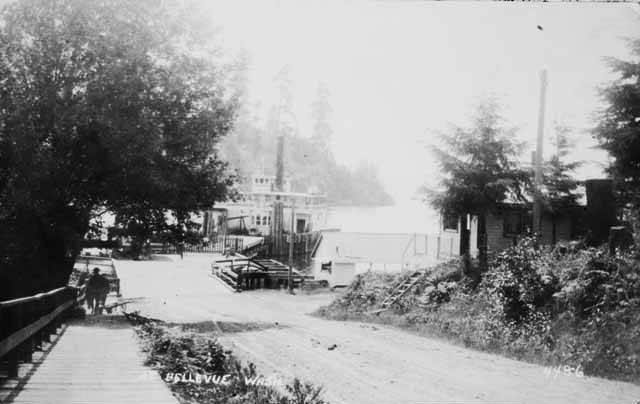
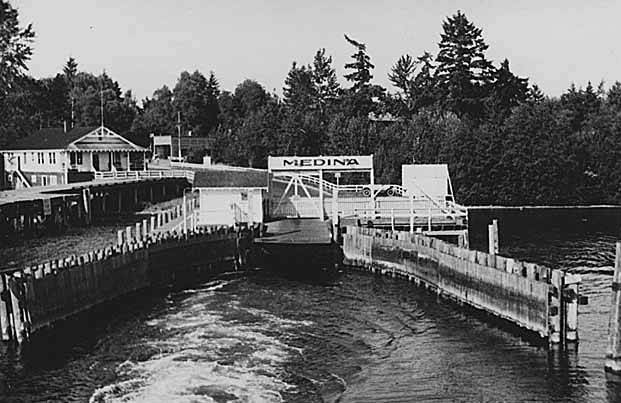
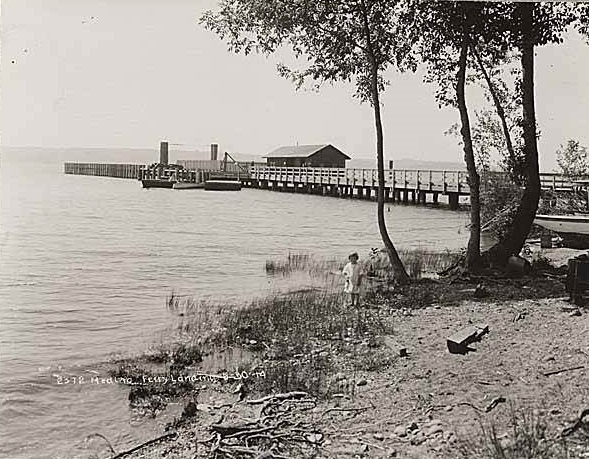
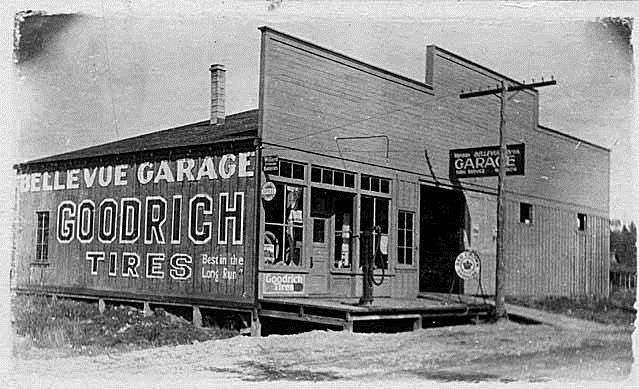
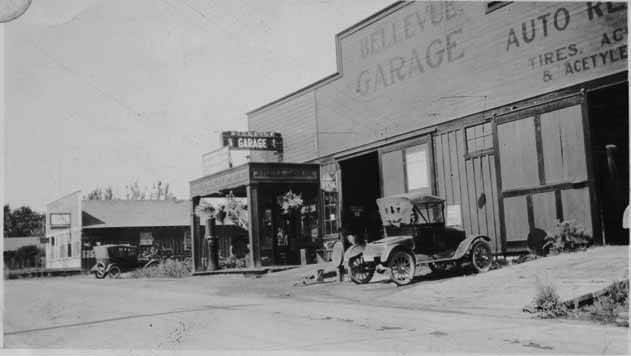
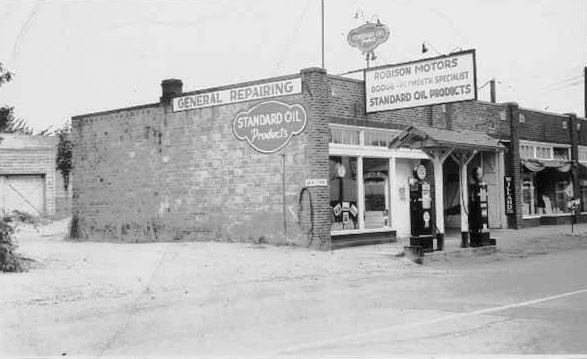
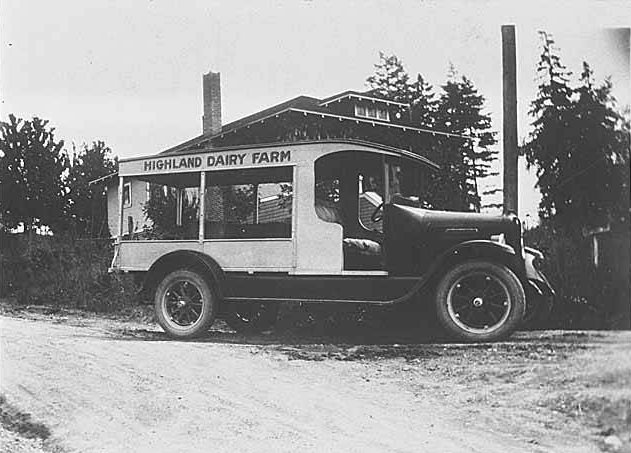
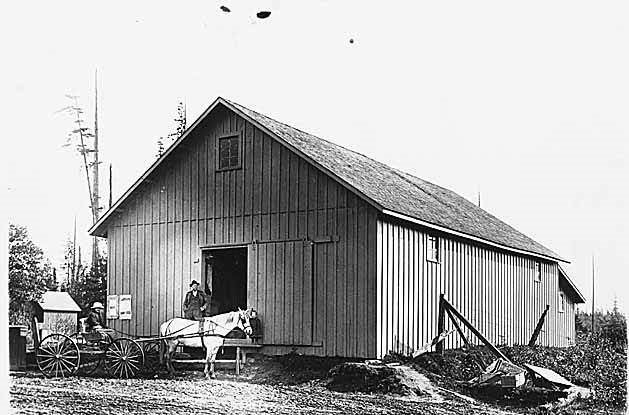
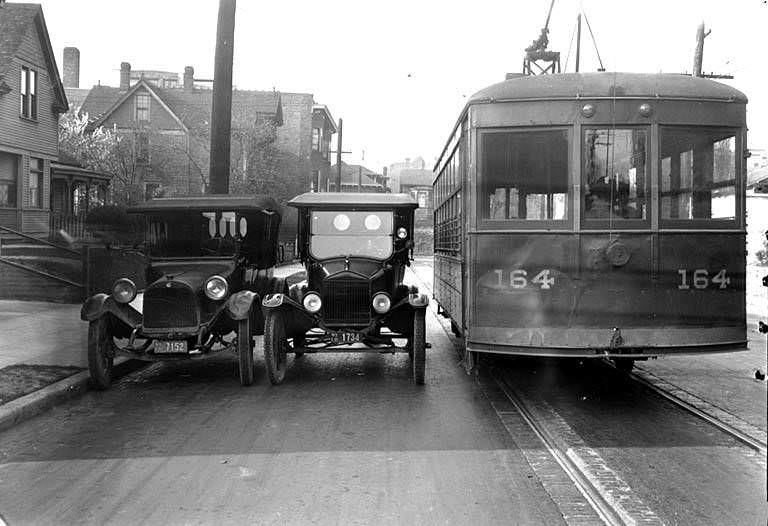
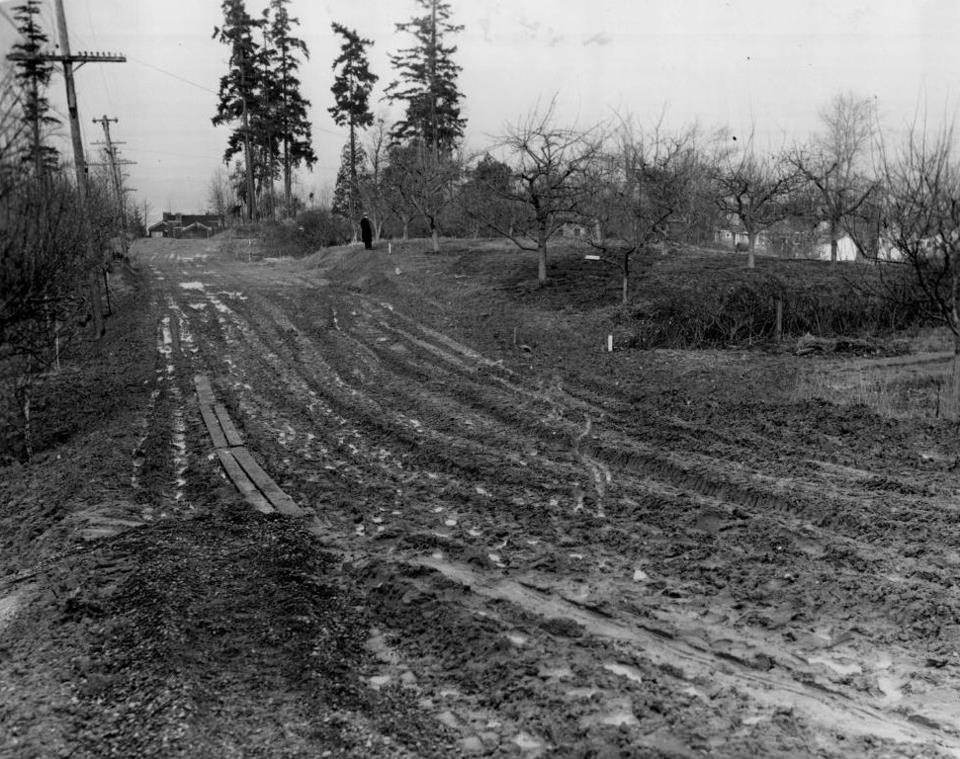
The arrival of the automobile shaped Bellevue just as much as the ferry. The Bellevue Garage opened in 1915, with a front office about 20 by 40 feet, a partitioned section for excess supplies, and equipment including a battery charger stove. Cars became a common sight on the dirt roads connecting the farms and homes scattered across the area. What is today Bellevue Way was then called Peach Street. The route north to Kirkland ran through Medina via a concrete slab road that curved around Clyde Hill and connected with what is now Lake Washington Boulevard near the Northup and Houghton area.
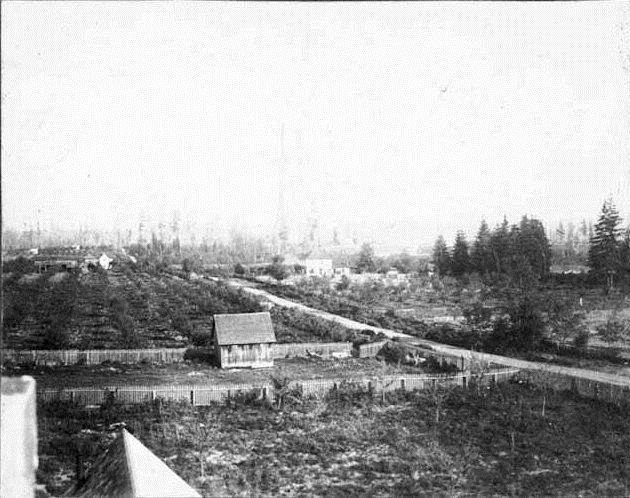
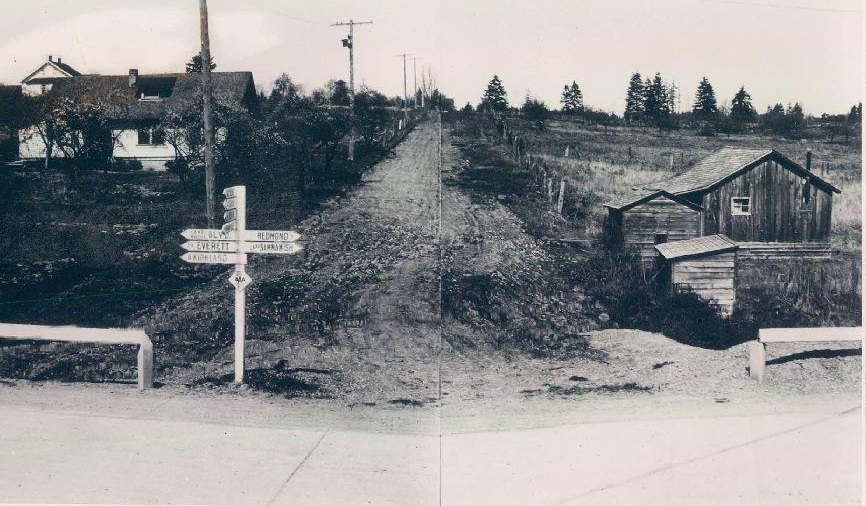
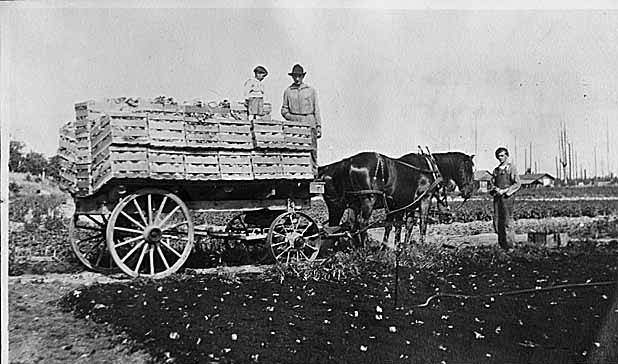
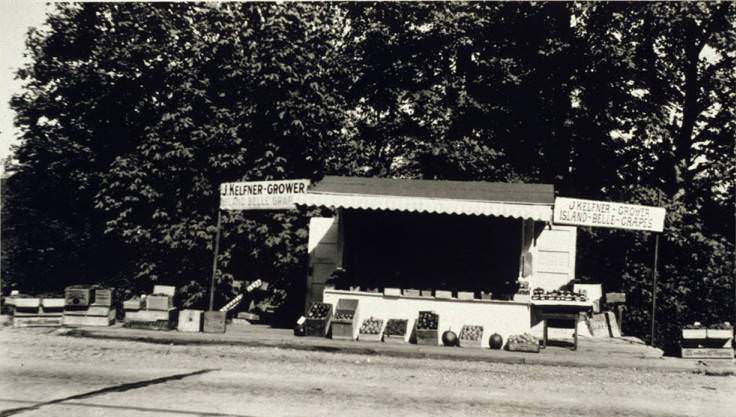
Farming was the backbone of Bellevue’s economy in these early decades. Fields of lettuce, fruit, and vegetables stretched across the cleared land. John and Frances Kelfner, who settled in Bellevue in 1911, ran a fruit and vegetable stand and specialized in growing Island Belle grapes — a variety developed by Lambert Evans at his Stretch Island vineyard. The grape became the most widely grown in the Puget Sound region, and by 1918 the Island Belle Grape Growers’ Union had formed to help farmers market their harvests.
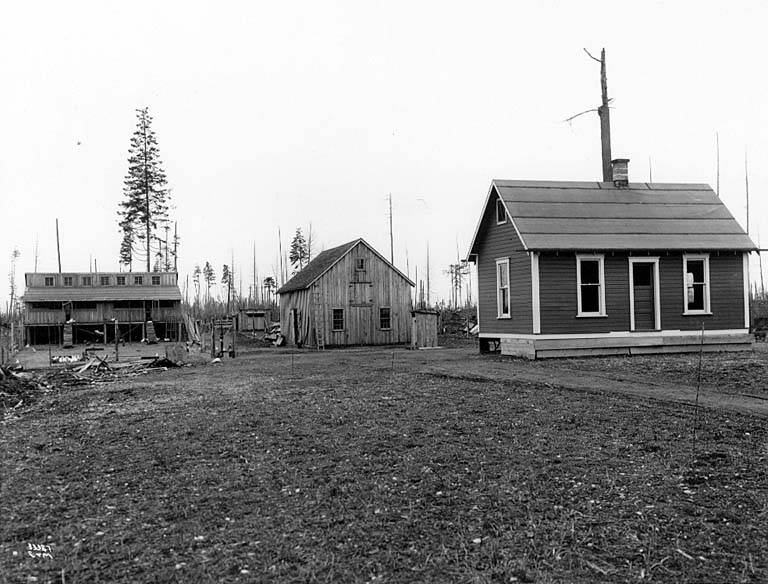
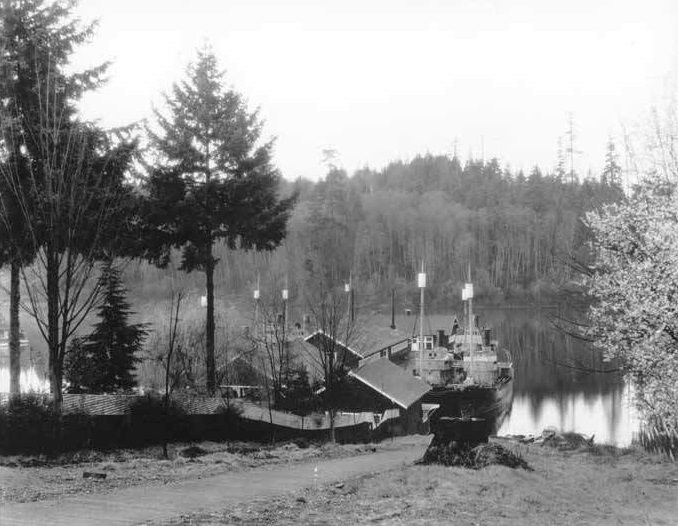
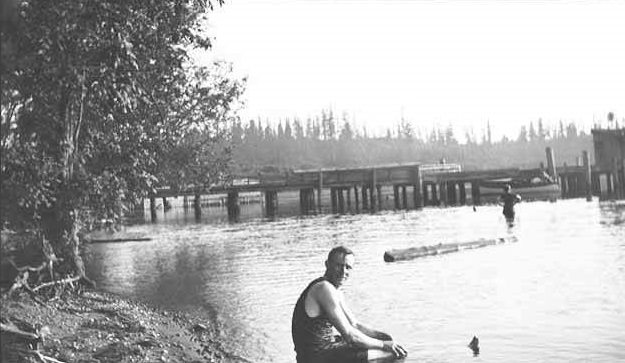
By 1919, the American Pacific Whaling Company had moved its headquarters to Bellevue, wintering its fleet of whale boats in Meydenbauer Bay. Each winter, crews made repairs to ships and equipment there, preparing for the next Alaska whaling season. This arrangement continued until 1940, when the docks were handed over to the United States Coast Guard for use as a repair base.
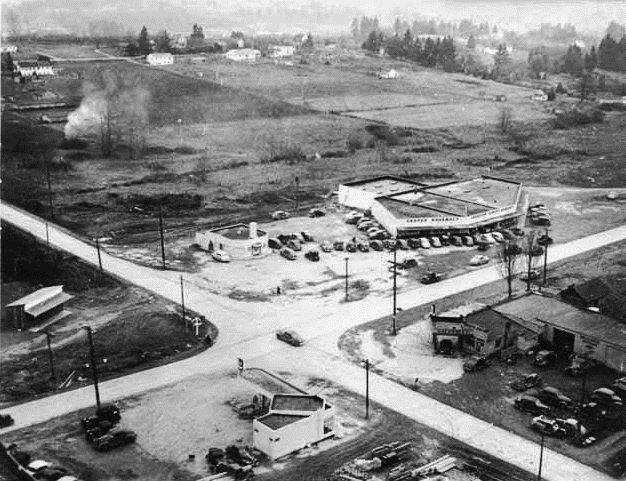
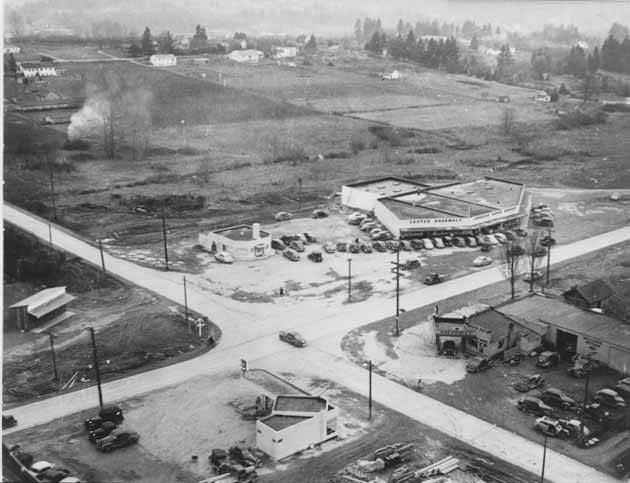
The 1920 census recorded about 1,500 residents in Bellevue and its surrounding communities, a significant jump from the 400 counted two decades earlier. New homes were going up, businesses were expanding, and the streets were becoming more defined. Walt Robison Motors opened in 1930, reflecting the town’s growing relationship with the automobile. The intersection of Bellevue Way and NE 8th Street became one of the town’s key commercial corners by the late 1930s.
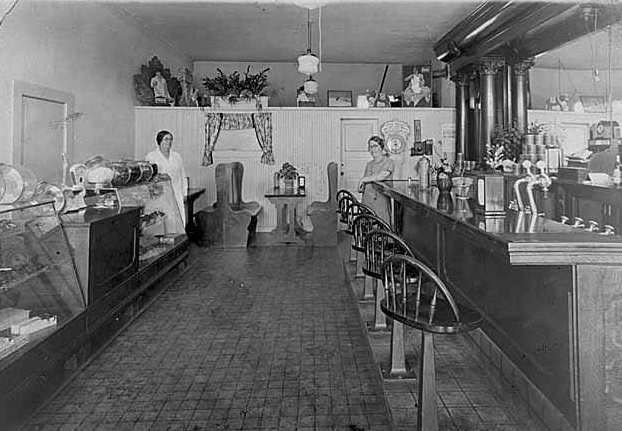
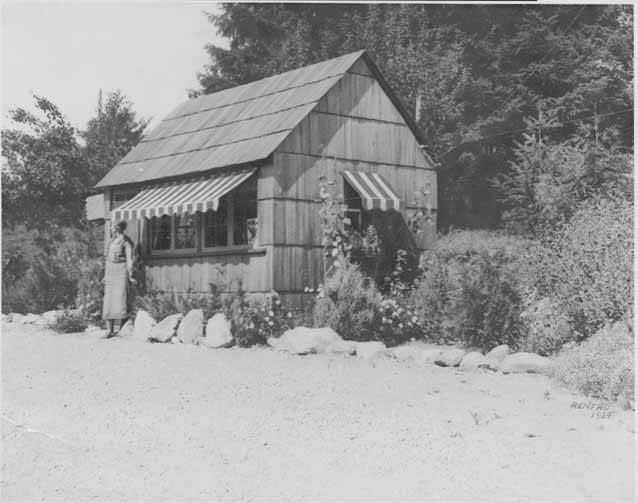
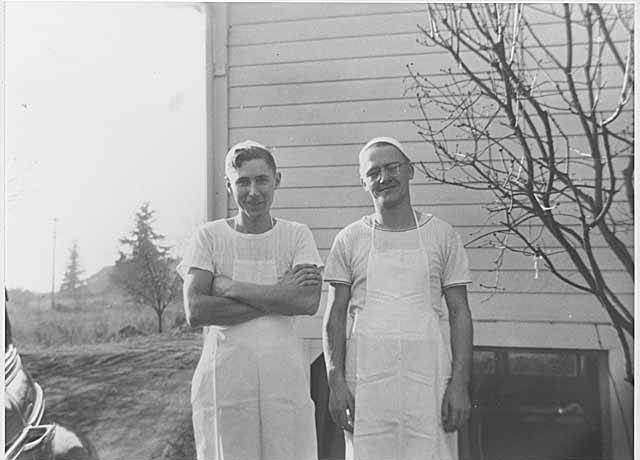
Sweet shops and small businesses gave Bellevue a neighborly character. Addie Hurley and Gladys Younger worked in Charley Younger’s Candy Shop in 1930. Just a few years later, in 1934, Bellevue resident Mina Schafer opened Jane McDowell’s Candies, a cottage shop she named for her mother. Her husband Louis built the shop, which was connected to their home by a bell system — when a customer walked in, a bell rang in the house so Mina could come down to help them. She became known locally for the quality of her candies.
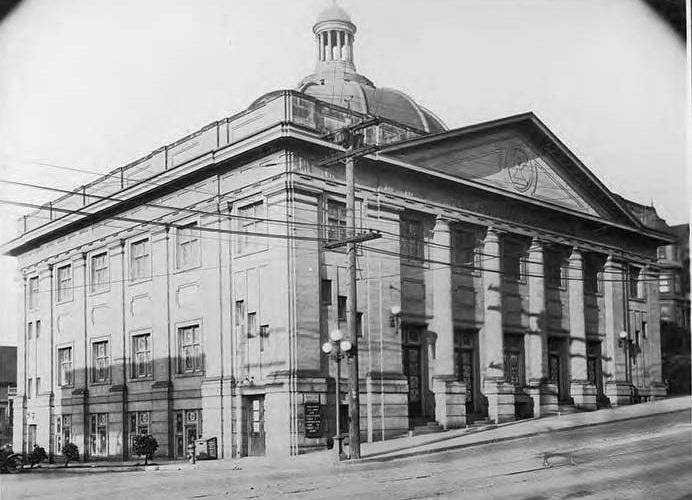
Bellevue’s first Catholic church began as a mission tied to Kirkland’s Holy Family parish. Its earliest services were held in the parlor of the Downey family home. In 1913, the congregation moved into a small wooden building on Main Street near 108th Avenue NE. By 1926, a new brick church had been built. After the congregation outgrew that space, the brick building was repurposed to house the Bellevue public library.
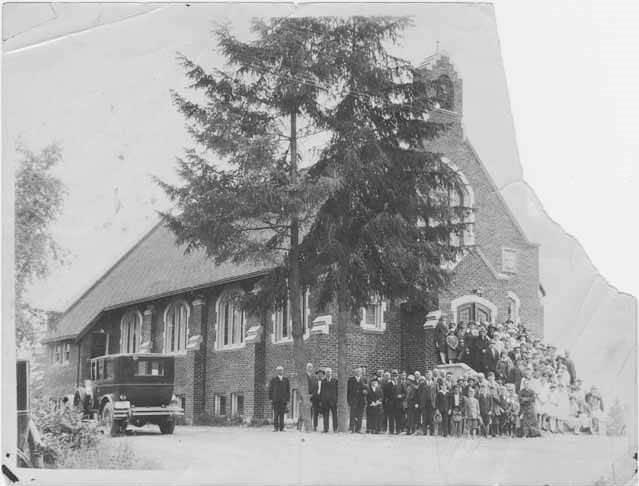
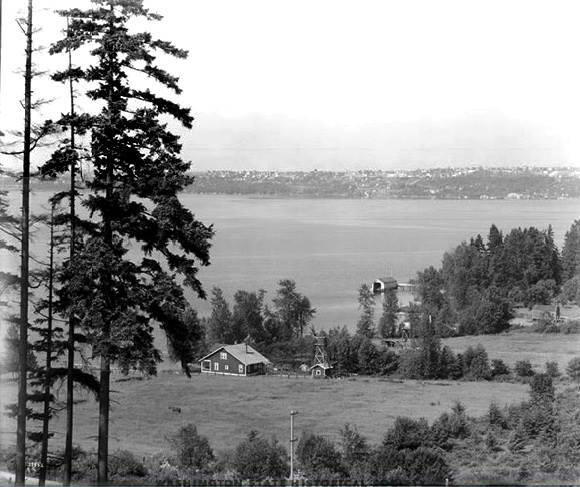
The first Strawberry Festival was held in 1925 and drew 3,000 visitors, most of them coming from across the lake. It became an annual event that cemented Bellevue’s identity as a welcoming farming town. The festival brought the wider Seattle region to Bellevue’s shores each year and helped define the community’s character through the late 1920s and into the 1930s.
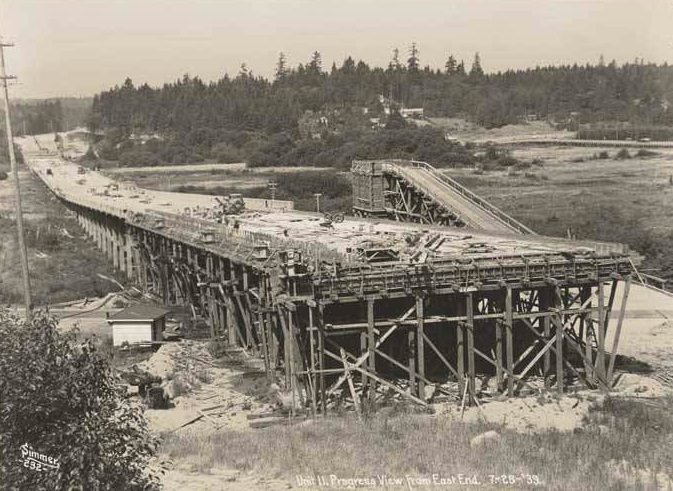
As the 1930s drew to a close, Bellevue’s infrastructure began to catch up with its ambitions. The Mercer Slough bridge was under construction by July 1939, forming the eastern end of the Lake Washington Floating Bridge project. It was a new four-lane highway that crossed Mercer Slough and linked into existing roads, setting the stage for a much more connected Bellevue in the decades ahead.
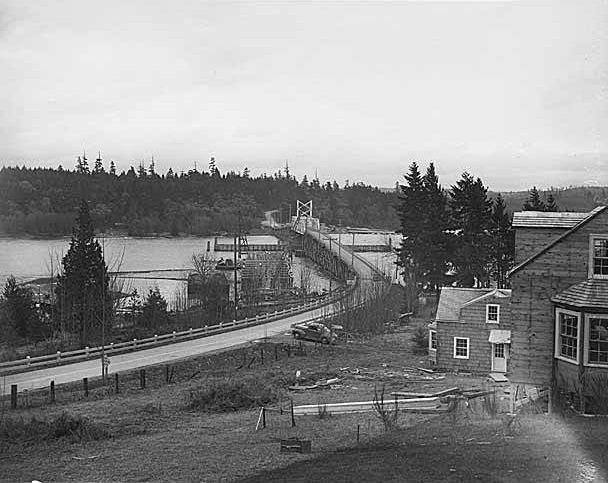
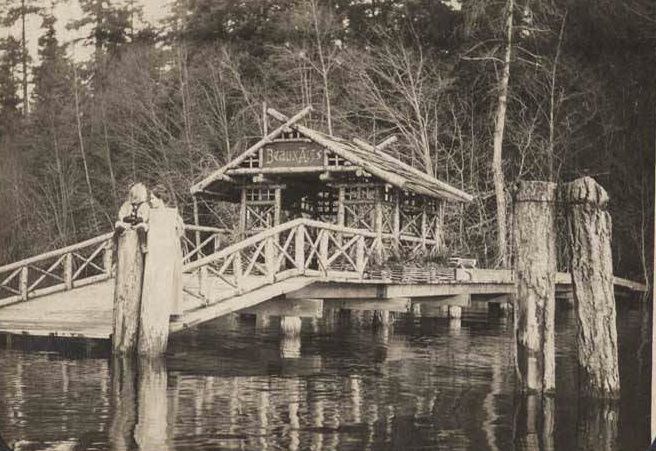
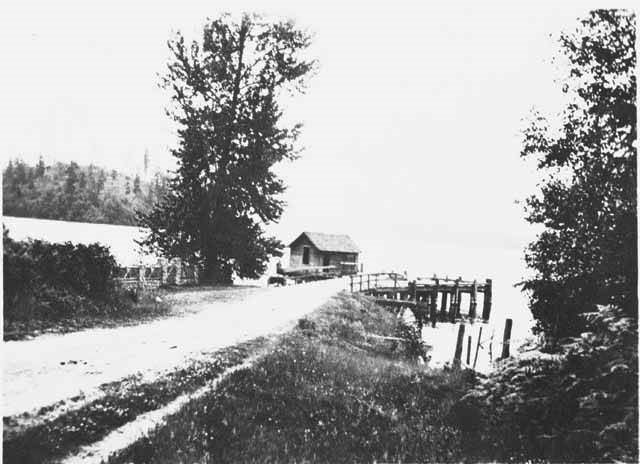





Oh wow, I grew up in Beaux Arts. I never knew we had a gazebo bridge at one time. Thanks, OP! It’s great to see some of these old buildings I remember from when I was a kid.
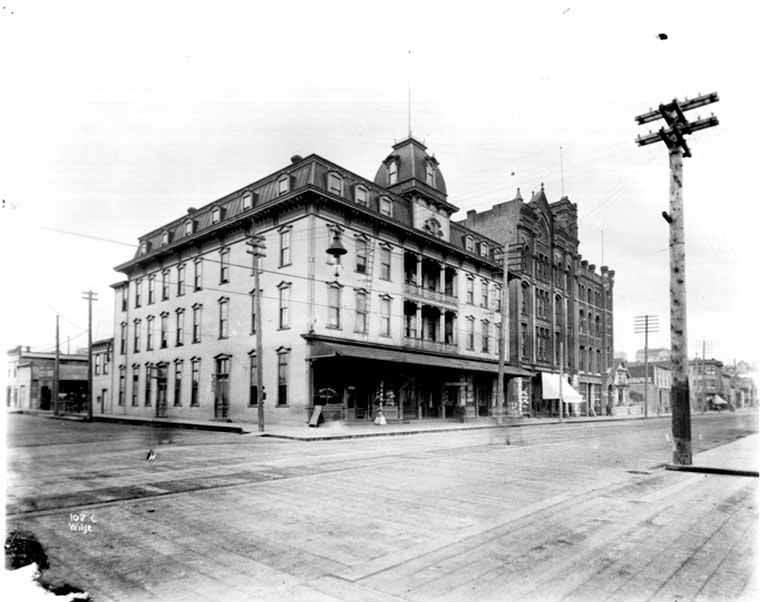
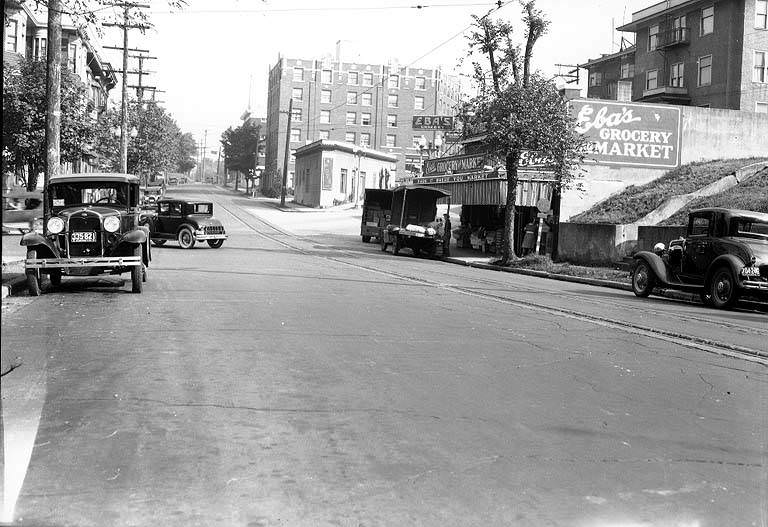
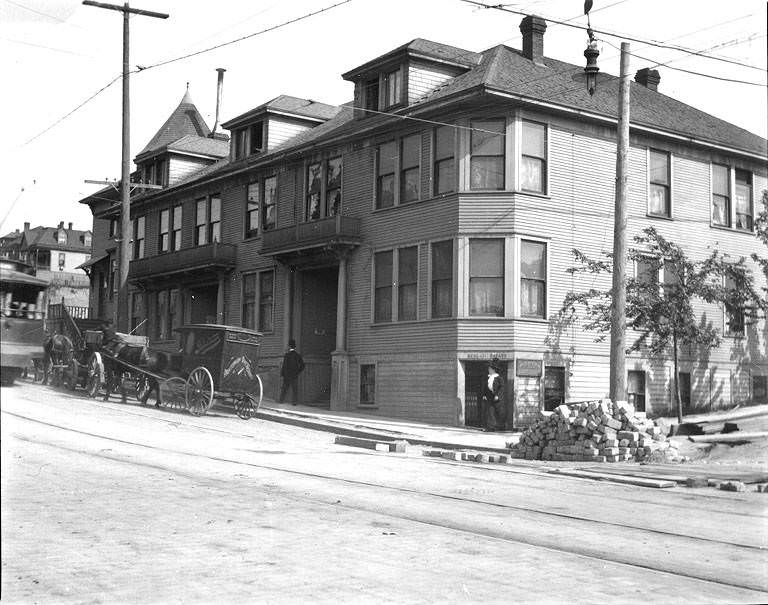
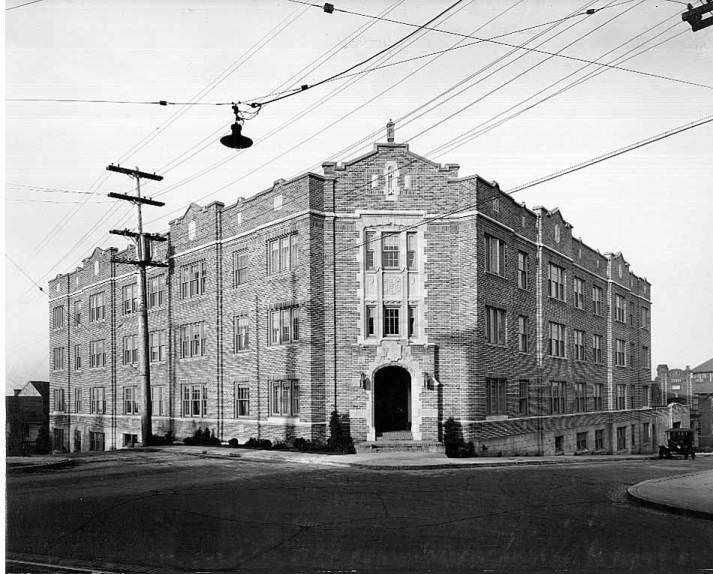
It is funny that mixed in with legit old Bellevue photos we have other photos of places in Seattle and on San Juan Island that have “Bellevue” in their name in some way.
The Bellevue ones are still great though. Old photos looking up Bellevue Way from main street always get me — the contrast is so extreme.
30 & 31 are definitely Seattle, Bellevue Ave. After the San Juan images I lost interest…
These images only show the white settlers but it’s my understanding that many Asians families (Japanese) owned large strawberry farms etc until their properties were “stolen” during internment.
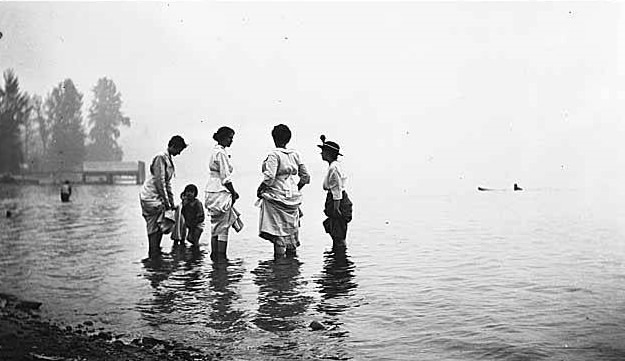
It’s also interesting to see Lake Washington level right up to Main street in old Bellevue before the lake was lowered.
Is #3 (Sacred Heart Church) the building in the parking lot of HMart on Main street? We literally just noticed it after over a decade walking next to it 😀
Also curious how old is this building https://www.instagram.com/p/CrmGbHrvJ7h/ – one of the favs we’ve stumbled upon.