
Yonge Street is one of Canada’s most recognizable roads. Running north-south through the heart of Toronto, it connects Lake Ontario to Lake Simcoe and once served as the southernmost section of provincial Highway 11, linking Toronto to northern Ontario. Including its Bradford-to-Barrie extension, the street stretches 86 kilometres (53 miles). All street numbering across Toronto and York Region uses Yonge Street as its baseline, making it the geographic spine of the entire city.
Toronto’s subway system reflects that same central role. Line 1 Yonge-University runs nearly the full length of Yonge Street underground, connecting to suburban commuter rail networks like Viva Blue. Above ground, the stretch known as Downtown Yonge is a dense commercial corridor packed with shops, restaurants, and entertainment venues. Landmarks like the Eaton Centre and Yonge-Dundas Square anchor this stretch, drawing millions of visitors each year.
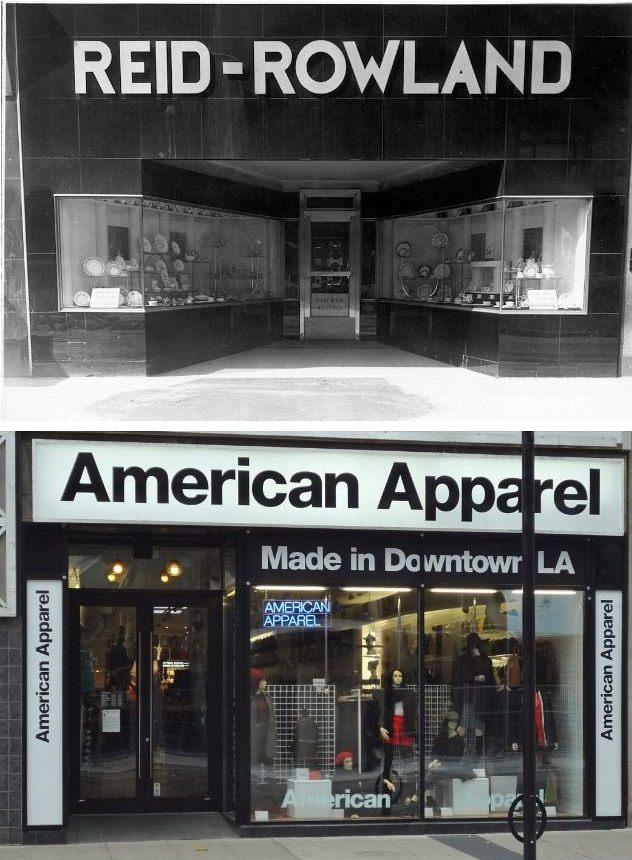
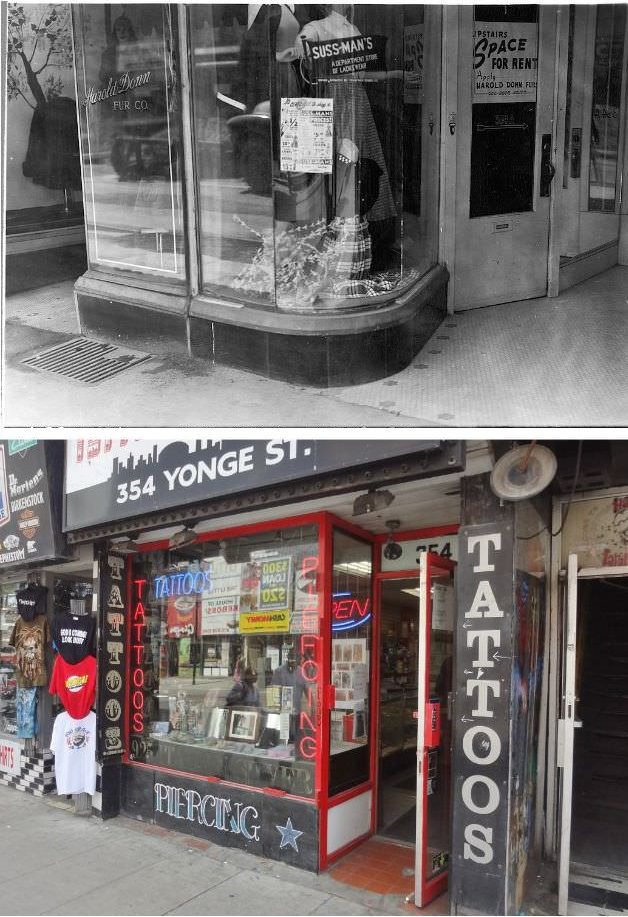
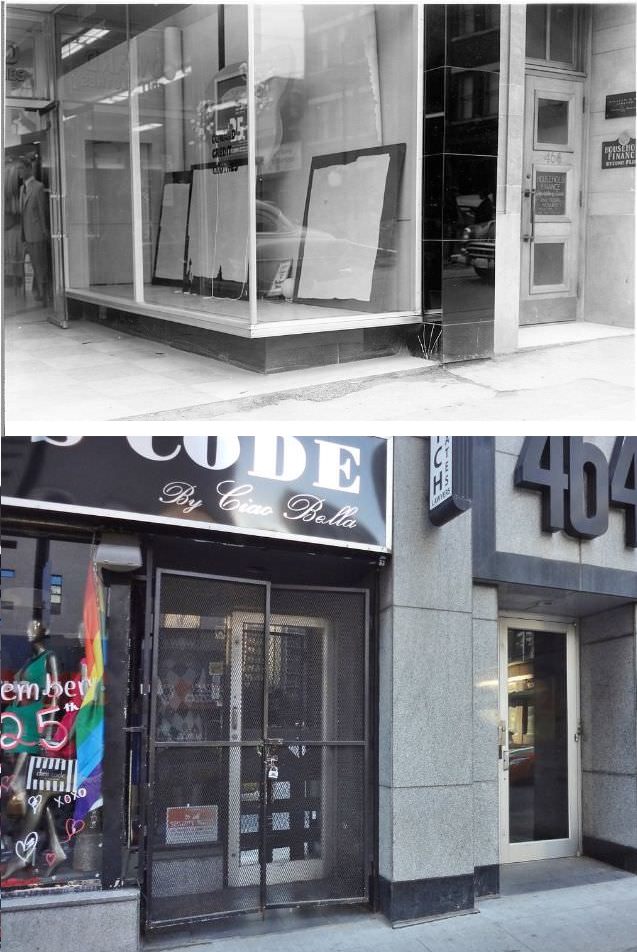
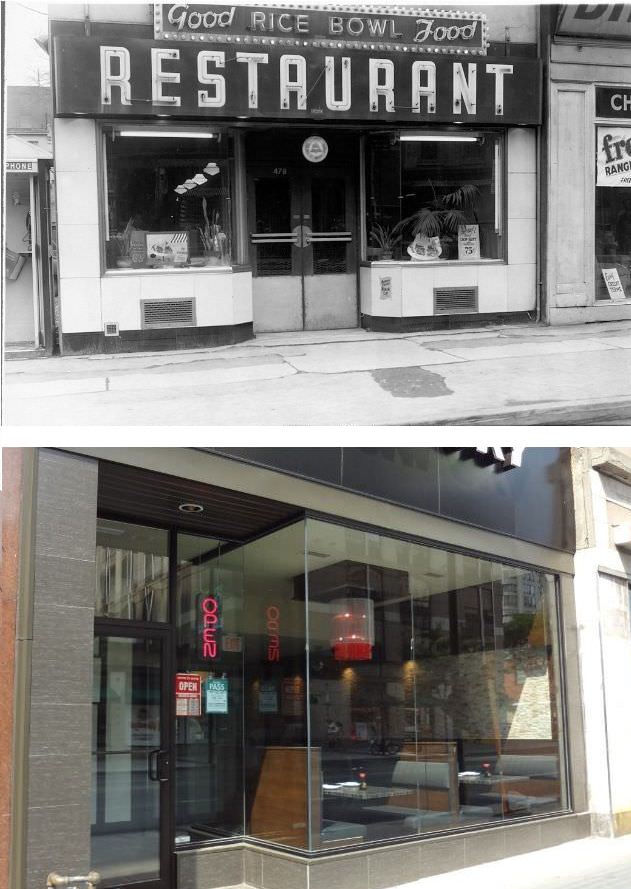
The photos below compare 30 addresses along Yonge Street as they appeared in 1954 and again in 2014 — a 60-year gap captured side by side. Some buildings survived. Many did not. The street-level storefronts, signage, and architecture from 1954 tell a very different story from what stands there today.
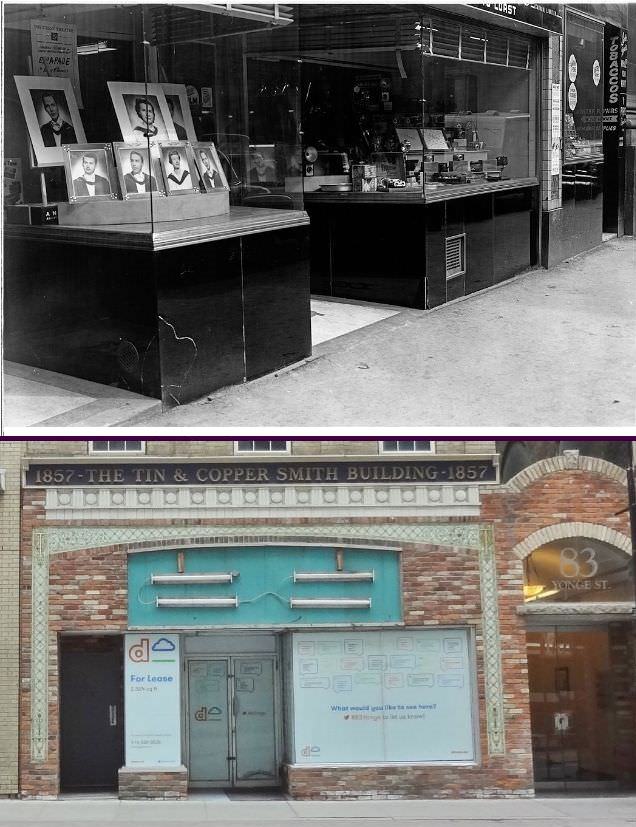
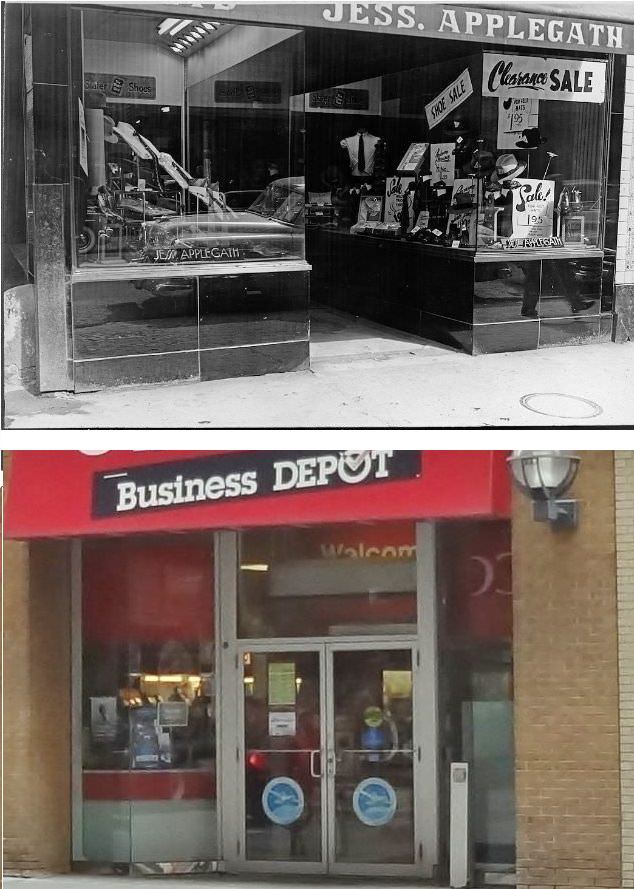
The southern end of Yonge Street, closest to the waterfront, saw some of the most dramatic changes. Low-rise commercial buildings that defined the 1954 streetscape were replaced over the decades by glass towers and modern retail facades. The scale of the street itself changed — wider sidewalks, new signage regulations, and updated transit infrastructure all reshaped how pedestrians experience this stretch today.
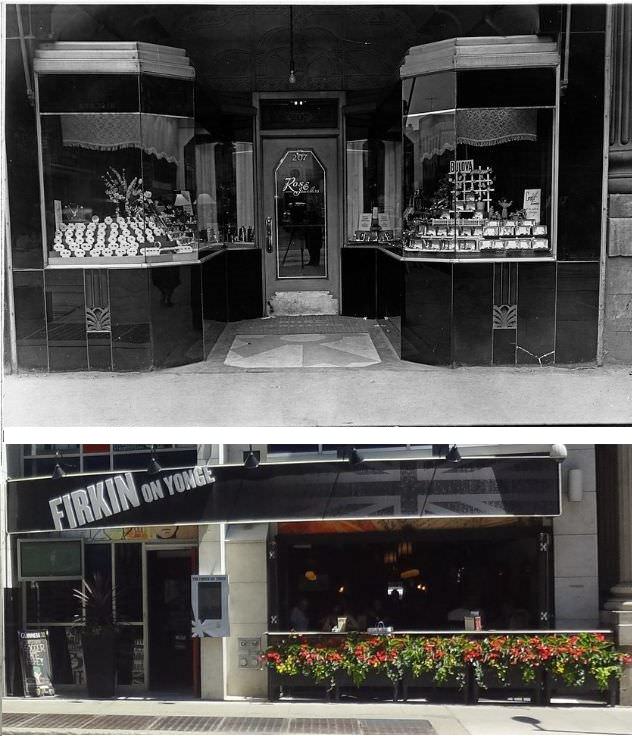
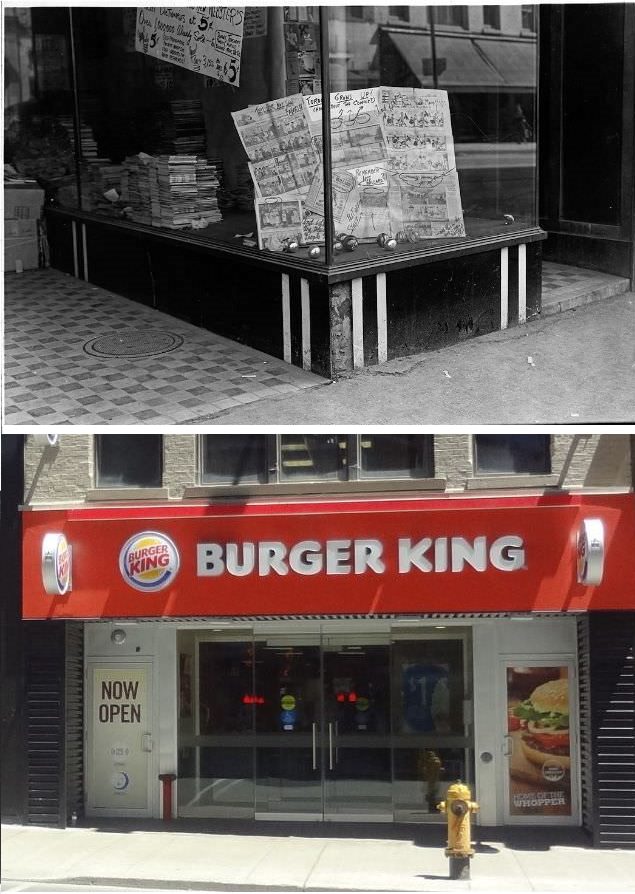
Moving further north into the 200s and 300s address range, the 1954 photographs reveal a street lined with independent businesses, modest signage, and brick-faced storefronts. Toronto in the mid-1950s was a city still operating at a human scale along this corridor. By 2014, many of those same lots had been consolidated or completely redeveloped.
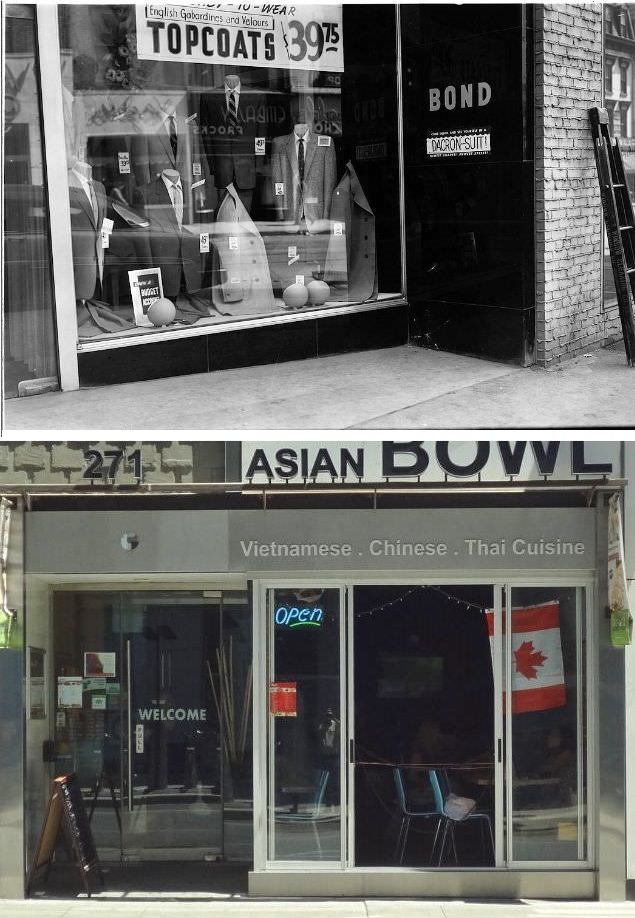
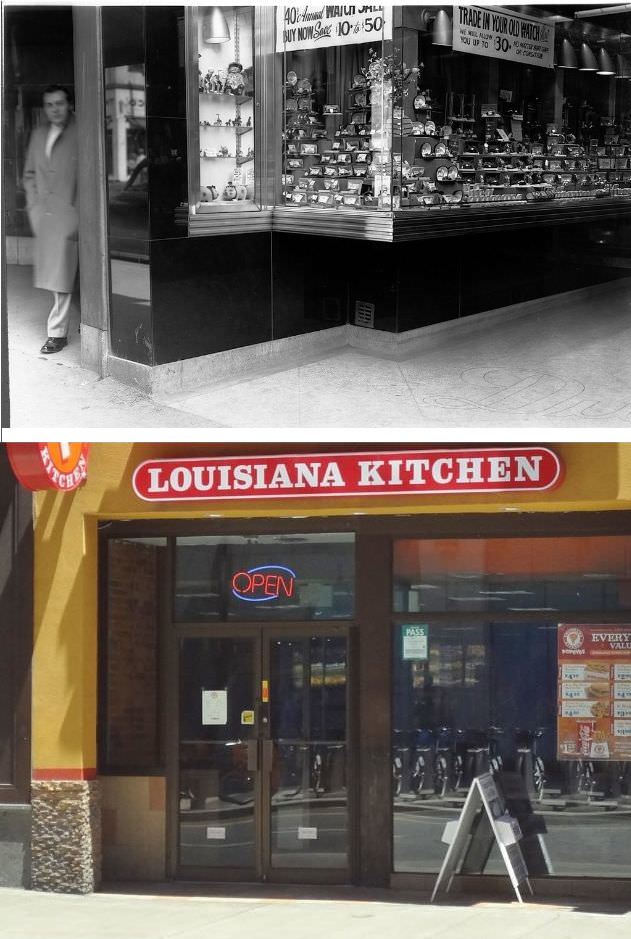
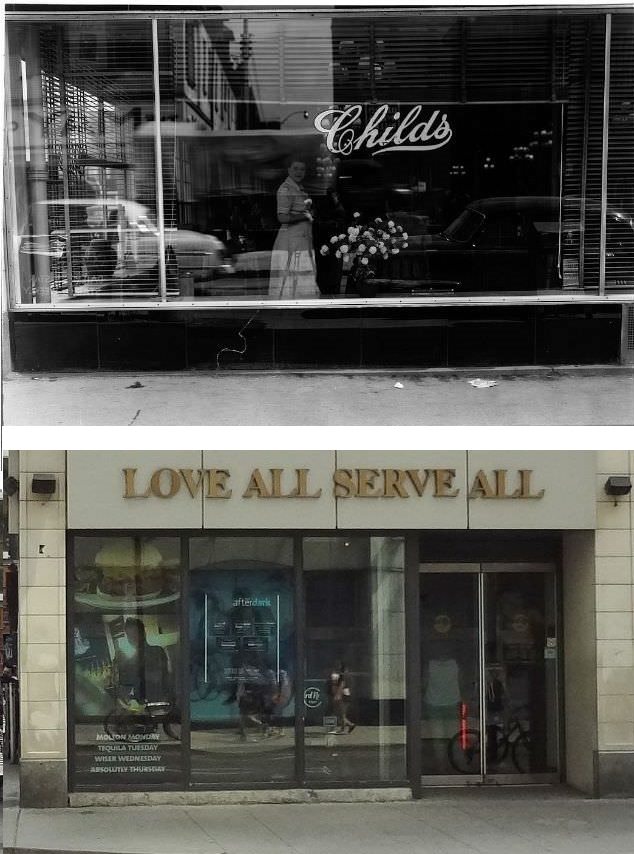
The 300-block addresses sit in the heart of what became the Downtown Yonge entertainment and retail district. This section experienced some of the heaviest redevelopment pressure over six decades, driven by rising land values and the growth of large-format retail and condo towers.
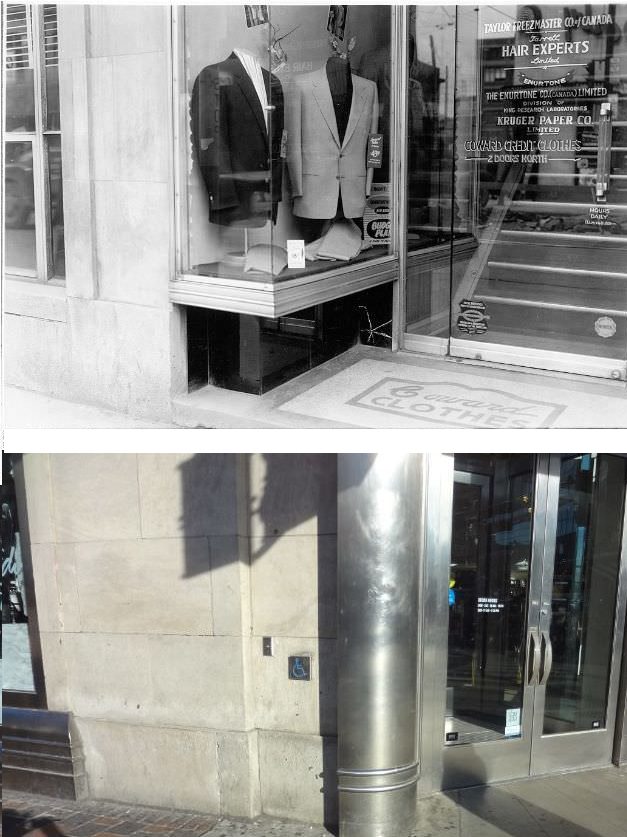
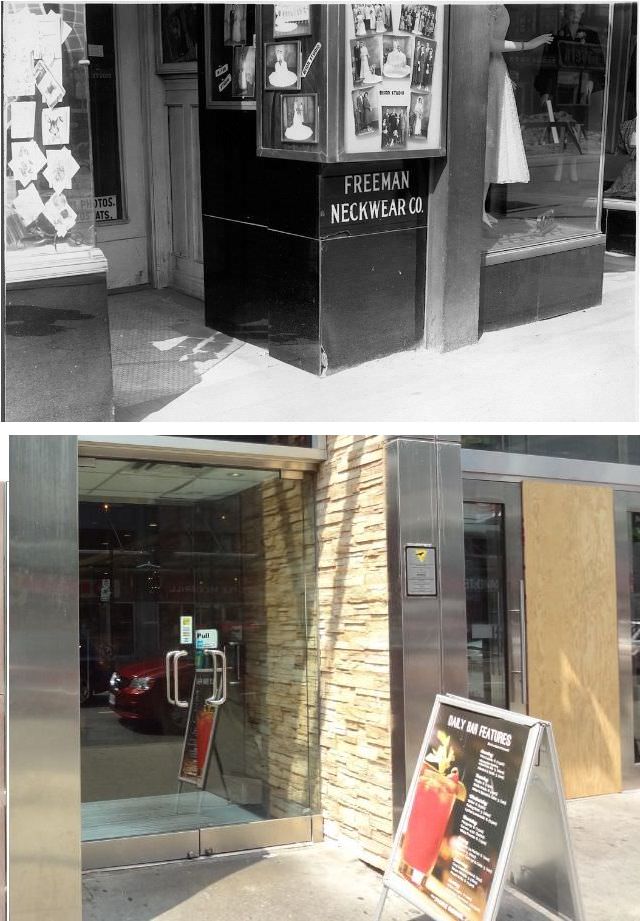
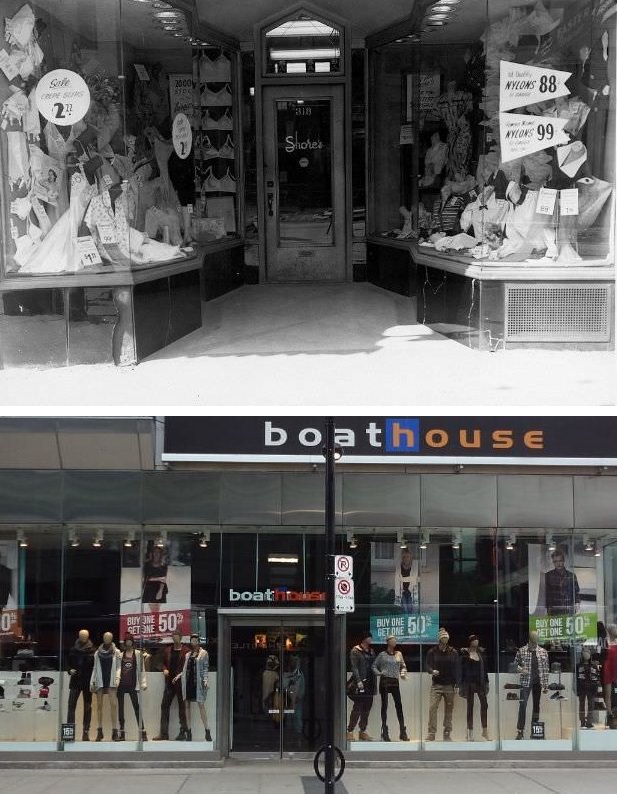
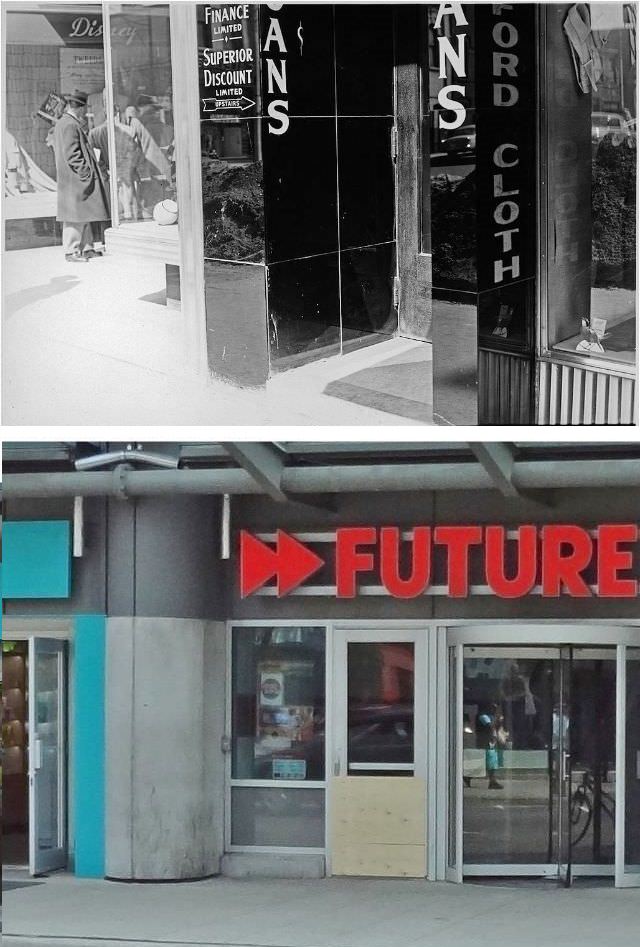
Street numbers in the 330s and 340s show the density of change particularly well. In some cases, multiple 1954-era storefronts occupied the space where a single modern building now stands. The narrow lot widths common to mid-century Toronto gave way to consolidated developments that absorbed several original addresses into one footprint.
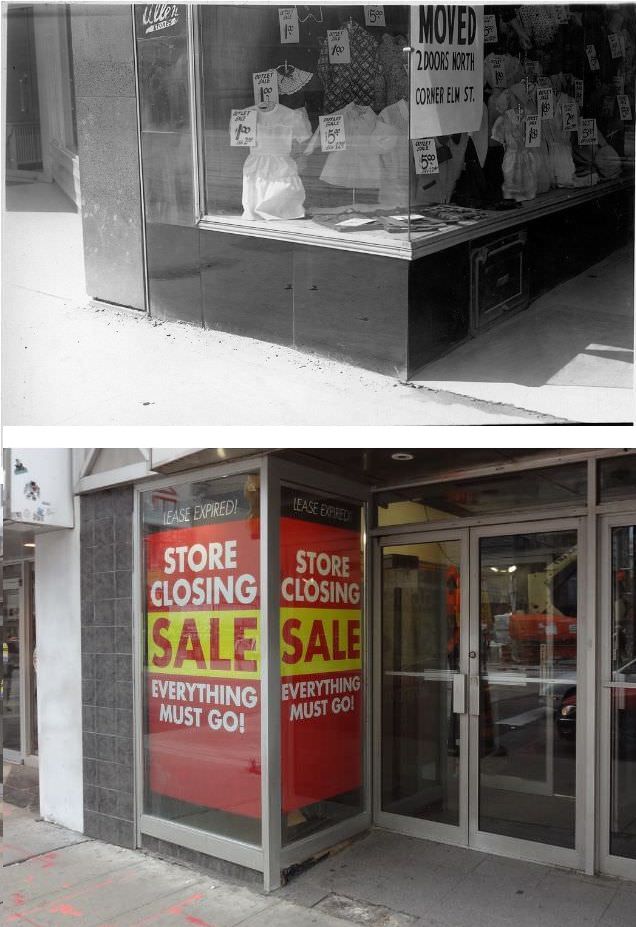
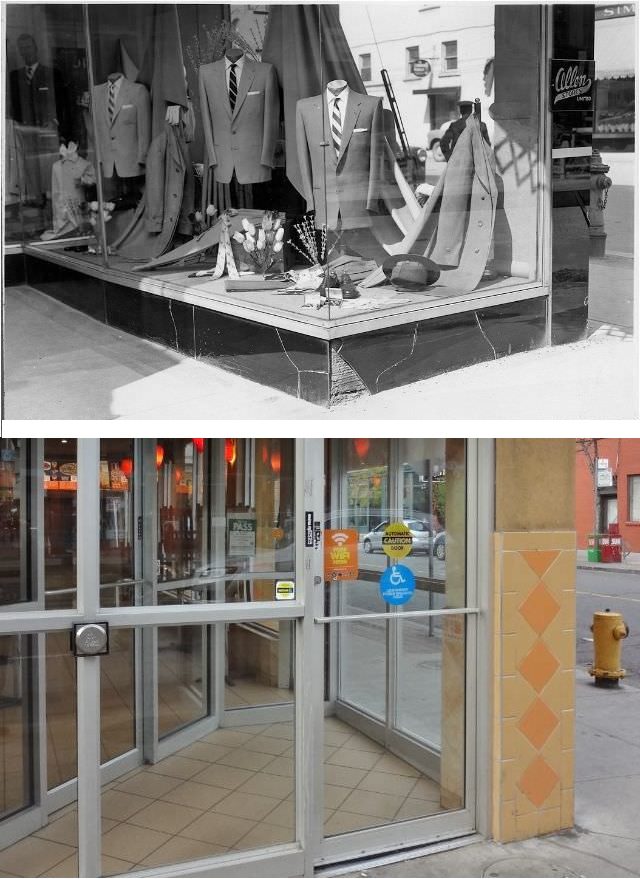
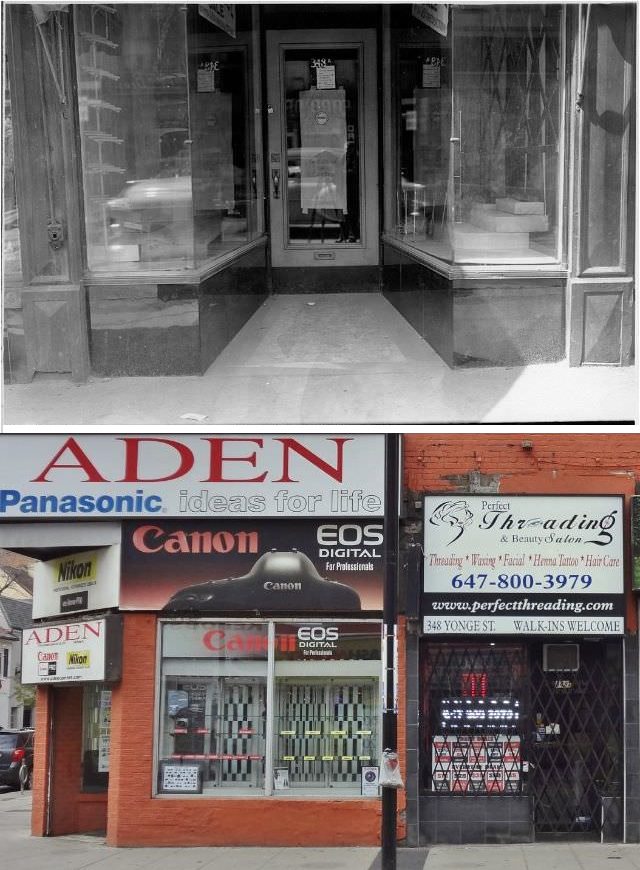
The half-addresses and lettered suffixes like 348A and 354A reflect how tightly packed the original street was. These fractional addresses were common in older Toronto commercial strips, where buildings were carved into multiple narrow units serving different tenants. By 2014, most of those fine-grained subdivisions had disappeared.
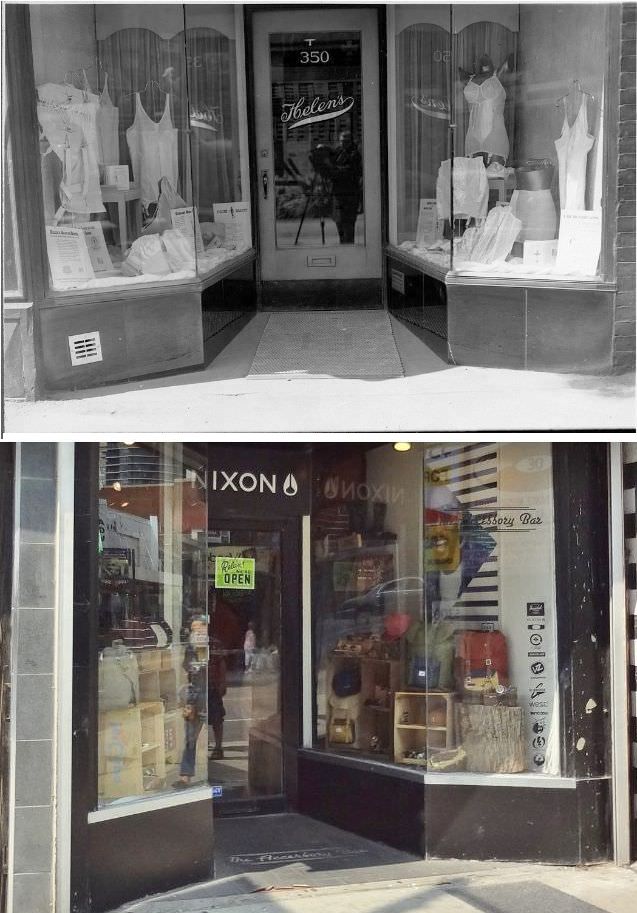
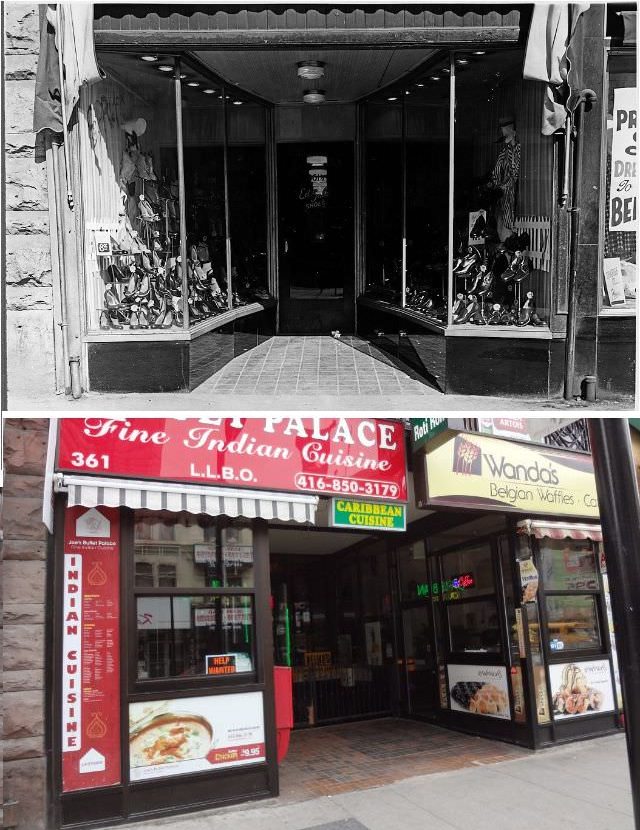
The 360s block captures a particularly active stretch of the street. In 1954, this section was filled with street-level commerce that served the surrounding residential and office population. The 2014 views show how thoroughly the vertical dimension of the street changed, with upper floors added, facades modernized, and older architectural details removed or covered.
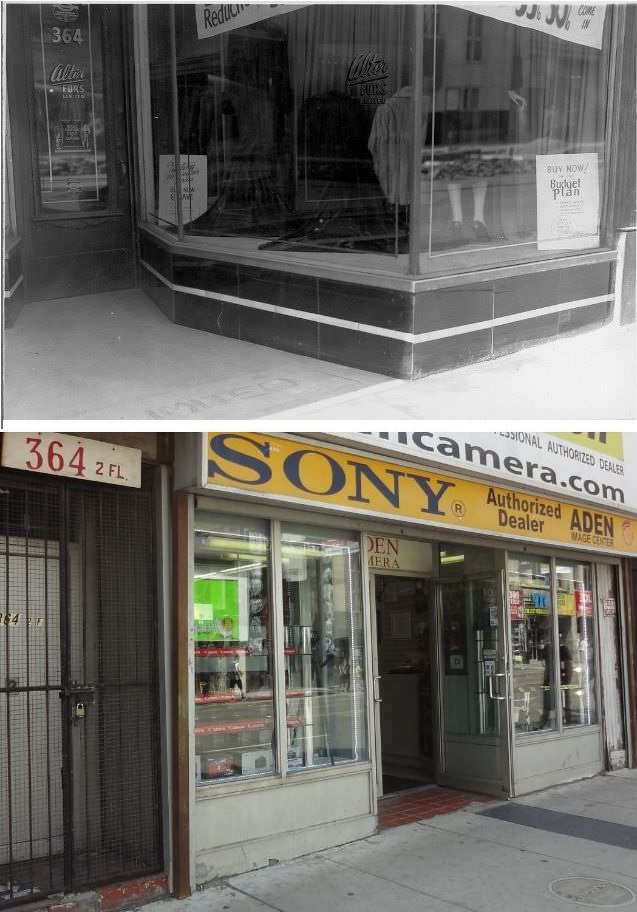
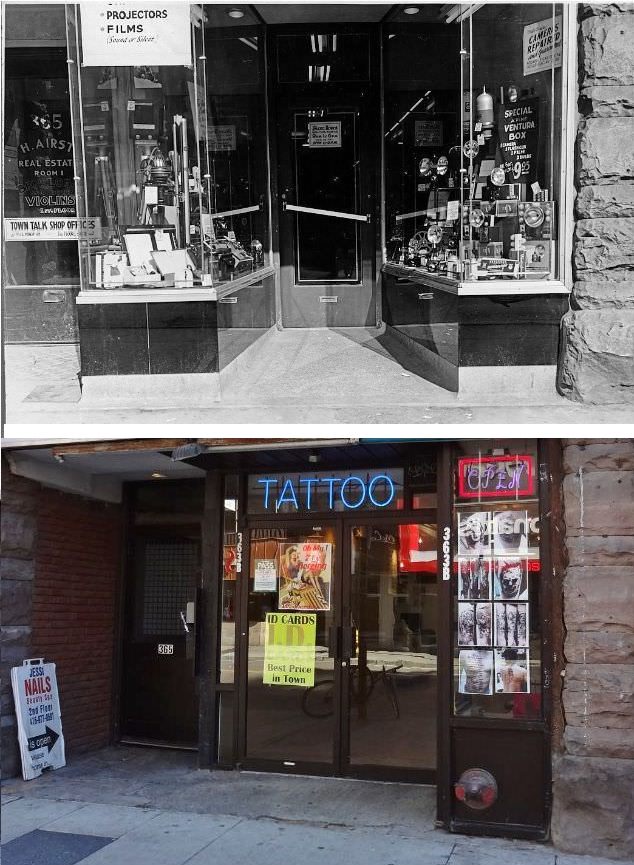
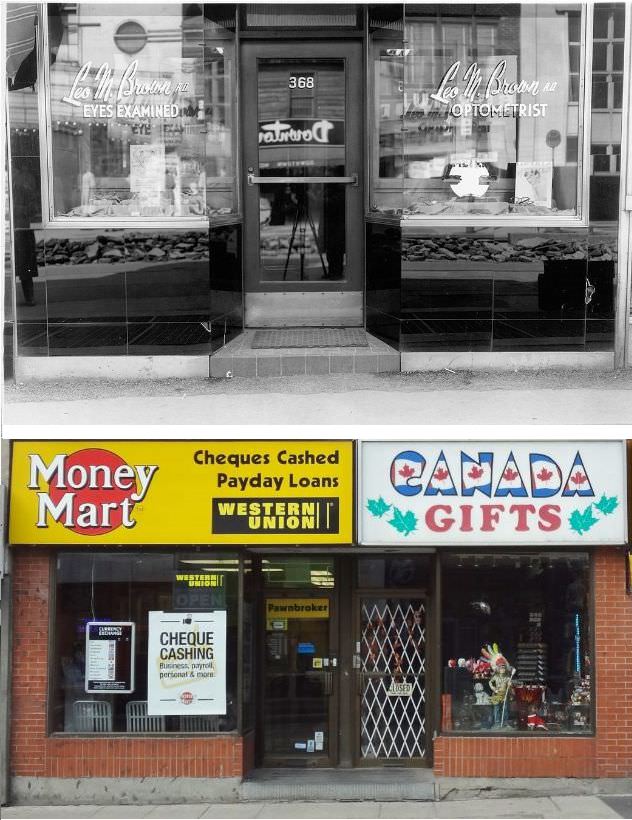
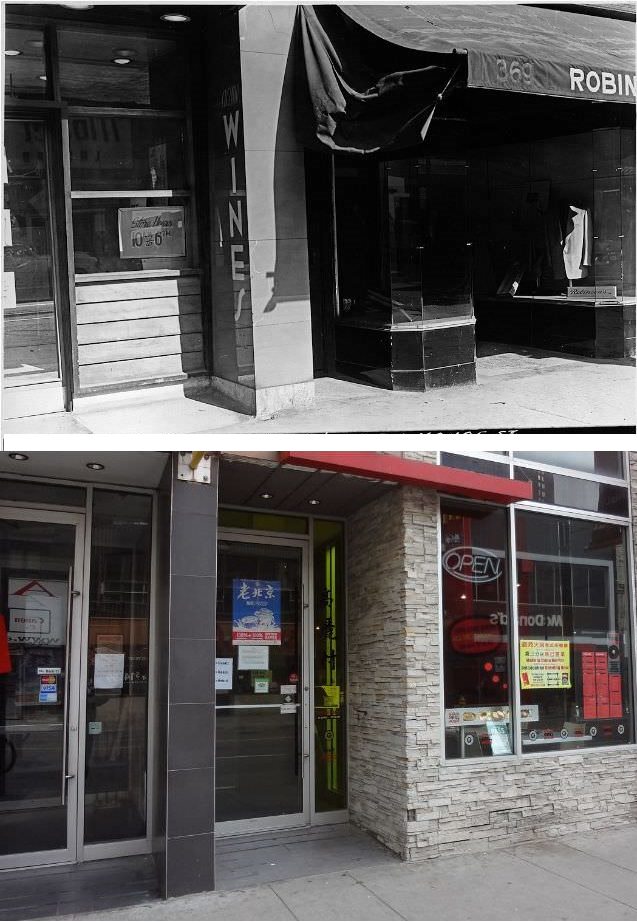
A cluster of addresses in the low 370s — including 370, 371, and 374 — sat in close proximity, and comparing them across 60 years highlights just how much individual buildings could change independently of their neighbors. One address might be entirely rebuilt while the structure next door survives largely intact.
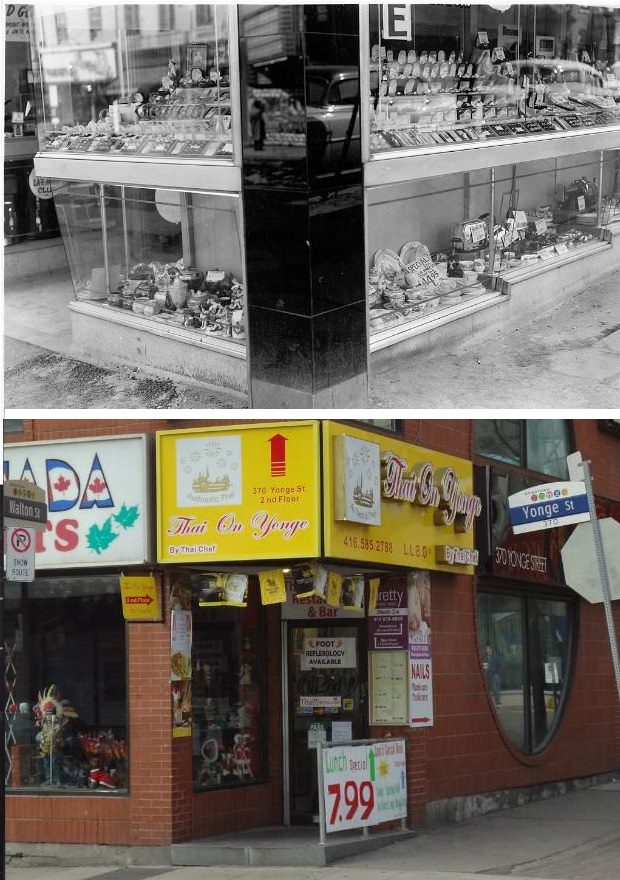
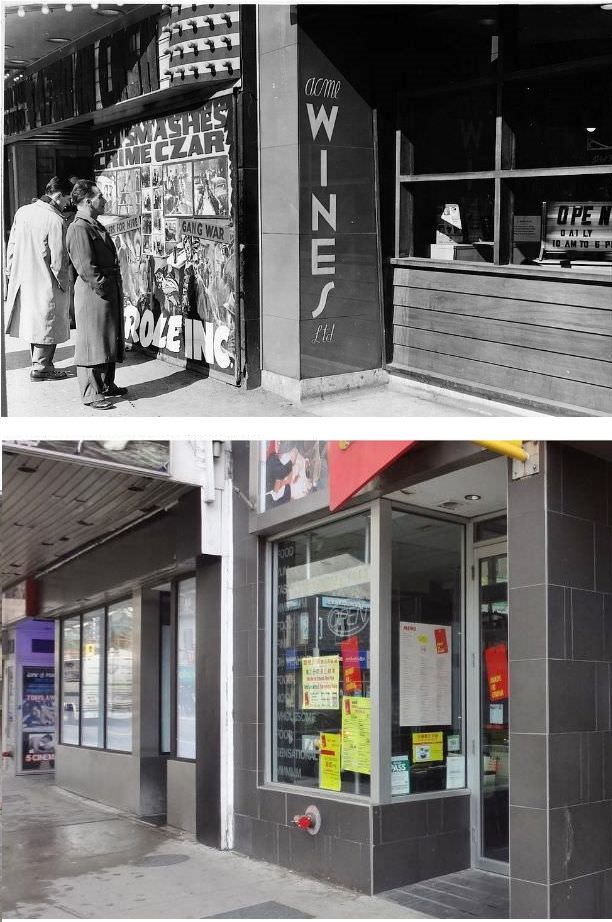
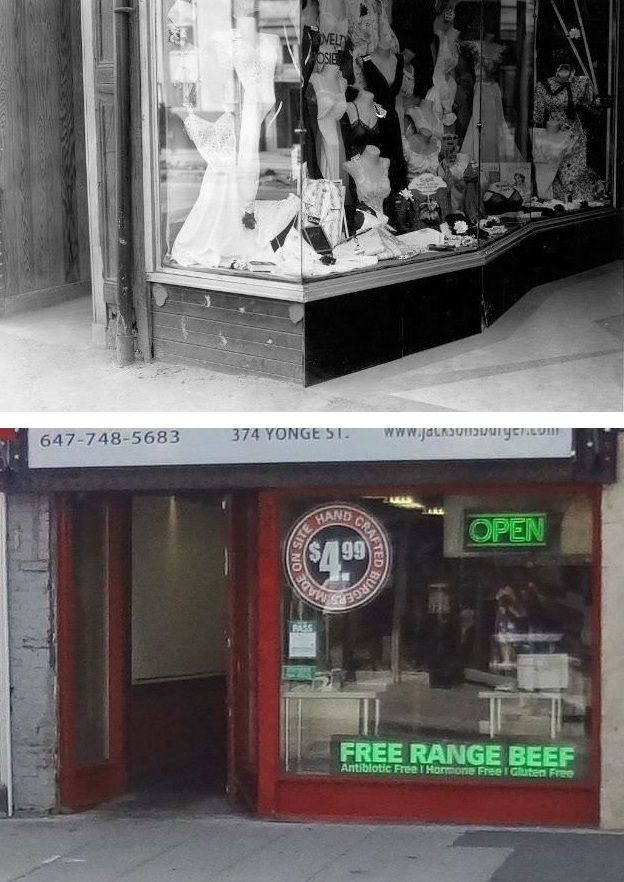
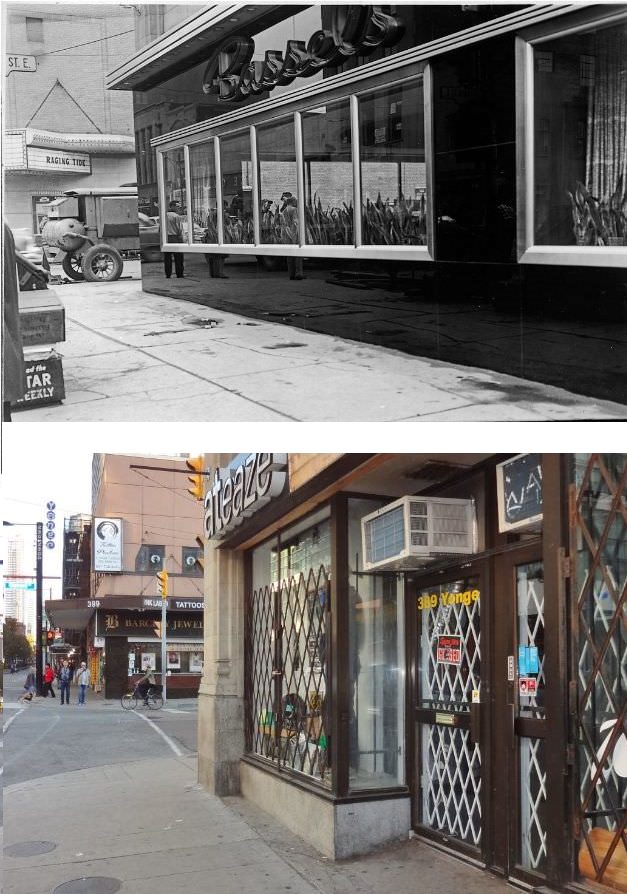
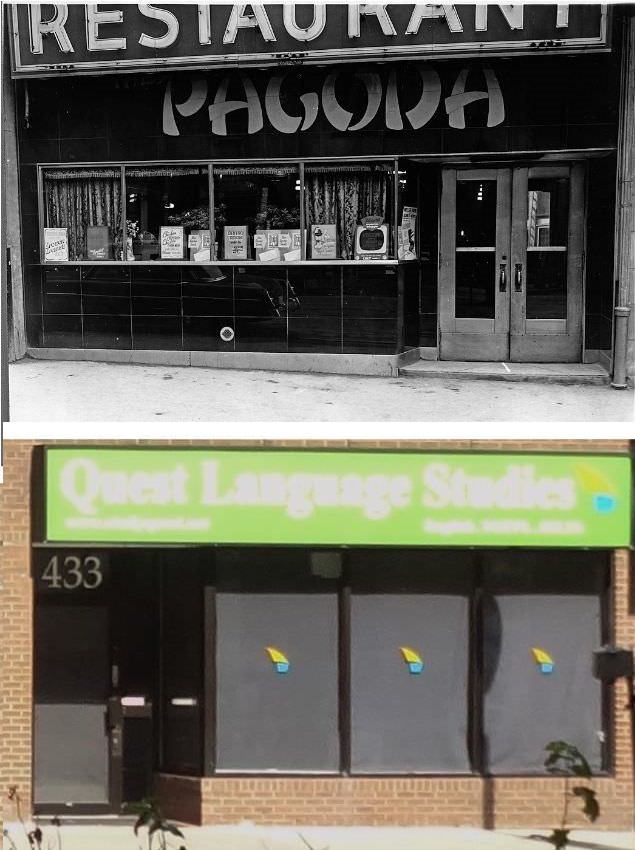
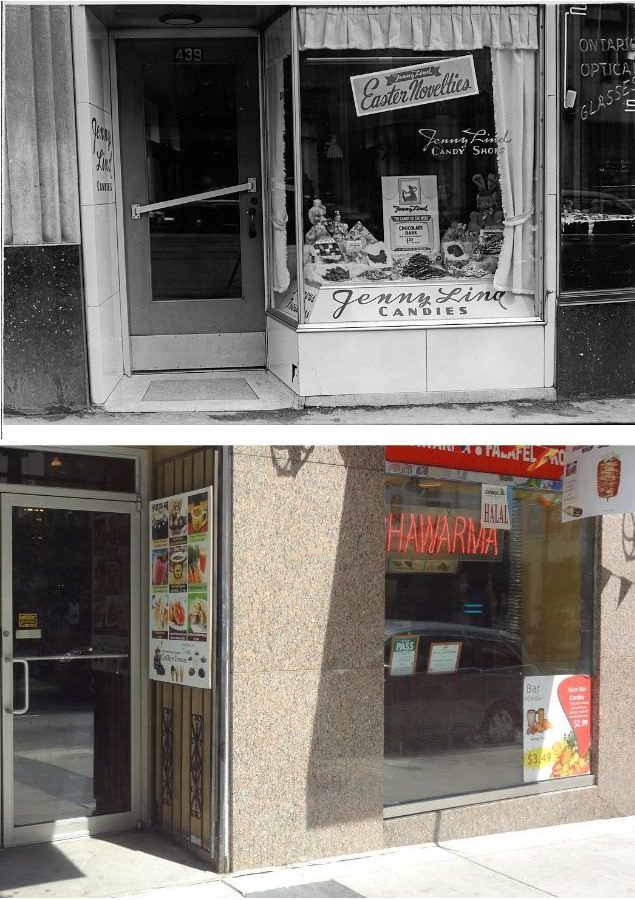
Further north into the 400s, the street character in 1954 began to shift slightly, with some larger lot frontages and a mix of uses that included service businesses and food establishments common to the postwar era. These addresses at 433, 439A, 462, and 478 round out the photographic record and show the northern reach of this particular comparison.



The exclusive condo lobbies and empty retail spaces are great additions post 2014!
f they have any photos of the firkin on yonge (formally an arcade!), that would be fucking awesome.
Well fuck, it was a jewellery store, then an arcade (no photos of it! SHAME!!), then a firkin pub.
Noticed a few duplicates. Guess they didn’t keep track.
The city has gotten duller since then, which is a shame.
There are a lot of chains and fast food restaurants. All those stand-alone specialty stores must have made window shopping much more interesting.
These are the most boring photos i’ve ever seen
What’s stunning about them?
feel like there could be newer photos than 2014? still quite interesting