
New Orleans was founded in 1718 by French colonists along a bend in the Mississippi River. By the mid-1800s, it had grown into one of the wealthiest cities in the United States, powered by its strategic port and booming trade in cotton, sugar, and other goods. But it was the turn of the 20th century that truly reshaped the city into a modern, industrial metropolis — and these rare photographs capture that transformation in vivid detail.
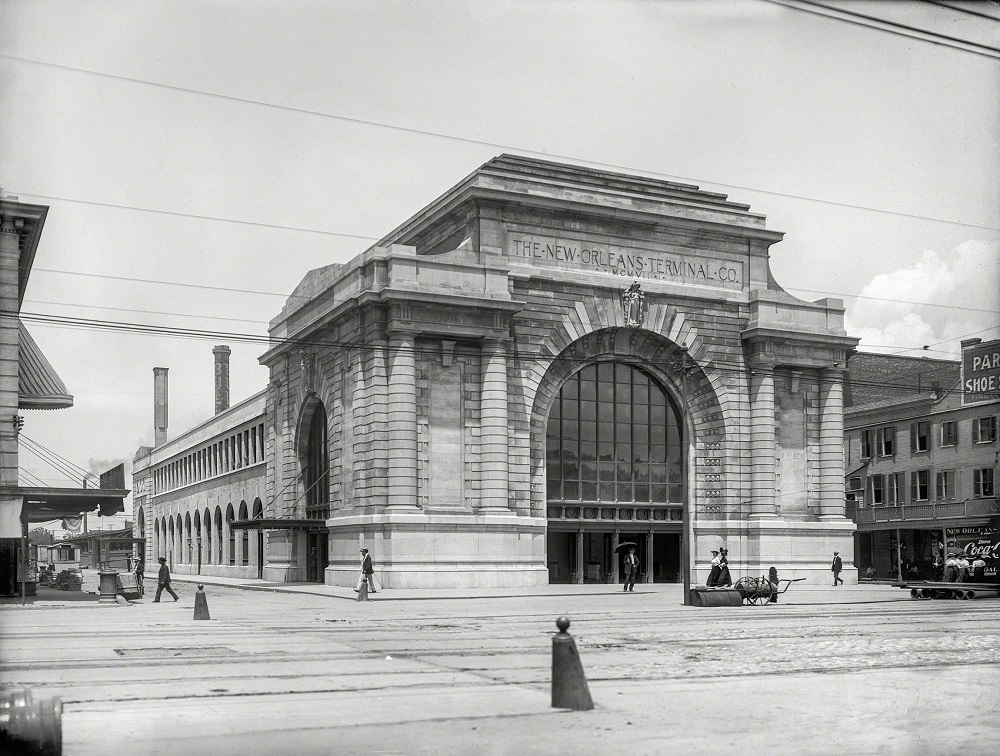
Canal Street served as the commercial spine of New Orleans during this era. Its wide boulevard hosted banks, department stores, transit lines, and some of the city’s most impressive buildings. One of its most recognizable landmarks was the Terminal Station, a major hub for rail passengers arriving into the city.
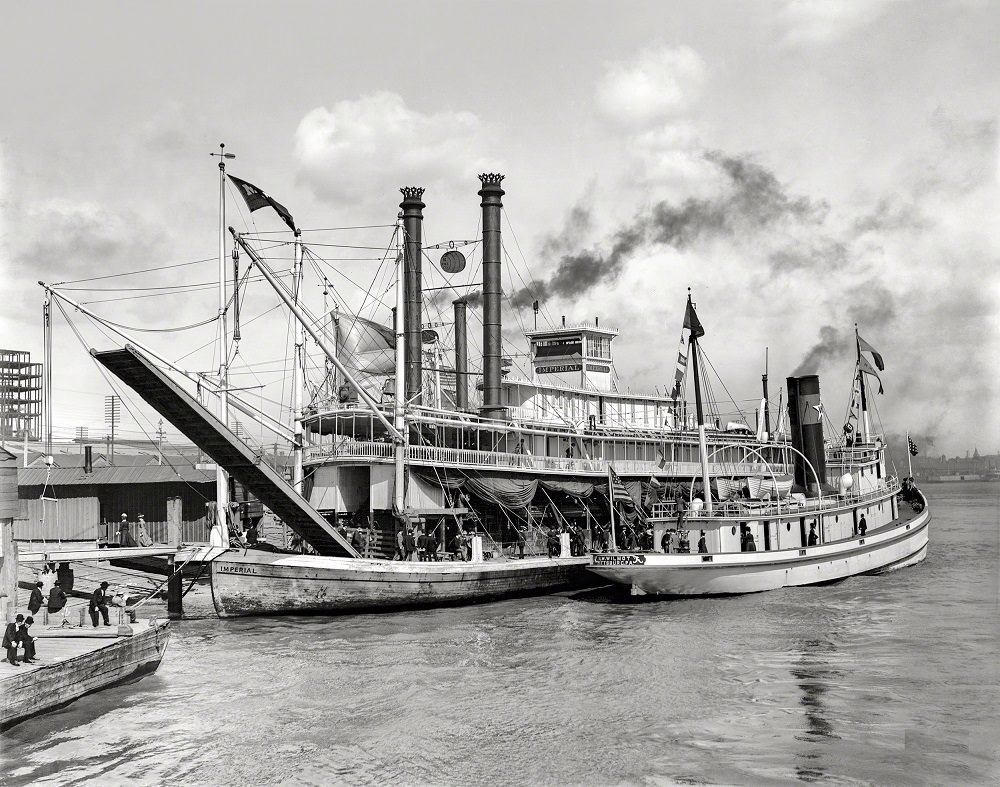
The Mississippi River remained the city’s economic lifeline well into the 1900s. Steamboats and sternwheelers were still a common sight on the water, carrying freight and passengers up and down the river even as railroads began to take over long-distance trade. The river traffic at New Orleans was among the heaviest in the country.
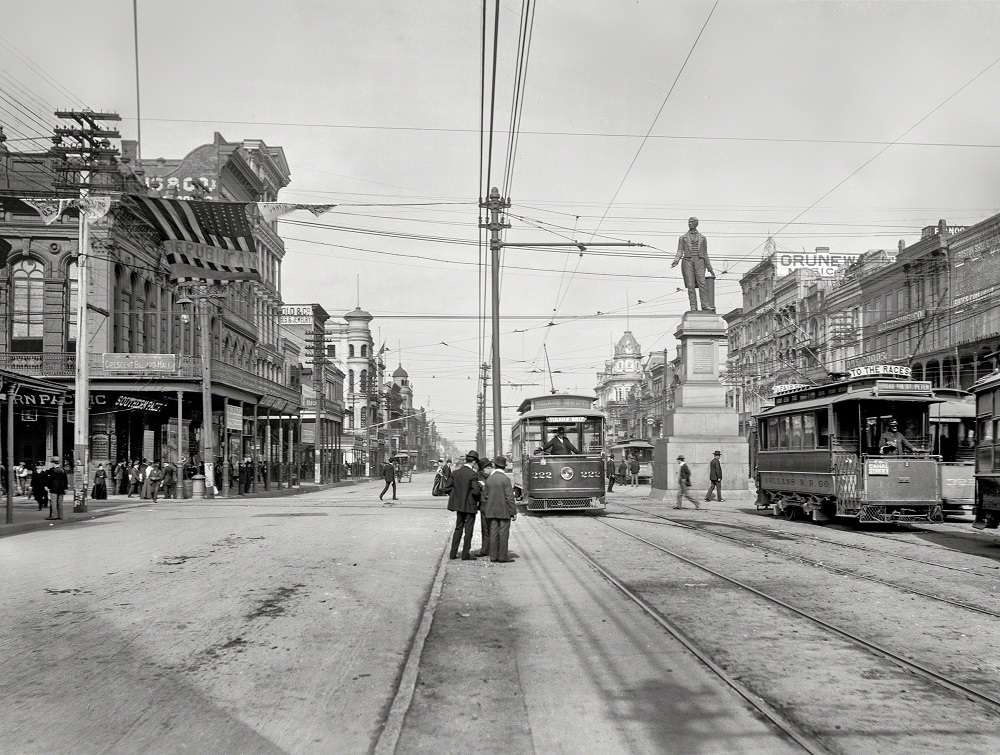
Canal Street was lined with monuments that reflected the city’s deep ties to American political history. The Henry Clay Monument stood as a prominent landmark near the street’s center, honoring the Kentucky statesman who had long been celebrated in the South.
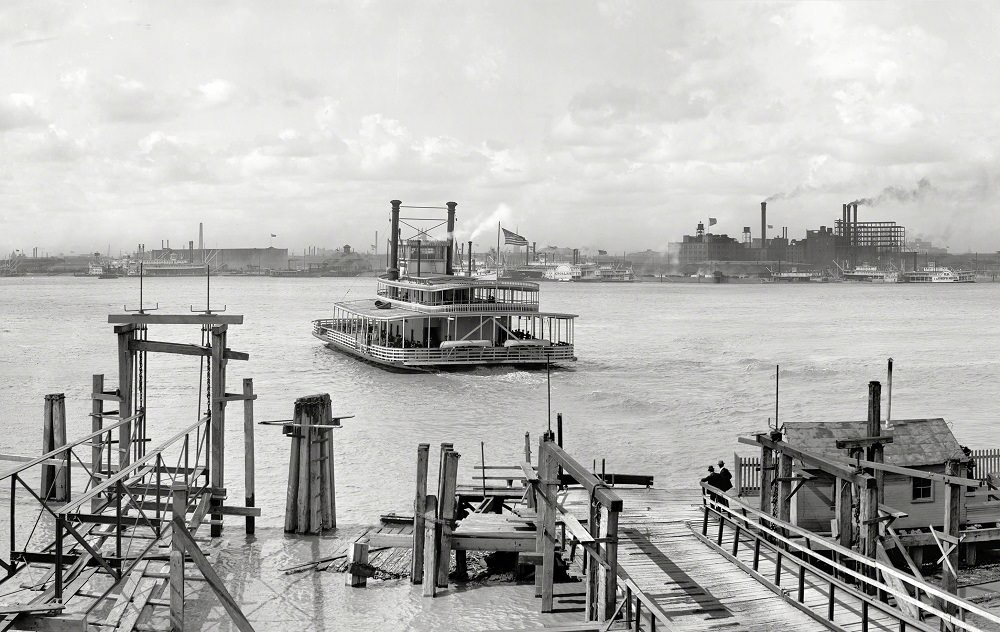
Looking at the city from across the river, from the neighborhood of Algiers, gave observers a sweeping view of New Orleans’ crowded riverfront. Ferry boats like the centerwheel ferry Thomas Pickles carried passengers and cargo back and forth across the Mississippi, connecting the two banks long before bridges were built.
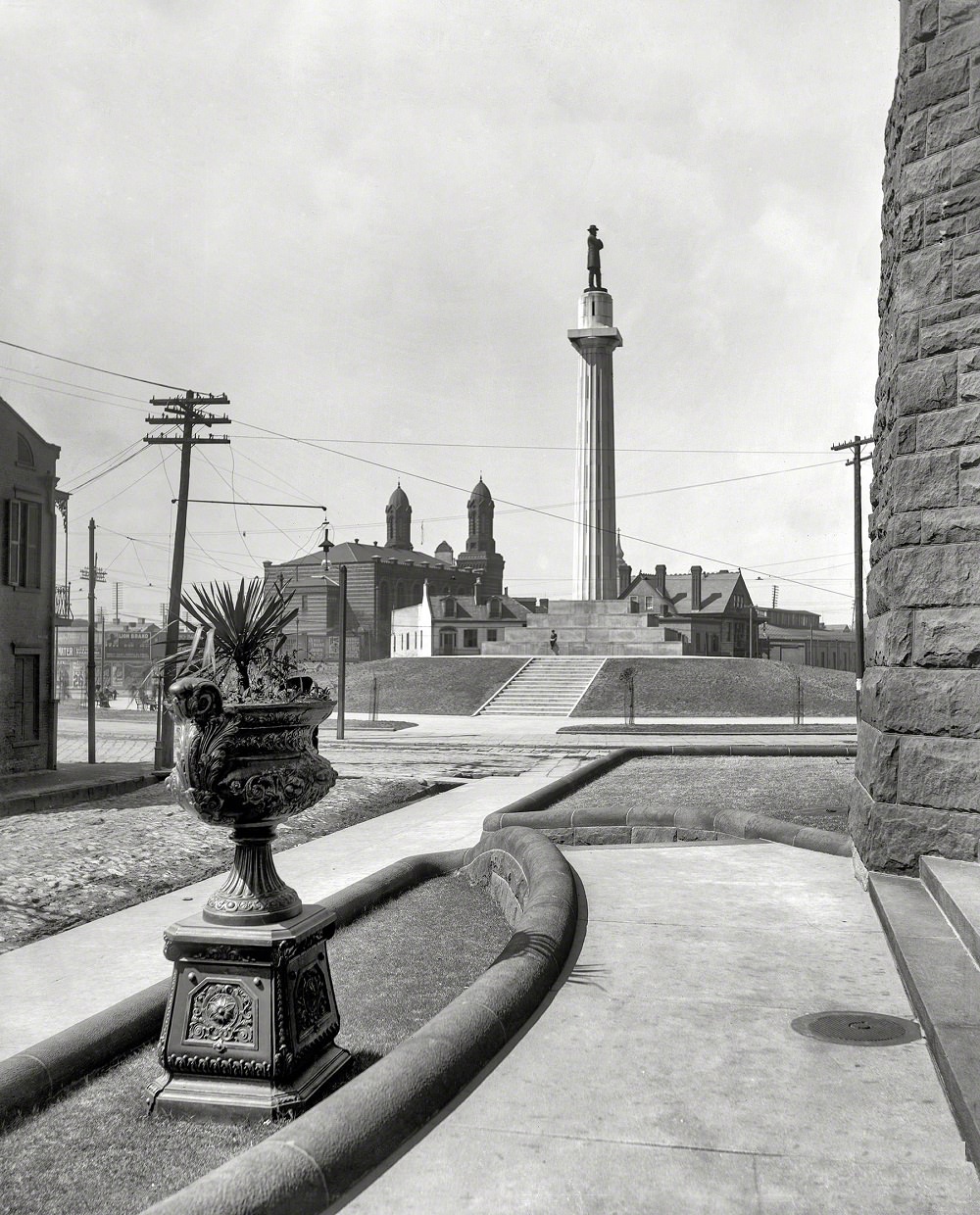
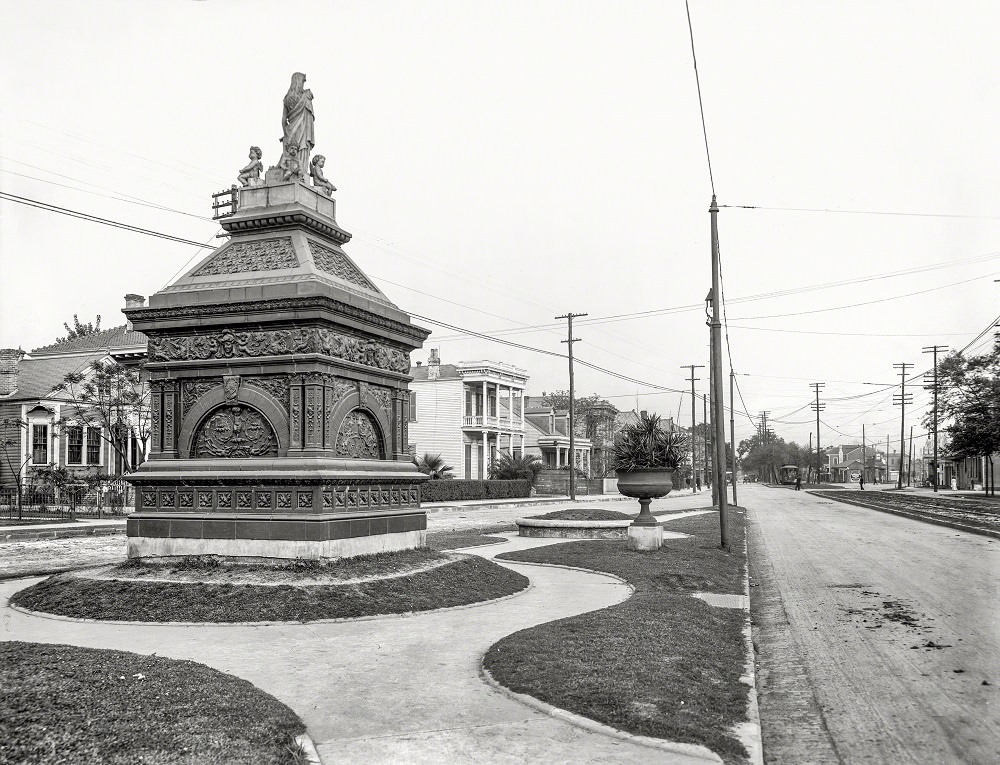
Public monuments were a defining feature of New Orleans’ streetscape. Tivoli Circle on St. Charles Avenue was home to the General Lee Monument, one of several Confederate memorials that marked the city’s public spaces during this period.
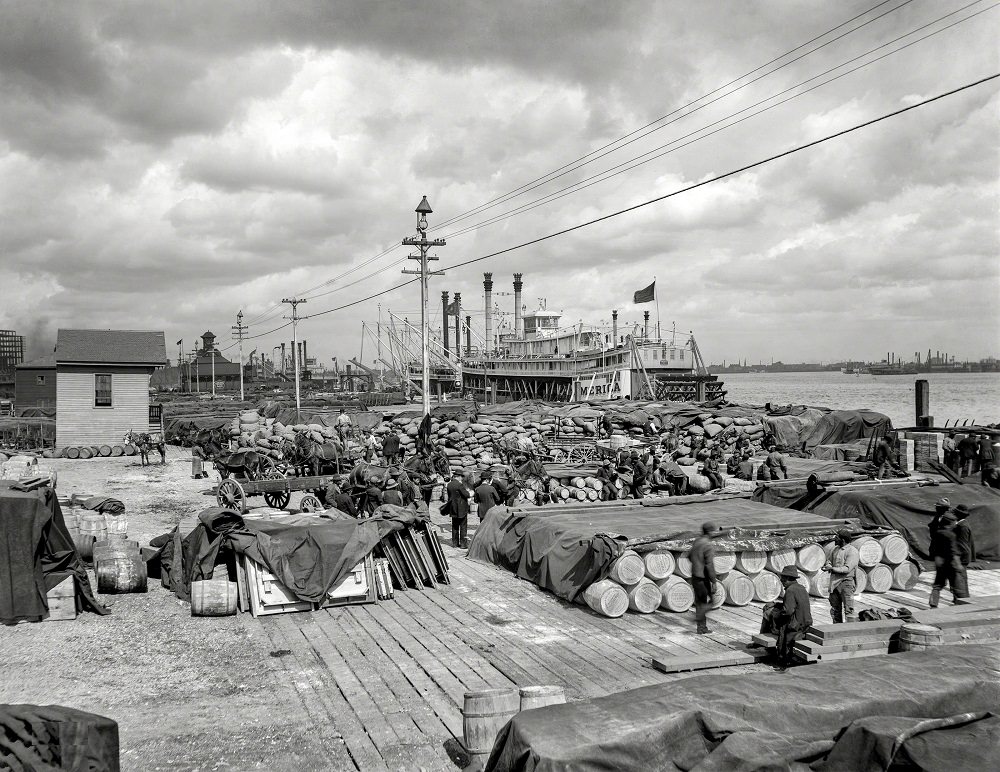
The foot of Canal Street at the river levee was one of the busiest spots in the city. Riverboats docked there constantly, loading and unloading goods that fed New Orleans’ thriving import and export trade. The levee itself was a working landscape — always crowded, always moving.
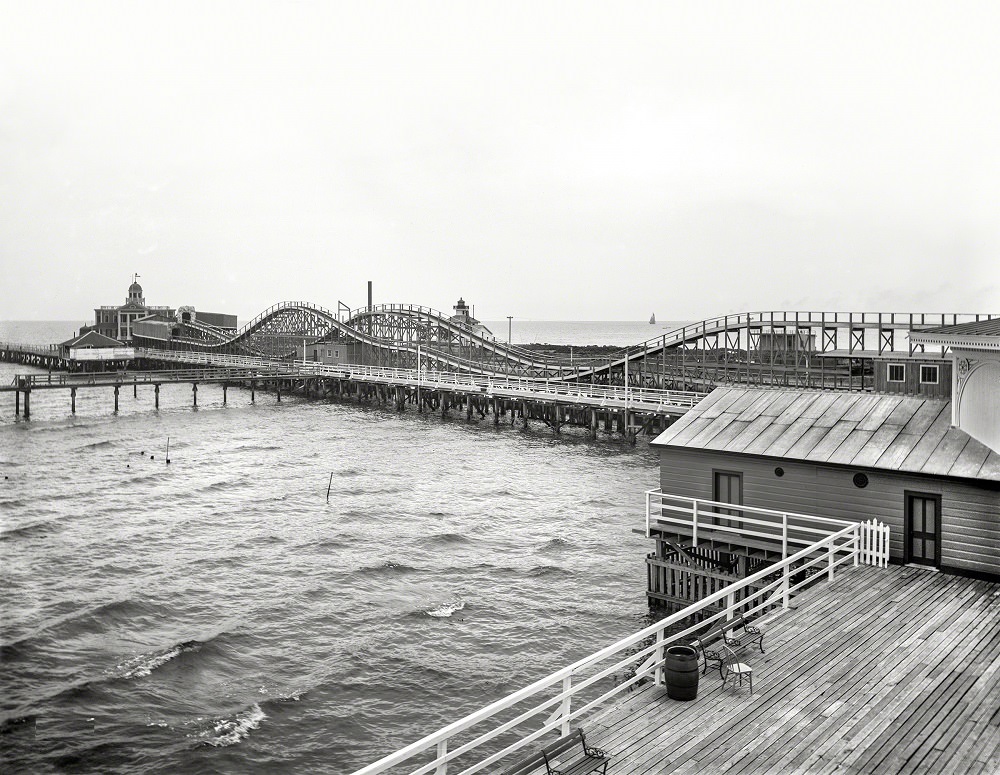
Beyond commerce, New Orleans was also a city that knew how to enjoy itself. Lake Pontchartrain’s West End was a popular recreational destination at the turn of the century, drawing locals to its piers, amusements, and waterfront attractions.
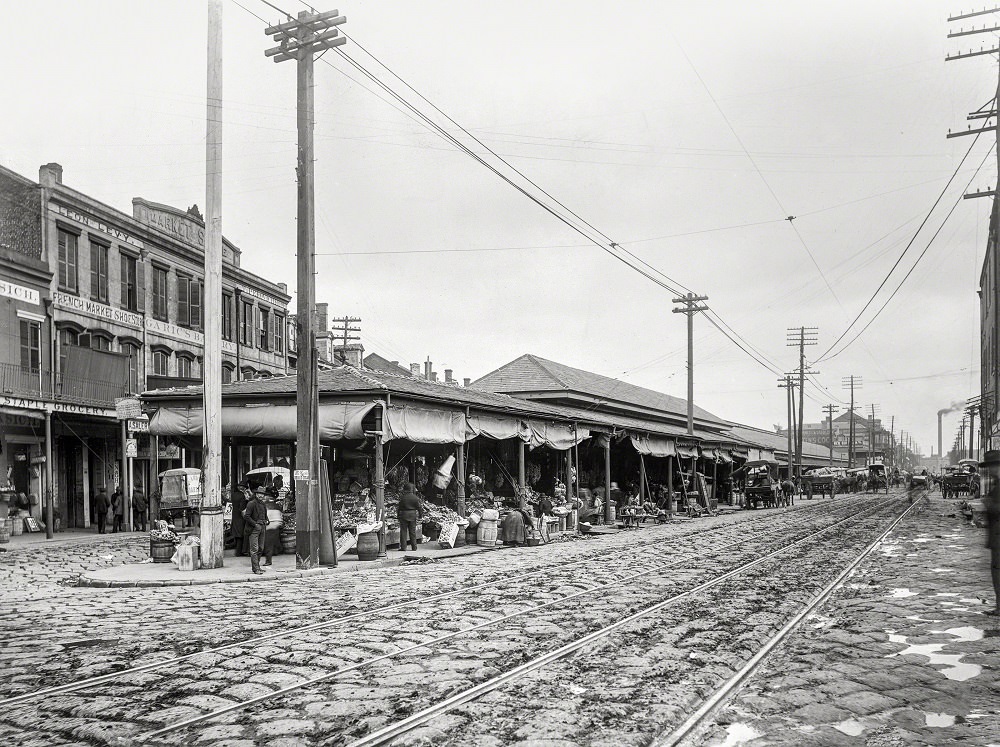
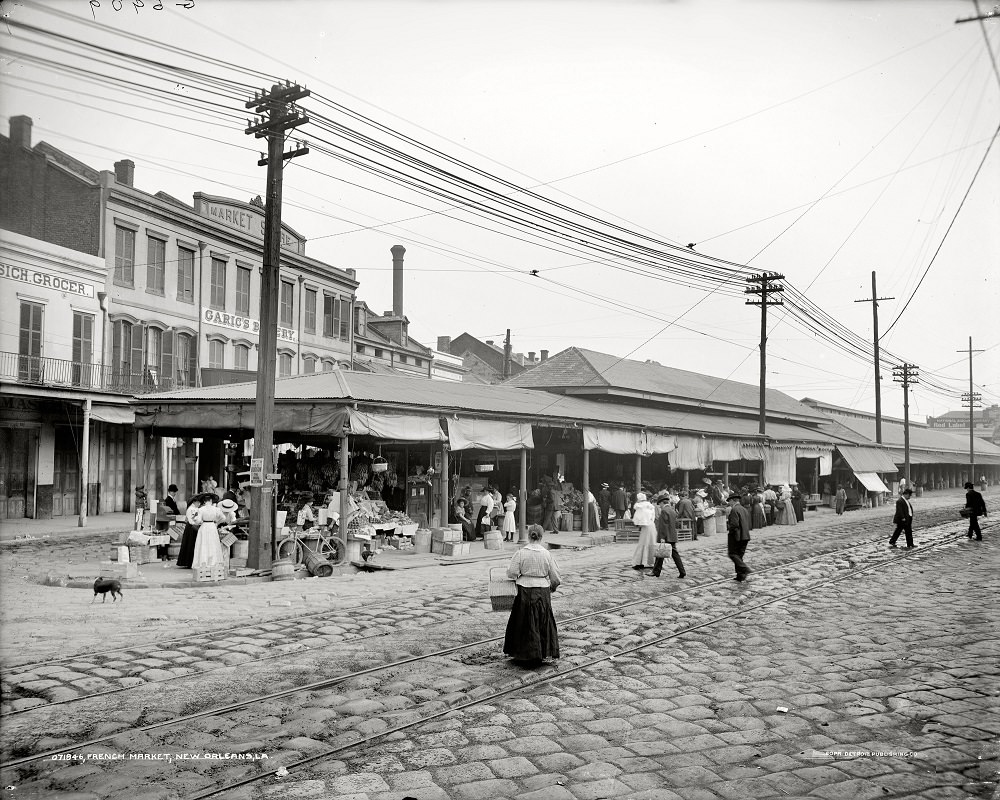
The French Market on Decatur and Peters Streets was one of the oldest public markets in the country. Established during the French colonial period, it remained a daily gathering place for vendors and shoppers well into the 20th century, selling everything from fresh produce to imported goods.
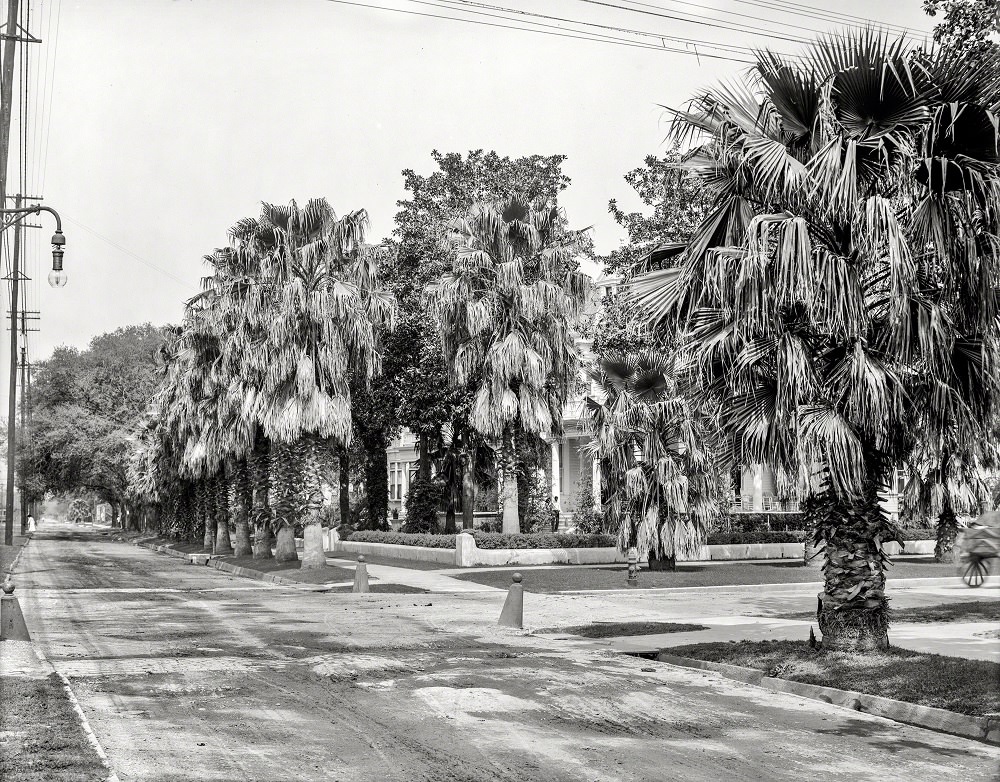
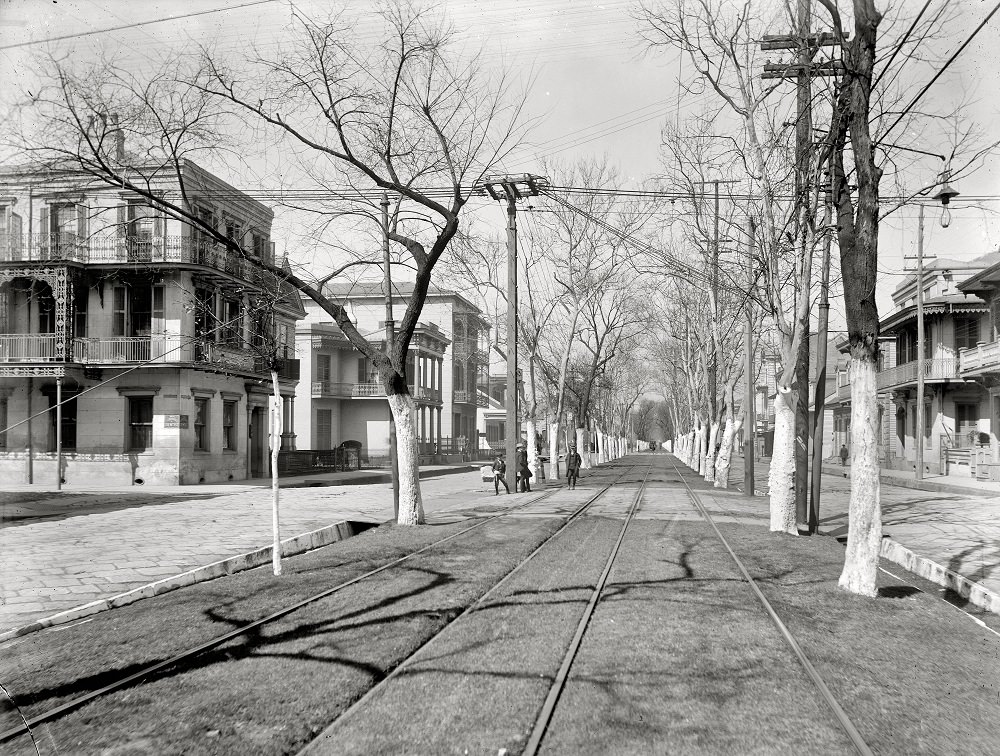
St. Charles Avenue was the city’s grandest boulevard, lined with oak trees, elegant mansions, and the famous St. Charles streetcar line. By 1910, the avenue had become a symbol of New Orleans’ prosperity, drawing both residents and visitors who came to admire its architecture and atmosphere.
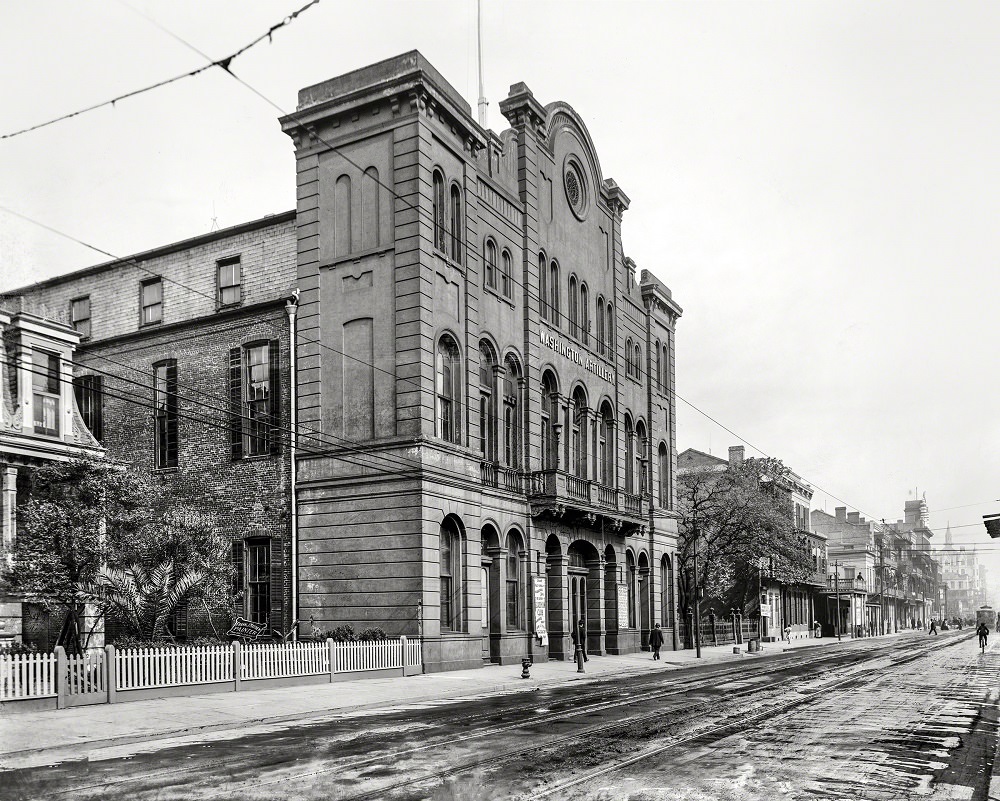
Military and civic organizations maintained a strong presence along St. Charles Avenue. The Washington Artillery Hall was one such institution — home to one of the oldest artillery units in the United States, with roots stretching back before the Civil War.
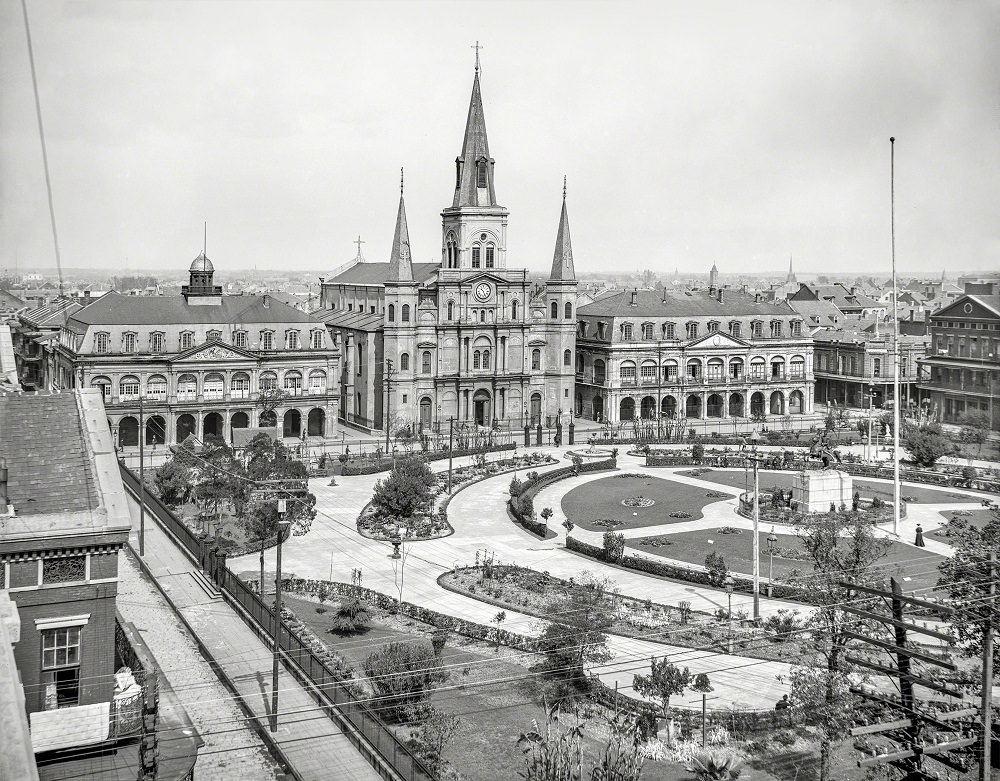
At the heart of the French Quarter stood Jackson Square and St. Louis Cathedral, two of the most recognizable landmarks in the city. The cathedral, built in the 18th century and reconstructed multiple times, dominated the square’s skyline and served as the center of Catholic life in New Orleans.
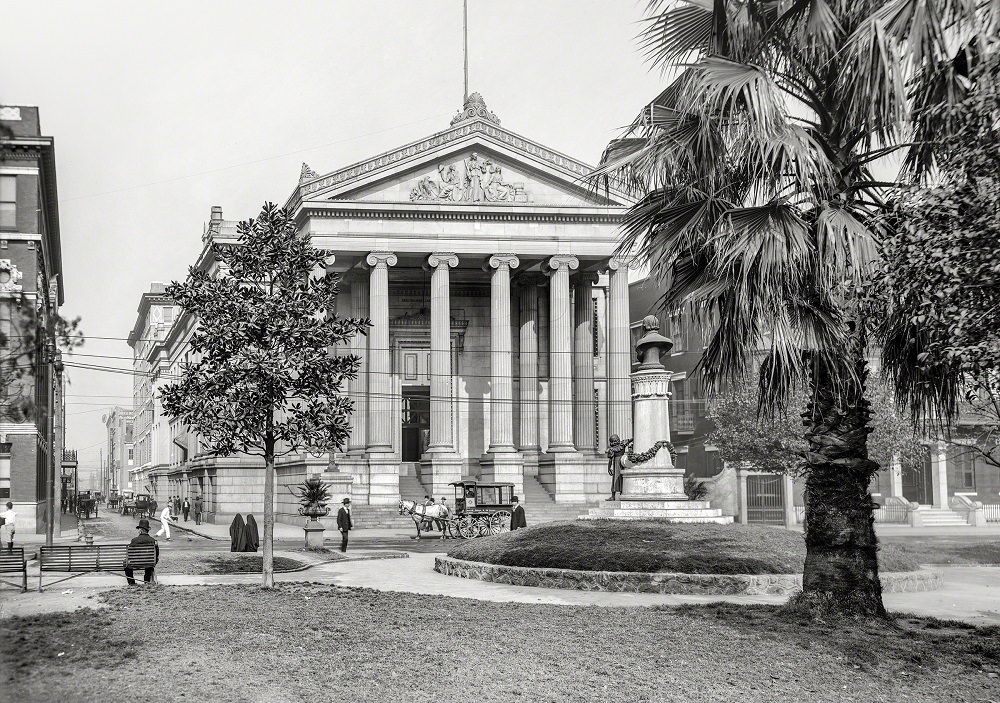
City Hall, located on Lafayette Square, was the seat of New Orleans’ municipal government during this period. The Greek Revival building projected authority and permanence in a city that was rapidly modernizing. Lafayette Square itself served as a public green space in the heart of the business district.
Esplanade Avenue was one of the city’s most distinguished residential streets, running from the French Quarter toward the lakefront. Gayarre Place, a landscaped median along the avenue, featured a monument honoring Charles Gayarré, a Louisiana historian and writer.
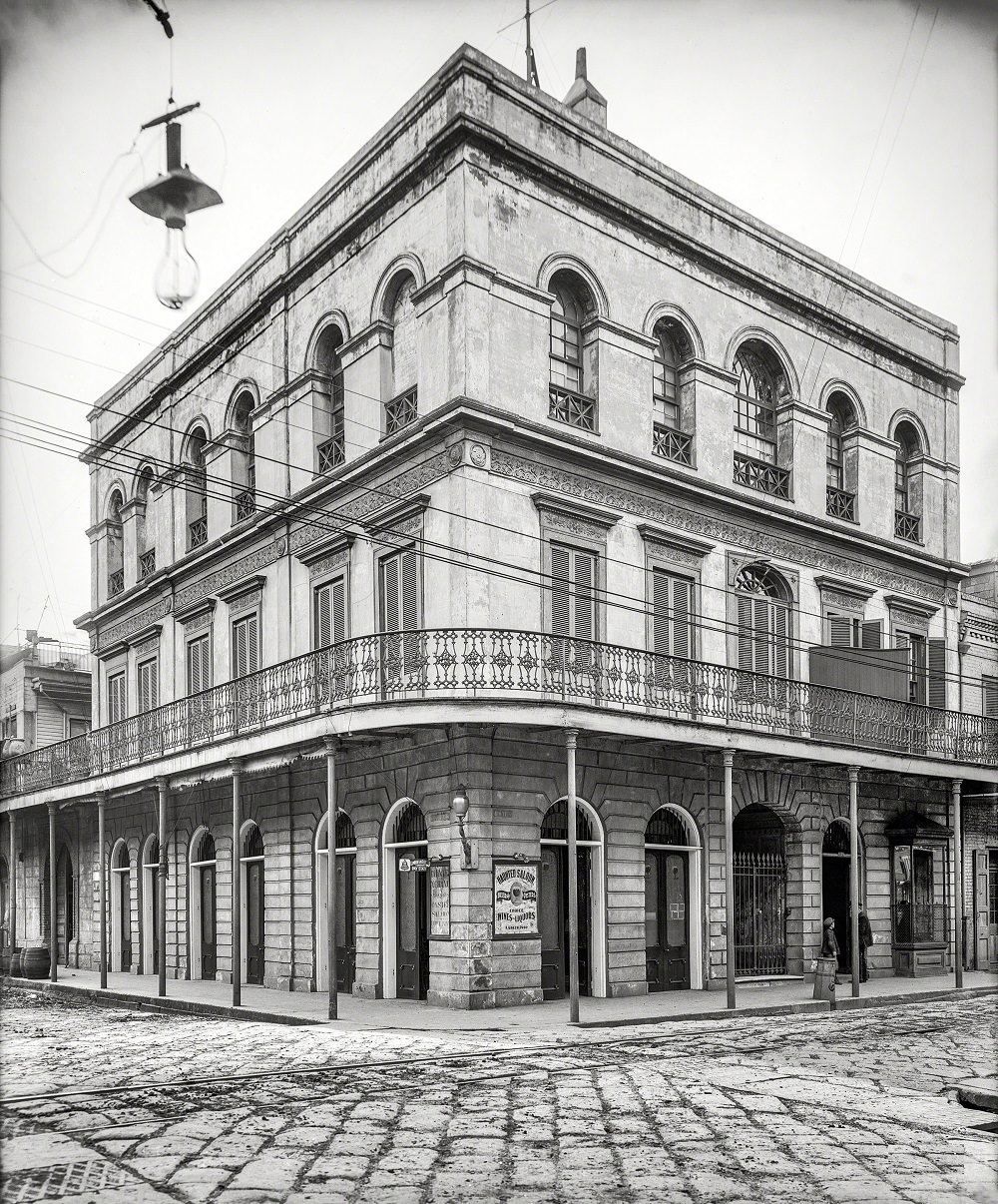
The French Quarter was full of buildings with long, layered histories. The Warrington House on Royal and Hospital Streets was known locally as the Haunted House — a name tied to the building’s dark past and the legends that had attached themselves to it over the decades.
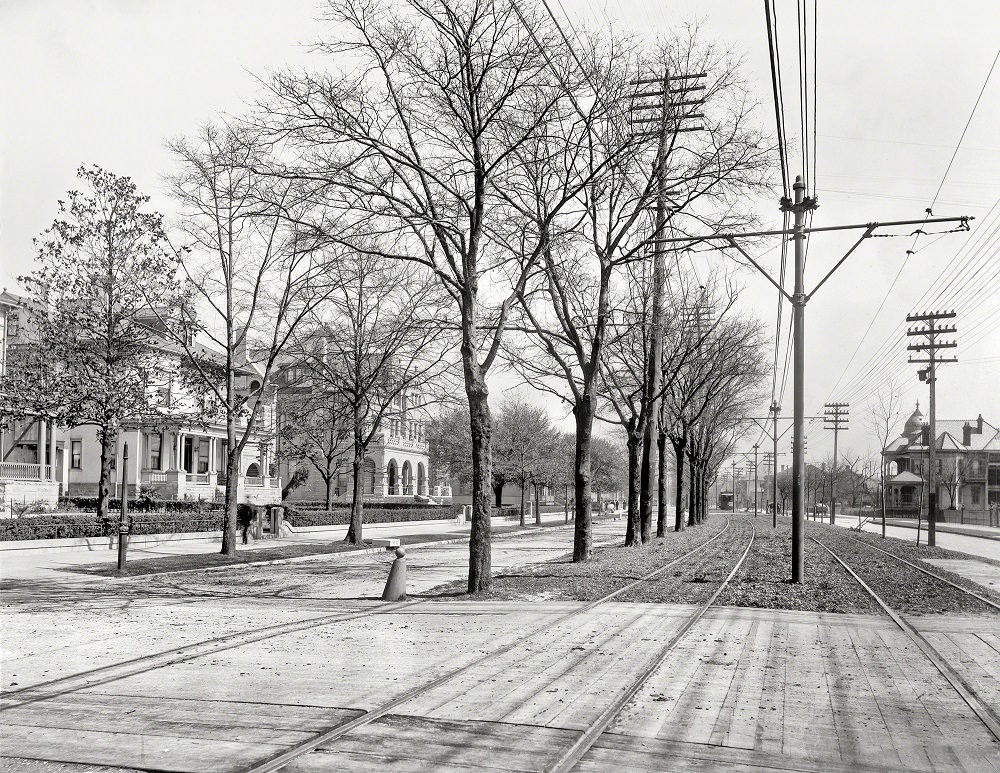
St. Charles Avenue looked markedly different in 1900 compared to just a decade later. The streetcar line that ran its length was already electrified by this point, replacing the old mule-drawn cars and giving the avenue a more modern character even as its grand homes retained their 19th-century charm.
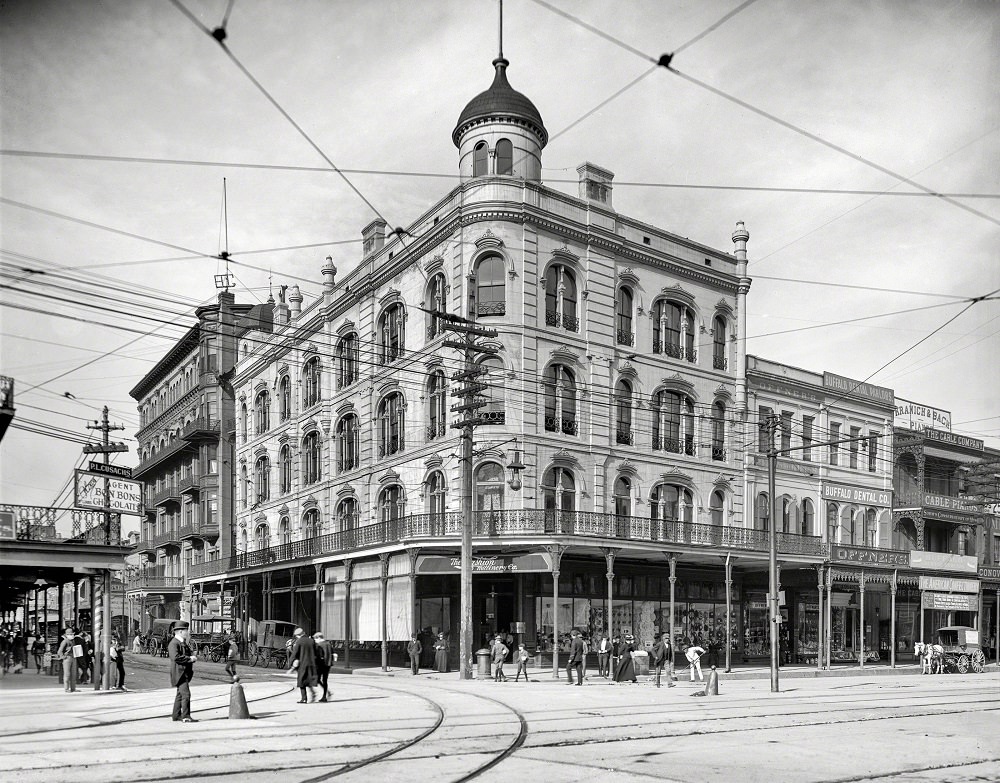
Social clubs played an important role in New Orleans life during the early 1900s. The Chess, Checkers and Whist Club at Canal and Baronne Streets was one of the city’s more notable gathering spots, where men of the upper and middle classes spent leisure hours in games and conversation.
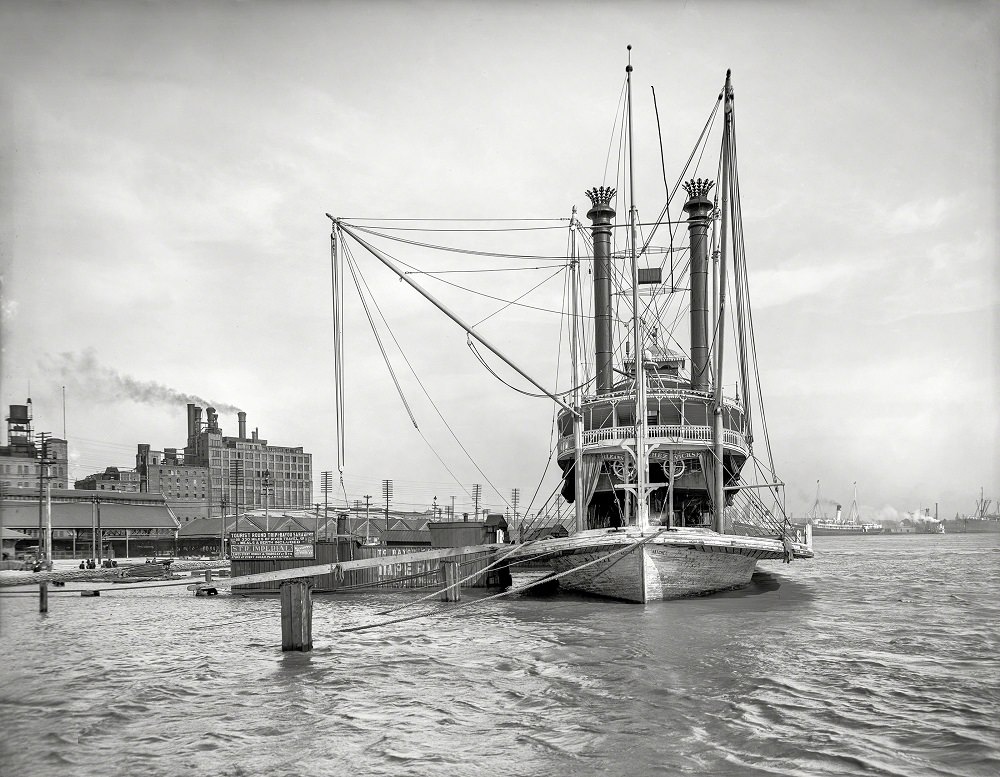
Steam-powered packet boats remained active on the Mississippi well into the early 1900s, carrying both cargo and passengers along the river’s many routes. The steamer Natchez was a well-known vessel on the New Orleans waterfront, representing an era of river travel that was slowly giving way to rail.
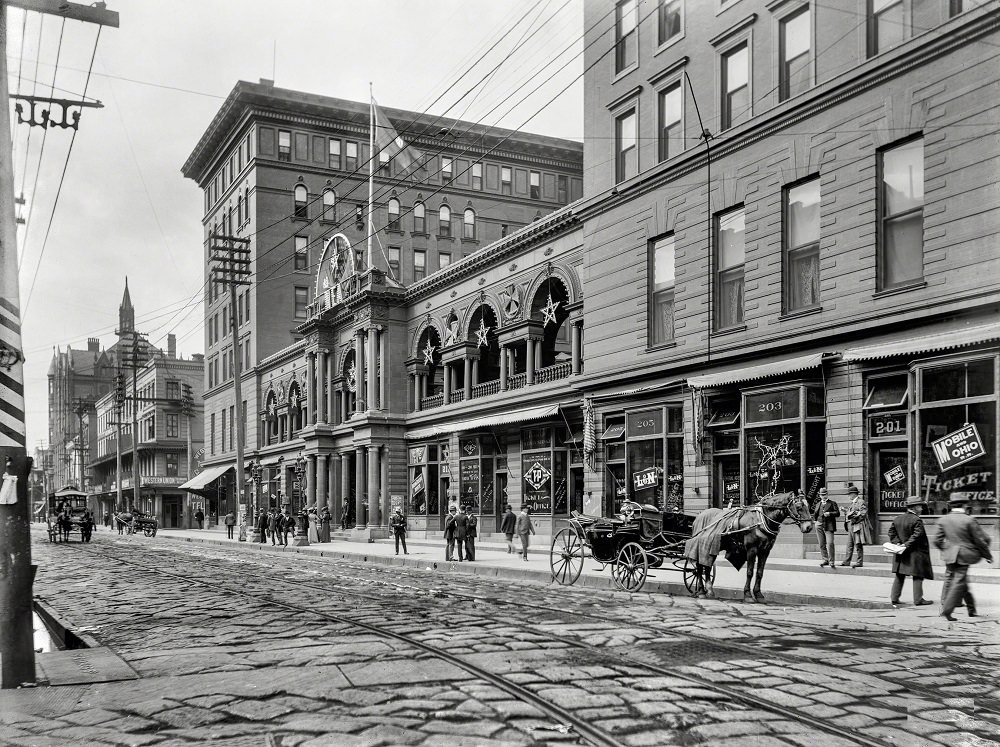
The St. Charles Hotel on St. Charles Street was one of the finest hotels in the South at the turn of the century. It hosted politicians, businessmen, and celebrities passing through the city, and its grand facade made it a defining feature of the neighborhood.
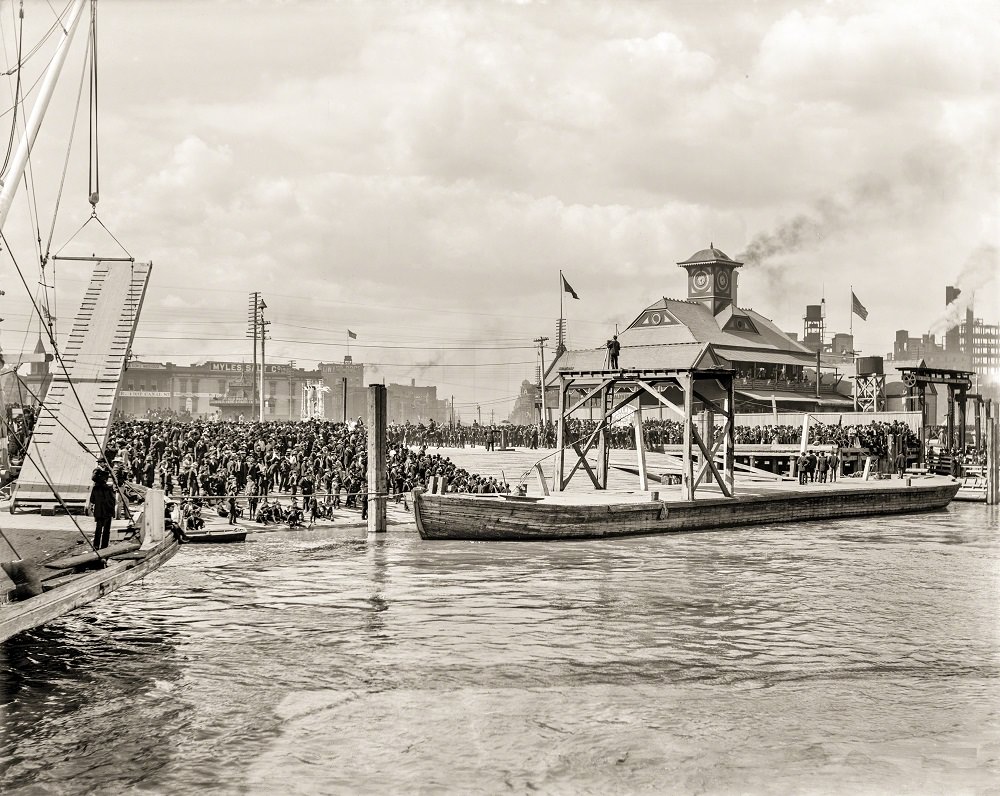
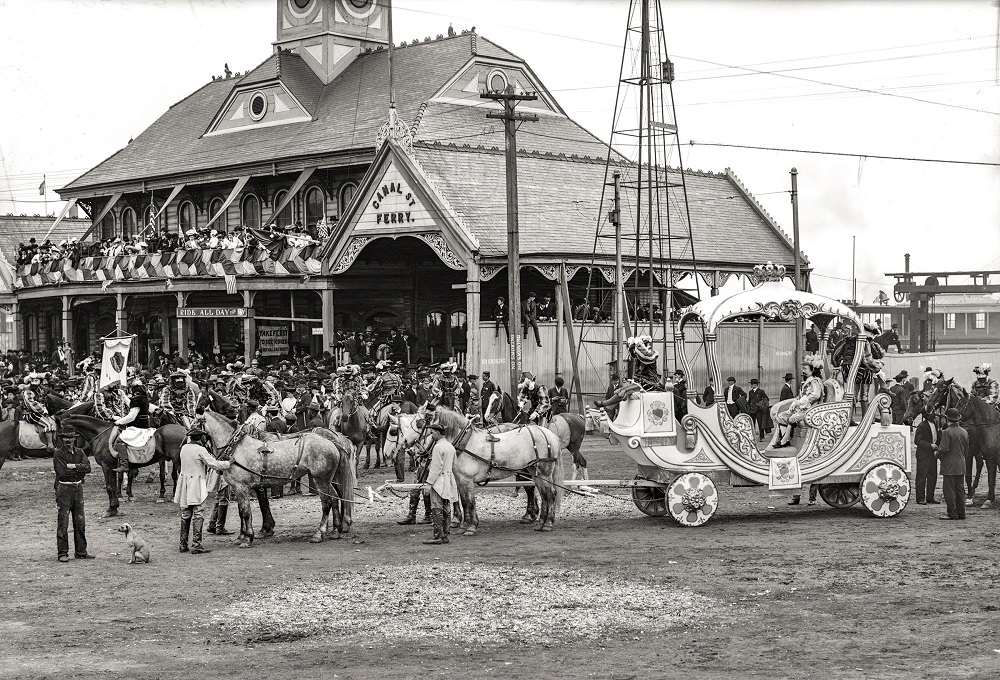
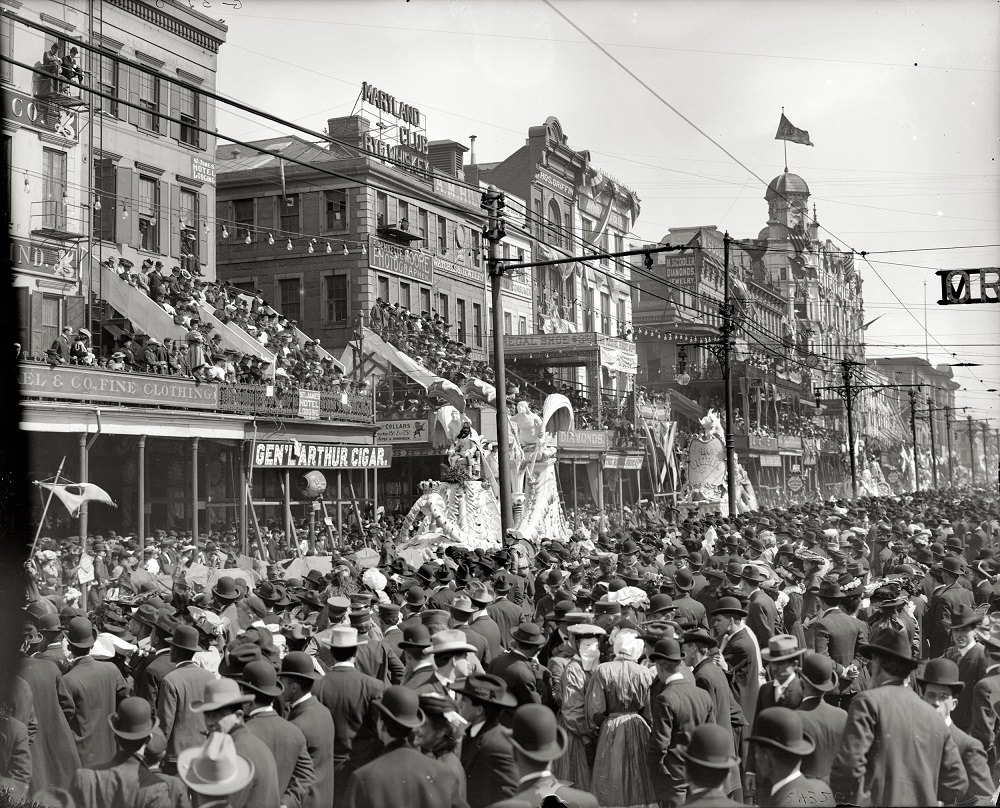
Mardi Gras was already one of New Orleans’ most celebrated traditions by 1900. The festival drew enormous crowds to the streets and riverfront, with parades, costumes, and street celebrations that reflected the city’s unique blend of French, Spanish, African, and American cultures.
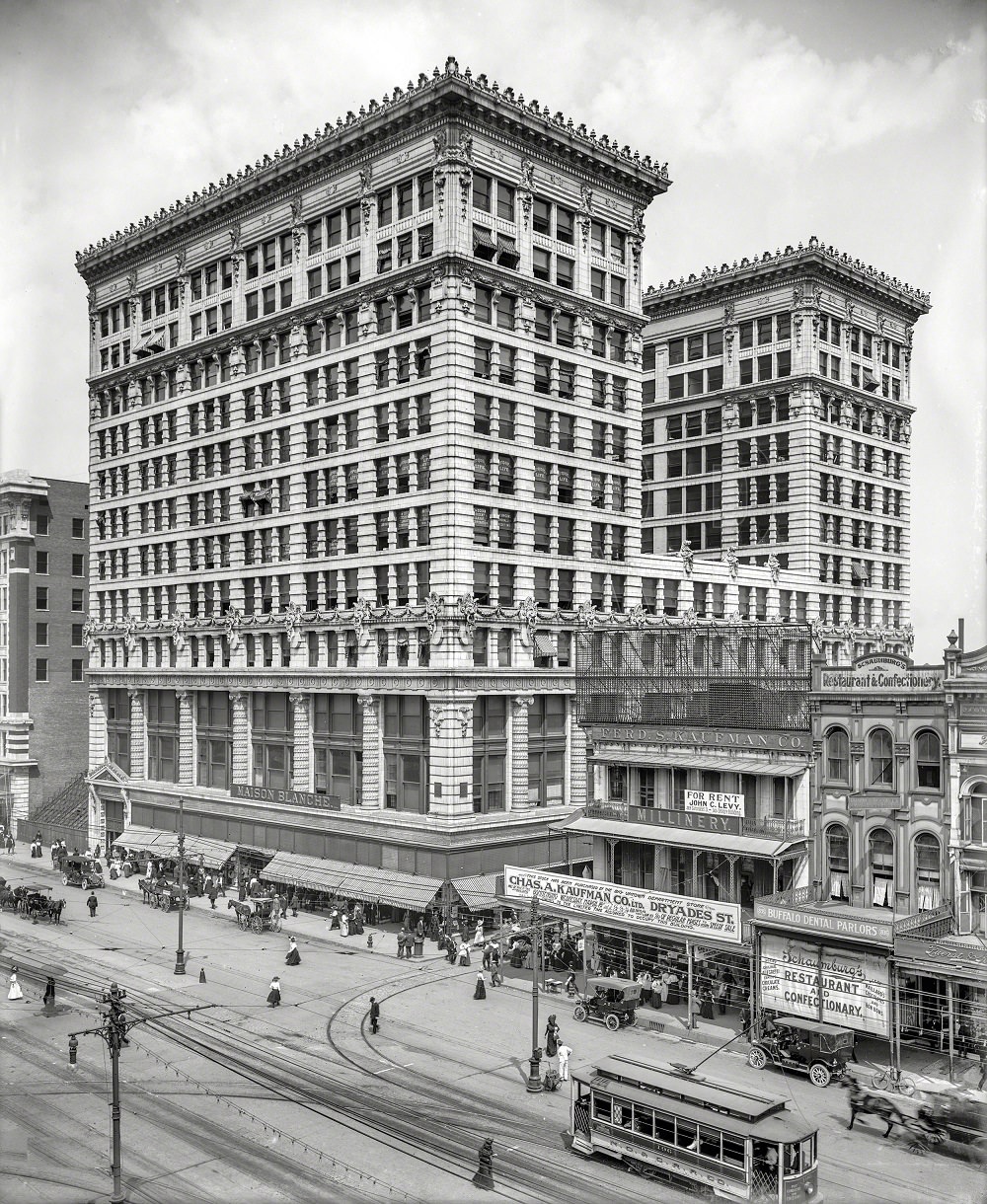
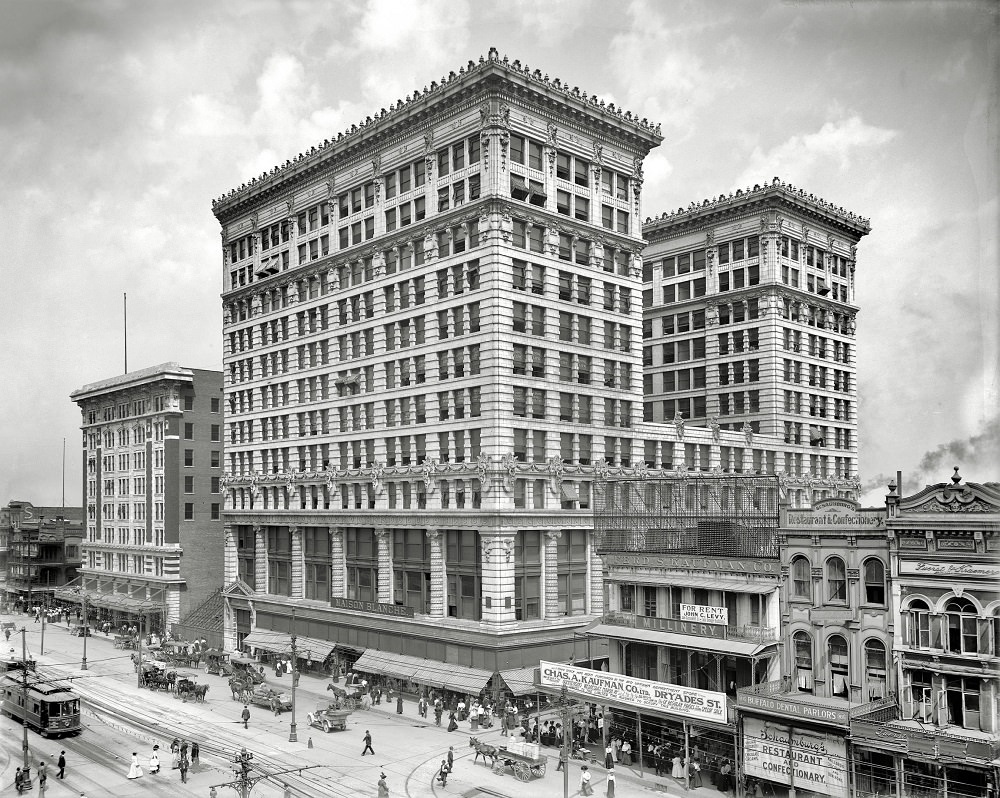
Canal Street was also home to some of New Orleans’ most prominent department stores. Maison Blanche was one of the city’s leading retailers, and its building on Canal Street became one of the most recognized commercial facades in the city by the early 1910s.
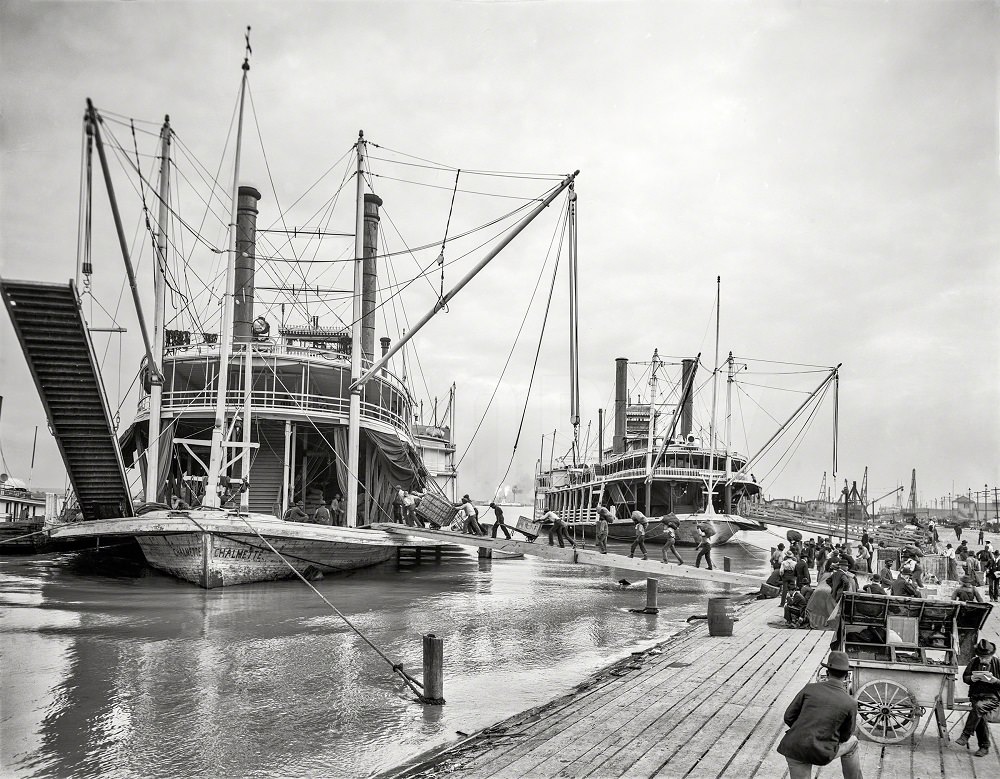
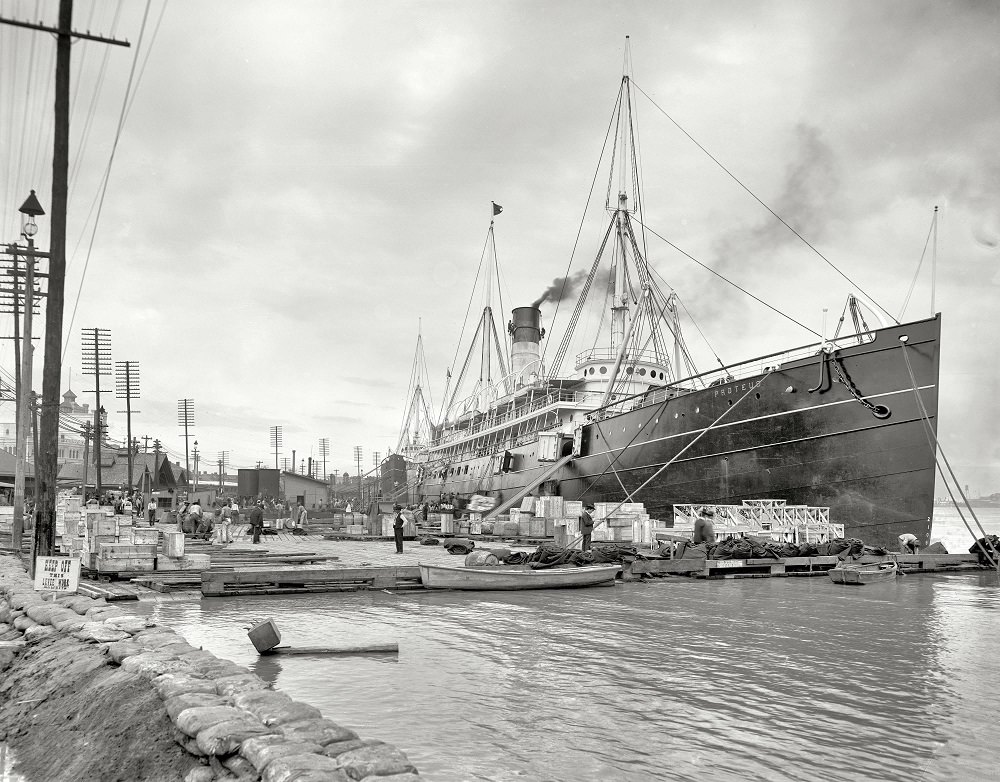
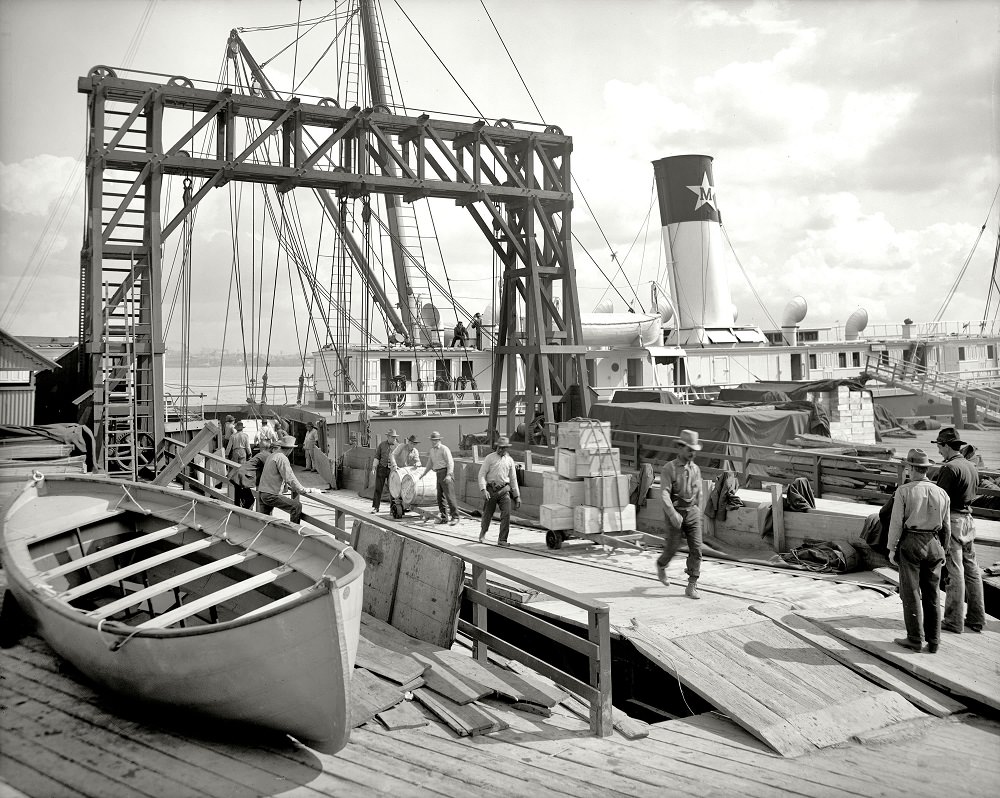
High water was a recurring challenge on the New Orleans waterfront. In March 1903, the Mississippi River ran high enough to complicate loading operations, as workers and crew managed to get the steamer Chalmette loaded despite the difficult conditions.
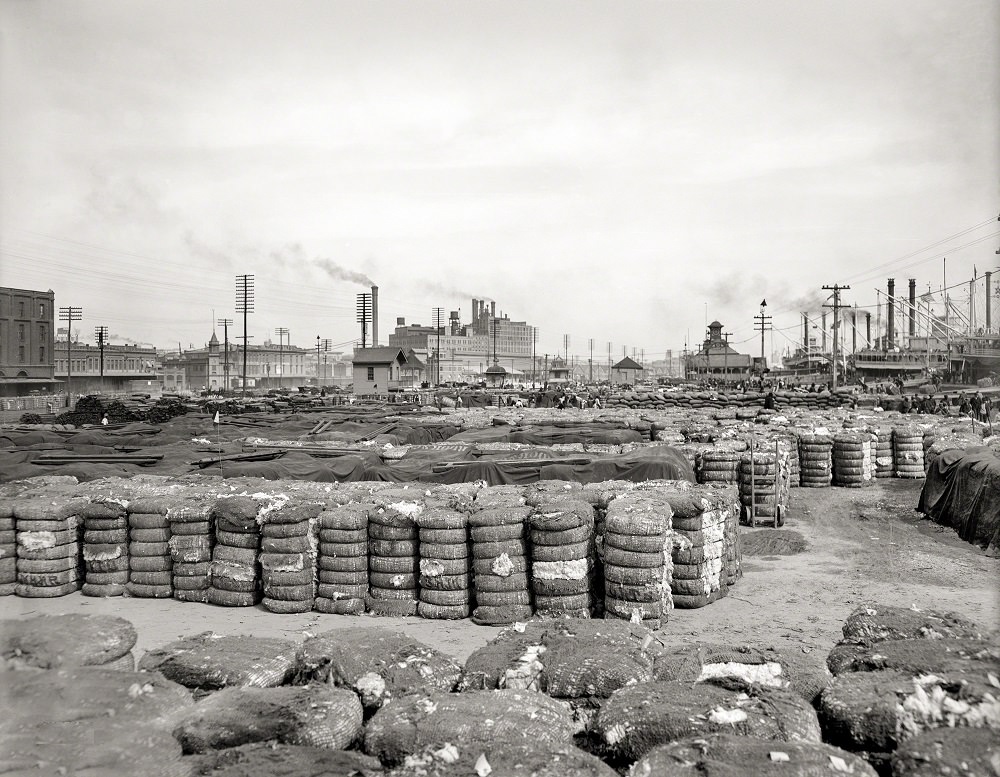
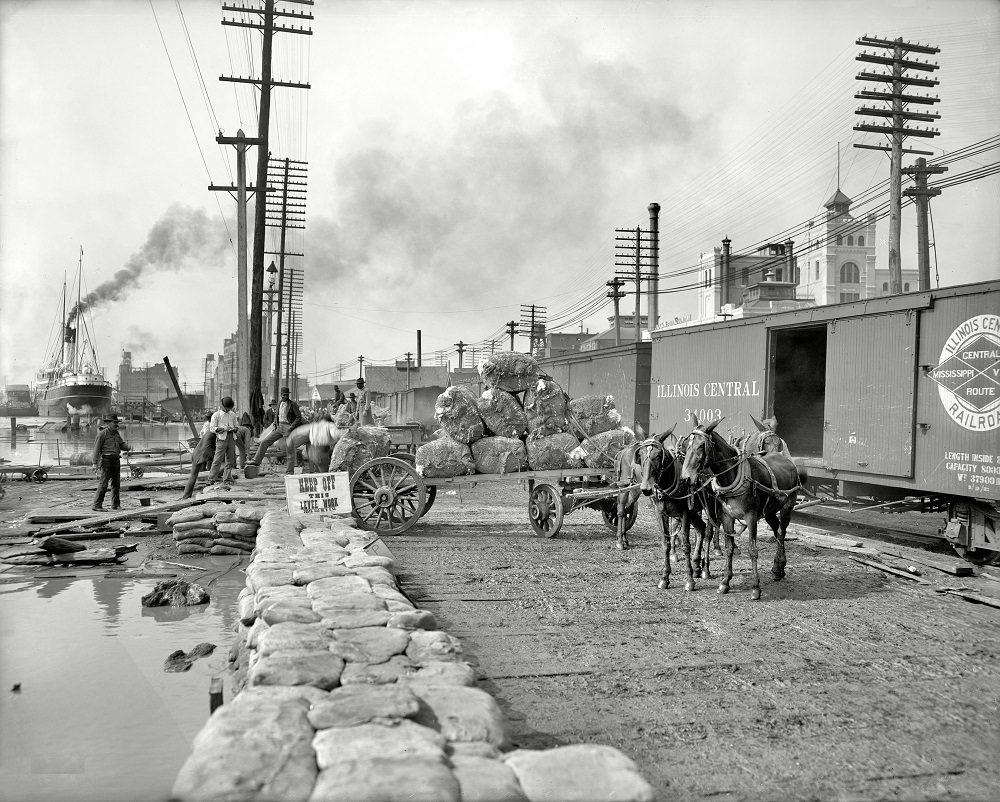
Cotton was still a dominant commodity on the New Orleans levee in the early 1900s. Bales stacked high along the riverbank waited to be loaded onto steamers bound for domestic and international markets. The cotton trade had defined New Orleans’ economy for nearly a century, and it remained central well into the 20th century.
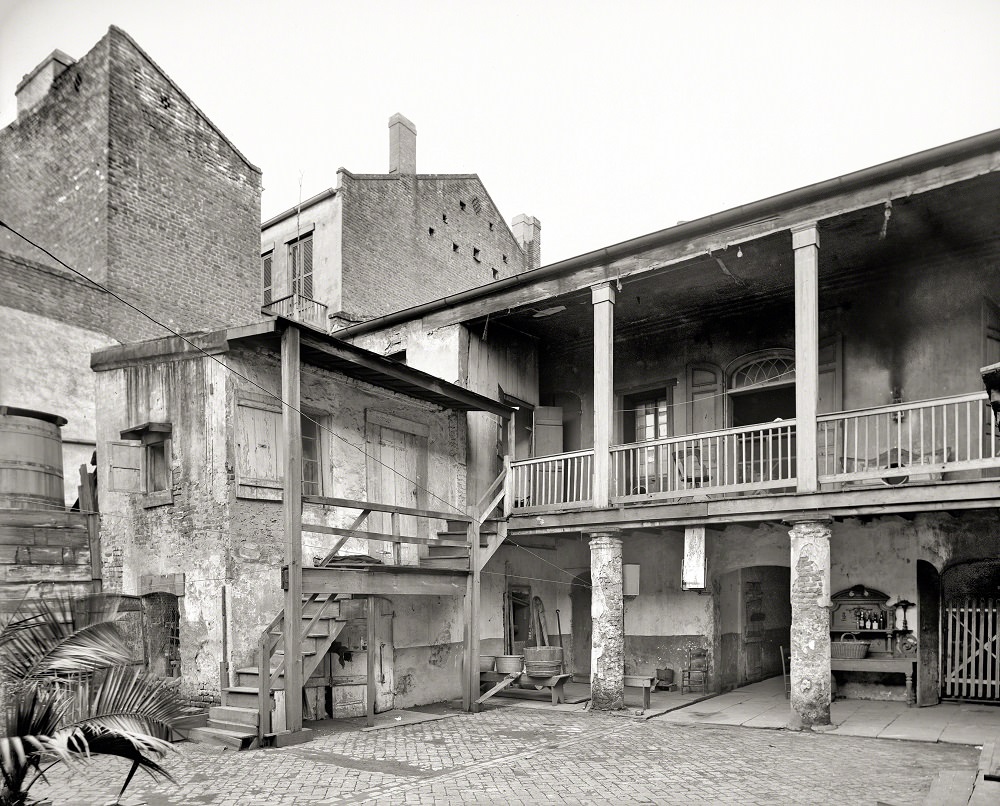
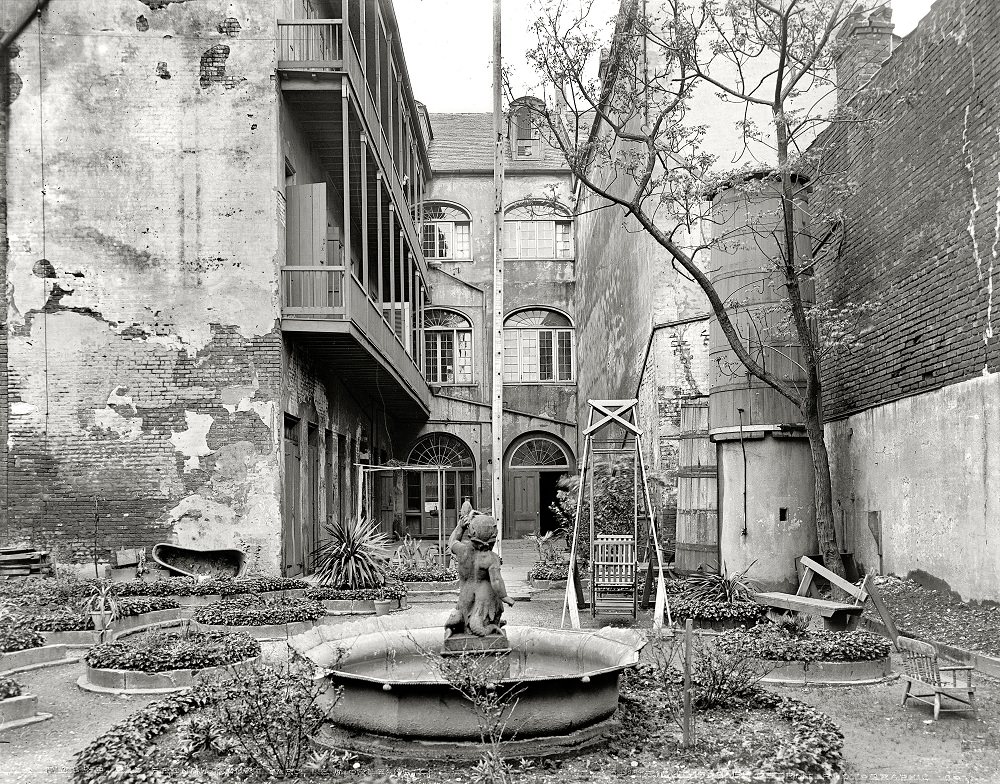
The architecture of the French Quarter contained some of the most distinctive courtyards in the country. These private interior spaces, enclosed by the surrounding buildings, were a hallmark of the Spanish colonial building style that shaped much of the Quarter’s layout. Many remained largely unchanged from the 18th century.
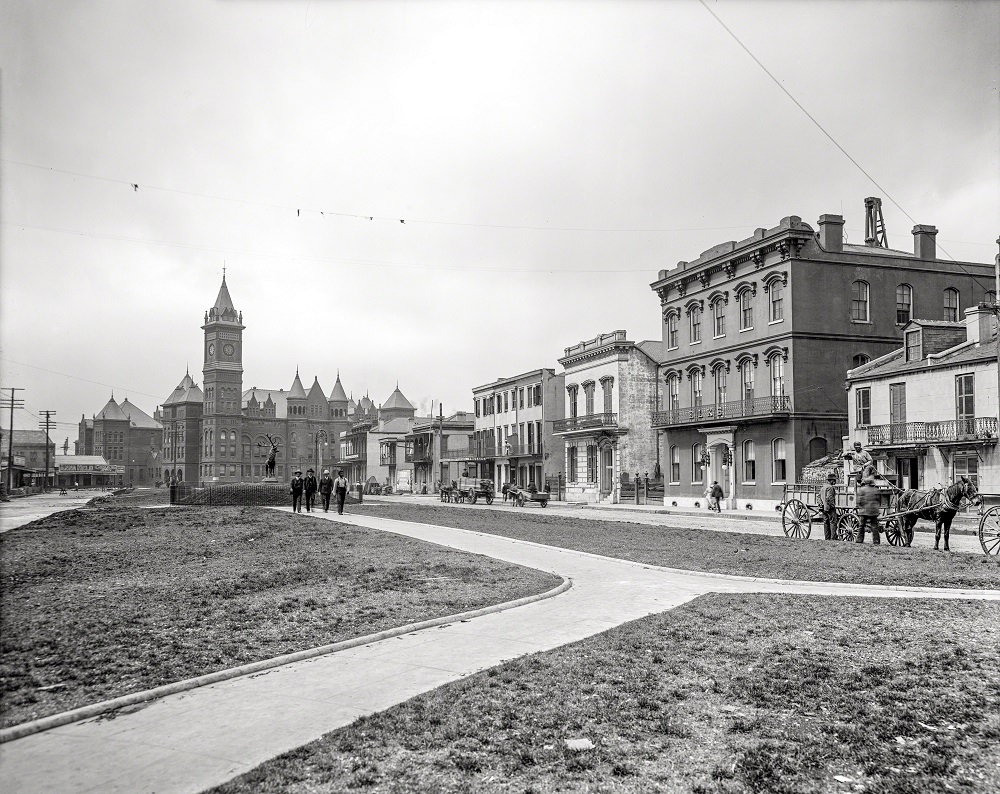
Elks Place was a small but notable public space in New Orleans, named for the Benevolent and Protective Order of Elks, which had a strong local presence. By 1906, the area around it had developed into a busy urban neighborhood on the edge of the central business district.
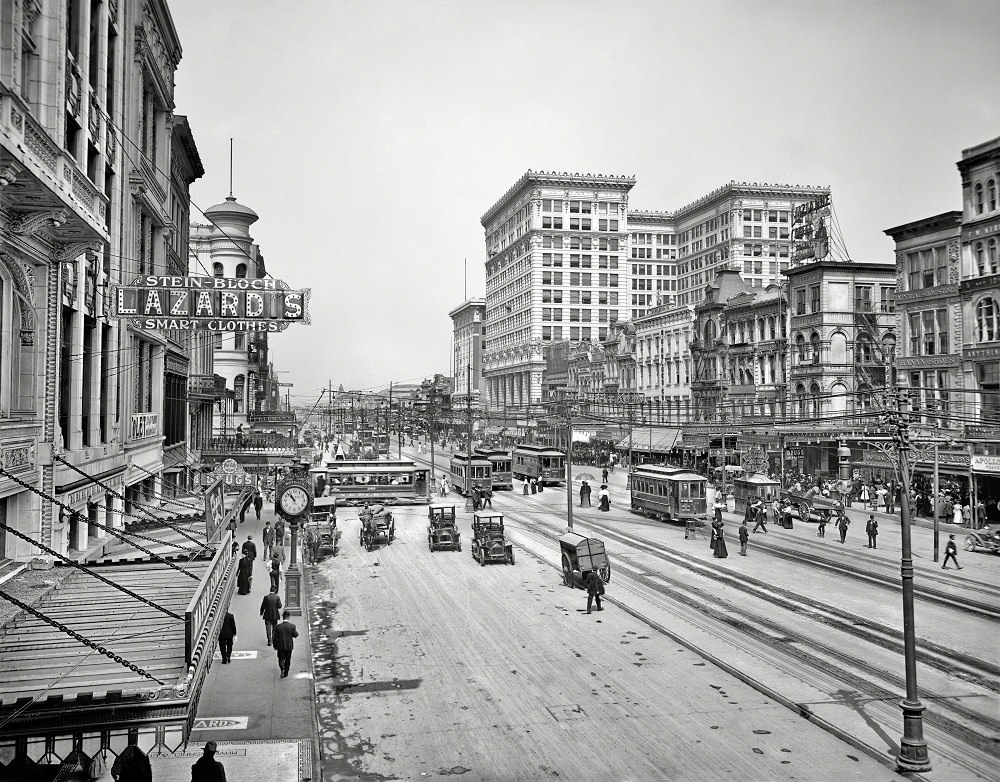
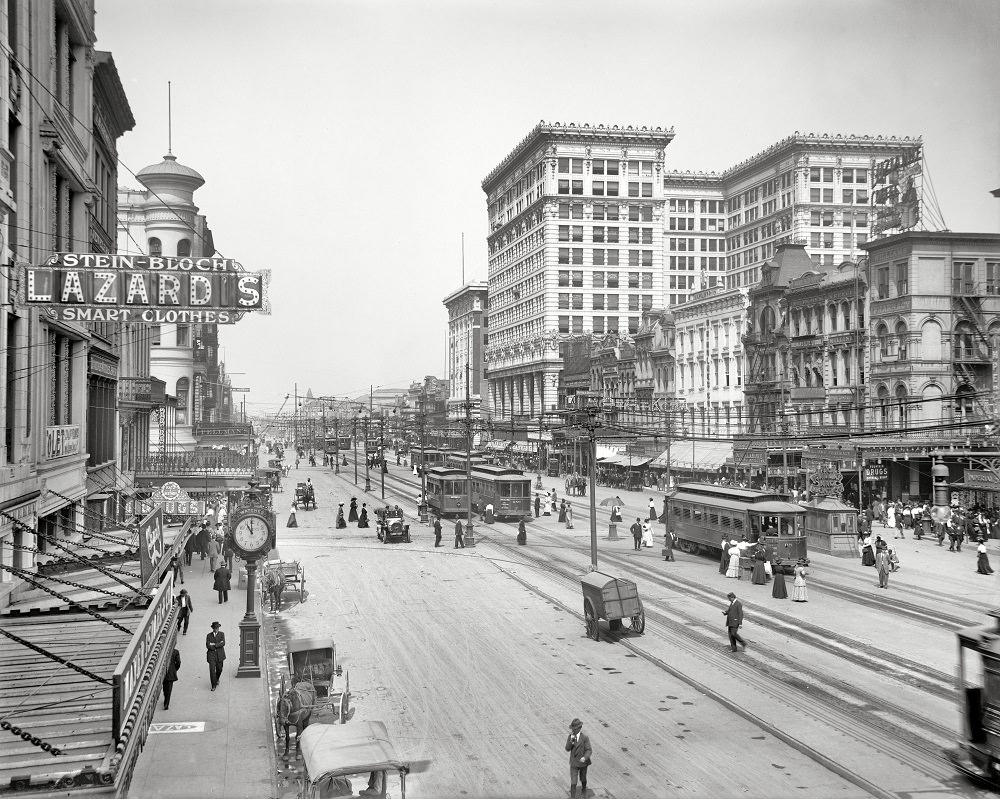
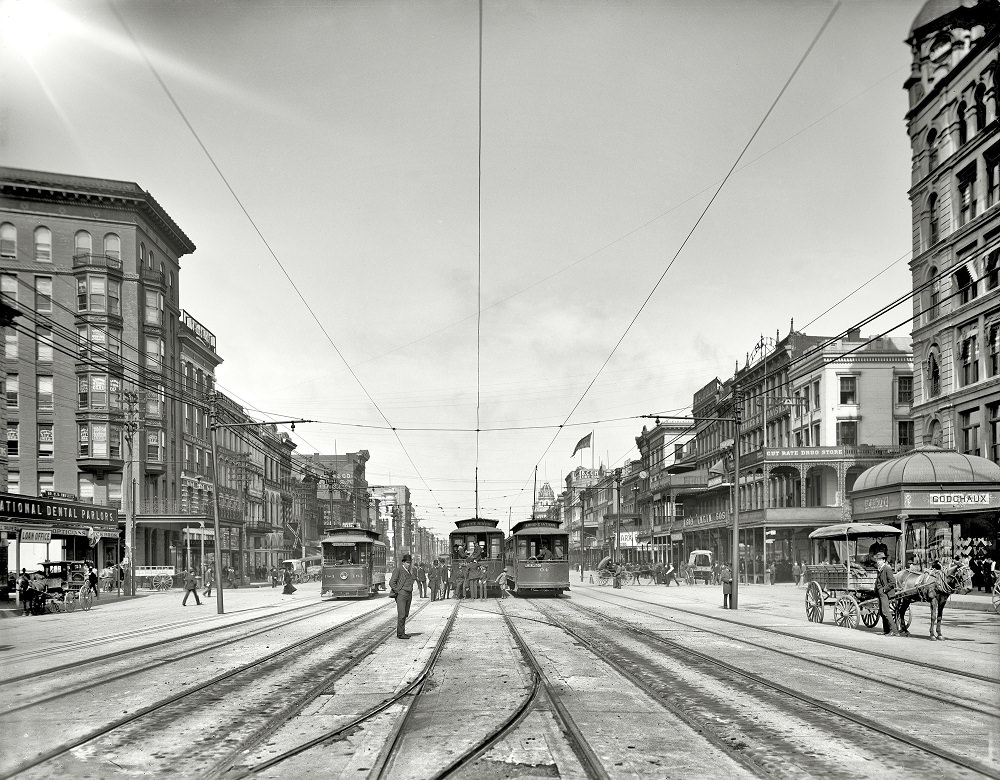
By 1910, Canal Street had evolved into a fully modern commercial thoroughfare. Electric streetcar lines ran down its center, storefronts competed for attention with elaborate signage, and pedestrians crowded its wide sidewalks. It was the busiest street in one of the South’s most important cities.
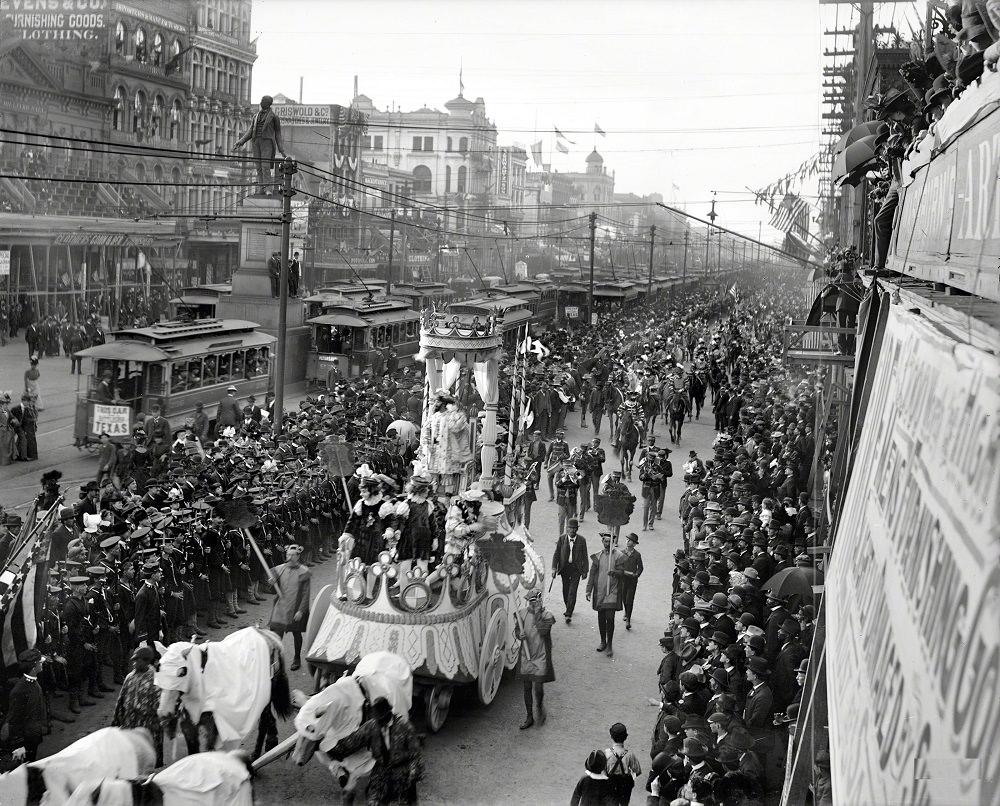
The Mardi Gras processions that moved through Canal Street were among the most elaborate in the city. Floats, marching bands, and costumed krewe members drew tens of thousands of spectators who lined the route to catch throws and watch the pageantry unfold.
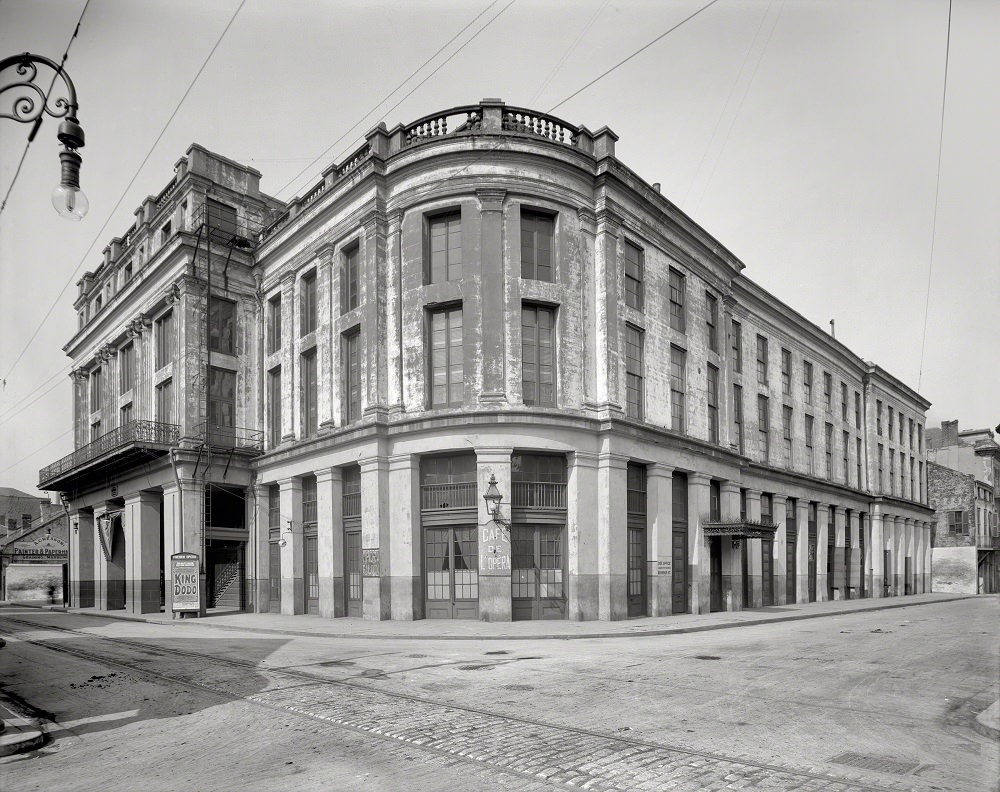
The French Opera House on Bourbon Street was the cultural crown jewel of New Orleans at the turn of the century. Opened in 1859, it was the first opera house in the United States and hosted world-class performances that drew audiences from across the region. By 1910, it was still a thriving venue and a source of enormous civic pride.
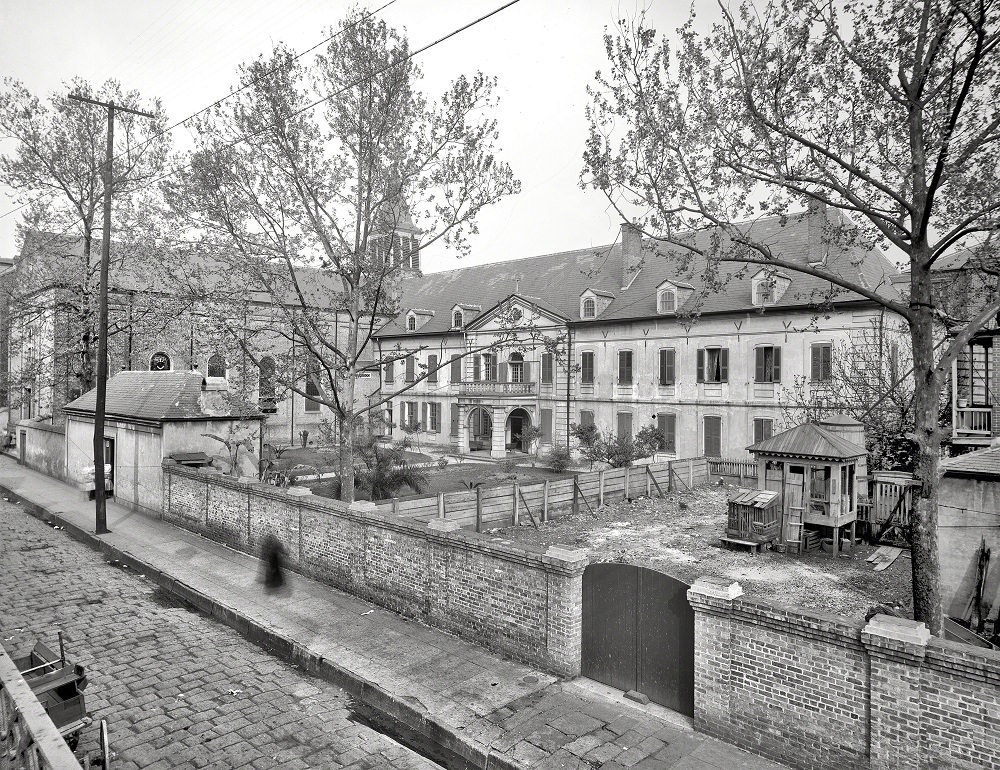
The Catholic Church held deep roots in New Orleans, and the Archbishopric — the official residence of the Archbishop — was one of the city’s most significant religious and architectural landmarks. The building reflected the central role that the Church played in the city’s social and cultural life.
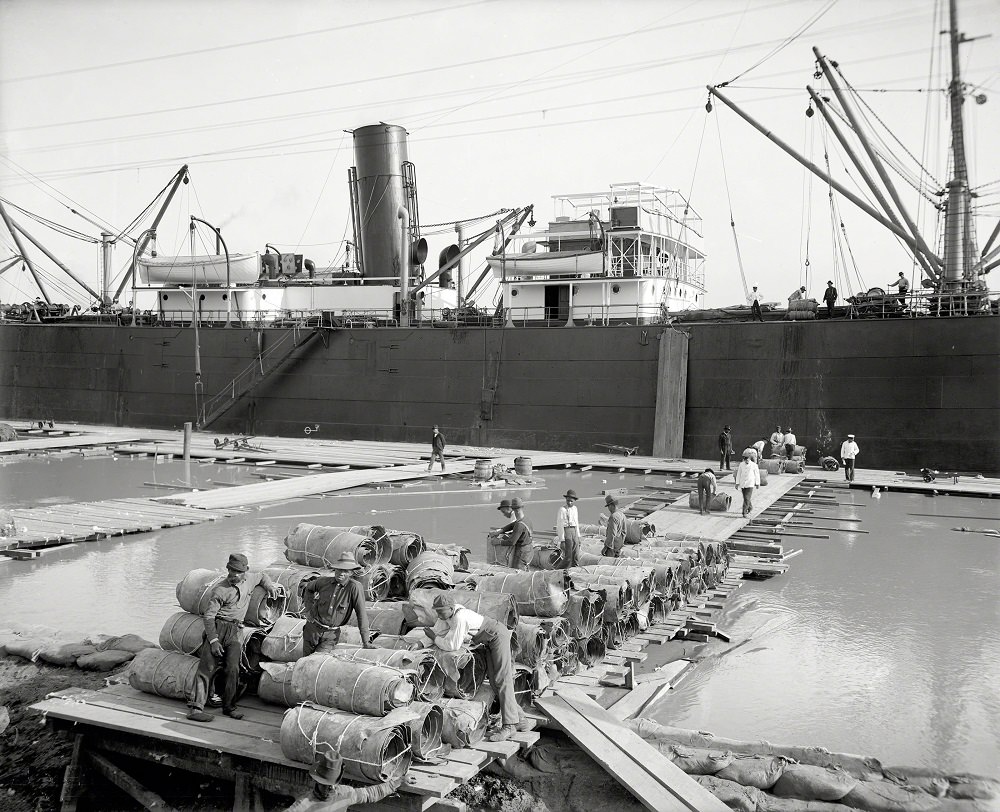
Beyond cotton and grain, the New Orleans port handled a wide variety of goods. Hides from cattle and other livestock were loaded onto steamers bound for tanneries and manufacturers elsewhere in the country and abroad. The levee buzzed with this kind of specialized trade on any given day.
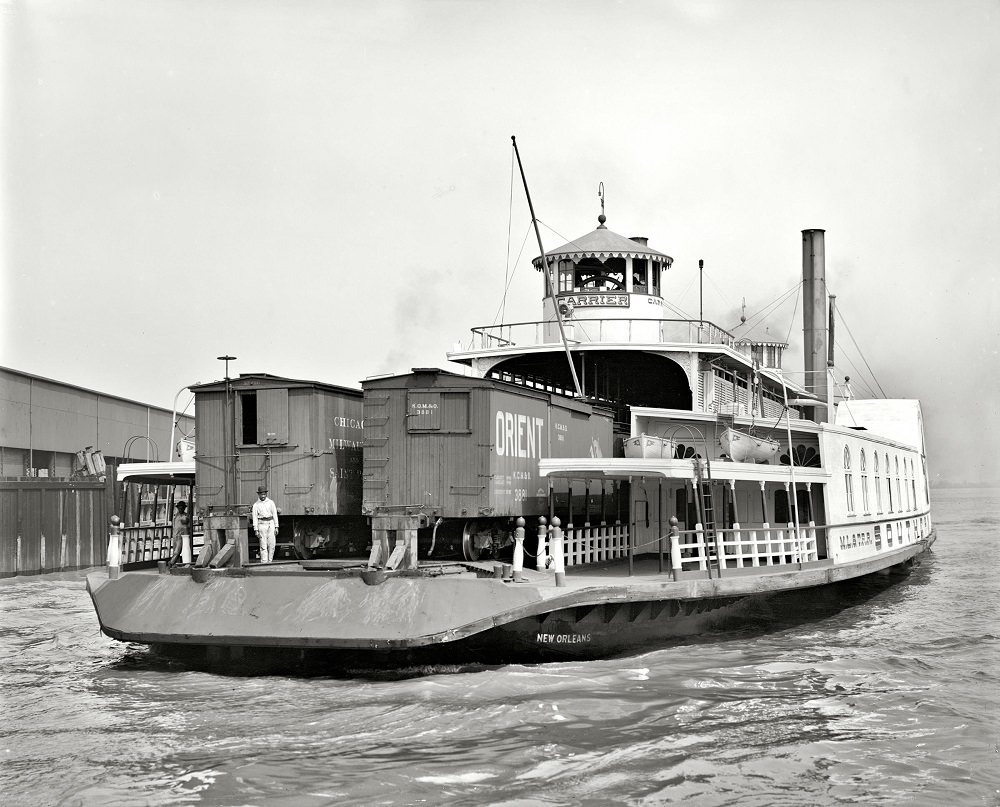
The Southern Pacific Railroad operated transfer boats across the Mississippi at New Orleans, moving rail cars from one bank to the other before a bridge spanned the river. The transfer boat Carrier was a key piece of that operation, keeping freight moving across the waterway without interruption.
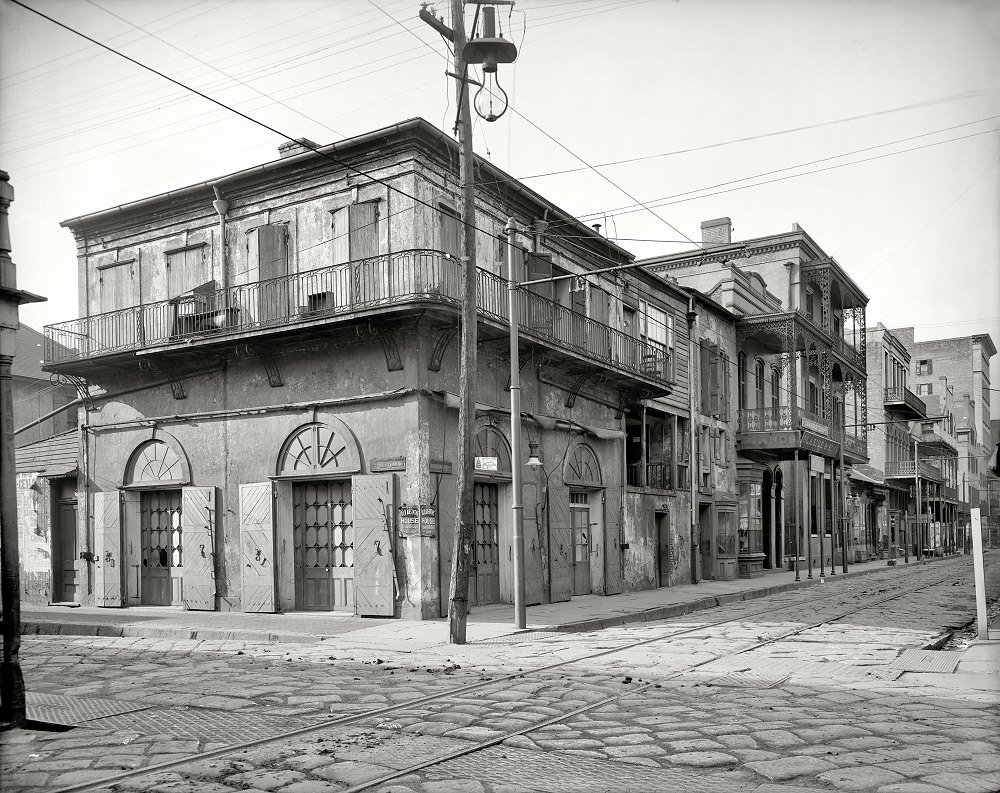
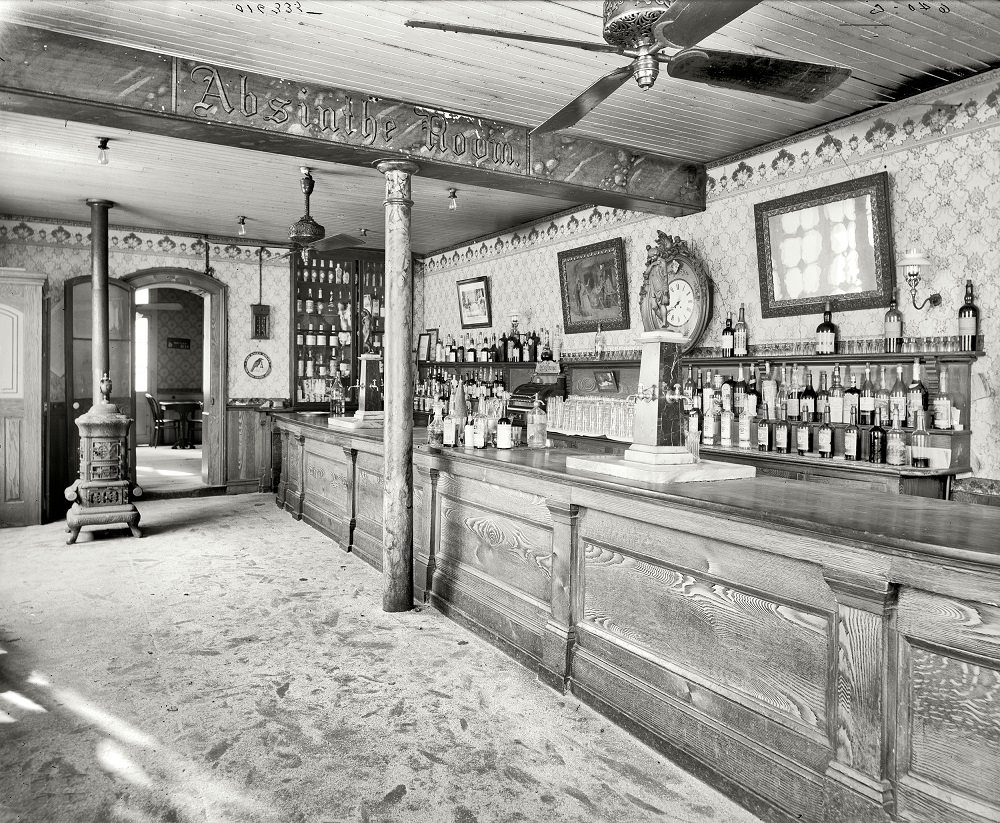
The Old Absinthe House on Bourbon Street was already a legendary establishment by the early 1900s. Built in 1806, it had served as a bar and social gathering place for generations of New Orleanians and visitors, and its location on Bourbon Street placed it at the center of the city’s nightlife district.
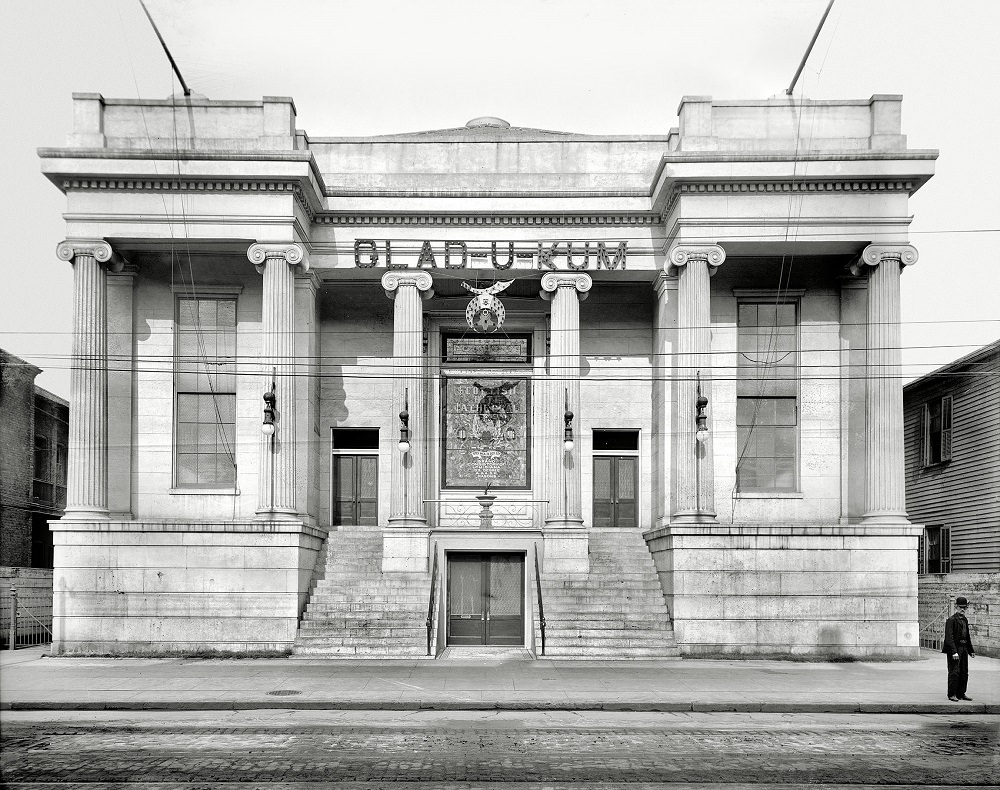
Fraternal organizations were a significant part of New Orleans’ social fabric in the early 1900s. The Scottish Rite Cathedral was one of the city’s more imposing institutional buildings, reflecting the prominence of Freemasonry among the city’s professional and business classes.
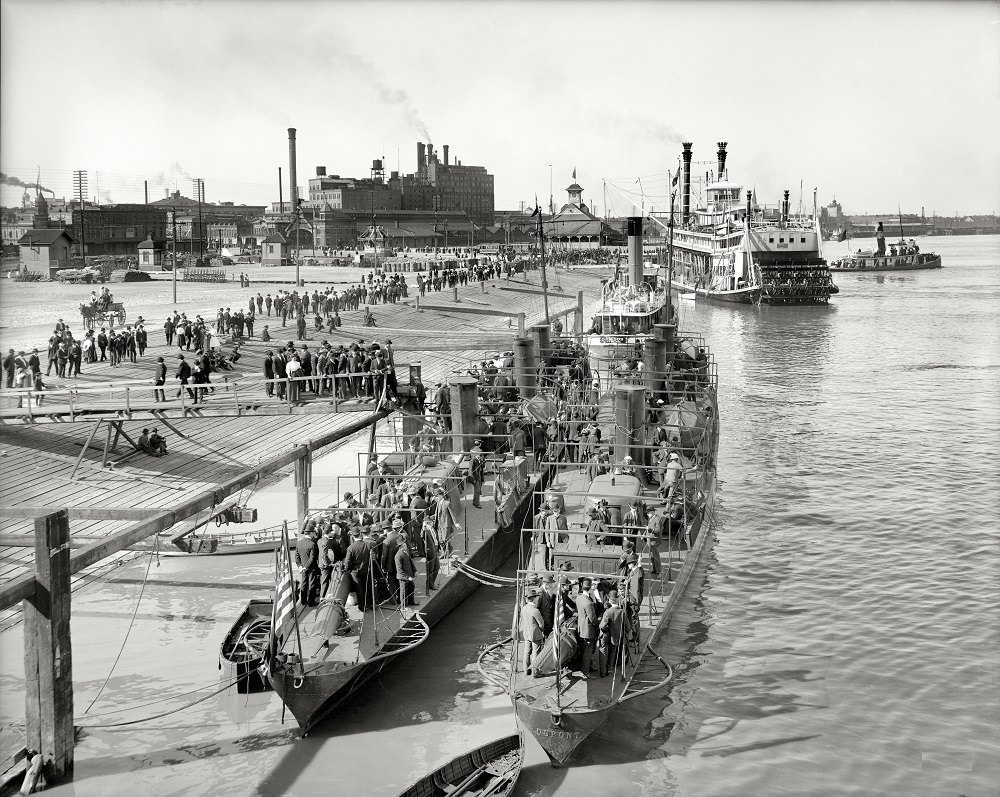
Military vessels occasionally visited the New Orleans waterfront, drawing curious crowds of locals. Around 1906, torpedo boats including the Porter and the Dupont docked in the city, and residents came out to inspect the sleek warships up close.
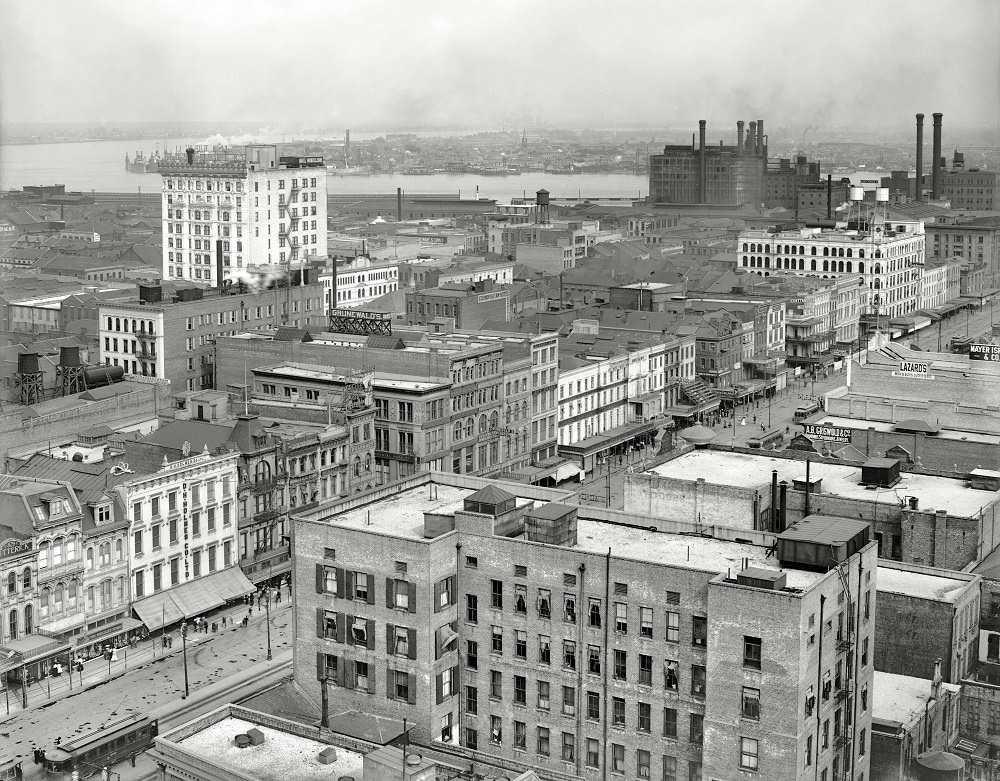
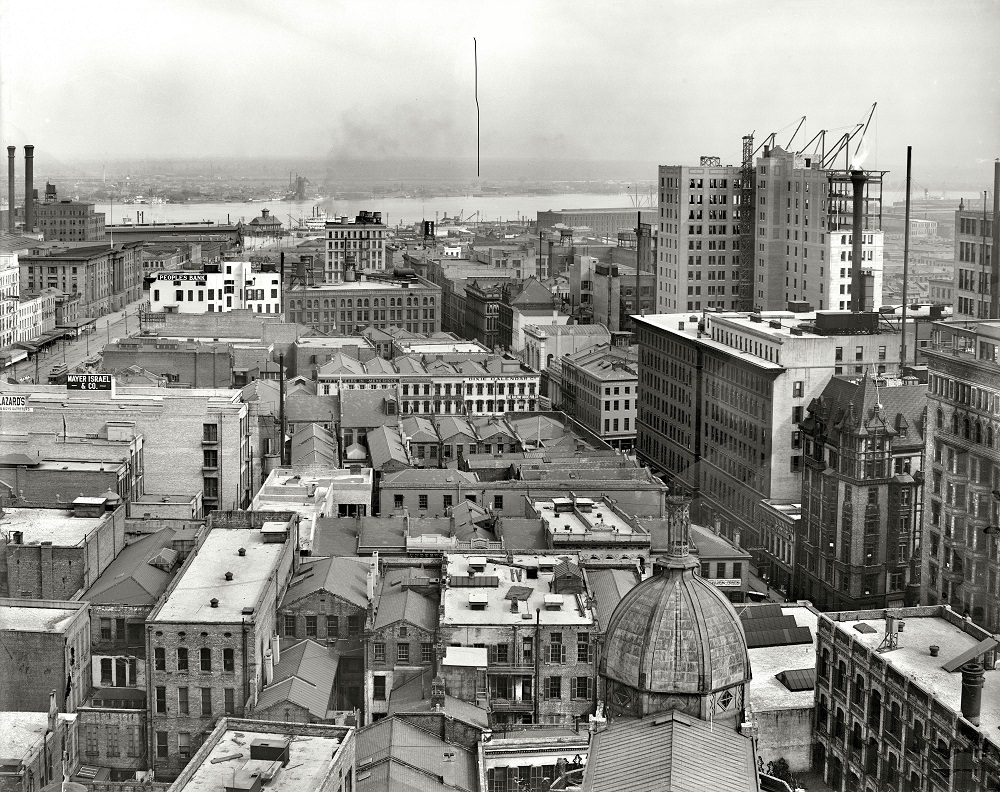
Aerial and elevated views of New Orleans and the Mississippi River offered a striking perspective on just how tightly the city was packed along the riverbank. By 1910, the skyline was beginning to show the first signs of modern construction alongside the older, lower-rise buildings that had defined the city for decades.
Flooding was a persistent threat along the New Orleans levee. In 1903, the S.S. Proteus navigated high water conditions that pushed the river dangerously close to the top of the levee walls. The Great Mississippi Flood of 1927 would later bring even more severe conditions, with waters nearly topping the levees and heavy rain flooding parts of the city regardless.
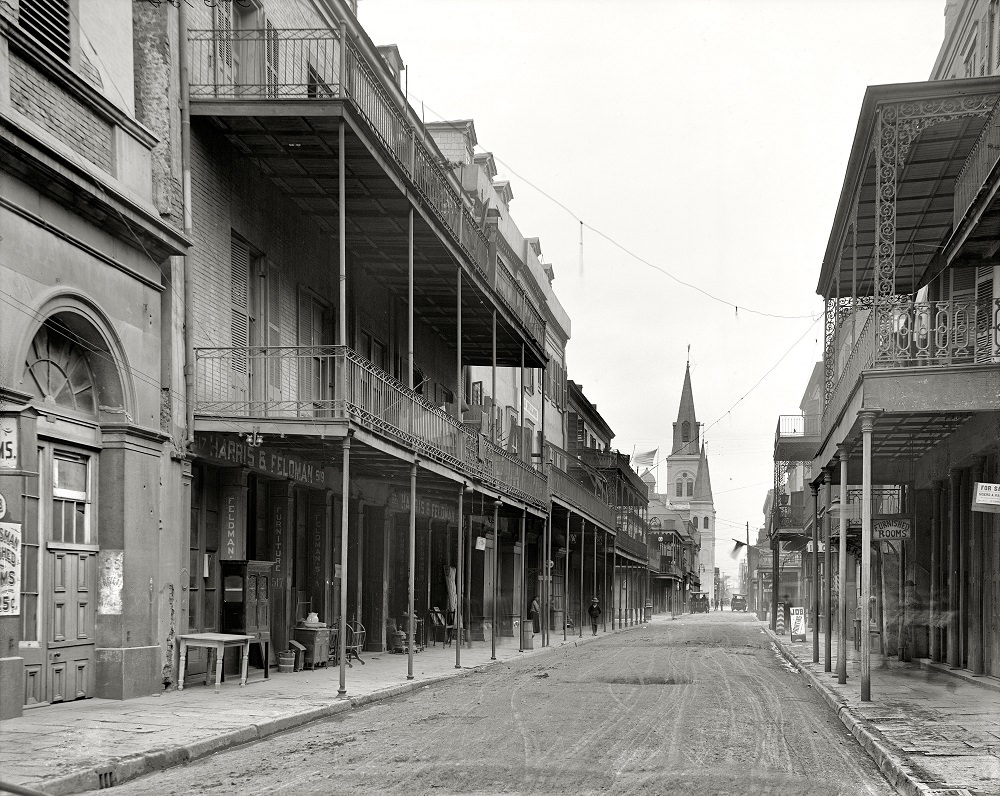
Chartres Street in the French Quarter was a quieter but historically rich stretch of the city. It passed by some of the oldest buildings in New Orleans, including the Cabildo, the Presbytère, and the St. Louis Cathedral complex, all clustered around Jackson Square.
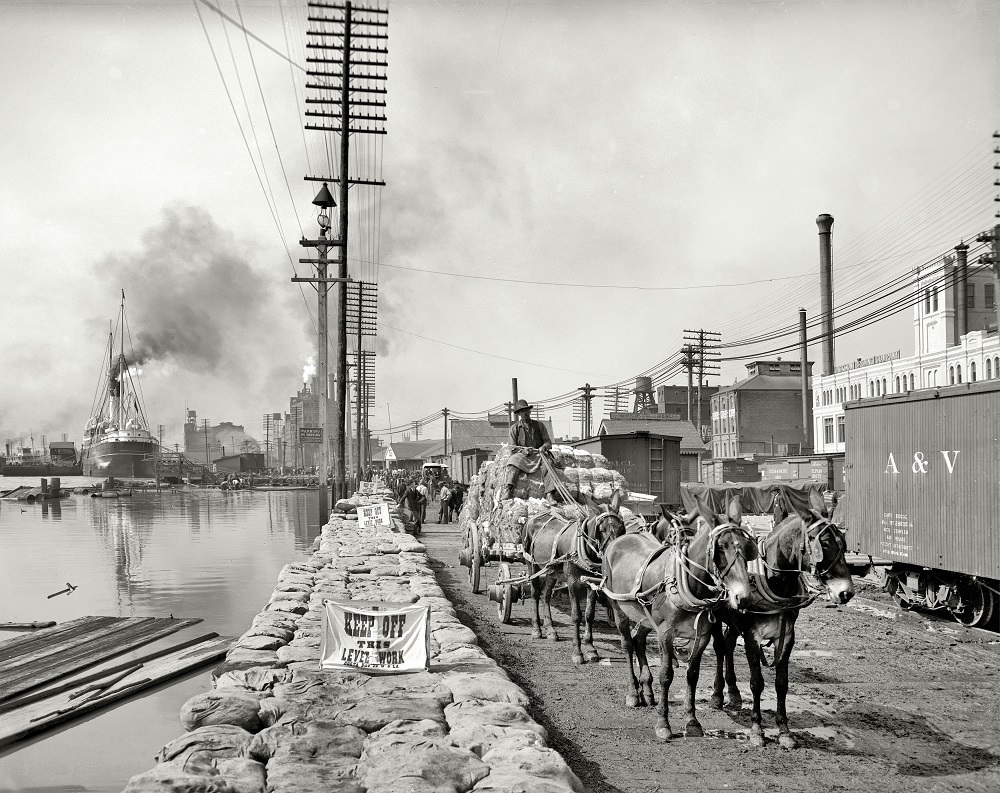
On the levee, mule teams did much of the heavy hauling work, moving cotton bales and other cargo between the riverboats and the storage areas along the waterfront. Despite the growing presence of mechanical equipment at the docks, animal power remained essential for ground-level freight handling well into the 1900s.
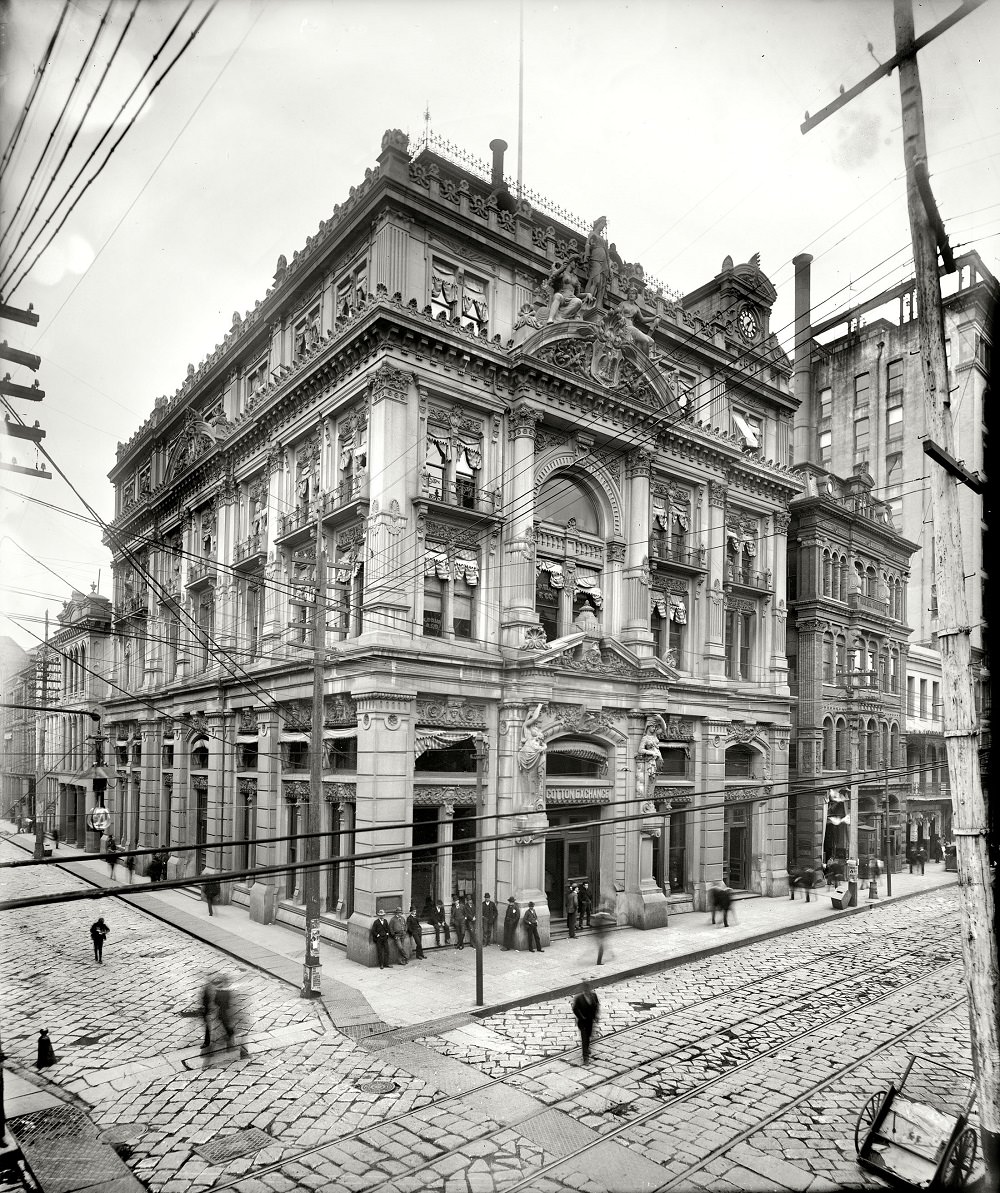
The Cotton Exchange on Carondelet Street was the nerve center of New Orleans’ cotton trade. Merchants, brokers, and factors gathered there daily to buy and sell cotton contracts, setting prices that affected farmers and markets across the South. Cotton dominated Louisiana’s agricultural economy, and the Exchange was where that power was exercised.
The French Quarter’s courtyards were famously private and often hidden from street view. Entered through arched carriageways, they typically featured fountains, ironwork galleries, and lush plantings. These spaces served as the domestic heart of French Creole homes and were found throughout the Quarter’s older blocks.
The Old Absinthe House bar was one of the most storied interiors in the city. Its walls were covered with business cards and memorabilia, and the marble bar had served drinks to some of the most famous figures in American history. By 1906, it was already a tourist attraction as much as a working bar.
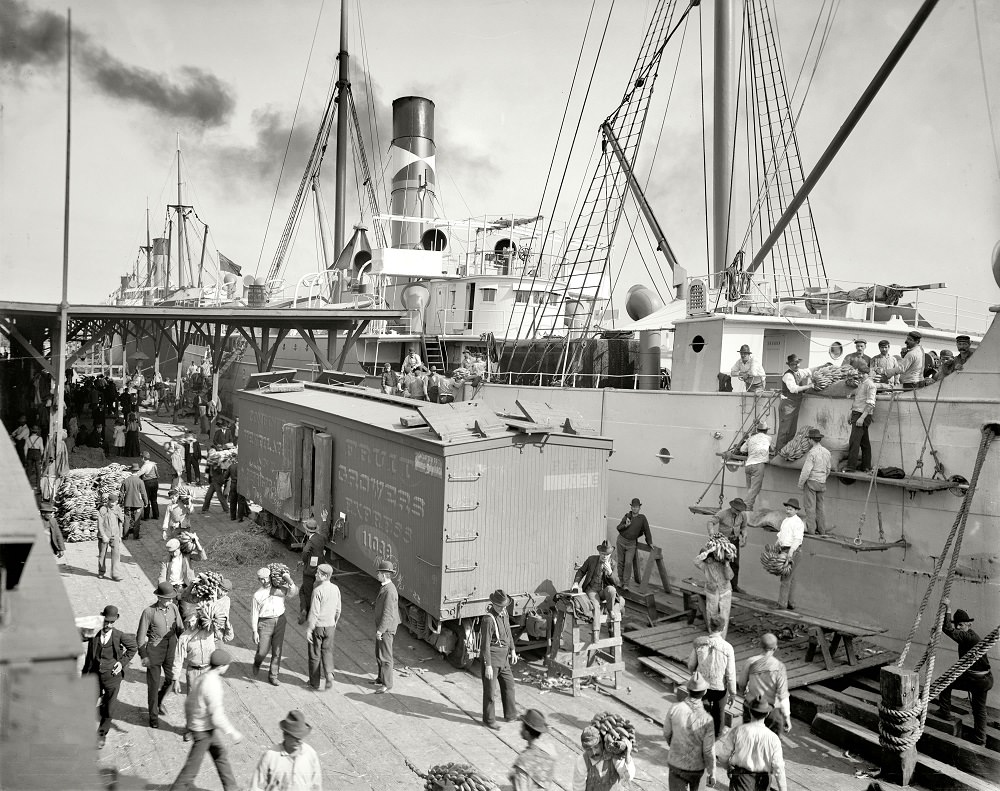
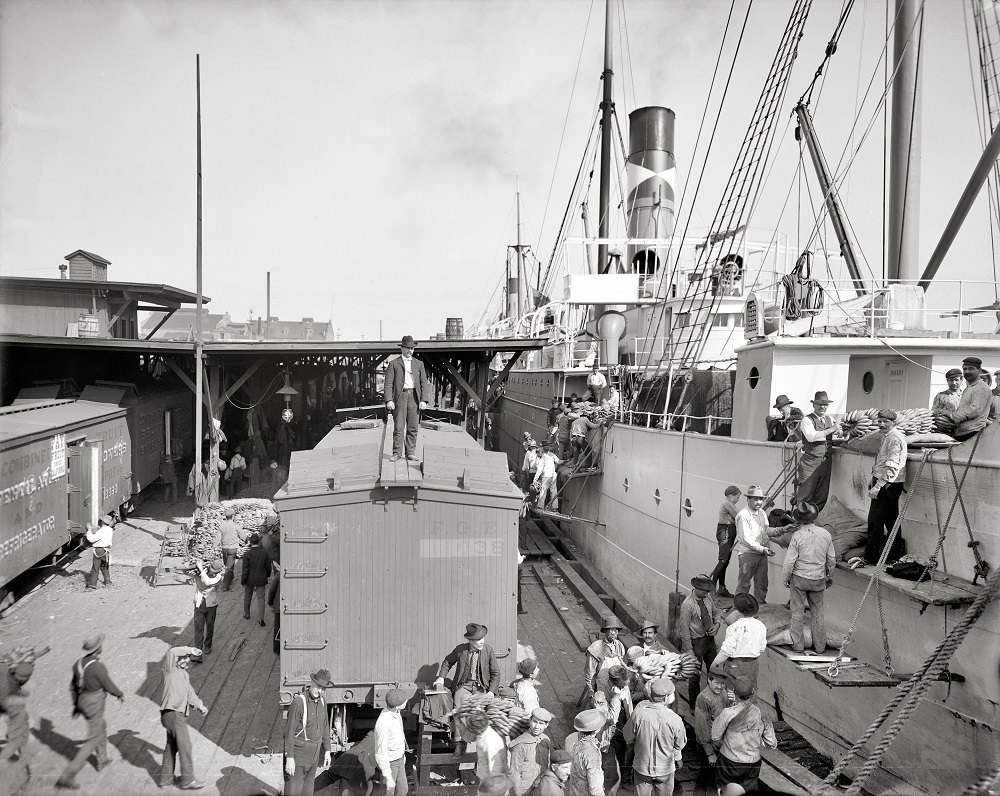
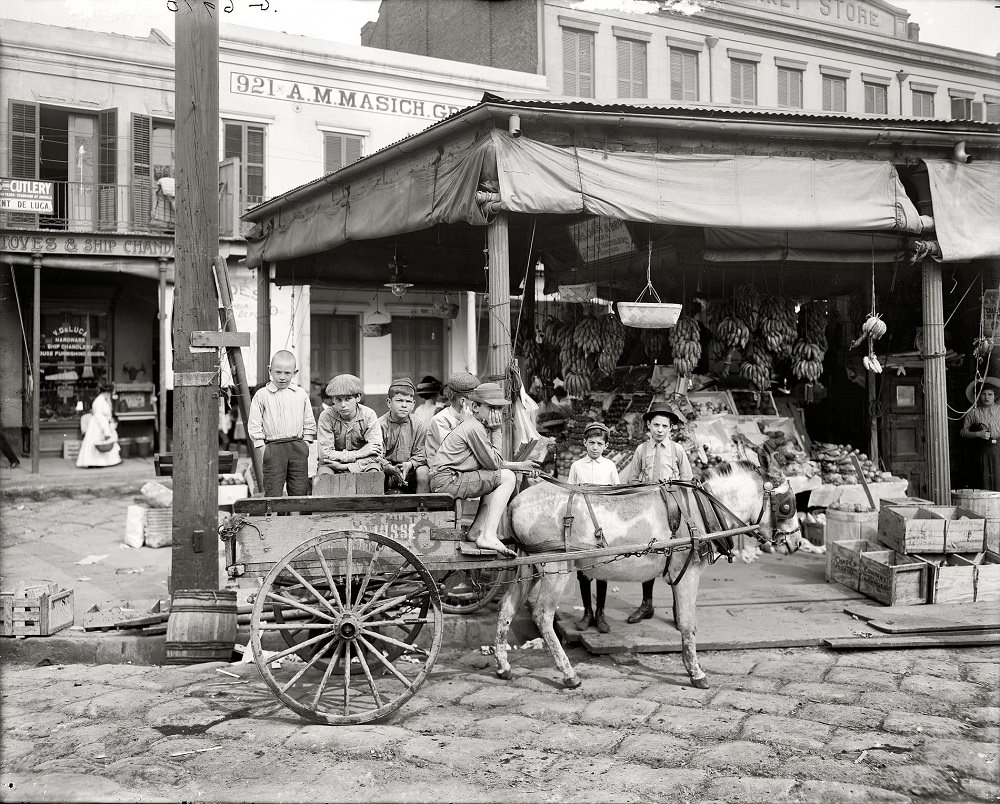
New Orleans was a major port of entry for bananas imported from Central America. United Fruit Company vessels regularly docked at the city’s wharves, and gangs of workers unloaded the fruit by hand, carrying bunches from the ships’ holds onto the docks for distribution across the country.
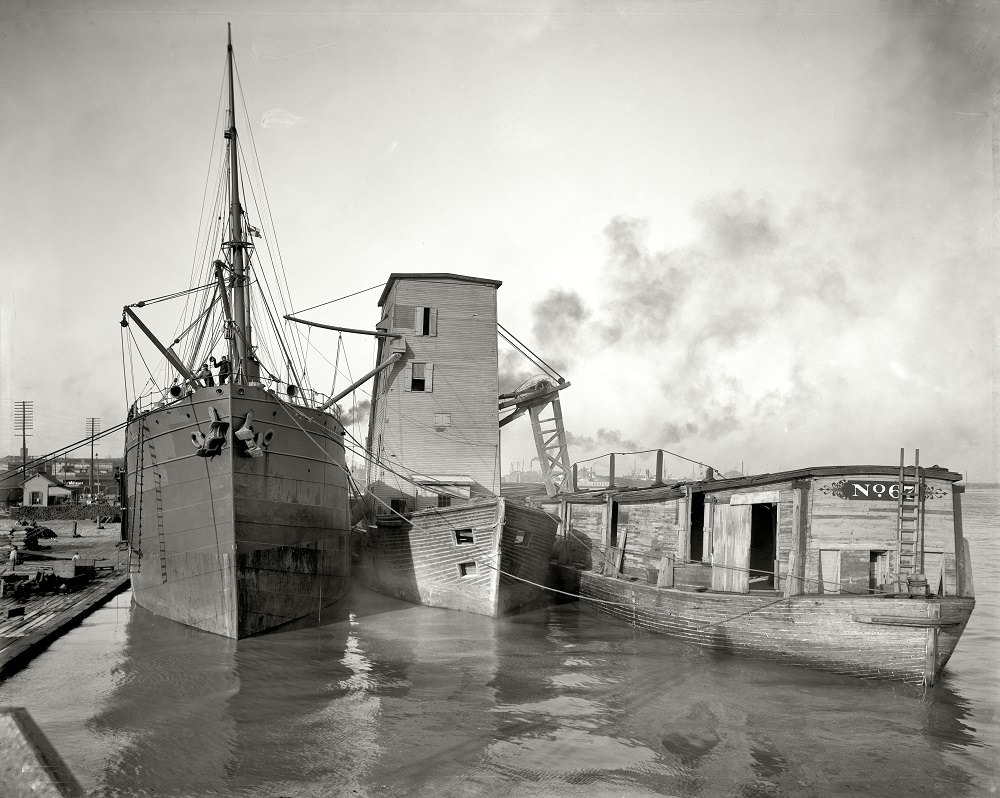
Grain was another major export moving through the New Orleans waterfront. Floating elevators — large mechanical structures moored alongside ships — transferred grain directly from storage into a vessel’s hold. This technology allowed the port to handle massive volumes of grain with greater speed than older methods allowed.
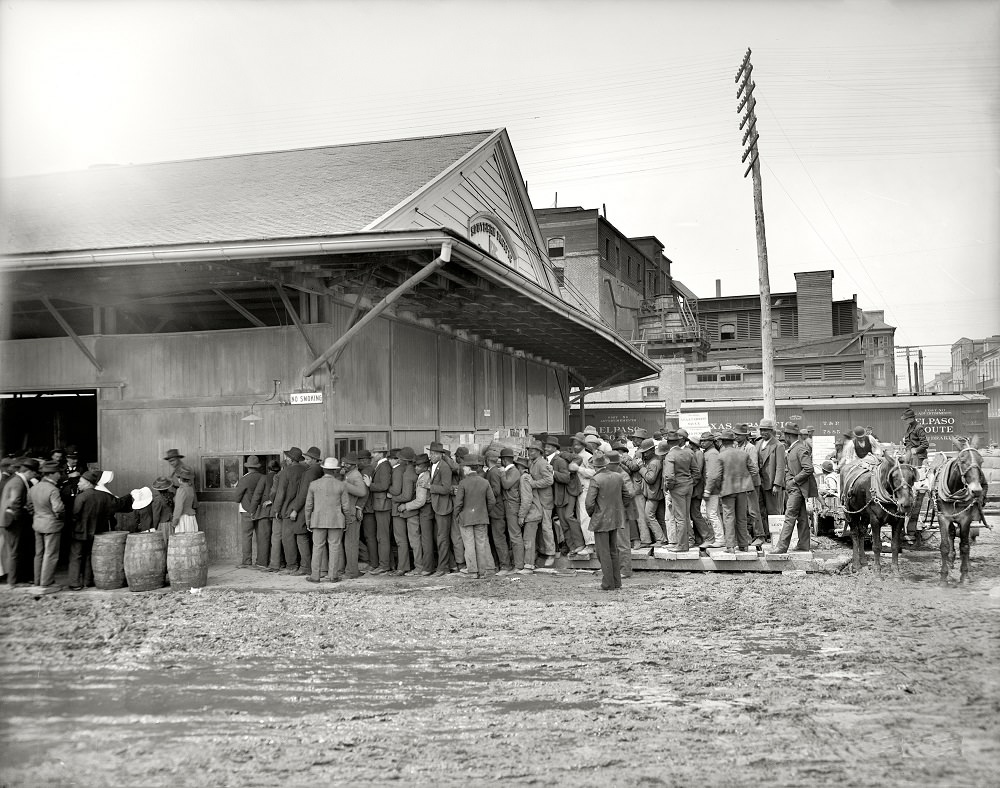
Workers on the levee were paid in cash, and payday drew crowds. Dock laborers, stevedores, and others who worked the waterfront were paid at the end of their shifts or work periods, and the scene on payday was lively and often chaotic. The levee workforce was large, diverse, and essential to the city’s economic engine.
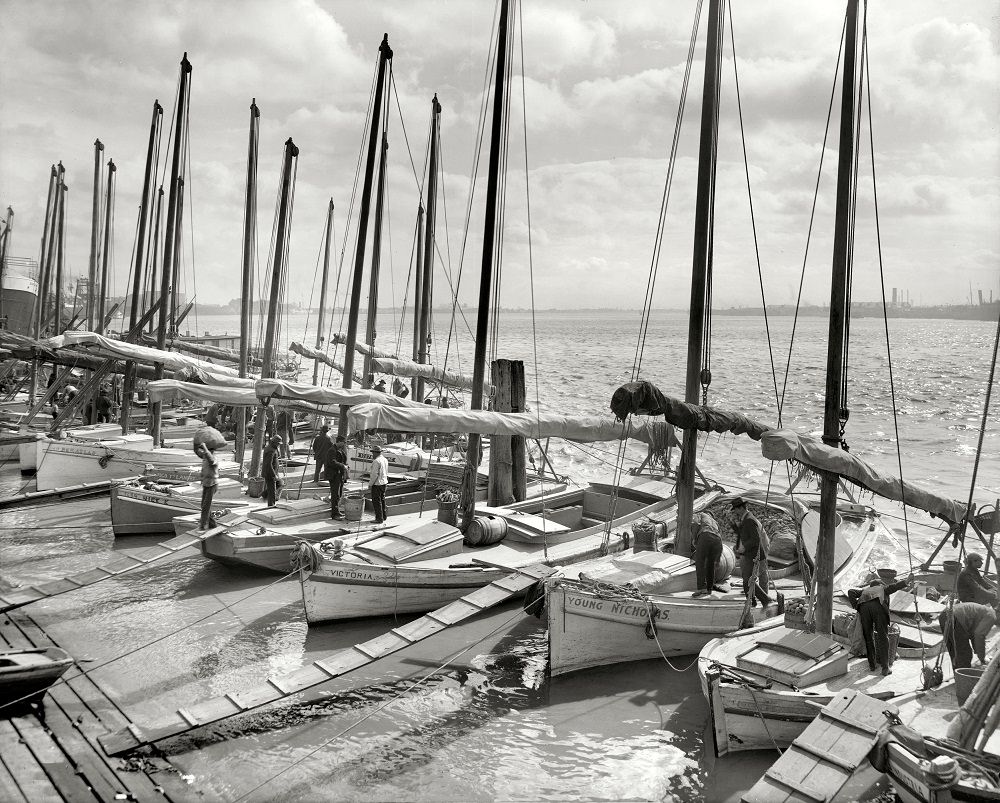
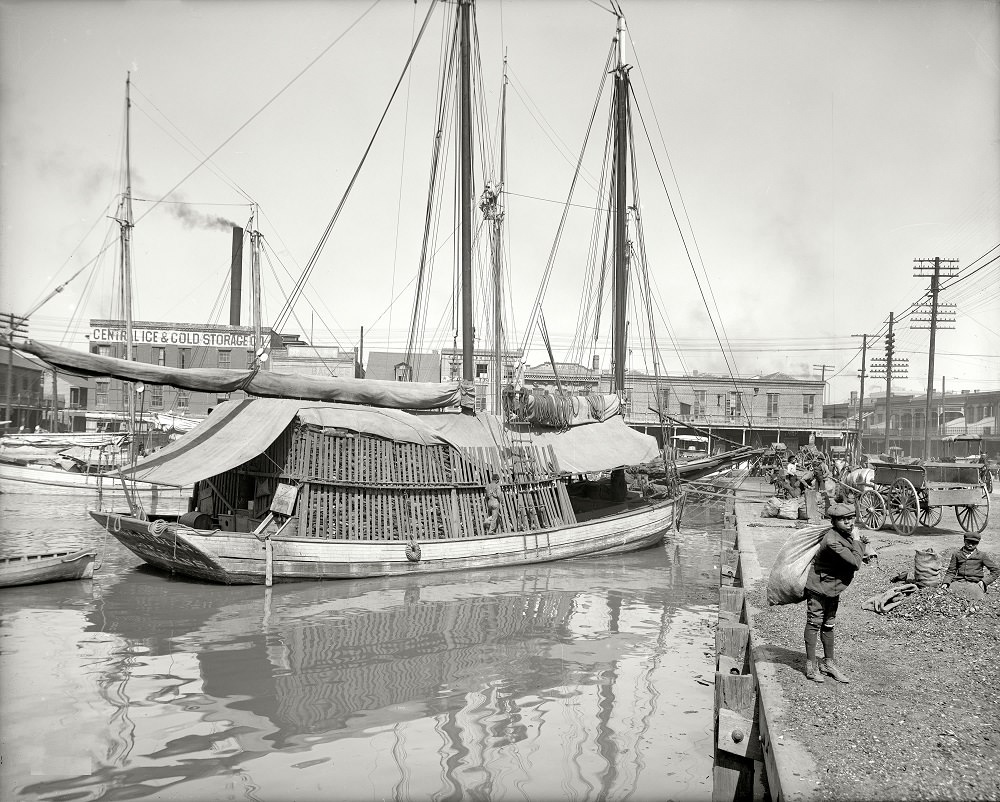
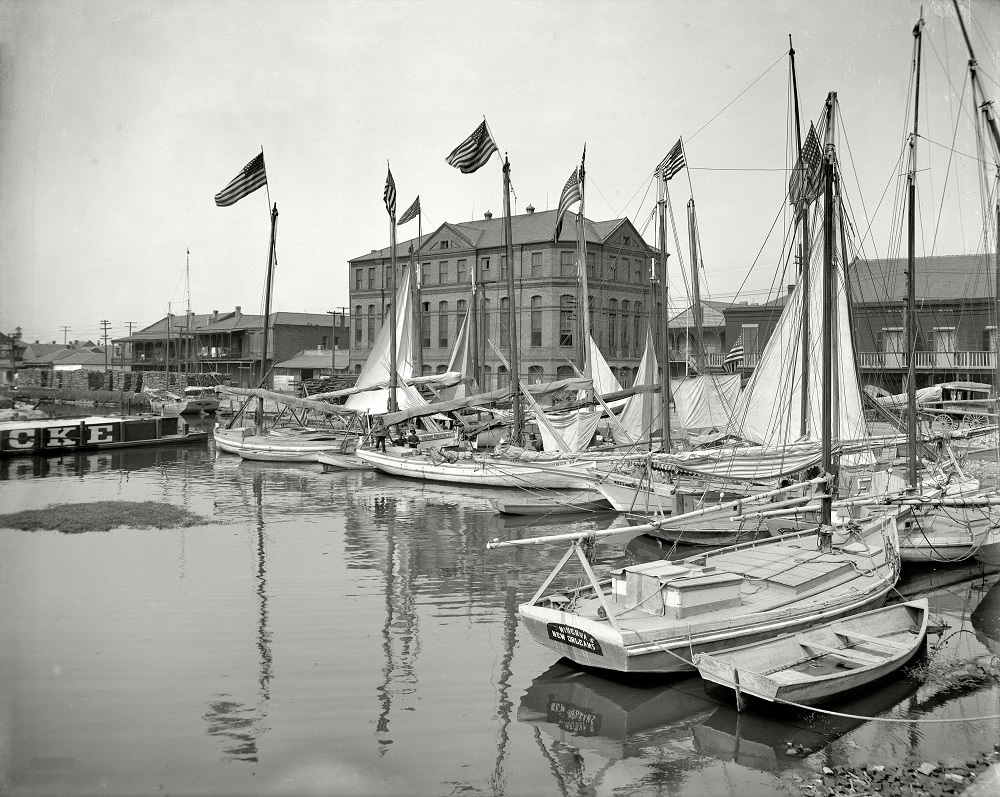
New Orleans was a hub for the Gulf Coast oyster trade. Luggers — small, shallow-draft sailing vessels — brought oysters from the coastal beds of Louisiana into the city, where they were sold fresh at markets and eaten in restaurants and oyster saloons across town.
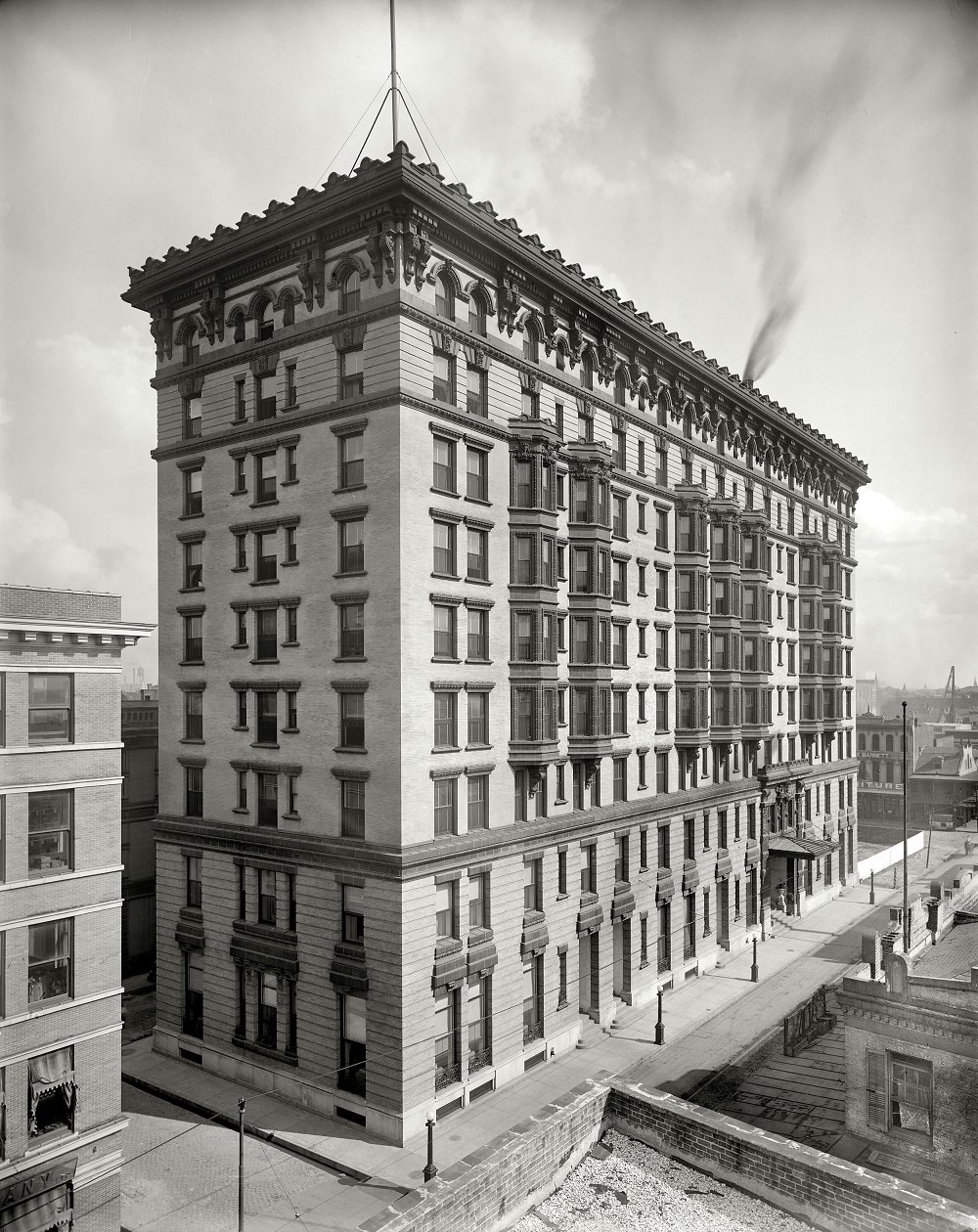
The Hotel Grunewald, opened in 1893, was one of the grandest hotels in New Orleans. It offered views of the Mississippi River and the city’s dense roofscape that few other vantage points could match. By 1910, it stood as one of the city’s premier accommodations.
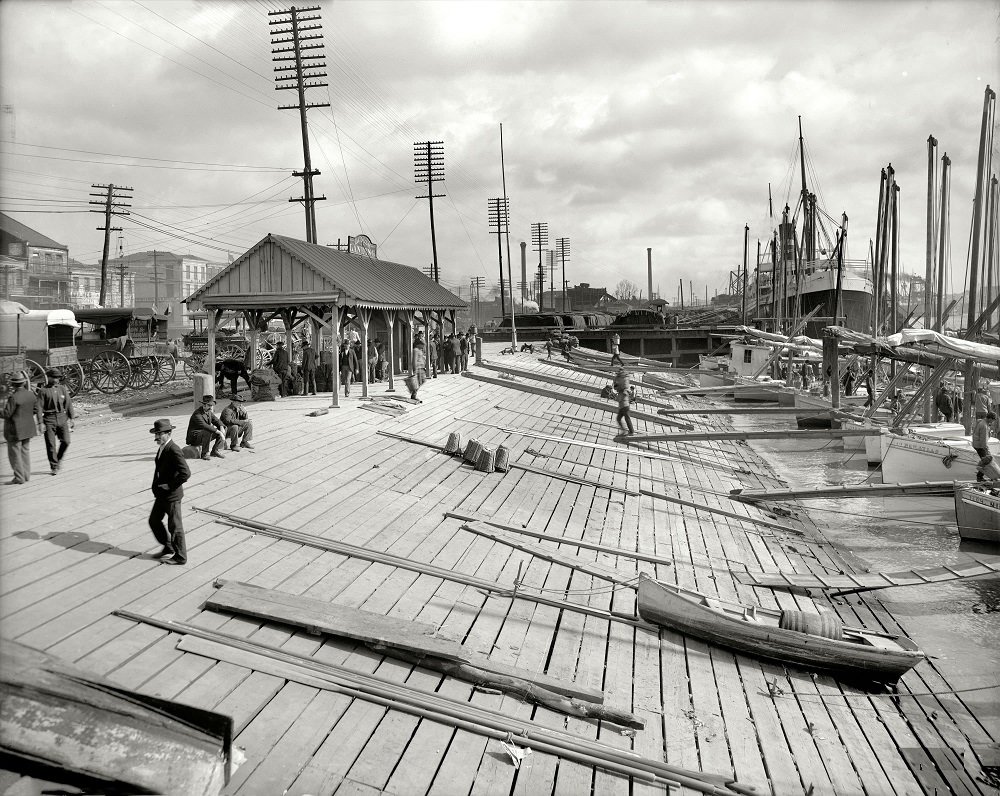
The Old Basin Canal, also known as the Carondelet Canal, ran through the city and connected the French Quarter area to Lake Pontchartrain. Small vessels called luggers used it to transport charcoal, oysters, and other goods from the lake and coastal areas into the city’s interior markets.
The New Hotel Denechaud on Poydras Street was a stylish addition to New Orleans’ hotel landscape when it opened in 1908. The building later became Le Pavillon Hotel, which still stands today and is considered one of the most elegant historic hotels in the city.
Canal Street in the 1910s was a street in constant motion. Electric streetcars, horse-drawn vehicles, and early automobiles all competed for space on its broad roadway. Photographs from this period capture a city transitioning rapidly from 19th-century transportation to the modern age.
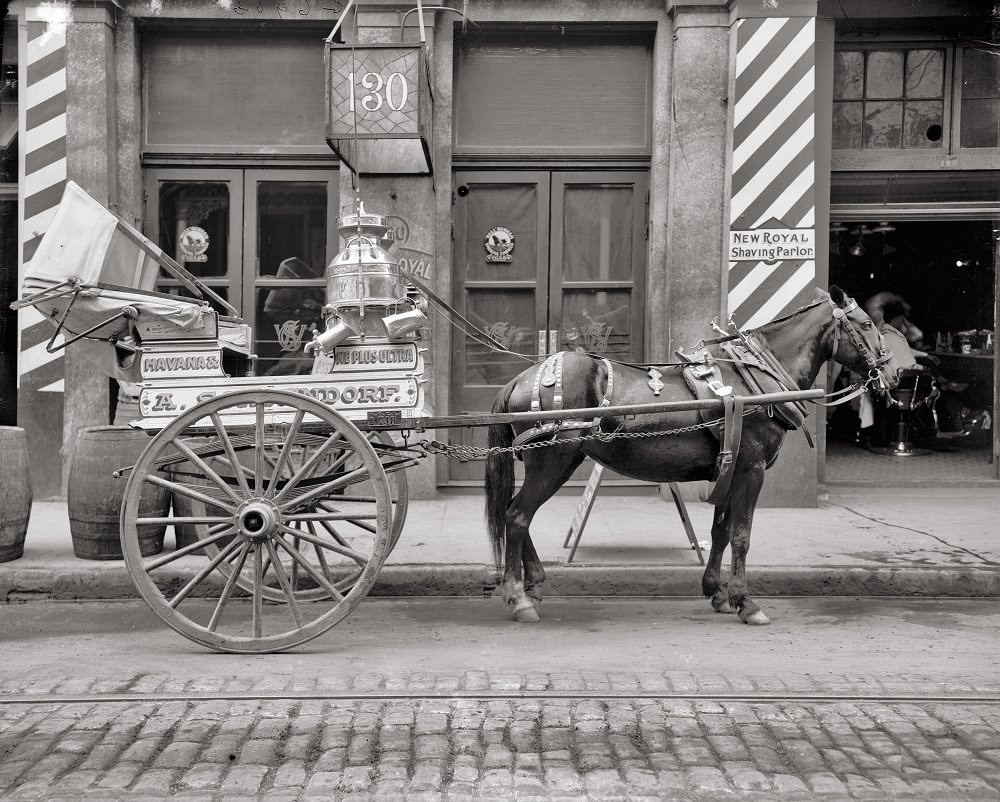
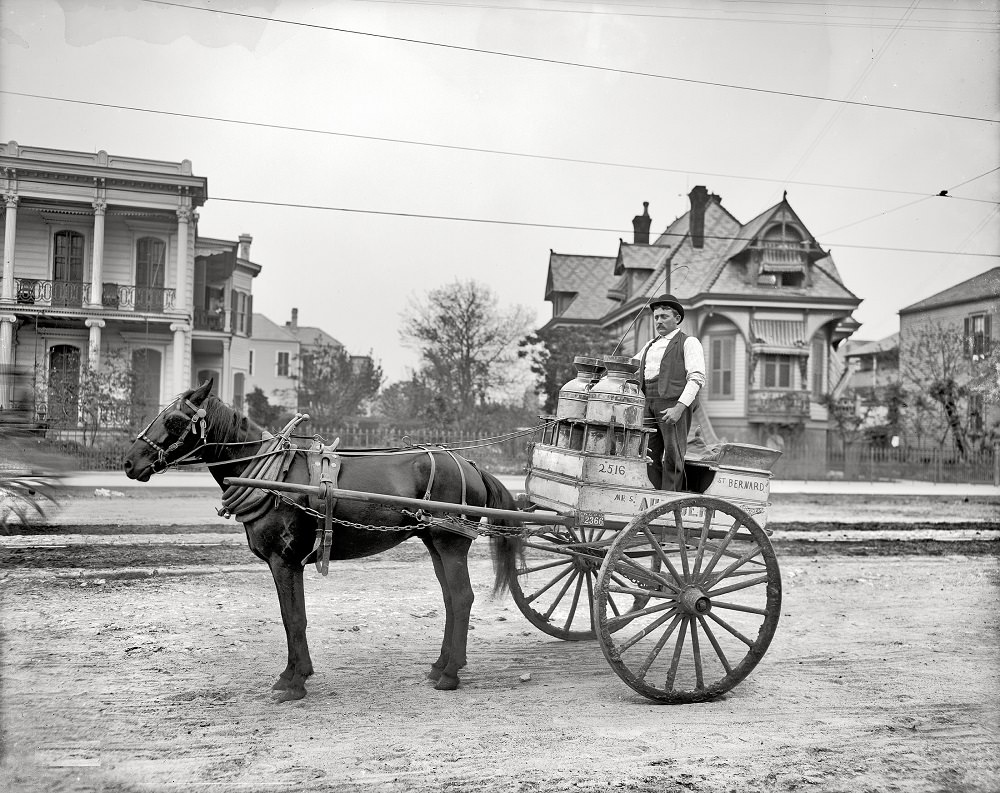
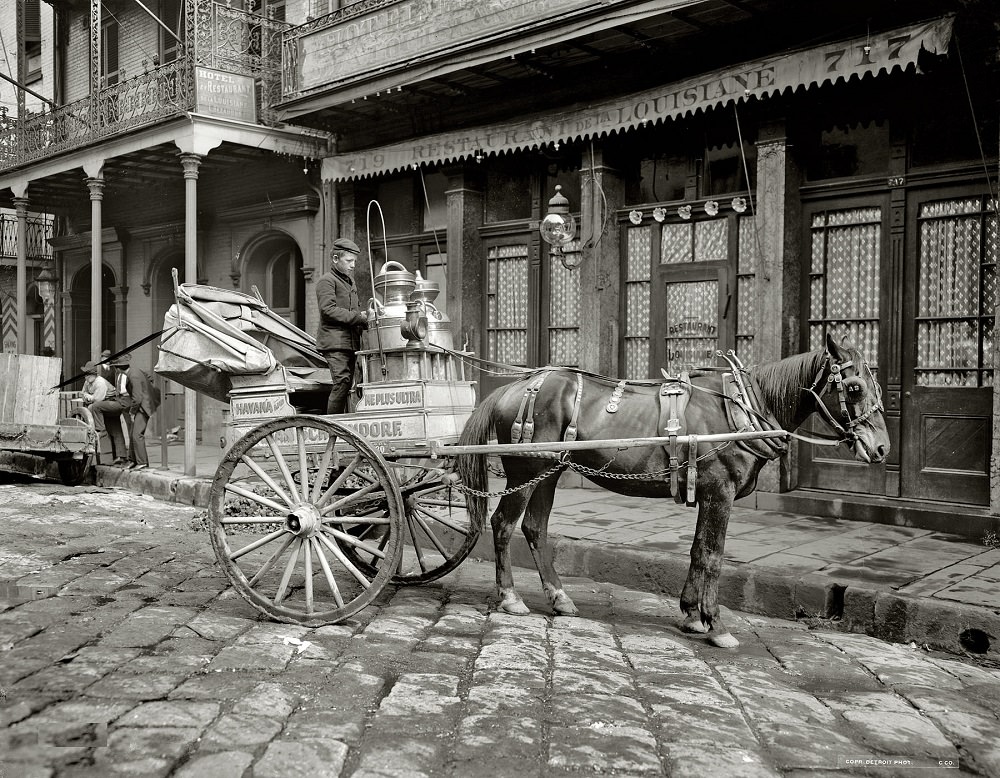
Milk delivery in New Orleans at the turn of the century relied on horse-drawn carts that moved through the city’s neighborhoods each morning. The distinctive milk cart was a familiar sight on New Orleans streets, reflecting the city’s dependence on daily fresh food delivery before refrigeration became widespread.
The New Orleans docks were increasingly mechanized by 1906. Conveyors helped move cargo more efficiently along the wharves, reducing the pure manual labor involved in shifting large loads. The port was one of the most technologically active in the country during this period.
The Old Basin Canal served as a gathering point for small commercial vessels of all kinds. By 1908, oyster and charcoal luggers crowded the basin regularly, their masts creating a dense forest of rigging along the waterway. This trade was an integral part of how the city fed and fueled itself.
Banana unloading at the New Orleans docks was a spectacle in itself. Hundreds of workers formed human chains to move the fruit from the ship’s hold to the dock and then to waiting wagons. Speed was critical — the fruit was perishable, and delays meant spoilage and financial loss for the shippers.
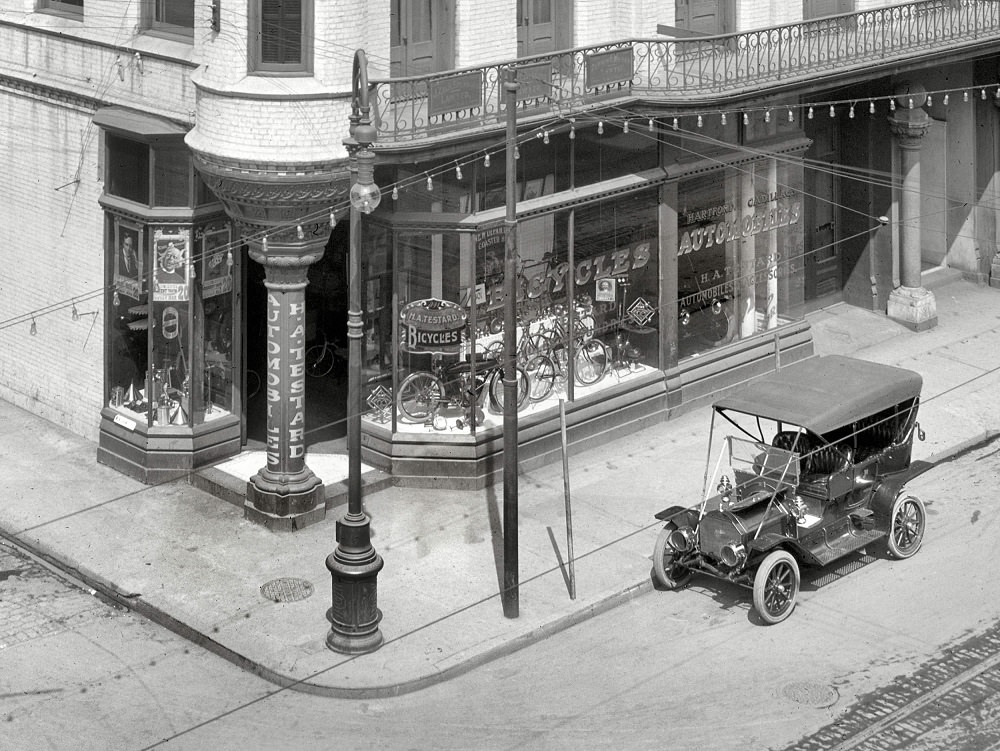
By around 1910, bicycles and early automobiles were beginning to appear alongside traditional horse-drawn transport on New Orleans streets. Storefronts like H.A. Testard’s Bicycles and Automobiles shop on Canal Street catered to the growing demand for personal vehicles, marking a clear shift in how New Orleanians were getting around.
The Masonic Temple in New Orleans was a landmark of the city’s institutional architecture. Freemasonry had a long and influential history in Louisiana, and the Temple’s imposing structure on a prominent downtown street reflected the organization’s deep roots and social influence in the city.
Looking up St. Charles Avenue from Canal Street in 1910 revealed one of the most picturesque urban vistas in the South. The avenue stretched away under a canopy of live oak trees, flanked by a mix of commercial buildings near the downtown end and elegant residences further along its length.
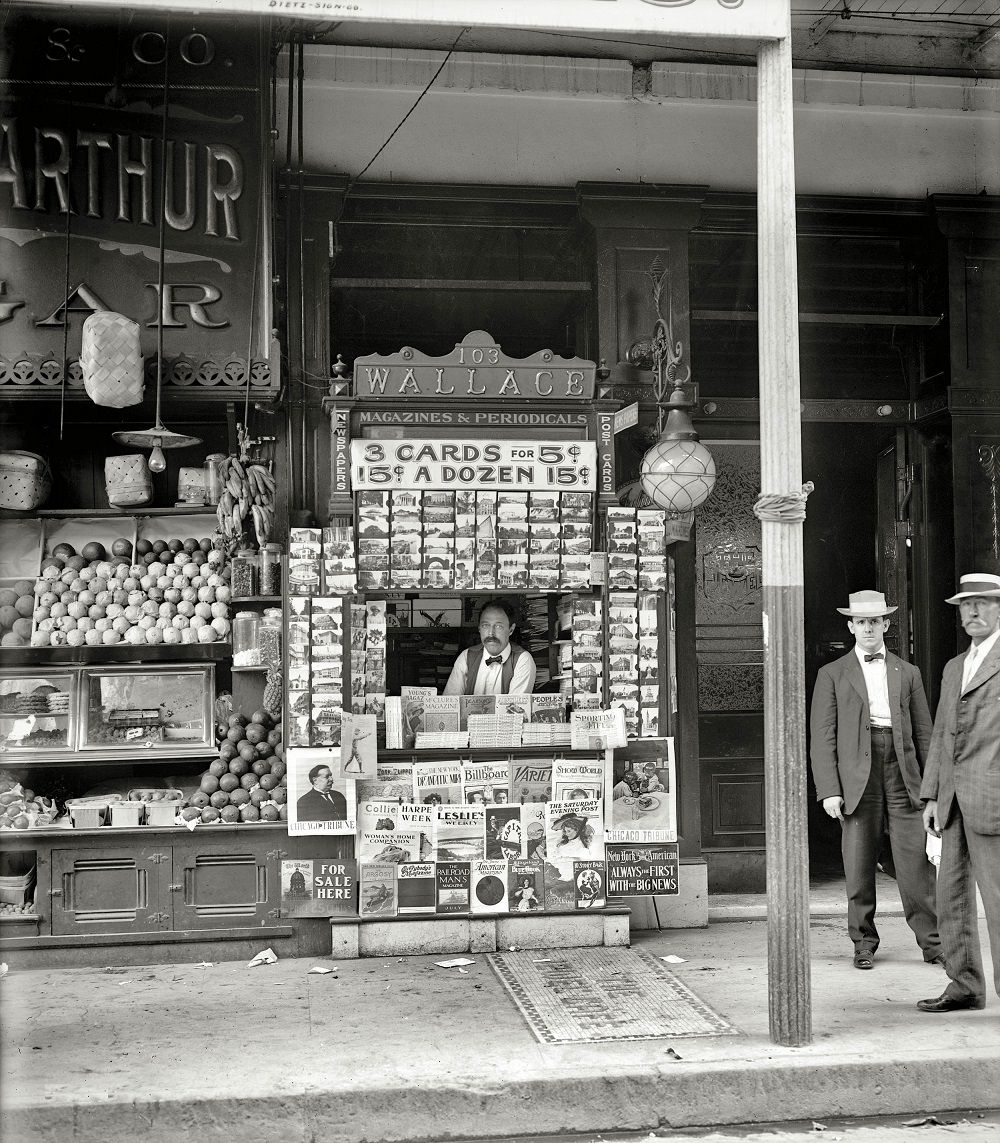
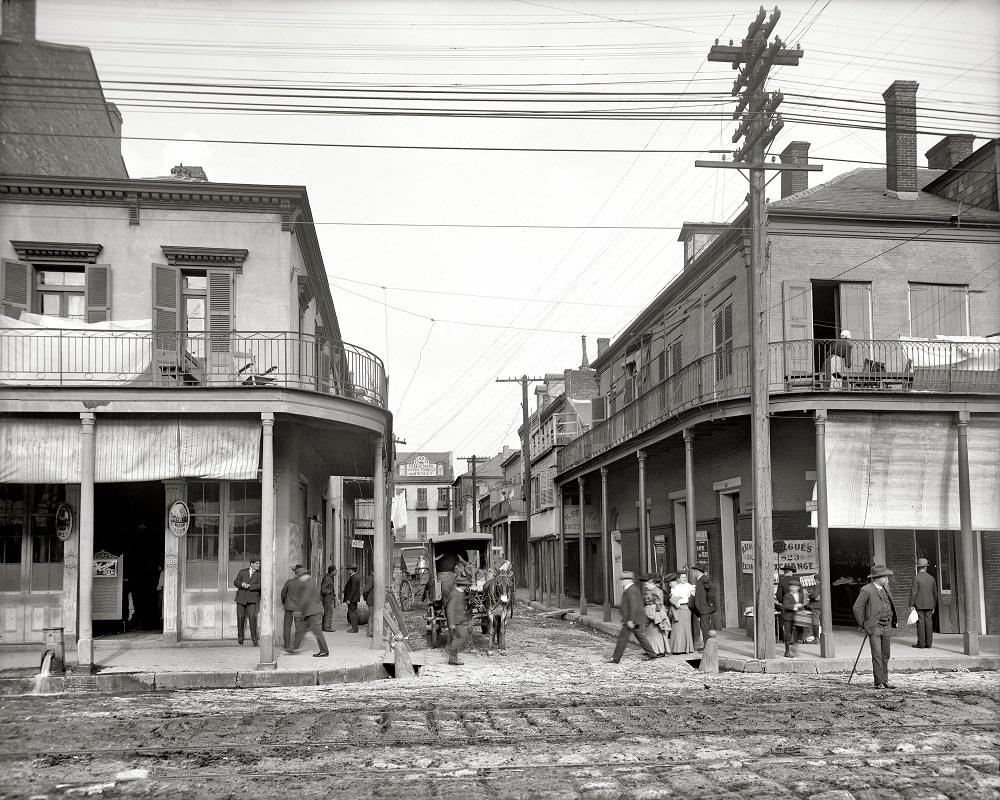
Not all New Orleans commerce operated on a grand scale. At 103 Royal Street stood what was known as the smallest news and postcard stand in the city — a narrow, cramped shop tucked into the French Quarter’s tight urban fabric, selling papers, postcards, and small printed goods to passersby.
The French Market remained a vital institution in New Orleans throughout the early 20th century. Known as the Crescent City, New Orleans relied on the market as a central point of commerce where the city’s diverse population — Creole, American, African, Italian, and more — came together daily to buy and sell.
The horse-drawn milk cart was a daily fixture in New Orleans neighborhoods well into the early 1900s. Dairy delivery routes covered the city’s residential streets each morning, with the cart driver stopping at homes to leave fresh milk in glass bottles or ceramic containers. It was a routine that the city’s residents depended on.
Canal Street in 1907 was a street in visible transition. Electric signs and modern storefronts appeared alongside older commercial buildings, and the electric streetcar had long since replaced animal-drawn cars on the line. The street was both the commercial heart of New Orleans and a showcase of its changing identity.
Mule teams on the New Orleans levee in 1903 hauled cotton bales and barrels between the river steamers and the warehouse district. The animals worked alongside human laborers in conditions that were physically demanding and often dangerous. Despite the growth of mechanized equipment at the docks, mules remained indispensable throughout this period.
Italian immigrants formed one of the largest and most visible communities in early 20th-century New Orleans. By 1906, they had established their own neighborhood institutions, including a community headquarters on Madison Street that served as a gathering place and organizational center for the Italian population of the city.
The French Opera House photographed in February 1900 was still in its prime as the cultural center of New Orleans. Its season drew patrons dressed in formal attire who filled its tiers night after night for opera, ballet, and theatrical performances. The building was destroyed by fire in 1919, making these early photographs all the more valuable.
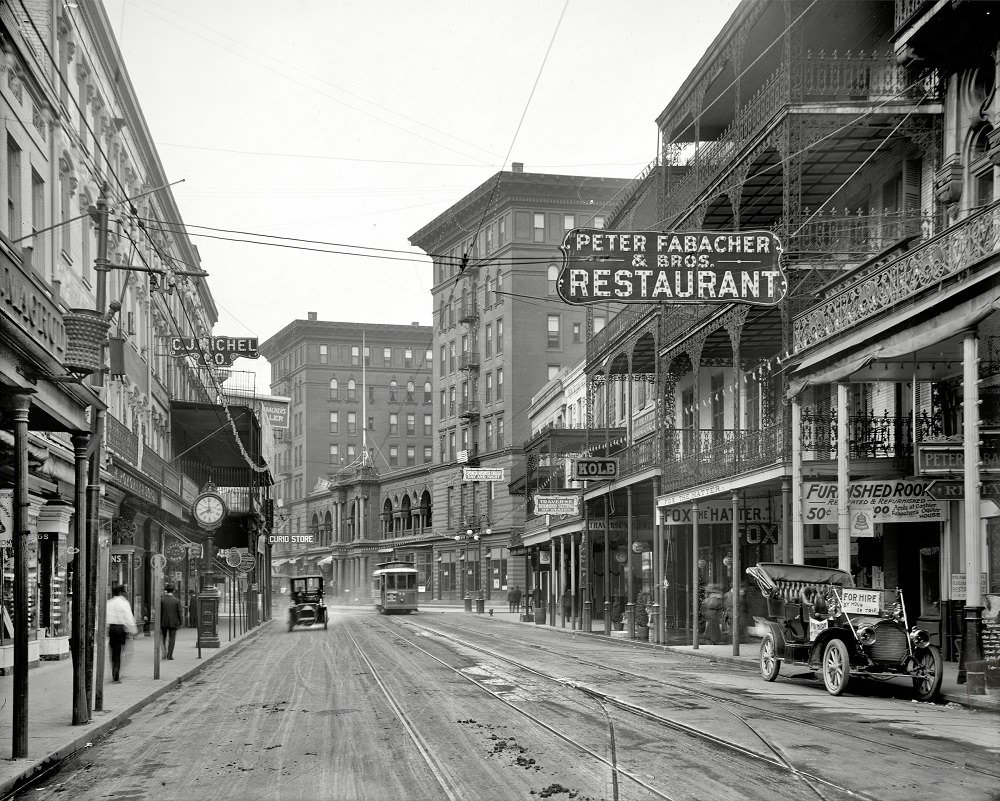
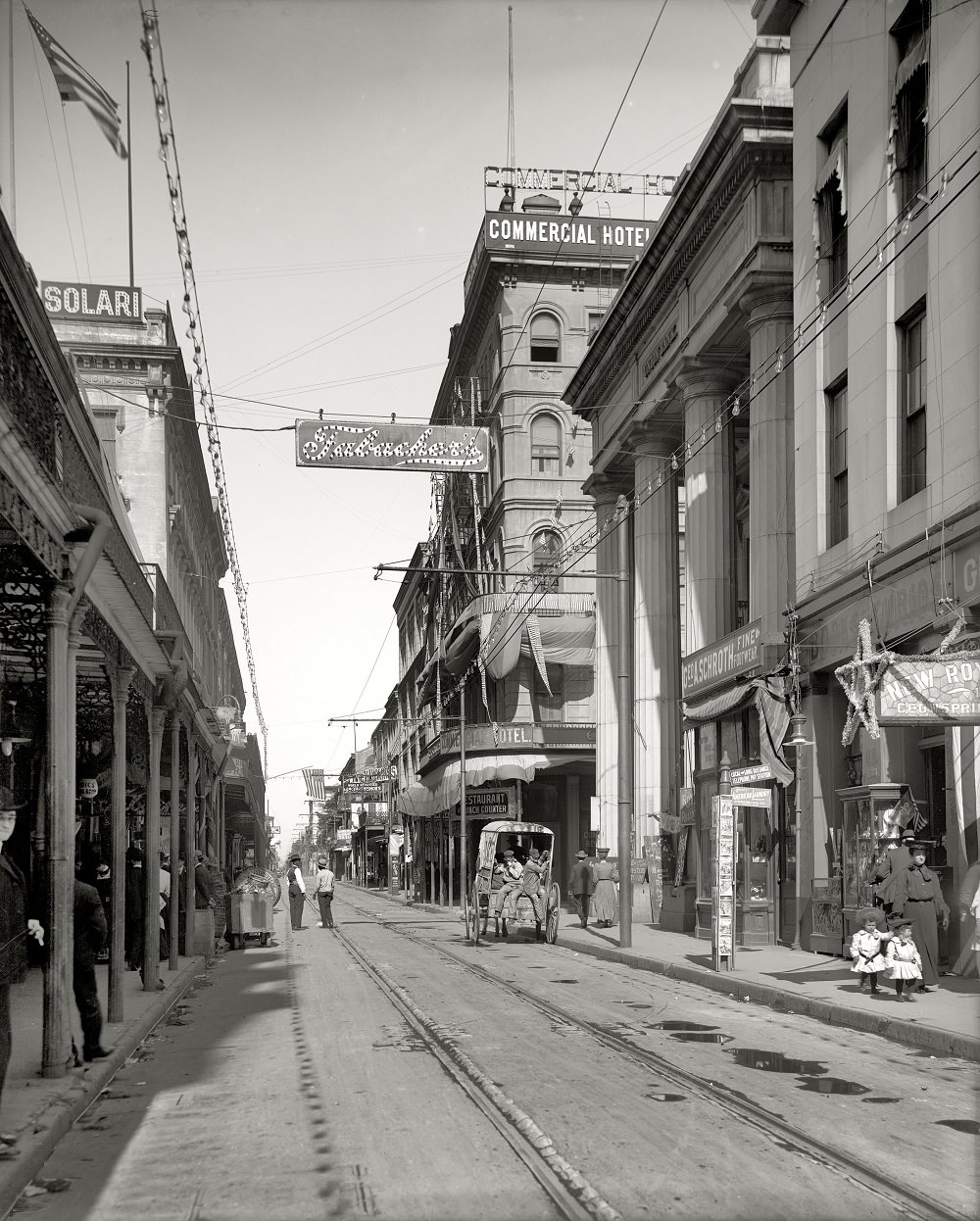
Royal Street in the French Quarter was lined with antique shops, galleries, and ironwork-balconied buildings that made it one of the most visually striking streets in the city. Looking down Royal from Canal Street in 1906 showed a dense corridor of 19th-century commercial buildings stretching toward the older heart of the Quarter.
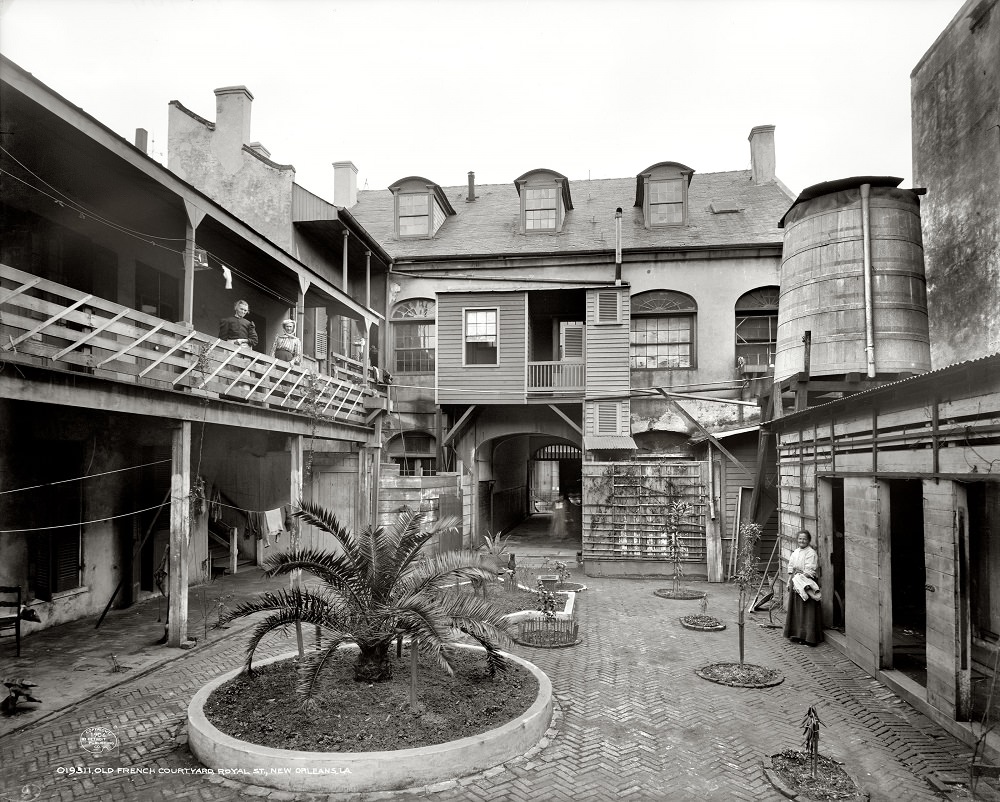
The interior courtyards of Royal Street’s old buildings offered a glimpse into the private world of the French Quarter. These spaces, originally built as service and family areas for the surrounding structures, retained a quiet, enclosed character that contrasted sharply with the busy street life just steps away.
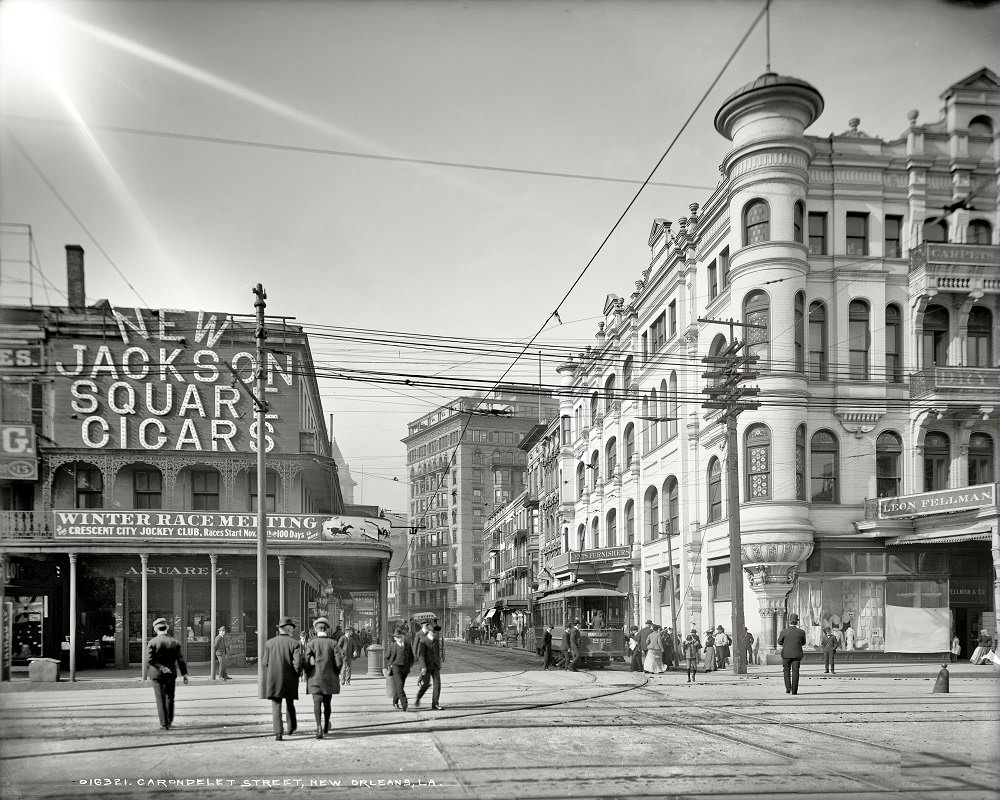
Carondelet Street in 1905 was the city’s financial and legal hub. Banks, law offices, and business firms occupied its buildings, and it served as the address of choice for New Orleans’ professional community. The street ran parallel to St. Charles Avenue and formed the commercial backbone of the central business district.
The Napoleon House on Chartres Street took its name from a legend — that the building was prepared as a refuge for Napoleon Bonaparte, who was to be rescued from his exile on St. Helena. Though the plan never came to fruition, the name stuck, and by 1905 the building was already one of the French Quarter’s most storied addresses.
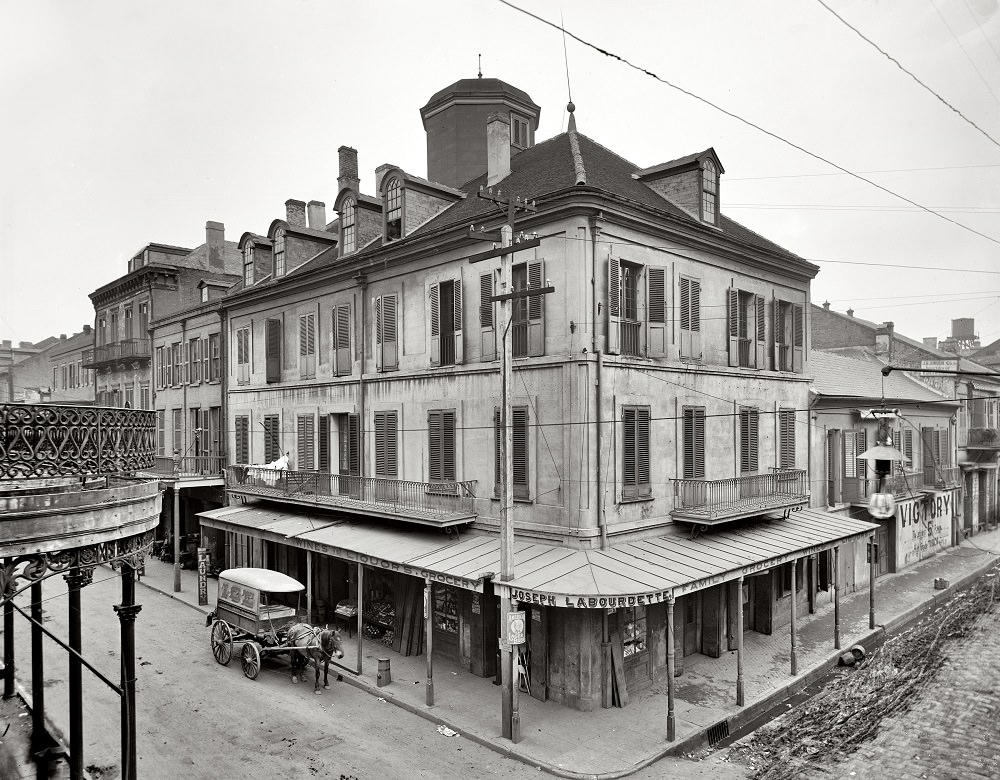
Canal Street in 1903 showed a city that was bustling but still shaped by the previous century. Awnings shaded pedestrians along the sidewalks, horse-drawn vehicles competed with early streetcars for road space, and the mix of building styles reflected decades of growth layered on top of each other.
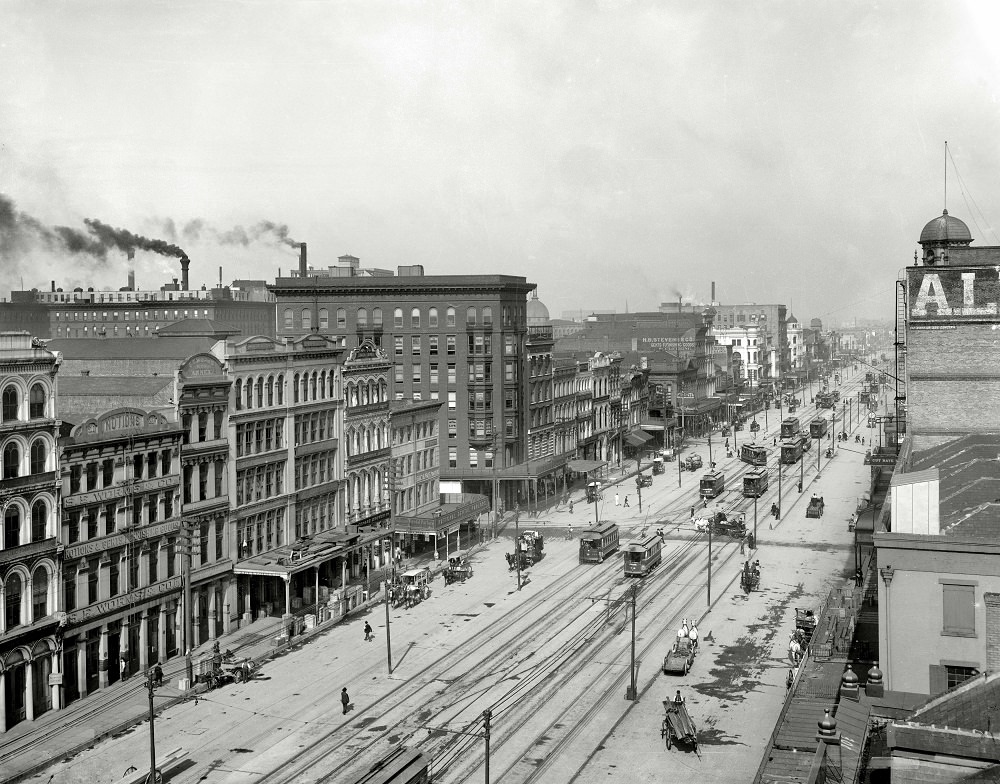
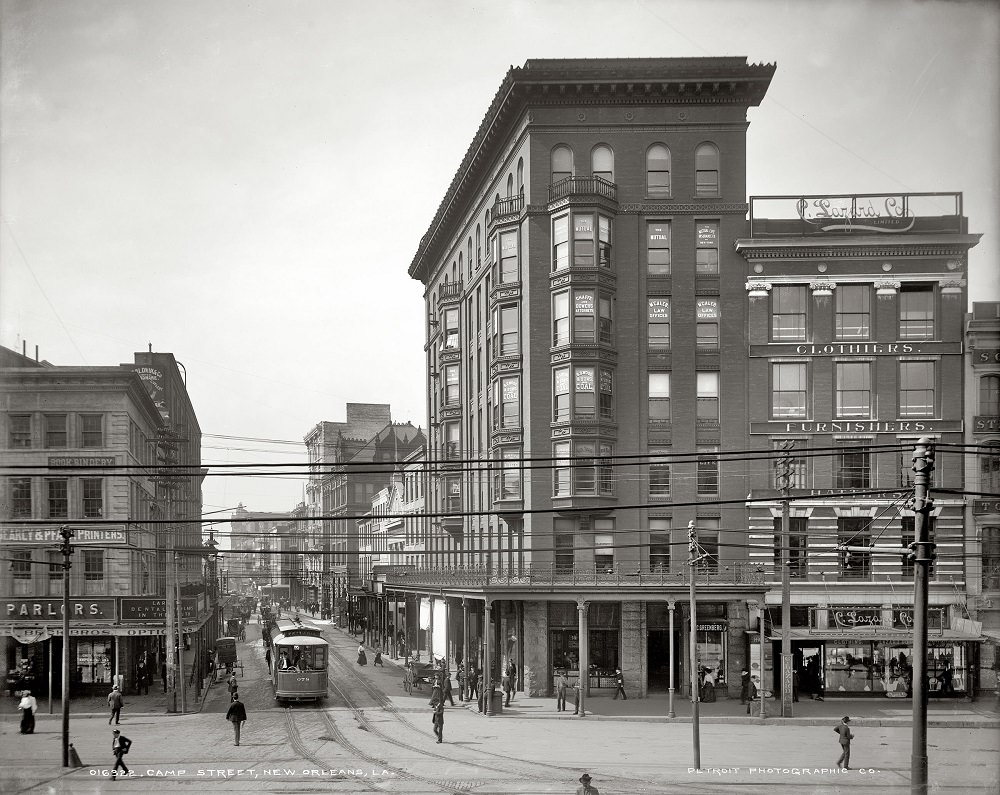
Camp Street in 1905 ran through the American sector of New Orleans, the part of the city that had been developed by Anglo-American settlers in the 19th century. Its commercial buildings and offices gave it a different character from the Creole architecture of the French Quarter just a few blocks away.
The New Orleans milk cart of 1903 was a practical and simple operation. A single horse provided the pulling power, while the driver managed deliveries across a defined neighborhood route. The cart itself was a purpose-built vehicle, designed to carry milk cans securely over the uneven streets of the city.
Esplanade Street in 1900 marked the boundary between the French Quarter and the Faubourg Marigny neighborhood. Lined with Creole cottages and larger townhouses, it was a prestigious residential address whose wide, tree-shaded median gave it an air of elegance distinct from the commercial streets nearby.
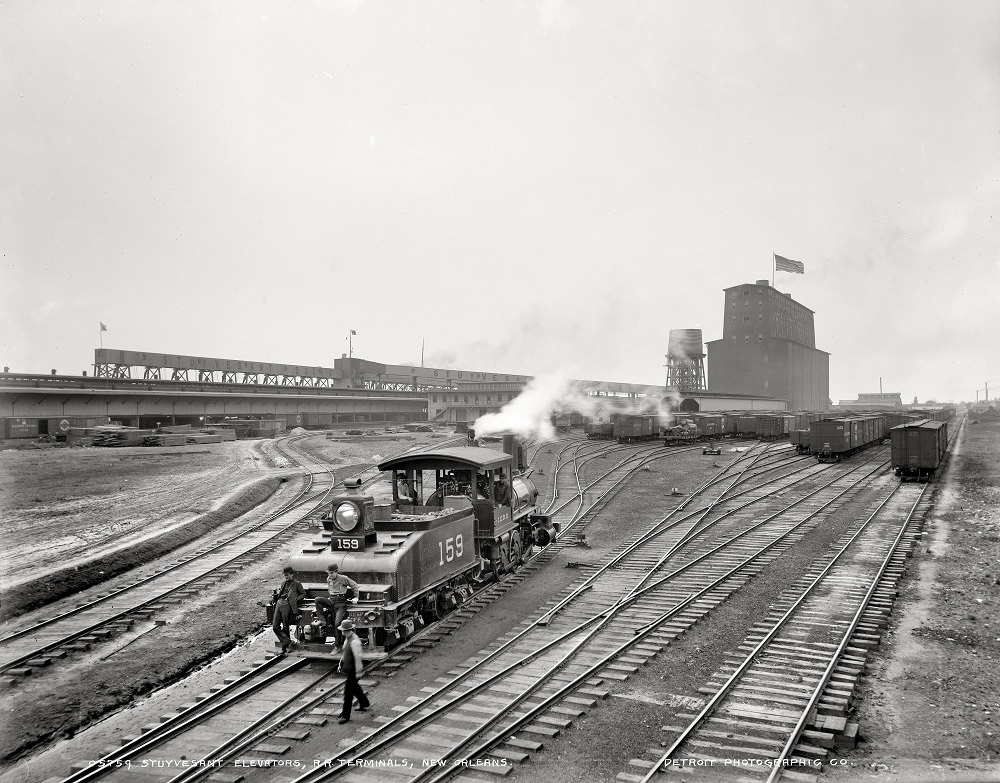
The Stuyvesant Docks and their associated grain elevators were a major industrial complex on the New Orleans waterfront in 1900. Combined with railroad terminal facilities, they formed one of the largest cargo-handling operations on the lower Mississippi. The infrastructure here helped move millions of tons of American agricultural output to markets around the world.
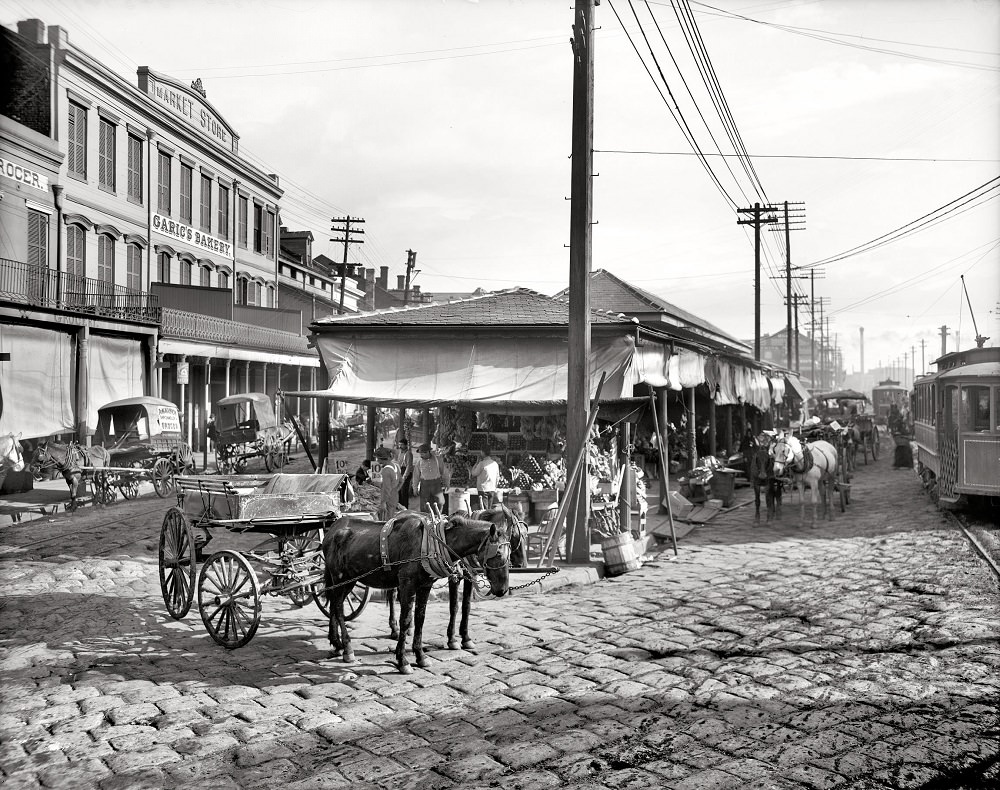
The French Market in 1910 was a sprawling complex of covered sheds and open stalls that extended along the riverfront near the foot of the French Quarter. Vendors sold produce, seafood, meats, and prepared foods to a clientele that reflected the city’s multicultural makeup.
Mardi Gras in 1900 was already a highly organized festival with distinct krewes, parades, and traditions. The Red Pageant was one of the many themed presentations that made up the Carnival season, staged for the enormous crowds that gathered along the parade routes and in the public squares of the city.
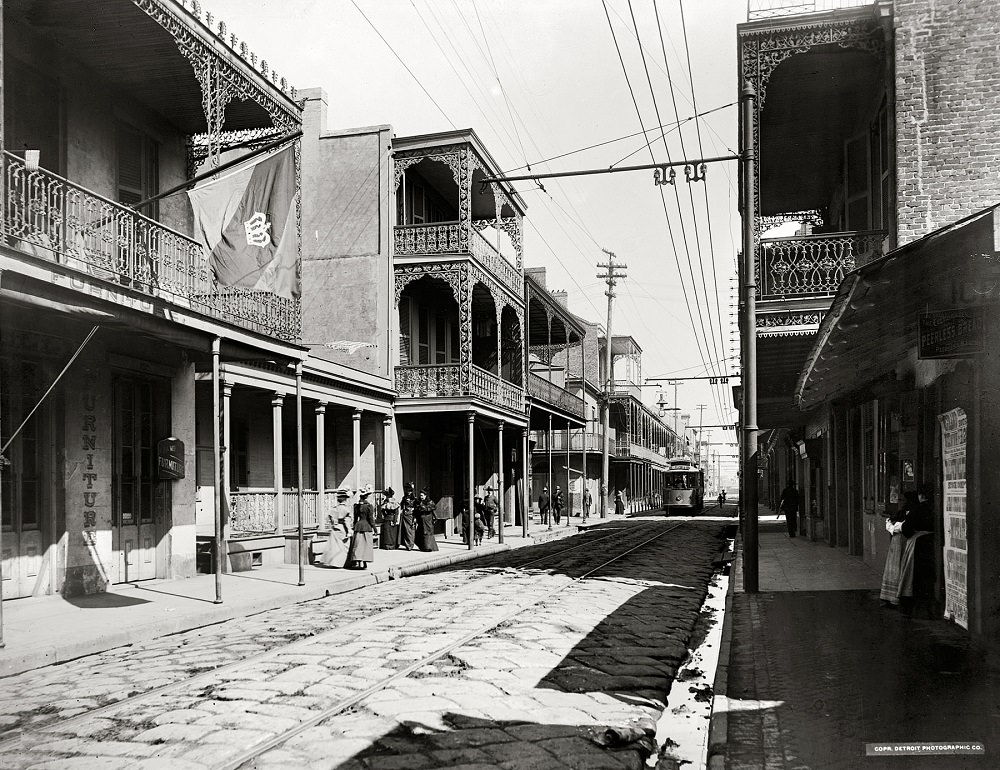
Royal Street at the turn of the century was a street defined by its architecture — ornate cast-iron balconies, wide shuttered windows, and stucco-finished facades that gave the French Quarter its most recognized visual identity. By 1900, many of these buildings were already over a hundred years old, yet they remained occupied and in active use.





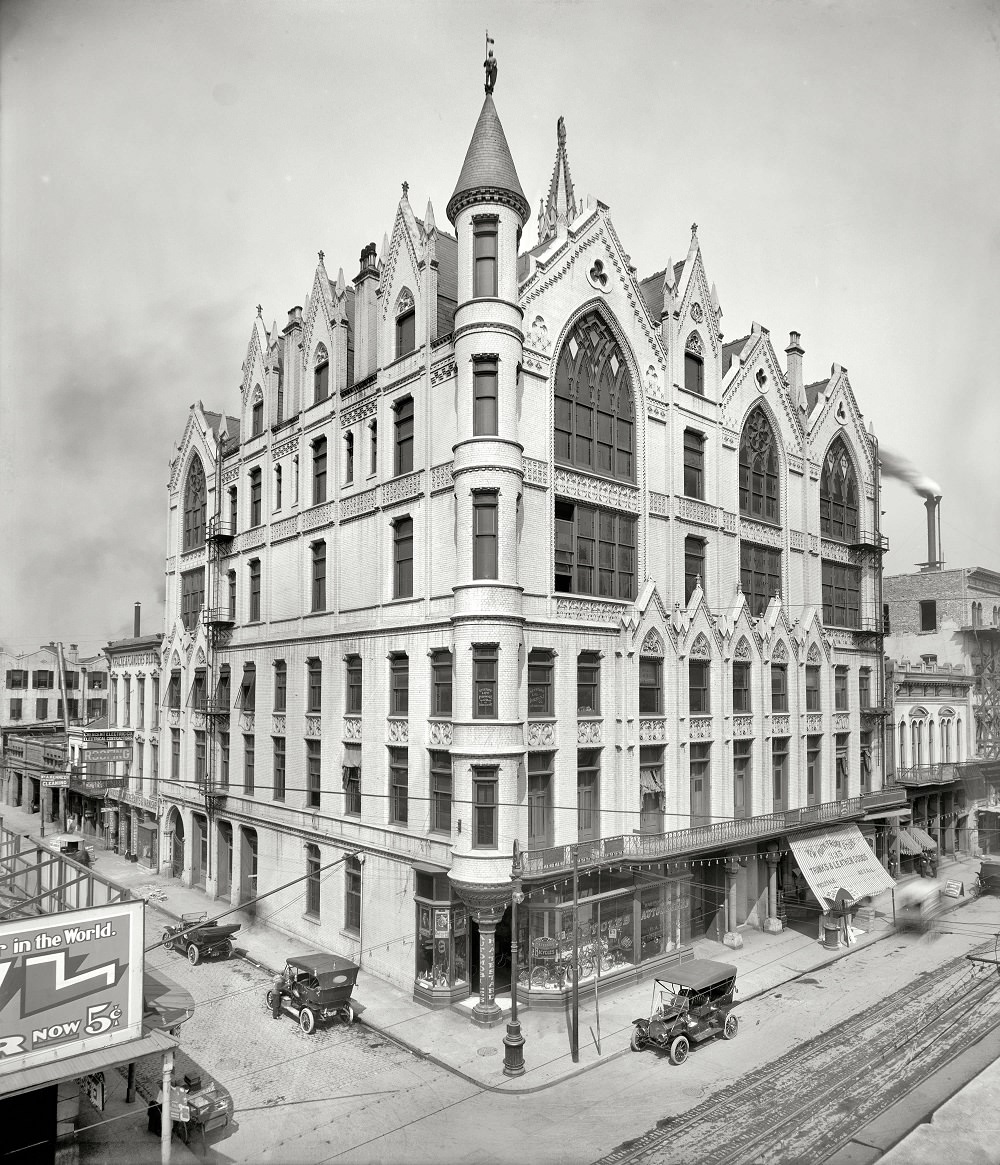
Anybody know why the Masonic Temple and Canal Terminal were torn down?
Although it seems so long ago, this is very close to the New Orleans that my grandmother grew up in (and she’s still alive).
I can’t not get upset every time I see evidence of our deleted streetcar and passenger rail system. Unimaginable that people thought sitting in traffic, in your own automobile, was progress.
Street cars and passenger rail aren’t profitable. Having every single individual buy a car and all the maintenance and accessories and insurance associated with it is profitable. Thats why the street car systems and public rail is gone.
Clearly the most profitable enterprise back then was selling hats 🎩. I can’t find a single human without one in all those photos.
I was expecting the same old photos that get regurgitated on this sub every so often, nice to see some I haven’t seen before.
Notwithstanding the often brutal realities of life a century ago, the city looked gorgeous before the advent of cheap construction and soulless office towers. Ramshackle, but gorgeous.
The relentless “blanding” of our cities is visible everywhere in the US, of course. New Orleans did a better job than most at preserving its historic architecture.
These are absolutely wonderful wonderful. Thanks for sharing.