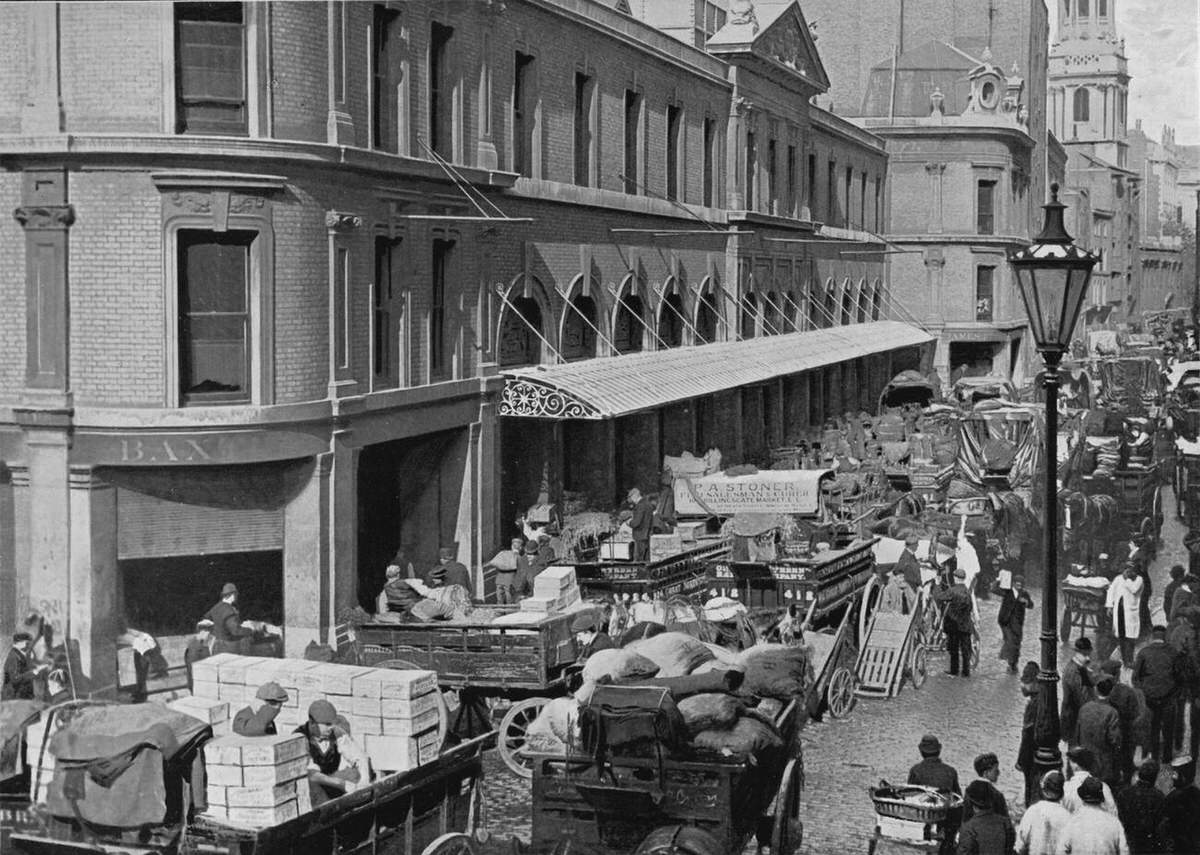
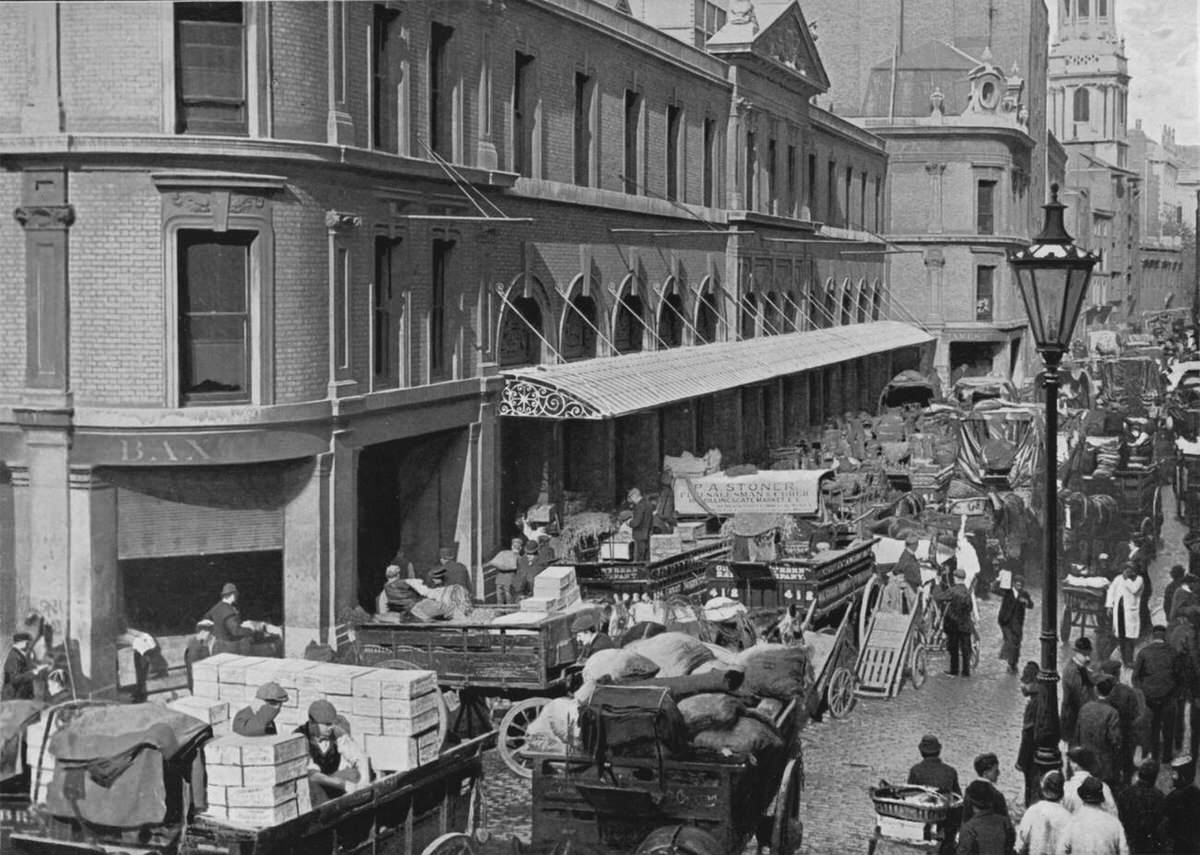
Old Billingsgate Fish Market stood on the north bank of the River Thames along Lower Thames Street, and for centuries it served as the beating heart of London’s seafood trade. The market began as a general wharf for all kinds of goods but had specialized in fish by the 16th century. In 1875, a grand new building designed by Sir Horace Jones opened to keep pace with the enormous volume of trade. Built from yellow brick and stone, it featured iron columns, a glass roof that flooded the hall with natural light, and large statues of Britannia and dolphins crowning the roofline.
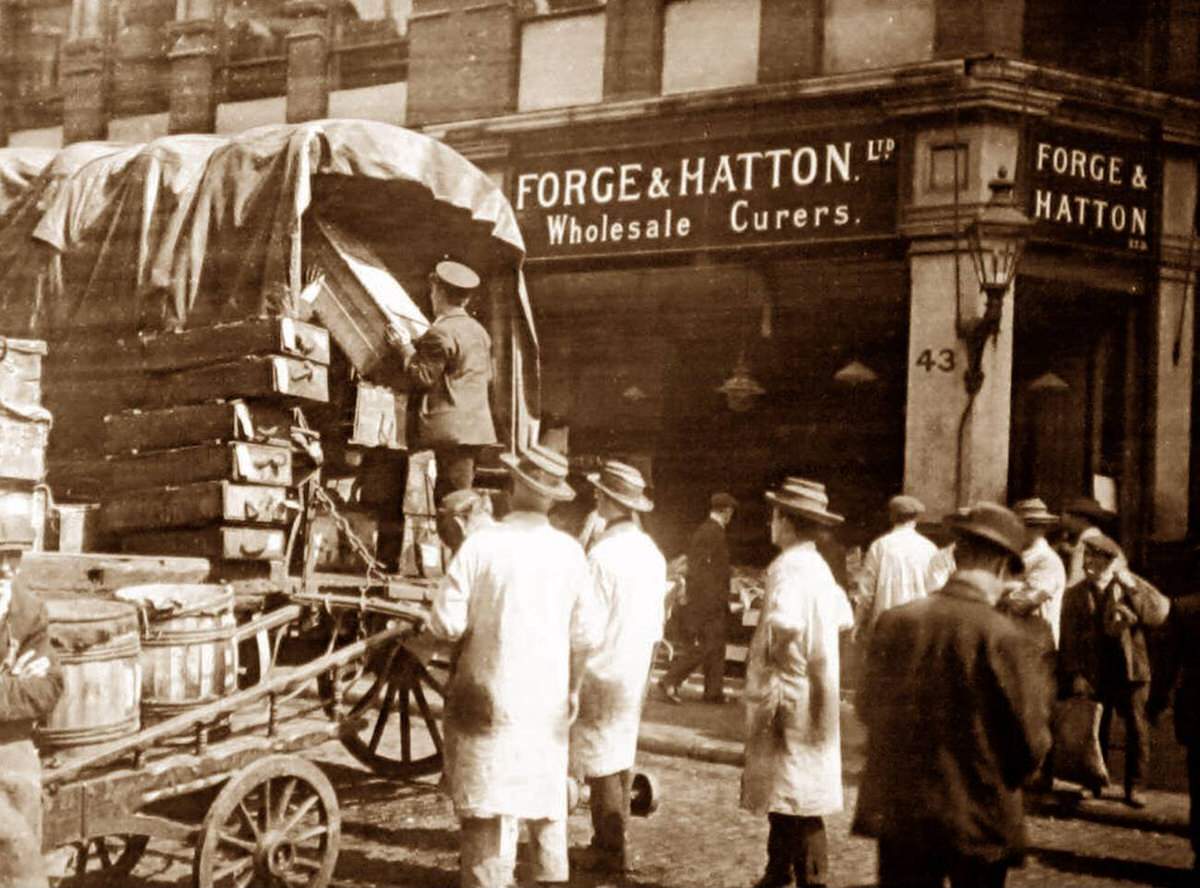
Forge and Hatton wholesale fish curers at Billingsgate Market, 1890
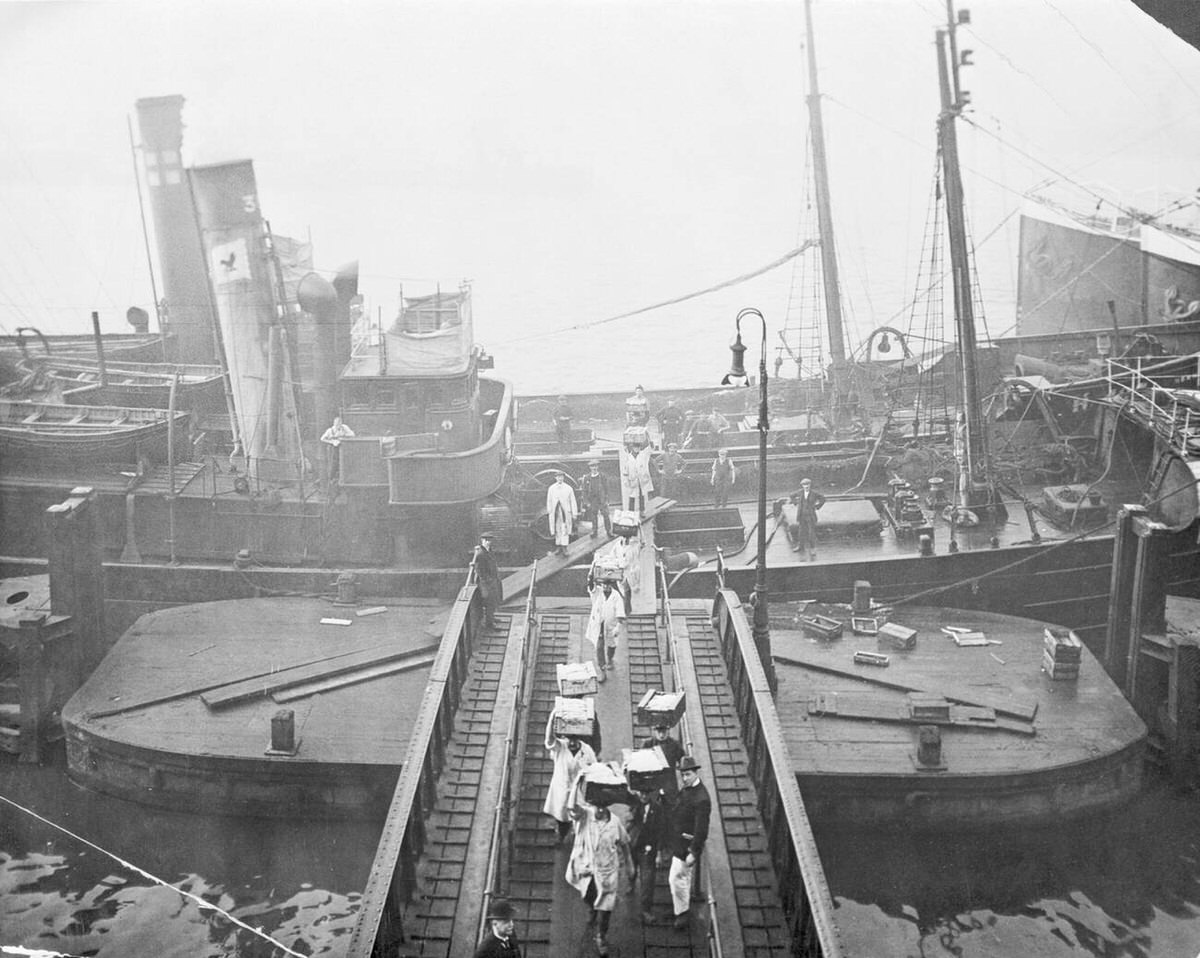
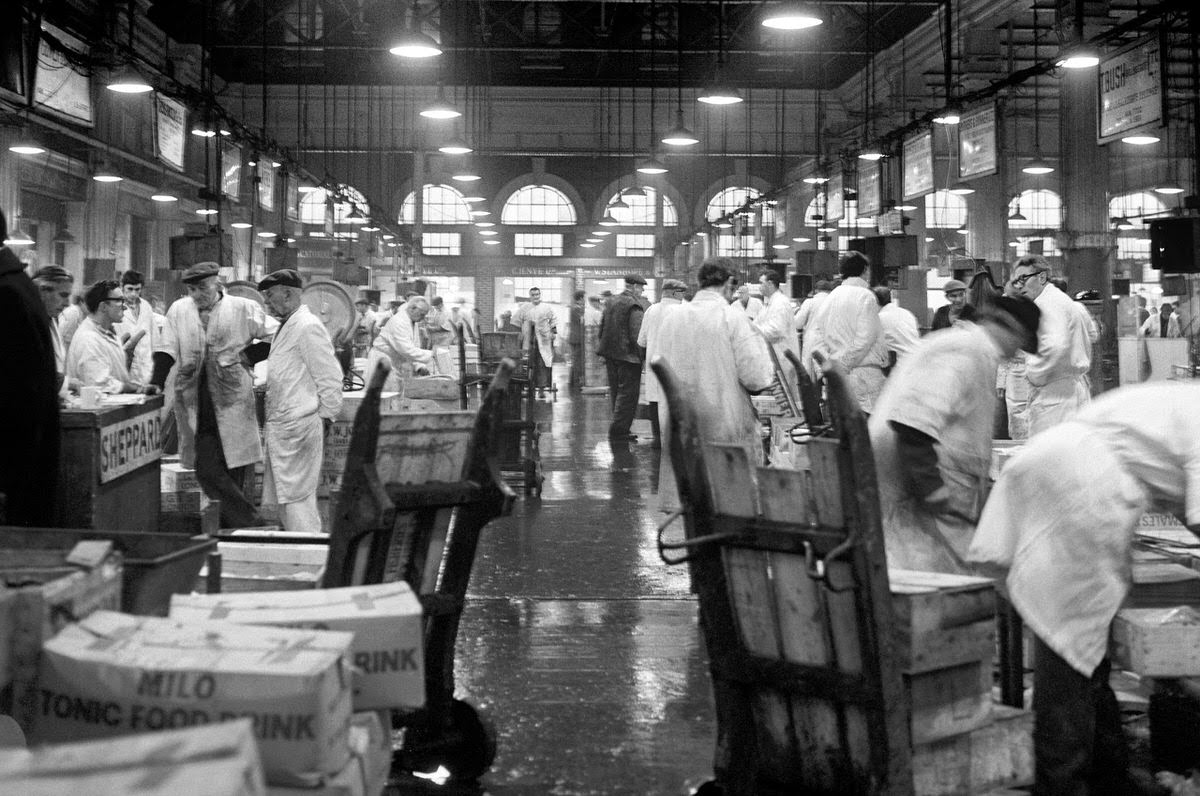
Trading began well before dawn every day. At five o’clock each morning, the “selling bell” rang to open business. Fish arrived by boat at the riverside quay and by train at nearby stations. The main hall was kept cold and wet to preserve the catch, and the air carried a thick smell of salt and fish that drifted into the surrounding streets.
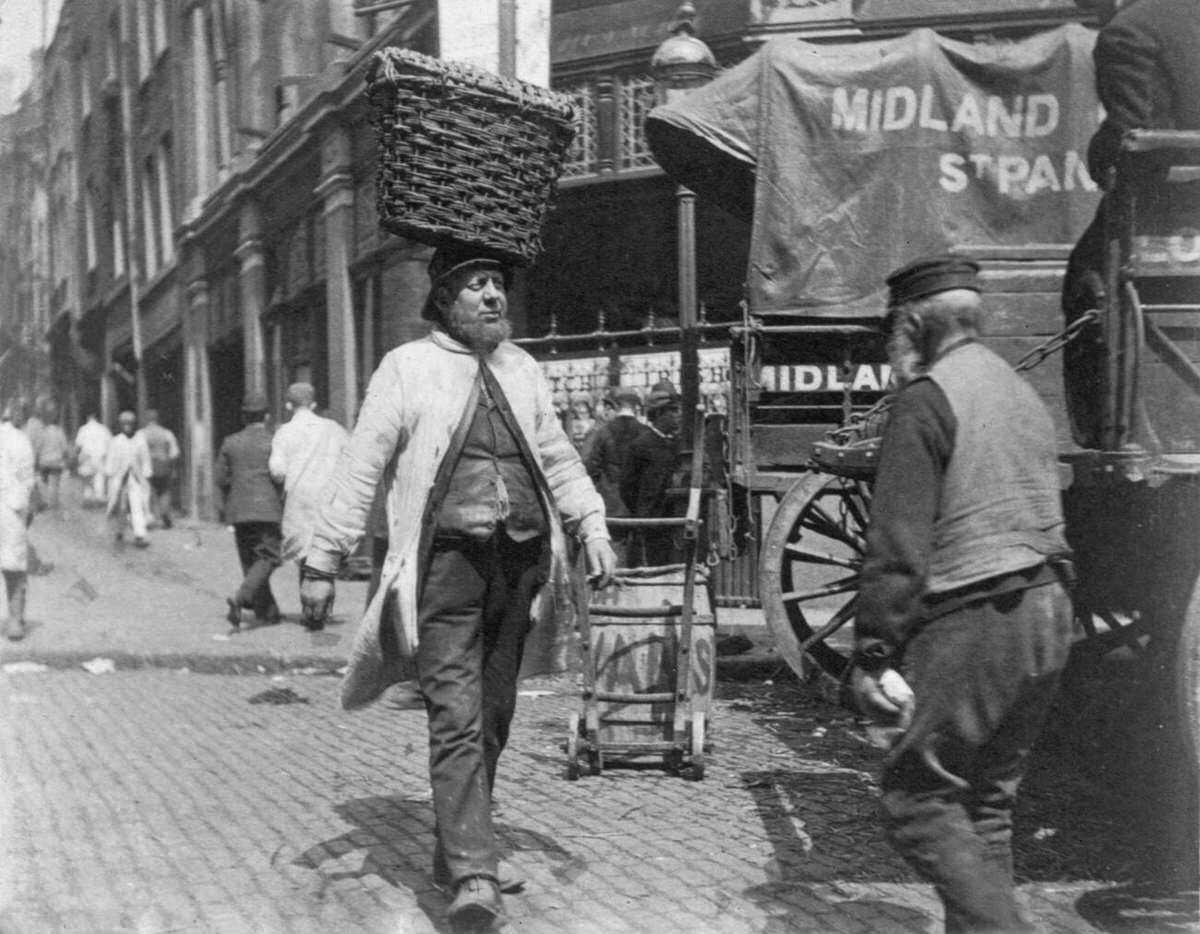
Fish porters at Billingsgate Market, 1893Billingsgate Market, 1893
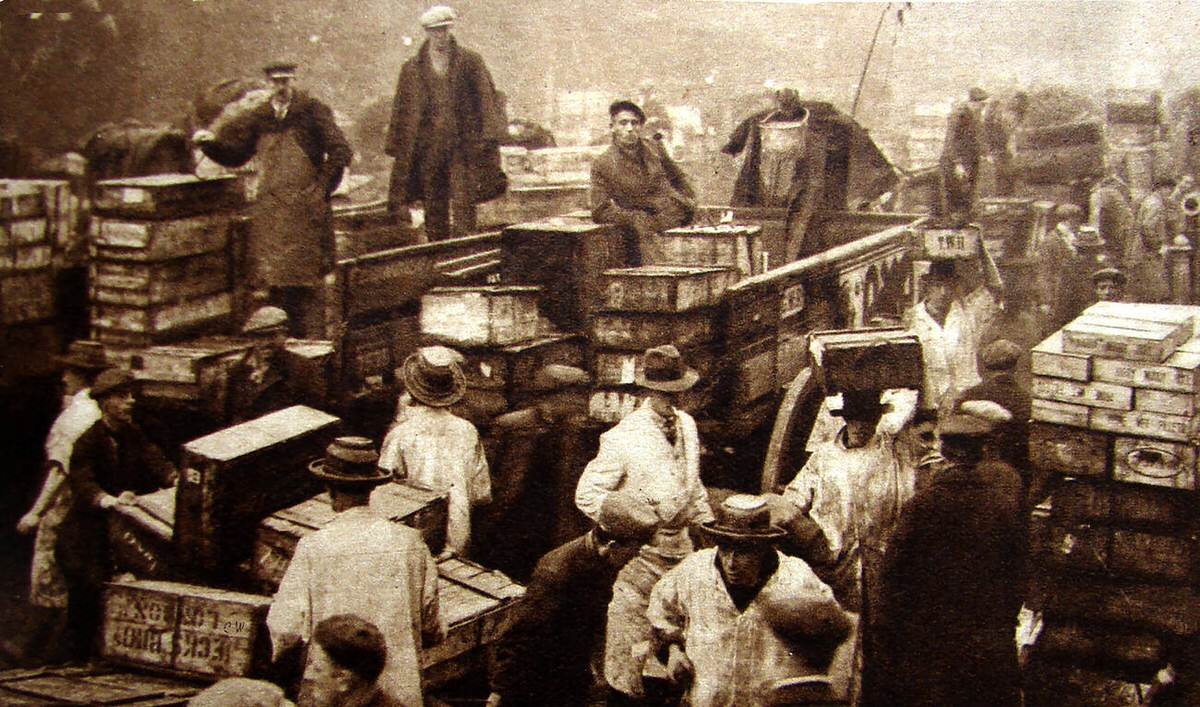
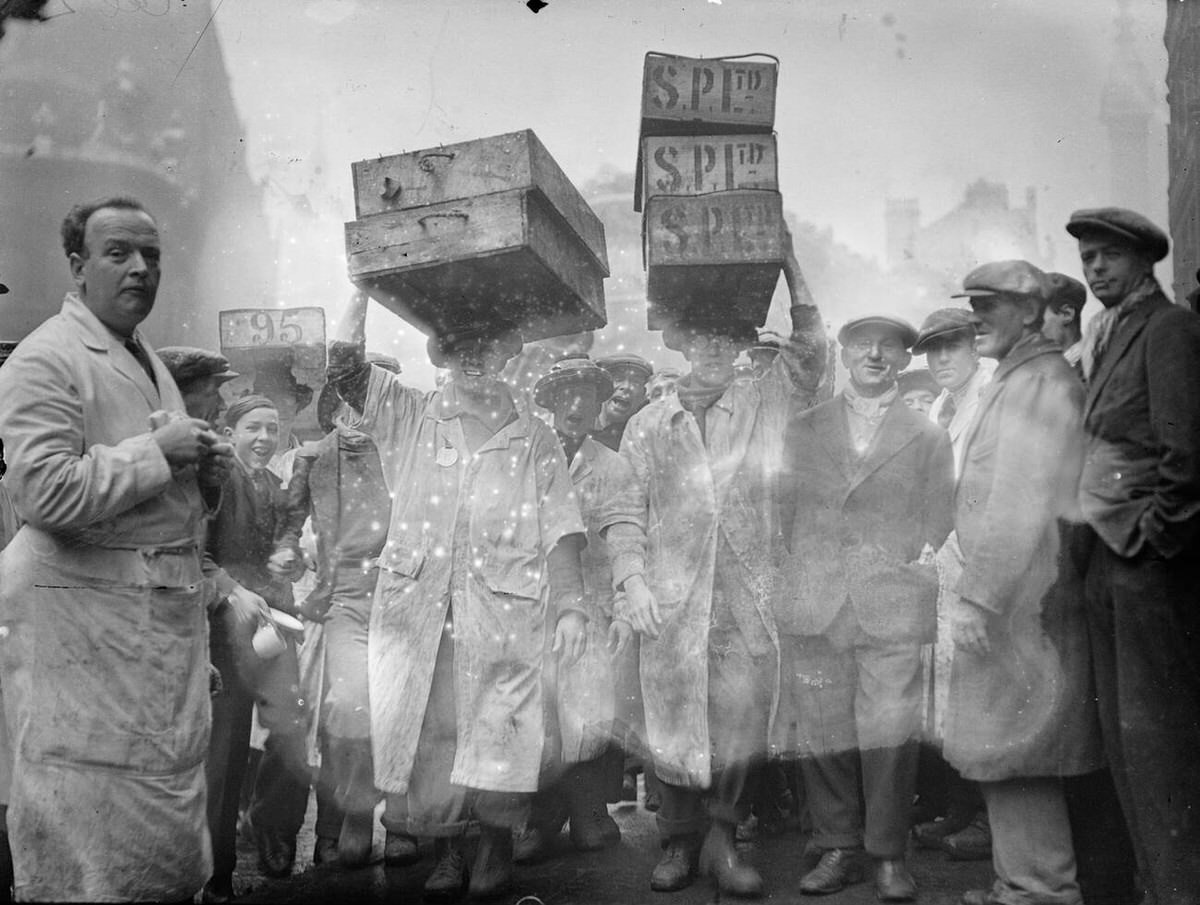
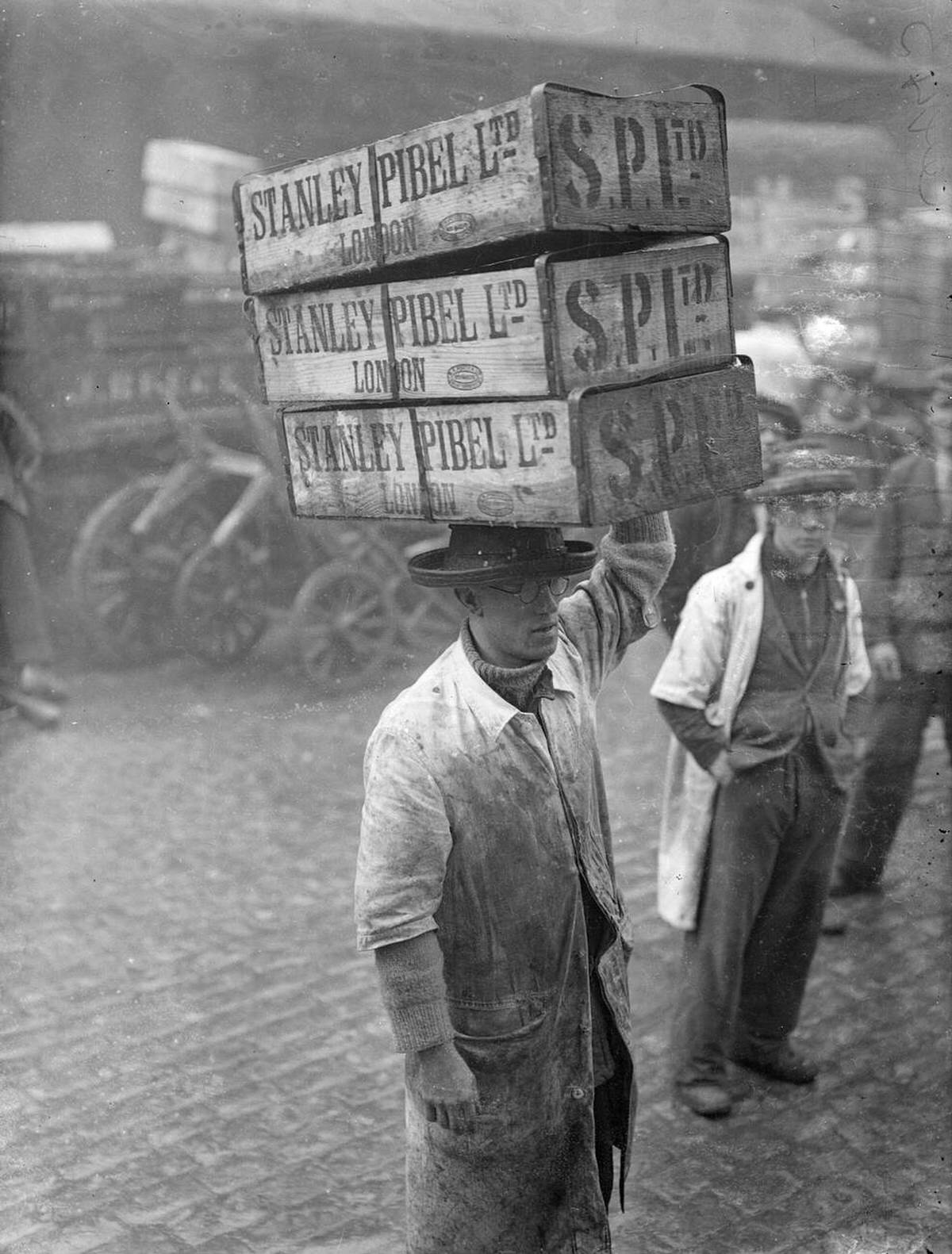
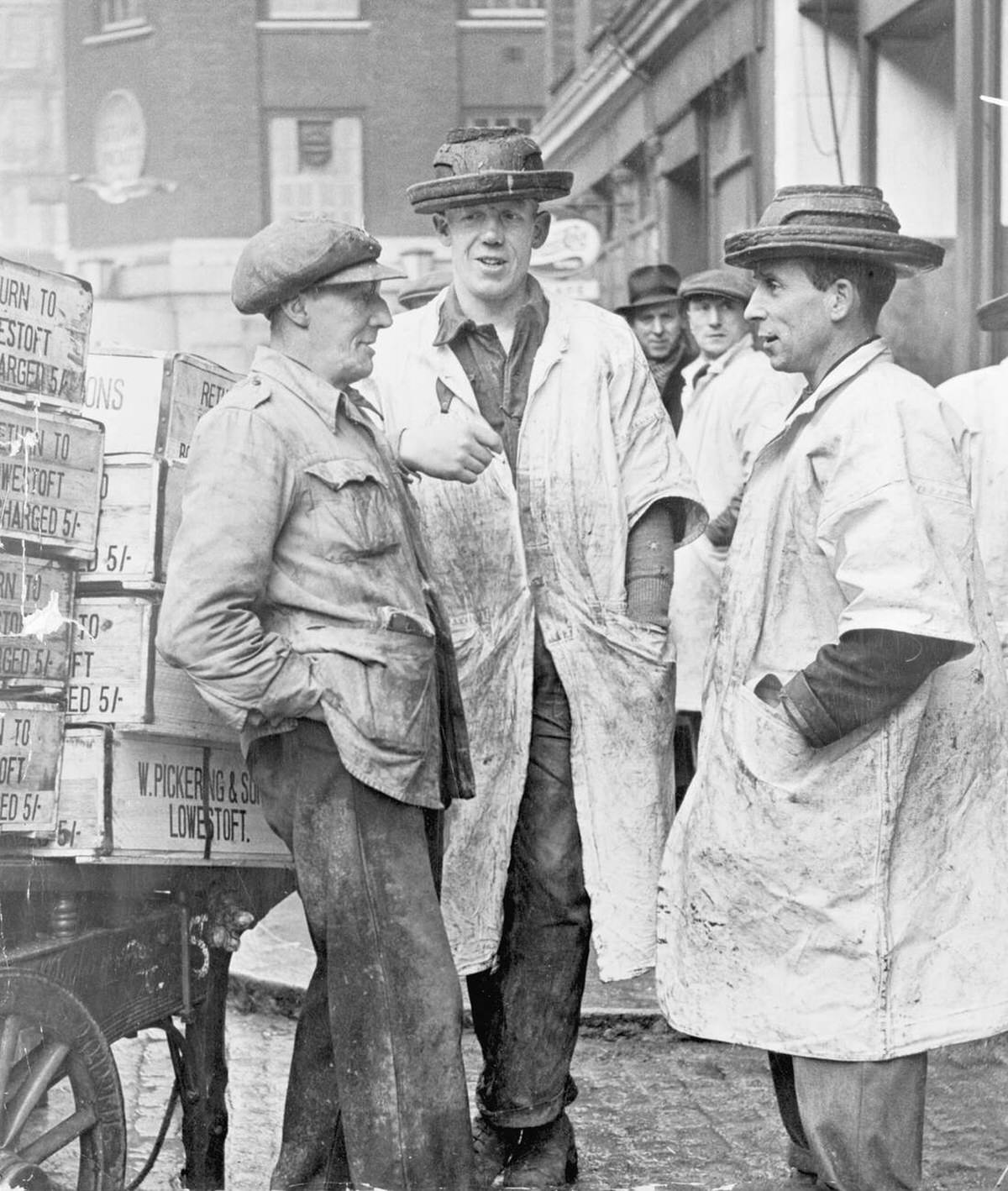
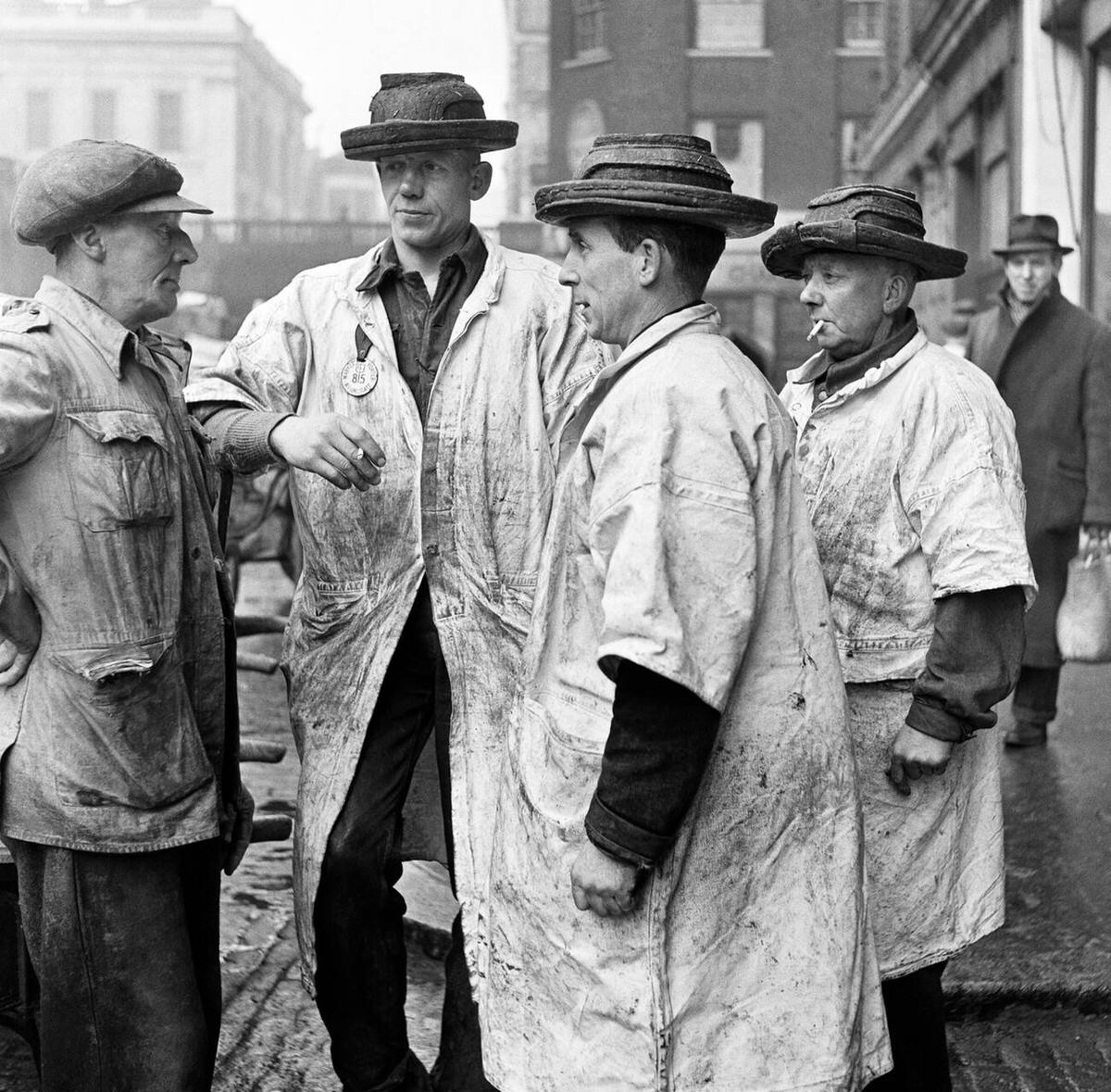
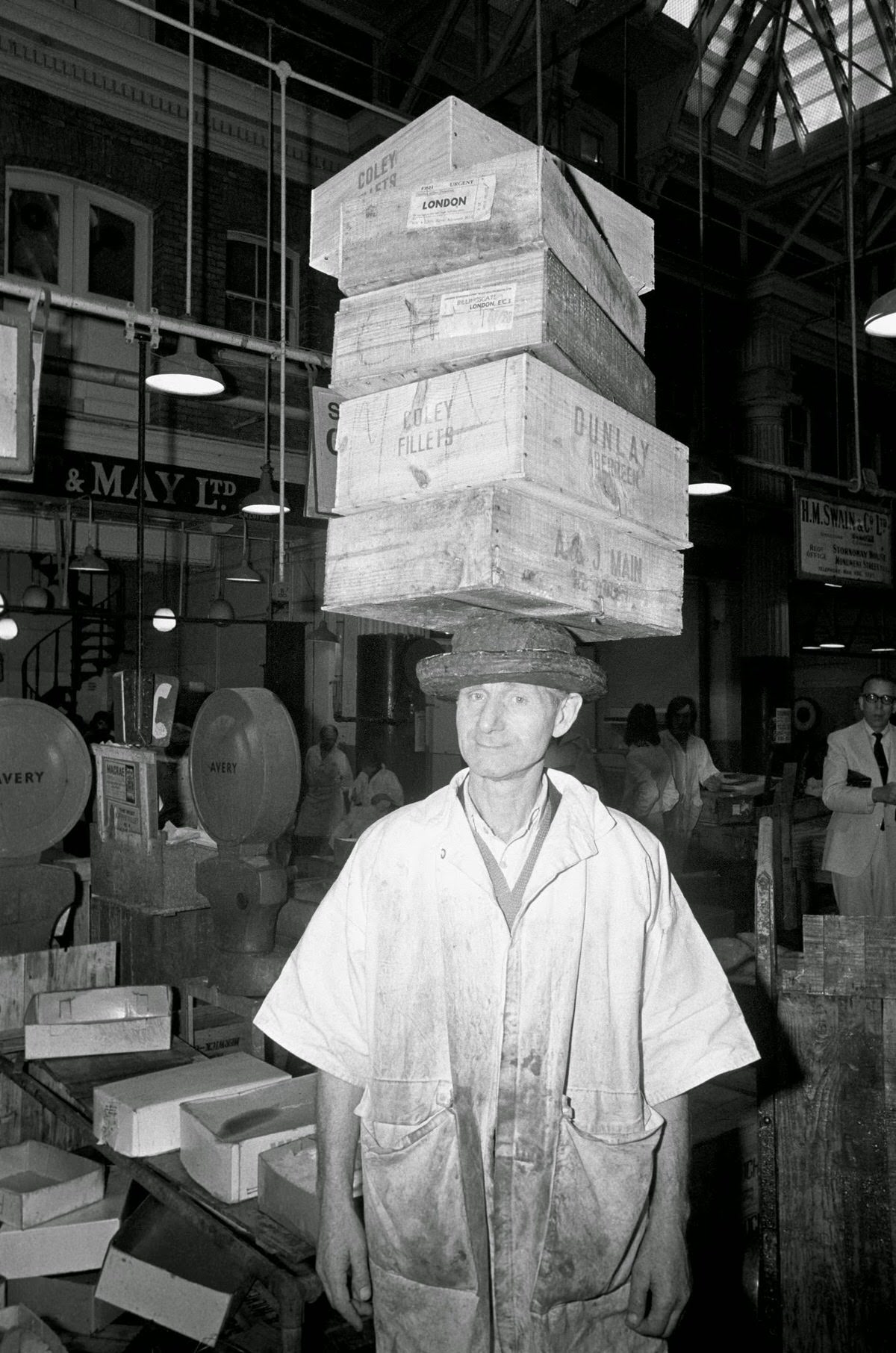
The men who moved the fish were known as fish porters, and they were one of the most recognizable sights in the City of London’s early mornings. They wore heavy leather helmets called “bobbing hats” with flat tops designed to balance two or three stacked crates of fish — loads that could reach 100 pounds — directly on their heads. This method let them move quickly through narrow, slippery aisles without blocking one another.
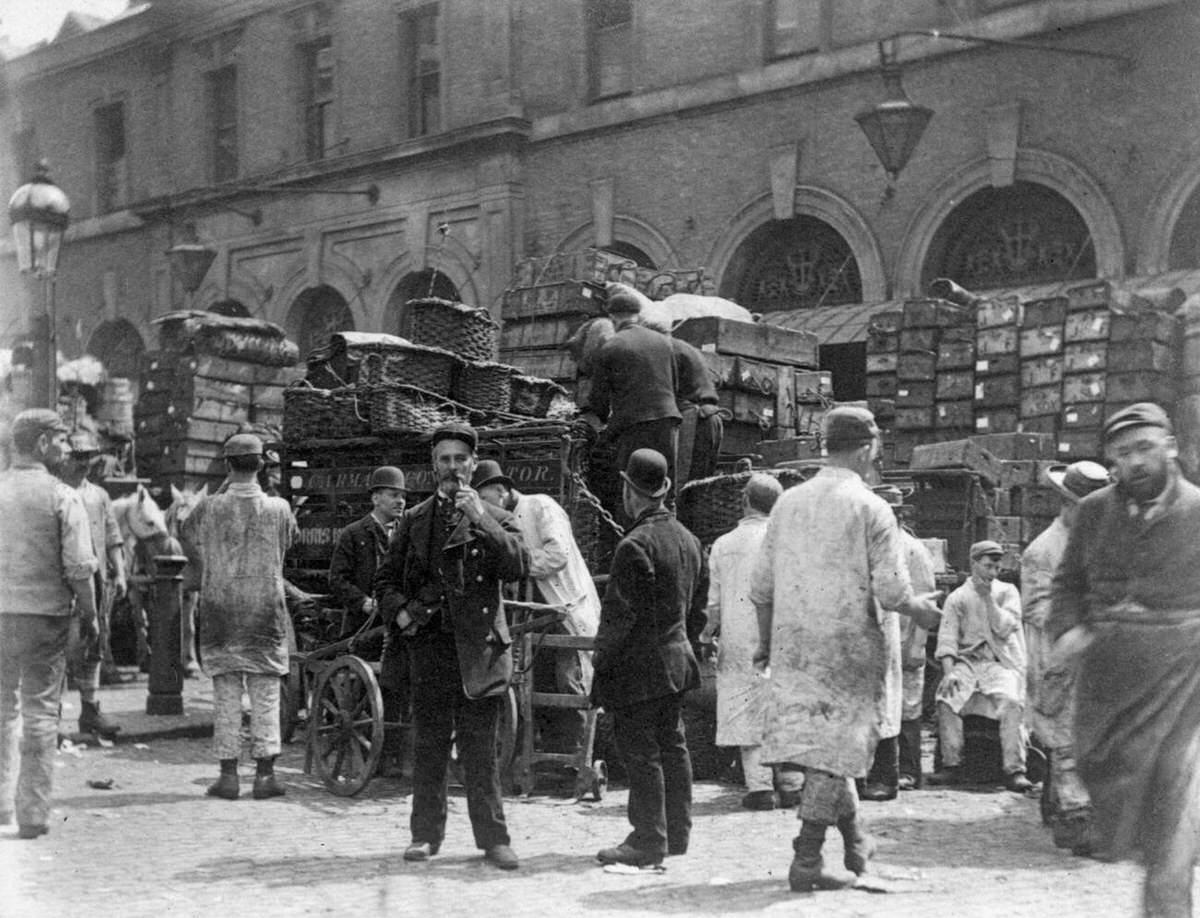
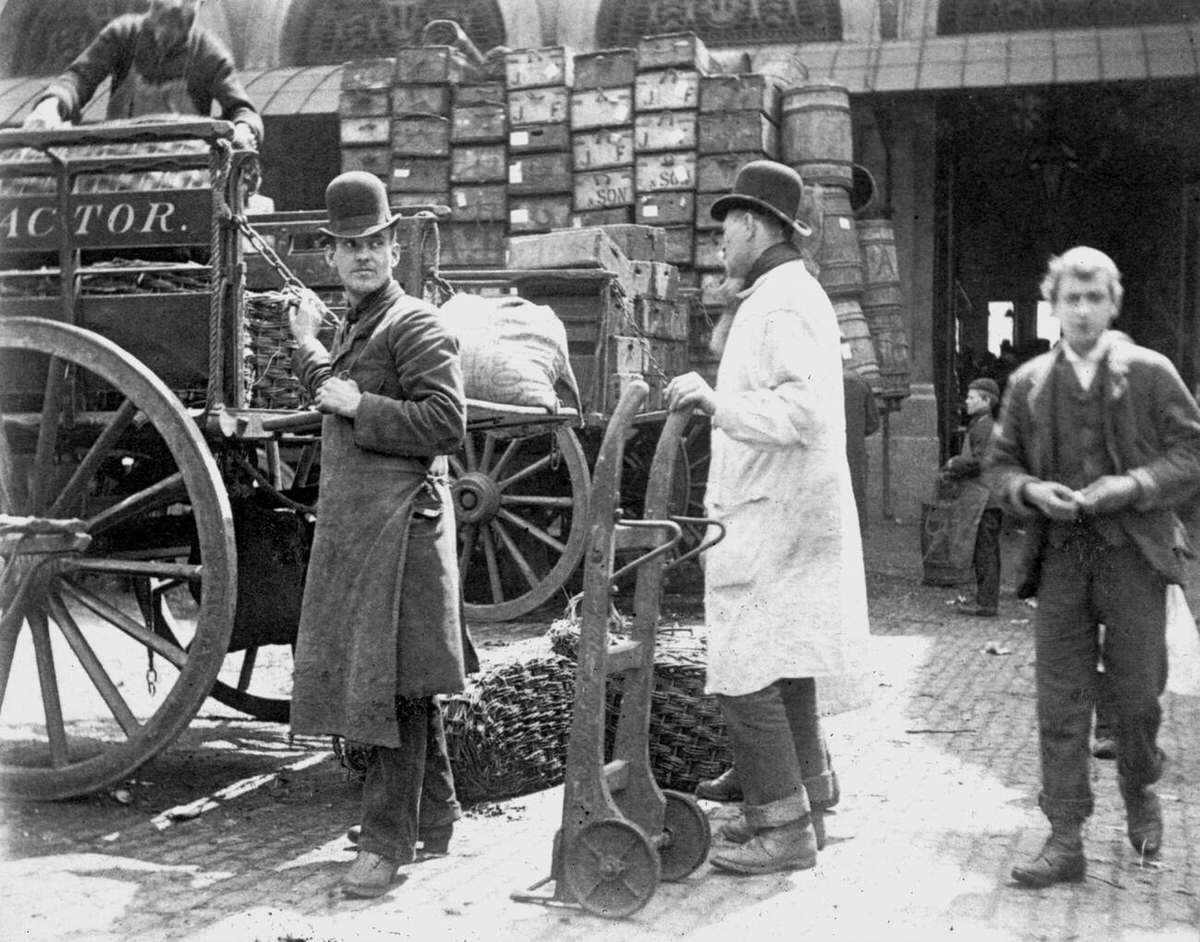
Unloading at Billingsgate Market, 1893Billingsgate Market, 1911Billingsgate Market, 1911
Porters held special licenses to operate inside the market, and many followed their fathers and grandfathers into the trade. The work was relentless — constant shouting filled the hall as men called out prices and directions above the noise of crates scraping across wet stone floors.
Unloading a fishing boat at Billingsgate Market, 1923Billingsgate Fish Market, 1926
The range of seafood on offer was vast. Merchants sold Scottish salmon, Thames eels, and shellfish from the English coast. Buyers from restaurants and grocery stores walked the aisles inspecting every catch, checking for clear eyes and bright scales as signs of freshness. Speed mattered above everything — fish spoils fast, and the whole operation was built around moving product before it lost value.
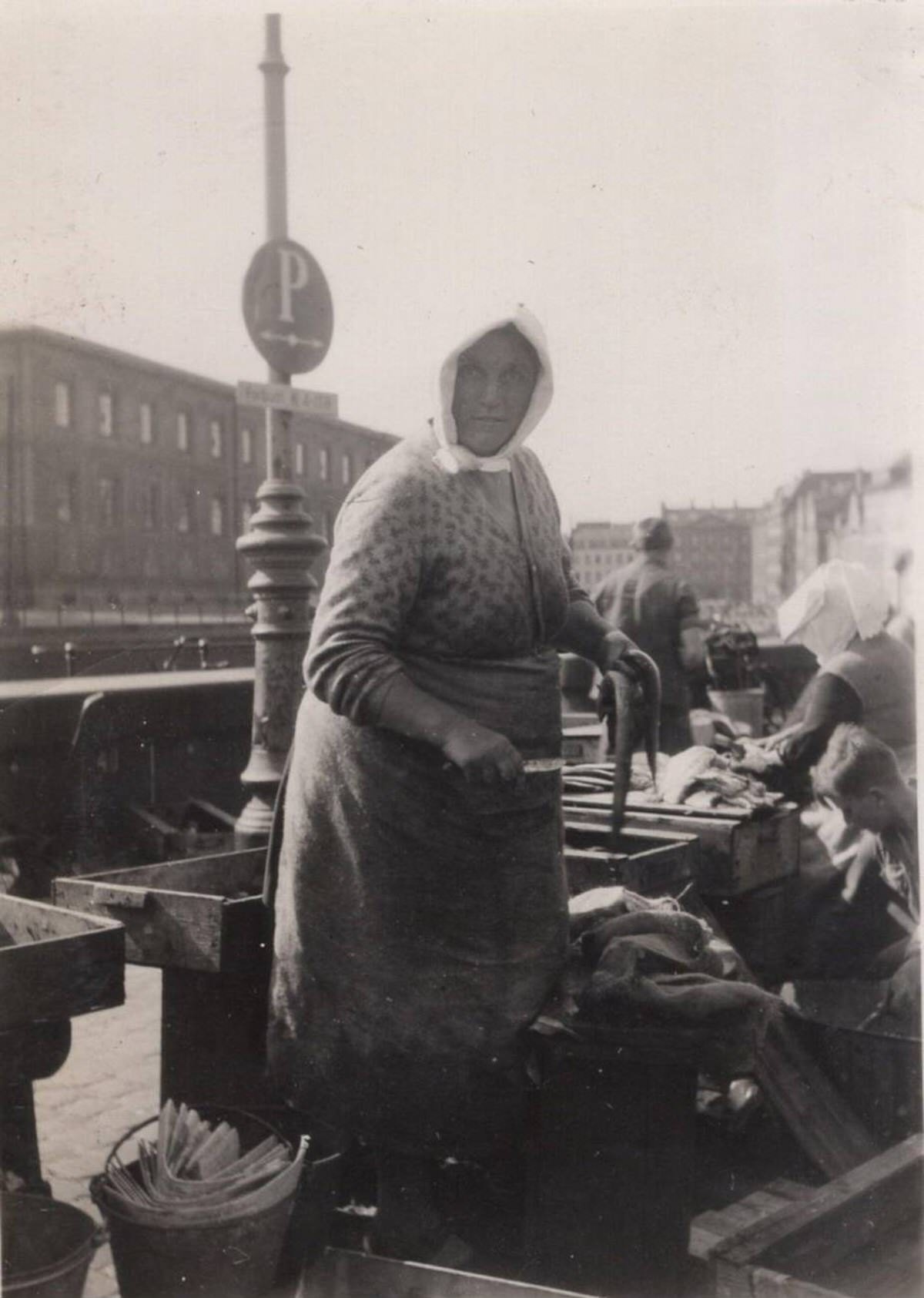
Fish porters in Billingsgate, 1926Porters loading and unloading fish at the original Billingsgate Fish Market, 1930Fishmonger holding an eel and a knife at a fish market, 1930Busy scene at the old Billingsgate Fish Market, 1930
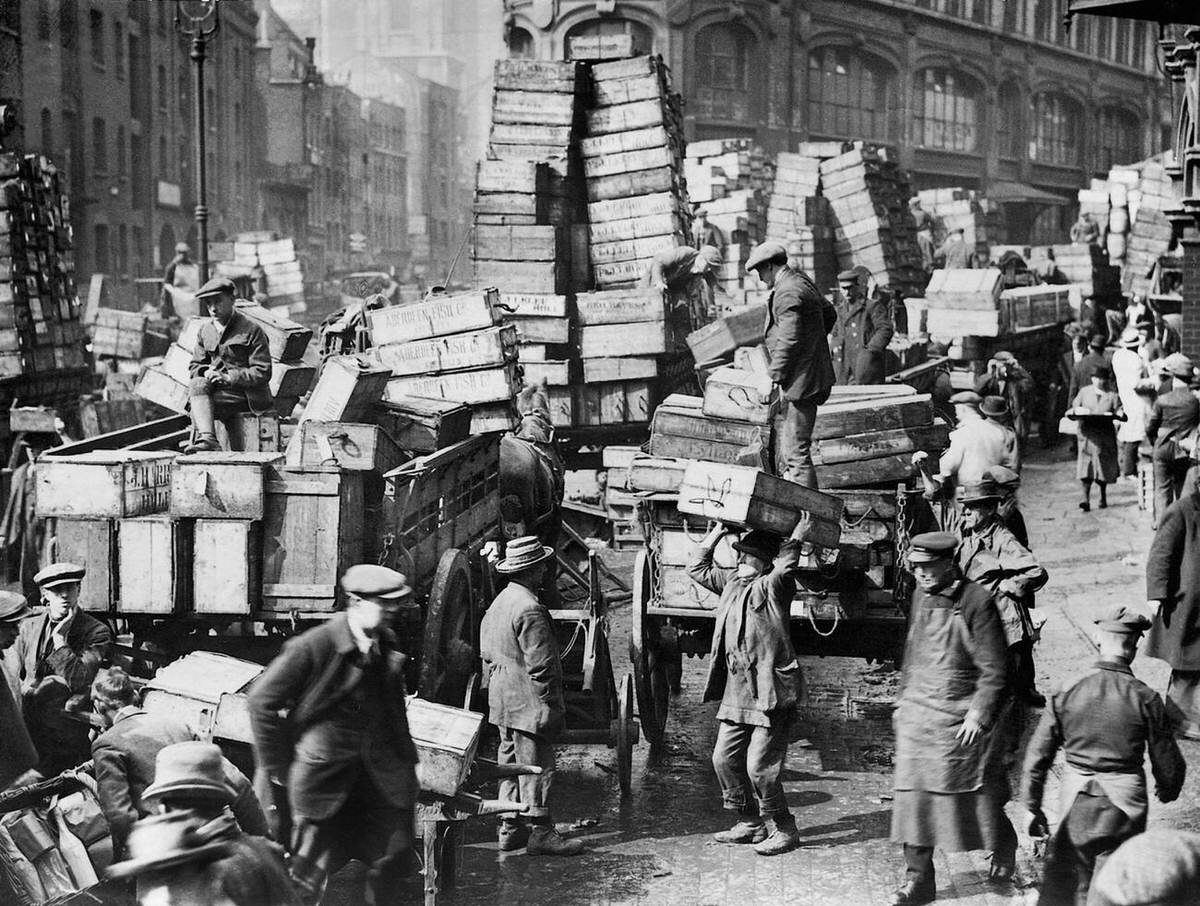
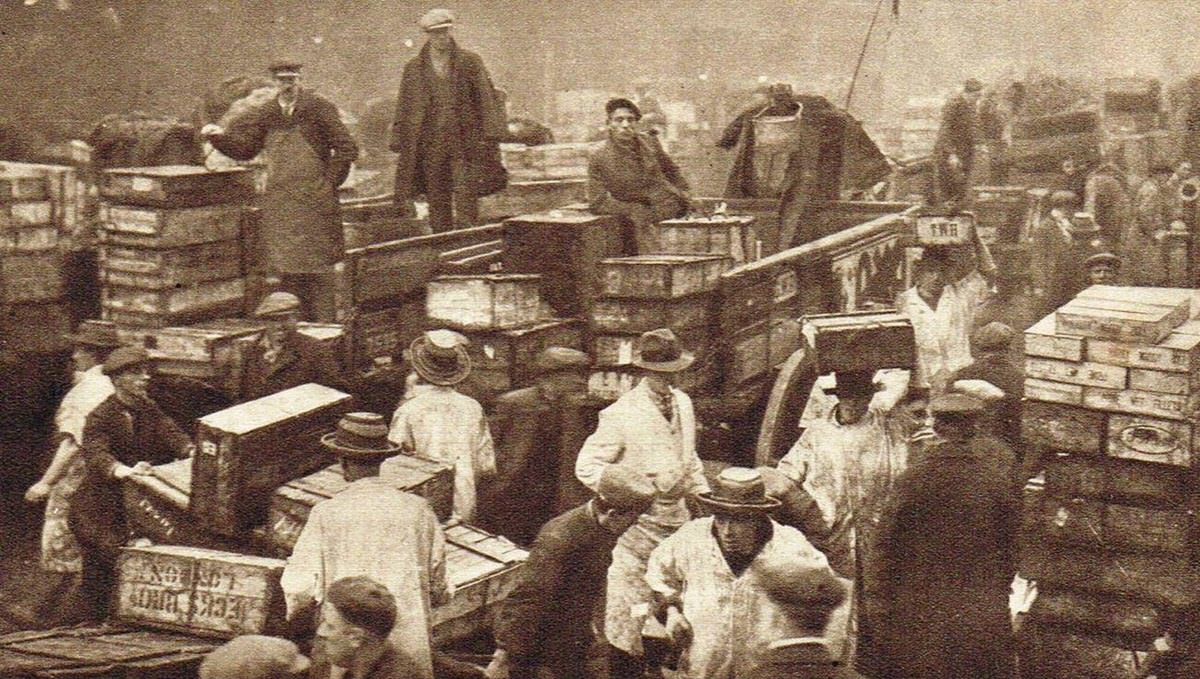
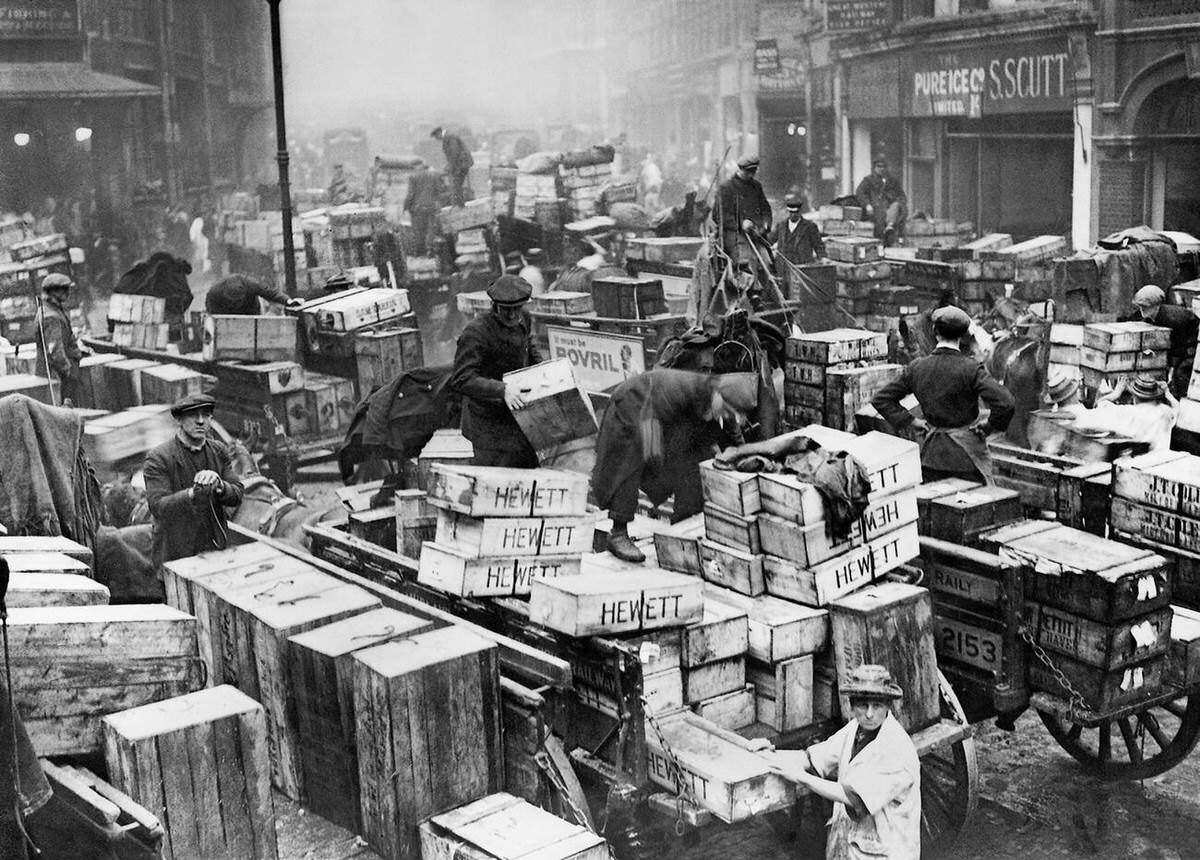
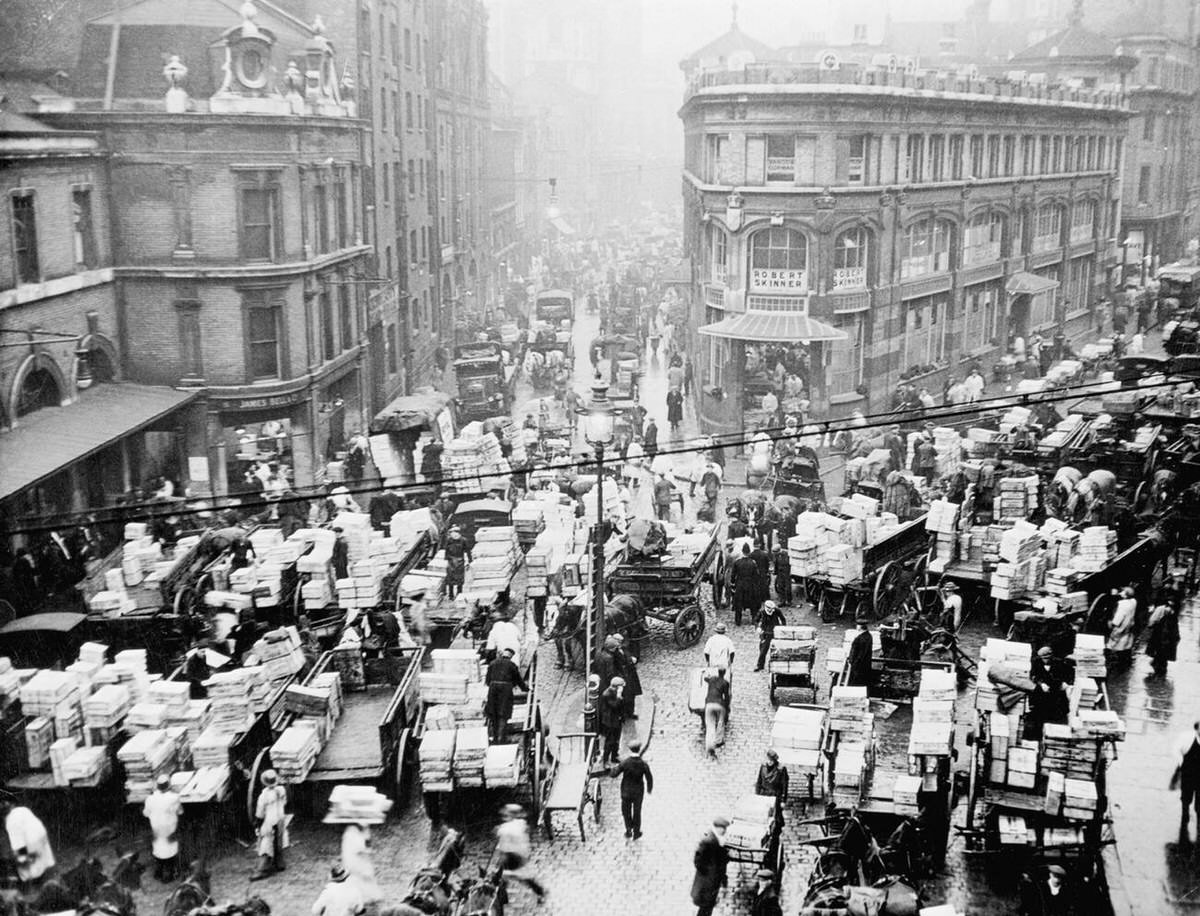
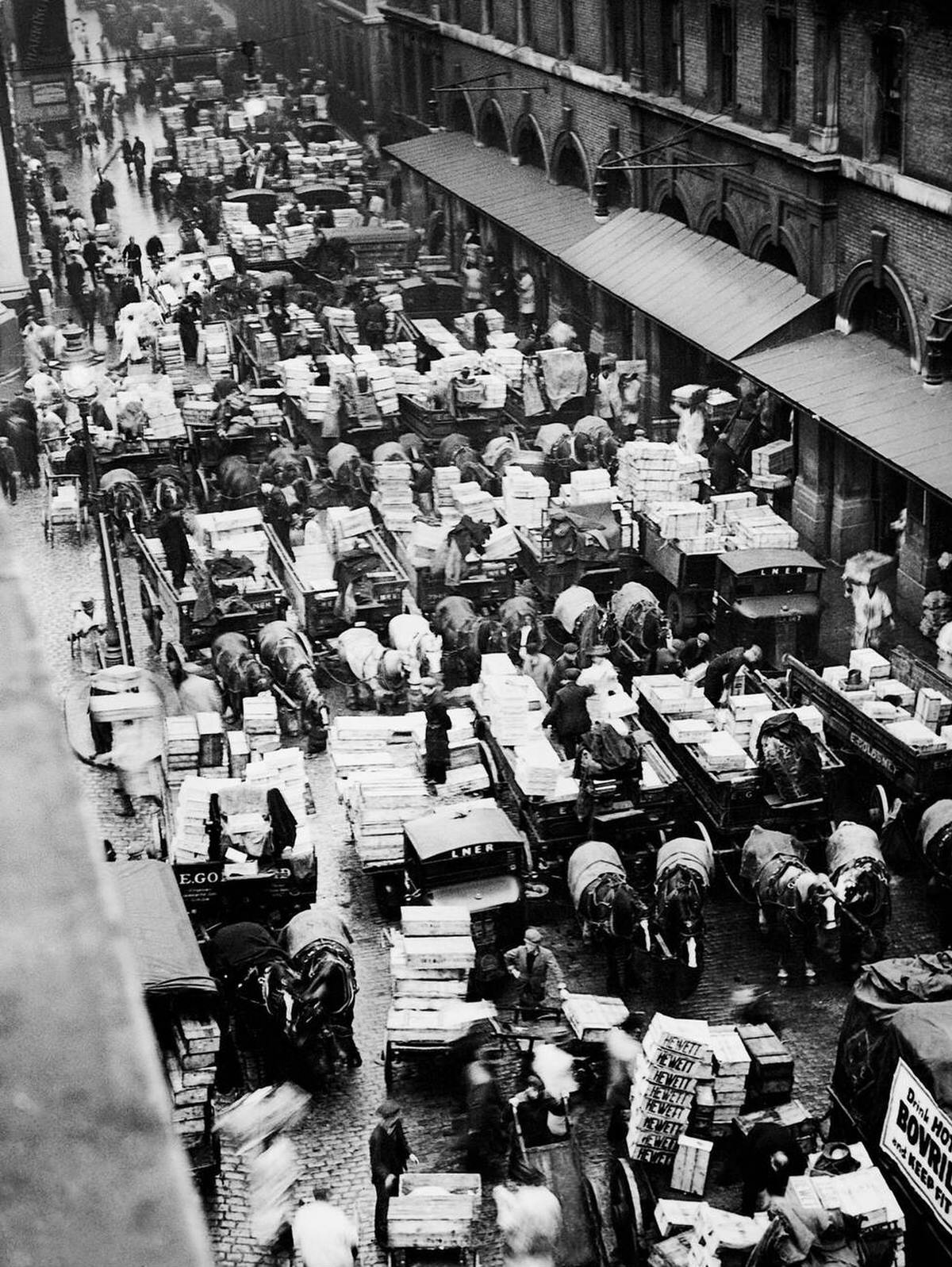
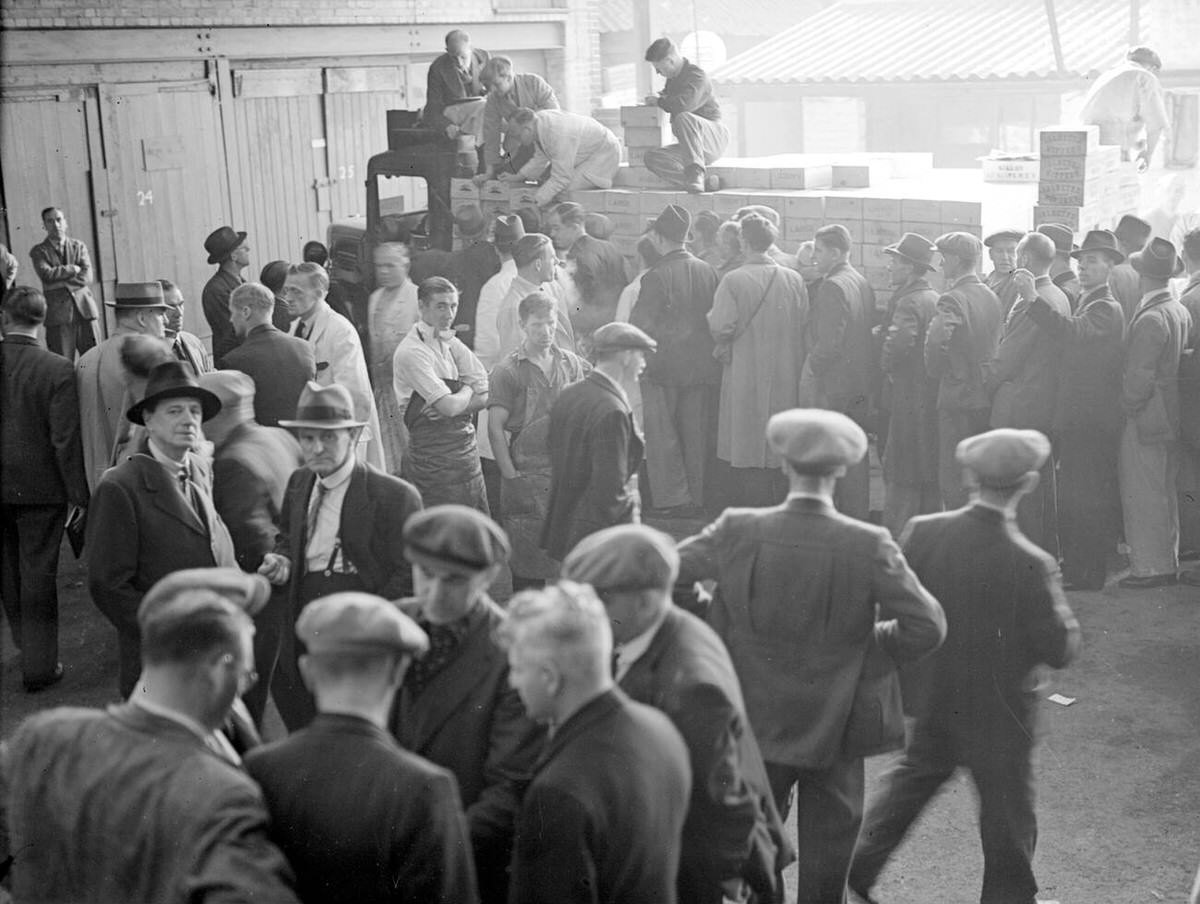
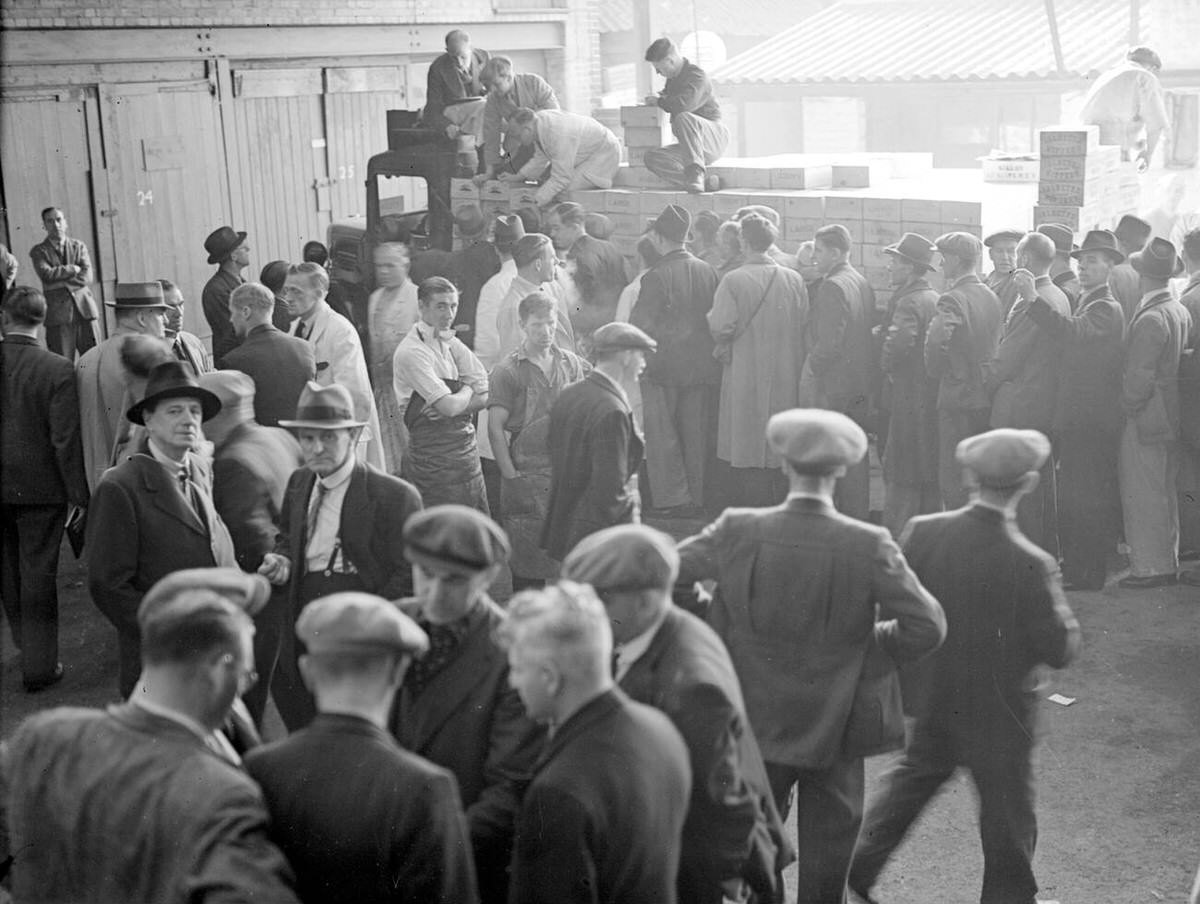
The weeks around Easter were among the busiest of the year. Christian tradition drove a sharp spike in fish purchases ahead of Good Friday, pushing every corner of the market — stalls, aisles, and the street outside — to capacity.
Busy scene at Billingsgate Fish Market during Easter, 1933Billingsgate Fish Market, 1934Billingsgate Fish Market, 1934Billingsgate Fish Market, 1935Busy scene at Billingsgate Market ahead of Good Friday, 1936Busy scene at Billingsgate Market ahead of Good Friday, 1936Busy scene at Billingsgate Market ahead of Good Friday, 1936Busy scene at Billingsgate Market ahead of Good Friday, 1936
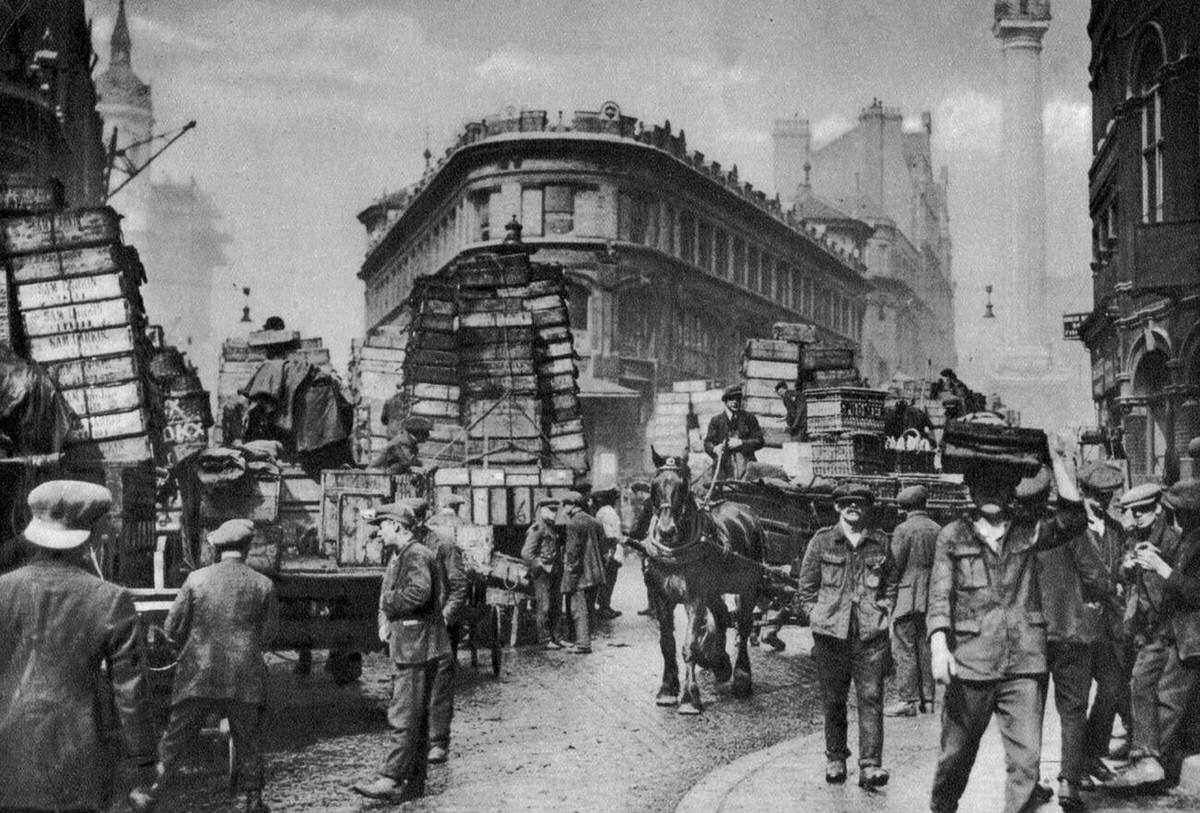
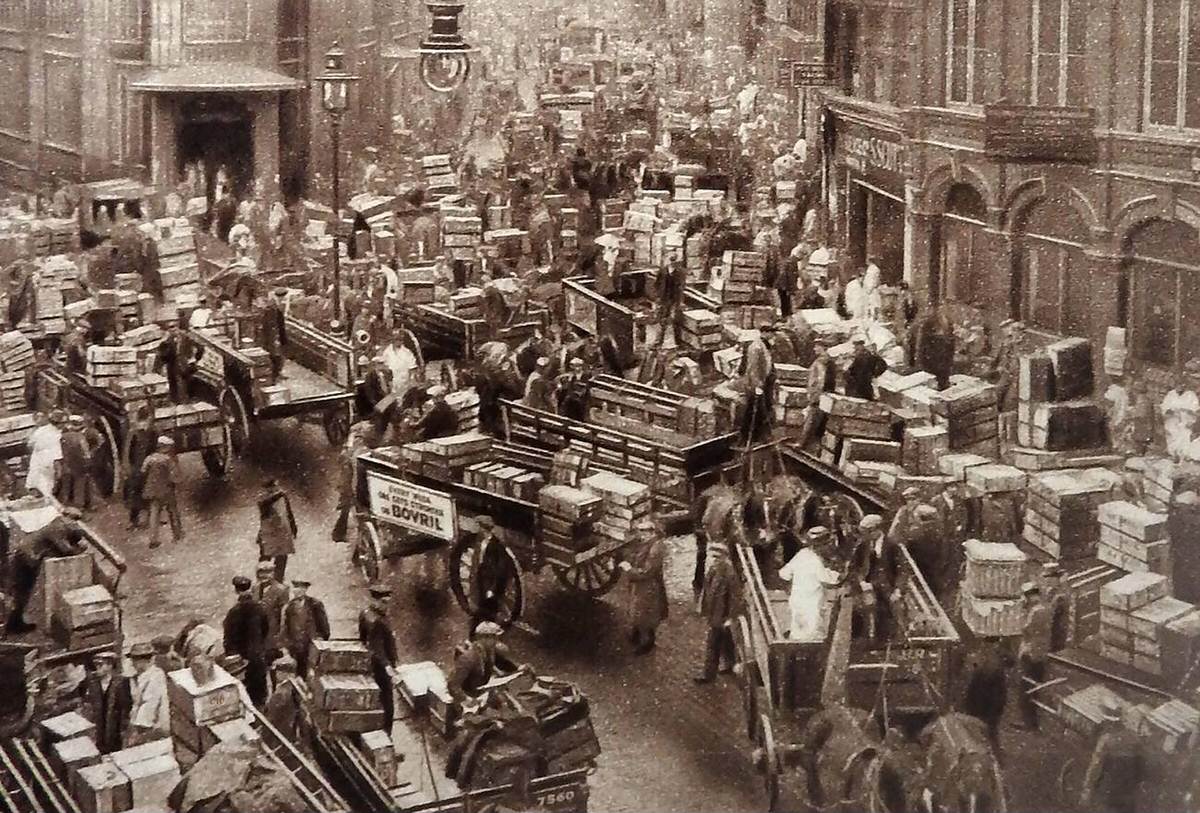
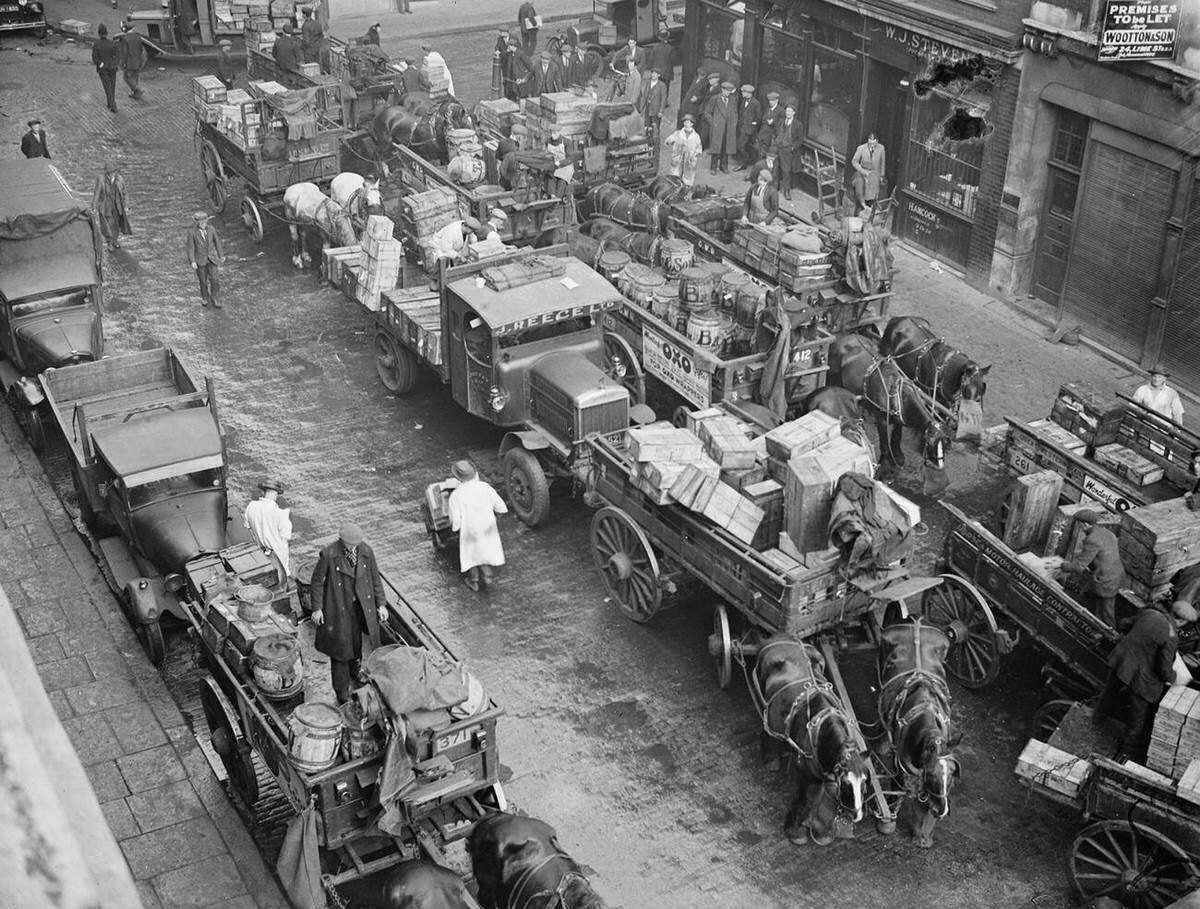
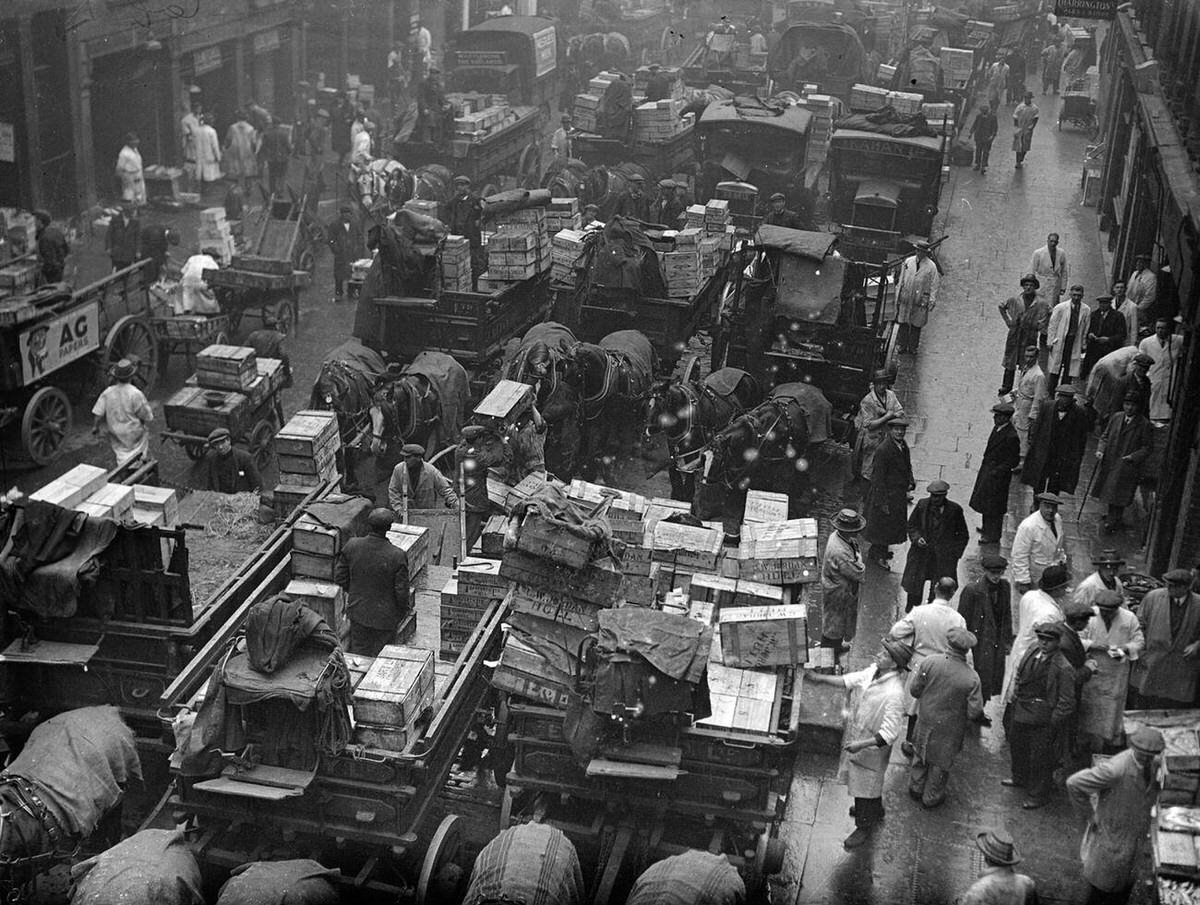
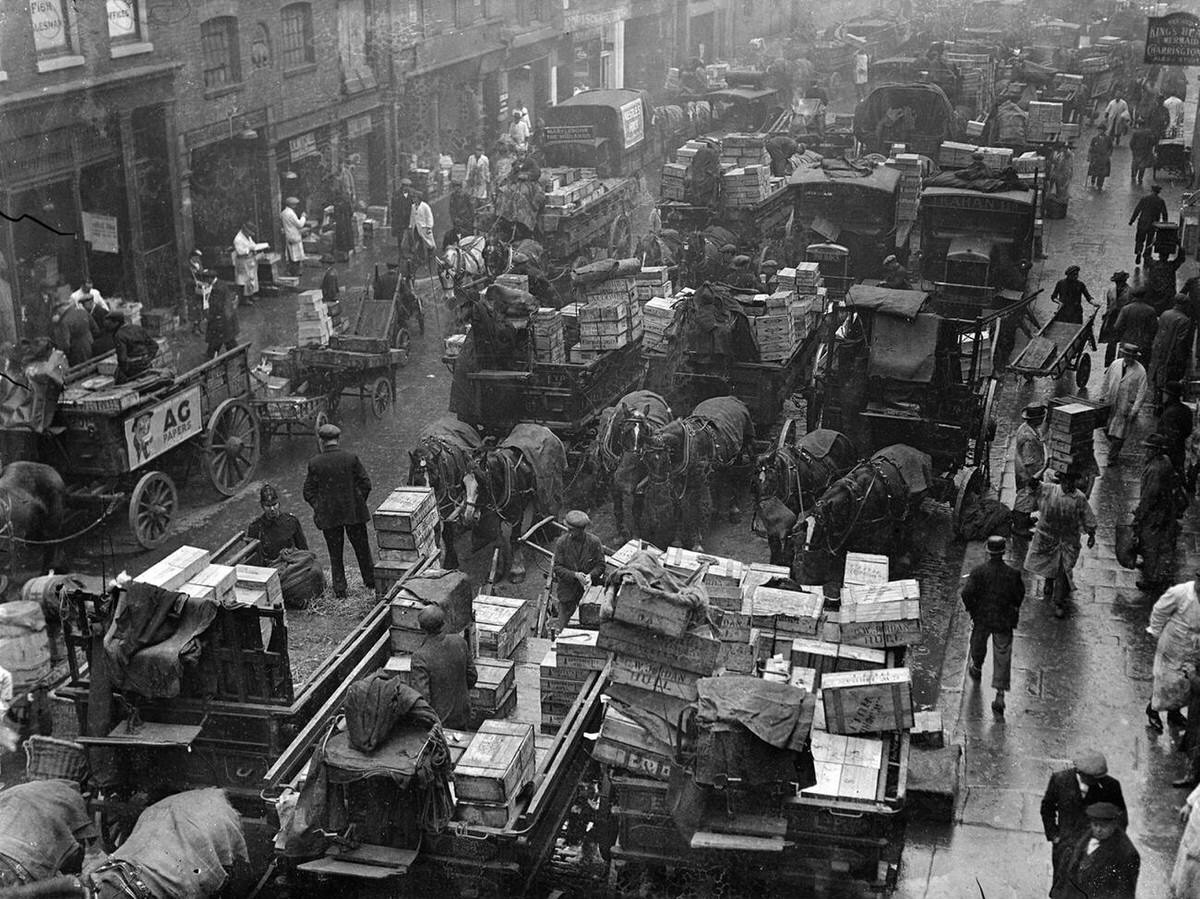
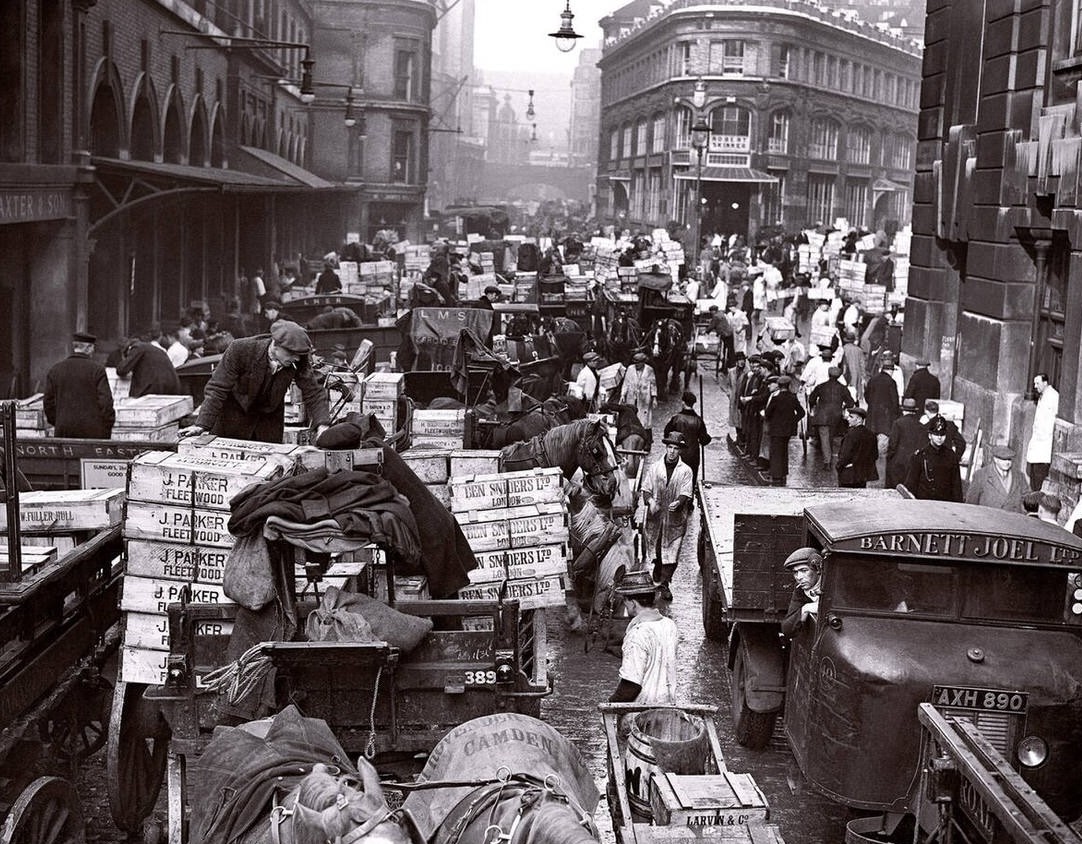
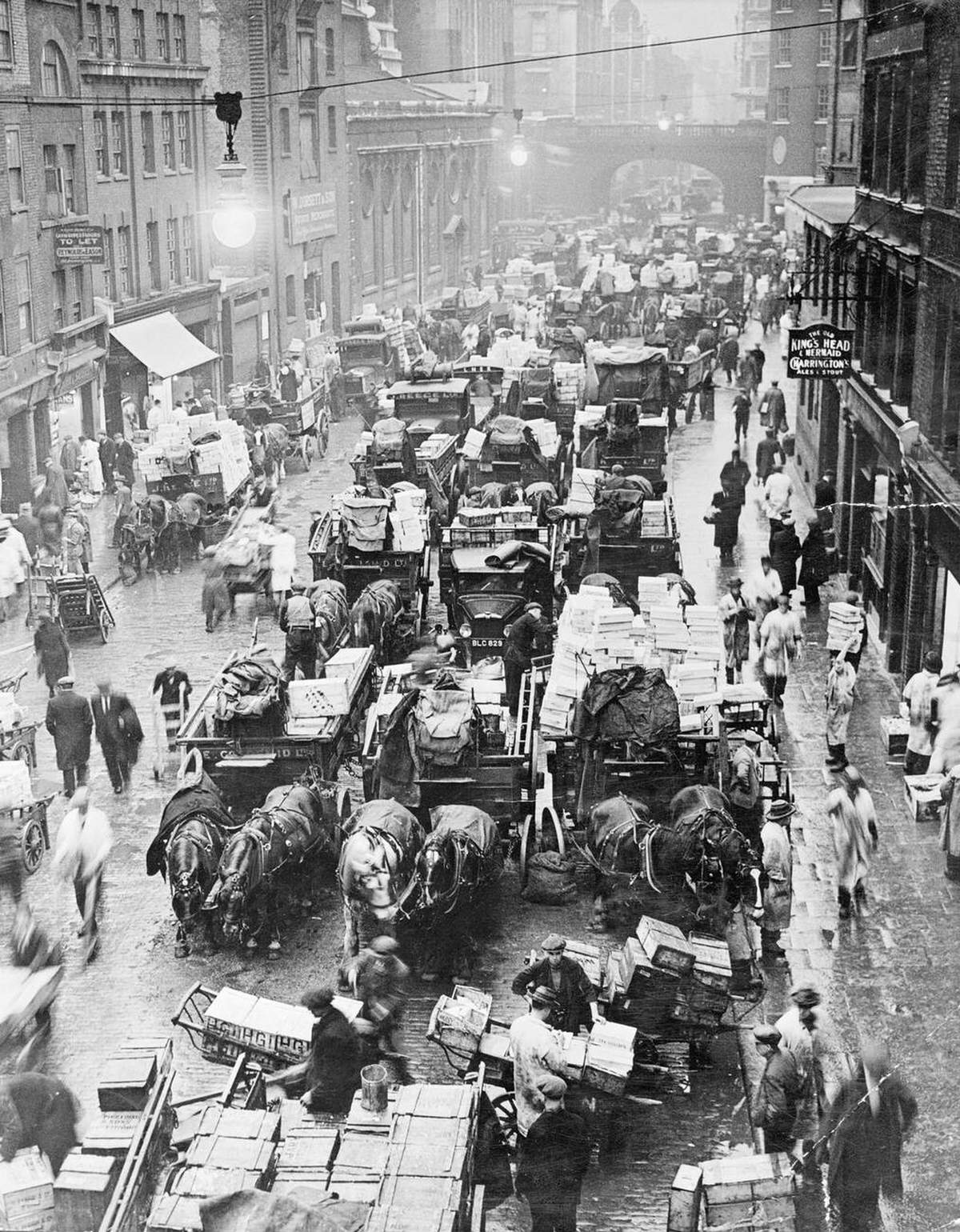
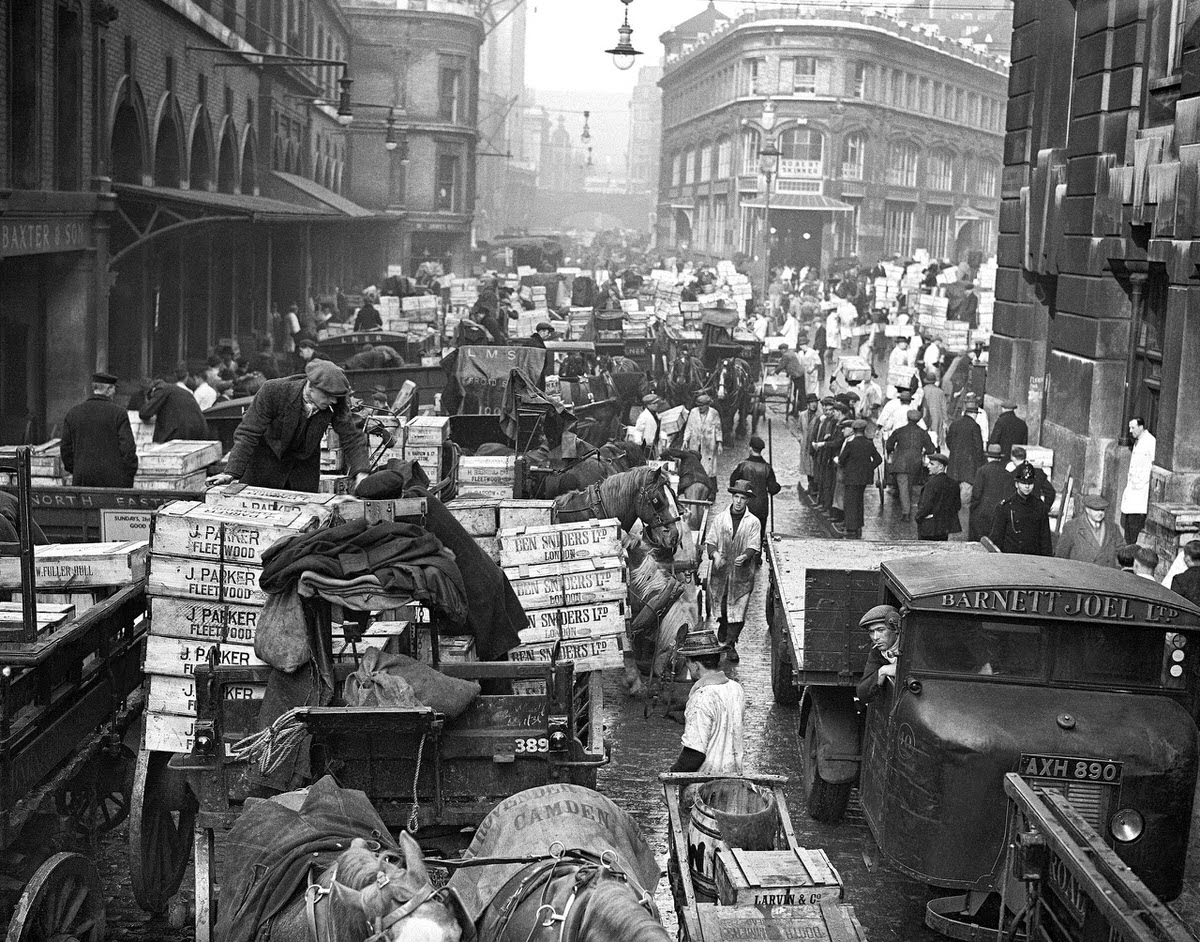
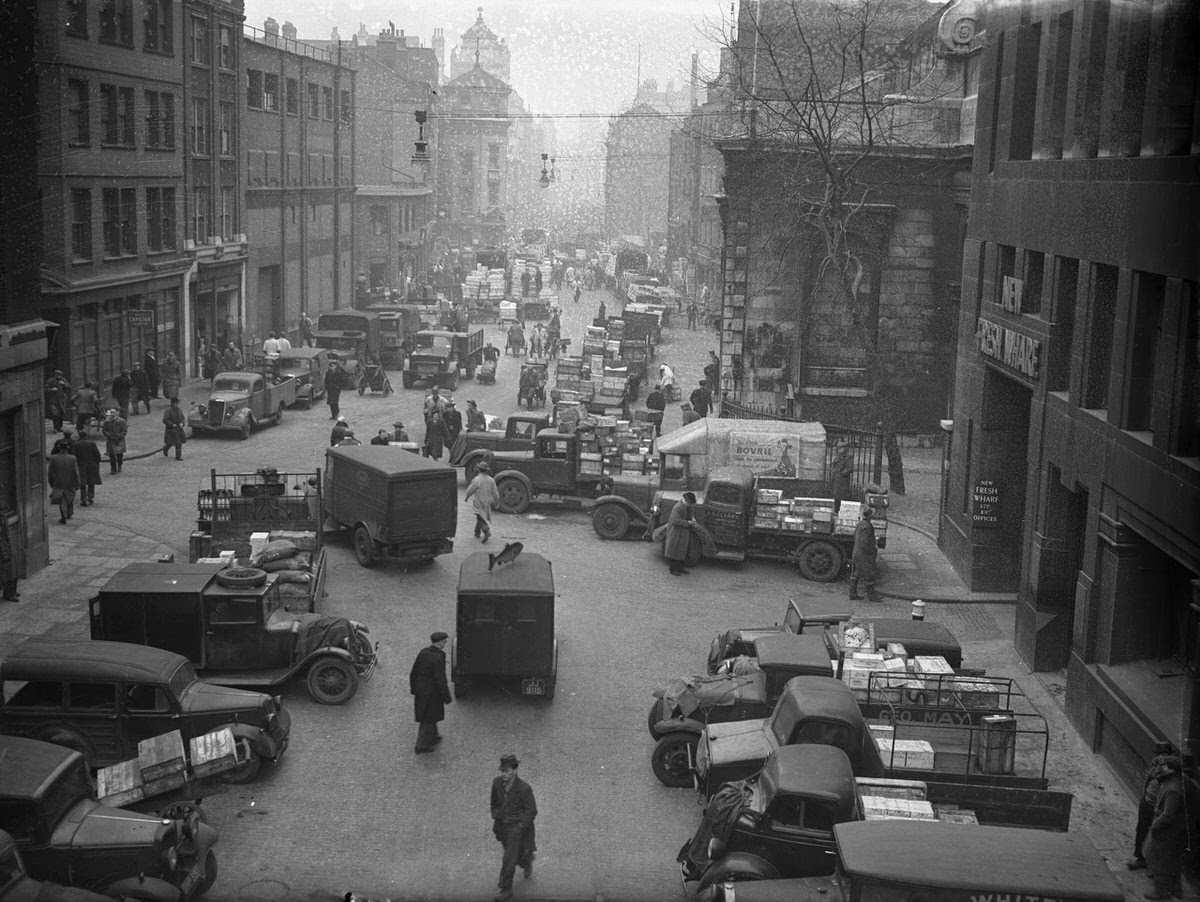
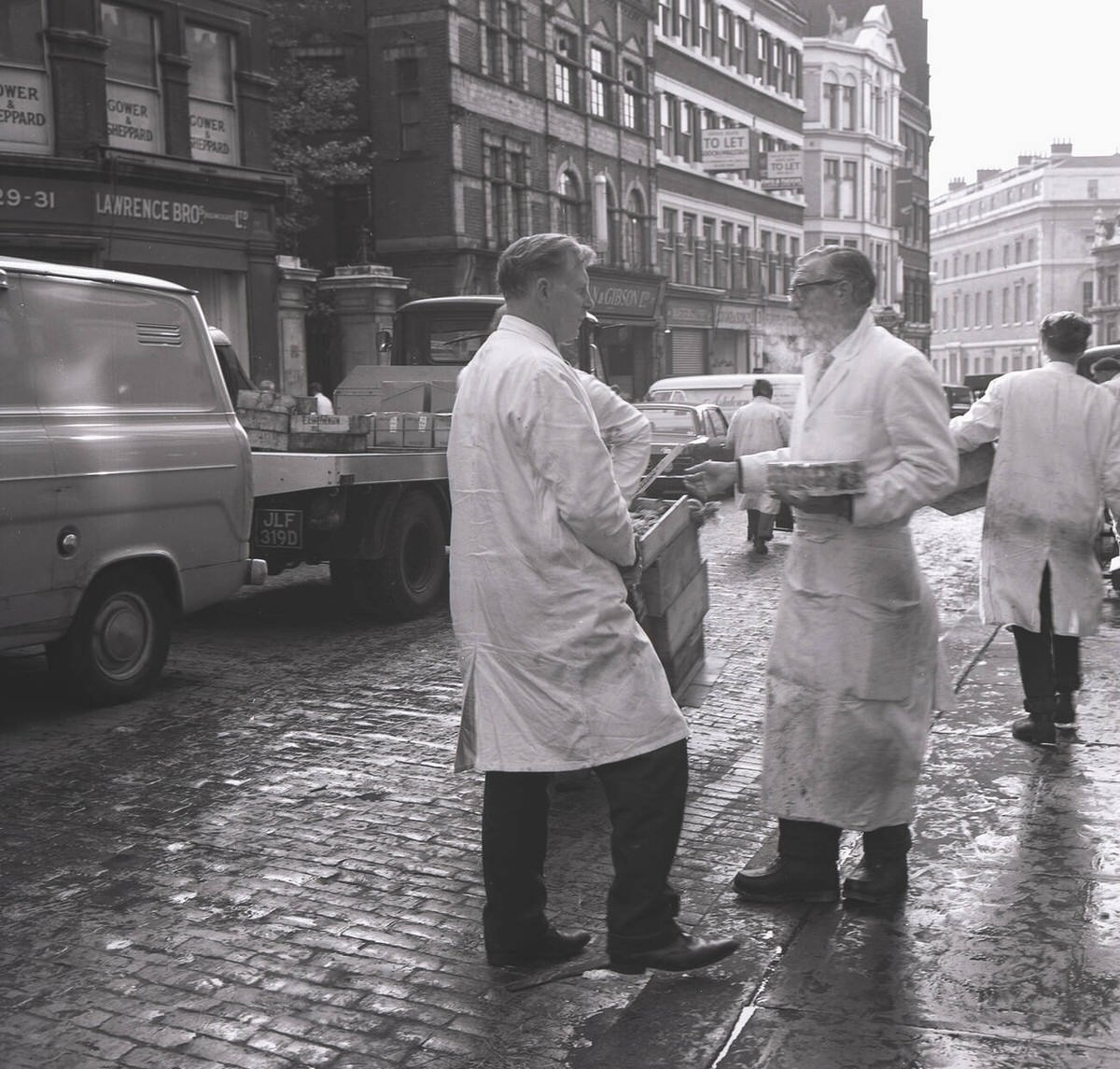
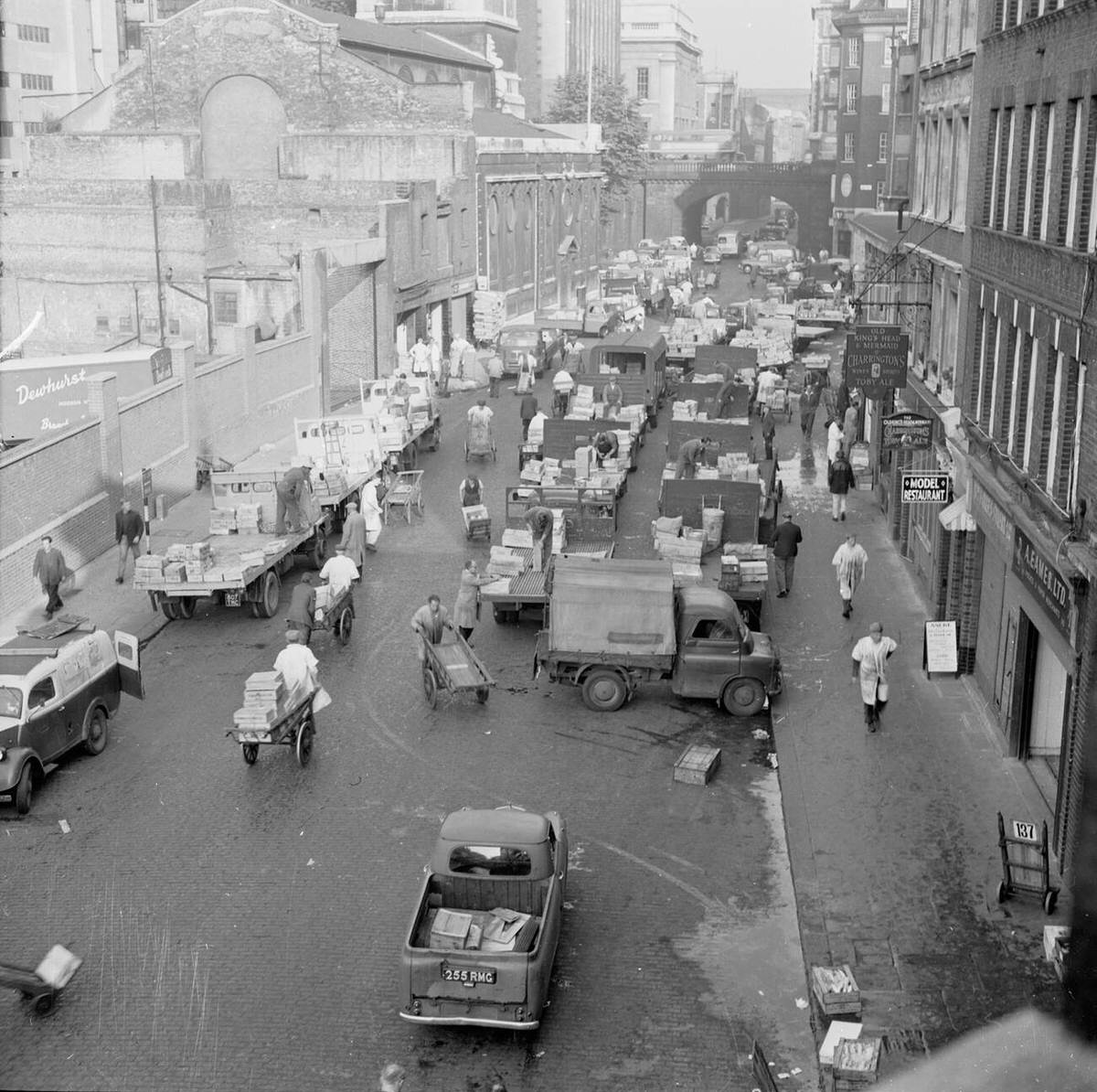
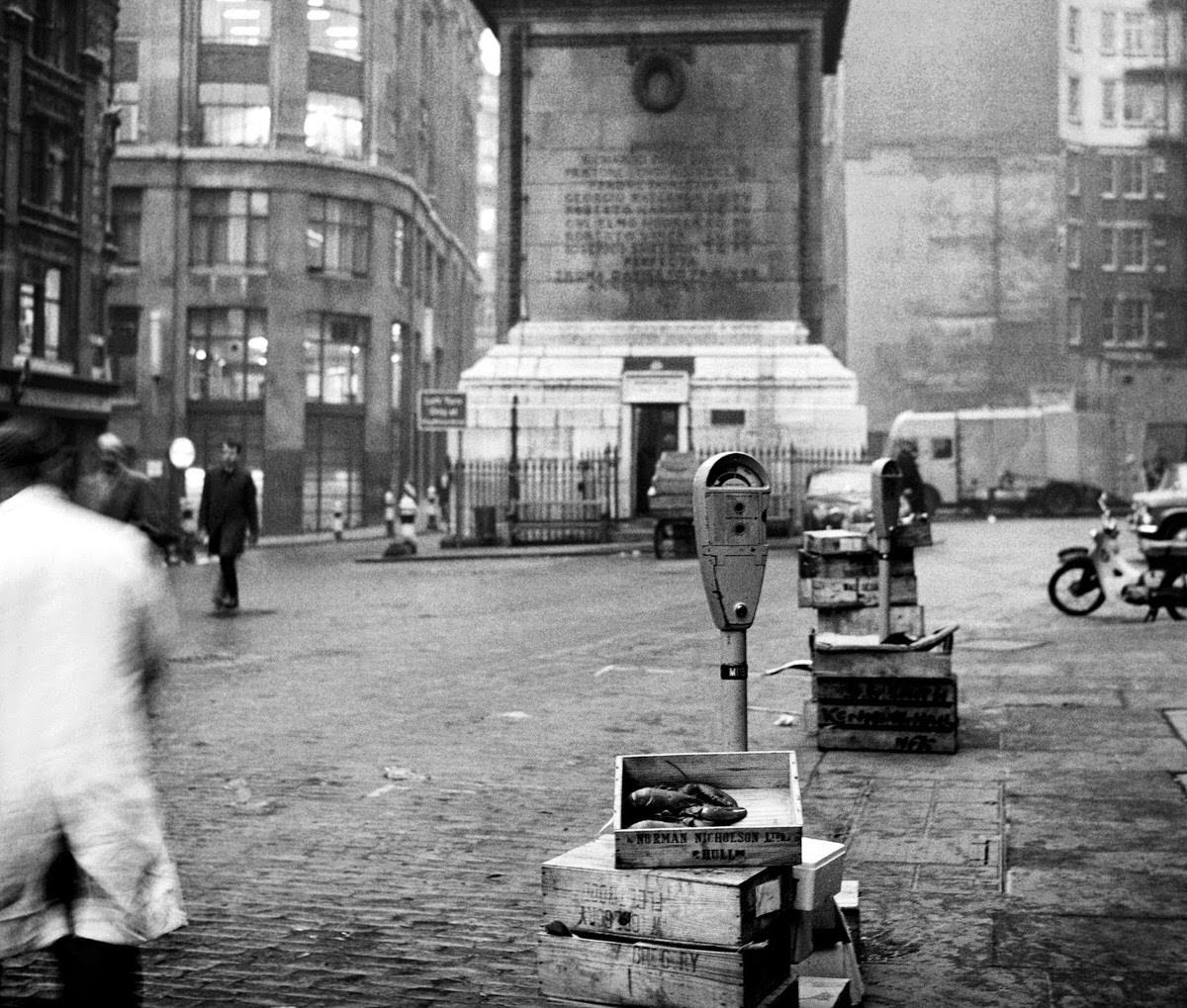
By the late 1930s, Lower Thames Street outside the market was a constant stream of lorries, carts, and workers. Deliveries arrived from all directions, and the cobblestones were perpetually wet from ice and fish water. Hundreds of people worked inside the building daily — salesmen, clerks, porters, and cleaners all operating in tight coordination.
Street scene of collections and deliveries at Billingsgate Fish Market, 1937Billingsgate Market at 7:00 AM, 1937Billingsgate Market at 7:00 AM, 1937Billingsgate Fish Market, 1937Busy scene at Billingsgate Market during the Good Friday rush, 1937
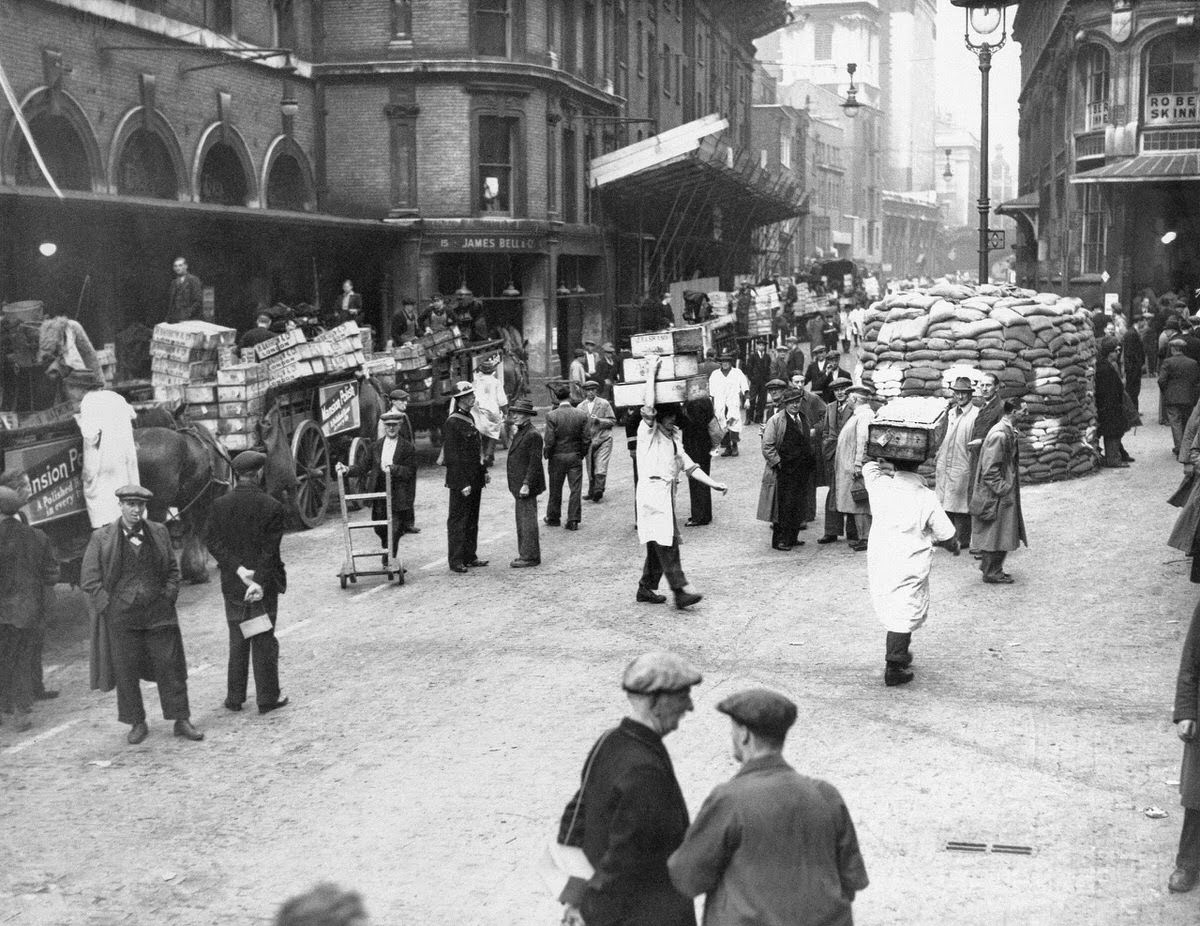
When World War II began, the threat of German air raids forced a temporary relocation. Market operations shifted to Epsom in 1939 as a precaution against bombing. After the war ended, the market reopened at its original Thames Street site and resumed full operations.
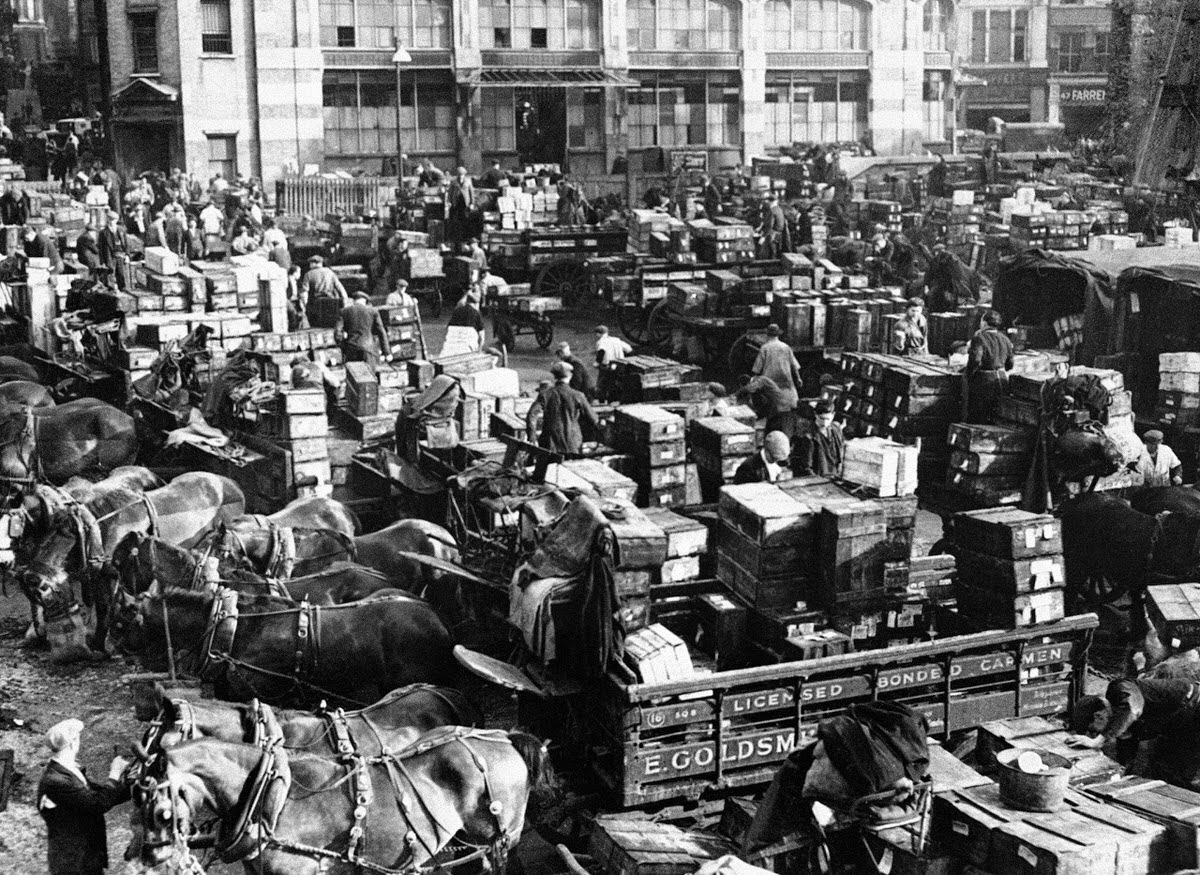
Billingsgate Fish Market operations moved to Epsom as an air raid precaution, 1939Billingsgate Fish Market operations moved to Epsom as an air raid precaution, 1939General view of Billingsgate Market after its reopening, 1939Boxes of fish being loaded onto horse-drawn carts at Billingsgate Fish Market, 1945Two fish porters, 1945Billingsgate Market, 1947
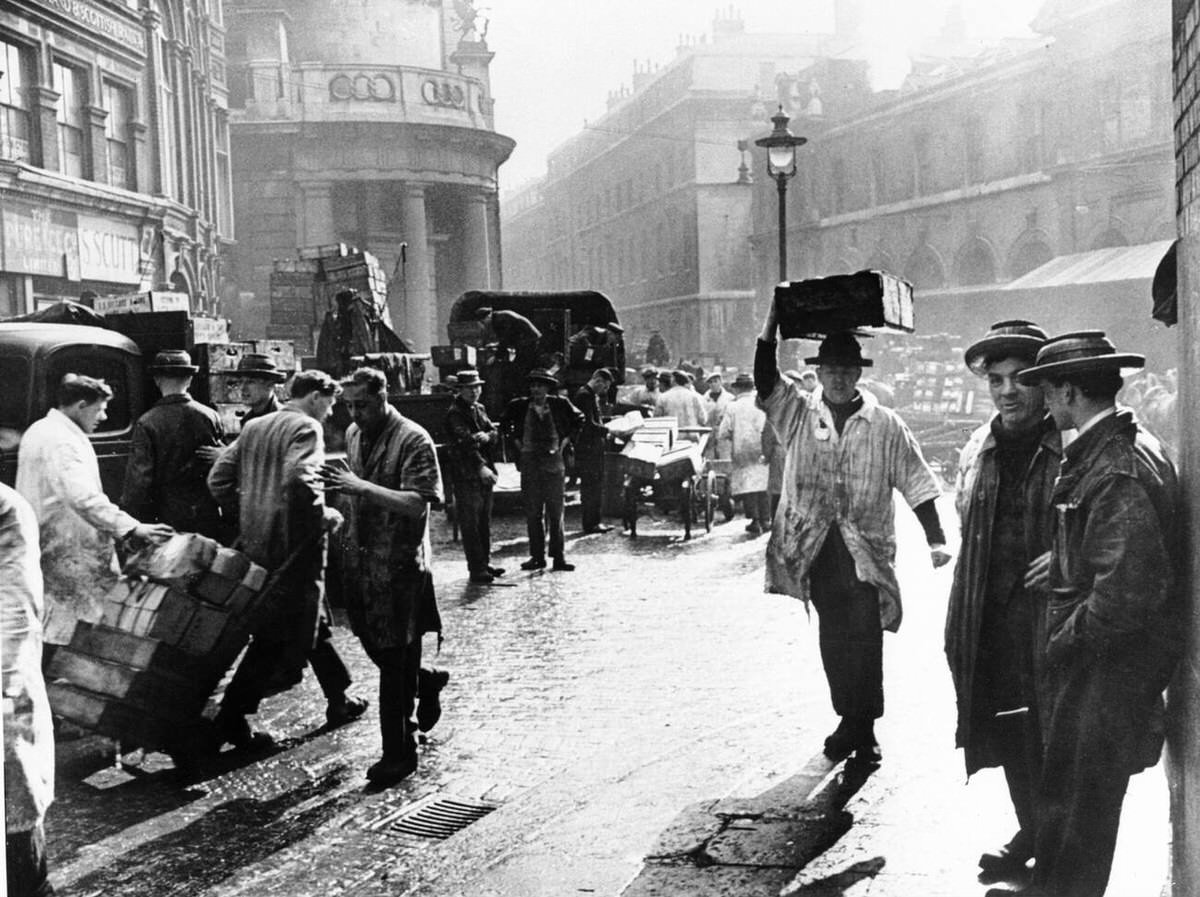
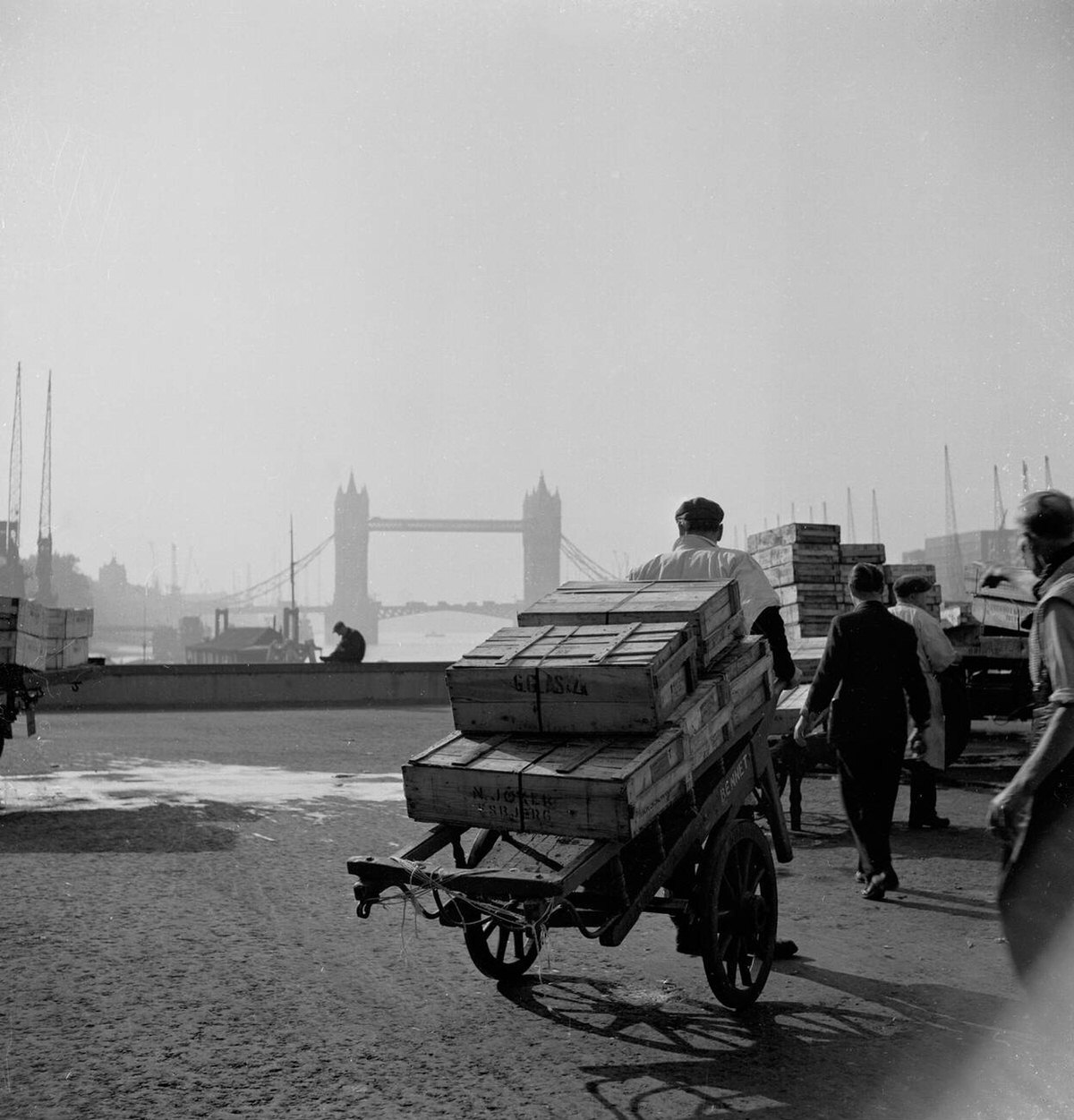
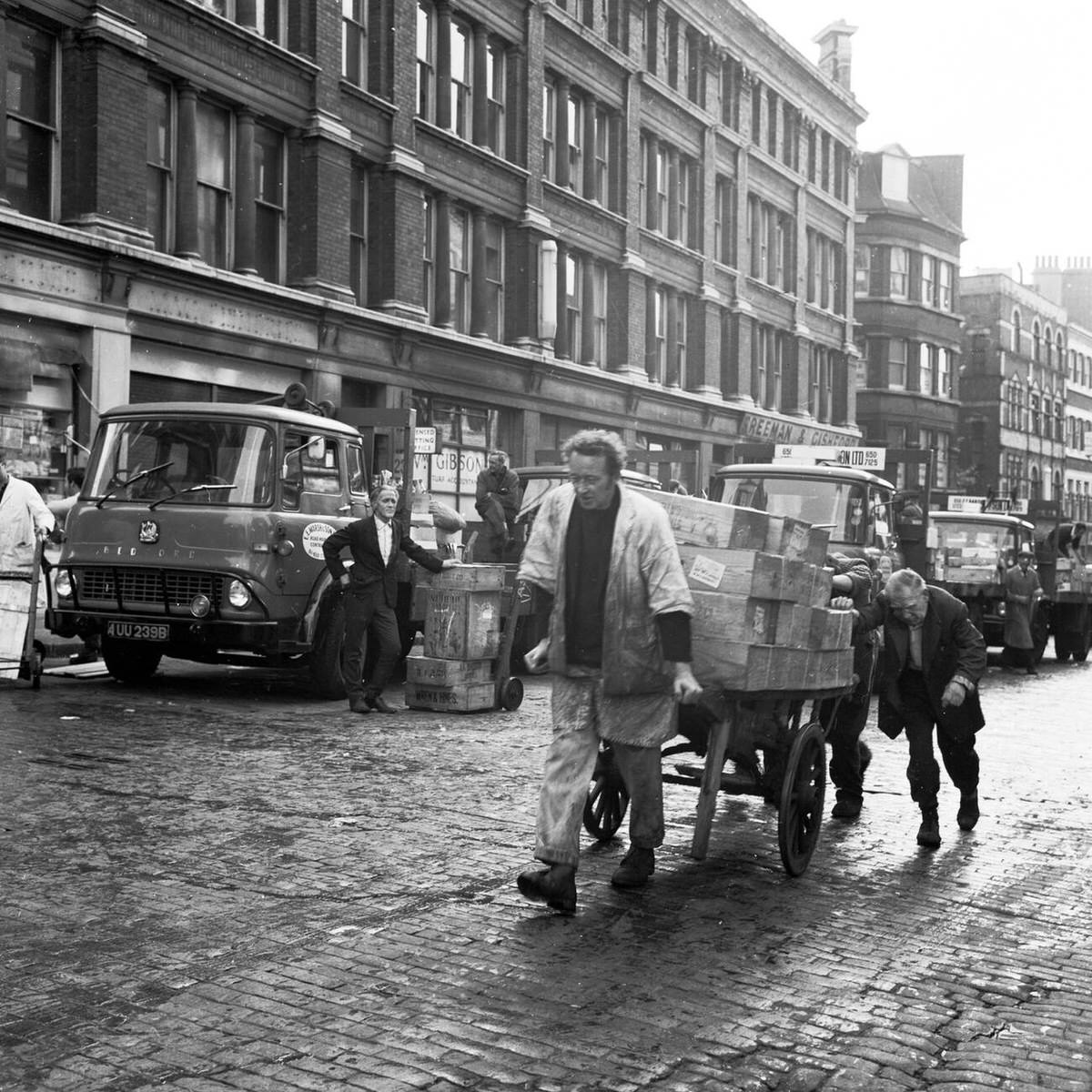
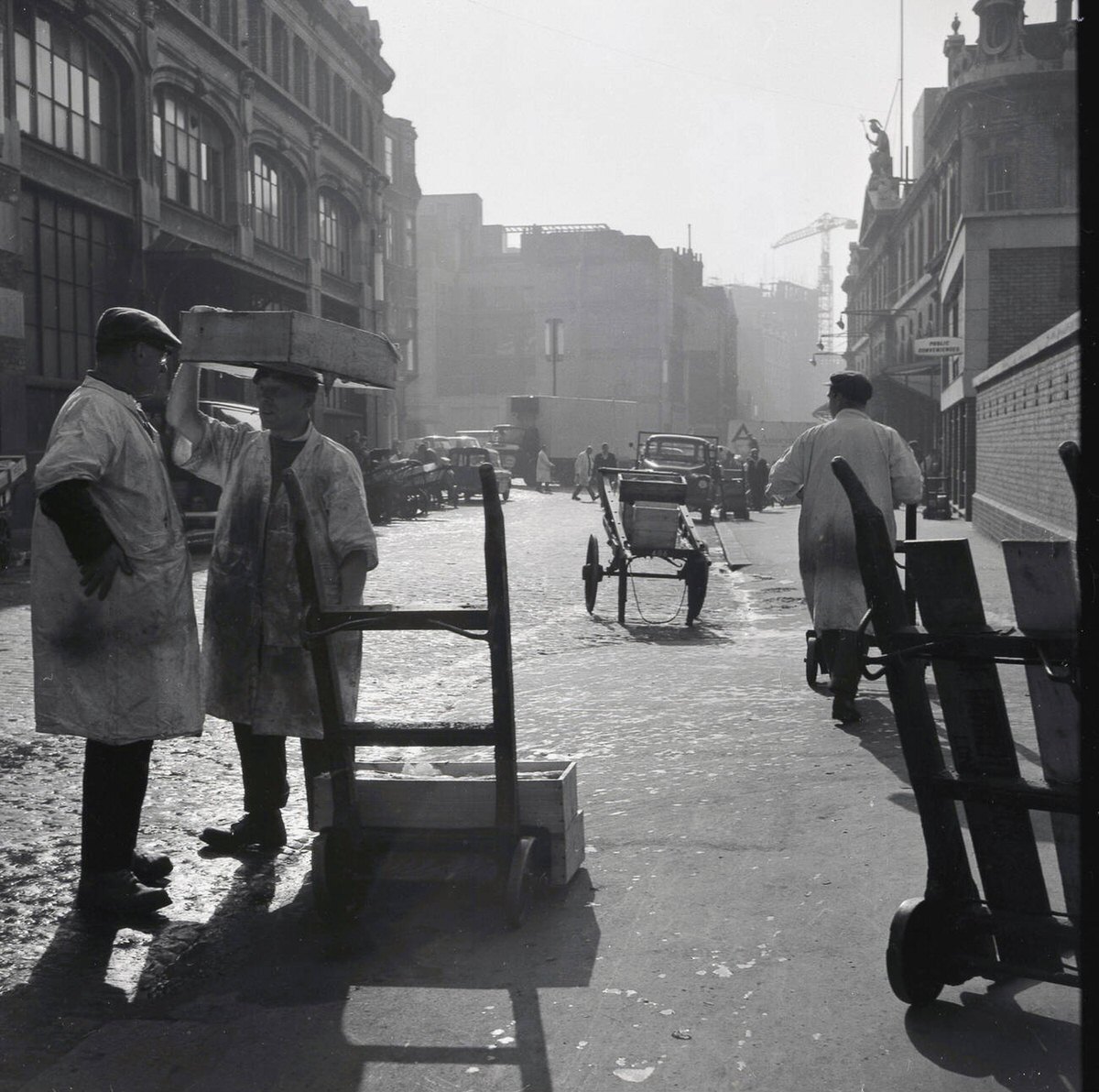
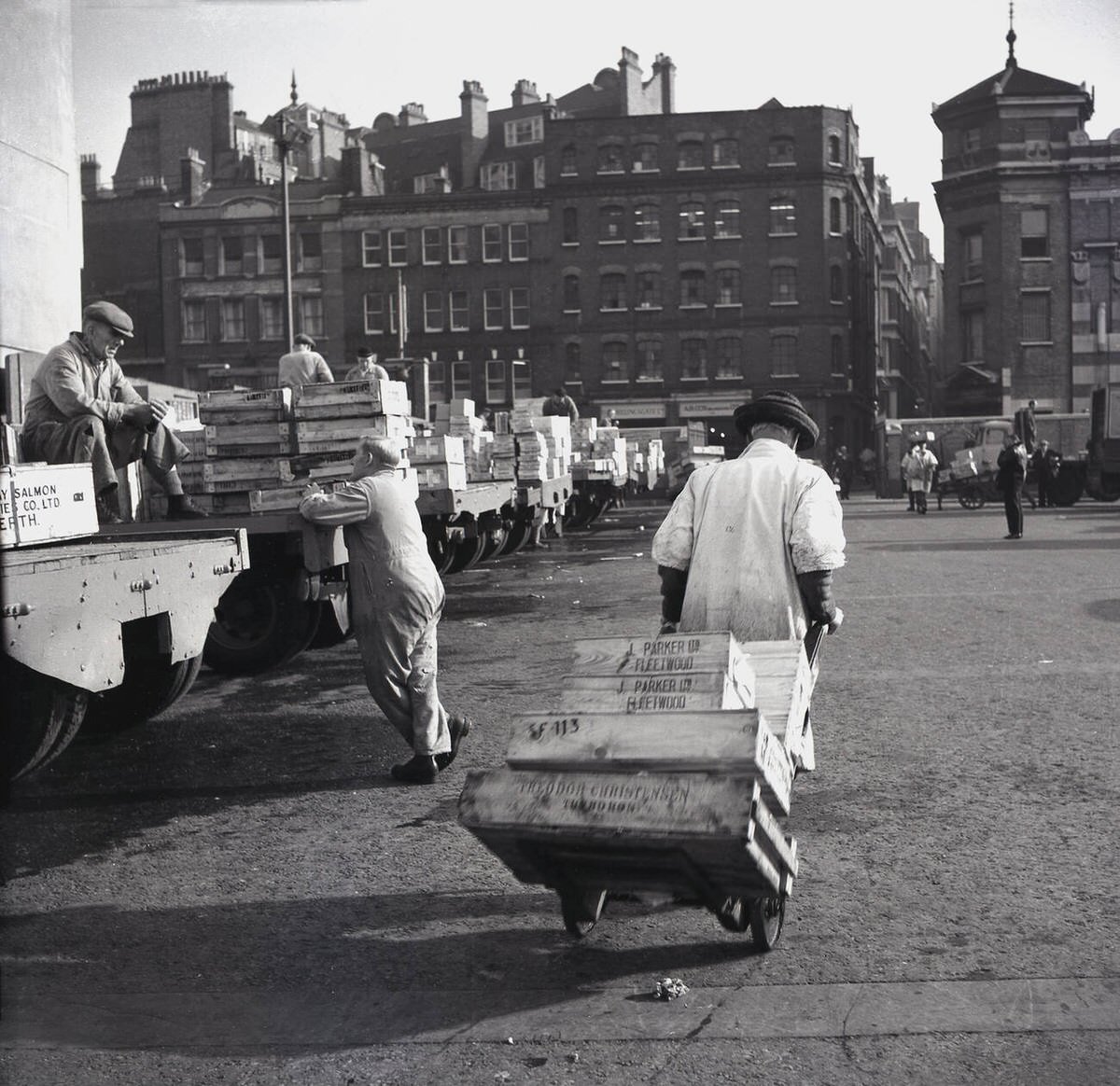
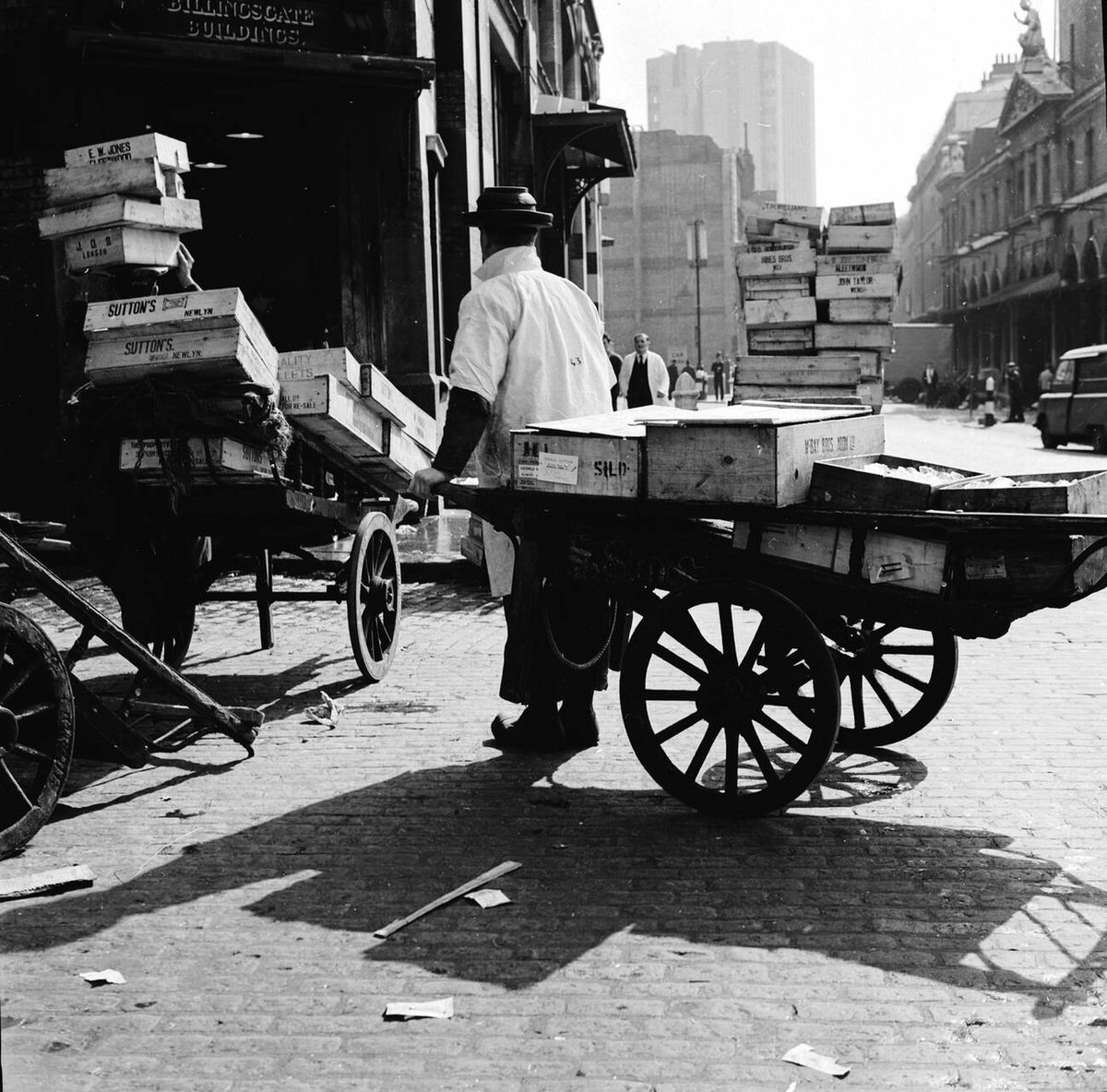
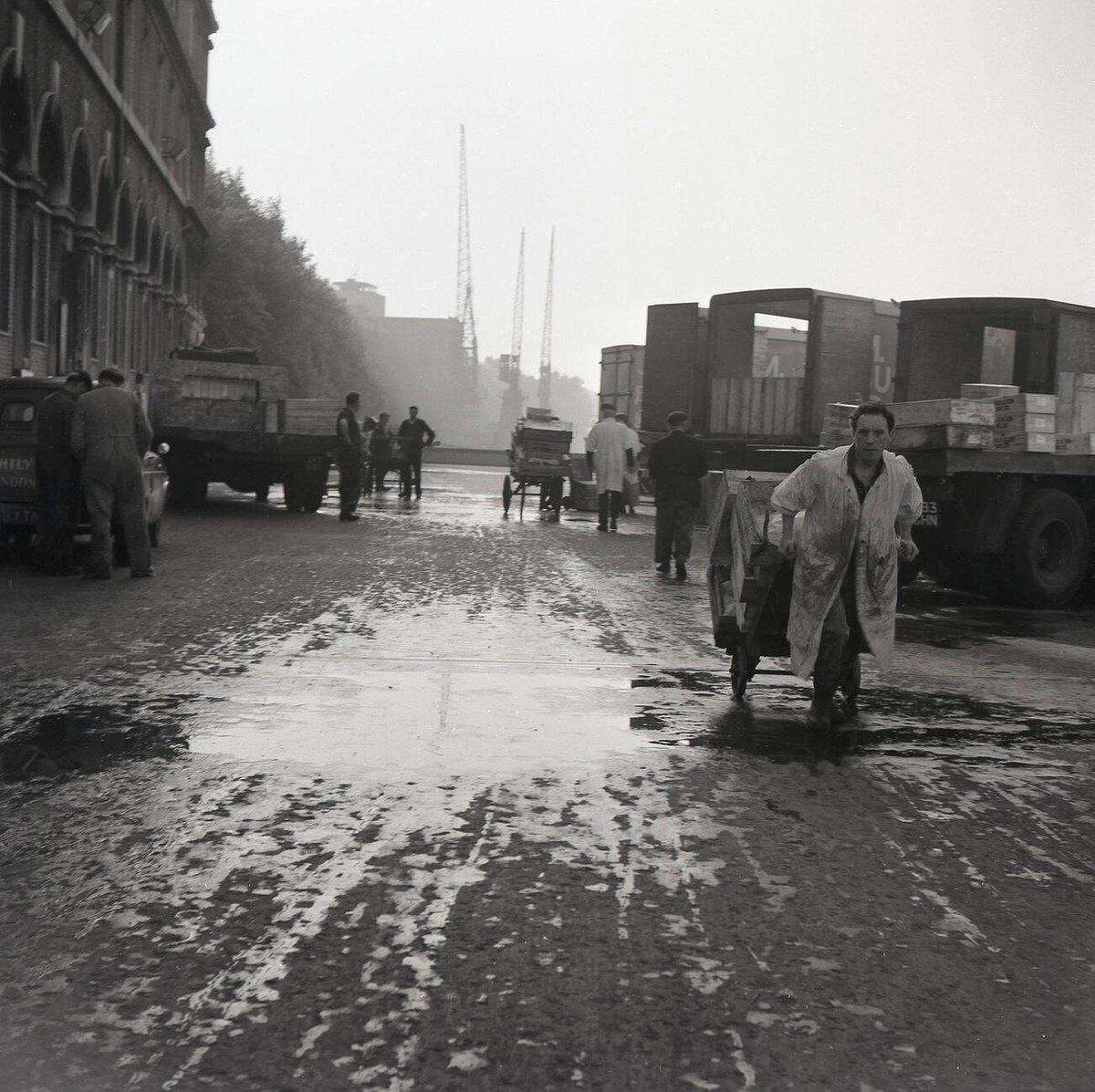
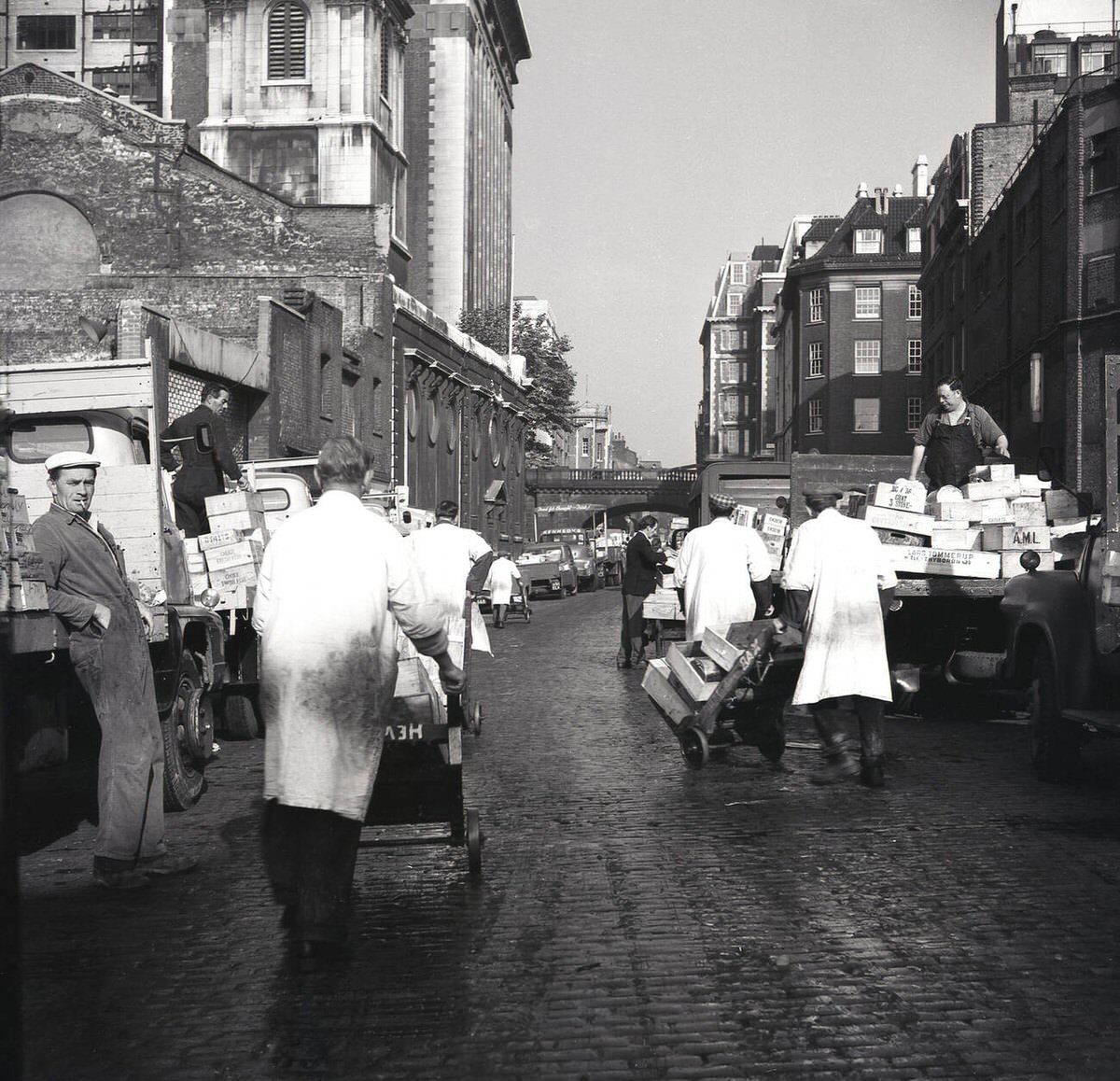
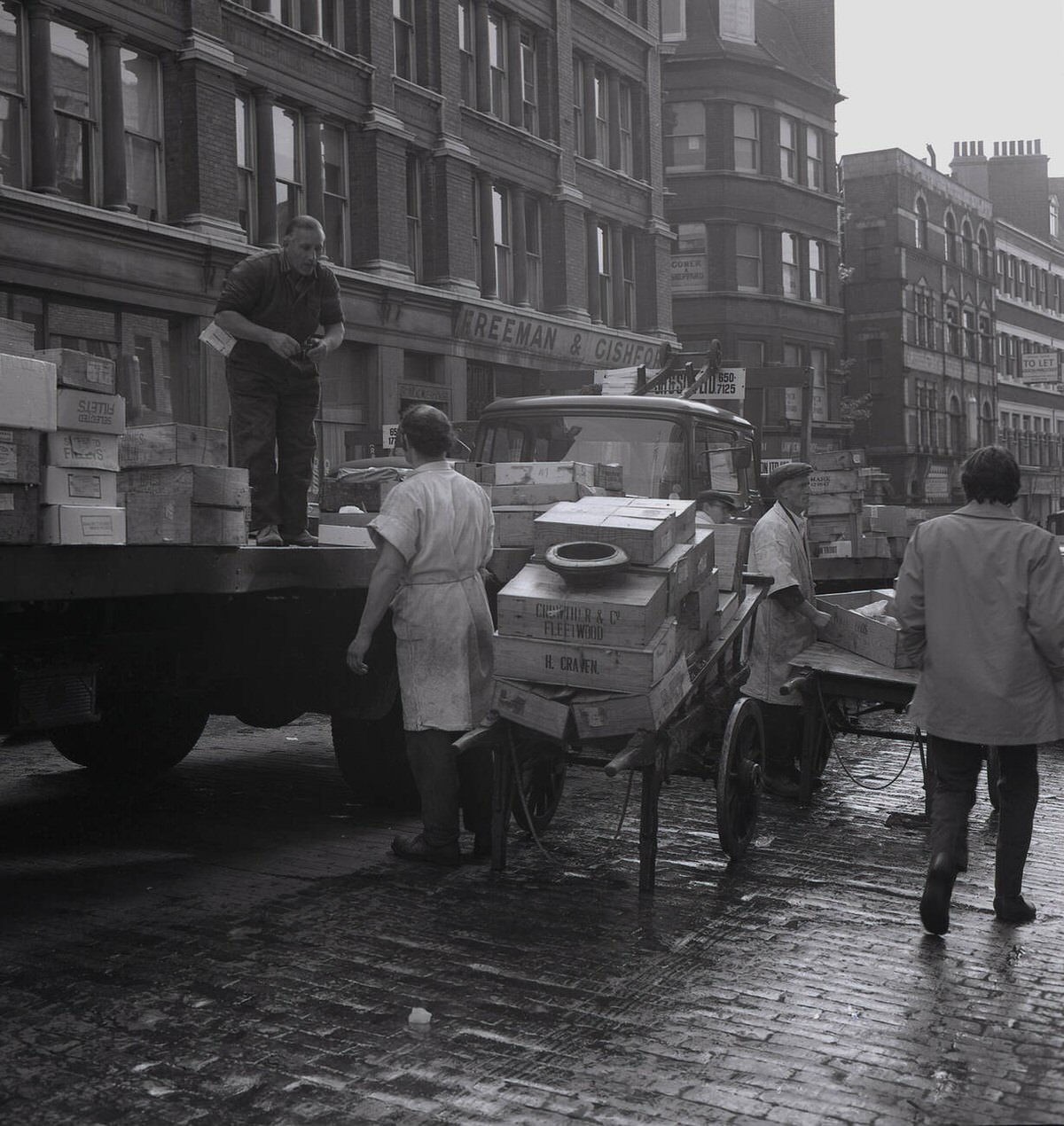
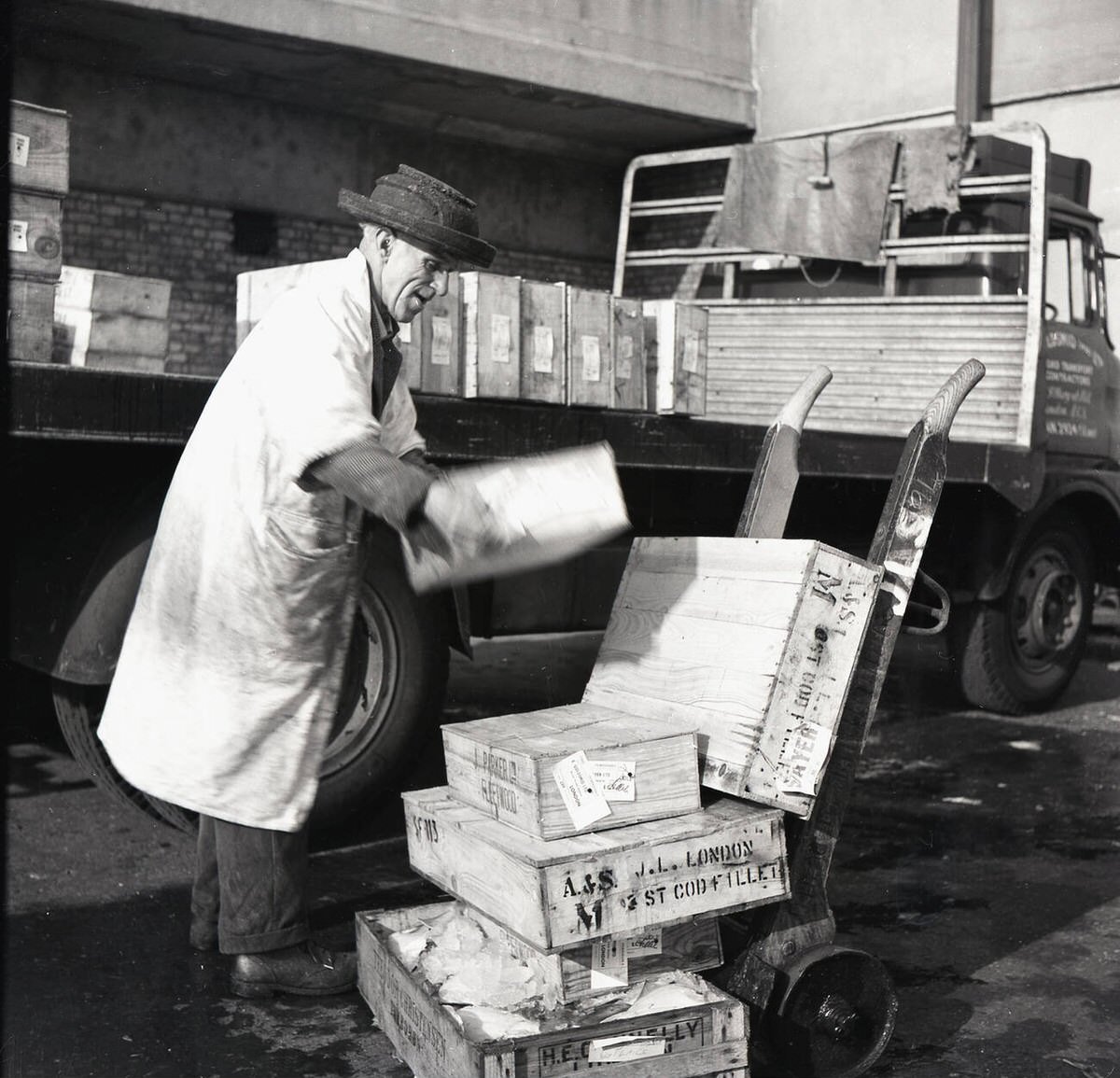
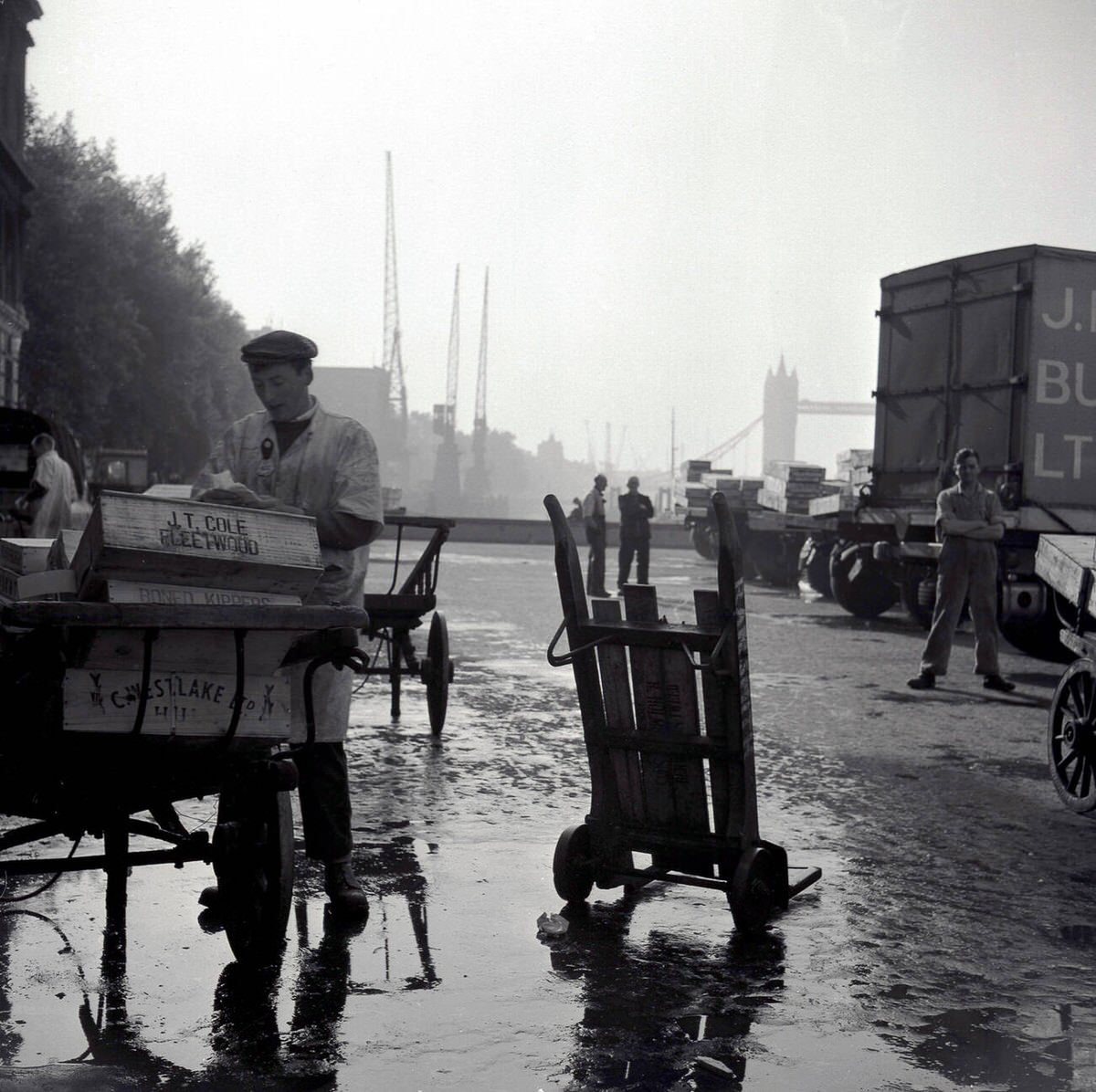
The postwar decades brought the market’s most heavily photographed era. Porters hauled wooden carts loaded with crates across wet cobblestones, sometimes pulling them all the way across London Bridge. The sight of men in bobbing hats navigating the streets became iconic to the City’s identity.
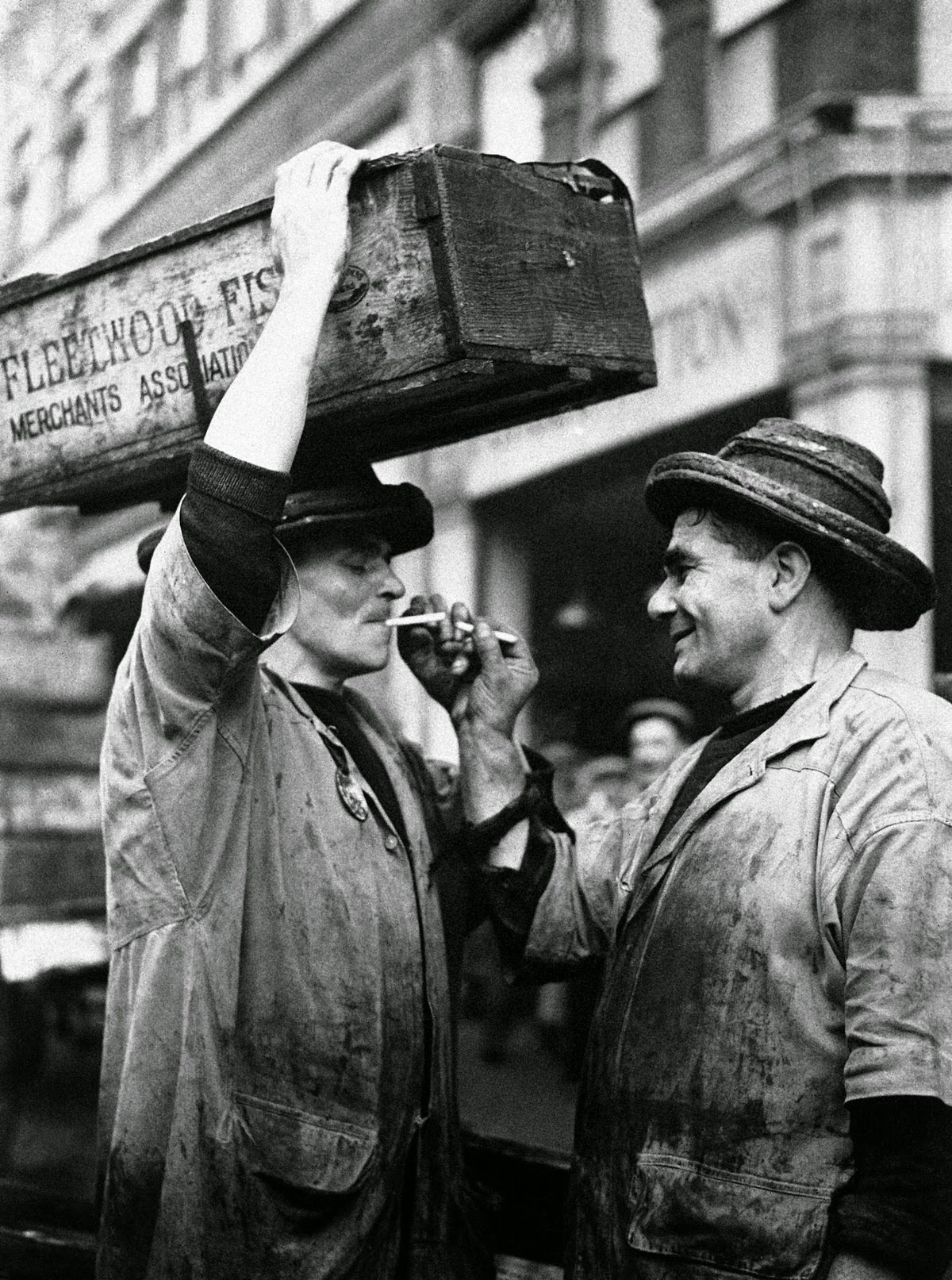
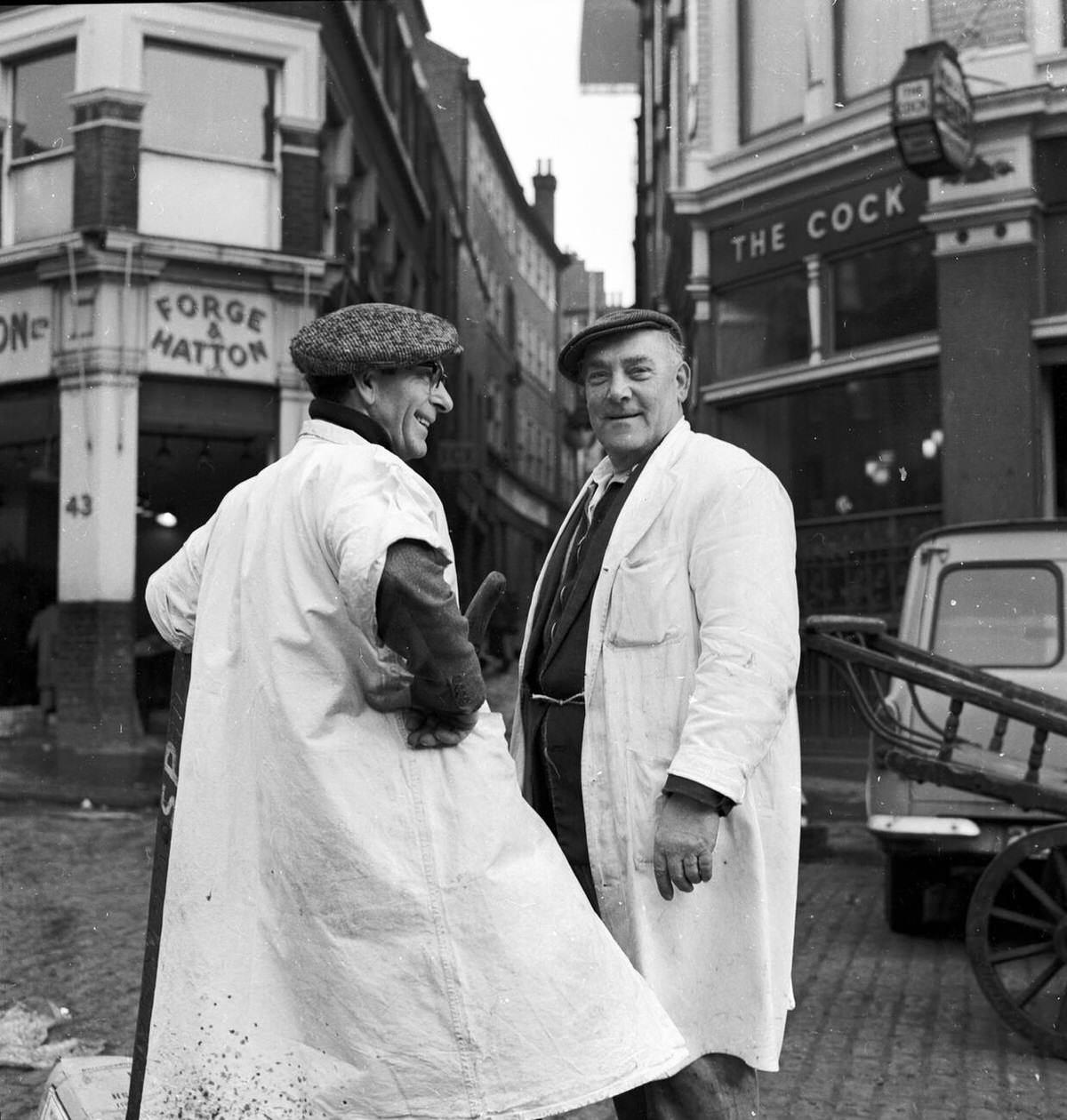
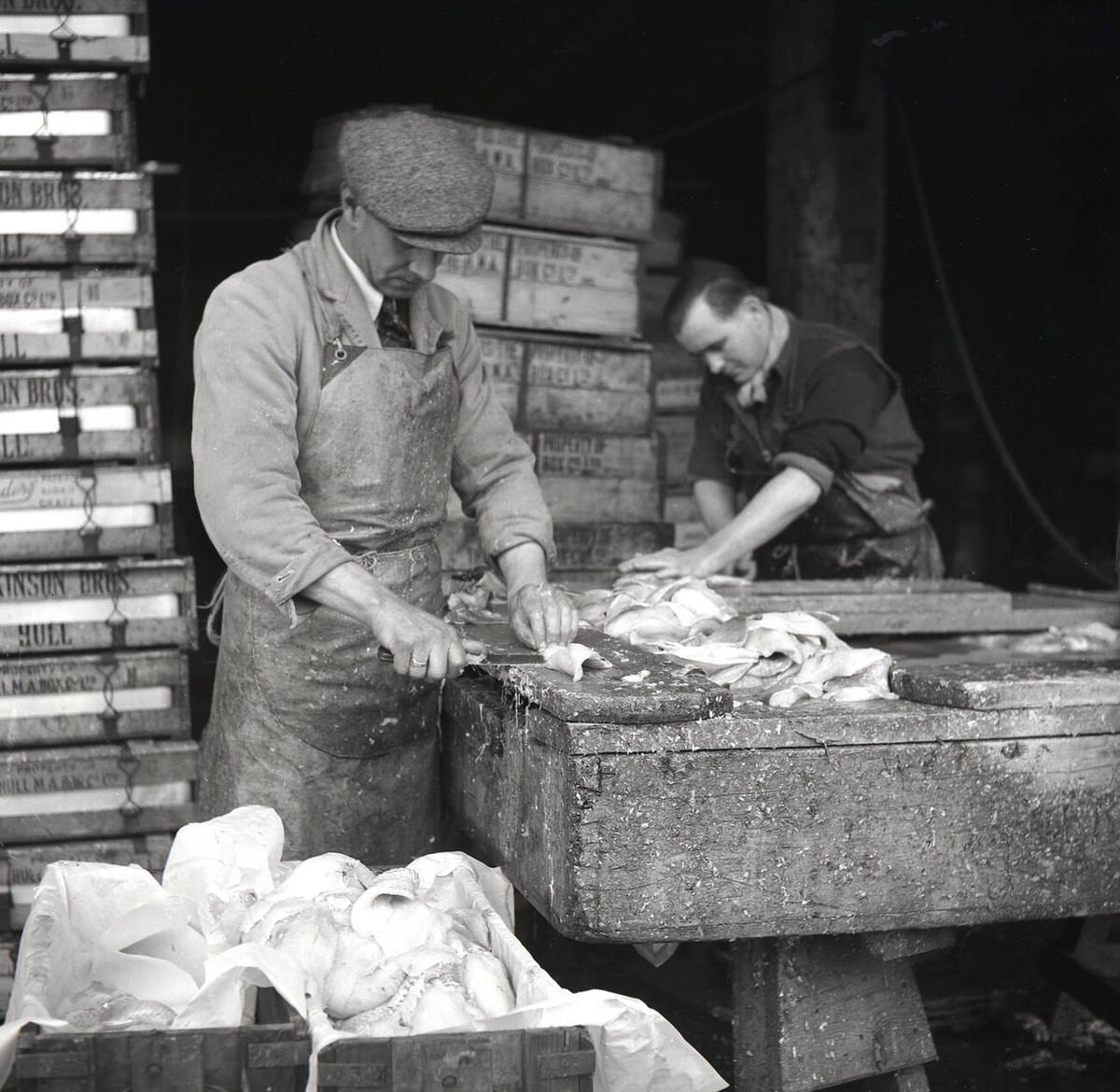
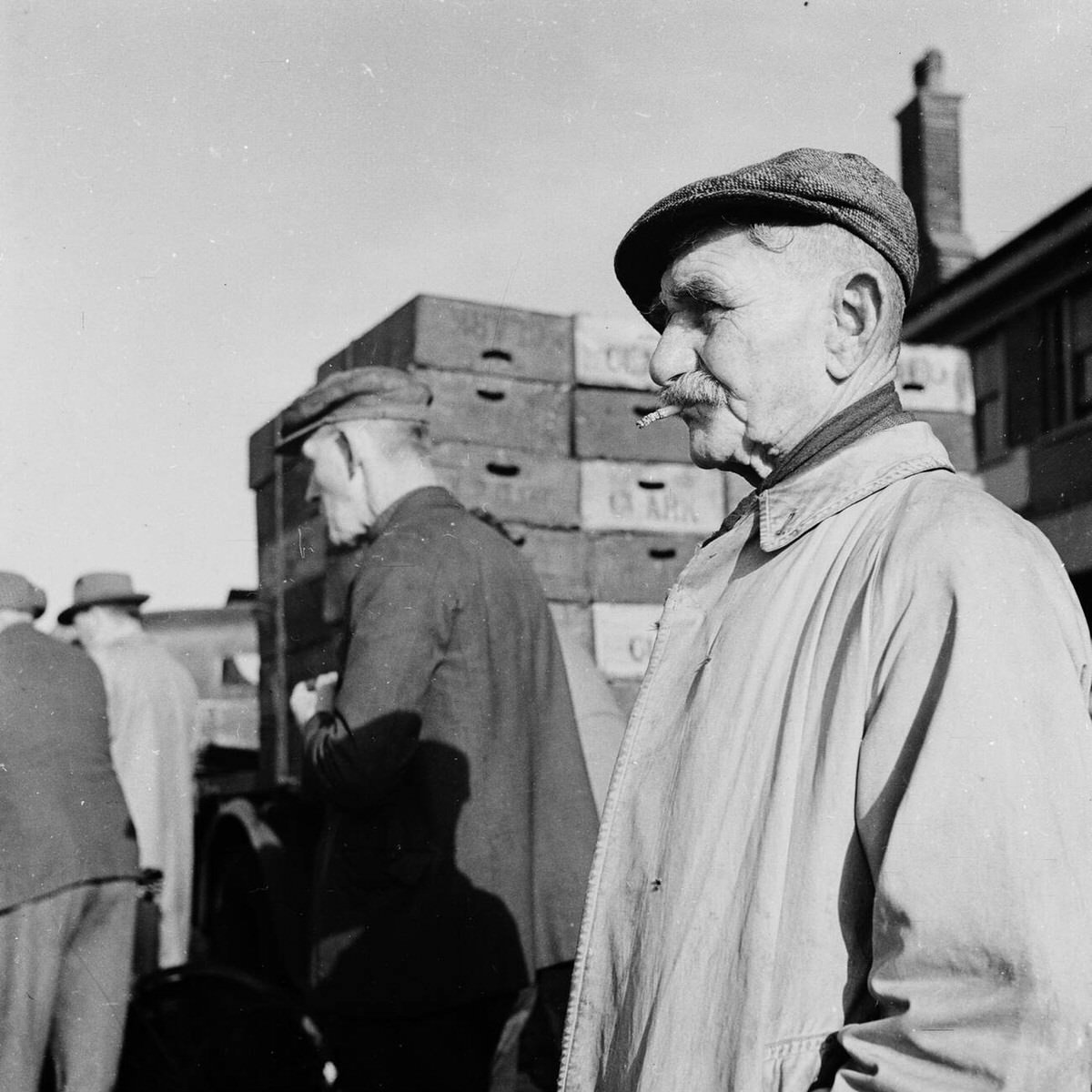
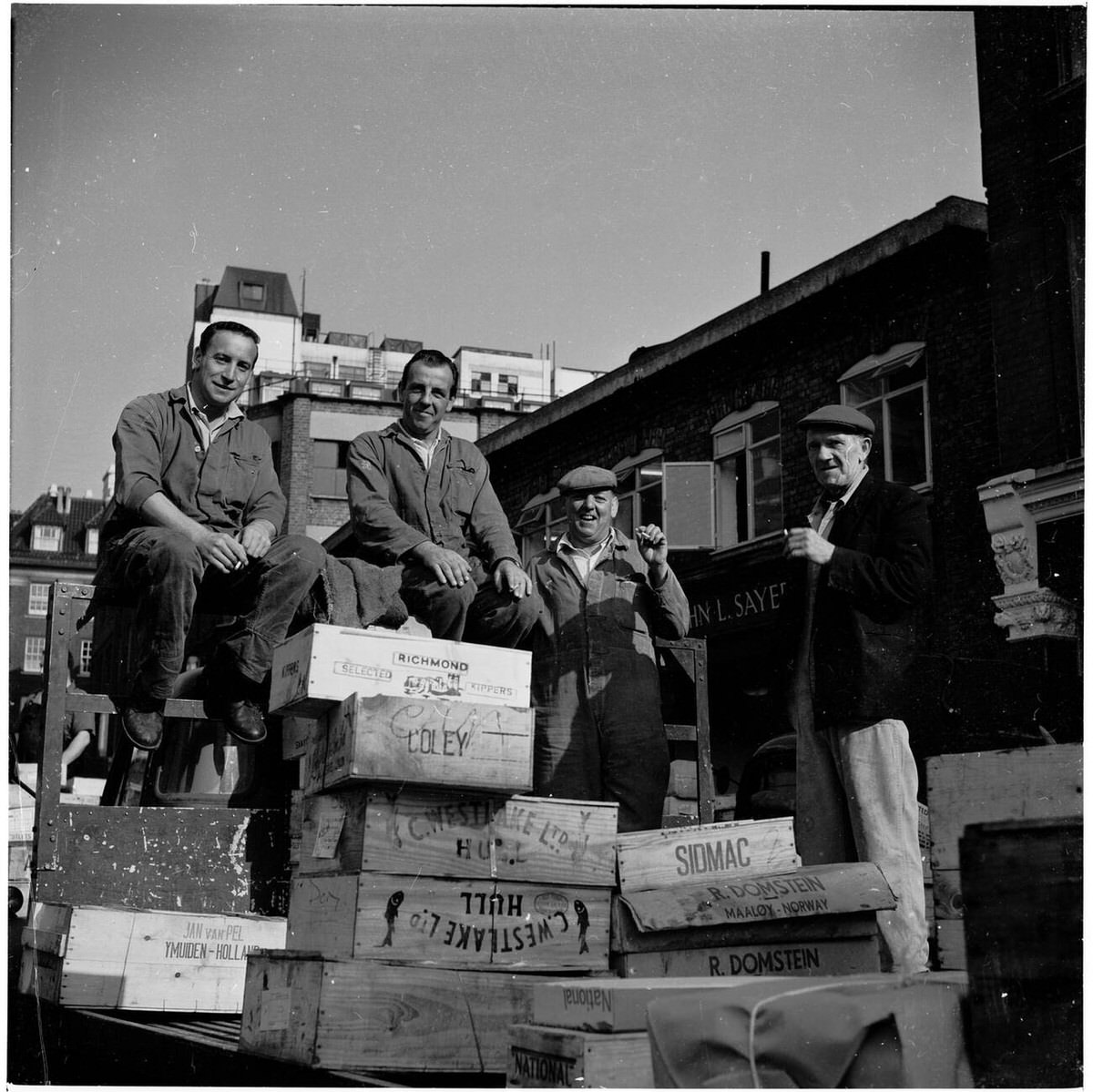
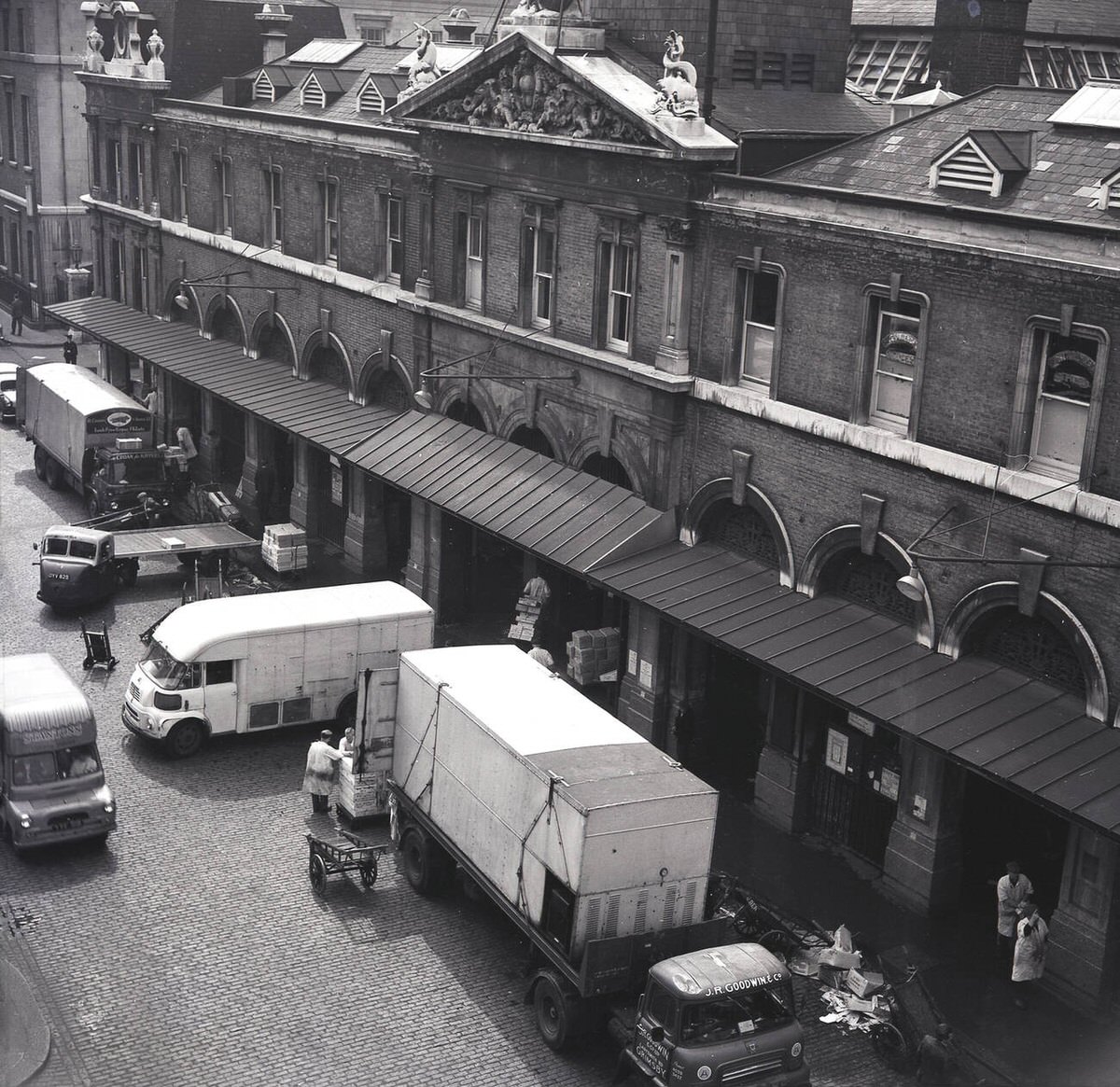
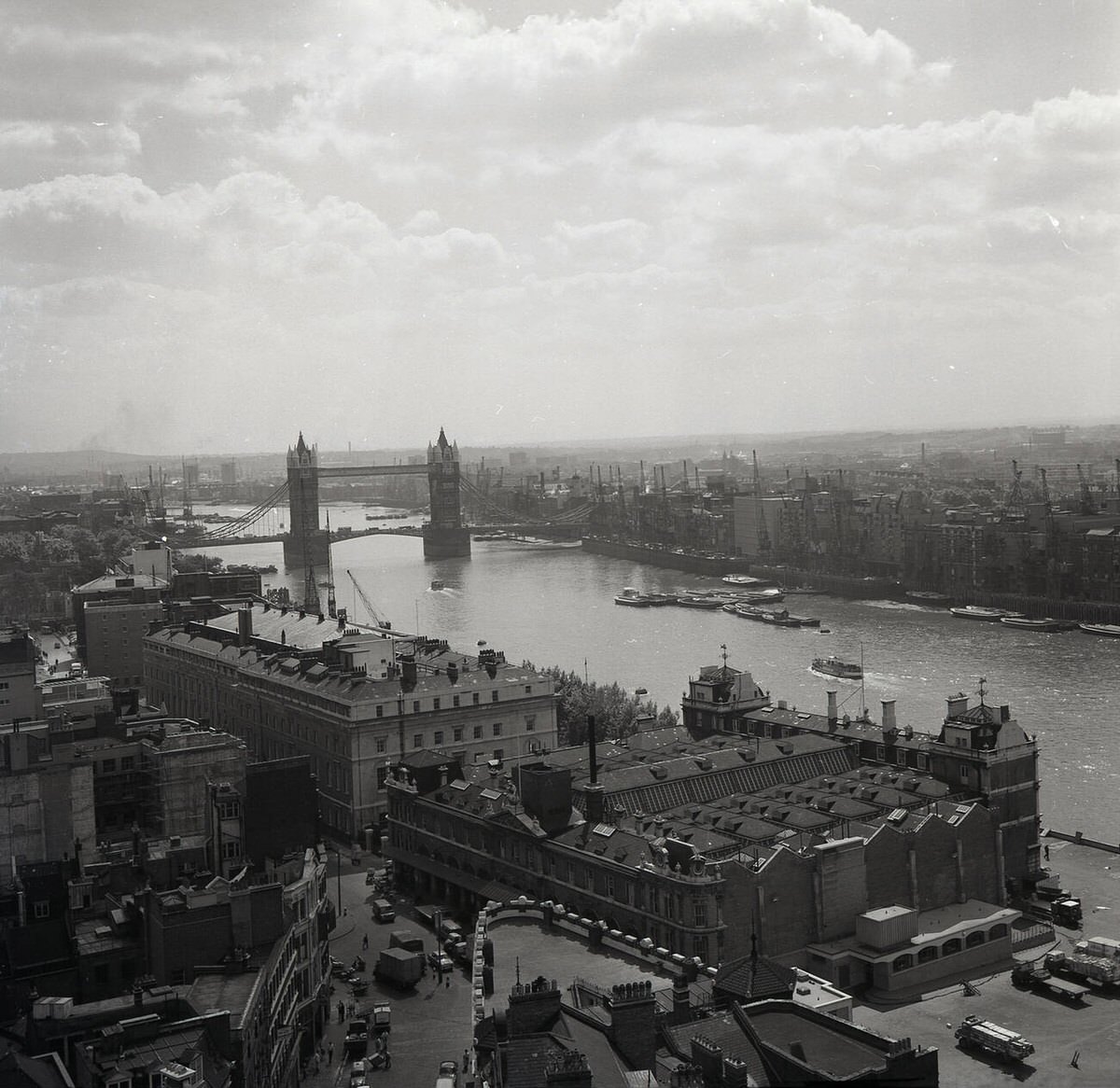
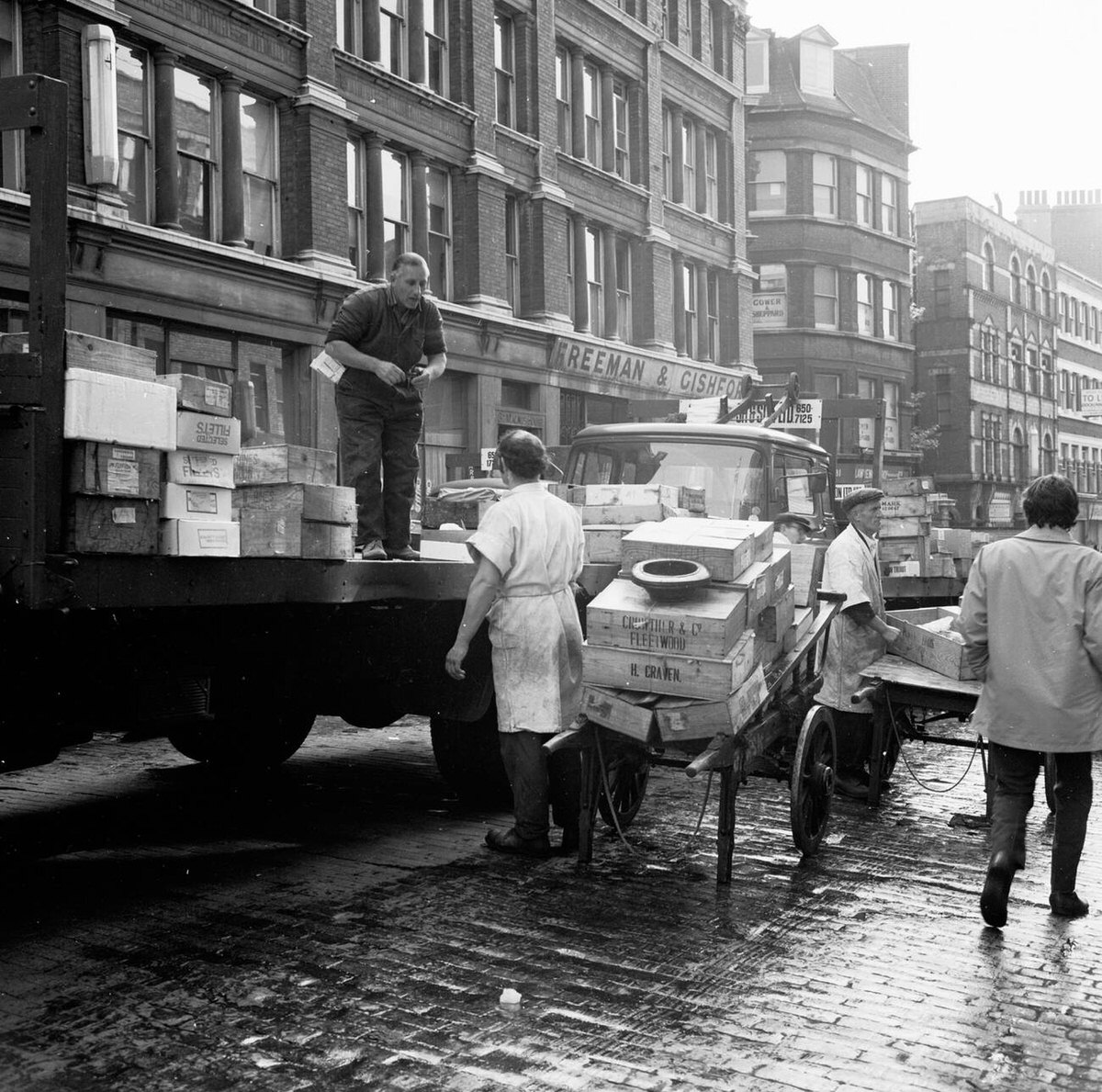
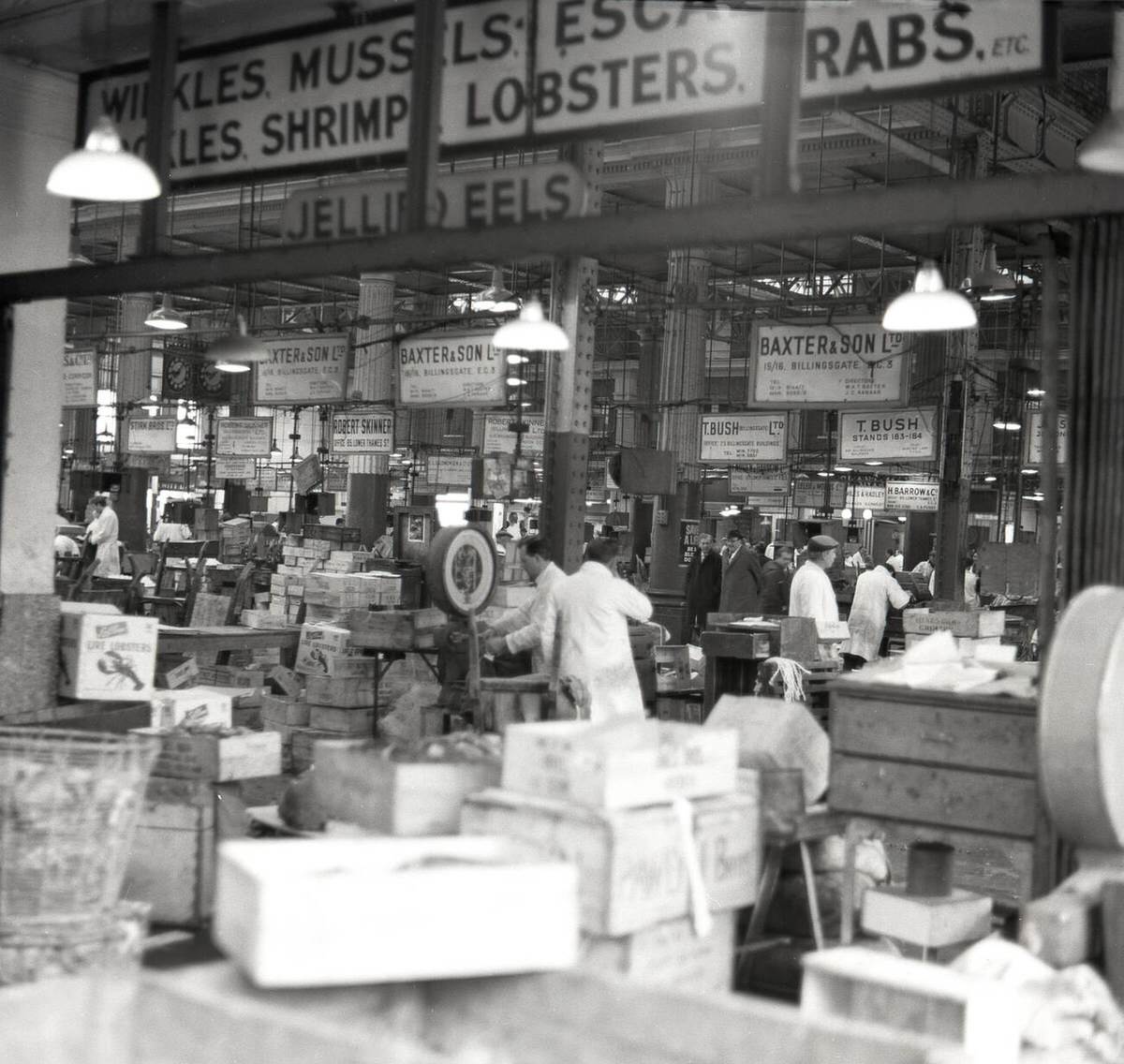
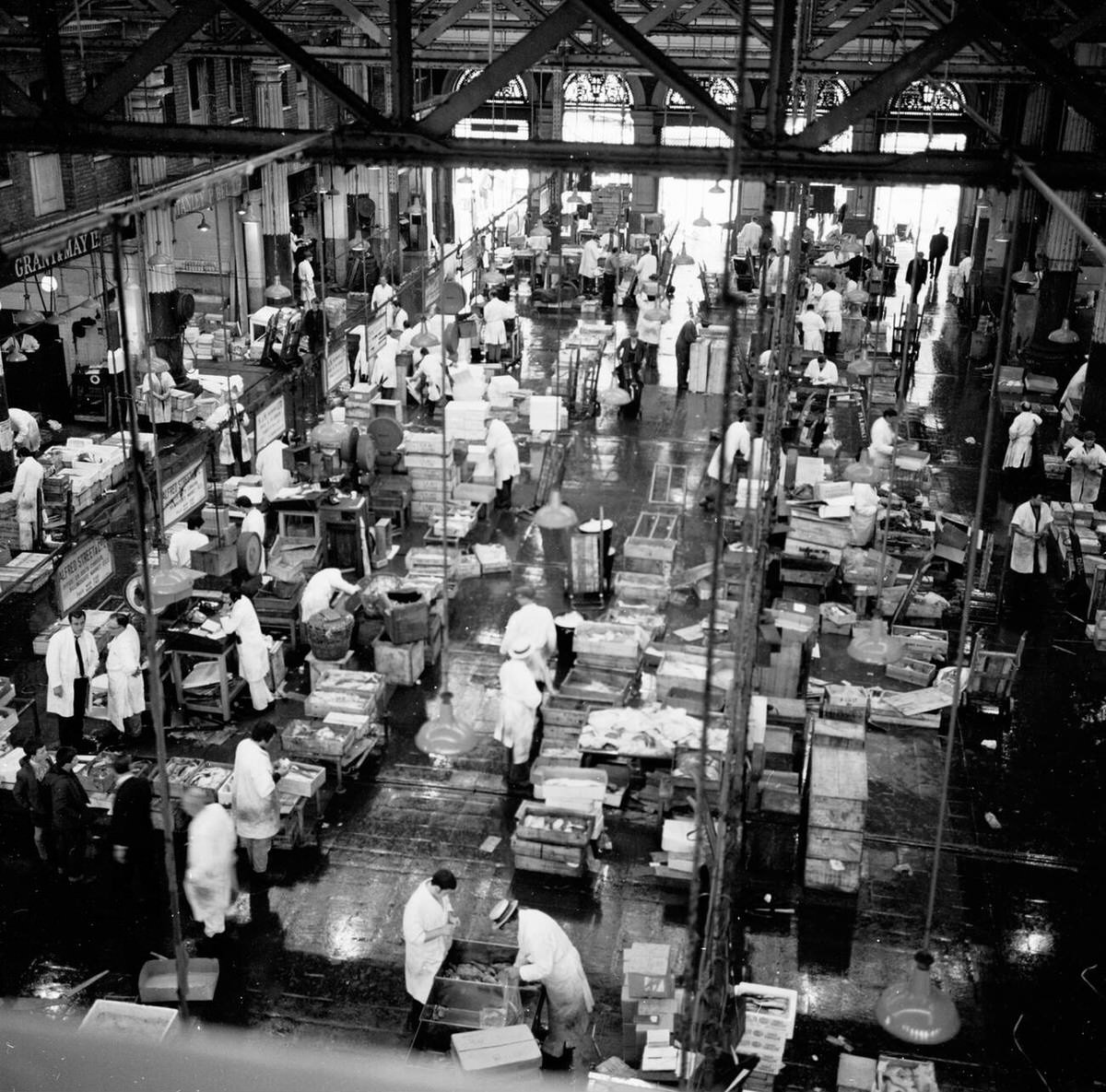
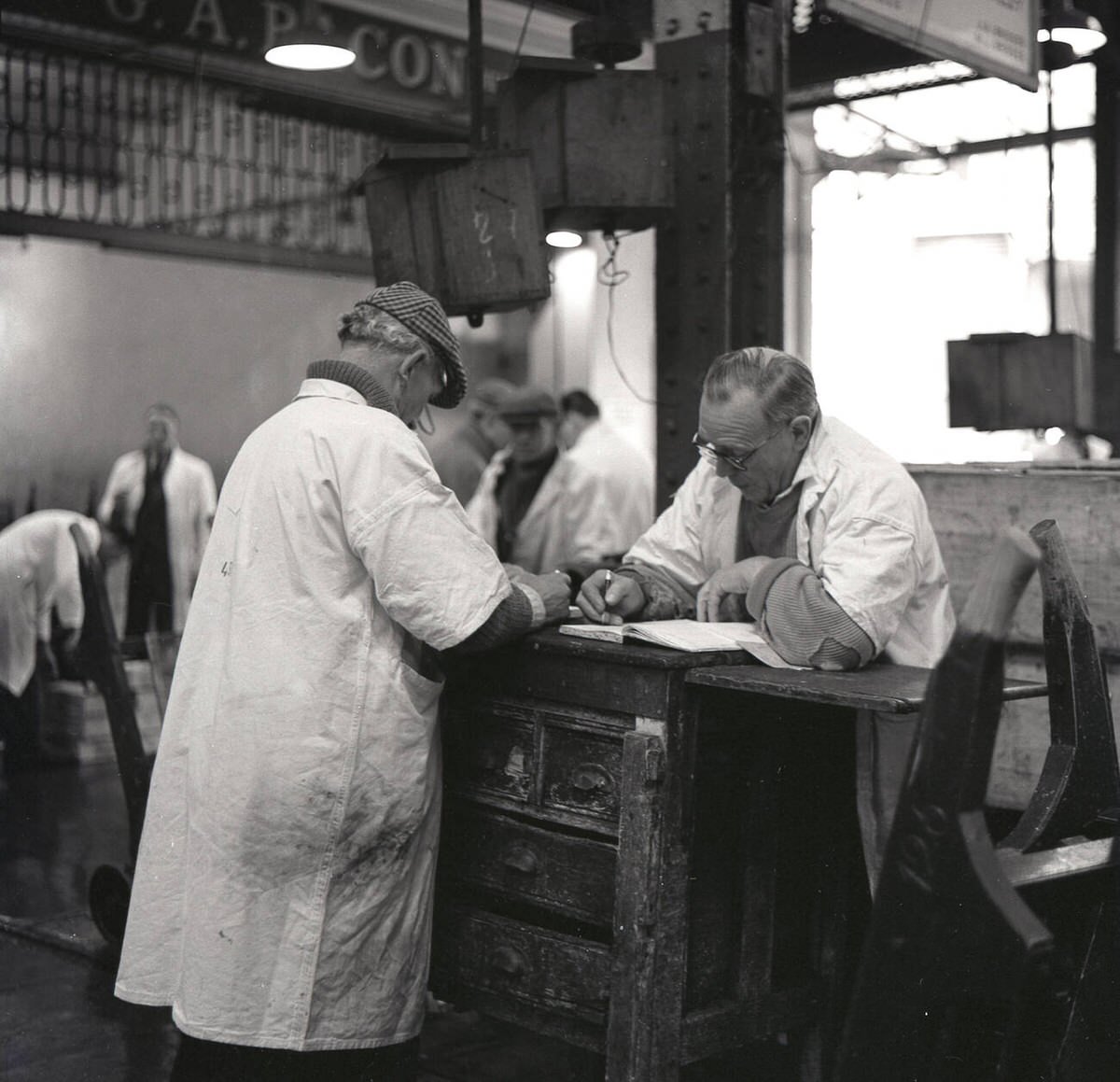
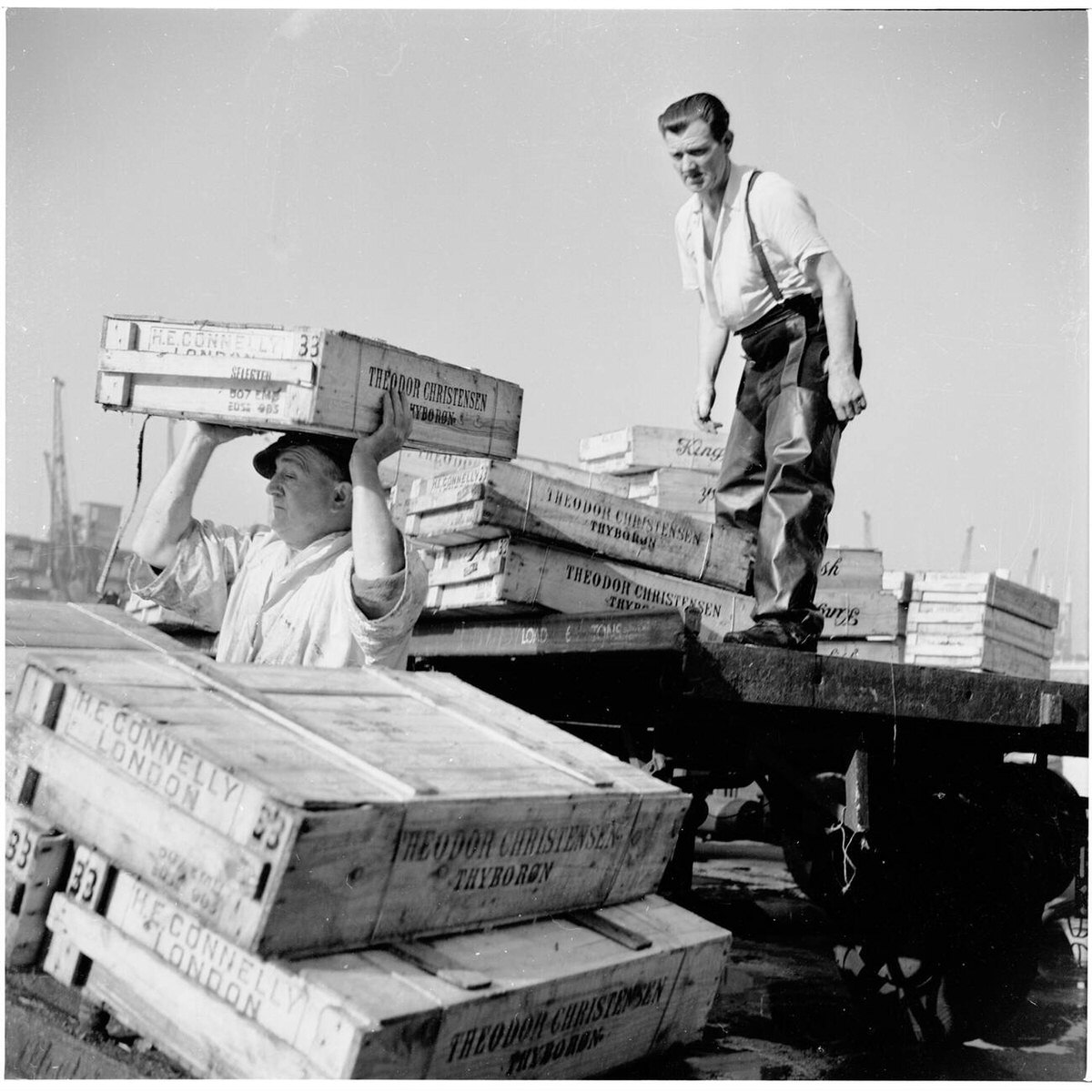
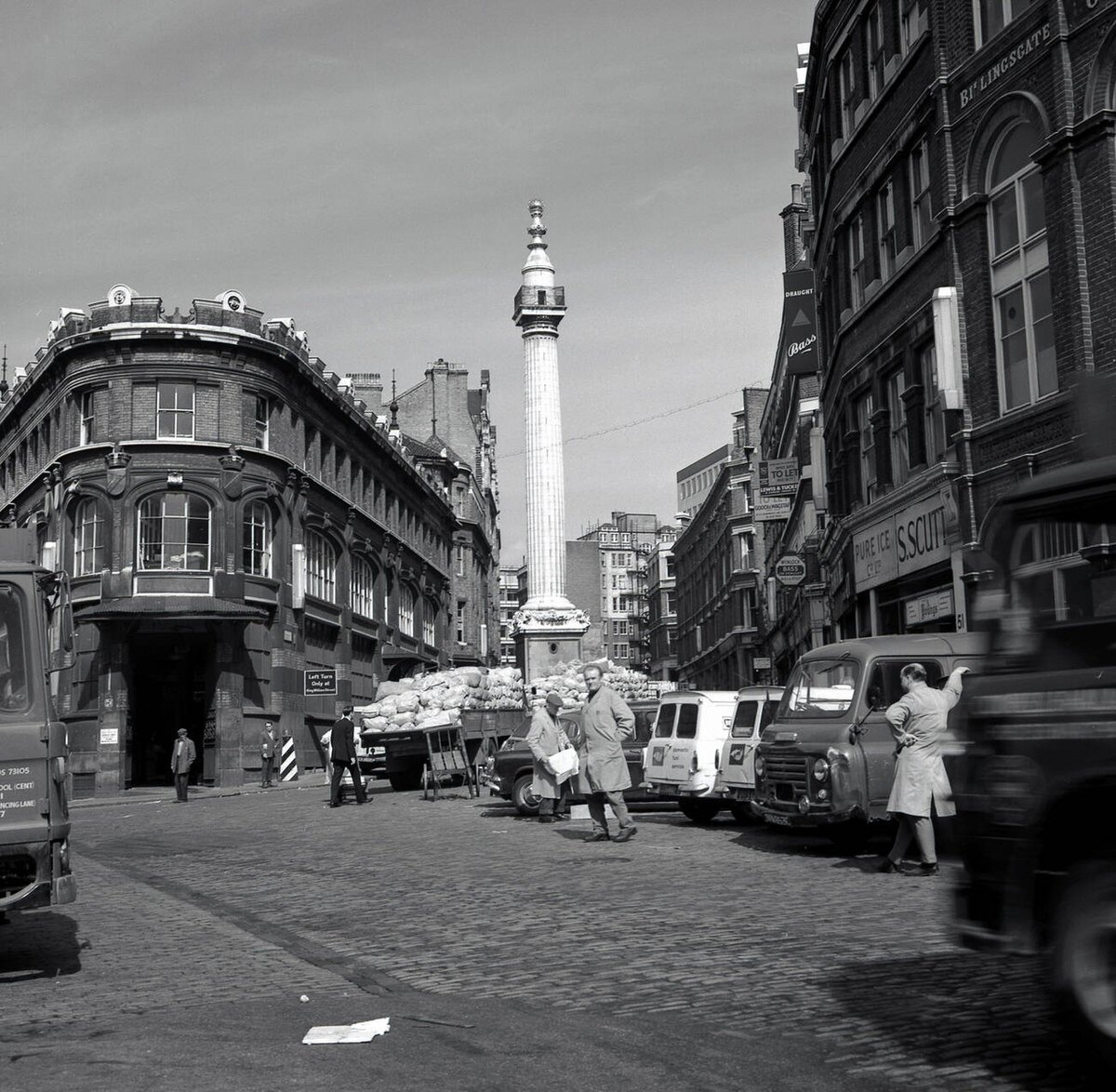
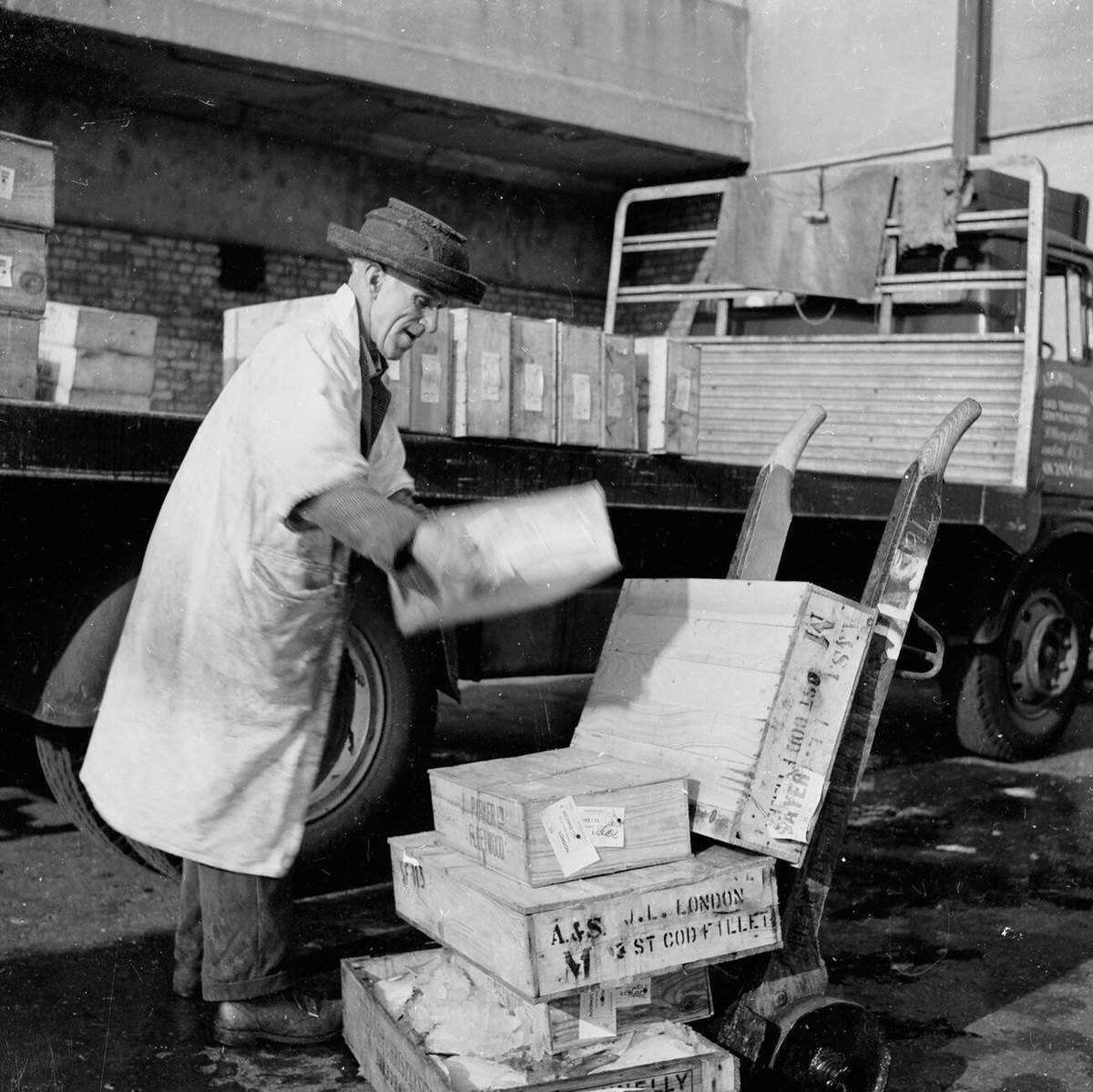
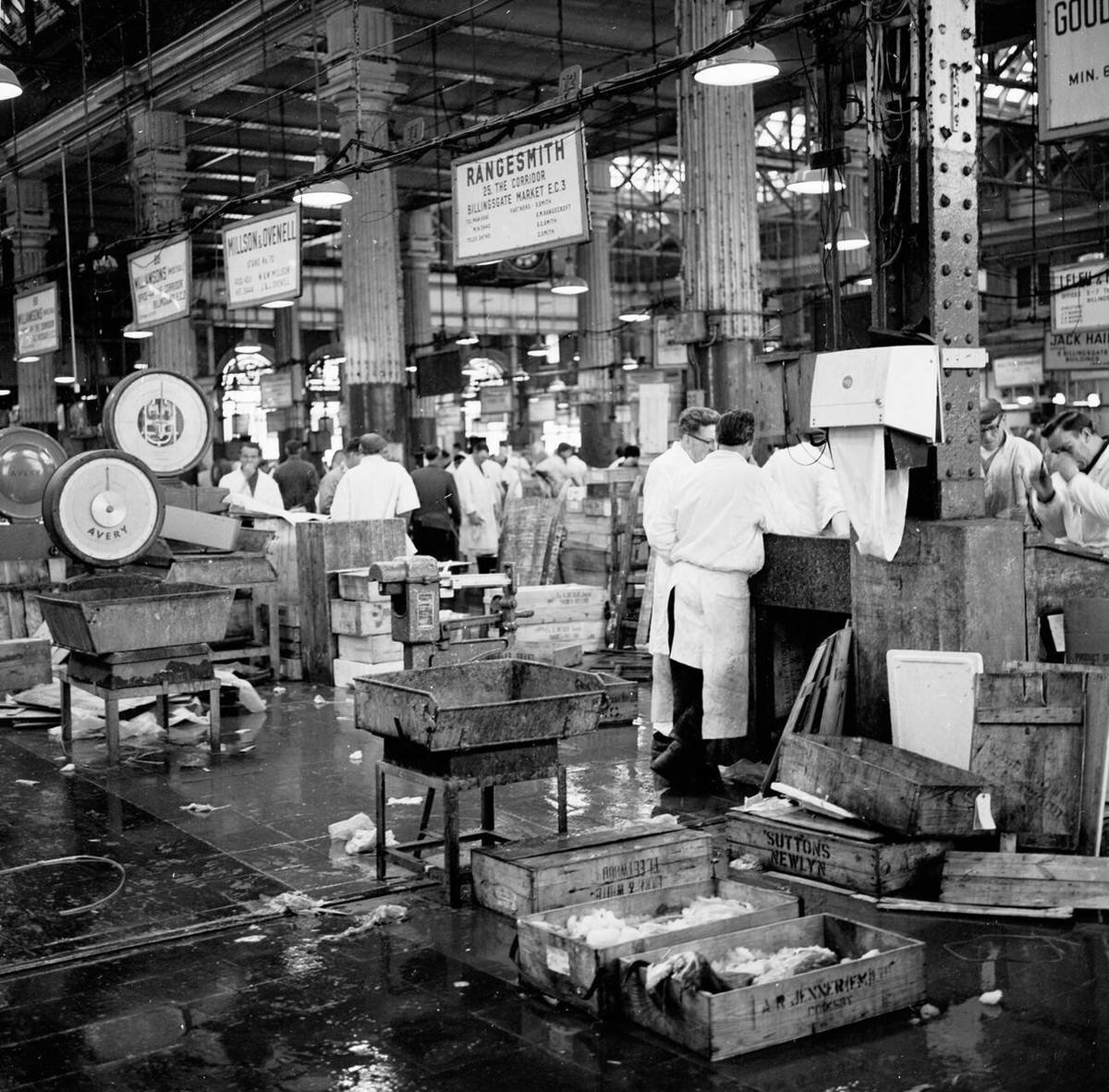
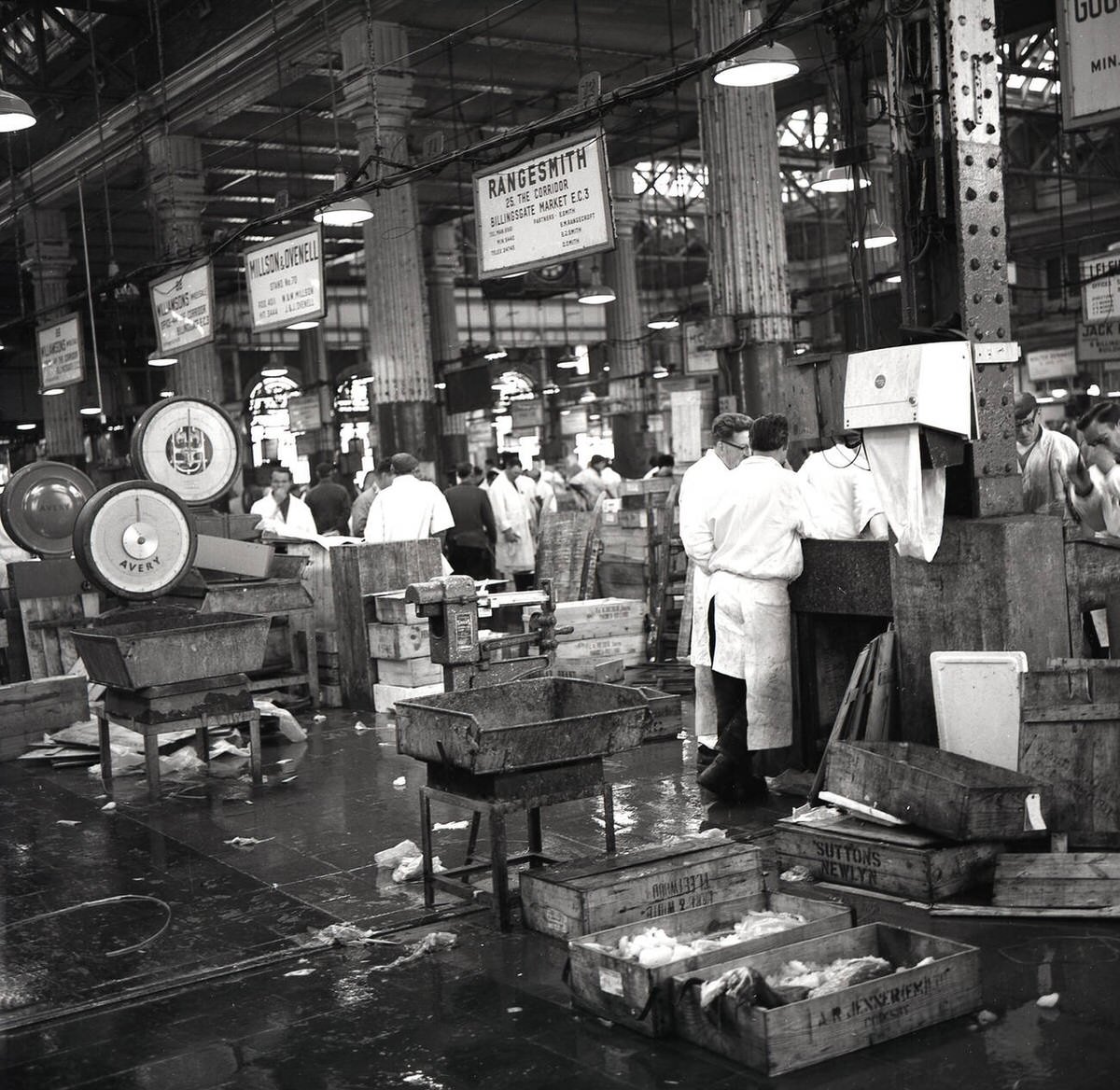
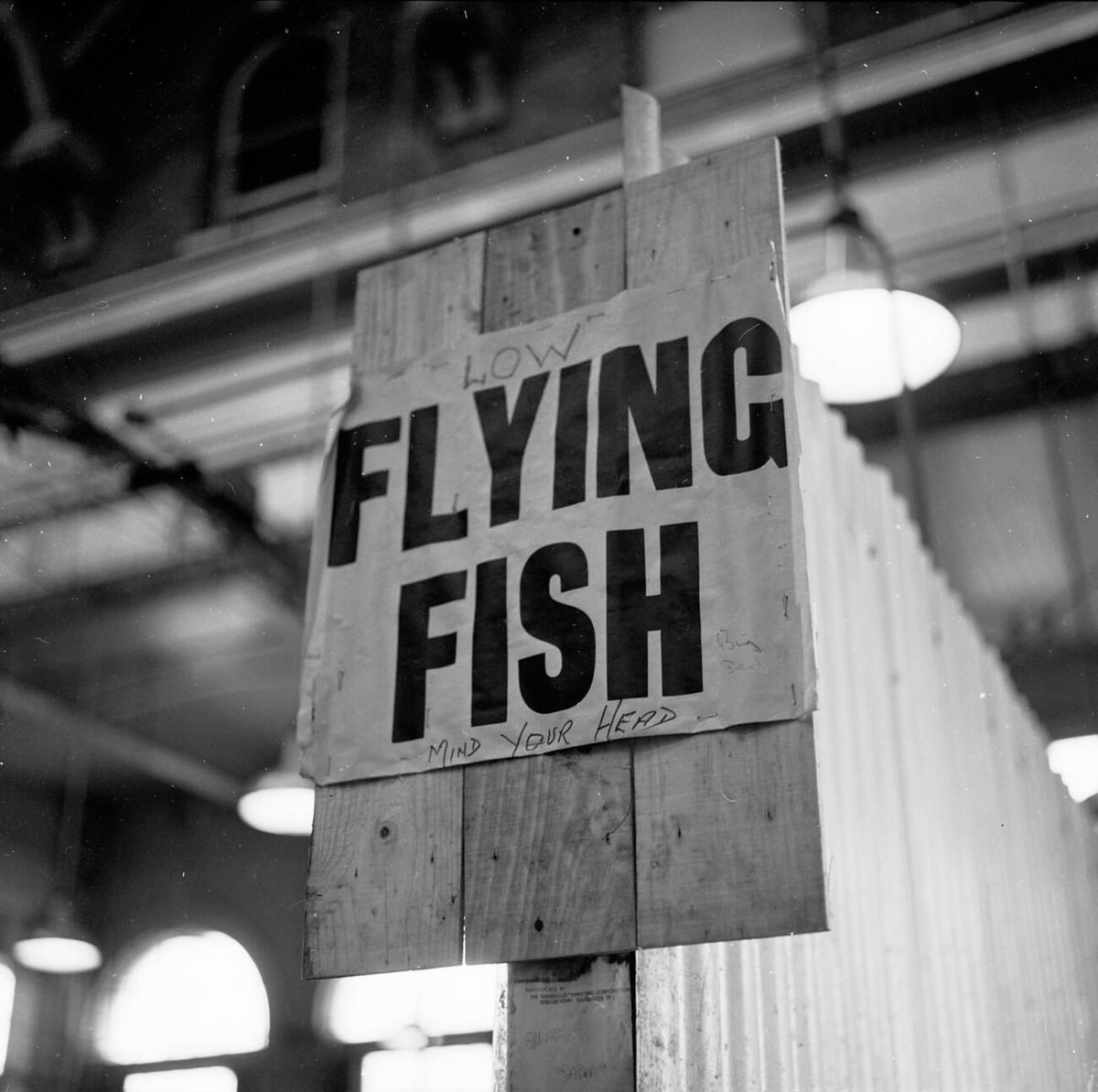
Two porters taking a break from loading crates at Billingsgate Market, 1950sMarket porters pulling carts across London Bridge with Tower Bridge in the distance, 1950sPorter pulling a heavily loaded trolley up a cobbled street at Billingsgate Fish Market, 1950sWorkers filleting fresh fish outside Billingsgate Fish Market, 1950sElderly market trader standing by crates at Billingsgate Fish Market on Lower Thames Street, 1950sPorters and carts outside Billingsgate Fish Market on Lower Thames Street, 1950sBillingsgate Fish Market workers taking a break on a truck, 1950sPorter pulling a barrow of crates from the lorry park at Billingsgate Fish Market, 1950sActivity outside the wholesale Billingsgate Fish Market building, 1950sView across the River Thames to Tower Bridge with Billingsgate Fish Market at the bottom, 1950sPorters unloading fish from a lorry onto carts on Lower Thames Street, 1950sFishmongers working at Billingsgate Fish Market, 1950sPorter pulling a wooden cart loaded with crates of frozen fish on Lower Thames Street, 1950sMarket porter pulling a cart loaded with trays of fresh fish outside Billingsgate Fish Market, 1950sFishmongers working on the floor at Billingsgate Fish Market, 1950sMarket porters moving crates on a cobbled street outside Billingsgate Fish Market, 1950sPorters unloading crates from a truck on the wet cobbles of Lower Thames Street, 1950sTwo fish merchants chatting on a cobbled street outside Billingsgate Fish Market, 1950sTwo fishmongers in white coats writing up sales at Billingsgate Fish Market, 1950sElderly porter unloading wooden crates of cod fillet onto a trolley at Billingsgate Fish Market, 1950sWorkers unloading crates of fish from a lorry at New London Bridge, 1950sWorkers loading crates of fish for Billingsgate Fish Market on a wet London Bridge, 1950sCobbled street with trolleys and vans outside Billingsgate Fish Market on Thames Street, 1950sPorter loading crates of fish onto a trolley at Billingsgate Fish Market, 1950sWorkers, porters, and trucks filling Lower Thames Street at Billingsgate Fish Market, 1950sFishmongers working inside Billingsgate Fish Market, 1950sActivity inside the trading hall of Billingsgate Fish Market showing Rangesmith company merchants, 1950sFlying Fish sign on a trader’s stall at Billingsgate Fish Market, 1950s
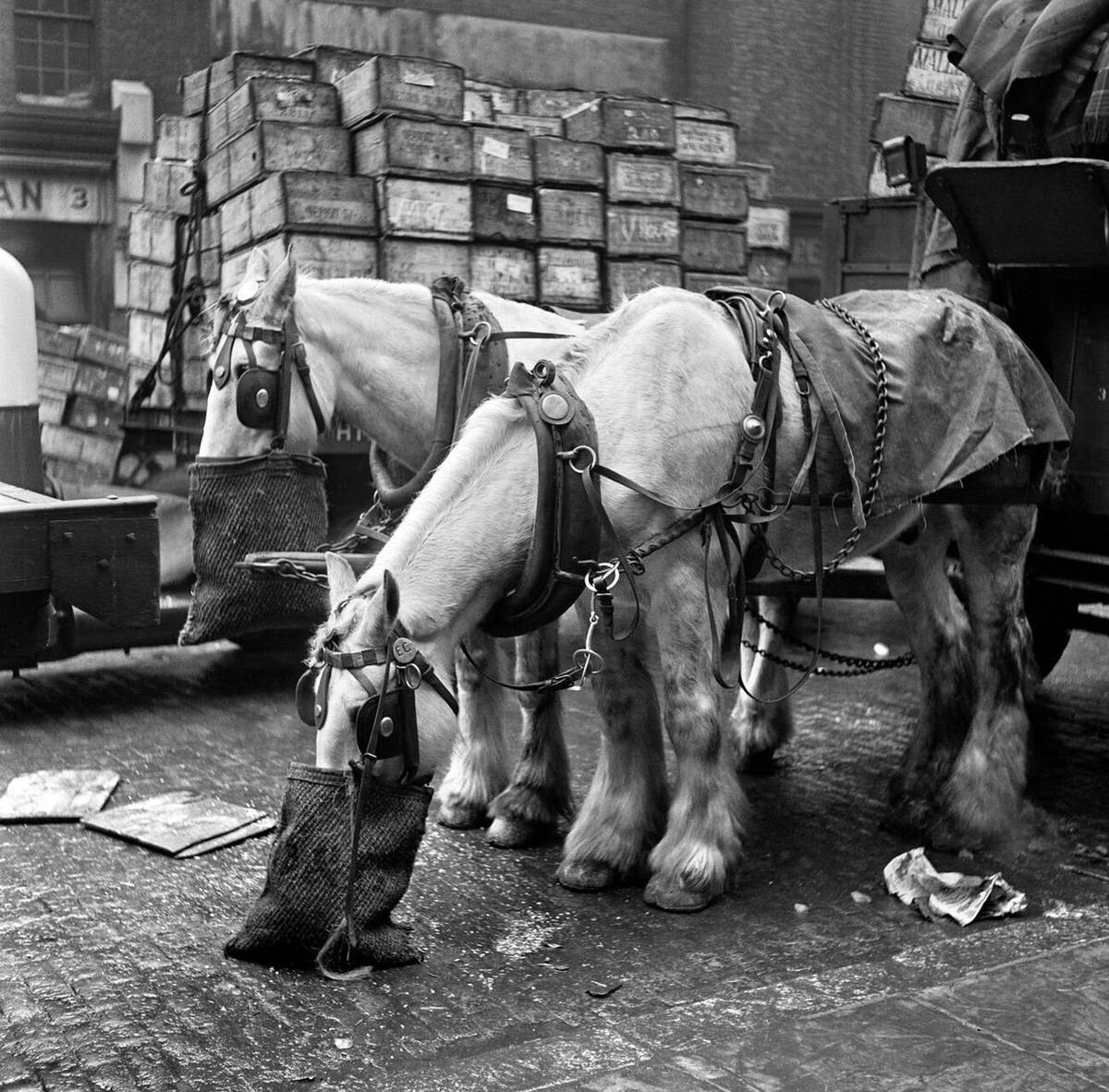
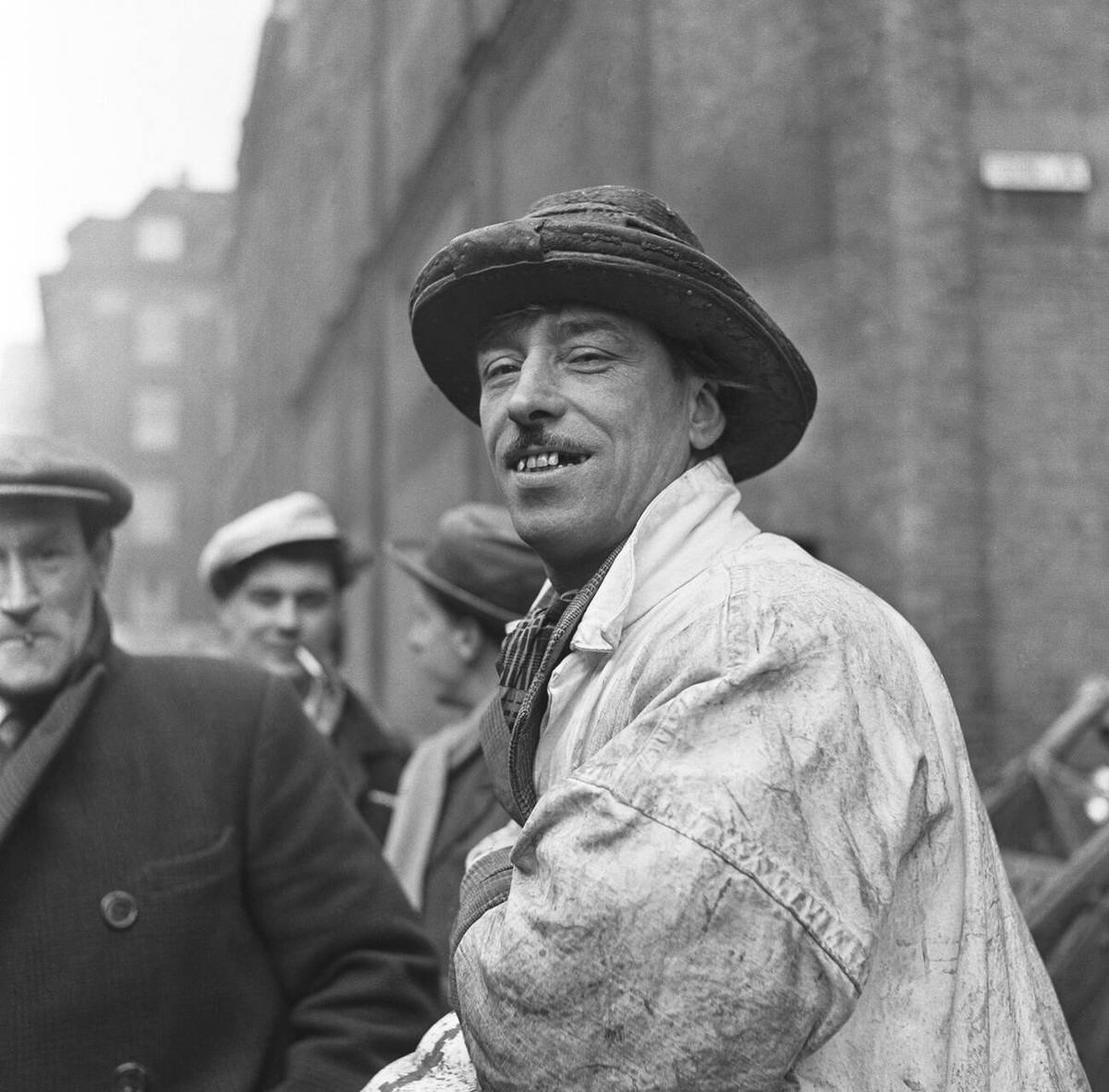
In 1954, photographers captured some of the most vivid portraits of the porters and their working environment. Cart horses still fed from nosebags outside the entrance that year, a sign that even as lorries took over deliveries, older methods hadn’t fully disappeared.
Market porters at Billingsgate, 1954Three fish porters in distinctive hats discussing trade at Billingsgate Fish Market, 1954Cart horses feeding from nosebags at Billingsgate Fish Market, 1954Fish porter wearing a distinctive hat at Billingsgate Fish Market, 1954
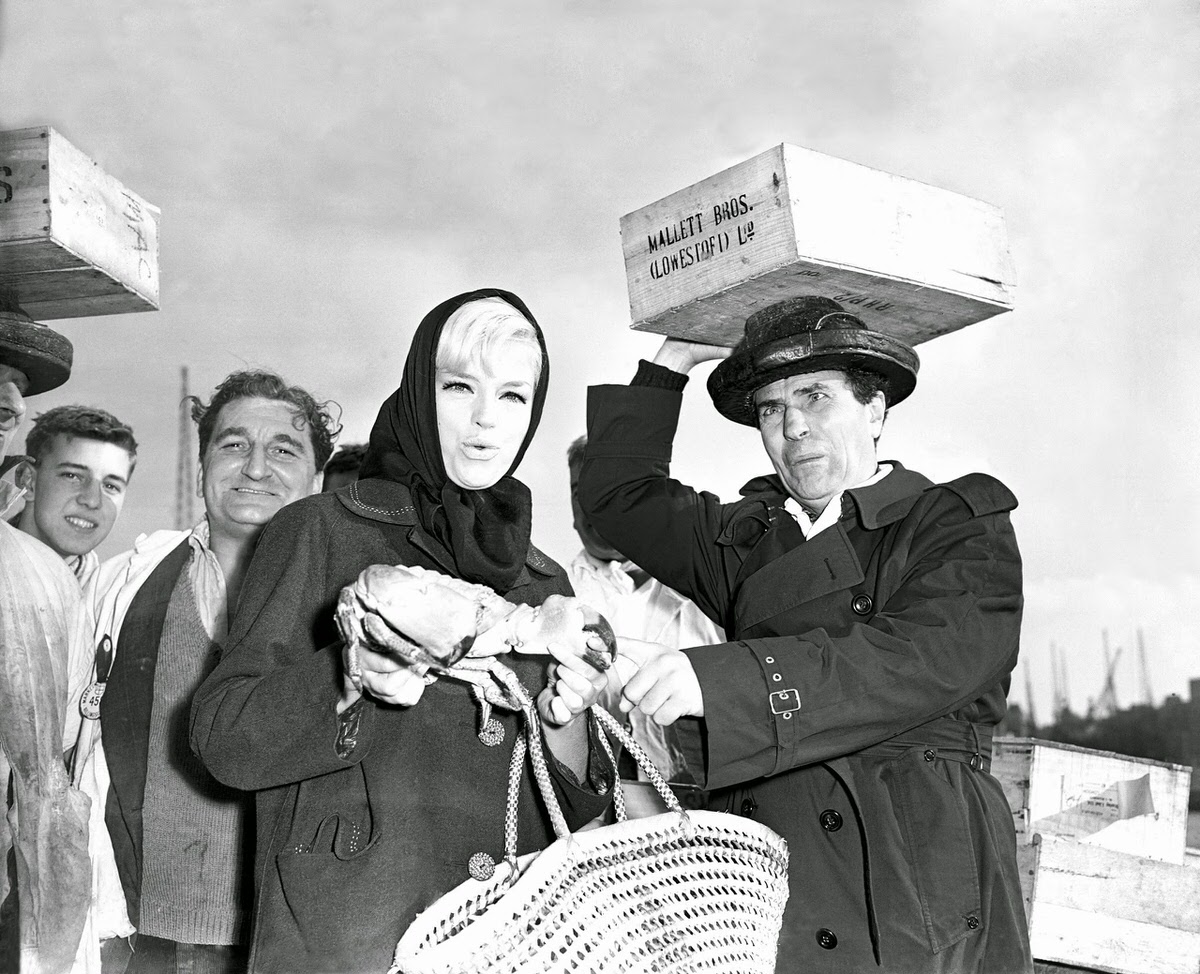
The market’s fame extended into popular culture. In 1965, the film The Sandwich Man used Billingsgate as a backdrop, with actors Michael Bentine and Diana Dors appearing on set amid the familiar chaos of the trading floor.
Michael Bentine and Diana Dors on set, The Sandwich Man, 1965Interior of Billingsgate Fish Market, 1969End of the trading day at Billingsgate Market, 1969
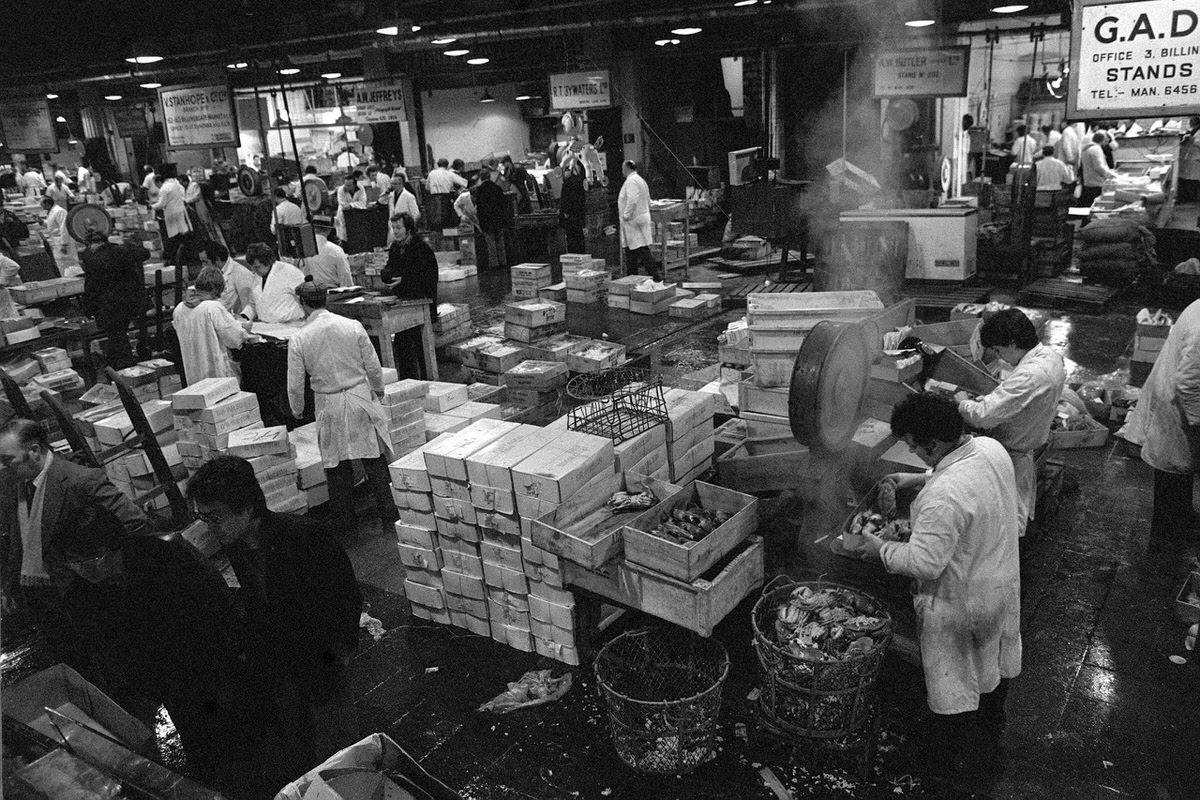
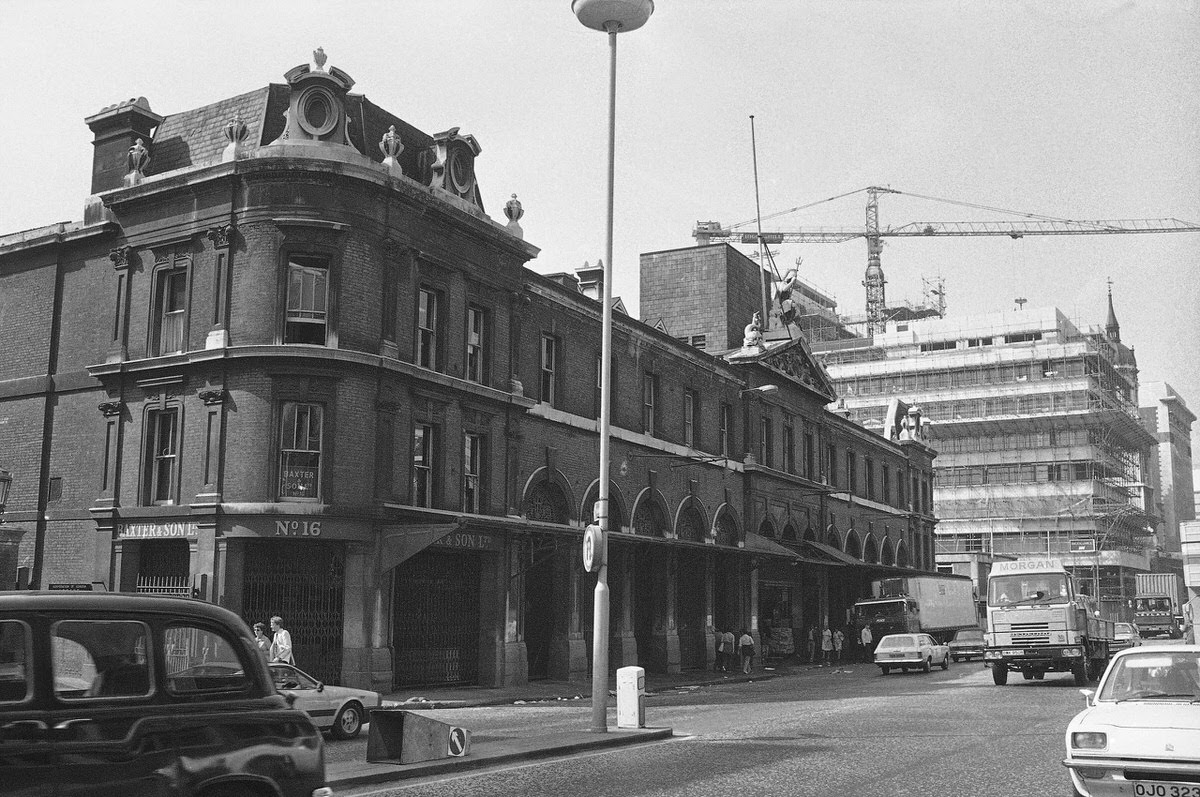
By the 1970s, the Victorian building was straining under the demands of modern wholesale trade. The shellfish section operated from a dedicated space in the basement, keeping that specialty trade separate from the main floor above. The surrounding City of London was changing rapidly, with new office towers rising around the old market.
Billingsgate porter, 1974Shellfish specialty section in the basement of Billingsgate Market, 1977Old Billingsgate Market in the changing City of London, 1979
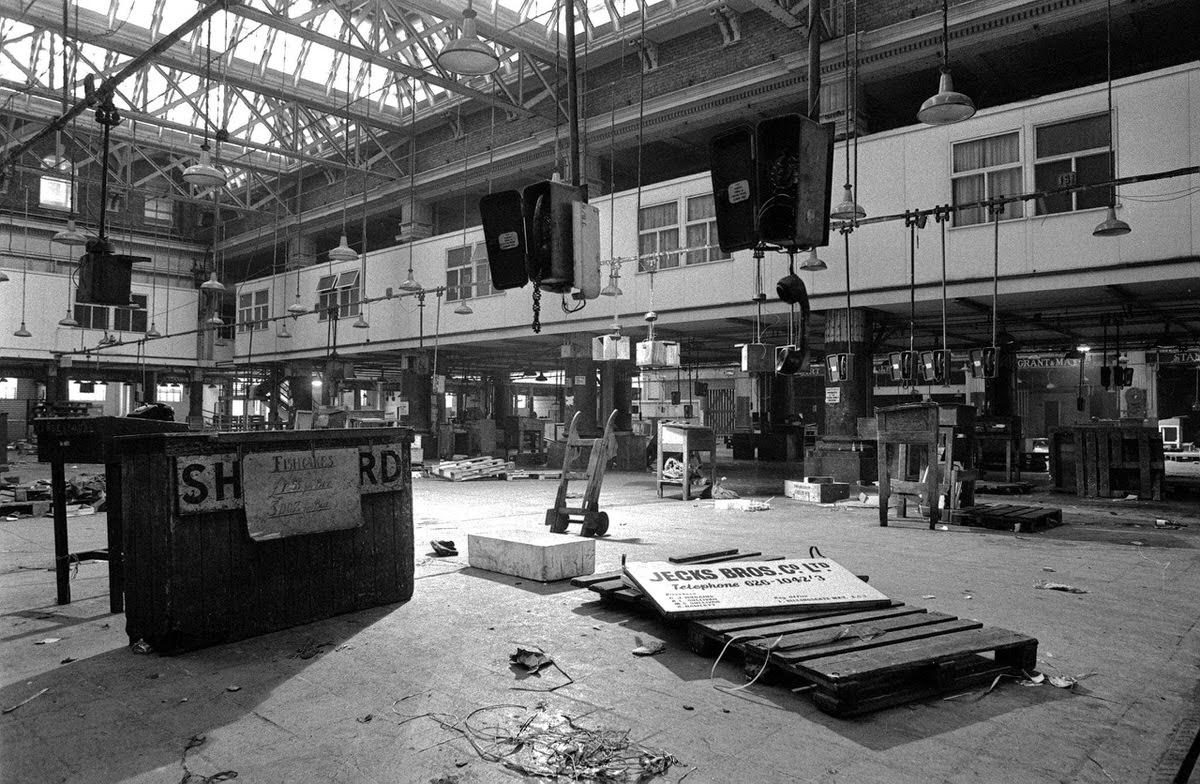
In 1982, trading moved to a new purpose-built facility at West India Dock. The original Victorian building on Lower Thames Street was left empty, its trading hall silent for the first time in over a century.
Deserted interior of the old Billingsgate Fish Market after the move to West India Dock, 1982
Kevin Clark is a historian and writer who is passionate about sharing the stories and significance behind historical photos. He loves to explore hidden histories and cultural contexts behind the images, providing a unique insight into the past.