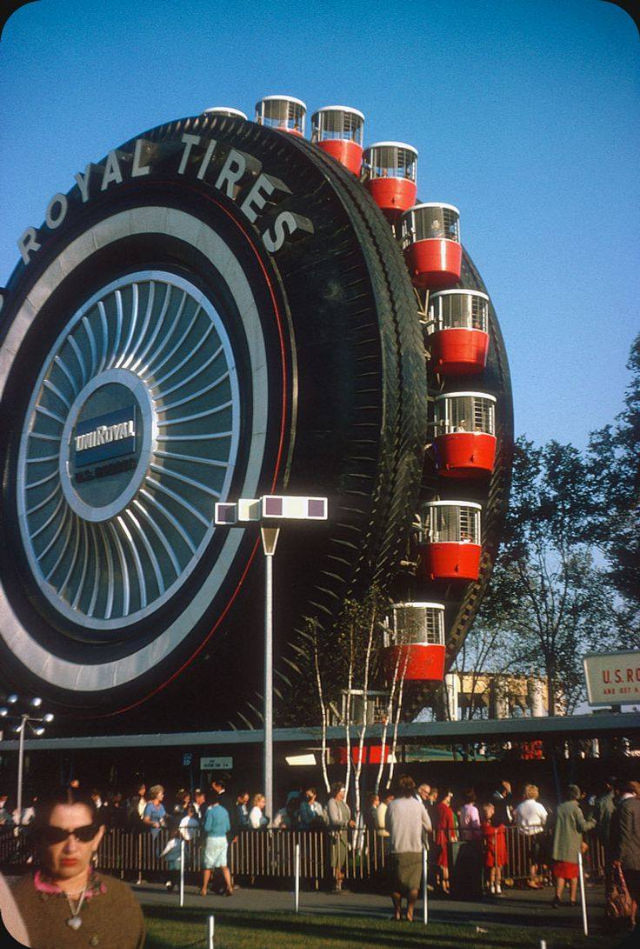
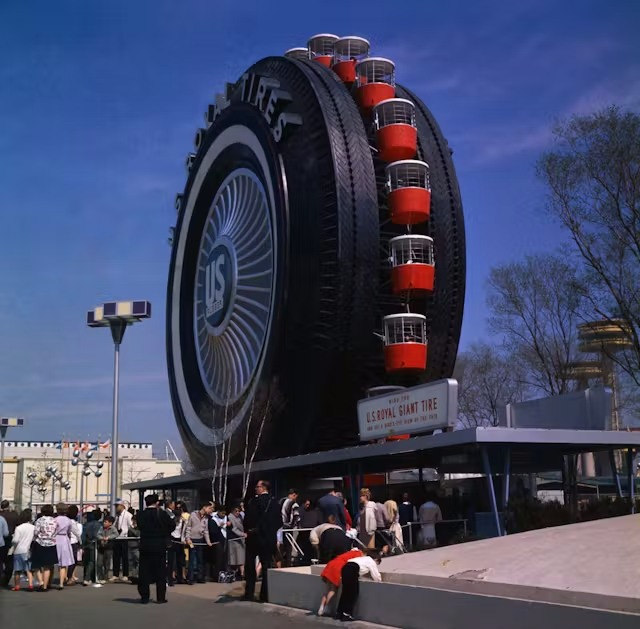
Along Interstate 94 just outside Detroit, a giant tire rises above the highway like something out of a dream. It stands 80 feet tall, weighs 12 short tons, and has been drawing double-takes from drivers for decades. But before it became one of Michigan’s most recognizable roadside landmarks, it was something even more remarkable — a working Ferris wheel at the 1964 New York World’s Fair.
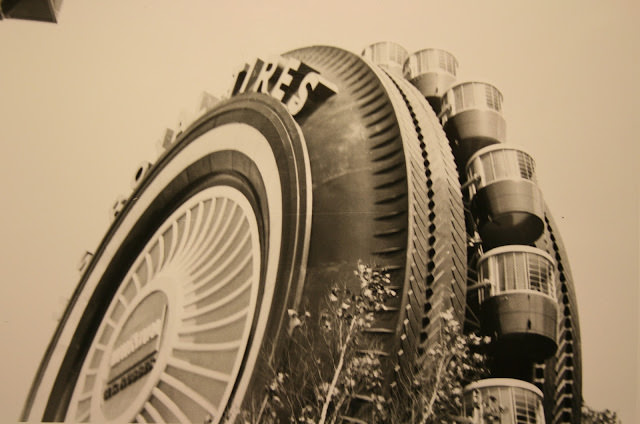
The Uniroyal Tire Company dreamed up the attraction in the early 1960s as a showstopping exhibit for the World’s Fair. The goal was simple: turn heads and show the world what Uniroyal was made of. They succeeded on both counts. The tire-shaped structure was built next to the Grand Central Parkway at a cost of $750,000 — a serious investment that reflected just how much the company wanted to make a statement.
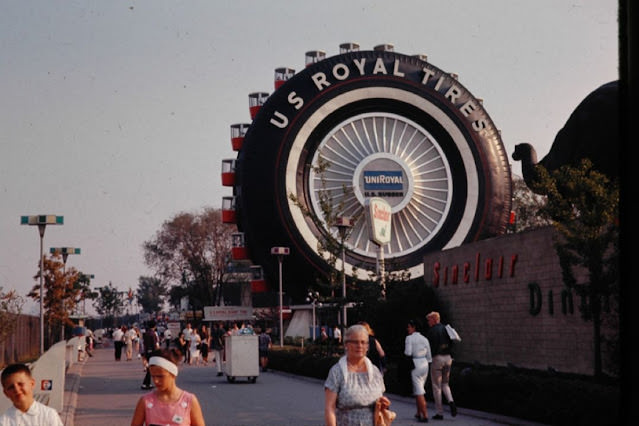
The structure wasn’t just for show. It functioned as a fully operational Ferris wheel, fitted with 24 barrel-shaped gondolas, each holding up to four passengers. A 100-horsepower engine powered the ride, and the entire wheel sat atop a 40-foot foundation. At full capacity, it carried 96 passengers at a time. Over the course of the fair’s run, more than 2 million people took a spin inside the giant tire.
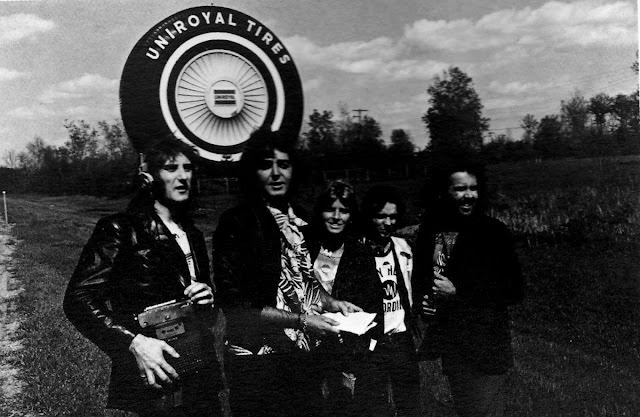
The ride attracted more than just curious fairgoers. Jacqueline Kennedy, actor Telly Savalas, and the Shah of Iran were among the notable guests who climbed aboard. Their visits added a layer of prestige to an attraction that was already the talk of the fairgrounds. For Uniroyal, having such high-profile riders was the kind of publicity money couldn’t buy.
When the World’s Fair closed in 1965, Uniroyal — then operating under the name US Rubber — faced a decision about what to do with the massive structure. The company offered to donate it, but New York City officials rejected the proposal, ruling it unsuitable for use as a park amusement. Rather than scrap it, the company chose to give the tire a second life.
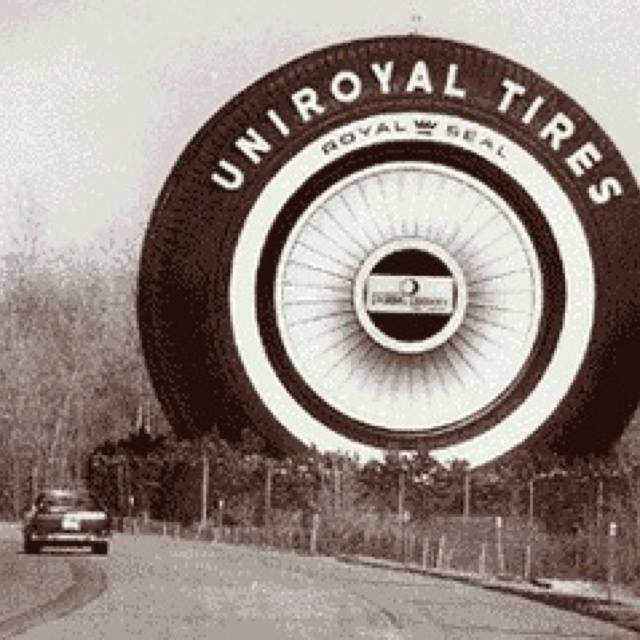
The tire was taken apart and loaded onto 22 trucks for the long haul to Allen Park, Michigan, just outside Detroit. There was a certain logic to the choice of location. Detroit was the heart of America’s automotive industry, and a giant tire fit right in. By 1966, workers had reassembled the structure outside US Rubber’s Midwest corporate headquarters, where it stood as a static display — no more gondolas, no more riders, just the tire itself.
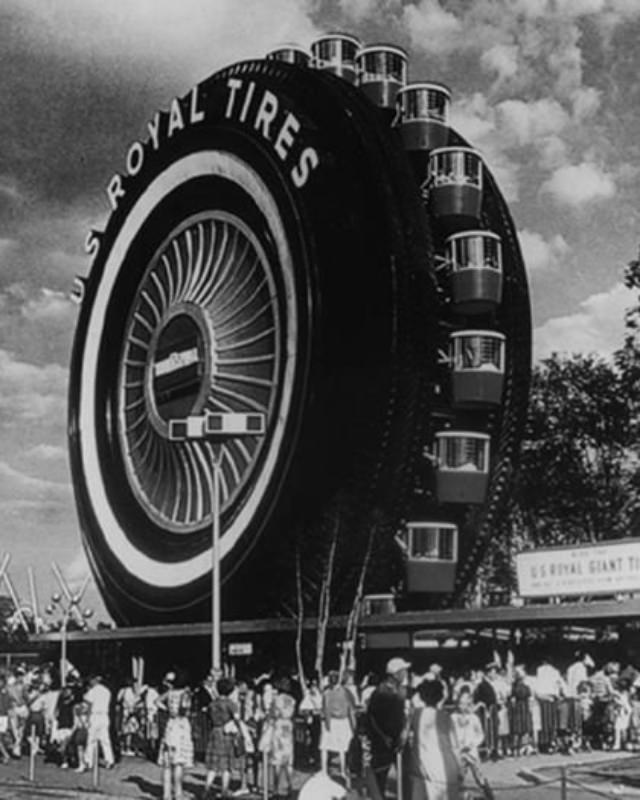
The engineering behind the tire is as impressive as its size. The exterior tread is 6 inches deep, and the interior volume measures 120,576 cubic feet. The structure is anchored in 24 feet of concrete and steel, making it capable of withstanding hurricane-force winds. It’s built from a Uniroyal-developed polyester resin reinforced with fiberglass, giving it both flame resistance and long-term durability.
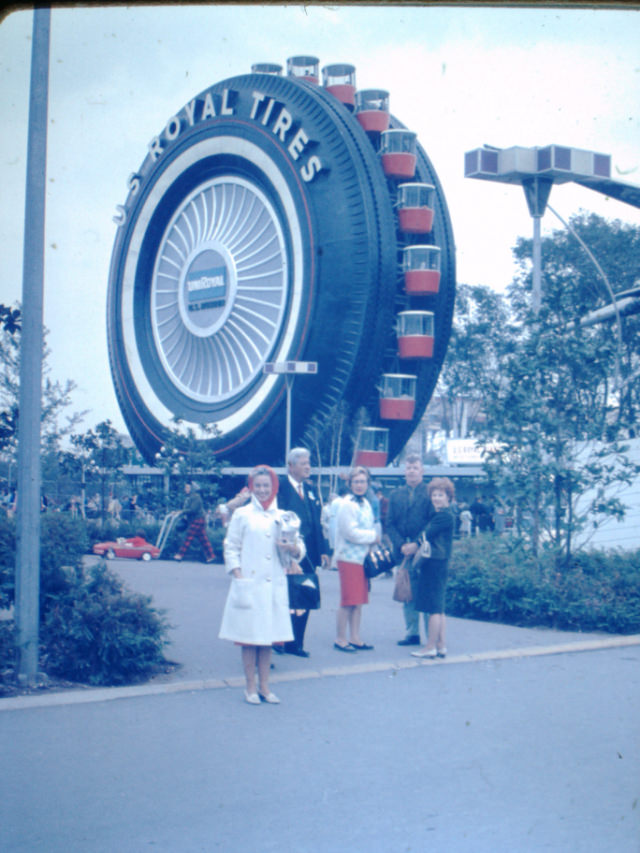
The tire holds the distinction of being the largest non-production tire scale model ever built. Its scale is hard to grasp until you stand next to it. At 80 feet in diameter, it dwarfs the vehicles passing beneath it on the interstate. Motorists have used it as a navigation landmark for generations — “turn at the big tire” is directions that actually work in that corner of Michigan.
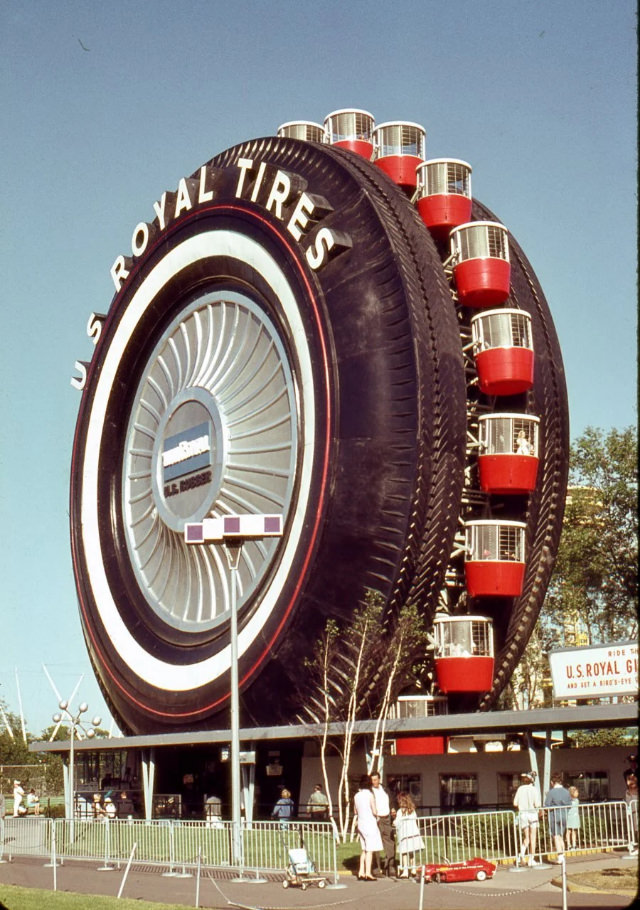
Over the years, the tire hasn’t just stood still — it’s had a few upgrades. In 1998, workers installed a giant simulated nail in the tread as a promotional stunt for a tire repair service. The nail was later removed, but the stunt showed that the tire still had the power to generate buzz decades after its World’s Fair debut. It received a full restoration in the early 2000s, bringing it back to its original condition.
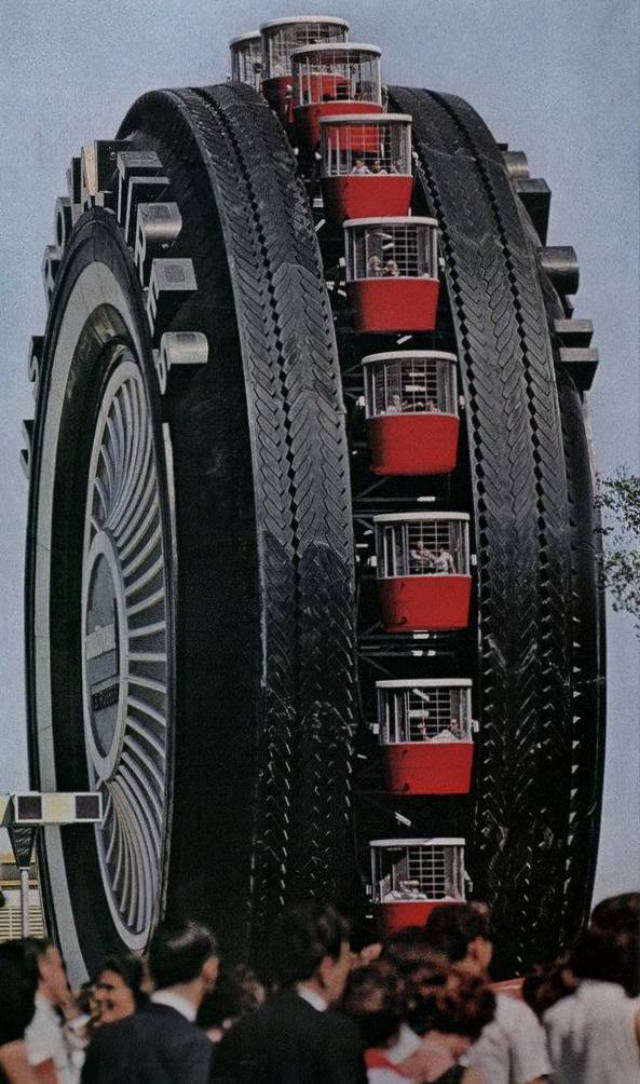
The Uniroyal Giant Tire represents a specific moment in American history — a time when corporations competed to outdo each other with bold, creative marketing on the grandest possible scale. The 1964 World’s Fair was full of corporate pavilions and futuristic displays, but few left a physical mark on the landscape the way this one did. It was conceived as a temporary attraction, yet it has outlasted nearly everything else from that era. Today it stands in Allen Park as a piece of roadside Americana unlike anything else in the country — a former Ferris wheel, an engineering feat, and a monument to the age when Detroit and the auto industry ruled the American economy.