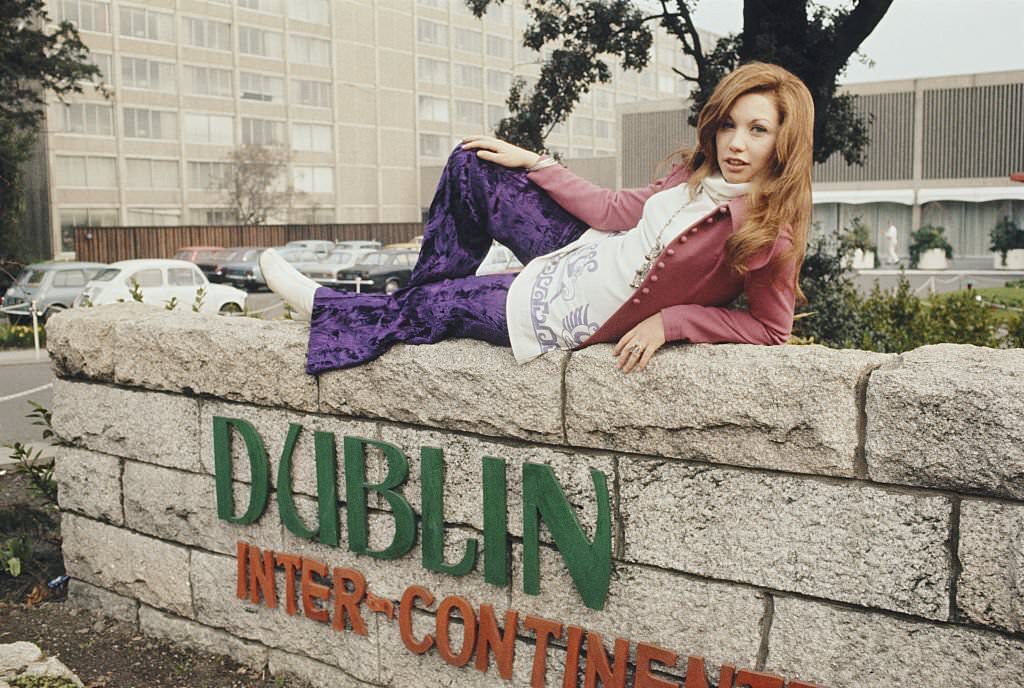
Dublin in the 1970s was a city caught between two worlds. Old slum neighborhoods were being torn down. New housing estates were rising on the outskirts. The city center was being rebuilt, sometimes at the cost of fine old buildings that had stood for generations. At the same time, Dublin was opening up — to tourism, to European business, and to new kinds of social freedom. These photographs capture all of it: the busy streets, the ordinary people, and the moments of history that no one who lived through them ever forgot.
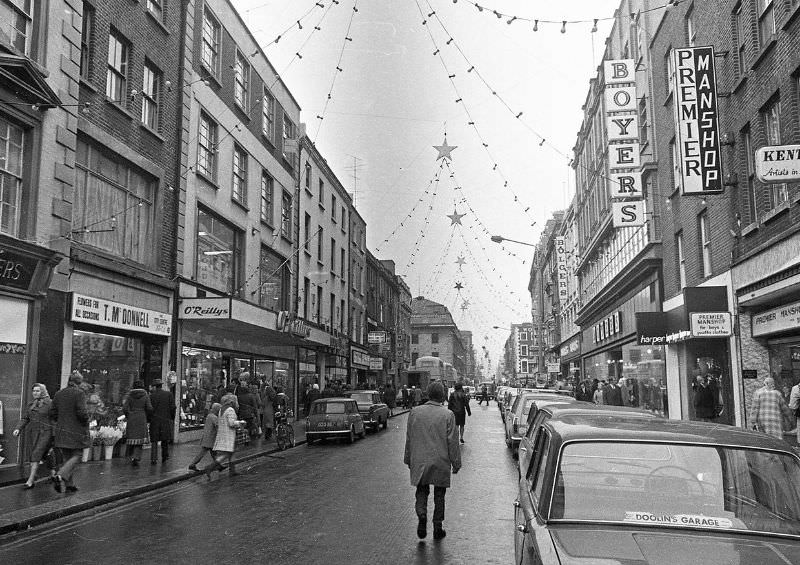
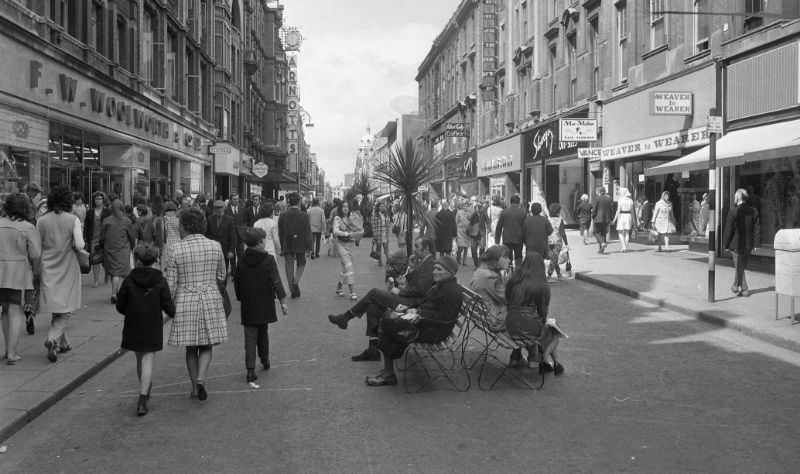
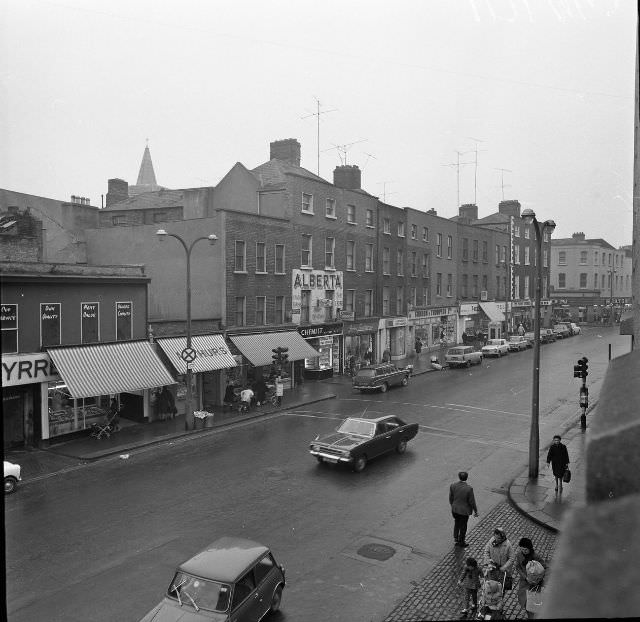
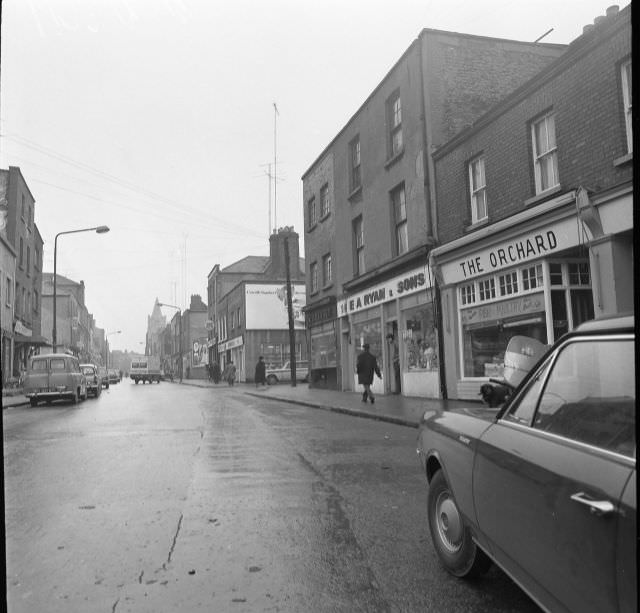
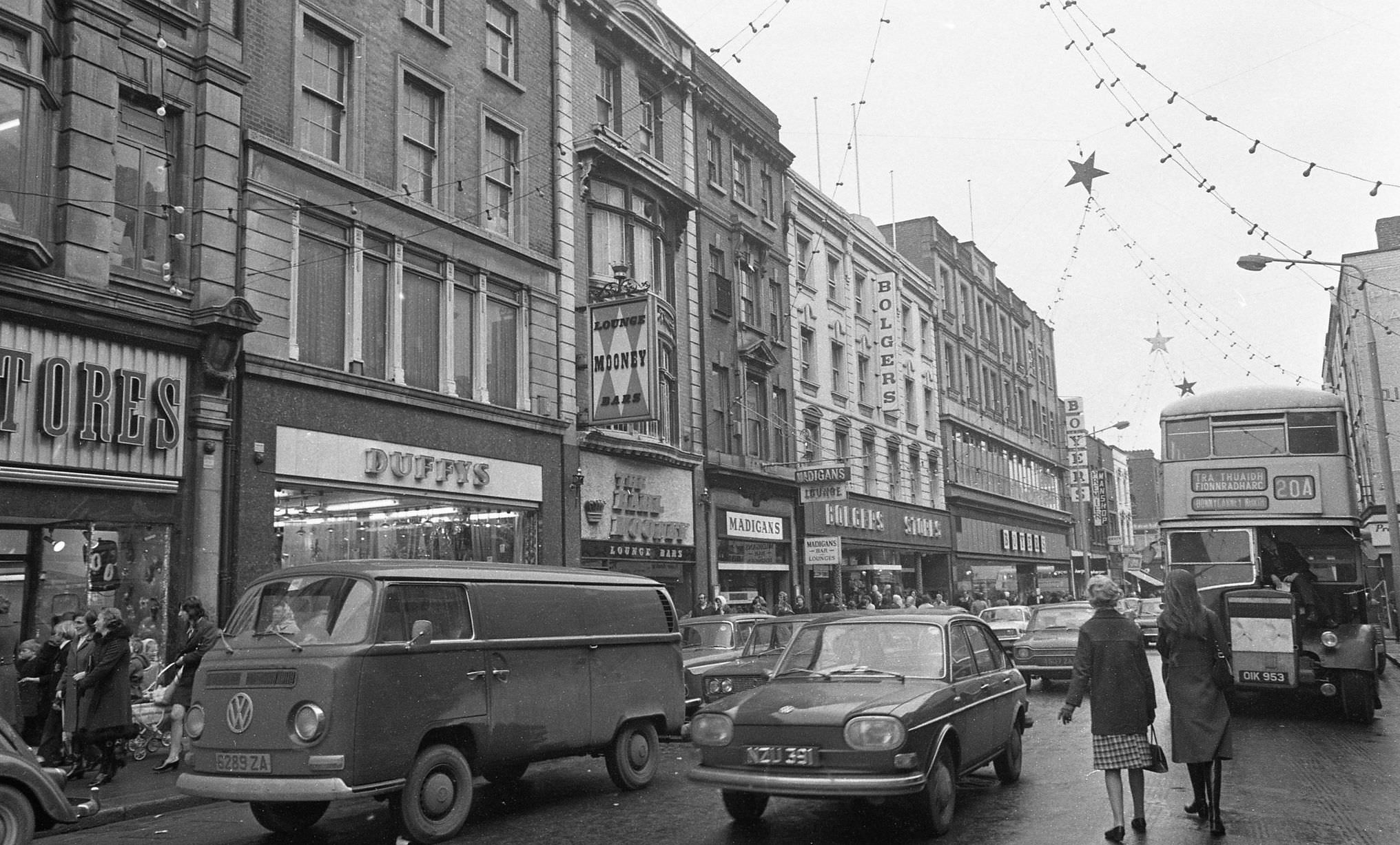
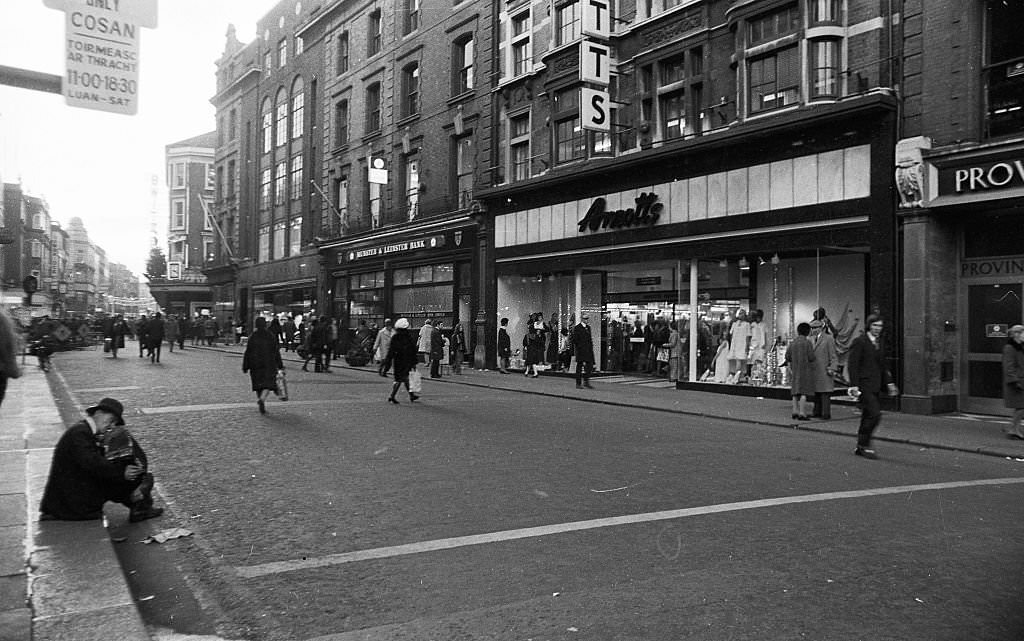
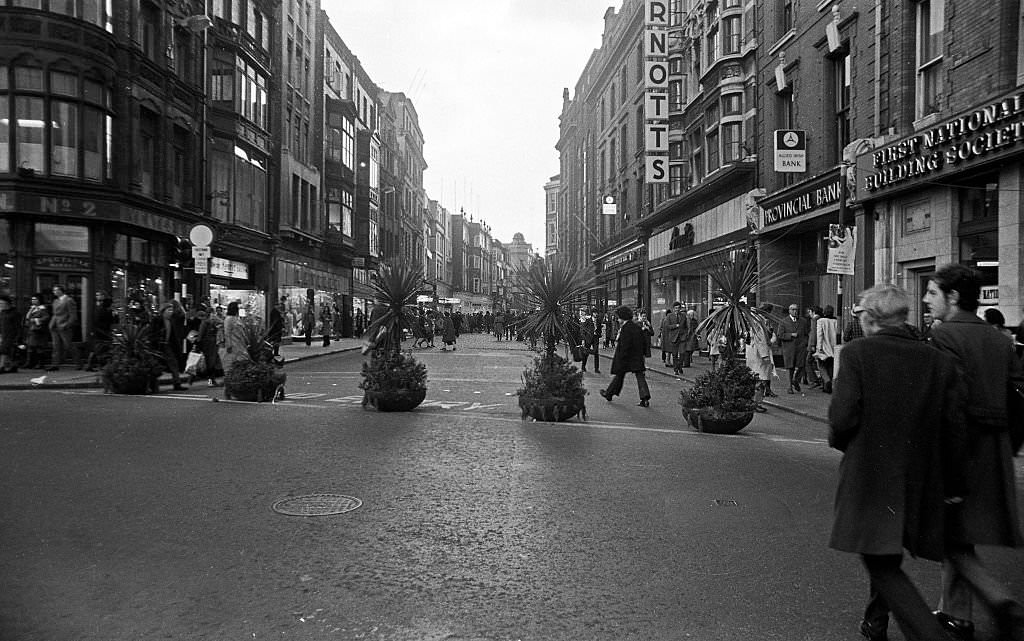
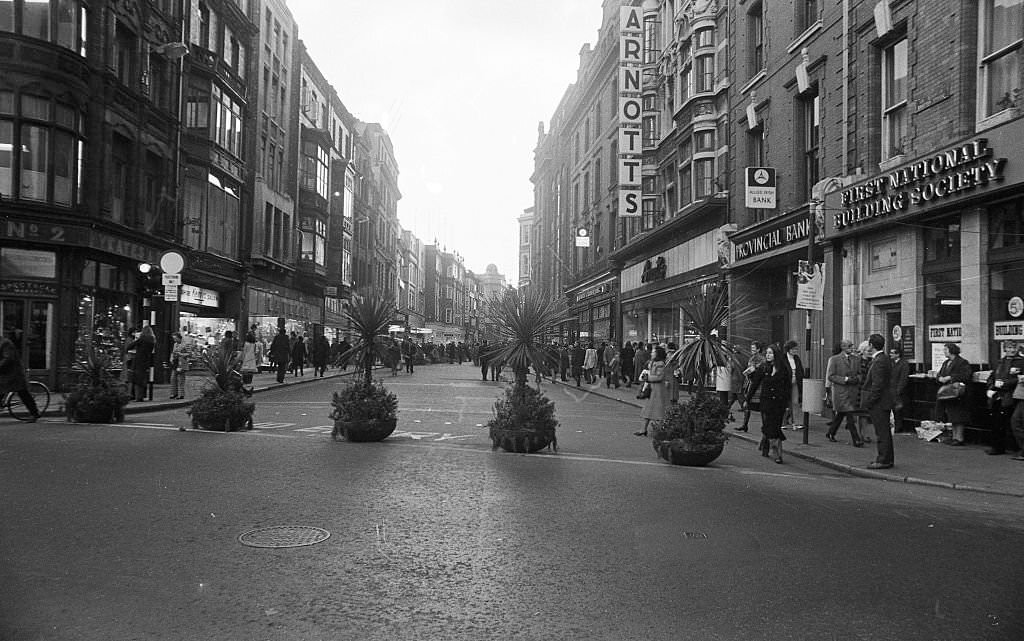
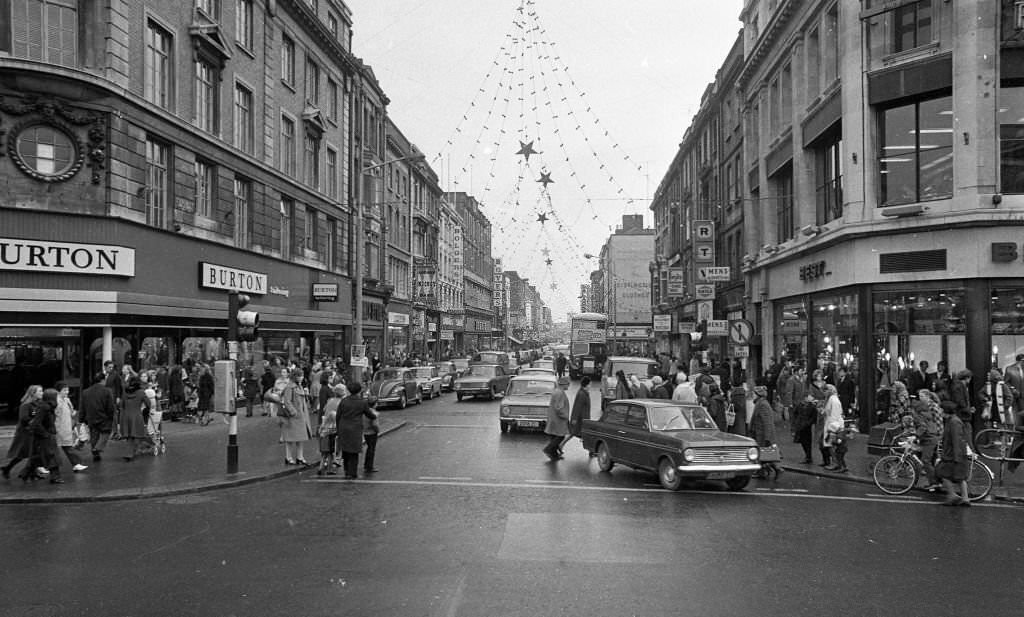
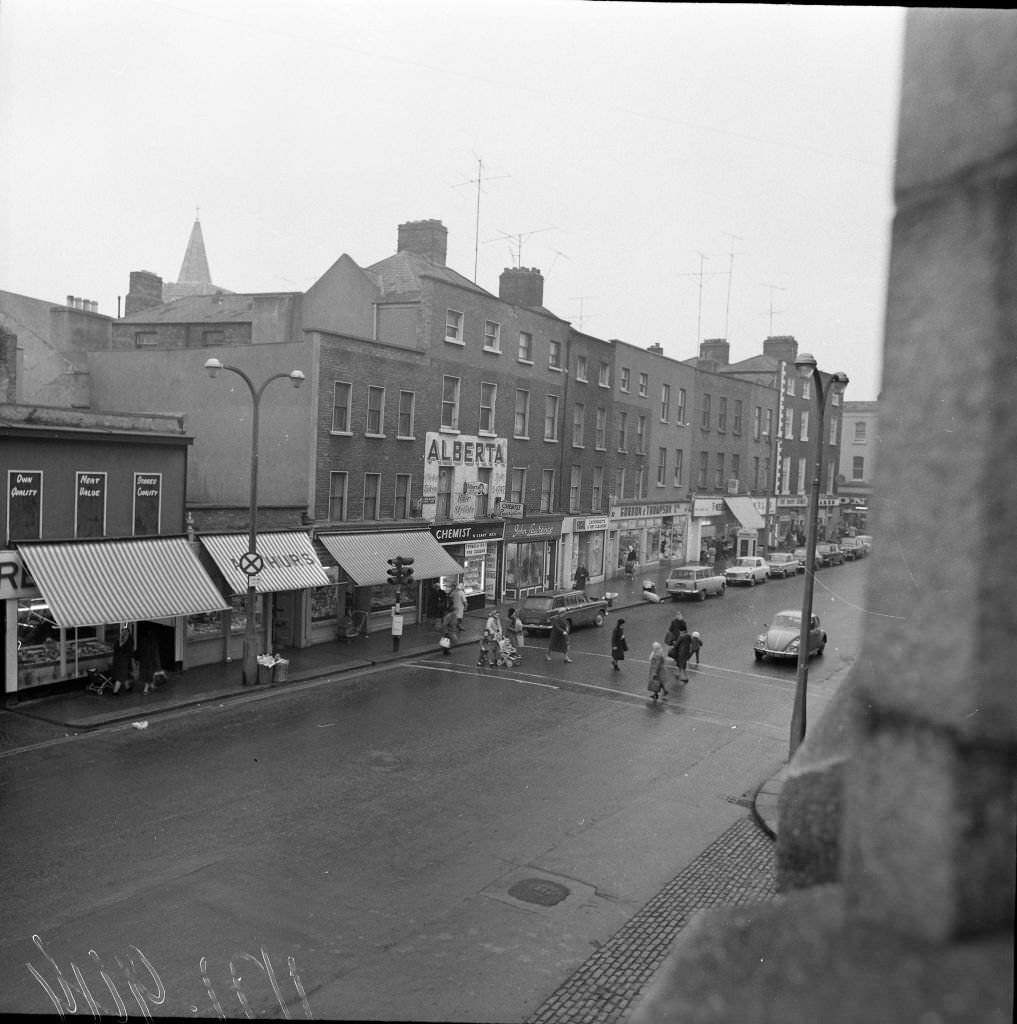
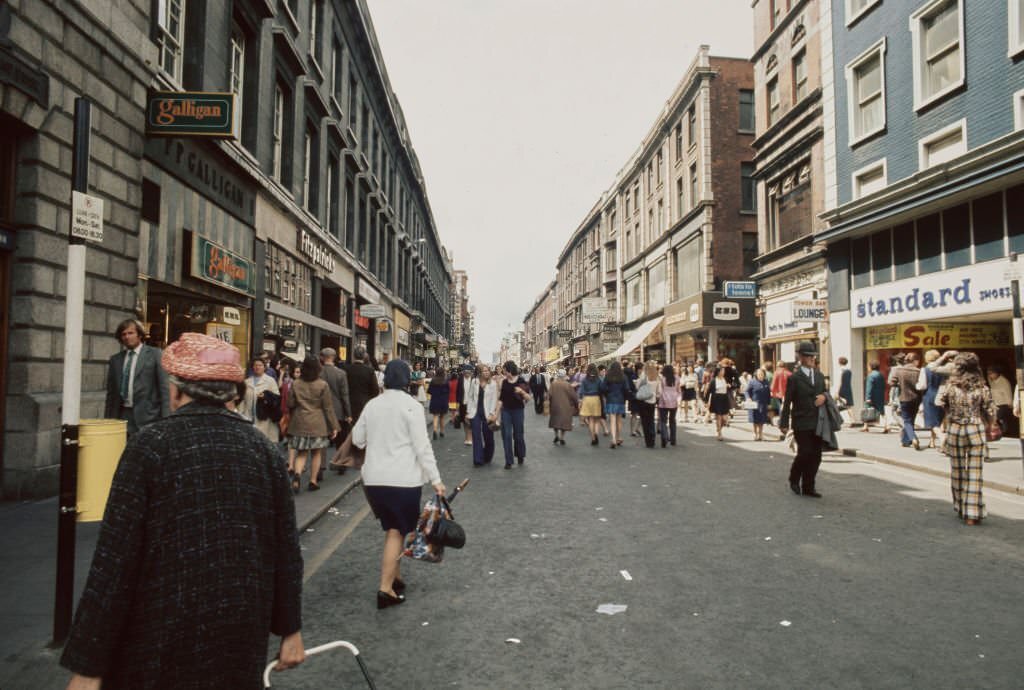
View down North Earl Street, December 1971.
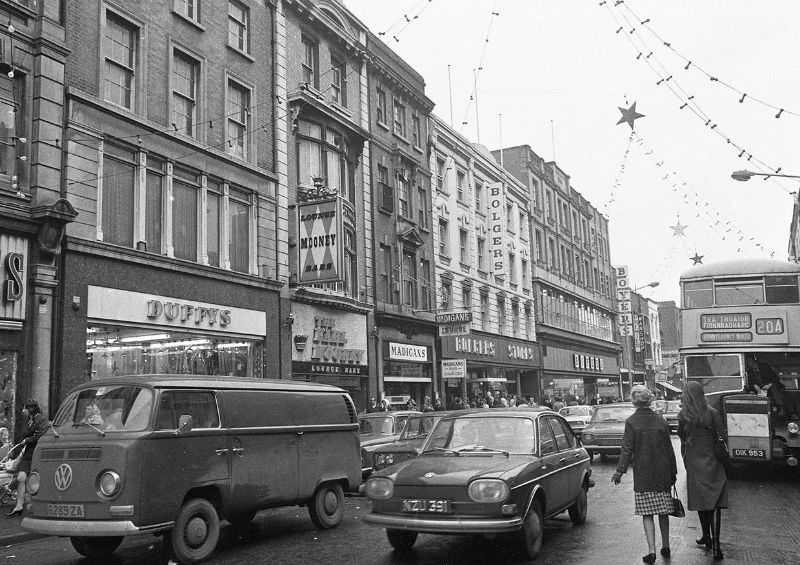
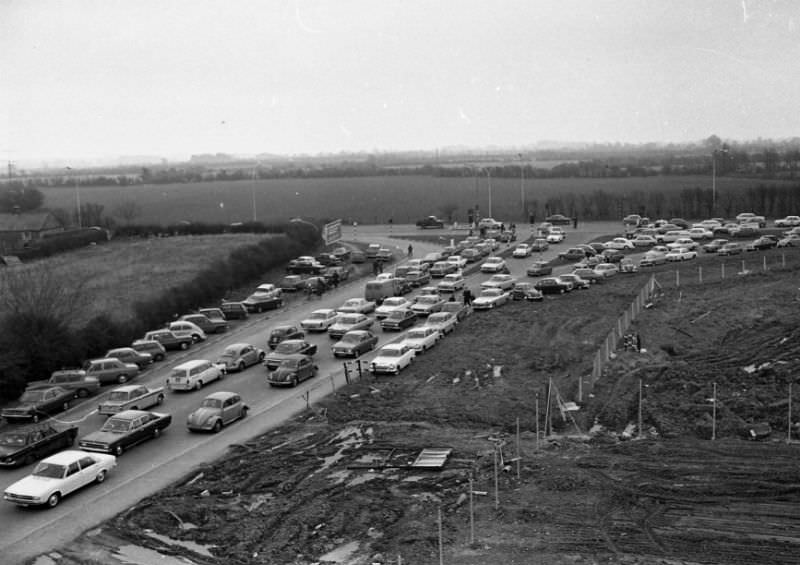
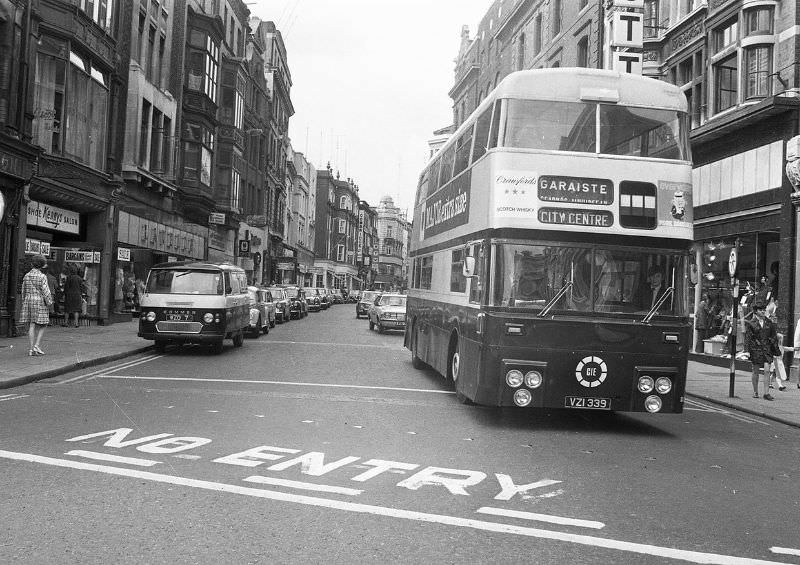
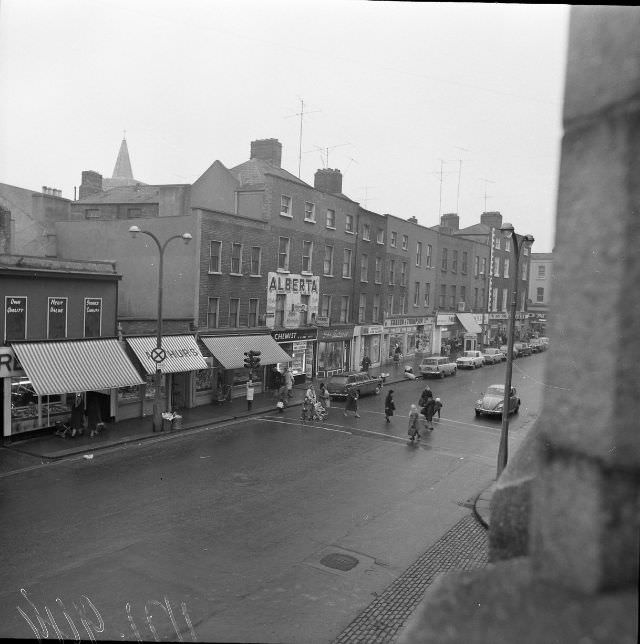
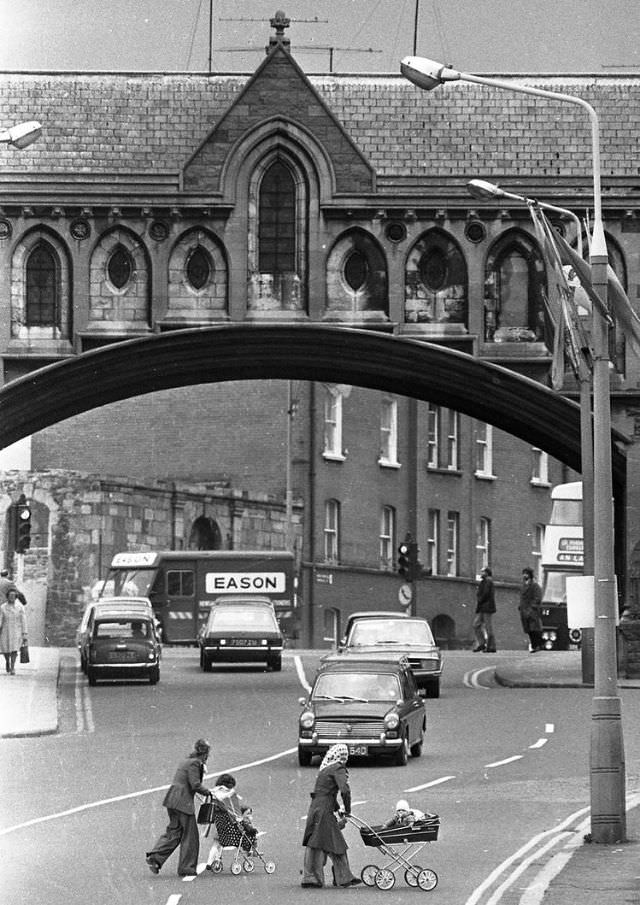
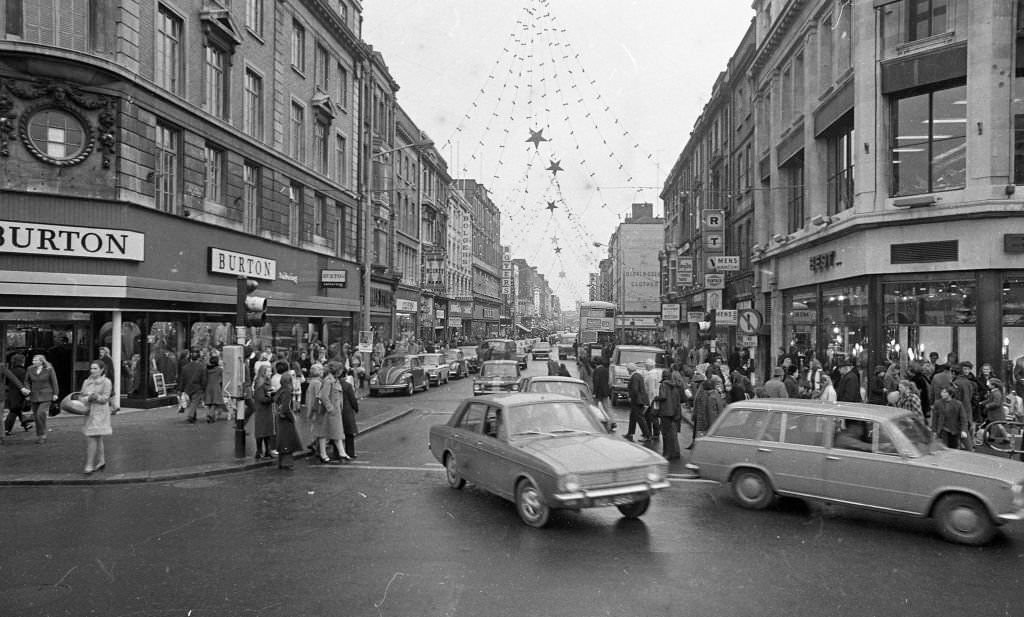
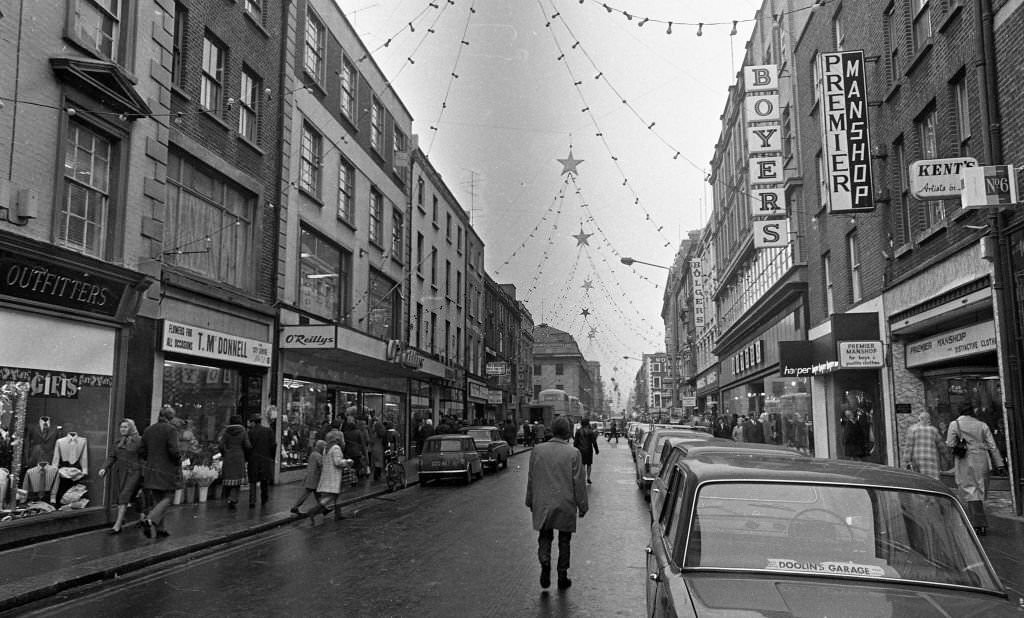
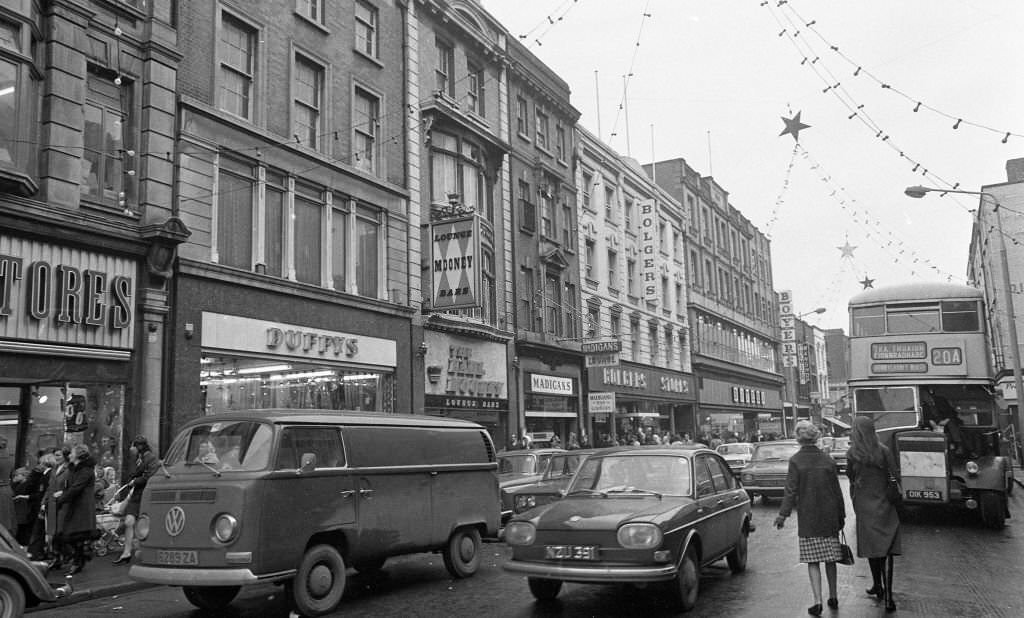
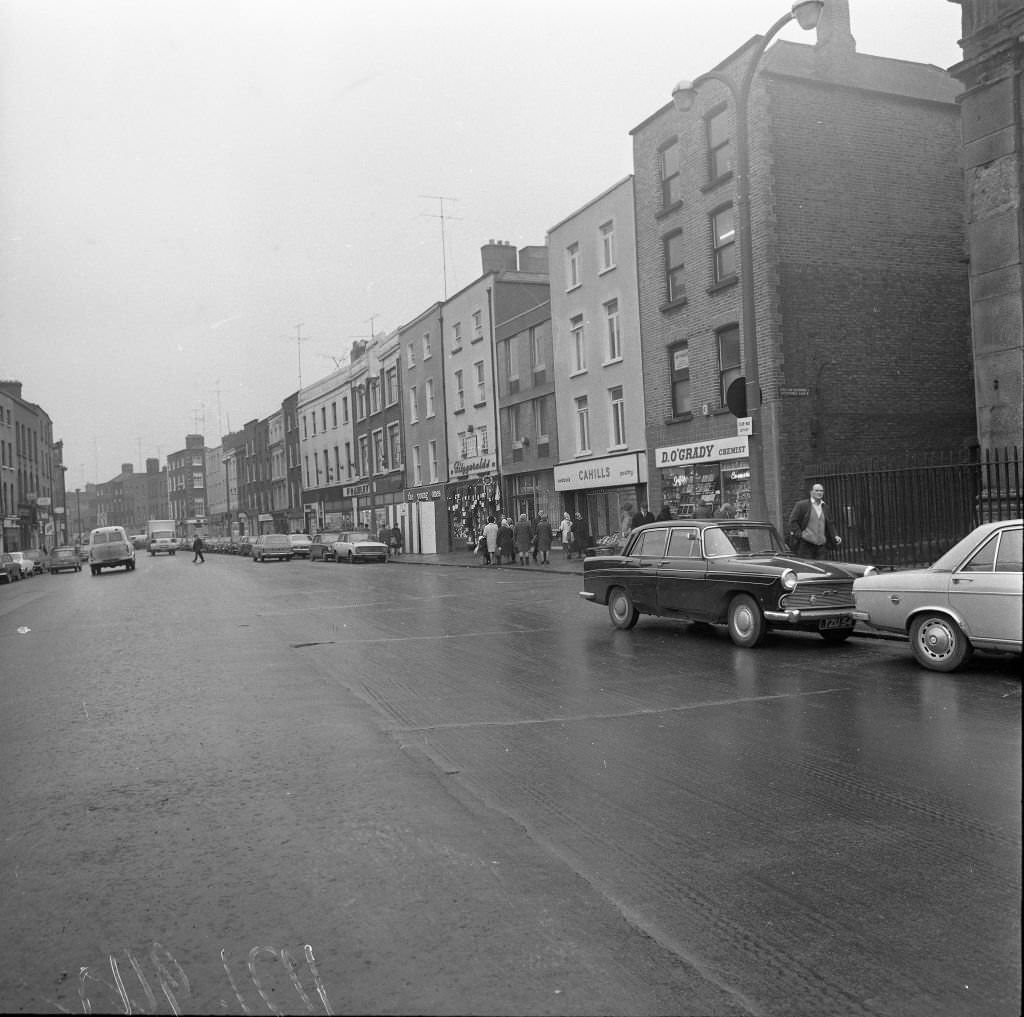
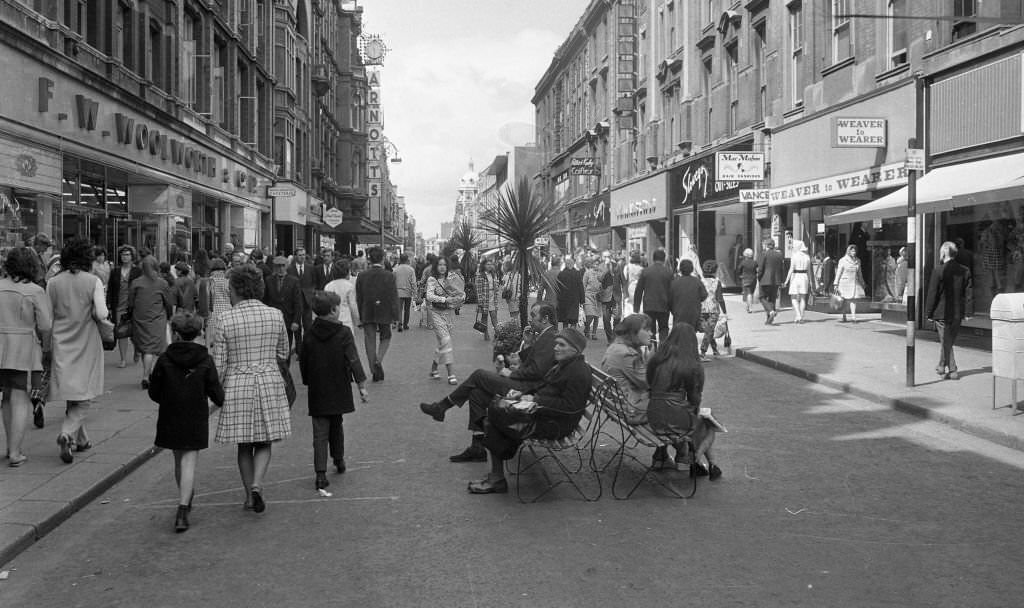
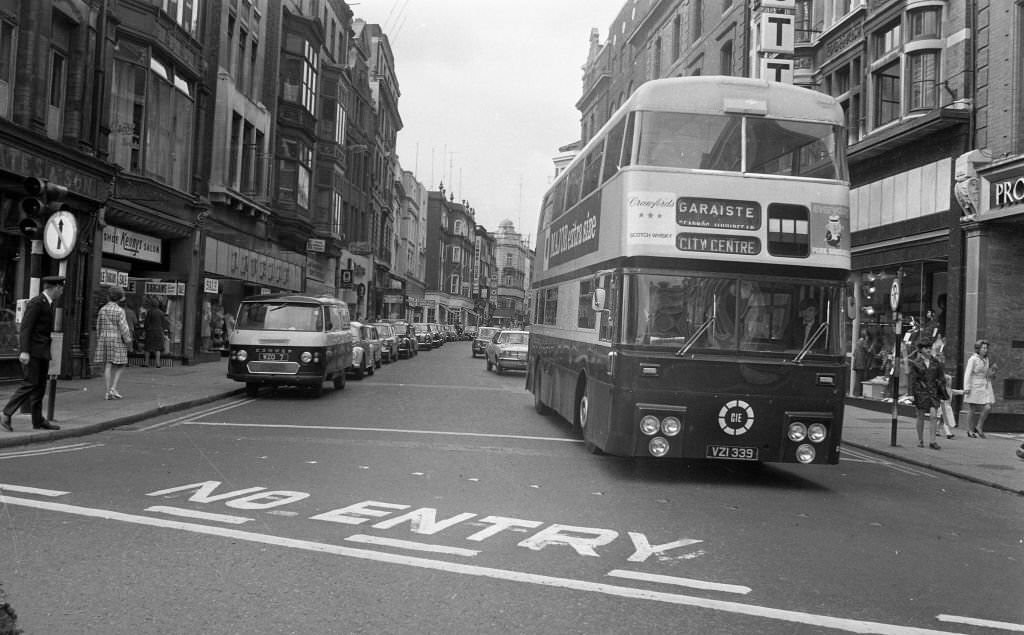
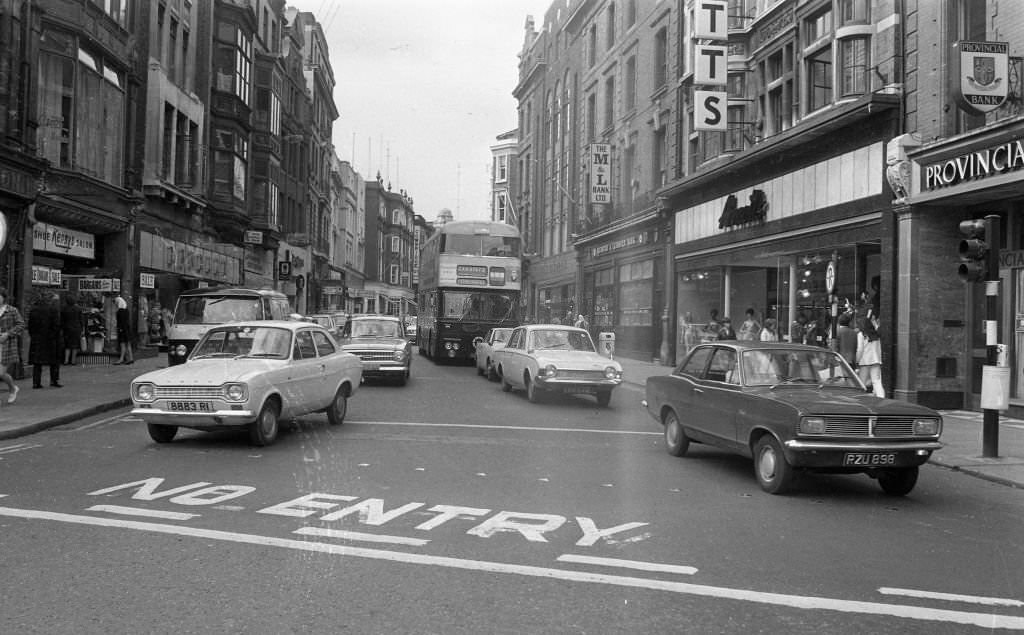
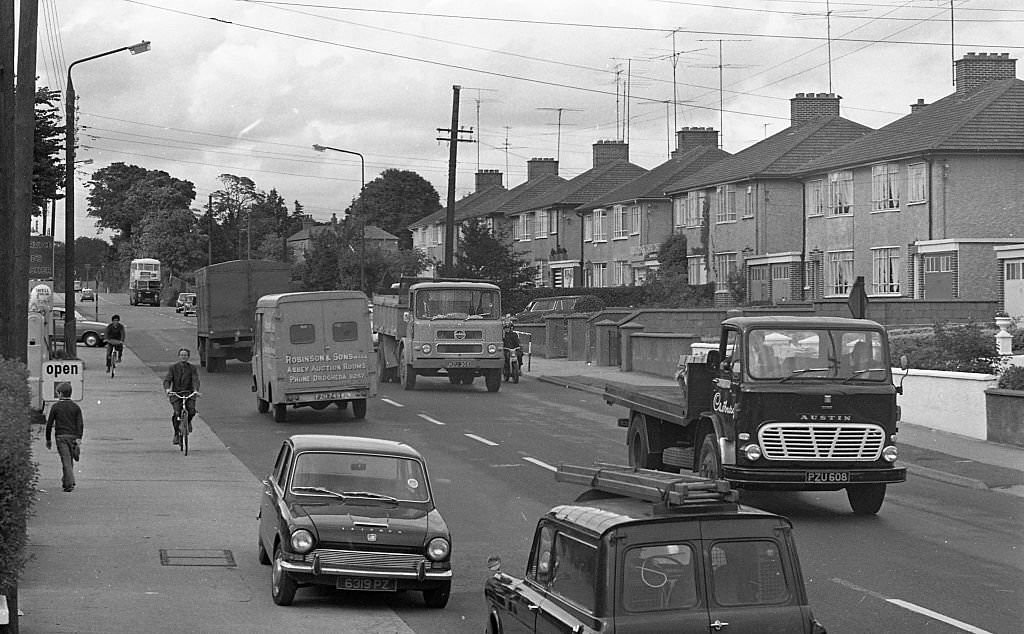
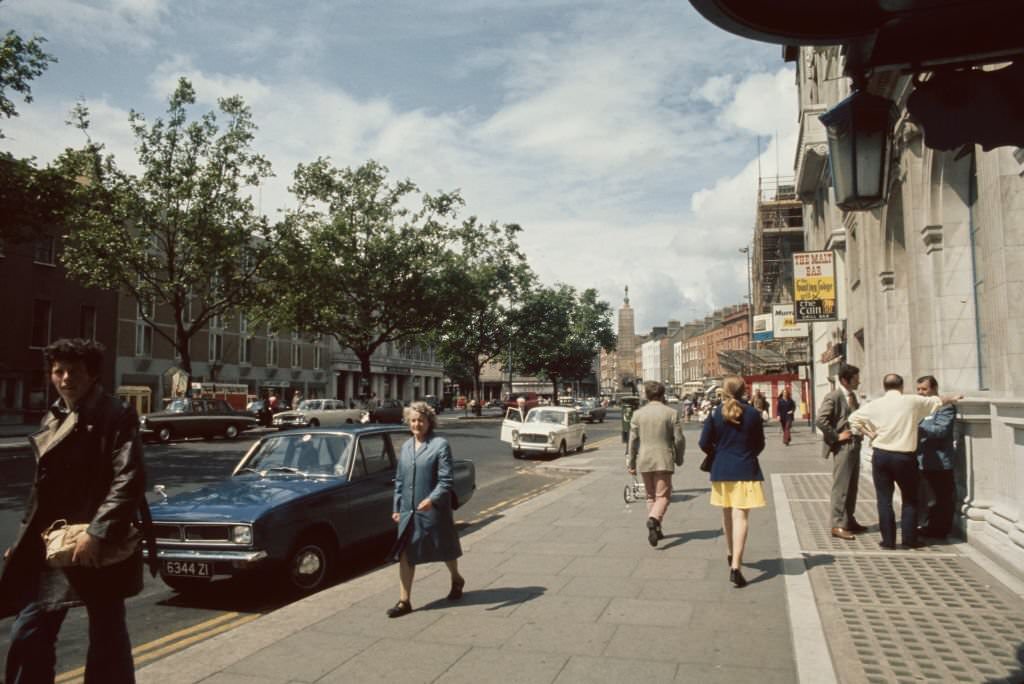
The early years of the decade showed a city in motion. Streets like North Earl Street and Talbot Street were packed with shoppers, delivery vehicles, and the general hum of daily commerce. Traffic jams were becoming a fixture of Dublin life as car ownership rose and the road network struggled to keep up.
View from Talbot Street and North Earl Street, 1971.
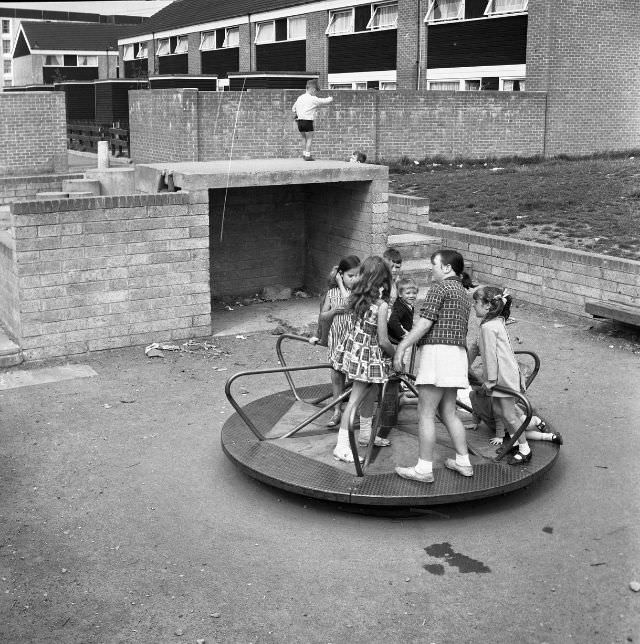
Outside the city center, new housing developments like Ballymun were home to young families. Children played in communal spaces while their parents settled into estates that had been built to replace the old inner-city tenements. It was a different kind of Dublin life — further from the center, but full of its own energy.
A group of children playing on a merry-go-round in Ballymun, August 1970.
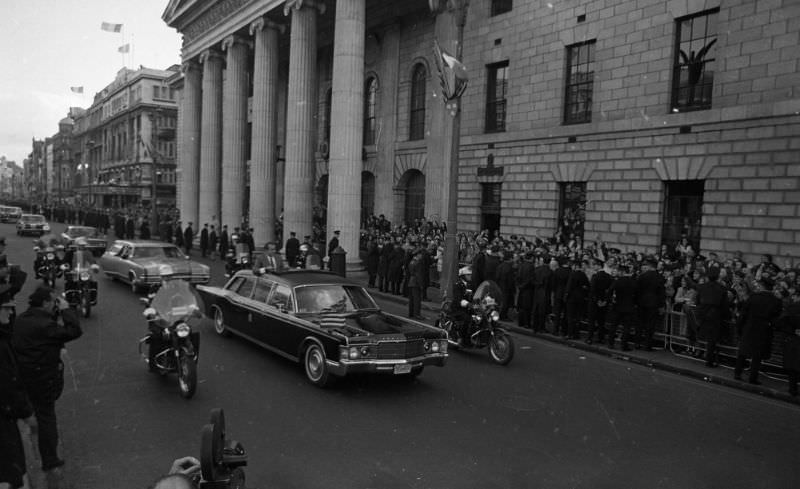
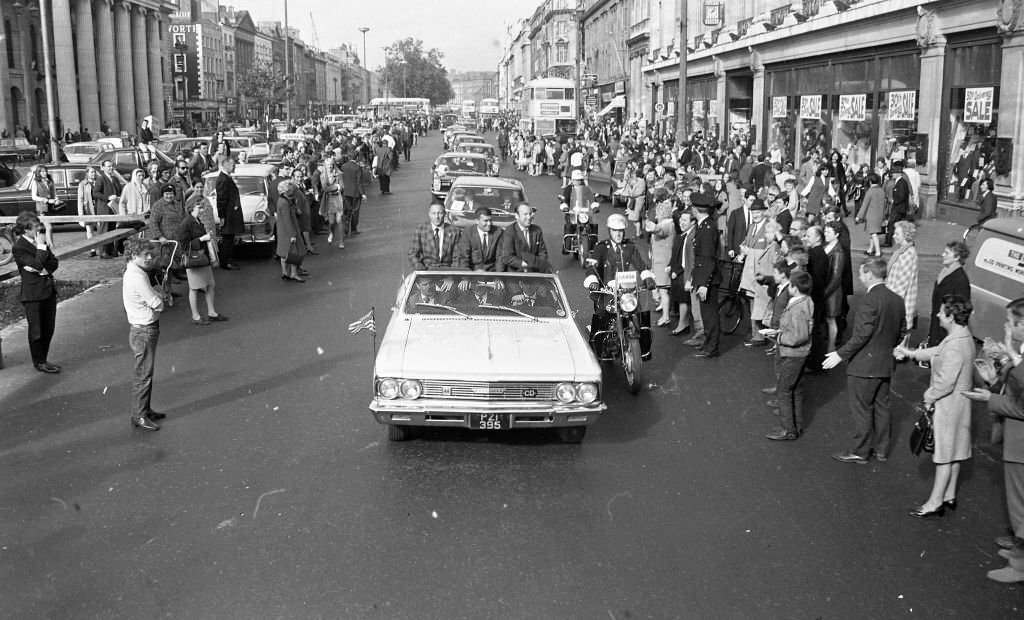
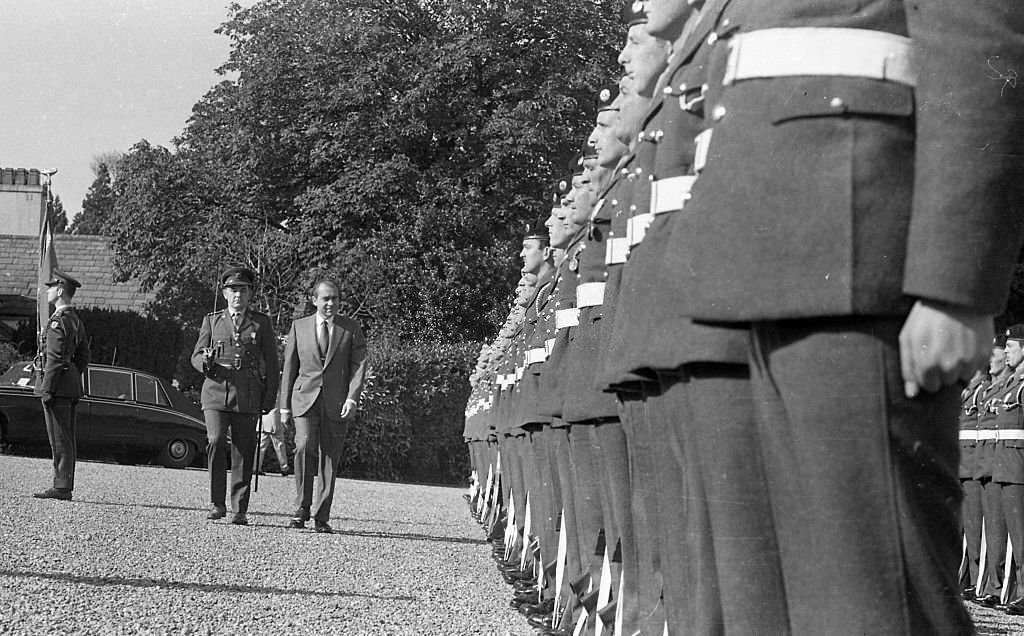
Dublin also attracted international attention during this period. In October 1970, former U.S. President Richard Nixon visited the city, his motorcade rolling past the GPO on O’Connell Street — the same building that had been the center of the 1916 Rising. The Apollo 13 astronauts had also passed through O’Connell Street earlier that year, welcomed by enthusiastic crowds.
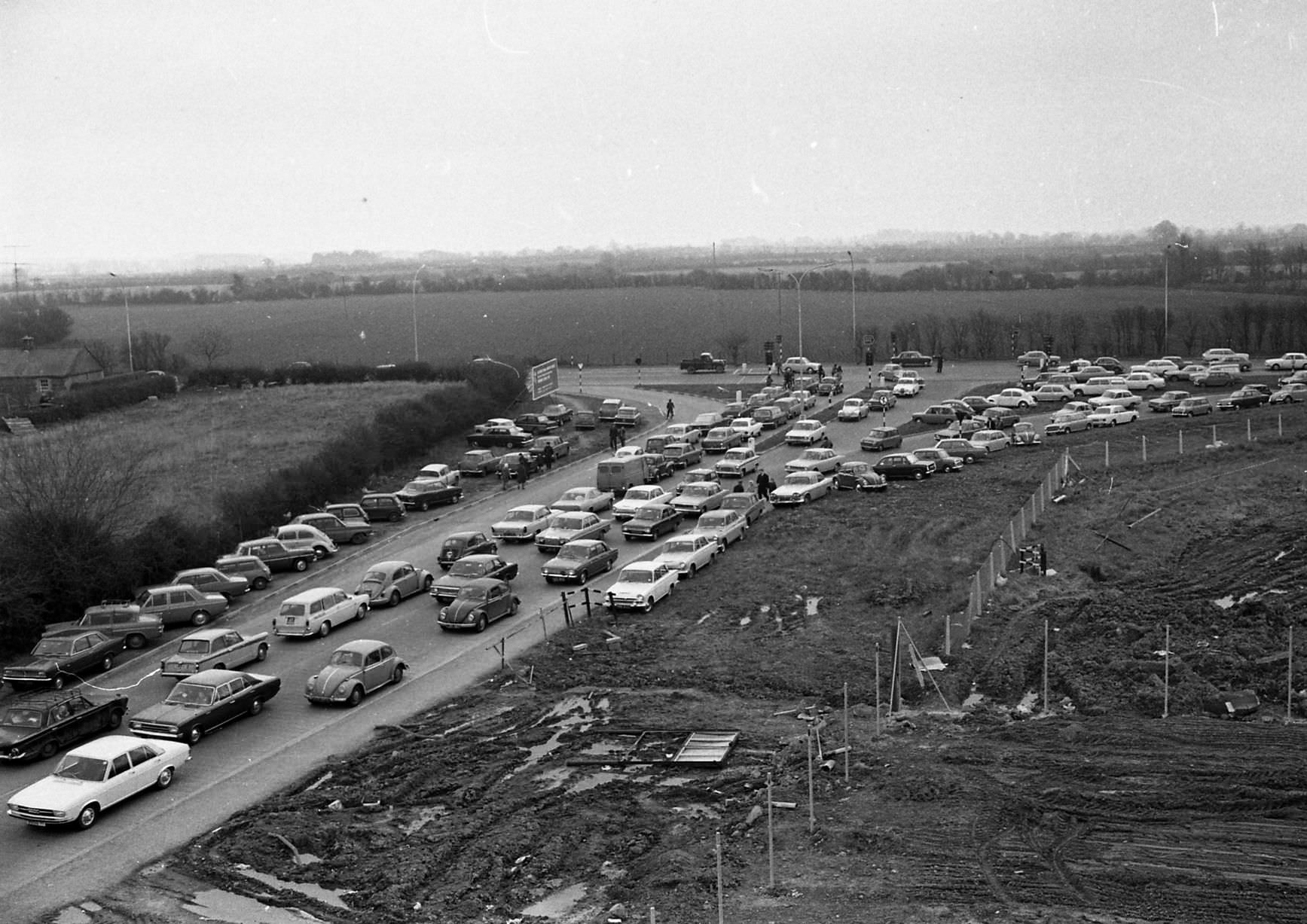
Former US President Richard Nixon’s motorcade passes the GPO on O’Connell Street, October 1970.A view of a traffic jam in Dublin, March 1971.
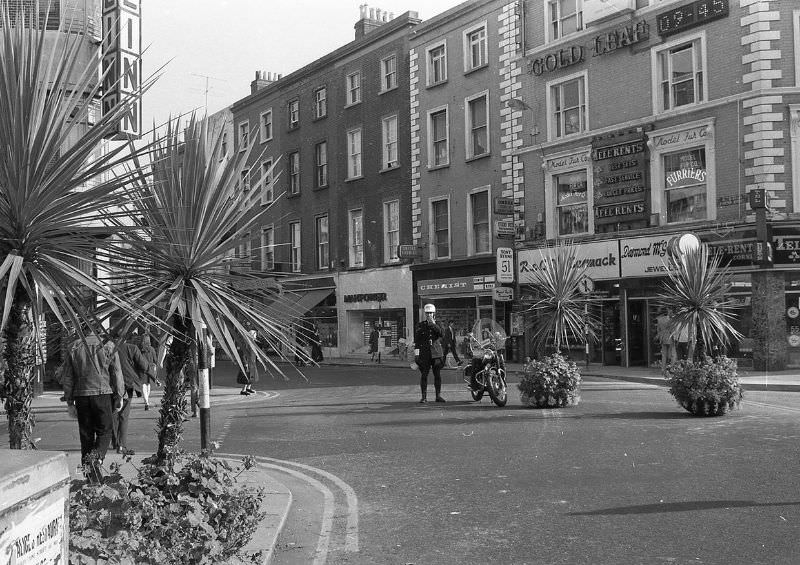
Henry Street and Grafton Street were two of the most important shopping destinations in the city. Henry Street drew working-class shoppers, while Grafton Street catered to a slightly more affluent crowd. By 1971, Grafton Street was already moving toward pedestrianization — a significant change that would reshape how Dubliners used that part of the city.
A busy Henry Street with shoppers, June 1971.Scenes from Grafton Street, June 1971.Scenes from Grafton Street, June 1971.
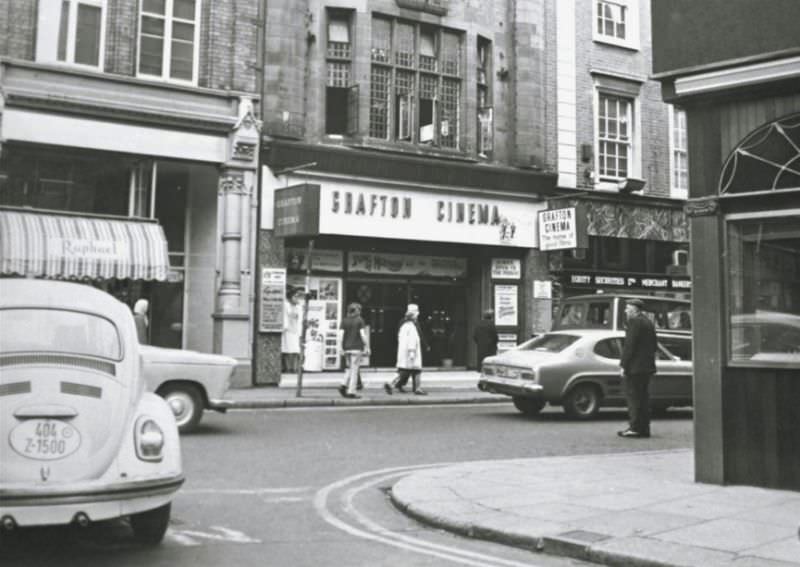
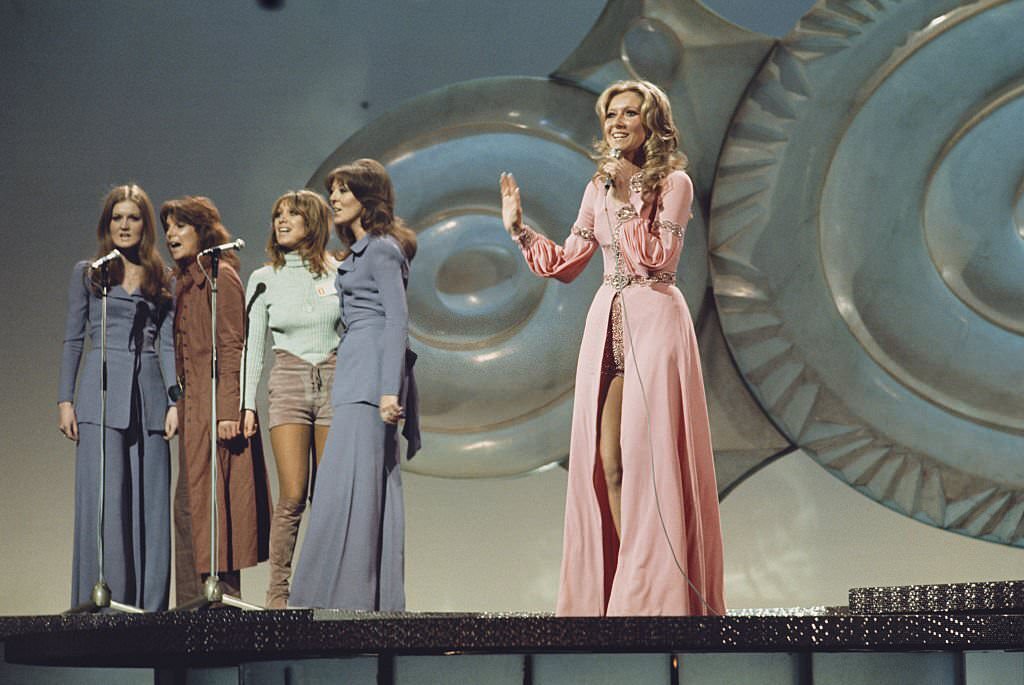
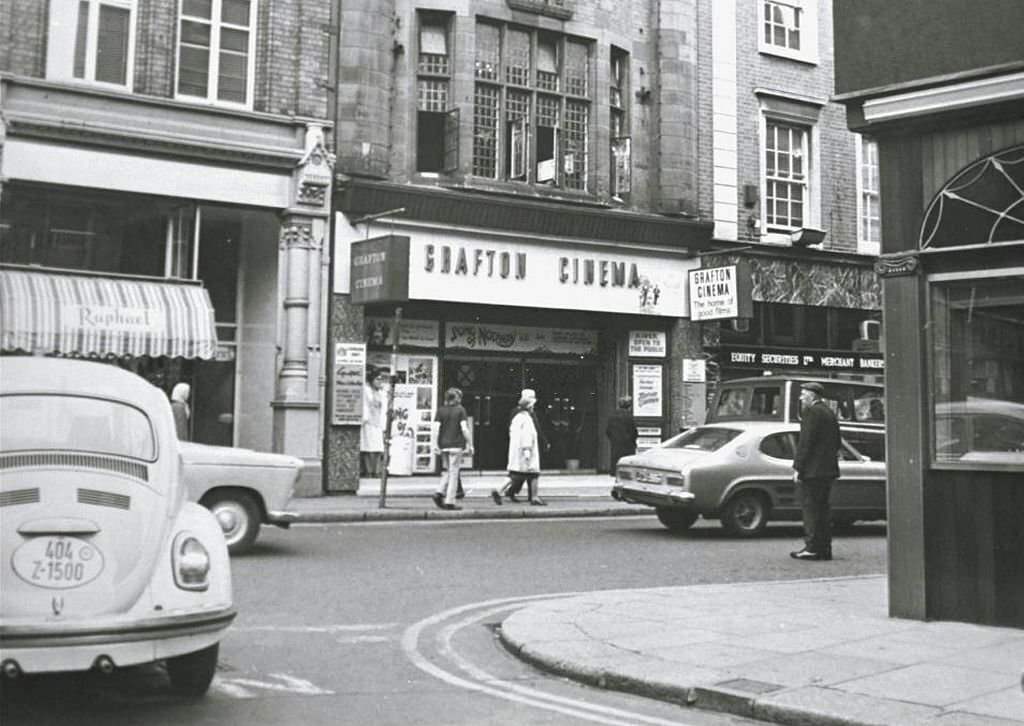
Entertainment was woven into the fabric of Dublin’s streets. Cinemas on Grafton Street drew steady crowds, and department stores like Switzers were social landmarks as much as they were shops. The 1971 Eurovision Song Contest, held at the Gaiety Theatre in Dublin, brought international performers to the city and put Dublin on the European cultural map.
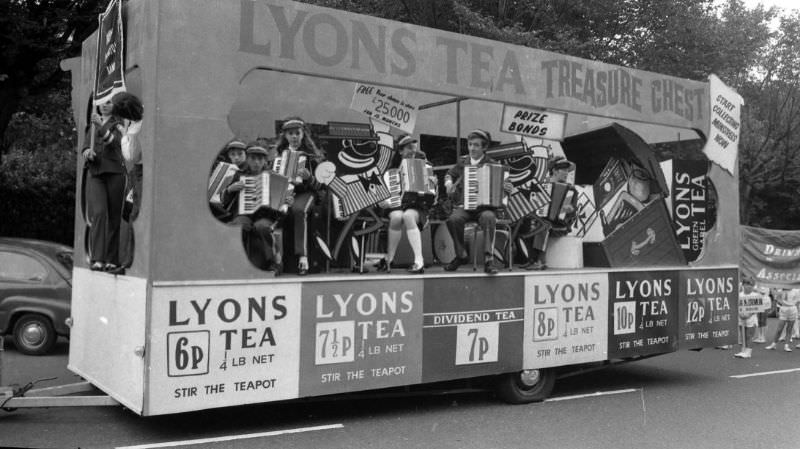
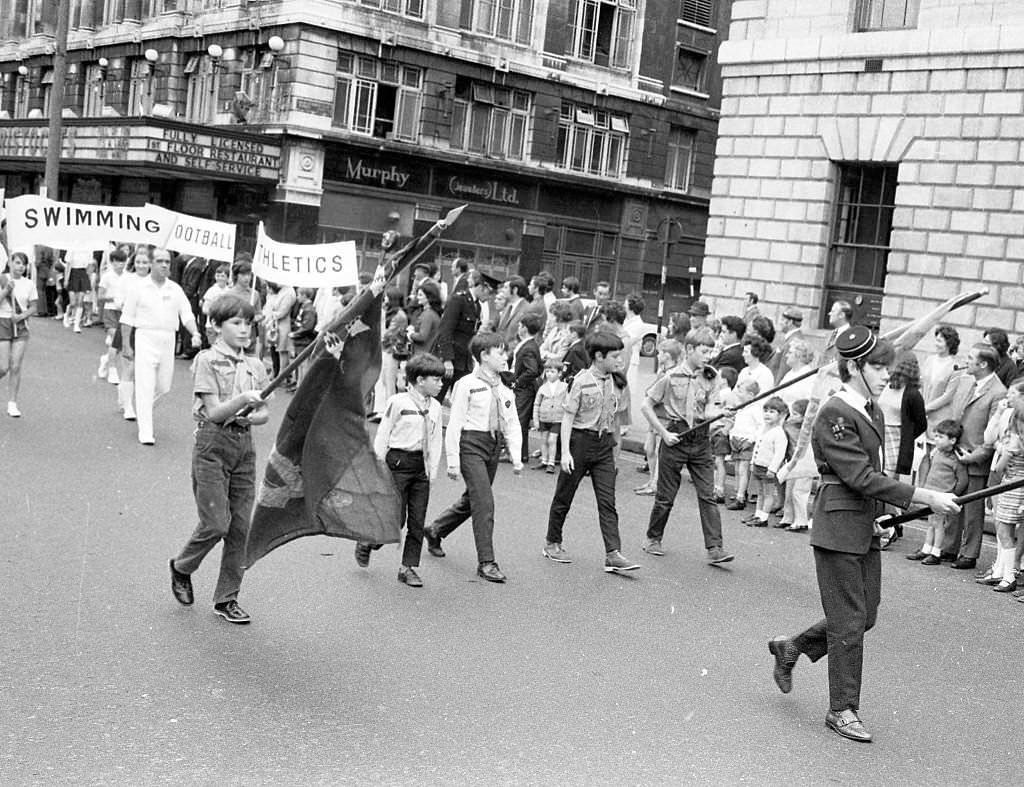
The cinema on Grafton Street, circa 1971.Pedestrianisation of Grafton Street, 1971.A Lyons tea float taking part in the Community Games parade, August 1971.
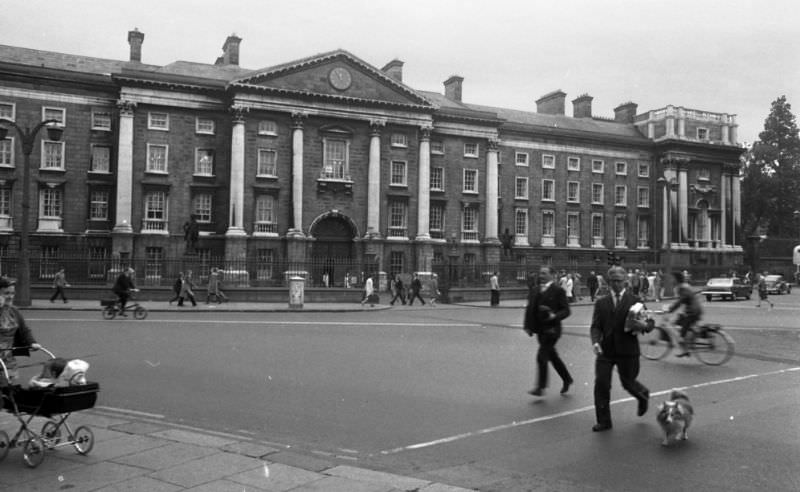
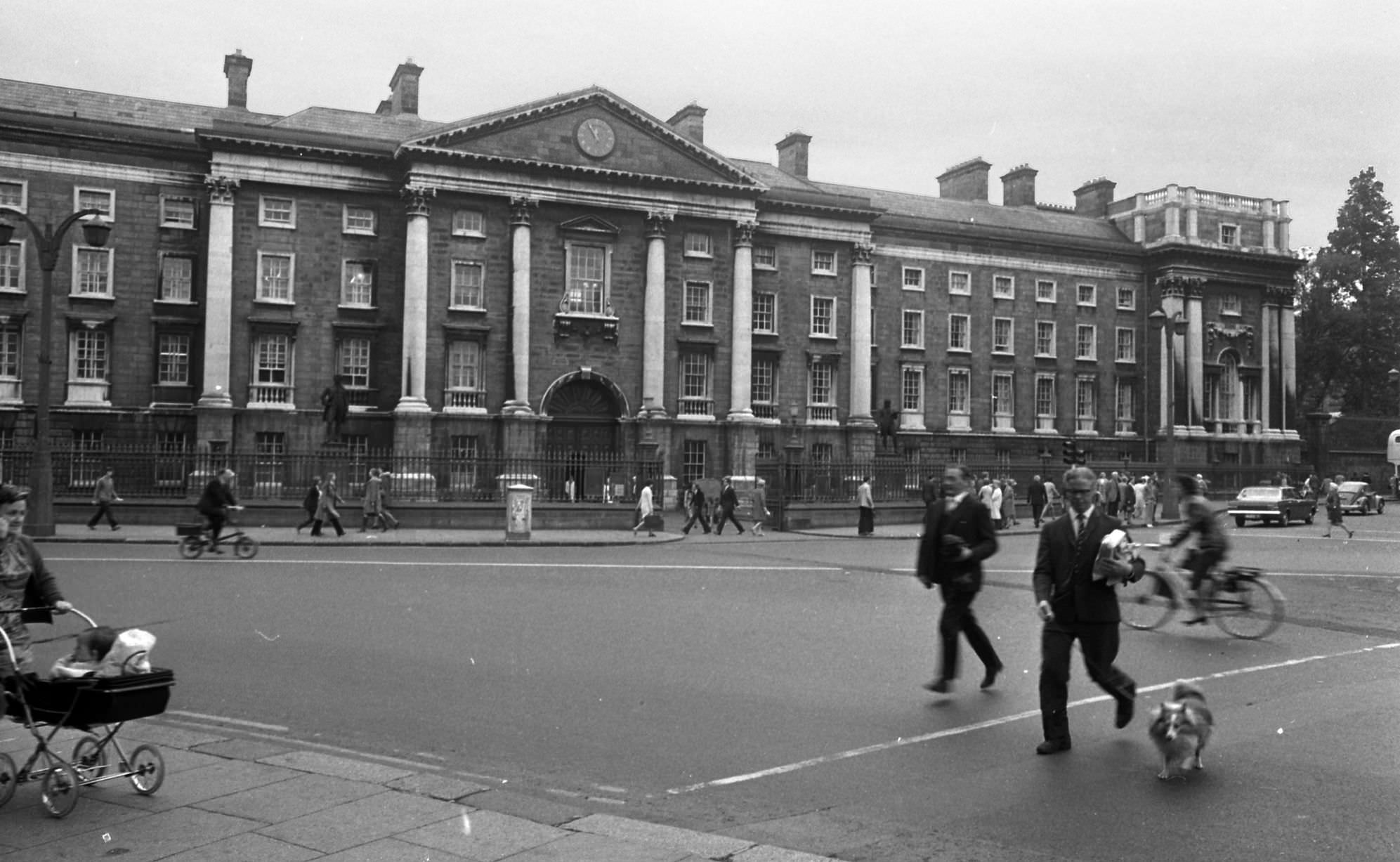
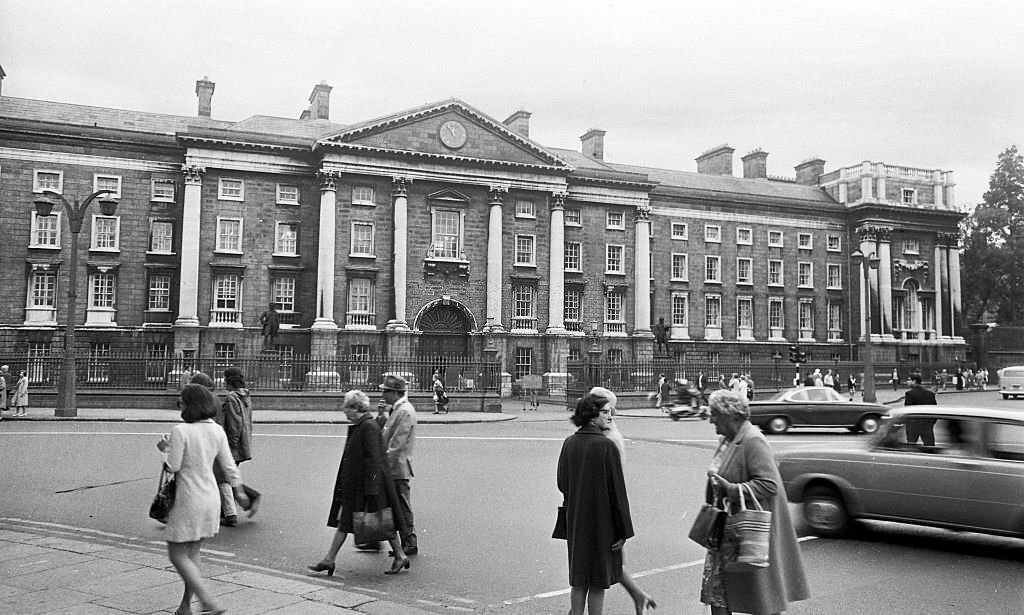
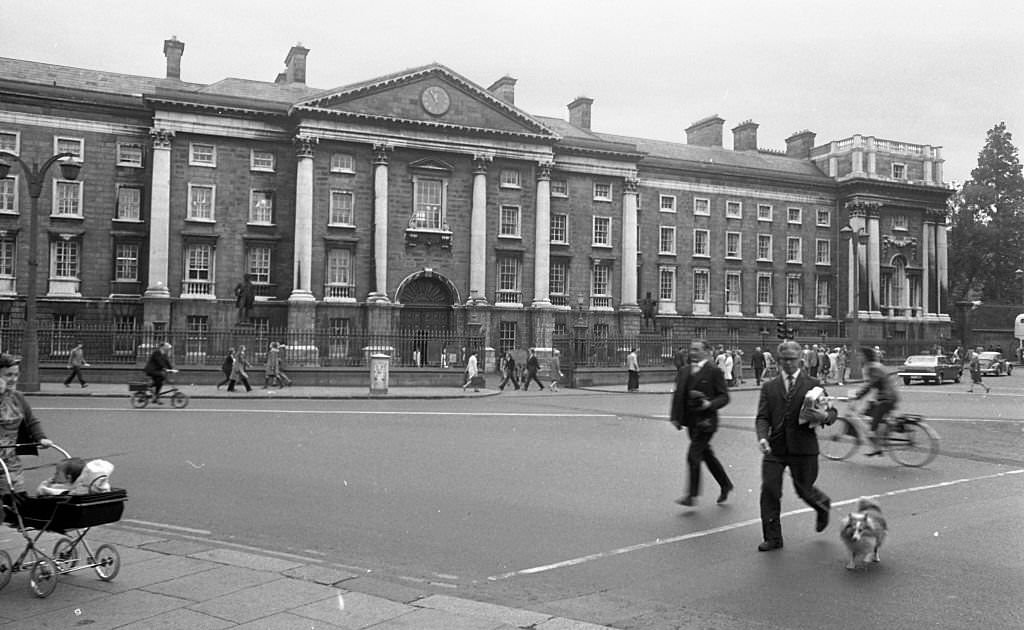
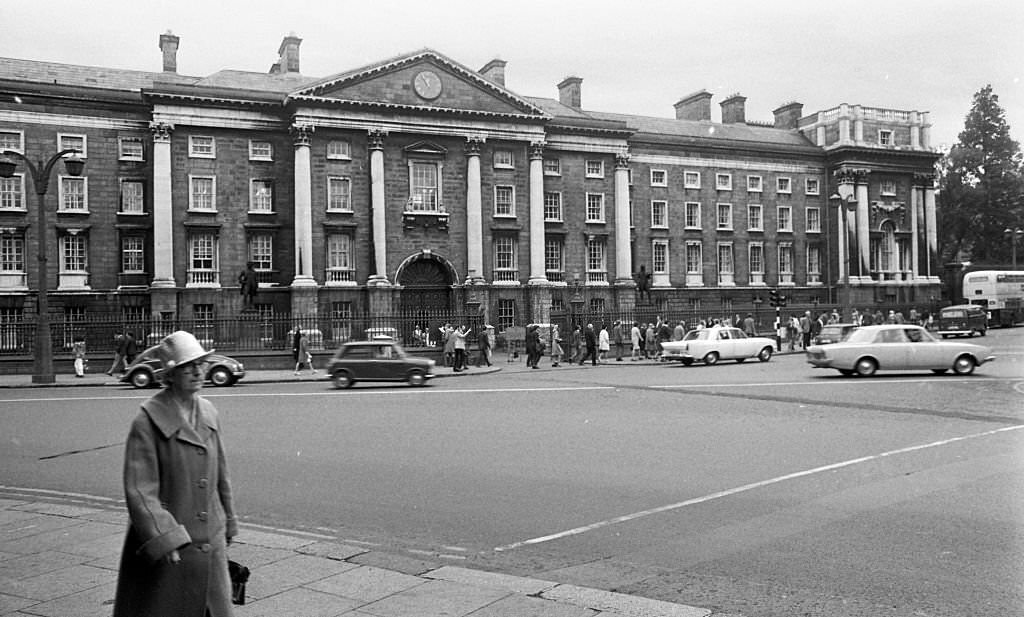
One of the most significant social changes of the decade came in 1970, when the Catholic Church lifted its long-standing ban on Catholics attending Trinity College Dublin. For generations, Catholics had been forbidden by the Church from enrolling there. The reversal opened the doors of one of Ireland’s most prestigious universities to the full population of the country.
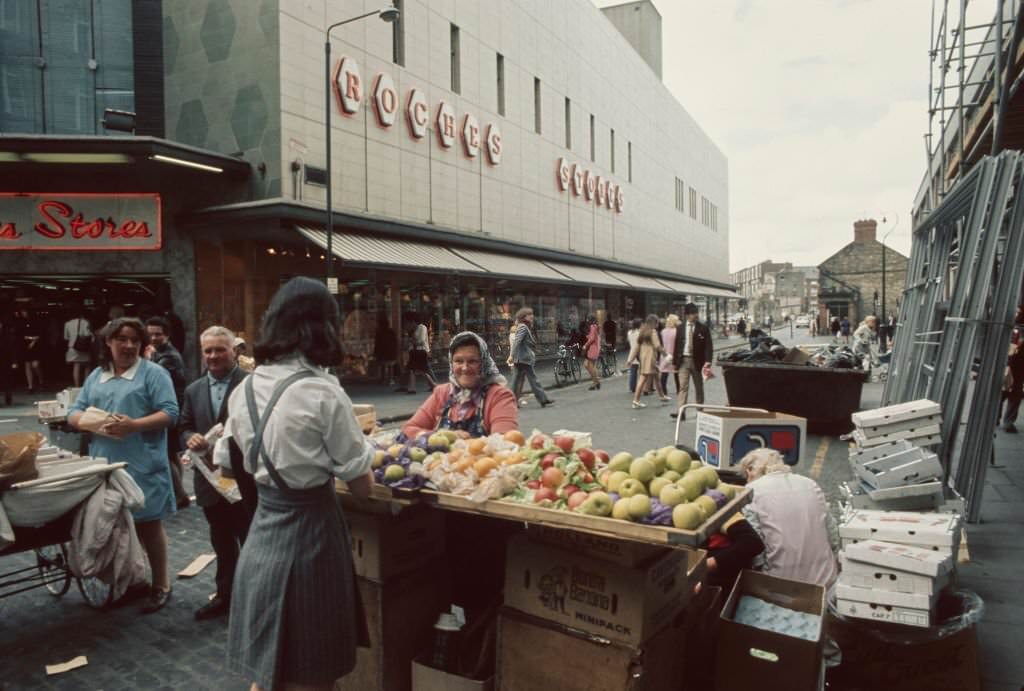
The exterior of Trinity College, September 1971.Thomas Street, November 1971.Buildings and cars pictured on Meath Street, November 1971.Pedestrians and shops on Thomas Street, November 1971.
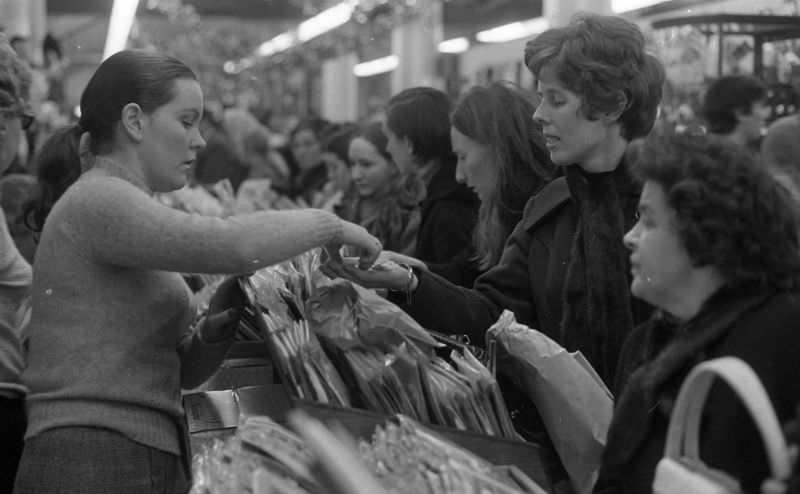
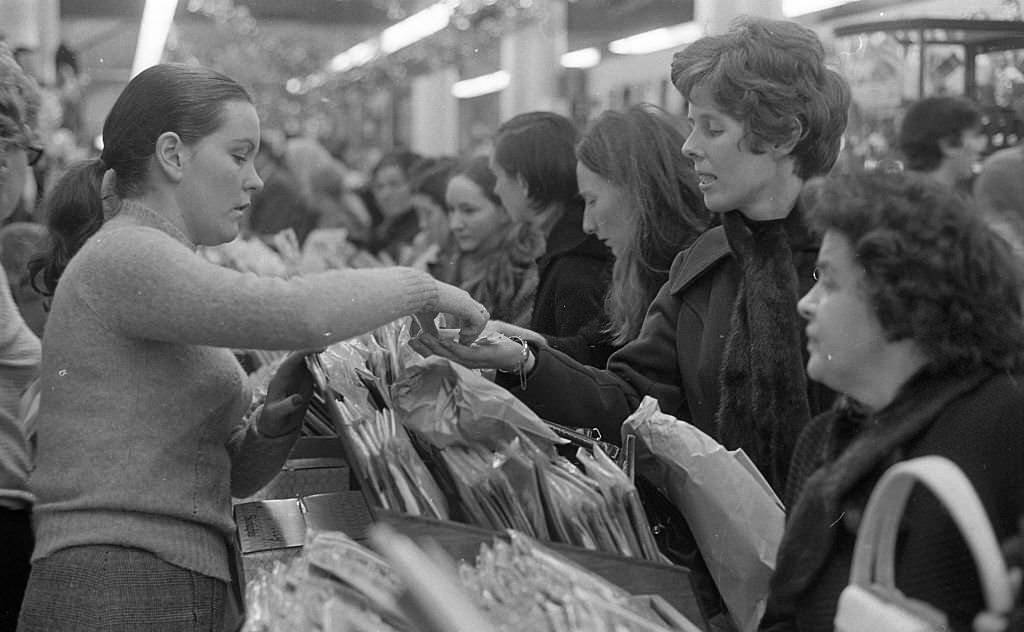
As Christmas approached each year, Henry Street came alive with shoppers. The photographs from December 1971 show crowds moving through the street, weighed down with bags, wrapped up against the winter chill. It was a ritual that defined Dublin’s December, year after year.
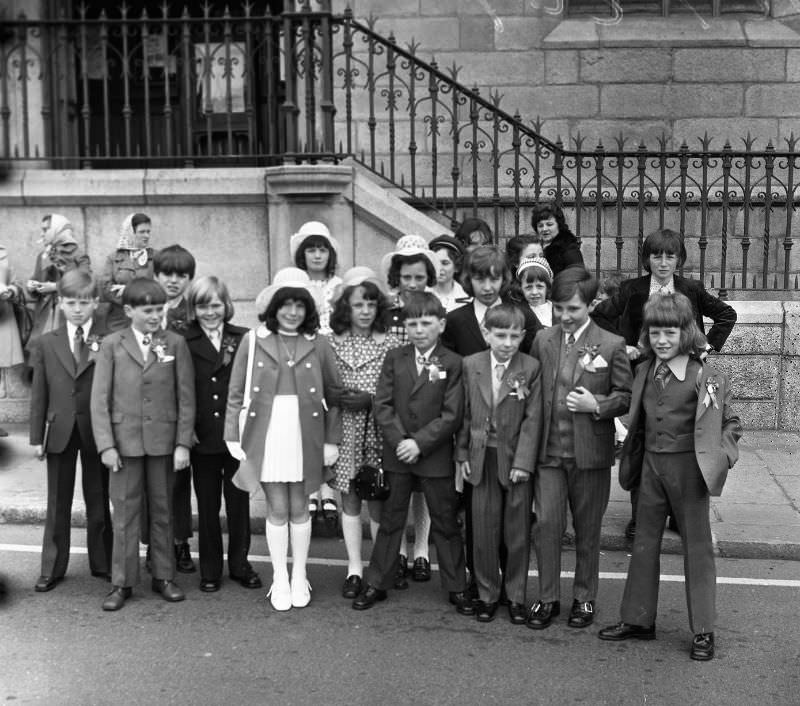
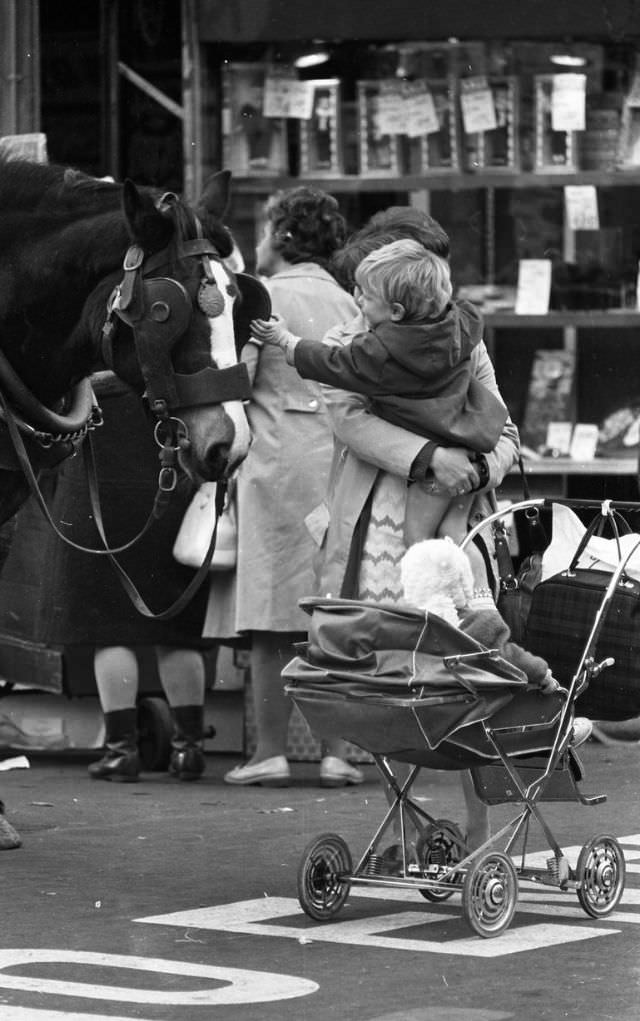
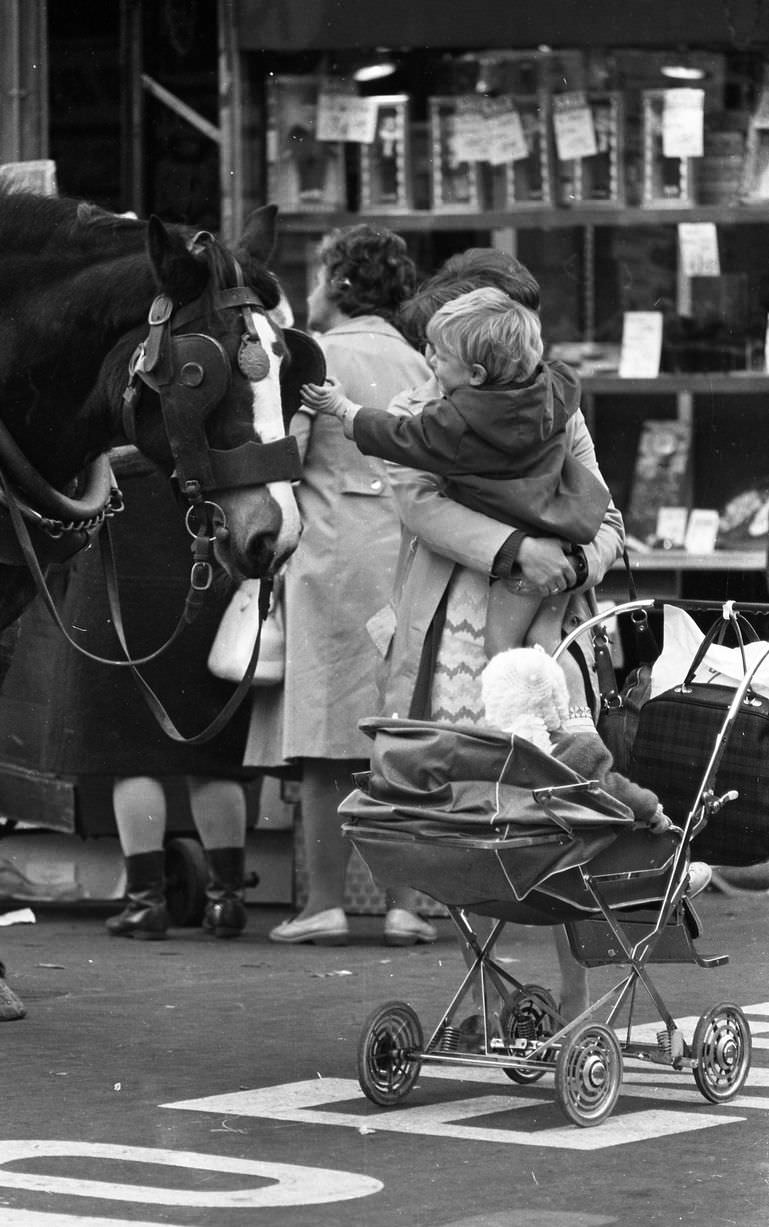
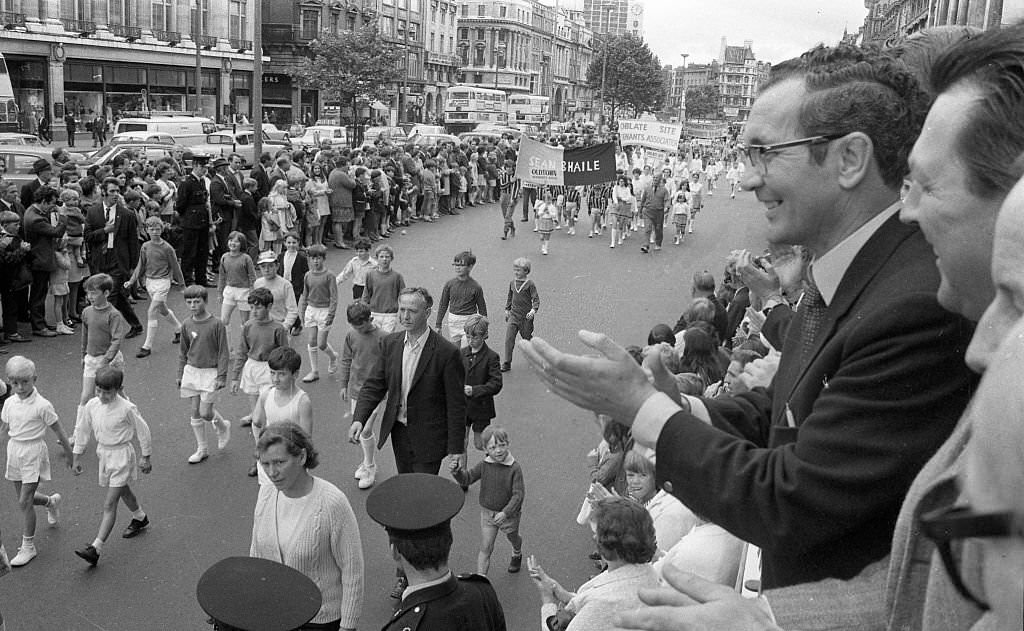
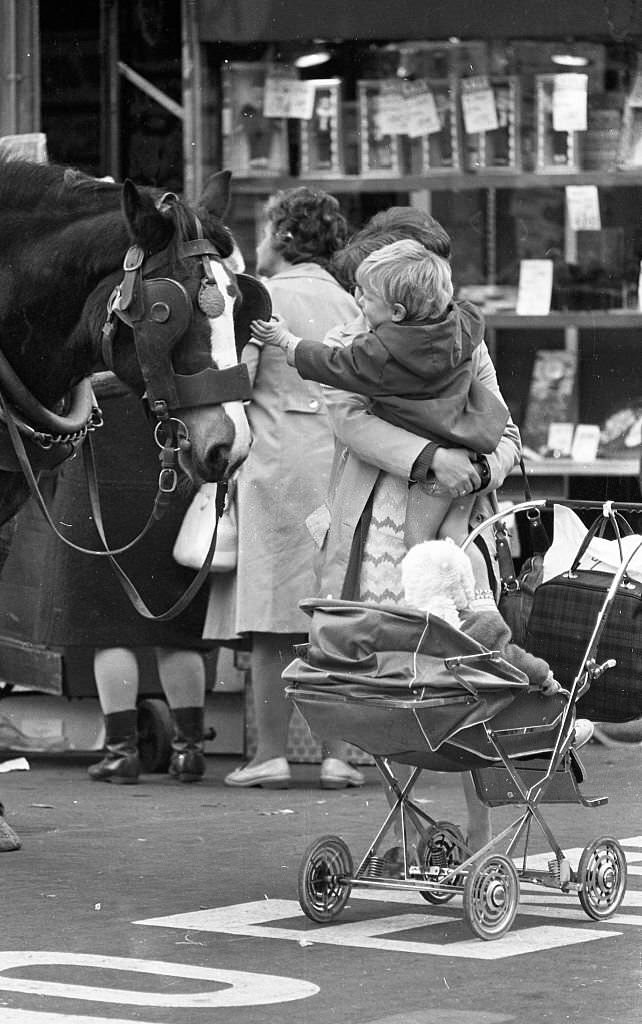
Christmas shopping on Henry Street, December 1971.Children who were confirmed at the Church of Saints Michael and John, April 1973.A child making friends with a horse on O’Connell Street, 1973.
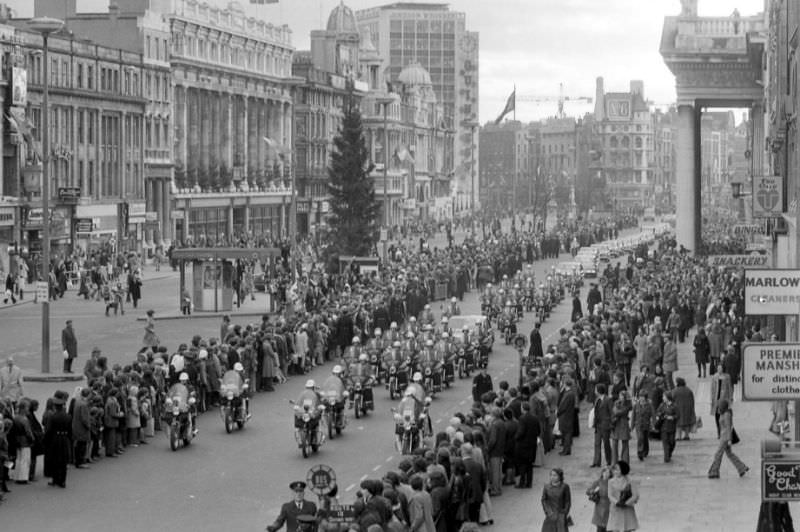
The political life of Dublin was also shifting. In December 1974, Cearbhall Ó Dálaigh was inaugurated as President of Ireland, and his cavalcade moved through O’Connell Street as Dubliners lined the route. The Dublin Institute of Higher Education was founded in 1975, adding another major institution to the city’s educational landscape.
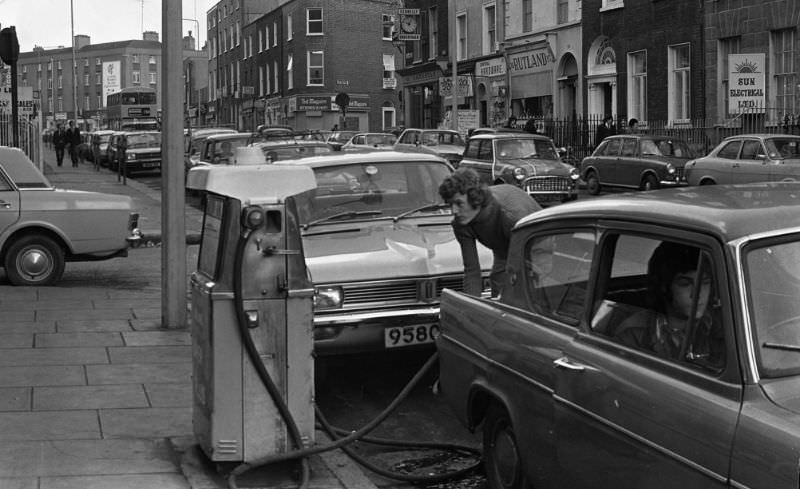
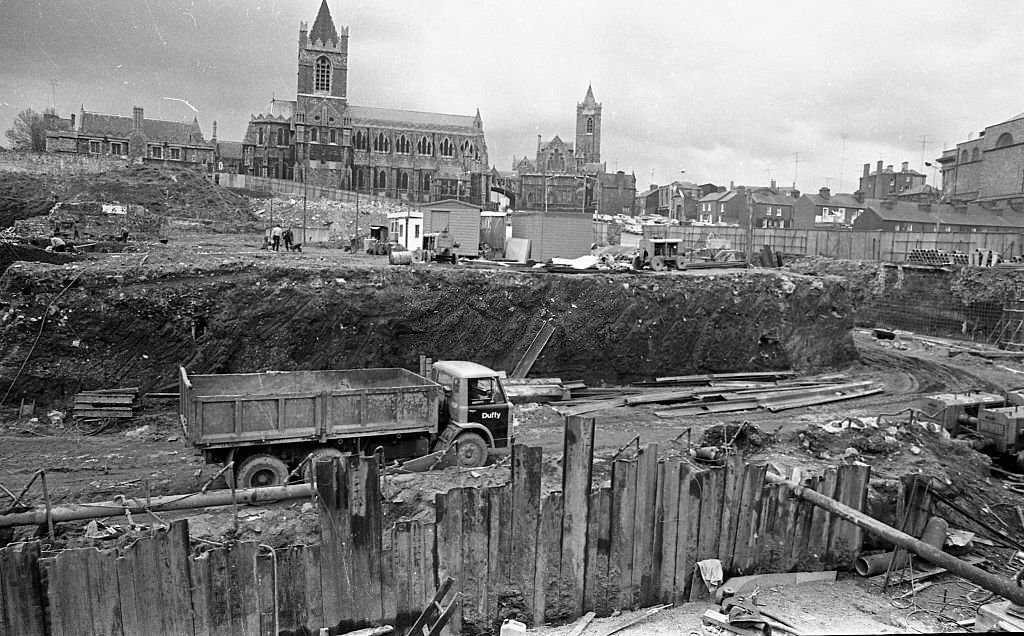
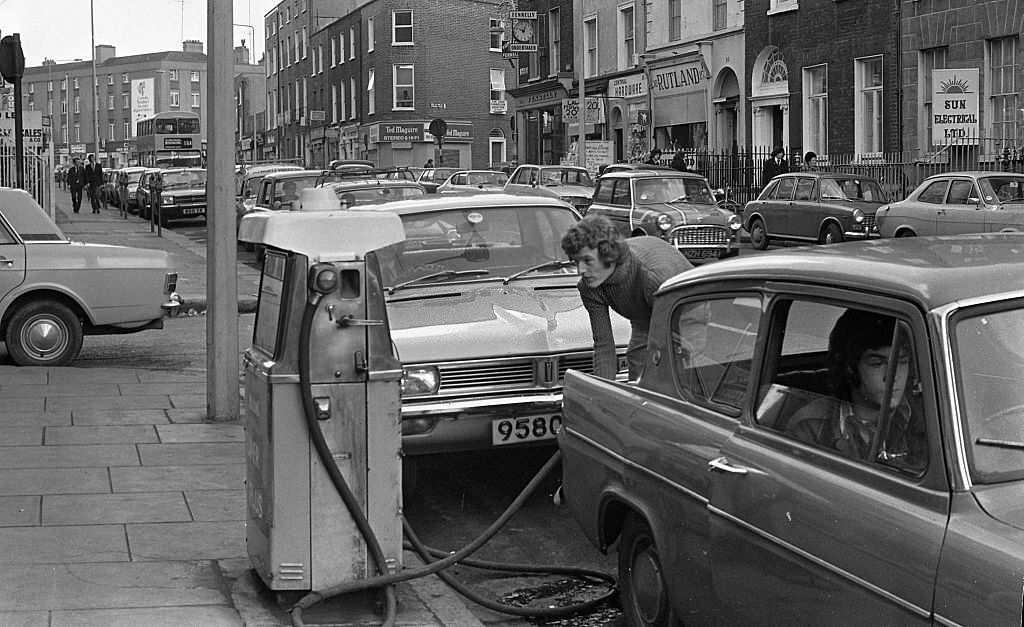
The cavalcade for the new President Cearbhall Ó Dálaigh on O’Connell Street following the Inauguration ceremony at Dublin Castle, December 1974.A young man filling up his car from a street petrol pump, April 1975.Christchurch in Dublin 8, May 1975.
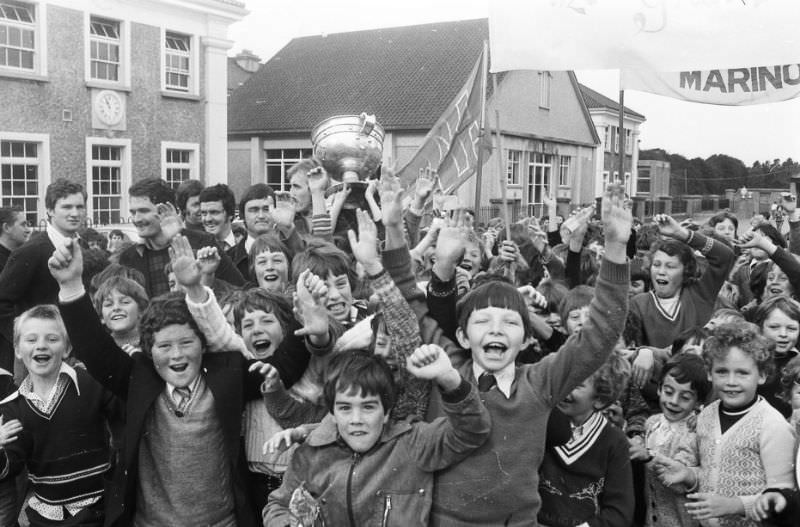
Sport was a constant source of pride for Dubliners. In 1976, the Dublin GAA team defeated Kerry in the All-Ireland Football Final, and the Sam Maguire Cup — the prize awarded to the winners — was brought to a school in Marino, where young fans gathered to celebrate.
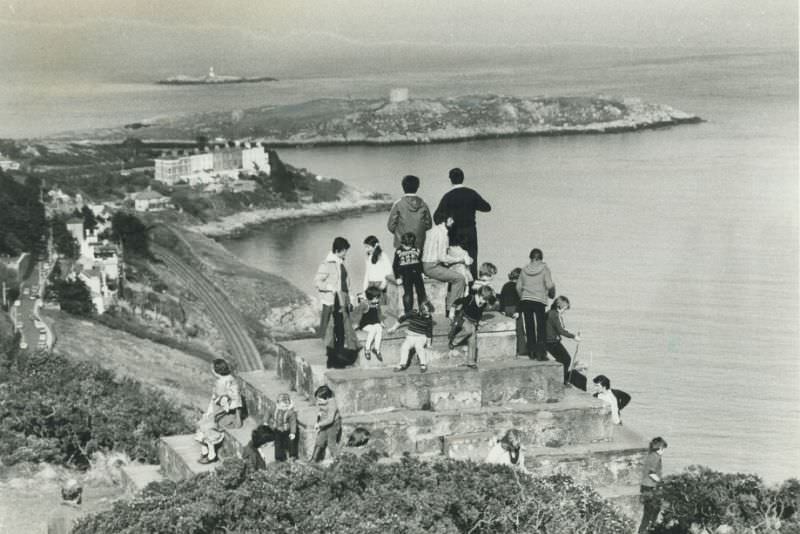
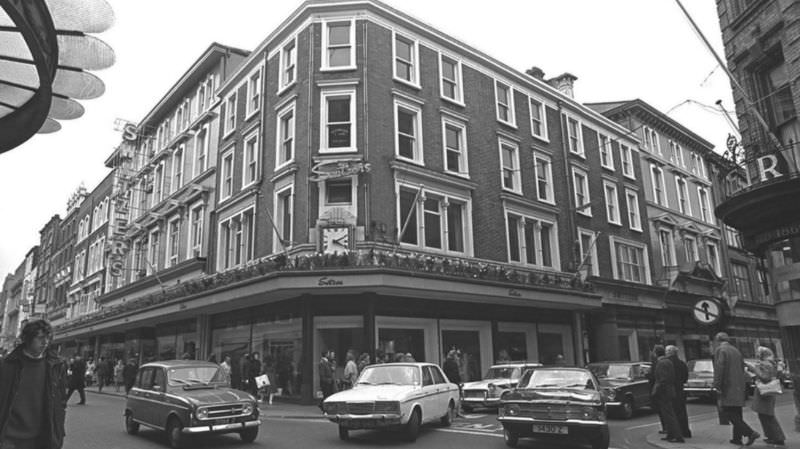
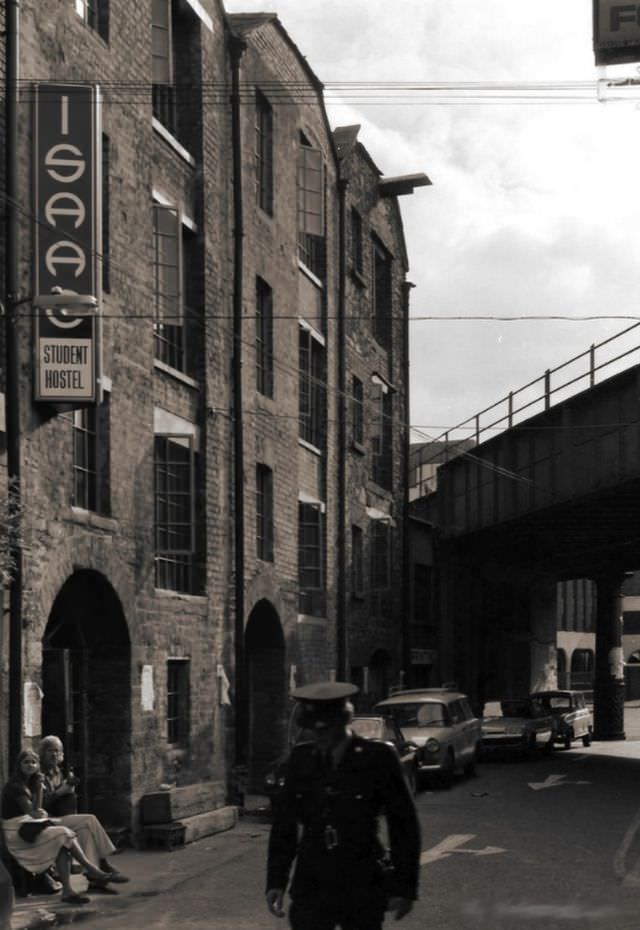
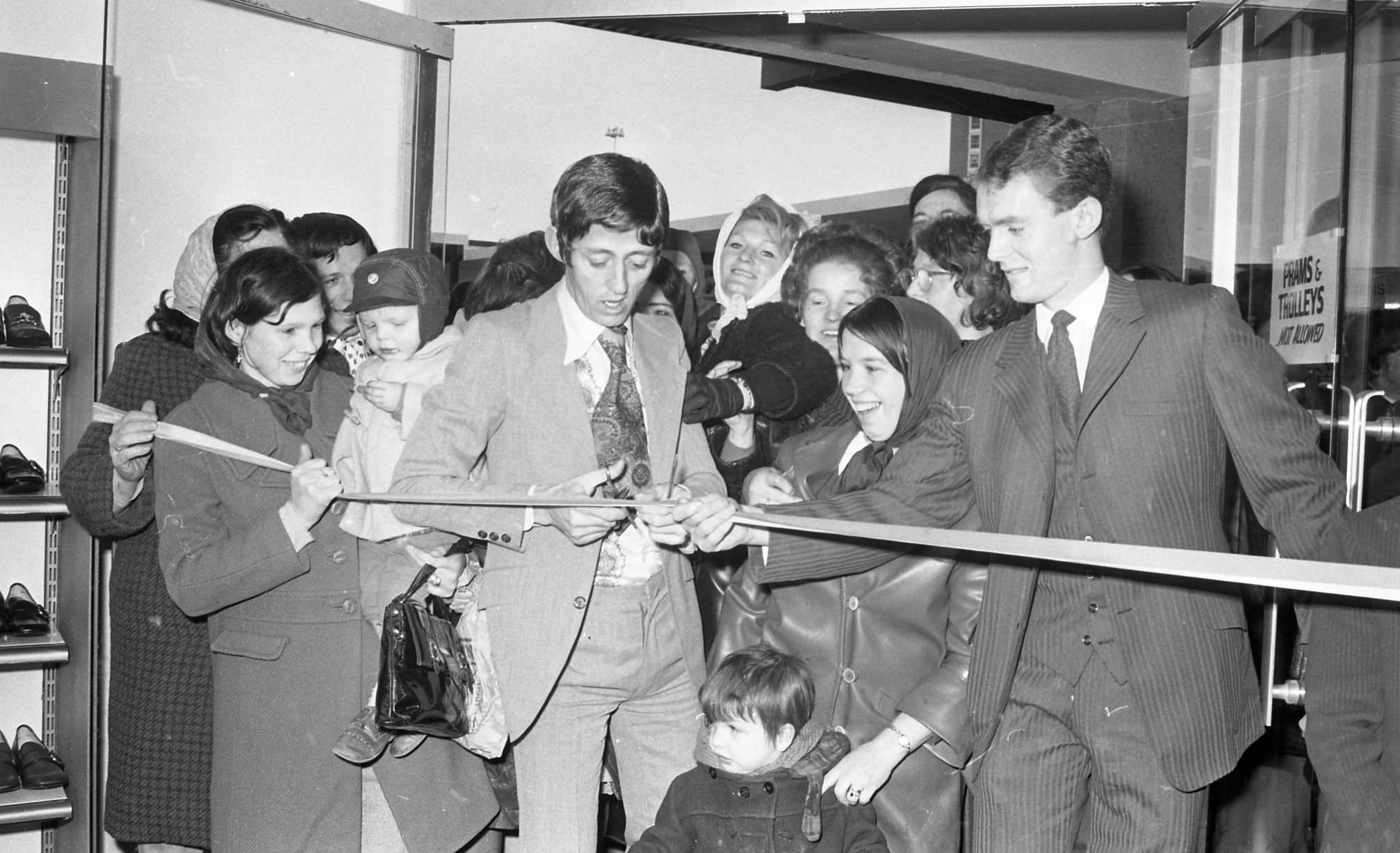
The Sam Maguire at Marino school following the Dublin team’s success against Kerry in the 1976 All Ireland Final.Playground in Dublin, 1970s.Children perched on the lookout on Killiney Hill admiring the view. Photo by George Bryant.Switzers department store on Grafton Street pictured, 1970s.Isaac’s hostel on Frenchman’s Lane, 1979.Dickie Rock at the opening of a Shopping Centre in Ballymun, circa February 1971A view of a traffic jam in Dublin, circa March 1971Scenes from Talbot Street and North Earl Street in December 1971The exterior of Trinity College in September 1971
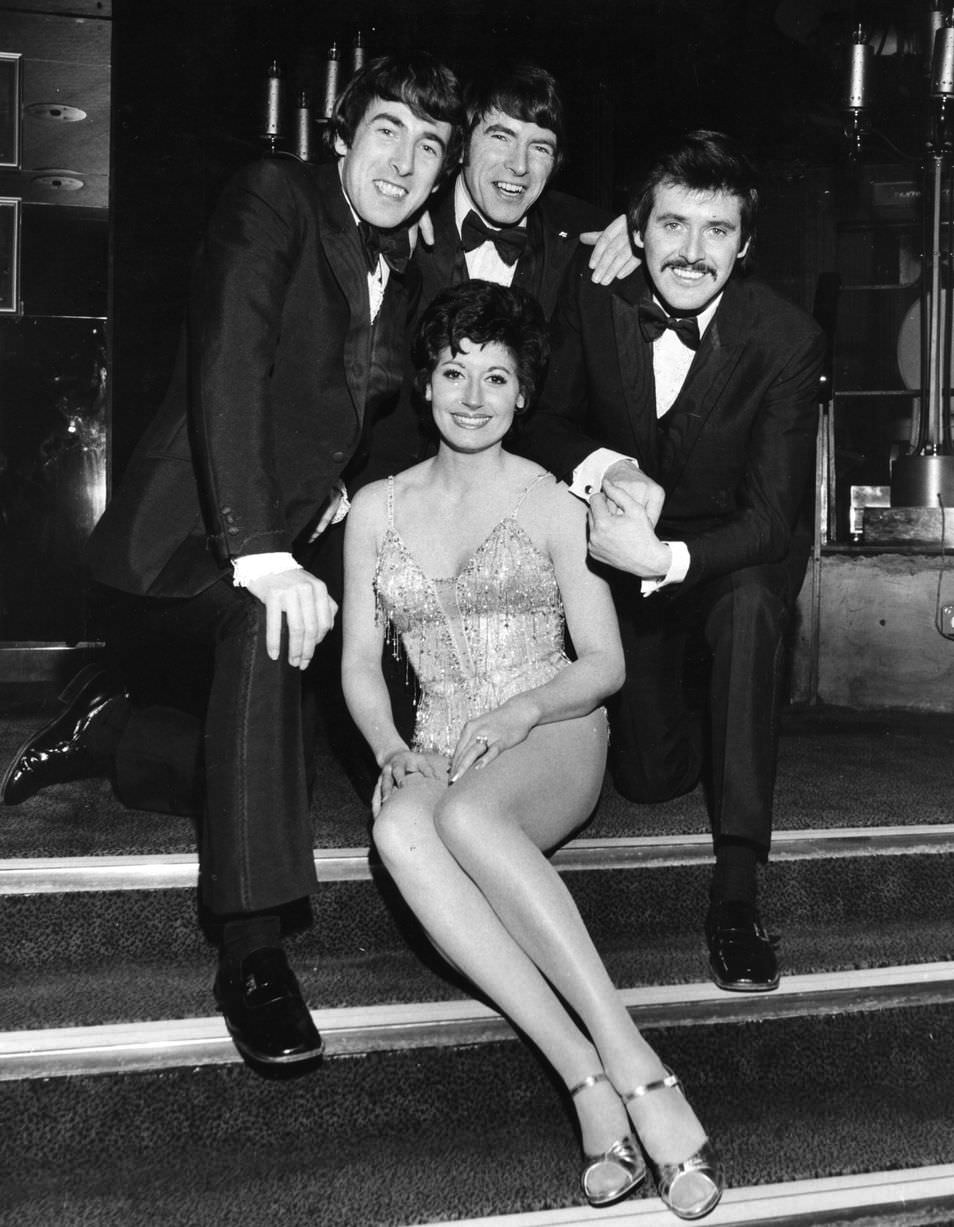
The Bachelors, from left to right, Declan Cluskey, Conleth Cluskey and John Stokes, with Diana Landor at the Talk Of The Town in February 1971
A child making friends with a horse on O’Connell Street, circa 1973
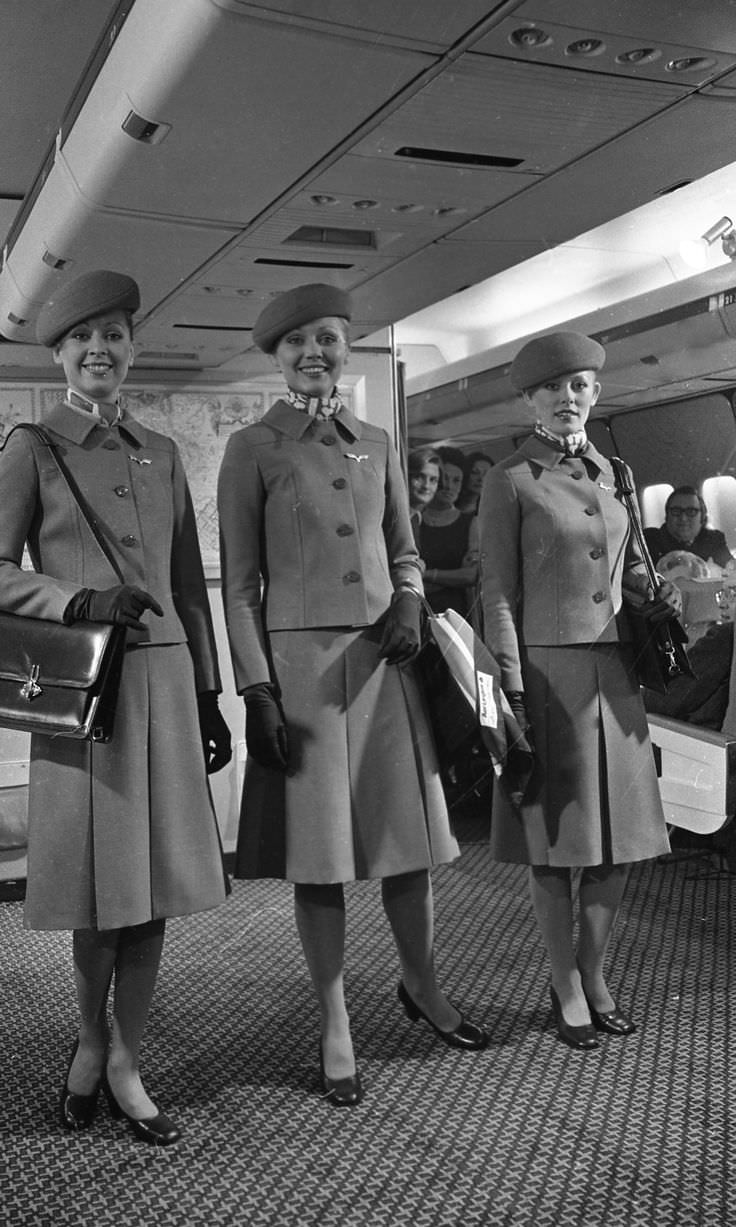
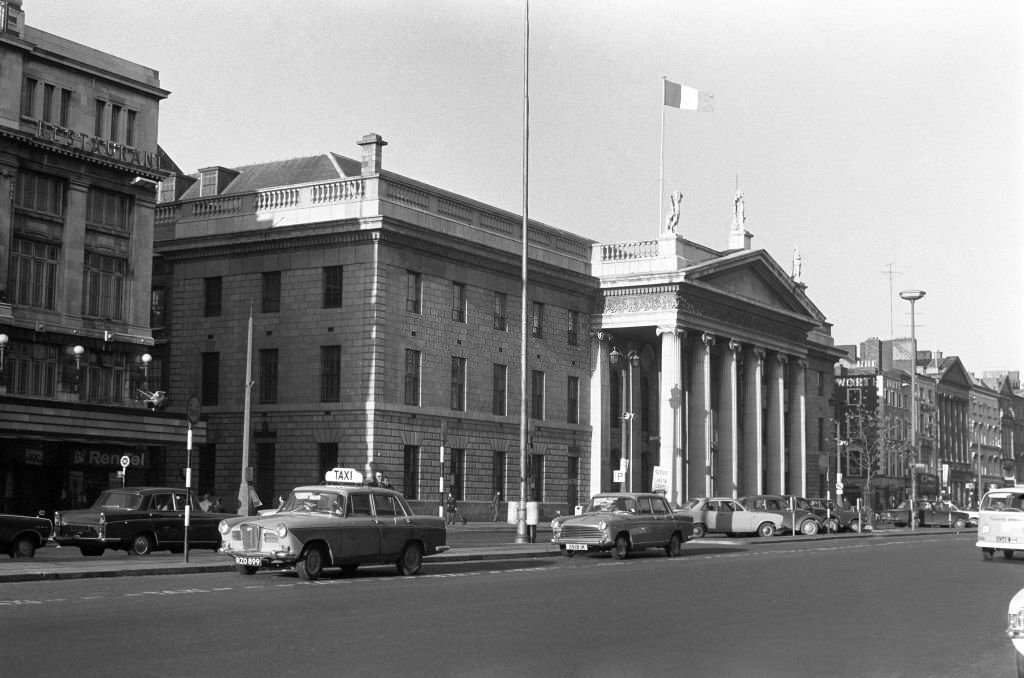
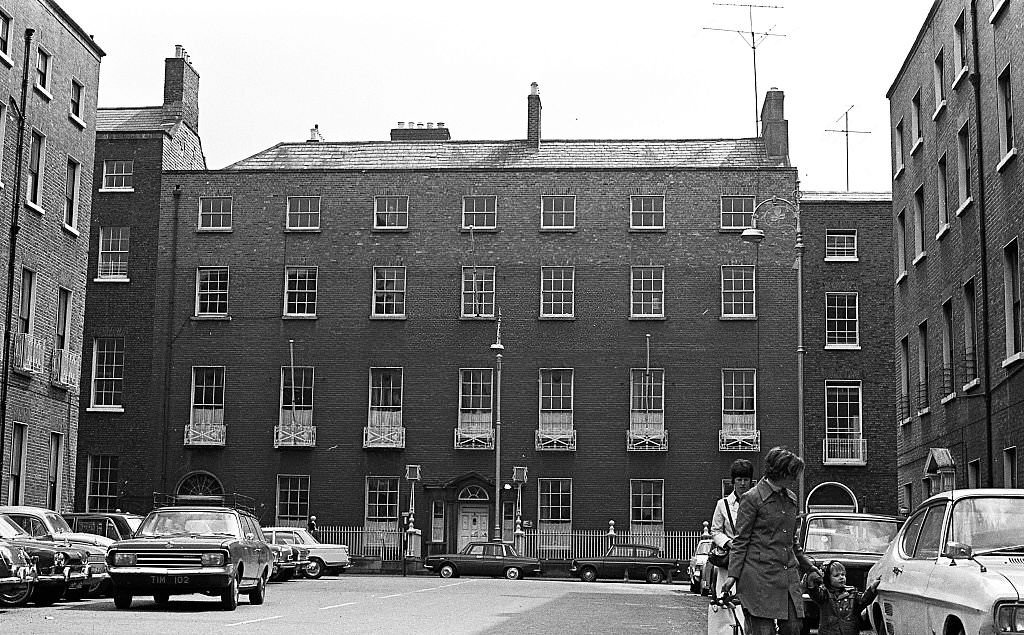
Flight hostesses modelling the new Aer Lingus flight hostesses uniform in March 1975A view of the General Post Office in O’Connell Street, Dublin, 1971Headquarters of the Knights of Columbanus, Ely Place, Dublin, 1972
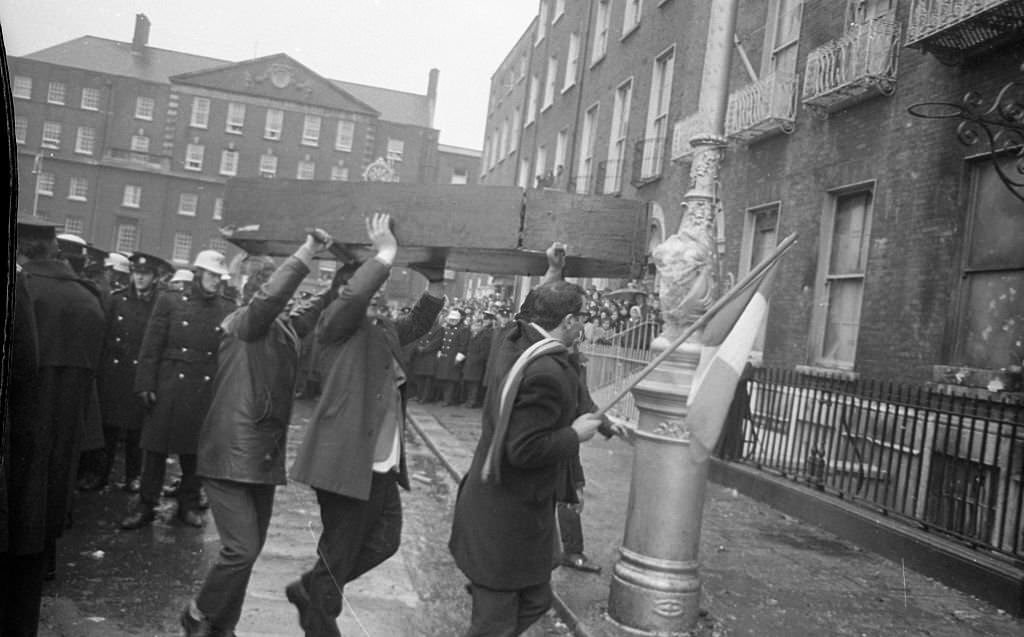
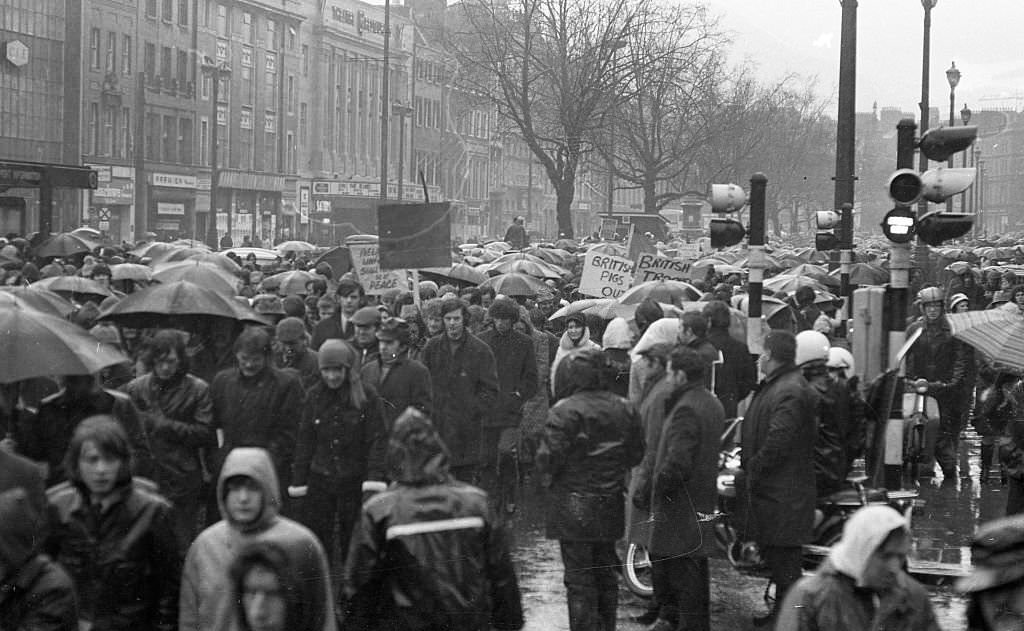
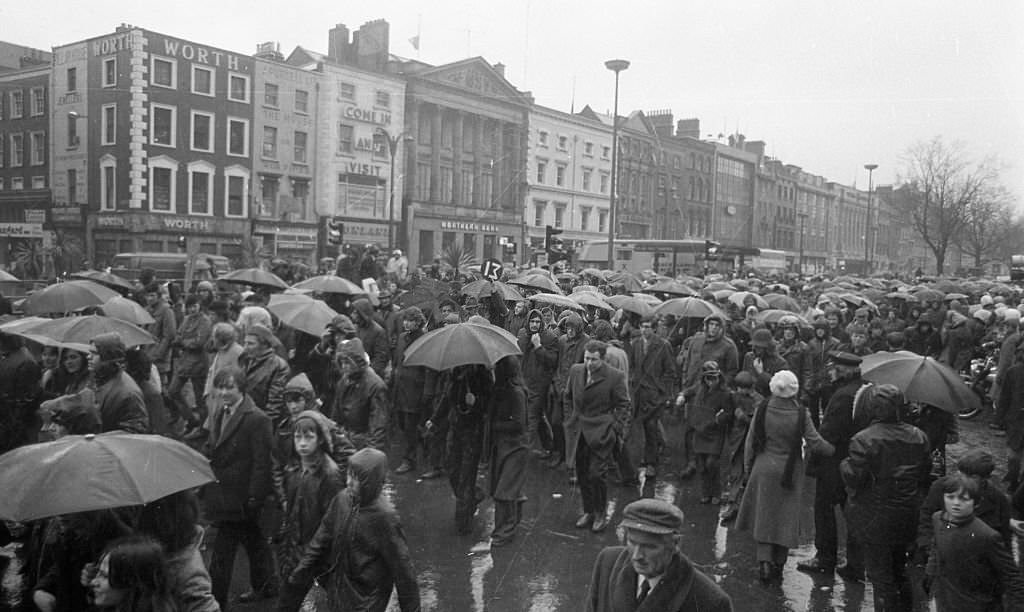
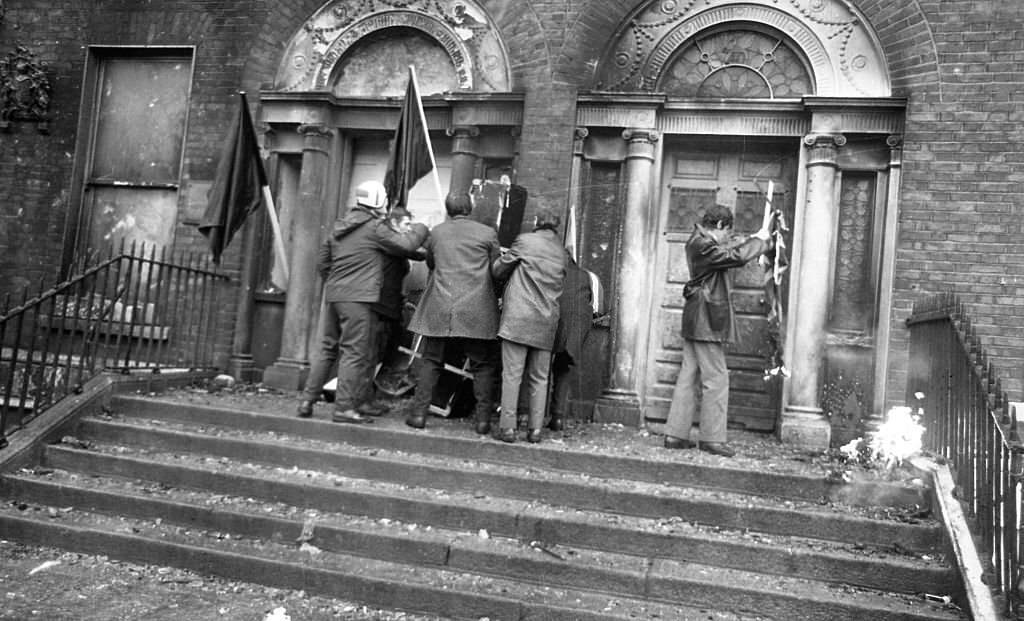
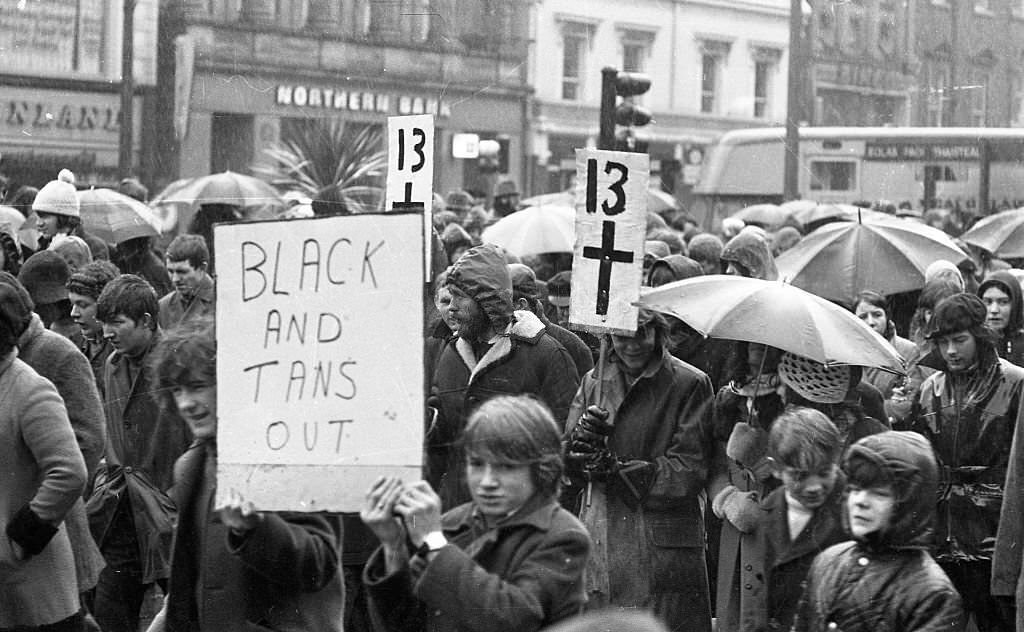
The conflict in Northern Ireland known as the Troubles cast a long shadow over Dublin throughout the decade. On 30 January 1972 — Bloody Sunday — British soldiers shot and killed 13 civilians in Derry. The reaction in Dublin was swift and furious. The following day, angry crowds marched on the British Embassy on Merrion Square and burned it to the ground. In the days that followed, protesters carried a mock coffin through the streets in a public display of grief and rage.
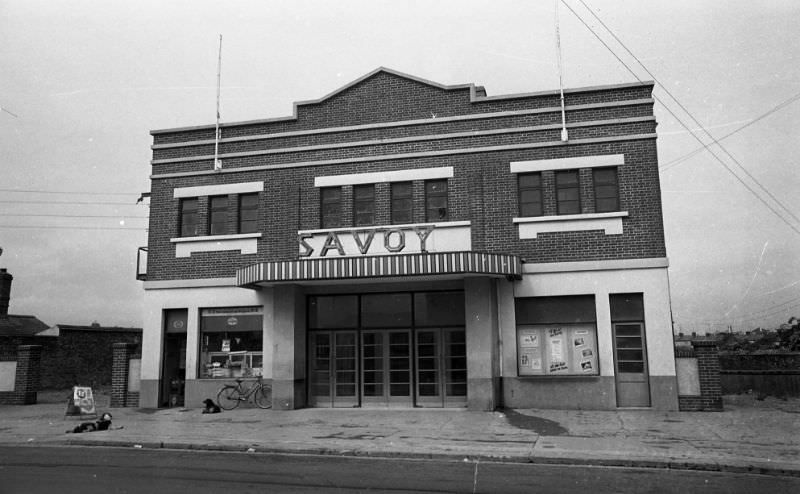
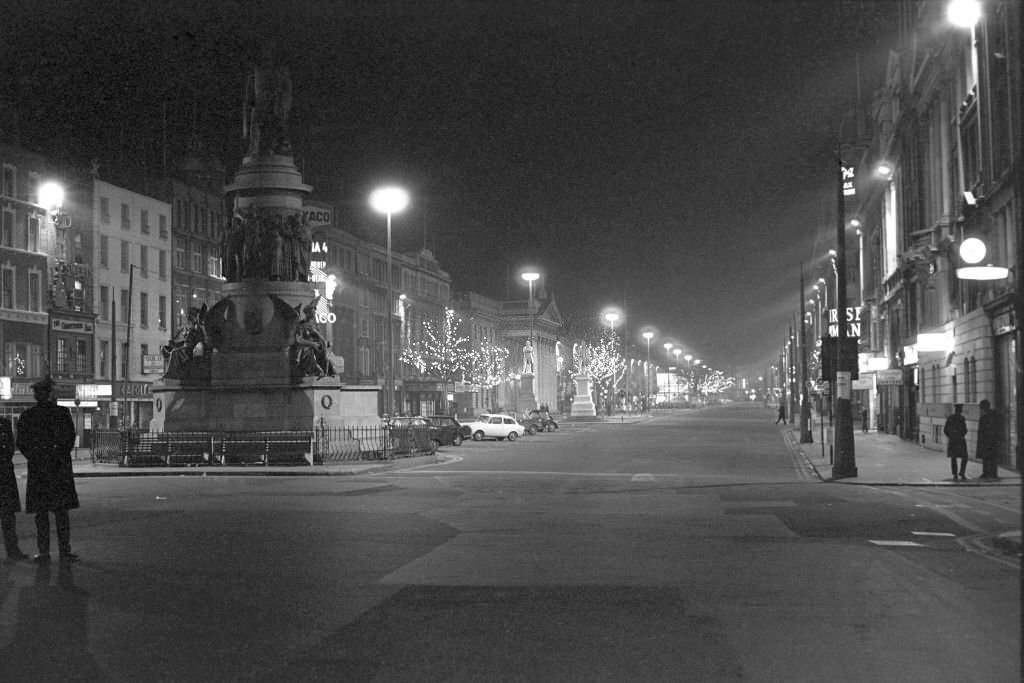
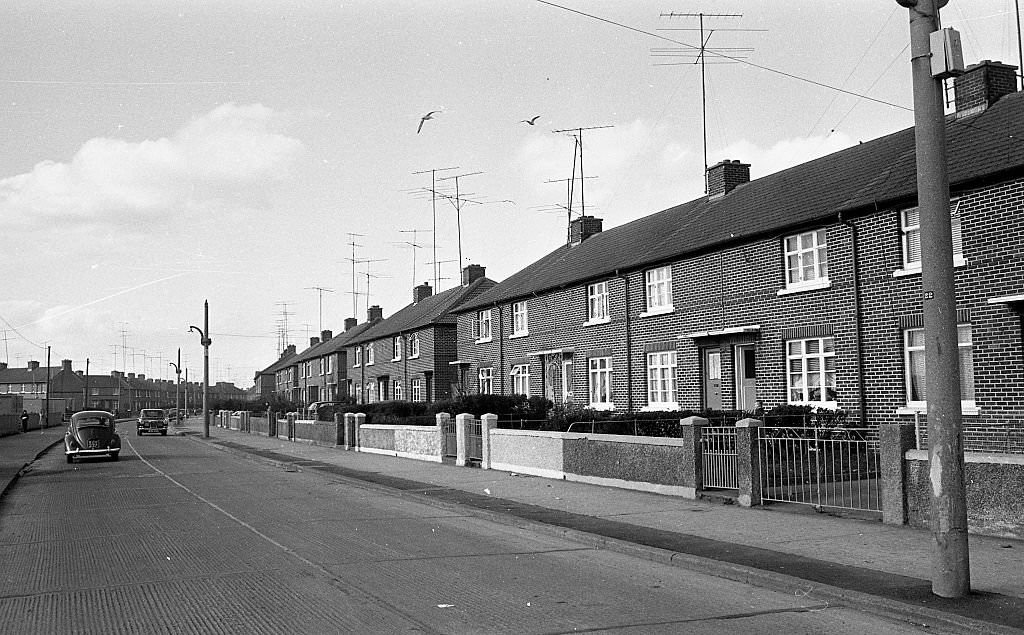
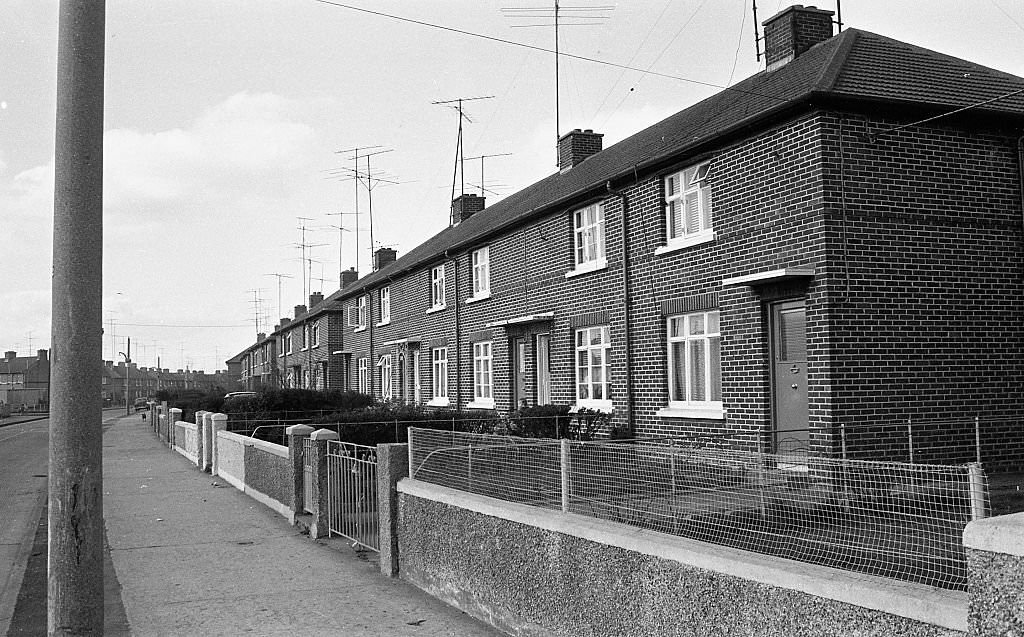
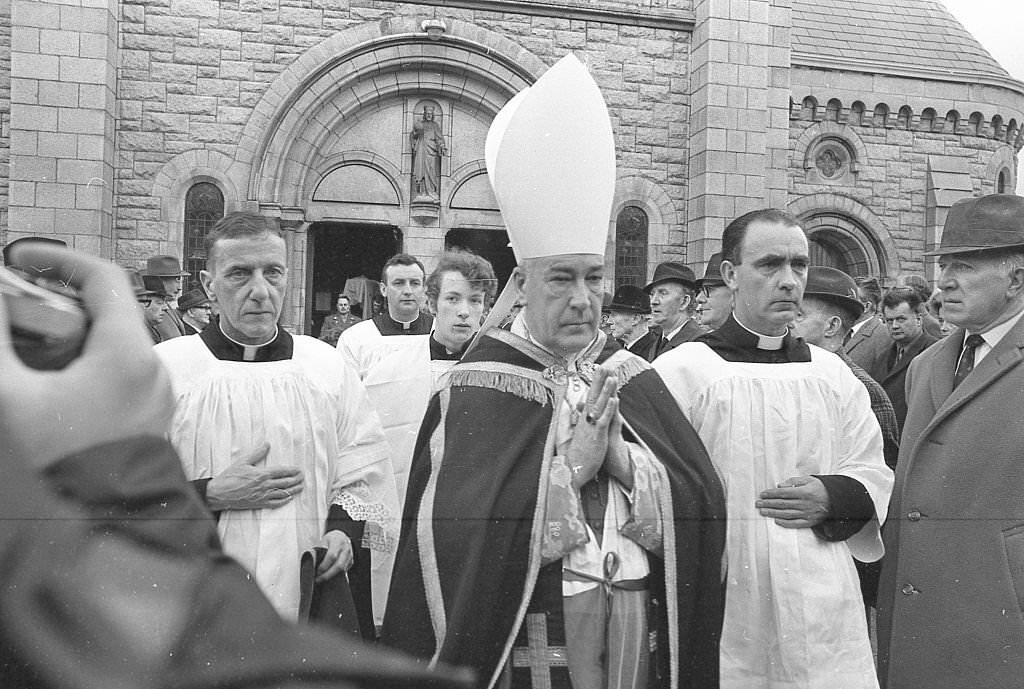
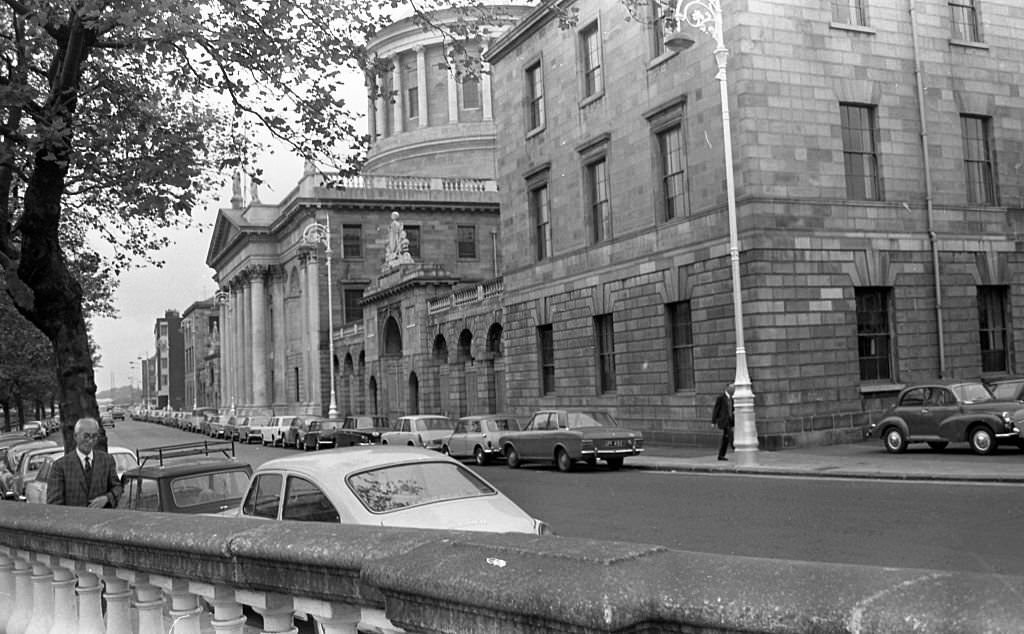
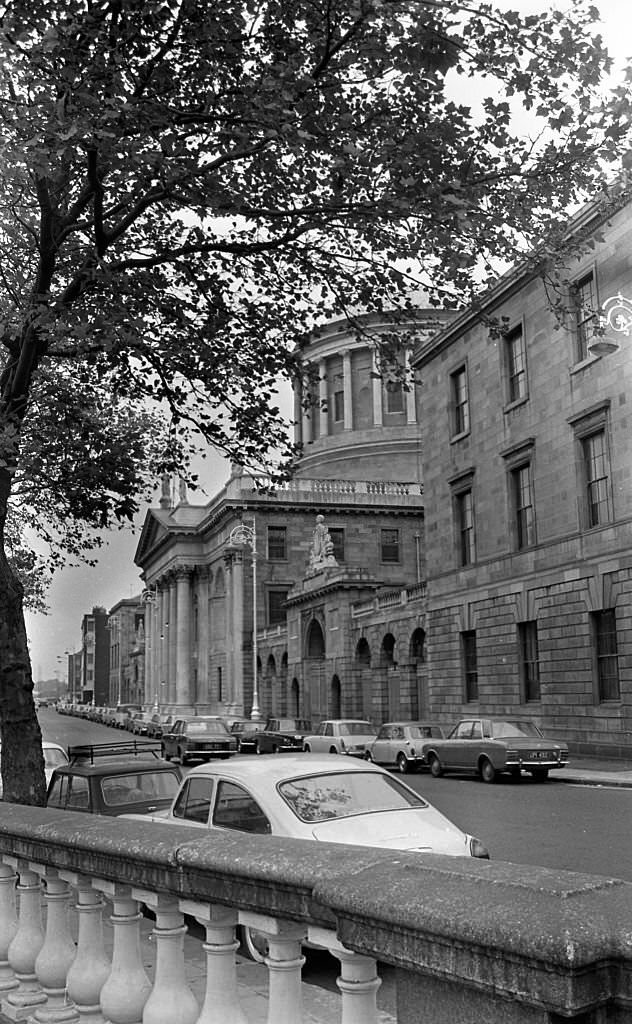
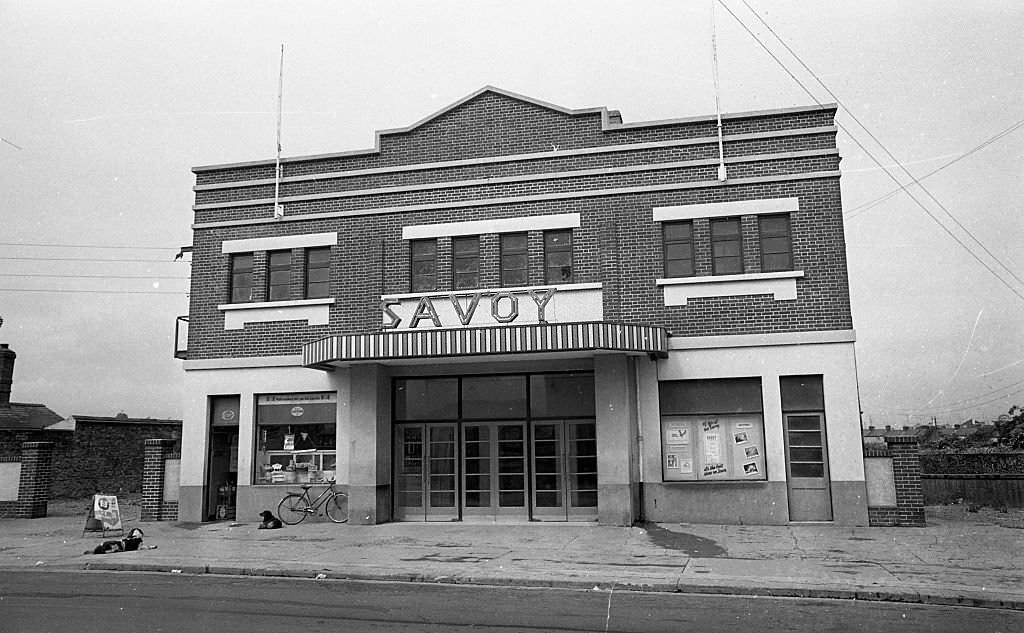
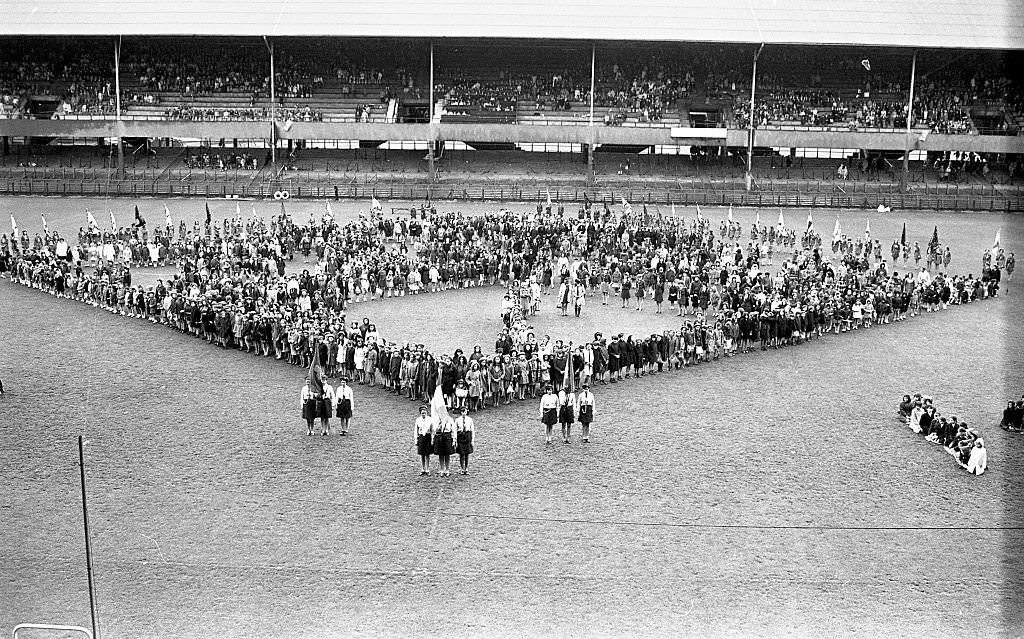
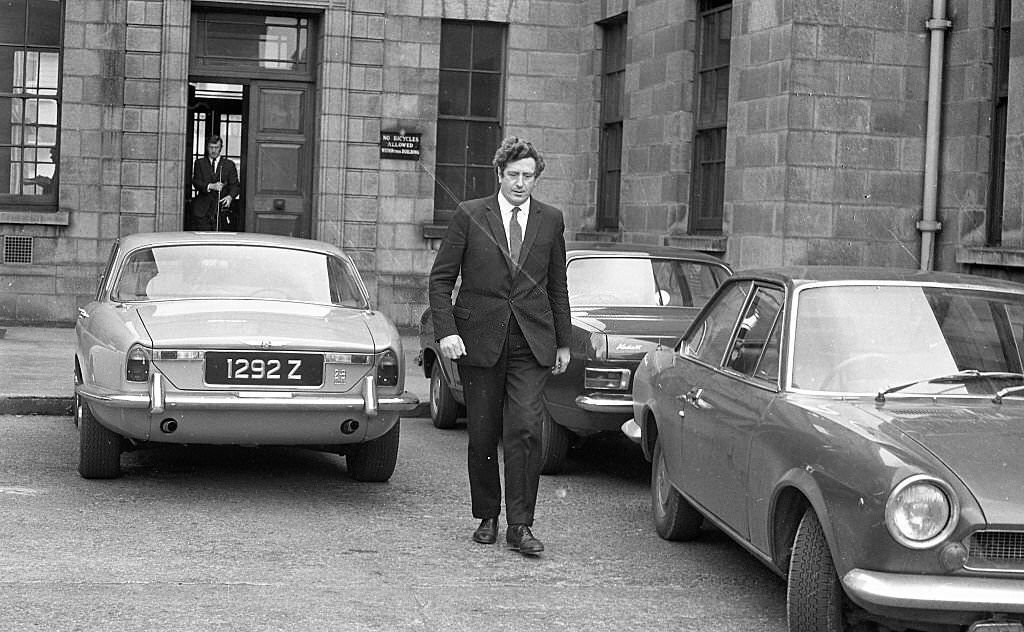
O’Connell Street, Dublin, 1970sCorporation Houses, Kimmage in Dublin, 1972.Corporation Houses, Kimmage in Dublin, 1972.Protestors brining a mock coffin March to the burnt-out British Embassy on Merrion Sq that had been destroyed in the proterst the previous night, 1972March in Dublin the day after the protest at the British Embassy on Merrion Sq following Bloody Sunday, 1972March in Dublin the day after the protest at the British Embassy on Merrion Sq following Bloody Sunday, 1972Protestors brining a mock coffin March to the burnt-out British Embassy on Merrion Sq that had been destroyed in the proterst the previous night, 1972.March in Dublin the day after the protest at the British Embassy on Merrion Sq following Bloody Sunday, 1972Street scene Arnotts, 1972Street scene Arnotts, 1972Arnotts, 1972Scenes from Talbot Street and North Earl Street, Dublin, 1971Talbot Street and North Earl Street, Dublin 1971Talbot Street and North Earl Street, Dublin 1971Scenes from Talbot Street and North Earl Street, Dublin, 1971Christmas shopping in Henry Street, Dublin, 1971Bishop Joseph Carroll,auxiliary bishop of Dublin at the State funeral for General Richard Mulcahy, 1971Meath Street, Dublin 1971Thomas Street, Dublin 1971Trinity College, 1971The Four Courts, Dublin, 1971Trinity College, 1971Trinity College, Dublin, 1971The Four Courts, Dublin, 1971Community Games Parade in Dublin, 1971Community Games Parade in Dublin, 1971Scenes from Henry Street, Dublin, 1971Grafton Street, Dublin 1971Grafton Street, Dublin 1971The Savoy Cinema in Balbriggan, Co. Dublin, Circa June 1971.Irish Girl Guides’ Diamond Jubilee celebrations at Landsdowne Rd., 1971Northern Irish singer Clodagh Rodgers performs the song ‘Jack In The Box’ on stage for United Kingdom in the 1971 Eurovision Song Contest at the Gaiety Theatre in Dublin, 1971Garreth FitzGerald at the Supreme Court, May 1971,Eurovision Song Contest, 1971Traffic jam, Dublin, Ireland, 1971Traffic jam, Dublin, Ireland, 1971
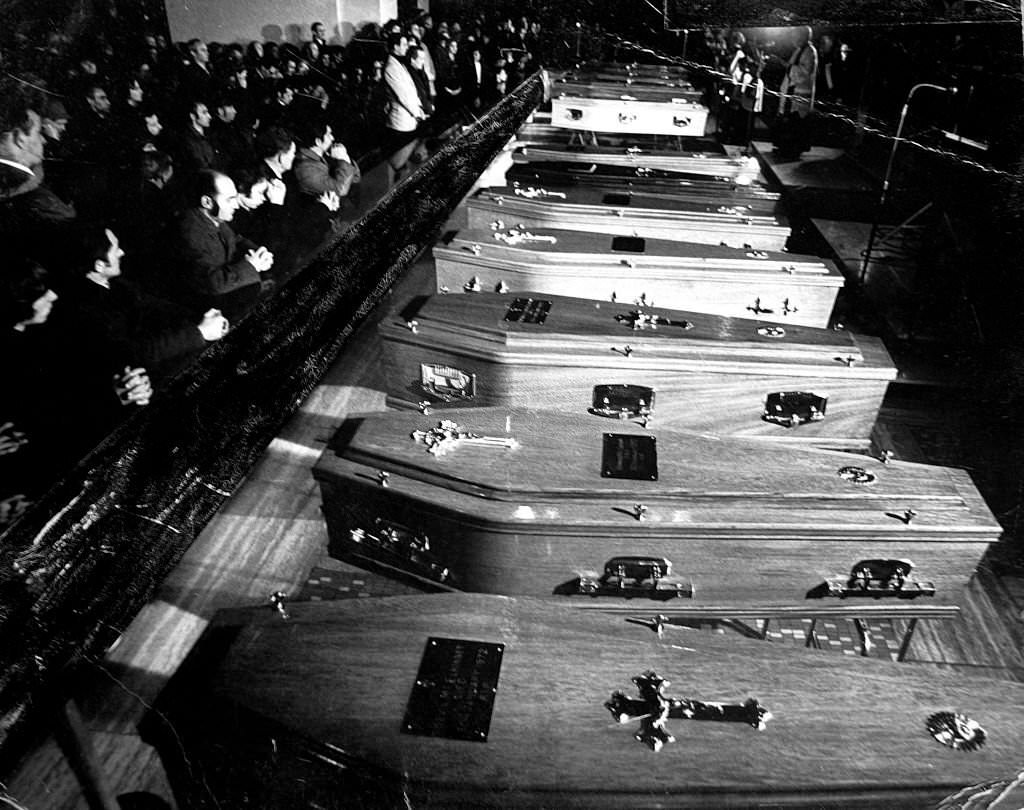
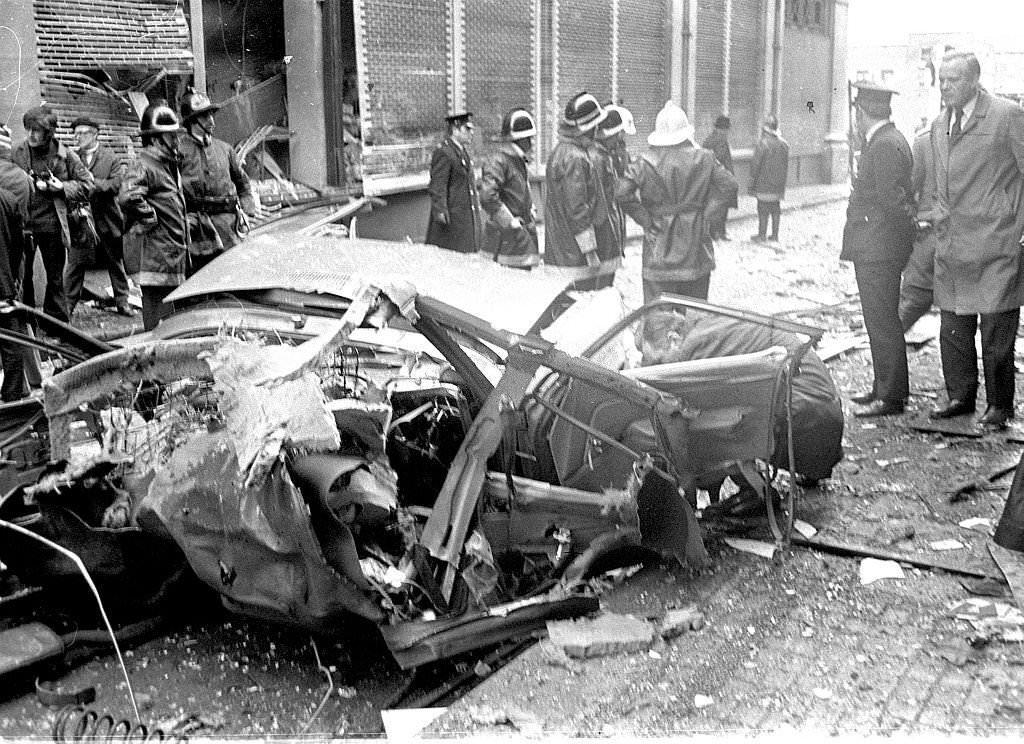
The remains of the 13 people killed on Bloody Sunday were brought back from Derry, and their funerals took place against a backdrop of national mourning. The killings and the subsequent burning of the British Embassy marked one of the most intense moments of political feeling in Dublin during the entire decade. In Dublin itself, bombings claimed lives in 1972 and 1973, killing three people and injuring 185 others.
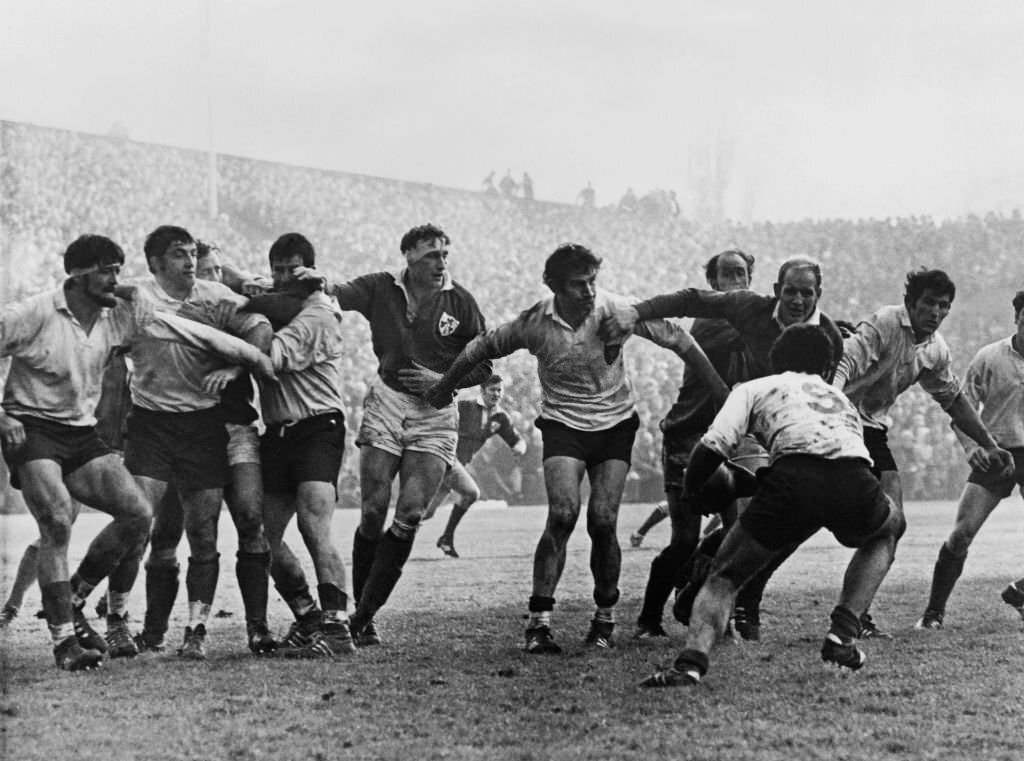
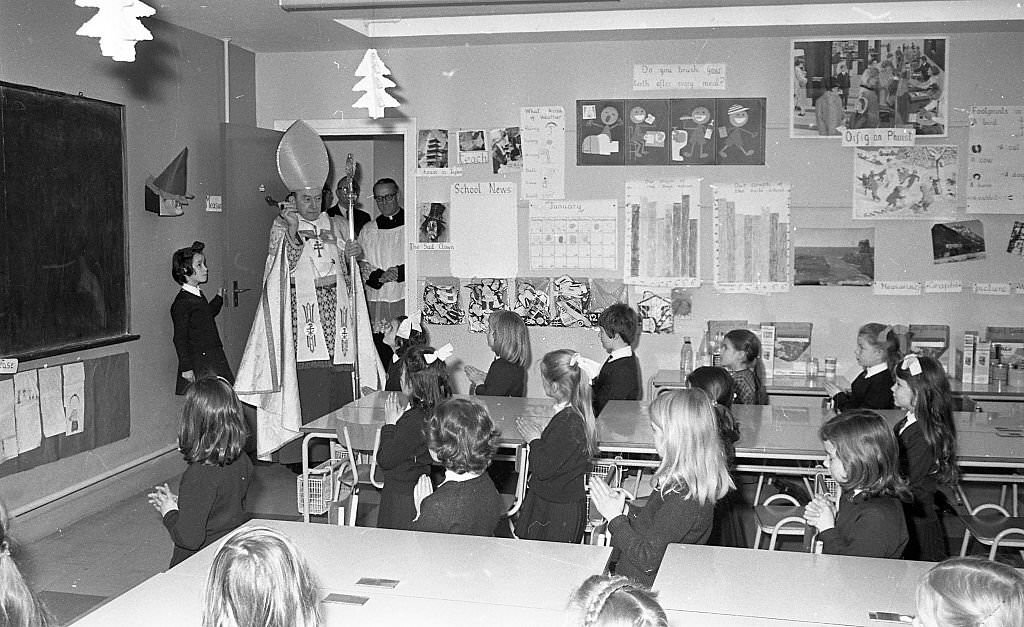
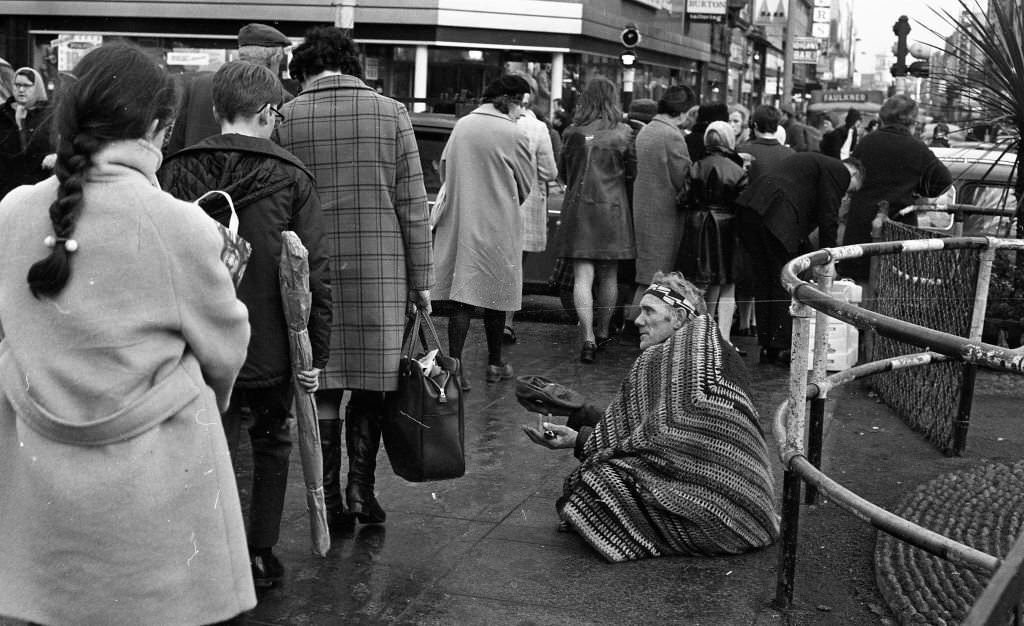
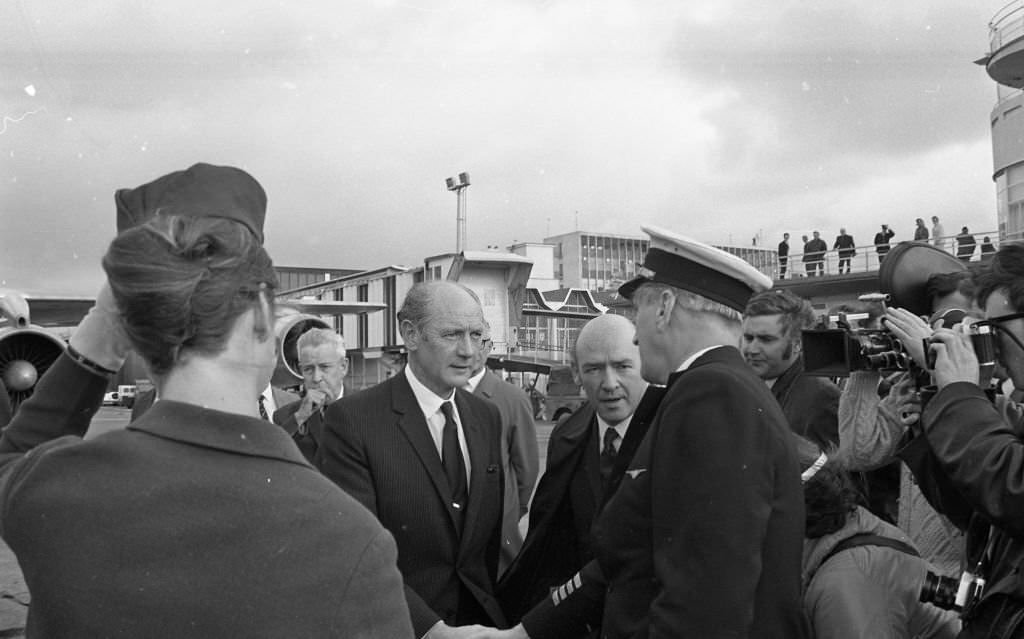
The remains of the 13 people who were shot dead by the British Army in Derry on Bloody Sunday, 1972Rugby Ireland – France Union Tournament, 1971The Archbishop of Dublin Most Rev. Dr. John Charles Mc Quaid blessing one of the classrooms at the opening of the St. Pius X Primary school, Fortfield Park, 1971Grafton Cinema in Dublin, 1971Native Musician Busking on O’Connell Street where Nelson’s Pillar used to be, 1971Apollo XIII Astronauts Motorcade in O’Connell Street, Dublin, 1970Taoiseach Jack Lynch, 1970US President Richard Nixon at Aras An Uachtarain during a State visit, Dublin, 1970
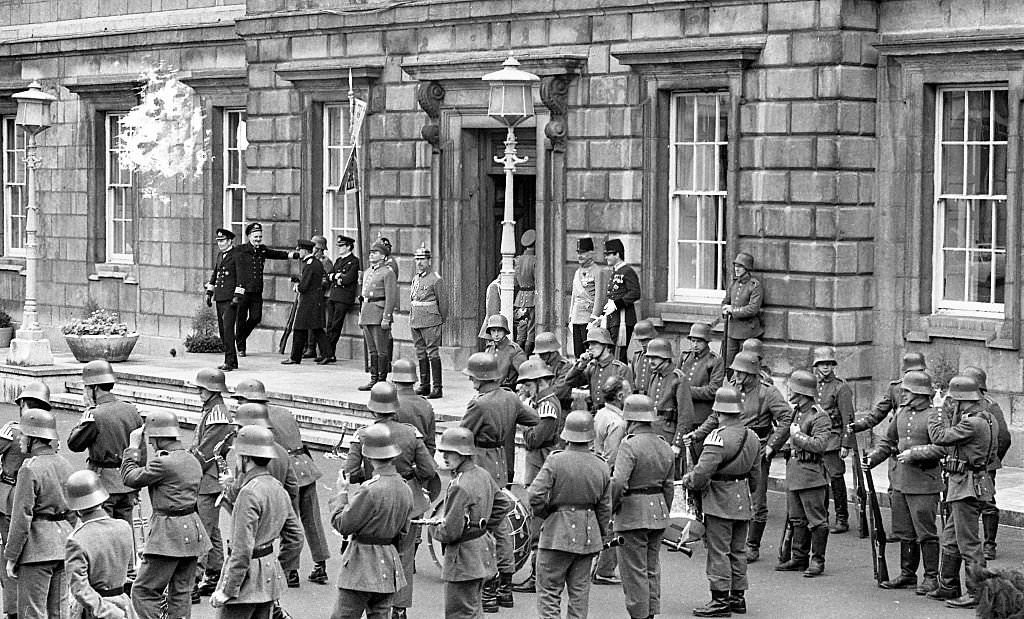
Hollywood also came to Dublin in 1970. The war film Von Richthofen and Brown, directed by Roger Corman and starring John Phillip Law and Don Stroud, used Leinster House as a filming location. The sight of a film crew setting up outside one of the country’s most important political buildings was a striking image of the times.
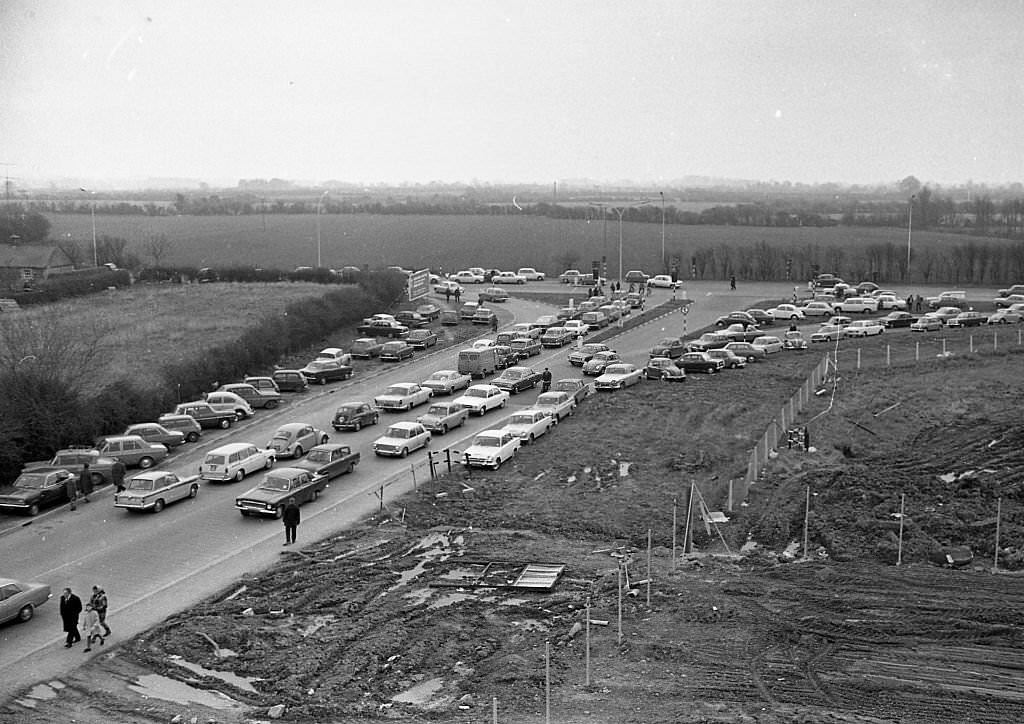
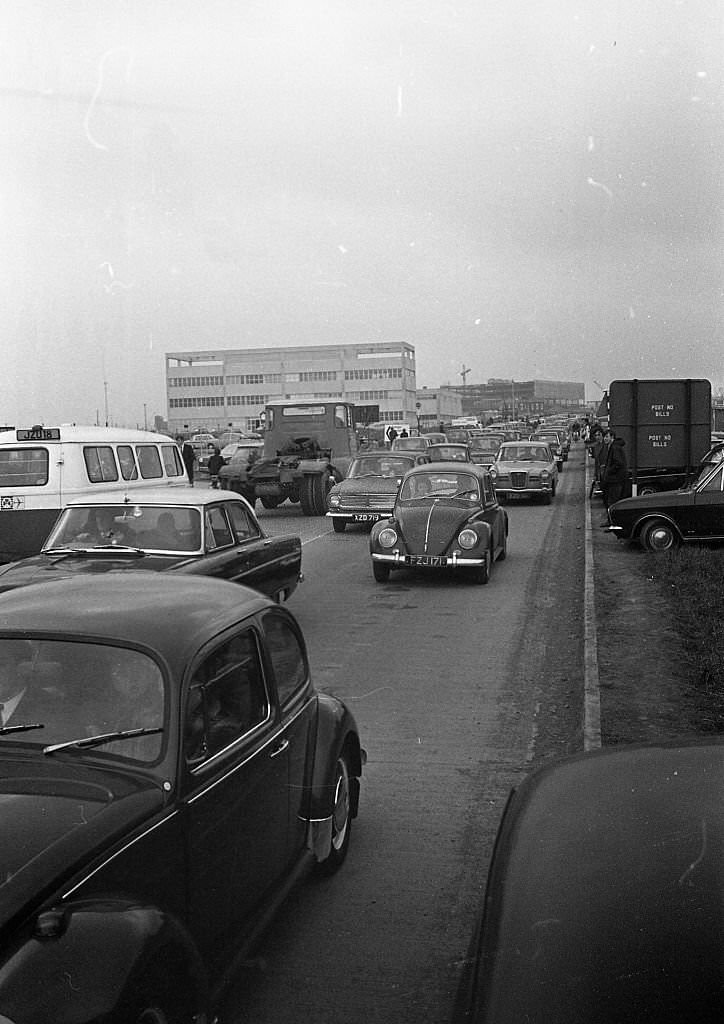
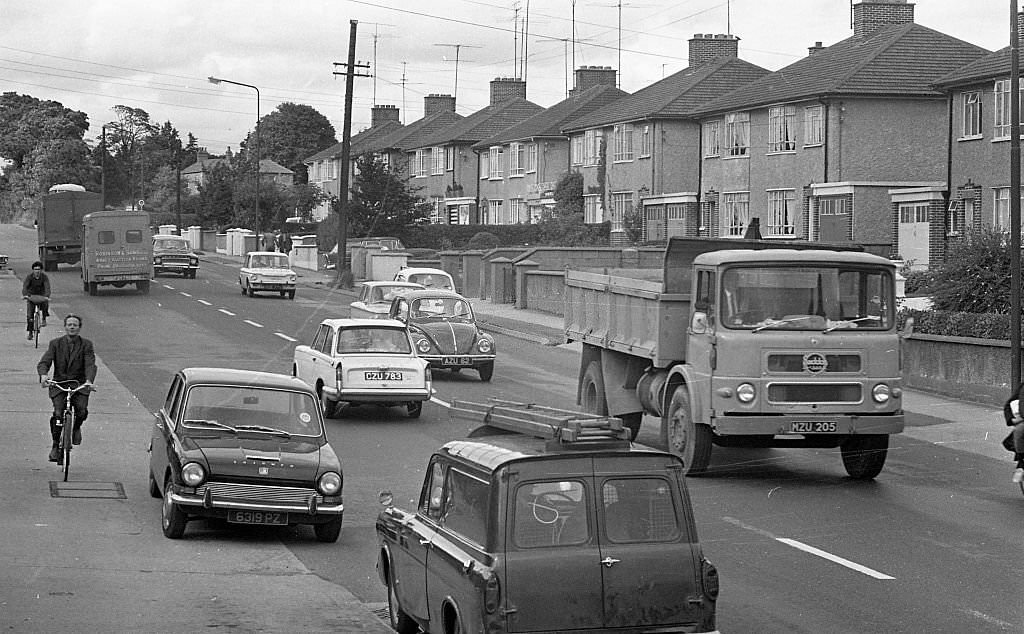
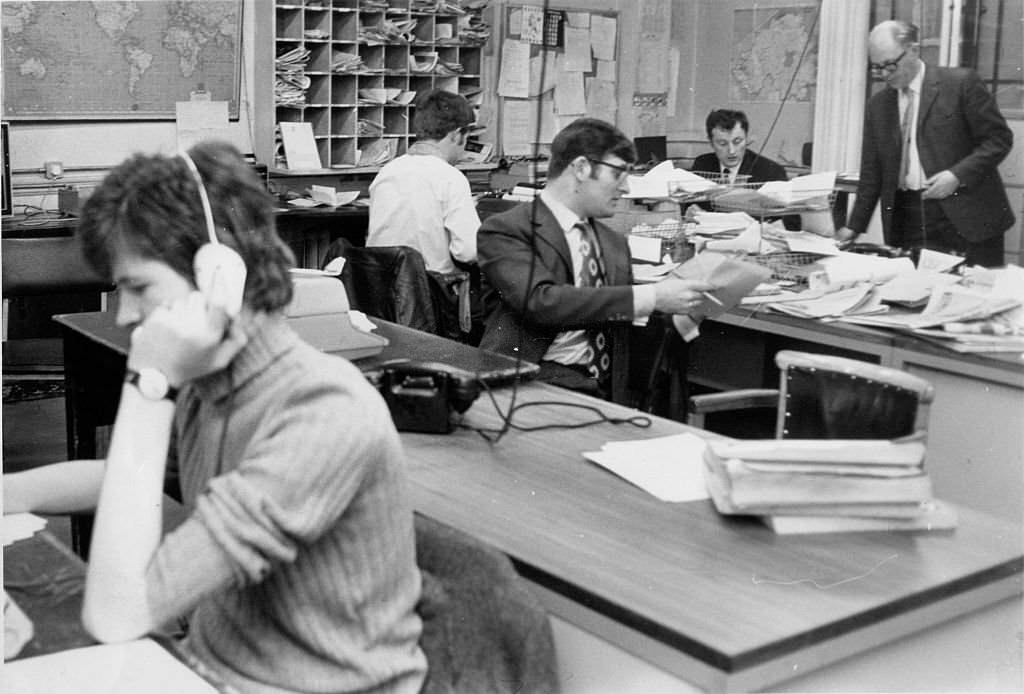
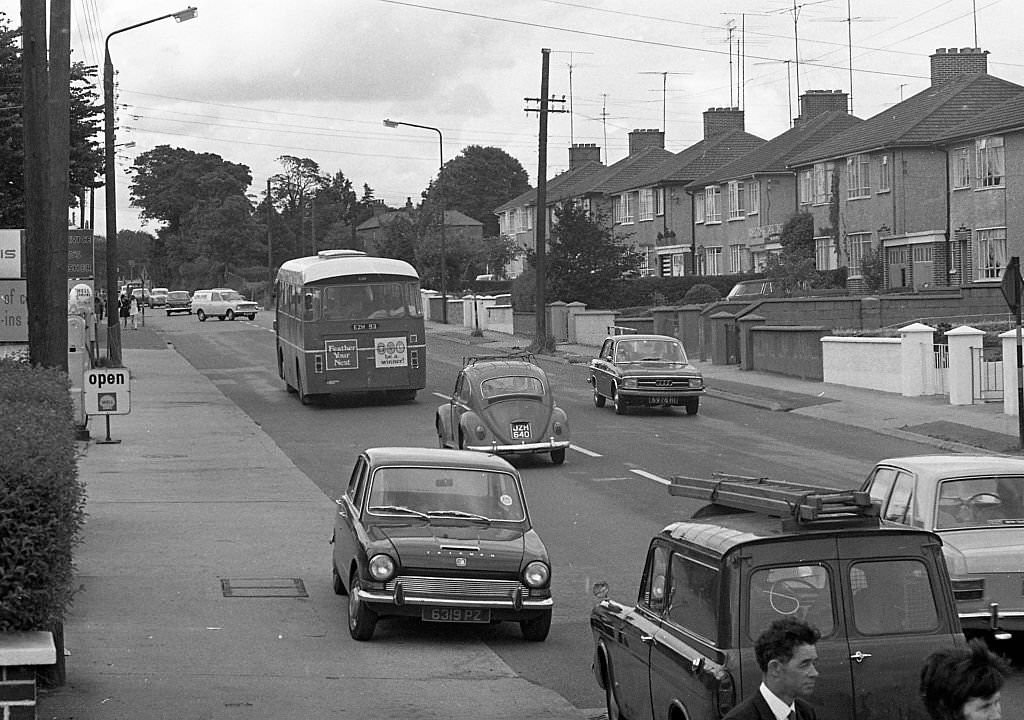
Von Richthofen and Brown in Dublin, 1970Filiming at Leinster Housem 1970Traffic congestion on the North Road in Santry Dublin, 1970Irish Independent newsroom, 1970Traffic congestion on the North Road in Santry Dublin, 1970Traffic congestion on the North Road in Santry Dublin, 1970
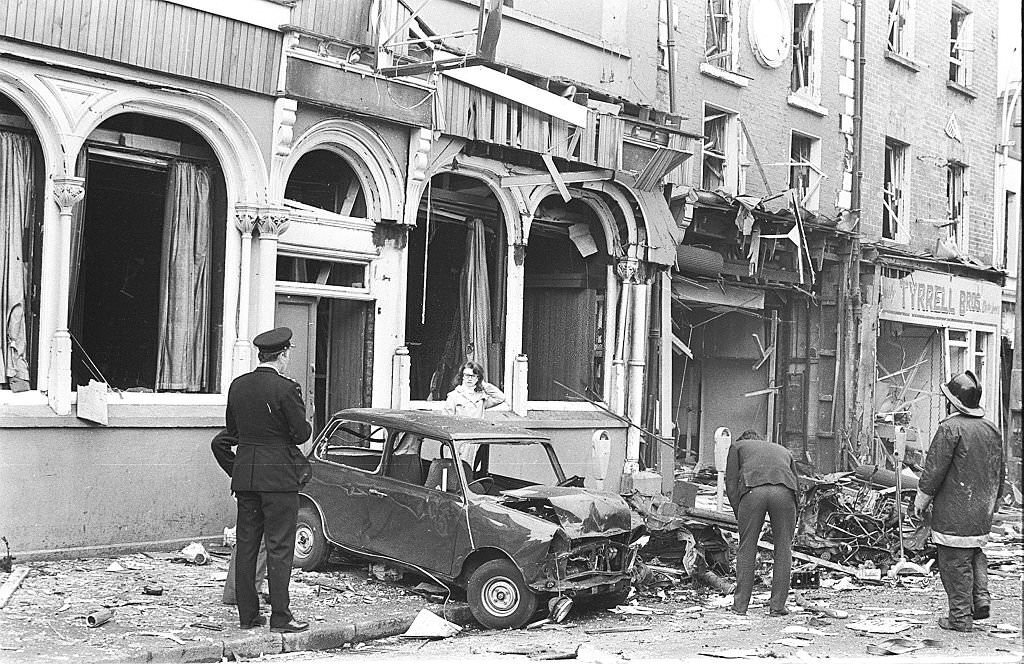
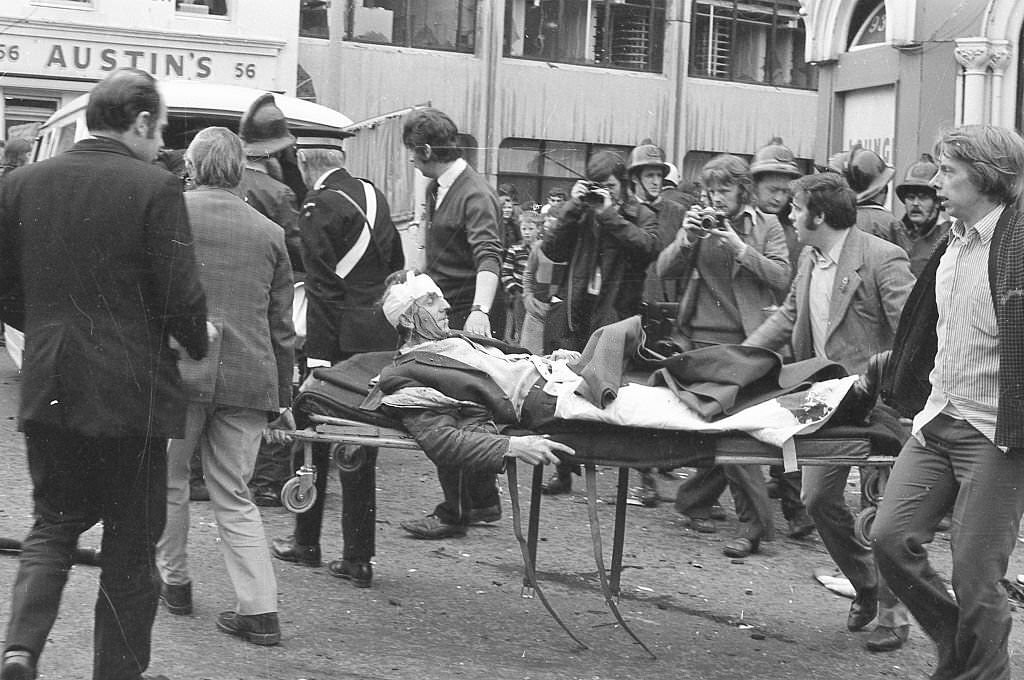
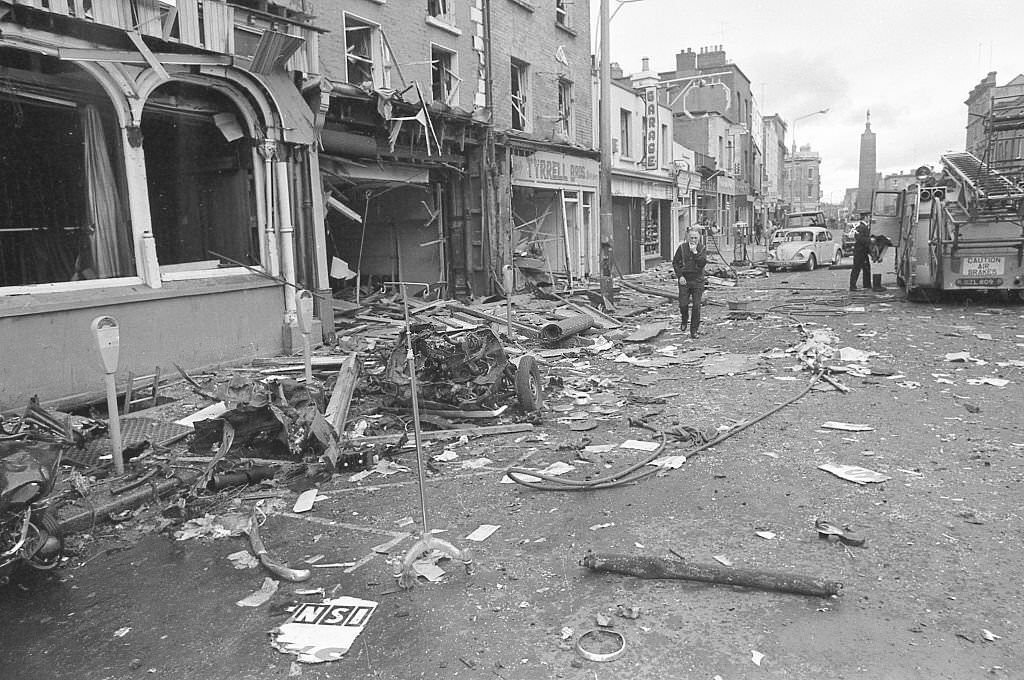
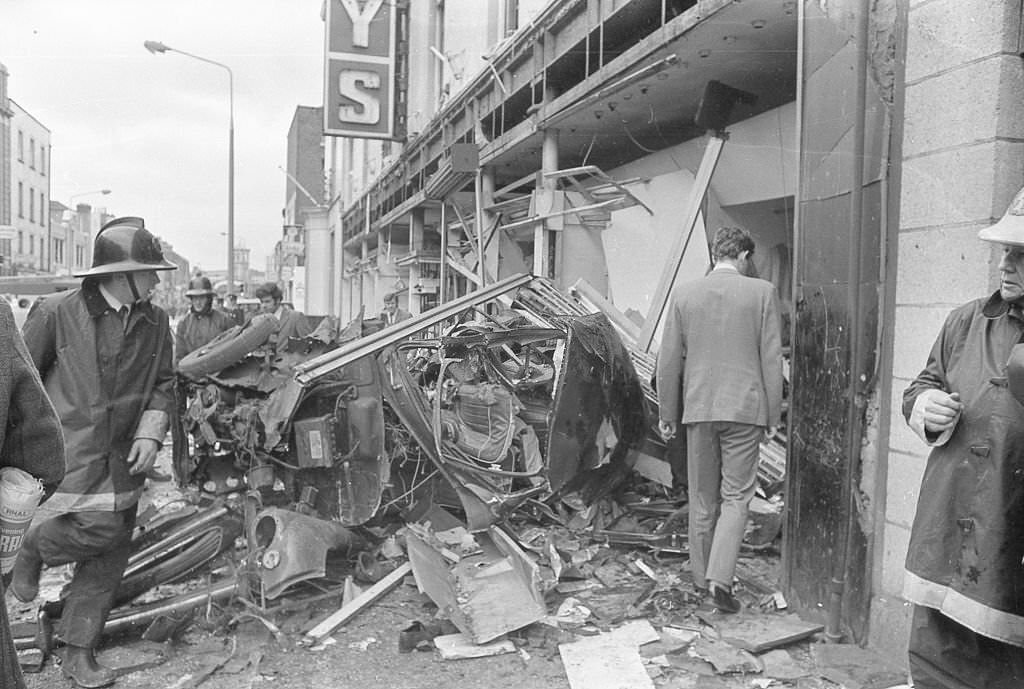
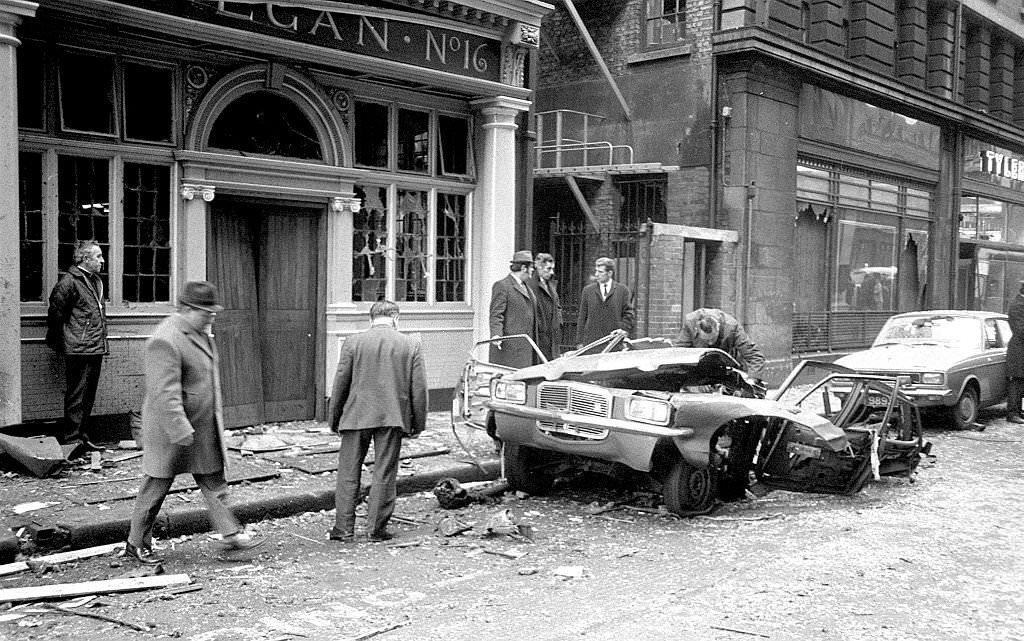
The worst single act of violence against Dublin came on 17 May 1974. A series of car bombs detonated in the city — on Talbot Street, Parnell Street, and South Leinster Street — killing 26 people in Dublin alone. A further seven were killed in Monaghan in coordinated attacks on the same day. In total, 33 people died and more than 300 were injured. It was the deadliest day of the entire Troubles conflict, and the bombs on Talbot Street caused the greatest single loss of life. The attacks were carried out by loyalist paramilitaries. No one was ever convicted.
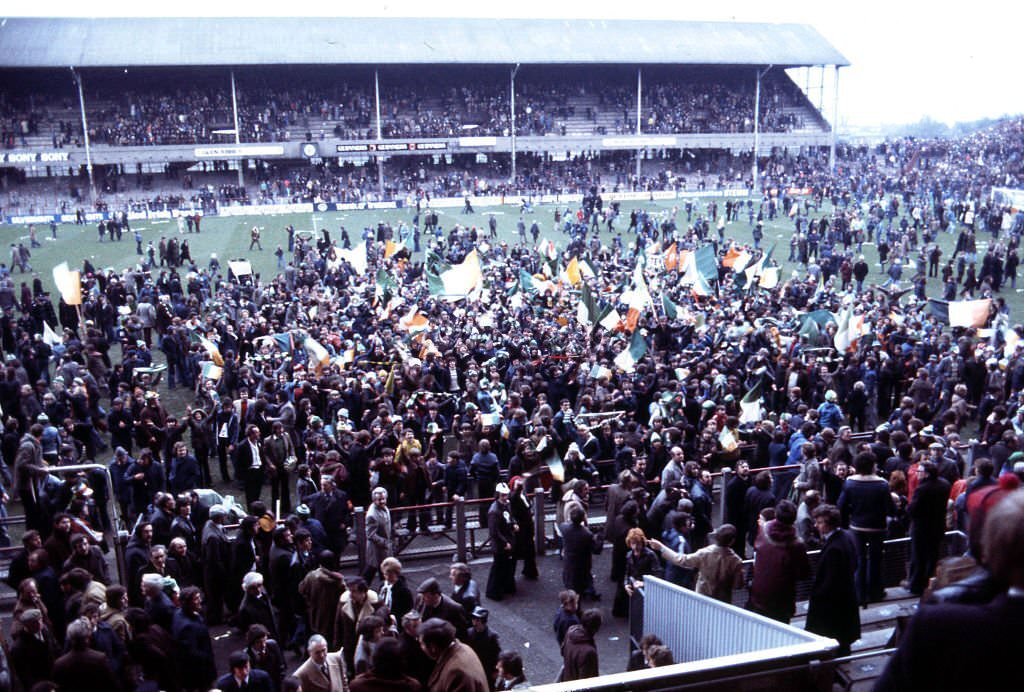
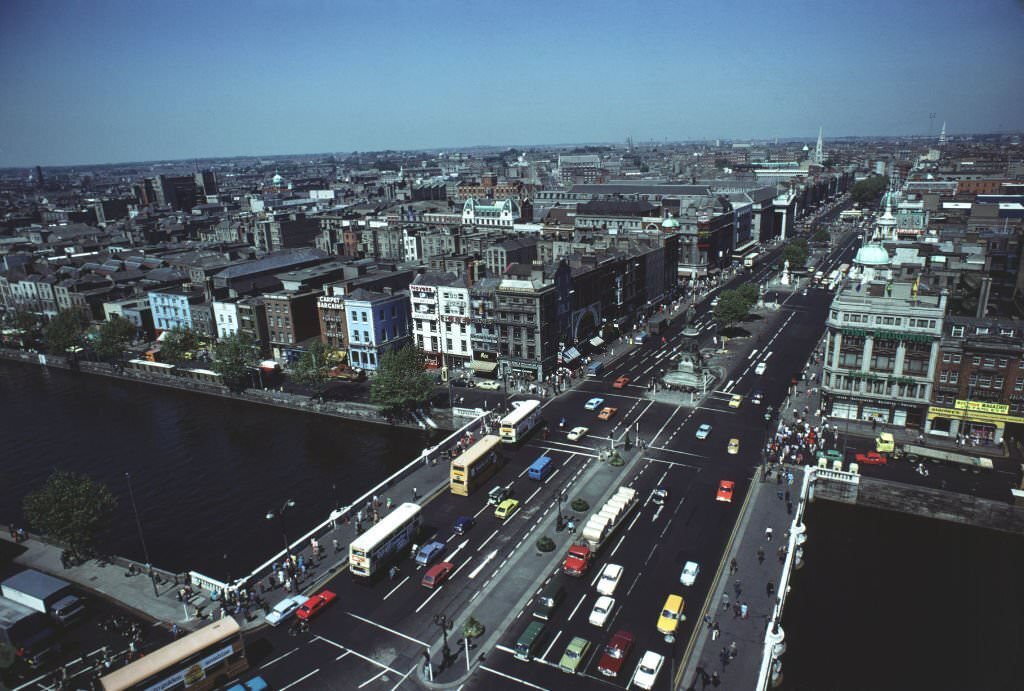
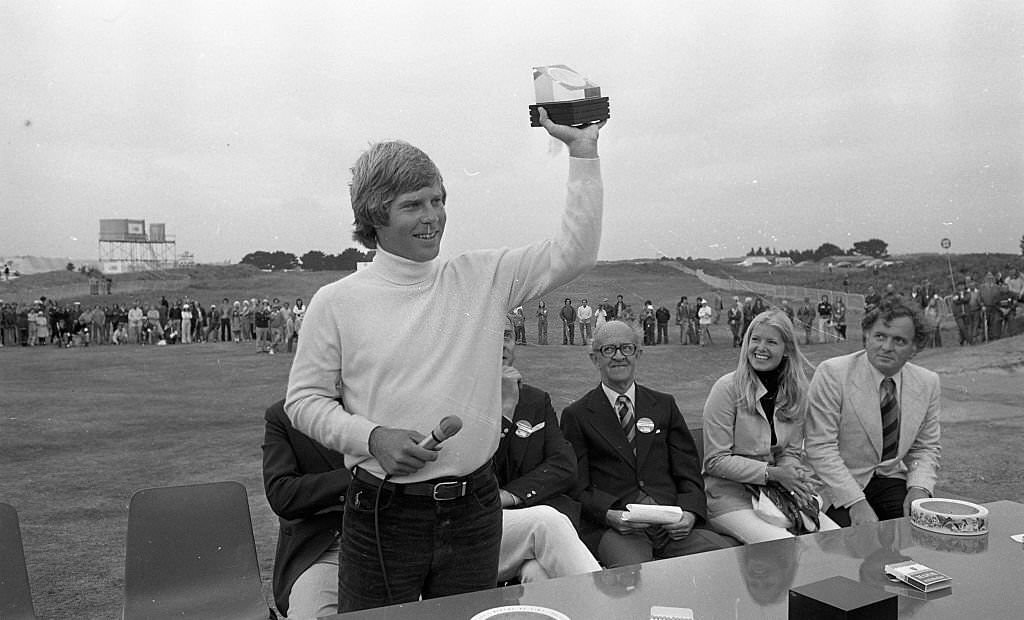
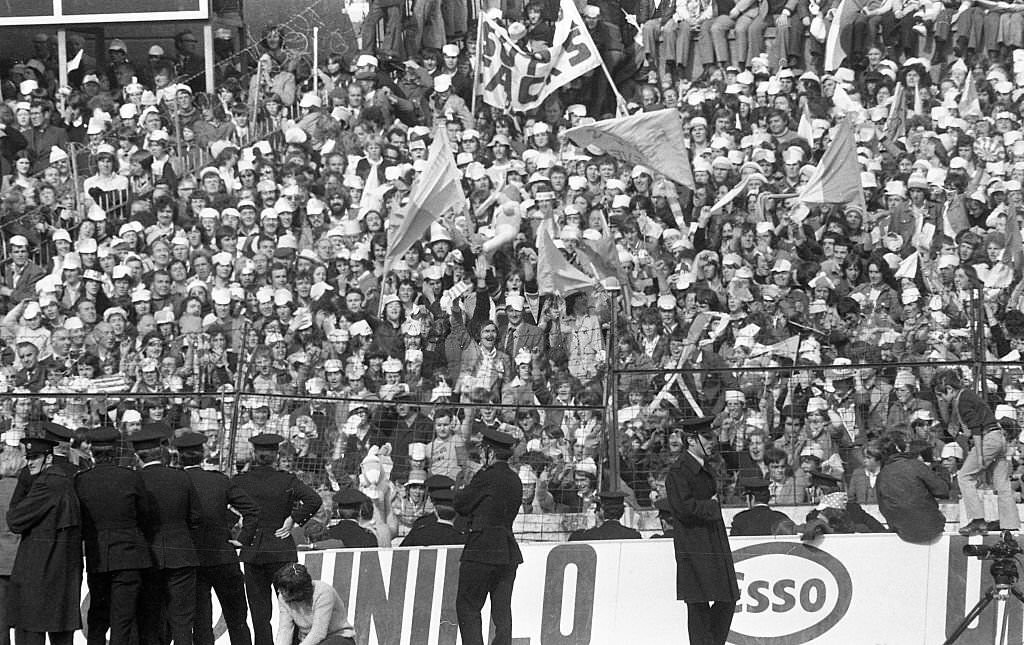
St Patrick’s Day Parade in O’Connell Street, Dublin, 1979St Patrick’s Day Parade in O’Connell Street, Dublin, 1979St Patrick’s Day Parade in O’Connell Street, Dublin, 1979Supporters of Ireland during the World Cup Qualifying match between Ireland and France in Lansdowne Road, Dublin, 1977View from O’Connell Bridge above the Liffey in Dublin, 1977American golfer Ben Crenshaw after his victory in the Carrolls Irish Open , Portmarnock, North County Dublin, Ireland, 1976
In July 1976, the IRA killed the British Ambassador, Christopher Ewart-Biggs, and a young civil servant, Judith Cooke, as they drove to work from the ambassador’s residence in Sandyford. A culvert bomb was detonated under their car. It was one of the most high-profile political assassinations carried out on Irish soil during the Troubles. Earlier that year, the Irish government had banned the annual Easter parade, fearing it would be used as a recruitment platform by illegal paramilitary groups. Despite the ban, 10,000 people took part in a demonstration organized by the Provisional republican movement on Easter Sunday.
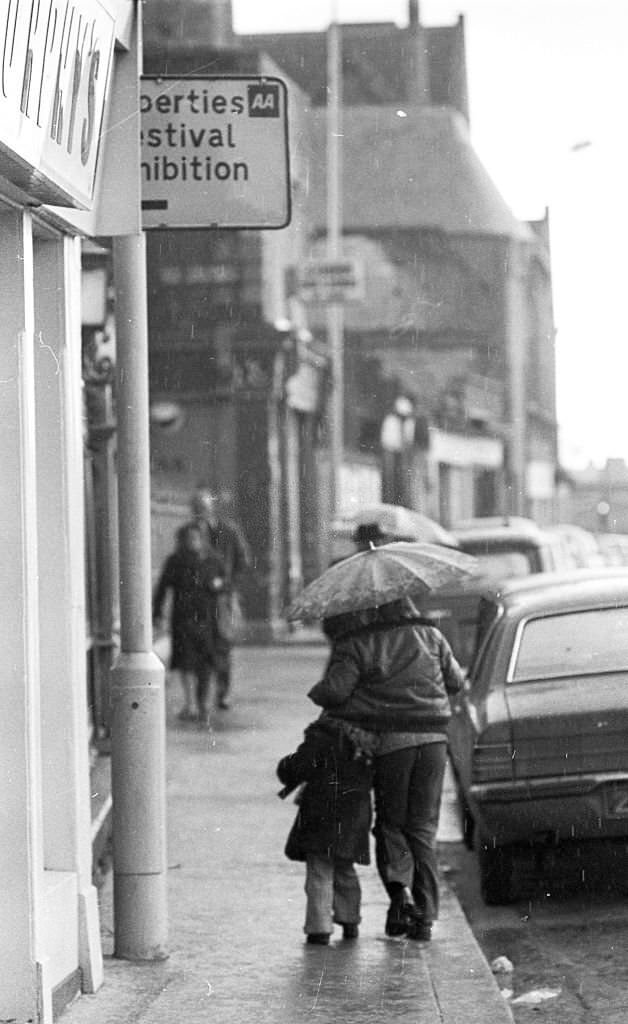
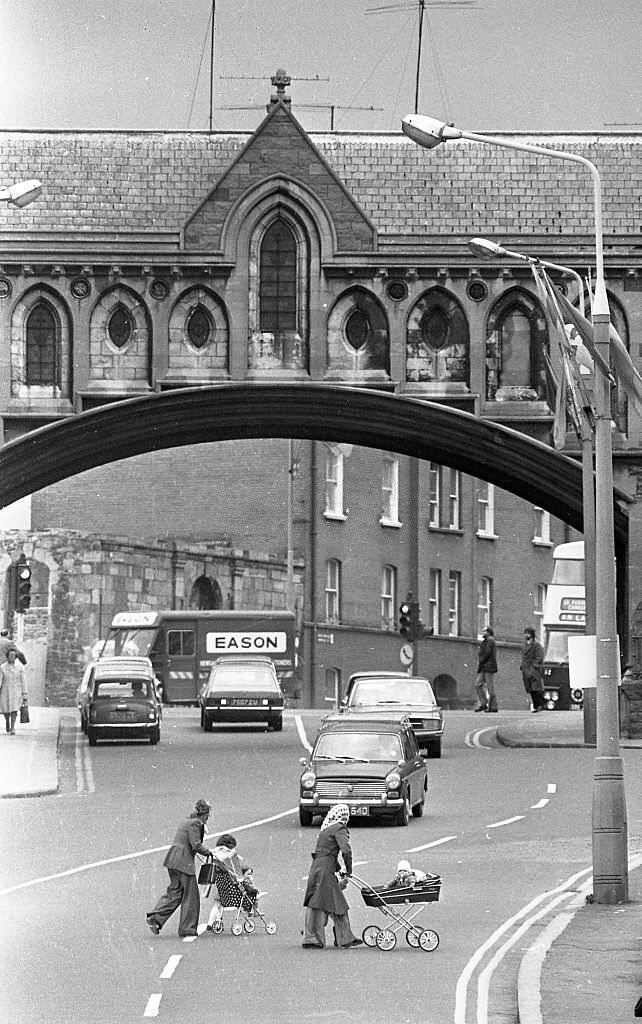
Funeral Of Eamon De Valera, 1975Funeral Of Eamon De Valera, 1975Scenes from The Liberties in Dublin, 1975Scenes from the Liberties in Dublin, 1975
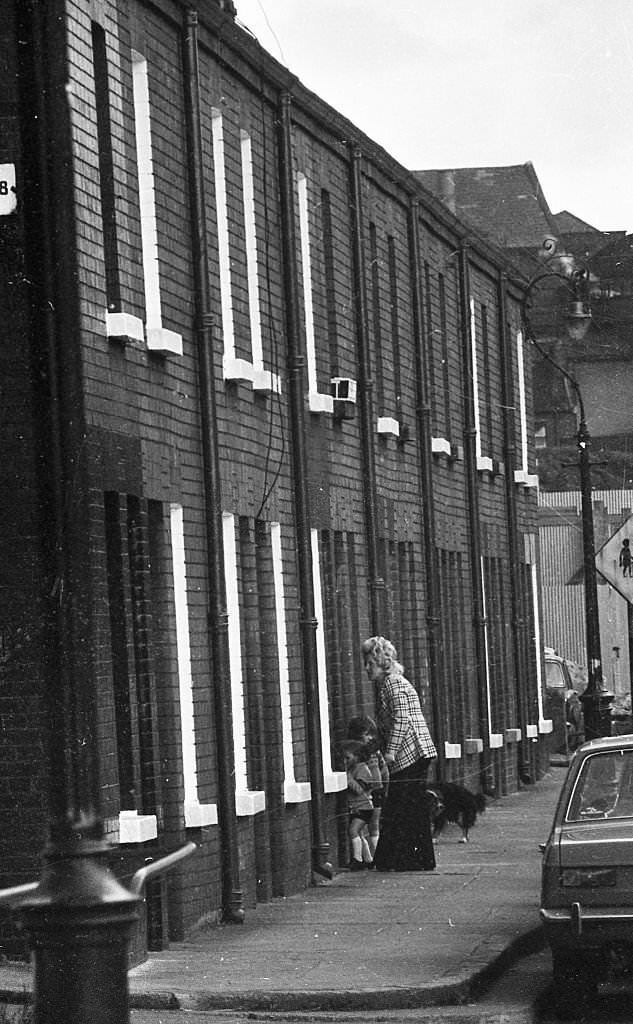
The Liberties, 1975
Scenes from the Liberties in Dublin, 1975
The Liberties, 1975
Scenes from the Liberties in Dublin, 1975
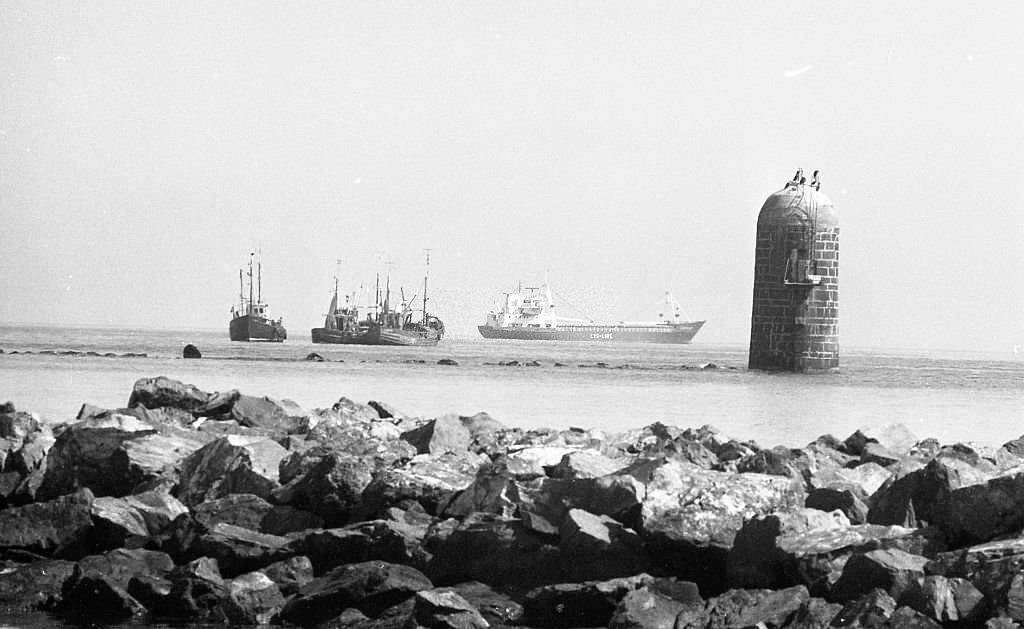
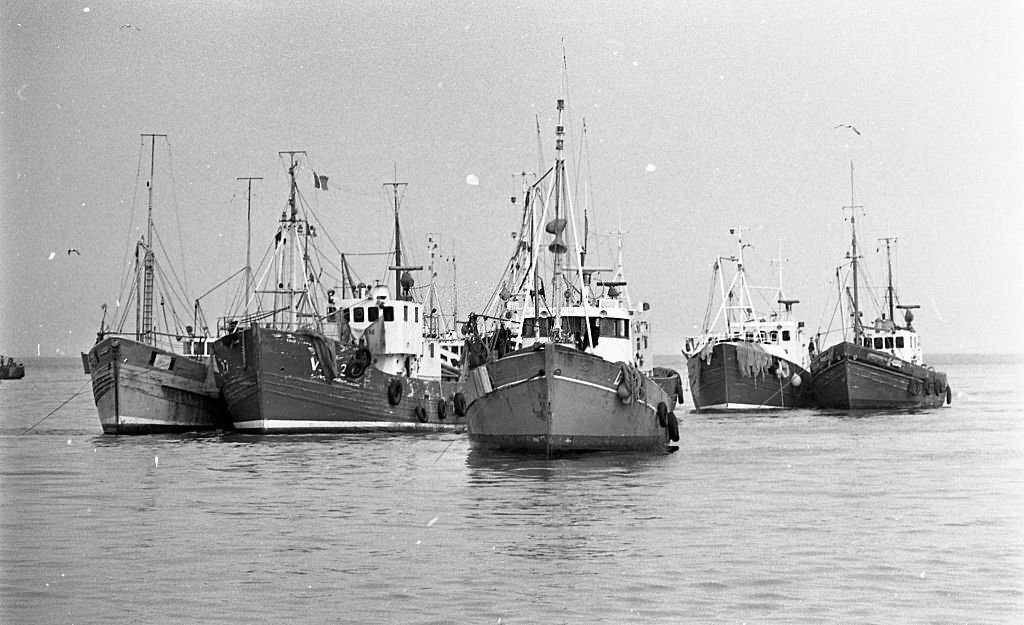
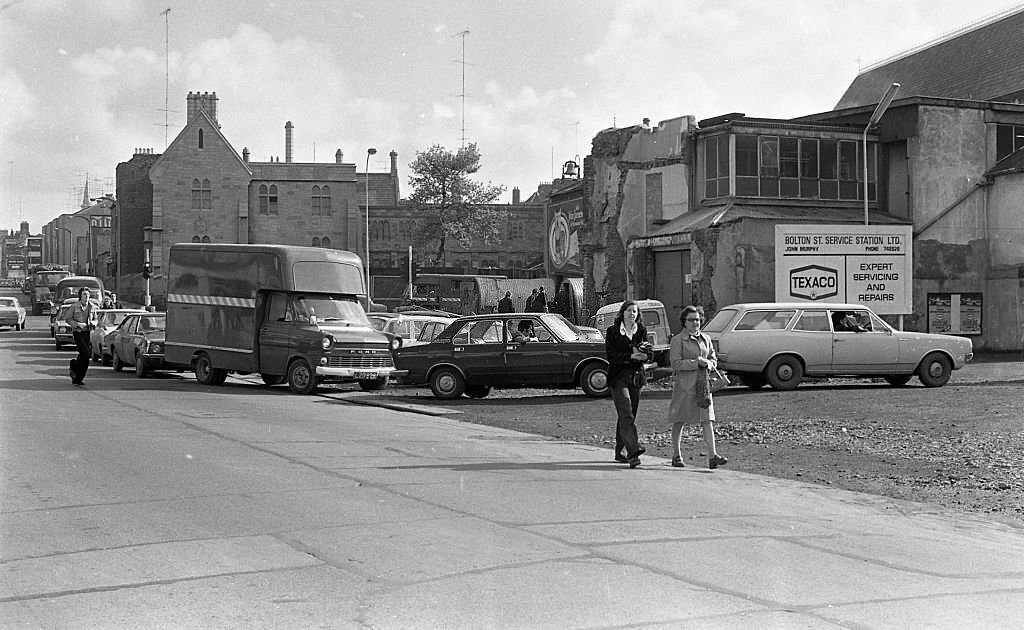
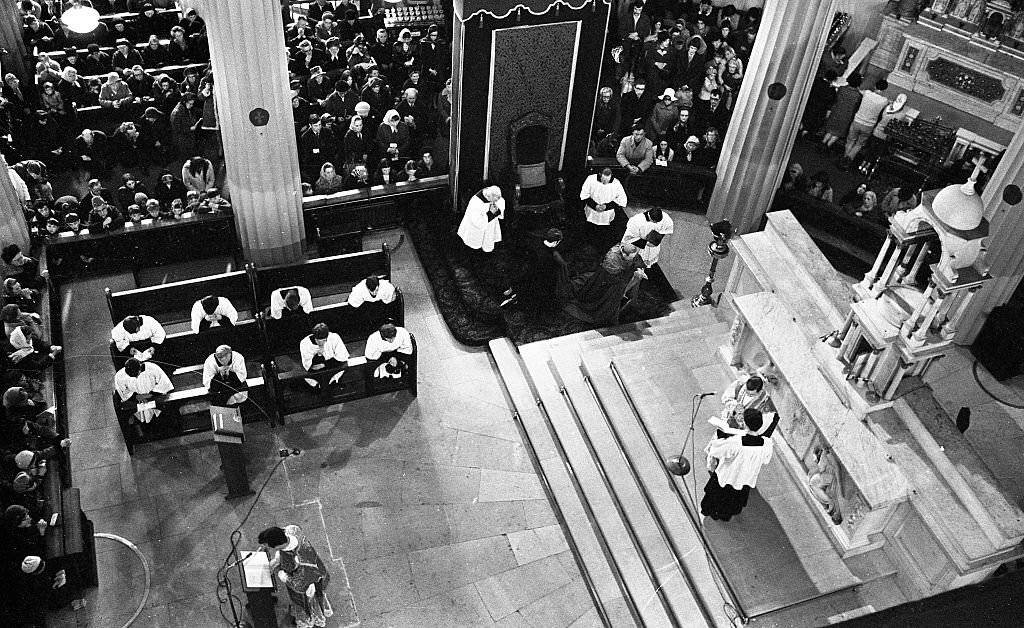
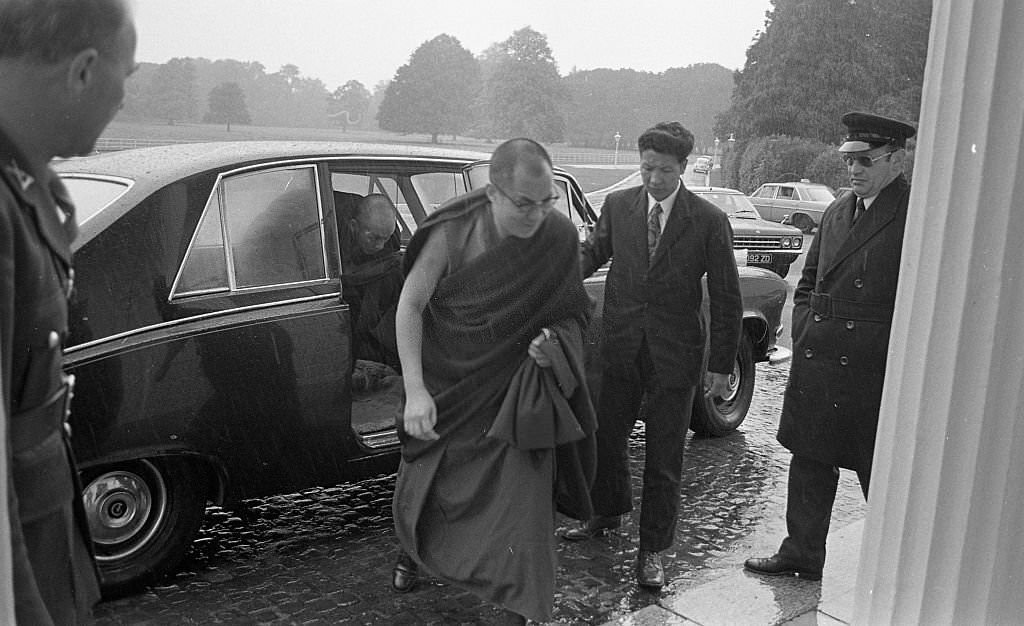
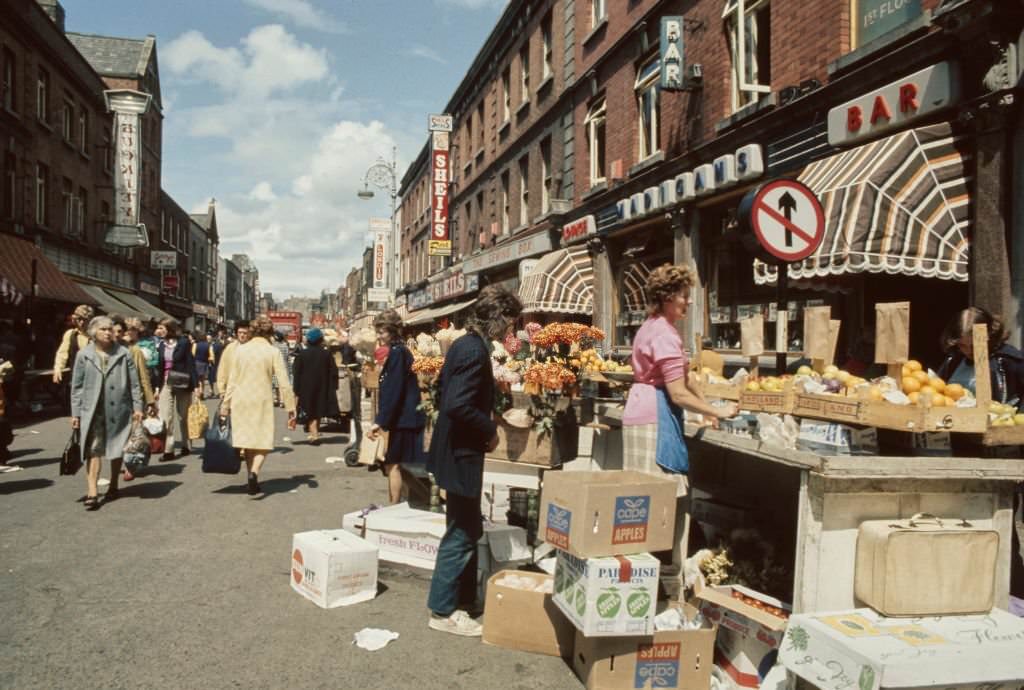
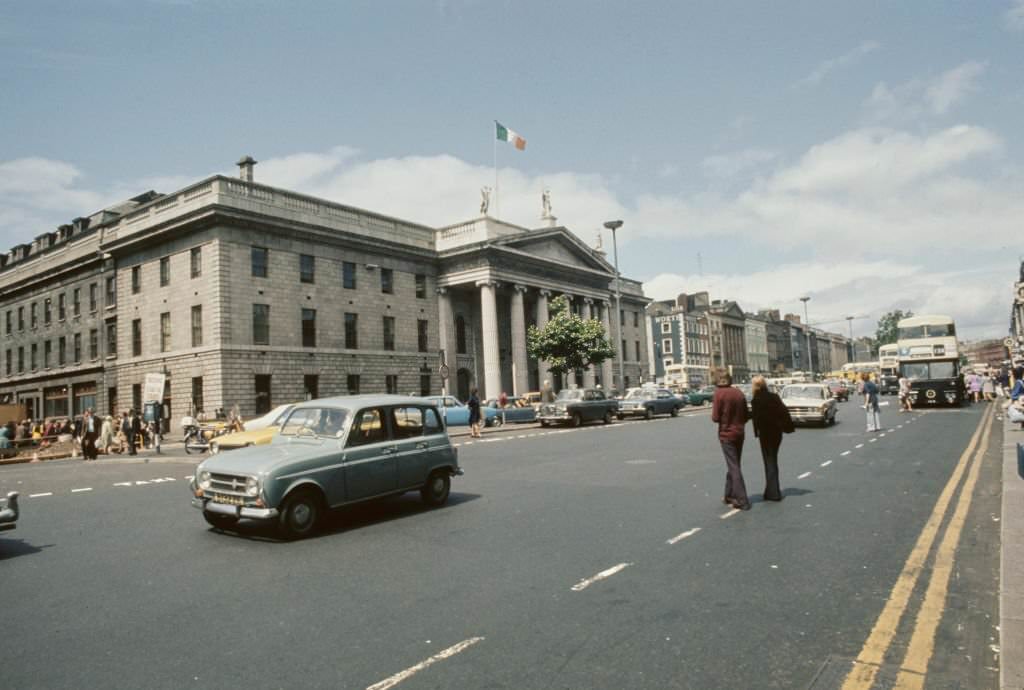
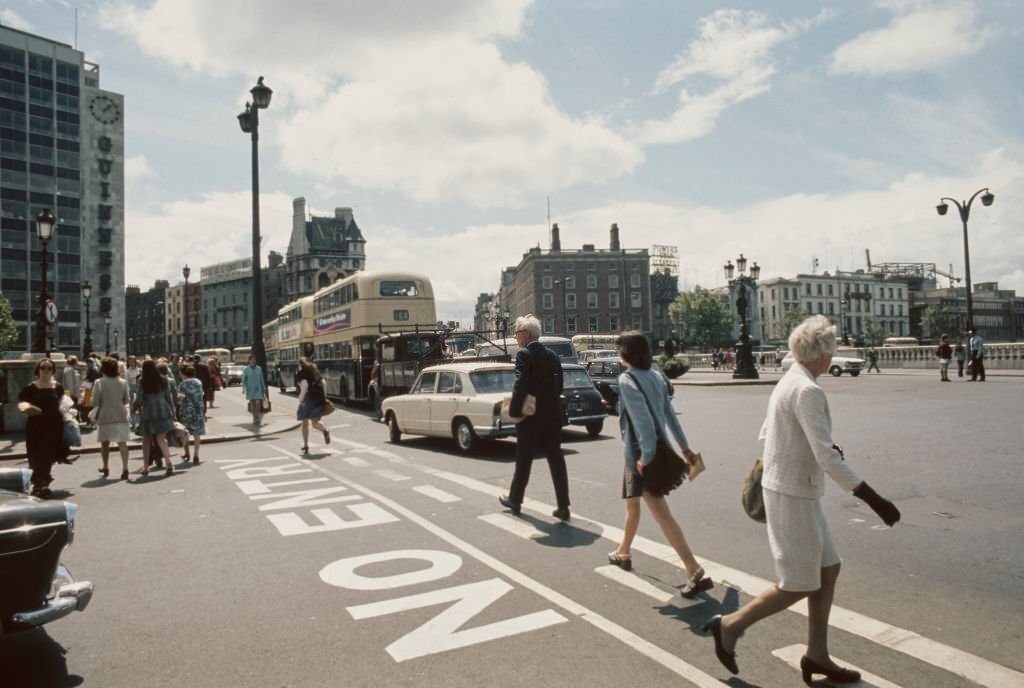
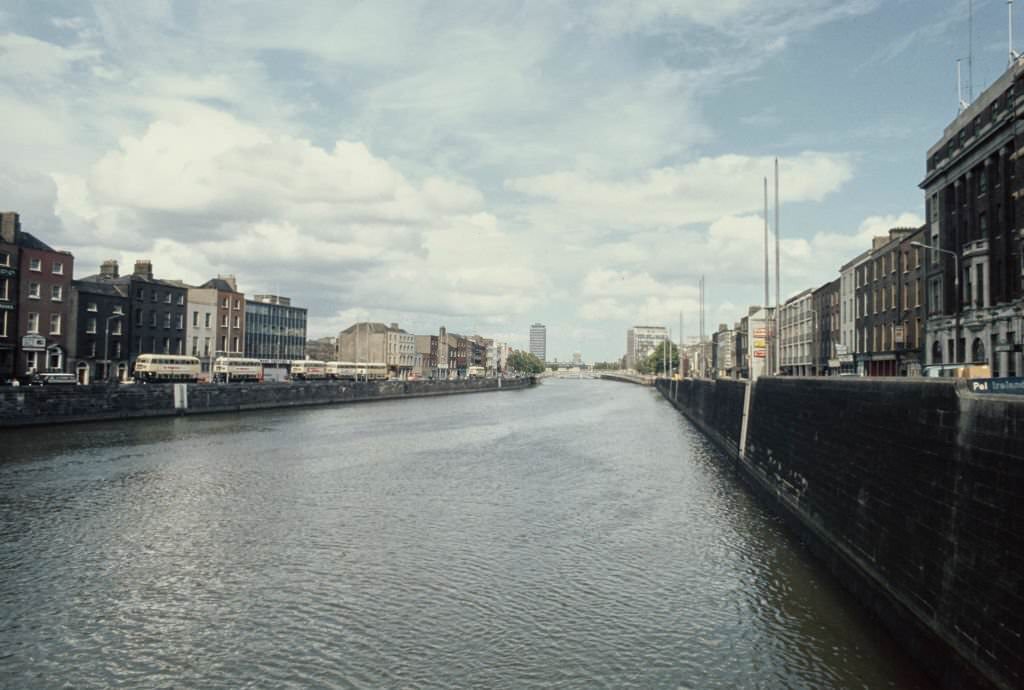
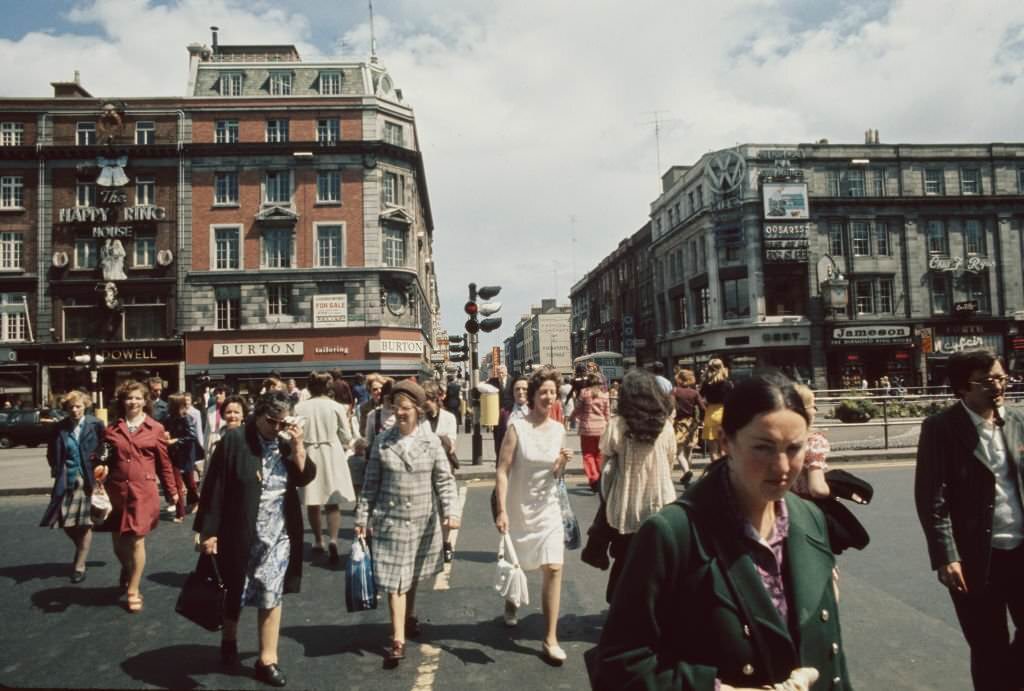
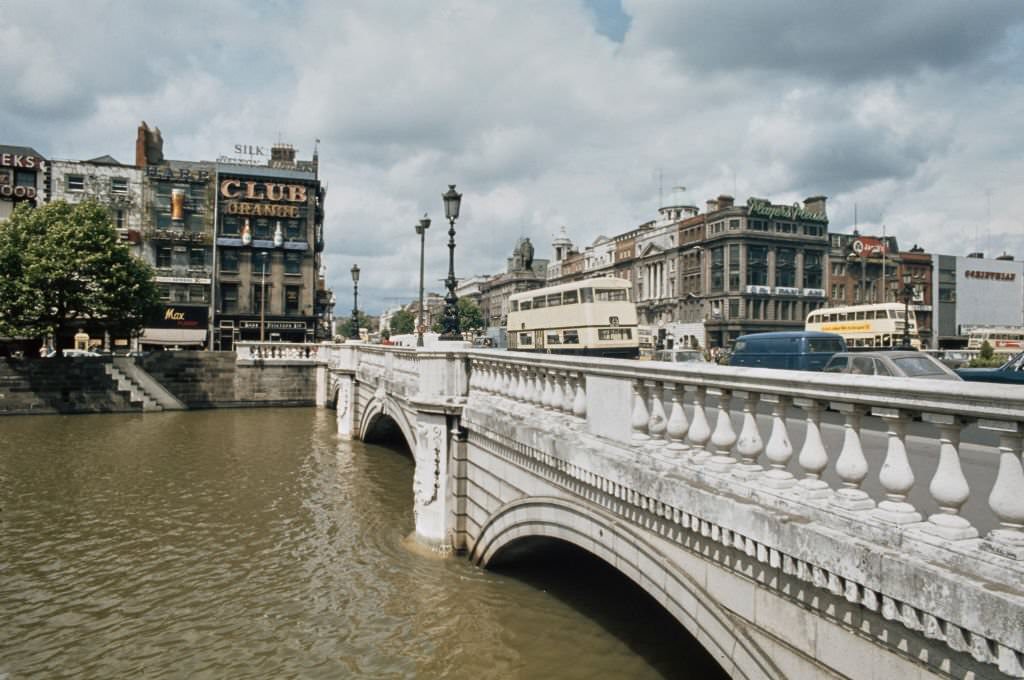
Blockade of Drogheda & Dublin Ports by trawlers, 1975Blockade of Drogheda & Dublin Ports by trawlers, 1975Street scene, people queuing for petrol, Dublin, 1975Street scene, people queuing for petrol, 1975G. A. A. Dublin v Galway, Dublin, 1974The Dublin car bombing in Parnell Street, 1974Dublin Bombing, Parnell Street, 1974Dublin Bombing, Parnell Street, 1974Dublin Bombing,Parnell Street, 1974The Archbishop of Dublin Most Rev, Dr, John Charles McQuaid at ceremonies in the Pro-Cathedral in Dublin, 1974The Dalai Lama arrives at Aras an Uachtarain for a meeting with President Erskine Childers, Dublin, Ireland, October 10, 1973.O’Connell Street, Dublin, 1970sStreet scenes with people in Dublin, 1970sExterior view of General Post Office, Dublin, 1970sViews of people and traffic along O’Connell Street, 1970sViews along the embankment of the River Liffey in downtown section, 1970sStreet Scenes Of Dublin, 1970sView of O’Connell St with bridge and river Liffey in foreground, Dublin, 1970sO’Connell Street, Dublin, 1970sStreet Scenes of Dublin, 1970s
The 1973 bombings struck O’Connell Street — known historically as Sackville Street — leaving a scene of wreckage in what was normally the busiest thoroughfare in the city. O’Connell Street had, at times during the decade, been turned into a ghost town by bomb scares, its normally packed pavements emptied out and silent.
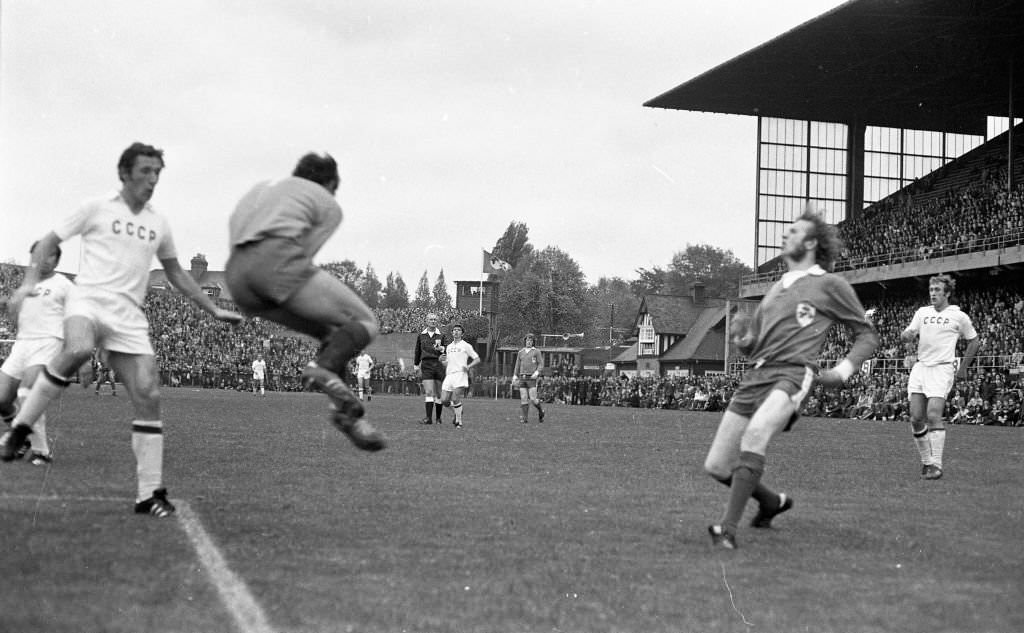
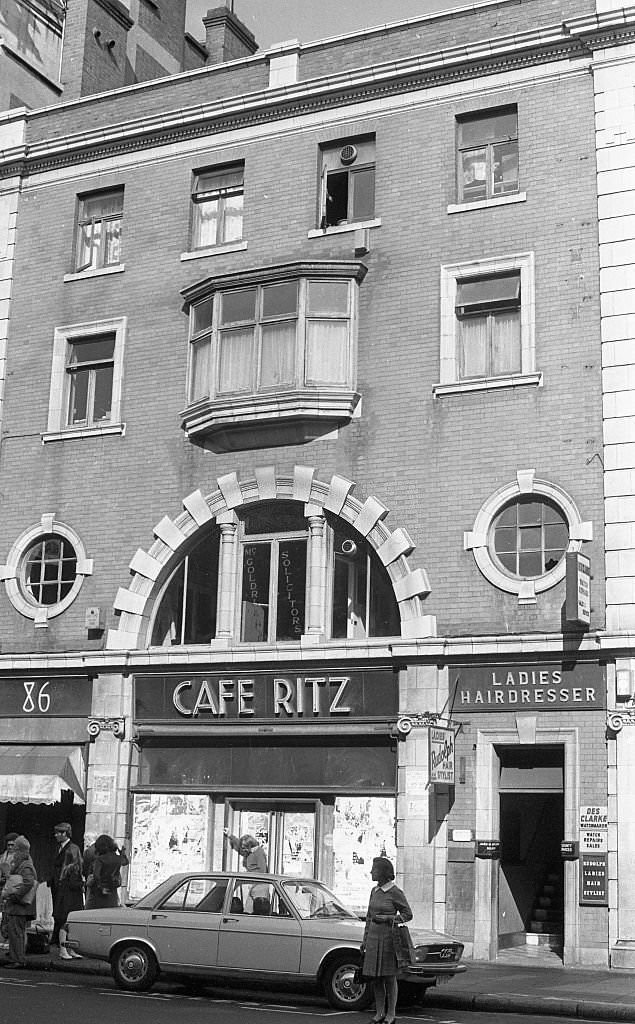
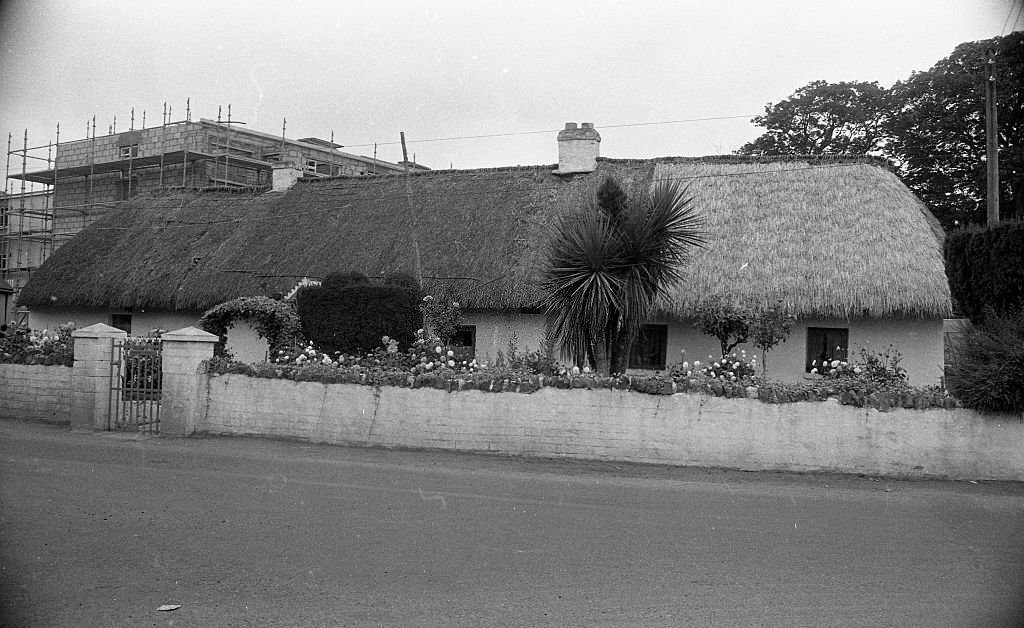
Aftermath of the car bombing in Sackville Street (now O Connell Street) in Dublin, 1973Scenes from the aftermath of the car bombing in Sackville Street (now O Connell Street) in Dublin, 1973A child making friends with a horse in O’Connell St, Dublin, 1973Ireland v Russia football match at Lansdowne Road Stadium in Dublin, 1972Old Ritz Cafe in Dublin, 1972Thatched cottage on Blackhorse Ave in Dublin, 1972
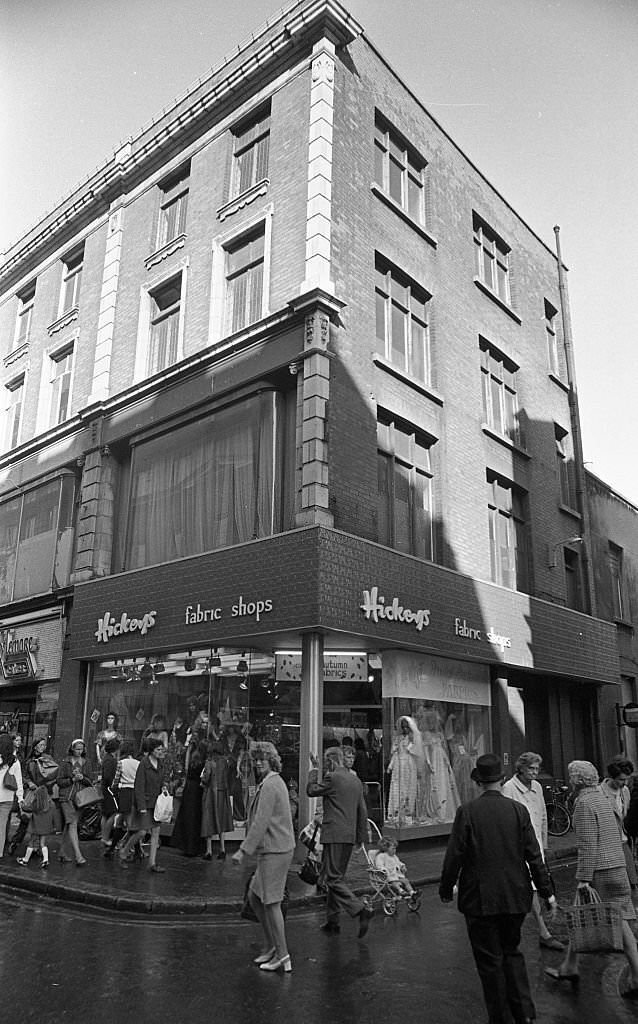
Hickey’s fabric shop on Henry Street in Dublin, 1972
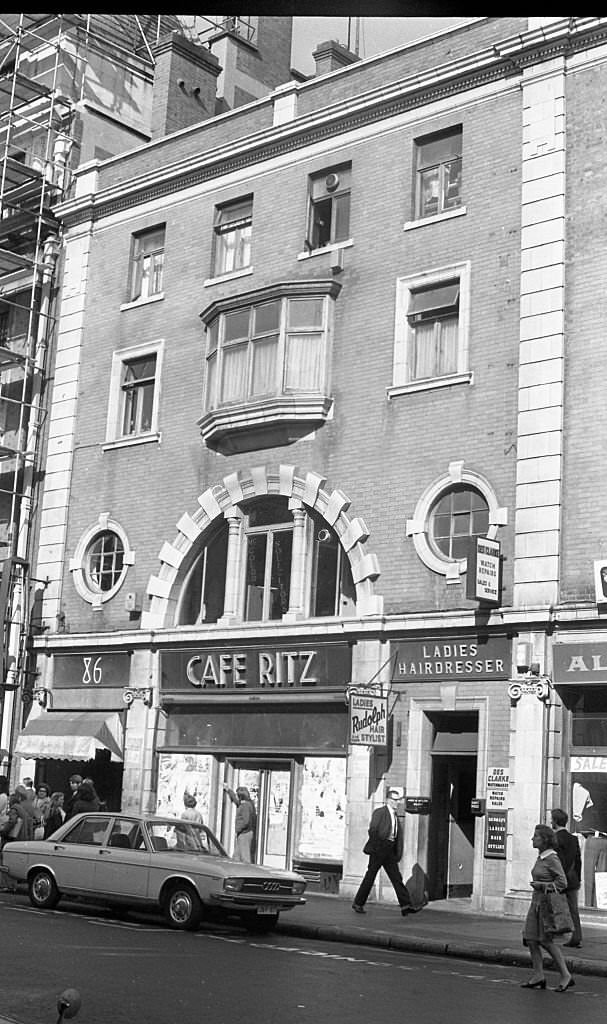
The old Cafe Ritz in Abbey Street in Dublin, 1972
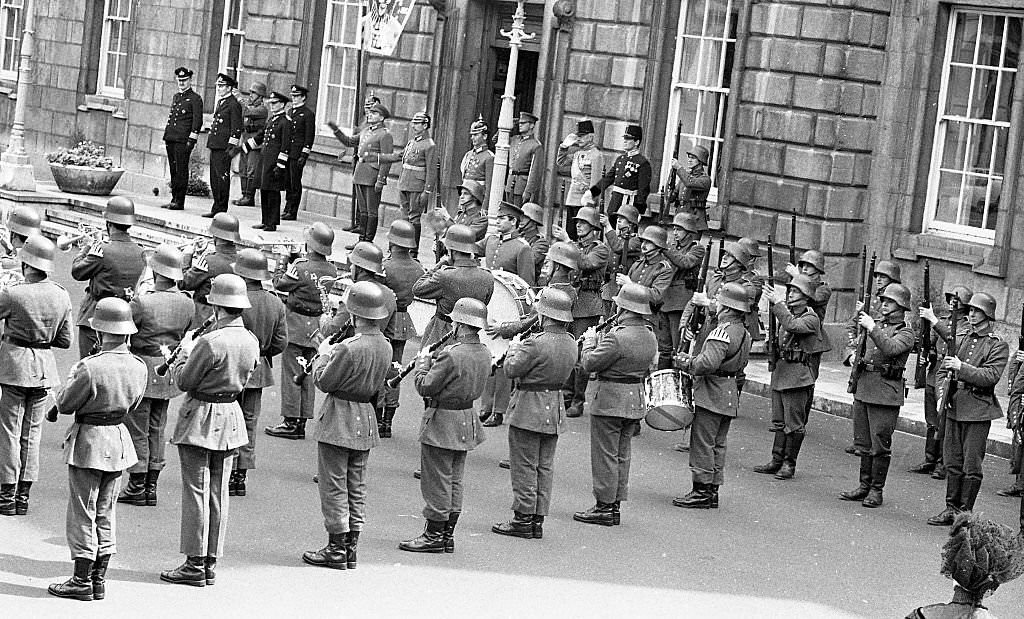
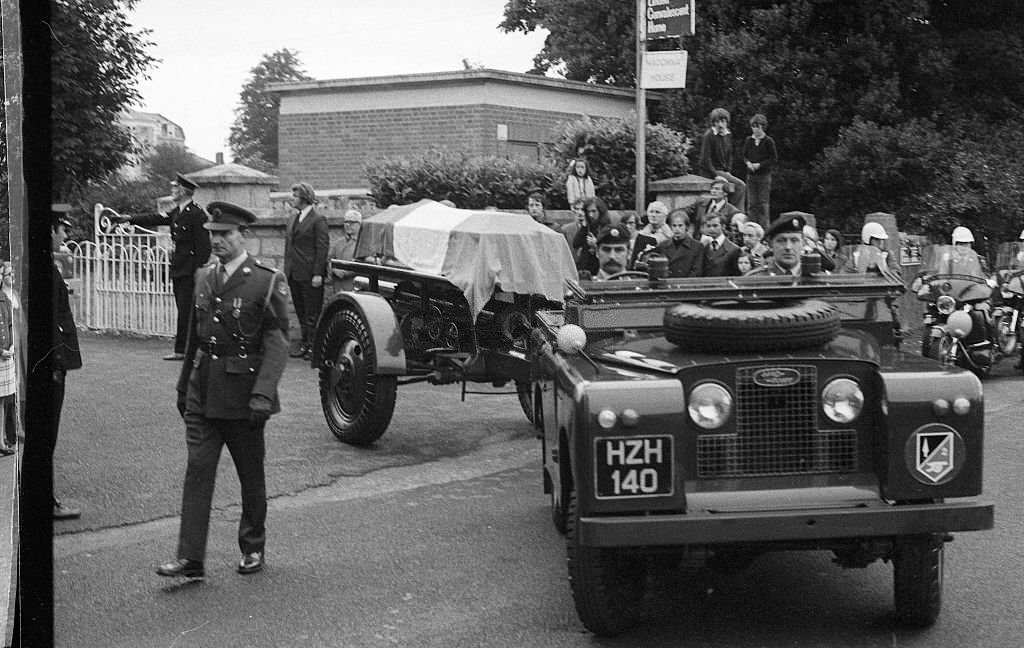
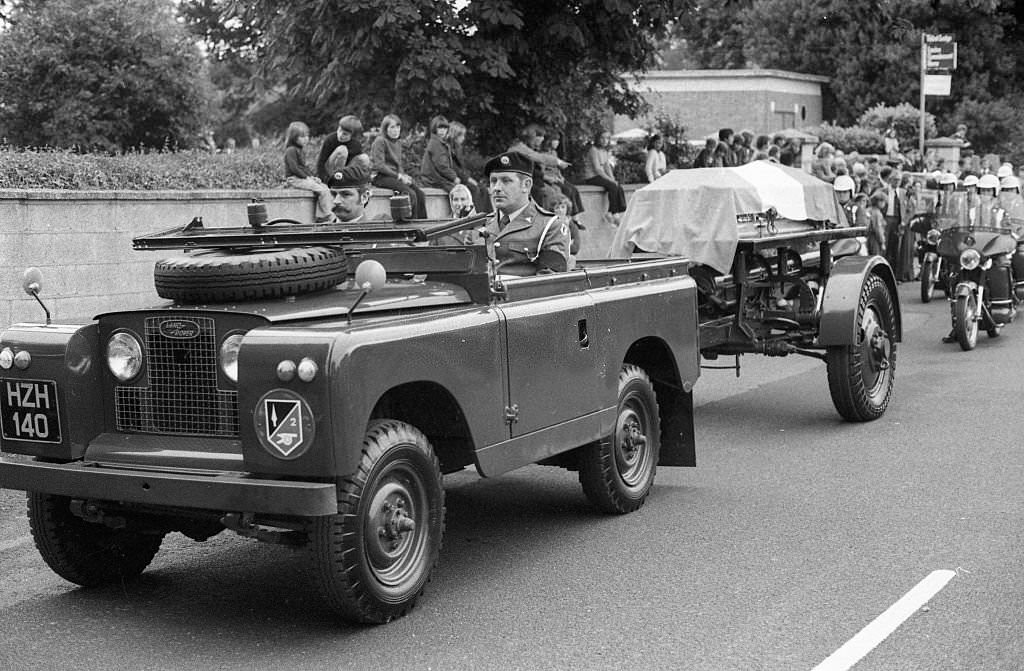
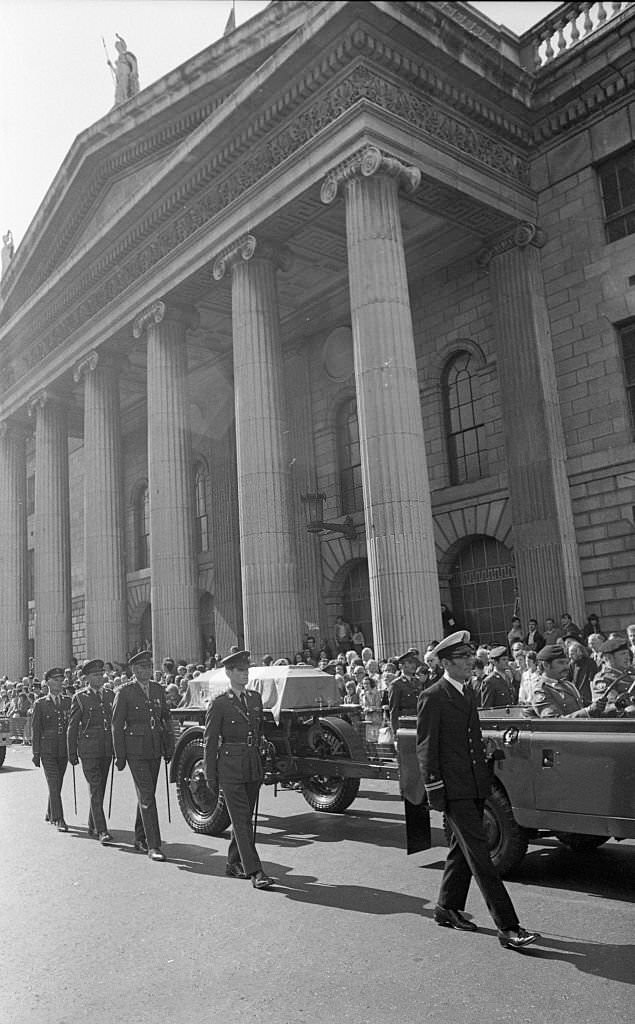
Amid all the upheaval, Dublin still marked its moments of national ceremony. The funeral of Éamon de Valera in 1975 drew enormous crowds as his remains passed the GPO — the building forever linked to the 1916 Rising that de Valera himself had taken part in. Tourism continued to grow through the decade, and Ireland’s membership of the European Economic Community, which began in 1973, brought new international businesses and organizations to the capital. These photographs, taken across the full span of the 1970s, show a Dublin that was changing fast — in ways both chosen and forced upon it.
The remains of the late President Eamonn de Valera passeing the GPO on its way from Dublin Castle for the funeral Mass in the Pro-Cathedral and burial in Glasnevin cemetery, 1975






These are pretty cool. Thanks for sharing!
That was pretty cool. Thanks for sharing!