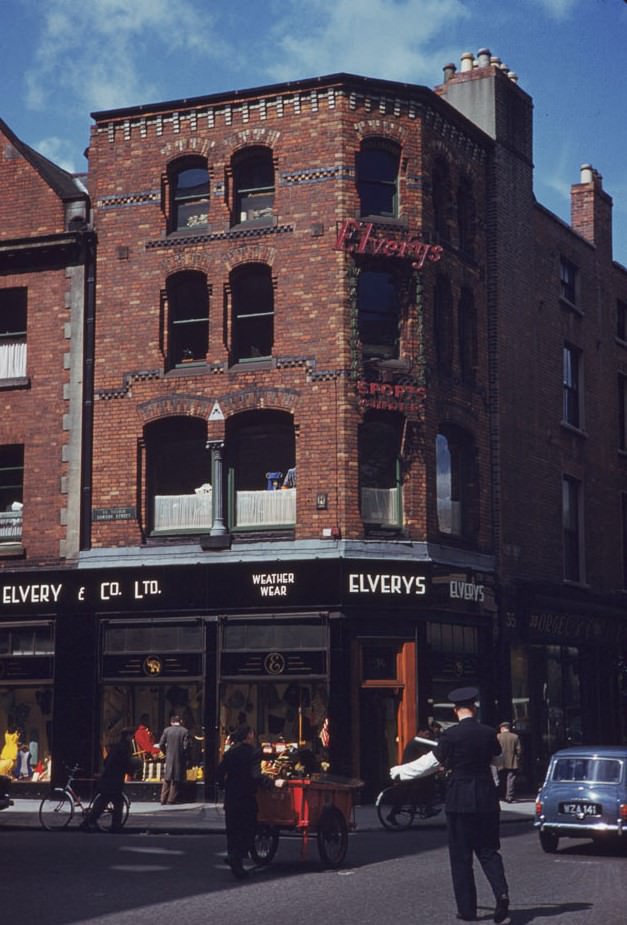
In the summer of 1961, American tourist Charles Weaver Cushman walked Dublin’s streets with a Kodachrome camera and recorded the city in striking color. Dublin was still rebuilding its economy in the post-war years, yet its streets hummed with everyday activity. Vendors, cyclists, horse-drawn drays, and pedestrians filled the city centre from morning to late afternoon.
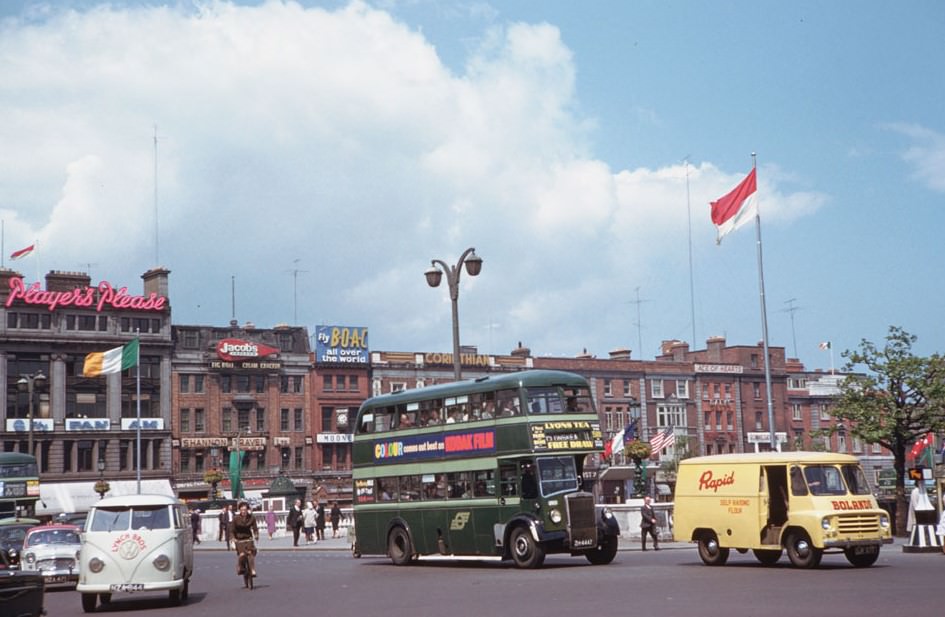
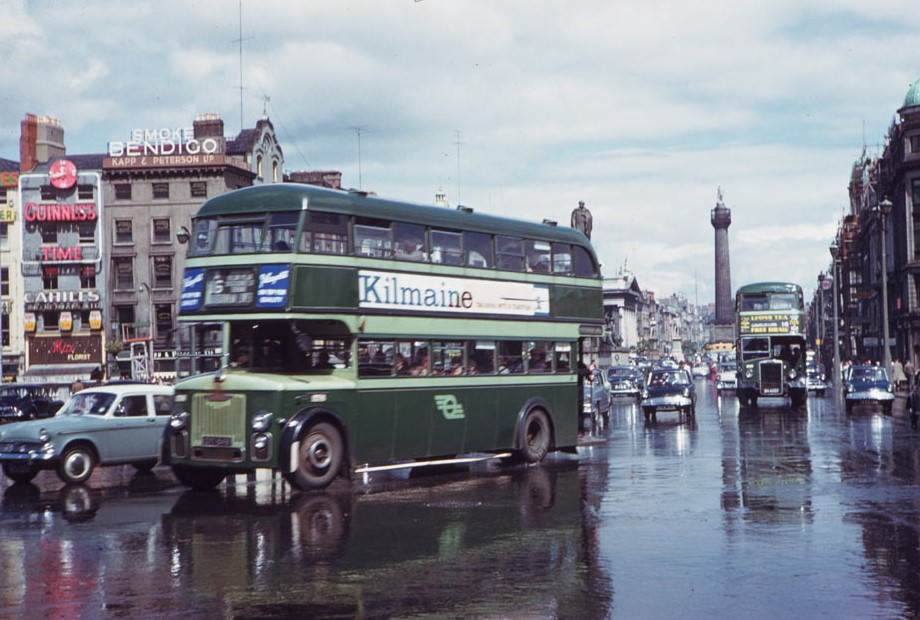
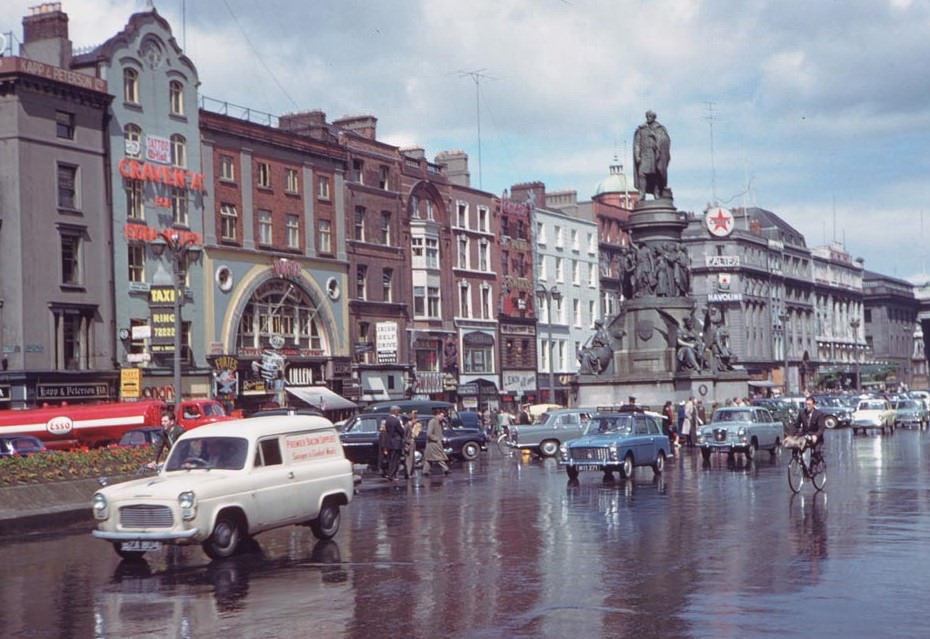
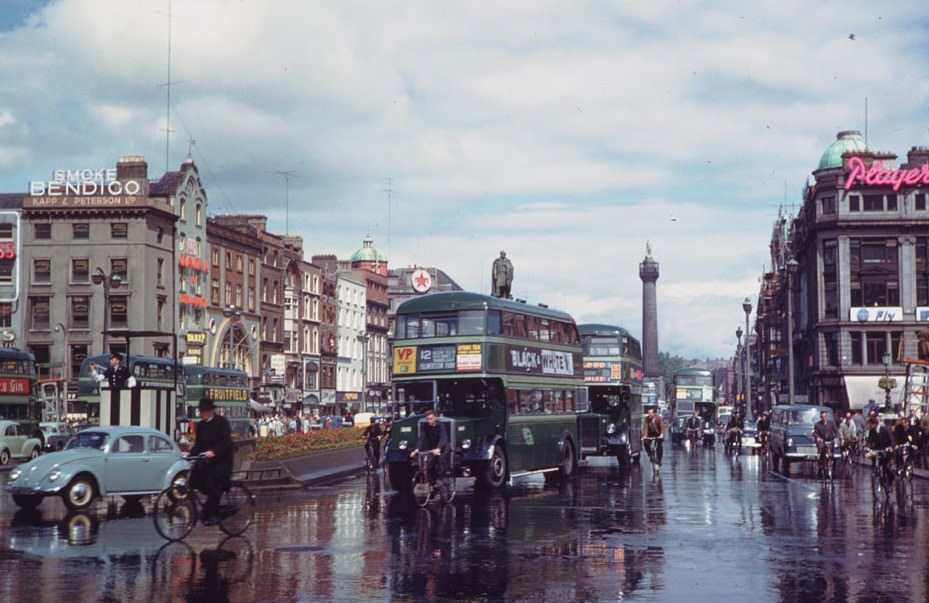
O’Connell Street served as Dublin’s main artery, running north from the Liffey. Cushman pointed his lens up its wide boulevard, catching the mix of buses, shopfronts, and passersby that defined the thoroughfare.
Grafton Street drew crowds of shoppers, its pavements lined with well-known retailers and smaller local businesses. Nearby, the junction of Drury Street and Fade Street showed a quieter side of the commercial quarter.
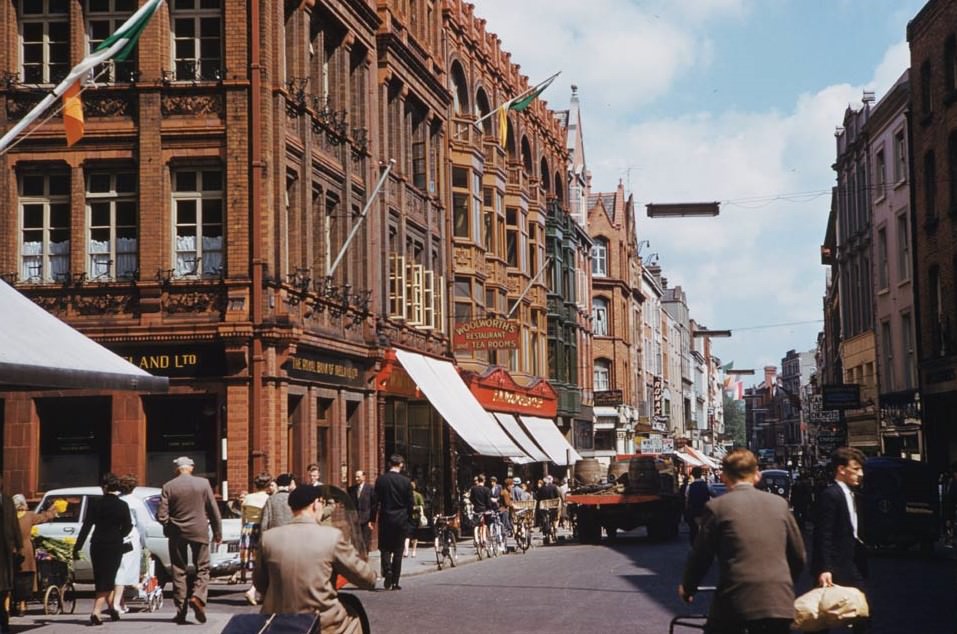
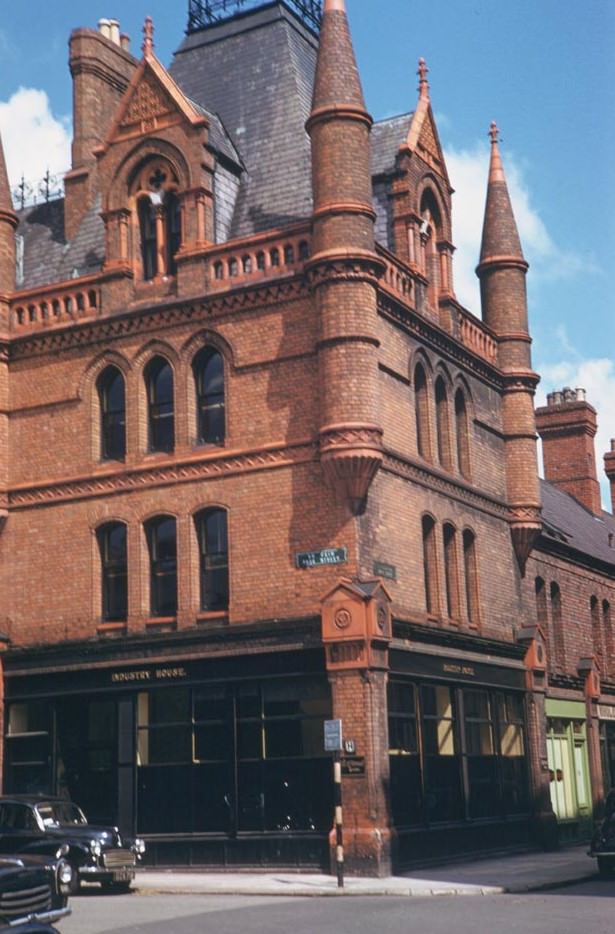
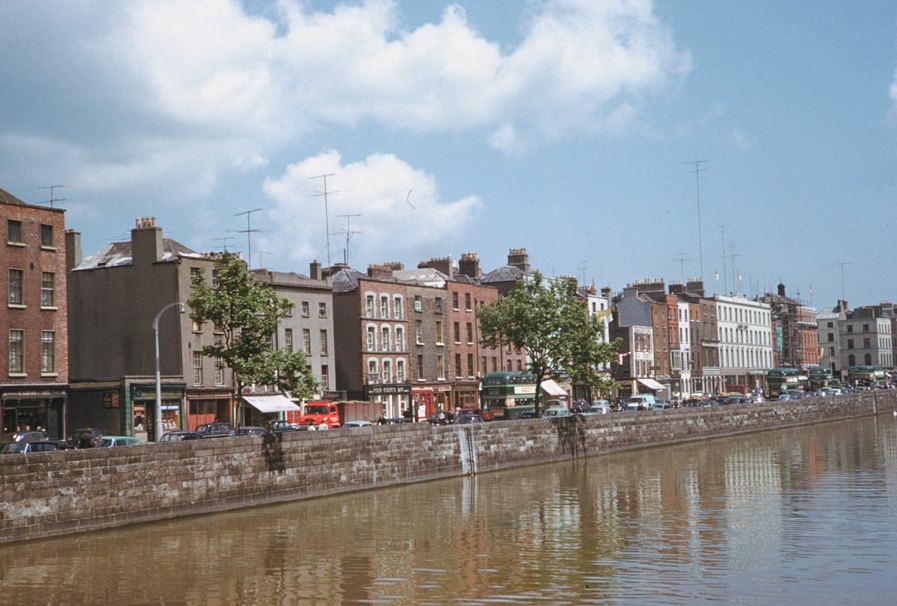
O’Connell Bridge connected the north and south banks of the River Liffey at the heart of the city. Cushman also walked the north quays, photographing the stretch of the Liffey where warehouses and traffic moved side by side.
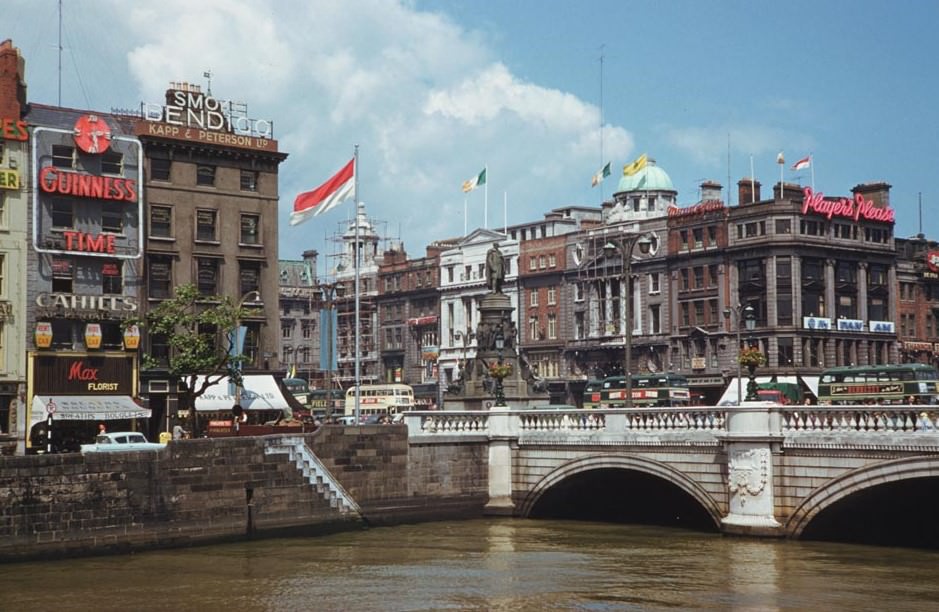
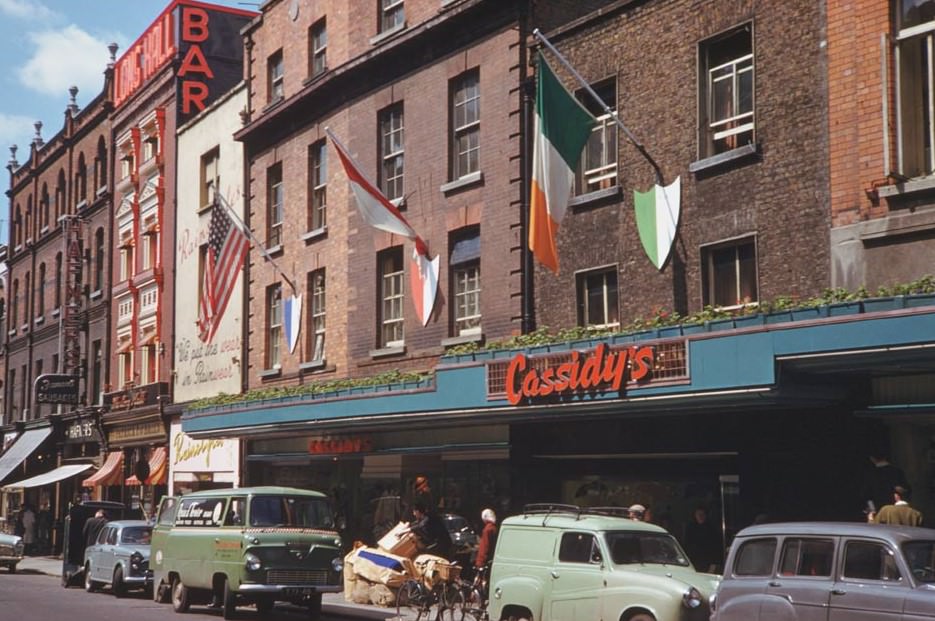
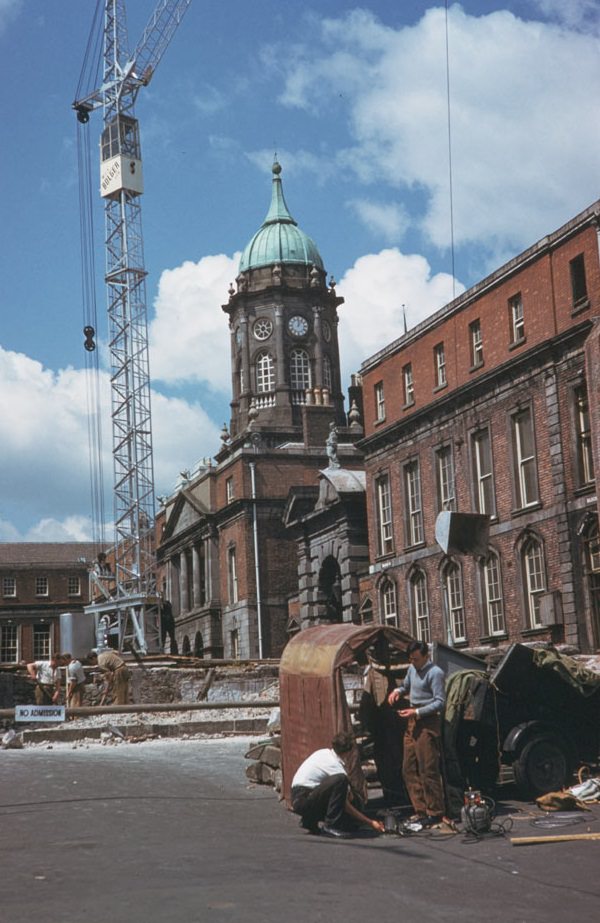
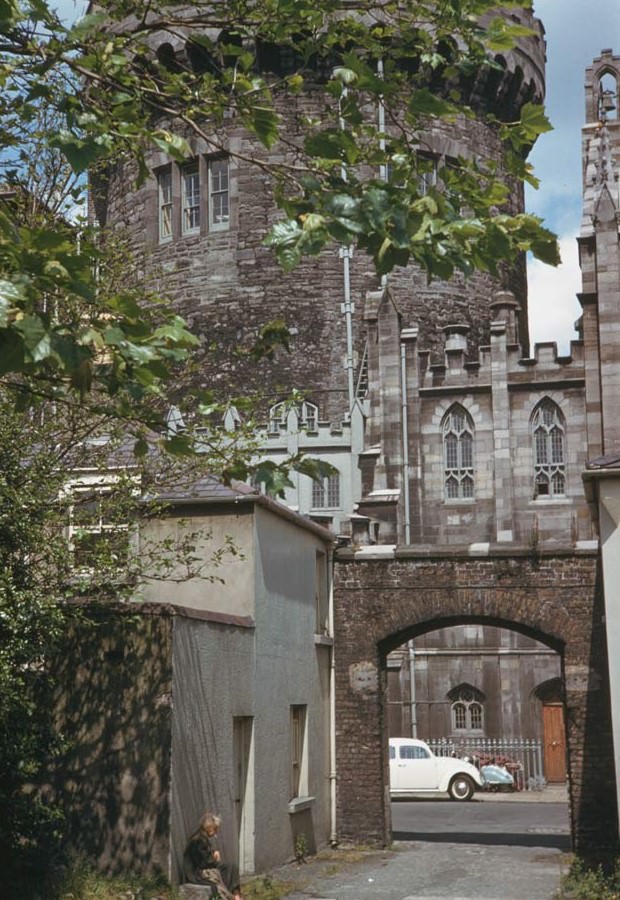
Dublin Castle, the historic seat of British rule in Ireland, stood as one of the city’s most prominent landmarks. Cushman photographed it from more than one angle, documenting its stonework and grounds.
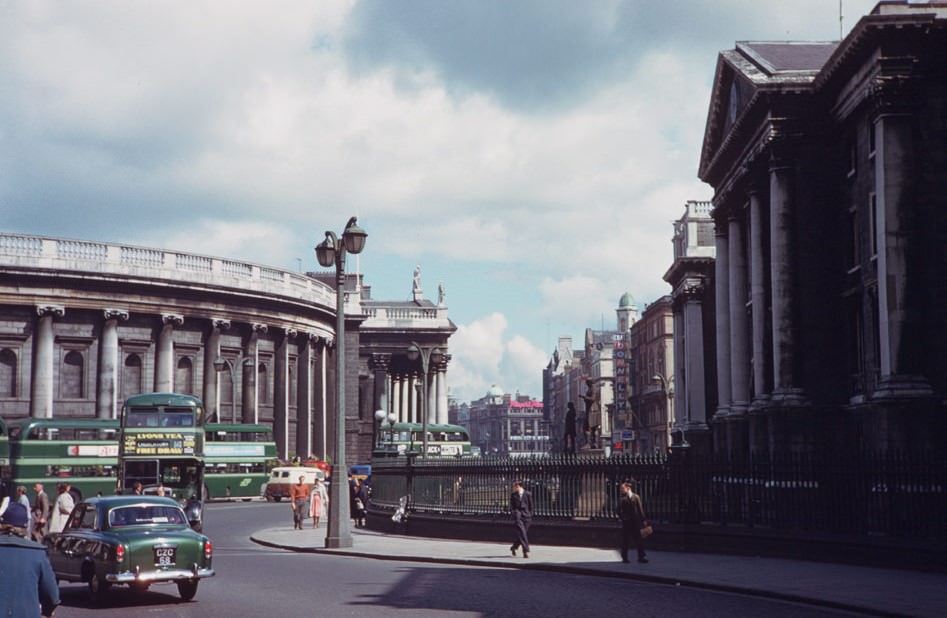
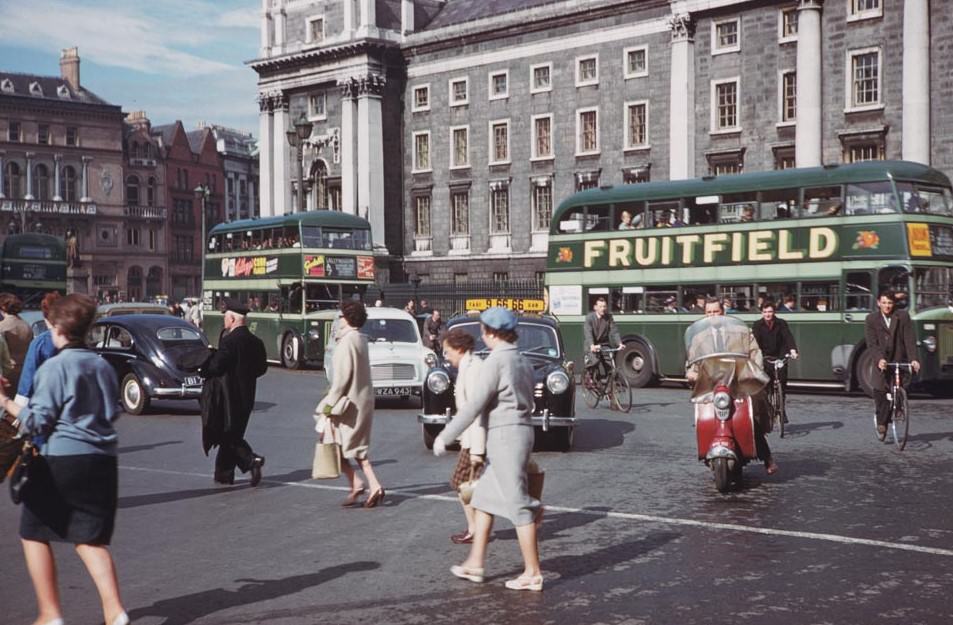
College Green and the Bank of Ireland building anchored the south side of the city centre. The Bank of Ireland’s curved colonnaded façade—formerly the Irish Parliament building—faced Trinity College across the busy junction.
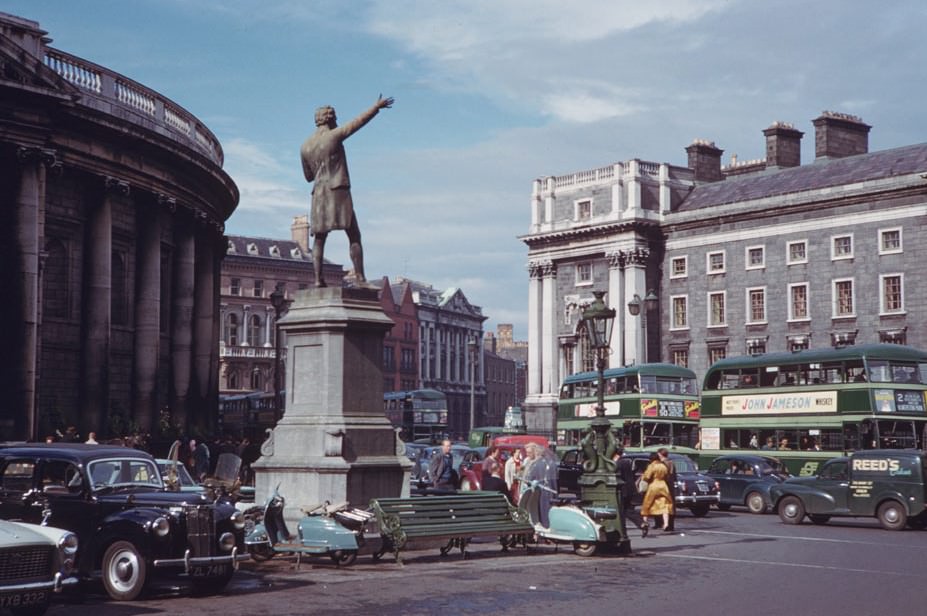
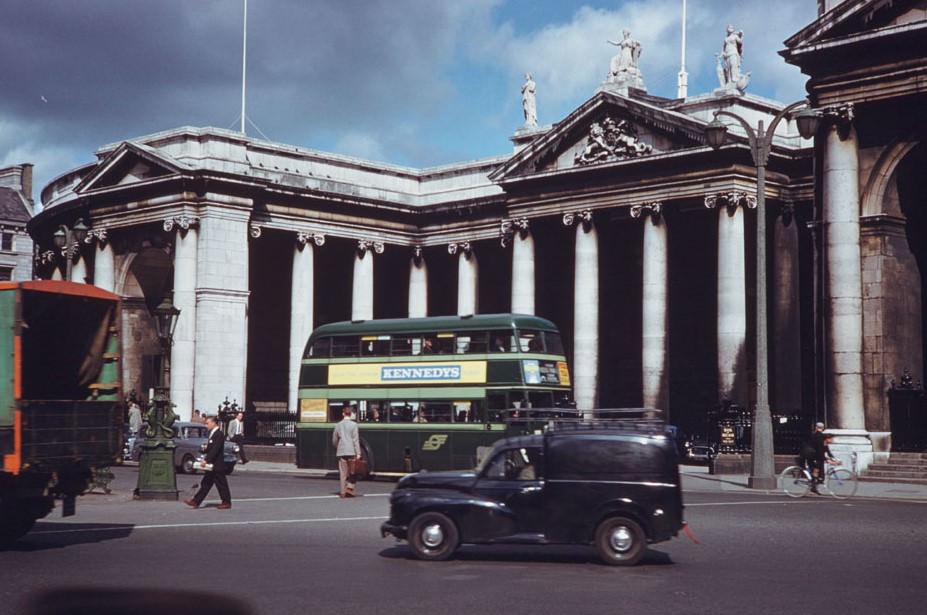
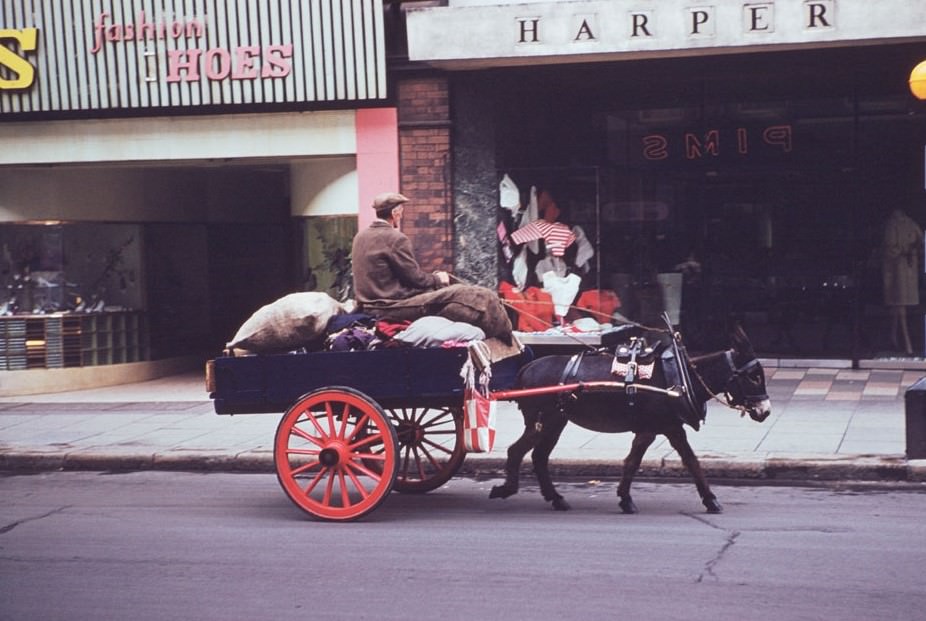
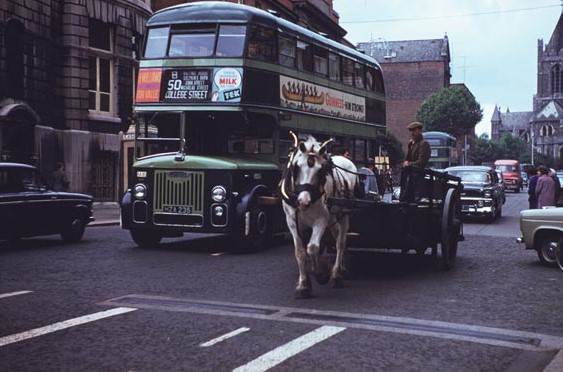
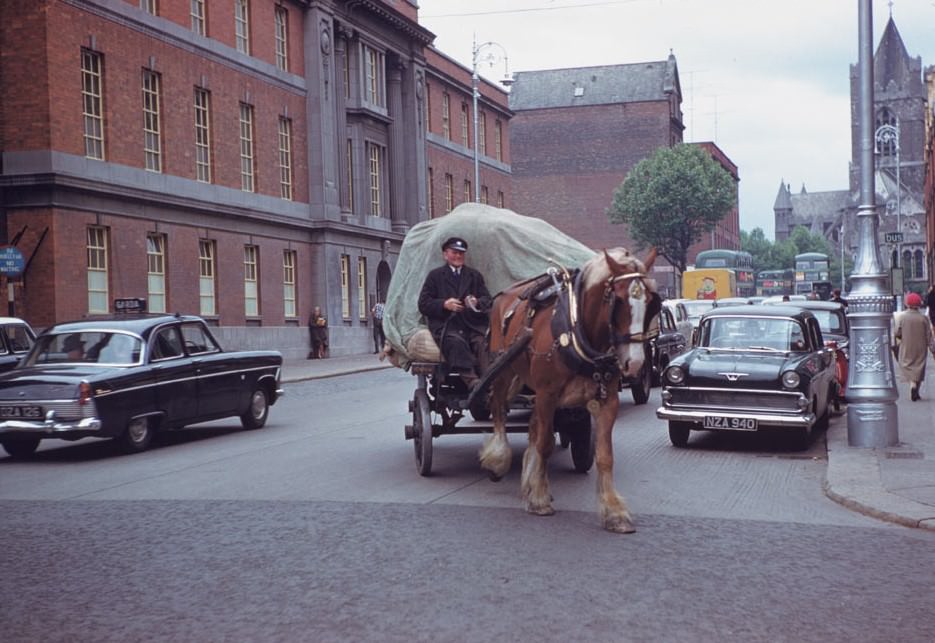
Horse-drawn drays still worked Dame Street in 1961, hauling goods through the same routes used for generations. Cushman caught one on a dark afternoon and another dray horse in full street traffic, relics of an older working city coexisting with motor vehicles.
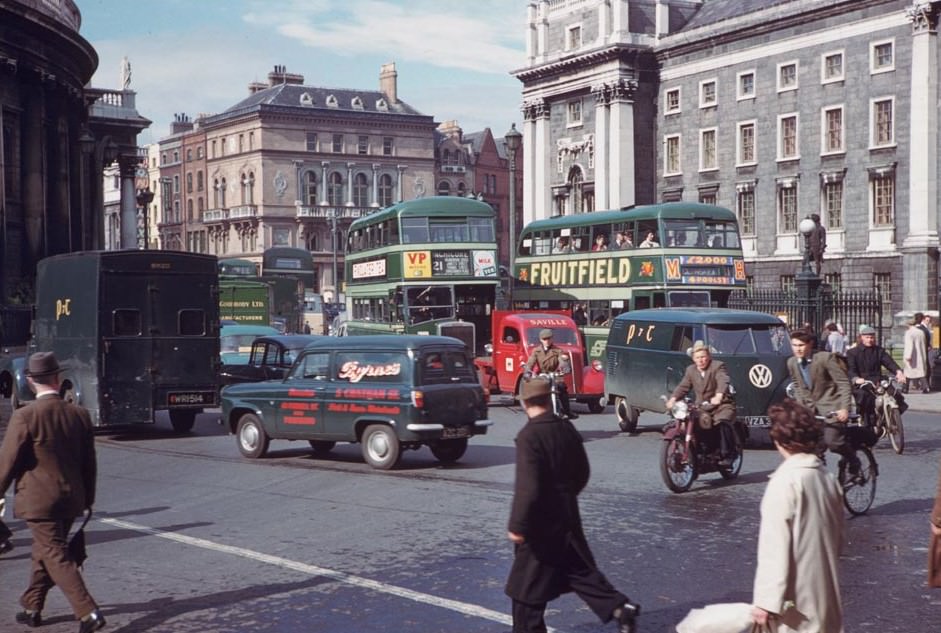
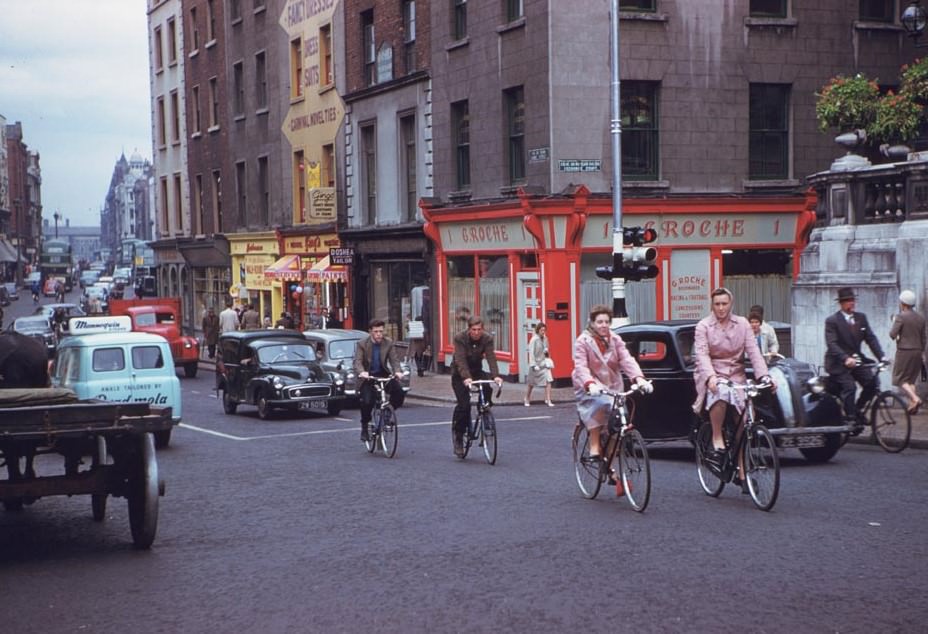
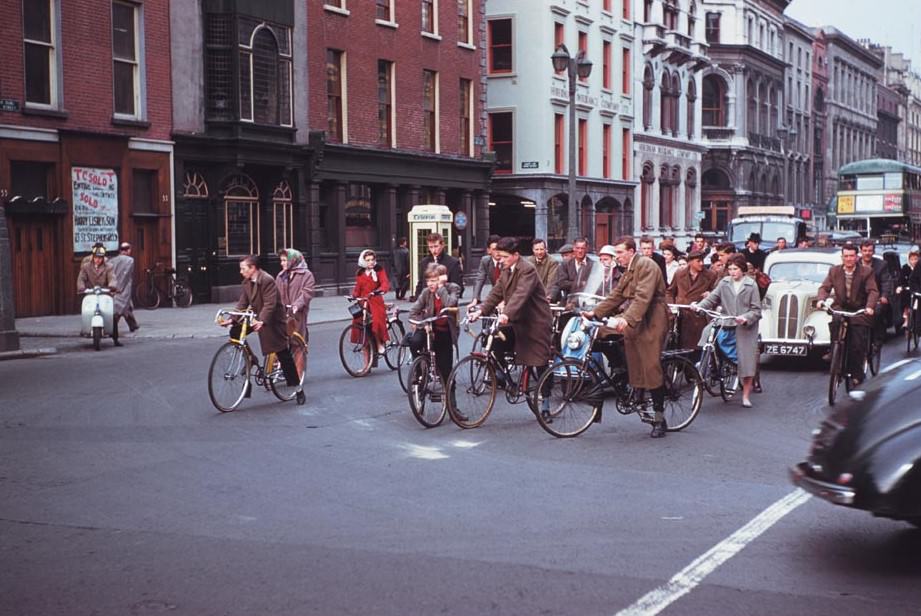
Cyclists were a common sight near City Hall and along Dame Street. Cushman photographed a group waiting at a red light at the head of South Great Georges Street—a snapshot of how Dubliners moved through their city before car ownership became widespread.
Summer rain left Burgh Quay and the O’Connell statue glistening in Cushman’s photographs. The wet pavements reflected light in a way that Kodachrome rendered vividly, turning an ordinary shower into a visual record of Dublin’s weather and street life in equal measure.
Cushman’s final frames captured Dawson Street and Nassau Street on a quiet morning, the city not yet in full motion. Together, his photographs form a precise, colorful record of Dublin as it looked during one summer more than sixty years ago.