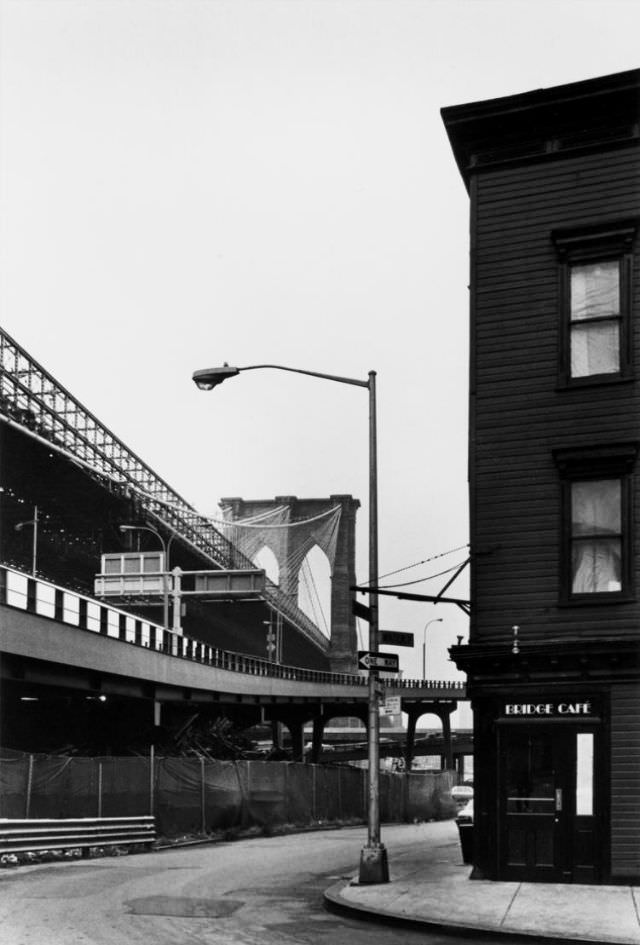
Alfred Eisenstaedt was born in 1898 to a Jewish family in West Prussia. At age 11, he picked up an Eastman Kodak Folding Camera and never really put one down. That early curiosity turned into one of the most celebrated careers in the history of photojournalism. He went on to shoot over 2,500 assignments, including 86 covers for LIFE magazine — featuring faces like John F. Kennedy, Marilyn Monroe, Albert Einstein, and Winston Churchill.
Eisenstaedt’s rise was swift. After working as a freelance photographer at Pacific and Atlantic Photo in Berlin, he joined Illustrierte Zeitung in the 1930s, one of the largest publishing houses in the world at the time. He was present for major historical moments, including the first meeting between Benito Mussolini and Adolf Hitler. While many photojournalists of his era relied on large, heavy cameras, Eisenstaedt favored the compact 35mm Leica Rangefinder. The small size let him move freely and capture candid, unguarded moments — a quality that defined his entire body of work.
New York City ran through much of his career like a thread. From ballet rehearsals and hospital wards to wartime farewells and sidewalk scenes on Fifth Avenue, Eisenstaedt documented the city’s everyday rhythms with extraordinary attention. The photos below, spanning roughly 1930 to 1980, offer a window into what New York looked and felt like across five remarkable decades.
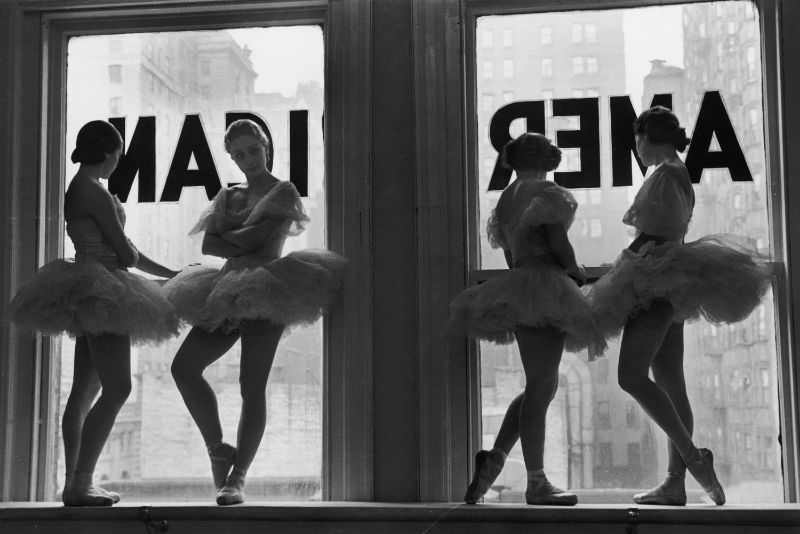
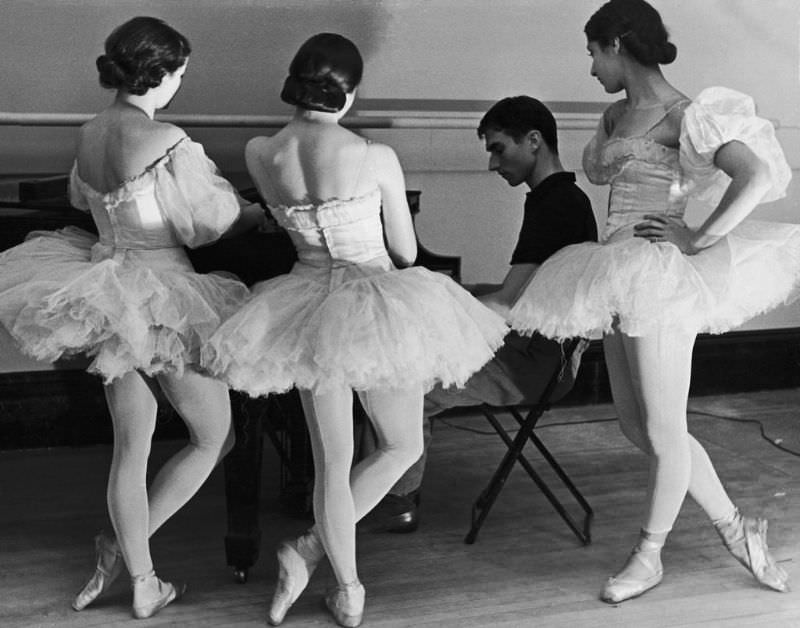
In 1936, Eisenstaedt spent time at George Balanchine’s School of American Ballet in New York. The images he made there show dancers at work — not performing for an audience, but training in the quiet discipline of a rehearsal room.
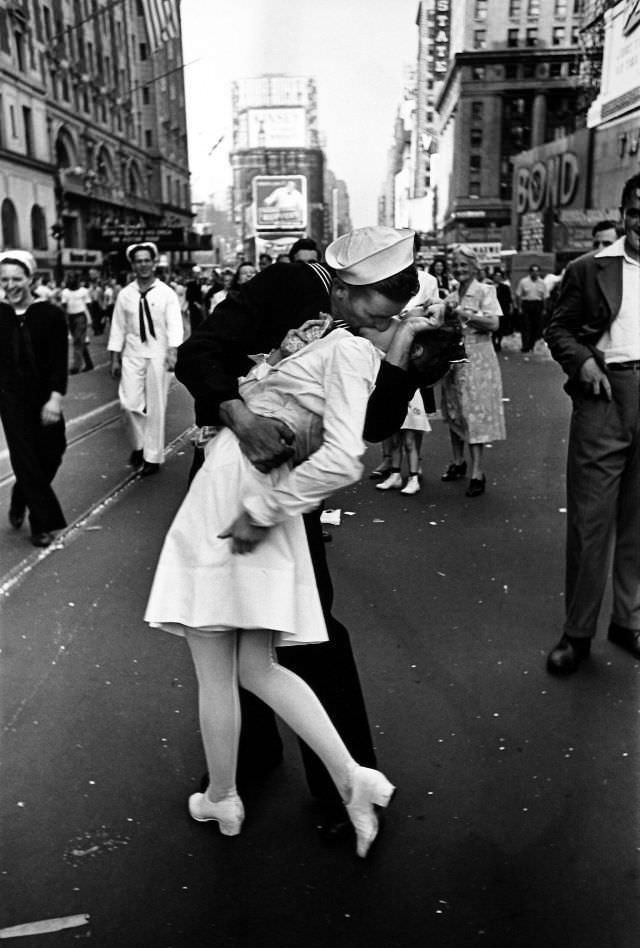
Among the most recognized photographs in American history is Eisenstaedt’s V-J Day shot in Times Square. On August 14, 1945, Japan announced its surrender, ending World War II. Celebrations erupted across the country. Using his Leica IIIa, Eisenstaedt captured an American sailor kissing a woman on the street in the middle of the chaos. The image ran in LIFE and became an instant icon of the moment the war ended.
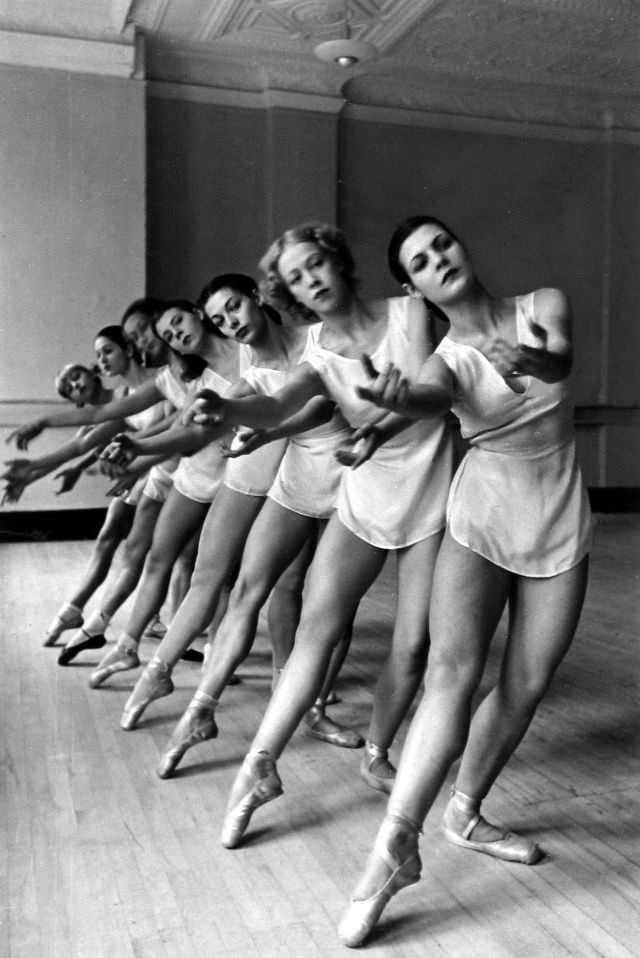
Back at the School of American Ballet, Eisenstaedt photographed the broader environment of the institution — the spaces, the postures, the culture of classical dance training in Depression-era New York.
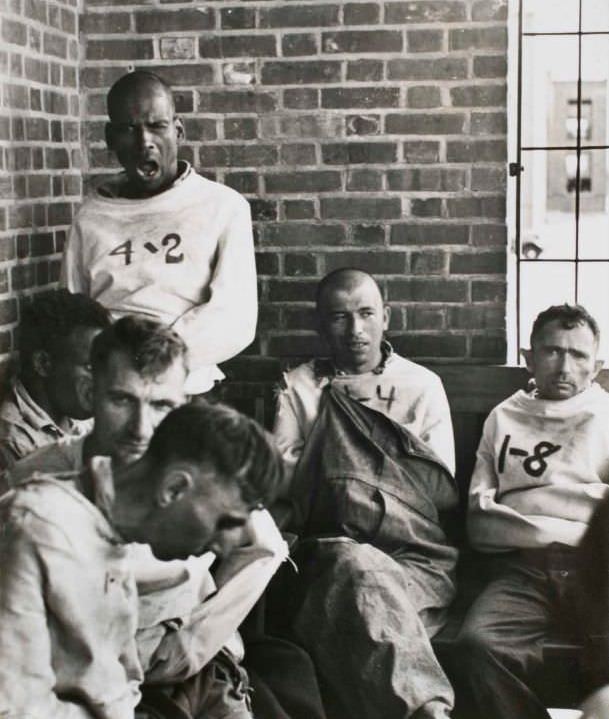
Beyond the dance floor, Eisenstaedt also turned his lens toward New York’s institutions of care. In 1936, he visited Pilgrim State Hospital on Long Island, one of the largest psychiatric hospitals in the world at the time.
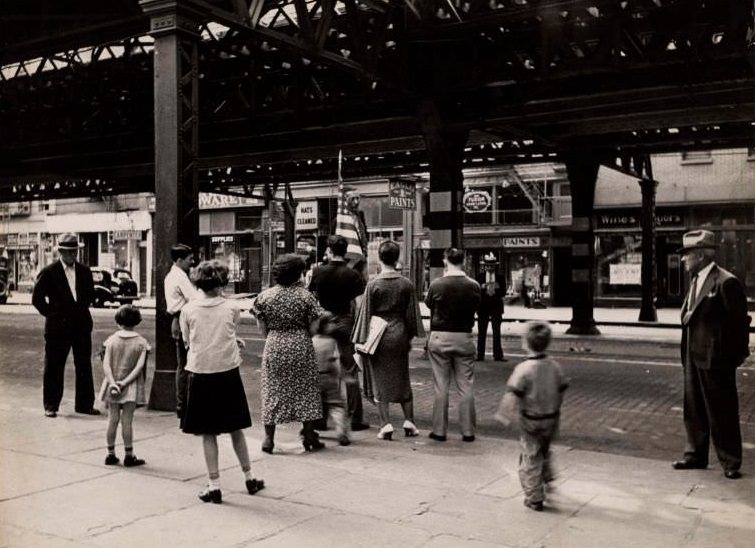
Street life in New York gave Eisenstaedt endless material. In 1937, he photographed a soap box orator — the kind of self-appointed public speaker common in city parks and corners during that era, drawing small crowds with big opinions.
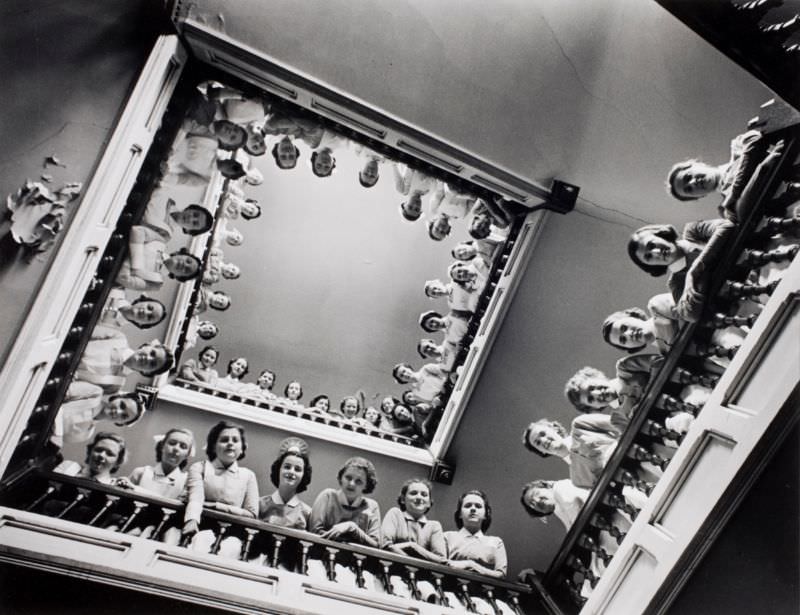
The following year, he visited Roosevelt Hospital in Manhattan, where he photographed student nurses going about their training — a glimpse into the professional lives of women in healthcare before World War II.
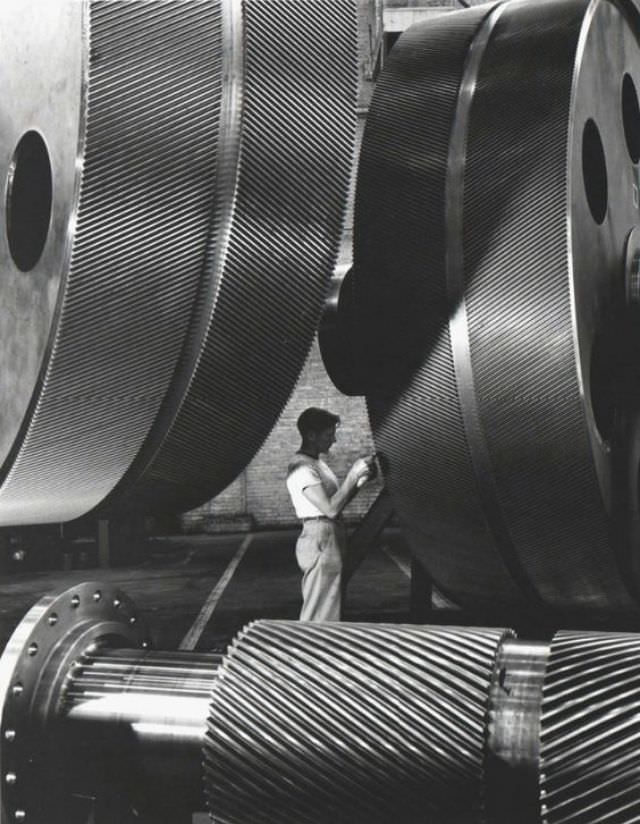
Eisenstaedt’s work extended beyond city streets. In 1940, he traveled to Schenectady to photograph the GE Turbine Plant — a scene of industrial scale that contrasted sharply with his quieter urban portraits.
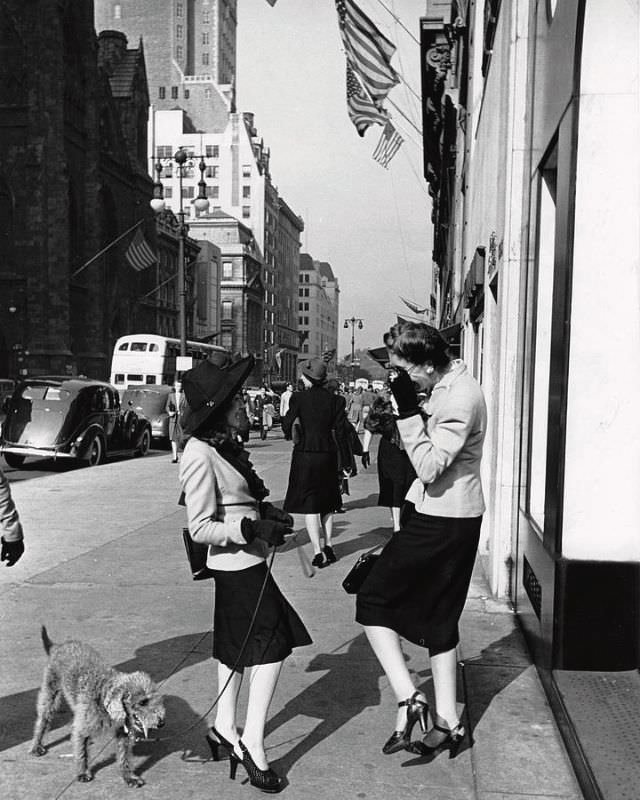
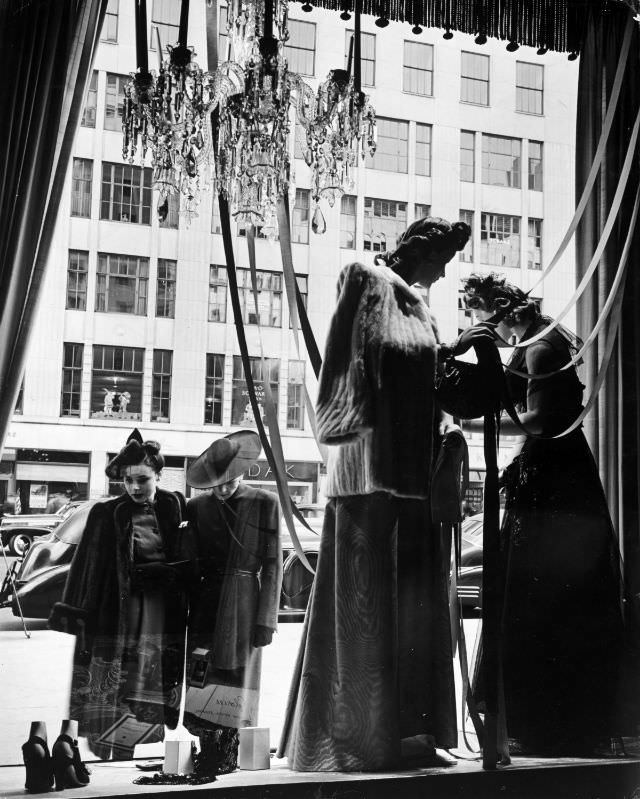
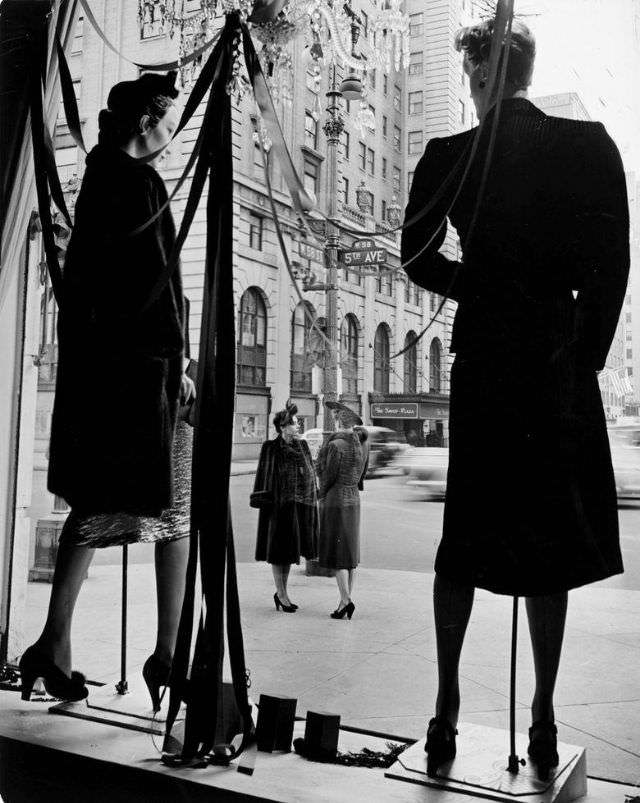
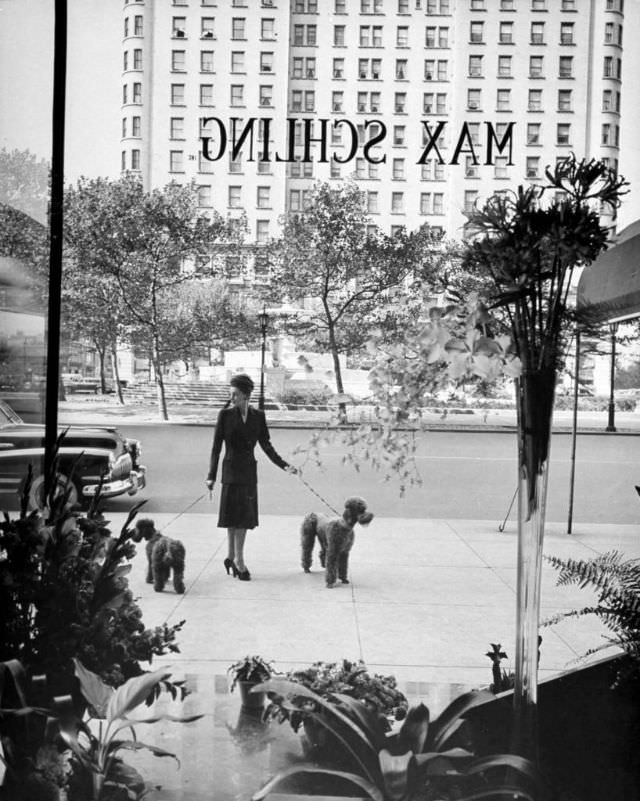
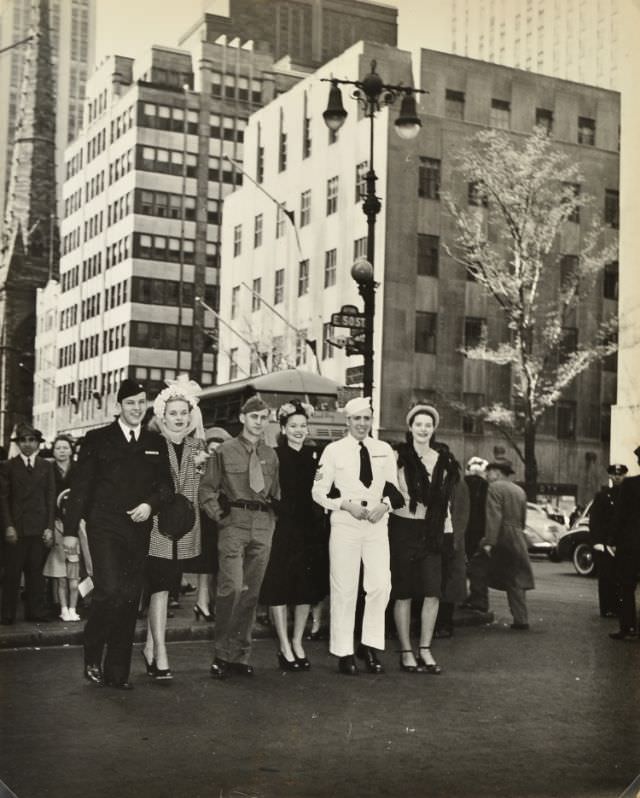
By 1942, wartime New York had a particular energy. Fifth Avenue remained a hub of city life, and Eisenstaedt captured it in multiple frames — two women talking on the sidewalk, shoppers pausing at Bergdorf Goodman’s windows, and a well-dressed woman walking her poodles.
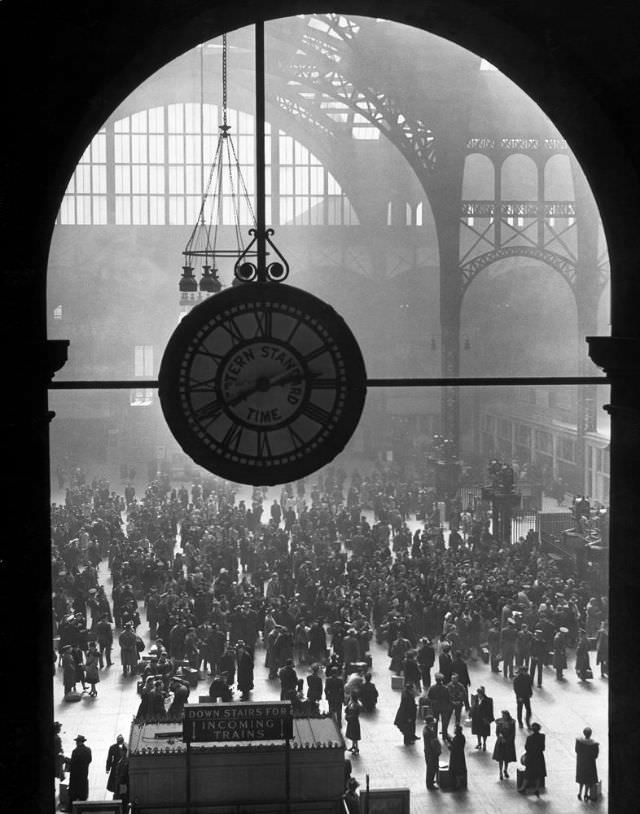
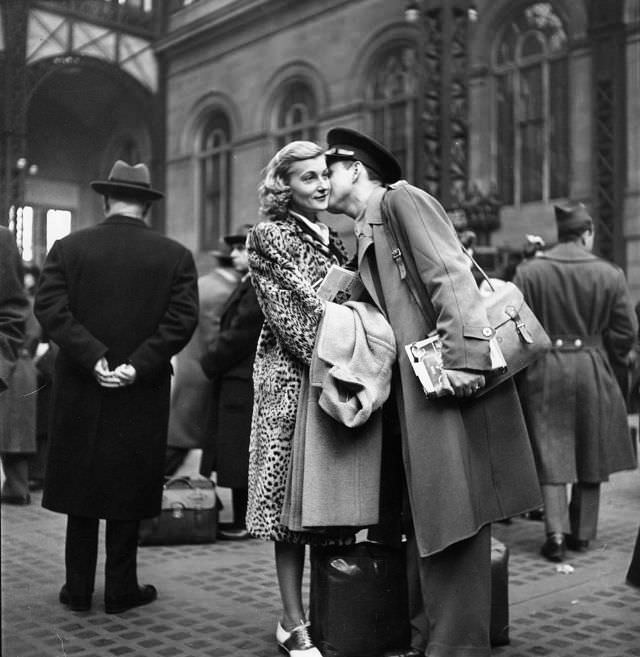
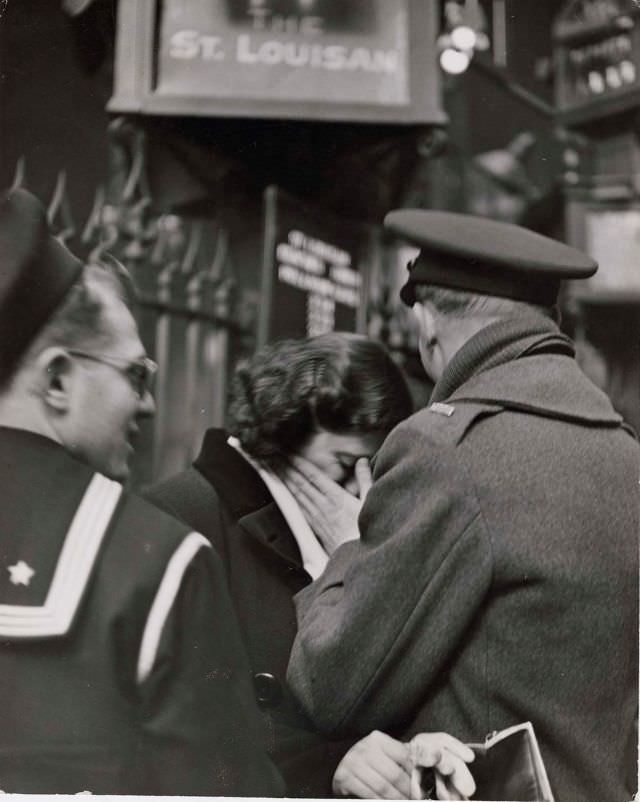
Pennsylvania Station in 1943 was a charged place. Thousands of soldiers passed through it daily, shipping off to war or returning briefly on furlough. Eisenstaedt was there to document the raw emotion of those moments — couples clinging to each other, tears on the platform, the weight of uncertain goodbyes.
Even during the war years, New York’s social calendar continued. In 1944, Eisenstaedt photographed a fashion show in the Jade Room of the Waldorf Astoria Hotel — an image of elegance that existed alongside the grief at Penn Station just miles away.
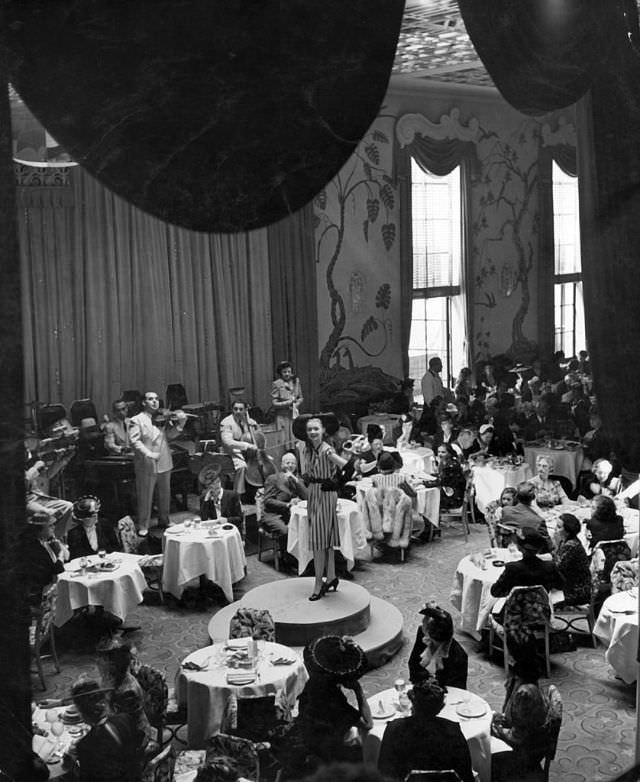
When the war finally ended in 1945, New York celebrated loudly. Eisenstaedt was on the streets for the V-J Day parade, photographing the crowds that poured out to mark the end of years of conflict.
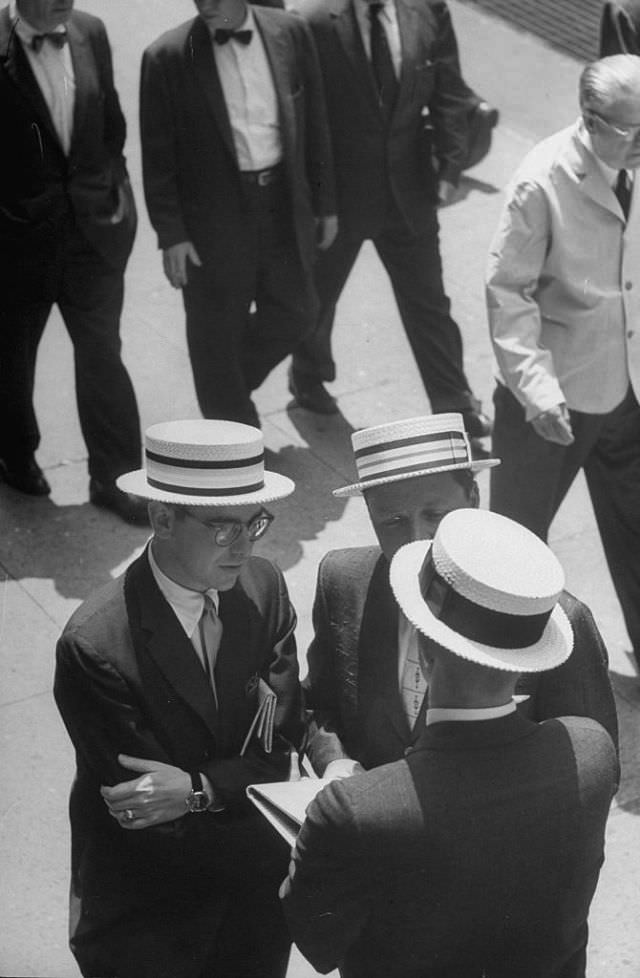
The postwar years brought a different New York — prosperous, busy, and increasingly modern. In 1958, Eisenstaedt shot a trio of men in suits and straw boaters from an elevated angle, a composition that gives the scene a detached, almost cinematic quality.
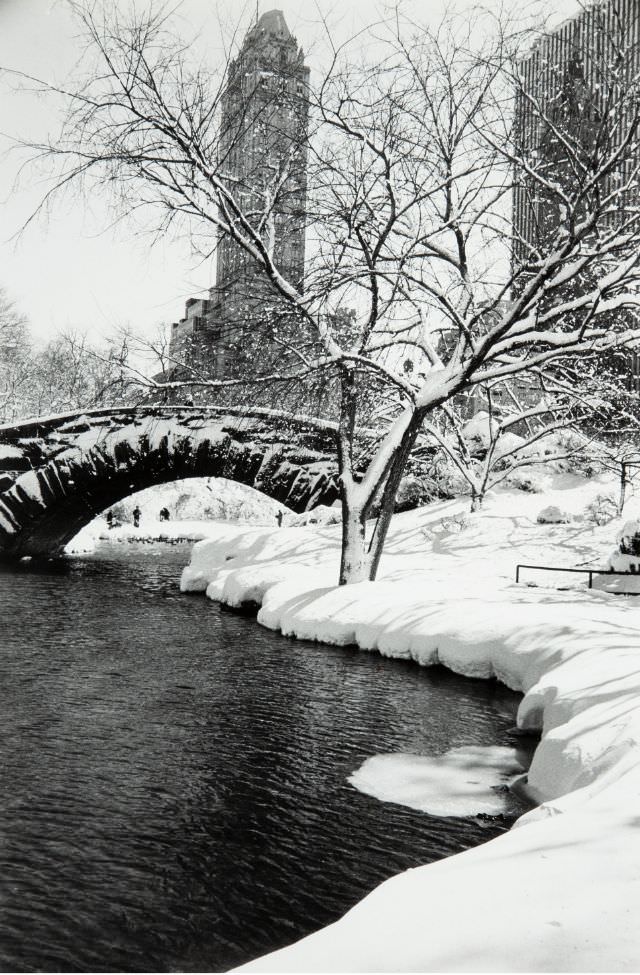
The following winter, he turned his camera on Central Park after a heavy snowstorm — a serene contrast to the human drama he so often documented.
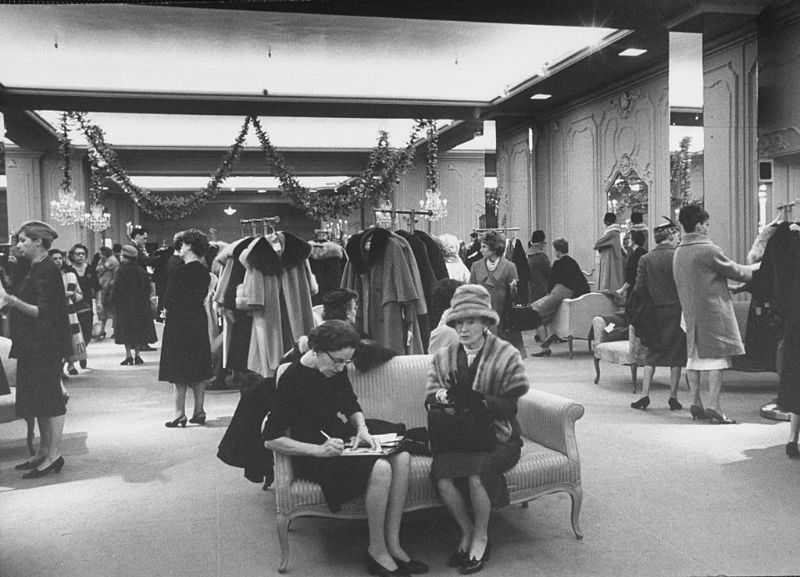
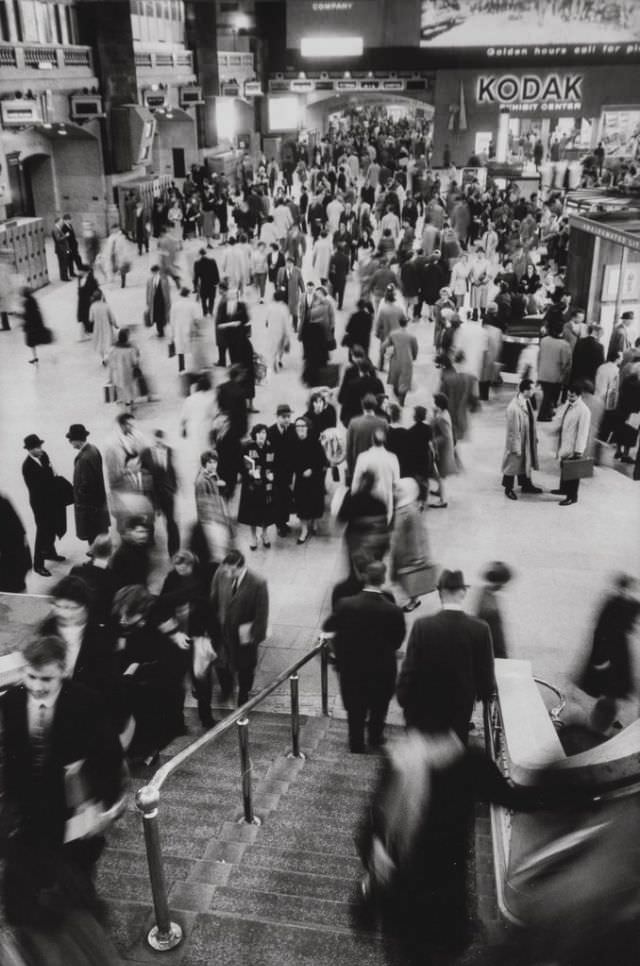
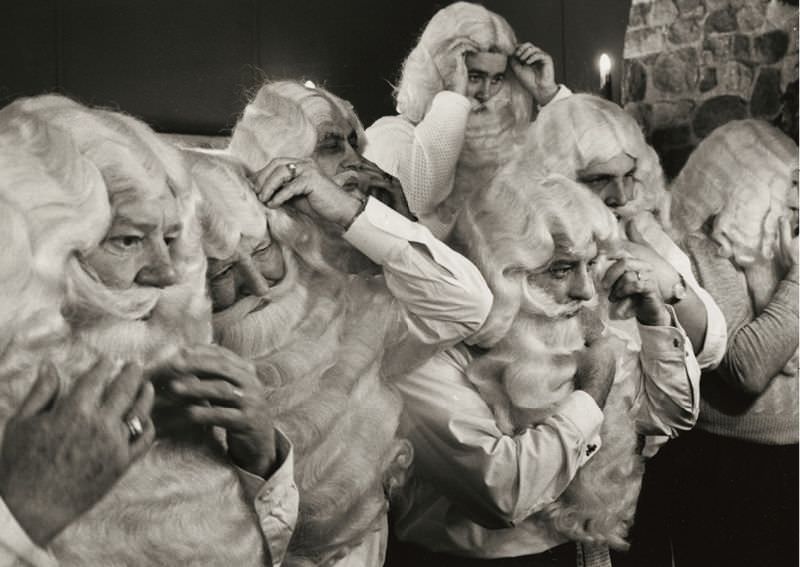
The 1960s brought new scenes. Eisenstaedt photographed shoppers in the women’s coat department at Saks Fifth Avenue, morning commuters streaming through Grand Central Terminal, and — in a more unusual assignment — students at a Santa Claus school in Albion, New York.
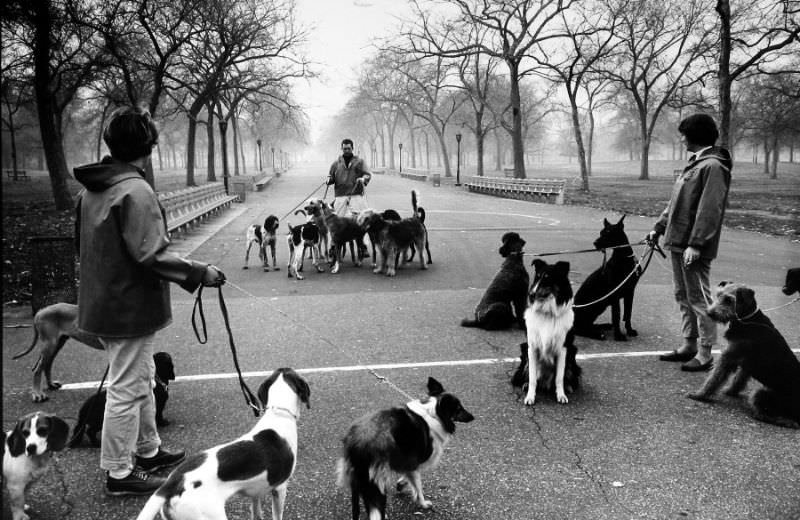
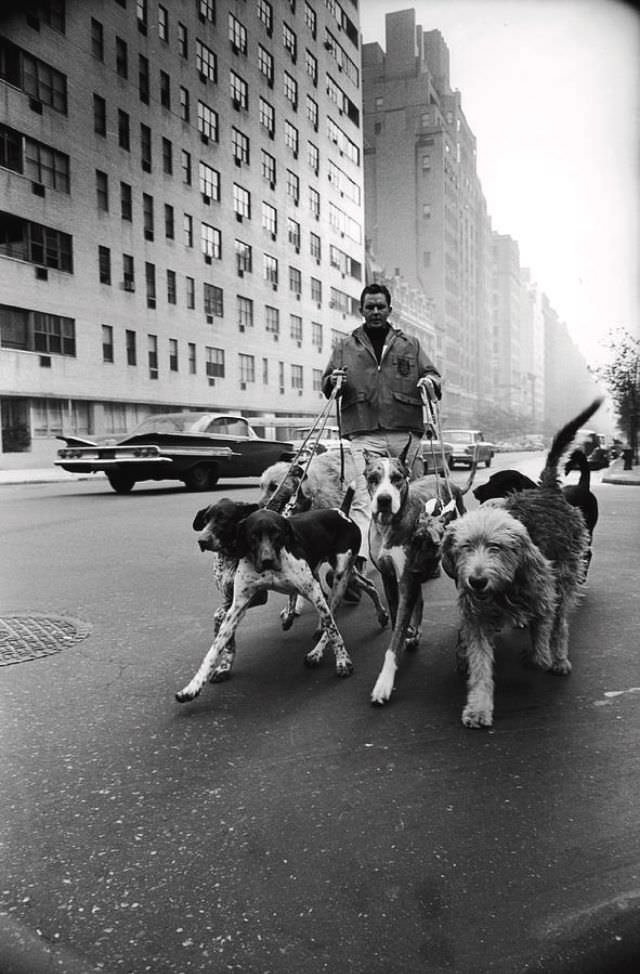
Central Park appeared again in his work during the mid-1960s, this time with dog walkers navigating its paths. It was the kind of everyday New York moment Eisenstaedt returned to again and again throughout his career.
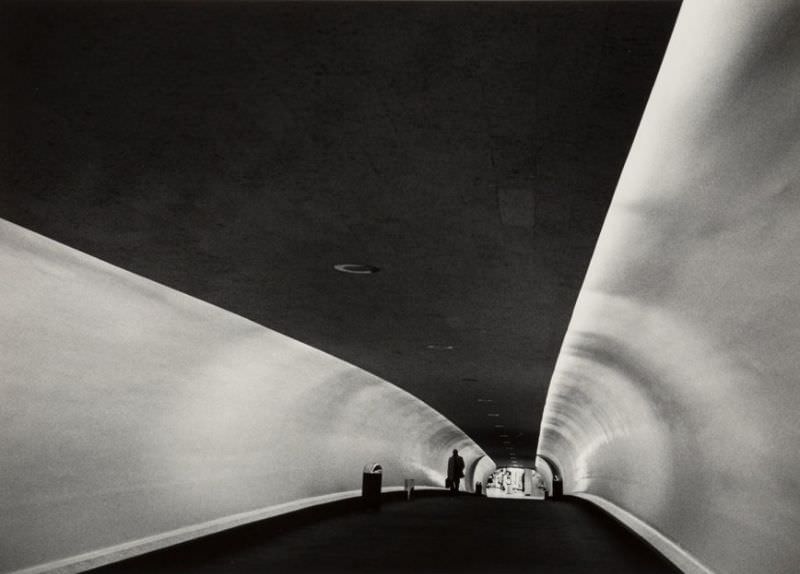
By the mid-1970s, New York’s skyline and infrastructure had transformed significantly. In 1975, Eisenstaedt photographed the TWA Terminal at Kennedy Airport — Eero Saarinen’s sweeping, futuristic design that had opened in 1962 and was still one of the most architecturally striking buildings in the city.
His photographs are held in the collections of major institutions, including the Royal Photographic Society in London, the International Center of Photography in New York, and the George Eastman House in Rochester. They have been exhibited at the Whitney Museum of American Art, the Museum of Modern Art, and the Philadelphia College of Art.