
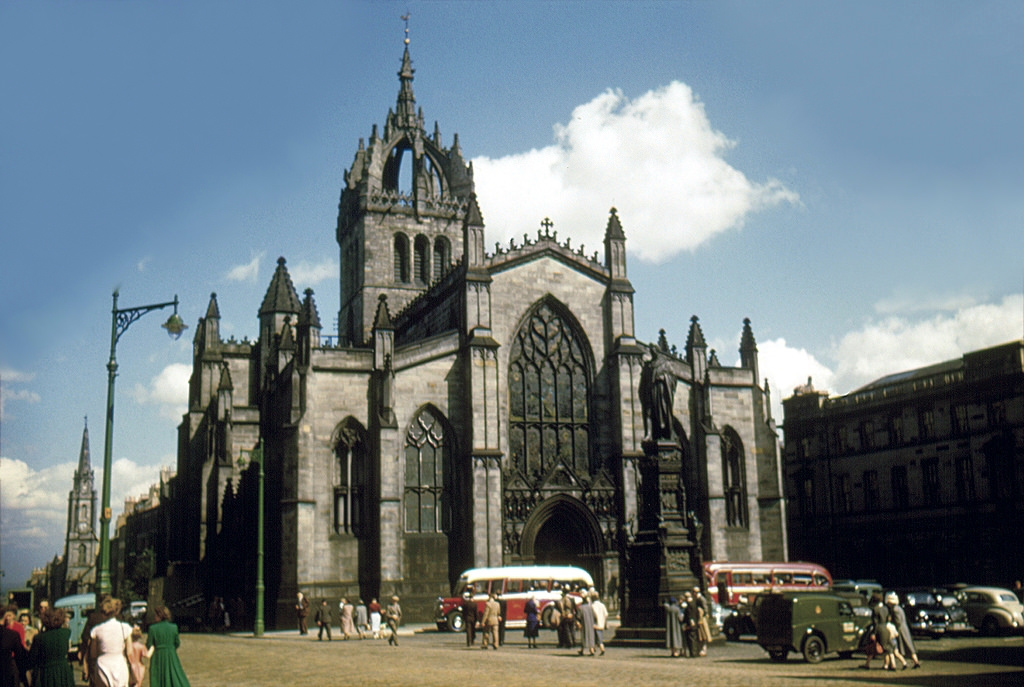
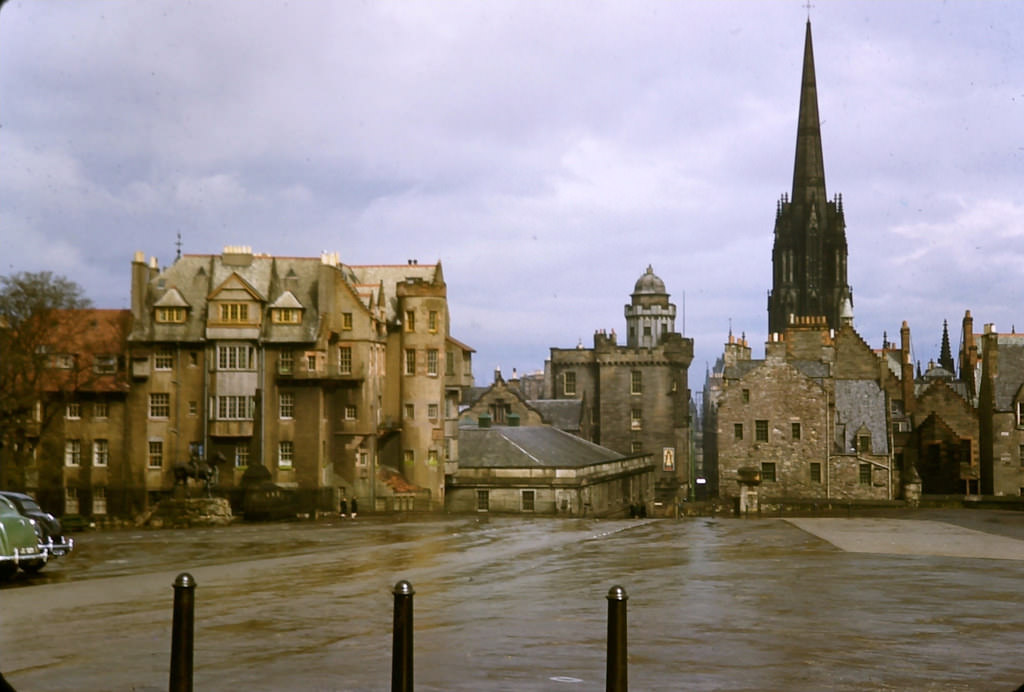
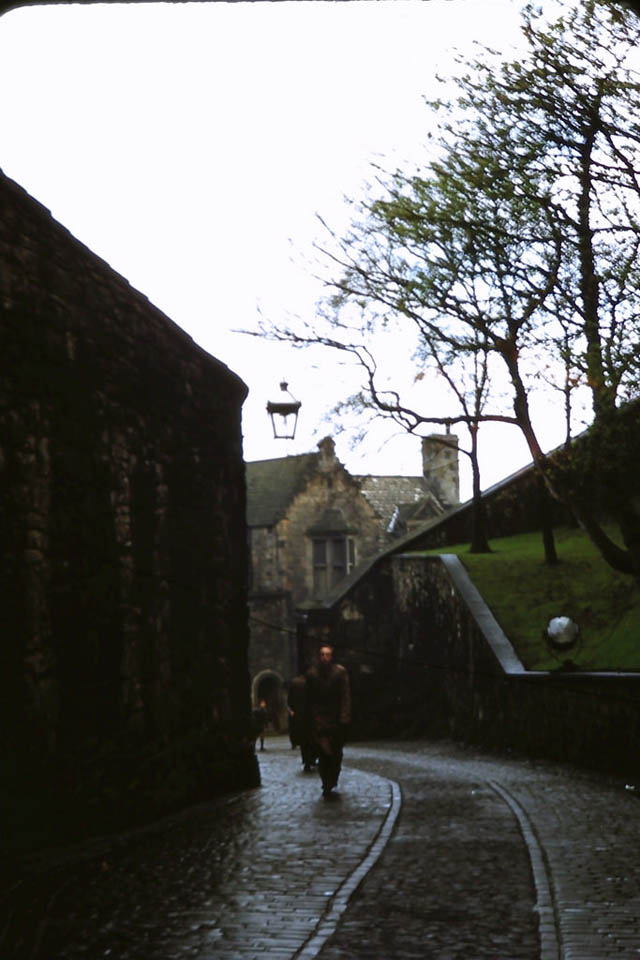
Edinburgh in the 1950s was a city working hard to rebuild itself after the destruction and strain of World War II. Rationing had only recently ended, money was tight, and the scars of the war years were still felt across the city. Yet Edinburgh pushed forward with energy and ambition, turning the decade into one of real transformation.
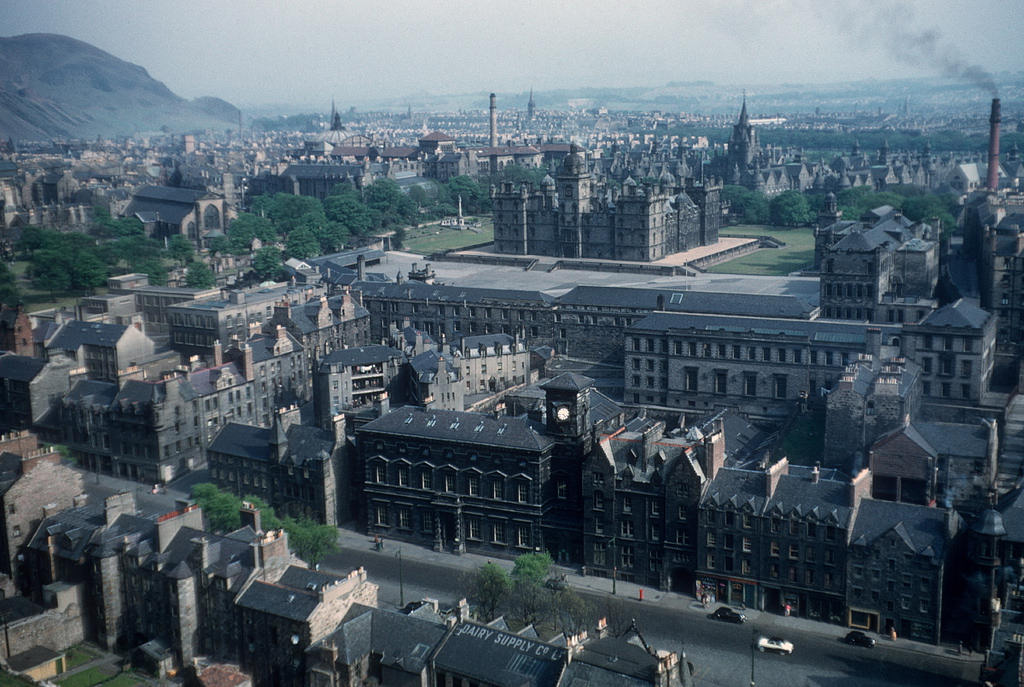
One of the biggest moves of the era was the launch of the Edinburgh International Festival and the Military Tattoo. Both events were created as a direct response to post-war austerity — a way to lift spirits and bring culture back to the streets. They drew visitors from across the world and gave the city a new sense of pride.
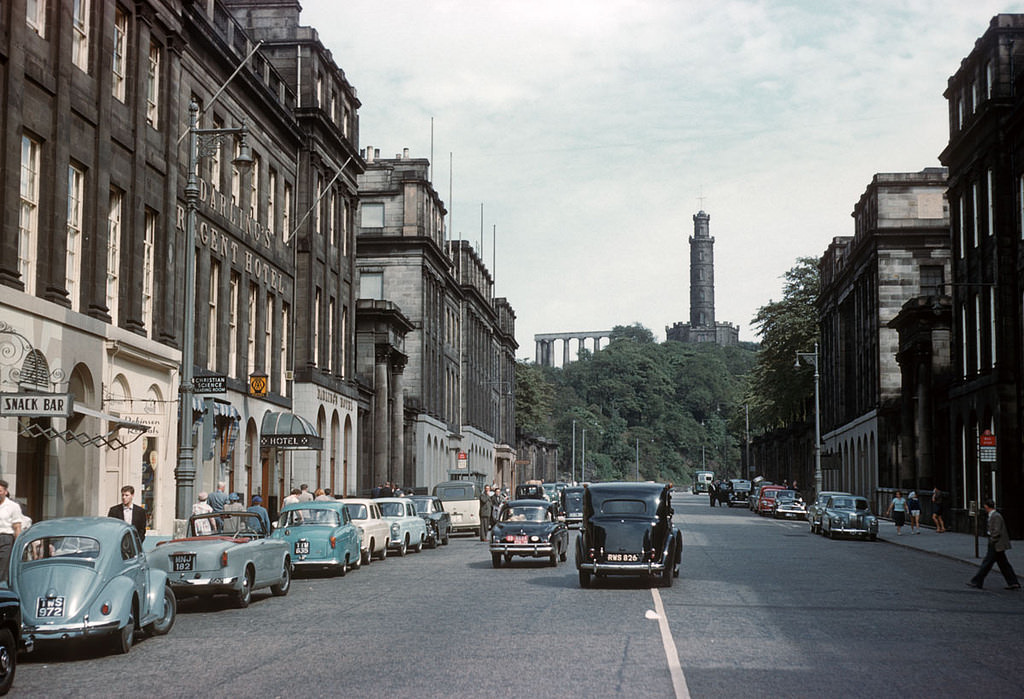
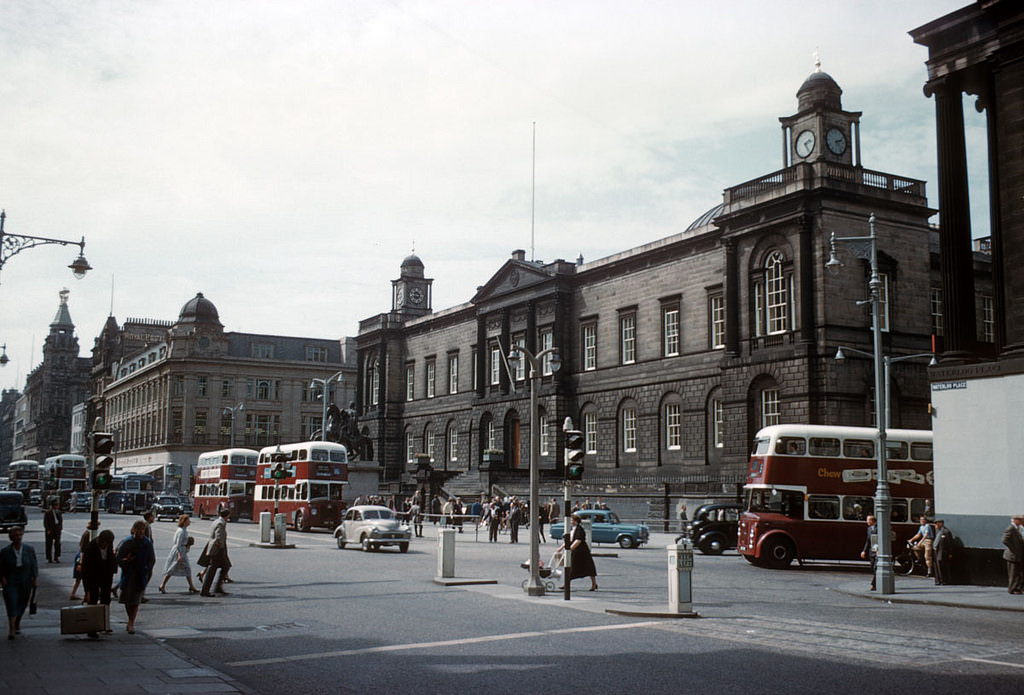
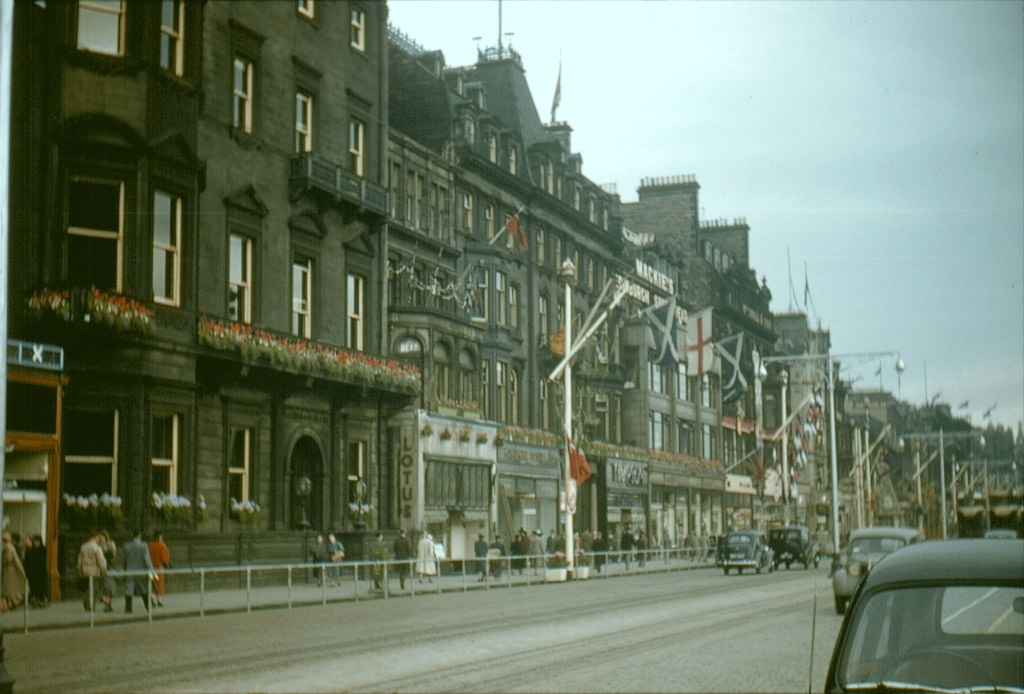
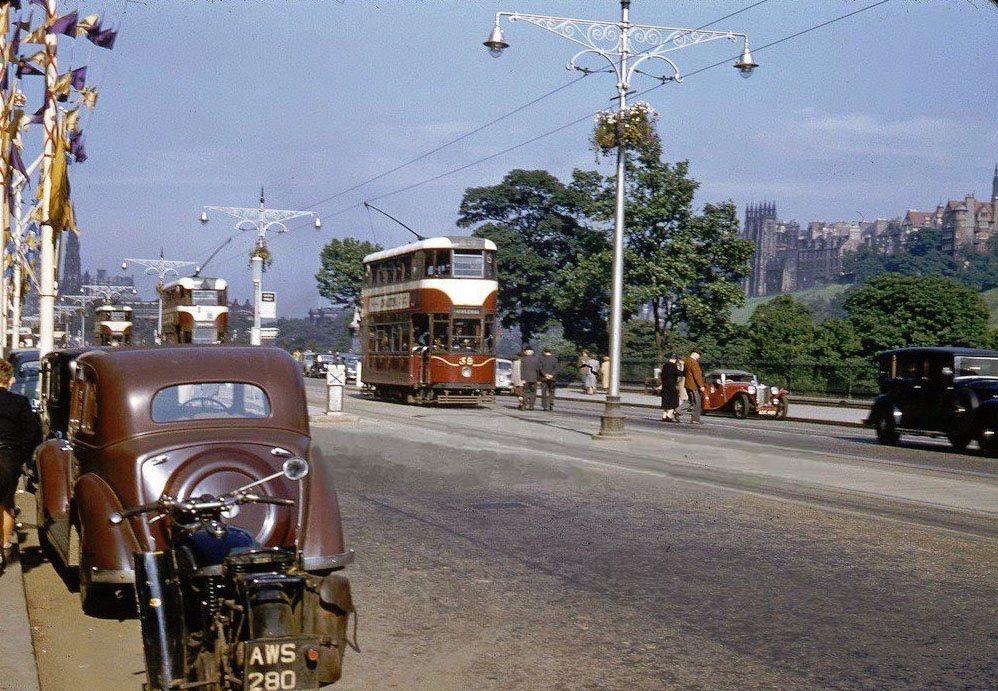
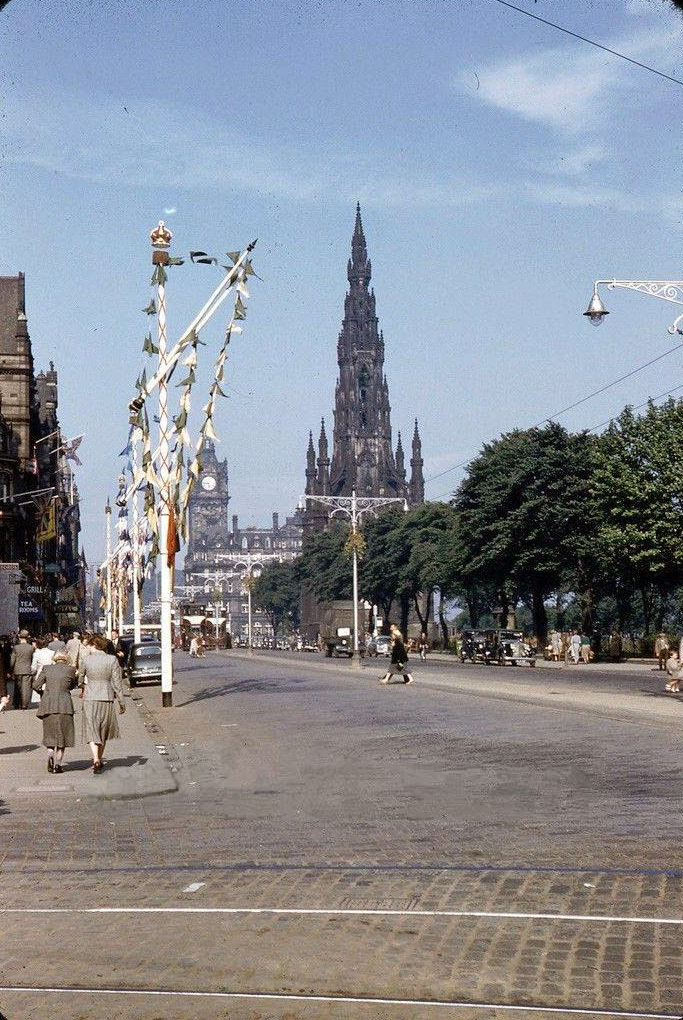
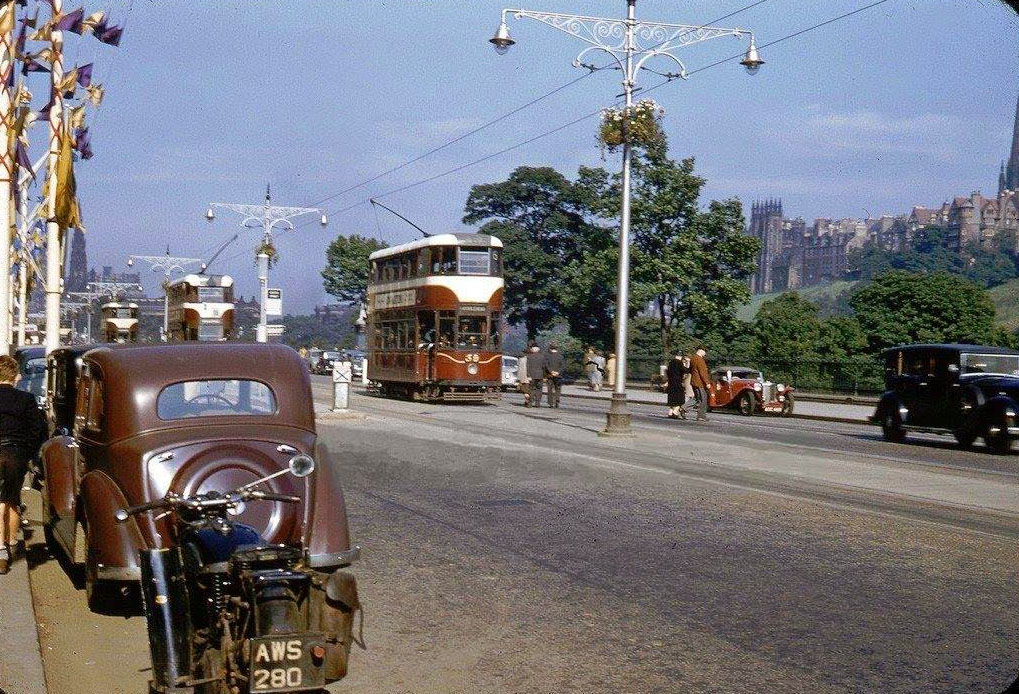
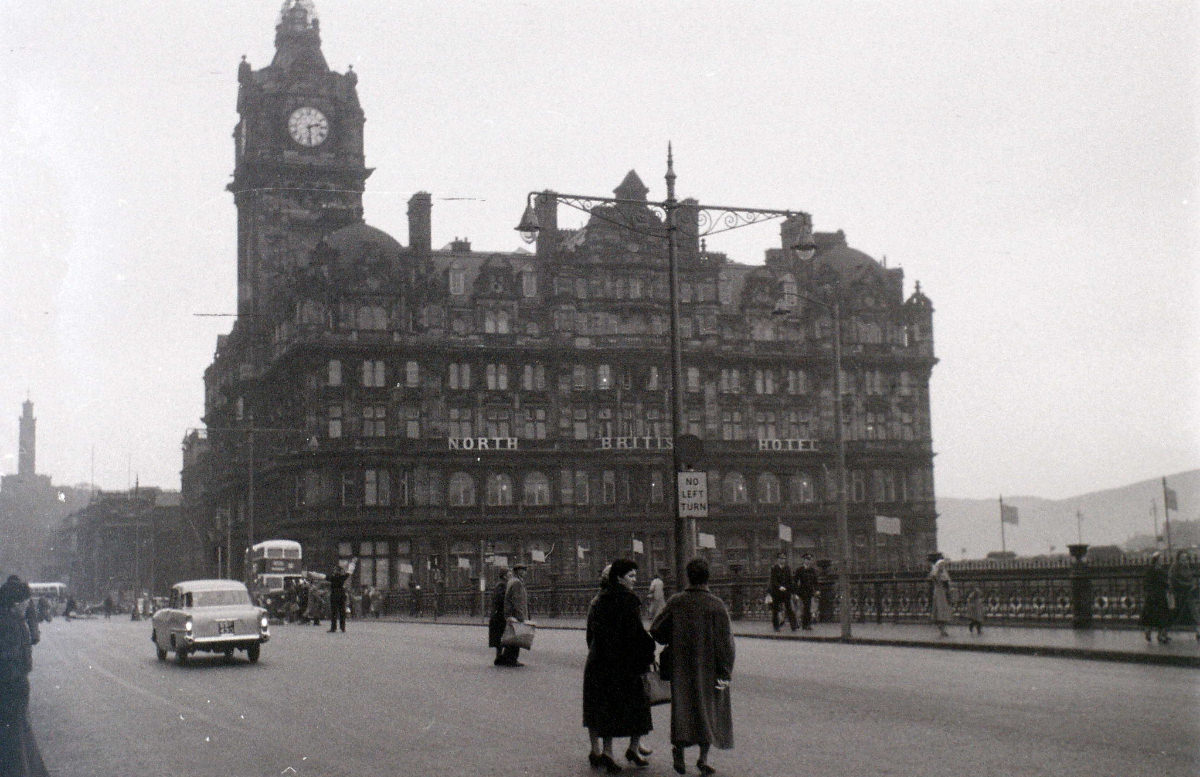
In 1953, Queen Elizabeth II was crowned, and Edinburgh marked the occasion with public celebrations. Princes Street was decorated with coronation banners, and crowds gathered along the city’s most famous thoroughfare to mark the moment.
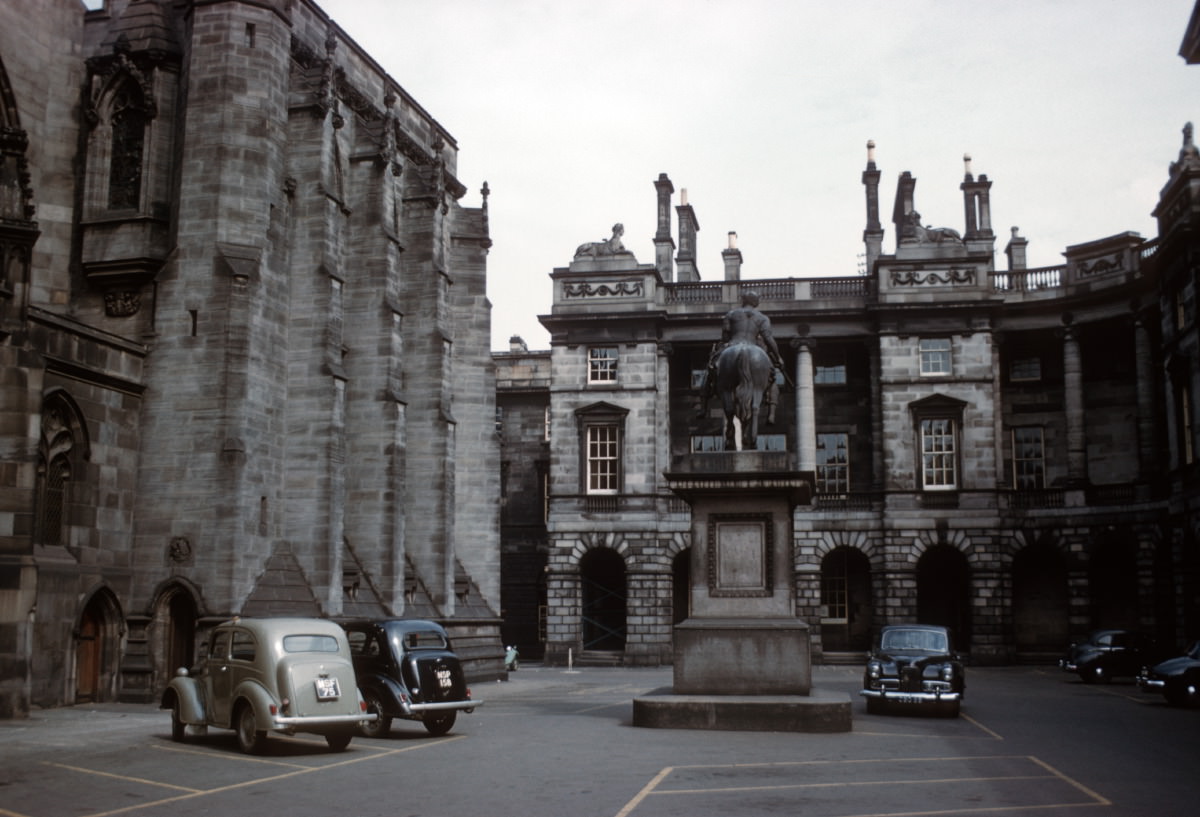
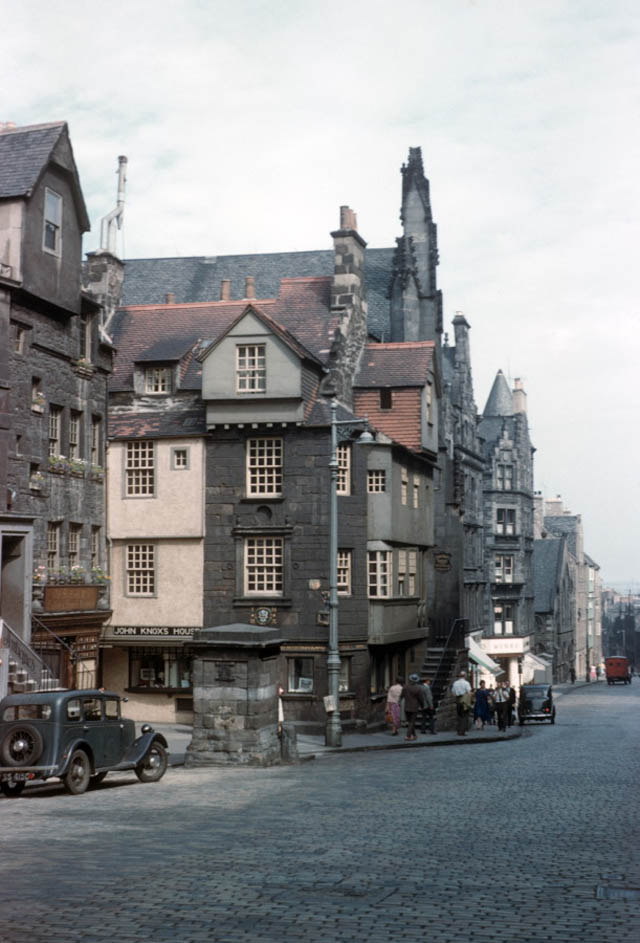
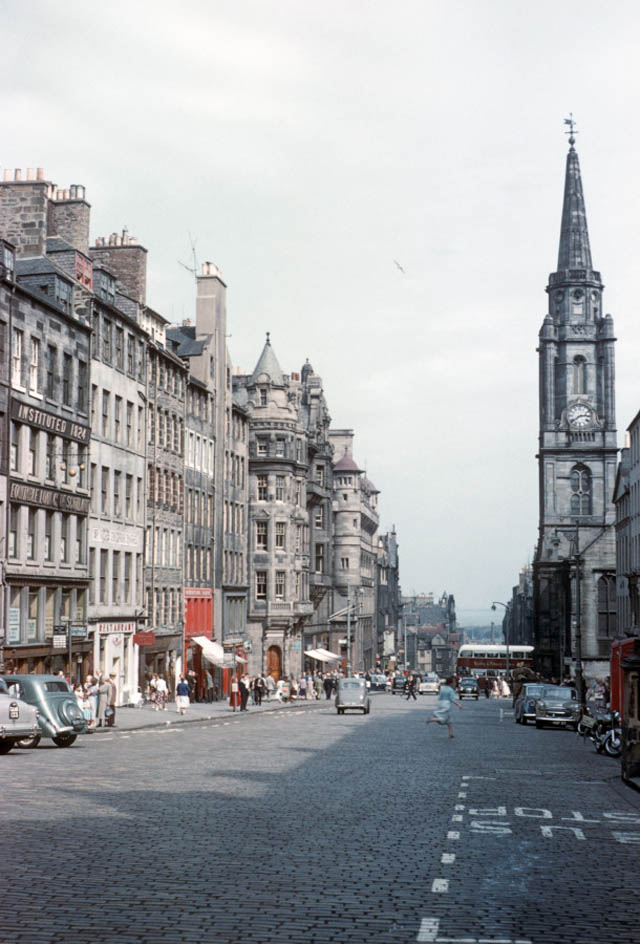
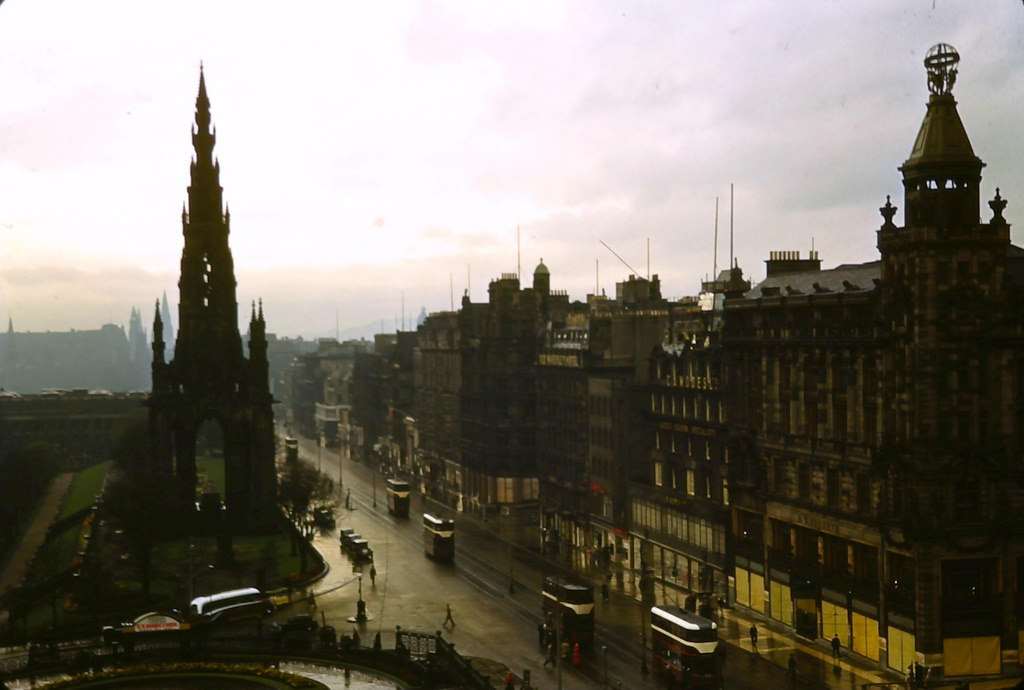
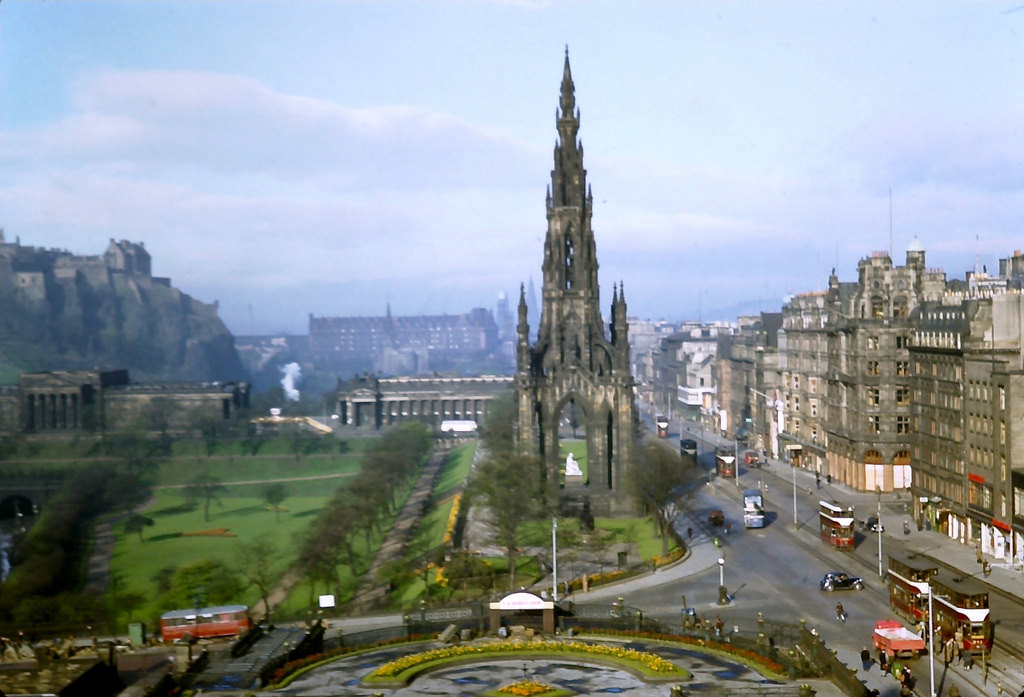
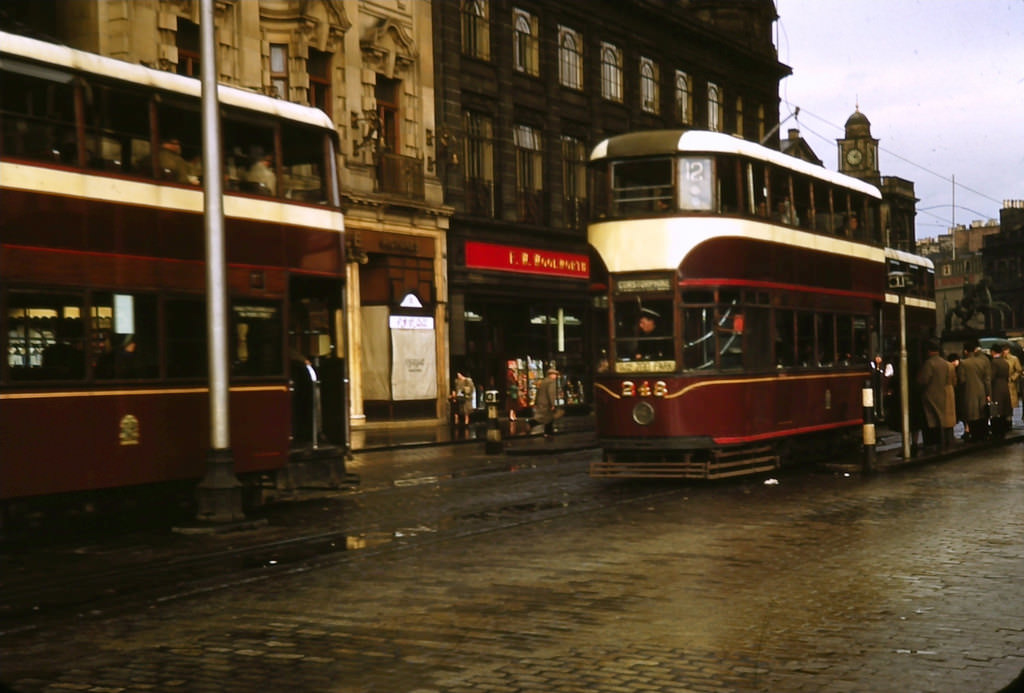
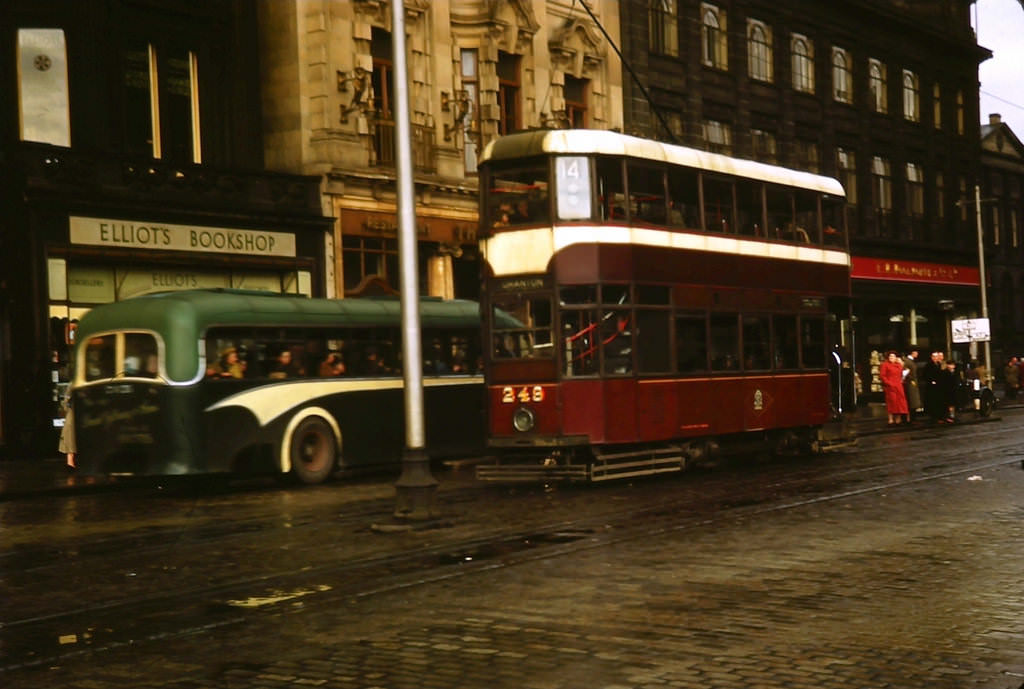
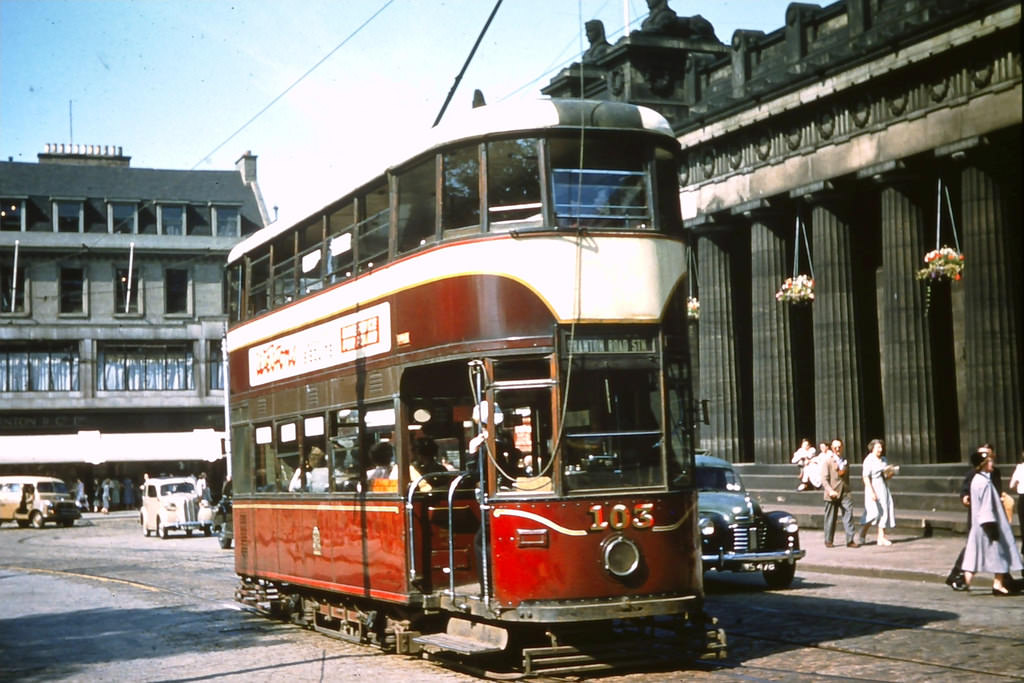
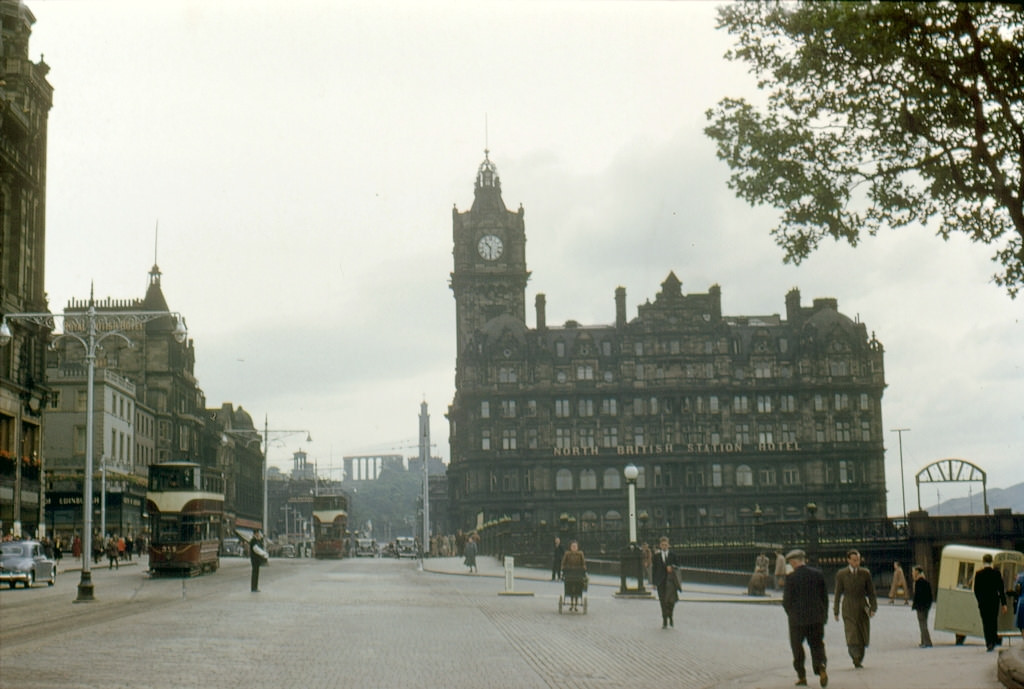
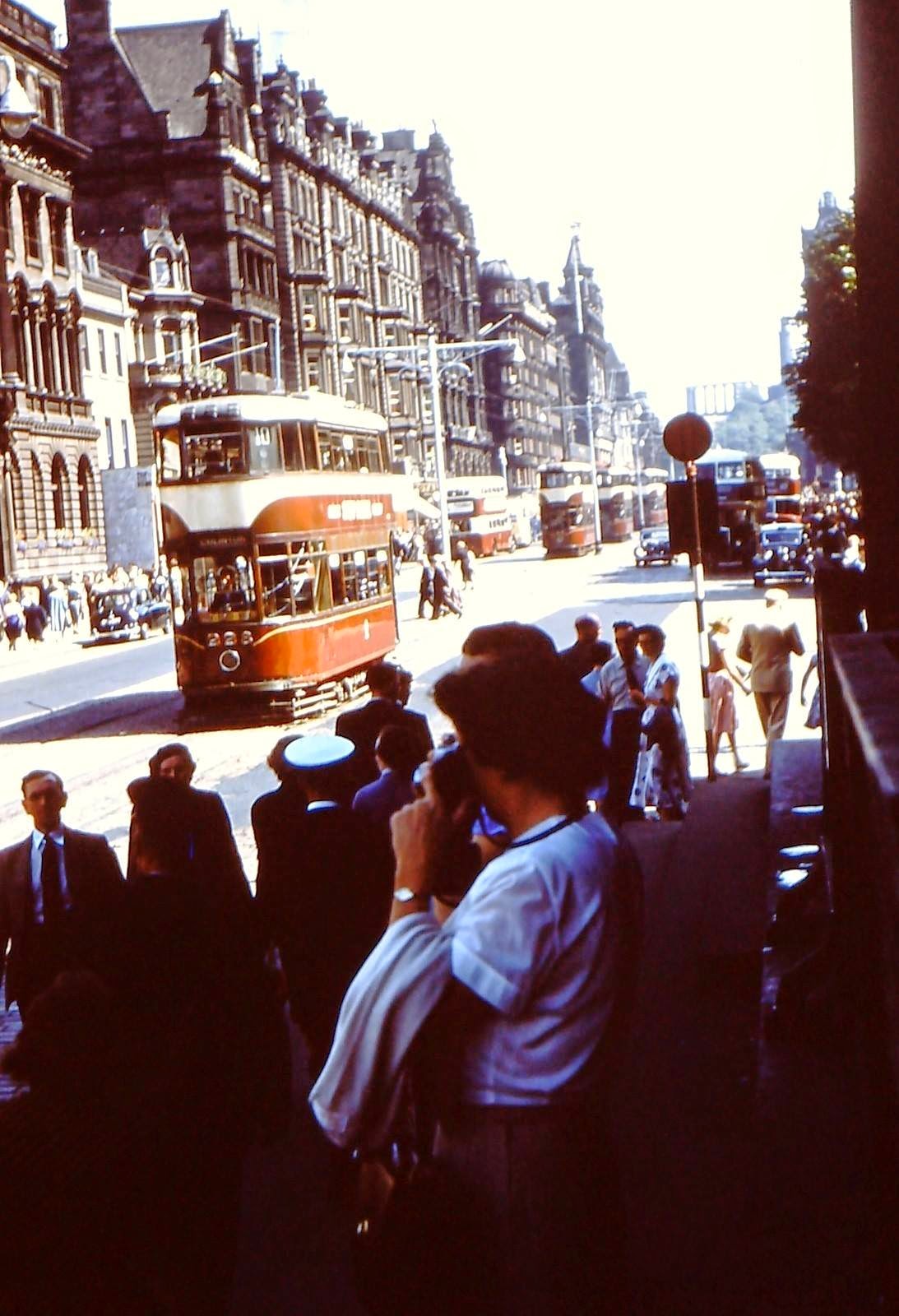
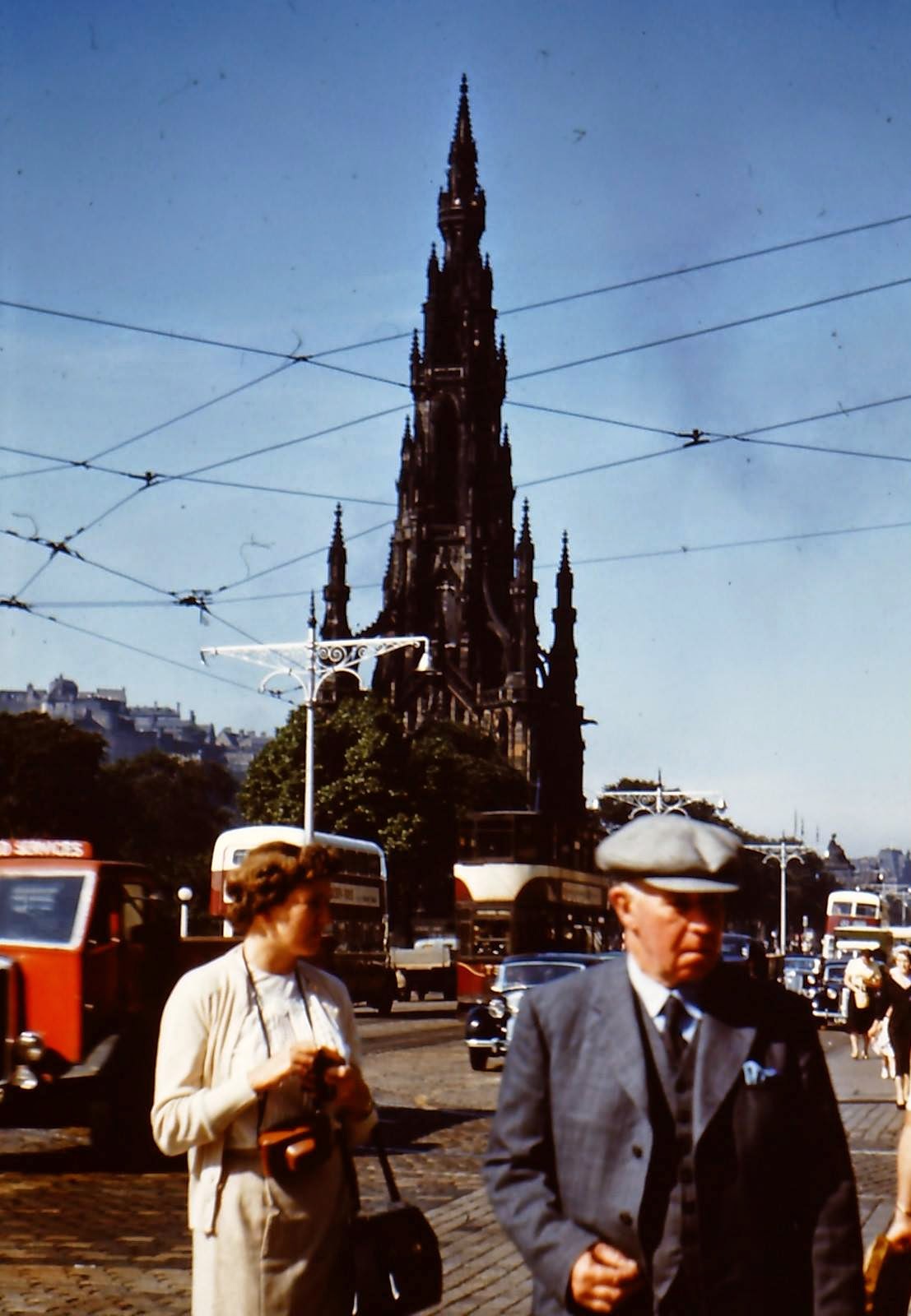
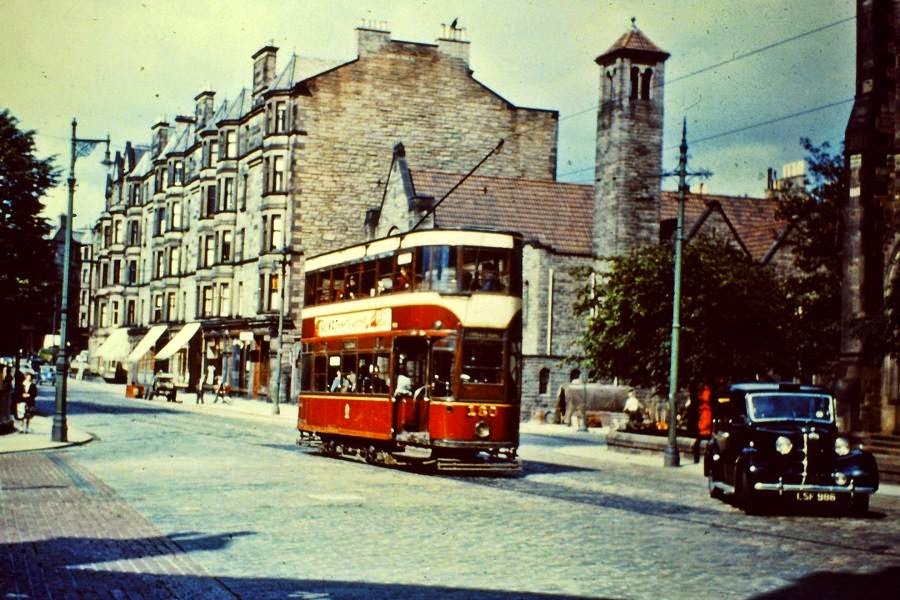
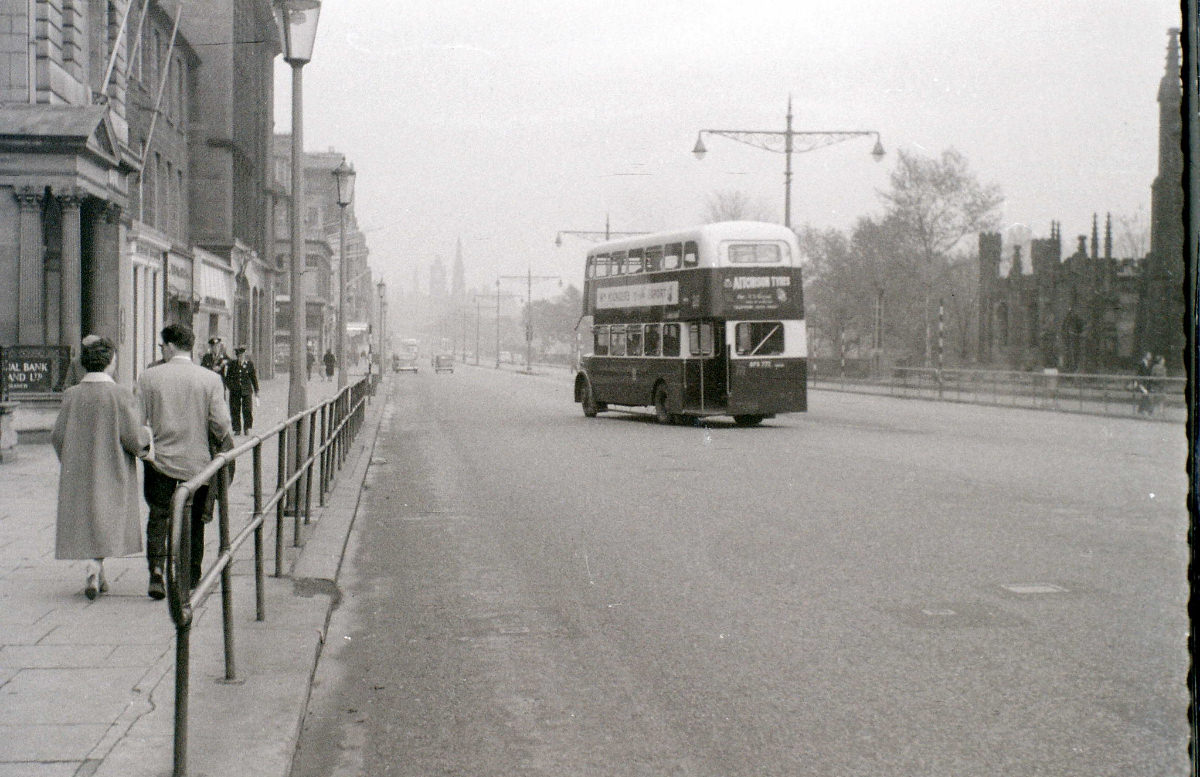
Trams were still a familiar sight on Edinburgh’s roads throughout the early part of the decade. They rattled along Princes Street and through the West End, carrying workers, shoppers, and schoolchildren. The private car was slowly becoming more common, but for most residents, the tram was still the main way to get around.
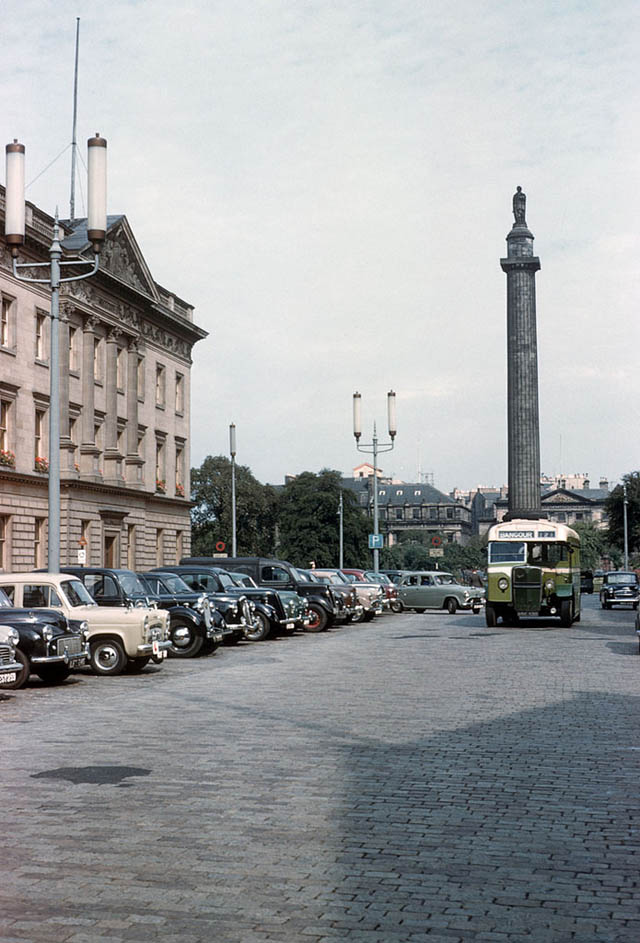
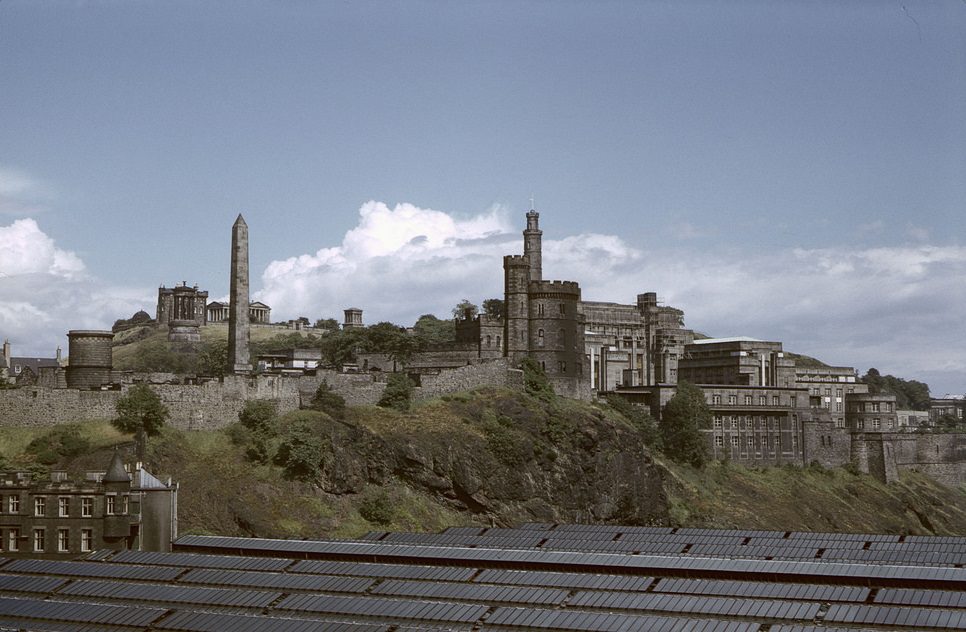
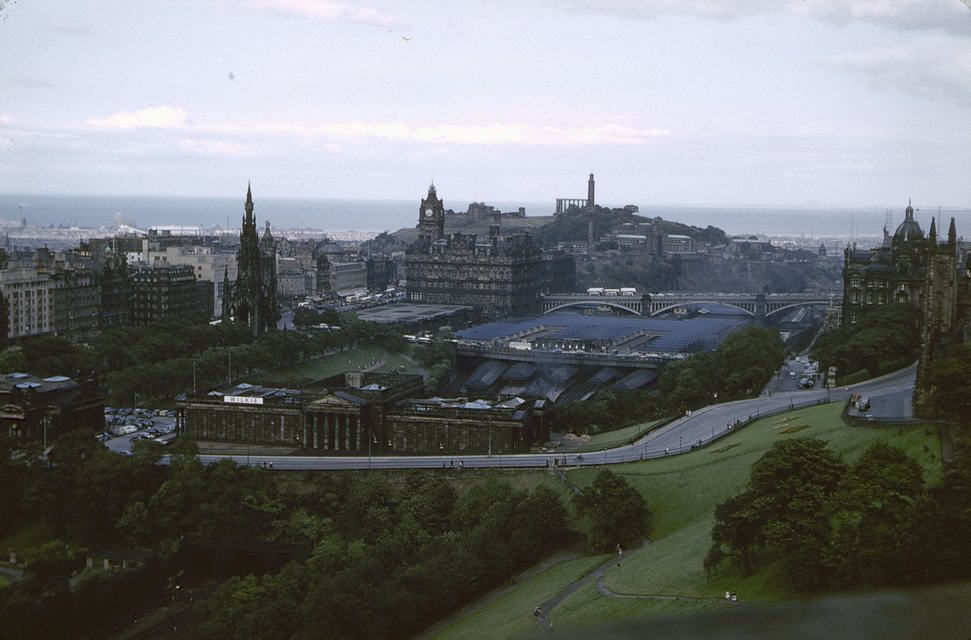
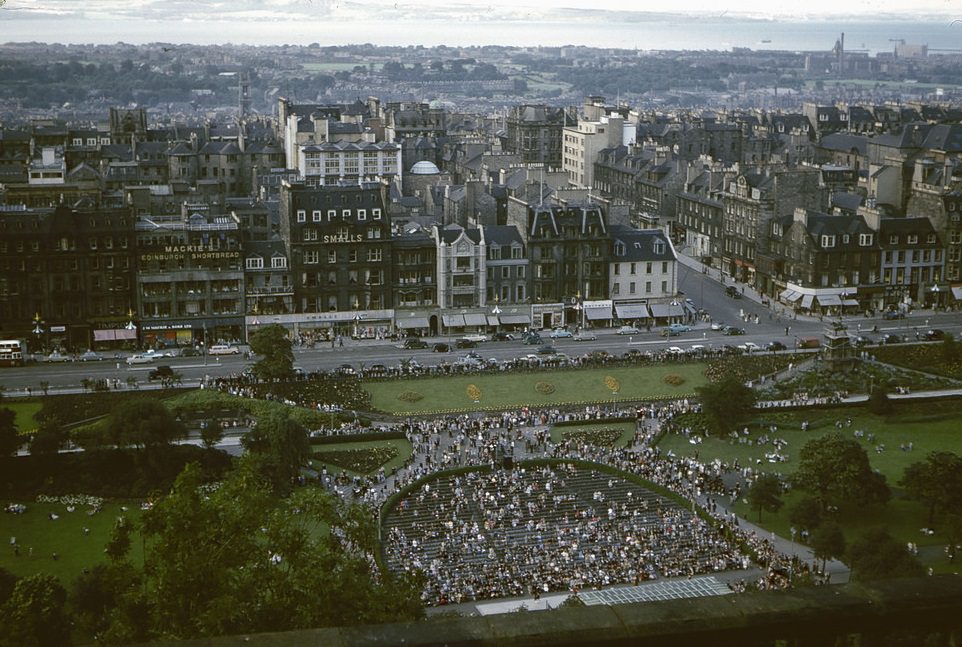
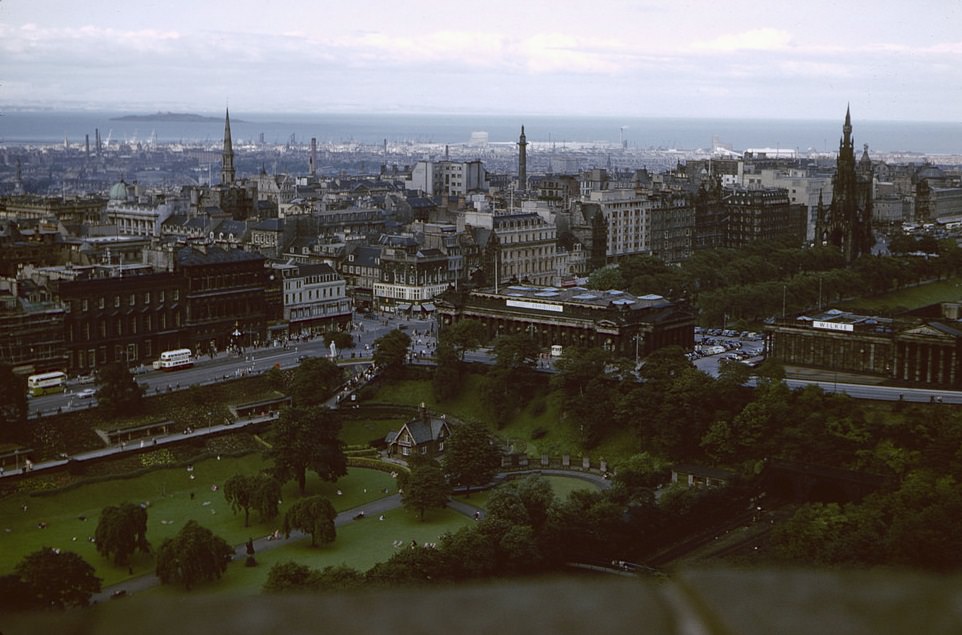
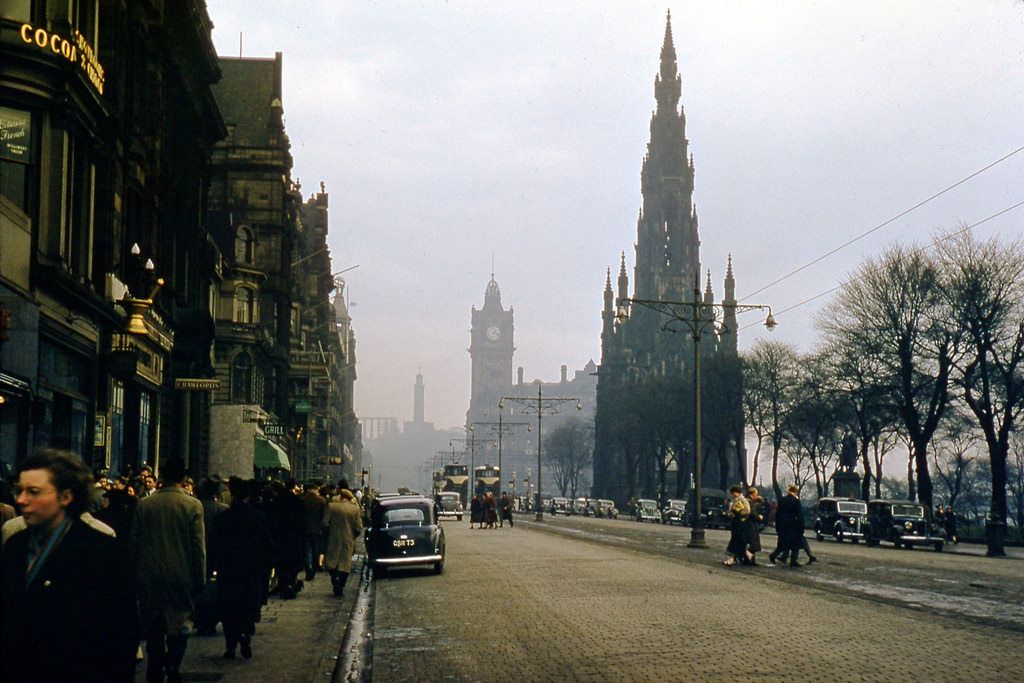
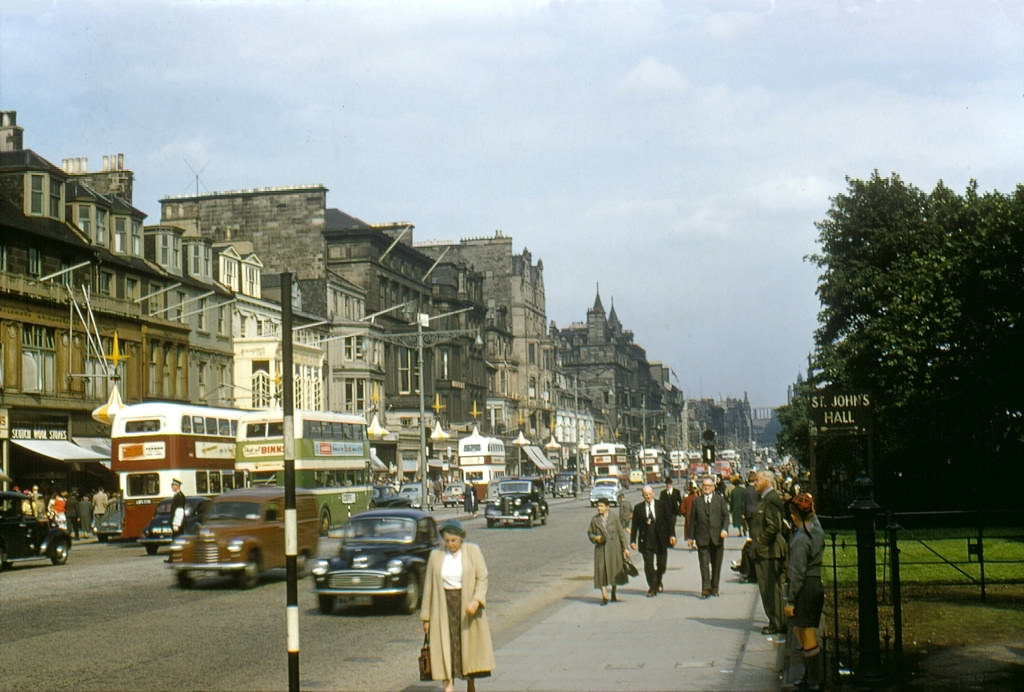
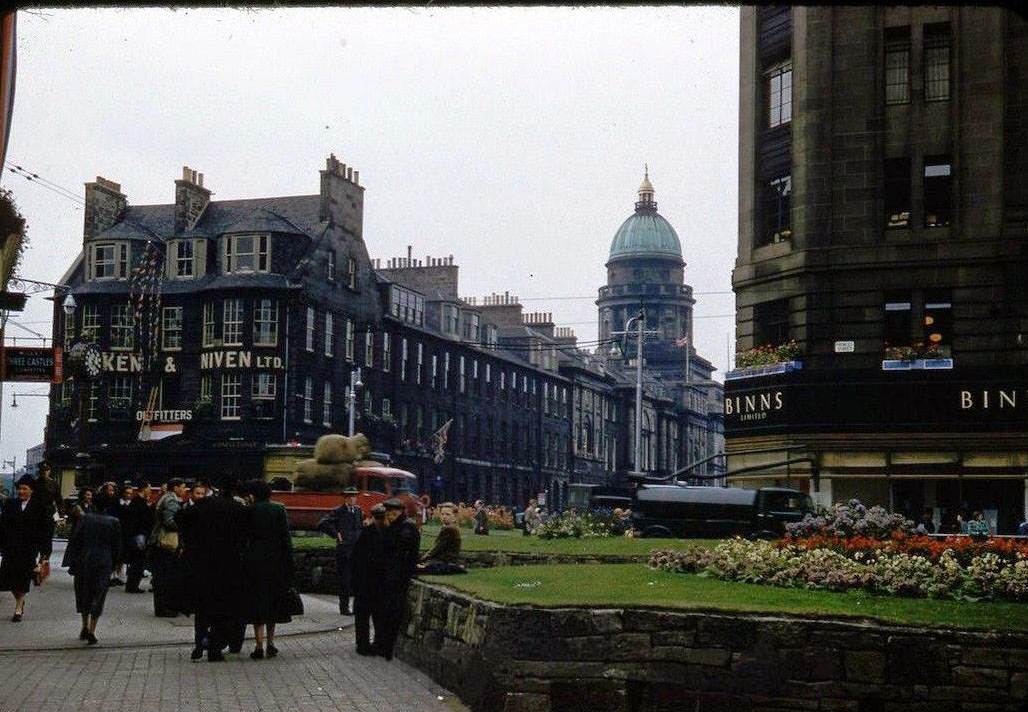
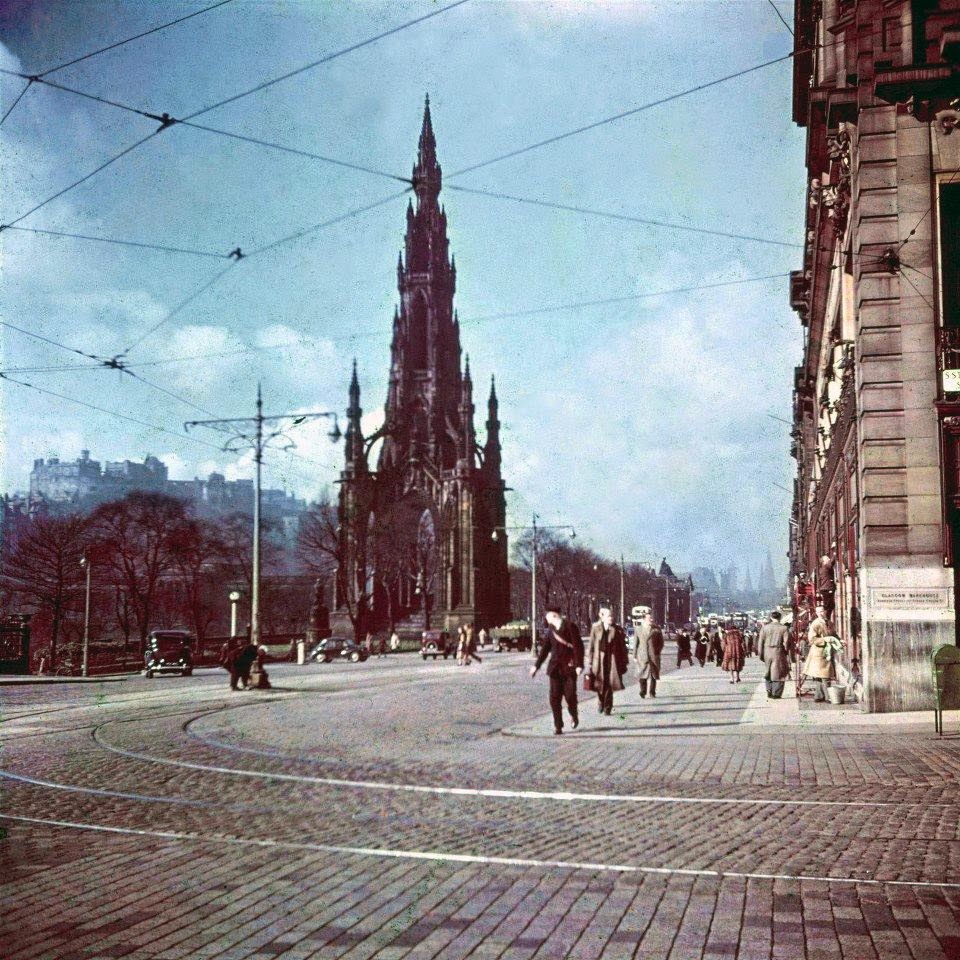
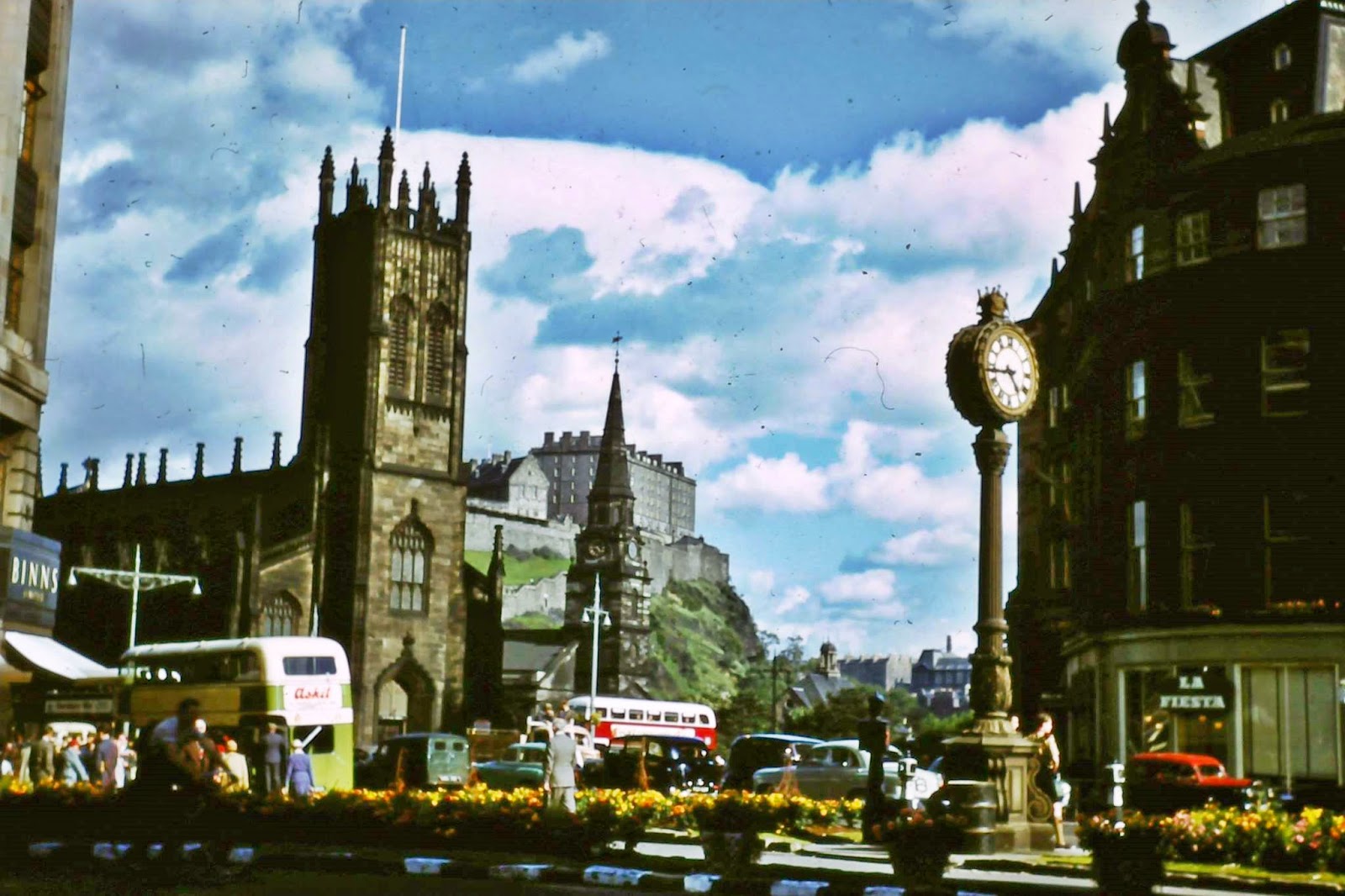
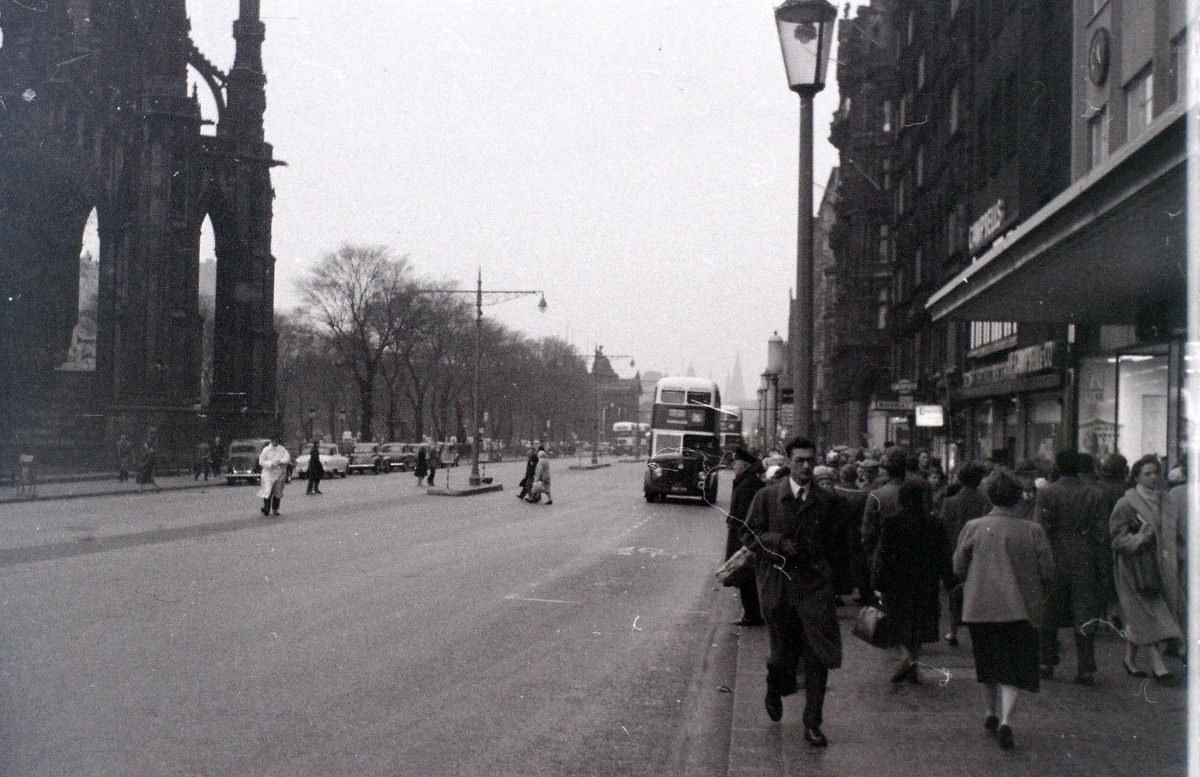
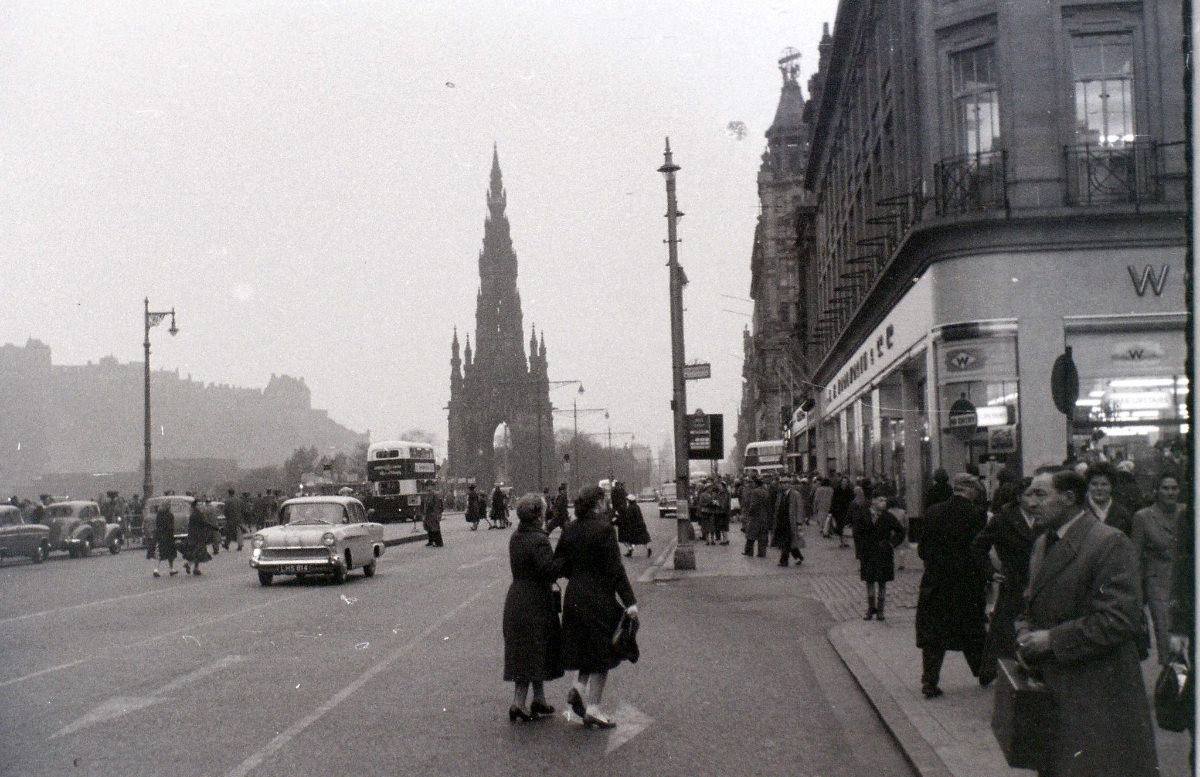
Princes Street was the beating heart of the city. Department stores, woolens shops, and market stalls lined its length. On a busy afternoon, the pavements were packed with shoppers, and the air was filled with the sounds of the city going about its daily business.
On weekends, many Edinburgh families made the trip to Portobello for a day out by the sea. The beach and promenade offered a simple escape from the city, and it was a well-loved tradition for people of all ages. For many working-class families, it was the closest thing to a holiday they would get.
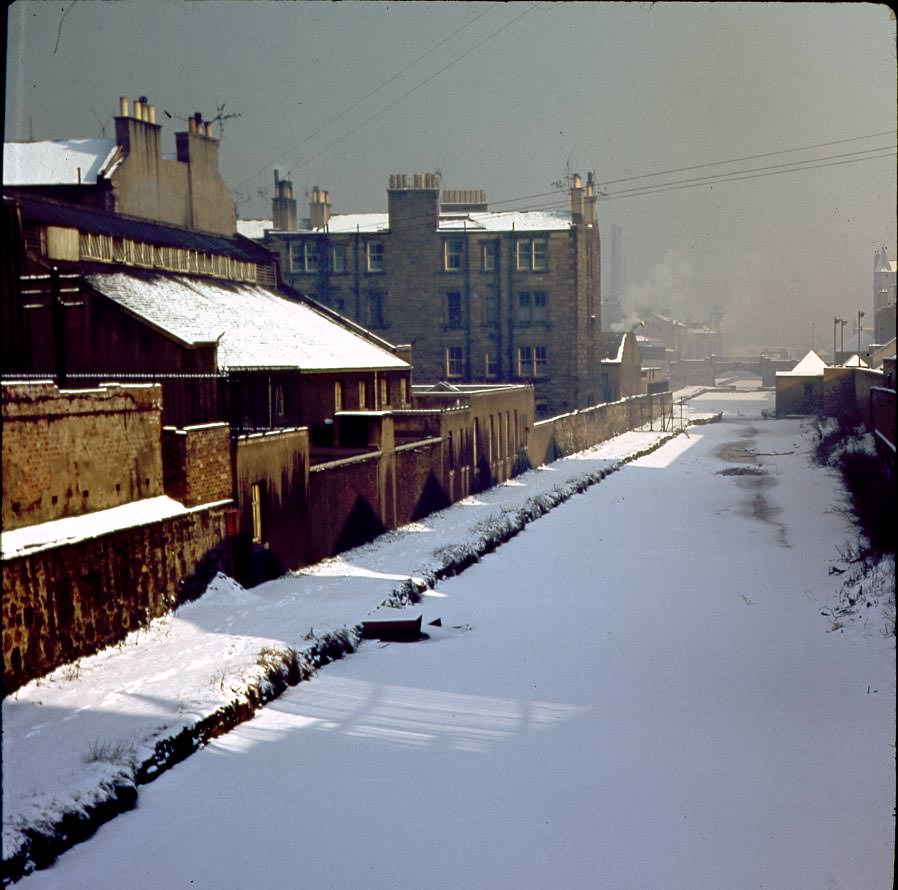
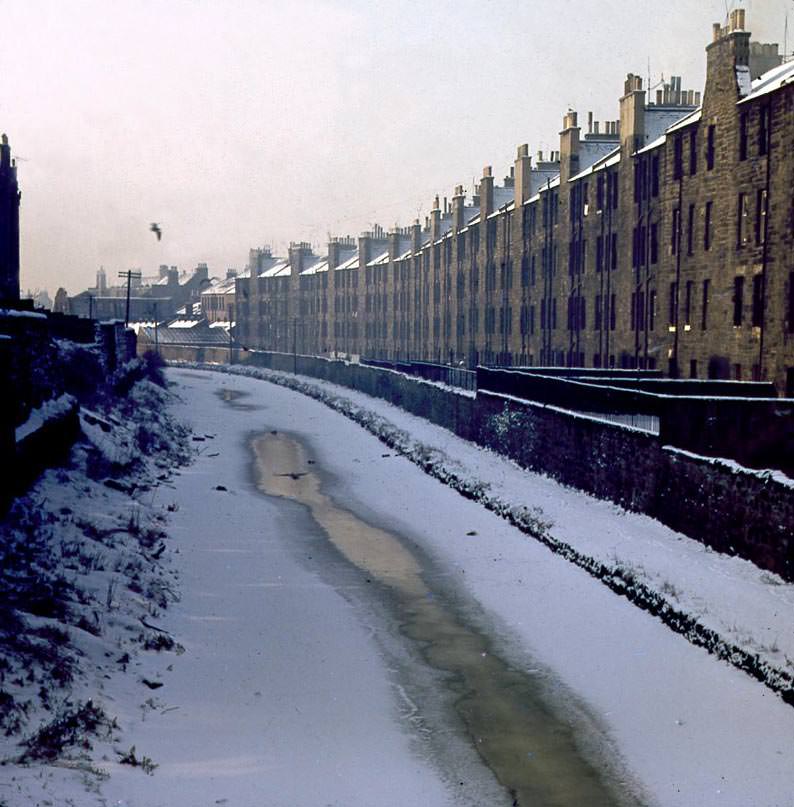
Housing was one of the decade’s defining issues. Slum housing in the older parts of the city left many families living in cramped, damp, and overcrowded conditions. The city began moving people out to new housing estates on the outskirts, offering modern homes with indoor bathrooms and proper kitchens. Many welcomed the change, though the tight-knit community bonds of the old neighborhoods were often lost in the move.
Football was a major part of life in 1950s Edinburgh. Both Hearts and Hibs had strong squads during this period, and match days drew large, passionate crowds. A trip to the football on a Saturday afternoon was a ritual for thousands of men and boys across the city.
Evenings out in 1950s Edinburgh often meant dancing or going to the pictures. Local dance halls filled up on weeknights and weekends, and the cinema was one of the most popular forms of entertainment the city had to offer. These nights out were a weekly fixture for many young people.
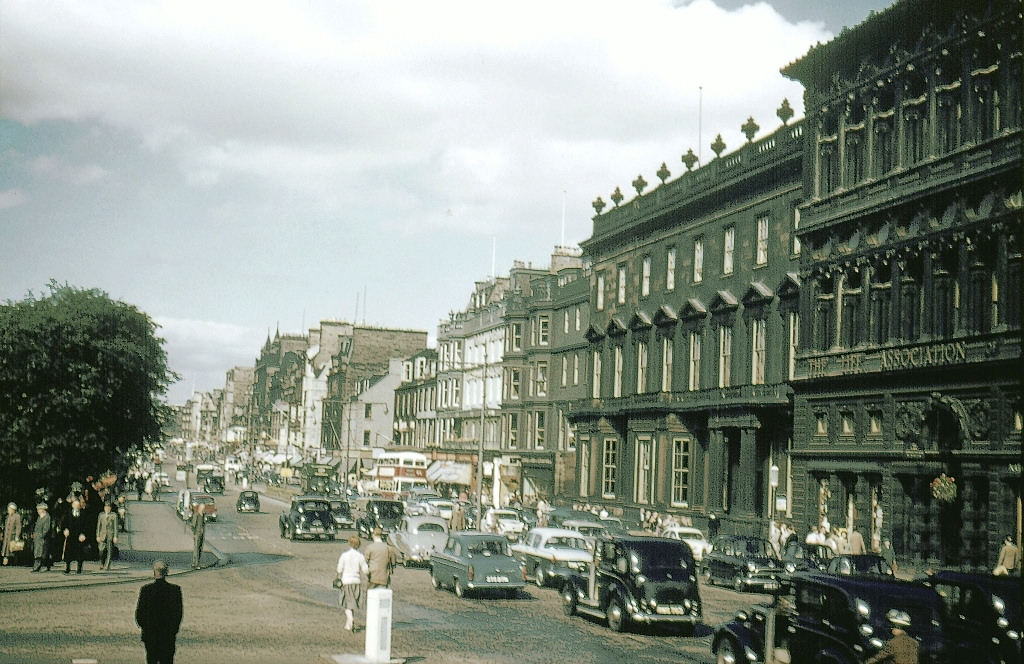
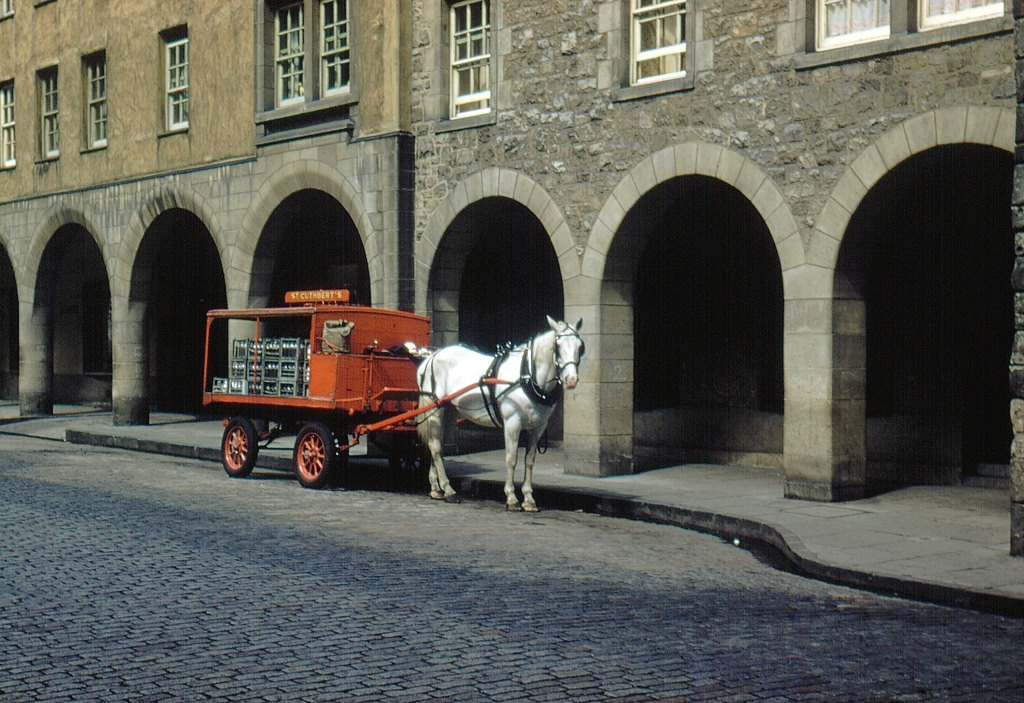
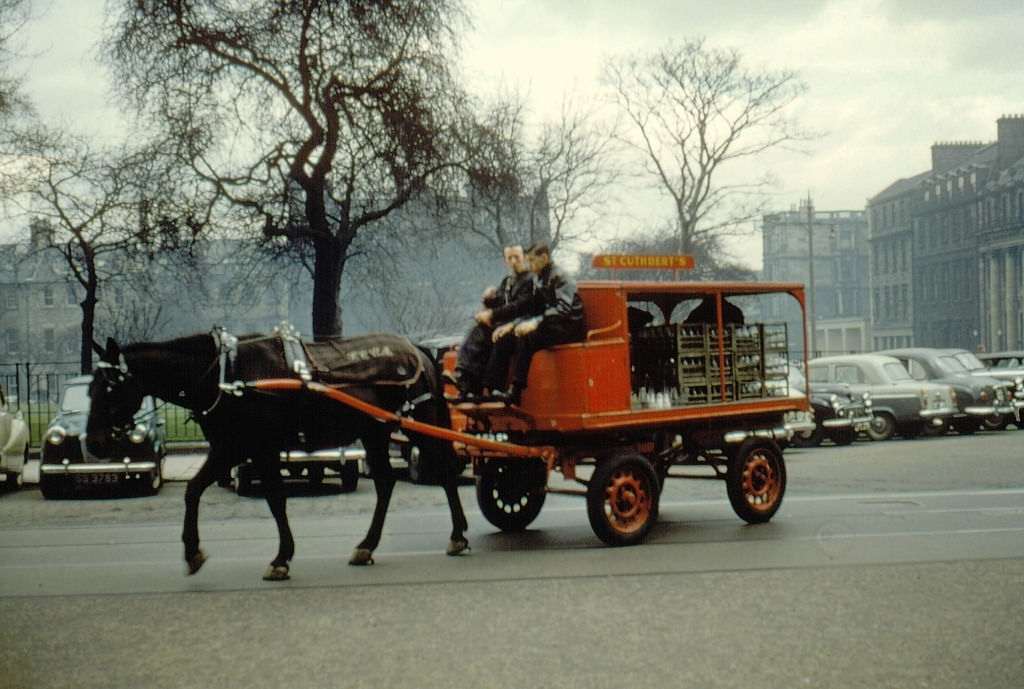
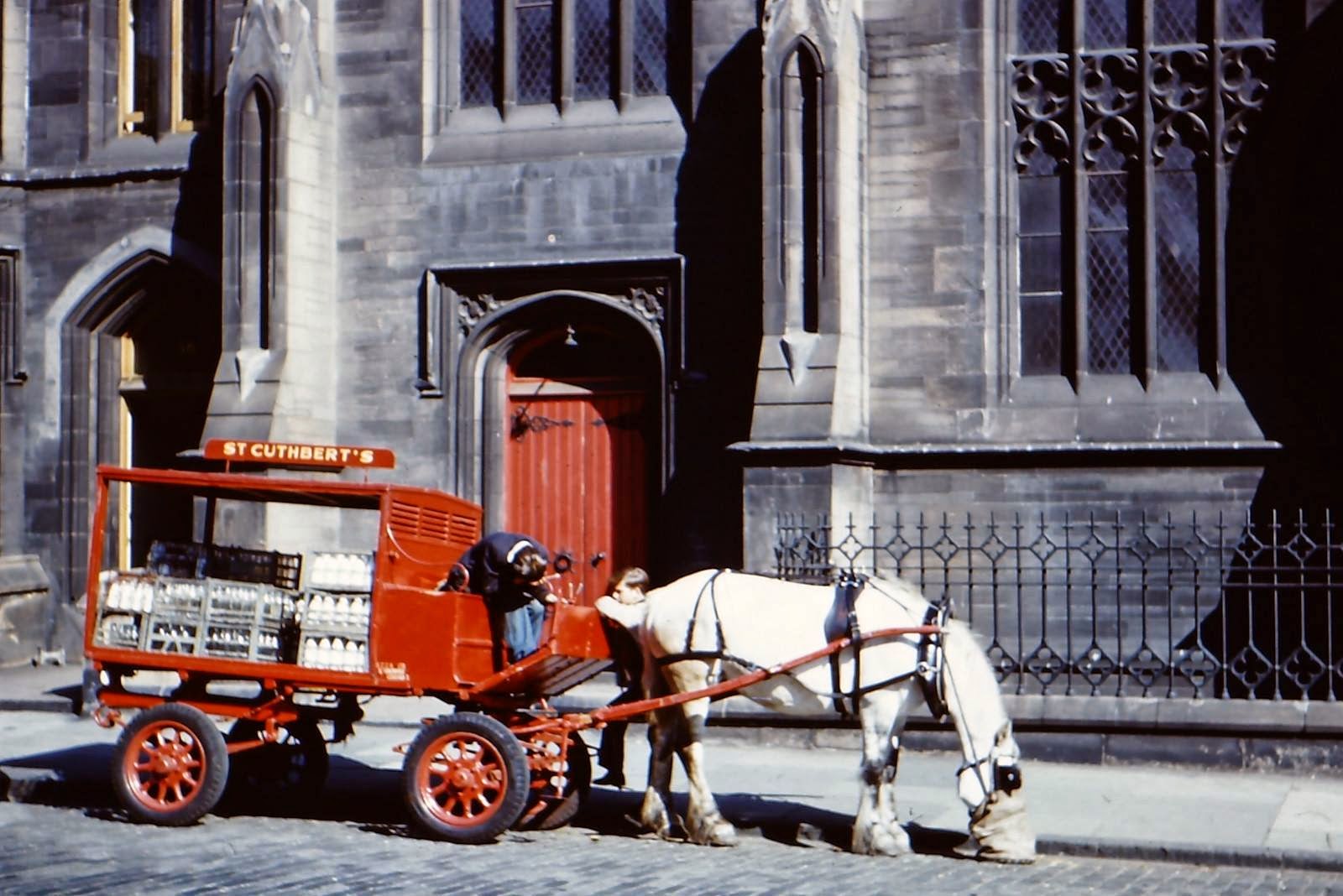
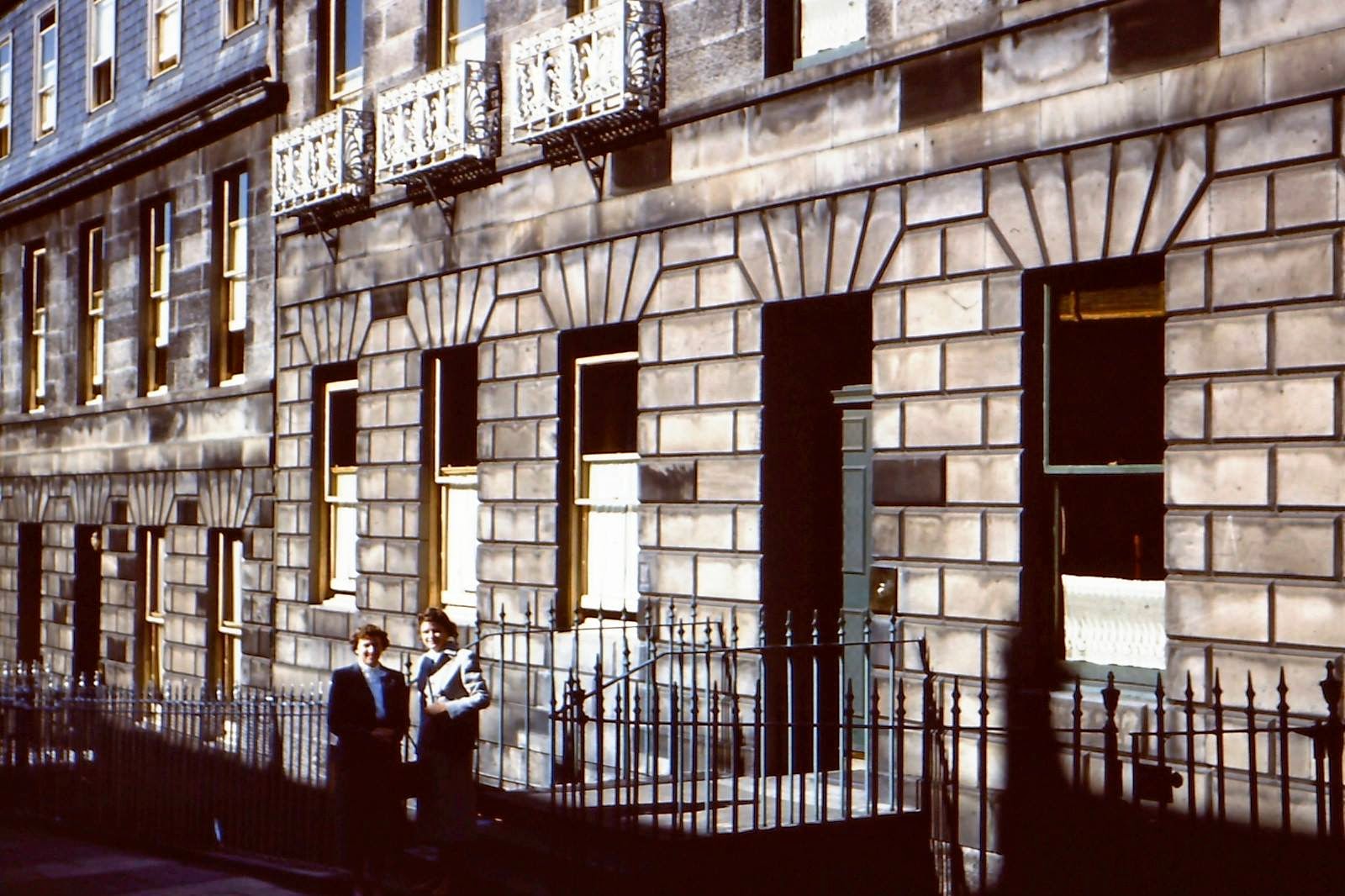
Milk floats like the one operated by St Cuthbert’s were a common early-morning sight on Edinburgh’s streets in 1955. Horse-drawn and electric floats alike made their rounds through residential areas, dropping off pints at the doorstep. The New Town’s neat Georgian streets, like Hart Street, saw the same daily rhythms play out year after year.
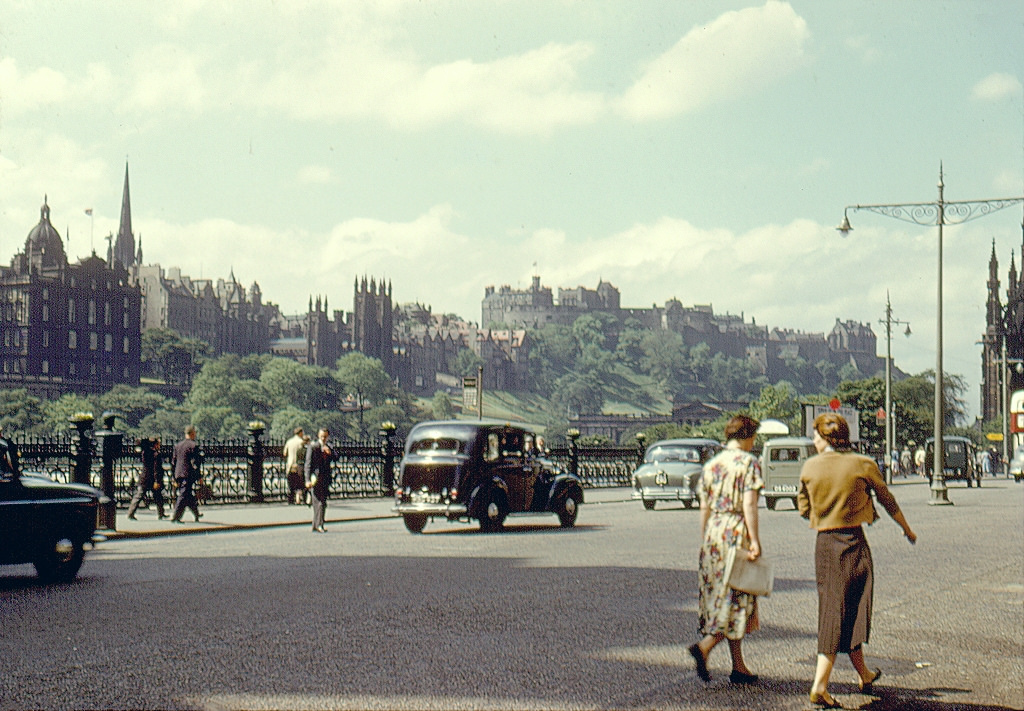
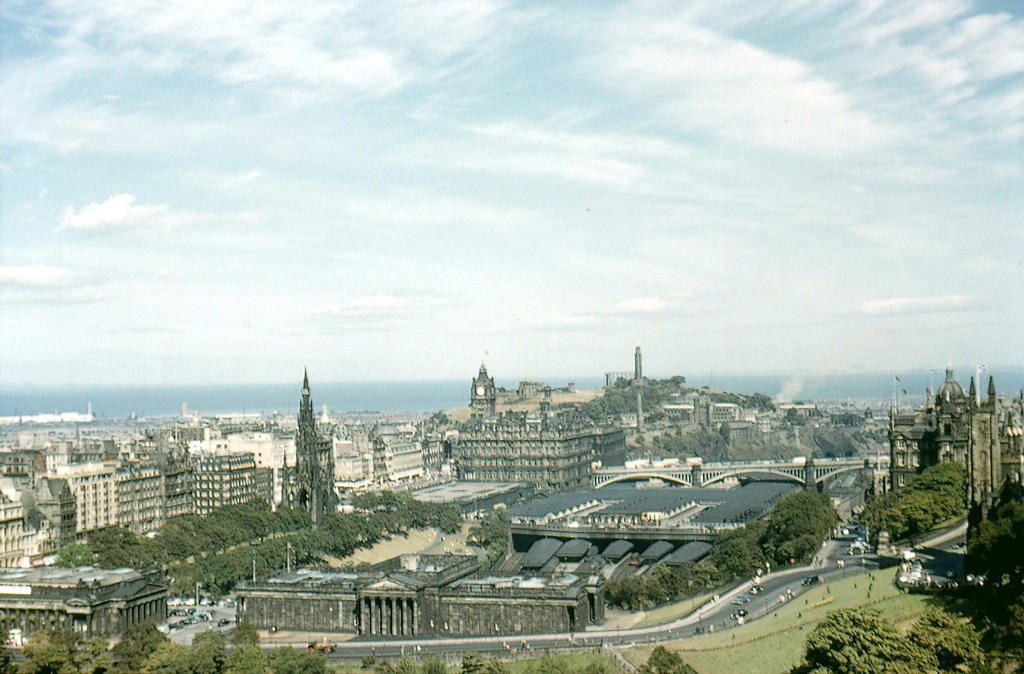
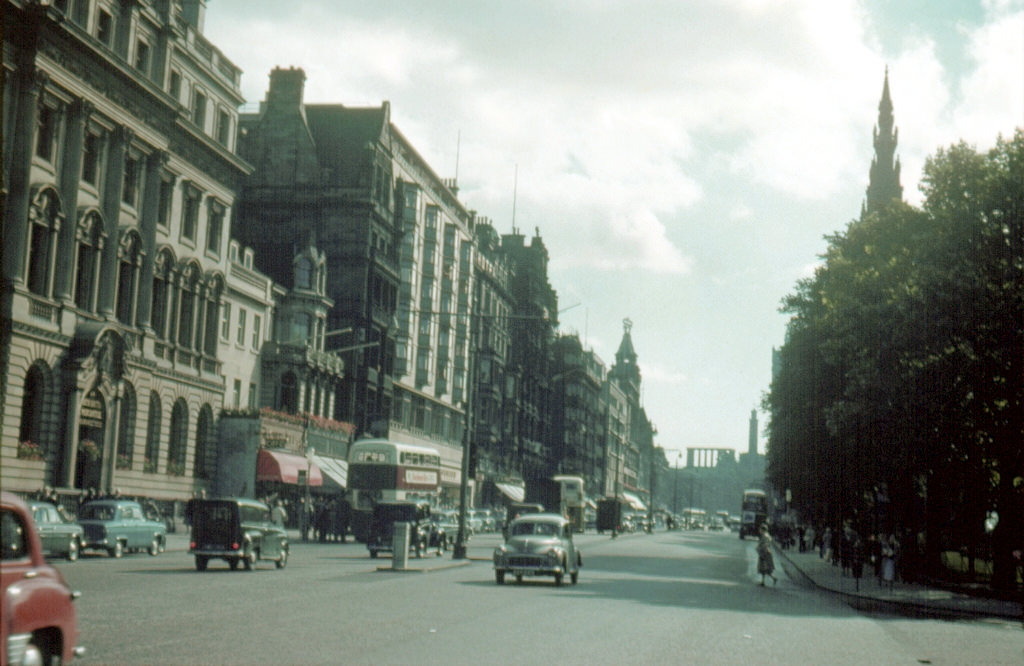
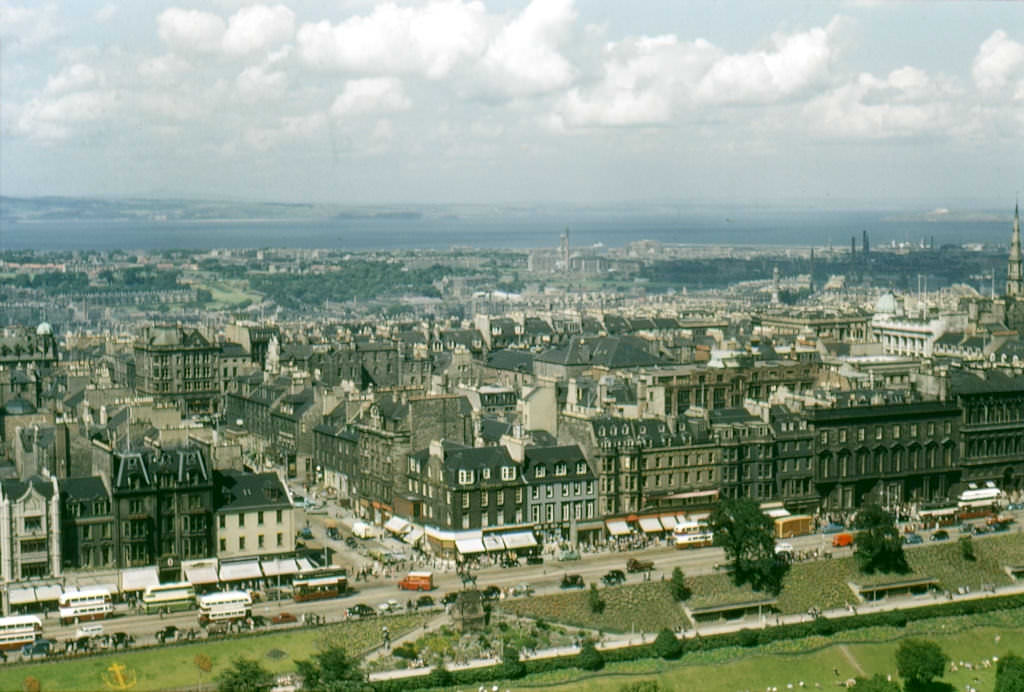
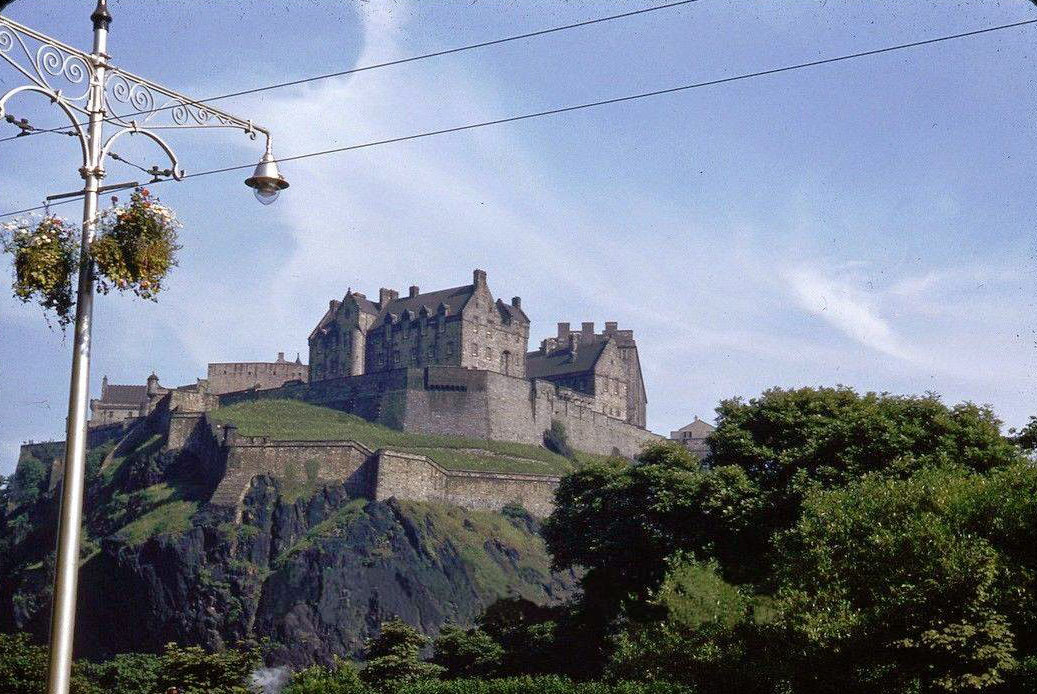
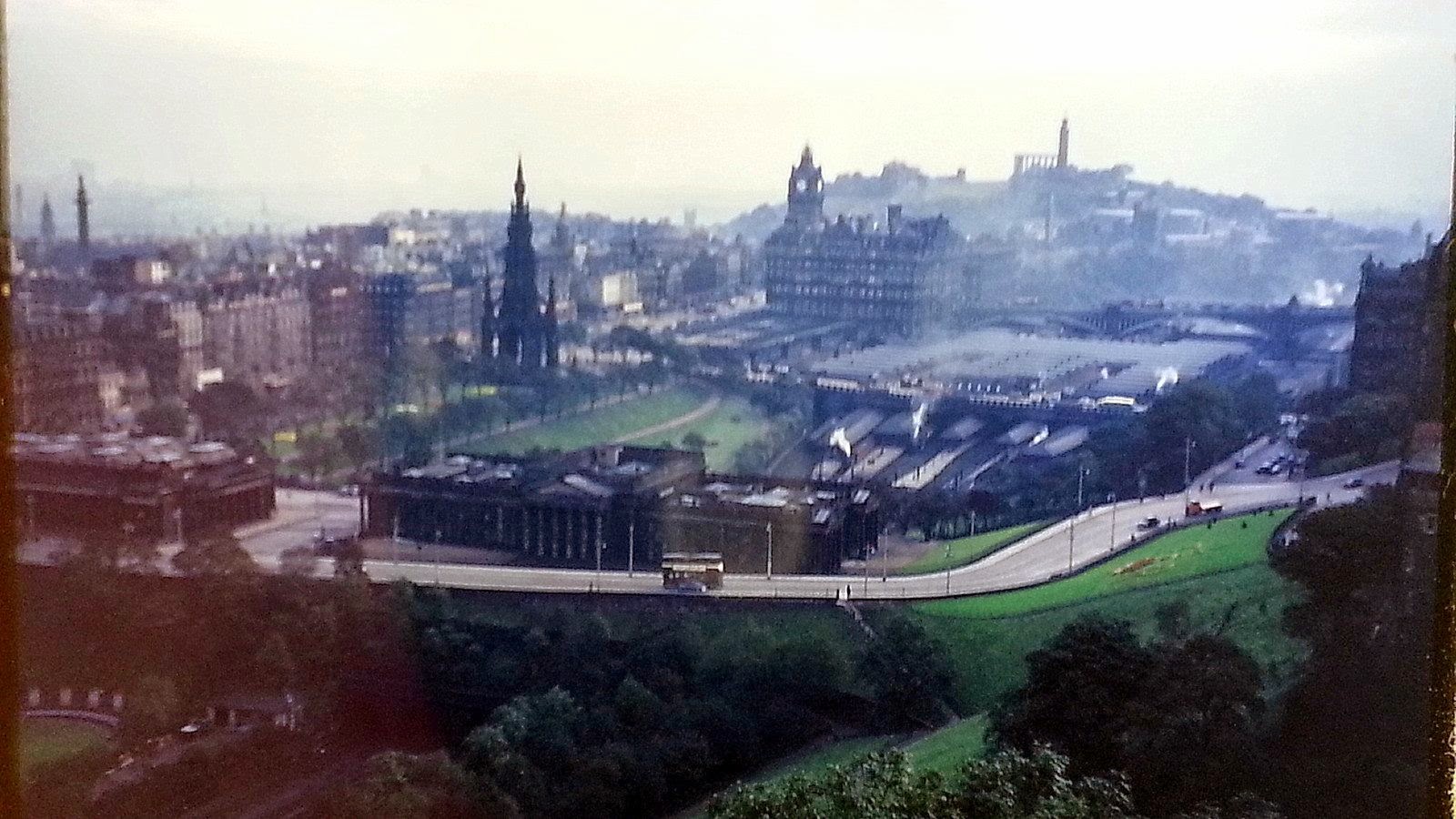
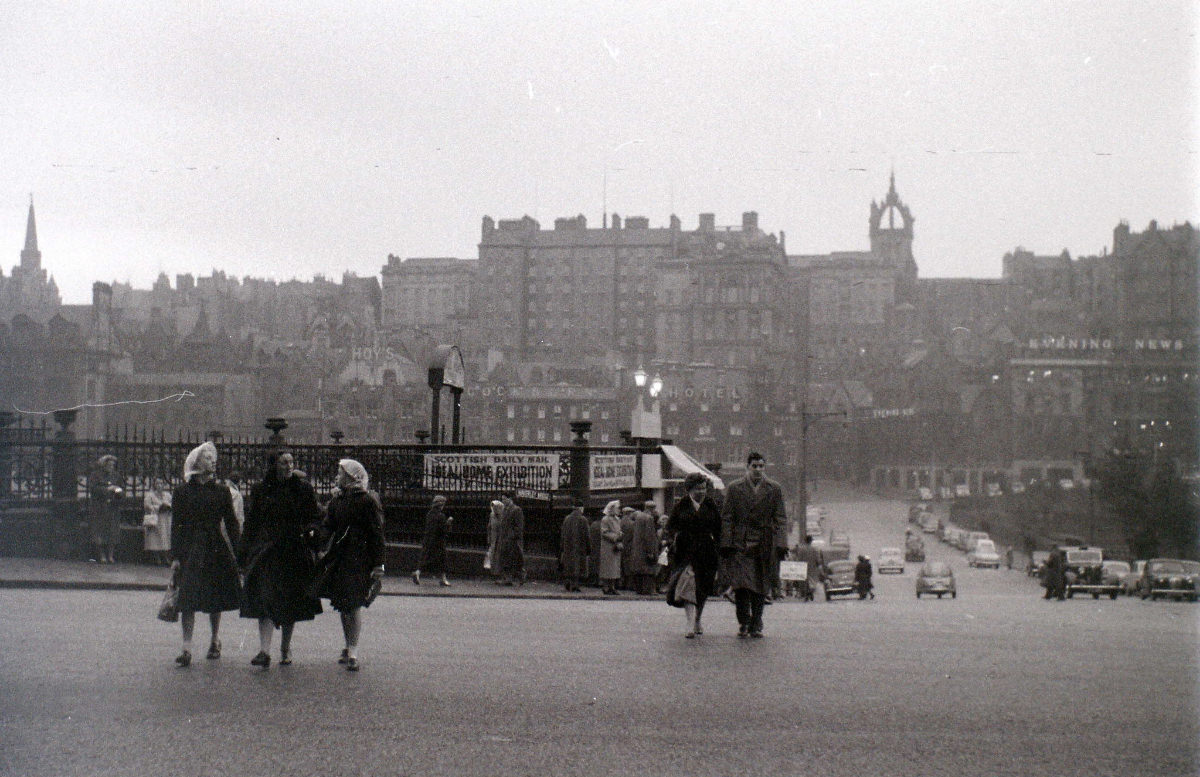
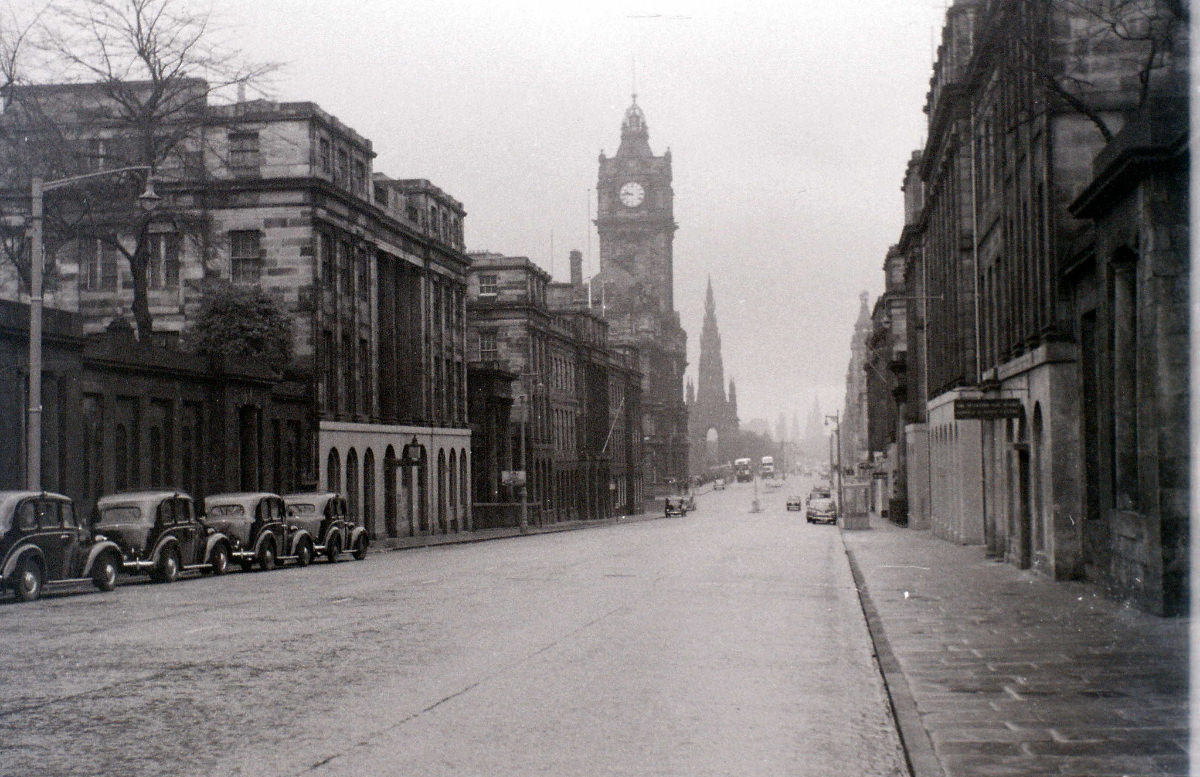
Princes Street in the mid-1950s was a busy, well-dressed scene. Shoppers moved between well-known stores, trams passed in both directions, and the view of Edinburgh Castle from the street remained as striking as ever.
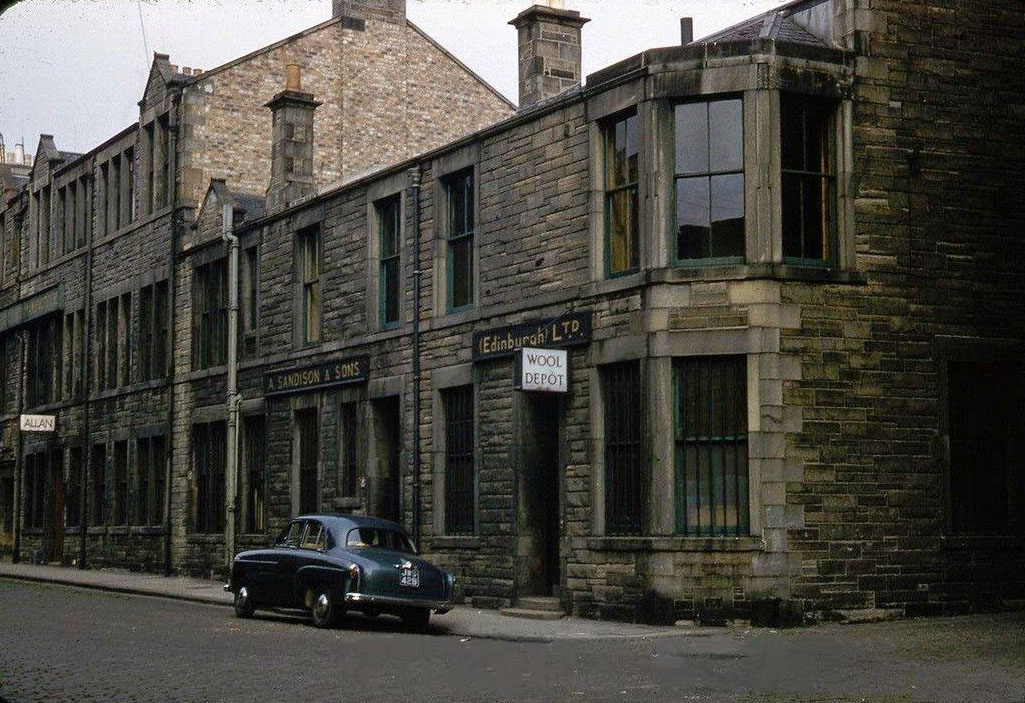
Local businesses were a big part of what made Edinburgh’s streets feel alive. Shops like A Sandison & Sons Wool Depot served a practical need in an era when many people still knitted their own clothes. These kinds of specialist traders were found on nearly every high street across the city.
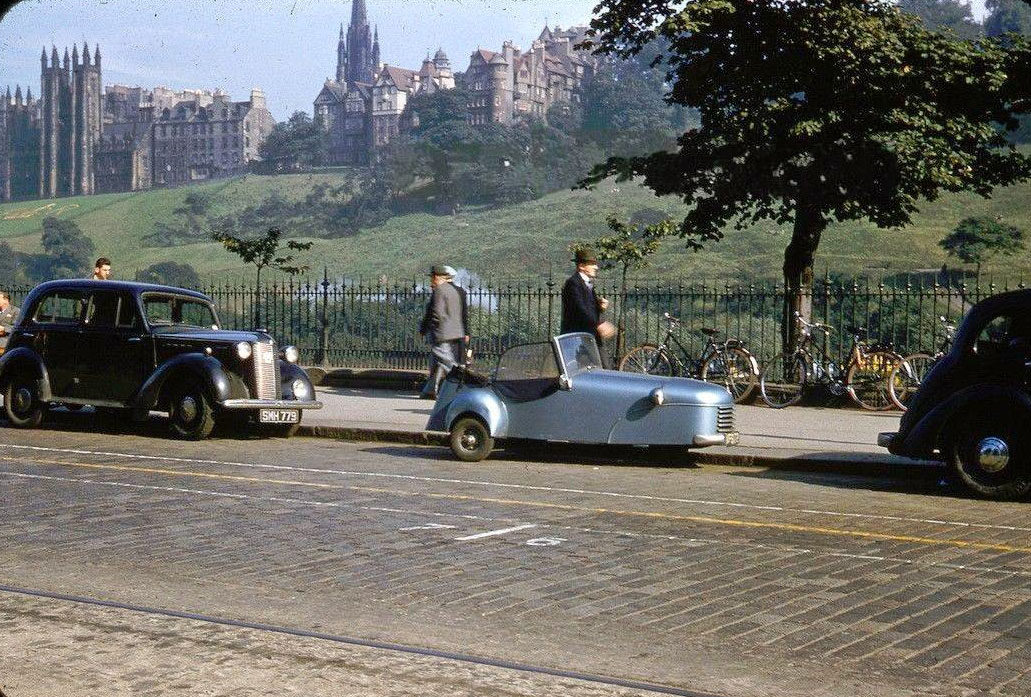
By 1953, the car was beginning to make its presence felt on Edinburgh’s roads. Three-wheeled vehicles were a novel sight on Princes Street, a sign of the new post-war motoring age beginning to take hold. The tram still dominated, but change was clearly on the way.
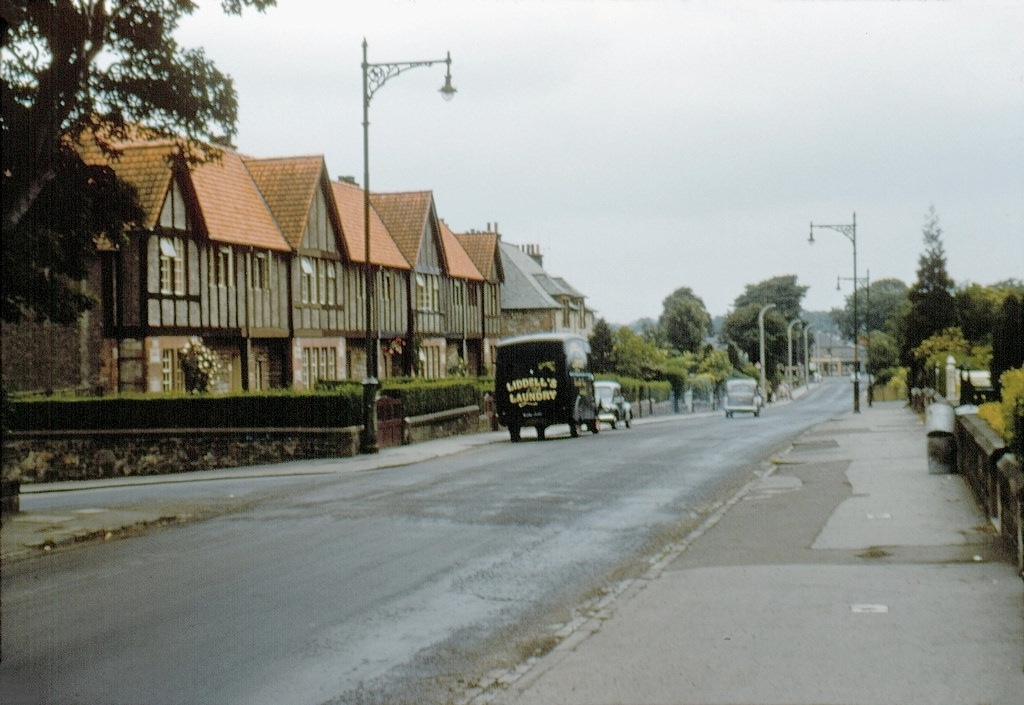
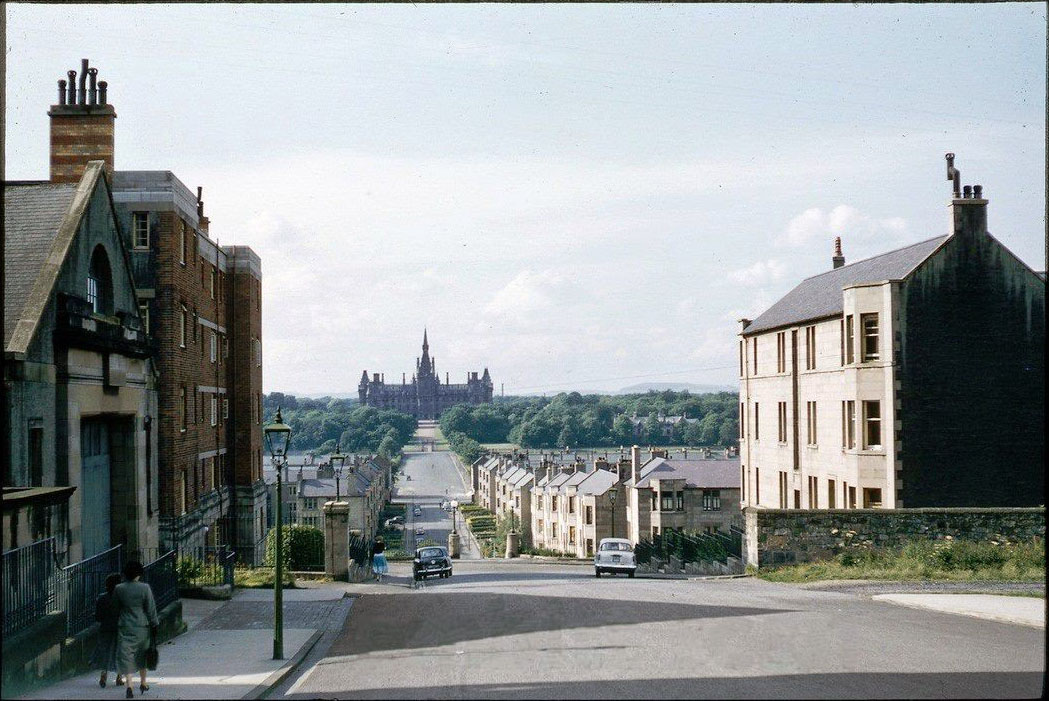
Away from the bustle of the city centre, Edinburgh’s residential streets had their own quiet character. Learmonth Avenue offered a view toward the grand towers of Fettes College, while areas like Holycorner gave a sense of the city’s more suburban side.
When the coronation of Queen Elizabeth II came in 1953, Princes Street was transformed with decorations. Flags, banners, and bunting lined the street, and the city joined the rest of the country in marking the historic occasion with visible public celebration.
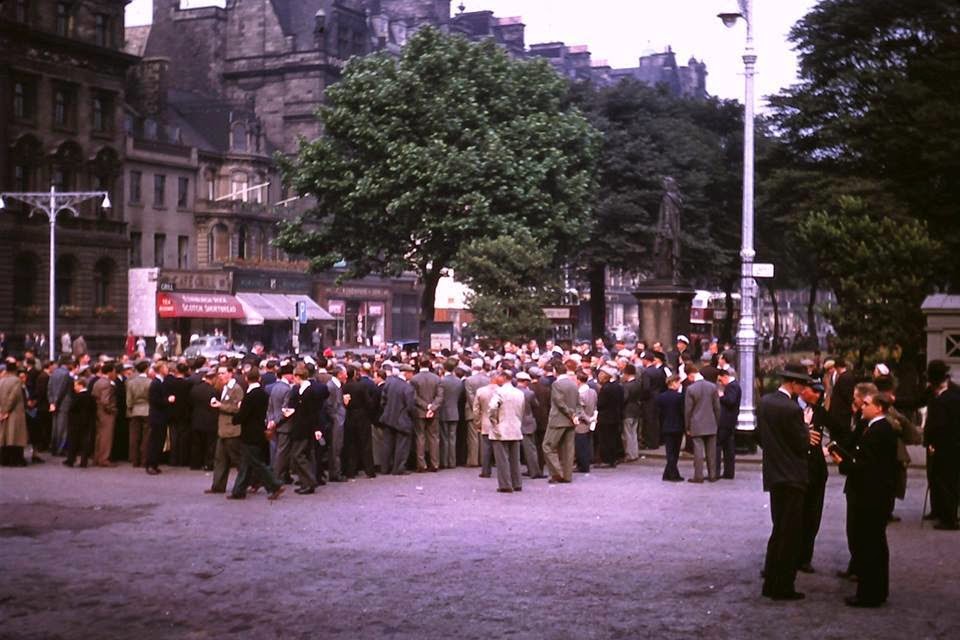
The Mound at the junction with Princes Street was a popular spot for public speaking in the late 1950s. Crowds gathered around speakers on a wide range of topics, from politics to religion, making it a lively and open forum for debate in the heart of the city.
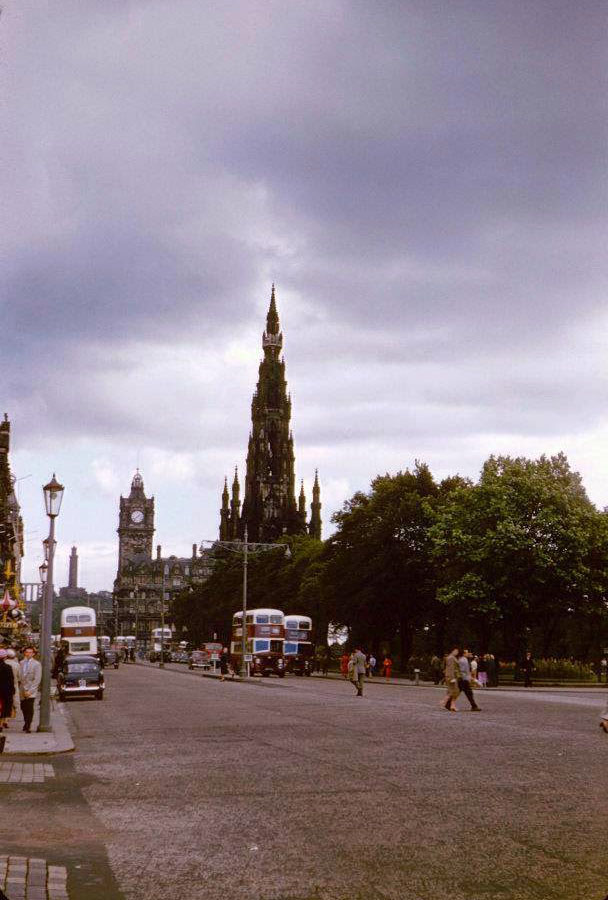
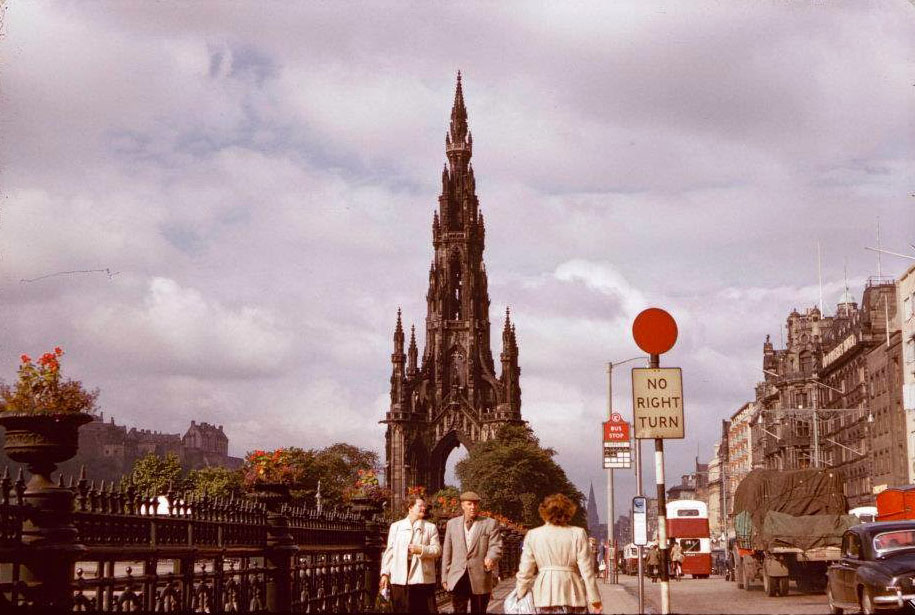
By the late 1950s, Princes Street’s east end near Woolworths and Waverley Market was one of the busiest stretches in the city. The wide pavements were filled with shoppers, and the street’s mix of chain stores and independent retailers made it a destination for the whole city.
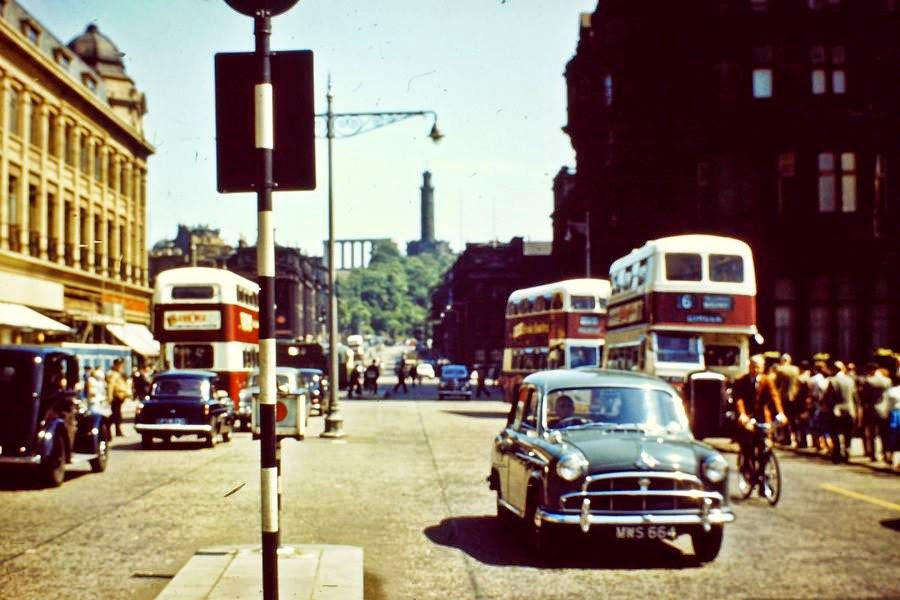
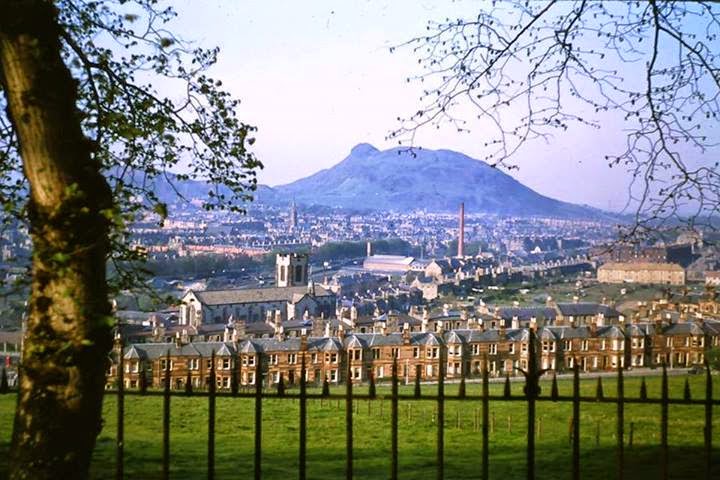
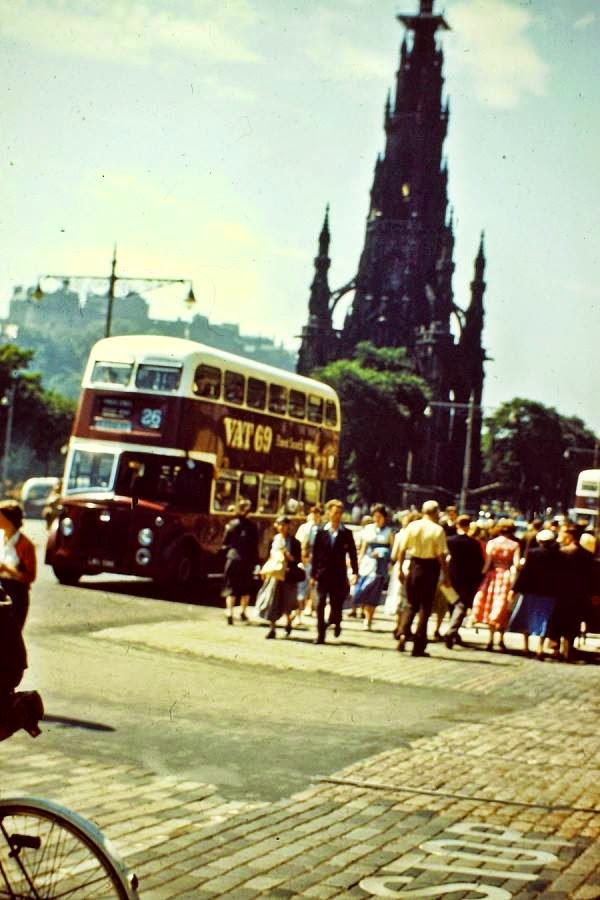
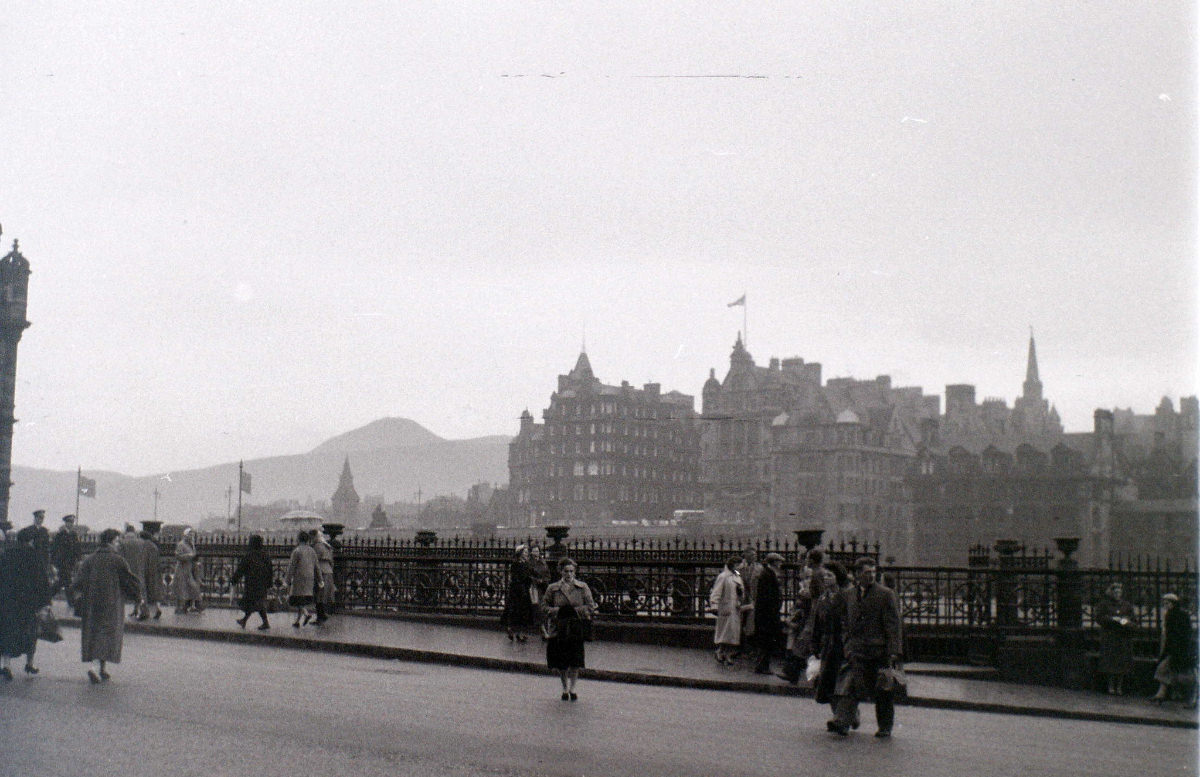
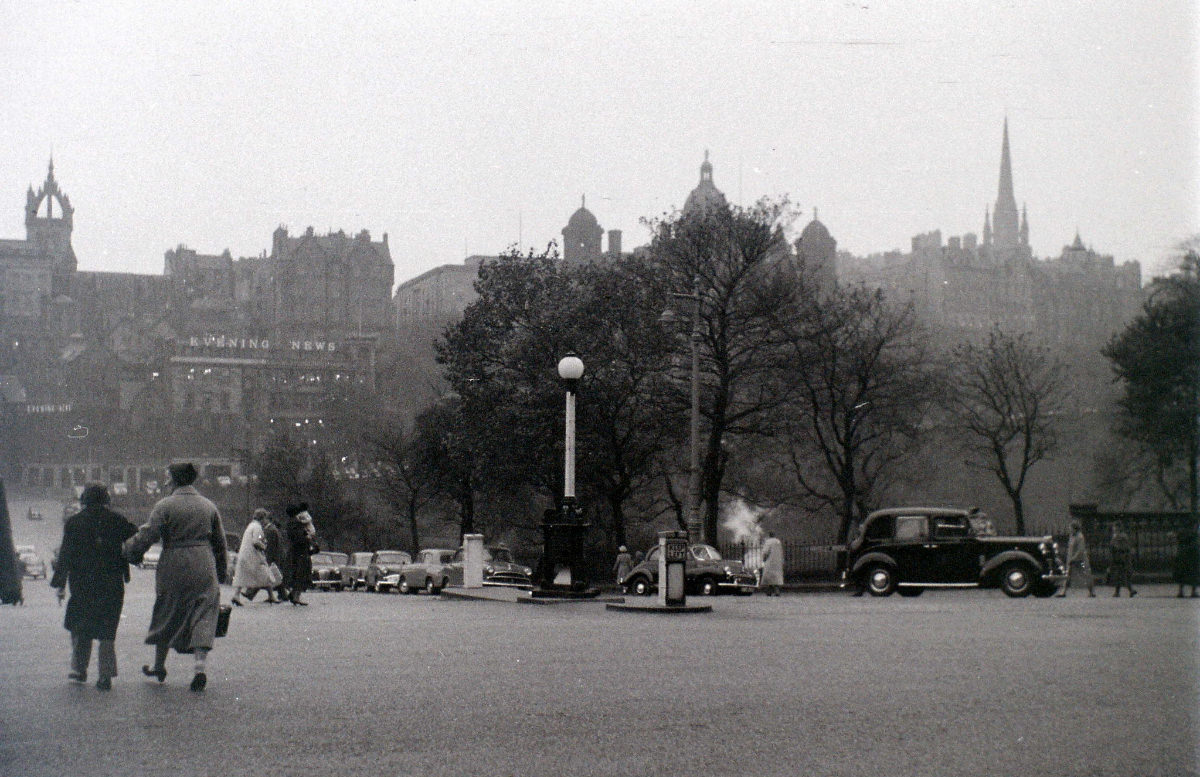
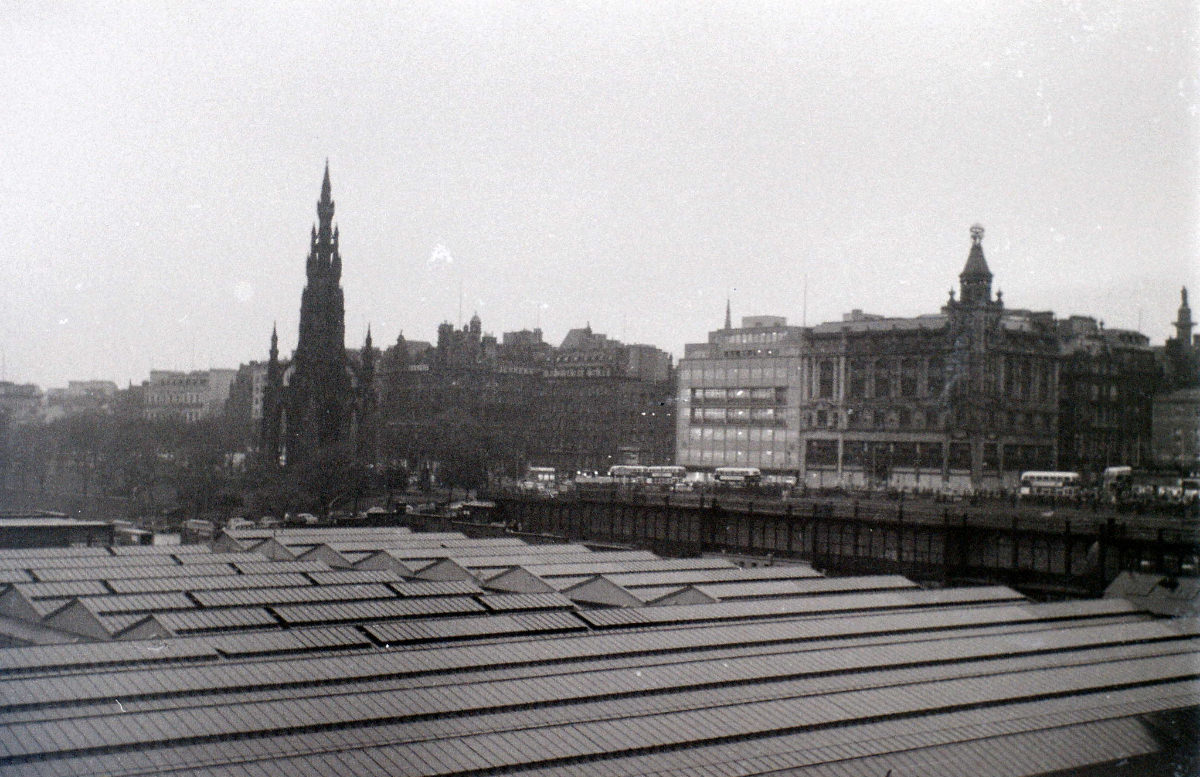
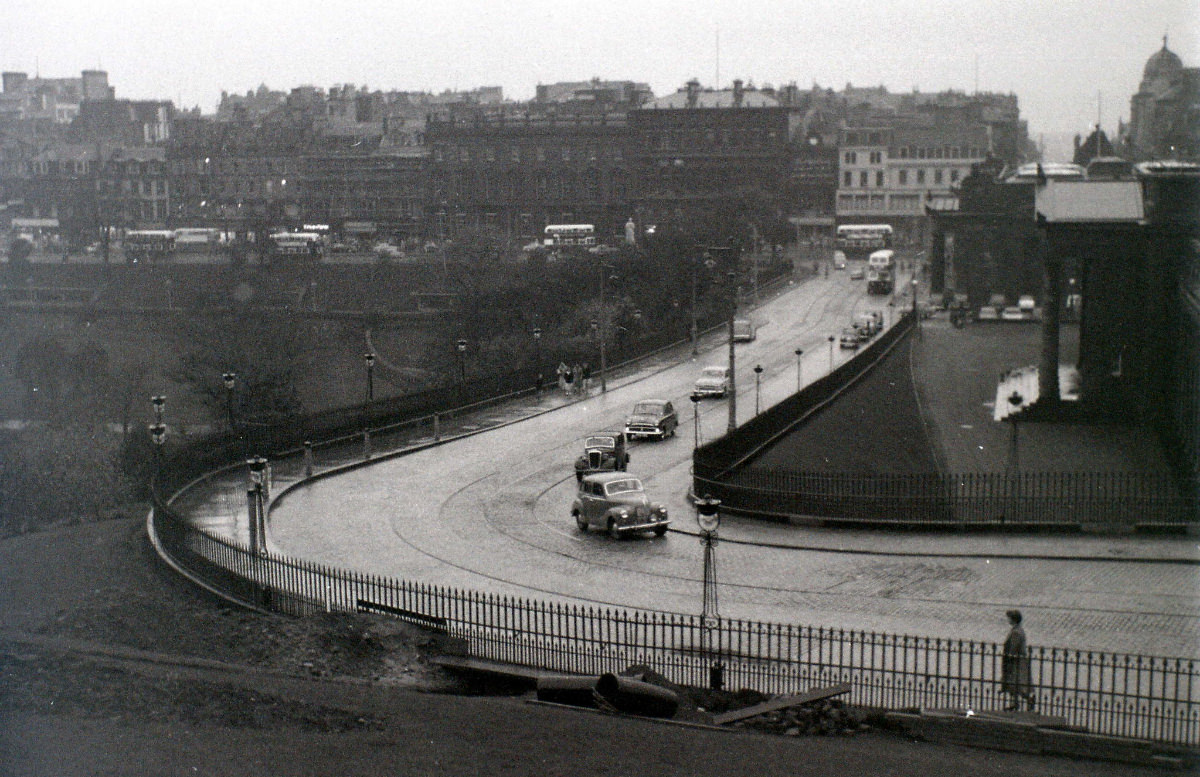
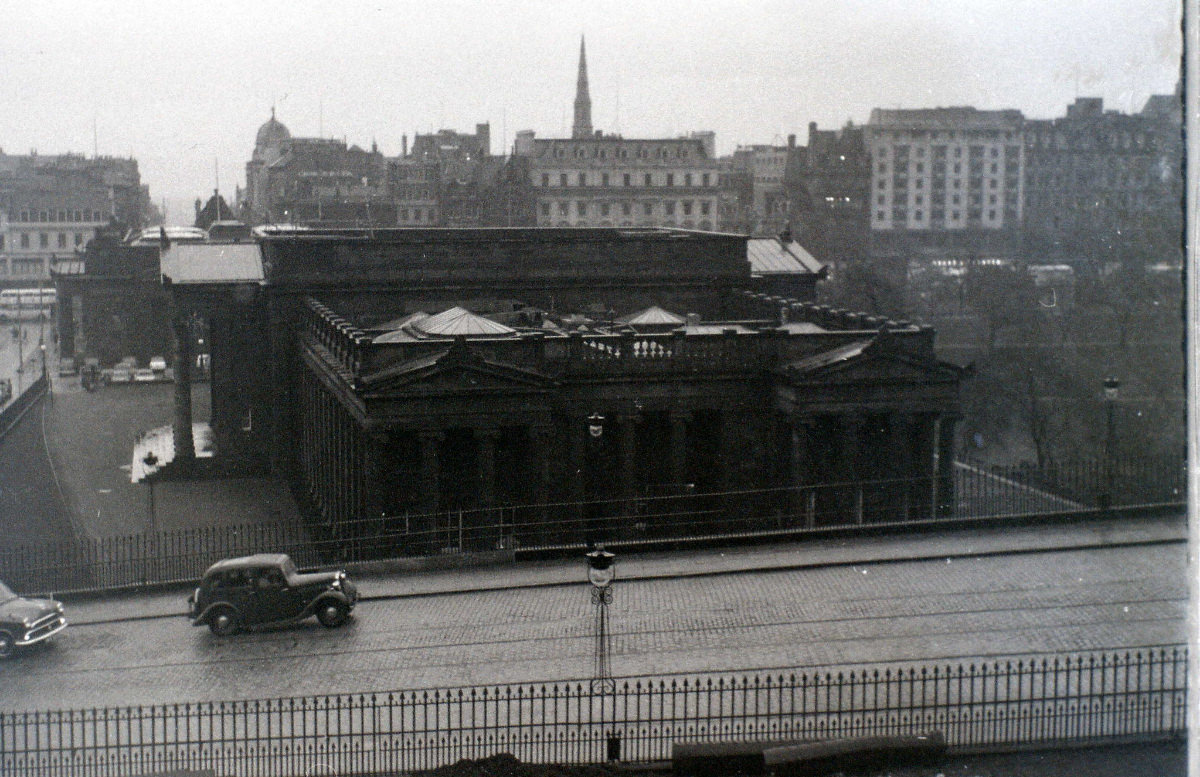
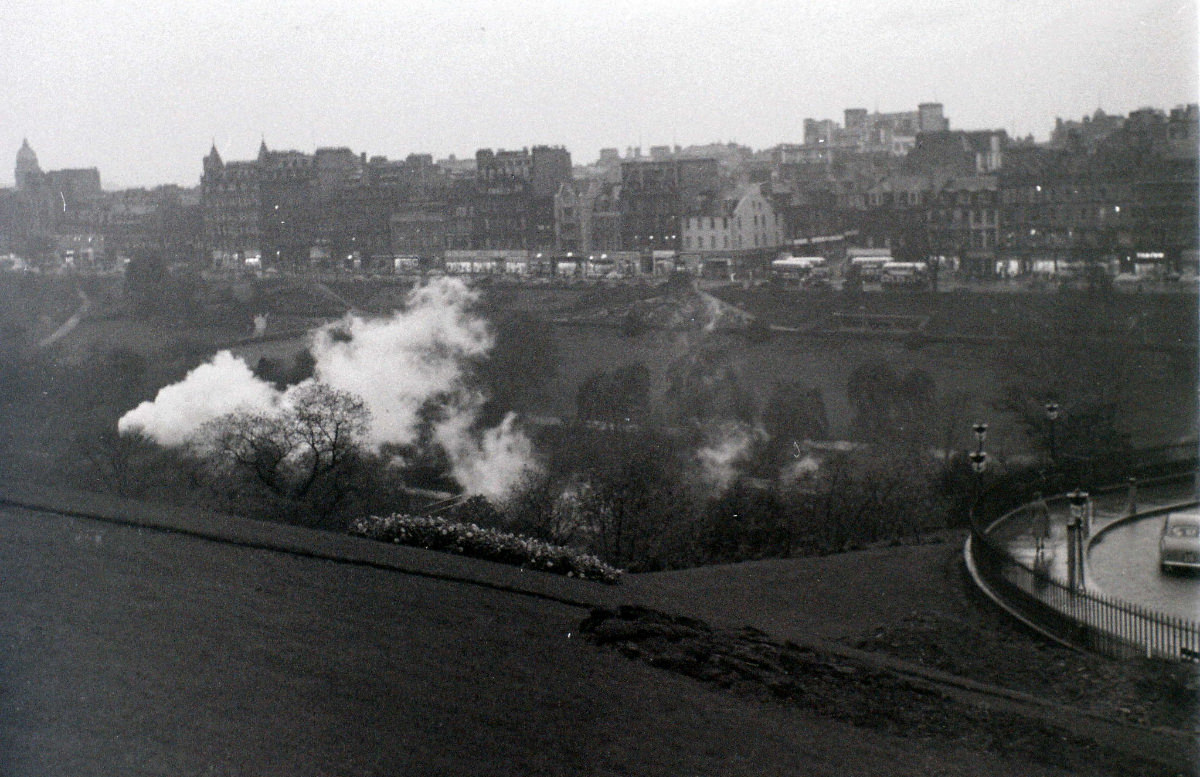
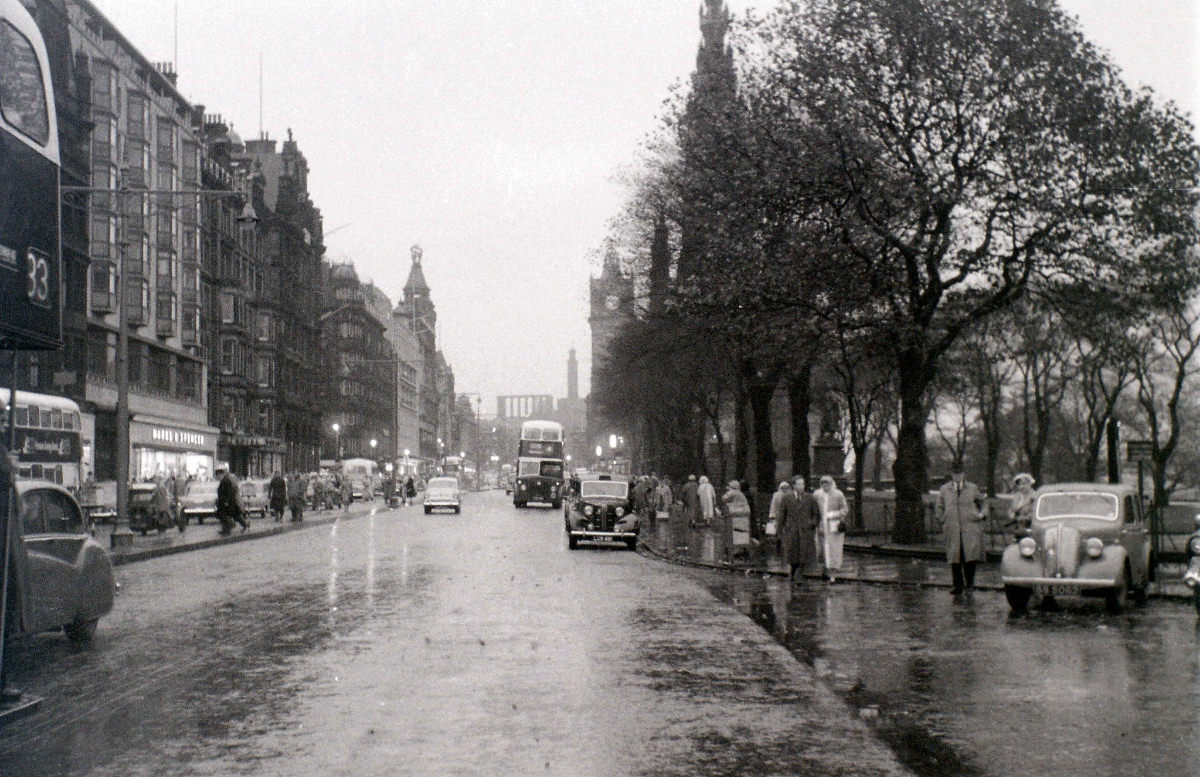
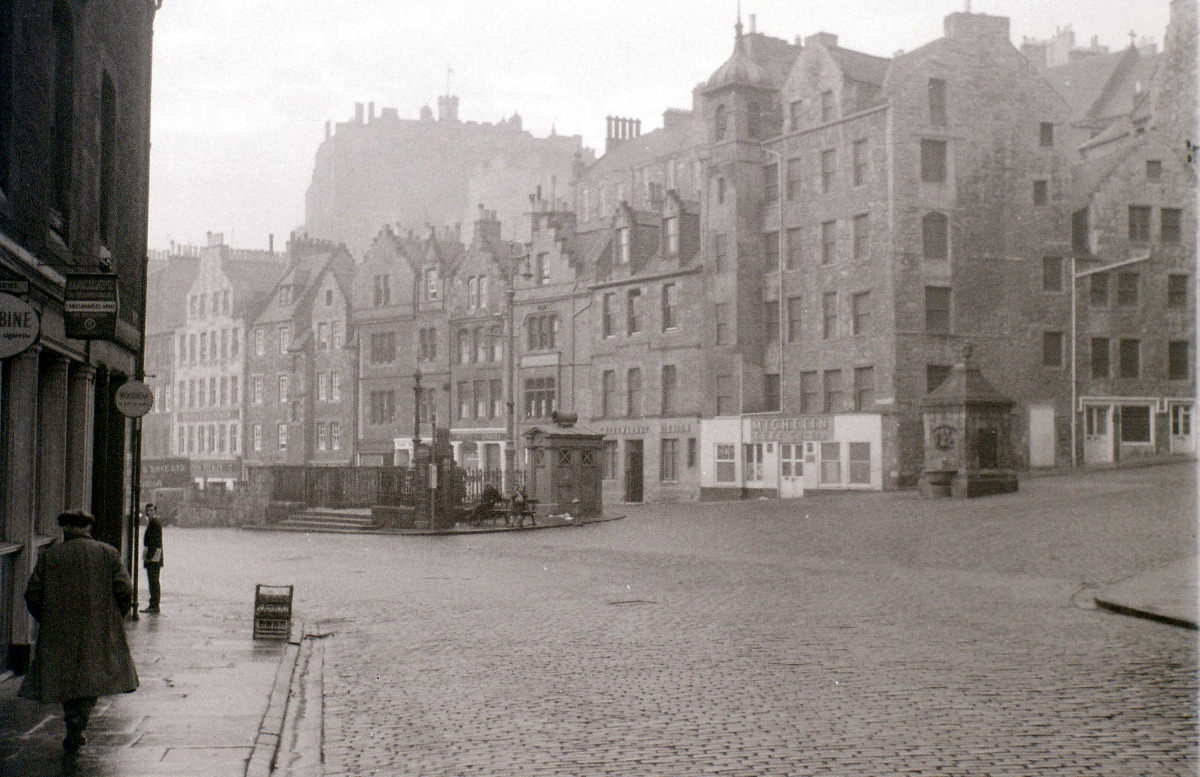
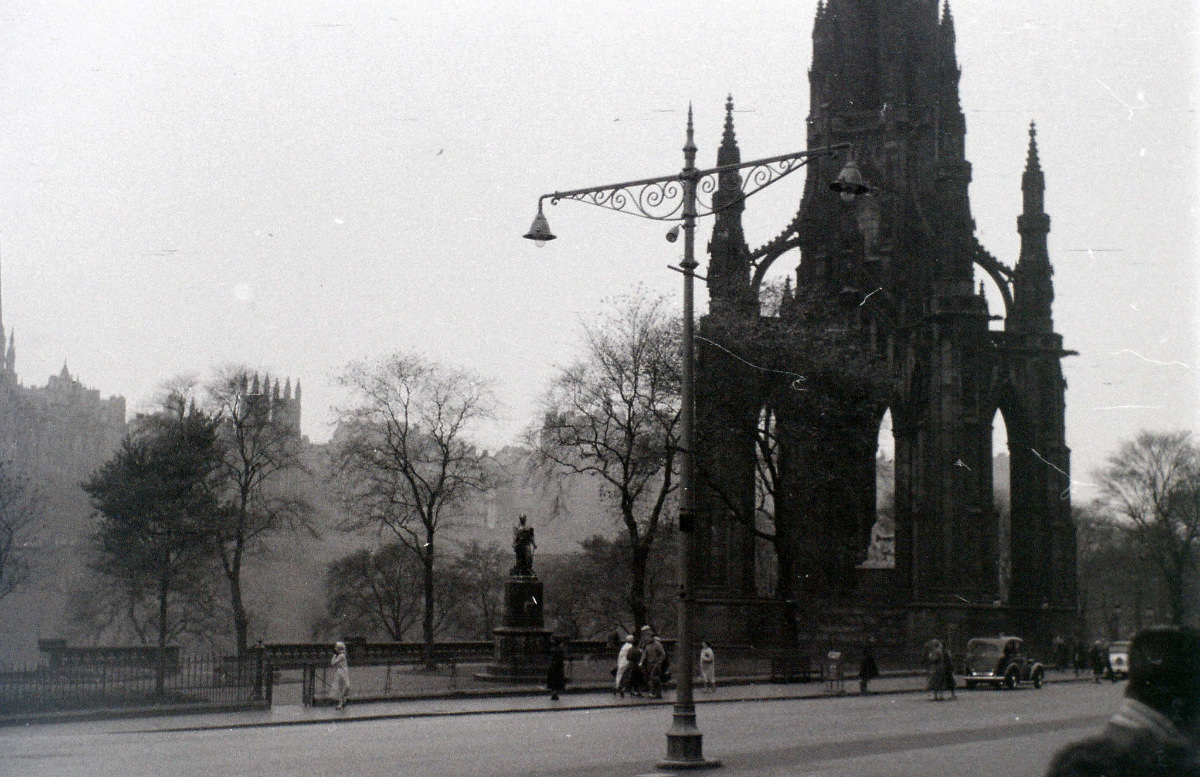
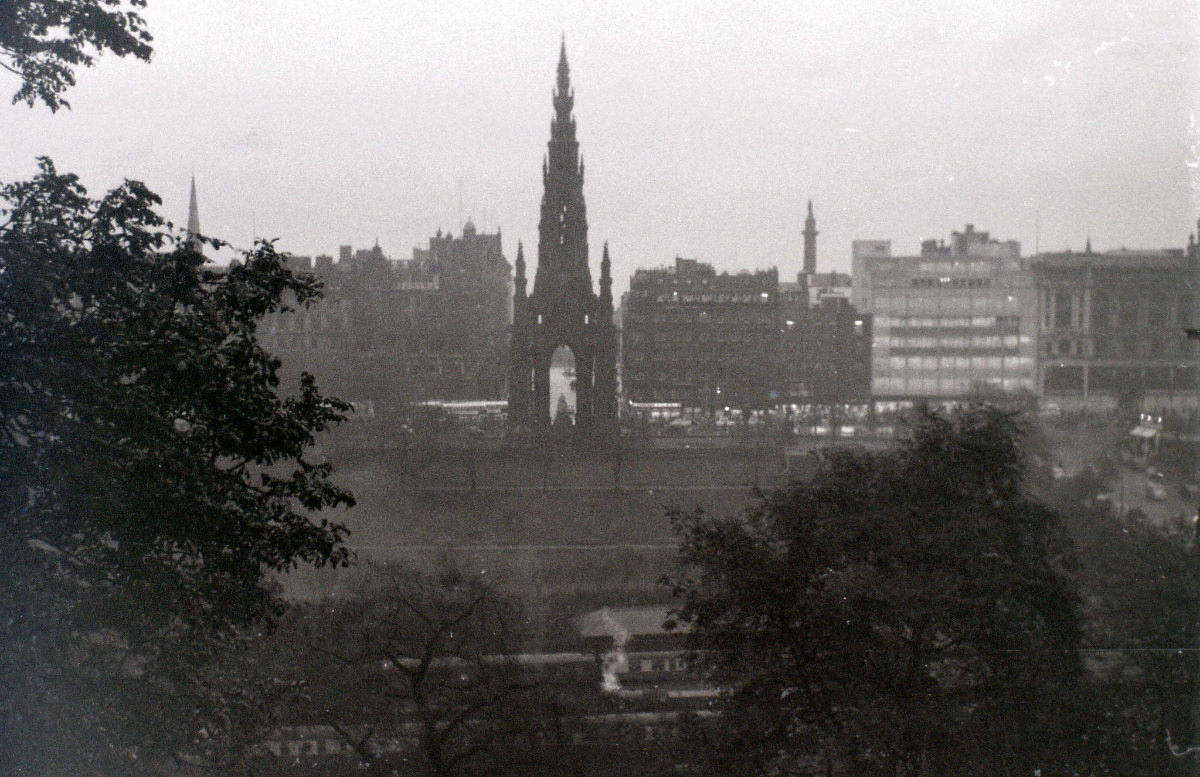
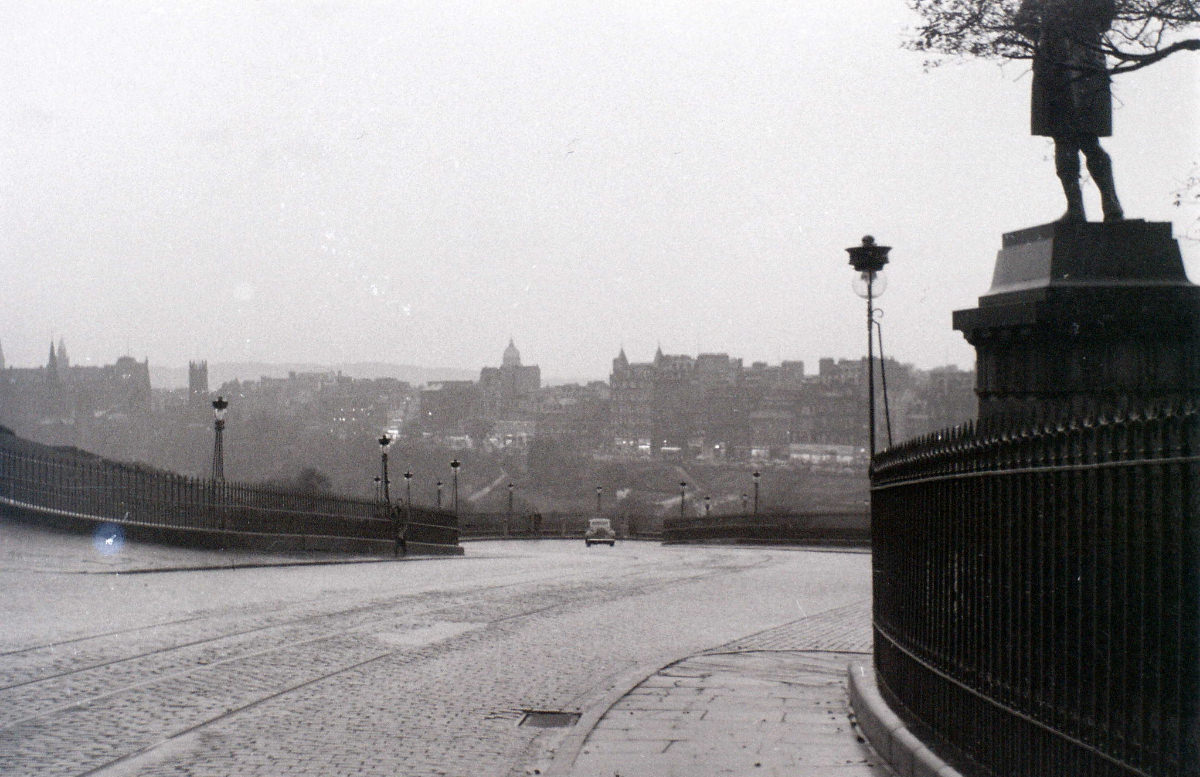
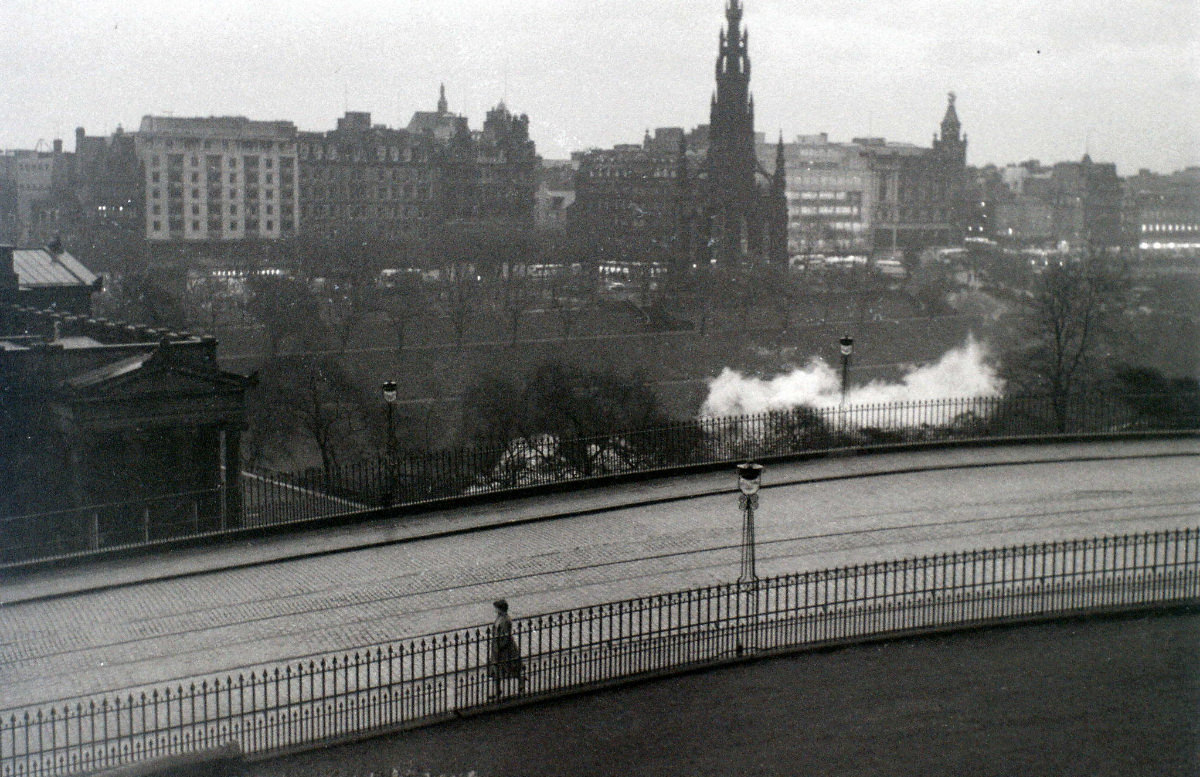
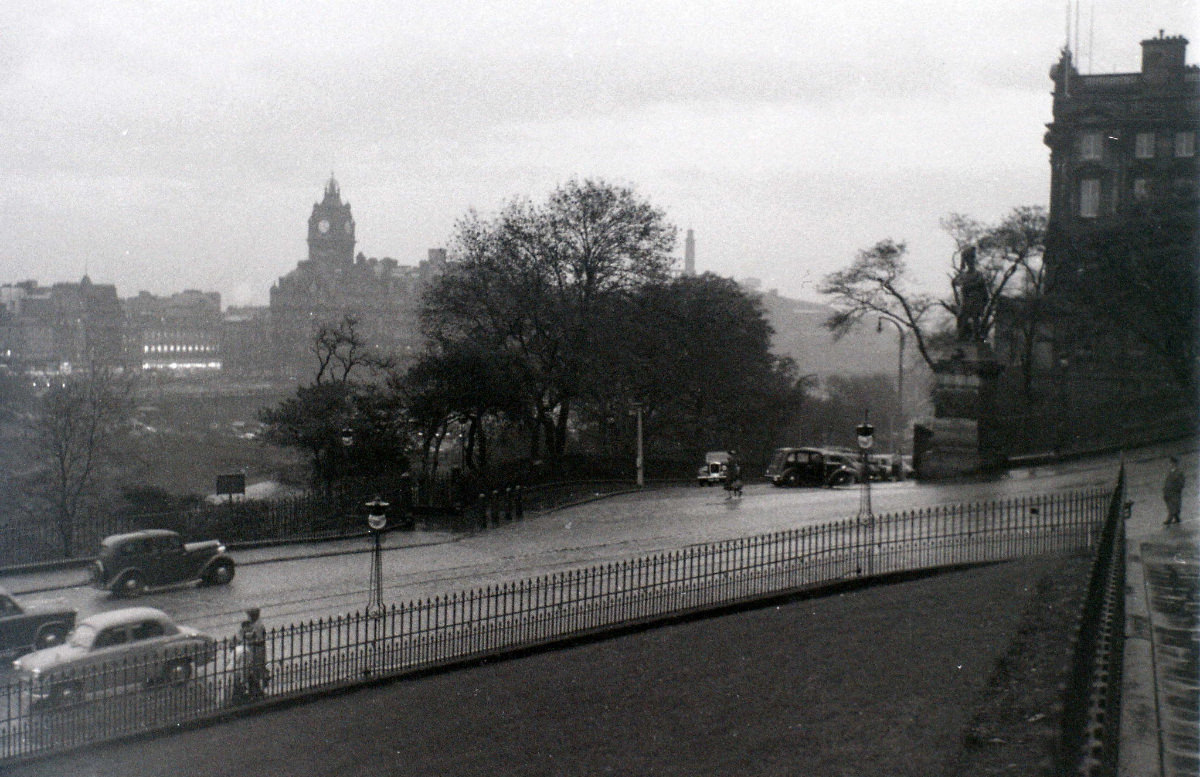
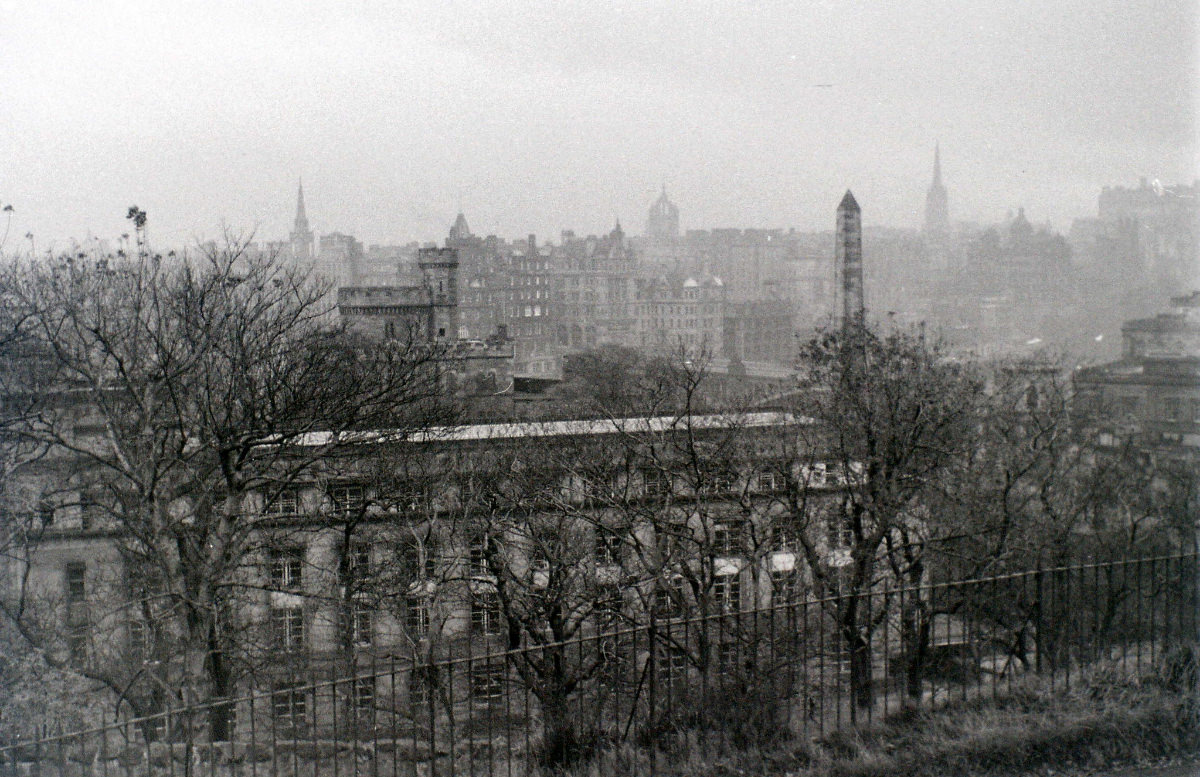
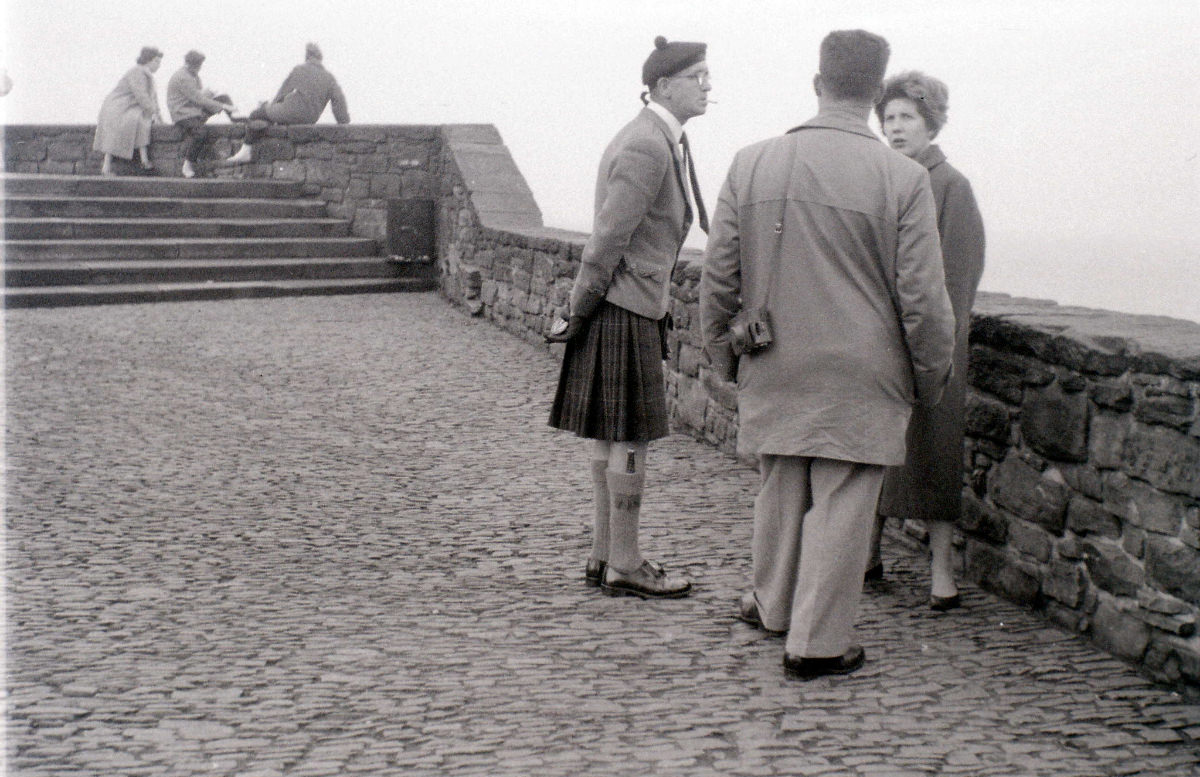
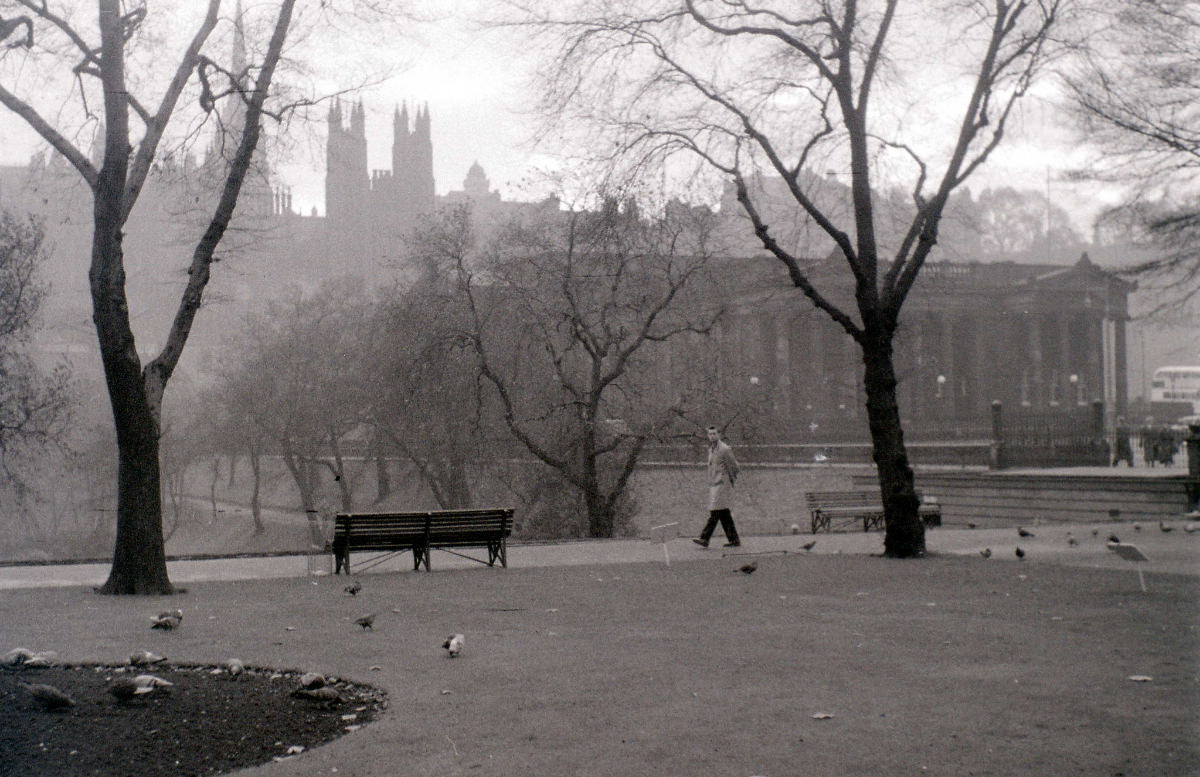
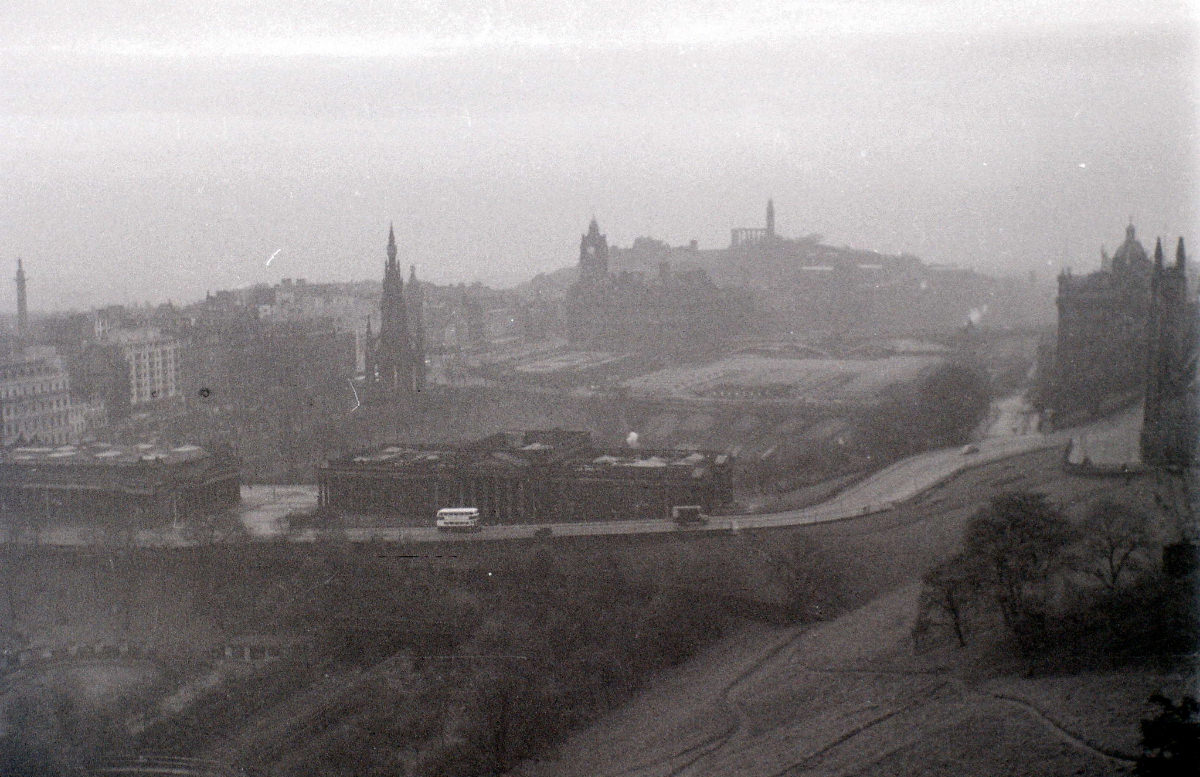
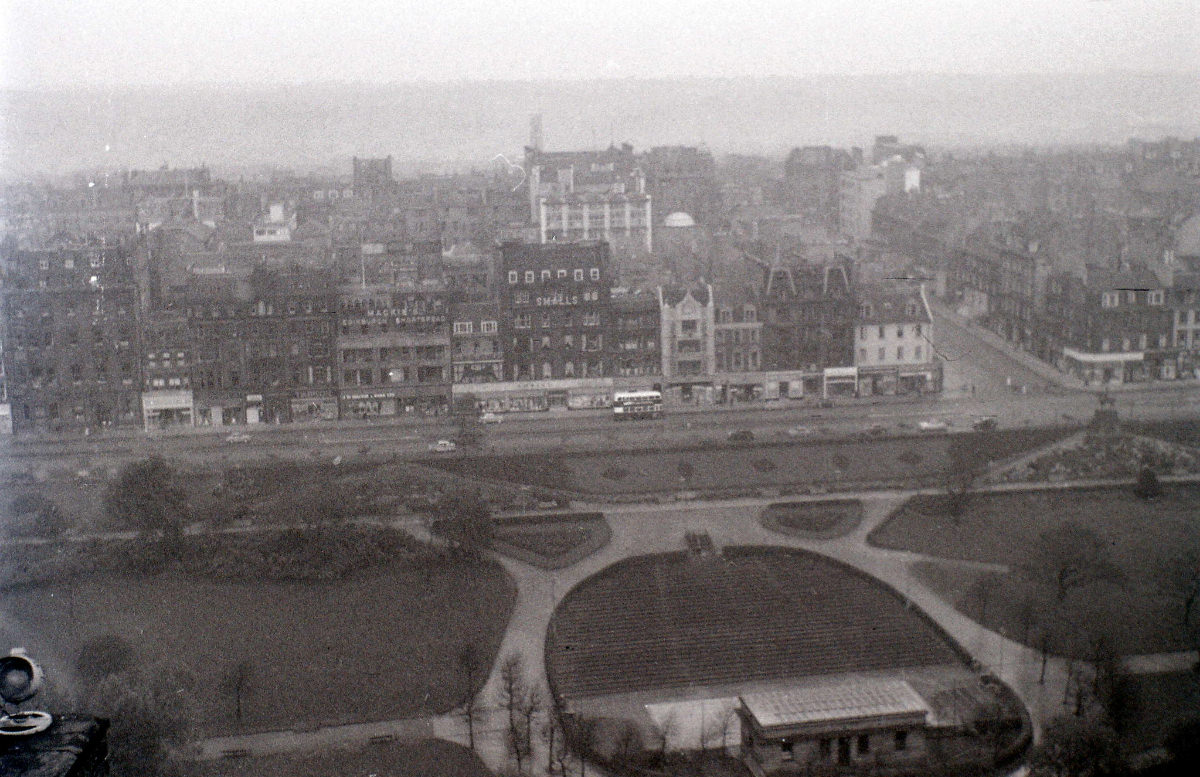
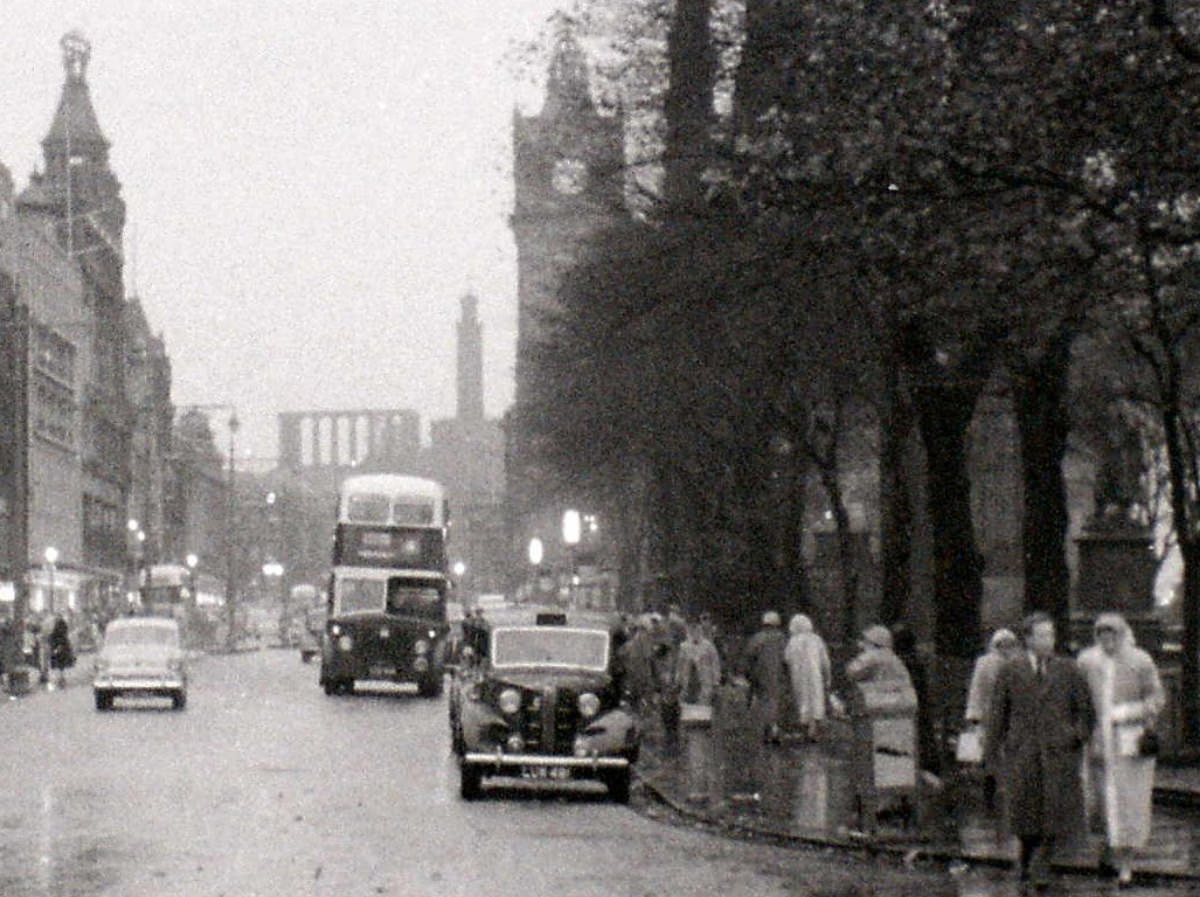
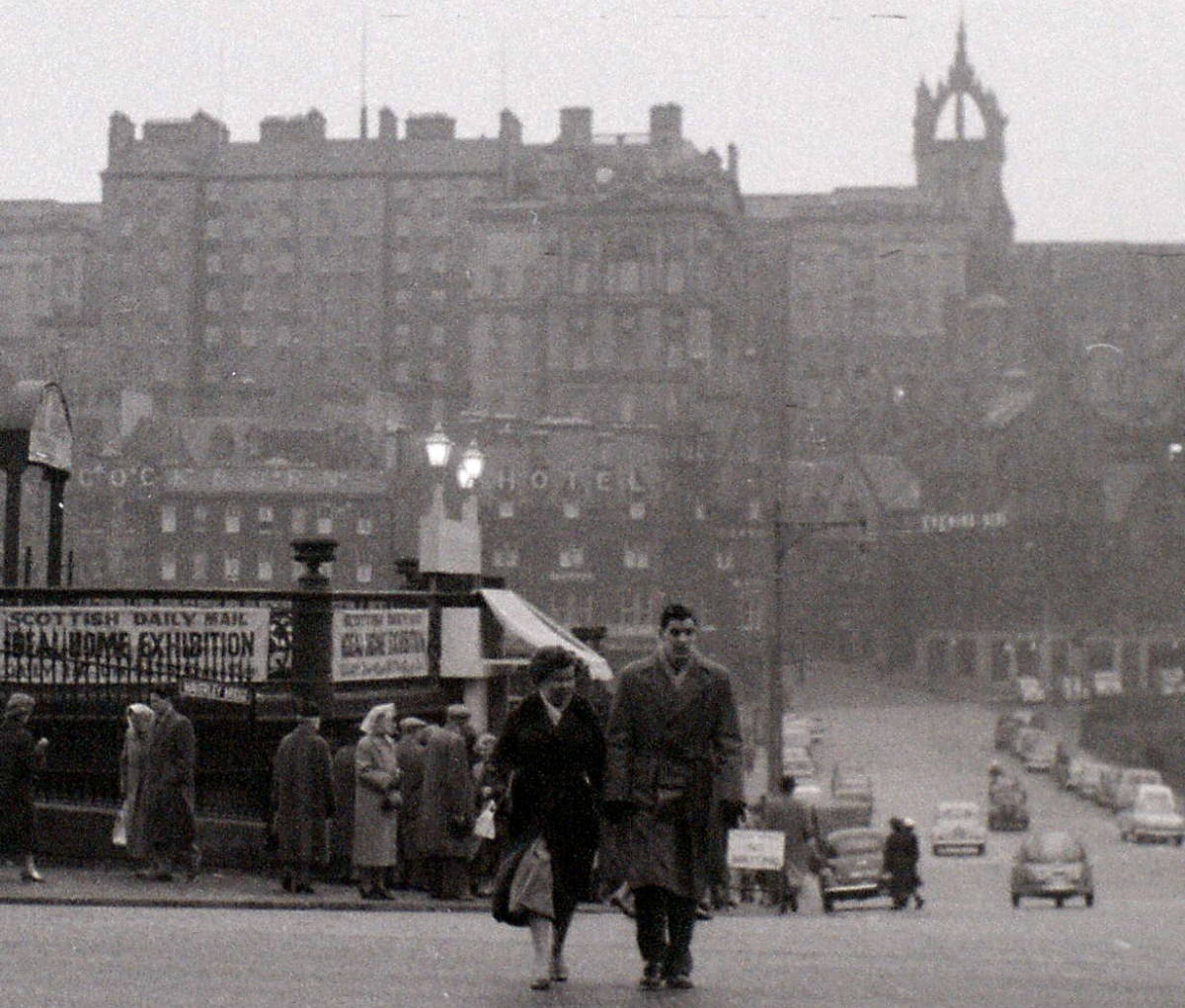
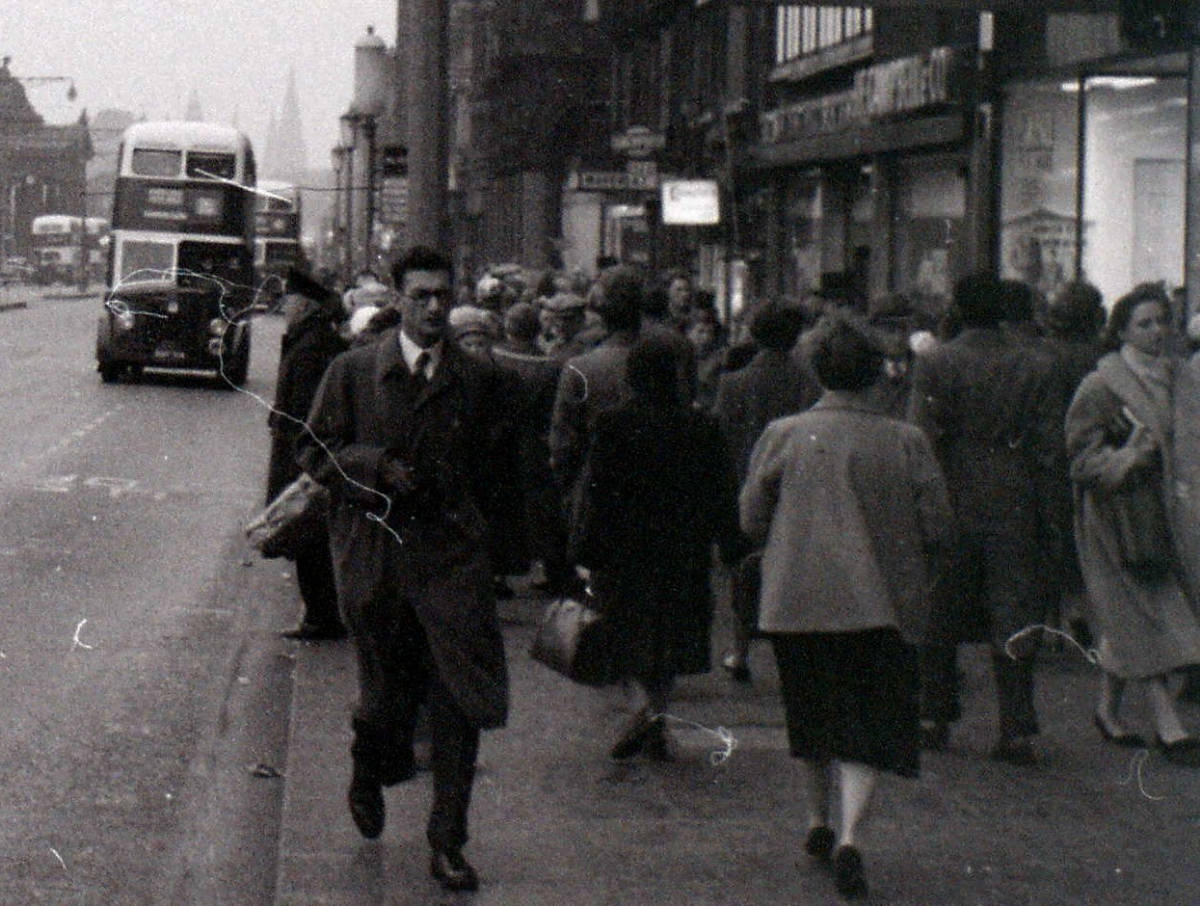





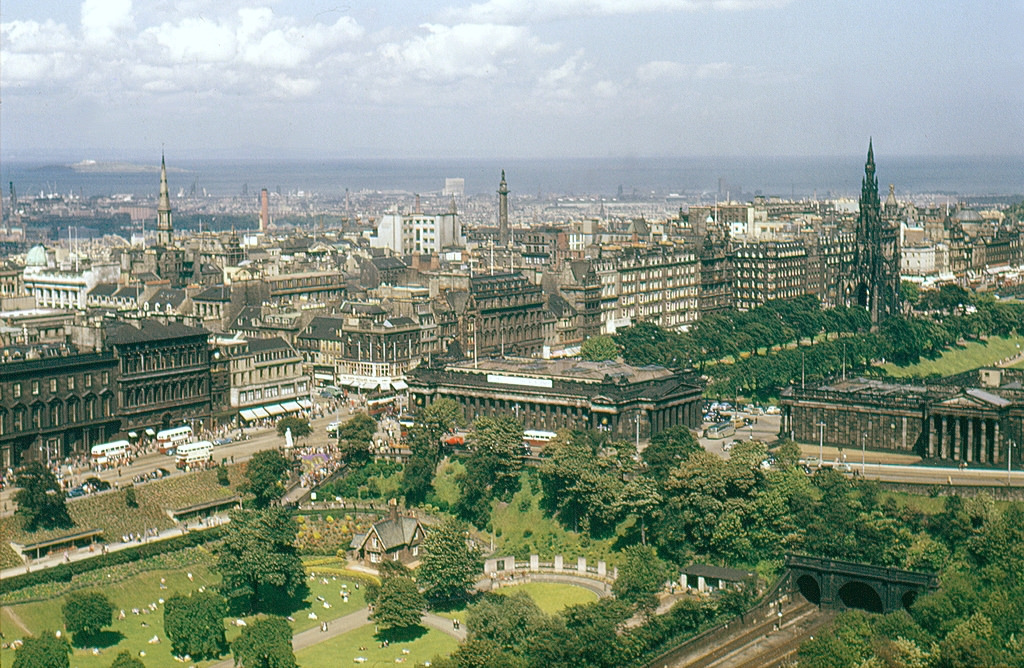
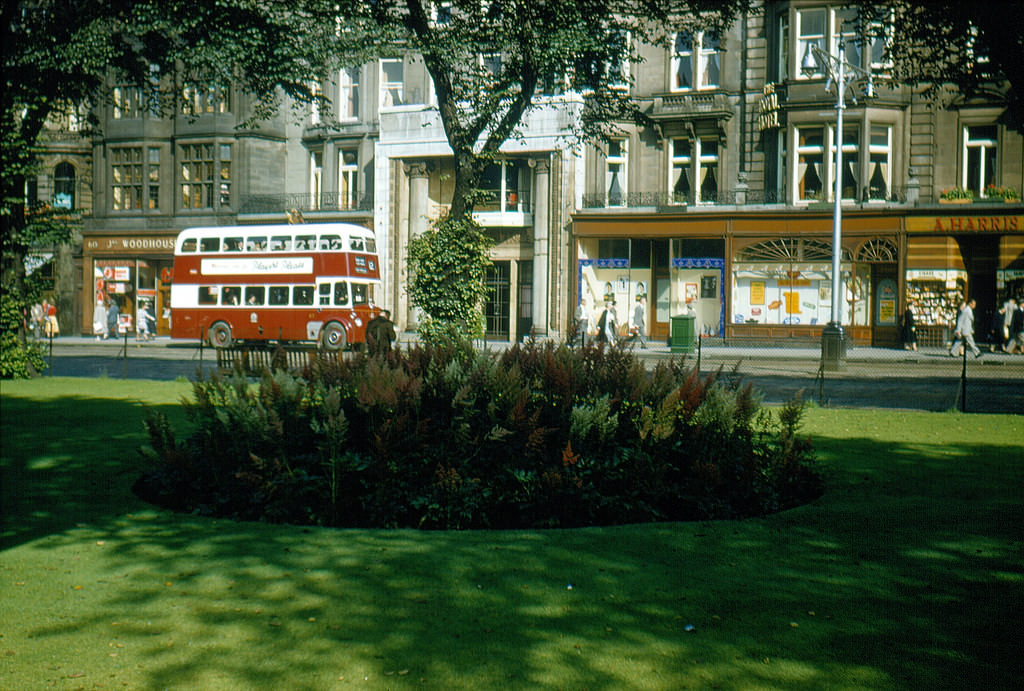
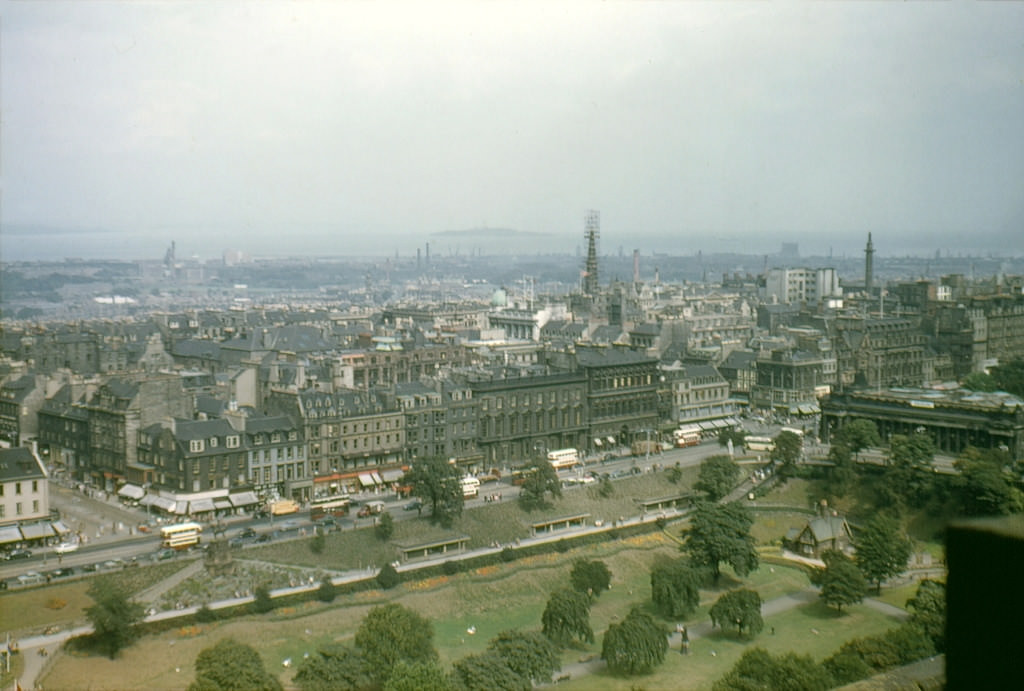
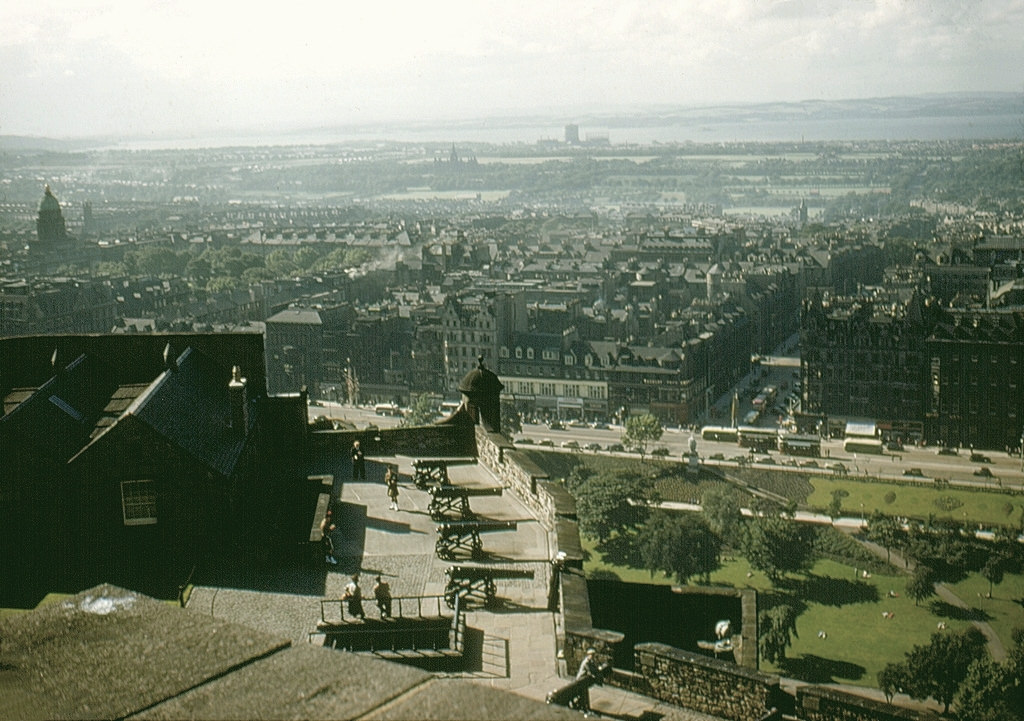
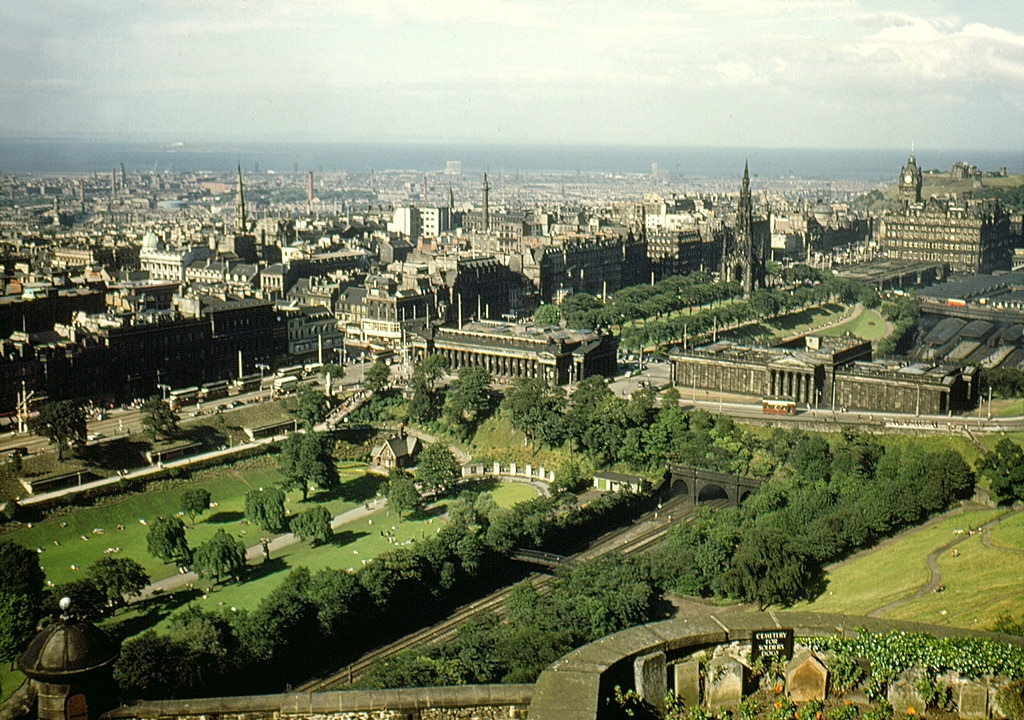
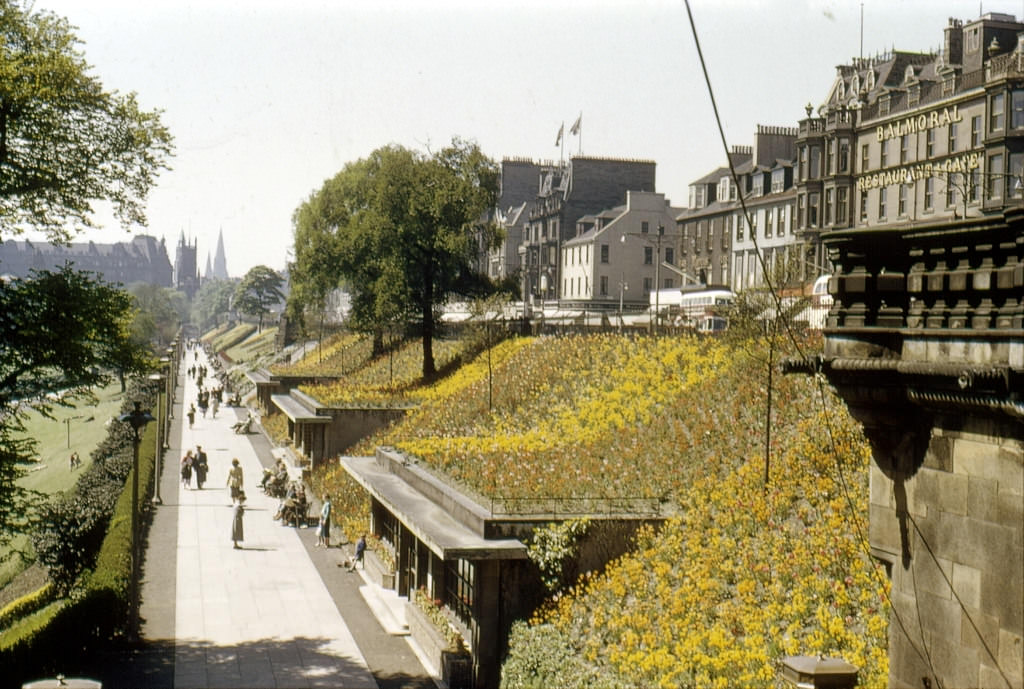
The streets and pavements look so clean. Princes Street Gardens look immaculate as well.
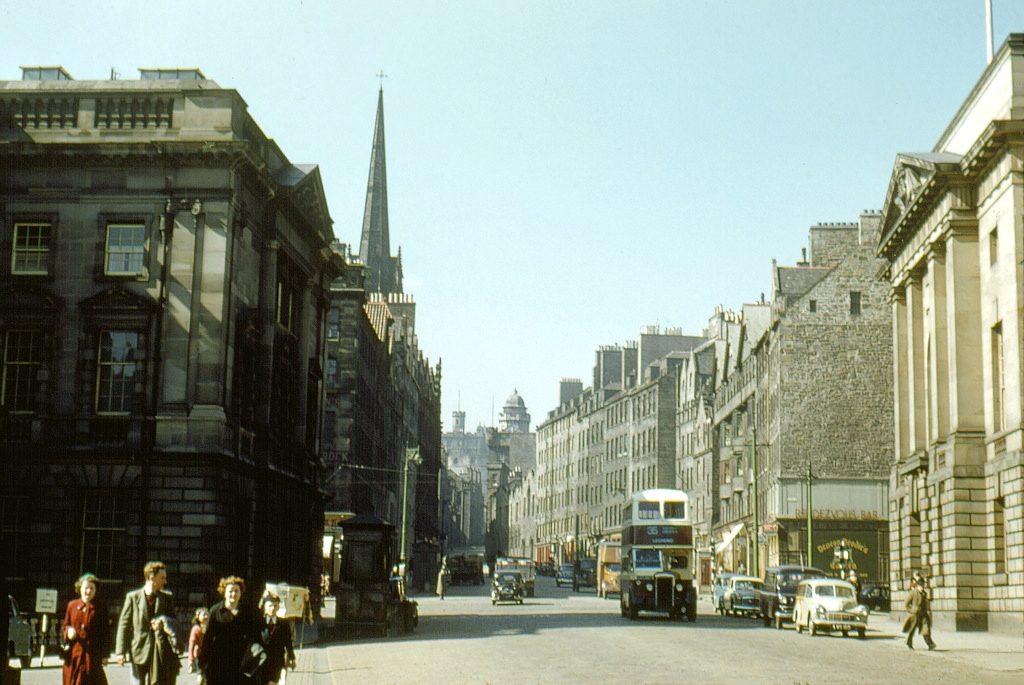
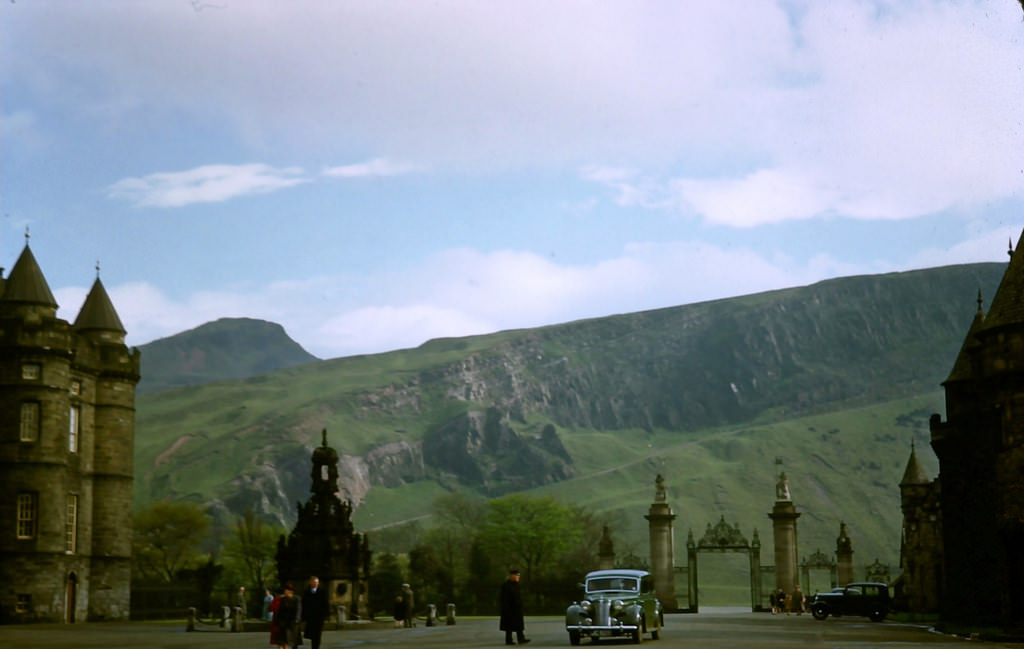
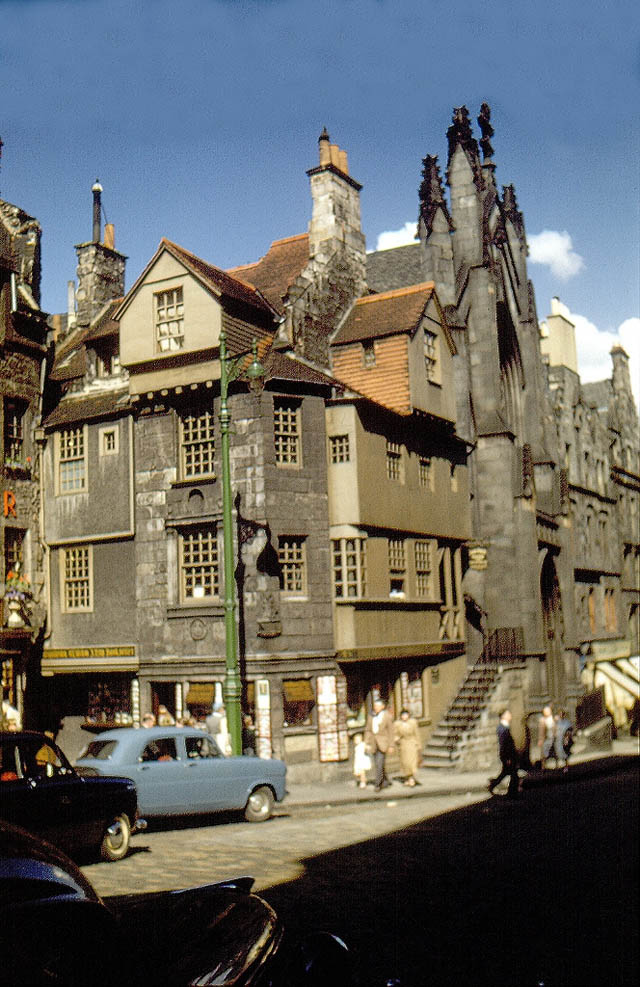
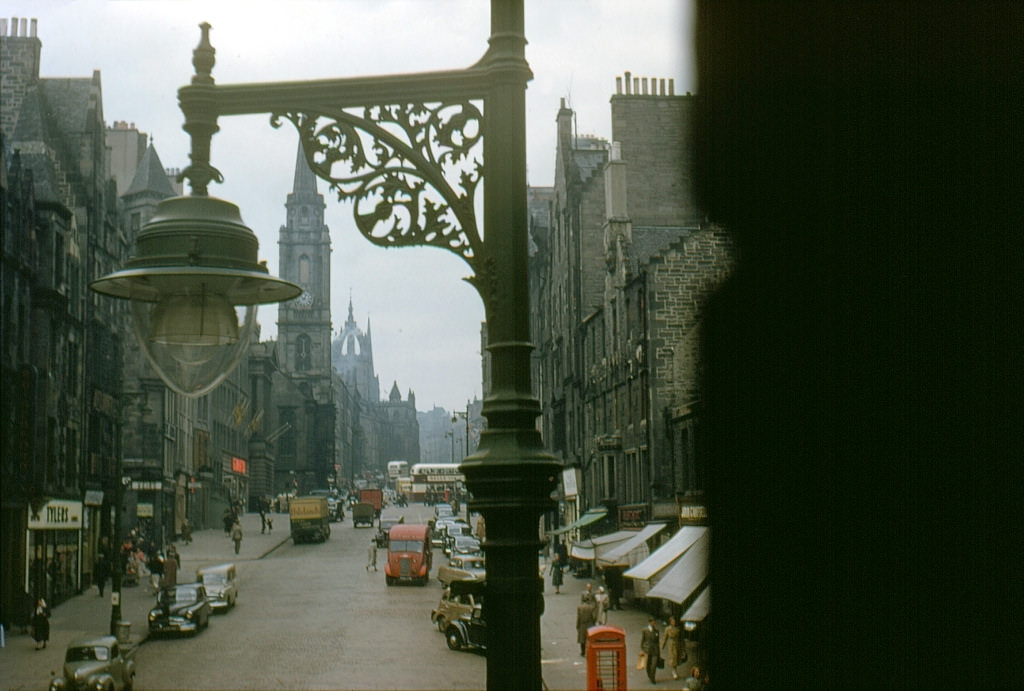
I didn’t realize that the Royal mile was a regular road before…