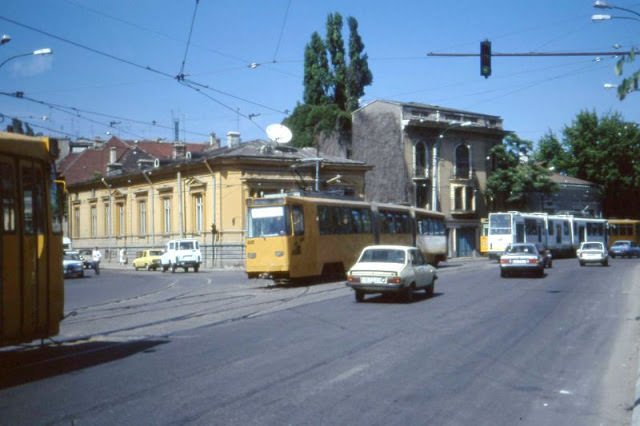
Bucharest entered the 1990s still raw from the revolution that had toppled Nicolae Ceaușescu in December 1989. Revolution Square bore the physical scars of that struggle — burnt-out buildings stood as open reminders of the fighting that had just taken place. Political tension didn’t fade with the gunfire. In 1990, the violent Mineriad saw coal miners bused into the capital to crush student protests, exposing just how unstable Romania’s new democracy really was.
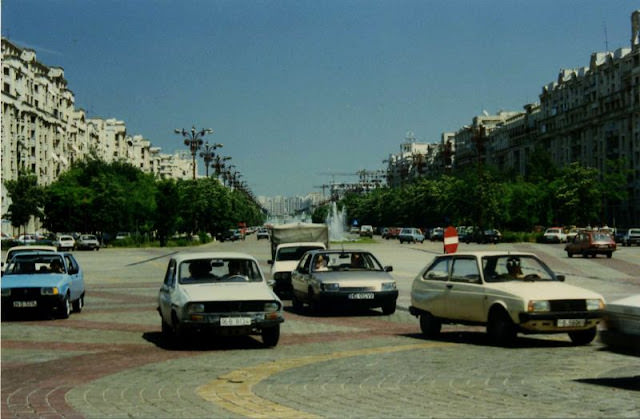
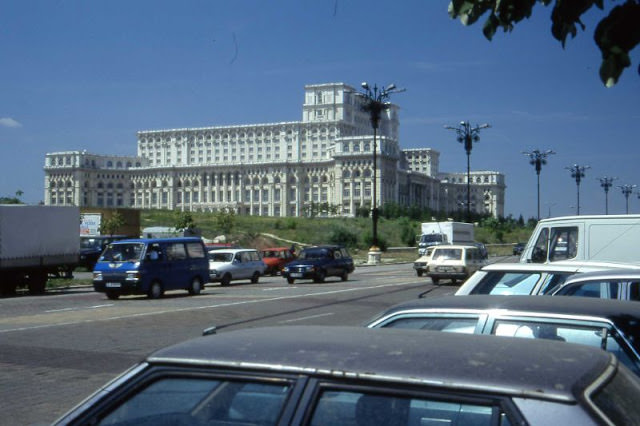
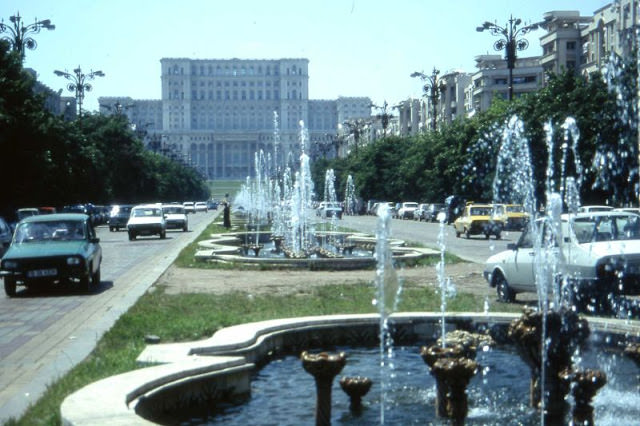
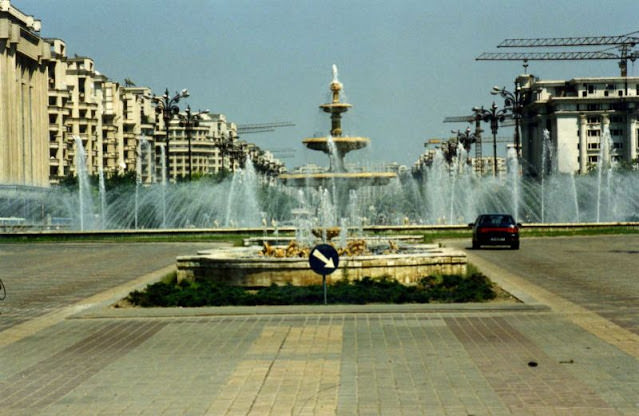
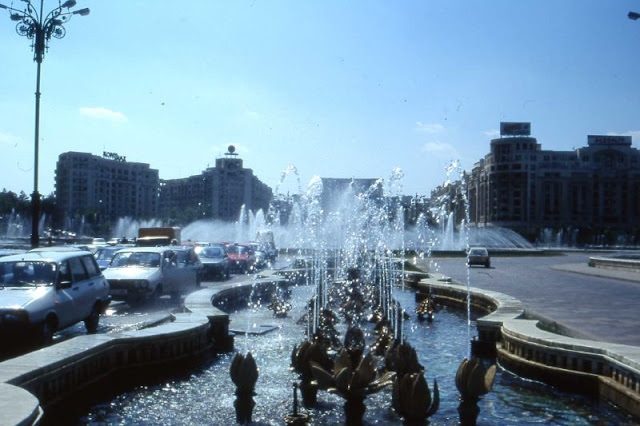
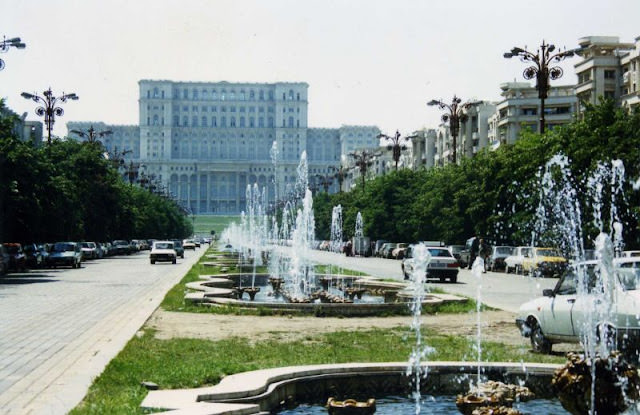
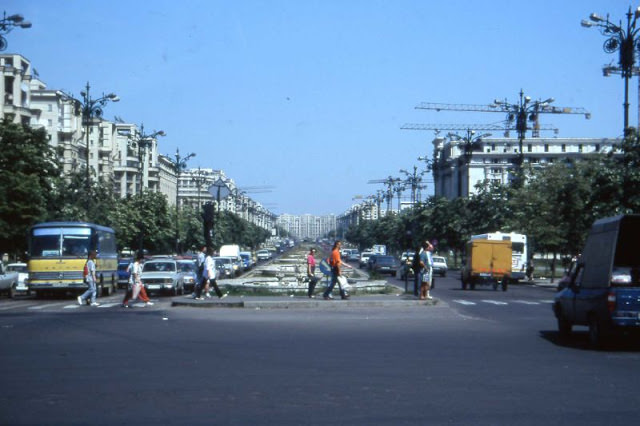
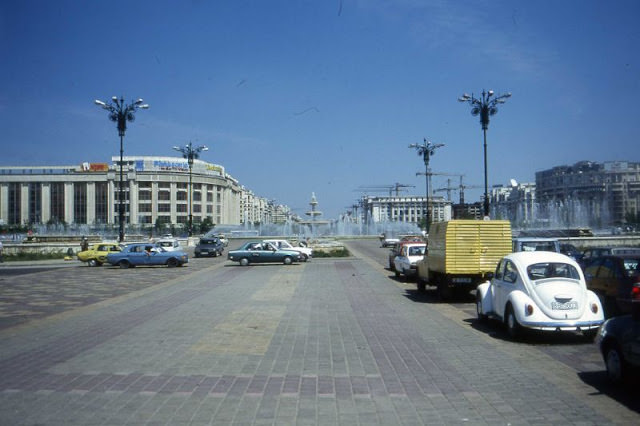
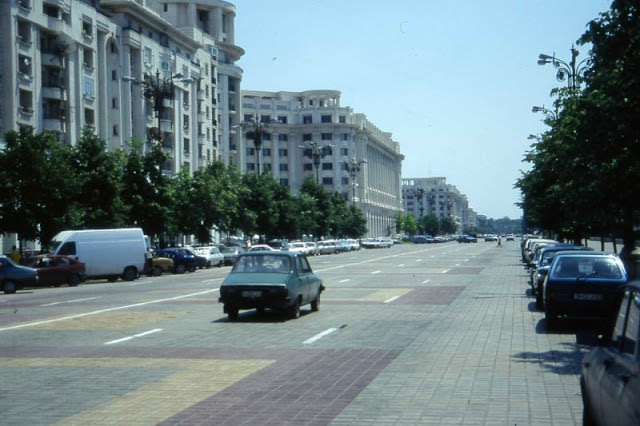
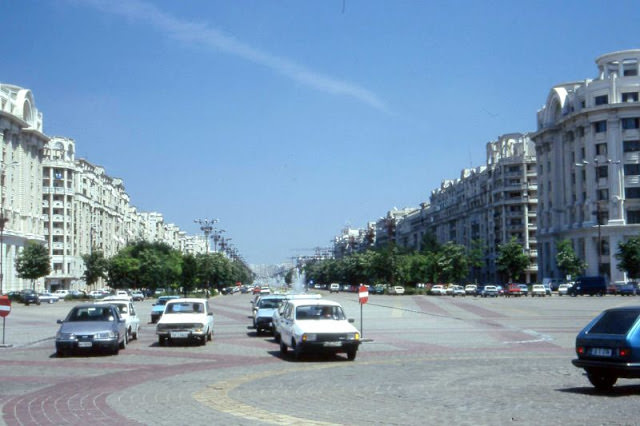
Bulevardul Unirii was one of Ceaușescu’s most ambitious projects — a wide, boulevard modeled on the Champs-Élysées, designed to project socialist power. In the early 1990s, it was still very much a work in progress, with tower cranes dotting the skyline and fountains lining the median strip. The boulevard stretched toward the Palatul Parlamentului, one of the largest buildings in the world, which had required the demolition of entire neighborhoods to construct.
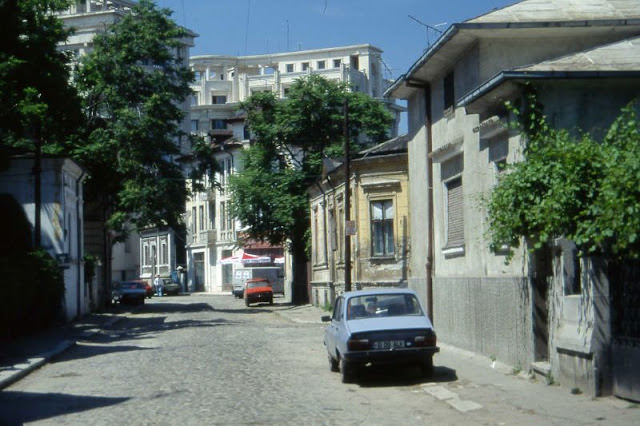
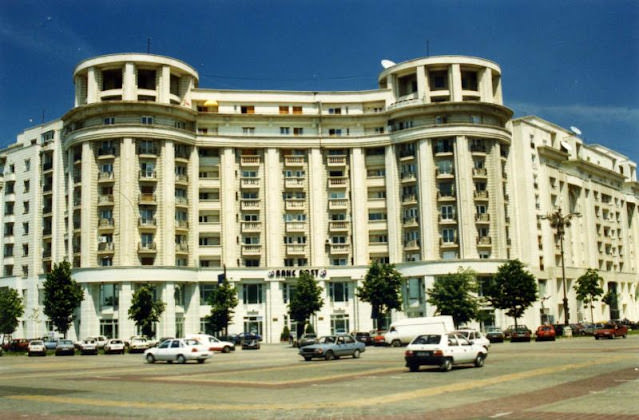
The shift to a market economy hit residents hard. Food and medicine shortages were common in the early years, and long queues formed outside shops across the city. Factories closed, unemployment rose, and many families struggled to meet basic needs. New financial institutions like Banc Post began appearing on city streets as Romania slowly built the infrastructure of a capitalist economy from scratch.
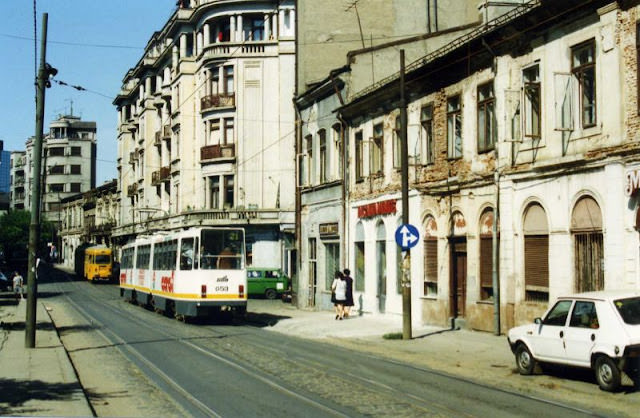
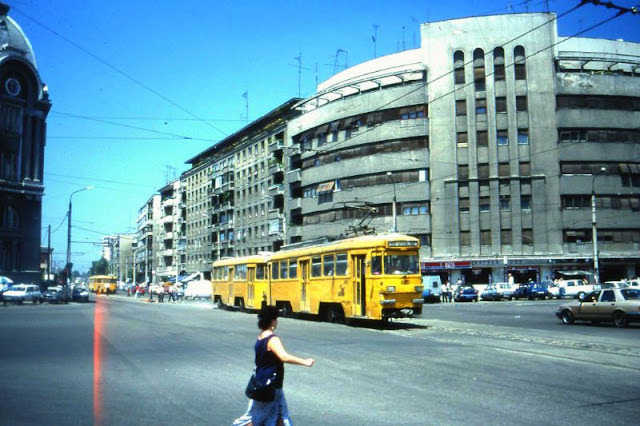
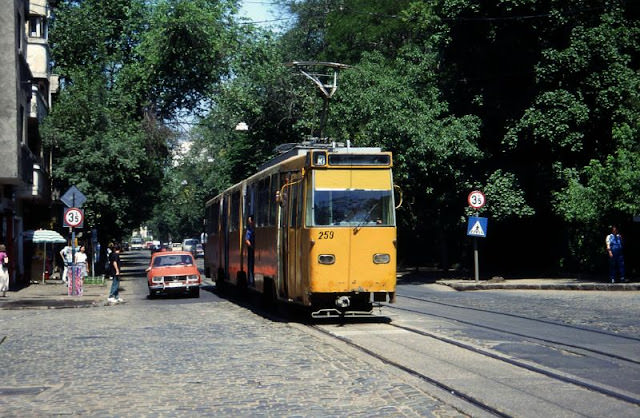
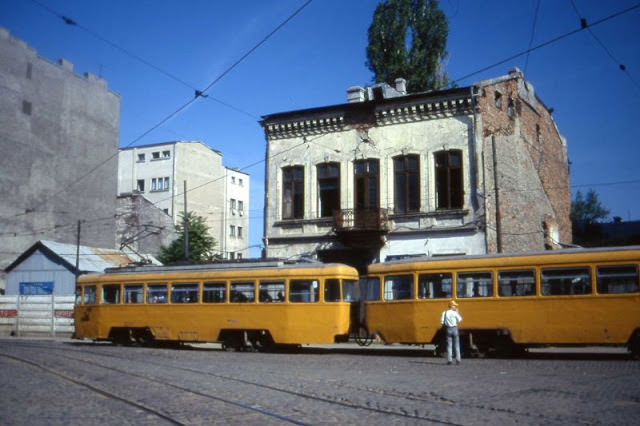
Trams remained a lifeline for daily commuters throughout the decade. The EP/V3A bogie cars and V3A-93 models ran routes across the city, connecting neighborhoods that decades of communist urban planning had reshaped. Route 21 and Route 32 were among the busiest lines, carrying workers, students, and shoppers through streets that were slowly being rebranded with Western advertising.
Despite the hardship, a genuine cultural revival took hold. Artists, writers, and musicians who had been silenced under the dictatorship began working and publishing freely. Underground cafes and independent bookshops opened across the city, drawing a generation hungry for open debate. Bucharest’s nightlife also expanded rapidly, with new bars and clubs filling a void that state-approved entertainment had never come close to filling.
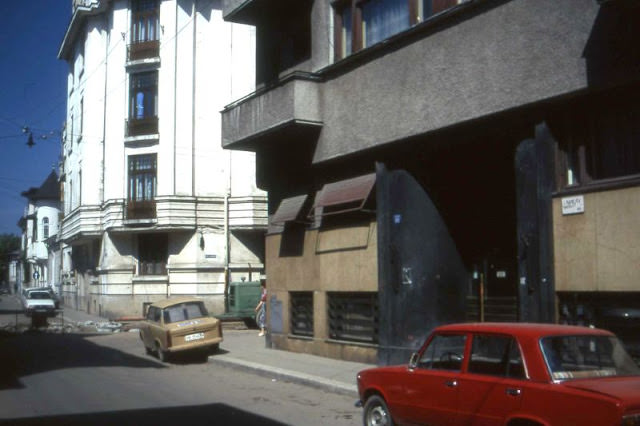
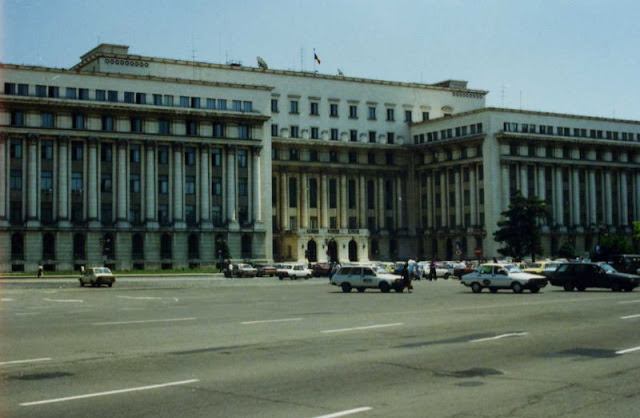
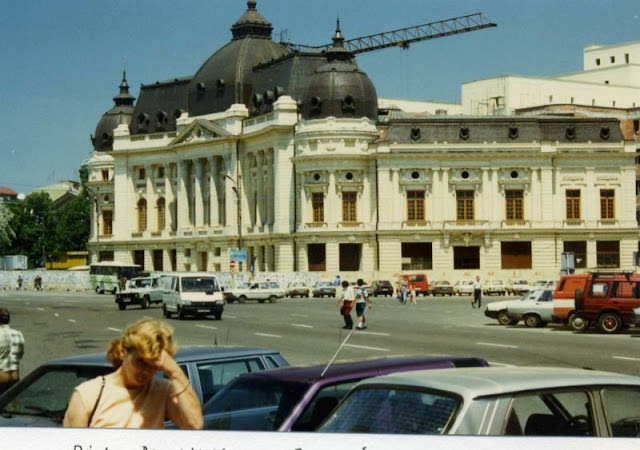
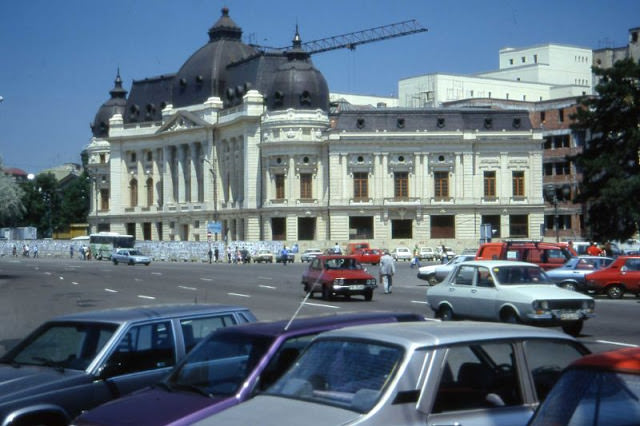
The city’s architectural identity was also in flux. Bucharest had long been called the “Paris of the East” for its grand neoclassical buildings, many of which had been neglected or damaged under communist rule. In the 1990s, restoration work began on key landmarks, including the Central University Library on Calea Victoriei, which had been gutted by fire during the revolution.
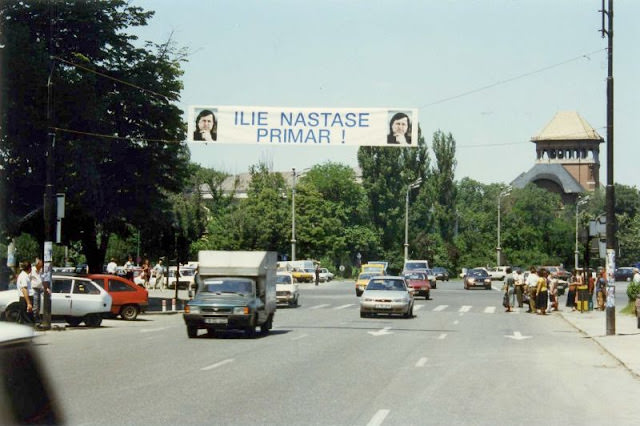
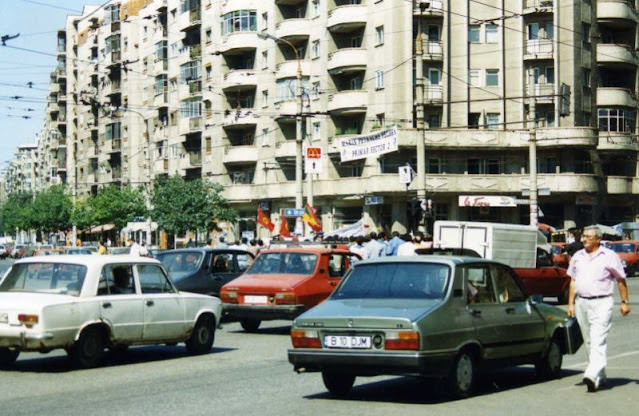
Politics found its way into unexpected corners of public life. Tennis legend Ilie Năstase ran a mayoral campaign in Bucharest during the decade, his name and face appearing on campaign materials across the city. His bid reflected the wider uncertainty of Romanian democracy — a period when celebrity, nationalism, and reform competed for the public’s attention in equal measure.
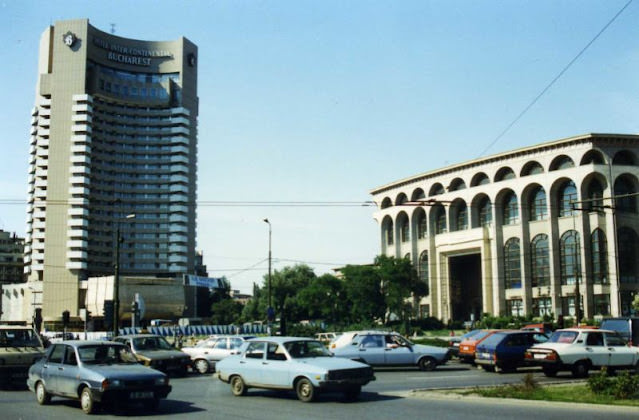
Bucharest was not isolated from global currents. A Kurdish street demonstration in the city during the 1990s showed that even a country consumed by its own transition was connected to wider international struggles. Meanwhile, the Hotel Intercontinental — a fixture of the city’s skyline since 1971 — remained a landmark, its surroundings now filled with Romanian-made Dacia cars rather than the official motorcades of the communist era.
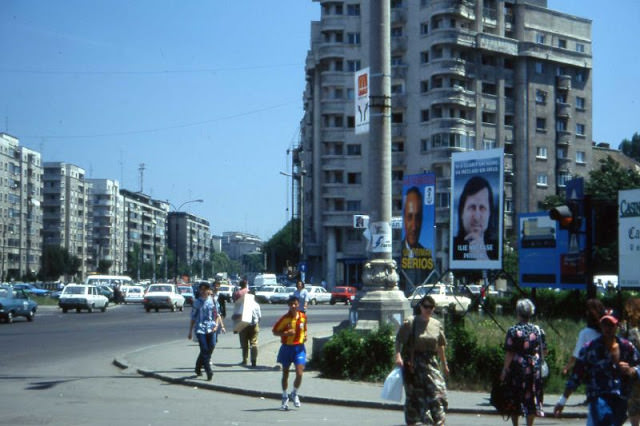
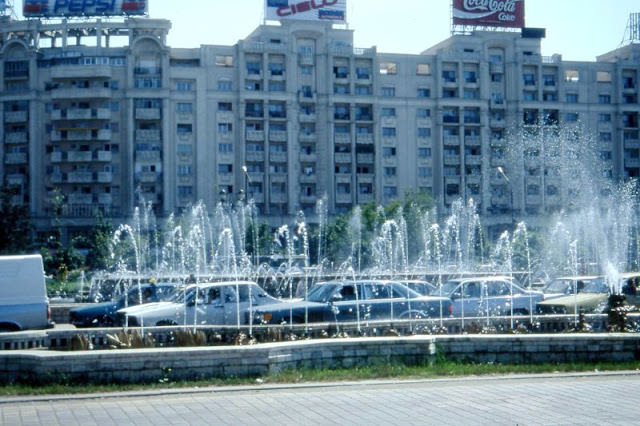
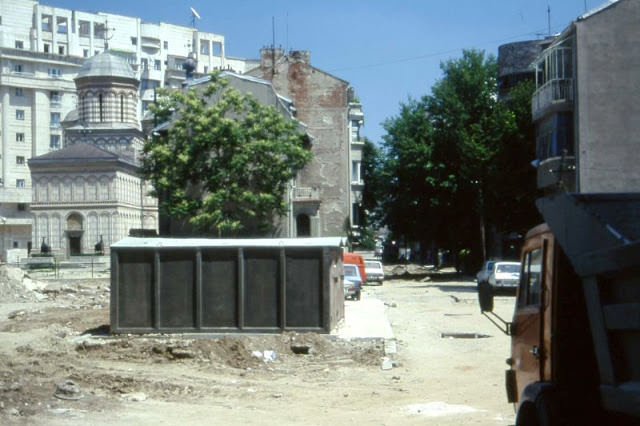
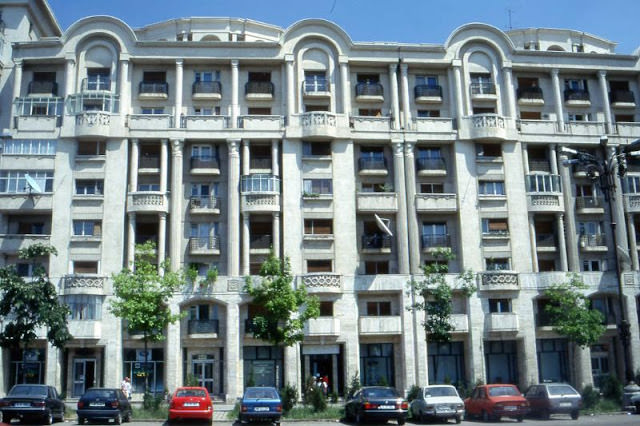
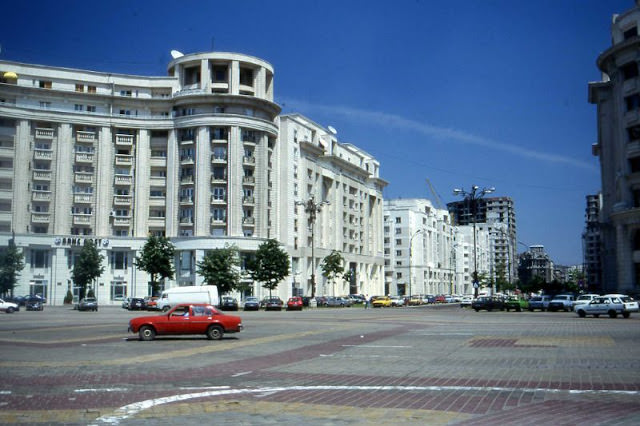
Western brands and fast-food chains began appearing on Bucharest streets for the first time. Propaganda posters gave way to commercial advertisements. The contrast was stark — communist-era apartment blocks and grand civic buildings now shared the urban landscape with the visual language of global capitalism. Mănăstirea Mihai Vodă, one of the city’s oldest monasteries, stood as a quiet counterpoint to the rapid changes reshaping the streets around it.