Knitting has been practiced around the world for centuries, producing everything from warm stockings to high-fashion garments. The craft first gained wide recognition in Scotland and the Highlands, where knitters produced stockings that were exported across Europe. Over time, hats, shawls, bags, and jumpers followed. By the early 20th century, knitwear had gone fully mainstream. Fashion houses like Chanel brought jersey dresses, cardigans, and jumpers into their collections, cementing knitting as both practical and stylish.
During the Second World War, home-knitting surged to one of its highest points. Governments actively encouraged civilians to pick up needles and knit for the war effort — producing socks, scarves, and gear for soldiers. The 1950s kept the tradition alive, though machine-made knitwear started to take over, offering more variety at lower prices. By the 1960s, hand-knitting had largely faded from everyday life.
Then came the 1970s. A broad craft countermovement swept through Western culture, pushing back against mass production and factory-made goods. People returned to making things by hand — weaving, pottery, macramé, and above all, knitting. This revival wasn’t just about nostalgia. Knitters in the 1970s pushed the craft in bold new directions, experimenting with complex patterns, vibrant colors, and unusual garment forms. One of the most striking results of this creative energy was the knitted helmet.
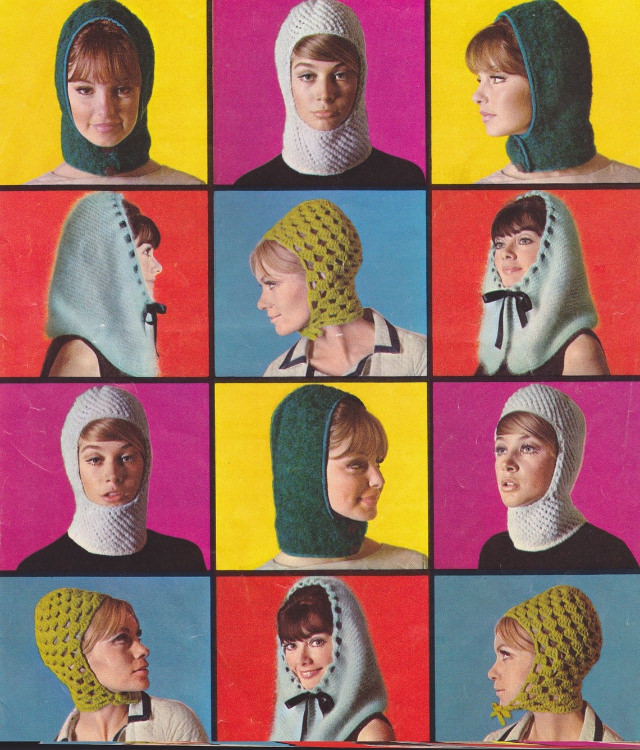
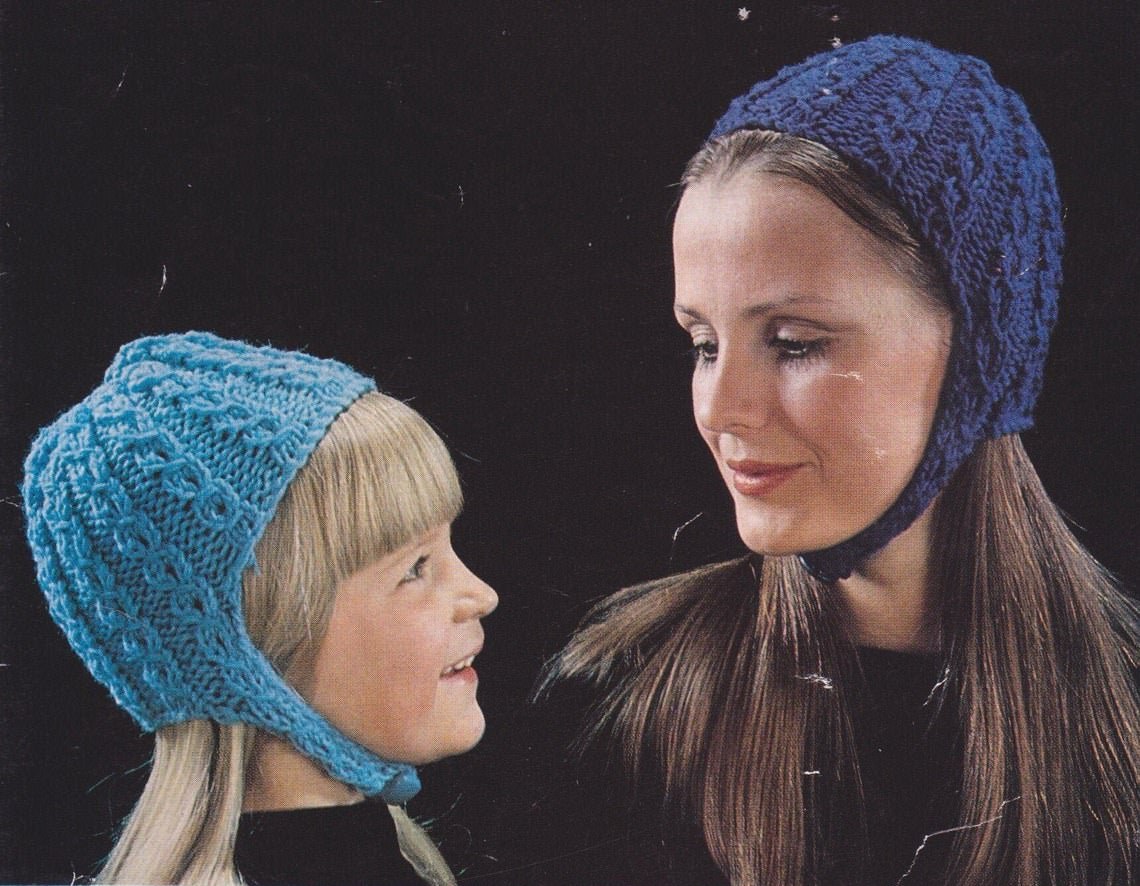
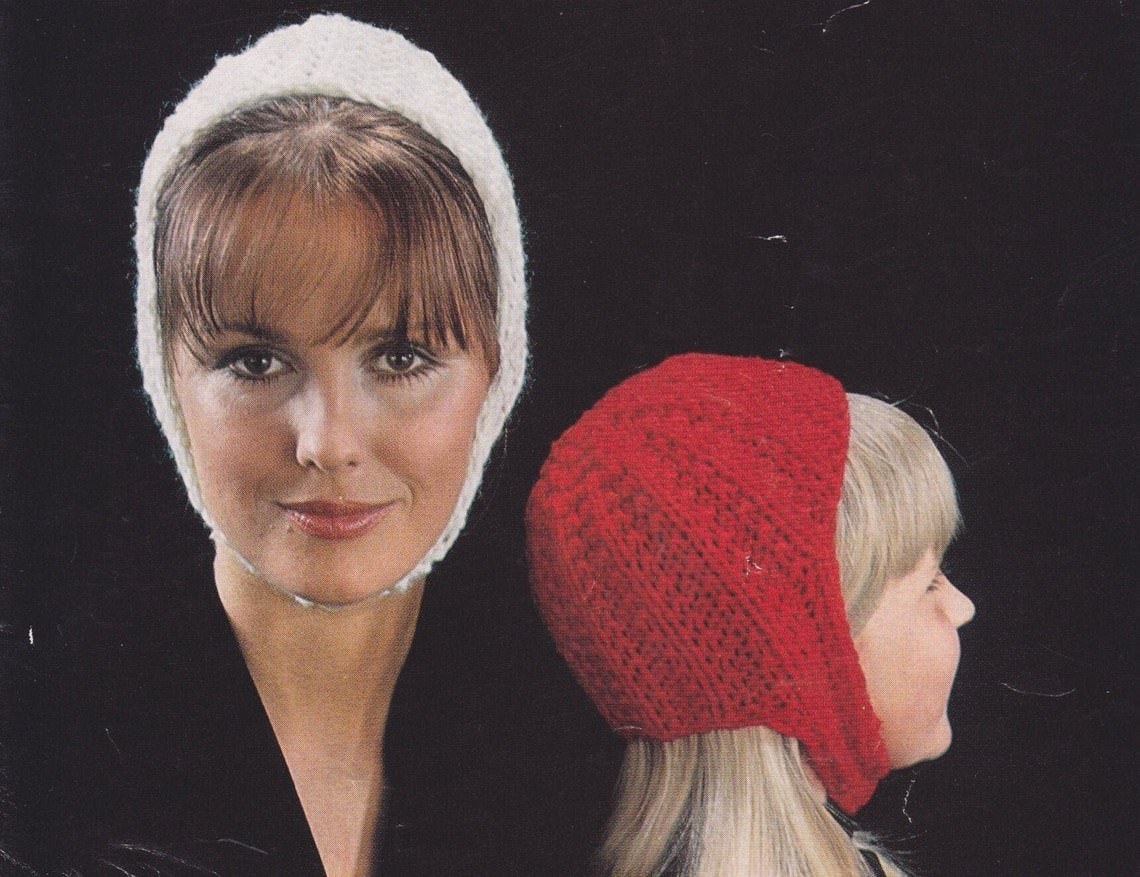
Knitted helmets — sometimes called balaclavas or helmet hats — were a standout item of 1970s handcraft culture. They covered the head and framed the face, offering both warmth and a strong visual statement. Designers and home-knitters alike embraced the form, using it as a canvas for intricate colorwork, geometric patterns, and bold yarn choices.
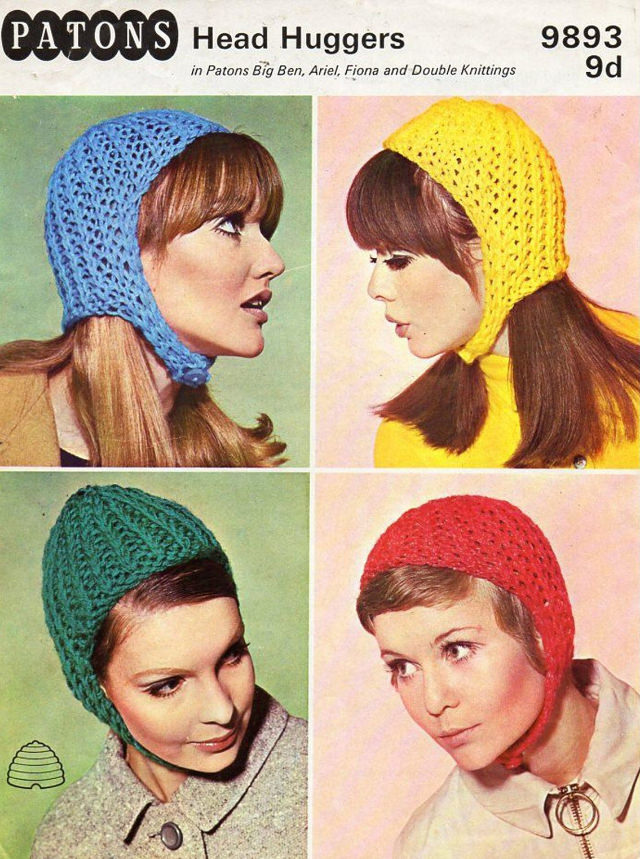
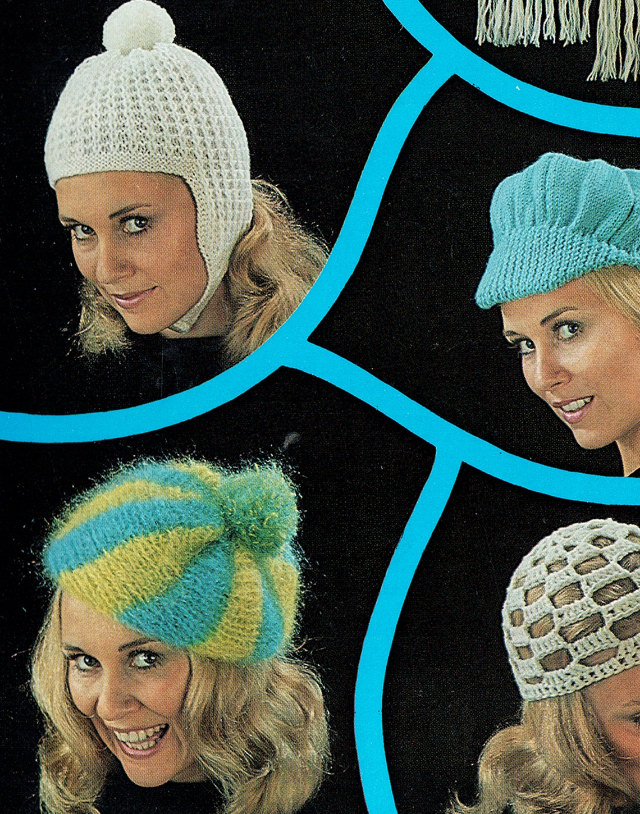
The designs ranged widely. Some helmets featured tight, symmetrical Fair Isle patterns in earthy tones — browns, mustards, and rusts that were very much of the decade. Others went in a completely different direction, using bright primary colors and bold abstract shapes that felt almost graphic in their design.
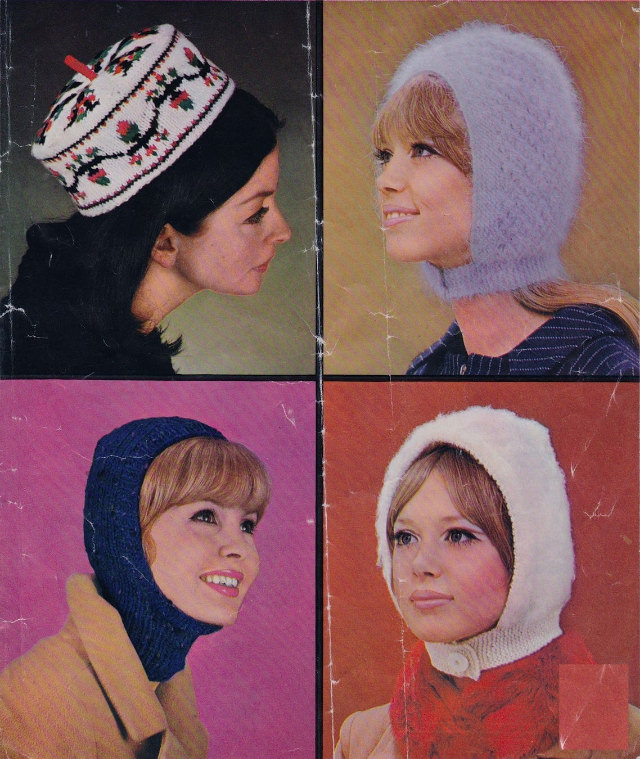
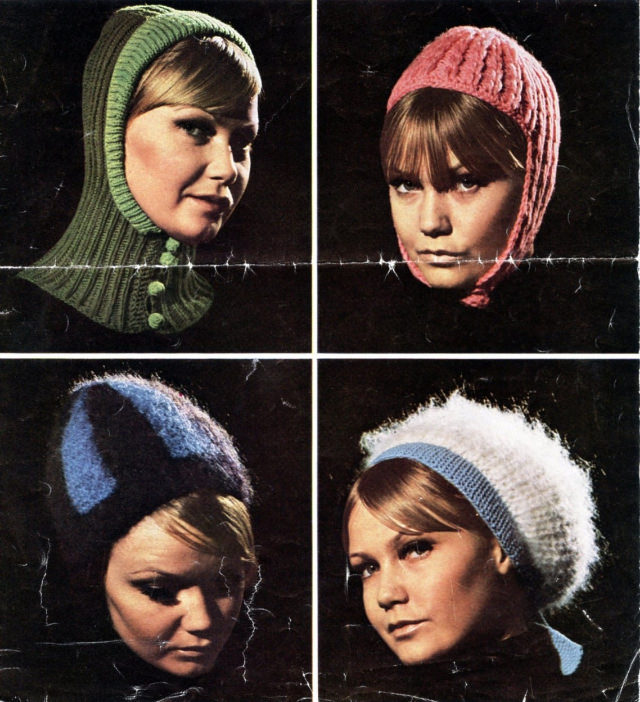
What made these helmets particularly interesting was their dual purpose. They were genuinely functional — ideal for cold outdoor activities like skiing, hiking, and cycling. At the same time, they were clearly fashion objects. Knitting pattern books and magazines of the era featured them prominently, styled on models and presented as desirable, wearable art.
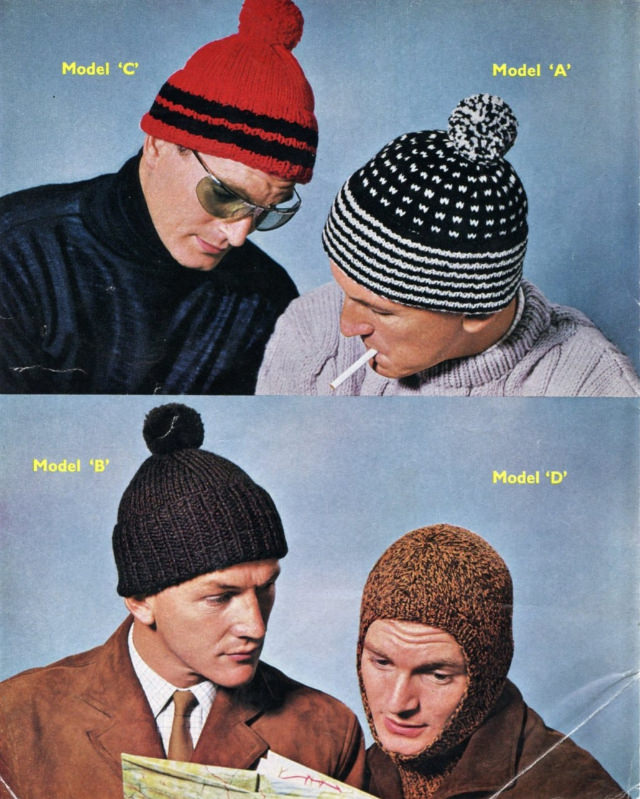
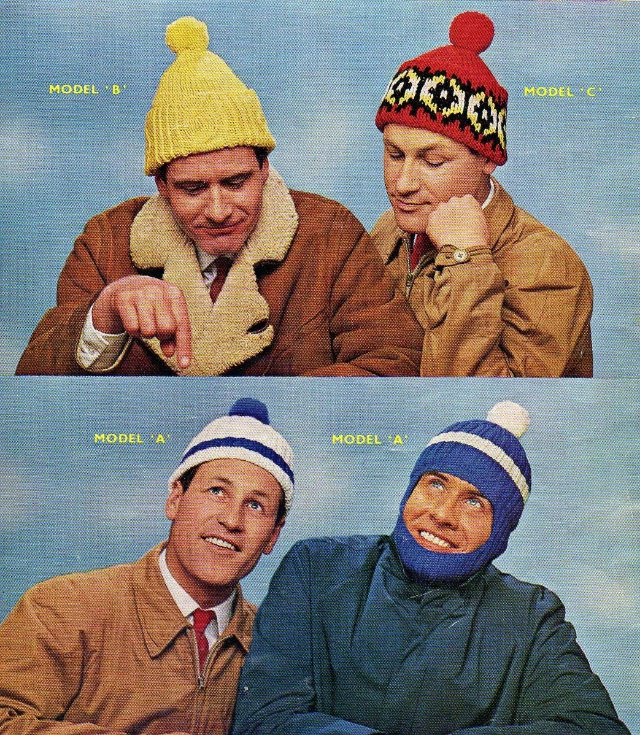
The level of skill involved in many of these designs was considerable. Multi-color helmets required knitters to manage several strands of yarn at once, following complex charts row by row. A single helmet could take many hours to complete, making each one a genuine handmade object.
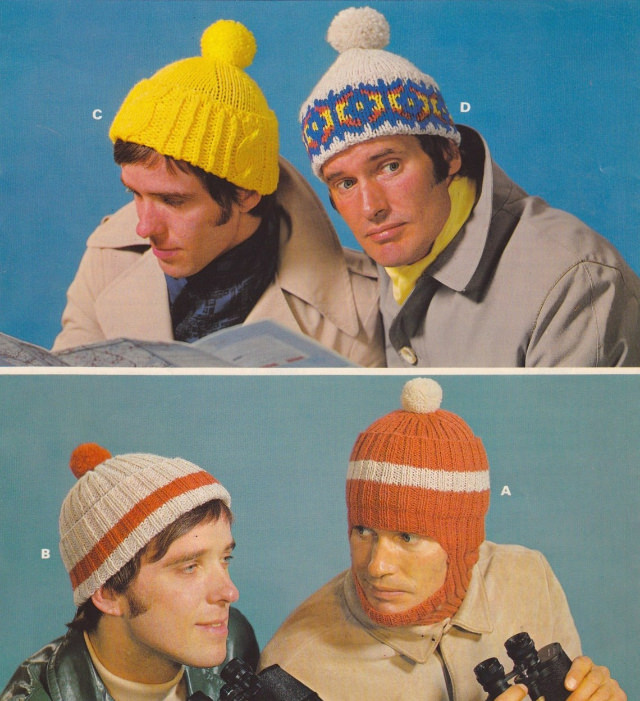
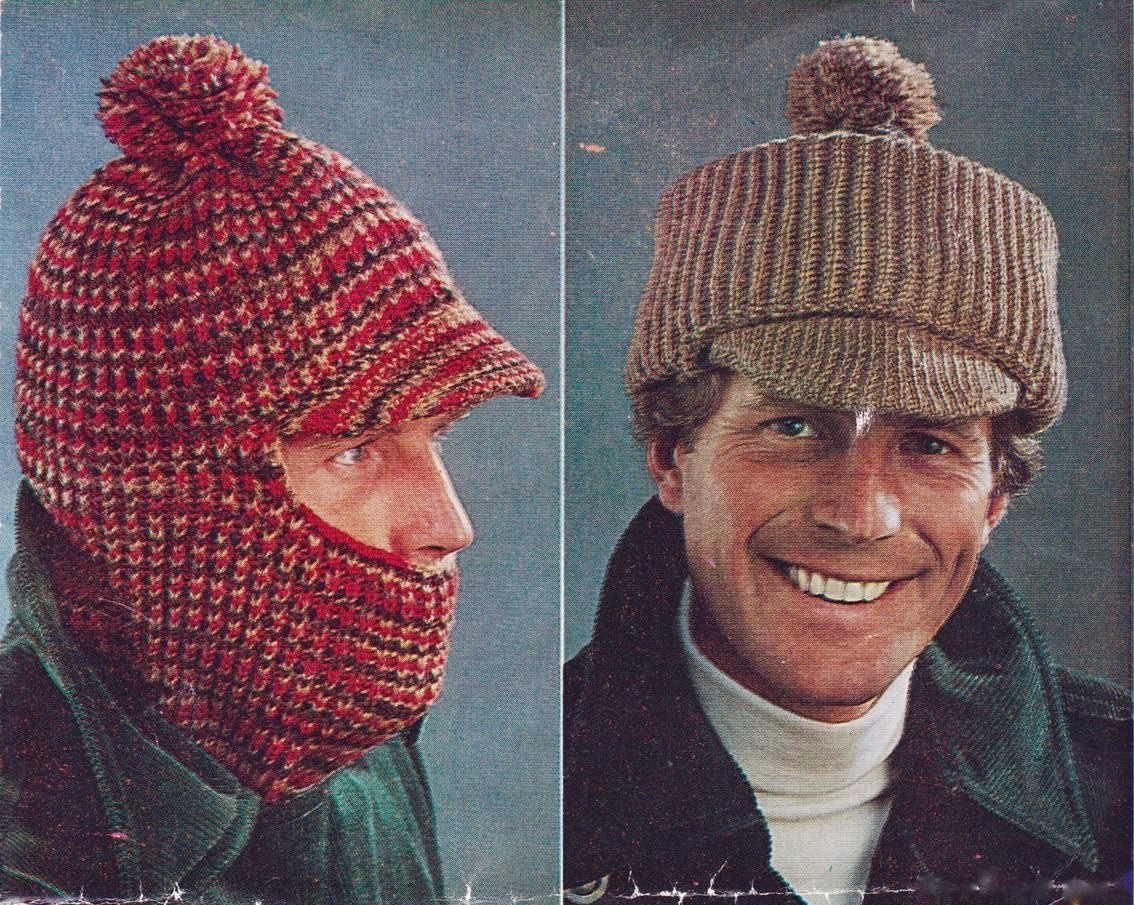
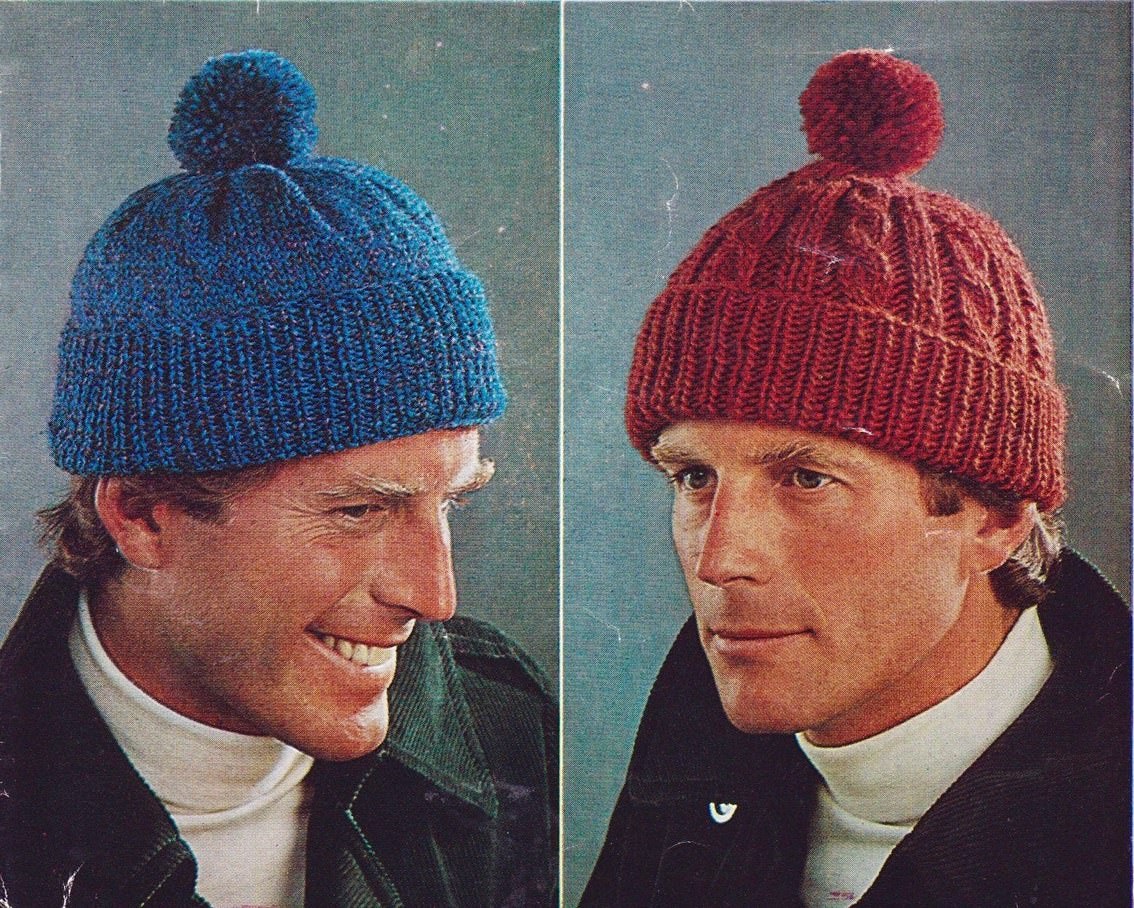
Some designs incorporated face-framing details like ribbed edges, folded brims, or extended neck warmers. Others added decorative elements like pompoms, tassels, or cable-knit panels running over the crown. No two helmets looked exactly alike, even when knitted from the same pattern.
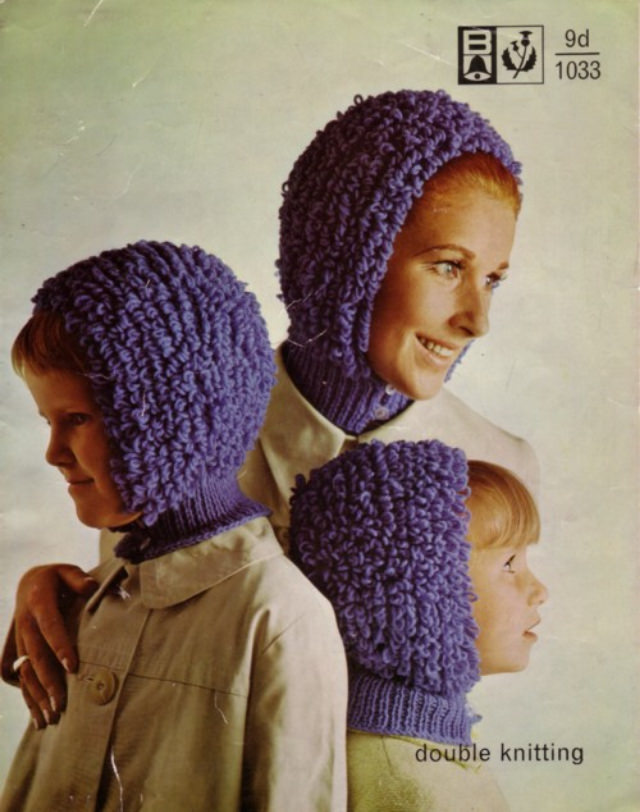
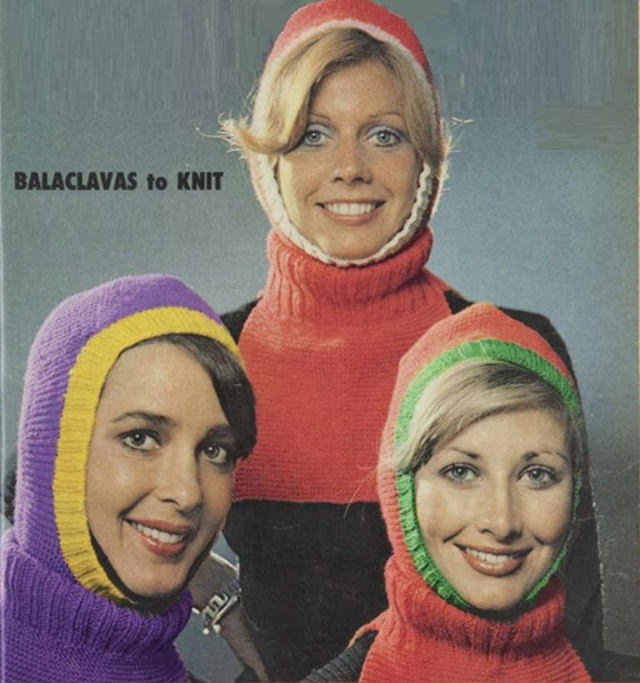
Children’s versions were especially popular, featuring playful animal faces, bright stripes, and whimsical details stitched directly into the design. These were practical items for keeping kids warm in winter, but they were also clearly made with a lot of care and creativity.
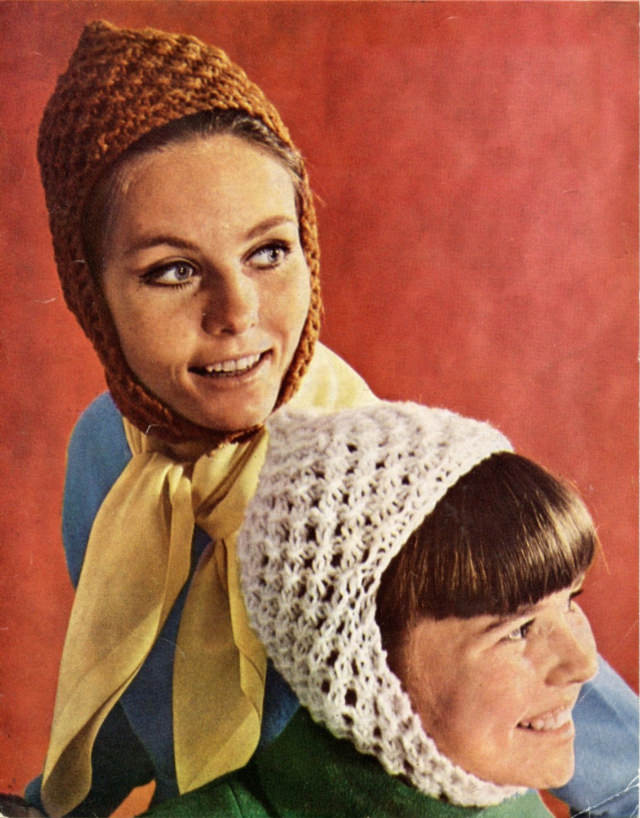
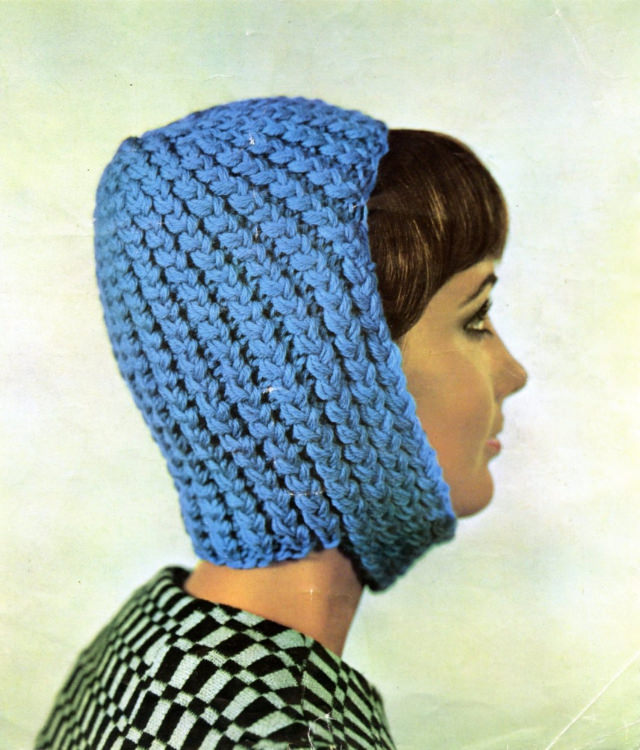
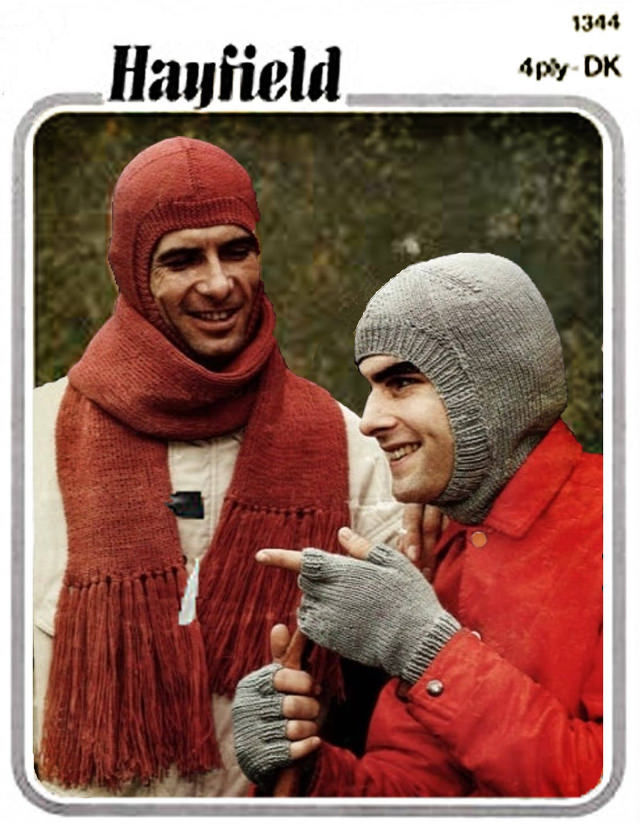
Yarn manufacturers and pattern publishers played a big role in spreading these designs. Companies released dedicated booklets filled with helmet patterns, complete with detailed instructions and photographs. These booklets were sold at craft shops and department stores, putting the designs within reach of knitters at every skill level.
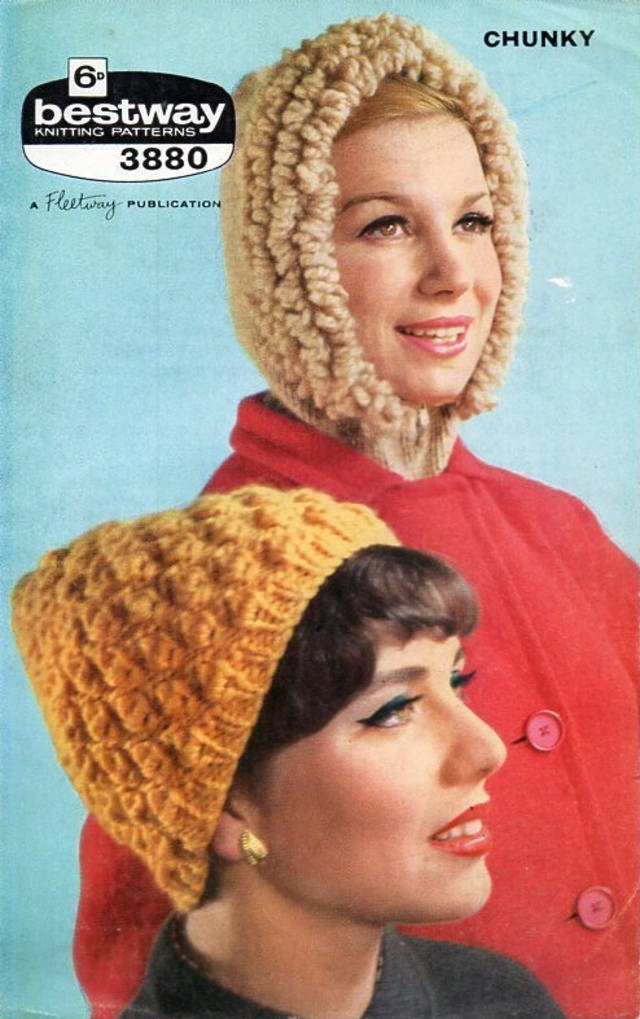
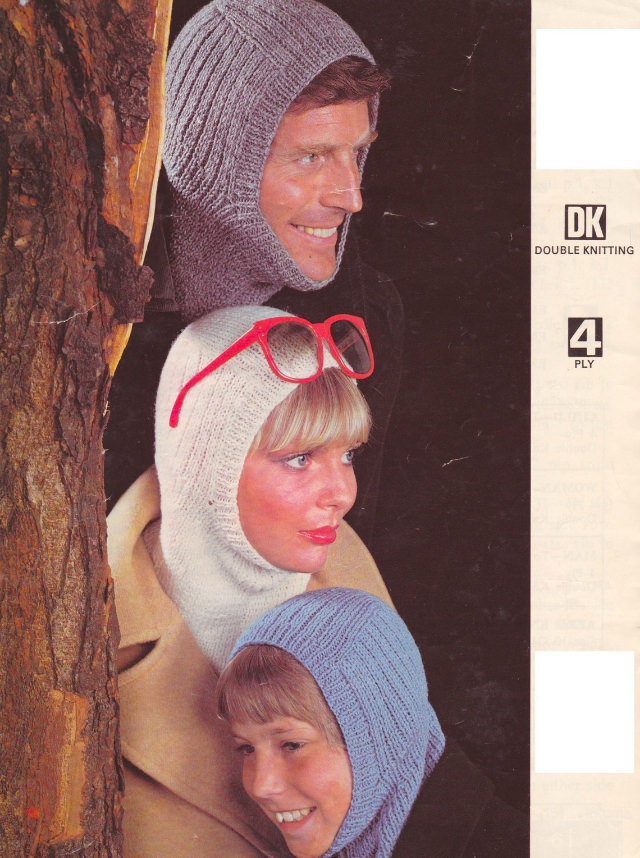
Looking at these designs today, they capture a specific moment in craft history — a decade when hand-knitting reasserted itself as a serious, expressive activity. The helmets below represent just a small selection of what 1970s knitters were producing.