In the spring of 1970, the University of Maryland at College Park became the site of one of the most intense student uprisings in American history. While campuses like Berkeley and Columbia were already known for radical politics, Maryland had been relatively quiet for years. Small groups of activists organized against military recruiters or the CIA, but those protests rarely drew more than 100 to 200 students. That calm shattered in March 1970 and did not return until summer.
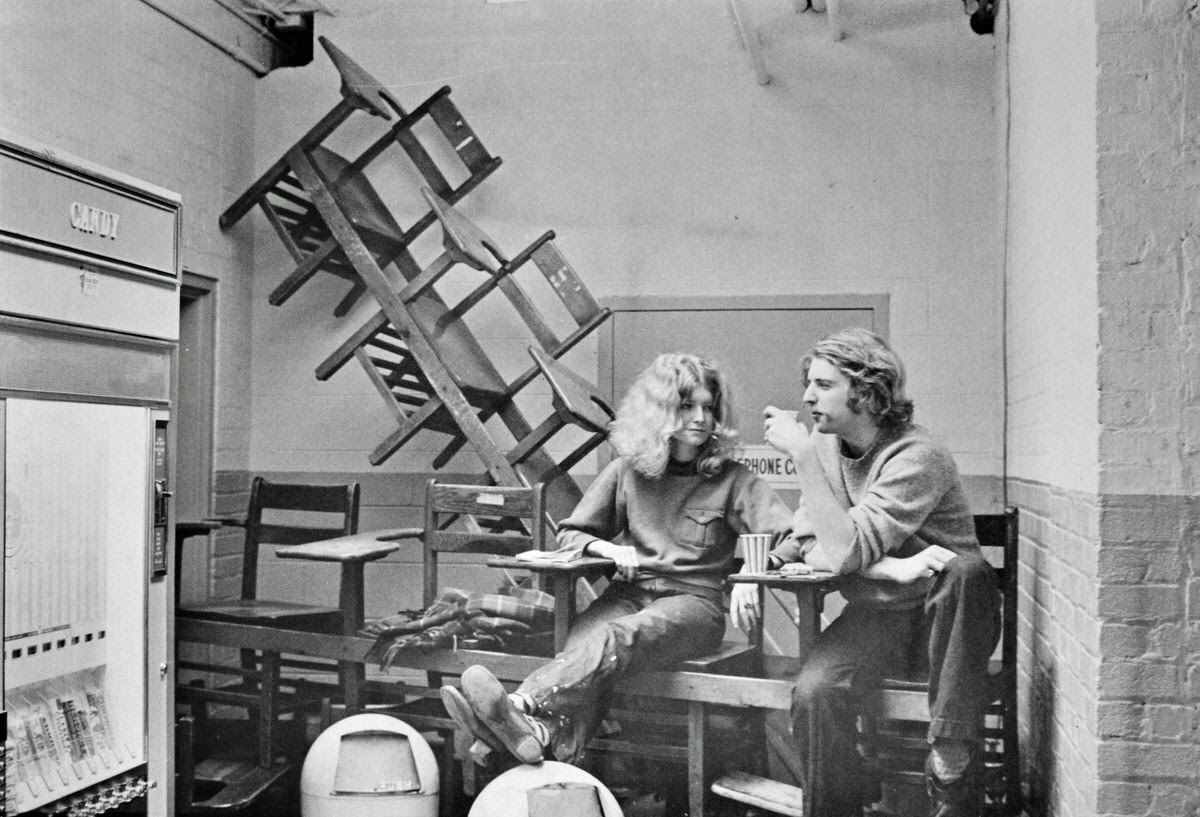
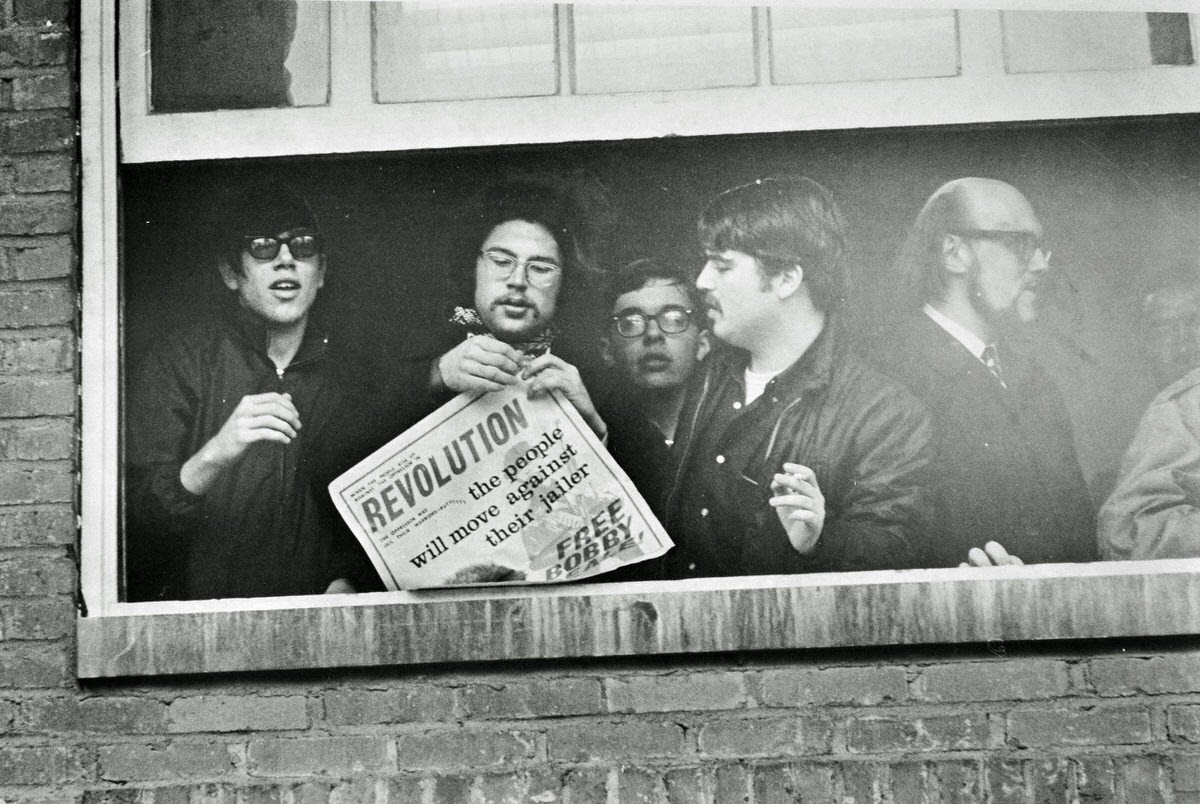
The first spark had nothing to do with Vietnam. In March 1970, the university denied tenure to two popular professors. Students felt shut out of decisions that directly affected their education, and the anger was immediate. On the night of March 23, hundreds of students marched to Skinner Hall and launched a sit-in.
University of Maryland students stage a sit-in at Skinner Hall protesting faculty tenure policies on March 23, 1970.
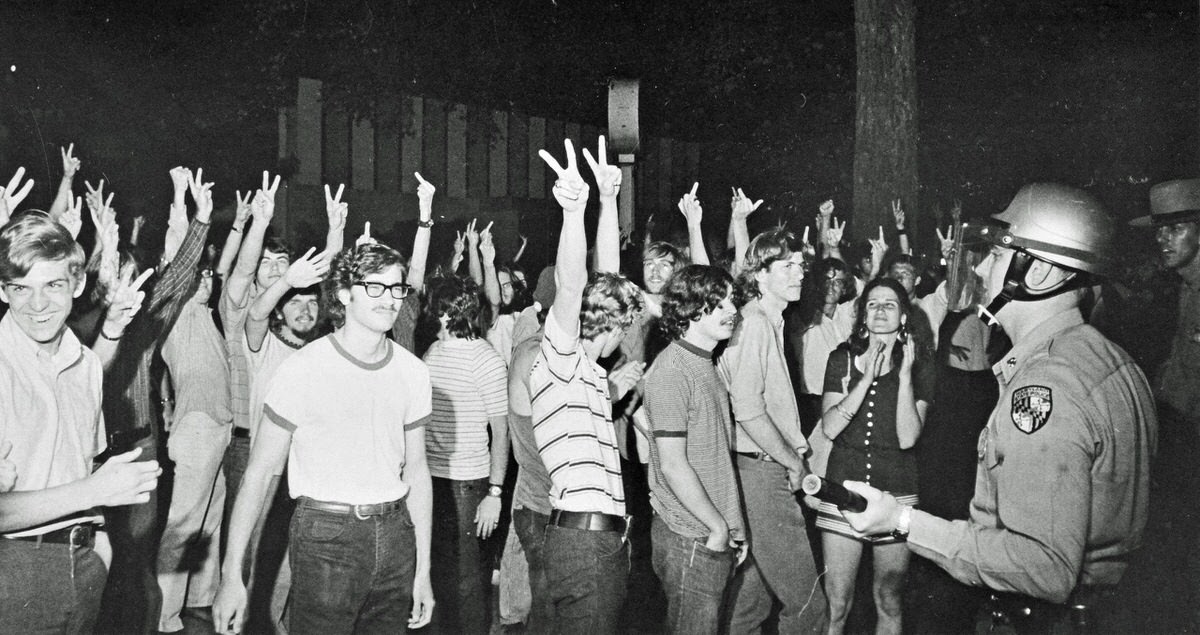
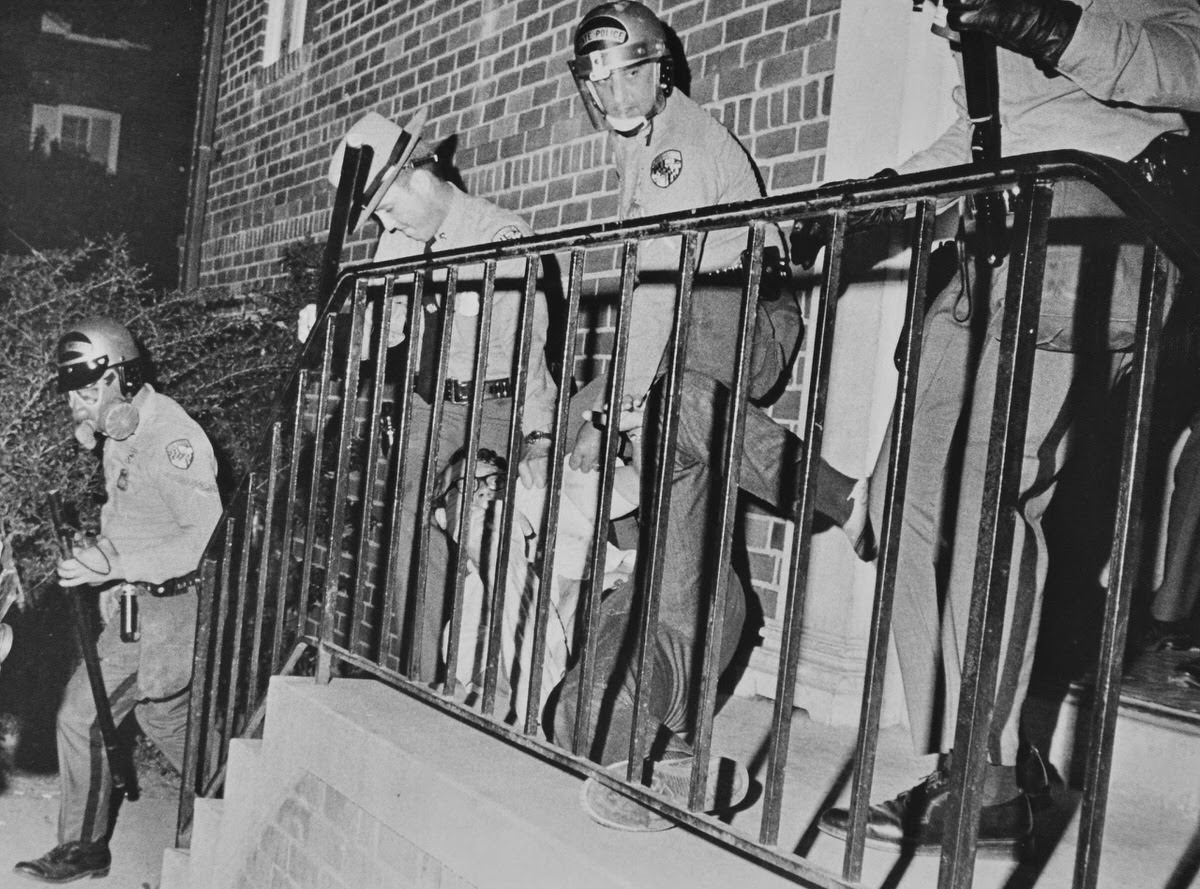
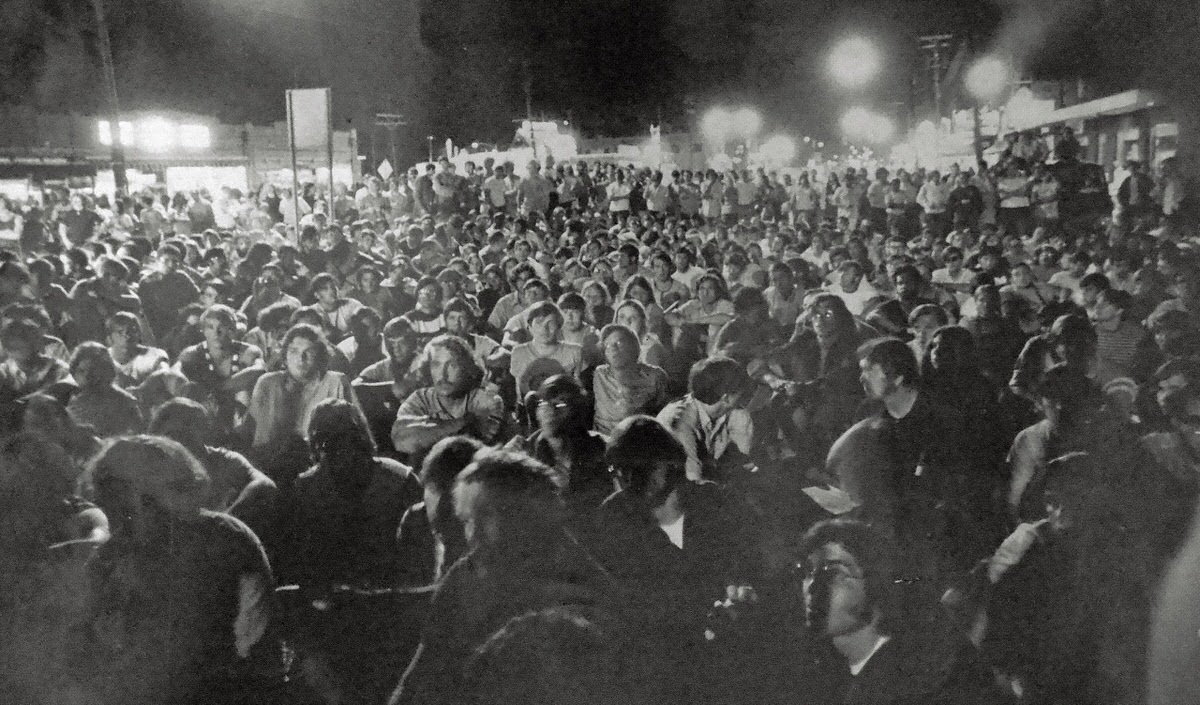
As the hours passed, the mood outside Skinner Hall grew tense. Students pressed against police lines in the darkness, lit by streetlights and camera flashes.
University of Maryland students confront police outside Skinner Hall in the late night hours of March 23, 1970. Police moved in to arrest 87 students occupying the building in the early morning hours of March 24.
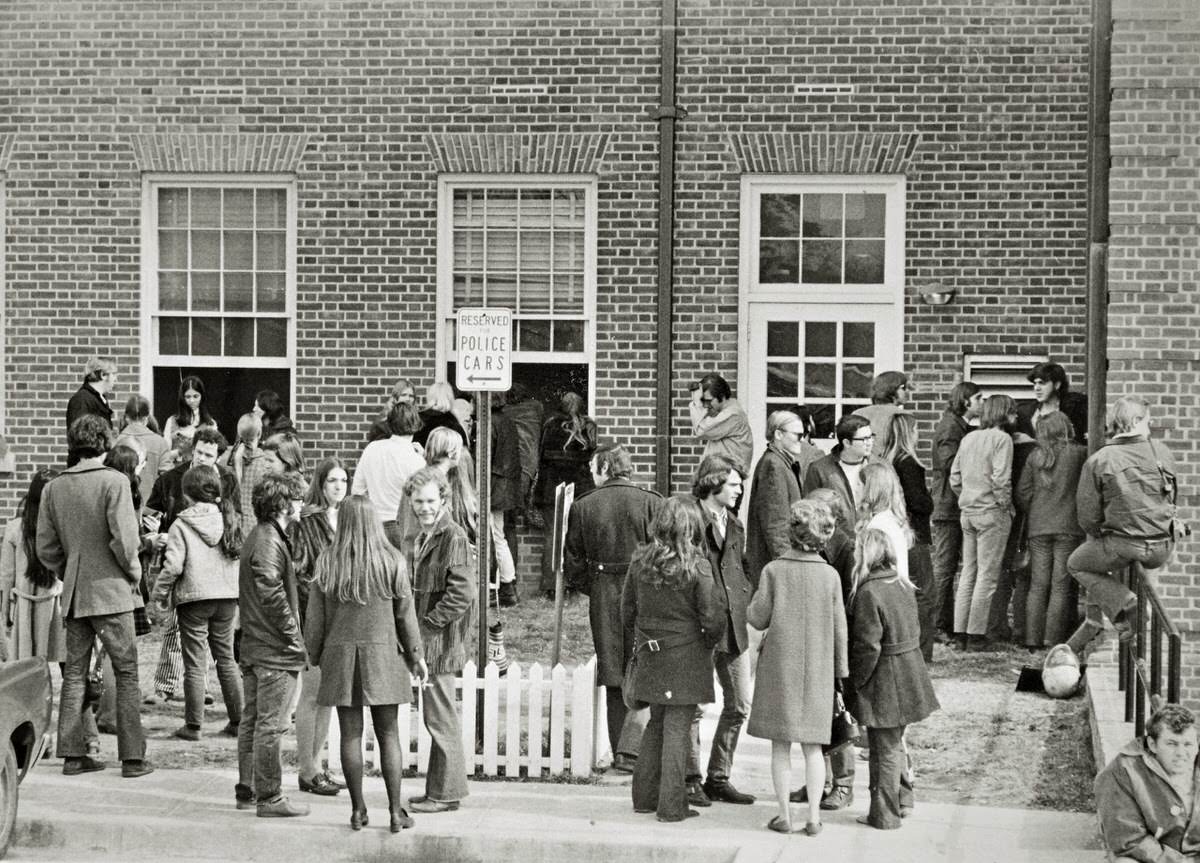
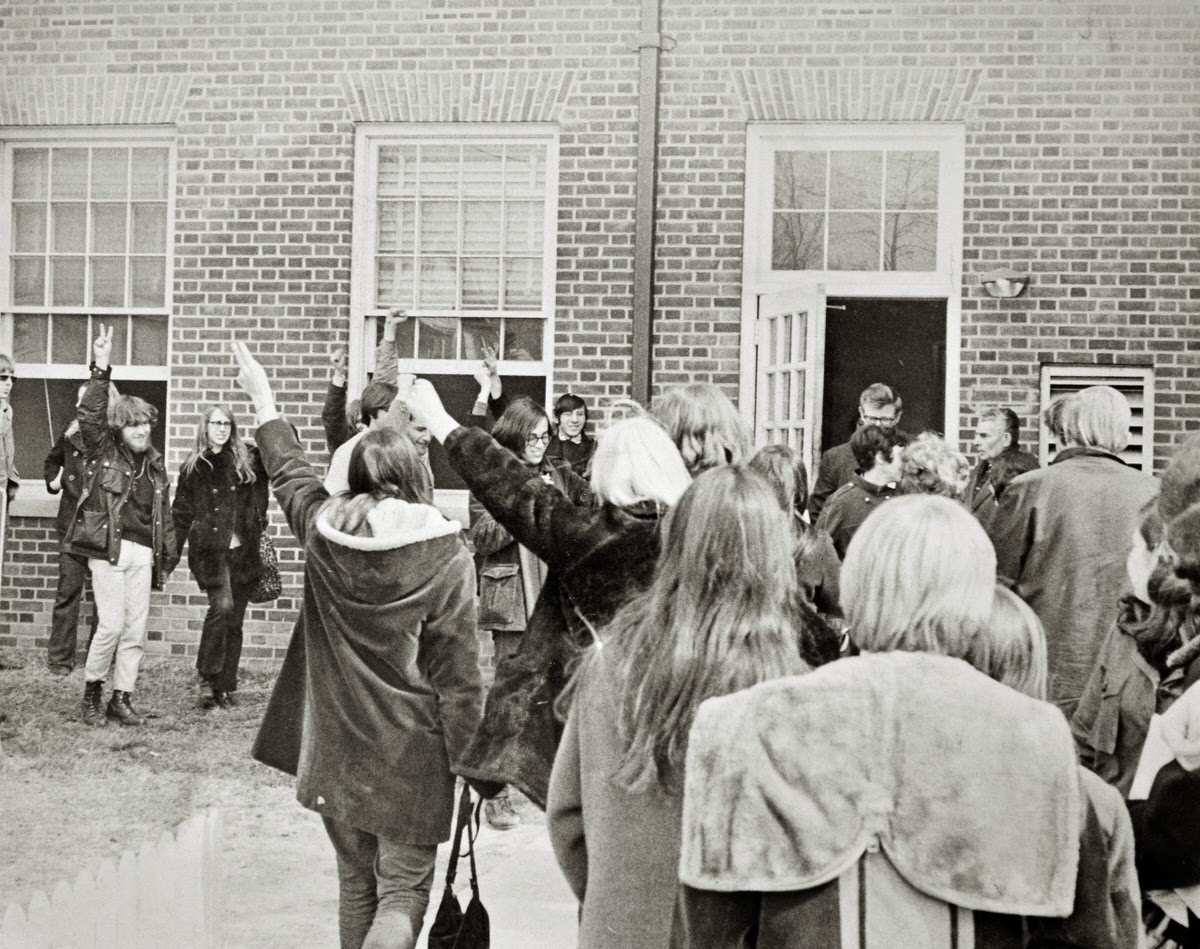
In the early morning hours of March 24, police moved in. Eighty-seven students were arrested and taken to the Hyattsville courthouse. Rather than ending the protest, the mass arrests accelerated it. Supporters crowded outside the courthouse to greet those released on bail.
University of Maryland students greet those released on bail at the Hyattsville courthouse March 24, 1970 following a sit-in on campus protesting faculty tenure policies.University of Maryland students greet those released on bail at the Hyattsville courthouse March 24, 1970 following a sit-in on campus protesting faculty tenure policies.
Within two weeks, the cause had grown beyond tenure. A student-faculty activist group formed in the wake of the arrests, and by April 6, thousands of students assembled on the steps of McKeldin Library. The grievances now encompassed the structure of authority on campus itself.
Students on the steps of McKeldin Library on the University of Maryland College Park campus April 6, 1970 protesting faculty tenure policies and the arrest of 87 students during an occupation of Skinner Hall on the campus March 24.University of Maryland students occupying a campus building on April 6, 1970 are protesting faculty tenure policies and the arrest of 87 students during an occupation of Skinner Hall on the campus two week earlier on March 24.
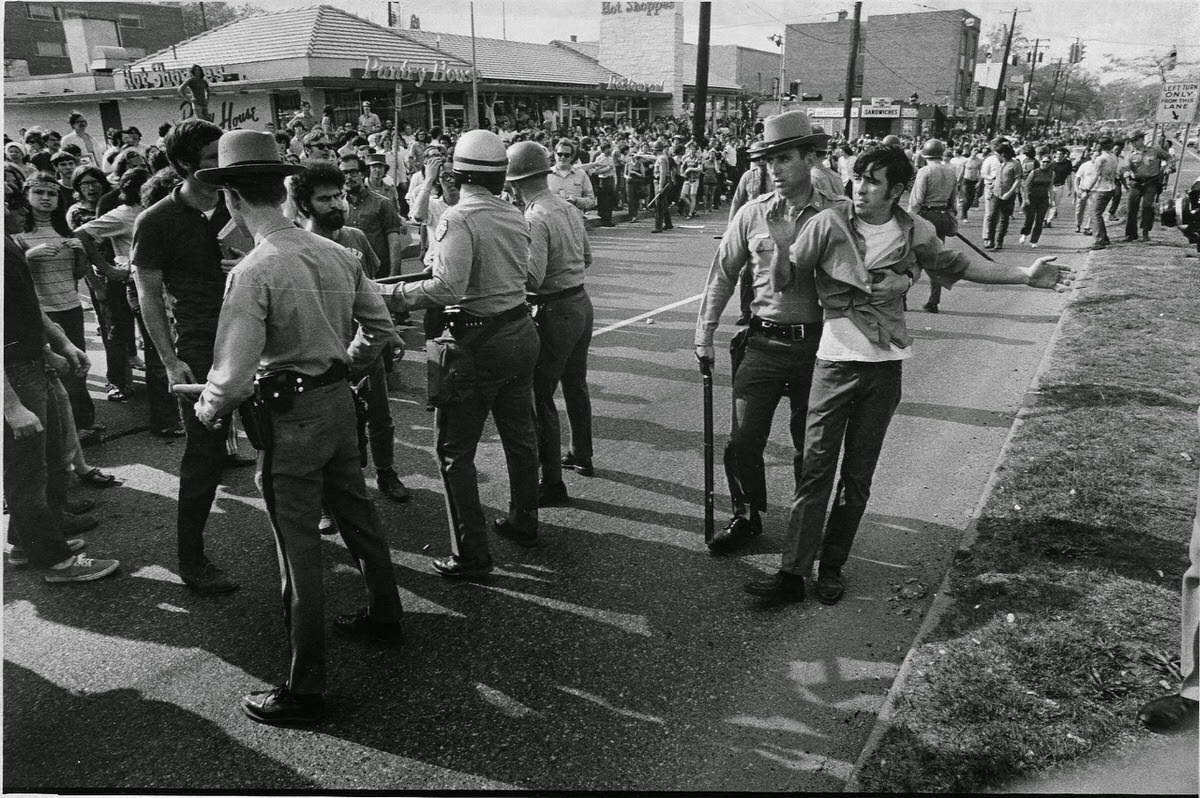
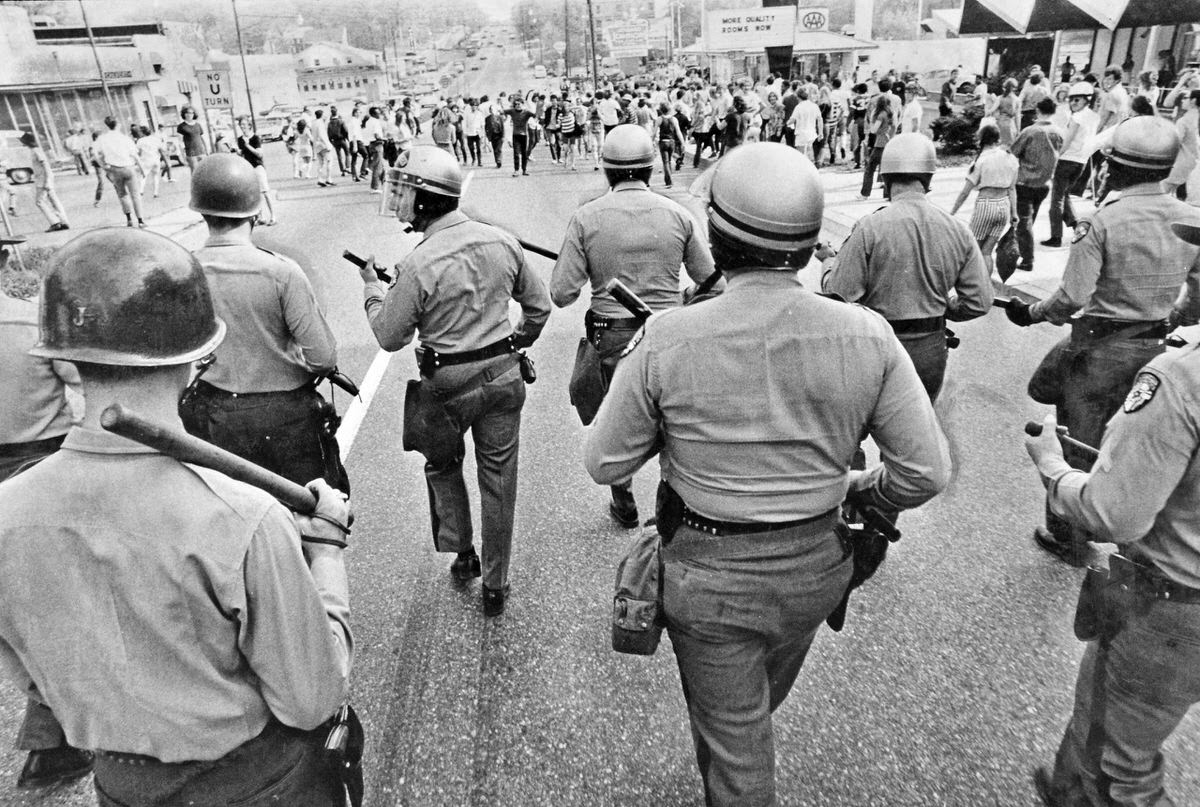
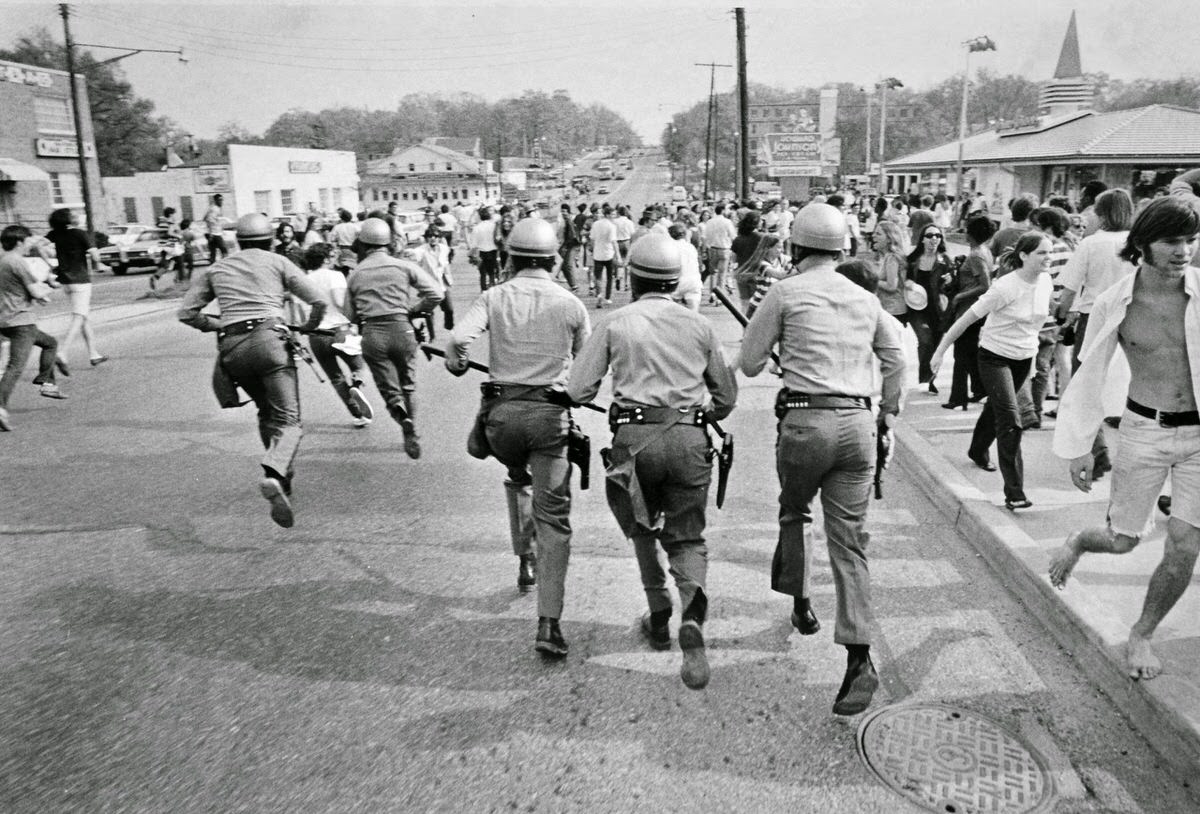
On April 30, President Nixon announced the invasion of Cambodia, framing it as an expansion of the Vietnam War. The reaction at Maryland was instant. The next day, May 1, thousands of students poured off campus and onto U.S. Route 1, the highway connecting College Park to Washington, D.C. They blockaded the road with their bodies and makeshift barricades. State police responded by charging south on Route 1 near Calvert Road, swinging billy clubs and deploying “pepper foggers”—large machines that pumped thick clouds of chemical irritants into the crowd.
State police advance south on U.S. Route 1 near Calvert Road in College Park, Maryland on May 1, 1970 after a mass demonstration on campus protesting the expansion of the Vietnam War into Cambodia spilled over into an occupation of the highway.Police charge south on U.S. Route 1 on May 1, 1970 to clear the highway of students protesting President Richard Nixon’s expansion of the Vietnam War into Cambodia.
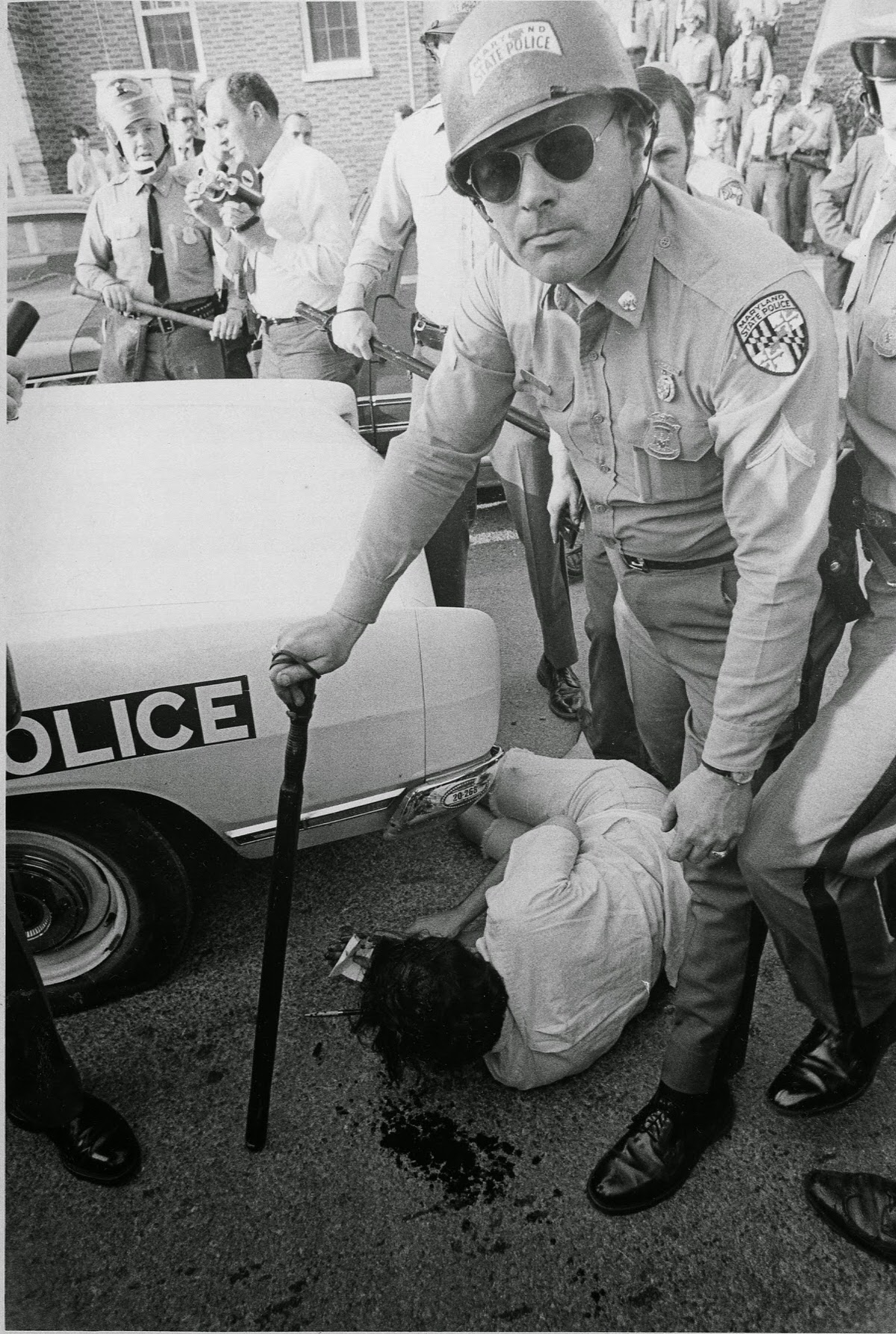
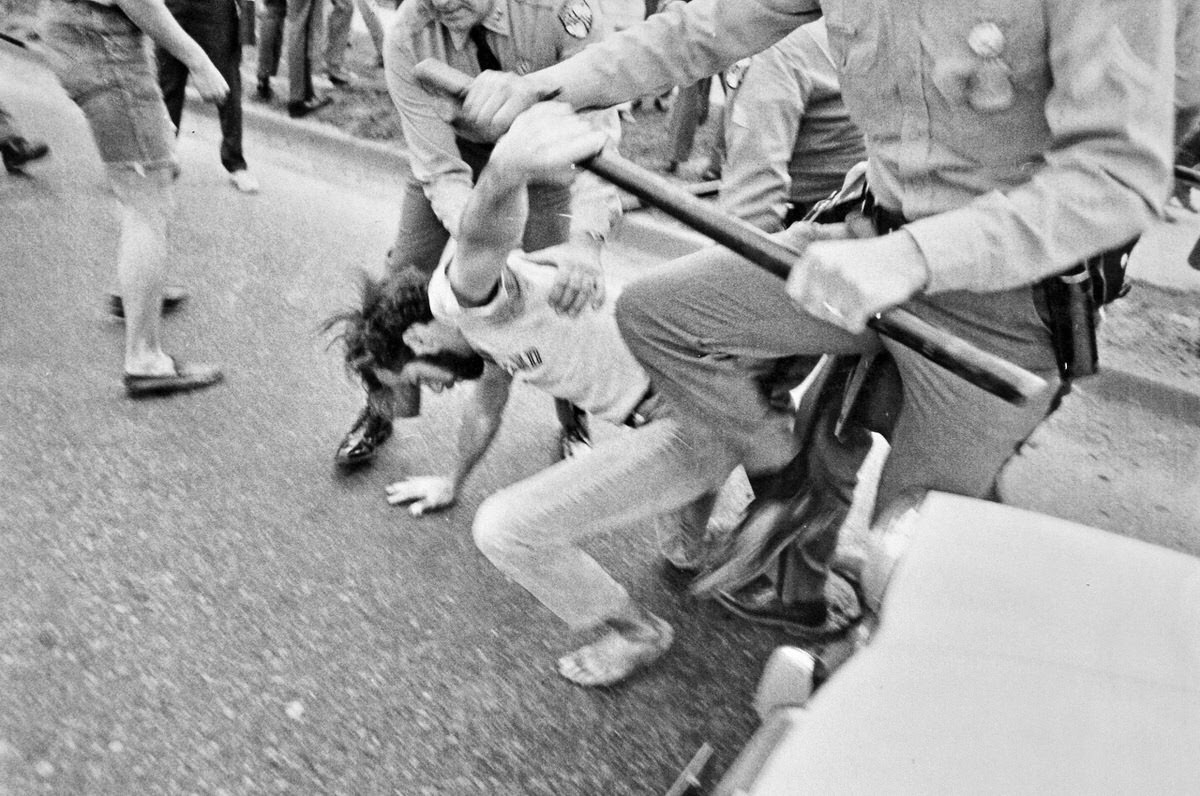
The fighting on Route 1 was brutal. One photograph taken that day shows a student beaten by police, blood visible on the asphalt as officers dragged him away. Students who fled back toward campus were not safe. Police followed them into dormitories, pulling residents from their rooms.
Student arrested after being beaten by state police on campus of University of Maryland during an antiwar demonstration May 1, 1970. Note blood on the street. The demonstration was in response to President Nixon’s invasion of Cambodia the day before.A student grabs police billy club while another officer wrestles him to the ground during an arrest on U.S. Route 1 in College Park, Md. in May 1970.A University of Maryland student is dragged from his dormitory and arrested May 1, 1970 after protests broke out following President Richard Nixon’s announcement that he was expanding the Vietnam War into Cambodia the night before.
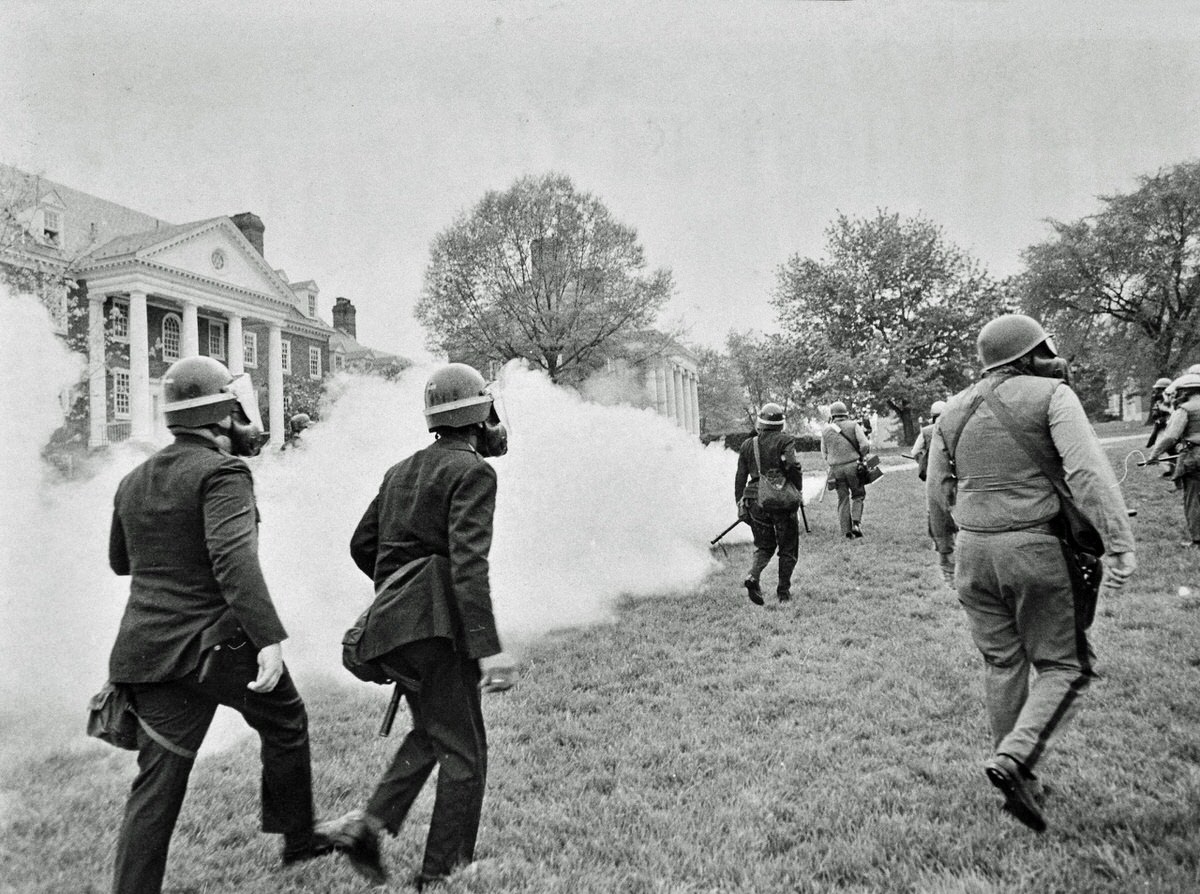
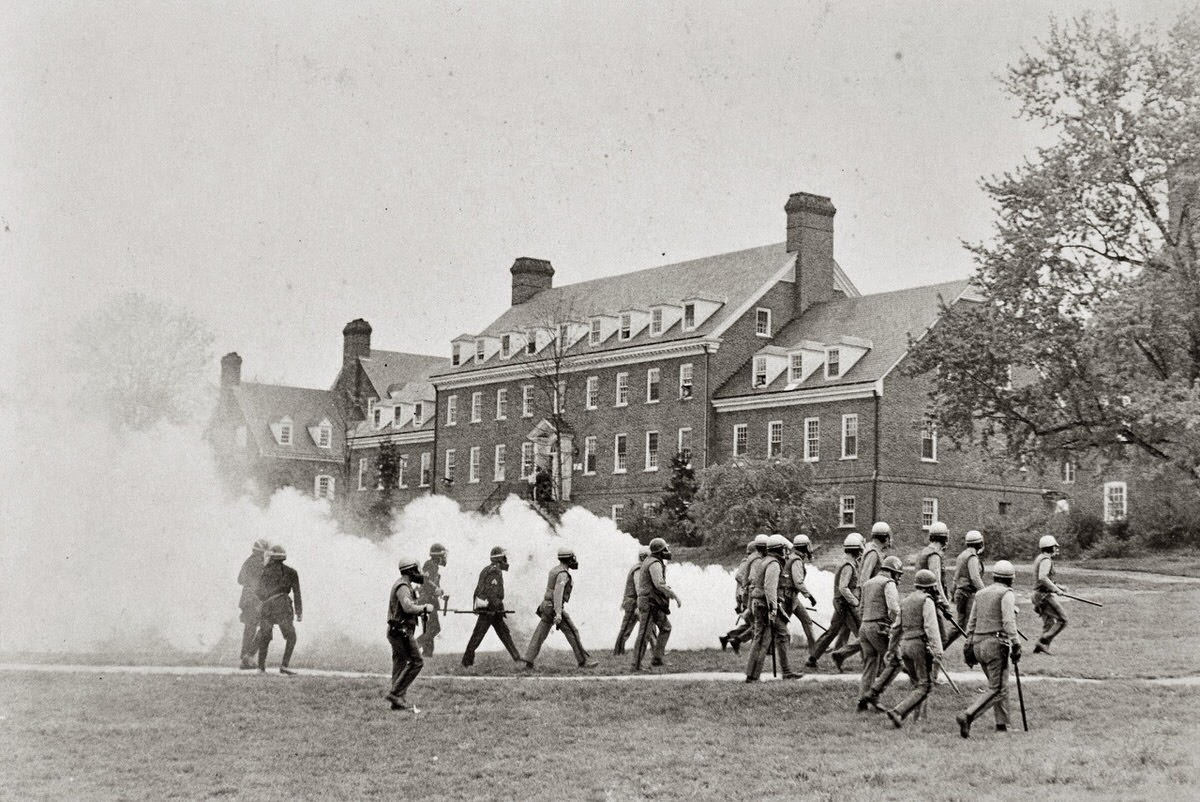
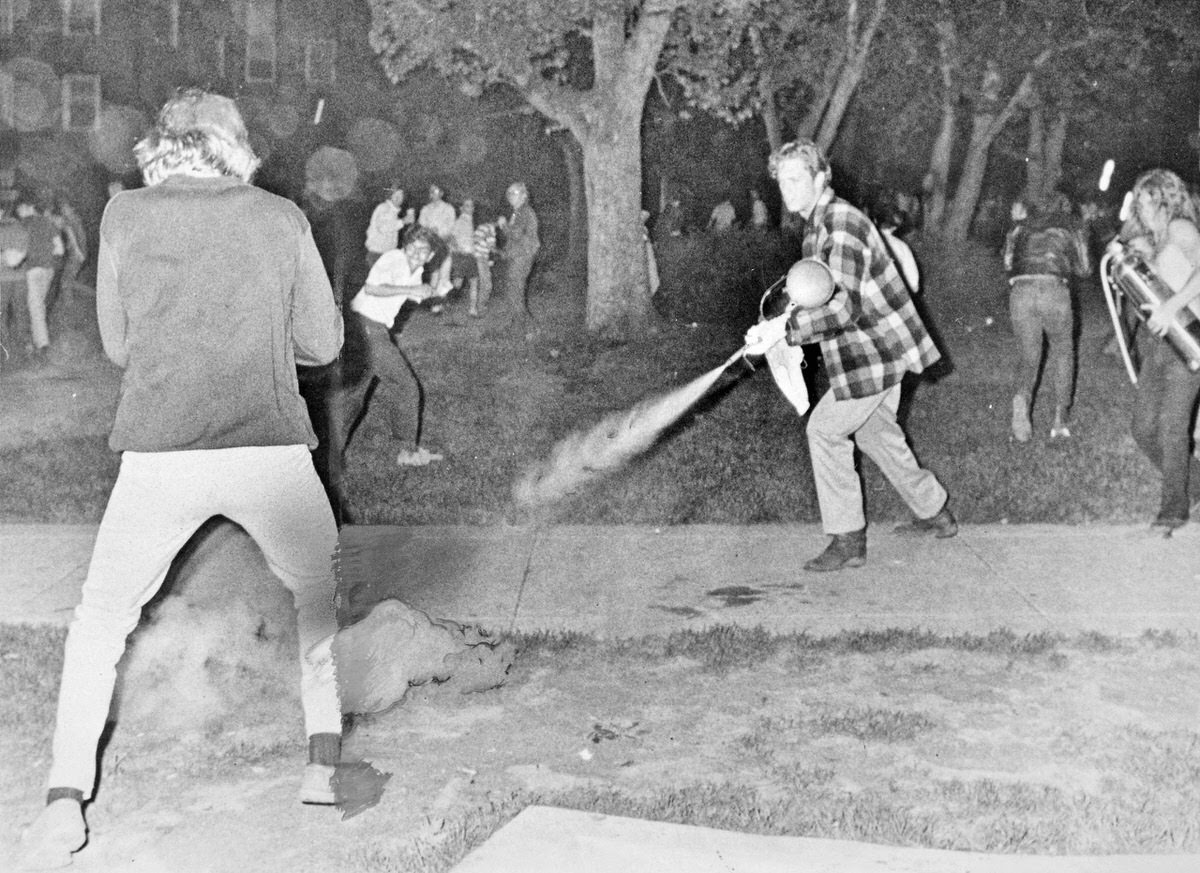
On the campus mall near Cecil Hall, police deployed pepper foggers and tear gas canisters directly into the crowds. Students grabbed fire extinguishers and used them to suppress the gas. The air turned thick with chemicals.
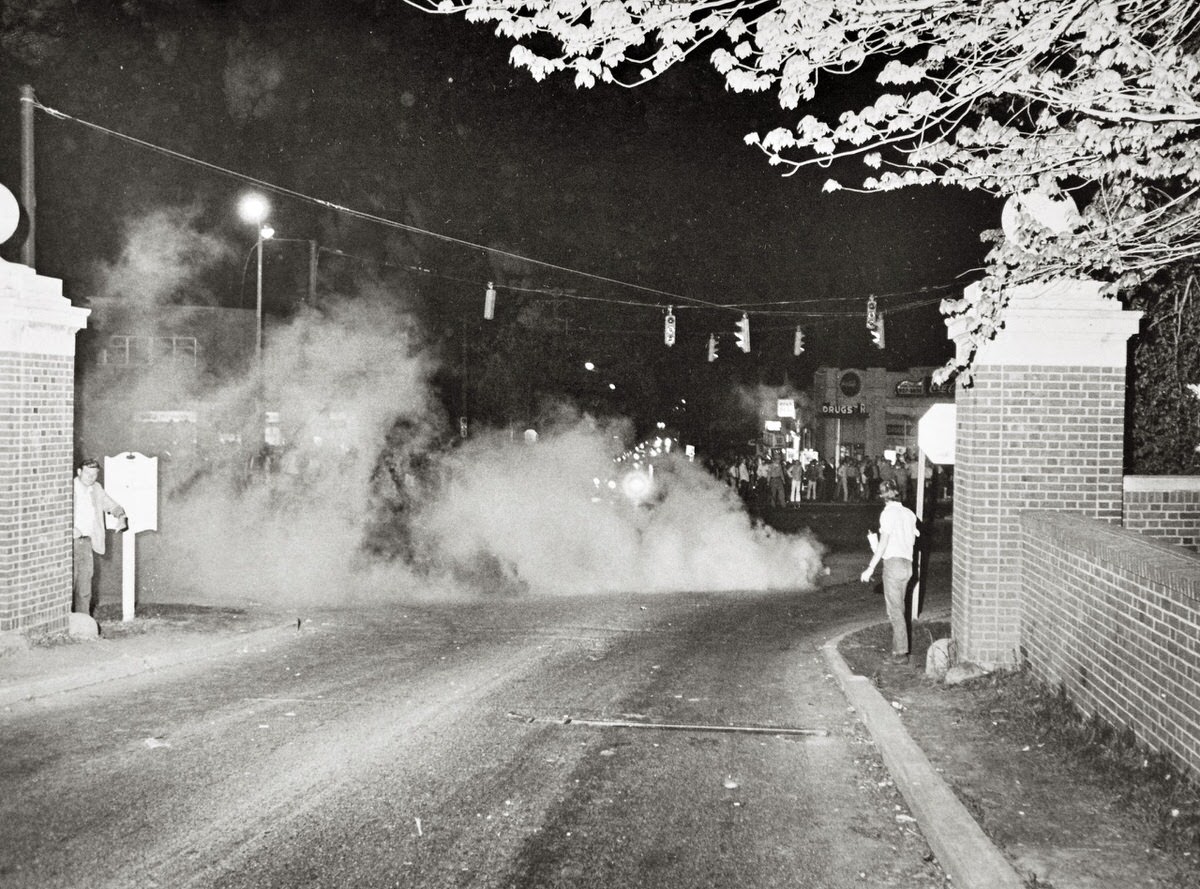
Police use pepper fogger on the University of Maryland campus May 1, 1970 as they attempt to break up a demonstration against the expansion of the Vietnam War into Cambodia.State police using a pepper fogger and tear gas canisters move past Cecil Hall on the University of Maryland campus May 1, 1970 attempting to disperse students protesting President Nixon’s expansion of the Vietnam War into Cambodia.Students grab fire extinguishers to suppress tear gas canisters fired at them by police May 1, 1970 during a demonstration at the University of Maryland protesting the expansion of the Vietnam War into Cambodia.Police use tear gas to clear University of Maryland students from U.S. Route 1 near Regents Drive May 1, 1970. The demonstration began protesting President Nixon’s expansion of the Vietnam War by invading Cambodia.
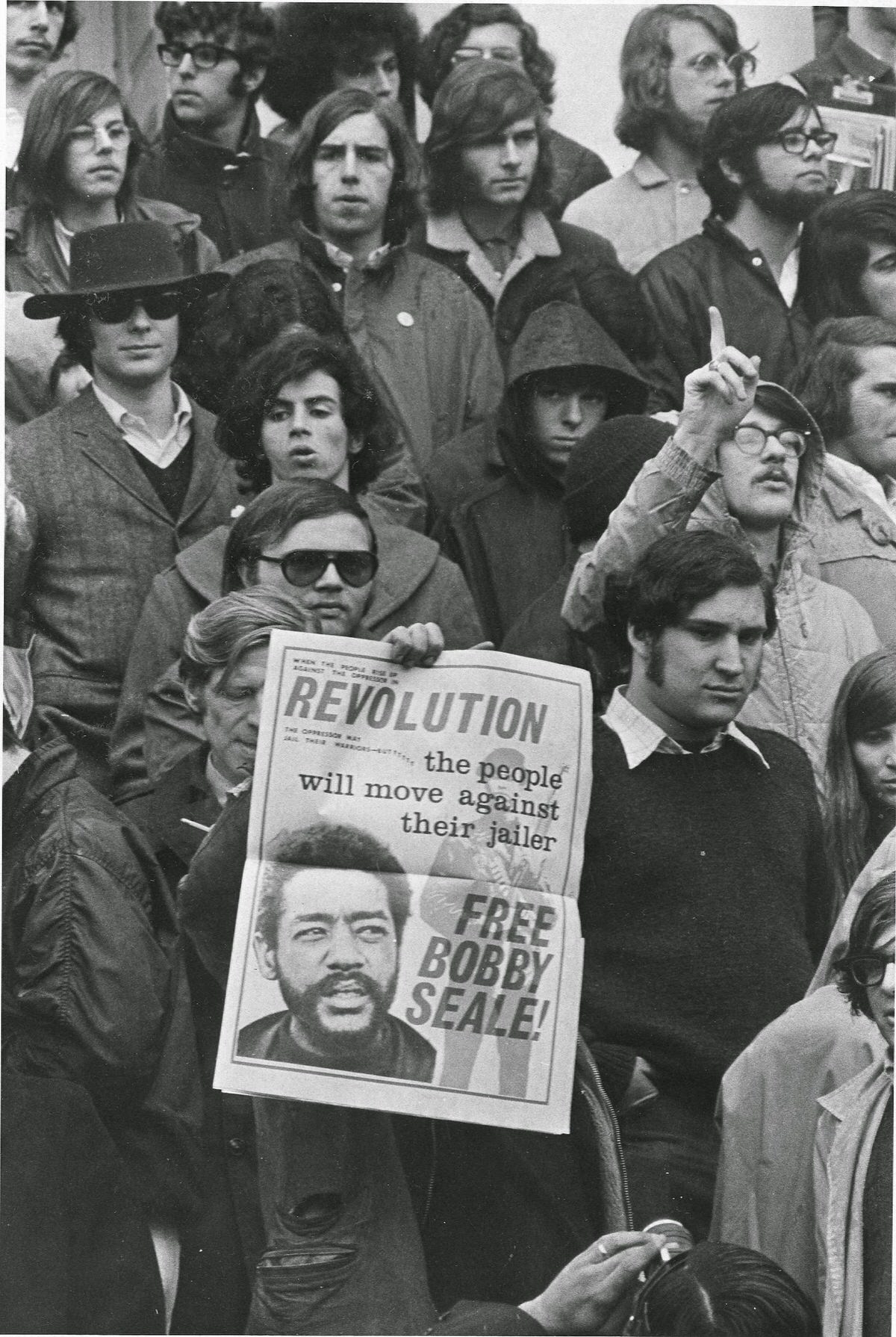
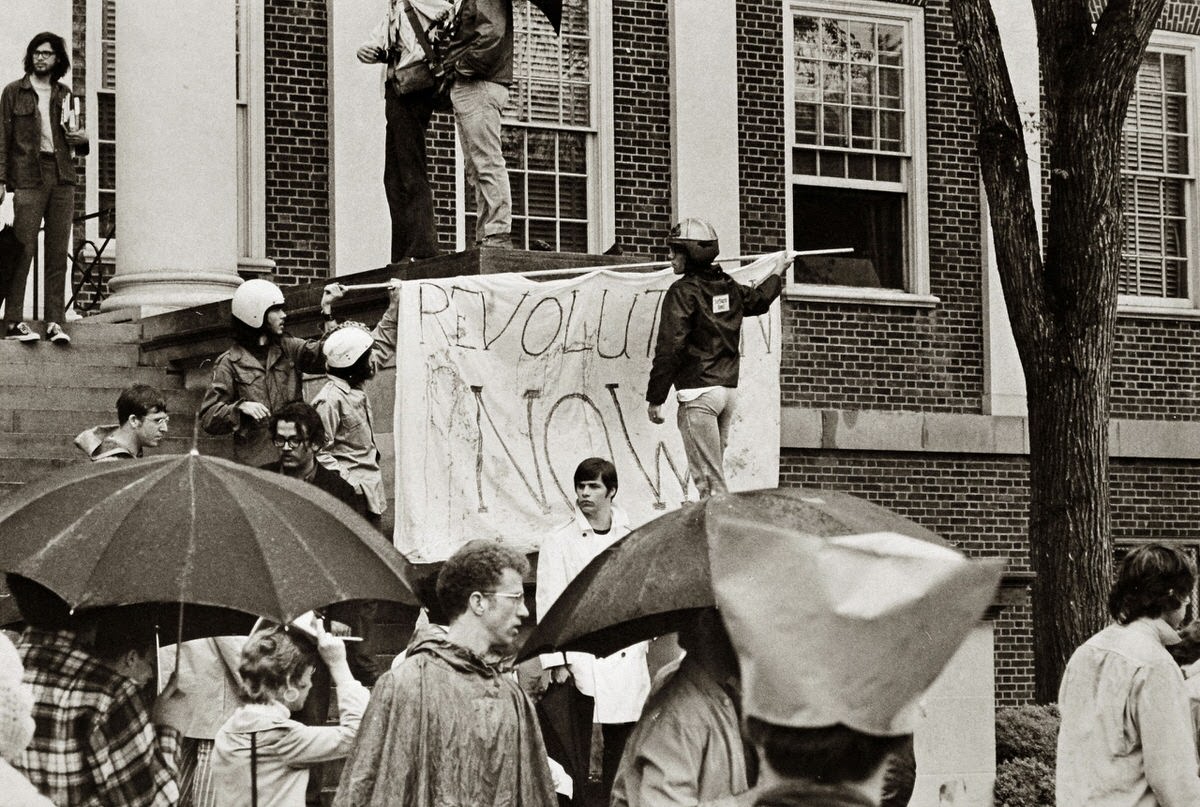
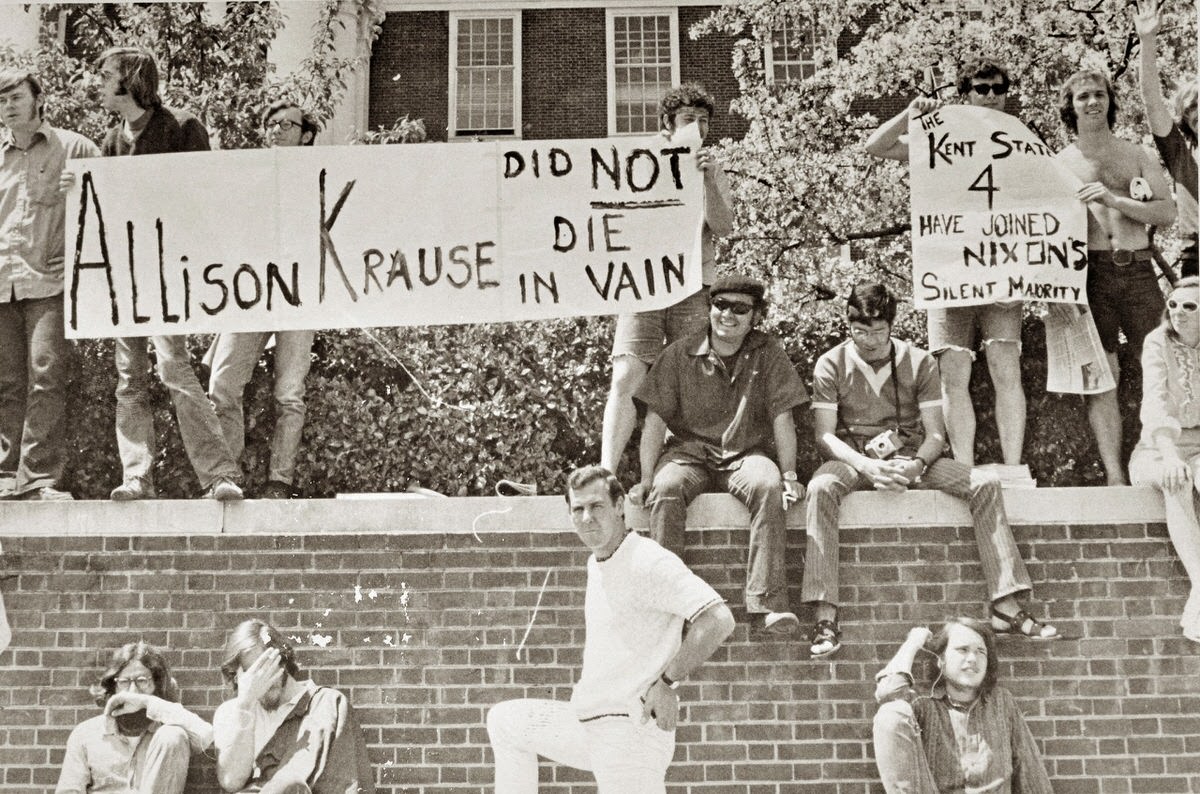
Three days later, on May 4, the Ohio National Guard shot and killed four student protesters at Kent State University. When the news reached College Park, the campus transformed. A nationwide student strike was called, and at Maryland, the majority of students stopped attending classes. On the steps of the main administration building, students raised banners calling for revolution.
Students raise banner for revolution May 4, 1970 on the steps of the University of Maryland main administration building after President Richard Nixon invaded Cambodia and the Ohio National Guard killed four student demonstrators at Kent State University.
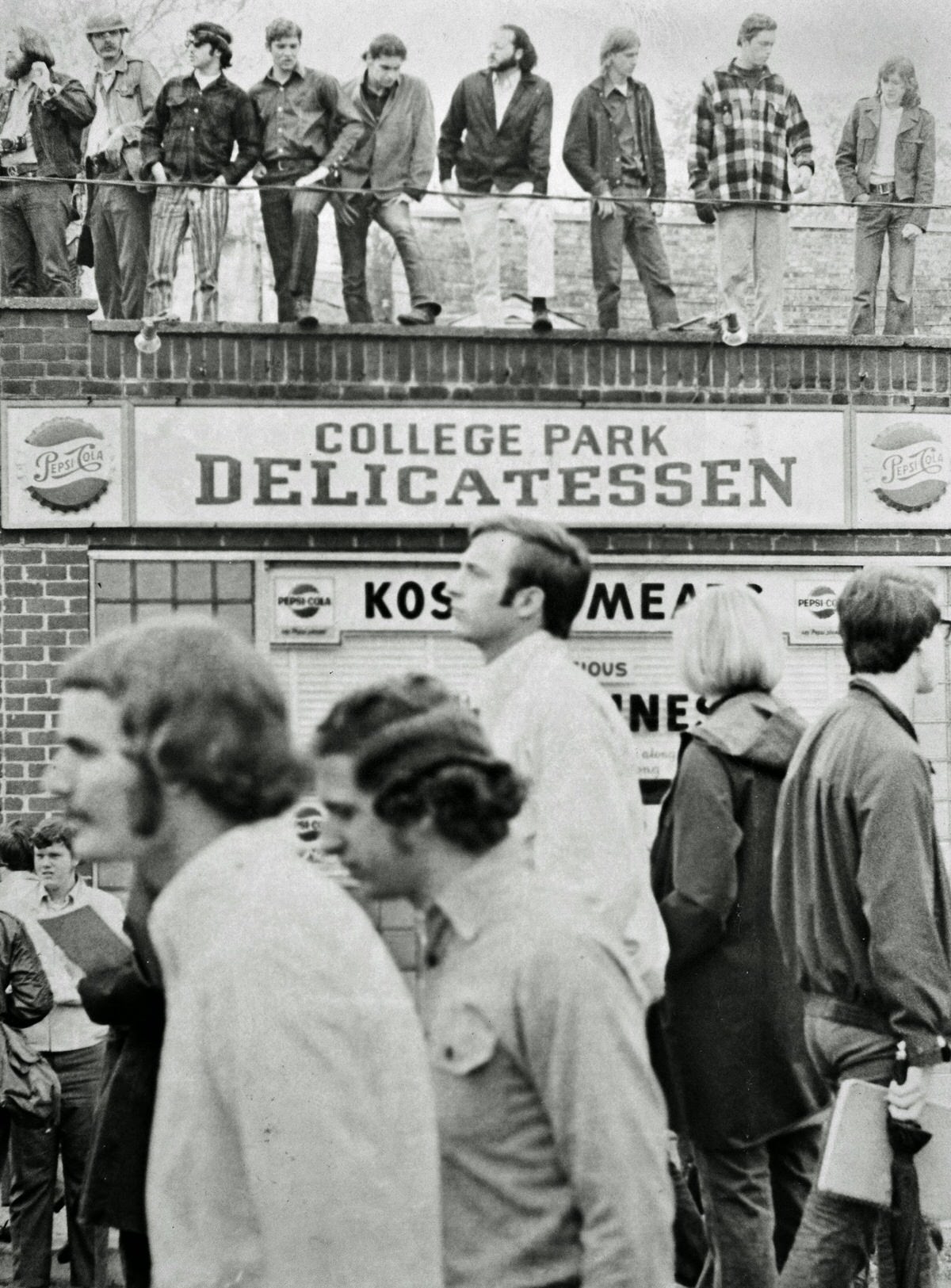
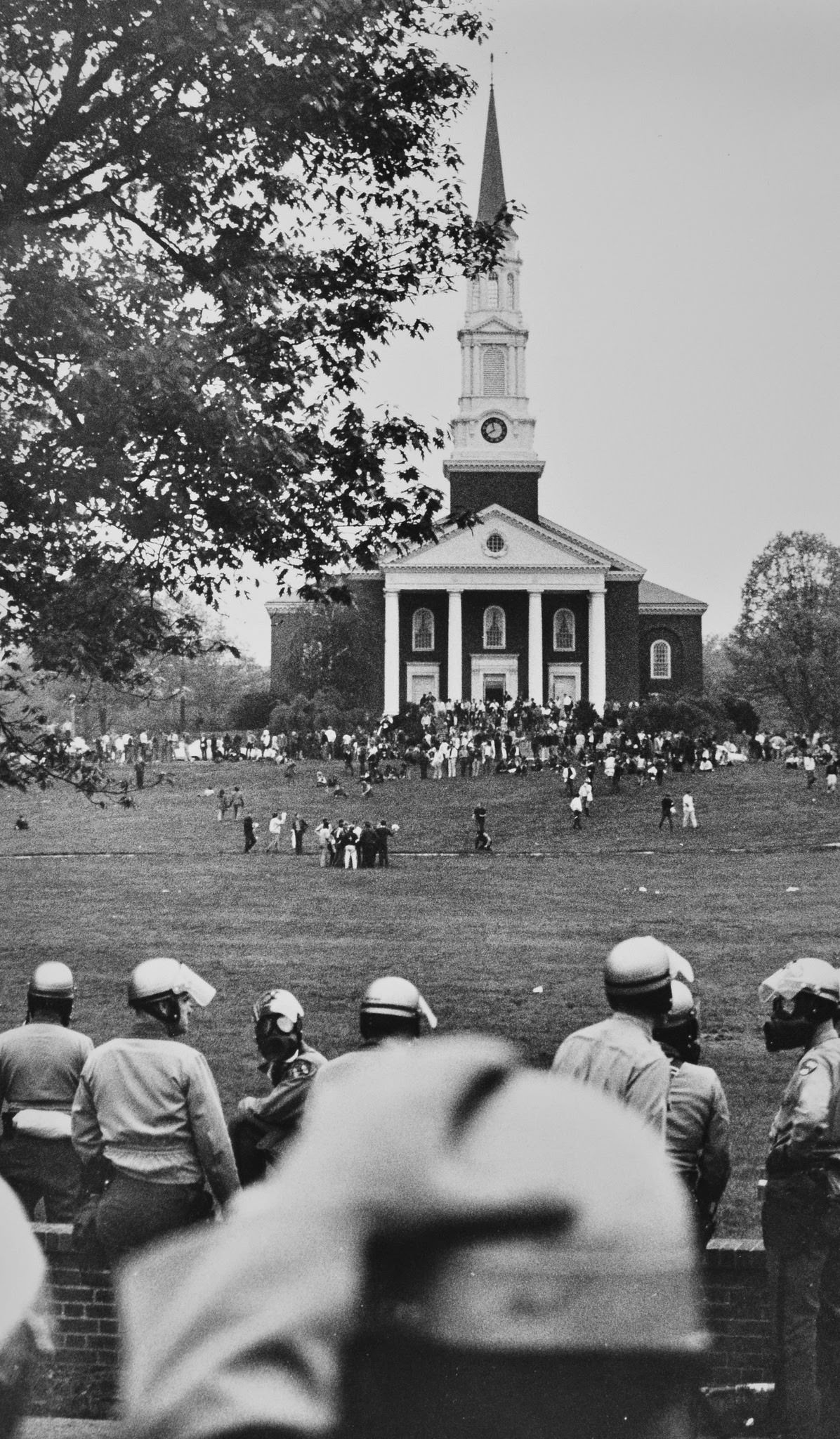
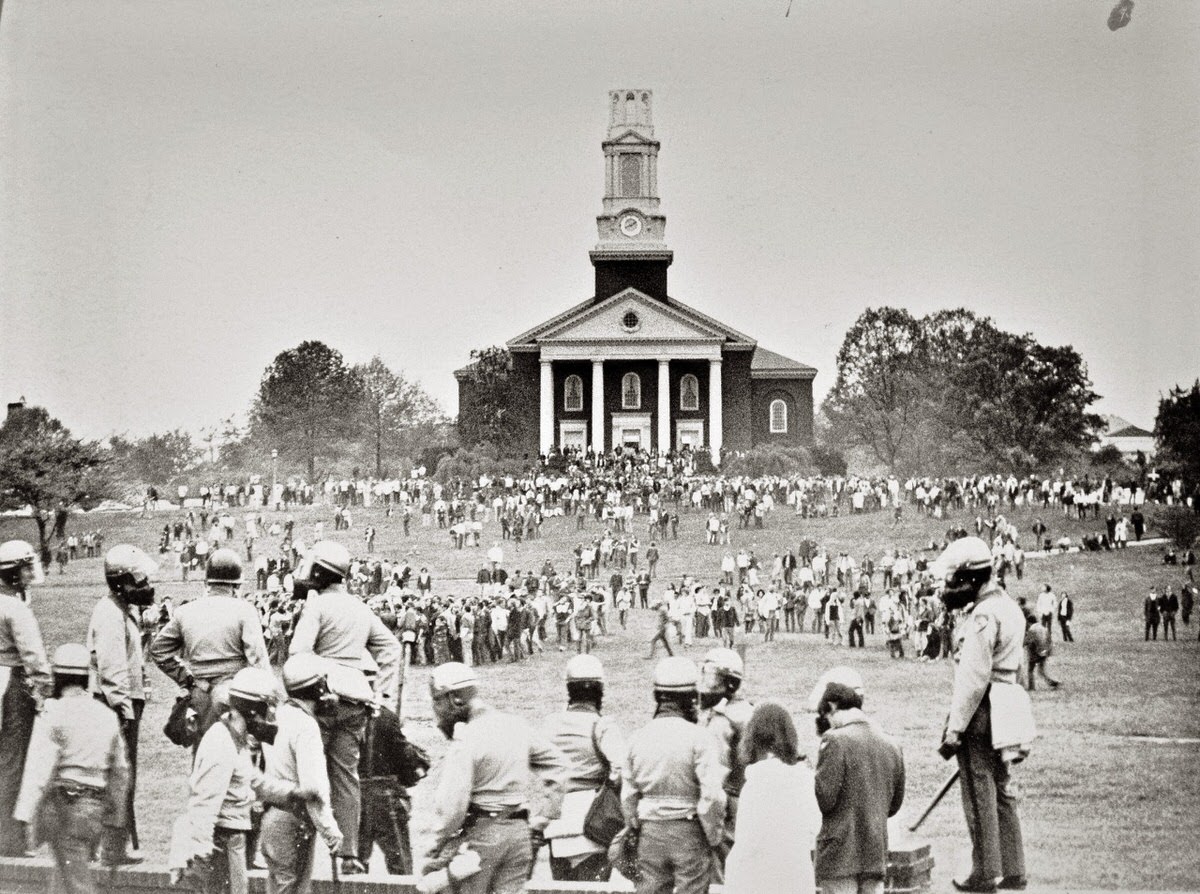
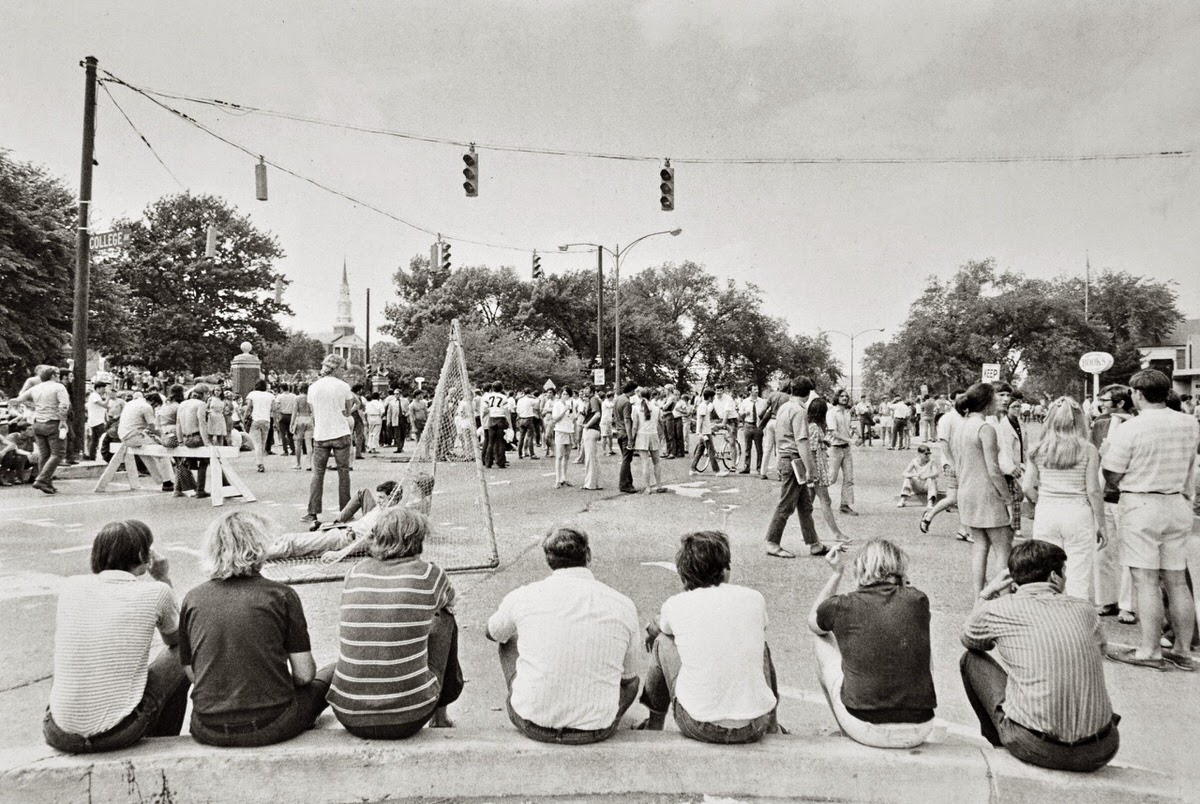
Students returned to Route 1 on May 4, again blocking traffic. After state police pushed them off the highway, they regrouped in front of the Memorial Chapel. The photographs from that afternoon show a different crowd than the one that had gathered weeks earlier—faces set with grim determination, signs that simply read “Kent State” or “End the War.”
Students from the University of Maryland occupy U.S. Route 1 in College Park May 4, 1970 following the expansion of the Vietnam War into Cambodia and the shooting deaths of four students at Kent State University by National Guardsmen.
University of Maryland students regroup in front of the Chapel after being moved off U.S. Route 1 by state police during a demonstration against the expansion of the Vietnam War into Cambodia and the shooting death of four students at Kent State University May 4, 1970.
Students move closer to police lines after being moved off U.S. Route 1 by state police during a demonstration against the expansion of the Vietnam War into Cambodia and the shooting death of four students at Kent State University May 4, 1970.Students at the University of Maryland hold signs up in front of McKeldin Library condemning the killing of four students by Ohio National Guardsmen at Kent State University.
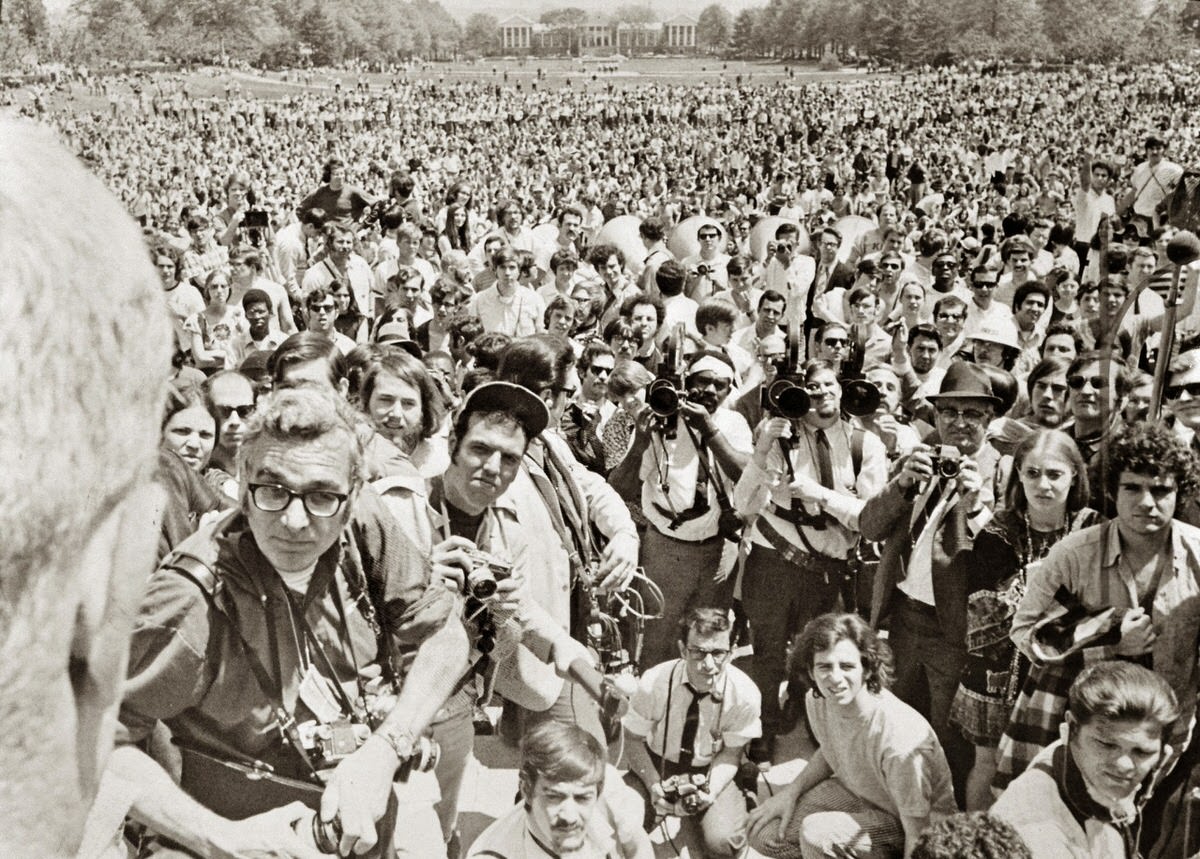
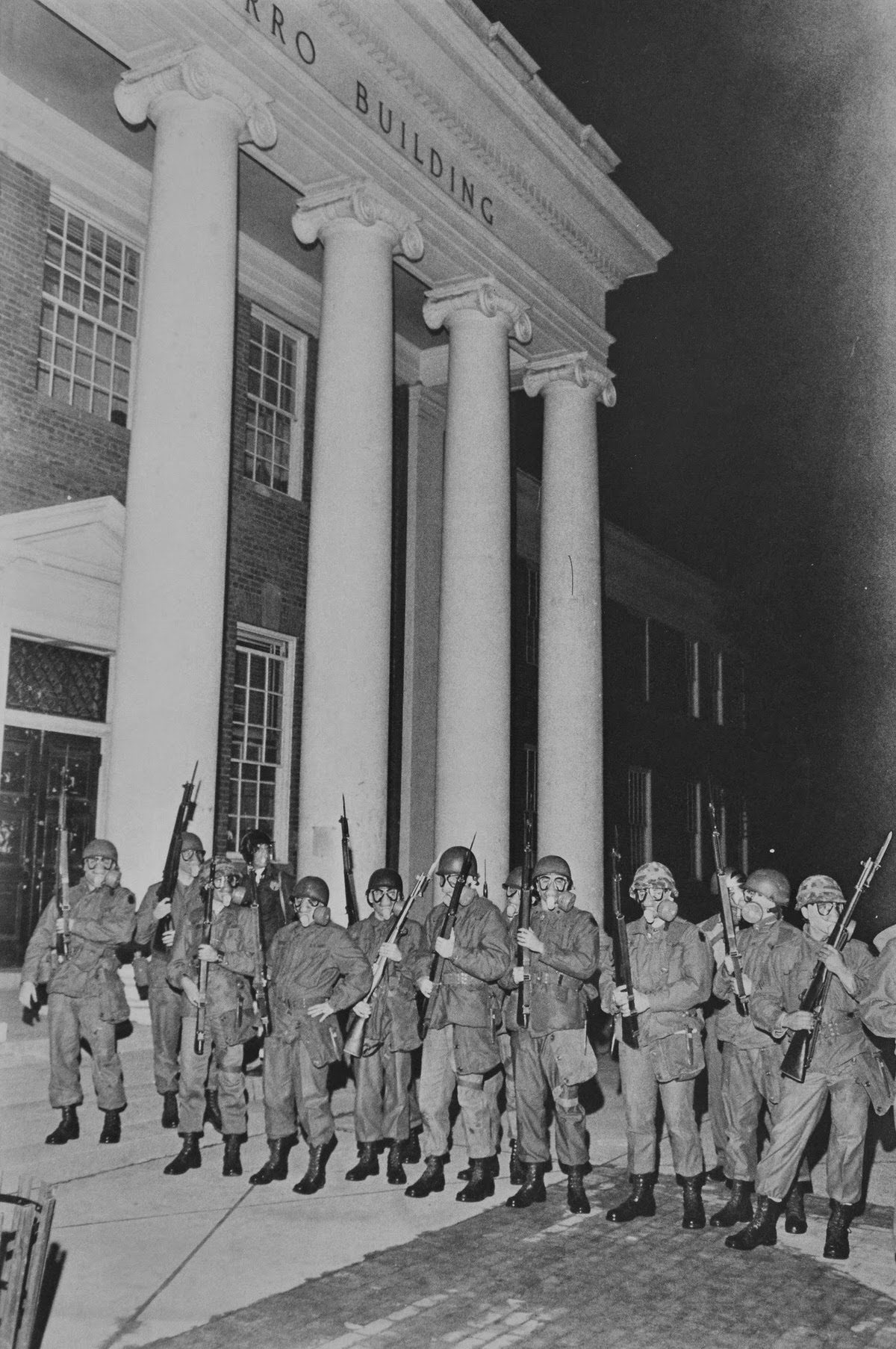
Governor Marvin Mandel called in the Maryland National Guard. By May 5, the campus was under military occupation. National Guard commander Adj. Gen. Edwin Warfield addressed an anti-war rally on the mall, projecting a tone of calm. Outside Taliaferro Hall, soldiers stood with fixed bayonets.
Maryland State National Guard commander Adj. Gen. Edwin Warfield addresses an antiwar rally on the University of Maryland campus mall on May 5, 1970.The Maryland National Guard utilizing fixed bayonets take up a position outside of Taliaferro Hall at the University of Maryland in May 1970.
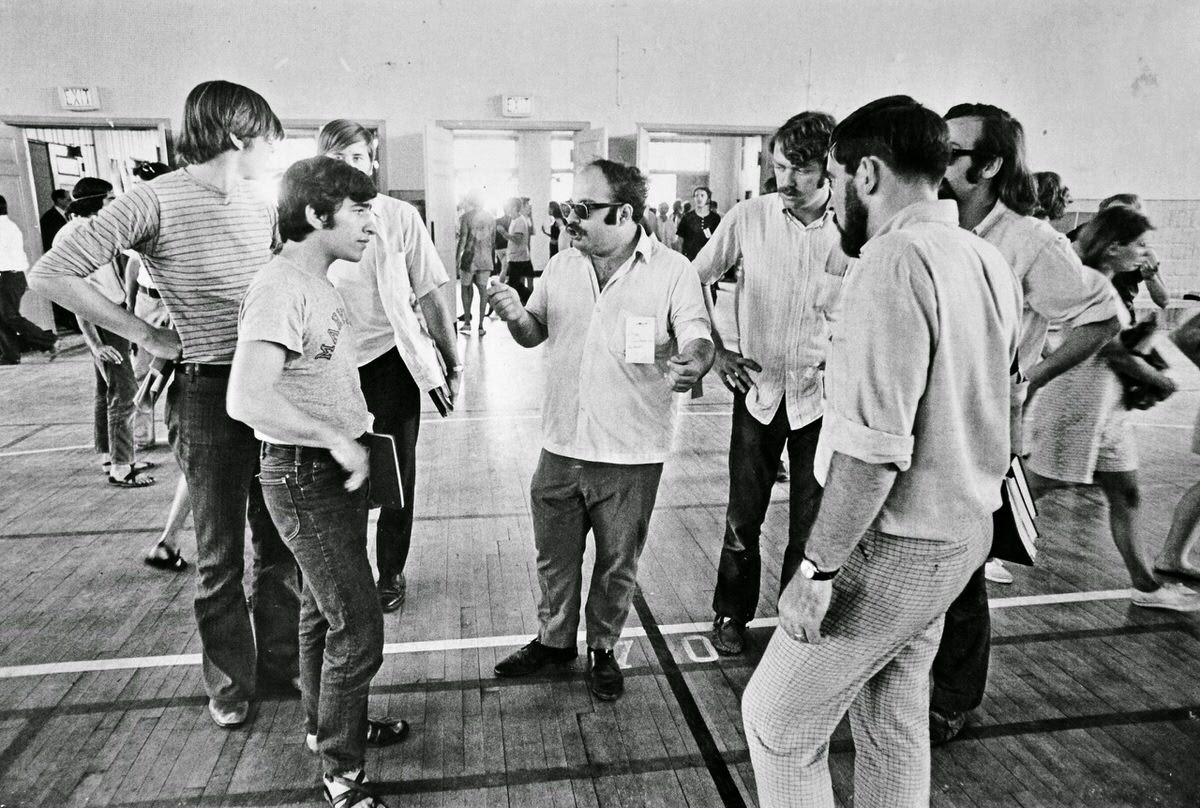
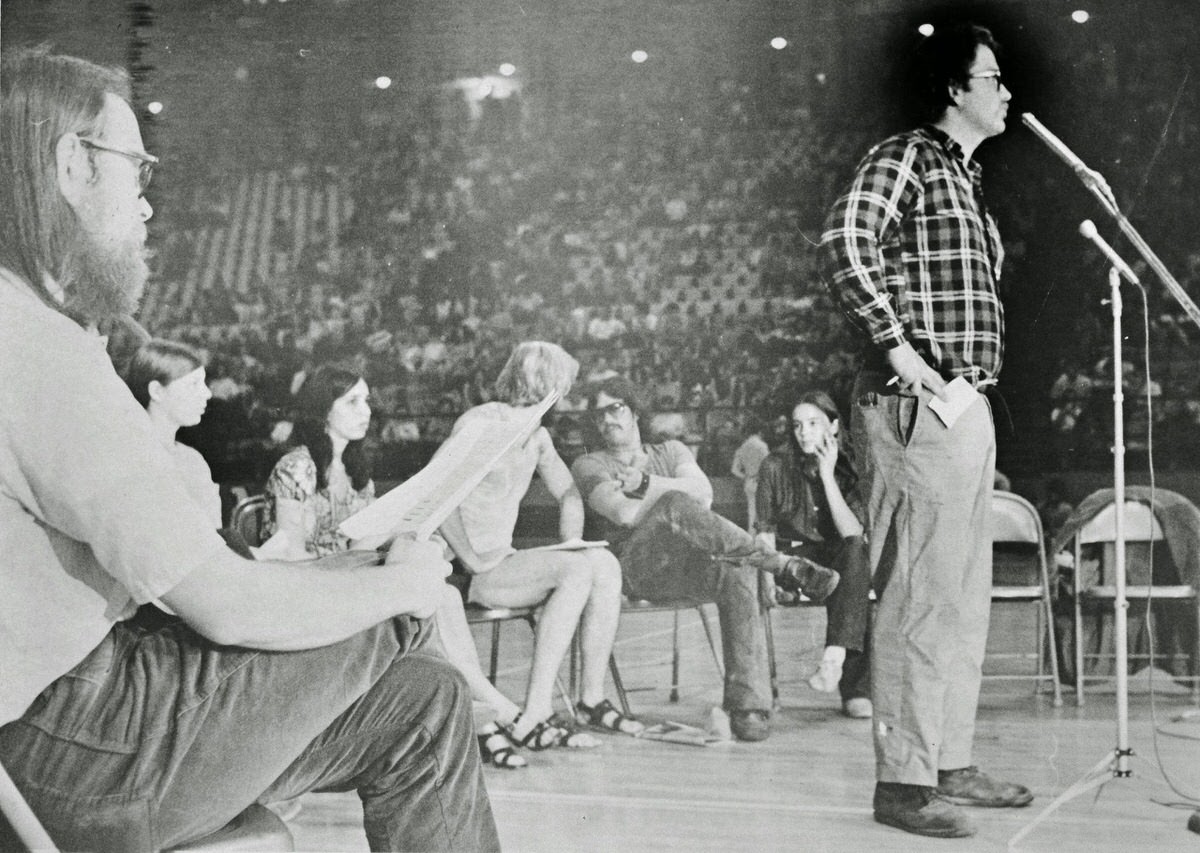
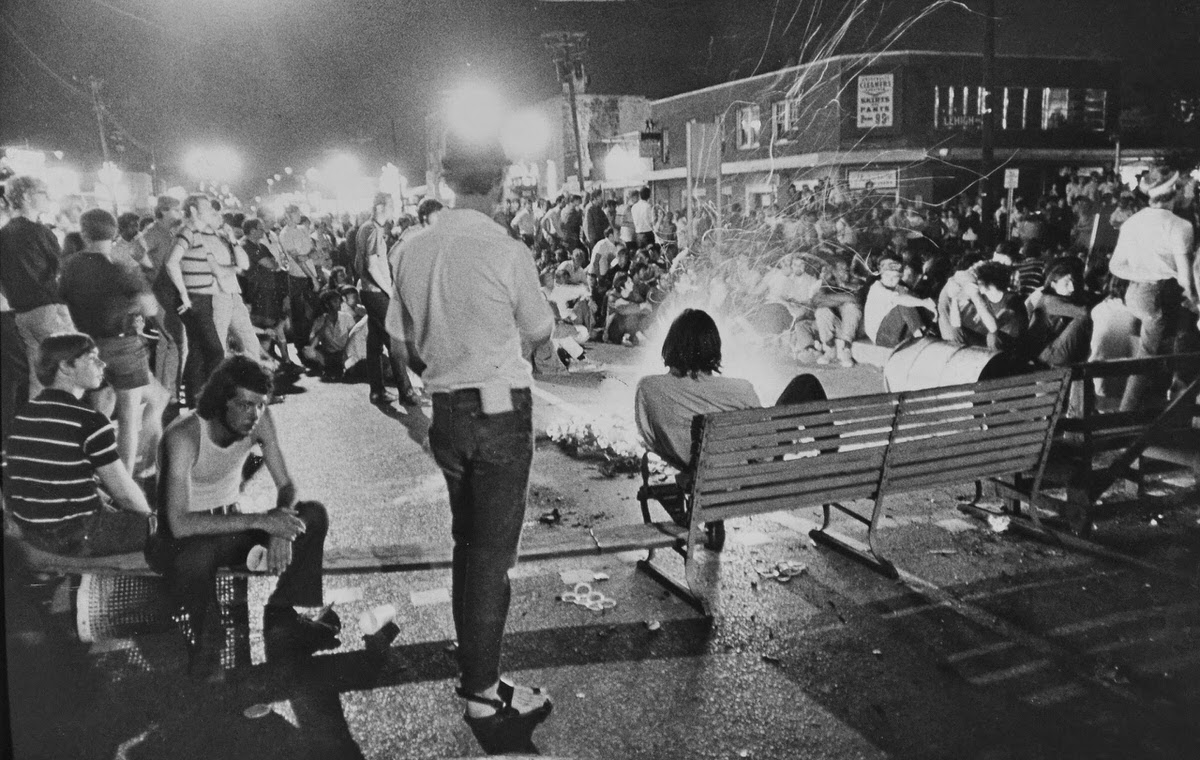
On May 11, over 3,000 students packed into Cole Field House to debate what to do next. A chemistry professor argued with students over the ethics of violent versus non-violent protest. Radical leader Gregory Dunkel—a Maryland alumnus with a PhD in mathematics—urged the crowd to seize the ROTC building. Outside, students returned to Route 1 and built bonfires alongside their barricades, using furniture and debris to hold the road.
A man identified only as a chemistry professor argues with students over tactics for demonstrating against the Indochina War on May 11, 1970 inside Cole Field House on the University of Maryland campus.Gregory Dunkel, a University of Maryland alumnus with a PhD in mathematics, urges a crowd of over 3,000 students gathered at Cole Field House on May 11, 1970 to takeover the ROTC building on campus in protest of the expansion of the Indochina War.University of Maryland students blockade U.S. Route 1 in College Park, Md. again on May 11, 1970 with barricades, bodies and a bonfire during a student strike against the U.S. war in Indochina and the killings of four students by Ohio National Guardsmen at Kent State University.University of Maryland students blockade U.S. Route 1 at the intersection with Regents Drive in College Park, Md. on May 11, 1970 in protest against the expansion of the Indochina War and the killing of four students at Kent State University by Ohio National Guardsmen.University of Maryland students occupying US Route 1 debate whether leave the road to take over a campus building May 11, 1970.
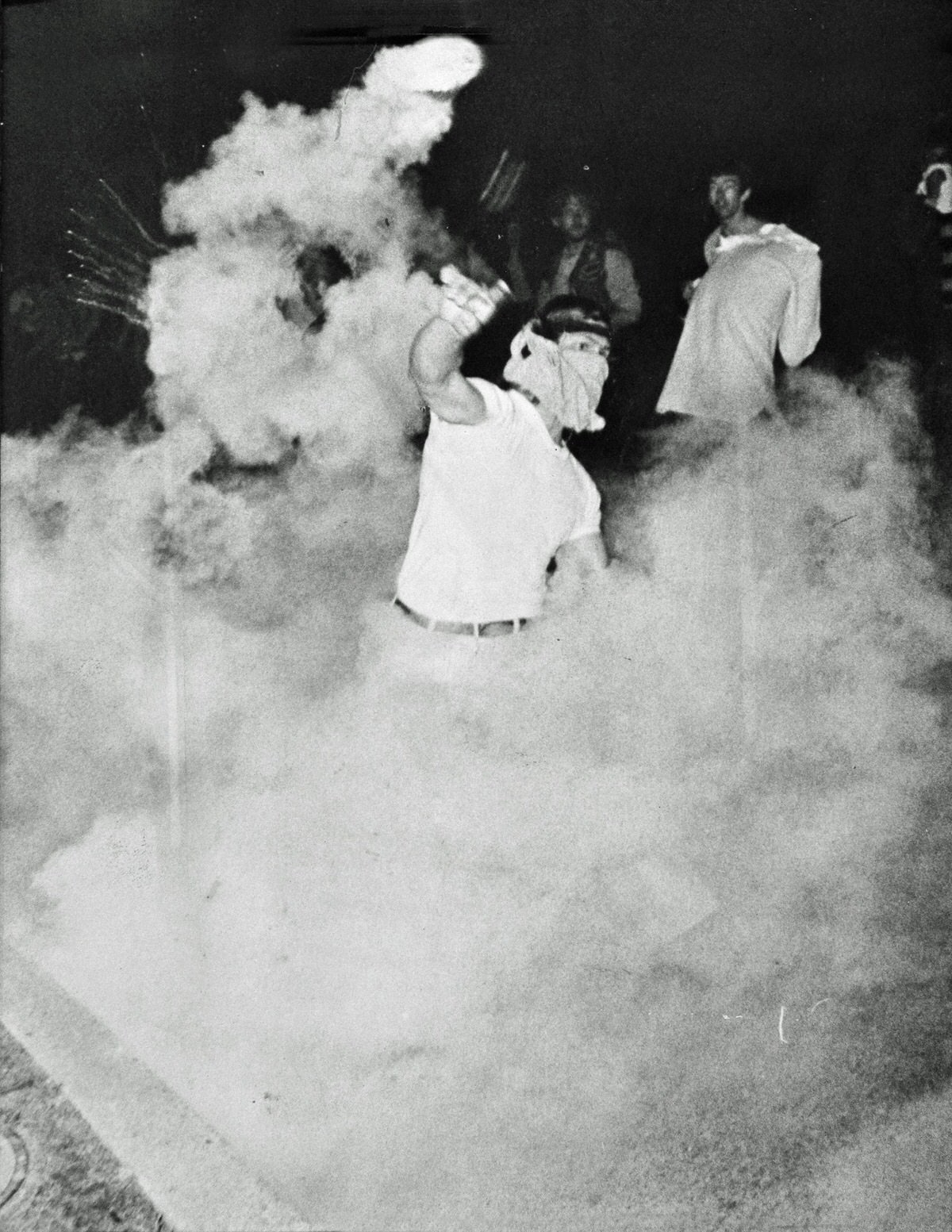
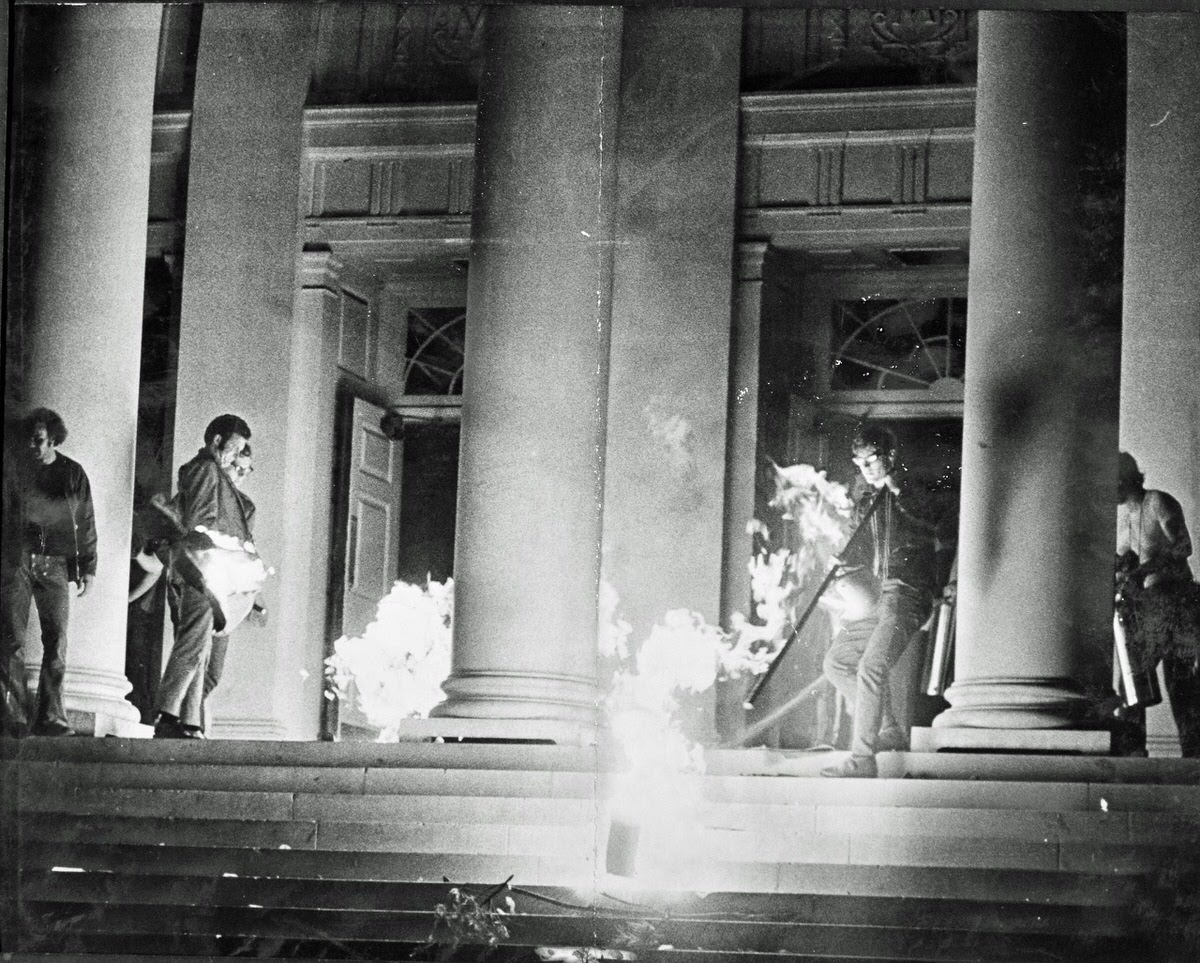
The most intense clashes came on May 14. Students threw tear gas canisters back at police lines. Inside the Main Administration Building, someone set a fire in the lobby. Physics professor Edgar Beall led a group of students in extinguishing it, arguing that burning the building would damage their cause. The fire went out.
A student tosses a tear gas canister back at police lines during the fiercest fighting with police and National Guard at the University of Maryland on May 14, 1970.A group of students led by physics professor Edgar F. Beall entered the University of Maryland Main Administration Building to extinguish a fire set by protesters in the lobby on May 14, 1970.
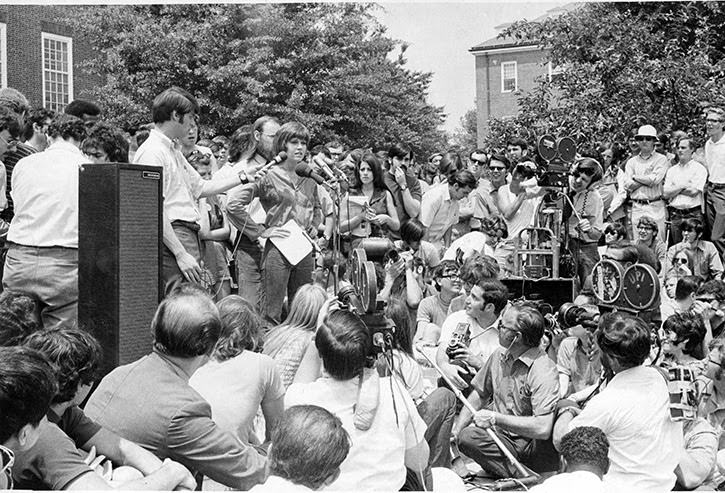
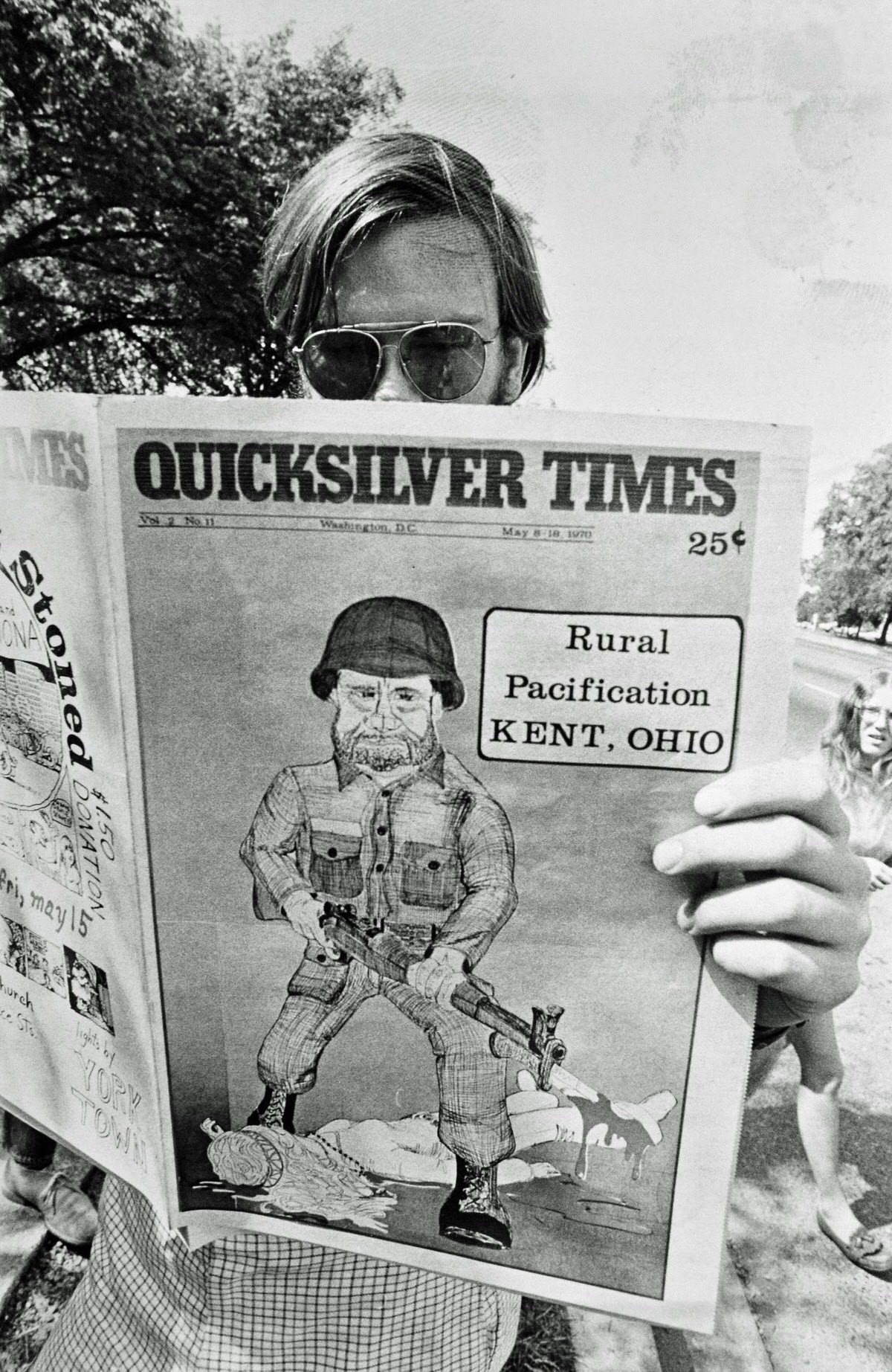
By late May, the state government and university administration combined force and negotiation to wind down the unrest. On May 22, actress and anti-war activist Jane Fonda spoke to a rally on the mall. Her appearance underscored how visible Maryland had become in the national movement. Around the same time, the local alternative newspaper Quicksilver Times ran a cover mocking Nixon’s use of the word “pacification,” depicting him as a National Guardsman standing over the bodies at Kent State.
Actress and antiwar activist Jane Fonda speaks to a rally on the University of Maryland mall May 22, 1970.The local alternative newspaper Quicksilver Times mocks Nixon’s “pacification” of Vietnam by showing him as a National Guardsman killing students at Kent State University in their May 1970 issue.
Kevin Clark is a historian and writer who is passionate about sharing the stories and significance behind historical photos. He loves to explore hidden histories and cultural contexts behind the images, providing a unique insight into the past.