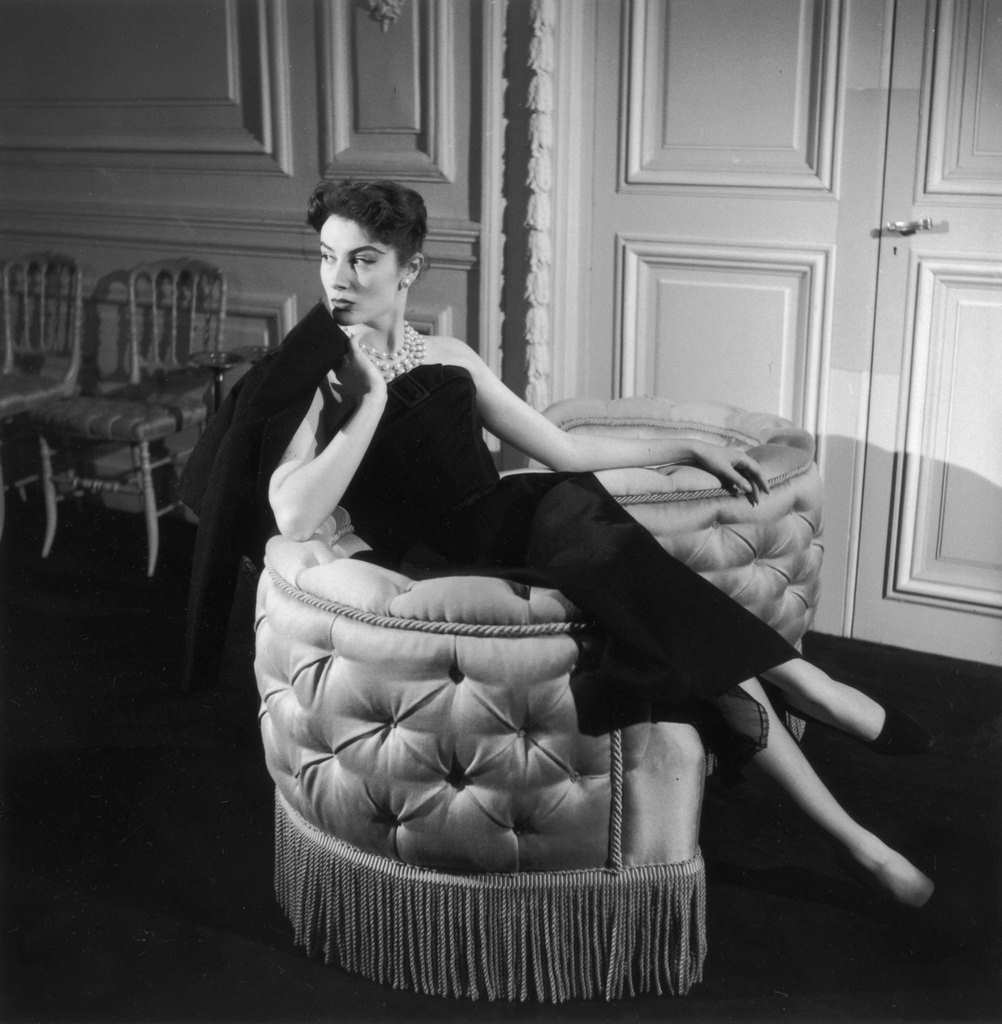
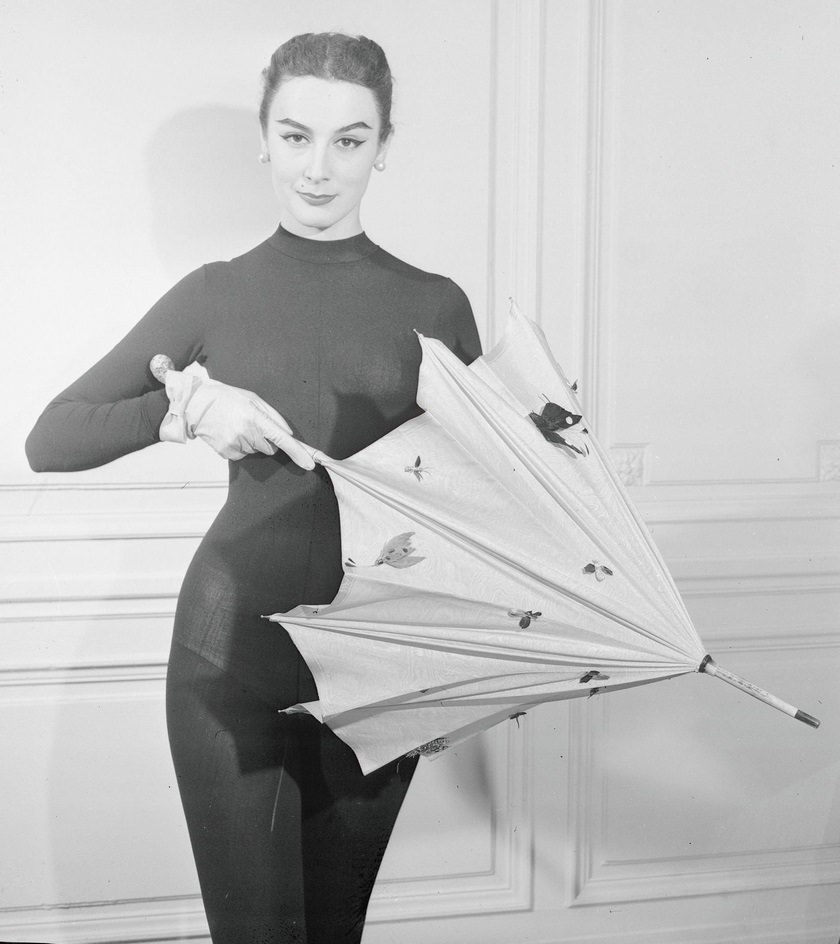
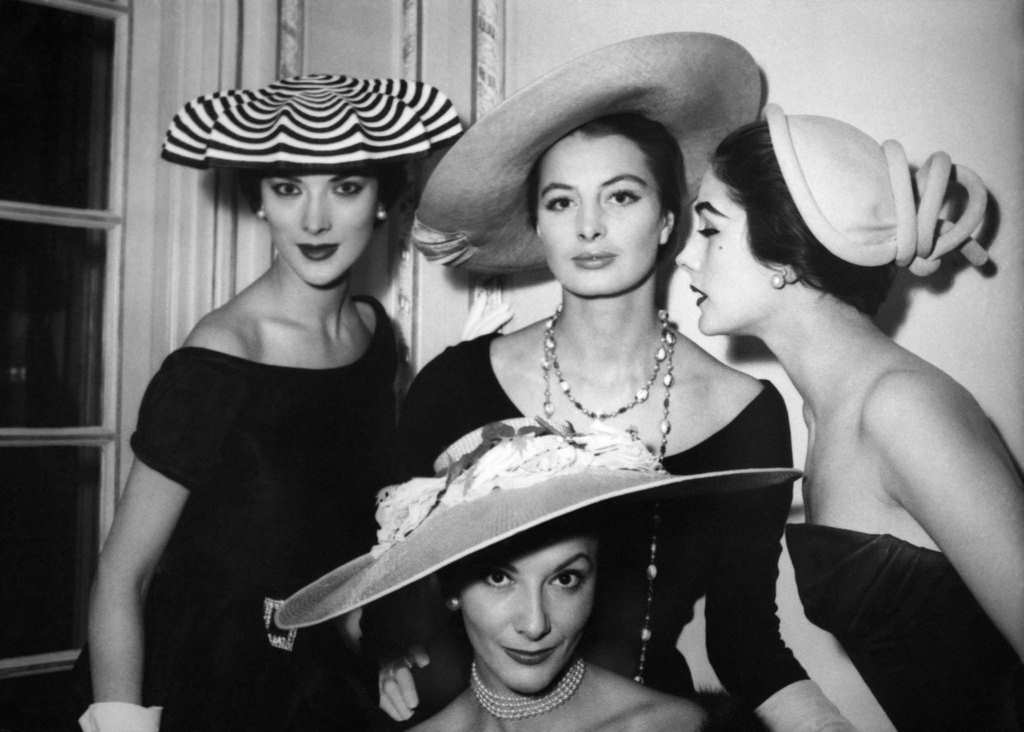
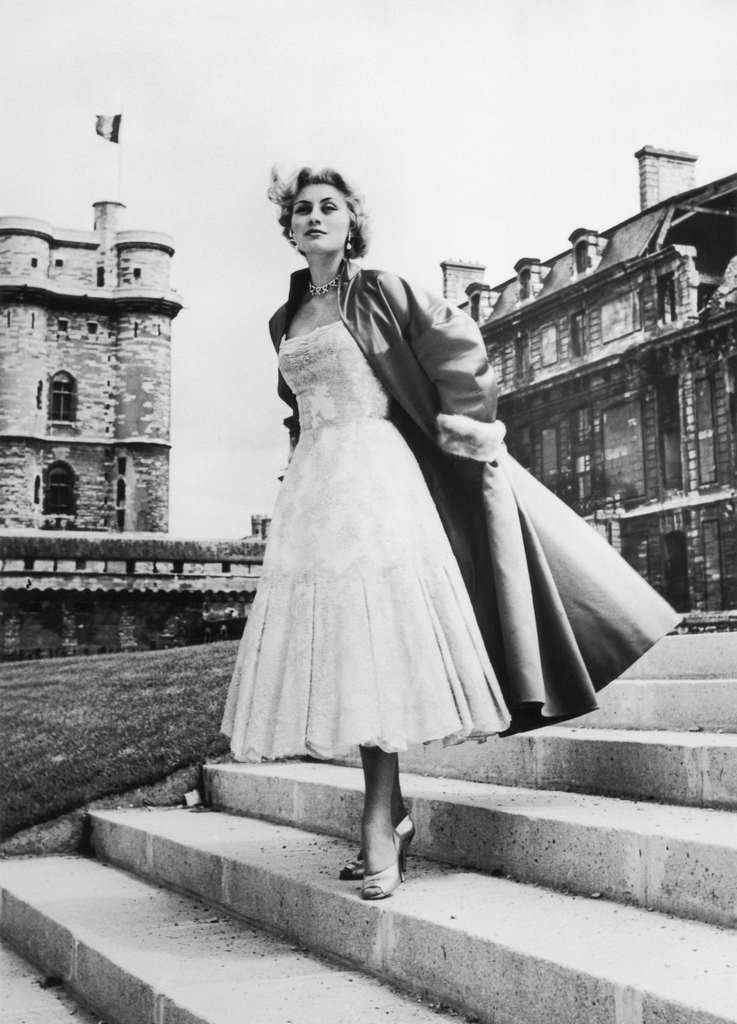
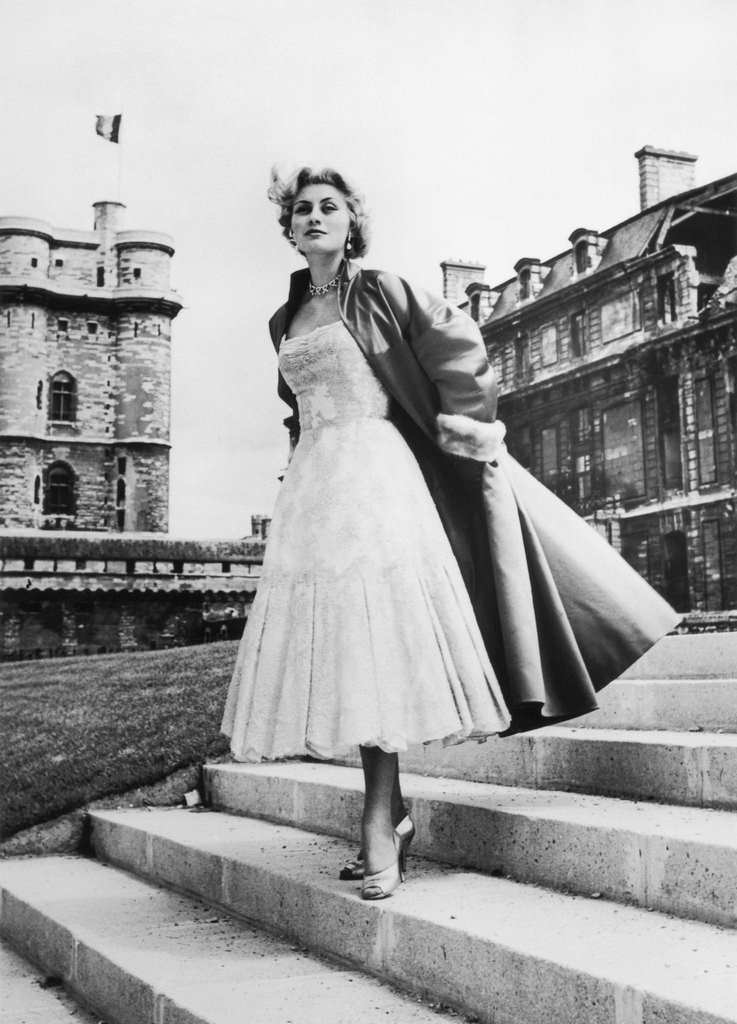
Jacques Fath was born in 1912 in Maisons-Laffitte, France, into a family that pushed him toward a business career after he finished school. He spent a year in military service and came out of it with a completely different idea of what his future would look like. He enrolled in drama school and took evening courses in drawing and pattern cutting. Those two interests — theater and tailoring — would define everything he later created. In the spring of 1937, he presented his first collection of twenty garments from a modest two-room salon on the Rue de la Boétie. The reception was warm. Despite living hand-to-mouth through the late 1930s, Fath built a loyal group of clients from the very beginning, sometimes purchasing fabric from garment deposits just to keep producing.
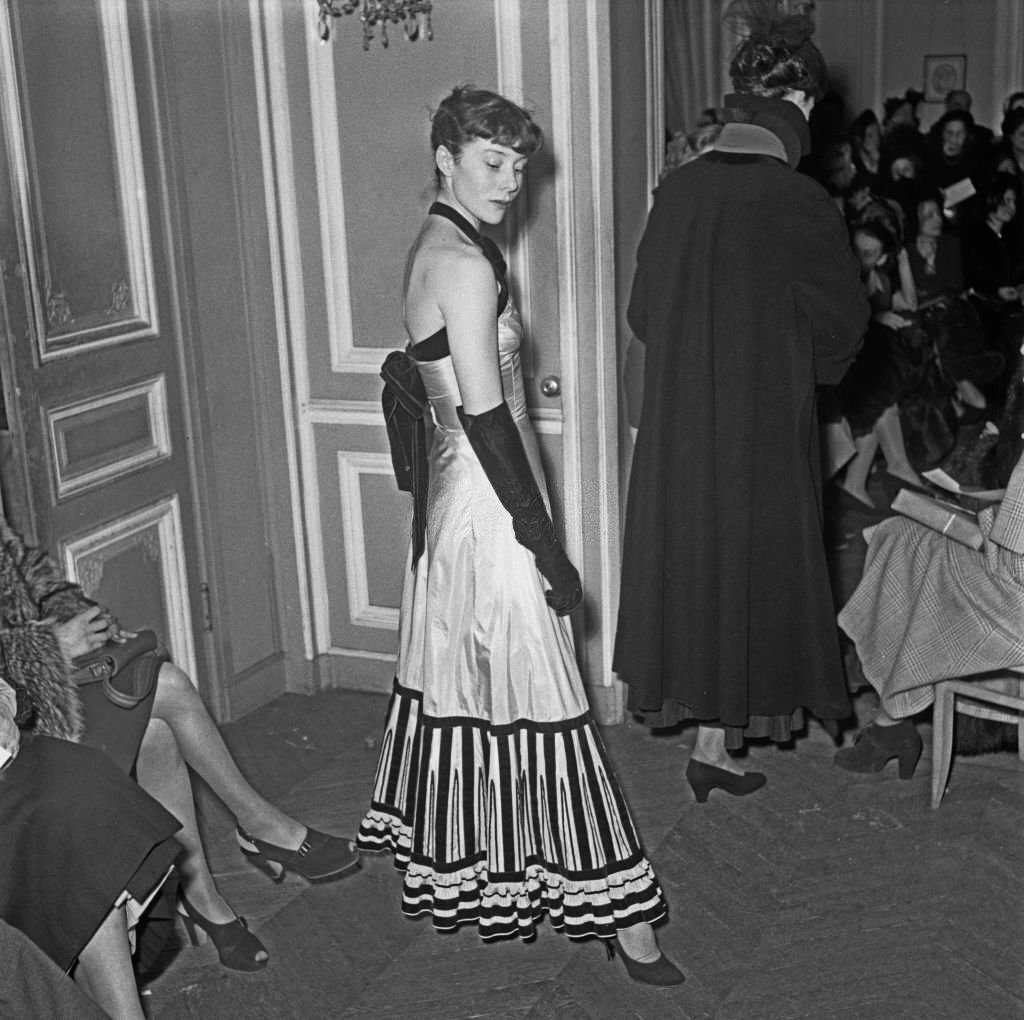
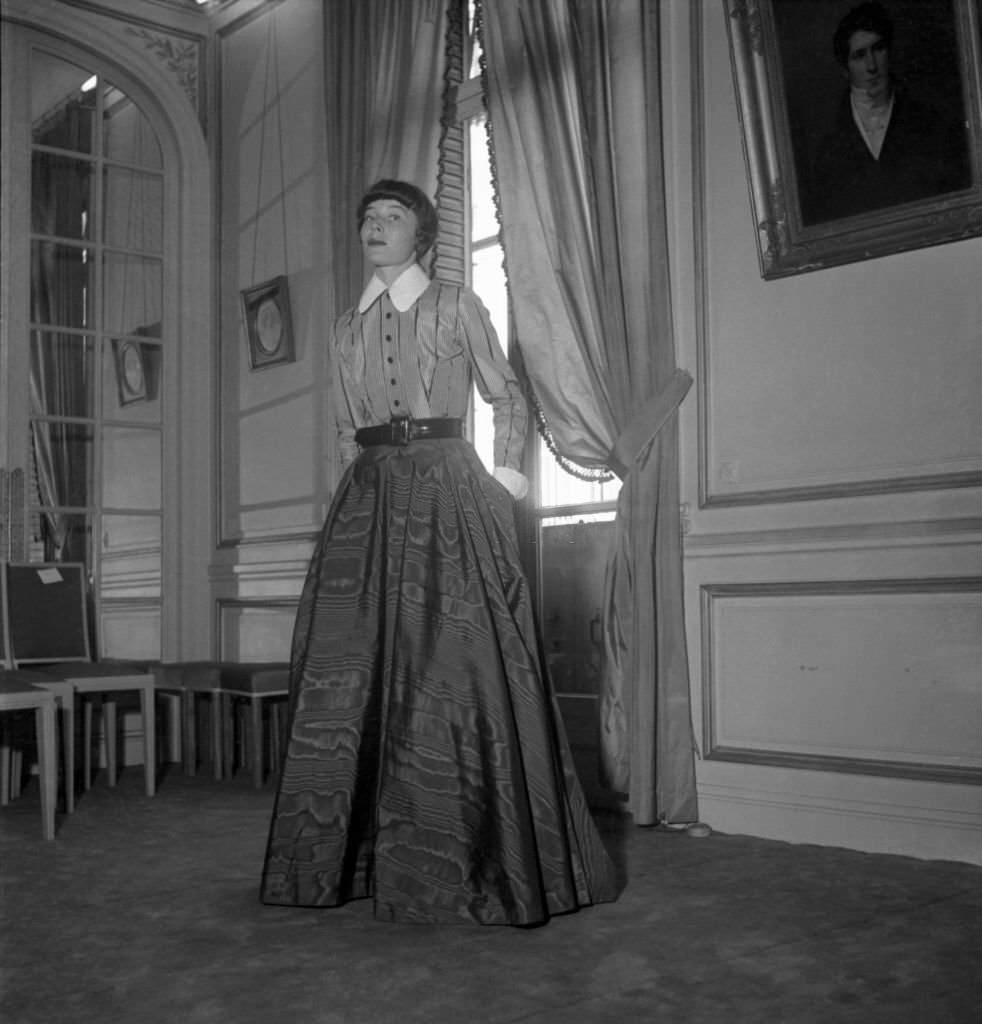
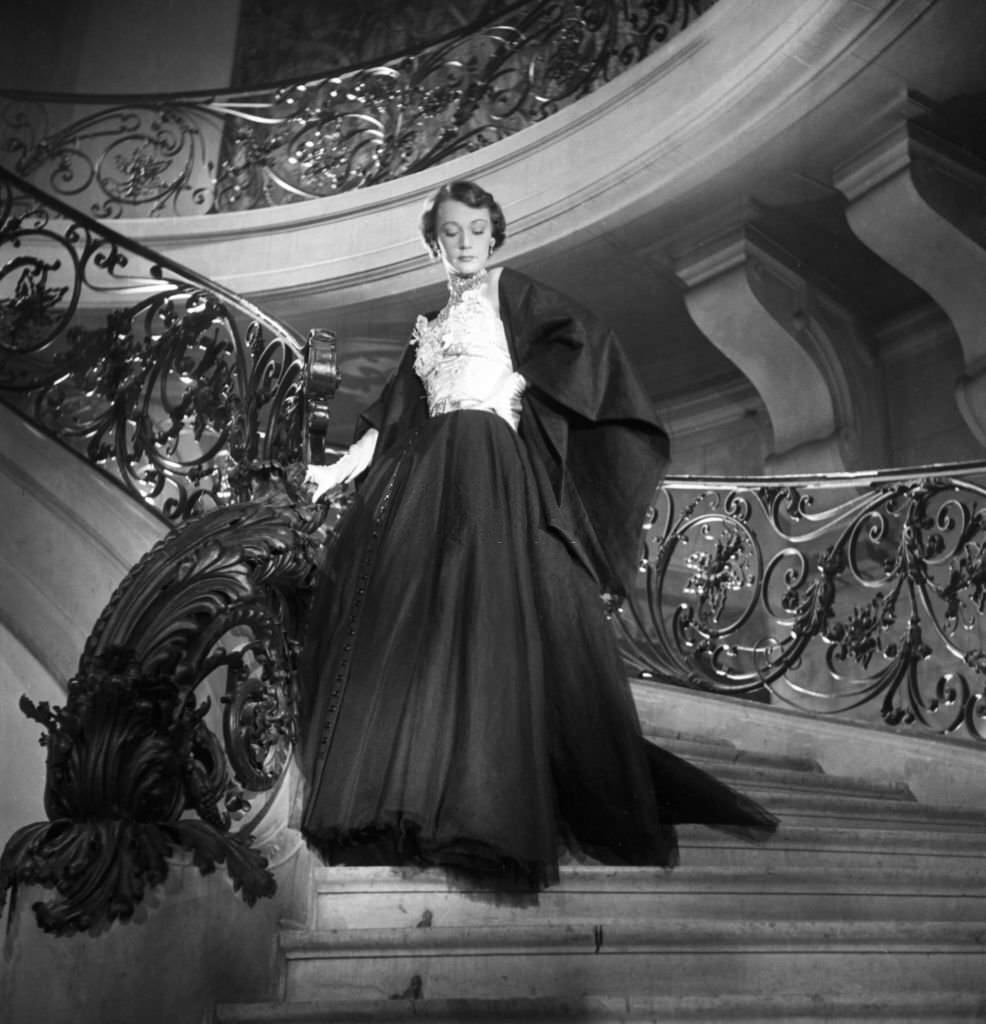
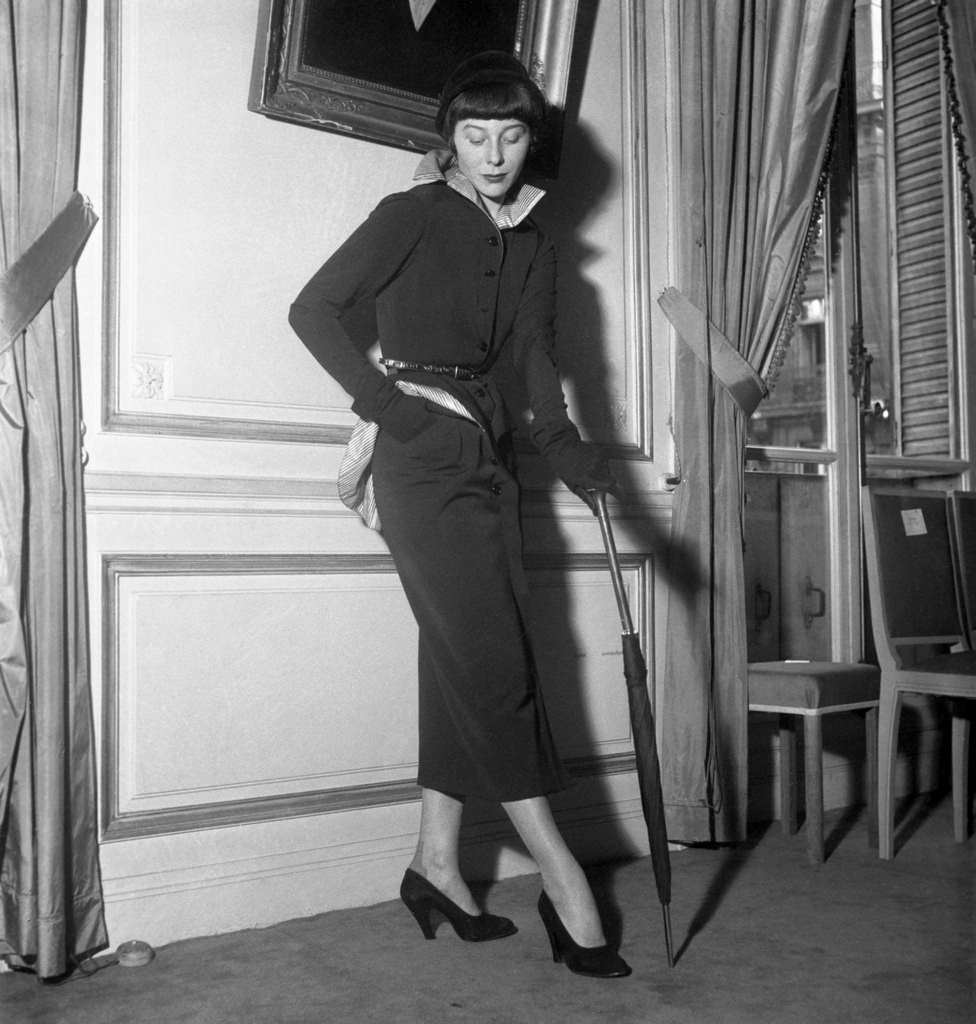
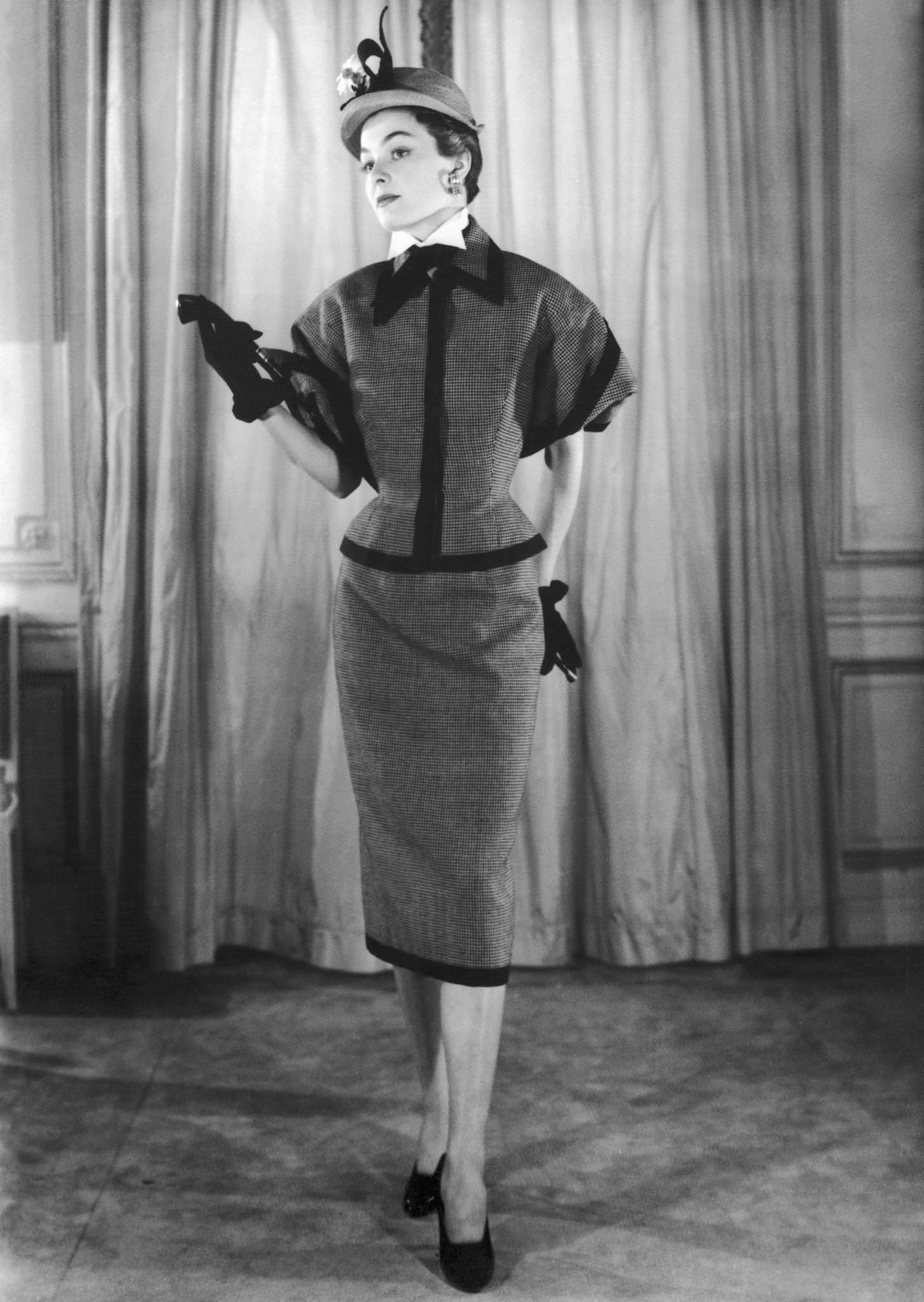
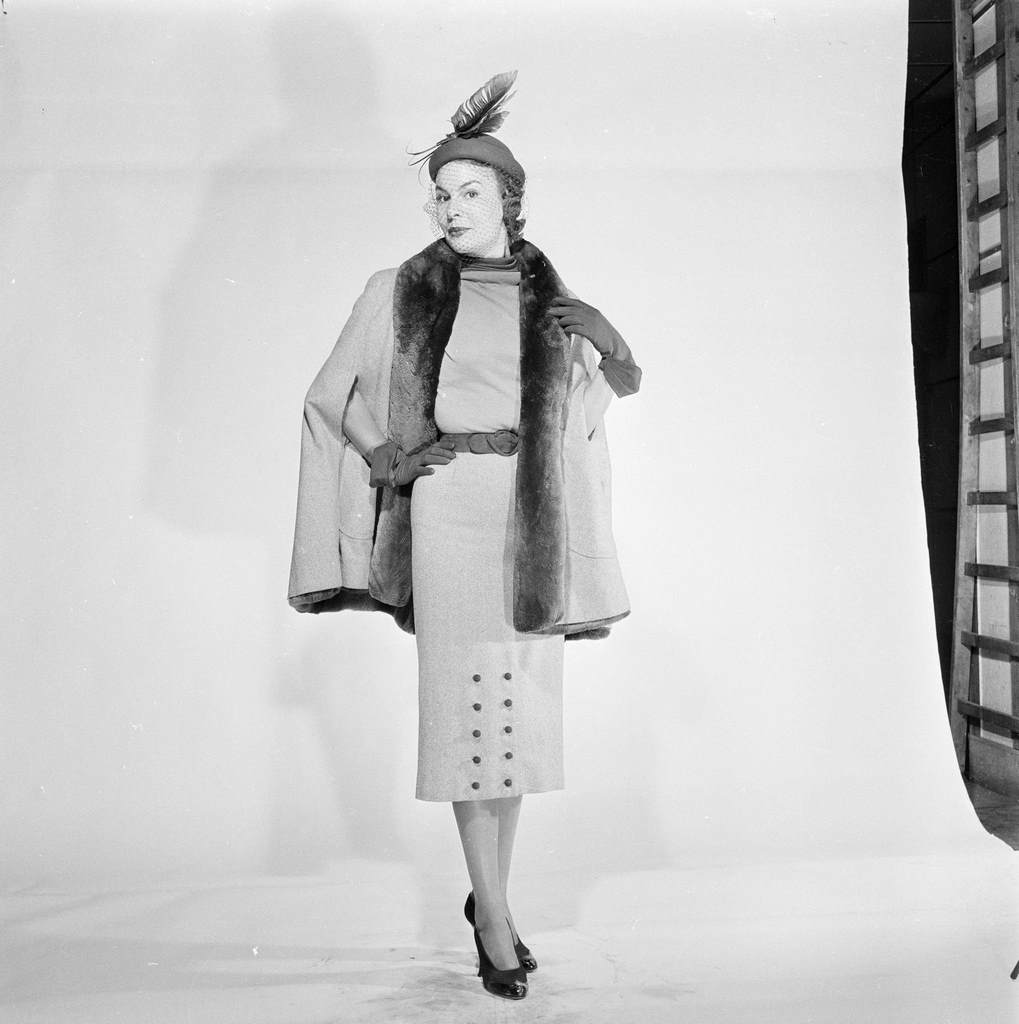
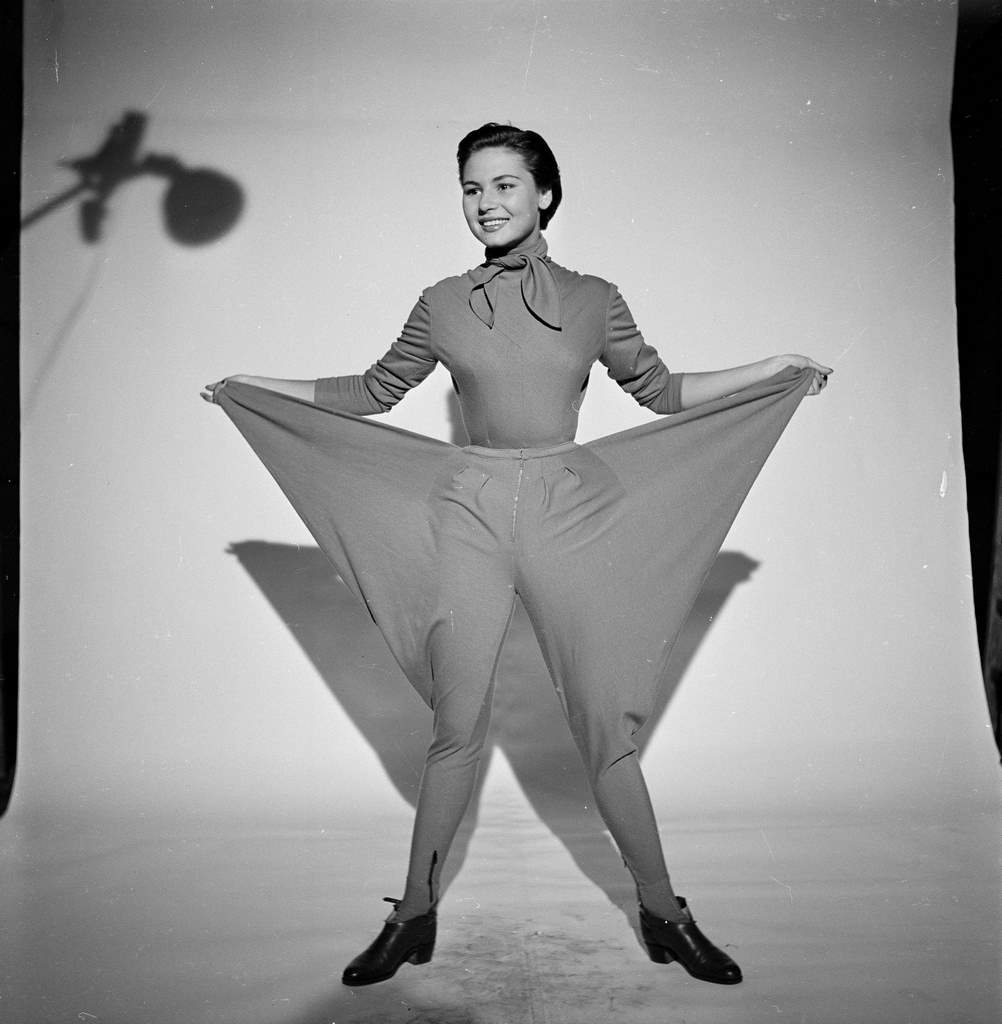
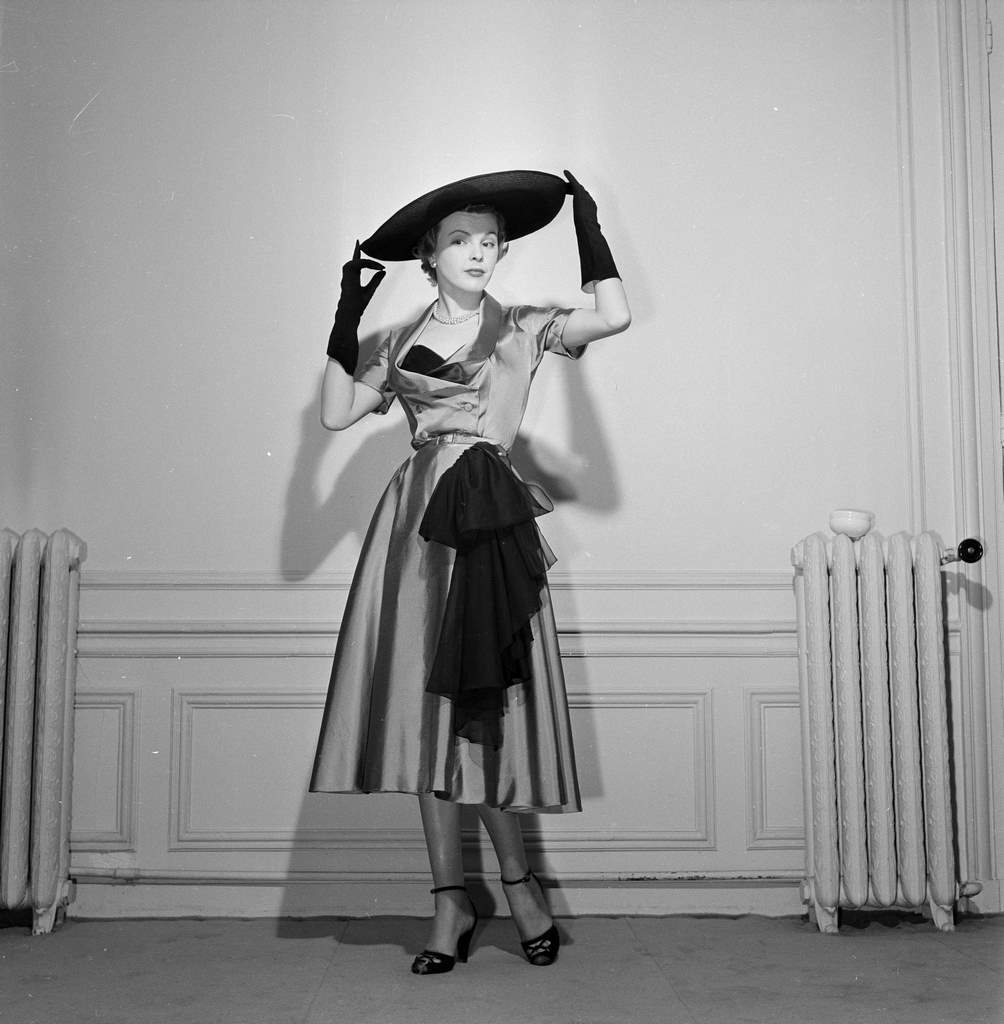
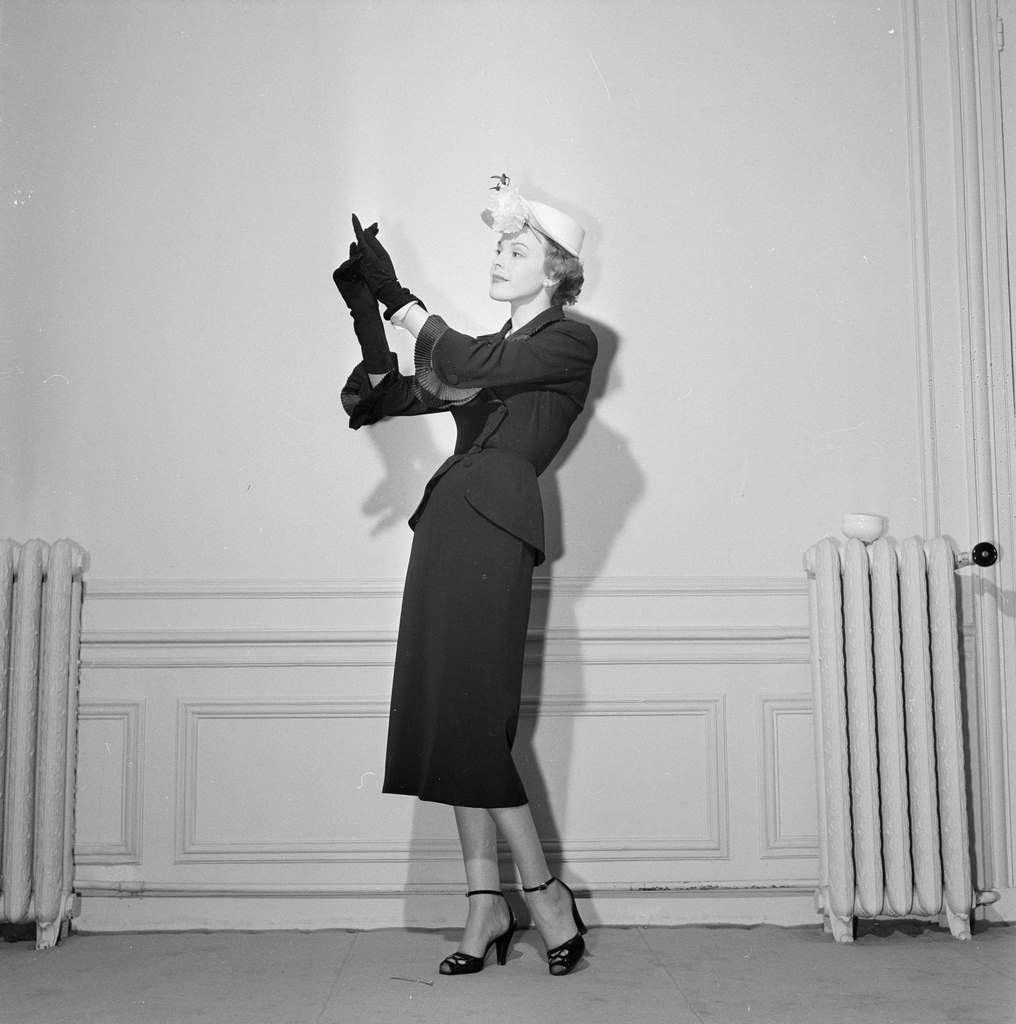
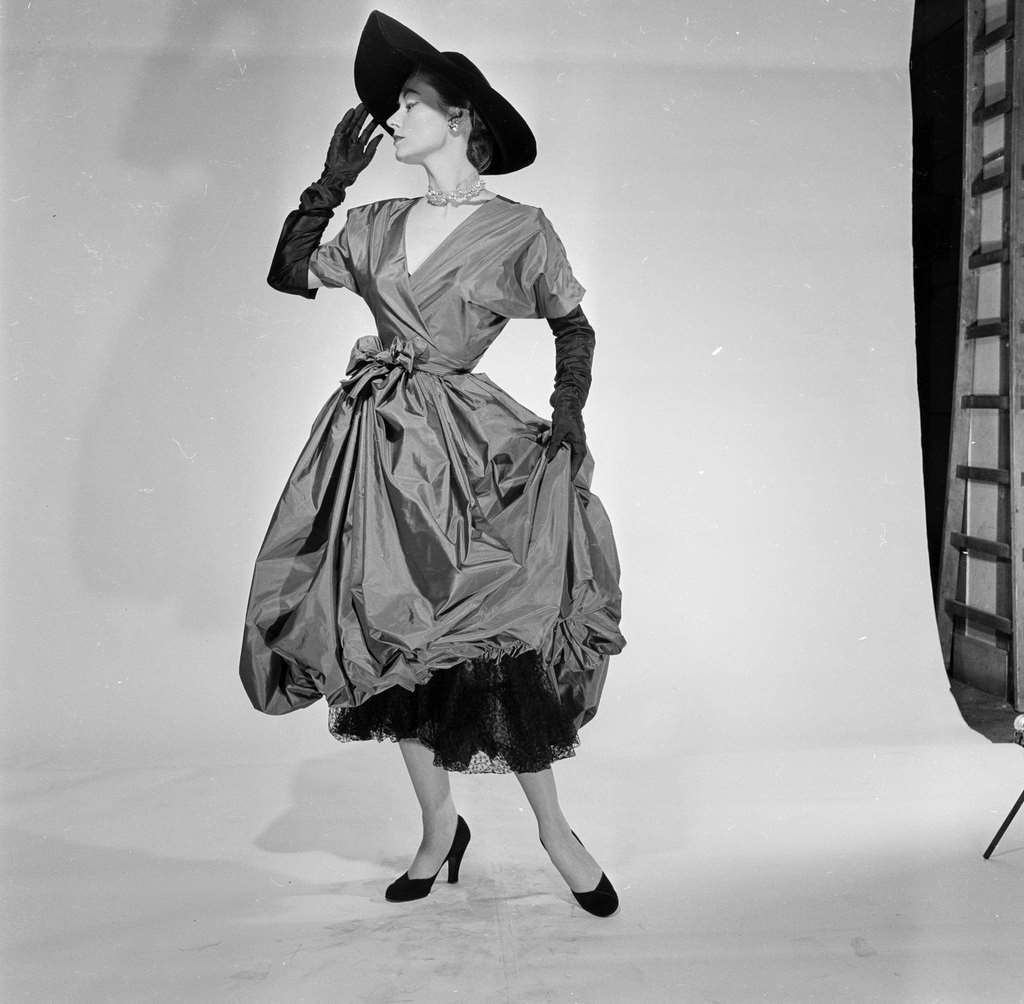
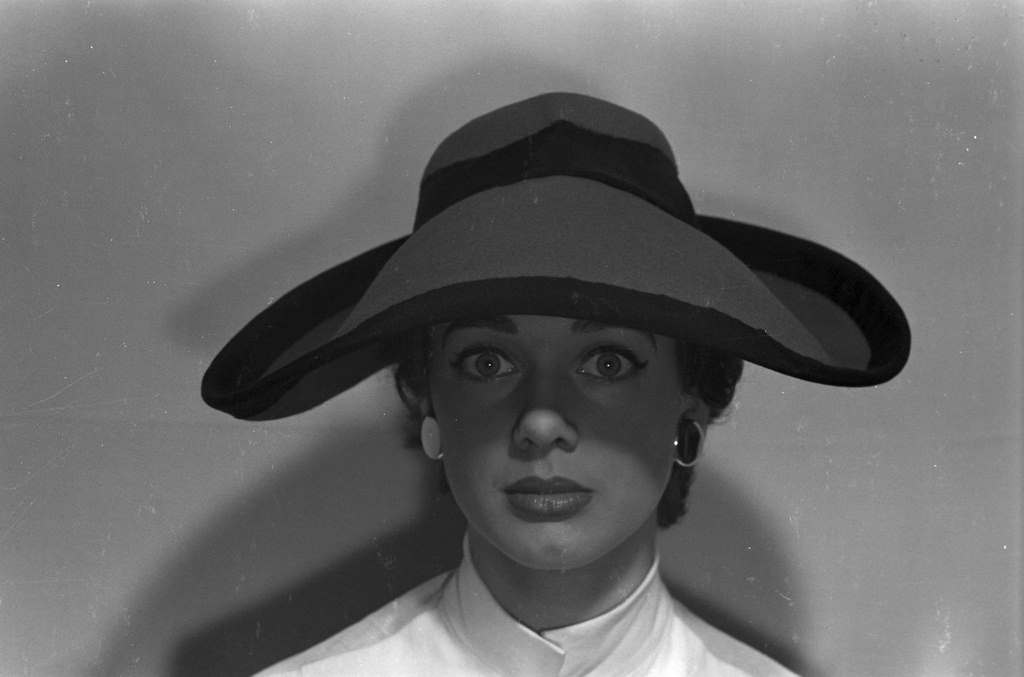
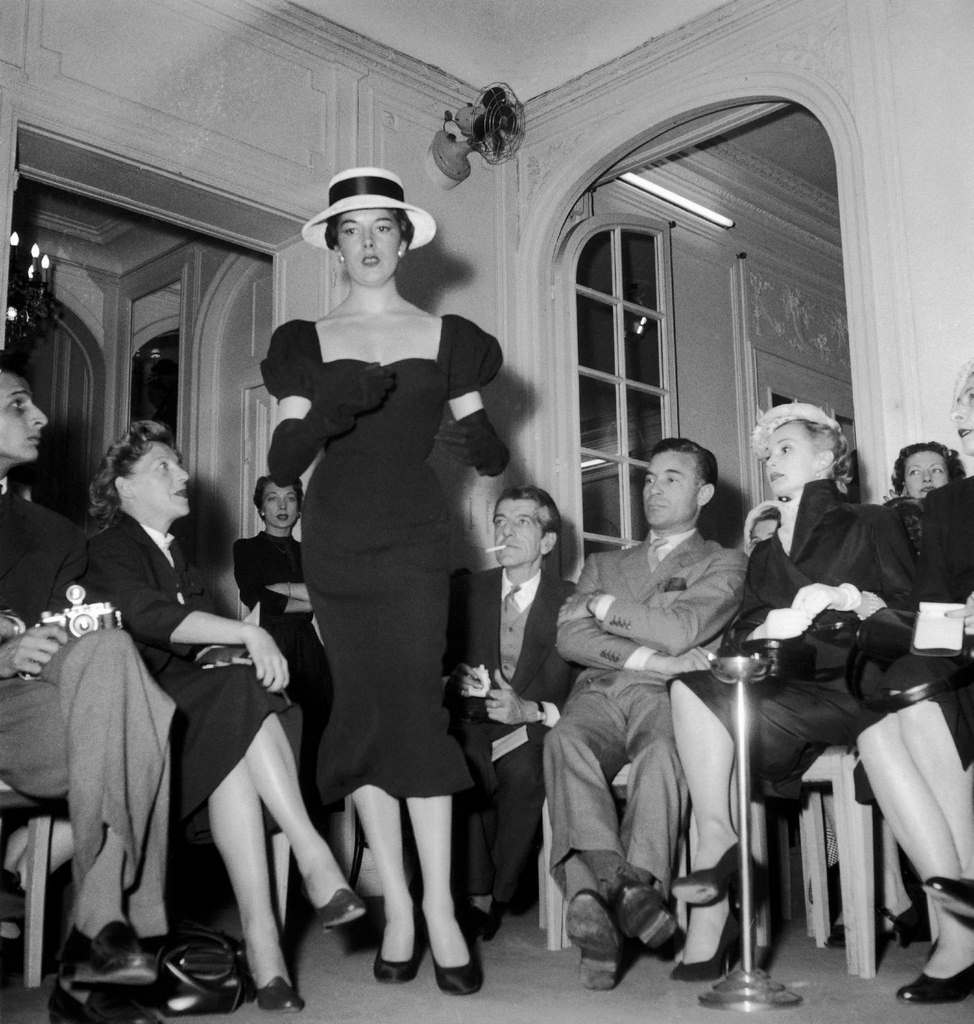
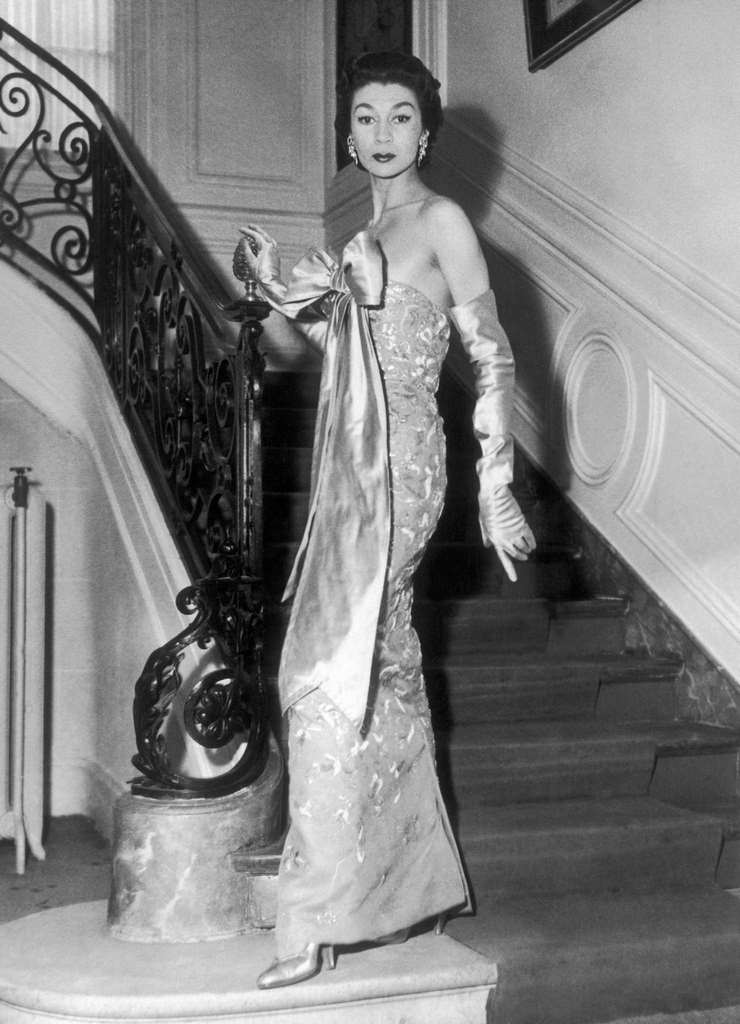
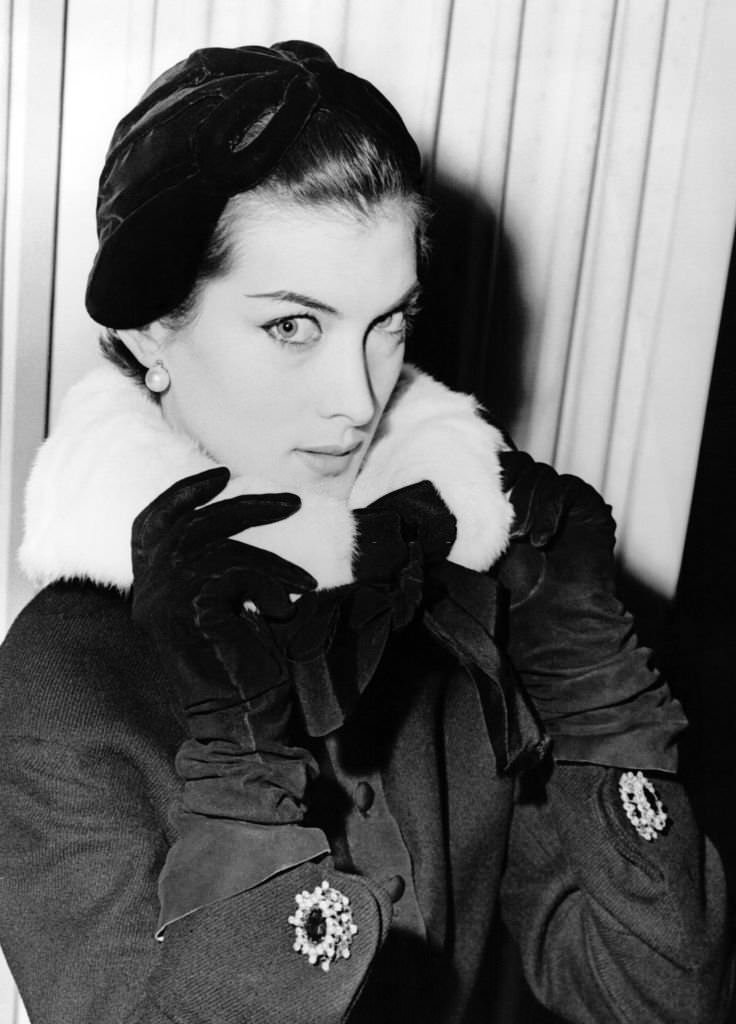
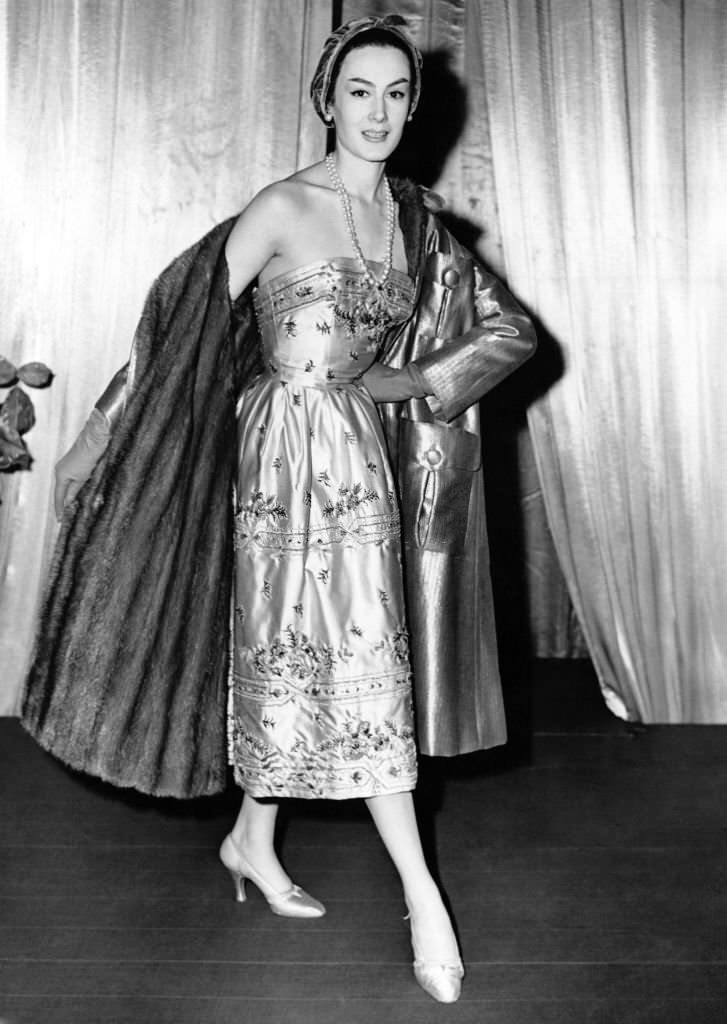
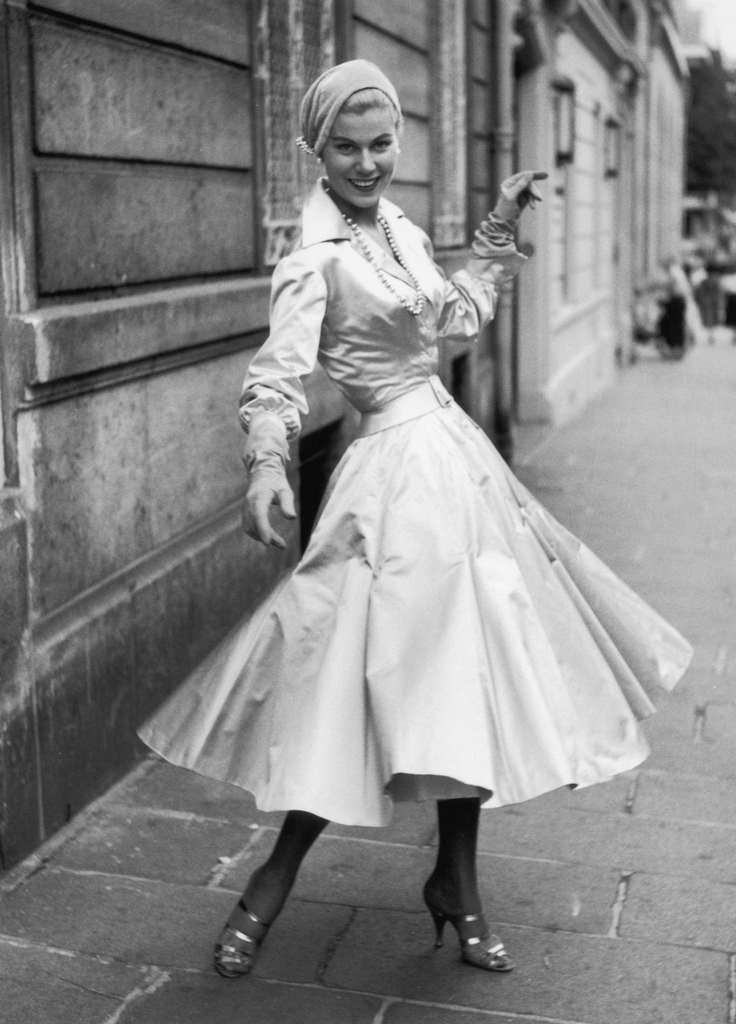
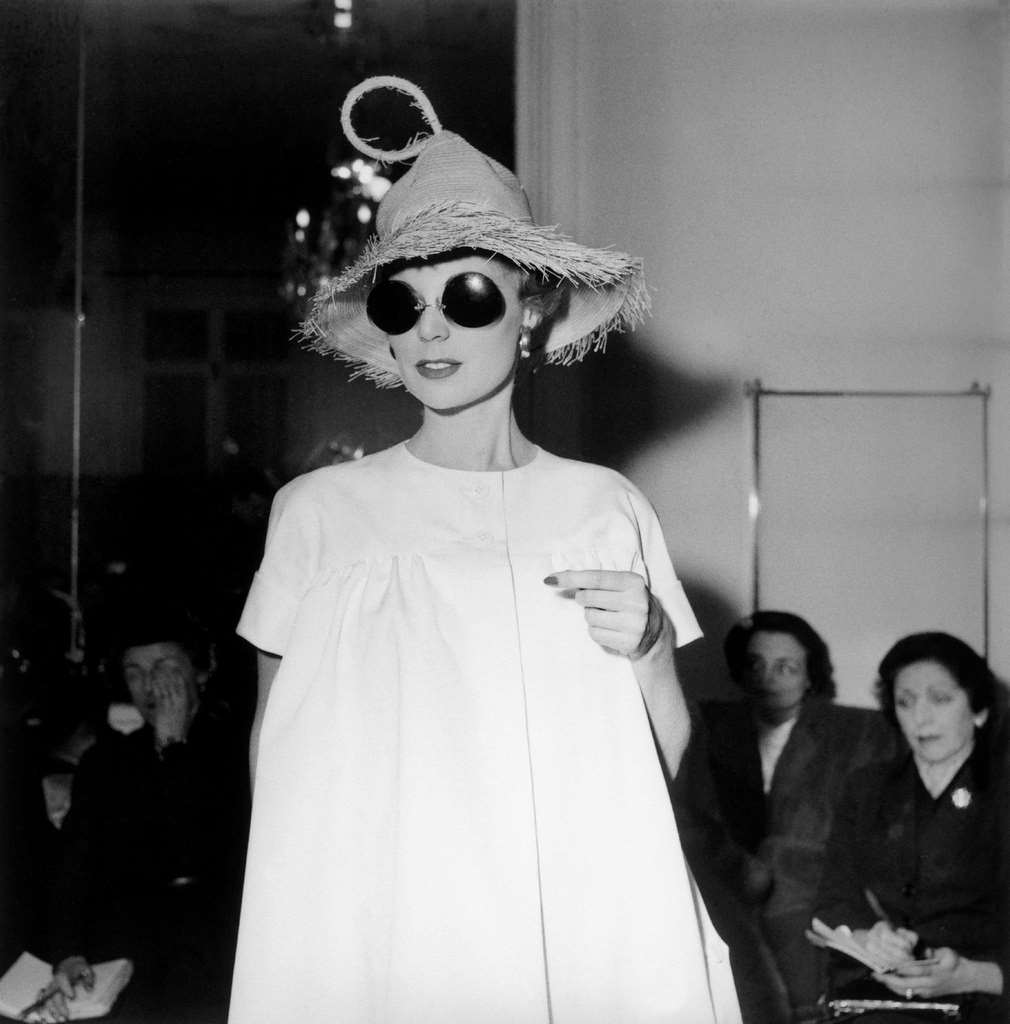
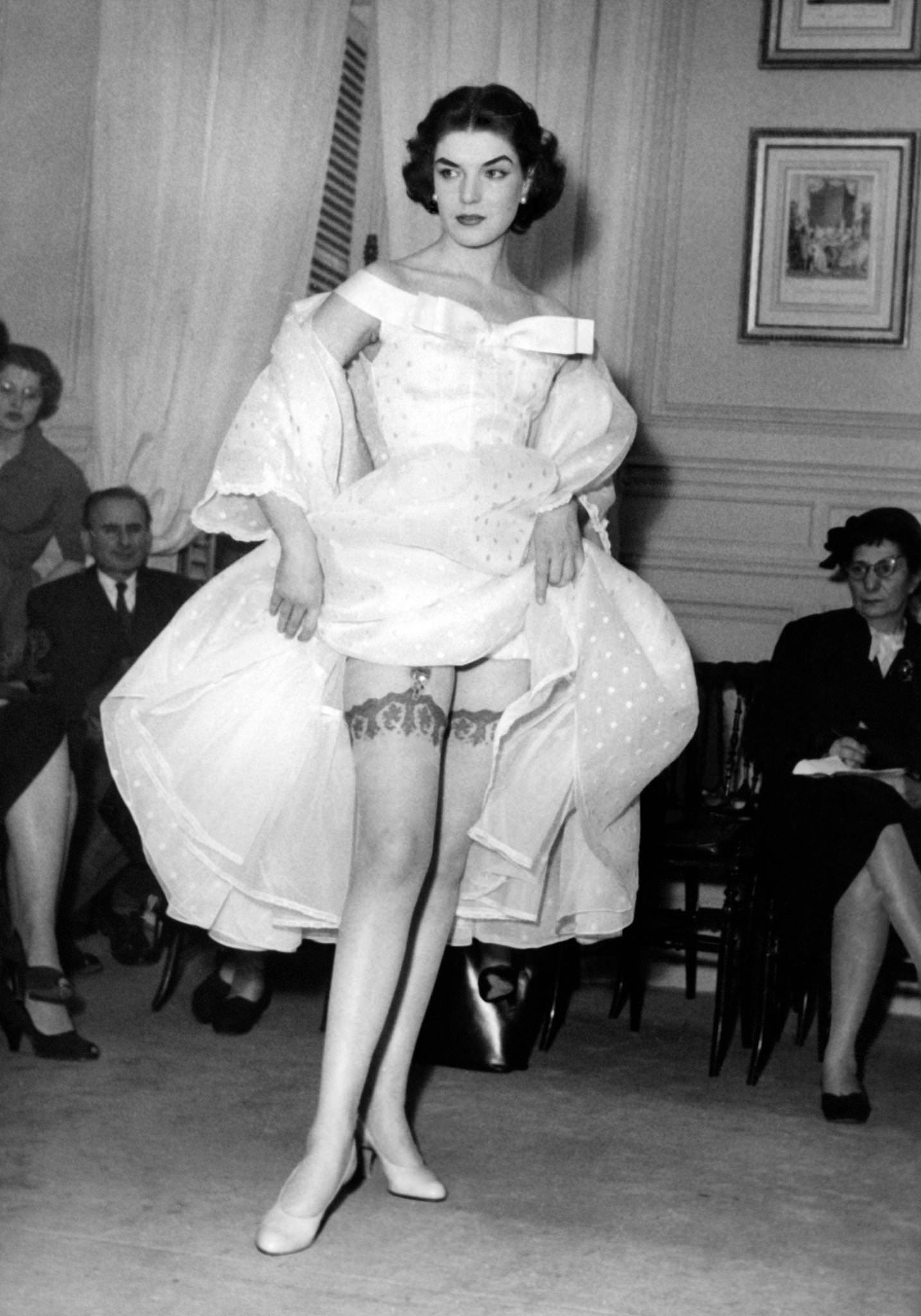
A model wearing a Jacques Fath design at the designer’s Summer 1948 fashion show in Paris, France, February 1948.
When World War II began, Fath served in the French Army. After France fell to Germany in 1940 and he was demobilized, he kept his couture house running on a small scale. Rather than shutting down entirely, he used the wartime years to stay active and refine his craft. After the war, he relocated his label to a striking eighteenth-century building on Avenue Pierre Premier de Serbie, giving the house a permanent and commanding home that matched his growing ambitions.
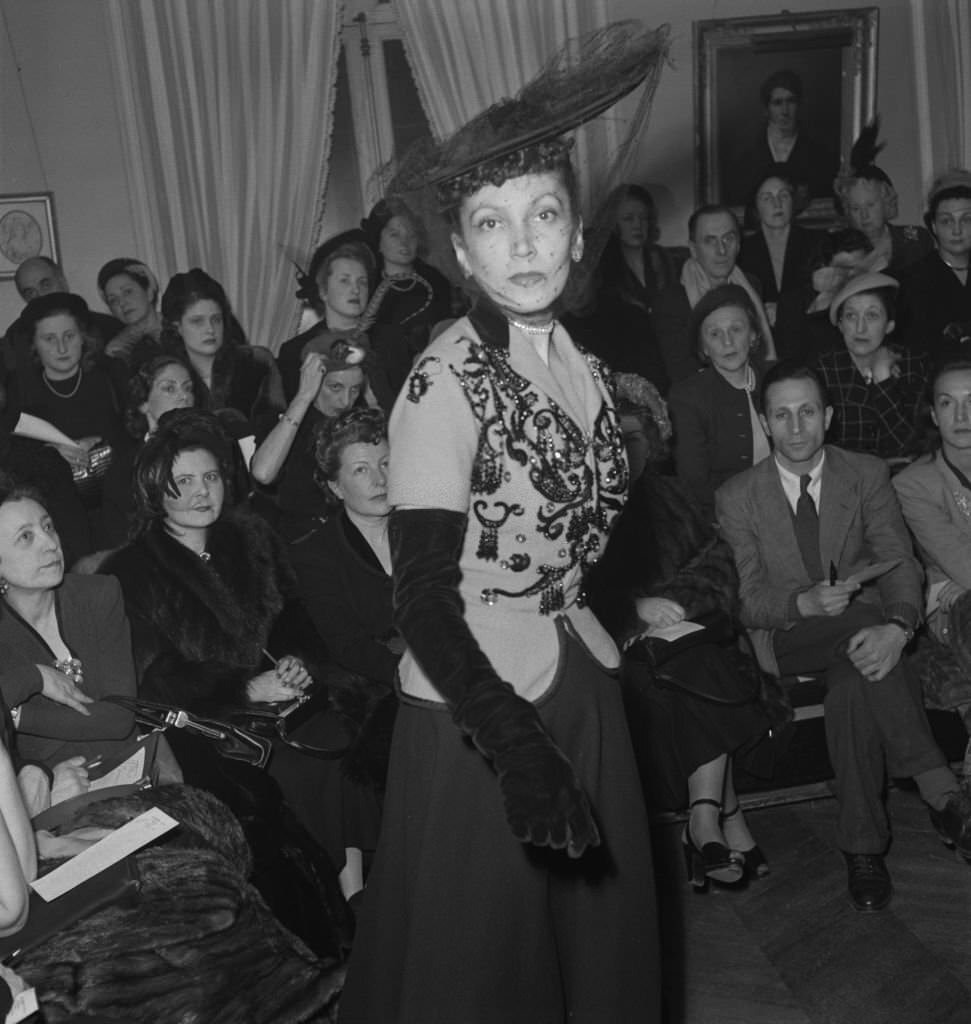
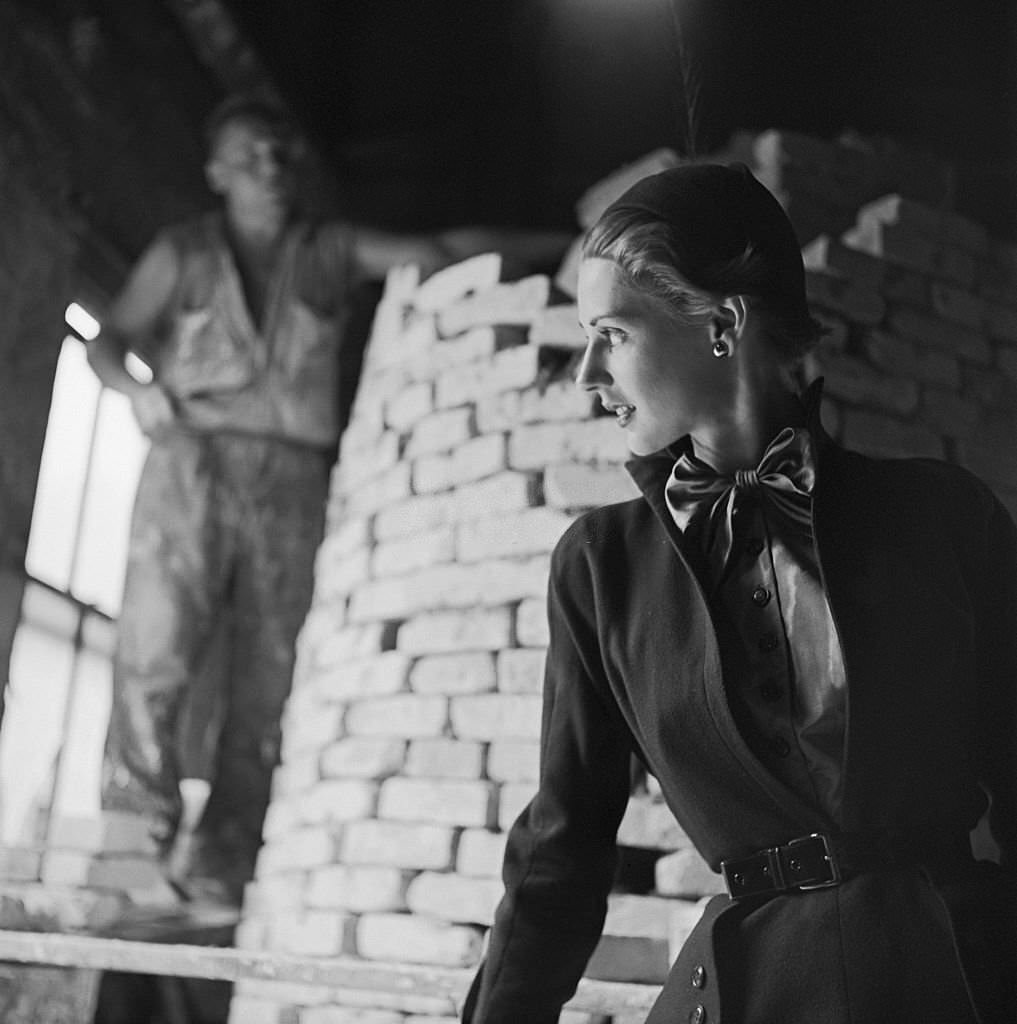
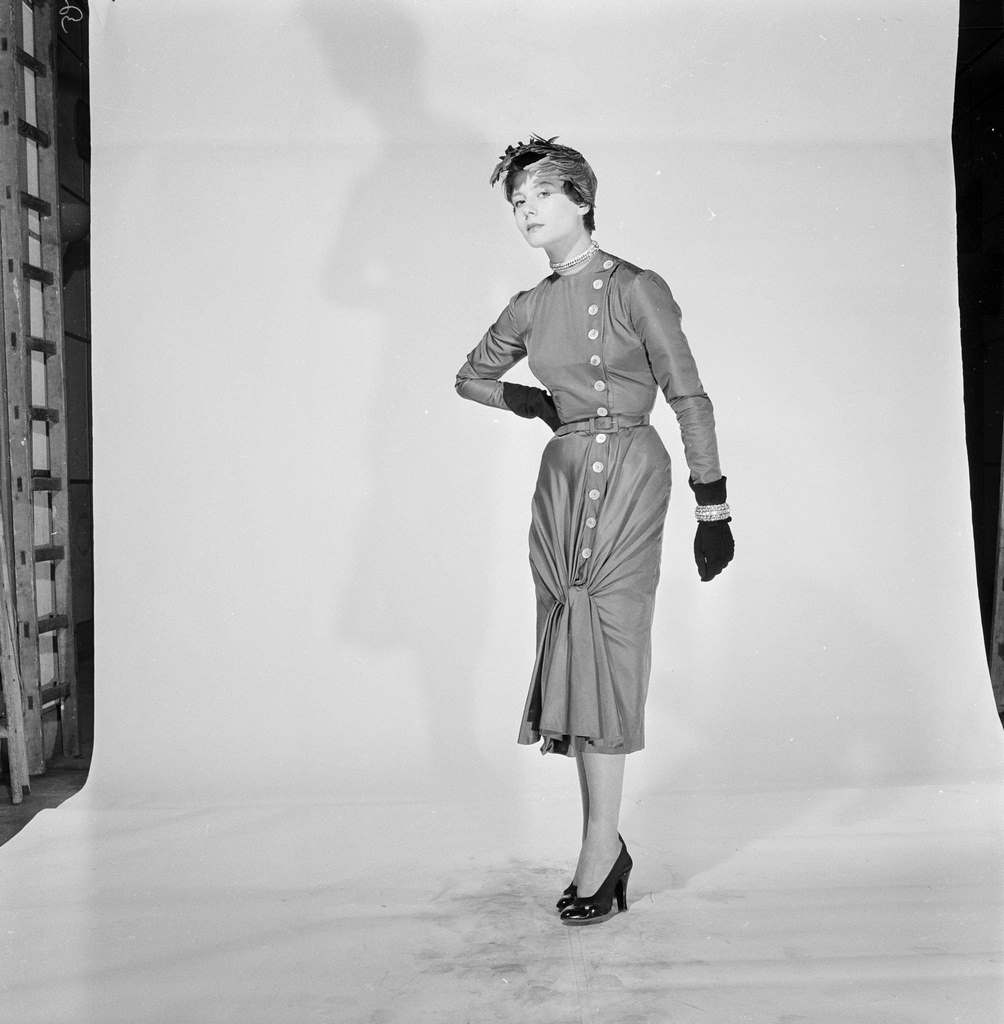
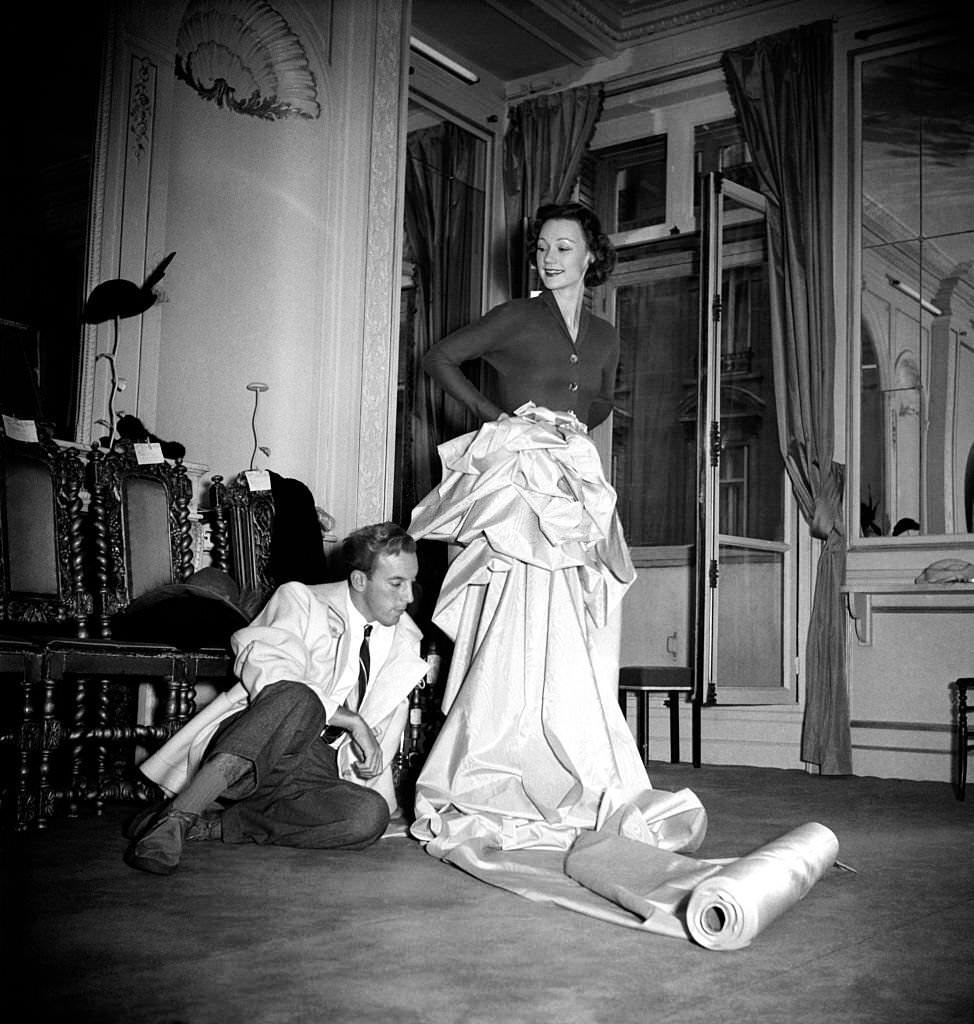
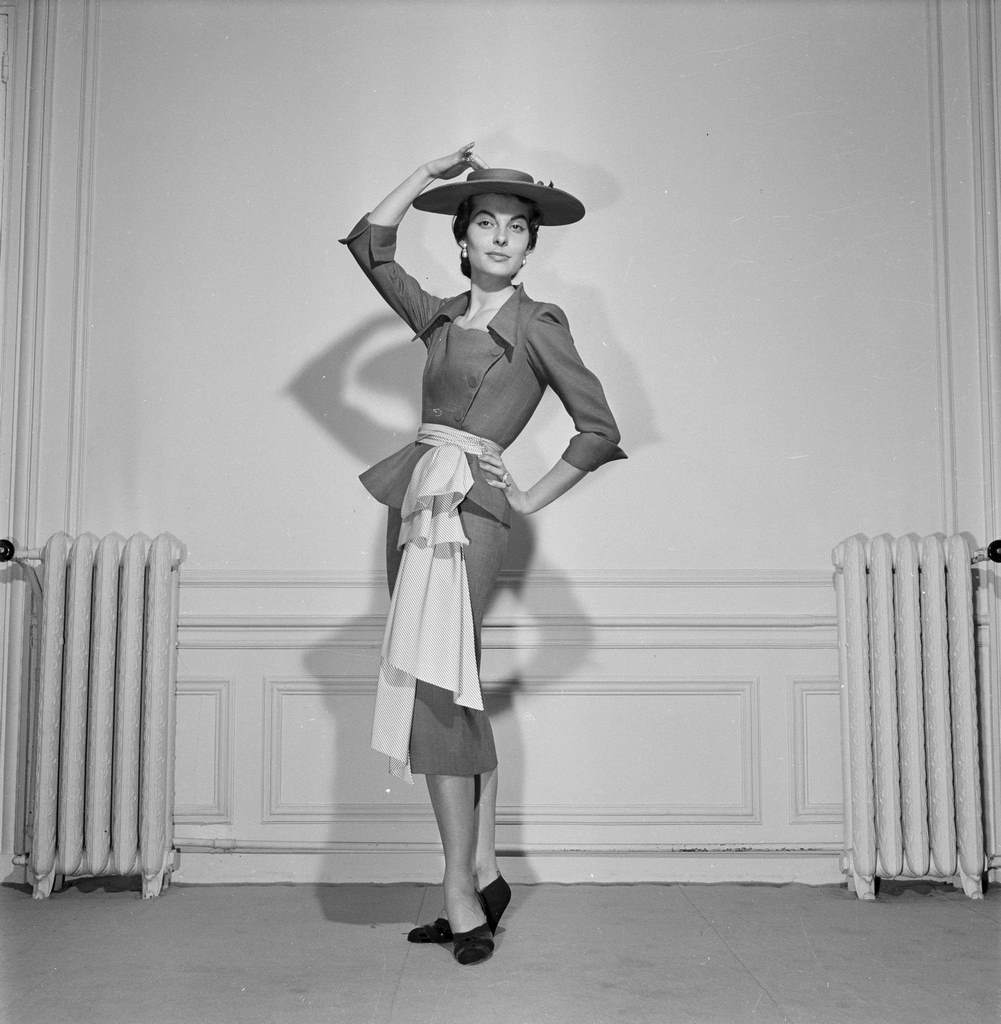
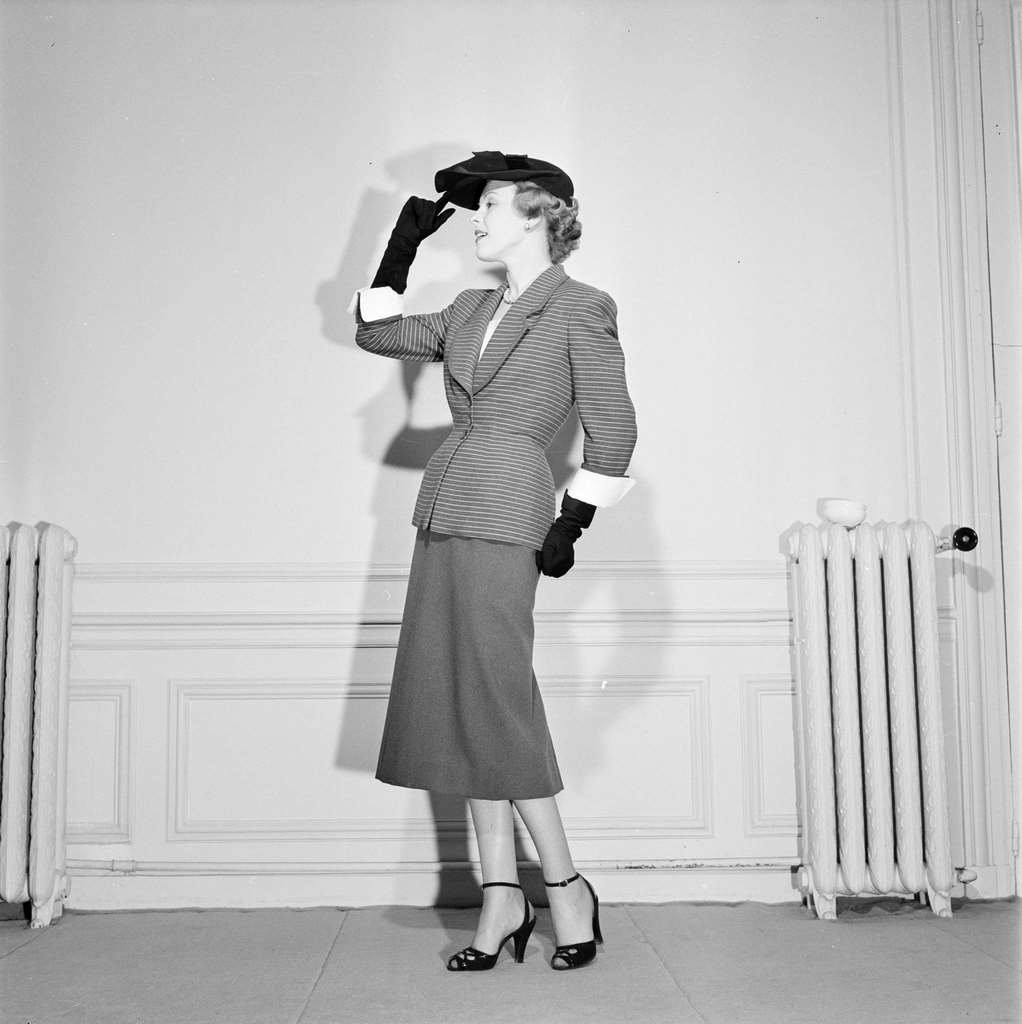
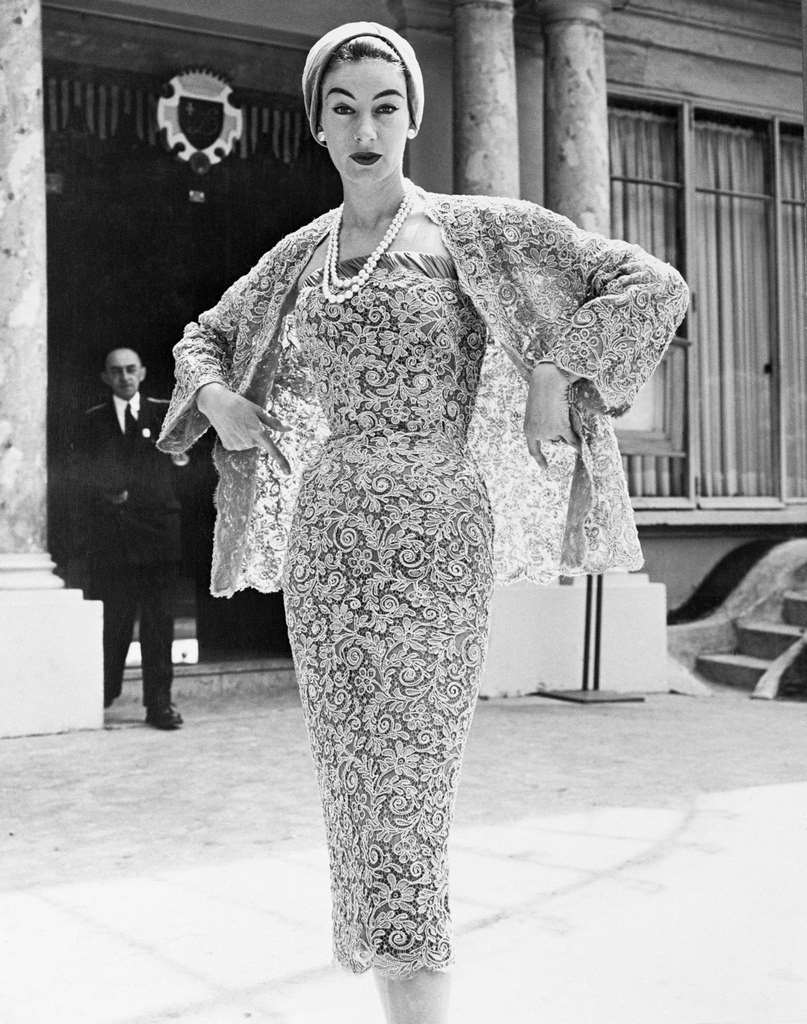
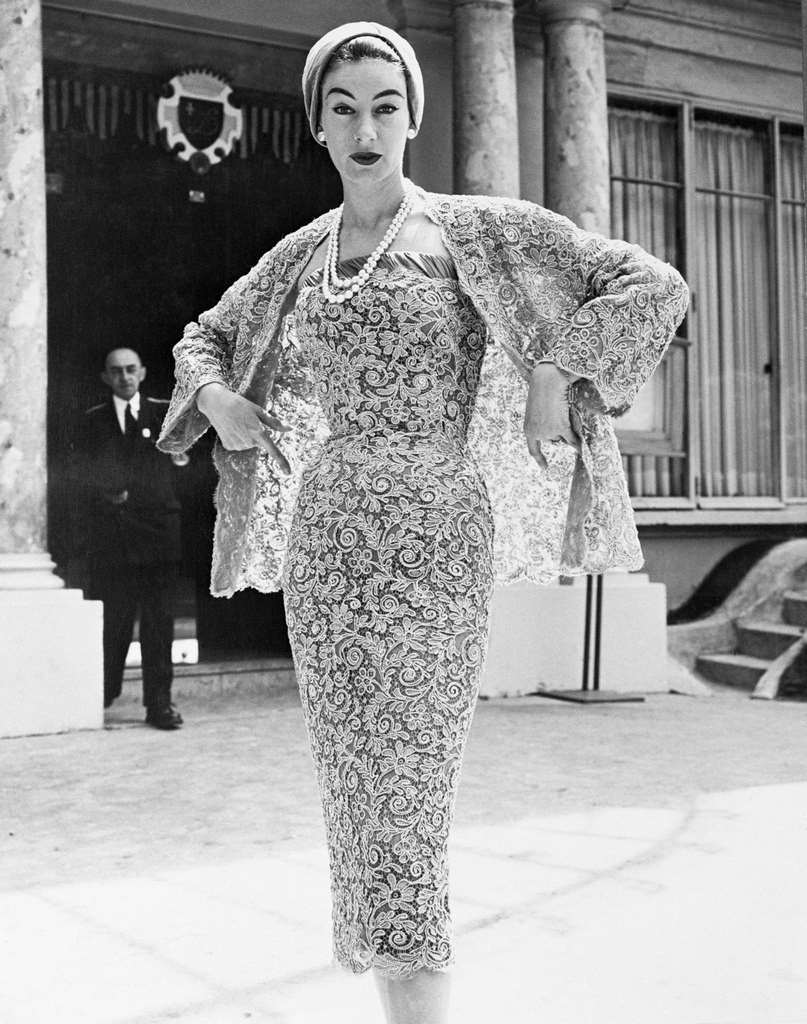
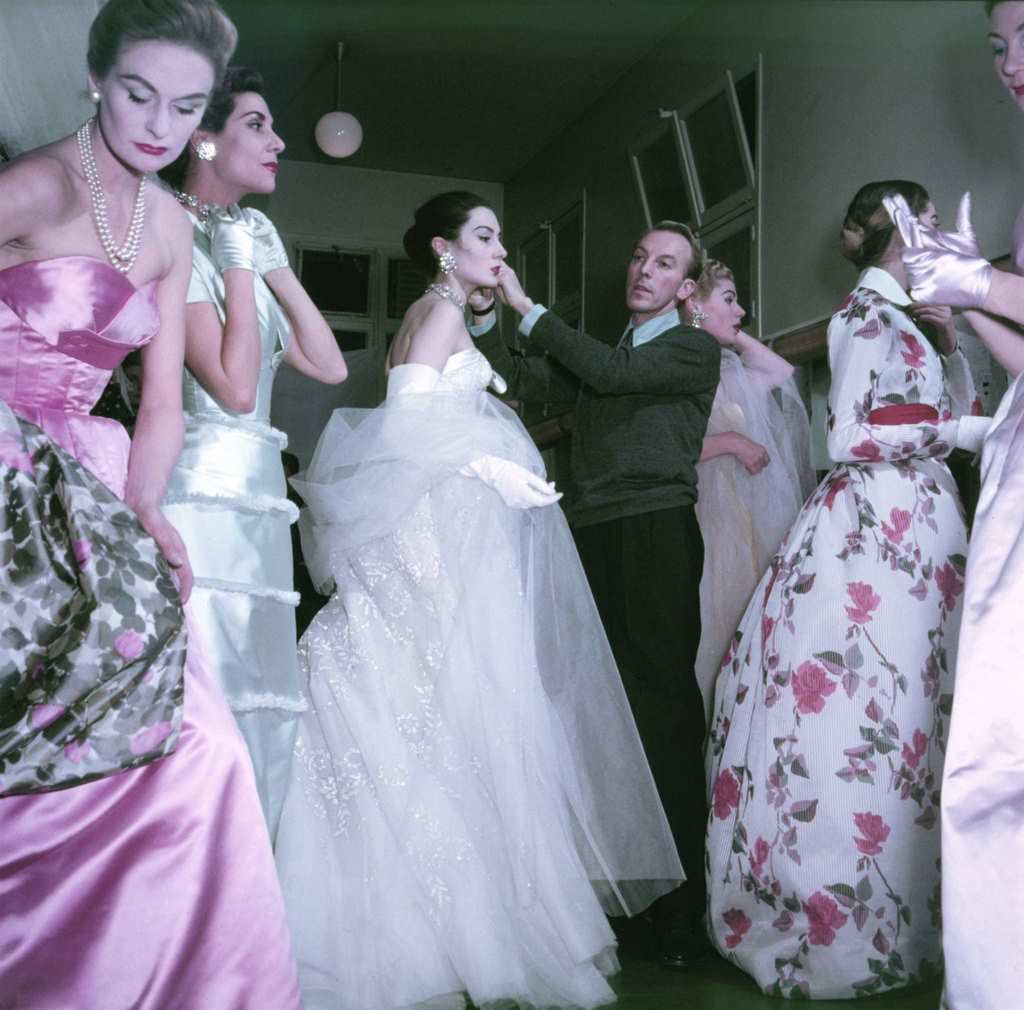
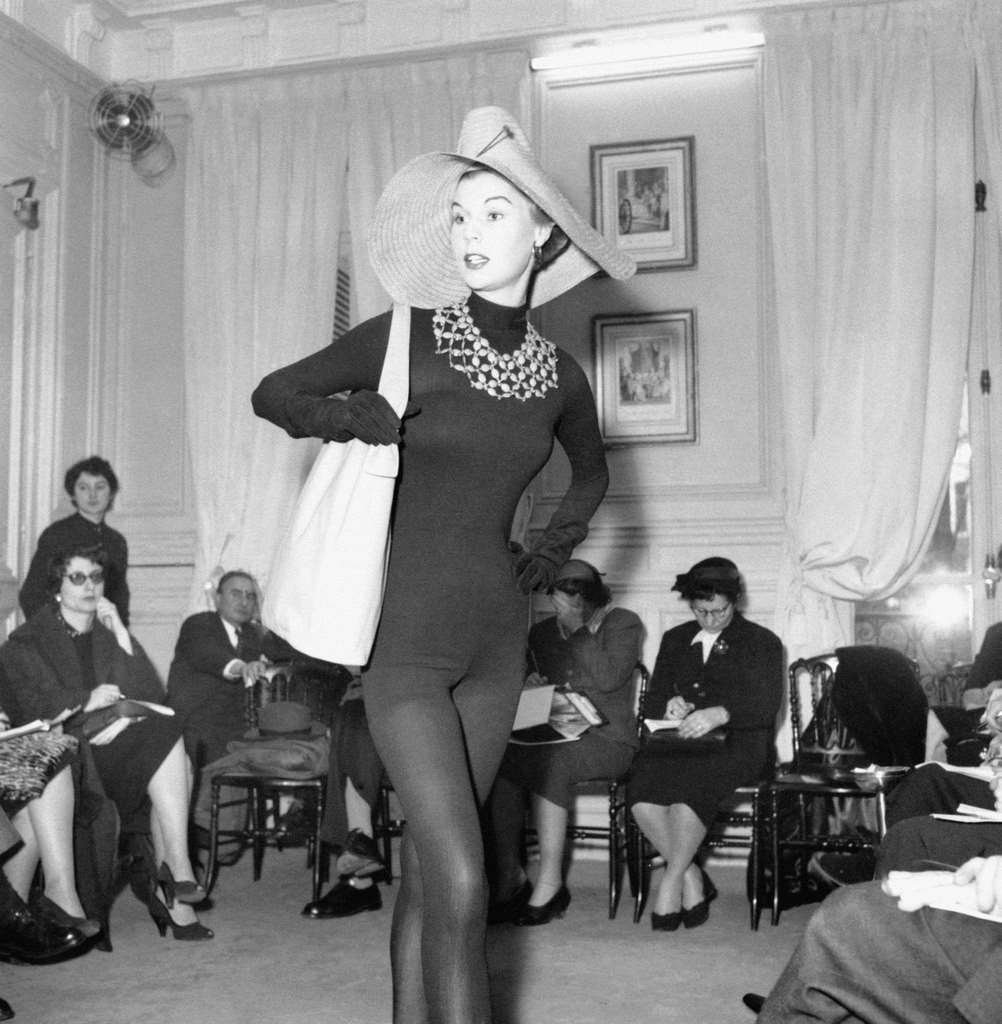
A fashion show for the Jacques Fath spring collection in Paris, France, February 1948.
In 1939, Fath married Geneviève Boucher de la Bruyère, a photographer’s model and fellow drama student. She became closely tied to the brand’s image, modeling many of his early creations and embodying the polished, elegant style that defined the Jacques Fath woman. Their partnership was both personal and professional, with Geneviève remaining central to the house long after its founder was gone.
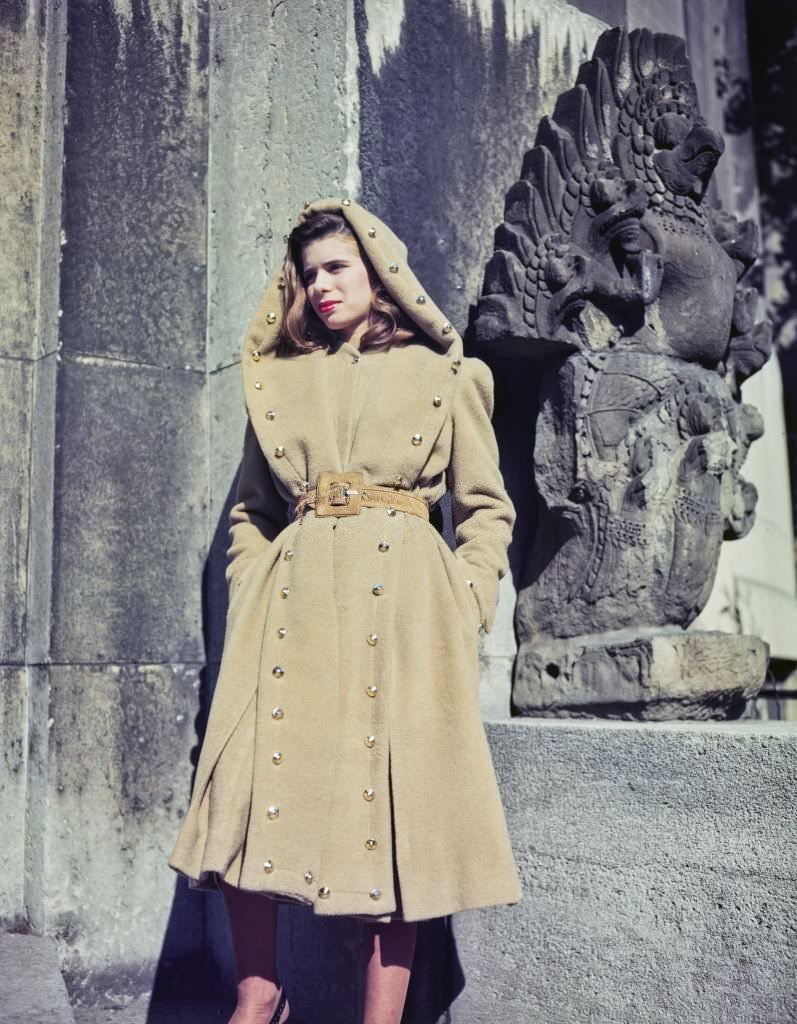
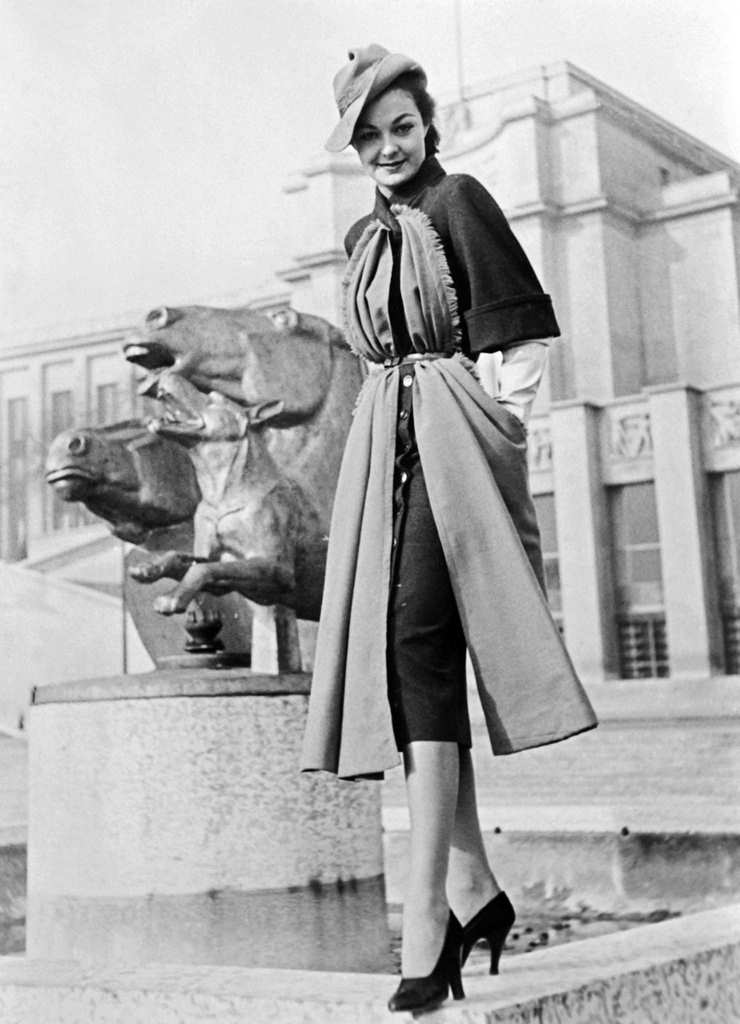
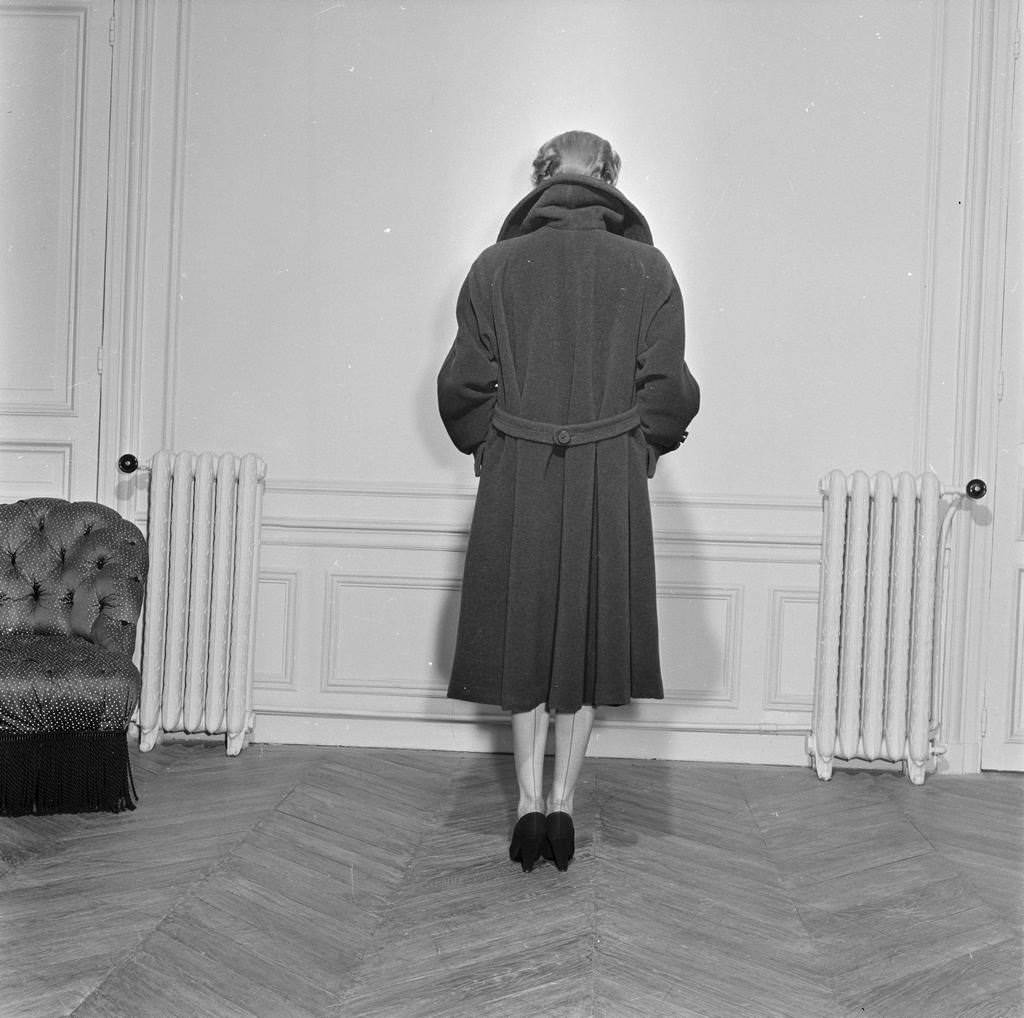
A female fashion model wears a camel wool coat in beige with leather belt and gilt buttons, part of the new collection from French couture designer Jacques Fath in Paris, France, 25th October 1945.
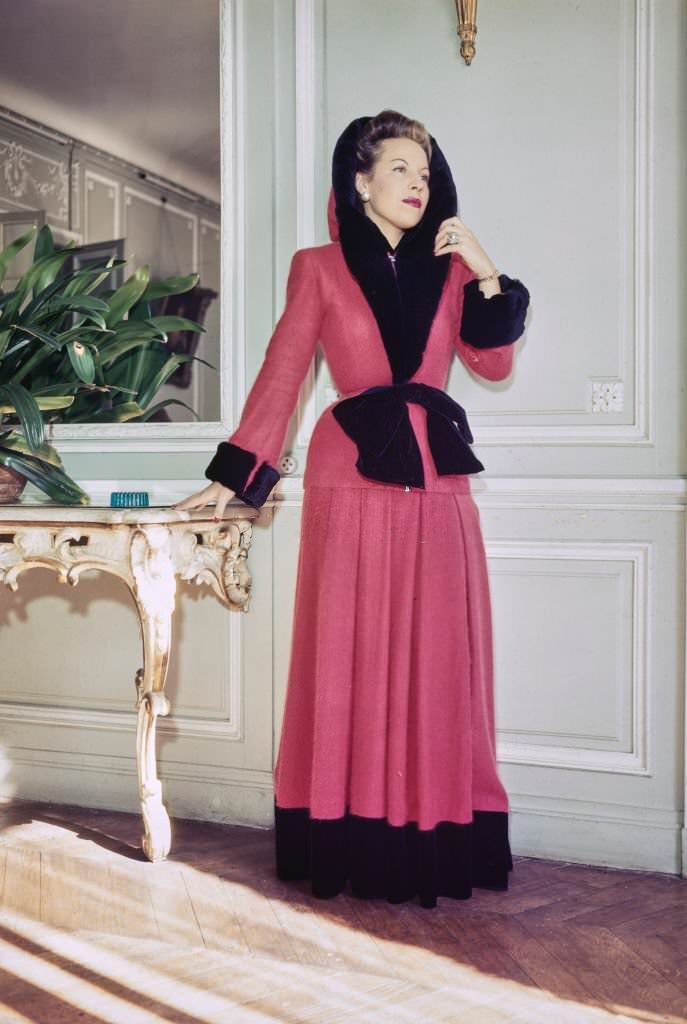
A female fashion model wears a home gown of Angora jersey in red with matching hood, both trimmed with black rabbit, part of the new collection from French couture designer Jacques Fath in Paris, France, 25th October 1945.
As Paris fashion rebounded after the war, Fath emerged as one of its driving forces. His designs were colorful, inventive, and aimed squarely at a young, sophisticated clientele. By the early 1950s, fashion insiders and the press named him one of the “big three” Paris designers, alongside Christian Dior and Pierre Balmain. What made Fath stand out wasn’t just his clothes — it was his instinct for publicity and marketing. He understood how to get his name into conversations, into magazines, and in front of the right people at the right time.
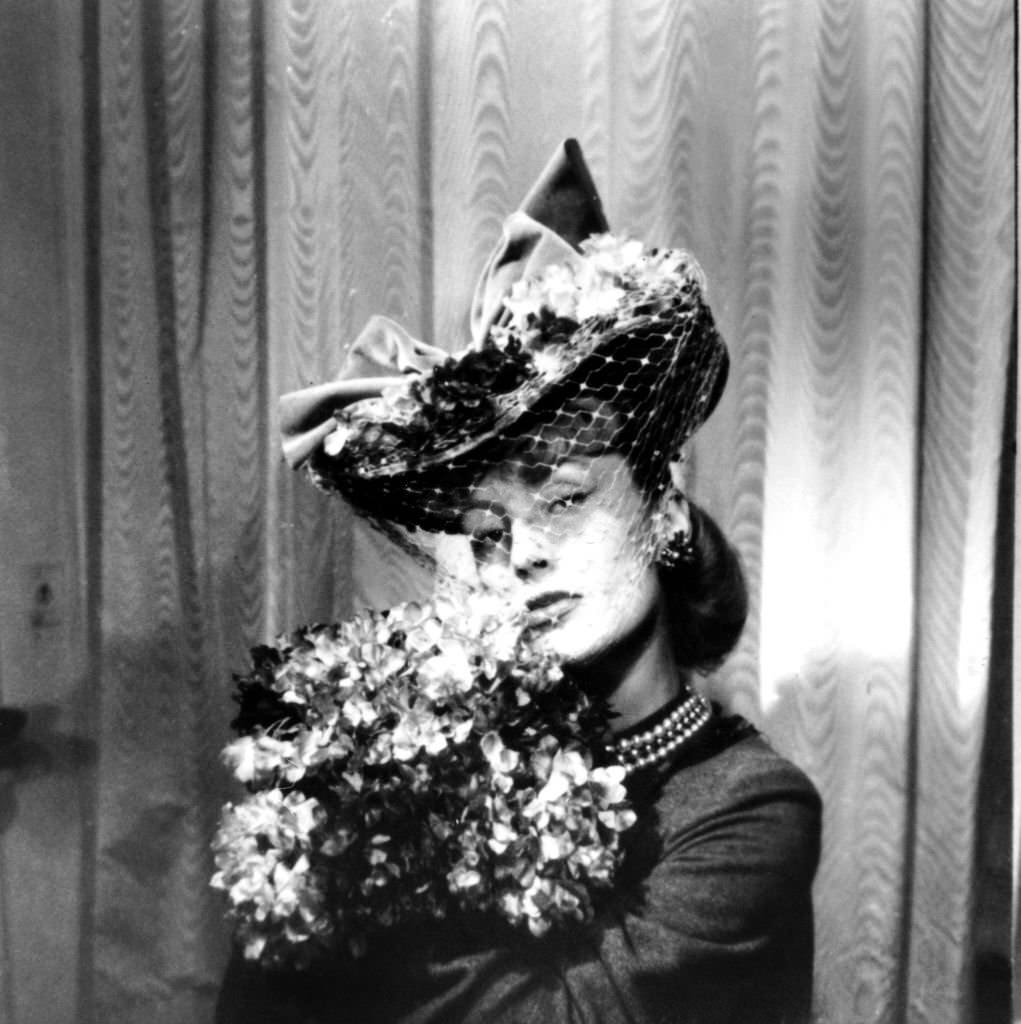
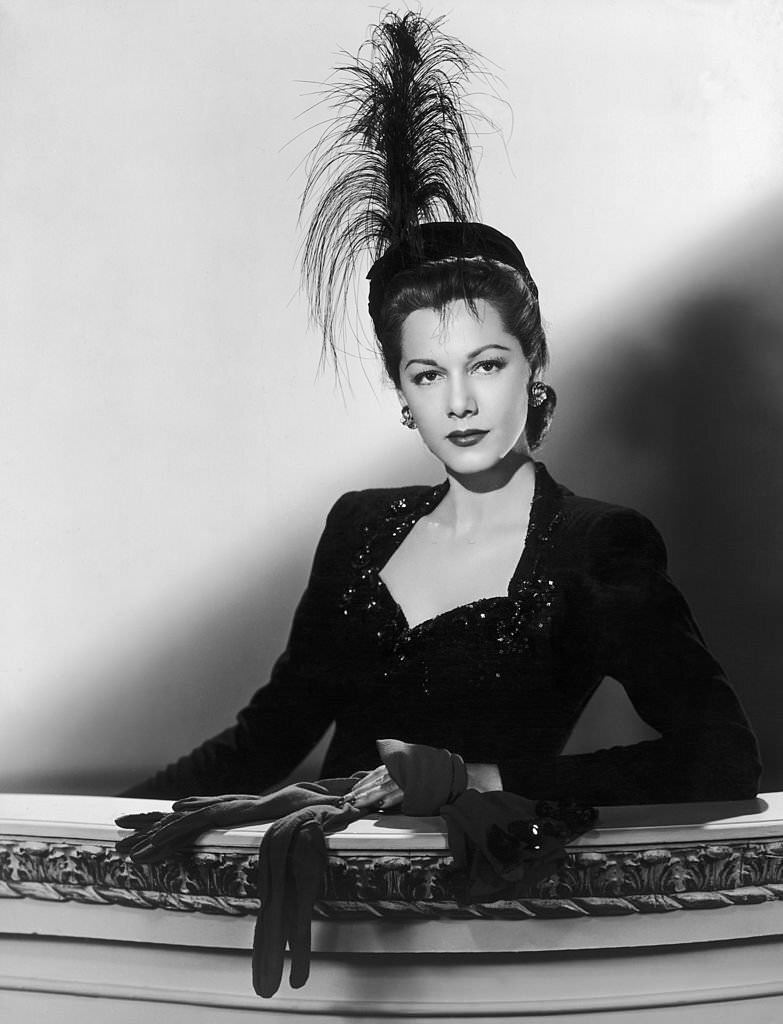
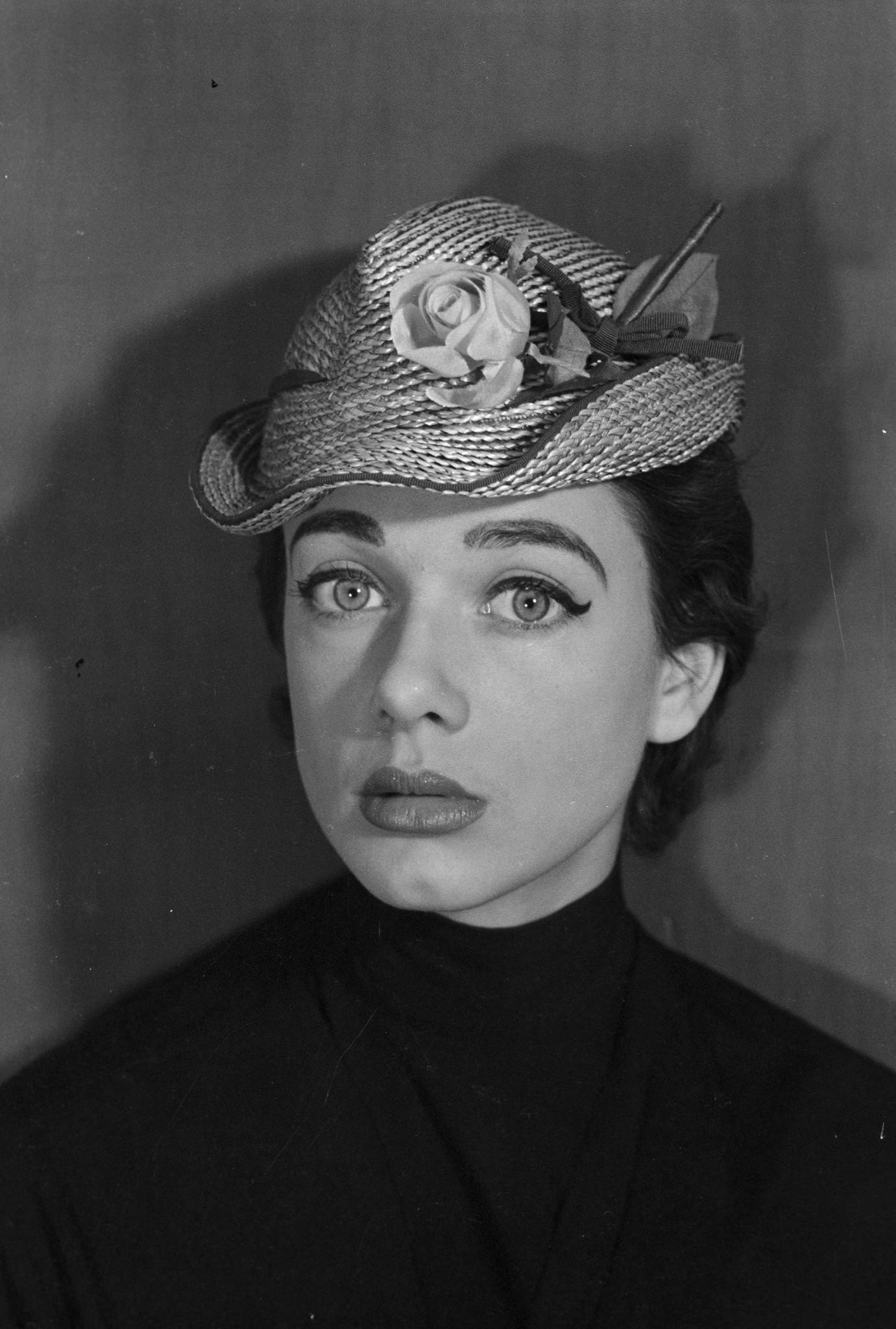
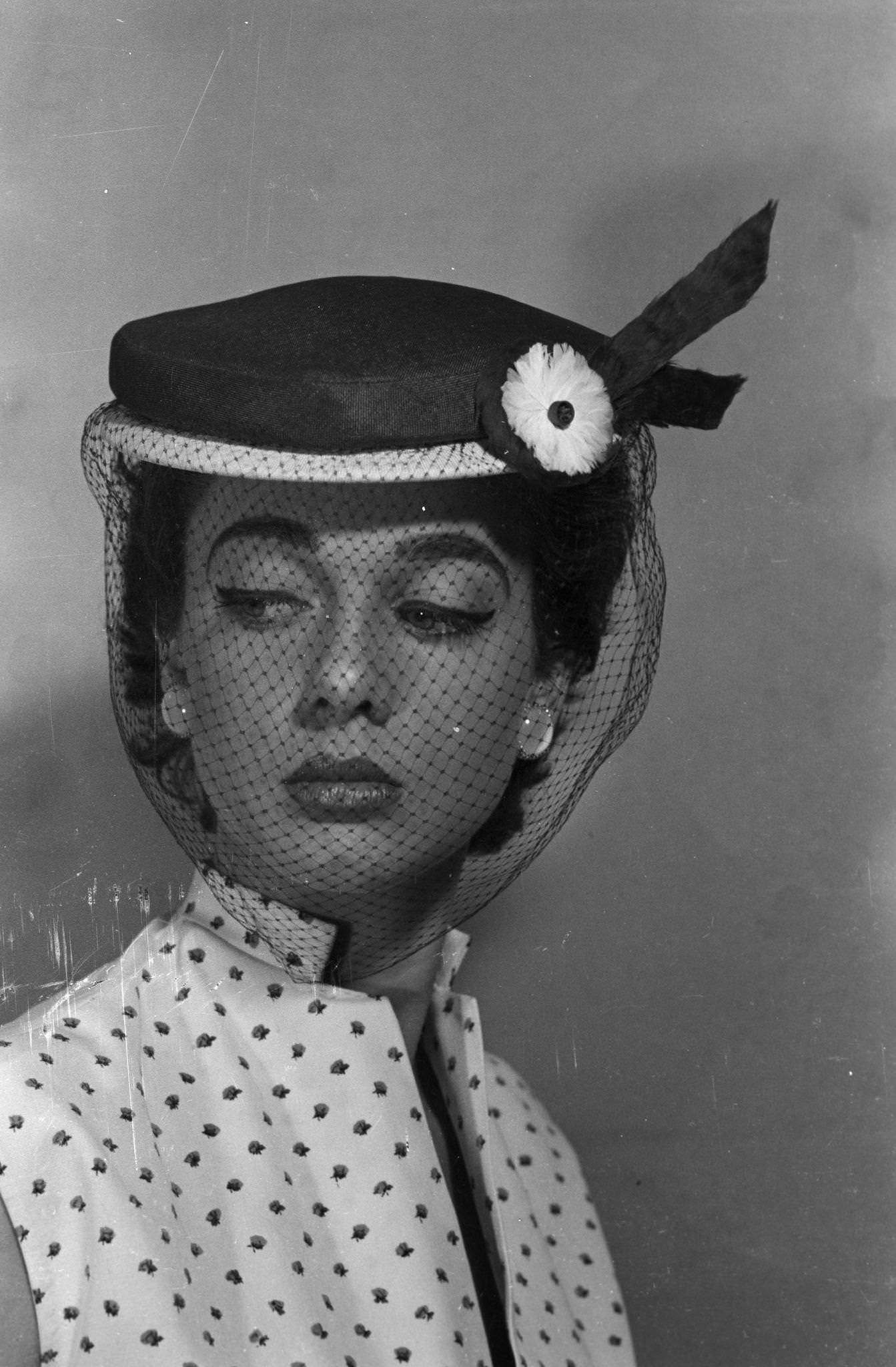
Woman wearing a hat with a veil, holding a bouquet of flowers, Paris, 1943.Actress of Domonican Origin, 1940s
In 1945, Fath contributed four fashion dolls to the Théâtre de la Mode, a traveling exhibition that showcased the best of Parisian design to international audiences after the war. That same year, he released his first perfume, Chasuble. A year later came Iris Gris. These scents expanded the brand beyond clothing and into everyday luxury. In 1948, he signed a contract with New York manufacturer Joseph Halpert to supply two collections a year to the American market, each comprising around twenty models. He had recognized early on that the United States represented massive commercial potential.
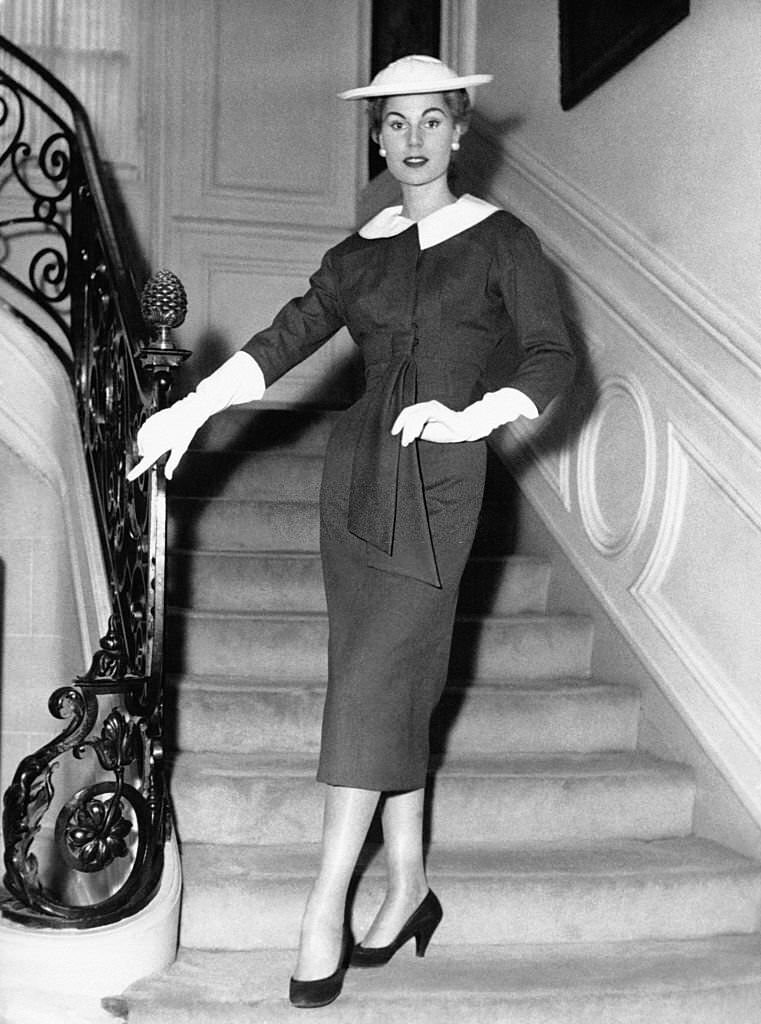
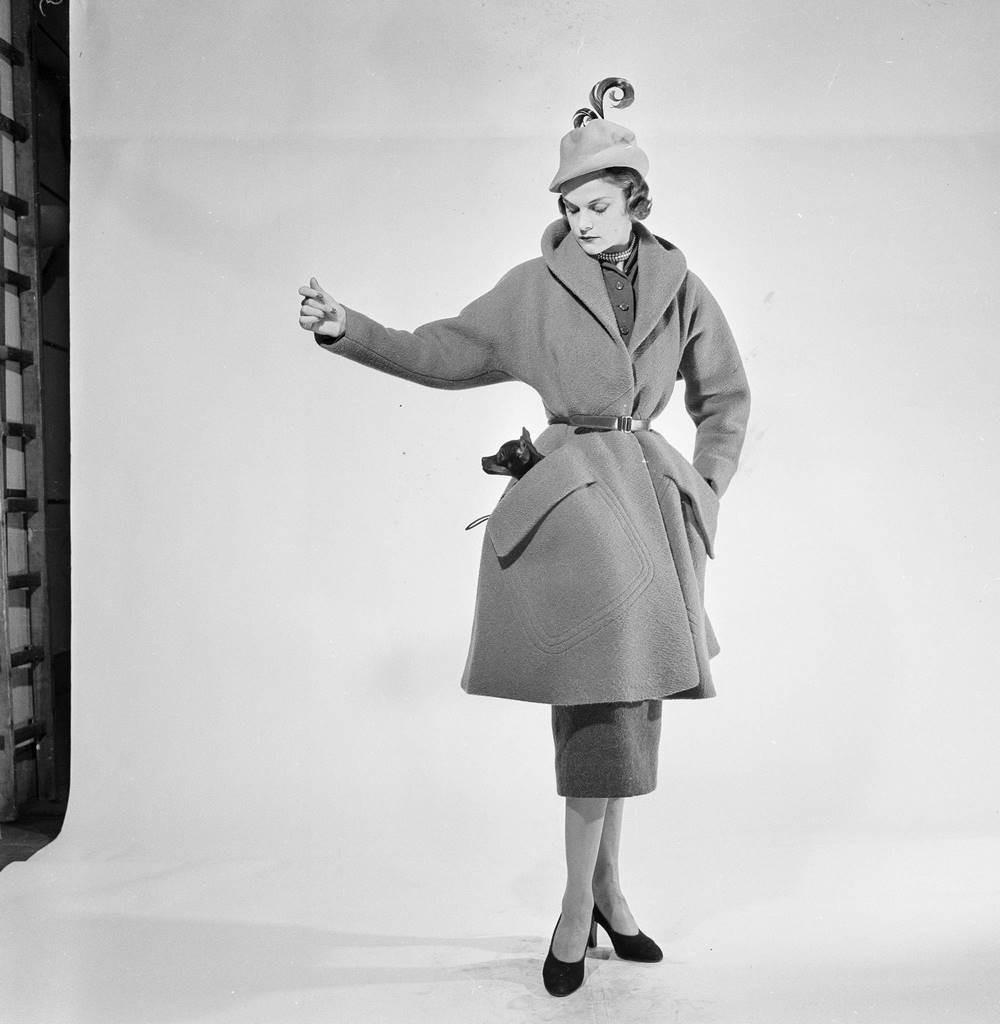
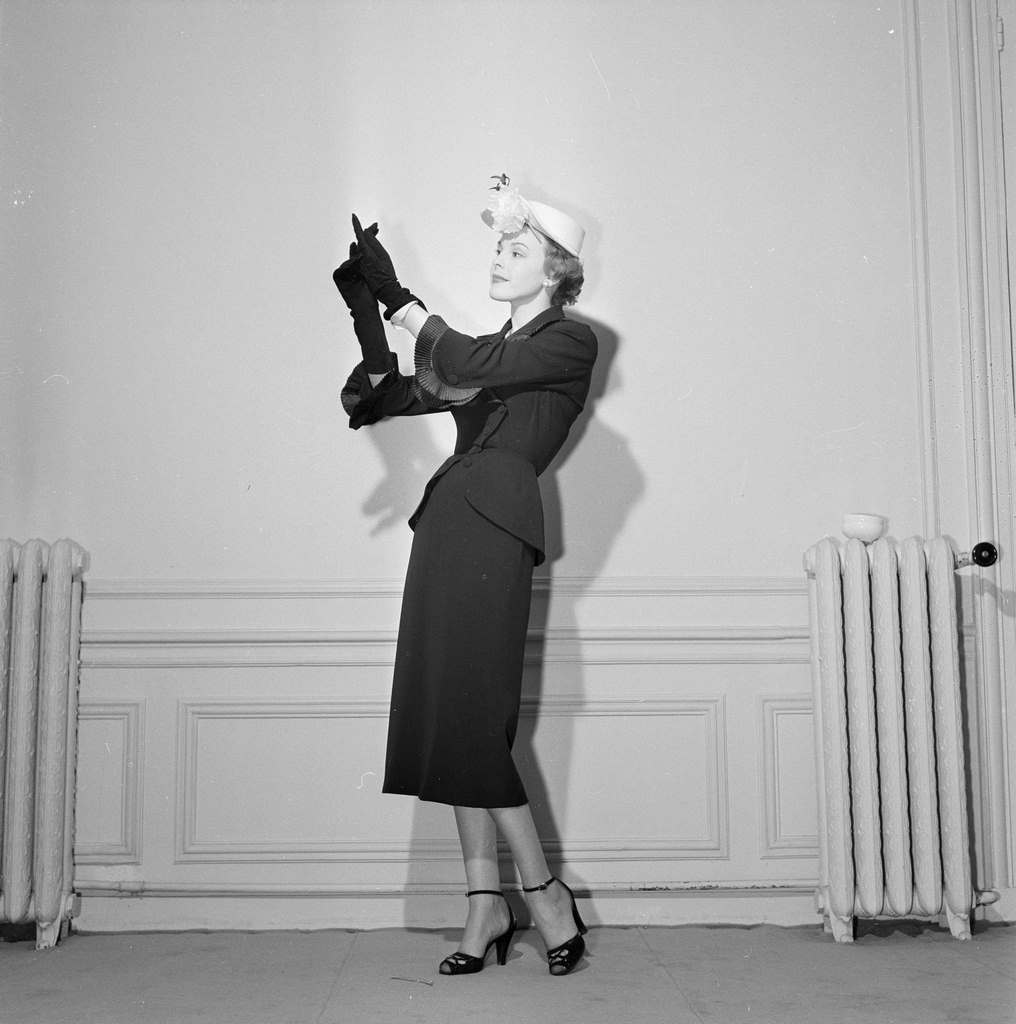
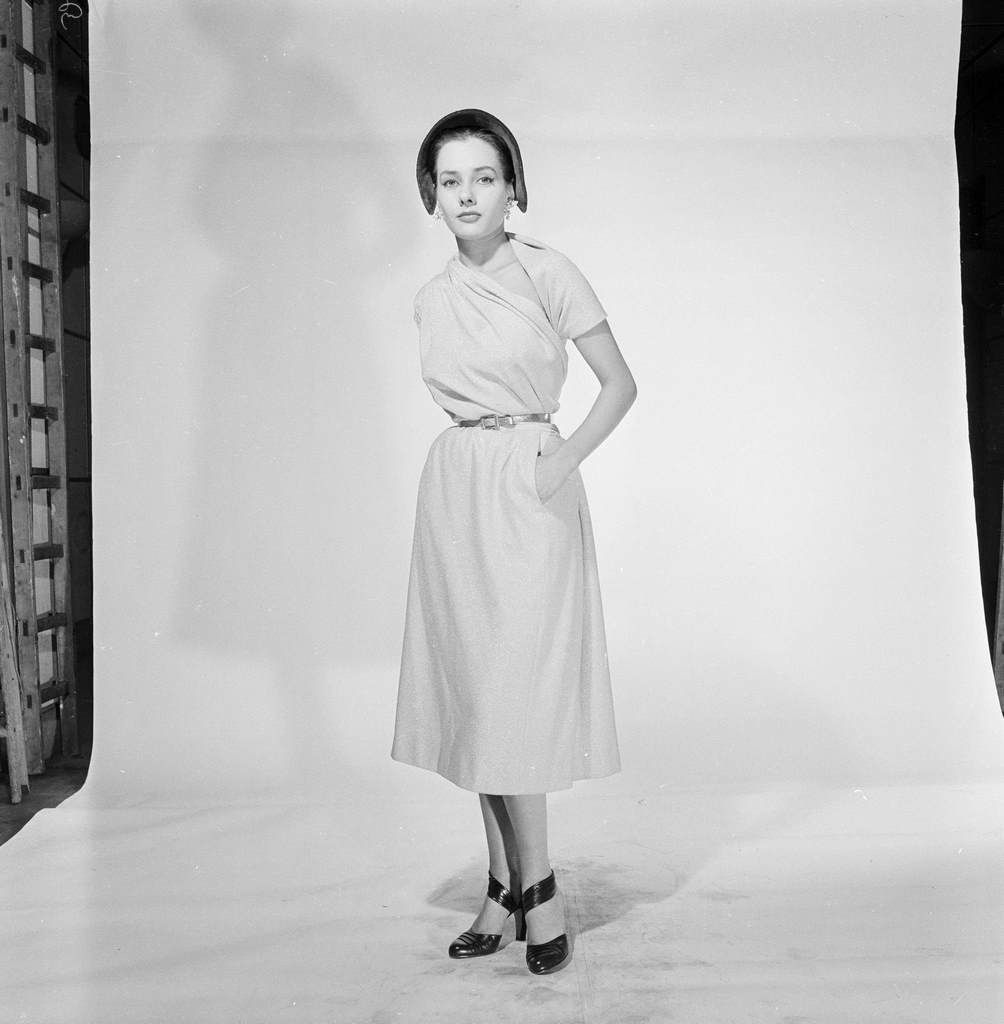
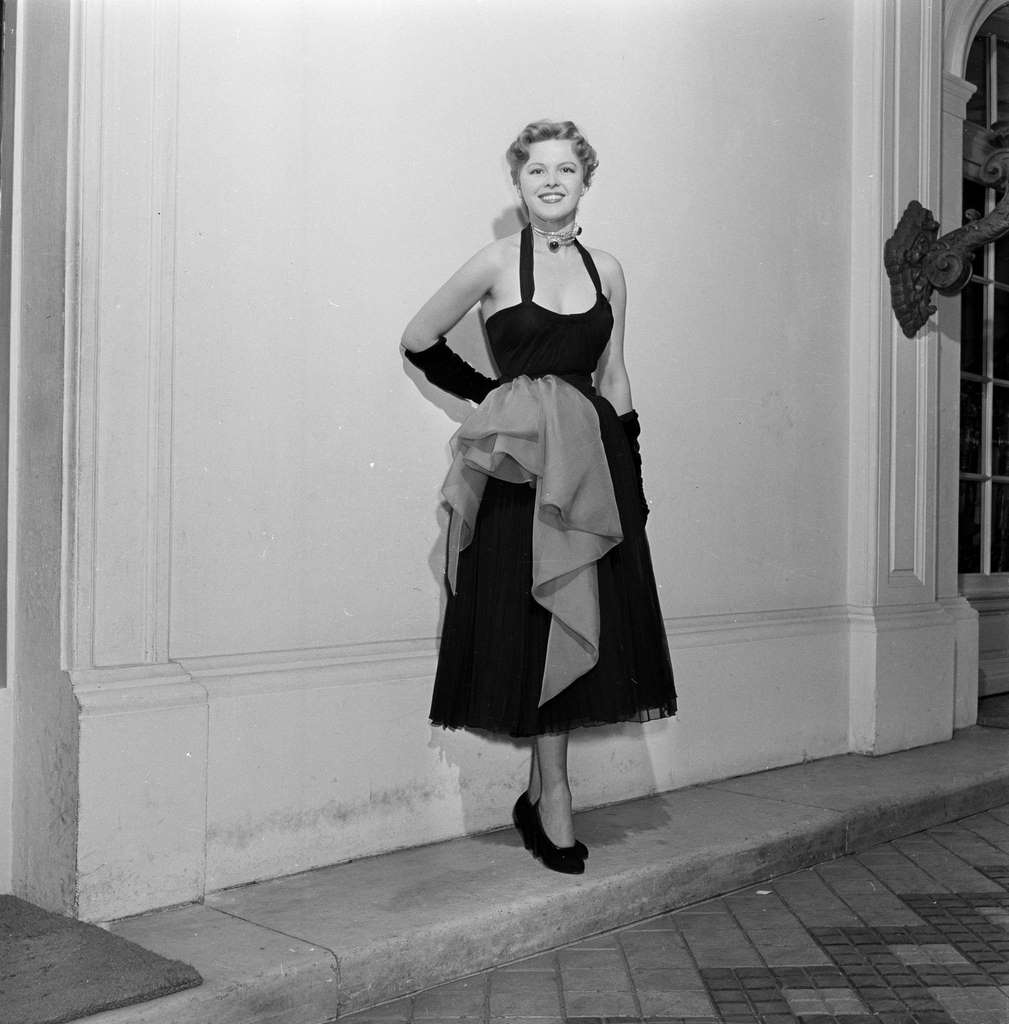
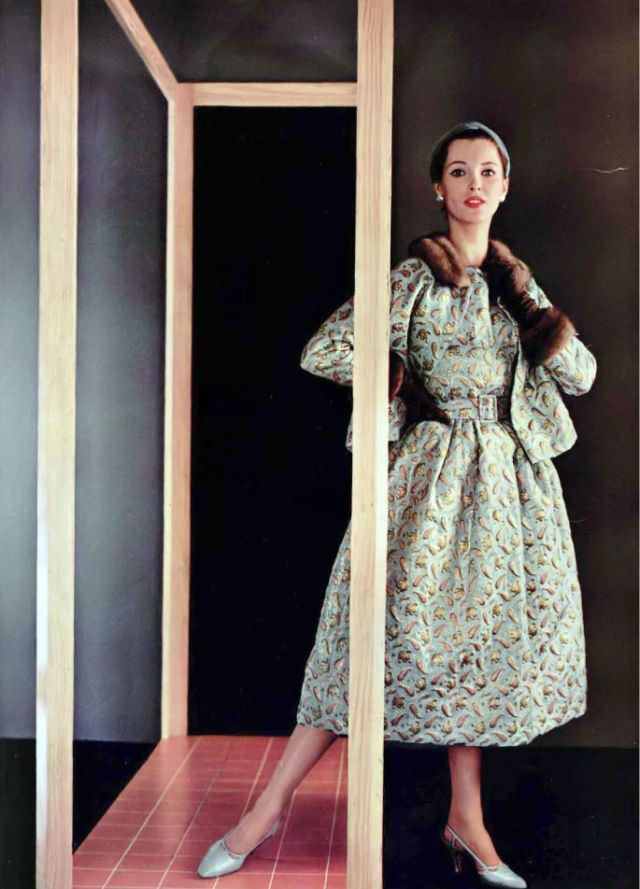
Model presenting a blue woolen afternoon dress with its white gloves and hat, Summer collection, in Paris, France, on February 26, 1949.
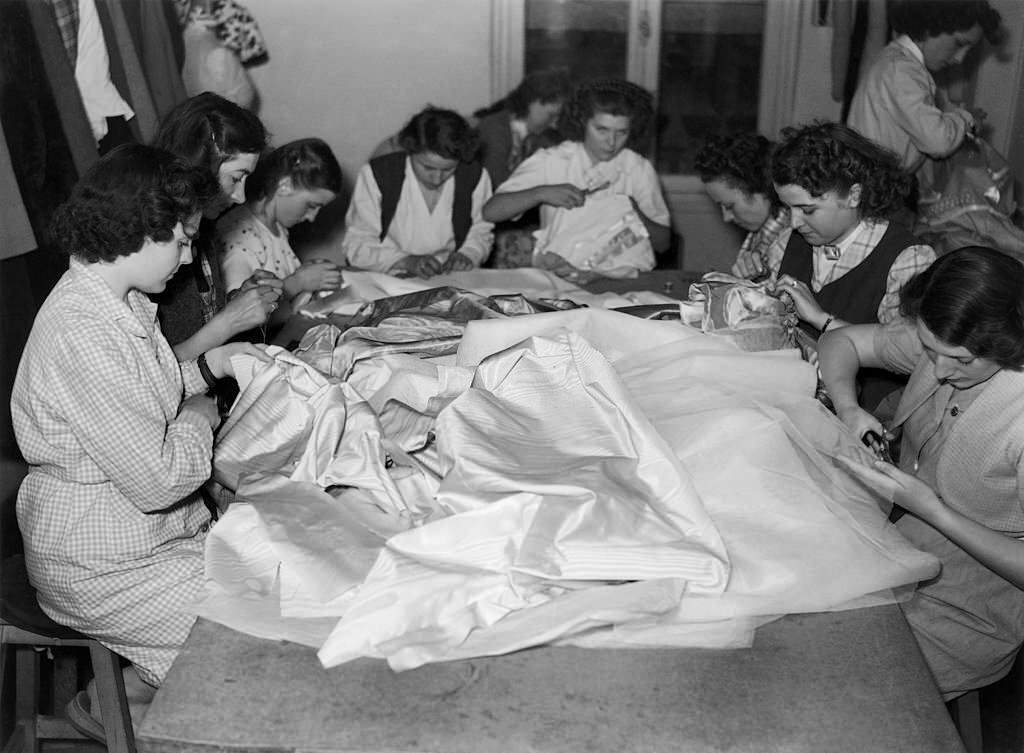
In 1949, Rita Hayworth chose Fath to design her wedding dress and trousseau for her marriage to Prince Aly Khan. His seamstresses worked on the gown in his Paris atelier, and the assignment brought him enormous attention in America, where Hayworth was one of the biggest stars in Hollywood. The commission placed Fath’s name at the center of one of the most glamorous weddings of the decade.
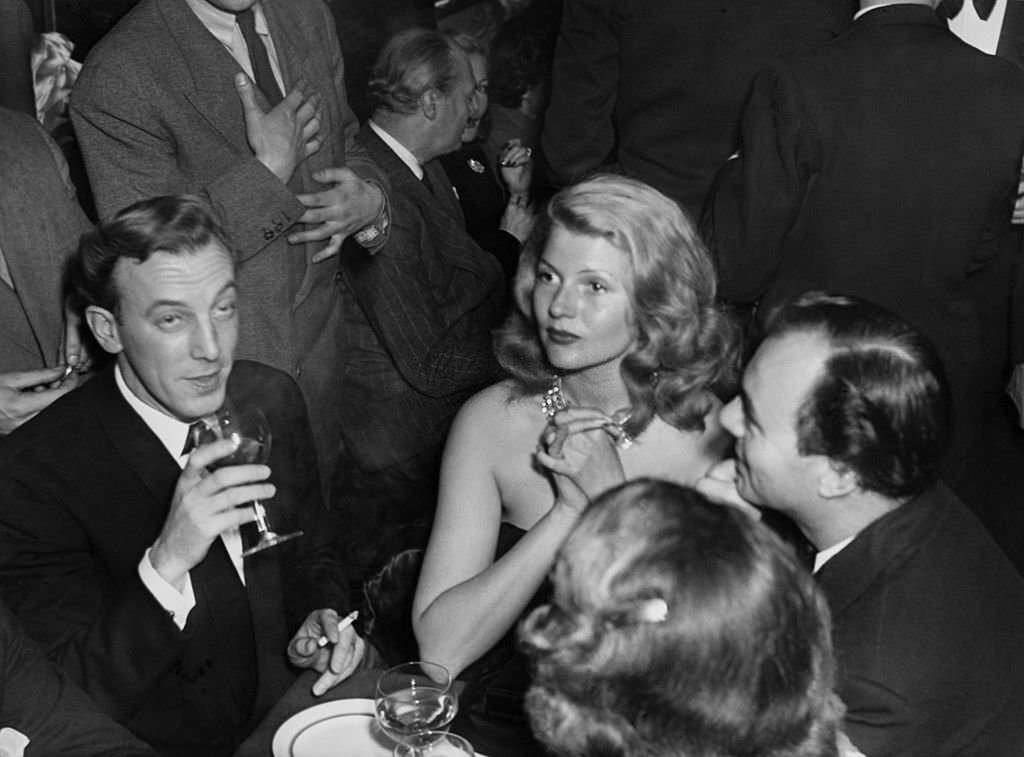
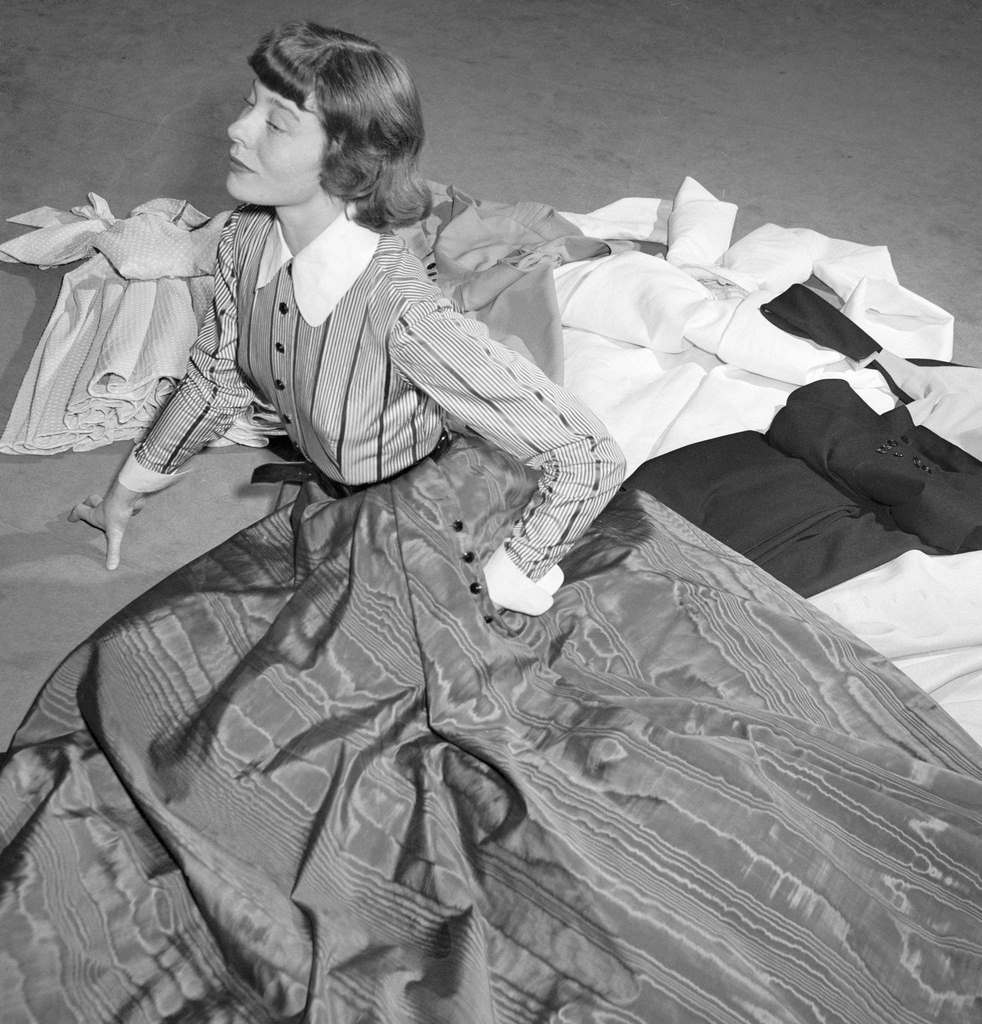
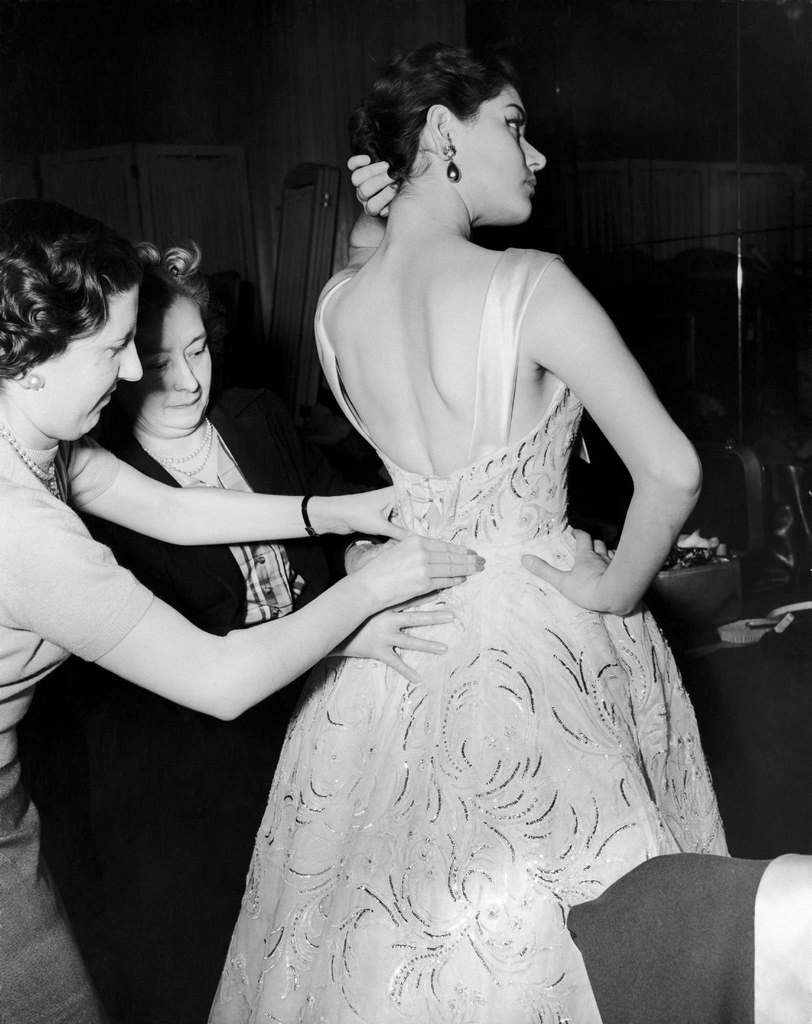
Presentation of a dress created by Jacques Fath for Rita Hayworth, May 9, 1949, in Paris.Presentation of Jacques Fath’s new collection in Paris, April 1949.Presentation of Jacques Fath’s new collection in Paris, April 1949.Jacques Fath’S Seamstresses Making Rita Hayworth’S Wedding Dress Paris 1949Rita Hayworth, French fashion designer Jacques Fath and Ali Khan in Paris, France in 1949.Model Bettina Graziani shows one of the eleven Jacques Fath dresses chosen as a trousseau by screen star Rita Hayworth.Presentation of a skirt created by Jacques Fath for Rita Hayworth, May 9, 1949, in Paris.
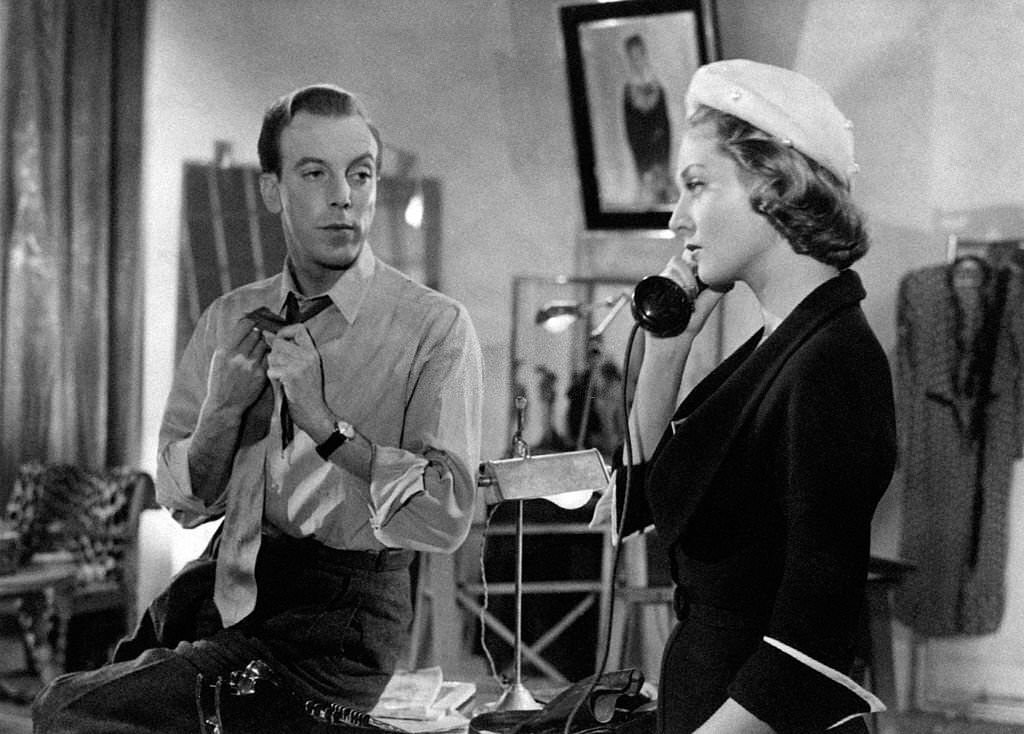
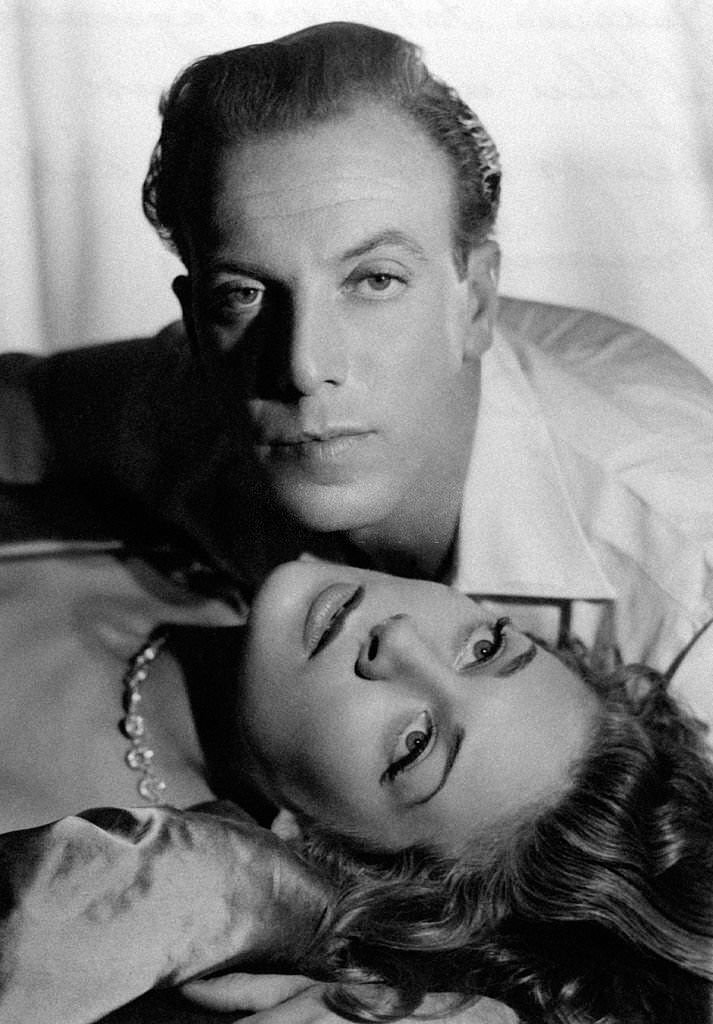
Beyond the Hayworth commission, Fath made a notable move into film. He appeared alongside French actress Françoise Christophe in the 1949 film Scandale aux Champs-Élysées, further cementing his presence in popular culture beyond the runway. For Fath, fashion and entertainment were never far apart.
French actress Francoise Christophe speaking over the phone in the film Scandale aux Champs-Elysées, 1949.French fashion designer and actor Jacques Fath and French actress Francoise Christophe acting in the film Scandale aux Champs-Elysées, 1949.
In 1950, Fath launched his perfume Canasta and opened a boutique that offered more accessible products — scarves, ties, and stockings — items that let a wider audience buy into the brand. That same year, the Chambre Syndicale de la Haute Couture selected him as one of five designers to form a group of associated couturiers, alongside Carven, Paquin, Piguet, and others. He also established Parfums Jacques Fath to manage and market his growing fragrance line.
Model in a Day Dress by Jacques FathFashion Show Of Jacques Fath Tailor, 1950.The Collection Spring Summer 1950 Jacques Fath
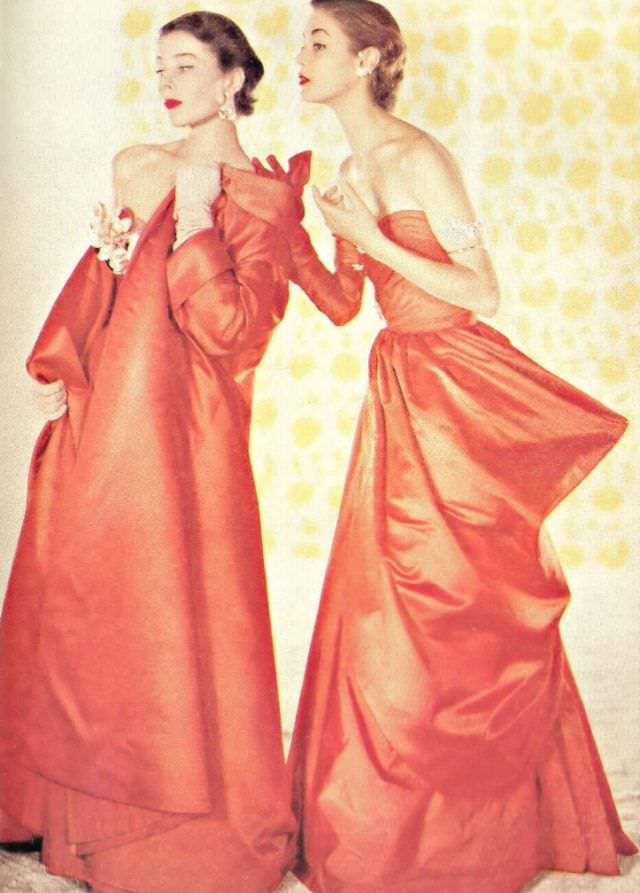
Bettina and Jean Patchett in gowns by Jacques Fath, 1950
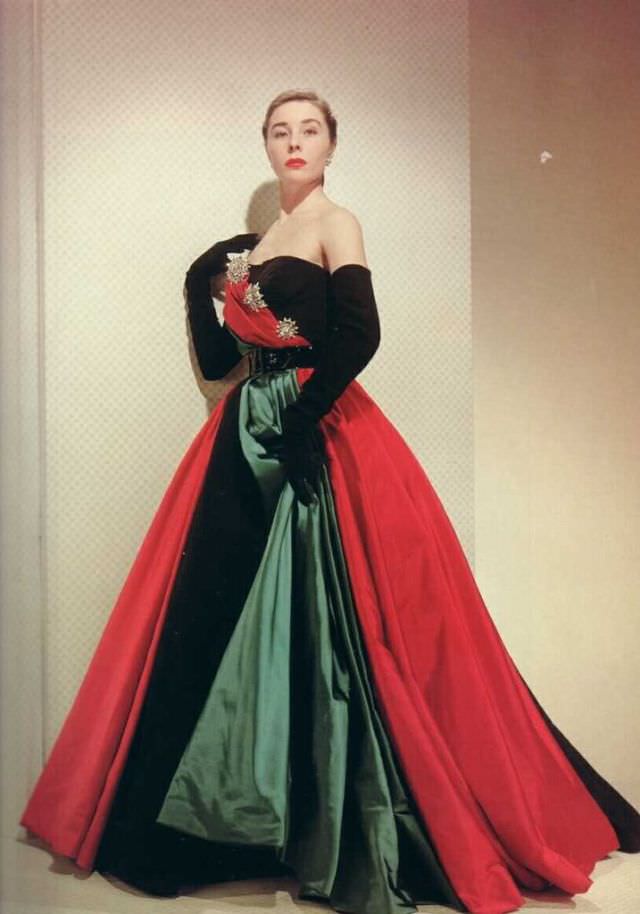
Bettina in a Jacques Fath ball gown fit for a queen, 1950
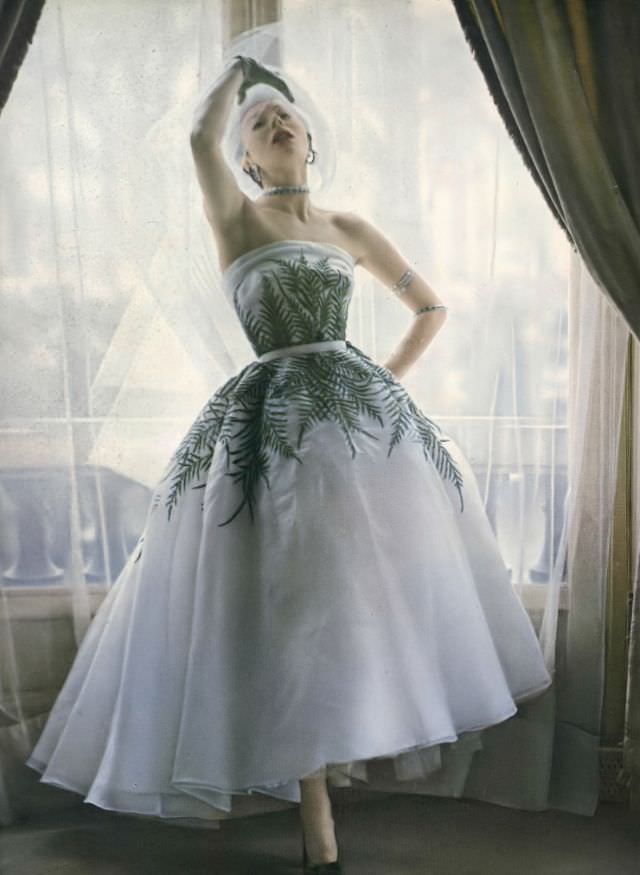
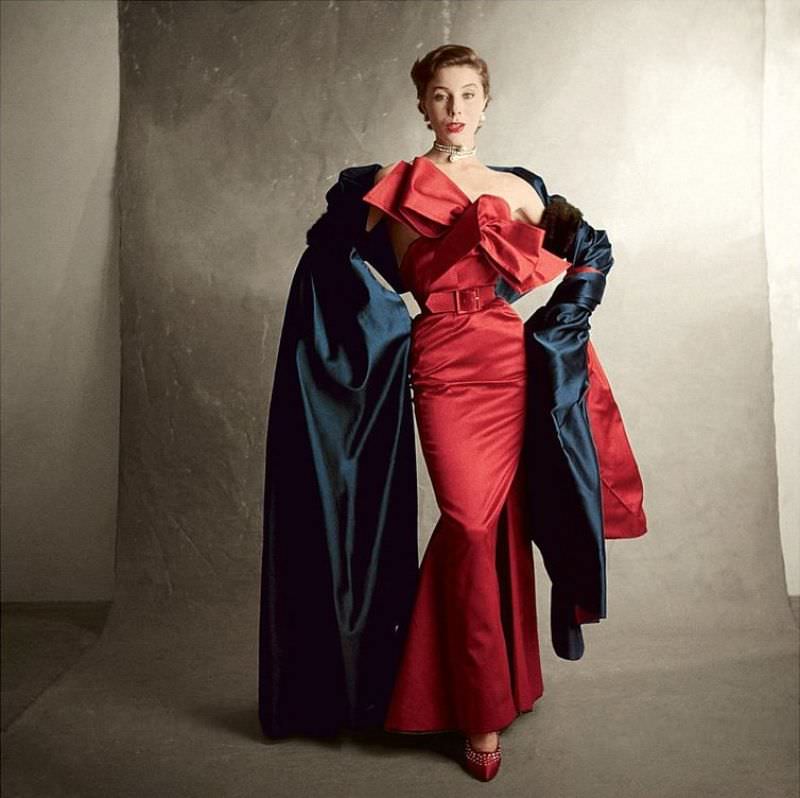
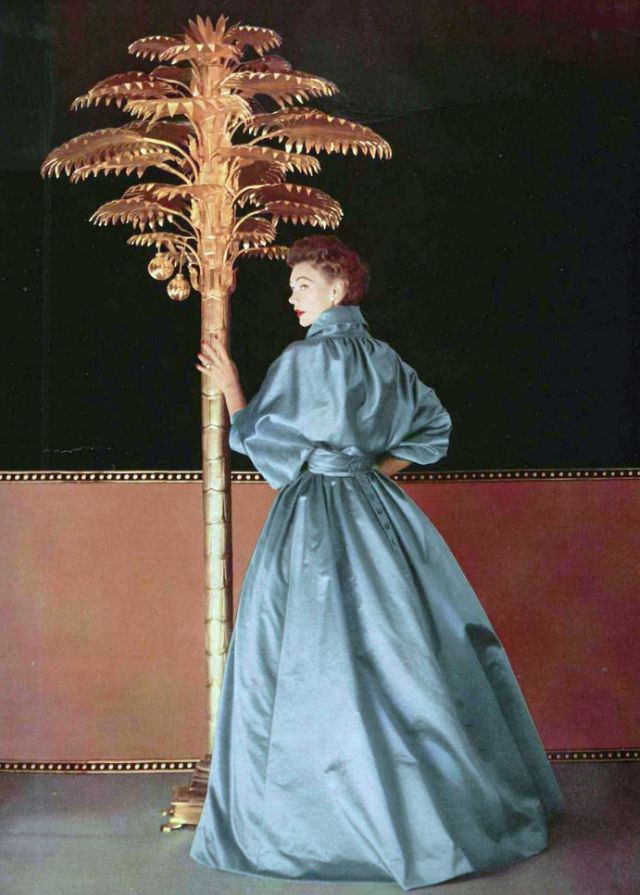
Bettina in evening gown with fern leaf motif by Jacques Fath, Vogue, 1950Bettina in the “Red Shoes” evening gown by Jacques Fath, photo by Irving Penn, Vogue, September 1950
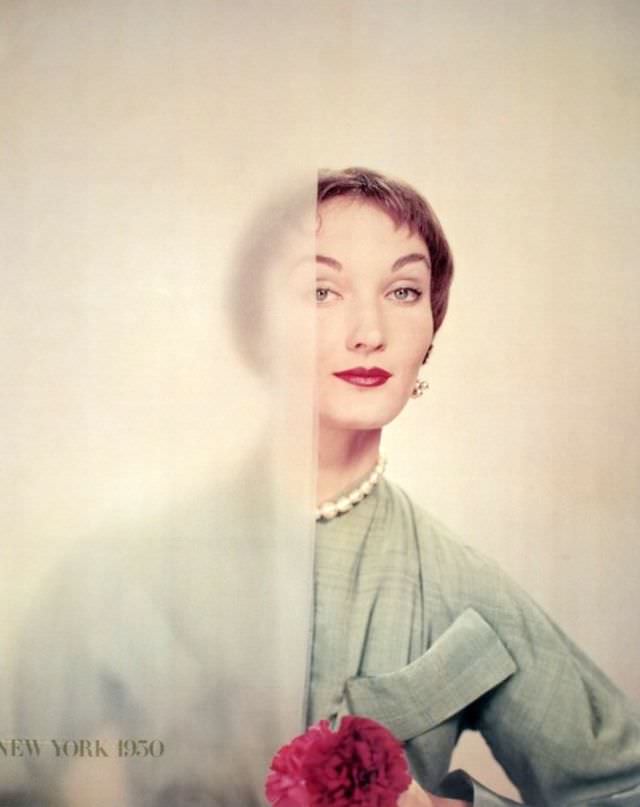
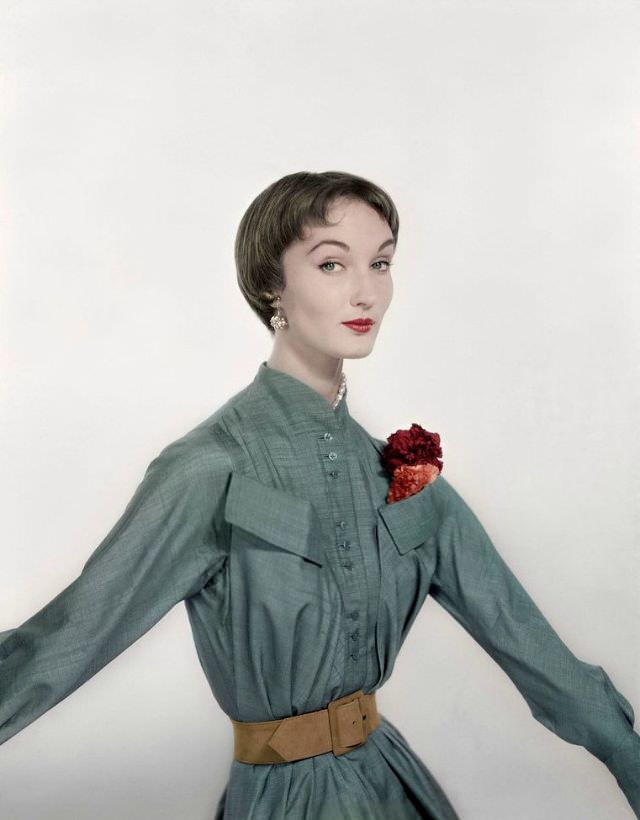
Evelyn Tripp in dress by Jacques Fath, photo by Erwin Blumenfeld, 1950.
Evelyn Tripp in dress by Jacques Fath, photo by Erwin Blumenfeld, 1950
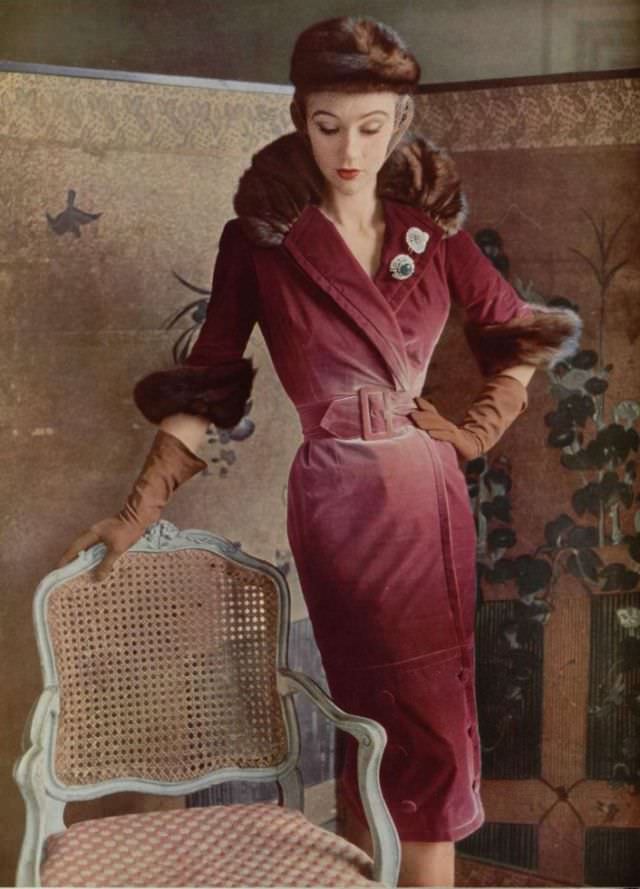
Sophie is wearing exquisite faded rose velvet coatdress trimmed in mink by Jacques Fath, veiled mink hat, jeweled clips by Roger Scemama, 1950
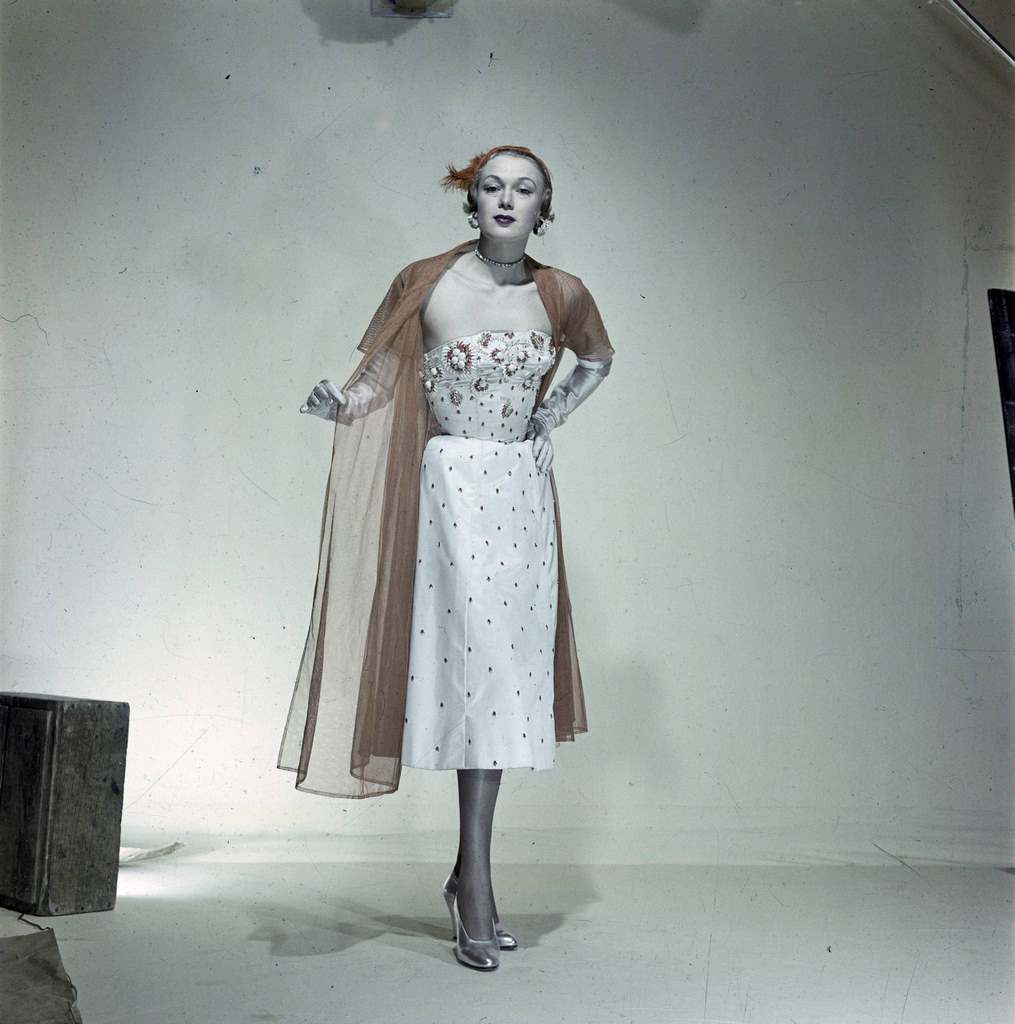
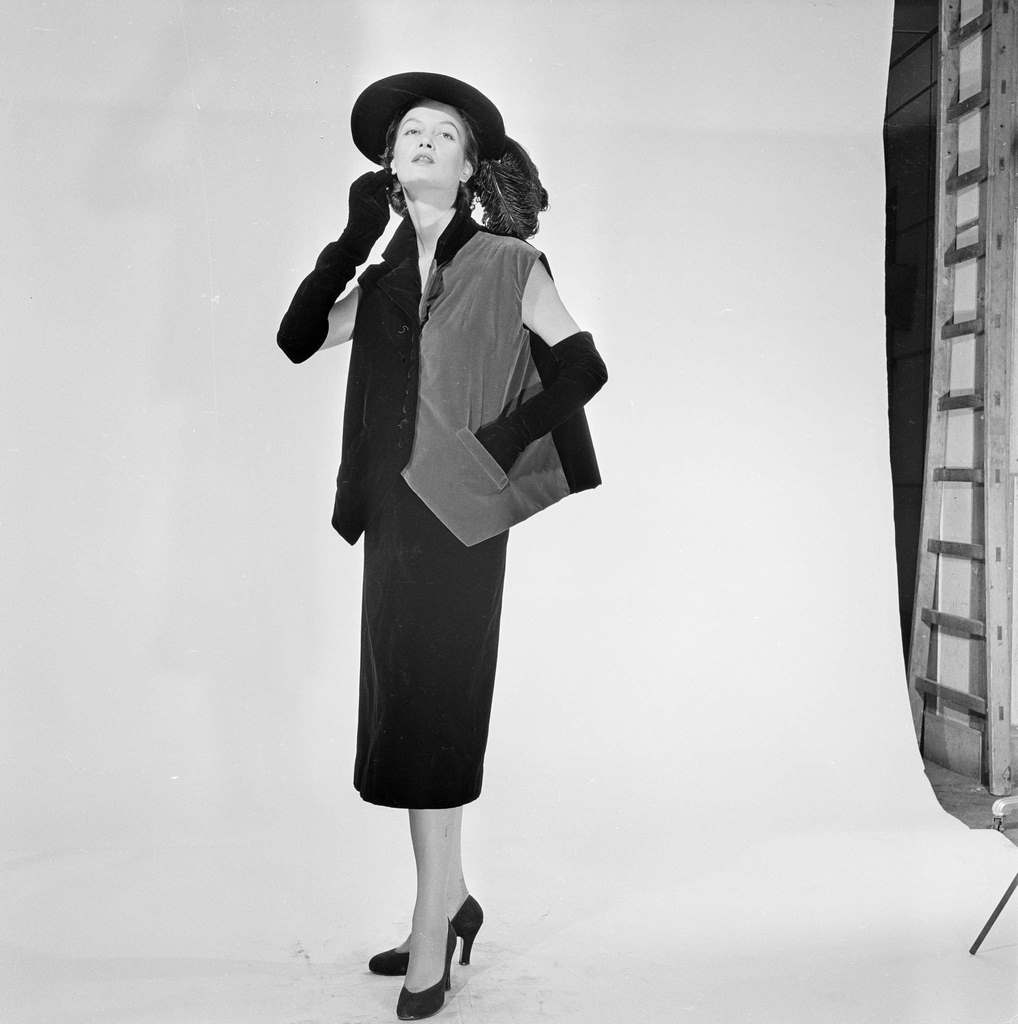
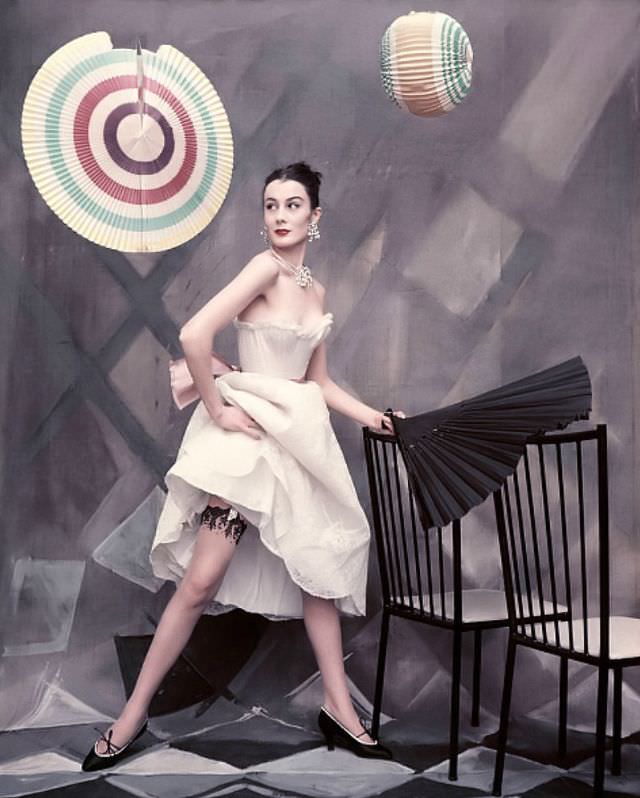
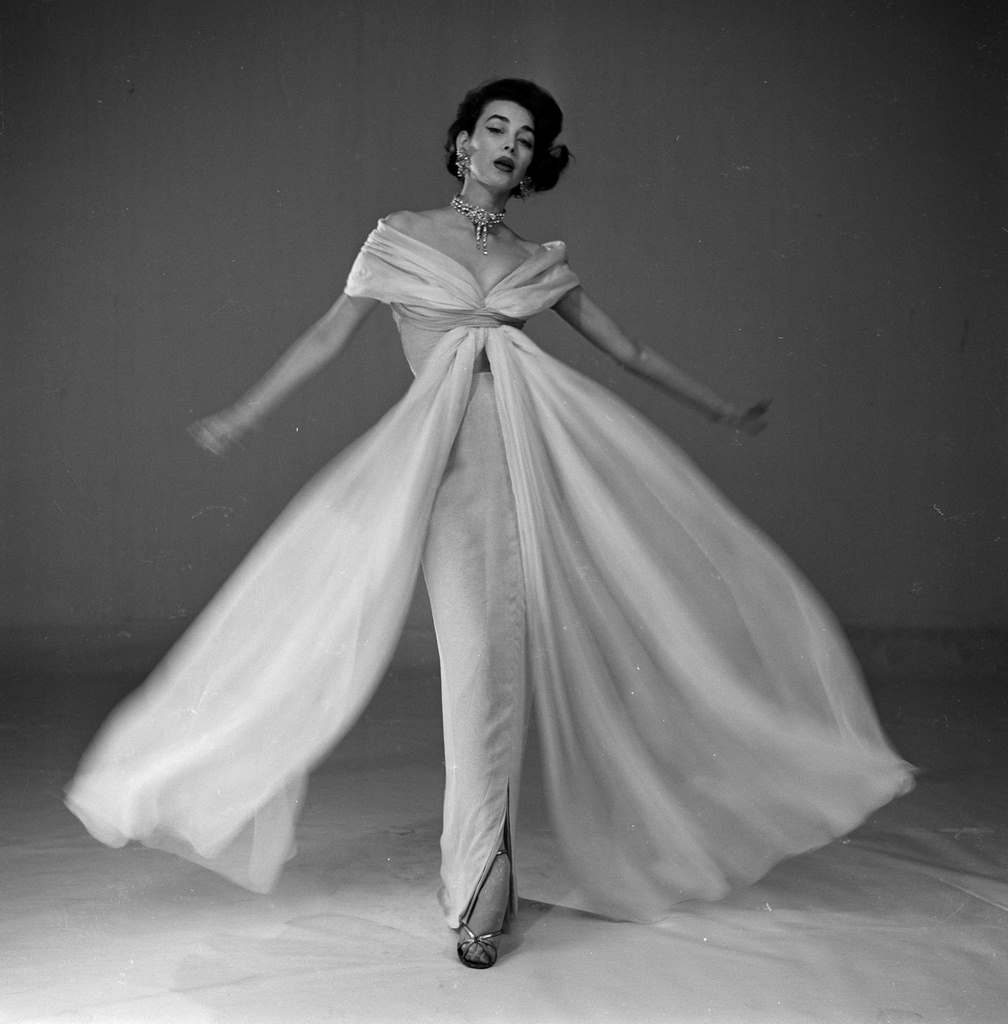
Fath’s design language was rich and theatrical. He drew inspiration from historic costumes, ballet, and the stage — influences that translated directly into his clothes. He built hourglass silhouettes with plunging necklines, sharp pocket details, and dramatic pleats. The bustle and corsetry appeared again and again as recurring design motifs. Skirts cascaded from tightly cinched waistlines, or exploded outward from beneath large enveloping coats and jackets. He worked with asymmetry, pleating, and bold volume for both daywear and evening collections.
Fashion Collection Of ‘couturiers Associes’ 1950Fashion Collection Of ‘couturiers Associes’ Autumn Winter 1950/1951Fashion Collection Of ‘couturiers Associes’ Autumn Winter 1950/1951Fashion Collection Of ‘couturiers Associes’ Autumn Winter, 1950A model posing, wearing clothes, a suit, from Carven, Jean Desses, Jacques Fath, Jeanne Paquin, 1950
Color was another defining element of Fath’s work. His palette ranged from soft tonal pairings to bold, loud prints in solid hues. He combined tartan and plain fabrics within a single garment without hesitation. Bold modern prints appeared alongside the controlled, structured lines of his tailored pieces. The result was clothing that felt simultaneously disciplined and expressive — always lively, never safe.
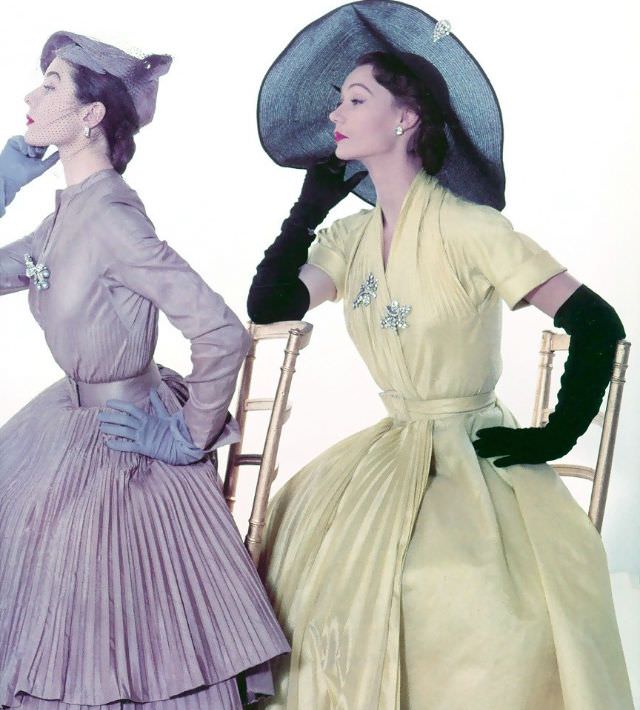
Jacques Fath in Paris, 1951Agnès in exquisite ball gown by Jacques Fath, 1951Bettina and Sophie in silk taffeta dresses by Jacques Fath, photo by John Rawlings, originally published in American Vogue, 1951
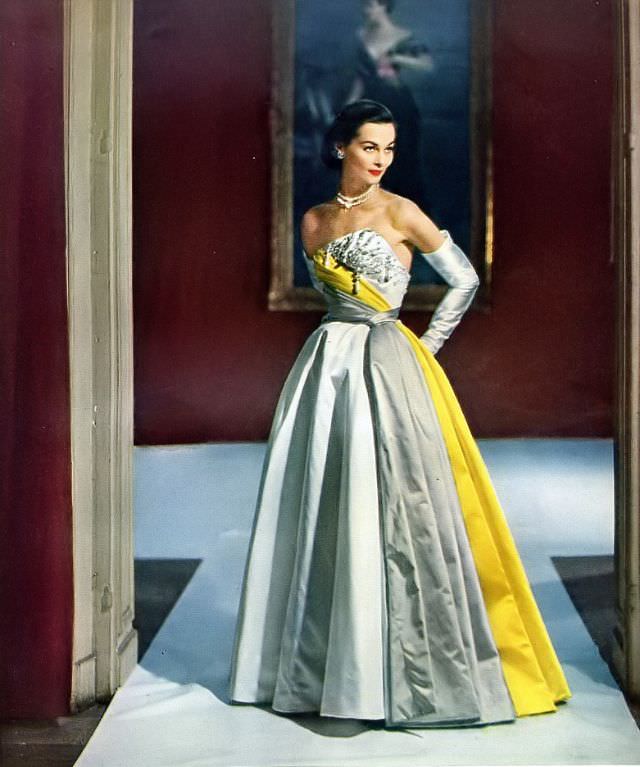
Eva Gerney in gorgeous ball gown by Jacques Fath, Vogue, May 1, 1951
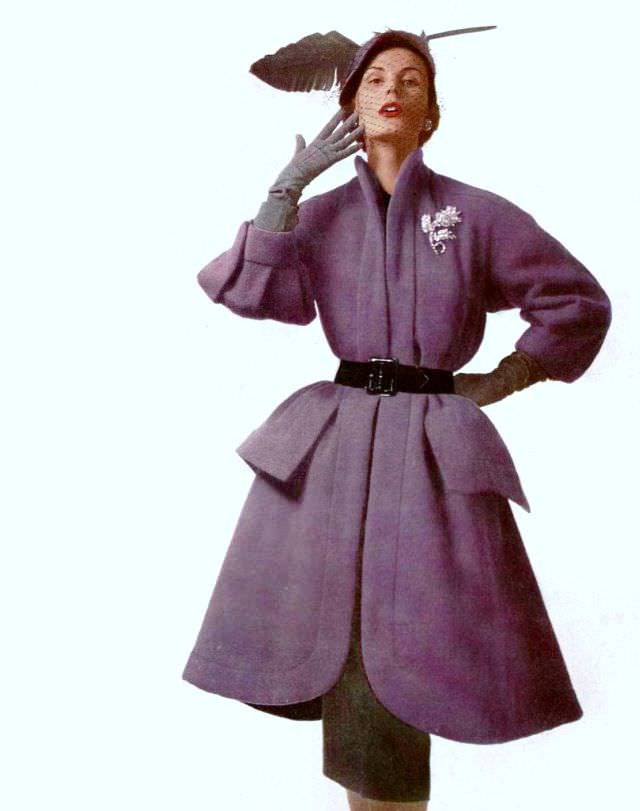
Jackie Stoloff in purple woolen coat, belted over gray skirt by Jacques Fath, photo by Philippe Pottier, 1951
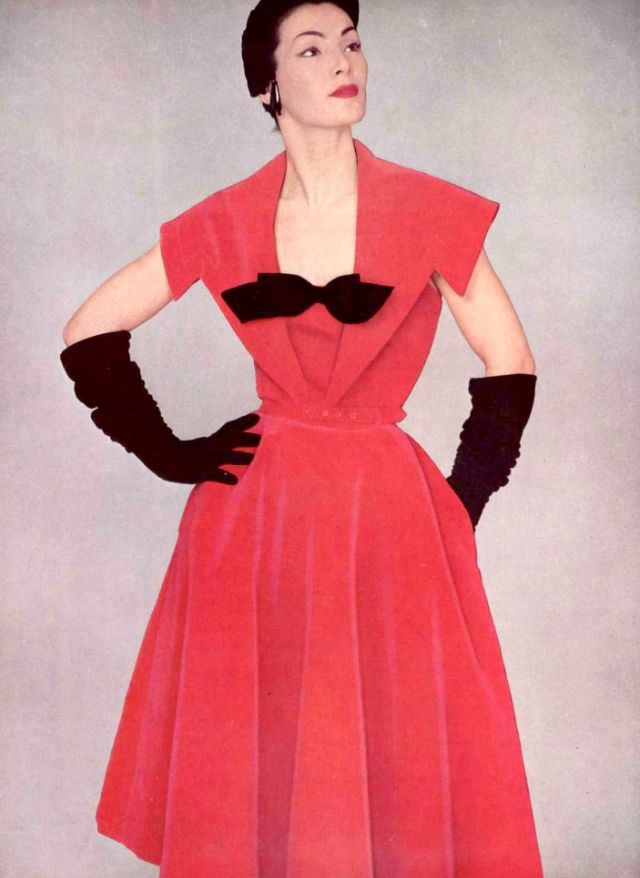
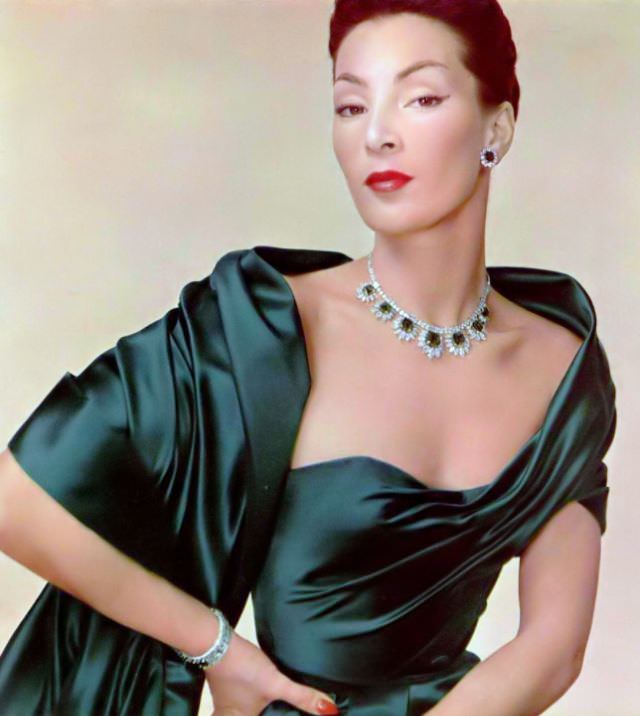
Lucky in pink geranium velvet cocktail dress adorned with black ribbon bow, by Jacques Fath, 1951Lucky is wearing emerald green satin evening gown by Jacques Fath to compliment magnificent emerald and diamond parure by Cartier, 1951
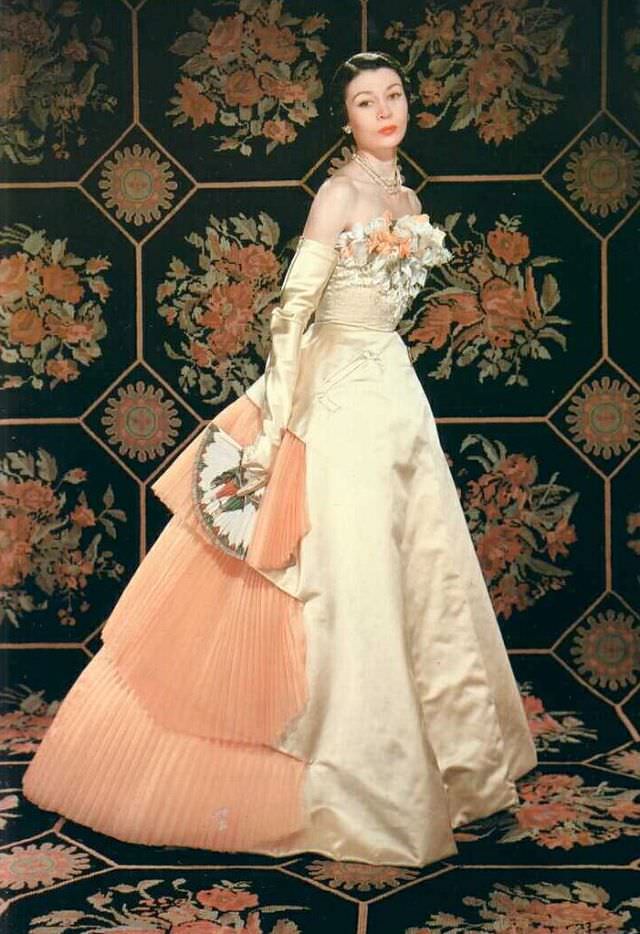
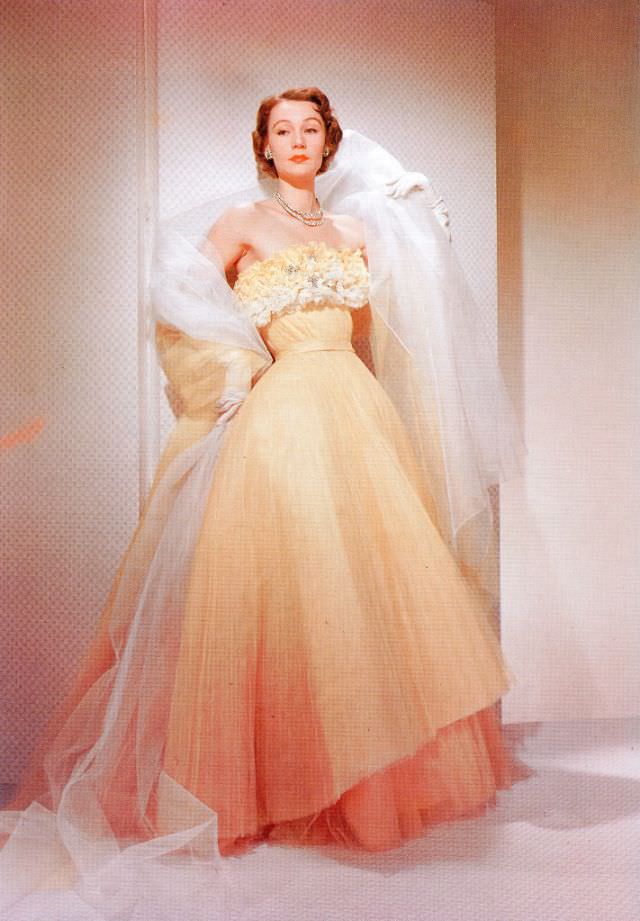
Sophie Malgat in Fath’s dégradé orange pleated tulle evening gown with floral bodice called “Sunbeam”, April 1951
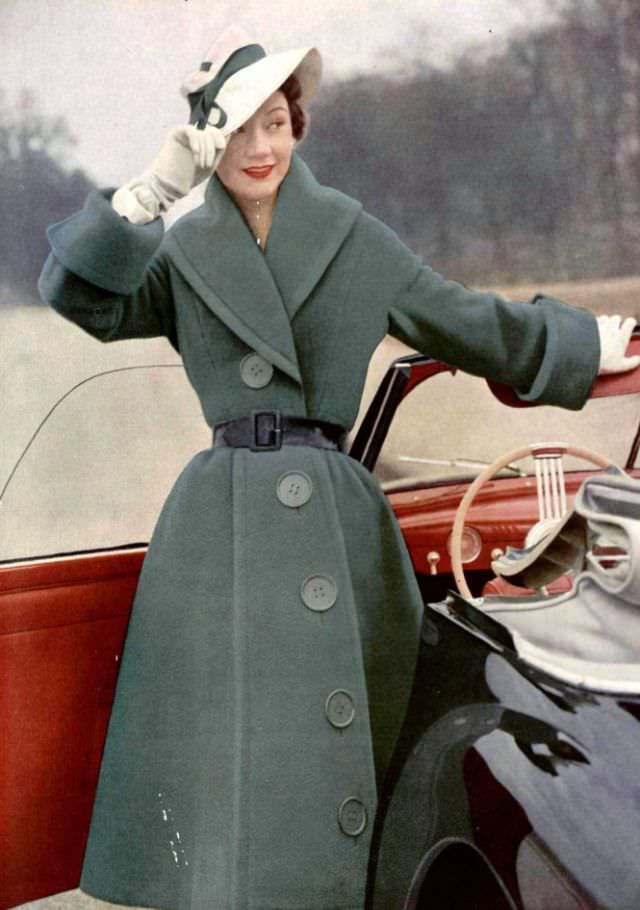
Sophie Malgat in green wool coat with giant buttons lined diagonally, waist is cinched by patent leather belt, worn with white piqué hat, 1951
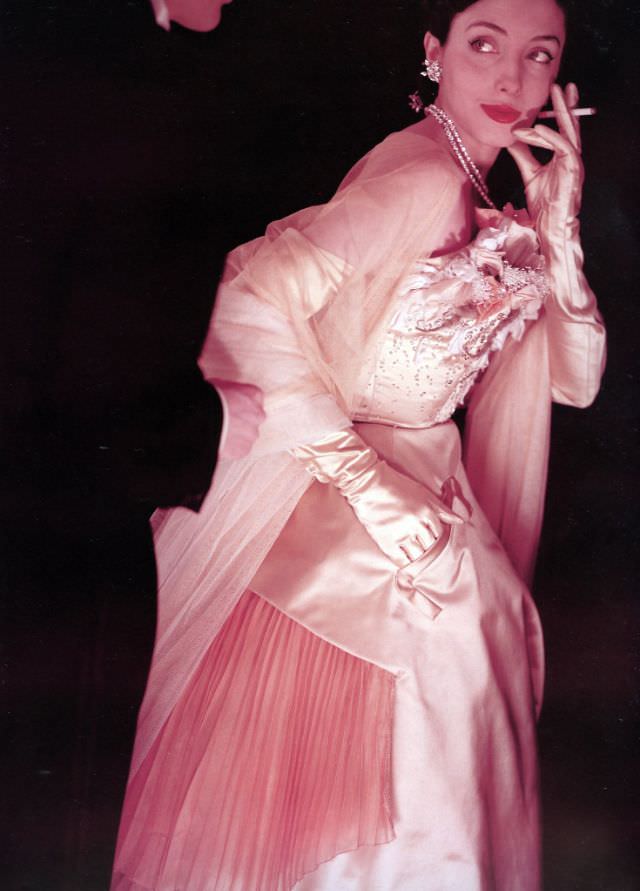
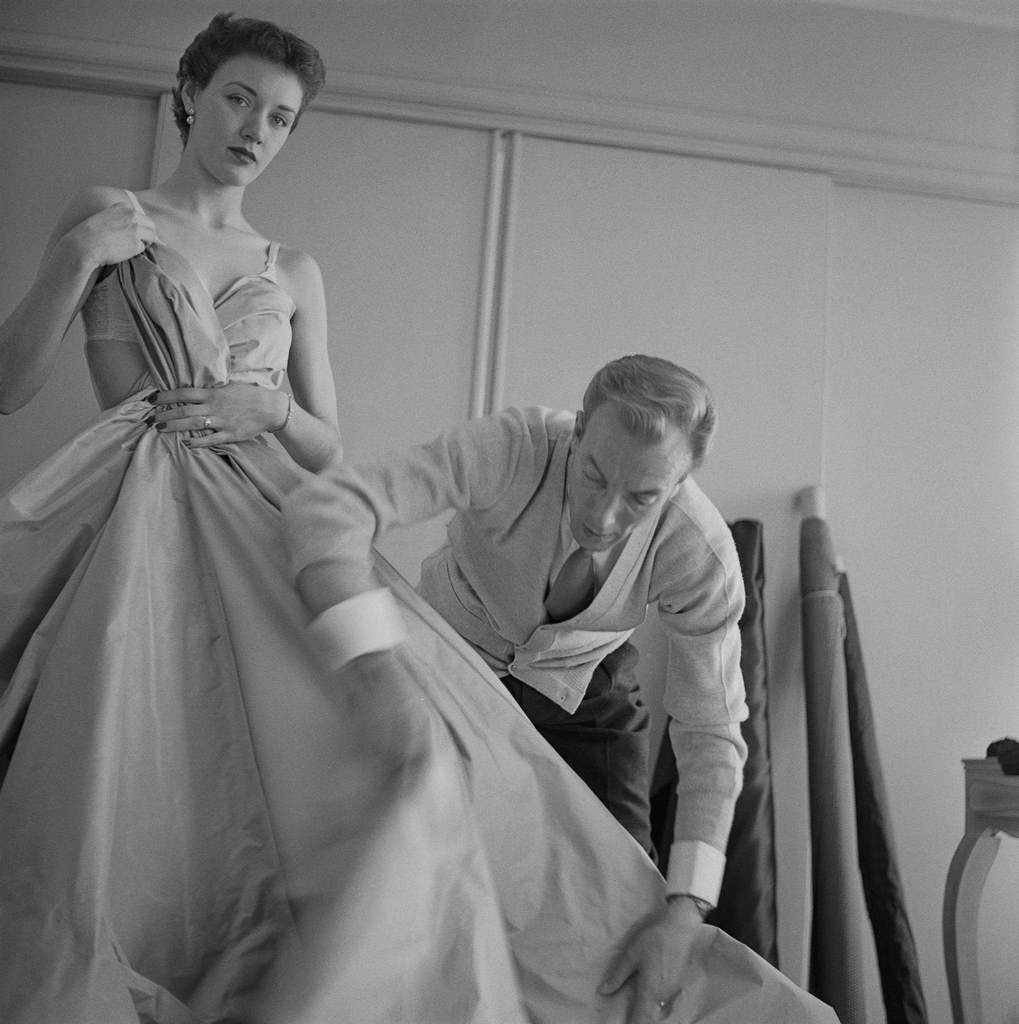
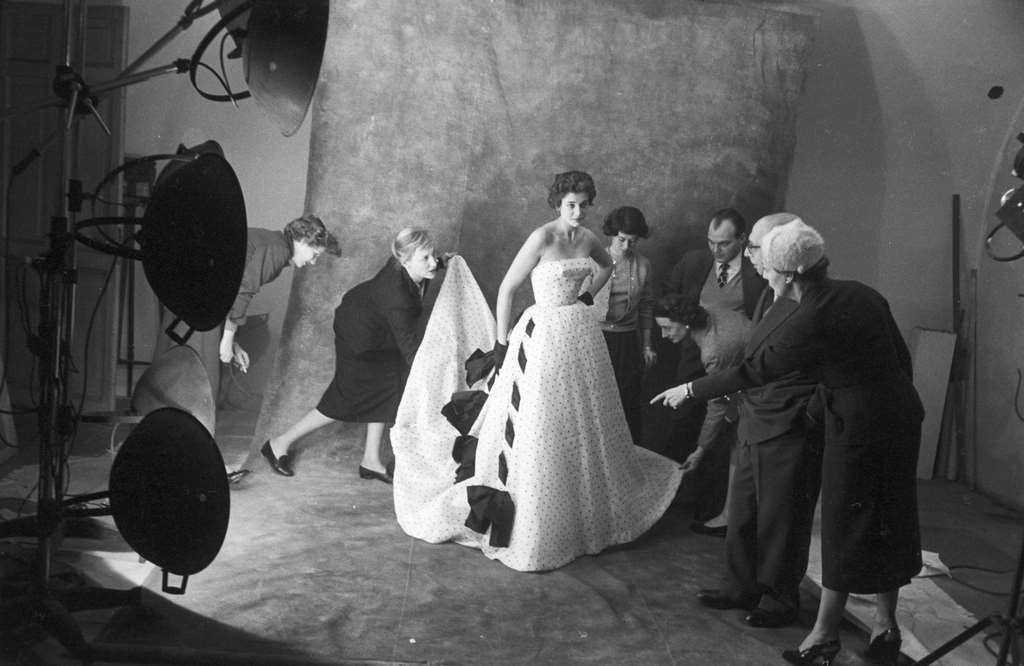
Unpublished photo of model Julia in Jacques Fath evening gown for British Vogue by Horst P. Horst, 1951Fashion Collection of ‘couturiers Associes’ Spring 1951Fashion Collection Of ‘couturiers Associes’ Spring 1951Fashion Collection Of ‘couturiers Associes’ Spring 1951.Afashion model wearing a clothing created by Jacques Fath.Fashion Collection Of ‘couturiers Associes’ Spring, 1951Famous haute couture designer, Jacques Fath arranges a model’s dressFashion Collection Of ‘couturiers Associes’ 1951
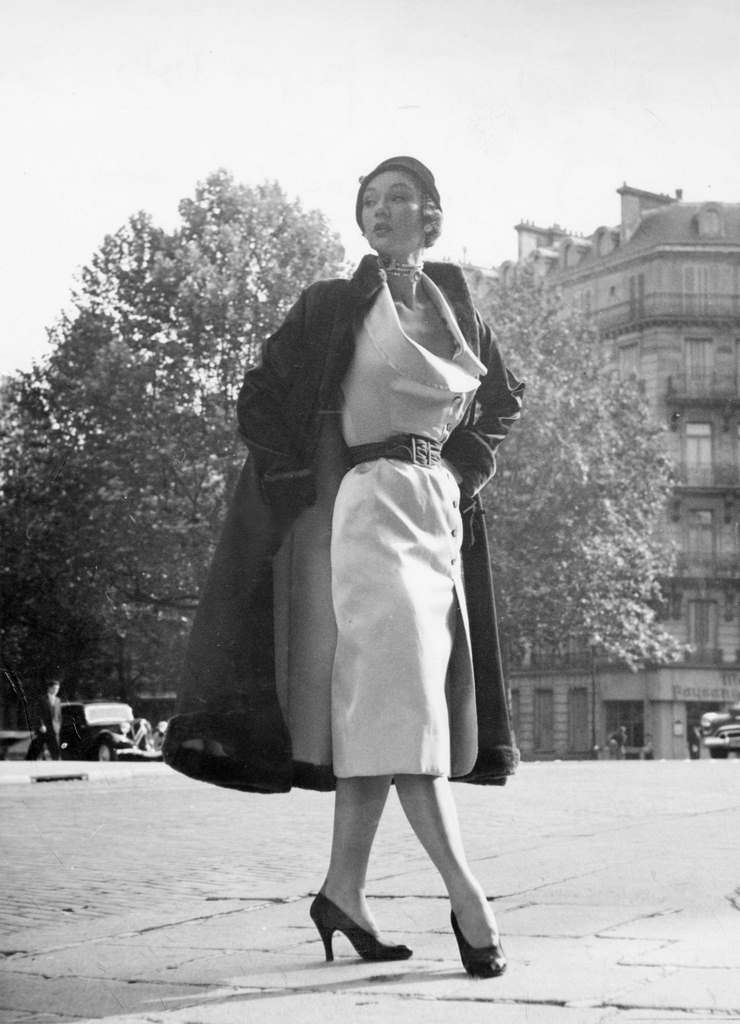
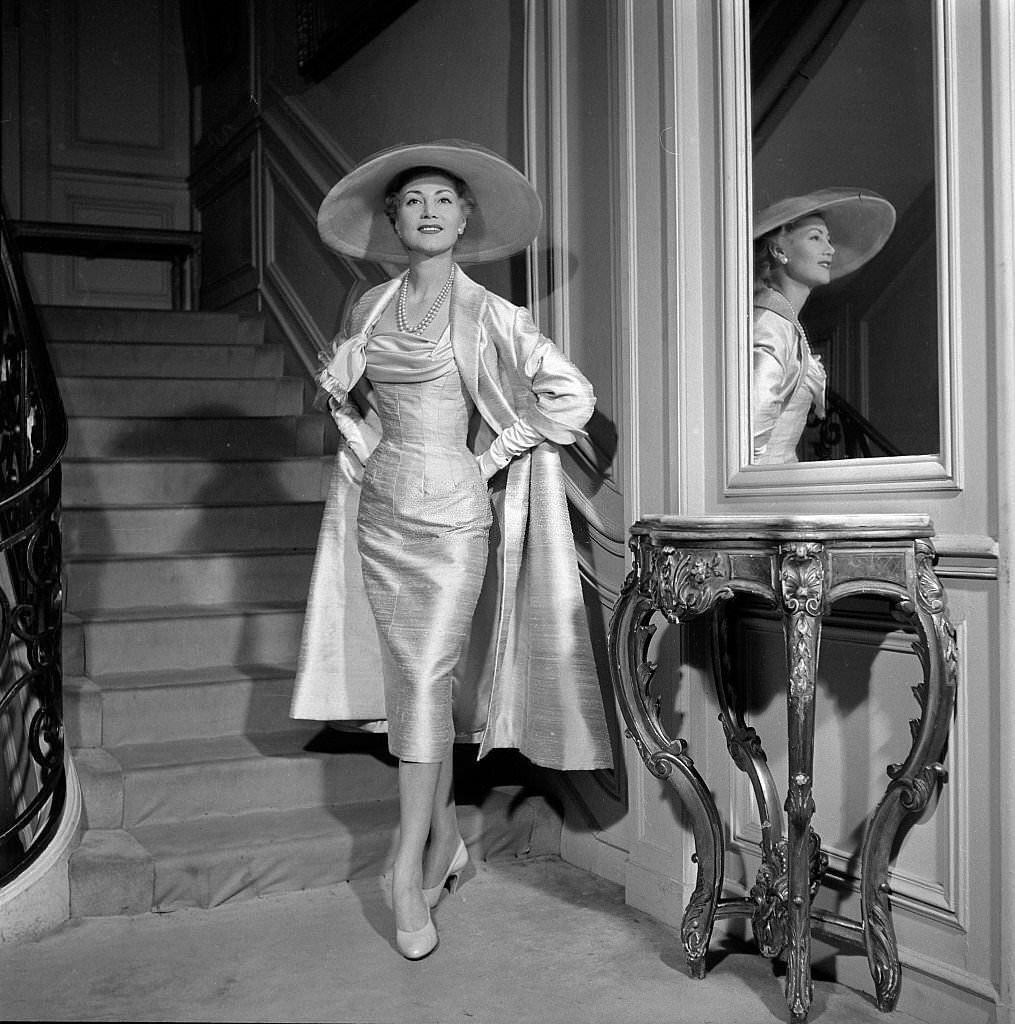
Satin dress and black satin coat with nutria fur, Model: Jacques Fath, Paris, 1951
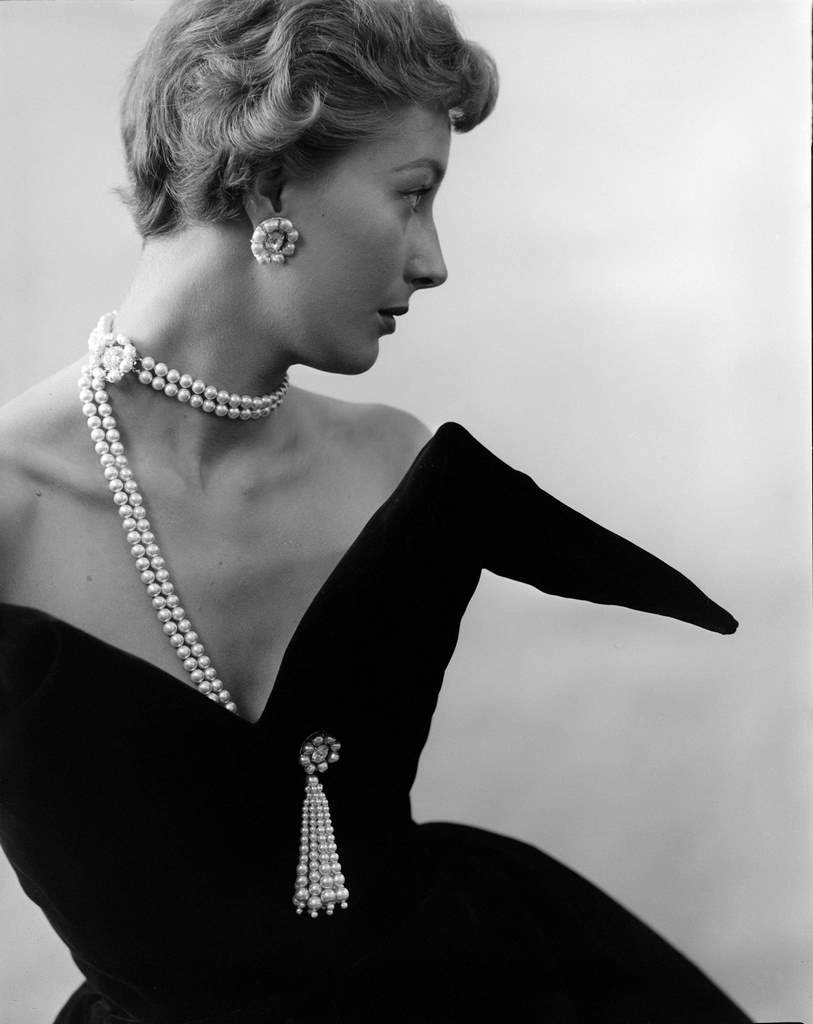
A model poses in a pearl necklace (by Jacques Fath), August 9, 1949.
A model posing, wearing clothes, a dress, from Carven, Jean Desses, Jacques Fath, Jeanne Paquin, 1951Fashion Collection Of ‘couturiers Associes’ Autumn Winter 1950/1951.Fashion Collection Of ‘couturiers Associes’ Autumn Winter 1950/1951A model posing, wearing clothes, a suit, from Carven, Jean Desses, Jacques Fath, Jeanne Paquin, or Robert Piguet, in the studio, 1951
In 1952 and 1953, Fath’s output continued at an impressive pace. His collections appeared regularly in Vogue and were photographed by some of the most important photographers of the era, including Horst P. Horst, Erwin Blumenfeld, and Irving Penn. Zsa Zsa Gabor wore his designs for the 1953 film Public Enemy Number 1, adding another layer of Hollywood visibility to his already strong American profile.
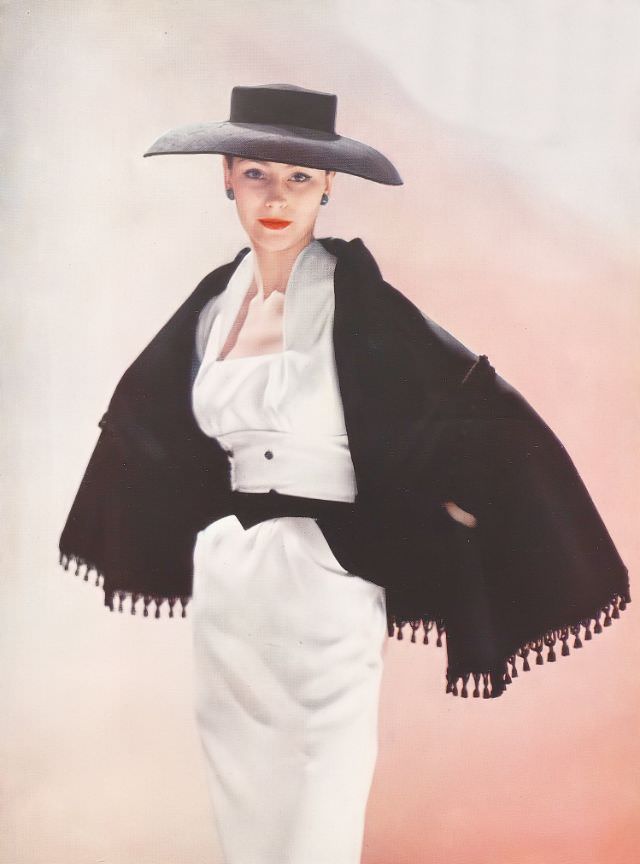
Anne Gunning is wearing a black grosgrain shawl in two layers with slits for the hands over a square-necked white grosgrain dress by Susan Small after Fath, 1952
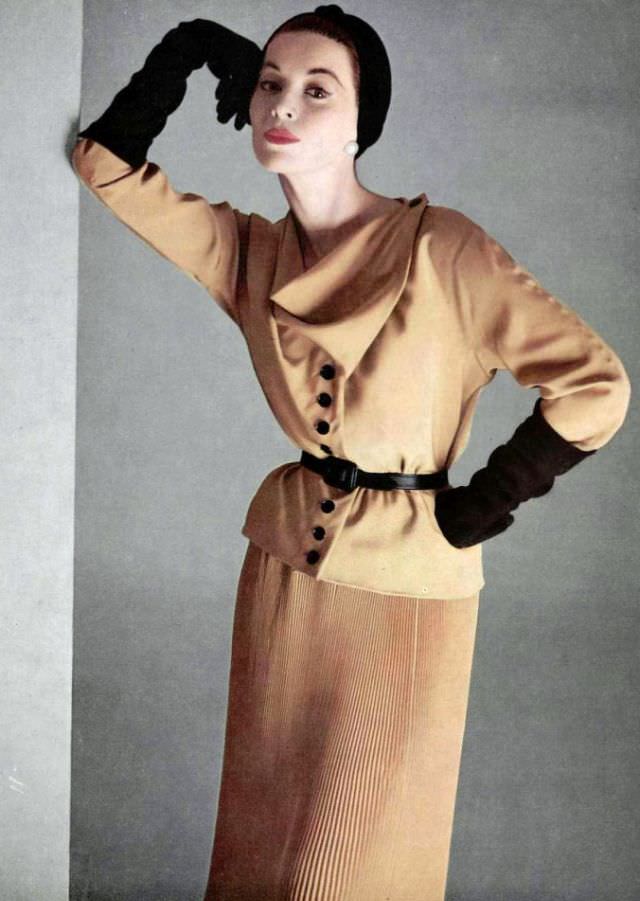
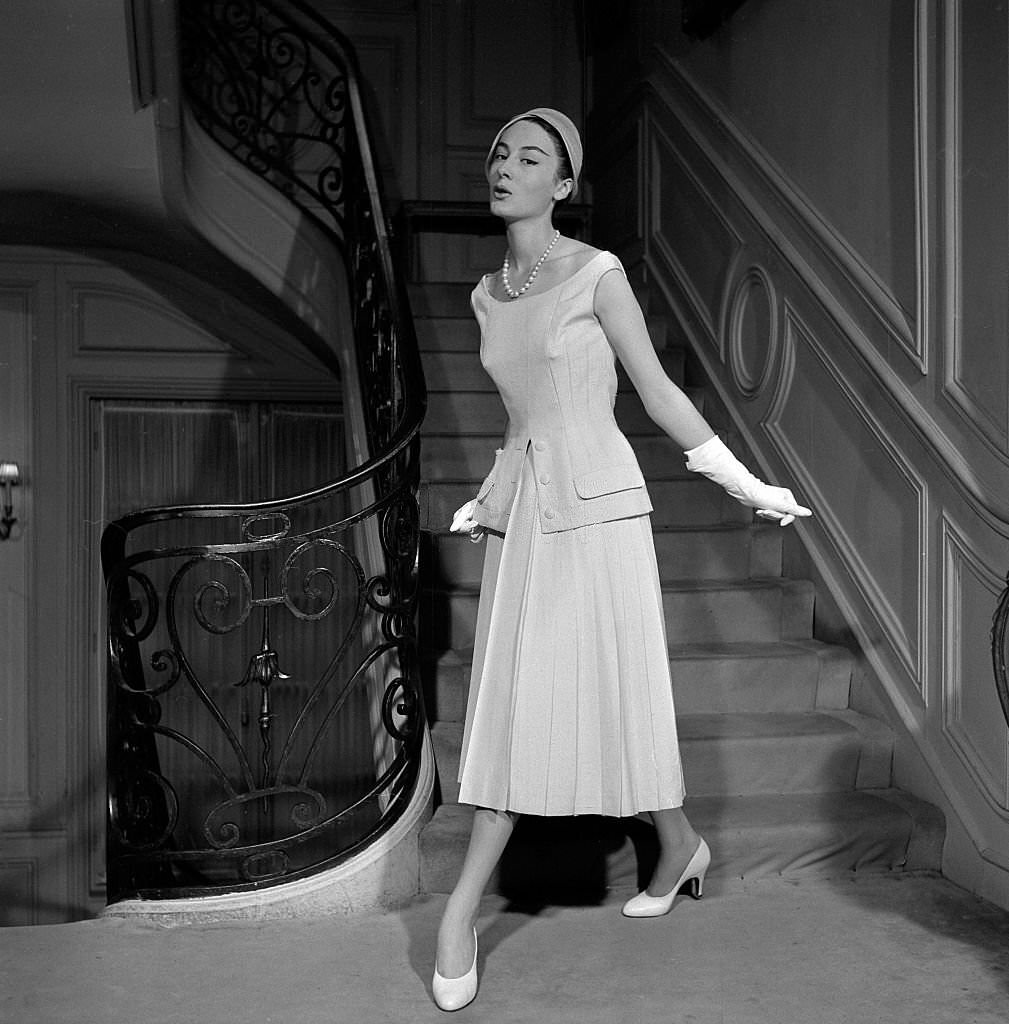
Joan Whelan in two-piece silk crepe dress with finely pleated skirt by Jacques Fath,photo by Pottier, 1952
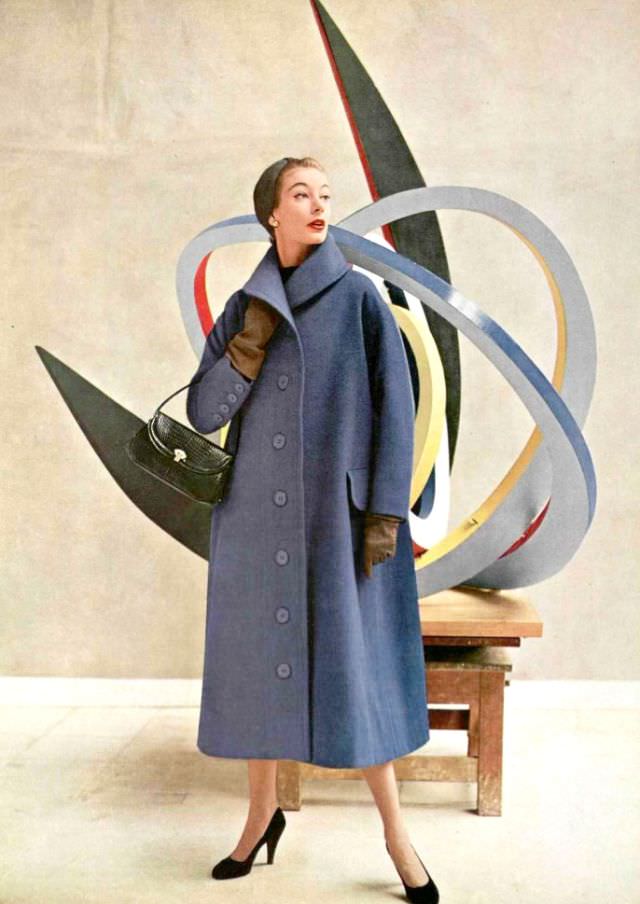
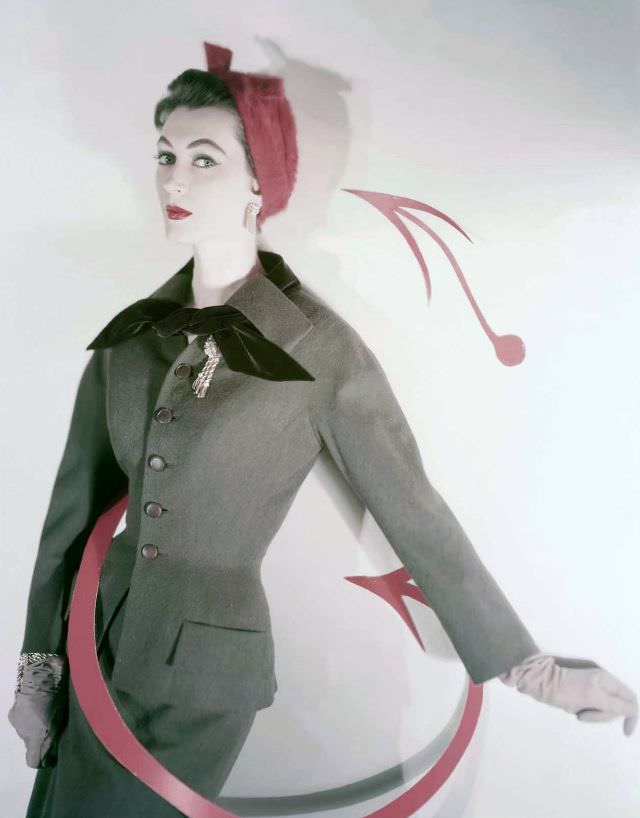
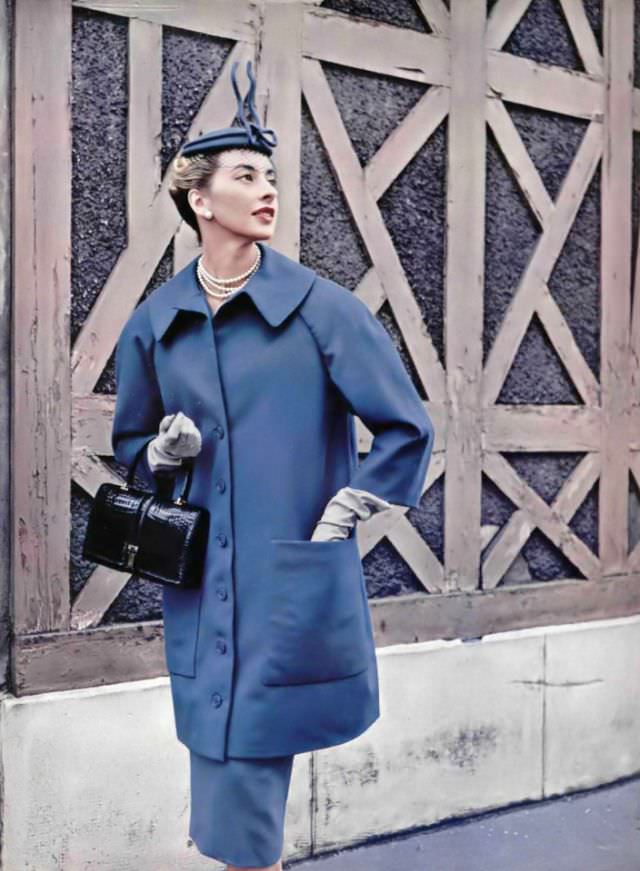
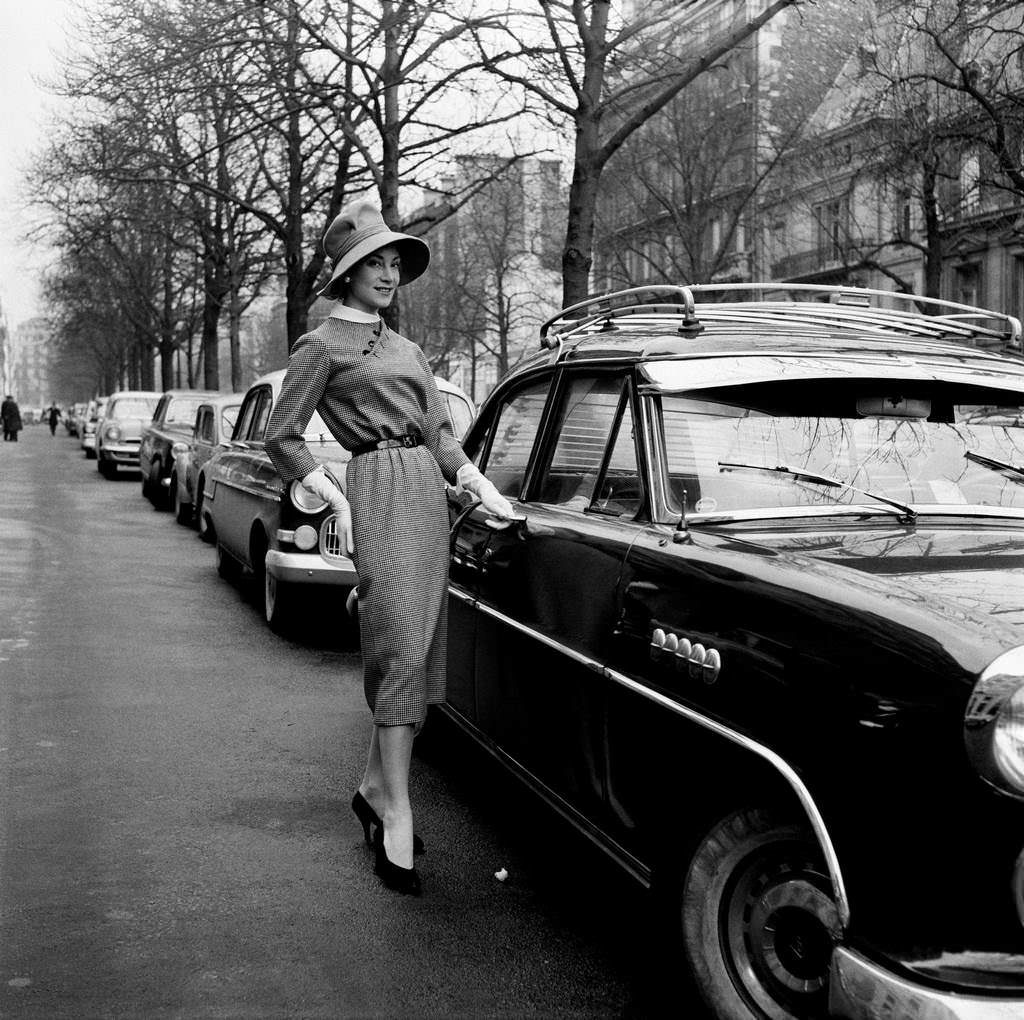
Model in simple but elegant wool coat and grey jersey turban by Jacques Fath, croc handbag by P. & R.Dubost, 1952
Sophie Malgat is wearing satin gown by Jacques Fath, 1952
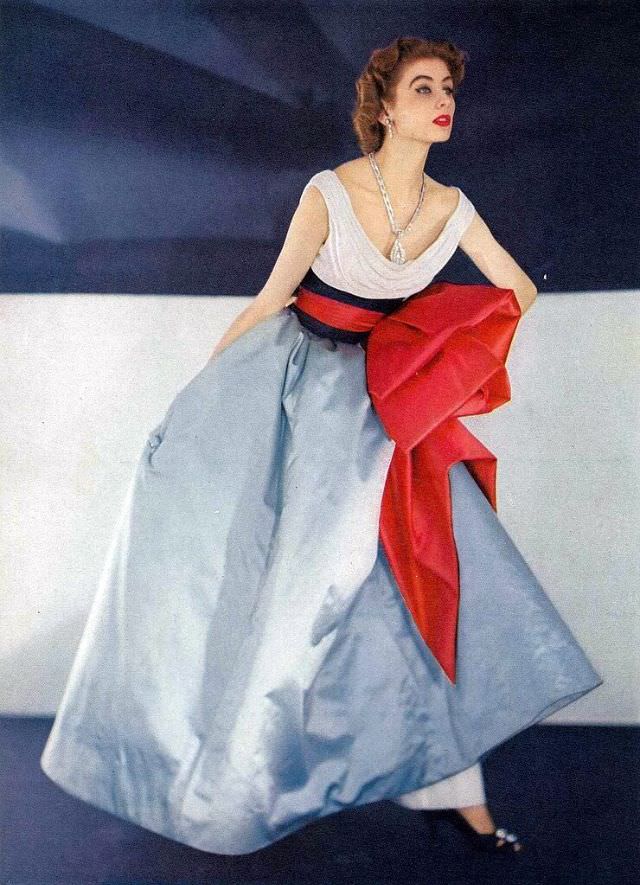
Suzy Parker in gown by Jacques Fath, photo by Horst, Vogue, April 1952
Paule, a model discovered by Jacques Fath, presents spring hats. Hat ‘La belote’ by Svend, 1953
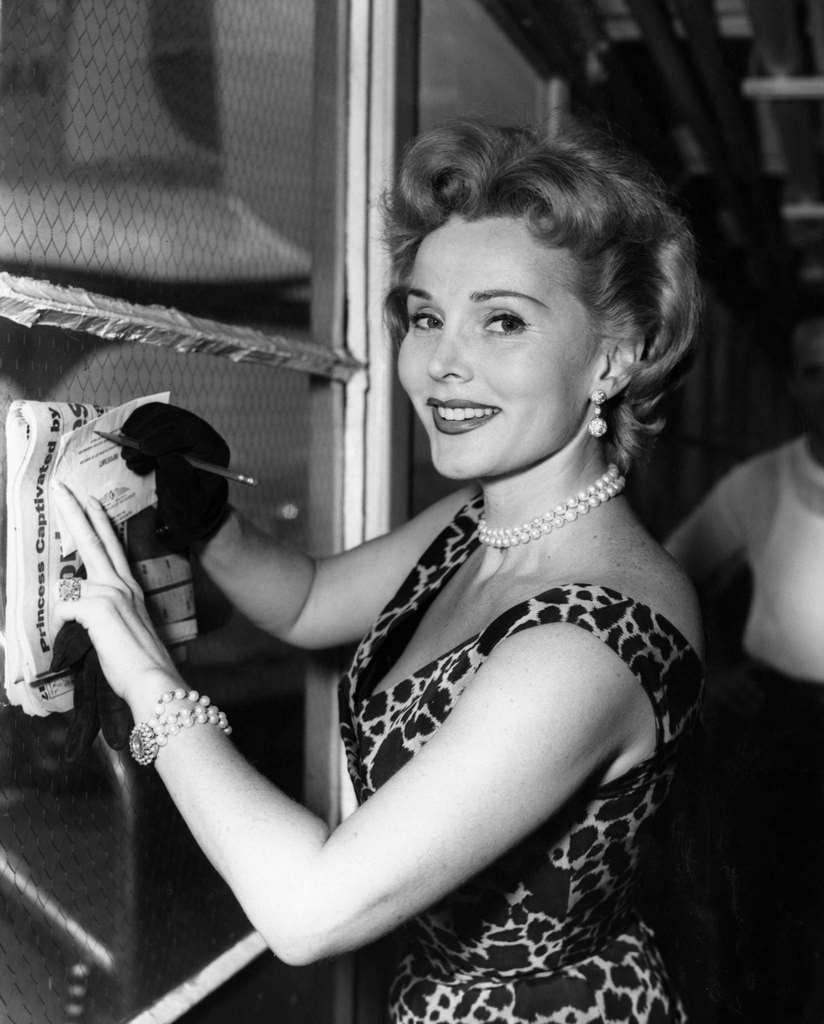
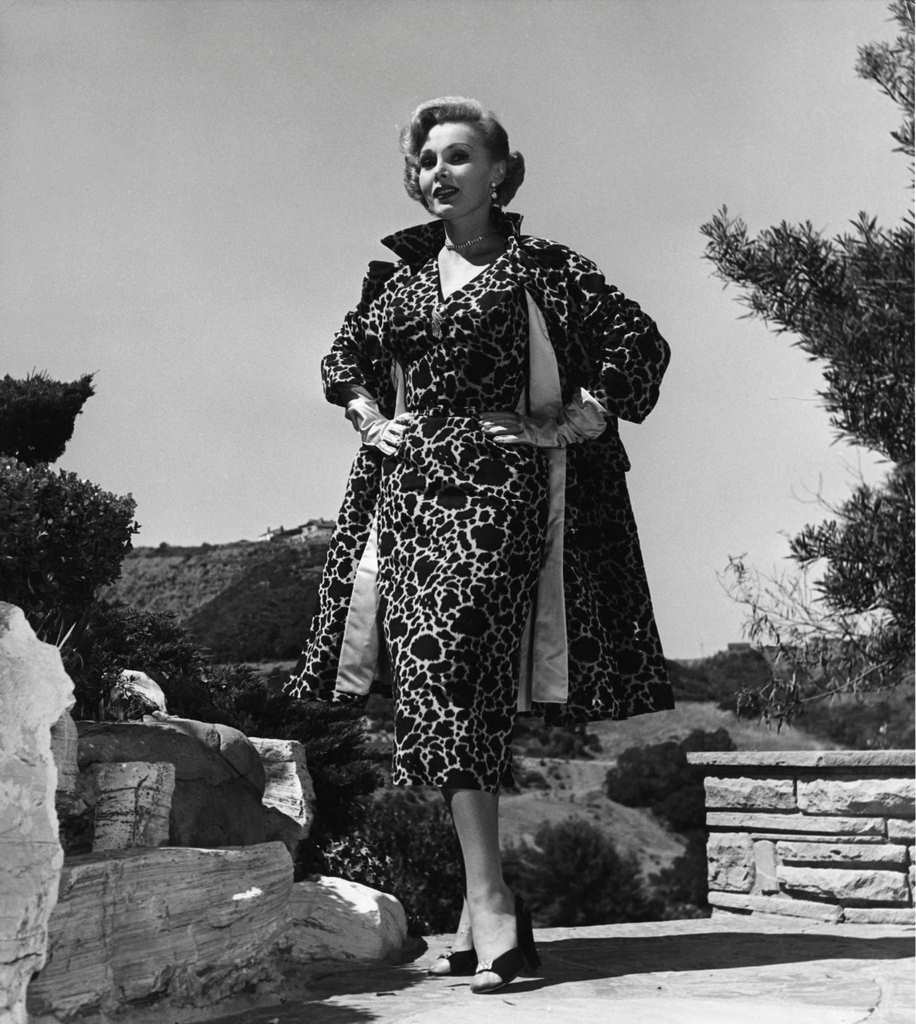
Fashion Spring-summer, 1953Caps of Spring, 1953Zsa Zsa Gabor wearing a Jacques Fath outfit n grey and black silk, designed for the film ‘Public Enemy Number 1’, 1953Zsa Zsa Gabor poses in a Jacques Fath outfit for the film ‘Public Enemy Number 1’, 1953. The outfit is in grey and black silk with mauve lining and gloves.Anne Gunning in gown by Jacques Fath, photo by Mark Shaw, 1953
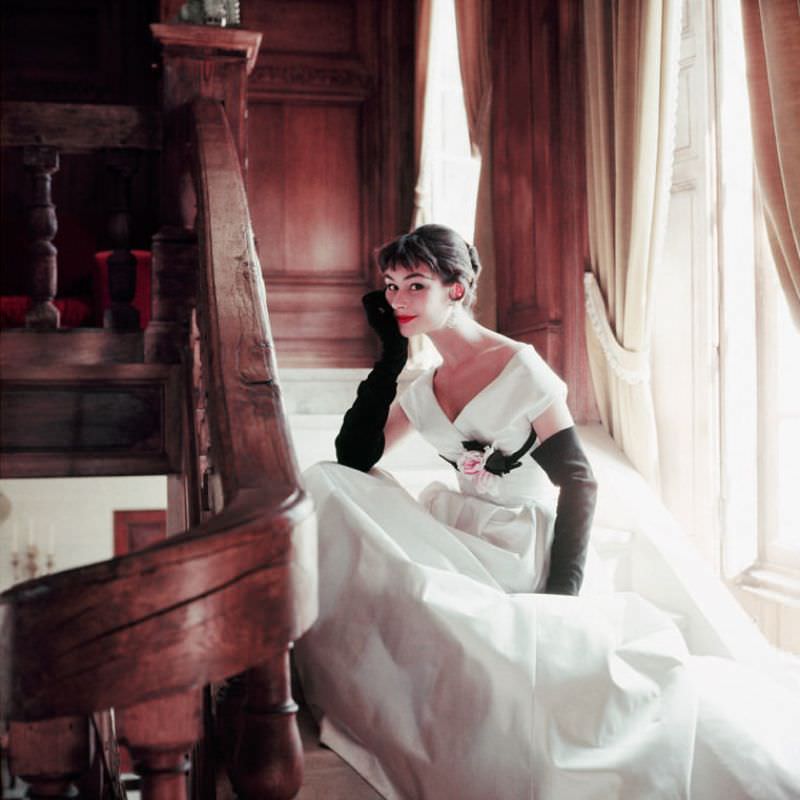
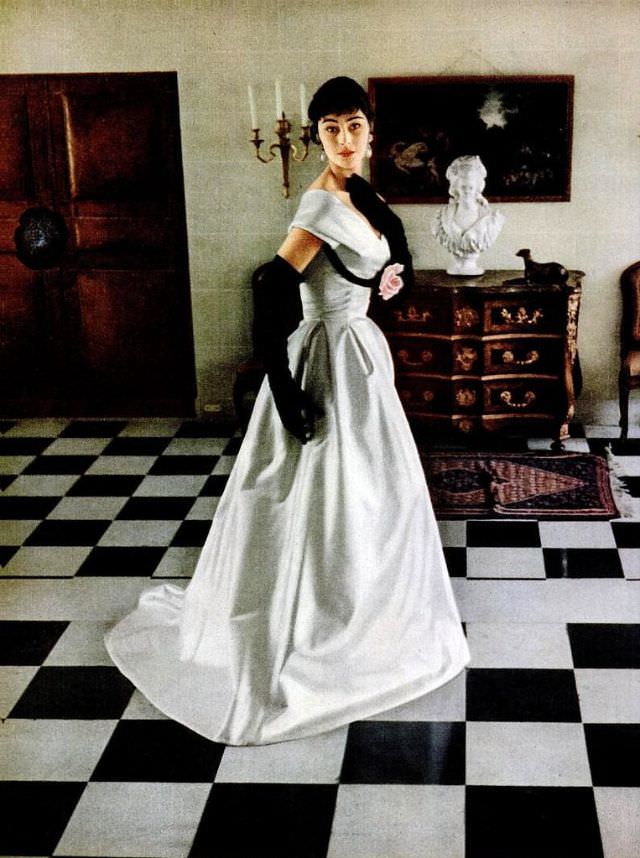
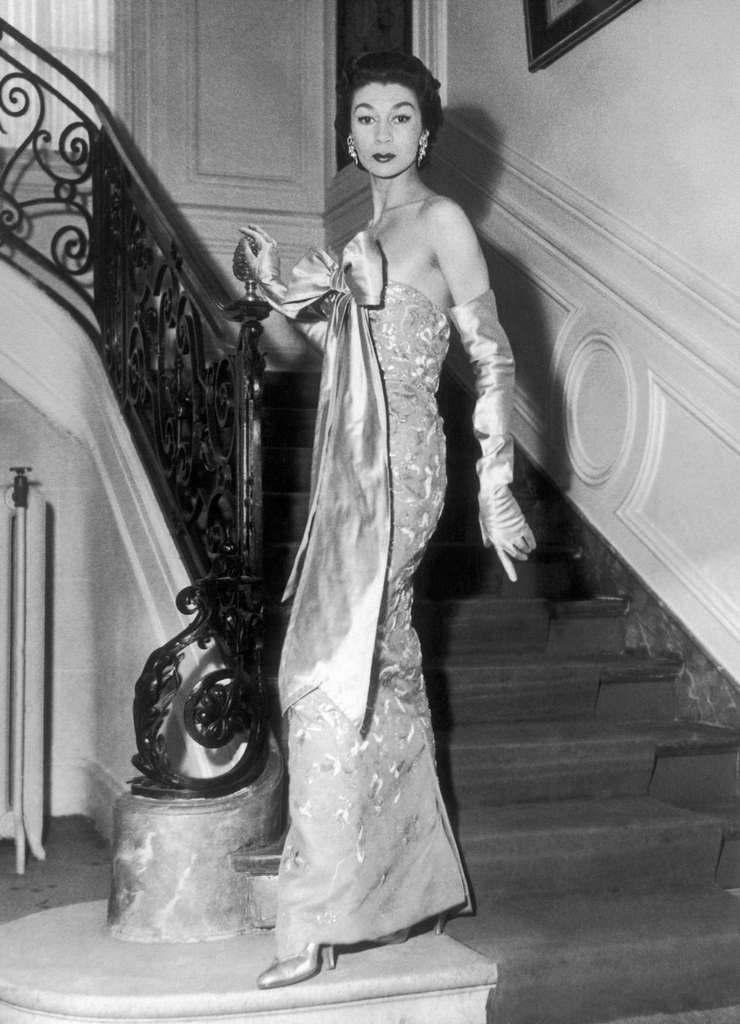
Anne Gunning in white satin gown with velvet ribbon outlining the bosom by Jacques Fath, photographed in the foyer at Fath’s chateau at Corbeville by Mark Shaw, 1953
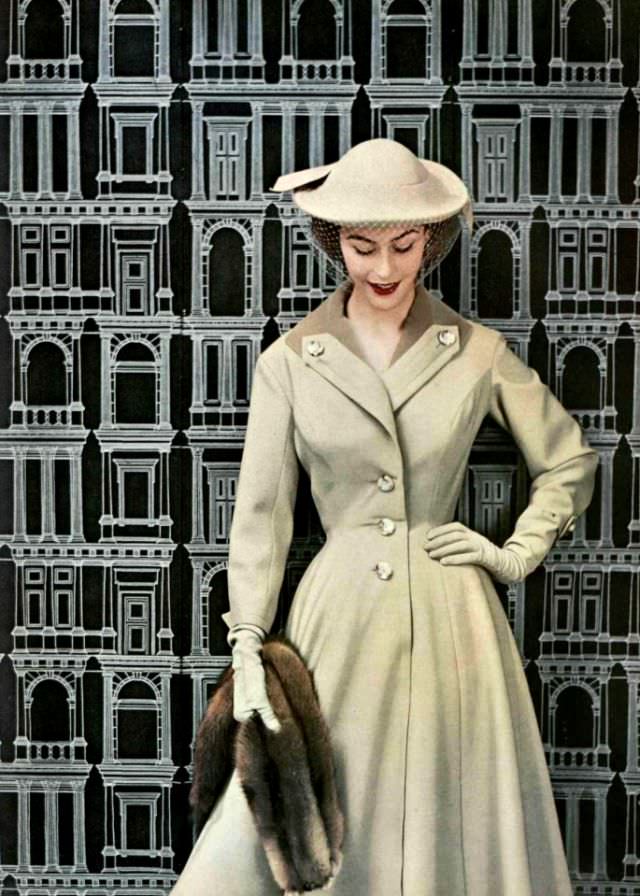
Anne Gunning in woolen redingote with velvet collar by Jacques Fath, 1953
Dovima wearing a taupe wool and velvet suit by Ben Zuckerman with a red hat by Jacques Fath, photo by Horst P. Horst used for cover of Vogue, 1953
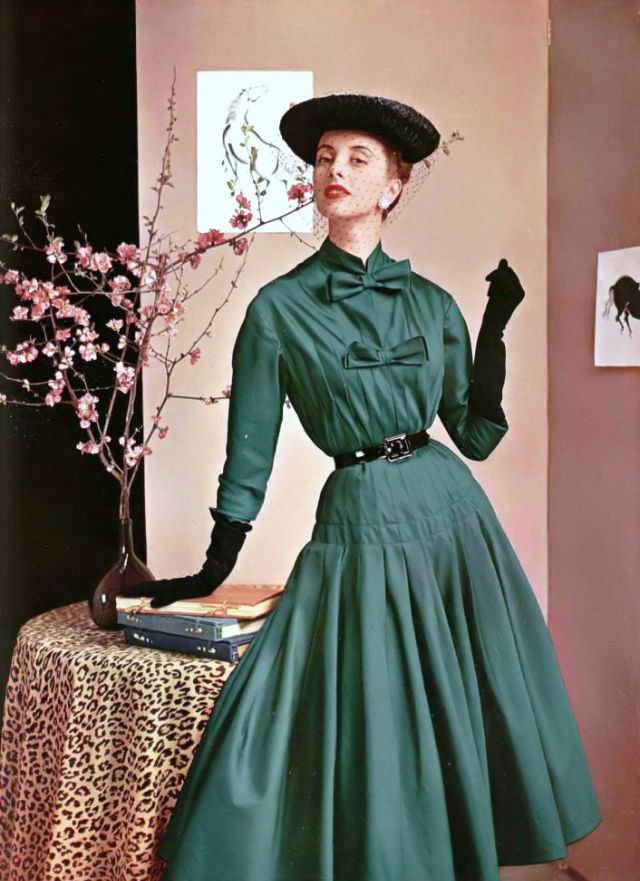
Marie-Thérèse in silk gauze dress, the bodice, decorated with two bows, falls into soft pleats in the skirt, black patent leather belt cinches the waist, by Jacques Fath, 1953
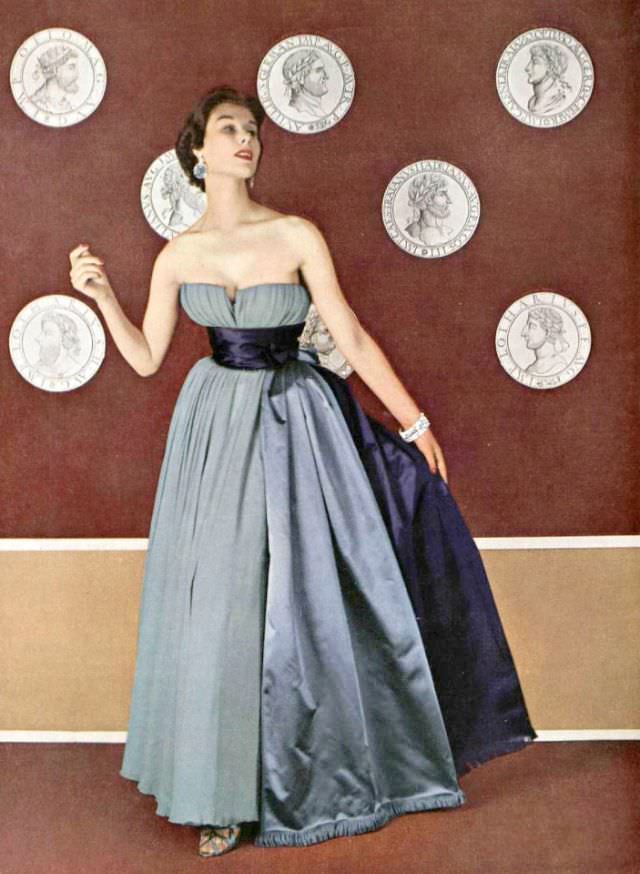
Myrtle Crawford in pale mauve chiffon evening gown, wide satin bands in two tones of purple extend to the floor, by Jacques Fath, 1953
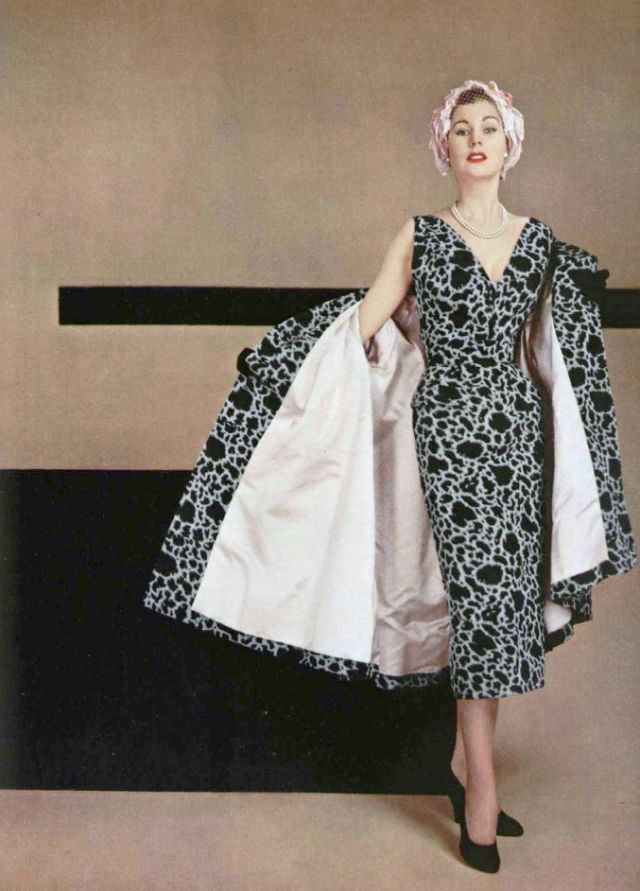
Stella in black and white silk ottoman cocktail sheath with matching coat lined in pink satin by Jacques Fath, 1953
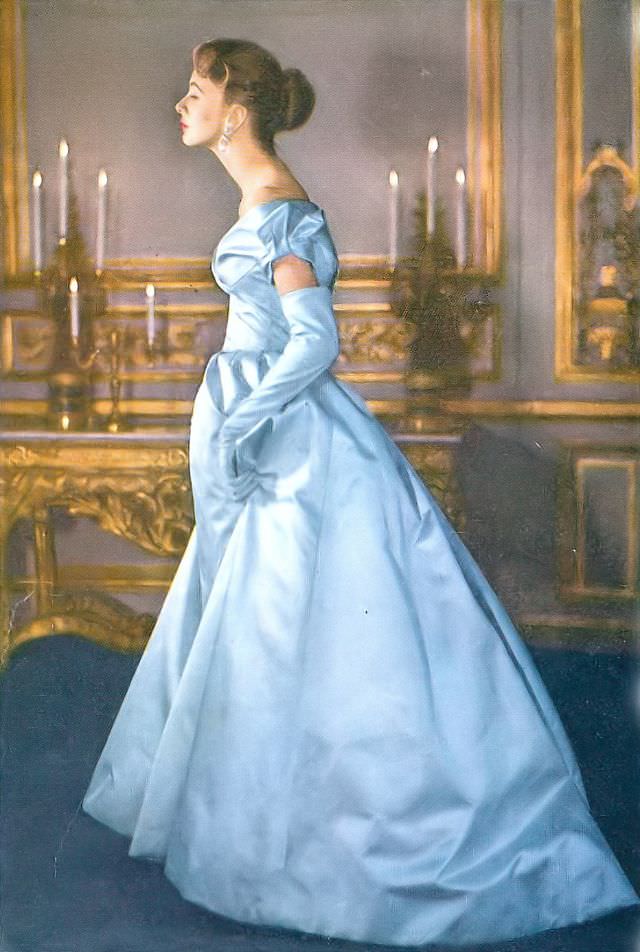
Suzy Parker in ball gown of blue satin with intricately seamed bodice, back-swung and bow-knot sleeves by Jacques Fath, Vogue, Novermber 1, 1953
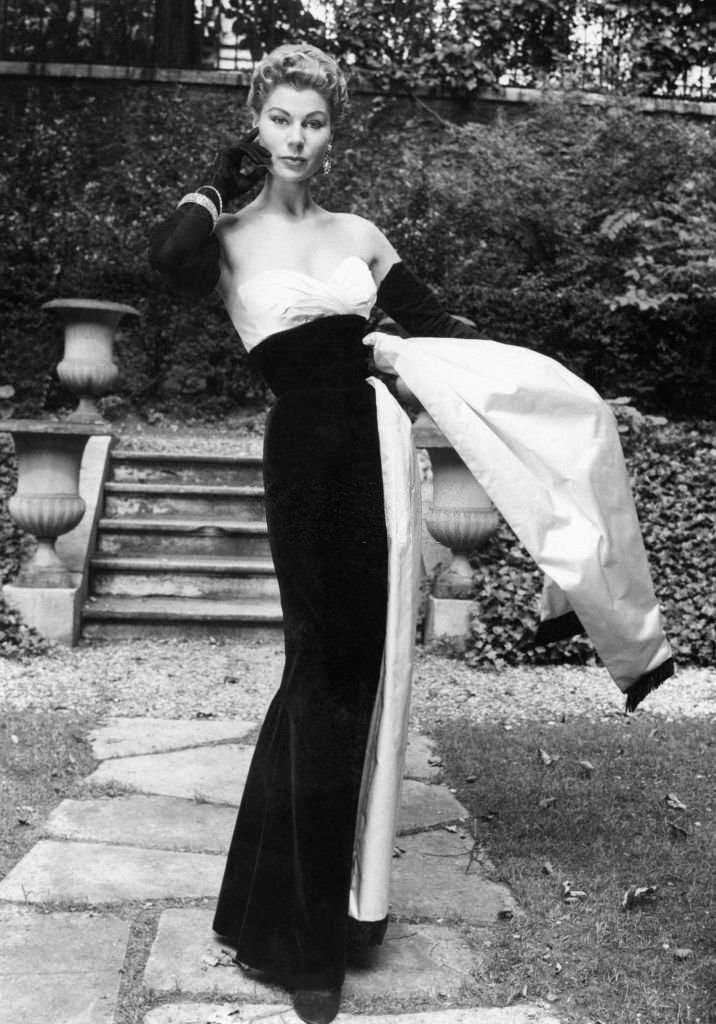
Evening dress in black velvet, white satin belt, for winter 1953-1954. Created by Jacques Fath, Paris on August 21, 1953.
Jacques Fath Fashion Show Paris, 1953
A model is presenting an evening dress called San Regis for Jacques Fath’s Spring-Summer collection.
Model presenting hats of spring by Jacques Fath, 1953
In 1953, Fath launched a ready-to-wear collection, making him one of the first couturiers to move in that direction. He called it the Université collection, and it was directly inspired by the fast, efficient mass-production methods he had observed during his visits to the United States. The line brought his aesthetic to a much broader audience without sacrificing the sharp tailoring and dramatic flair his name was built on.
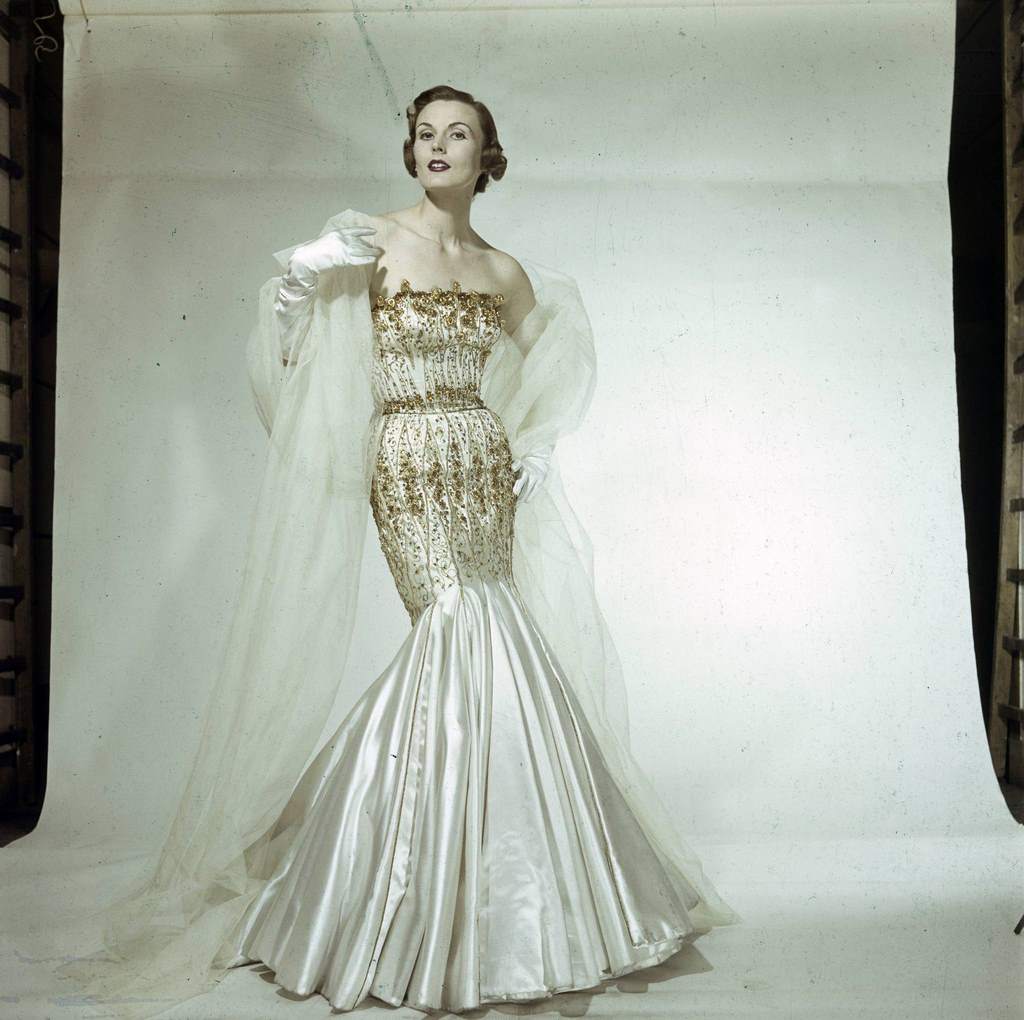
A model presenting for Jacques Fath, a gold-embroidered satin sheath dress, which flares out in godets at the bottom.
An Evening Dress by Jacques Fath.
Woman Modeling Ensemble by Jacques Fath
Woman Modeling Ensemble by Jacques Fath
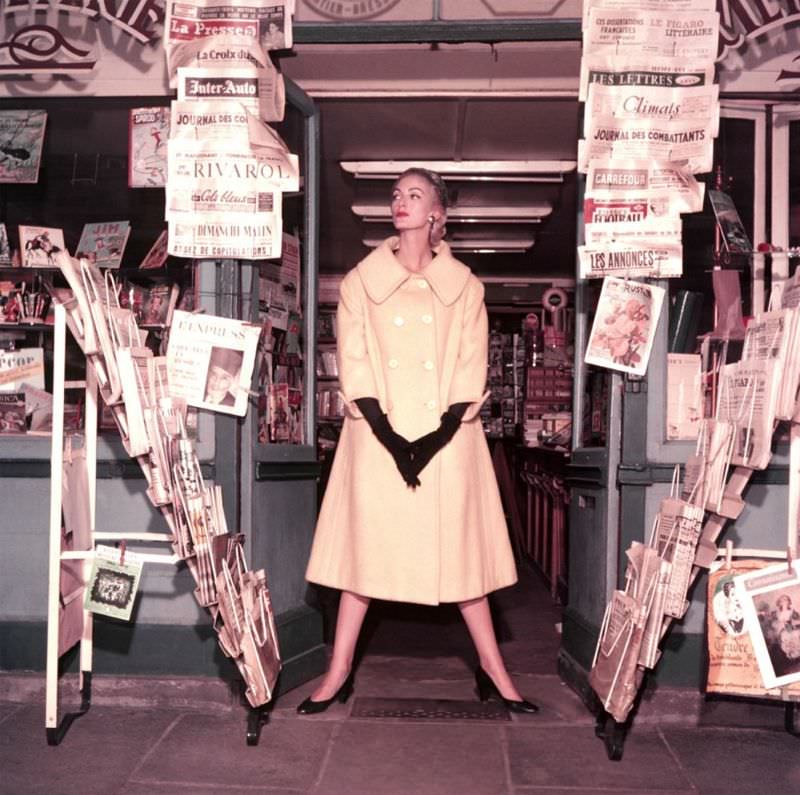
The 1954 collections were among his most photographed and widely published. Models appeared in overcoats, satin gowns, brocade jackets trimmed in mink, silk floral afternoon dresses, and sharp woolen coats with bold pockets. Each piece carried the same unmistakable Fath energy — structured where it needed to be, theatrical where it could afford to be.
Ann Farrar in sumptuous brocade dress and jacket trimmed in mink by Jacques Fath, 1954
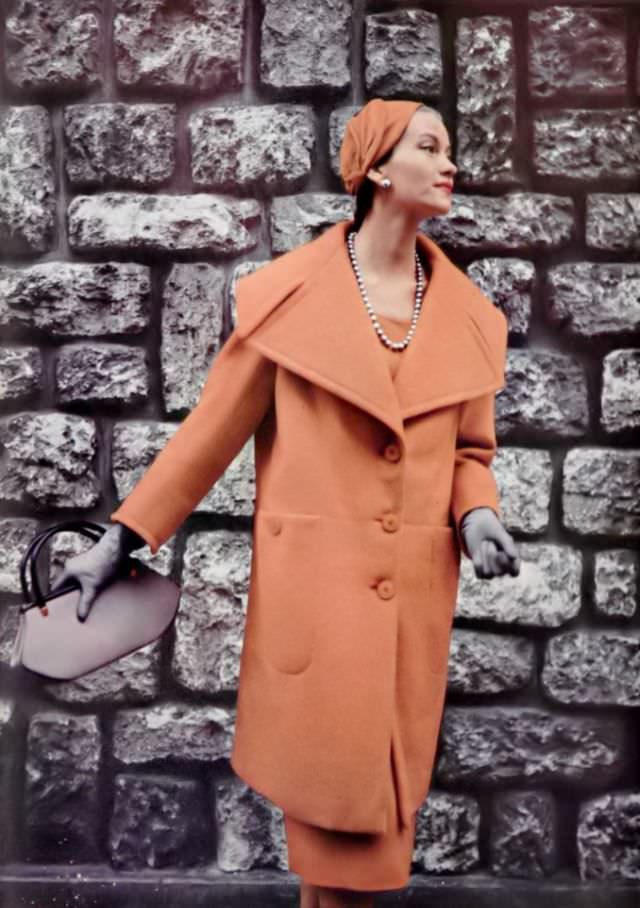
Anne Campion in orange wool coat in the new 3/4 length with deep indented collar and large pockets by Jacques Fath, 1954
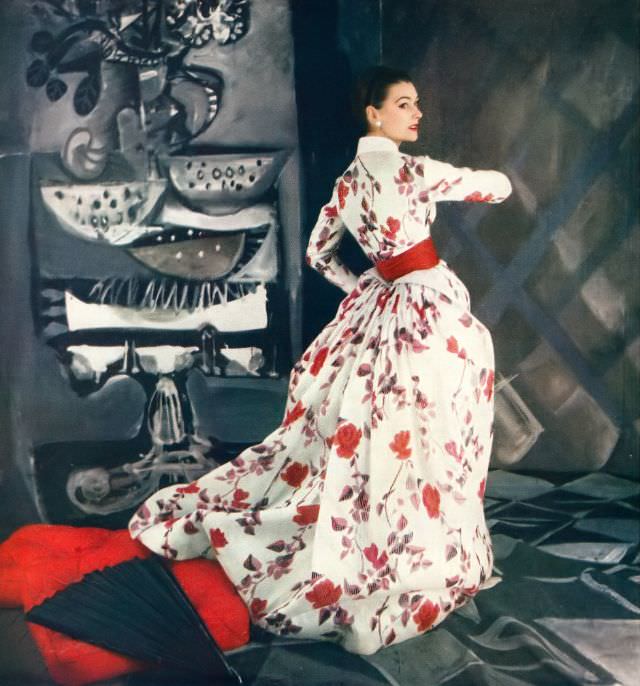
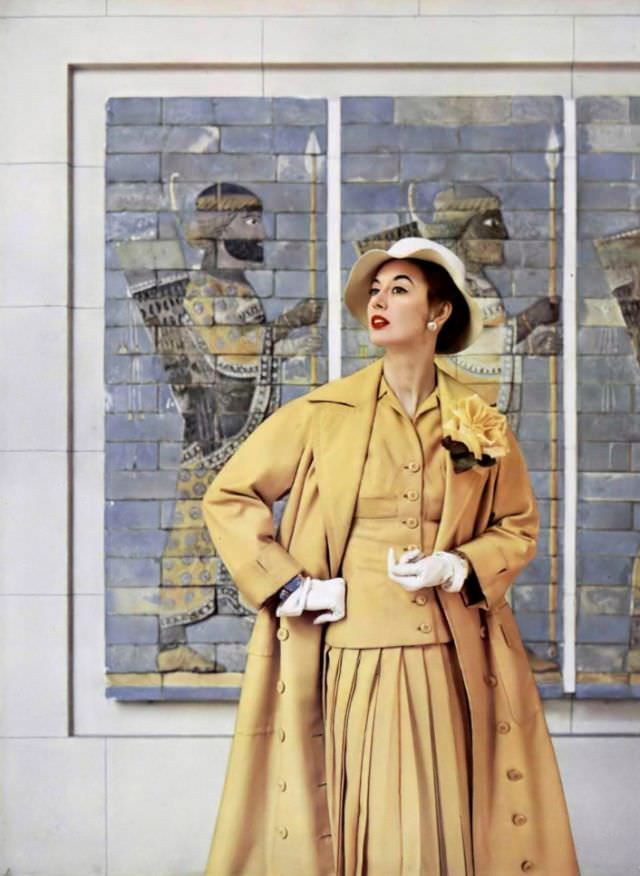
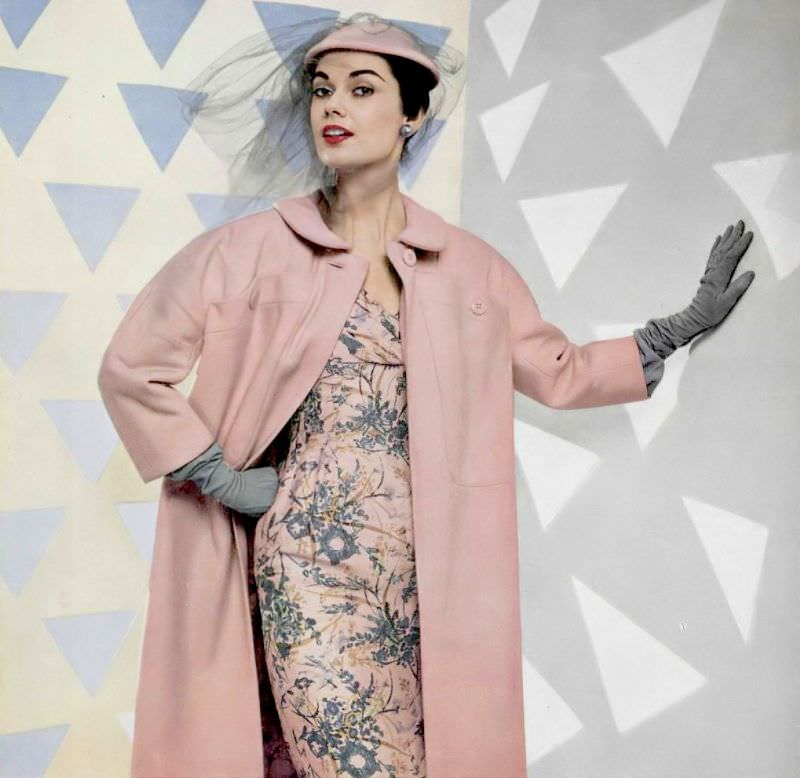
Anne Gunning in beautiful satin-striped silk organdy gown in floral print of reds and dusky leaves worn under its Victorian jacket by Jacques Fath, Vogue, April 15, 1954Elinor in classic overcoat buttoned all the way with large patch pockets, worn over tailored suit with pleated skirt by Jacques Fath, 1954Joan Whelan in pink and gray print silk dress, the lining of the pink wool coat matches the dress, by Jacques Fath, 1954
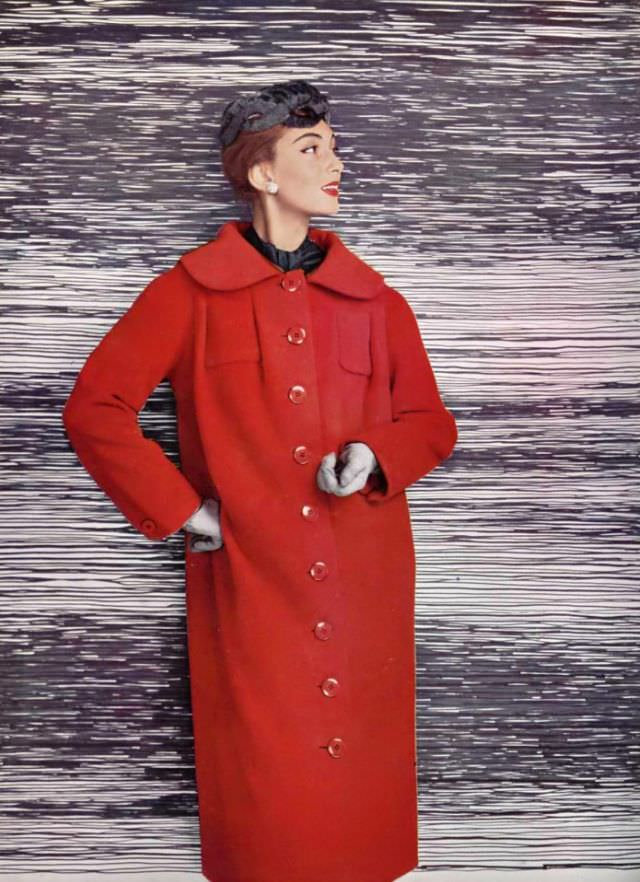
Marie-Hélène in bright red wool coat by Jacques Fath, 1954
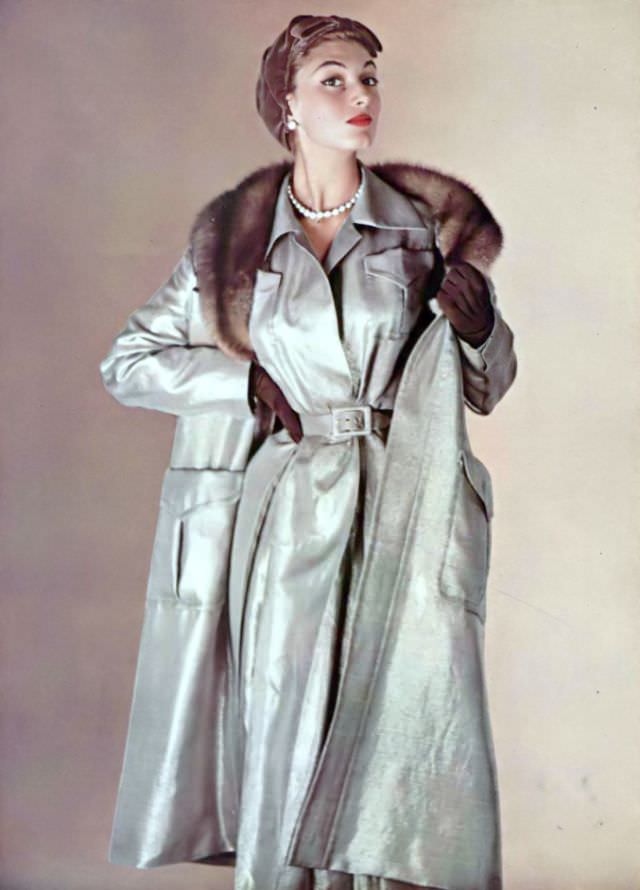
Marie-Hélène in silver lamé ensemble, the coat is lined in quilted brown satin, the collar is sable, large pockets hang on each side, worn with small brown velvet cap, by Jacques Fath, 1954
Marie-Thérèse in 7/8 coat cut full in the back worn over slim jersey dress in same color by Jacques Fath, croc handbag by Amaryllis, 1954
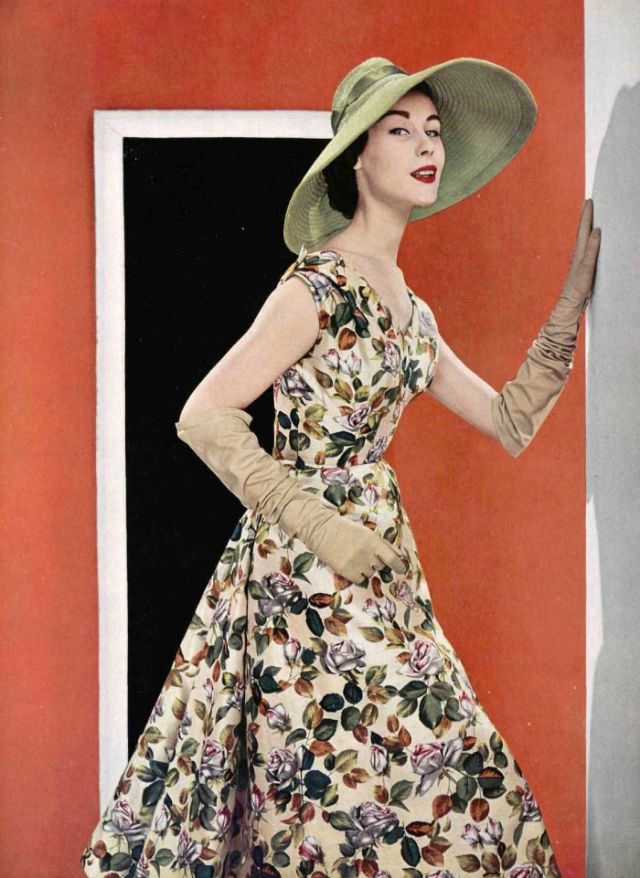
Myrtle Crawford in a silk floral print afternoon dress worn with wide-brimmed green straw hat, by Jacques Fath, 1954
Patricia Prunonosa is wearing white back-laced bodice brassiere, lace petticoat, and black lace topped stockings from the Jacques Fath collection, Vogue, 1954La Librairie”, Carmen Dell’ Orefice is wearing coat by Jacques Fath, photo by Georges Dambier, Paris, 1954Presentation of the collection of Jacques Fath in Paris, 1954Presentation of the collection of Jacques Fath in Paris, 1954
Model showing an ermine collar with his black coat from the Autumn 54 collection. Model Jacques Fath at the Dorchester Hotel, London on September 29, 1954.
Model showing a cocktail dress, in beige satin with her coat from the autumn 54 collection. Model Jacques Fath at the Dorchester Hotel, London on September 29, 1954.
Evening Dress by Jaques Fath in Dorchester, 1954
A cocktail dress and waist length fitted jacket in cream satin made by Jacques Fath, September 1954.
Fashion Collections of Couture Designers Spring Summer 1954.A model presenting an outfit from the new collection by fashion designer Jacques Fath, 1954Jacques Fath and his models. Preparation of the spring 1954 collection.
Jacques Fath died in November 1954 at the age of forty-two, leaving behind a fashion house at the peak of its power, with more than six hundred employees. His death came just as the Université collection and his ready-to-wear expansion were gaining real momentum. Geneviève Fath took over the business and ran it until 1957, when she made the decision to close the clothing line.
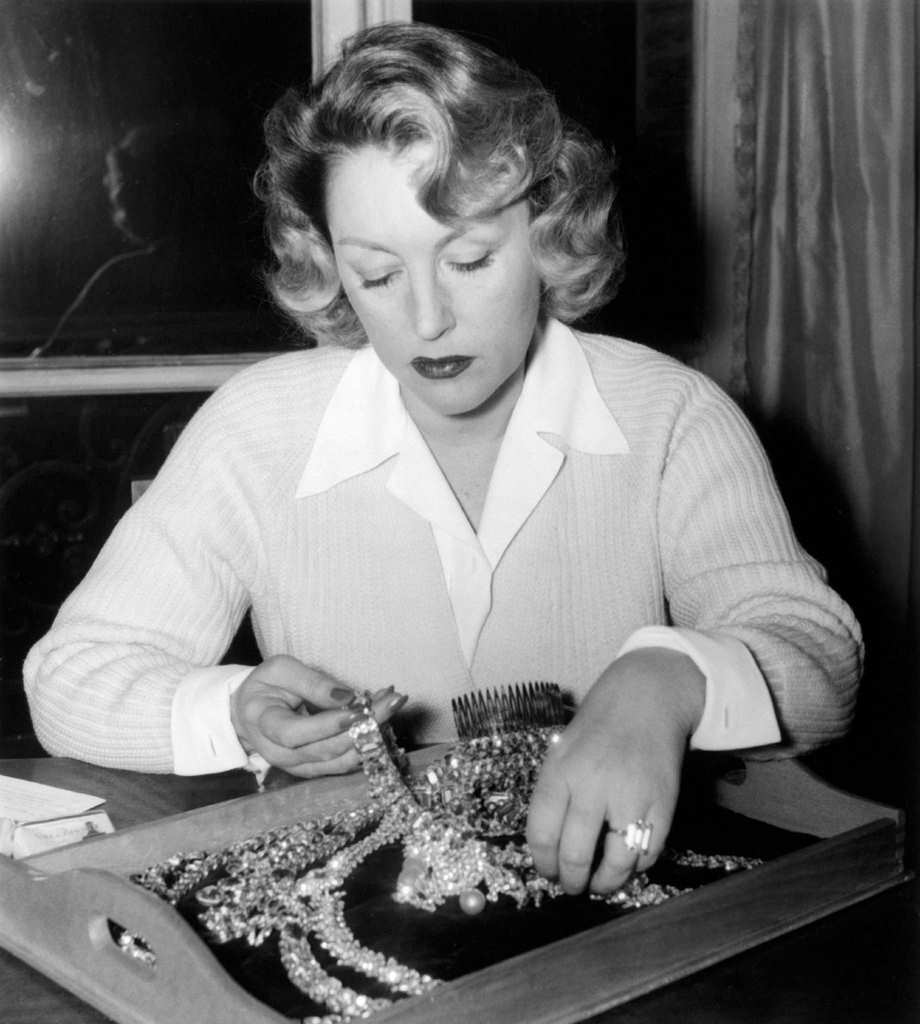
Genevieve Fath, Widow of Fath Jacques Couturier, 1956Genevieve Fath lounges in a loveseat, wearing an outfit designed by her late husband, Jacques Fath, 1955
After Fath’s death, the house released several more collections under the direction of Geneviève and the design team. The 1955 presentations included accessories, hats, bags, swimsuits, and stockings, showing that the brand’s commercial range remained wide even in its final years. Garments from this period — including velvet evening gowns, ready-made afternoon dresses, and striking tweed ensembles — continued to appear in the European press.
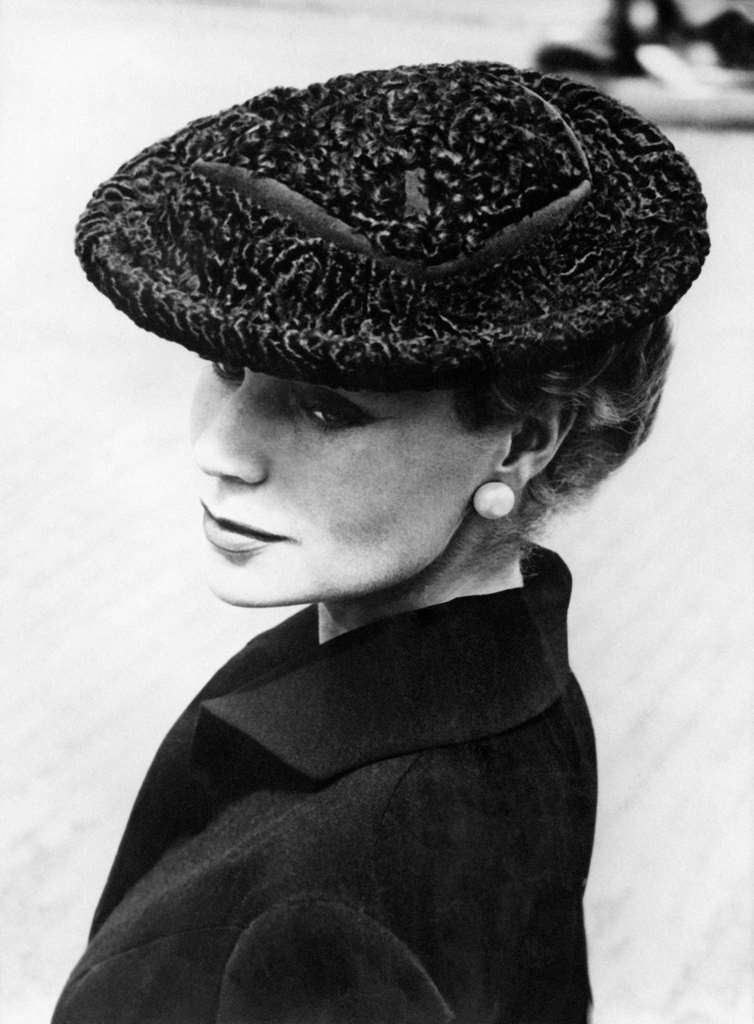
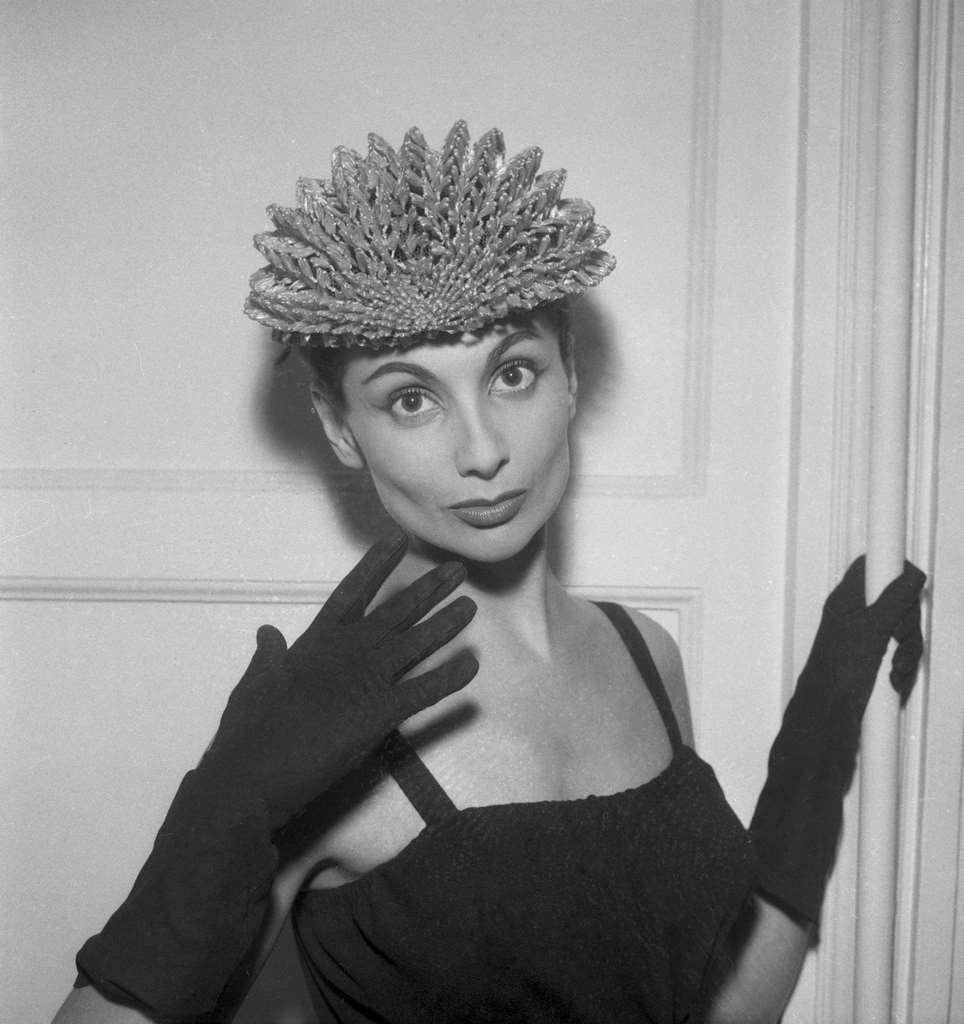
Round hat in gray astrakhan from South Africa. The encrusted grosgrain forms the crown. This model is worn forward on the forehead. Created by Jacques Fath, Paris 1955.
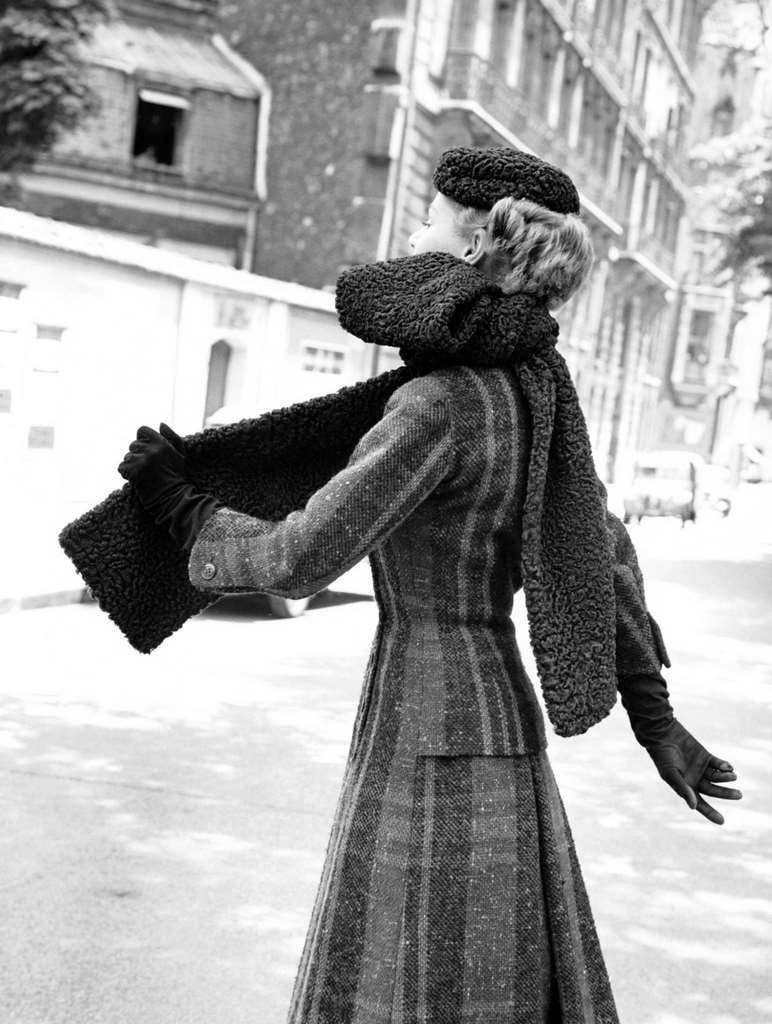
Red and green tweed dress with a long black astrakhan stole tied as a tie, a black astrakhan hat completes this set. Created by Jacques Fath, Paris 1955.
The Jacques Fath house presented its collection of accessories, bags and hats. Paris 1955.
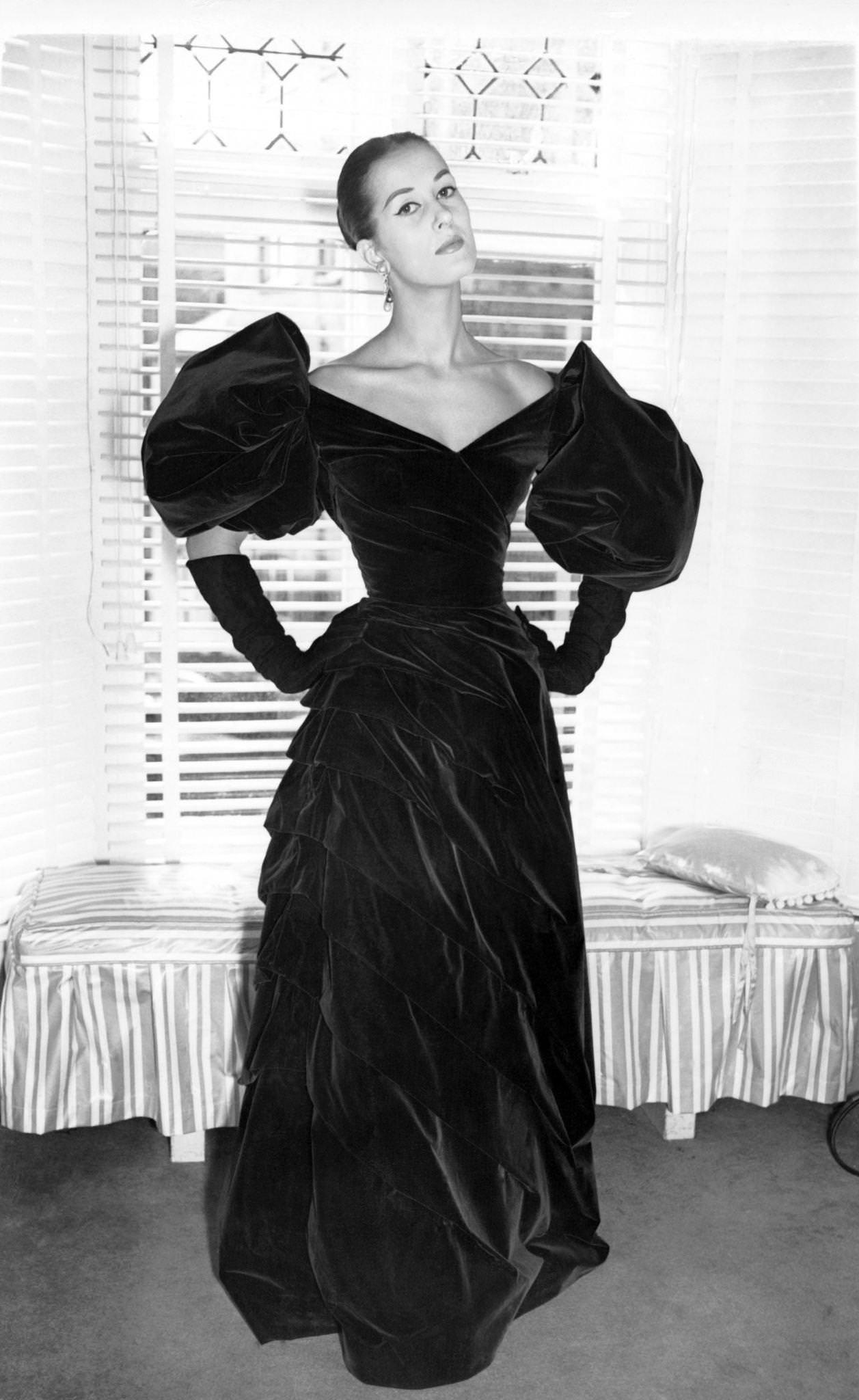
Green velvet evening dress with large puff sleeves and draped skirt. Created by Jacques Fath. London on September 26, 1955.
Presentation of the collection of trinkets, stockings and swimsuits. Jacques Fath collection. Paris on April 28, 1955.
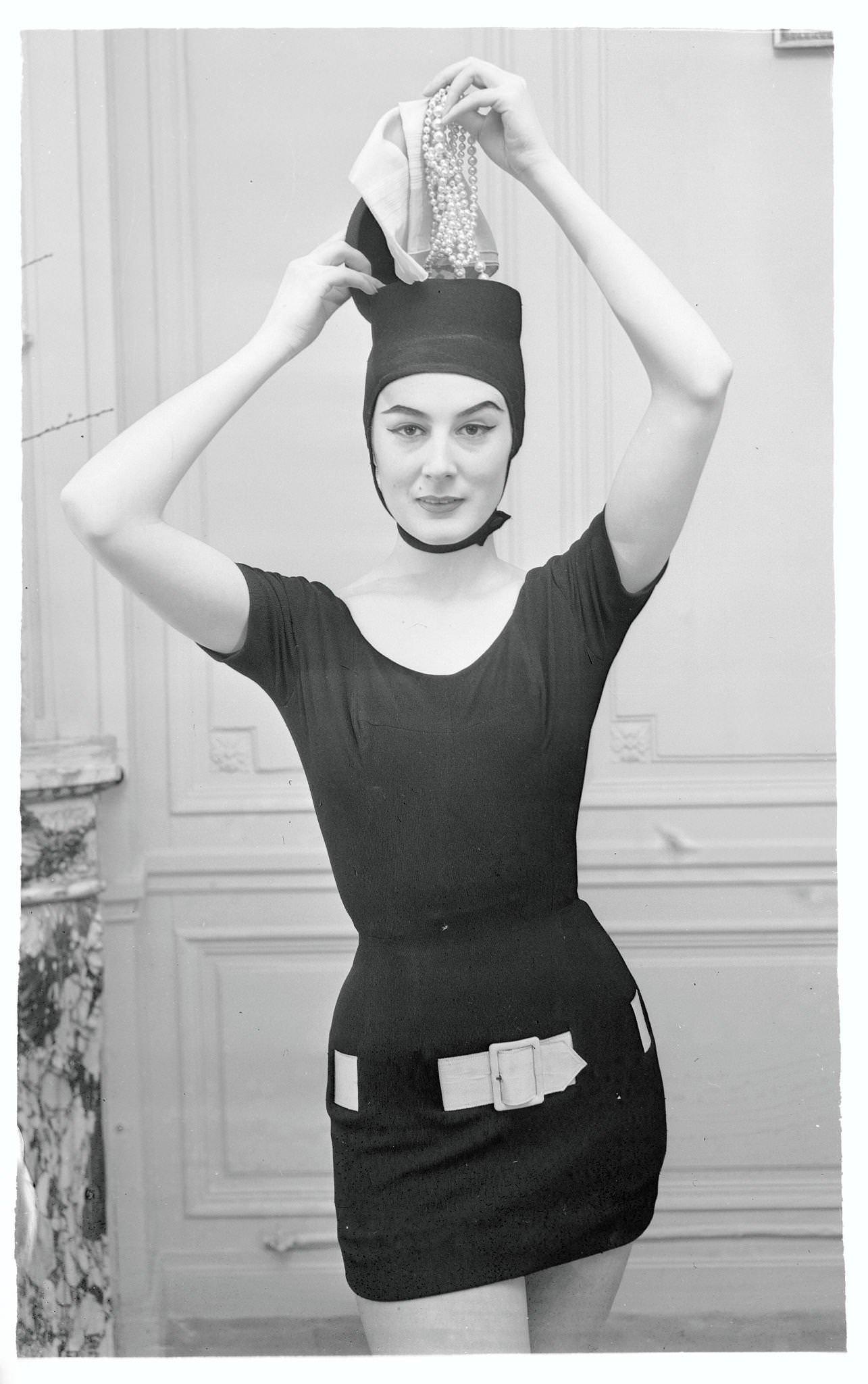
Model in Beach Suit and Reaching to Her Unusual Hat
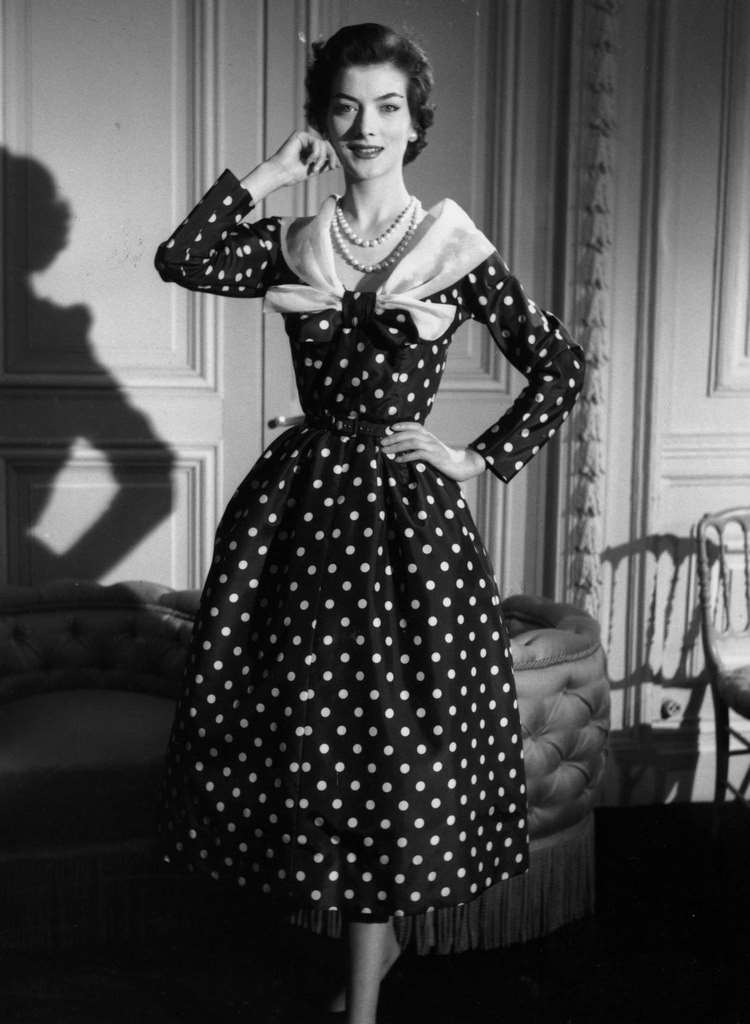
A ‘ready-made’ afternoon dress designed by Jacques Fath, polka dotted with long sleeves, tight waist and muslin shawl collar. The House That Fath Built, 1955
Female Model Holding ParasolModels wear hats designed by Rose Valois, Gilbert Orcel and Jacques Fath on January 27, 1955 in Paris, France.
A Model Presenting An Ensemble (Dress And Coat) From The Jacques Fath Fashion House, 1955
An Ensemble By Jacques Fath Paris 1955
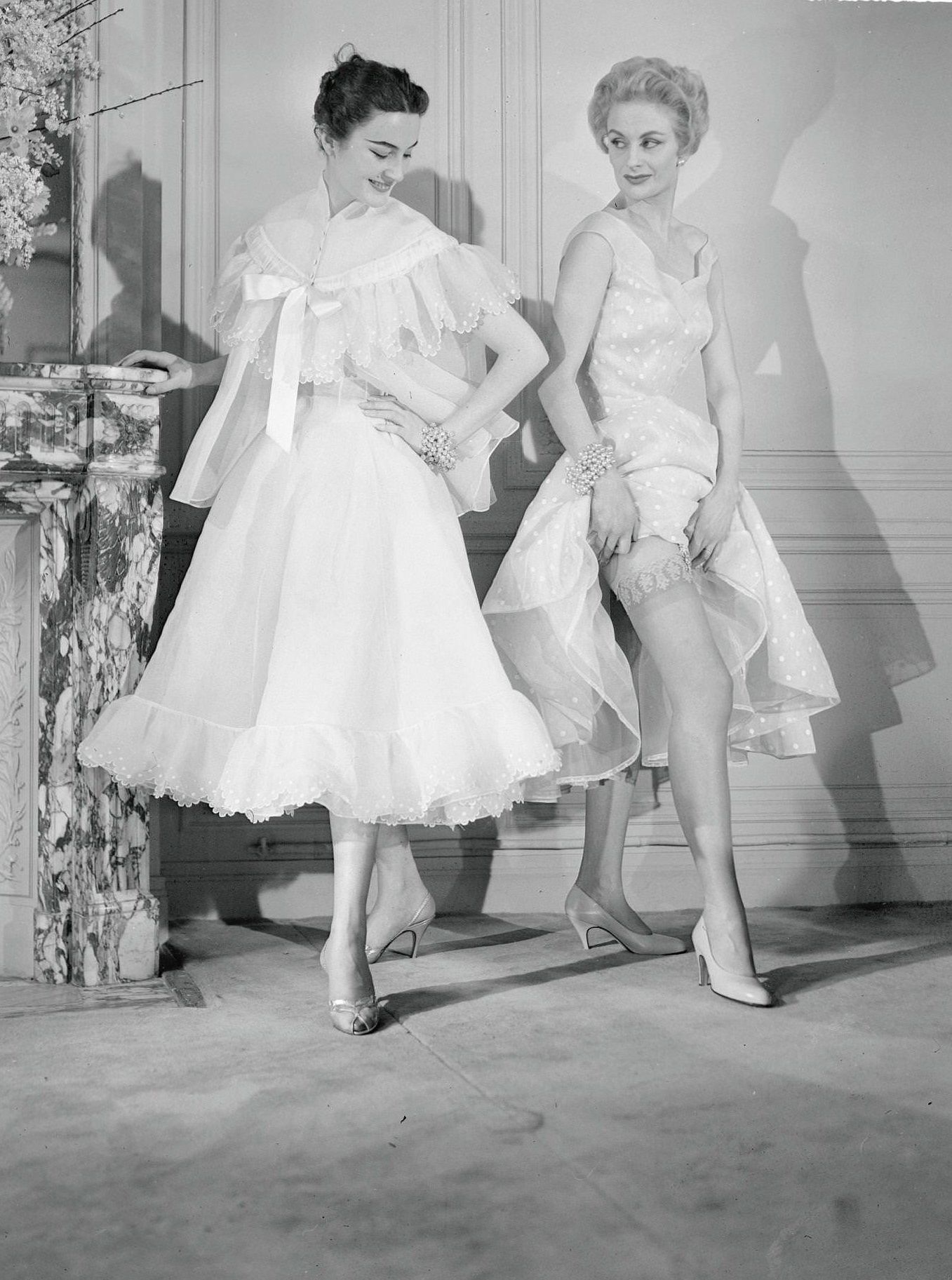
Two Female Models Wearing Frilly Undergarments
The final collections under the Fath name appeared in early 1957, with models presenting spring hats, gloves, and tailored garments in Paris. Geneviève closed the clothing line that same year. From 1992 onward, a succession of companies acquired the Fath name and used it as a perfume label. In 2002, the France Luxury Group relaunched the Fath clothing line in an effort to revive the house’s former standing.
Model presenting a model by Jacques Fath, a spring hat and gloves, in Paris, France on January 28, 1957.Model wearing a Jacques Fath model in 1957.Model wearing a Jacques Fath model in 1957.