California is called the Golden State because of the Sierra Nevada gold rush that pulled miners and settlers westward in the 19th century. But it was black gold — oil — that proved far more transformative. Long before European settlers arrived, Native Americans had been using petroleum for roughly 13,000 years, not as fuel, but as a lubricant and a sealant for their canoes. The modern chapter of California’s oil story began in 1865, when Humboldt County drilled the state’s first well. Then, in 1876, the Pico Canyon oil field north of Los Angeles became California’s first true gusher, and a statewide industry was born.
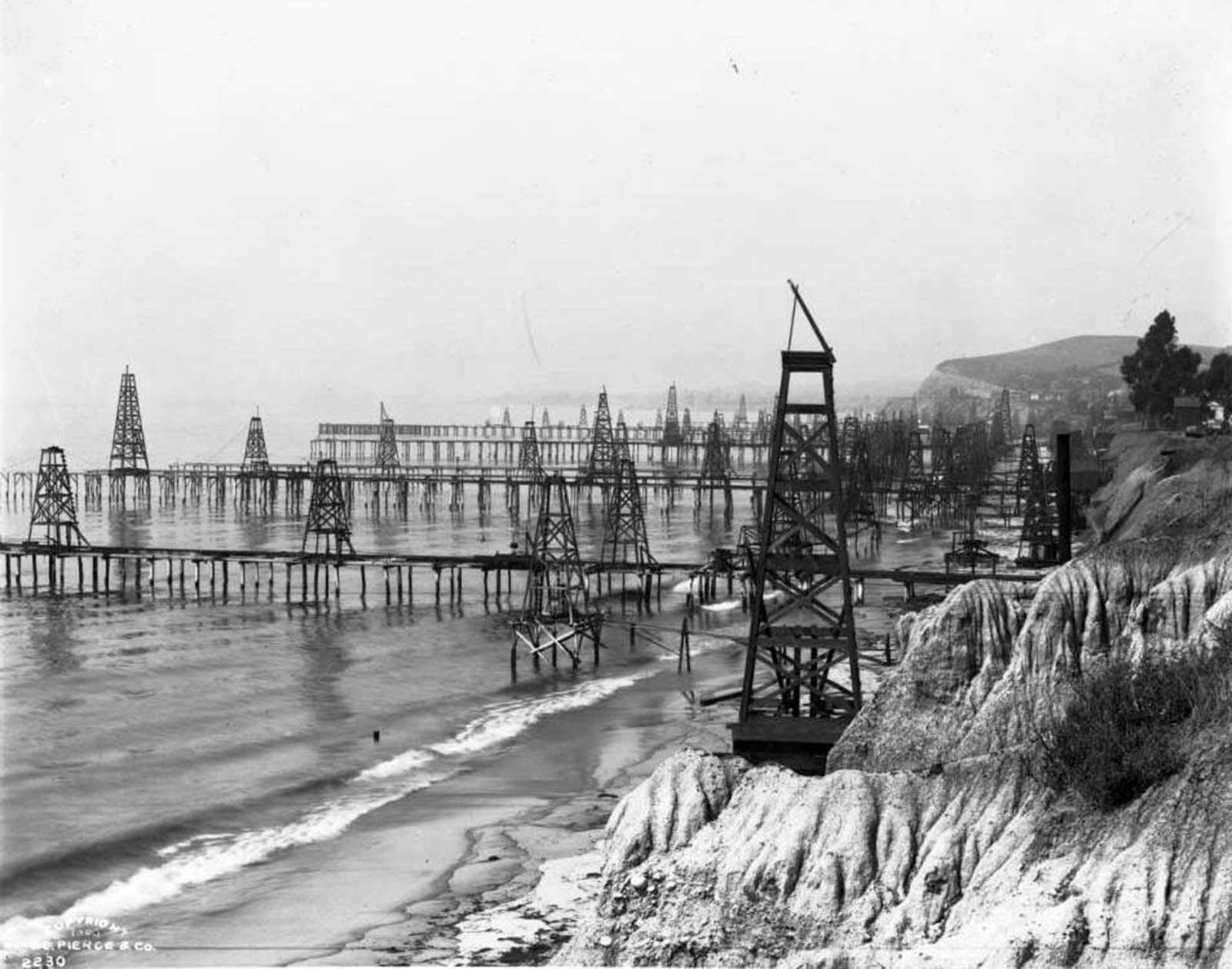
The next major breakthrough came in 1892, when prospector Edward L. Doheny struck a massive oilfield right in Los Angeles, just 35 miles south of Pico Canyon. Five years later, in 1897, the world’s first offshore oil well was drilled from a 300-foot pier extending into the Pacific Ocean near Santa Barbara — triggering an offshore drilling boom that would reshape California’s coastline for decades.
California’s oil boom had an immediate effect on national prices. In 1860, the entire United States produced just 0.5 million barrels of oil, with a price of $9.60 per barrel. By 1895, California alone was producing 1.2 million barrels, and the per-barrel price had collapsed to just $0.25 — driven down by rising supply from California, Texas, and Pennsylvania. The state produced 4 million barrels in 1900. By 1920, that number had exploded to 77 million barrels.
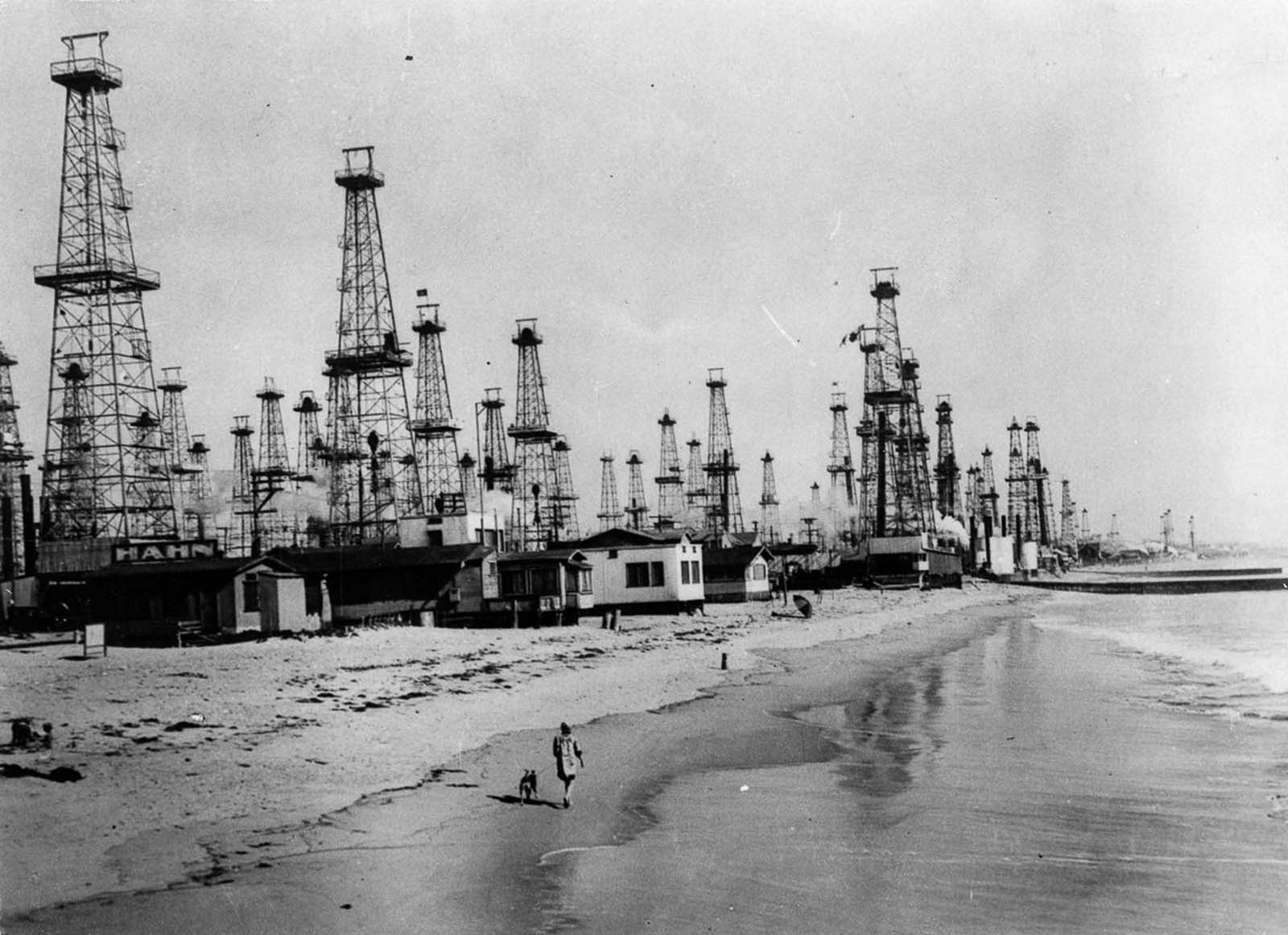
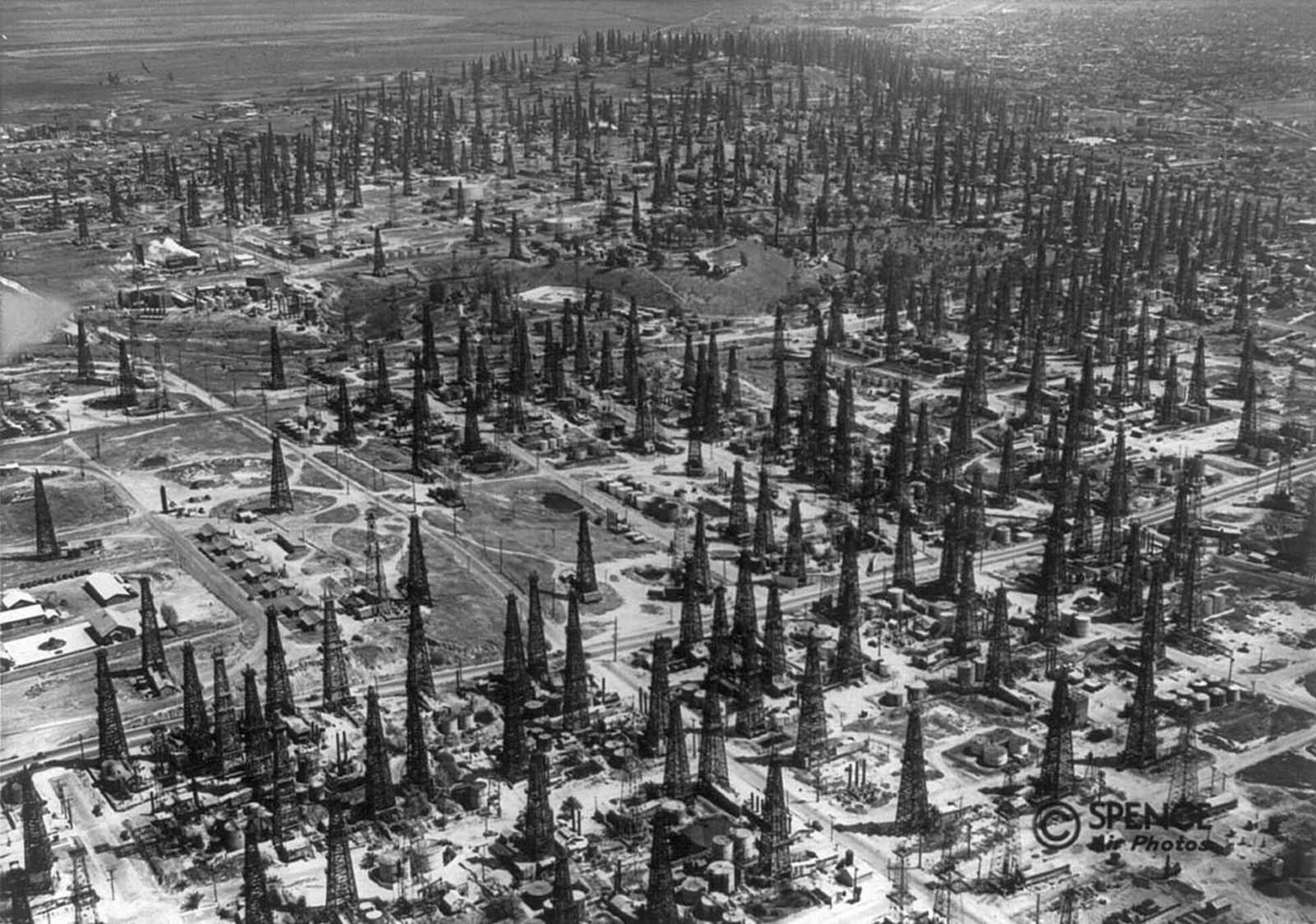
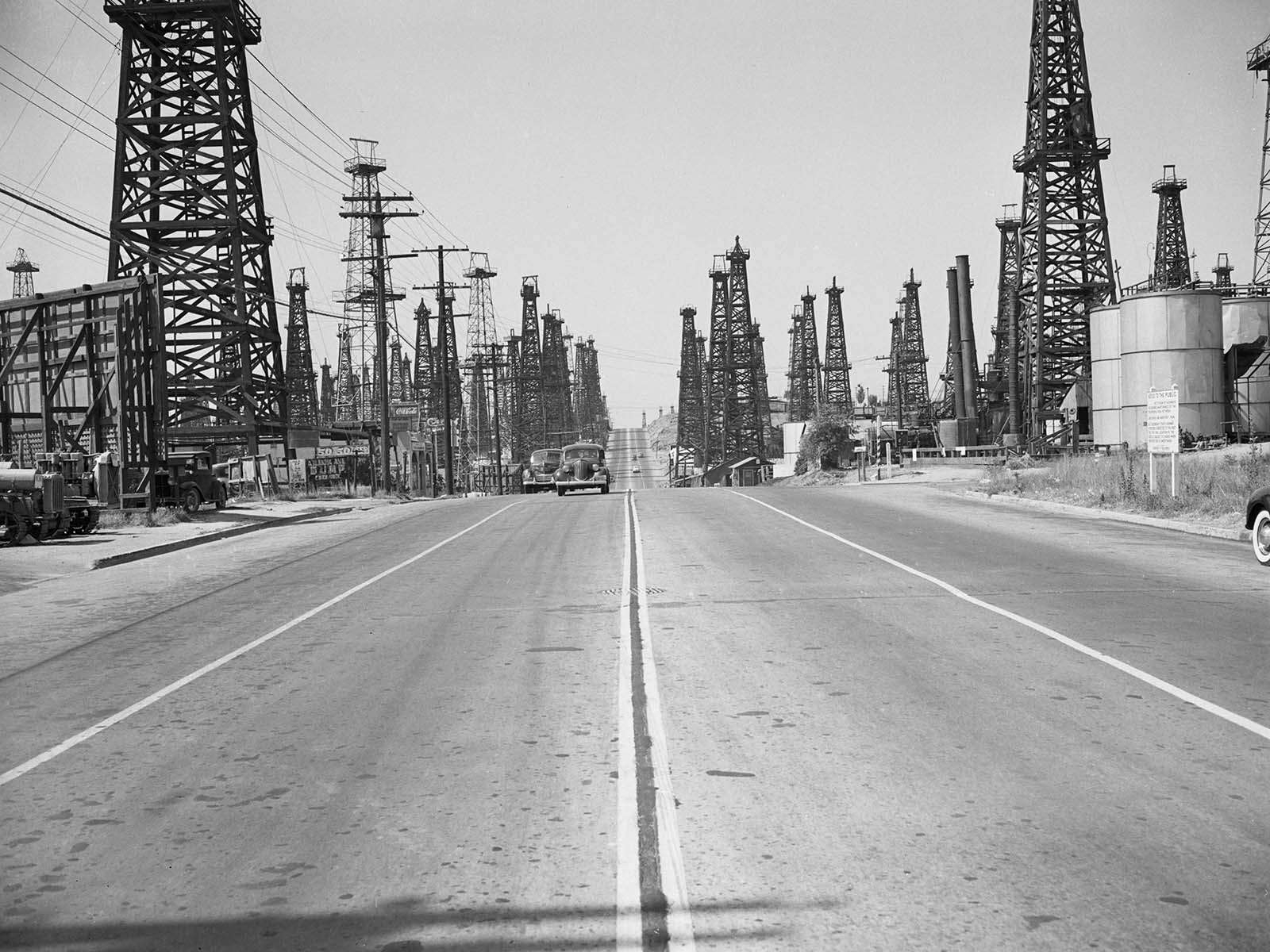
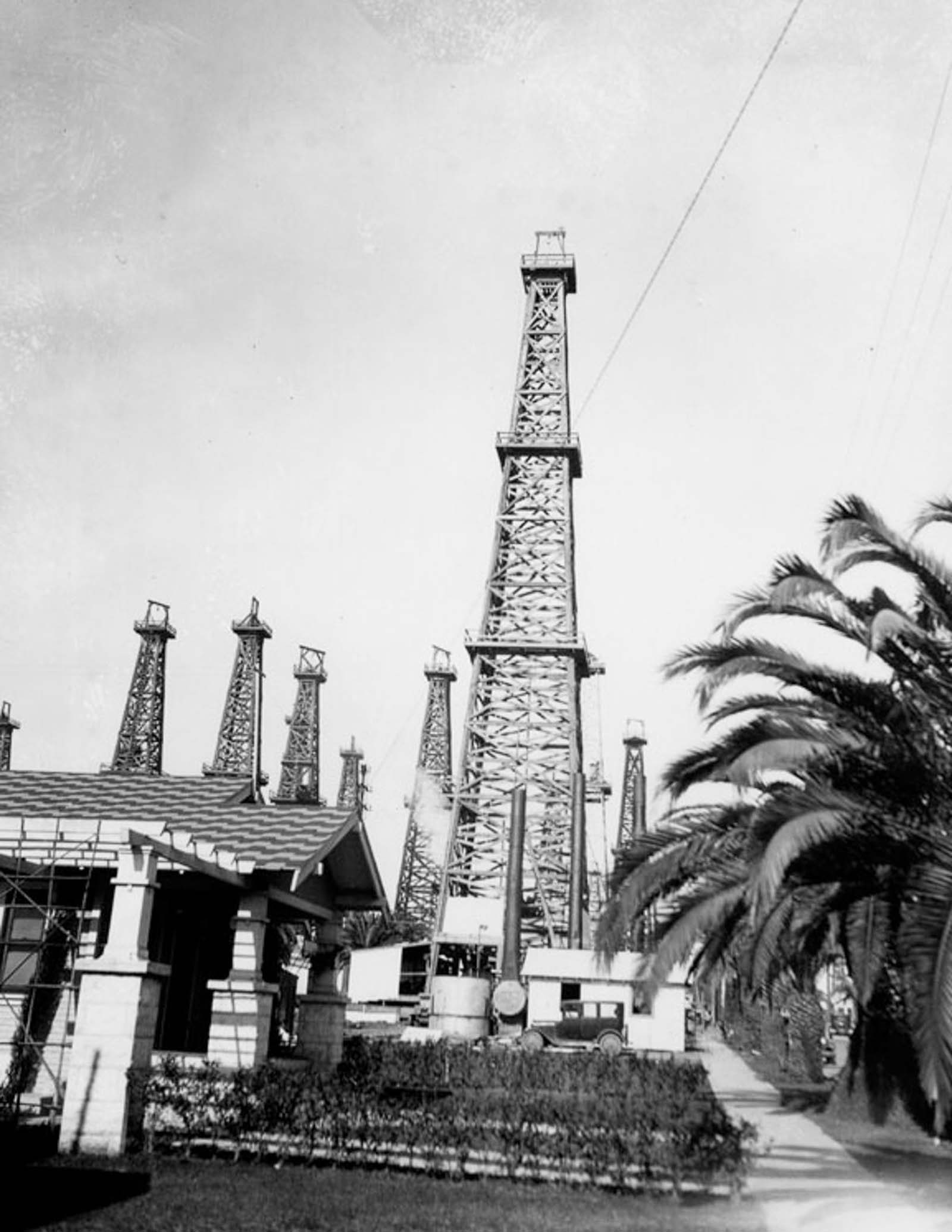
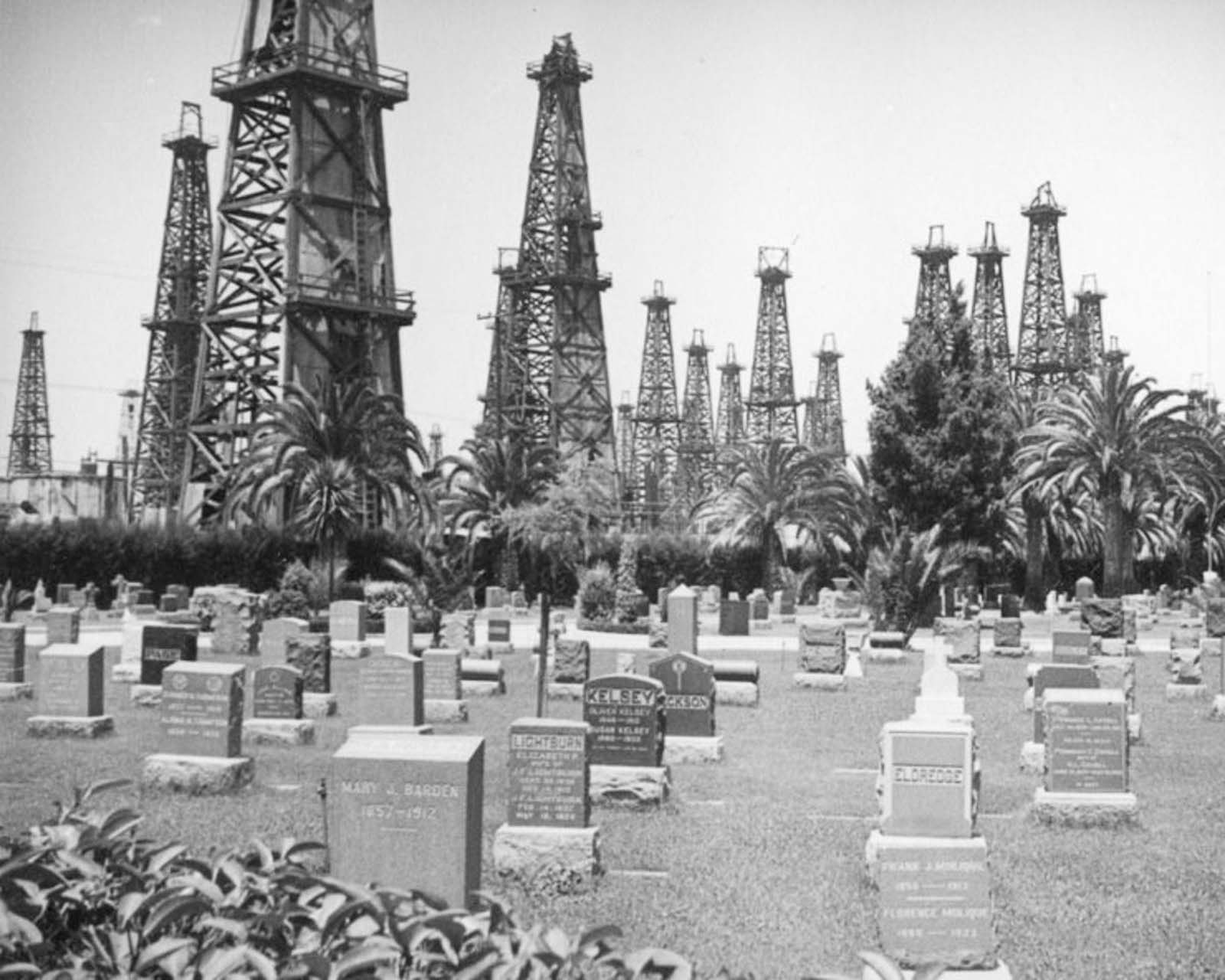
New oil fields were discovered across Southern California throughout the 1920s at a rapid pace. Huntington Beach came online in 1920. Long Beach and Santa Fe Springs followed in 1921. Dominguez was tapped in 1923, and Inglewood in 1924. Independent speculators rushed in, erecting hundreds of tall wooden drilling derricks across whole neighborhoods. The structures stood shoulder to shoulder, turning open land into dense forests of timber and steel.
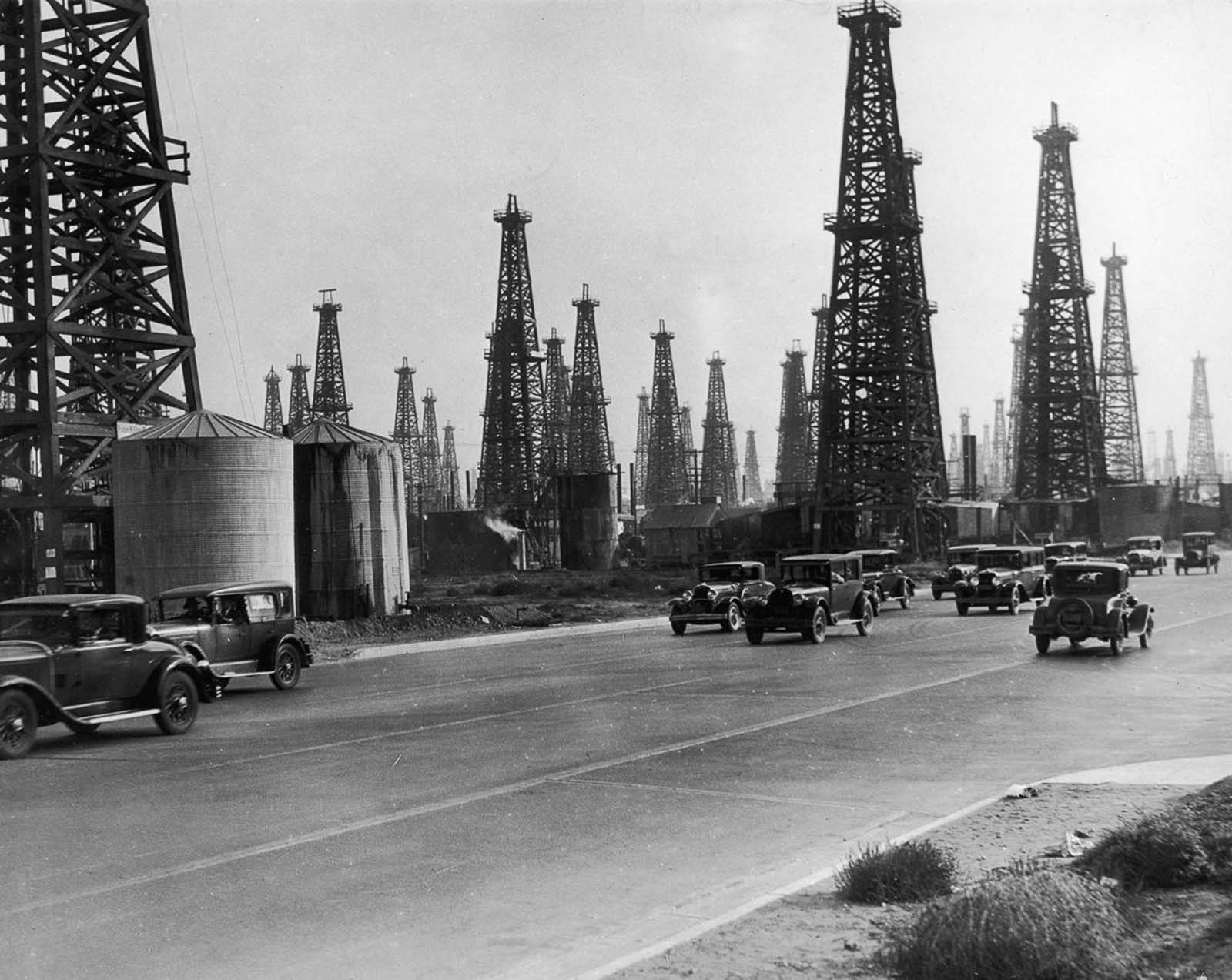
Signal Hill in Long Beach became one of the most dramatic examples of this transformation. After oil was discovered there in 1921, derricks multiplied across the hilltop with startling speed. By the mid-1930s, the hill was barely visible beneath the tangle of wooden towers.
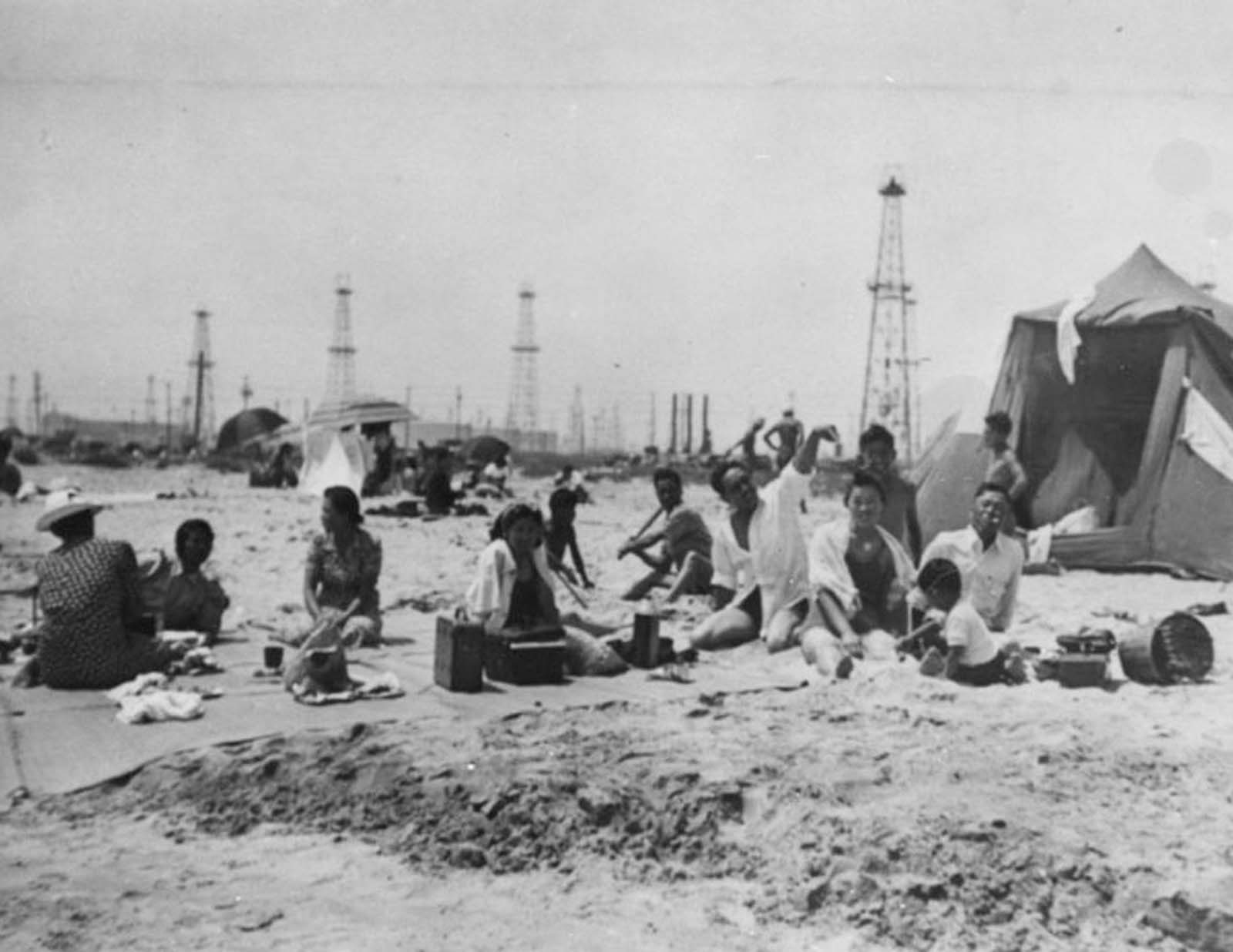
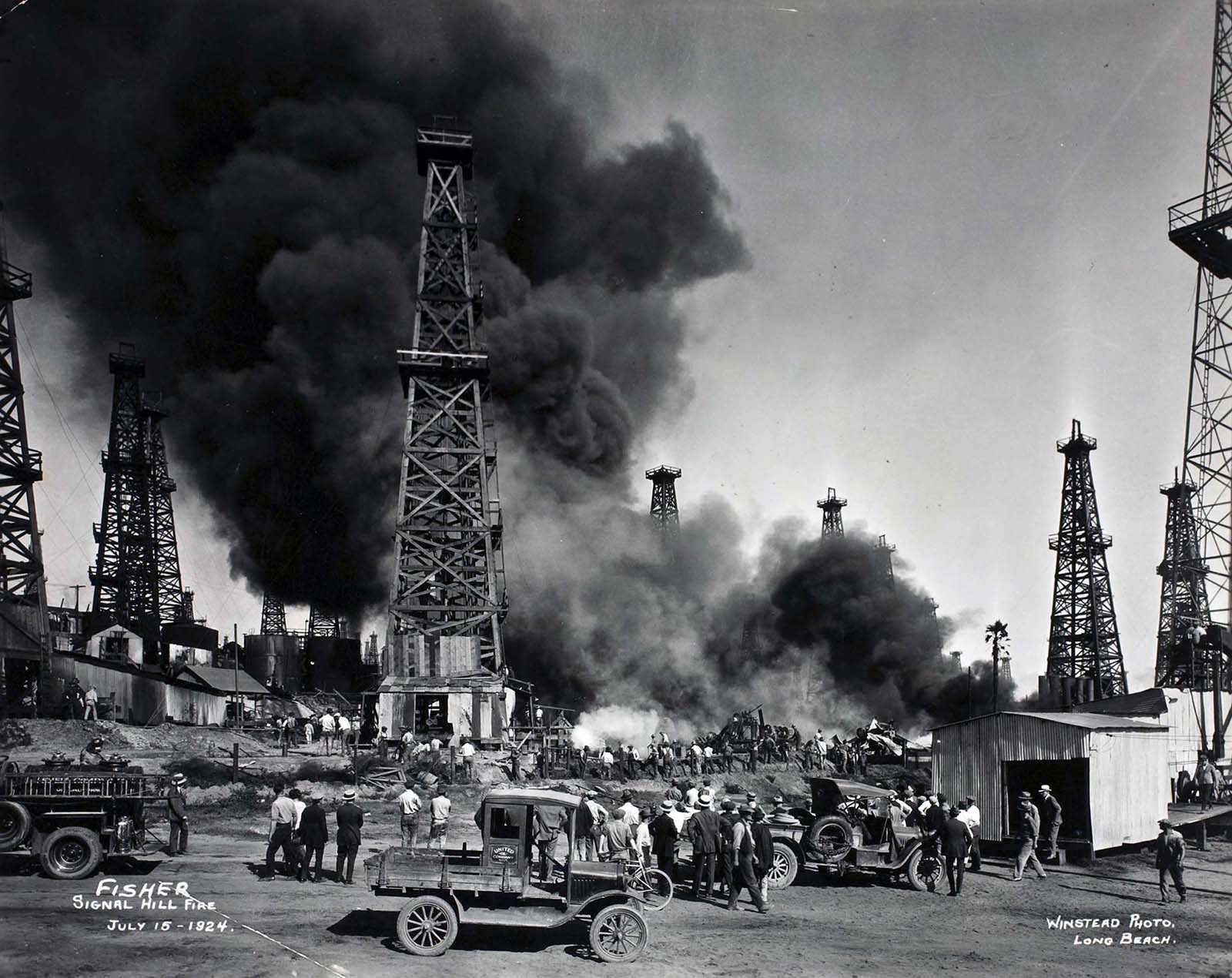
Everyday life in Long Beach played out against this industrial backdrop. Families went to the beach with derricks on the hills above them. Fires were always a risk on the oil fields, and Signal Hill was no exception.
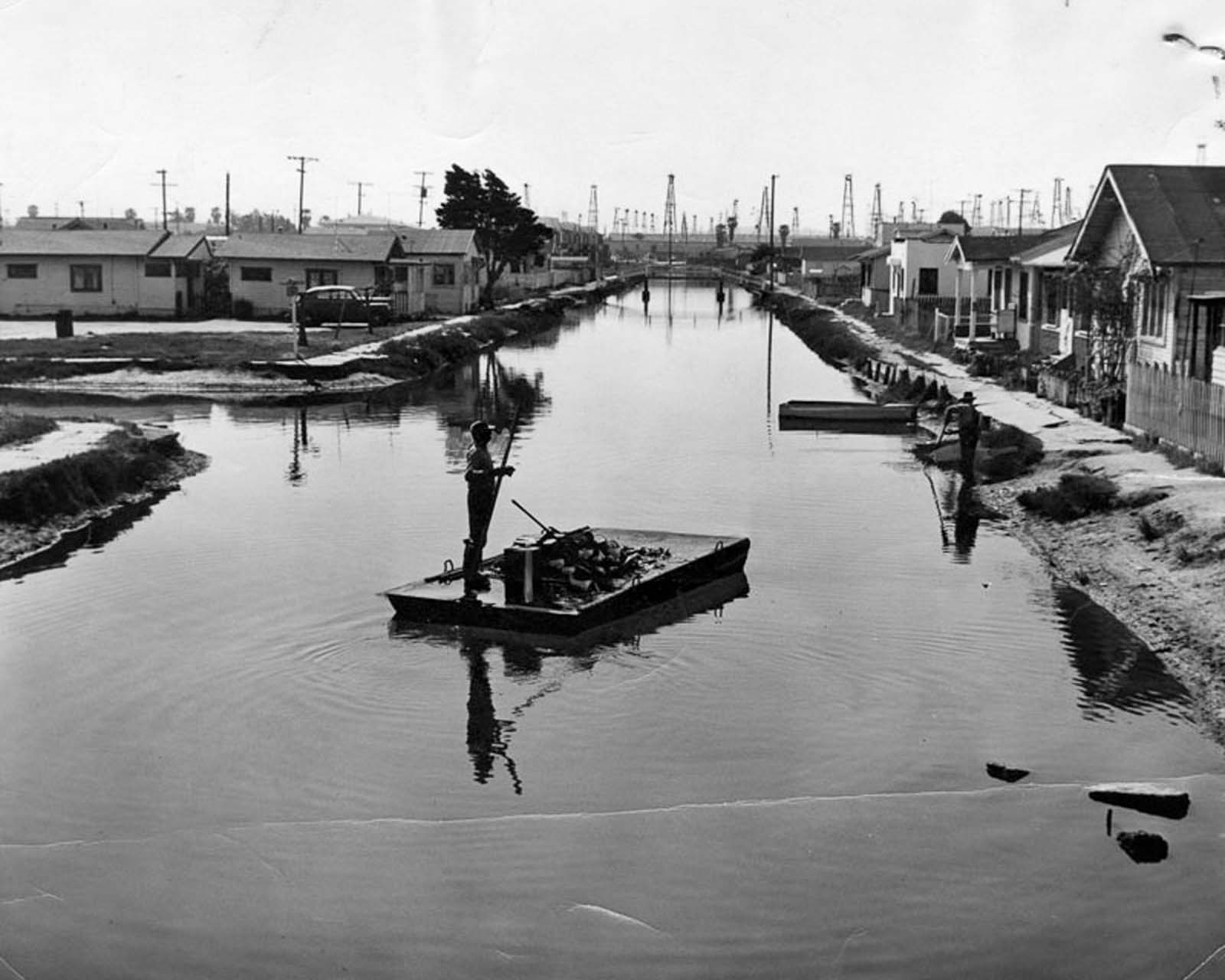
Venice, California — the area now known as Marina del Rey — was particularly saturated with oil infrastructure. Derricks lined the coast, stood beside beach houses, and loomed over canals. The contrast between the leisure activities of residents and the industrial machinery surrounding them was stark. People hung laundry, drove cars, and played volleyball while pump jacks and wooden towers operated just feet away.
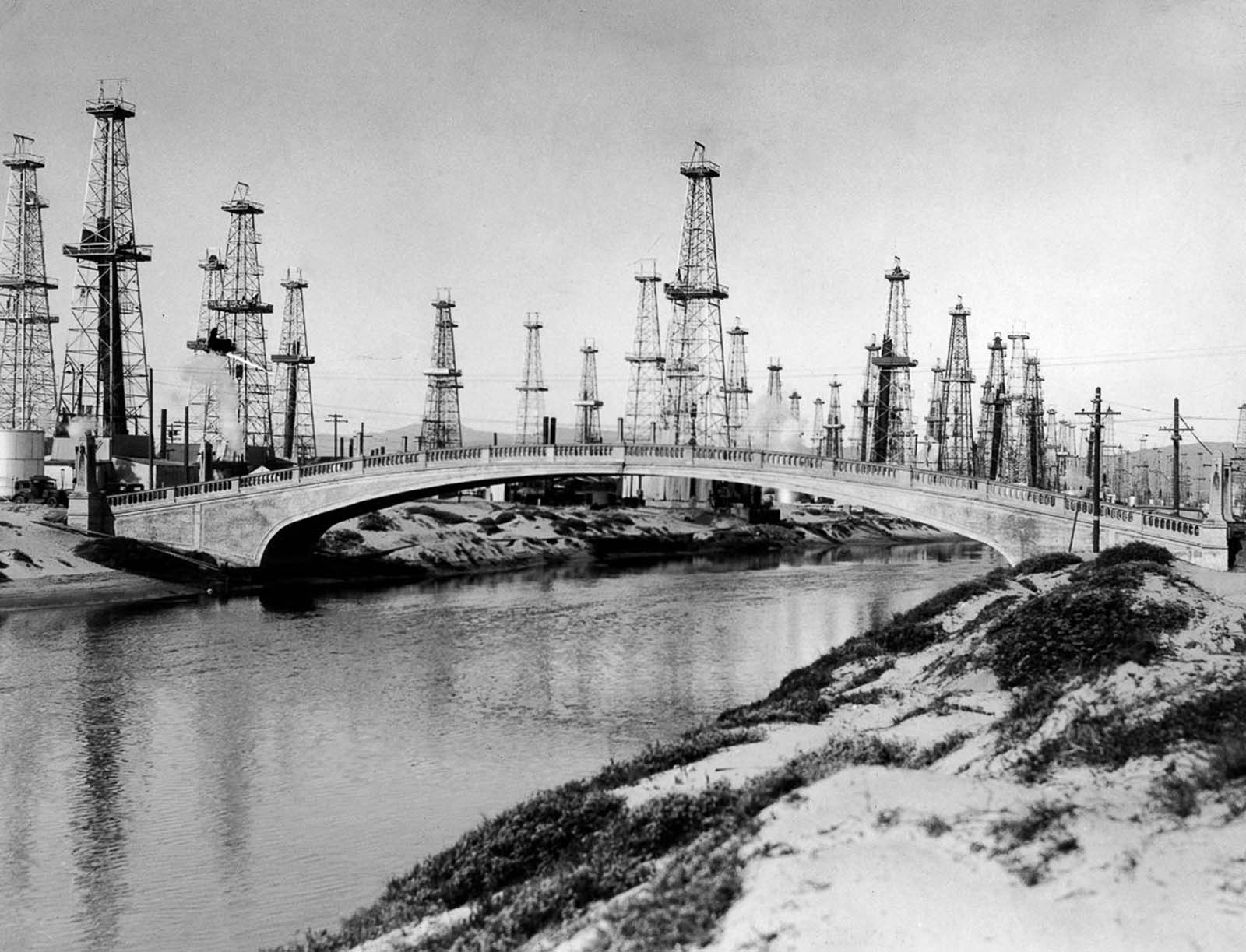
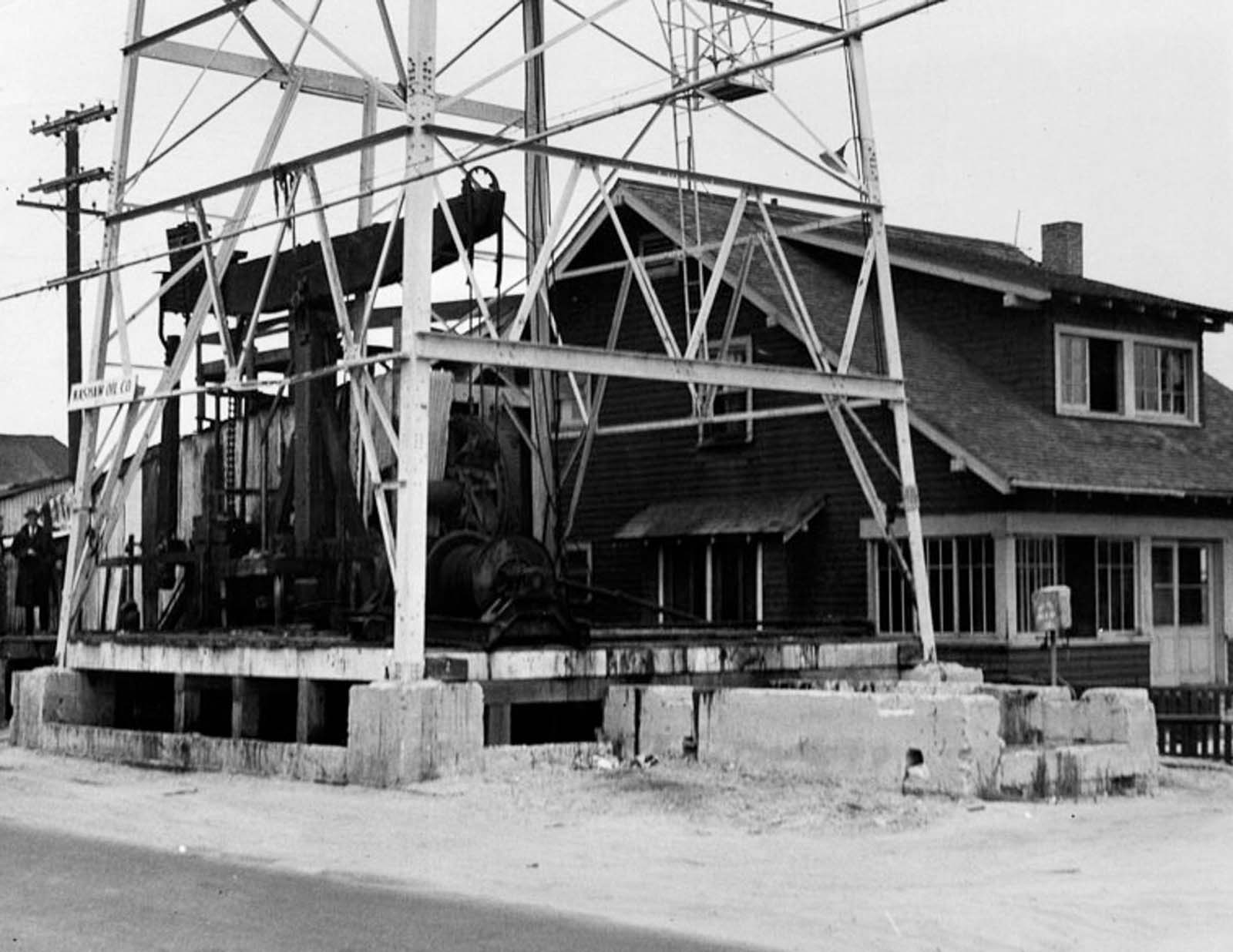
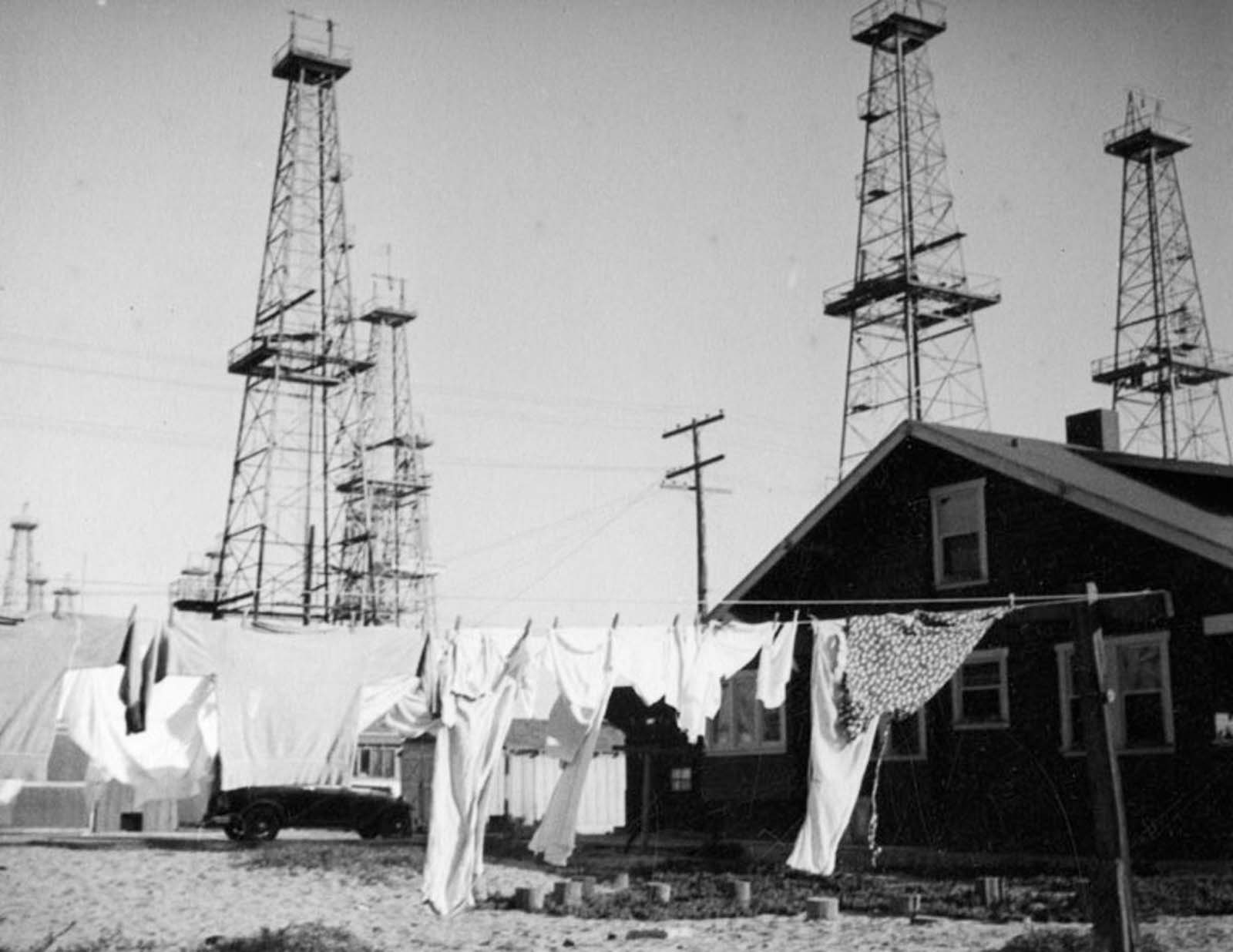
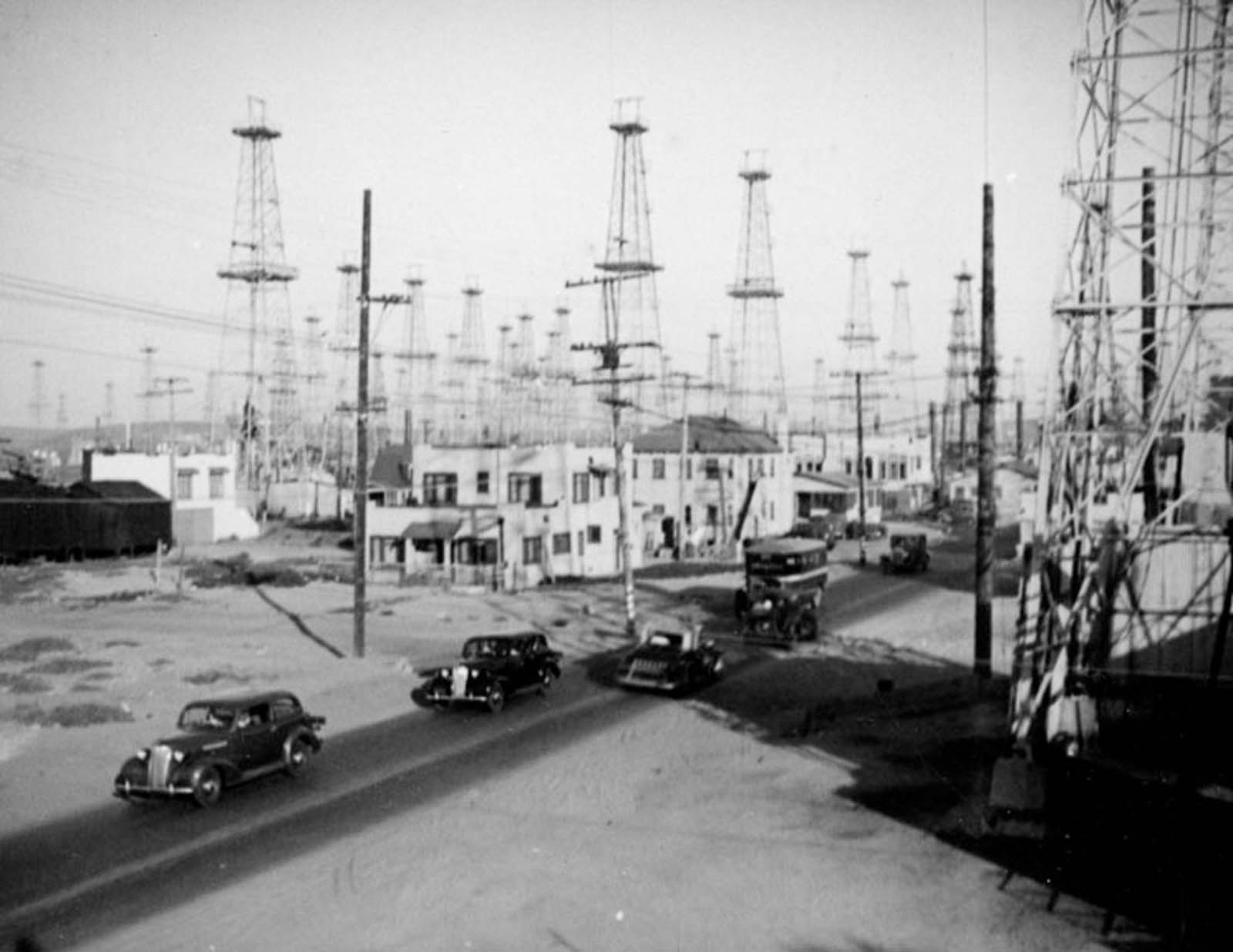
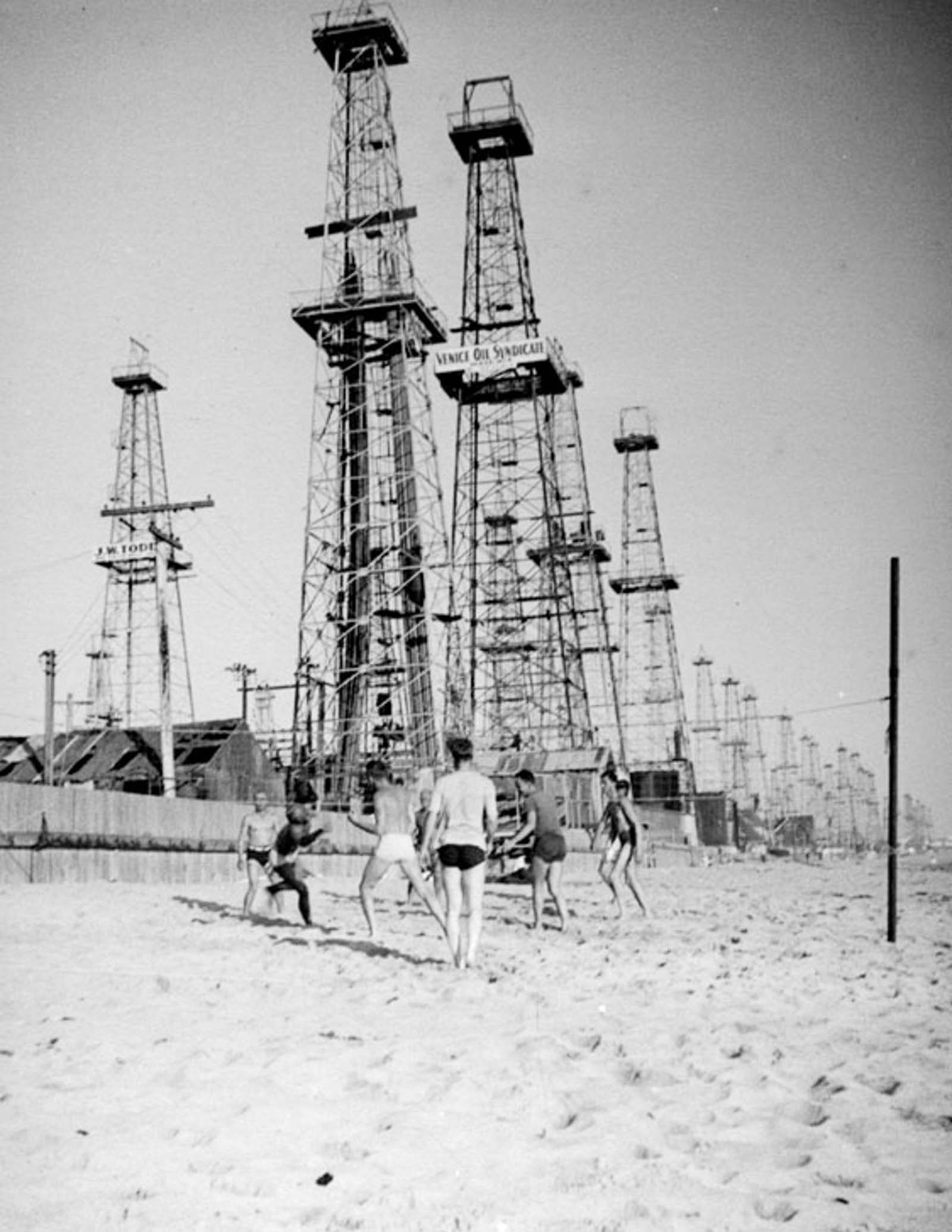
By the 1950s, oil operations in Venice were still active, with wells pumping crude directly from the beach area. The Grand Canal, once a scenic waterway, ran past oil derricks visible on the horizon.
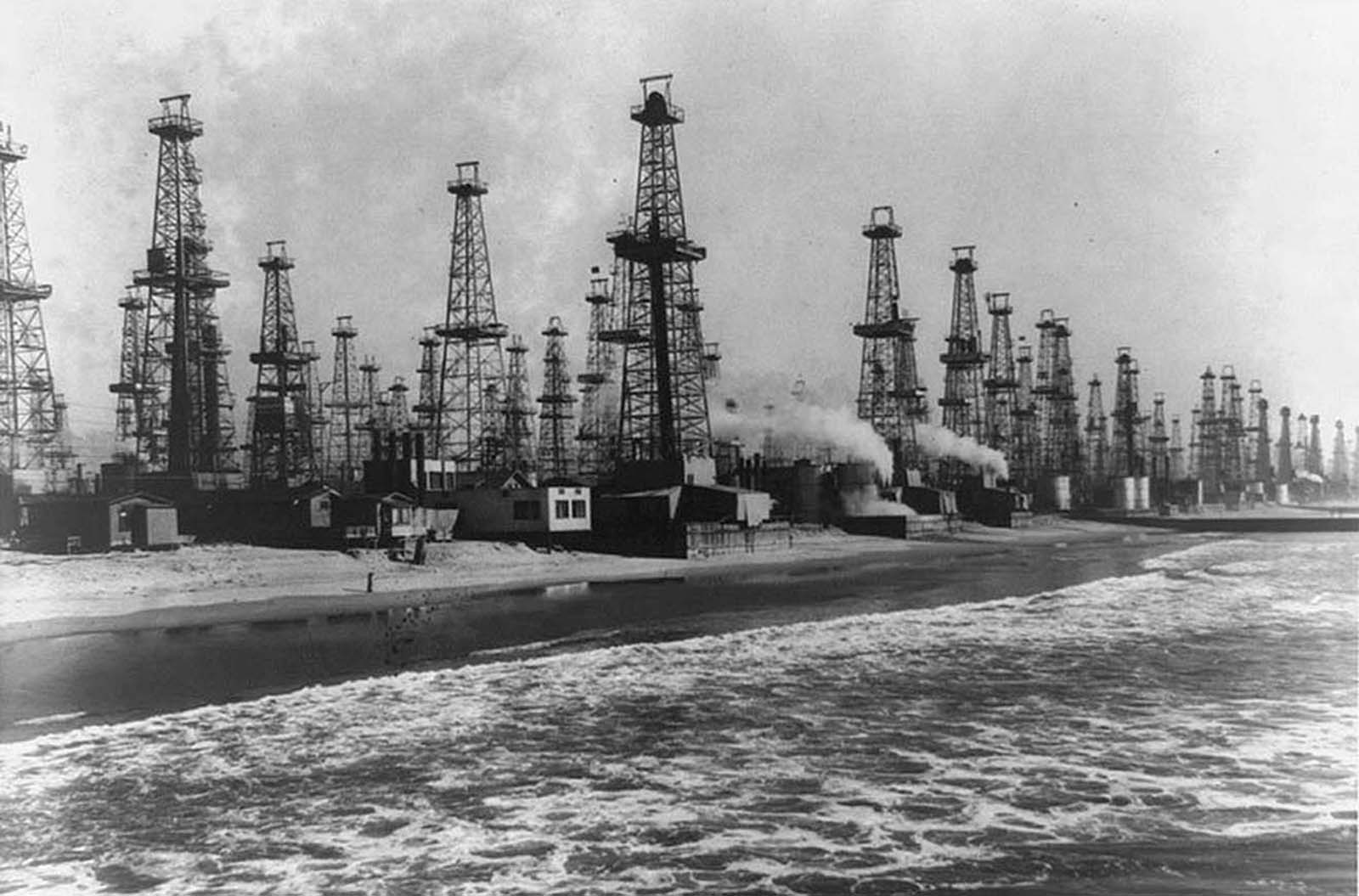
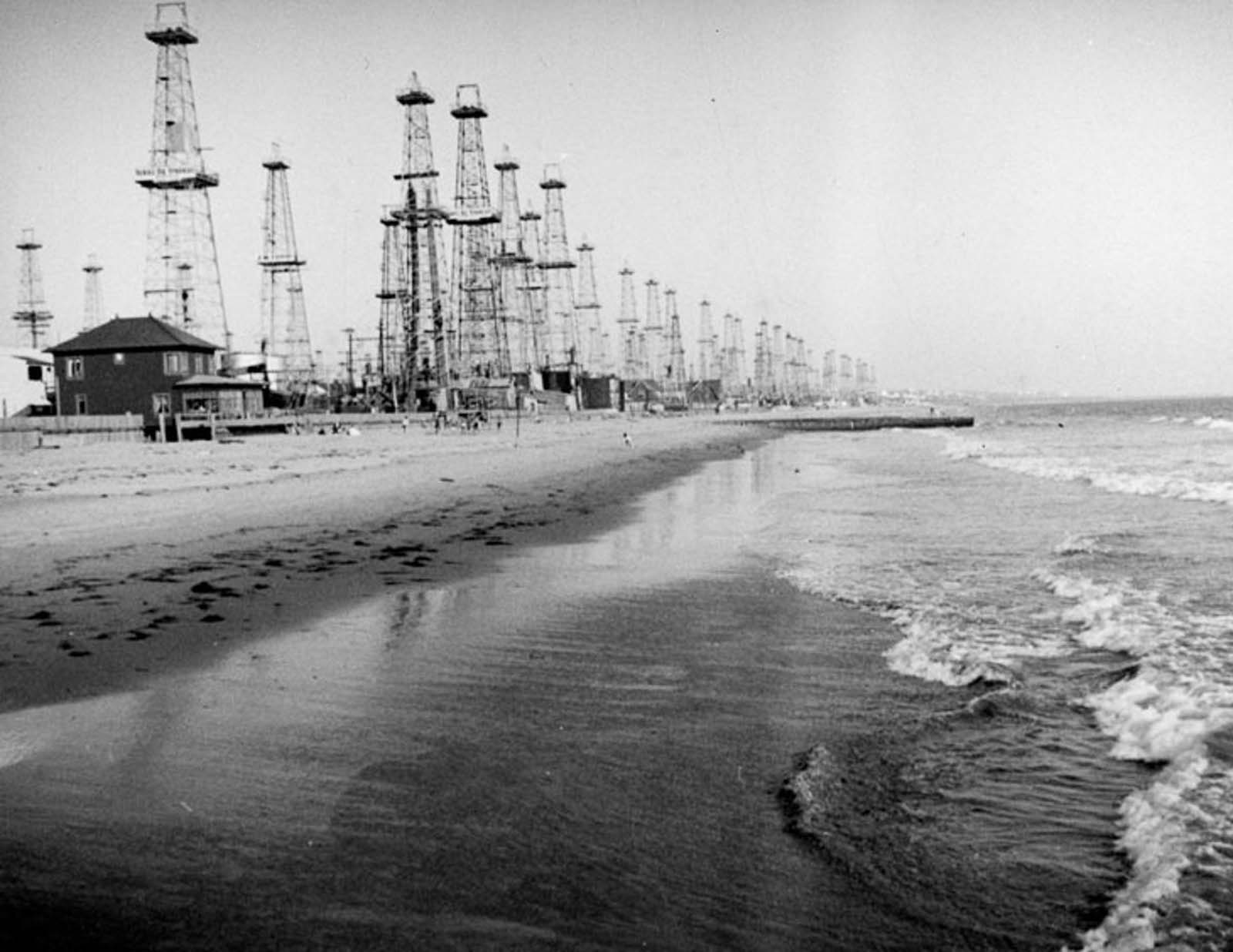
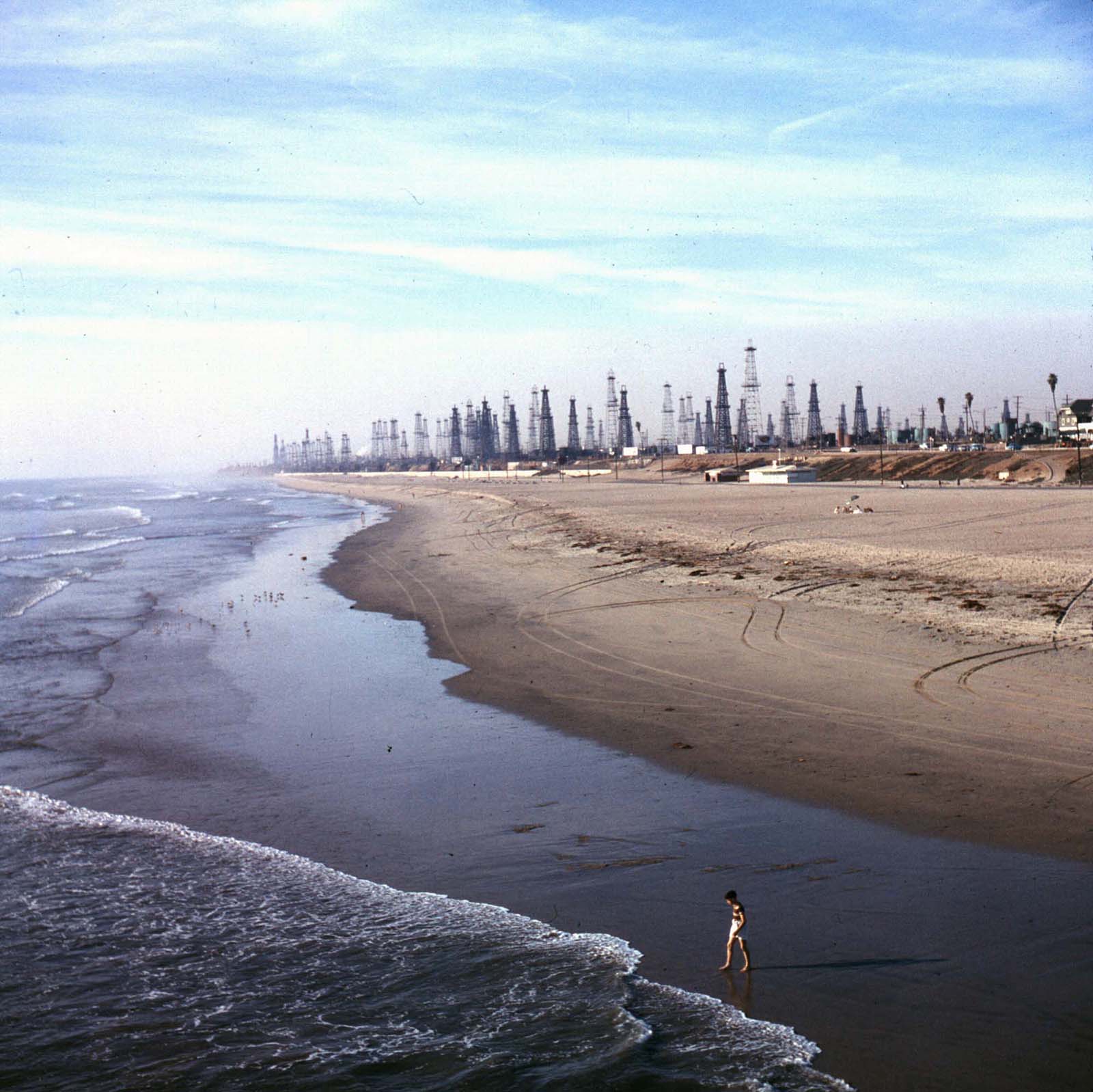
Huntington Beach was another town where the oil boom completely reshaped the landscape. After its field came in during 1920, derricks spread across the beach, the surrounding roads, and even into the surf zone. Sunbathers, swimmers, and couples strolling the shore shared the beach with active drilling equipment.
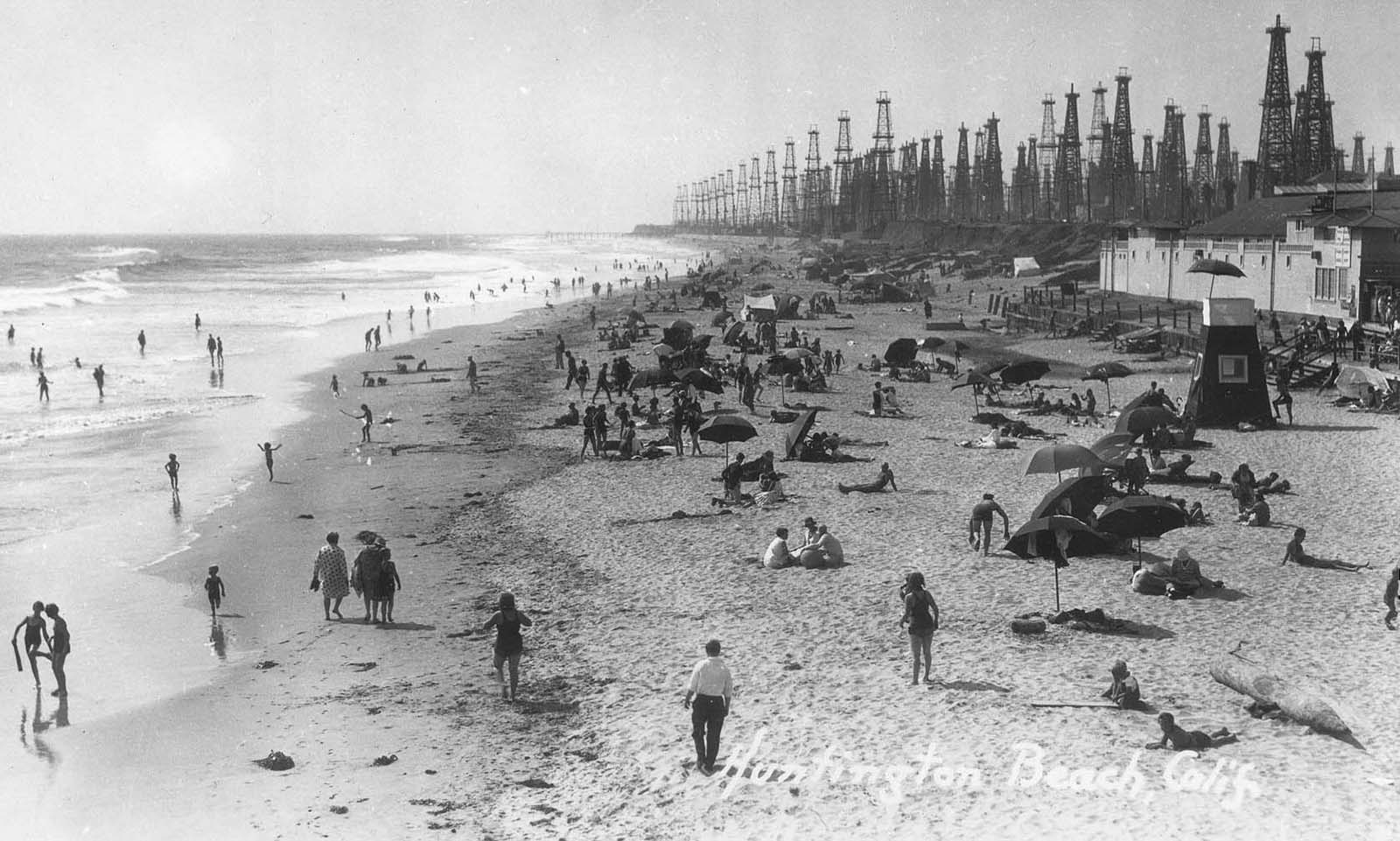
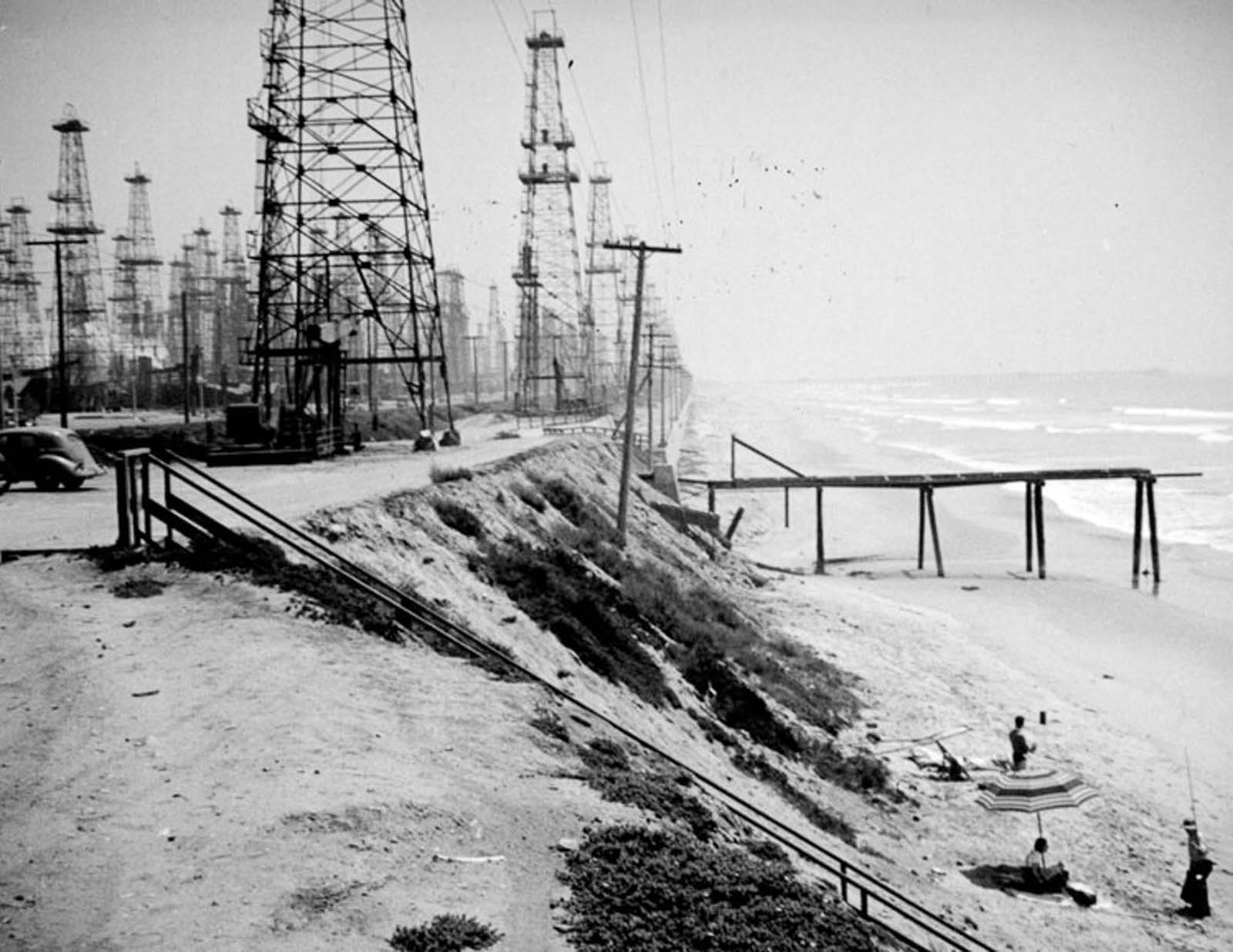
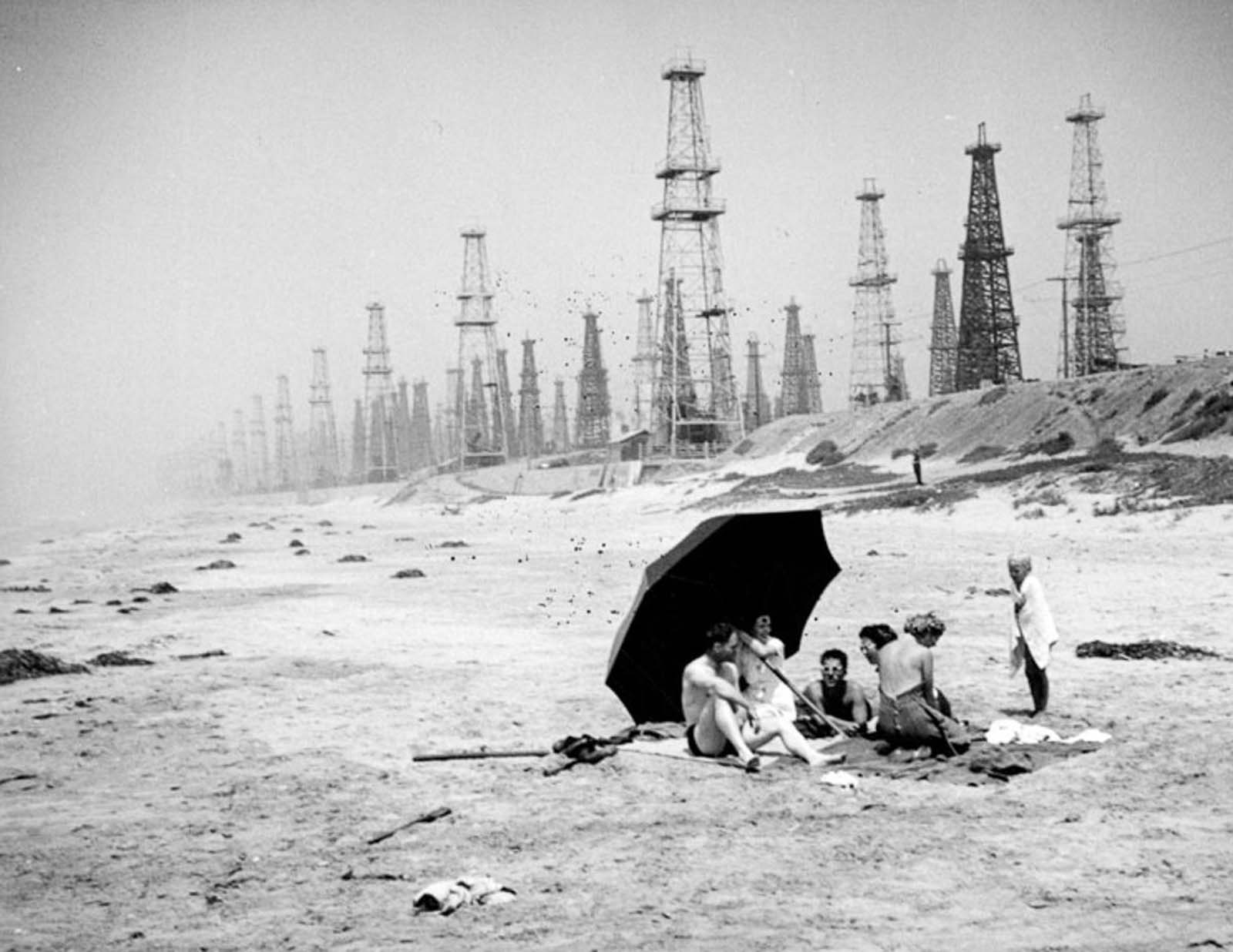
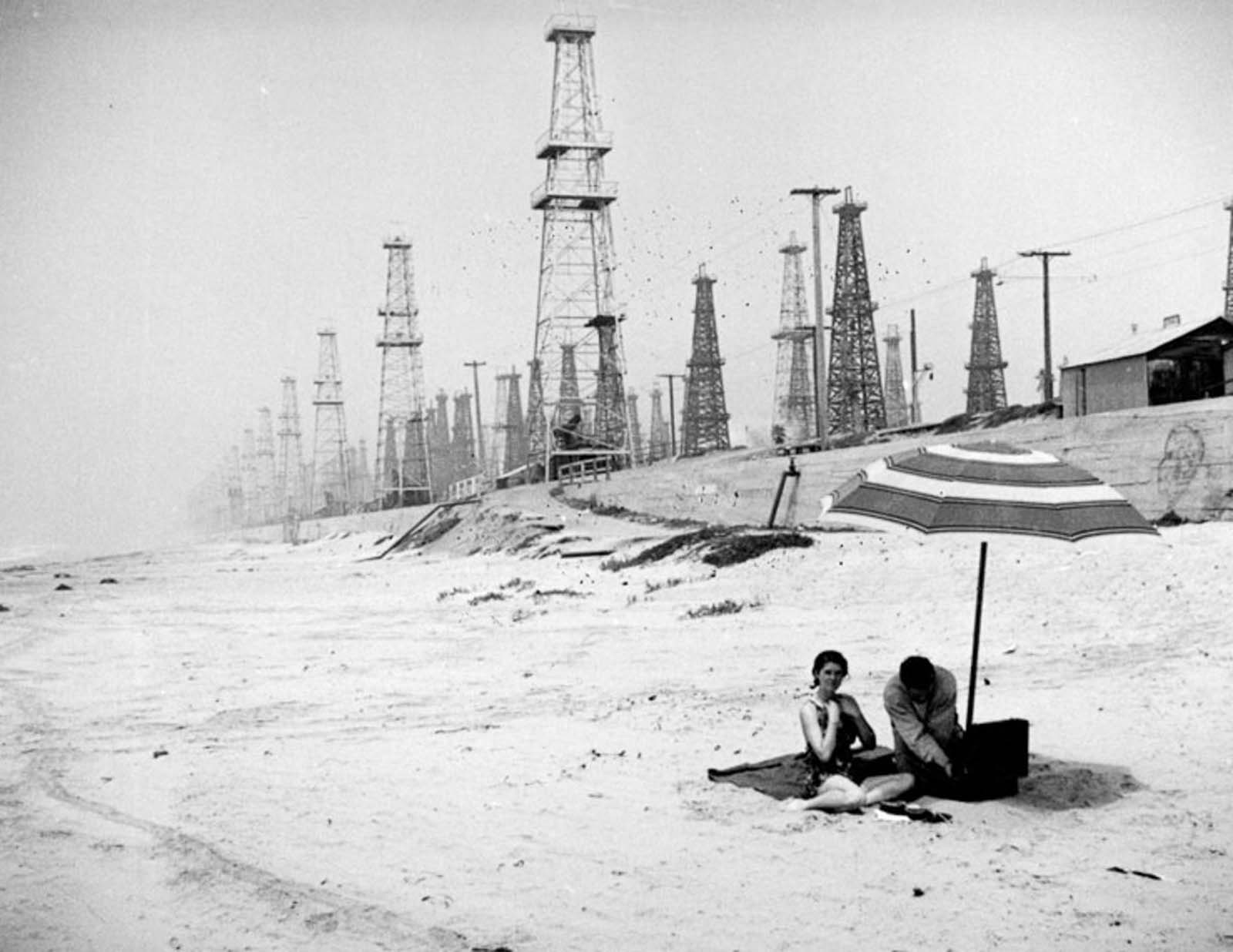
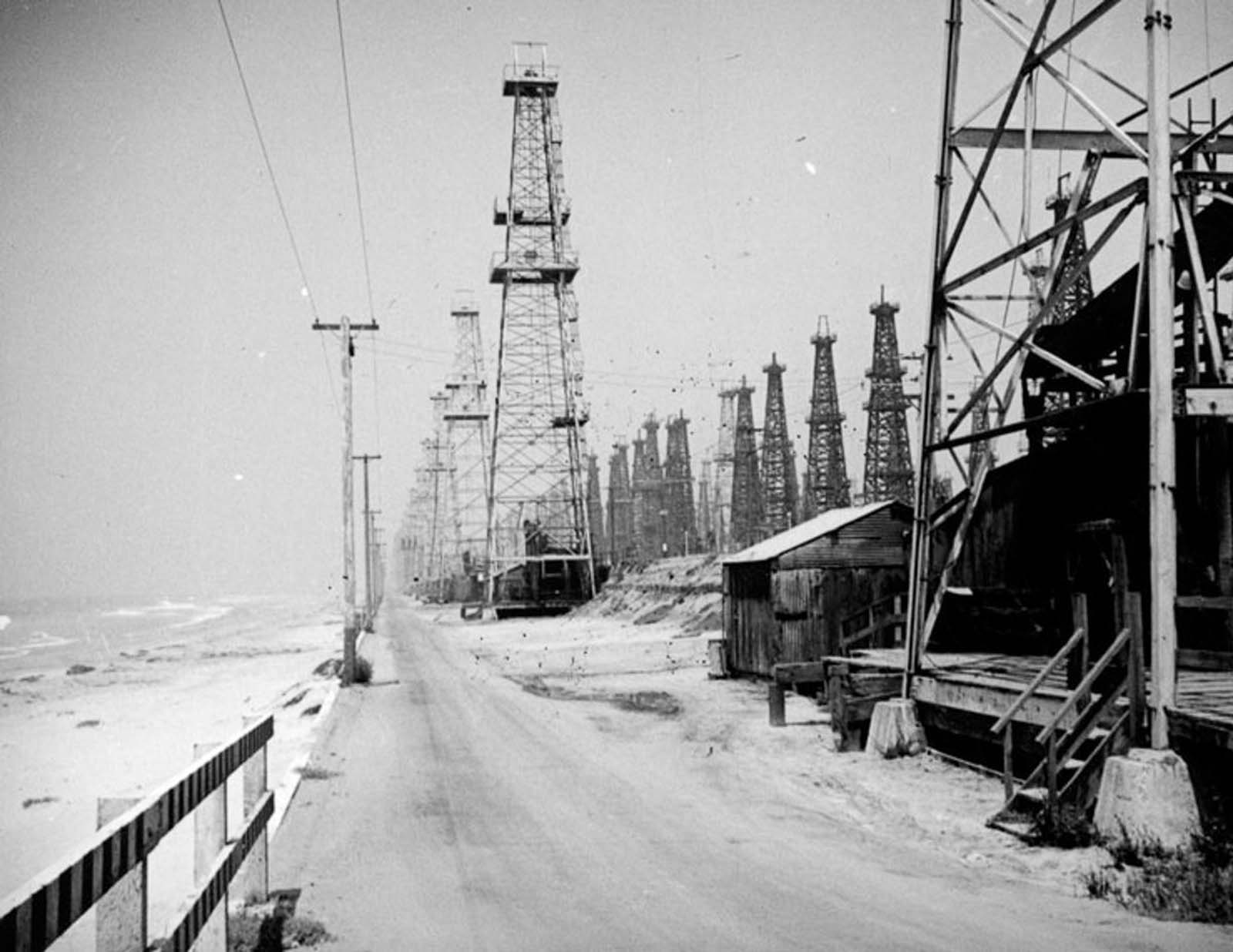
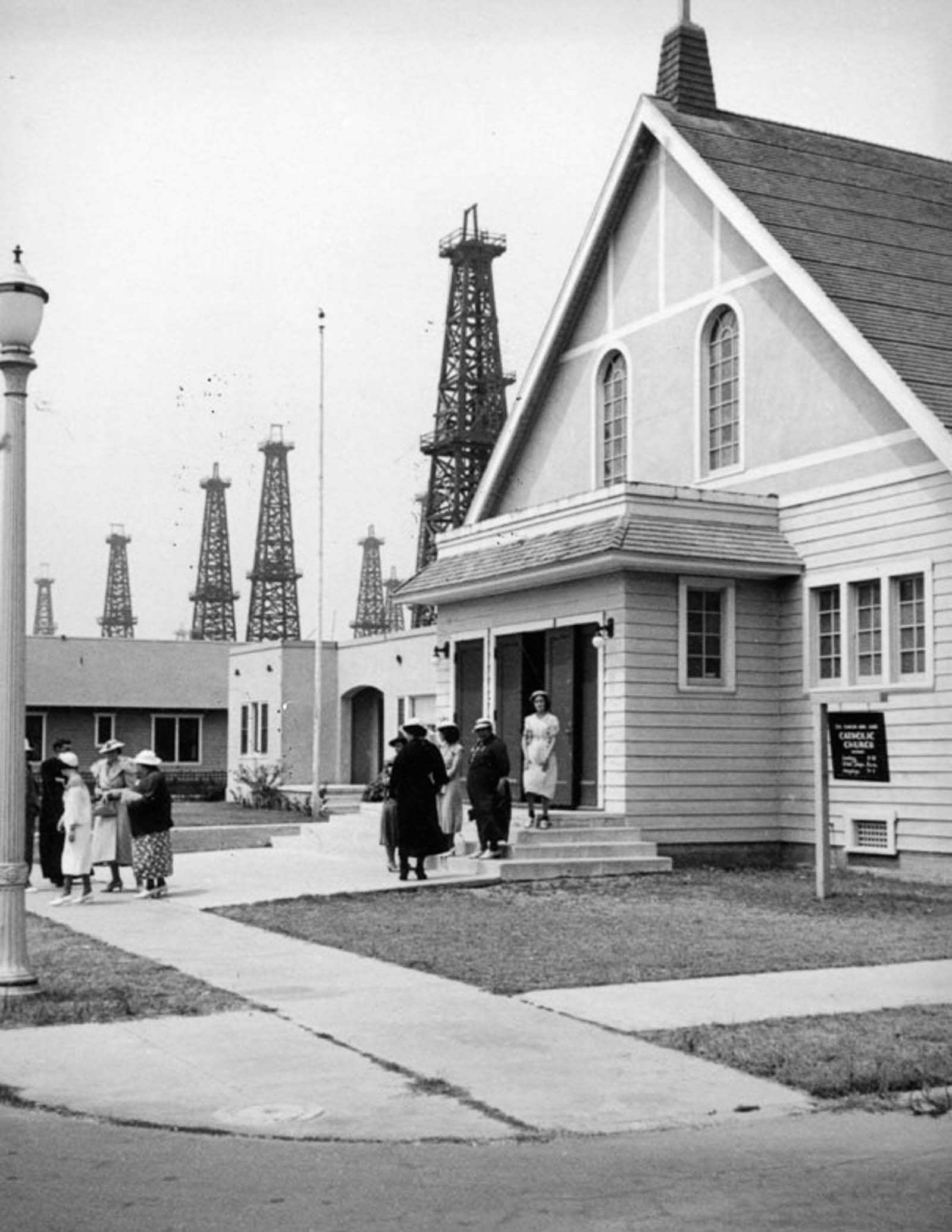
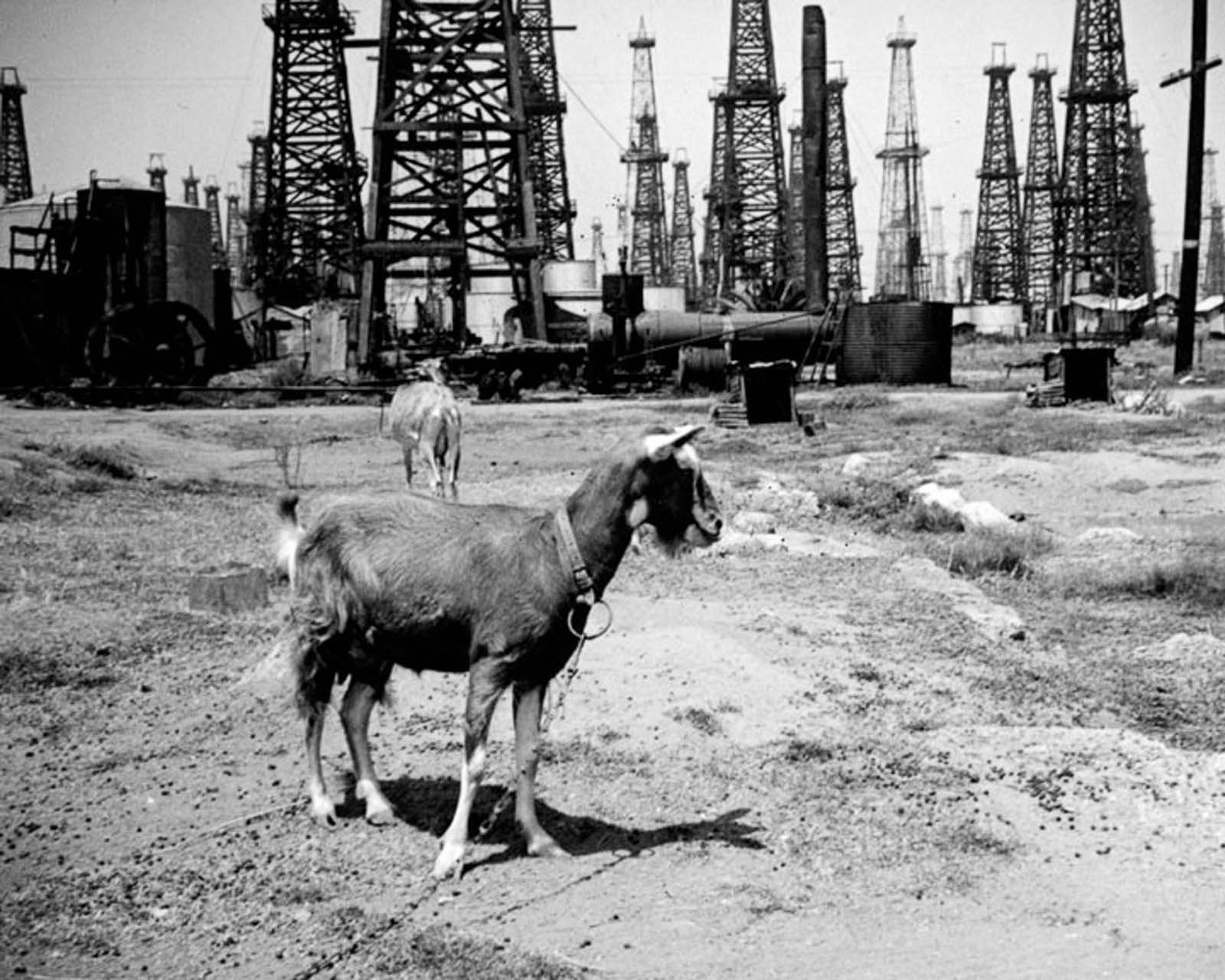
Nothing in Huntington Beach was off-limits to the derricks. They rose behind churches, grazed the fences of homes, and stood within sight of schools and farms. Even livestock shared the land with the machinery.
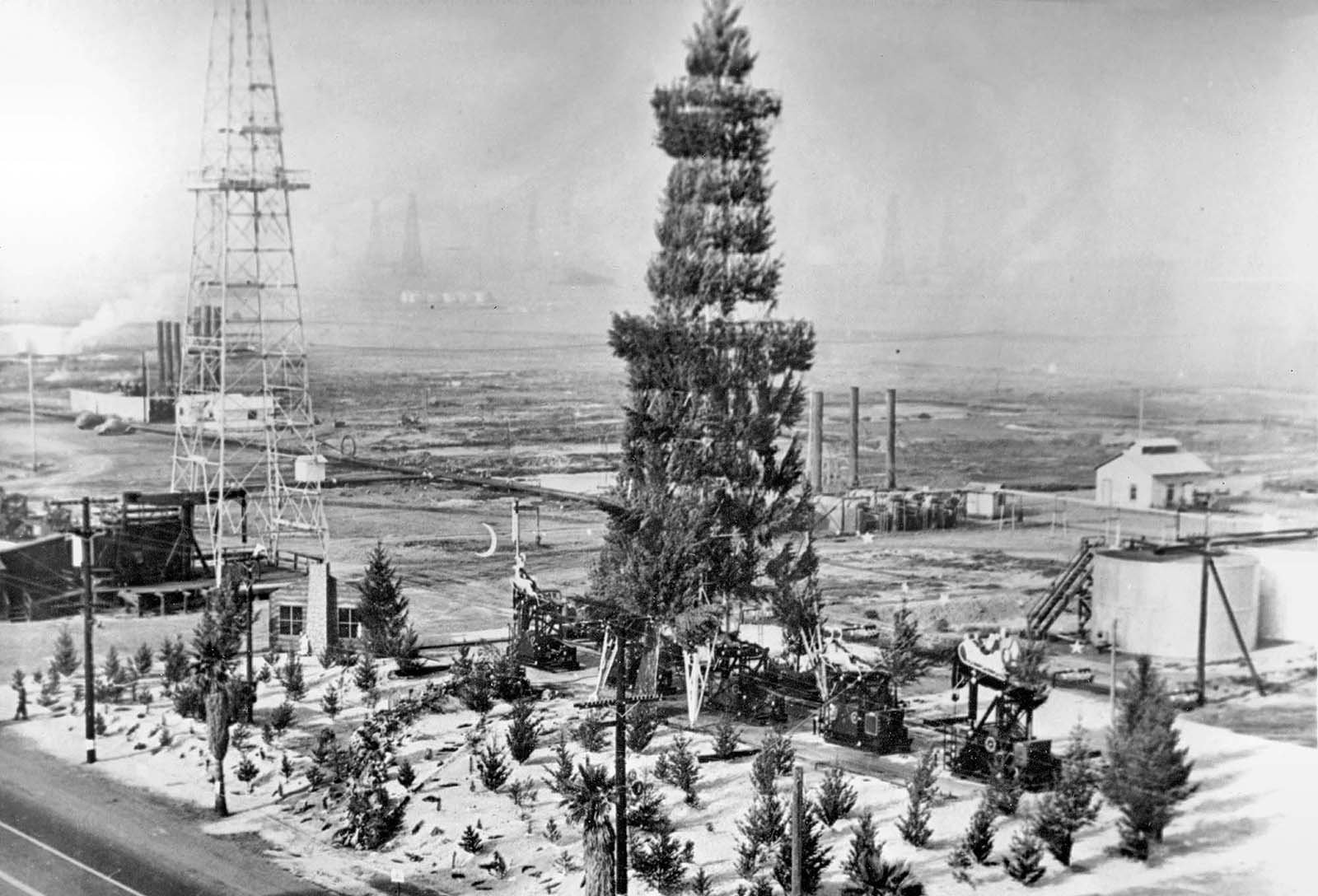
By the late 1930s, some operators in Huntington Beach had begun experimenting with disguises for their derricks — perhaps the most unusual example being a drilling structure decorated as a Christmas tree in 1939. The wooden derricks that defined the landscape for decades were still standing well into the 1960s.
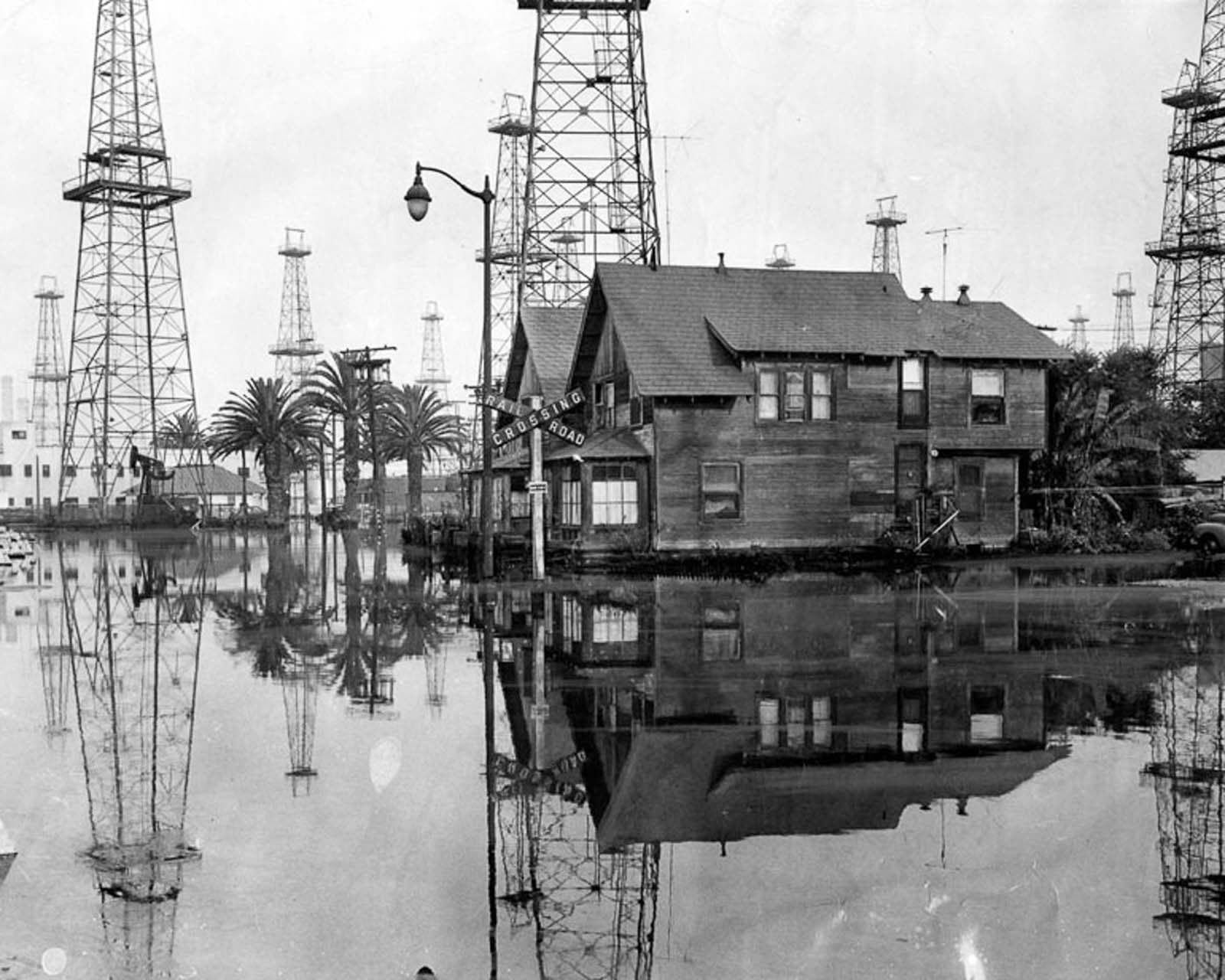
Long Beach experienced the same overwhelming transformation. Residential streets, cemeteries, and open fields all became drilling grounds. The city’s Atlantic Avenue and Patterson Street were completely flanked by derricks by 1940. In 1951, a high tide flooded an active Long Beach oilfield, with pump equipment standing knee-deep in seawater.
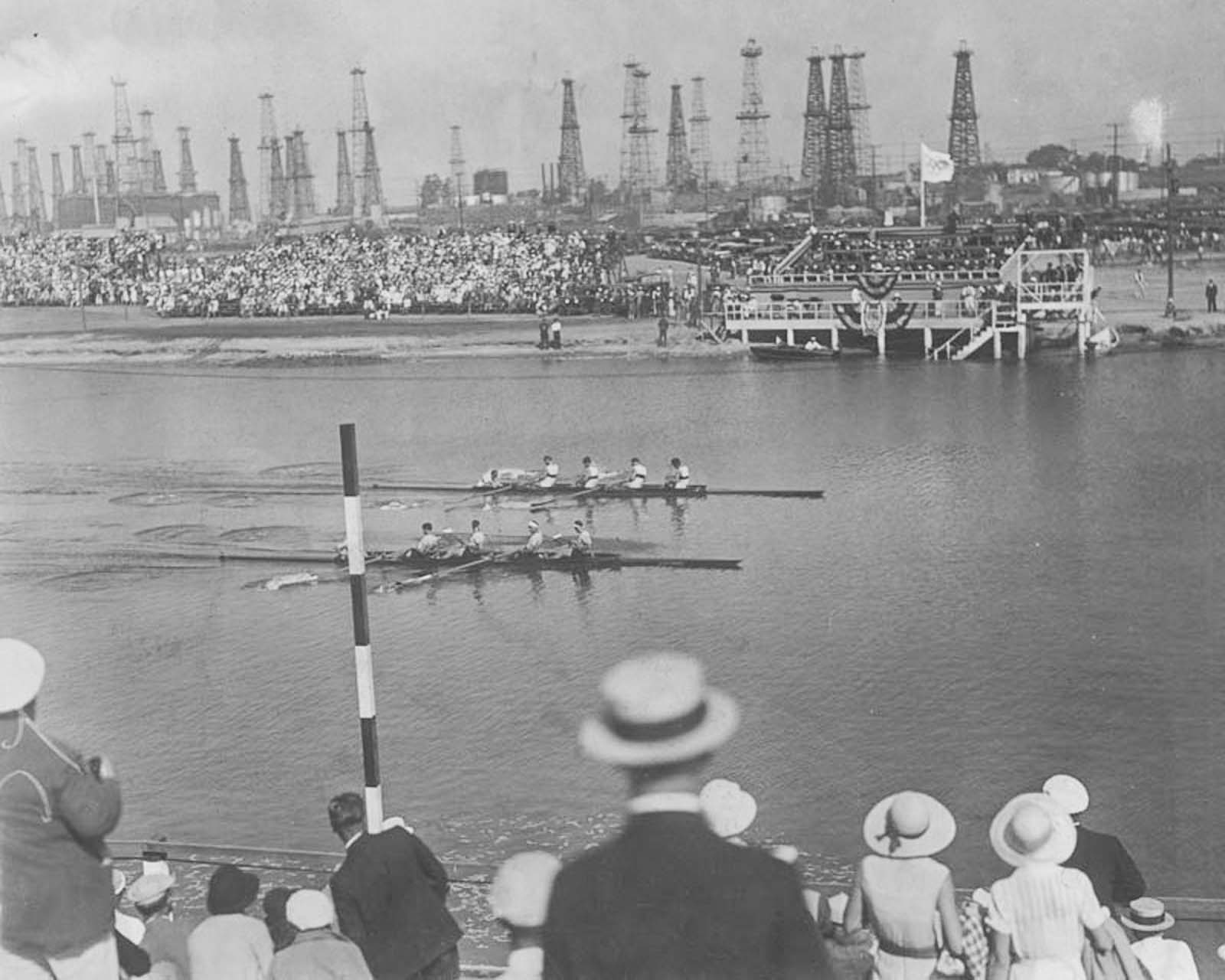
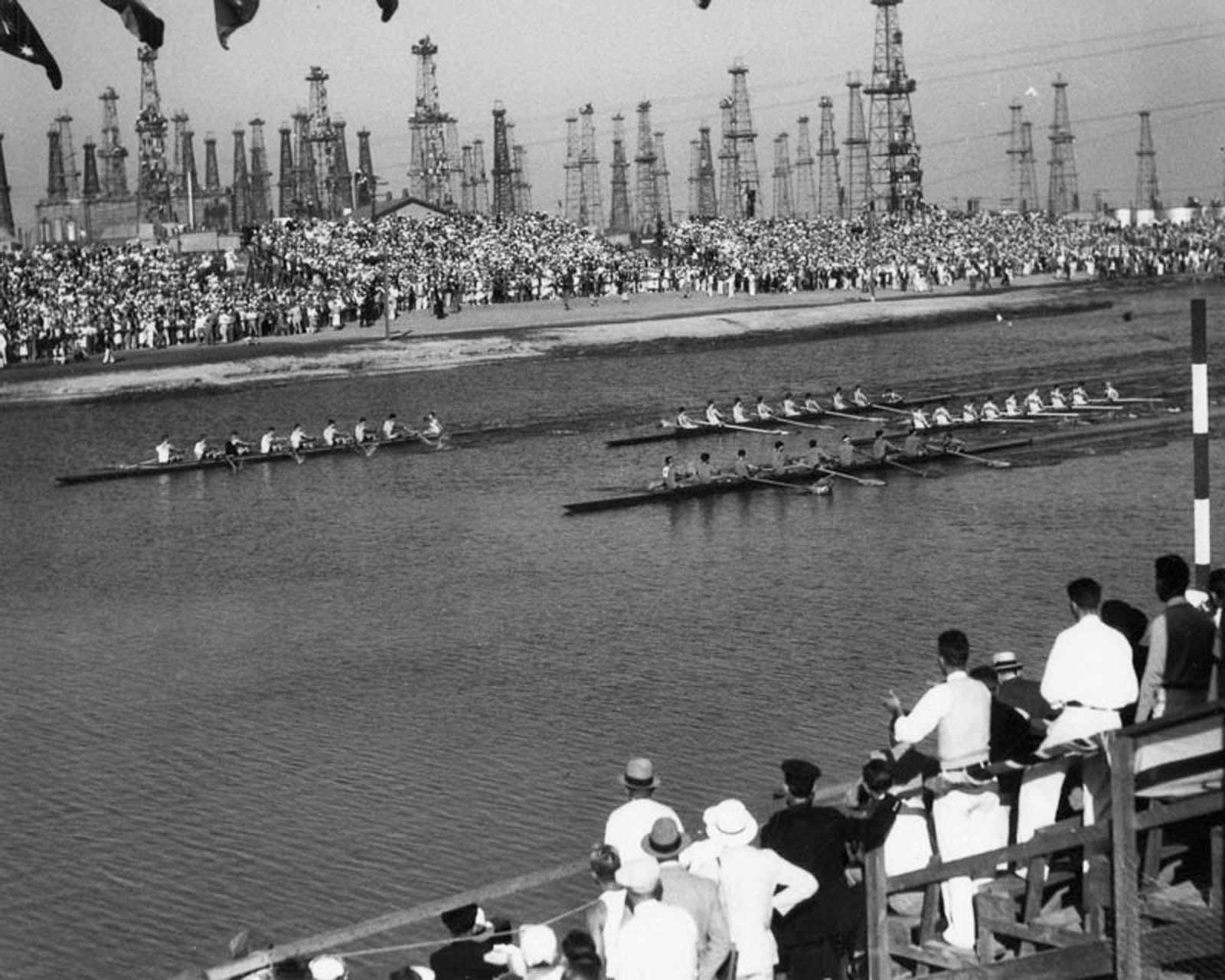
Long Beach also hosted the 1932 Olympic Games, and the rowing events took place at the Long Beach Marine Stadium — with oil infrastructure clearly visible in the surrounding area. The games drew international competitors to a city that had been remade by the oil industry just a decade earlier.
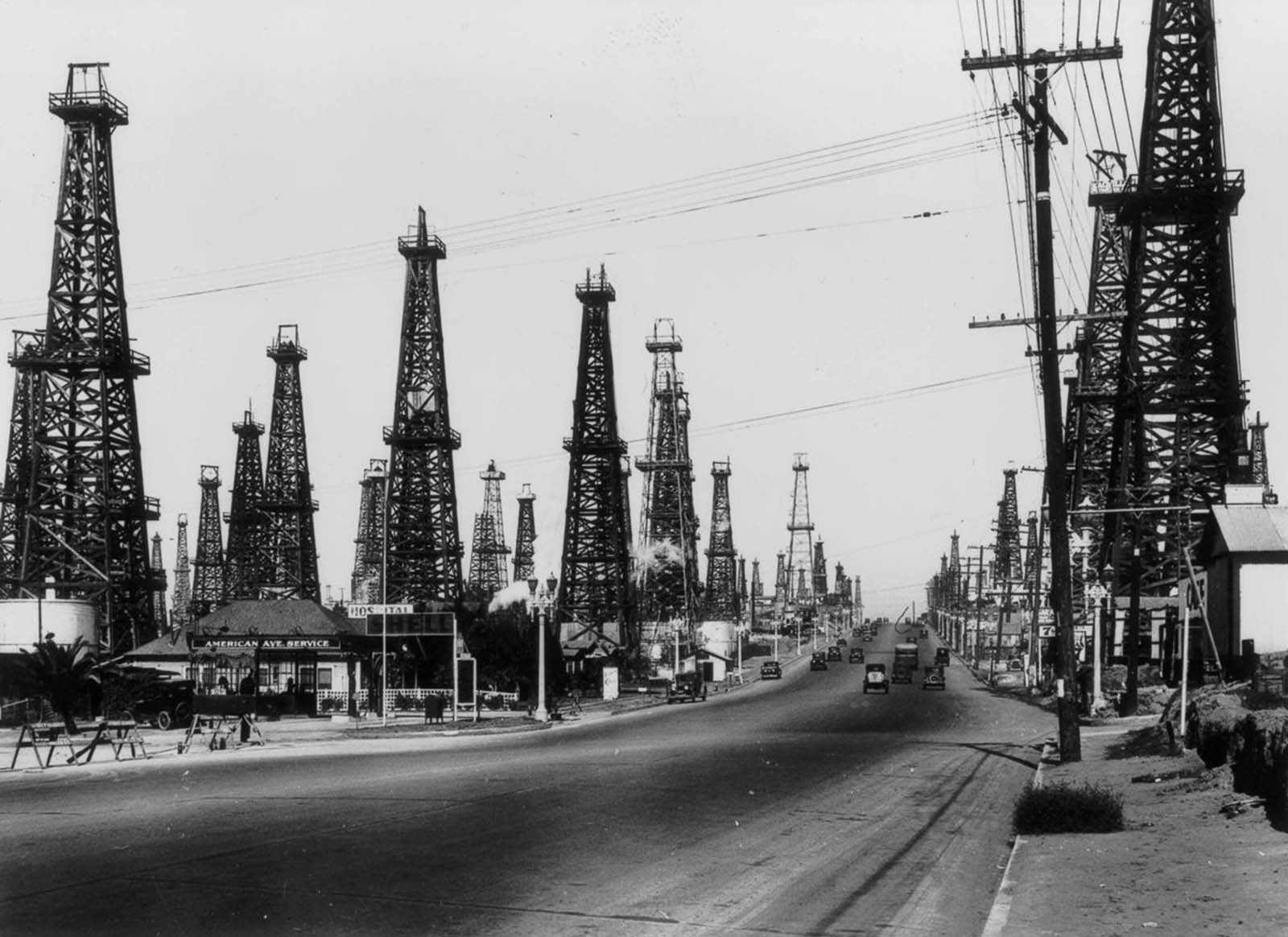
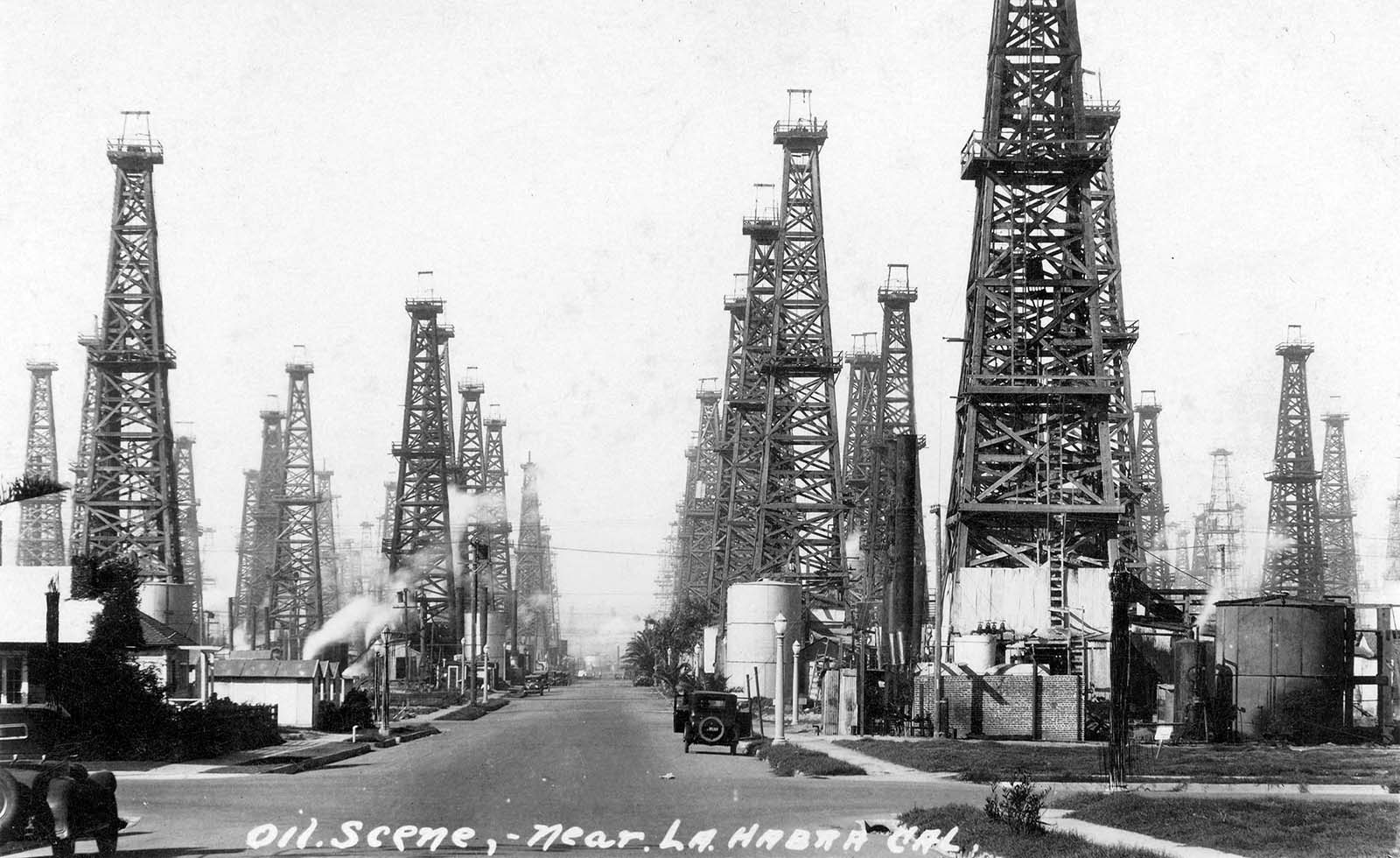
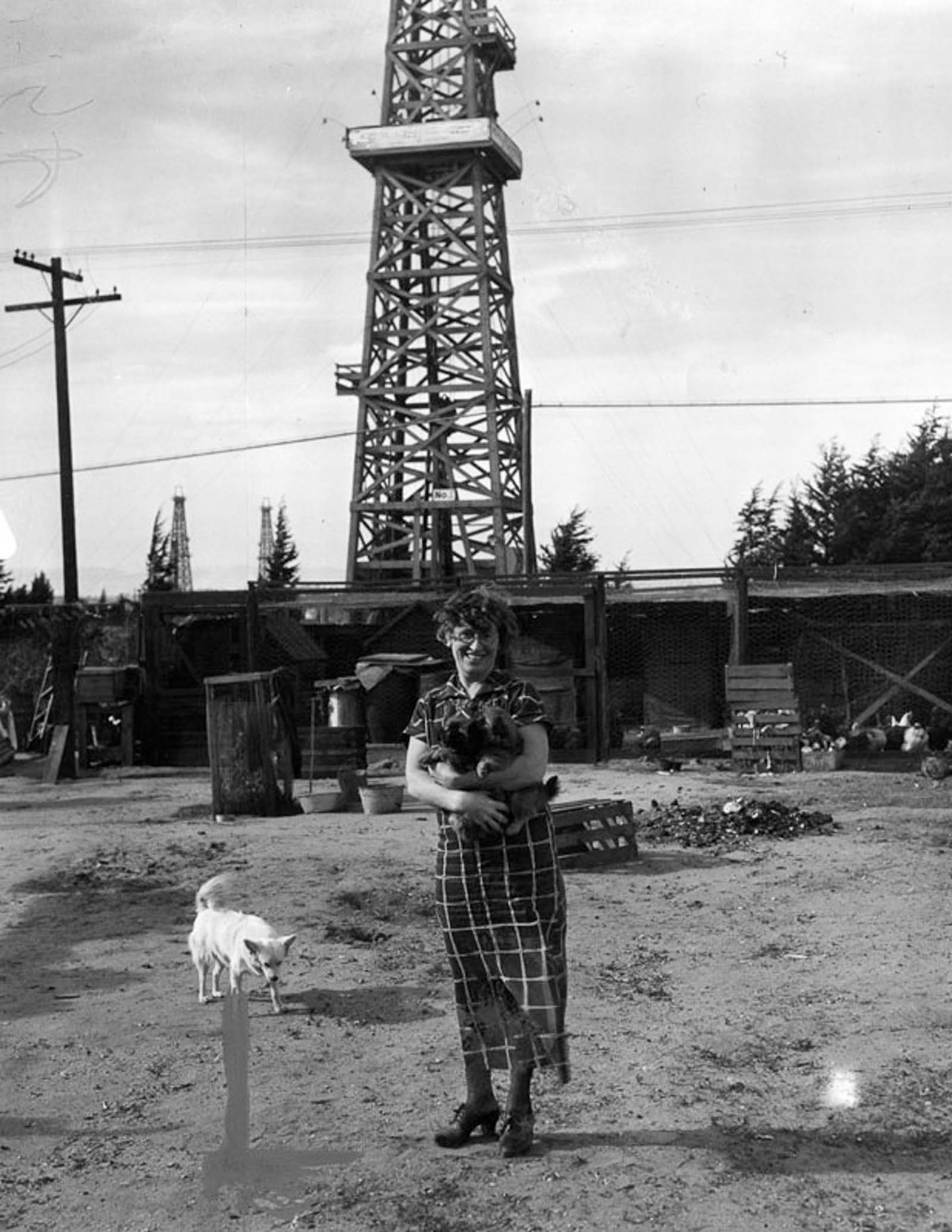
Inland communities were not spared, either. Roads outside Los Angeles were flanked by derricks, and fields near La Habra in Orange County were dotted with active wells by the 1920s. In Redondo Beach, residents built their lives around the machinery — including Mrs. W. B. Stoddard, photographed in 1936 standing in her yard near the George K. Linderman well with her dogs, as casually as if a drilling rig were just another feature of suburban life.
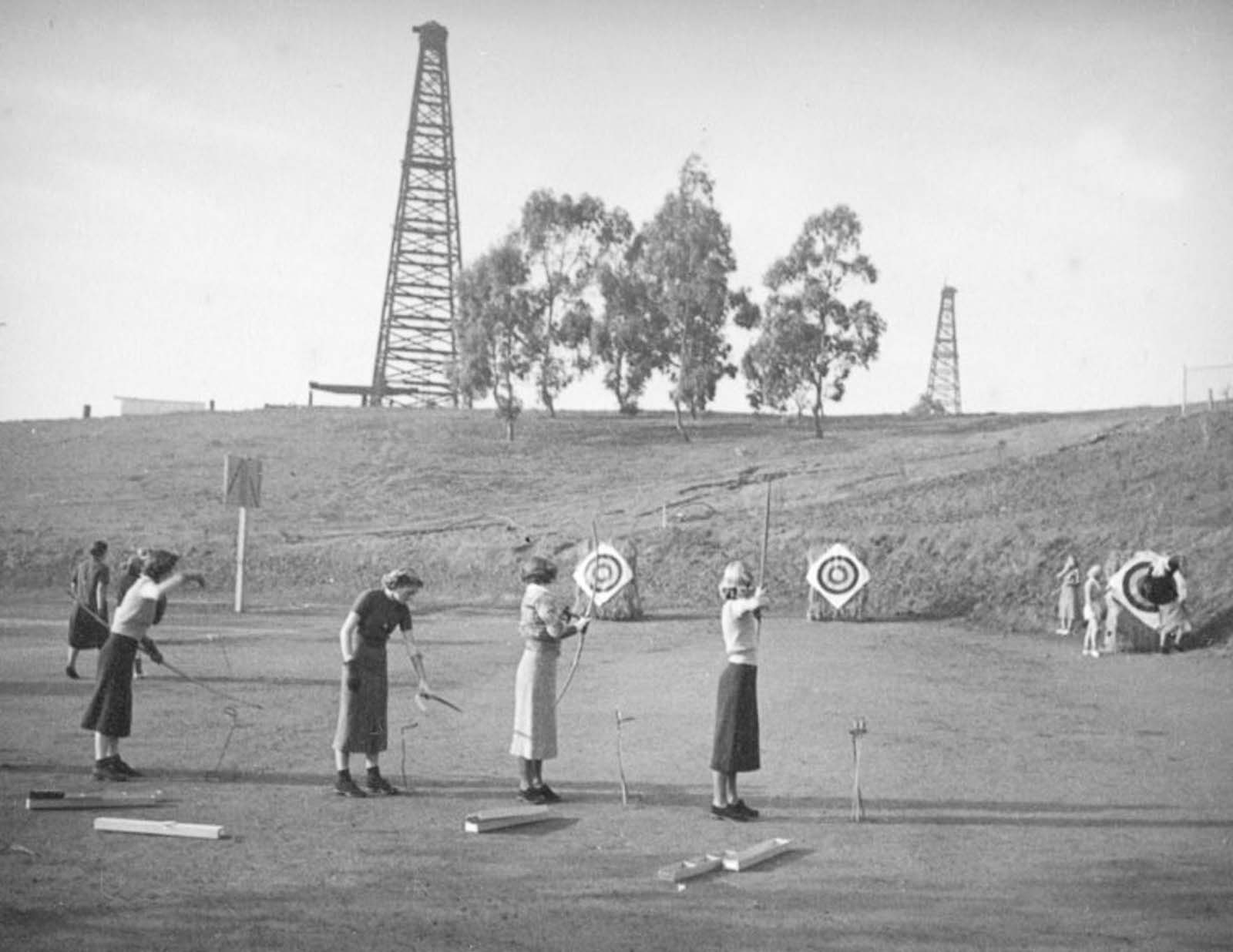
Even Beverly Hills High School operated in the shadow of the oil industry. Students practiced archery on school grounds while active derricks stood nearby — a scene that captured just how thoroughly the oil boom had embedded itself into the routines of ordinary Southern California life.