
When Star Wars hit theaters in May 1977, audiences had never seen anything like it. The film had been four years in the making, built on a budget of $9.5 million — a modest sum even by the standards of the era. By the end of that summer, it had earned $100 million at the box office and walked away with six Academy Awards. Two sequels followed: The Empire Strikes Back in 1980 and Return of the Jedi in 1983. Together, the three films changed what Hollywood believed a movie could do.
But what the audience saw on screen was only half the story. Behind the cameras, on dusty Tunisian locations and inside cramped London studios, the cast and crew were solving problems that no filmmaker had faced before. These photos pull back the curtain on all of it.
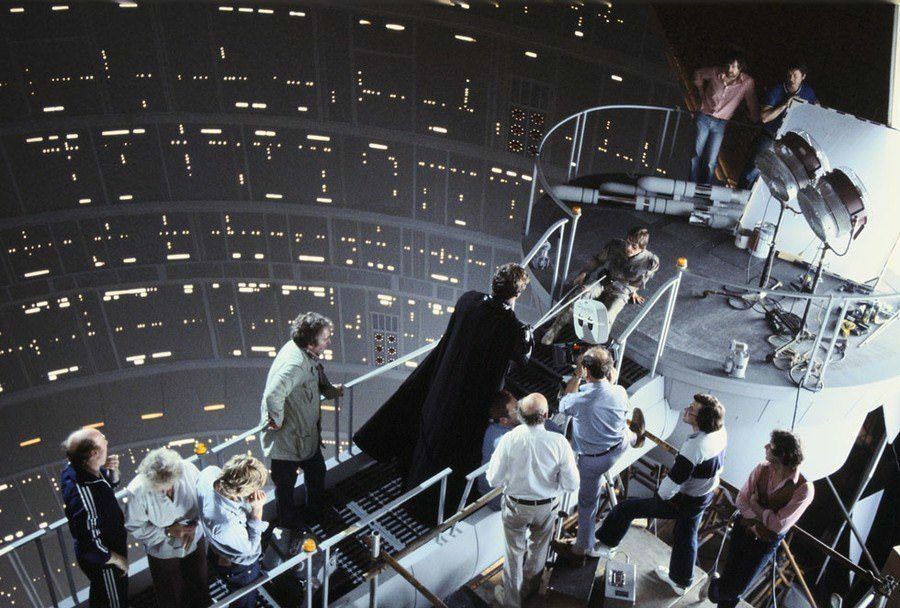
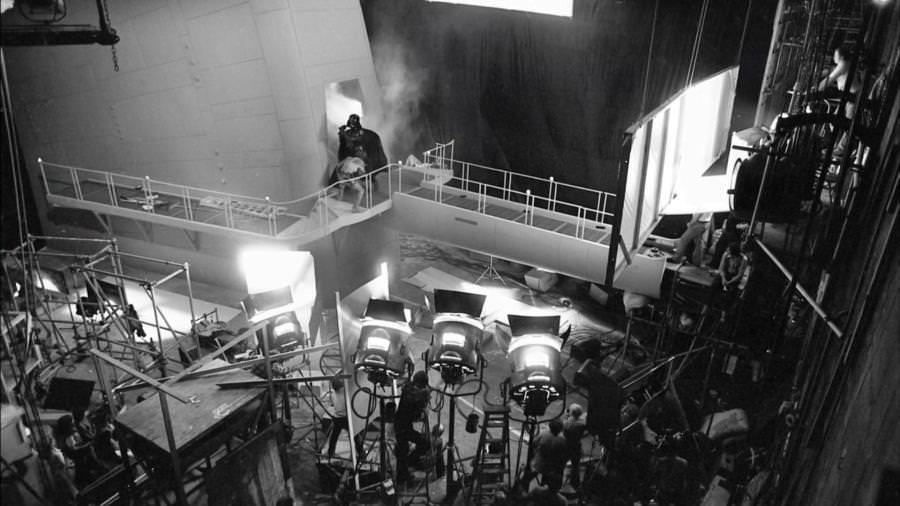
The moment Darth Vader delivers his bombshell revelation to Luke Skywalker is one of the most quoted lines in cinema history. Behind the scenes, the setup looks far less dramatic — raw sets, visible rigging, and crew members just outside the frame. That contrast between the polished final product and the practical reality of filmmaking runs through every photo in this collection.
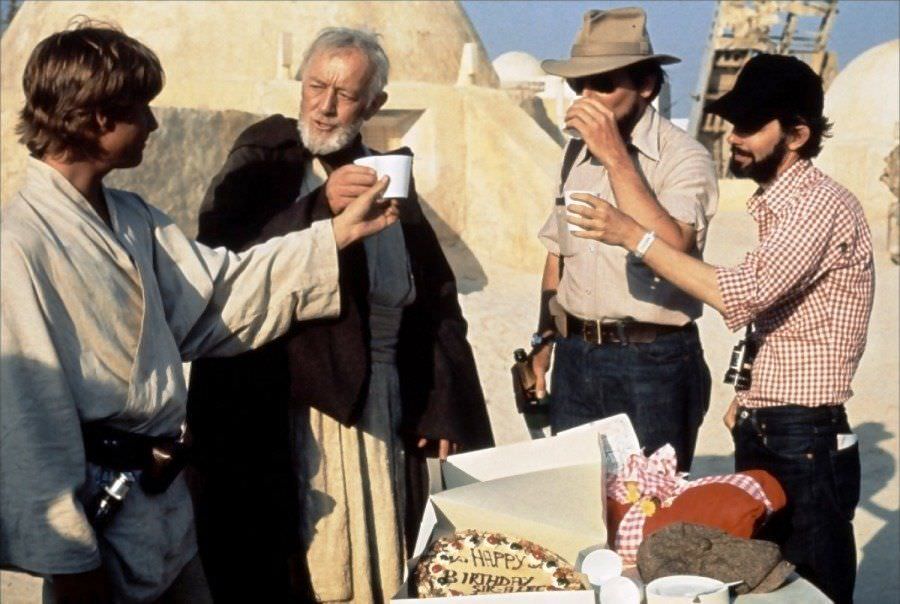
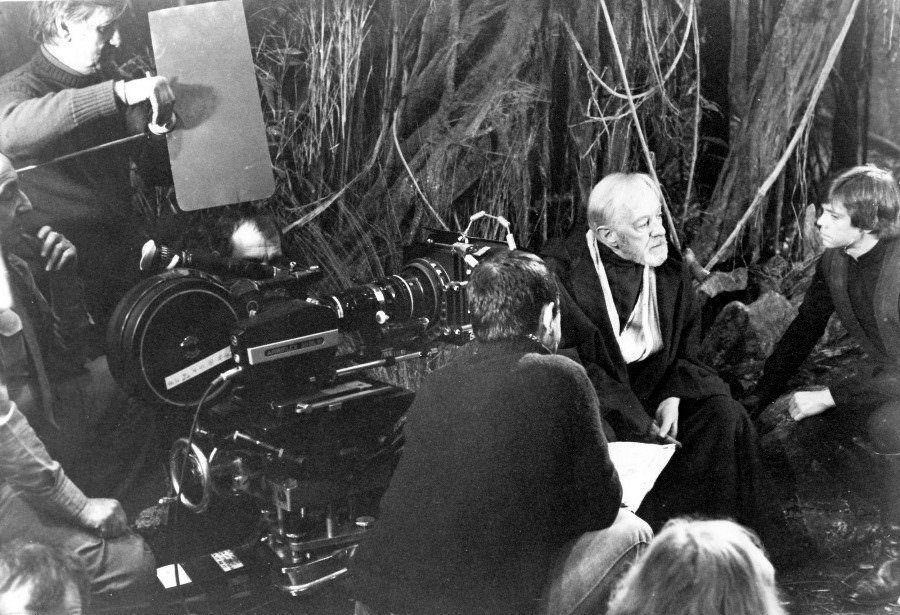
Alec Guinness came to Star Wars as a celebrated theater actor with decades of serious dramatic work behind him. He famously called the script “fairy tale rubbish” during production — yet after watching a finished cut of A New Hope, he described it as a “staggering spectacle.” His performance as Obi-Wan Kenobi gave the film a sense of gravity it badly needed, and scenes like this birthday celebration on location in Tunisia show a cast enjoying themselves far from the pressures of a Hollywood studio.
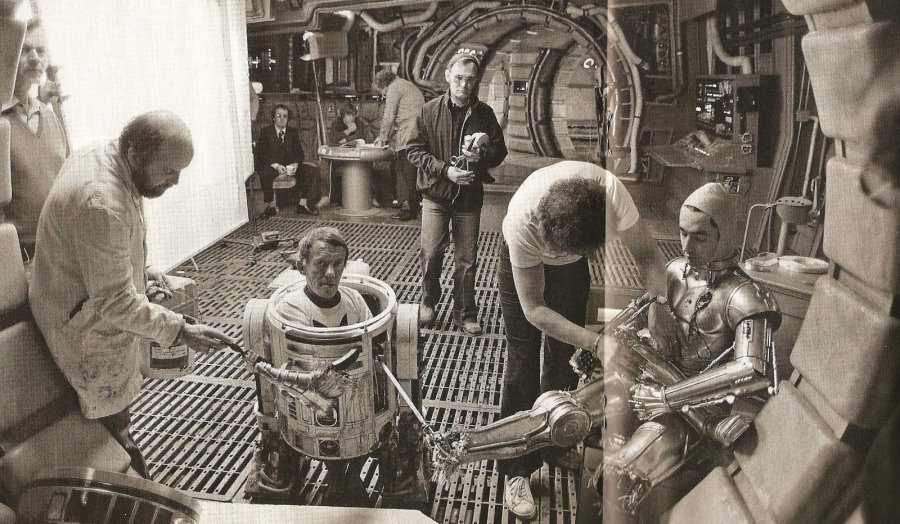
On screen, R2-D2 and C-3PO are an inseparable duo. Off screen, the relationship between the men inside those costumes was far colder. Baker said of Daniels in 2009, “He looked down his nose at me like I was a piece of shit.” The two men worked alongside each other across three films and never managed to get along.
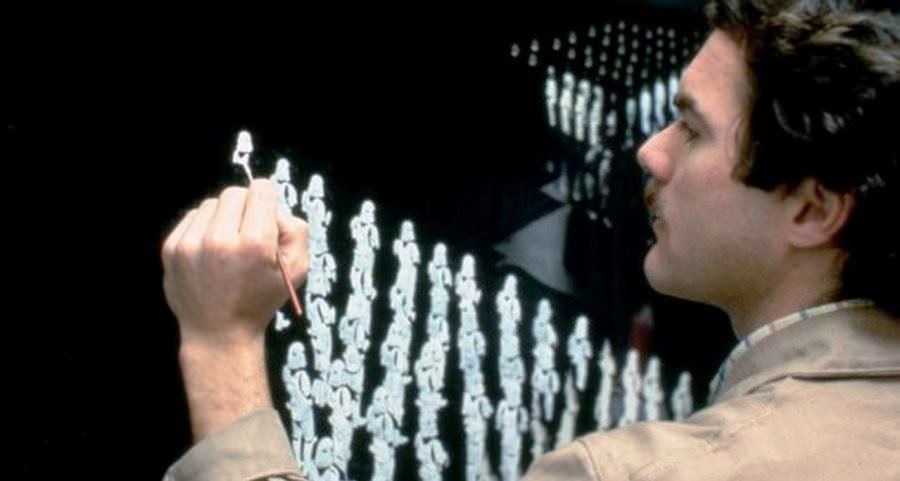
Filling an entire galaxy with life required constant creative problem-solving. Rather than pay thousands of extras to populate vast environments, the production team relied heavily on matte paintings — detailed artwork blended into live-action footage to create the illusion of sprawling cities, alien landscapes, and massive military installations. The technique was not new to Hollywood, but Star Wars pushed it further than any film before it.
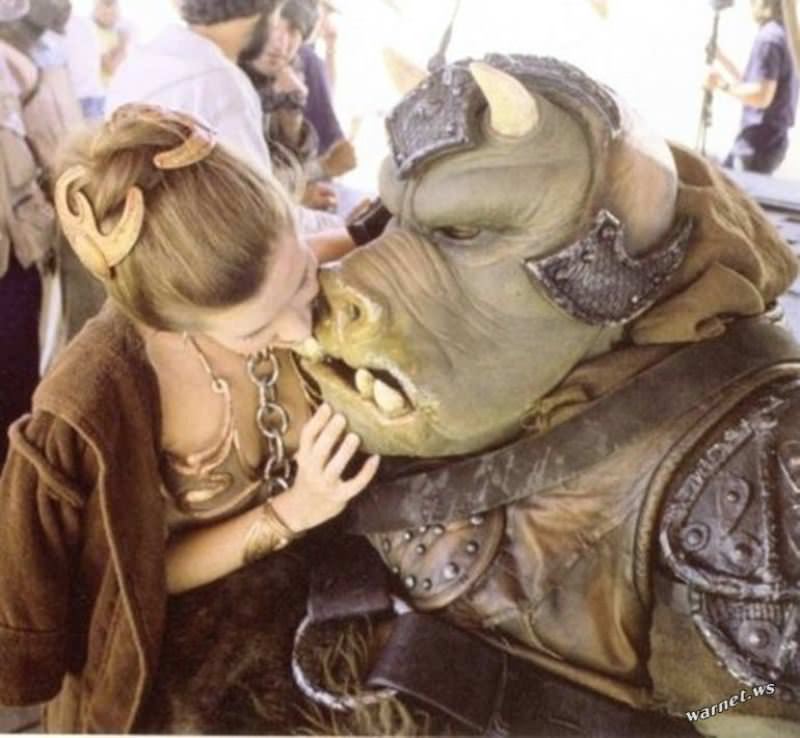
Return of the Jedi introduced some of the most elaborate creature designs in the trilogy. Jabba the Hutt’s palace scenes required a team of puppeteers, performers in full prosthetic costumes, and enormous set builds. The Gamorrean guards — the green, pig-faced soldiers stationed at Jabba’s door — were played by actors in full body suits that took considerable time to get in and out of each day.
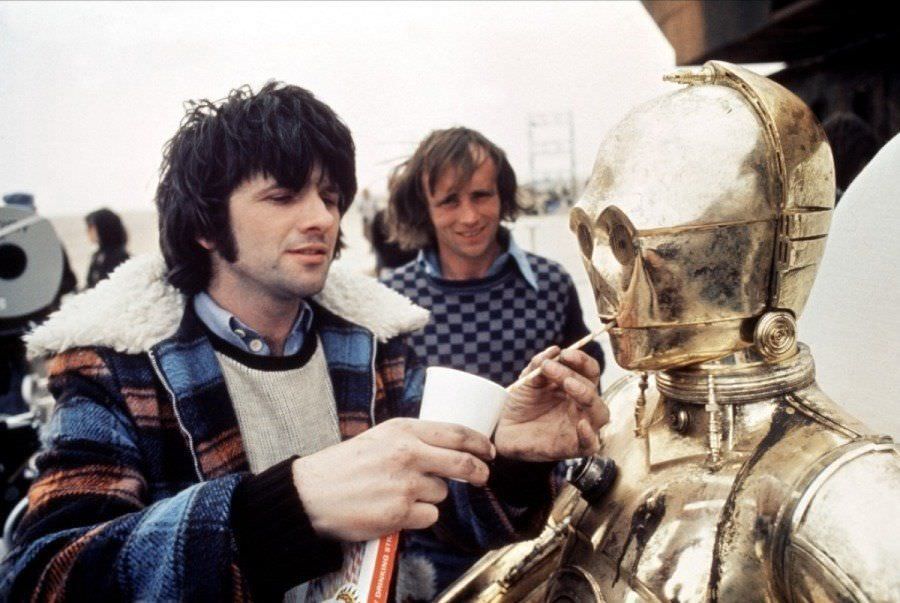
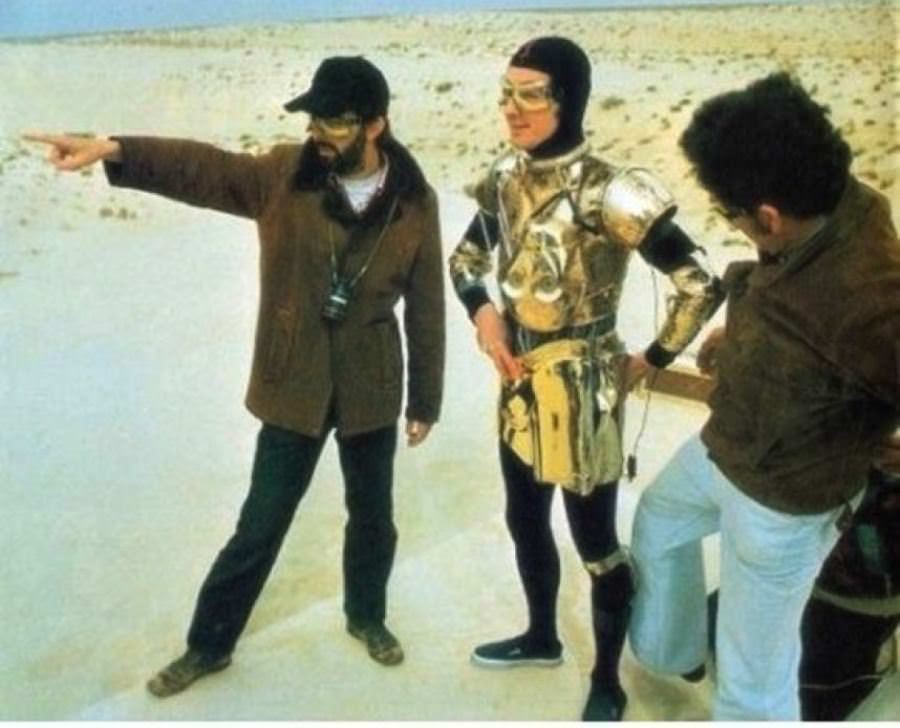
Anthony Daniels did not have an easy time on set. The C-3PO costume was rigid, uncomfortable, and made communication with other cast members extremely difficult. By the time Return of the Jedi wrapped, Daniels had spent years encased in a suit that restricted nearly every natural movement.
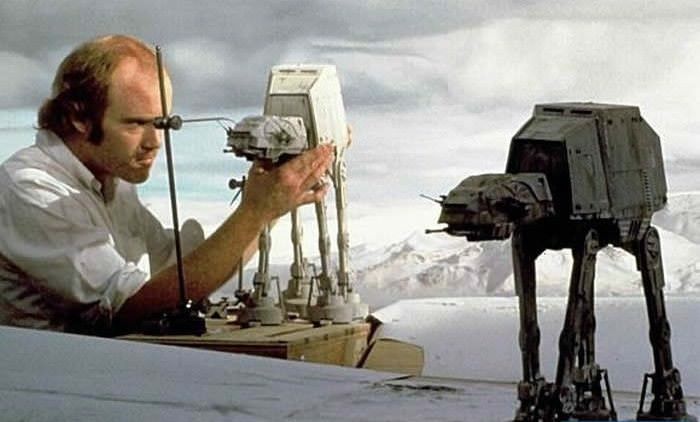
The AT-AT walkers that thunder across the ice plains of Hoth in The Empire Strikes Back were inspired by Paraceratherium, the largest land mammal ever to walk the Earth. The mechanical beasts were filmed using stop-motion animation — a painstaking process where small models are photographed one frame at a time. The result gave the walkers a slow, deliberate gait that felt genuinely heavy and threatening on screen.
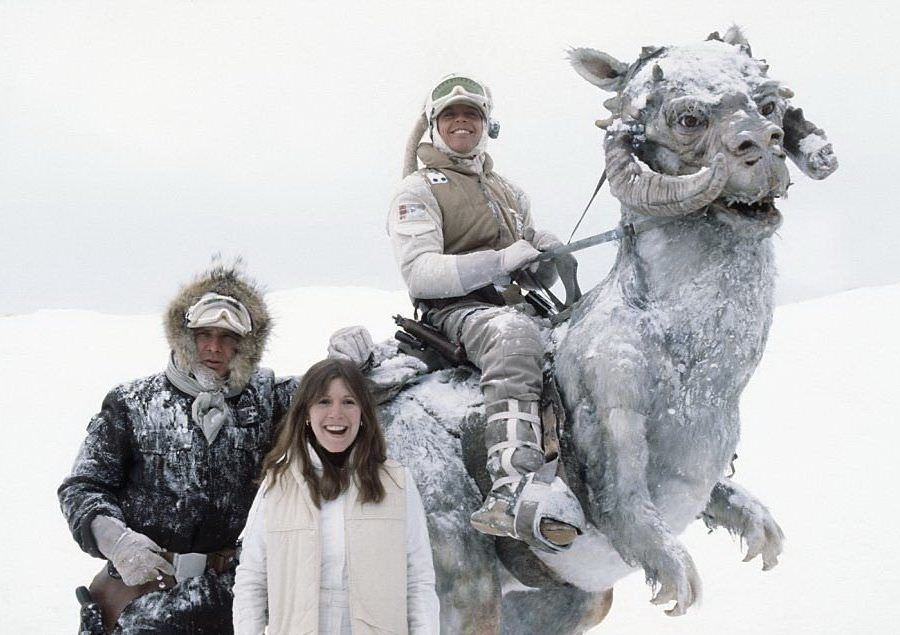
The opening scenes of The Empire Strikes Back were filmed in Finse, Norway, during January 1979. Temperatures dropped to extreme lows during production, and blizzard conditions shut down filming on multiple days. Yet photos from the set show the core cast in good spirits, sharing laughs between takes despite the brutal weather.
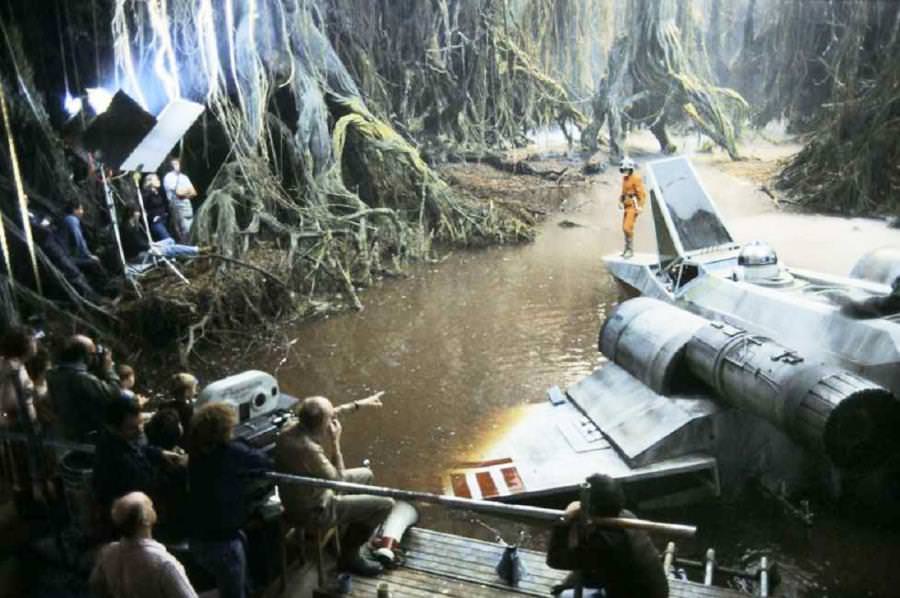
Dagobah — the swampy, fog-drenched planet where Yoda trains Luke Skywalker — looks like a remote jungle wilderness. Every inch of it was built inside Elstree Studios in London. The production design team constructed the gnarled roots, murky water, and dense vegetation by hand, then added atmospheric fog and carefully controlled lighting to sell the illusion of a living, breathing alien world.
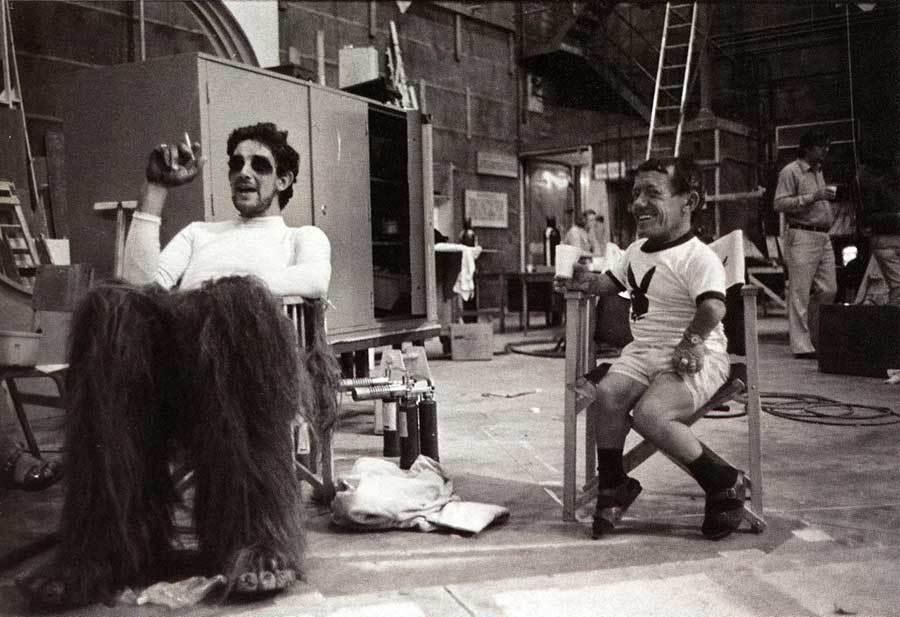
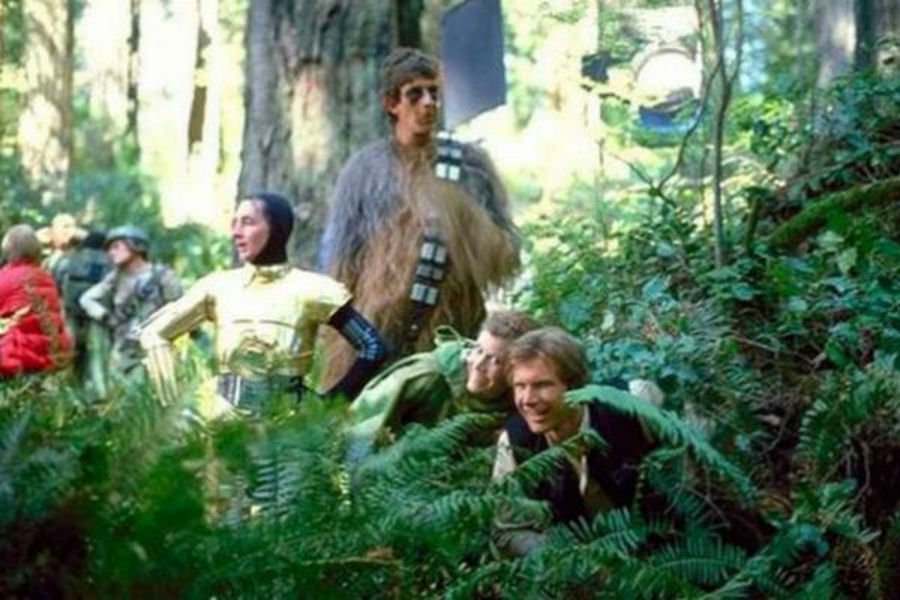
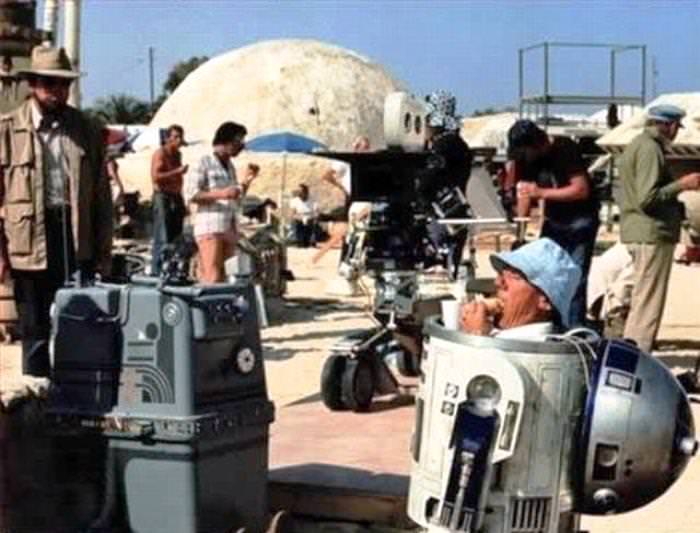
Peter Mayhew stood 7 feet 3 inches tall, which made him the natural choice to play Chewbacca. His costume required hours of preparation and involved a full-body suit of yak hair. Beside him, Kenny Baker occupied the cramped interior of R2-D2 — a unit barely large enough to fit a person measuring 3 feet 8 inches. Both men spent long hours on set in physically demanding conditions.
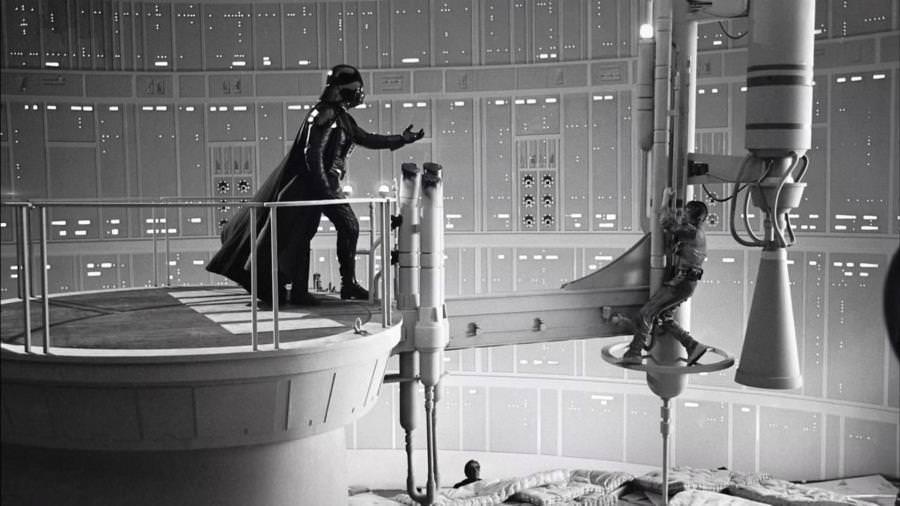
After Vader reveals the truth about his parentage, Luke drops down a shaft in Cloud City in one of the most dramatic moments in the trilogy. On set, Mark Hamill’s fall ended on a stack of mattresses just out of camera range. The finished scene, combined with John Williams’ score and the emotional weight of what came before it, turned a very practical stunt into something genuinely devastating.
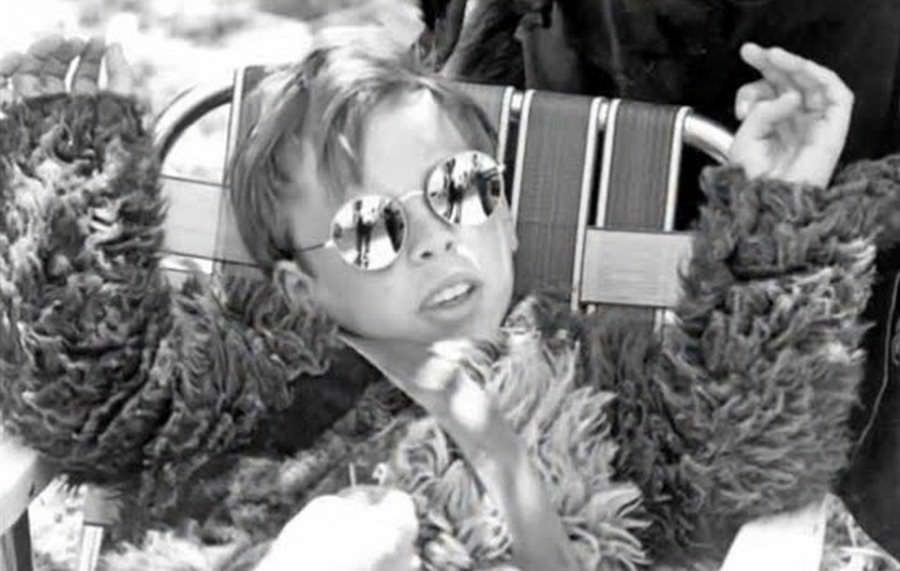
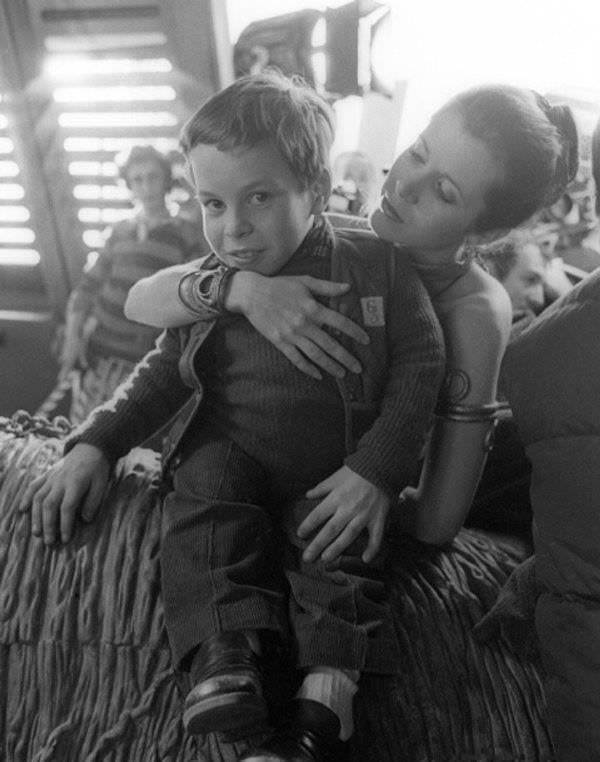
Warwick Davis was just 11 years old when he was cast in Return of the Jedi, turning 12 during production. He originally came to the set as a background performer among the Ewoks, but when the actor scheduled to play Wicket fell ill, Davis stepped in and made the role his own. His performance inside the Wicket costume gave the character a distinct personality despite having no dialogue.
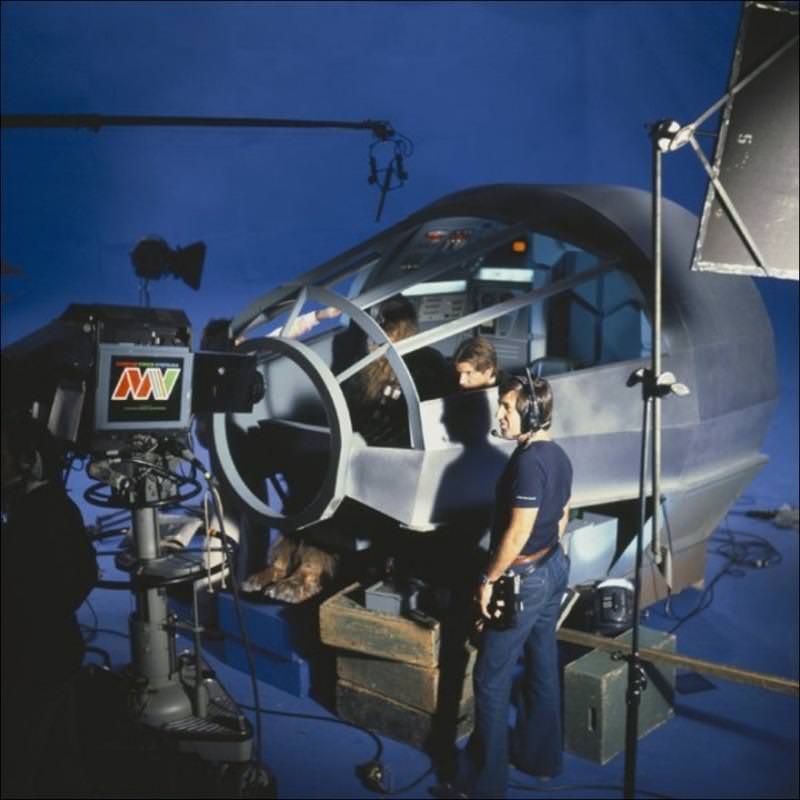
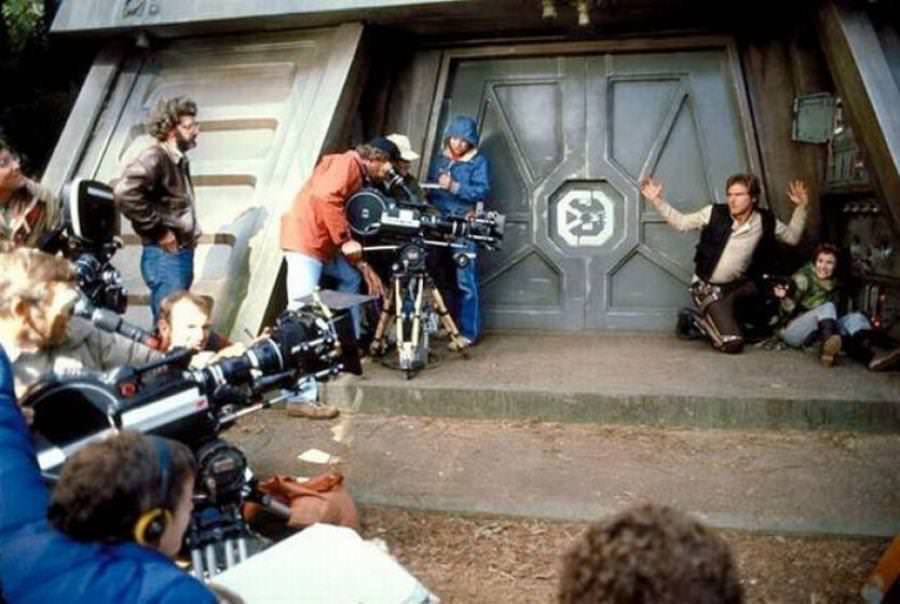
The Millennium Falcon set was one of the largest and most detailed builds of the entire production. Up close and unlit, the ship’s exterior looks like exactly what it is — an enormous construction of wood, foam, and painted panels. The film crew worked to make every inch of it look lived-in and battered, giving Han Solo’s ship the feel of a working vehicle rather than a pristine spacecraft.
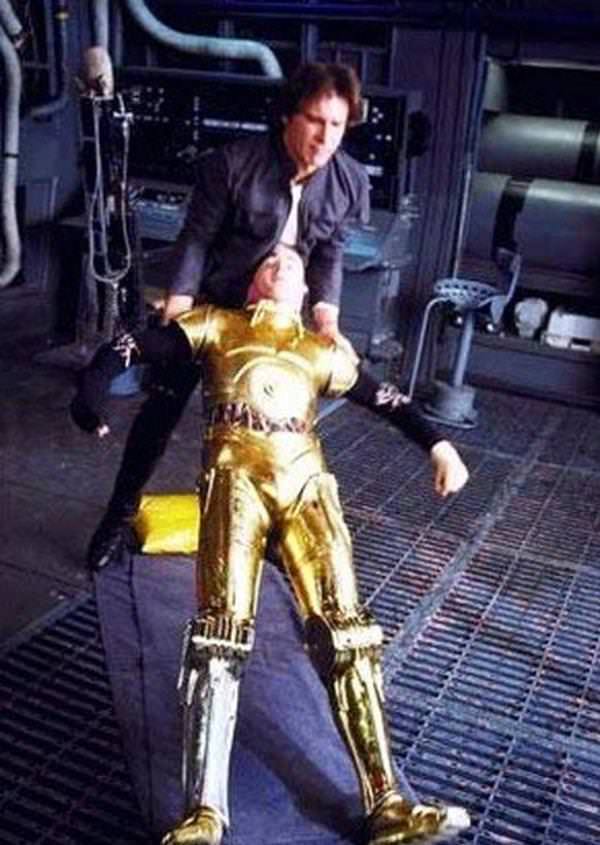
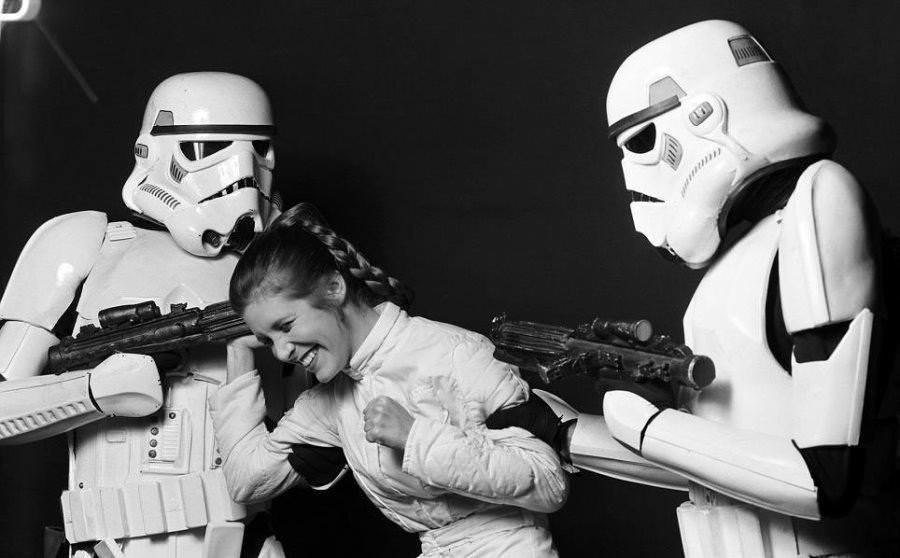
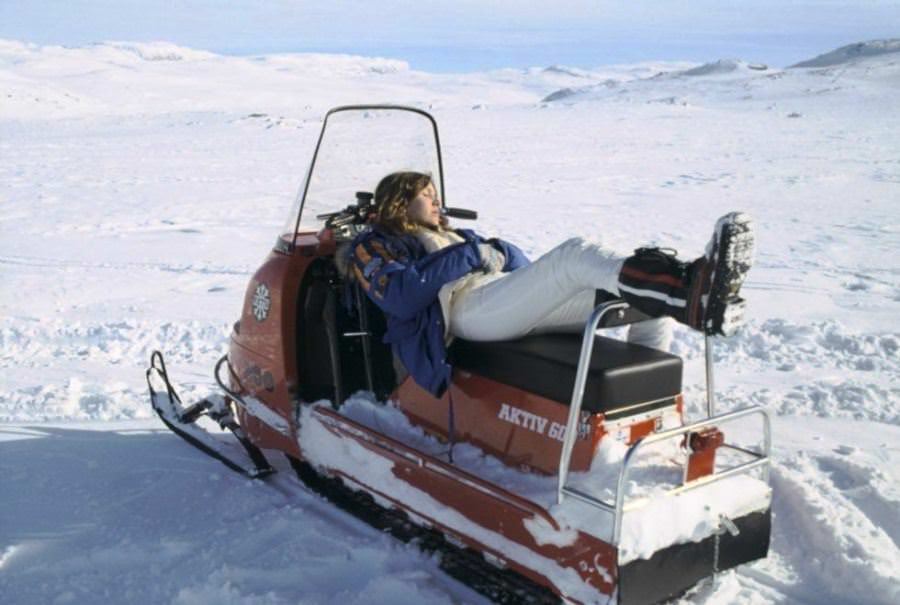
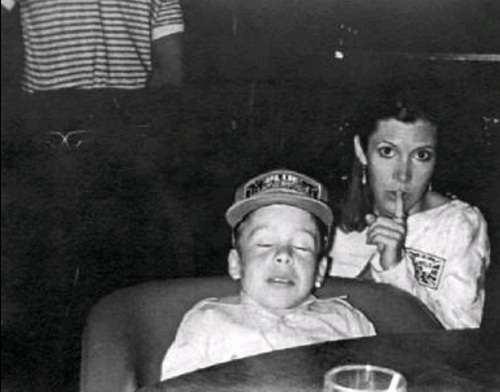
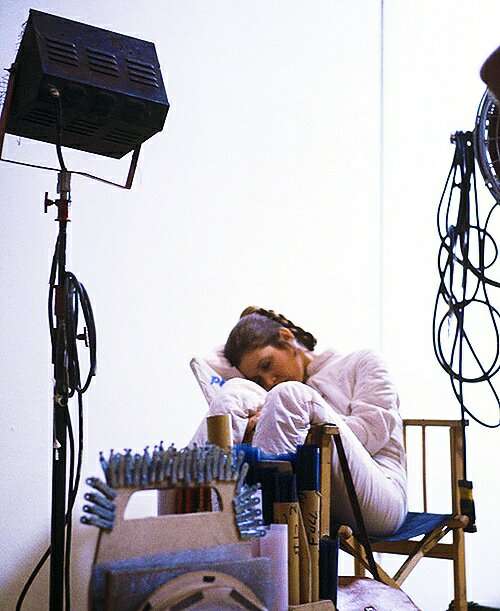
Long shooting days were a constant reality on the Star Wars sets. Filming in remote locations, wrestling with elaborate costumes, and working around the demands of complex special effects sequences meant cast and crew often pushed through exhausting hours. Candid photos like this one capture the more human side of a production that, to audiences, seemed almost magical.
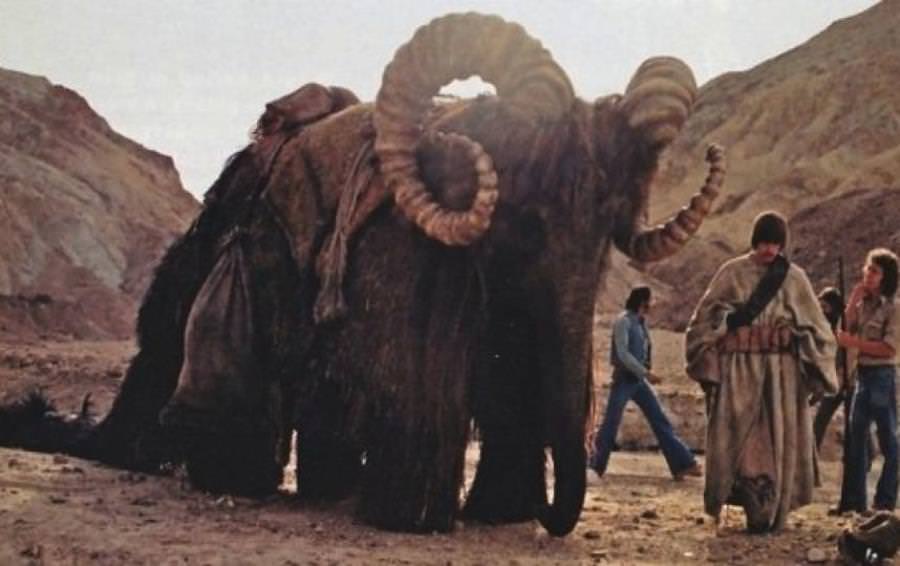
The Tusken Raiders — also called Sand People — are among the most menacing figures in A New Hope, despite appearing in only a handful of scenes. Their wrapped, masked costumes hid the performers inside completely. A shot of the person underneath the costume strips away the intimidation entirely and reveals the practical work that went into building even minor characters in the Star Wars universe.
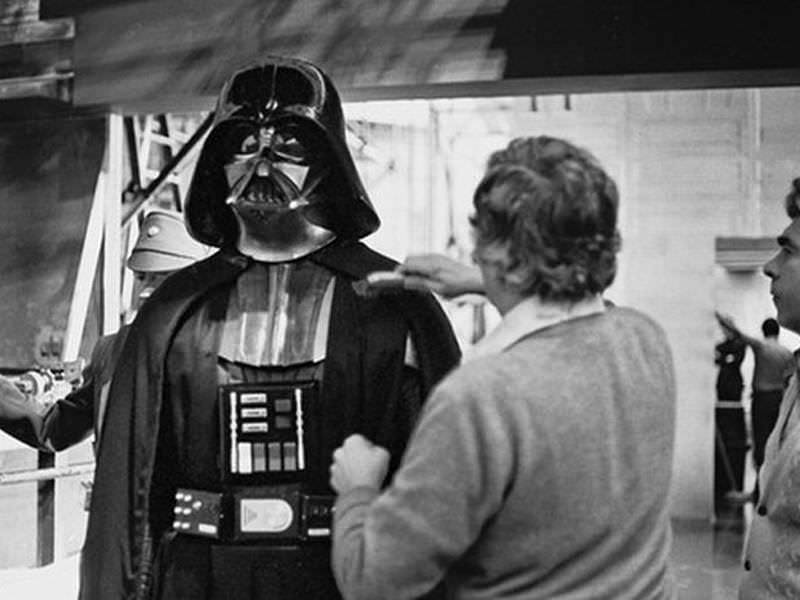
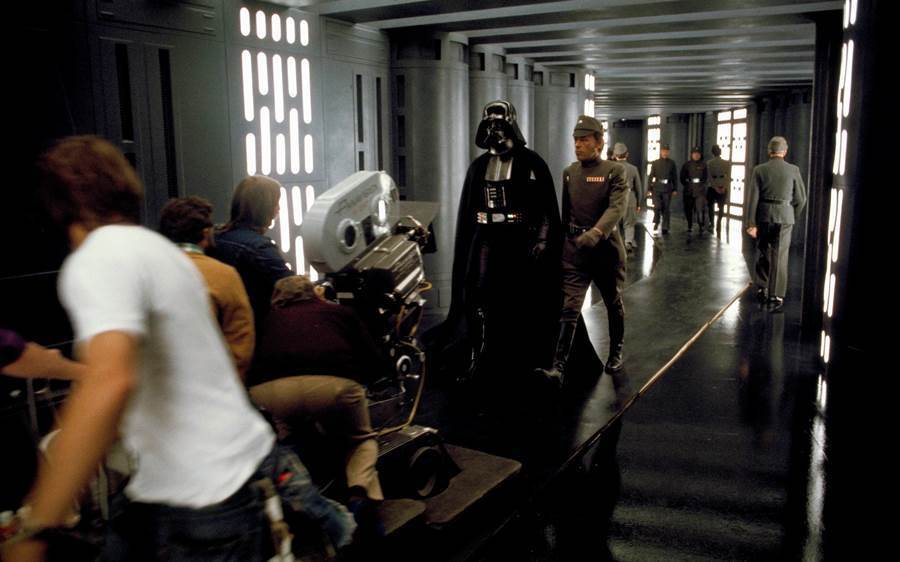
Darth Vader’s costume was assembled from multiple components, and getting the villain ready for each shoot required the careful attention of dedicated costume staff. The helmet, chest armor, cape, and gloves all had to align precisely for the character to look right on camera. David Prowse wore the costume on set while James Earl Jones provided the voice in post-production.
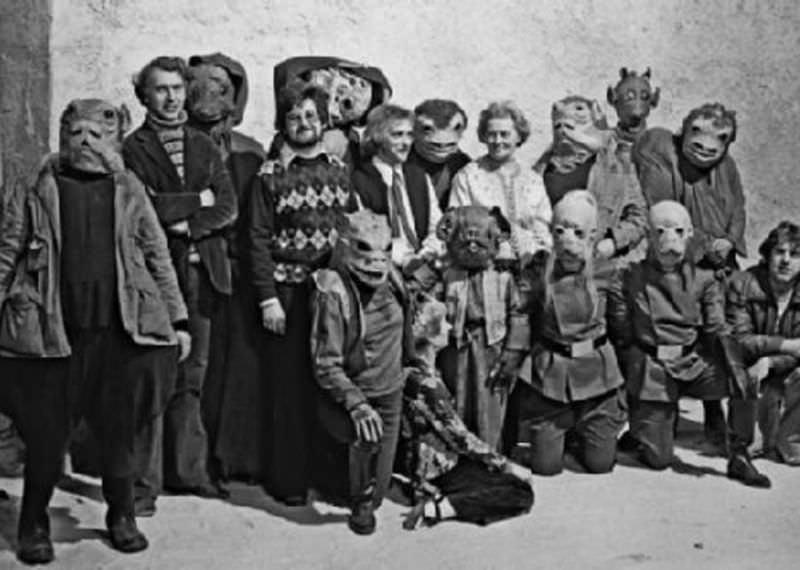
The Mos Eisley Cantina scene required one of the most ambitious creature design efforts in the film. Dozens of alien characters were created using masks, prosthetics, and puppetry, and the performers wearing them posed a unique challenge on set — many had limited vision or movement while in costume. The scene took multiple days to film and became one of the most iconic sequences in the trilogy.
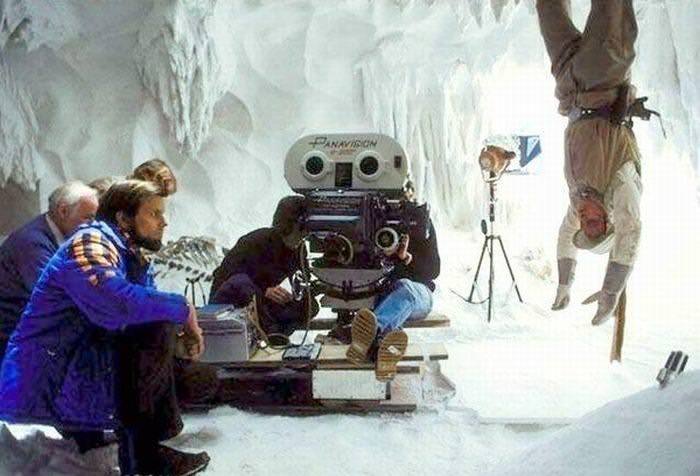
The opening of The Empire Strikes Back shows Luke Skywalker hanging upside down in the Wampa’s ice cave. On set, Mark Hamill was suspended in an uncomfortable rig for extended periods while the crew captured the shot from multiple angles. The Wampa creature itself was partially kept off screen to avoid revealing the limitations of the costume, which actually made the scene more frightening.
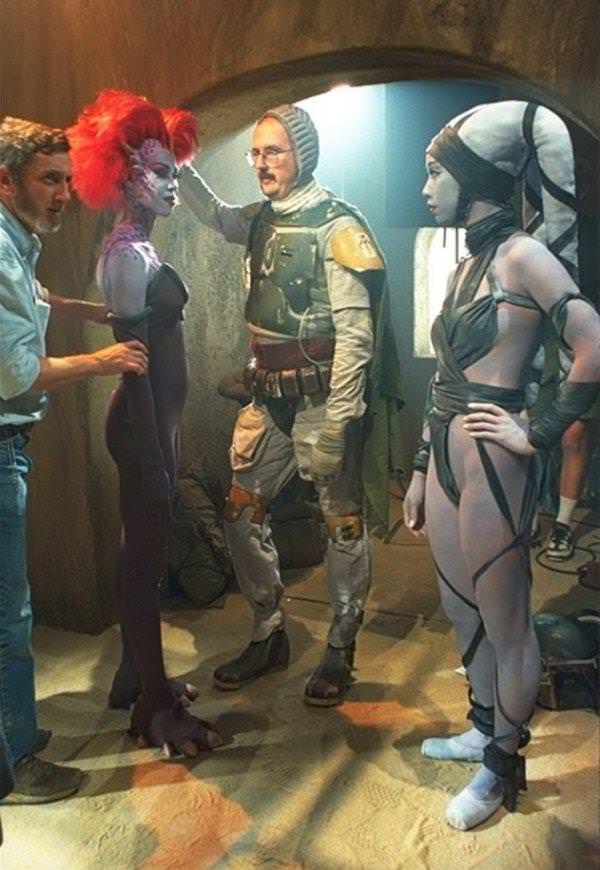
Boba Fett became one of the most popular characters in the trilogy despite minimal screen time. His costume — the battered Mandalorian armor with its distinctive helmet and jet pack — did most of the work in establishing him as a dangerous presence. Without it, the character loses every bit of that mystique, which is exactly what makes behind-the-scenes photos like this one so striking.
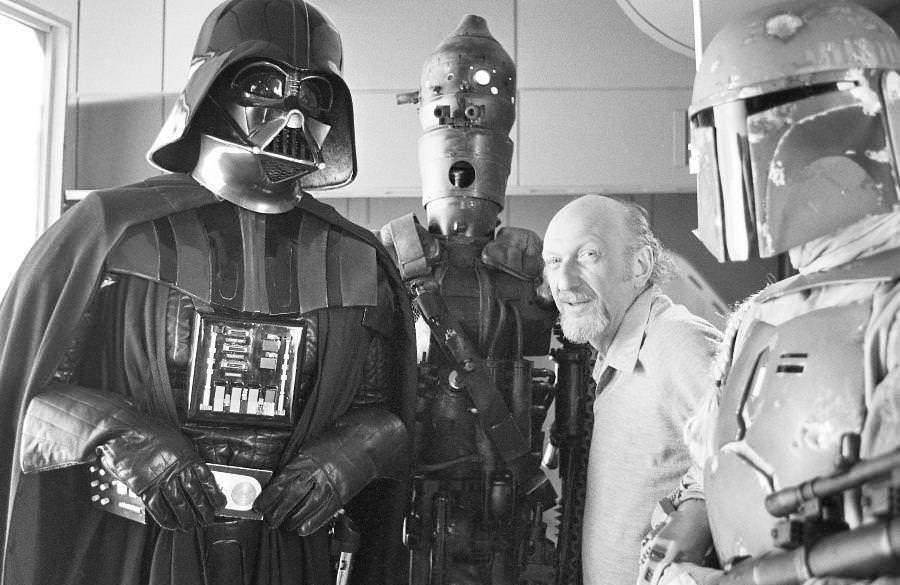
George Lucas handed directing duties for The Empire Strikes Back to Irvin Kershner, who had a reputation for working closely with actors and drawing out strong performances. Kershner’s approach gave the film a darker, more emotionally complex tone than A New Hope. Many fans and critics consider it the strongest entry in the trilogy, and Kershner’s direction is a major reason why.
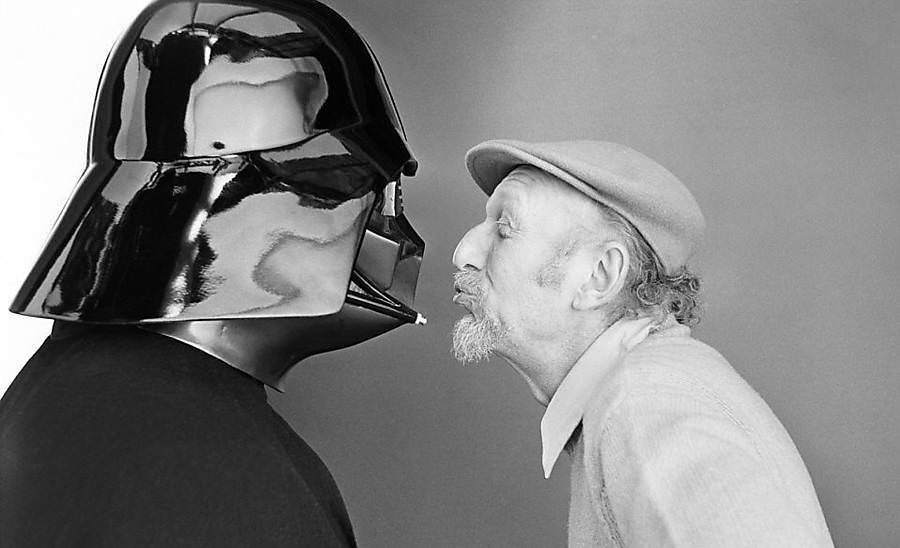
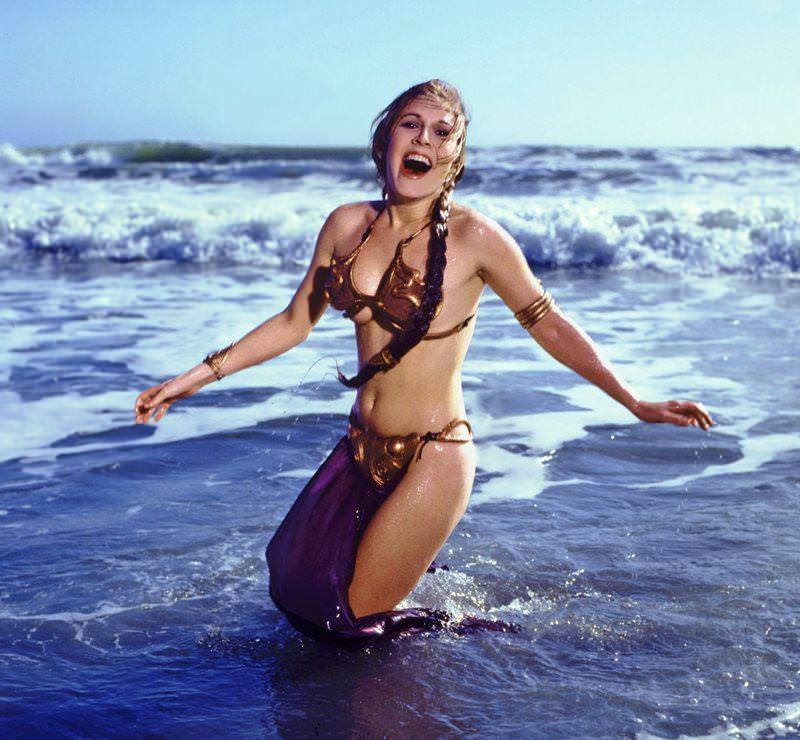
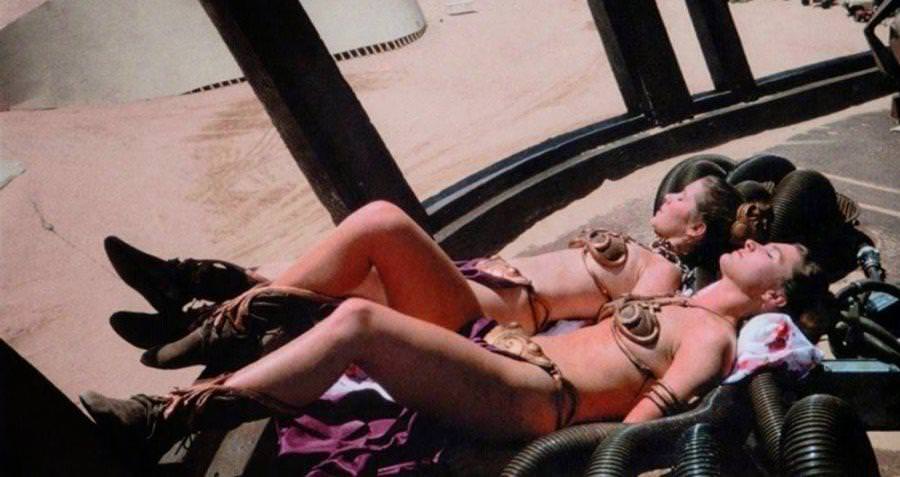
Carrie Fisher later spoke openly about her discomfort wearing the gold bikini costume during the Jabba’s palace sequences in Return of the Jedi. The outfit was designed by costume designer Aggie Guerard Rodgers and required Fisher to perform in what was, by any measure, one of the most restrictive and exposed costumes in the film.
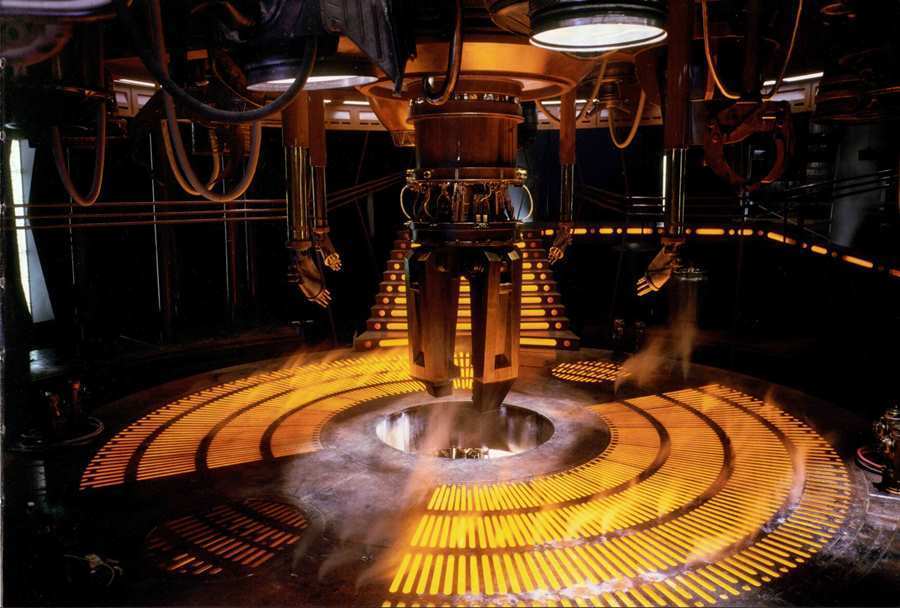
The carbonite freezing chamber in Cloud City is one of the most memorable sets in The Empire Strikes Back. The machinery surrounding it was built in full scale, giving the space a genuine sense of industrial weight. The set design team filled the room with pipes, vents, and mechanical detail to make it feel like a functional facility rather than a movie set.
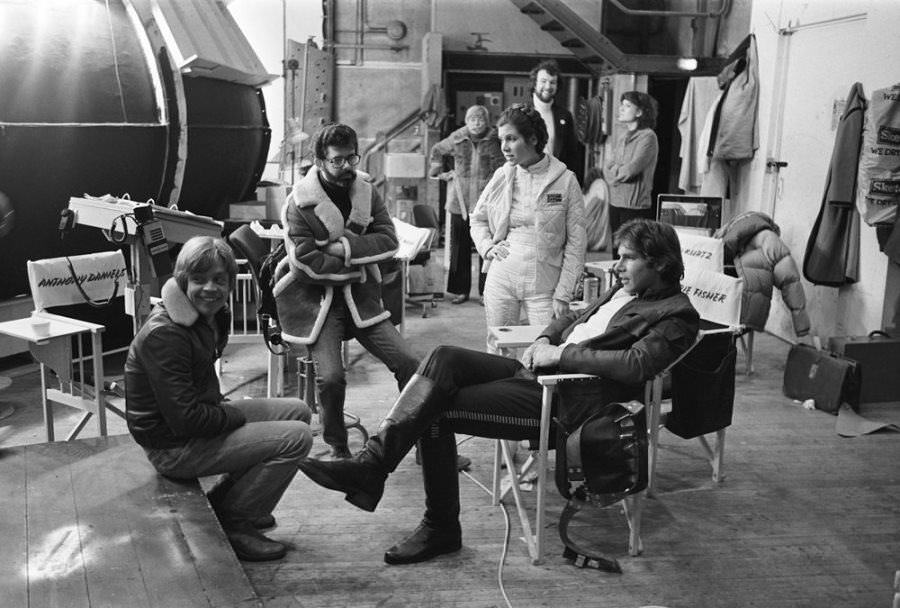
George Lucas remained closely involved with The Empire Strikes Back even though he stepped back from the director’s chair. He visited the set regularly, consulted on story decisions, and maintained creative oversight throughout the production. His conversations with the cast between takes kept his vision for the trilogy consistent from one film to the next.
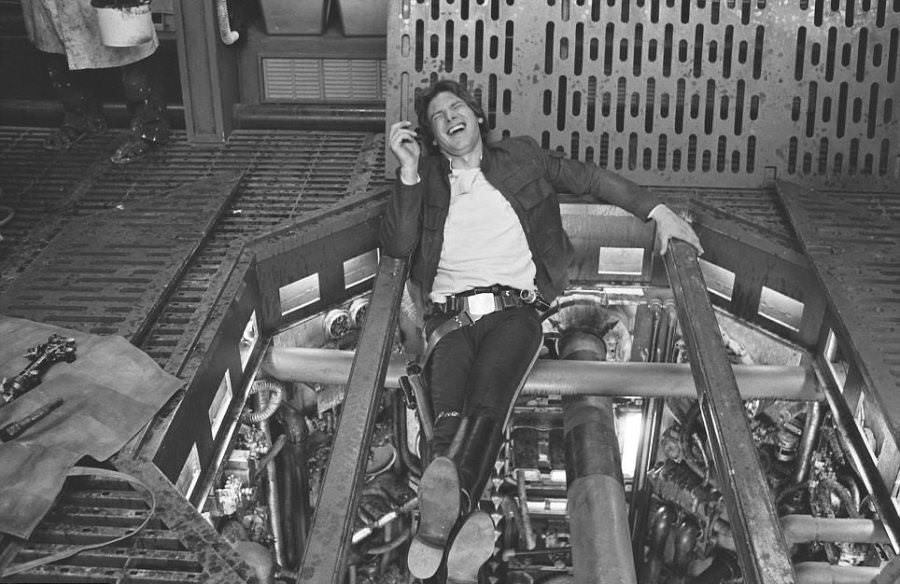
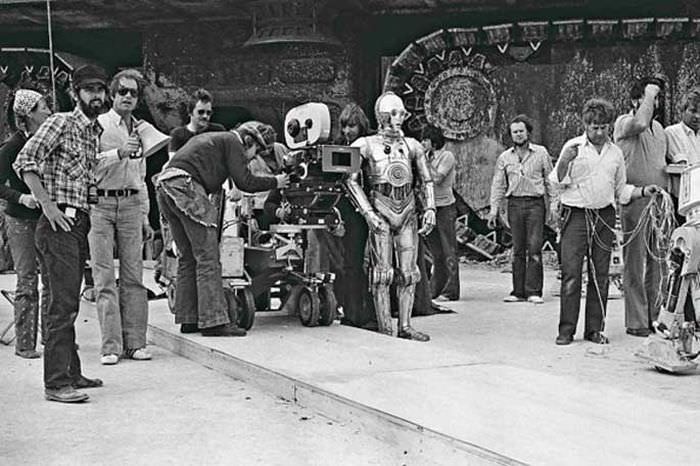
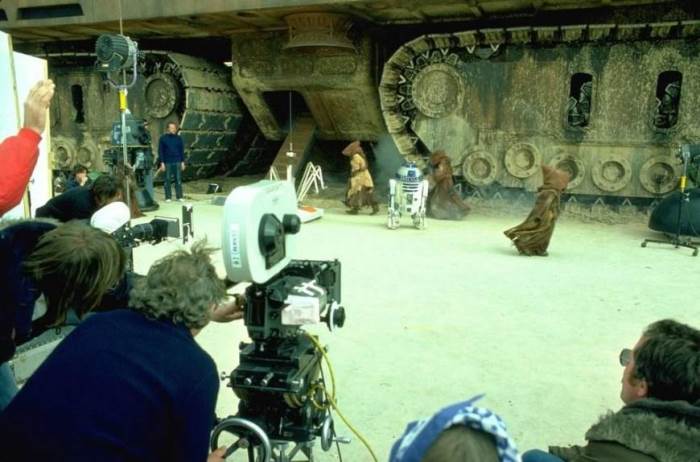
The scene where Luke Skywalker first encounters R2-D2 and C-3PO is one of the early turning points of A New Hope. Behind the cameras, coordinating the droids with the human cast required constant adjustment. Kenny Baker’s movements inside R2-D2 had to be timed precisely, and Anthony Daniels’ limited visibility inside the C-3PO helmet made blocking the scene a careful process.
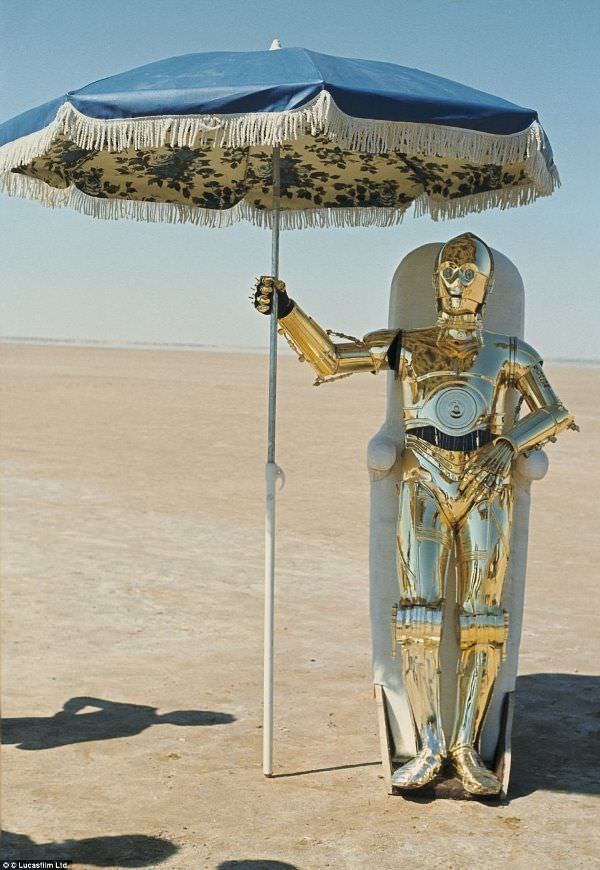
Filming in Tunisia for the Tatooine sequences exposed the cast to intense desert heat. For Anthony Daniels inside the C-3PO costume, the conditions were especially brutal. The suit provided no ventilation and absorbed heat from the sun directly, making outdoor shoots a genuine endurance test for the actor.
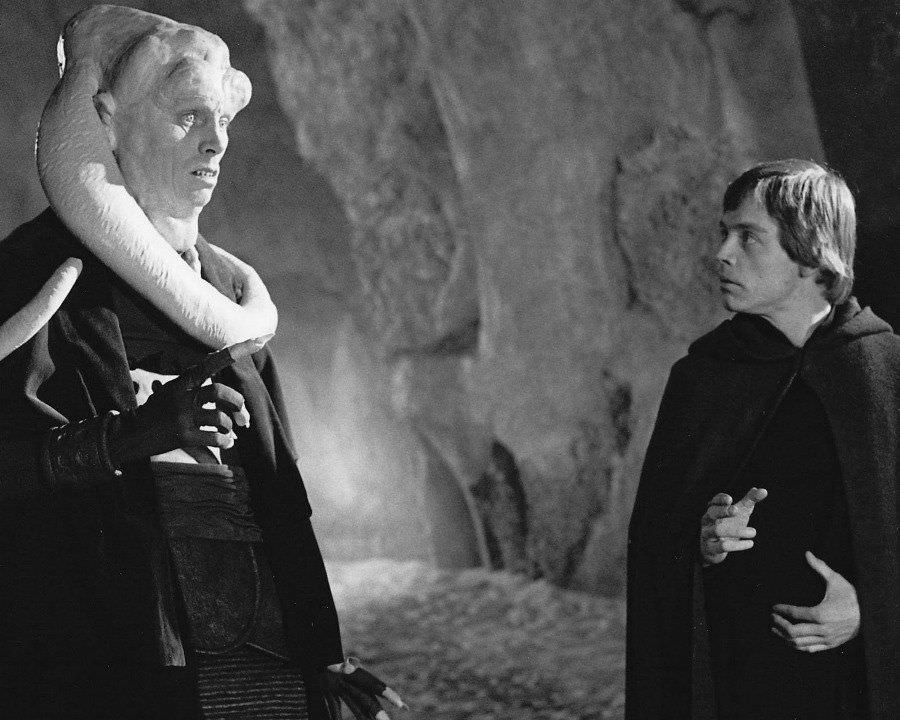
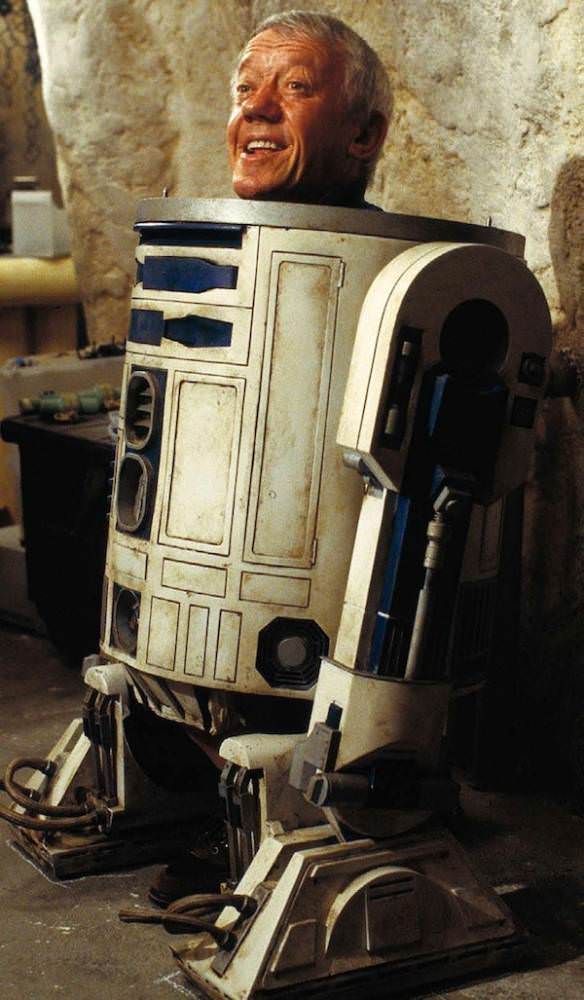
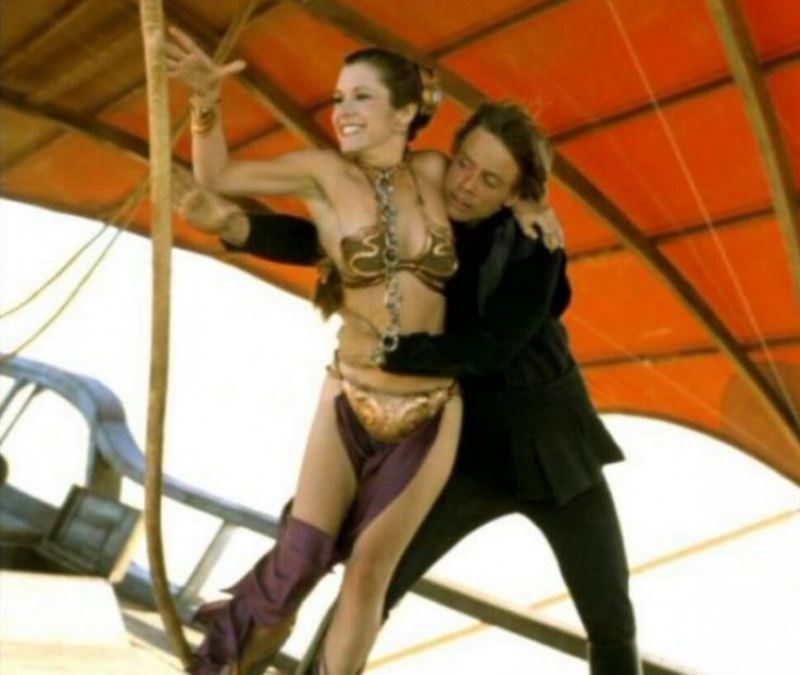
The sail barge destruction sequence in Return of the Jedi was one of the most logistically complex action scenes in the trilogy. A full-scale section of the barge was built in the California desert near Yuma, Arizona, and the explosion that destroys it at the end of the sequence was a genuine controlled blast — not a miniature effect. Filming it took multiple days of preparation.
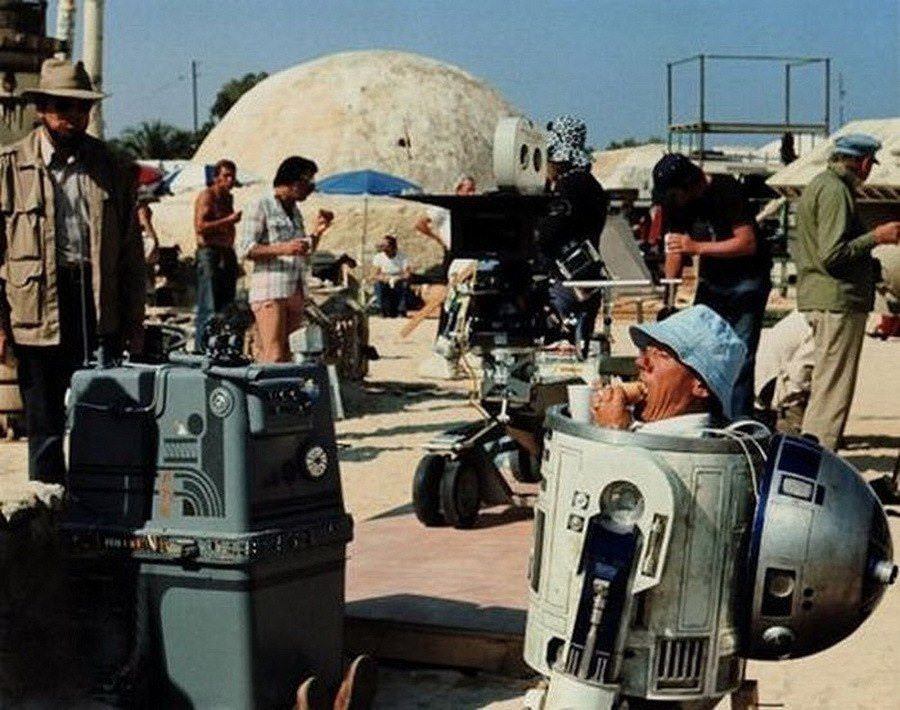
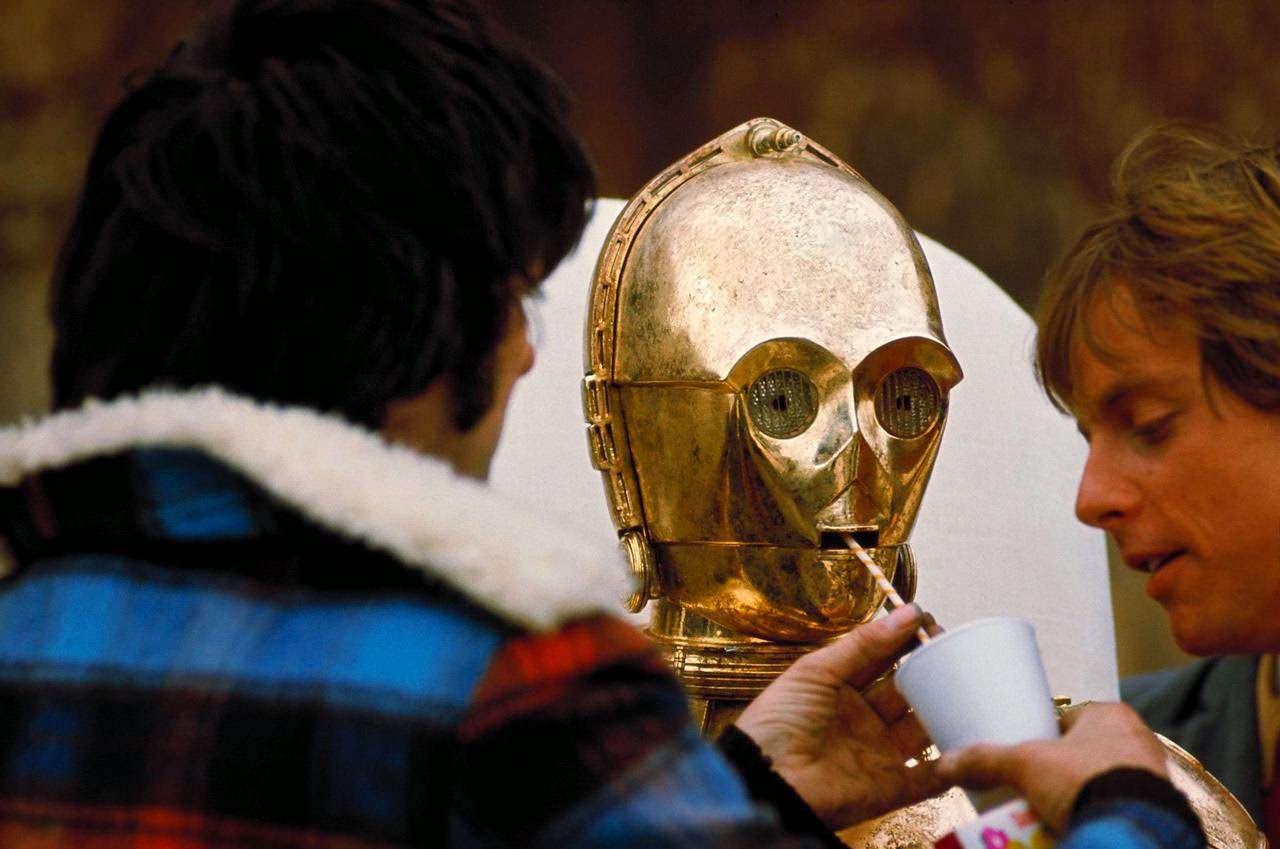
Kenny Baker spent much of his working day inside R2-D2, and simple tasks like eating a meal required getting at least partially out of the unit. Baker, who stood 3 feet 8 inches tall, operated the droid from the inside using handles and controls to produce R2-D2’s characteristic tilts and movements. The job was physically demanding, and breaks between takes were a necessity.
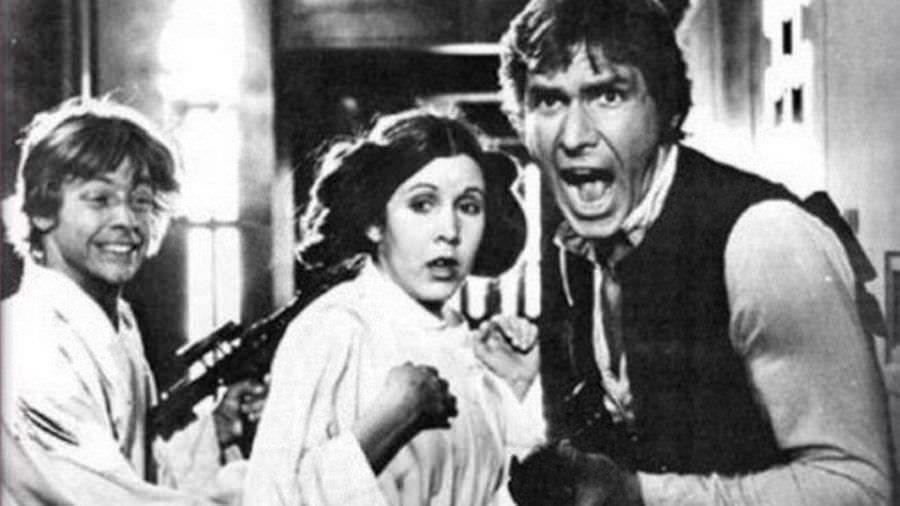
The lightsaber duel between Luke and Vader at the end of The Empire Strikes Back was choreographed to feel like a fight between an inexperienced young man and an opponent who is clearly holding back. The staging, the lighting, and the structure of the Cloud City set all worked together to make the confrontation feel inescapable. Behind the scenes, the choreography required David Prowse and Mark Hamill to rehearse the sequence extensively.
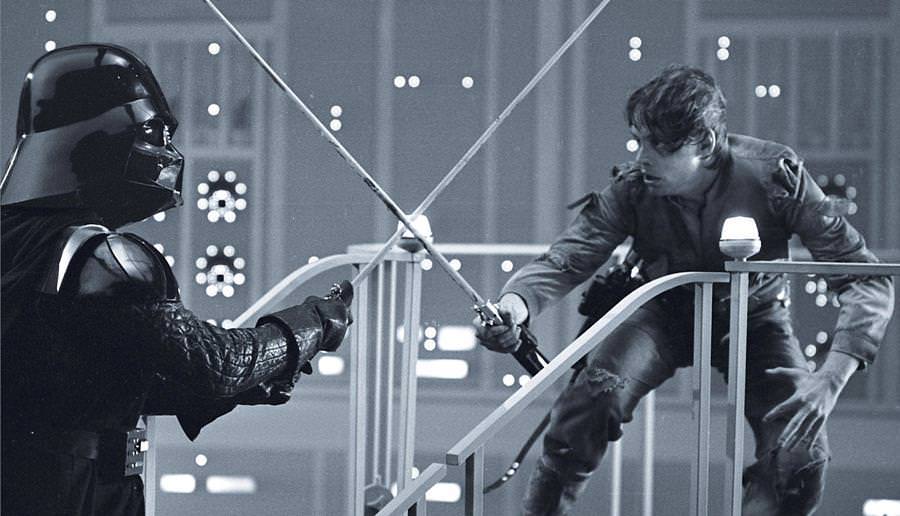
The glowing lightsaber blades seen on screen were added in post-production using rotoscoping — a technique where animators trace over film footage frame by frame to add visual effects. On set, the actors fought with plain aluminum rods that gave them the right weight and length for choreography but looked nothing like the finished weapons. The iconic glow and hum were entirely added after filming.
Yoda was brought to life by master puppeteer Frank Oz, who also performed characters including Miss Piggy and Fozzie Bear for the Muppets. The connection between the two productions was genuine — Oz’s involvement gave Yoda an expressiveness that a mechanical puppet alone could not have achieved. On set, Oz worked from below the frame while a team of technicians operated secondary controls for Yoda’s ears and eyes.
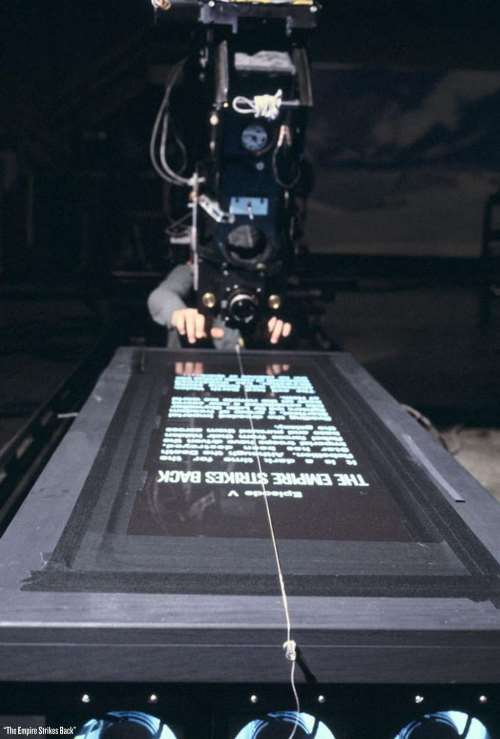
The famous opening crawl that rolls up the screen at the start of each film was filmed by physically moving a camera along a large flat surface with yellow text printed on it, set against a star field background. The process required precision to keep the speed consistent and the text aligned. Each film’s crawl was shot in full at ILM — Industrial Light & Magic — the special effects company Lucas founded specifically for the Star Wars productions.
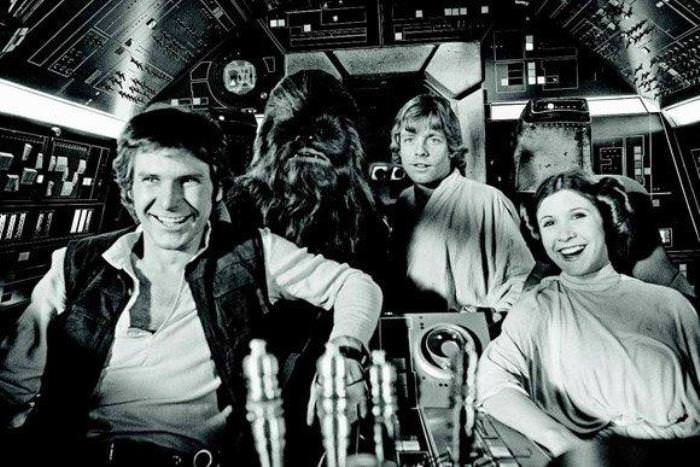
Thousands of actors auditioned for the main roles in Star Wars before Lucas settled on his core cast. Harrison Ford was not among the original candidates for Han Solo — he was working as a carpenter at the studio when he was brought in to read lines with auditioning actors, and his performance in those readings led directly to him being cast. Mark Hamill and Carrie Fisher were both relative unknowns when they were chosen for Luke and Leia.
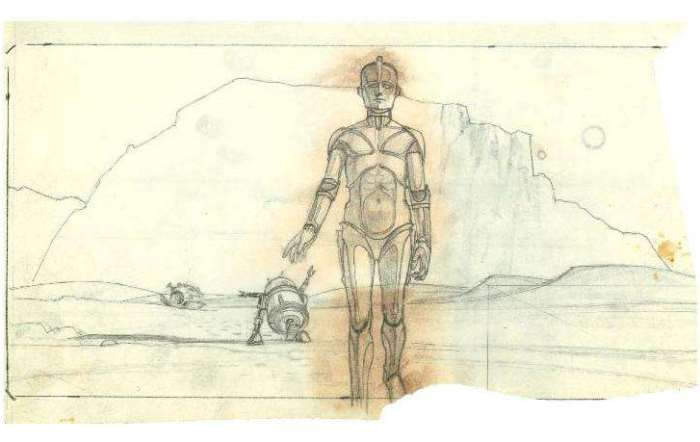
The design process for the Star Wars droids began years before cameras rolled. Artist Ralph McQuarrie produced the concept paintings that established the visual language of the entire trilogy — his designs for C-3PO and R2-D2 were the direct foundation for what ended up on screen. McQuarrie’s work gave the production team a shared visual blueprint that kept the look of the films consistent across multiple departments.
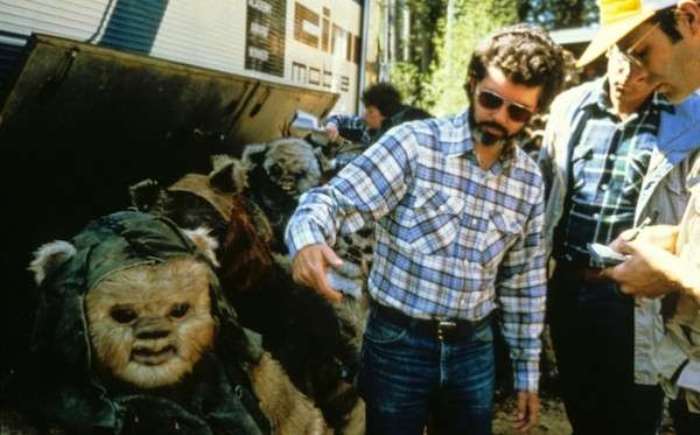
The Ewoks were among the most debated creative decisions in the trilogy. Lucas chose to make the small, bear-like creatures the heroes of the Battle of Endor, and the production required a large number of performers in Ewok costumes along with several hero suits designed for close-up shots. George Lucas personally reviewed the costume designs and casting choices before filming began on Return of the Jedi.
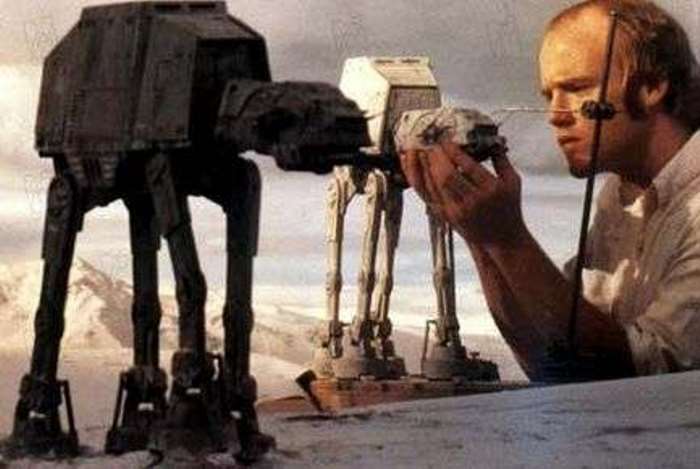
Planning sequences that combined live-action footage with stop-motion models required frame-by-frame coordination between the on-set crew and the effects team at ILM. The AT-AT models used in the films were meticulously detailed miniatures, and every movement had to be planned in advance to ensure it matched the scale and pacing of the live-action elements shot separately.
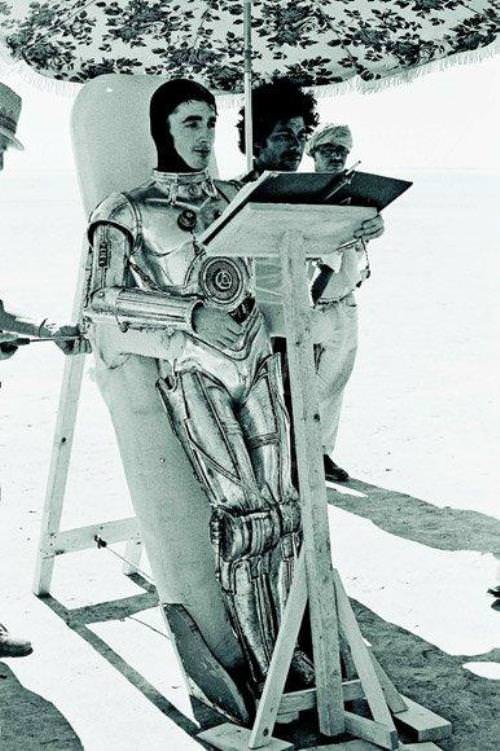
Getting into the C-3PO costume was not a quick process. The suit was assembled in sections, and each piece had to be fitted and secured carefully to give Daniels any chance of moving through a scene. Even fully assembled, the costume severely limited his range of motion, which is why C-3PO’s stiff, awkward walk looked the way it did — it was not a performance choice, it was a physical constraint.
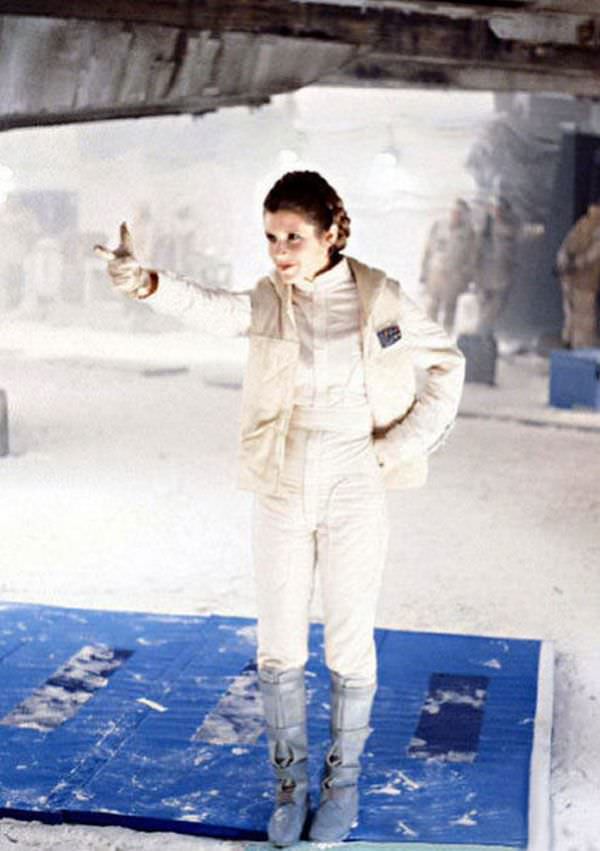
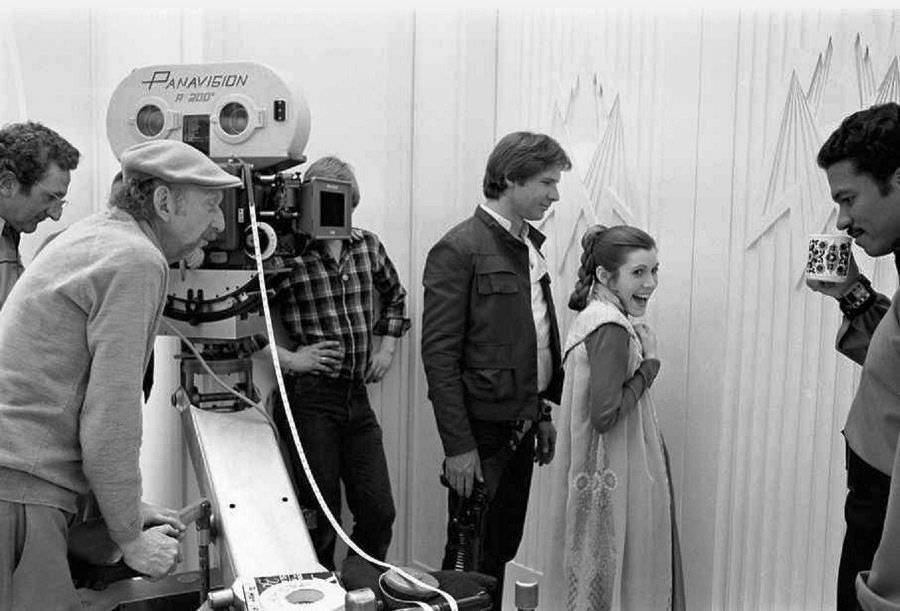
Billy Dee Williams joined the cast in The Empire Strikes Back as Lando Calrissian, Han Solo’s old friend and the administrator of Cloud City. Williams brought a smooth, confident energy to the role that set Lando apart from the rest of the cast. His scenes in Cloud City are some of the most visually striking in the entire trilogy, filmed on sets that were designed to look like a functioning floating city in the clouds above the gas planet Bespin.
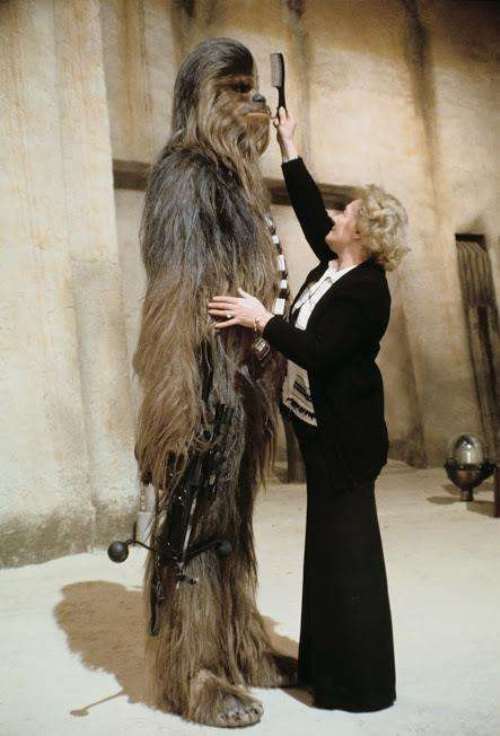
Maintaining Peter Mayhew’s Chewbacca costume between takes required constant attention from the hair and makeup department. The suit was made from real yak hair and required brushing, styling, and spot repairs throughout each shooting day. Given the physical demands Mayhew faced wearing it — including a restricted field of vision and significant weight — keeping the costume in good shape was a genuine challenge.
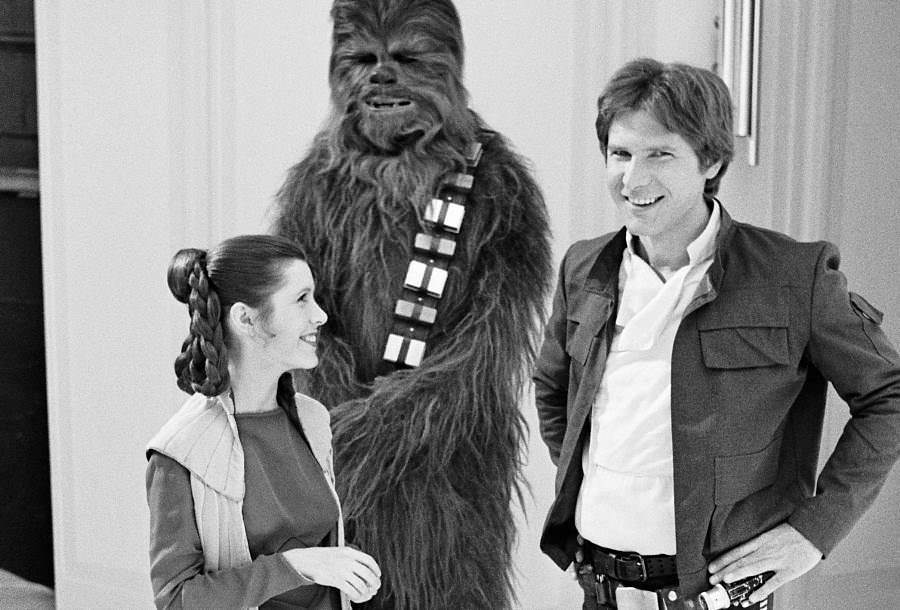
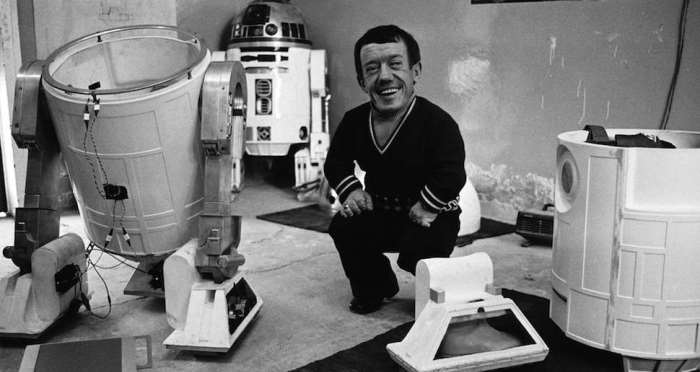
Kenny Baker’s role as R2-D2 was unique in the trilogy. Unlike every other character, R2-D2 communicated entirely through electronic beeps and whistles, all of which were created by sound designer Ben Burtt. Baker’s job on set was to provide the physical movement and personality of the droid from inside the unit. The sounds were matched to his movements in post-production to give R2-D2 a consistent sense of emotional expression.
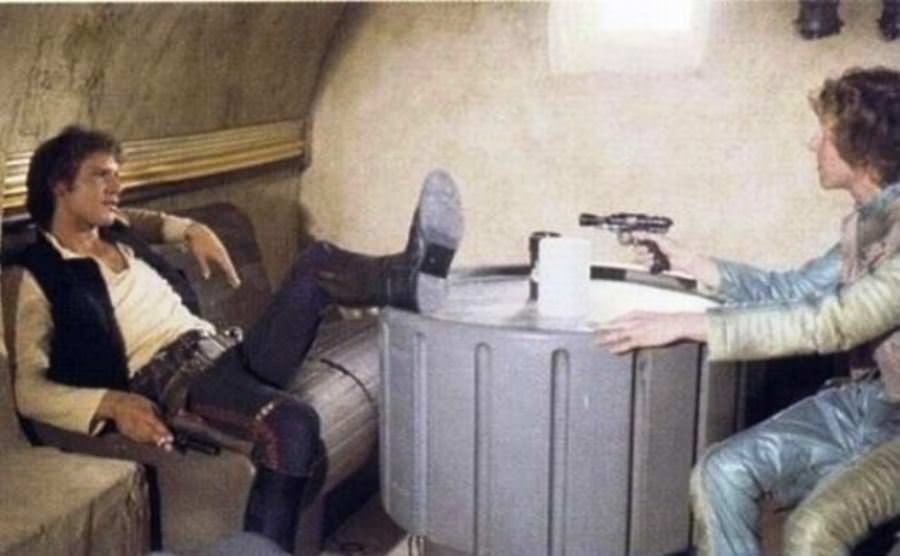
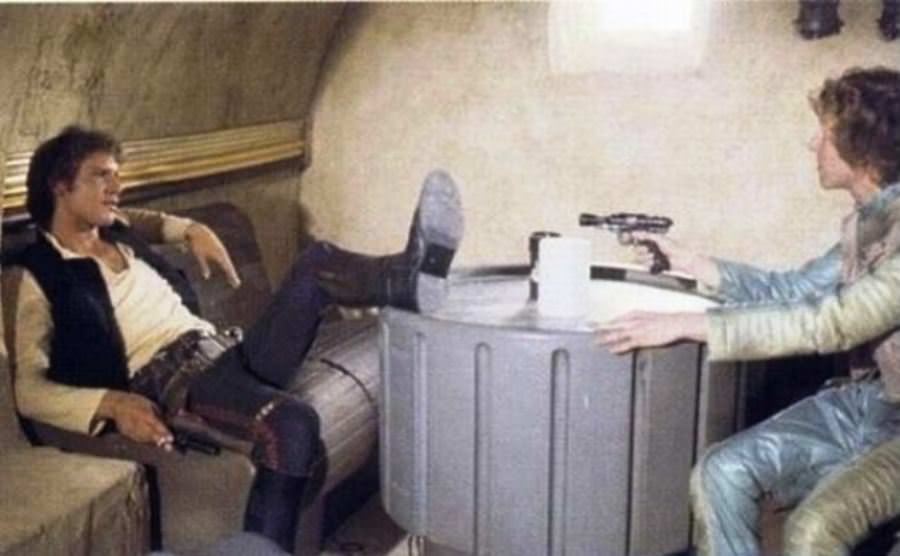
The question of who shot first in the Mos Eisley Cantina — Han Solo or the bounty hunter Greedo — became the most hotly debated edit in the franchise’s history. In the original 1977 cut, Han shoots first without hesitation. In George Lucas’s 1997 Special Edition re-release, the scene was altered so that Greedo fires first and misses. The change drew widespread criticism from fans who argued it fundamentally altered Han Solo’s character.
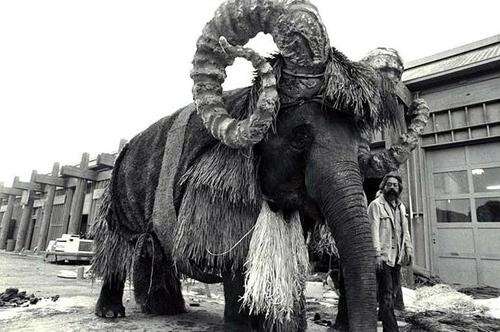
Before computer-generated imagery became a standard tool, filmmakers had to find practical solutions for creating large alien creatures. For the Banthas — the massive, shaggy beasts ridden by Sand People on Tatooine — the production dressed a real elephant in a fur costume and fitted it with large, curved fake horns. The animal’s natural movement gave the creature an organic quality that would have been difficult to replicate otherwise.
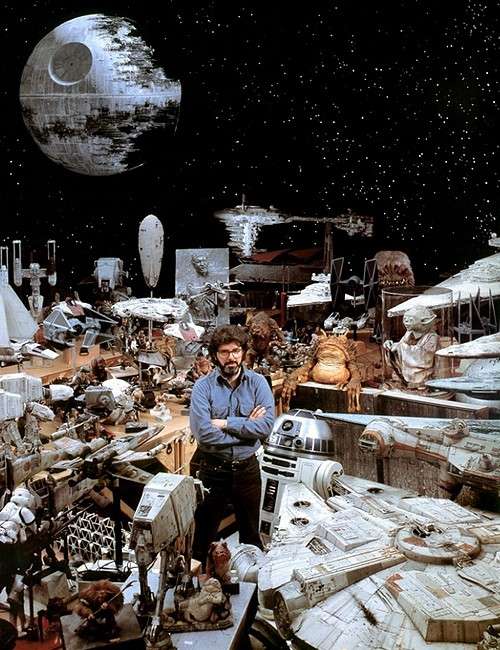
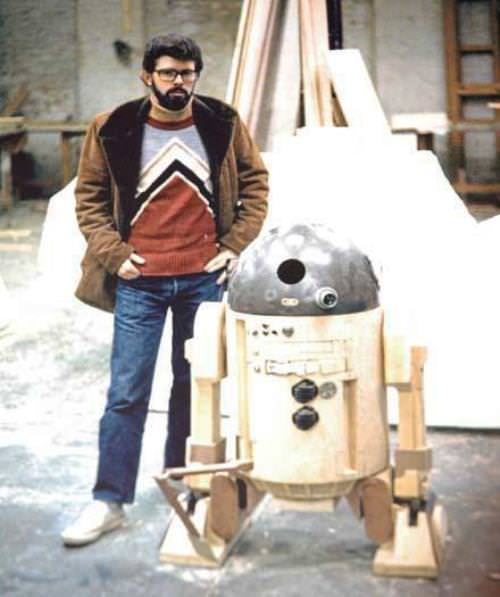
Miniature models were at the core of the Star Wars visual effects approach. ILM built hundreds of detailed scale models — ships, vehicles, buildings, entire environments — that were filmed using specially designed motion control cameras. The technology allowed the camera to repeat the same movement multiple times with perfect precision, making it possible to composite different elements together seamlessly. George Lucas, surrounded by those miniatures, was standing inside a workshop that changed what audiences expected from a movie.
…. I really wish I never saw #20.
No worries, that picture was from the Special Edition reshoot.
The original Boba Fett actor did not look like that, this guy just had the same measurements as Jeremy Bulloch- so he was used as a stand in for the new scenes.
Also, Jeremy was a really nice guy when you met him, and he loved being Boba Fett in the movies.
Some nice pictures there, a bunch of which I hadn’t seen before. But, my god, a lot of the captions are just inaccurate garbage and the opening paragraphs are almost certainly AI slop.
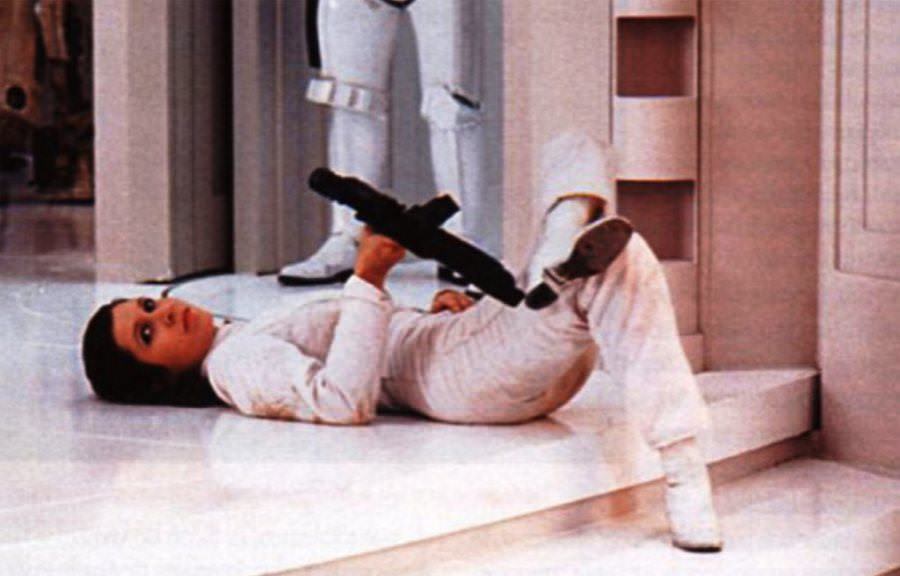
I see that Carrie didn’t mind taking a nap anywhere.
Back in that time there’s a lot of waiting between shots, specially in big productions, it’s not that faster nowadays but there’s more reliance on CGI and “efficiency.”