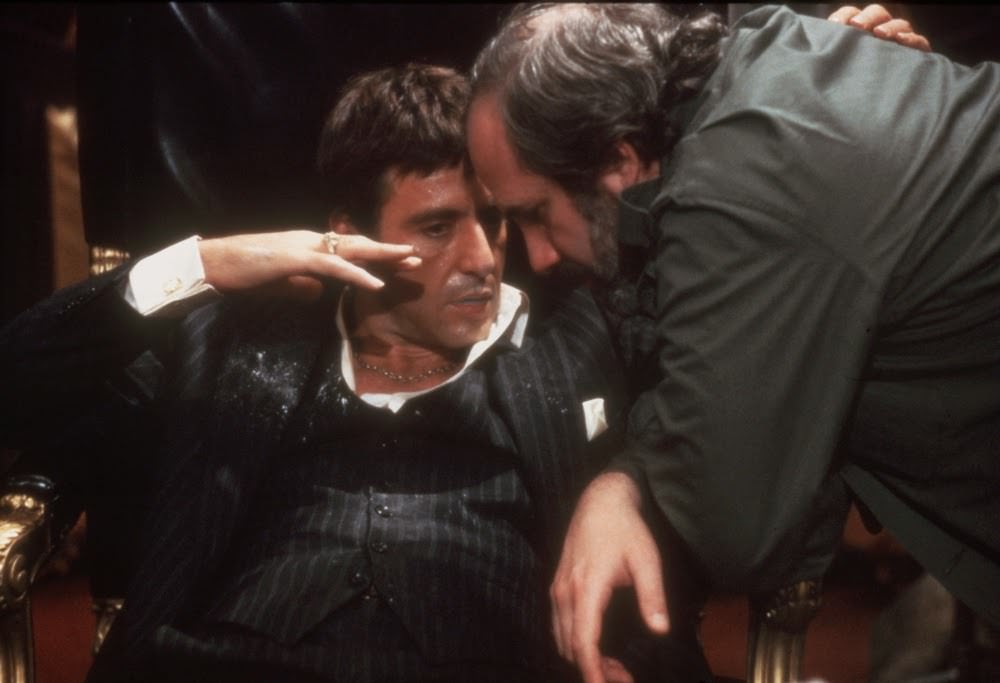
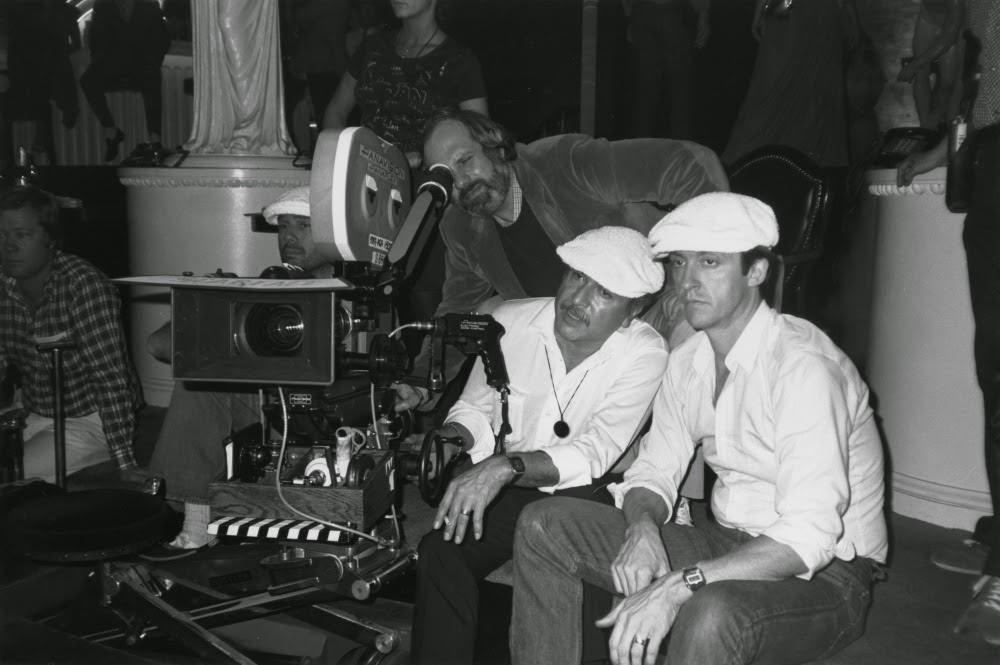
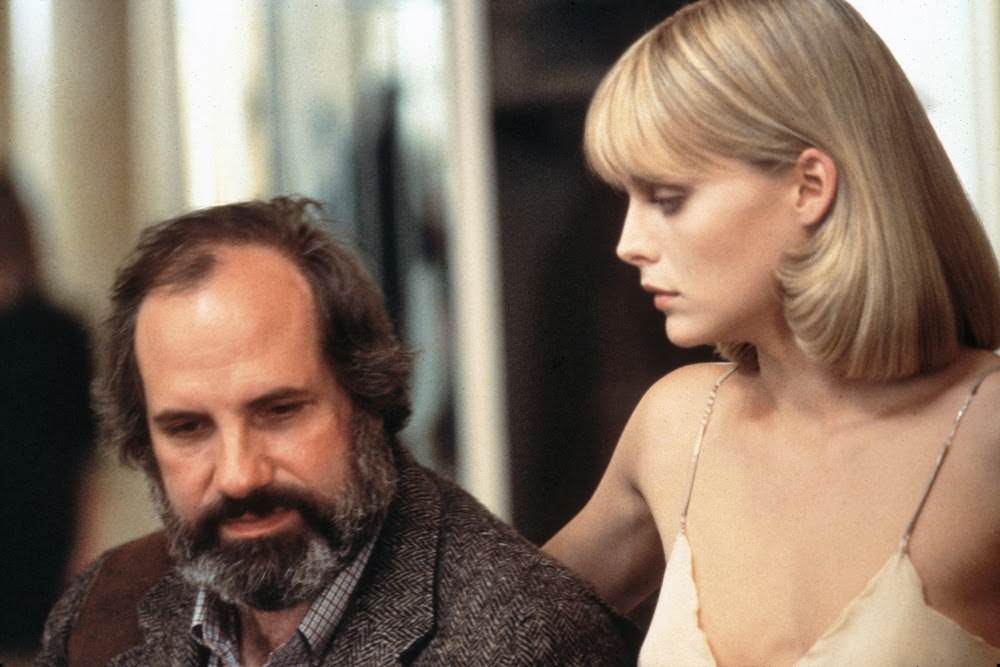
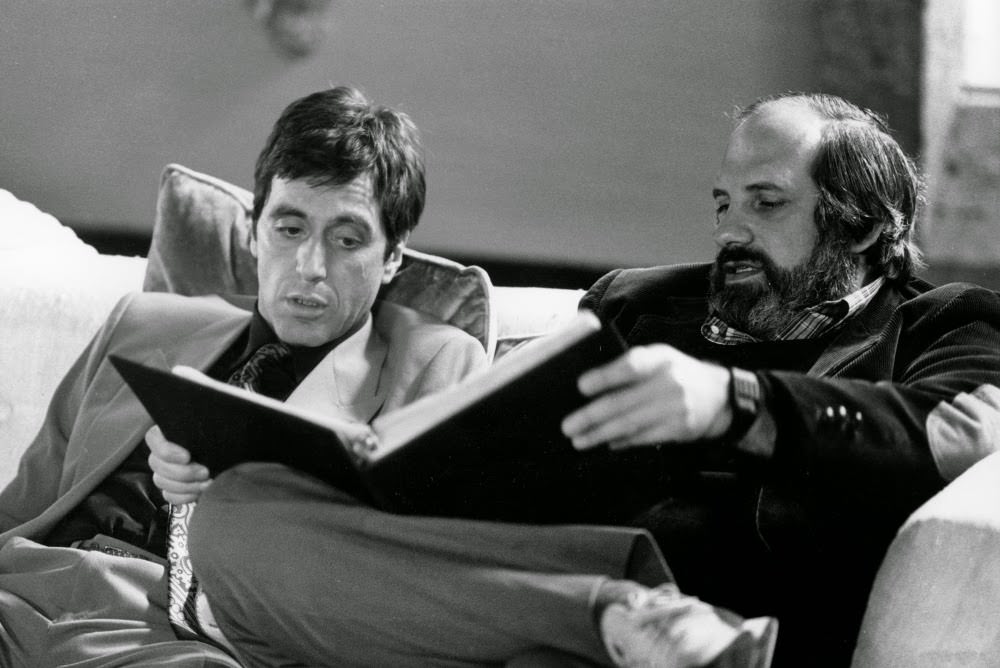
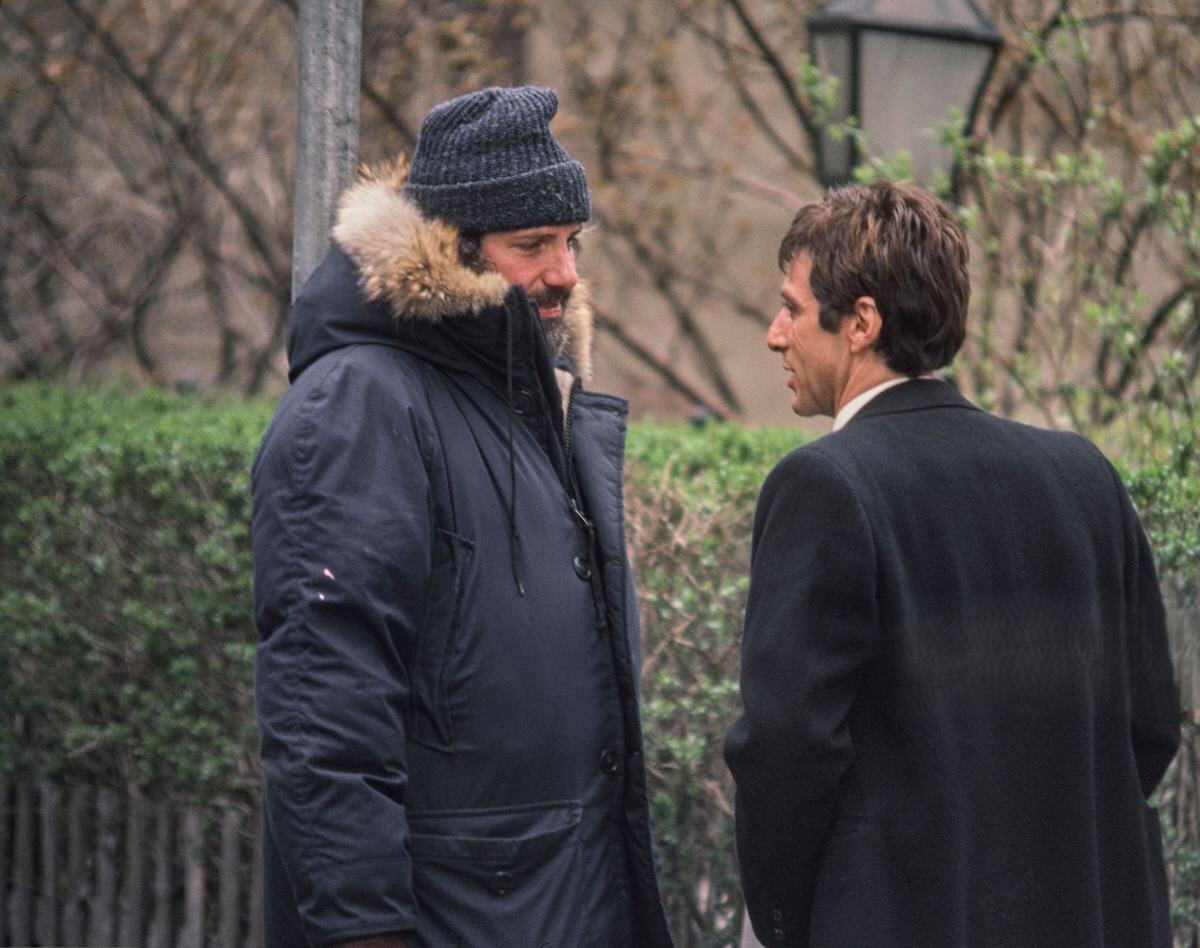
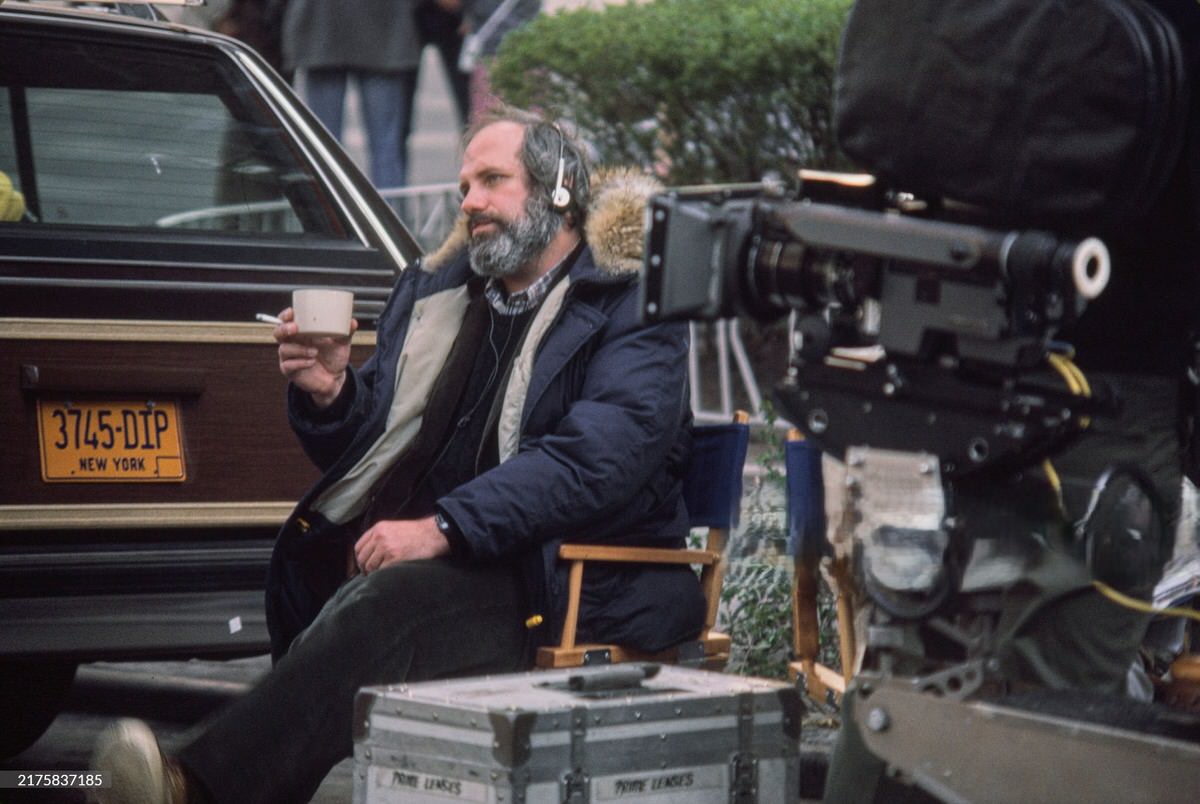
The production of the 1983 film Scarface began when actor Al Pacino saw the original 1932 version of the movie at a theater in Los Angeles. He was immediately captivated by the story of a criminal’s rise to power and contacted his agent to suggest a remake. Producer Martin Bregman agreed that the story could be modernized and updated for a new generation. They initially approached director Sidney Lumet, who suggested that the story should focus on the Mariel Boatlift. This was a real-world event where thousands of Cuban refugees arrived in Florida. Lumet eventually left the project because he wanted a more political film, and Brian De Palma was hired to direct.
Script Development and Oliver Stone
Oliver Stone was hired to write the screenplay. At the time, Stone was struggling with a serious cocaine addiction in his personal life. He decided to move to Paris to write the script so he could get away from the drug culture in the United States. He felt that being in a different environment would help him stay sober while he explored the dark world of drug trafficking. Stone interviewed members of the Miami police and real criminals to gather details for the story. He changed the setting from the 1932 Chicago bootlegging era to the cocaine-driven economy of Miami in the early 1980s.
Read more..
Stone wanted the dialogue to be gritty and realistic. He included a high amount of profanity to reflect the language used by the people he interviewed. The script used the word “fuck” over two hundred times, which was a very high number for a movie in 1983. Stone finished the draft in a few months, and Brian De Palma began planning the visual style of the film. De Palma wanted the movie to feel like an opera, with bright colors and large, dramatic sets.
The Casting Process
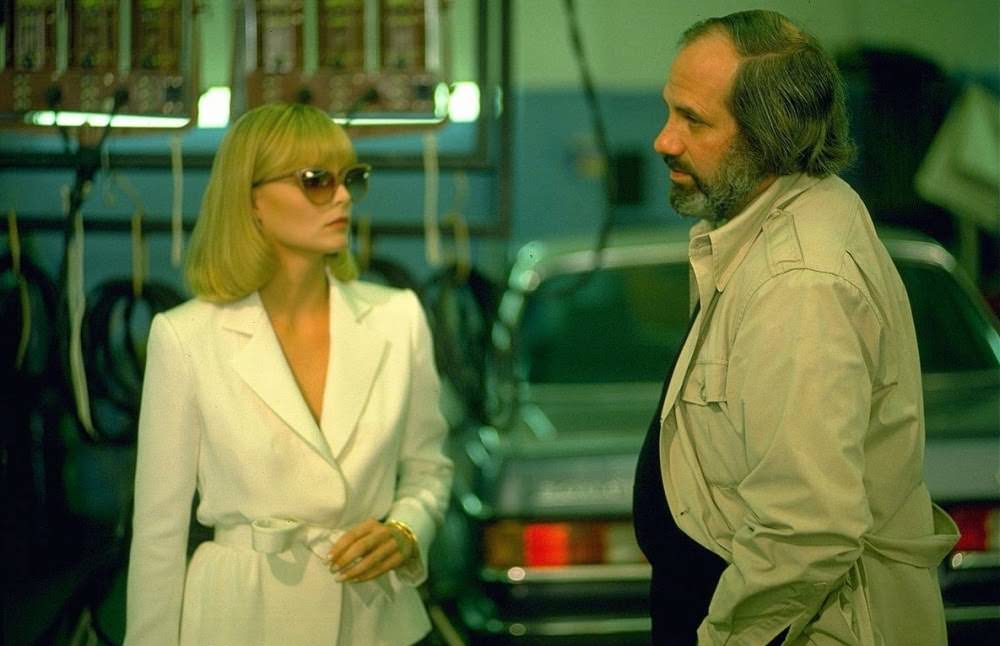
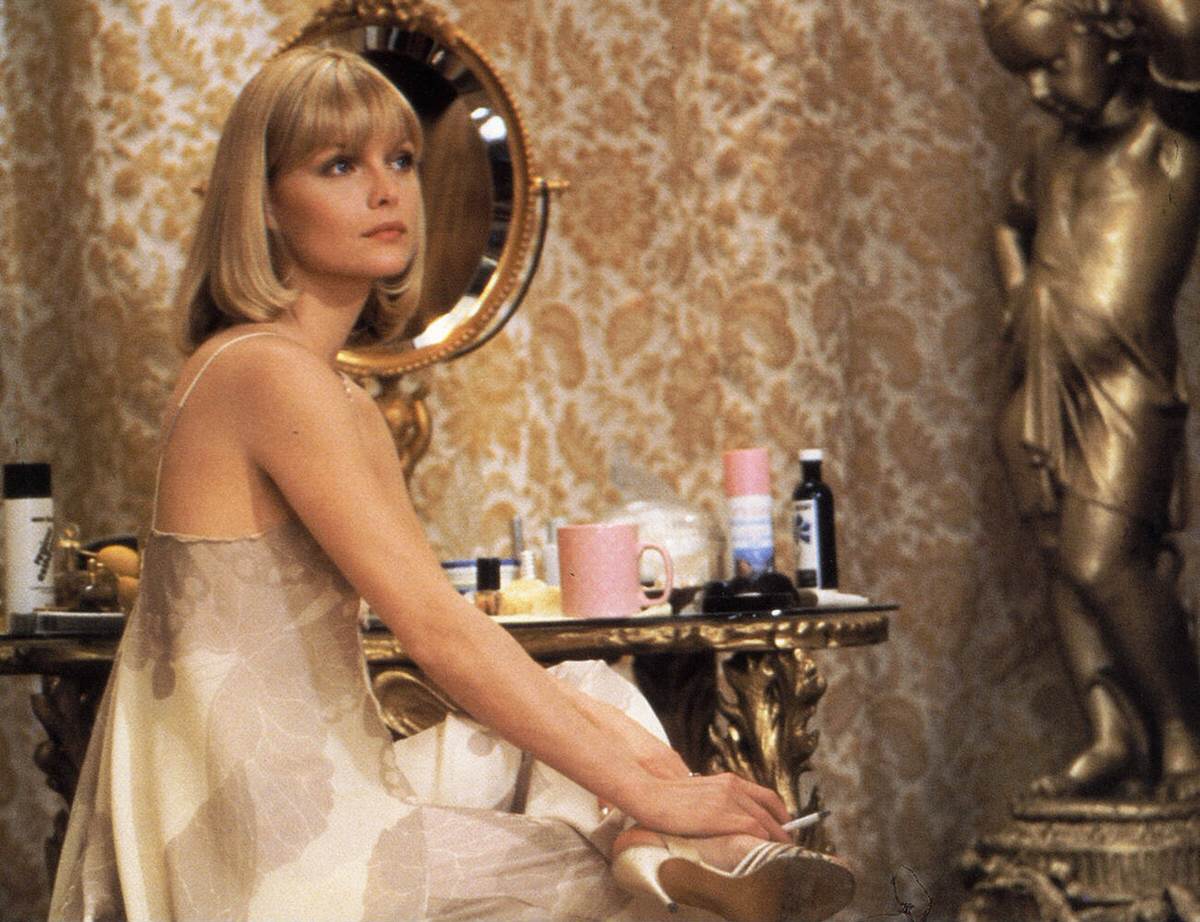
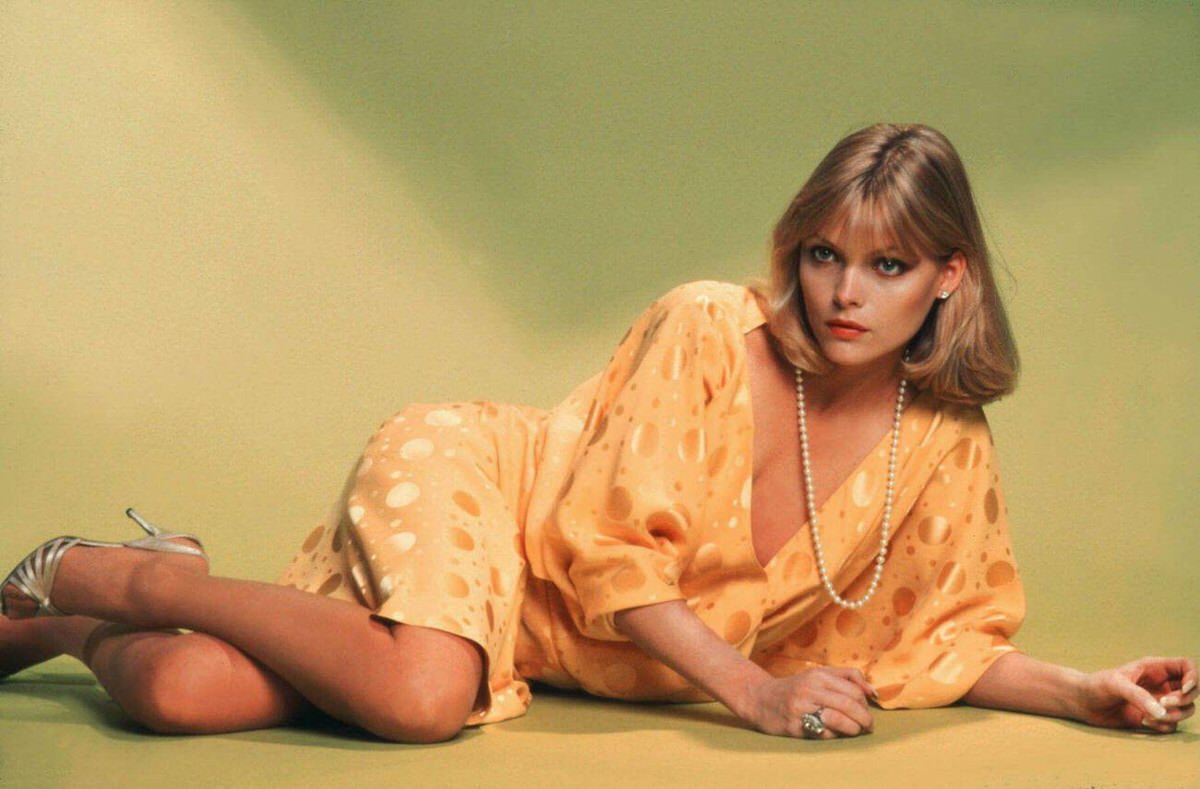
Al Pacino was already a major star, but the rest of the cast was not yet finalized. The studio wanted a famous actress to play Elvira Hancock, the girlfriend of the main character. They considered established stars like Glenn Close, Geena Davis, and Carrie Fisher. However, Brian De Palma chose a relatively unknown actress named Michelle Pfeiffer. The studio was hesitant because Pfeiffer had only appeared in Grease 2 at that point. She underwent several screen tests and proved that she could play the cold and detached personality of the character. During her training, Pfeiffer ate very little to maintain a thin appearance, often living on tomato soup and cigarettes.
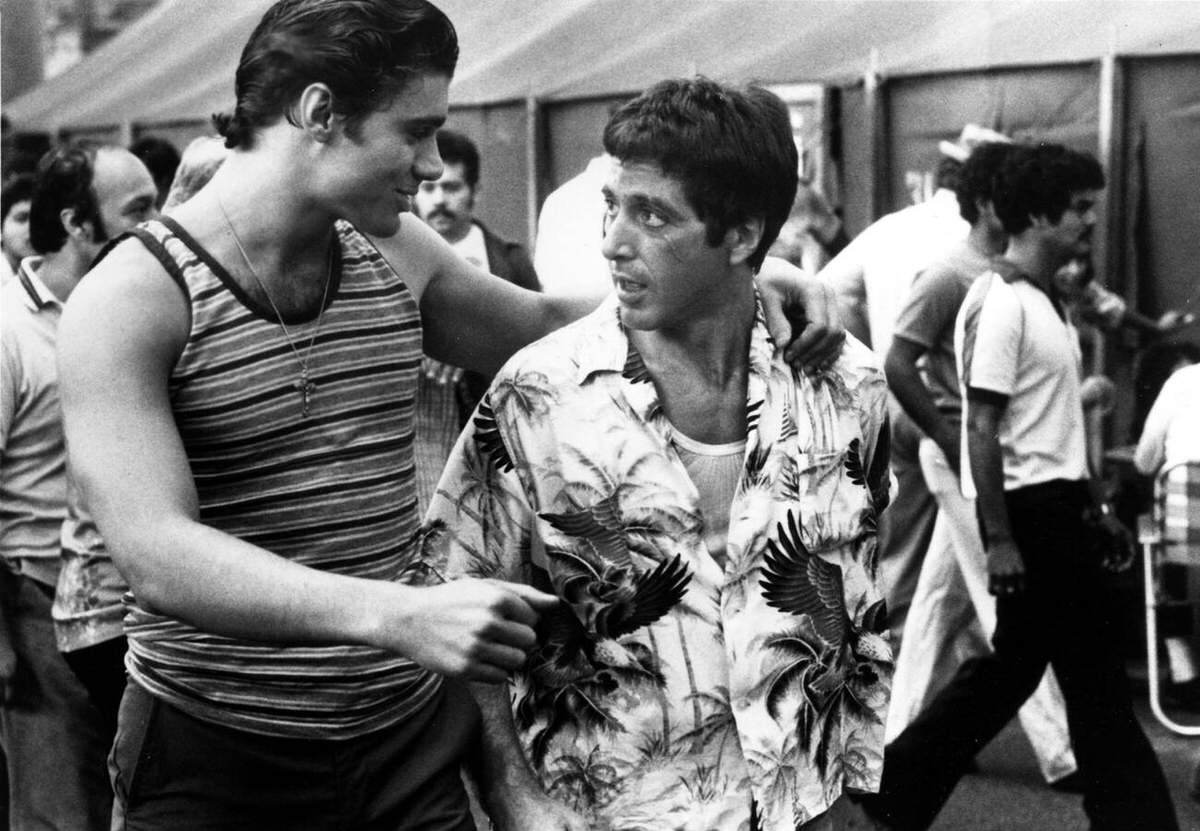
For the role of Manny Ribera, the production looked for an actor with a real Cuban background. They found Steven Bauer, who was born in Havana. Bauer was the only actual Cuban-American in the main cast. Al Pacino spent months working with a language coach to develop a specific Cuban-Spanish accent. He also worked with a physical coach to learn how to move like a “panther.” He wanted his character, Tony Montana, to have a tense and aggressive energy.
The Miami Controversy and Location Shift
The production originally planned to film the entire movie in Miami, Florida. However, the local Cuban-American community began to protest the script before filming even started. They felt that the movie would make all Cuban refugees look like criminals and drug dealers. The protests became so intense that the Miami City Council began to debate whether the movie should be allowed to film in the city. Protesters threatened to disrupt the sets and cause delays for the crew.
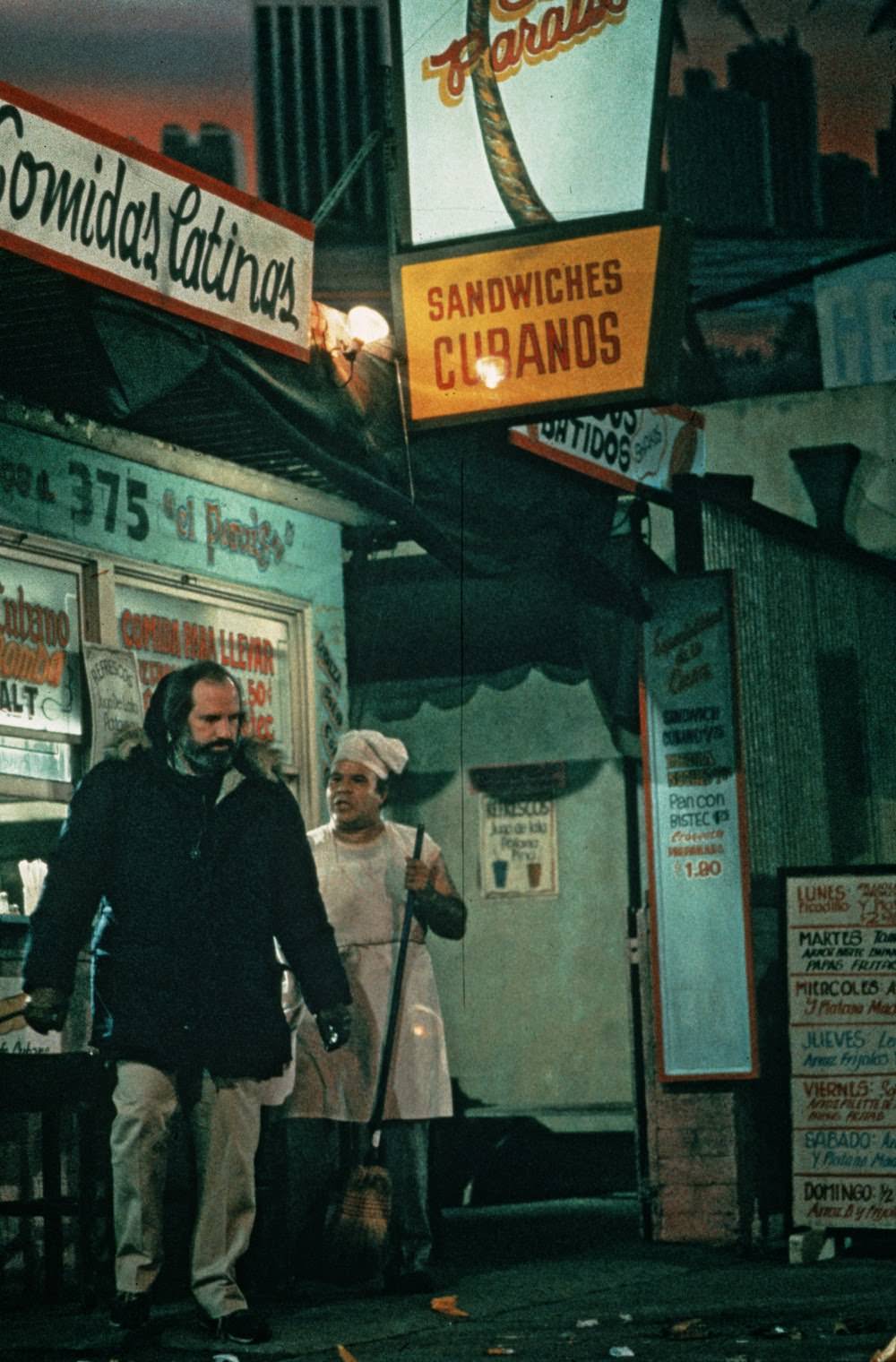
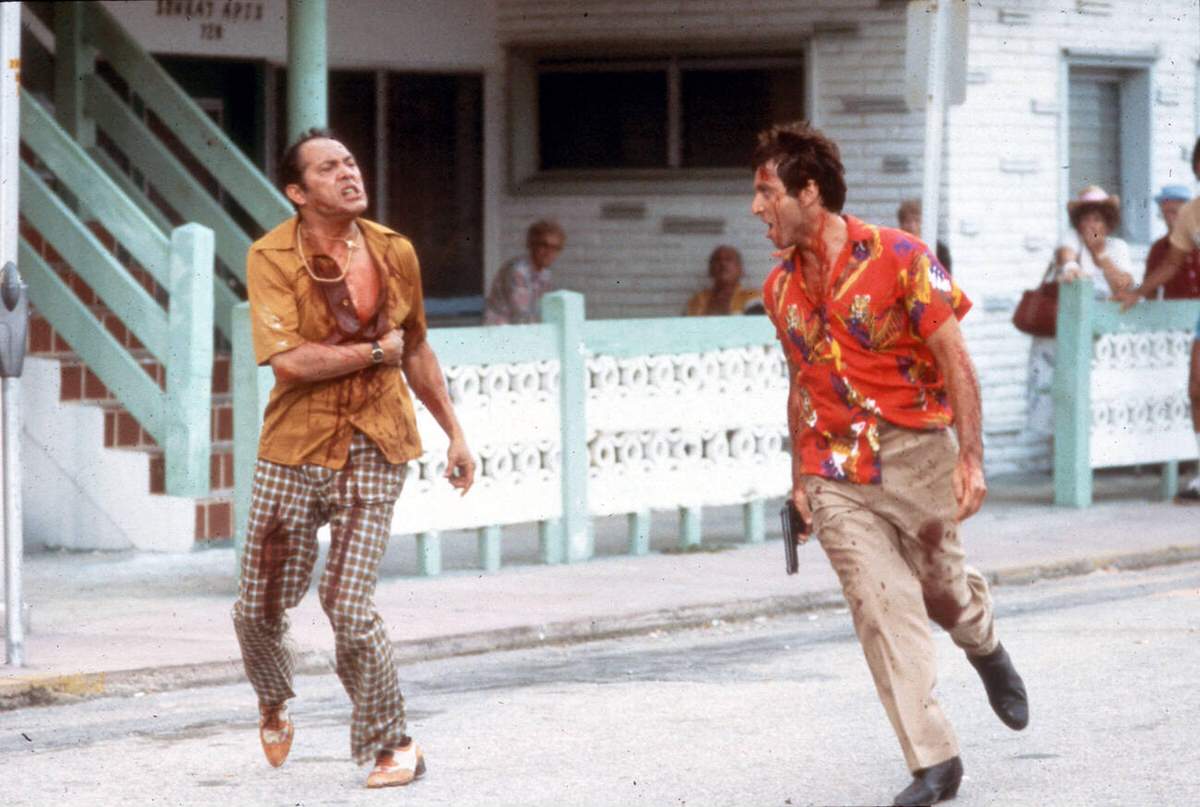
Because of these safety concerns, the production moved to Los Angeles for the majority of the shoot. Only a few establishing shots were actually filmed in Miami. The crew had to find locations in Southern California that could look like the tropical environment of Florida. They used neighborhoods in Santa Barbara and Los Angeles to recreate the streets of Miami. The famous chainsaw scene was filmed on Ocean Drive in Miami Beach, but the interior of the apartment was a set built in a studio in California.
The Visual Style and Practical Effects
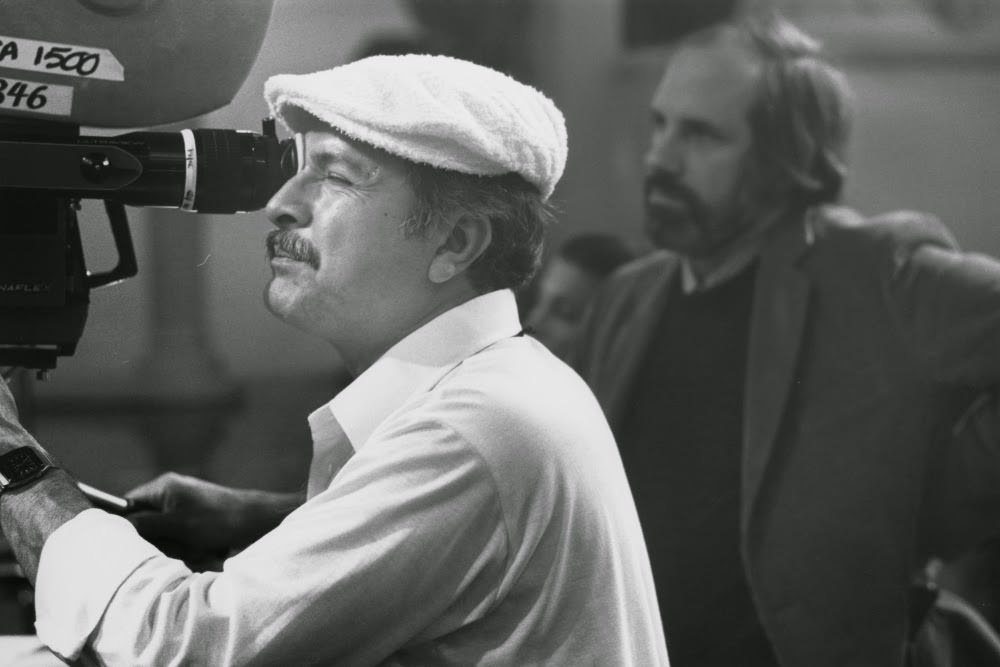
Cinematographer John A. Alonzo worked with Brian De Palma to create a vibrant, neon-filled look for the film. They used bright reds, blues, and whites to contrast with the dark subject matter. De Palma used long tracking shots and slow camera movements to build tension during the action scenes. The production used a lot of real fire and practical squibs to show bullet hits. Squibs are small explosive charges that simulate the impact of a bullet on a surface or a person.
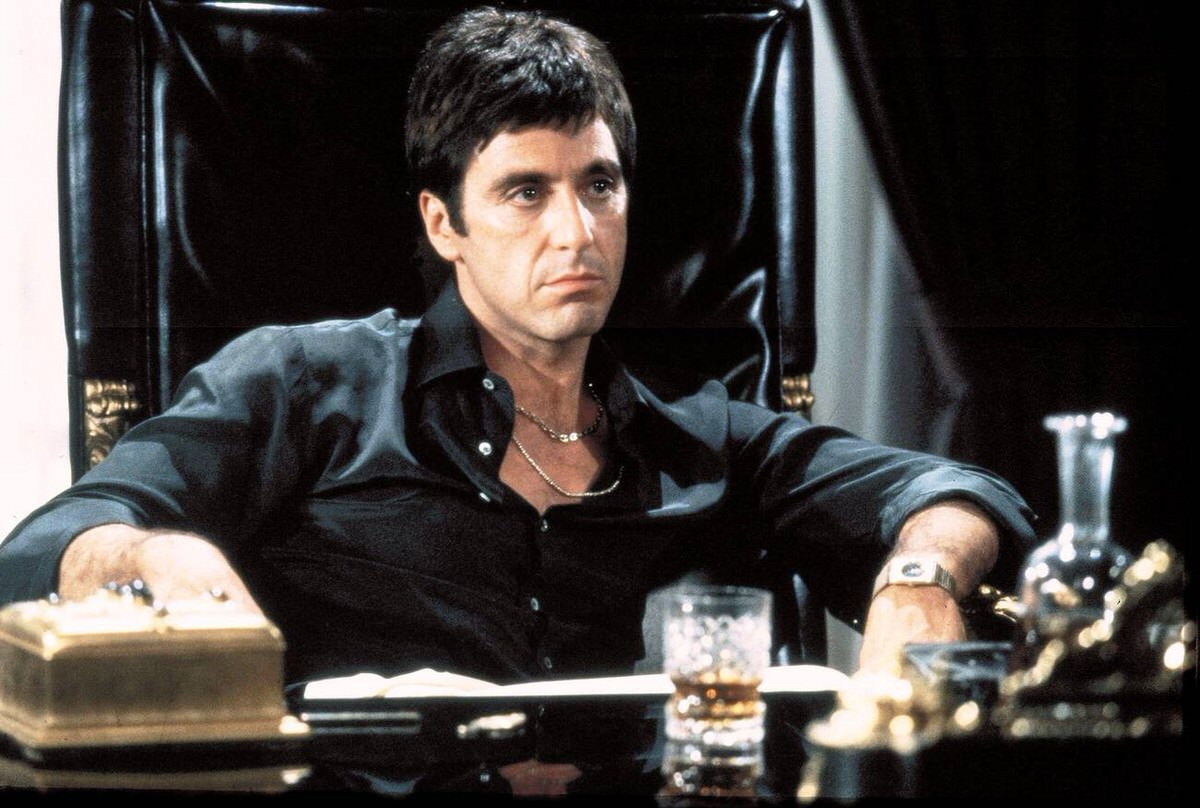
The special effects team had to create a realistic look for the massive amounts of cocaine shown in the film. They used powdered milk and baby powder for the scenes where Tony Montana is seen with the drug. Some actors reported that inhaling these powders caused them to develop nasal infections during the long months of filming. The “mountain” of powder on Tony’s desk in the final scene was made of several pounds of these household powders.
The Chainsaw Scene
The chainsaw scene is one of the most famous and violent parts of the movie. Brian De Palma wanted to show the horror of the event without showing the actual physical contact of the saw on the body. The crew used a mix of corn syrup and red food coloring for the fake blood. They rigged a shower curtain with tubes to spray the blood onto the walls and the actors. The sound of the chainsaw was recorded separately and made louder in post-production to increase the sense of danger. De Palma relied on fast editing and the reactions of the actors to make the scene feel more violent than what was actually visible on the screen.
The Mansion and the Final Shootout
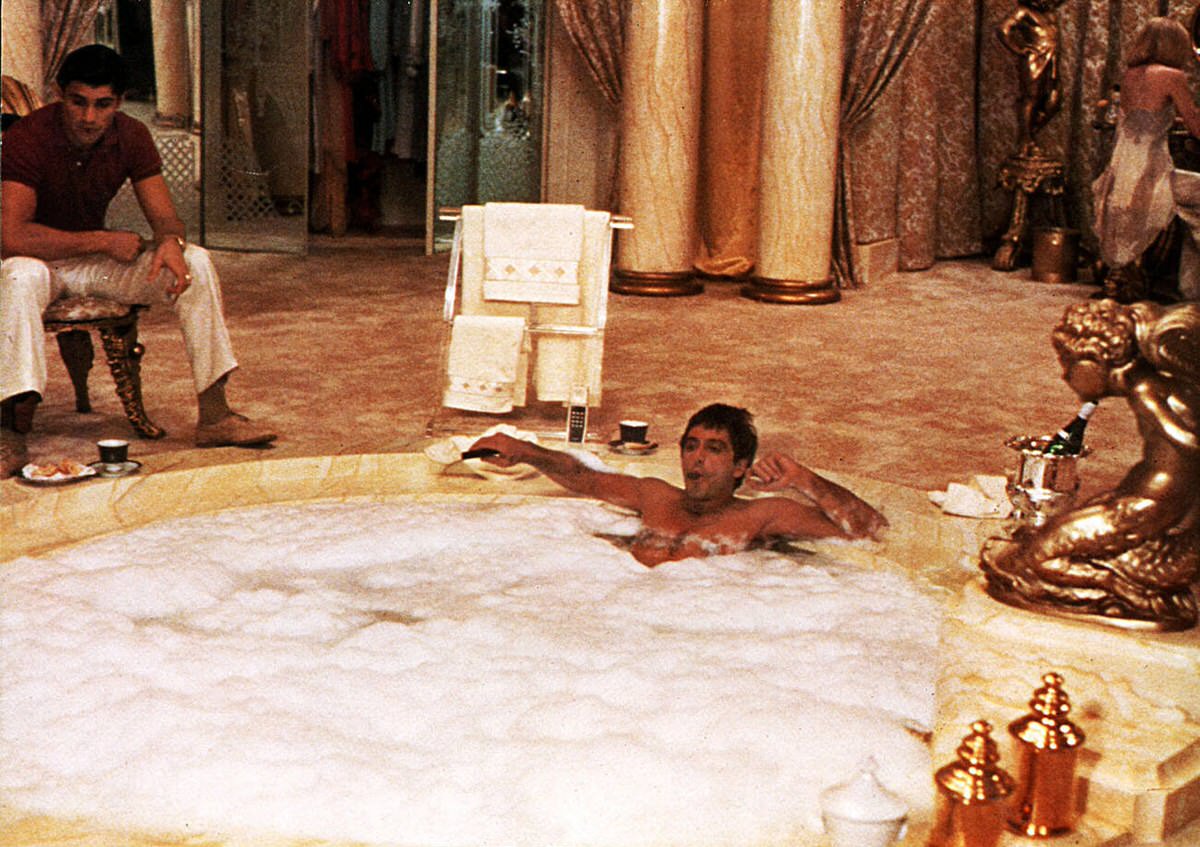
Tony Montana’s mansion was a real estate property in Santa Barbara called El Fureidis. The house featured Mediterranean and Persian architecture, which fit the lavish lifestyle of the character. The interior of the mansion, however, was a massive set built at Universal Studios. The art department created a grand staircase, a large indoor fountain, and walls covered in gold and marble textures. The set had to be built very strongly because it was destroyed during the final shootout scene.
The final battle took several weeks to film. The crew used hundreds of blank rounds of ammunition every day. These blanks used real gunpowder to create a bright flash and loud noise, but they did not fire a projectile. During one take, Al Pacino grabbed the hot barrel of his M16 rifle after firing several rounds. The metal was so hot that it caused severe burns on his hand. He was unable to film for nearly two weeks while his hand healed. The production had to reorganize the schedule to film scenes that did not include the lead actor.
The Battle with the Censors
After the film was edited, Brian De Palma submitted it to the Motion Picture Association of America (MPAA) for a rating. The board gave the movie an X rating because of the extreme violence and language. An X rating meant that most theaters would refuse to show the film. De Palma edited the movie and resubmitted it, but it was given an X rating again. This happened three times.
De Palma eventually invited a group of real-life narcotics police officers to a screening. He asked them to testify to the MPAA that the violence in the movie was a realistic depiction of the drug trade in Miami. The officers agreed that the movie was accurate. After hearing their testimony, the rating board finally changed the rating to an R. Interestingly, De Palma admitted later that he actually submitted the original, unedited version for the final R rating, and the board did not notice the difference.
The Music of Giorgio Moroder
The soundtrack for Scarface was composed by Giorgio Moroder. Moroder was a pioneer in electronic music and used synthesizers to create a tense and modern sound. He wanted the music to reflect the fast-paced and synthetic world of the 1980s drug culture. The score included several pop songs that were used during the club scenes. The music was designed to be loud and repetitive to build a sense of anxiety in the audience. The synth-heavy score became a defining characteristic of the film’s atmosphere.