Raiders of the Lost Ark hit theaters in 1981 and immediately changed what audiences expected from an action-adventure film. Directed by Steven Spielberg and based on a story by George Lucas, the screenplay was written by Lawrence Kasdan — the same writer behind The Empire Strikes Back and Return of the Jedi. The film blended action, romance, comedy, and mystery into a relentless series of cliffhangers, drawing heavily from the style of old adventure serials and comic books.
Harrison Ford played Indiana Jones, an archaeologist and adventurer who travels the world hunting down ancient treasures. Karen Allen played Marion Ravenwood, Indy’s sharp-tongued former lover. The cast also included John Rhys-Davies as Sallah and Paul Freeman as the cunning rival archaeologist Belloq. Each character had a distinct personality that came through clearly on screen. Behind the camera, an enormous amount of craft, practical effects, and physical stunt work went into every scene. These rare behind-the-scenes photos give a close look at how it all came together.
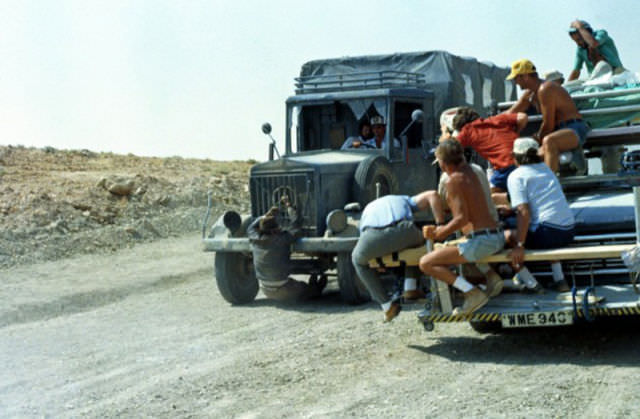
Much of the film’s most dangerous work fell to stunt performers. Vic Armstrong served as Harrison Ford’s stunt double and was widely regarded as one of the best in the business. The truck chase sequence — one of the film’s most celebrated set pieces — required Armstrong to perform a series of brutal, high-risk gags that became the stuff of Hollywood legend.
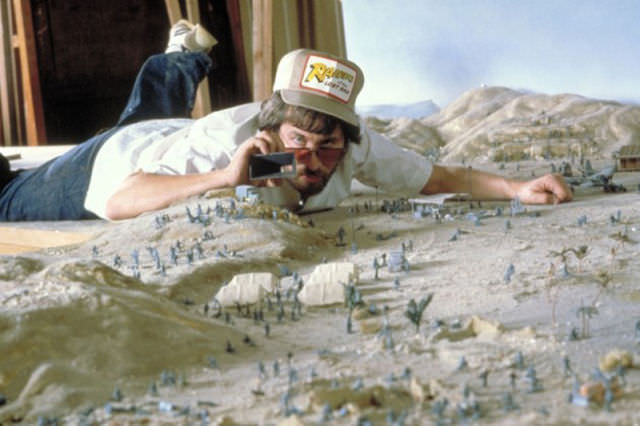
Spielberg and his crew relied heavily on practical techniques to bring the film’s world to life. Miniature sets were used to create large-scale environments that would have been impossible or too costly to build full-size. Every detail was carefully planned before the camera rolled.
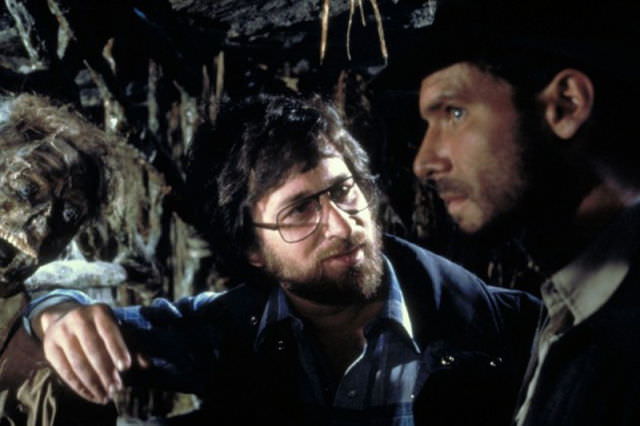
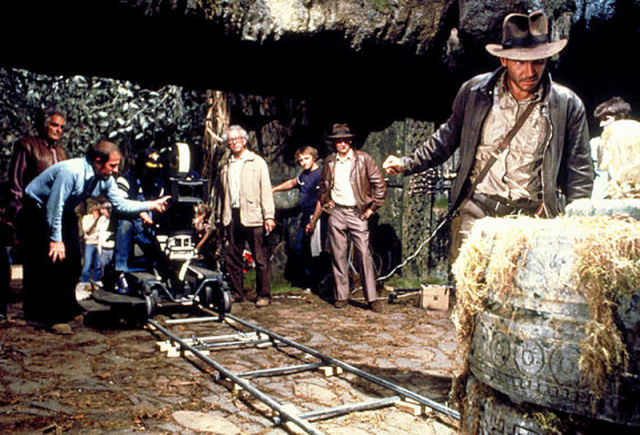
Ford and Armstrong looked strikingly similar in costume, which made the stunt double work especially seamless on film. Seeing the two side by side on set makes it clear why audiences never noticed the swap. Armstrong performed some of the film’s most physically demanding moments while Ford handled the scenes that required acting close-ups.
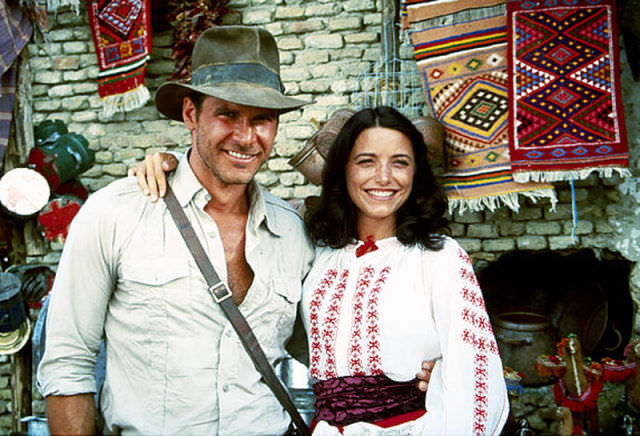
The chemistry between Harrison Ford and Karen Allen gave the film much of its energy. Marion Ravenwood wasn’t a passive character — she held her own against Indy in every scene they shared, and Allen brought a toughness to the role that made her one of the most memorable characters in the franchise.
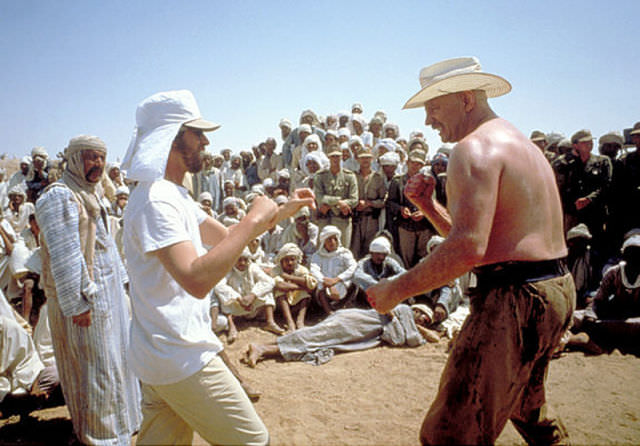
Pat Roach, a professional wrestler turned actor, played the imposing German mechanic who goes toe-to-toe with Indy near the flying wing. Choreographing that fight required precise planning between Spielberg and Roach to make the brawl look brutal without seriously injuring anyone involved.
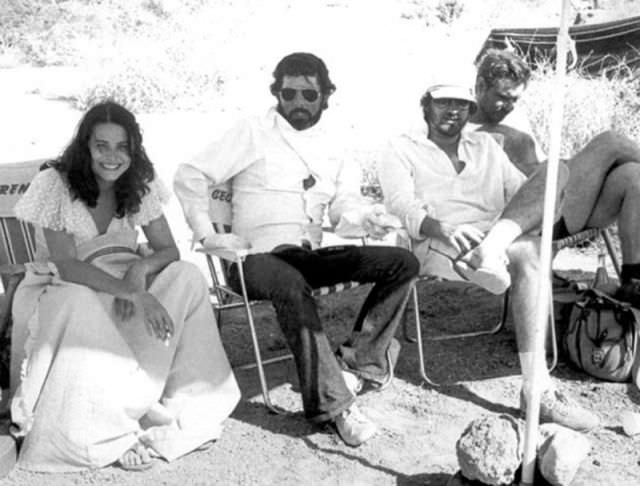
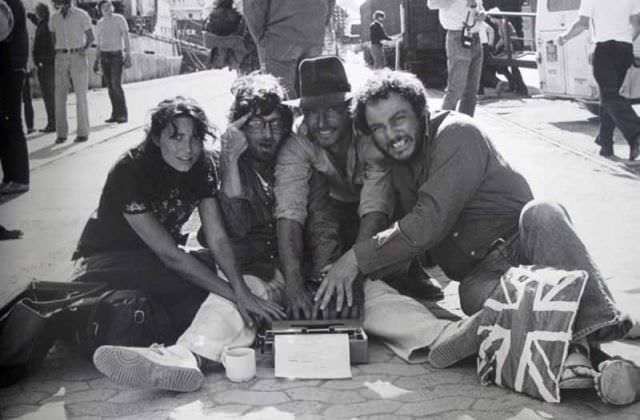
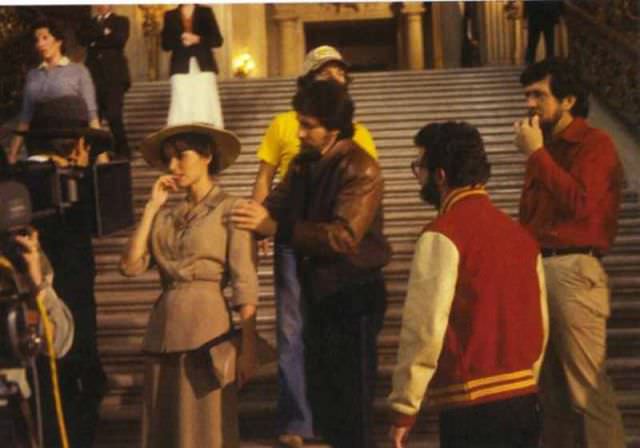
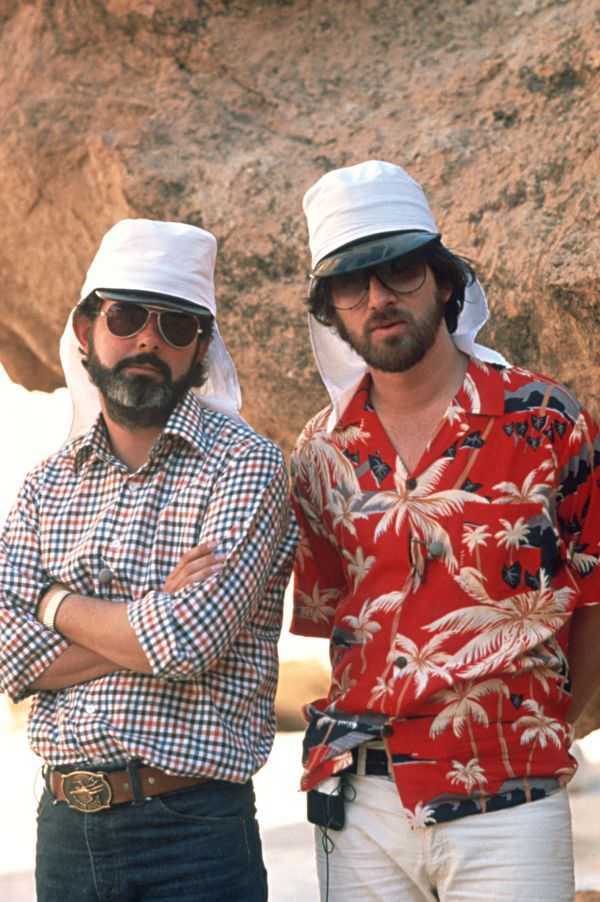
George Lucas produced the film and co-developed the original story with Spielberg. The two had already collaborated on American Graffiti, and their working relationship brought a clear creative confidence to the production. Here, the four key figures — Allen, Lucas, Spielberg, and Ford — are caught together on set.
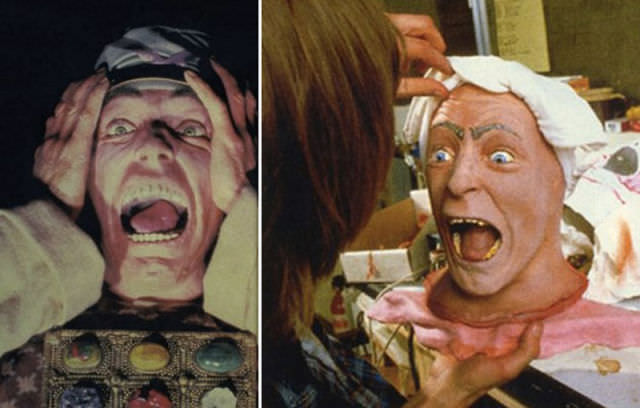
The film’s finale — in which the Ark of the Covenant is opened and its power destroys the Nazis present — required some of the production’s most elaborate special effects work. The melting and exploding heads of Belloq, Dietrich, and Toht were created using detailed prosthetics and practical effects. The prosthetic head built to replicate Belloq for his exploding death scene was a precise likeness of actor Paul Freeman.
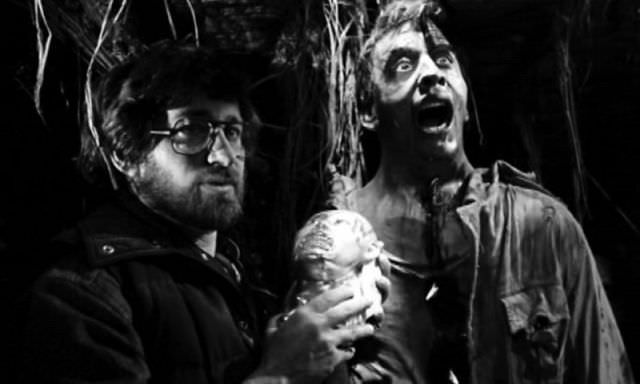
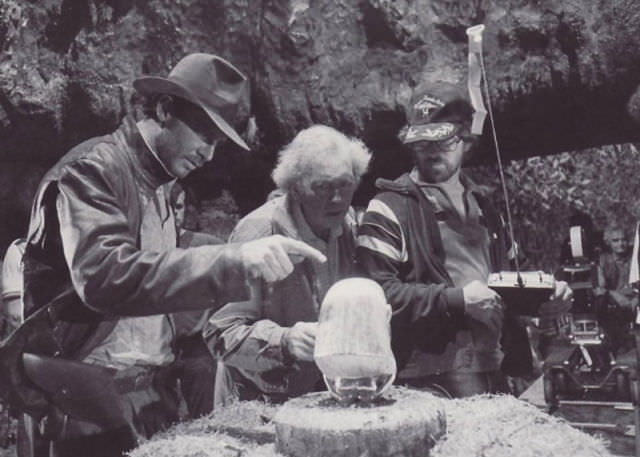
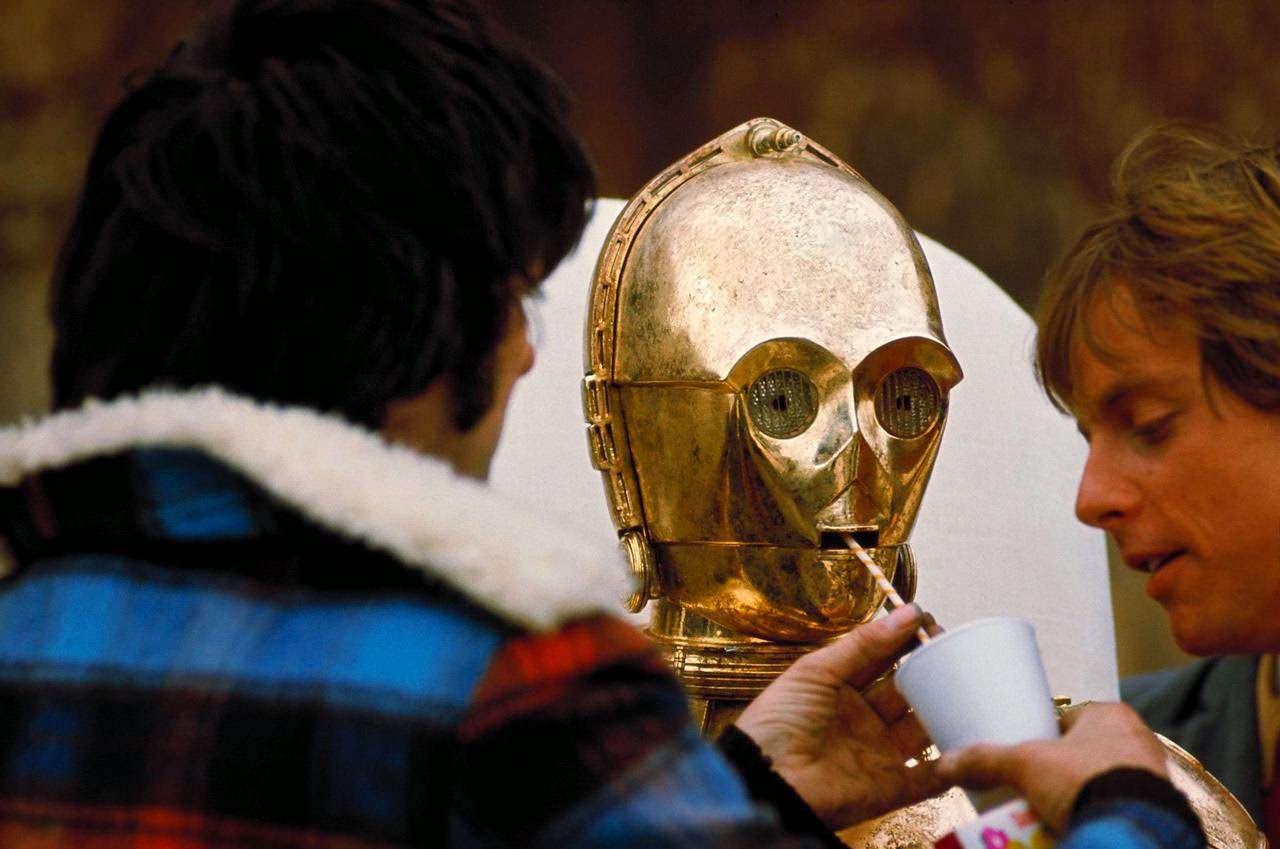
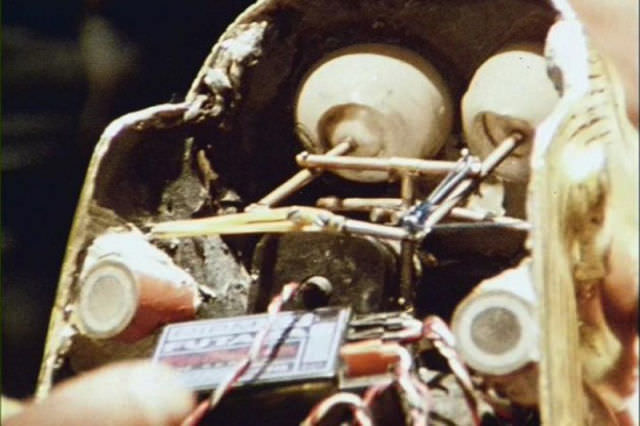
The golden fertility idol that opens the film was not a simple prop. The production built an animatronic version with functioning robotic eyes designed to track and look directly at Indiana Jones during the opening temple sequence. Cinematographer Douglas Slocombe, known for his work on the early Indiana Jones trilogy, worked closely with Spielberg to capture the idol’s unsettling gaze on camera.
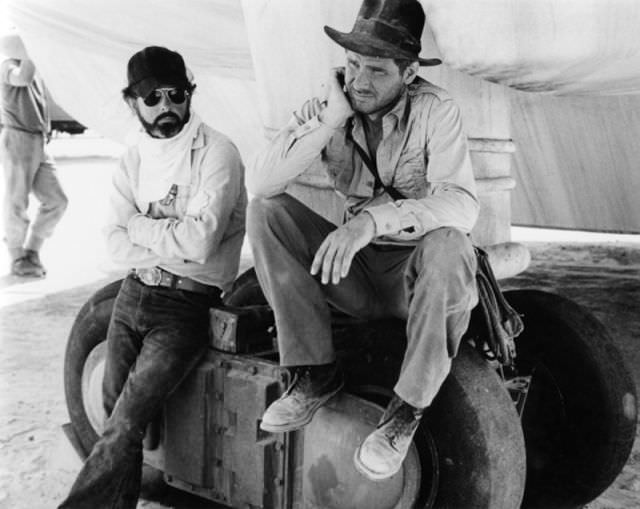
Lucas remained an active presence on set throughout the shoot. His collaboration with Ford dated back to American Graffiti and continued through the Star Wars films, so the two had a well-established working dynamic by the time Raiders went into production.
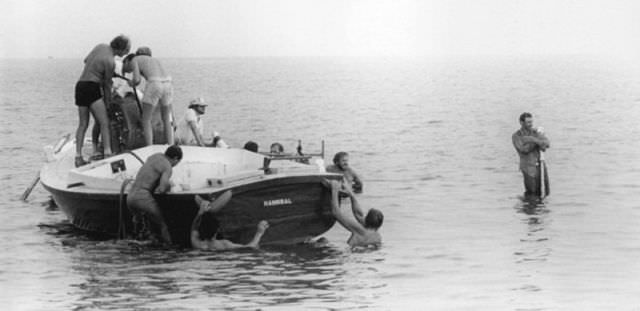
Not everything filmed made it into the final cut. A deleted scene explained exactly how Indiana Jones survived his trip aboard the German submarine — a plot point the released film leaves deliberately vague. The scene was cut for pacing, leaving audiences to draw their own conclusions.
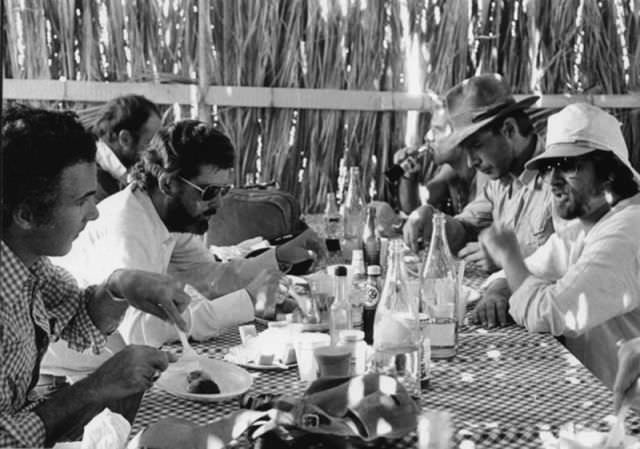
Between the intense filming schedule and physically demanding scenes, downtime on set was a welcome break. The production shot across multiple countries, including Tunisia for the desert sequences, which meant long days under harsh conditions for cast and crew alike.
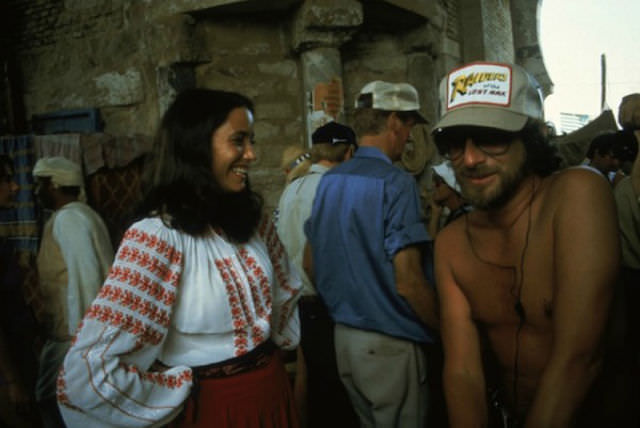
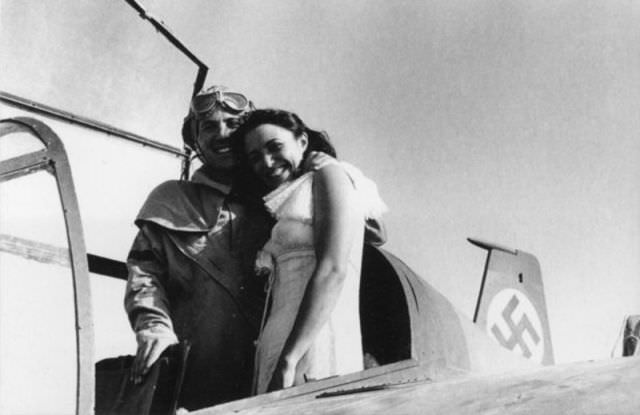
The Nazi officers and soldiers in the film were played by a mix of professional actors and extras. Off camera, the atmosphere on set was reportedly relaxed and good-humored, a contrast to the menacing roles many of the cast were portraying.
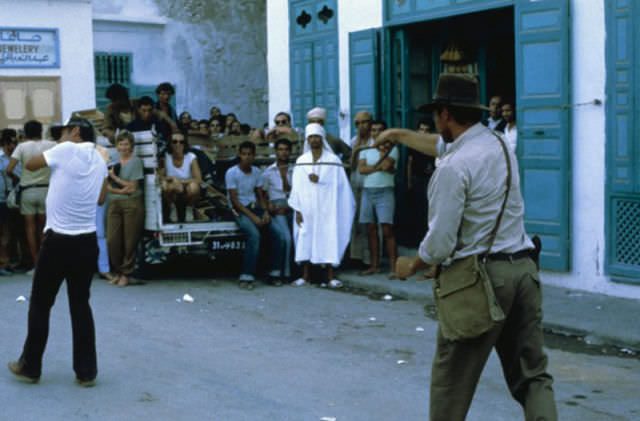
Indiana Jones’s whip is one of the most iconic props in cinema history. Ford spent considerable time practicing with it to make the weapon look convincing on screen. The Cairo bazaar scenes required him to handle it with precision in tight, crowded spaces surrounded by extras and crew.
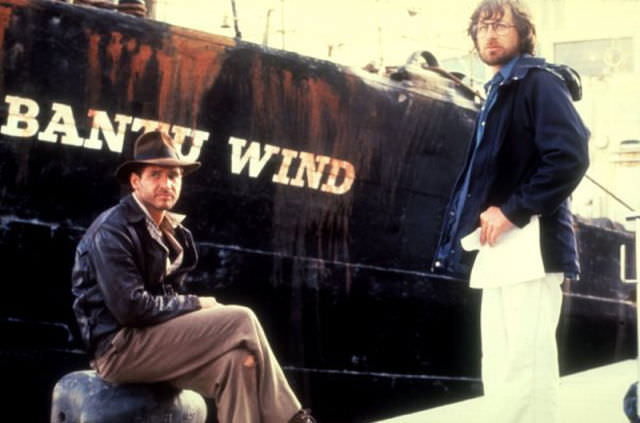
The Bantu Wind, the tramp steamer that carries Indy, Marion, and the Ark across the sea, was a key location in the film’s second half. Spielberg and Ford are pictured here alongside the vessel, which brought a grounded, real-world texture to the production that matched the film’s adventure serial roots.
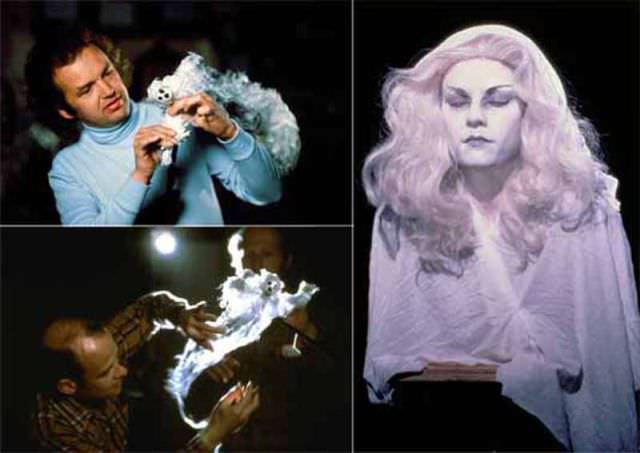
The supernatural effects surrounding the opening of the Ark were achieved through a combination of optical effects and on-set practical work. The spirits and ghosts that emerge before the destructive finale required extensive post-production work, but elements were also built and filmed on set to give the effects team source material to work with.
Scripts on major productions rarely stay fixed once filming begins. Here, Allen, Spielberg, Ford, and John Rhys-Davies are caught working through rewrites together. Rhys-Davies played Sallah, Indy’s loyal Egyptian friend, and his scenes with Ford provided some of the film’s warmest moments.
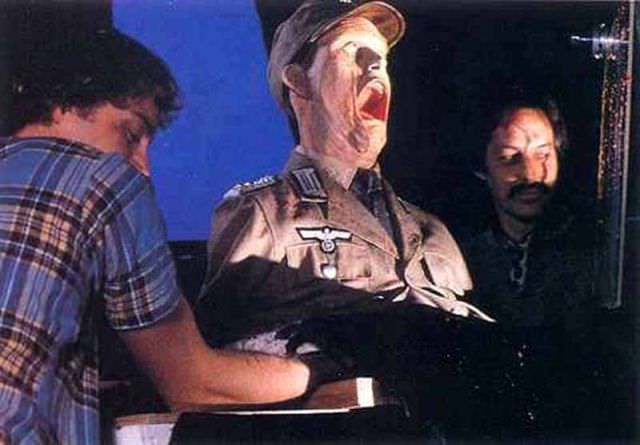
Colonel Dietrich’s fate during the Ark’s opening is one of the film’s most gruesome practical effects shots. His face melting away was created using a sculpted prosthetic that was gradually deformed on camera. The effect was visceral enough that it contributed to Raiders being one of the key films cited in the creation of the PG-13 rating.
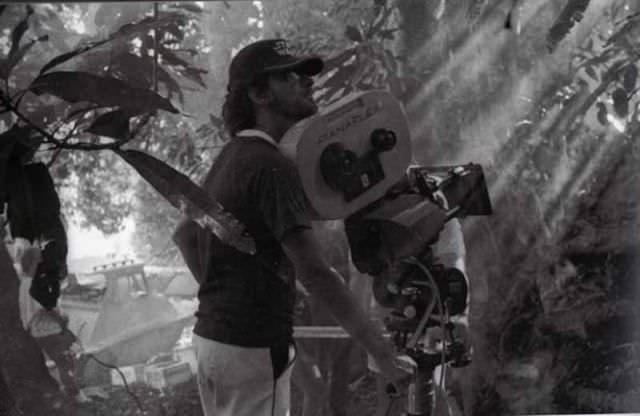
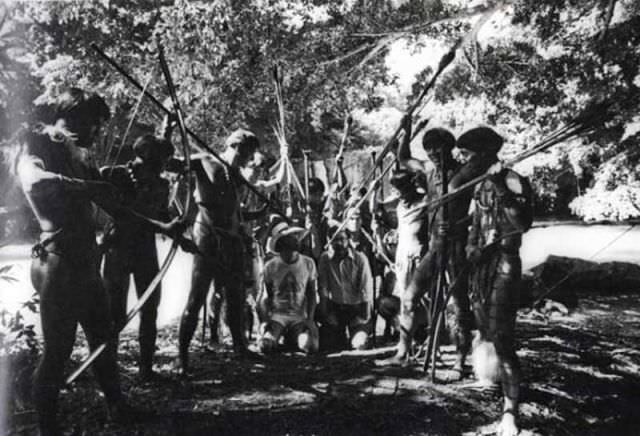
The opening jungle sequence introduced both the world of Indiana Jones and his rival Belloq, played by Paul Freeman. The Hovitos tribespeople who back Belloq in the scene were played by local extras, and filming in real jungle locations gave the sequence an authenticity that studio sets couldn’t replicate.
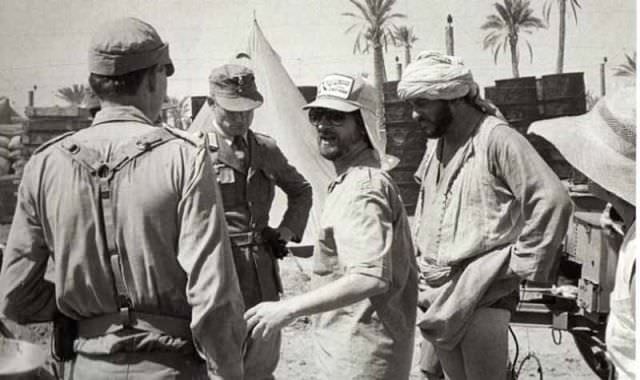
Wolf Kahler played the cold, methodical Colonel Dietrich, the senior Nazi officer overseeing the Ark’s excavation. His presence gave the film a grounded military antagonist alongside the more theatrical menace of Belloq. Spielberg is seen here between Kahler and Rhys-Davies, two actors whose characters rarely shared screen time.
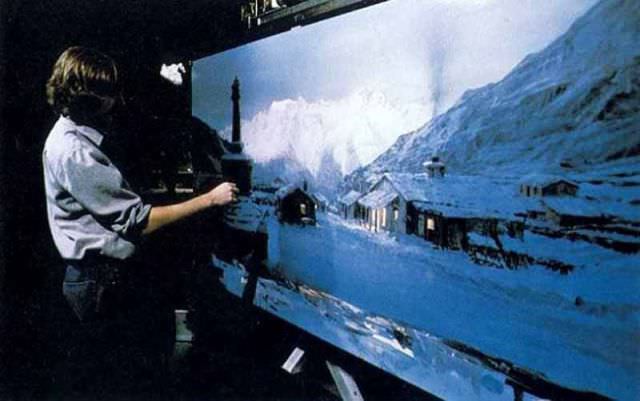
Matte paintings were a standard filmmaking technique in 1981, used to create environments that couldn’t be built on location or on a soundstage. The Tibetan setting of Marion’s bar, the Raven, was brought to life this way. The painting established the remote, snow-covered setting without the production ever having to send a crew to the Himalayas.
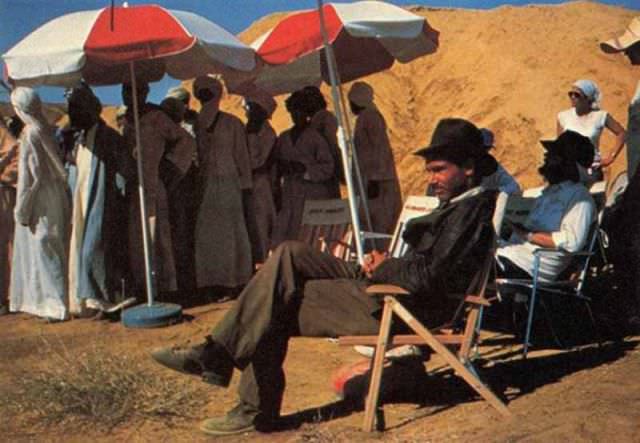
Tunisia stood in for Egypt throughout the desert sequences, and filming there was grueling. The heat was intense, and a large portion of the cast and crew became ill during the shoot — including Ford, who was dealing with a stomach illness during some of the most physically demanding filming days.
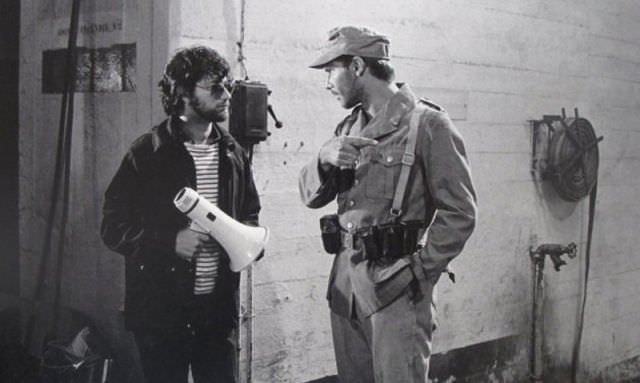
The partnership between Spielberg and Ford was central to the success of Raiders. Spielberg’s direction gave the film its kinetic energy and visual wit, while Ford’s performance grounded the outlandish adventure in a believable, charismatic hero. Their collaboration continued across three sequels.
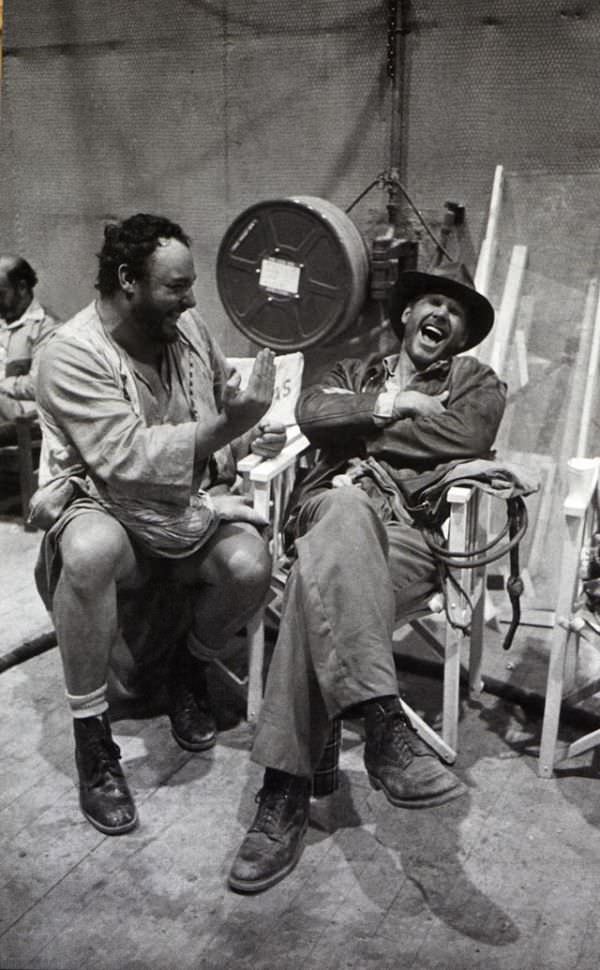
John Rhys-Davies was known for keeping the mood light on set. His natural humor translated directly into his performance as Sallah, and his rapport with Ford was genuine. Moments like this one — catching Ford mid-laugh — capture the warmth that existed behind the camera during the making of one of cinema’s most celebrated adventure films.