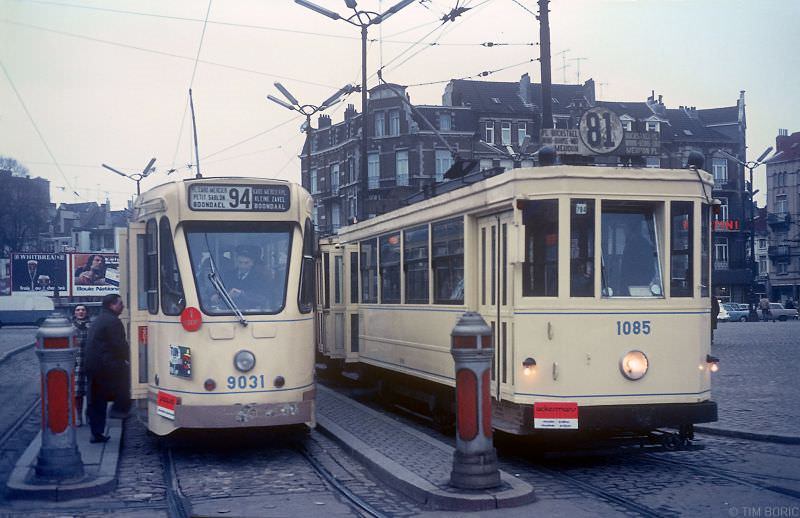
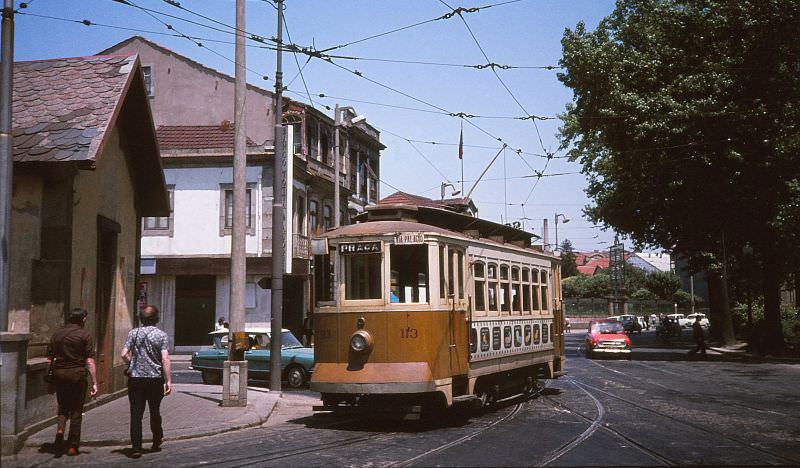
In the early 1900s, a single nickel could take you almost anywhere in Los Angeles. The Los Angeles Railway — known to locals simply as the “Yellow Cars” — ran a dense network of electric streetcars through the heart of the city. These were not the long-distance “Red Cars” that pushed into the suburbs. The Yellow Cars ran on narrow-gauge tracks through downtown, Echo Park, and South Los Angeles, making short, frequent trips that kept the city moving every single day.
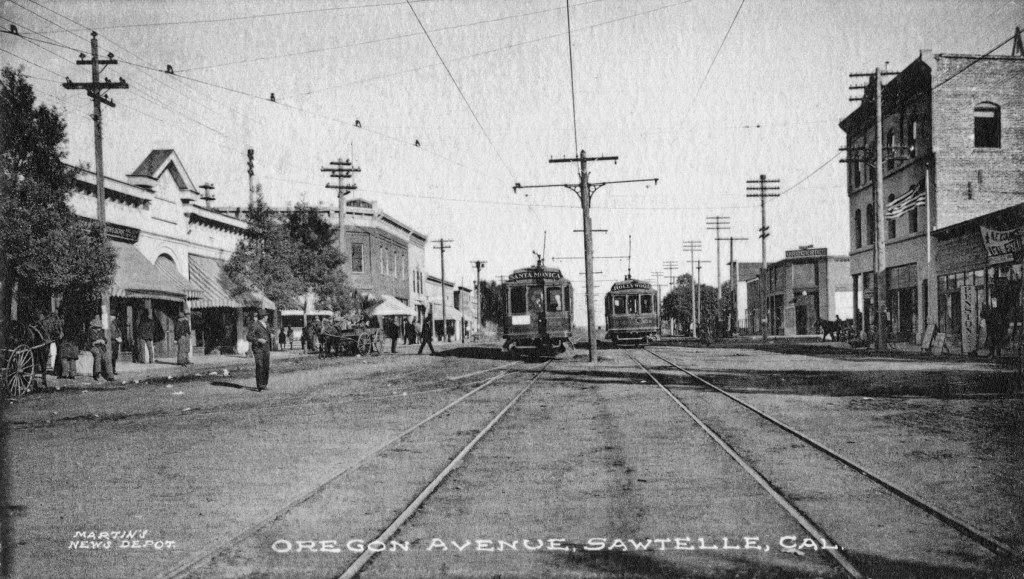
Railroad magnate Henry Huntington purchased the system in 1898 and launched an aggressive modernization campaign. He cleared out the last of the horse-drawn carriages and cable cars, replacing them with electric trolleys. Then he pushed those tracks outward into undeveloped land. Real estate developers followed immediately, building new neighborhoods along each new line. Districts like West Adams transformed from open fields into busy residential streets almost overnight, all because a reliable trolley ran through them.
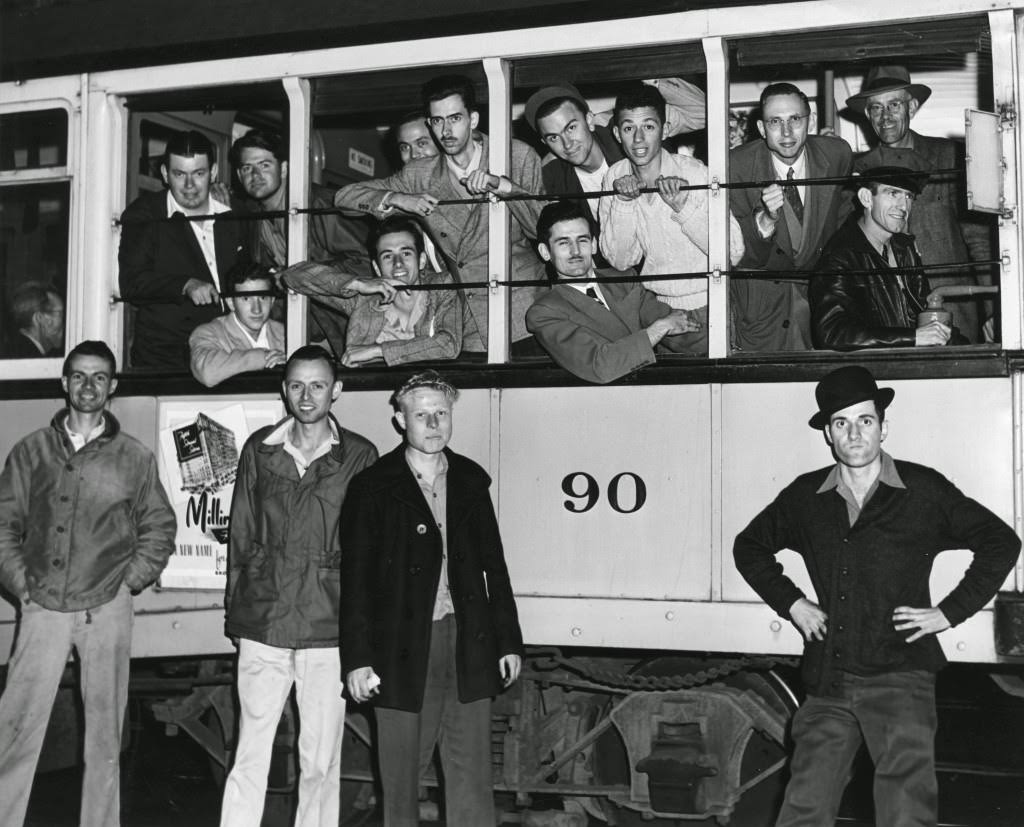
By 1902, the railway introduced one of its most recognizable vehicles. Engineers called it the Type B, but riders knew it as the “Sowbelly.” The car featured a low-slung center section with doors positioned close to the ground. Passengers stepped in without climbing steep stairs, which made boarding fast at crowded stops. The conductor stood in that center well, coin changer strapped to his belt, collecting fares as riders streamed in and out. The curved sides of the Sowbelly made it easy to spot from a block away.
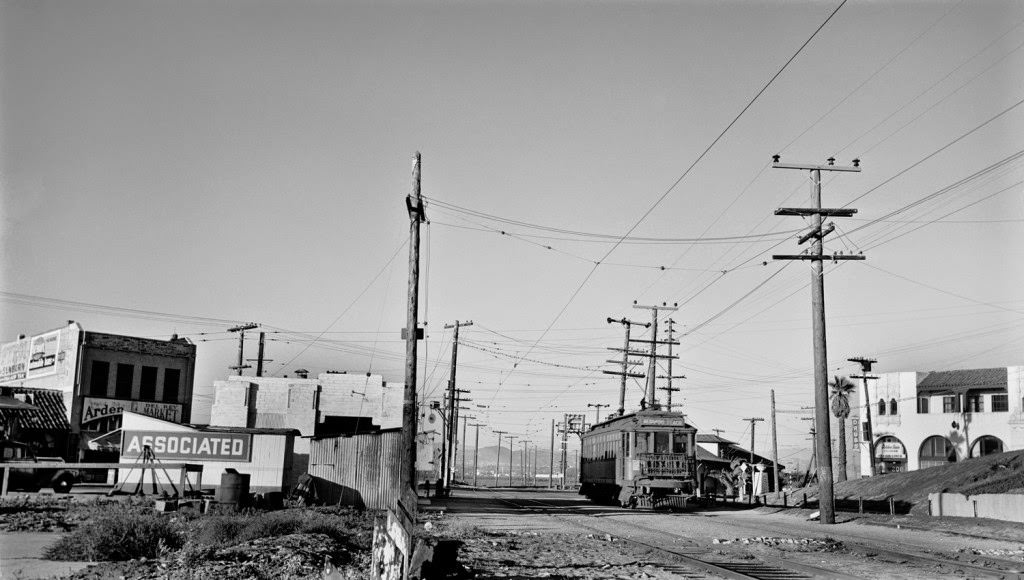
The five-cent fare was one of the most powerful forces shaping the city. One nickel bought a ride of any length within city limits — no extra charge for distance. Factory workers, office clerks, and wealthy bankers all paid the same flat rate. This made it practical for workers to live in quieter residential neighborhoods and commute cheaply to jobs in industrial districts. The fixed price was not just a transit policy; it was an engine of urban growth.
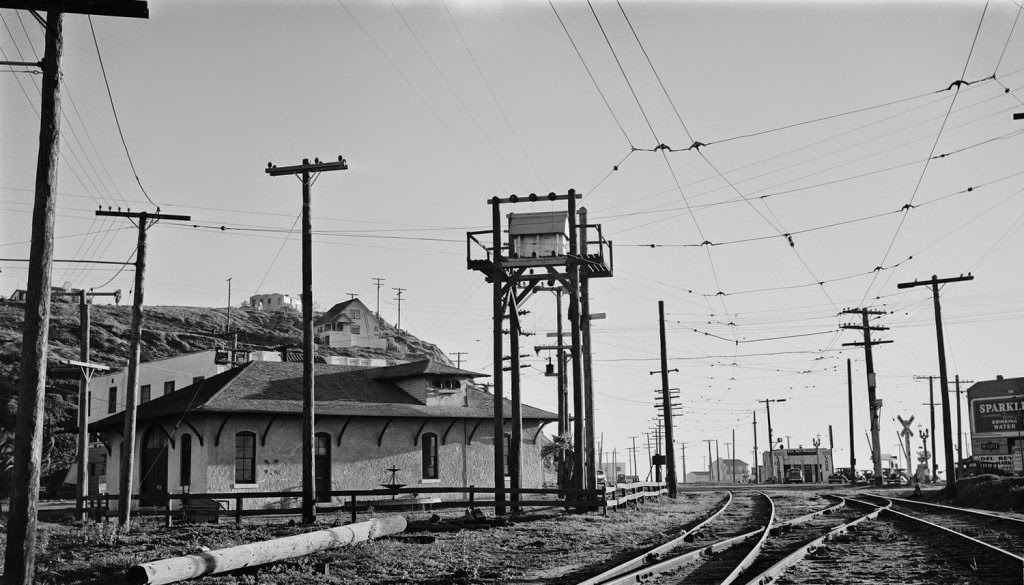
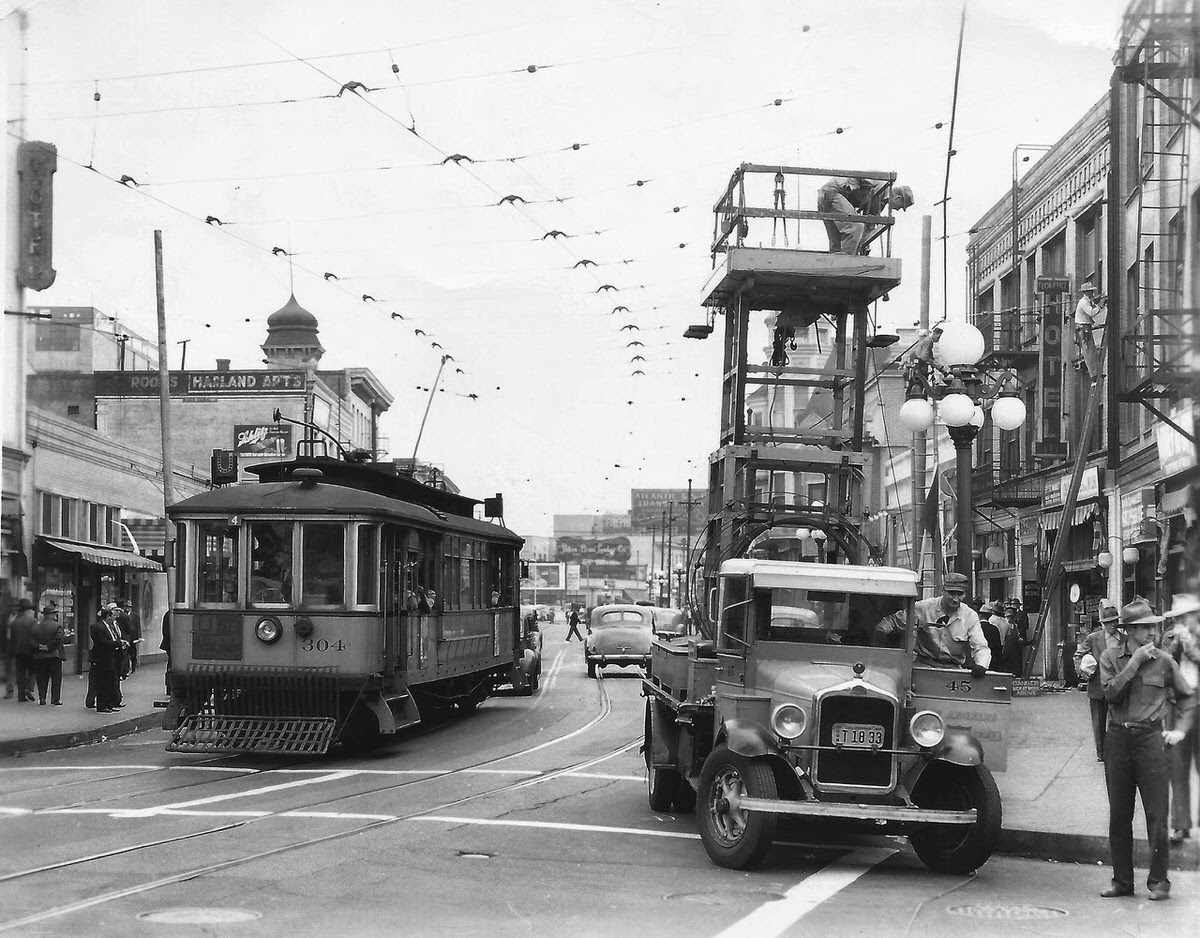
Powering the fleet required an elaborate web of overhead copper wires strung across the city. A trolley pole on the roof of each car pressed against these wires to draw electricity. At the front of the car, the motorman controlled speed with a heavy brass handle and used a foot pedal to stomp a loud floor gong, warning pedestrians and horse-drawn wagons to clear the tracks. At night, blue sparks rained down from the wires whenever metal wheels crossed an intersection.
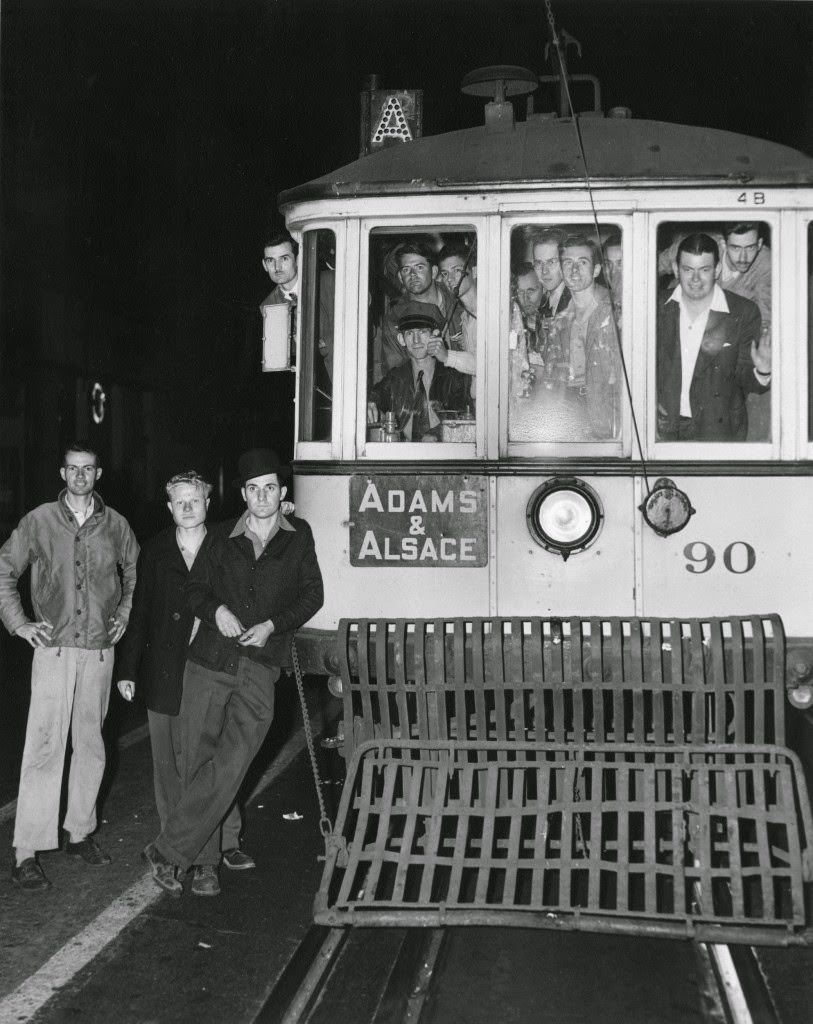
Broadway and Main Street became some of the most congested corridors in the city. Streetcars shared the road with horse-drawn delivery wagons, early automobiles, and bicycles. Because the tracks ran down the center of the street, a single slow wagon could hold up an entire line of trolleys. The railway responded by tightening schedules to intervals as short as 90 seconds during rush hour. During peak times, a nearly solid wall of yellow steel cars rolled continuously through downtown Los Angeles.
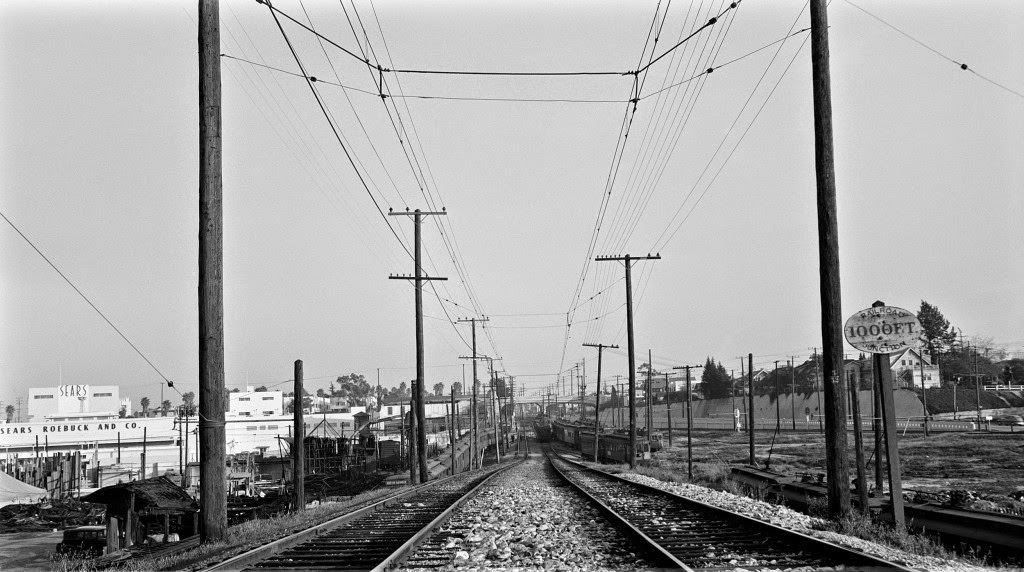
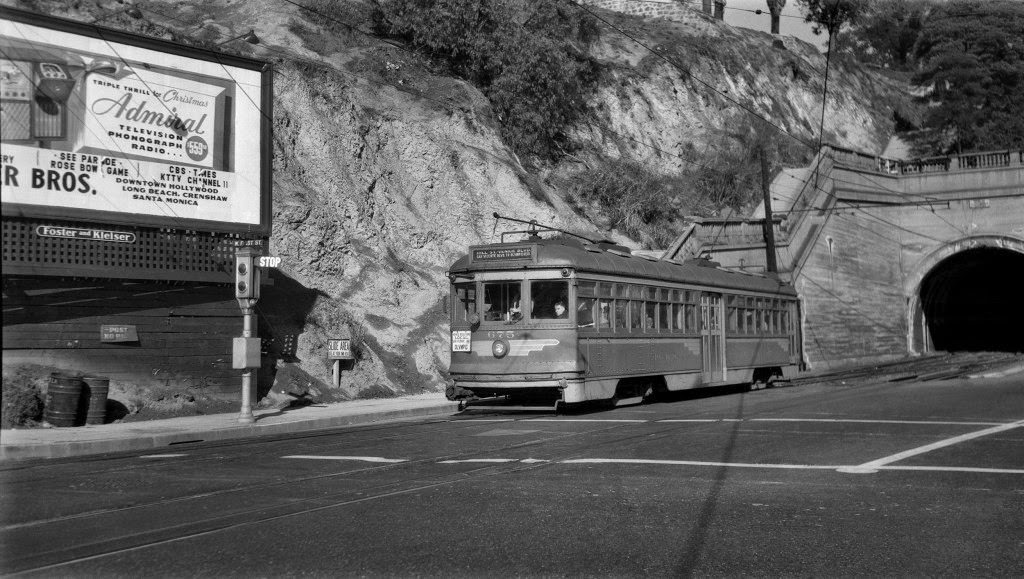
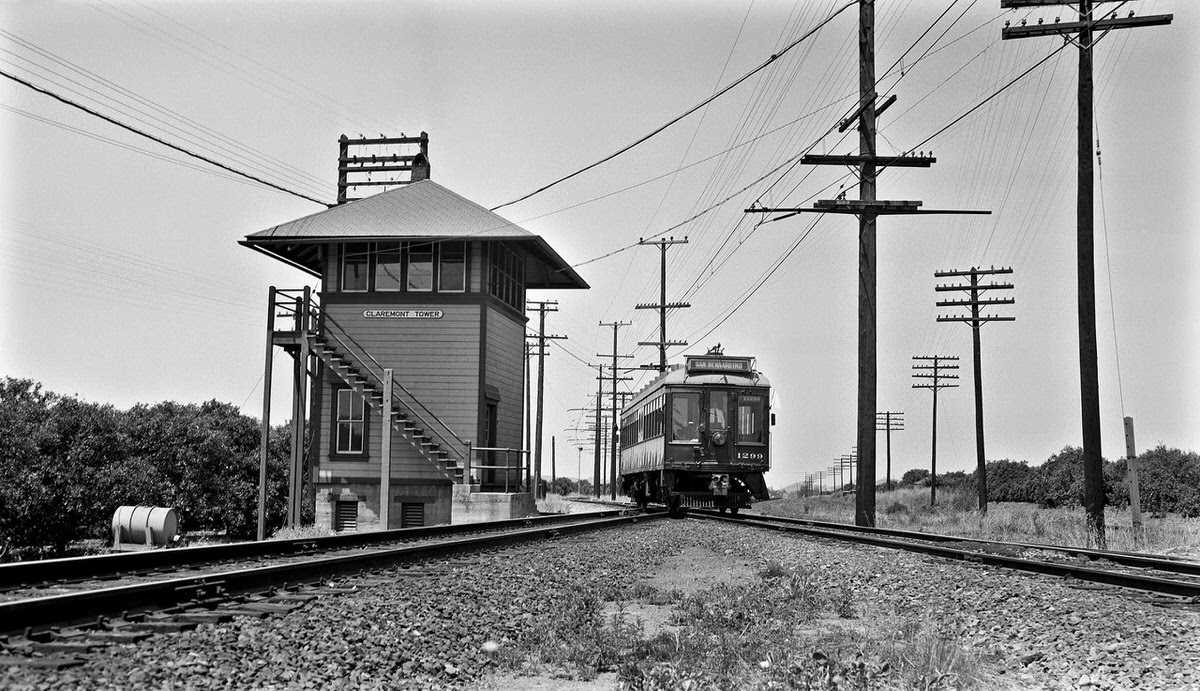
The streetcar network touched nearly every corner of the region. Pacific Electric interurbans extended the reach of rail transit far beyond what the Yellow Cars covered, connecting neighborhoods from Fairfax to the beach communities south of the city.
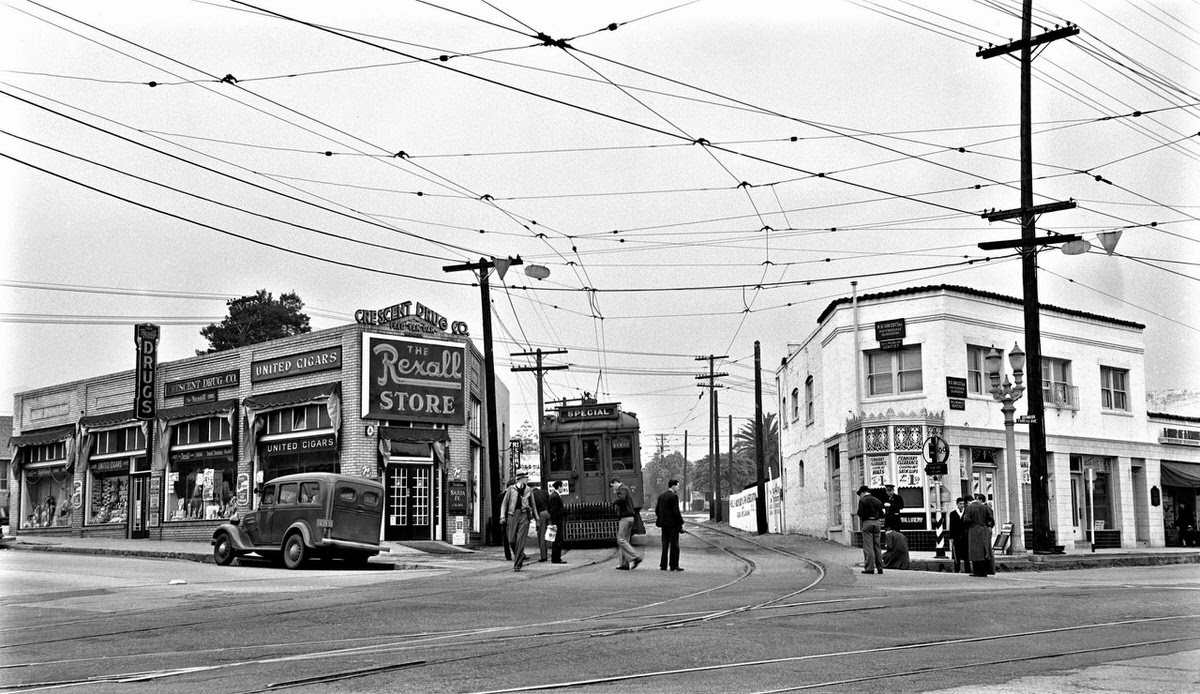
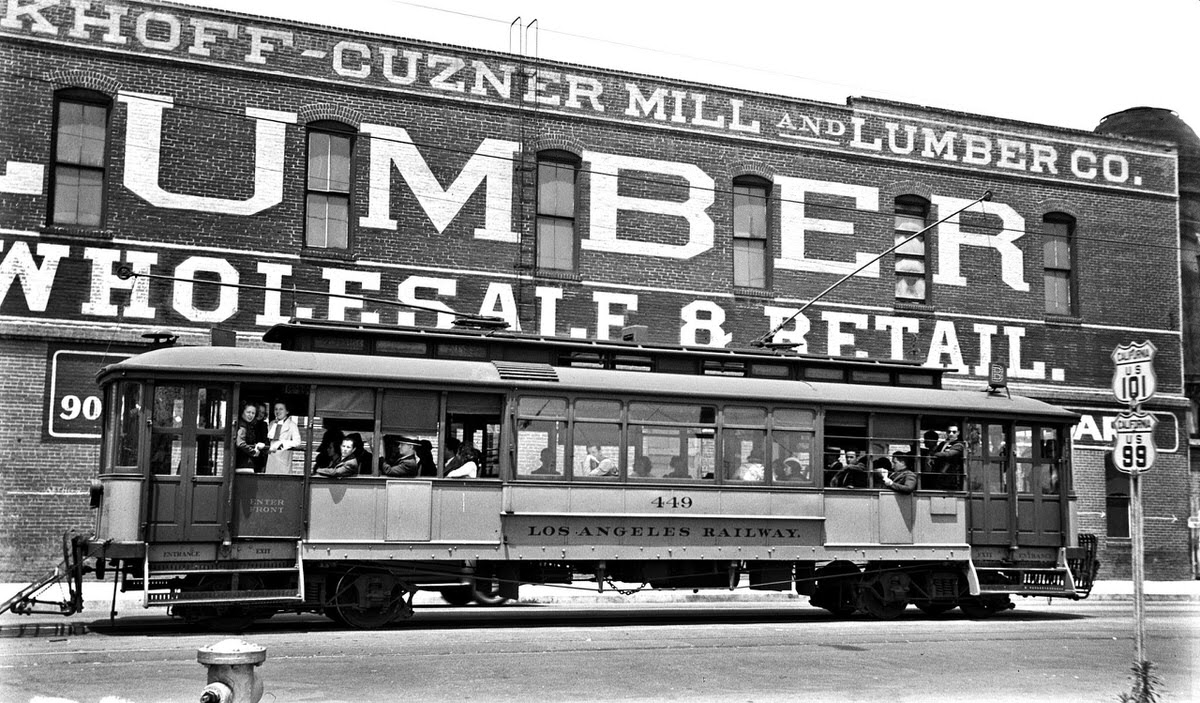
By the late 1930s, Los Angeles Railway cars could be found in virtually every working-class and industrial district of the city. The cars ran past lumber yards, garment factories, and rail depots, connecting workers directly to their jobs without a transfer.
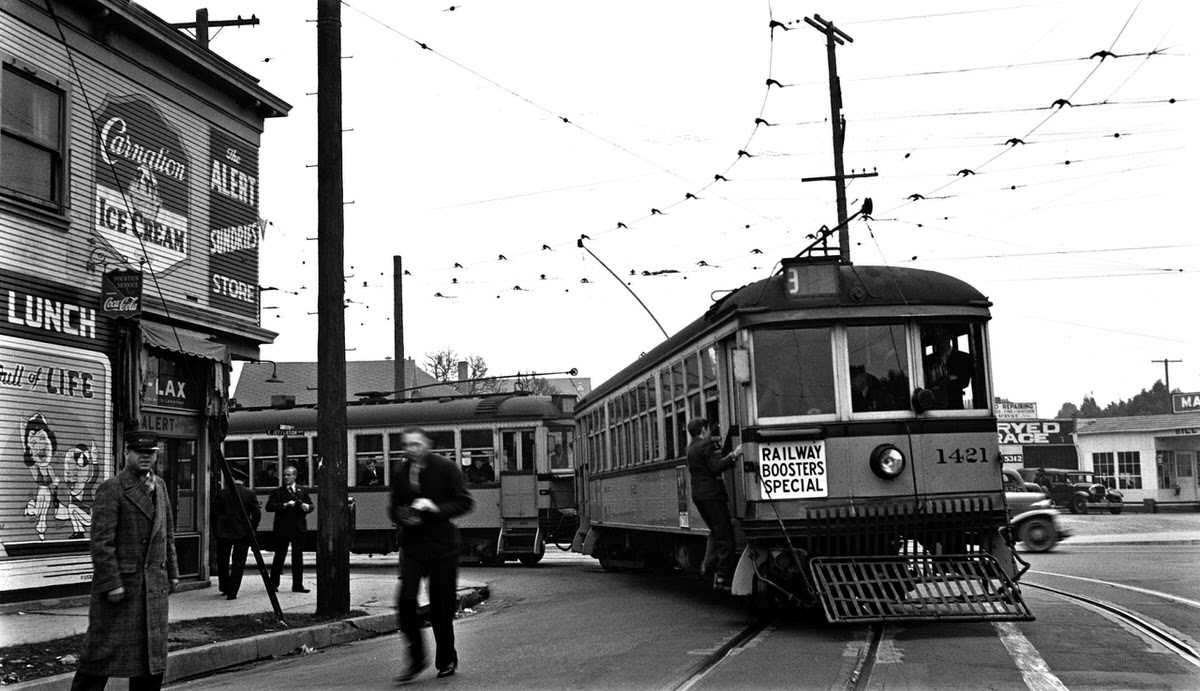
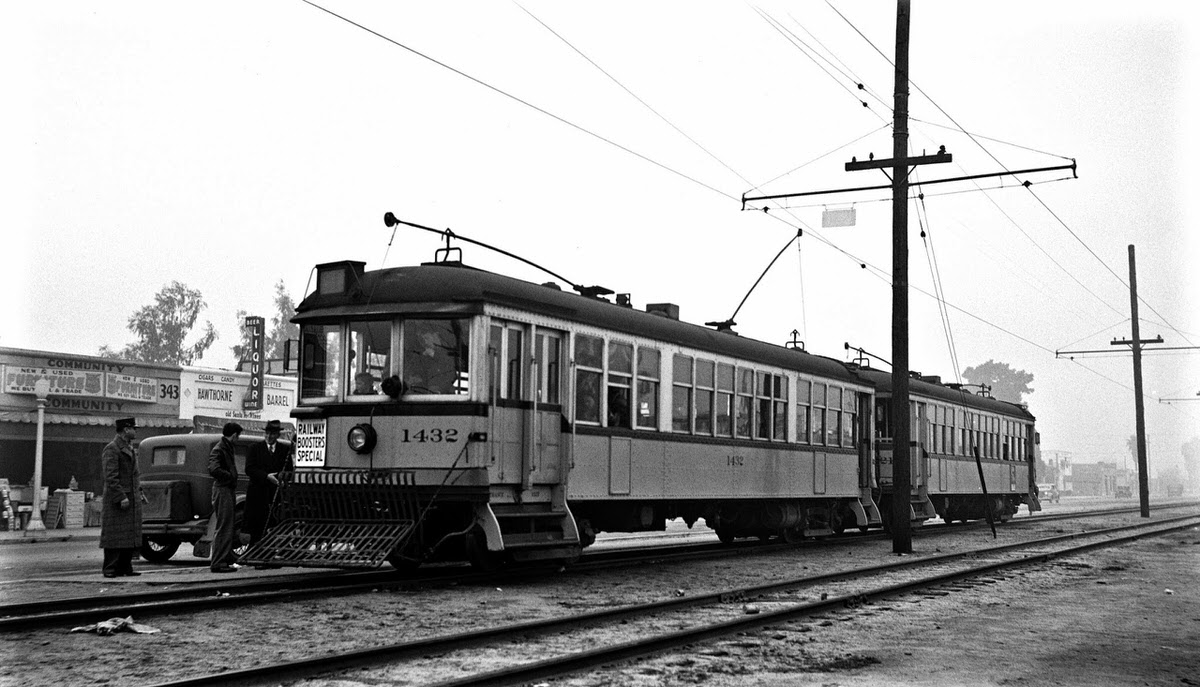
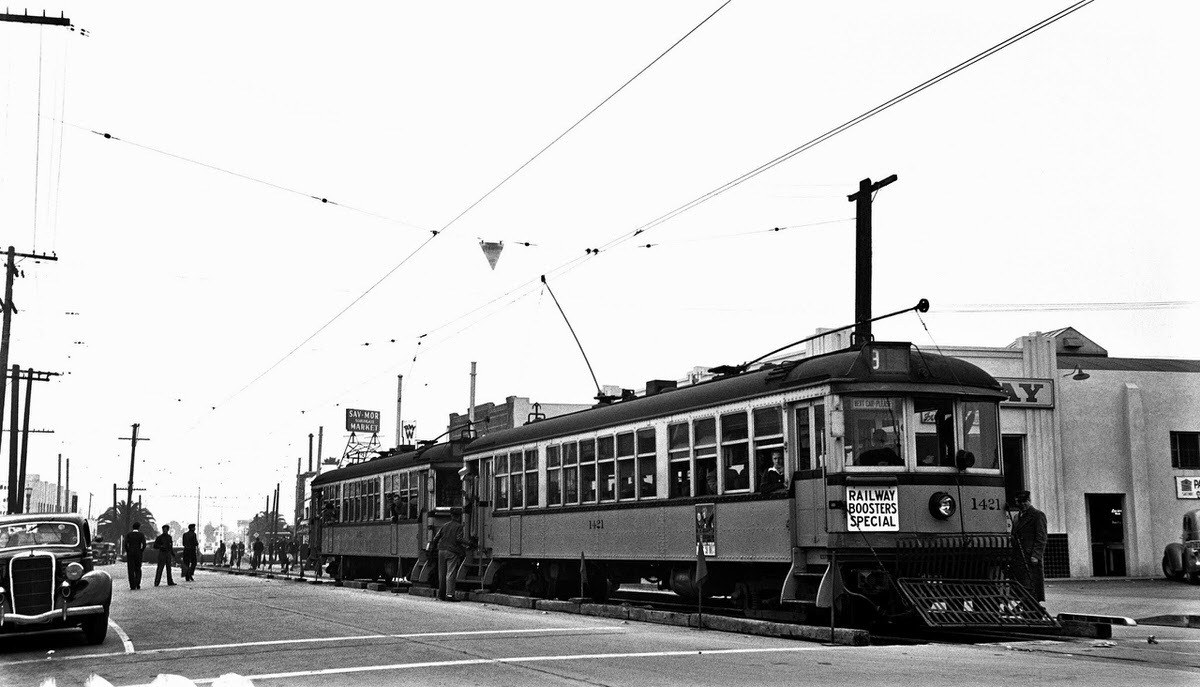
Into the 1940s, the system continued operating under a new name — Los Angeles Transit Lines — though the cars and routes remained familiar to generations of riders. The U Line and others kept rolling through downtown streets, serving passengers who had relied on the same tracks for decades.