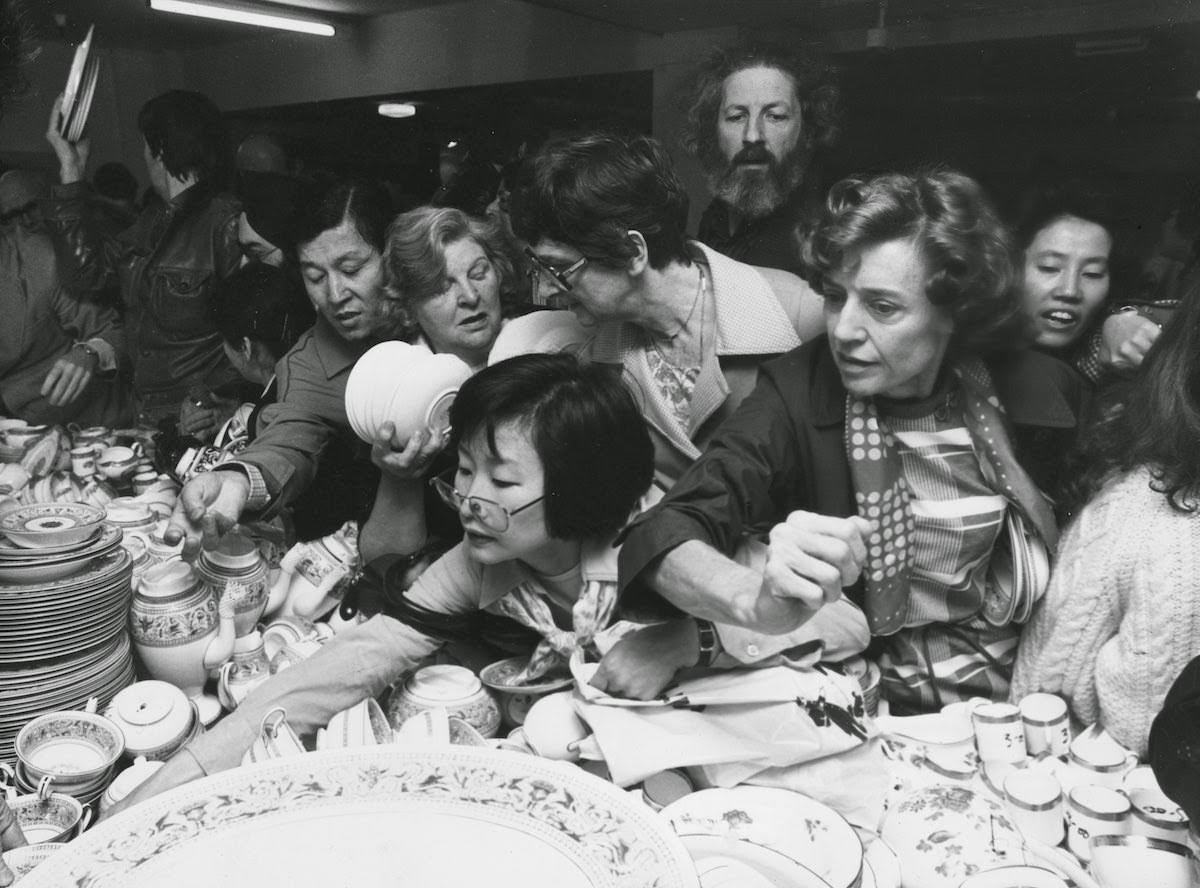
Long before online shopping carts and flash sales, bargain hunters lined up on cold streets and rushed through department store doors to find the best holiday deals. The competitive thrill of scoring a low price is nothing new — it stretches back well over a century.
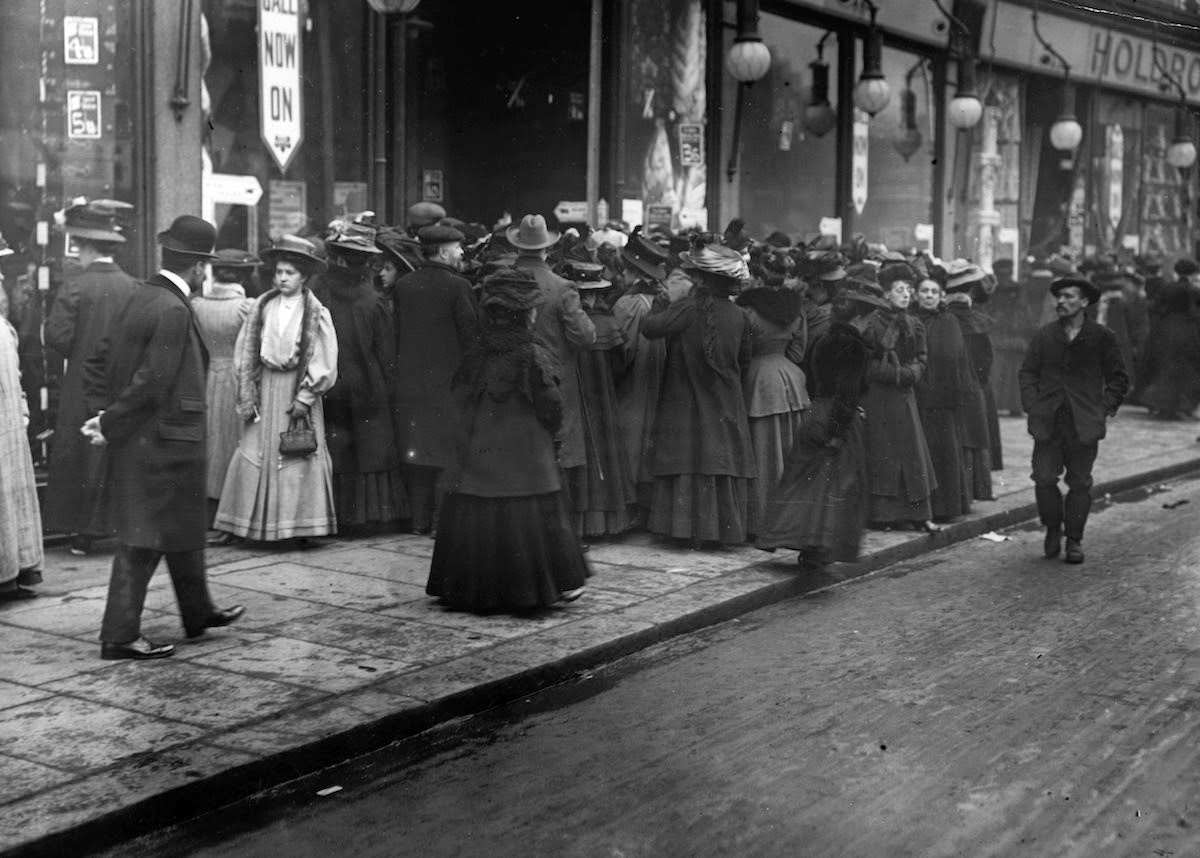
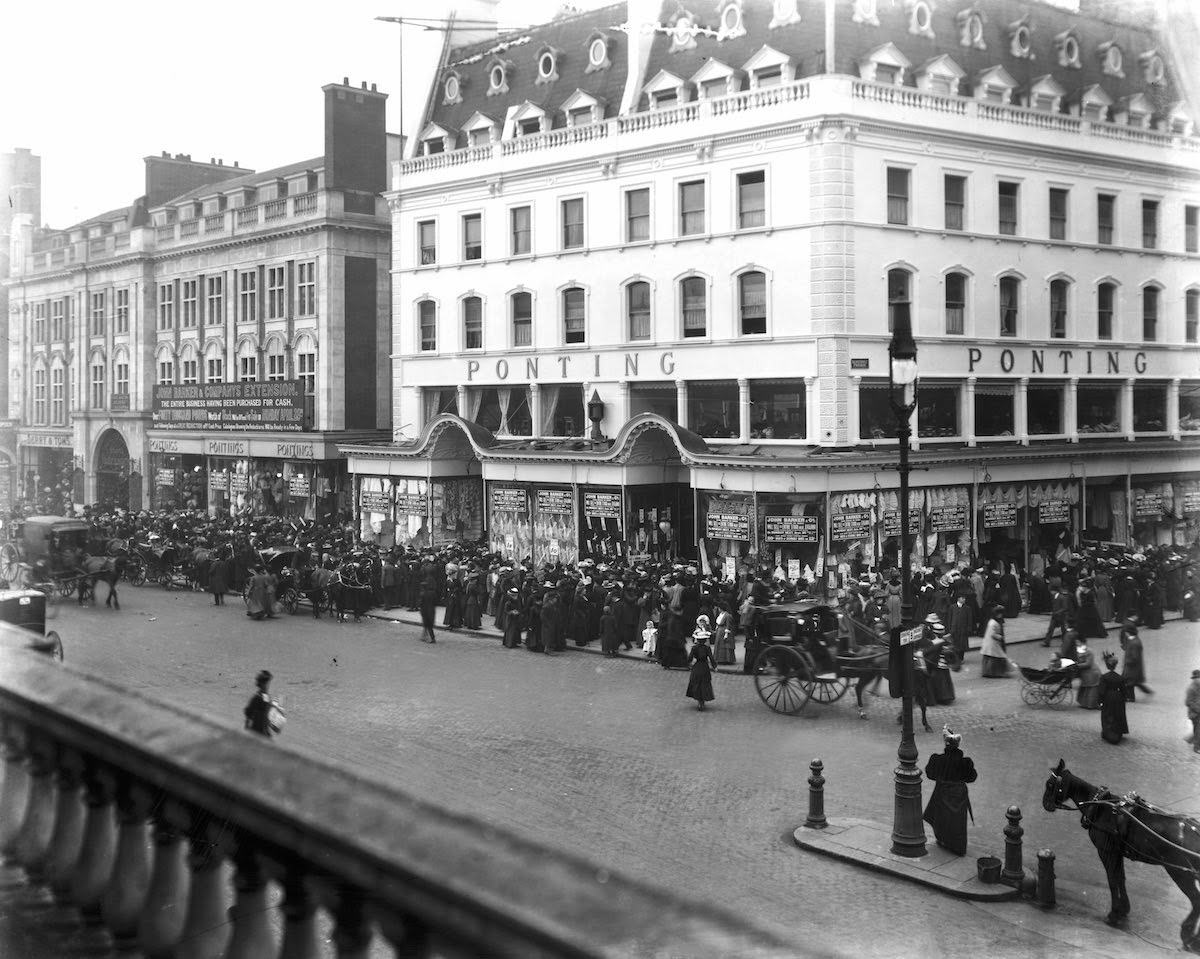
In 1908, Edward Filene opened Filene’s Basement in Boston — the first major bargain basement in an American department store. It ran on an automatic markdown system: a coat unsold after 12 days dropped 25% in price. After 30 days, it dropped 75%. Shoppers carefully tracked those dates to time their purchases perfectly. During the holidays, these basements were packed with people hunting for wool coats and leather boots at a fraction of their original cost.
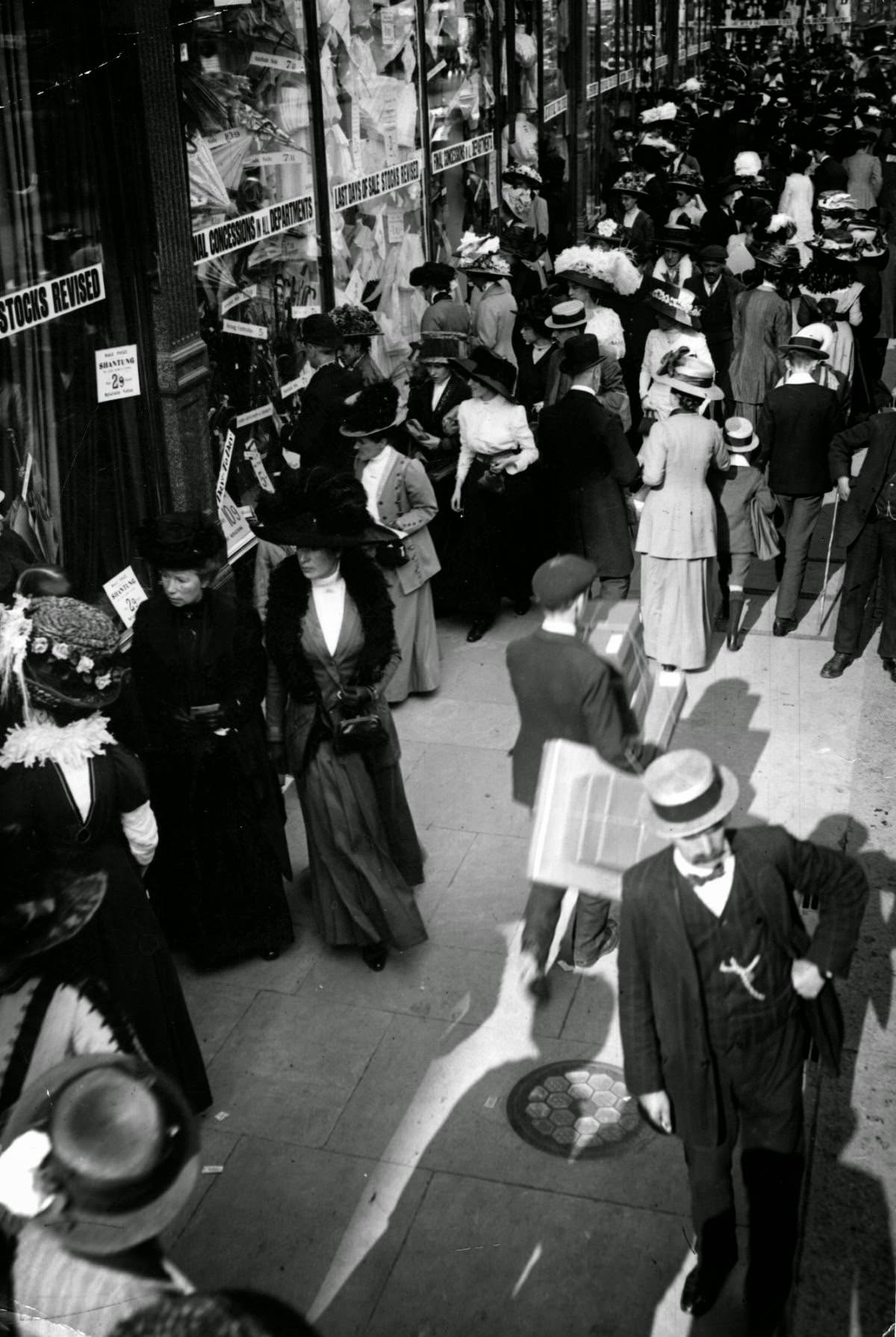
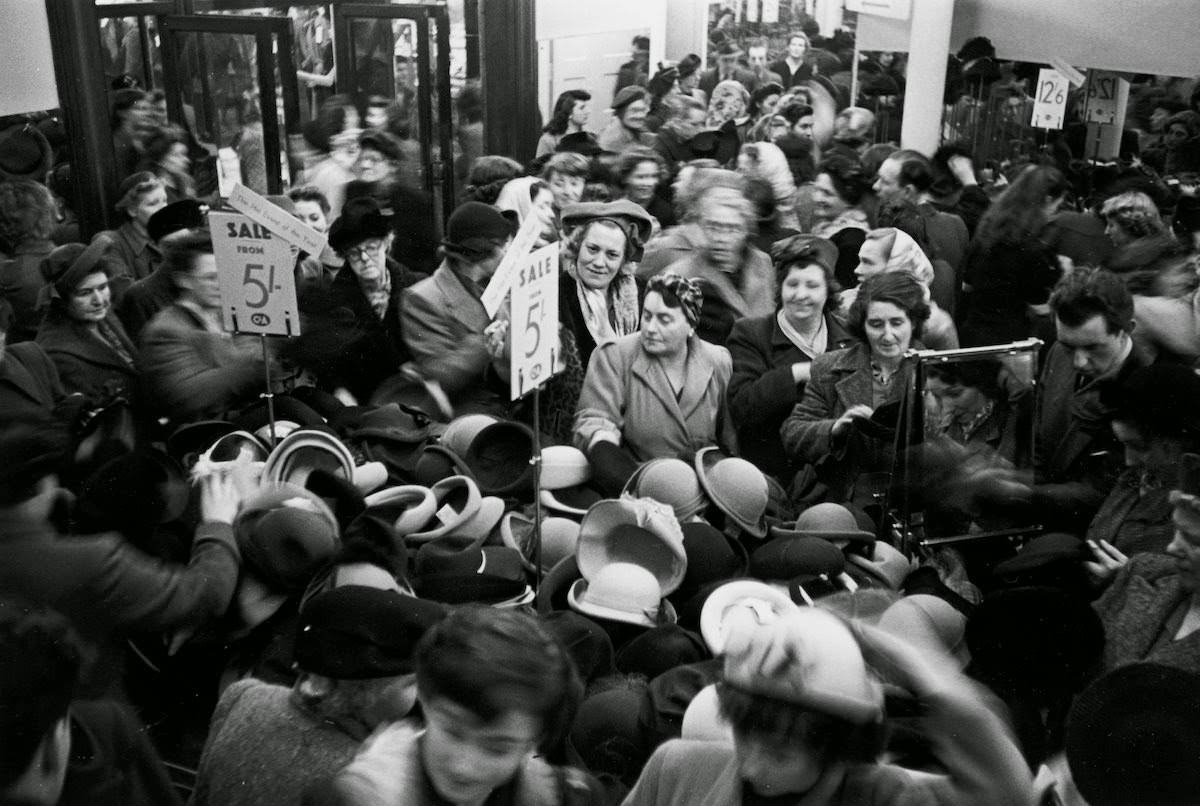
In New York City, department stores like Macy’s and Gimbels competed fiercely for holiday shoppers through elaborate window displays and printed ads. By the 1920s, stores began holding massive clearance sales the day after Thanksgiving to clear out stock. Shoppers arrived early in the morning to secure limited items like silk stockings and tailored hats.
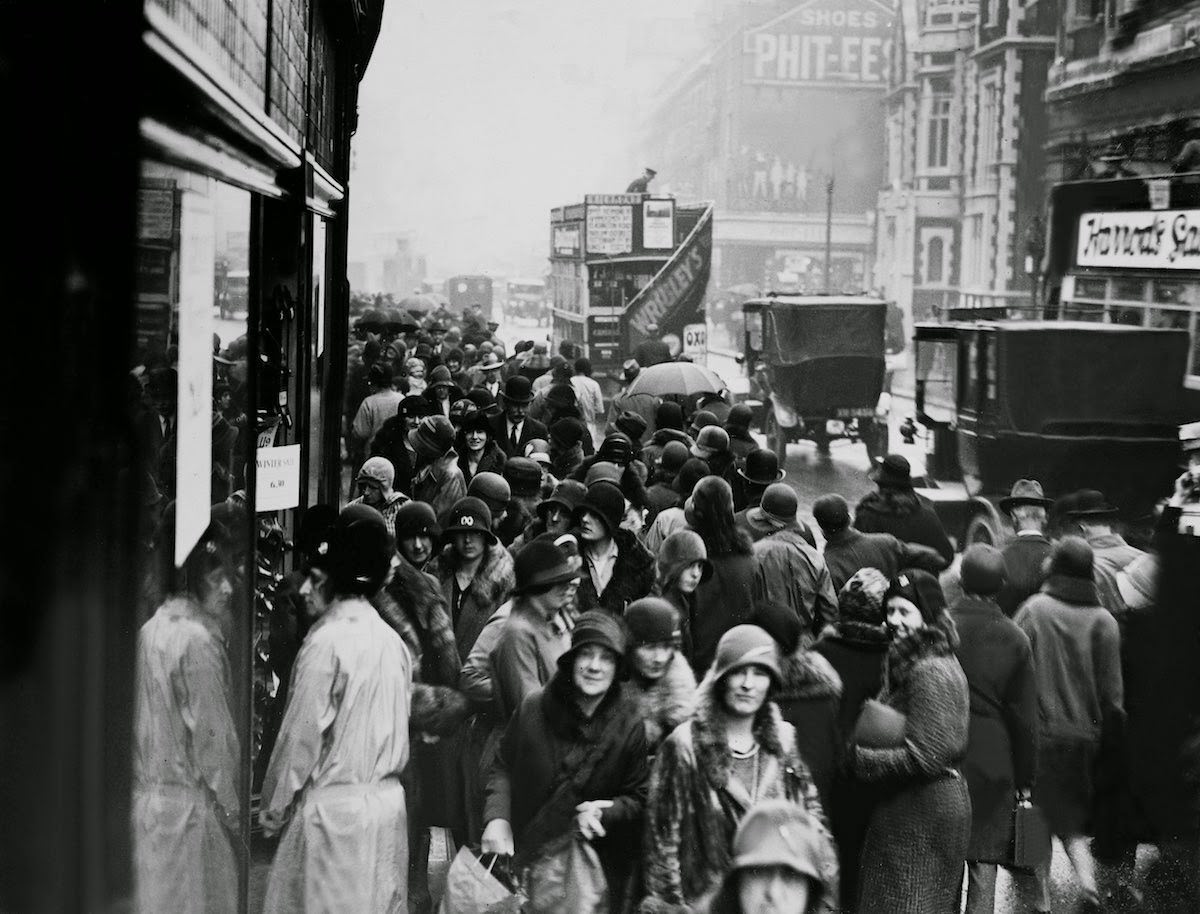
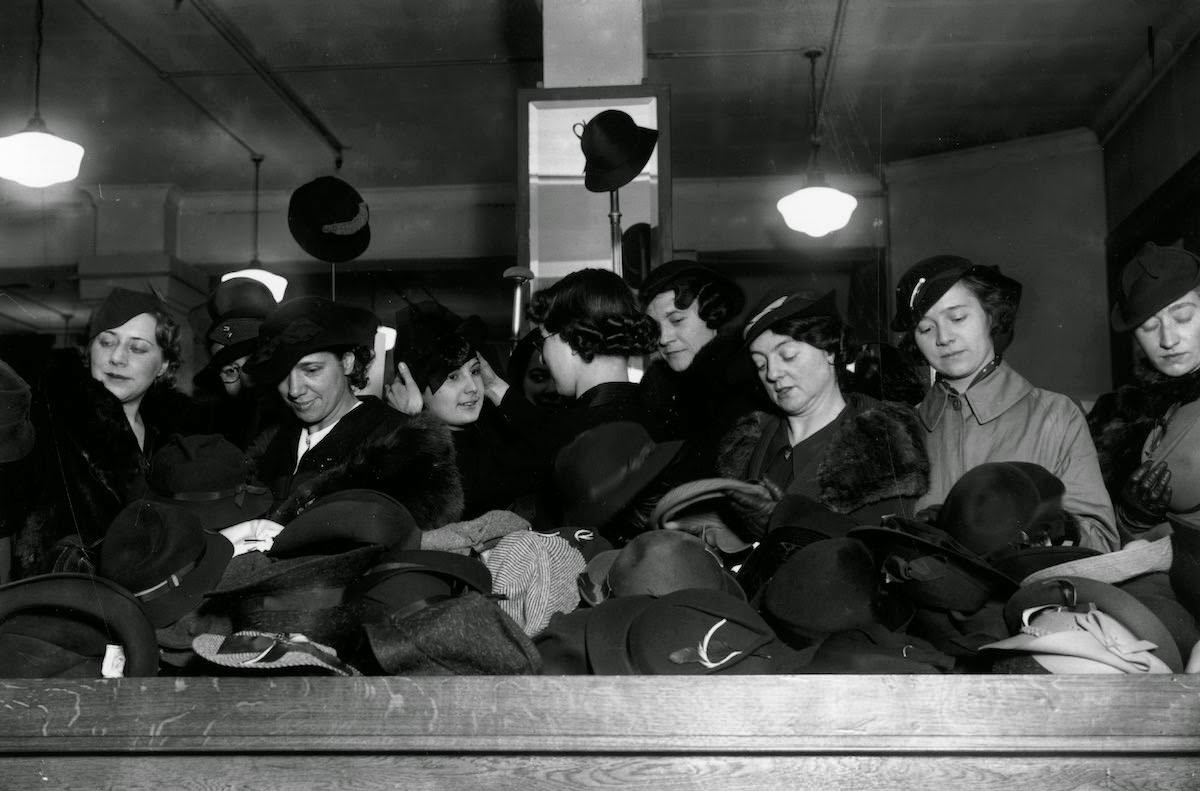
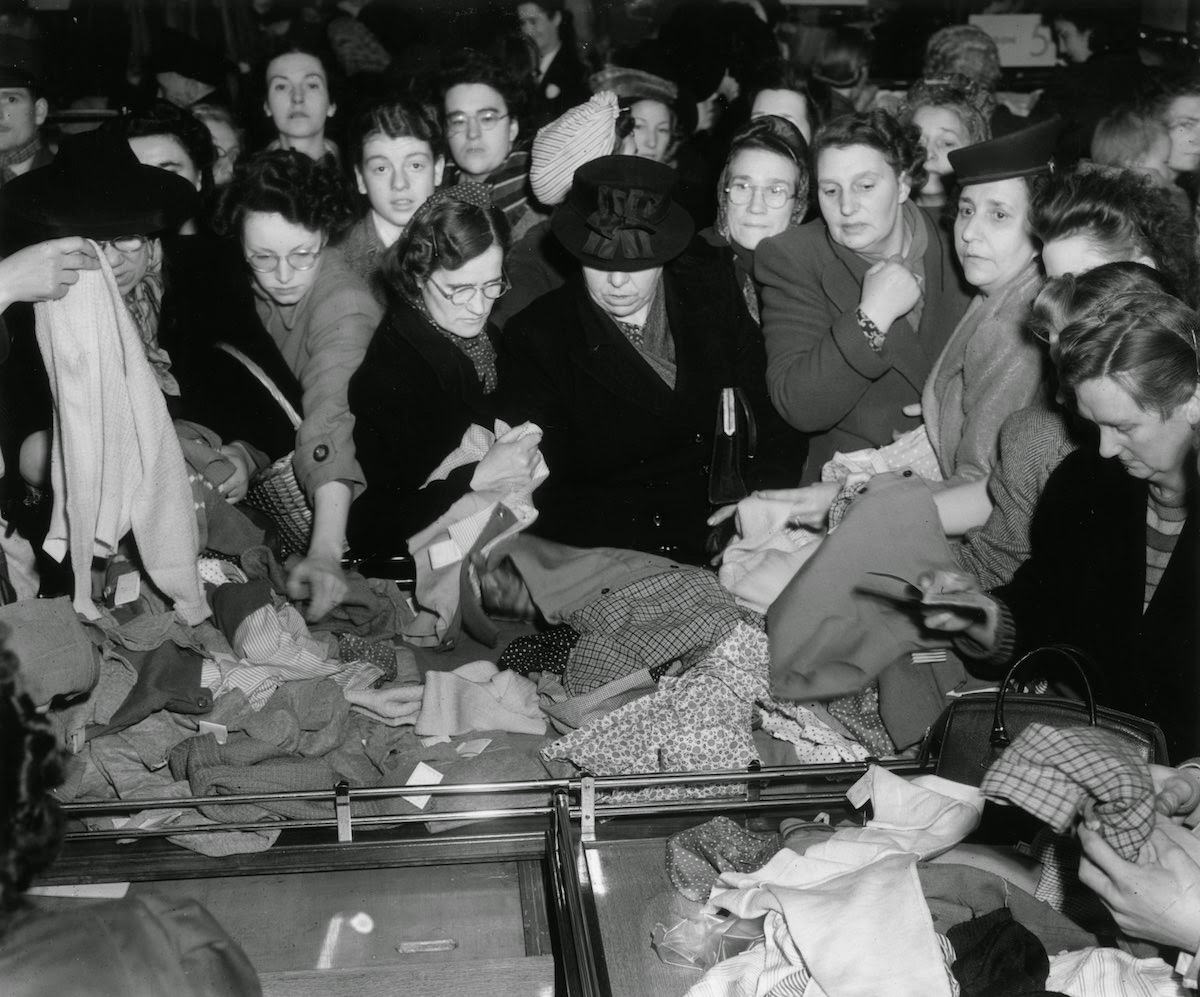
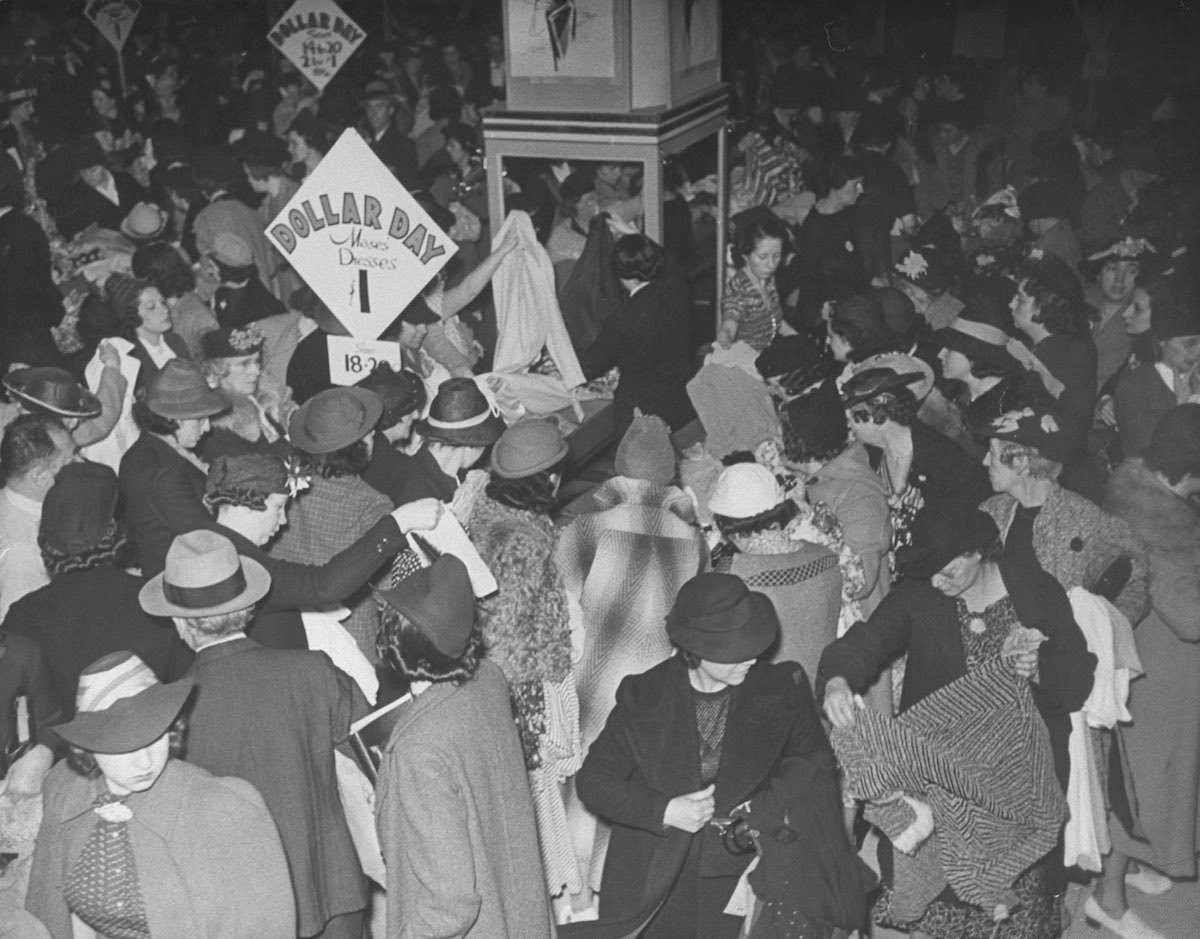
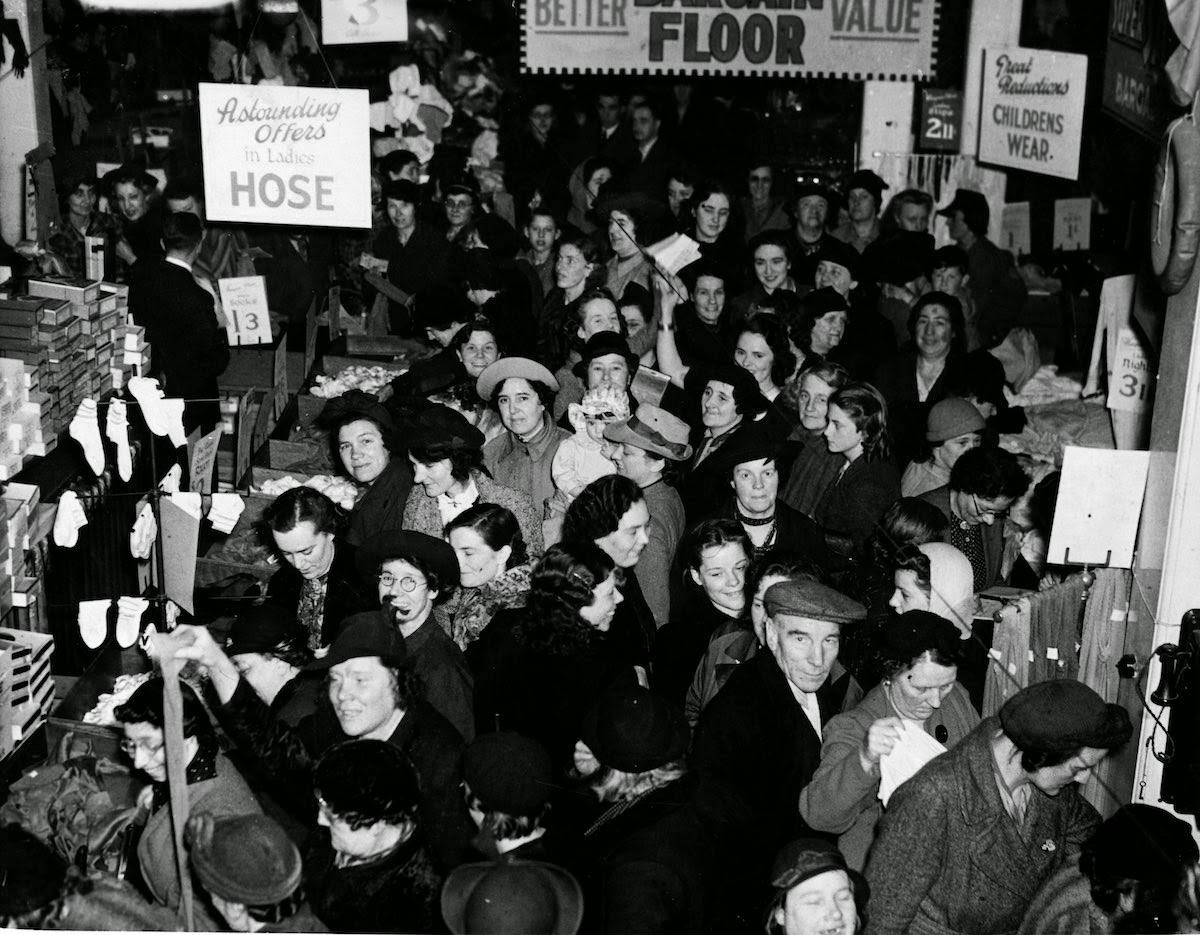
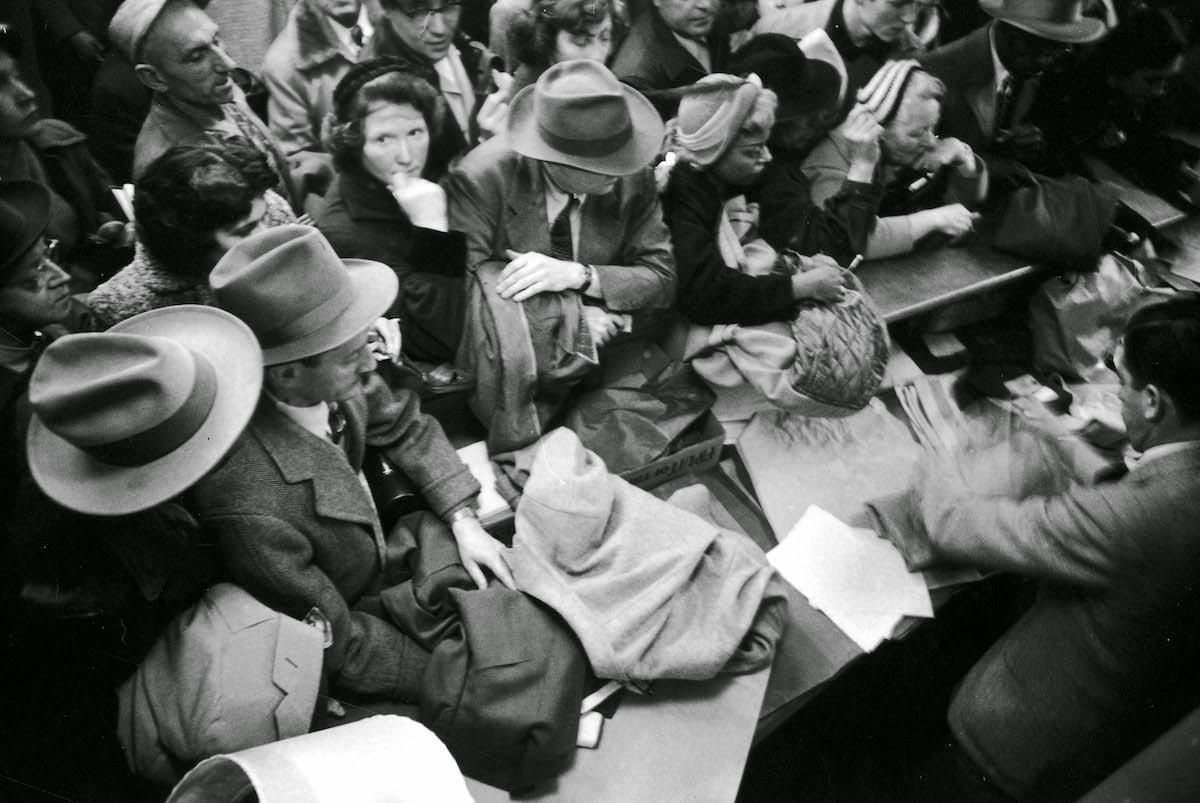
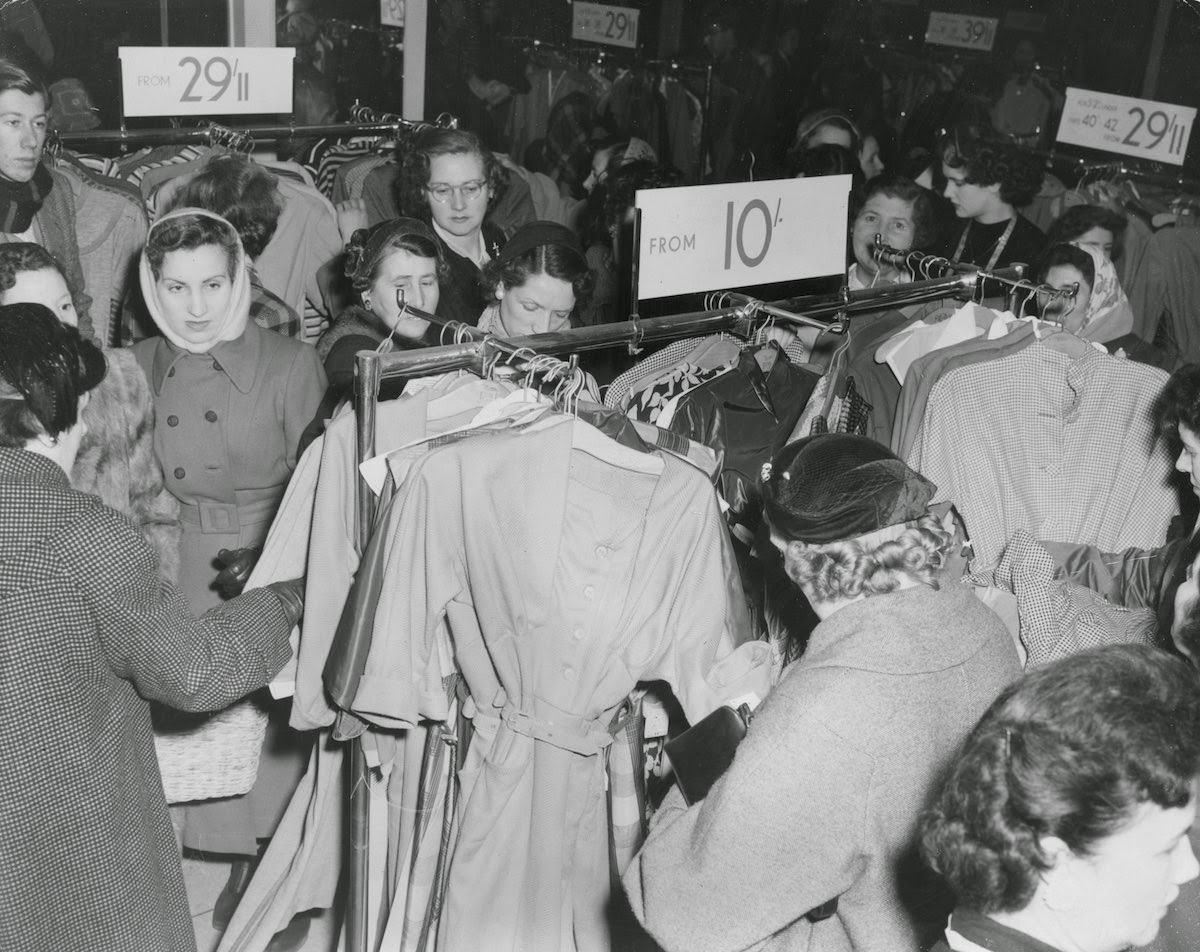
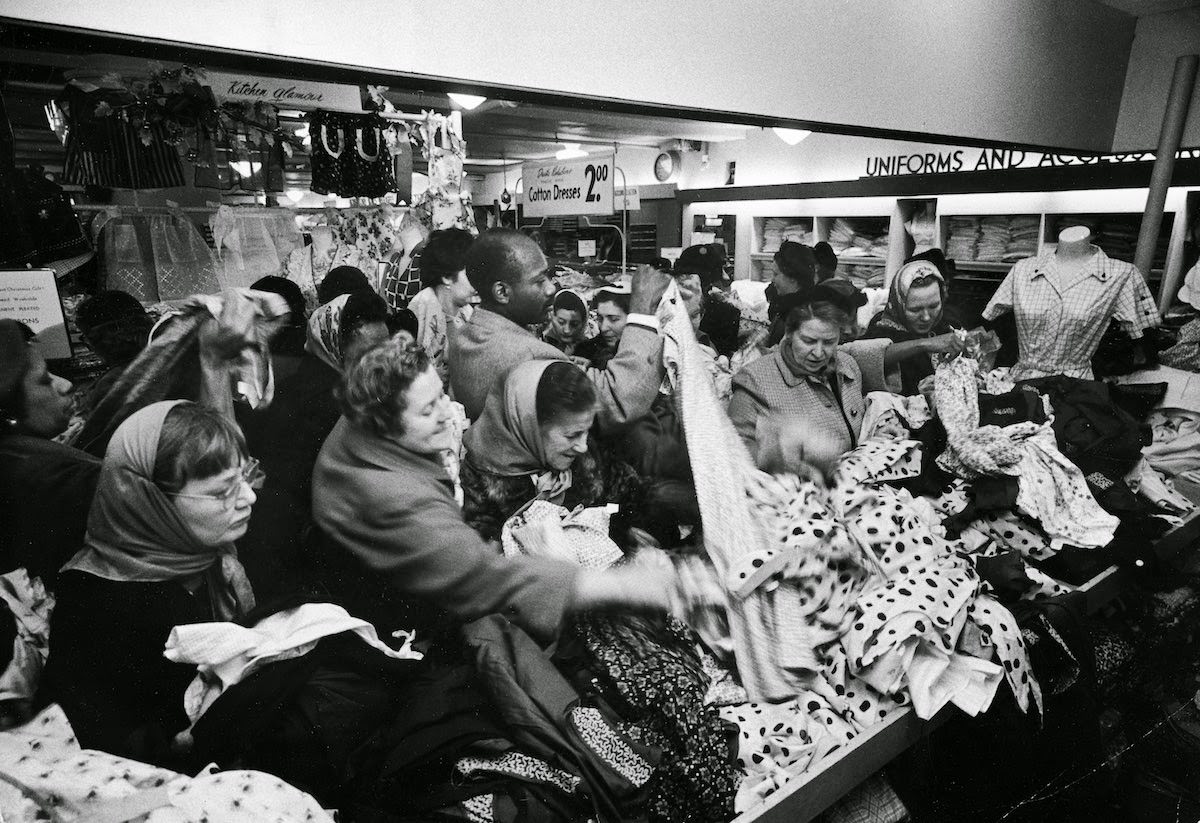
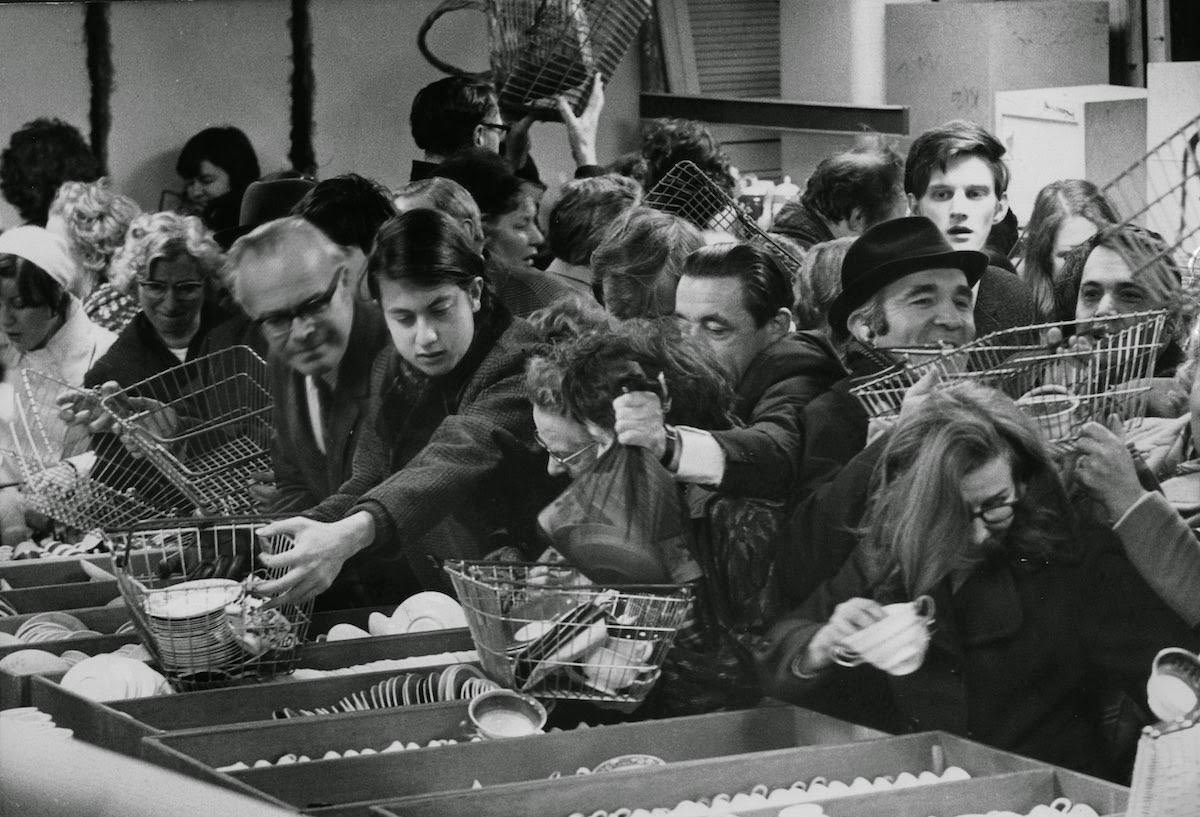
Filene’s Basement remained a landmark of deal-seeking culture for decades. Its semi-annual Dollar Day sales drew enormous crowds, as seen in 1938, when shoppers packed the aisles shoulder to shoulder.
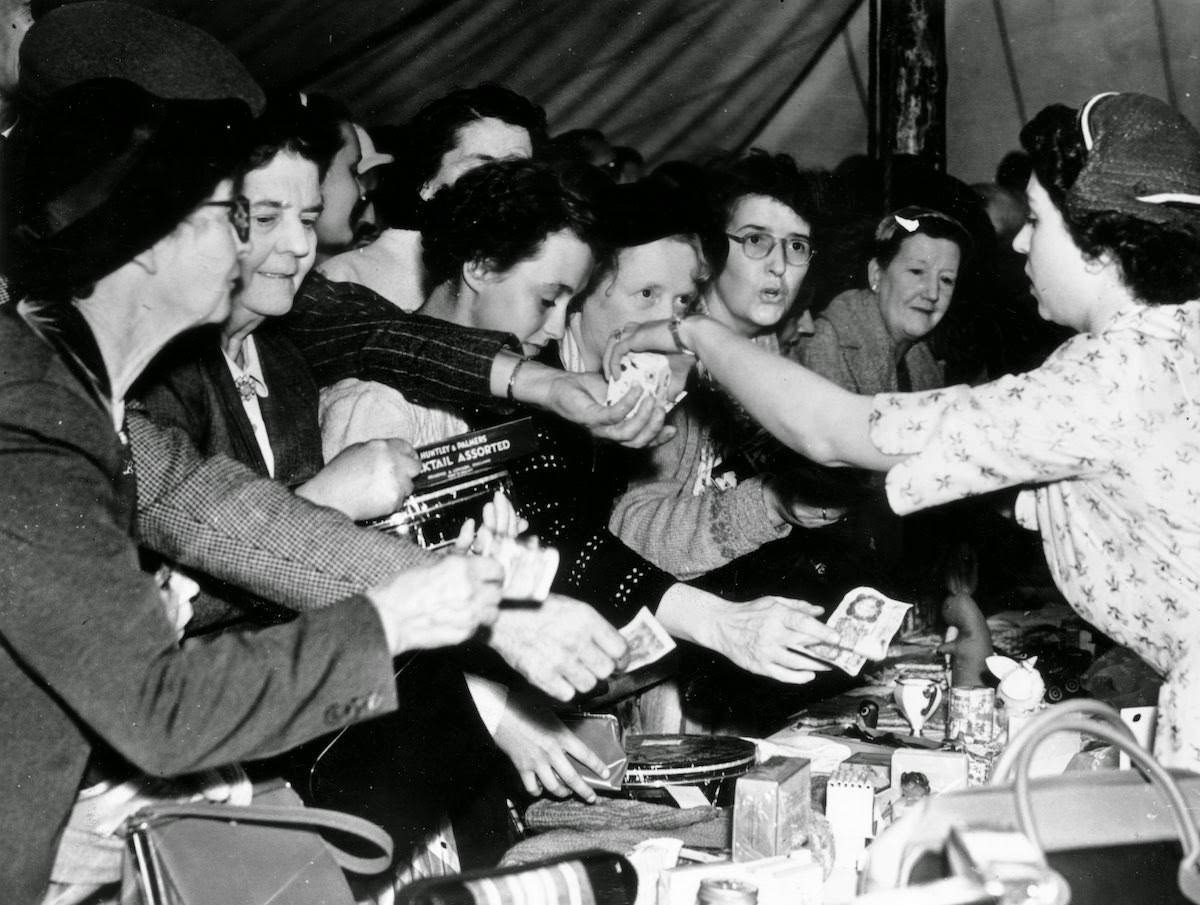
The 1940s brought new constraints. Wartime rationing changed what people could buy, but bargain hunting continued. In east London, shoppers used coupons at salvage sales to stretch limited budgets. By 1945, appliance store windows drew curious crowds eyeing goods that had been scarce during the war years.
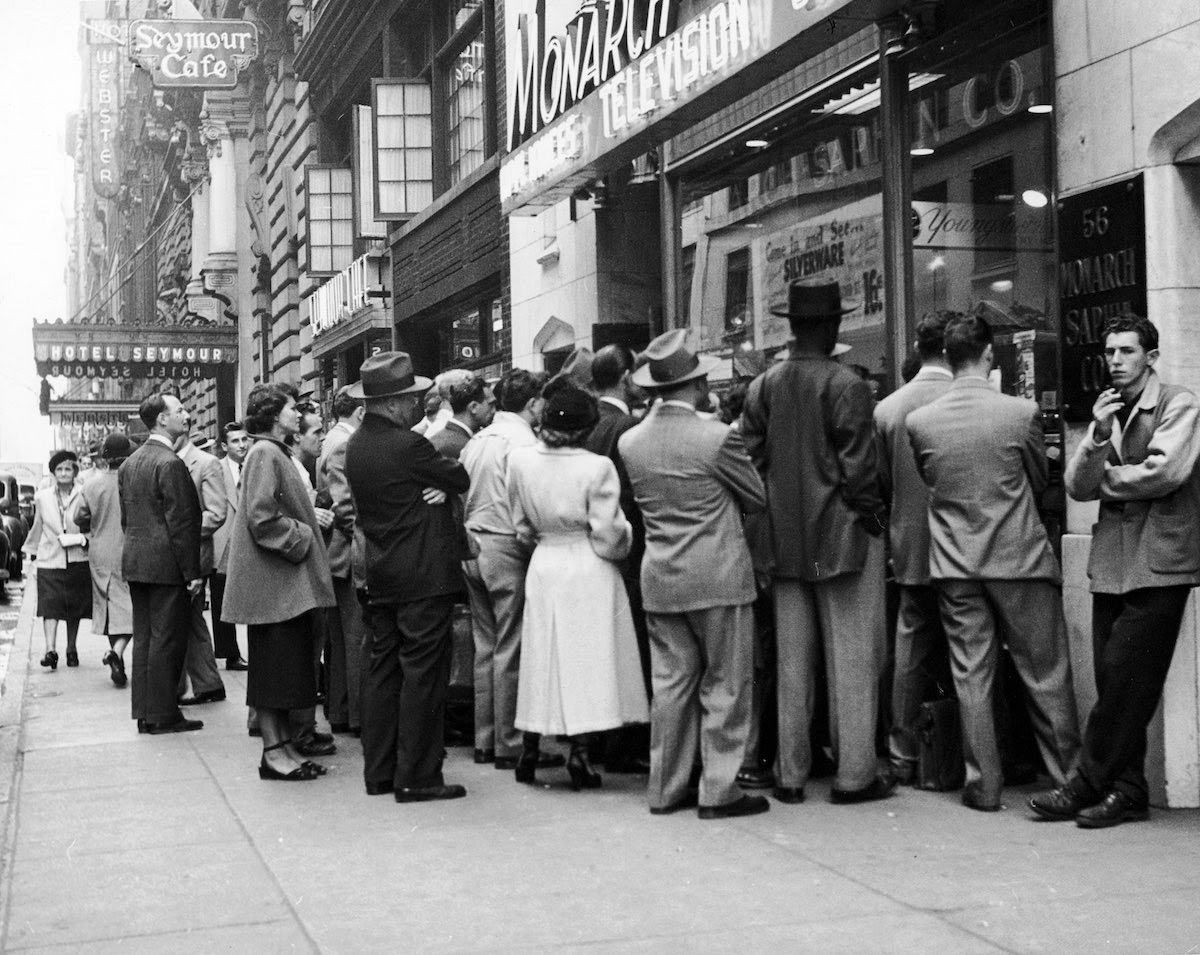
The postwar boom of the late 1940s and 1950s shifted holiday shopping toward home appliances and new synthetic fabrics. In 1947, shoppers crowded stores to buy the first widely available television sets. Retailers used “loss leaders” — items sold at a loss, like a cheap toaster — to pull customers inside, betting they would spend more on pricier gifts once through the door.
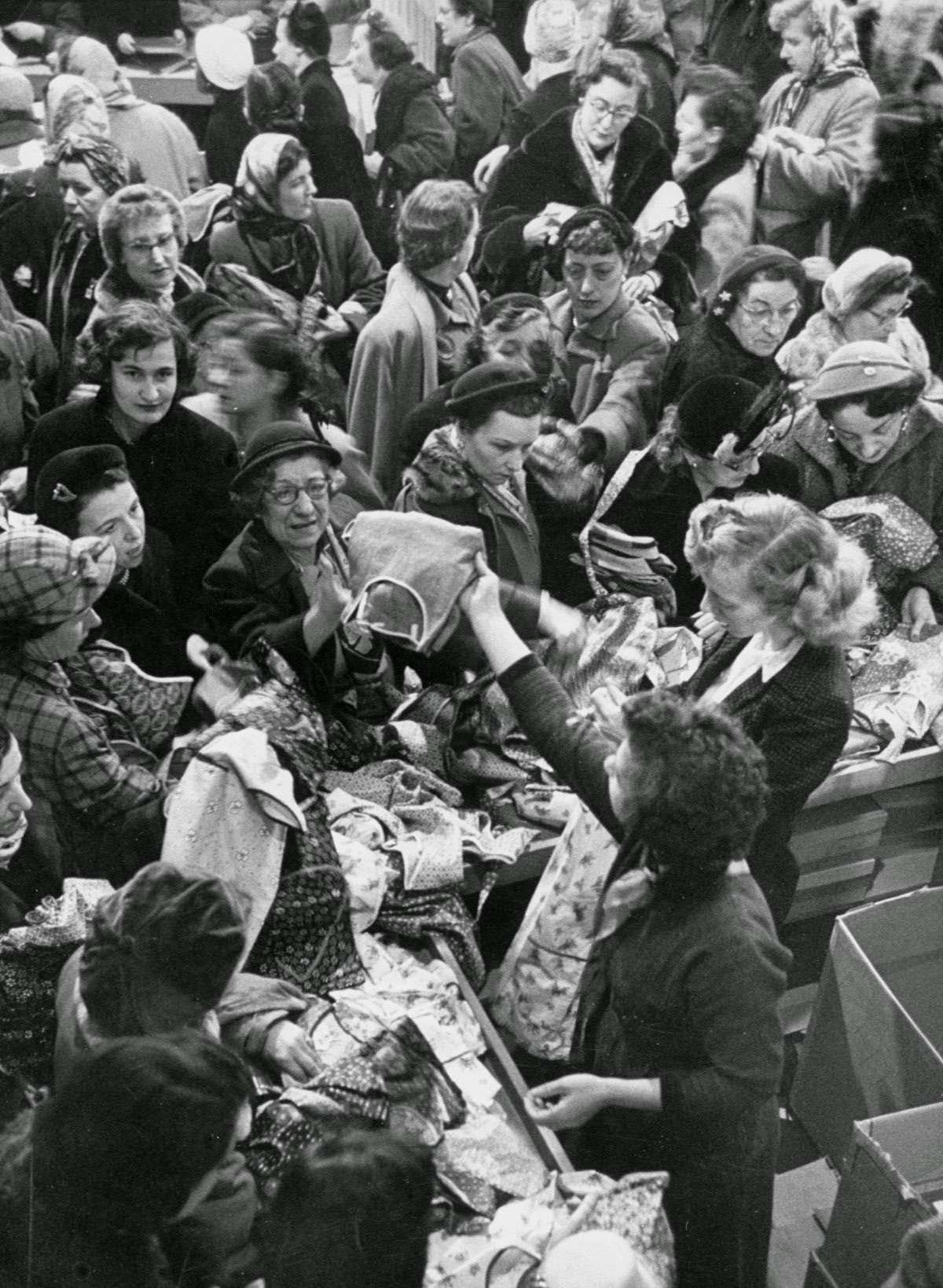
As families moved to the suburbs, large shopping centers with big parking lots replaced downtown districts as the main holiday destination. Stores like Sears and Montgomery Ward mailed thick holiday catalogs called “wish books.” Shoppers spent hours circling items and comparing prices across different store flyers.
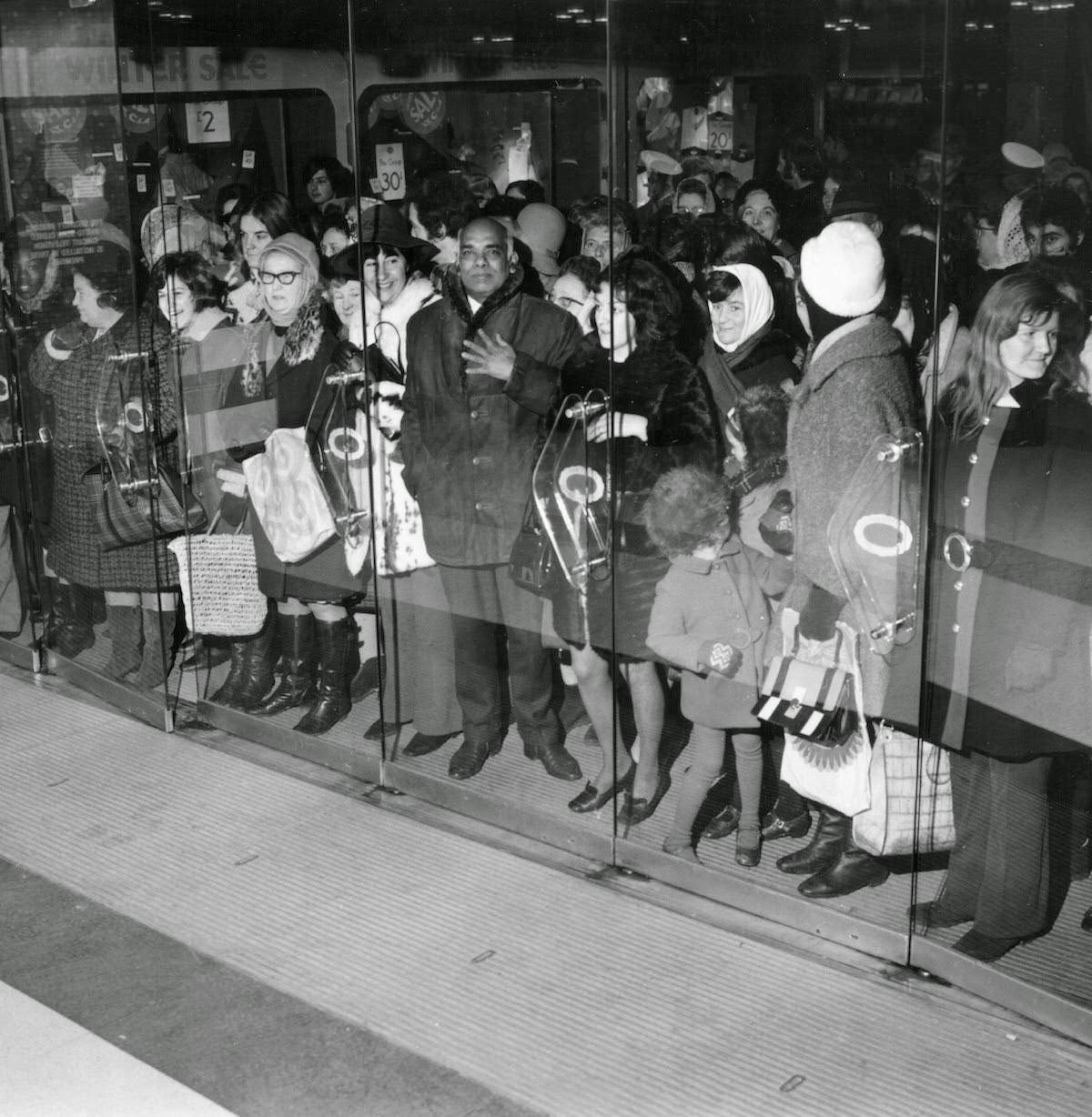
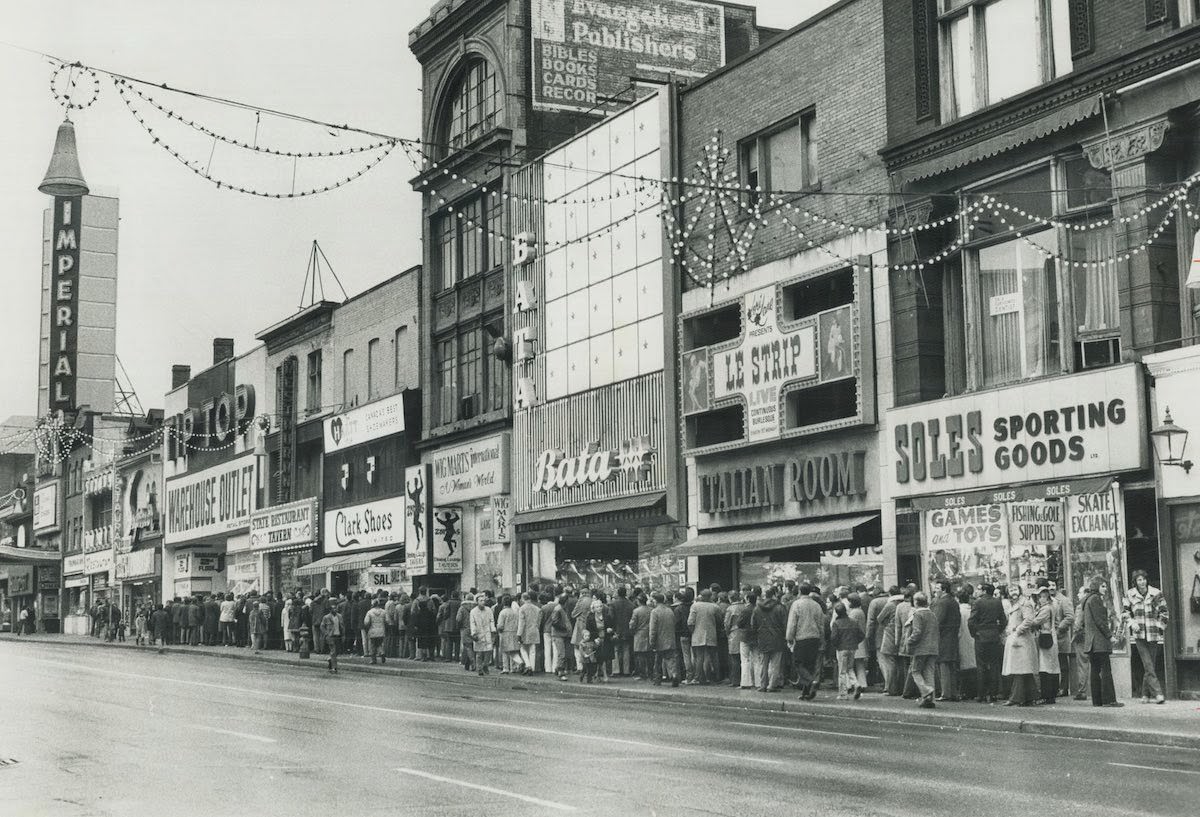
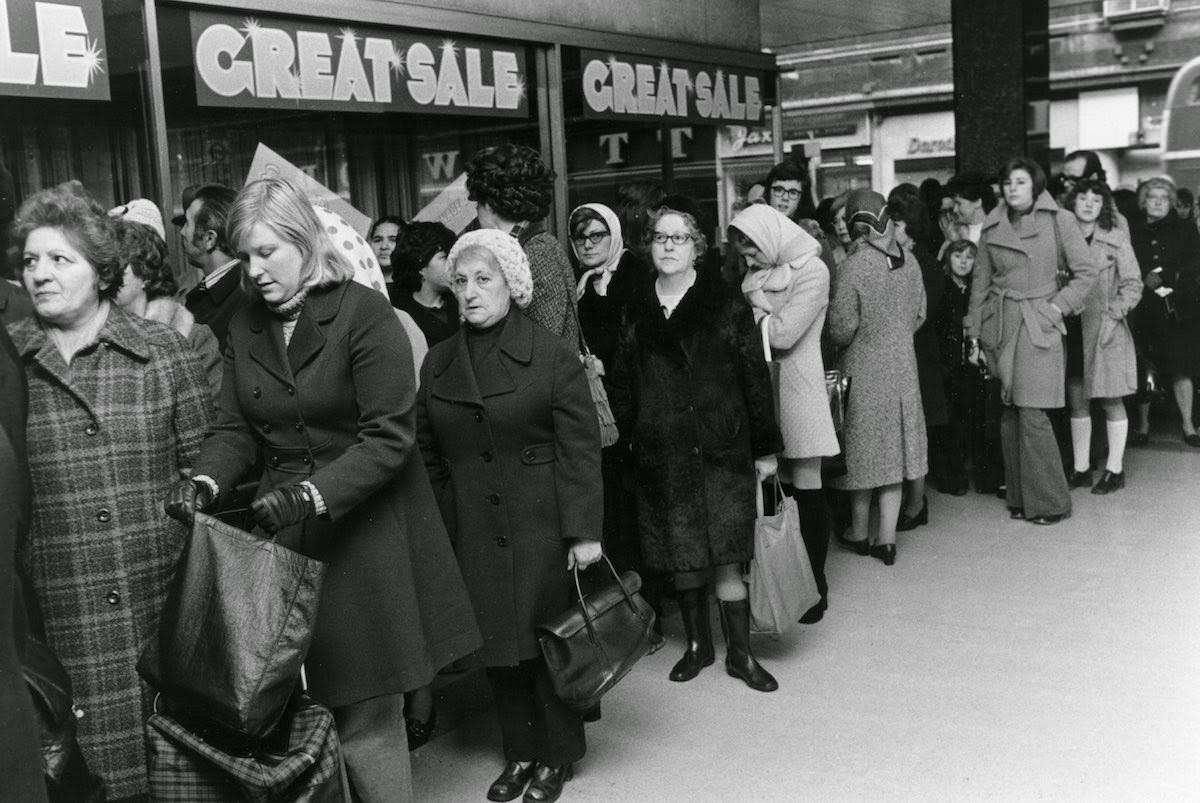
By the 1980s, bargain hunting had become a high-speed competition for specific toys. The 1983 holiday season was defined by the Cabbage Patch Kids craze. Stores received limited shipments at standard prices, and those sold out within minutes. For the first time, shoppers waited in lines overnight — not just for a low price, but to avoid paying far more on the resale market.