Hey There! Before You Go. 😧
Get the best vintage content straight into your inbox!

Don't worry, we don't spam

Stunning Historic Photos of Life in Shanghai During the First Half of the 20th Century

In the first half of the 20th century, Shanghai was unlike any other city on earth. It was carved into three separate zones: the International Settlement, run by a council of British and American businessmen; the French Concession, administered by the French consul; and the original Chinese city. Different laws, languages, and customs operated side by side within the same city limits. This unusual structure made Shanghai a magnet for foreign capital, migrants seeking work, and anyone chasing opportunity in the Far East.
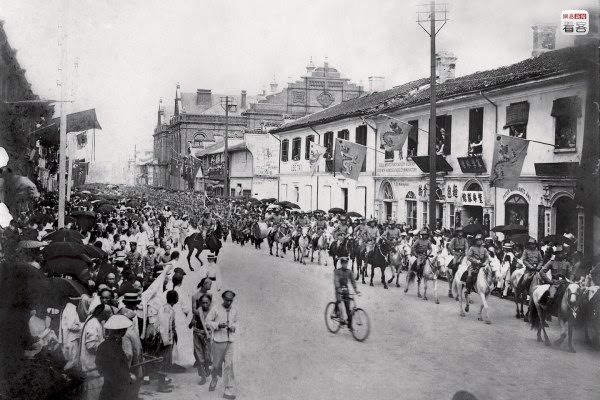
The development of "Modern Shanghai" started at the beginning of the 20th century. Municipal government and public facilities brought by international settlements; telegrams, telephones, and movies, balls, and other Western lifestyles brought by technological development; these factors collectively created a unique city: Shanghai. Photo is of 1902, of the Shanghai Volunteer Corps proceeding along Nanjing Road, participating in a parade. The Shanghai Volunteer Corps were established in 1853, with the purpose of protecting foreigners against the chaos of war.
The development of “Modern Shanghai” started at the beginning of the 20th century. Municipal government and public facilities brought by international settlements; telegrams, telephones, and movies, balls, and other Western lifestyles brought by technological development; these factors collectively created a unique city: Shanghai. Photo is of 1902, of the Shanghai Volunteer Corps proceeding along Nanjing Road, participating in a parade. The Shanghai Volunteer Corps were established in 1853, with the purpose of protecting foreigners against the chaos of war.

By the early 1900s, Shanghai’s commercial streets were already buzzing with activity. Nanjing Road served as the city’s main artery of trade, flanked by shops, trading houses, and later massive department stores like Wing On and Sincere. These stores stocked everything from imported luxury goods to traditional silks and even featured rooftop amusement parks to draw in customers. The Bund, along the Huangpu River, was lined with grand European-style banks and hotels, where foreign businessmen and wealthy Chinese merchants connected China to global markets.
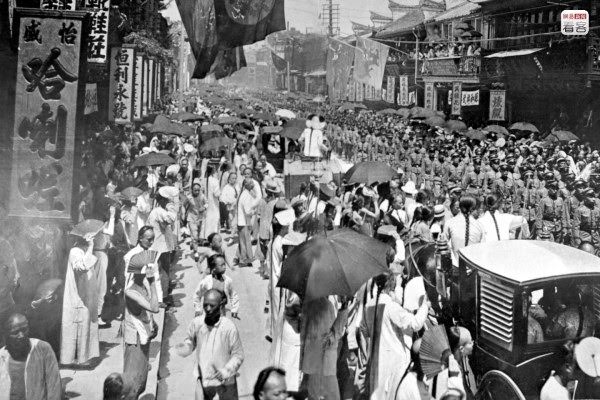
Photo is of 1906, Shanghai's business street. At the time, Shanghai had already become the most bustling city in China's East and even the entire country, with flourishing commerce.
Photo is of 1906, Shanghai’s business street. At the time, Shanghai had already become the most bustling city in China’s East and even the entire country, with flourishing commerce.

Banking was central to Shanghai’s rise. As telegraph technology expanded trade communications, financial institutions multiplied rapidly. By the early 20th century, Shanghai had become one of the Far East’s leading financial hubs, attracting both Western banks and Chinese institutions eager to profit from the city’s booming commerce.
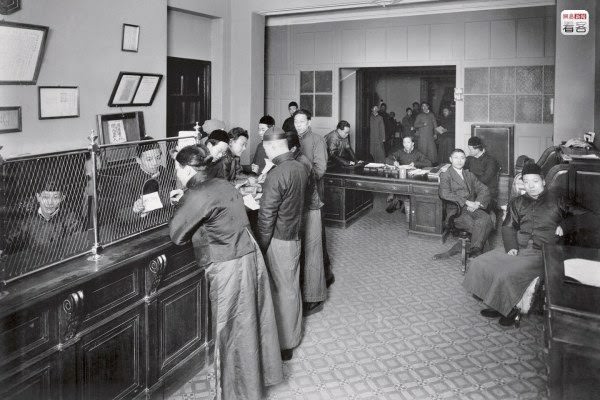
Due to the needs of trade communications and the development of telegraph technology, Shanghai's banking business developed quickly, already becoming one of the Far East's financial hubs by the start of the 20th century. Photo is of 1913, inside the International Savings Society on Shanghai's Avenue Edward (today's Yan'an East Road). The International Savings Society was established by the French in October 1912, where it operated until 1937 when it was outlawed by the Nationalist government.
Due to the needs of trade communications and the development of telegraph technology, Shanghai’s banking business developed quickly, already becoming one of the Far East’s financial hubs by the start of the 20th century. Photo is of 1913, inside the International Savings Society on Shanghai’s Avenue Edward (today’s Yan’an East Road). The International Savings Society was established by the French in October 1912, where it operated until 1937 when it was outlawed by the Nationalist government.

Not everyone in Shanghai lived inside the polished foreign concessions. Just beyond the modern storefronts, local markets thrived. Fishermen, farmers, and butchers arrived daily to sell their goods near neighborhoods like Hongkou. Most Chinese residents lived in shikumen houses — two- or three-story stone buildings blending Chinese and Western architecture — arranged along narrow alleyways called longtangs. These alleyways were where daily life actually happened: cooking, raising children, socializing with neighbors.
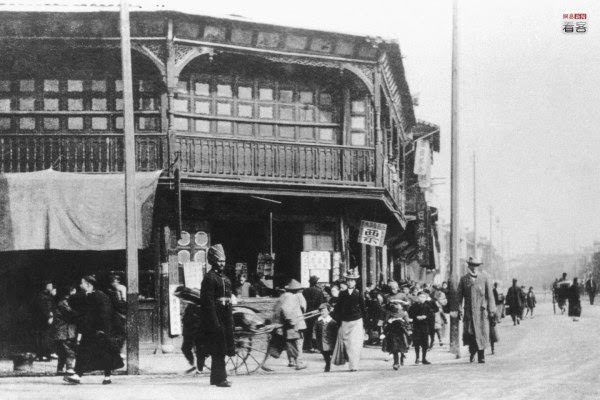
Apart from feelings of unfairness brought by the foreign concessions, Shanghai locals also accepted the dividends brought by the foreign concessions. It became China's fastest developing city at the beginning of the 20th century, escaping the Taiping Heavenly Kingdom and Boxers catastrophes, the people here also being the very first to experience a true modern city, experience the media, advertisements, films, high-level education, etc. Photo is of Shanghai in the early 20th century, near the Hongkou market, where everyday were many local fishermen, peasant farmers, and butchers came to sell their goods.
Apart from feelings of unfairness brought by the foreign concessions, Shanghai locals also accepted the dividends brought by the foreign concessions. It became China’s fastest developing city at the beginning of the 20th century, escaping the Taiping Heavenly Kingdom and Boxers catastrophes, the people here also being the very first to experience a true modern city, experience the media, advertisements, films, high-level education, etc. Photo is of Shanghai in the early 20th century, near the Hongkou market, where everyday were many local fishermen, peasant farmers, and butchers came to sell their goods.

Infrastructure kept pace with the city’s growth. In 1907, workers began laying rails for Shanghai’s first streetcar line along Nanjing Road. The line ran 6.04 kilometers, stretching from Jing’an Temple to the Shanghai Club Building. Electric trams soon shared the streets with automobiles and the ever-present rickshaws pulled by hand.
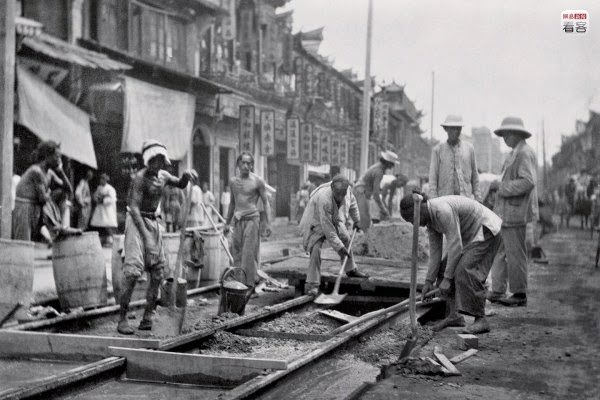
1907, workers for The Shanghai Electric Construction Co. Ltd. on Nanjing Road laying streetcar trolley rails. This was Shanghai's first railed streetcar line, that ran mostly along the business street, from Jingan Temple to the Shanghai Club Building, a total of 6.04 kilometers, its main stop located at the Shanghai Club Building.
1907, workers for The Shanghai Electric Construction Co. Ltd. on Nanjing Road laying streetcar trolley rails. This was Shanghai’s first railed streetcar line, that ran mostly along the business street, from Jingan Temple to the Shanghai Club Building, a total of 6.04 kilometers, its main stop located at the Shanghai Club Building.

Industry was another pillar of Shanghai’s economy. Textile mills and silk factories produced goods for both domestic sale and export. The Jardine Silk Factory, operating in the early 1910s, was among the most significant early industrial operations, sending silk to markets across the world. The foreign concessions provided a relatively stable environment for these businesses, even as political upheaval swept through the rest of China during and after the 1911 Xinhai Revolution.
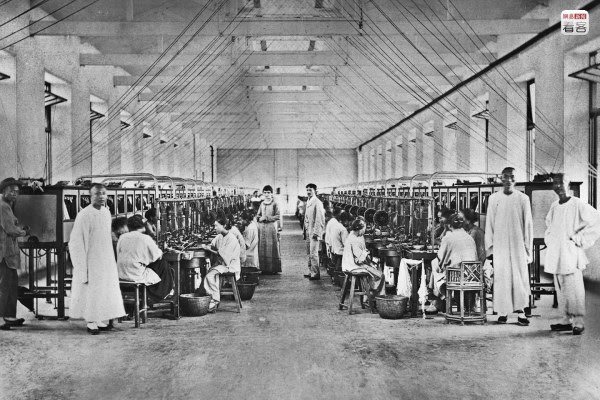
1911 Xinhai Revolution and Shanghai Recovery, during the chaotic state of affairs in the nation, the state of affairs in foreign concessions/international settlements were relatively stable. All the way until 1936, Shanghai's international settlements were all in a state of high prosperity. Photo is of the Shanghai Jardine Silk Factory between 1910-1912, where the manager and his wife pose for a photograph among the rows of silk reeling machines. This silk factory and the later cotton yarn factory were important parts of Shanghai's early industrial output, and one of Jardine Matheson's earliest industries, exporting silk to various parts of the world.
1911 Xinhai Revolution and Shanghai Recovery, during the chaotic state of affairs in the nation, the state of affairs in foreign concessions/international settlements were relatively stable. All the way until 1936, Shanghai’s international settlements were all in a state of high prosperity. Photo is of the Shanghai Jardine Silk Factory between 1910-1912, where the manager and his wife pose for a photograph among the rows of silk reeling machines. This silk factory and the later cotton yarn factory were important parts of Shanghai’s early industrial output, and one of Jardine Matheson’s earliest industries, exporting silk to various parts of the world.

Shanghai was also the birthplace of Chinese cinema. By the 1920s, the city had 40,000 theater seats, and audiences packed venues to watch wuxia martial arts films and family dramas. The Star Film and Theater School, founded in 1922, trained some of the era’s most celebrated performers and produced many of the most successful films of the decade.

At the beginning of the 20th century, movies were one of the most important entertainments for people in Shanghai. In the 1920s, Shanghai had 40,000 theater seats, extremely high attendance, and the most popular movies were wuxia [martial arts] and family dramas. Photo is of the office of the Star Film and Theater School that was founded in 1922. This company made many of the most successful films of the time as well as trained a group of the most dazzling stars of the Shanghai Bund.

Among the stars the Shanghai entertainment scene produced, Zhou Xuan stood out. Known as the “Golden Voice,” she began her career performing with the Bright Moonlight Singing and Dancing Troupe before becoming a major film actress, eventually taking the lead role in 43 films.
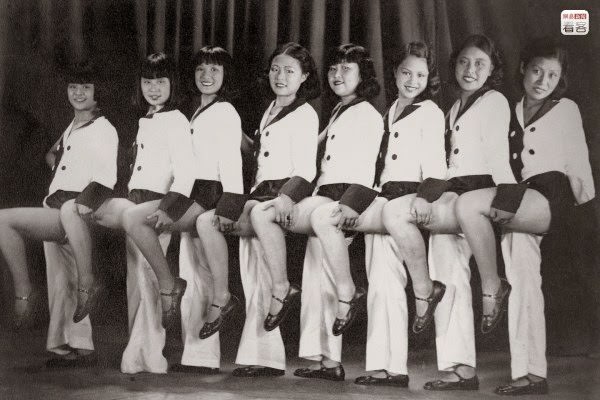
1930, Zhou Xuan (third from left), the star singer known as the "Golden Voice". She initially performed in the Bright Moonlight Singing and Dancing Troupe and later became a famous movie star, playing the leading role in 43 films.
1930, Zhou Xuan (third from left), the star singer known as the “Golden Voice”. She initially performed in the Bright Moonlight Singing and Dancing Troupe and later became a famous movie star, playing the leading role in 43 films.

For Shanghai’s wealthy class, entertainment extended well beyond the cinema. Tennis, horse racing, and membership in exclusive jockey clubs were all markers of high-society life. Ballrooms and nightclubs filled with jazz — a sound brought to the city by American and Filipino musicians — attracted glamorous crowds every night of the week.

Apart from films, sports competitions and the like had also become a pursuit of high society. They never tired of tennis, horse racing and similar sports. Quite a few foreigners established jockey clubs and such organizations here [in Shanghai]. Photo is of three sisters awaiting the start of a tennis match. .

Along the riverbank promenades and commercial districts, Shanghai’s reputation as a “paradise for adventurers” was on full display. The city’s unique political setup and prime geographic position had made it the trading capital of the Far East. Merchants who came to Shanghai arrived with one philosophy: do business big, or not at all.
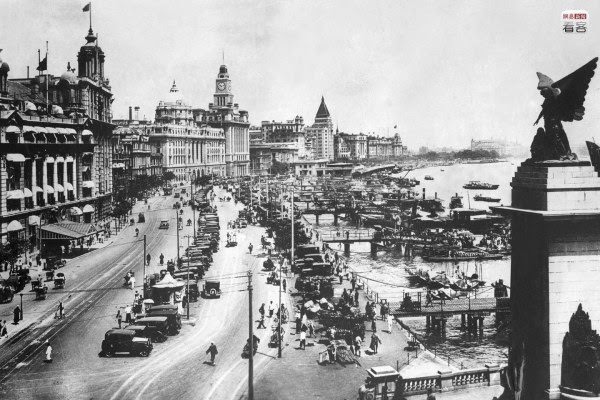
Relying on its unique political system and advantageous geography, Shanghai, after being opened up as a port, gradually became the most prosperous center of trade in the Far East, regarded as a "paradise for adventurers", with the people who came all expressing an attitude of
Relying on its unique political system and advantageous geography, Shanghai, after being opened up as a port, gradually became the most prosperous center of trade in the Far East, regarded as a “paradise for adventurers”, with the people who came all expressing an attitude of

On the streets, commerce was everywhere and unceasing. Even foreign soldiers stationed in Shanghai became part of the city’s street economy. Peddlers sold cigarettes, food, and sundries to anyone who would buy, navigating the space between the formal economy of the concessions and the informal hustle of the city’s working poor.
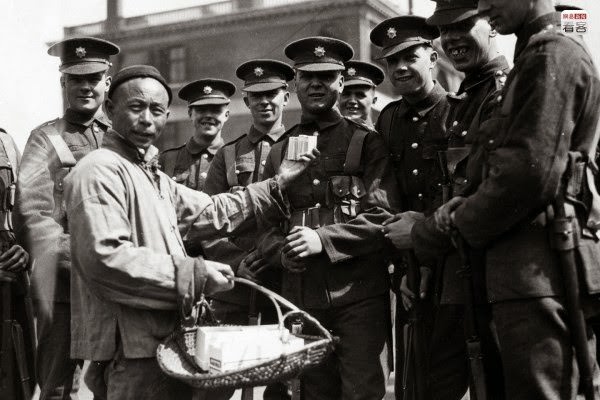
1927 March 29, the Nationalist government set up the Shanghai Special City (new municipality) outside the foreign concessions, greatly helping Shanghai's development. Photo is of 1927, a peddler selling cigarettes to foreign soldiers.
1927 March 29, the Nationalist government set up the Shanghai Special City (new municipality) outside the foreign concessions, greatly helping Shanghai’s development. Photo is of 1927, a peddler selling cigarettes to foreign soldiers.

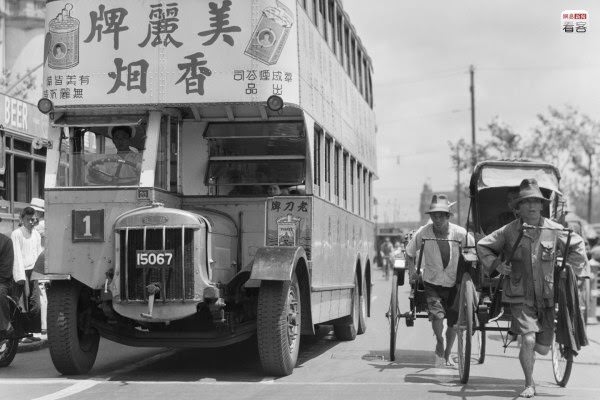
By the 1930s, Nanjing Road had become one of the most visually dense commercial streets in Asia. Signs for shops, restaurants, and entertainment venues stacked from street level to rooftop on both sides of the road. The advertising industry had grown sophisticated and aggressive, with buses on the Bund completely covered in commercial placards by 1935.
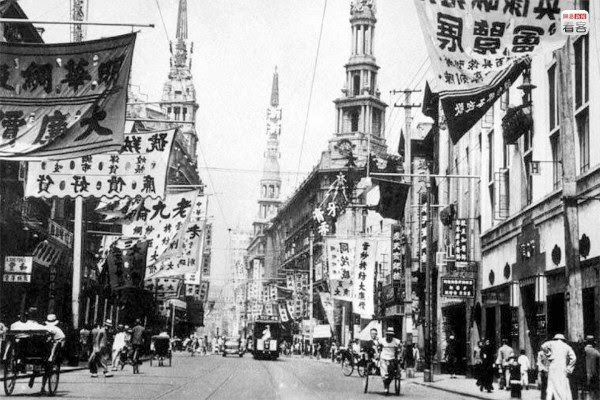
Photo is of Nanjing Road in the '30s of the 20th century, both sides of the street covered with signs.
Photo is of Nanjing Road in the ’30s of the 20th century, both sides of the street covered with signs.

Shanghai’s docks were the engine behind much of this wealth. The port handled enormous volumes of cargo moving in and out of China. Dock workers unloaded everything from watermelons to full locomotive engines, including train cars, railroad ties, and steel rails supplied by the United Nations Relief and Rehabilitation Administration.
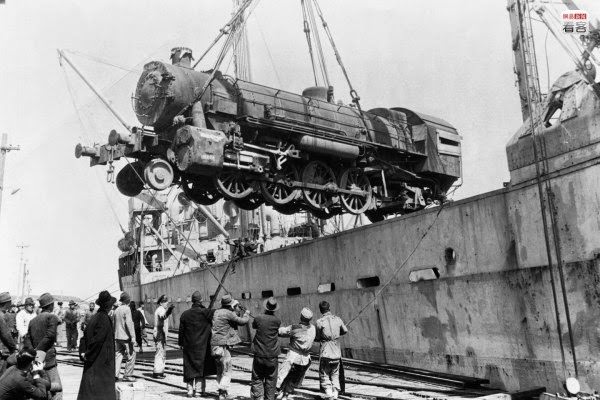
On Shanghai's booming docks, cargo both large and small transferred. Photo is of dockers unloading a train locomotive engine; this engine car was provided by the United Nations Relief and Rehabilitation Administration. In addition to this, the UNRRA also provided many train cars, railroad ties, and steel rails.
On Shanghai’s booming docks, cargo both large and small transferred. Photo is of dockers unloading a train locomotive engine; this engine car was provided by the United Nations Relief and Rehabilitation Administration. In addition to this, the UNRRA also provided many train cars, railroad ties, and steel rails.

For the workers hauling those goods, life was brutal. Dock laborers, factory workers, and the city’s large population of rickshaw pullers lived in makeshift huts or overcrowded tenements on the edges of the concessions. Millions had migrated from the countryside seeking work, and many found only grinding poverty. The rickshaw pullers were among the most visible of these workers — transporting people and goods through crowded streets for bare wages while the Bund glittered nearby.
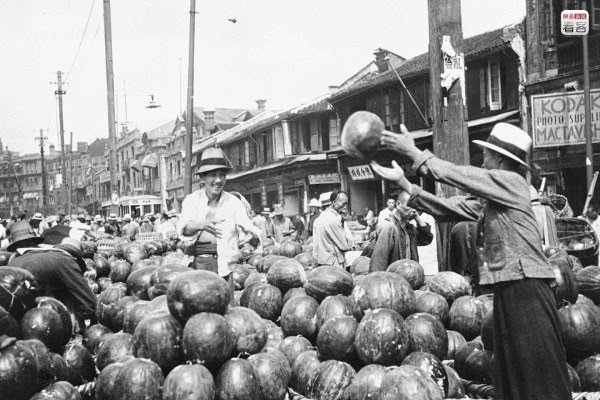
1930s of the 20th century, Shanghai became China's number one metropolis. With the exception of Shanghai, the majority of China still hovered on the brink of destruction founded on a natural economy. Photo is of 1936 September 19, of Chinese laborers on the docks unloading watermelons to be sold.
1930s of the 20th century, Shanghai became China’s number one metropolis. With the exception of Shanghai, the majority of China still hovered on the brink of destruction founded on a natural economy. Photo is of 1936 September 19, of Chinese laborers on the docks unloading watermelons to be sold.

Foreign residents also shaped the city’s social fabric. The first British arrivals came in 1843 — just 26 businessmen and missionaries. By 1935, over 6,000 British expatriates lived in the International Settlement alone. Hotels like the Shanghai Hotel catered to this community, serving as social hubs where deals were struck and alliances formed.
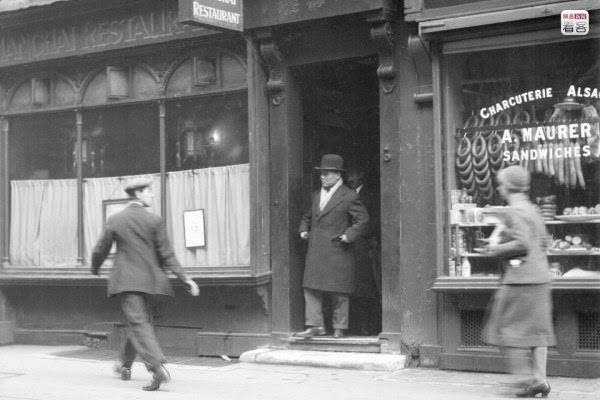
In 1843, 26 British businessmen and missionaries arrived in Shanghai, the first group of foreigners to arrive in Shanghai. By 1935, the number of British expatriates living in the Shanghai International Settlement had exceeded 6000 people. Photo is of the Shanghai Hotel in the 1930s.
In the 1930s and 1940s of the 20th century, Shanghai's advertising and media industry had already developed to a very high level, yet another piece of evidence of Shanghai's flourishing commercial trade at the time. Photo is of the Shanghai Bund in 1935, where public buses were "invaded and taken over" by all types of advertisements.
In the 1930s and 1940s of the 20th century, Shanghai’s advertising and media industry had already developed to a very high level, yet another piece of evidence of Shanghai’s flourishing commercial trade at the time. Photo is of the Shanghai Bund in 1935, where public buses were “invaded and taken over” by all types of advertisements.

The Japanese occupation began in 1937 and reshaped the city dramatically. During the War of Resistance, Shanghai became a no-visa entry point — an unusual wartime refuge sometimes called the “Casablanca of the East.” Jewish refugees fleeing Nazi-controlled Europe arrived in significant numbers. However, Japan eventually imposed strict controls on the Jewish population at Germany’s request, confining thousands to a designated ghetto in the Hongkou district.
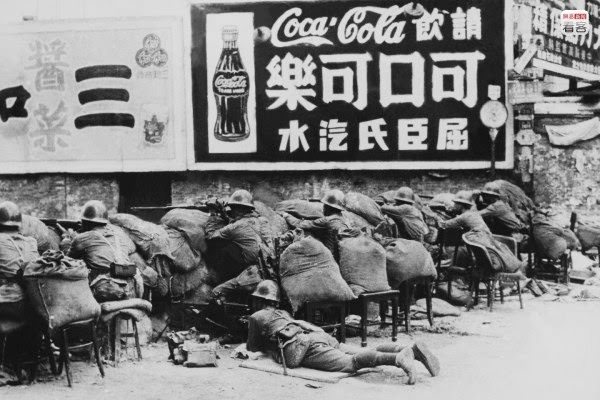
During the War of Resistance, Shanghai became Japanese occupied territory. During this time, Shanghai became a city where visas were not needed to enter, called the "Casablanca" of the East, with slight economic development. However, good things don't last forever, and with the German request to get rid of Jews, Japan began to implement strict controls in Shanghai. Photo is of Shanghai during the War of Resistance.
During the War of Resistance, Shanghai became Japanese occupied territory. During this time, Shanghai became a city where visas were not needed to enter, called the “Casablanca” of the East, with slight economic development. However, good things don’t last forever, and with the German request to get rid of Jews, Japan began to implement strict controls in Shanghai. Photo is of Shanghai during the War of Resistance.

After Japan’s defeat in 1945, Shanghai returned to a fragile normalcy. Advertising billboards went back up on the city’s streets, promoting films, stage shows, and consumer goods. Street vendors, newsstands, and rickshaw pullers returned to their posts as if the occupation had simply paused ordinary life.
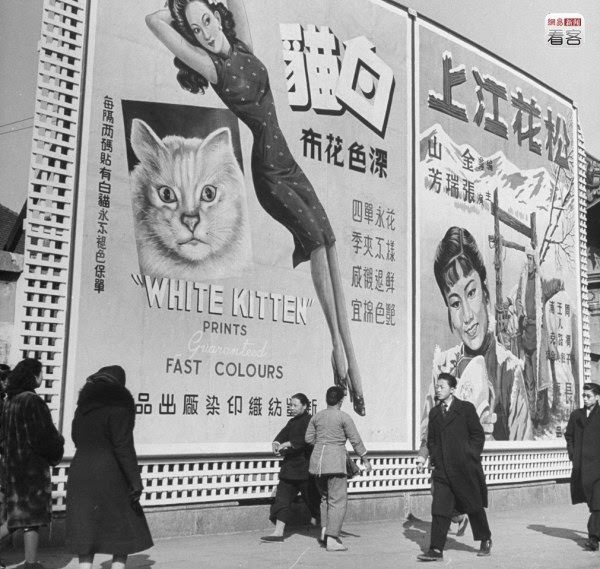
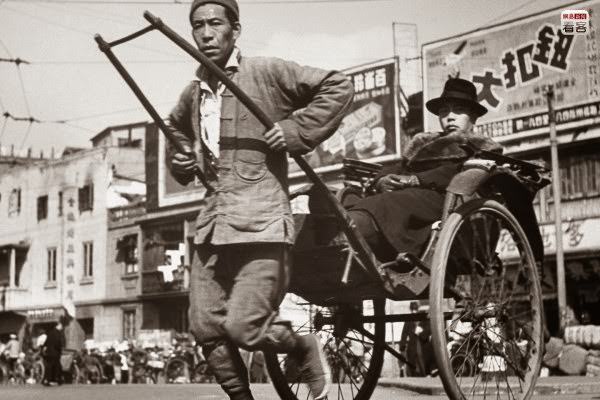
Photo is of 1948 January 1, a billboard on a Shanghai street. Other than physical goods, these advertisement billboards also featured advertisements for movie and stage play showings and the like.
Photo is of 1947, a rickshaw puller, with a lot of advertisements visible on the commercial street.

By 1947, Time and Esquire magazines sat alongside local newspapers at sidewalk newsstands in Shanghai. The city’s appetite for both local and international media reflected how connected it remained to the outside world, even as civil war between the Nationalist government and Communist forces intensified across China.
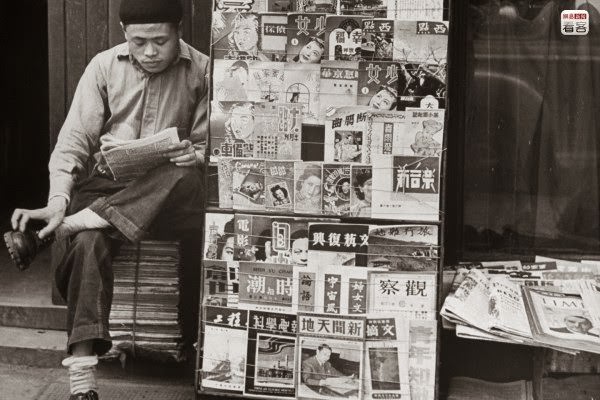
1947 June 1, a newsstand on the side of a Shanghai street. Other than local newspapers and periodicals, Time, Esquire, and similar periodicals were popular sellers on the streets of Shanghai.
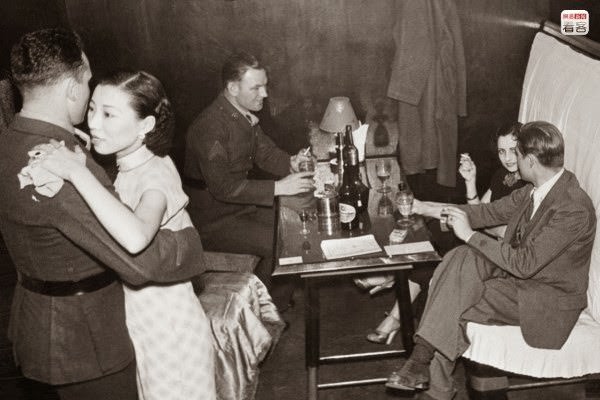
Photo is of not long after the end of the War of Resistance, of a dancing girl and a soldier dancing. There were still many foreign soldiers in the bars. Shanghai became an international city where foreigners could be seen everywhere.

The late 1940s brought deep instability. Strikes shut down factories, inflation made everyday goods unaffordable, and the civil war edged closer to the city’s streets. Yet Shanghai’s surface life continued in surreal fashion — sheep crossed the main road from the business district to the Bund one June morning in 1947, stopping traffic, as if the city itself refused to acknowledge the chaos closing in around it.
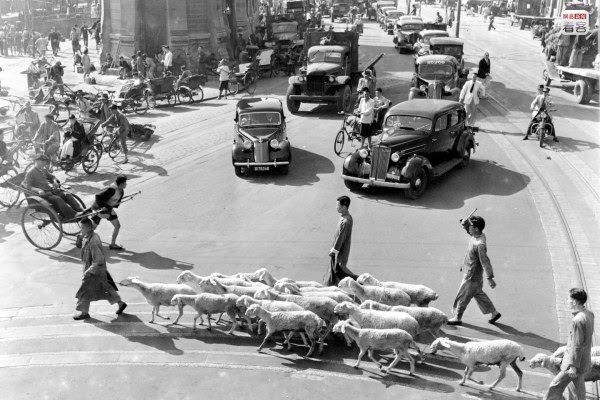
At the end of the 1940s in the 20th century, despite Shanghai remaining China's number one city, the theme of Shanghai during this time was of social unrest/turmoil. Strikes, civil war, and inflation plagued the city of Shanghai. Photo is of 1947 June 18, on the street from the central business district to the Bund public markets, a flock of sheep crossing the street causes road congestion in the morning.
At the end of the 1940s in the 20th century, despite Shanghai remaining China’s number one city, the theme of Shanghai during this time was of social unrest/turmoil. Strikes, civil war, and inflation plagued the city of Shanghai. Photo is of 1947 June 18, on the street from the central business district to the Bund public markets, a flock of sheep crossing the street causes road congestion in the morning.

By May 1949, the end was near. Market stalls in Shanghai were still selling everyday goods — branded pots stamped with “555” — on May 1st. Within two weeks, Communist forces had surrounded the city, and the Nationalist government began its retreat. The era that had made Shanghai the most cosmopolitan city in Asia was drawing to a close.
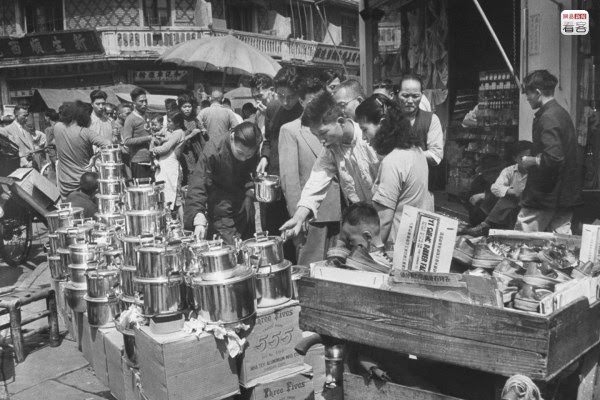
1949 May 1, at the Shanghai market bazaar, vendors selling "555" branded pots. Soon after on May 14, Shanghai was surrounded and the Kuomingtang too started to retreat.
1949 May 1, at the Shanghai market bazaar, vendors selling “555” branded pots. Soon after on May 14, Shanghai was surrounded and the Kuomingtang too started to retreat.
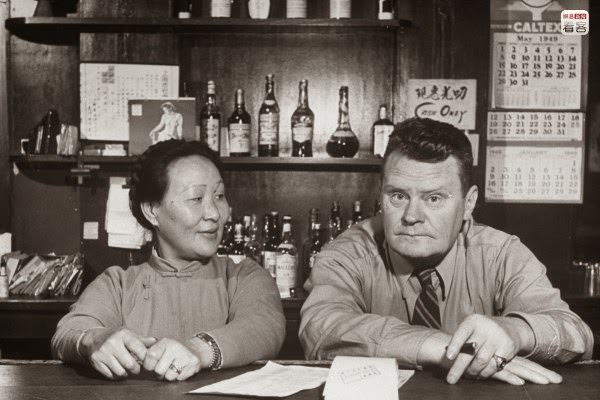
1949 May 1, inside a bar, a photo of American bar owner Frank and his Chinese wife in their bar. This was several days before Communist Party forces reached Shanghai.
Enjoyed this post? Get new ones in your inbox.

Leave a Comment

Your email address will not be published. Required fields are marked *

Share this Post 🥺

Please take a moment to share this content. Your support is greatly appreciated! 🙌🙏

Share this Post 🥺

Please take a moment to share this content. Your support is greatly appreciated! 🙌🙏
Scroll to Top
 
Hey Friend, Before You Go.. Please like & follow for more interesting content