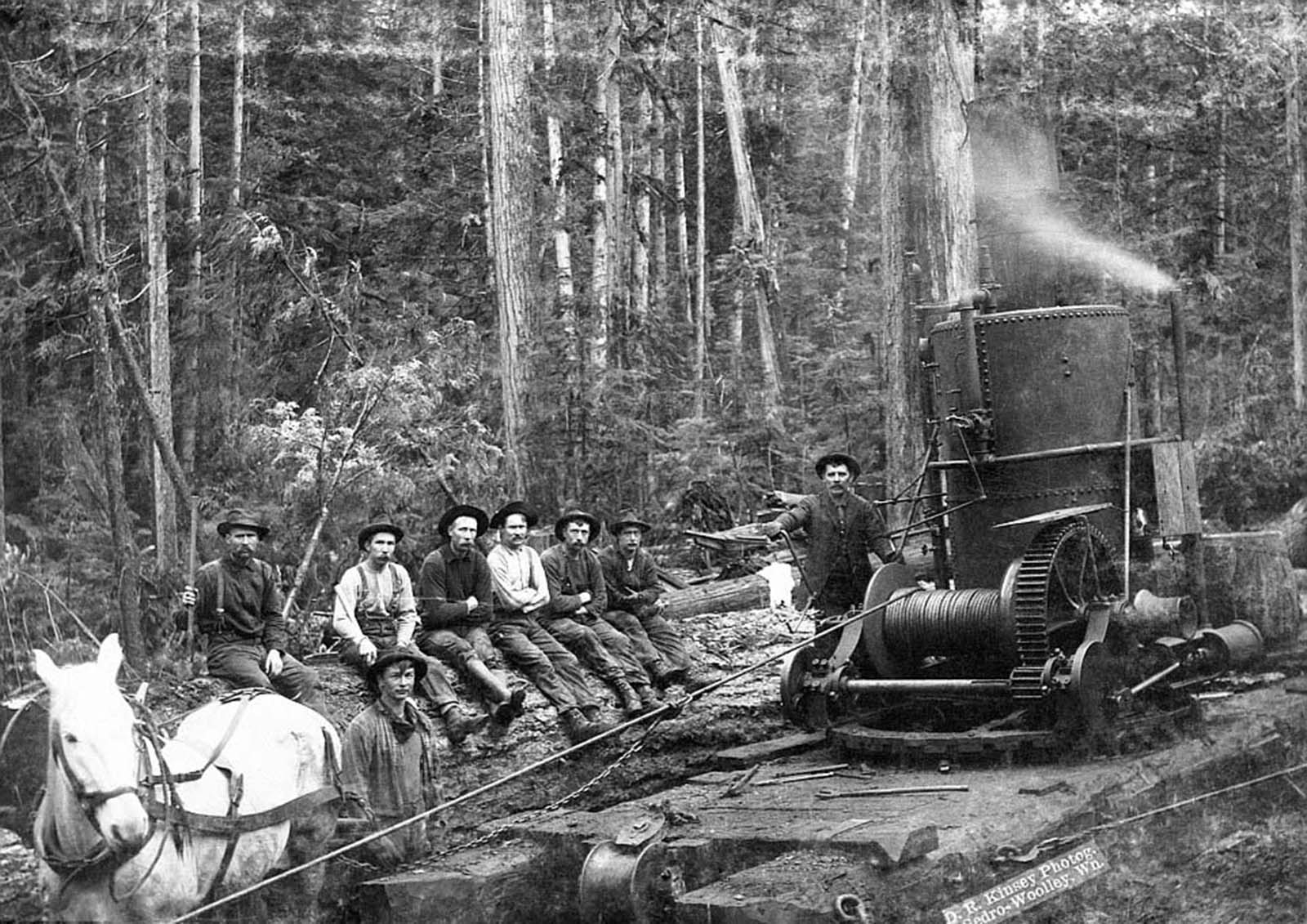
Before chainsaws and logging machines existed, men brought down some of the largest trees on earth using nothing but axes and hand-powered crosscut saws. These lumberjacks worked in dense forests across the Pacific Northwest, California, the Great Lakes states, and parts of Canada and Scandinavia. The work was dangerous, physically punishing, and paid very little. But it fed a booming demand for lumber that was building cities, railroads, and homes across North America in the early 1900s.
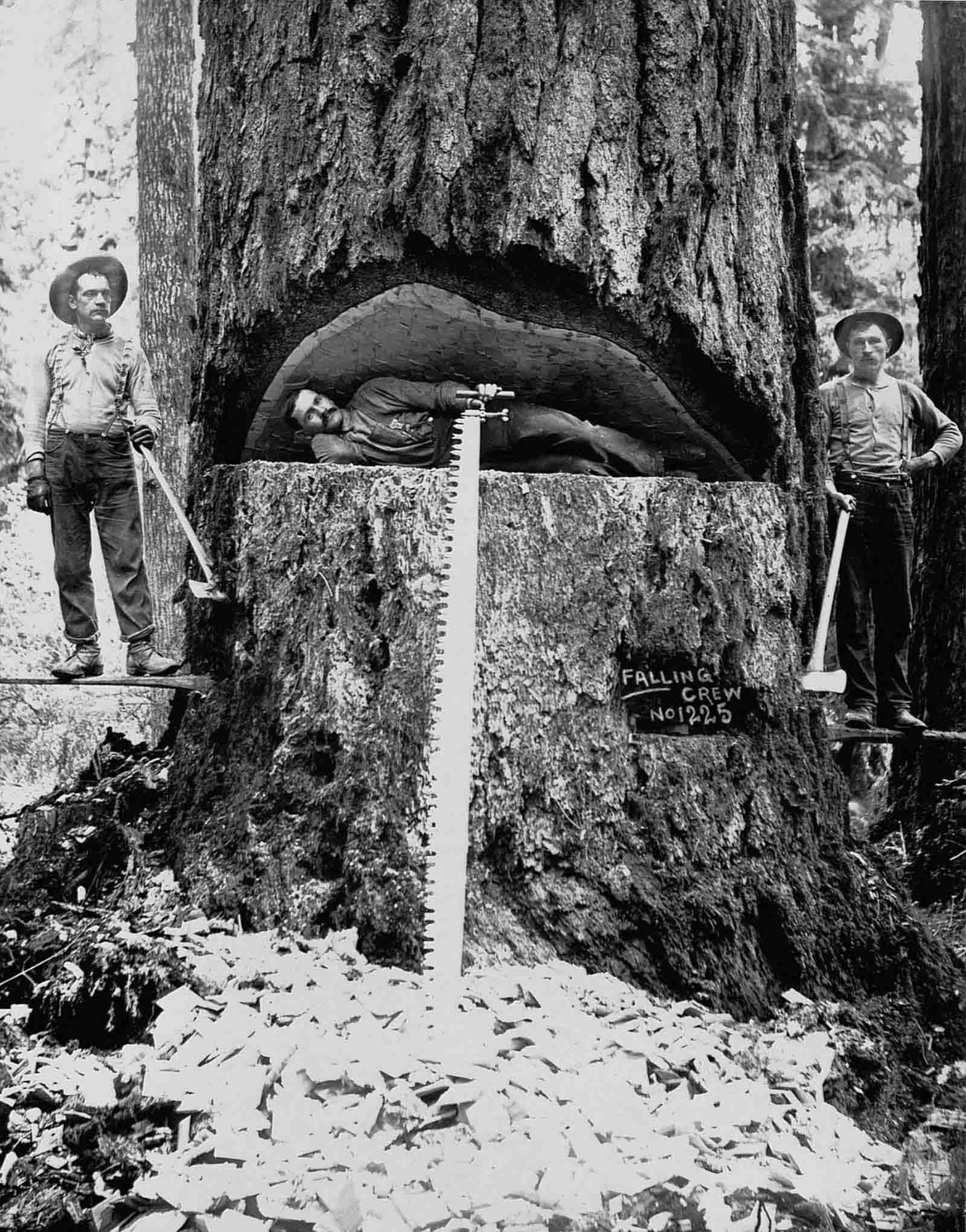
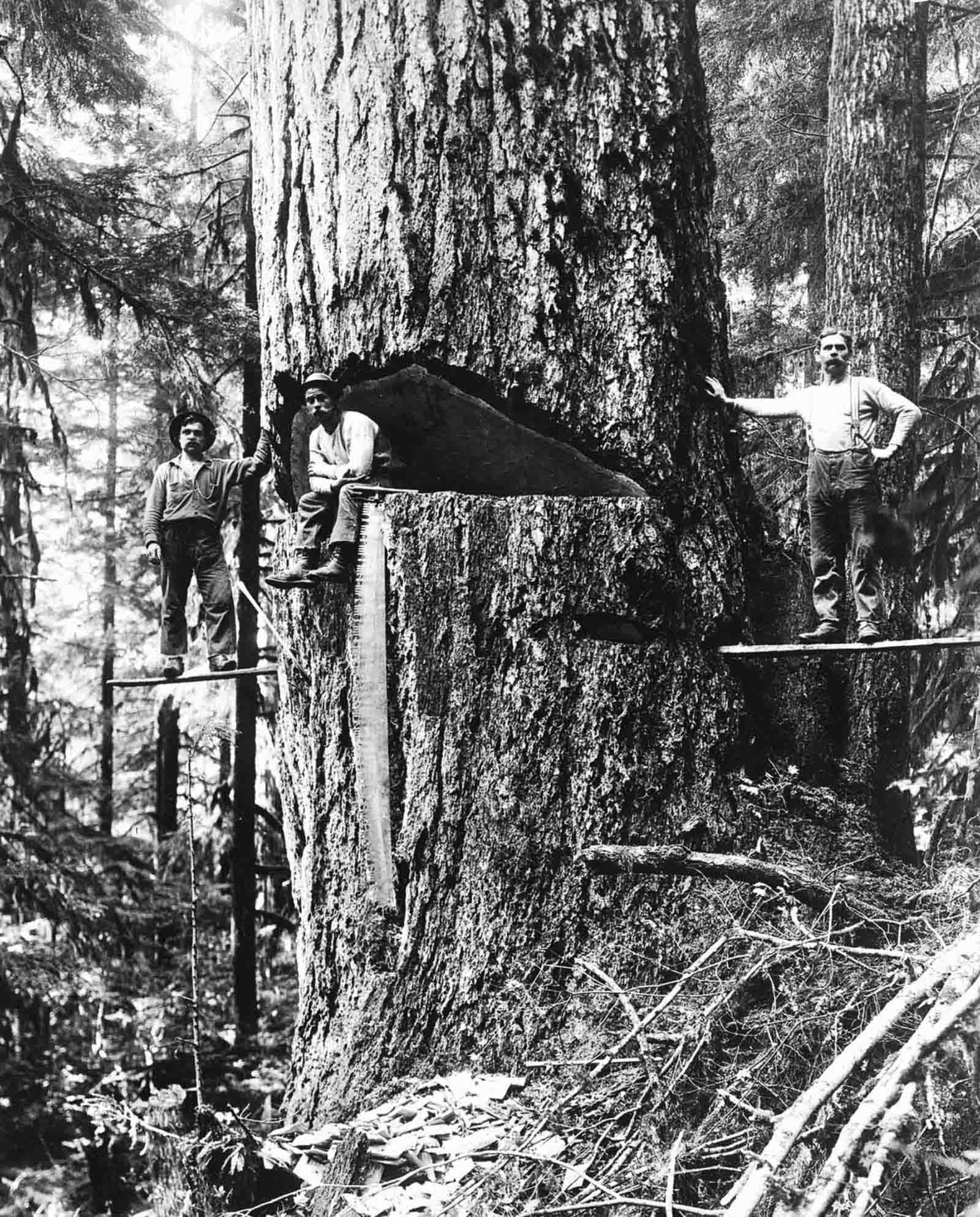
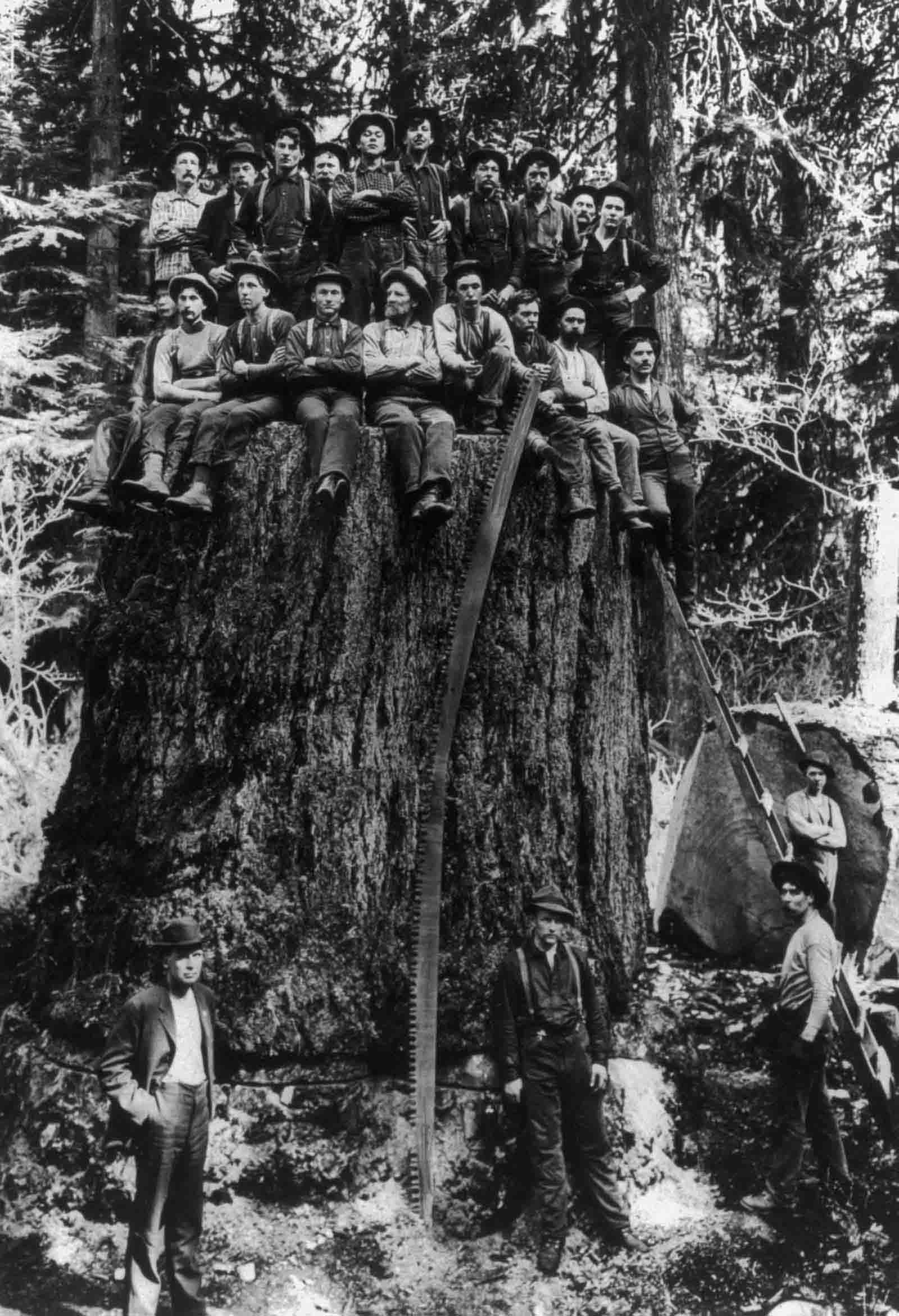
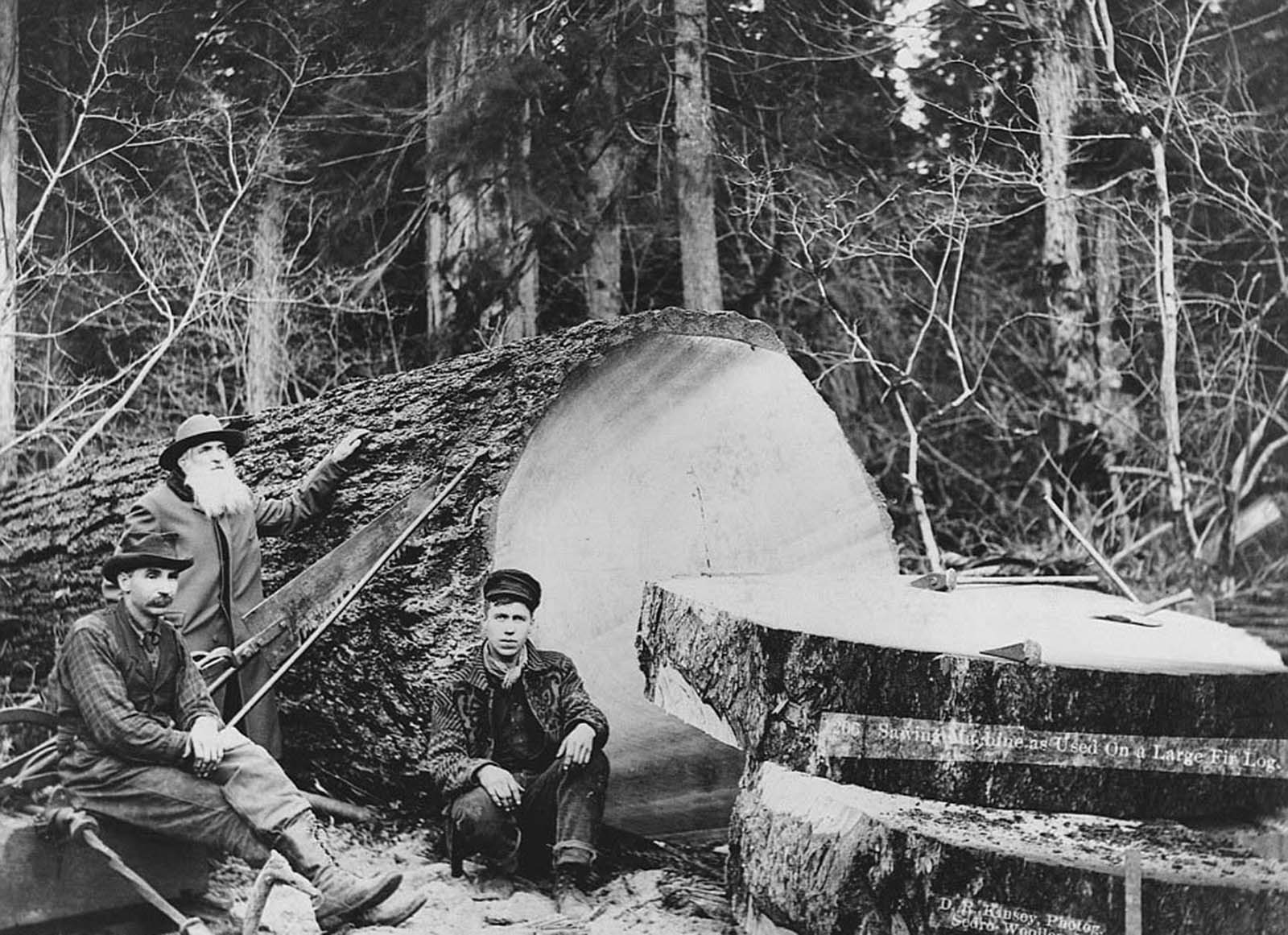
The men known as “fallers” handled the actual cutting. To reach a clean section of trunk above the root flare, they hammered notched planks called springboards into the side of the tree and stood on them while they worked. From that elevated position, they used axes to chop an undercut, then drove a long crosscut saw — sometimes six feet or more — back and forth across the trunk with a partner on the opposite end. The direction of the cuts determined exactly where the massive tree would fall.
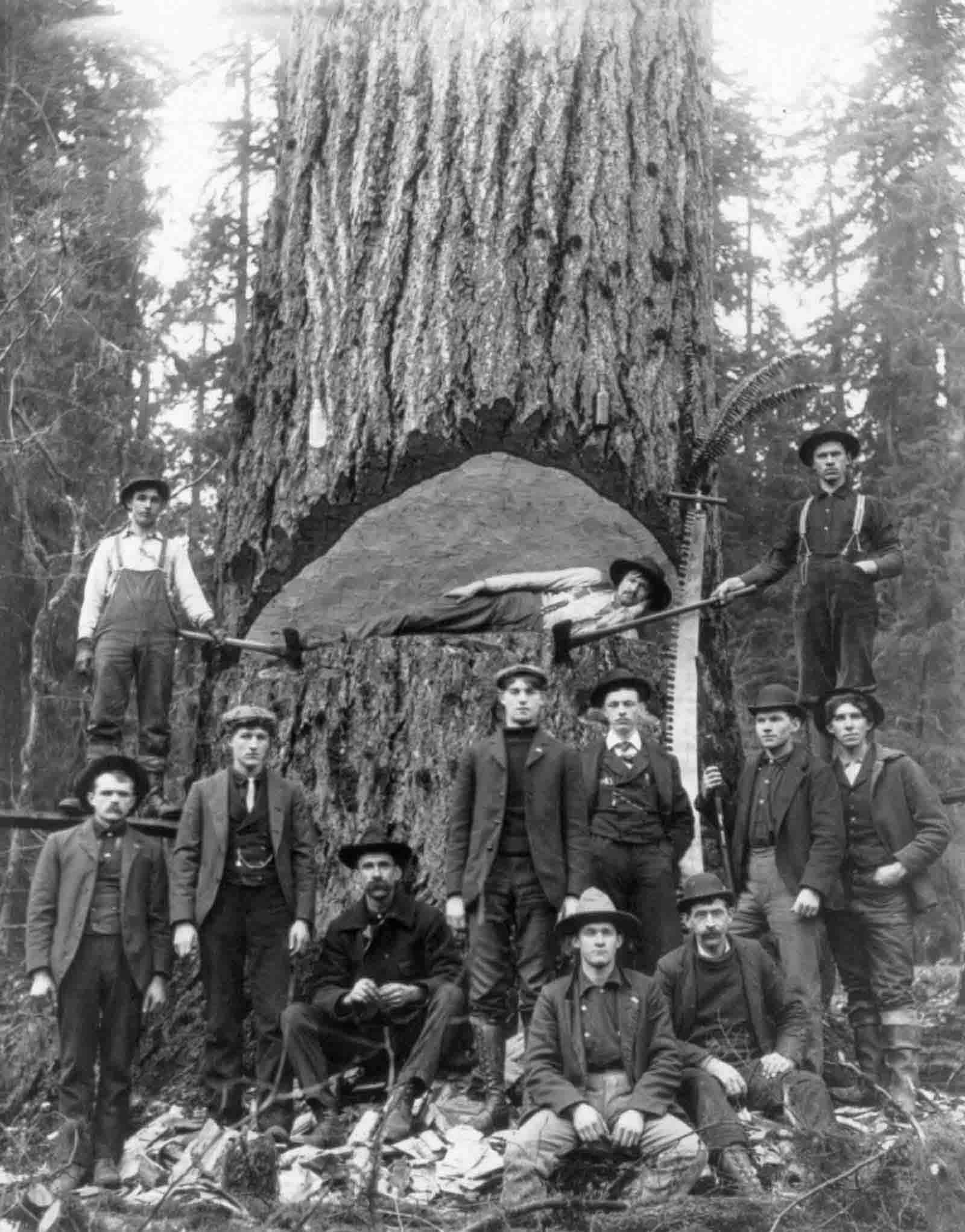
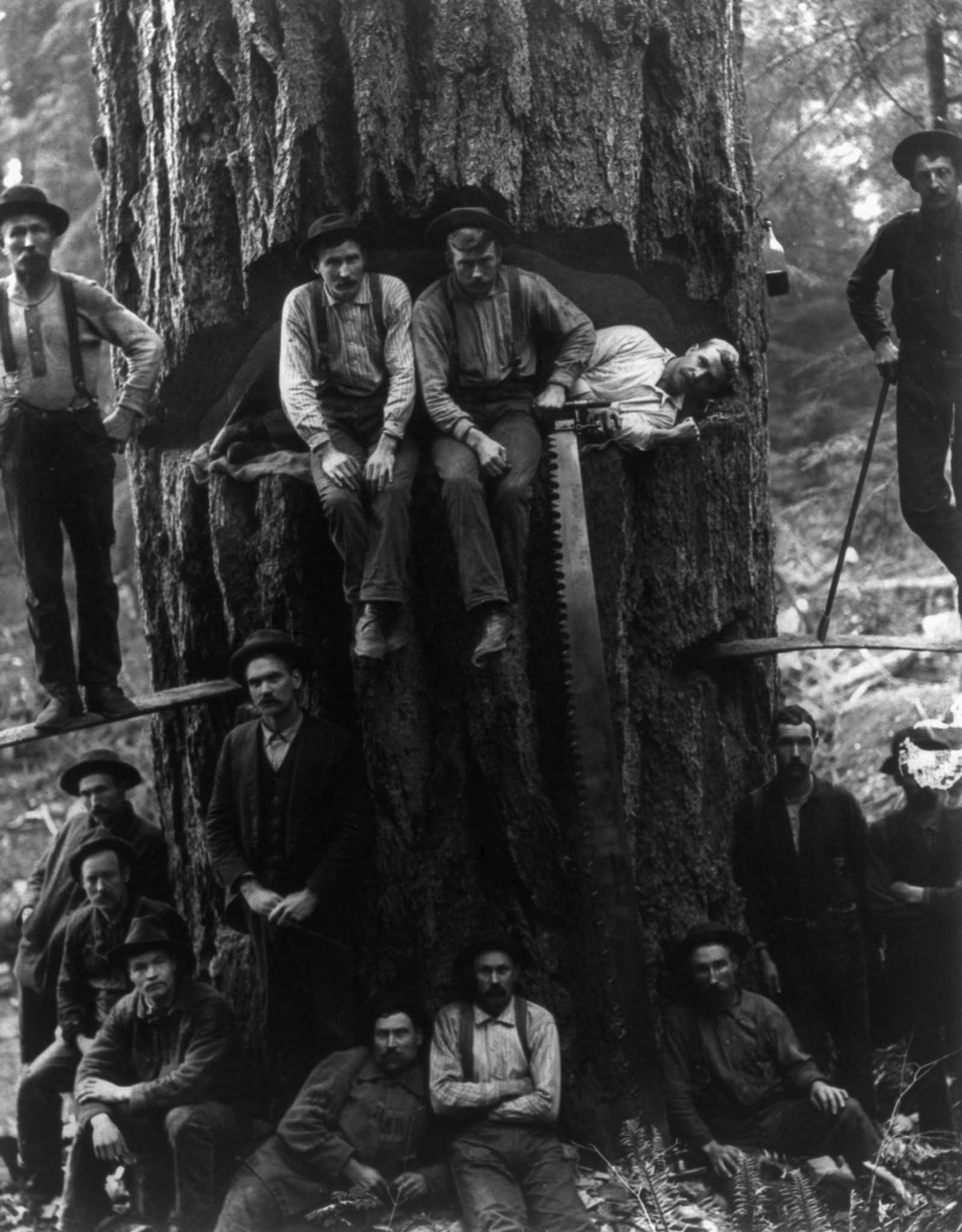
The trees these men felled were enormous. Douglas firs in Washington and Oregon regularly exceeded 200 feet in height, while the giant sequoias of California were even wider than they were tall by the standards of any other species. A 12-foot-wide trunk — wider than most living rooms — was not unusual. It took hours of sustained effort just to cut through one.
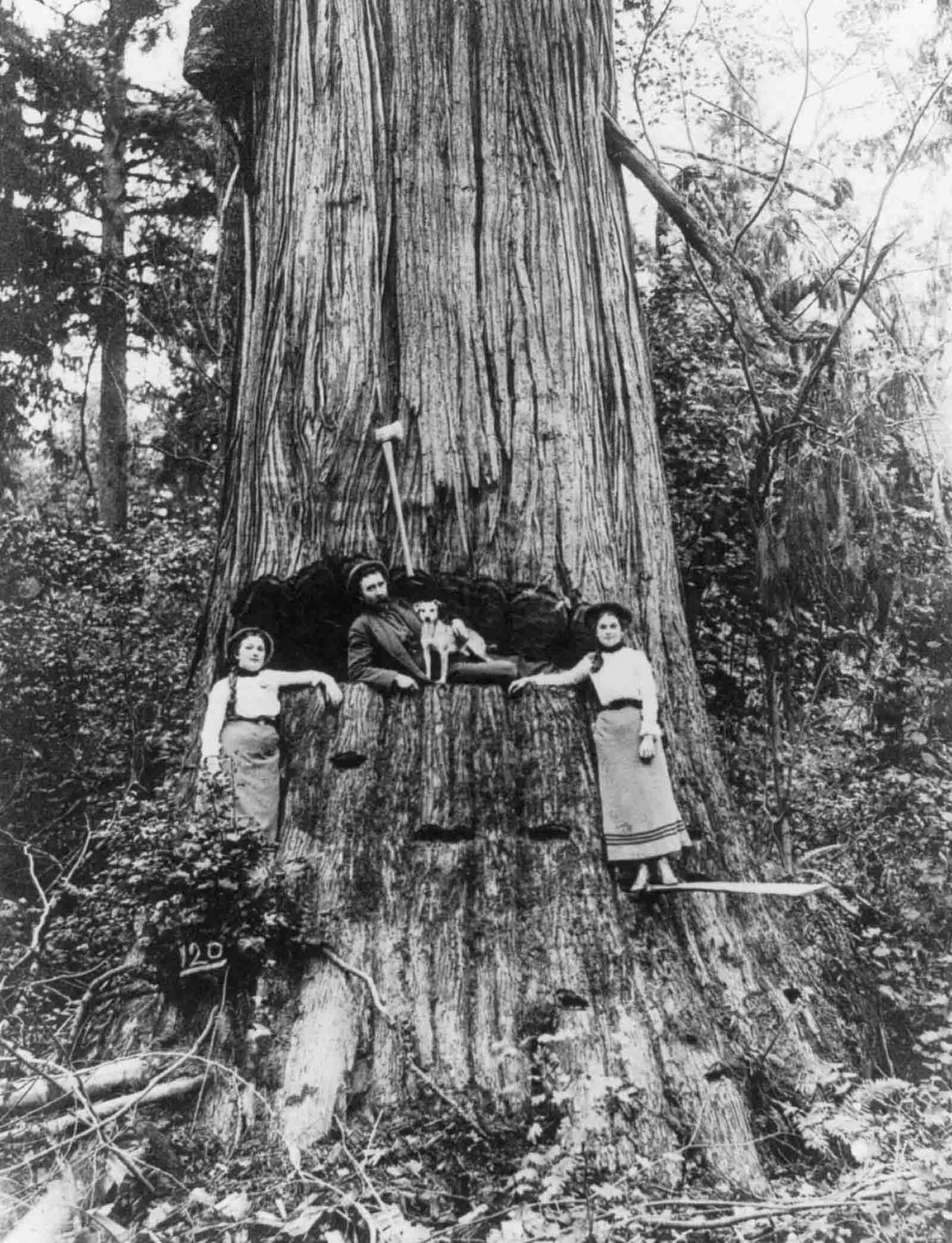
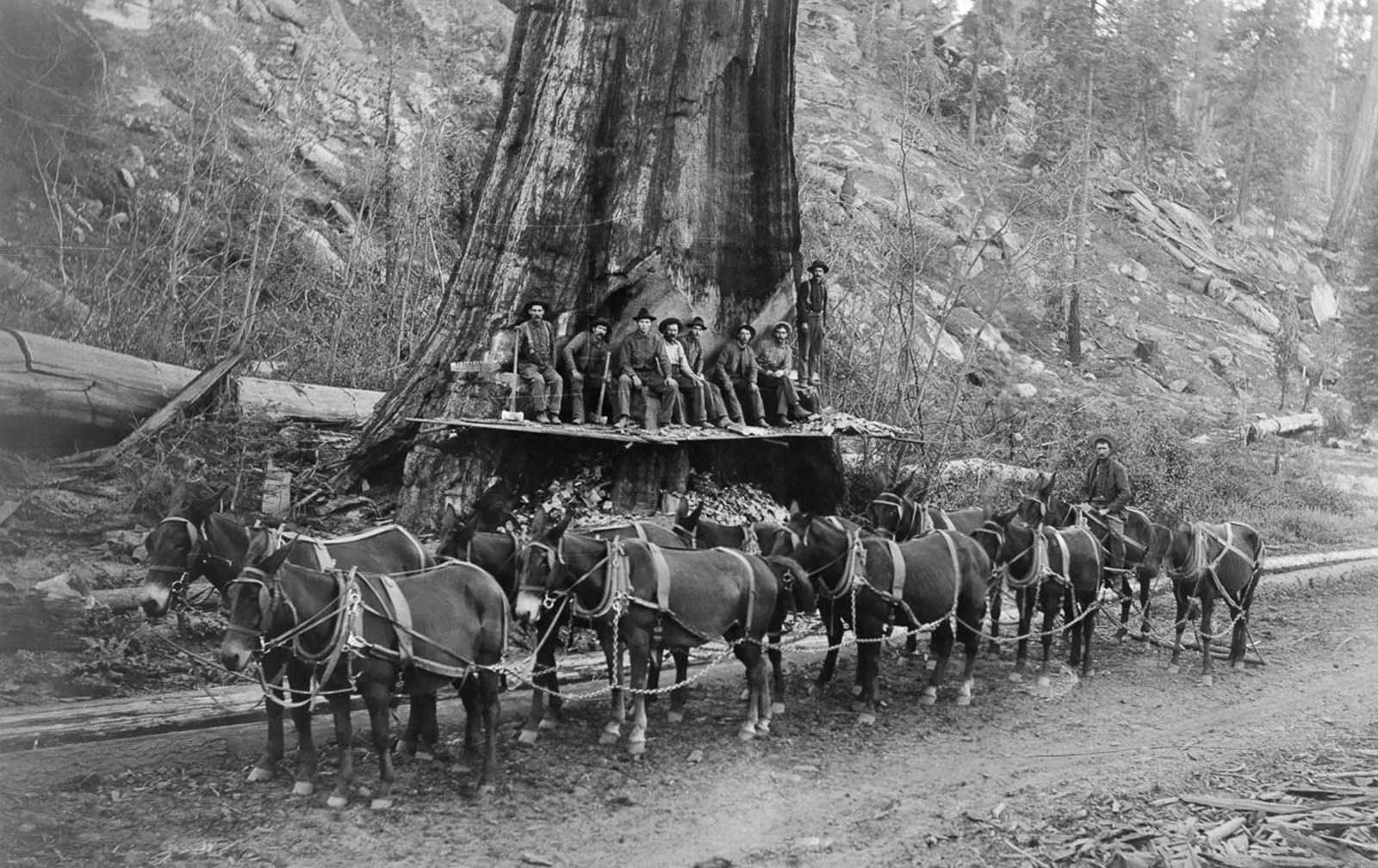
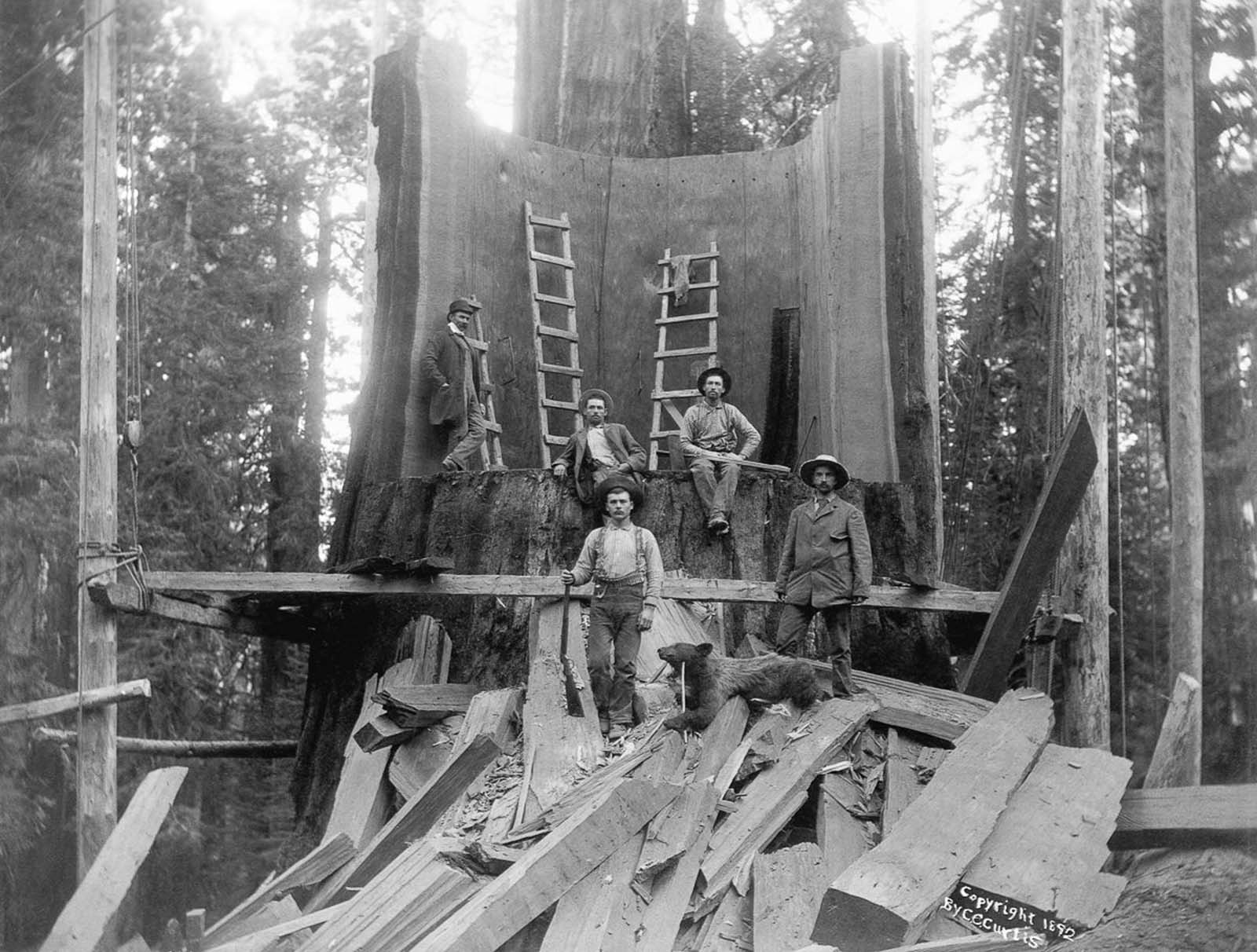
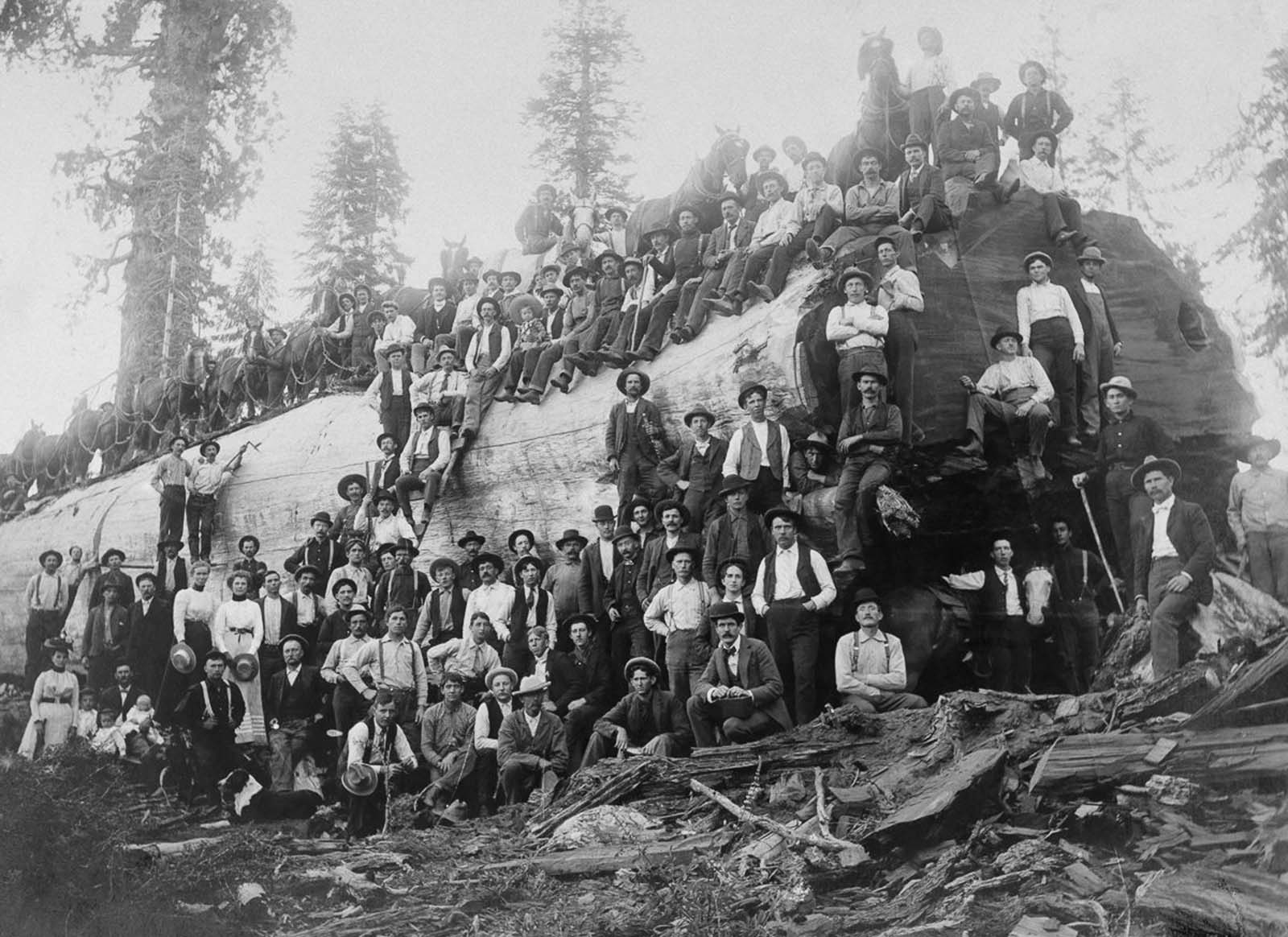
California’s sequoia forests drew some of the most striking scenes of the era. A crosscut saw stretched across a sequoia trunk could span the width of a small house. These trees had stood for thousands of years before a logging crew brought them down in a matter of hours. The sheer scale of the work was so remarkable that people gathered to witness and photograph it.
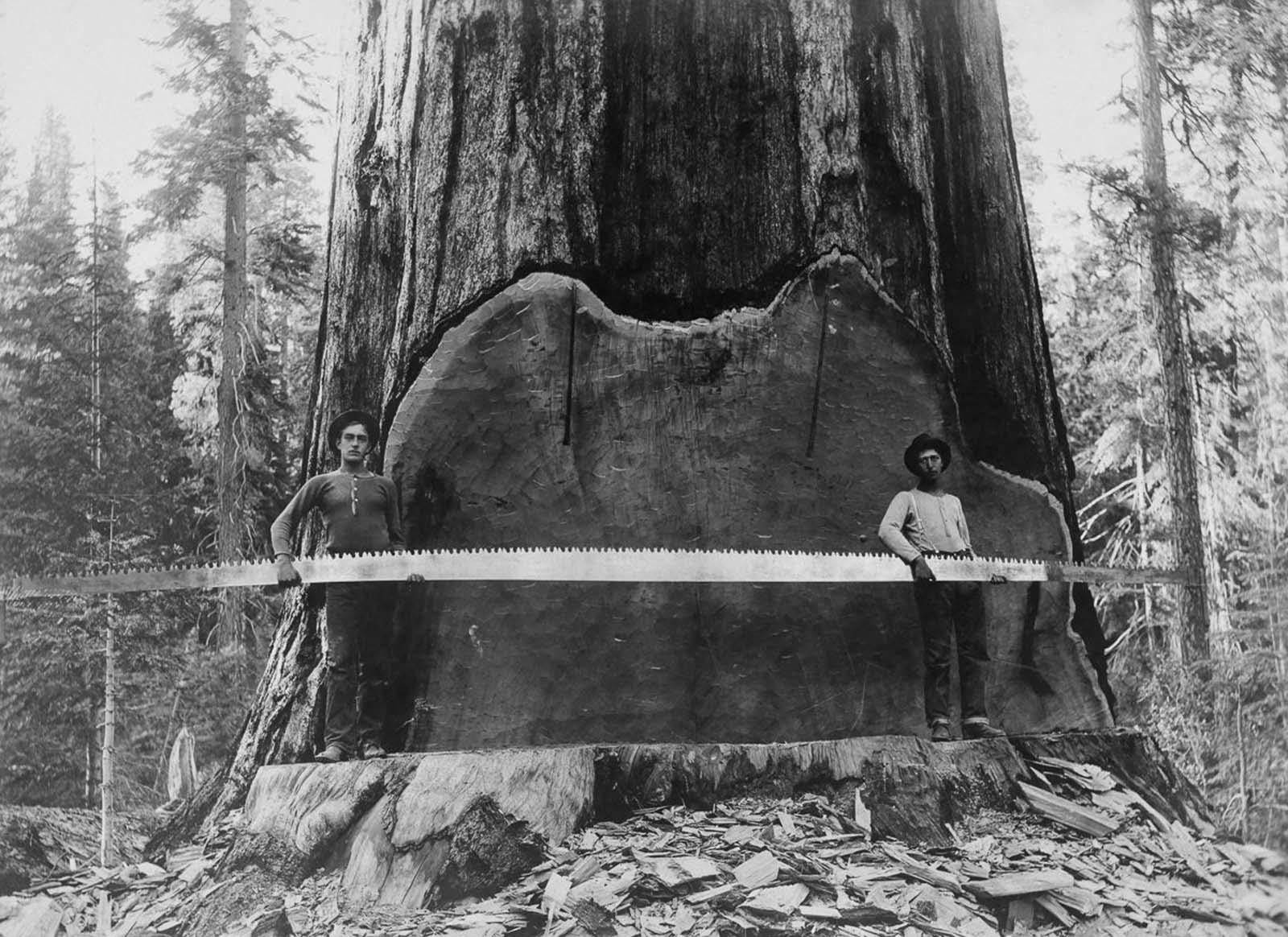
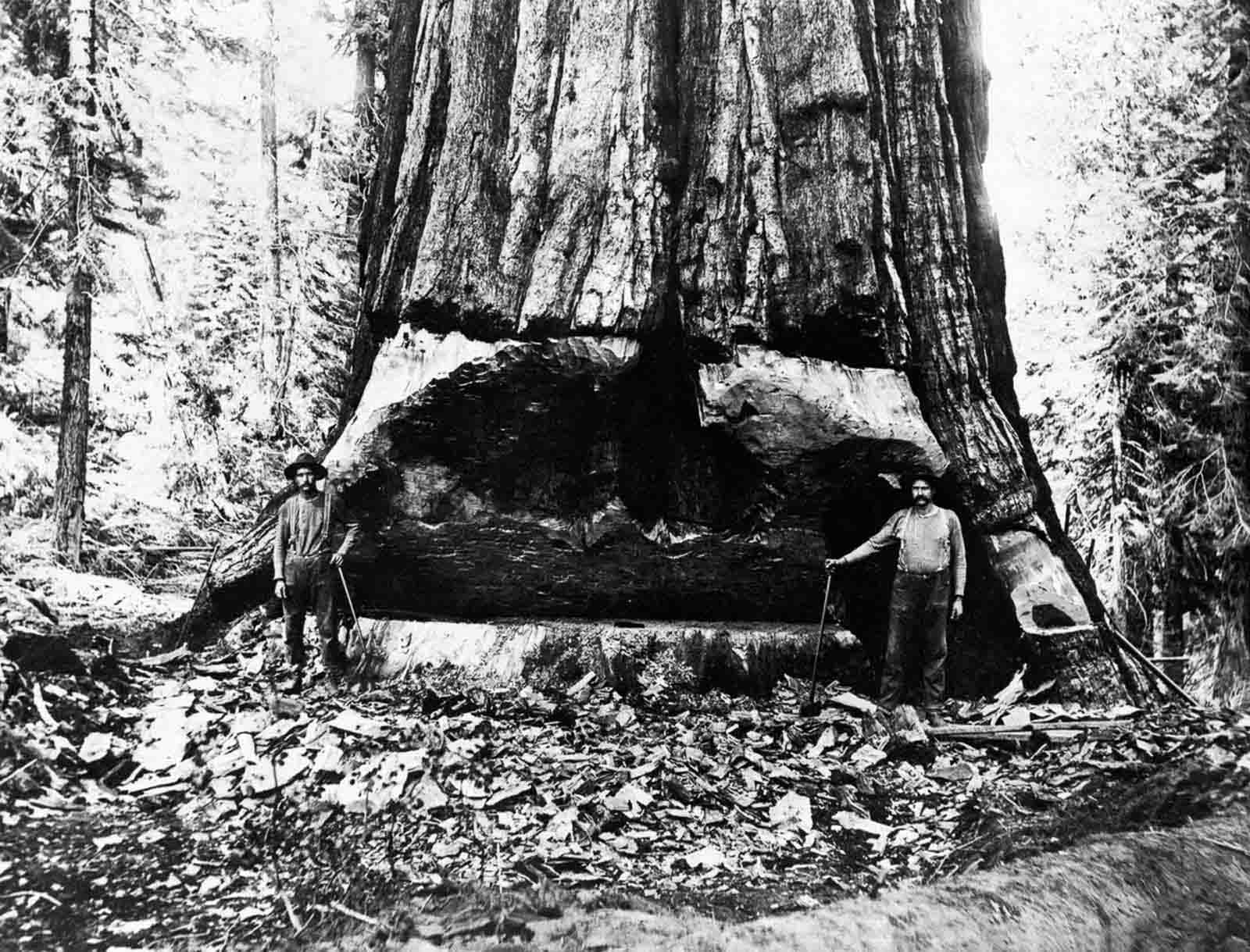
Once a tree hit the ground, the work was far from over. A worker called a “bucker” moved in to cut the trunk into manageable log lengths. Then choker setters wrapped steel cables around the logs so a mechanical yarder could drag them to a central collection point called the landing. Every step had a specific crew member assigned to it, and the whole operation depended on each person doing their job without hesitation.
Keeping the crew safe fell partly to the whistle punk — a worker who blew a whistle to signal the yarder operator whenever logs were being moved. It was an entry-level role, but a critical one. A missed signal or a slow reaction could send a rolling log into a group of workers. The high climber, by contrast, was one of the most skilled men on the site. He scaled a tall standing tree using iron climbing hooks and ropes, stripping off branches as he went, then cut away the top and rigged the tree with pulleys. That stripped trunk became the spar tree — the anchor point for the entire cable system used to move logs across the landing.
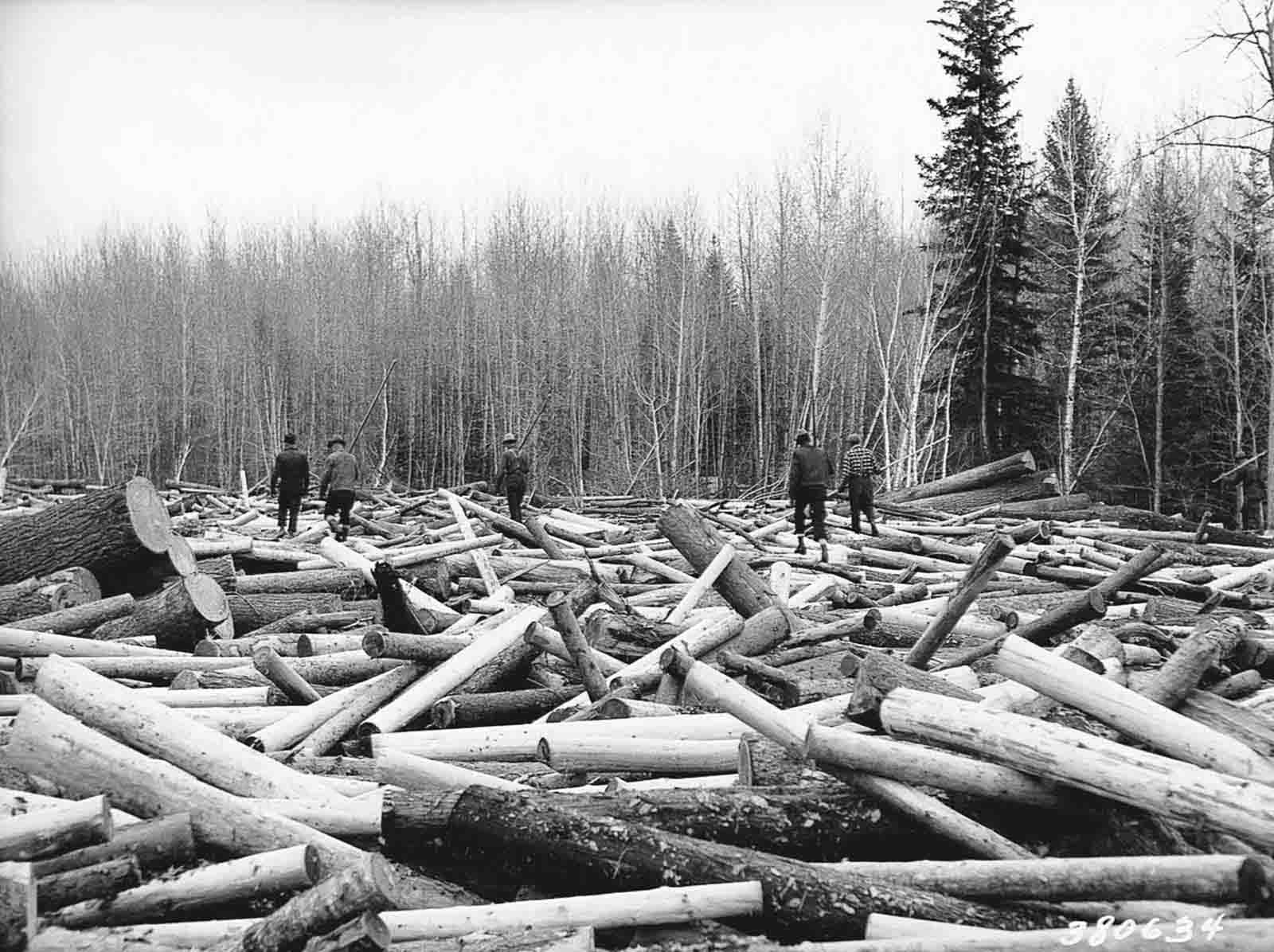
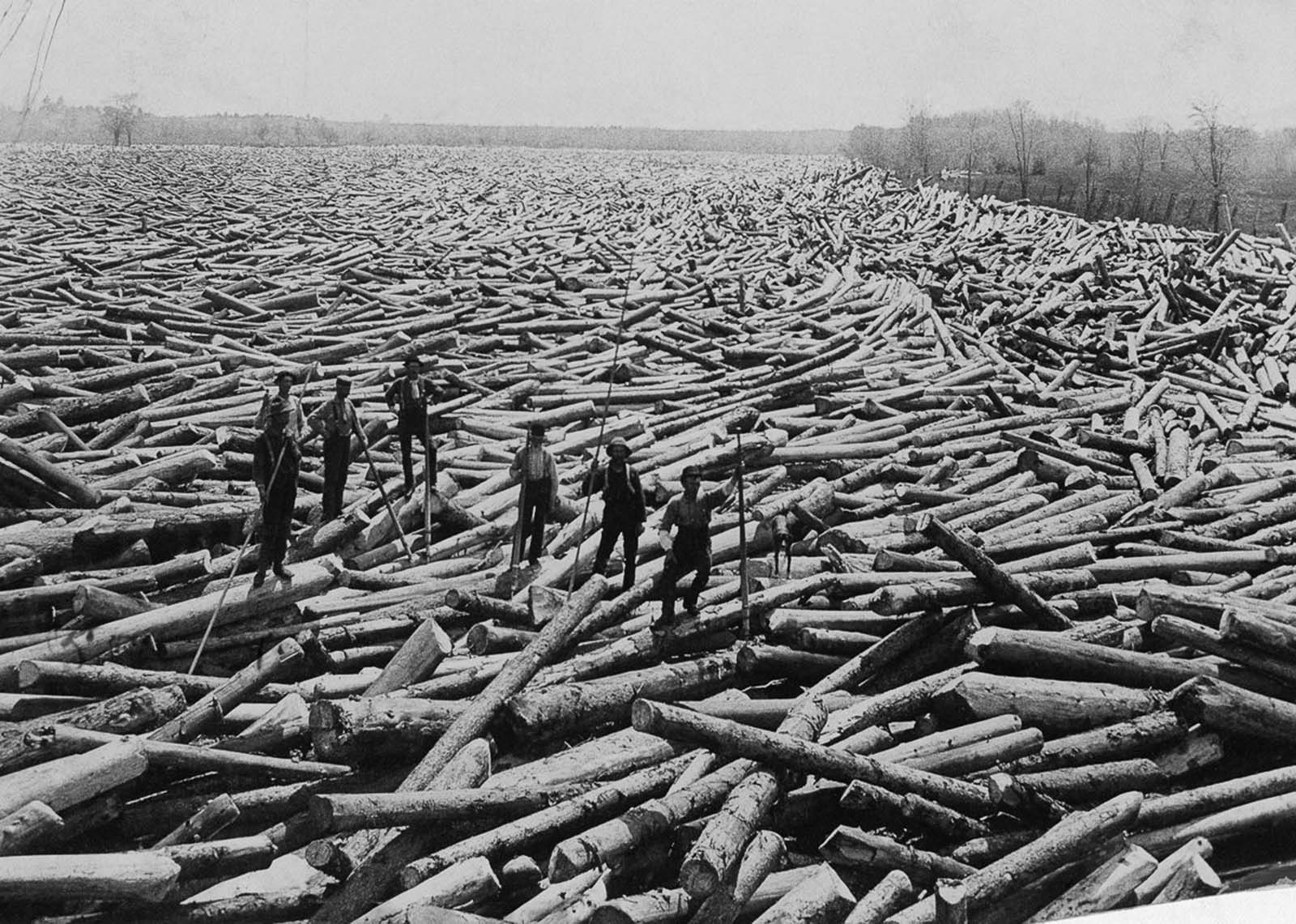
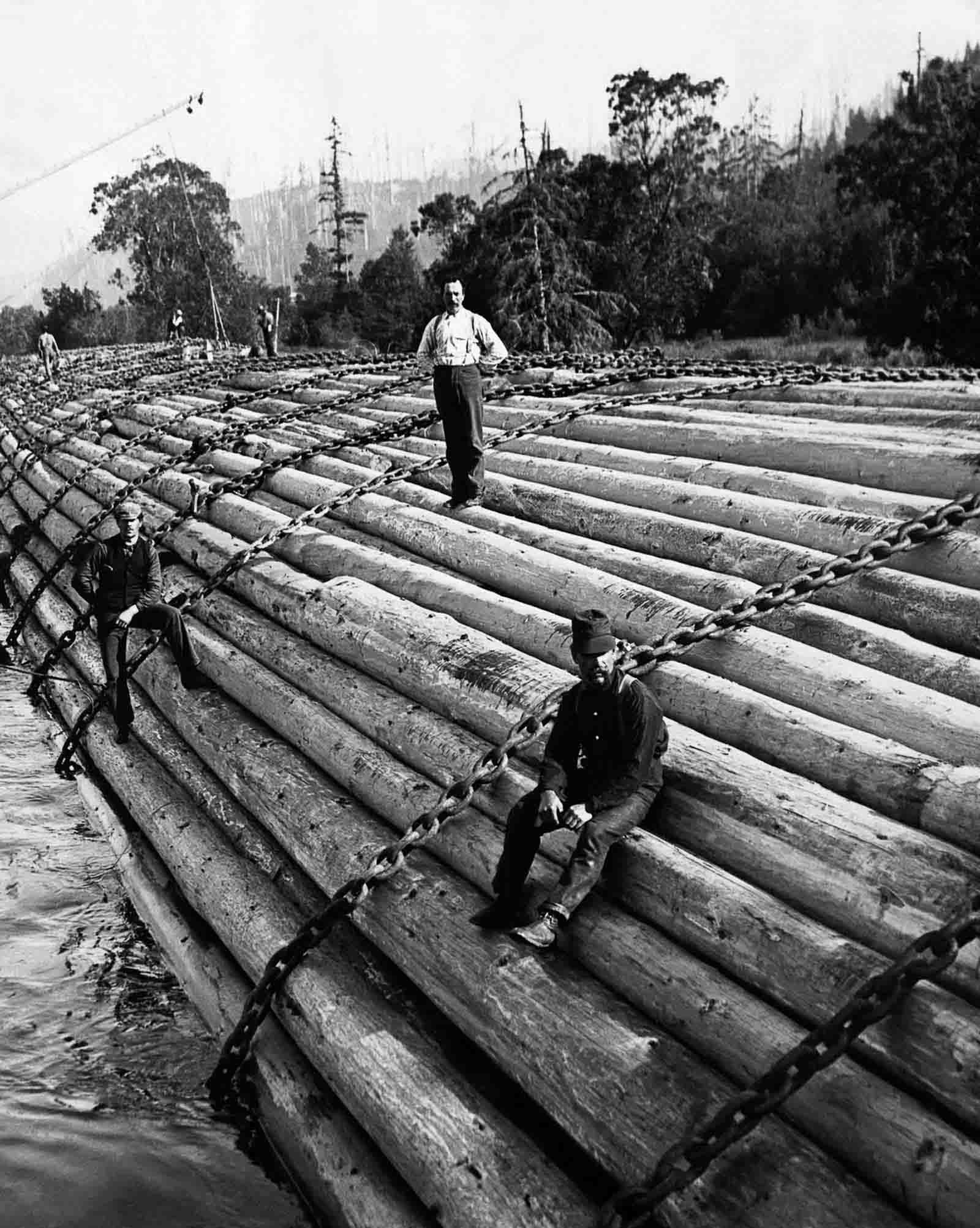
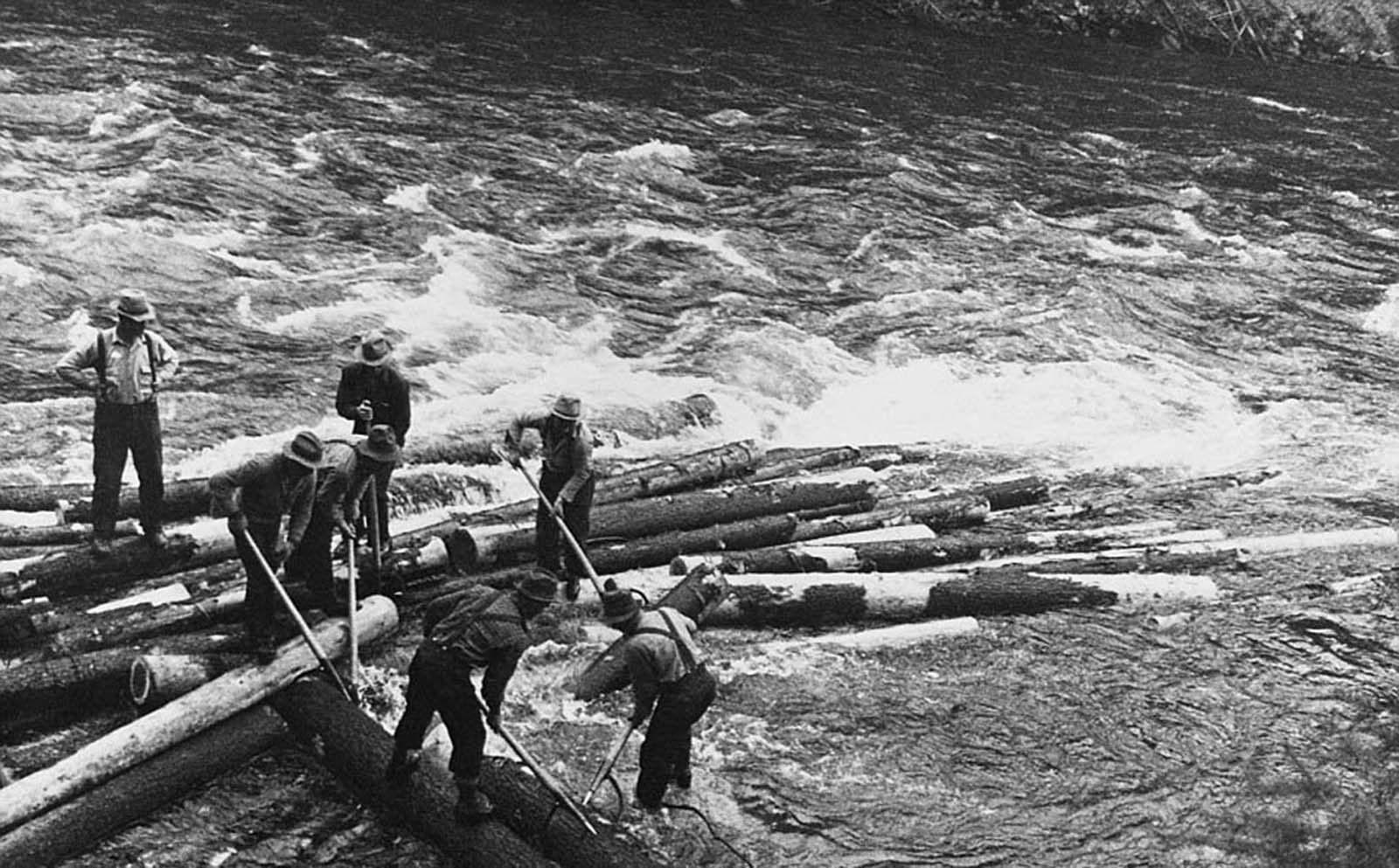
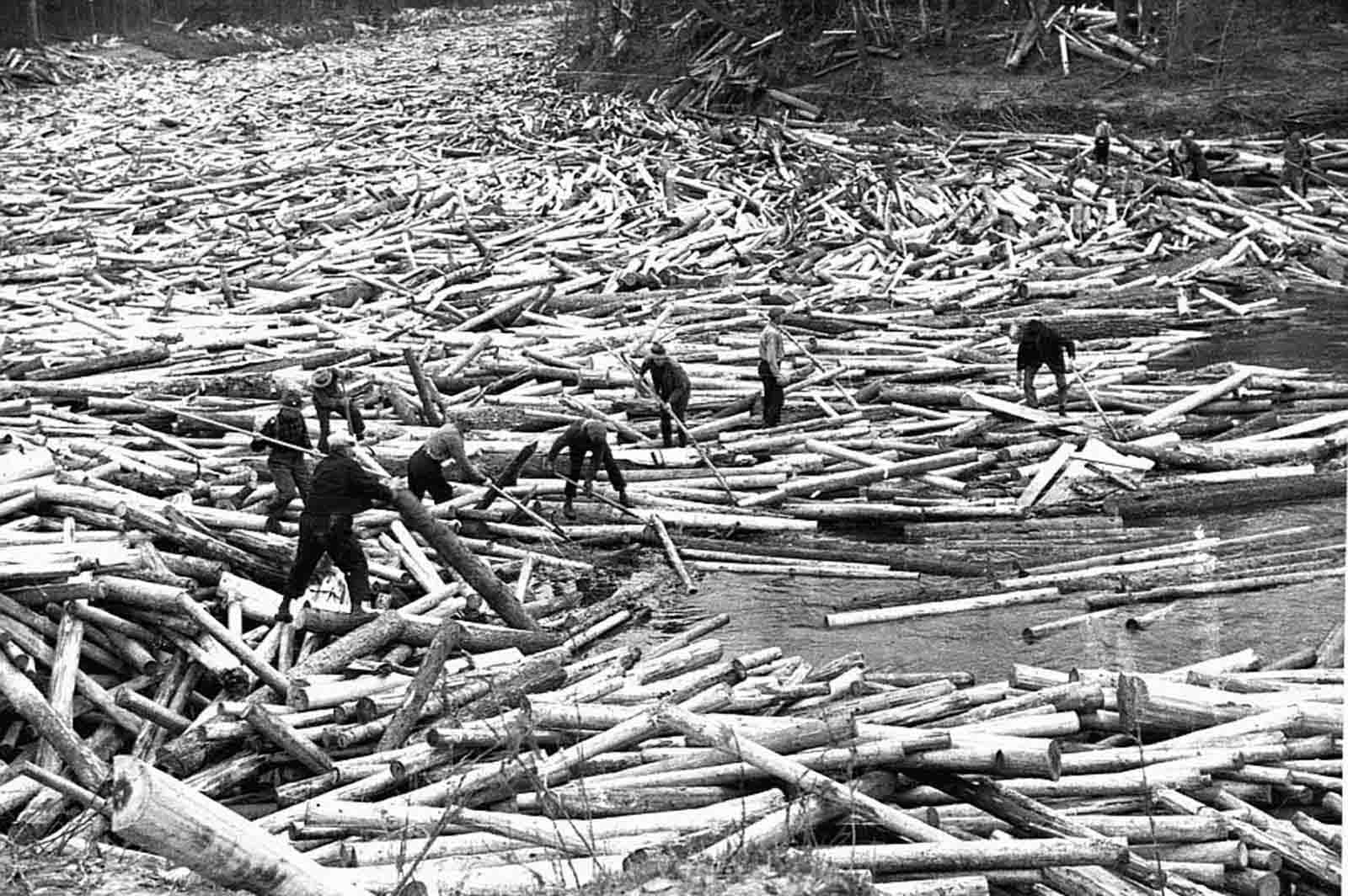
Getting logs out of the forest and to a mill required creative solutions. Rivers were one of the most common transport routes. Crews drove logs downstream in massive floating drives, walking atop the churning timber with spiked boots to break up jams. Log jams were dangerous — a sudden shift could trap or crush a man instantly. In flatter regions, horse and mule teams hauled loads over frozen ground or on sleds, with the animals often outworking every human on the crew.
Life off the worksite was rough. Lumberjacks lived in bunkhouses at lumber camps — cramped, smoky shanties that smelled of sweat, damp wool, and wood smoke. Bedbugs were a constant presence. Men followed timber contracts from region to region, leaving families behind for months at a time. Many lumberjacks in the United States were of Scandinavian descent, having grown up in logging cultures in Norway, Sweden, and Finland before immigrating and continuing the trade.
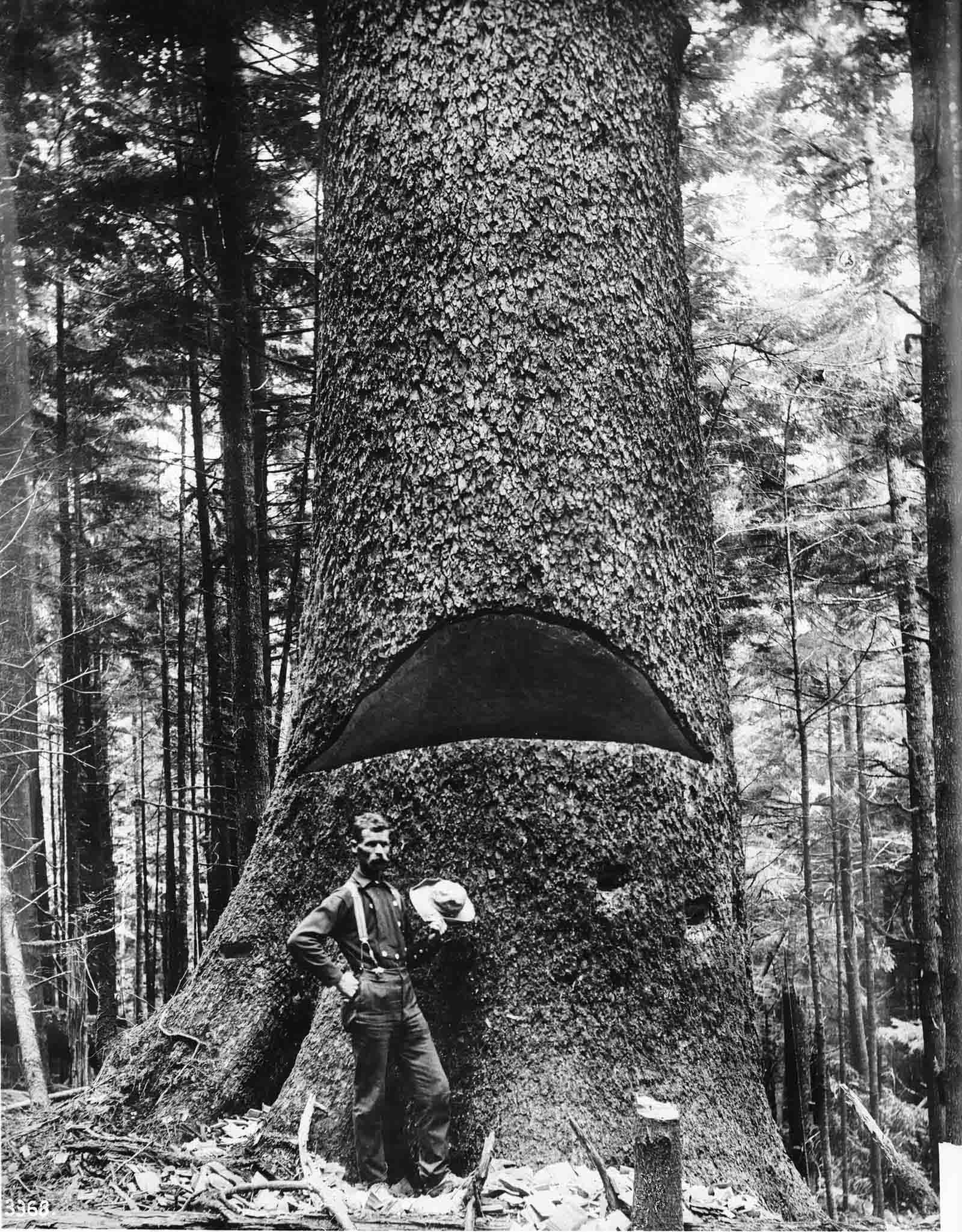
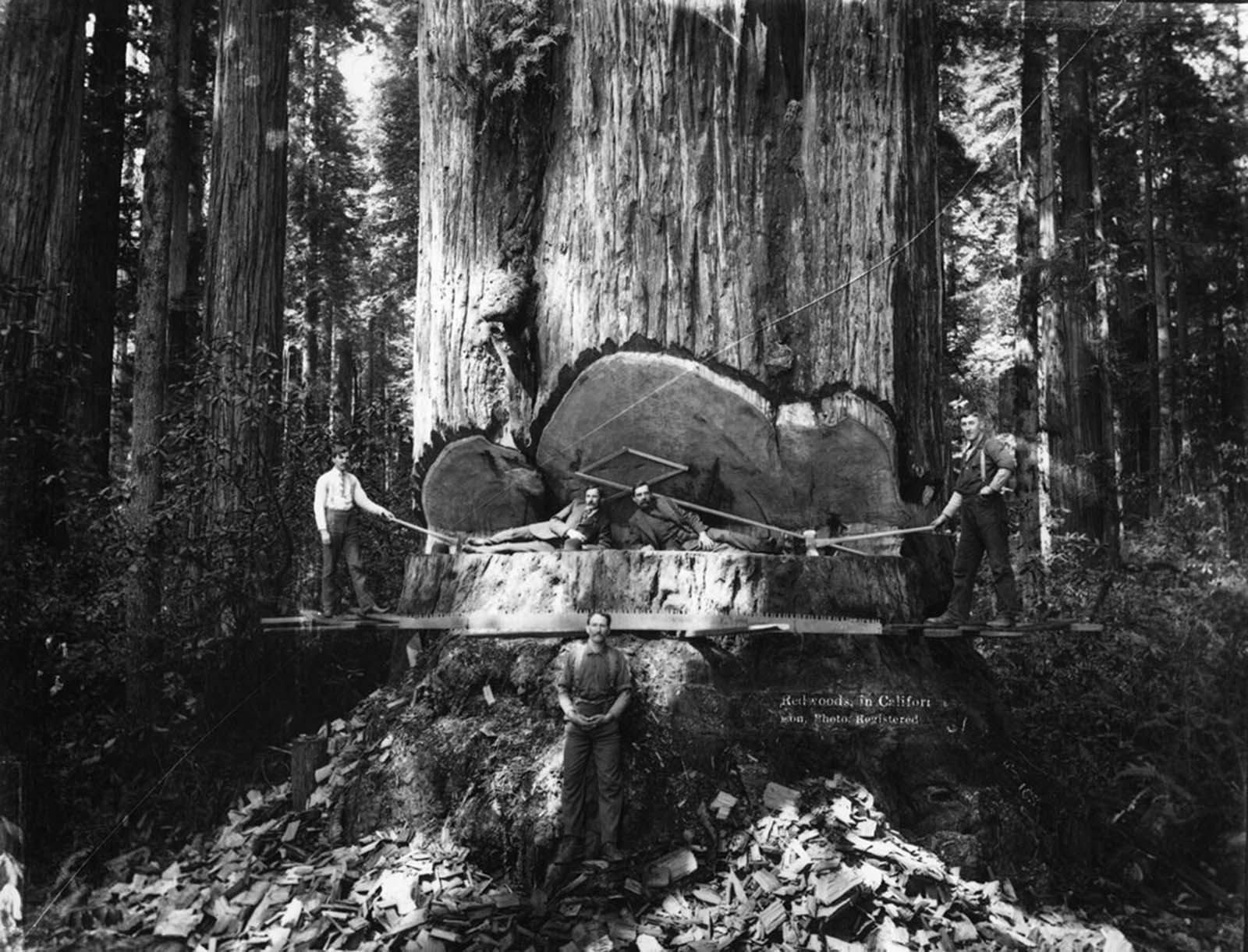
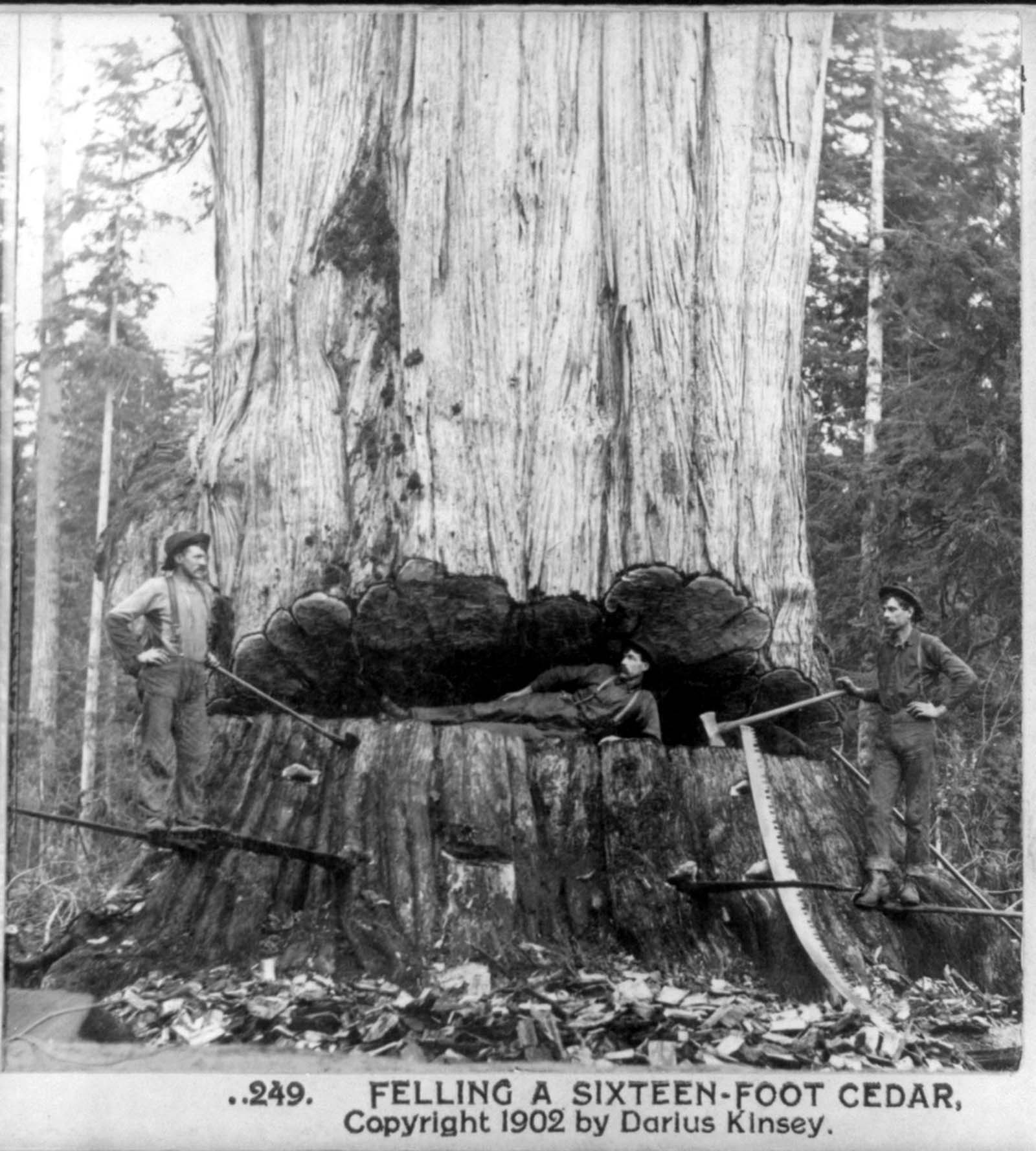
The photographs taken during this period capture a world that operated entirely on human and animal muscle. Every log that reached a sawmill had been touched by dozens of hands — from the faller who cut the notch, to the bucker who sectioned the trunk, to the choker setter who cabled it up, to the river driver who floated it downstream. There was no machine to take over when a man was tired.
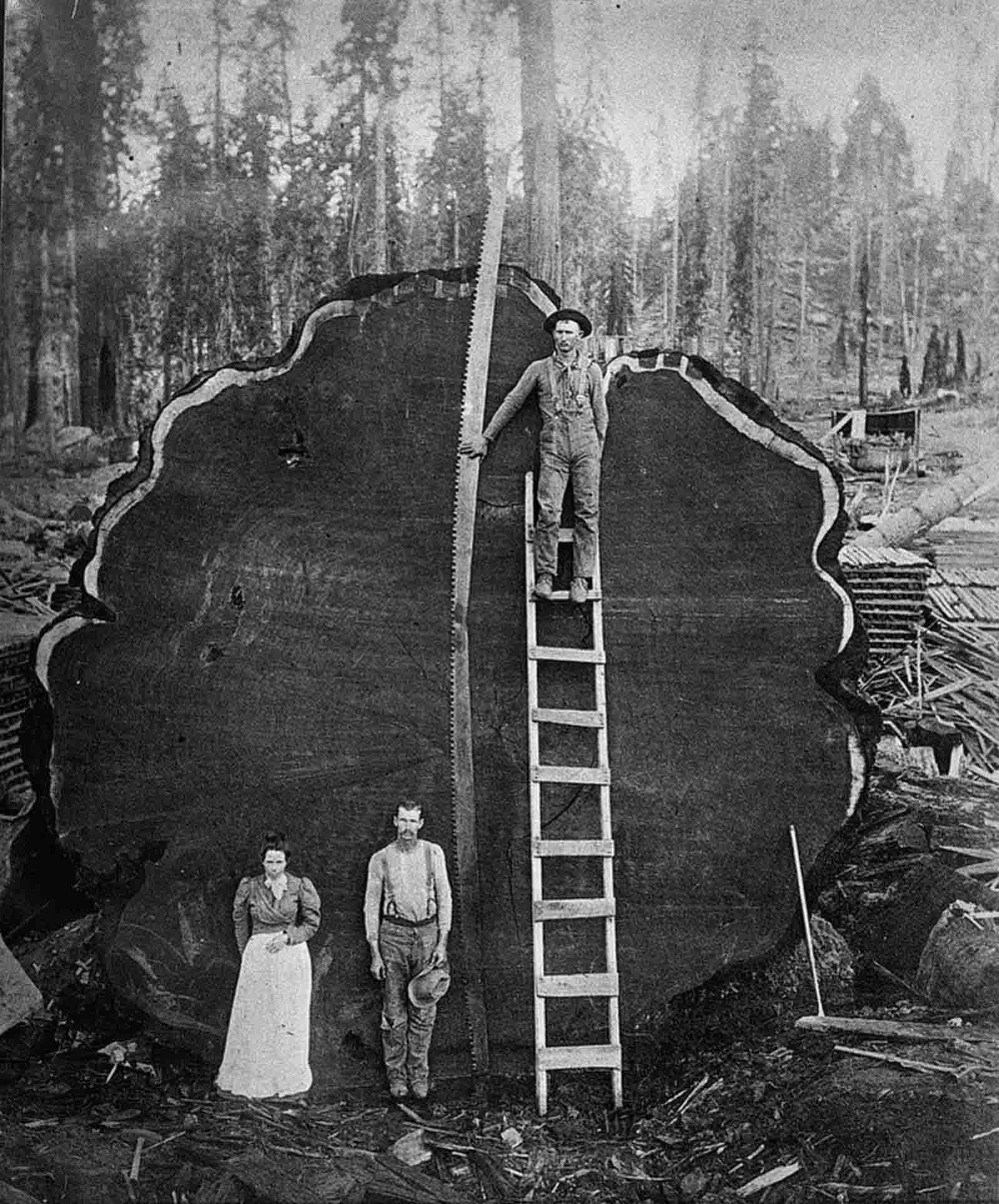
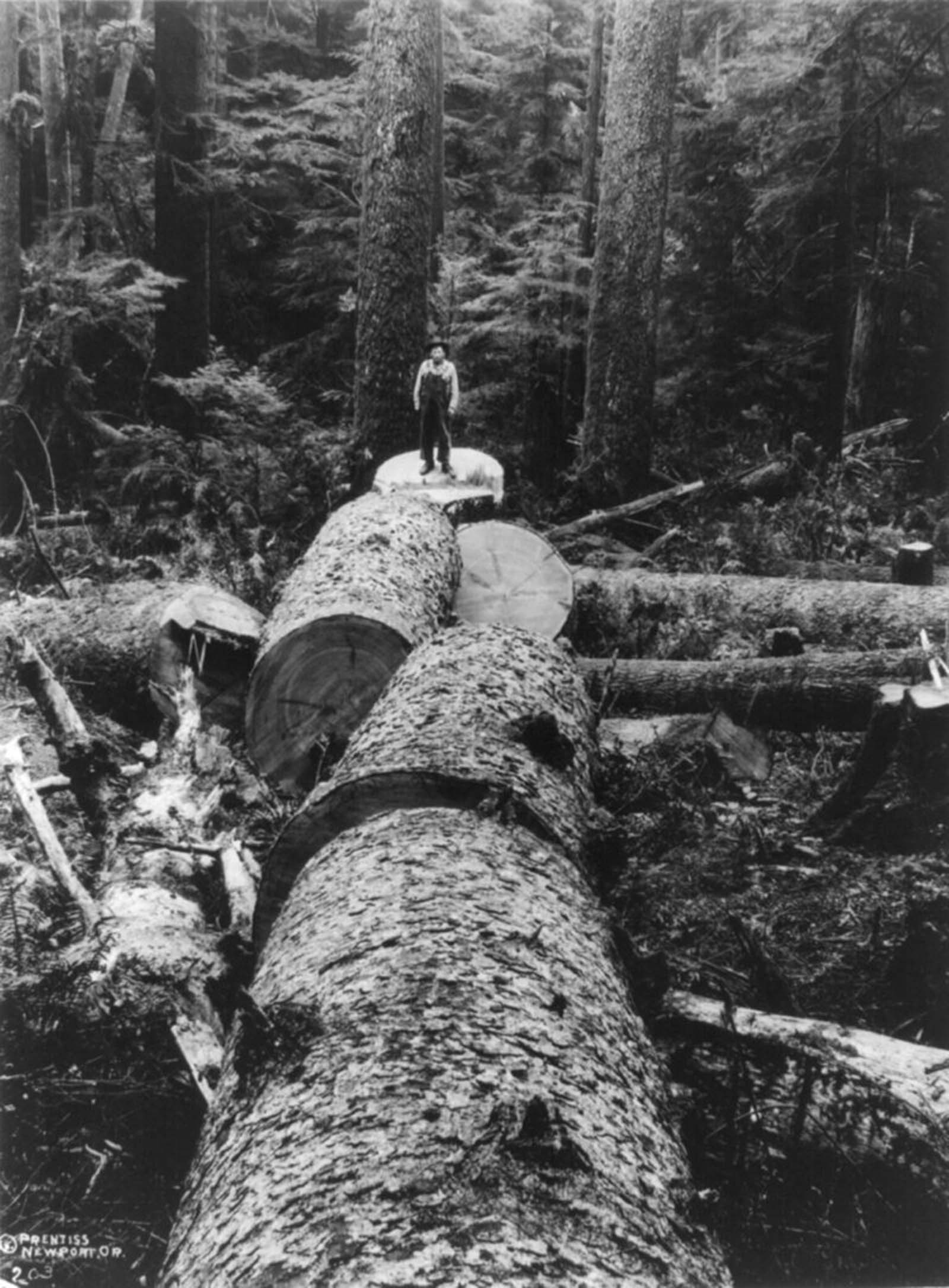
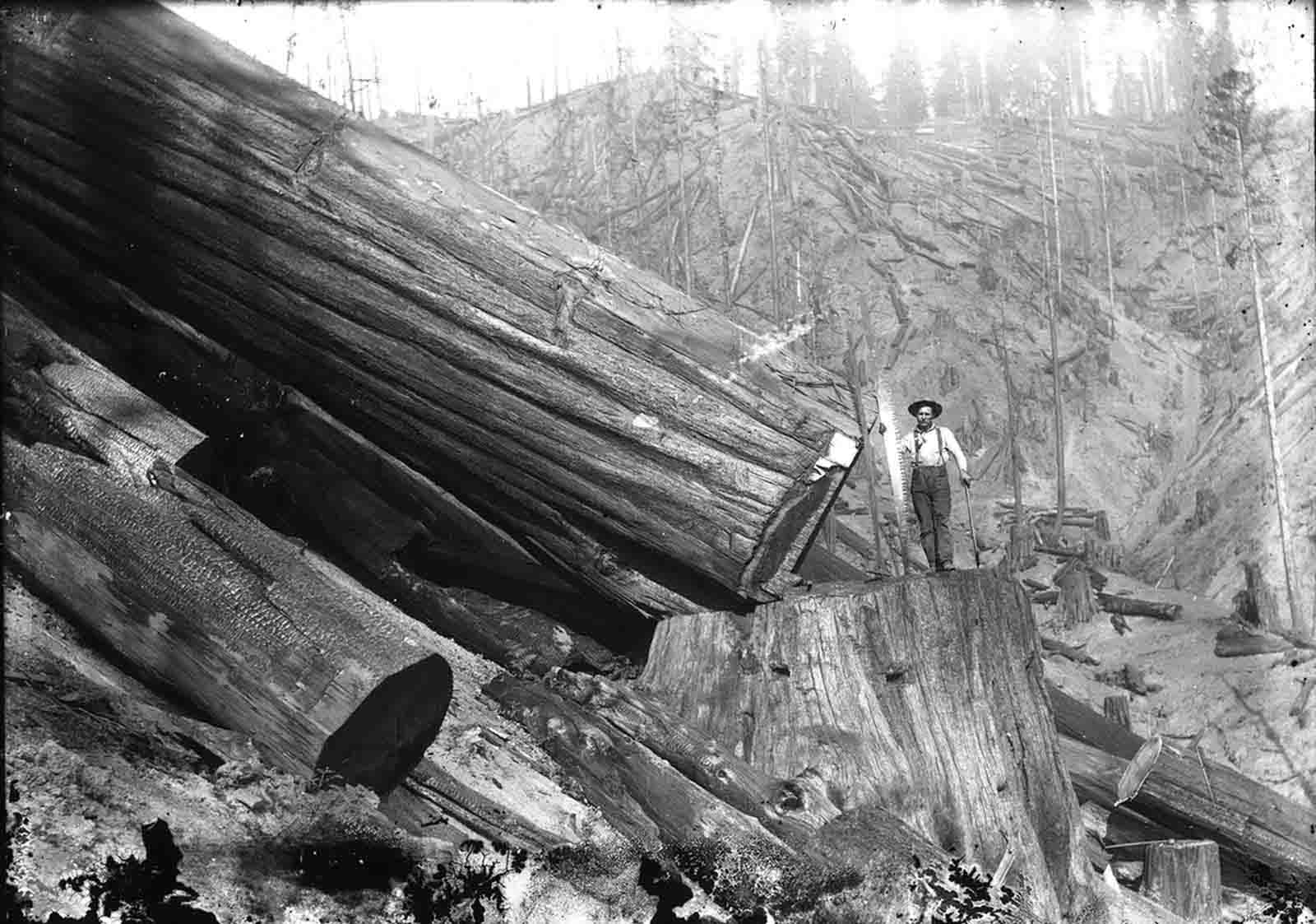
The scale of what these crews hauled out of the forests is hard to overstate. Sequoia logs so large that more than a hundred people could stand alongside them. Stumps wide enough to hold dance floors — one was famously sent to the 1904 St. Louis World’s Fair as a display piece. Entire hillsides of old-growth longleaf pine in Louisiana and white pine in Michigan were stripped bare and loaded onto trains headed for mills.
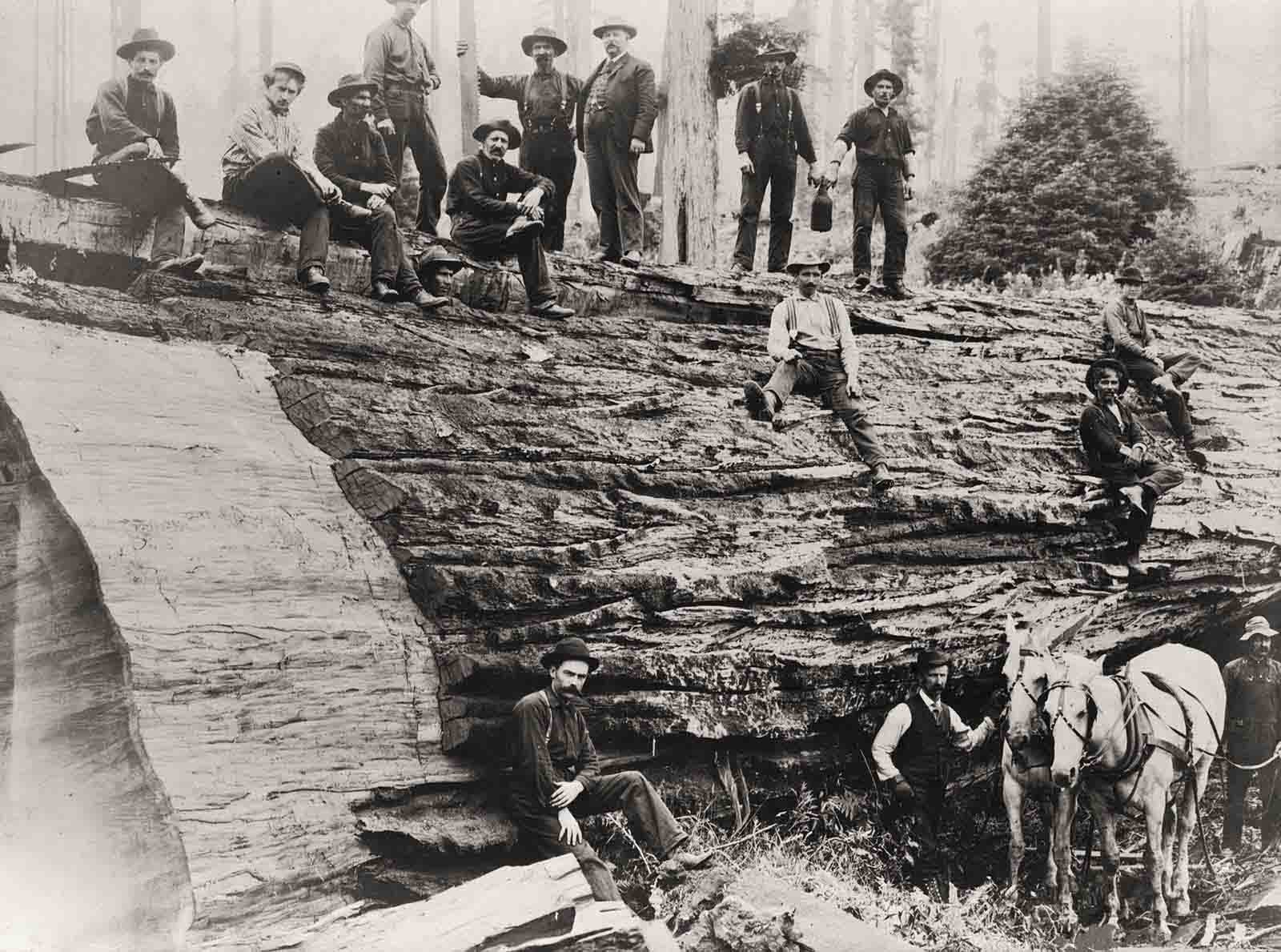
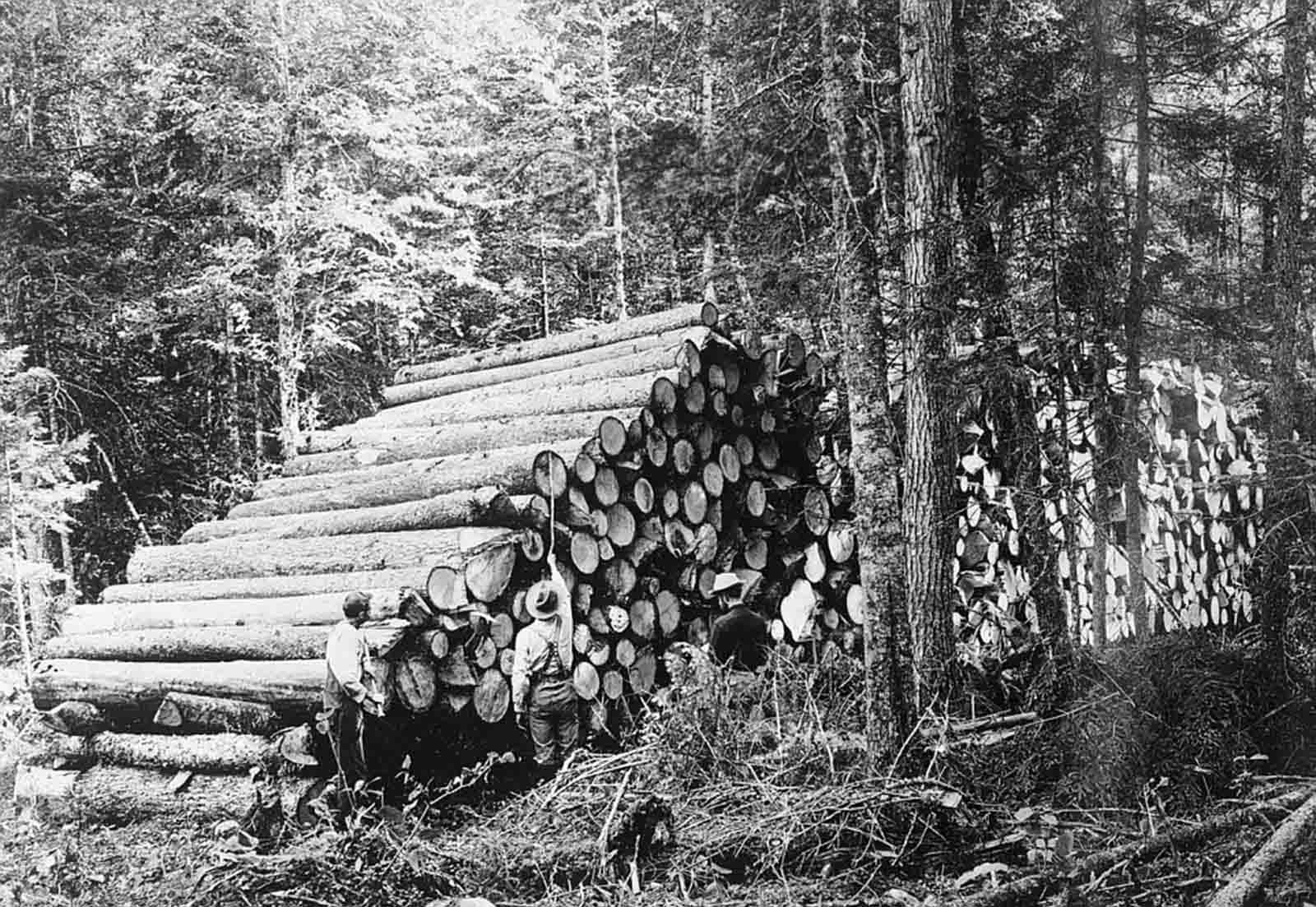
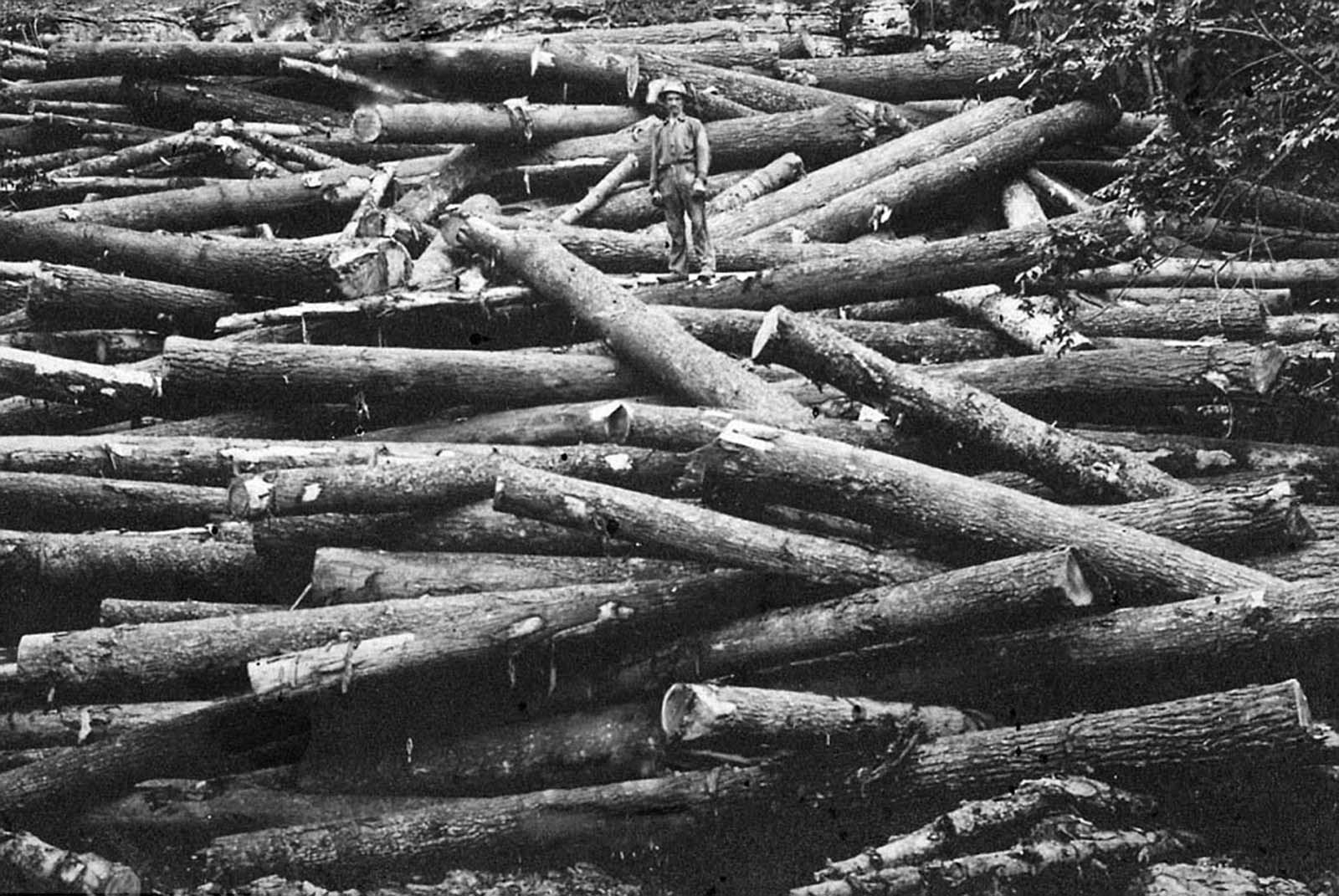
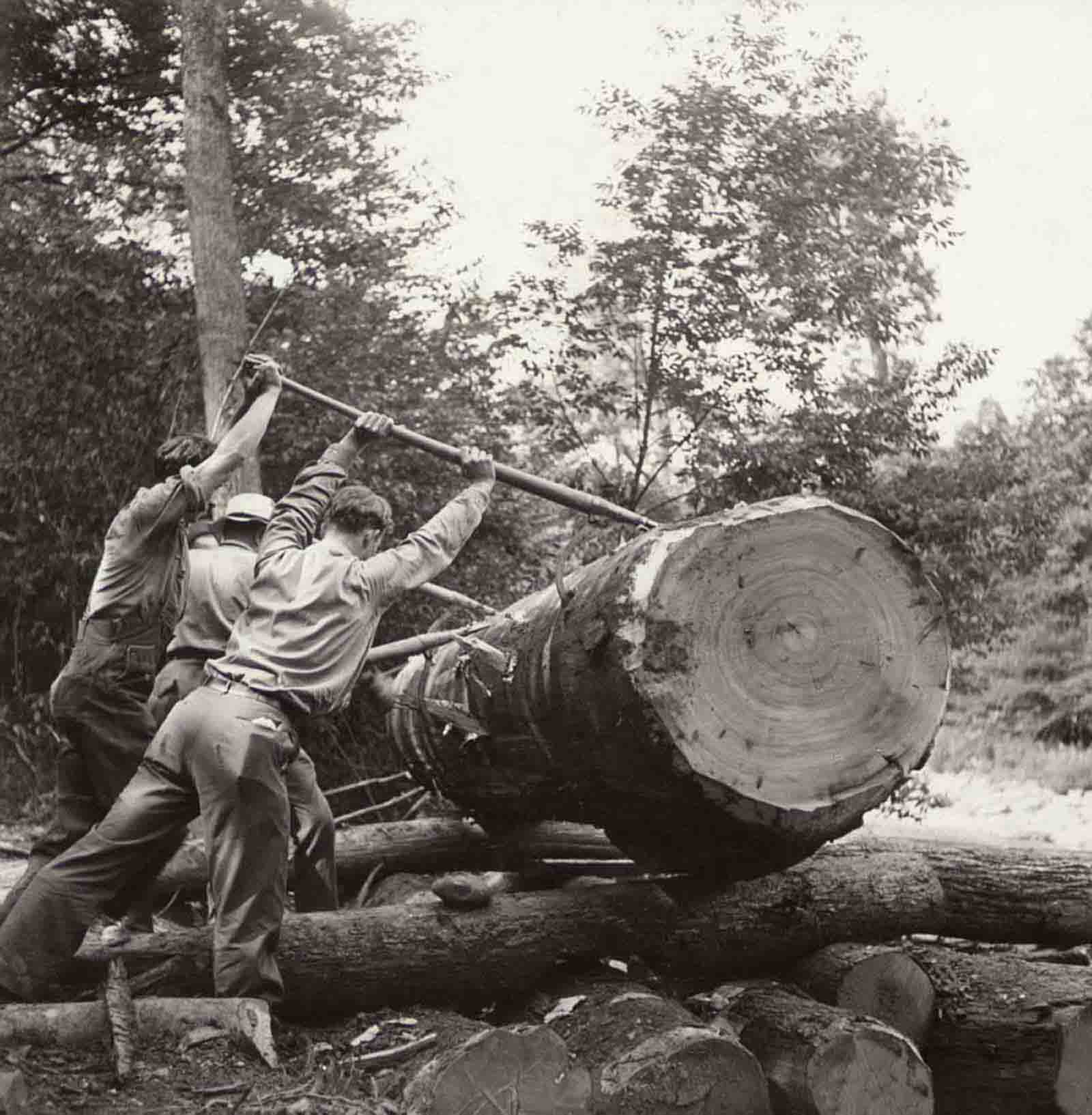
Moving logs into rivers required coordinated group effort. A crew would roll and lever the timber down slopes or off riverbanks, using peaveys — long wooden poles with a metal hook — to spin and guide each log into the current. In West Virginia, Minnesota, and Idaho, these river drives continued well into the 1930s, with crews managing logjams that stretched for hundreds of yards.
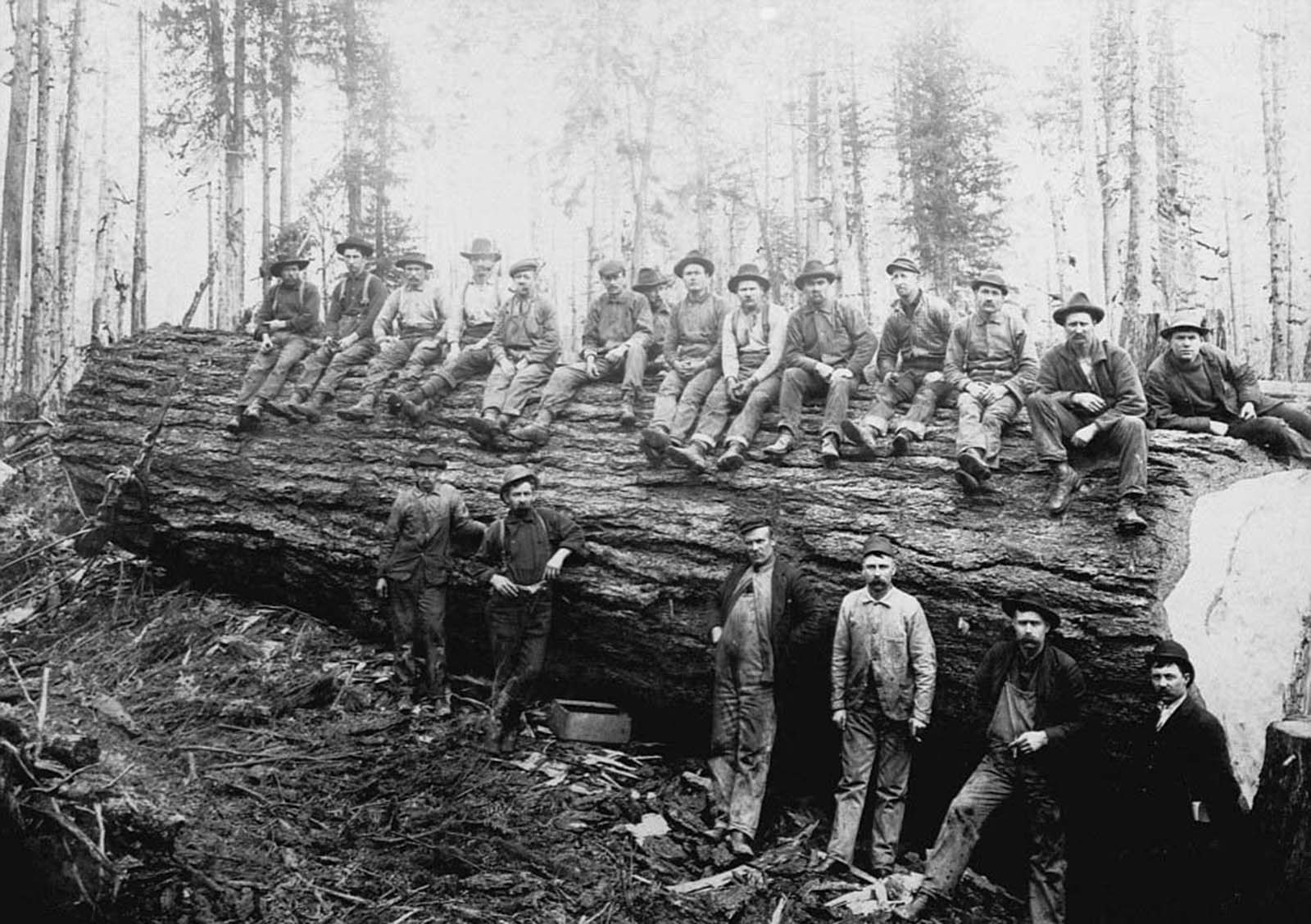
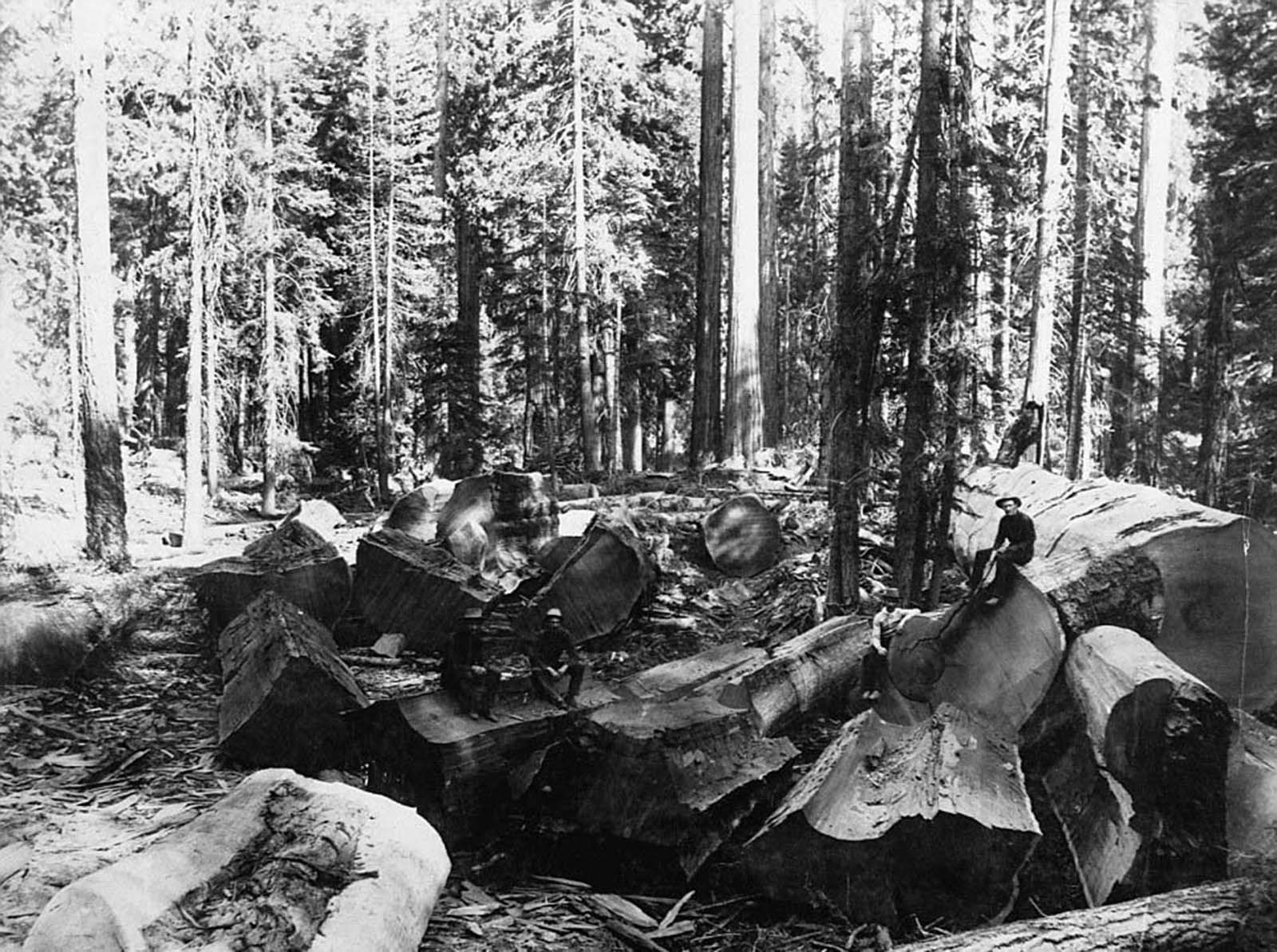
Technology did begin creeping into the camps during this period. Donkey engines — stationary steam-powered machines — were used to yard logs together after they were cut, replacing some of the animal labor needed to haul timber across rough terrain. By the early 1900s, some operations had also introduced mechanical sawing equipment at the cutting site, reducing the time needed to process larger logs.
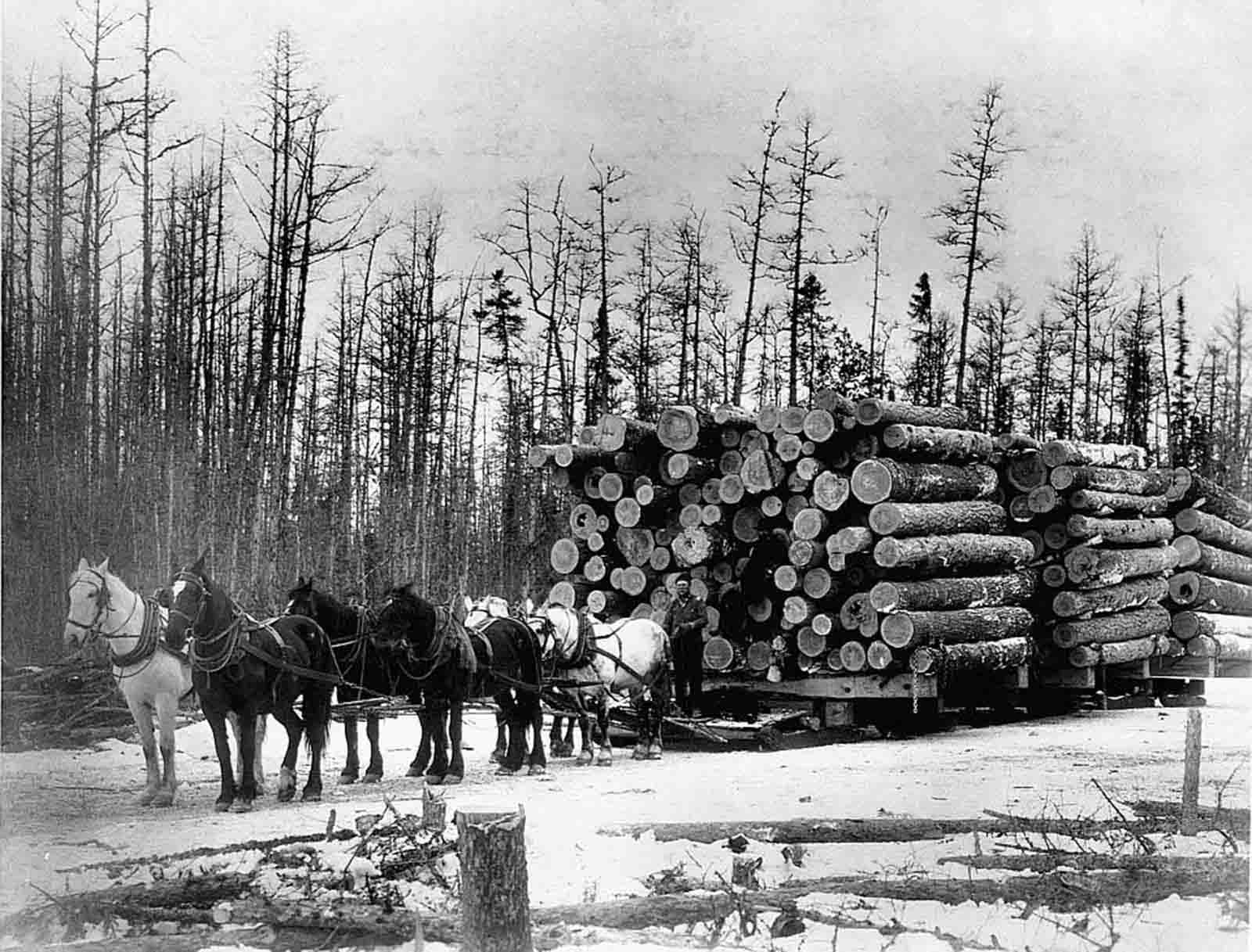
Horses and mules remained essential to logging operations through much of the early twentieth century. Teams of animals hauled sled-loads of pine logs across frozen Minnesota counties, their loads piled higher than a man could reach. On some sites, a 10-mule team was needed just to manage the equipment required to fell a single massive sequoia. Without these animals, the volume of timber being moved through North American forests would have been impossible.
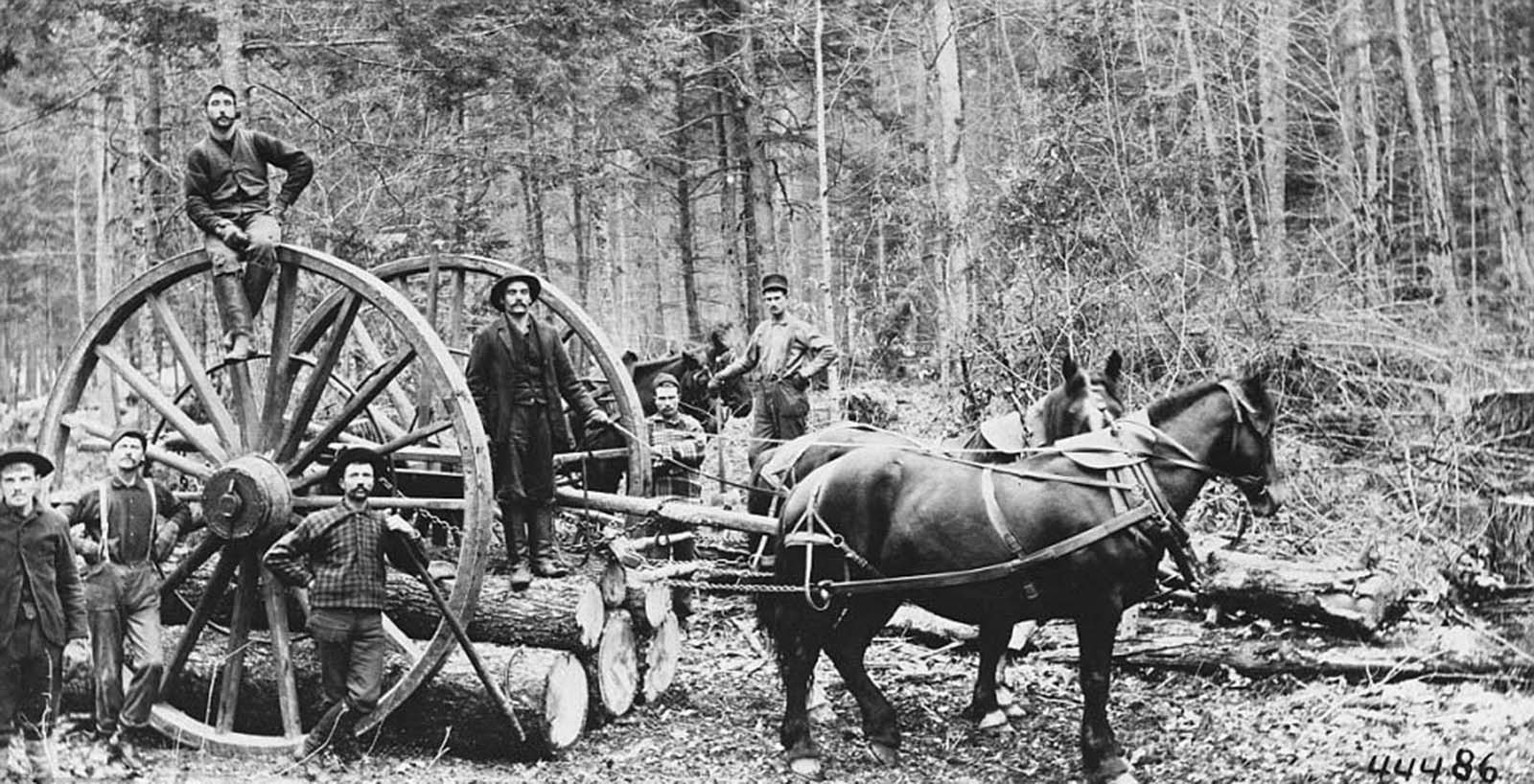
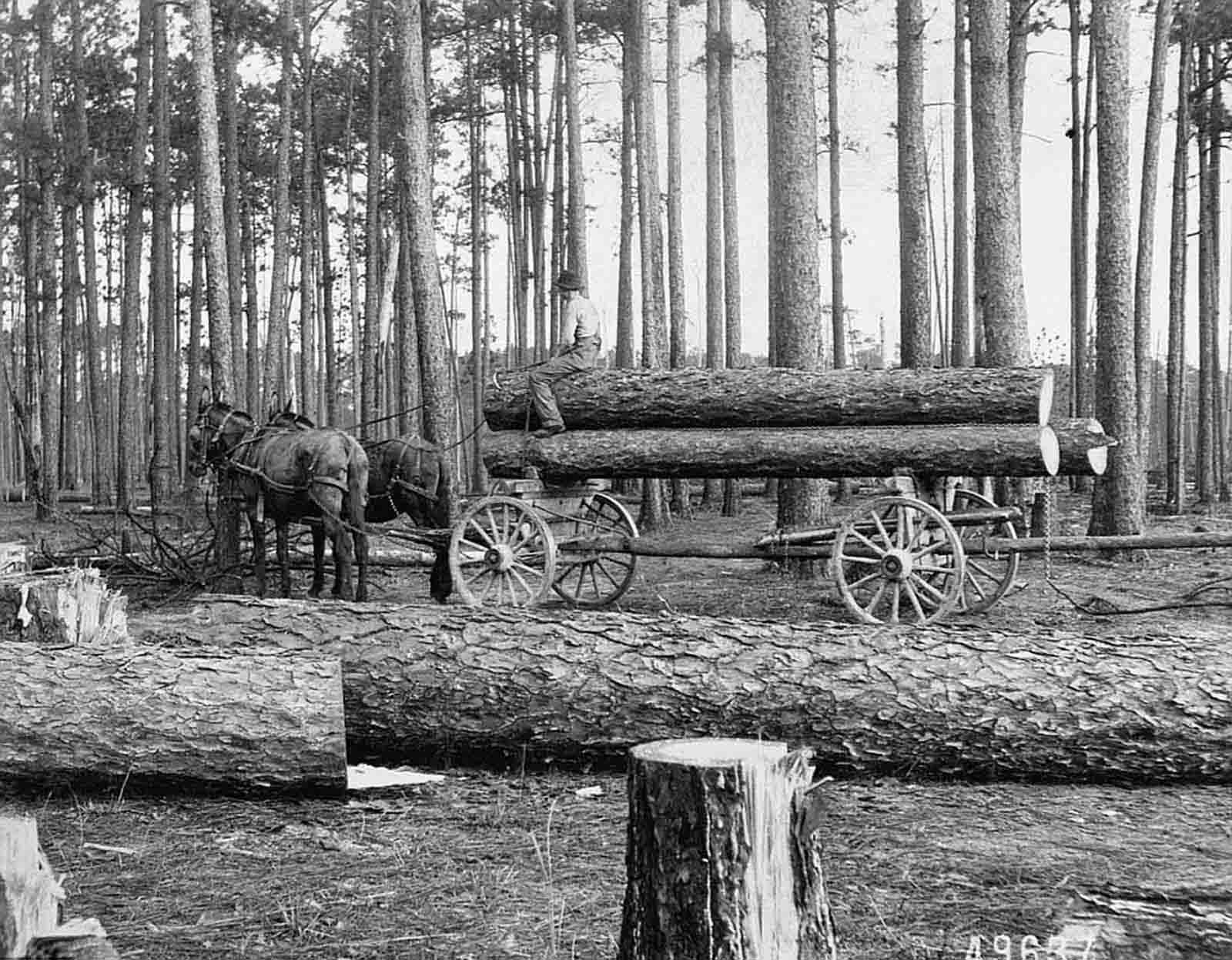
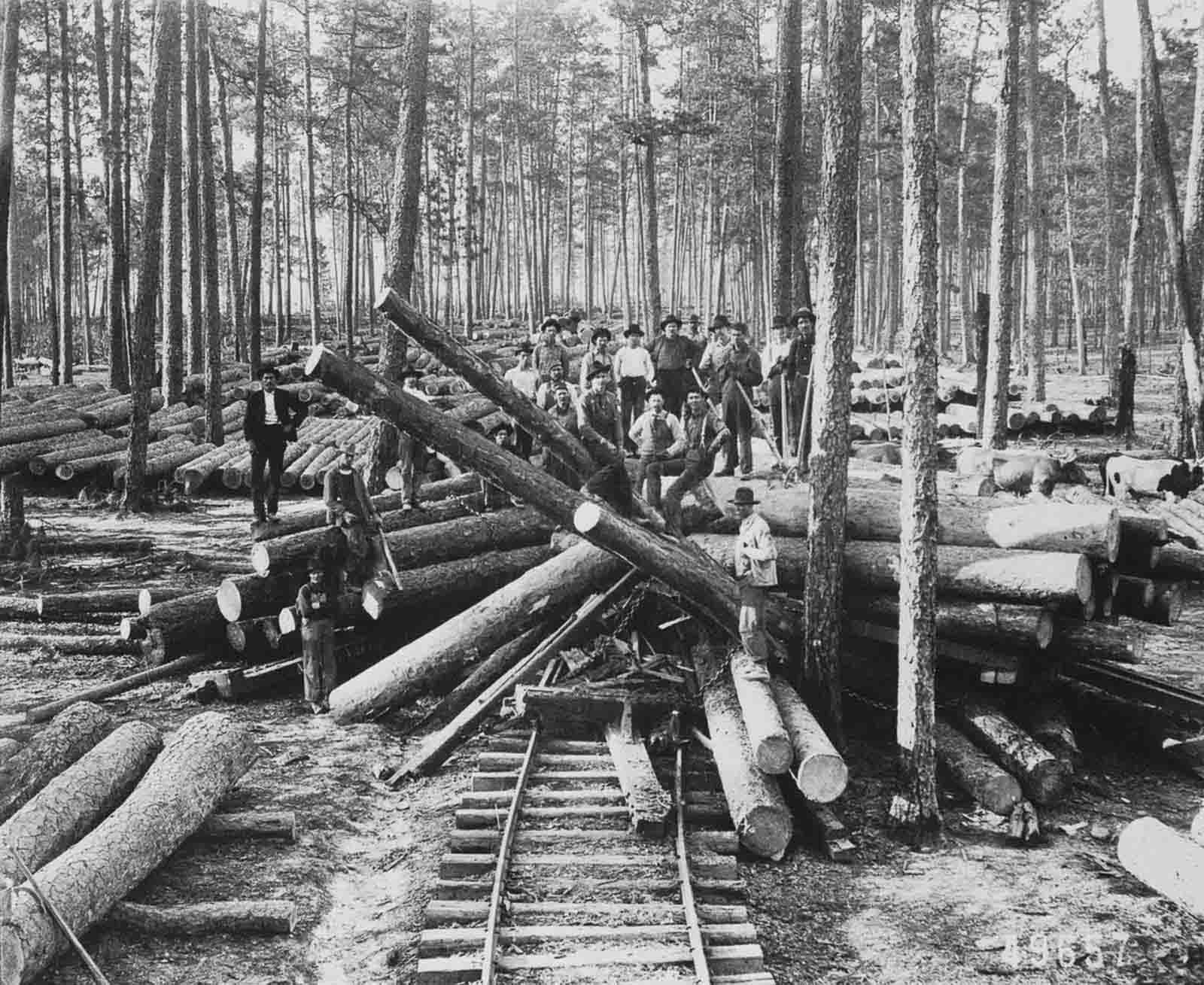
The logging crews that worked the old-growth forests of the American South operated in a different landscape than their Pacific Northwest counterparts, but the labor was just as brutal. In Louisiana’s Vernon Parish, crews cut through vast stands of longleaf pine that had taken centuries to grow. The wood was prized for its density and durability, making it a primary building material for the expanding American South.
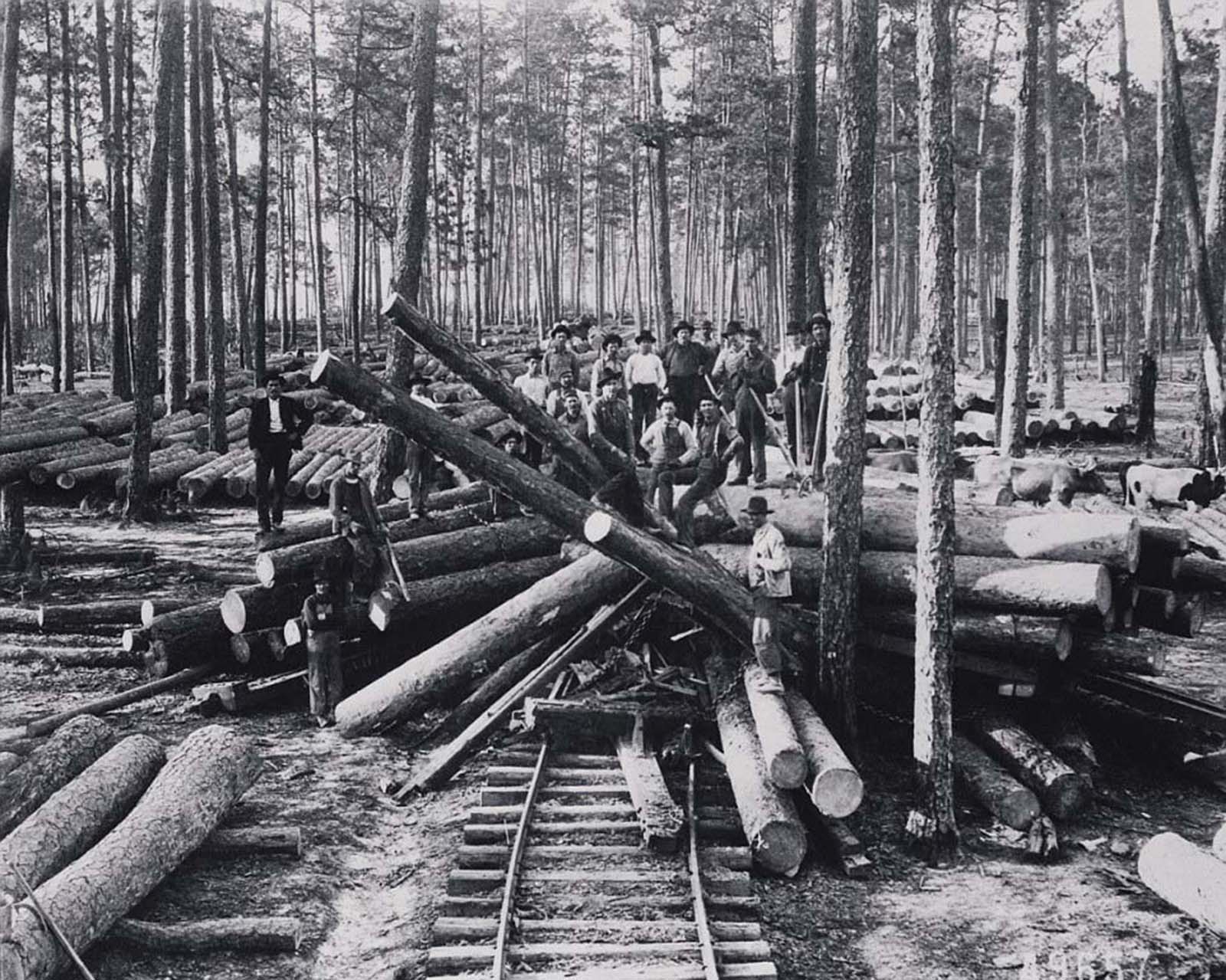
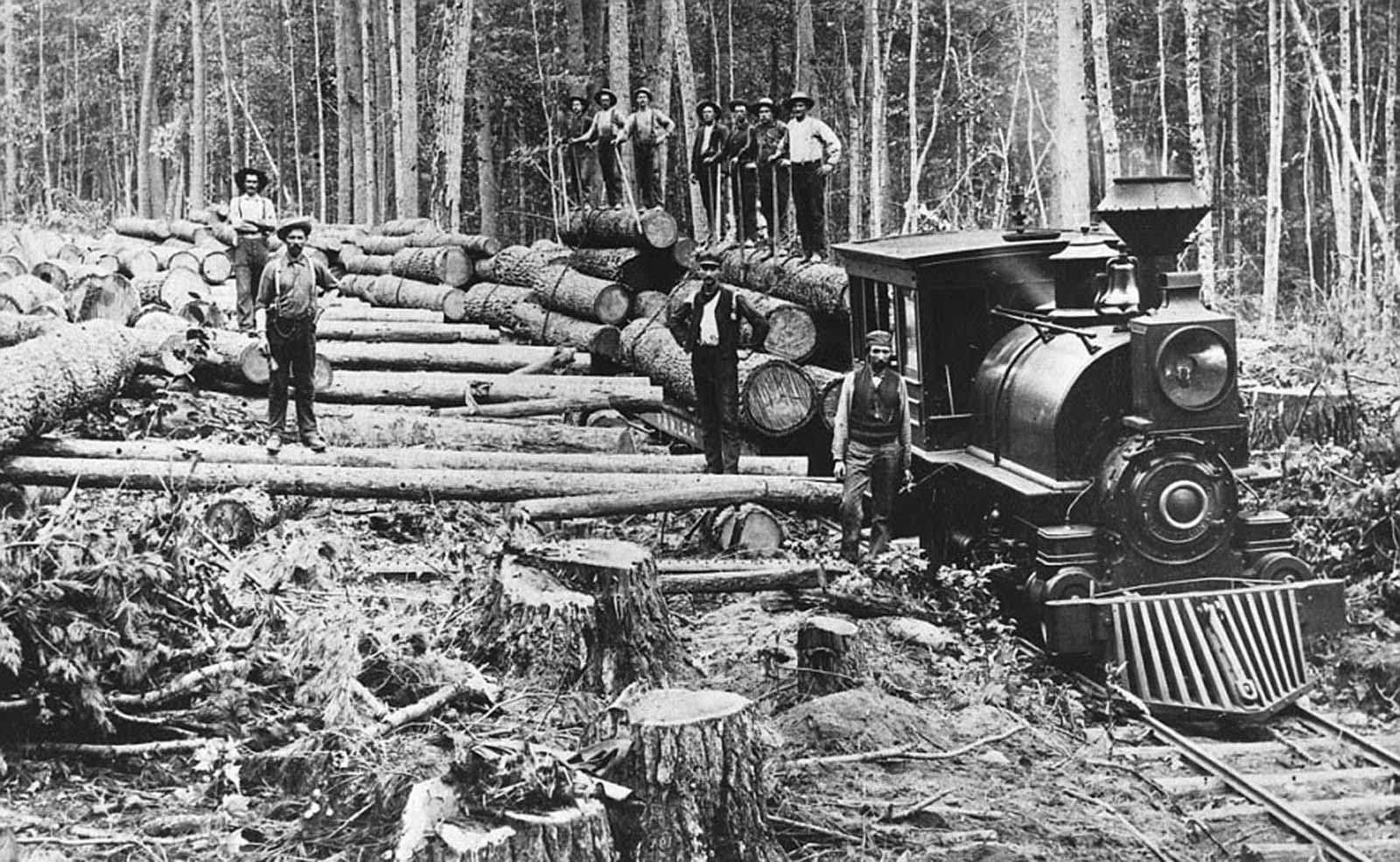
Railroads changed the scale of logging operations dramatically. Logs that once had to be floated down rivers could now be loaded onto flatcars and shipped directly to mills, opening up forest regions that had no accessible waterways. Crews loaded logs onto trains by hand and with machinery, sending hundreds of thousands of board feet of timber to mills in a single shipment.