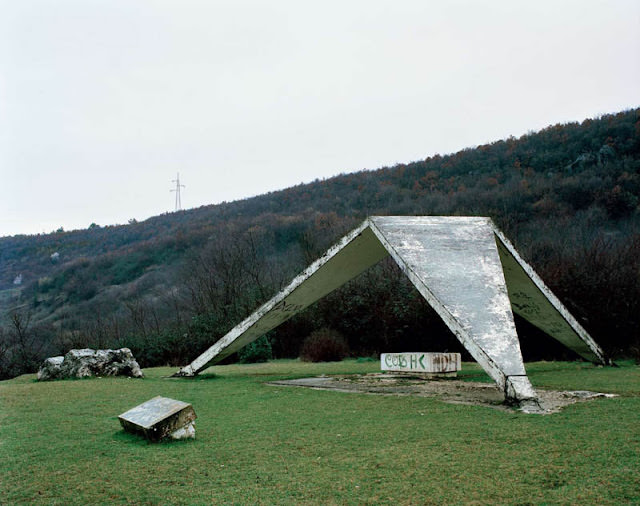
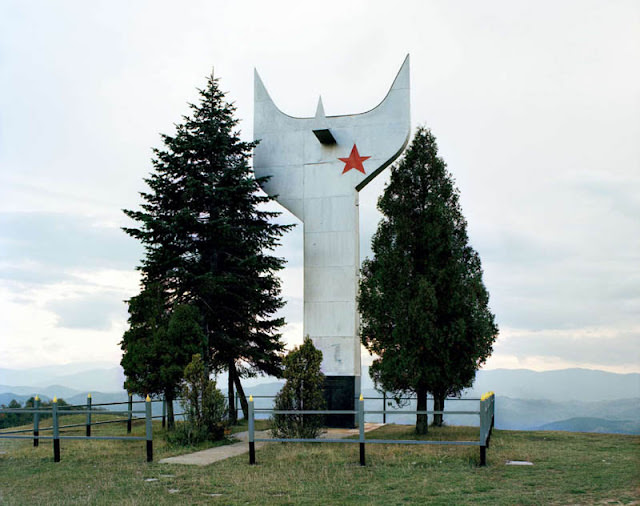
Across the landscapes of southeastern Europe, enormous concrete structures rise from hillsides, forests, and open fields. They belong to no active government. Most receive no maintenance. Many have been stripped, tagged with graffiti, or left to crack under decades of weather. These are Yugoslavia’s monuments — built to last forever, then left to vanish.
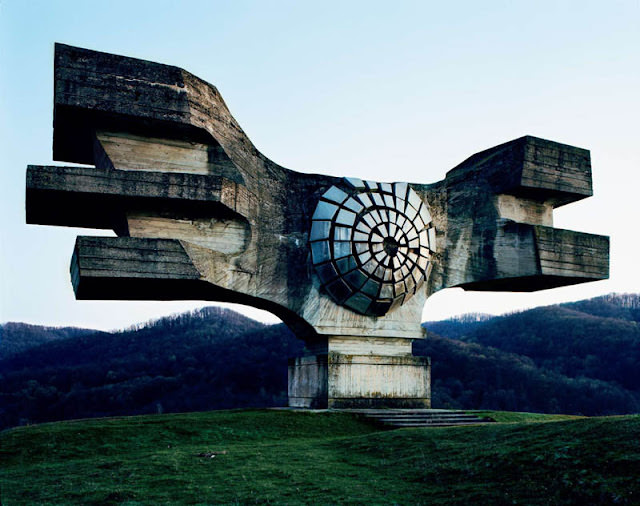
During the 1960s and 1970s, Yugoslav leader Josip Broz Tito commissioned a sweeping series of memorials to mark the sites of World War II battles and concentration camps. Each site received its own sculptor or architect, and each design was entirely different. There was no single style. Tito wanted the monuments to reflect the strength and unity of the Socialist Federal Republic of Yugoslavia.
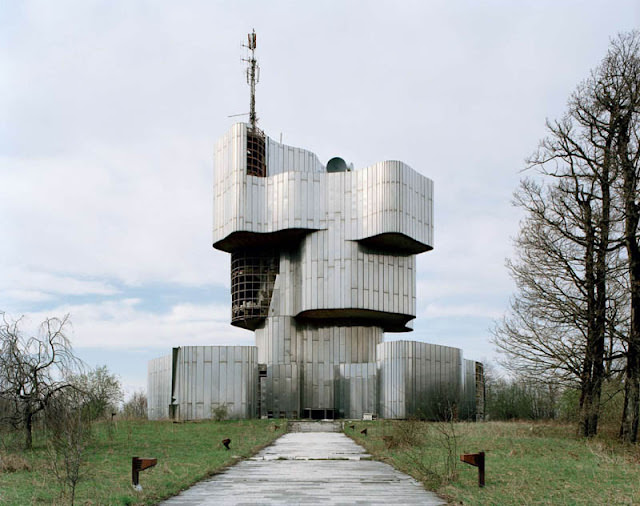
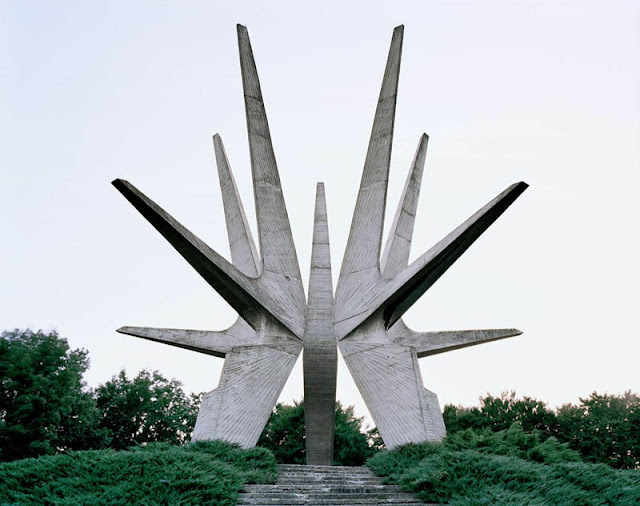
The results were striking. These were not traditional statues or plaques. Designers worked in concrete, steel, and stone to produce abstract forms — some towering like spires, others twisting into shapes that suggest wings, flowers, or figures in pain. Some evoked industrial machinery. Others used sharp geometry. All of them were massive.
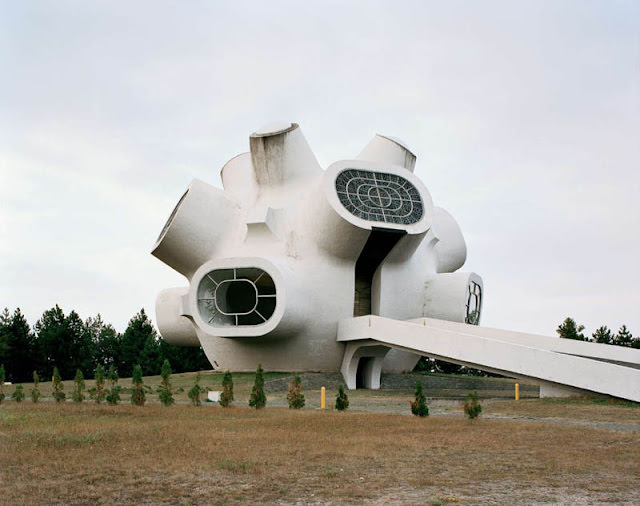
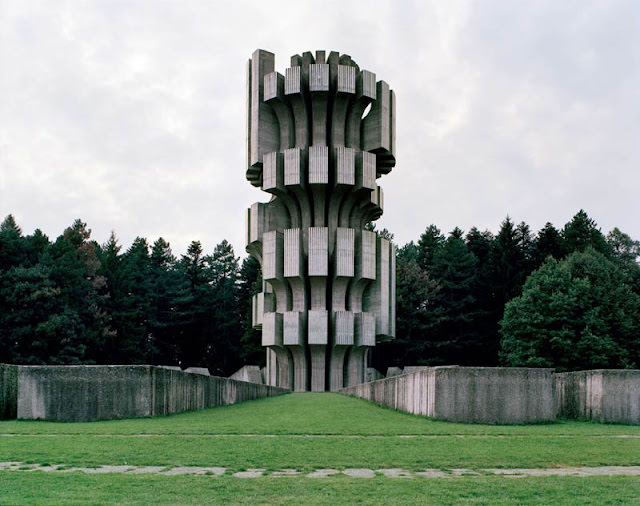
The abstract designs were deliberate. Yugoslavia’s communist government wanted memorials that felt modern and forward-looking — not bound to realistic depictions of suffering or heroism. The forms were meant to carry emotional weight without being literal. Visitors were supposed to feel something, not simply read a scene.
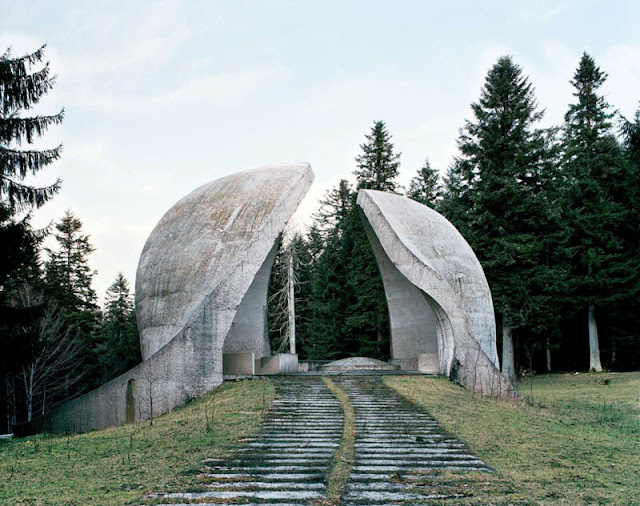
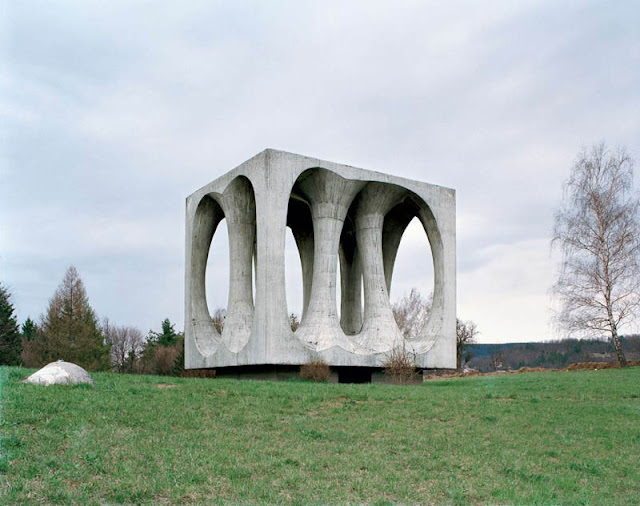
When Yugoslavia dissolved in the early 1990s, the monuments lost their political home. The successor states — Slovenia, Croatia, Bosnia and Herzegovina, Serbia, Montenegro, and North Macedonia — had little interest in maintaining symbols tied to a shared federal identity many now rejected. Funding stopped. Staff left. The sites closed.
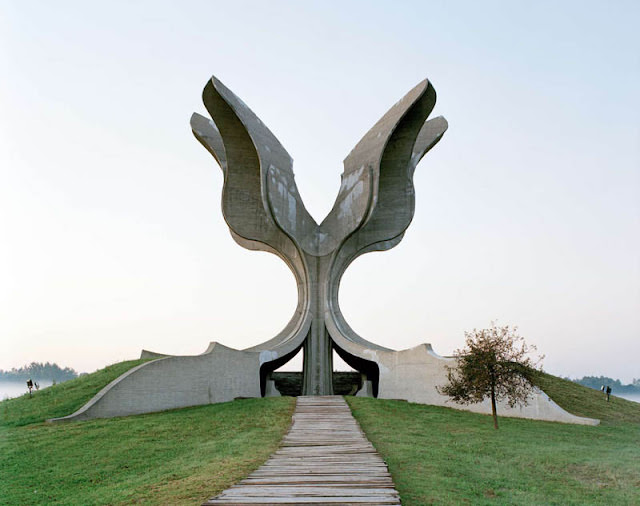
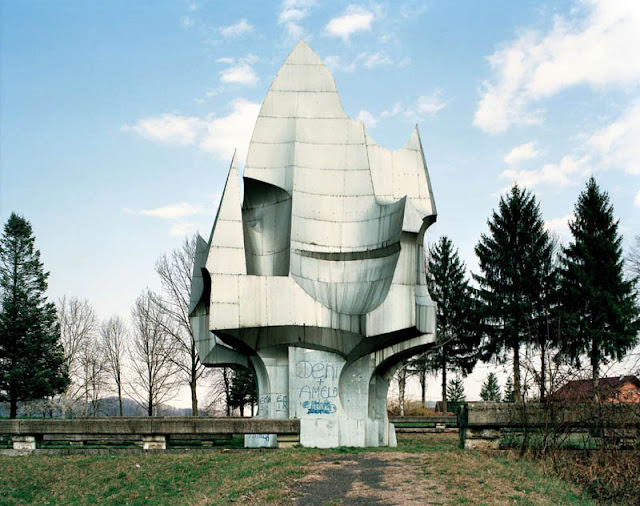
Neglect set in fast. Vegetation swallowed walkways. Structural cracks spread through reinforced concrete. Vandals removed metal elements and broke apart decorative surfaces. Some monuments were deliberately demolished — seen by local communities as symbols of an era they wanted gone.
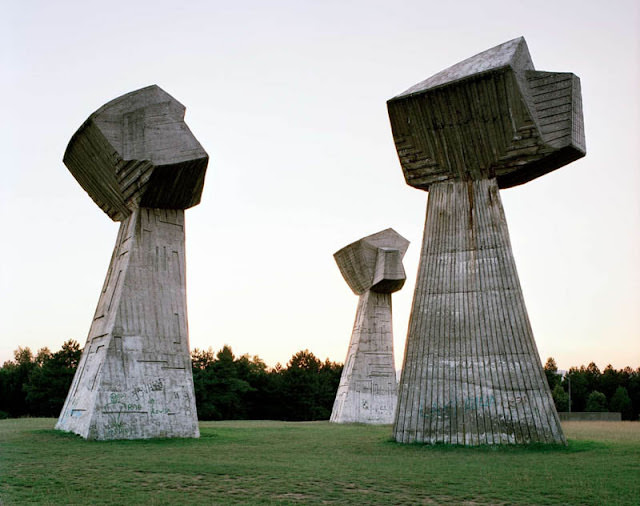
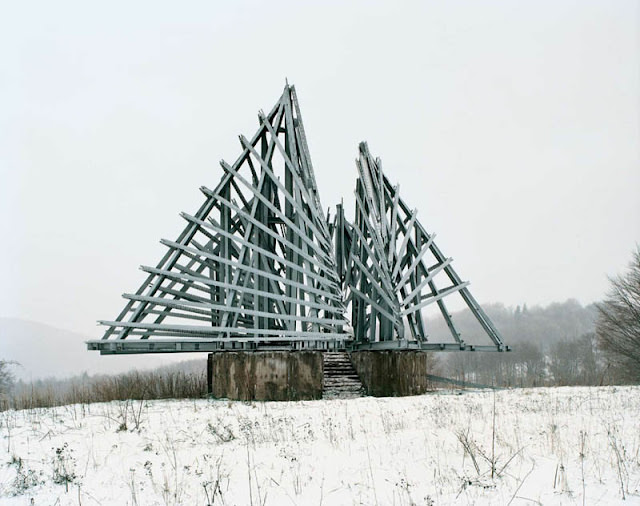
Others survived by accident — too remote to attract demolition crews, too large to tear down cheaply, or located in areas where postwar tensions were lower. A handful received informal protection from local residents or small cultural groups who recognized their architectural significance.
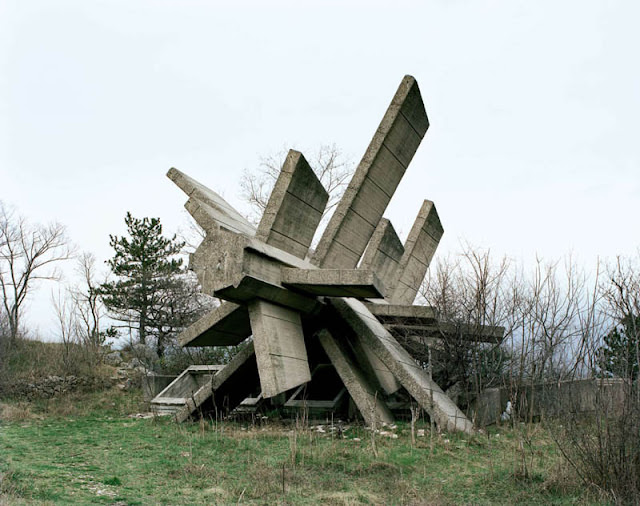
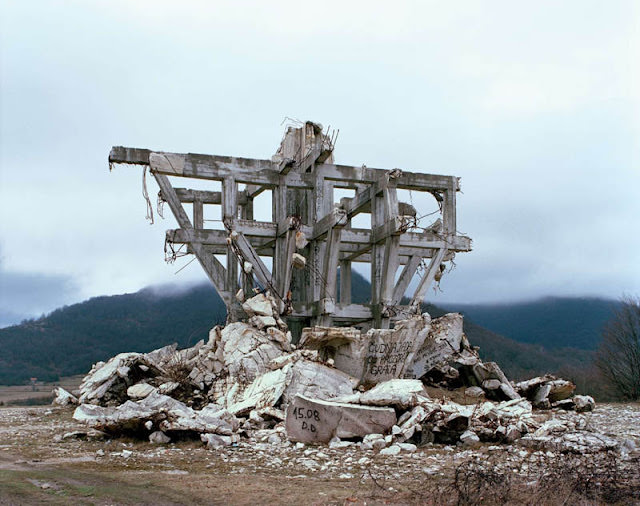
These structures were called *spomenici* — the Serbo-Croatian word for monuments. Photographer Jan Kempenaers helped bring them to international attention in 2010 with his book of the same name. His photographs showed just how isolated and deteriorated many of them had become.
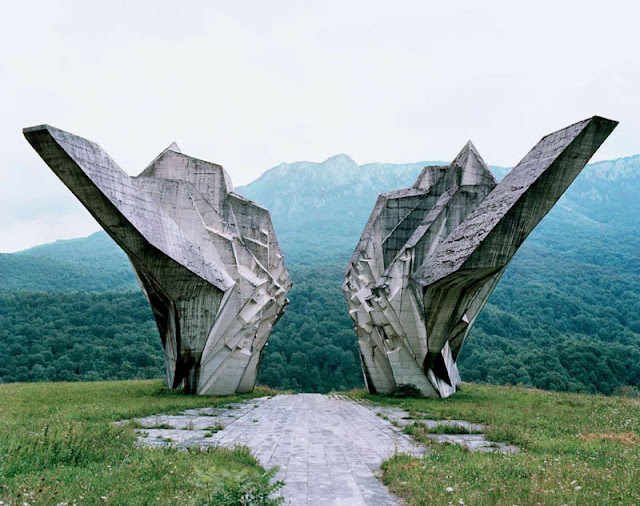
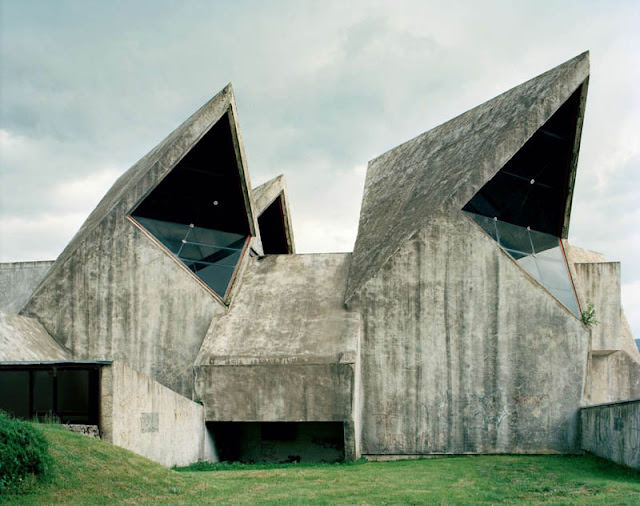
Each monument marks a real site where real events took place. Battles were fought there. People were imprisoned and killed there. The concrete forms were built so those facts would not be forgotten. The irony is that, without the political structure that built them, many of the monuments themselves became the forgotten thing.
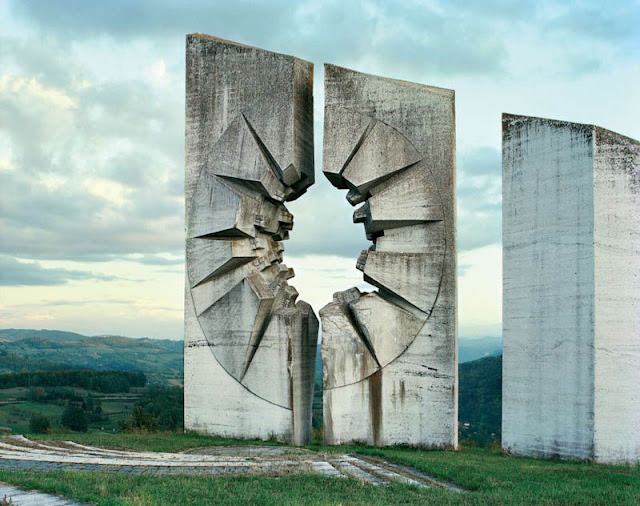
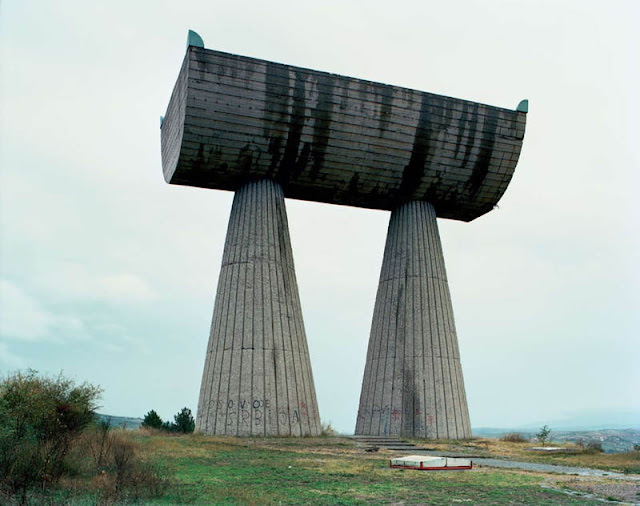
Some of the most recognized examples include the Petrova Gora monument in Croatia, a massive steel structure that once gleamed in the sun and housed a museum inside. Today its reflective panels are almost entirely stripped away and the interior is gutted. The Tjentište memorial complex in Bosnia still stands more intact, located within a national park that has shielded it from the worst damage.
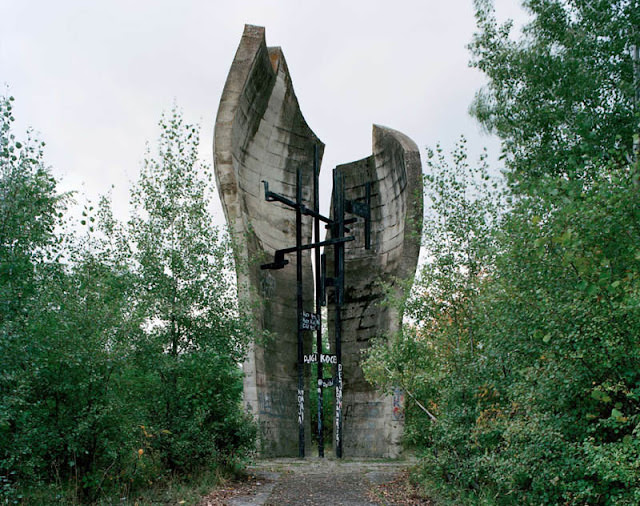
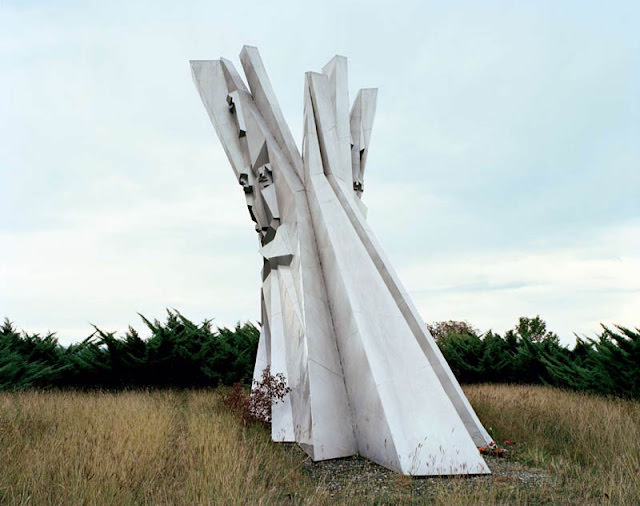
The Kadinjača monument in Serbia and the Makljen memorial in Bosnia represent two ends of the spectrum — one maintained, one heavily damaged. Across the region, no consistent policy exists. Each country handles its Yugoslav-era sites differently, and within countries, local attitudes vary widely from town to town.
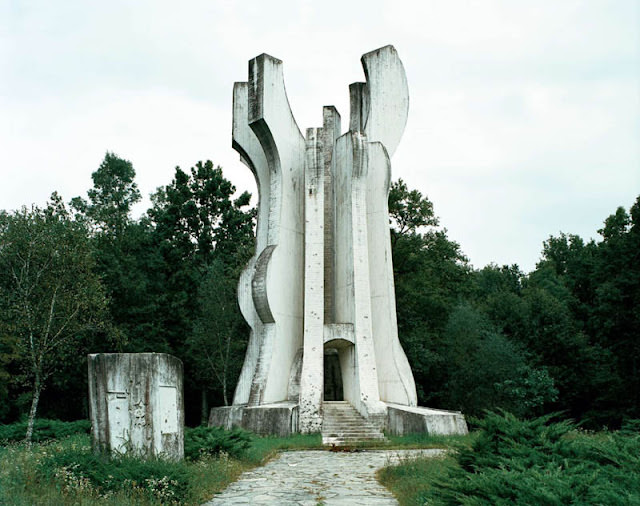
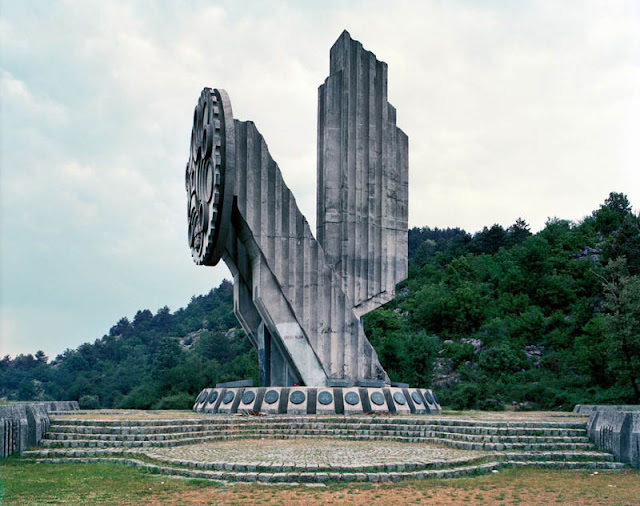
What remains is a scattered archive of Cold War-era design — bold, strange, and built at enormous cost to honor the dead of a brutal war. Some still stand cleanly against the sky. Others are barely recognizable. All of them mark ground where history happened, whether or not anyone is left to tend them.