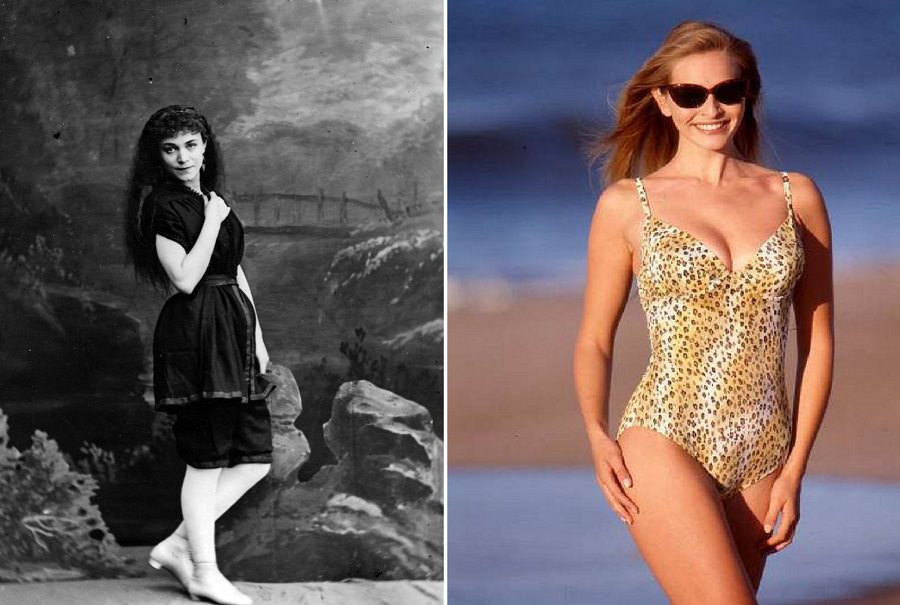
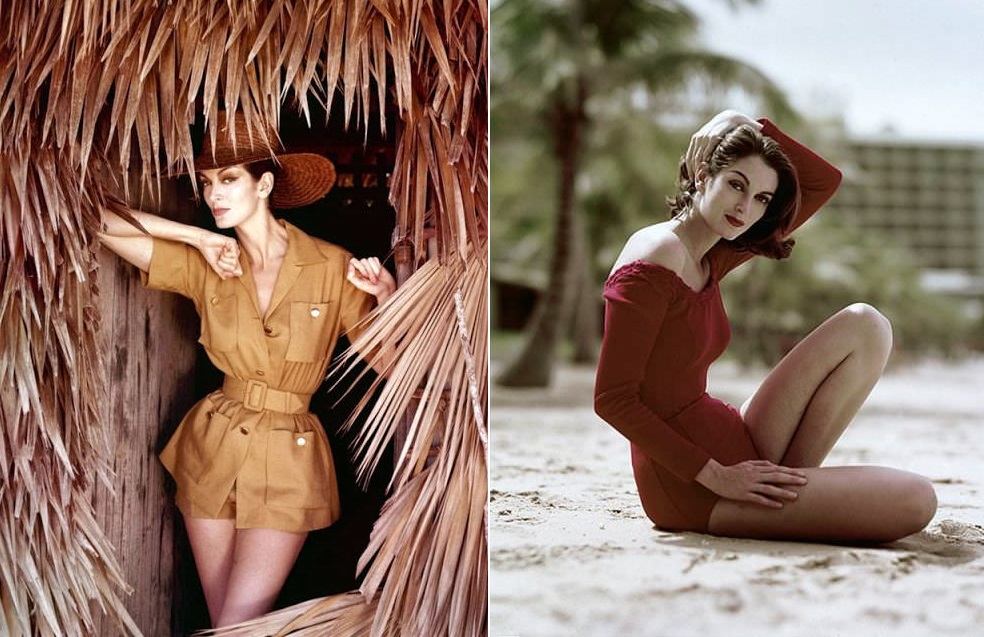
The 1950s transformed women’s beachwear from heavy, modest one-pieces into a dazzling range of colors, cuts, and fabrics. Fashion photographers fanned out across Florida, France, Italy, and Portugal to document each shift. The decade opened with something unexpected — velvet at the beach.
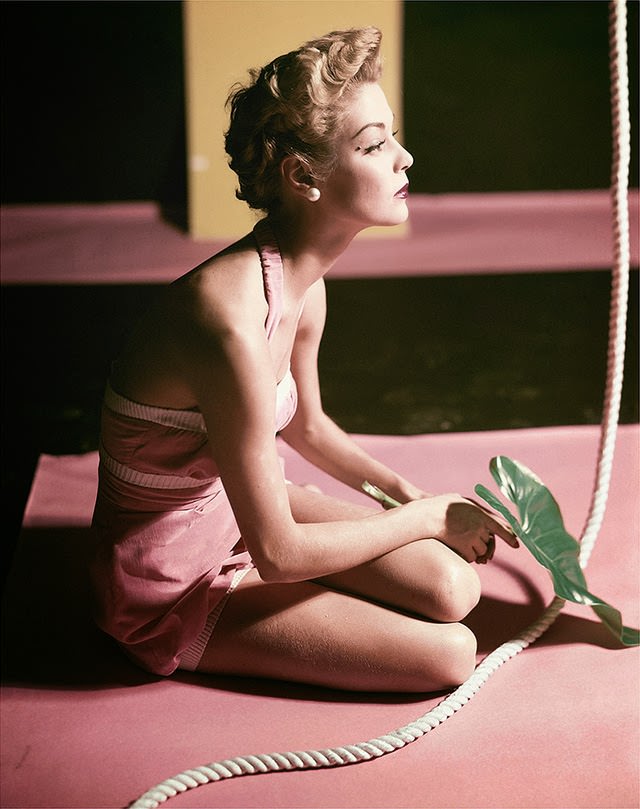
In 1951, photographer Horst P. Horst shot model Jean Patchett for Vogue in a deep pink velvet bathing suit. Velvet was a strange choice for swimwear, but in print it looked rich and sculptural, with a structured bodice that caught the studio light.
By 1952, shoots moved outdoors. Henry Clarke traveled to Olhao, Portugal, where he photographed a model seated on a rooftop holding a basket. She wore a patterned bikini by Calypso — a bold two-piece at a time when most women still chose full coverage.

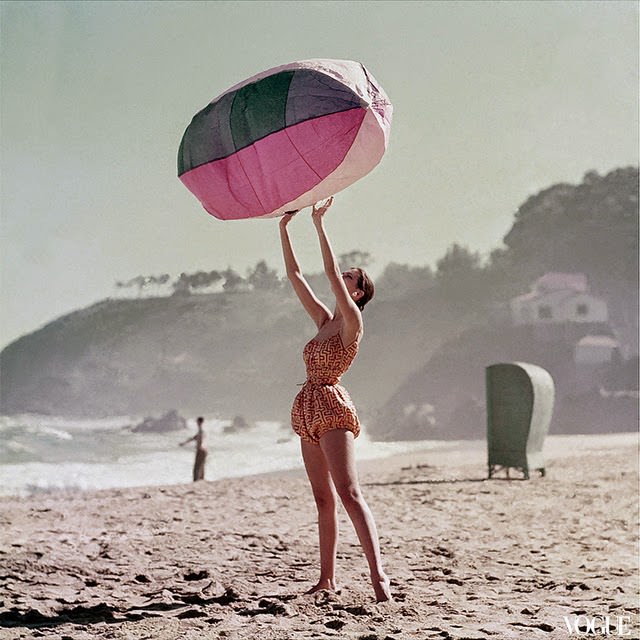
In 1953, the strapless silhouette took over. John Rawlings photographed Liz Pringle in a strapless Givenchy swimsuit that emphasized clean lines and high-fashion tailoring. That same year, models gathered at Cypress Gardens in Florida to show off a wide range of floral prints.
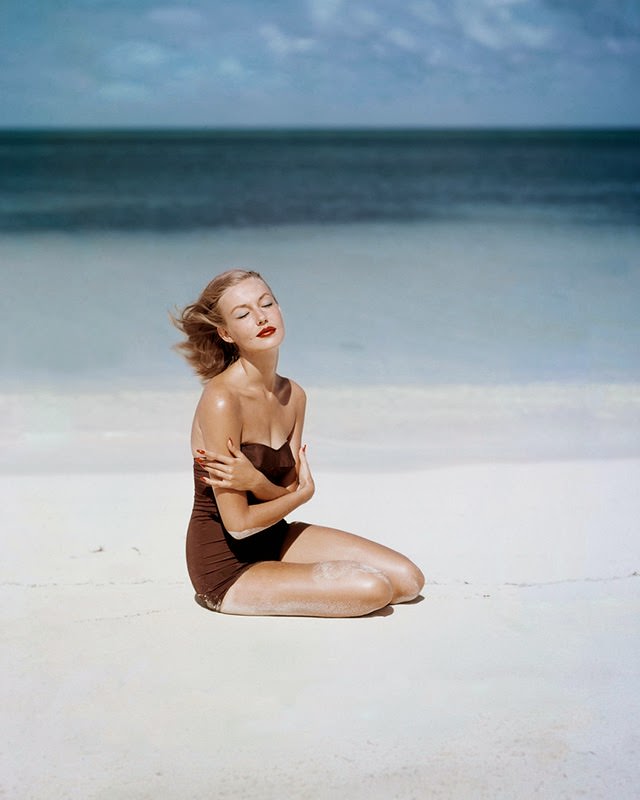
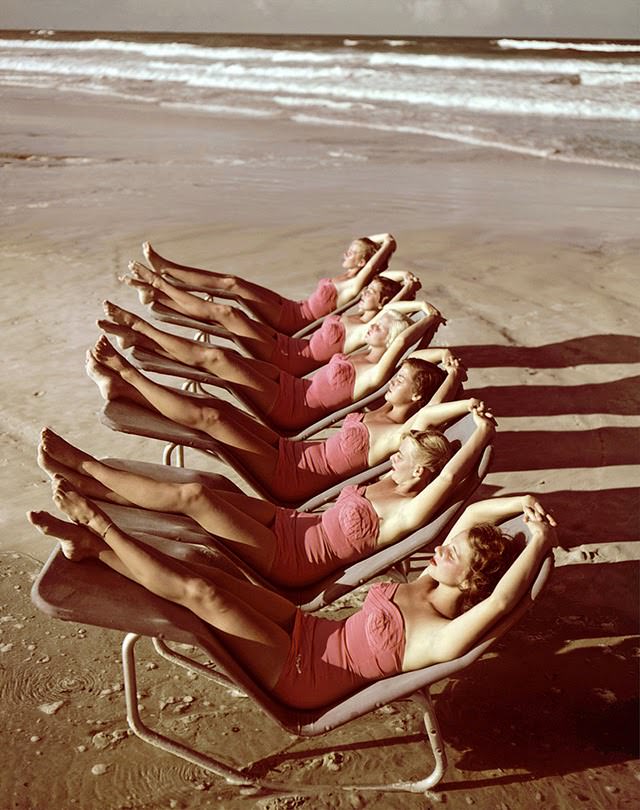
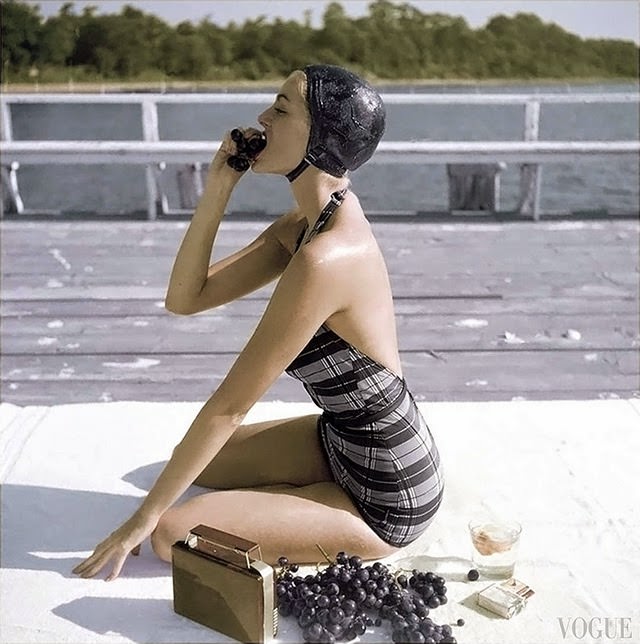
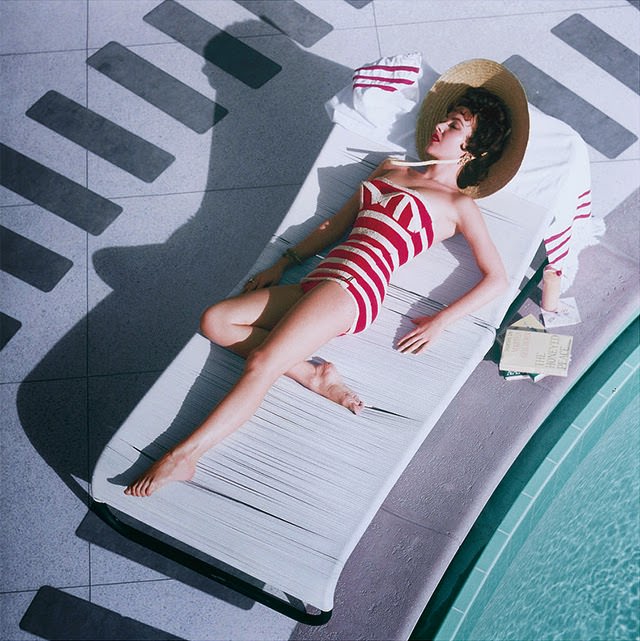
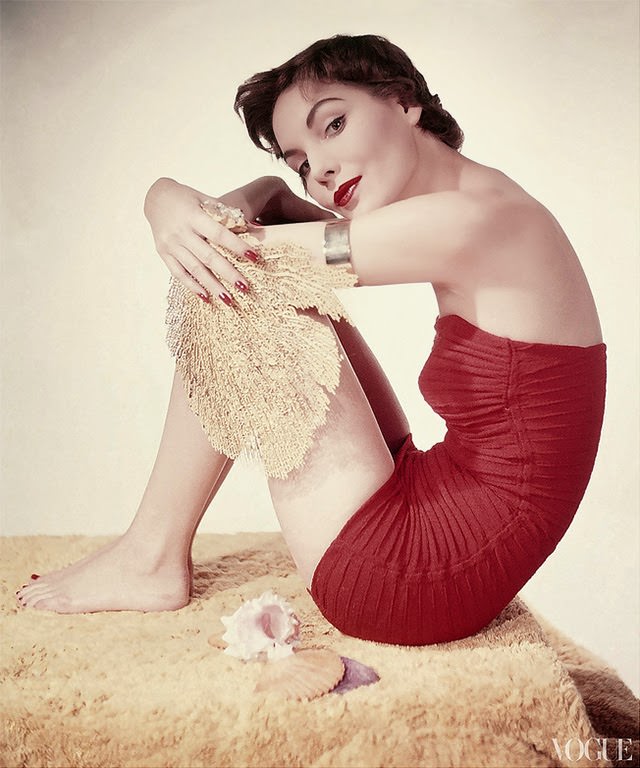
The year 1954 brought playful patterns and coordinated sets. Slim Aarons photographed Mara Lane at the Sands Hotel in Las Vegas, lounging poolside in a red and white striped bathing costume. Horst P. Horst shot Sherry Nelms for Vogue in a carefully engineered hourglass bodice.
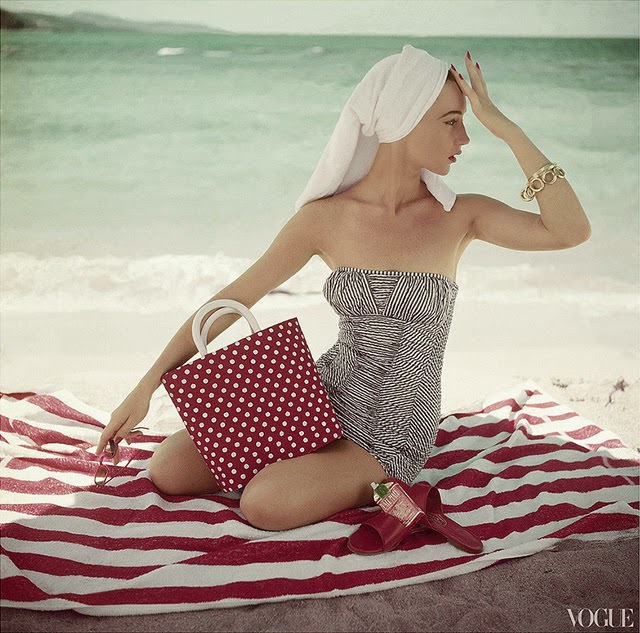
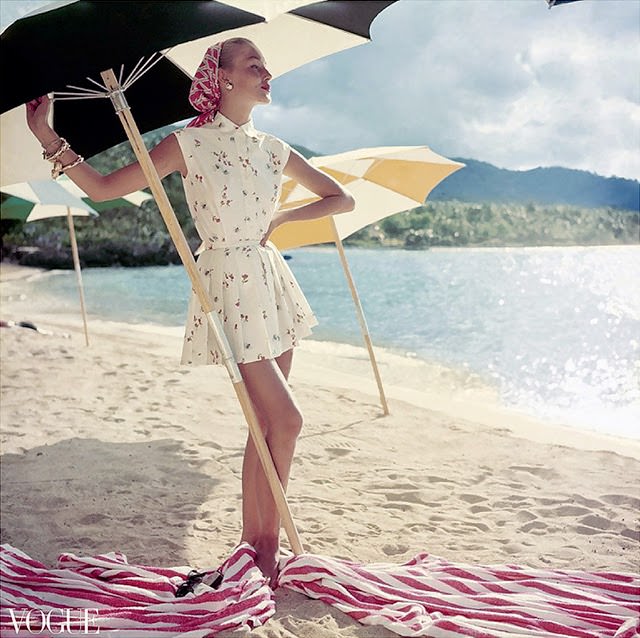
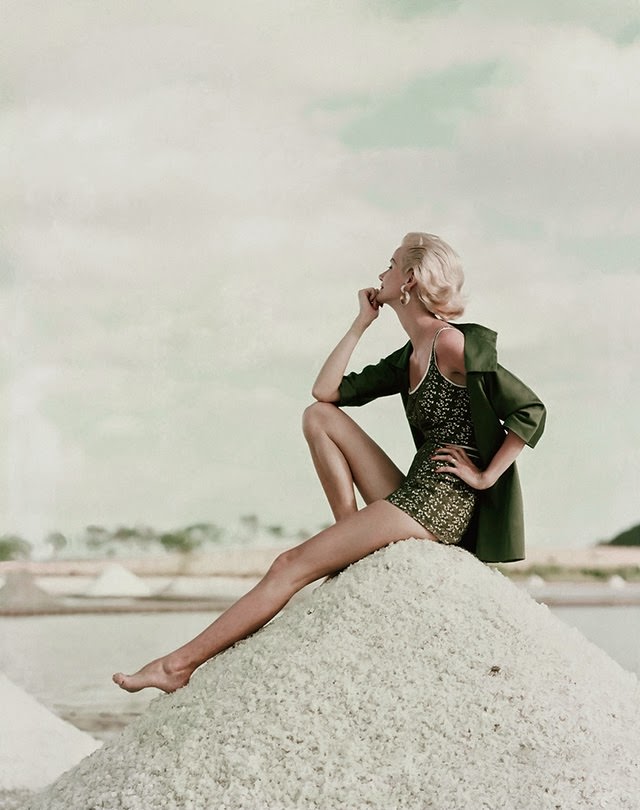
Roger Prigent photographed a model in a grey and white patterned strapless suit seated on a striped beach towel, creating a deliberate clash of patterns. Another 1954 look paired pleated short shorts with a floral sleeveless shirt that doubled as casual daywear. For Glamour’s May issue, Leombruno-Bodi shot a moss green lace tank-top suit over white broadcloth, complete with a zipped beach coat.
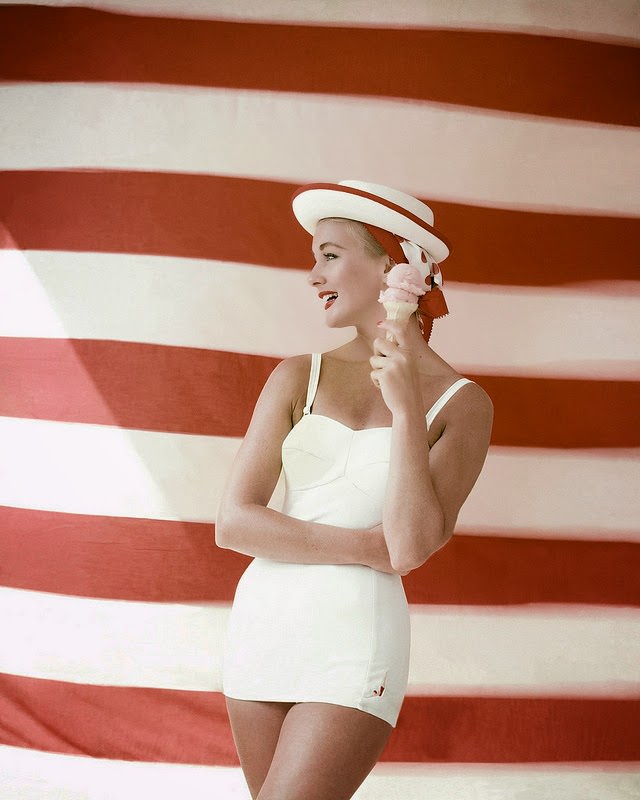
In 1955, props became part of the story. Leombruno Bodi posed a model in a white Jantzen sharkskin suit before an American flag, ice cream cone in hand, wearing a polka-dotted scarf hat under a white straw sailor cap by Betmar — a direct nod to classic American summer culture.
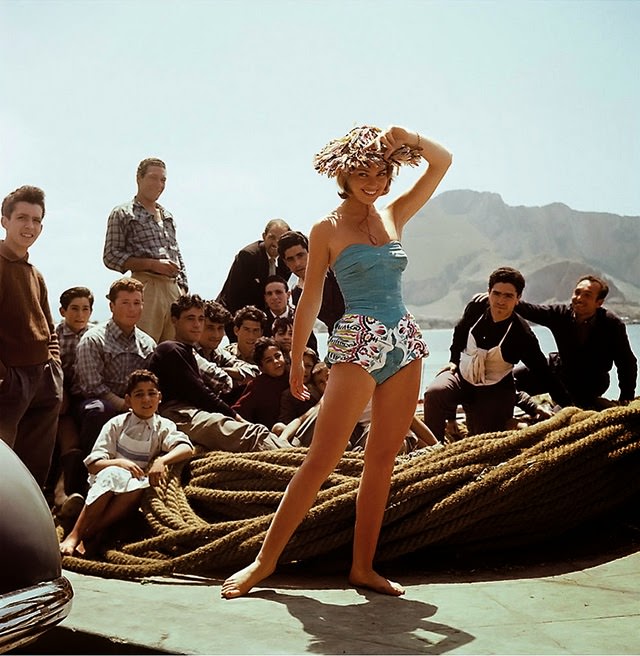
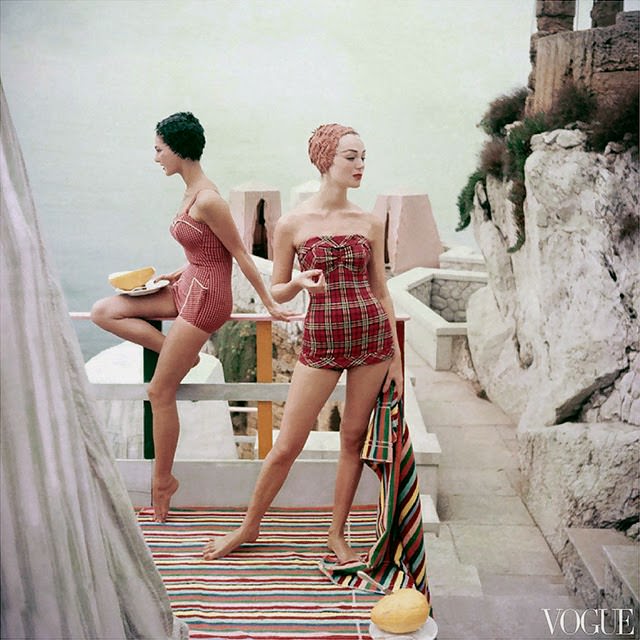
That same year, Henry Clarke traveled to Palermo, Sicily, where he photographed models Fiona Campbell-Walter and Ivy Nicholson in elegant suits that embodied the high-fashion tone of the Italian coast.
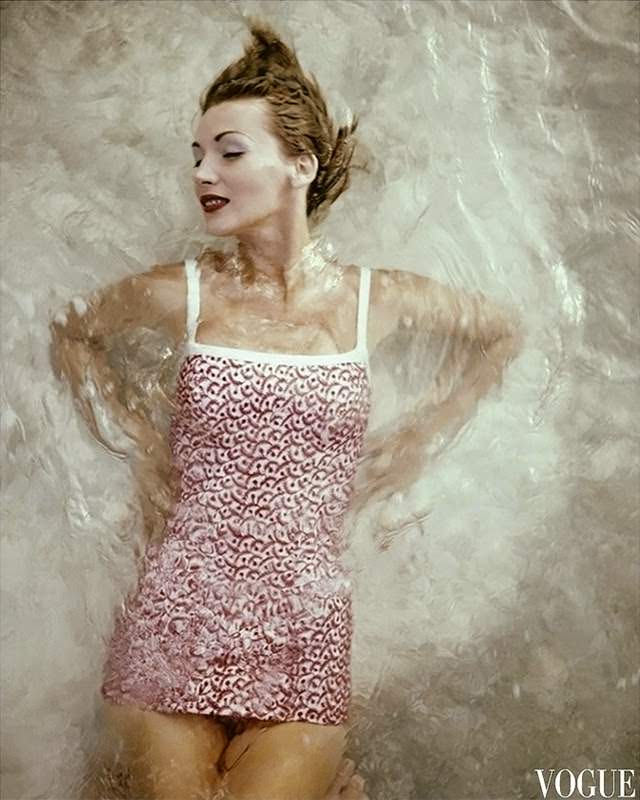
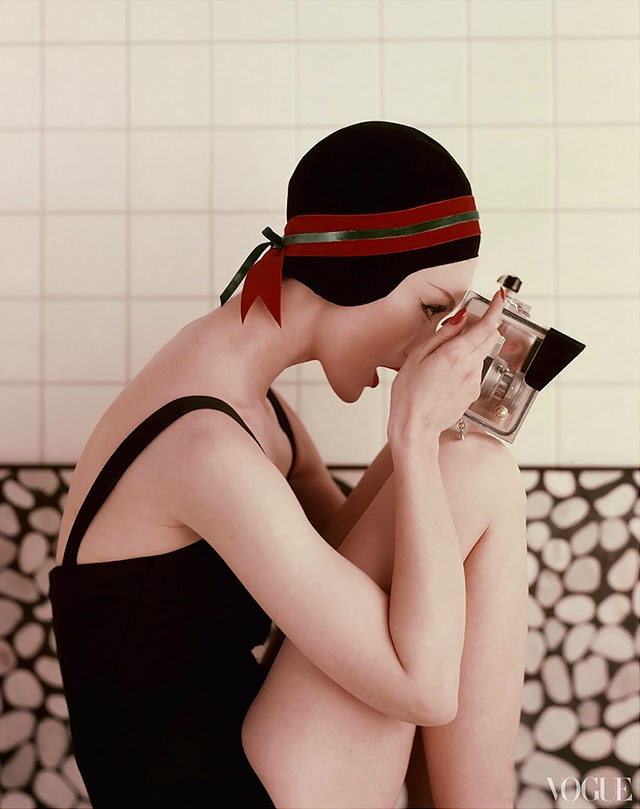
By 1956, beach photography began reflecting a growing interest in underwater sports. Richard Rutledge photographed a model peering through a waterproof camera, dressed in a black bathing suit and a black velvet cap banded in red and green.
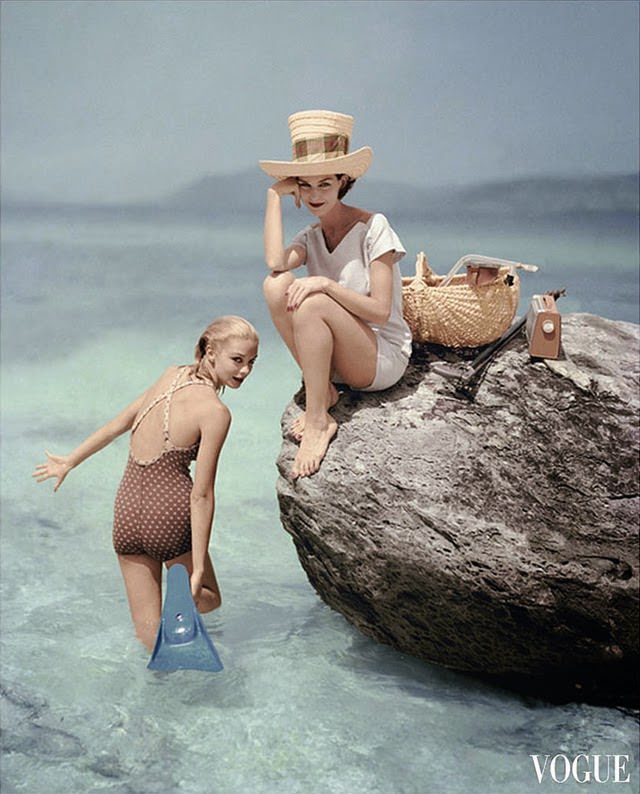
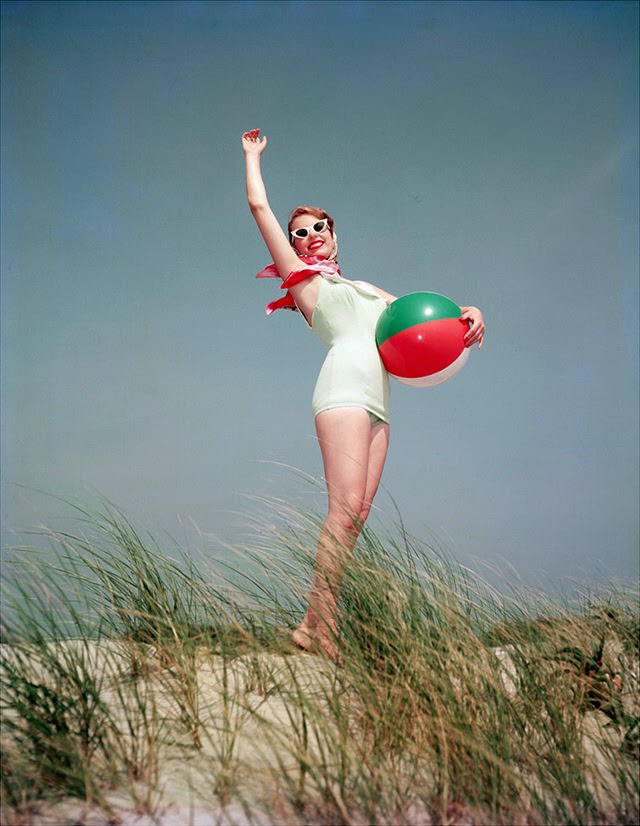
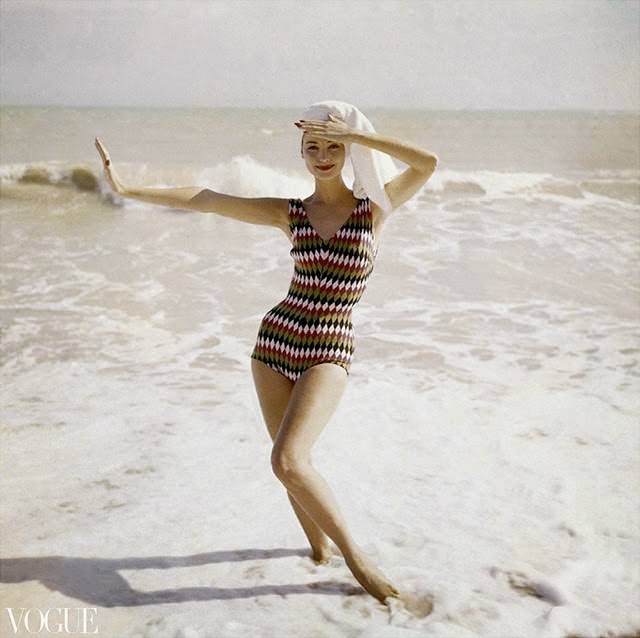
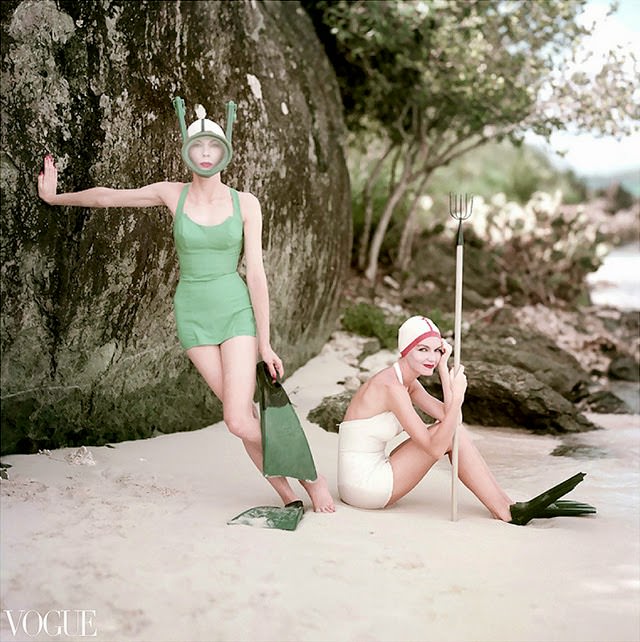
The 1957 season pushed into experimental territory. One model wore a harlequin-diamond wool suit by Imports International. Designer Rose Marie Reid outfitted two models in athletic suits — one blue with a mask and flippers, one white with a matching cap — posed near a tree to demonstrate durability.
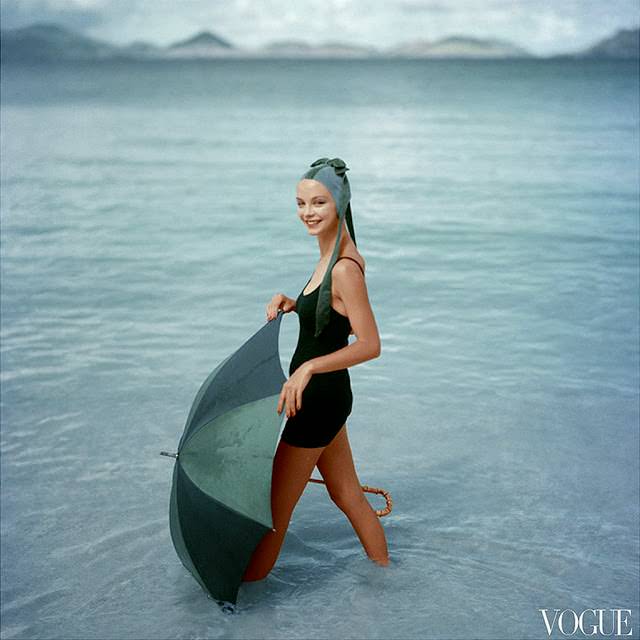
Gretchen Harris stood in the ocean that year holding an umbrella, wearing a knitted black maillot made of DuPont fiber and a water-velvet cap by Adolfo of Emme. At Eden Roc in Cap d’Antibes, Georges Dambier photographed Barbara Mullen and Marie Helene, representing the peak of European resort glamour.
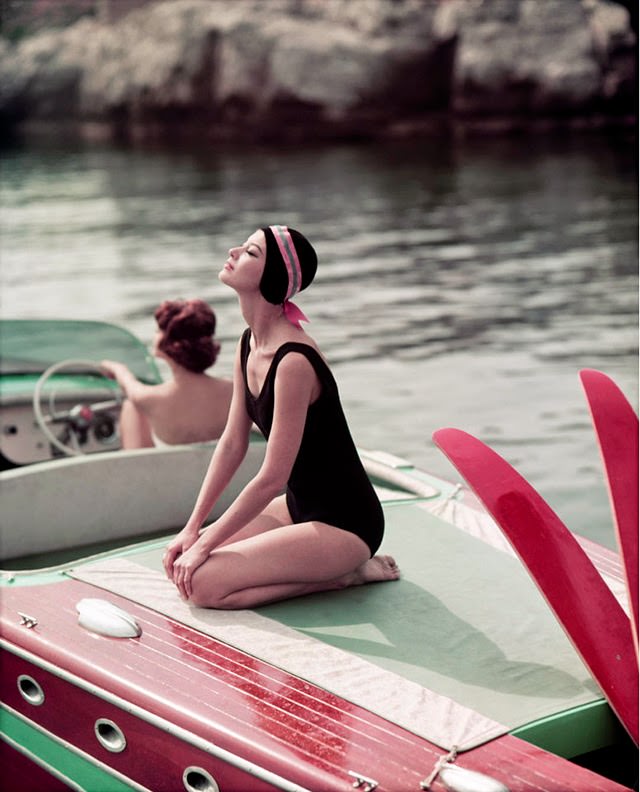
Red dominated 1958. Richard Rutledge photographed a model in a bright red Jantzen suit, while Slim Aarons captured the social side of beach culture in Cannes, where a group called the “Sundowners” gathered at the Carlton Hotel at the end of the day in their swimsuits.
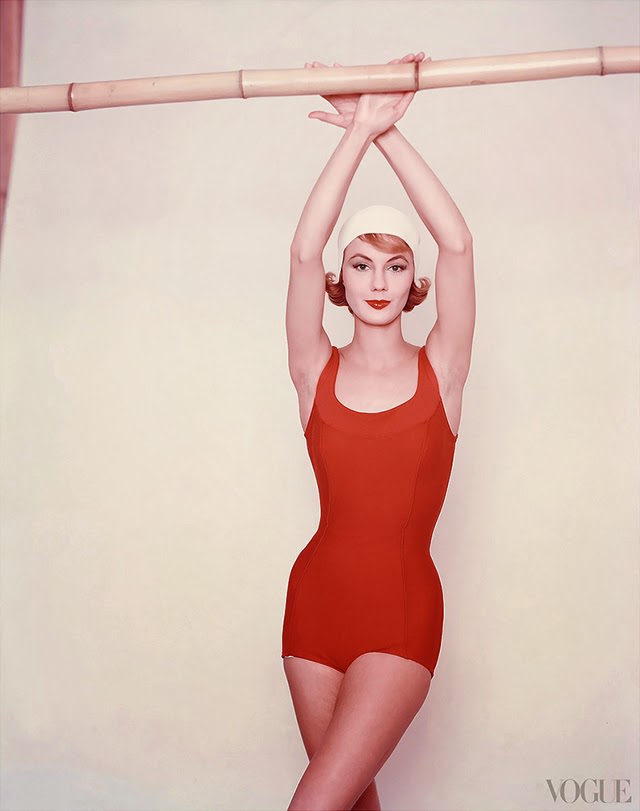
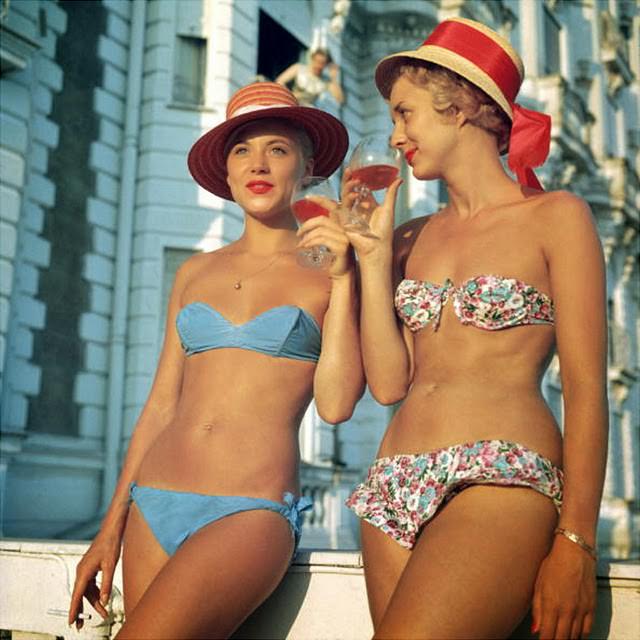
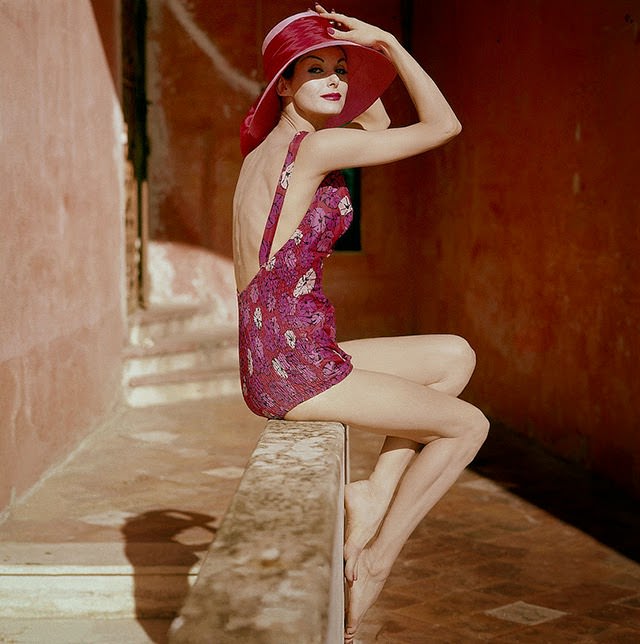
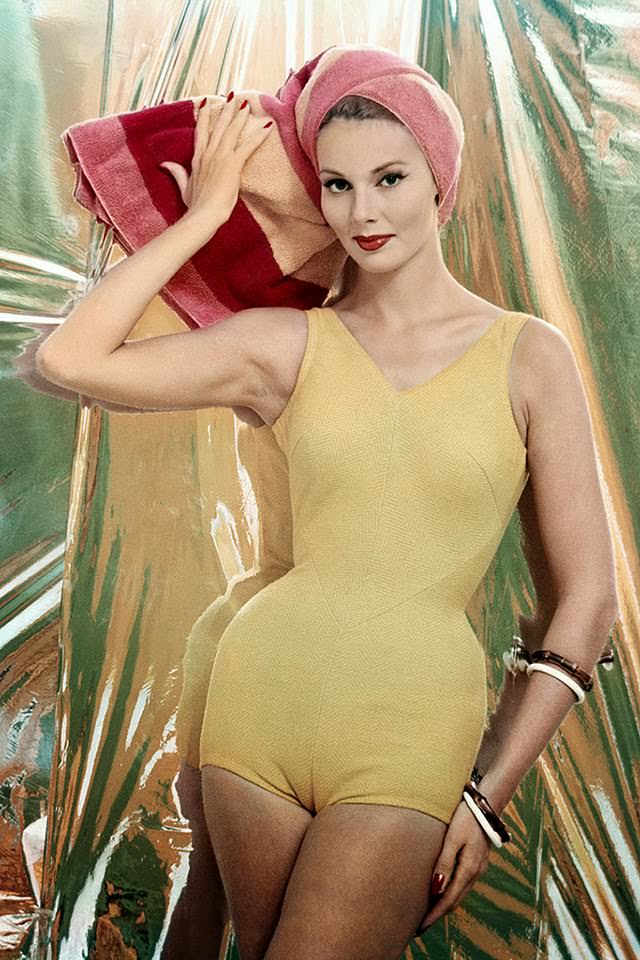
The decade closed in 1959 with a wide mix of fabrics and settings. Tom Palumbo shot a model in a red silk shantung suit by Catalina, topped with a cyclamen pink straw hat with a dark red silk sash — a formal look for the beach. William Bell photographed a yellow Jantzen suit knitted from cotton and Orlon, reflecting how new synthetic fibers made swimwear faster-drying and more comfortable.
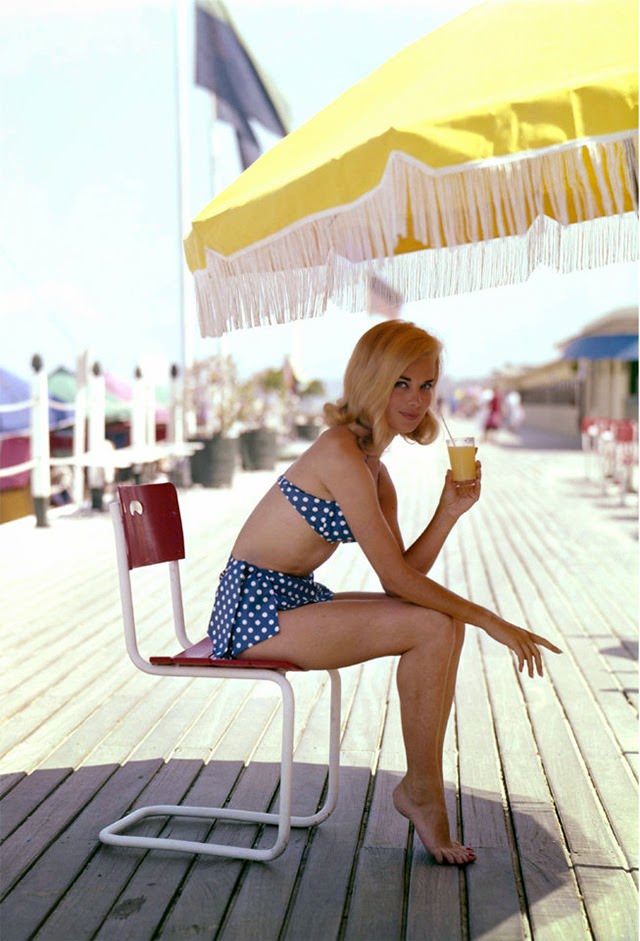
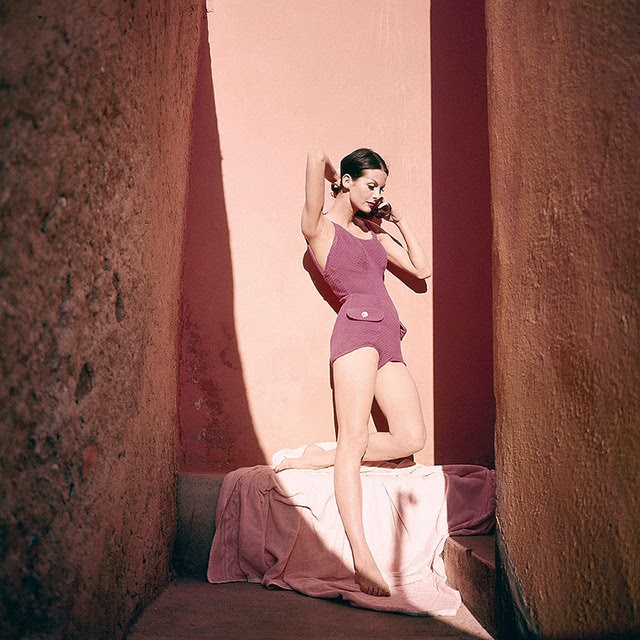
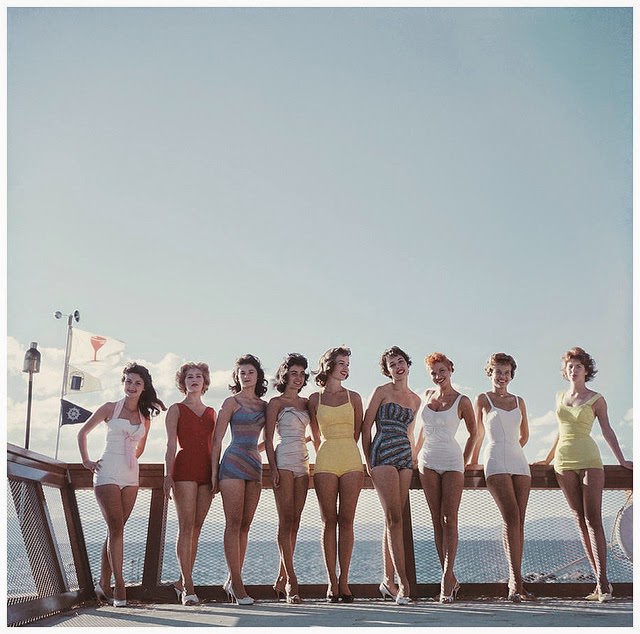
In Deauville, Georges Dambier photographed a woman in a bikini on the boardwalk, showing how the two-piece had gained real public acceptance. Richard Rutledge headed to the Diplomat Hotel in Florida, capturing a model in a calico print suit paired with a terrycloth cardigan — practical for breezy coastal evenings. Tom Palumbo also photographed model Anne St. Marie in dramatic light that highlighted the texture of her suit, and Slim Aarons documented beach style at Lake Tahoe, proving the swimsuit had traveled far beyond the ocean shore.