By 1940, eight out of every ten American high school graduates had enlisted to fight in World War II. That mass departure left high schools and college campuses filled with younger boys who were too young to serve. Without the pressure of military life hanging over them, these teenagers began building something entirely their own — a subculture with its own rules, its own look, and its own attitude.
These boys existed in a social vacuum that older generations had never experienced. The soldiers were abroad. The adults were working. That left teenagers free to define themselves on their own terms, and they did it through the clothes on their backs.
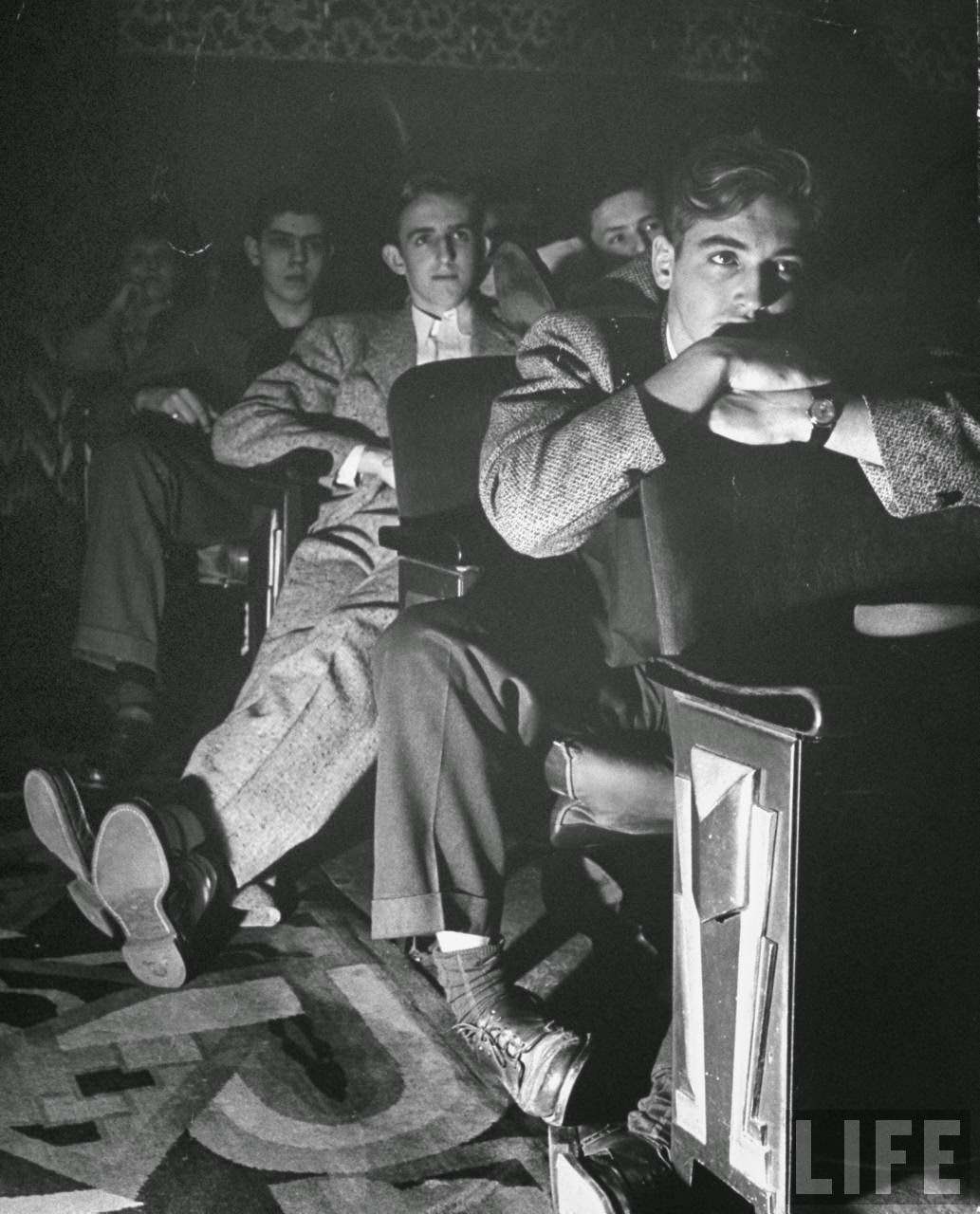
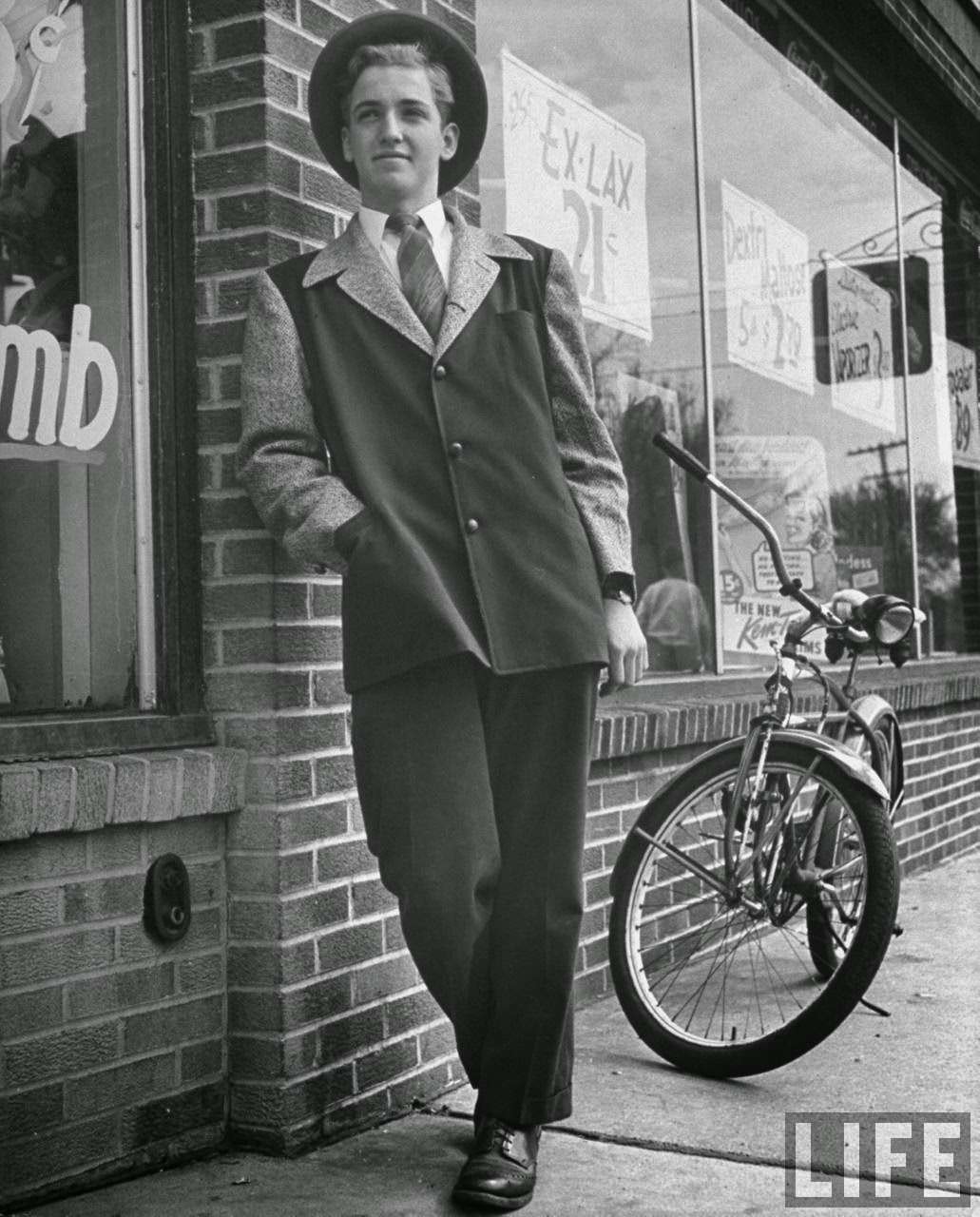
The style they created was a direct pushback against adult formality. A suit jacket was no longer reserved for church or the office — it became raw material. Boys wore jacket sleeves long and trousers baggy. They mixed patterns that no tailor would ever pair together. The goal was to look relaxed, not polished.
The centerpiece of this look was the oversized “Sloppy Joe” sweater. These wide, loose-knit cardigans hung off the shoulders and swallowed the body. Wearing one was a statement. It said you weren’t trying to impress an employer or a superior officer — you were just a kid, and that was enough.
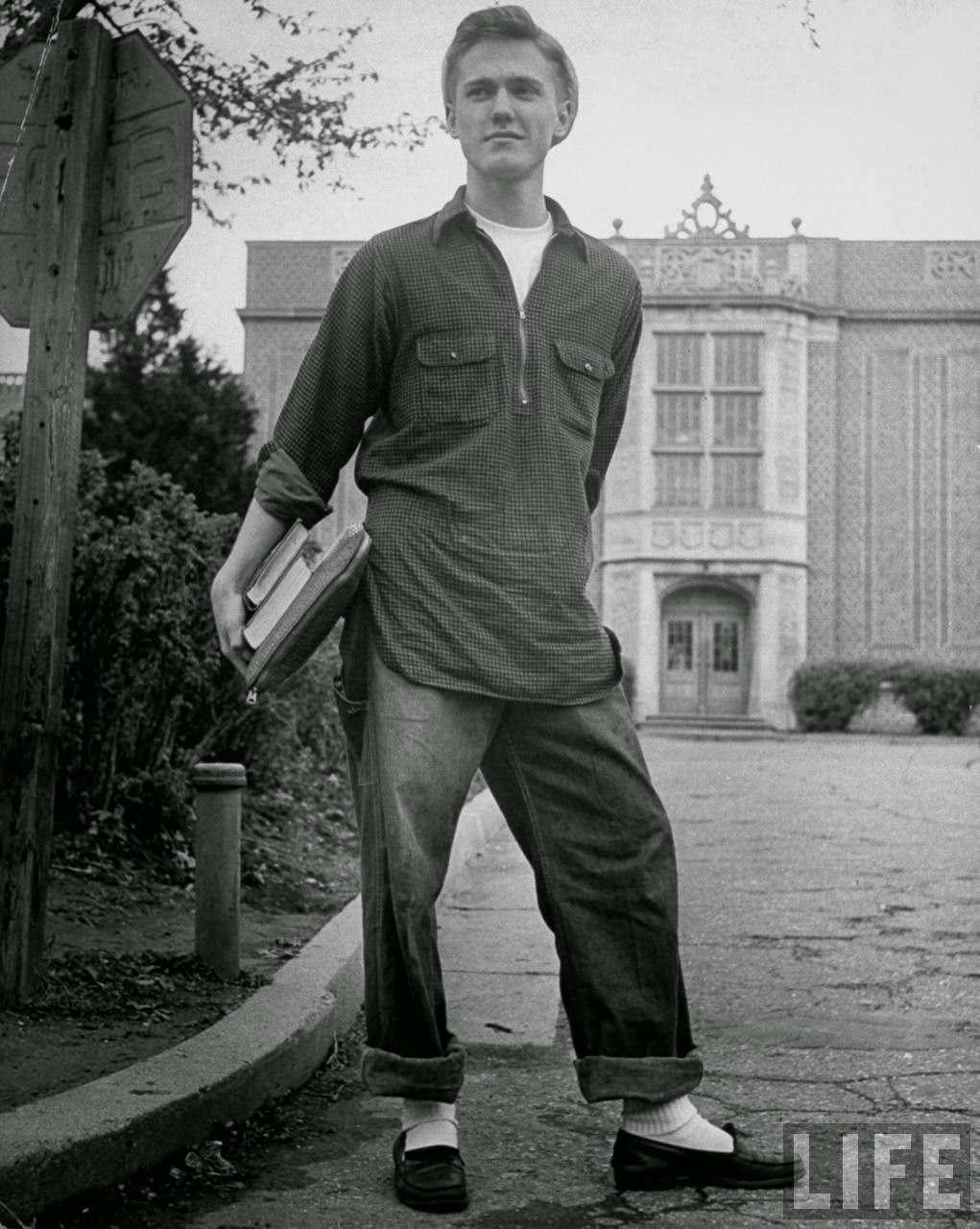
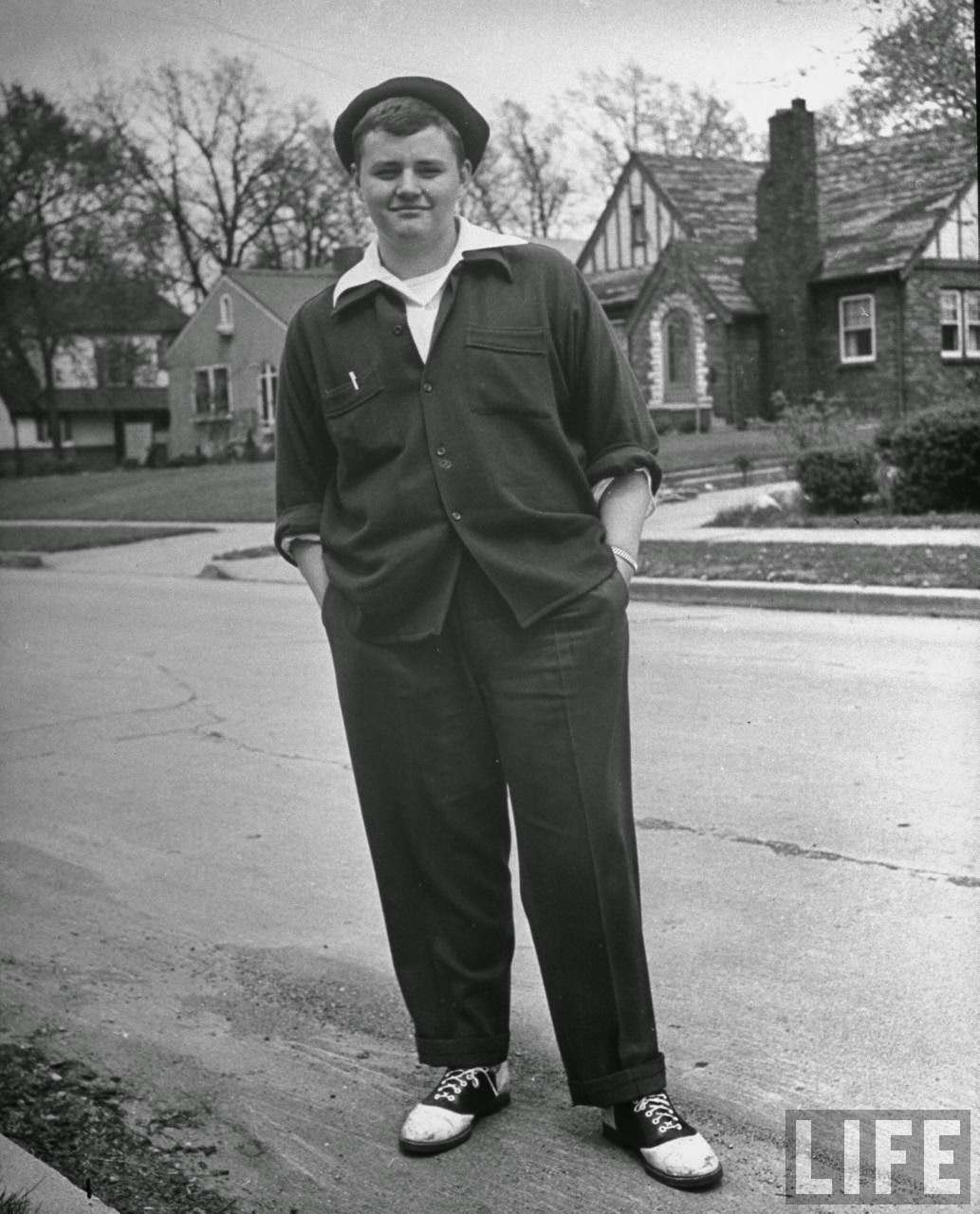
Dress shirts got the same treatment. Boys wore them with the top button open and the collar spread wide. Tucking in was optional. The T-shirt, which had previously been considered an undergarment, started showing up as a standalone top at casual hangouts. It was a small but significant shift in what counted as acceptable clothing.
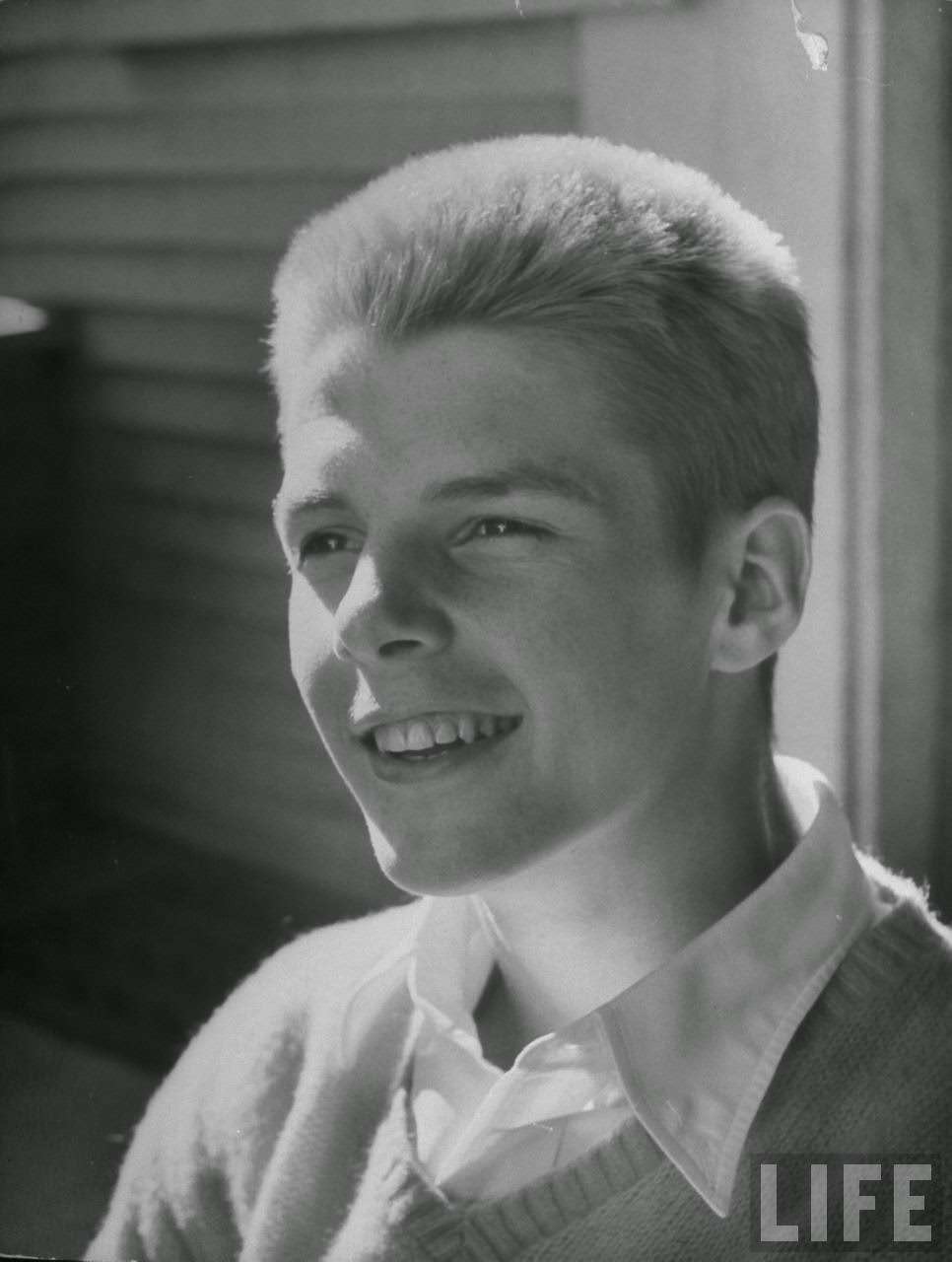
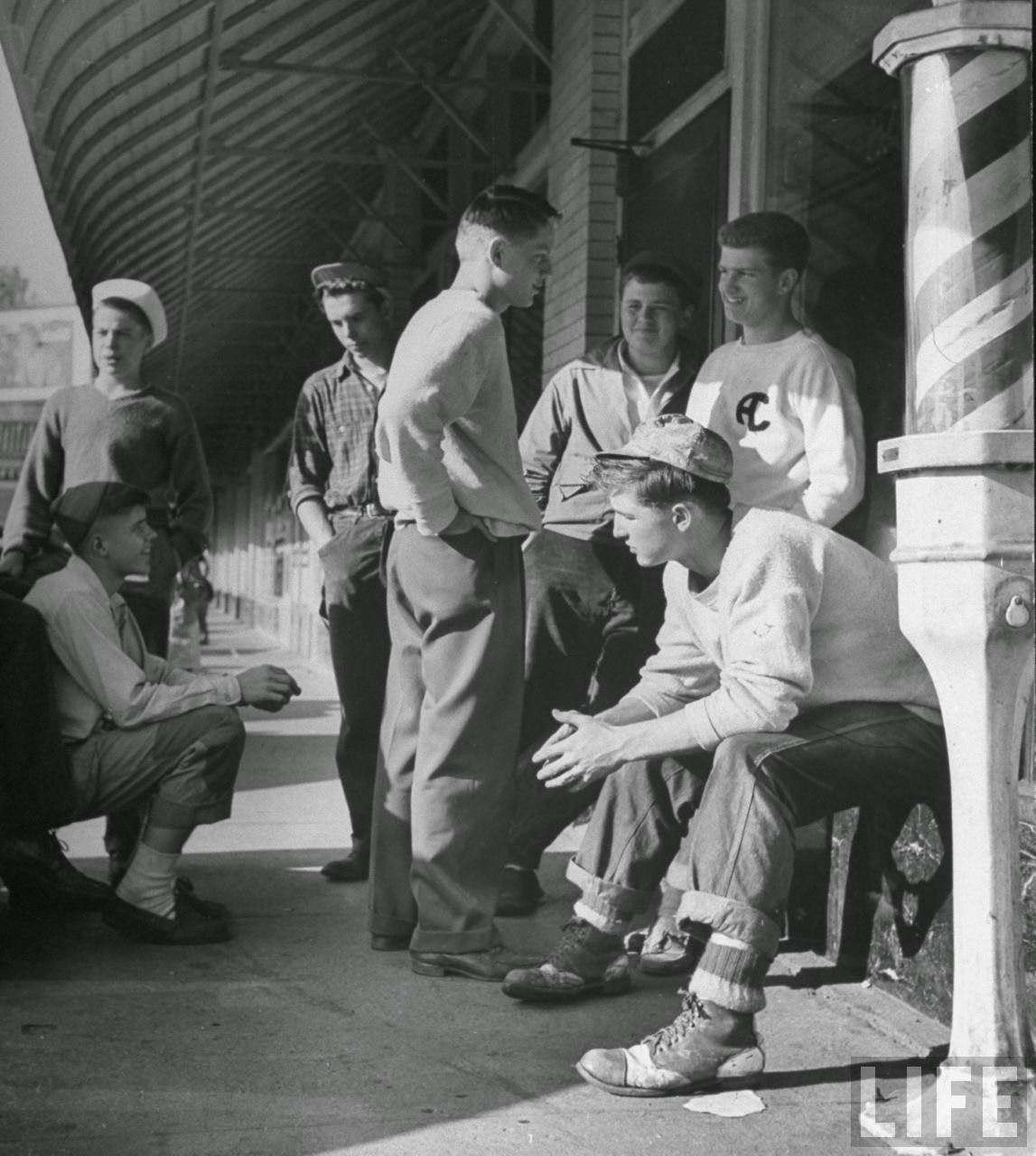
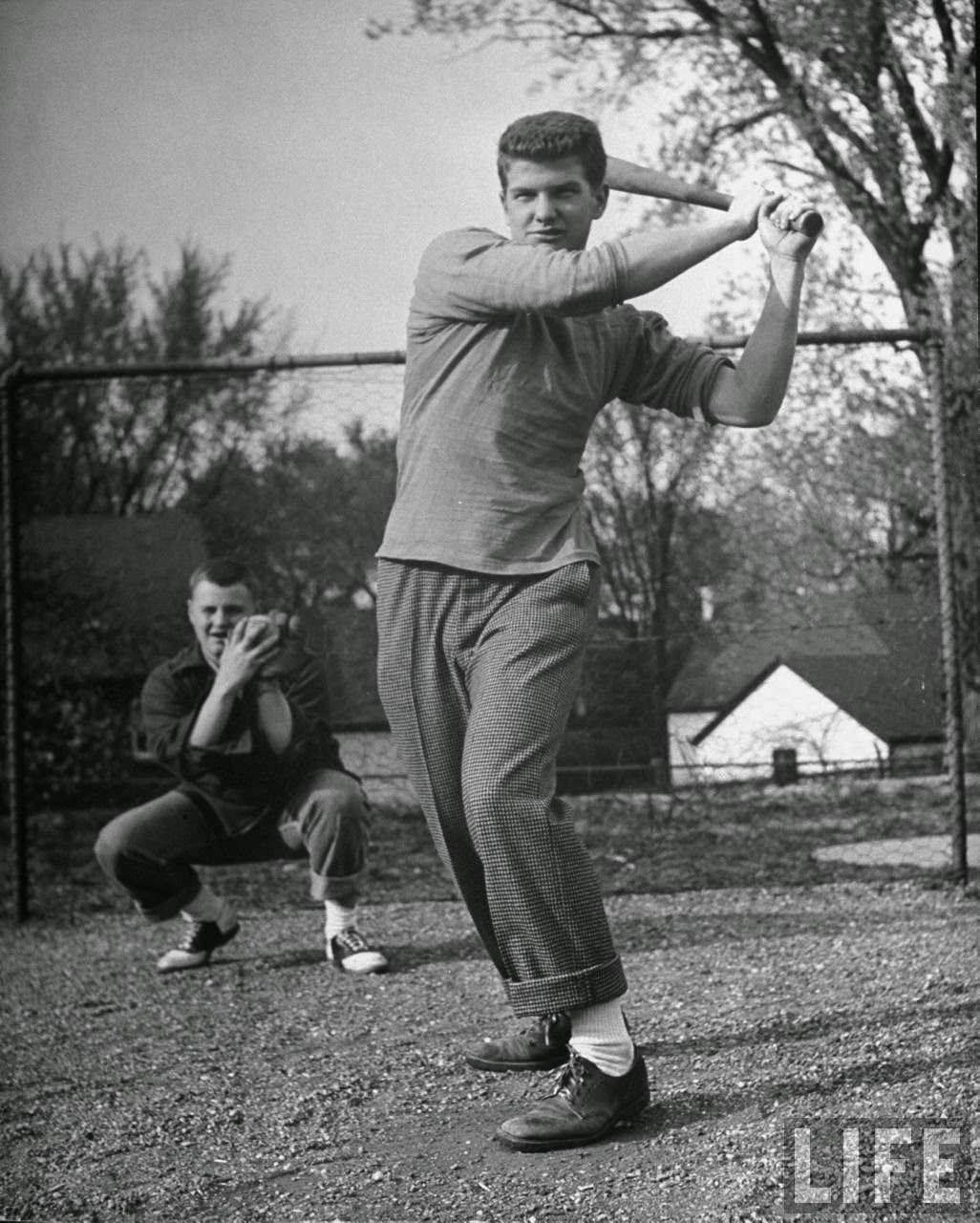
On the bottom half, denim dungarees were rolled up high at the cuff to show off white athletic socks. Loafers and saddle shoes replaced stiff leather dress boots. The overall effect was calculated messiness — nothing accidental about it. Every wrinkle and loose hem was a quiet rejection of the rigid dress codes their fathers followed.
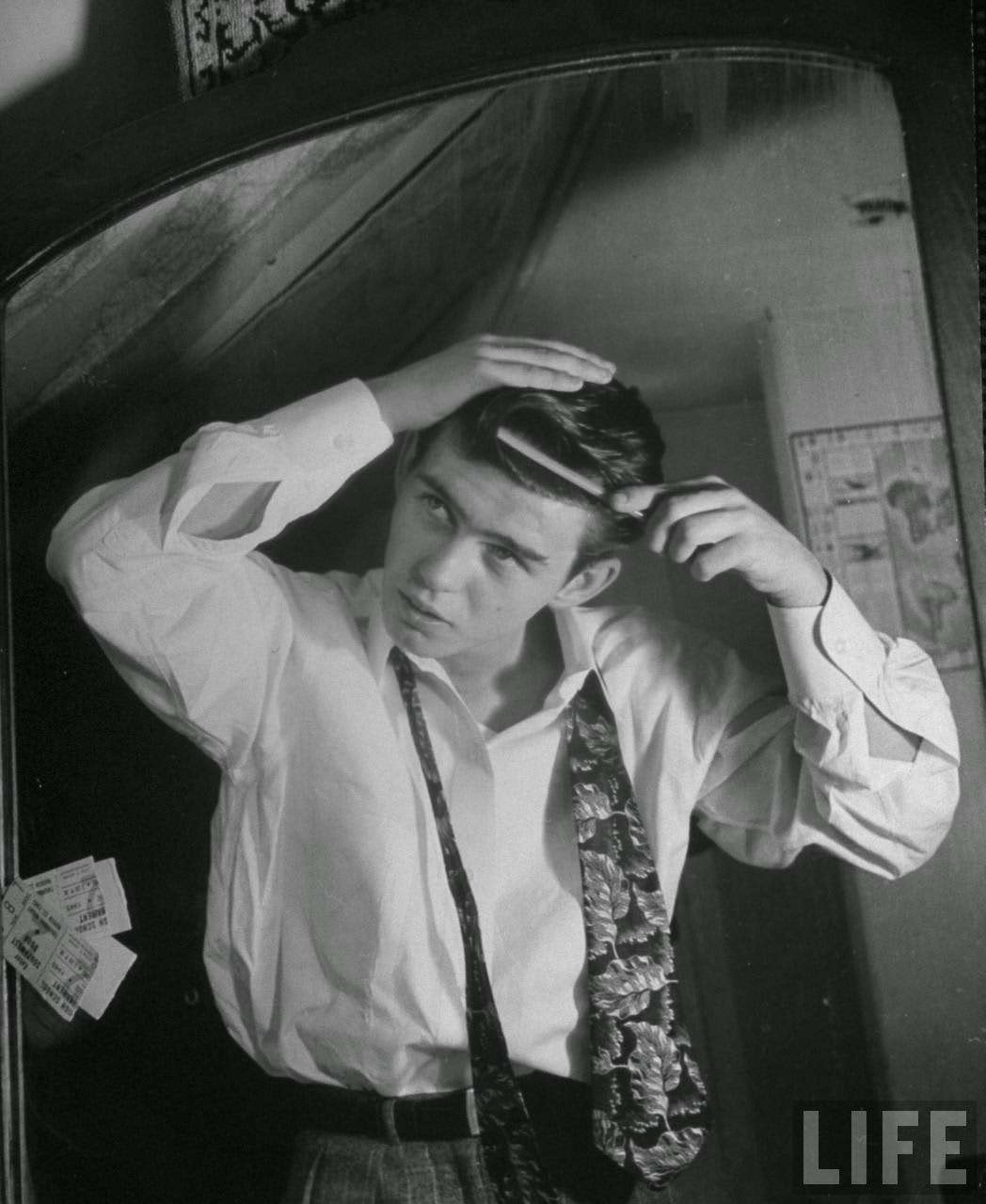
Hair was part of the uniform too. Boys spent real time on their waves, running a comb through their hair to get the front just right. The comb itself became an accessory — carried in the back pocket and pulled out regularly throughout the day.
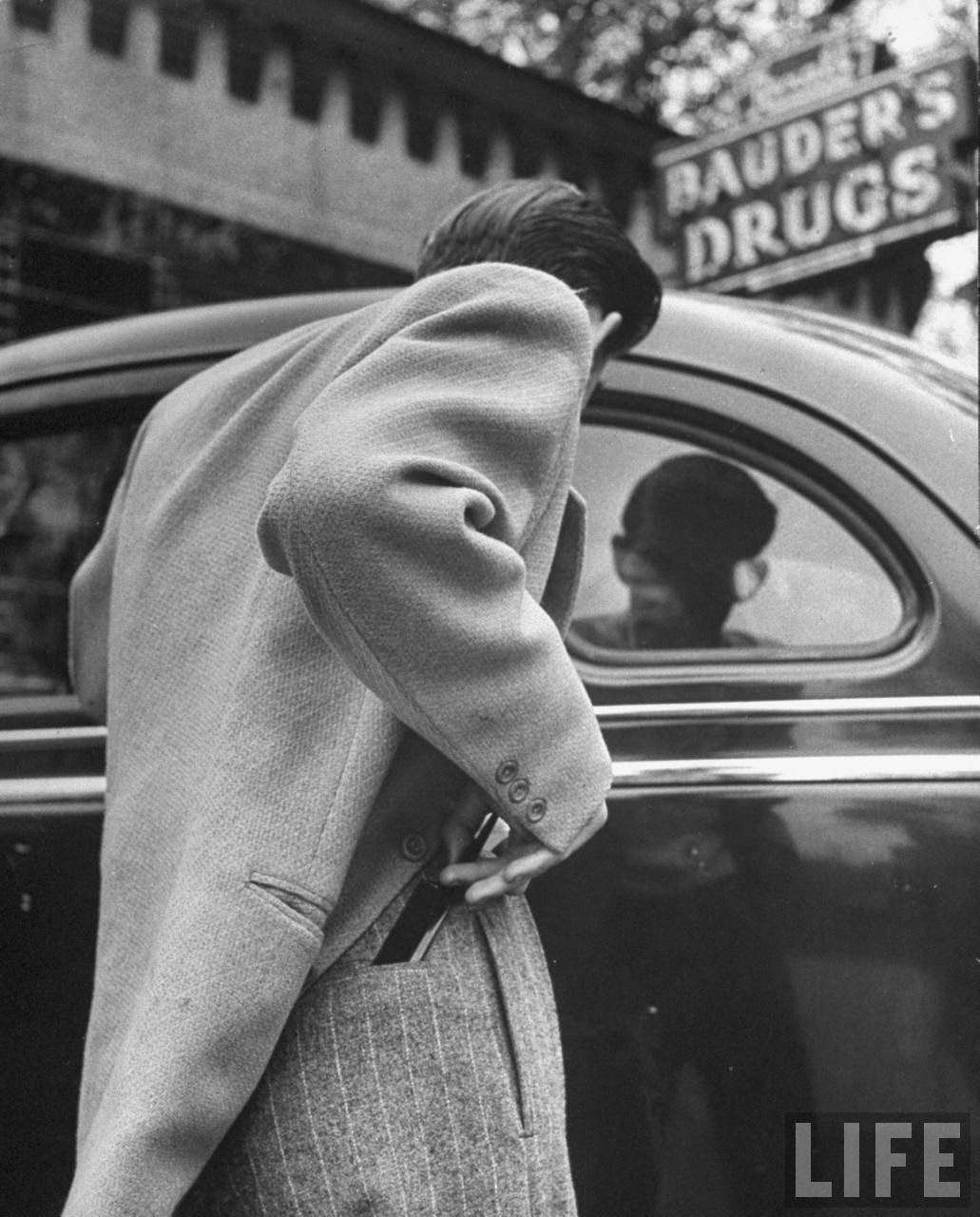
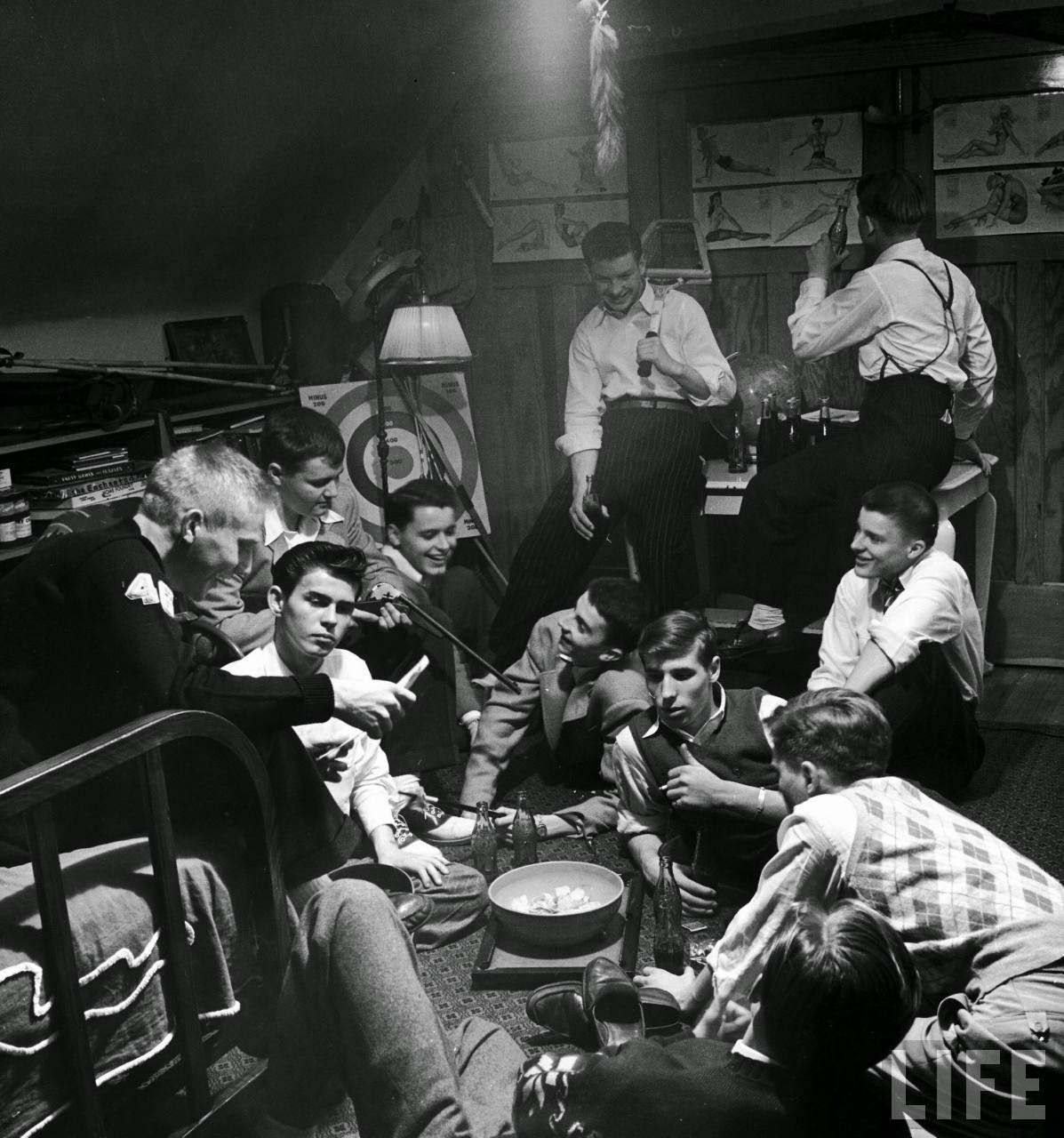
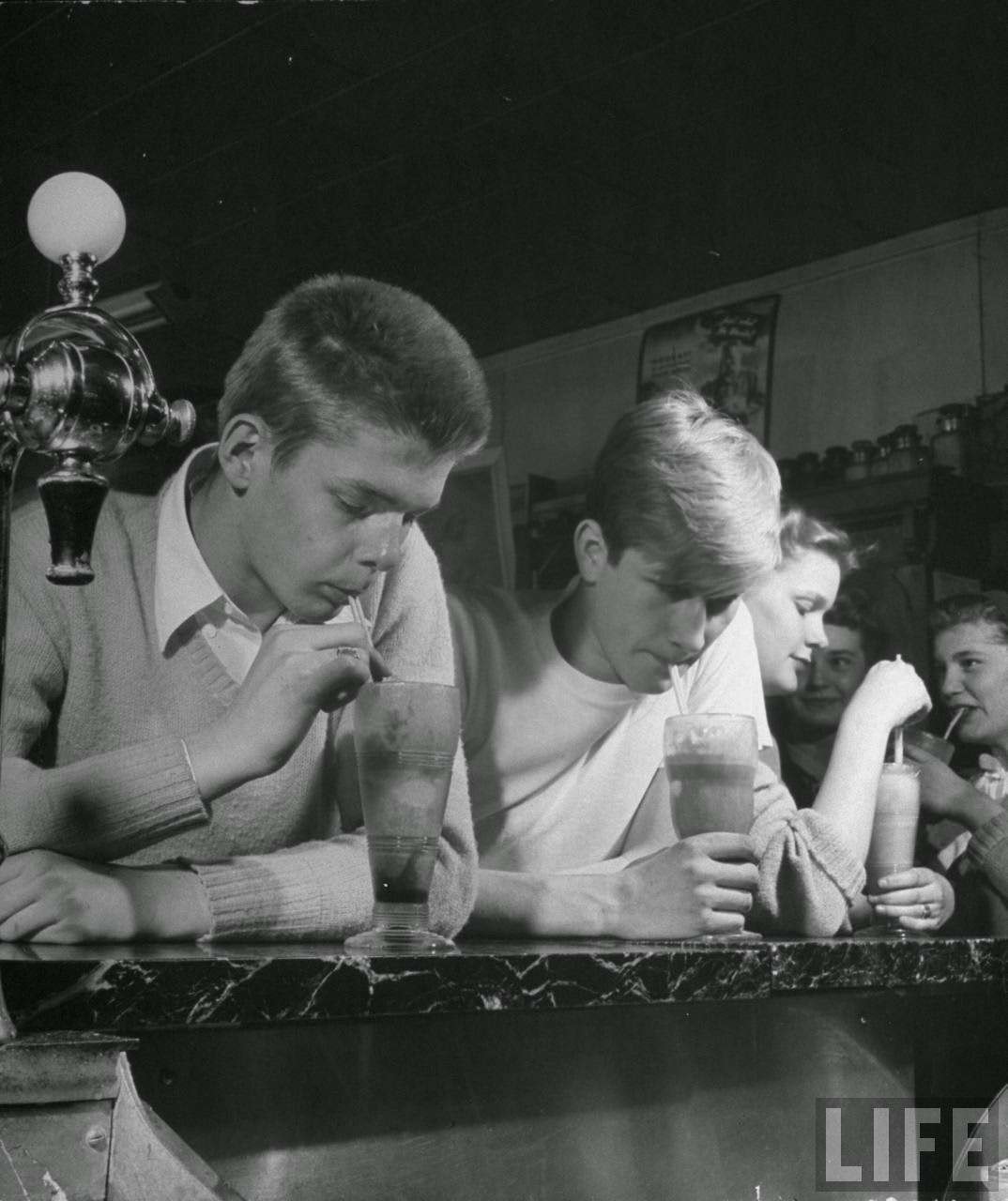
Away from school, teenage boys gathered at drug store soda fountains, crammed into friends’ bedrooms, and loitered at movie theaters. These were the spaces where the fashion actually lived — not on a runway or in a magazine, but slouched over a milkshake or piled onto a bedroom floor playing cards.
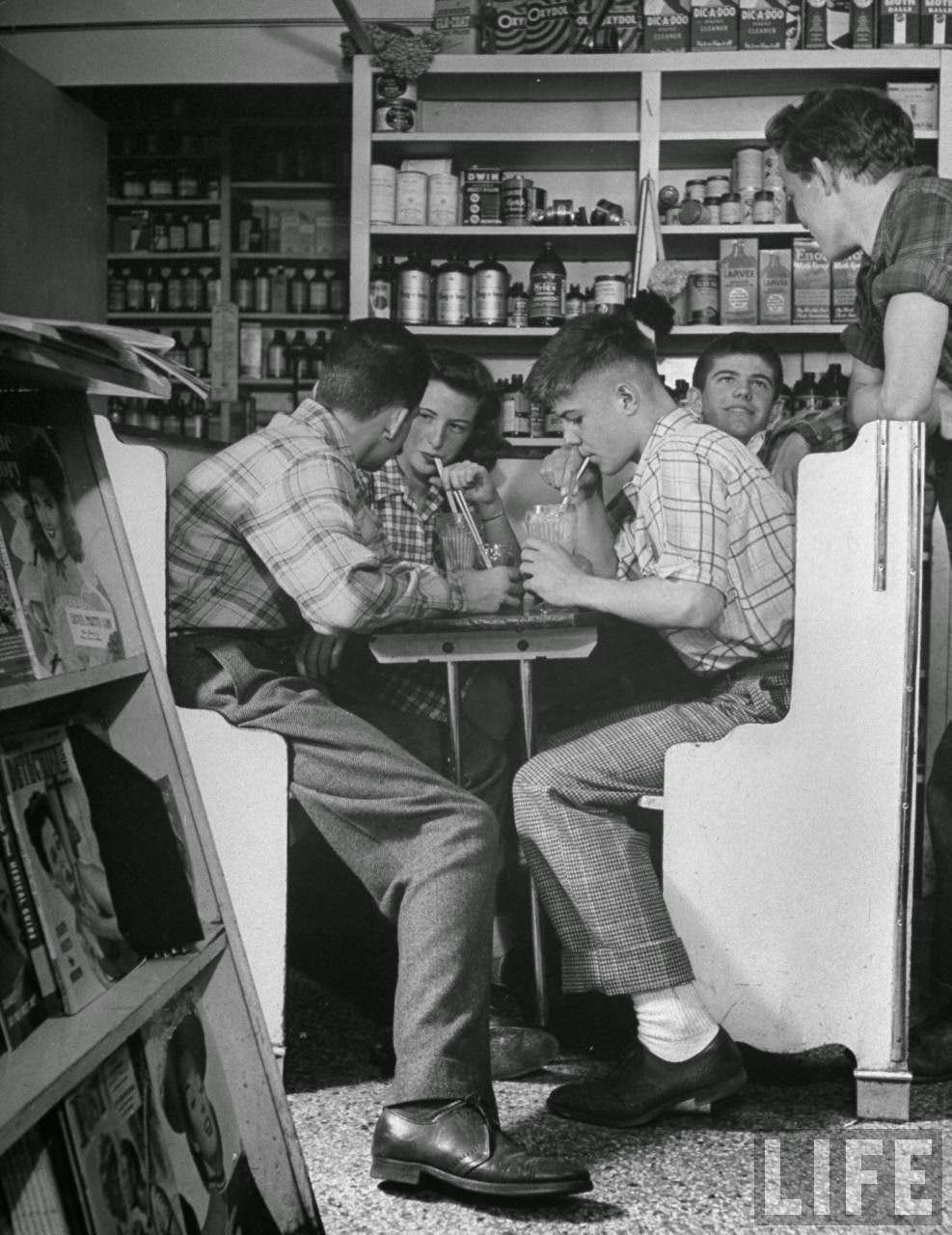
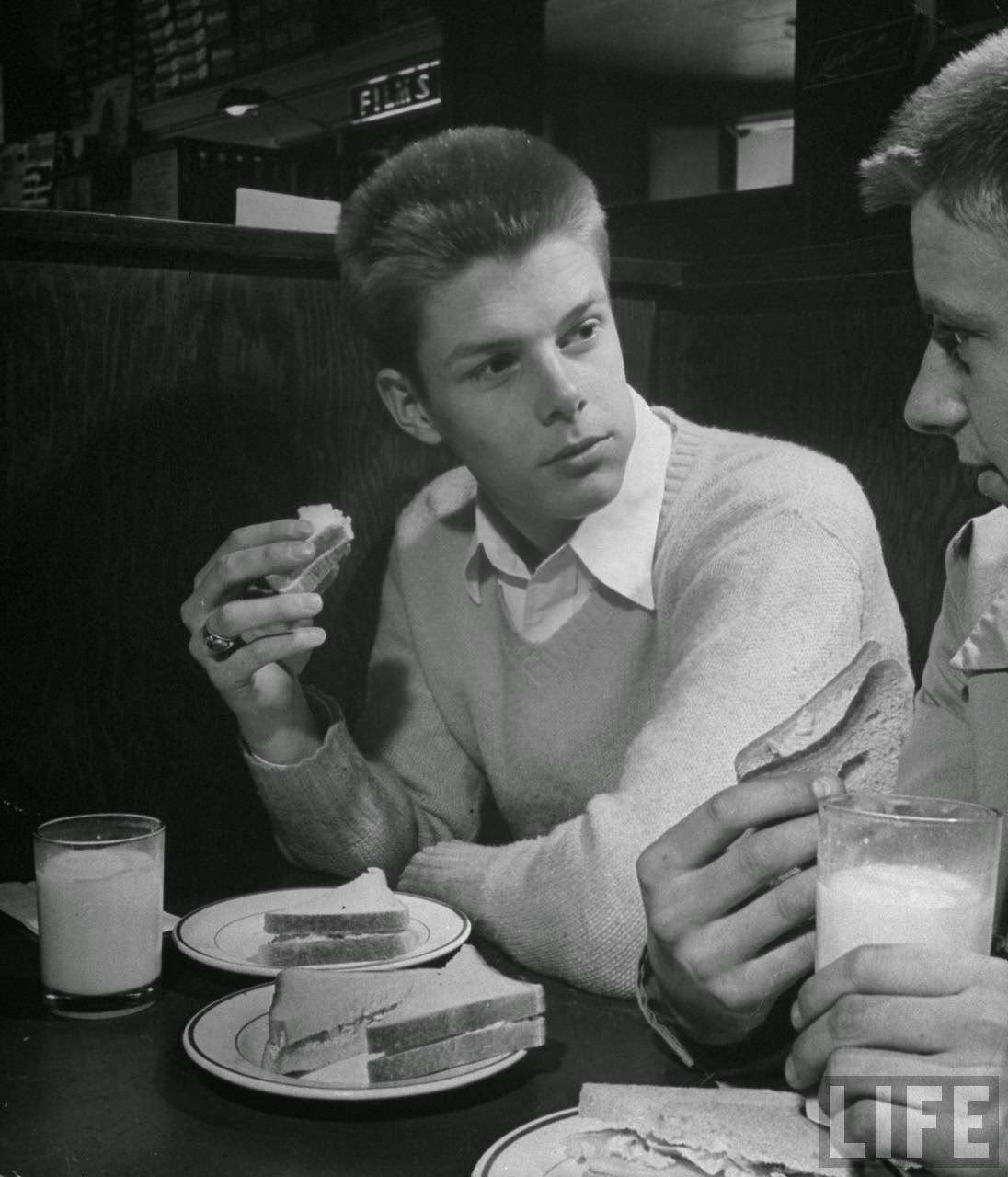
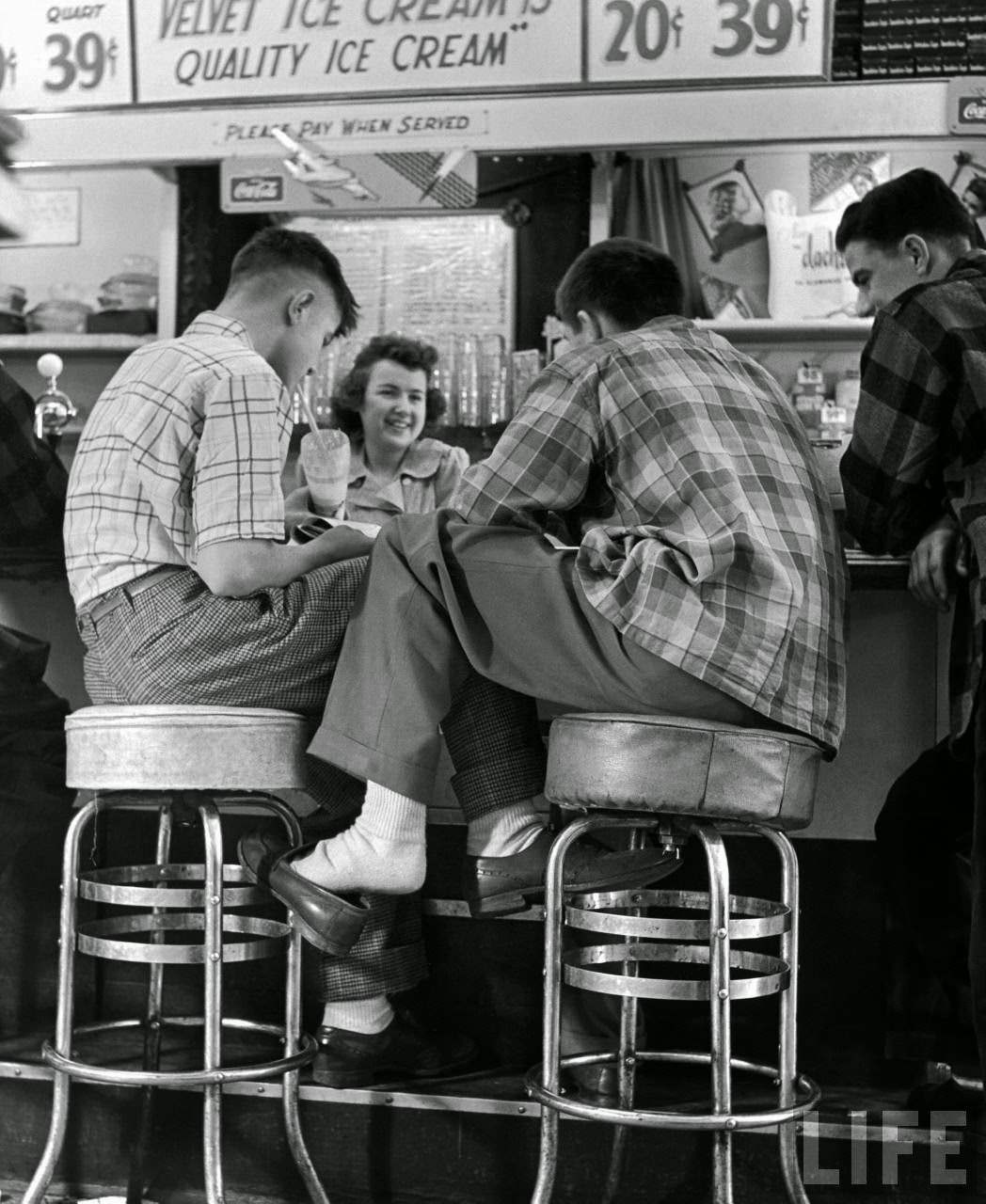
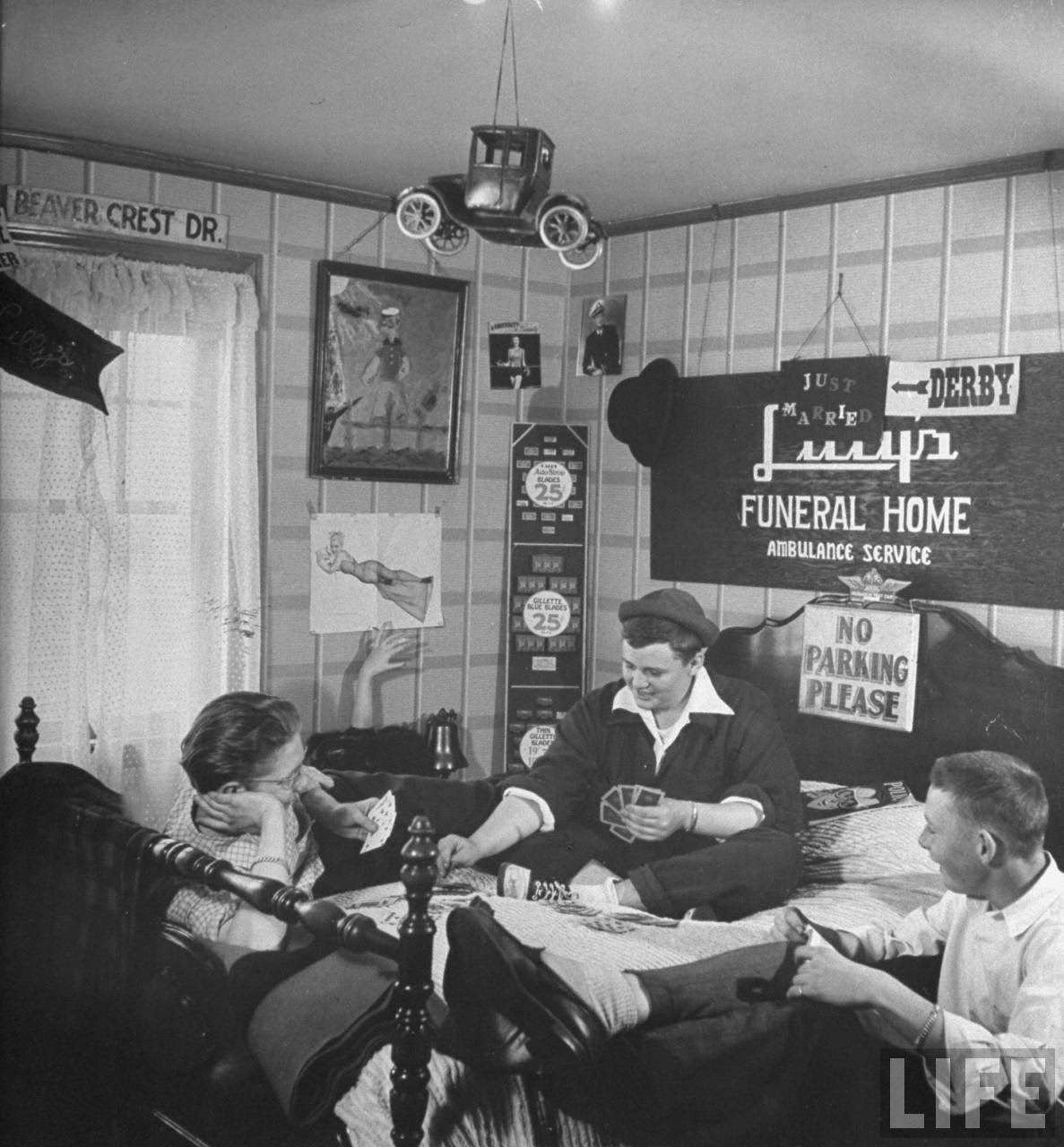
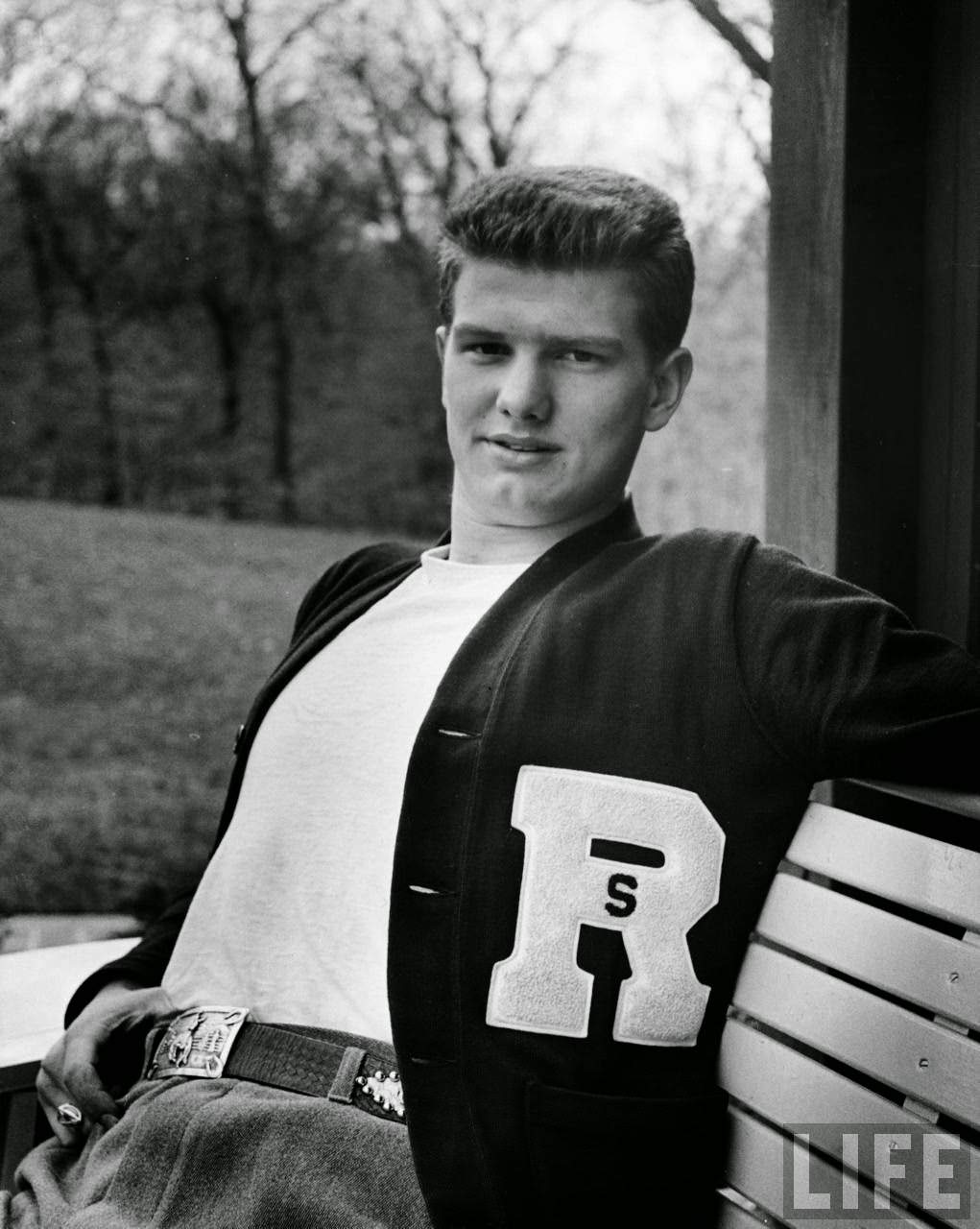
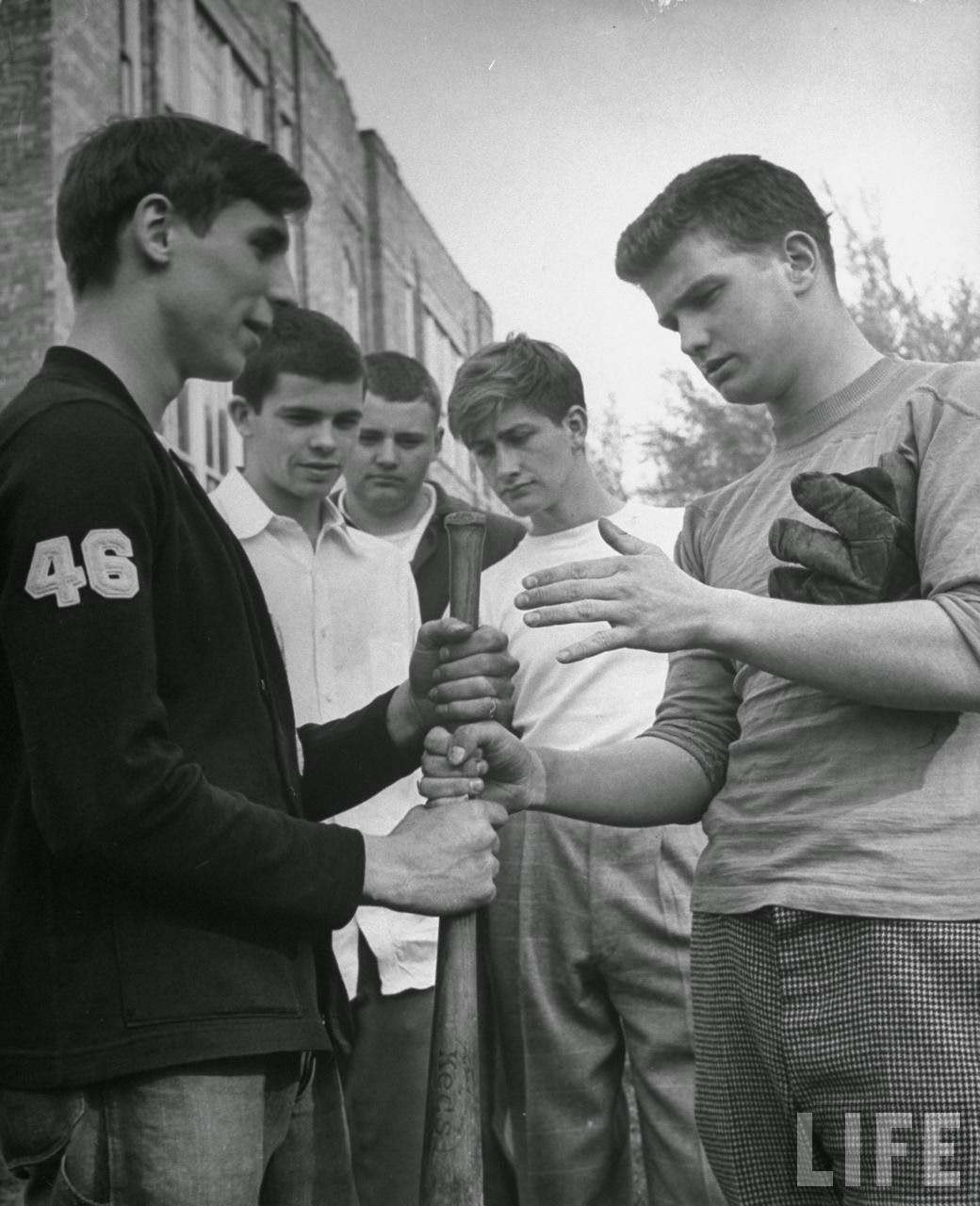
Sports filled their weekends, and the clothes they wore for those activities blurred into their everyday wardrobe. Letter sweaters earned on the athletic field got worn everywhere — to the soda fountain, on dates, around the neighborhood.
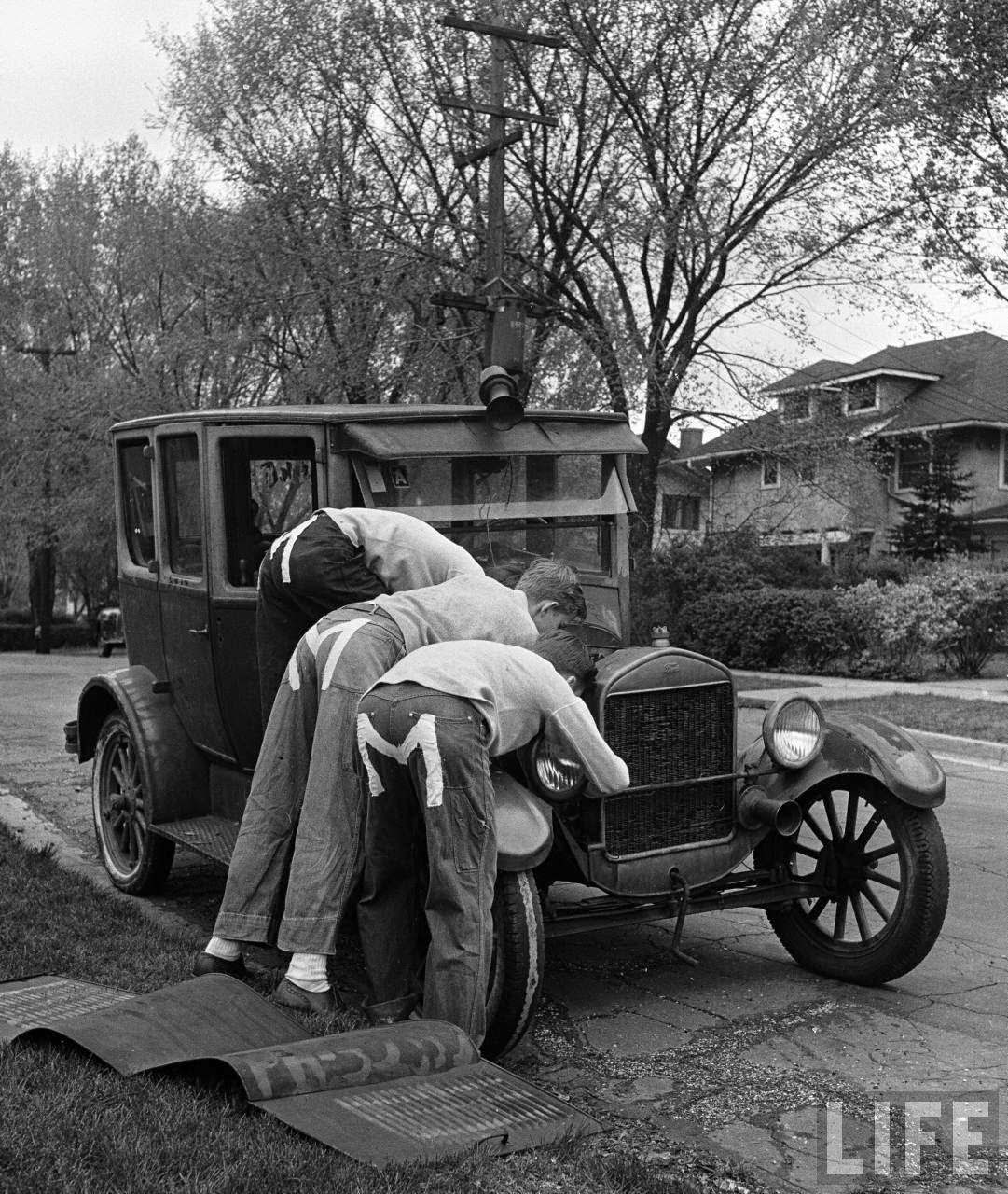
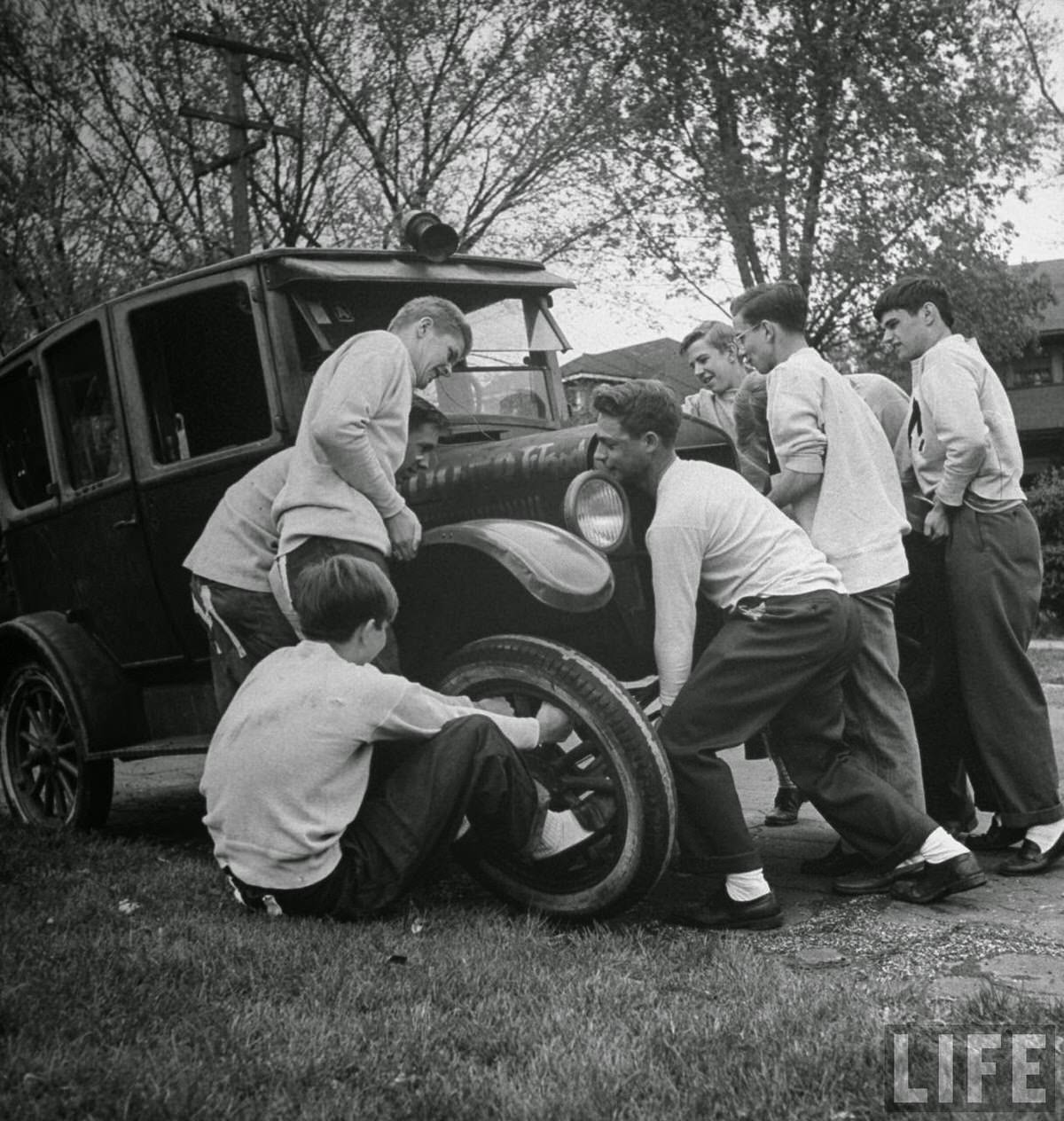
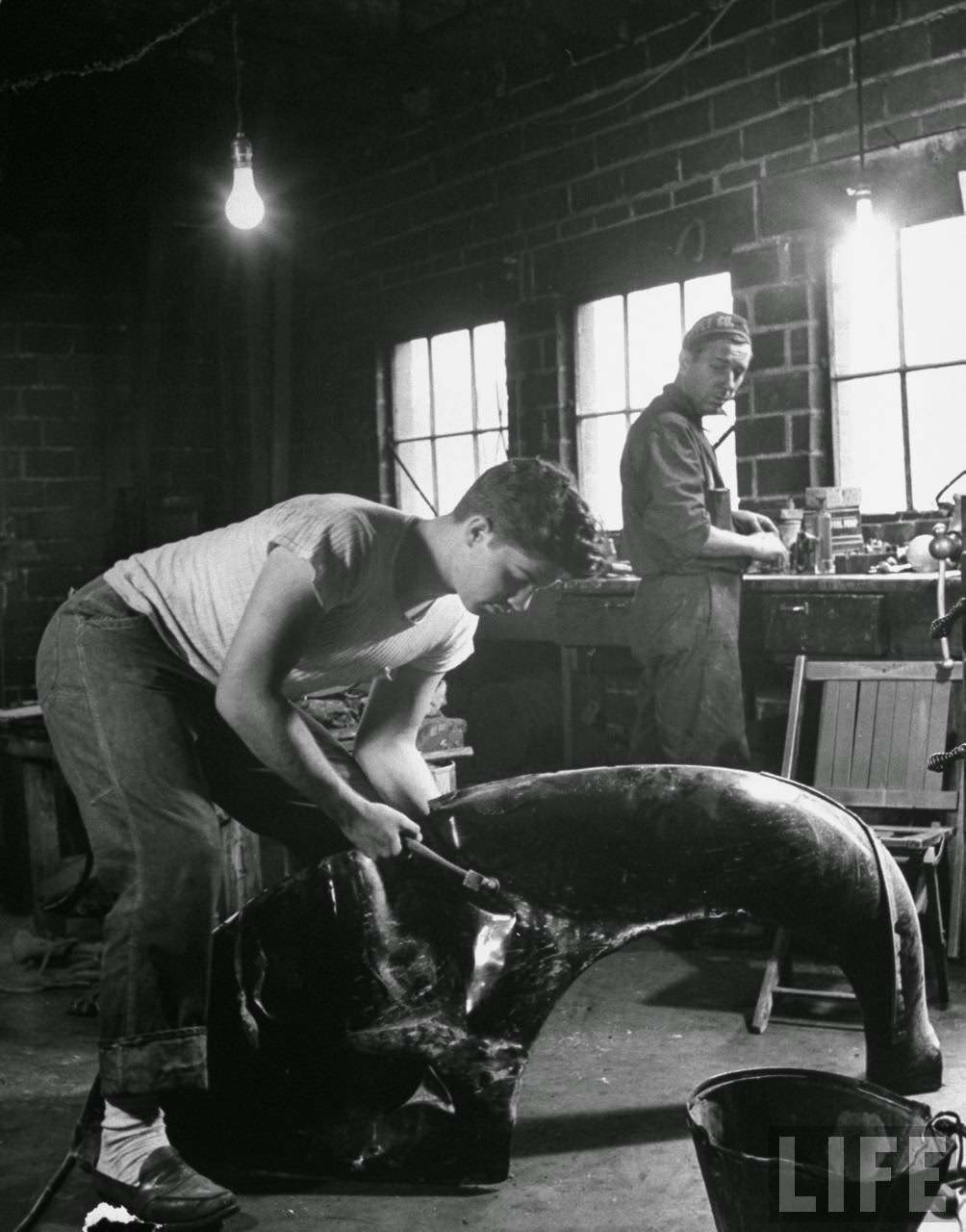
Cars were another obsession. Teenage boys worked on old models in garages and driveways, tinkering with engines and changing tires — sometimes without a jack, just sheer manpower. The grease-stained hands didn’t clash with the carefully combed hair. Both were part of the same identity.
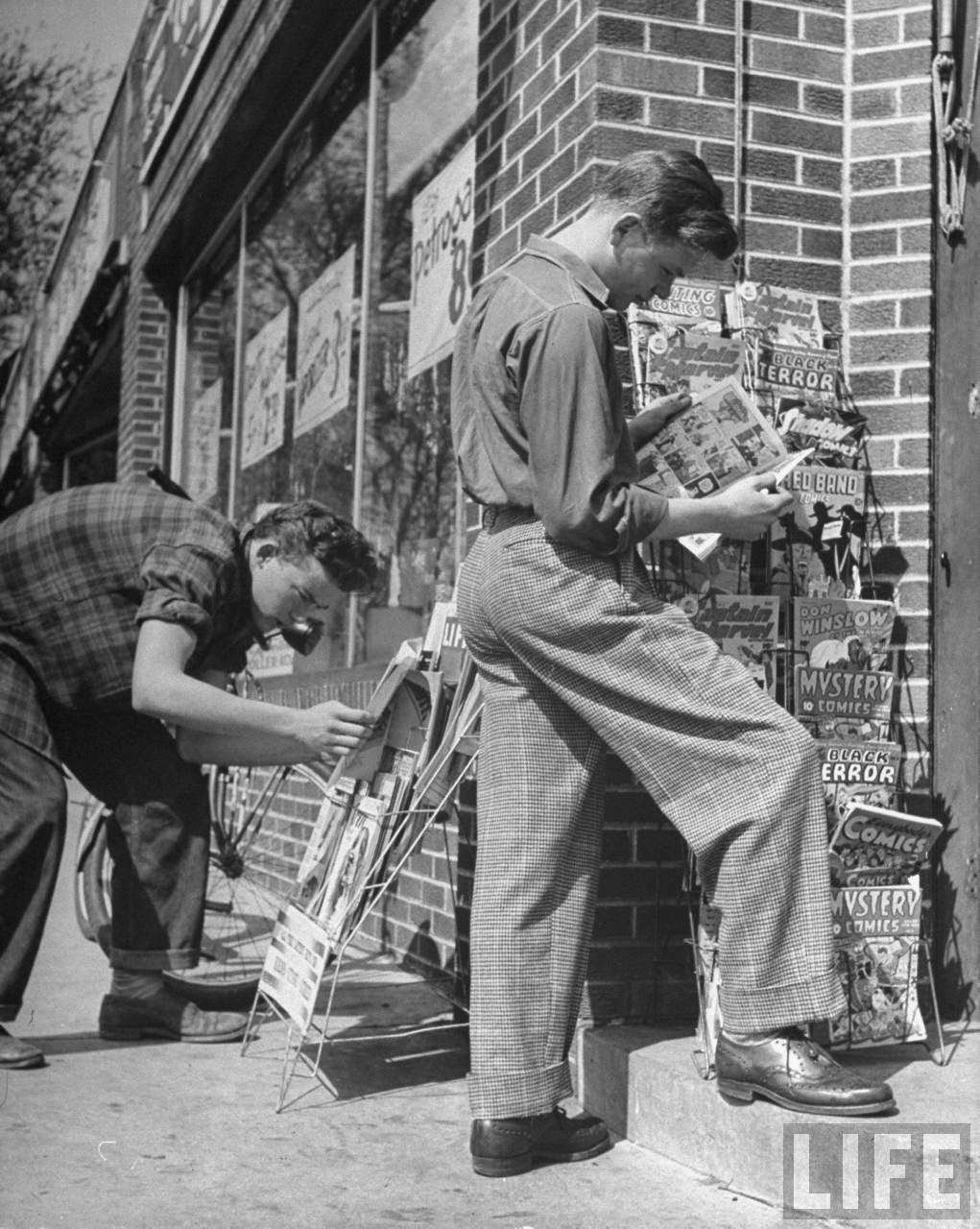
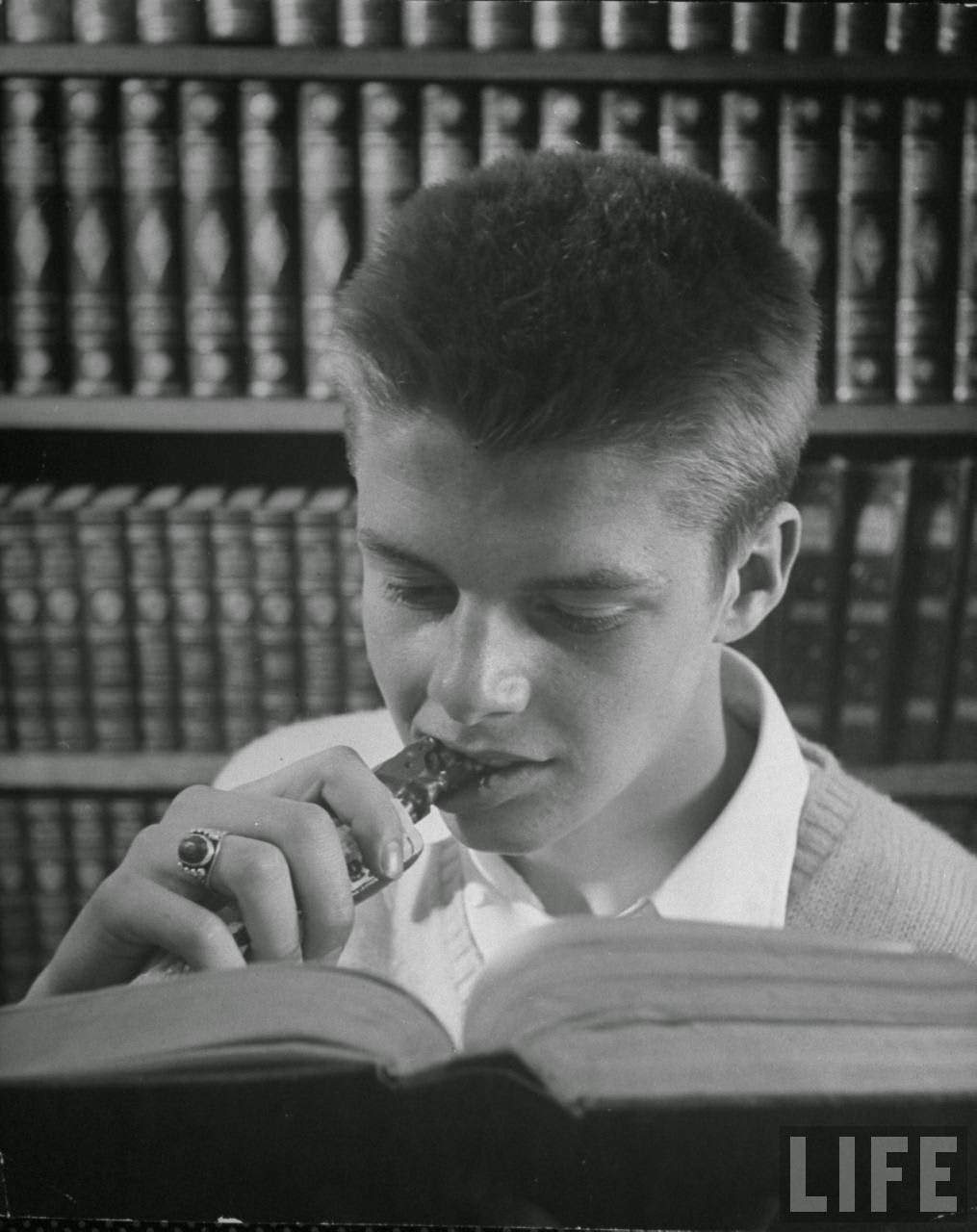
Reading material ran toward sports magazines and comic books, grabbed off the rack at the local drug store. Sneaking a candy bar during class was a small act of rebellion in the same spirit as the unbuttoned collar — minor, deliberate, and entirely theirs.
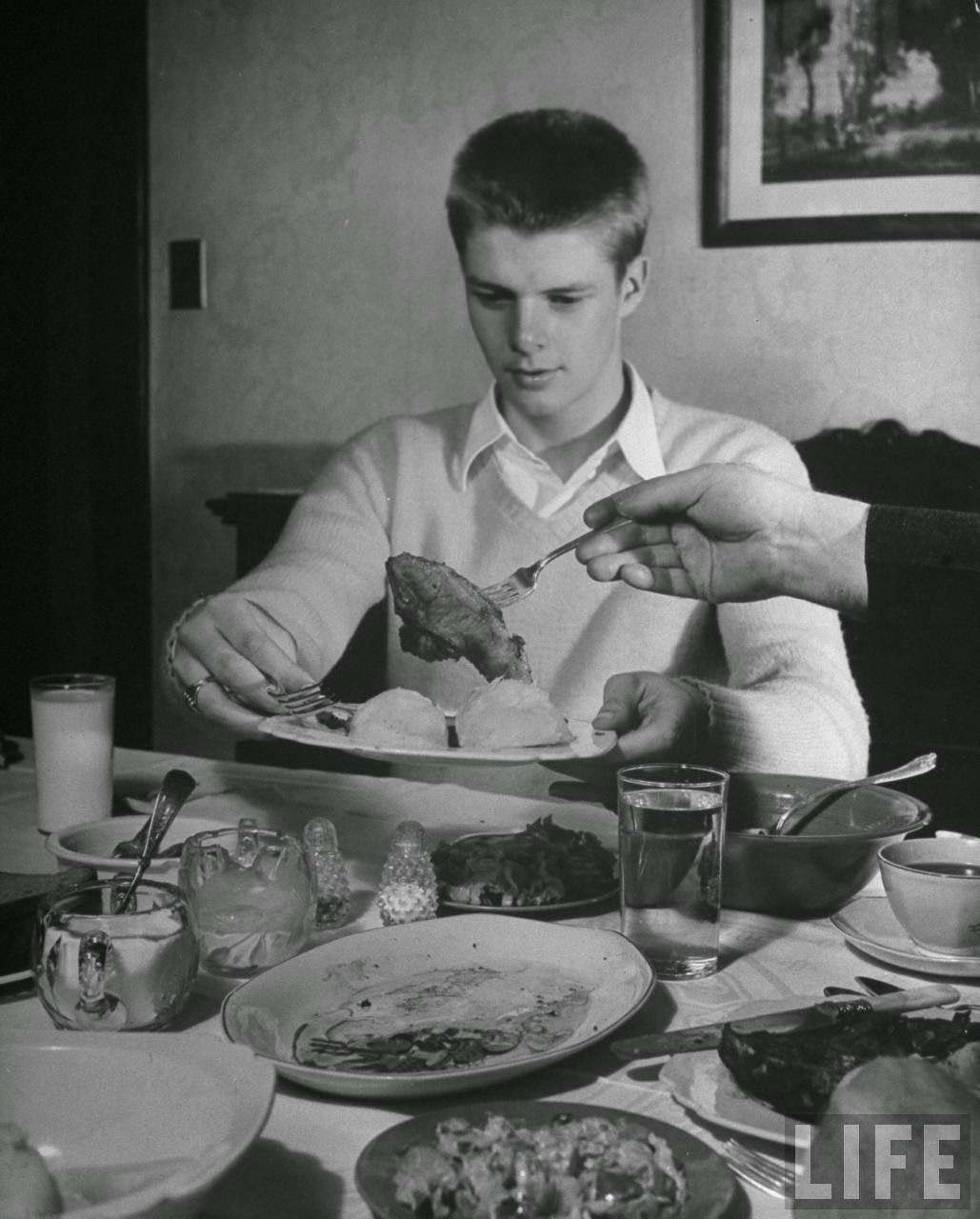
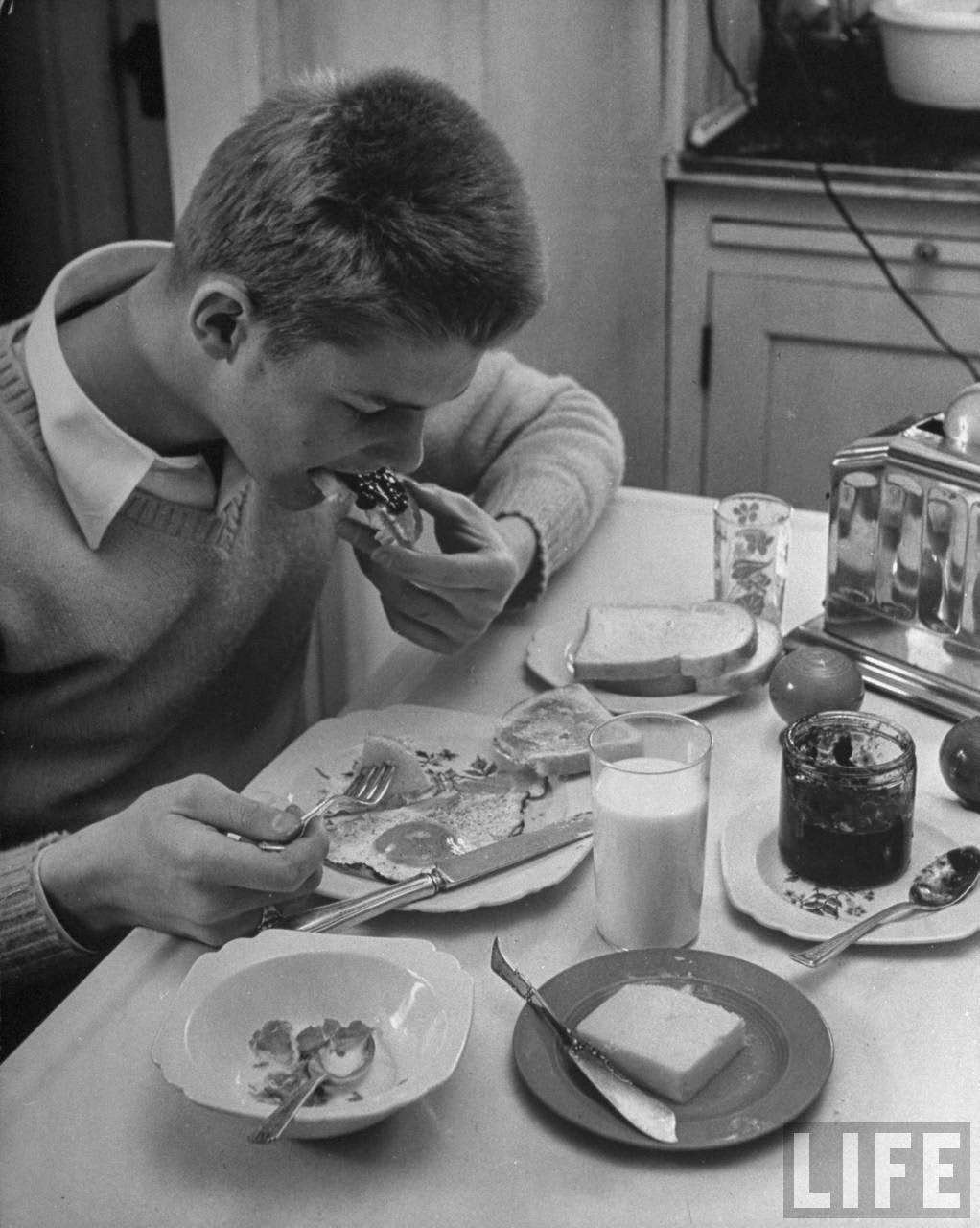
At home, these boys ate big — second helpings of pork chops, large breakfasts, snacks in bed. The appetite matched the energy of a generation that was loud, restless, and fully aware that the world around them was changing fast.
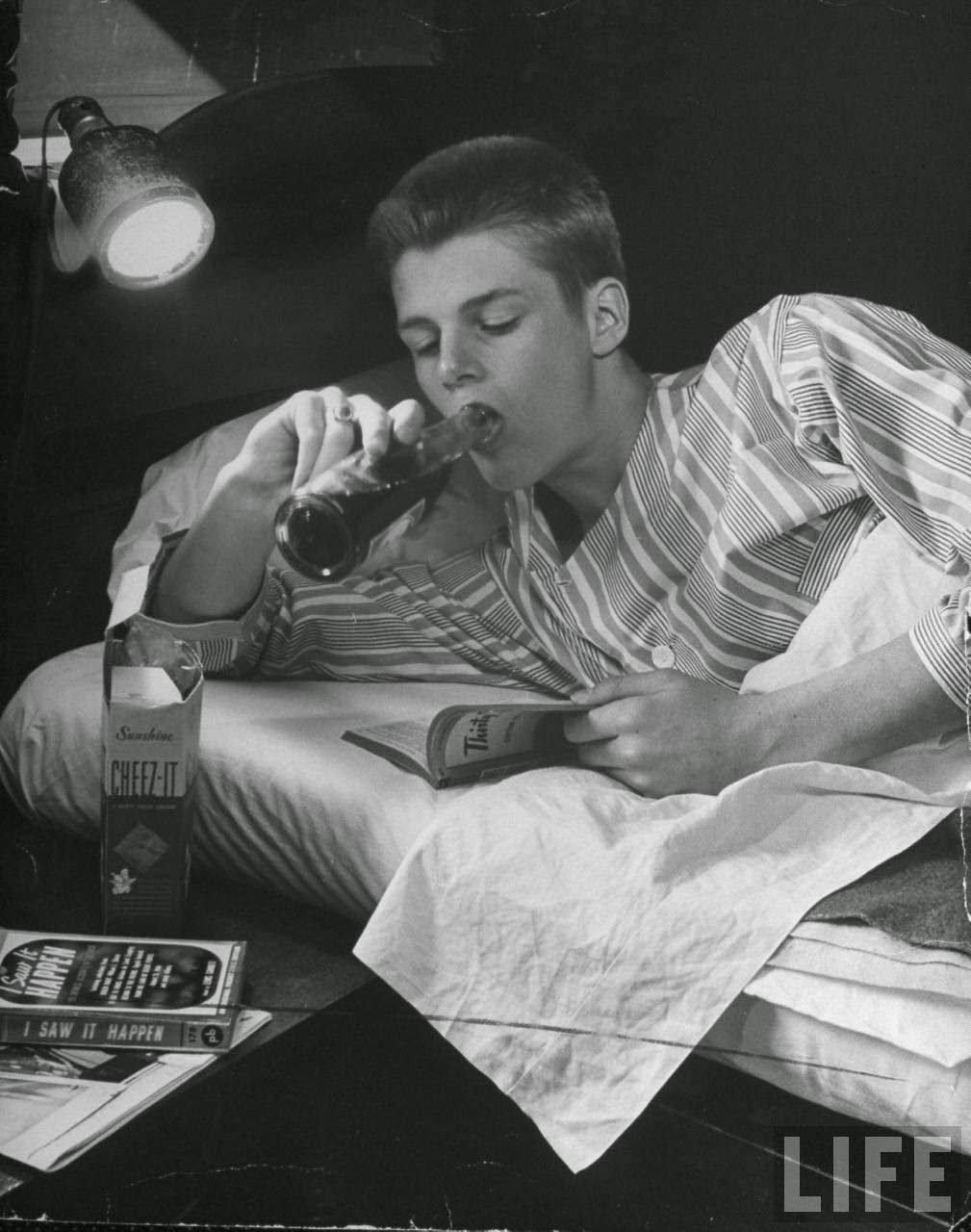
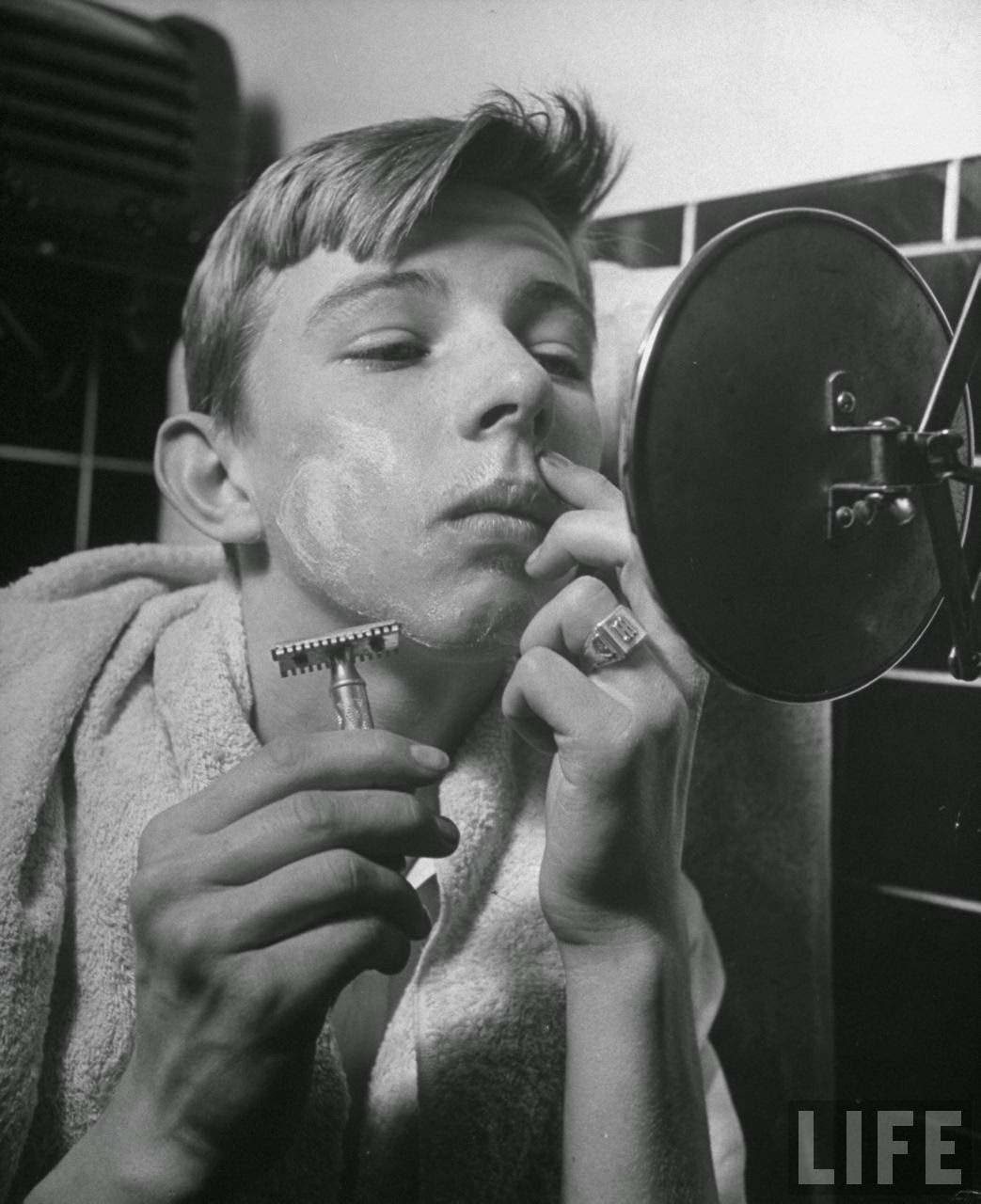
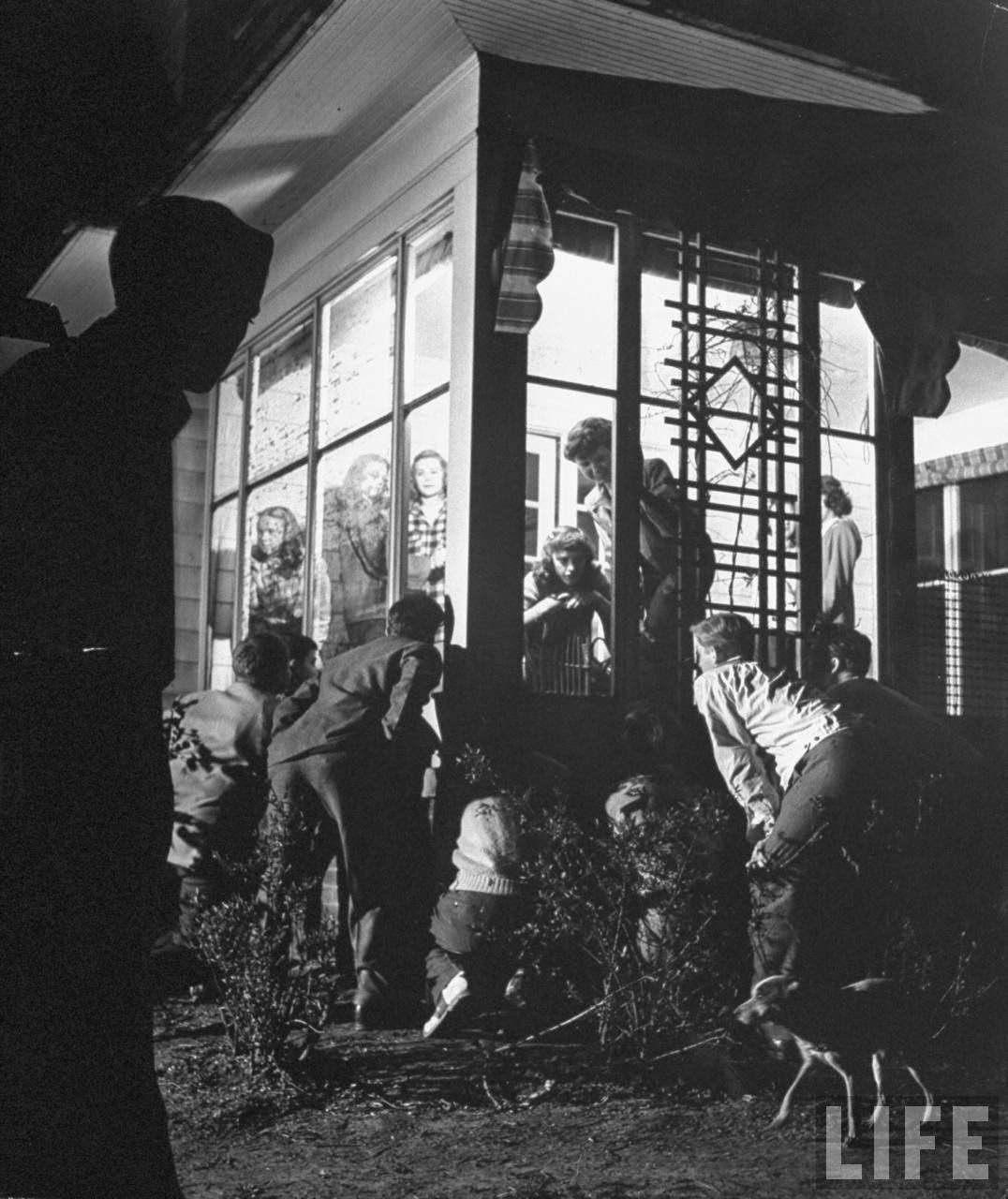
The first shave, the bedroom hangouts, the group dynamics with girls — all of it unfolded against the backdrop of a country at war. These boys navigated adolescence while their older brothers and classmates were overseas, and the “sloppy” look they wore was as much about marking their own moment as it was about fashion.