Hey There! Before You Go. 😧
Get the best vintage content straight into your inbox!

Don't worry, we don't spam

The May Queen Festivals of Whitelands College from the Early 1900s

In 1881, art critic John Ruskin introduced the May Queen festival to Whitelands College in London. He wanted female student teachers to have a celebration rooted in beauty and nature. The college Principal, Reverend John Faunthorpe, embraced the idea, and together they shaped a day that blended Anglican worship with ancient folk traditions. It quickly became the most anticipated event of the academic year.

The selection process was deliberate. Students did not vote for the most popular or academically gifted among them. Ruskin instructed them to choose the “likeablest and loveablest” girl — meaning the one with the kindest character. Votes were tallied on the morning of May 1st, and the new Queen was announced to the entire student body.
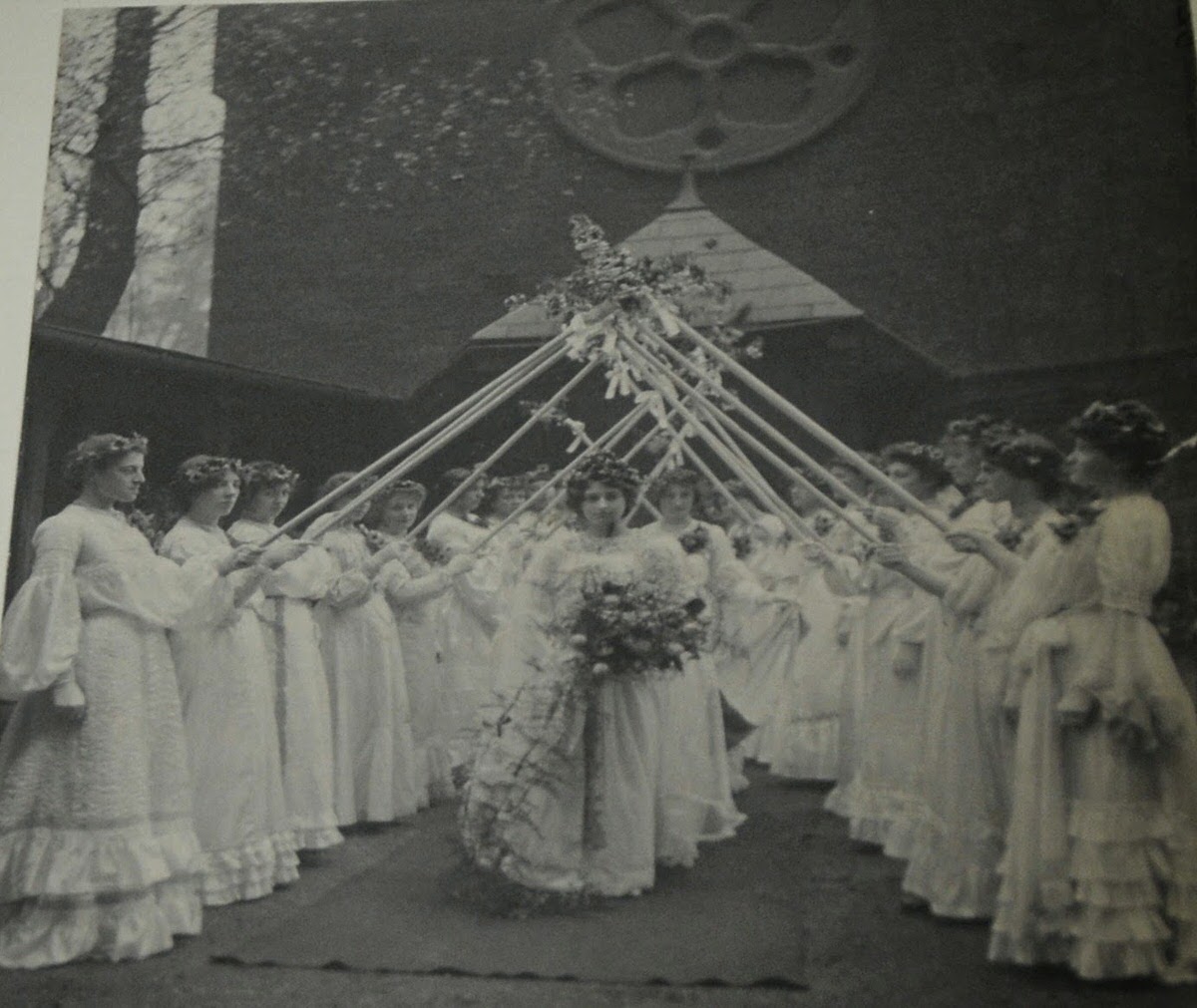
Queen Mildred surrounded by her white clad fellow students in 1904.

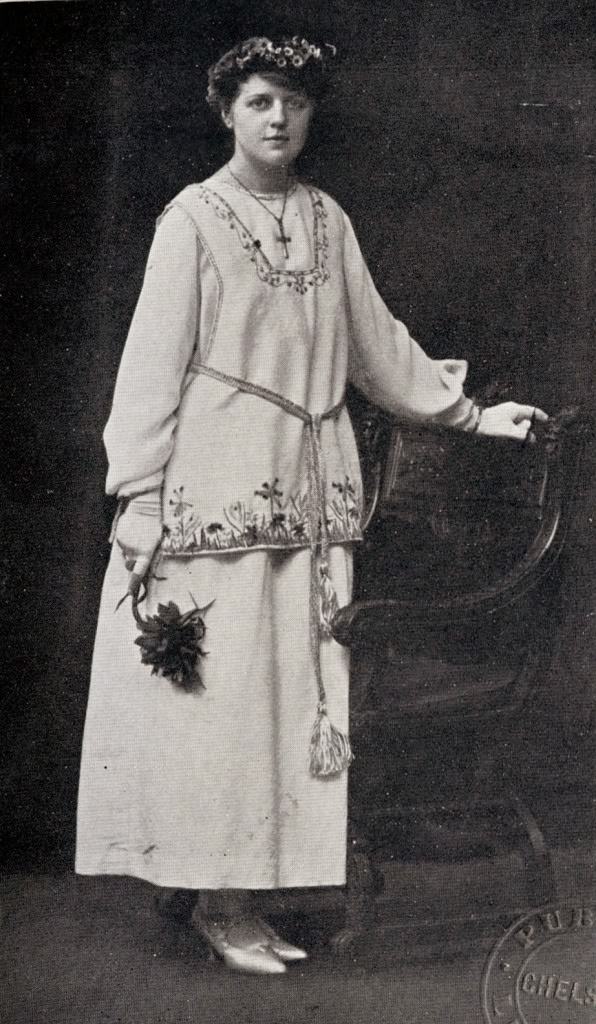
The Queen wore a gown of cream or white fabric with hand-stitched embroidery. Each year, Ruskin commissioned a solid gold cross necklace, often decorated with leaves or hawthorn blossoms, which the Principal placed around the Queen’s neck as a permanent gift during the coronation.
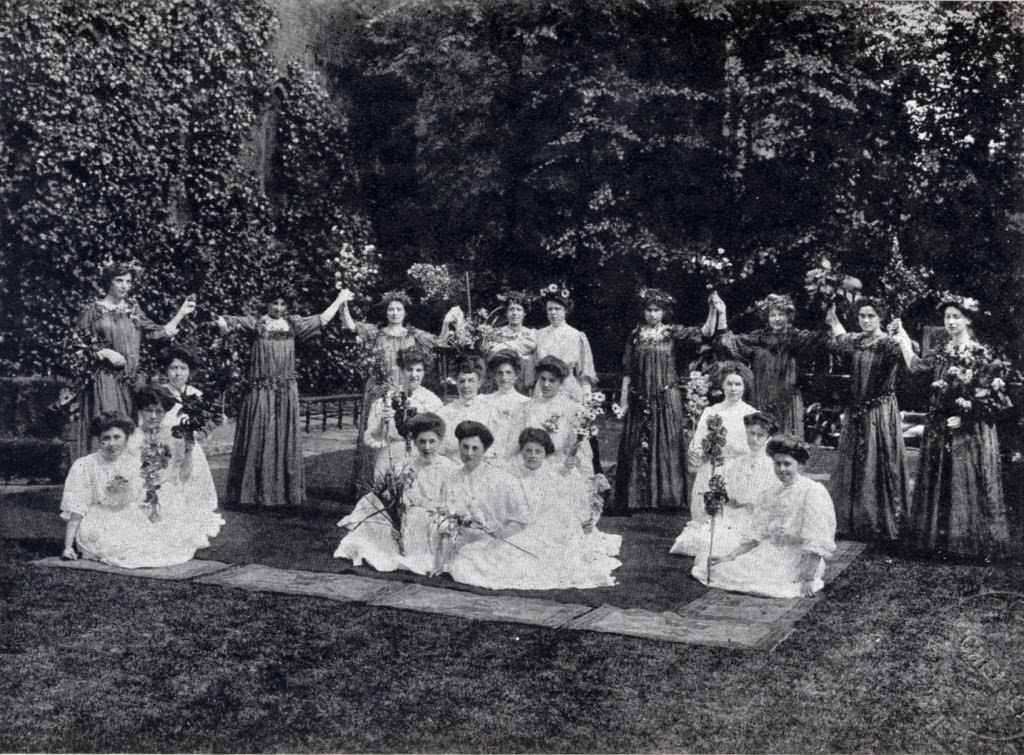
Queen Elsie. Here is the masque from 1907.

The festival day opened with a chapel service. Students dressed in white frocks processed in carrying fresh flower garlands and branches. Hymns and prayers marked the season, and the May Queen knelt before the altar before the outdoor celebrations began.
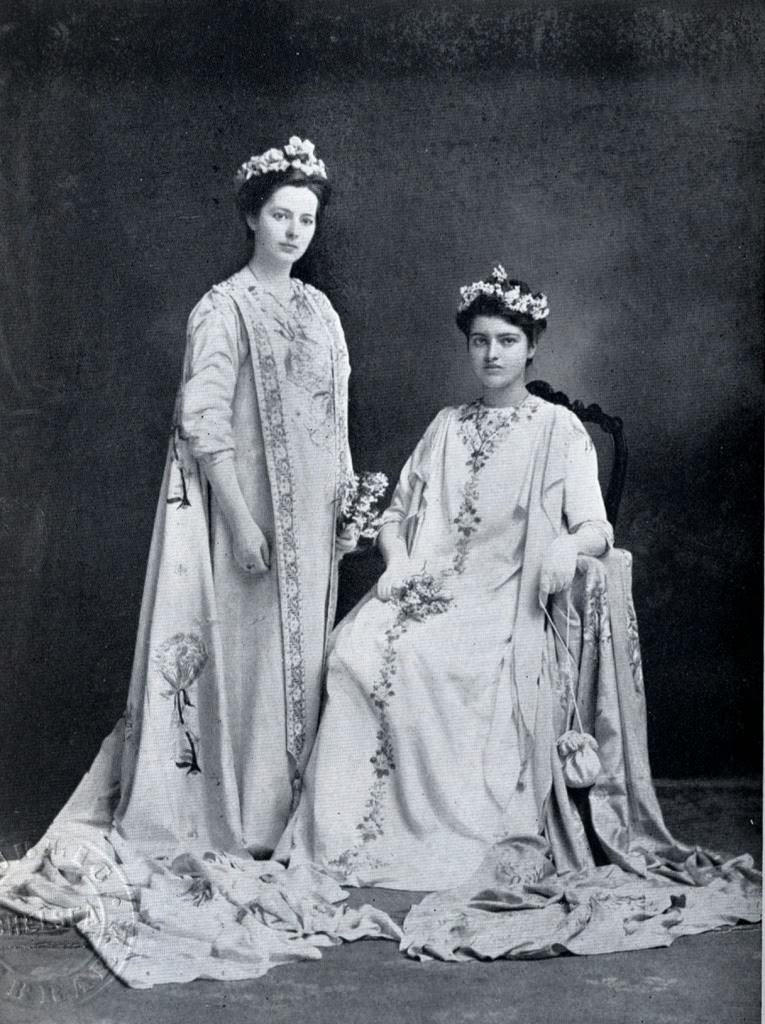
Queen Elsie III enthroned with the 1910 Queen Louise standing in attendance, 1911

Outside, students danced around a tall Maypole on the lawn, weaving colorful ribbons into patterns as they circled it. The Queen watched from a throne draped in greenery. Her duties extended beyond ceremony — she distributed books to fellow students and directed charitable gifts to local poor residents.
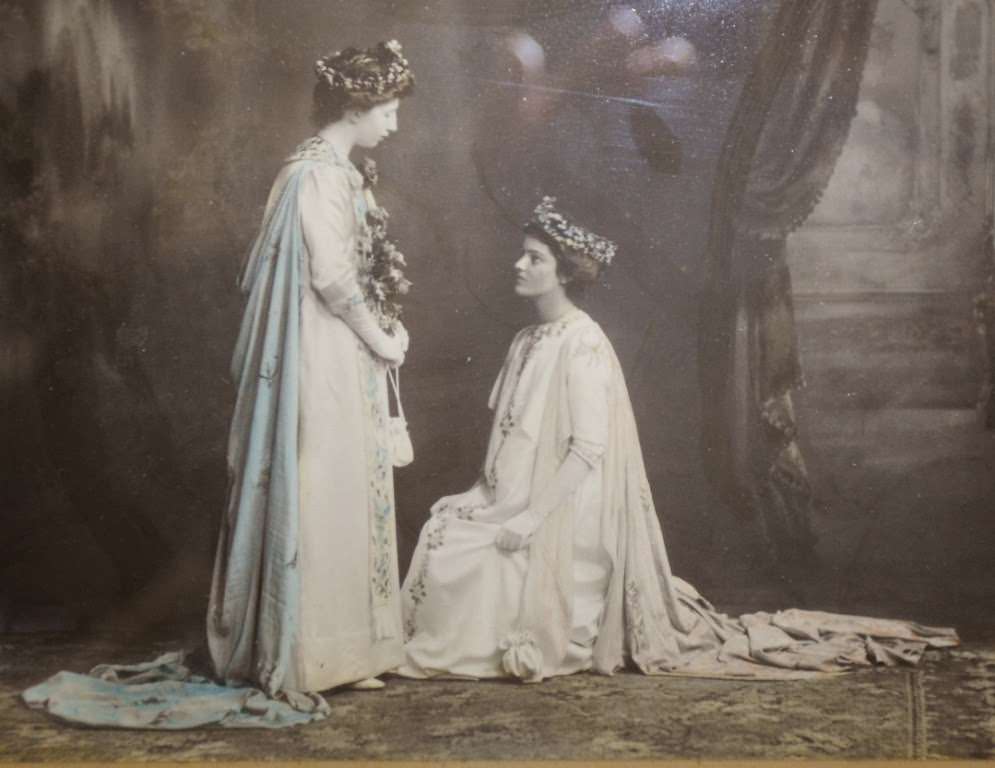
Here you can see the dowager Queen Elsie III paying homage to her sucessor Queen Alice in a lightly hand coloured photograph, 1912.
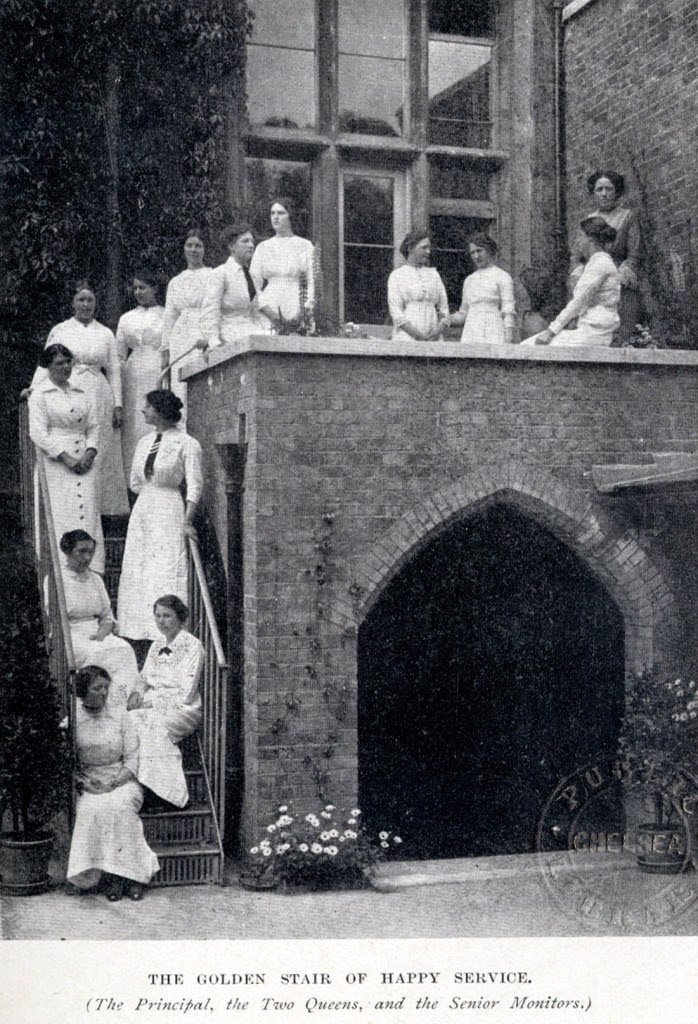
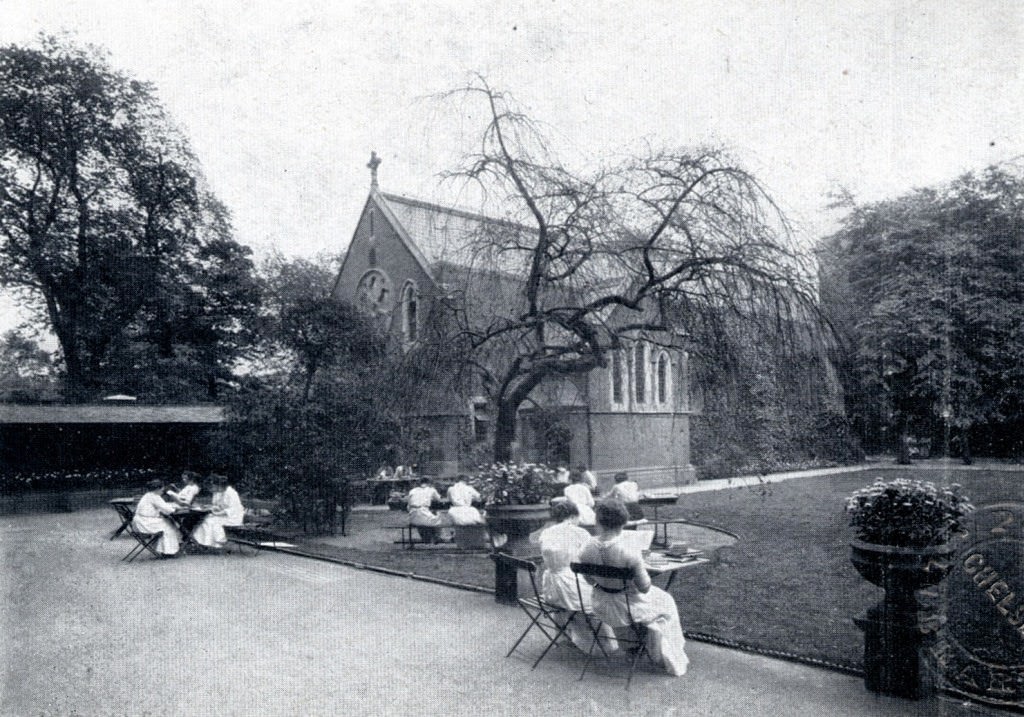
This picture was taken in 1914. The College remained a kind of secluded enclave even during the First World War, although students and staff played a part in the war effort and there was some damage during a Zeppelin raid. For the most part the inhabitants of the College went on with their lives.
The Golden Stair of Happy Service (The Principal, the Two Queens and the Senior Monitors), 1914.

Even as the First World War altered daily life across Britain, Whitelands maintained its annual ritual. The festival continued through 1915, offering students a sense of continuity despite the conflict beyond the college walls.
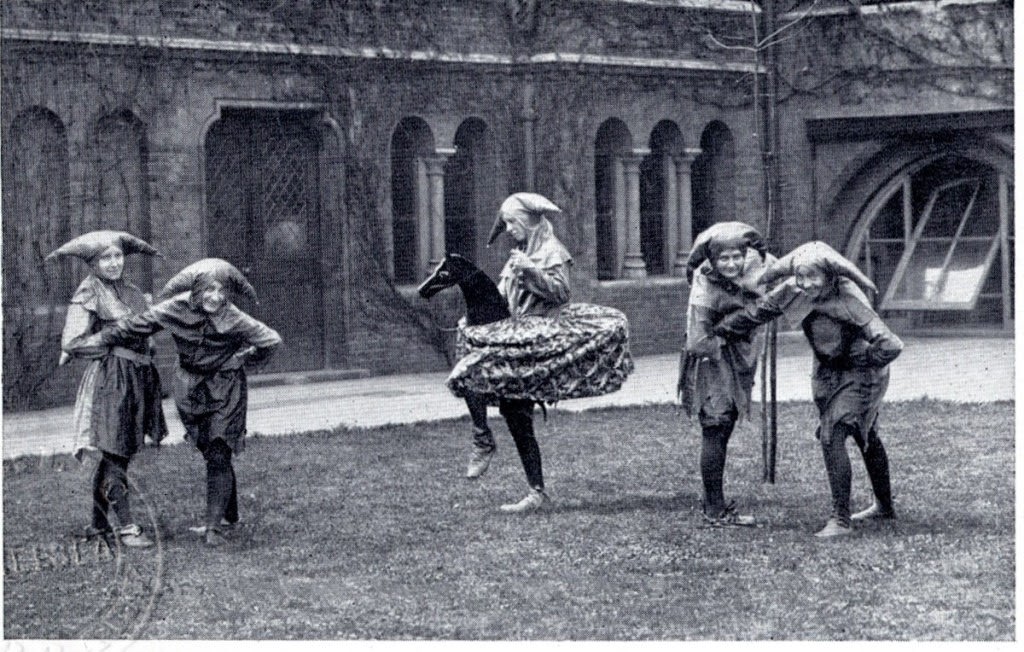
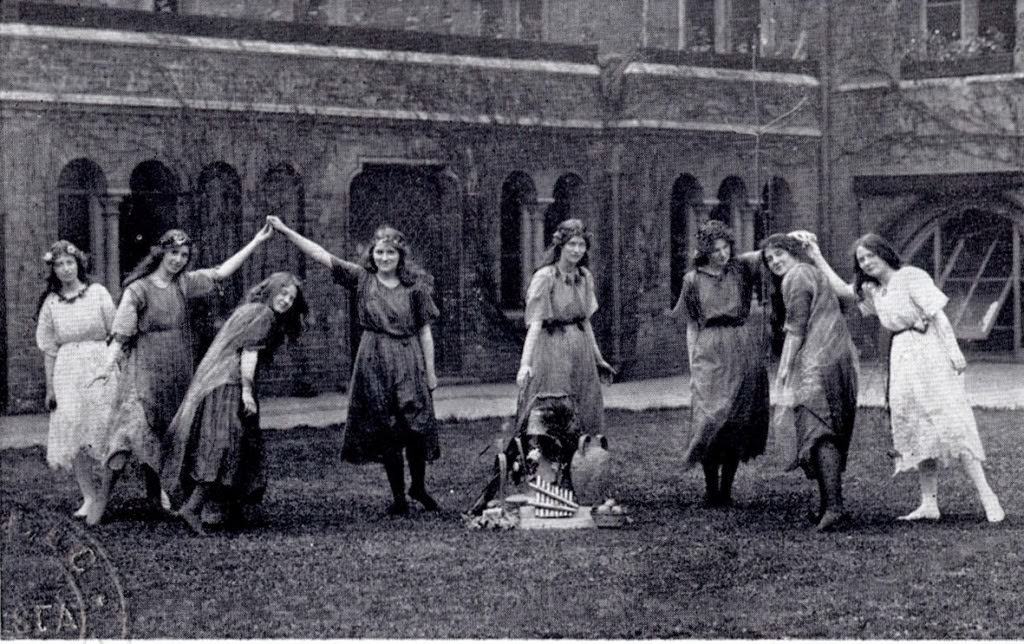
The 1915 Annual.
The 1915 Annual.
Fooling around, 1915.

By 1919, former queens returned to mark the crowning of new ones, creating a living chain of tradition. Queen Janet’s 1919 gown visibly reflected post-war fashion shifts, showing how the broader world inevitably shaped even this sheltered celebration.
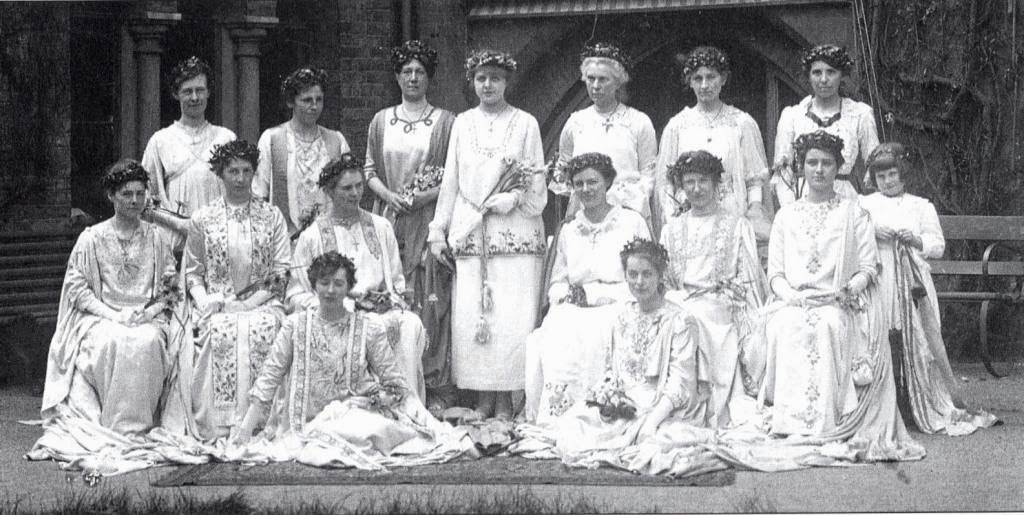
The new Queen Janet I and the former queens, 1919. On Queen Janet's right is the first Queen, Ellen. Agnes II (1909) sits at the front on the right, and Elsie III is also on the right at the end of the seated row.
The new Queen Janet I and the former queens, 1919. On Queen Janet’s right is the first Queen, Ellen. Agnes II (1909) sits at the front on the right, and Elsie III is also on the right at the end of the seated row.
Queen Janet in 1919. Her dress shows the influence of post war fashion.

Into the 1920s, the masques — theatrical performances staged as part of the festivities — grew more elaborate, with students taking on costumed roles. The events retained their celebratory spirit well into the following decade.
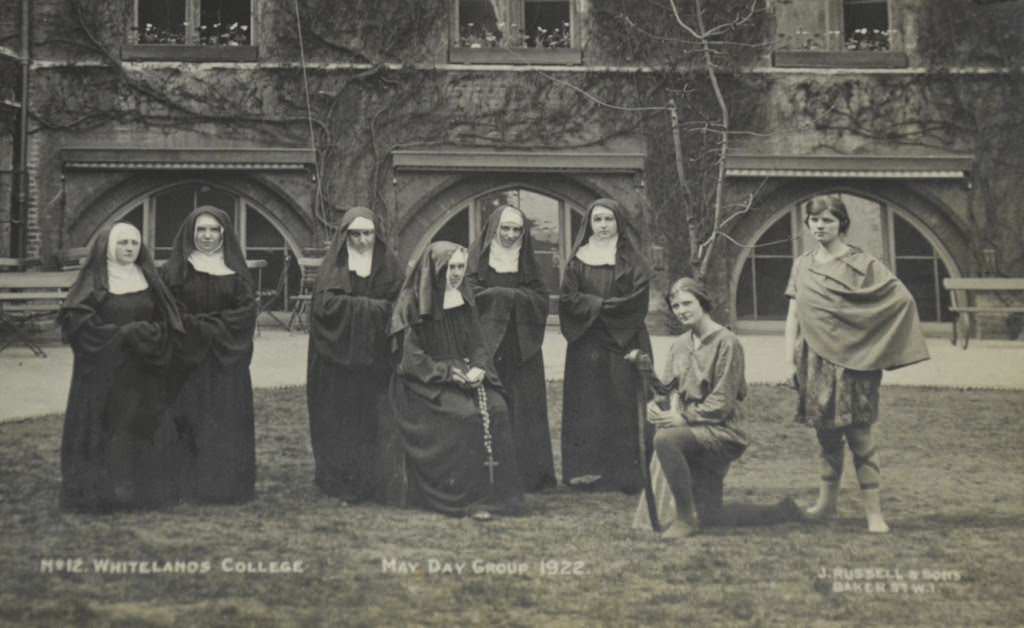
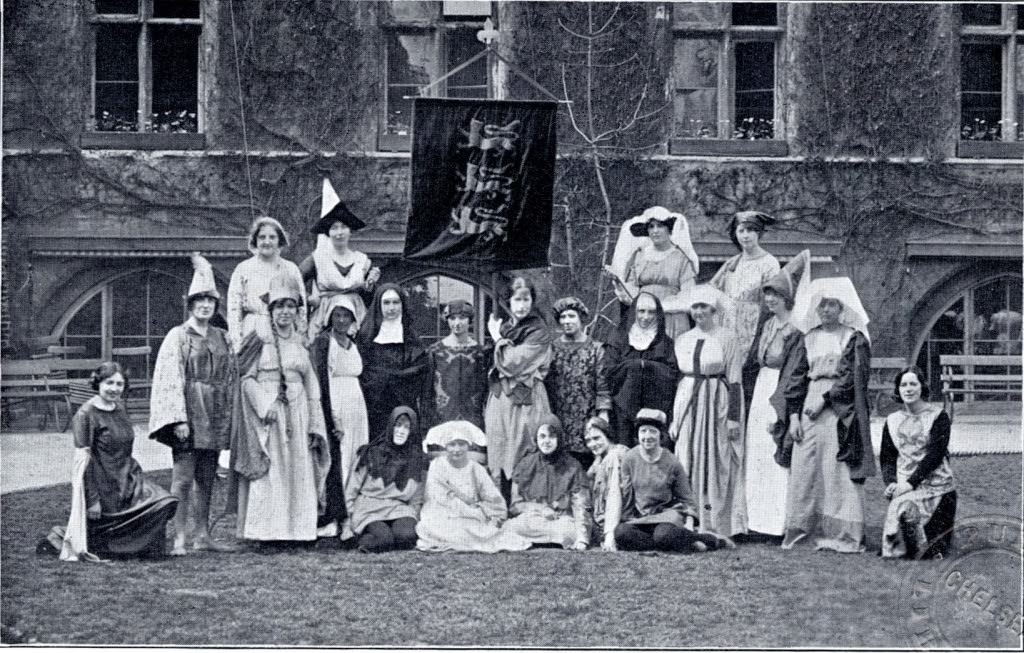
May Day group, 1922. The fake nuns seen in previous masques were still there.
The masque here looks like an amateur theatrical event, or a fancy dress party, 1922.
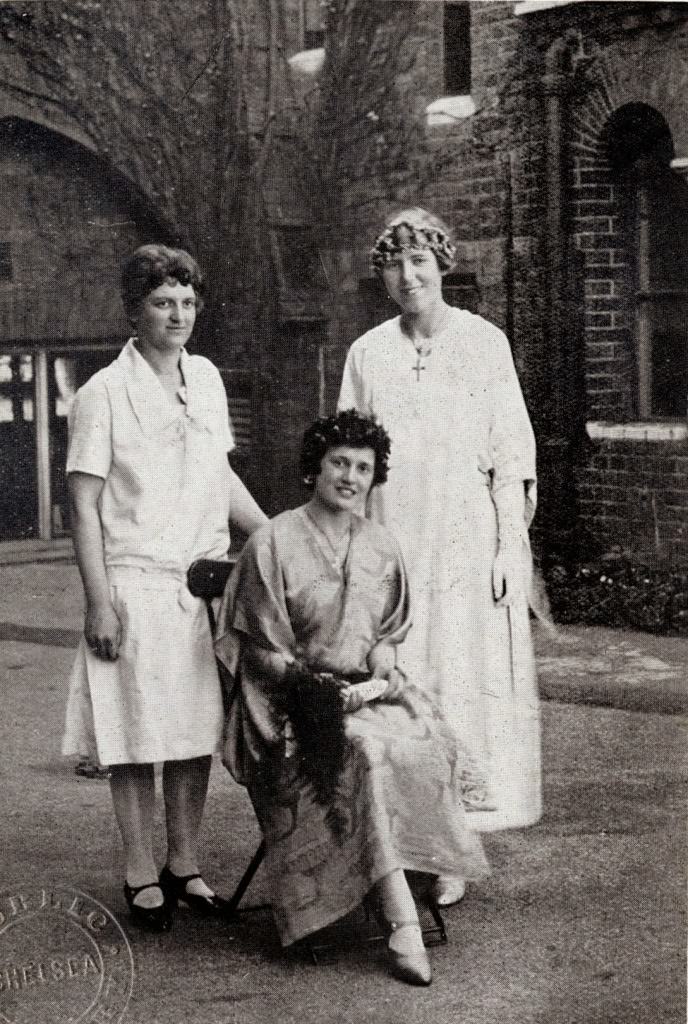
Queen Sylvia, her predecessor Queen Enid and the Senior Student, 1927.
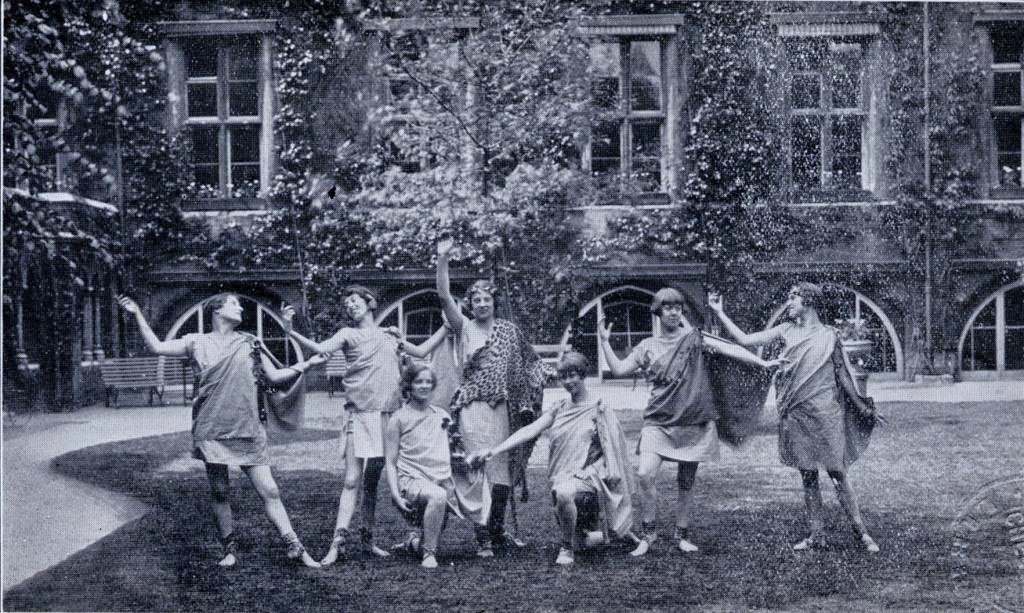
The bacchanals unconvincing, 1927.
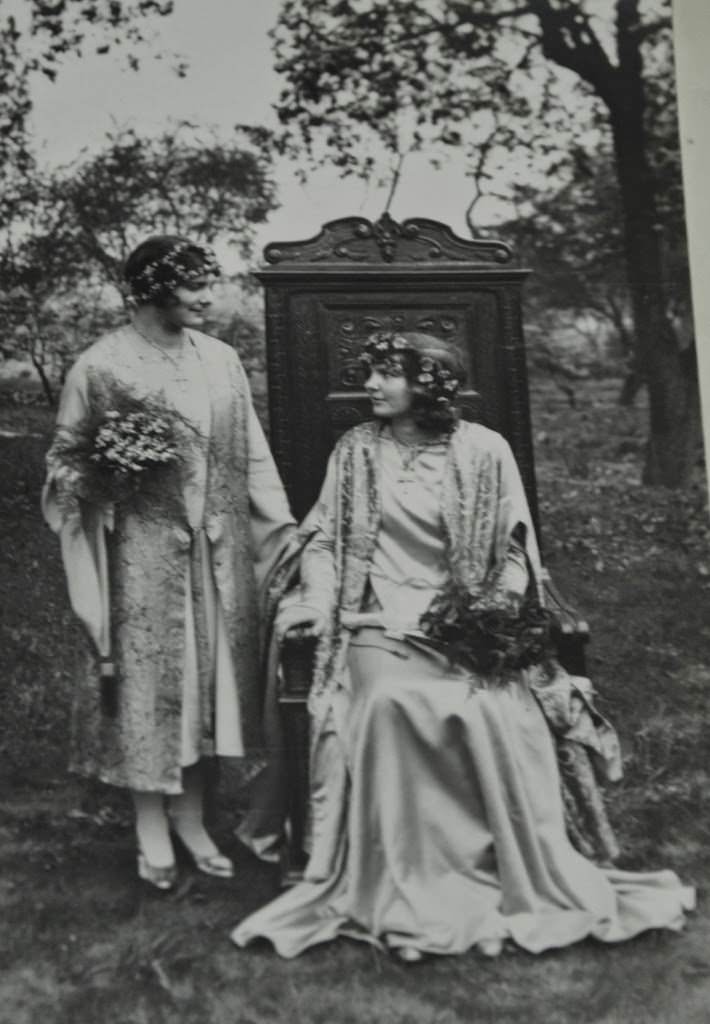
Queen Joan and Queen Edna, 1931.
Enjoyed this post? Get new ones in your inbox.

Leave a Comment

Your email address will not be published. Required fields are marked *

Share this Post 🥺

Please take a moment to share this content. Your support is greatly appreciated! 🙌🙏

Share this Post 🥺

Please take a moment to share this content. Your support is greatly appreciated! 🙌🙏
Scroll to Top
 
Hey Friend, Before You Go.. Please like & follow for more interesting content