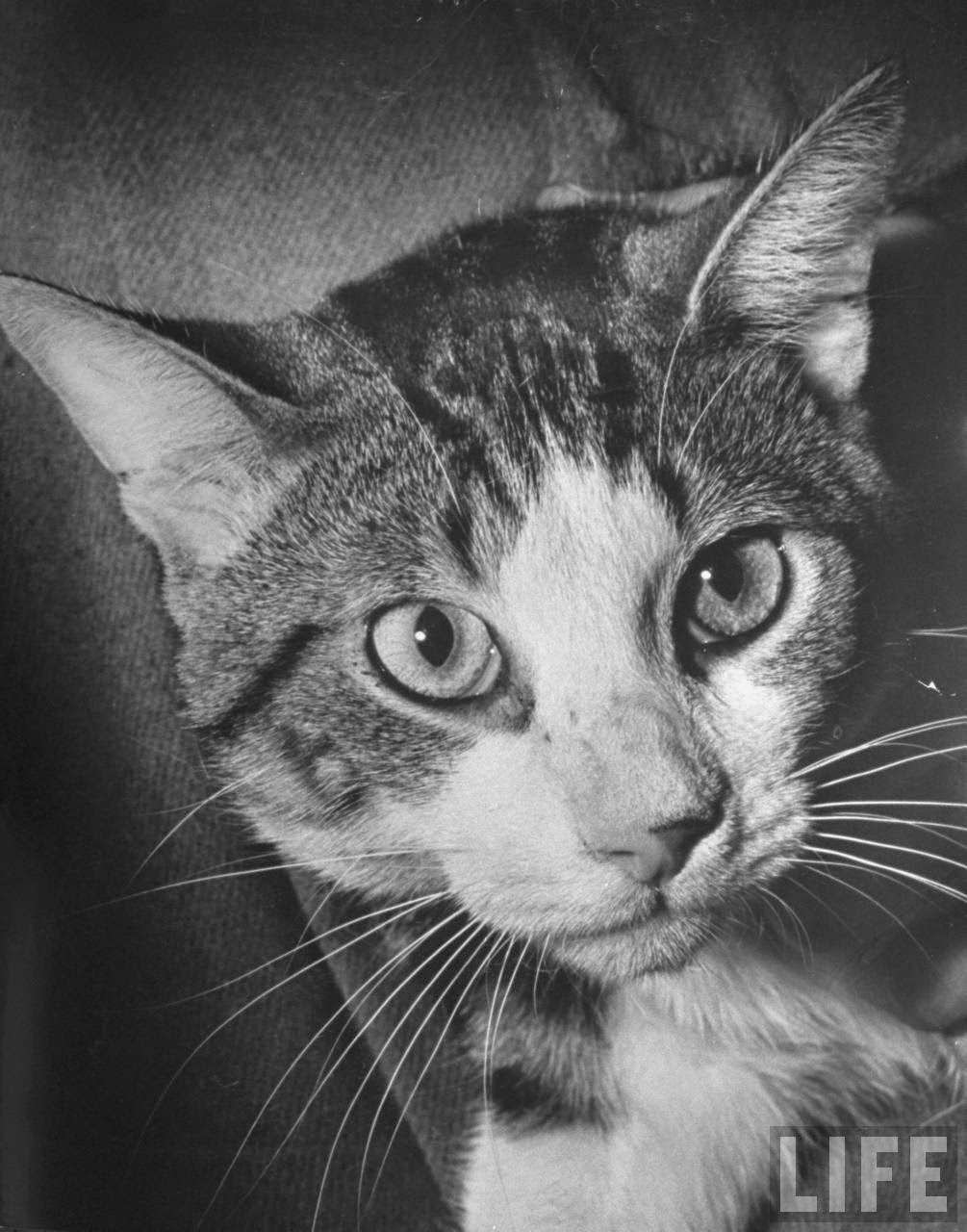
Long before cats took over the internet, they were the subject of serious scientific research. In 1941, psychologists at Brooklyn College designed a set of problem-solving experiments to answer a question that had divided pet owners for years: were cats actually intelligent, or were they just too stubborn to show it? Dog owners pointed to their pets’ eagerness to learn tricks. Cat owners argued their animals were simply independent, not incapable. The researchers decided to find out which side was right.
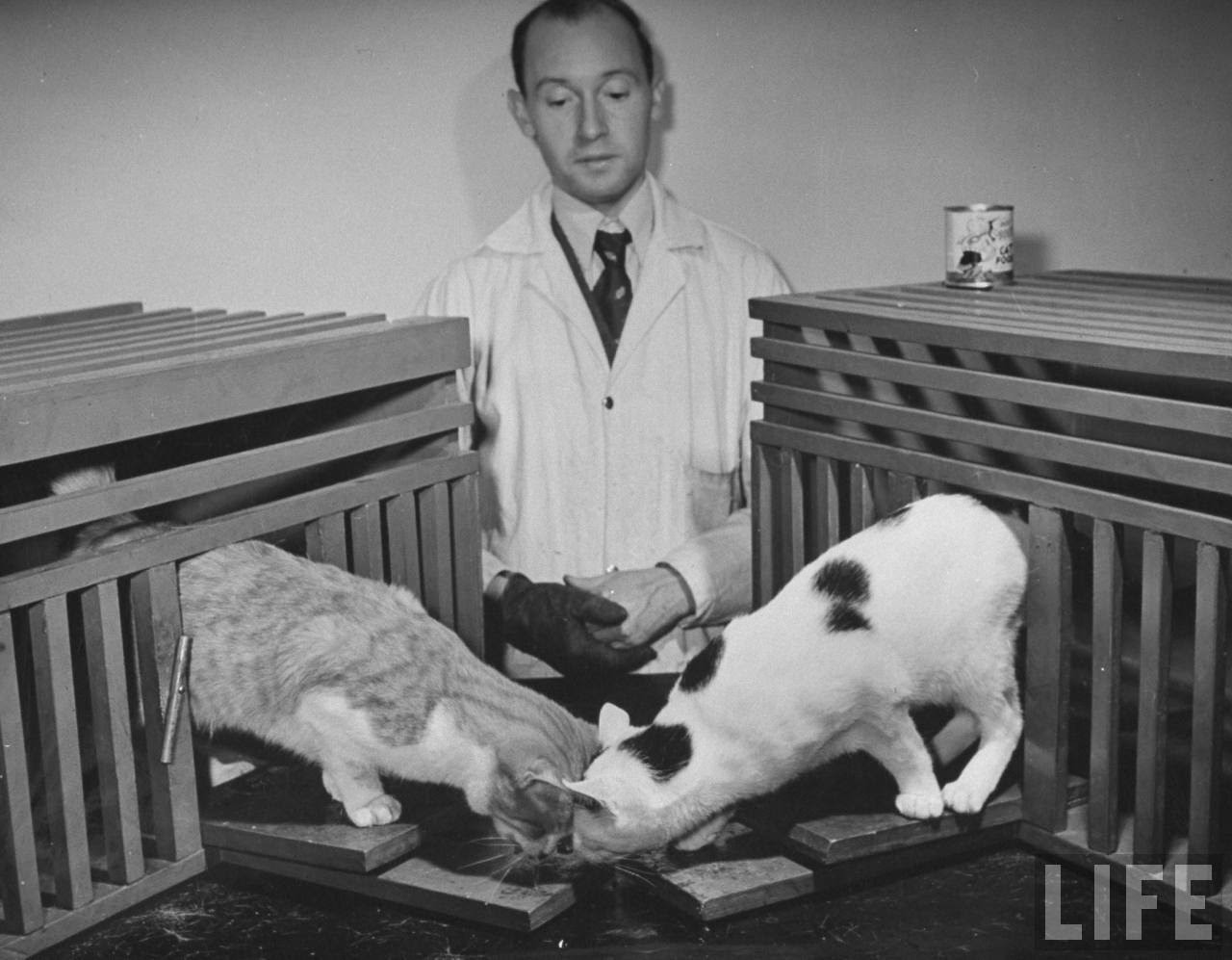
LIFE photographer Nina Leen was brought in to document the trials as they unfolded in a controlled laboratory setting. The cats were kept hungry before each session so that food served as a reliable motivator. Every test was designed to measure a specific mental ability — problem-solving, physical reasoning, memory, and spatial navigation.
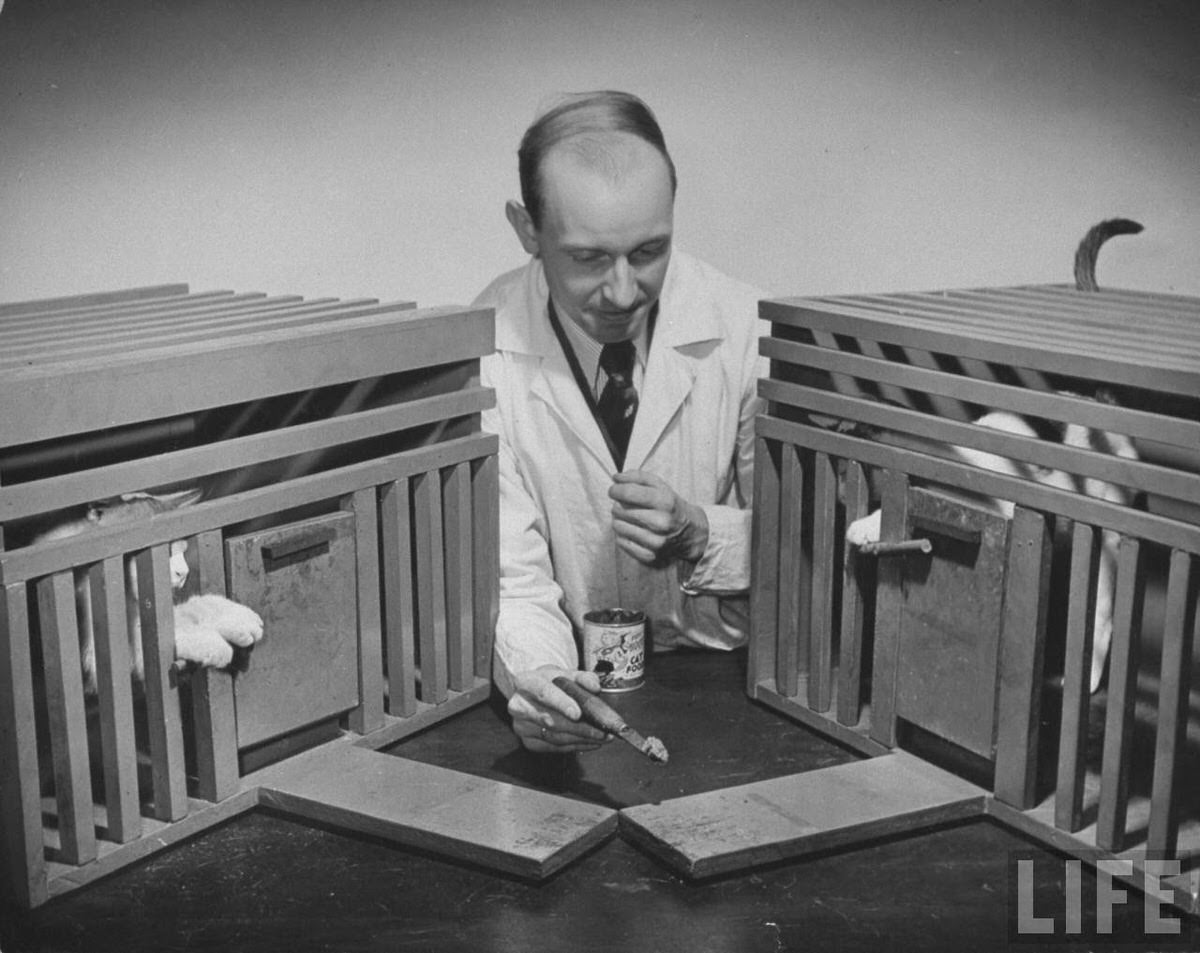
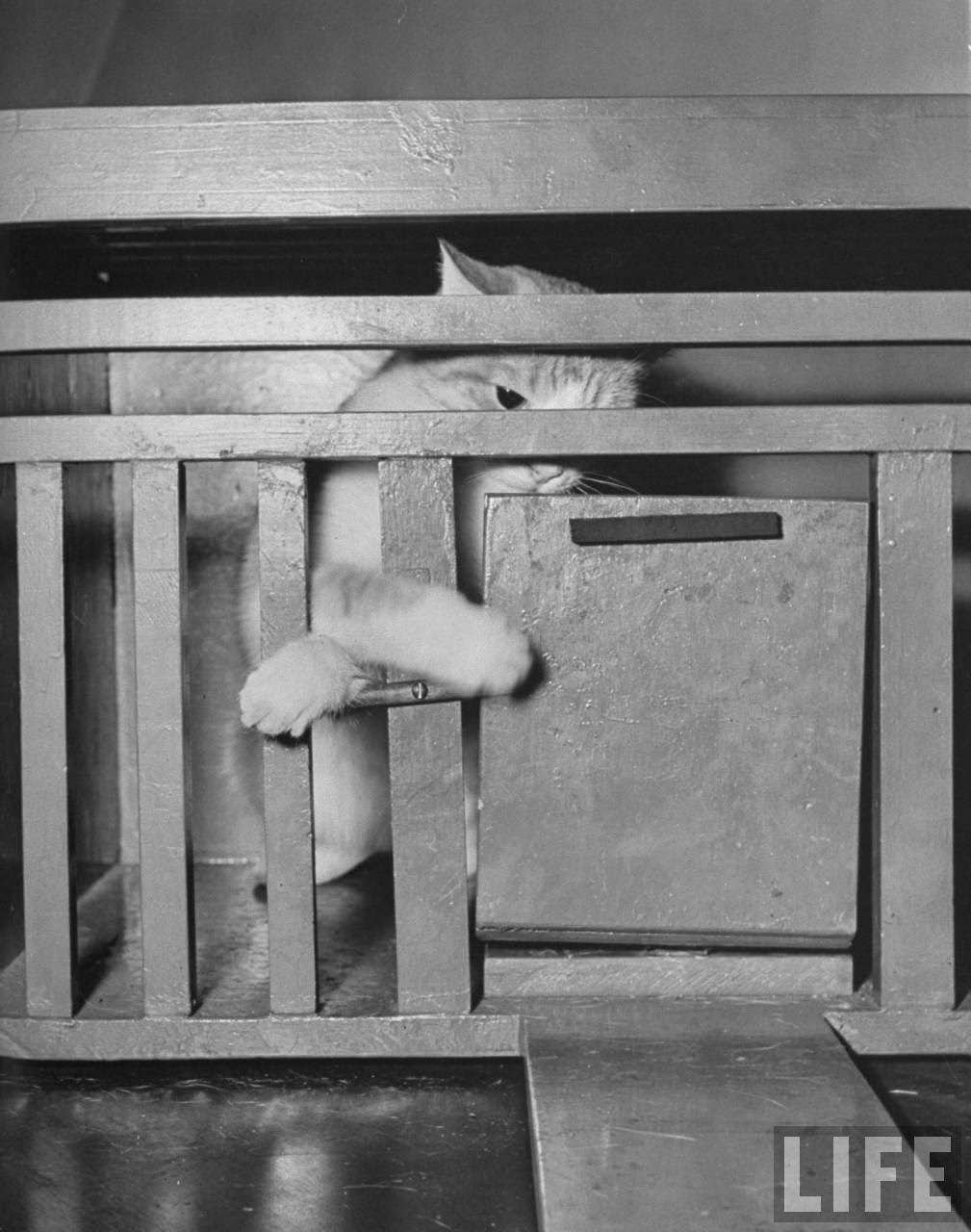
The first major test was the puzzle box. Researchers locked a hungry cat inside a wooden crate fitted with a mechanical latch. Either a floor pedal or a hanging string inside the box would trigger the door to open. A plate of food waited just outside the bars, visible but out of reach. At first, the cats pawed at the bars at random. The moment one accidentally triggered the release mechanism, the connection was made. Within just a few trials, the cats walked calmly into the box, pressed the lever without hesitation, and walked straight to their food.
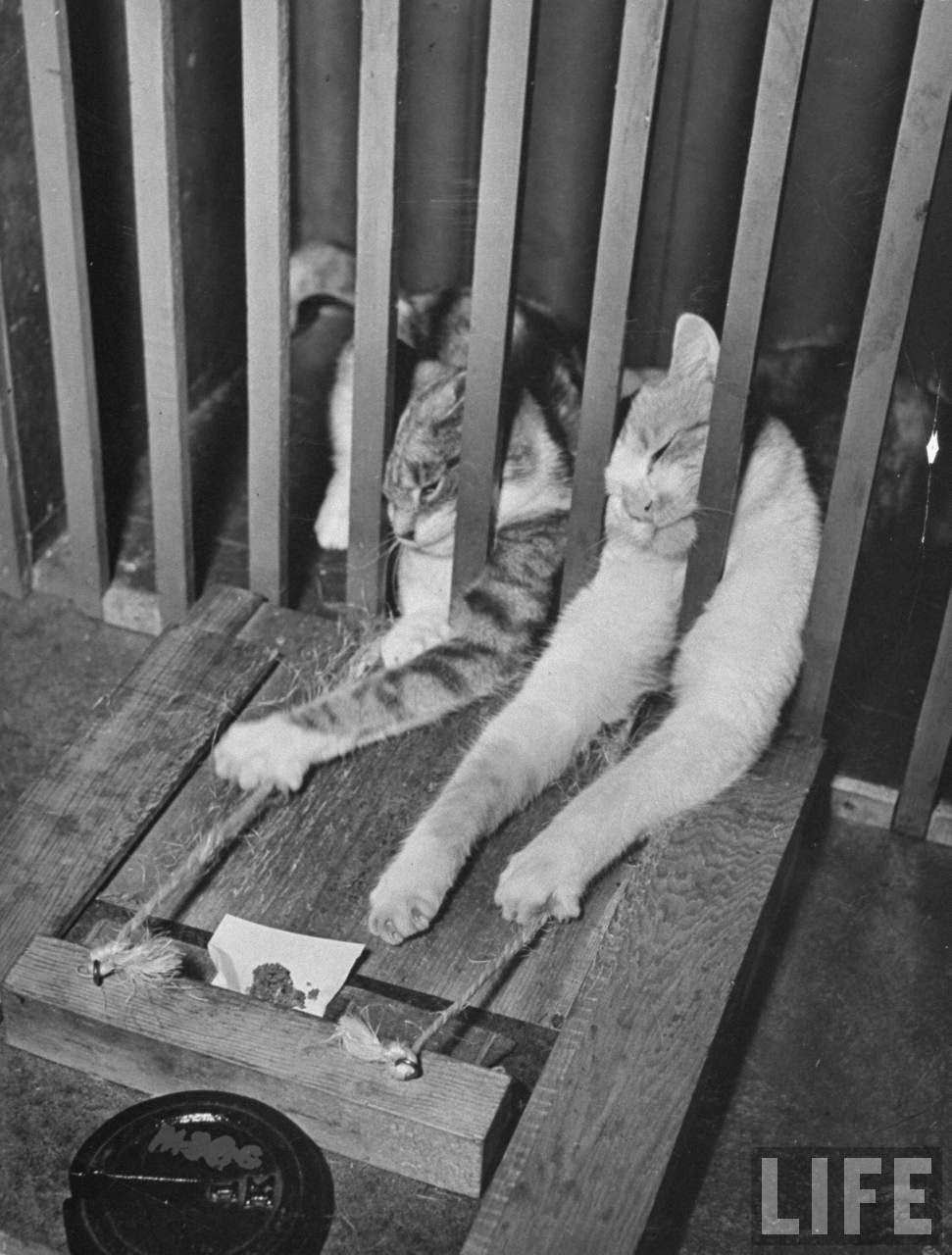
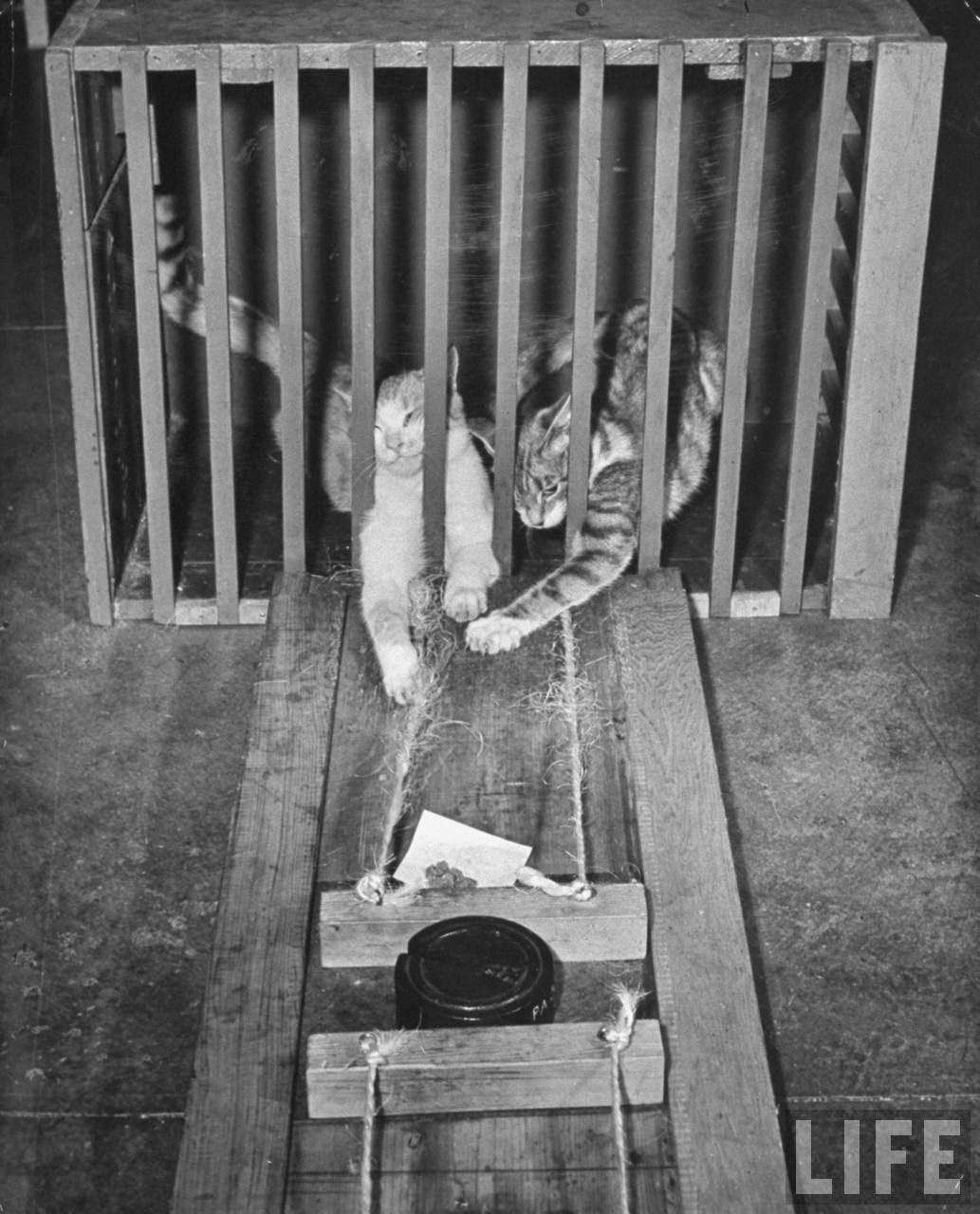
The second test focused on understanding physical connections. Researchers placed a piece of meat behind a wire fence, just beyond the reach of a cat’s paw. A long string was tied to the food, with the loose end placed near the cat. To get the reward, the animal had to recognize that pulling the string would drag the meat within reach. The cats observed the setup carefully, then used their paws to hook the string and pull it toward them. Dogs in similar studies often resorted to barking or trying to force through the barrier. The cats worked the problem methodically.
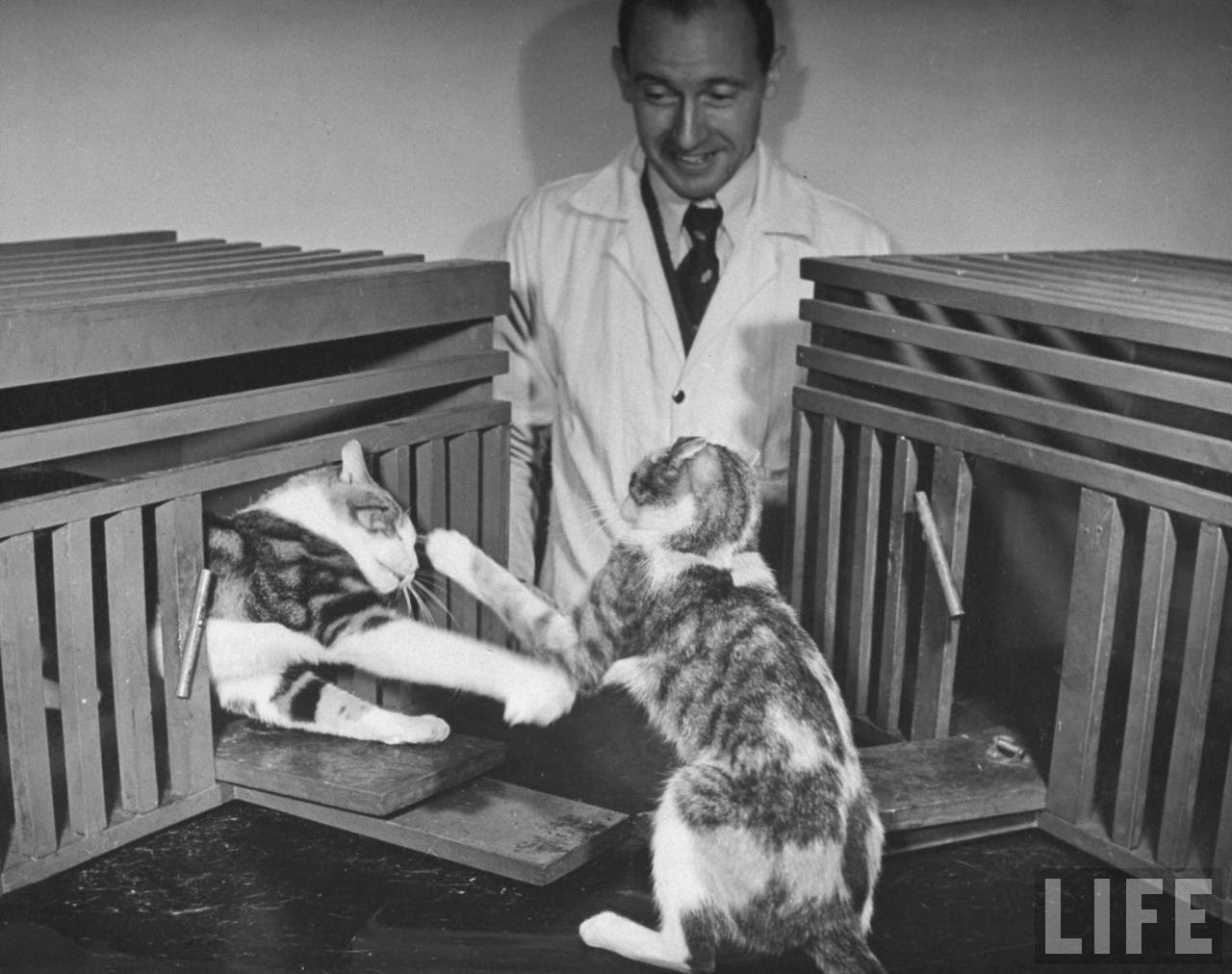
Researchers also ran tests that required no tools at all — just direct observation of cat behavior under different conditions. These sessions gave the team a baseline for how the animals responded to new environments and unfamiliar stimuli before any task was introduced.
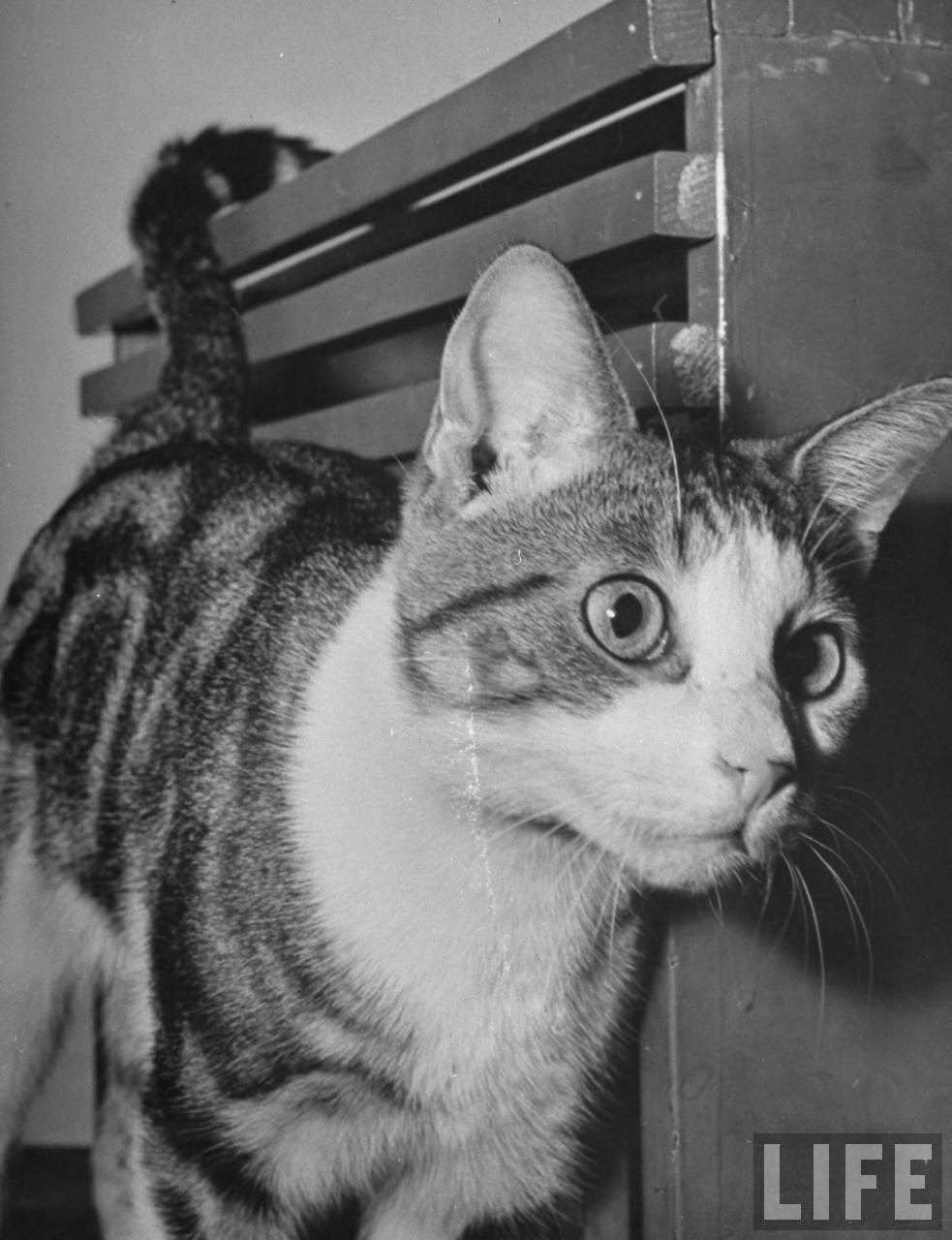
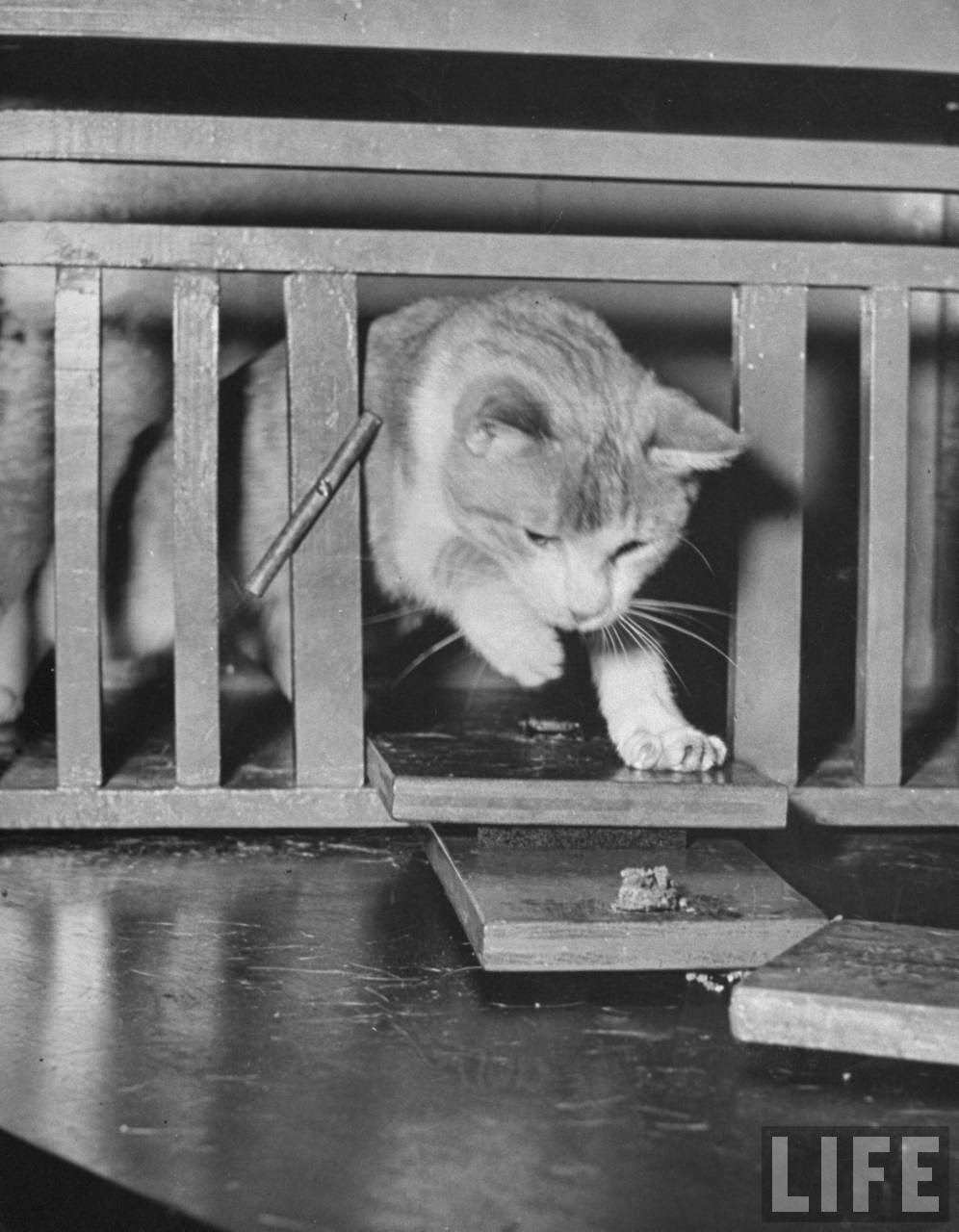
Food-based tests consistently revealed a sharp, goal-driven focus. The cats showed no interest in performing for approval. Every correct action was driven entirely by the promise of a meal. The researchers noted this distinction clearly — cat learning was transactional, not social.
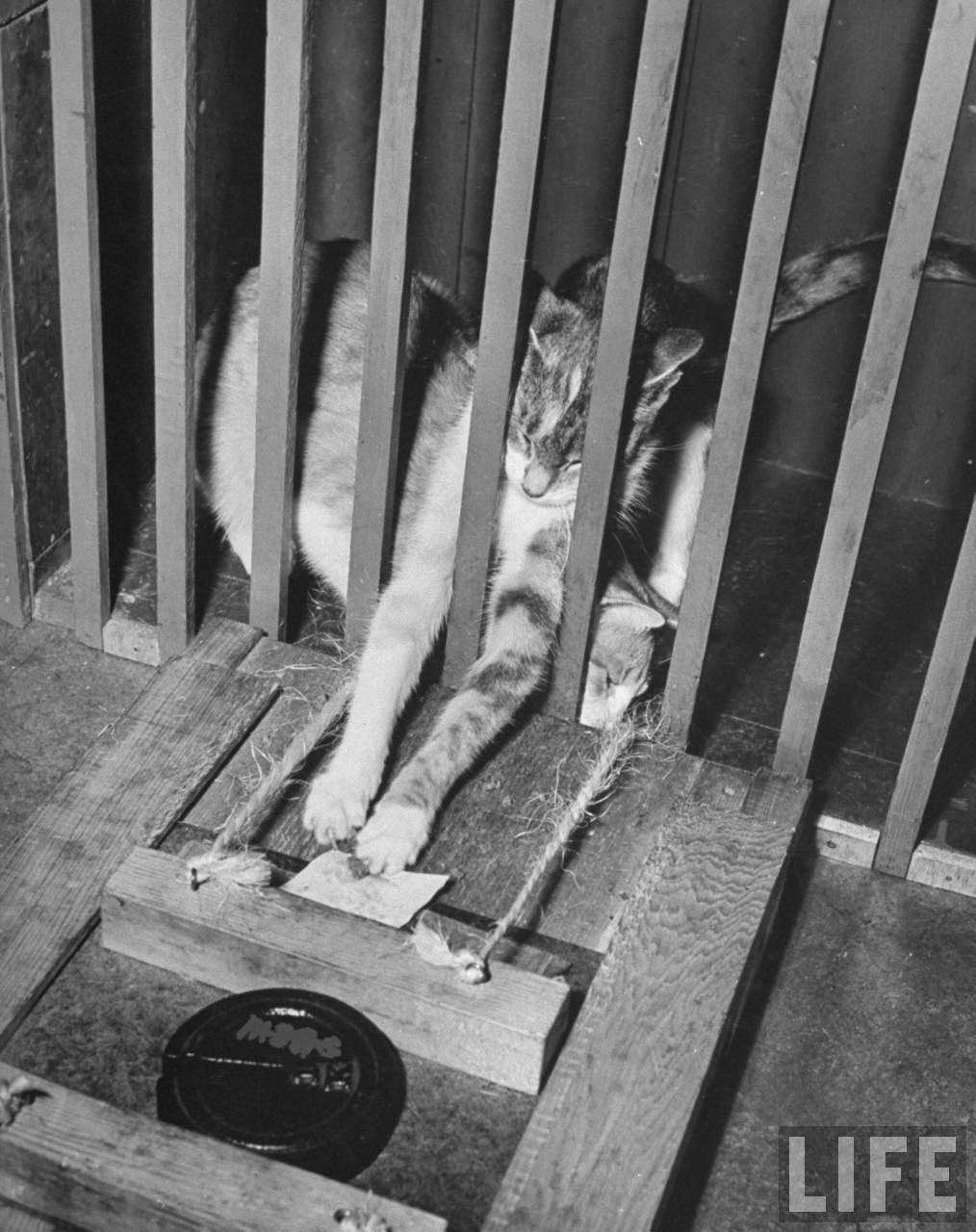
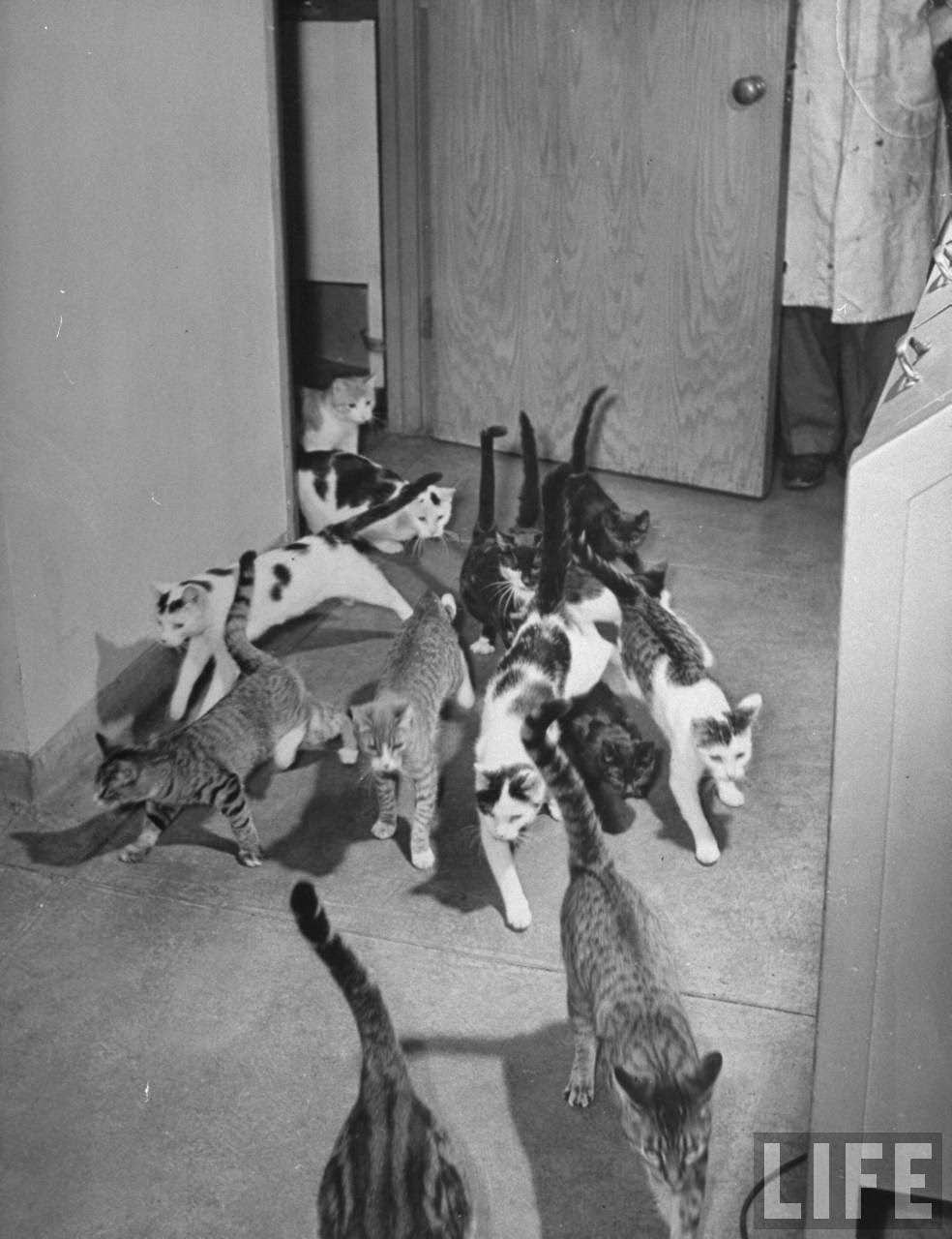
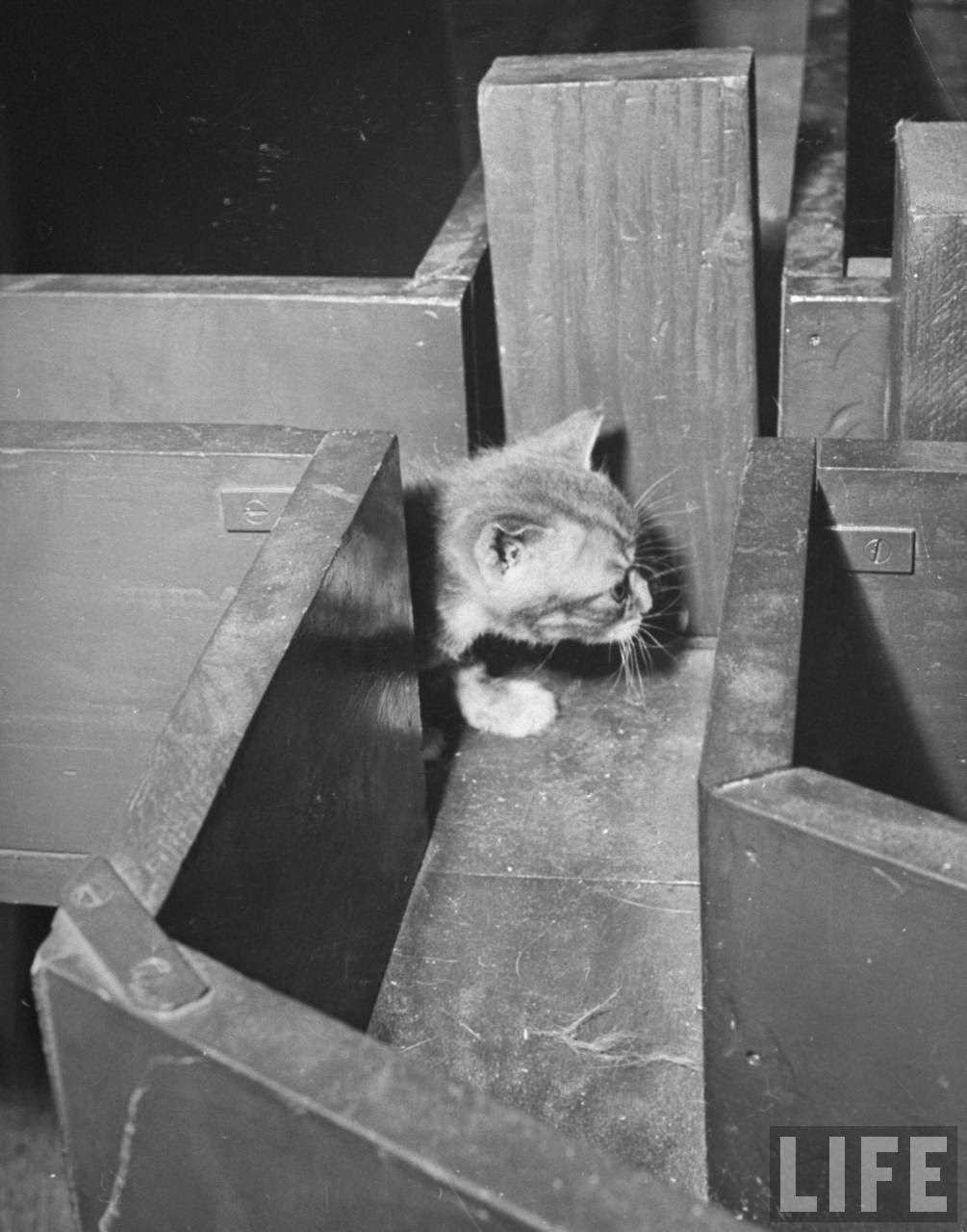
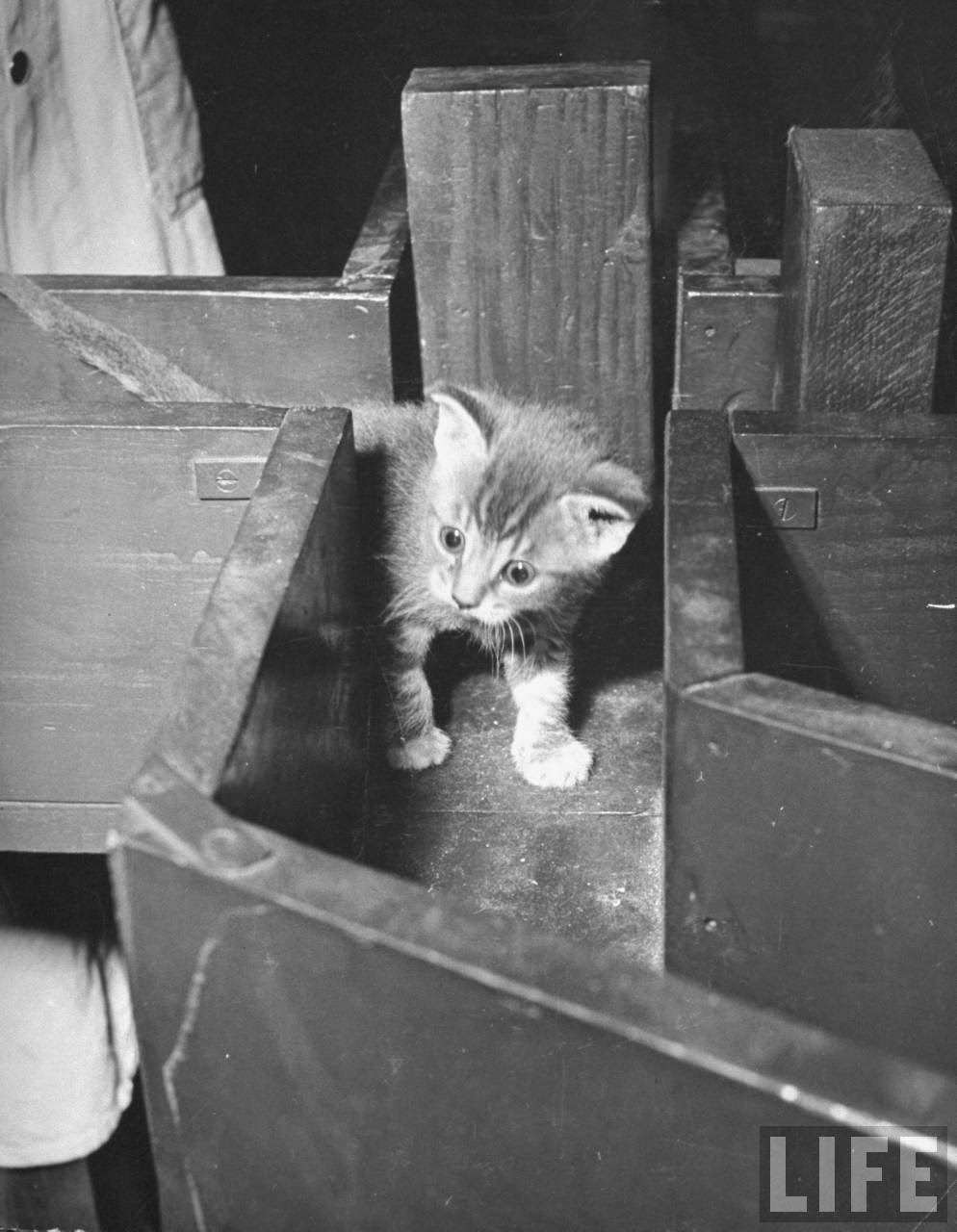
The final stage introduced complex mazes built with narrow corridors, dead ends, and wrong turns. The cats had to memorize the correct route to reach a food bowl at the finish. Some versions of the maze placed two cats in the same space at once. Rather than becoming aggressive in the tight quarters, they navigated around each other without conflict, sometimes following one another toward the goal.
Back at the puzzle box, the latch mechanism proved to be one of the study’s most telling challenges. Researchers carefully recorded how quickly each cat went from random pawing to deliberate, repeatable action. The speed of that shift demonstrated clear trial-and-error learning.
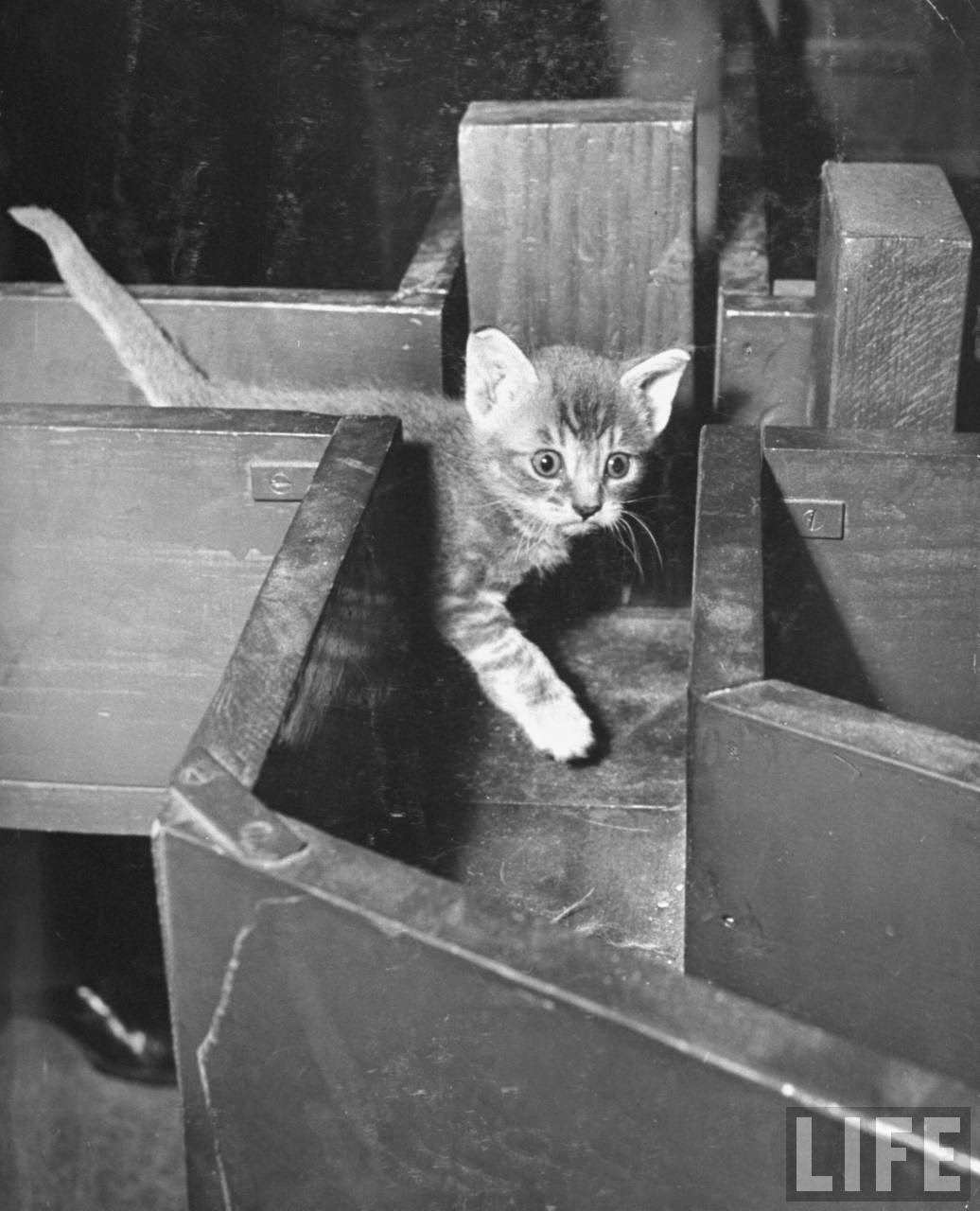
Younger cats placed in the mazes moved through the corridors with the same methodical attention as adults, suggesting that the ability to map and memorize a route was not something that required years of experience to develop.
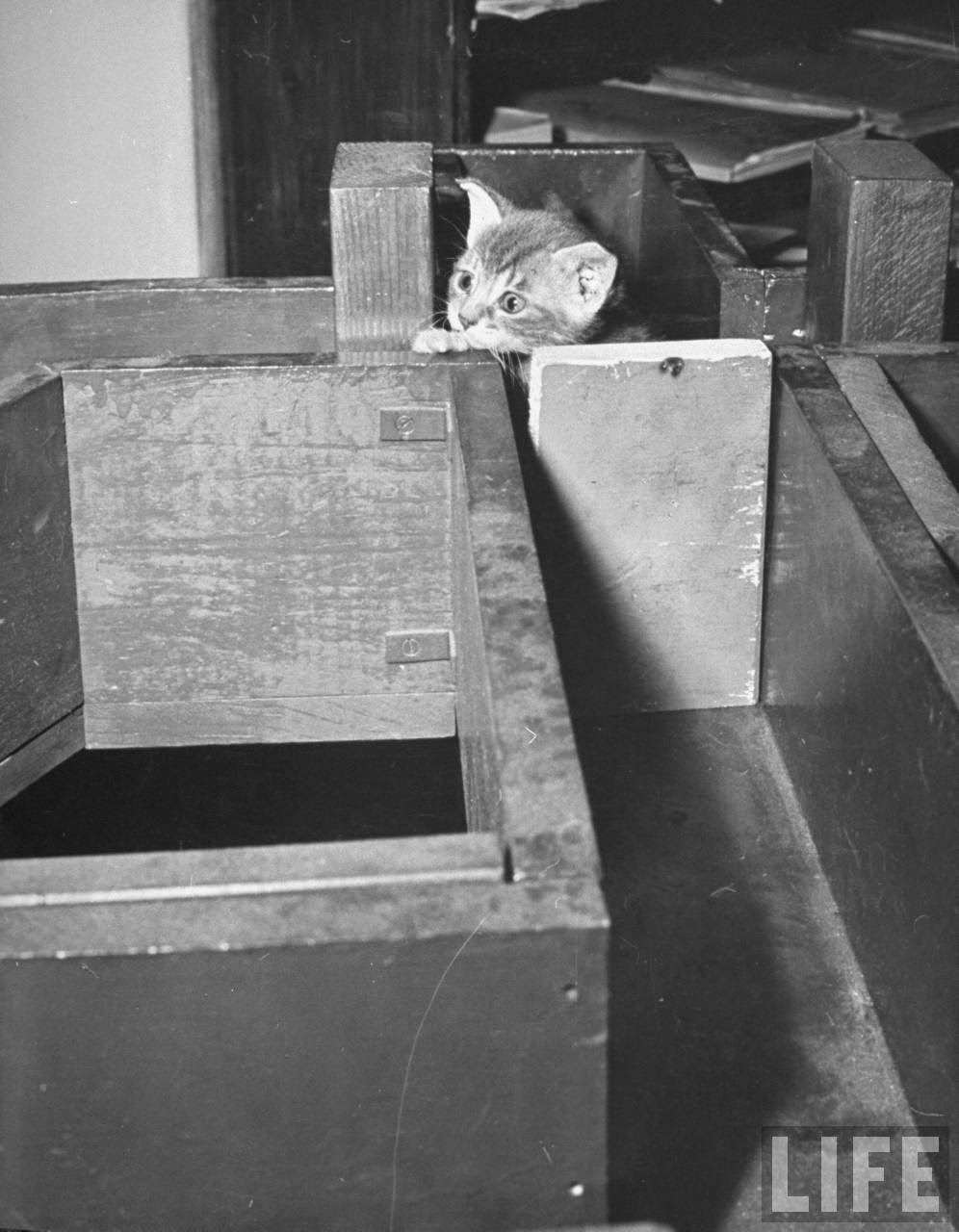
Across every test, the results pointed in the same direction. Cats learned through observation and repetition, retained spatial information, understood cause-and-effect relationships, and solved physical problems without human guidance. None of it was driven by loyalty or a desire to please. It was pure, calculating self-interest — and it worked every time.