

At the turn of the 20th century, Indianapolis was a city in full motion. Streets that had once been dominated by horses and foot traffic were giving way to electric streetcars, automobiles, and the hum of factory machinery. As Indiana’s state capital and a growing industrial hub, the city drew workers, merchants, and entrepreneurs from across the country. Its central location made it a natural meeting point for rail lines and commerce, a role it wore proudly — and the photographs from this era capture that energy in vivid detail.
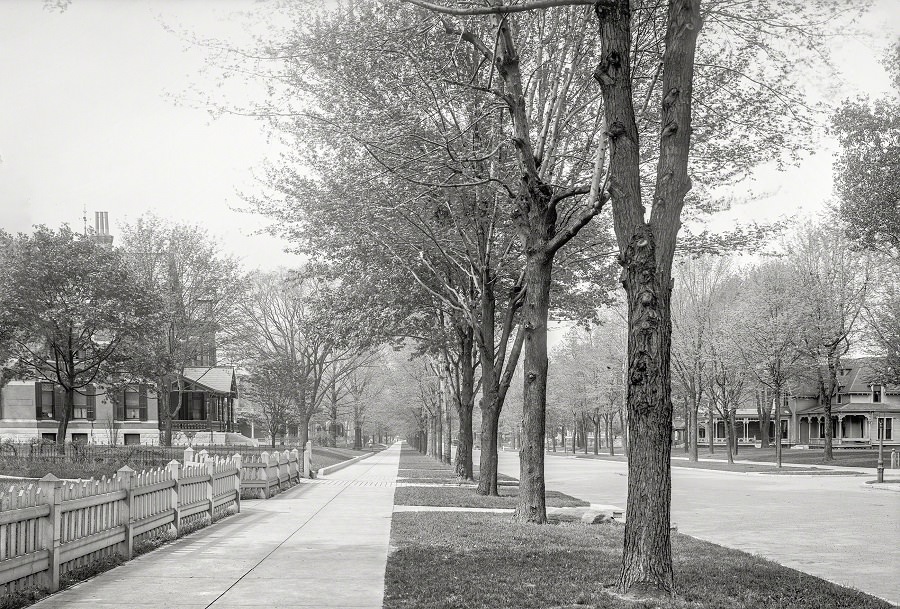
The streets of downtown Indianapolis in 1904 were busy and densely built. Brick storefronts lined the main corridors, and pedestrians shared the road with horse-drawn wagons and early motor vehicles. Illinois Street, running north from Washington, was one of the city’s principal commercial arteries, and photos from that year show a street already shaped by ambition and trade.
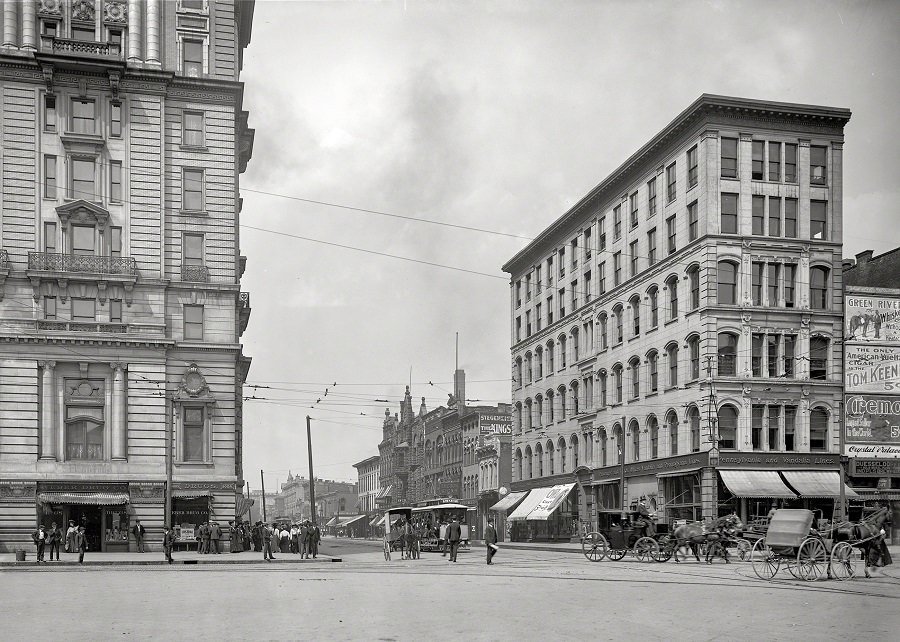
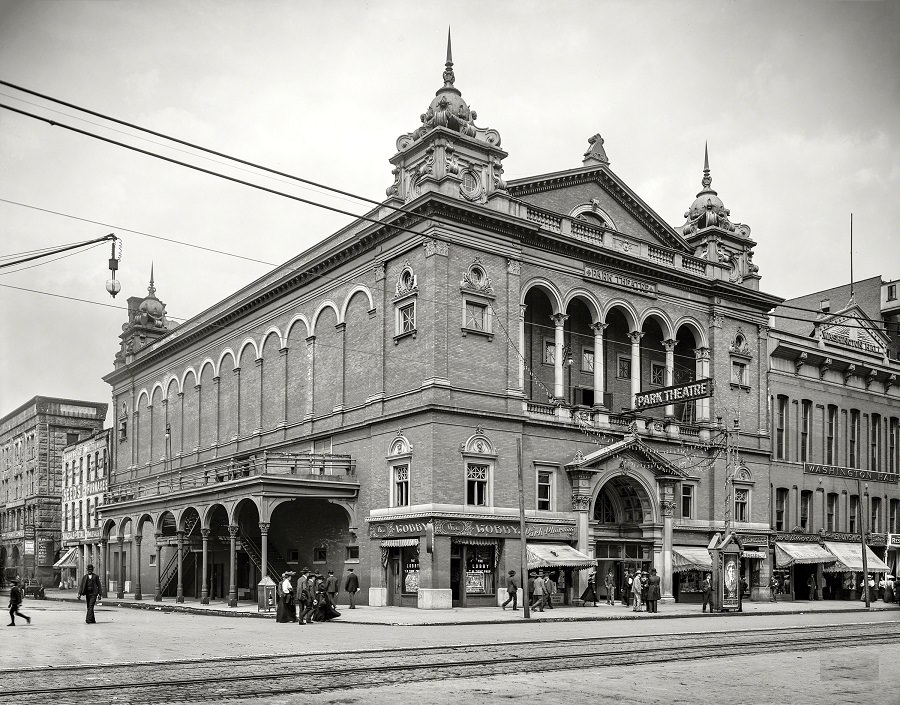
Civic pride was written into the city’s architecture. The Masonic Temple at Washington Street and Capitol Avenue stood as one of Indianapolis’s more imposing landmarks by 1906, a symbol of the fraternal organizations that played a major social role in American cities of that era. Not far away, the Park Theatre occupied a prominent corner on Washington Street — entertainment and civic life existing side by side in the heart of the city.
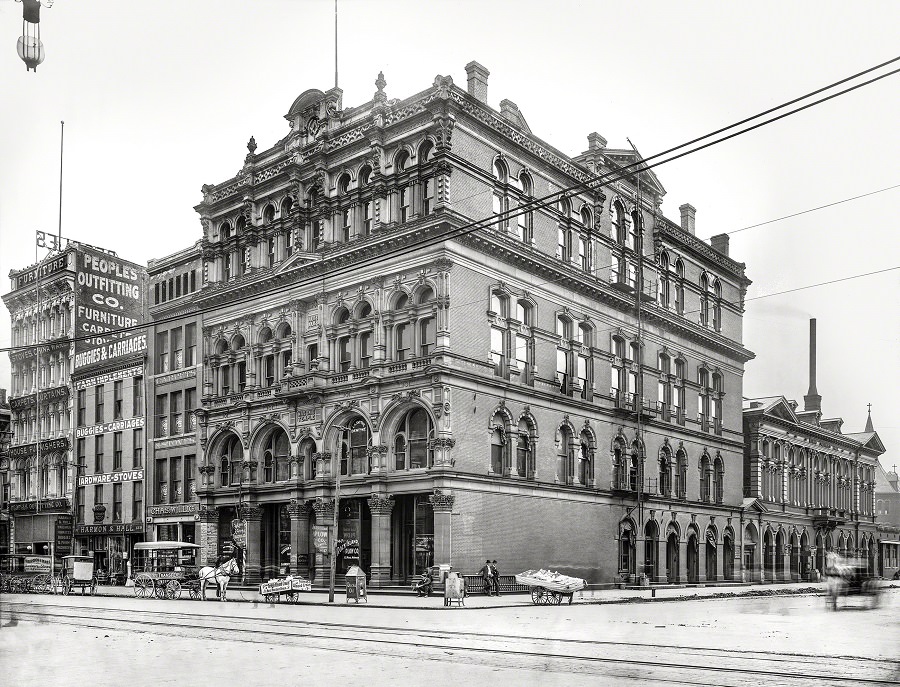
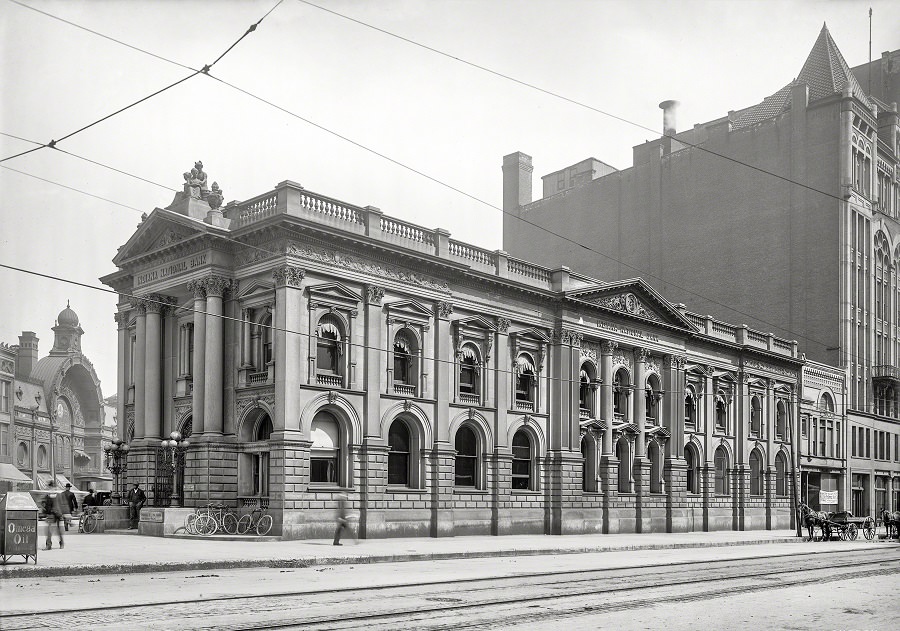
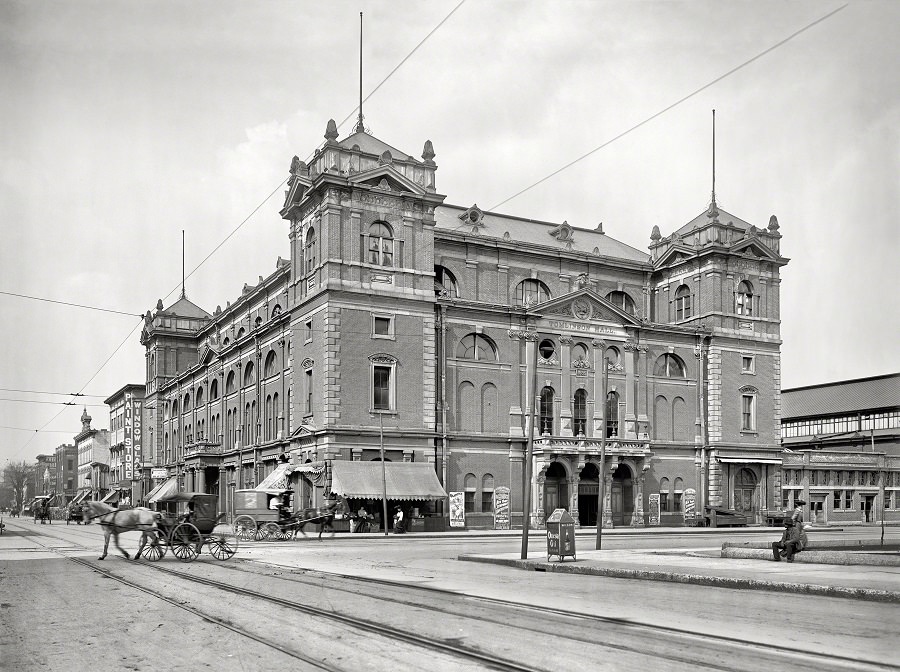
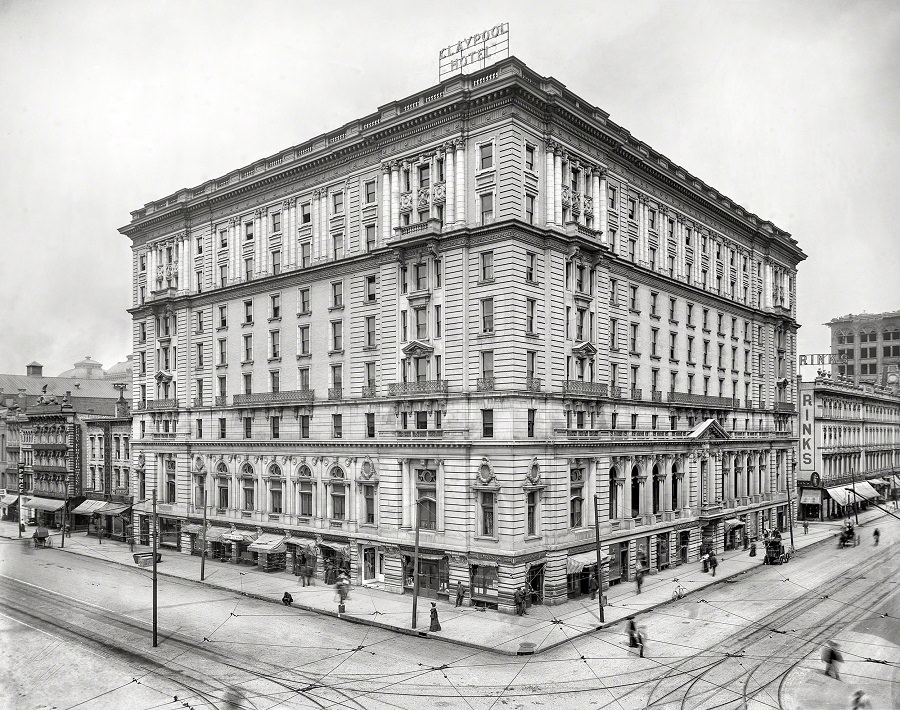
Tomlinson Hall on Delaware and Market Streets served as a gathering place for political rallies, public events, and markets. Built in 1886, it remained a centerpiece of city life well into the early 1900s. Nearby, the Claypool Hotel at Washington and Illinois Streets was one of the finest accommodations in the Midwest when it opened — a landmark that reflected the city’s growing appetite for modernity and prestige.
Behind the polished storefronts and grand hotels, a large portion of Indianapolis’s population worked in its factories. A 1906 photograph taken during the noon hour at a tomato cannery shows workers — many of them women and children — pausing from their shifts. These images, documented in part by reformers and labor investigators, reveal the human cost of rapid industrialization. The workday was long, the conditions were often harsh, and wages were low.
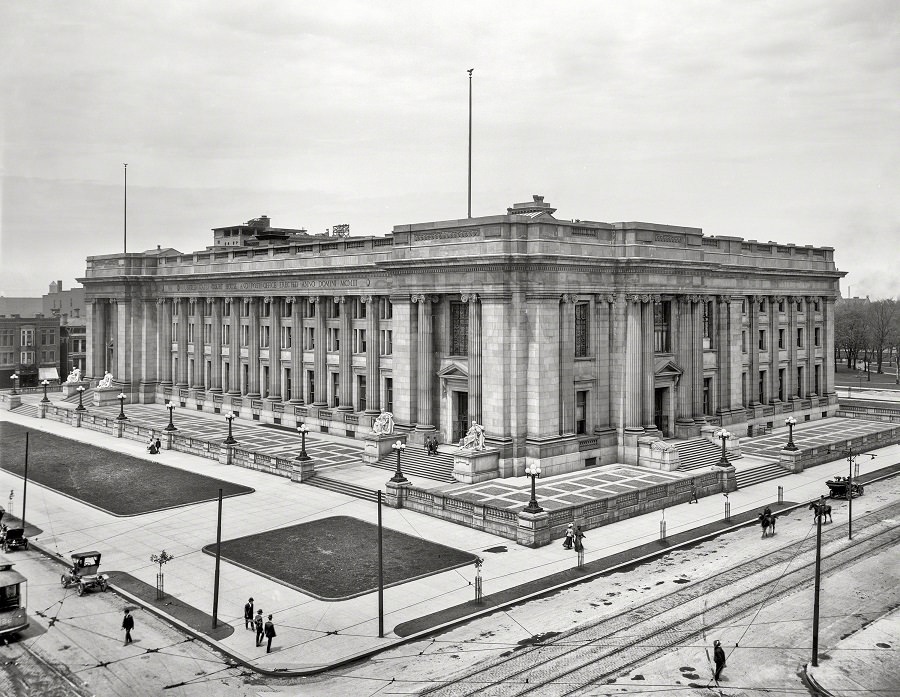
Government buildings reflected the federal investment in growing Midwestern cities. The Federal Building on Ohio Street — serving as both a courthouse and post office — was photographed in 1905, a solid structure that announced Washington’s presence in Indiana’s capital. The Columbia Club on Monument Circle, established by Republican Party members, was another fixture of institutional life, photographed the year before.
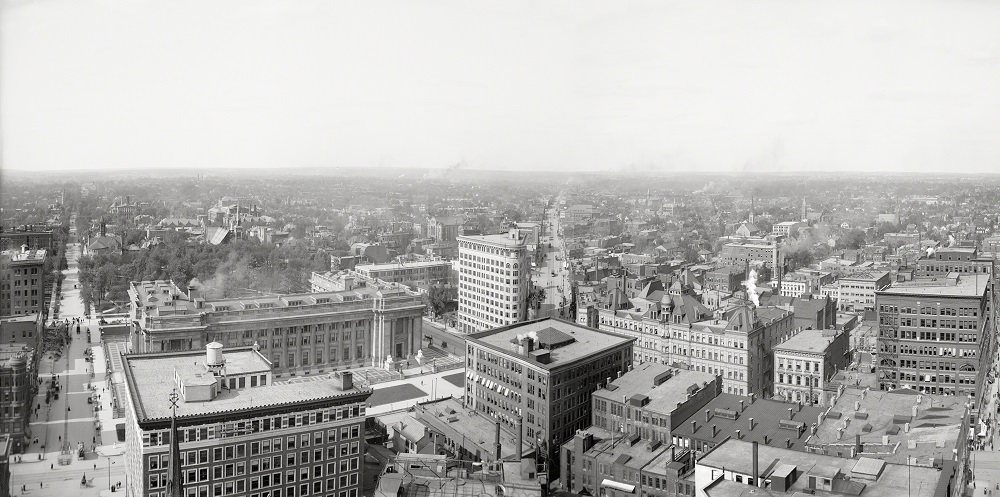
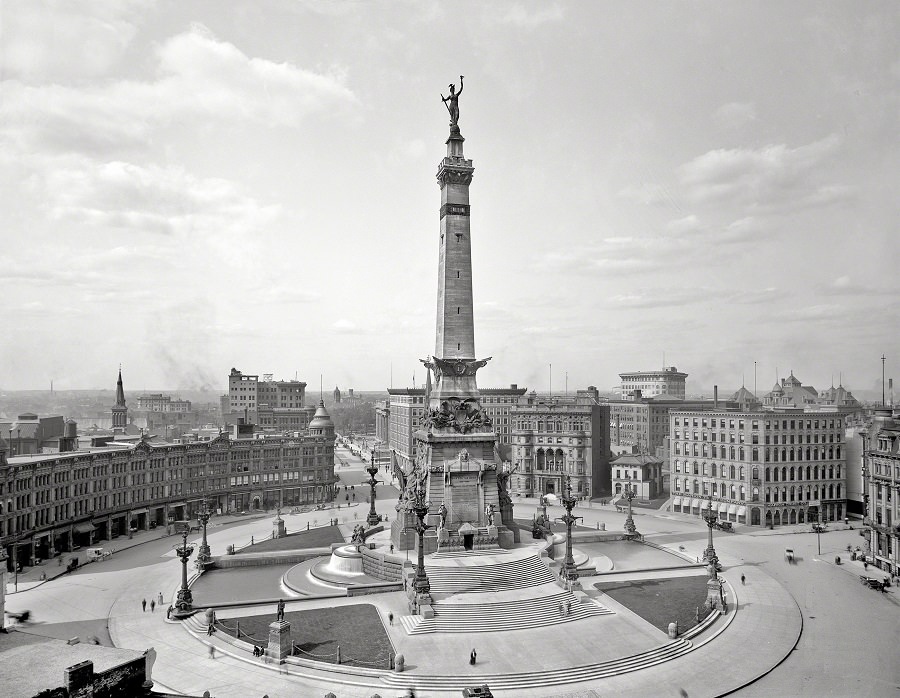
A panoramic view of Indianapolis from 1904 shows a city skyline still dominated by church steeples and low commercial blocks, with the Soldiers and Sailors’ Monument rising prominently from the center of the city. That monument, completed in 1902 at the heart of Monument Circle, honored Indiana’s Civil War veterans and became the defining symbol of downtown Indianapolis.
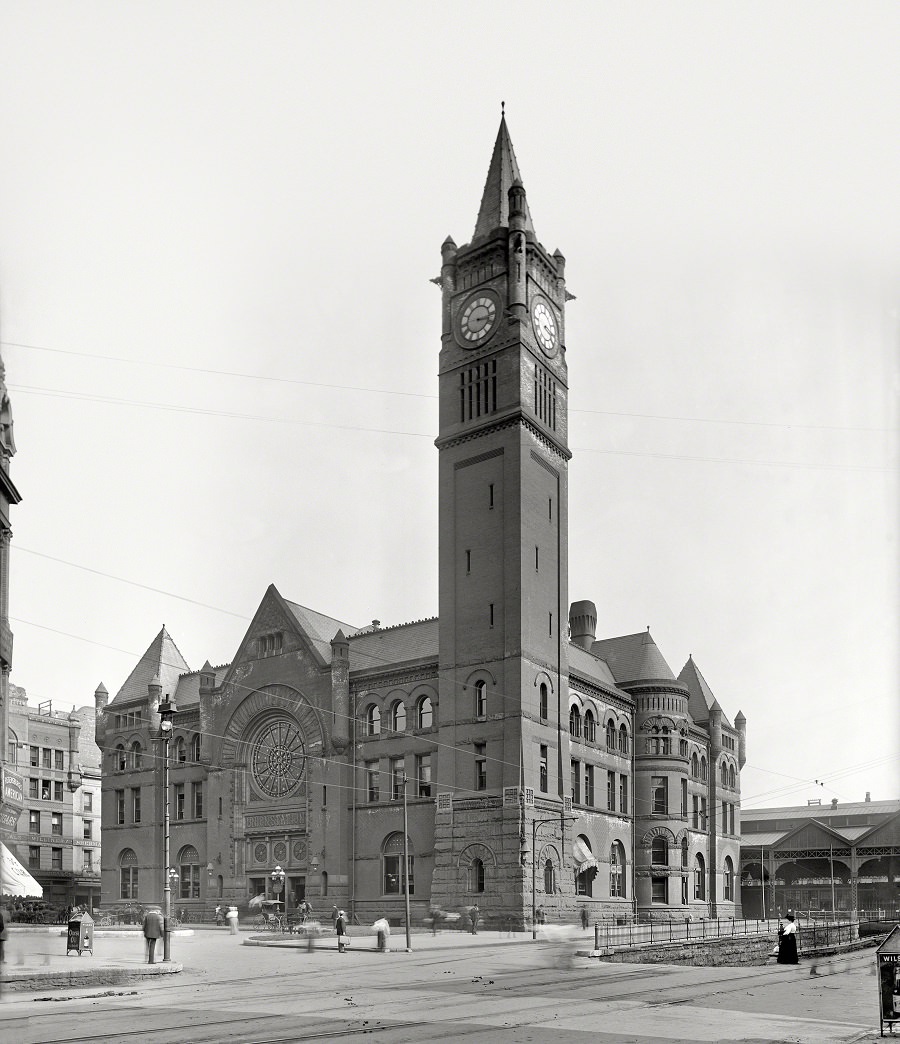
Union Station, photographed in 1905, was the pulse of Indianapolis’s transportation network. Opened in 1888, it was one of the busiest train stations in the country by the early 1900s, handling passengers and freight moving in every direction. The station connected Indianapolis to Chicago, Cincinnati, Louisville, and dozens of smaller cities, reinforcing the city’s role as a regional crossroads.
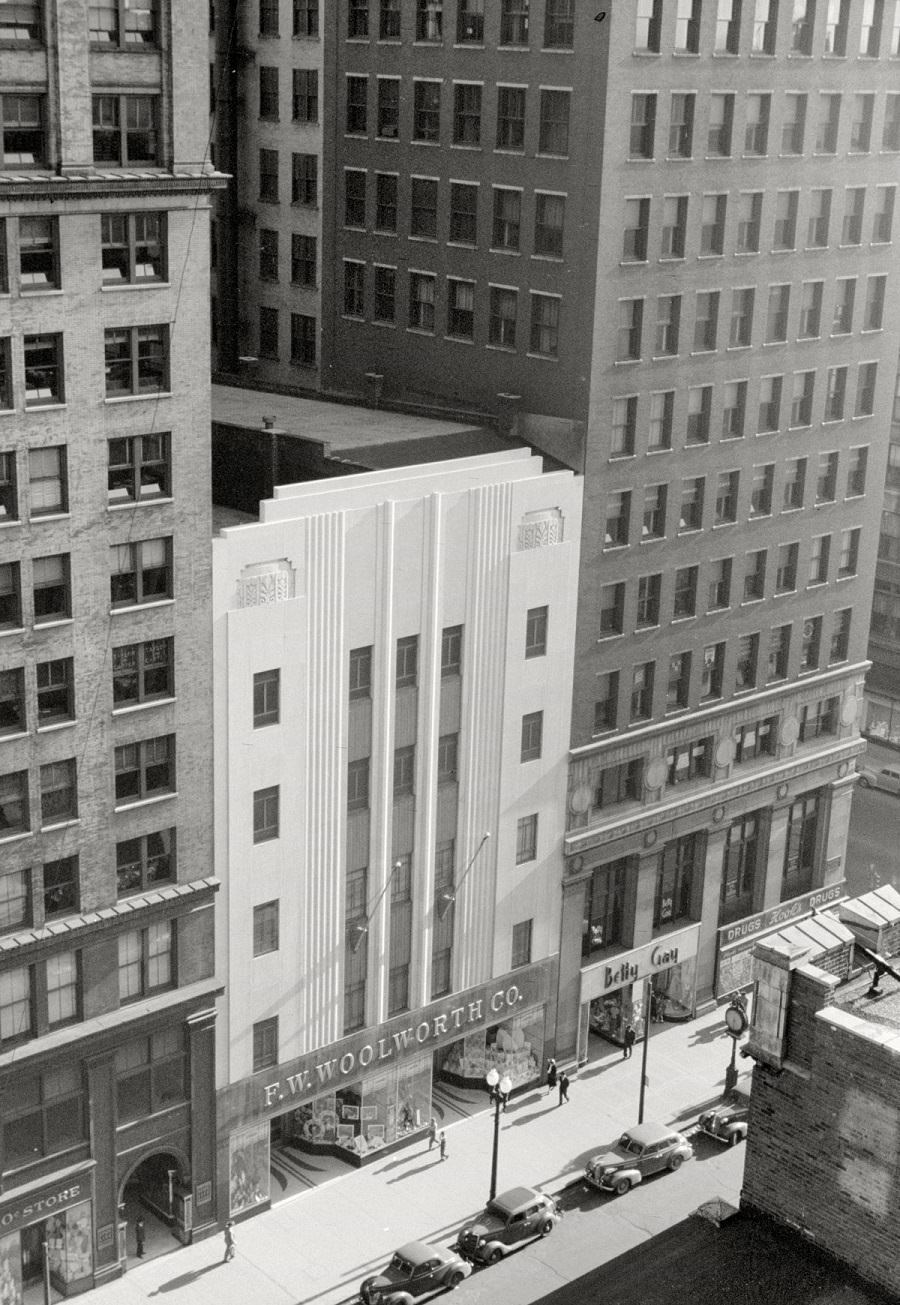
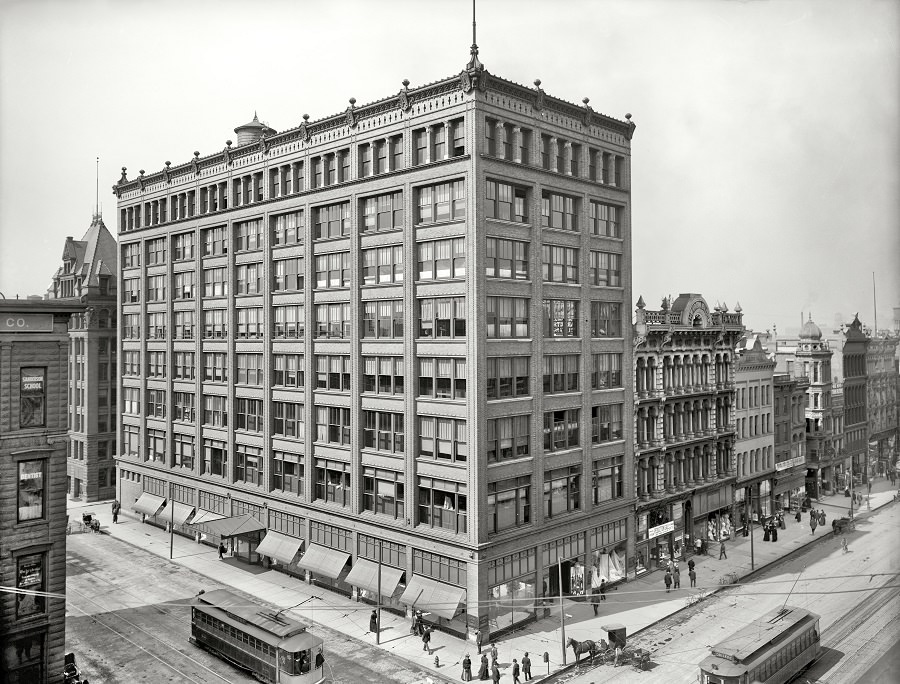
Retail life in Indianapolis grew steadily through the early decades of the century. The L.S. Ayres Building, photographed in 1905, was one of the city’s premier department stores, drawing shoppers from across Indiana. By 1940, national chains like Woolworth had firmly established themselves in the city’s commercial landscape, a sign of how American retail had shifted toward mass-market consumerism.
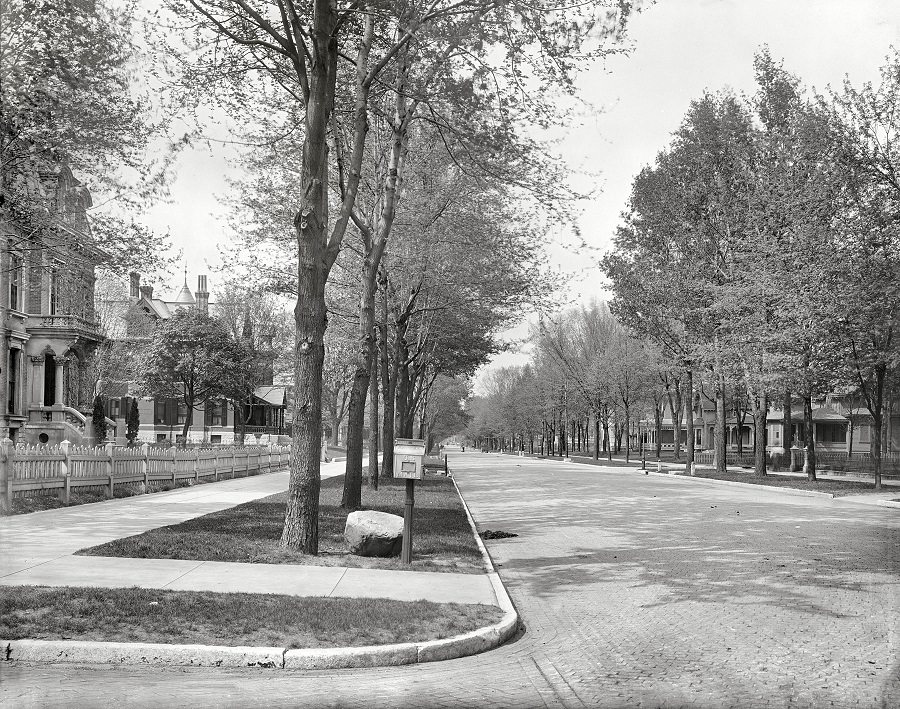
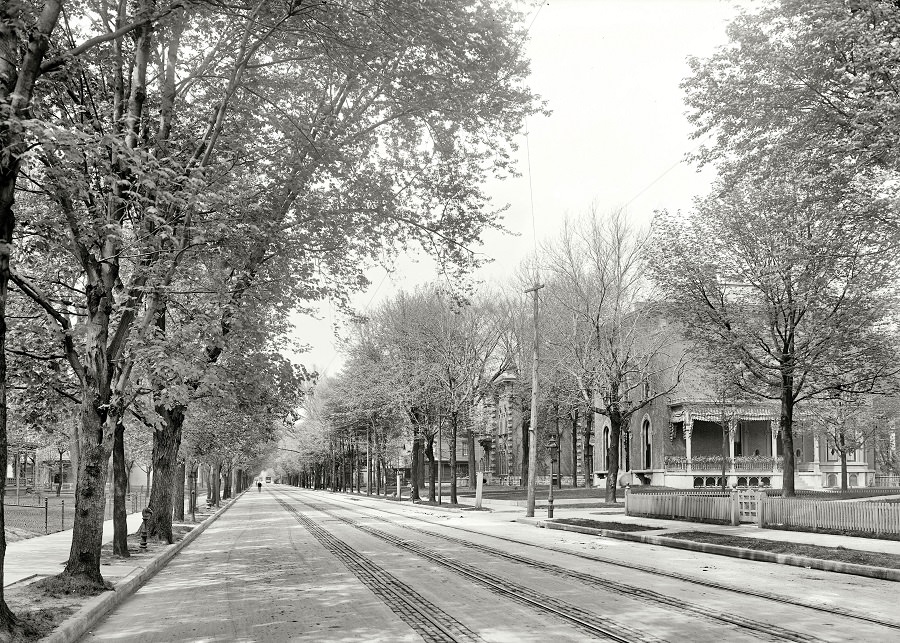
West Market Street in 1907 shows a city whose streetscape was evolving quickly. Telephone and electric lines criss-crossed overhead, and streetcar tracks ran down the center of paved roads. The Union Traction Company’s terminal building, also photographed in 1907, served as the hub for the interurban rail system — electric rail lines that linked Indianapolis to towns throughout central Indiana, moving thousands of commuters daily.
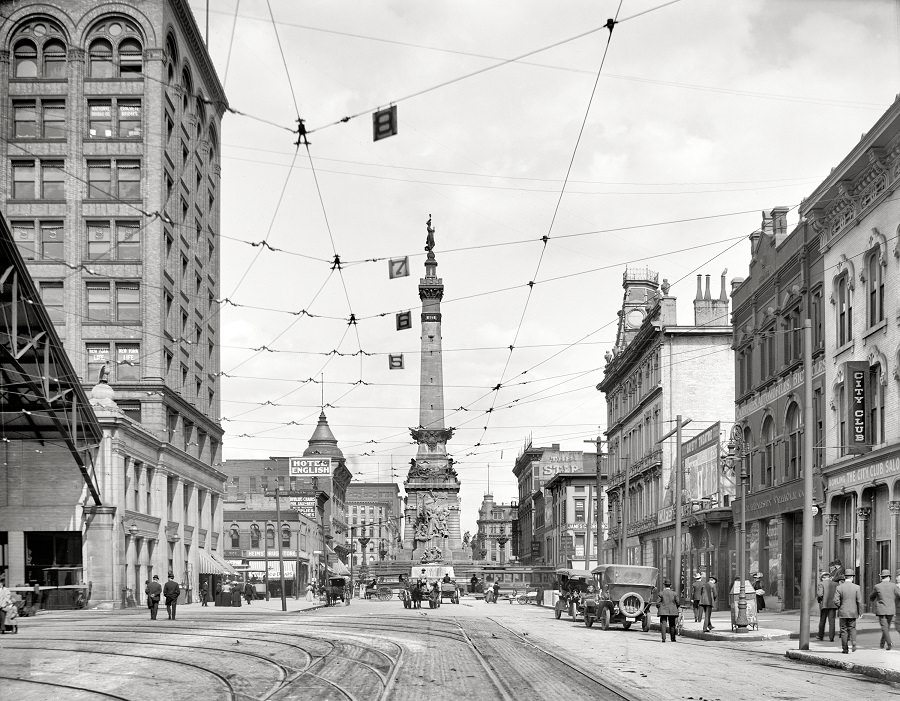
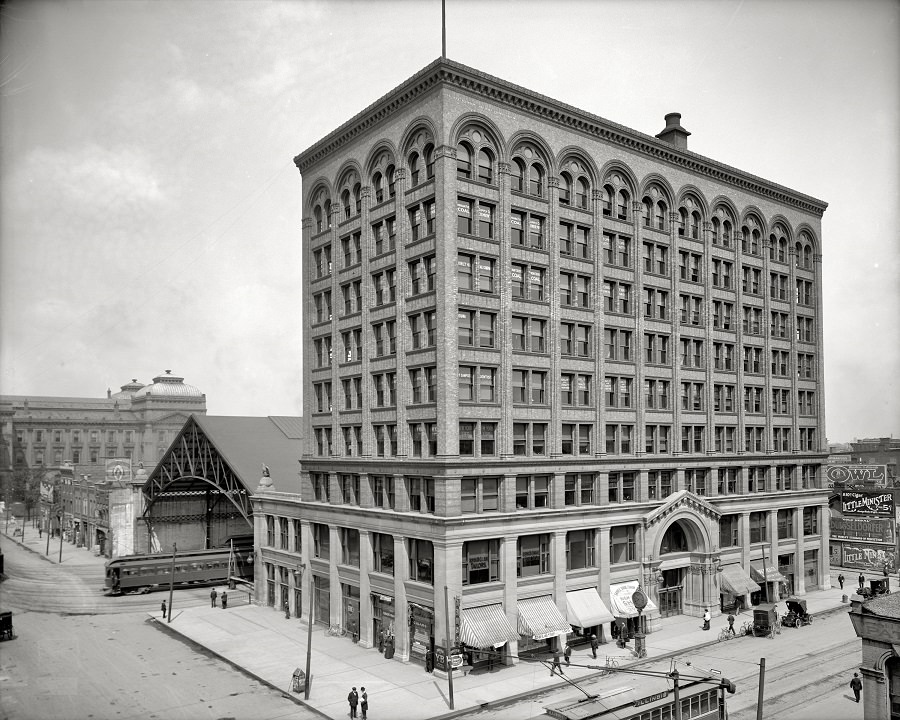
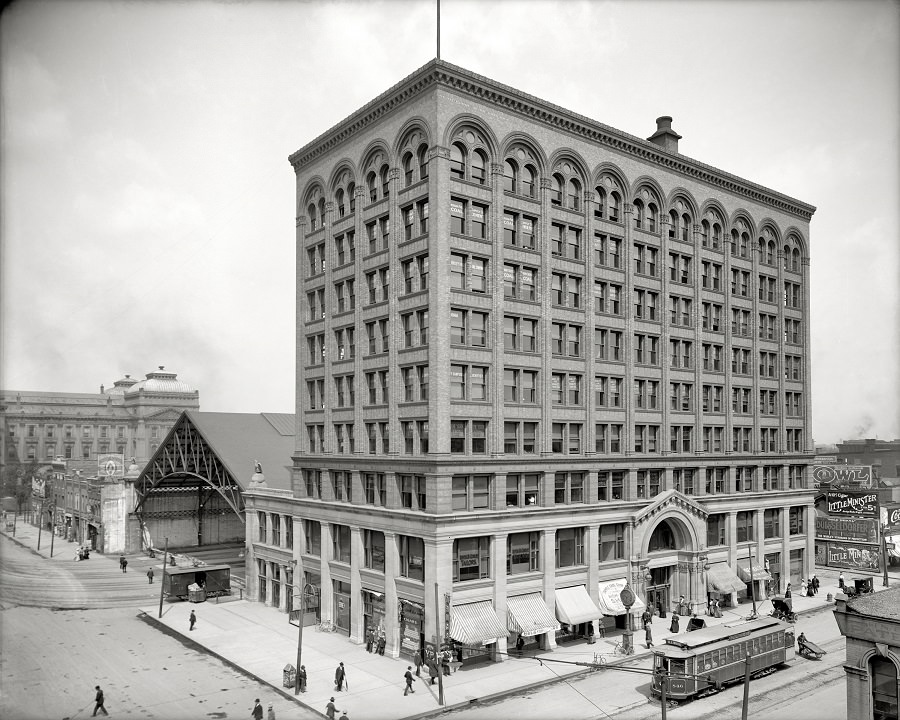
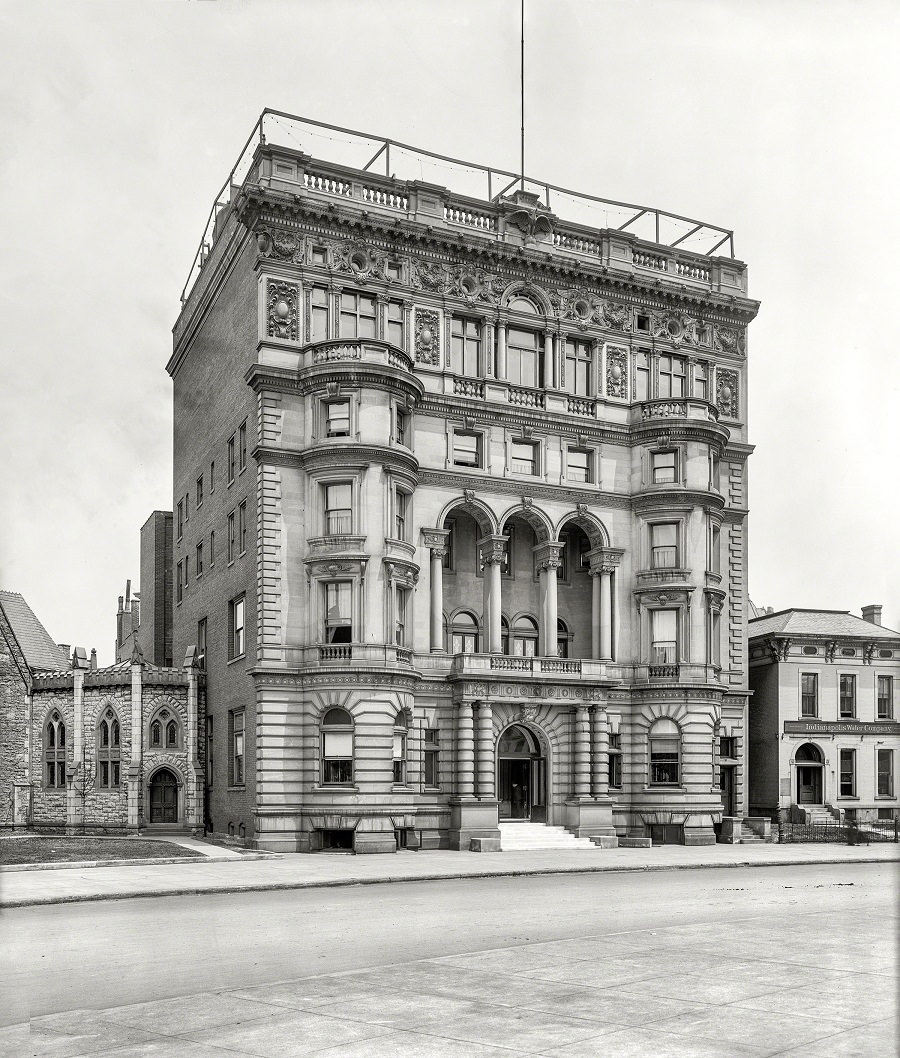
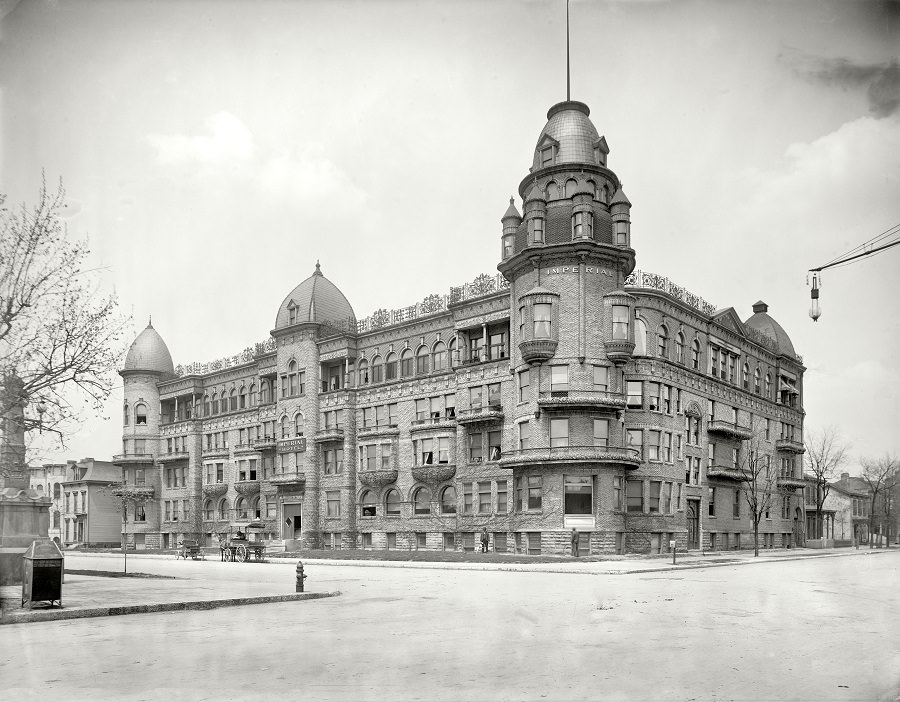
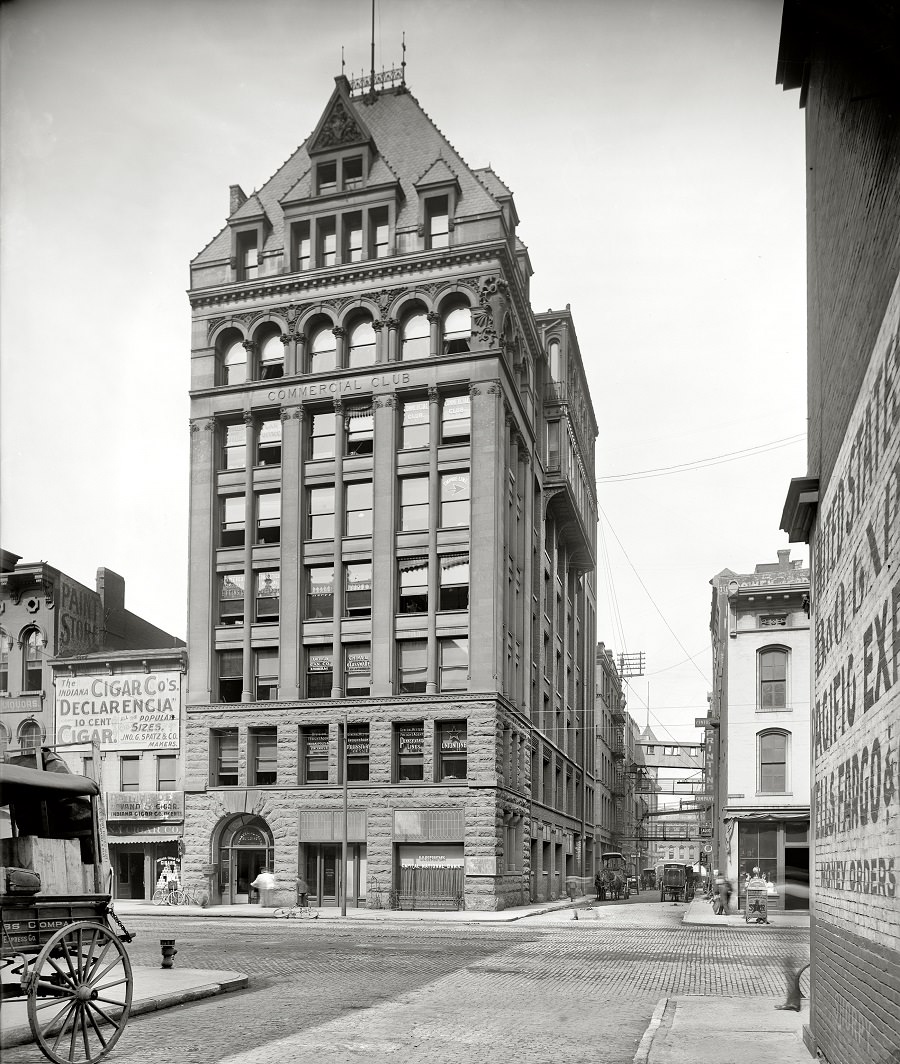
The Imperial Hotel, captured in 1904, and the Commercial Club building, photographed in 1905, were both part of a wave of construction that reshaped downtown Indianapolis in the years following the Civil War and accelerated into the new century. These buildings catered to traveling businessmen, industrialists, and civic leaders who passed through the city in growing numbers.
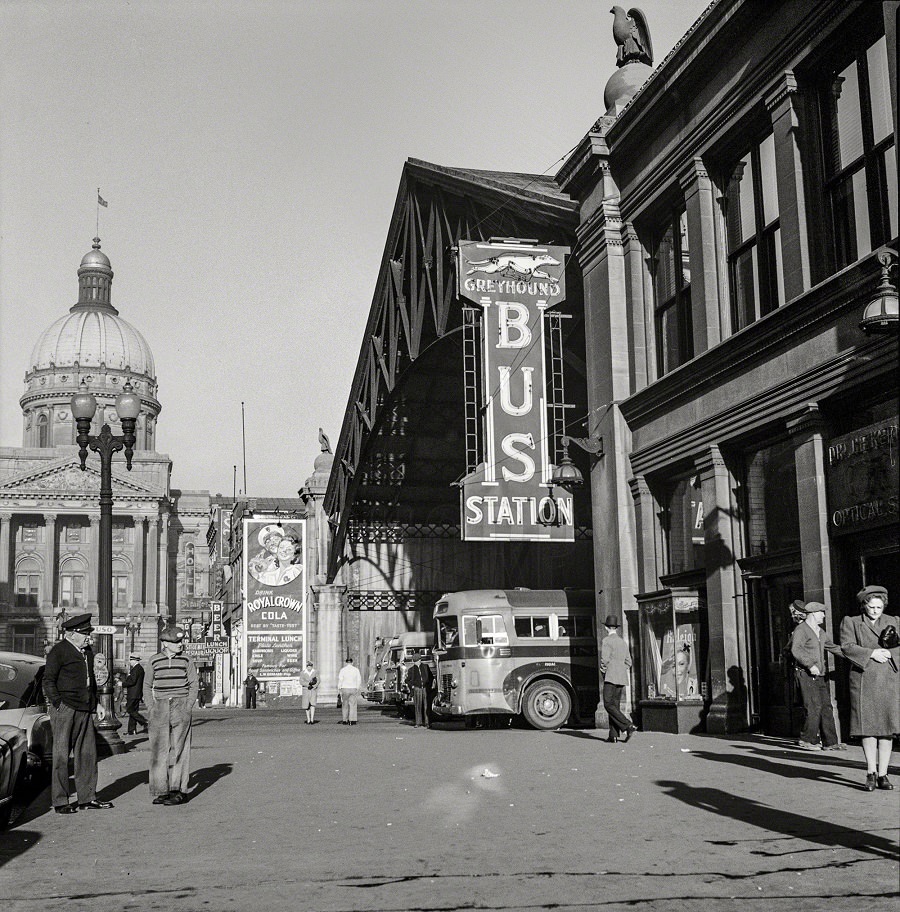
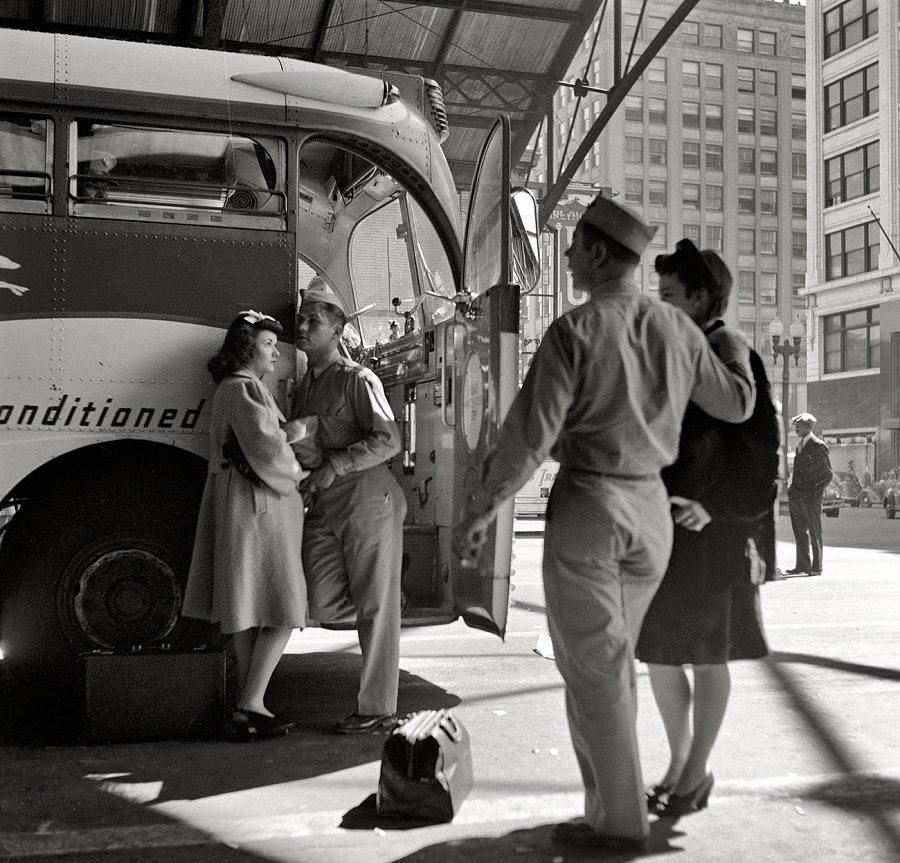
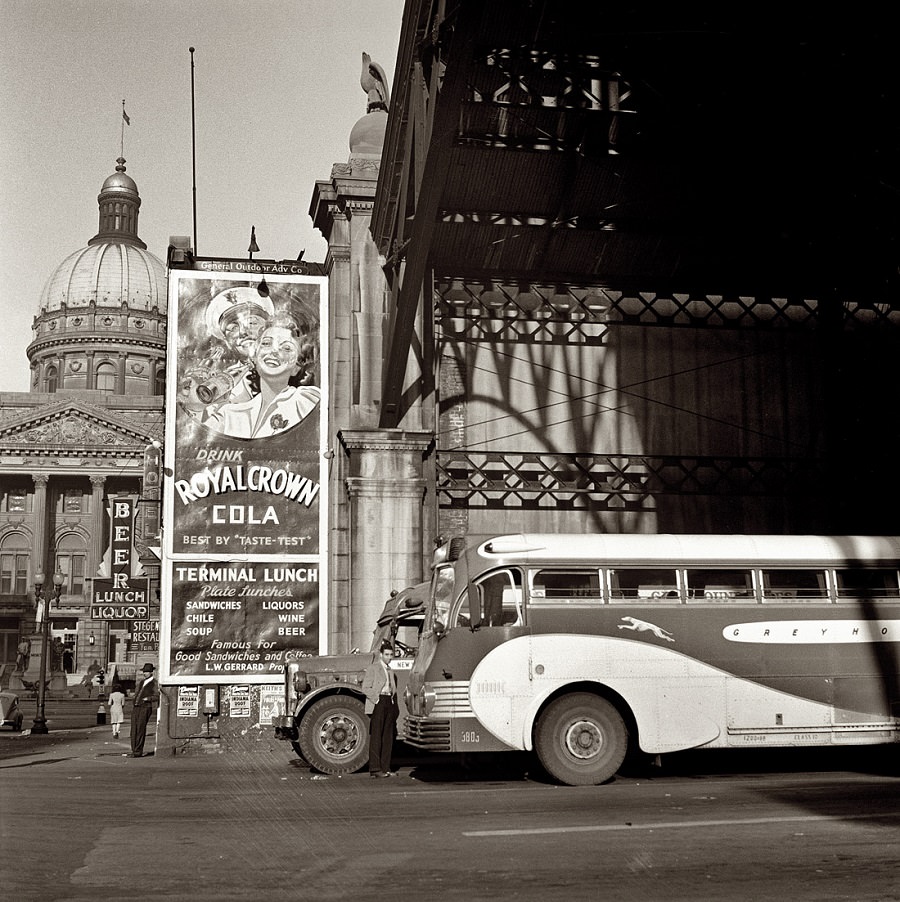
By 1943, the Greyhound bus station in Indianapolis had become a scene of wartime movement. Soldiers in uniform said goodbye to loved ones before shipping out, and the station hummed with the anxiety and purpose of a nation at war. These photographs, taken in September of that year, document a very different chapter of city life — one shaped not by industrial boom but by global conflict.
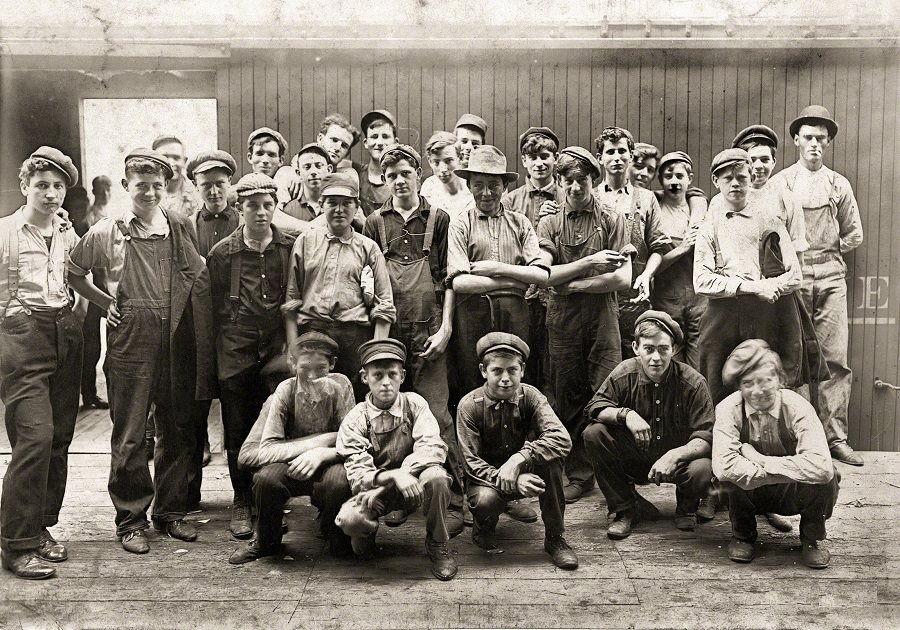
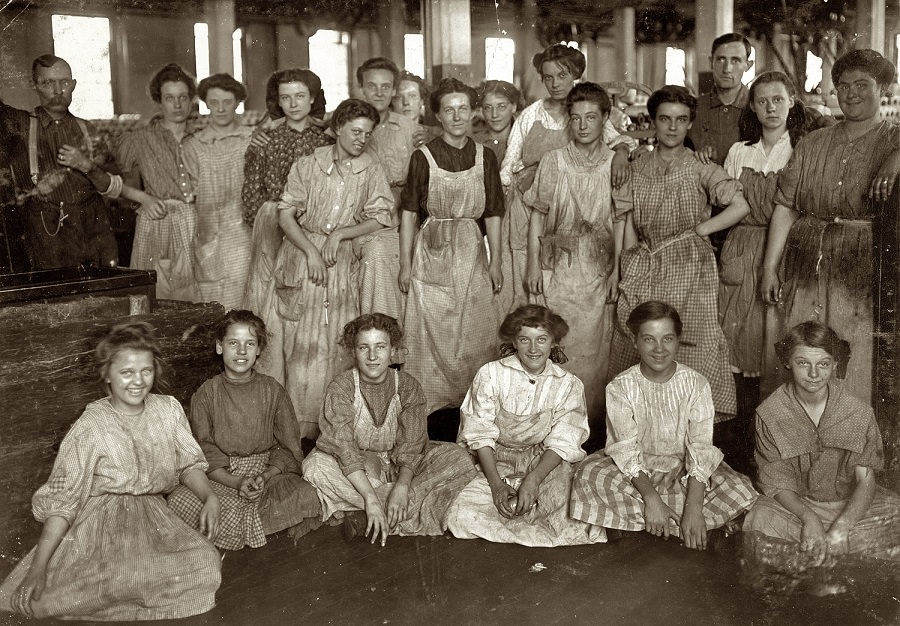
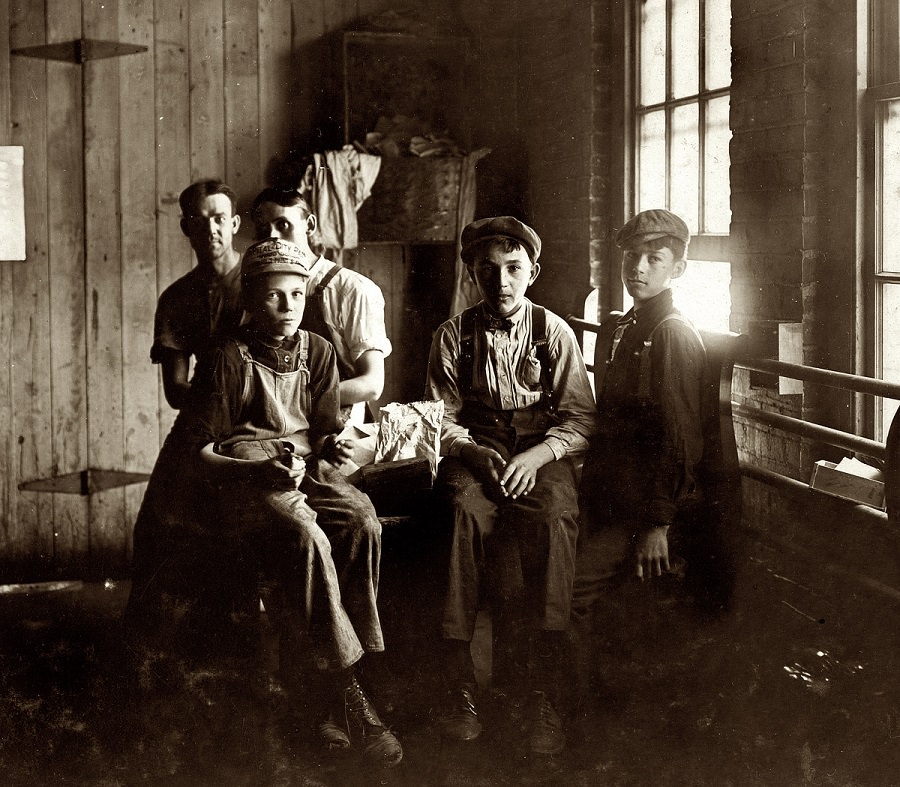
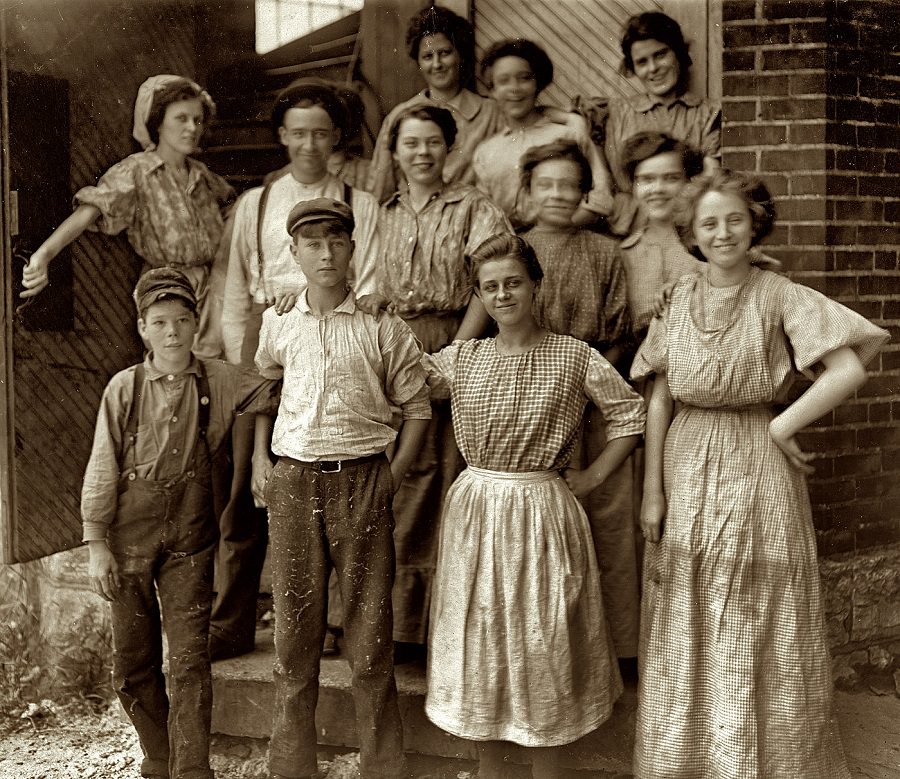
The labor investigator E.N. Clopper documented factory conditions in Indianapolis in 1908, and the photographs he witnessed show the reality of working-class life in the city’s mills and workshops. Cotton mill workers gathered during their noon hour, young people — some clearly teenagers — stood among them. A furniture factory photograph from the same year shows another segment of the city’s manufacturing workforce, laboring in large, dimly lit production spaces.
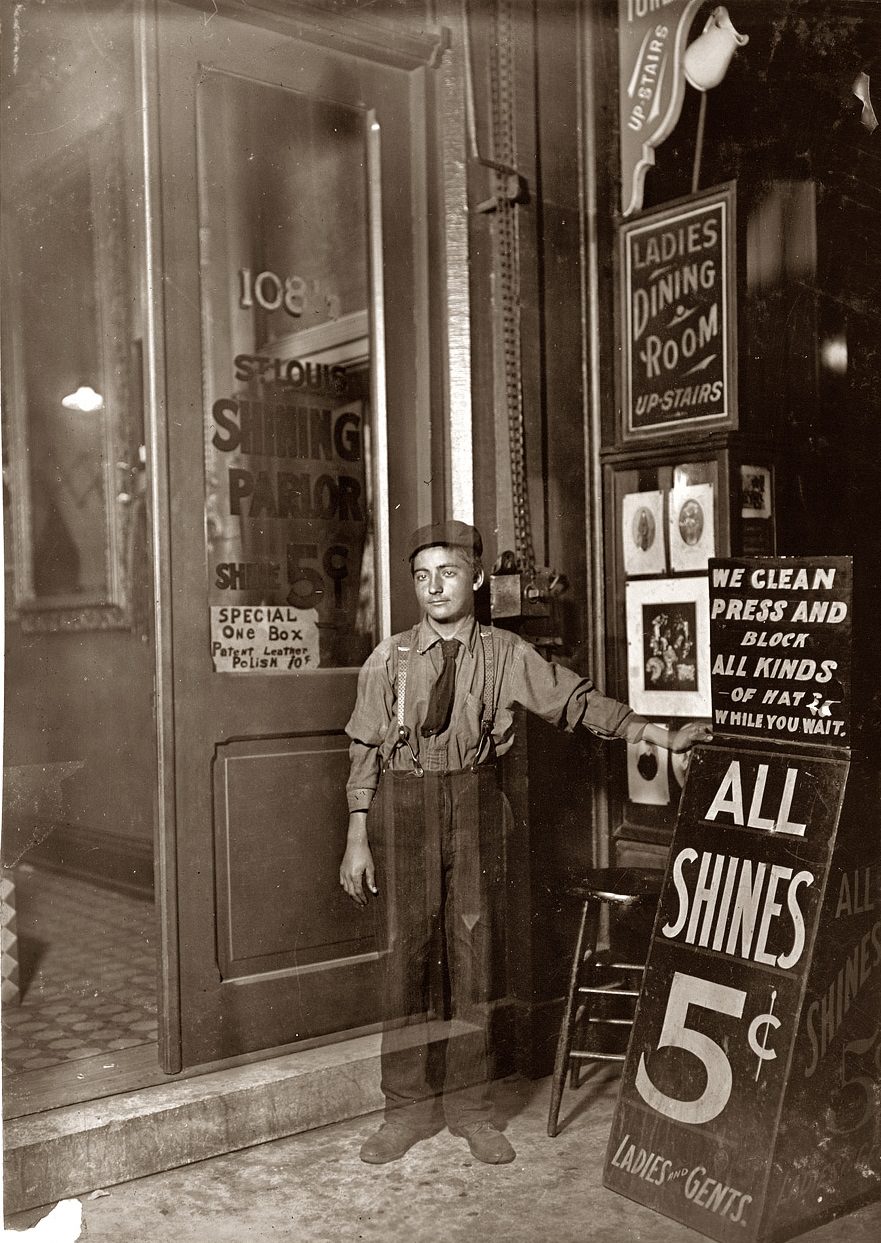
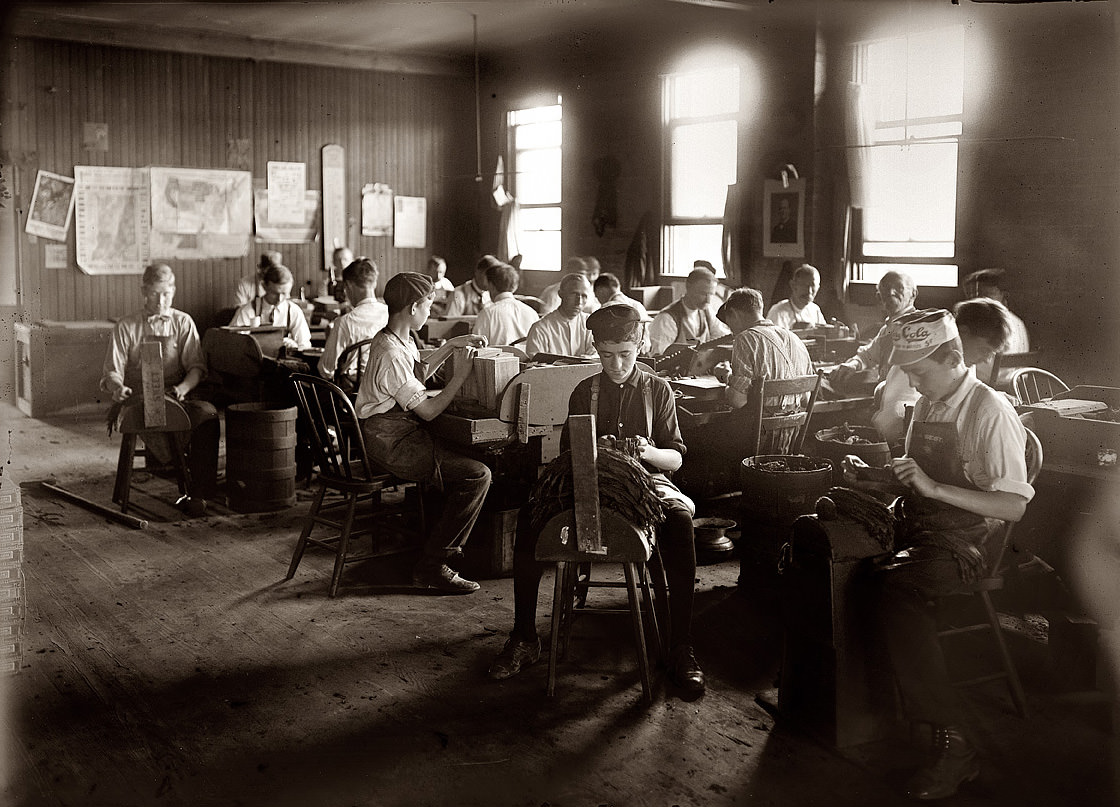
Street-level work was just as much a part of Indianapolis as factory labor. A Greek bootblack — a shoe shiner — was photographed in 1908, one of many immigrant workers who had made their way to the city. The Maduro cigar factory, also photographed that year, employed workers rolling cigars by hand in a trade that still relied on skilled manual labor before mechanization took over.
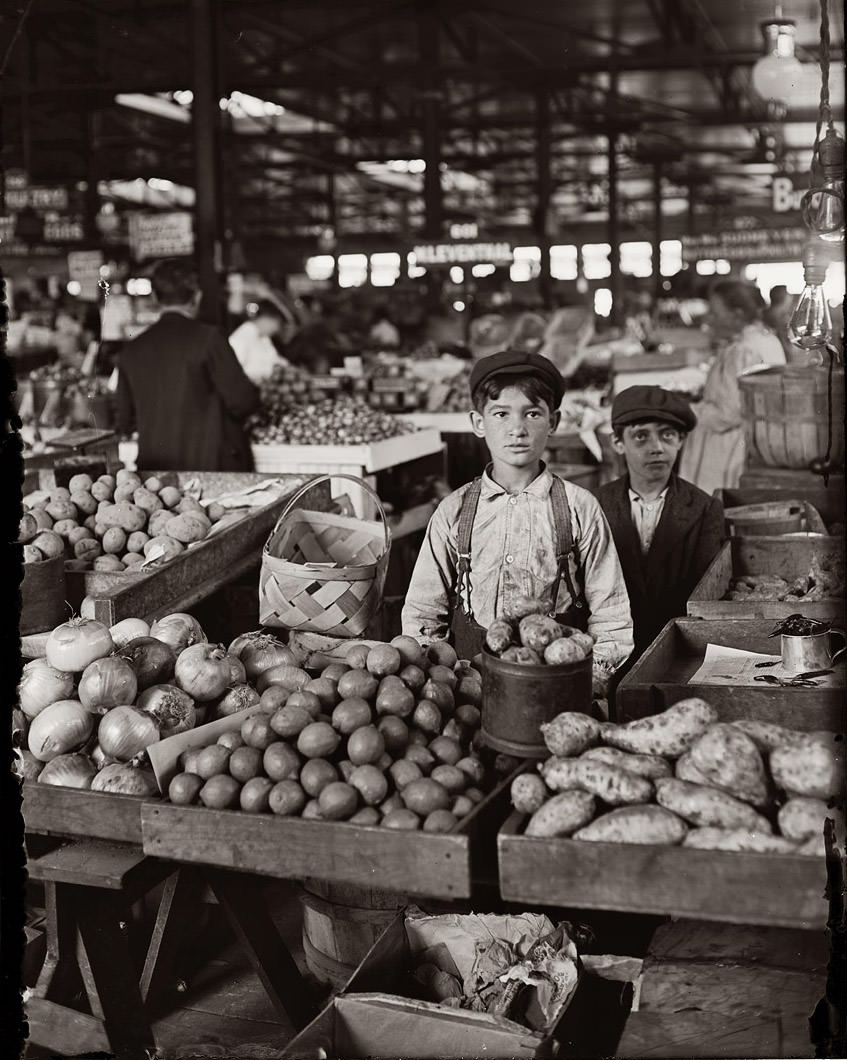
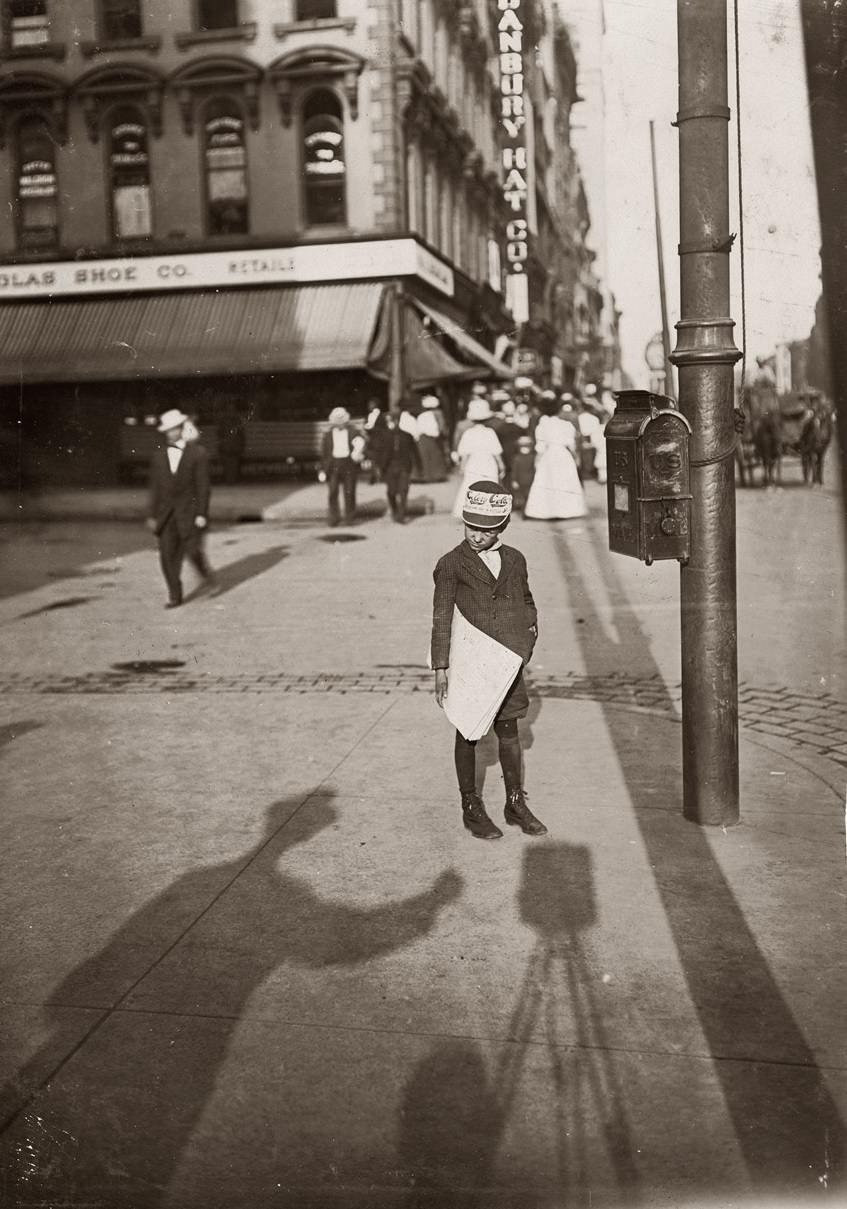
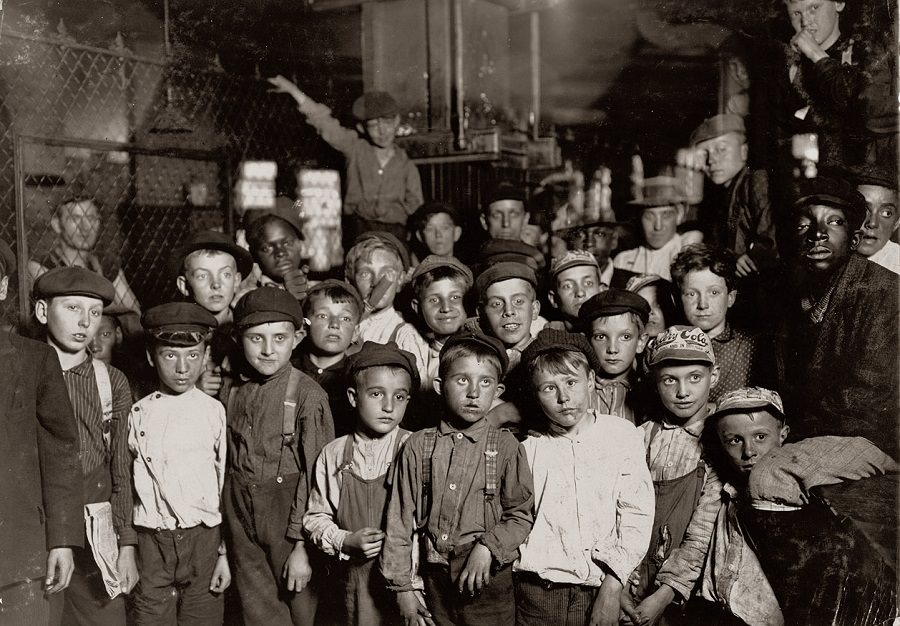
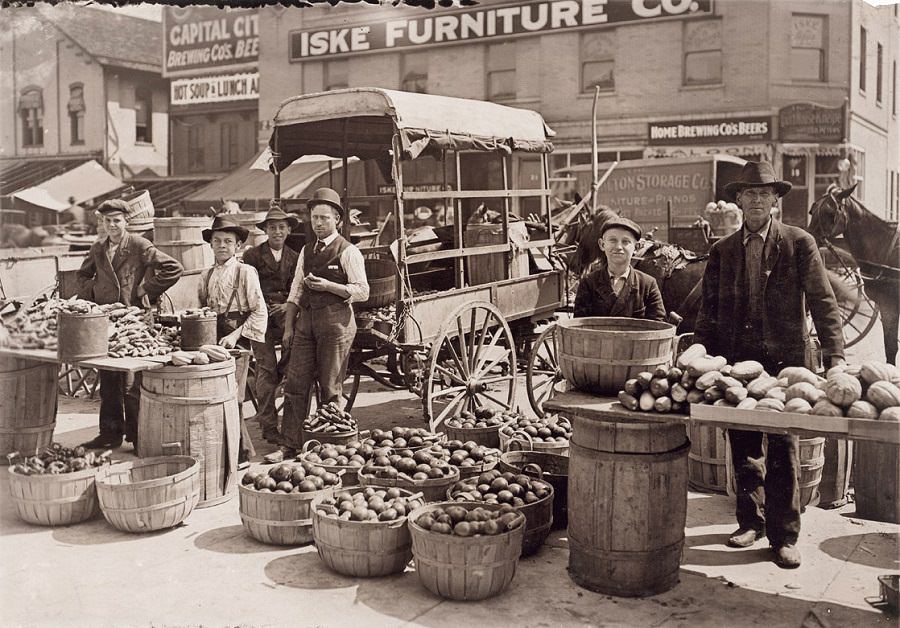
The Indianapolis Market in August 1908 was a lively, crowded place. Fruit vendors hawked their goods from stalls, and buyers moved through the aisles in the summer heat. Newsboys were another fixture of city life in this period. John Howell, photographed in August 1908, began selling papers at 6 a.m. on Sundays and earned as much as 75 cents on a good day. Groups of newsboys gathered outside newspaper offices waiting for the baseball edition to come off the press — a small but telling slice of daily life in early Indianapolis.
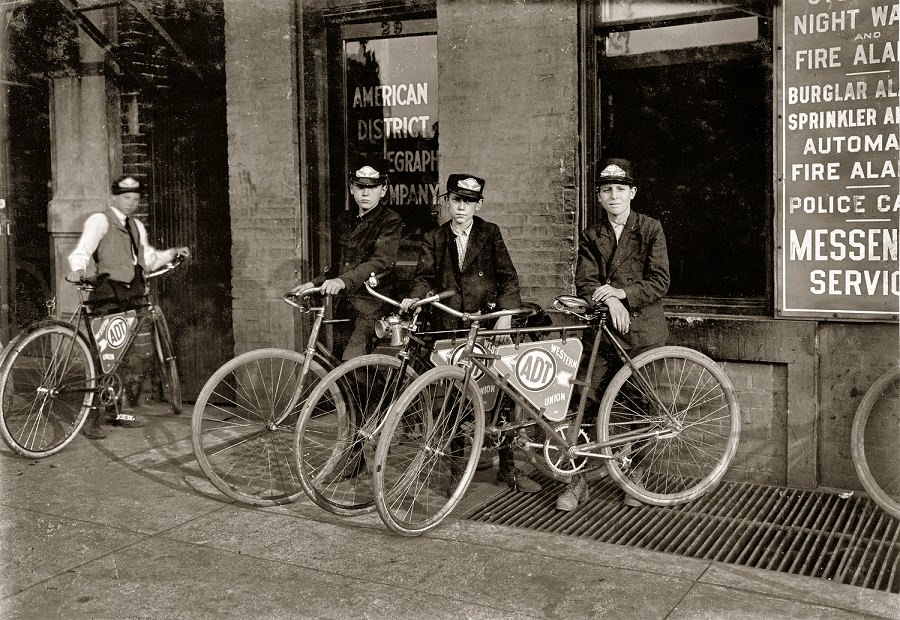
American District Telegraph (A.D.T.) messengers, photographed in August 1908, were young boys employed to carry messages and packages across the city. Before telephones were widely used, messenger services were essential to business and communication. These boys worked long hours for small pay, and their presence in the historical record is a reminder of how much early city economies depended on child labor — a practice that reformers of the era were actively working to curtail.

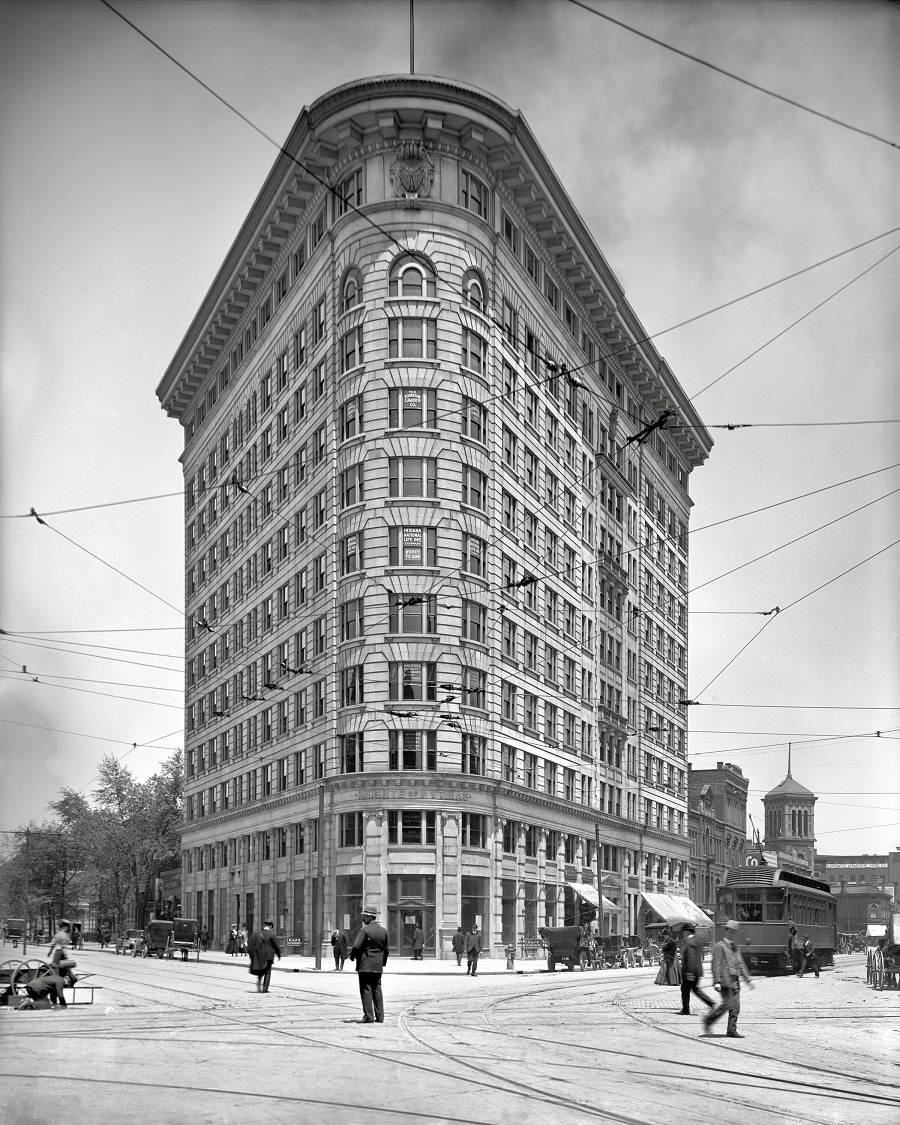
Exploring the location of the Pythias building was an enjoyable rabbit hole. It was situated at Penn & Massachusetts.
I love seeing this kind of stuff, but at the same time, it makes me so depressed seeing how gutted this city became post WW2.
The city certainly has changed over the years. I noticed that the signage for the Greyhound Terminal cafe listed both beer and liquors. Guess that the local WCTU hadn’t paid them a visit yet.
Used to be so beautiful
Cars ruined cities.