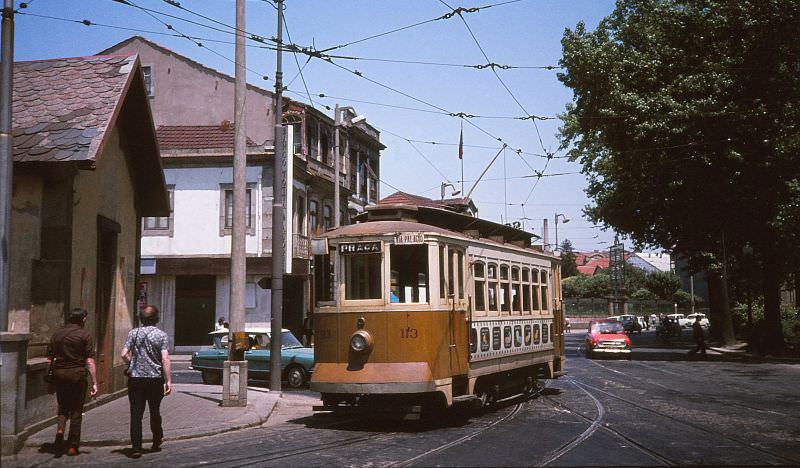
At the turn of the 20th century, the automobile was still a novelty. Horse-drawn carriages dominated city streets, and gasoline-powered vehicles were loud, unreliable, and expensive. That changed fast. Within two decades, cars had reshaped how people lived, worked, and moved across the country. The early 1900s were defined by rapid invention, fierce competition between automakers, and a public that was eager to get behind the wheel.
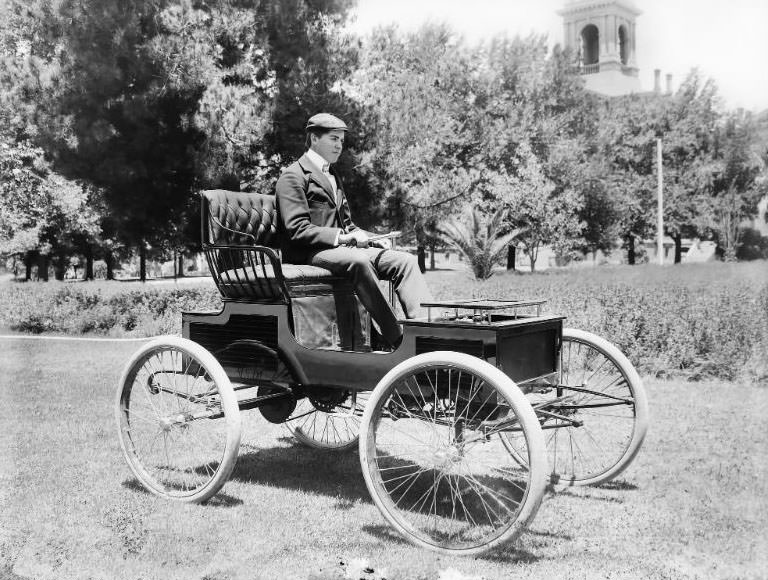
Not every early car ran on gasoline. Electric vehicles were surprisingly common in the 1900s, prized for their quiet operation and ease of use. Companies like Baker Electric and Studebaker Electric built cars that were popular in cities, where short trips and smooth roads made battery power practical. Hybrid designs also entered the market early. The Krieger automobile combined an electric motor with a gasoline engine, a concept that wouldn’t become mainstream for another century.
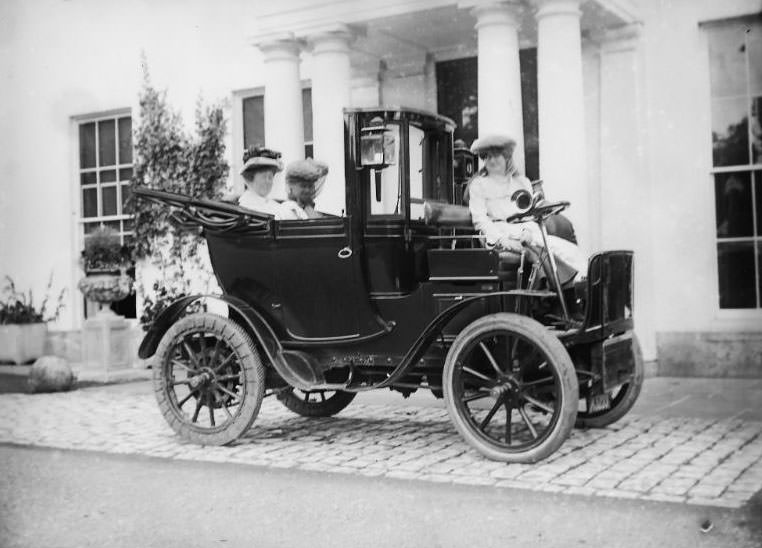
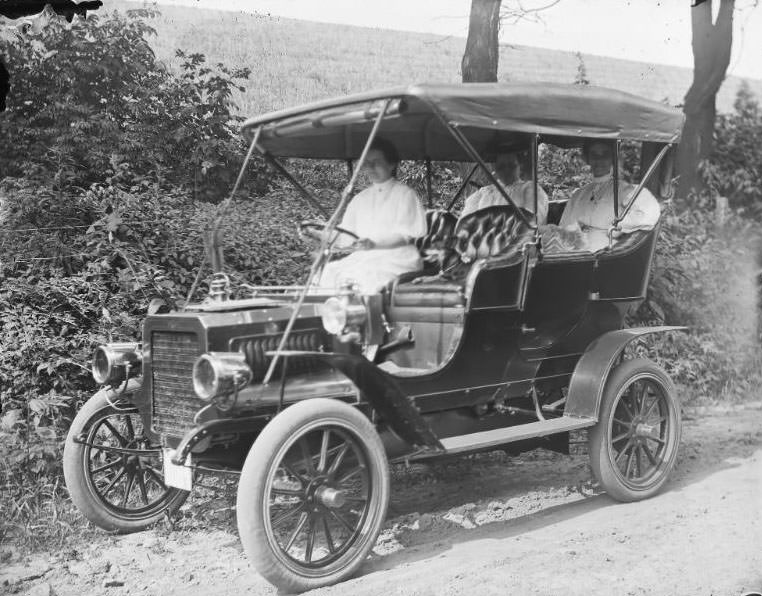
Early automobiles were heavily influenced by carriage design. Wooden bodies, high-set headlights, brass fittings, and running boards were standard features. Most cars had two- or four-cylinder internal combustion engines, manual transmissions, and mechanical brakes that required serious effort to operate. Suspension systems were basic, making travel on unpaved roads a jarring experience. Still, that didn’t stop people from buying them.
The single biggest turning point for the industry came in 1908 when Henry Ford introduced the Model T. By using assembly line production at his Highland Park plant, Ford slashed manufacturing costs dramatically. A car that had once been a luxury item became something an ordinary working family could afford. Car ownership exploded across the United States, and dozens of other manufacturers scrambled to compete. The demand for fuel, parts, and roads grew alongside it.
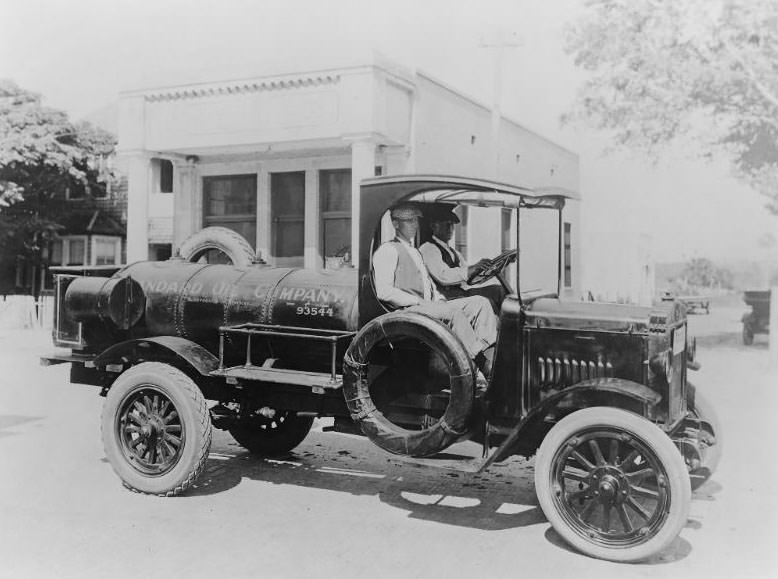
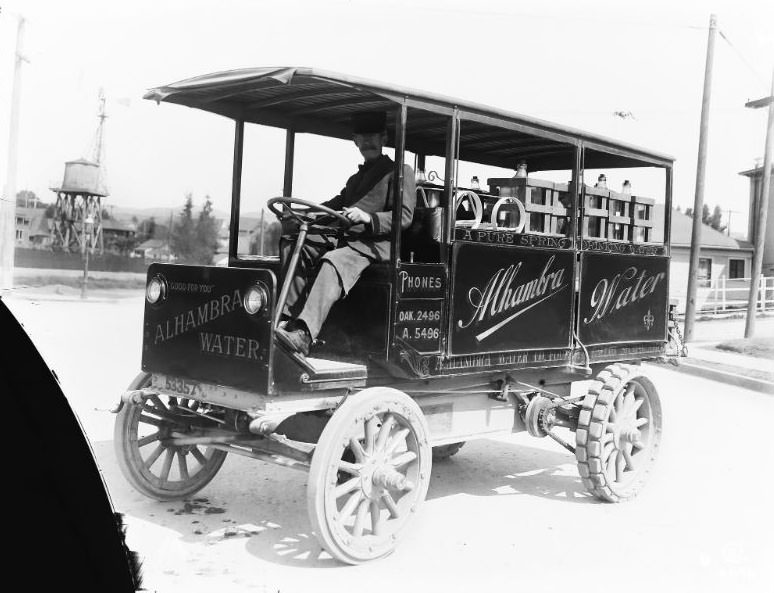
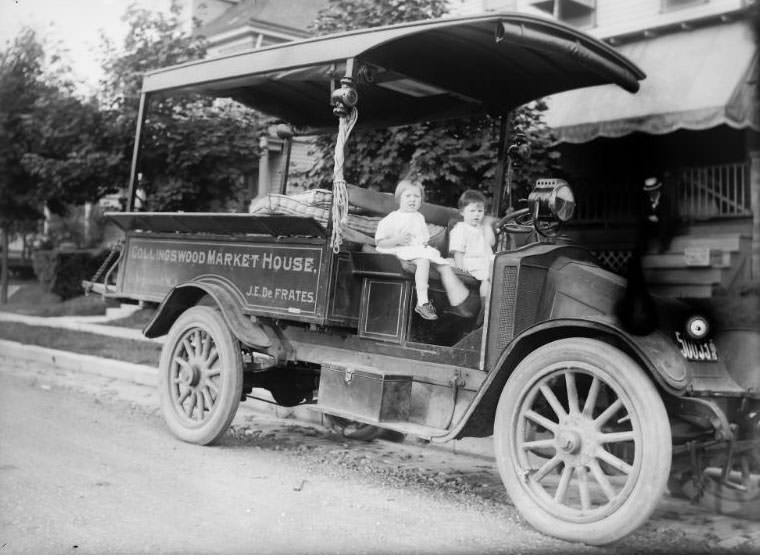
The automobile didn’t just change personal travel — it transformed commercial delivery too. Businesses quickly adopted motor vehicles to replace horse-drawn wagons. Water companies, shoe repair shops, and food distributors all put branded vehicles on the road. These trucks were more reliable, faster, and capable of carrying heavier loads than the animals they replaced.
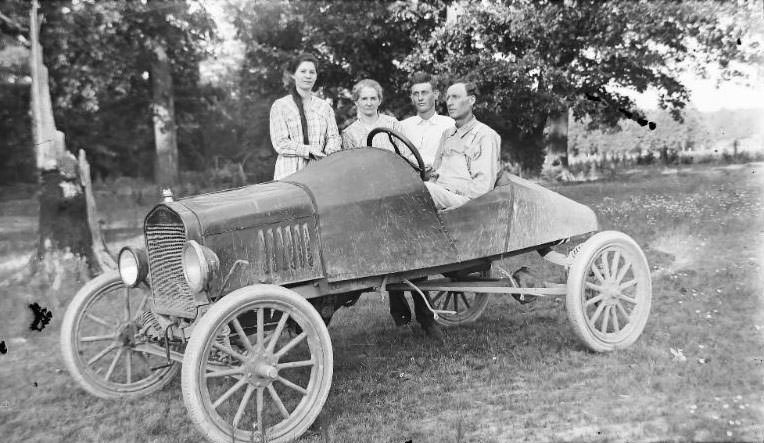
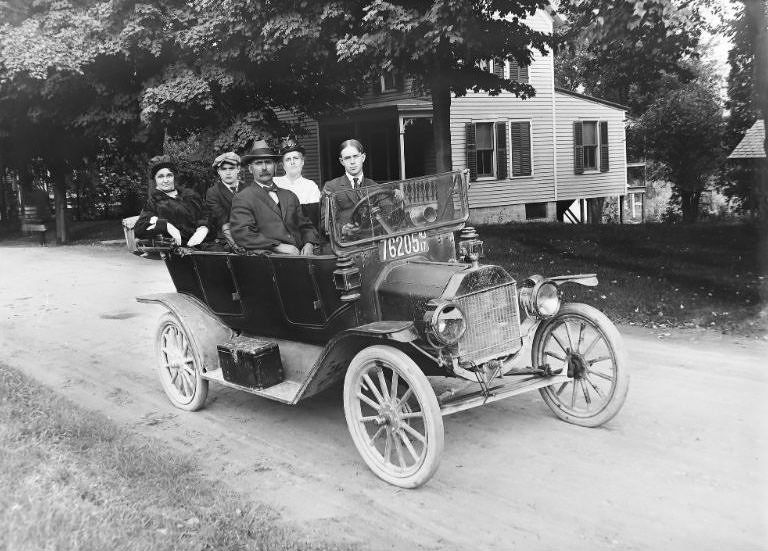
Ford’s vehicles appeared everywhere throughout the 1910s. Families posed proudly alongside their new cars, treating them as symbols of progress and financial success. The Ford name became synonymous with accessible, durable transportation for the American middle class.
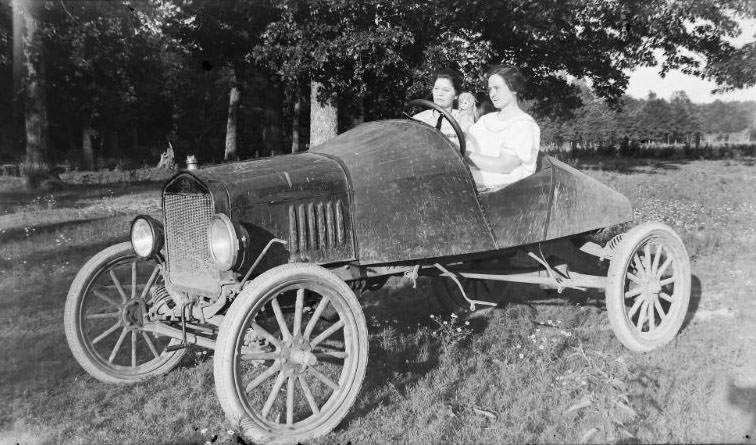
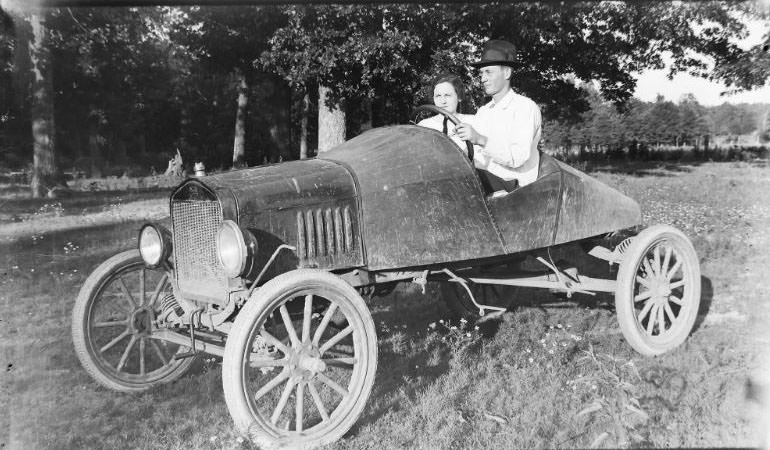
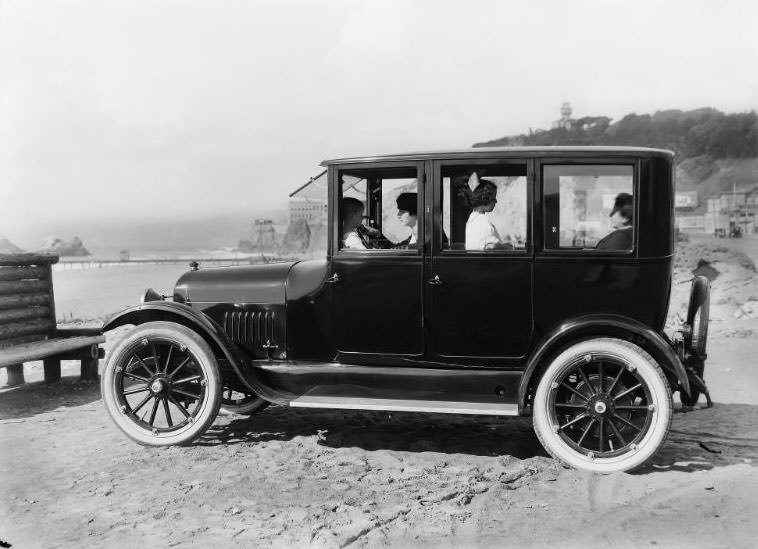
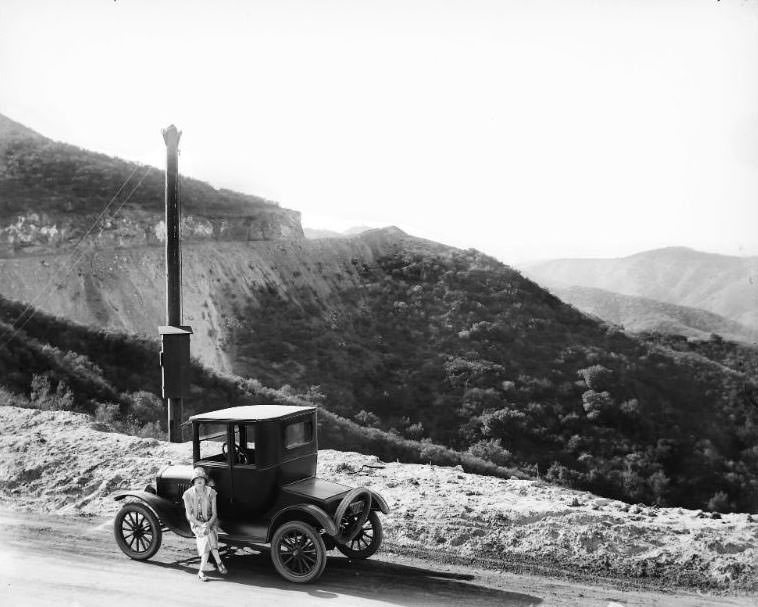
Cars opened up new possibilities for leisure and tourism. Families loaded up their automobiles and drove to scenic destinations that would have taken all day by horse or required an expensive train ticket. Coastal drives, national parks, and scenic overlooks became weekend destinations for the growing car-owning public.
Commercial vehicles grew in variety and size throughout the mid-1910s. Small trucks hauled goods through city streets, and even children occasionally rode along for deliveries. Roads were still largely unpaved in many areas, and mud was a serious obstacle — some vehicles required tire chains just to navigate a wet street.
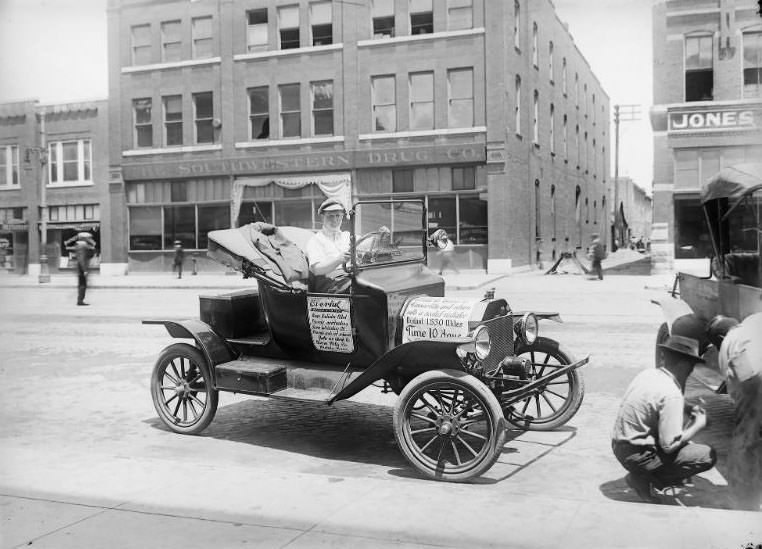
Automobiles also became powerful marketing tools. Businesses used cars as moving advertisements, driving through neighborhoods and parking in high-traffic areas to attract customers. A sharp-looking vehicle with a well-dressed driver turned heads and generated attention.
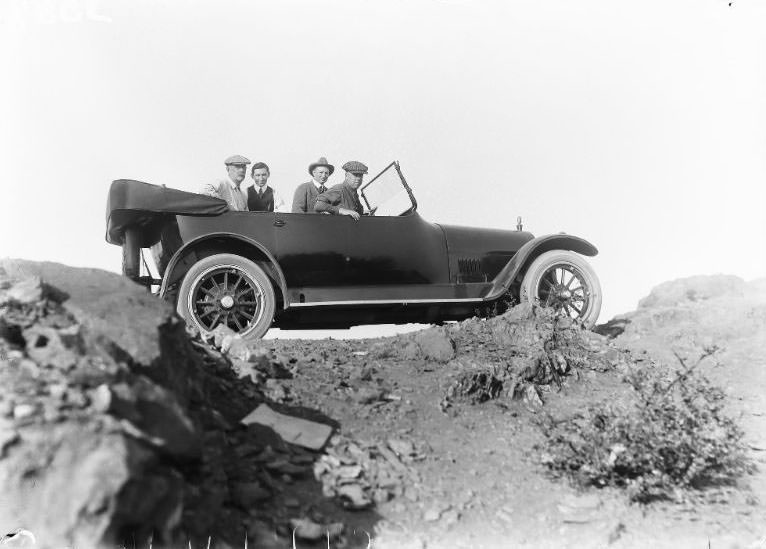
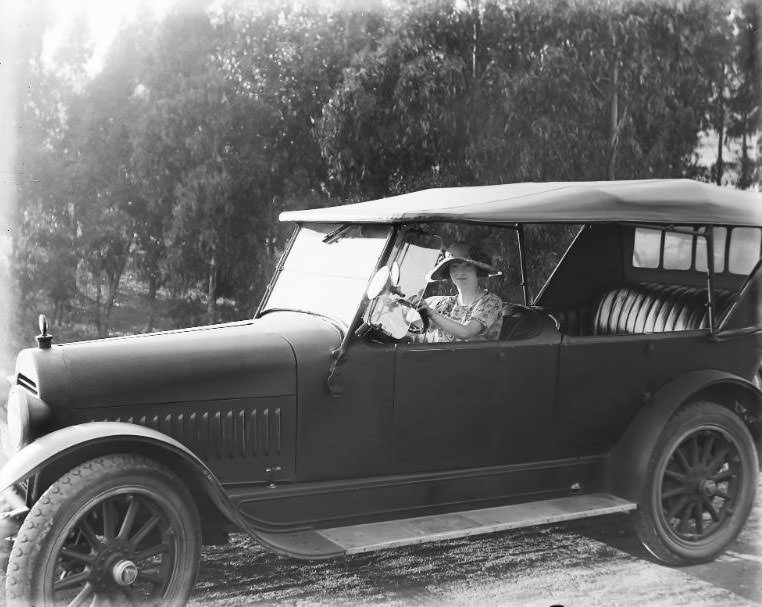
By 1917, car designs were evolving quickly. Convertible models with four doors offered more room and flexibility, while closed sedans provided shelter from the weather. Manufacturers competed on comfort, style, and reliability as much as raw performance.
Group excursions by automobile became a popular social activity. Organized drives to landmarks and scenic routes drew enthusiasts who wanted to push their vehicles — and themselves — to new places. California’s Mount Diablo and the coastal roads of San Francisco were favorite destinations.
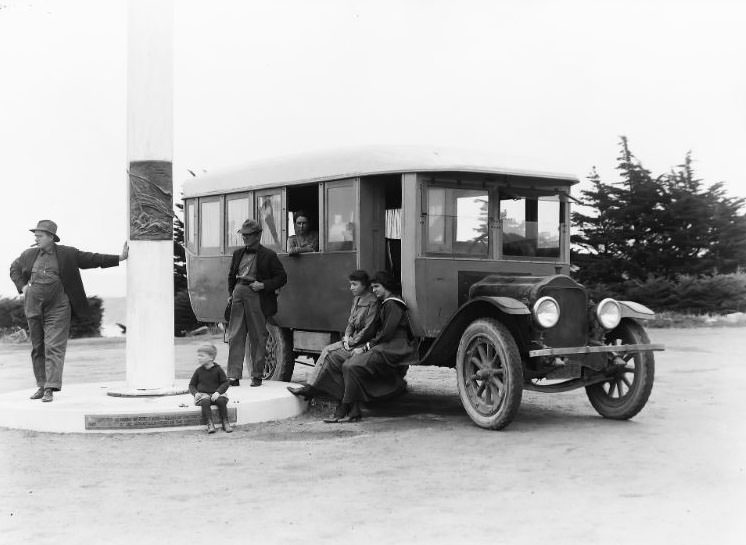
Public transportation was evolving alongside private vehicles. Early motor buses began replacing horse-drawn streetcars in many cities. By 1918, buses were traveling long-distance routes, including the newly established Lincoln Highway — the first road across the continental United States.
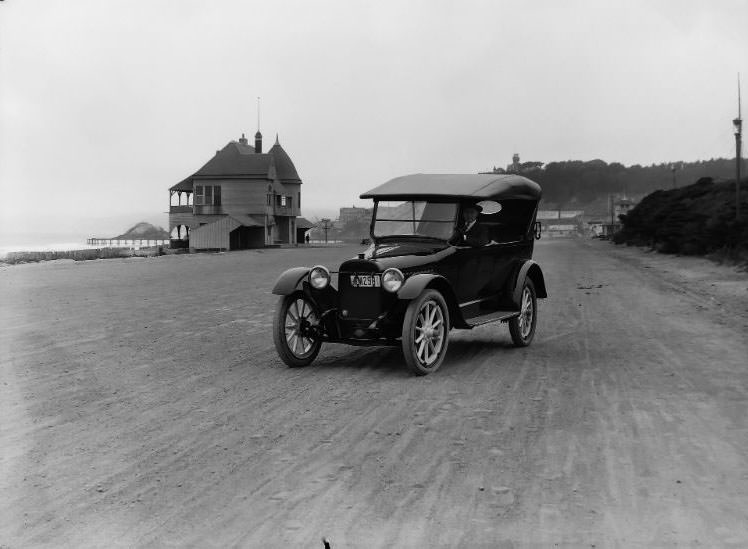
San Francisco’s Great Highway became a showcase for early automobile culture. Brands like Briscoe Motor Cars used the scenic coastal road for promotional photography, parking their vehicles against backdrops of ocean views and famous landmarks. The city’s road infrastructure was actively being built and expanded to keep up with motor traffic.
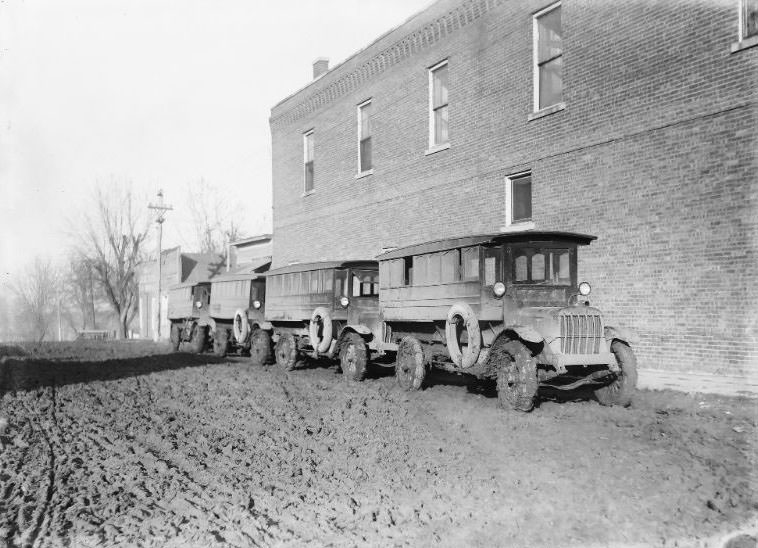
School transportation was also being motorized. By 1918, consolidated school districts were using motor buses to bring students in from rural areas. Muddy, unpaved roads meant those buses needed tire chains on all four wheels to keep running through wet seasons.
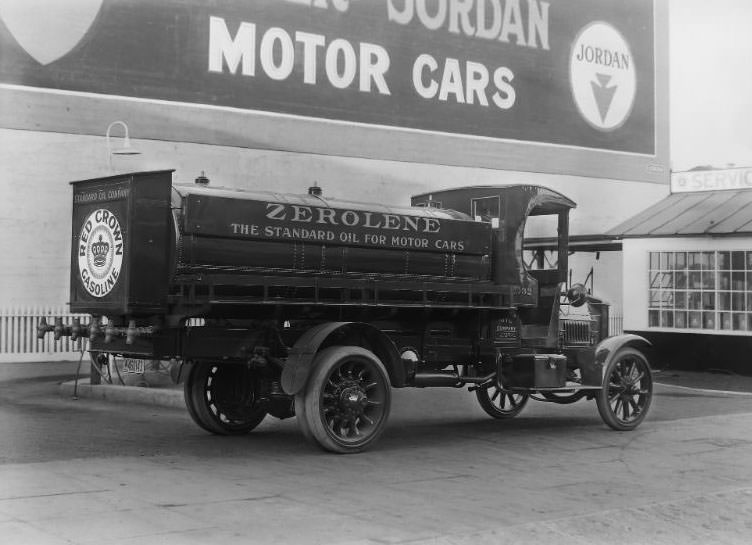
As car ownership spread, so did the demand for fuel. Standard Oil became one of the dominant suppliers, running branded delivery trucks and operating dedicated gas stations across California. Advertising for fuel brands and automotive products grew into its own industry, with large billboards appearing near gas stations and busy intersections.
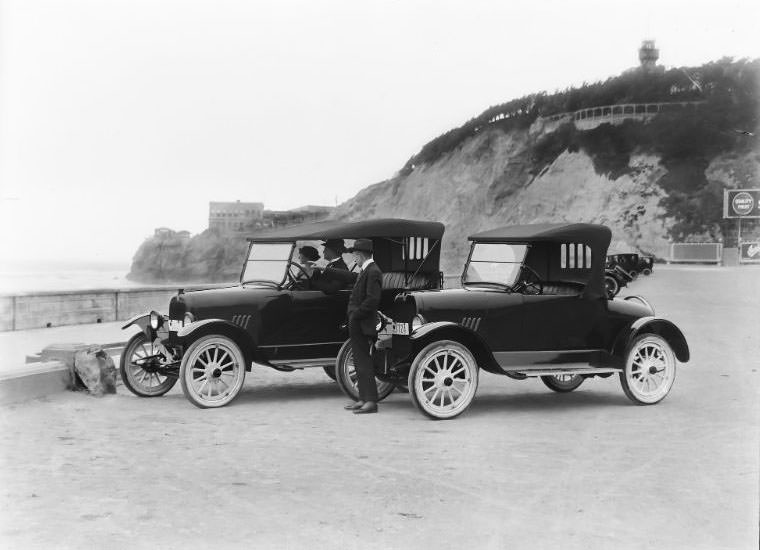
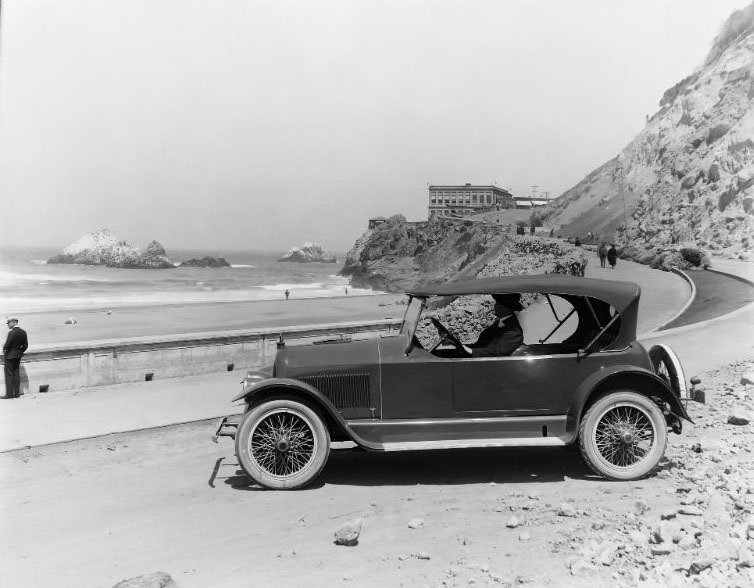
Briscoe Motor Cars made the most of San Francisco’s dramatic geography. The company photographed its vehicles at Lands End, at the terminus of the Lincoln Highway, with the Cliff House and Sutro Heights visible in the distance — imagery that sold a promise of freedom and adventure to prospective buyers.
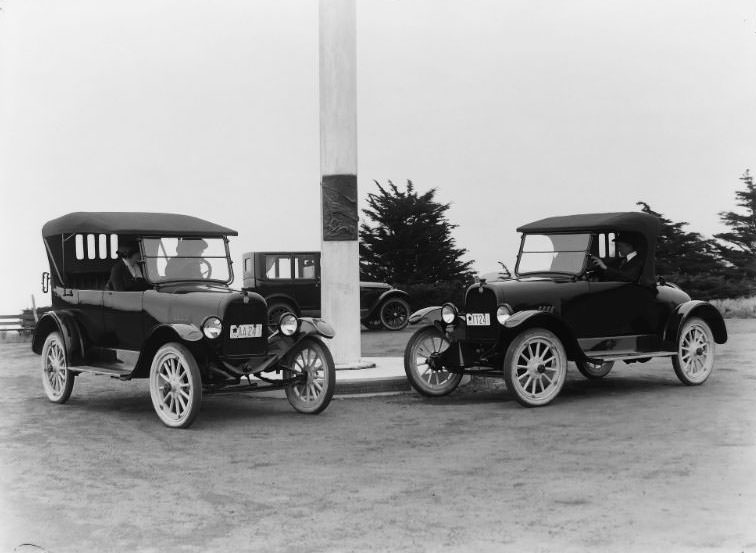
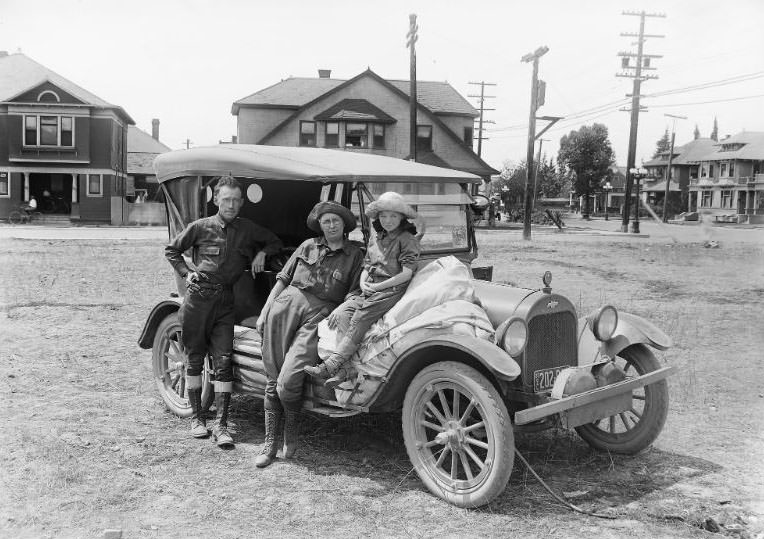
By 1920, automakers like Chevrolet were competing directly with Ford for family buyers. Cars were no longer just tools — they were part of family identity. Photographs of families with their vehicles became common, capturing a sense of pride in ownership that mirrored the broader optimism of the era.
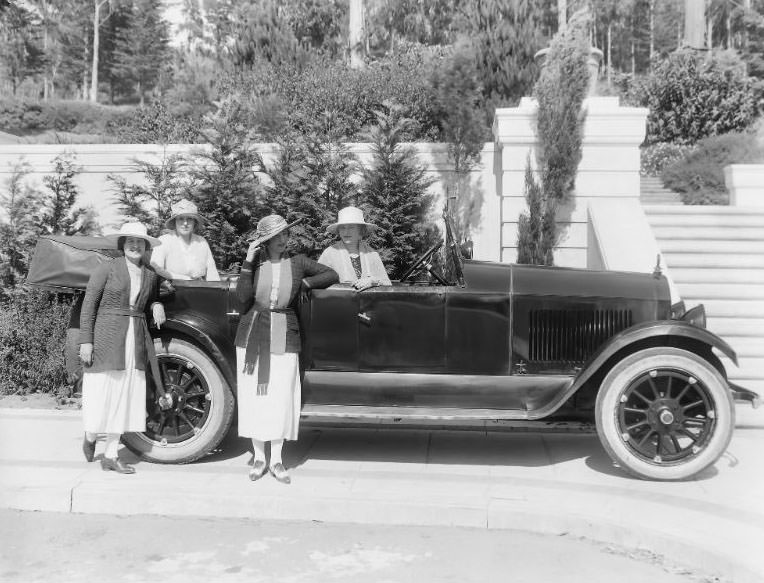
Upscale neighborhoods in San Francisco, like St. Francis Woods, became settings for high-end automotive photography. Luxury brands such as Cole Motor Car targeted wealthy buyers, staging their convertibles with elegantly dressed women to signal status and sophistication.
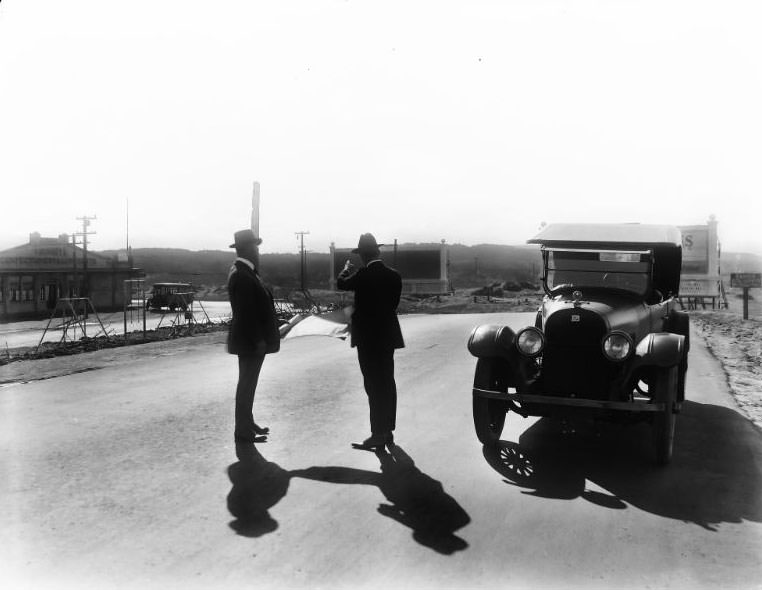
Urban development followed the automobile. Land developers used cars to survey new tracts and meet with buyers, and the expansion of roads into previously undeveloped areas accelerated the growth of new neighborhoods. In San Francisco, Sloat Avenue and the Great Highway corridor were actively being extended to accommodate both residents and motorists.
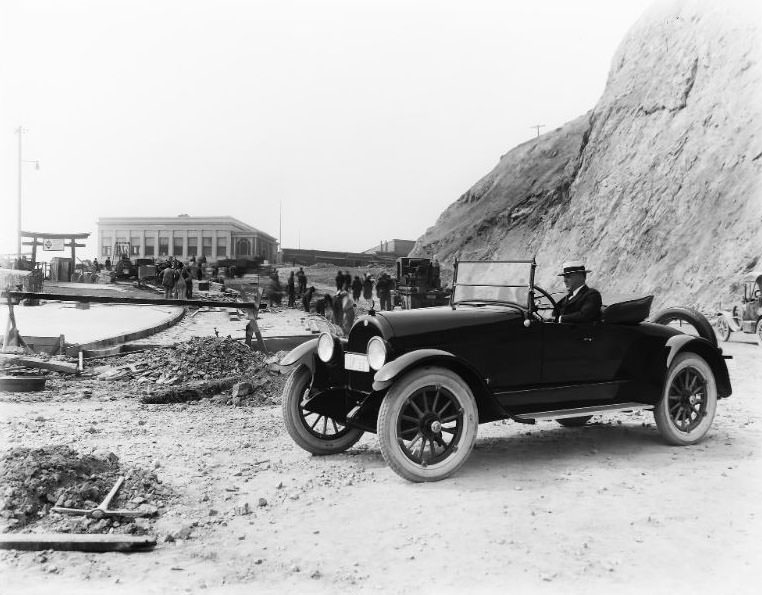
The 1920s brought a wave of creative automotive promotion. Dealer license plates appeared on cars parked at tourist landmarks, and road construction near popular sites like the Cliff House signaled that infrastructure was being built specifically to support automobile tourism.
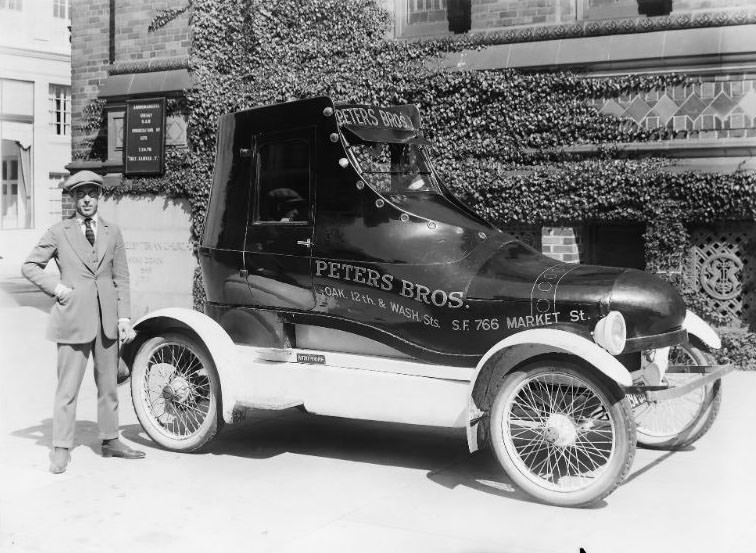
Some businesses went far beyond simple branded trucks. Peters Bros. Shoe Repair commissioned a working car built entirely in the shape of a giant shoe, driving it through San Francisco streets as a mobile advertisement. These novelty vehicles guaranteed attention and were a testament to how deeply the automobile had embedded itself in American commercial culture.
Road construction continued to refine San Francisco’s coastal routes. By 1922, the curved road near the Cliff House had been fully paved and landscaped, making it accessible to the steady stream of automobiles visiting one of the city’s most iconic landmarks.
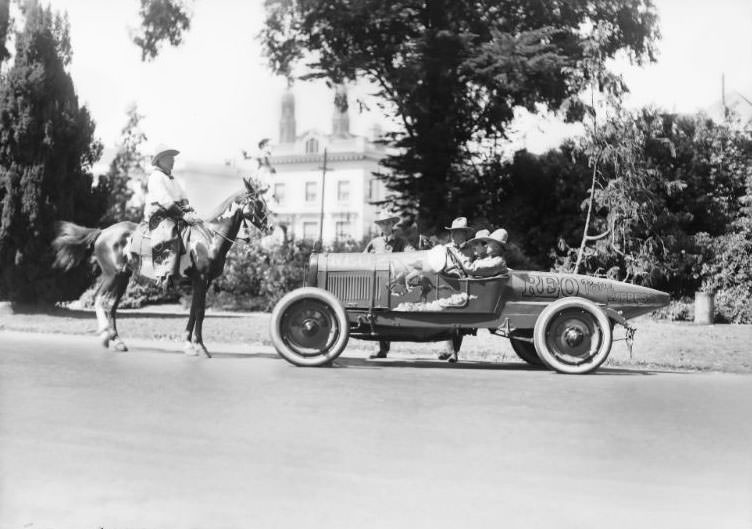
Automakers used bold marketing stunts to grab public attention. In 1923, the REO Motor Car Company staged a promotional event in San Francisco’s Golden Gate Park, pitting its “Pony Express” race car against a cowboy on horseback — a direct visual argument that the machine had surpassed the horse as the vehicle of American progress.
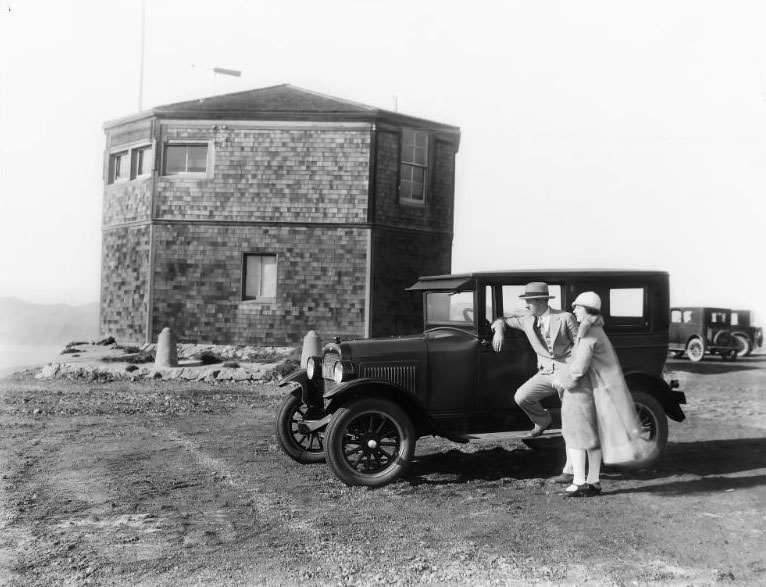
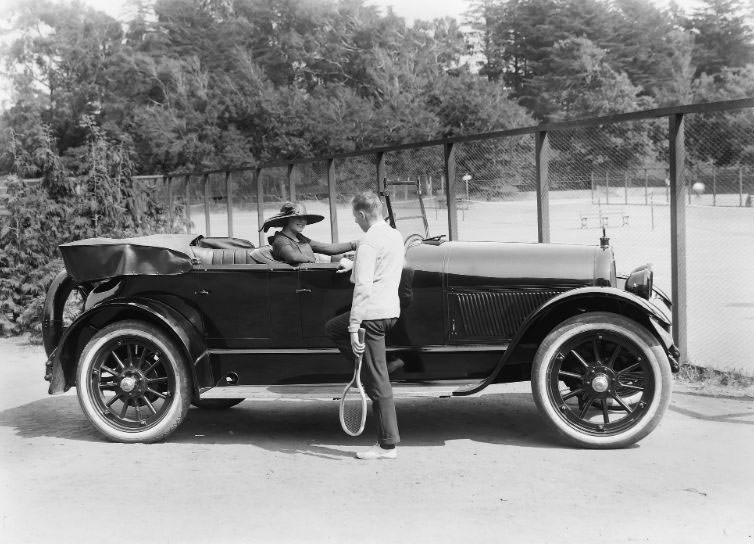
By the mid-1920s, closed sedans had largely replaced open-top touring cars as the preferred choice for everyday driving. More enclosed and weather-resistant, these vehicles suited year-round use and attracted buyers who valued practicality alongside style. Brands like Haynes and Willys-Knight each competed for market share with distinct mechanical features.
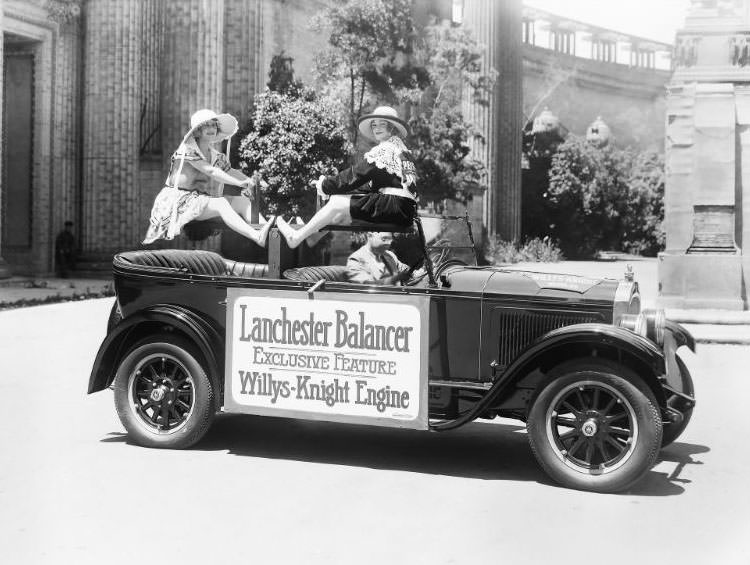
Manufacturers found inventive ways to demonstrate mechanical innovations. Willys-Knight promoted its engine’s “Lancaster Balancer” by staging a publicity stunt where two young women balanced on a teeter-totter placed inside a convertible — a direct demonstration of the engine’s smooth, vibration-free operation.
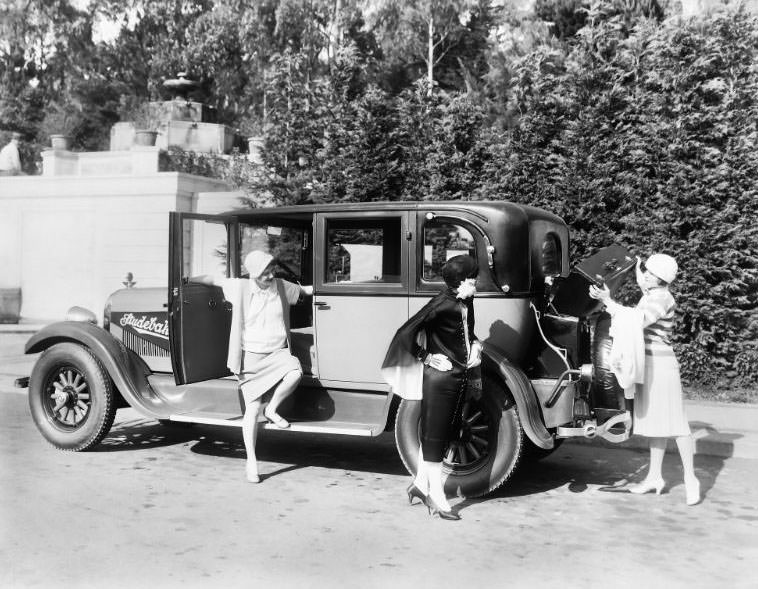
Studebaker, one of the most established names in the industry, offered buyers a combination of reliability and elegance. By the late 1920s, its sedans and touring models were common sights in well-to-do San Francisco neighborhoods, with ample trunk space and refined styling that appealed to a growing class of affluent motorists.
Premium vehicles defined the upper end of the 1920s market. The 1928 Buick Master 6 Sedan offered a smooth six-cylinder engine and an enclosed body that kept occupants comfortable in all weather. The Marmon Eight, also from 1928, delivered eight-cylinder power and luxurious appointments targeted at buyers who wanted more than basic transportation.
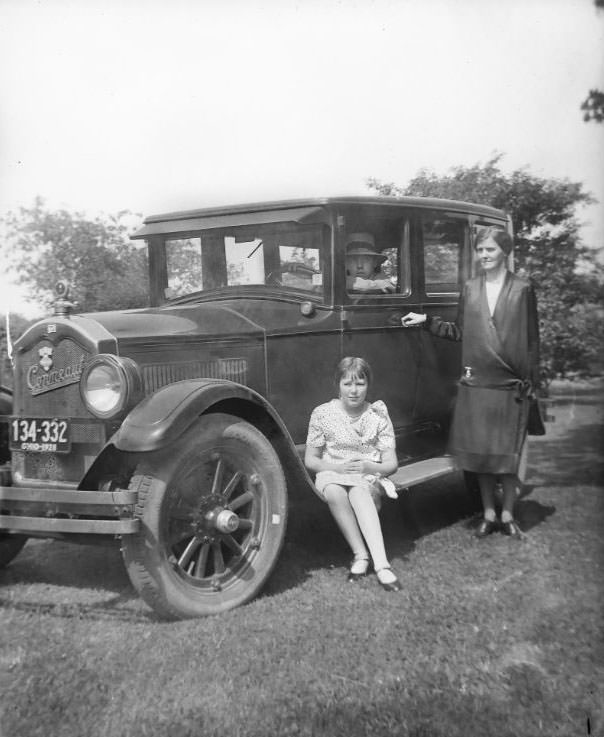
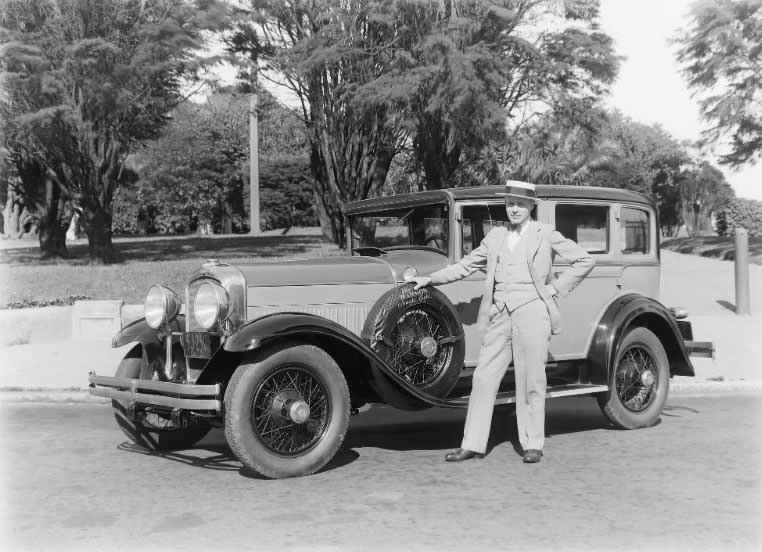
Even as the decade closed, the spirit of automotive adventure was very much alive. Open-air touring cars remained popular for leisure, and buyers who wanted the feel of the wind made their preferences known. The 1929 Hudson Motor Car was a roomy, powerful option, with generous trunk space that apparently doubled as extra seating for an afternoon outing.
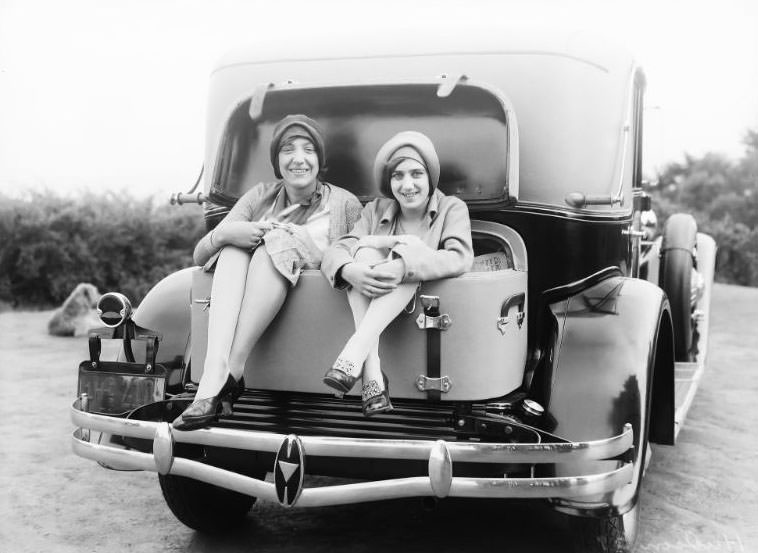
Throughout the 1920s, convertible automobiles remained closely tied to images of prosperity and social status. Luxury brands like Cole Motor Car continued to attract wealthy buyers in upscale San Francisco neighborhoods, where a stylish car was as much a social statement as a means of travel.
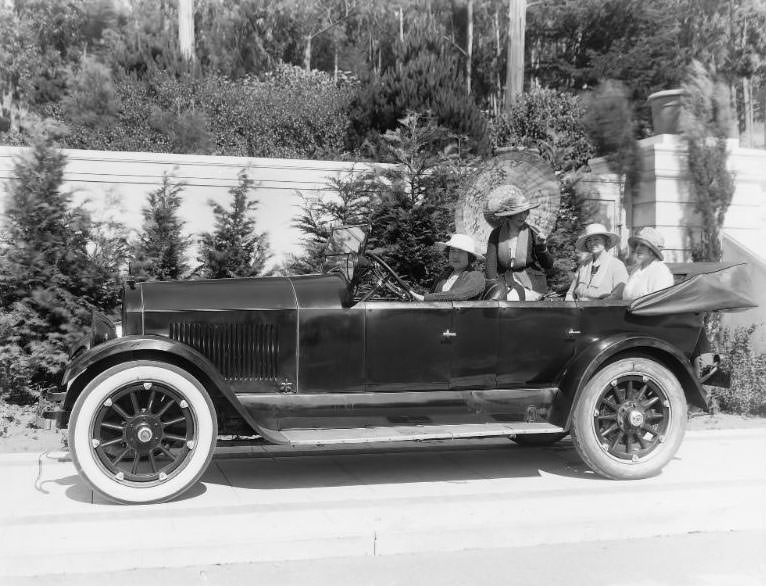
Automakers sought out distinctive backdrops to make their vehicles memorable. The Haynes Motor Car Company photographed one of its models in front of San Francisco’s “World’s Largest Sundial” in the Ingleside Terraces neighborhood — an unusual landmark that still stands today and drew enough visitors to make it worthwhile advertising real estate.
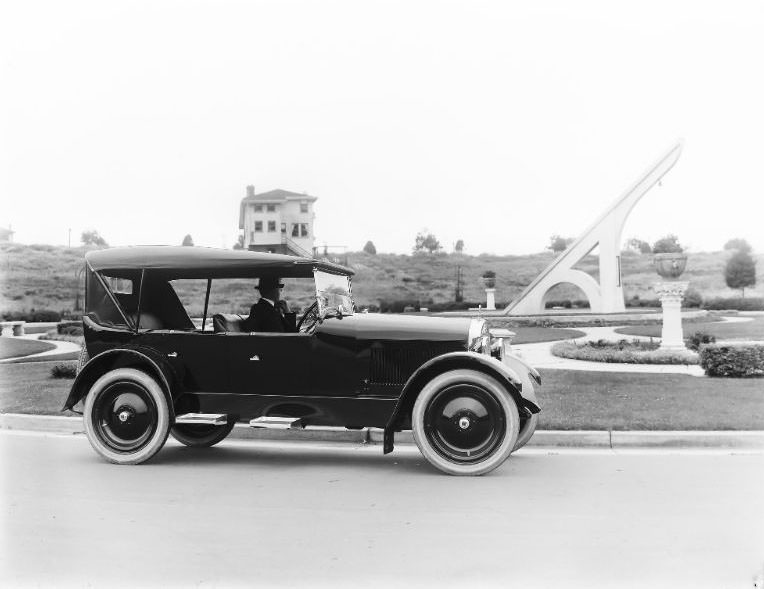
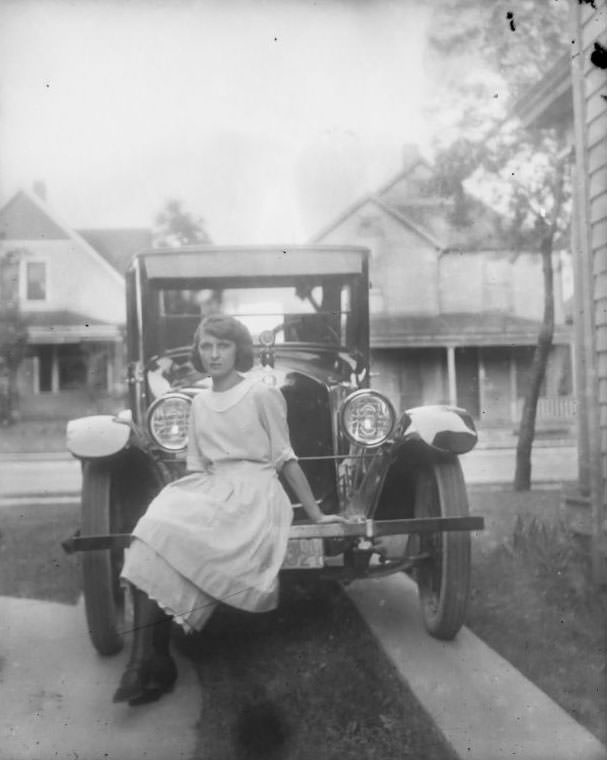
The automobile quickly became part of everyday recreation. People perched on hoods and running boards, drove to scenic overlooks, and used their vehicles as gathering spots. Cars weren’t simply machines — they were social spaces that shaped how people spent their free time.
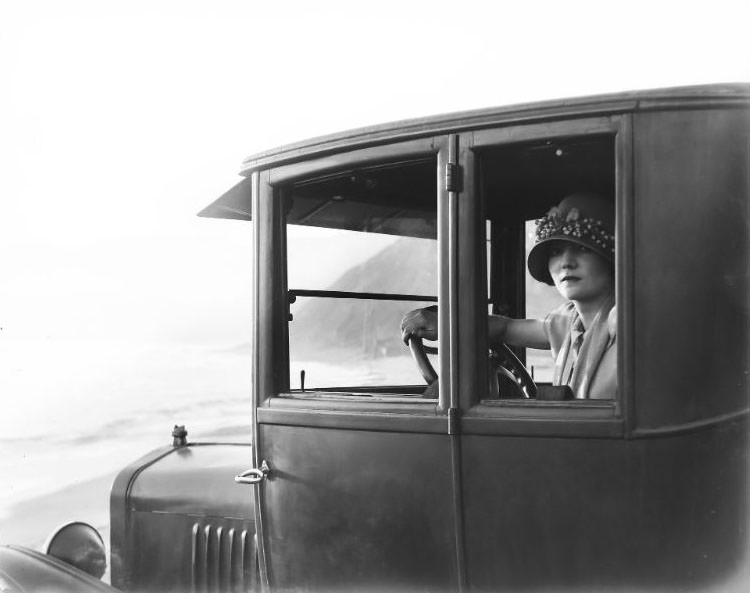
California’s coastal roads became among the most celebrated drives in the country. Touring cars were ideally suited for long stretches of highway, with open bodies that offered unobstructed views of the Pacific. Drivers and passengers along the Southern California coastline experienced a kind of freedom that had simply not existed a generation earlier.
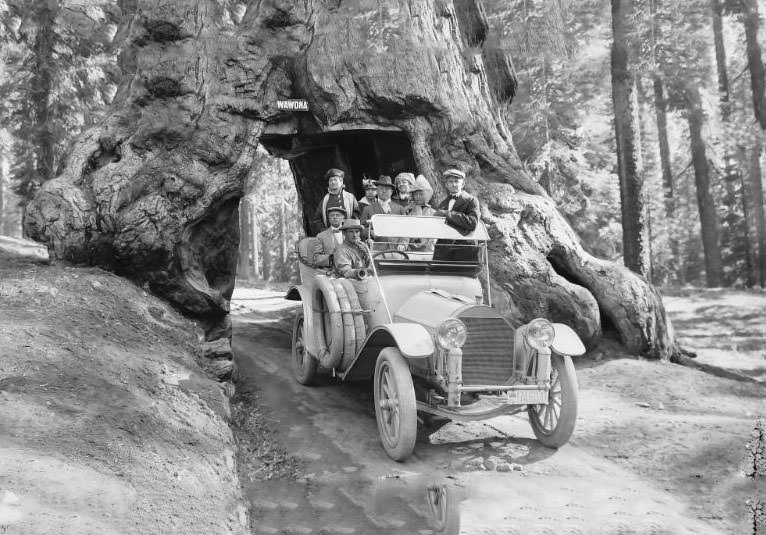
Motor tourism reached into some of America’s most spectacular natural landscapes. Tour buses carried passengers directly through the famous Wawona Tunnel Tree in Yosemite’s Mariposa Grove — a living giant sequoia with a tunnel cut through its base wide enough for a vehicle to pass through. It was a moment that captured everything the early automobile age promised: access to places once beyond reach, delivered with a sense of spectacle.