
Copenhagen has been the capital of Denmark since the early 15th century, but its road to becoming a thriving modern city was anything but smooth. The 19th century put the city through some of its hardest years — fires, military attacks, economic collapse, and political change all left deep marks on the Danish capital. By the time photographer Peter Elfelt turned his lens on Copenhagen in the 1890s, the city had rebuilt itself into something worth documenting. His photographs offer a rare, street-level look at a city that had fought hard to survive.
The century began with war on the water. In the early 1800s, British Admiral Horatio Nelson attacked the Dano-Norwegian fleet in Copenhagen harbor, striking a blow at Denmark’s naval power. Then in 1807, British forces returned with roughly 30,000 troops and bombarded the city over three days. The assault killed at least 2,000 civilians and destroyed much of the city. The damage went far beyond buildings and lives — it shattered Denmark’s economy. In 1813, a financially ruined Denmark was forced to cede Norway to Sweden. The next 25 years were defined by poverty and slow rebuilding.
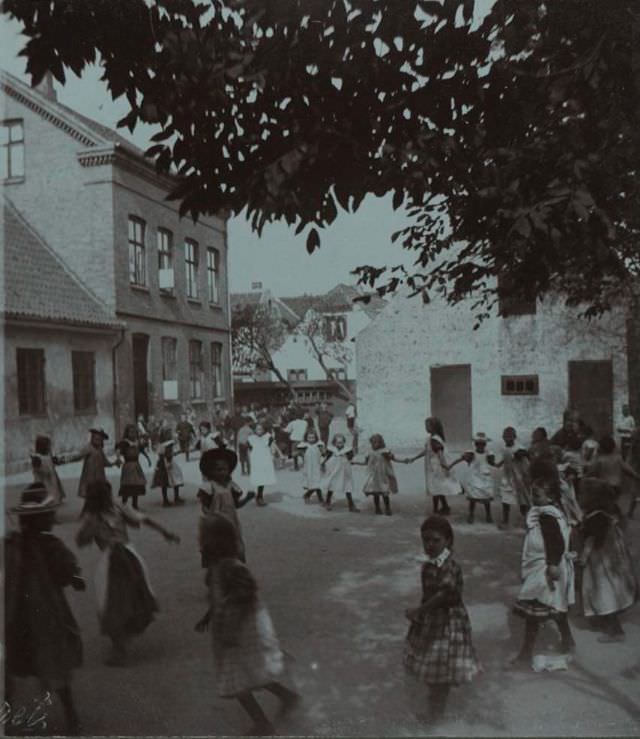
Recovery came gradually. Copenhagen invested in its people, establishing free compulsory primary schools and expanding scientific institutions. In 1849, Denmark became a constitutional democracy, and the political stability that followed helped drive steady economic growth. The city began to breathe again. New public spaces, cultural institutions, and neighborhoods took shape across Copenhagen’s expanding footprint.
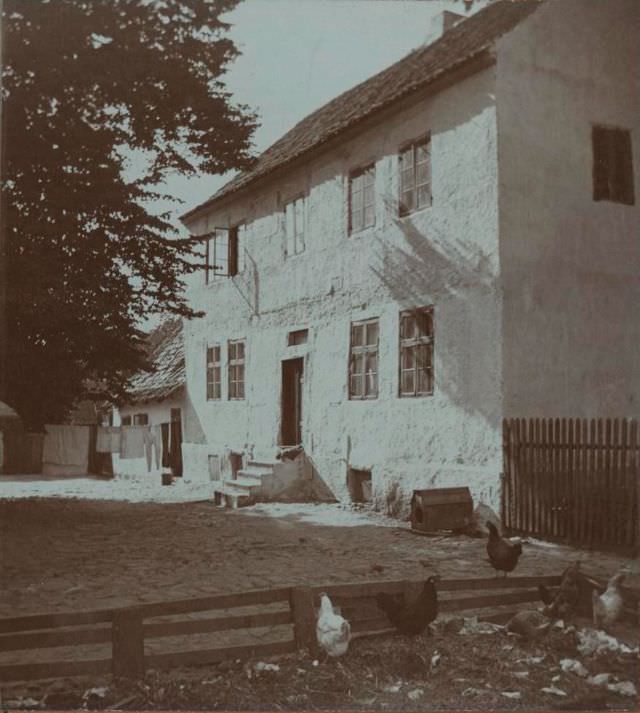
But war struck again. In 1864, Denmark fought and lost the Second War of Schleswig against Prussia and Austria. The defeat cost the country roughly a third of its territory. In response, Copenhagen strengthened its defenses with the new Fortification of Copenhagen, replacing the old ramparts that had failed to protect the city in earlier conflicts. The loss was a humbling moment, yet Copenhagen pressed forward.
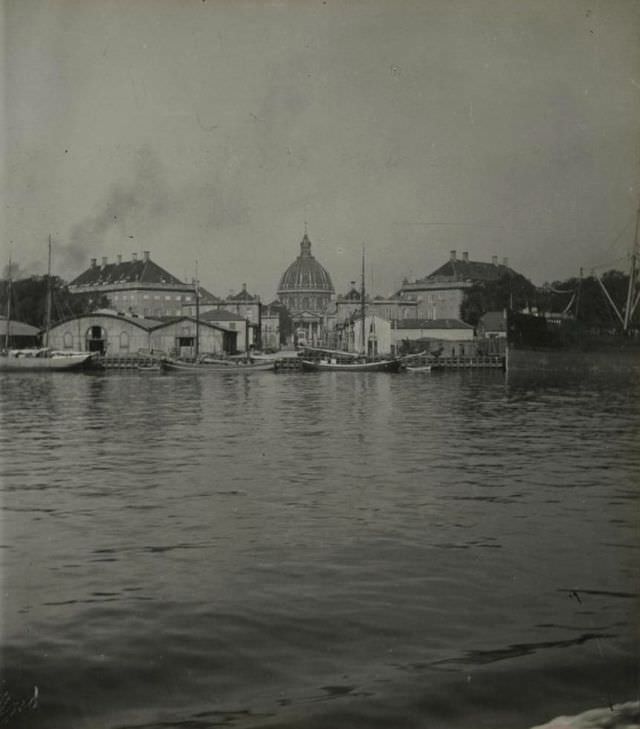
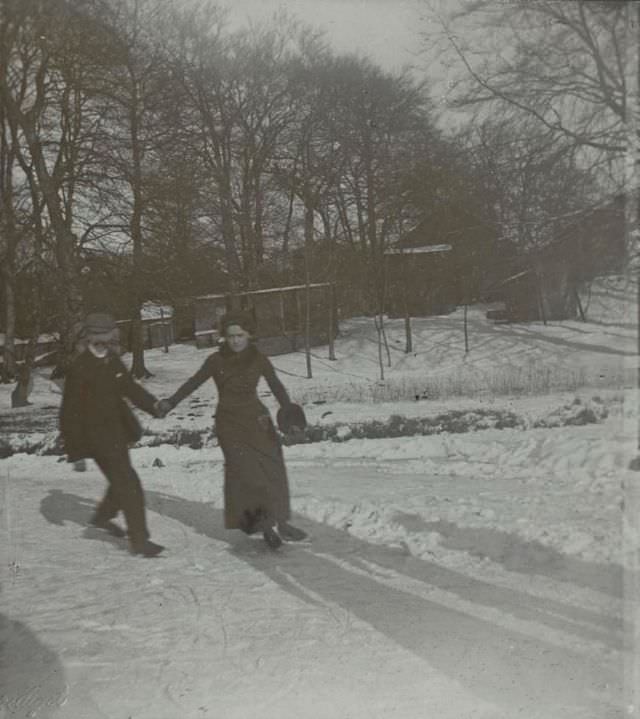
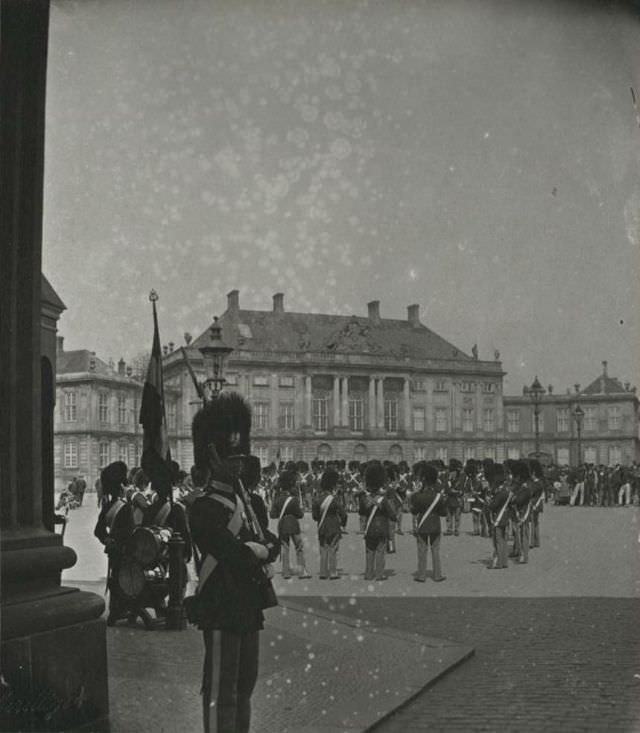
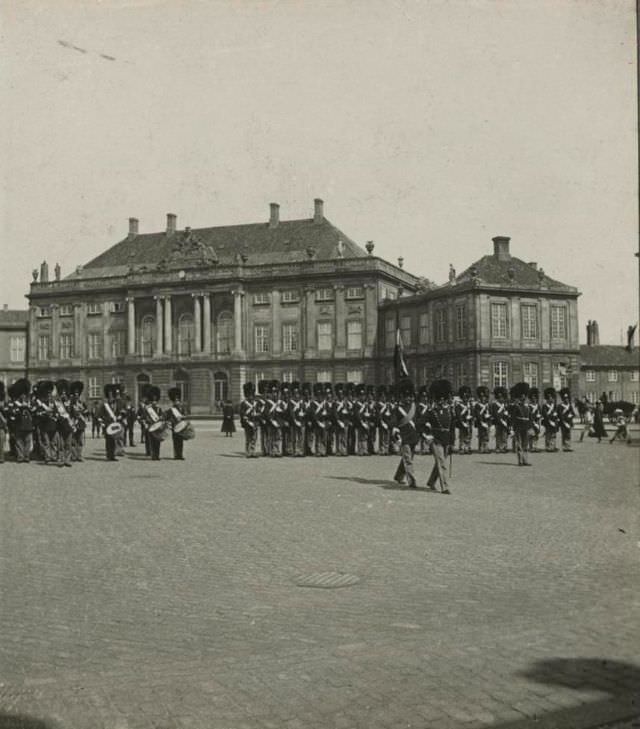
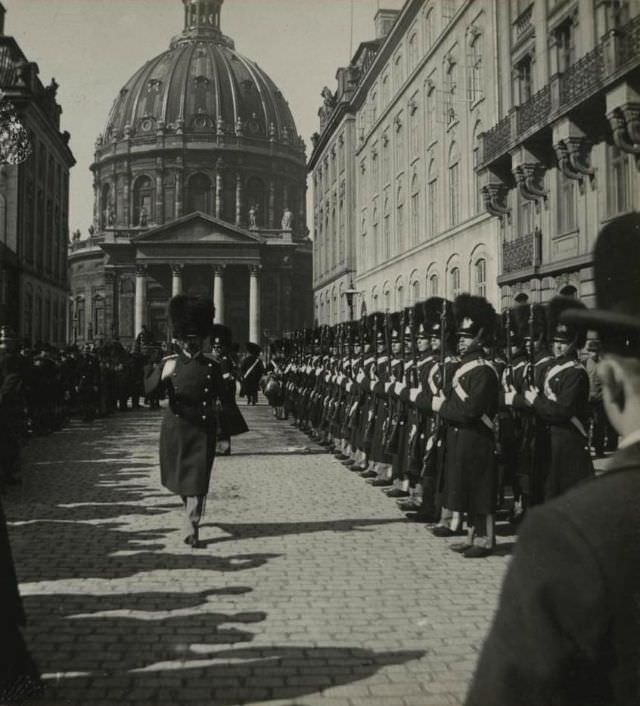
Amalienborg Palace, the winter home of the Danish royal family, stood as one of the city’s most recognizable landmarks by the 1890s. Seen from the harbor, its classical architecture dominated the waterfront skyline. The palace square hosted regular guard parades, a formal military tradition that drew both residents and visitors. Elfelt captured these parades multiple times, showing the precision and ceremony that marked royal life in Copenhagen.
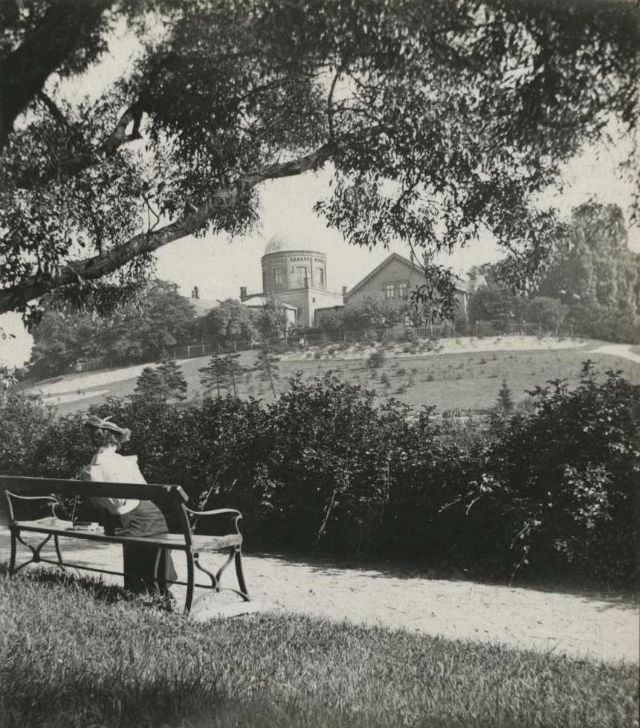
Copenhagen’s Botanical Garden was a product of the city’s renewed investment in science and education. Established in its modern form in the 1870s, the garden housed thousands of plant species and was open to the public. Elfelt’s photograph of it captures a city that valued green space and scientific inquiry alongside its rebuilt civic institutions. Not far away, Ørstedsparken — a park named after Danish physicist Hans Christian Ørsted — offered another public retreat within the city.
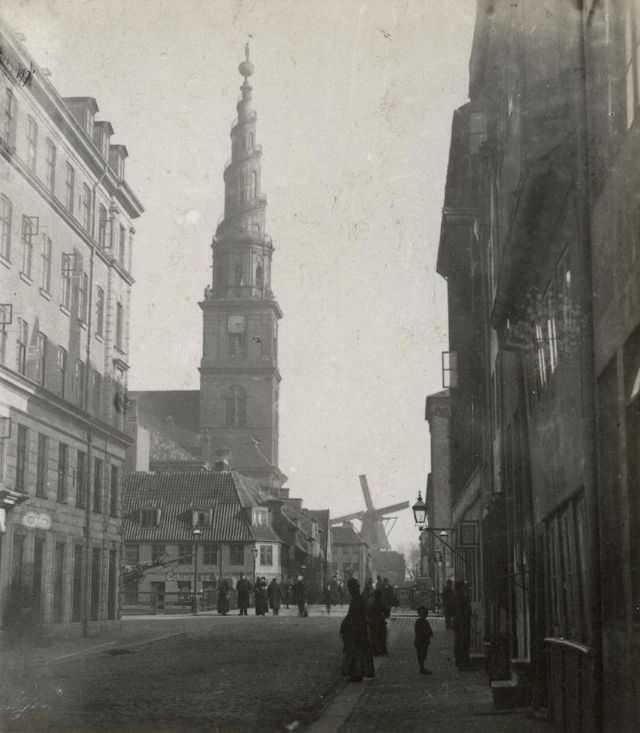
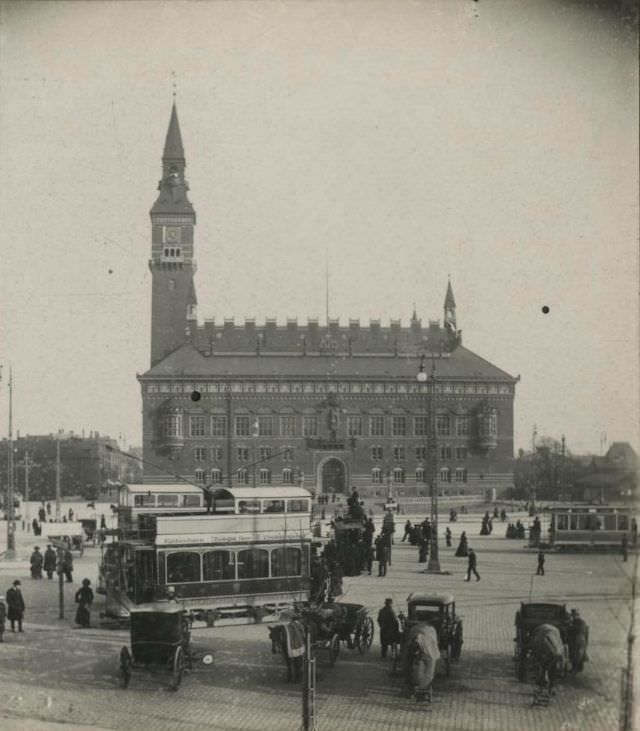
The Church of Our Savior in the Christianshavn district was one of Copenhagen’s most distinctive buildings. Its external spiral staircase wound around the outside of the tower, giving brave visitors a panoramic view of the city from the top. Copenhagen City Hall, meanwhile, was in a transitional period during the 1890s — the old structure had been demolished and a new, larger hall was still being planned. Rådhuspladsen, the town square in front of it, remained the social and civic heart of the city regardless.
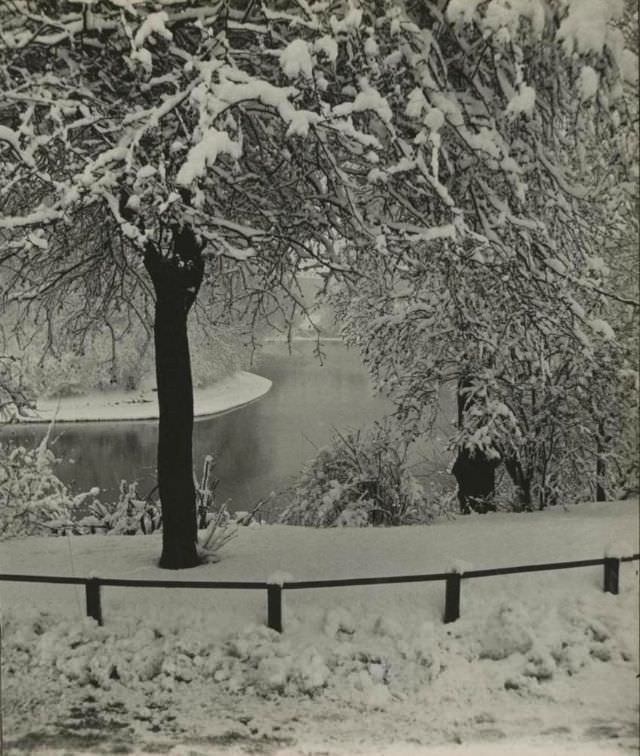
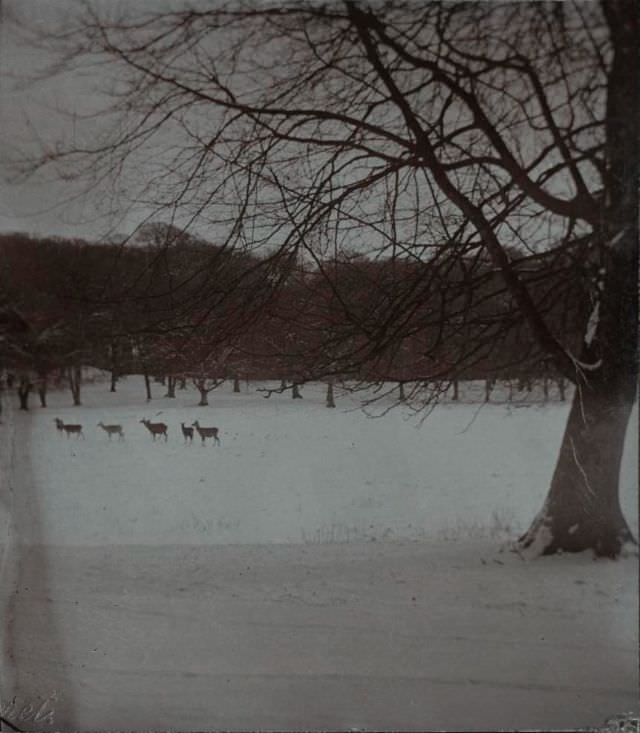
Winters in Copenhagen were cold and often heavy with snow, and Elfelt’s photograph of a snow-covered city shows streets and buildings draped in white, largely free of the crowds that filled them in warmer months. Just north of the city, Dyrehaven — a royal deer park stretching over 1,000 hectares — gave Copenhageners a natural escape in every season. The park had been a royal hunting ground since the 17th century and by the 1890s was a popular destination for family outings.
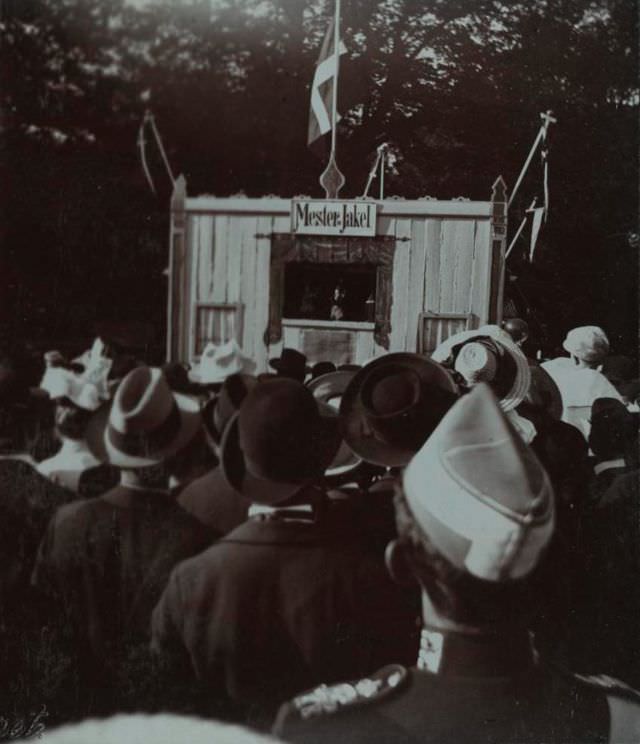
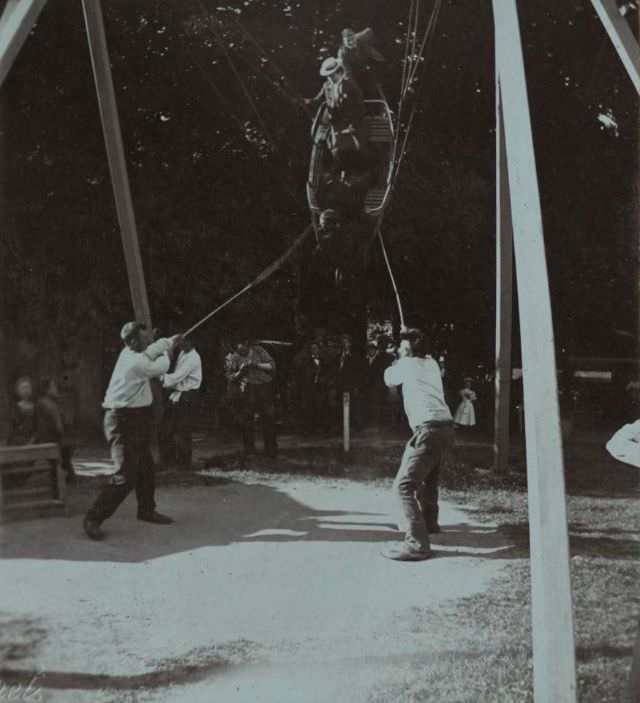
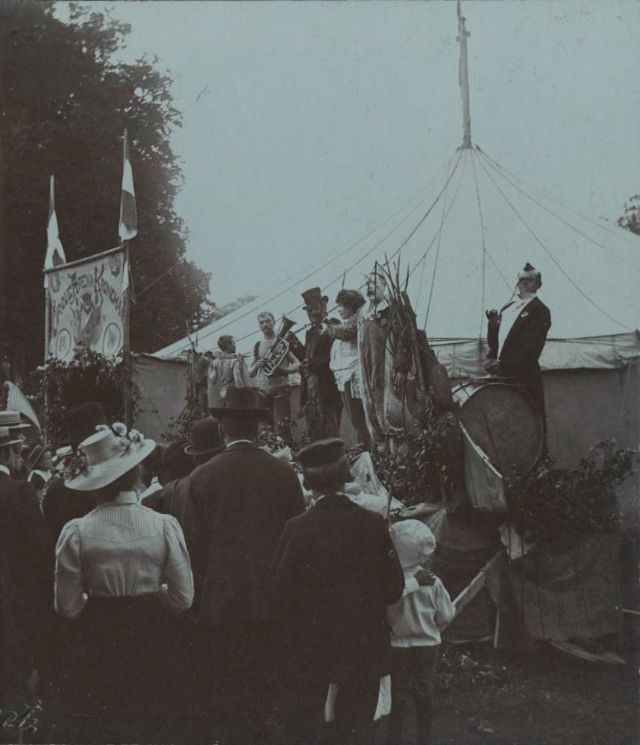
Within Dyrehaven sat Dyrehavsbakken, one of the oldest amusement parks in the world. Known simply as Bakken, it had been entertaining visitors since the late 16th century. By the 1890s it offered performances, carnival attractions, and food stalls. Mester Jakel — a traditional puppet clown figure — was one of its most recognized characters, a staple of the park’s street entertainment that crowds recognized on sight.
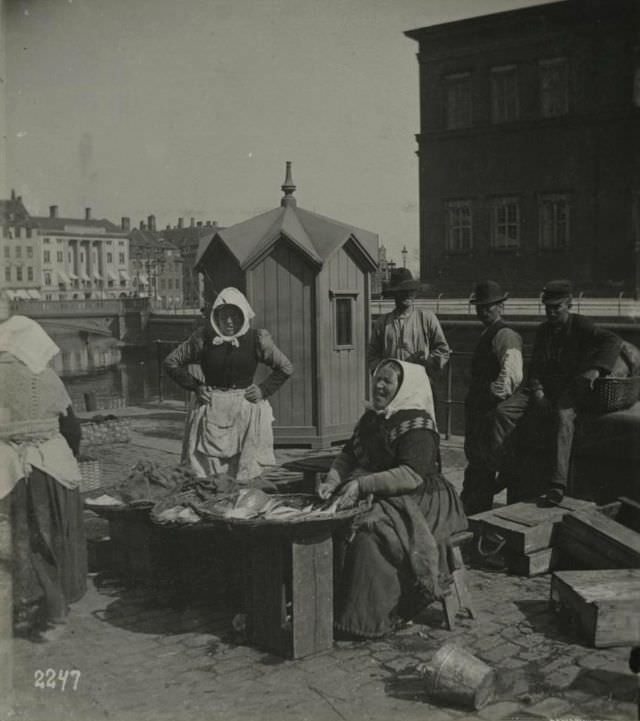
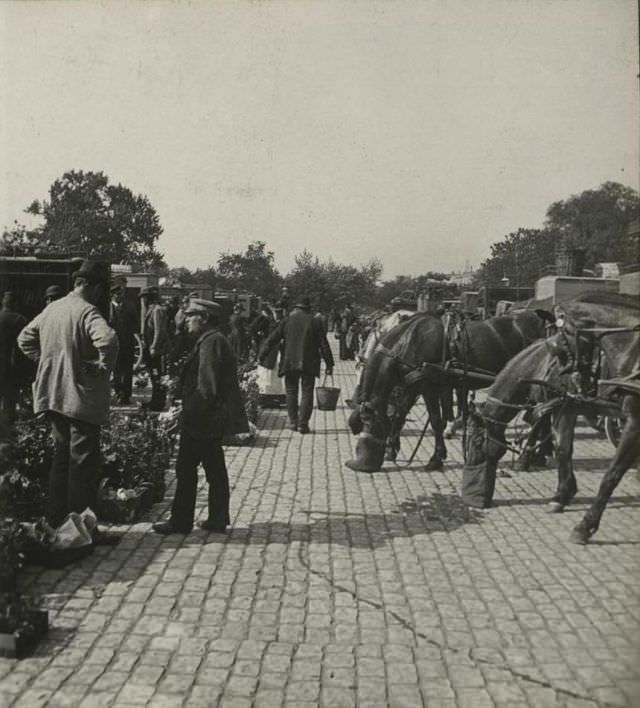
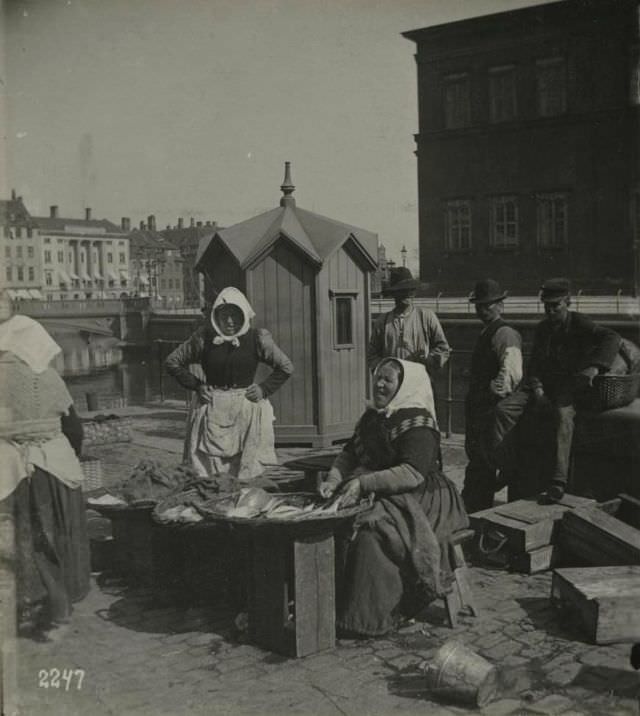
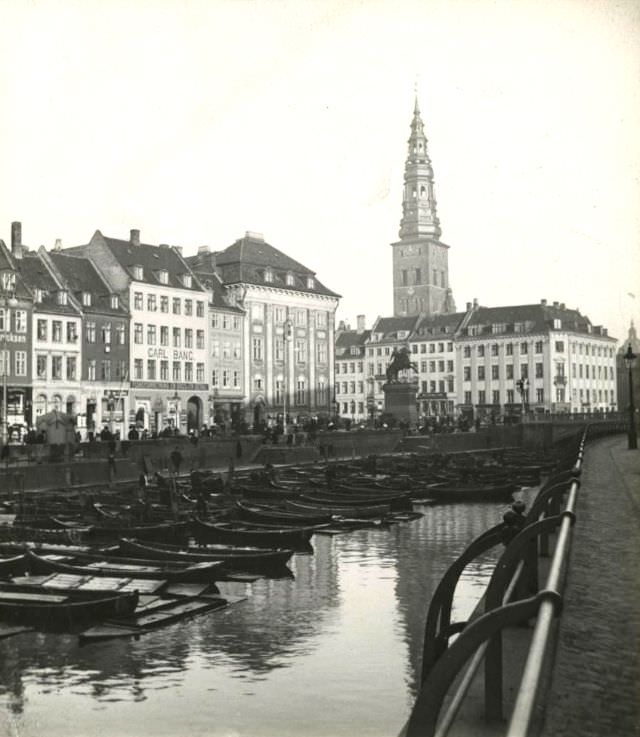
Gammel Strand, one of Copenhagen’s oldest streets, ran along the canal in the city center. For centuries it served as the main fish market, where fishermen’s wives sold the daily catch directly from the quayside. By the 1890s this tradition was still very much alive. Women in traditional dress sold fish from baskets and carts, a scene that connected the modern city directly to its medieval commercial roots. Grønttorvet, the wholesale vegetable market, was another hub of working-class commerce, supplying the city’s greengrocers and households.
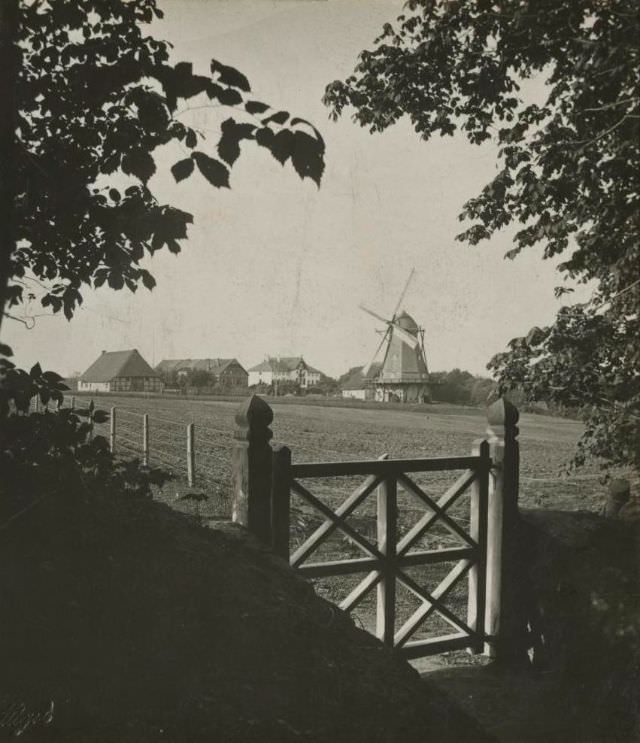
The area around Sorgenfri, just northwest of Copenhagen, was home to both the royal Sorgenfri Palace and the Fuglevad mill — a working watermill that had operated along the Mølleå river for generations. The contrast between a royal residence and a functional grain mill in the same neighborhood captures the mix of aristocratic and working life that existed side by side in the Copenhagen region during this period.
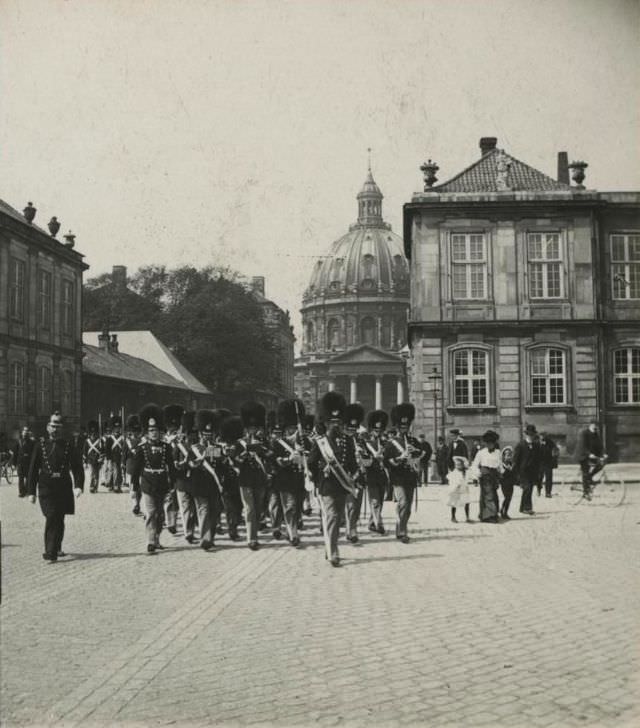
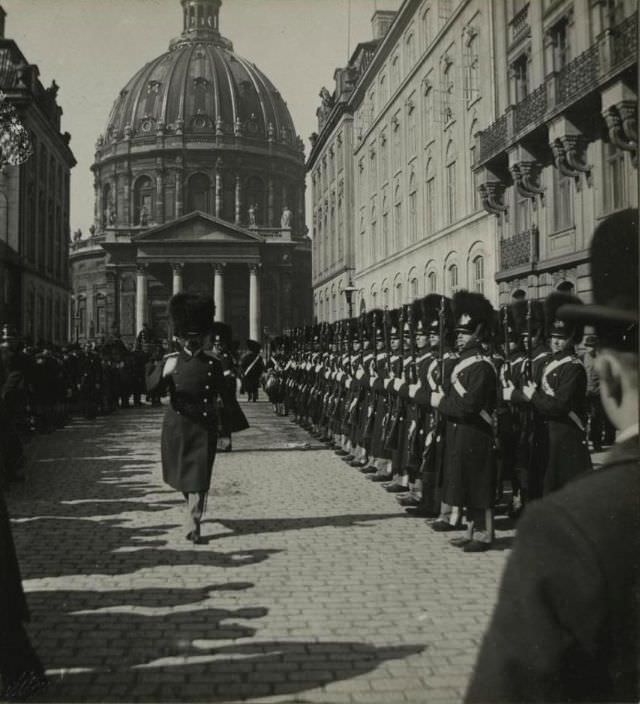
The Marble Church — formally named Frederiks Kirke — was finally completed and consecrated in 1894 after more than 150 years of interrupted construction. Its enormous copper dome became one of the largest in Scandinavia. Elfelt photographed the royal guard parade passing by it, a scene that combined two of Copenhagen’s most prominent symbols: its military ceremony and its newly completed architectural landmark.
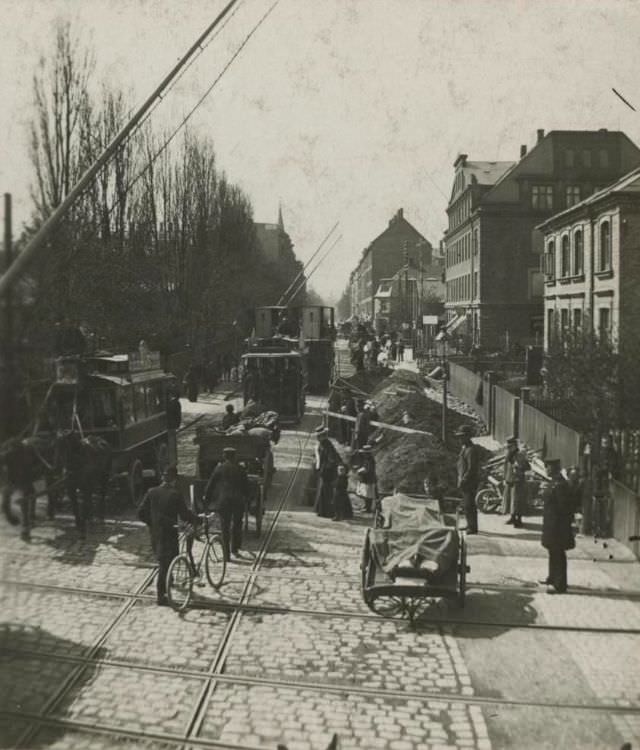
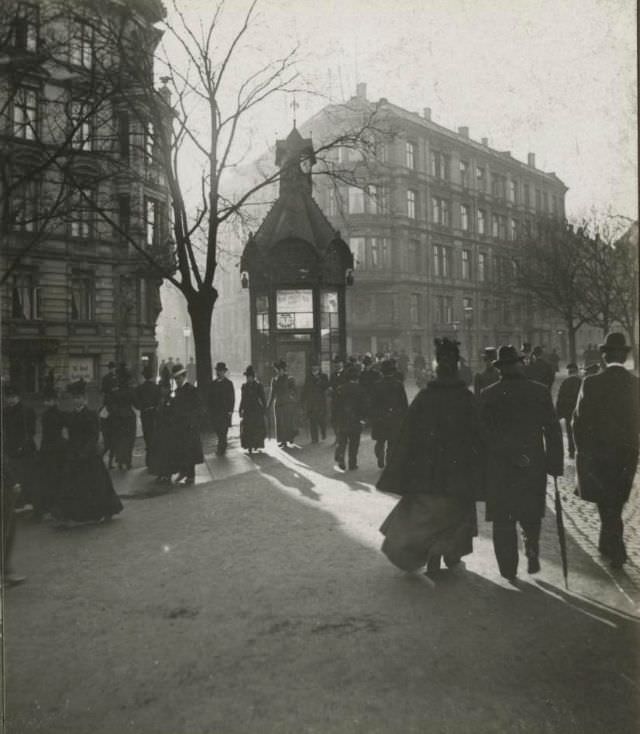
H. C. Ørsteds Vej was one of Copenhagen’s newer streets in the 1890s, named after the physicist who discovered electromagnetism in 1820. The street ran through a residential part of the city that had developed in the latter half of the 19th century as Copenhagen expanded beyond its old fortification lines. Wide and tree-lined, it was the kind of urban planning that reflected the city’s forward-thinking approach to growth following the democratic reforms of 1849.
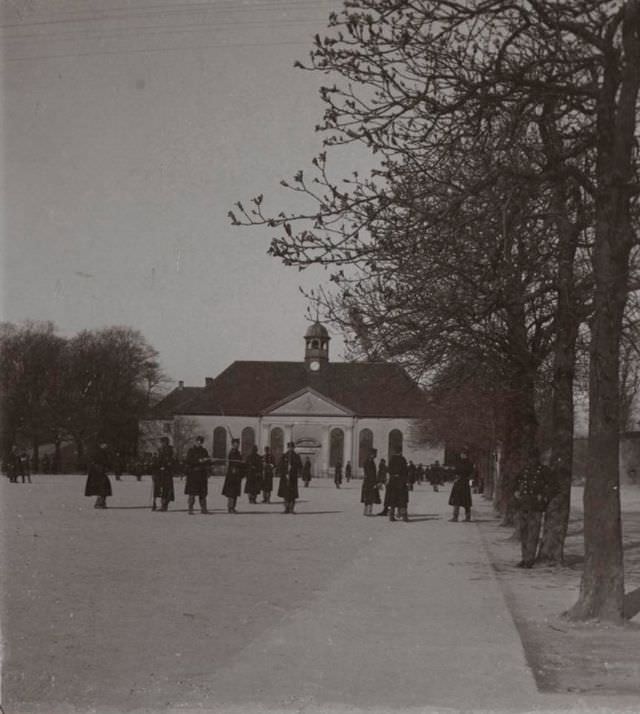
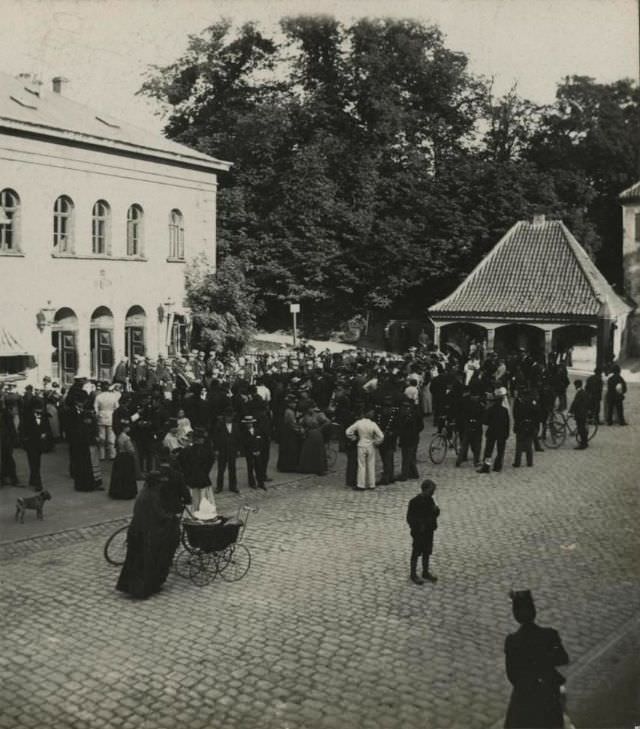
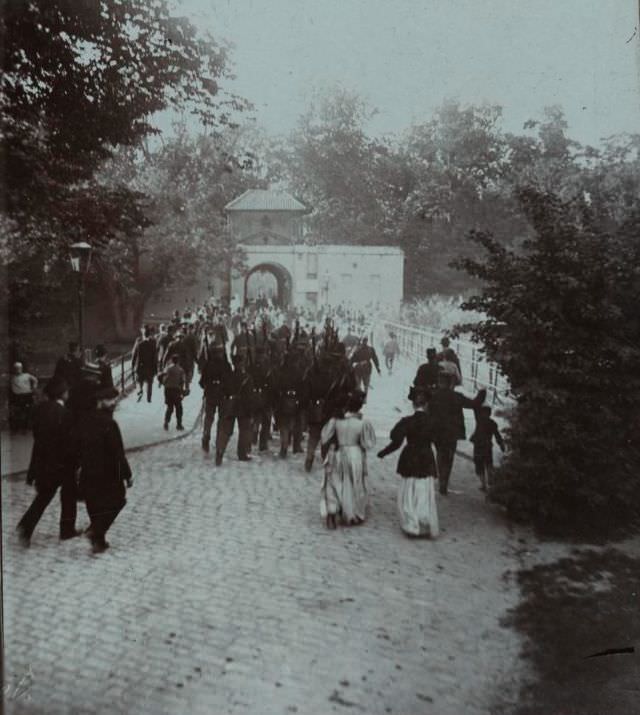
Kastellet — a star-shaped fortress built in the 17th century — remained an active military installation throughout the 19th century. Its church square and interior grounds housed soldiers and hosted regular military drills. Elfelt captured both the quiet of the church square and the energy of the guard band playing within the fortress walls. Kastellet was a living piece of Copenhagen’s military history, still functioning even as the city modernized around it.
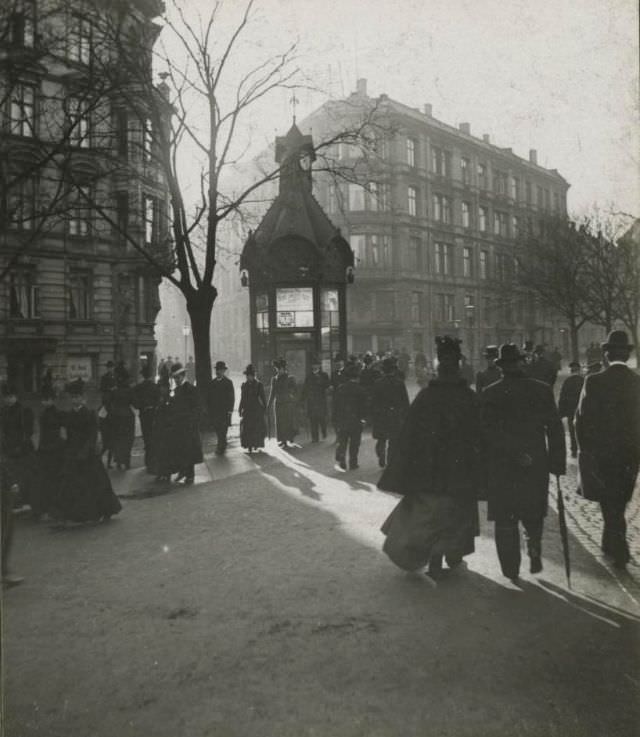
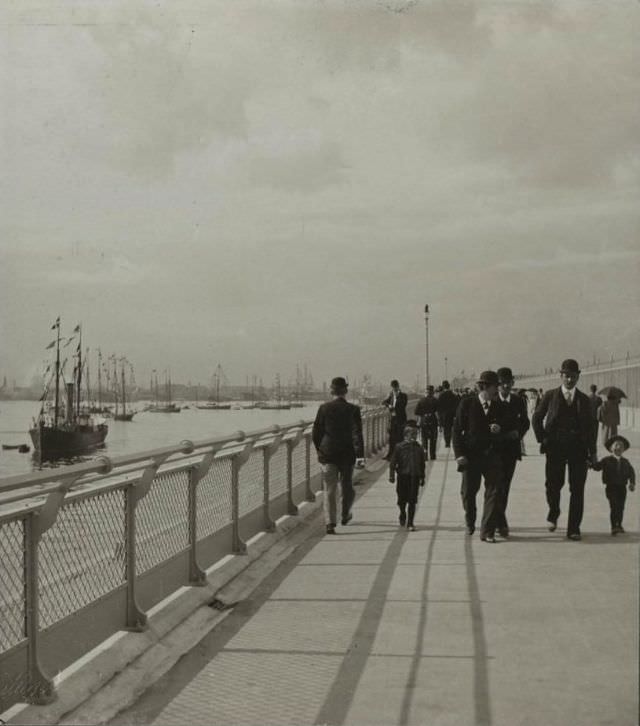
Langelinie was a popular promenade along Copenhagen’s harbor, stretching north from Kastellet toward the sea. On weekends and summer days, residents dressed in their finest and strolled the path, watching ships come and go from the harbor. Small kiosks near Grønningen sold snacks and newspapers to passersby. These everyday scenes — ordinary people going about their lives — are some of the most valuable images Elfelt produced.
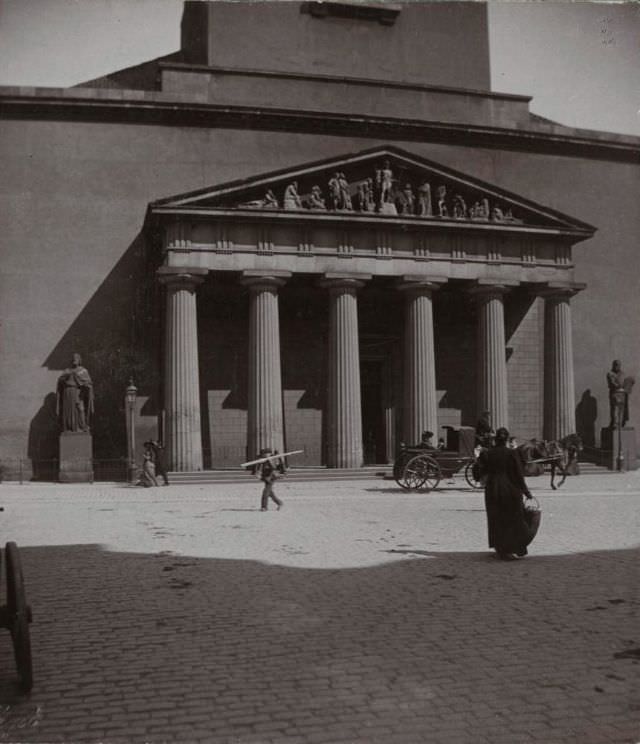
The Church of Our Lady — Copenhagen’s cathedral — sat at the center of the city’s ecclesiastical life. Rebuilt in the early 19th century after being damaged in the 1807 British bombardment, it stood as both a place of worship and a symbol of the city’s capacity to rebuild. Sculptor Bertel Thorvaldsen’s famous marble statues of Christ and the Twelve Apostles lined its interior, drawing visitors from across Europe.
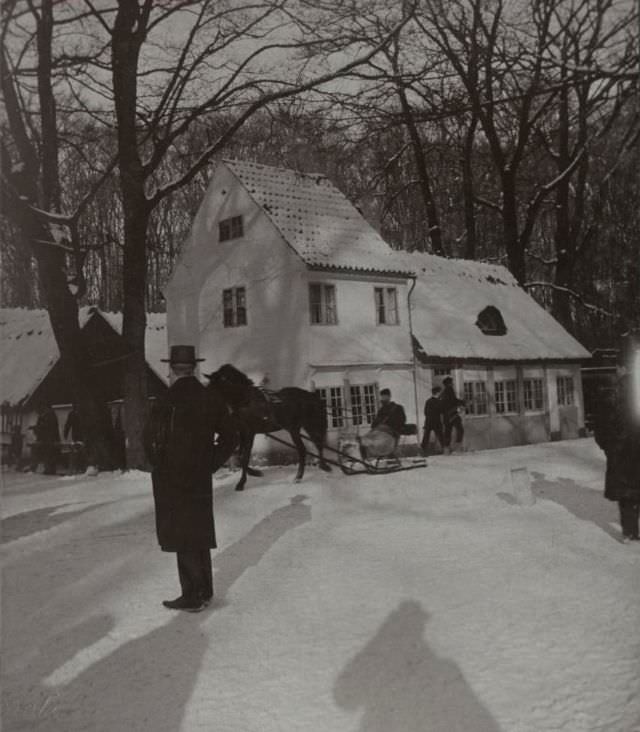
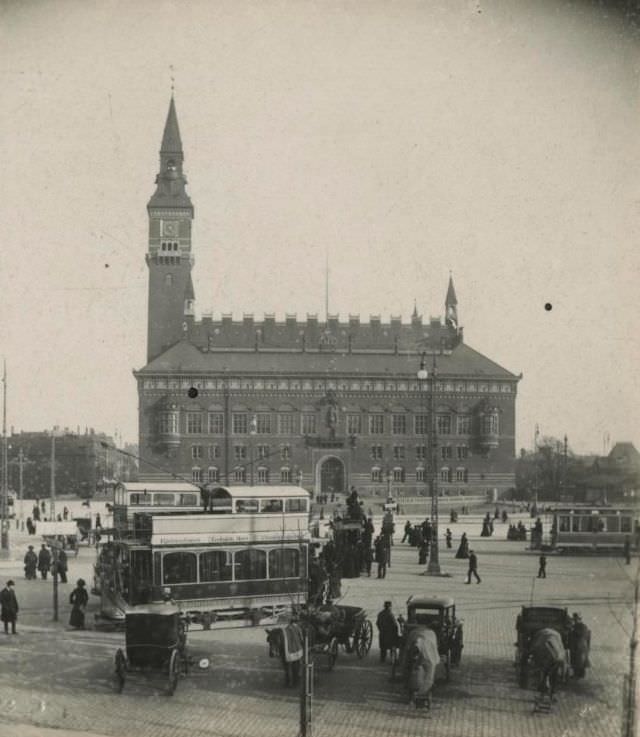
Peter Lieps Hus was a well-known restaurant and gathering spot inside Dyrehaven. Surrounded by forest, it was a favored stop for cyclists and walkers exploring the deer park. Rådhuspladsen, the main town square, presented a very different kind of gathering place — open, urban, and busy with trams, horse-drawn carriages, and pedestrians. Together, these two locations show the range of social spaces Copenhageners enjoyed in the 1890s.
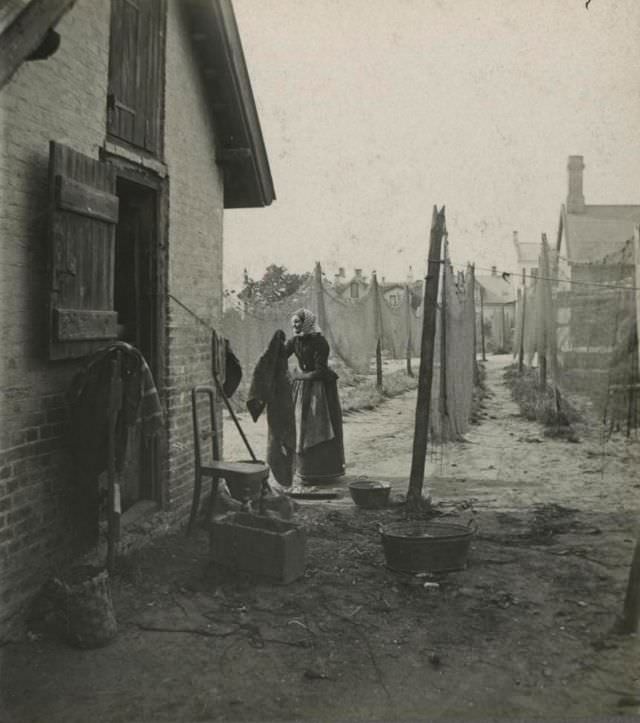
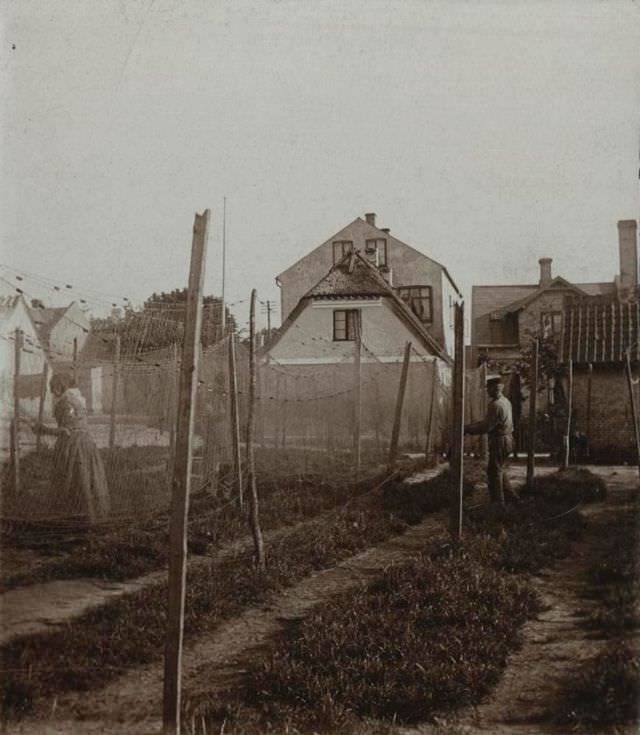
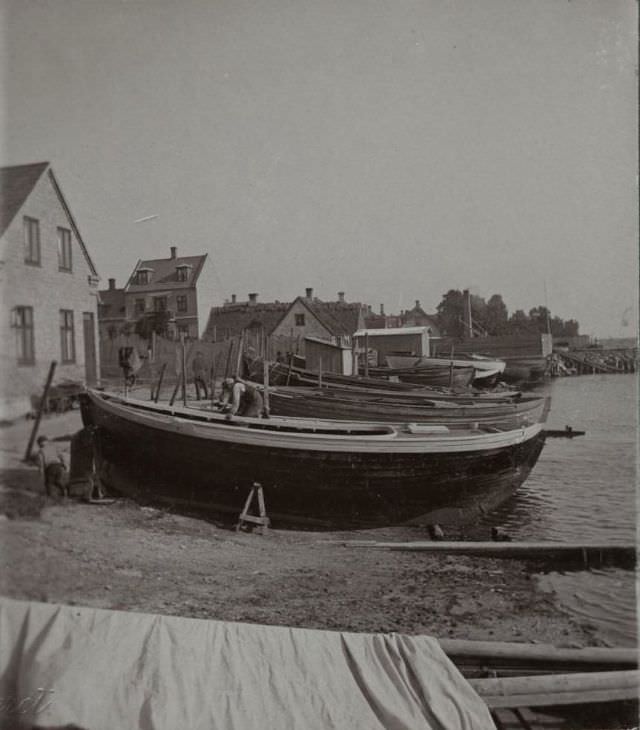
Skovshoved was a small fishing village north of Copenhagen along the Øresund coast. By the 1890s it was also becoming a destination for city residents seeking sea air and leisure. Stejlebakken, a hill within the area, offered views over the sound toward Sweden. The village retained its fishing character — boats, nets, and timber buildings — while slowly attracting the kind of visitors that came by train from the city.
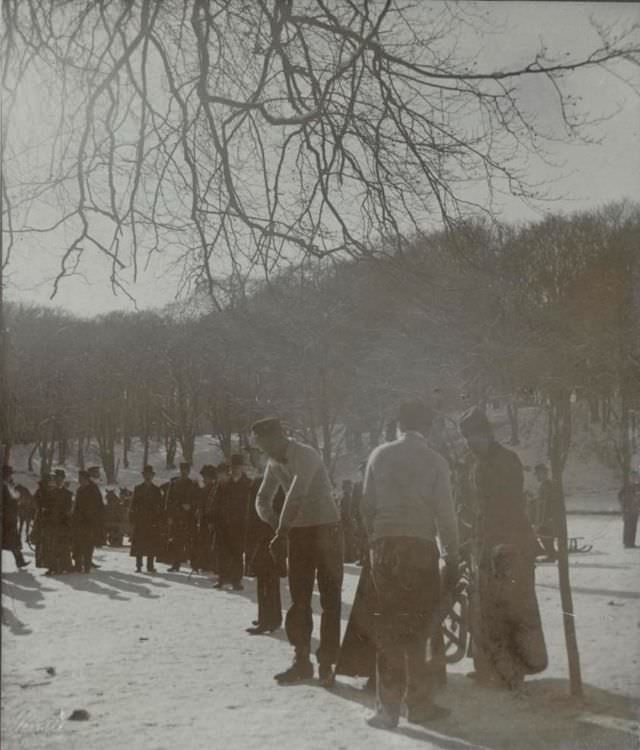
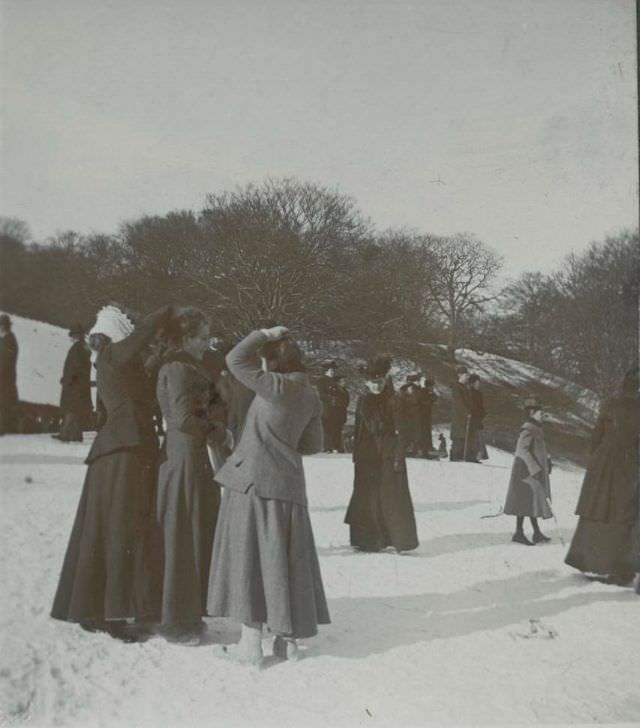
In winter, the valleys of Ulvedalene inside Dyrehaven became a sledding ground. Families and children dragged sleds up the snowy slopes and rode them back down, making use of a park that served Copenhageners year-round. Elfelt photographed these scenes with the same documentary precision he applied to royal parades and city streets, treating everyday recreation as worthy of the historical record.
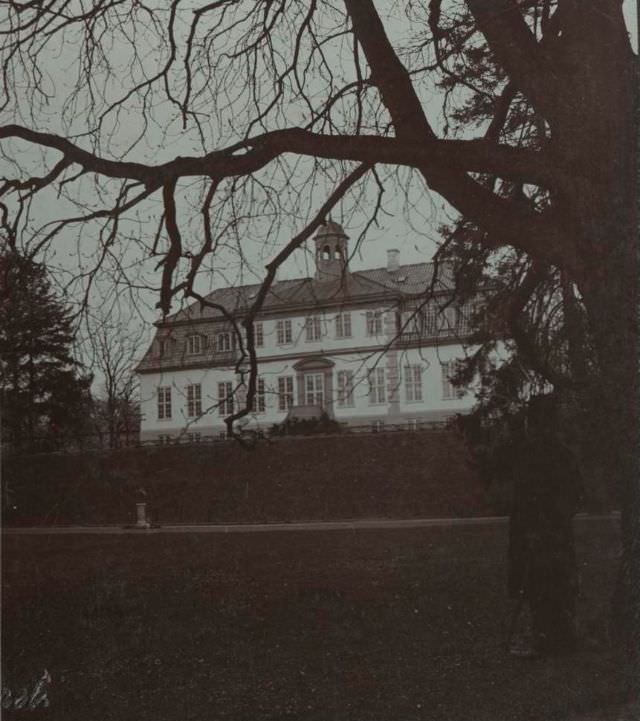
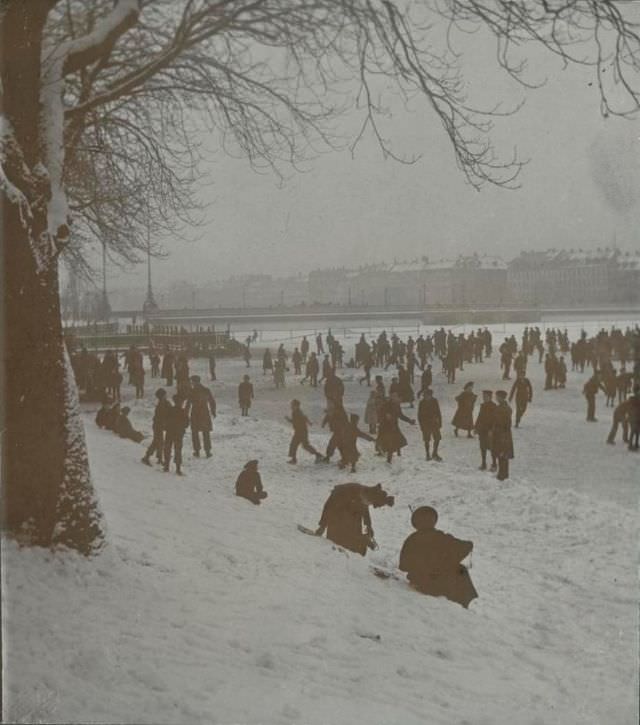
Sortedamssøen was one of three connected lakes just west of Copenhagen’s old city center. Originally part of the city’s water supply system, by the 1890s the lakes had become a scenic border between the old city and the new residential neighborhoods expanding westward. People walked the paths around the water, and the lakes gave the growing city a natural boundary that felt more park than utility.
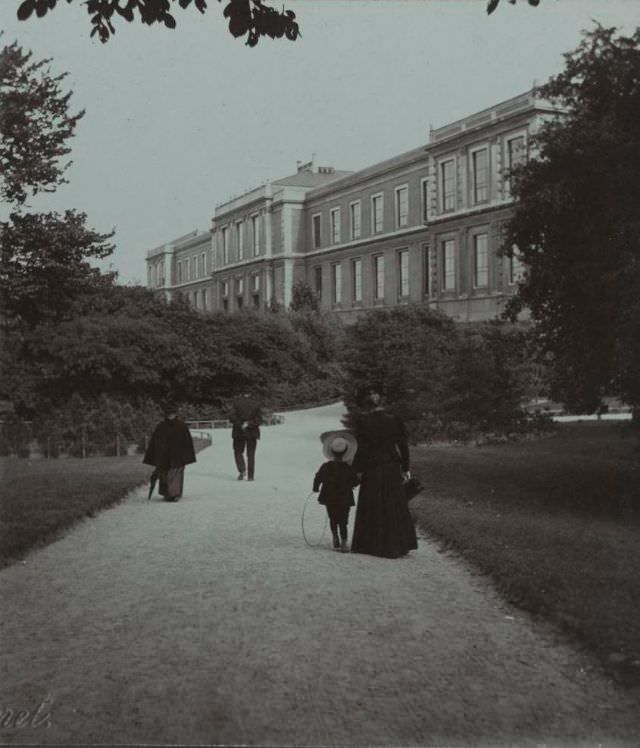
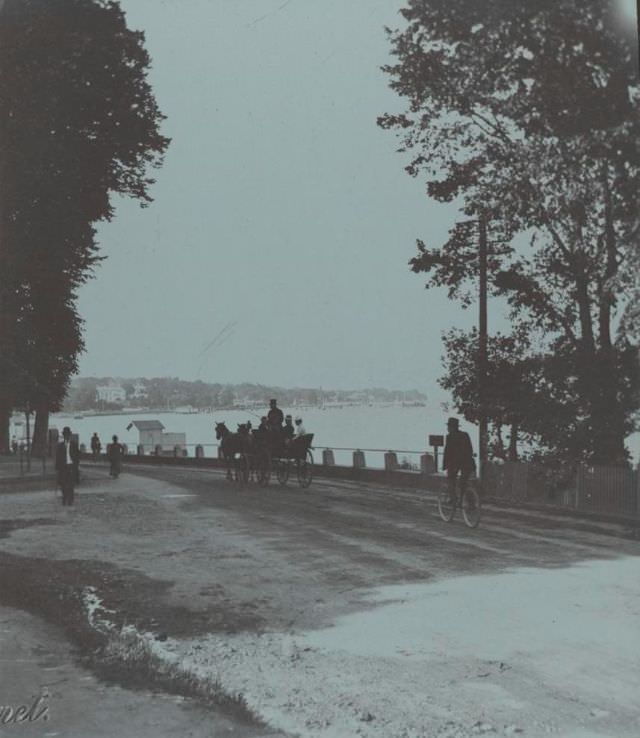
The State Museum for Art — Statens Museum for Kunst — was established in its permanent home in 1896, making it one of the newest major cultural buildings in Copenhagen during Elfelt’s time. It housed the royal art collection and opened it to the public, fitting neatly into the city’s broader effort to make education and culture accessible. Strandvejen, the coastal road running north from Copenhagen, connected the city to communities like Skovshoved and Emiliekilde, where residents gathered at the water’s edge.
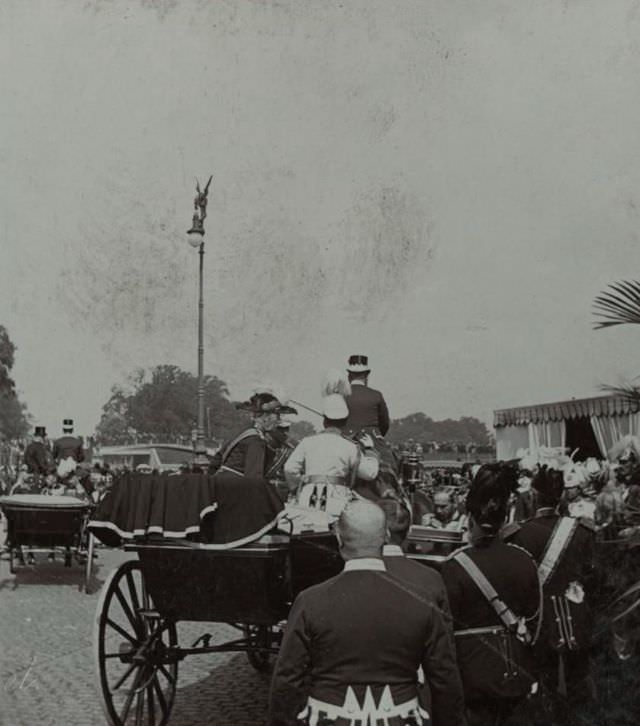
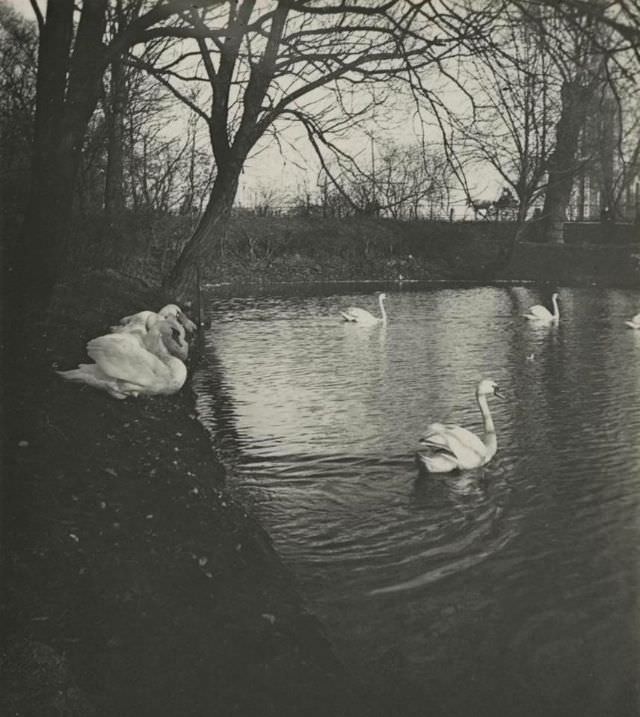
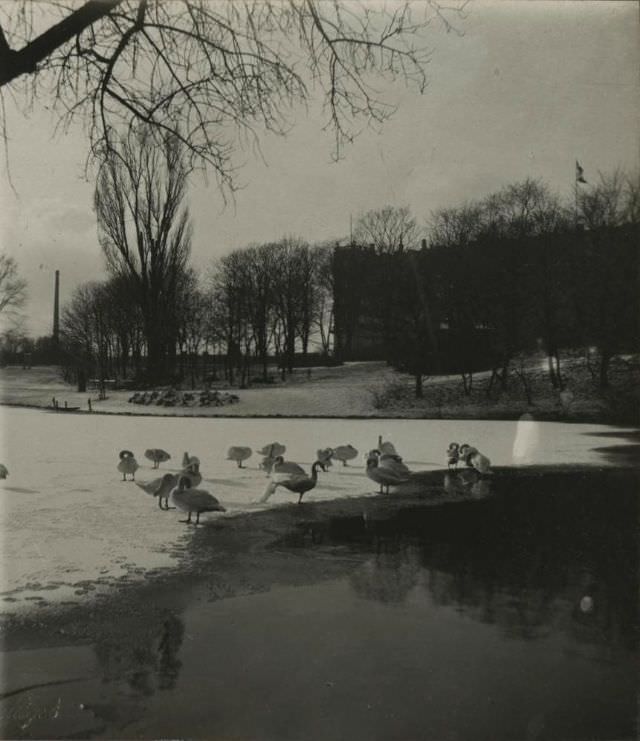
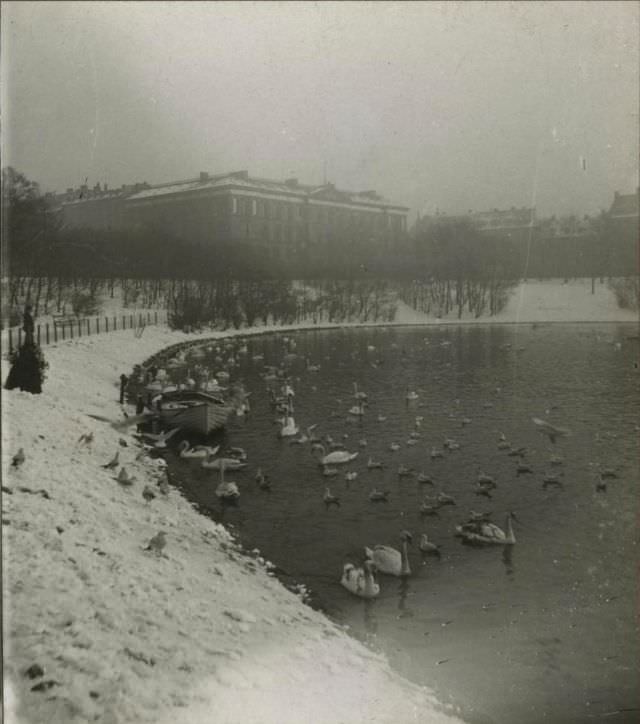
One of Elfelt’s most striking images captures the arrival of the King of Siam — today known as Thailand — to Copenhagen. Royal visits from distant nations were significant diplomatic events, and Elfelt recorded the procession of chariots moving through the city streets. The castle moat, with its swans gliding across still water, offered a quieter royal subject — the kind of timeless scene that made Copenhagen’s historic center so photogenic.
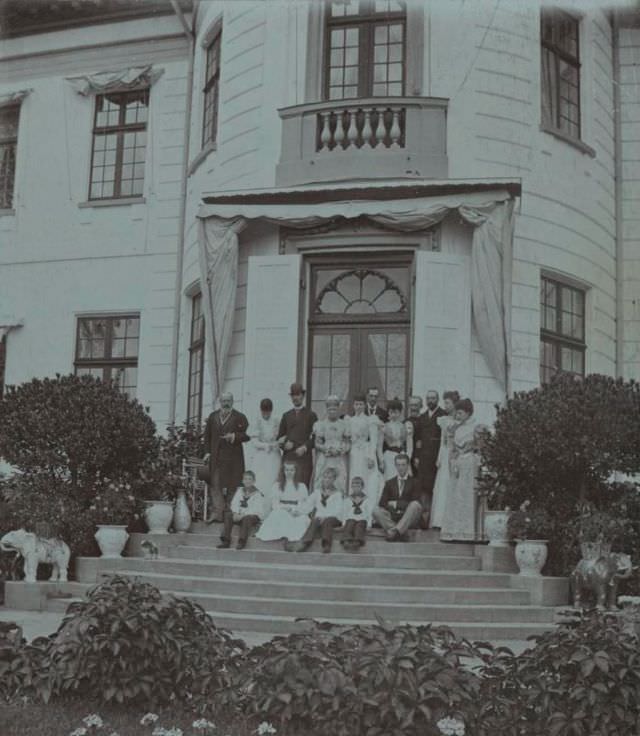
Bernstorff Castle, located a short distance north of Copenhagen, served as a summer residence for the Danish royal family. Elfelt photographed the family gathered on the main staircase — a formal group portrait that placed the monarchy in its domestic setting rather than in official ceremony. This kind of image was still relatively new in the 1890s, as photography was only beginning to give the public a more personal view of royal life.
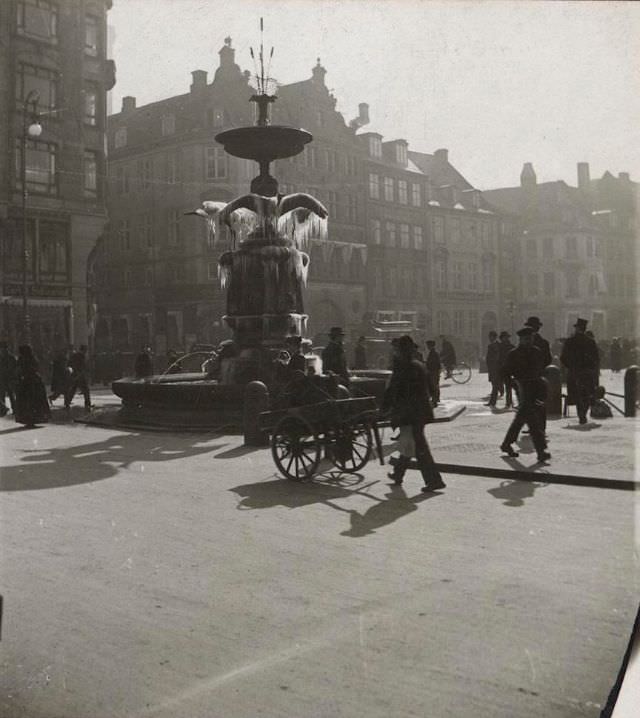
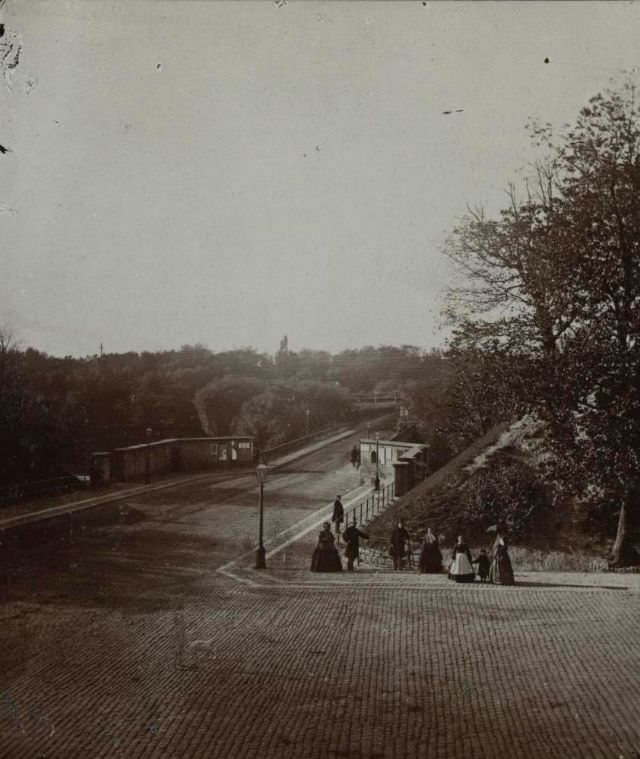
The Stork Fountain — Storkespringvandet — sat at the center of Amagertorv, one of Copenhagen’s main squares and a busy meeting point for city life. Installed in 1894, it was brand new when Elfelt photographed it, its bronze storks and herons gleaming above the square’s cobblestones. Vesterport, the western gate of the old city, was another landmark of the era — one of the remaining entry points into central Copenhagen before the old fortification lines were fully removed.
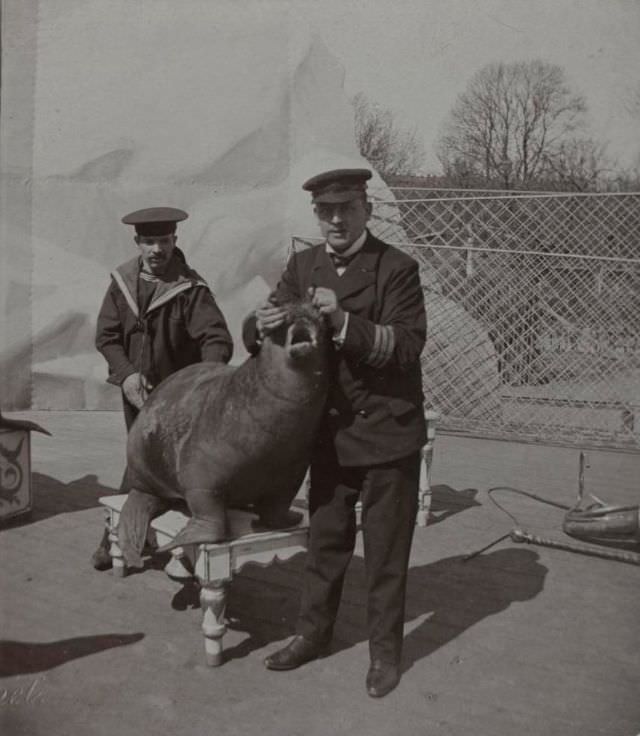
Copenhagen Zoo, founded in 1859, was one of the oldest zoological gardens in Europe by the time Elfelt visited in the 1890s. His photograph of the walrus — a massive, unfamiliar animal to most Danish visitors — captures the sense of wonder the zoo offered city residents. Peter Elfelt himself went on to become Denmark’s first professional film director in the early 1900s, but his photographic work in the 1890s left behind an irreplaceable visual record of what Copenhagen looked like at the edge of a new century.





A lot of exciting photos, but many duplicates and dubious titles.
A pretty sloppy article, but the pictures are fantastic.
Beautiful pictures, thank you
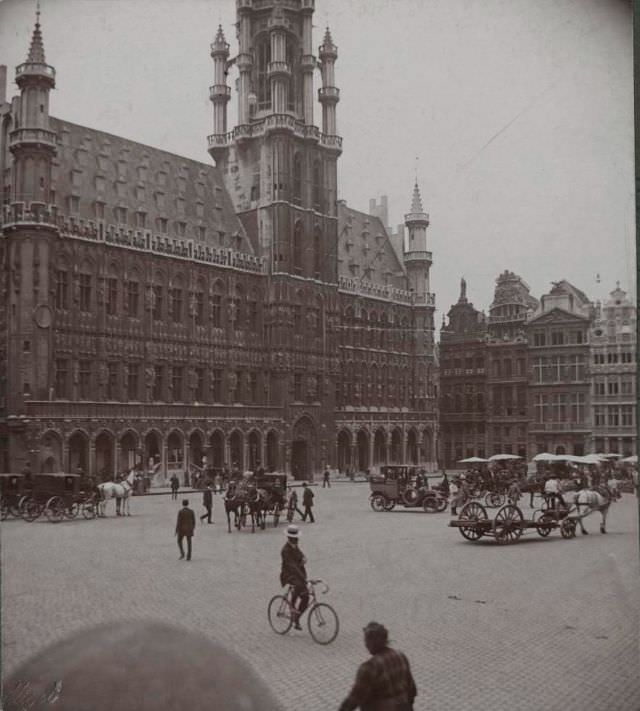
The last picture is from Brussels, Belgium
“At the beach”… Gammel Strand had stopped being a beach long ago by then…
Yeah, almost as hilarious as calling Strandboulevarden “Beach boulevard”. It isn’t anywhere close to the current waterfront and hasn’t been for probably upwards of a century 🙂
Thank you for that. My husband really enjoyed looking at those.