
Denmark is one of the oldest nations in Northern Europe. It sits on the Jutland Peninsula and stretches across numerous islands in the North Sea. The Danes have called this land home since prehistoric times, building a country that would grow into one of the most stable and prosperous in the world. By the mid-20th century, Denmark’s major industries included iron, steel, chemicals, food processing, textiles, electronics, pharmaceuticals, and medical equipment. The photos below capture the country during one of its most energetic decades — the 1960s.
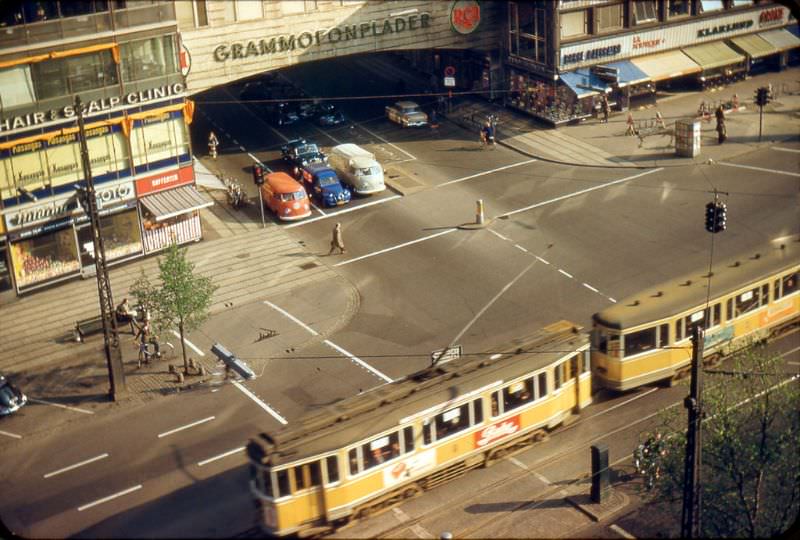
At the start of the 1960s, Copenhagen was already a vibrant, well-organized capital city. Its streets mixed old-world architecture with a population moving quickly into modern life. Danes were riding bicycles, boarding trams, and filling the cafés and public squares of a city that felt both historic and very much alive.
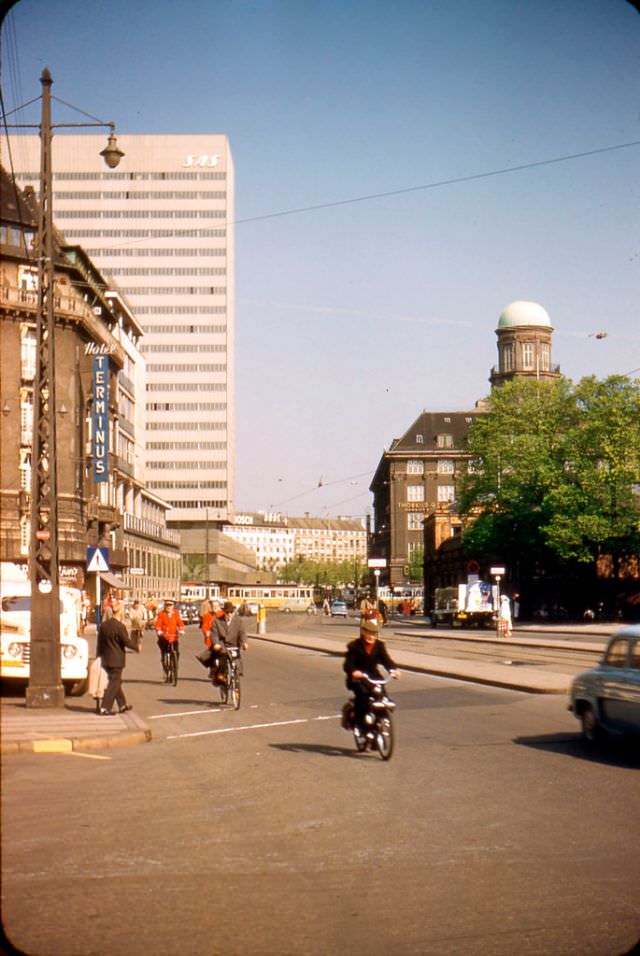
The decade opened with Denmark riding a wave of economic growth. Danish agriculture had become highly mechanized through the 1950s, freeing up workers for the expanding industrial sector. The shift was rapid. Farms that once relied on large numbers of laborers were now running with far fewer people and far more machines. That freed-up labor fed directly into the growth of factories and urban businesses across the country.
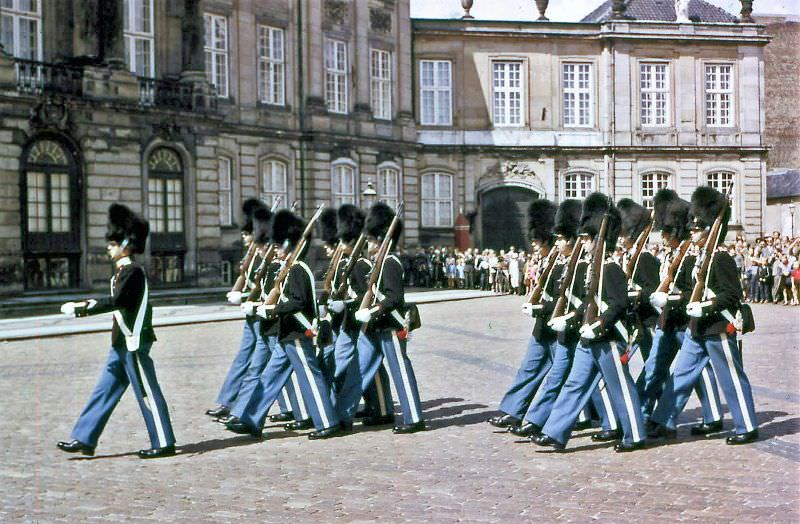
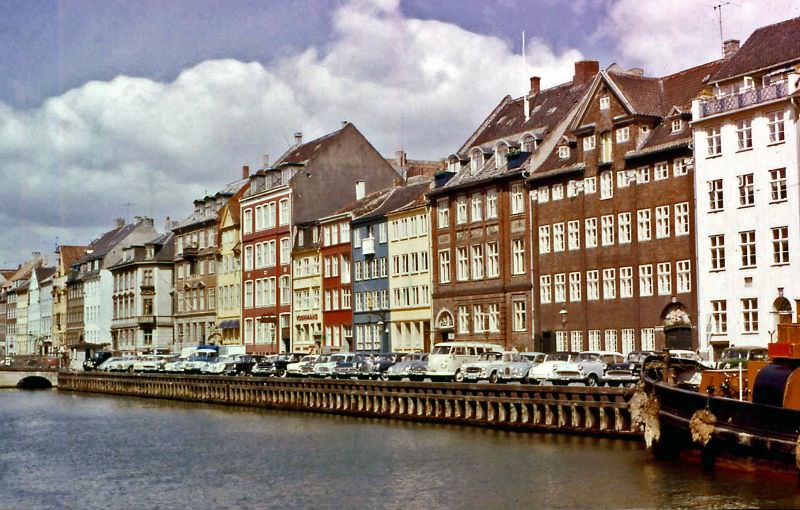
By 1961, Copenhagen’s streets were full of life. Shoppers moved through commercial districts, and the city’s iconic architecture — from church spires to old merchant buildings — stood side by side with modern storefronts. These images from 1961 show a capital city that was confident and forward-moving, even as it held tightly to its history.
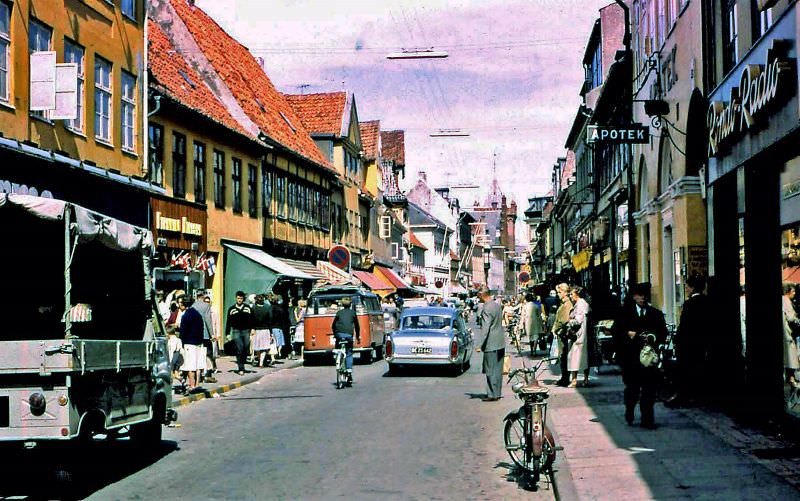
Helsingør, the coastal town north of Copenhagen, sits at Denmark’s narrowest point across from Sweden. Known internationally as the setting of Shakespeare’s Hamlet, the town was a key crossing point for ferry traffic between the two countries. In 1961, it looked much as it had for generations — compact streets, old merchant buildings, and the constant movement of the sea.
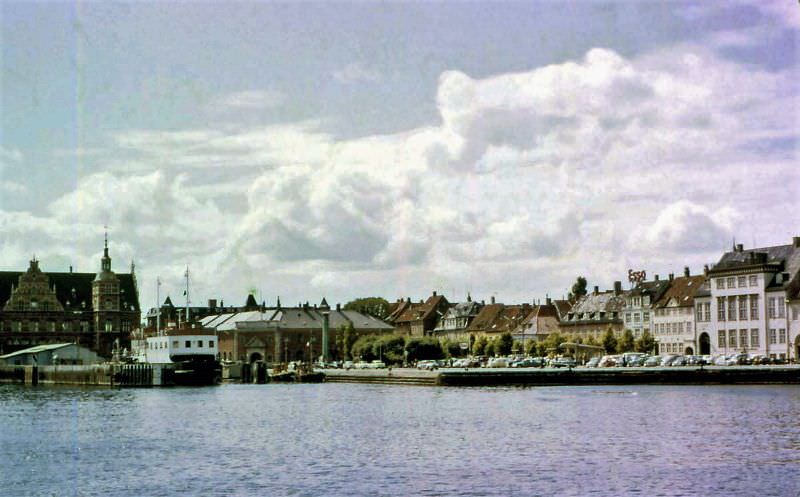
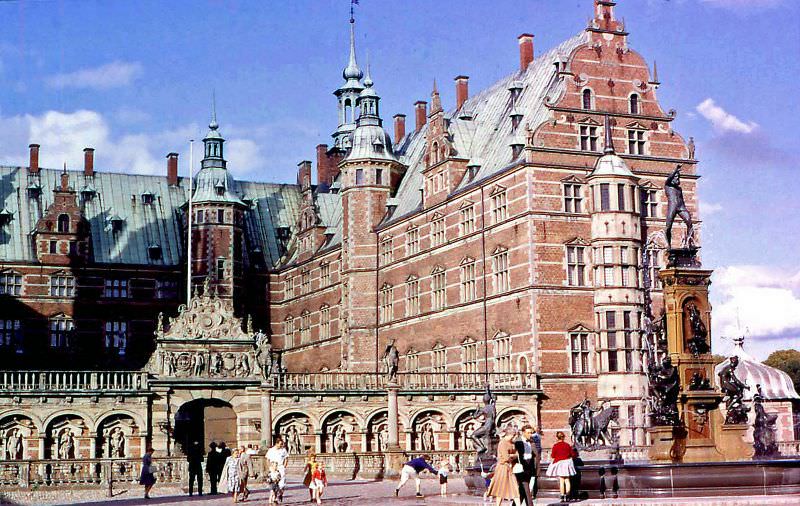
Hillerød, located in northern Zealand, is home to Frederiksborg Castle — one of the grandest Renaissance buildings in Scandinavia. The town itself in 1961 was a quiet but well-kept community, typical of the smaller Danish cities that sat in the shadow of major landmarks yet maintained their own distinct character.
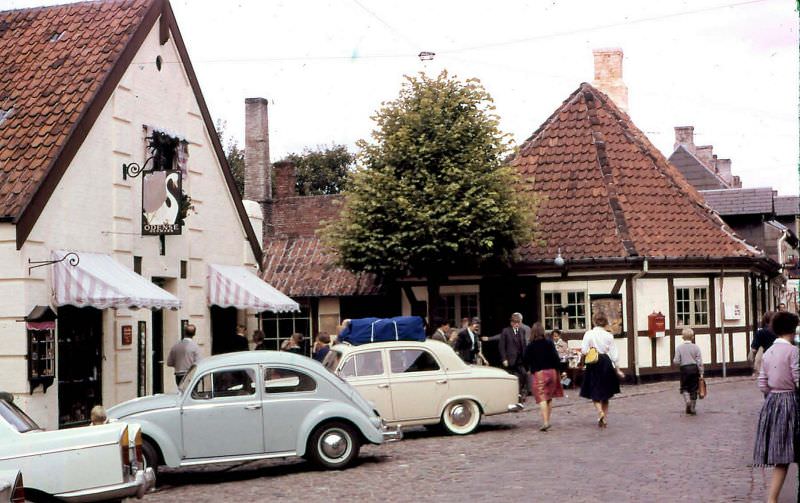
Odense, Denmark’s third-largest city and the birthplace of author Hans Christian Andersen, was a city of brick buildings, cobbled lanes, and steady industry. Located on Funen Island, it served as the cultural and commercial center of the island while also carrying deep literary history.
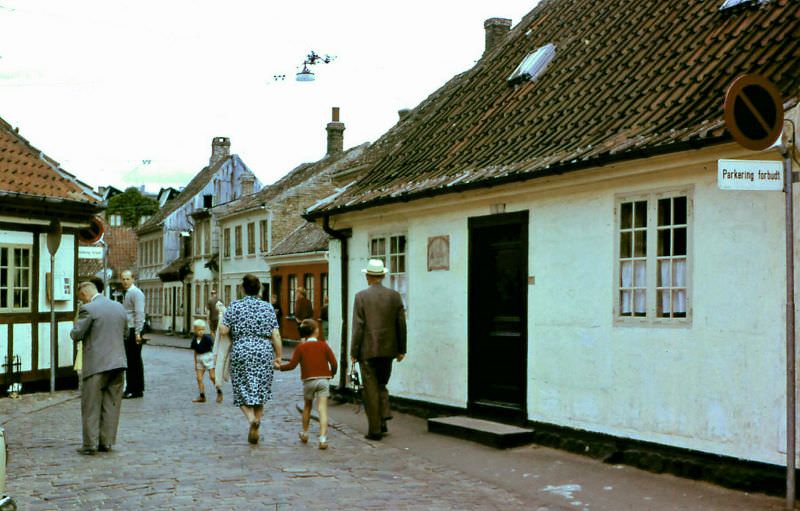
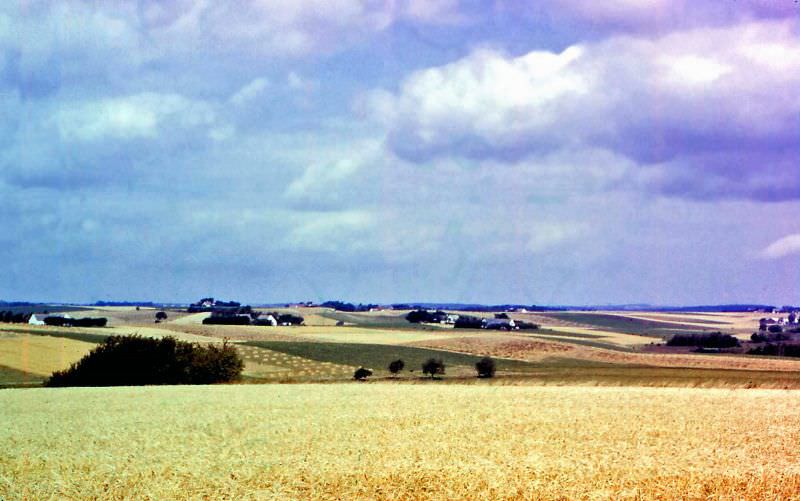
Zealand — the largest island in Denmark — holds Copenhagen at its eastern edge and a wide sweep of countryside, coast, and smaller towns across the rest of its area. In 1961, rural Zealand still showed the quiet rhythms of agricultural life, even as modernization pushed steadily through the fields and villages.
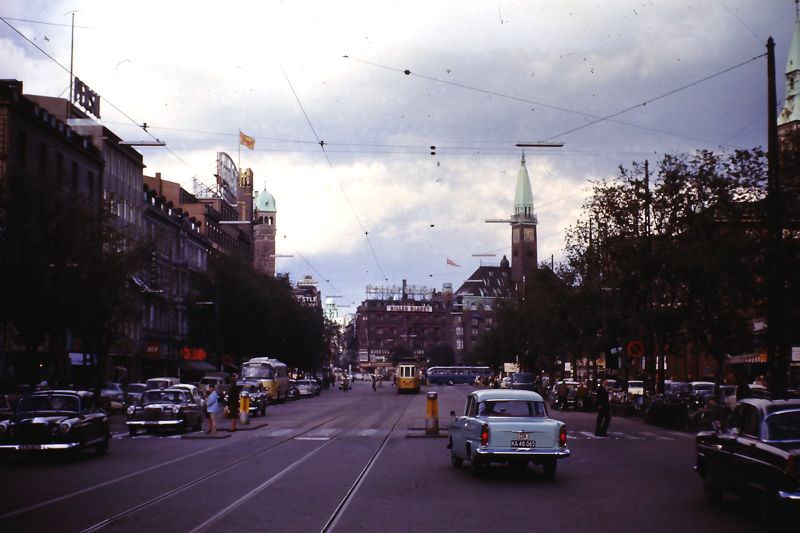
The Social Democratic Party held political power in Denmark throughout the early 1960s. Under their governance, Denmark’s welfare state expanded. Public services, housing programs, and workers’ rights all developed steadily during these years. The country’s cities reflected that stability — orderly, well-maintained, and clearly prosperous.
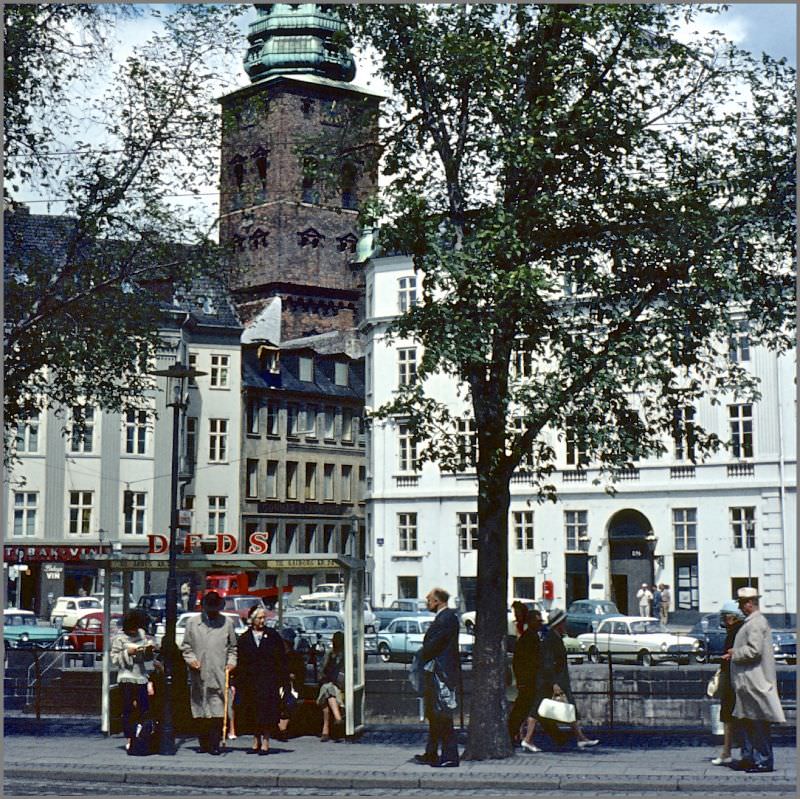
By the mid-1960s, everyday Danish life had a particular rhythm. People waited at bus stops, gathered in squares, and moved through city centers with a comfortable familiarity. Copenhagen in 1964 was a city of routines — and these photographs catch those ordinary moments with remarkable clarity.
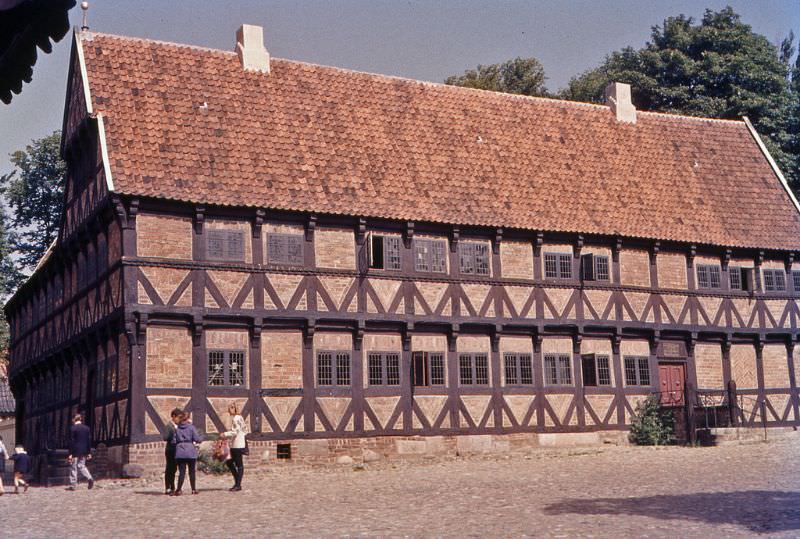
Den Gamle By — which translates as ‘The Old Town’ — is an open-air museum in Aarhus that collects historic buildings from across Denmark and reassembles them in one place. The Mayor’s Residence from Aarhus, photographed here in 1965, is one of the museum’s centerpieces. It gives visitors a direct look at what Danish civic life and architecture looked like in earlier centuries.
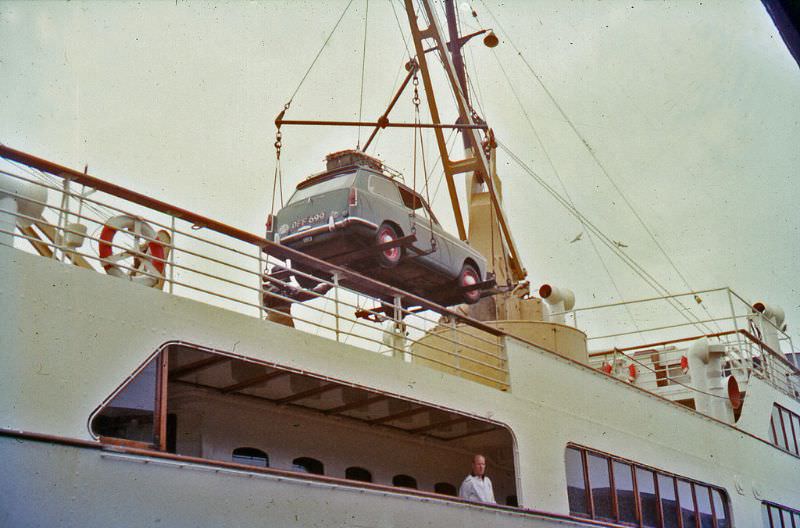
The port city of Esbjerg on Jutland’s west coast served as Denmark’s main gateway to Britain and the North Sea. In 1965, the DFDS ferry Kronprinsesse Ingrid was a key vessel on the North Sea route, carrying passengers and cargo between Denmark and England. Esbjerg’s docks were busy and essential to Denmark’s trade and travel connections.
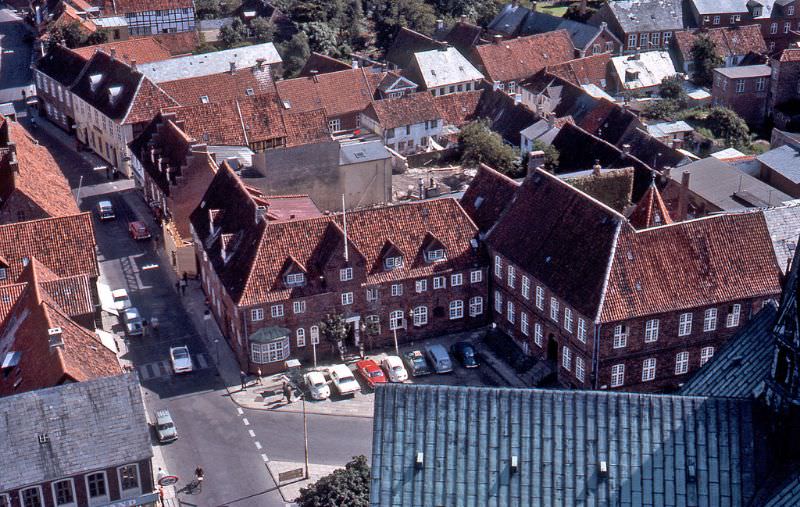
Ribe is Denmark’s oldest town, and its skyline has been dominated by the cathedral since the 12th century. From the cathedral tower in 1965, the view across the town’s red rooftops included Hotel Dagmar — one of the oldest hotels in Denmark, dating back to 1581. The town below looked much as it had for hundreds of years, a testament to how carefully Ribe preserved its medieval character.
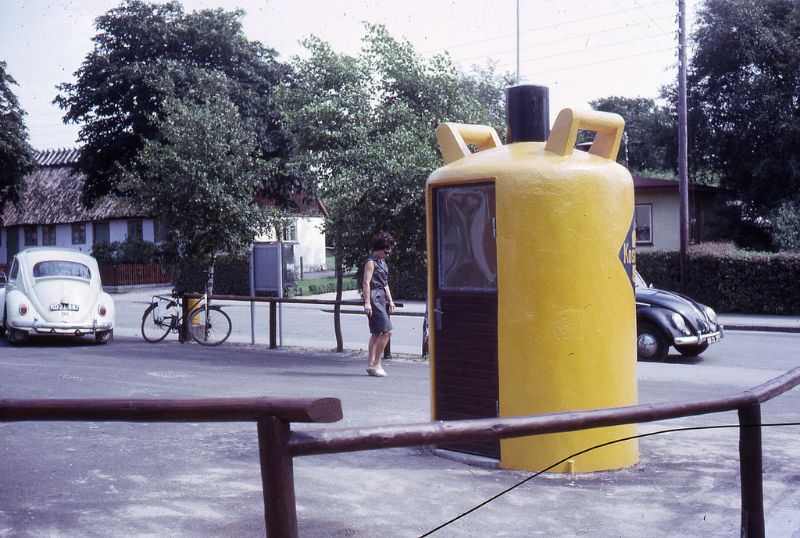
Small details often tell the clearest stories about daily life in a given era. A telephone kiosk in Asserbo, Zealand, carrying a Kosangas advertisement in 1965 is exactly that kind of detail. Kosangas was a Danish liquefied petroleum gas brand, and its adverts appeared across the country in these years as gas became a common household fuel.
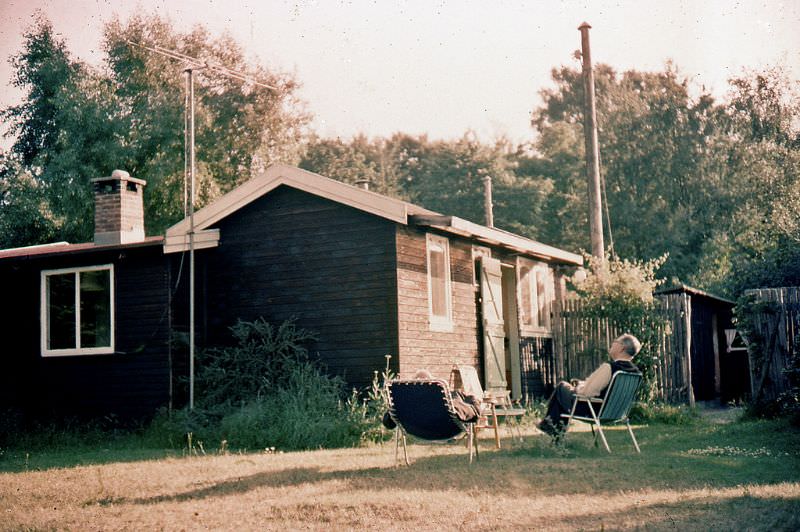
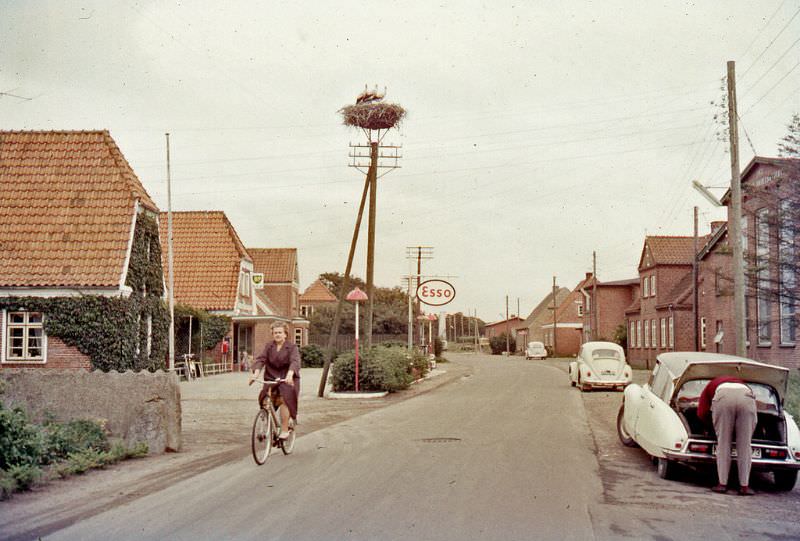
Away from the cities, Denmark’s countryside in 1965 was still deeply tied to the natural world. White storks nested in Vedersø, a small village in western Jutland, as they had for generations. The stork was a familiar symbol of Danish rural life, and their presence in these photographs is a reminder that the decade’s rapid modernization hadn’t yet erased the older, quieter Denmark.
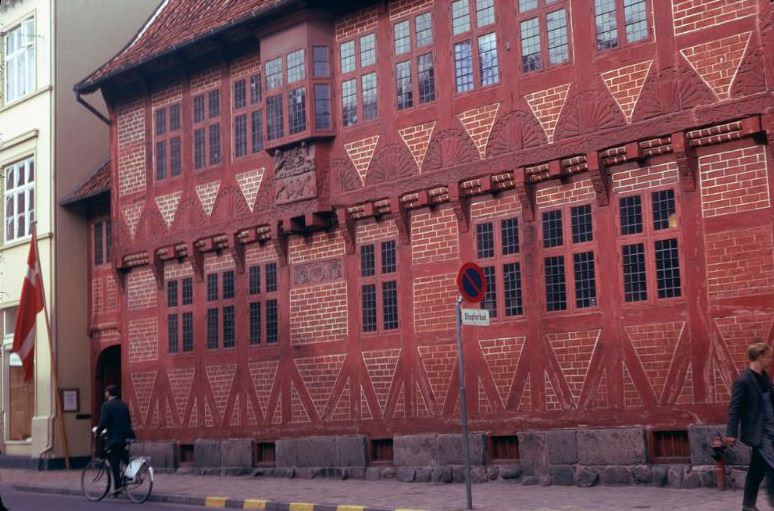
Odense’s built environment in 1966 was defined by its red brick construction — a material that appears across much of Denmark’s urban architecture. The island of Funen, which Odense sits on, was also one of Denmark’s most productive agricultural regions, giving the city a dual identity as both an industrial center and a market hub.
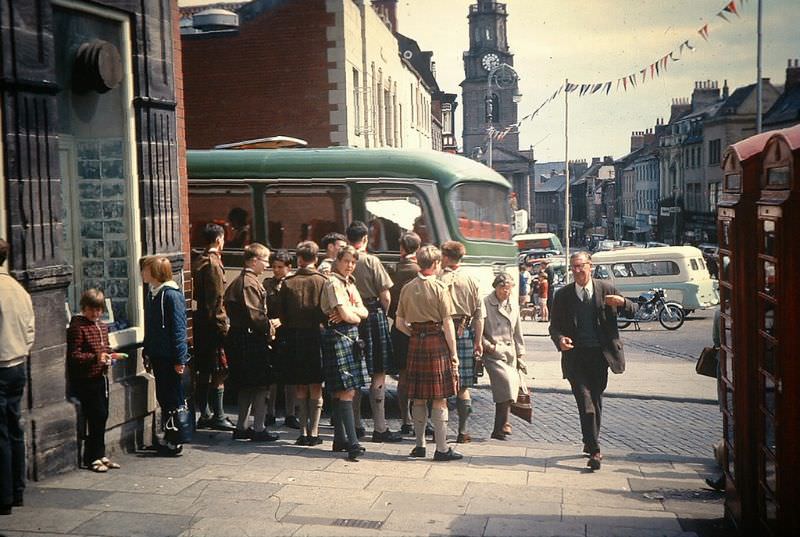
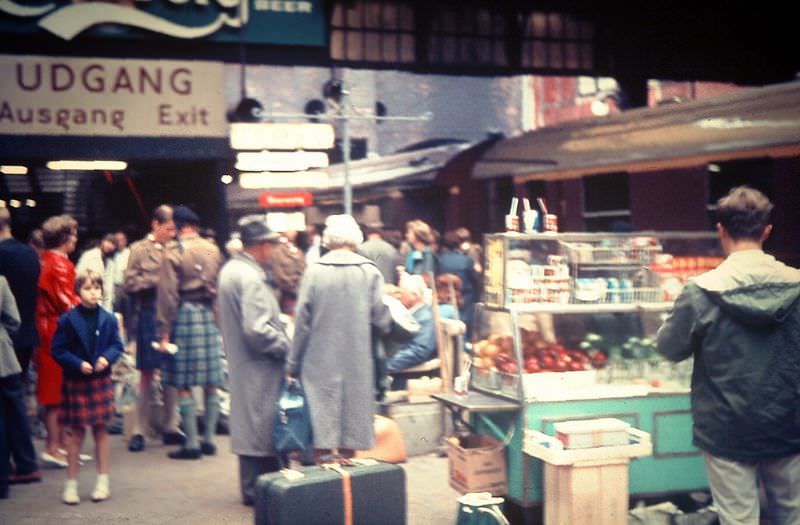
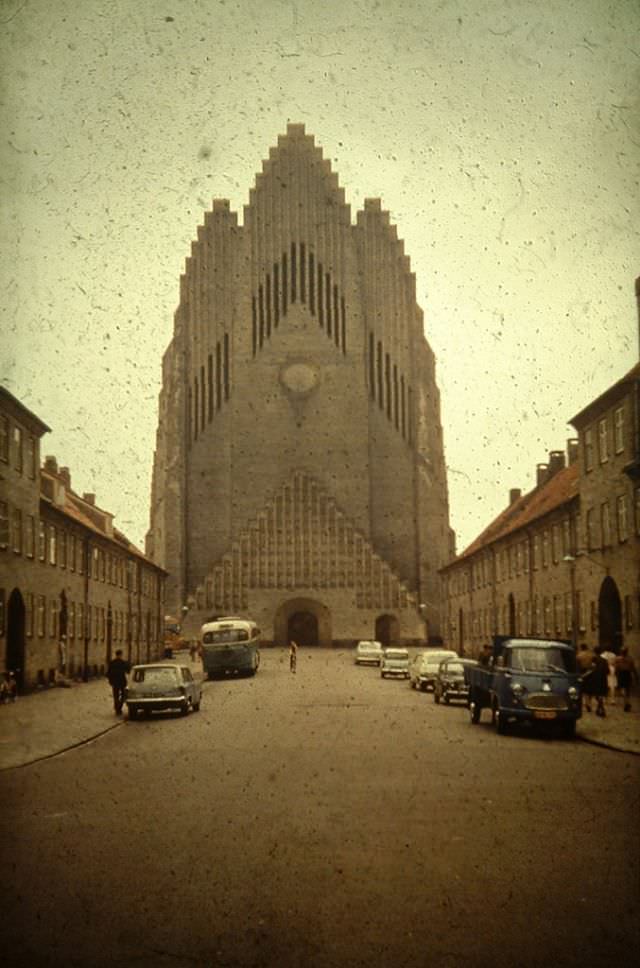
Street scenes from 1966 show Danes going about their days in a country that was modernizing at a fast pace. Cars had become more common, shops were stocked and busy, and the fashions of the era — slim cuts, short hemlines — were visible on the streets of both large cities and smaller towns. Denmark in the mid-1960s looked confident and comfortable.
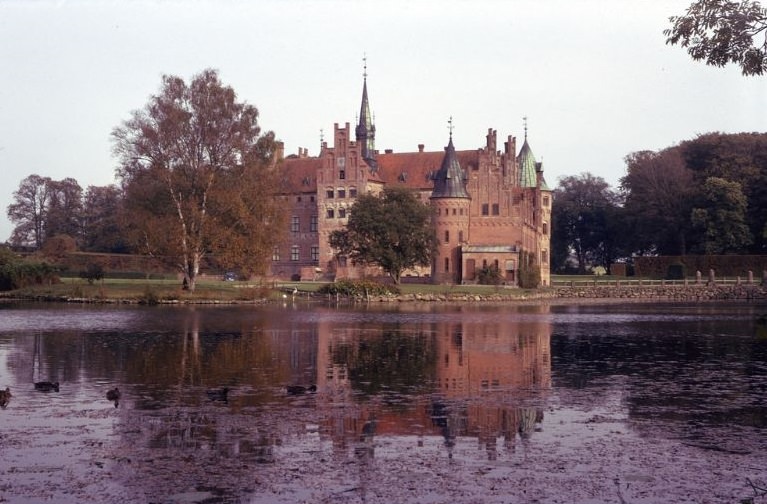
Egeskov Castle on Funen Island is one of Europe’s best-preserved Renaissance water castles. Built in the 1550s on a foundation of oak piles driven into a lake, the castle stood as an extraordinary piece of engineering even by modern standards. Its grounds in 1966 were open to visitors, drawing tourists from across Denmark and beyond.
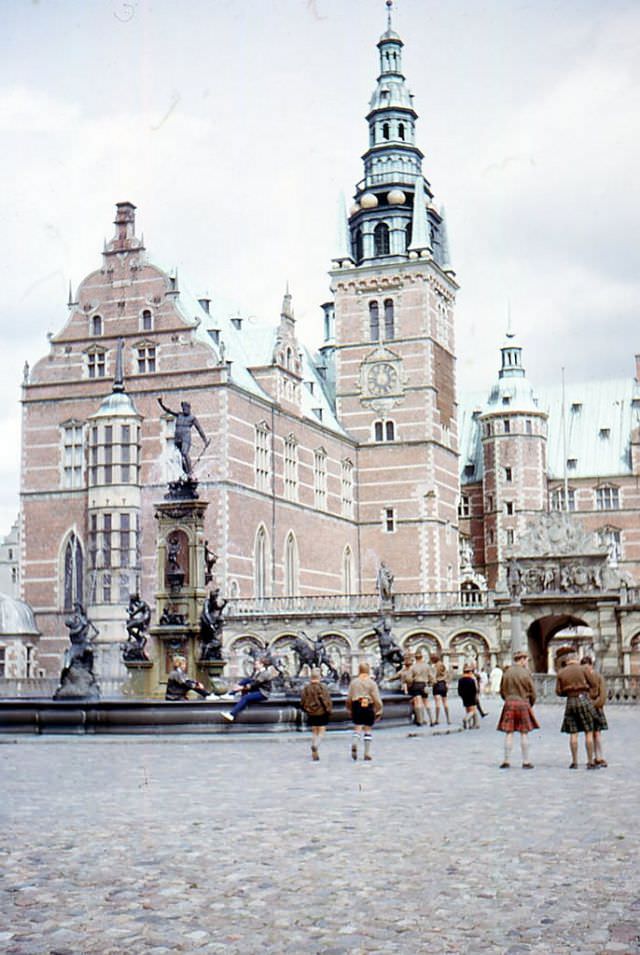
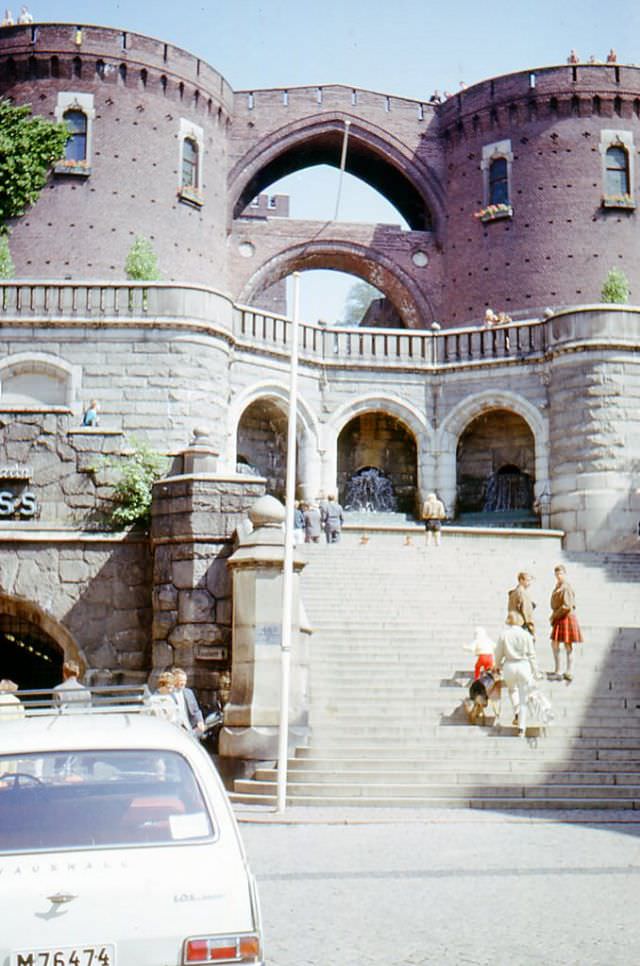
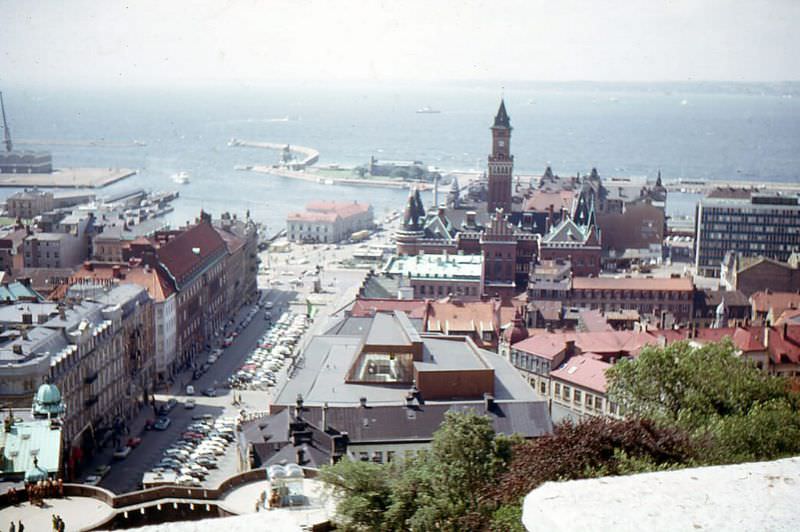
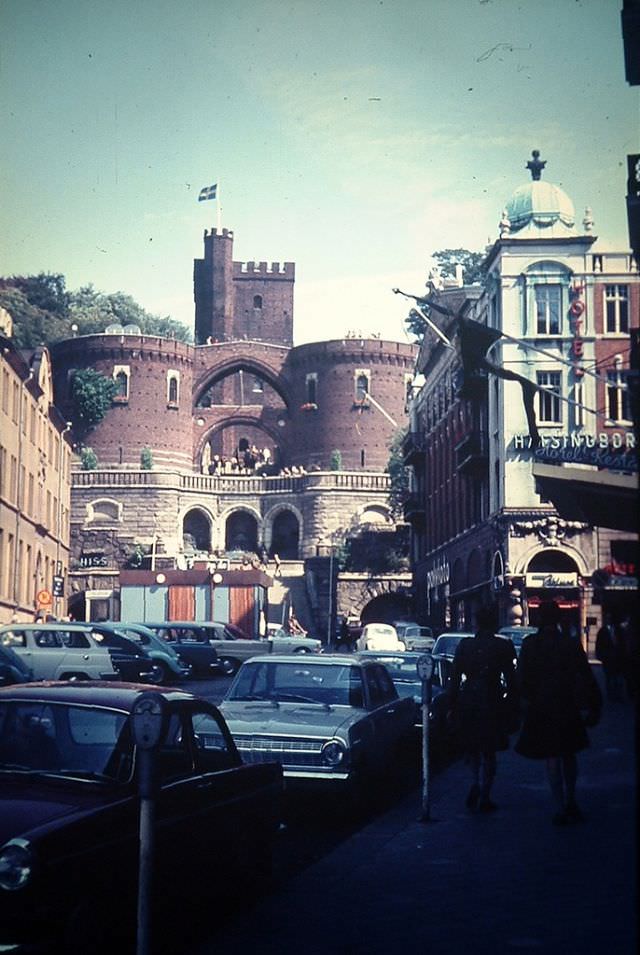
Helsingborg — the Swedish city visible from Helsingør across the Øresund strait — offered a striking view back toward Denmark. These 1966 photographs taken from and of Helsingborg’s Kärnan castle tower show just how narrow that crossing is. For centuries, Denmark controlled this strait and collected tolls from every ship that passed through.
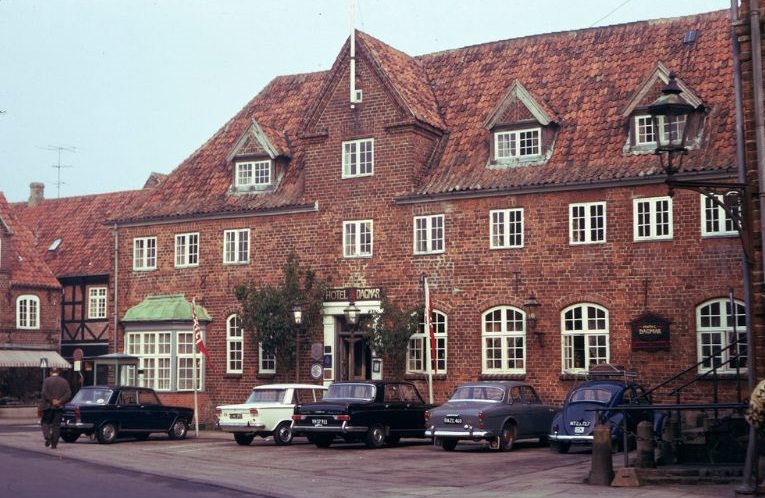
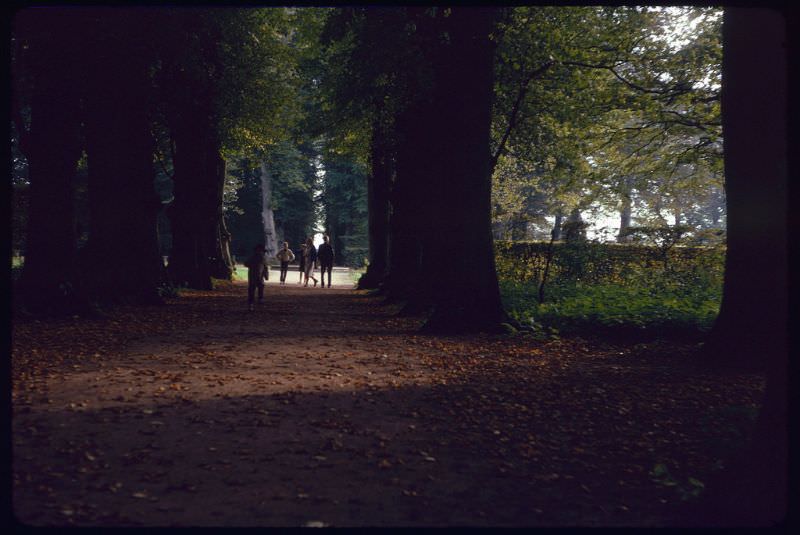
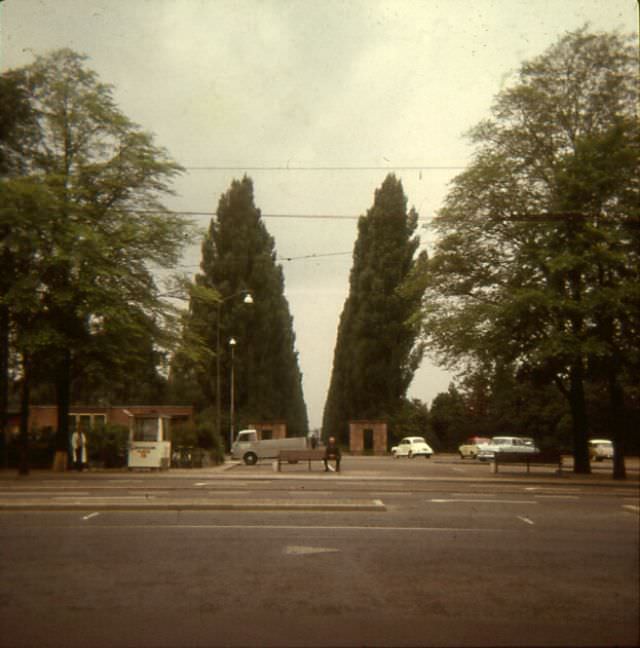
Copenhagen’s main square in 1966 was a center of city activity. Surrounded by historic buildings and crossed by trams and pedestrians, it functioned as both a civic space and a commercial hub. The square’s architecture reflected Copenhagen’s centuries of growth as a trading and maritime capital.
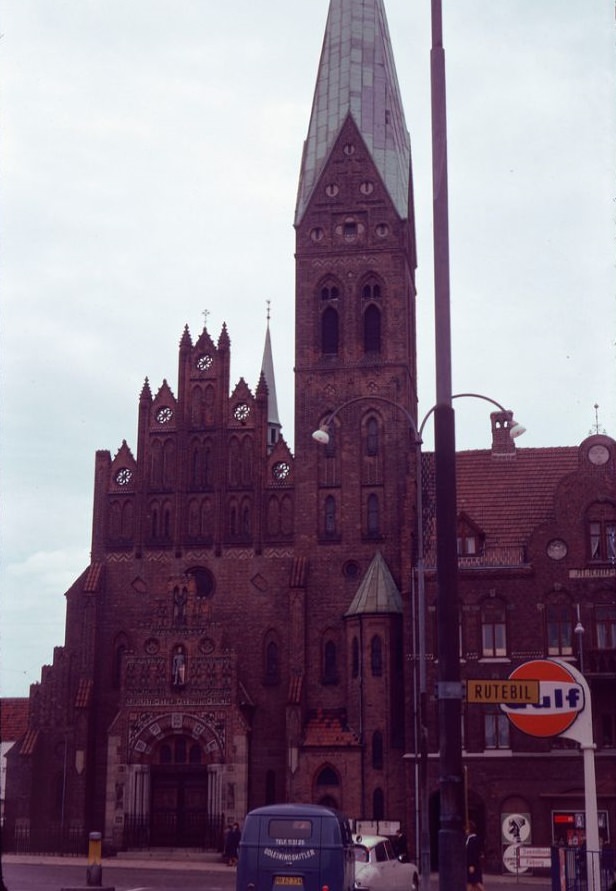
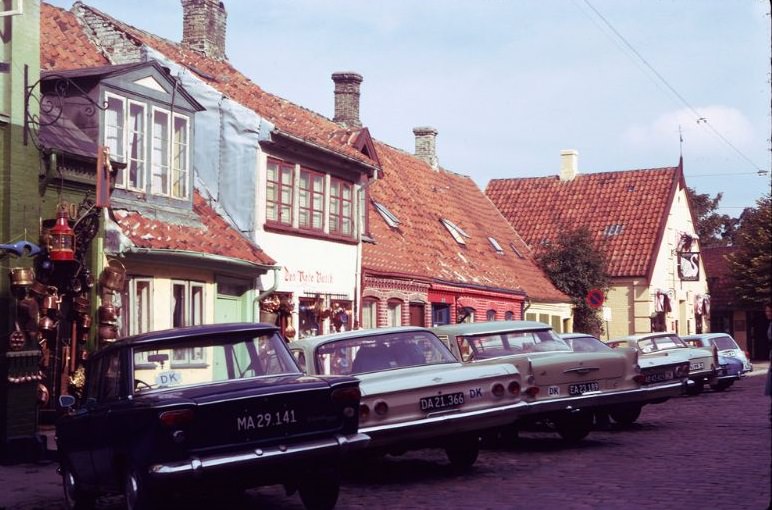
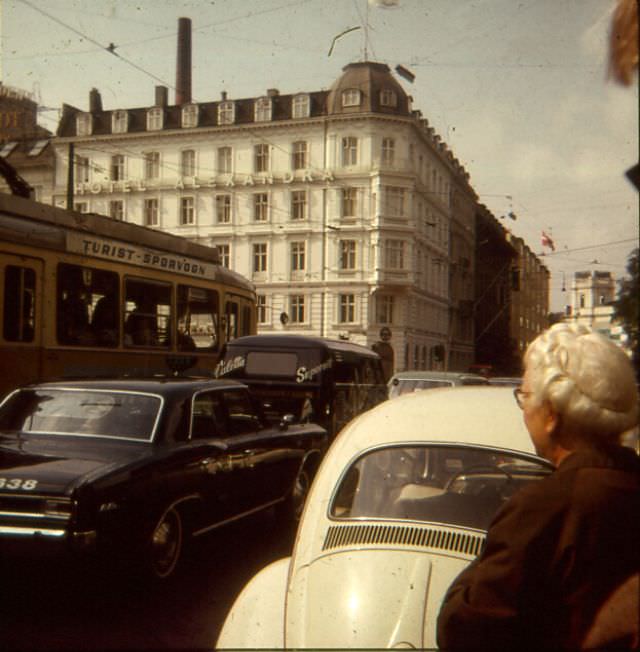
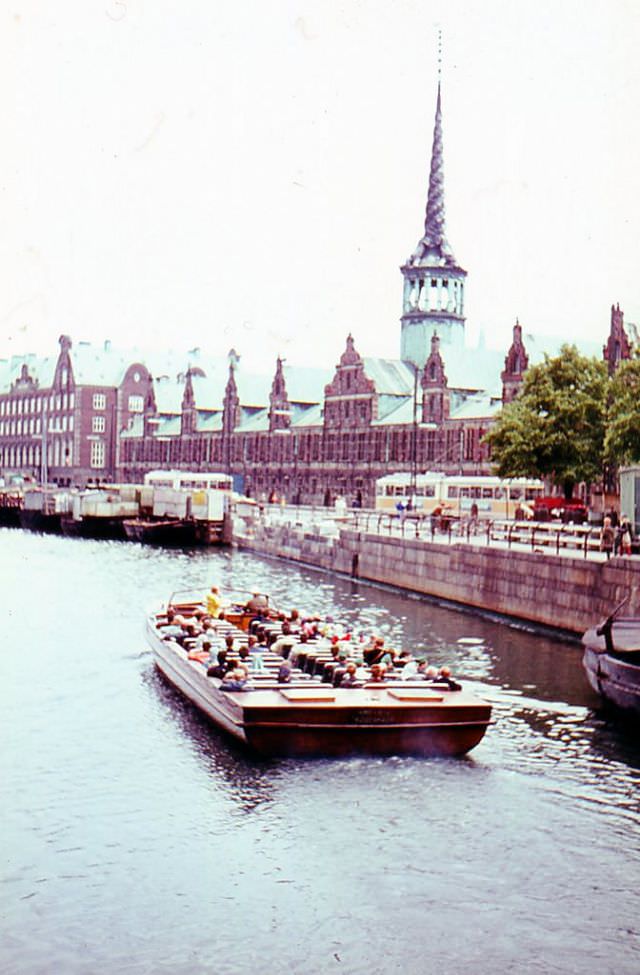
Denmark’s canals were a visible part of city life, especially in Copenhagen. Lined with old merchant houses and crossed by bridges, they connected the city’s commercial past to its present. By 1966, the canals were less central to trade than they once were, but they remained a defining feature of Copenhagen’s geography and character.
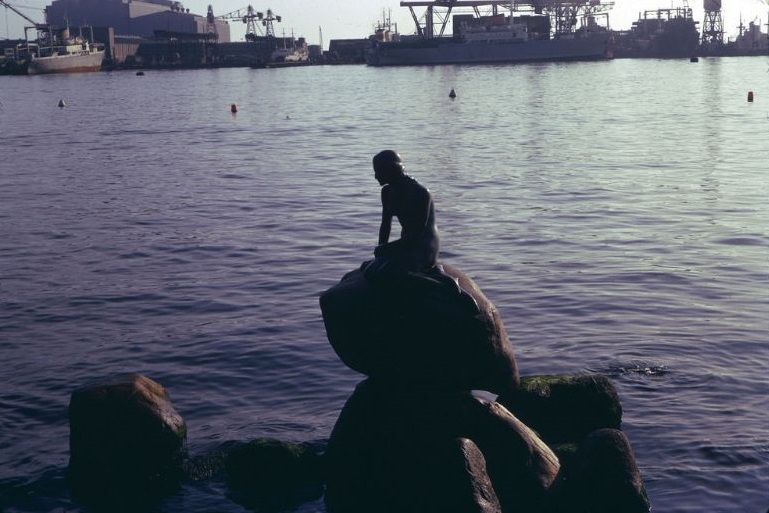
The Little Mermaid statue, placed at the Langelinie pier in Copenhagen in 1913, was already one of Denmark’s most recognized landmarks by the 1960s. Based on Hans Christian Andersen’s fairy tale, the small bronze figure drew a steady stream of visitors. She has been vandalized and damaged multiple times over the decades, but in 1966 she sat intact on her rock in the harbor.
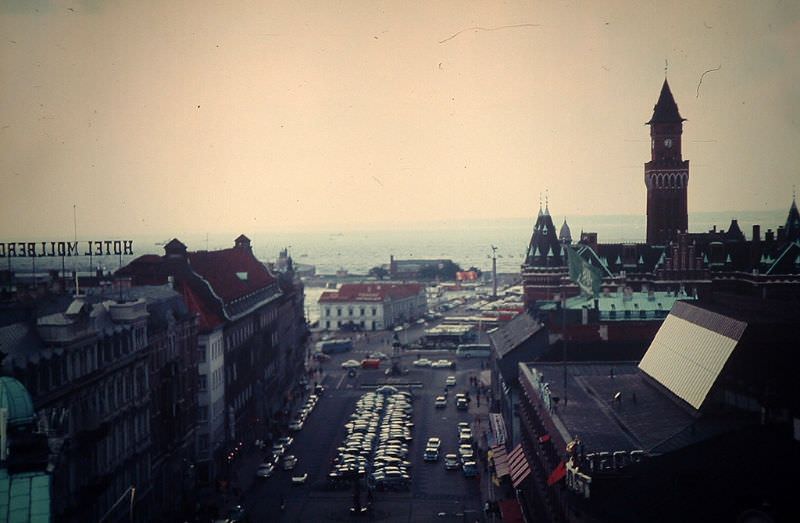
The view from Copenhagen’s Town Hall tower in 1966 stretched out across a city of red rooftops, church spires, and busy streets below. Copenhagen’s Town Hall, completed in 1905, stood at the head of the city’s main pedestrian street and served as both a working municipal building and one of the city’s most prominent landmarks.
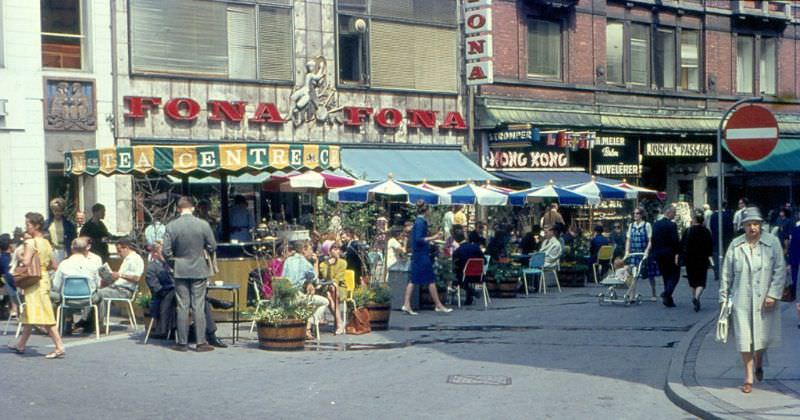
Strøget — Copenhagen’s famous pedestrian shopping street — runs through the heart of the city. By 1967, it was already one of the longest pedestrian streets in Europe, stretching about 1.1 kilometers between two major squares. Shoppers, tourists, and street performers all shared the space, making it one of the most lively stretches of the Danish capital.
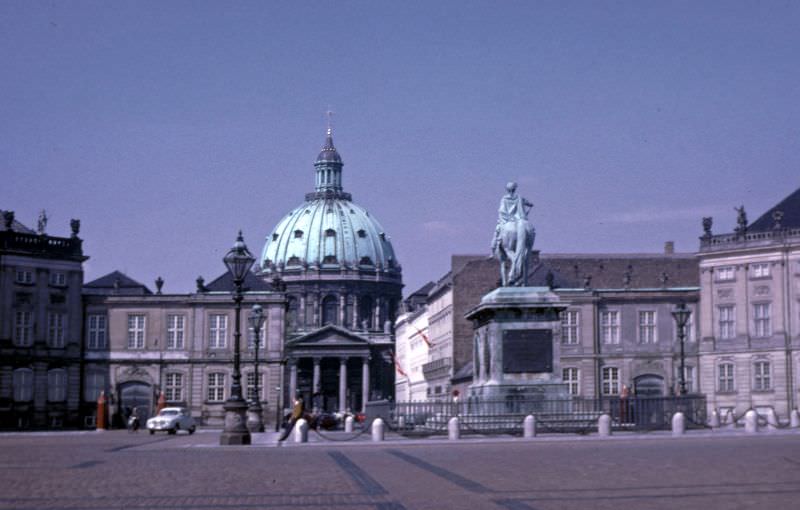
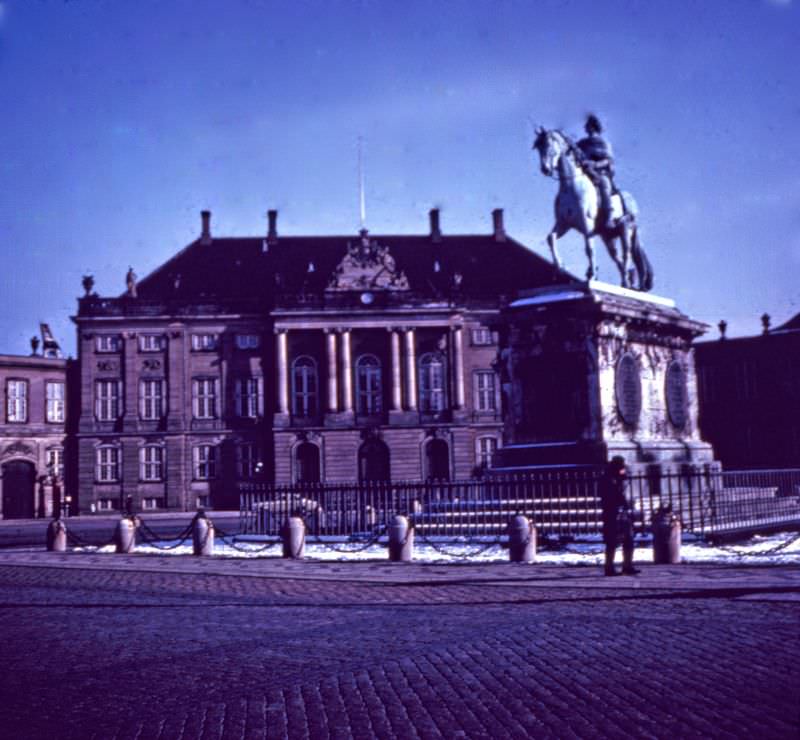
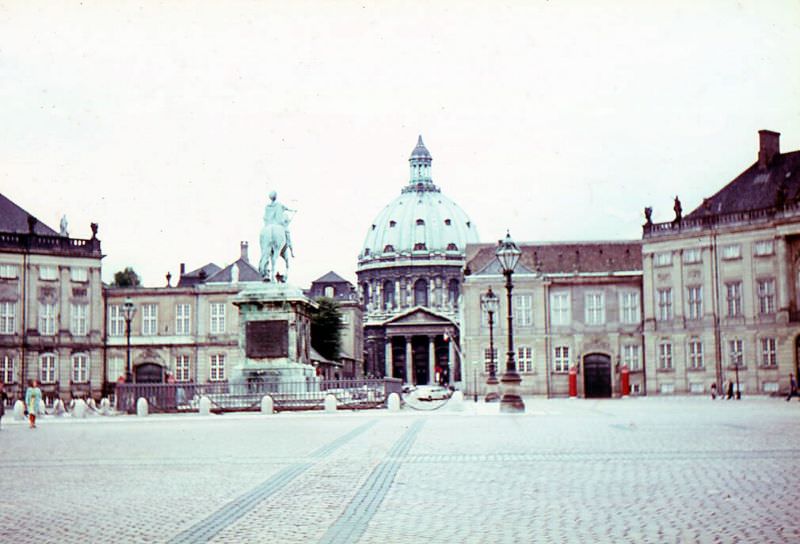
Amalienborg Palace is the official home of the Danish royal family. It consists of four identical classical-style palaces arranged around an octagonal courtyard, at the center of which stands an equestrian statue of King Frederick V. In 1968, Queen Margrethe II — then still Princess Margrethe — was living in the palace complex.
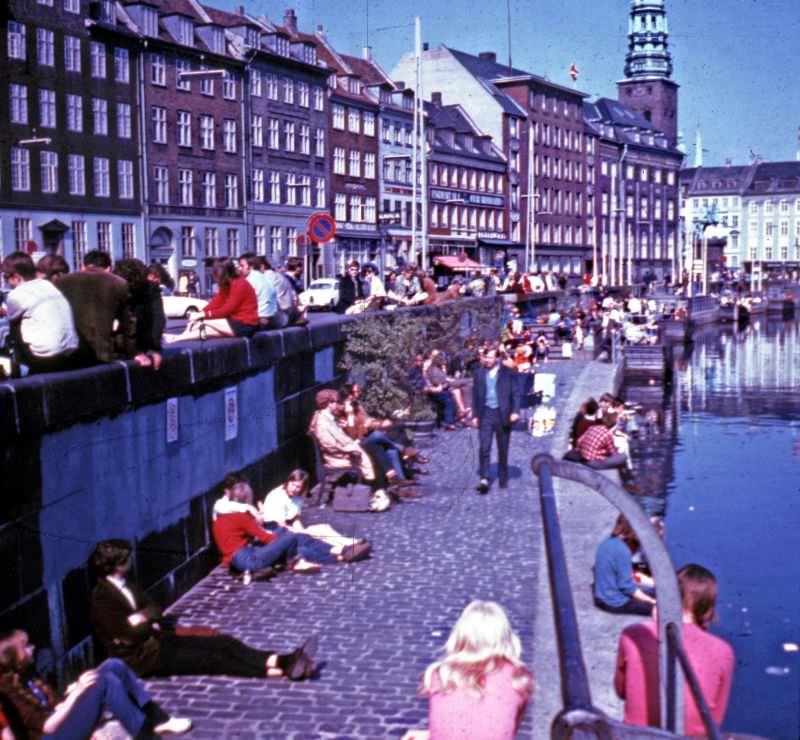
Denmark in 1968 was not immune to the political tensions sweeping much of the Western world. Anti-Vietnam War protests drew crowds into downtown Copenhagen that year, reflecting a broader shift in Danish public sentiment. The 1968 national election also marked a turning point — after years of Social Democratic rule, the political majority in Denmark shifted to the right.
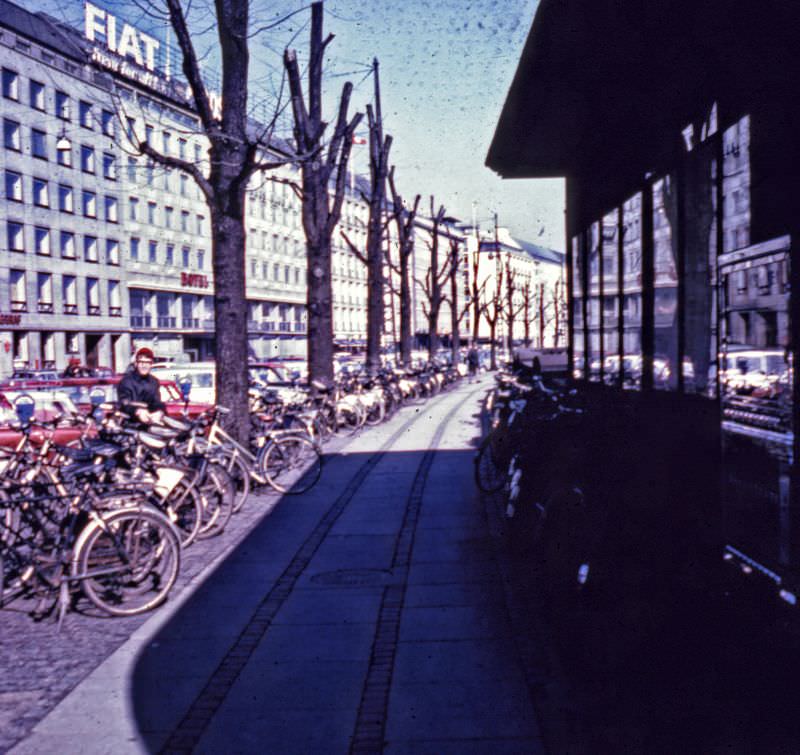
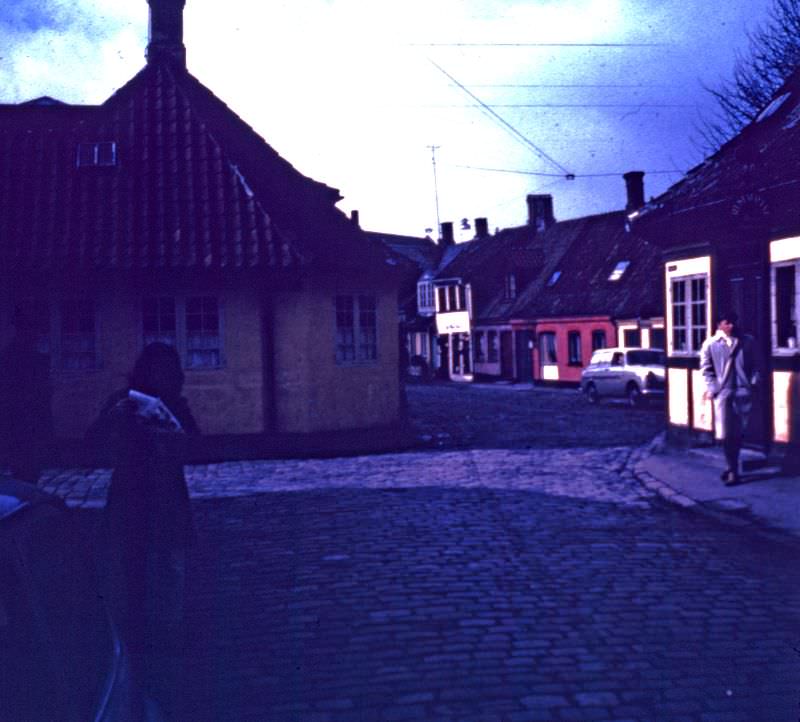
Hans Christian Andersen was born in Odense in 1805, and his childhood home on Bangs Boder street became a museum in his honor. By 1968, it was a well-established tourist site, attracting visitors who came to see the modest dwelling where one of the world’s most famous fairy tale writers grew up. The house stood as a small but significant piece of Danish cultural heritage.
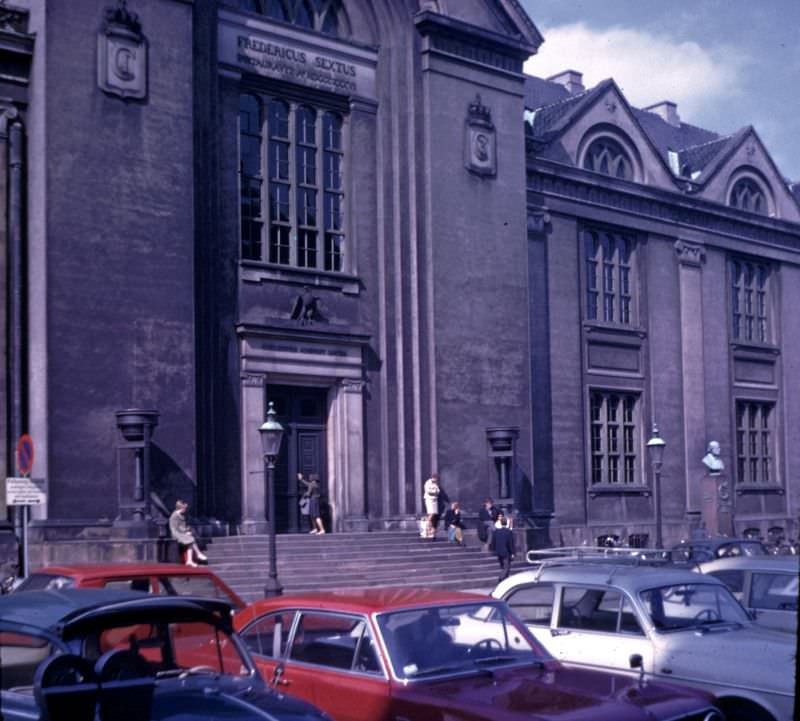
The University of Copenhagen, founded in 1479, is the oldest and largest university in Denmark. Its main hall was a space of considerable ceremony and history. In 1968, universities across Europe were sites of student protest and political debate, and Copenhagen was no exception. The university’s halls that year carried both the weight of centuries of scholarship and the energy of a generation demanding change.
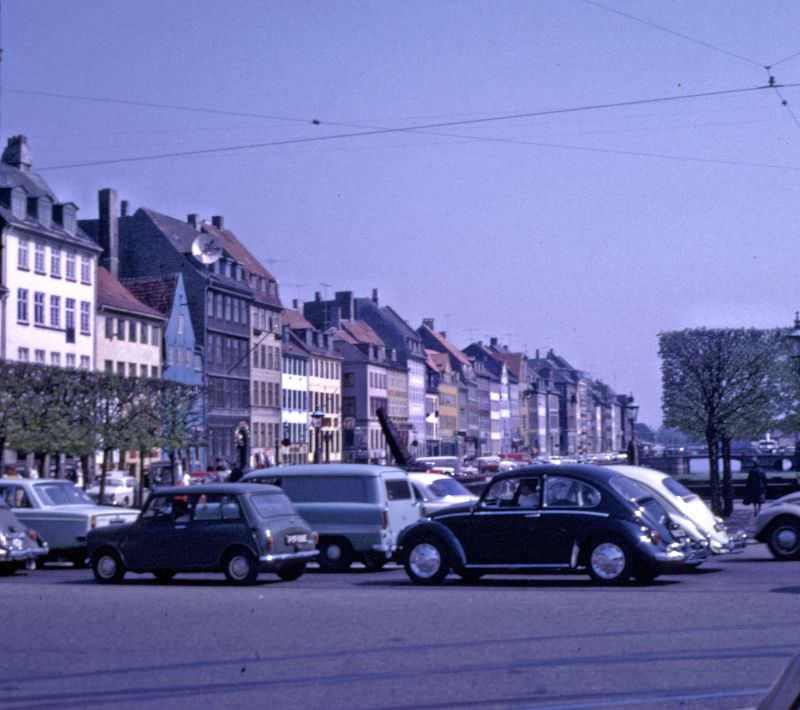
Nyhavn — which means ‘New Harbour’ — is a 17th-century waterfront district lined with colorful townhouses, bars, and restaurants. In 1968, Nyhavn was not yet the polished tourist destination it would later become. It was a working harbor area with a rougher character, frequented by sailors and dockworkers. Hans Christian Andersen also lived at several addresses along the canal during his lifetime.
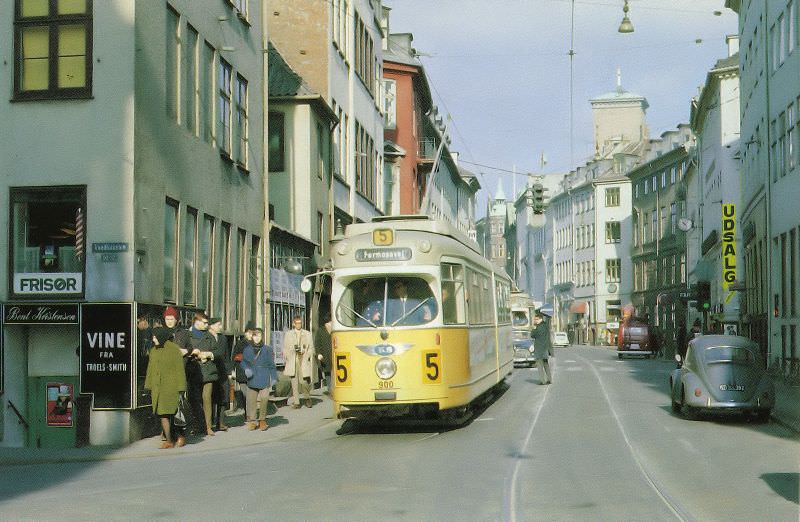
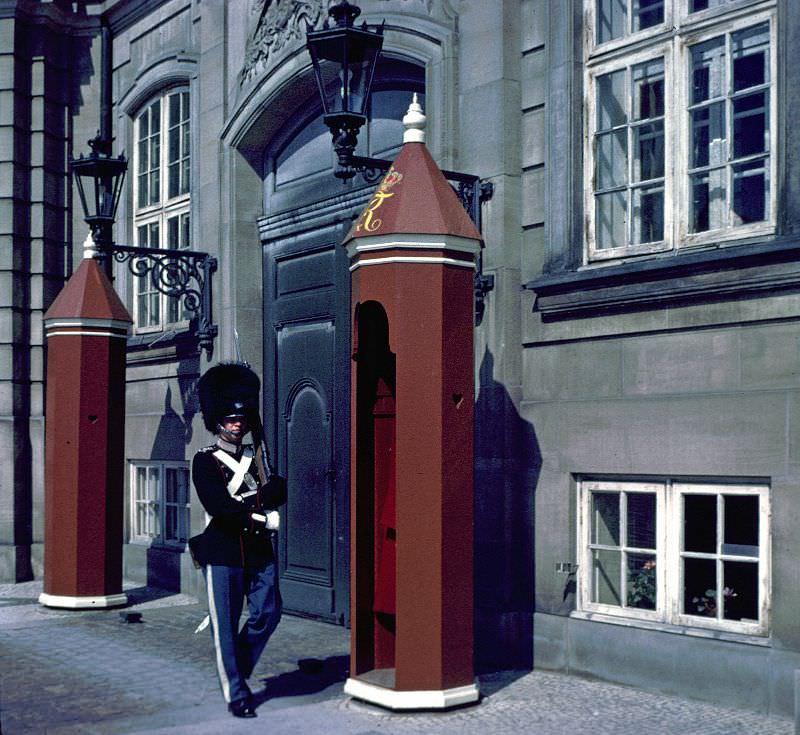
The Royal Guard at Amalienborg Palace performed their daily changing of the guard ceremony in 1968 just as they do today. The guard, formally known as the Den Kongelige Livgarde, has protected the Danish royal family since 1658. Their distinctive red tunics and tall bearskin hats made them one of the most photographed sights in Copenhagen.
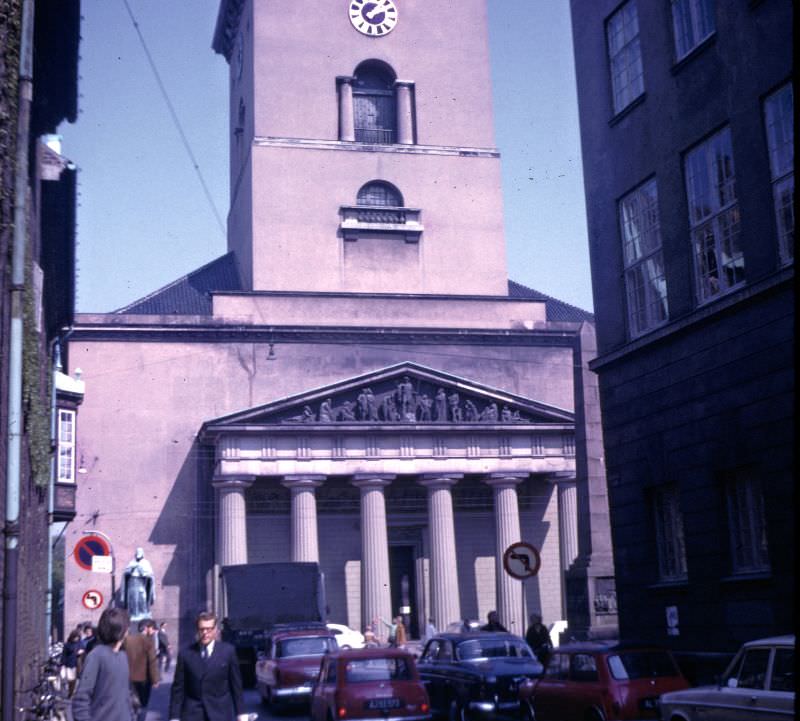
The Church of Our Lady serves as Copenhagen’s cathedral and sits at the center of the city near the university. The current neoclassical building, completed in 1829, replaced an earlier church destroyed during the British bombardment of Copenhagen in 1807. Inside, sculptor Bertel Thorvaldsen’s famous statues of Christ and the twelve apostles line the nave.
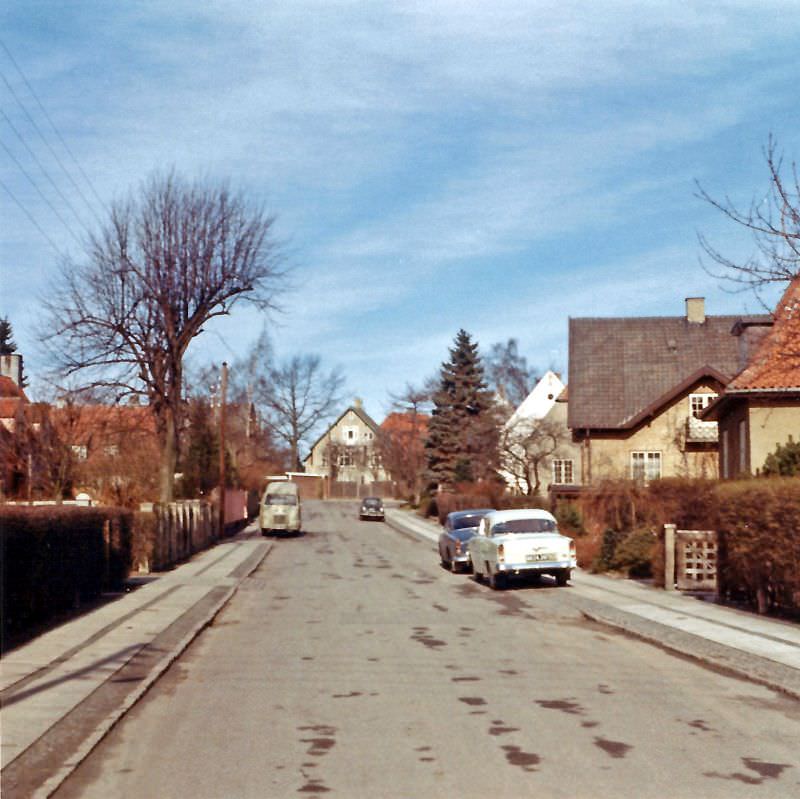
Gentofte, a municipality just north of Copenhagen, was one of Denmark’s most affluent residential areas. Its tree-lined streets and well-maintained homes in 1968 reflected the prosperity that the decade had brought to the Danish middle class. Udsigten street captured that quiet, suburban confidence.
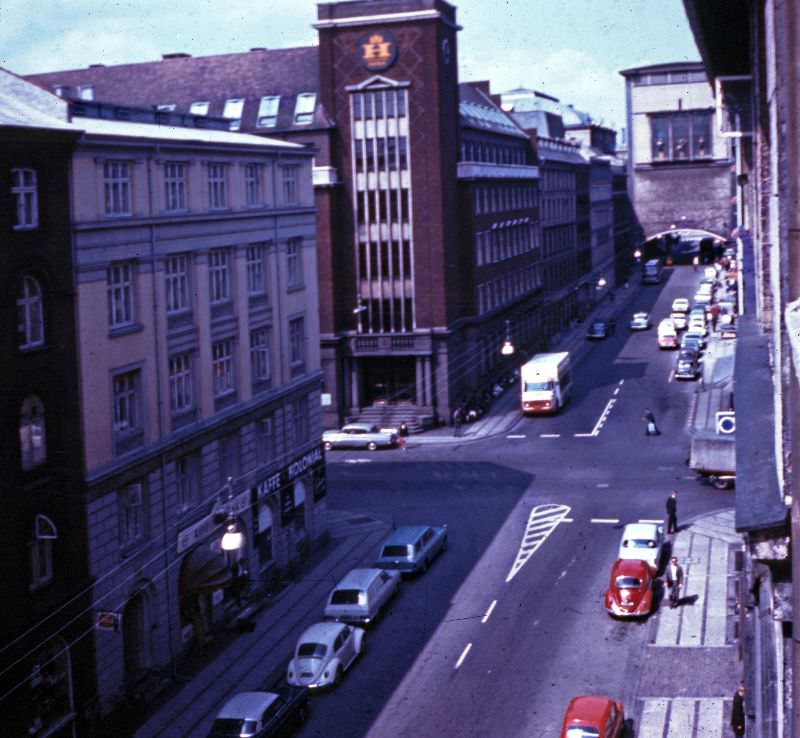
Looking out from an apartment window in Copenhagen in 1968 meant looking out over a city that had changed enormously in just a few decades — and was still changing. The rooftops, streets, and skyline visible from that window told the story of a nation that had modernized rapidly, remained politically engaged, and held onto the architectural and cultural character that made it distinctly Danish.




