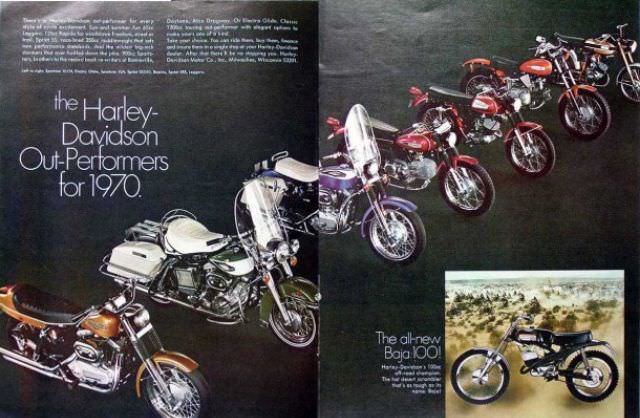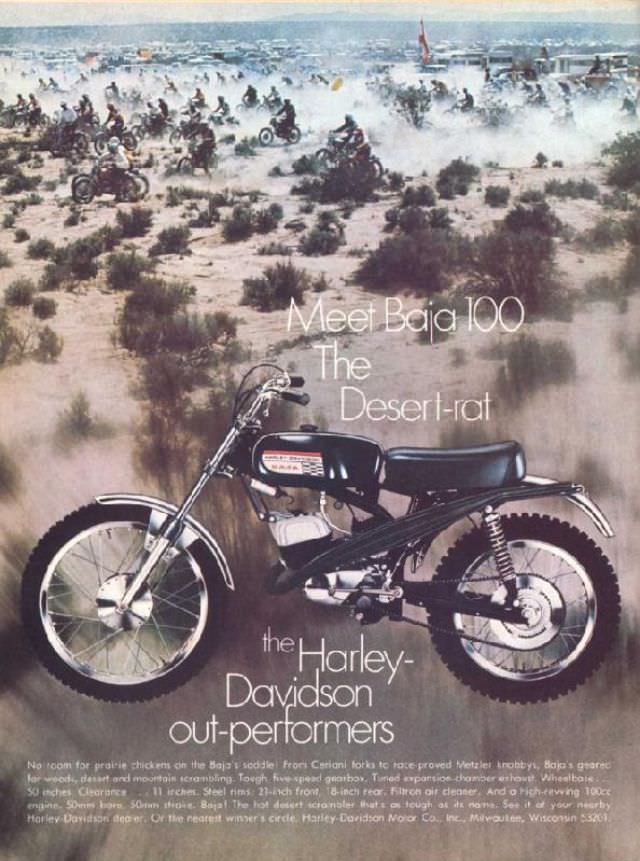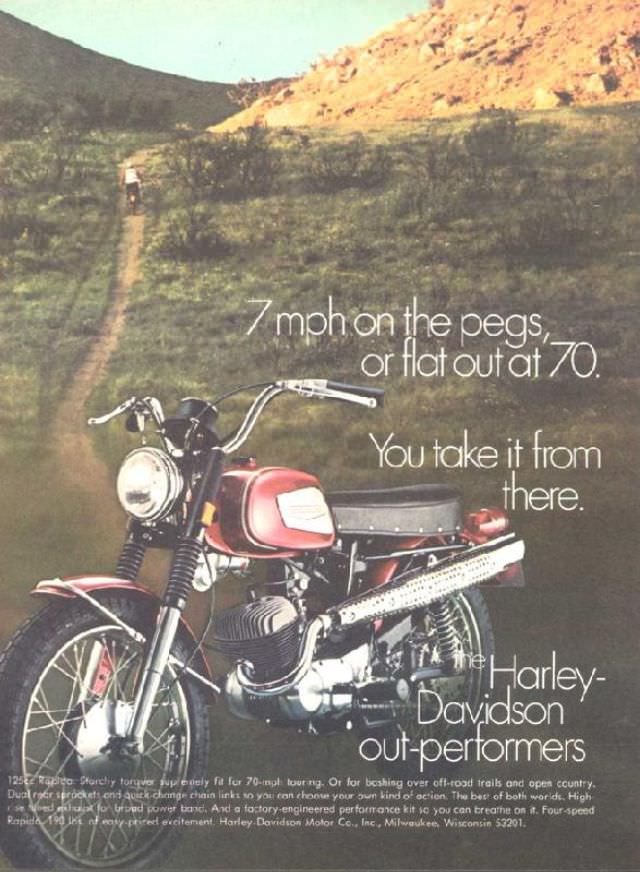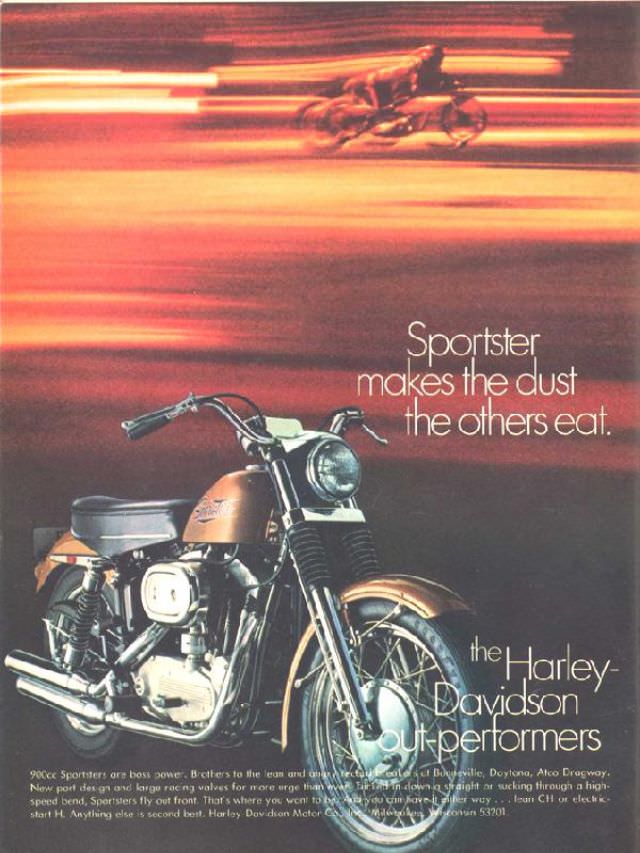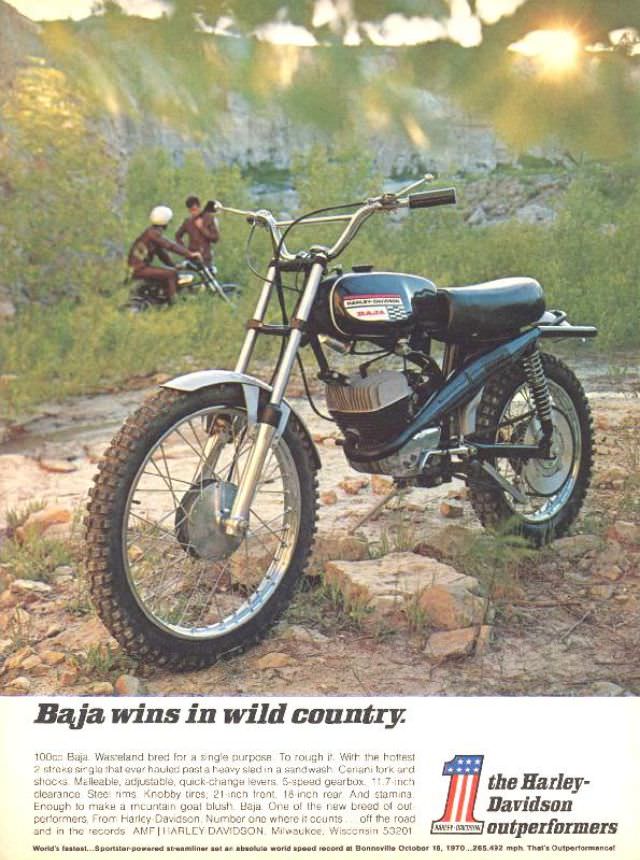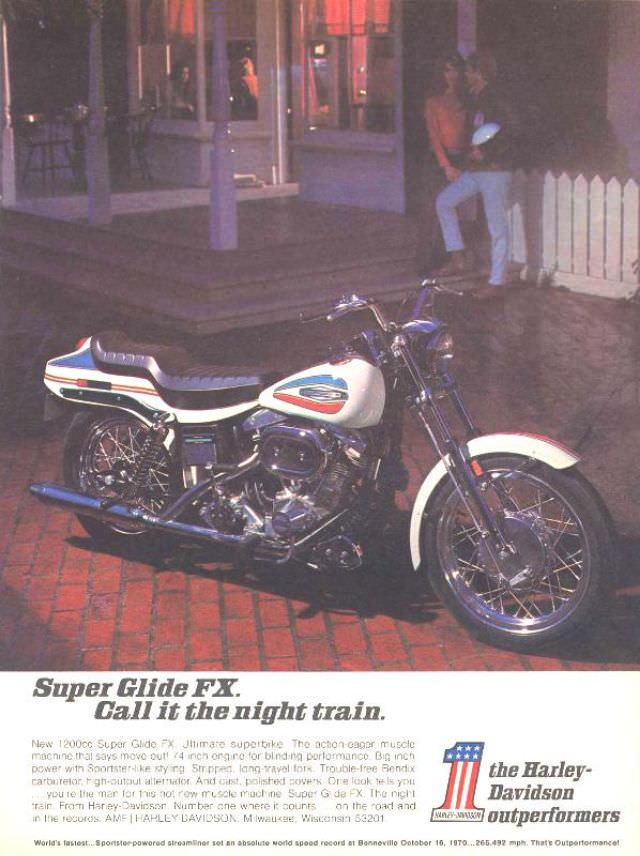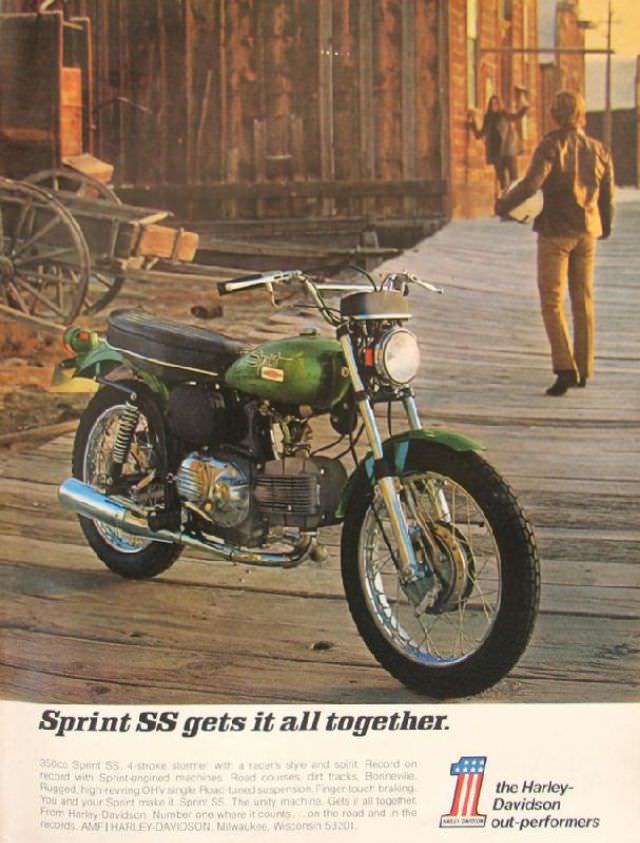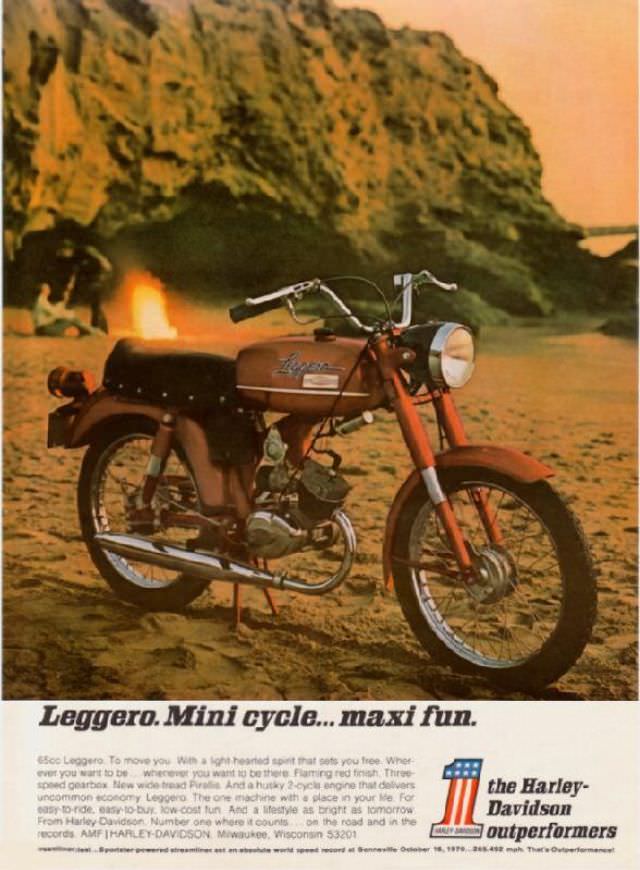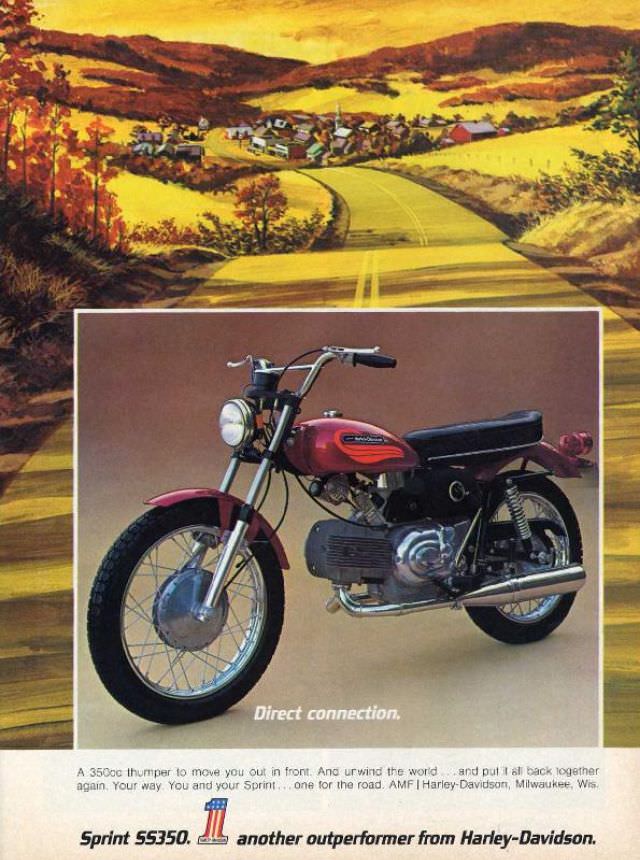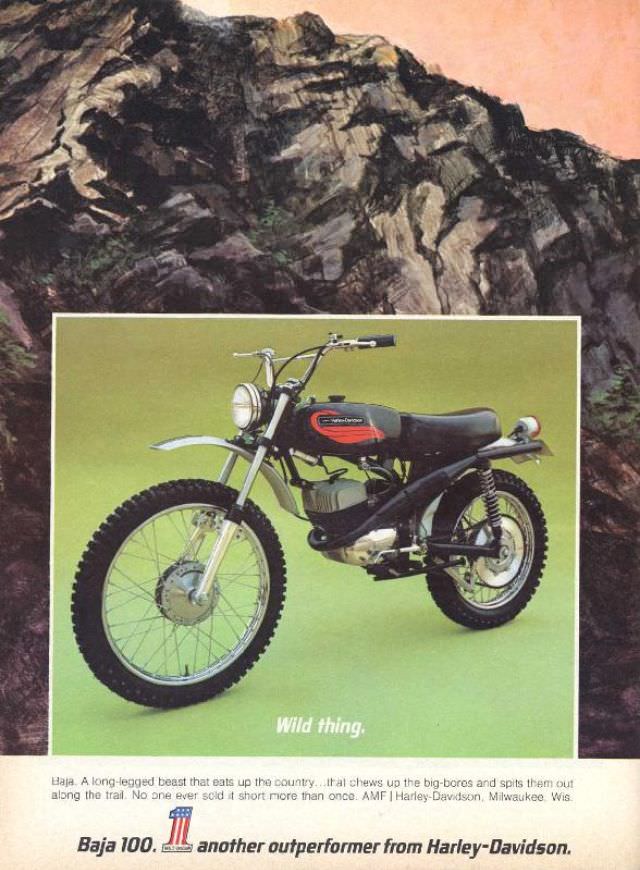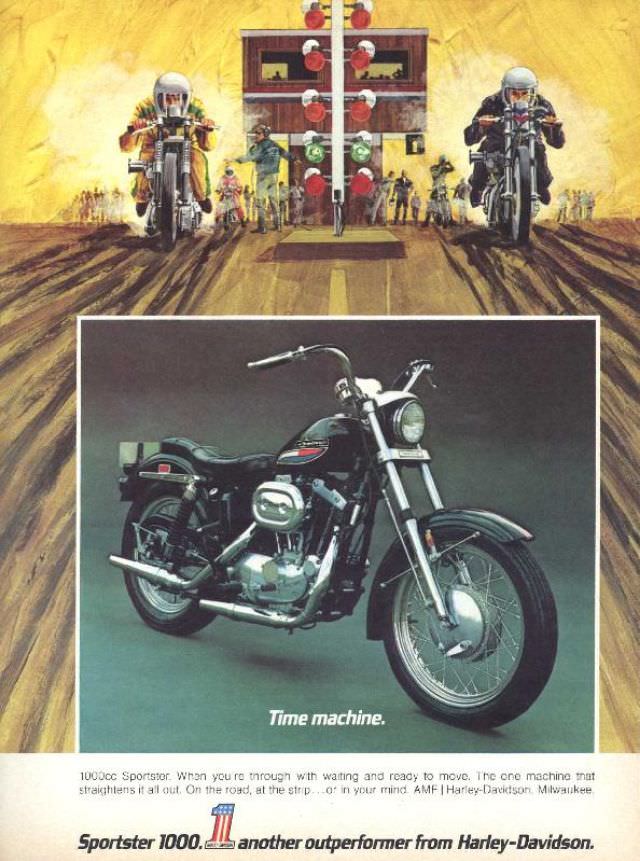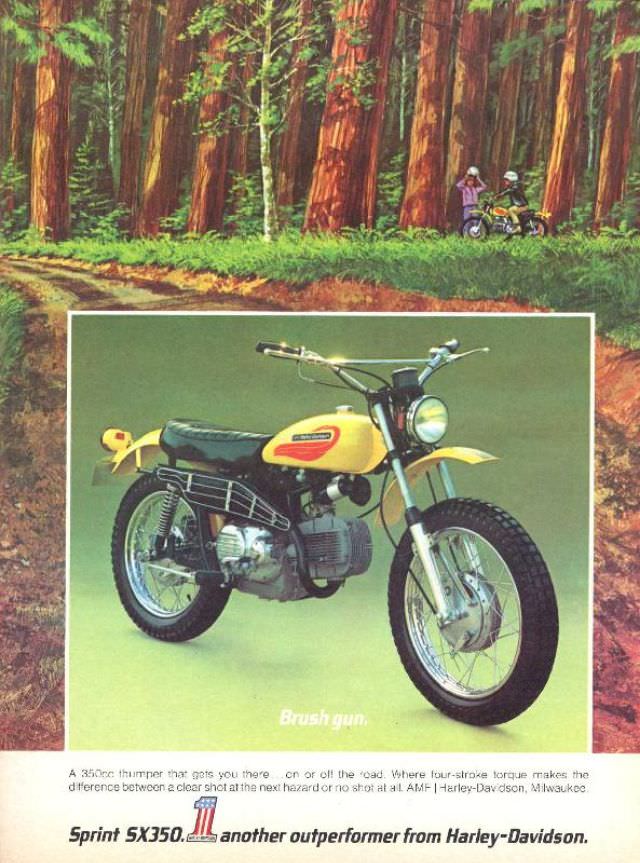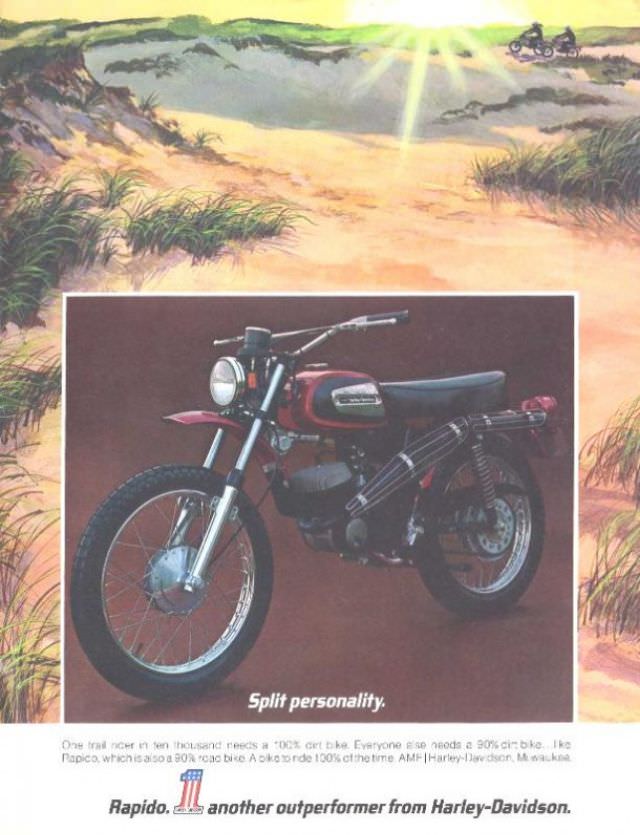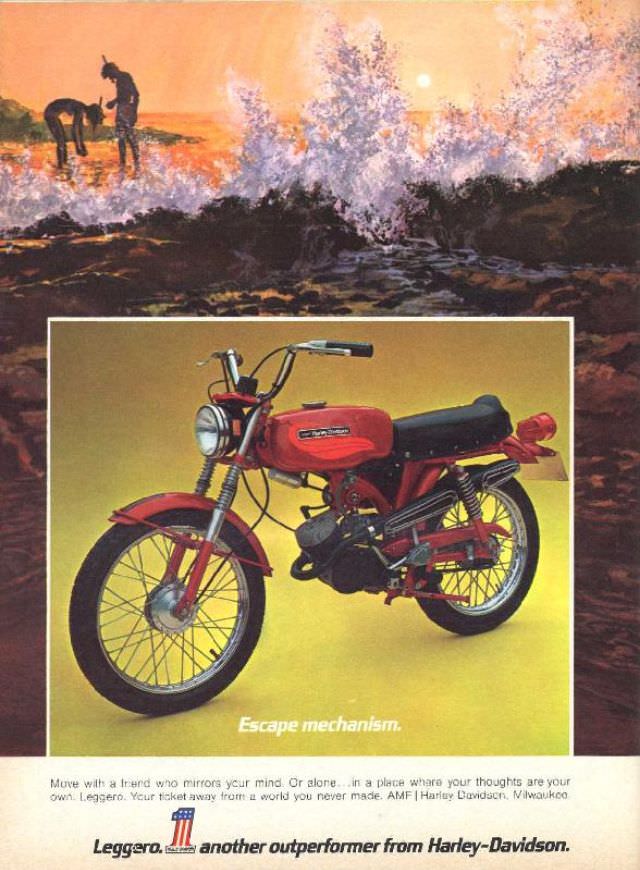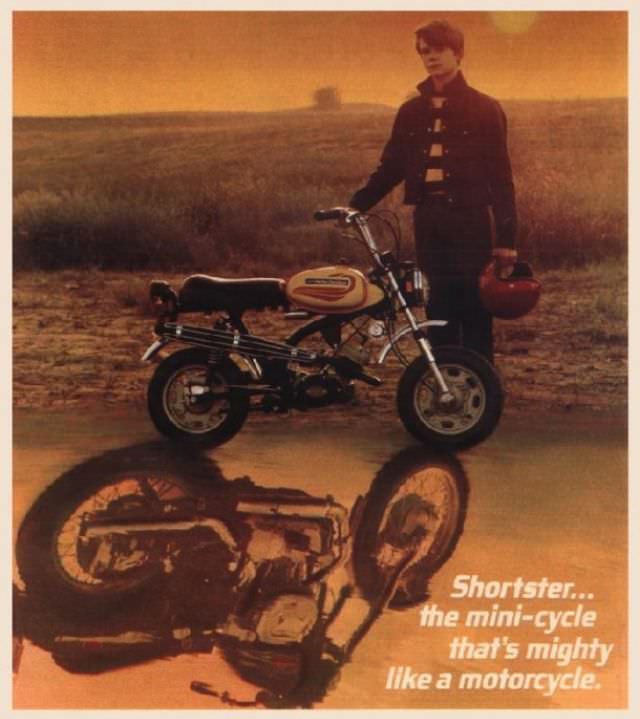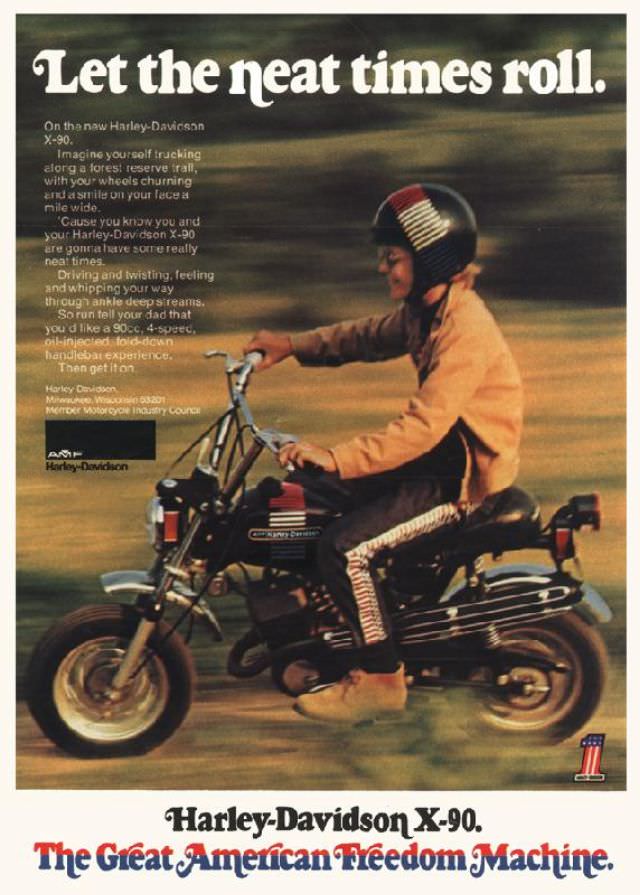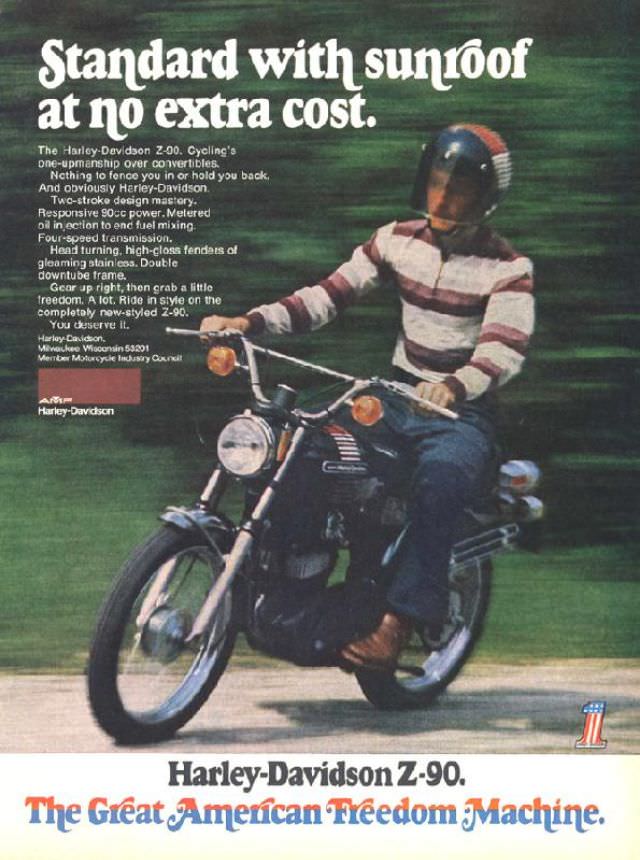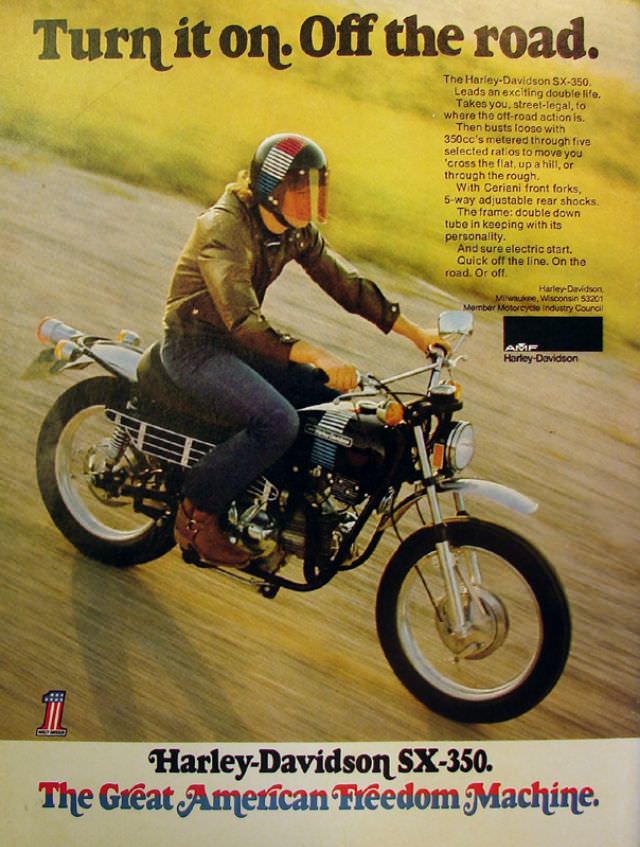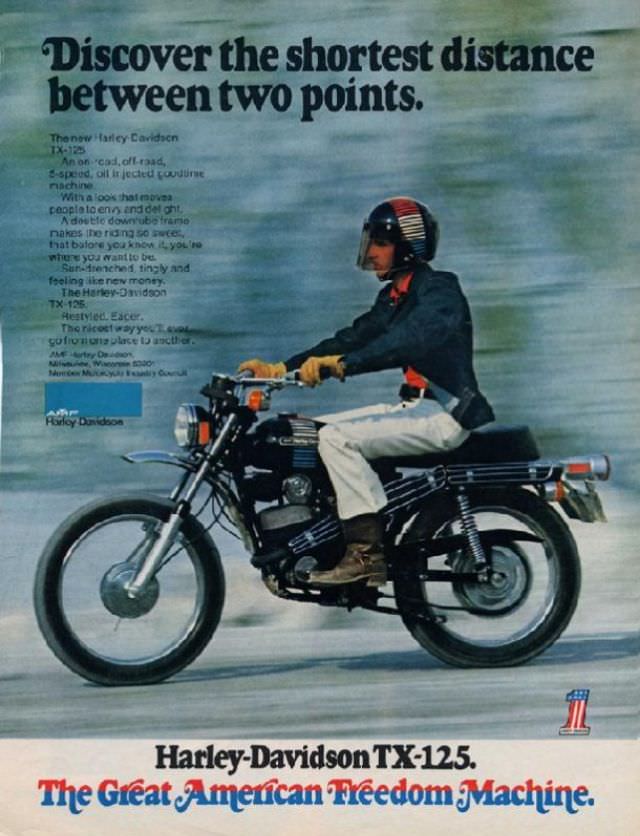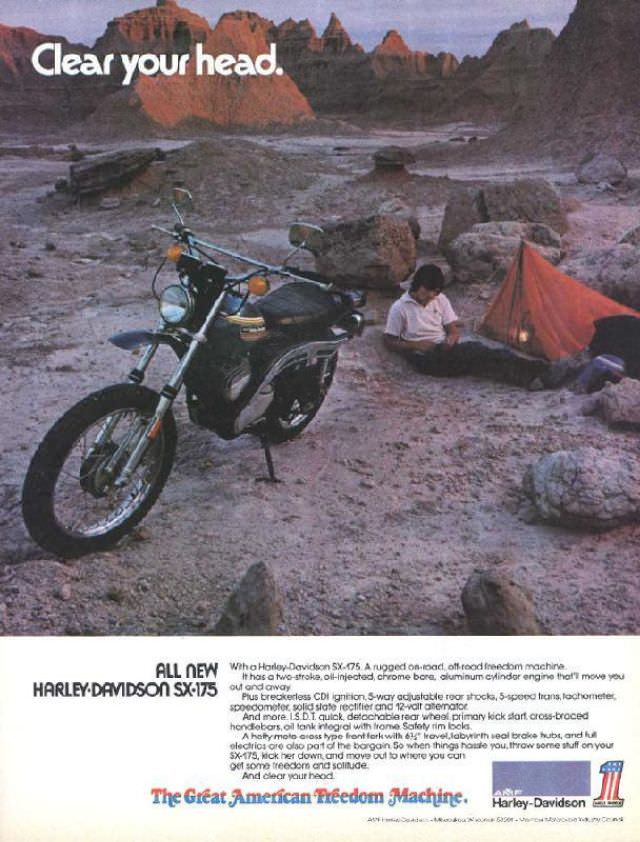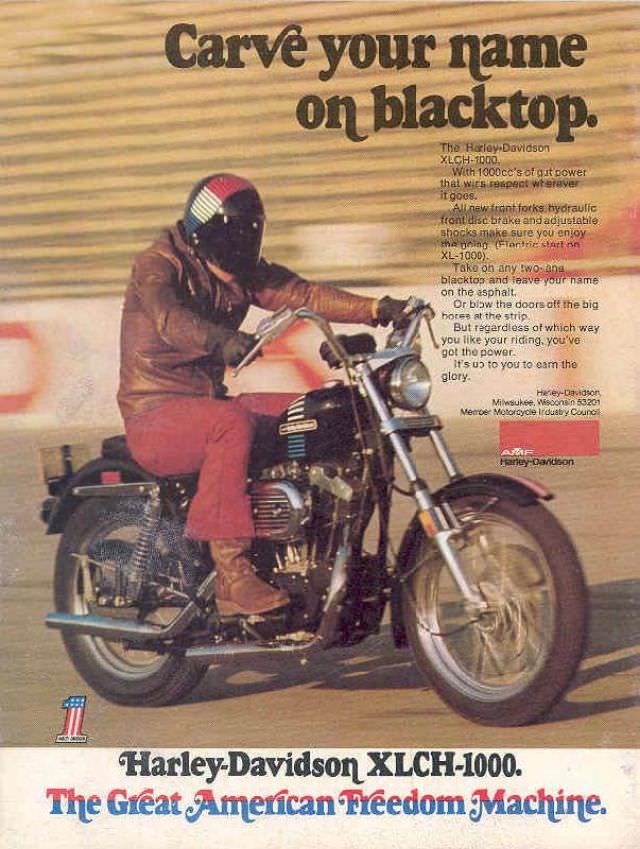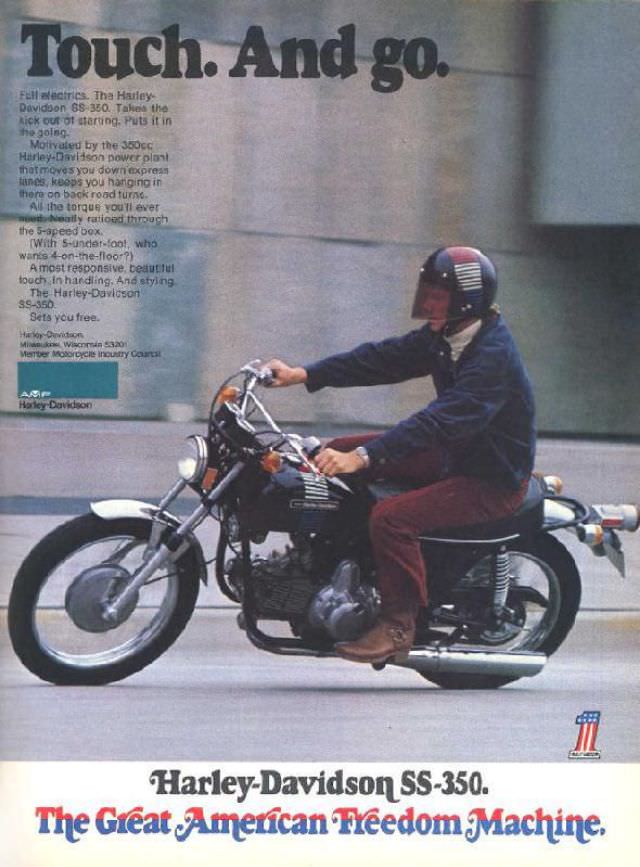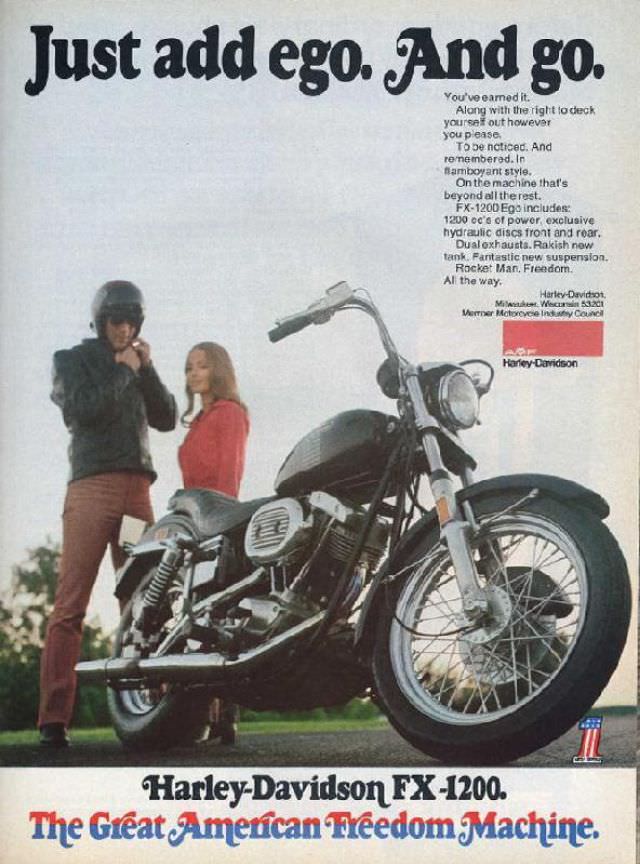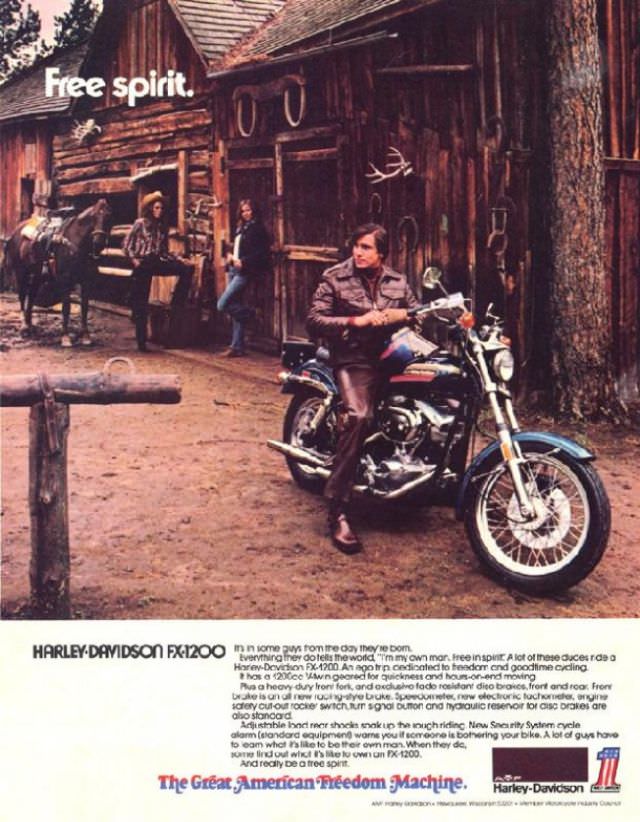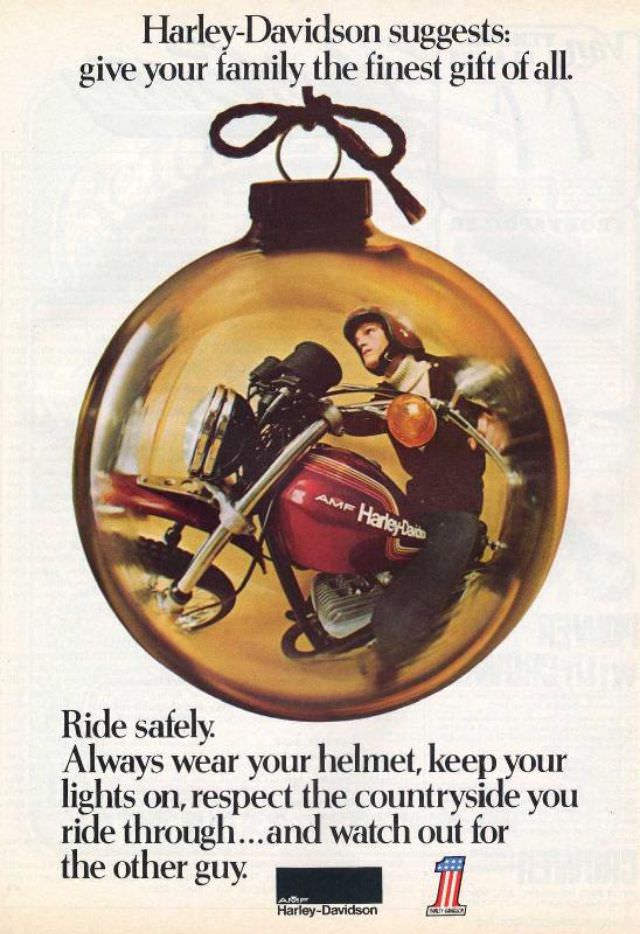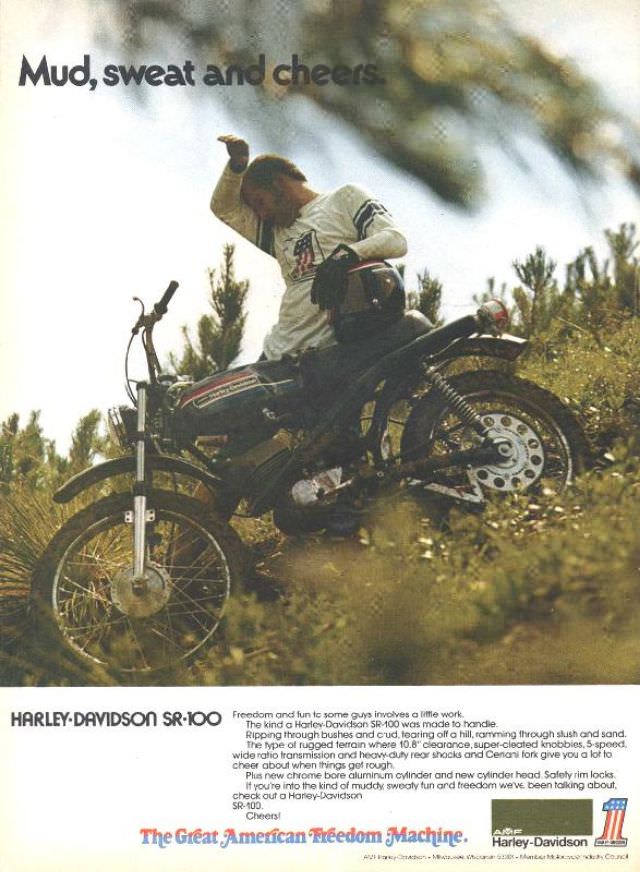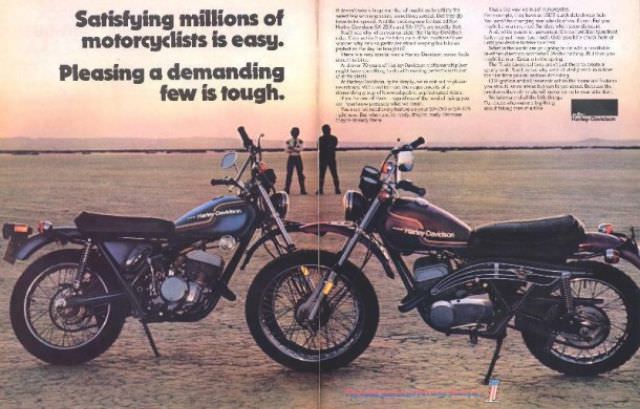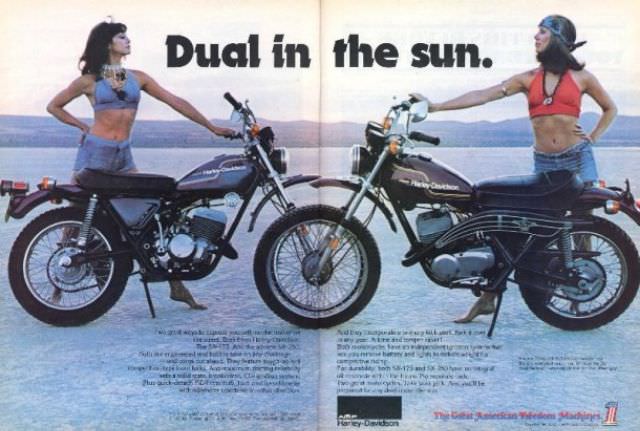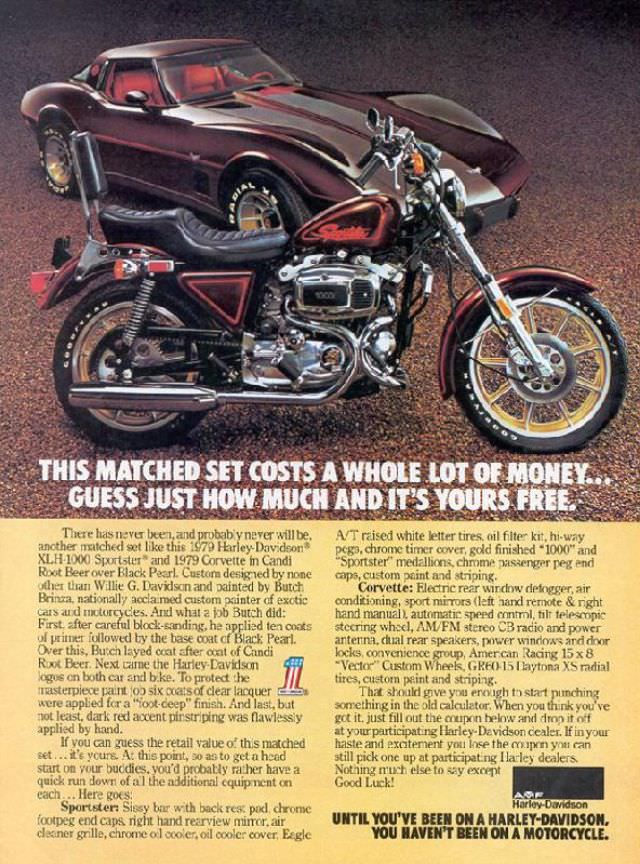

In the 1970s, Harley-Davidson faced intense competition from Japanese motorcycle manufacturers. To distinguish itself, the company launched a massive branding campaign centered on the slogan, “The Great American Freedom Machine.” This phrase appeared in bold, capitalized letters across full-page spreads in magazines like Cycle World and Playboy. The advertisements positioned the motorcycle not just as a vehicle, but as a ticket to personal liberty. The text often described the bike as the only way to escape the constraints of society and the boredom of a 9-to-5 job. This marketing strategy successfully linked the brand with the concept of American independence.
The Number One Logo
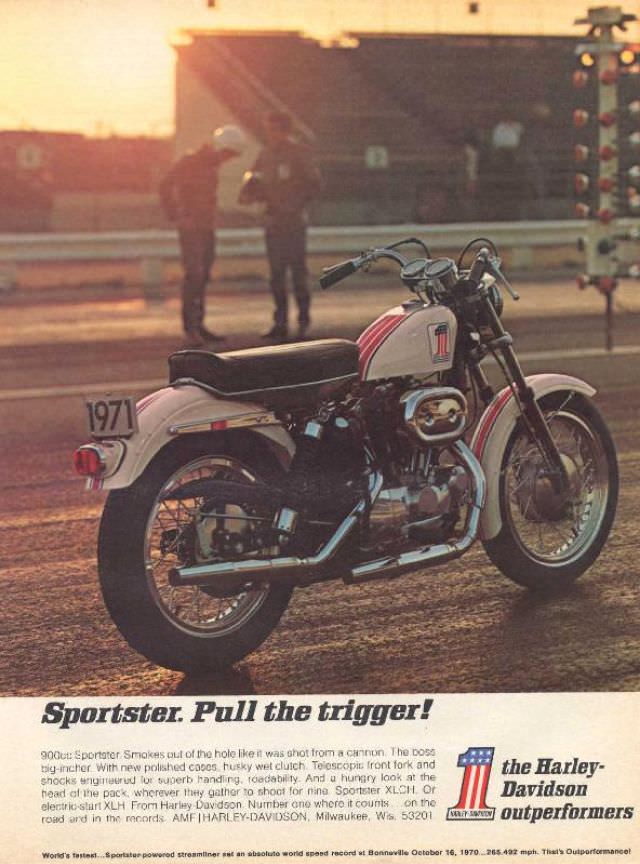
During this era, the company introduced its most famous graphic symbol: the “Number One” logo. Designed by Willie G. Davidson, the logo featured a numeral one with the pattern of the American flag. Magazine ads used this icon to assert dominance in the market. It appeared on jackets, gas tanks, and in the corners of print layouts. The symbol served a dual purpose. It celebrated the company’s racing victories on dirt tracks and reinforced the patriotic theme of the brand.
Read more
Visuals of the Open Road
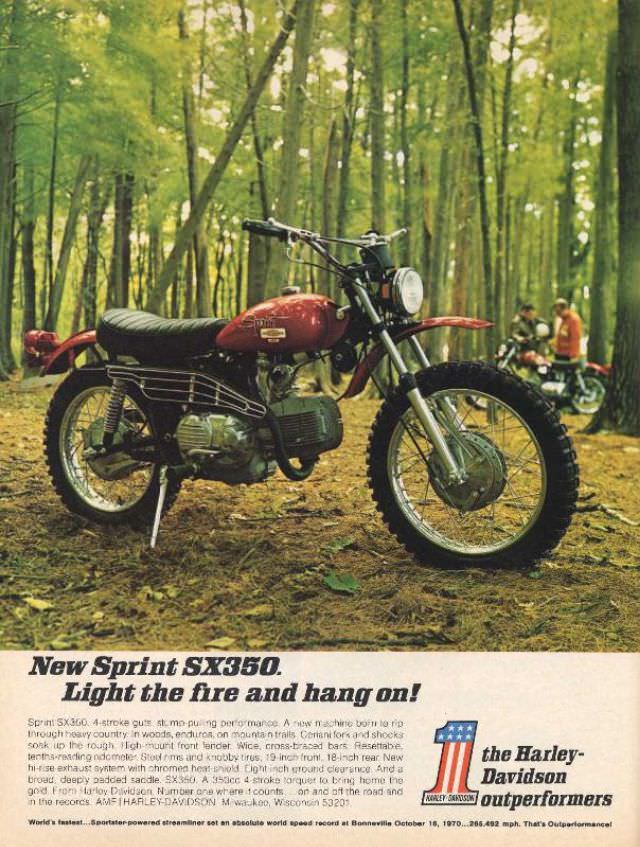
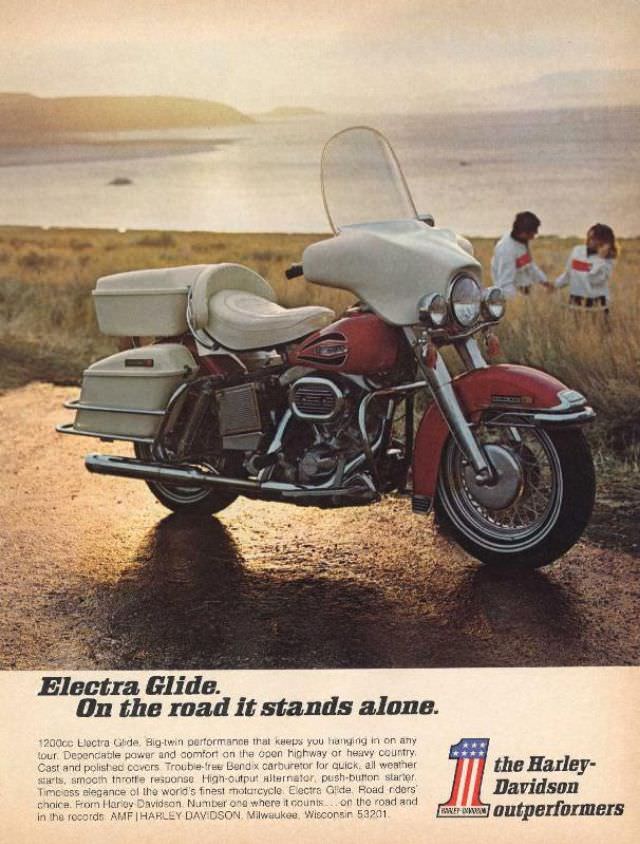
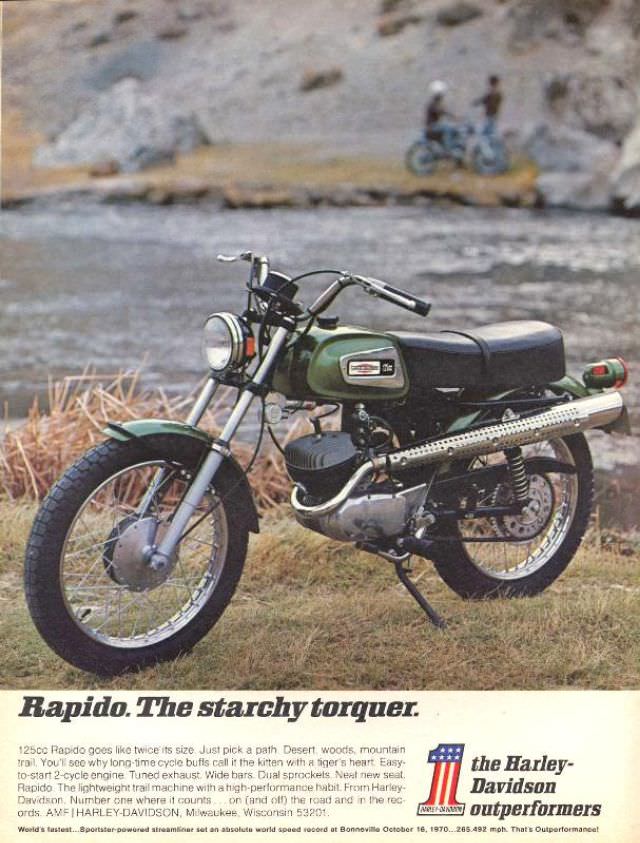
The photography in 1970s advertisements shifted the focus from the machine’s specifications to the riding experience. Photographers shot models riding through vast, empty landscapes. Popular settings included the deserts of the Southwest, dense forests, and endless highways stretching to the horizon. The rider was usually alone, emphasizing solitude and self-reliance. He wore denim, leather boots, and open-faced helmets, projecting a rugged, blue-collar image. These visuals sold a lifestyle of exploration rather than just horsepower and torque.
The Super Glide and Factory Customs
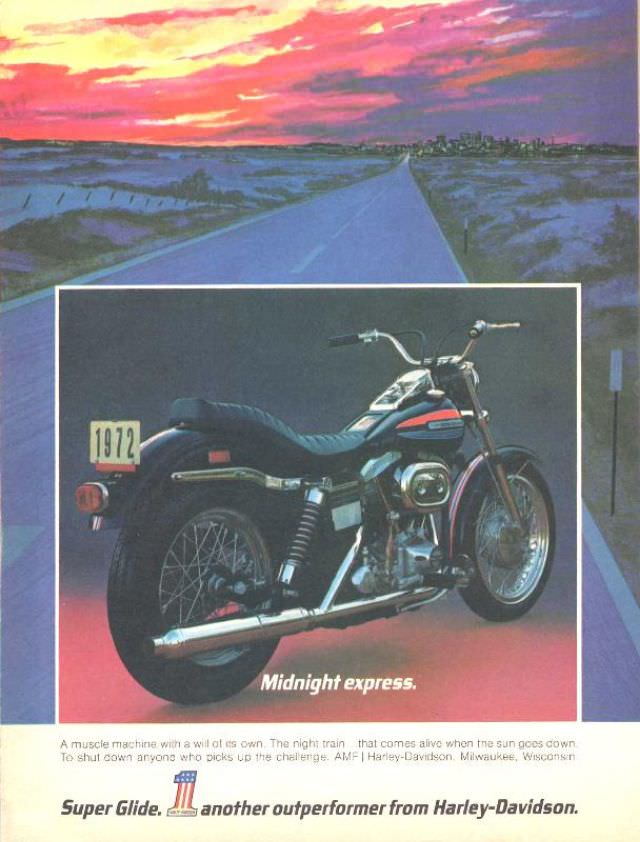
The 1970s saw the birth of the “factory custom,” and magazine ads heavily promoted this new style. The 1971 FX Super Glide was a major focal point. The ads highlighted the bike’s unique design, which combined the heavy frame of a big twin engine with the lighter front end of a sport bike. The marketing copy explained that riders no longer needed to chop or modify their bikes in a garage to look cool. The Super Glide offered that personalized, custom look straight from the dealership floor.