Hey There! Before You Go. 😧
Get the best vintage content straight into your inbox!

Don't worry, we don't spam

From Penny-Farthings to Ten-Speeds: The Wild Story of Chicago’s Great Cycling Craze

By 1896, Chicago’s streets had a new kind of energy. It wasn’t the rumble of a steam engine or the clatter of horse hooves — it was the quiet whir of two wheels. The city was at the center of America’s first great cycling craze, and people called the bicycle the “noiseless steed.” It was everywhere, weaving between carriages and cable cars, reshaping the rhythms of daily life.
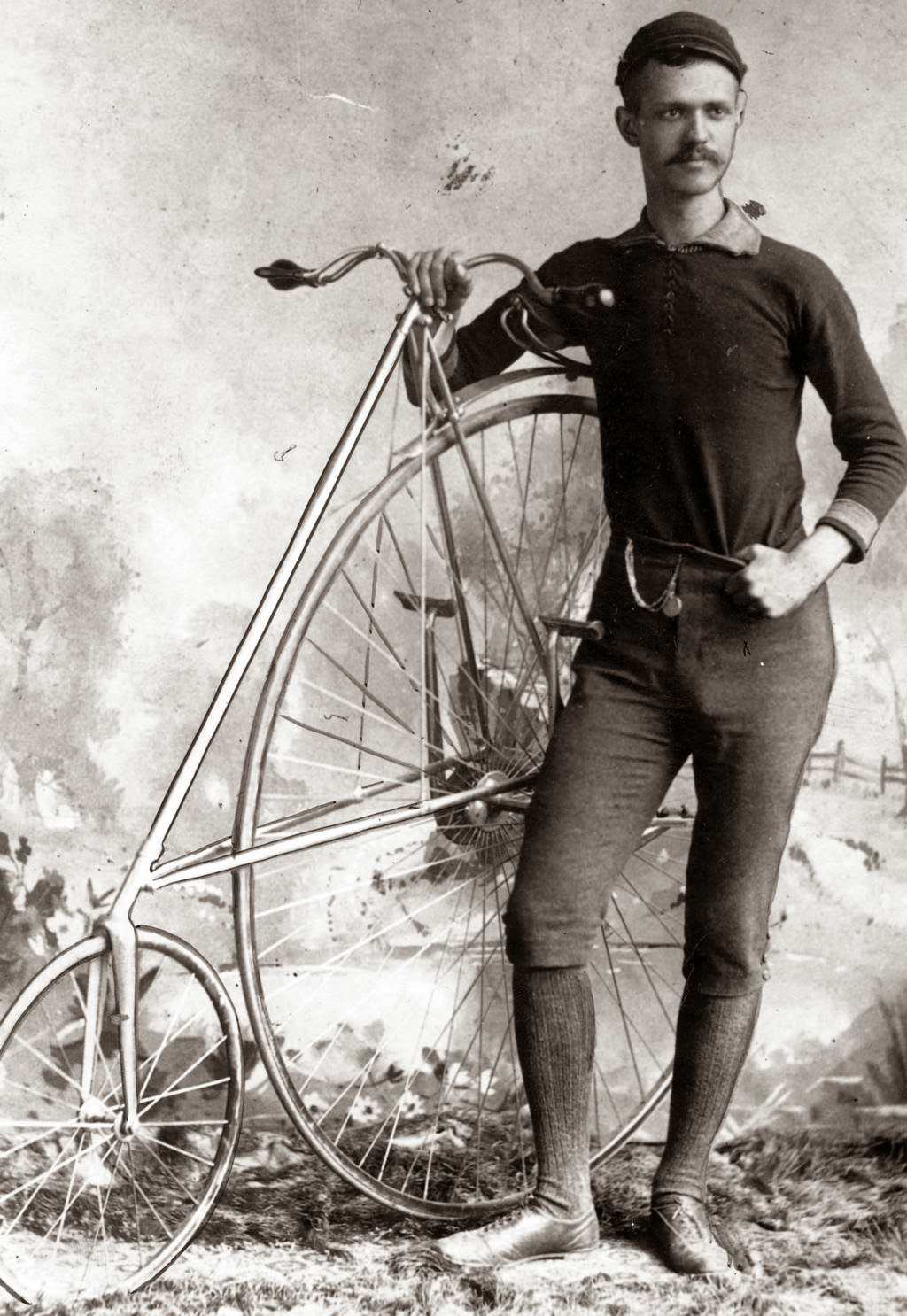
Early bicyclist, 1885.

The craze was fueled by a single invention: the safety bicycle. Unlike the towering penny-farthing with its enormous front wheel, this new design featured two wheels of equal size, a chain-driven rear wheel, and pneumatic air-filled tires. Cycling was no longer a dangerous stunt reserved for daring young men. It was safe, affordable, and open to everyone. Chicago became the manufacturing engine of the American bicycle industry, and Schwinn — founded in the city in 1895 — led the charge.
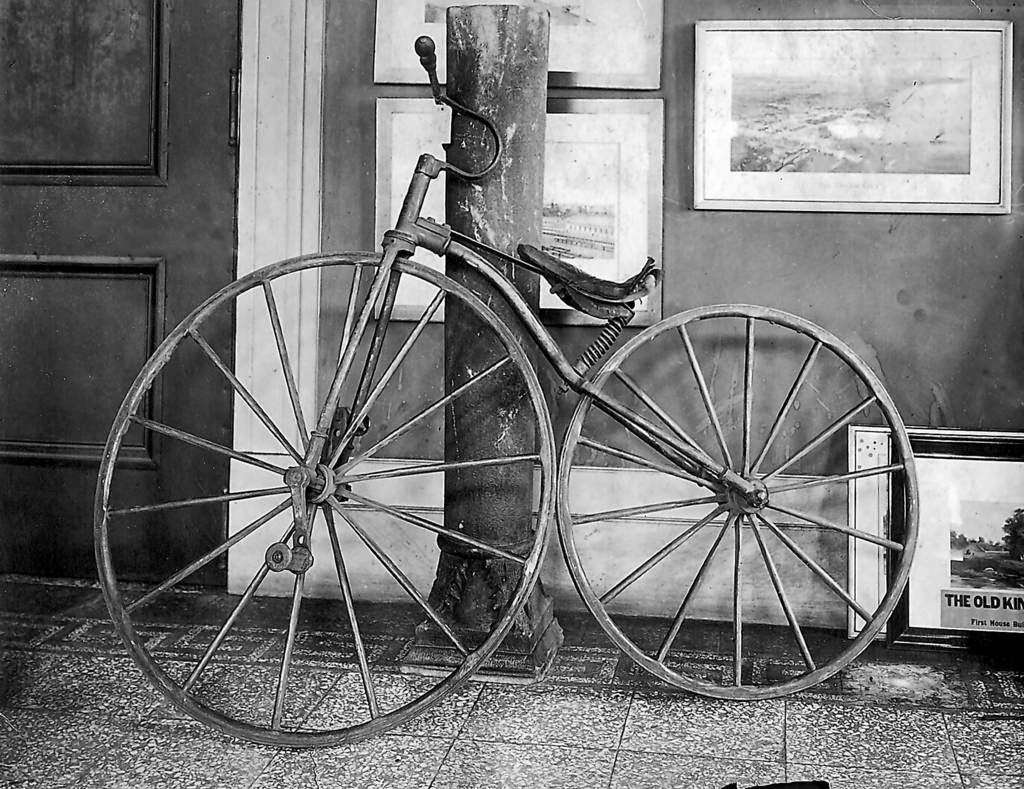
An early bicycle, called a velocipede, 1911.

For women, the bicycle was transformative. It gave them the freedom to travel across the city without a chaperone or a horse. That freedom demanded new clothing. The restrictive corsets and floor-length skirts of the Victorian era were useless on a bicycle. Women adopted shorter skirts and “bloomers” — baggy trousers gathered at the knee — a clothing choice that was considered scandalous at the time.
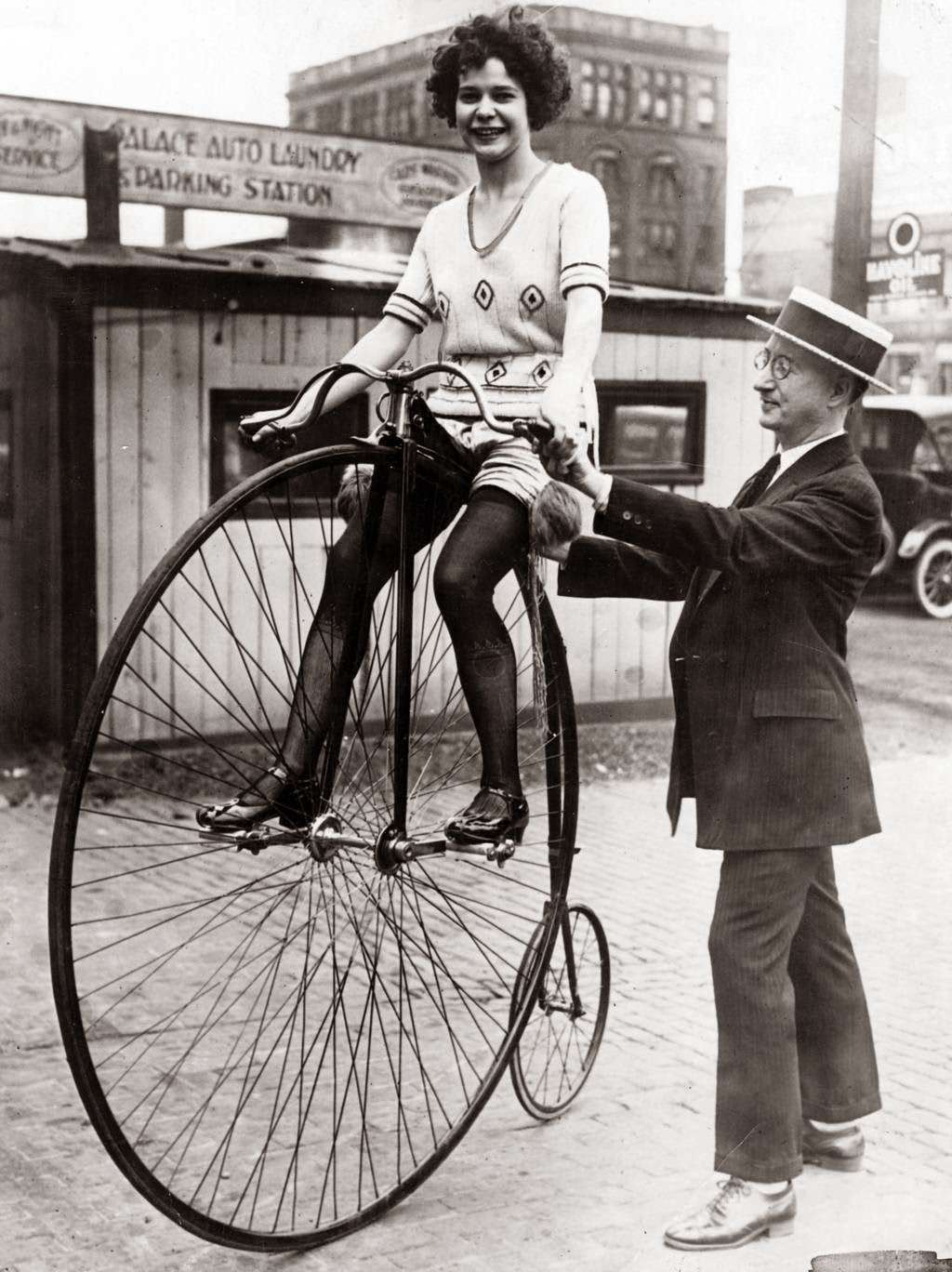
A woman on a Victorian-era bicycle in Chicago, 1922.

One of the most celebrated cyclists of the era was Tillie Anderson, a Swedish-born racer who became known as “Tillie the Terrible Swede.” She was considered the best female bicyclist in the country during the late 1890s, a title she earned through speed, endurance, and fierce competition.
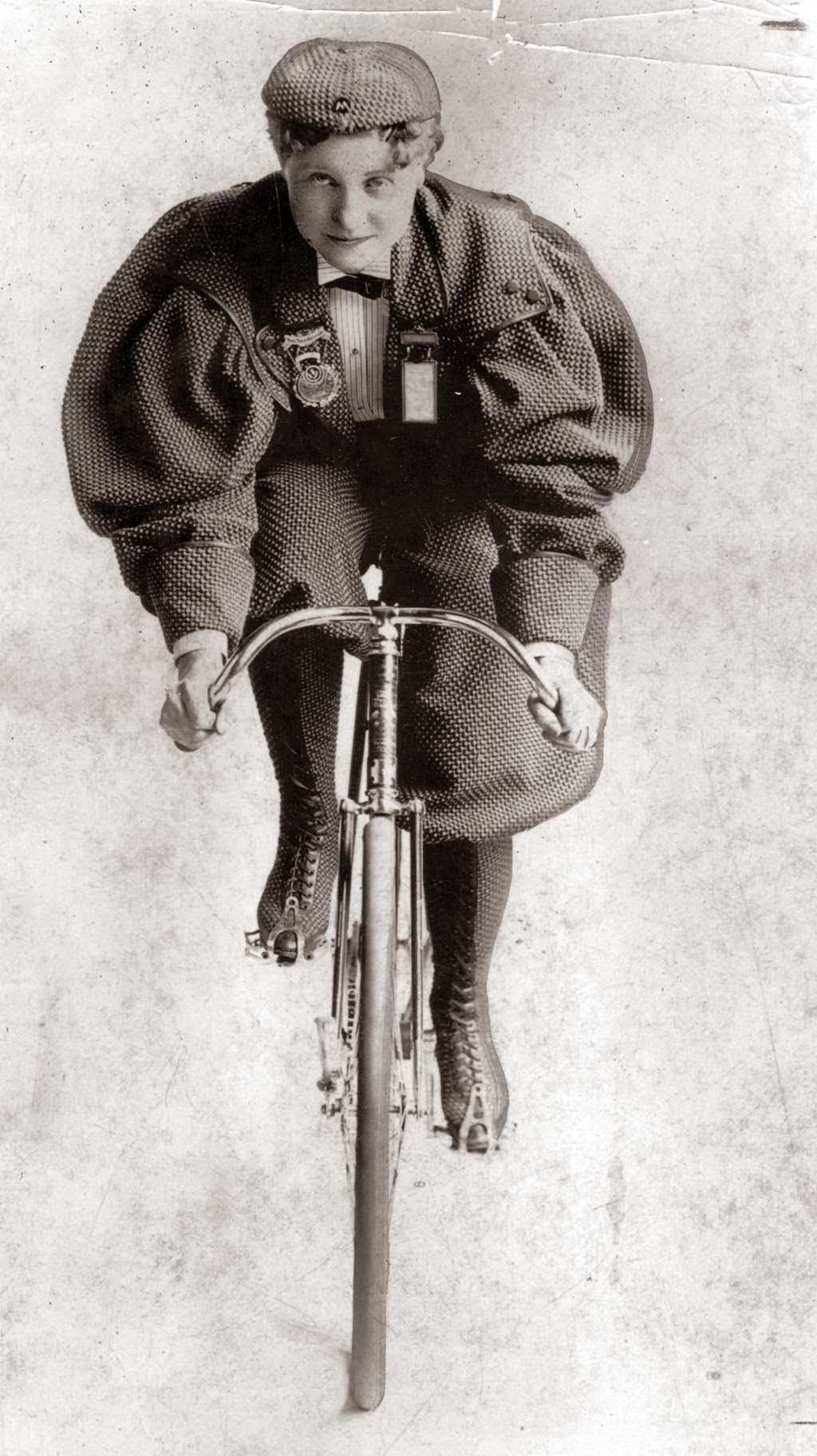
Tillie Anderson Shoberg, known as "Tillie the Terrible Swede" and the best female bicyclist in the late 1800s, wears a costume worn by women cyclists in the early 1890s, 1935.
Tillie Anderson Shoberg, known as “Tillie the Terrible Swede” and the best female bicyclist in the late 1800s, wears a costume worn by women cyclists in the early 1890s, 1935.

Cycling clubs multiplied across the city. The Lake View Cycling Club was one of many that organized group rides along grand boulevards like Drexel and Michigan Avenue. These clubs also held century rides — 100-mile journeys — and sponsored races that drew massive crowds. They were the social hubs of their day, giving young people a rare space to meet and socialize outside of family supervision.
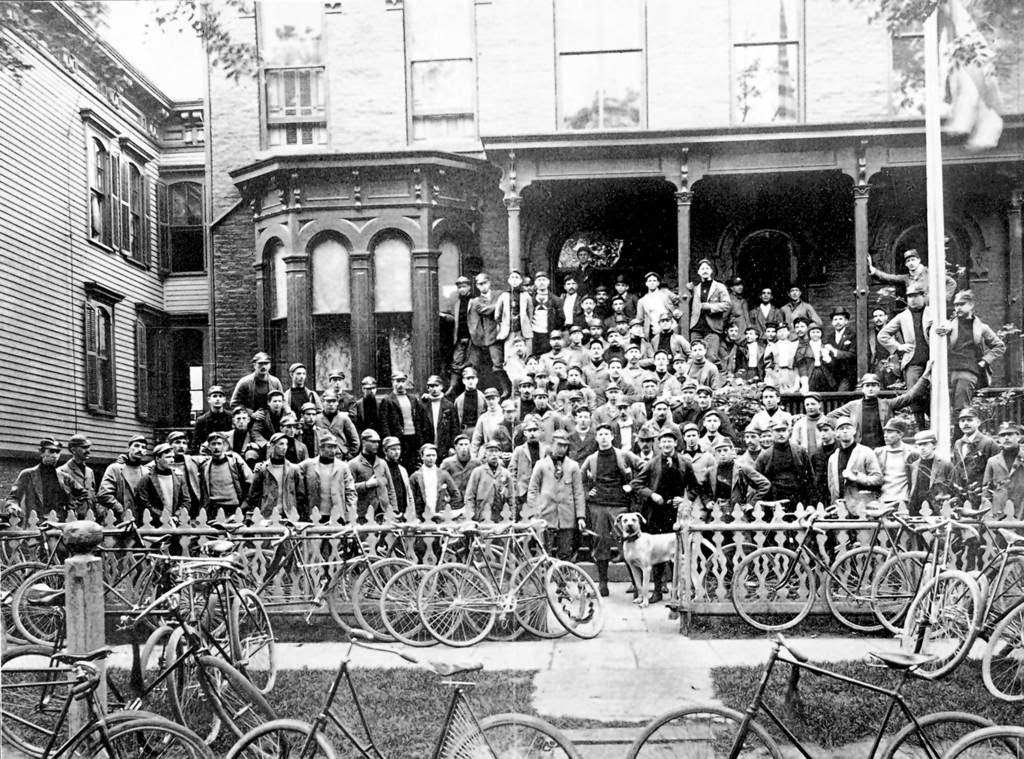
The Lake View Cycling Club in front of its clubhouse on Orchard Street in the 1890s.

Street racing was one of the most popular spectacles of the era. Crowds gathered across Chicago’s neighborhoods to watch riders compete at high speed, often on packed dirt or cobblestone.
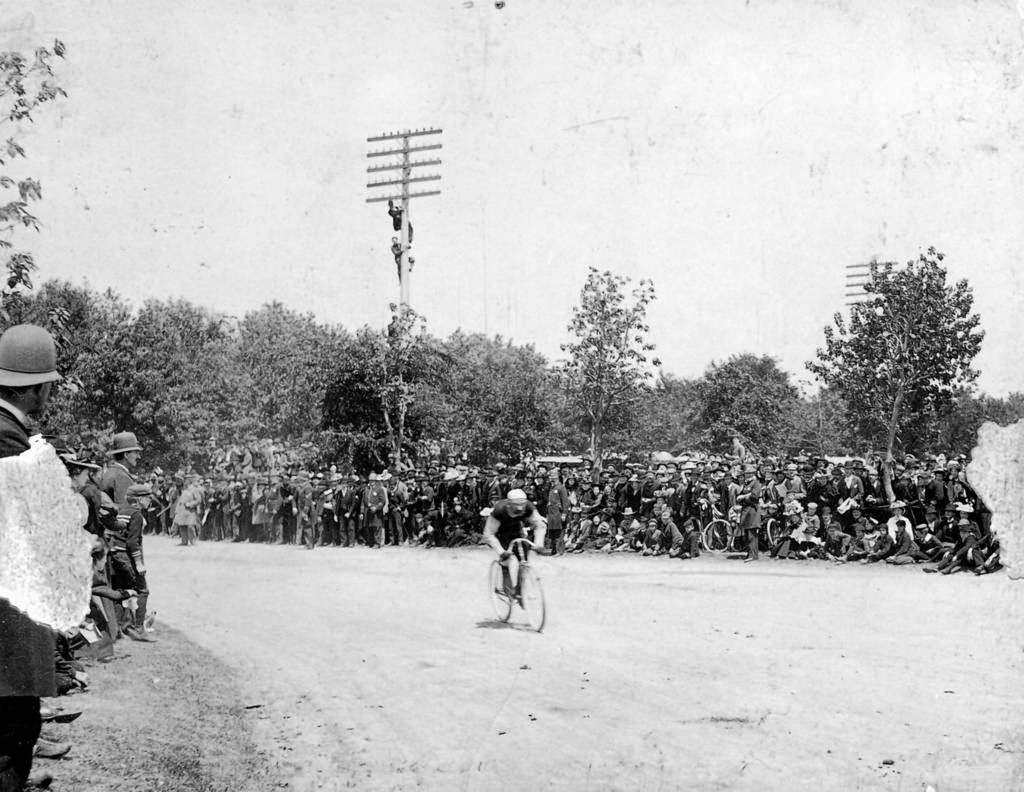
People gather to watch a bicycle race in the community of Englewood in Chicago, 1897.

The boom also created political pressure. Thousands of cyclists jostling for space with horses, streetcars, and pedestrians made Chicago’s streets chaotic. Cycling groups, particularly the League of American Wheelmen, pushed hard for better roads. Their “Good Roads” movement demanded paved streets — infrastructure improvements that the automobile would later inherit.
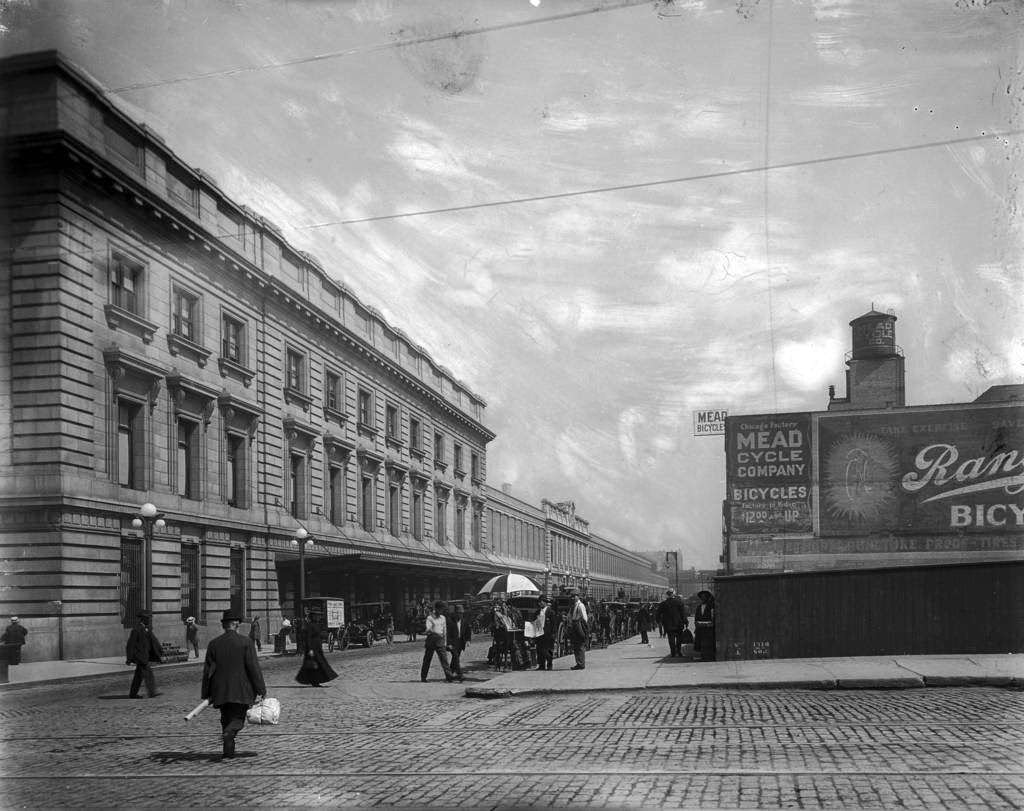
The Chicago & North Western railroad station with the Mead Cycle Company across the street in Chicago, 1909-1920.

As the automobile became affordable in the early 1900s, the bicycle’s status shifted. It was no longer a symbol of cutting-edge freedom. Instead, it became a practical tool — the vehicle of choice for children exploring their neighborhoods and for factory workers commuting to long shifts in Chicago’s industrial districts. Schwinn adapted, introducing the heavy-framed, balloon-tired Aerocycle in the 1930s, a rugged cruiser built to last years of hard daily use.
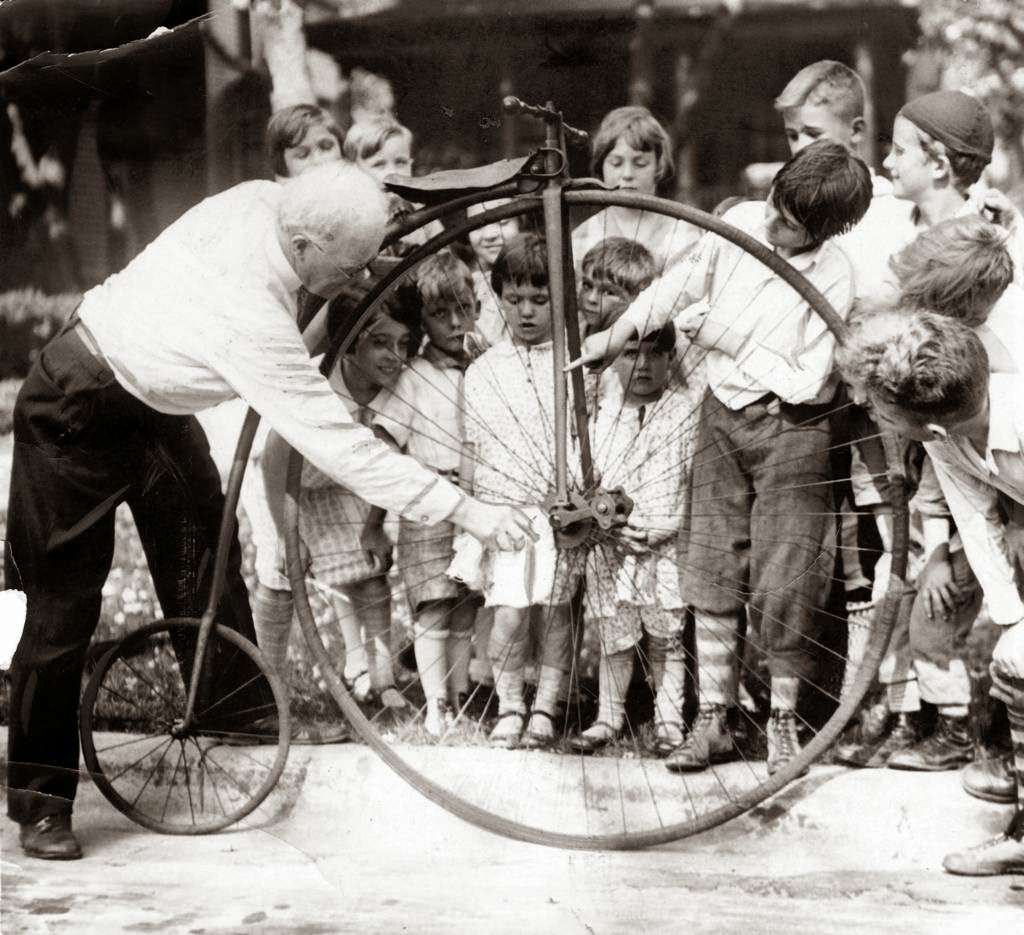
Hubert K. Oram, of the Austin neighborhood, with his old-fashioned bike that has pedals mounted on the huge front wheel, 1928.

Even as the bicycle settled into a more everyday role, competitive cycling never went away. Six-day races — grueling, round-the-clock team endurance events — packed venues across Chicago and drew international competitors.
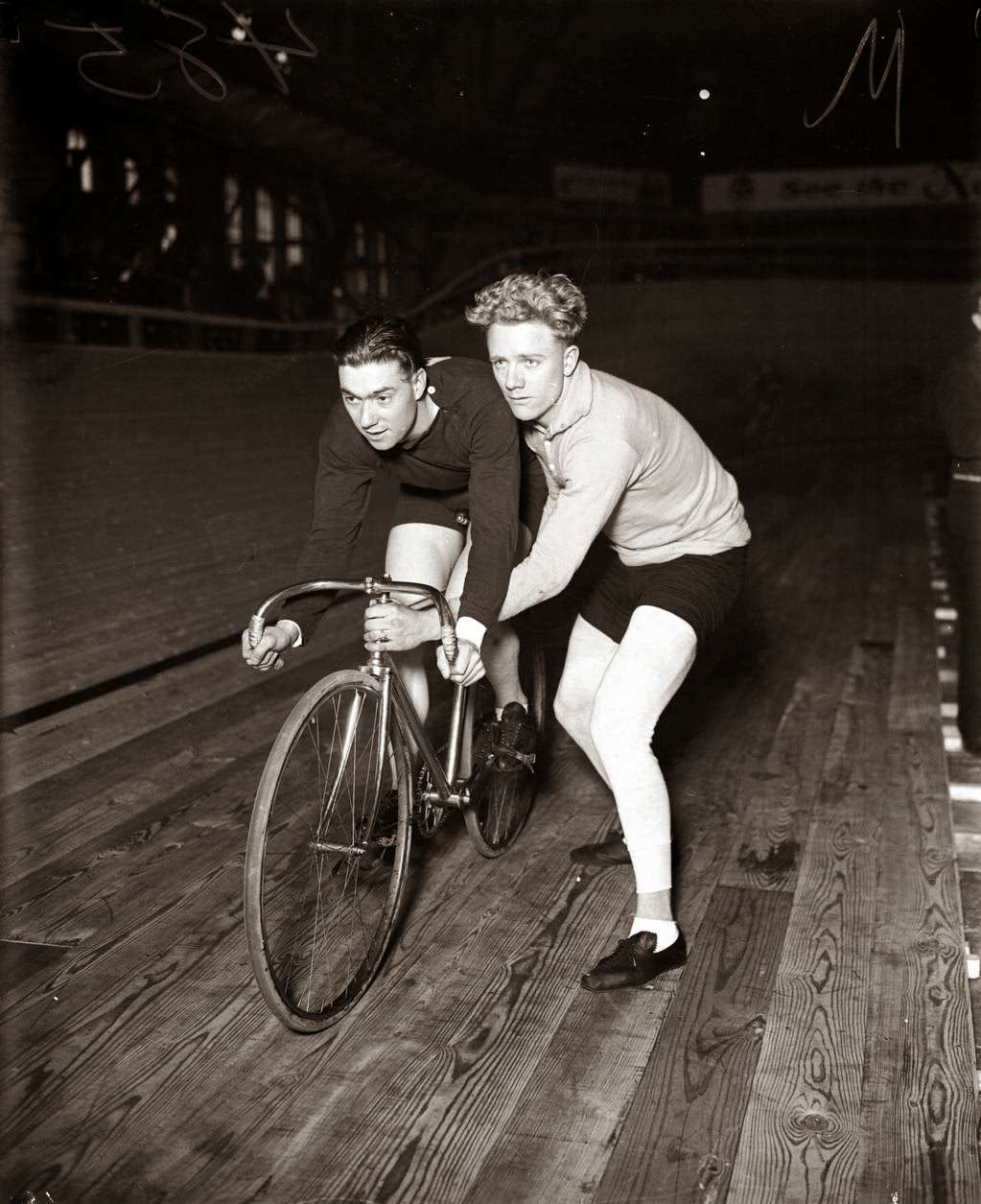
American teammates Freddie Spencer and Bobby Walthour Jr. competed in the six-day bicycle race at the Coliseum in Chicago, 1928.
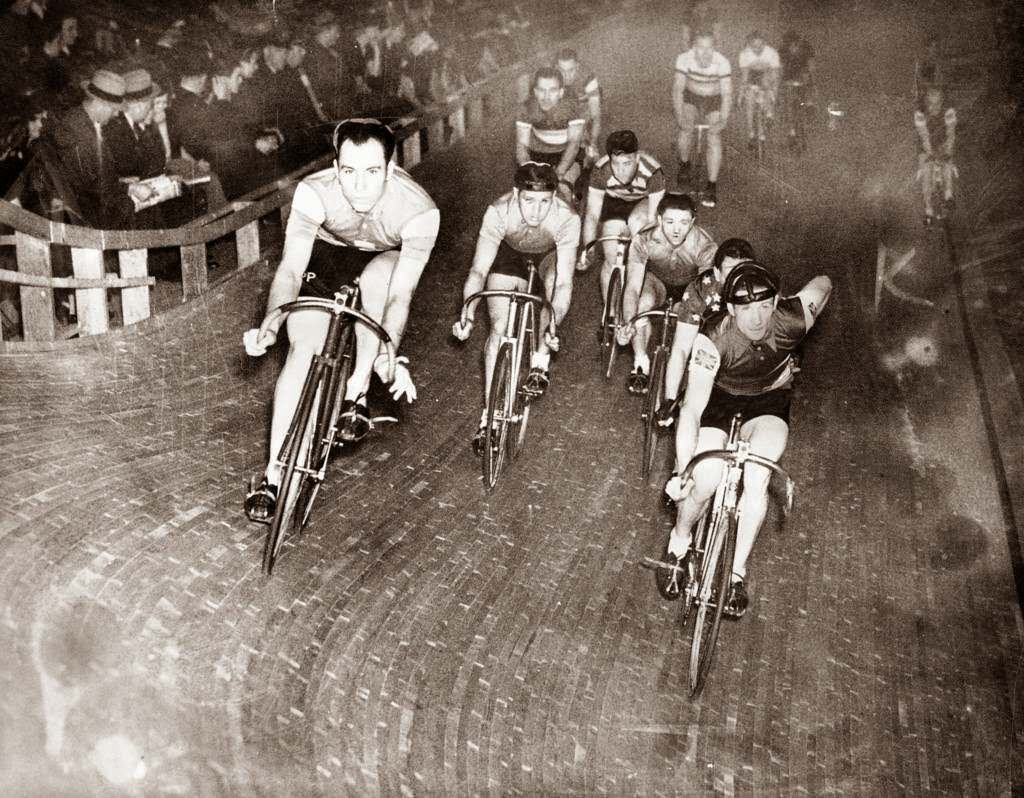
Heinz Vopel, of Dortmund, Germany, and Gerard Debaets, of Belgium, ride in front of the field at the start of a six-day race at the Chicago Stadium, 1939.

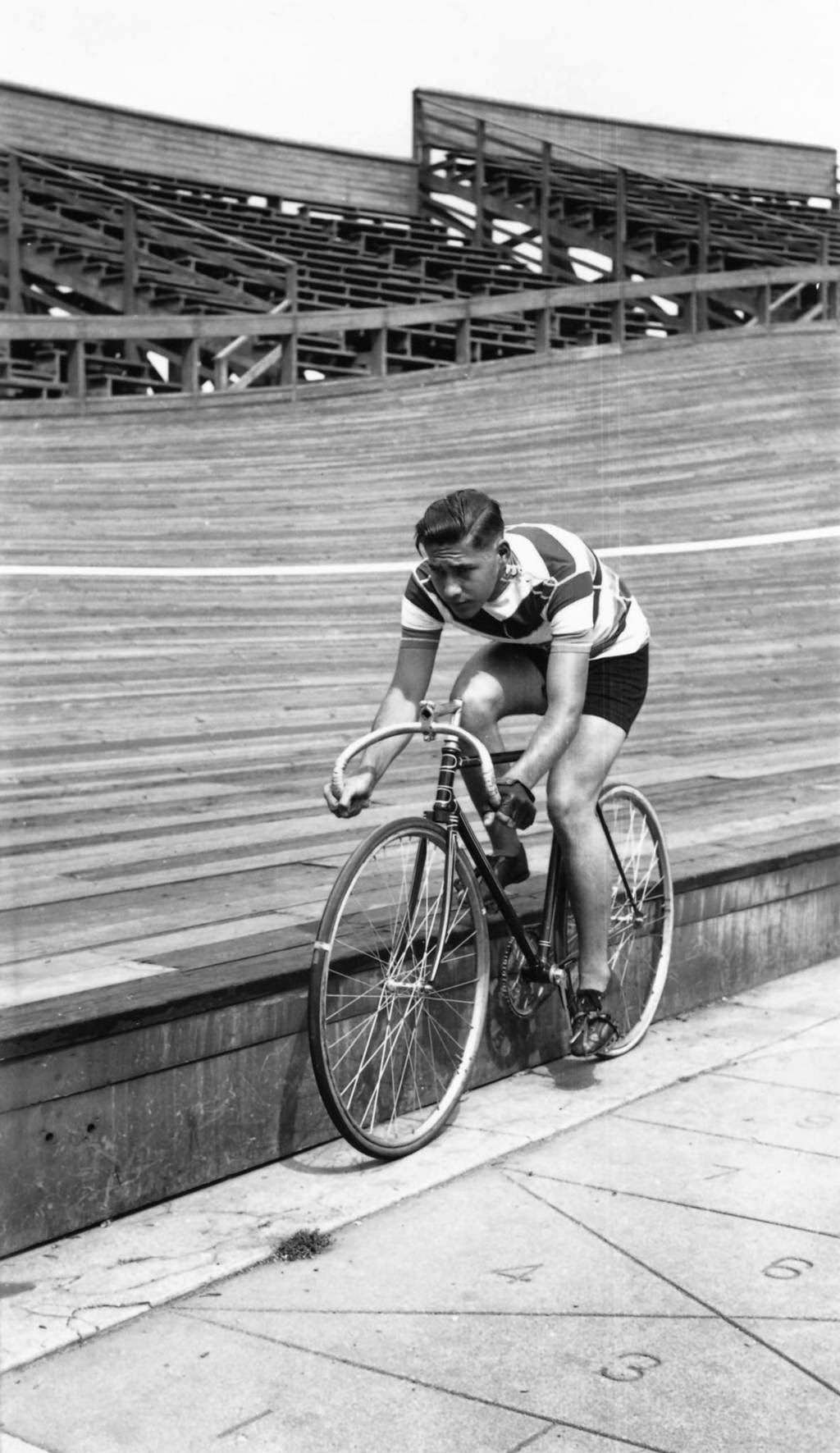
Amateur racers also kept competition alive at the local level. Humboldt Park’s bicycle bowl became a proving ground for riders like Bill Jacoby and Ed Carfagnini, who raced together as a team throughout the 1940s.
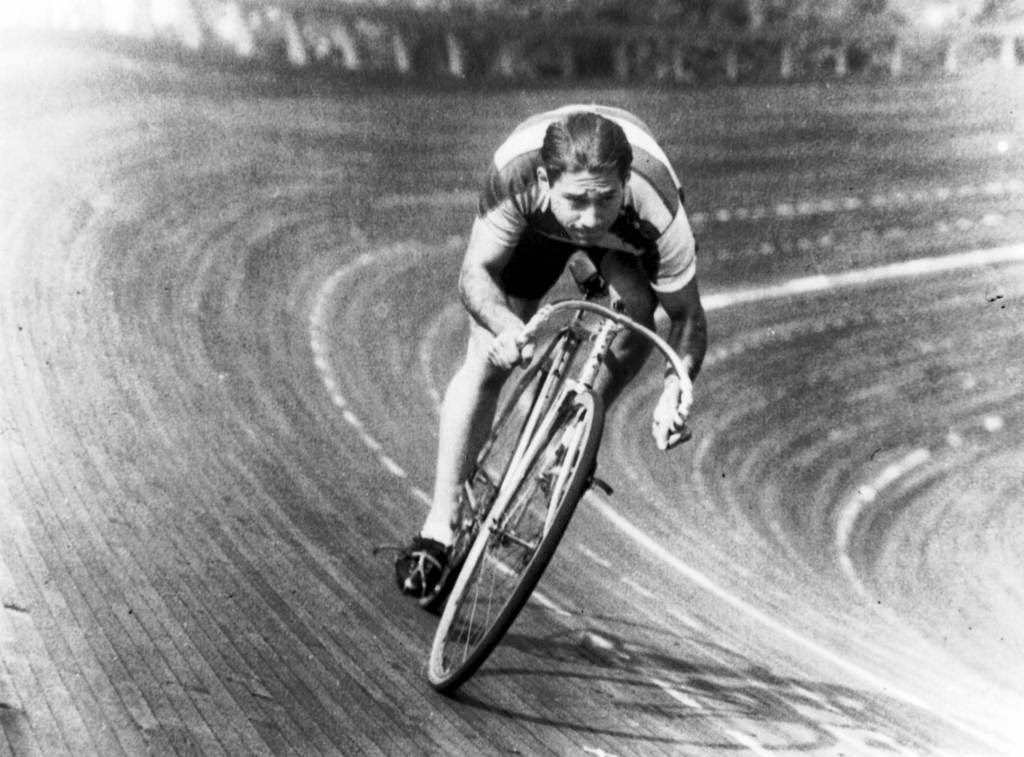
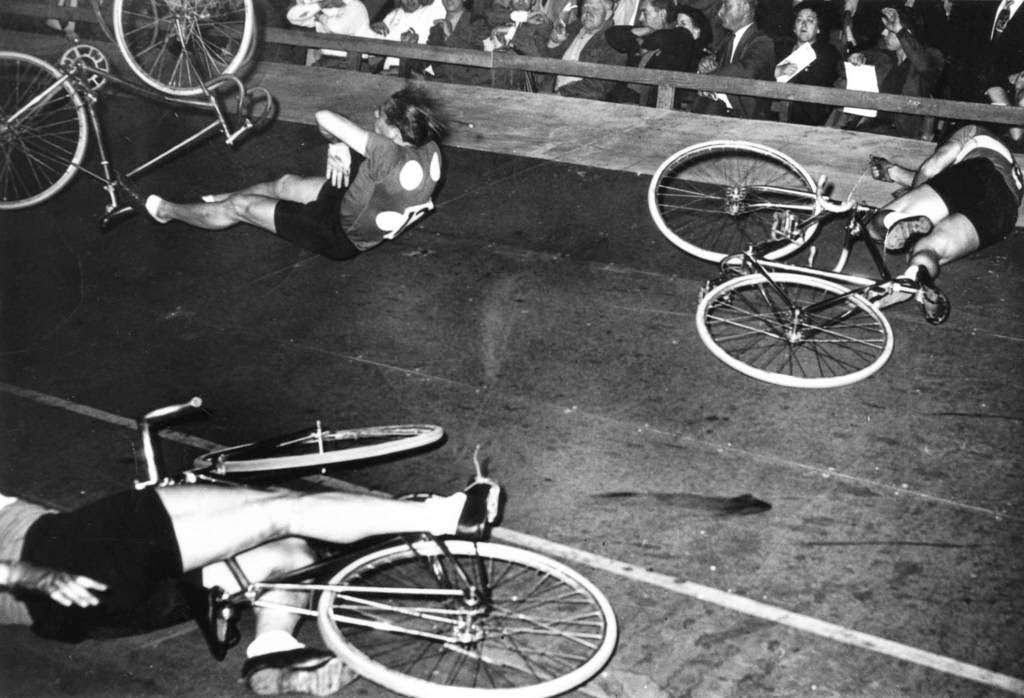
Bike racer Bill Jacoby, an amateur racer in the 1940s and a regular six-day racer in the 1950s, and teammate Ed Carfagnini won many races at the Humboldt Park bicycle bowl during the 1940s.
Bike racer Bill Jacoby during a race in the 1940s, where bike racing could be a dangerous sport with crashes and injuries.

Post-war six-day races continued to draw competitors and crowds alike. Teams lined up at the starting line ready to push through days of continuous racing at venues like Chicago’s Coliseum.
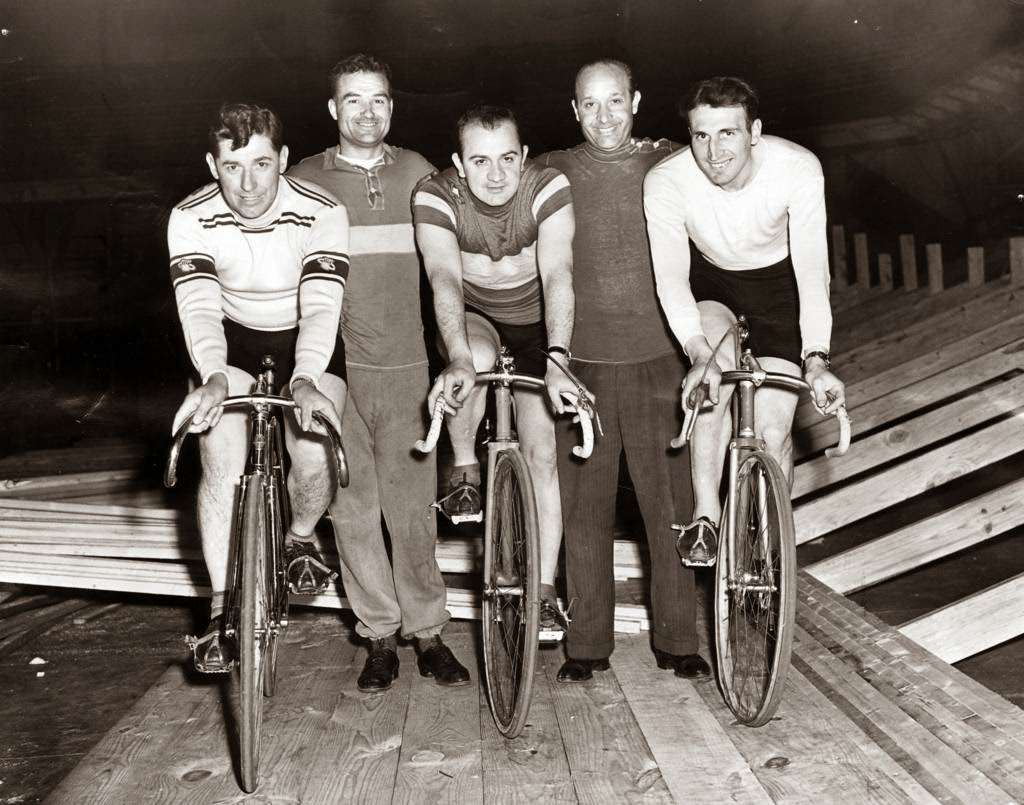
Cocky O'Brien, Charley Logan, Val Melchiori, Tom Saetta, and Cesare Moretti eager to start Chicago's first post-war six-day bike marathon of the year at the Coliseum in Chicago, 1946.
Cocky O’Brien, Charley Logan, Val Melchiori, Tom Saetta, and Cesare Moretti eager to start Chicago’s first post-war six-day bike marathon of the year at the Coliseum in Chicago, 1946.
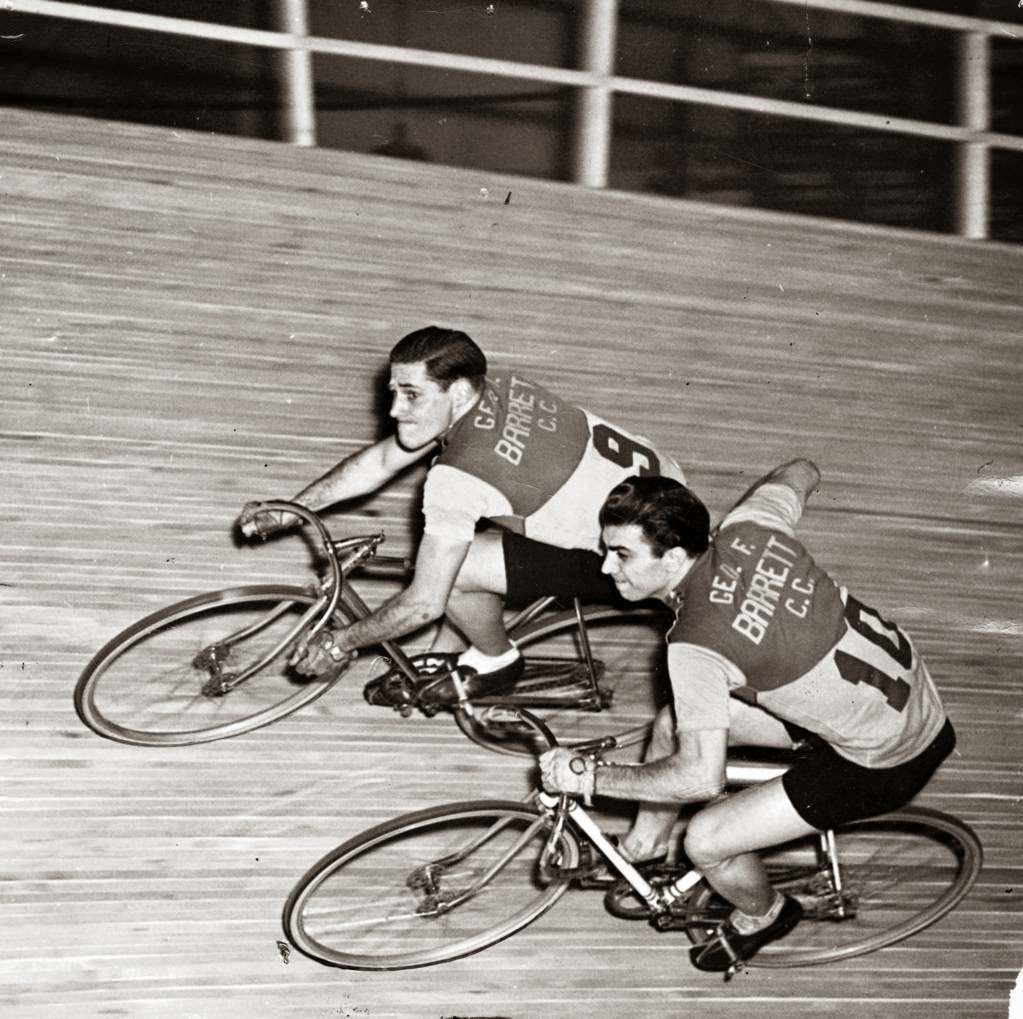
Bill Jacoby and Ed Carfagnini, a team of Chicago's youngsters, maintain their equilibrium during a six-day bicycle race at the Coliseum; Carfagnini is giving Jacoby a push as the latter takes over for the team, 1942.
Bill Jacoby and Ed Carfagnini, a team of Chicago’s youngsters, maintain their equilibrium during a six-day bicycle race at the Coliseum; Carfagnini is giving Jacoby a push as the latter takes over for the team, 1942.

Park races like the senior men’s 5-mile at Humboldt Park drew competitors from across the country, making Chicago a destination for serious amateur cyclists well into the mid-1940s.
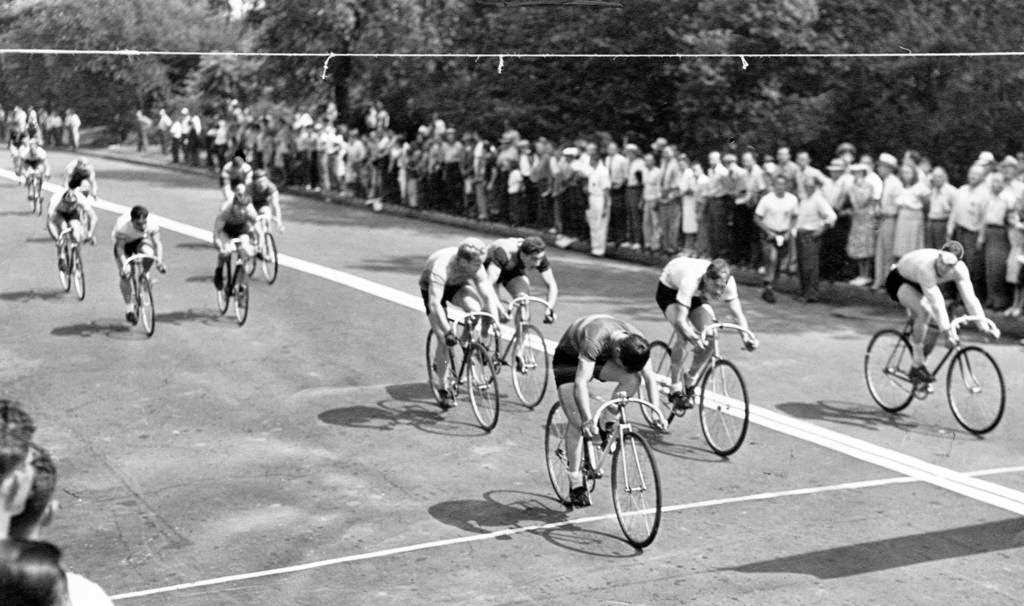
Ted Smith, of Buffalo, N.Y., Tom Montemage, also of Buffalo, and Richard Olda, of St. Louis, finished first, second, and third respectively in the senior men's 5 mile bicycle race at Humboldt Park, 1945.
Ted Smith, of Buffalo, N.Y., Tom Montemage, also of Buffalo, and Richard Olda, of St. Louis, finished first, second, and third respectively in the senior men’s 5 mile bicycle race at Humboldt Park, 1945.
Bike racer Bill Jacoby, an amateur racer in the 1940s and a regular six-day racer in the 1950s, and teammate Ed Carfagnini won many races at the Humboldt Park bicycle bowl during the 1940s.

The six-day race format proved durable. By 1957, the event had moved to the International Amphitheater, still drawing fans who filled the stands to watch teams grind through the clock.
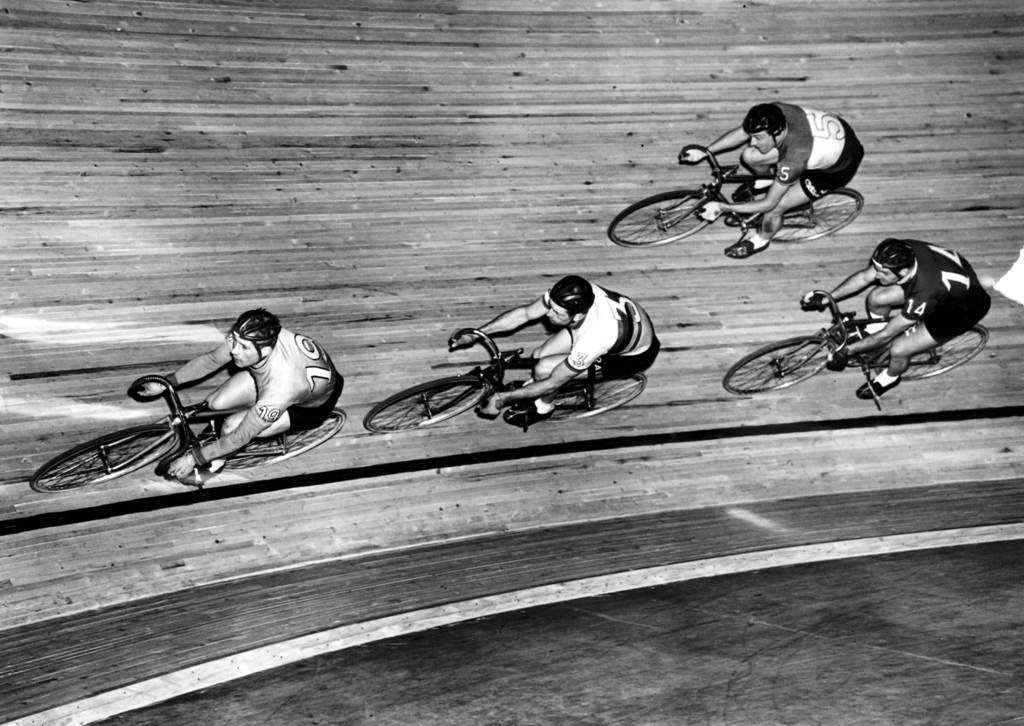
The six-day bike race was back in Chicago at the International Amphitheater, 1957.

Outside of racing, the bicycle remained a fixture in everyday Chicago life. Endurance riders attracted attention and fans on city streets throughout the 1930s, with crowds turning out to watch men push their machines to the limit.
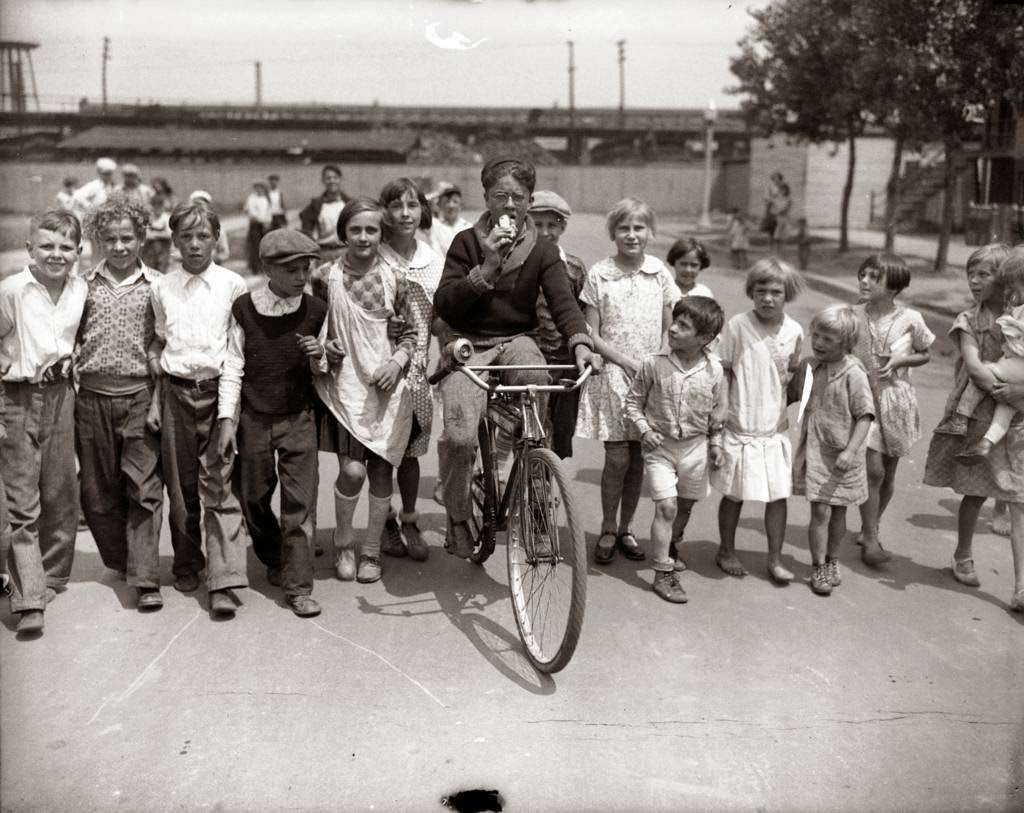
Endurance bicyclist Victor Preisinger is pedaling until his bike wears out, while eating an ice cream cone from a fan, 1930.
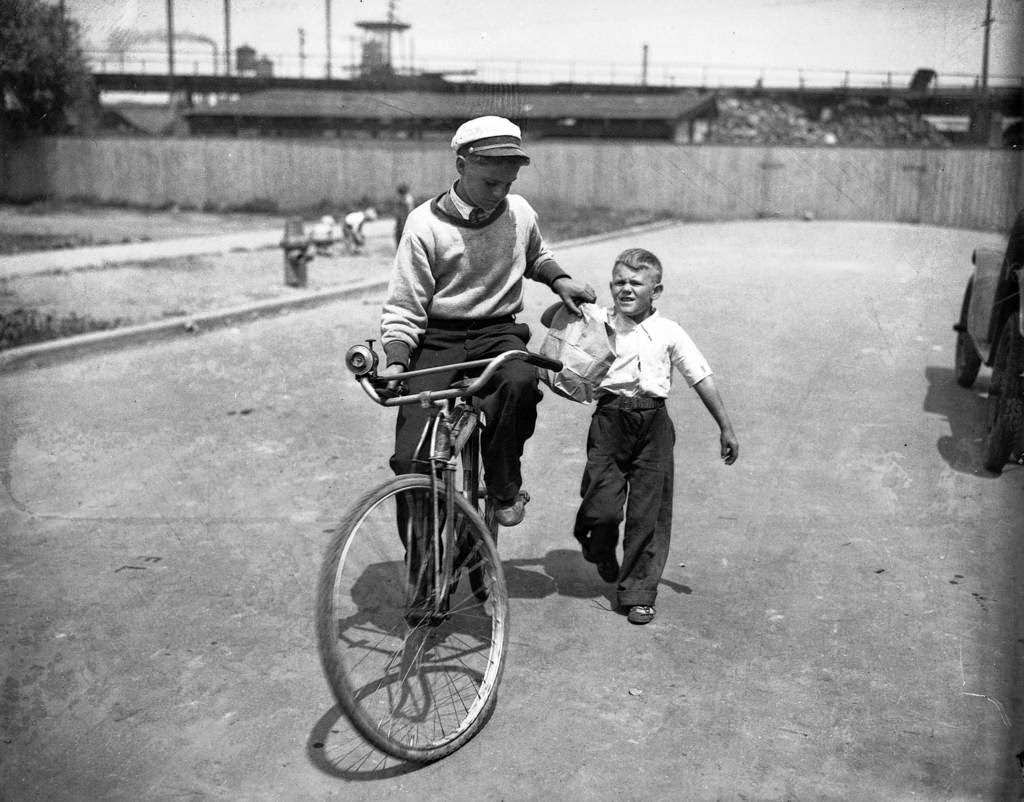
Edward Schmidt hands endurance bike rider George Hoffman a paper bag in Chicago, 1930.
Allen Sebald is driving Hendrickson in Chicago, 1930.

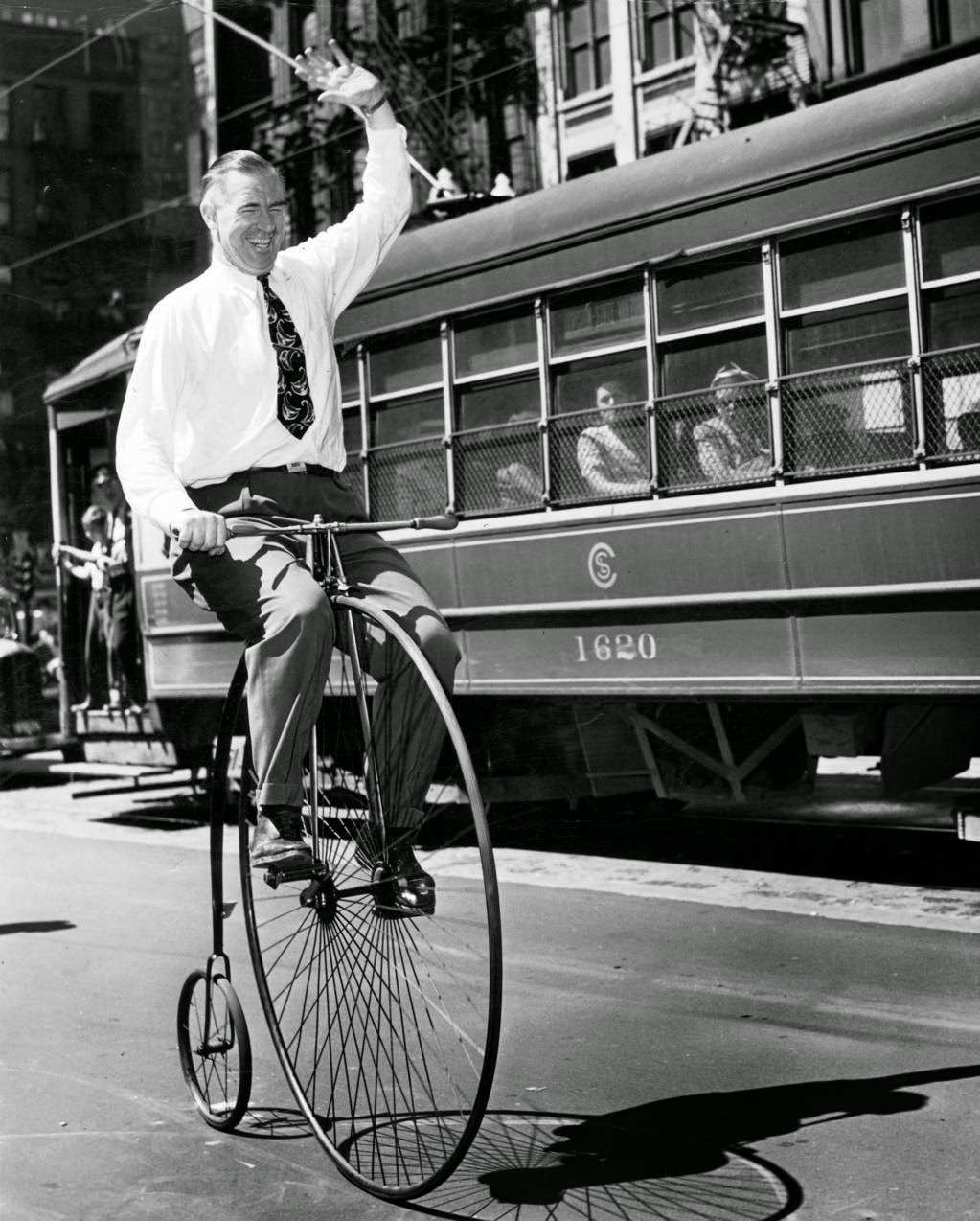
The bicycle also kept showing up in unexpected places. Old-fashioned penny-farthings and Victorian-era bikes were regularly wheeled out for parades, political stunts, and civic events, drawing curious crowds who were already a generation removed from the original craze.
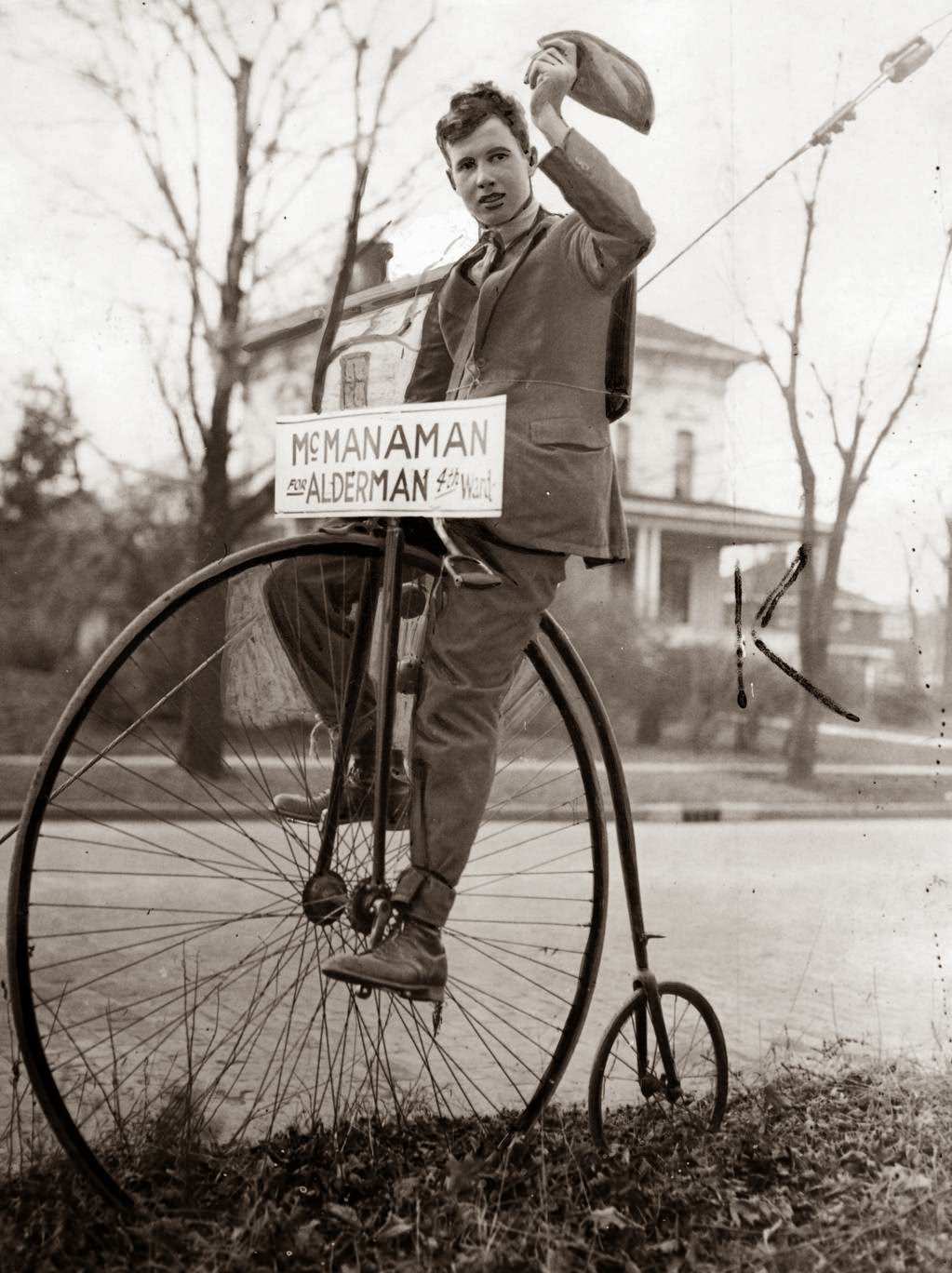
Joseph Fuller, of Waukegan, rides a mid-Victorian bicycle to help get votes for Frank McManaman, candidate for alderman from the Fourth Ward, 1931.
A man rides a Victorian-era bicycle in Chicago, 1947.
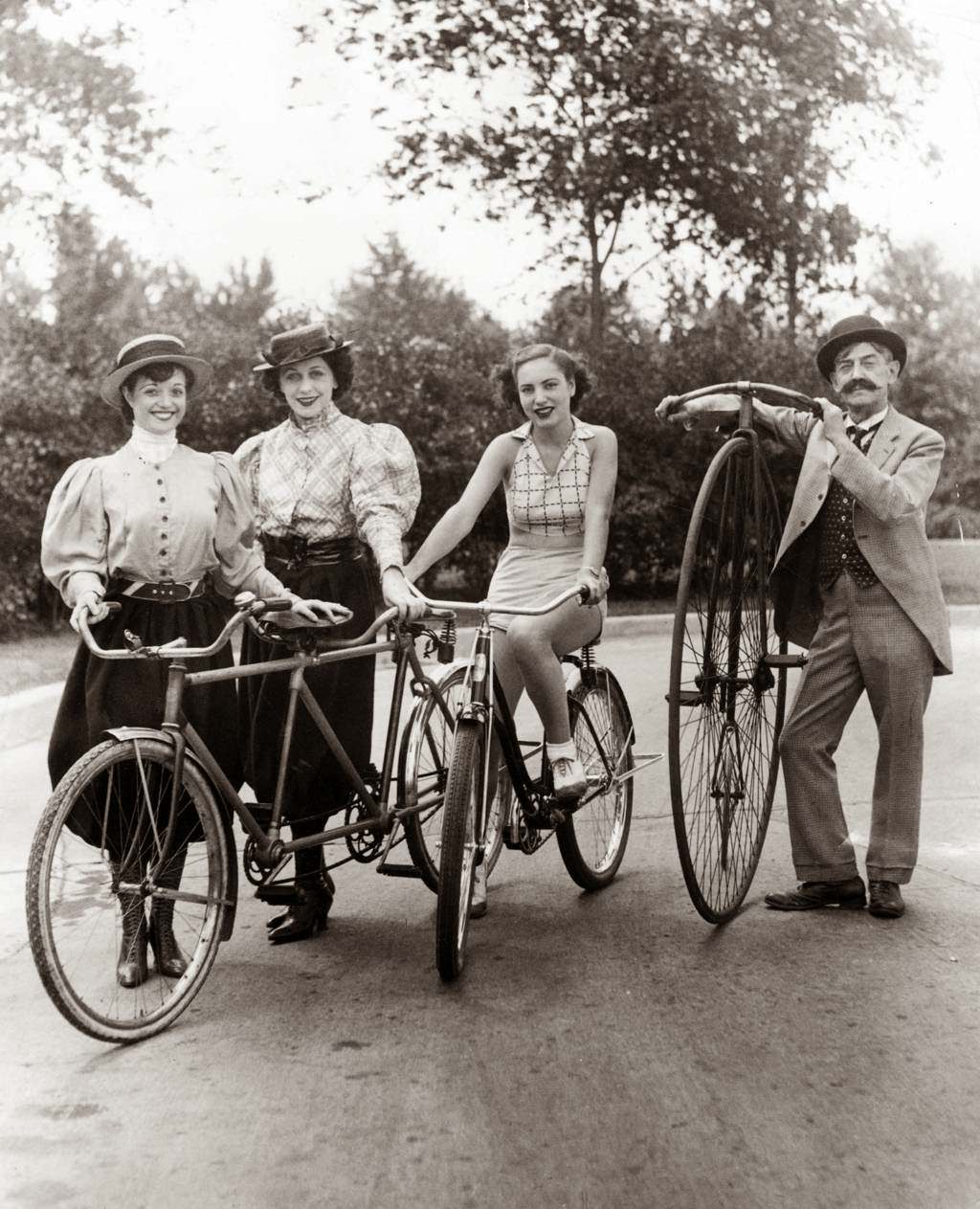
Fannie Ellen, Lillian Dushell, Anita Conier, and Guy Hickman with old-fashioned bikes in Lincoln Park, 1936.

In 1934, Chicago hosted a massive Bicycle Day celebration at the World’s Fair — a parade of more than 6,000 cyclists rolling through the fairgrounds. It was a reminder that the city’s connection to the bicycle ran deep, even decades after the first craze had faded.
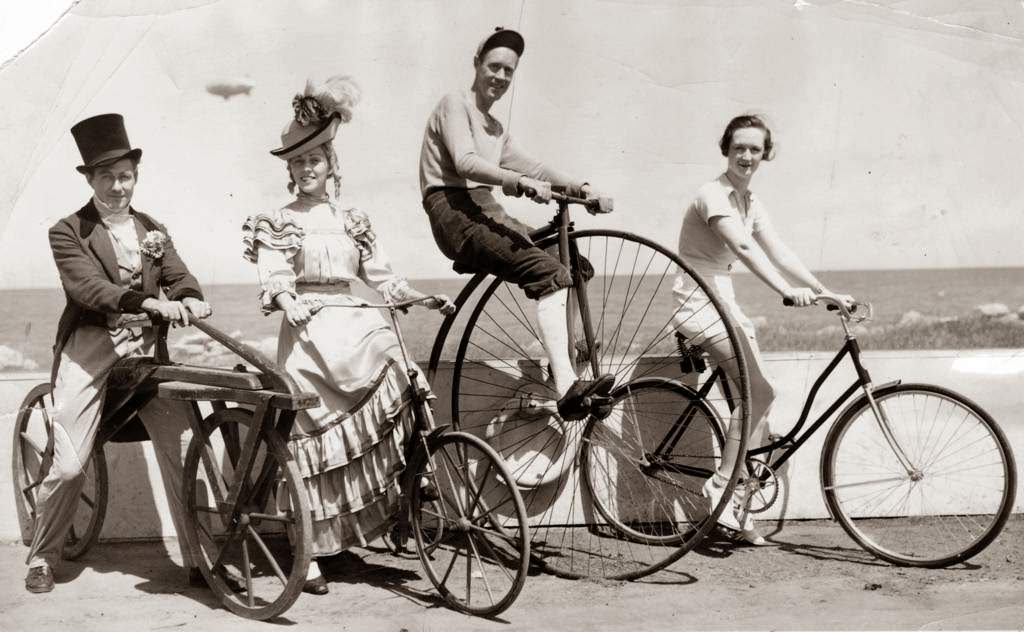
These wheels and many others took part in a huge parade of more than 6,000 cyclists celebrating Bicycle Day at the Chicago World's Fair; pictured left to right are Robert Van Deventer, Helen Trudel, Allen Blair from the cast of Wings of A Century, and Louise Lindsay from the Cycle Trades of America exhibit, 1934.
These wheels and many others took part in a huge parade of more than 6,000 cyclists celebrating Bicycle Day at the Chicago World’s Fair; pictured left to right are Robert Van Deventer, Helen Trudel, Allen Blair from the cast of Wings of A Century, and Louise Lindsay from the Cycle Trades of America exhibit, 1934.

Cycling had a playful side too. Performers and entertainers embraced the bicycle as part of their act, blending athleticism with spectacle.
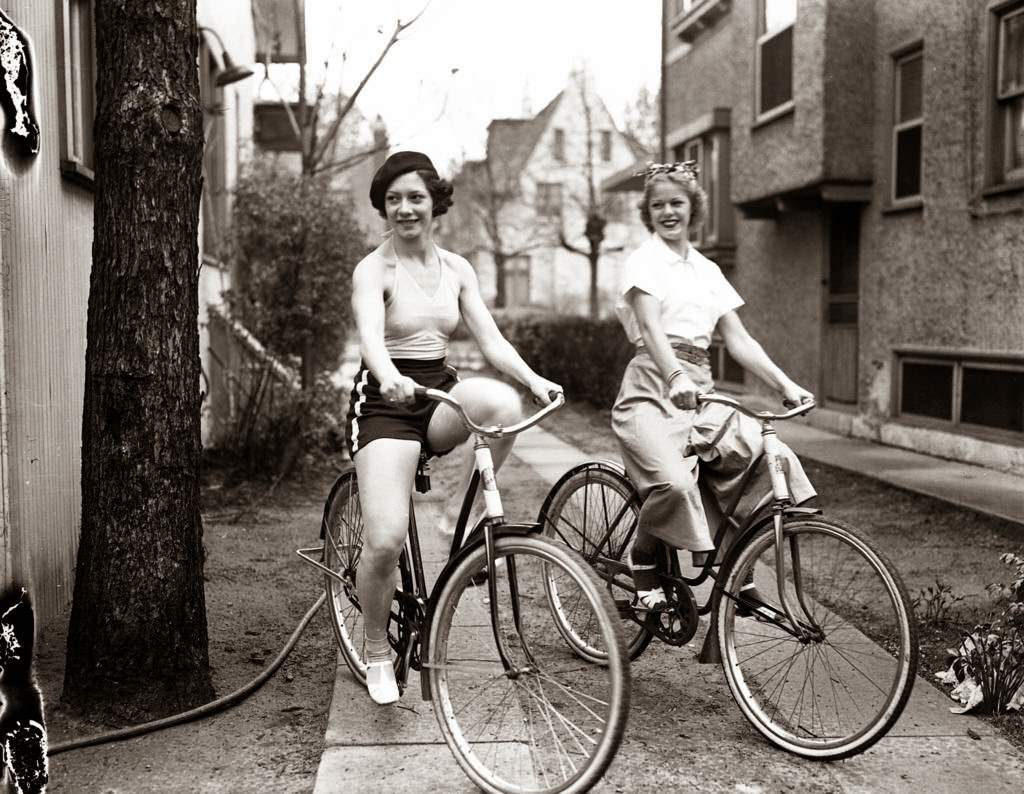
Ray and Geraldine Hudson, dancers known as "The Hudson Wonders" at the Bon-Air Country Club, on their bikes, 1937.
Ray and Geraldine Hudson, dancers known as “The Hudson Wonders” at the Bon-Air Country Club, on their bikes, 1937.
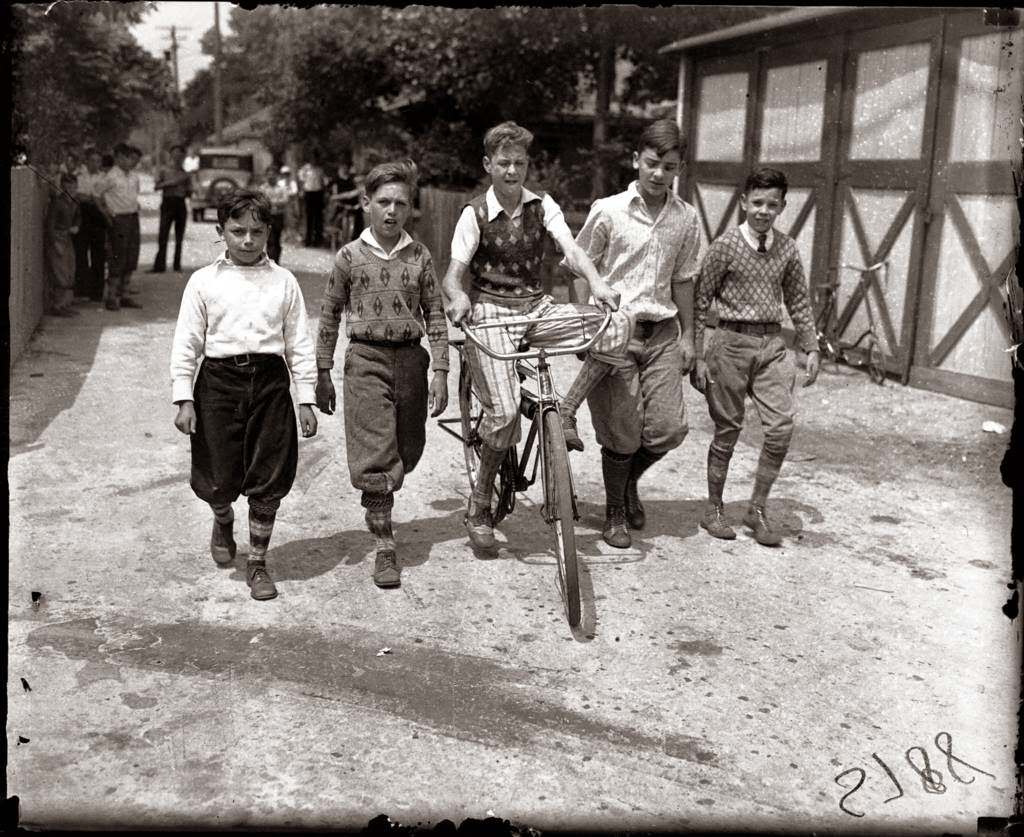
Gilbert Livingston, Bradley Clarkson, Billy Sheahan, Bud Forbes, and Edwin Orr in Chicago, 1930.

The tandem bike offered a different kind of ride — a shared experience that made cycling social in its own way, well suited for parades and town celebrations.
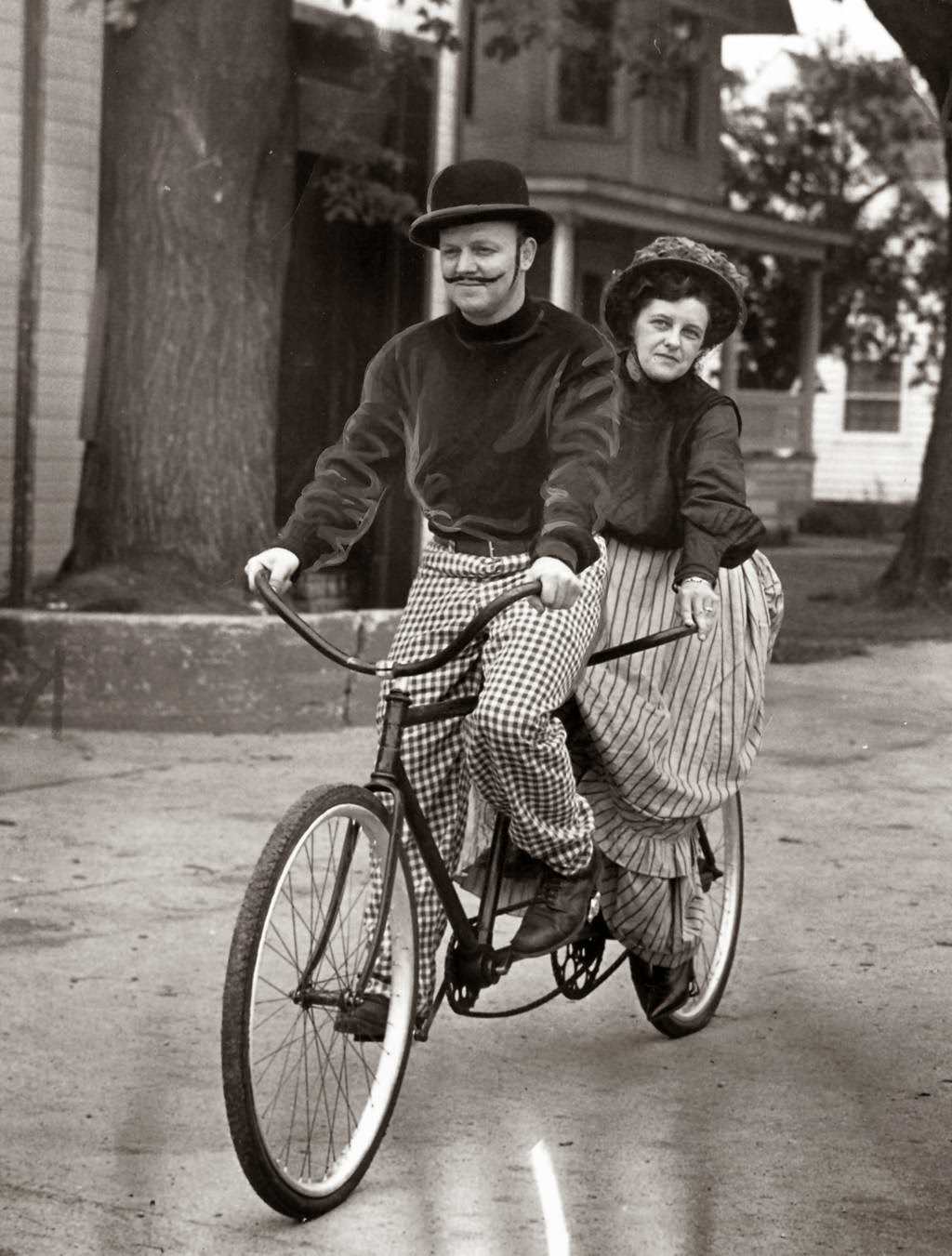
Mr. and Mrs. Wilbur Fredrick, of Huntley, Ill., on a tandem bike they rode in the town's centennial parade, 1951.
Mr. and Mrs. Wilbur Fredrick, of Huntley, Ill., on a tandem bike they rode in the town’s centennial parade, 1951.

By the early 1950s, manufacturers were already chasing a new kind of rider. Lighter, faster touring bikes began appearing in advertisements, marketed to adults who wanted speed and performance rather than a heavy cruiser.
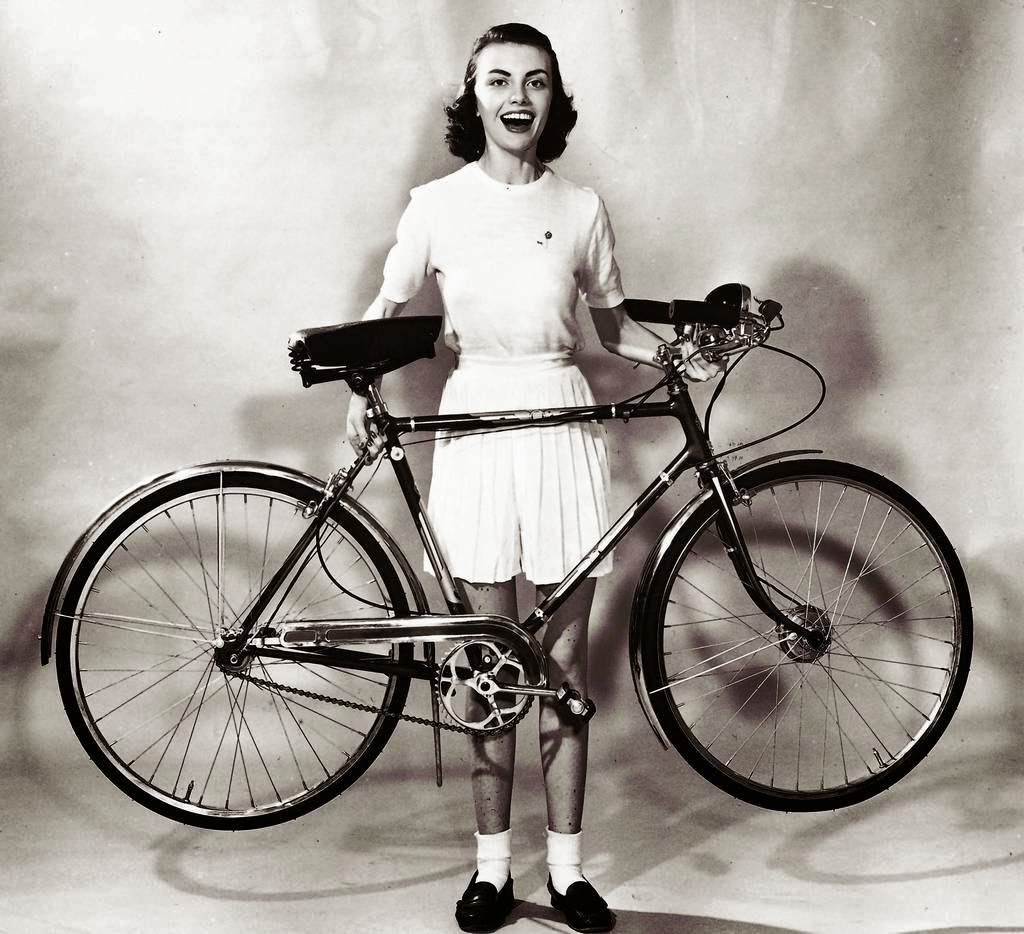
An American-made lightweight bicycle is advertised as the answer to the ever-growing demand for a "racer" or "touring" two-wheeler, 1953.
An American-made lightweight bicycle is advertised as the answer to the ever-growing demand for a “racer” or “touring” two-wheeler, 1953.

That demand exploded in the late 1960s and early 1970s. A national focus on fitness, a growing environmental movement sparked by the first Earth Day in 1970, and the 1973 Oil Crisis — which sent gas prices soaring and created long lines at pumps — pushed millions of adults back onto bicycles. The ten-speed road bike was the machine of the moment. Modeled after lightweight European racing bikes, it featured dropped handlebars, narrow tires, and a derailleur system for shifting gears. Schwinn’s Varsity and Continental models became two of the best-selling bicycles in American history. Chicago’s Lakefront Trail, once a casual path, became a busy corridor for commuters and fitness riders alike. The bicycle had come full circle — from revolutionary “noiseless steed” to children’s toy to worker’s tool, and finally, back to a serious mode of adult transportation. The craze that had first gripped Chicago in the 1890s had returned, louder than ever.
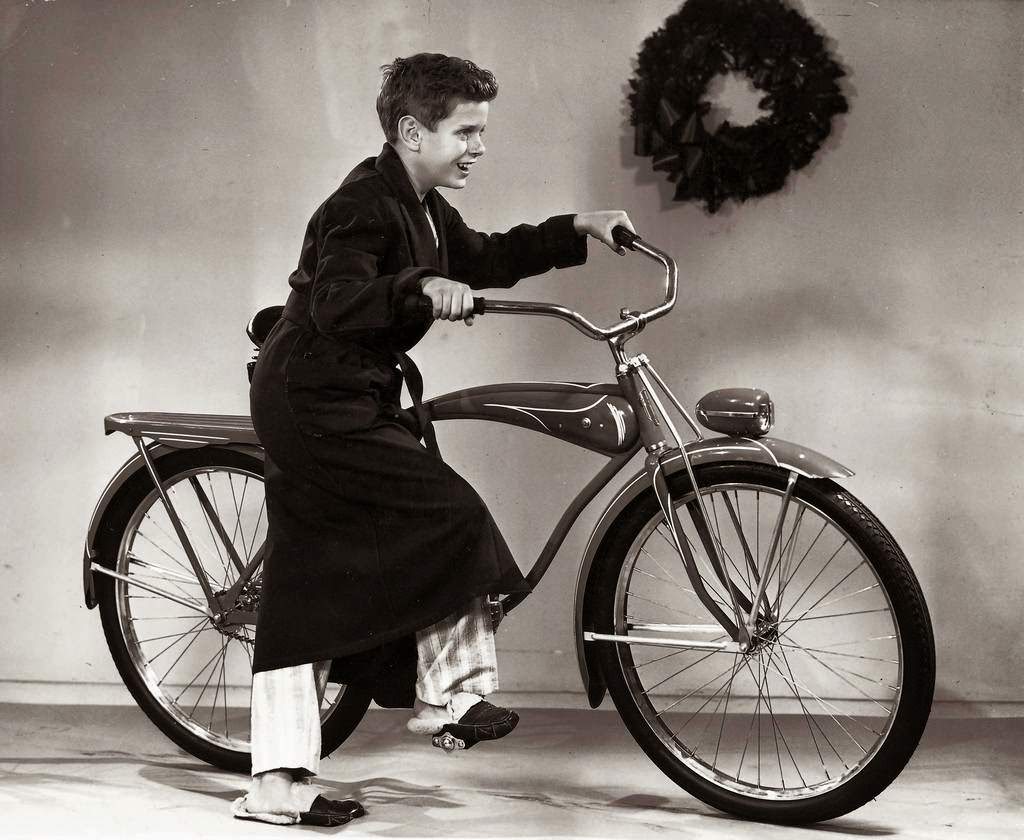

Christmas tree with a bike underneath, 1946.
Enjoyed this post? Get new ones in your inbox.

Leave a Comment

Your email address will not be published. Required fields are marked *

Share this Post 🥺

Please take a moment to share this content. Your support is greatly appreciated! 🙌🙏

Share this Post 🥺

Please take a moment to share this content. Your support is greatly appreciated! 🙌🙏
Scroll to Top
 
Hey Friend, Before You Go.. Please like & follow for more interesting content