
Los Angeles-based photographer Merrick Morton made a remarkable discovery when he came across a forgotten cache of LAPD crime photographs spanning five decades — from the 1920s to the 1970s. Morton, who also served as a reserve LAPD officer, understood exactly what he had found. The images documented criminals, victims, and crime scenes from across one of America’s most storied cities. There was just one problem: the cellulose nitrate-based film and negatives were badly decomposed and classified as fire hazards.
Morton teamed up with Fototeka, a photo digitization service, and the US National Film Archive to restore the photographs. The painstaking process brought hundreds of images back from the brink of permanent loss. What emerged was a raw, unfiltered visual record of Los Angeles crime history — the kind that never appeared in newspapers or public records. The photos below are a selection from that restored archive.
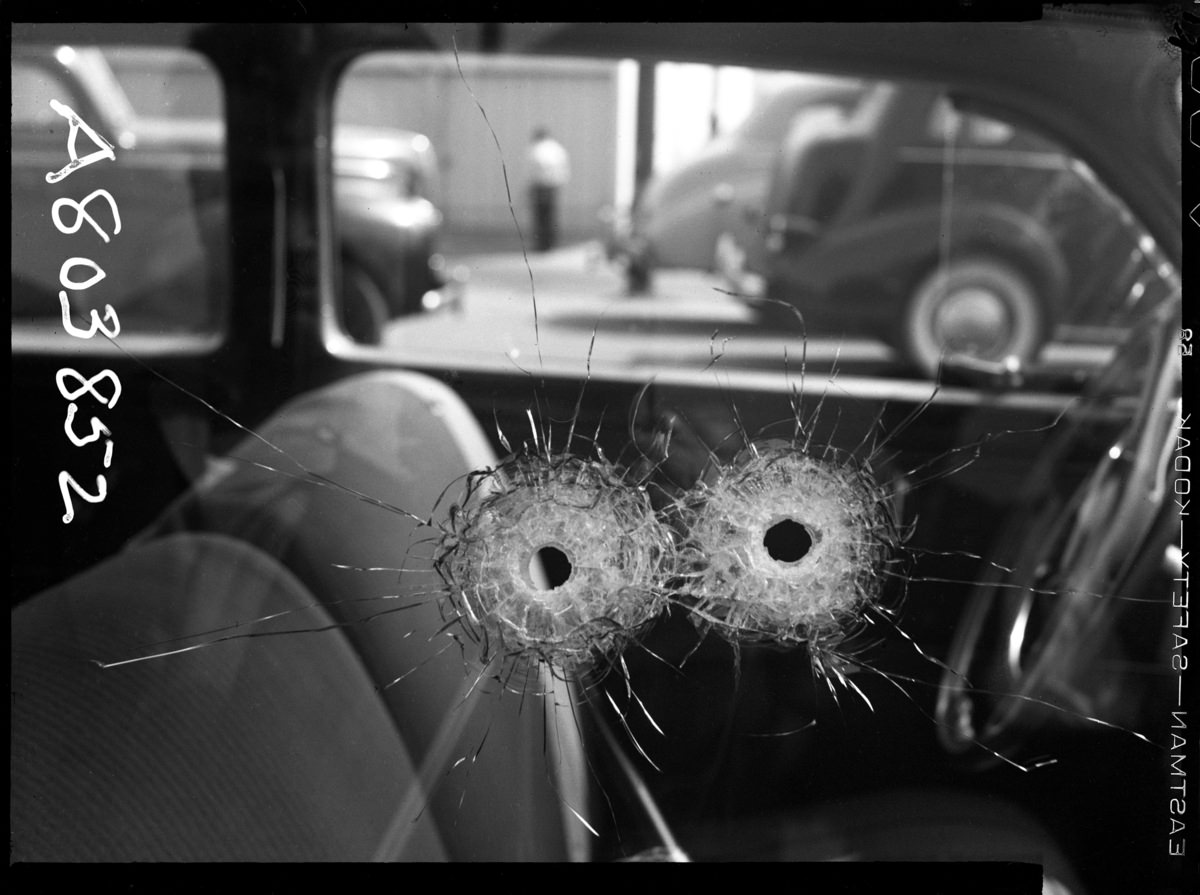
The earliest images in the collection reflect a city already well acquainted with violence. By the 1930s, Los Angeles had grown rapidly, and its police department was logging shootings, robberies, and homicides at a steady pace. LAPD crime photographers documented everything — from the smallest forensic detail to the full sweep of a crime scene.
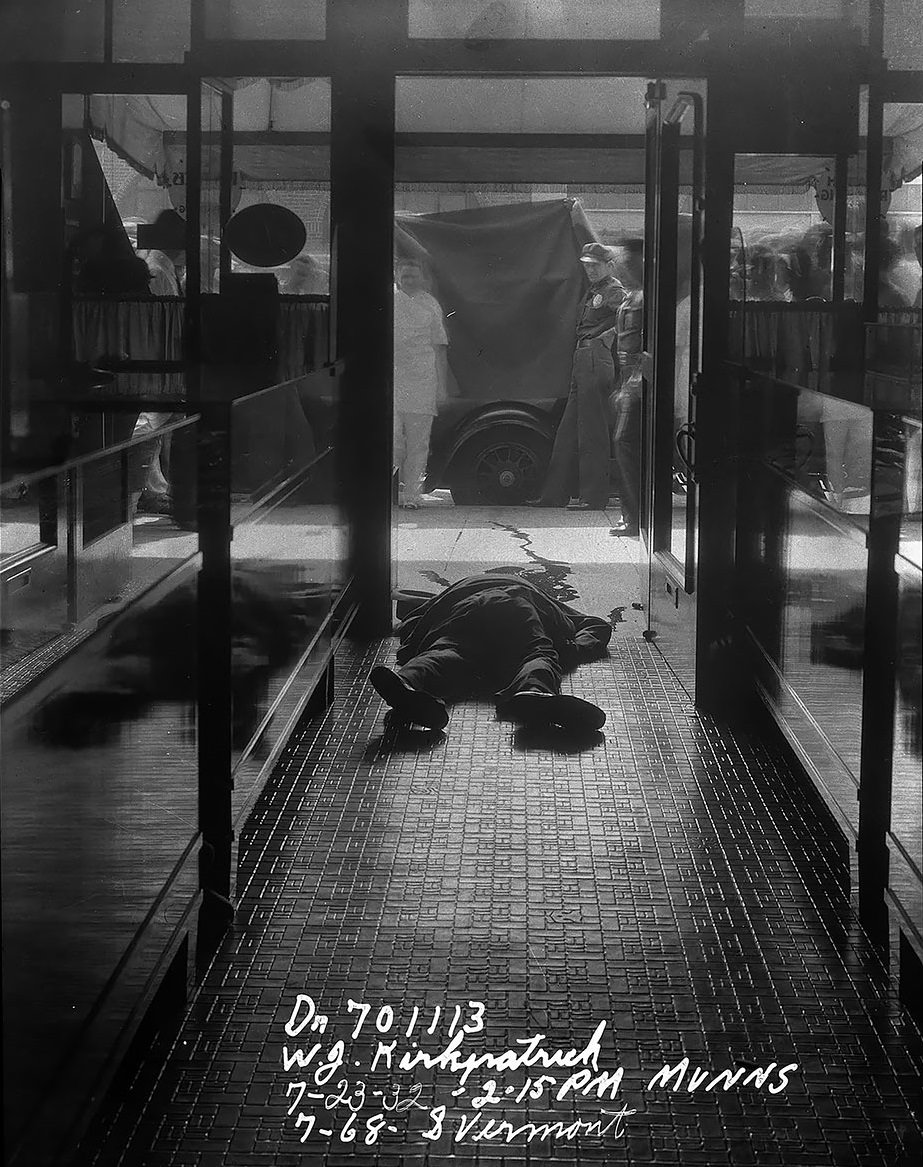
On July 23, 1932, a bystander was shot and killed during a botched jewelry robbery — caught in the crossfire of someone else’s crime. This kind of accidental victim appeared repeatedly in the archive, a reminder that street-level crime rarely stayed contained. The LAPD’s photographers were dispatched to document these scenes before the evidence could be disturbed.
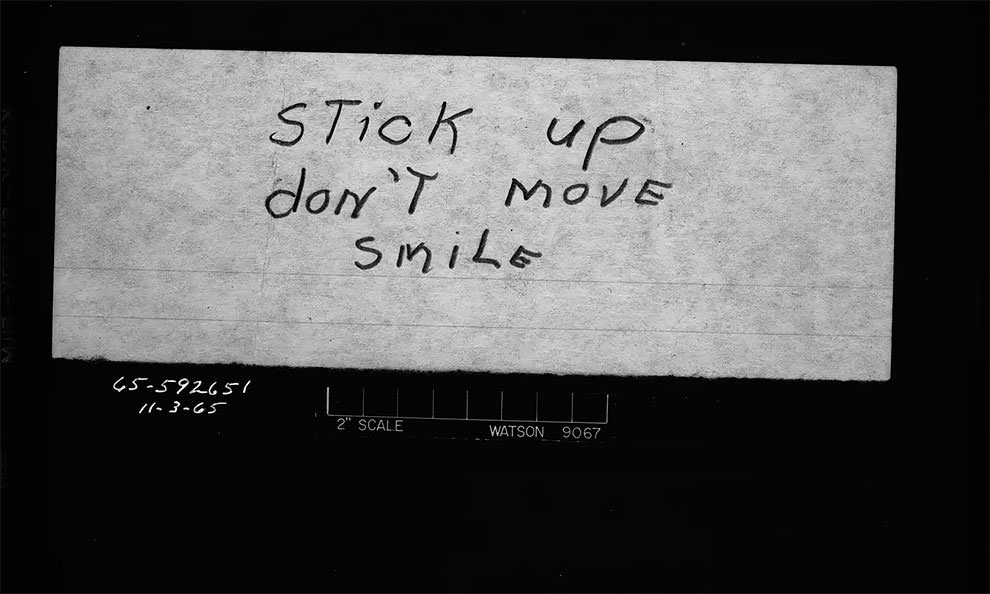
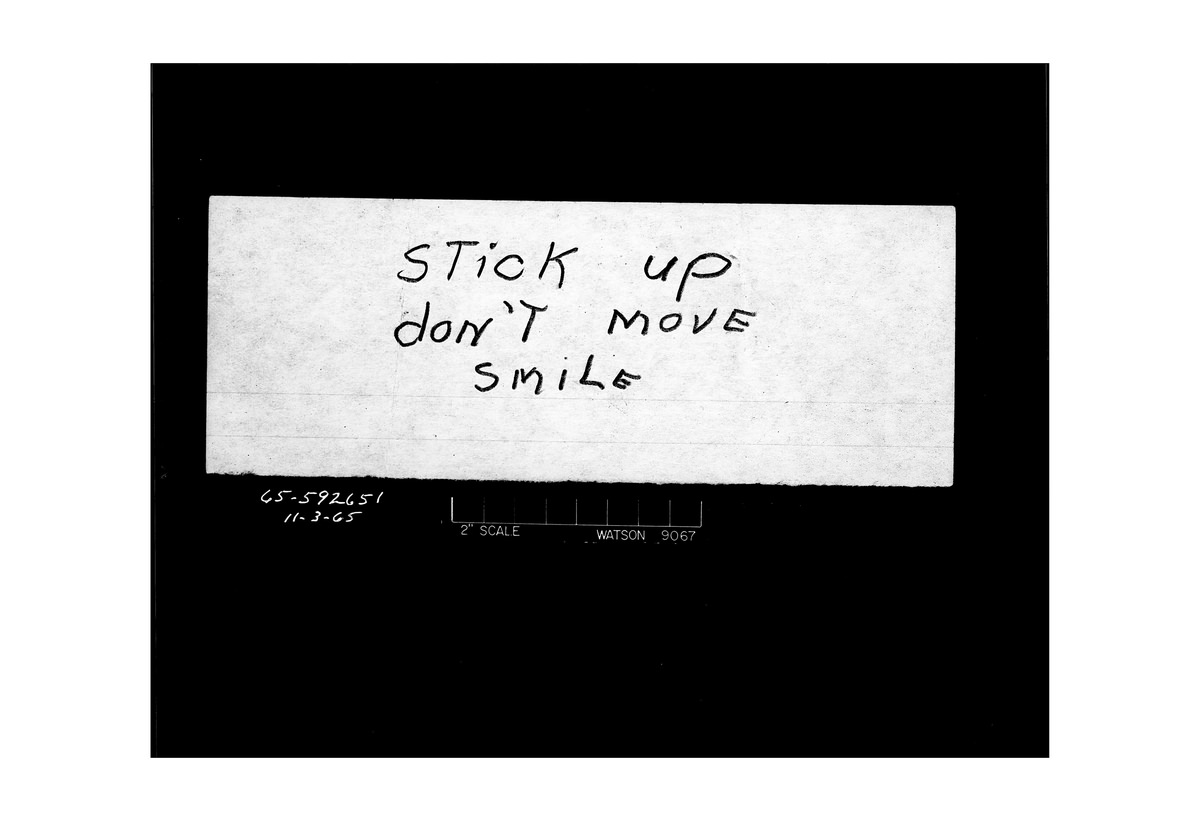
Bank robbery demand notes were standard evidence items, preserved as carefully as fingerprints or shell casings. The 1965 note seen here is a plain reminder that many robberies were low-tech operations — a handwritten slip of paper slid across a counter, and a teller forced to comply. Detectives analyzed handwriting, paper type, and wording to build cases against suspects.
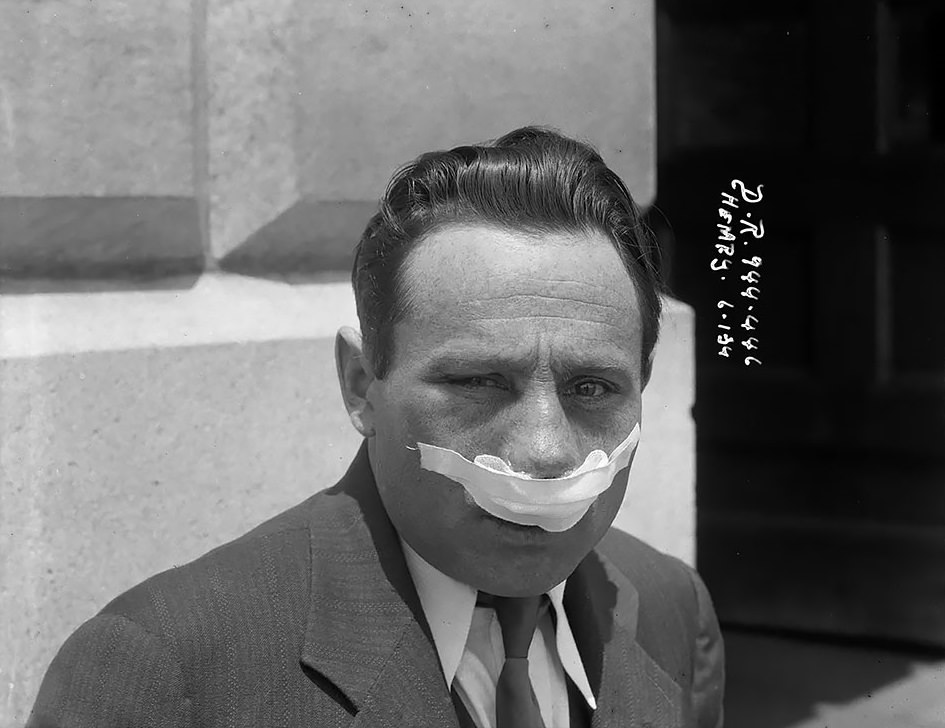
Victim documentation was a core part of the LAPD’s photographic work. Officers photographed injuries to preserve evidence for court, and victims were often asked to pose directly for the camera. The 1934 assault victim photographed in Chinatown stands as a striking example — composed and facing the lens, injuries visible and on record.
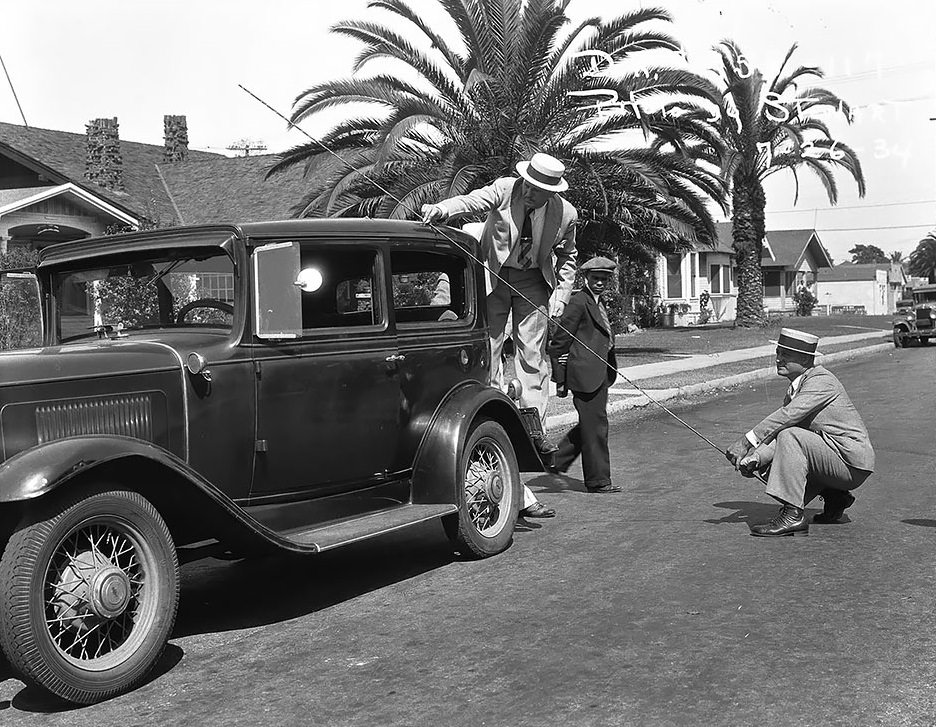
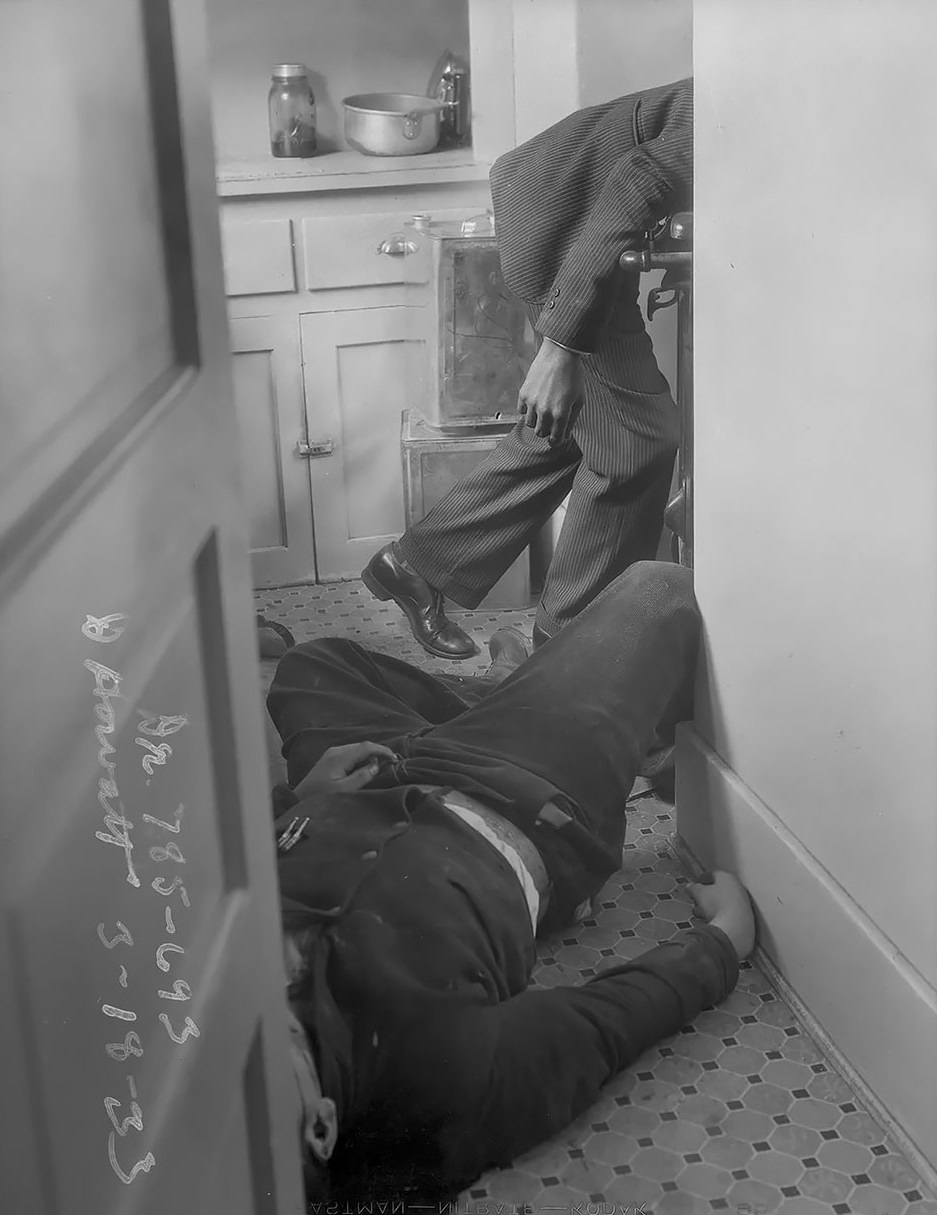
Forensic work in the 1930s was far more hands-on than today. Detectives used string lines and manual measurements to trace bullet paths through rooms, reconstructing where a shooter stood and where a victim fell. This photograph of investigators calculating bullet trajectory in 1934 captures that methodical, physical approach to crime scene analysis.
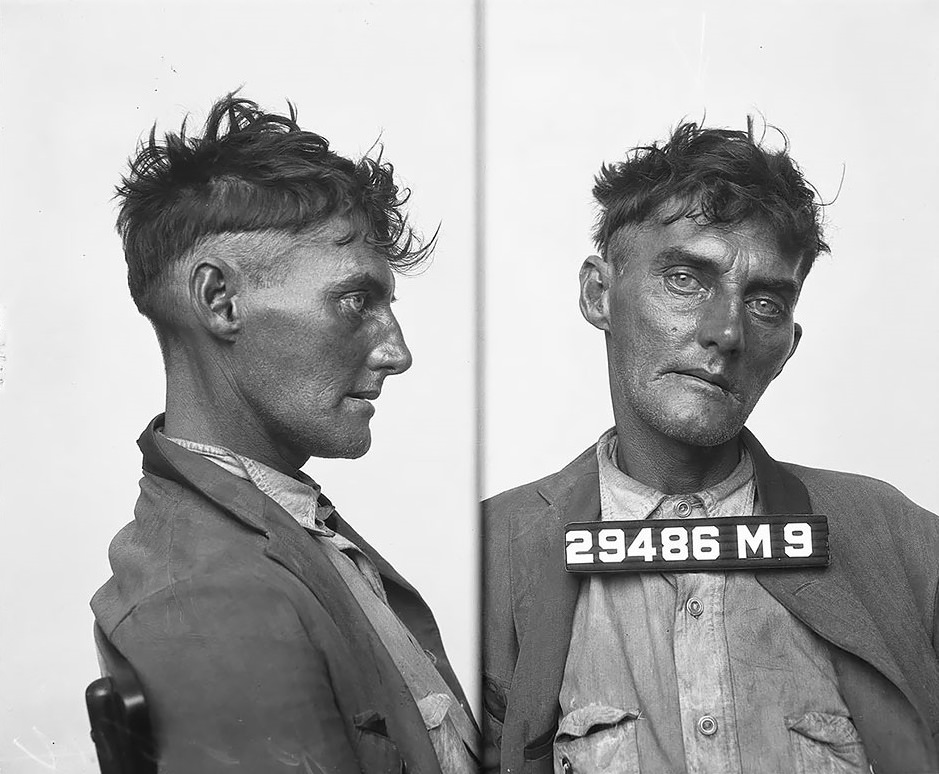
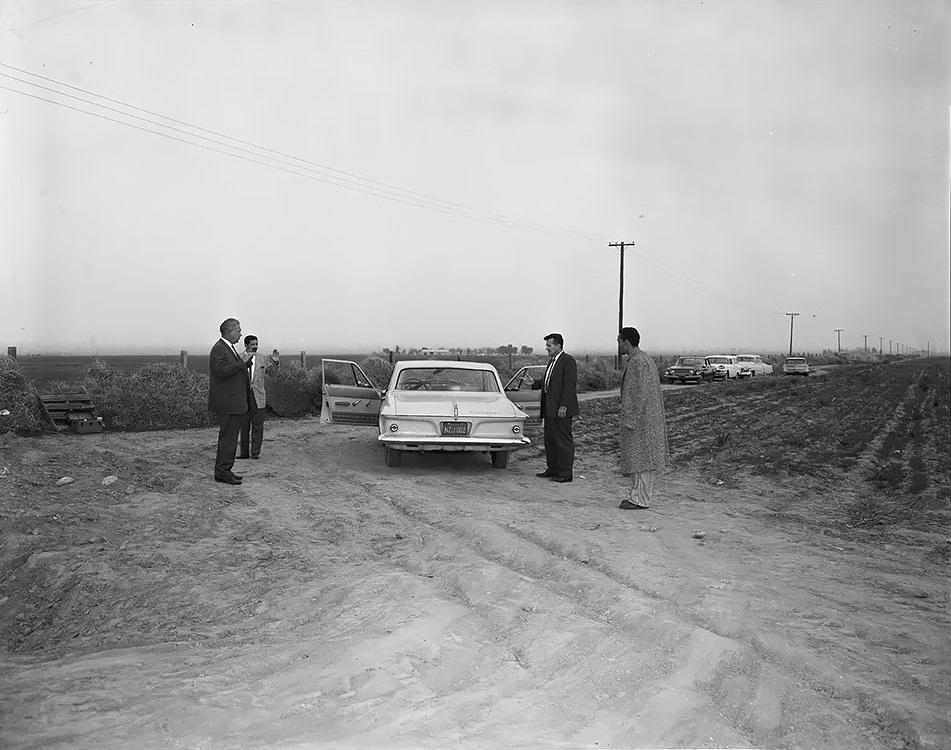
One of the most notorious cases linked to this archive involves the 1963 Onion Field murder — a case that shook the LAPD and led to significant changes in how California handled criminal sentencing. Two LAPD officers were kidnapped by armed robbers Gregory Powell and Jimmy Lee Smith. Officer Ian Campbell was taken to an onion field near Bakersfield and shot dead. The crime and its lengthy legal aftermath were later documented in Joseph Wambaugh’s book of the same name.
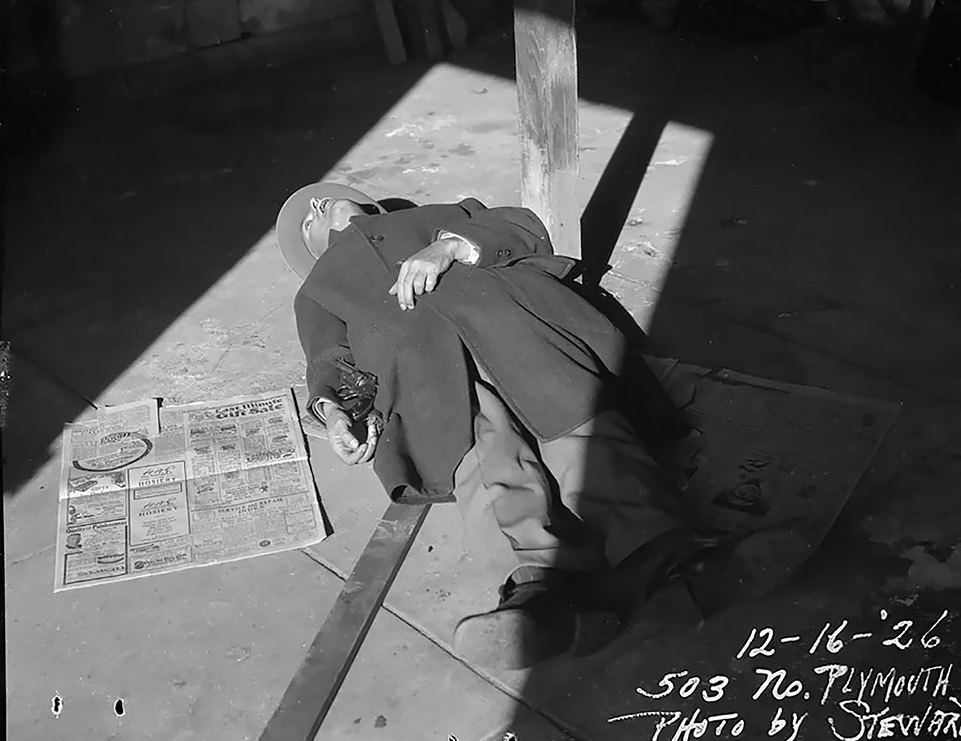
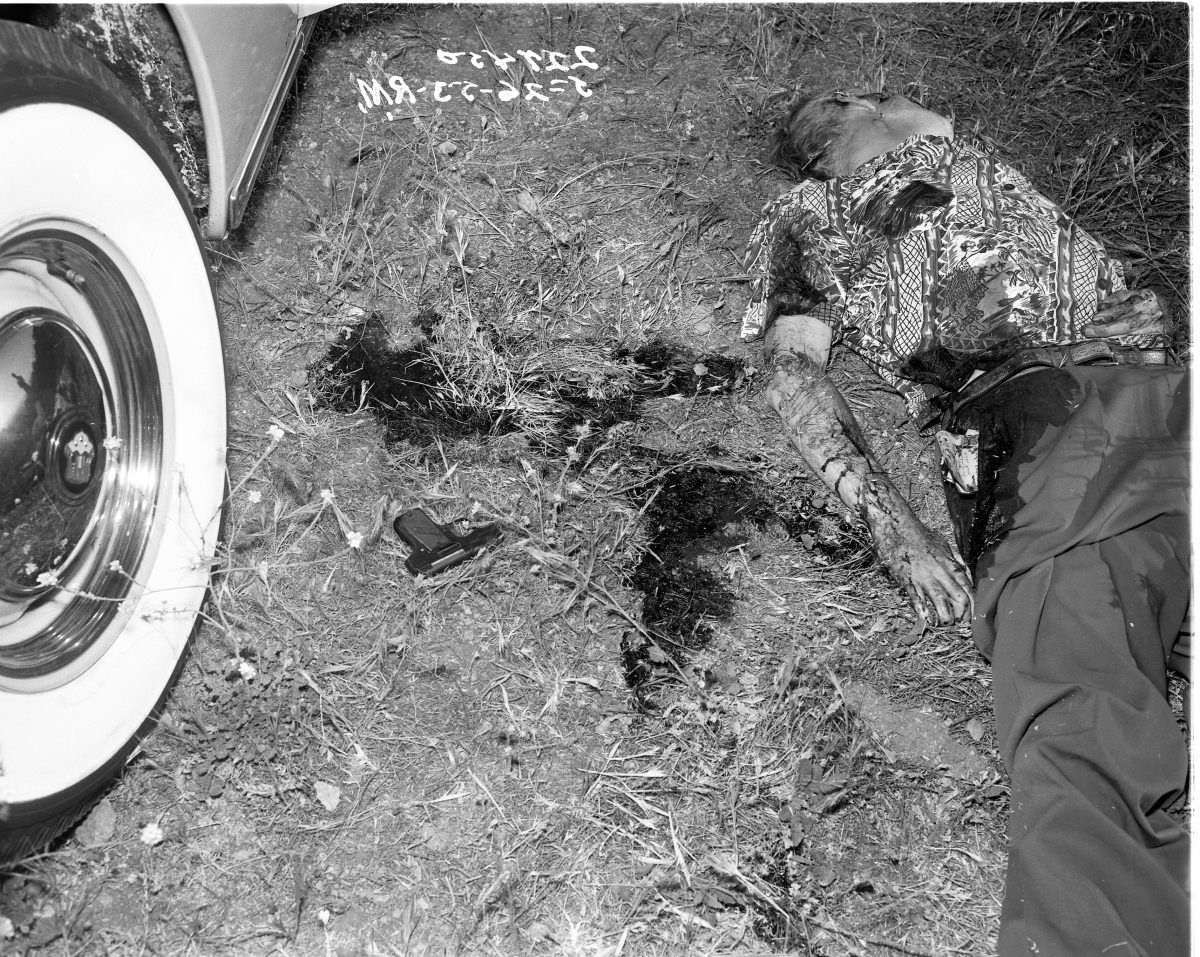
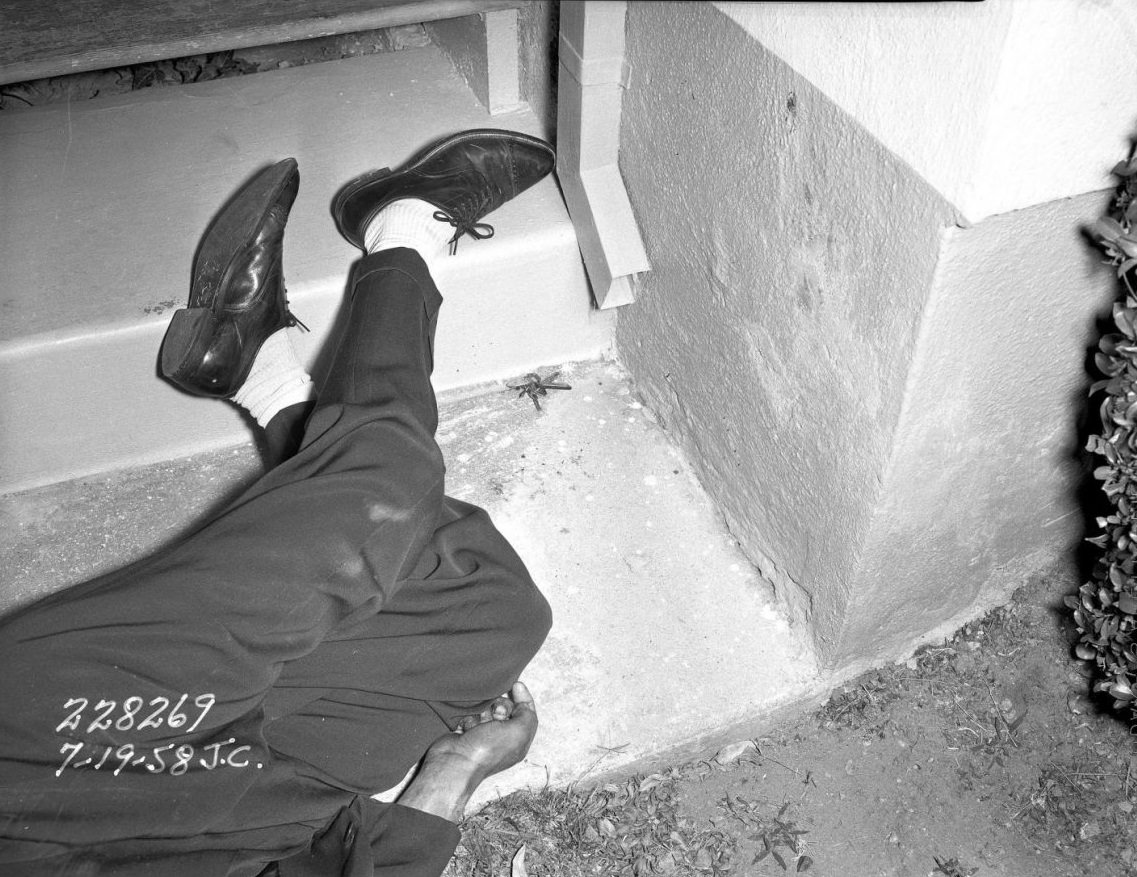
The archive also contains images stretching back to 1926 — a year when Los Angeles was a booming, lawless city still decades away from the police reforms of later generations. A body lying on the ground with a gun at its side tells its own stark story, with no need for additional explanation.
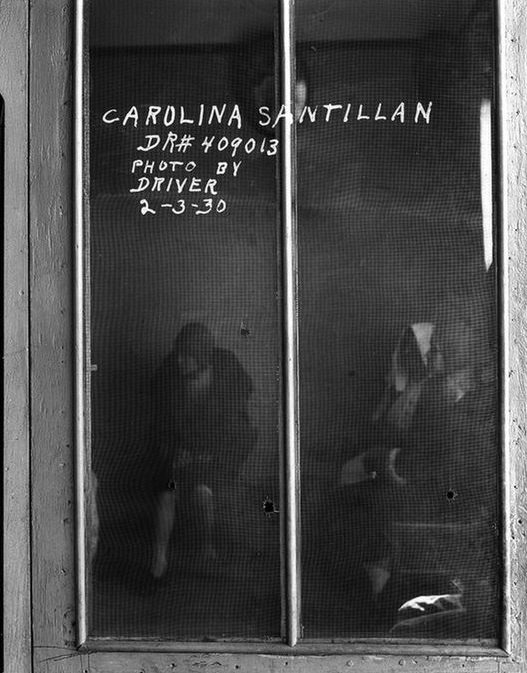
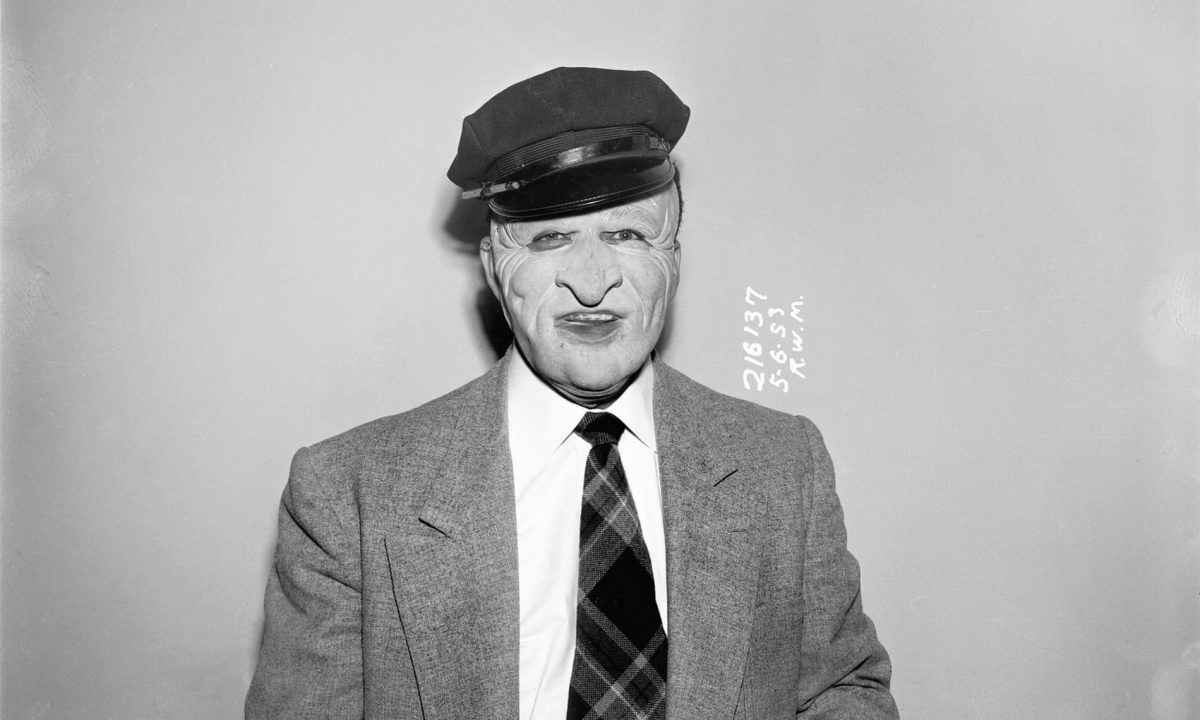
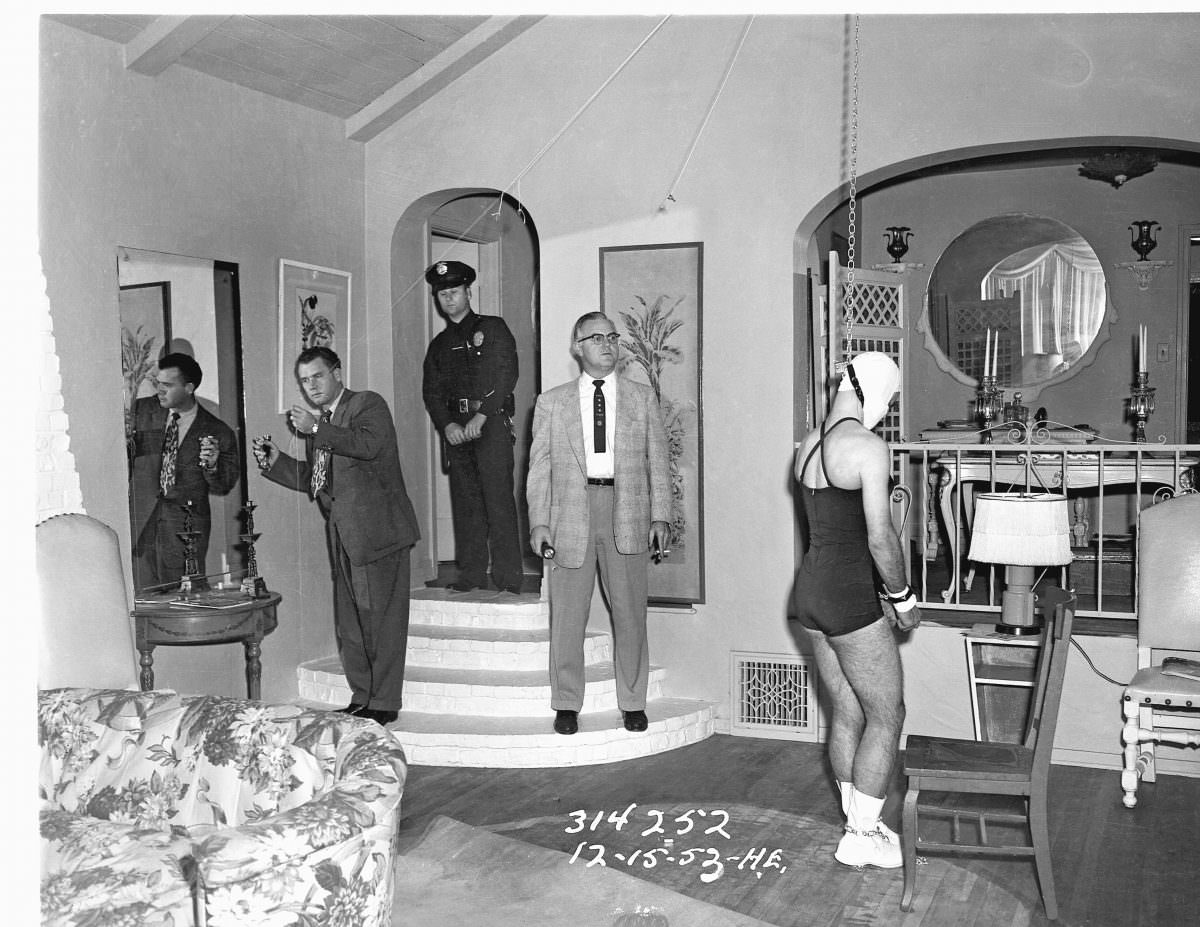
In 1953, one of the archive’s most chilling photographs was taken in El Monte. It shows a detective wearing a mask used by a member of Baxter Shorter’s crew — a gang that included Emmett Perkins, Jack Santo, and Barbara Graham. On March 9, 1953, the three murdered Mabel Monohan, an elderly woman. Shorter, horrified by what his associates had done, later cooperated with authorities. Graham, Perkins, and Santo were all executed in the gas chamber at San Quentin.
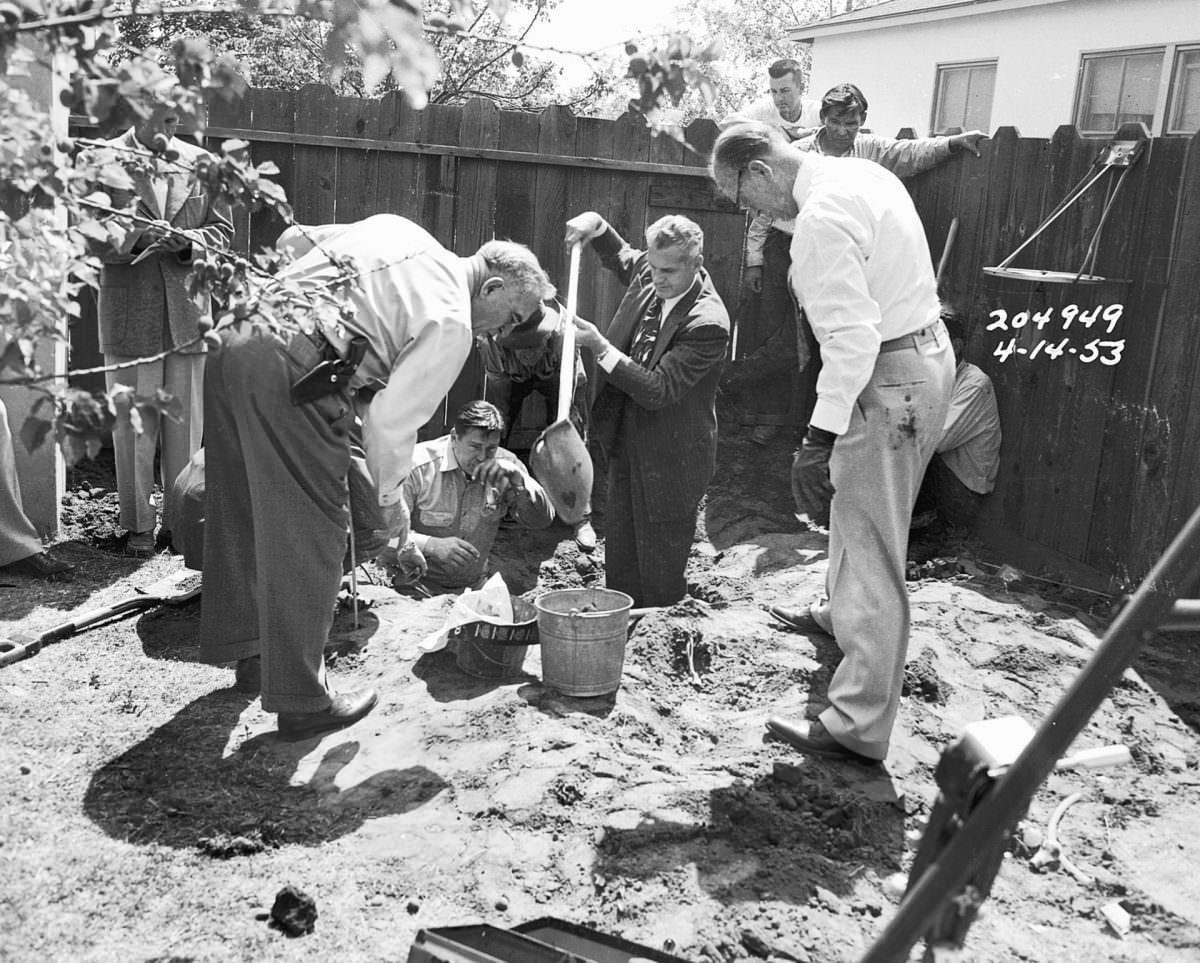
The year 1953 alone accounts for a significant portion of the archive’s most documented cases. There were 81 recorded murders in Los Angeles that year. Among them was the so-called “croquet mallet slayer” case in the San Fernando Valley. Ruth Hilda Fredericks killed her husband Richard, and his body parts were later found buried on the property. The case drew widespread press coverage and became one of the headline crimes of the year.
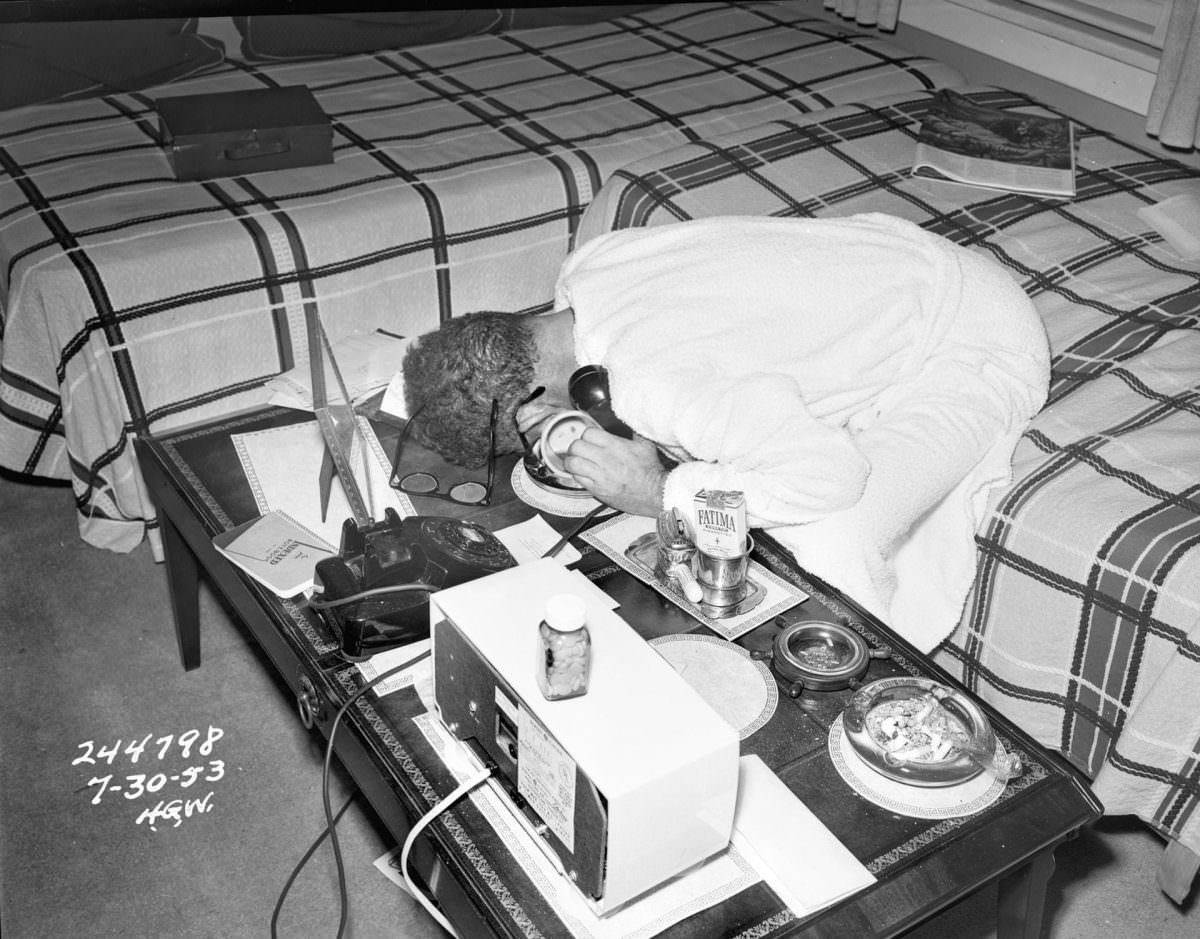
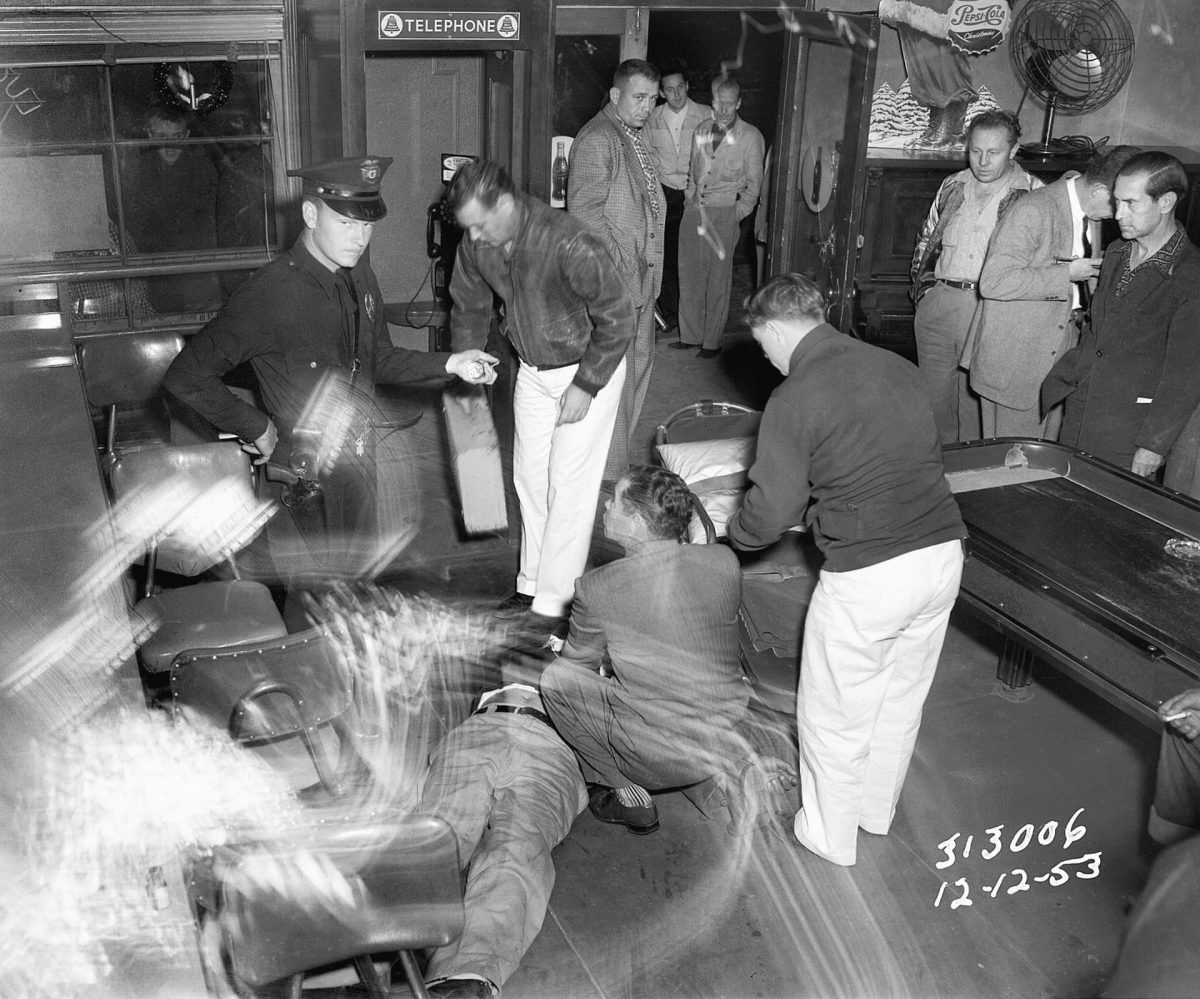
A November 1953 case in Hollywood documented what happens when an armed robbery goes violently wrong. Two men — one a reform school graduate with a prior conviction for killing his own father — attempted to rob a bar called the Melody Lane. The heist collapsed, and the violence that followed left investigators with a grim scene to photograph and process.
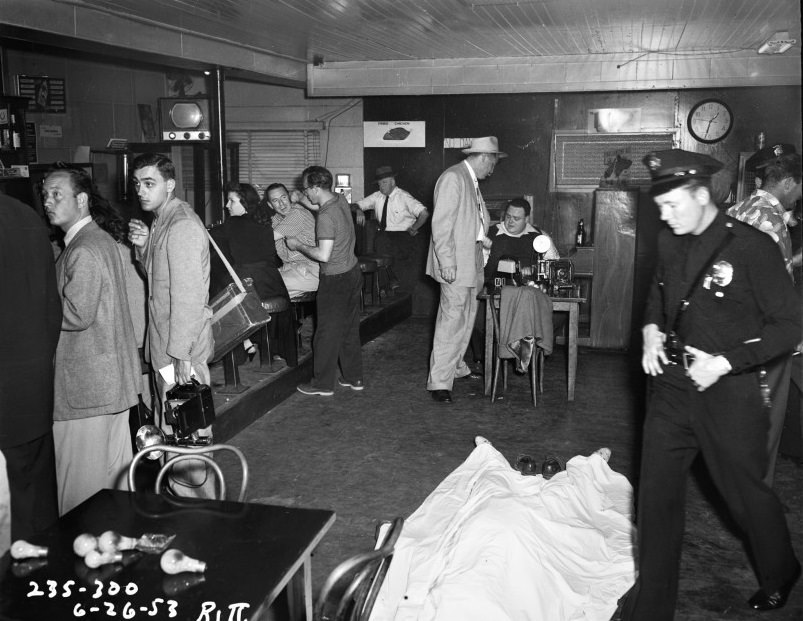
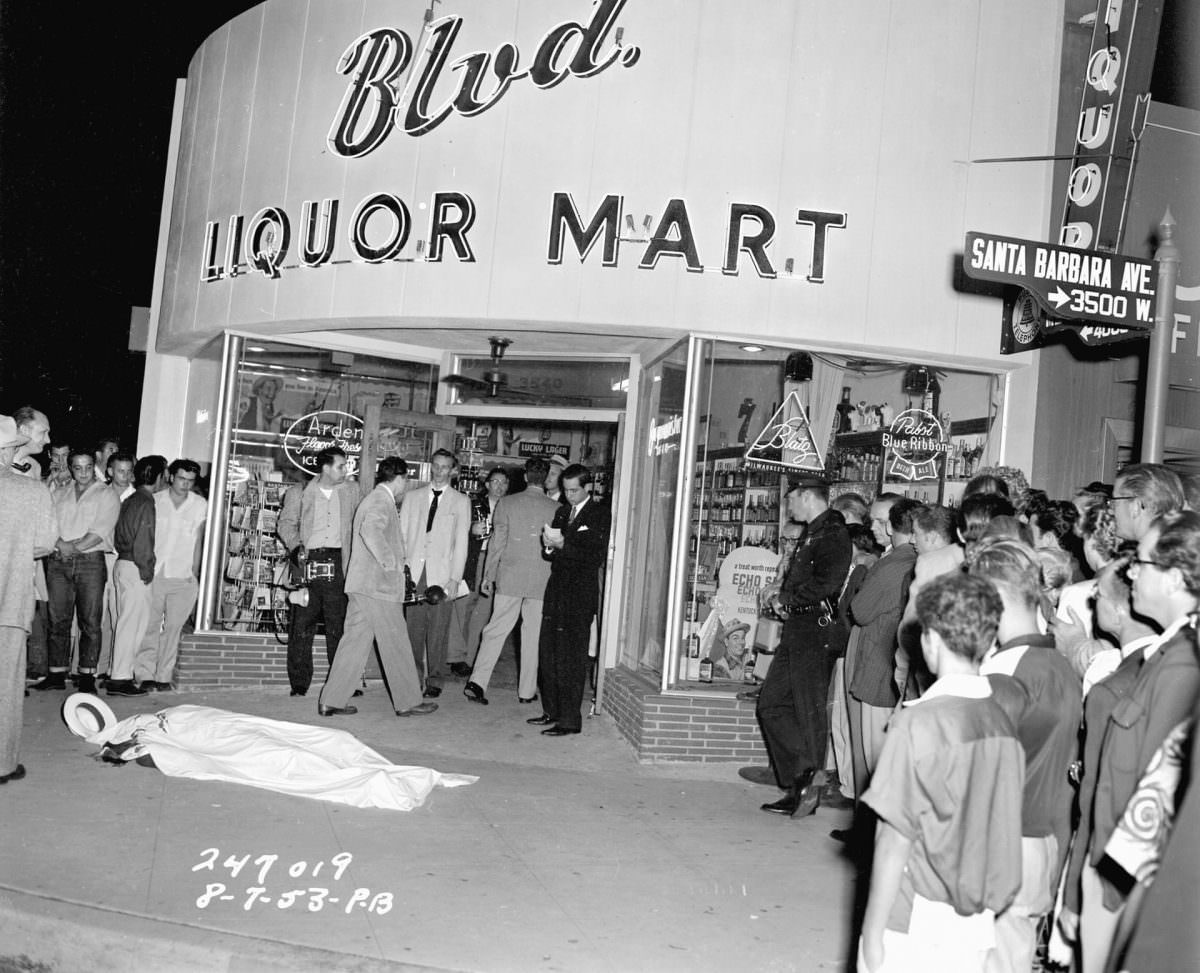
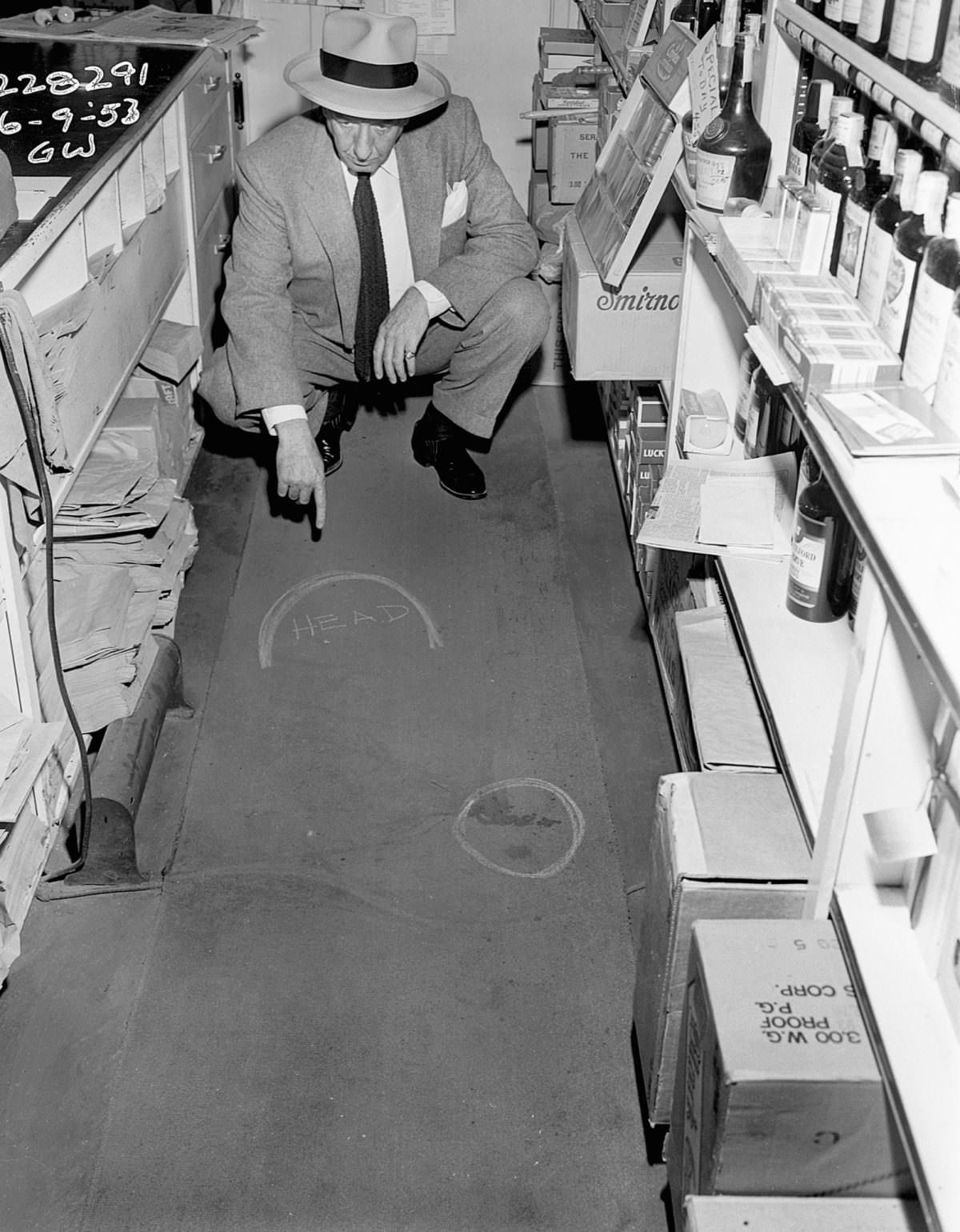
In June 1953, at a liquor store on Olympic Boulevard and Alvarado, a man in his 70s named Reposo was killed from behind during a robbery. The killer struck him without warning and walked away with $25 from the register and $60 from Reposo’s pockets. The cold calculation of the crime — a life taken for less than $100 — made it one of the more disturbing cases in the archive.
A December 1953 shooting on Erwin Street stemmed from a bar fight that didn’t end when the night did. Manuel Vela was beaten by a man named Joe at a local tavern. Vela returned later and fired four shots through the front door. Thomas Castillo was struck three times but survived — narrowly missing a fatal wound to the heart. Because Castillo lived, Vela avoided a murder charge, a legal outcome that frustrated investigators.
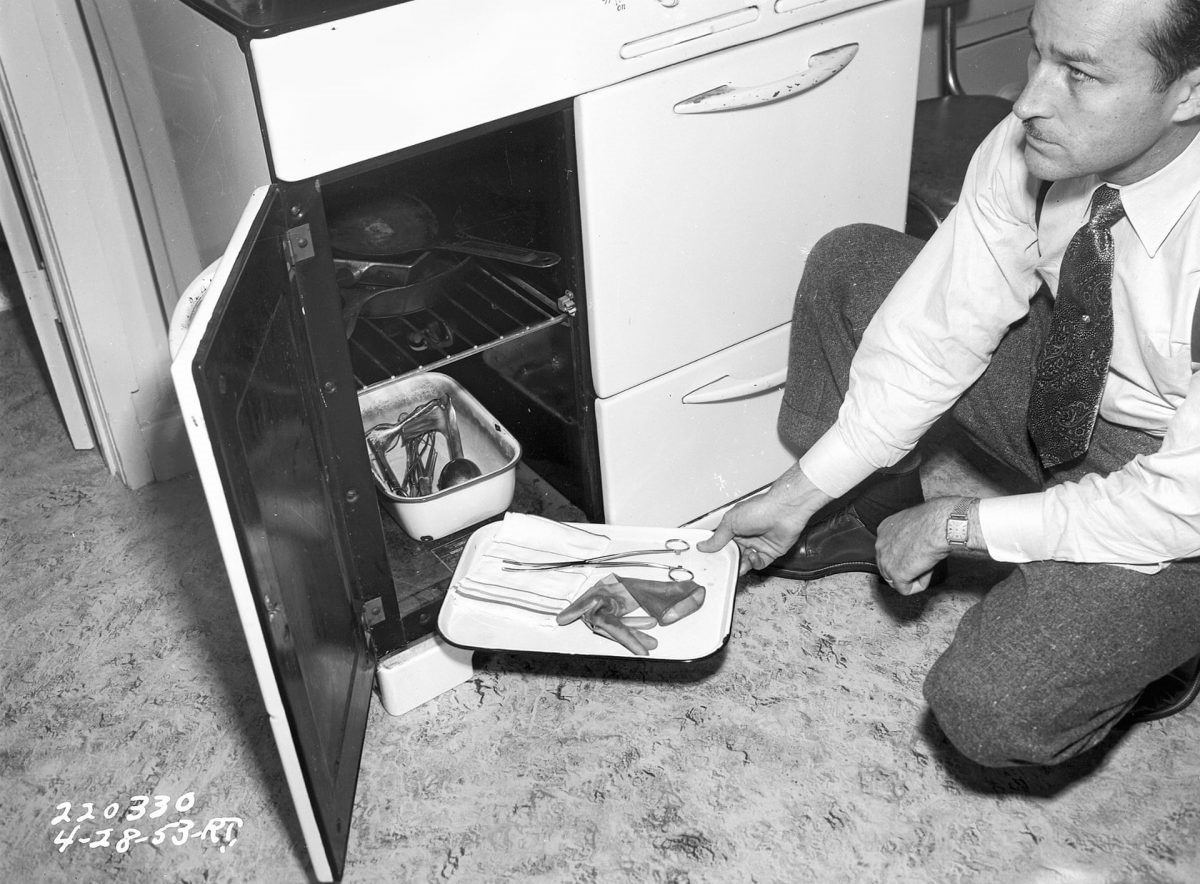
Not all of the archive’s photographs document murders. An April 1953 case in Highland Park involved an illegal abortion operation run by a man named George R. Davis. Davis had previously testified at a trial involving illegal surgical equipment and managed to get the defendant acquitted — but the case put him on the LAPD’s radar. Officers surveilled him for six months before moving in, and what they found at his practice resulted in criminal charges.
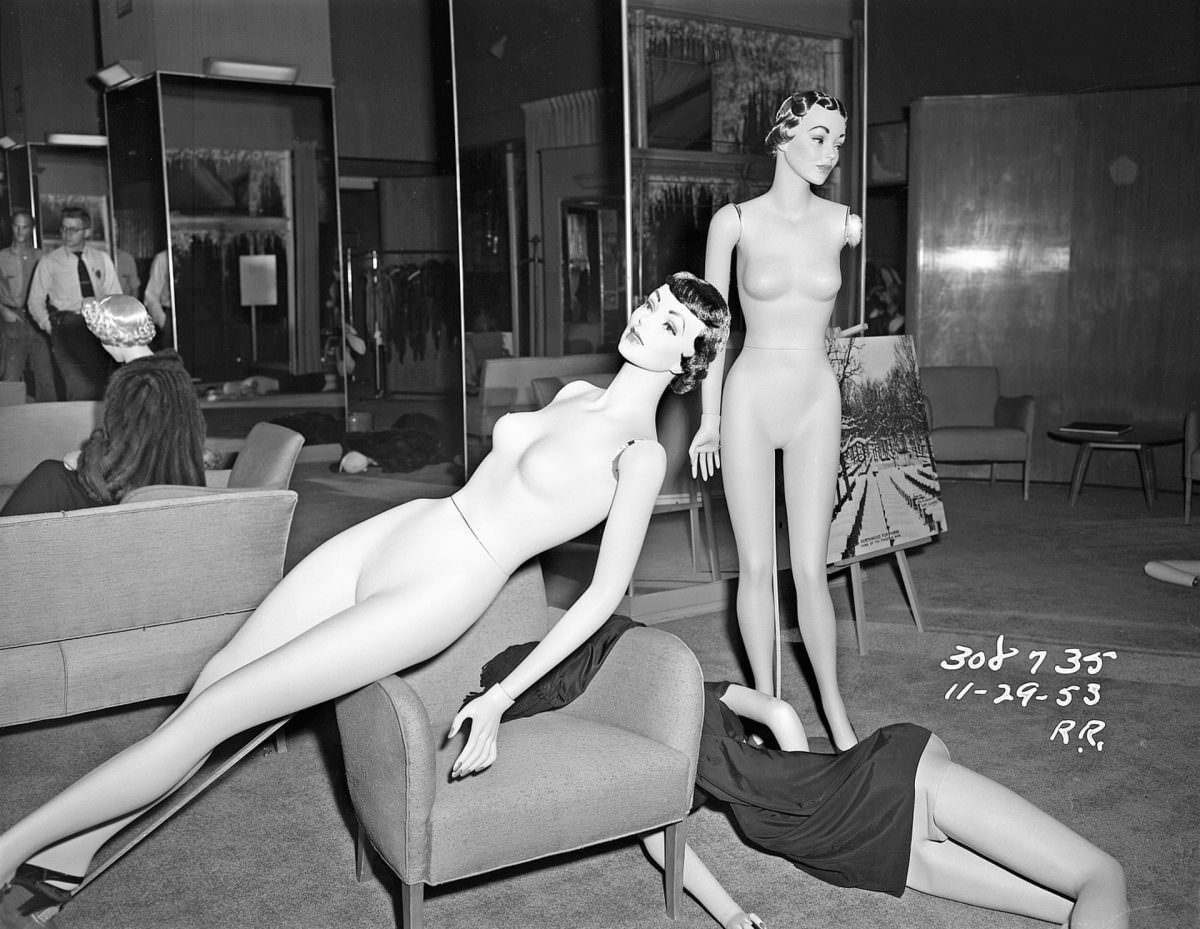
A November 1953 vandalism case at a high-end women’s clothing store in Los Angeles had an unsettling element beyond the broken windows. Individuals carried heavy blocks of concrete to the storefront and hurled them through the large plate glass. When police arrived, they discovered the store’s female mannequins had been arranged in sexual postures. What appeared at first to be simple vandalism quickly took on a more disturbing character.
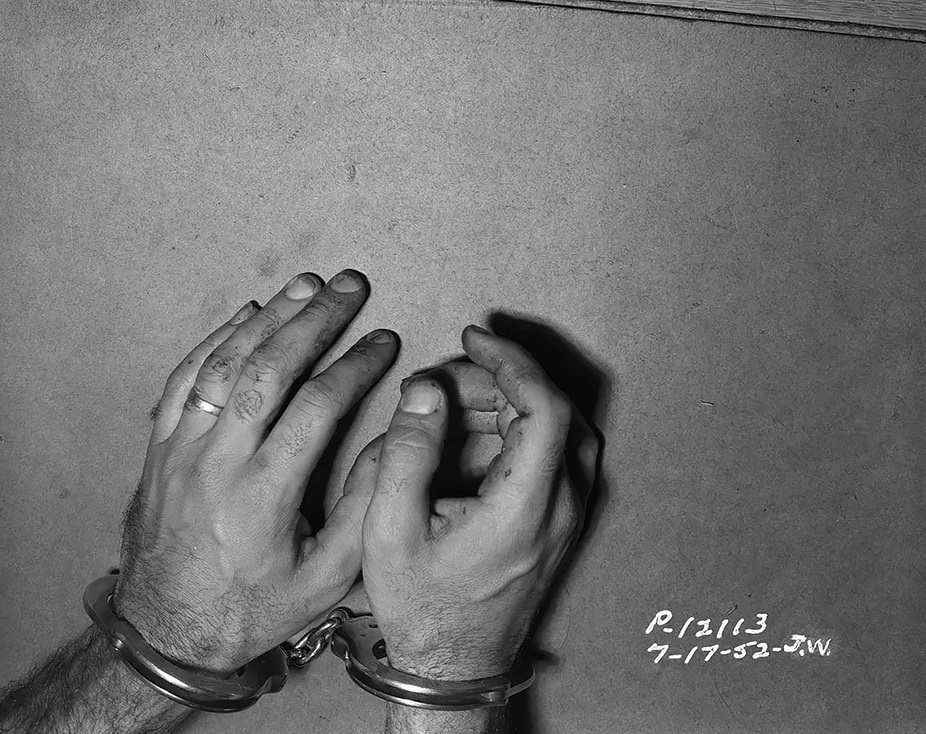
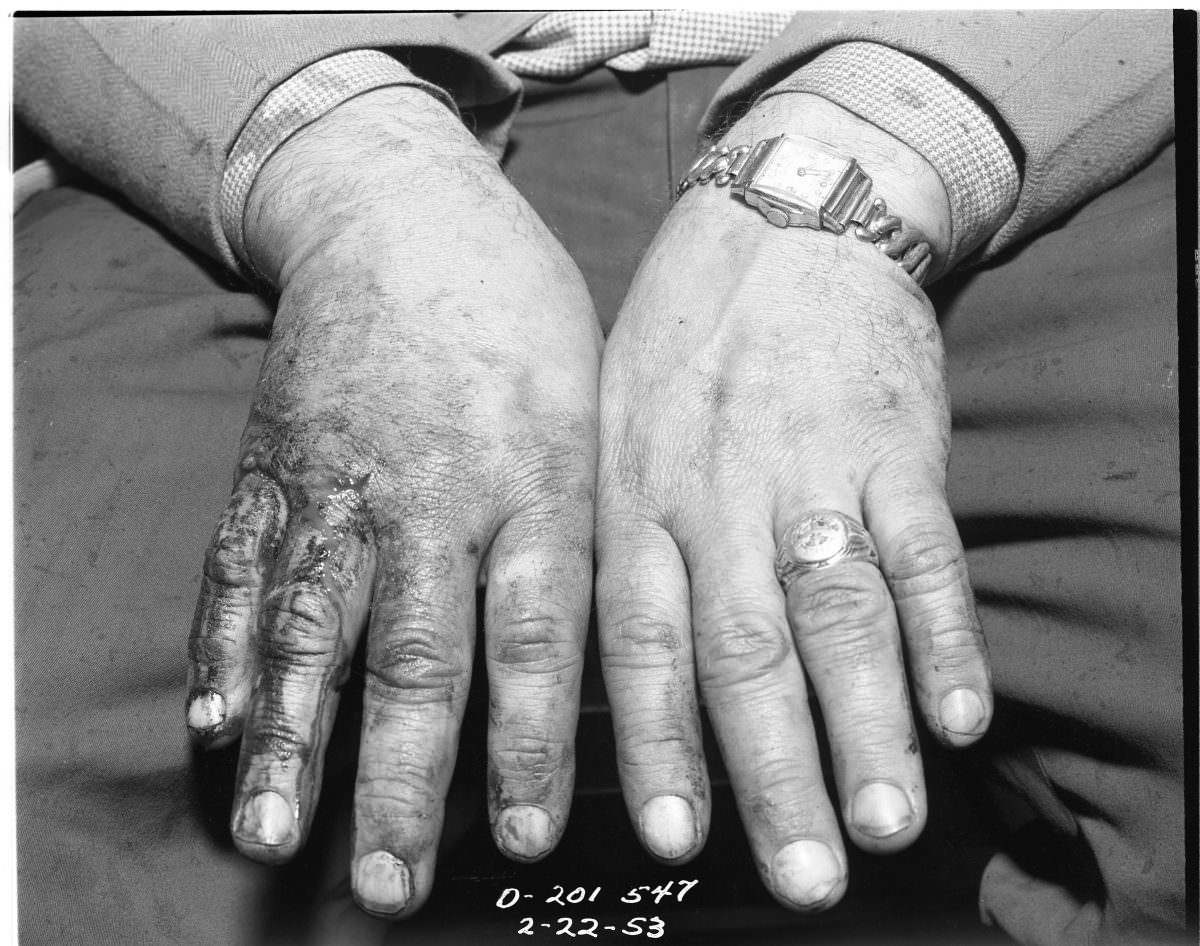
One photograph in the archive shows the hands of Clarence E. Vickery, 33, who killed his longtime friend Paul M. Kenney at a gas station after a night of heavy drinking. The two had known each other for five years. When Vickery came out of his alcoholic blackout and realized what he had done, he faced both criminal prosecution and the weight of having destroyed someone close to him.
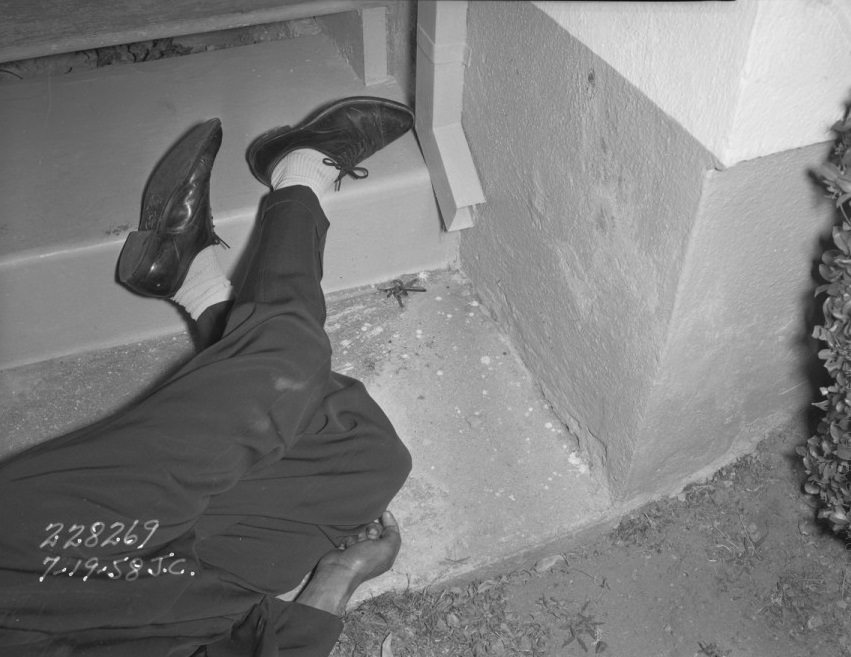
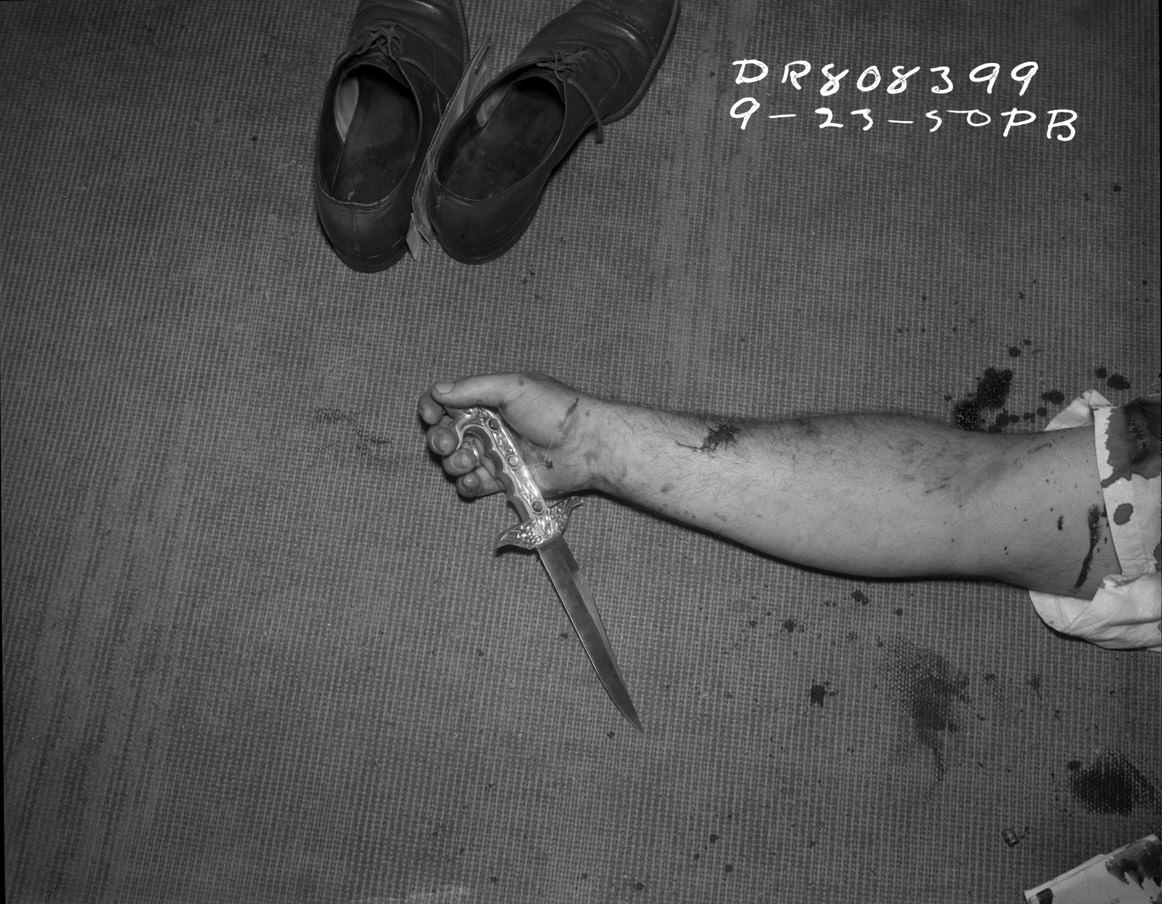
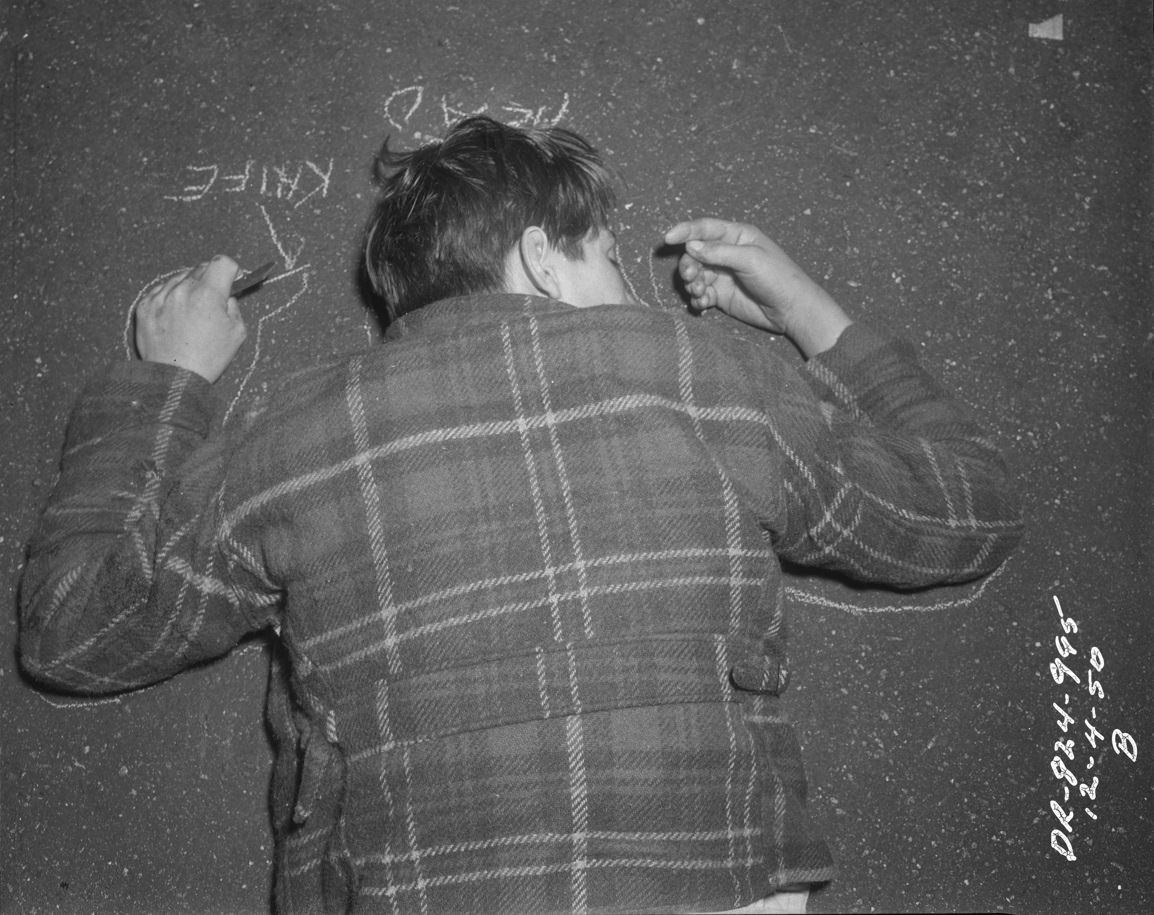
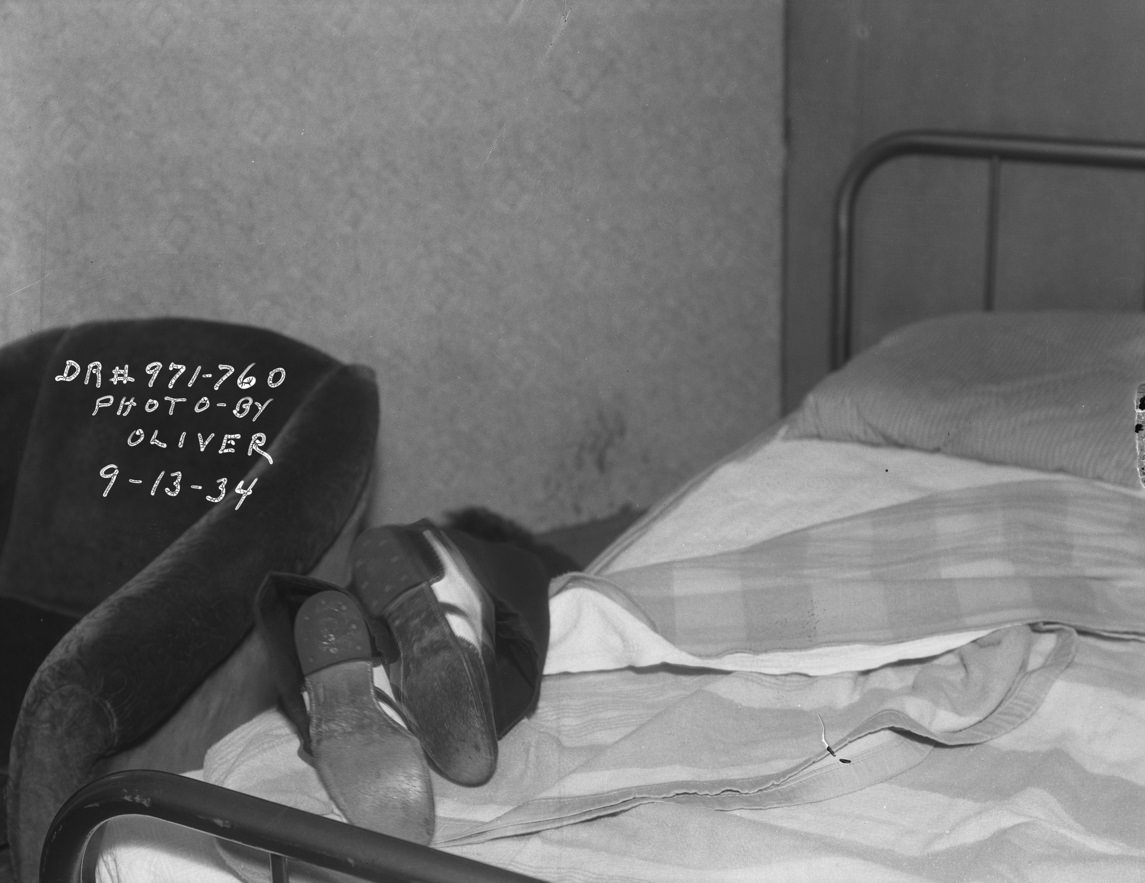
Physical evidence photographs form a significant portion of the collection. Shoes, weapons, and body positioning were all recorded systematically, giving detectives a permanent reference point as cases moved through the court system. A 1950 photograph showing shoes, an arm, and a knife captures exactly the kind of close-up evidence documentation that defined LAPD crime scene photography throughout the mid-century decades.
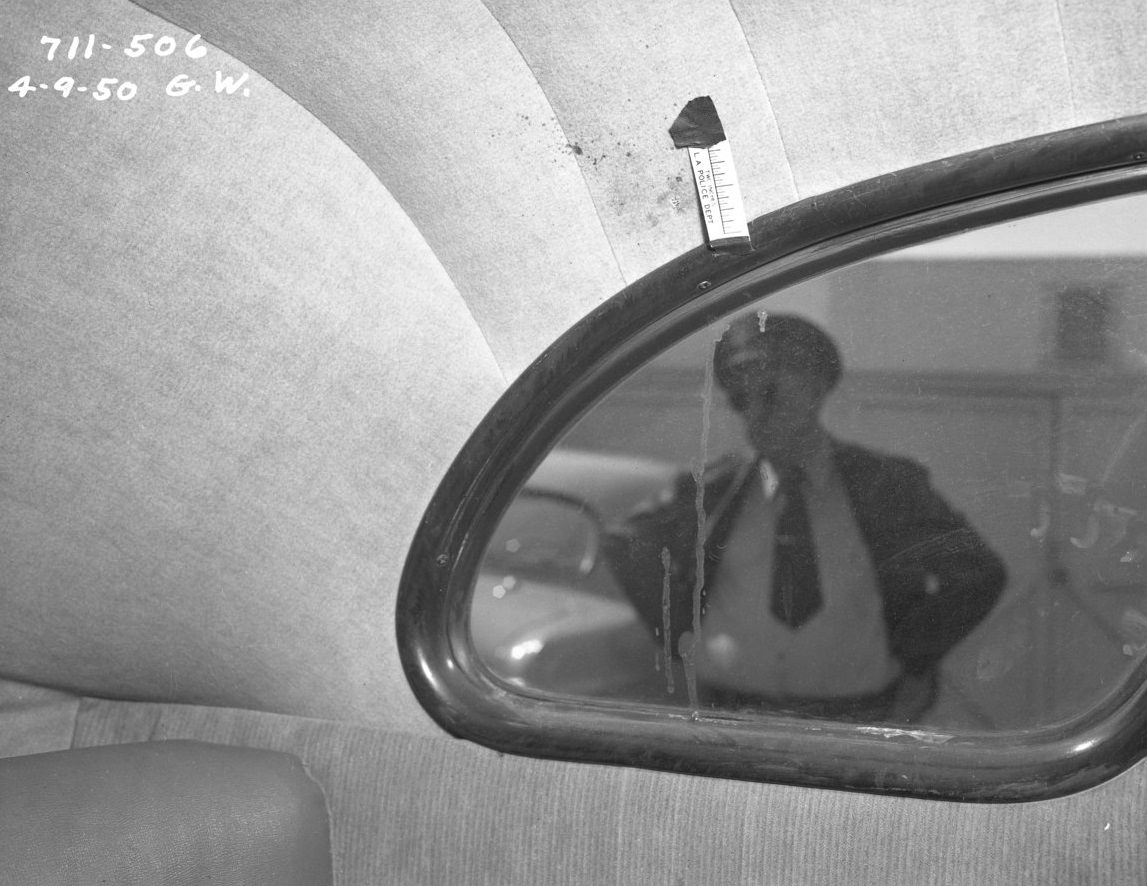
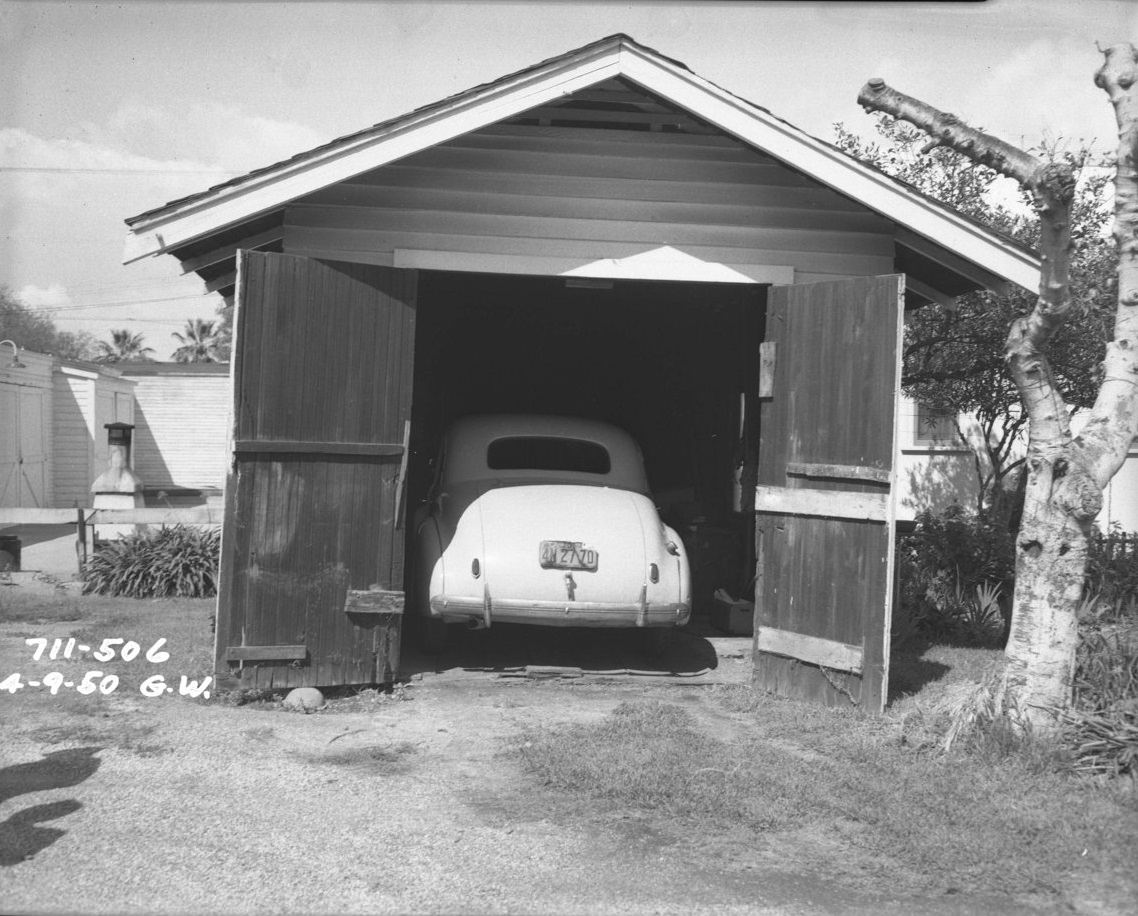
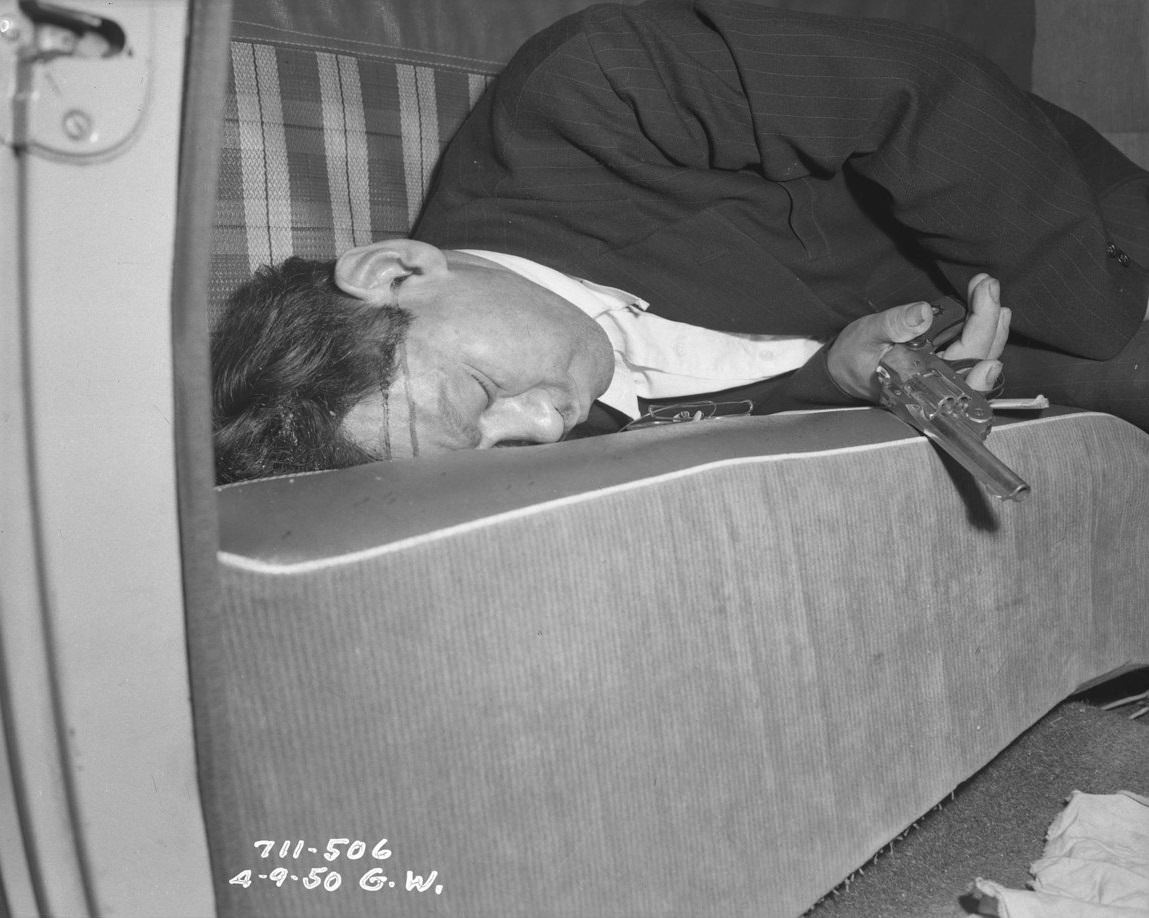
Suicides also appeared in the LAPD’s photographic record. A 1950 series of three images documents a single suicide in sequence, walking the viewer through the scene from multiple angles. This approach — treating a self-inflicted death with the same rigorous documentation as a homicide — reflects how the department treated all unexplained or violent deaths as potentially criminal until proven otherwise.
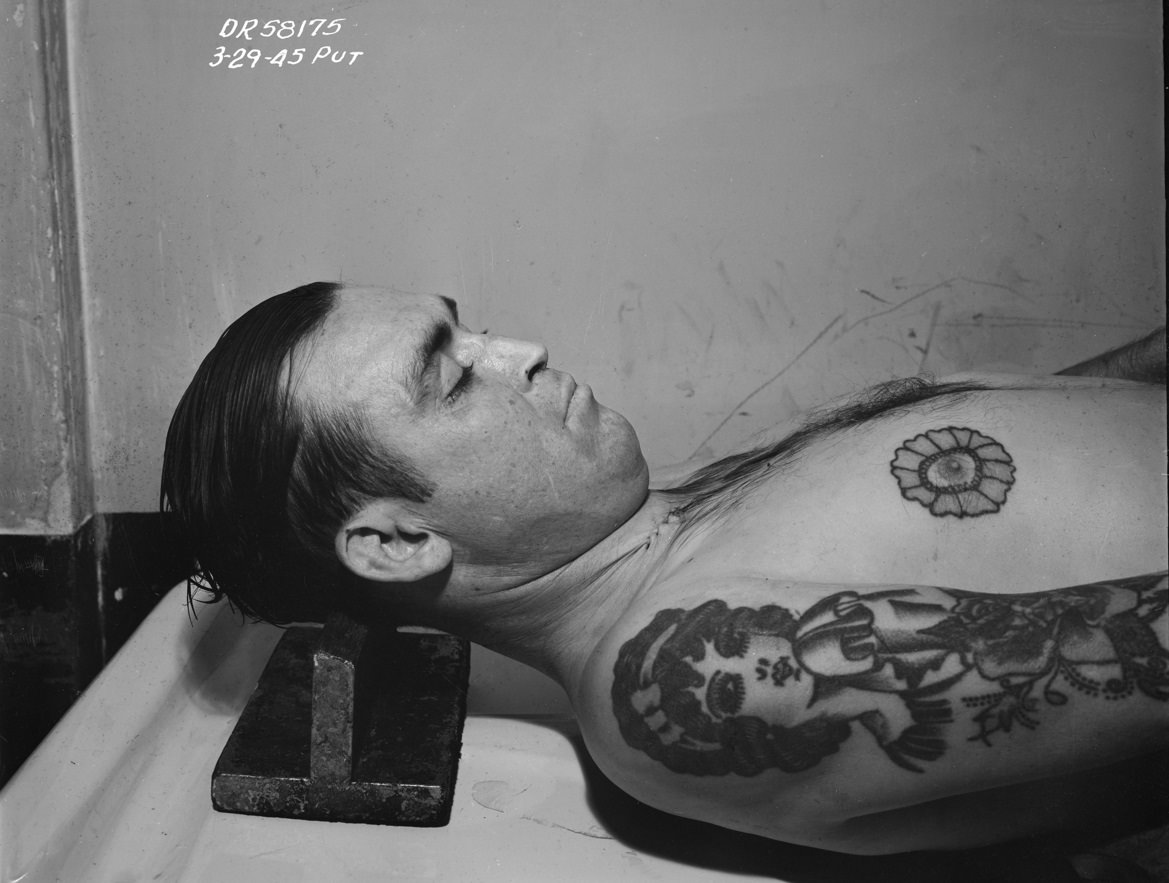
The morgue photographs in the collection are among the most direct records of violent death in mid-century Los Angeles. A 1945 image of an unidentified man with a floral tattoo, photographed post-mortem, was a standard identification technique. When a body arrived with no papers and no known identity, physical markings like tattoos were photographed and circulated in the hope that someone would recognize them.
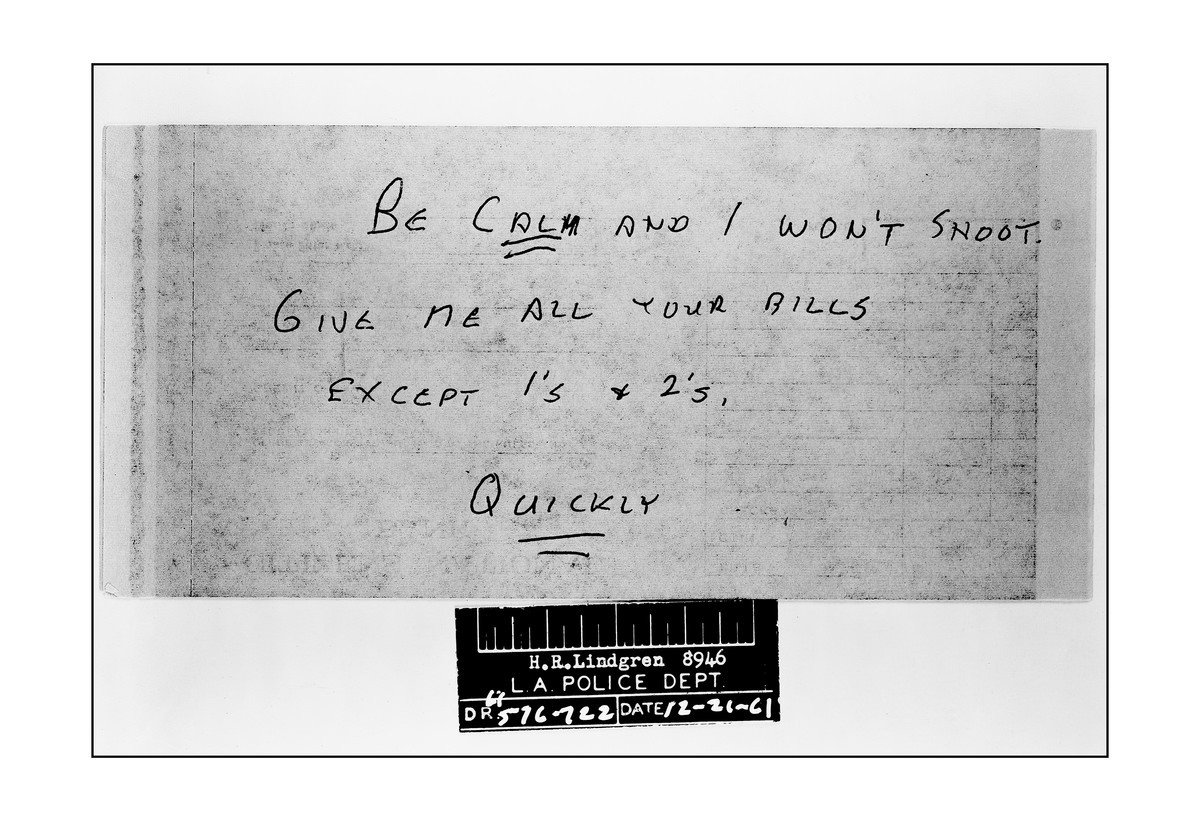
A second bank robbery demand note, this one from December 1961, appears in the archive alongside the 1965 note recovered from a separate case. Together, they show how common written hold-up notes were across the decade. Investigators preserved these slips of paper as primary evidence, sometimes the only direct physical link between a robbery and its perpetrator.
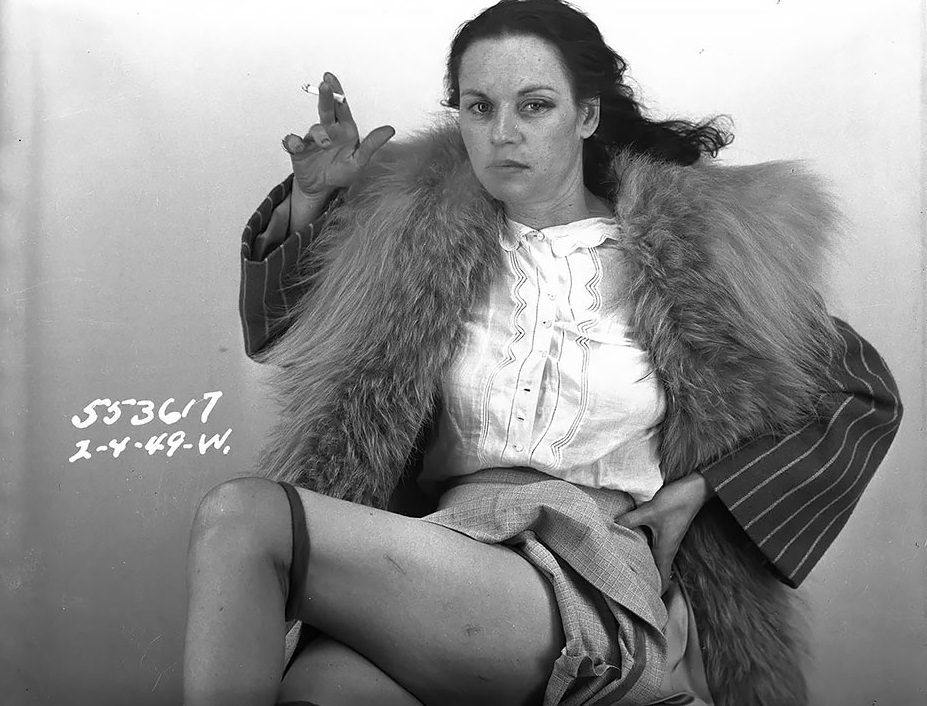
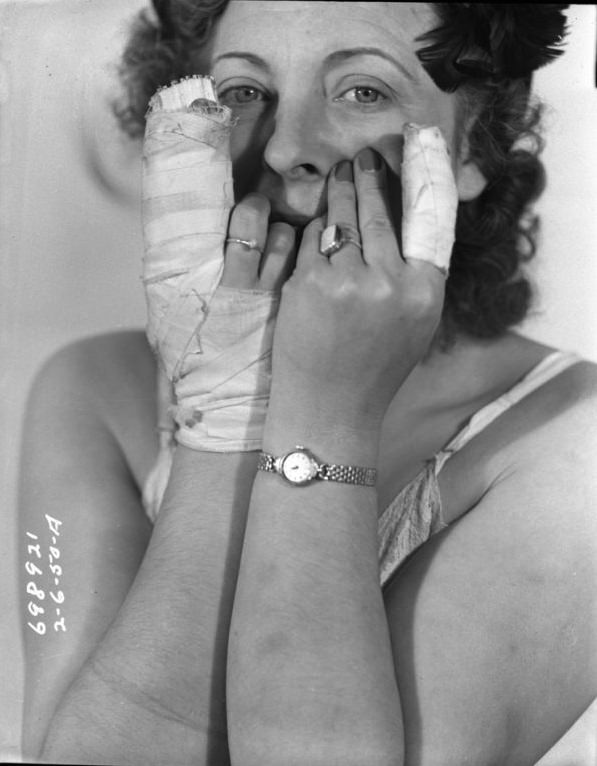
Female assault victims were photographed with the same documentary precision as homicide scenes. A February 1950 photograph shows a woman with visible bruising and bandaged fingers — injuries recorded for use as evidence in court. These images were clinical in purpose, though they also serve today as a record of the violence that largely went unreported in the press of that era.

some of the captions are all jacked up
must of had a weak DA back then too
Super interesting. I actually was surprised to see a man in the 1940s with tattoos around his nipples and the vintage (I guess not vintage back then) art on his shoulder.
This could be really cool if it was complete. some pics have no description and others are cut short like they were incorrectly cut and pasted…
I have the photobook a lot of these are from (Scene of the Crime: Photographs from the LAPD Archive). Really interesting book but the descriptions in the book aren’t that much better.
Some of these I recognize from the book LAPD ’53, think I recognize some from the book Death Scenes too. I’ve got a bunch of crime scene photography books and own a bunch of crime scene photos myself.
Jake Geddes in 10 🧐