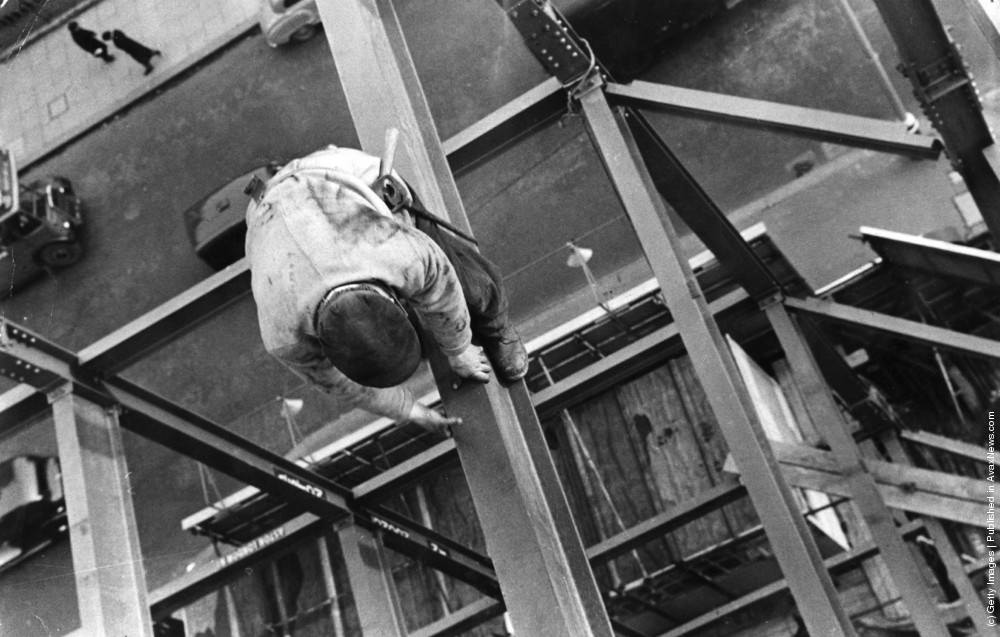
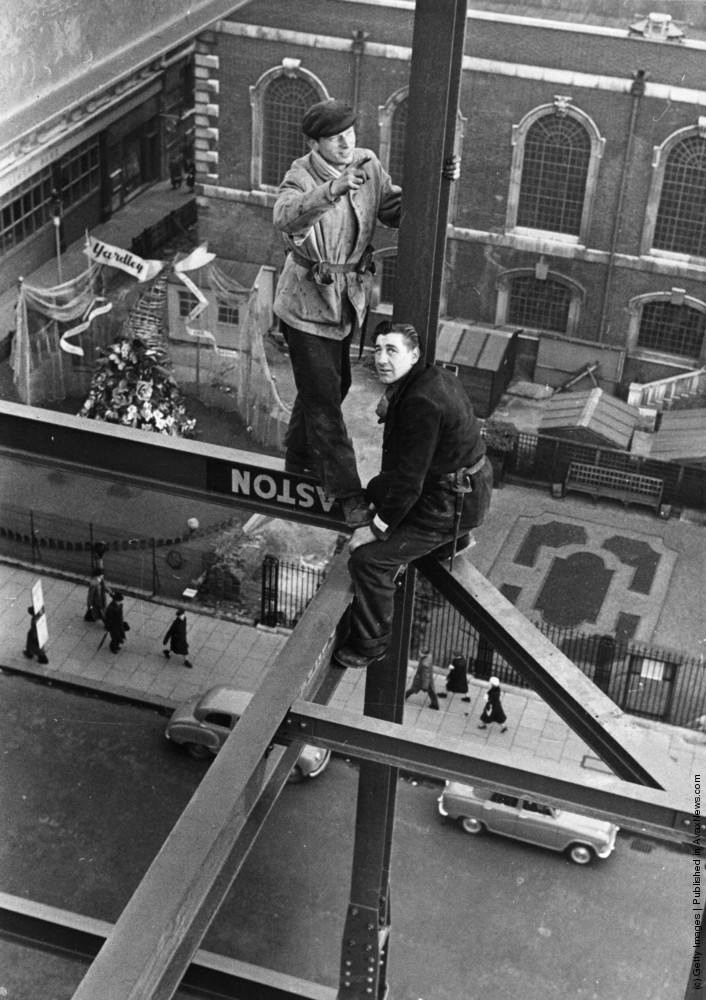
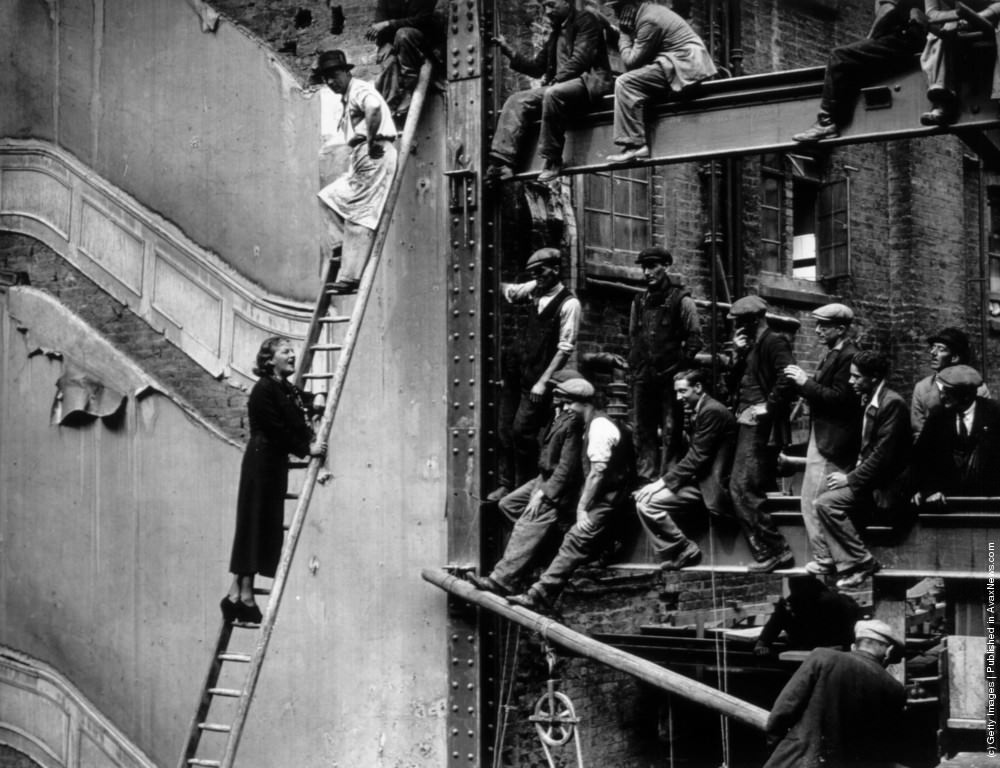
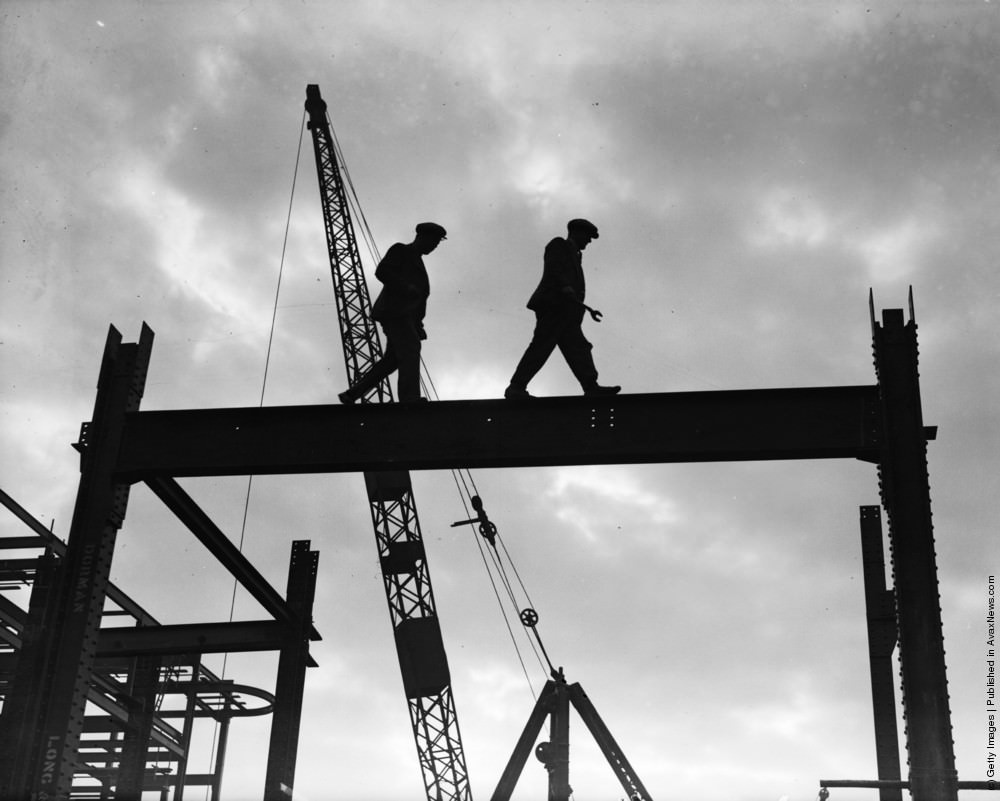
Before hard hats, harnesses, and safety nets became standard on job sites, workers scaled some of the world’s most iconic structures with nothing but their own nerve and skill. The photographs they left behind are jaw-dropping. Men perch on narrow steel beams hundreds of feet above city streets, some bolting girders together, others pausing for lunch or even a nap — all without a single lifeline in sight.
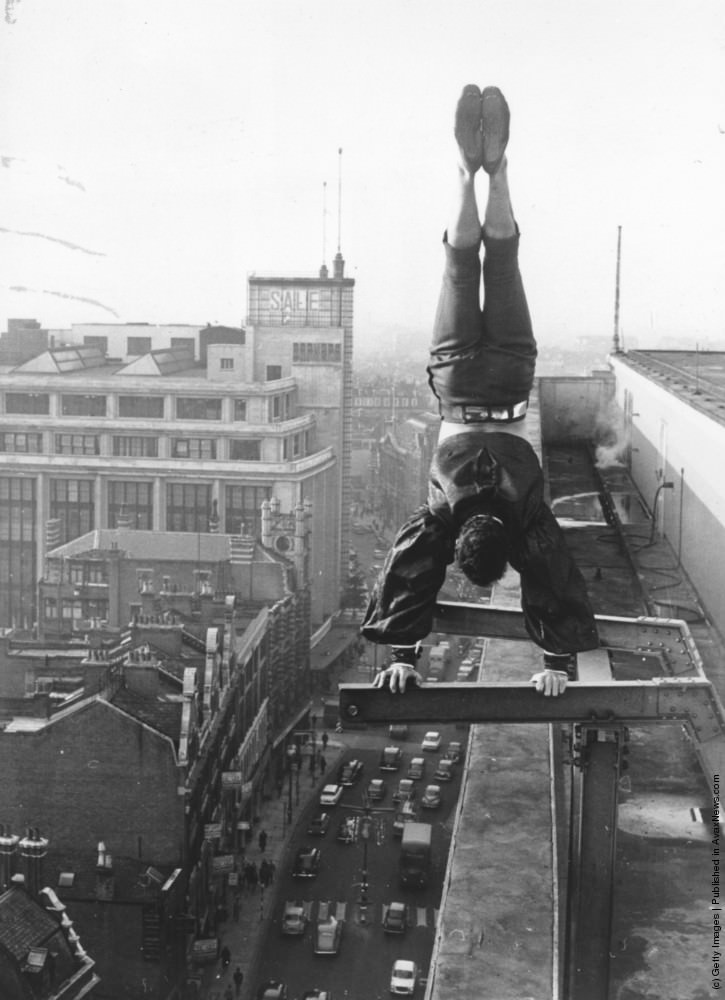
Skyscrapers, bridges, cathedrals, and radio towers were all built this way. The ironworkers and steeplejacks who took on these jobs needed extraordinary balance, focus, and a near-total lack of fear. Their workdays routinely took place at elevations that most people would never voluntarily approach. Construction sites in New York City during the 1920s and 1930s were especially prolific settings for these kinds of images.
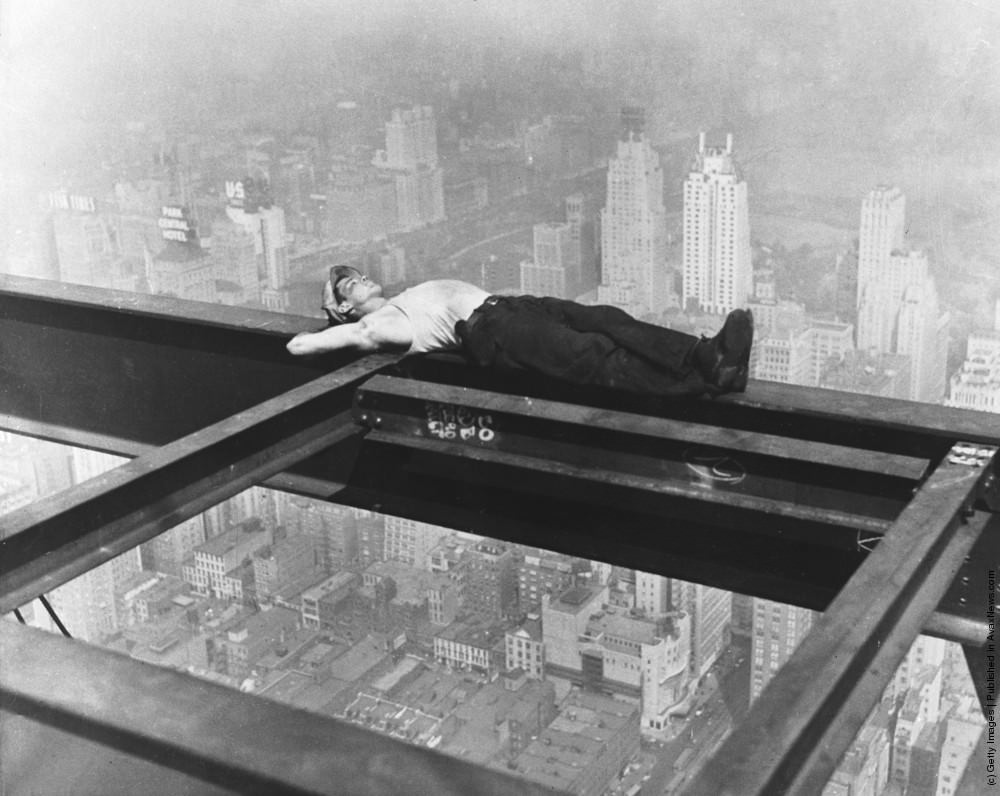
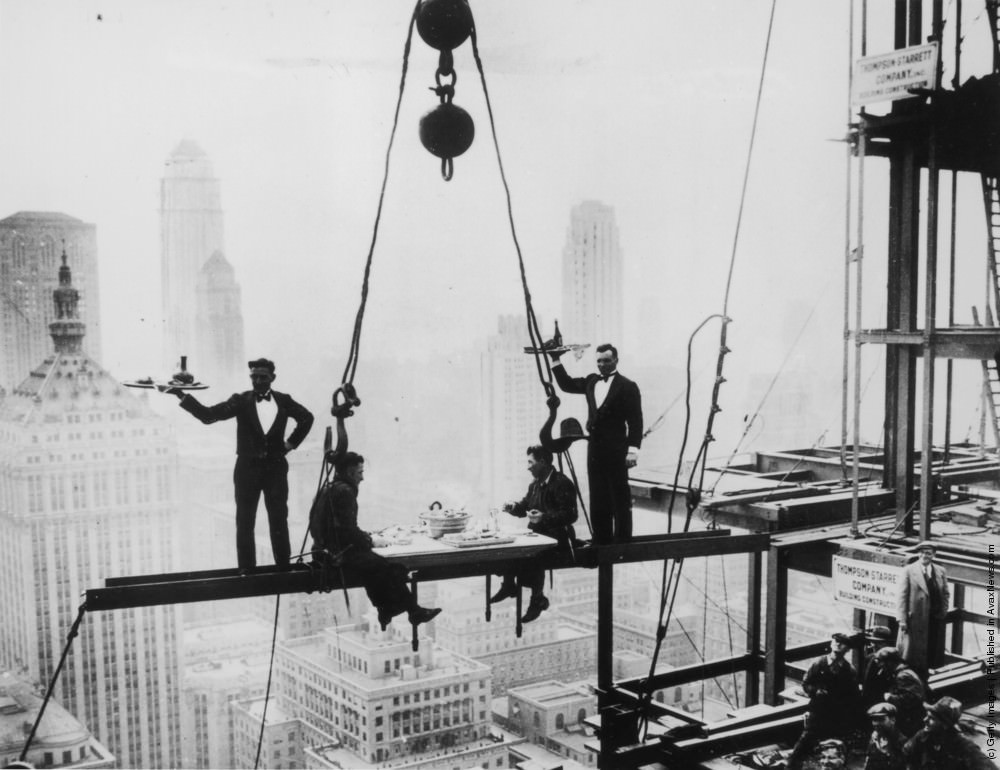
The casual attitudes captured in many of these photos are striking. Workers ate lunch, played music, and rested on open girders as if they were sitting on a park bench. Two waiters from the Waldorf-Astoria delivered lunch to steel workers on a beam during the hotel’s own construction in 1930 — a scene that is equal parts surreal and matter-of-fact.
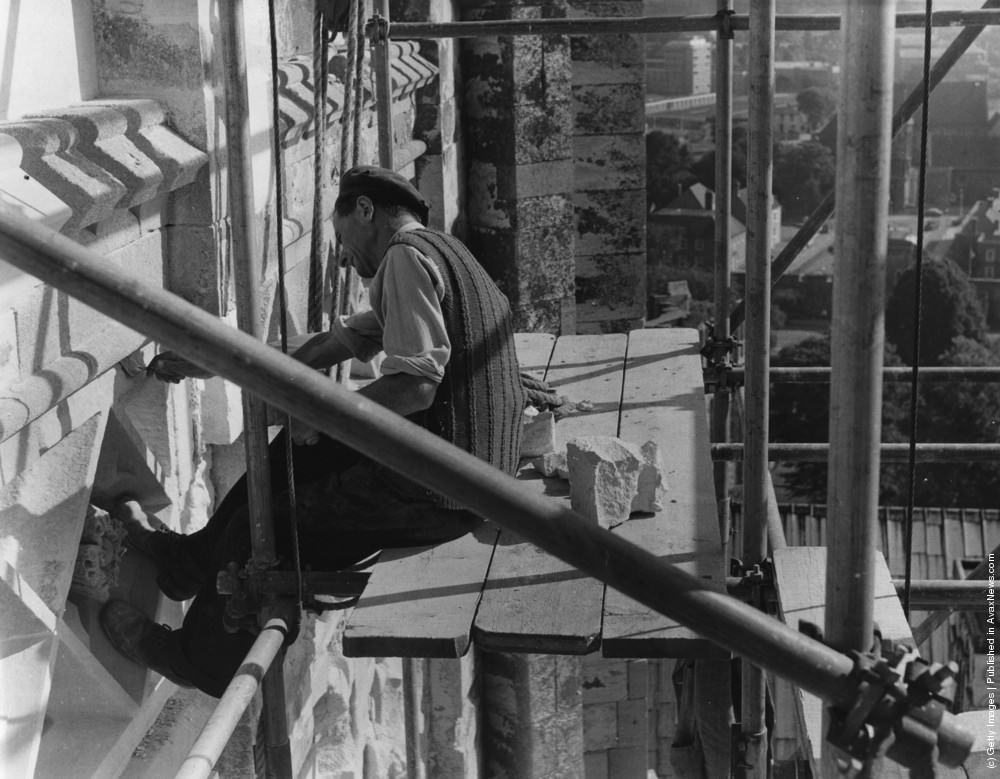
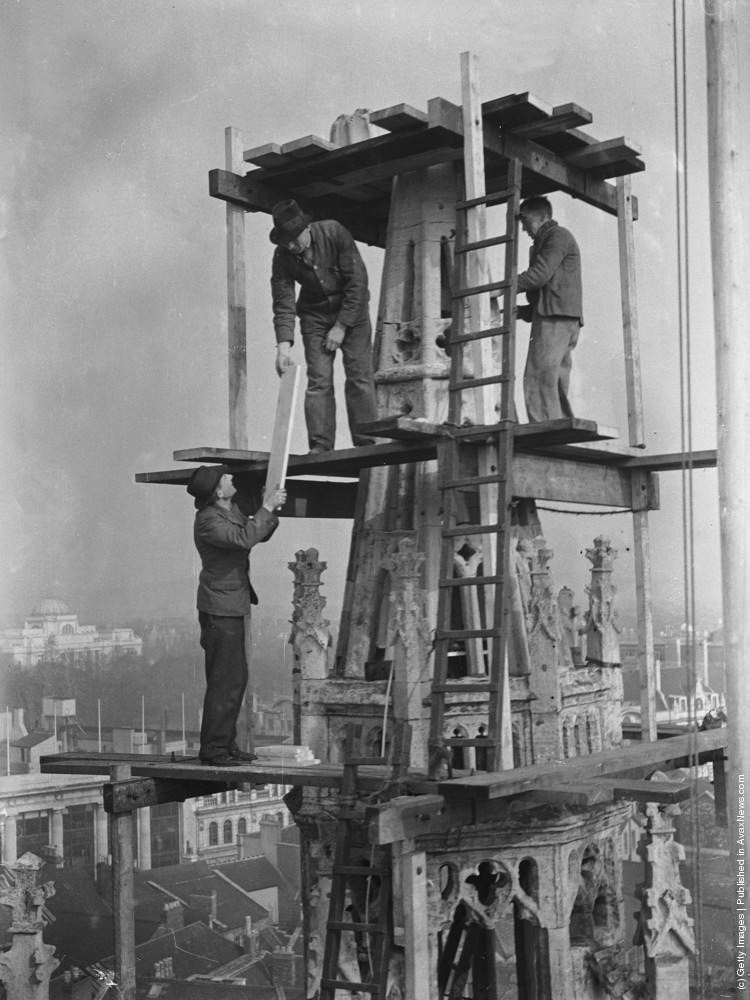
It wasn’t only steel-frame skyscrapers that demanded this kind of daring. Stonemasons and steeplejacks worked on centuries-old cathedrals and church spires across Britain, chipping and repairing stone while suspended at terrifying heights. These structures required constant upkeep, and the men who did the work operated on thin wooden scaffolding or stone ledges far above the ground.
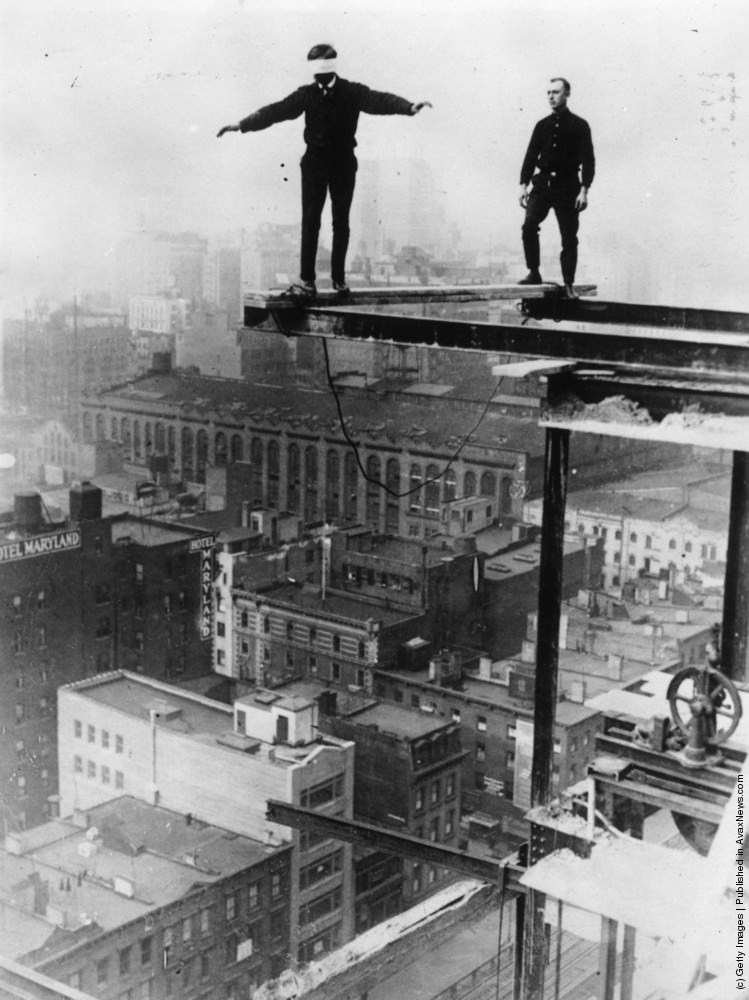
Some workers pushed the limits even further. One photograph from 1925 shows a construction worker walking a girder twenty stories above New York City — blindfolded. Whether it was a bet, a stunt for a camera, or sheer bravado, the image encapsulates just how normalized extreme risk had become on these job sites.
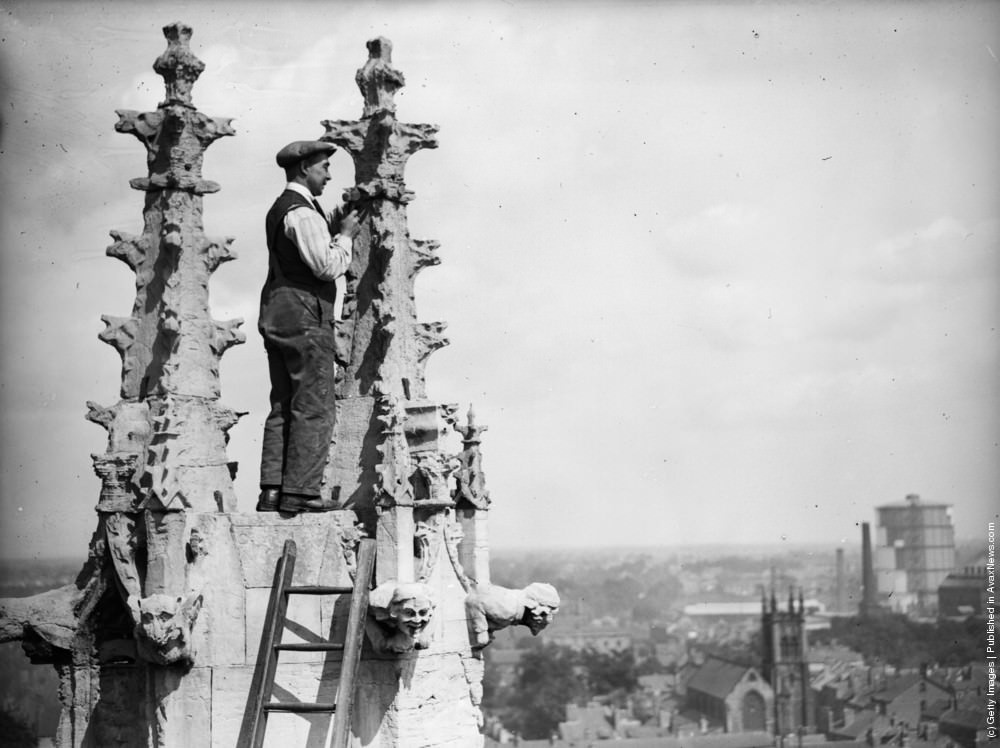
York Minster’s Gothic spires required workers to climb to their peaks for renovation work in 1931. The stone spires offered few handholds and no modern anchoring systems. Similar scenes played out at Blackpool Tower, where riveters carried out structural repairs on the main girders high above the seafront crowds below.
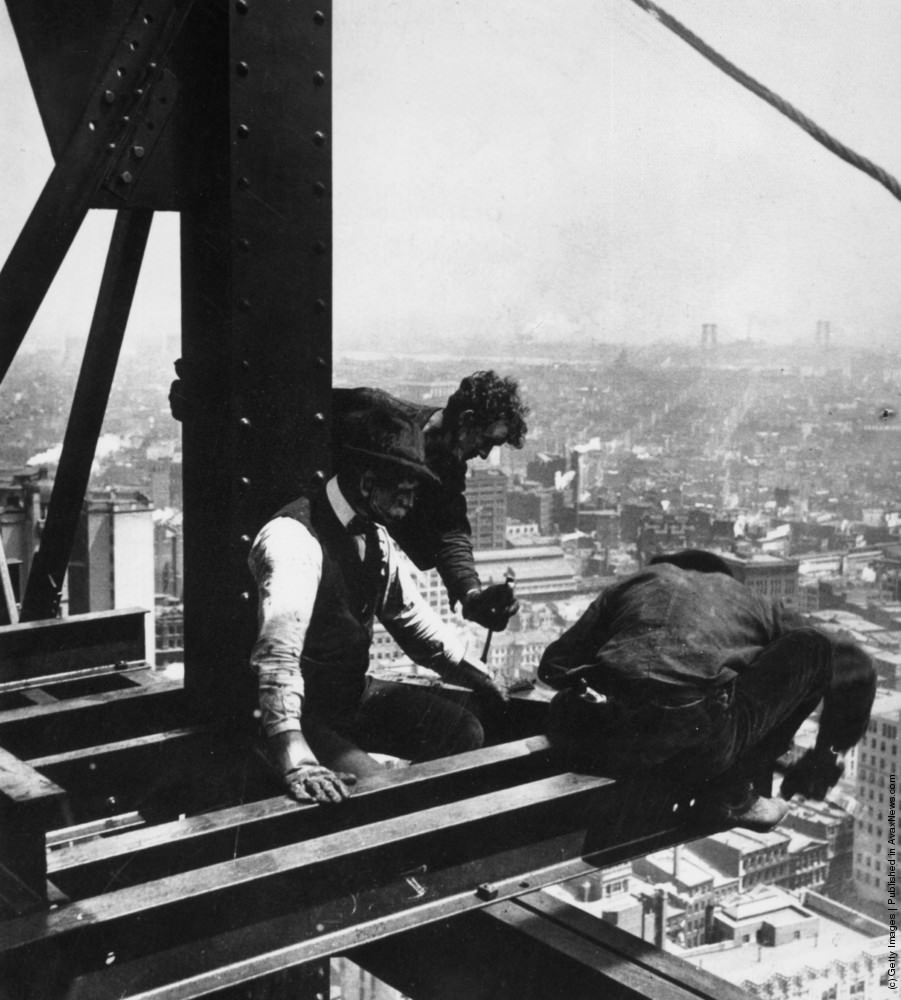
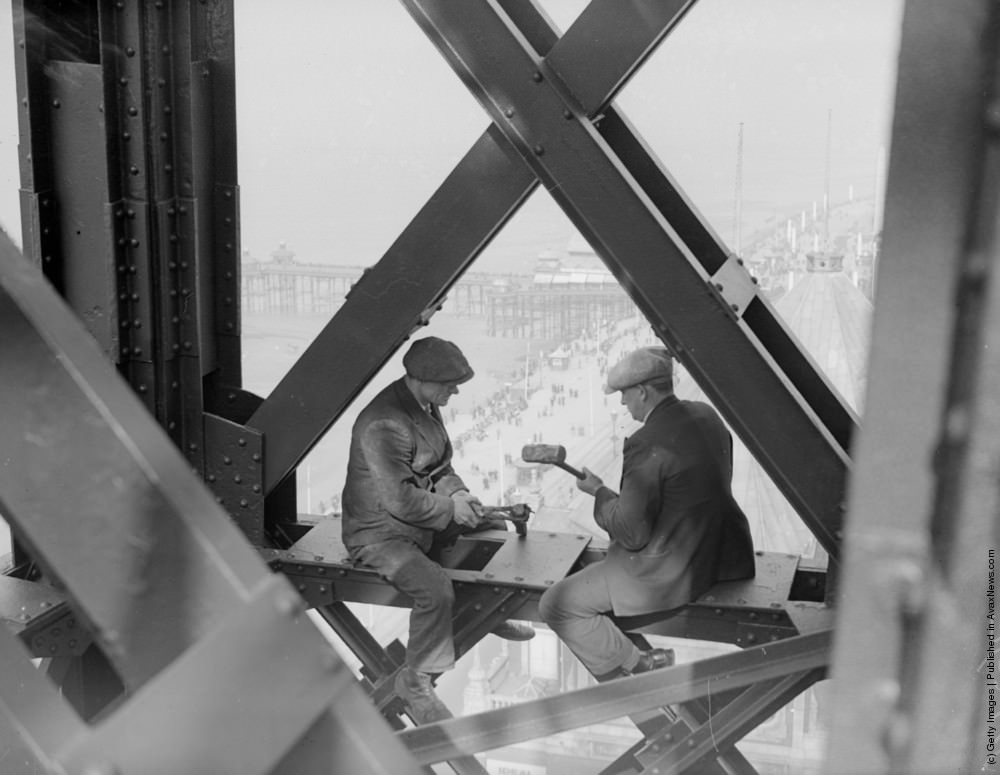
Riveting was one of the most dangerous trades in construction. A team of riveters worked in coordination — one man heated the rivet, another caught it in a metal bucket, a third held it in place, and a fourth hammered it home. The rivet tosser, whose job was to hurl red-hot metal across open gaps at height, was considered so high-risk that insurance companies refused to cover them for life or accident policies.
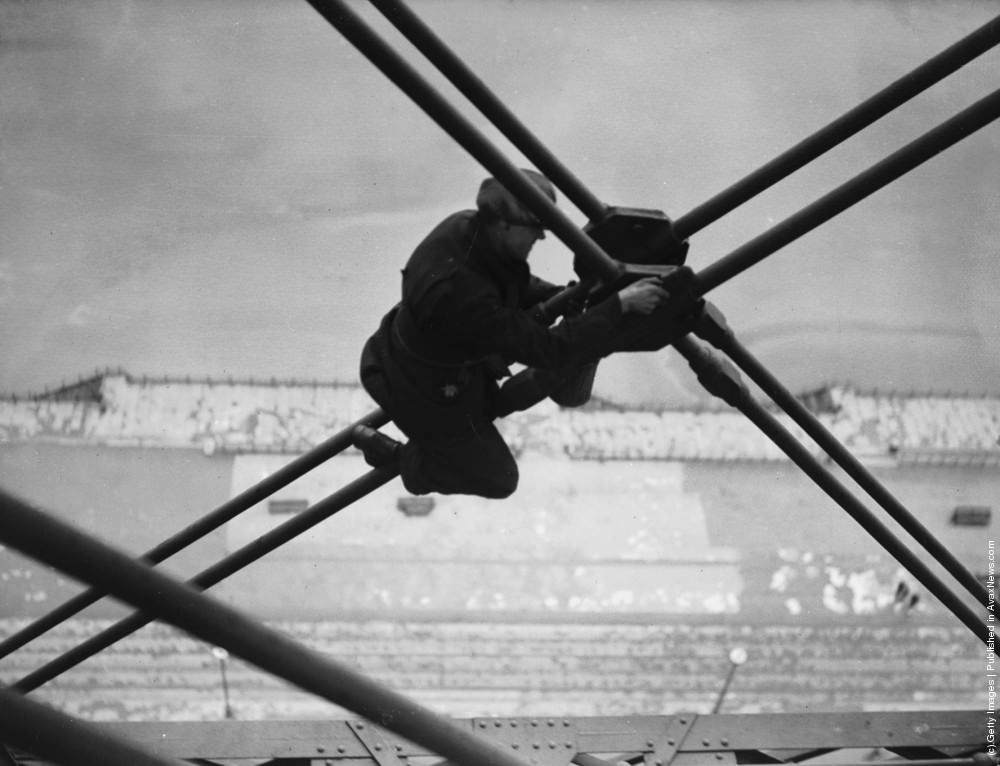
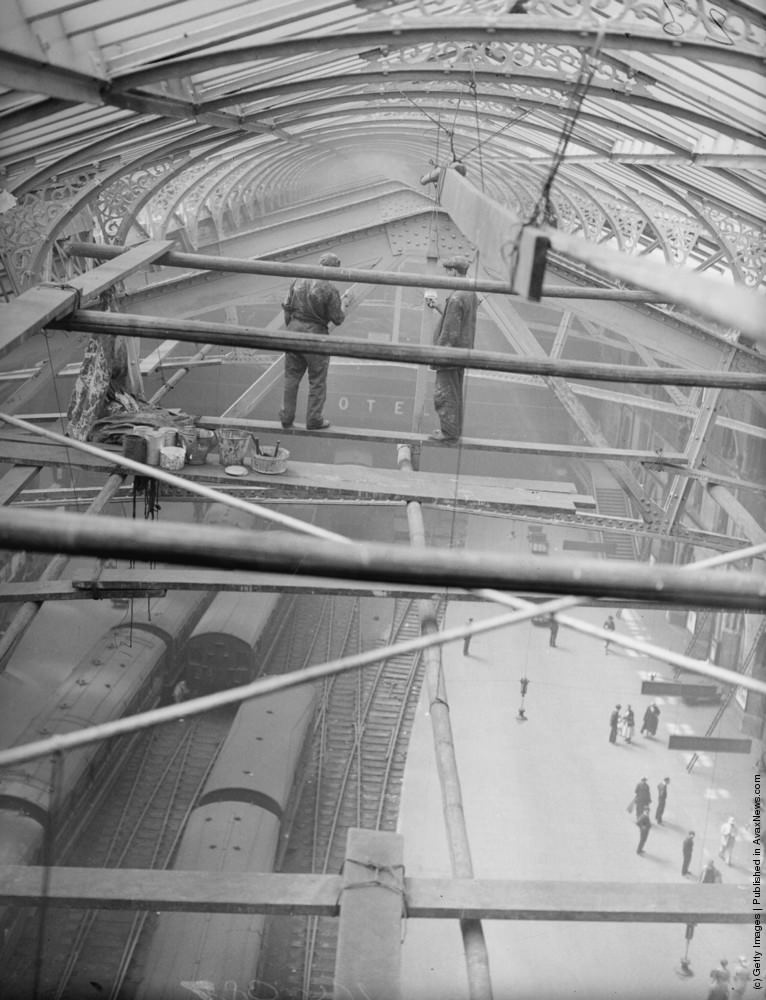
Maintenance jobs were just as perilous as construction ones. Workers painting the ironwork beneath the roof of Liverpool Street Station in 1935 balanced on narrow beams high above the station concourse. At Cardiff’s St John’s Church, men carried out spire repairs from scaffolding with no visible fall protection whatsoever.
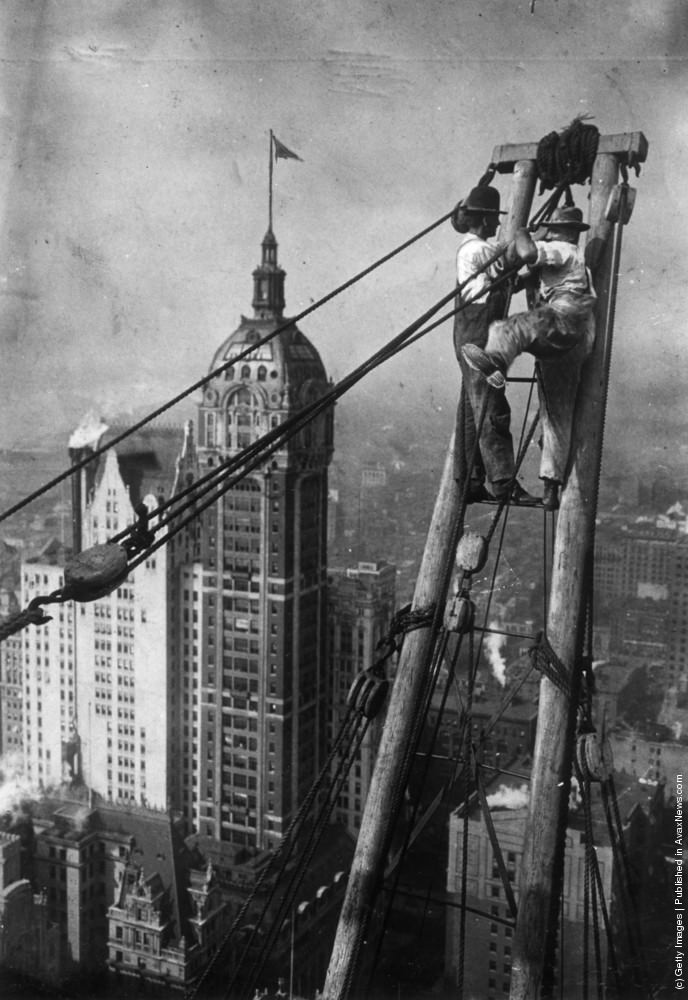
New York’s skyline provided the backdrop for some of the most iconic images in this collection. Workers were photographed sitting on a hoisting ball suspended above the city in 1925, and a lone steel worker balanced on a beam during the construction of the Empire State Building in 1931. These weren’t posed publicity shots — they were ordinary moments in an ordinary workday.
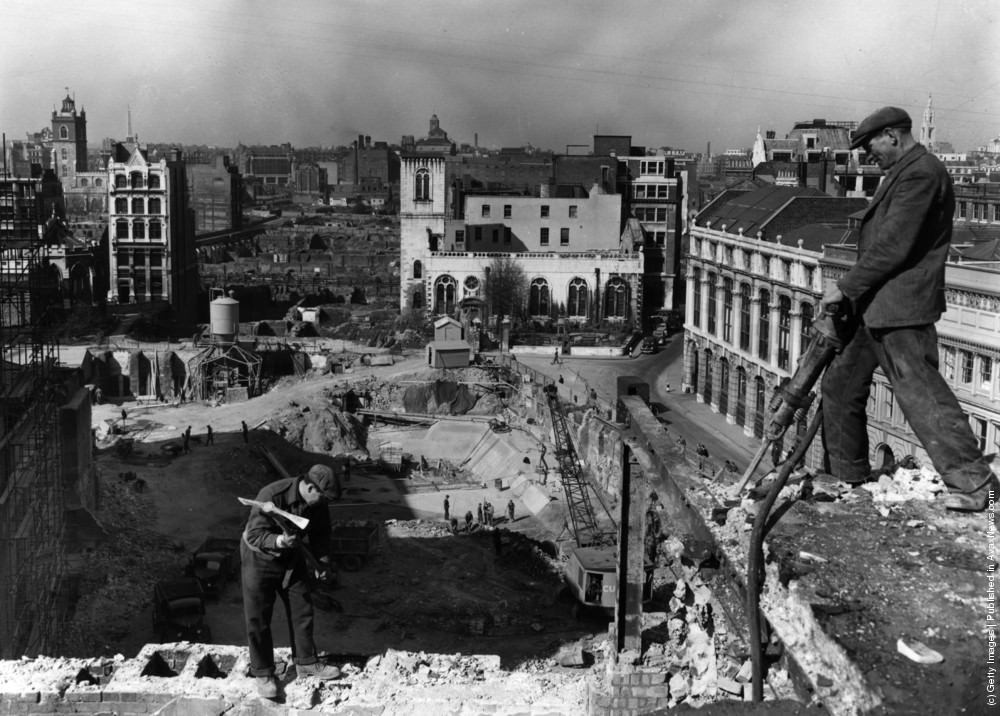
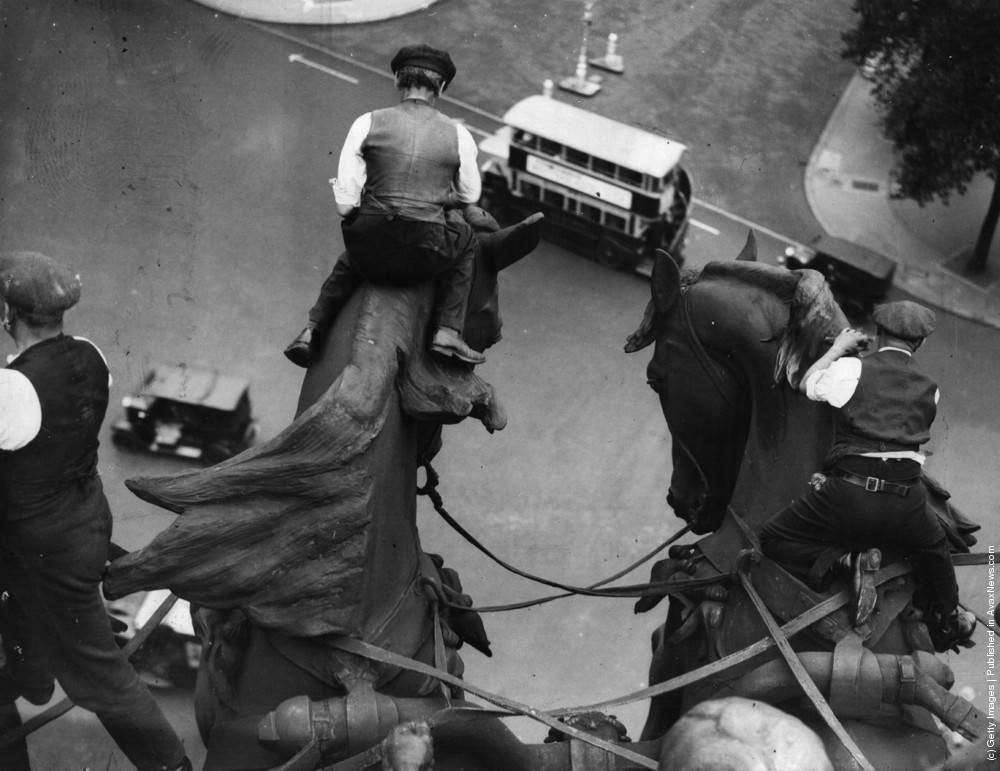
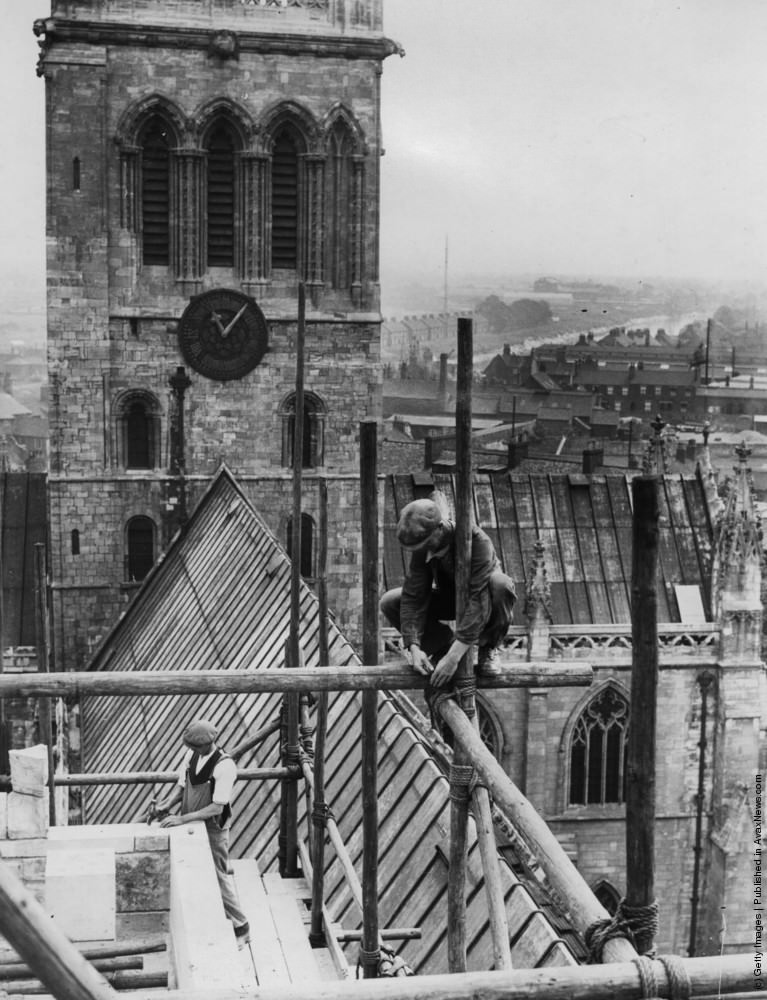
Religious buildings demanded equally bold work. At Selby Abbey in Yorkshire, workers finished the new west towers in 1935 from open scaffolding high on the facade. At London’s Hyde Park Corner, workers cleaned the horse heads of the bronze quadriga statue atop the Wellington Memorial in 1958, straddling the sculpture dozens of feet above the ground.
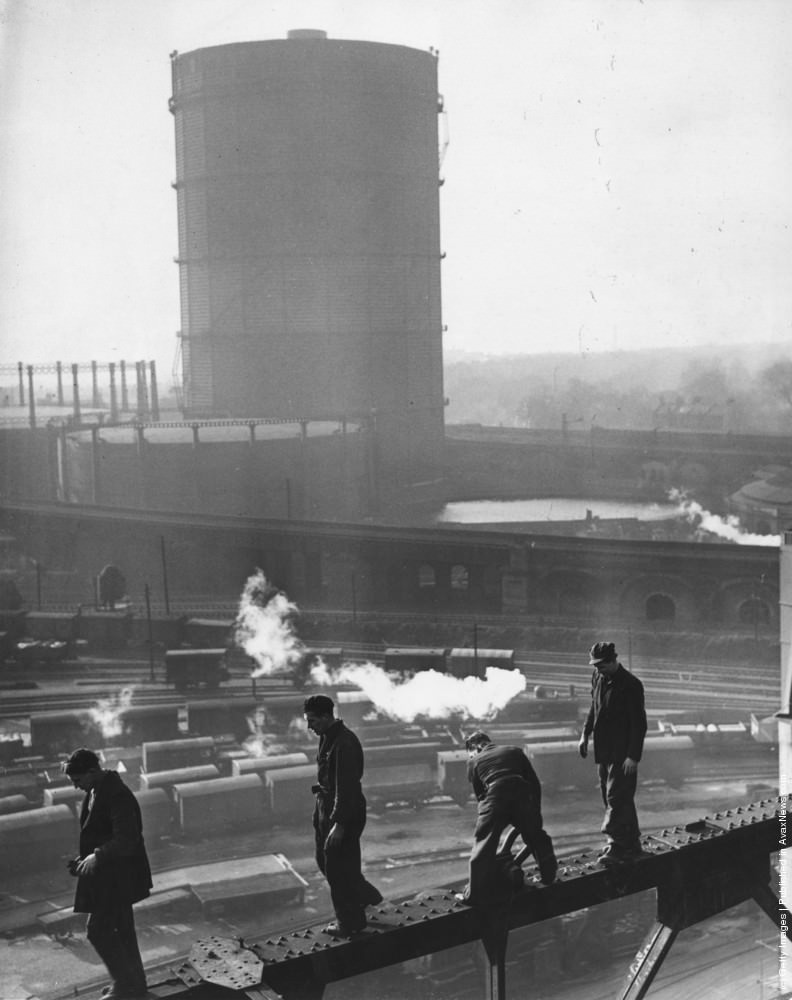
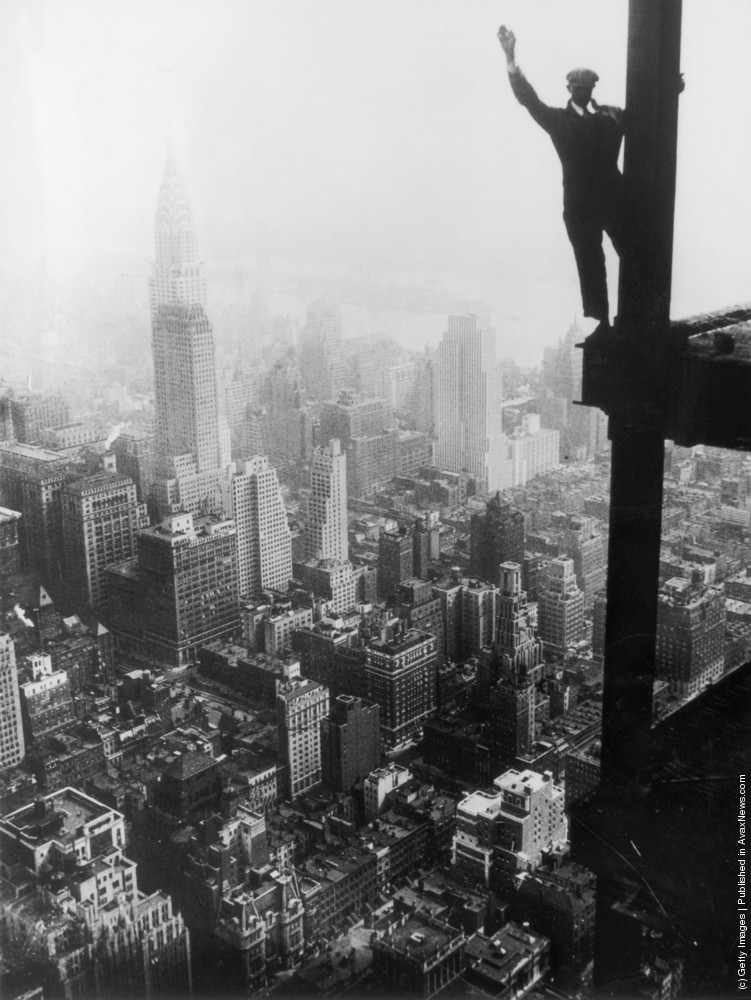
The men in these photos treated their terrifying workplaces with a matter-of-fact confidence that is hard to reconcile with modern standards. At Battersea Power Station in 1951, workers walked narrow girders during construction with the same ease as walking a pavement. The danger was real — falls were fatal — but these workers had no alternative equipment and no safety regulations forcing change.
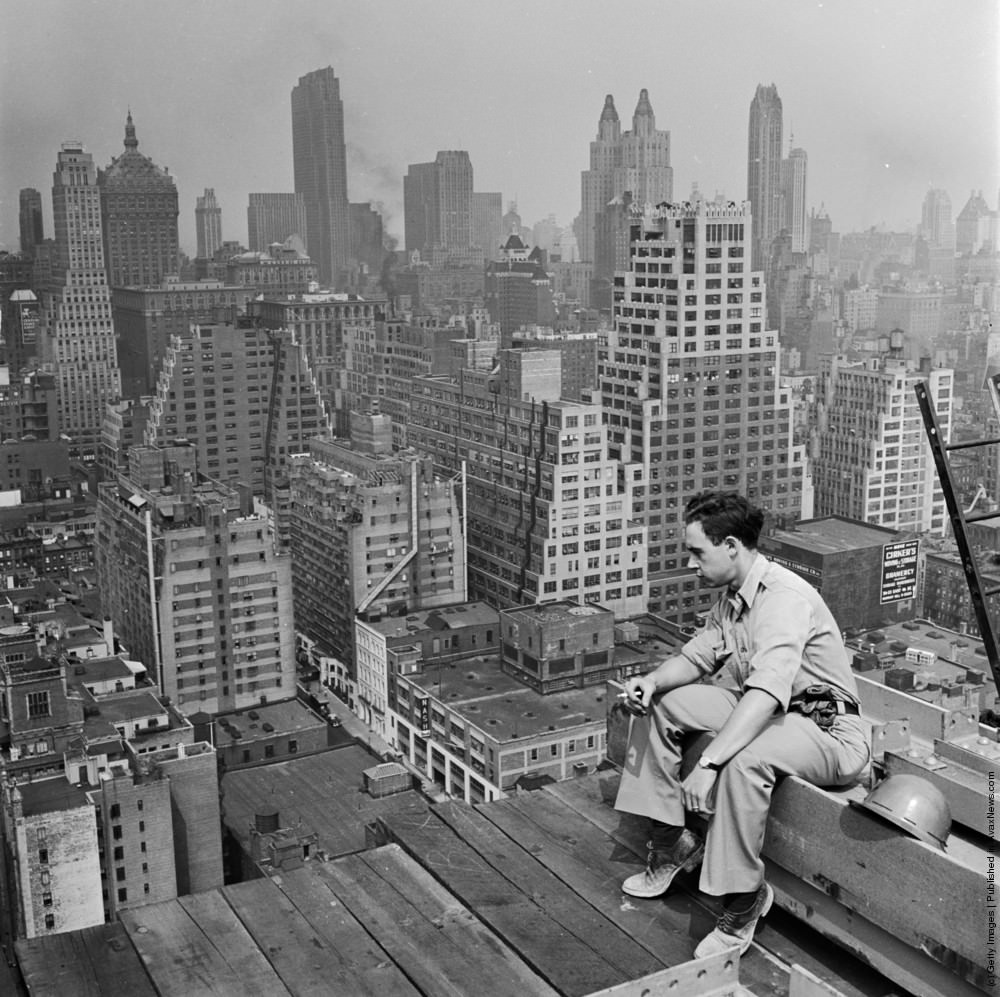
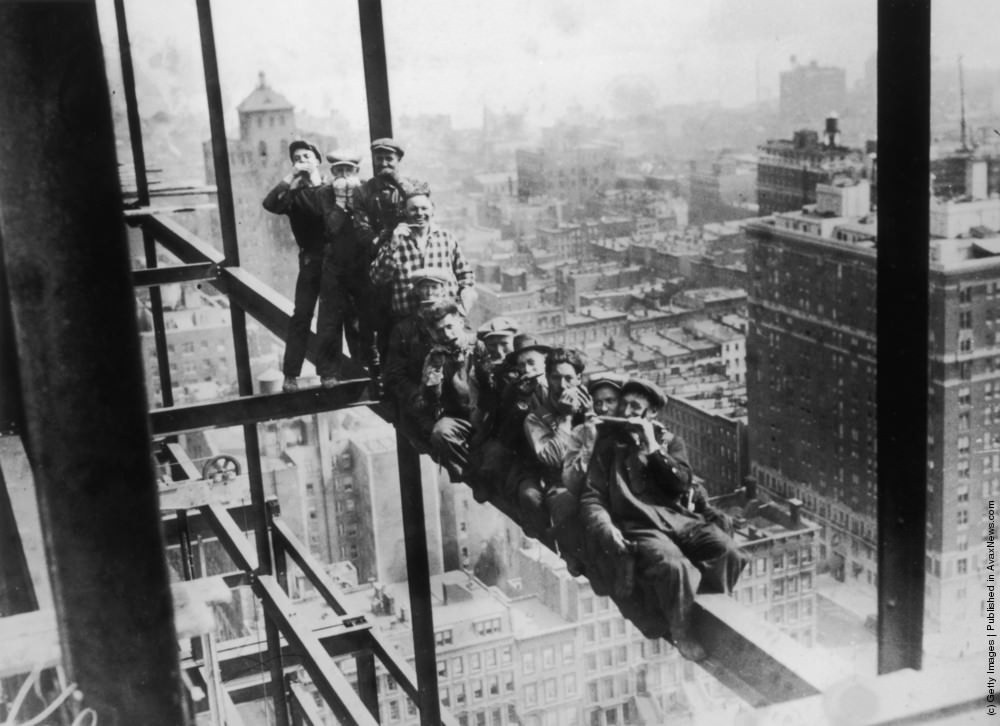
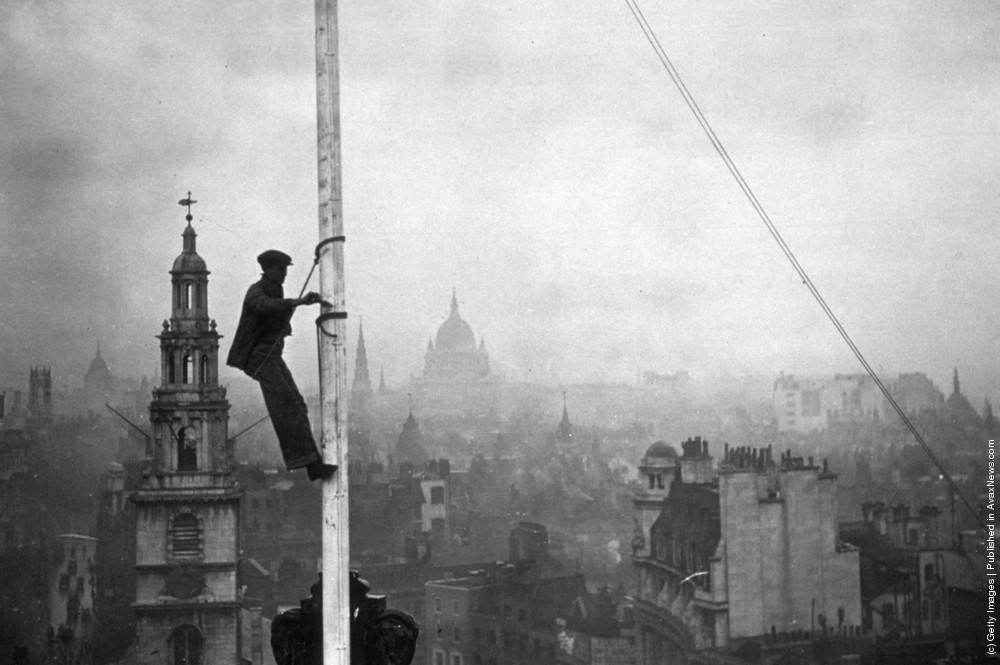
Between tasks, the humor and humanity of these workers comes through clearly. Steel workers played harmonica perched on a girder on the 22nd story of the Murray Hill building in New York in 1930. A steeplejack painted the flagstaff atop Australia House in London in 1934 with St Clement Danes Church visible far below him — just another Tuesday on the job.