Hey There! Before You Go. 😧
Get the best vintage content straight into your inbox!

Don't worry, we don't spam

New York on D-Day: Historic Photos Show How Anxious New Yorkers Reacted to the Historic Invasion

On the morning of June 6, 1944, word spread across New York City like a shockwave. The Allied invasion of Normandy had begun. Under the command of General Dwight D. Eisenhower, some 156,000 troops had landed on five beaches along the French coast. The operation was staggering in scale — nearly 5,000 landing and assault craft, 289 escort vessels, and 277 minesweepers took part in what became one of the largest military operations in history. For New Yorkers far from the beaches of France, the only way to follow the news was to find a radio or a newspaper — and thousands of them took to the streets to do exactly that.

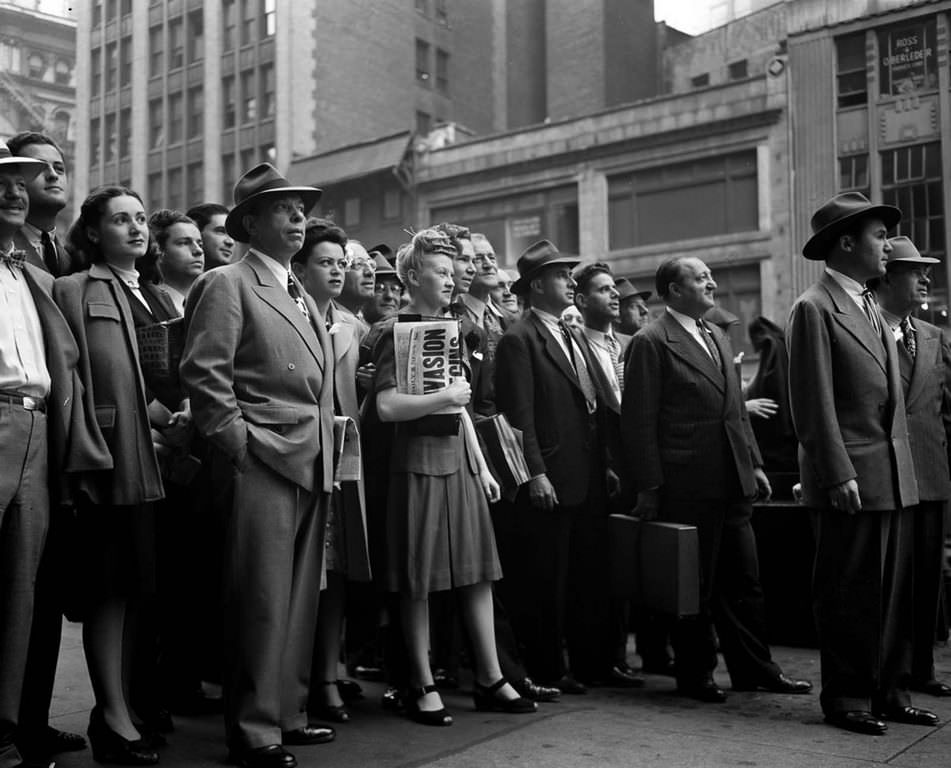
Times Square became the nerve center of the city’s reaction. Crowds packed the streets and craned their necks to watch the latest bulletins scroll across the electronic news ticker on the New York Times building. The atmosphere was tense. These were not celebrations — they were the anxious vigils of people who had husbands, sons, and brothers fighting in Europe.
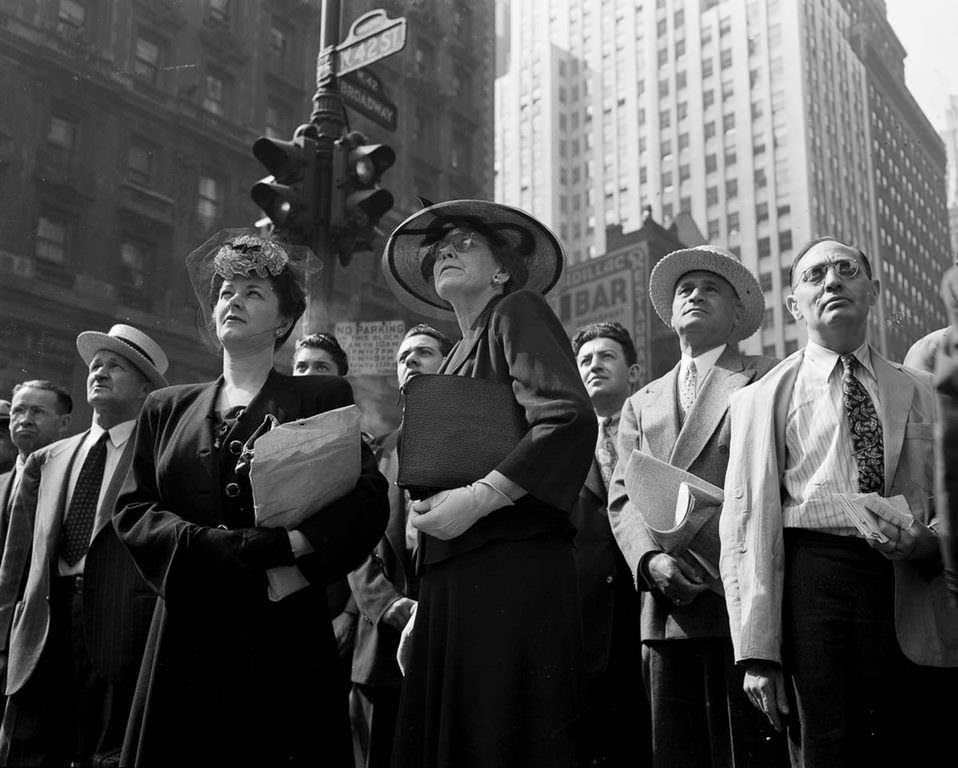
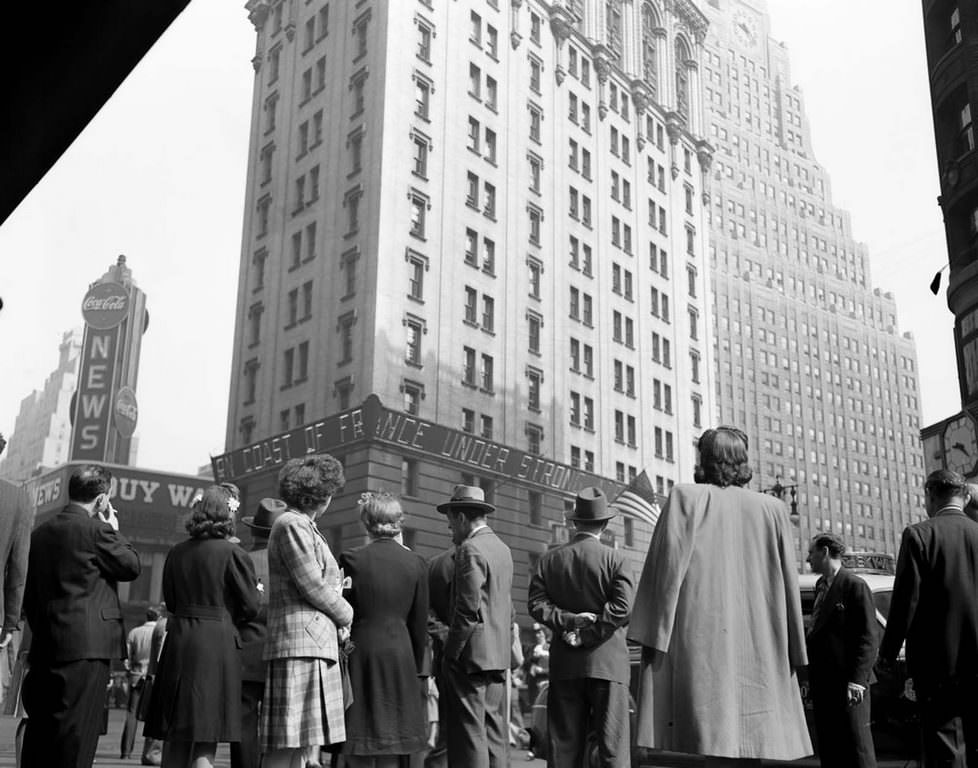
People in Times Square watch the news ticker on the New York Times building.
Crowds watching the electronic ticker on the New York Times building in Times Square as they waited for the latest reports.

The ticker on the Times building drew people from all walks of life. Office workers, servicemen on leave, and ordinary New Yorkers stood shoulder to shoulder, eyes fixed on the slow crawl of words that told them what was happening thousands of miles away.
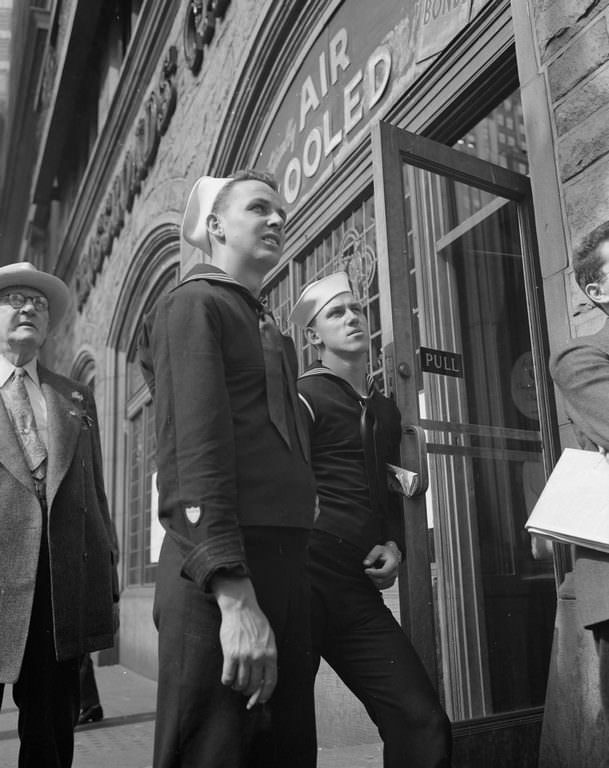
Two sailors smoke a cigarette and lean against as they apprehensively scan the latest news bulletins on the Times building.
People gather in Times Square to watch the news ticker on the New York Times building.

Not everyone marked the day in the streets. Across Manhattan, churches and synagogues filled with worshippers who gathered to pray for the men fighting on the beaches of Normandy. On 23rd Street, a synagogue held a special D-Day service, drawing crowds of the faithful who came to observe the historic moment in their own way.
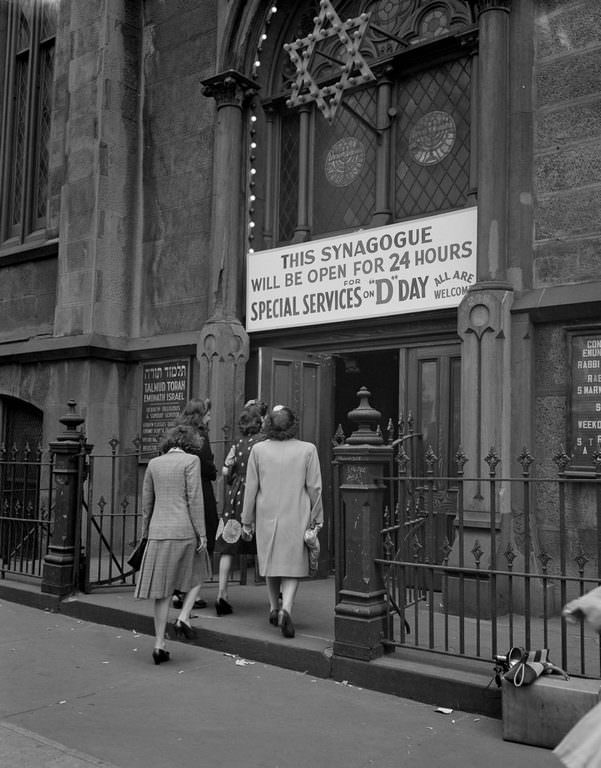
Worshippers enter a synagogue on 23rd Street for a special D-Day service.

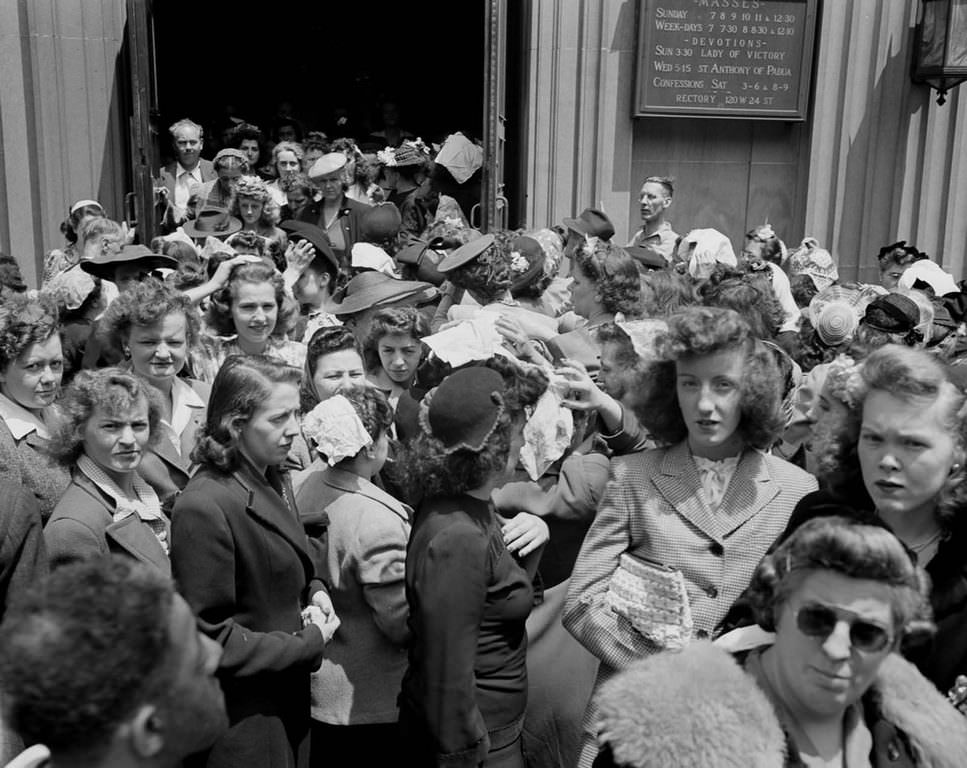
St. Vincent de Paul’s church on 23rd Street was no different. The noon mass was packed. Pews filled well beyond normal capacity as New Yorkers sought solace and community in one of the most uncertain days many of them had ever lived through.
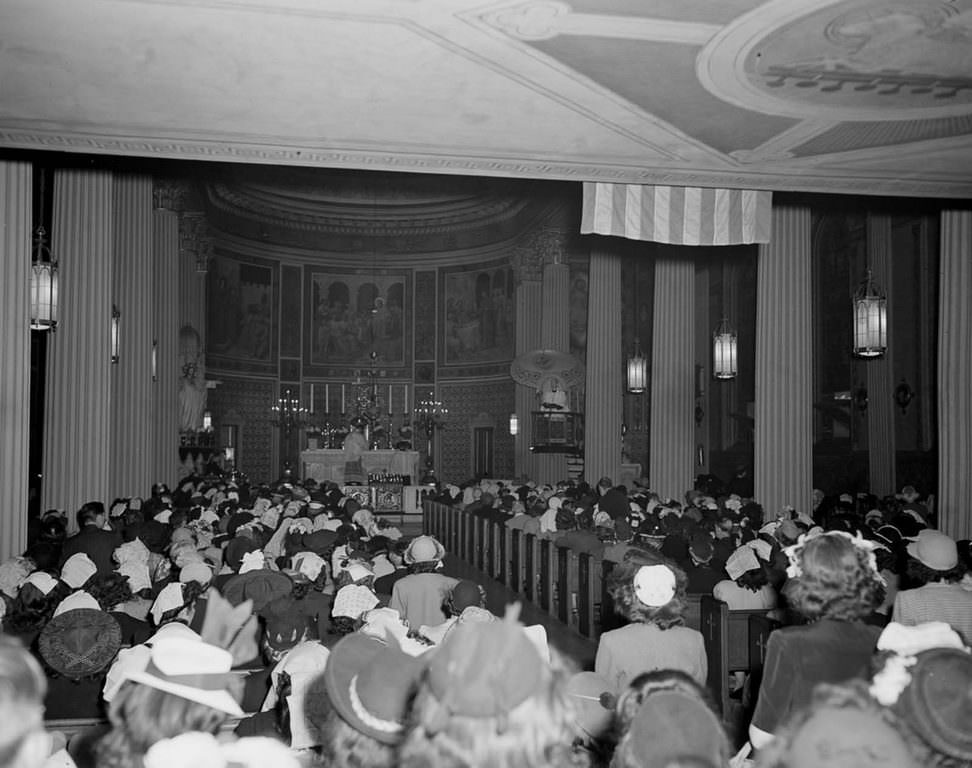
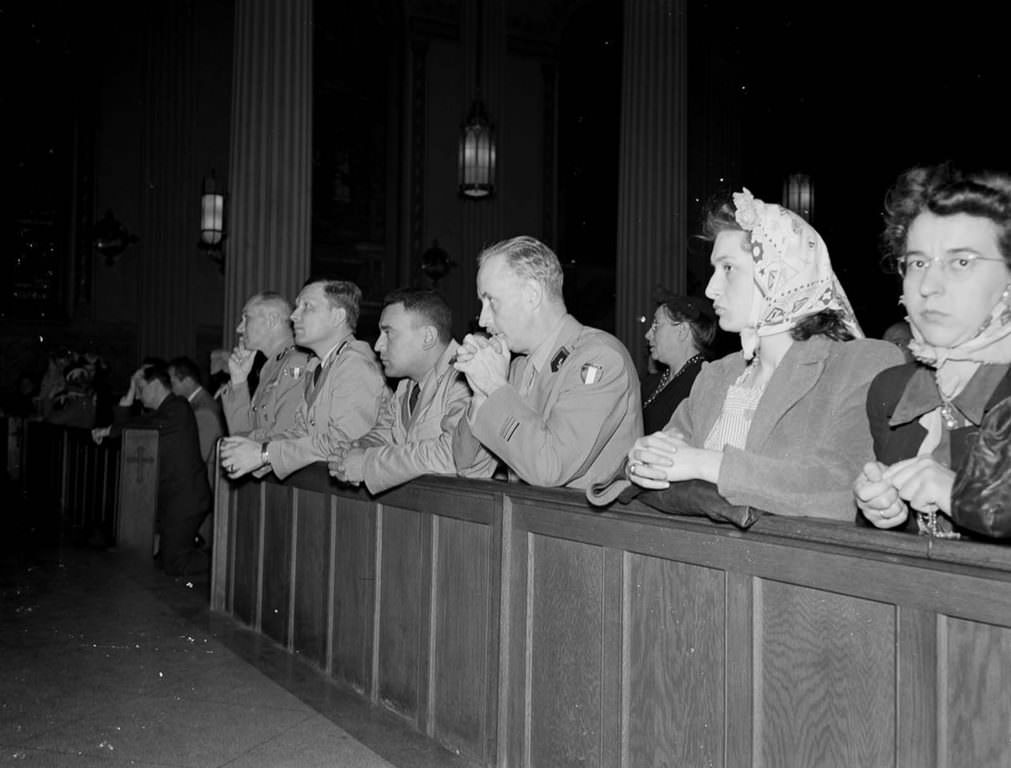
The packed noon mass at St. Vincent de Paul's church.
The packed noon mass at St. Vincent de Paul’s church.
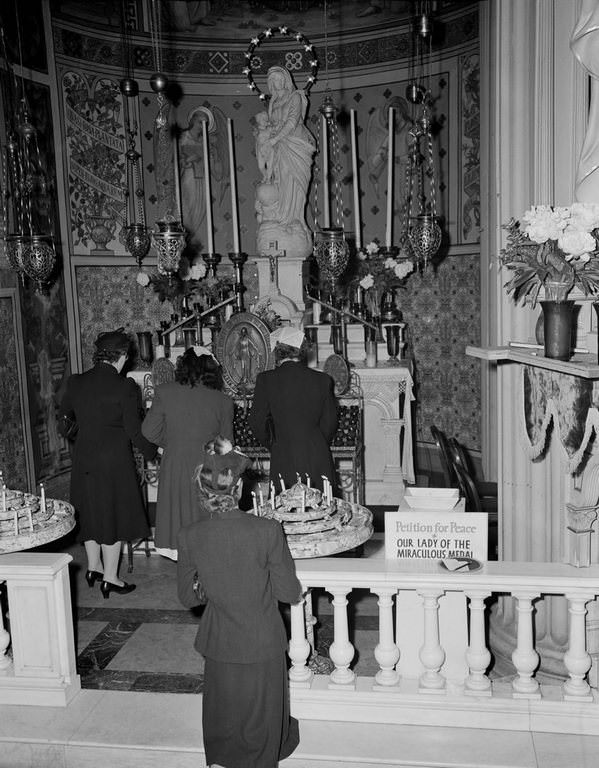
Worshippers pray at noon mass at St. Vincent de Paul's church on 23rd Street.
Worshippers pray at noon mass at St. Vincent de Paul’s church on 23rd Street.
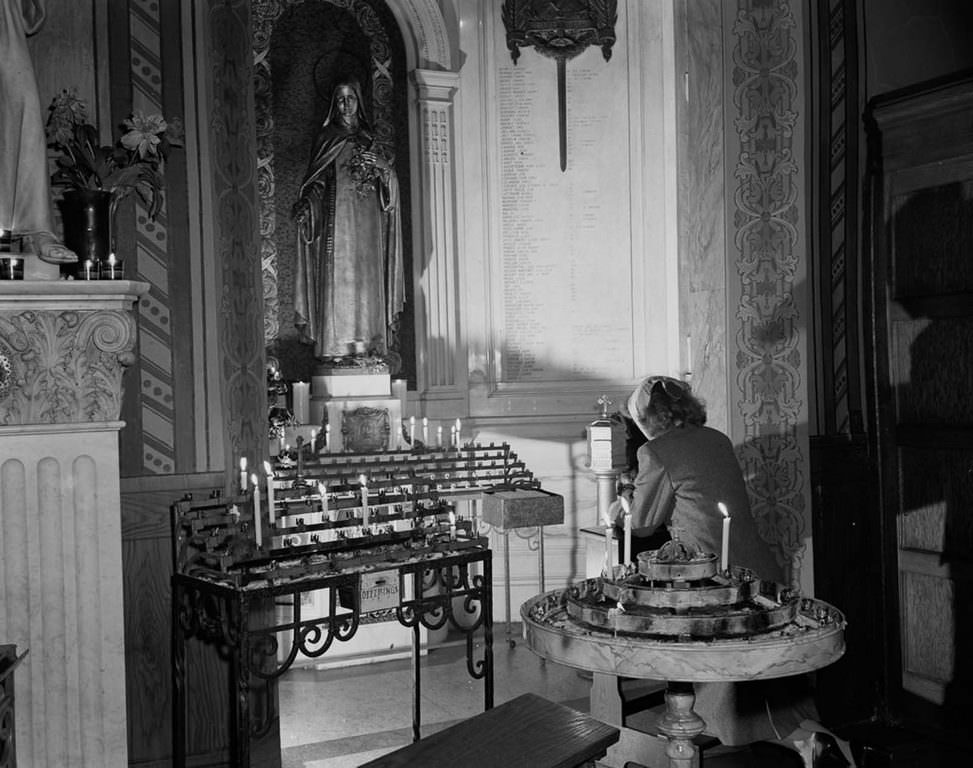
A woman prays at St. Vincent de Paul's church on 23rd Street.
A woman prays at St. Vincent de Paul’s church on 23rd Street.
Worshippers outside St. Vincent de Paul's church.
Worshippers outside St. Vincent de Paul’s church.
People praying.
People praying.

Back in Times Square, the crowds continued to grow throughout the day. Soldiers and sailors mixed with civilians, all of them waiting for the same thing — confirmation that the invasion was succeeding. The mood was one of quiet, gripping tension rather than jubilation.
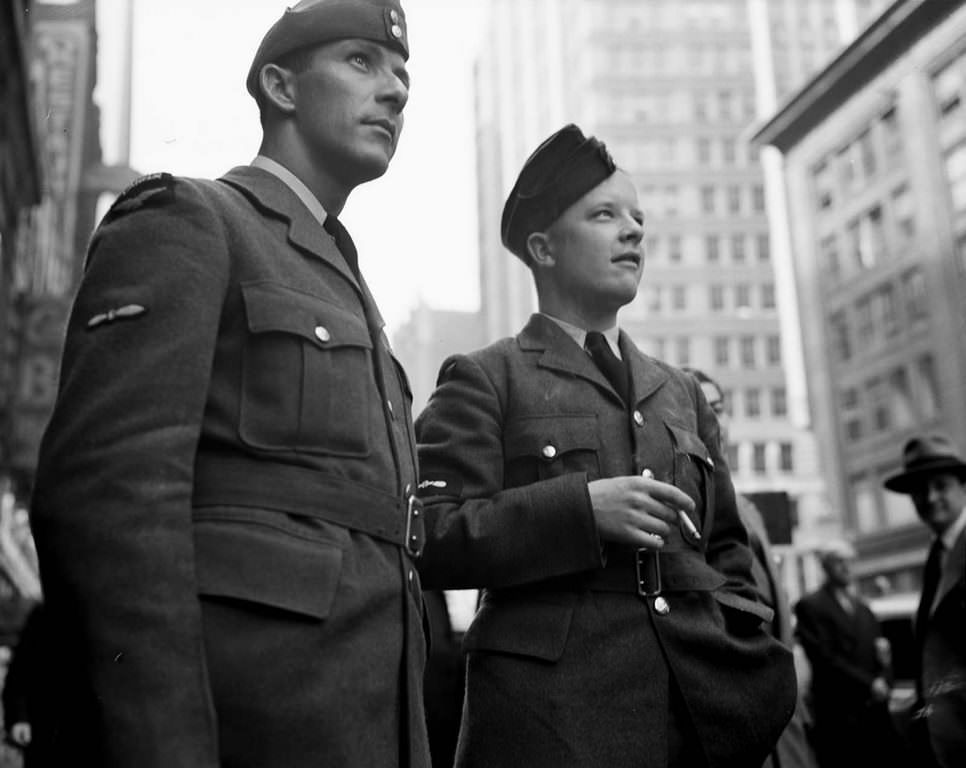
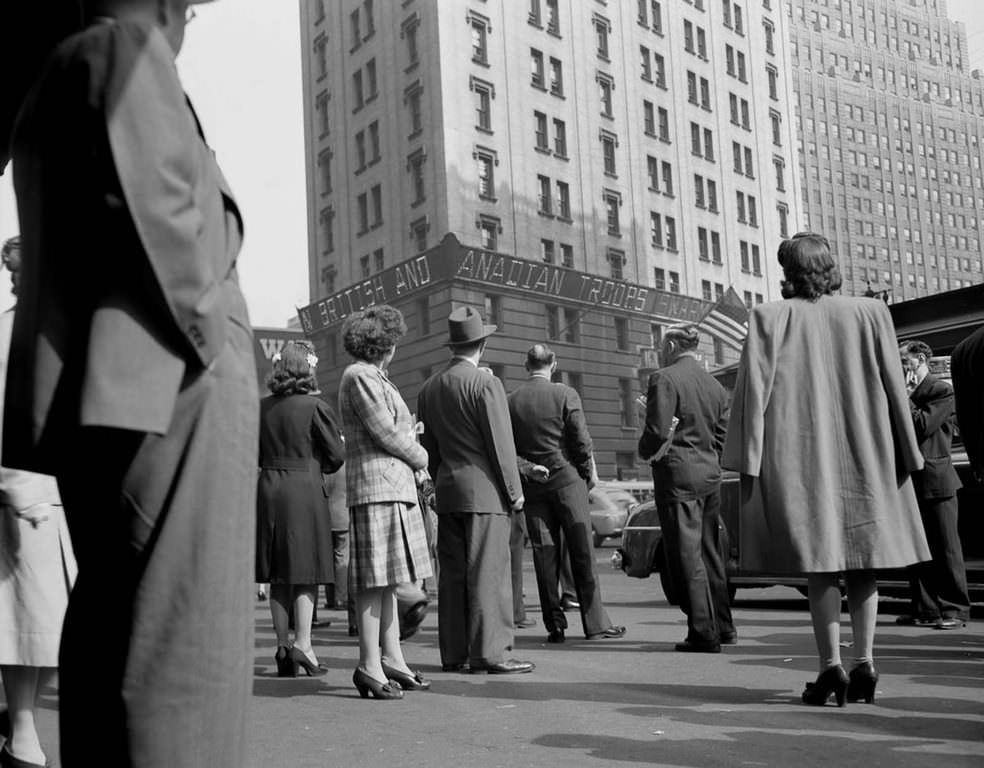
Two soldiers join the crowds as they expectantly wait for more updates.
Thousands of people watching the electronic ticker on the New York Times building in Times Square as they waited for the latest reports.

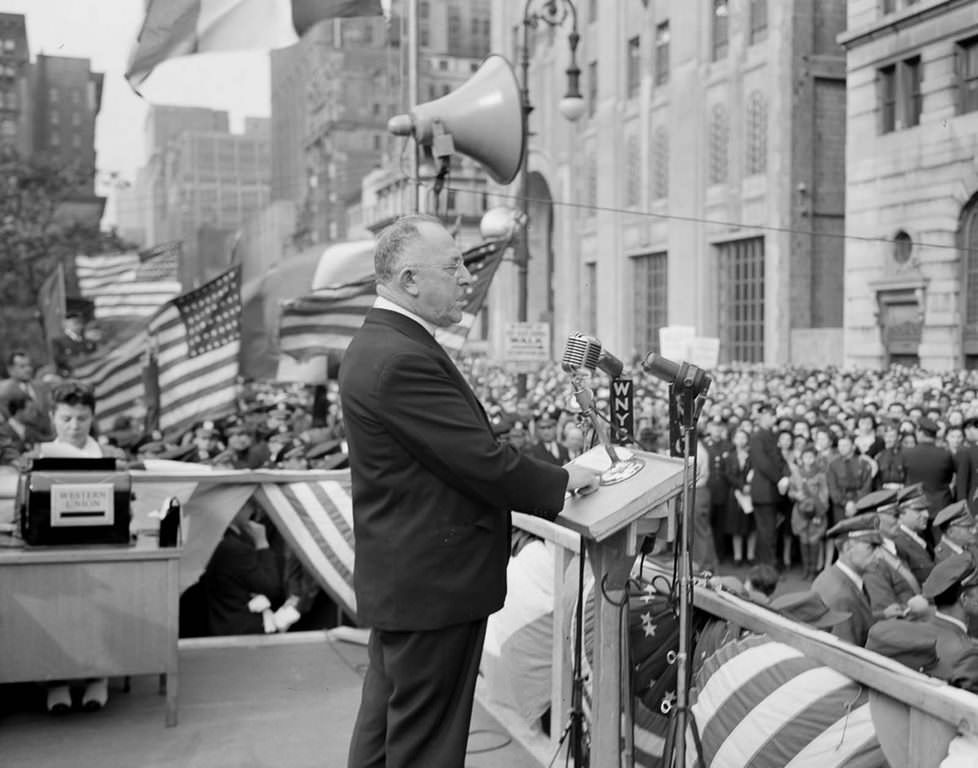
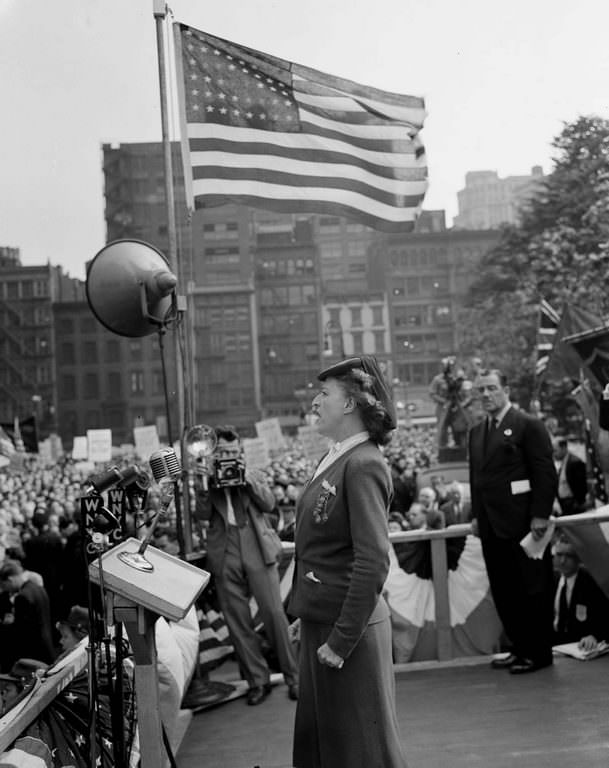
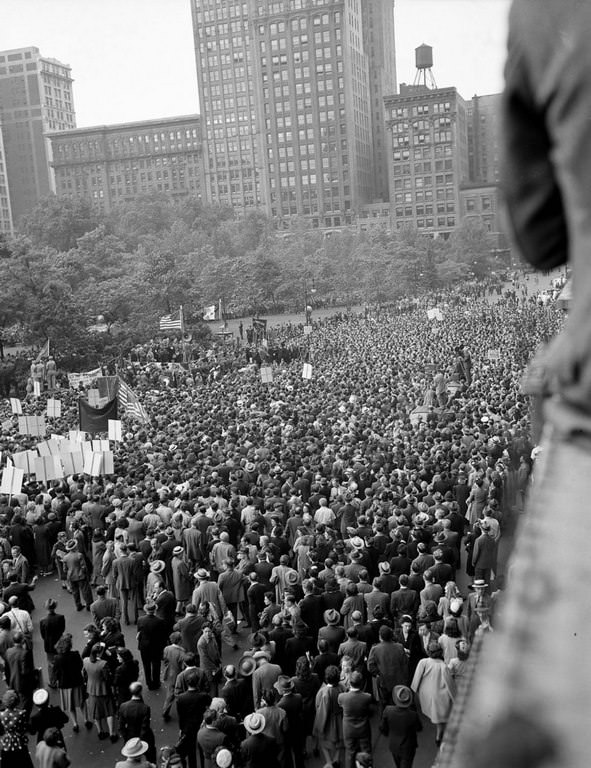
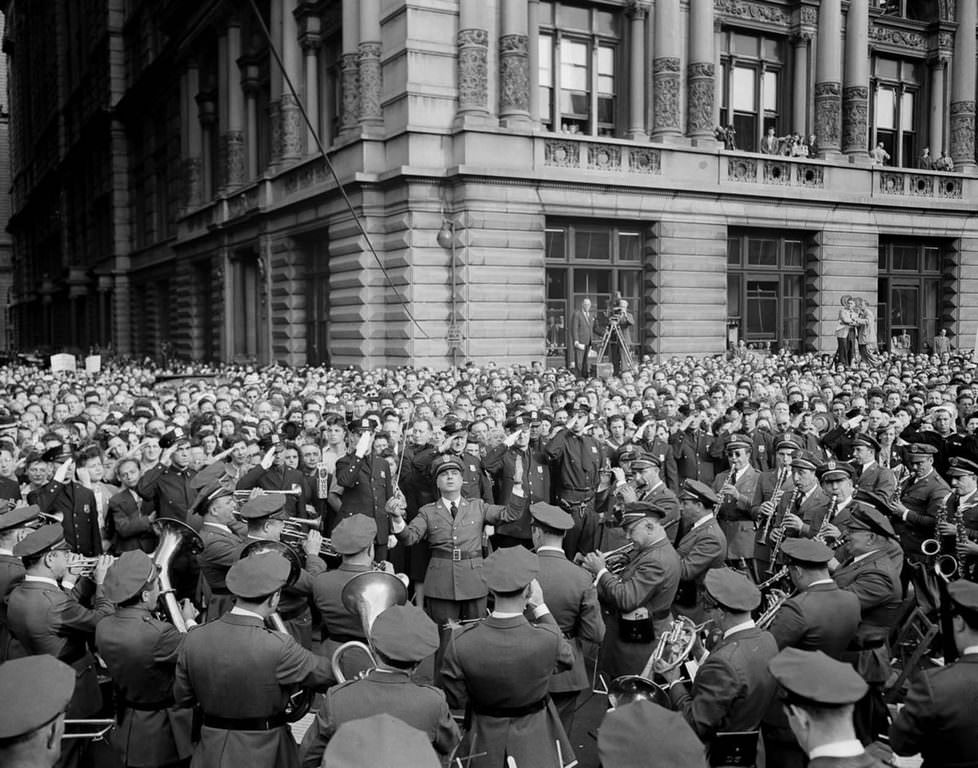
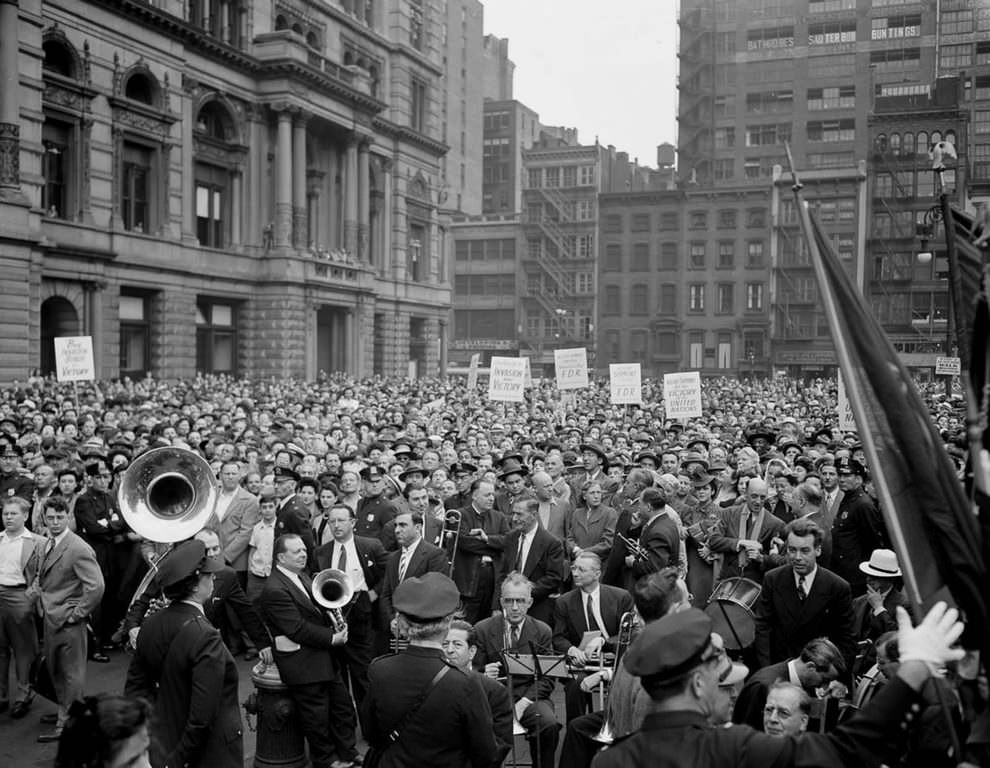
The New York Stock Exchange observed two minutes of silence in recognition of the invasion. Meanwhile, in Madison Square, radio station WNYC organized a D-Day rally that drew thousands. The event featured speeches and songs, and was presided over by New York City’s mayor, Fiorello La Guardia. It was a deliberate act of civic solidarity — a way for the city to come together and acknowledge the magnitude of what was unfolding across the Atlantic.
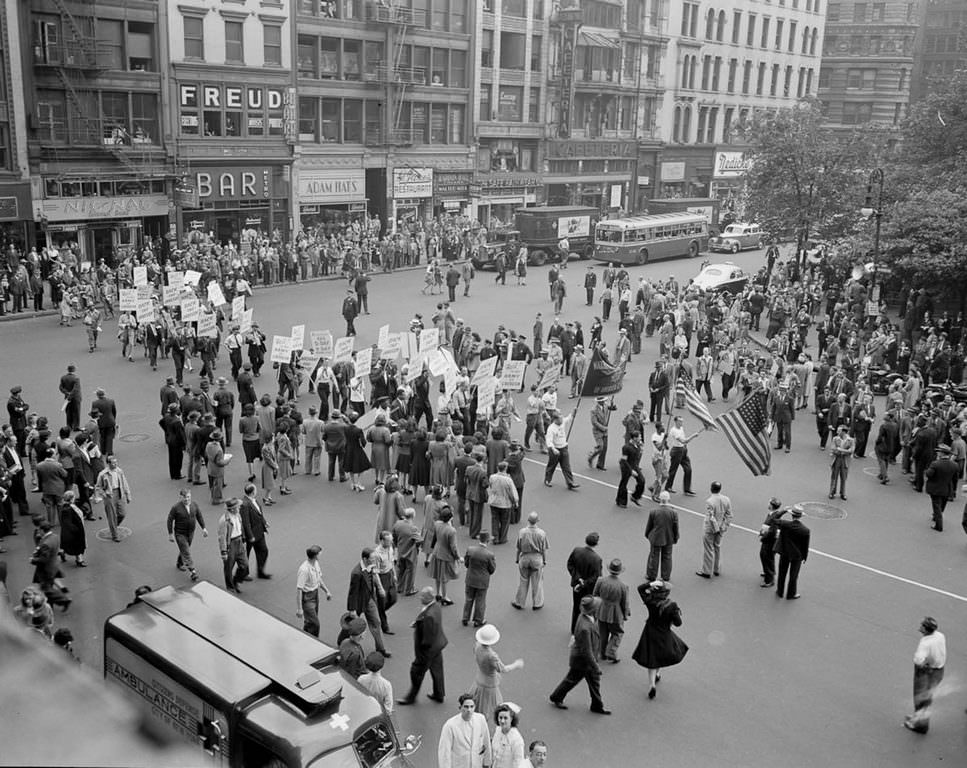
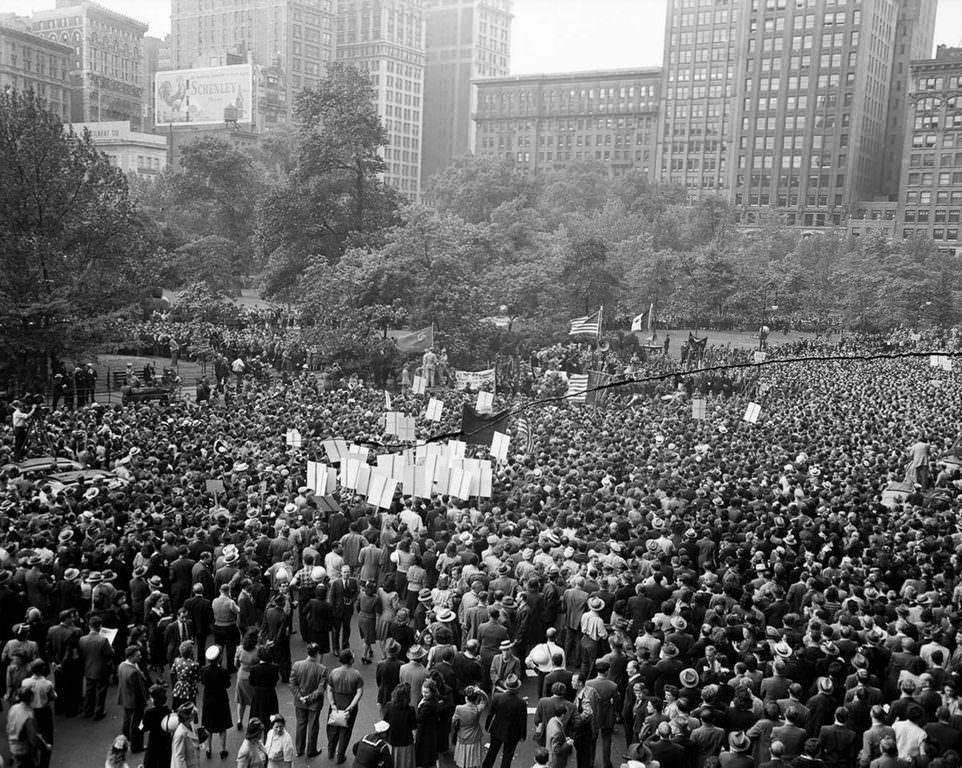
Crowds gather in Madison Square.
Thousands gather for a rally in Madison Square.
A speaker addresses the rally in Madison Square.
A speaker addresses the crowds in Madison Square.
Thousands gather in Madison Square for a rally led by Mayor Fiorello La Guardia.

Photographers moved through the city that day, capturing candid moments that revealed the raw emotion of ordinary people absorbing extraordinary news. Sailors sat on briefcases in doorways, waiting. Men stood rigid on street corners, faces set and unreadable. Every photograph tells the same story — a city holding its breath.
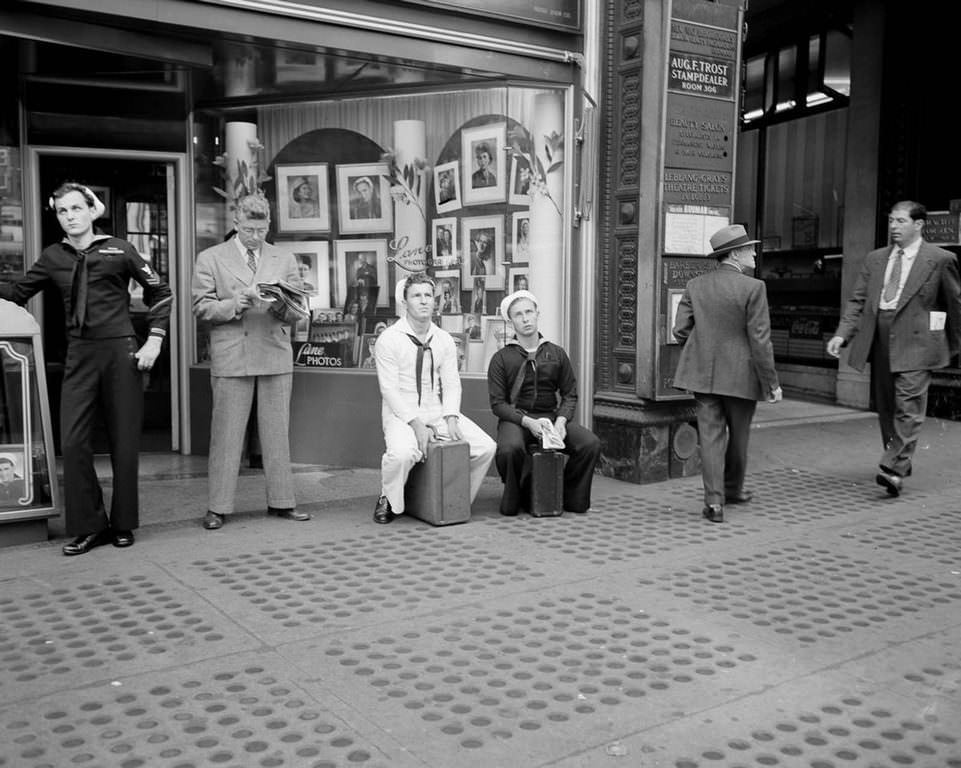
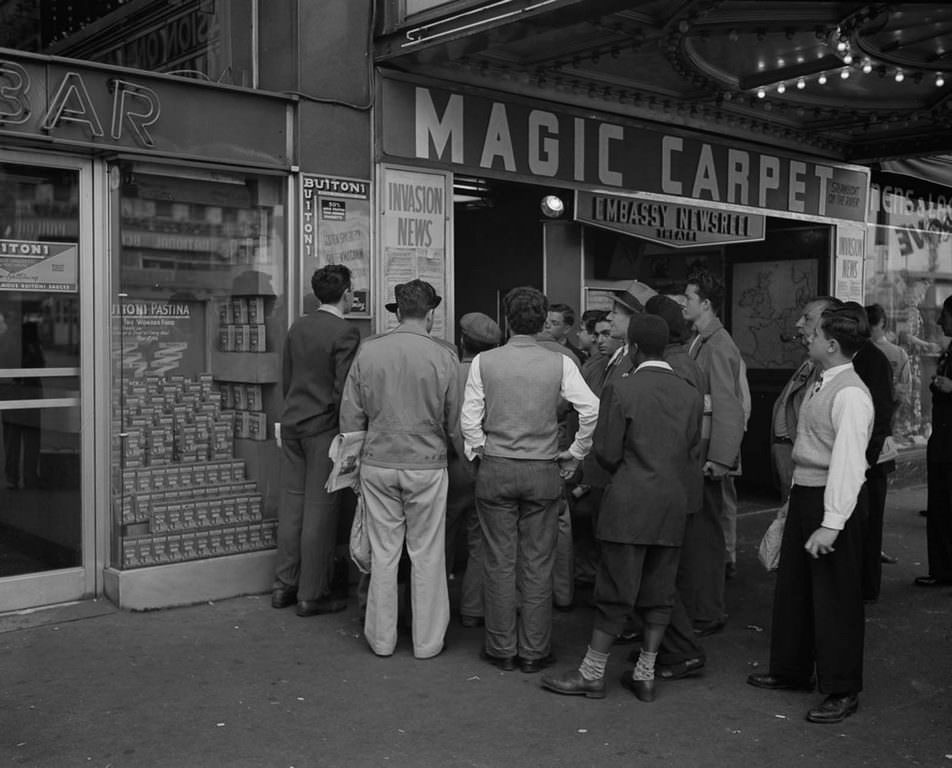
Sailors sit on their briefcases and lean against door frames as they wait for more news in one of the most significant developments of World War Two.
Invasion News.
Invasion News.
The candid photographs capture the mood in the Big Apple.
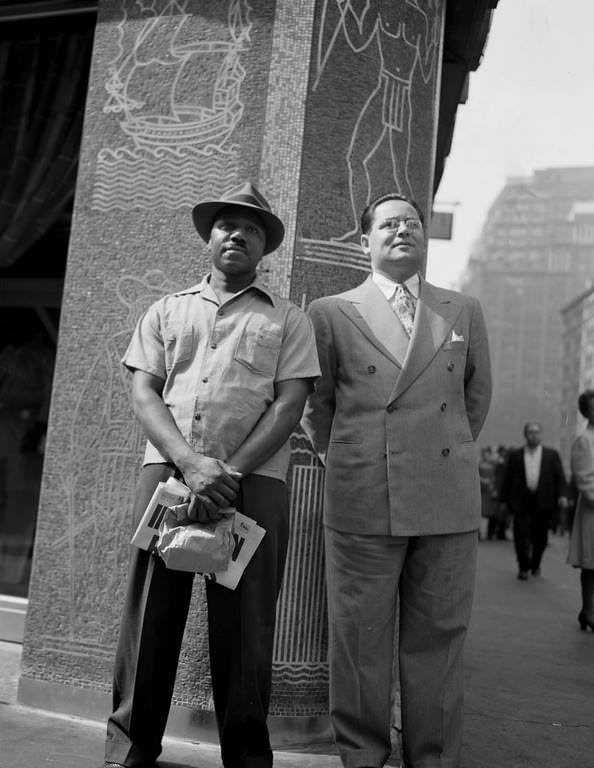
Two men stand tersely on a street corner on the day that news broke.

New York’s connection to the war effort was visible even in its schools. At a French school in Manhattan, children saluted the French flag — a gesture that carried deep meaning on a day when Allied forces were fighting to liberate France from German occupation. The home front had its own rituals of solidarity, and children were not excluded from them.
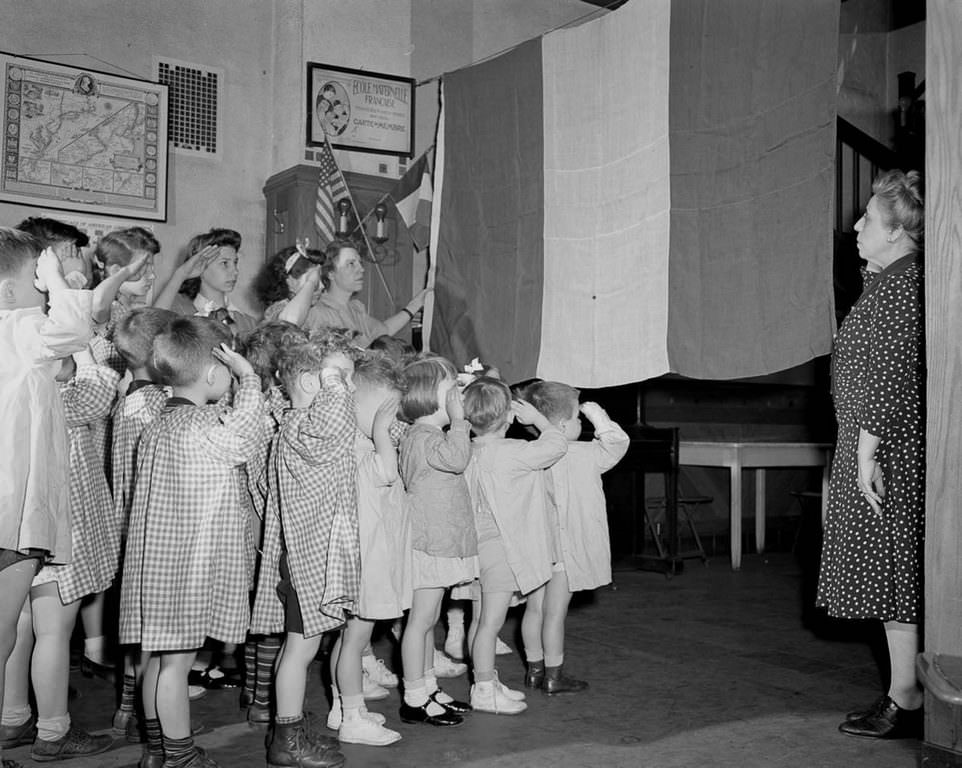
Children salute the French flag at a French school in Manhattan.

Victory gardens were another tangible expression of wartime participation. Planted in public parks and schoolyards across the city, these vegetable, fruit, and herb gardens were grown in direct support of the Allied war effort, helping ease food supply pressures at home so that resources could be directed to troops overseas.
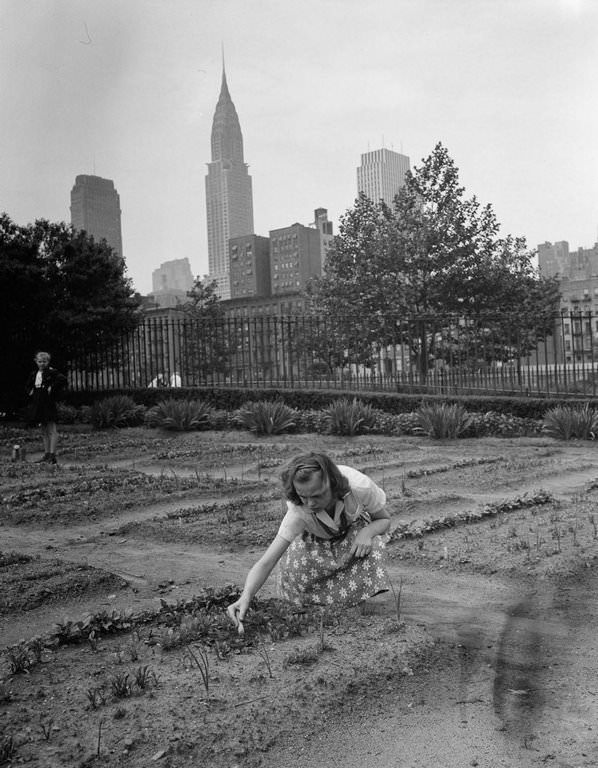

A girl tends a victory garden at a school on 1st Avenue.
Enjoyed this post? Get new ones in your inbox.

1 thought on “New York on D-Day: Historic Photos Show How Anxious New Yorkers Reacted to the Historic Invasion”

Leave a Comment

Your email address will not be published. Required fields are marked *

Share this Post 🥺

Please take a moment to share this content. Your support is greatly appreciated! 🙌🙏

Share this Post 🥺

Please take a moment to share this content. Your support is greatly appreciated! 🙌🙏
Scroll to Top
 
Hey Friend, Before You Go.. Please like & follow for more interesting content