
Tokyo in the 1980s was a city on the move. Japan’s economy was booming, and the capital sat at the center of it all. The unemployment rate hovered at just 4.9%, a number that would look enviable compared to what came in the decades that followed. Money flowed into construction, business, and culture at a pace the city had never seen before.
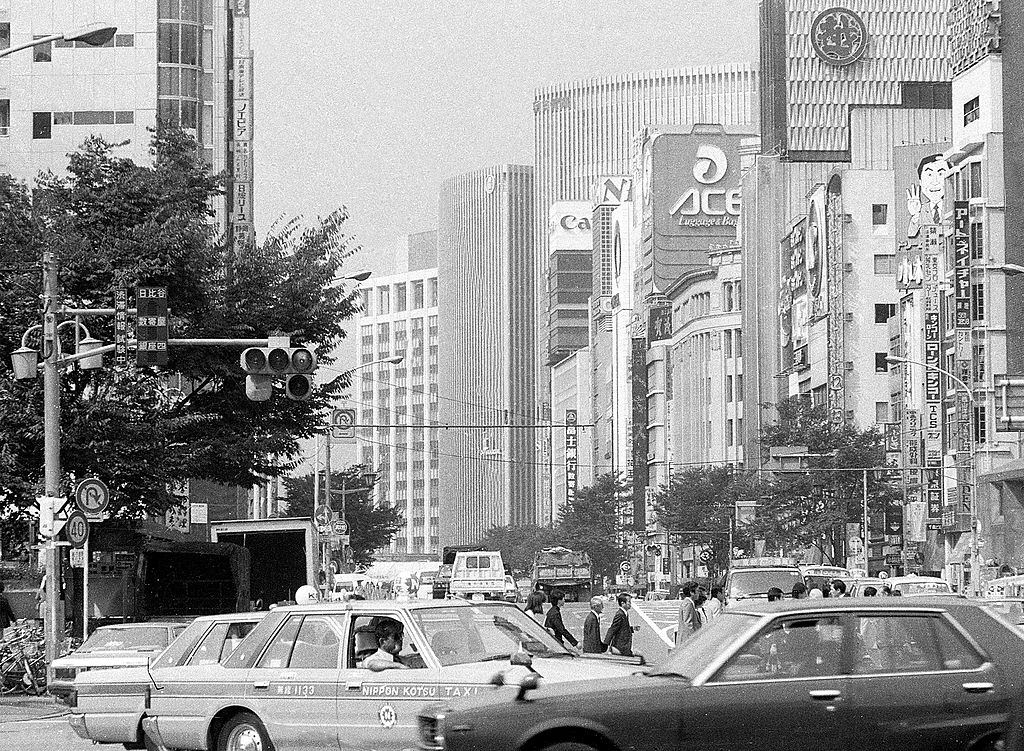
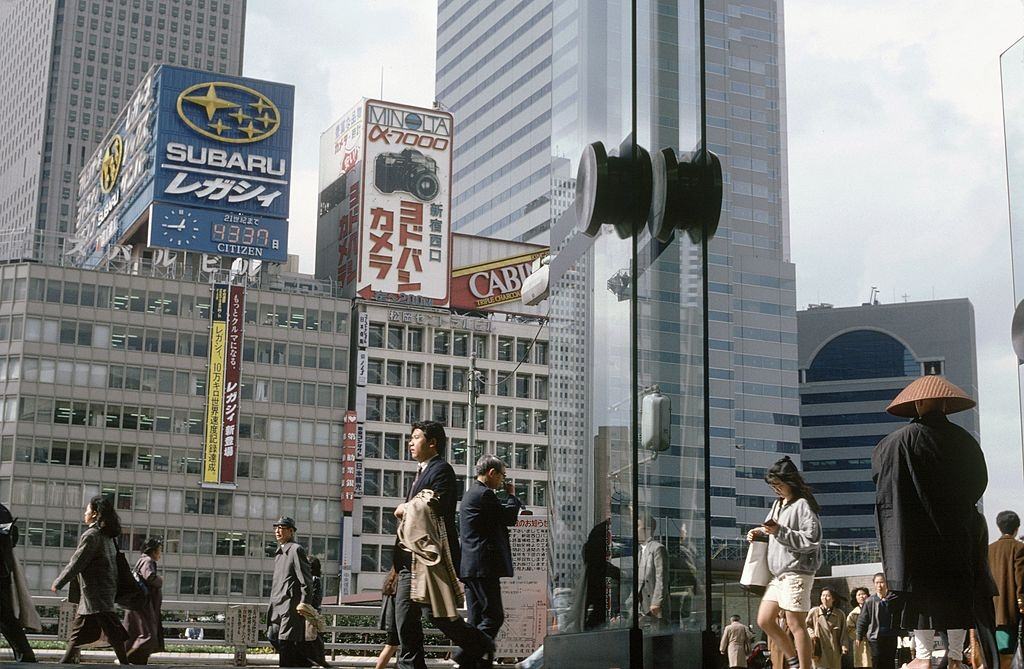
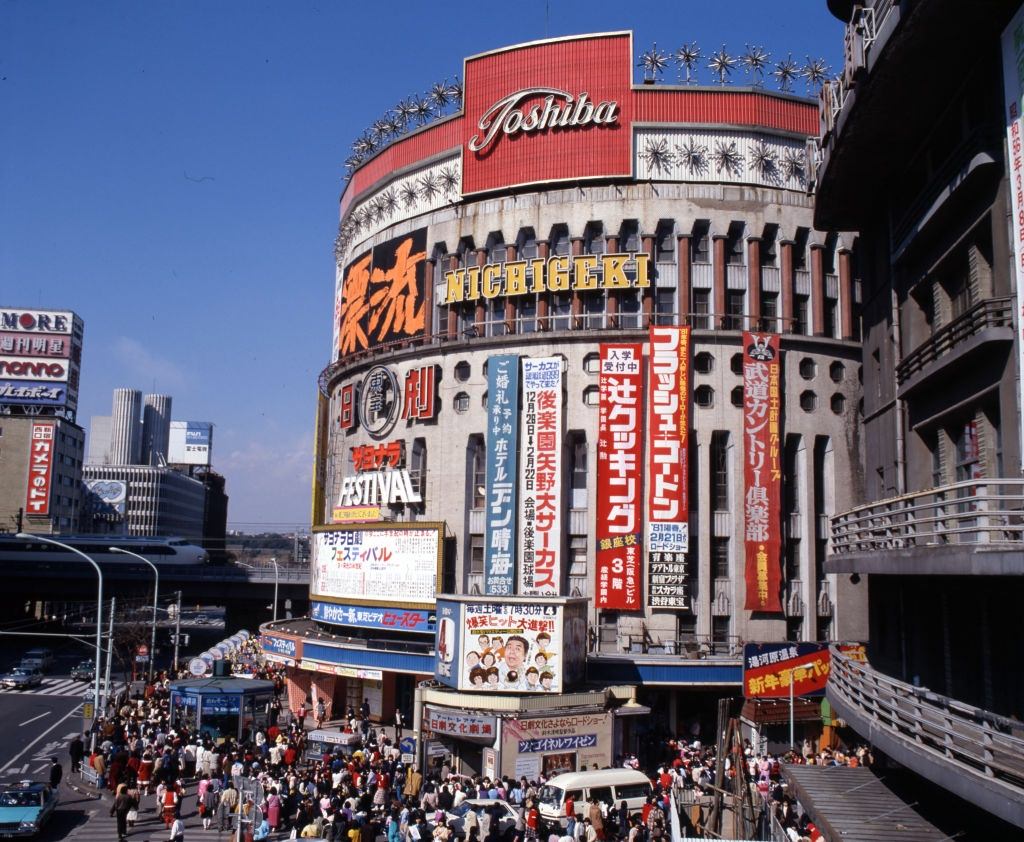
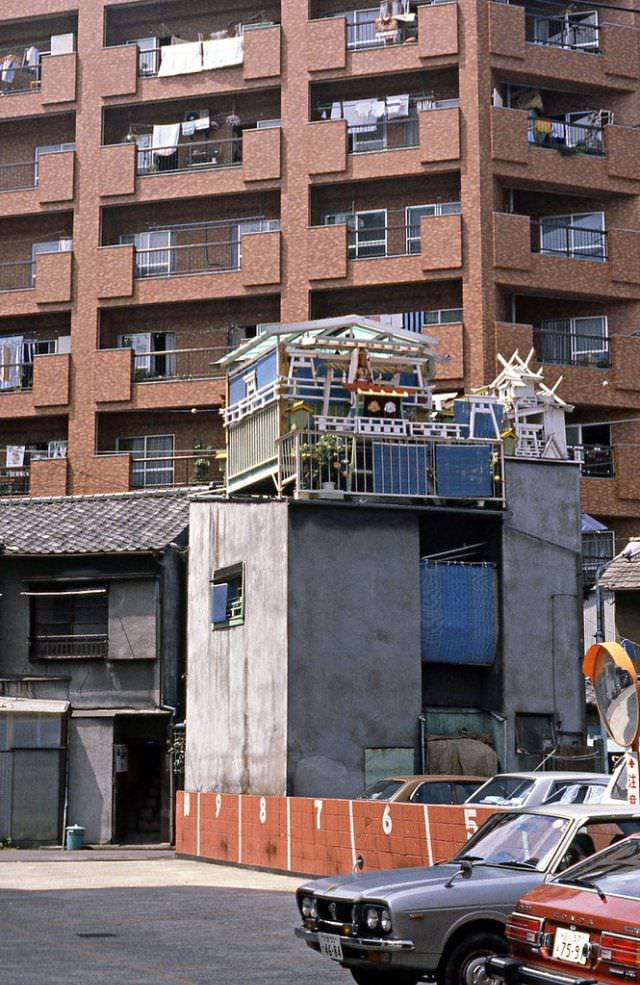
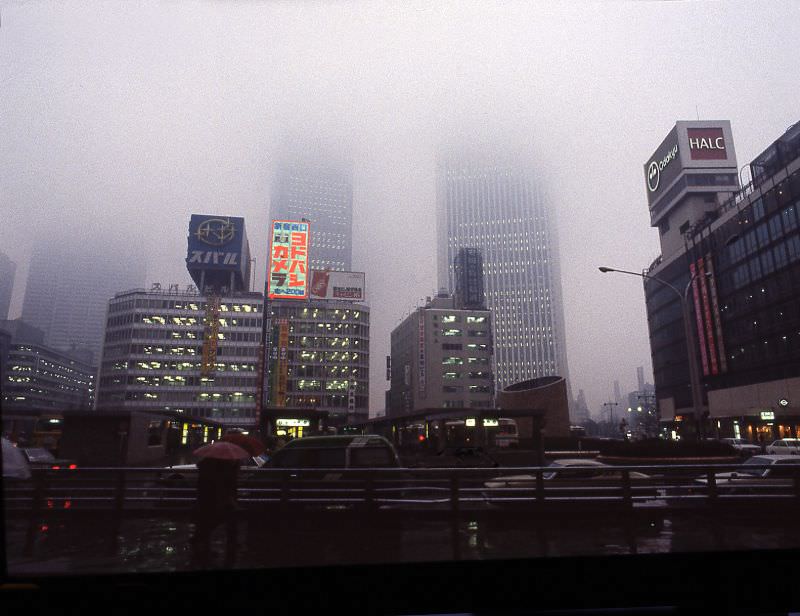
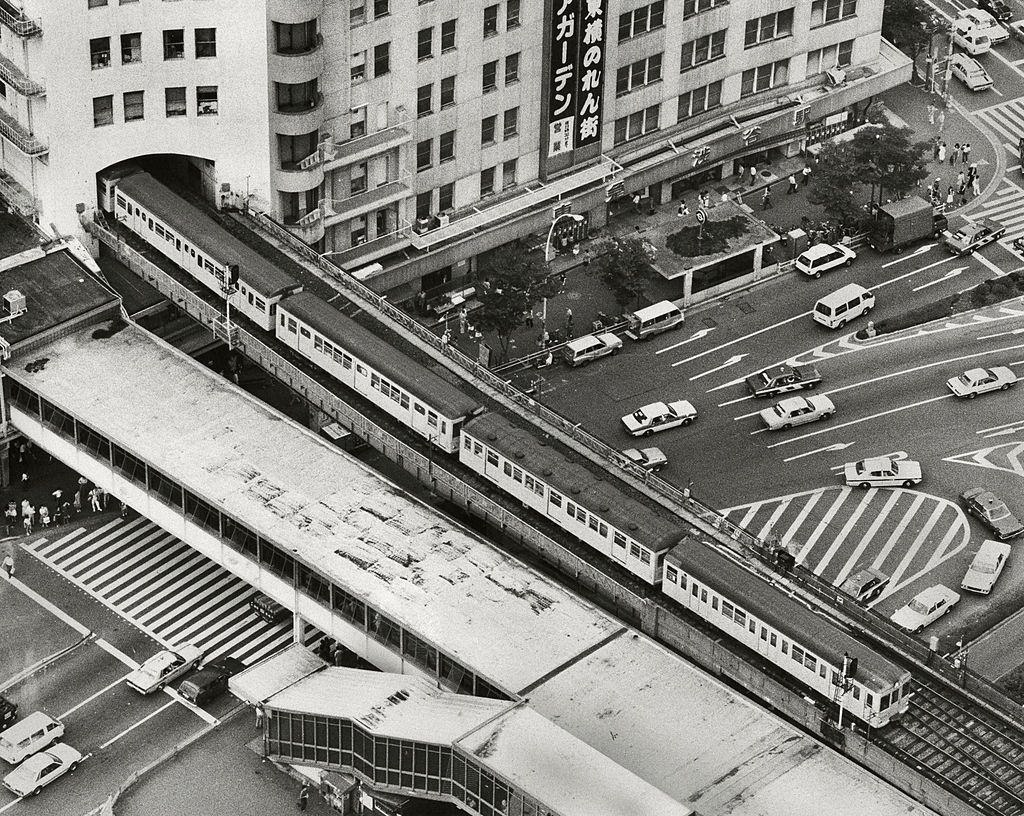
Urban land prices shot up dramatically across Tokyo. Business districts grew upward fast, with high-rises and skyscrapers reshaping the skyline. Large department stores anchored by public squares filled the areas around mid-range railway stations, drawing shoppers from across the city. Old wooden houses in residential neighborhoods gave way to modern concrete buildings, block by block.
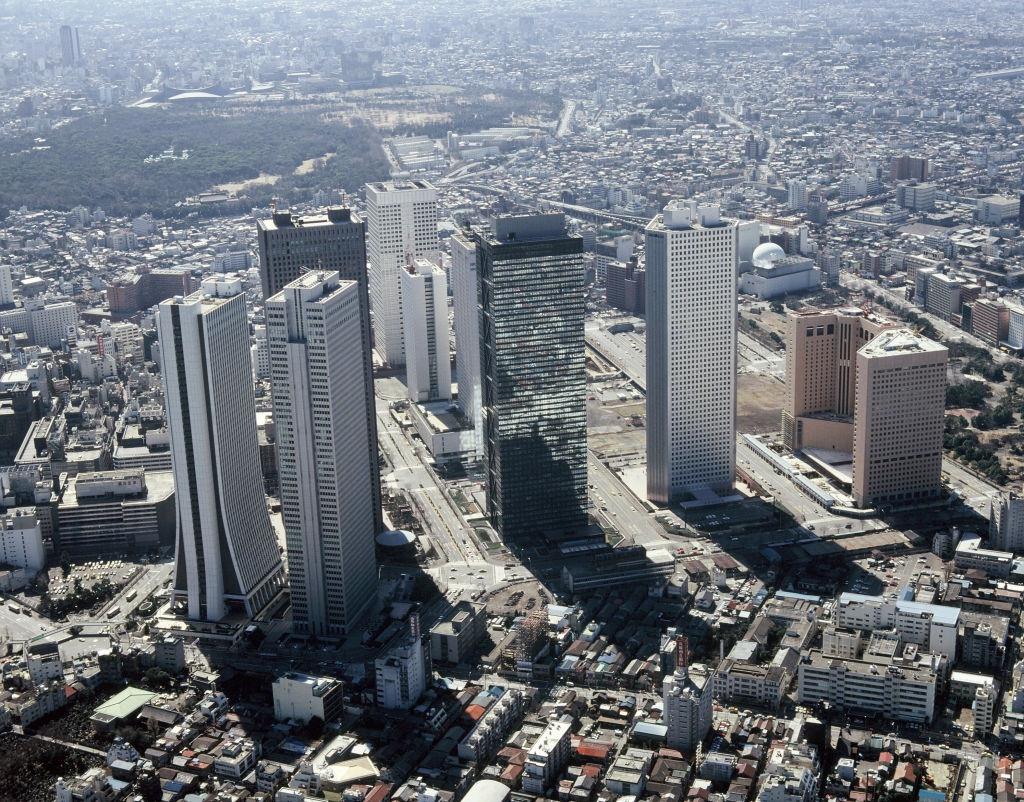
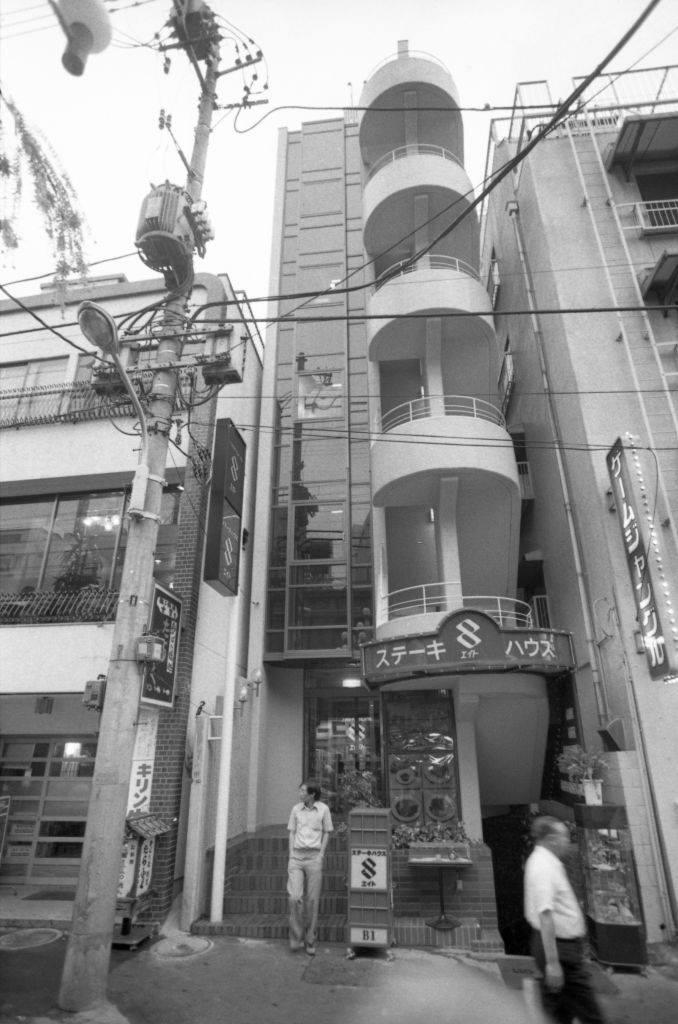
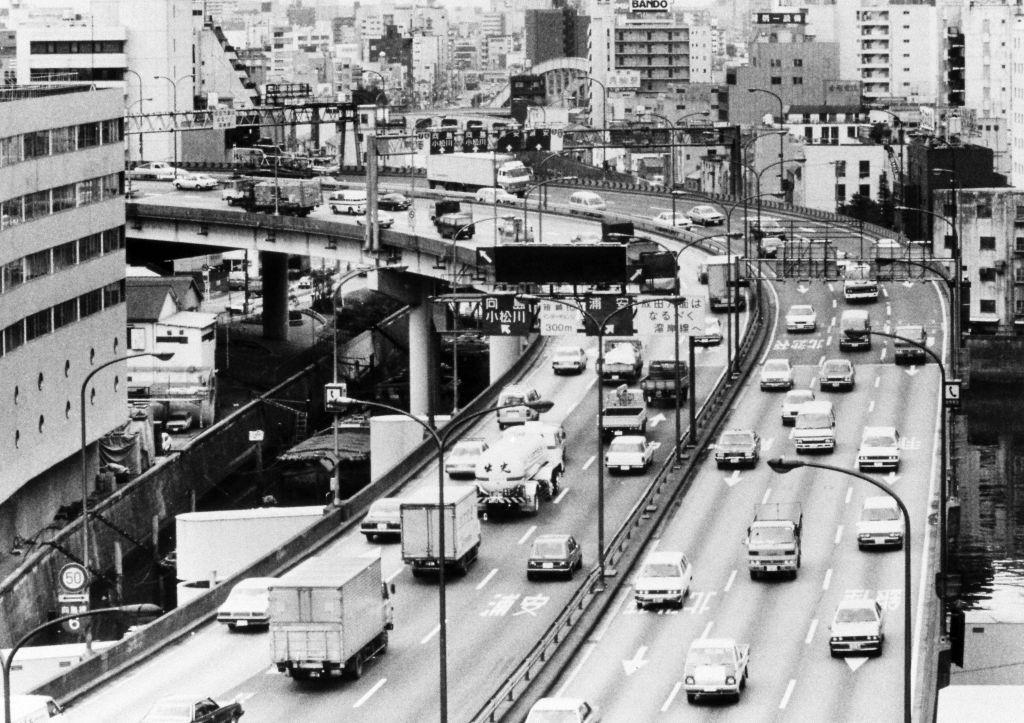
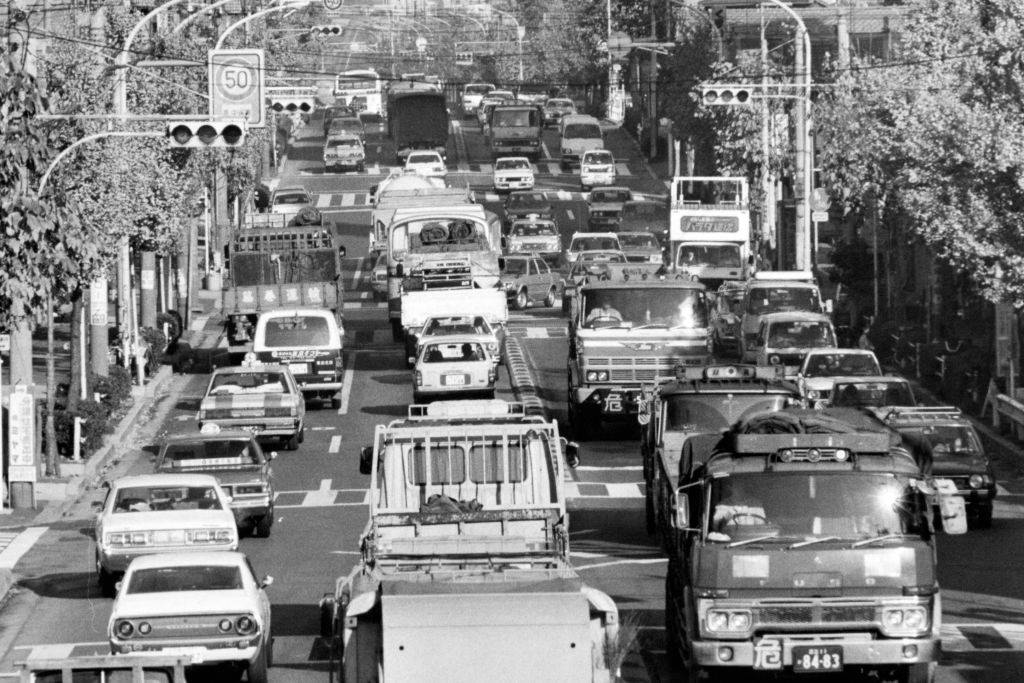
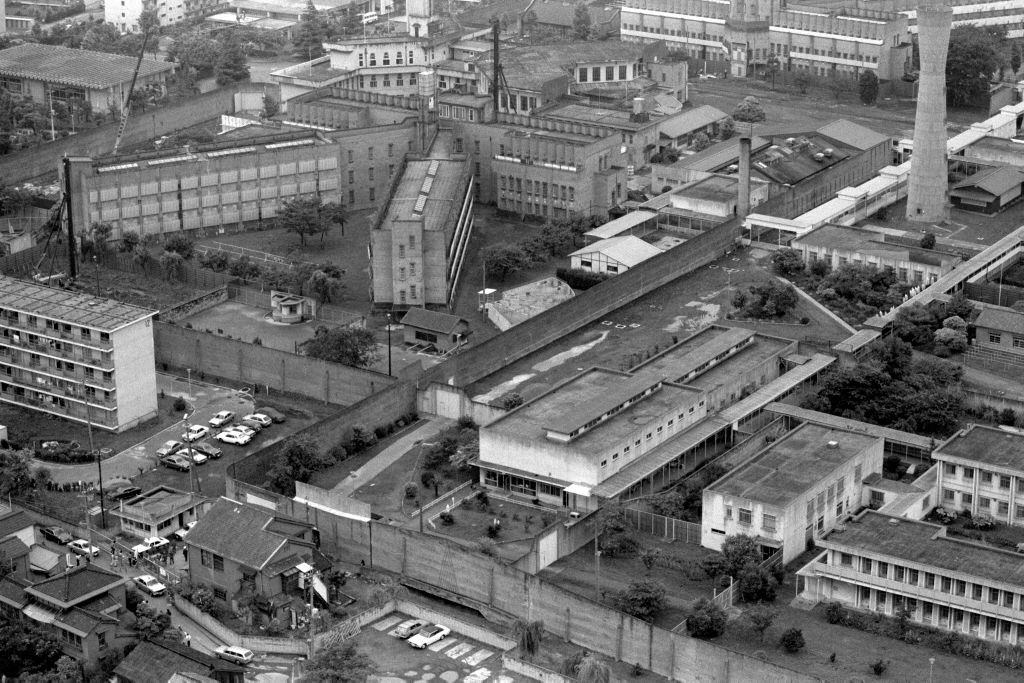
Despite efforts by public authorities to manage the growth, the modernization process produced a chaotic mix of structures. Skyscrapers crowded streets that weren’t designed for them, and parking became a growing problem throughout the city. The pace of change was difficult to control, and the physical shape of Tokyo reflected that tension between planning and rapid expansion.
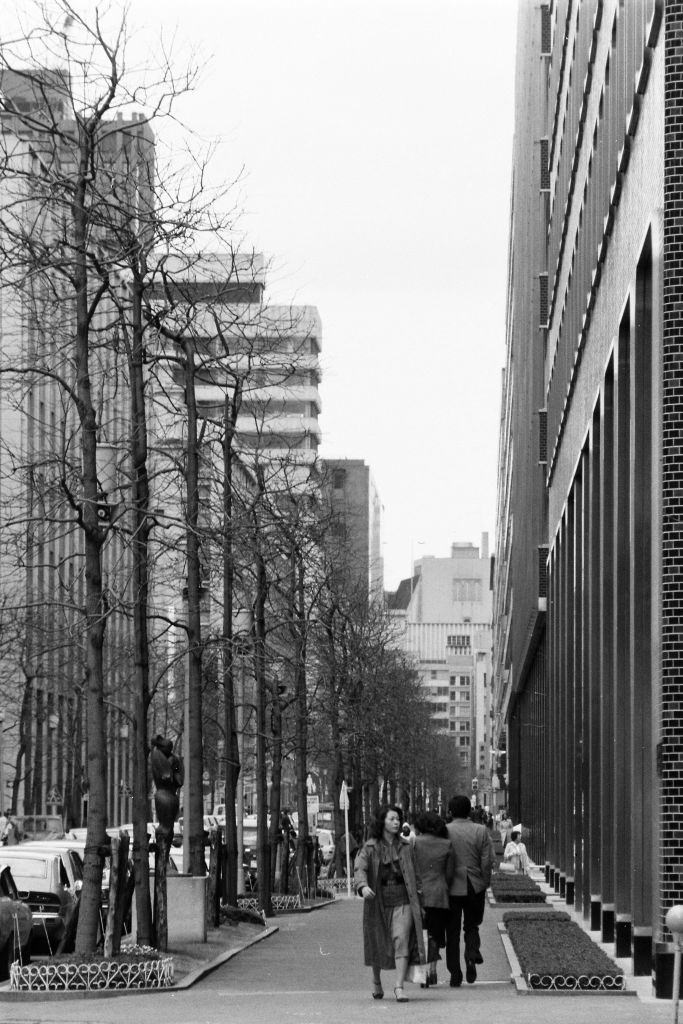
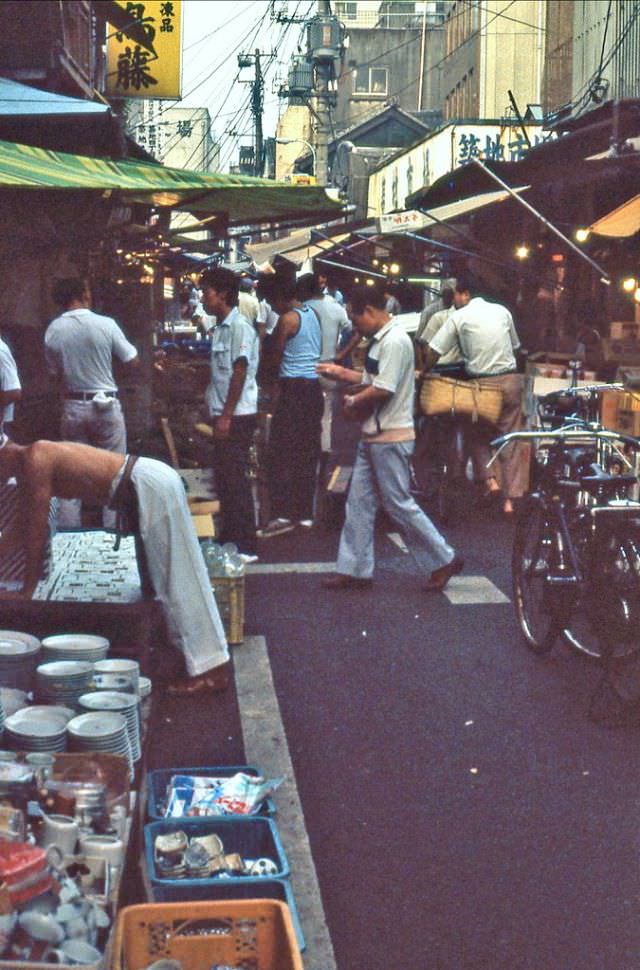
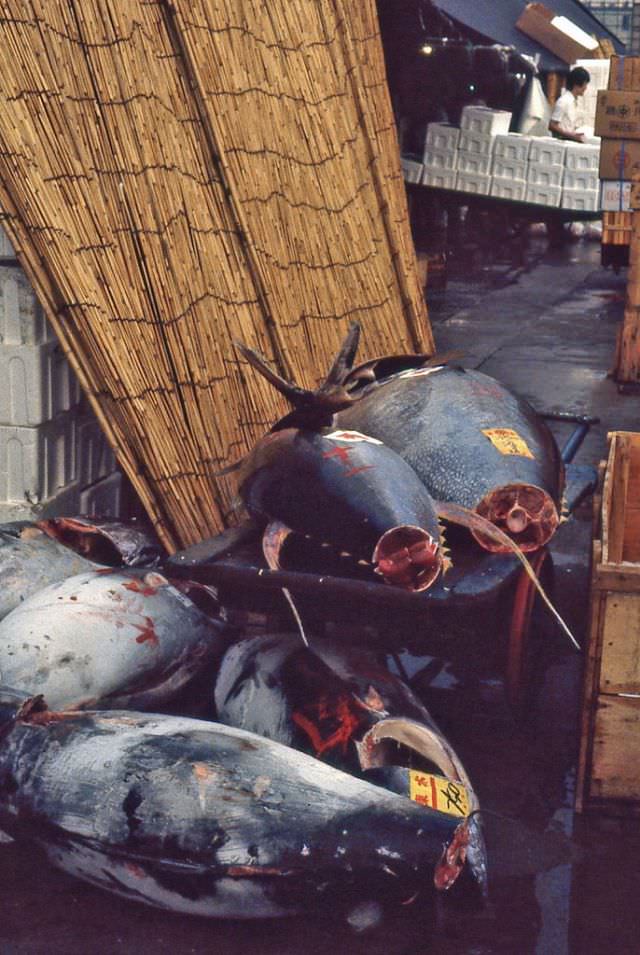
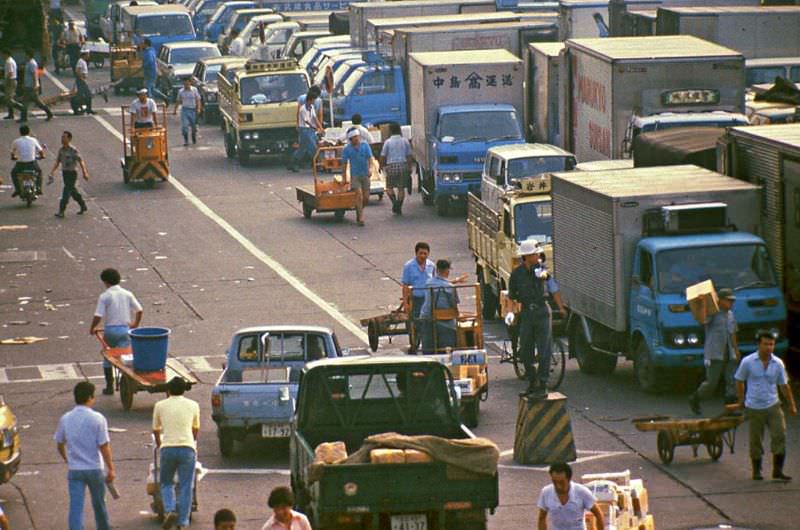
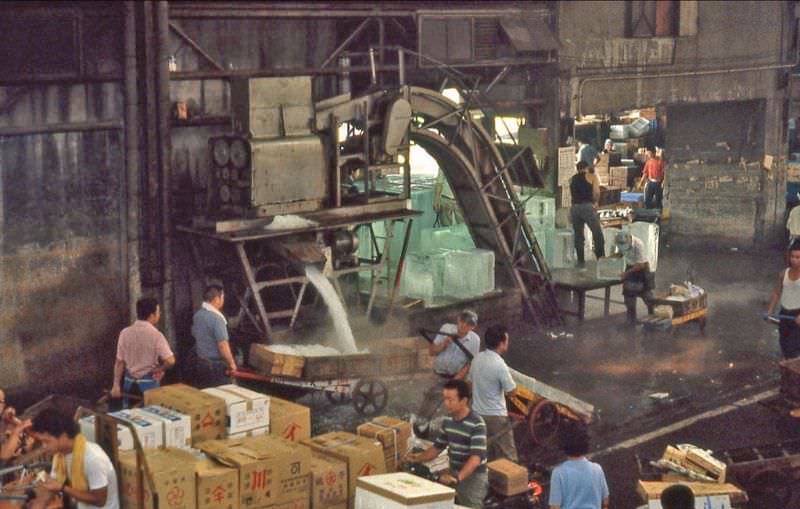
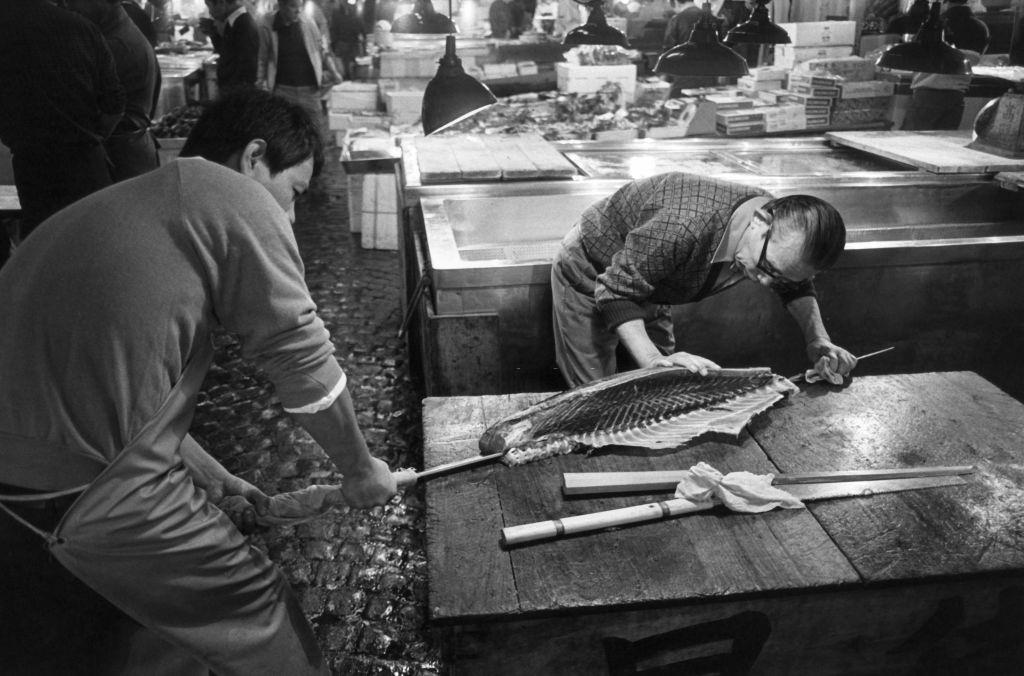
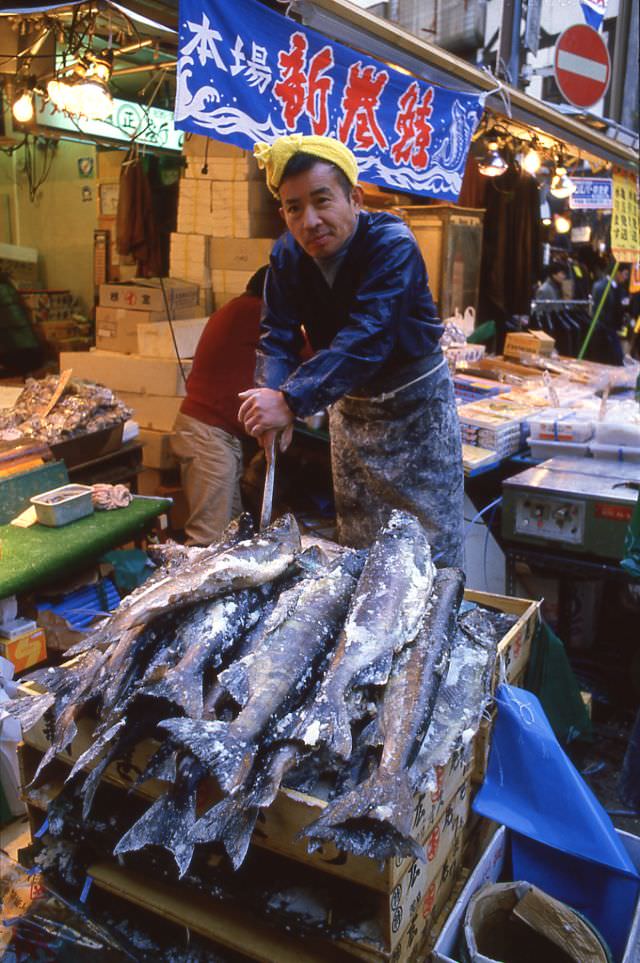
Tsukiji Market was one of the most important places in the city during this era. It was the world’s largest fish market and a vital part of Tokyo’s food supply chain. Every morning, before most of the city woke up, buyers and sellers moved through its crowded stalls negotiating prices on tuna, shellfish, and seafood of every kind.
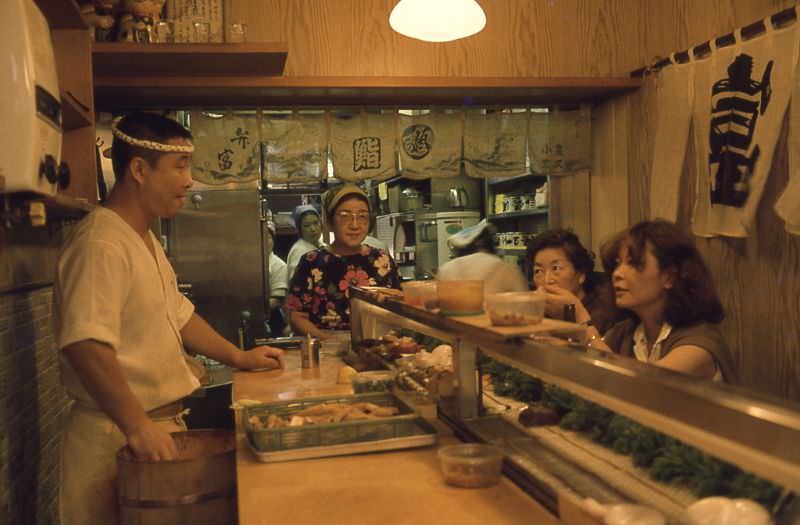
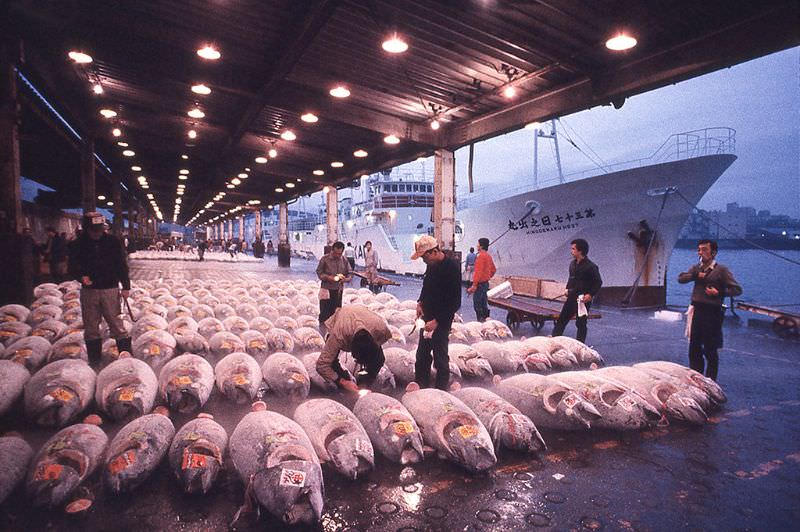
The market wasn’t just a place of commerce — it was a social world of its own. Workers ate lunch together on-site, and the area around Tsukiji was filled with small restaurants serving the freshest fish in the city. The photos from 1980 and 1981 capture the organized chaos of the place, with workers in rubber boots and aprons navigating tight corridors packed with ice and product.
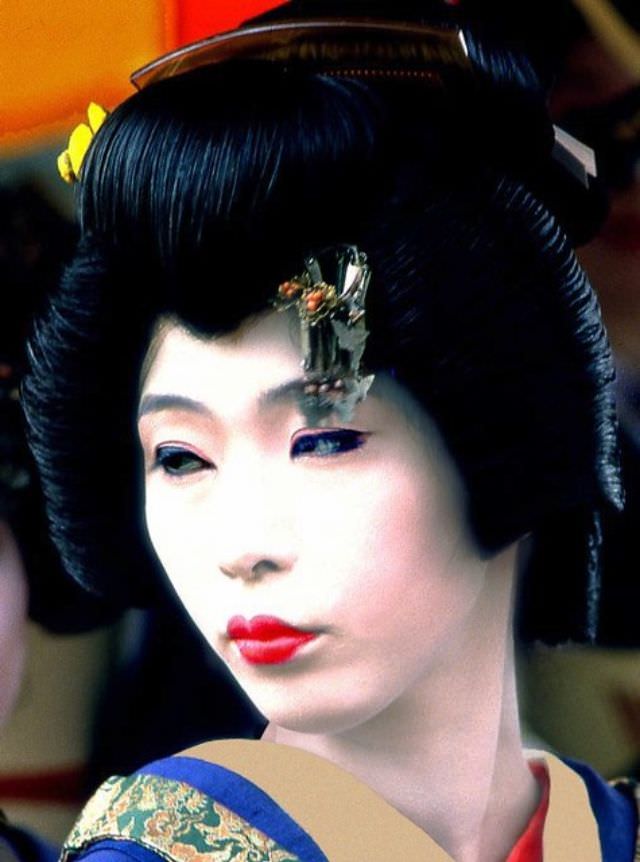
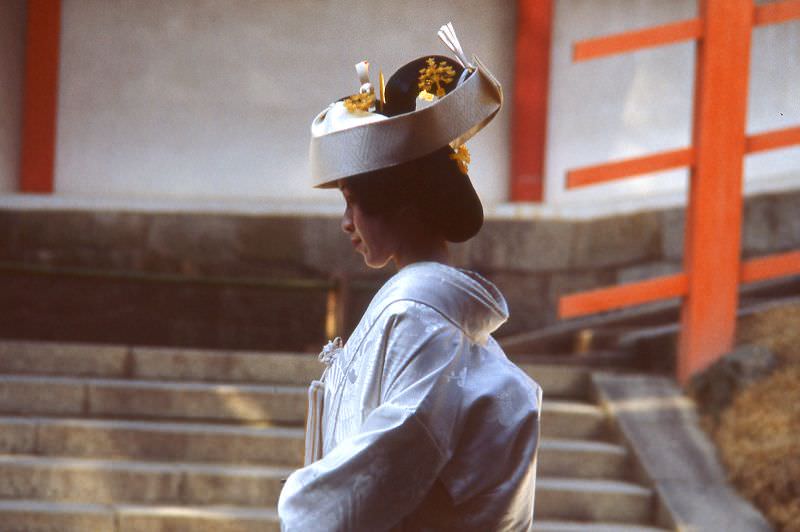
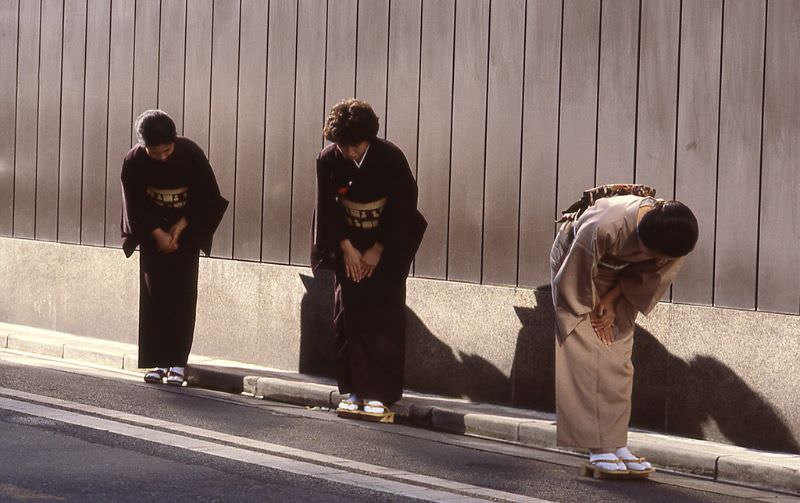
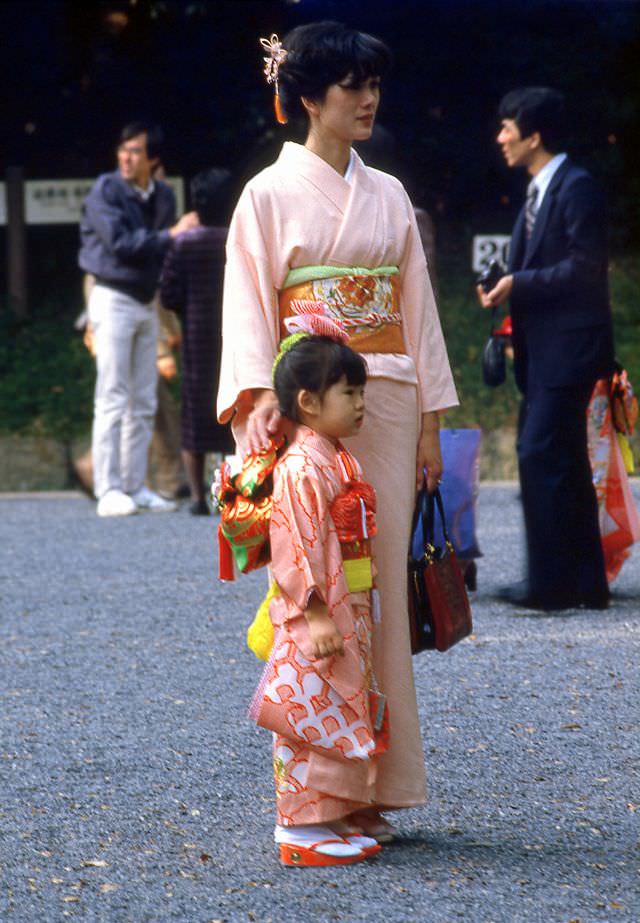
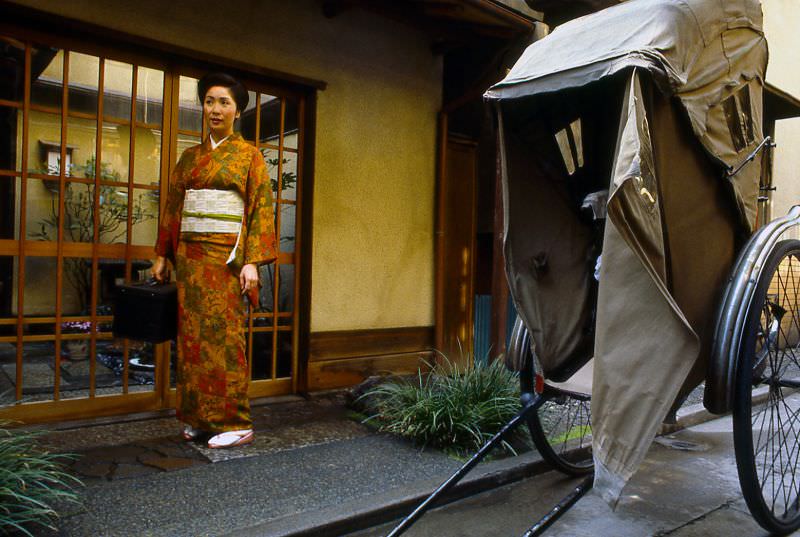
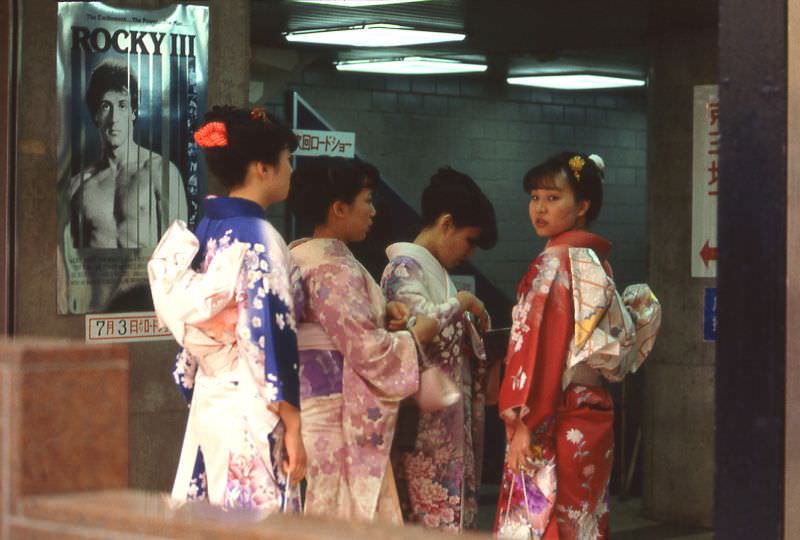
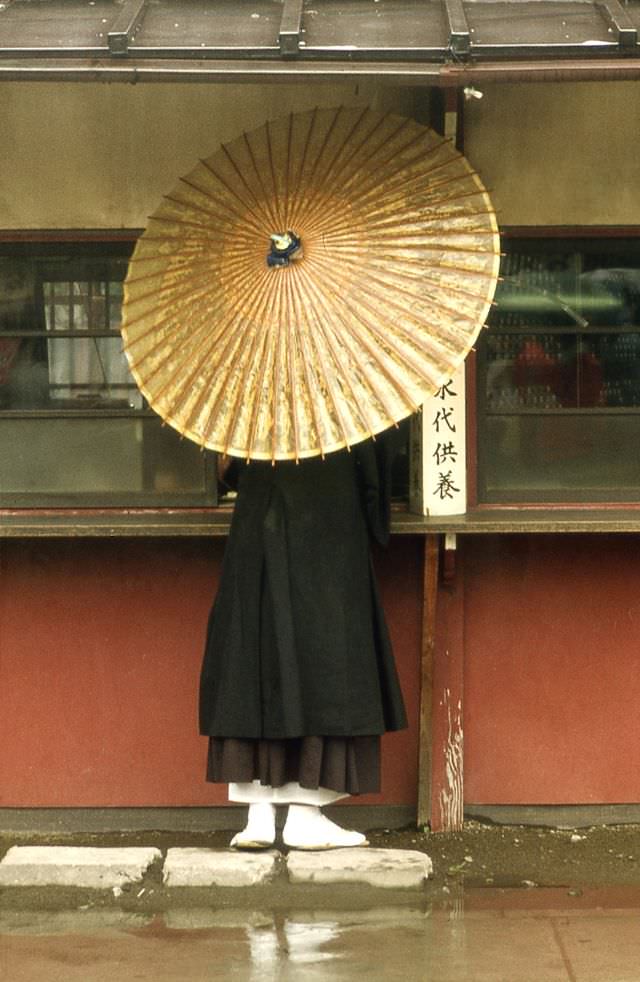
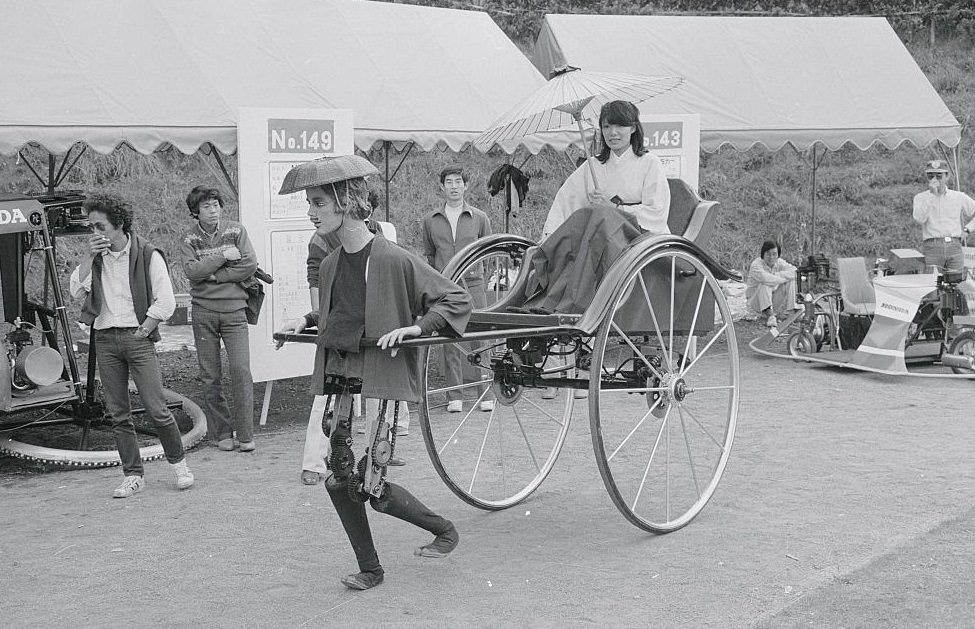
Traditional culture remained deeply visible on the streets of Tokyo even as the city modernized. Geisha and maiko — apprentice geisha — still moved through certain neighborhoods in full dress. Women in kimono appeared at temples, festivals, and everyday settings alike. The contrast between the ancient and the modern was one of Tokyo’s most defining characteristics during this period.
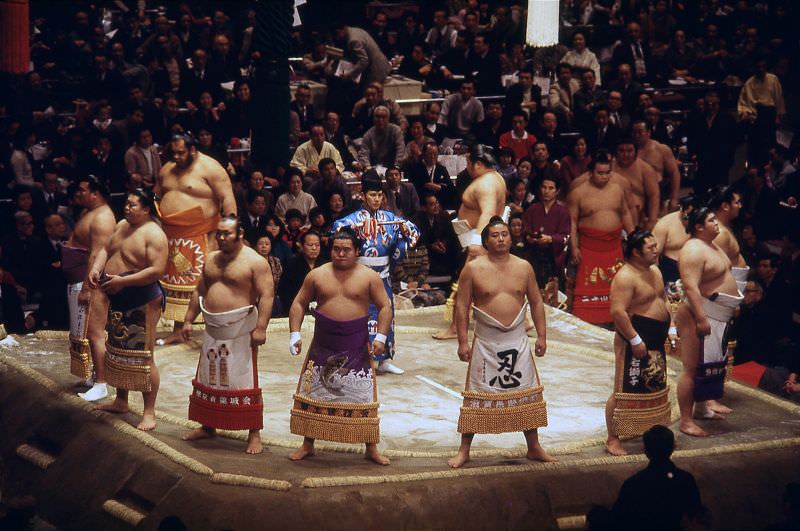
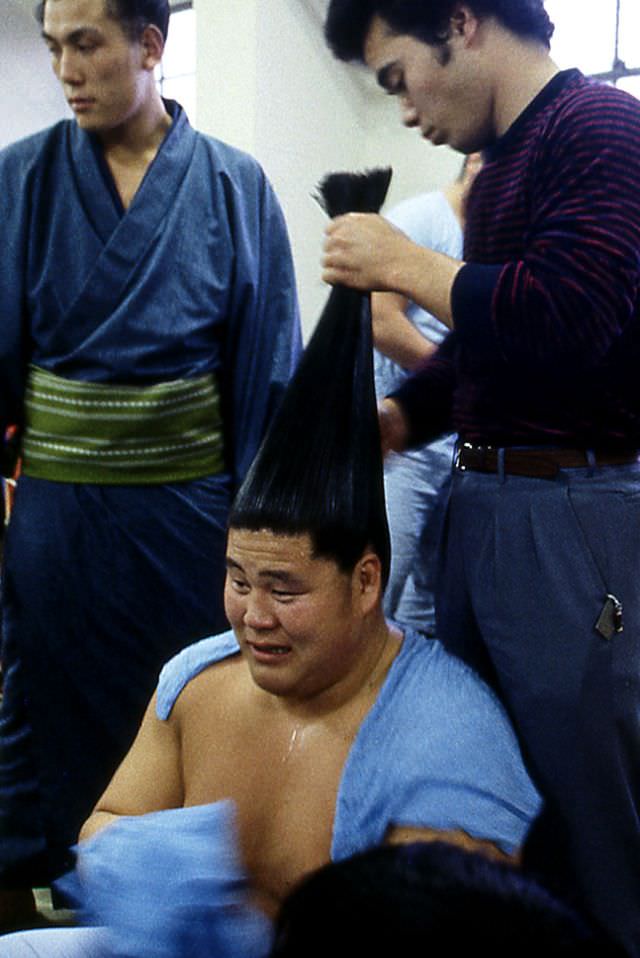
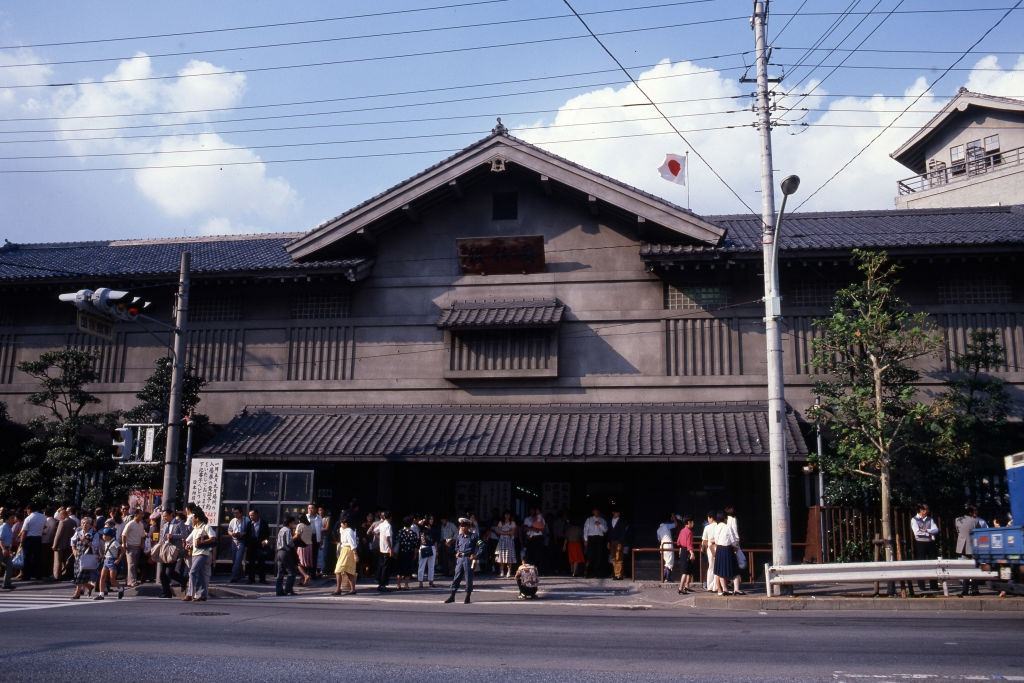
Sumo wrestling was a major part of Tokyo’s sports and cultural life in the 1980s. The Grand Sumo Autumn Tournament drew large crowds to Kuramae Kokugikan, where wrestlers competed across fifteen days of intense matches. The rituals surrounding sumo — from the elaborate hair styling of the wrestlers to the formal presentation ceremonies — were as important as the bouts themselves.
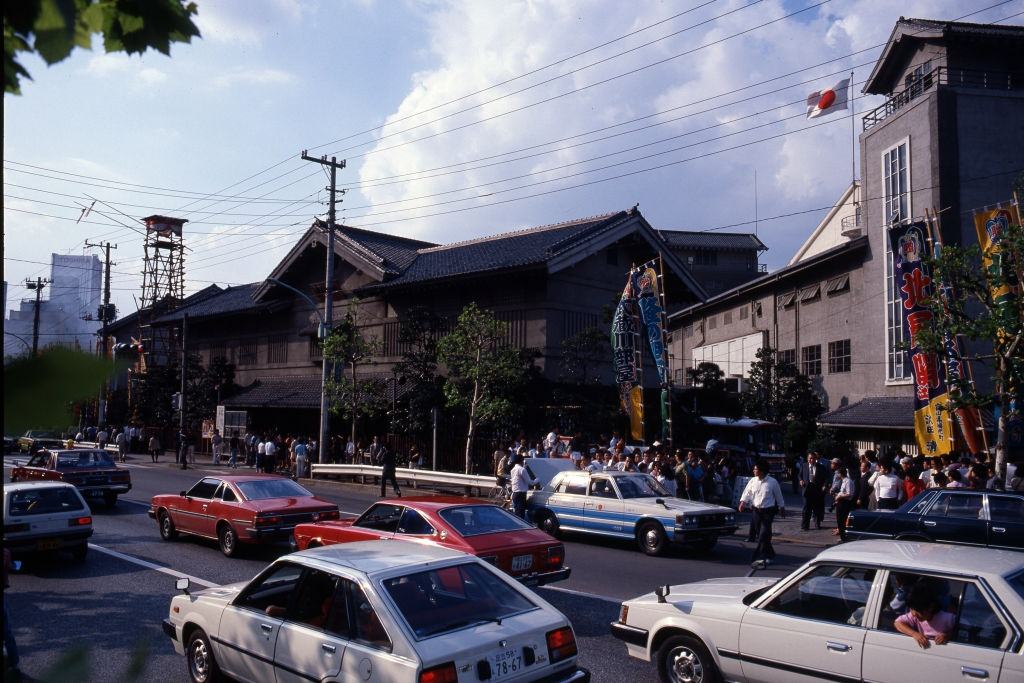
Tokyo’s transit network in the 1980s was already one of the most complex in the world. The metro system moved millions of passengers daily, while the Shinkansen bullet train connected the capital to the rest of Japan at high speed. The Arakawa line tram, one of the few remaining streetcar routes in the city, continued to serve its neighborhood corridor as it had for decades.
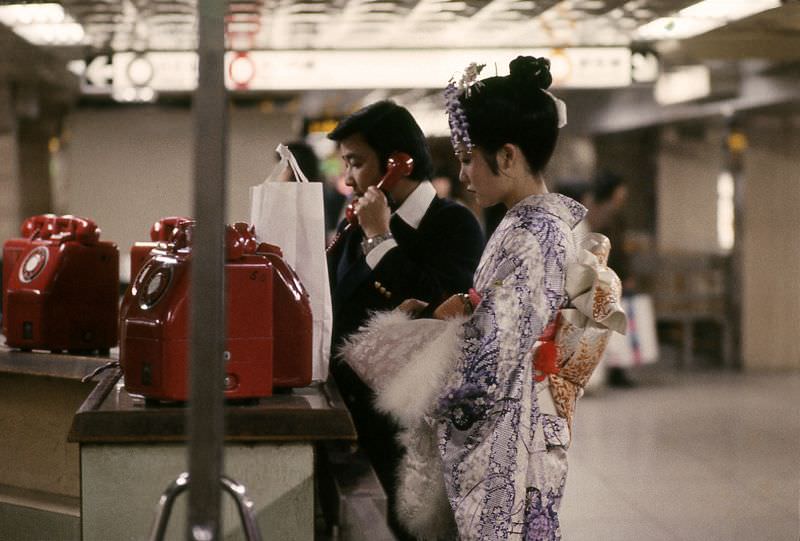
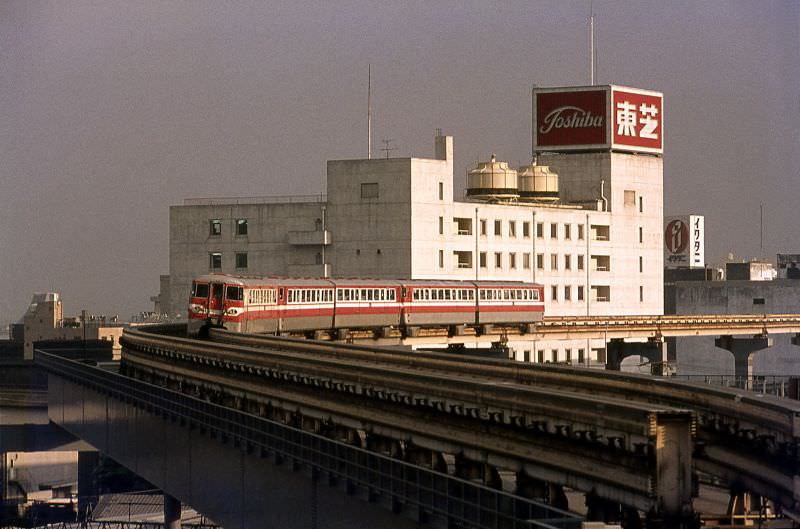
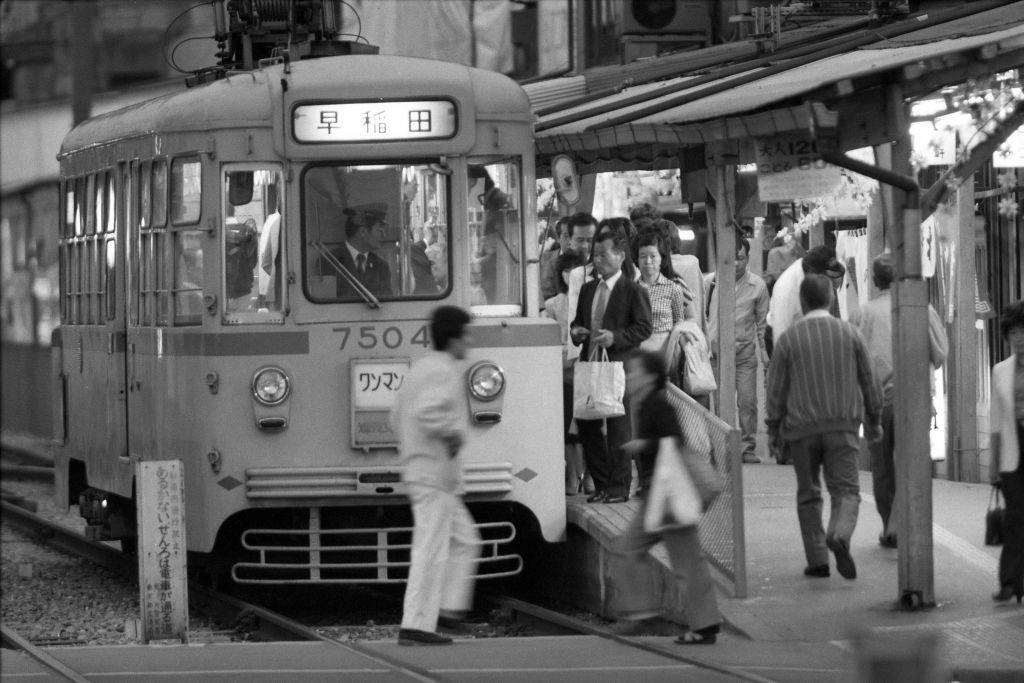
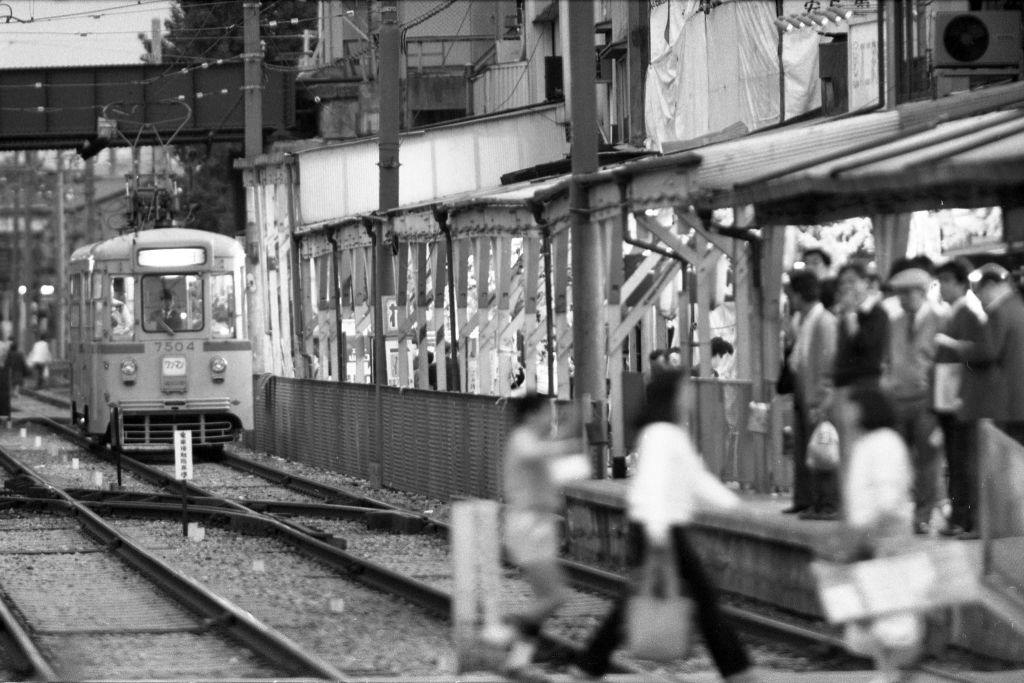
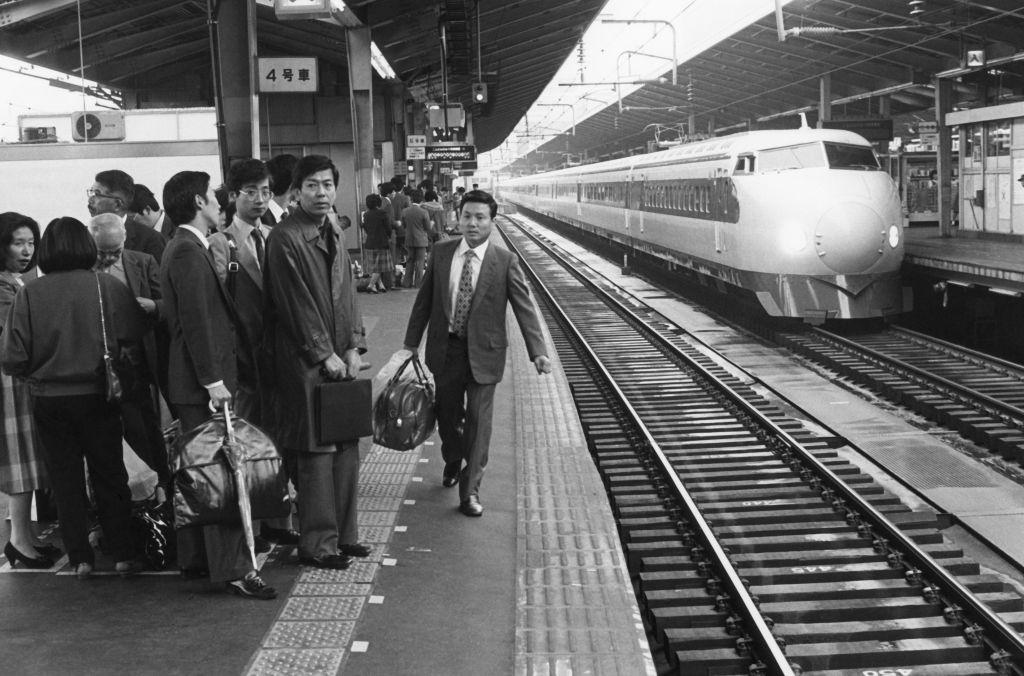
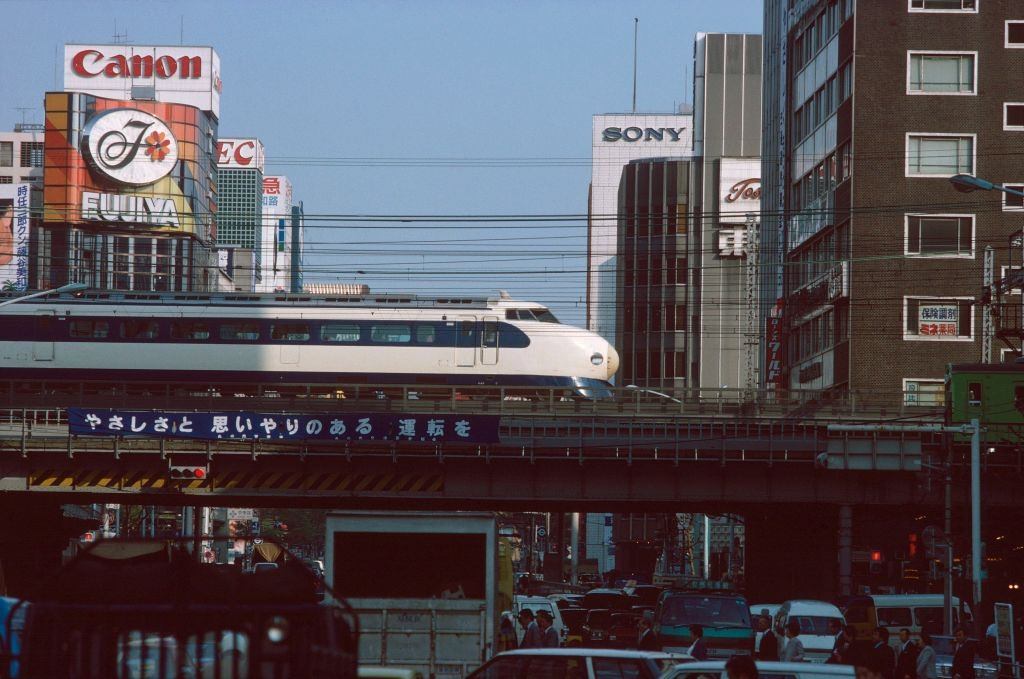
Major stations like Ueno and Ikebukuro served as urban hubs. Travelers crowded platforms at Ueno Station waiting for trains heading across Japan. Ikebukuro was surrounded by a dense commercial zone where shopping, entertainment, and transit overlapped. The areas around these stations captured the energy of a city that was always in motion.
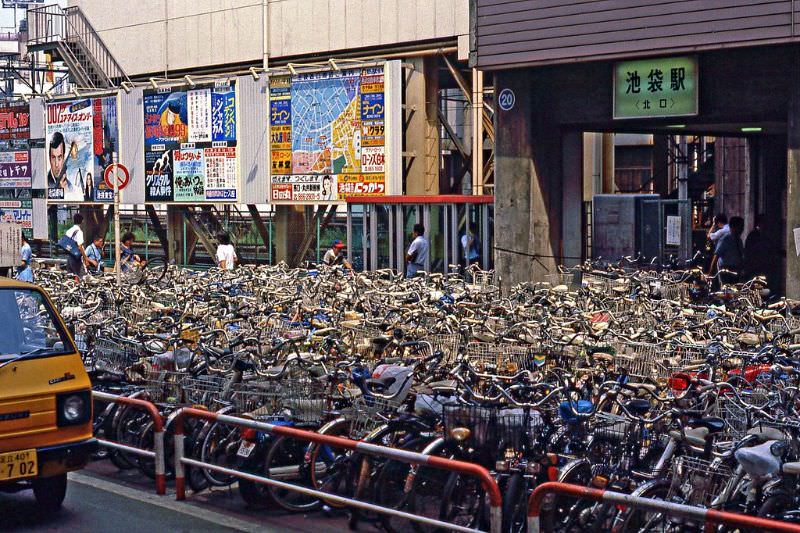
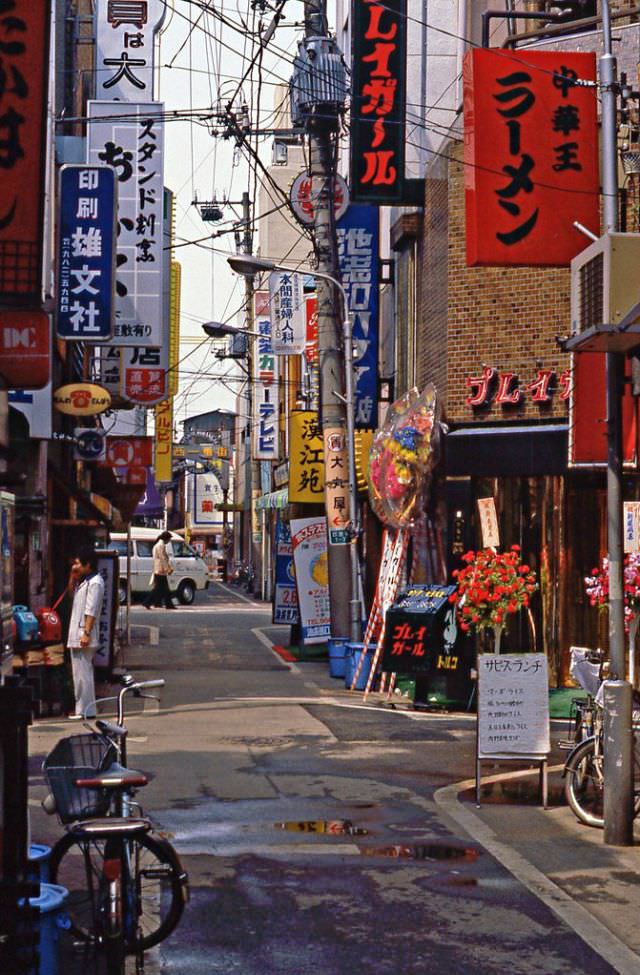
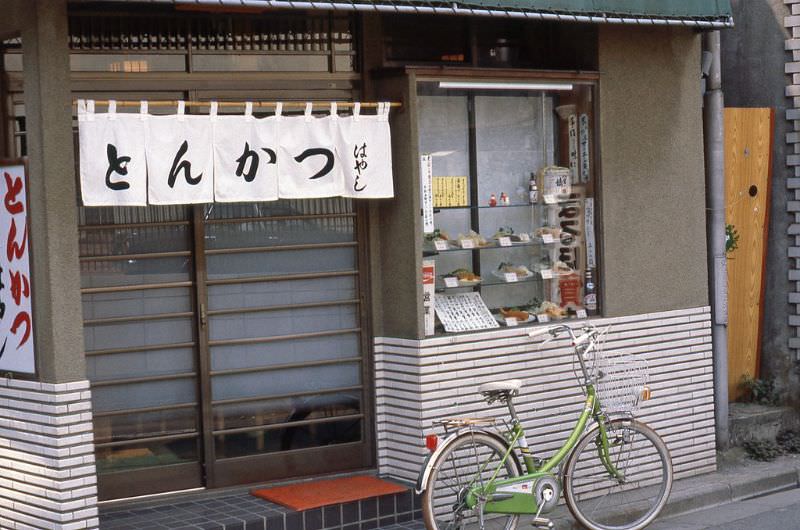
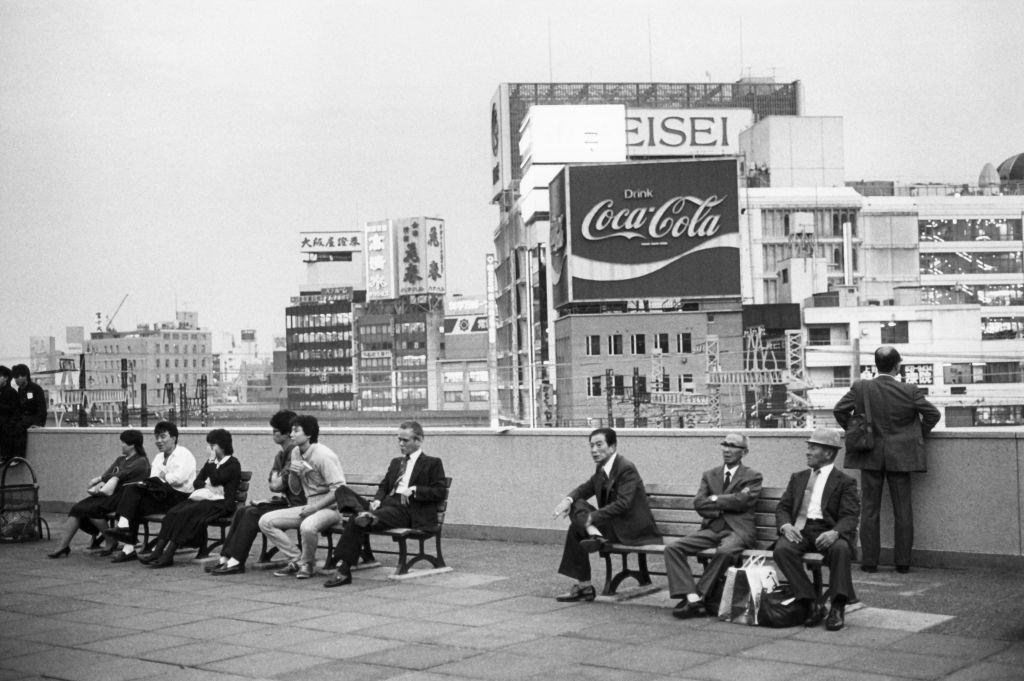
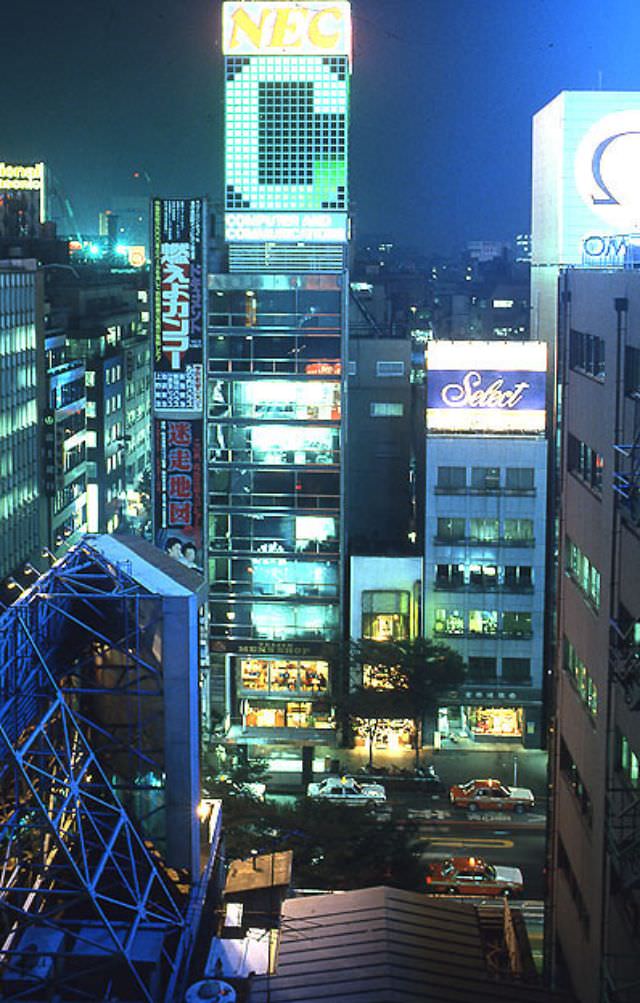
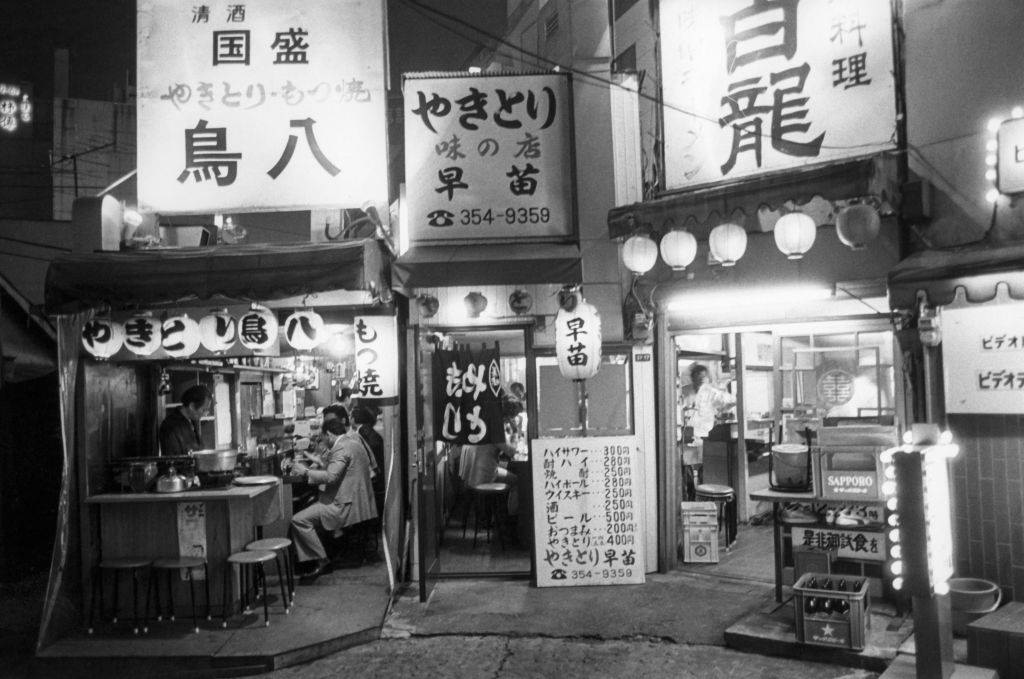
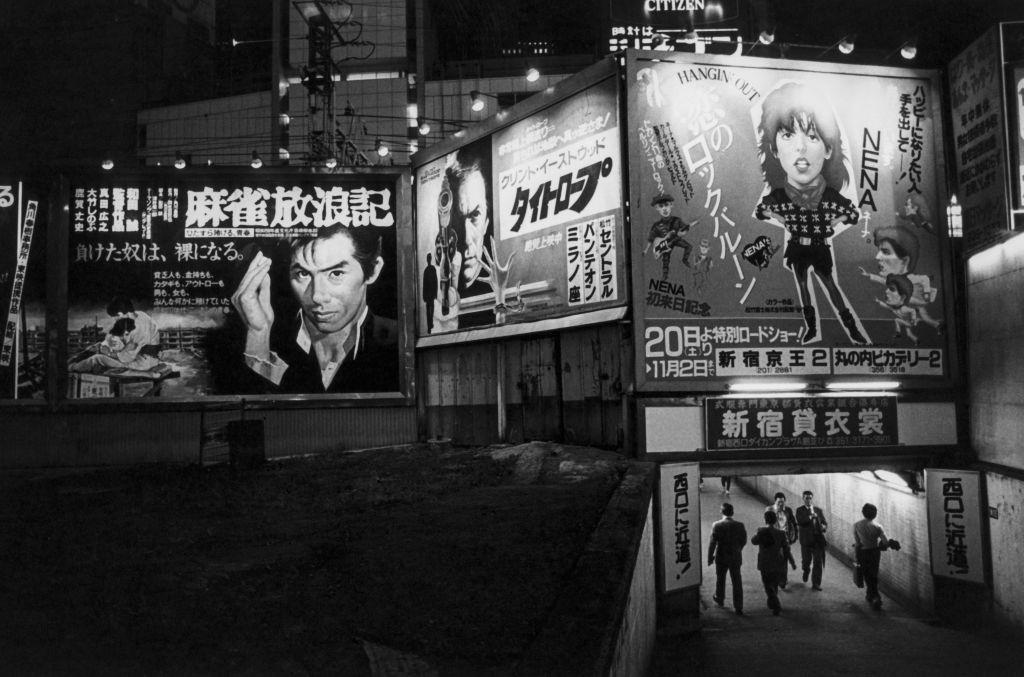
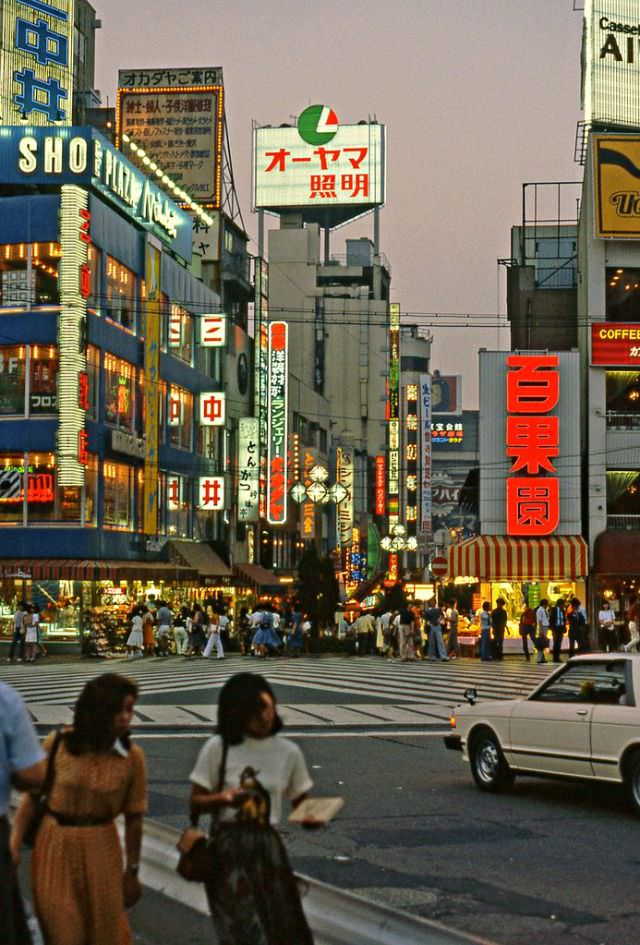
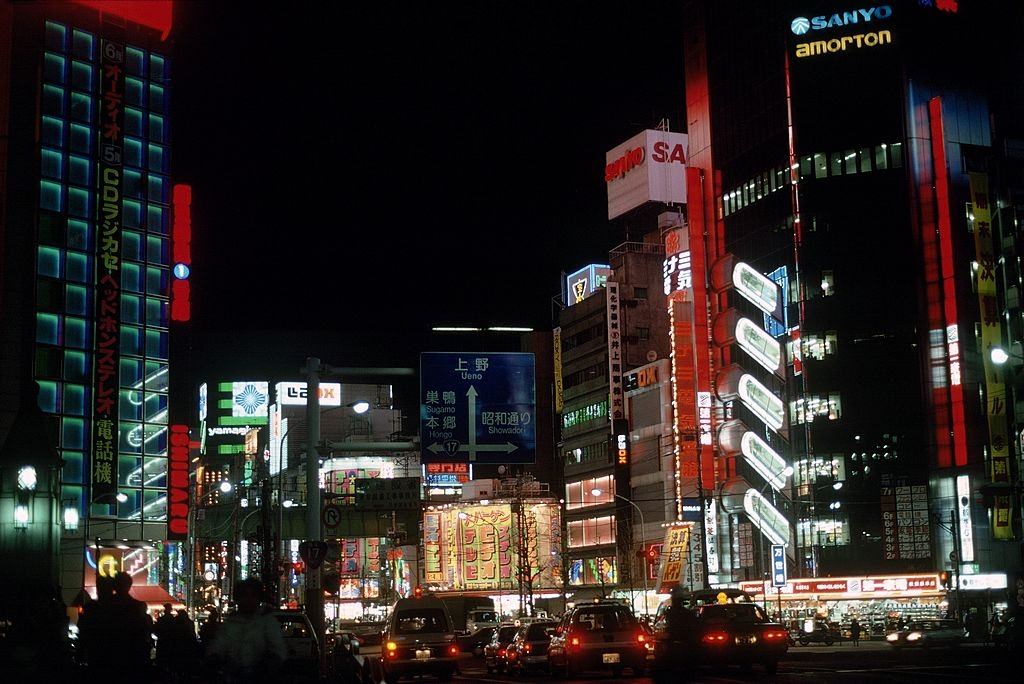
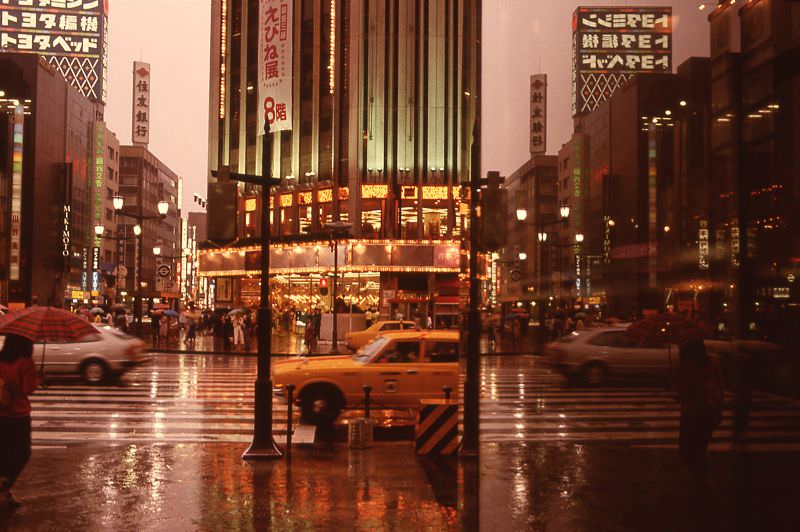
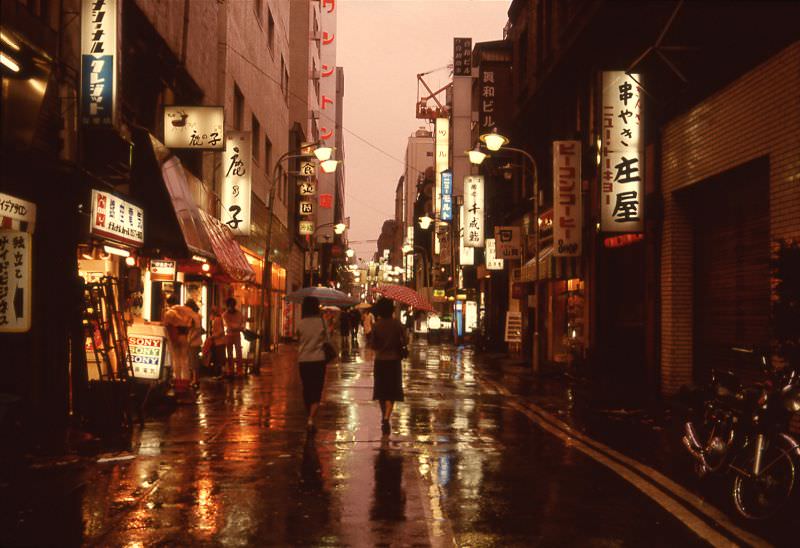
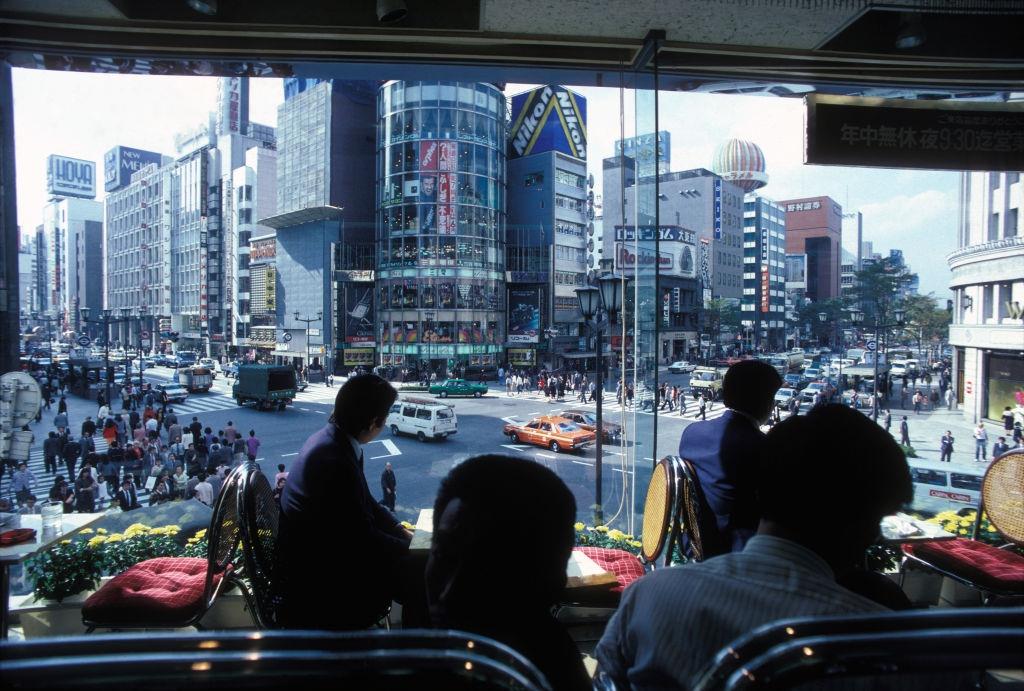
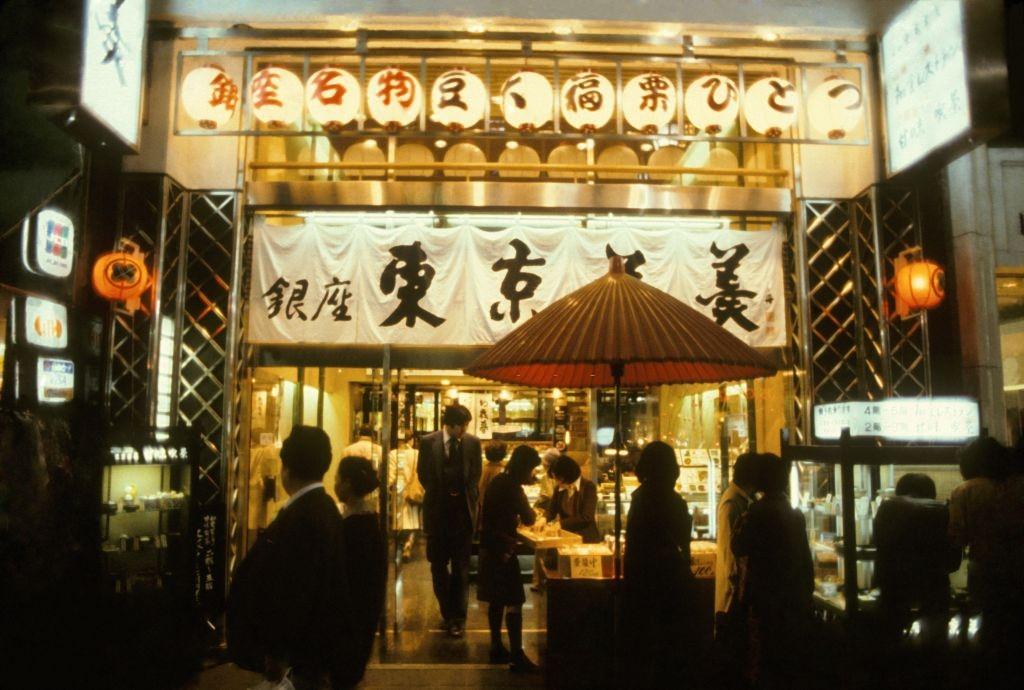
The Ginza and Shinjuku districts were the commercial hearts of 1980s Tokyo. Ginza was lined with luxury shops, theaters, and advertising displays that rivaled anything in New York or Paris. Shinjuku offered a different energy — street restaurants, dense advertising posters, and nightlife that ran deep into the early hours. Both districts reflected Tokyo’s dual nature as a city of both elegance and raw commercial intensity.
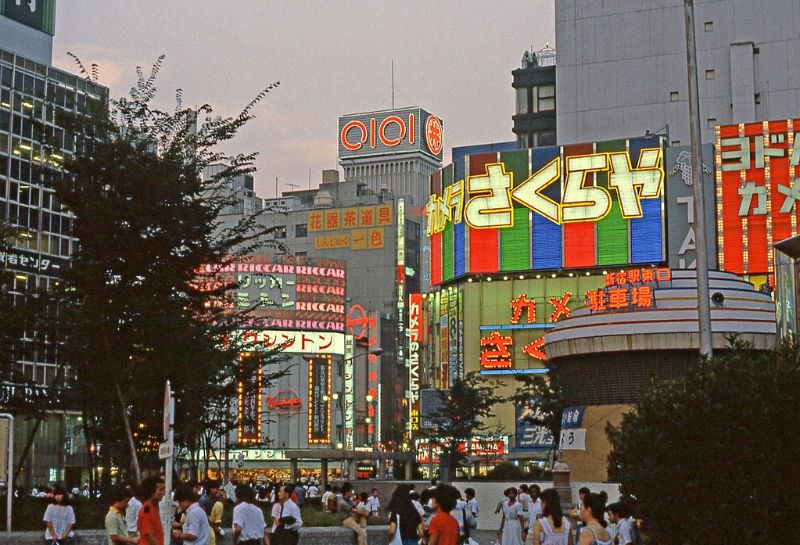
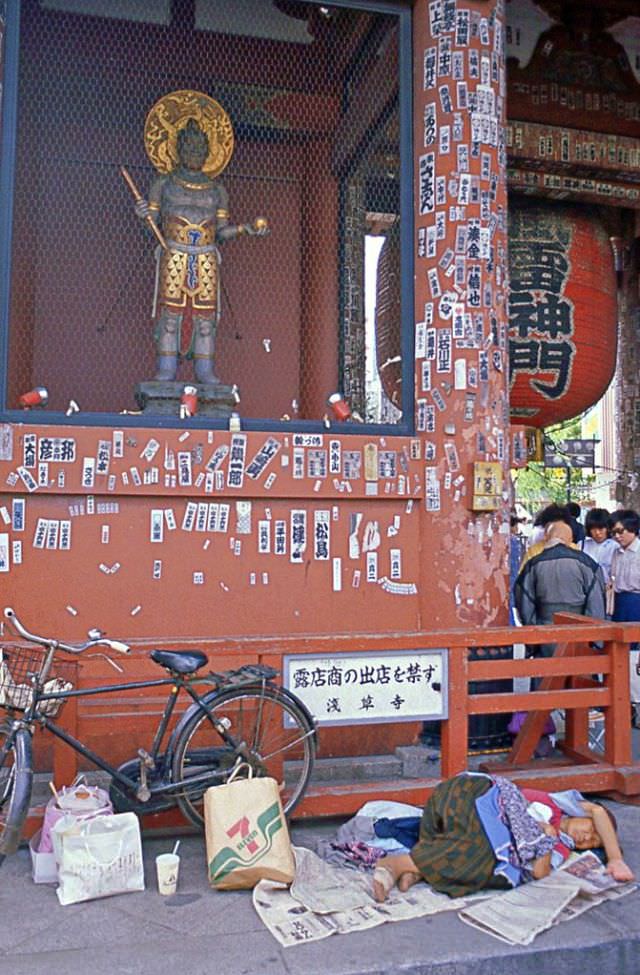
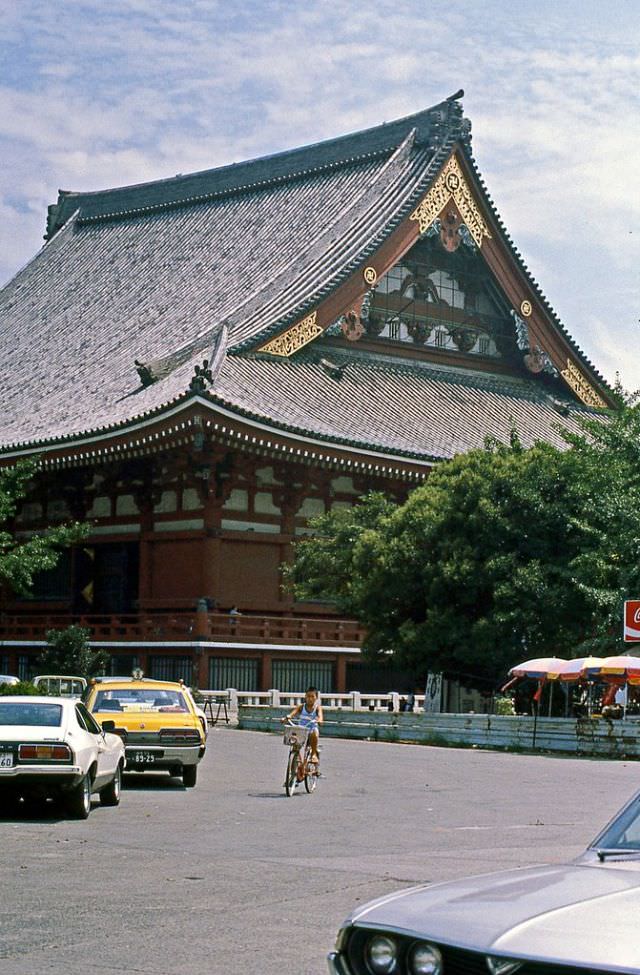
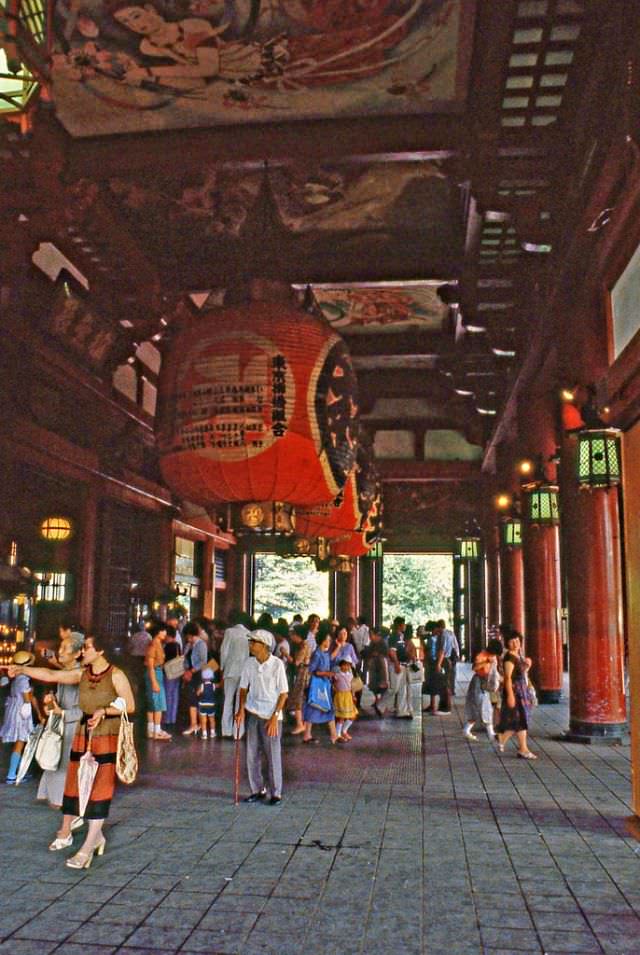
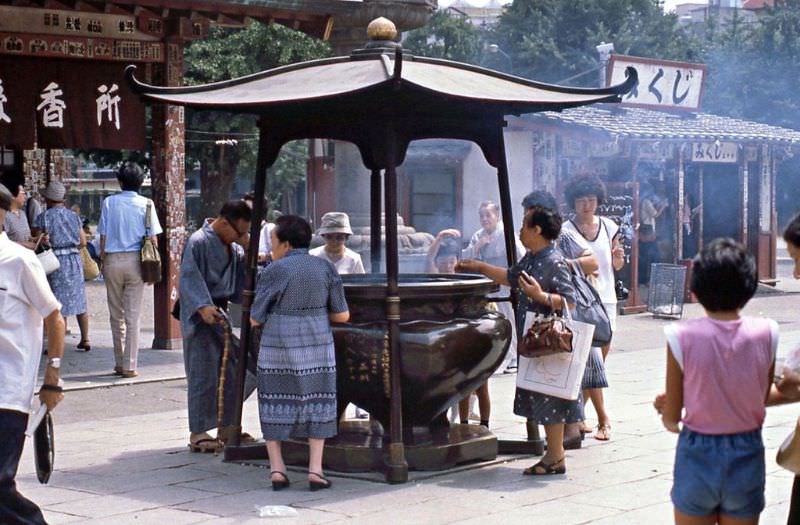
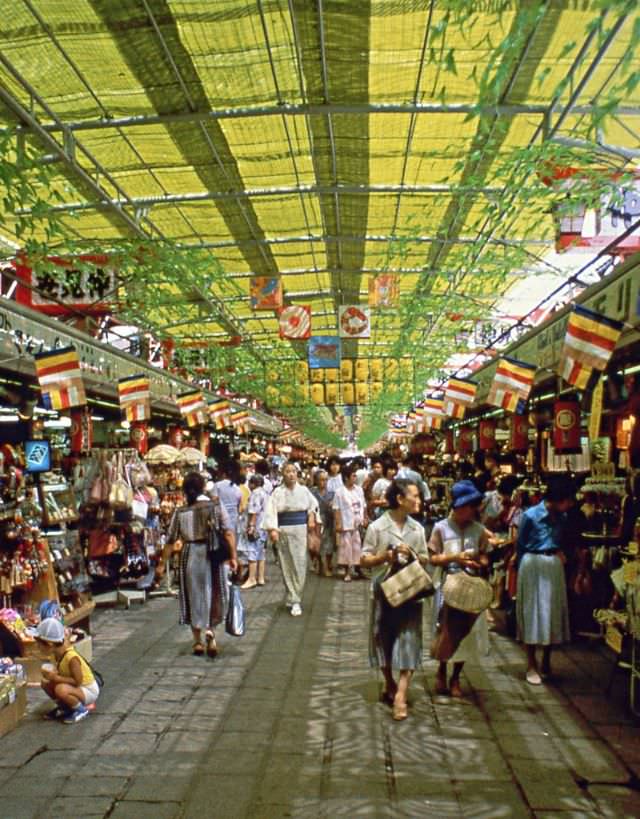
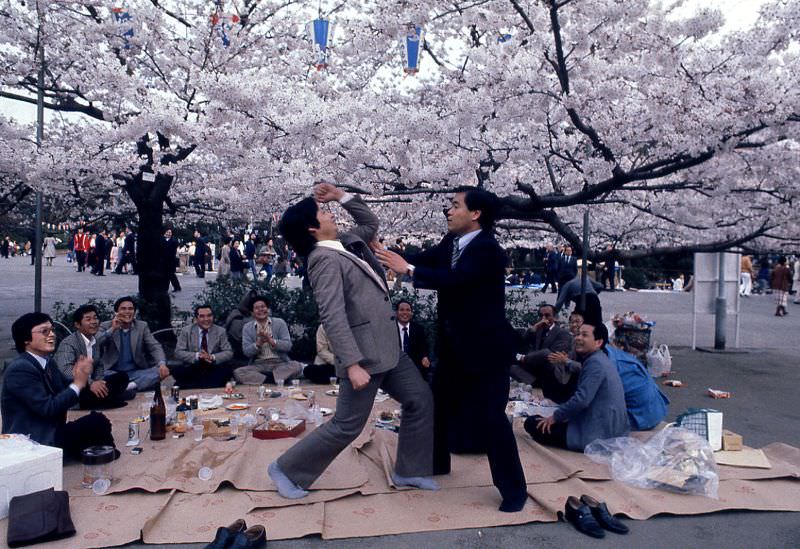
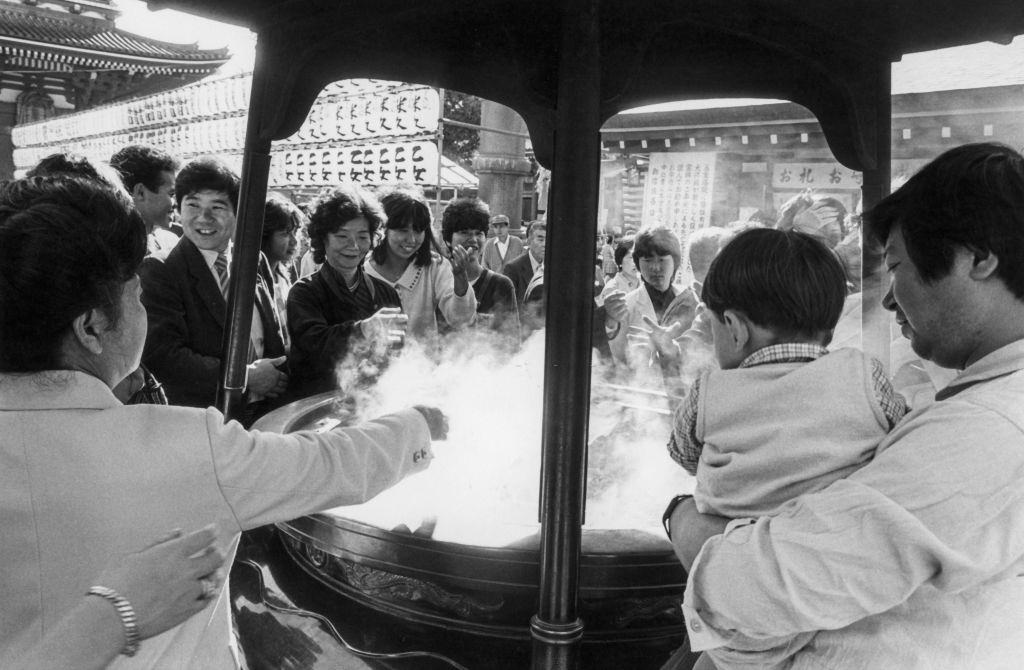
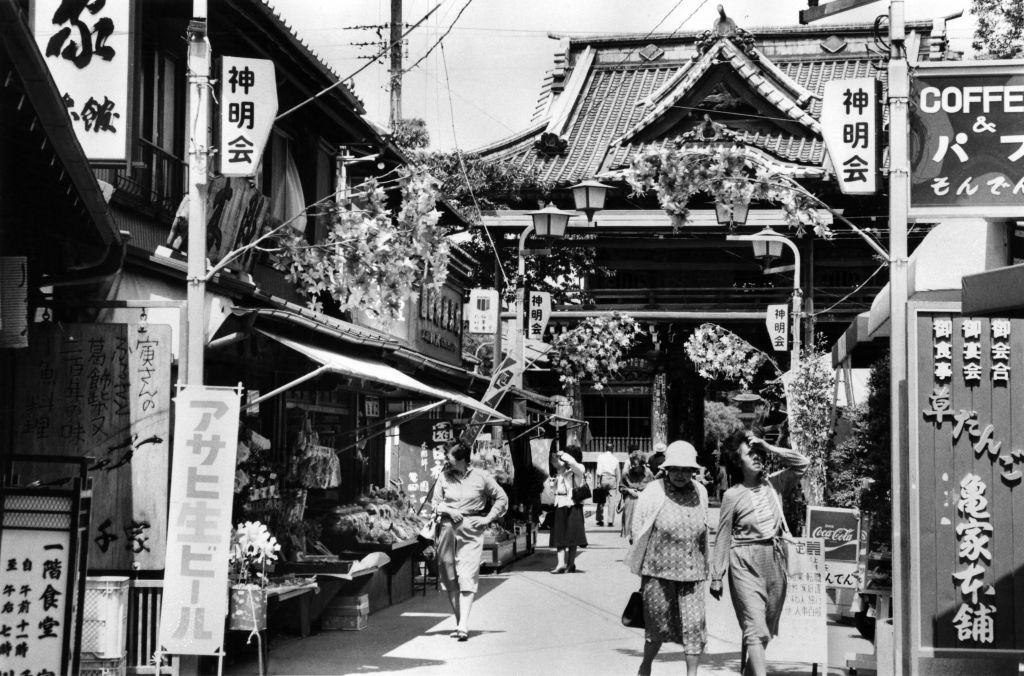
Asakusa was one of Tokyo’s oldest districts and remained a major center for both religious life and tourism. The Kannon Temple, formally known as Senso-ji, drew worshippers and visitors throughout the year. The Nakamise-Dori shopping avenue leading to the temple was packed with stalls selling traditional goods. The Sakura Festival brought thousands more into the streets every spring.
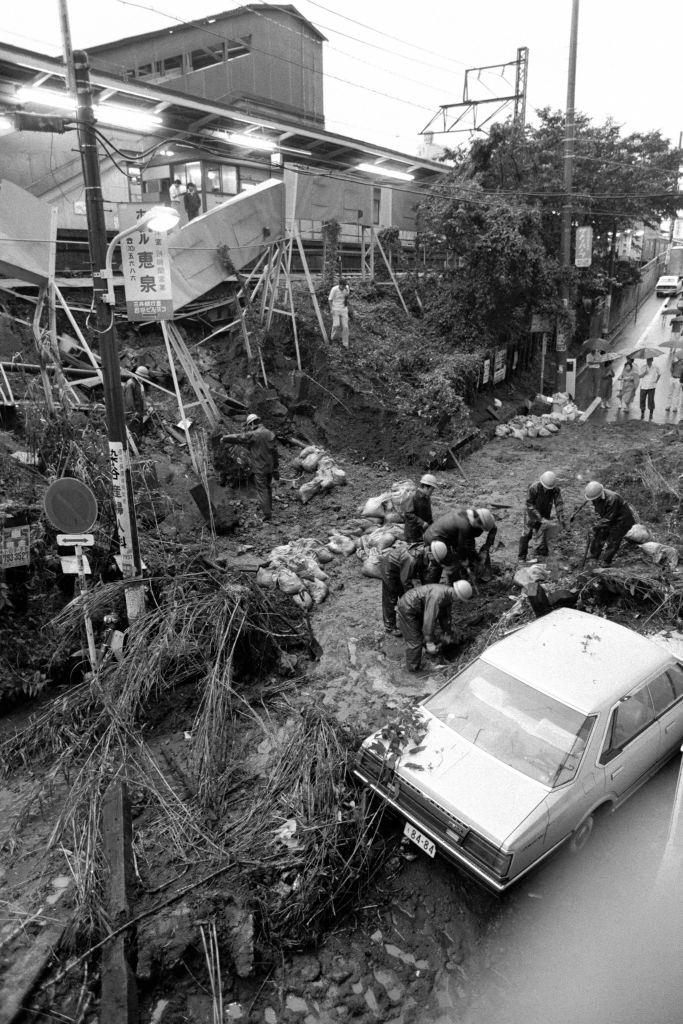
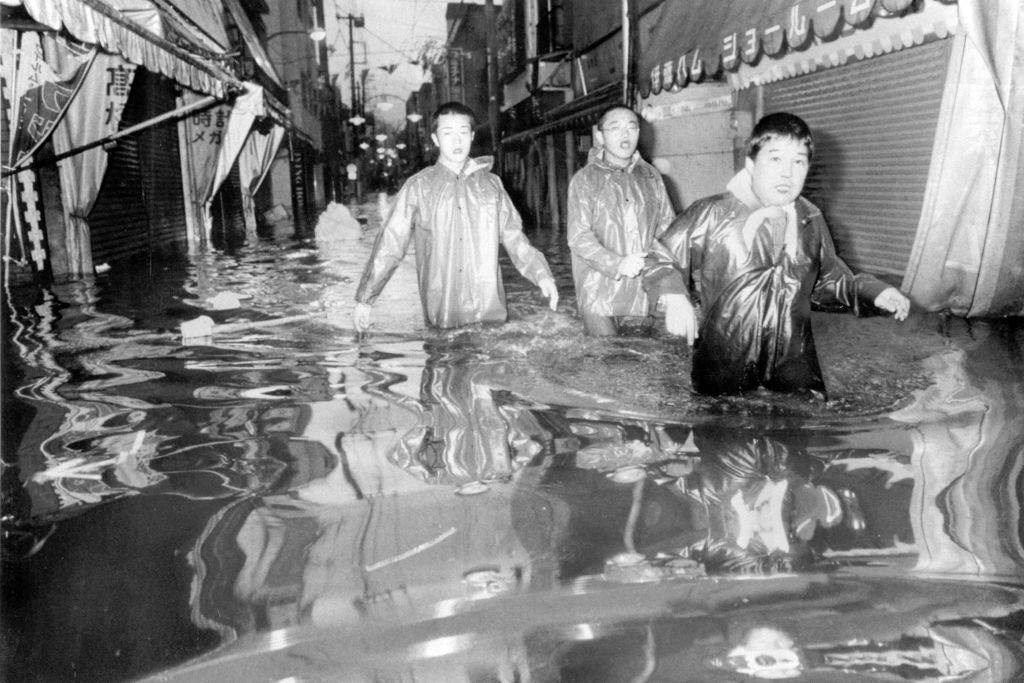
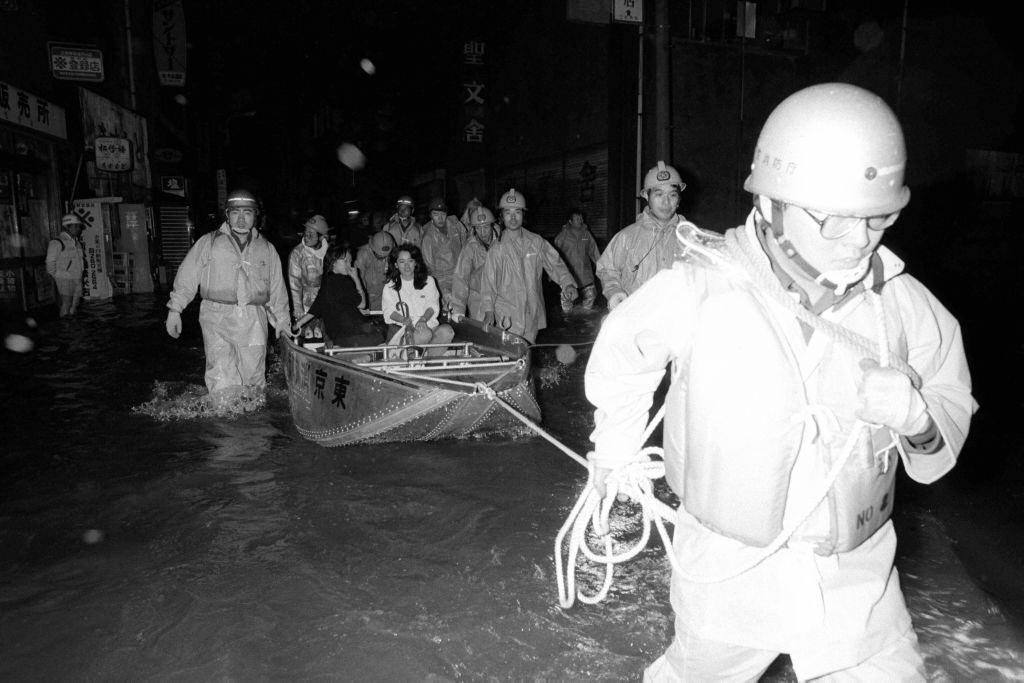
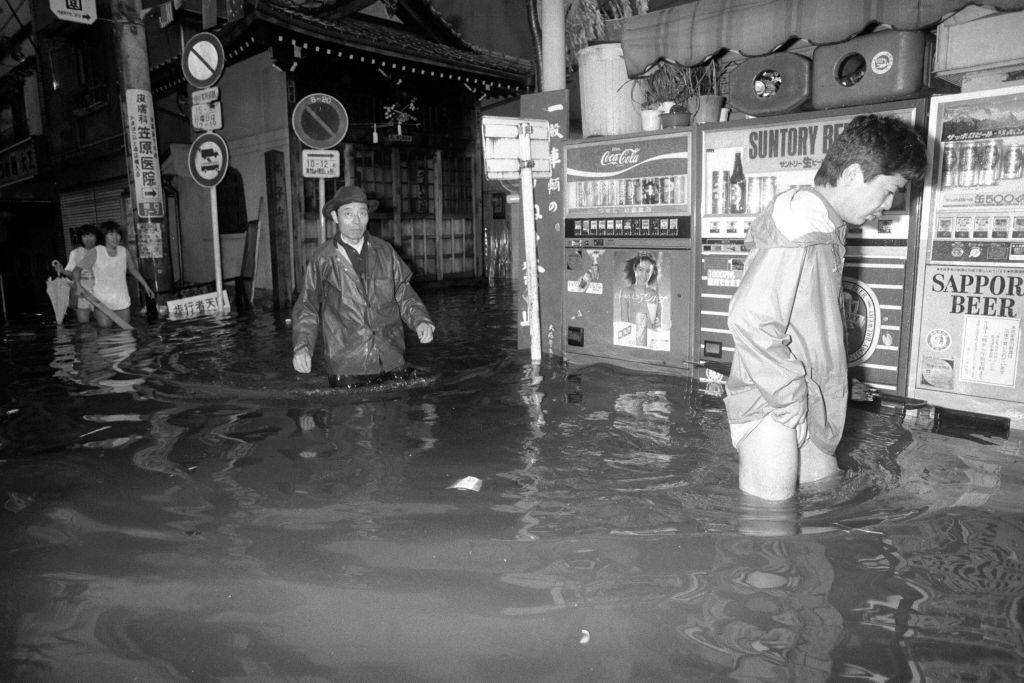
In August 1982, Typhoon Judy struck Tokyo with significant force. A slope near Ebisu Station collapsed, and widespread flooding forced residents to evacuate their neighborhoods. People waded through inundated streets carrying what they could. The disaster was a reminder that even in a booming, modern city, nature could halt everything without warning.
Construction was a constant feature of Tokyo’s landscape throughout the decade. Scaffolding workers climbed structures across the city as new buildings went up at a relentless pace. Industrial cranes were a common sight against the skyline. The 24th Tokyo Motor Show in 1981 reflected another dimension of this industrial energy, with Japan’s automotive manufacturers showcasing vehicles that were becoming competitive on a global scale.
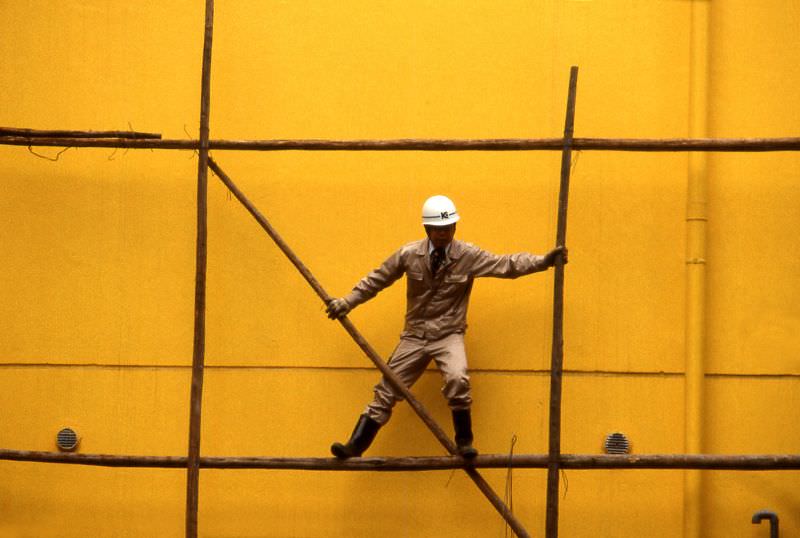
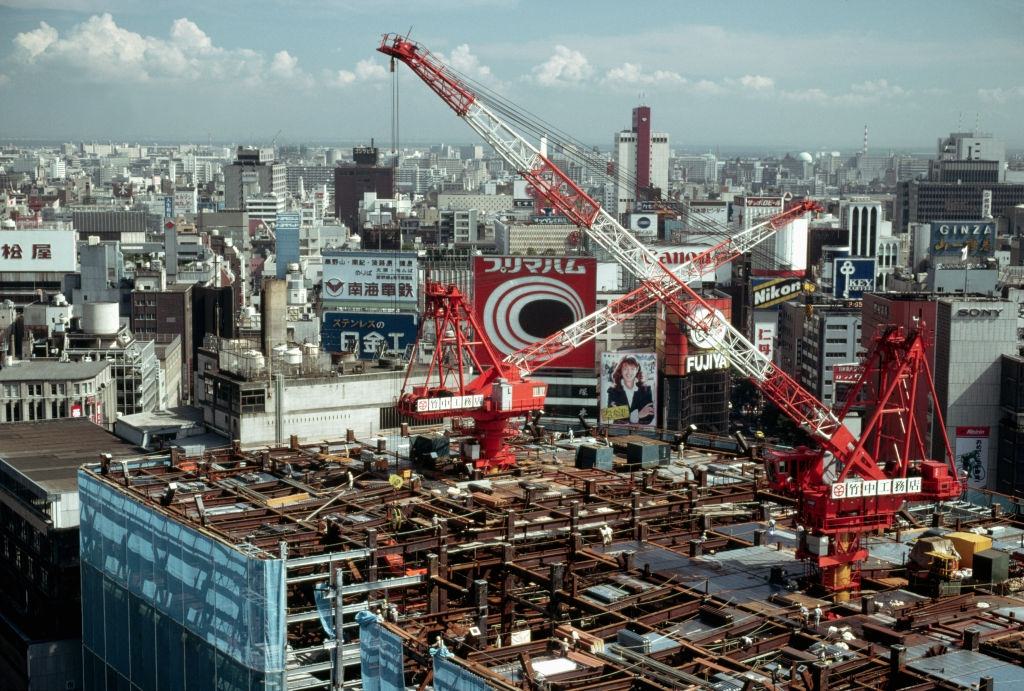
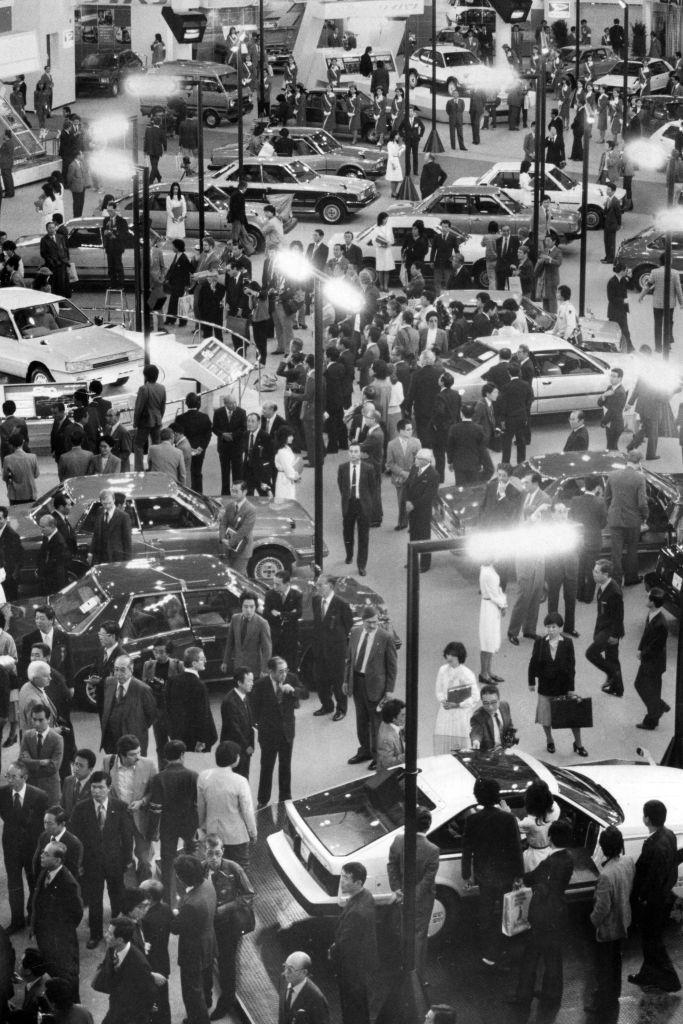
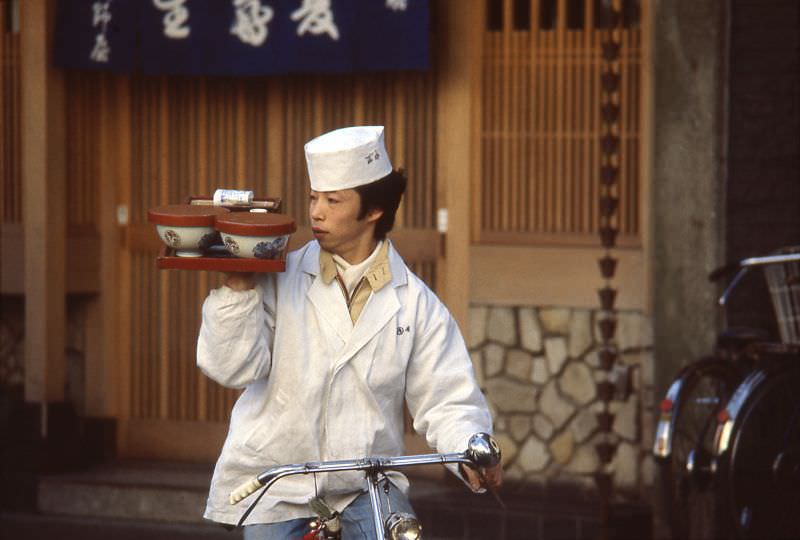
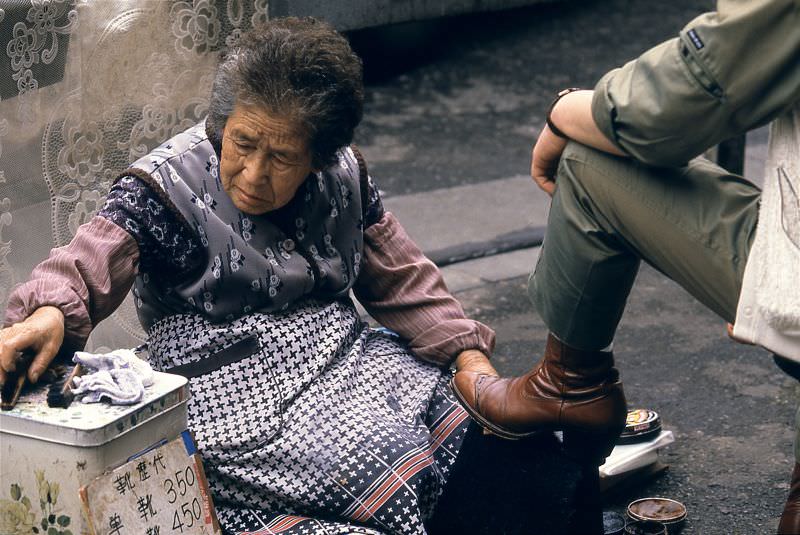
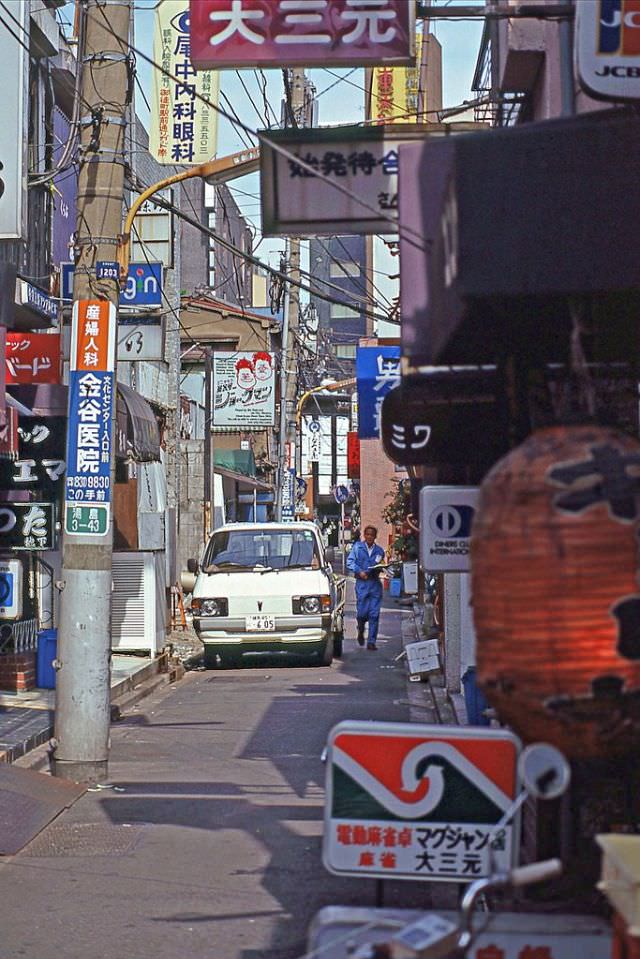
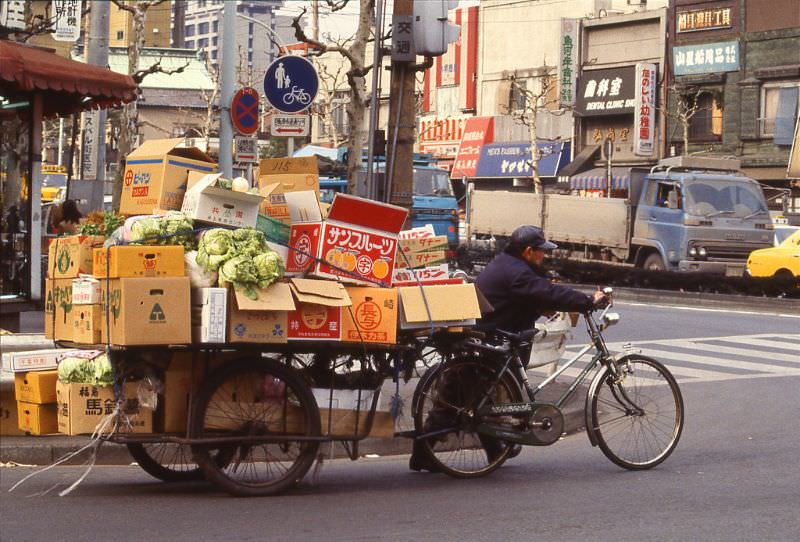
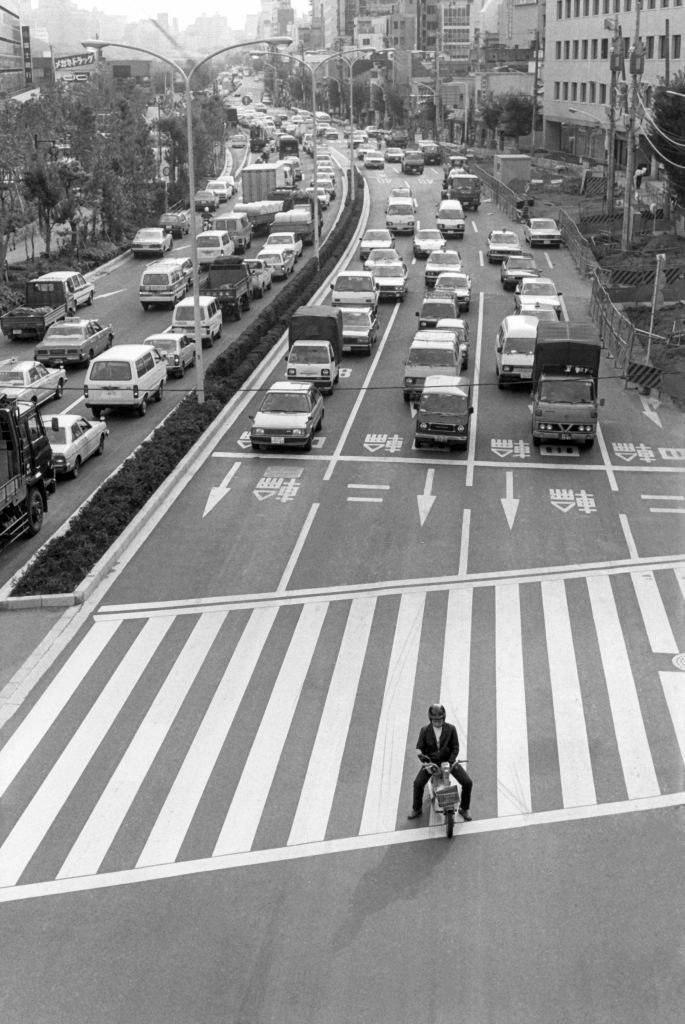
Street life in Tokyo was rich and layered. Delivery men navigated the city’s dense neighborhoods on motorbikes and bicycles. Shoe shiners set up at busy corners. Hostesses worked the entertainment districts. Buddhist monks walked through neighborhoods collecting alms in the traditional style. Each of these figures was part of the fabric of a city that ran on countless overlapping daily routines.
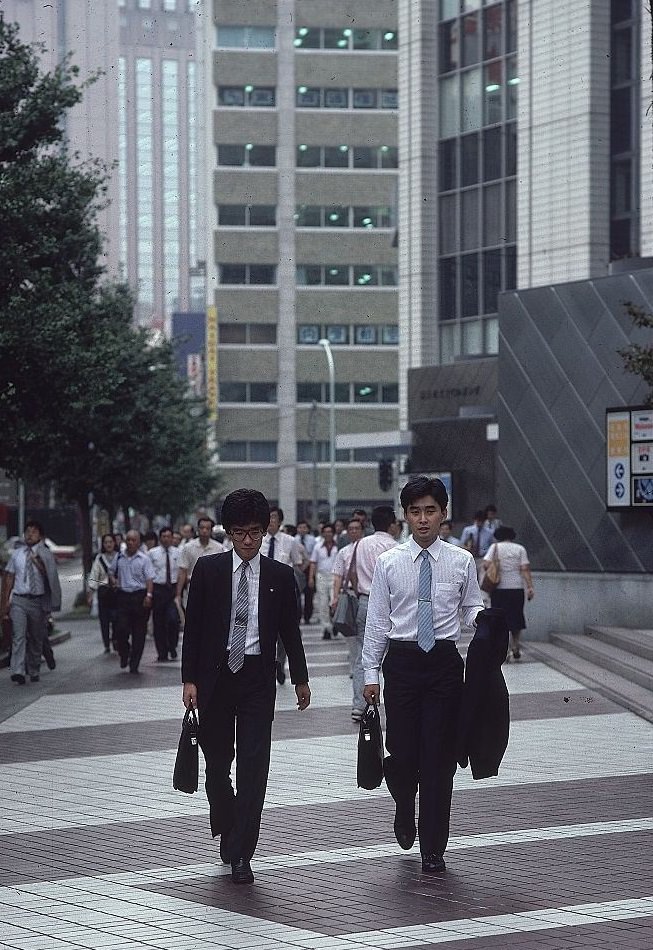
Japan’s birth rate declined steadily through the decade, falling from around 14 births per thousand people to about 10. By the late 1980s, the effects of an aging population were already visible in the labor force. Young workers were in short supply, which put pressure on wages, employment practices, and pushed more women into the workforce to fill the gaps.
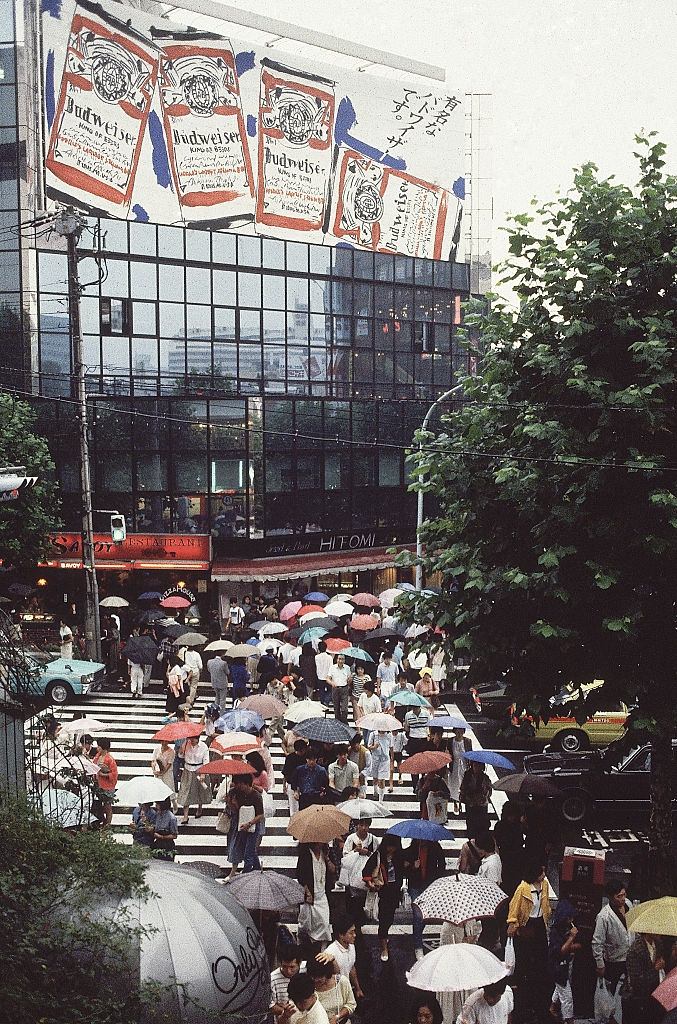
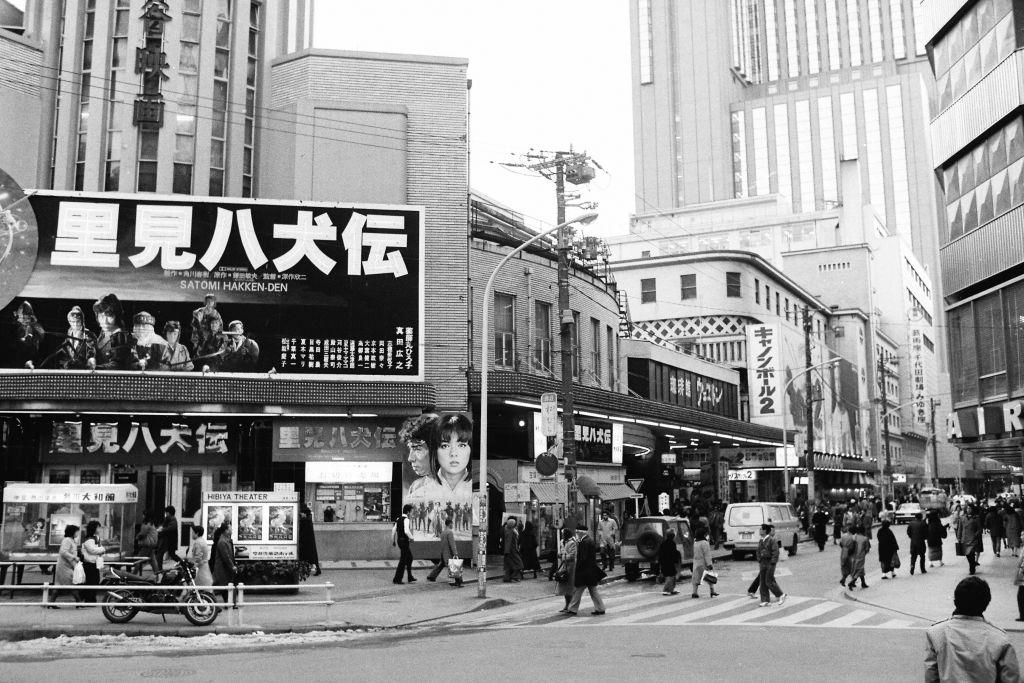
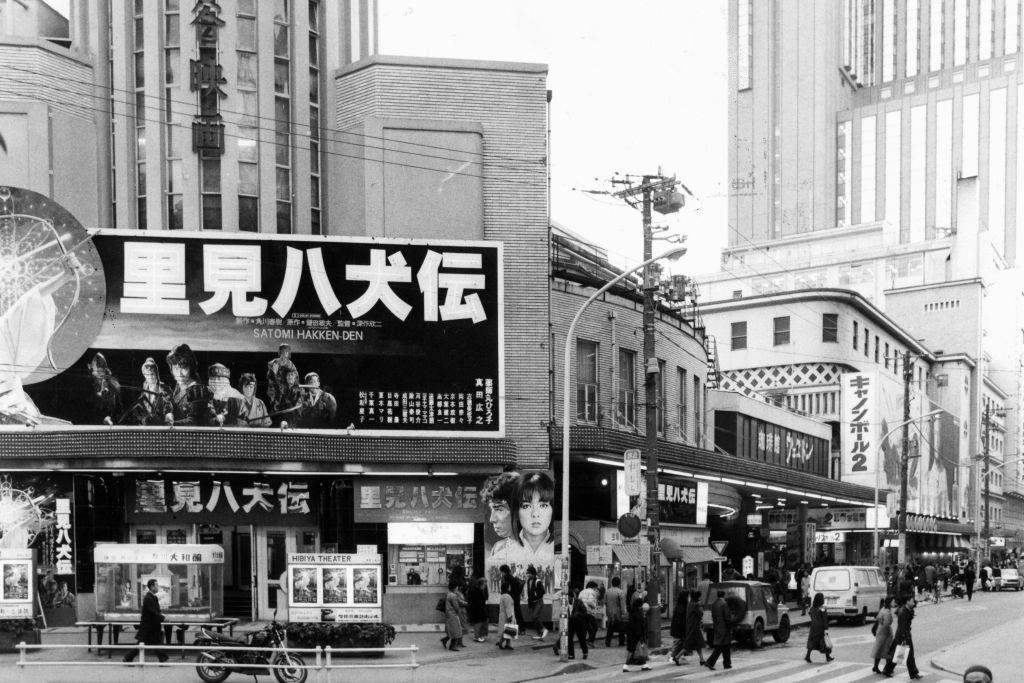
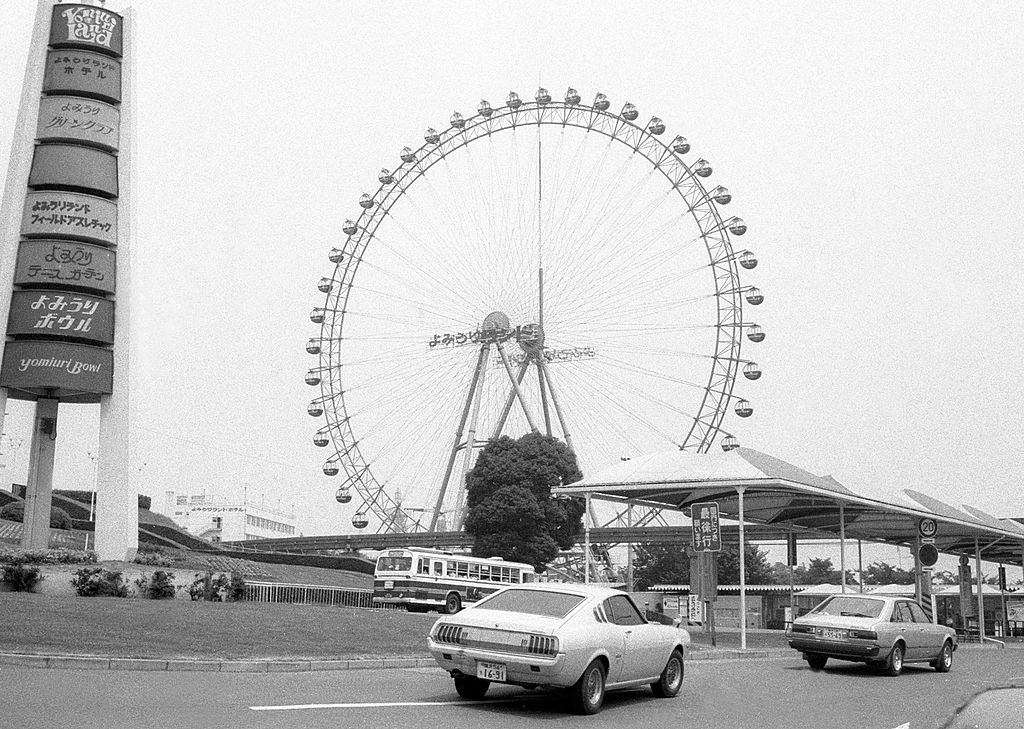
Entertainment was a growing force in 1980s Tokyo. Anime and manga exploded in popularity, laying the groundwork for Japan’s global entertainment exports in the years ahead. Cinema was thriving too — Shinjuku’s movie theaters drew large crowds, and the Hibiya theater district remained one of the city’s cultural landmarks. Akihabara was becoming a destination for electronics and soon-to-be otaku culture.
Capsule hotels were a product of the 1980s Tokyo boom. Built near major transit hubs like Ueno Station, they offered basic sleeping pods for travelers and salarymen who missed the last train home. They were purely functional — a bed, a light, and a locker — and represented both Japanese efficiency and the pressures of a city where long working hours were routine.
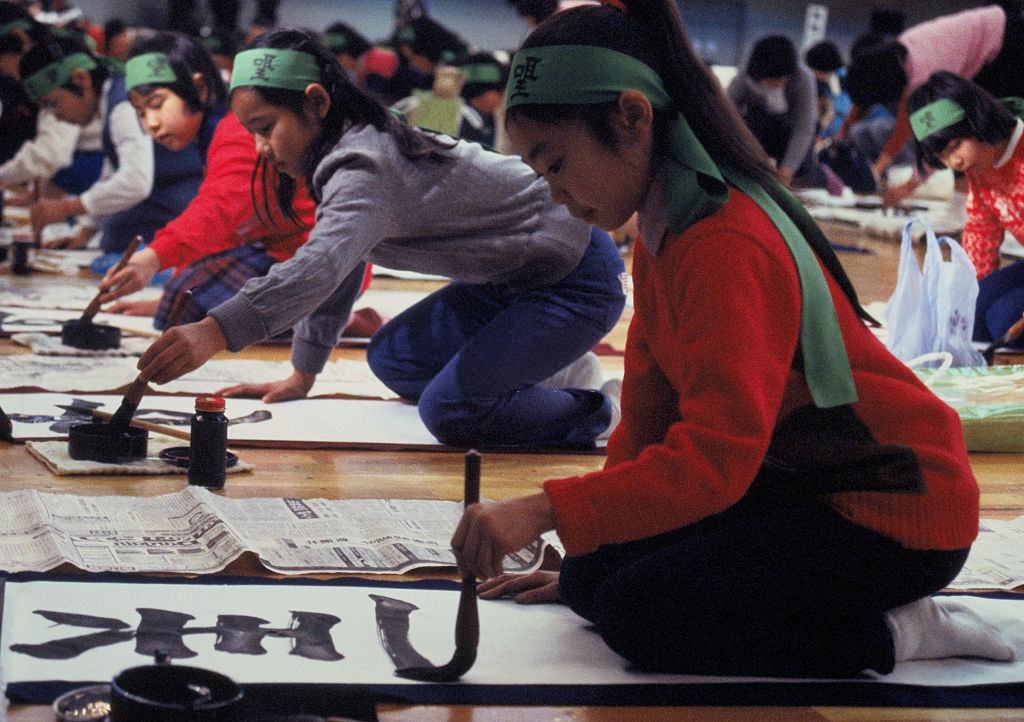
Public events and sports were woven into the rhythm of Tokyo life. The Hakone Ekiden relay race launched from Tokyo every January, drawing thousands of spectators to the streets. The Tokyo International Women’s Marathon brought competitive runners from across the world. Public swimming pools overflowed with crowds during summer. The Budokan Hall hosted calligraphy competitions attended by nearly 5,000 participants, from young children to adults.
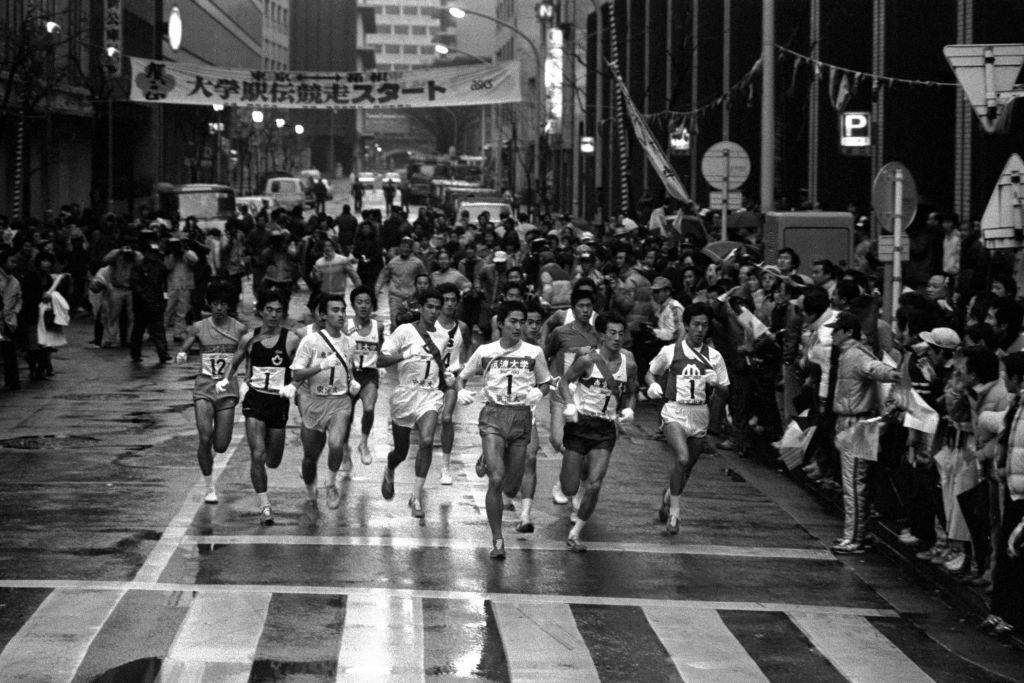
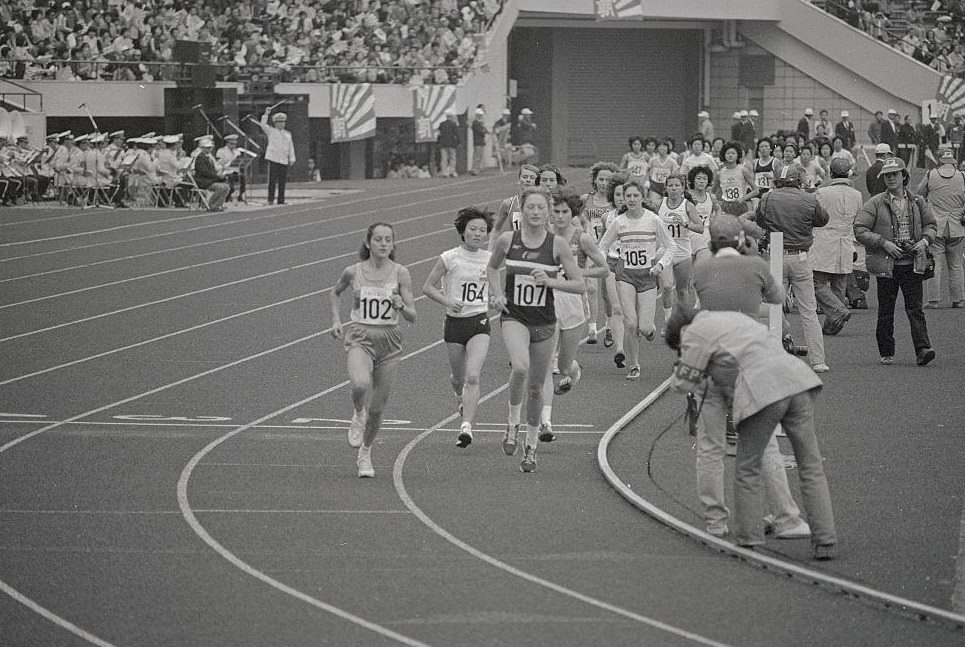
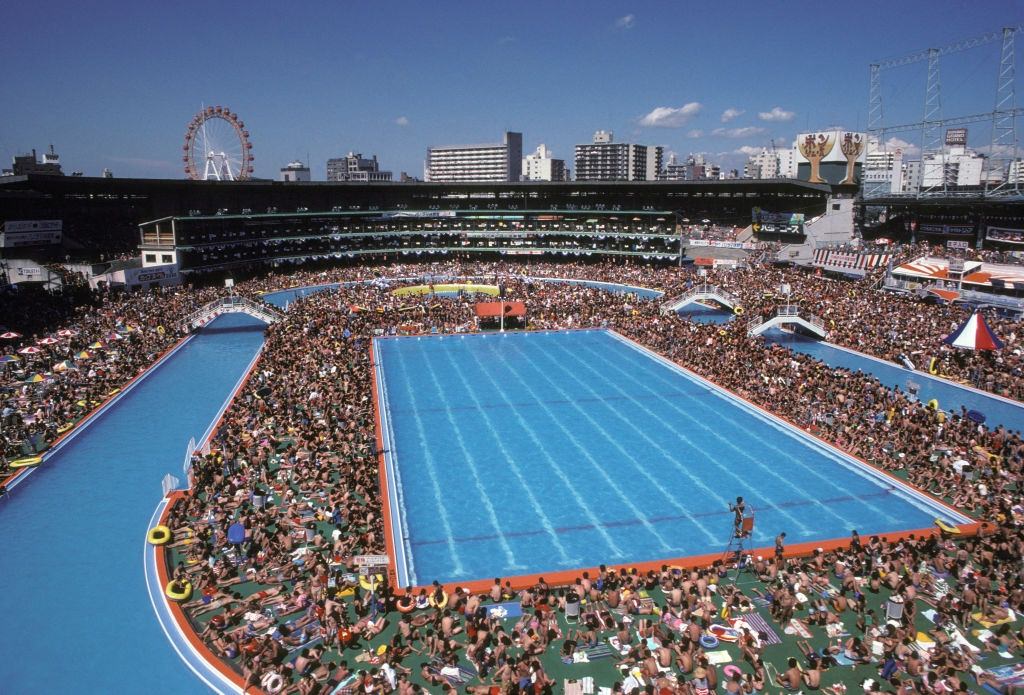
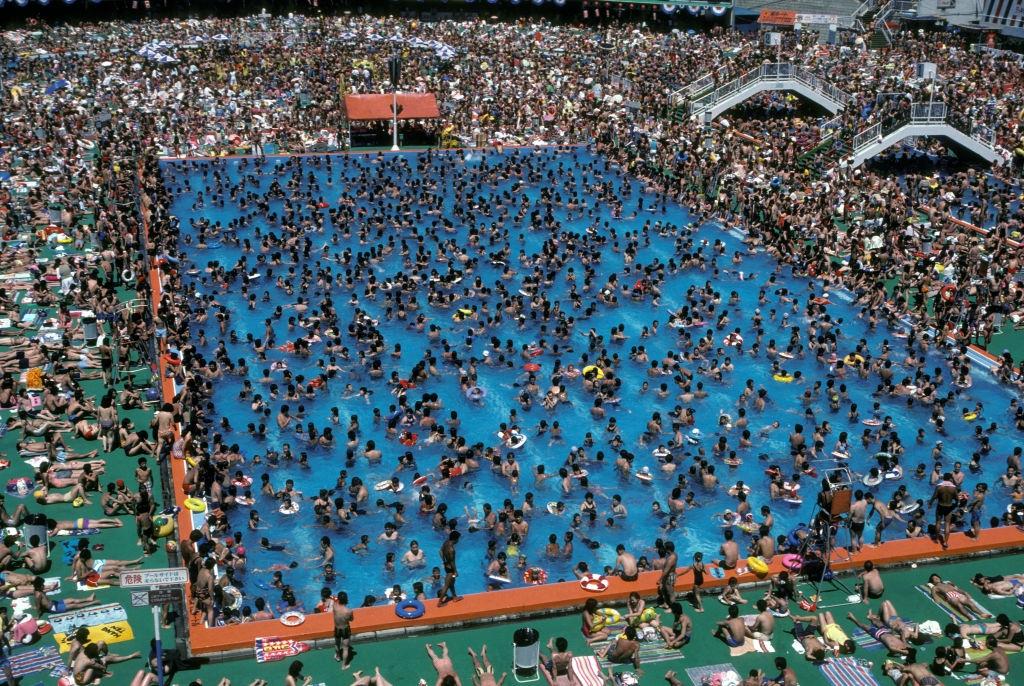
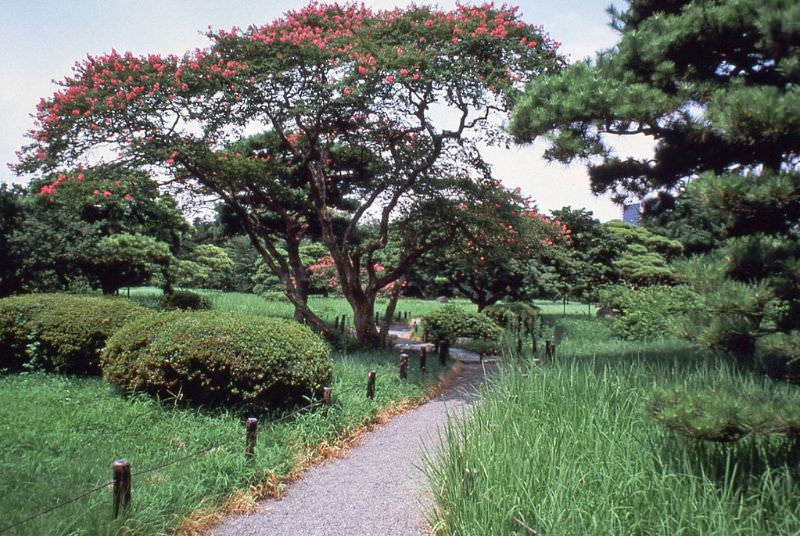
Tokyo’s streets captured so much of what defined the decade. Traffic moved through expressways and boulevards lined with neon and signage. Markets like Ueno offered fish and goods to local shoppers. Gardens like Hama Rikyu provided quiet relief from the urban density. Temples like Shibamata Taishakuten drew both the devout and the curious.
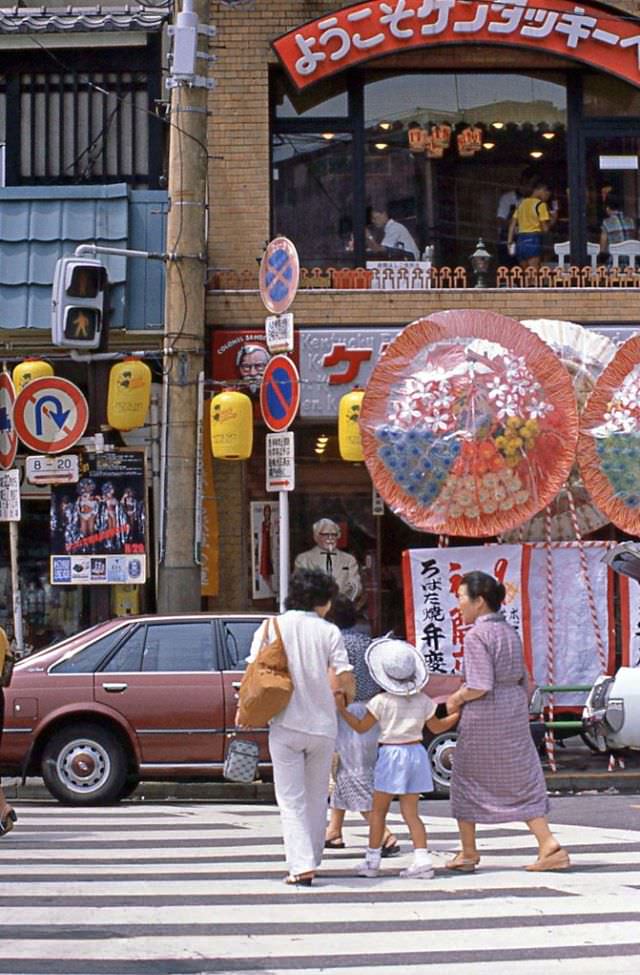
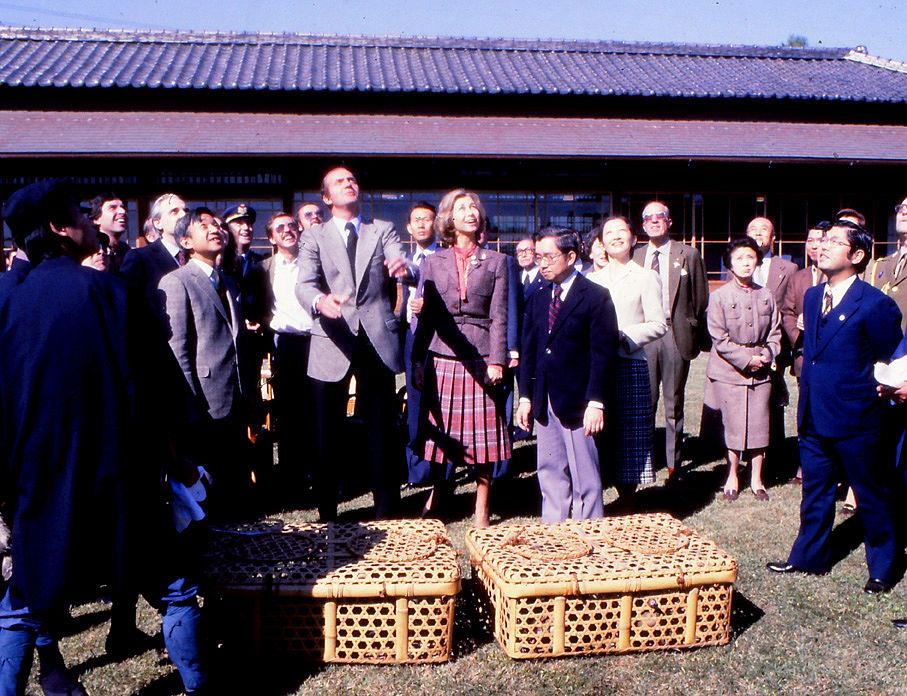
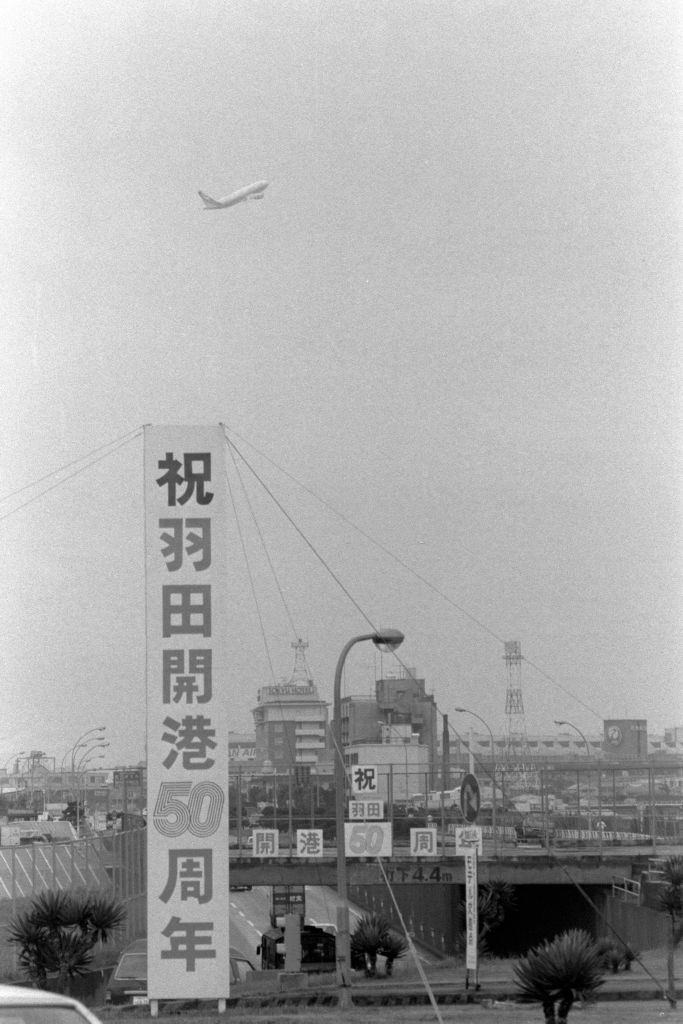
International visitors and dignitaries came to Tokyo throughout the decade. In 1980, Spanish King Juan Carlos and Queen Sofia visited Tokyo alongside Crown Prince Akihito and Crown Princess Michiko at the Imperial Reserve at Shinama, where they released pigeons in a formal ceremony. Haneda Airport, marking its 50th anniversary in 1981, was the gateway through which the world entered the city.
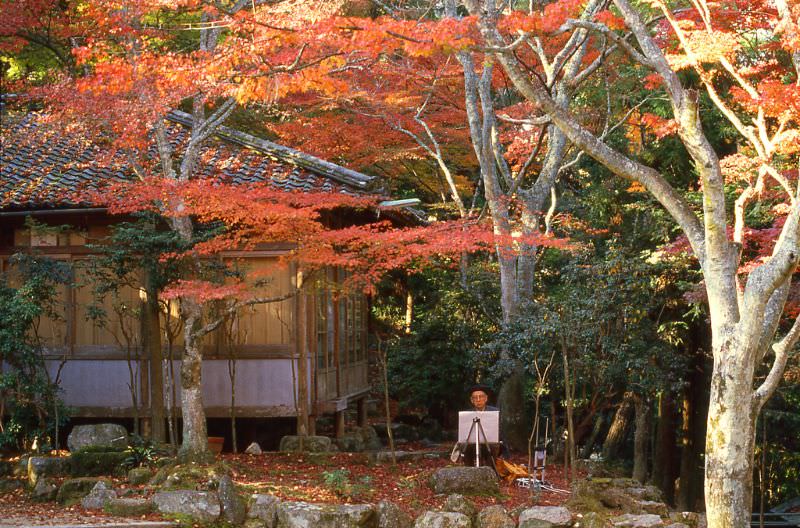
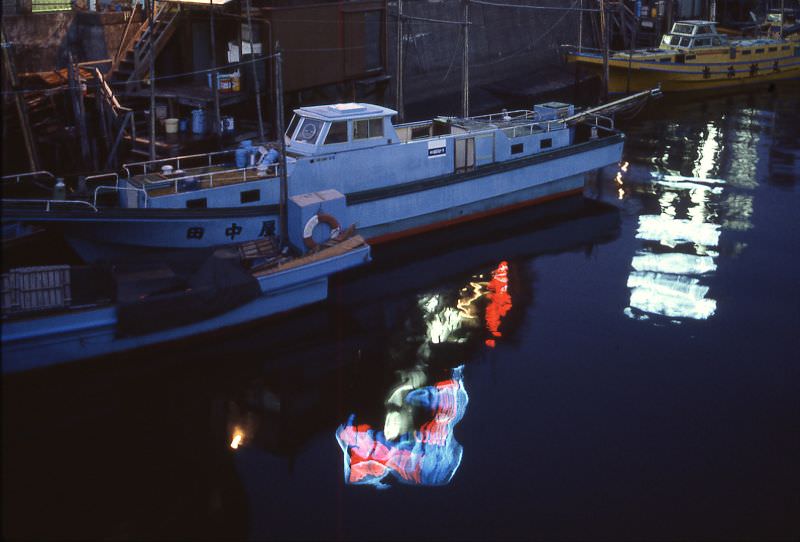
From the quiet artistry of a painter sitting beneath autumn momiji leaves to the noise of a pachinko-lit Shimbashi street at night, 1980s Tokyo contained multitudes. It was a city of ancient ritual and modern ambition, of packed transit cars and tranquil temple gardens, of economic confidence and demographic anxiety that few yet fully understood.
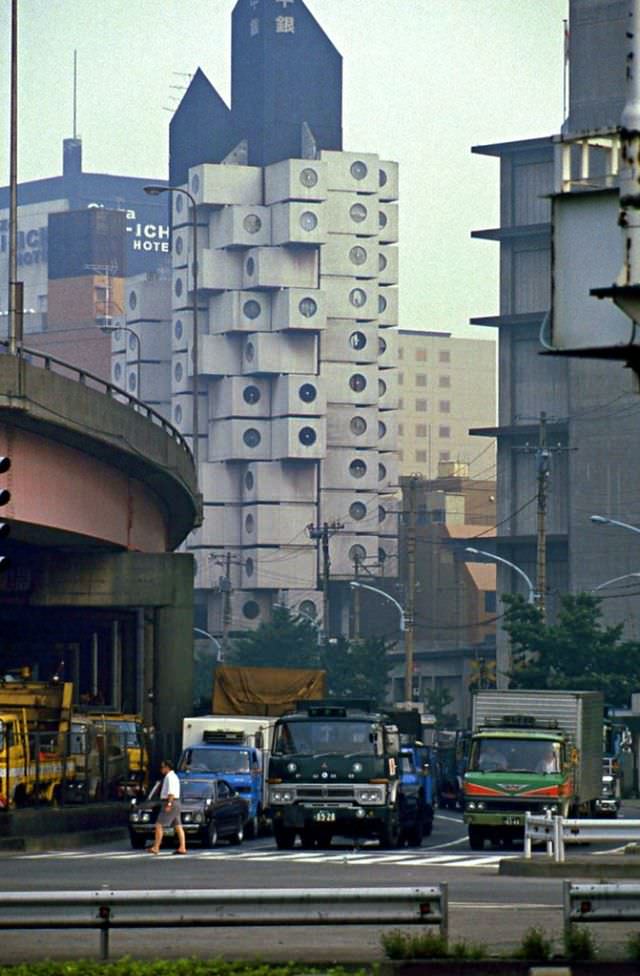
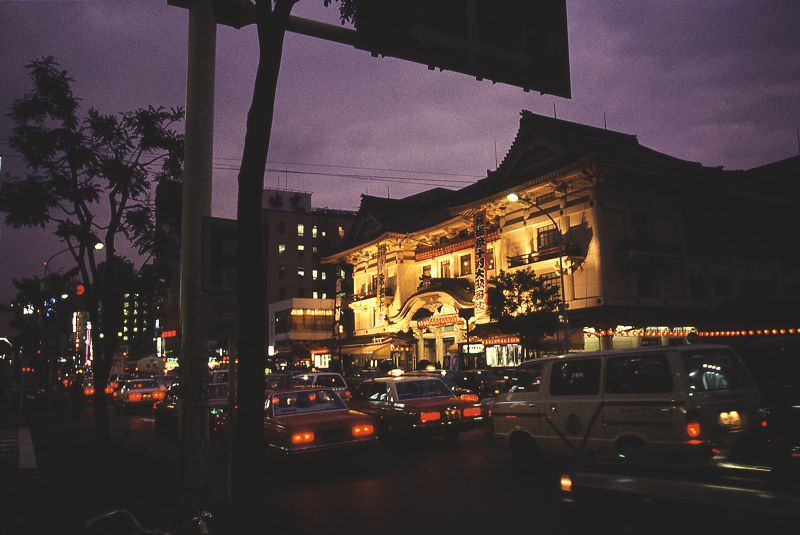
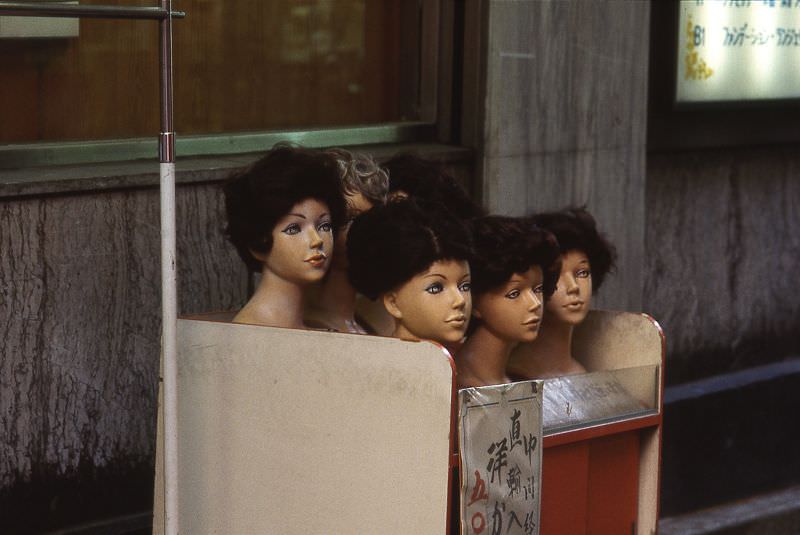
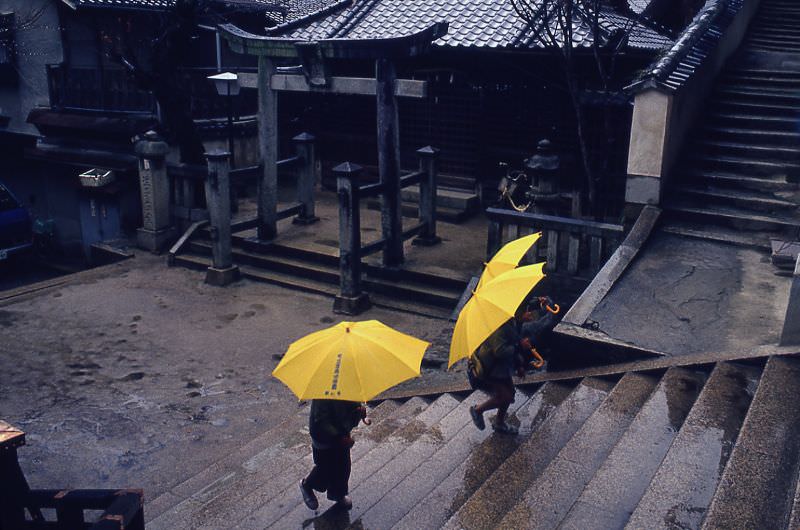
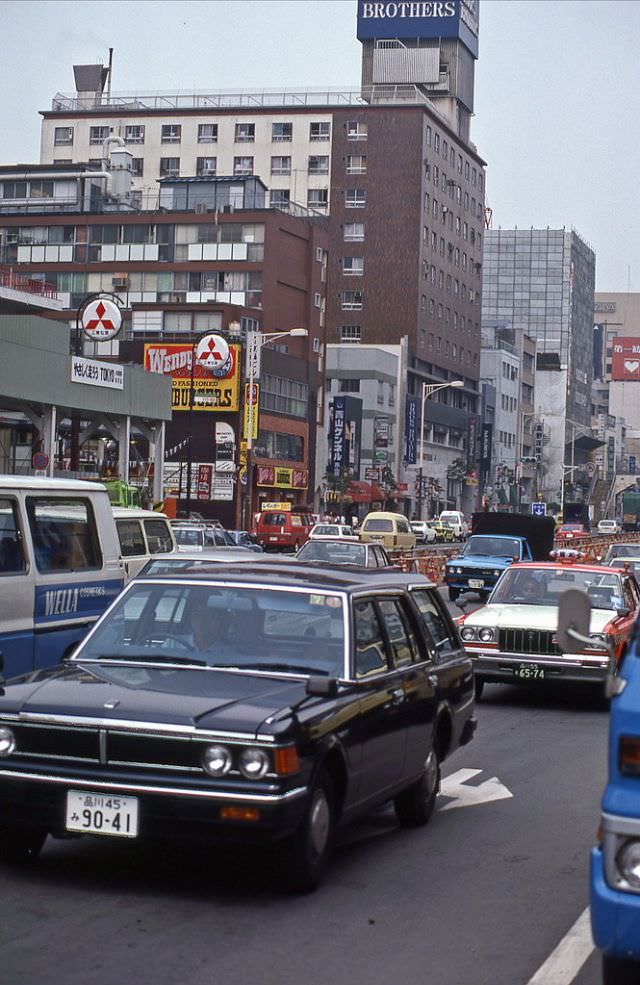
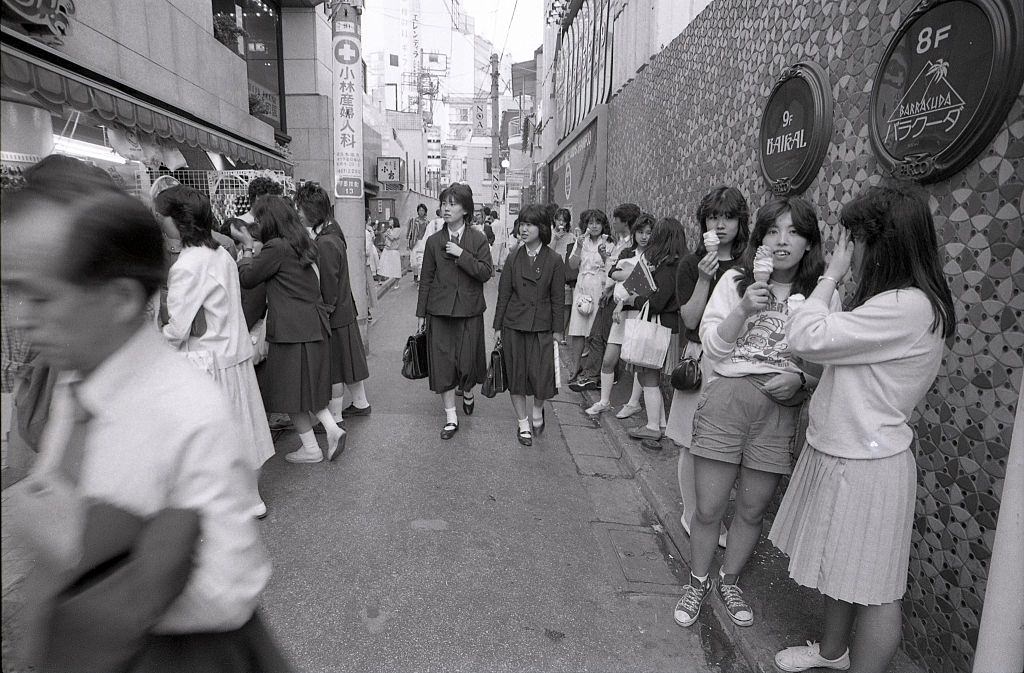
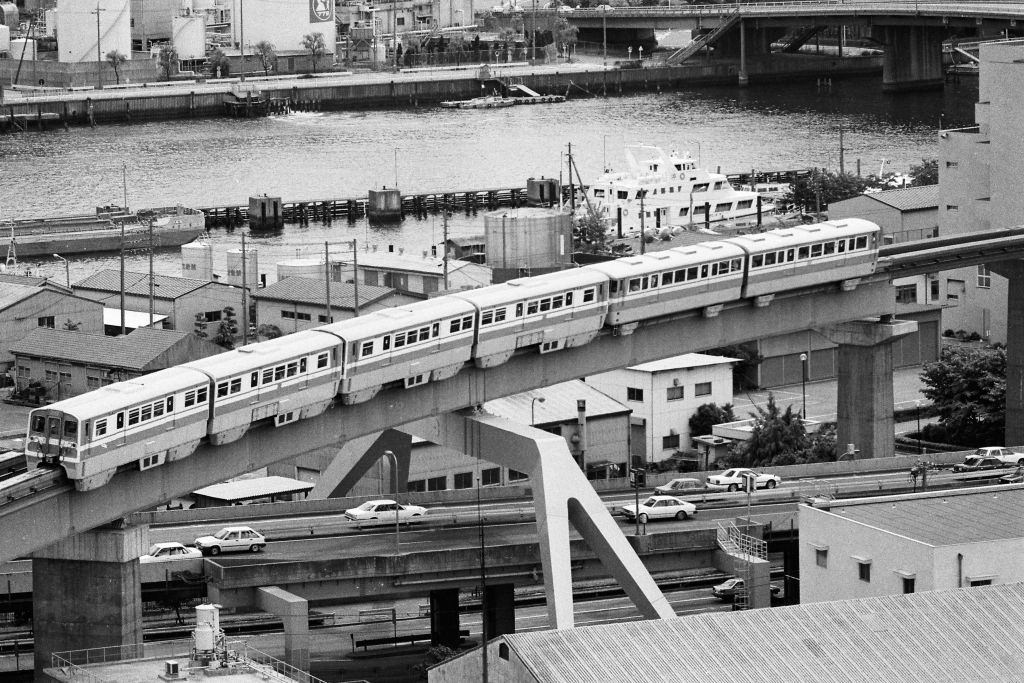
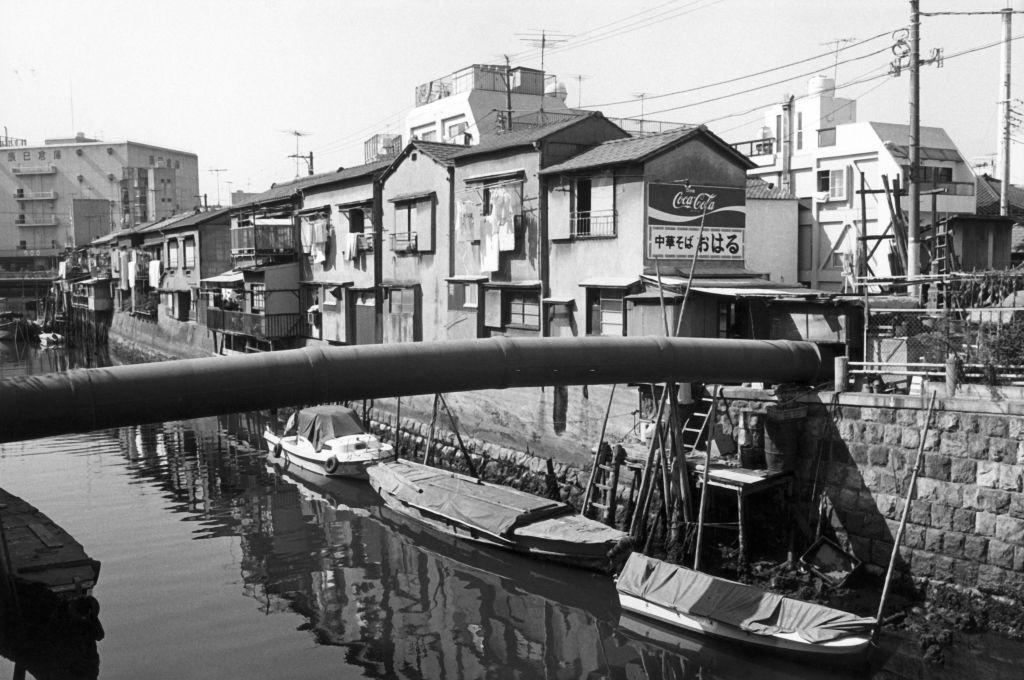
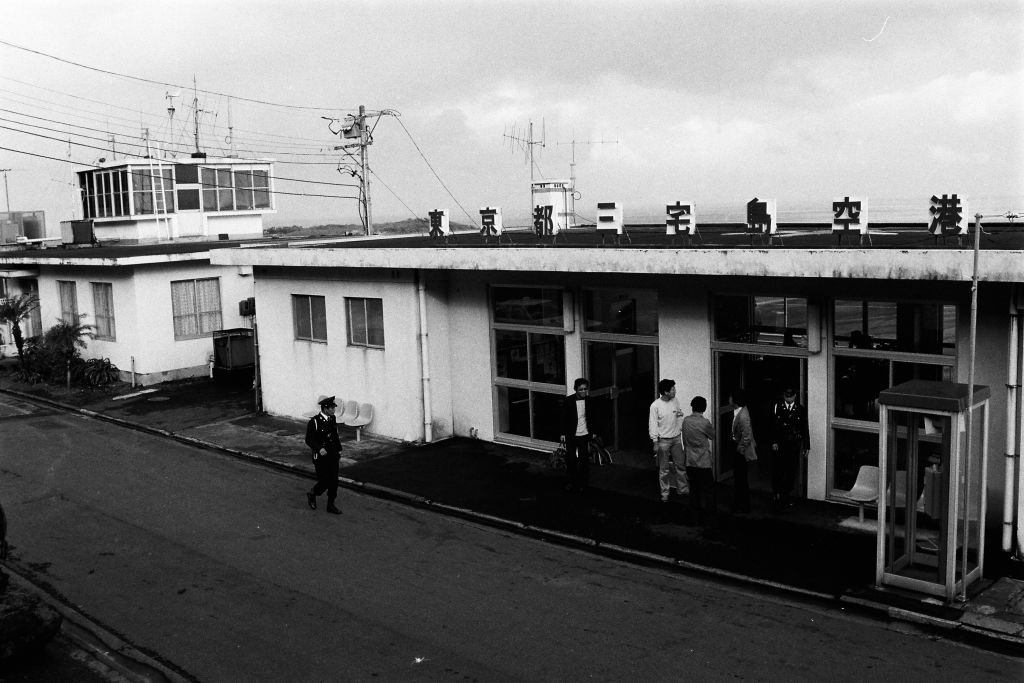





Even today walking the streets of Tokyo (and Japan in general), I get a constant sense of feeling like things have changed here since the 1980s much less compared to the USA.
Tokyo has changed more in the last 20-30 years than NYC, IMO. And that’s not just in terms of redevelopments (of which there have been a ton), but also all sorts of infrastructural stuff.
Interesting, could you elaborate?
These photos don’t do a great job of highlighting this point.
They’re from the 80s, of course they don’t elaborate the point.
Massive redevelopment everywhere – all the Hills complexes, the new department stores and multiuse facilities and total revamps. Odaiba and all the reclaimed land, both airports totally overhauled. Tourism infrastructure completely streamlined. Public transit unified under Suica/Pasmo; I remember when the IC cards were regional and before that when you needed paper tickets. Plus all the new lines.
In NYC they preserve everything and that’s why half the city is under scaffolding at any time. In Tokyo, because of ever-shifting earthquake codes, they just tear a building down after 30-50 years and replace it.
Now, that’s Tokyo and not everywhere, and you’ll still find plenty of old storefronts out there. But this city changes way faster than a lot of American cities.
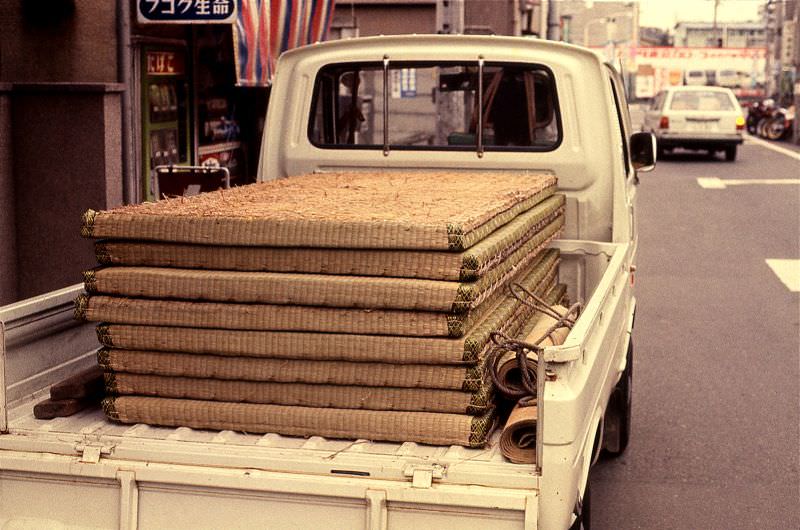
Weird to be a dick about it while simultaneously misinterpreting something rather easily understood. It’s not clear from the photos how much has changed because they look the same as today.
I was curious to hear your perspective here but since you want to be an asshole, you’re mostly wrong anyway.
we can look at your comparison of Odaiba and nyc. I have to imagine you don’t have background in civil engineering because this was a laughably tenuous argument to begin with.
Sure, Odaiba represents a dramatic departure from Tokyo’s usual incremental growth. But its development pales in comparison to the scale and ambition of New York City’s transformations. NYC’s projects, like Hudson Yards AND the Brooklyn waterfront, involve repurposing entire neighborhoods into hubs of luxury housing, commercial spaces, and iconic landmarks, reshaping the urban fabric in ways that prioritize global prestige and economic growth. These are huge changes, not preservation as you tried to insinuate.
In contrast, Odaiba, while bold in concept, remains relatively isolated and underutilized, lacking the deep integration or far-reaching impact seen in NYC’s redevelopments. I mean they even took out the gundam thing recently? As for innovation, maybe you mean copying the Statue of Liberty from New York??
Far from focusing on preservation, New York’s approach has been more transformative, while Odaiba’s change, though striking, remains an exception within Tokyo’s otherwise conservative urban evolution
Contrary to your insinuations, Tokyo’s approach has focused more on preserving its neighborhoods and cultural identity. That’s why the pics look the fucking same. Instead of big, sweeping changes, the city’s development has been gradual and small-scale, which has helped it hold onto its historical charm. Even as it modernizes, a lot of the city still feels rooted in its past. Compare LA to Tokyo, it’s not close.
Some of this has to do with the massive toll of so many people, but i think it’s also a cultural priority of conservation that is the reason we see more gradual change and adoption. I mean people still can’t determine whether to stand on both sides of the escalator or walk on one side.
Half of those photos simply don’t exist today – buildings that have been torn down or redeveloped. And Tokyo has had plenty of large-scale reformation projects of its own – including the ones that have happened that everyone continues to bitch about, and the ones that are coming like the Tsukiji waterfront.
Odaiba is just one example you’ve wildly blown out of proportion (you’re thinking of the Gundam thing in Yokohama), but on a greater scale I absolutely consider Japan to have more of a scrap-and-rebuild mentality when it can afford to do so.
I have lived in Tokyo, LA and NYC since the 80s. Tokyo wins hands down for the change section. It isn’t just Odaiba as you know. NYC has added like four subway stops in a century or something so embarrassing I can’t stand it. The list goes on.
May I ask how long you have lived in the cities you’re speaking about ?
I’ve lived In Tokyo since 1992 and everything you’ve said is spot on.
Everyone’s an expert on the internet except the people who actually live here and have witnessed these changes firsthand.
Tokyo is totally different from when I first came here in 2004, I can only imagine how radical the change has been for you.
Watch Sans Soleil by Chris Marker if you want a peek at Japan at its economic peak in the 1980’s.
I stayed a night at Shinagawa Prince Hotel main tower a few years ago and felt like nothing changed in 30 years. Same thing at the Tokyu place near Shimoda beach.
Its kinda crazy how in some of the photos there are only a few subtle hints that they are not modern photos. Also surprsed Wendys was in Japan as early as 1981