Before gym culture, protein shakes, or televised weightlifting competitions, strength was a form of street-level spectacle. In the late 19th and early 20th centuries, strongmen and strongwomen were circus and stage performers first, athletes second. They drew crowds not with barbells, but with bent steel bars, broken chains, and human pyramids balanced on their chests. Many of these performers got their start in Europe before crossing into the United States, where audiences were hungry for something extraordinary.
The feats these performers mastered had nothing to do with the bench press, which wasn’t yet part of the fitness world. Instead, they relied on wrist and hand strength, tendon toughness, and enormous power through their core and obliques. Bending iron bars, lifting barrels and anvils, carrying people, and performing hand balances were all part of the act. To stand out from rivals, performers developed signature stunts that no one else claimed to do — and then publicly dared others to try.
One of the more extreme training methods came from Galen Gotch, who prepared for the Strongman World Championship in New York by having a car drive directly over him.
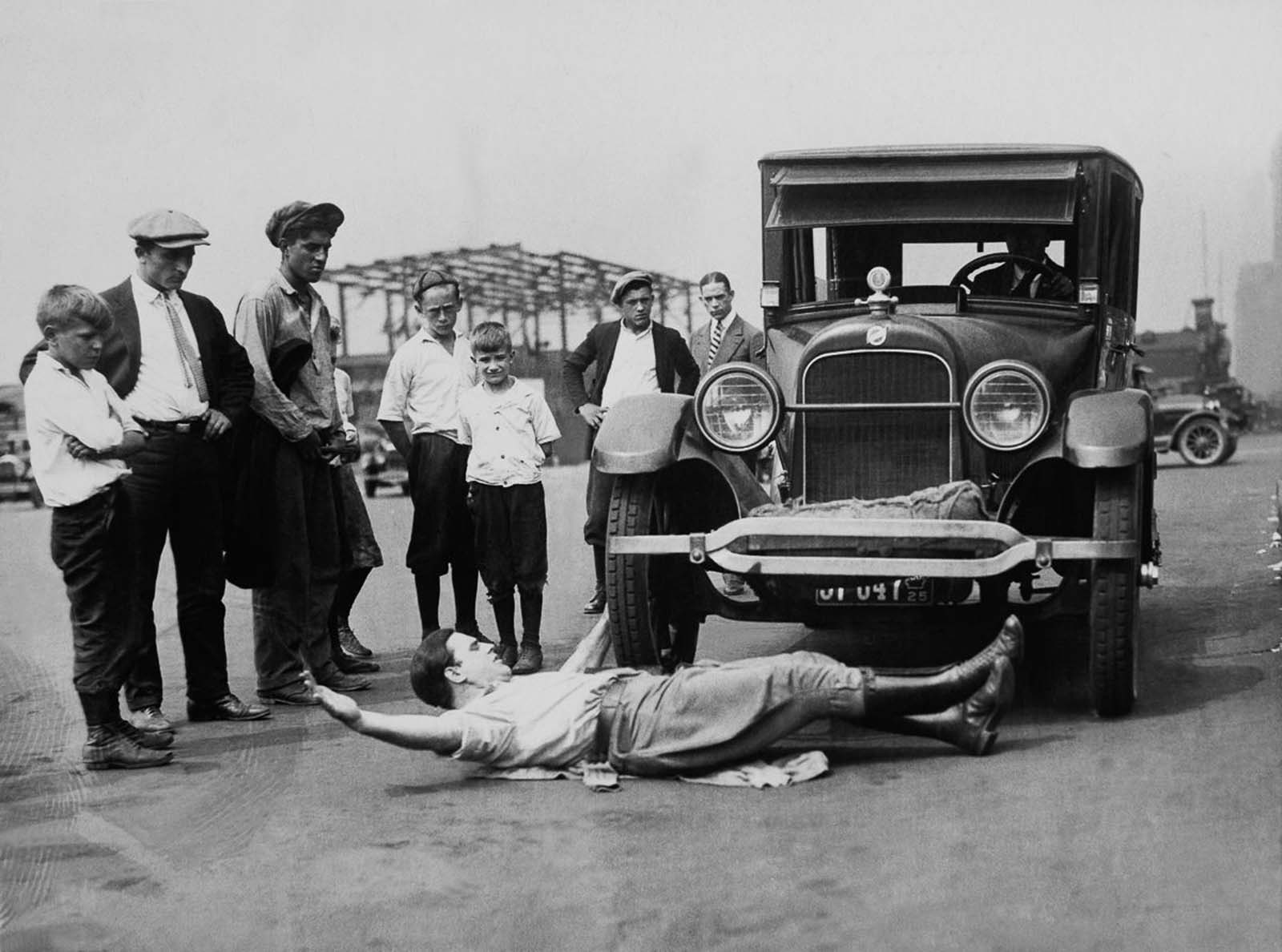
Being run over by a car was not a party trick — it was a demonstration of body conditioning taken to a dangerous extreme. Performers who allowed vehicles to roll across their bodies were showing that their muscles and bones could absorb enormous force. It was a calculated act, built on years of physical training, but it was also deeply dangerous. J. Rolleano performed a nearly identical stunt in 1932, lying still while a Citroën drove across his chest.
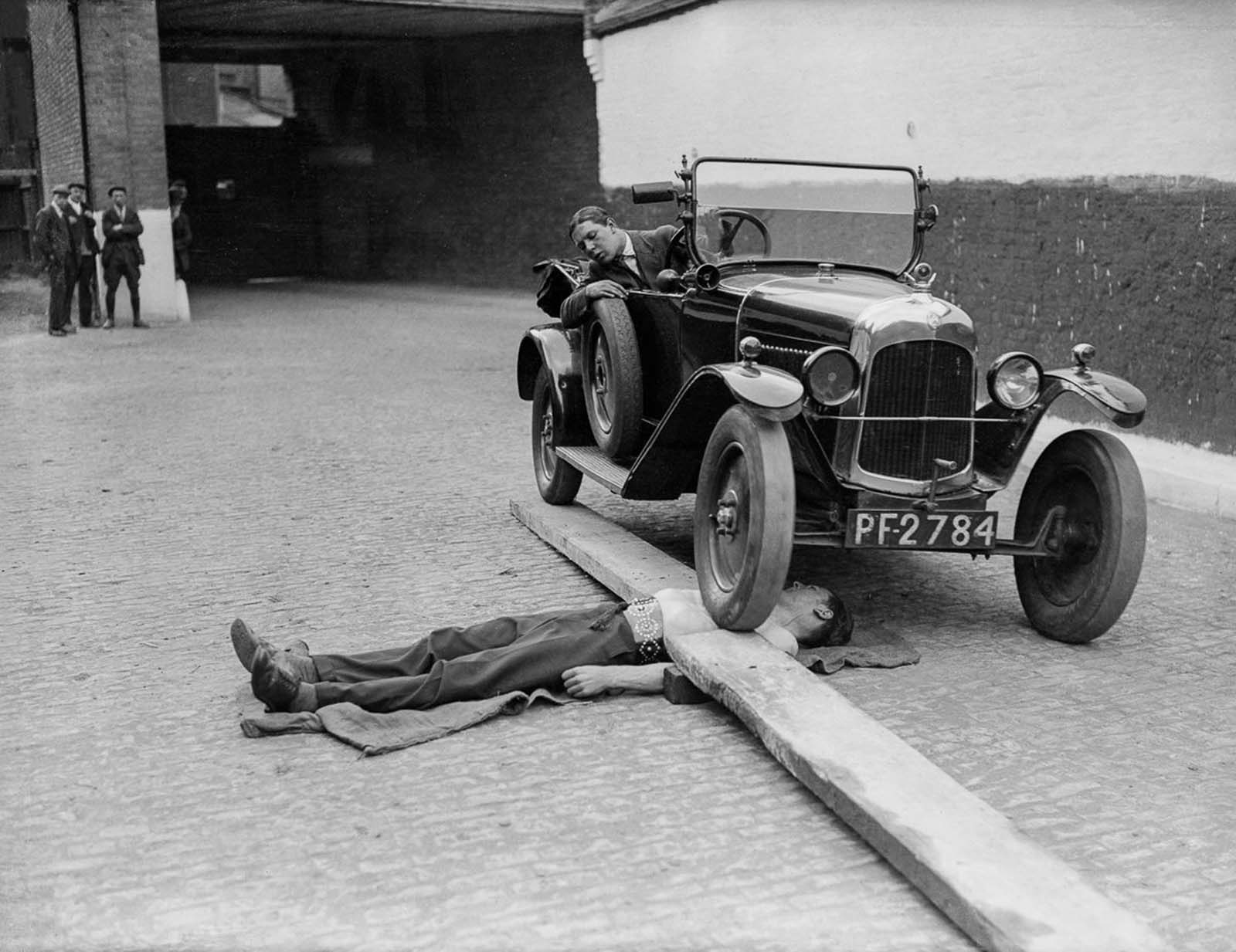
Rolleano wasn’t finished there. He also pulled a truck using only his teeth — a feat that put enormous strain on the jaw, neck, and spine.
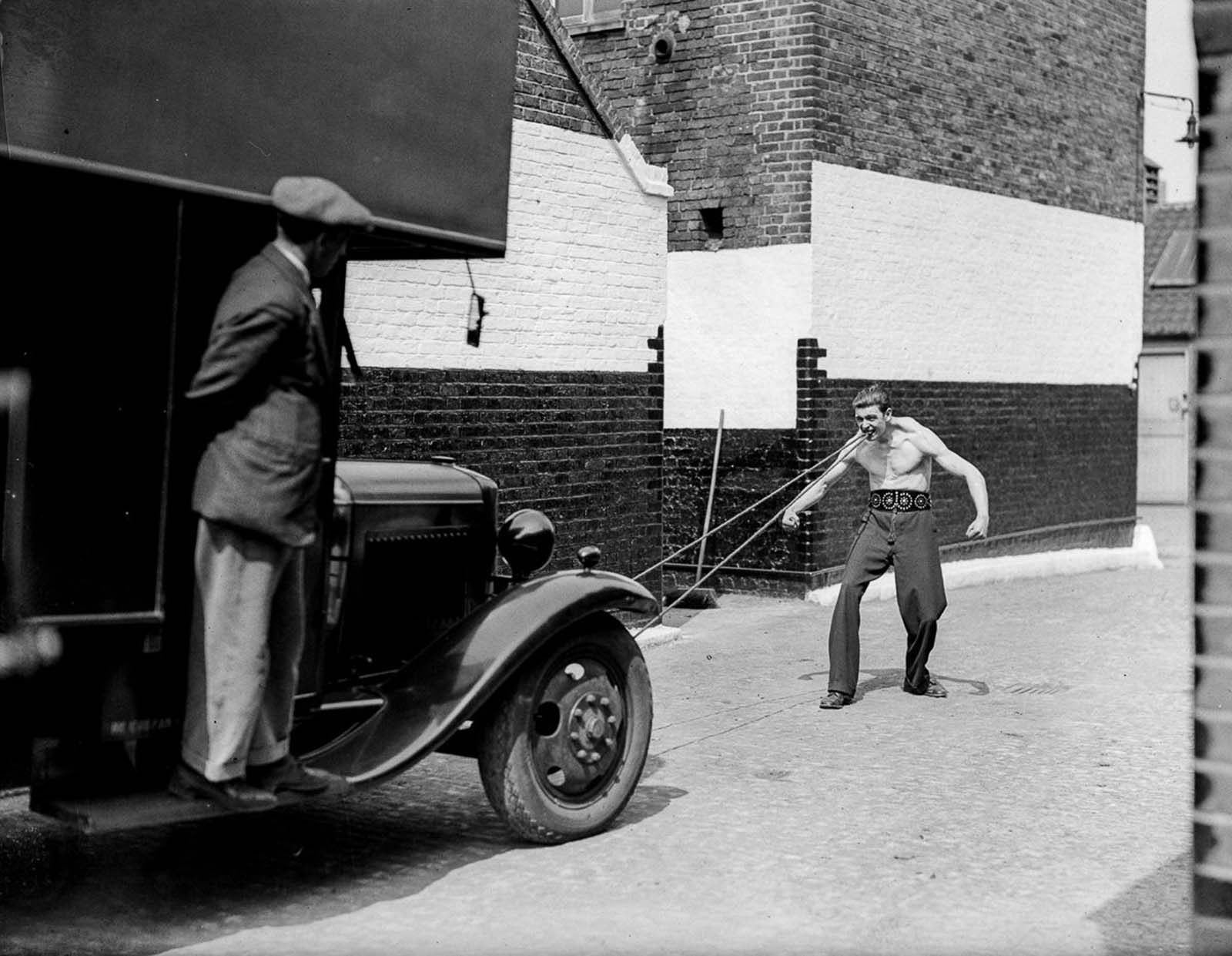
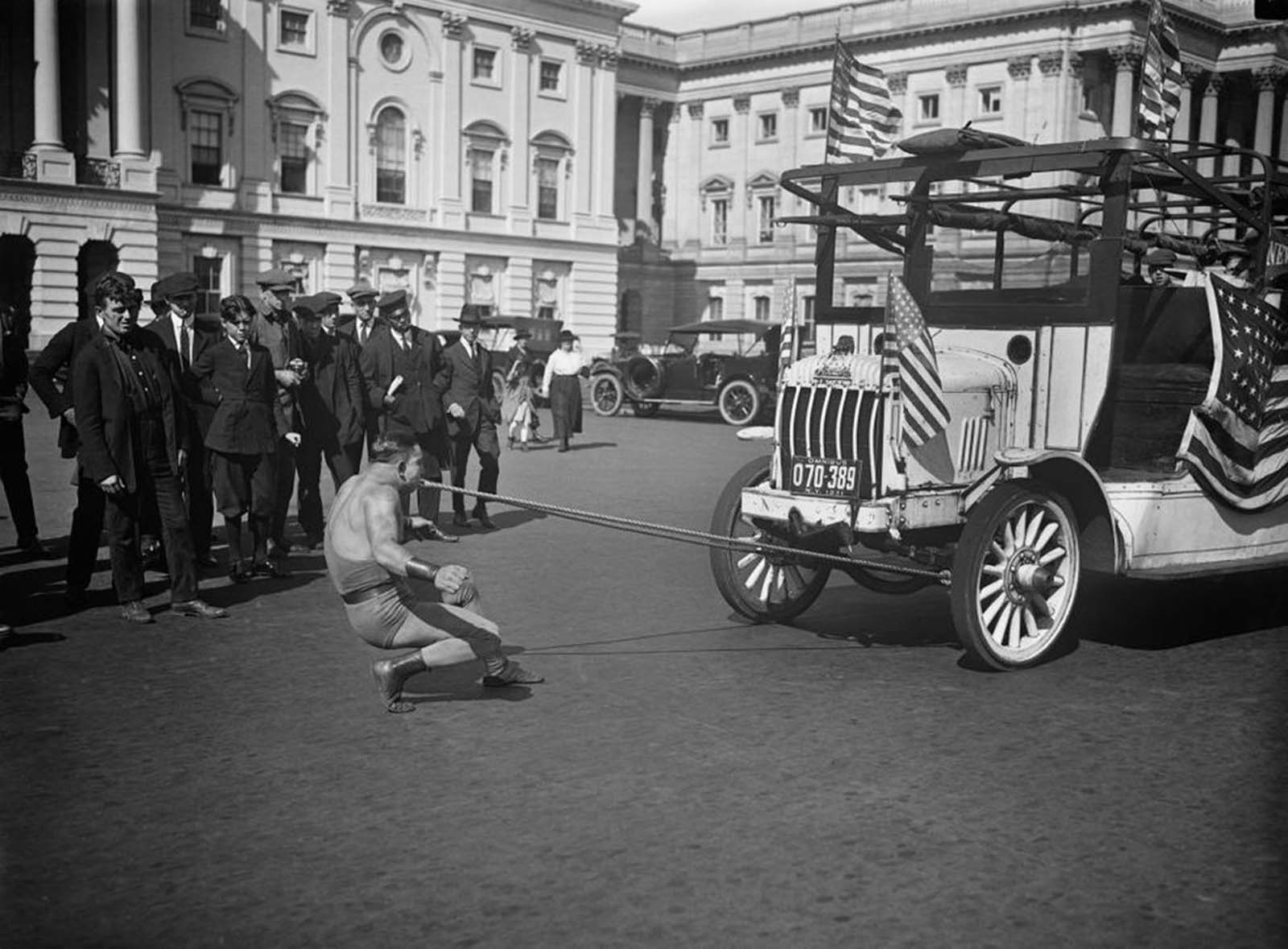
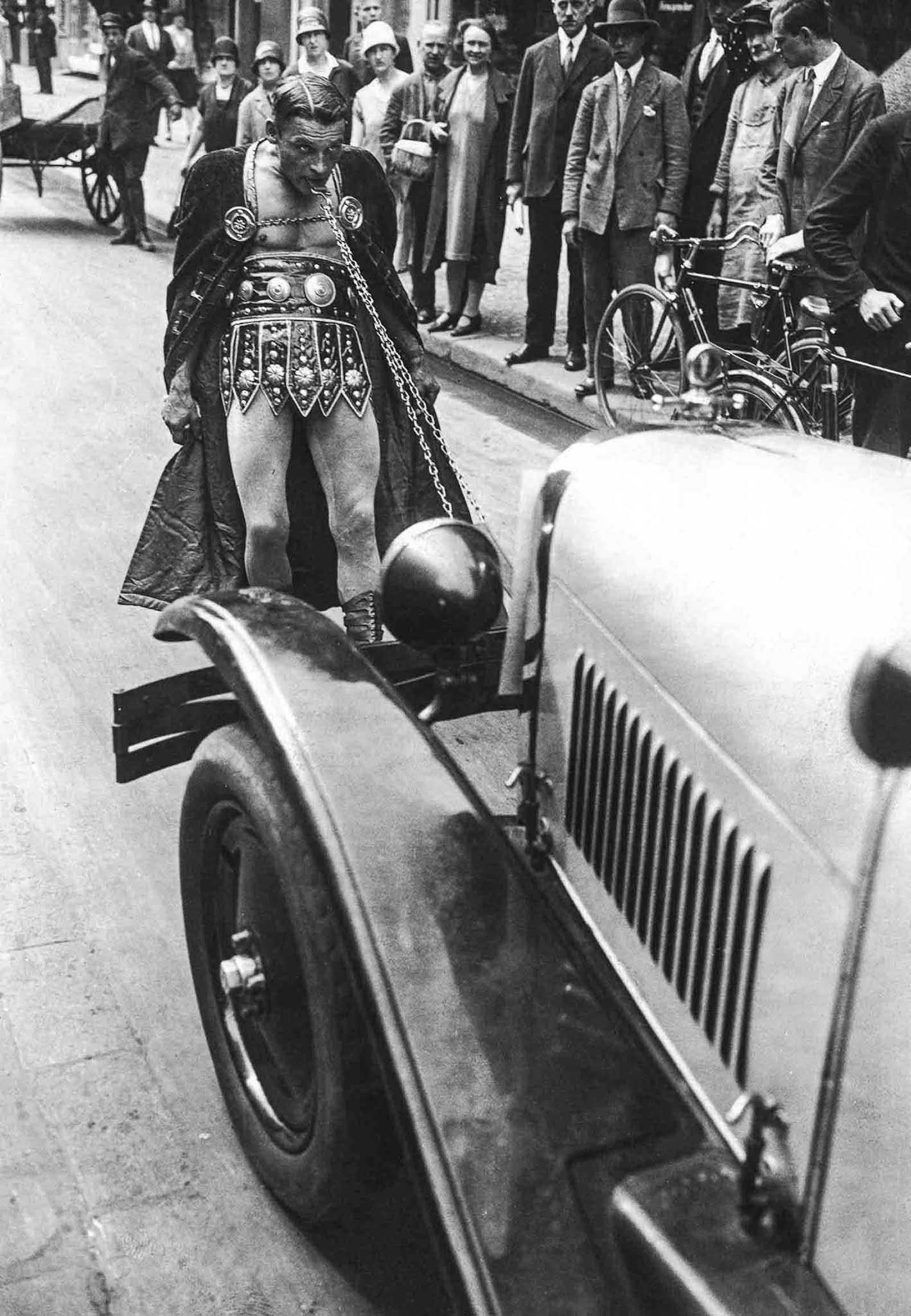
Pulling vehicles with the teeth was a recurring stunt across the era. A strongman did it outside the U.S. Capitol building in 1921, and circus strongman Stefan did it through the streets of Berlin in 1925 — towing a motorcar with his teeth in full public view.
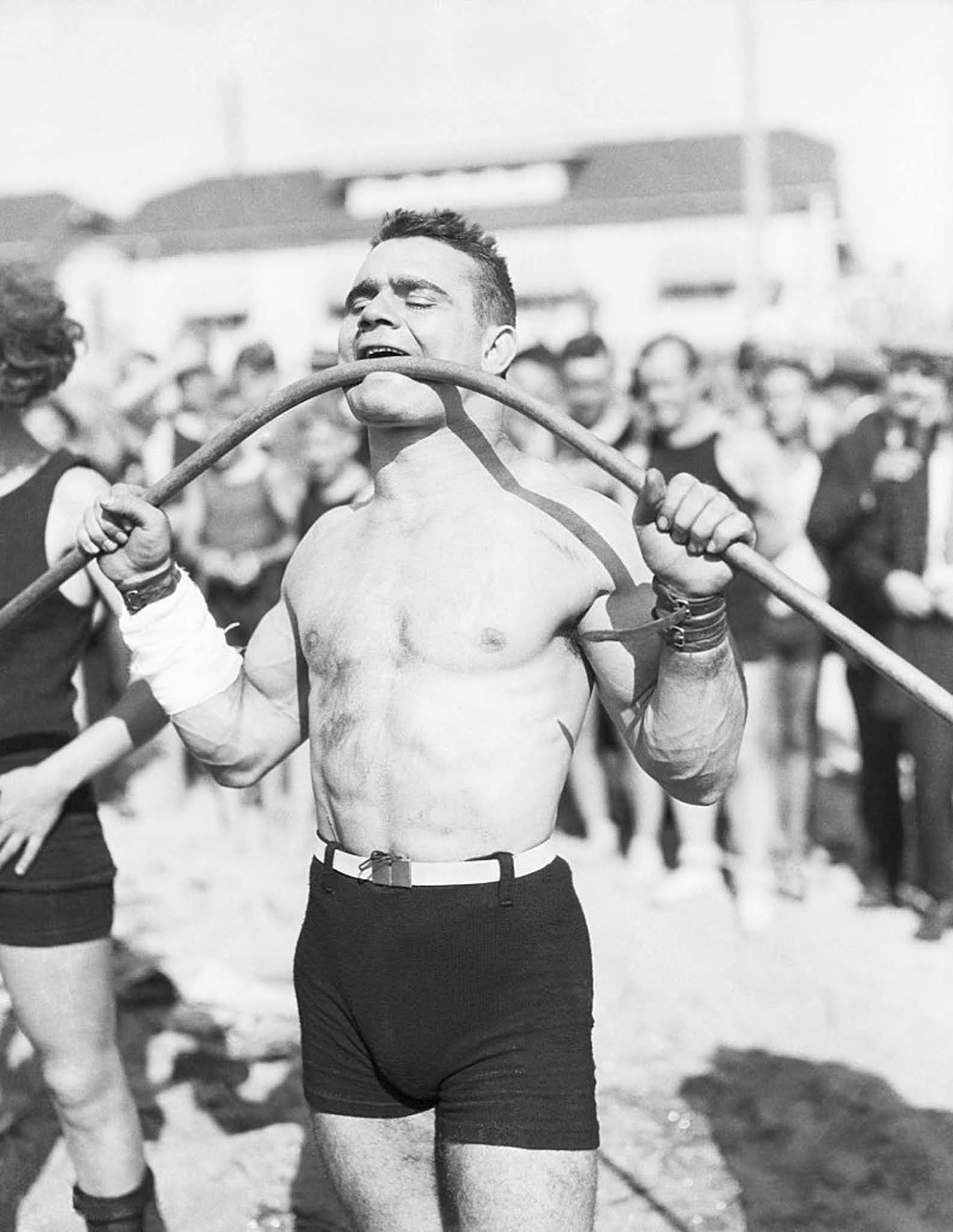
Iron bending was another centerpiece of strongman performance. Greek boxer and strongman Just Lessis bent an iron bar around his own neck in 1925. London strongman George Challard did the same with the help of a companion, and then bent another bar using only his teeth.
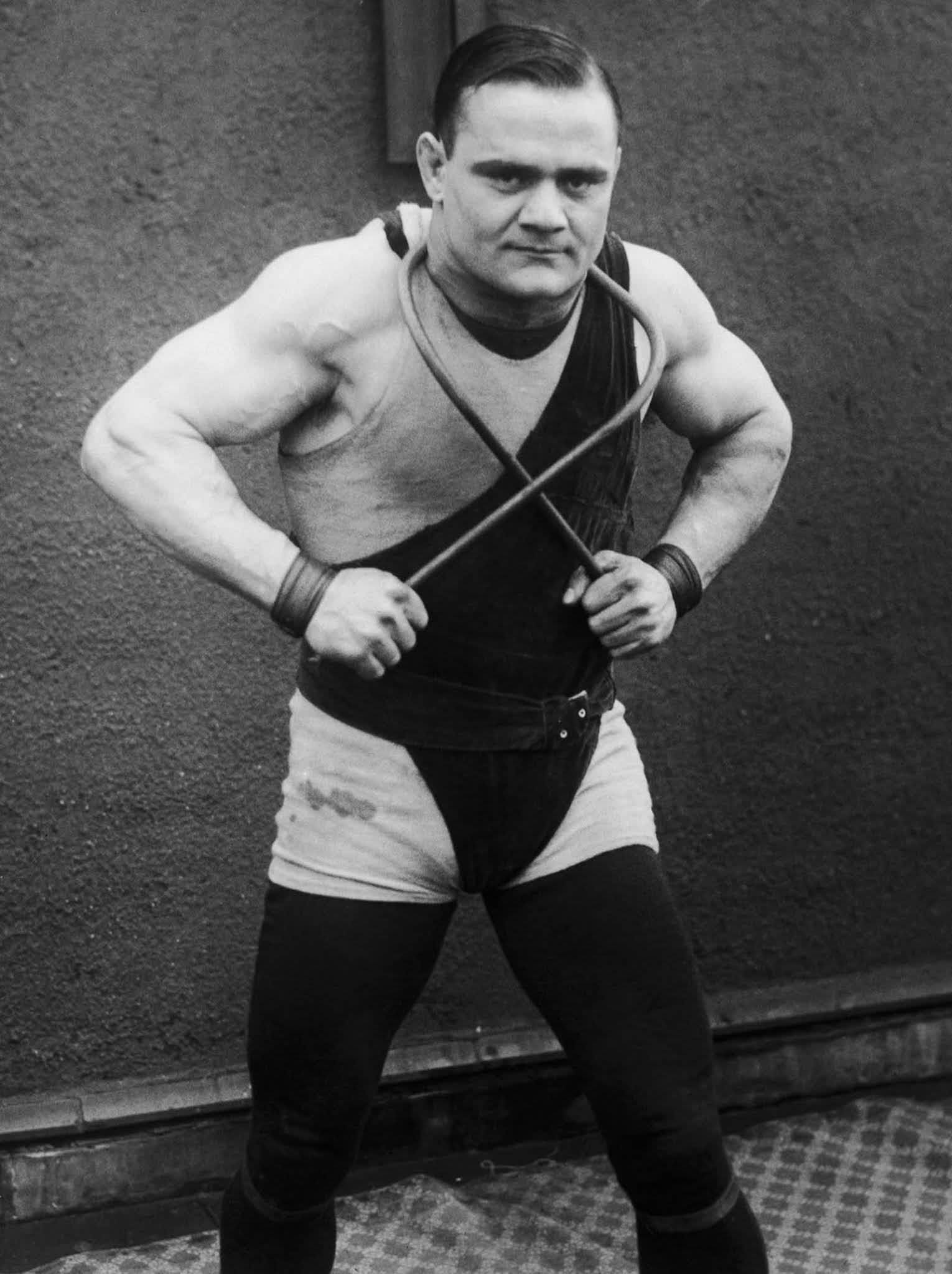
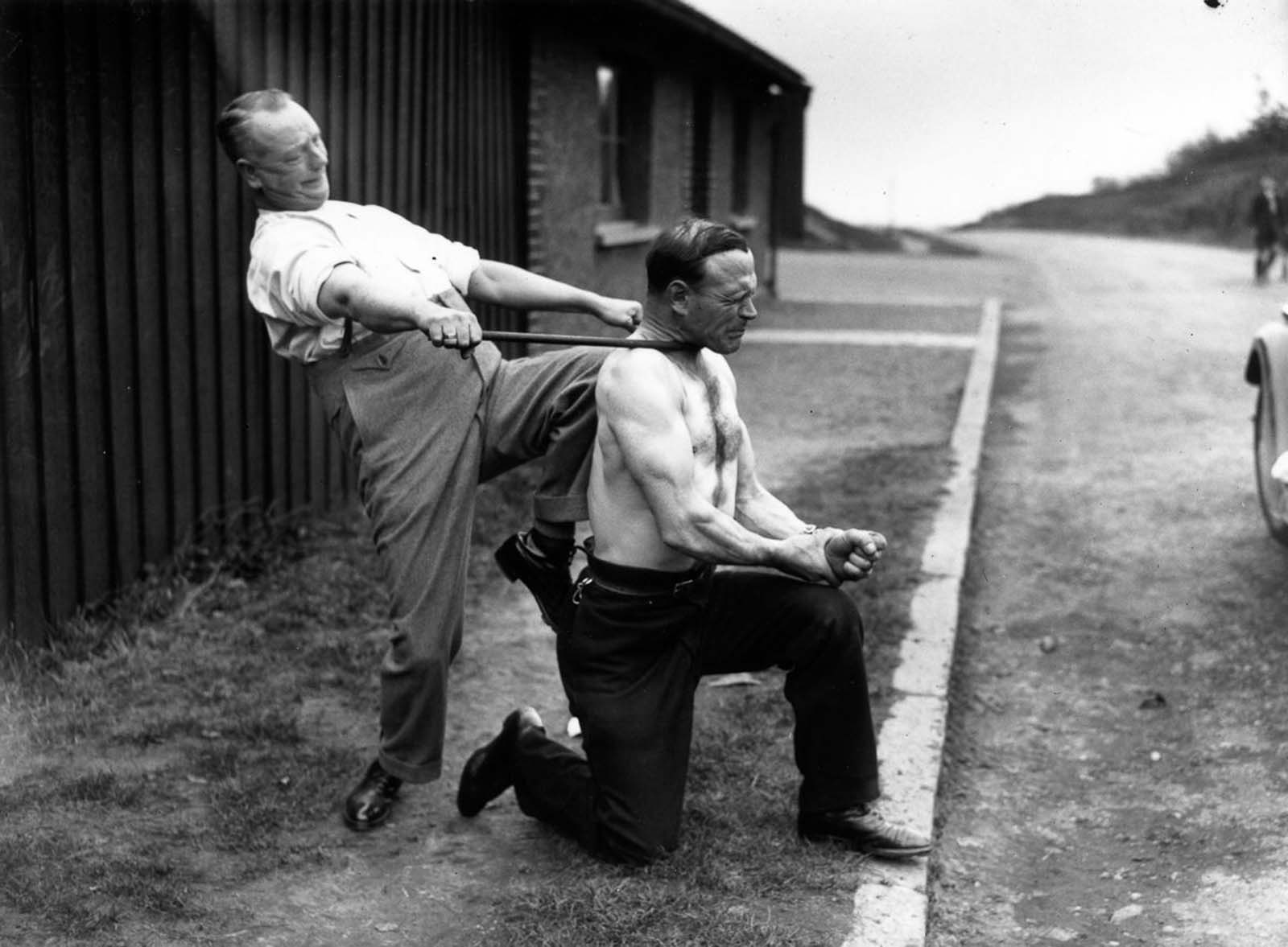
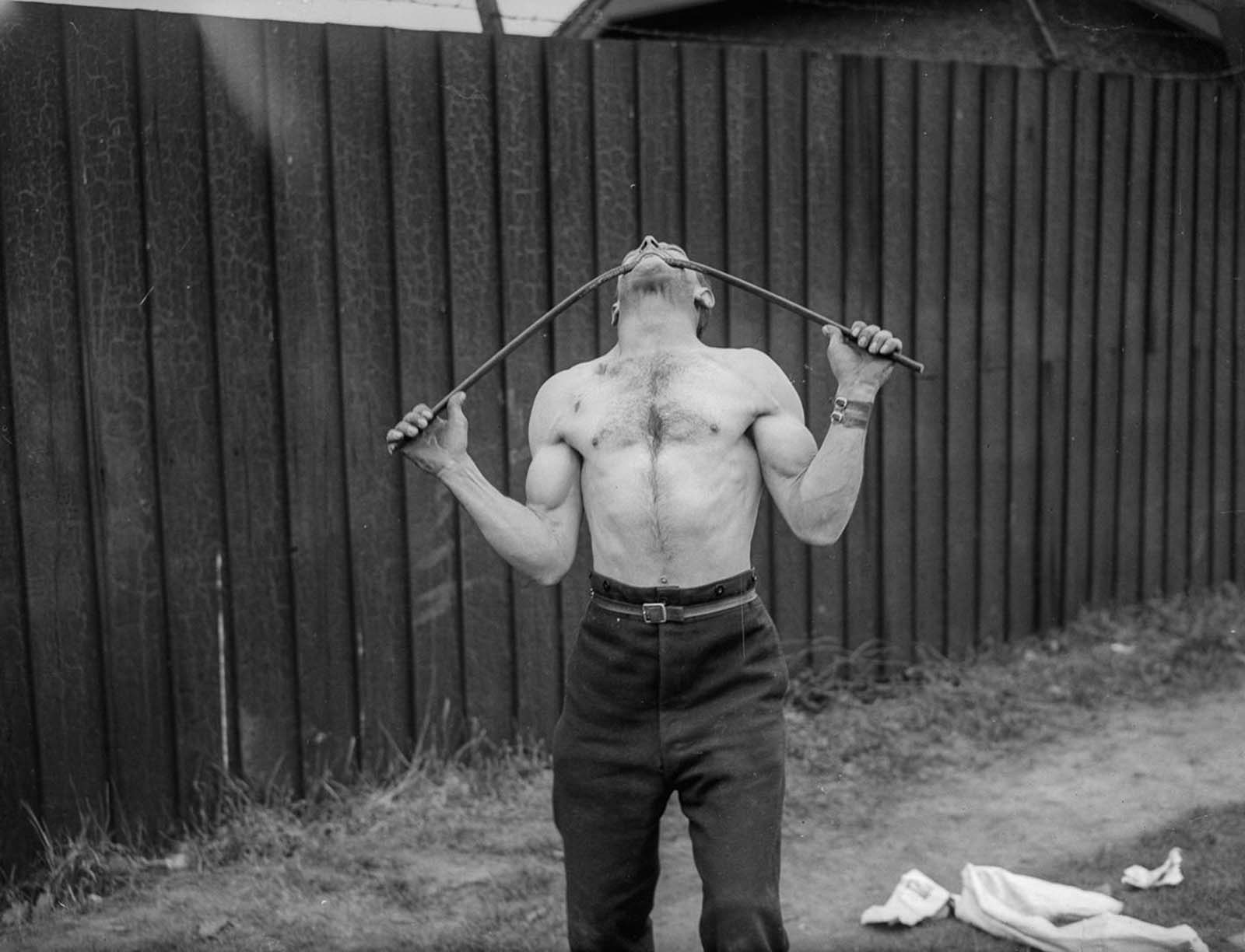
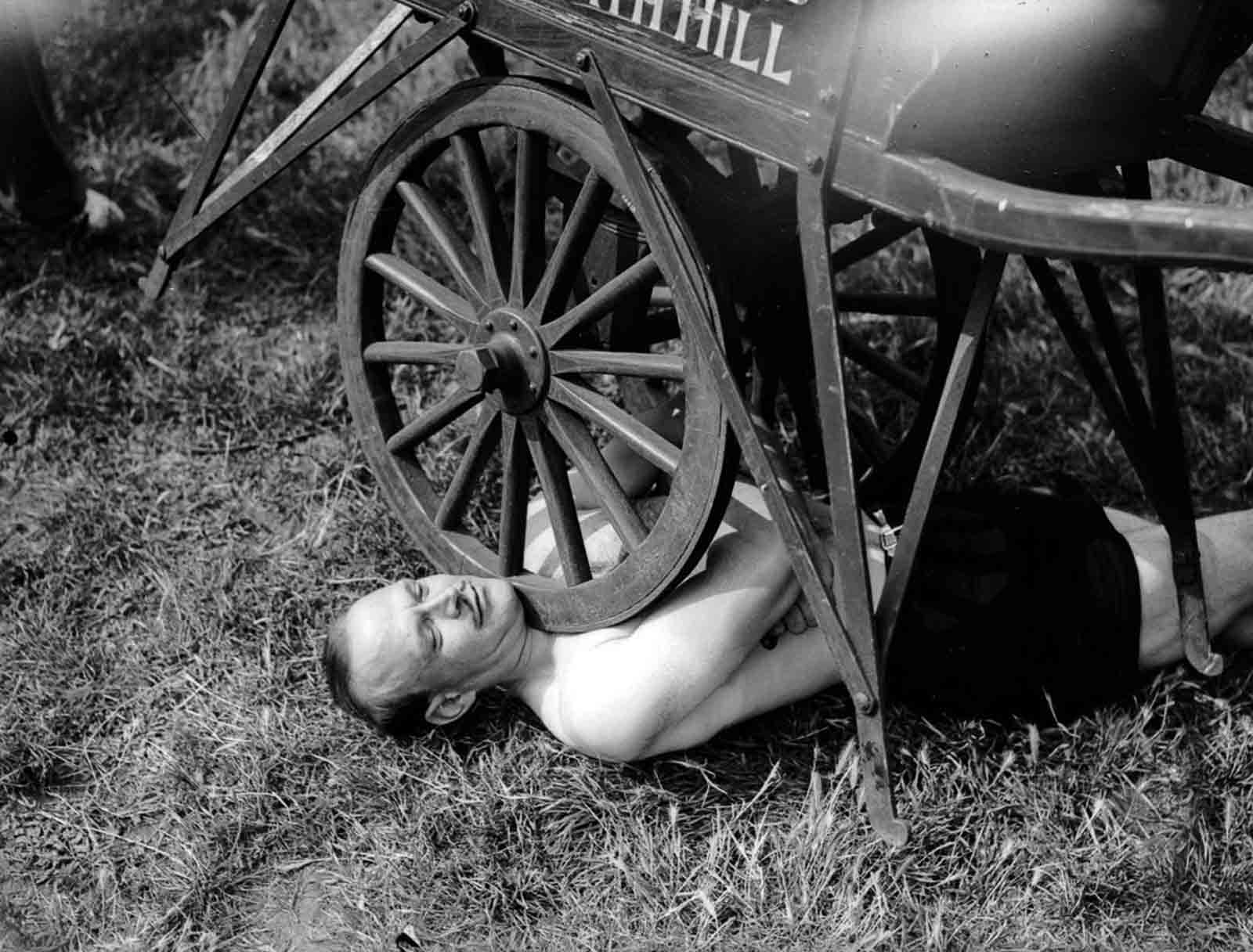
Strongman Gus Lasser also performed iron bending using his mouth during the 1920s, while Jean Challard — who claimed the title of world’s champion steel bender — pressed the weight of a push-cart against his own windpipe in 1938.
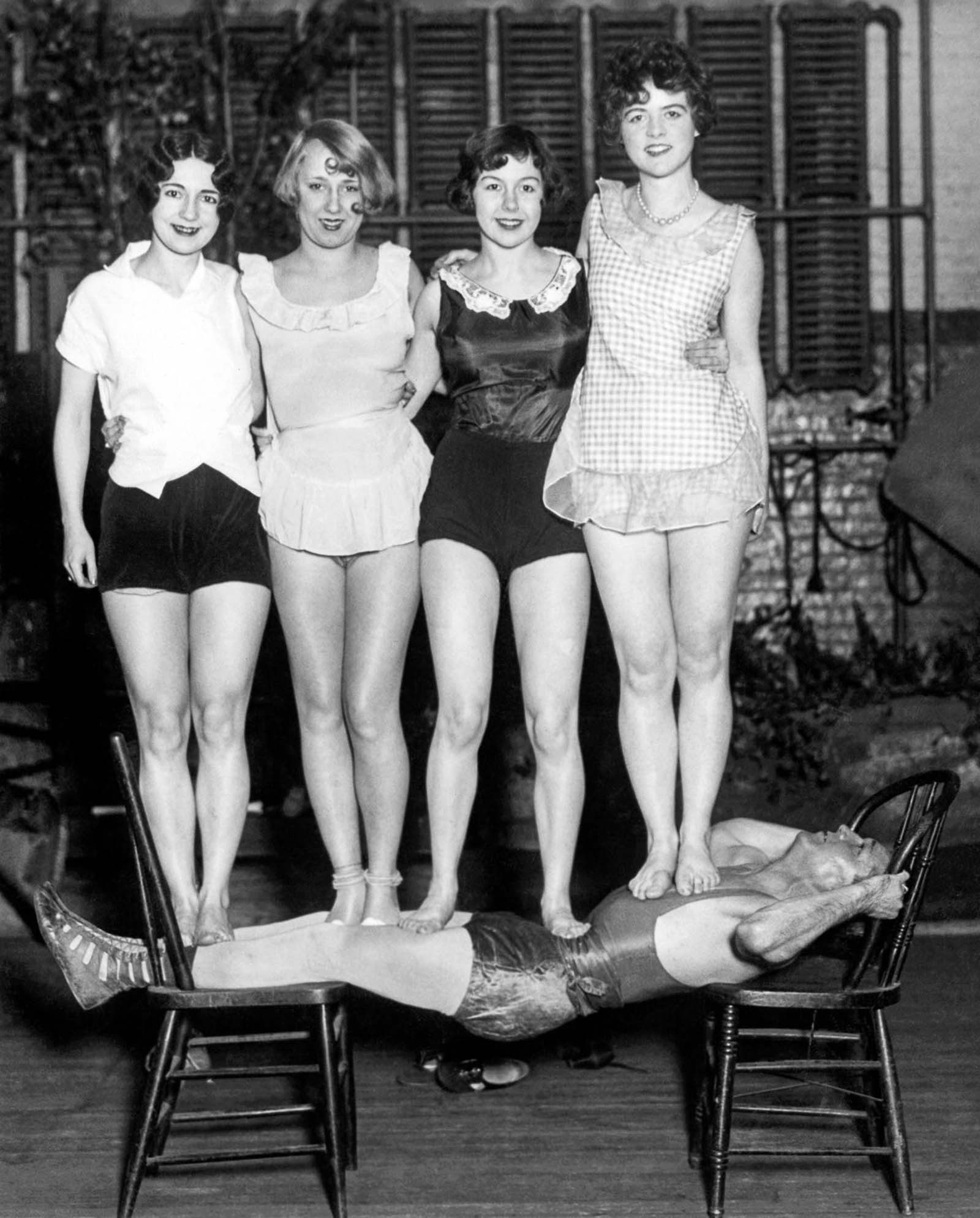
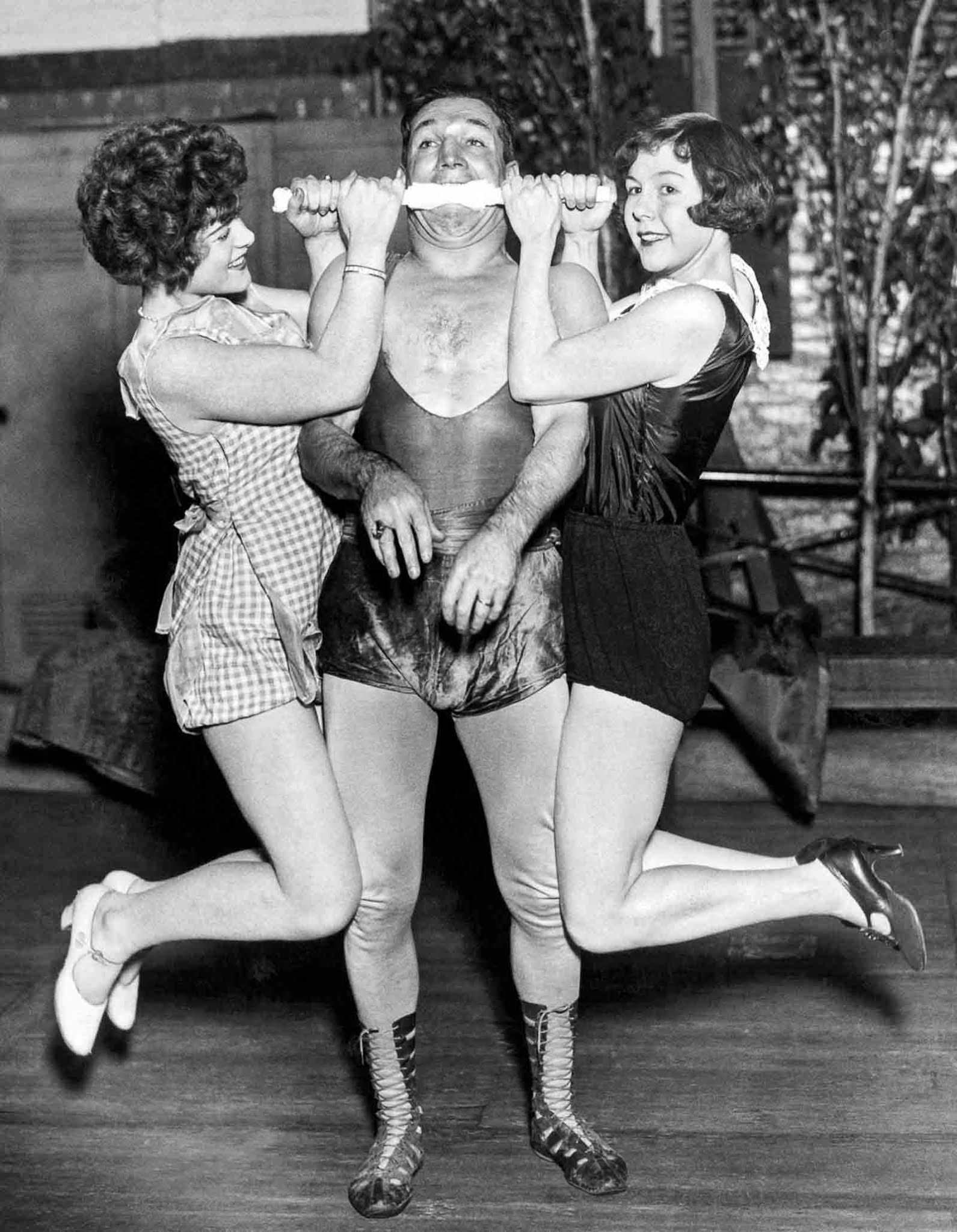
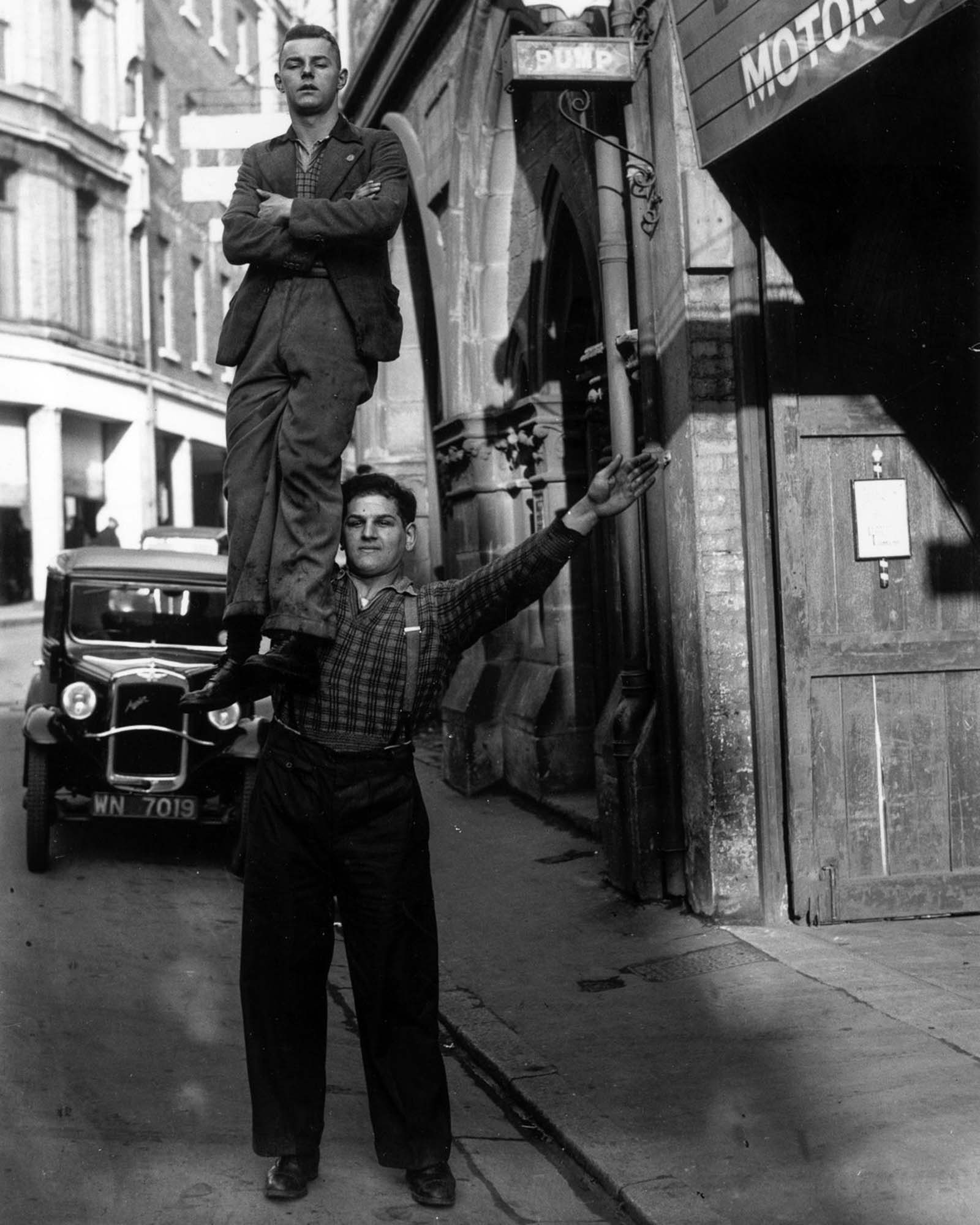
Not all strength acts involved metal or vehicles. Edward Reece, photographed in 1927, supported four actresses at once while suspended between two chairs. In a separate act that same year, he held two women aloft using only his teeth.
Ivan
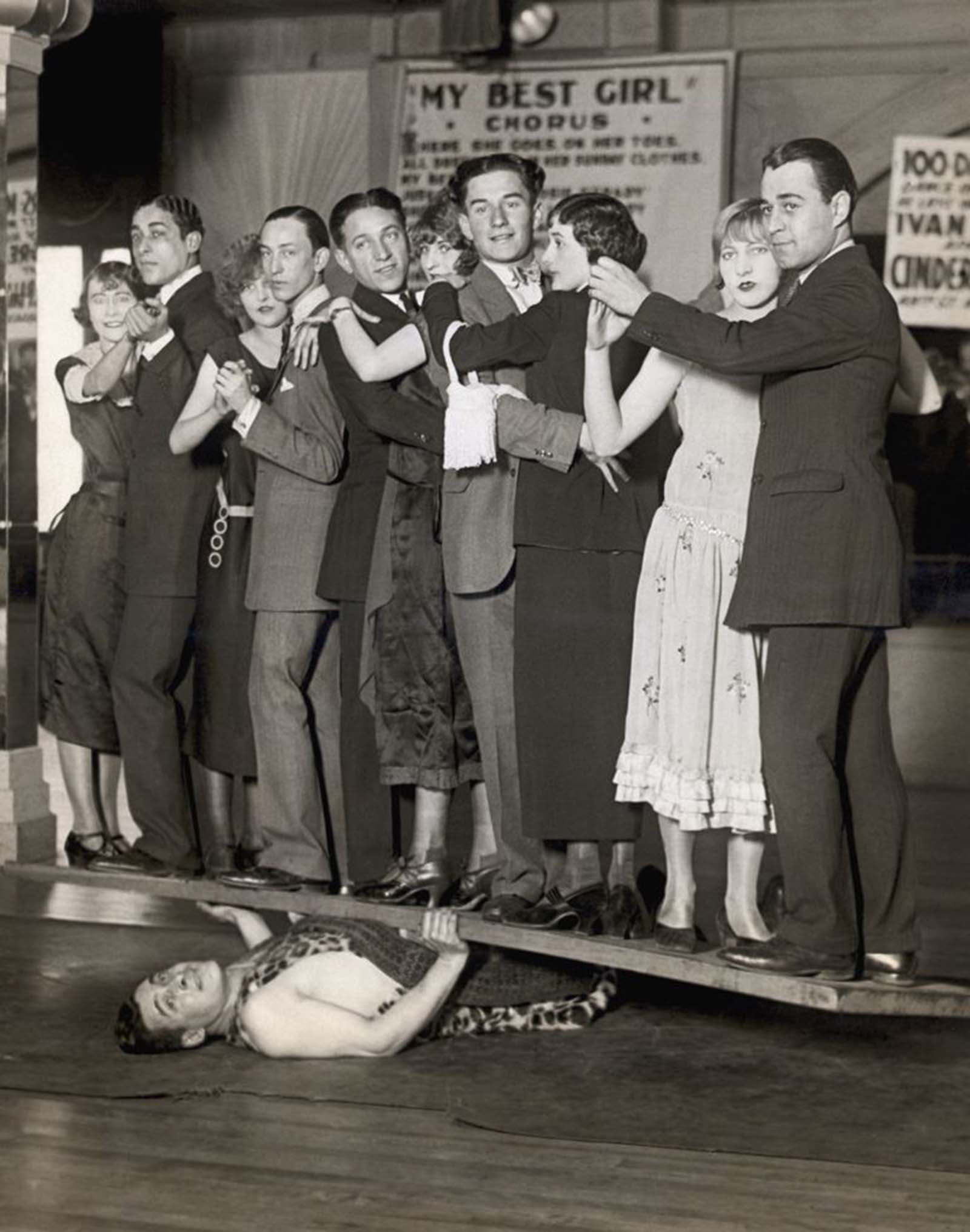
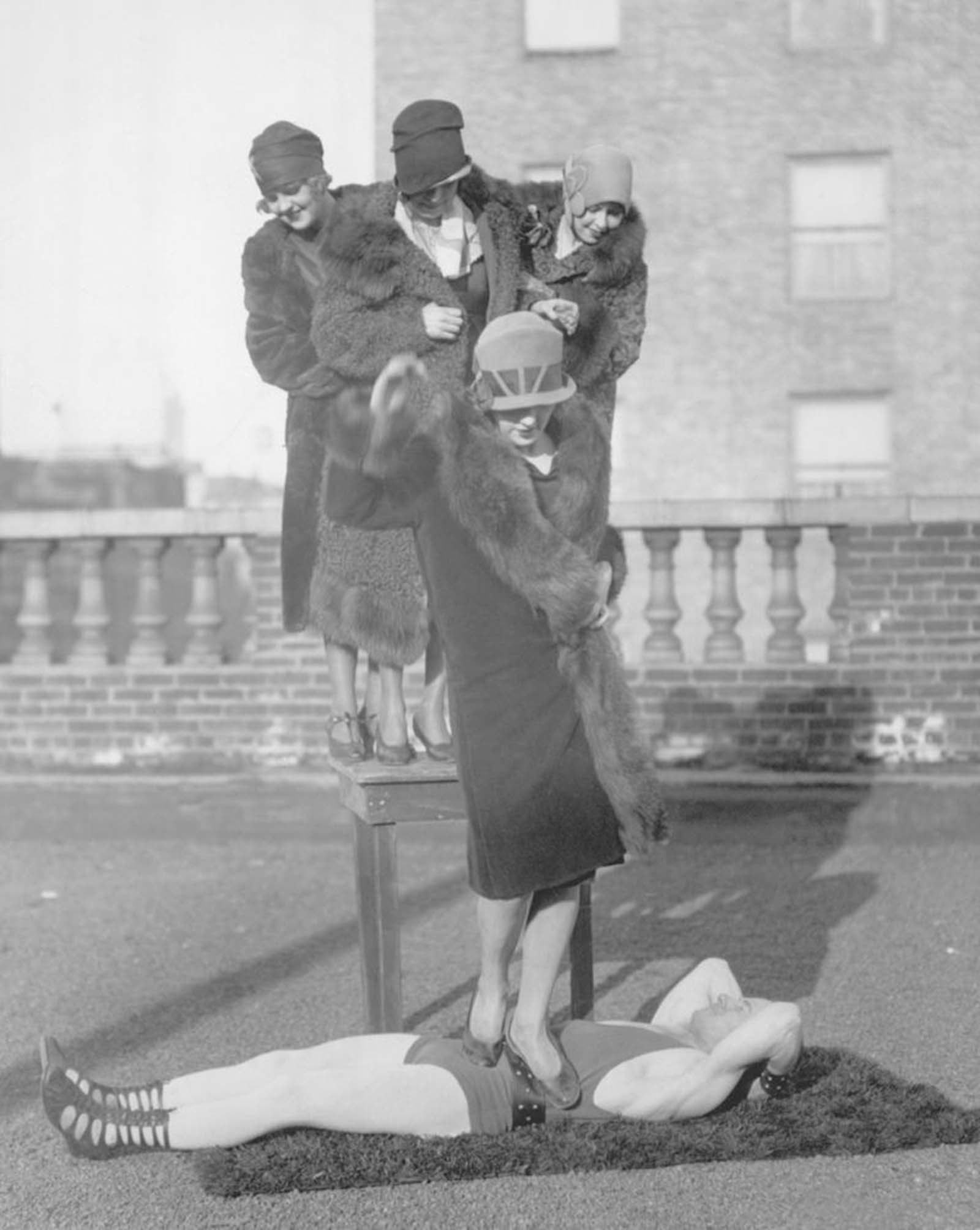
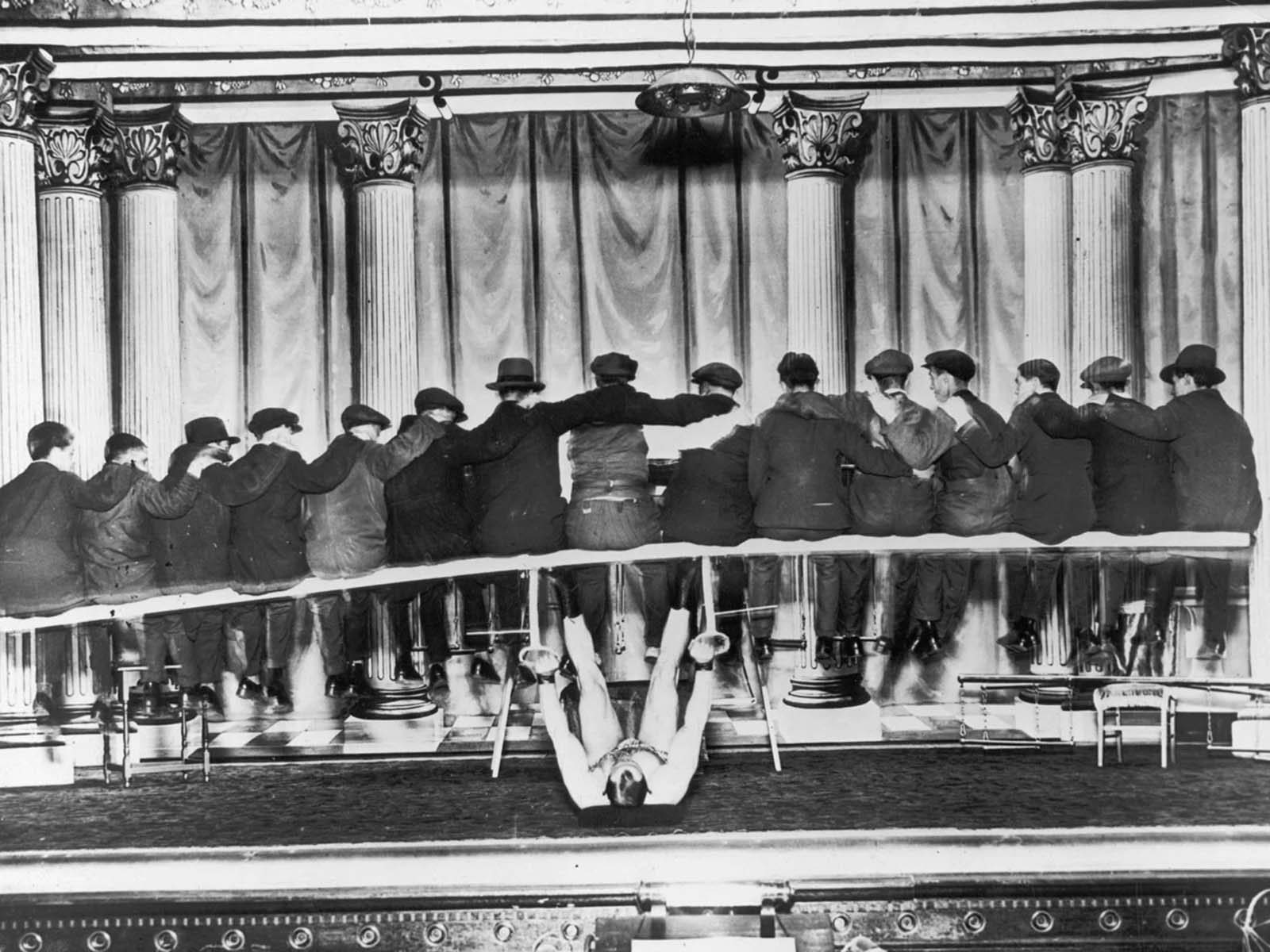
Andre Reverdy went a different route, demonstrating core strength by having women jump from a table directly onto his midsection. In 1935, an unnamed strongman on stage lifted a group of men along with the bench they were sitting on — all while lying flat on his back.
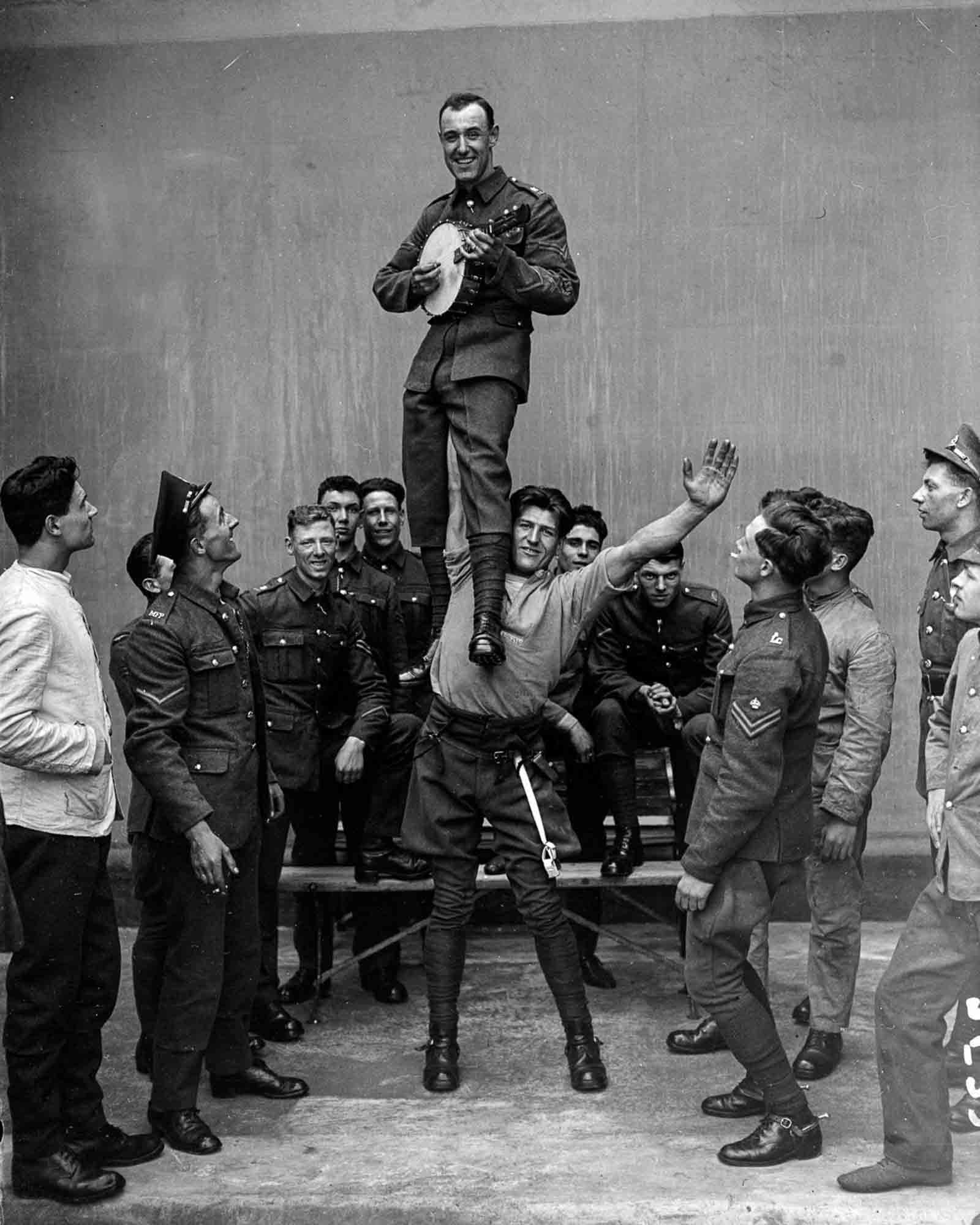
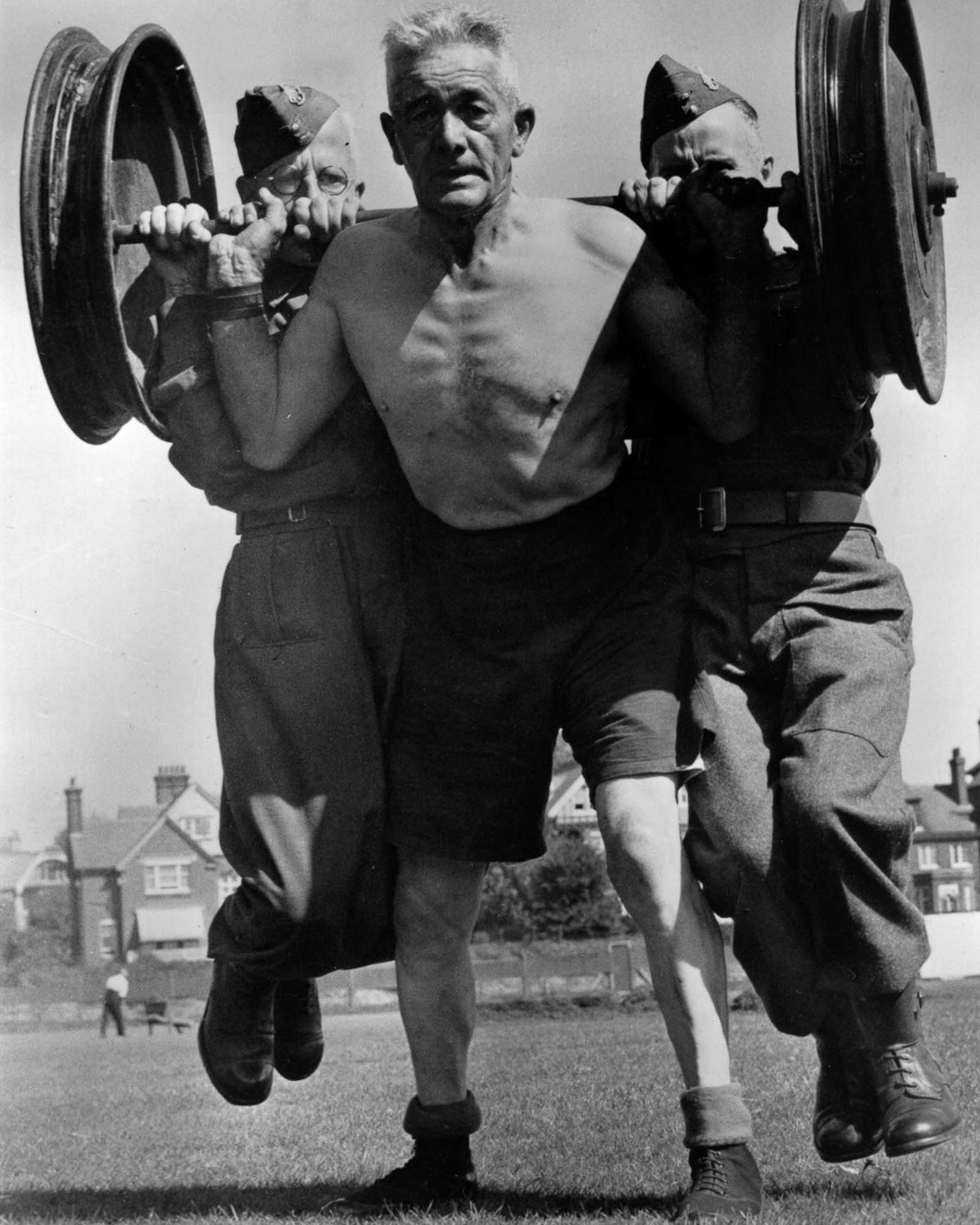
Strength competitions weren’t limited to professional entertainers. C. Attenborrow of the Royal Horse Guards was considered the strongest man in the British Army in 1927, demonstrated by hoisting a fellow soldier into the air with a single hand. By 1941, a 60-year-old British soldier was photographed lifting 500 pounds of man and steel — a feat that had nothing to do with performance and everything to do with sheer physical capability.
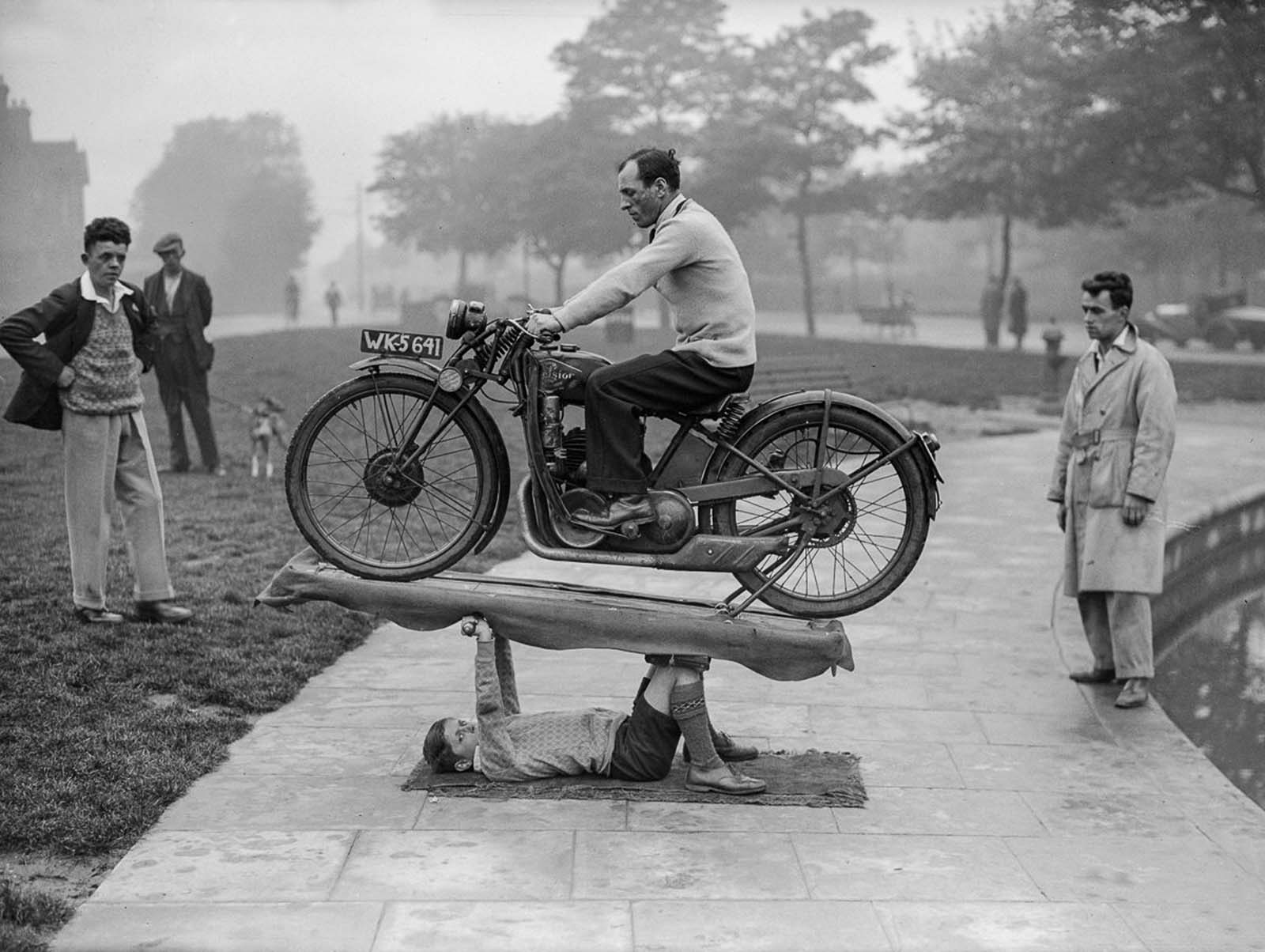
Some performers were remarkably young. A 14-year-old who called himself “Boy Samson” supported a 200-pound motorcycle and its rider in 1932. Harry Pelta, a tailor from Swansea, won the title of strongest man in Wales at just 21 years old in 1935.
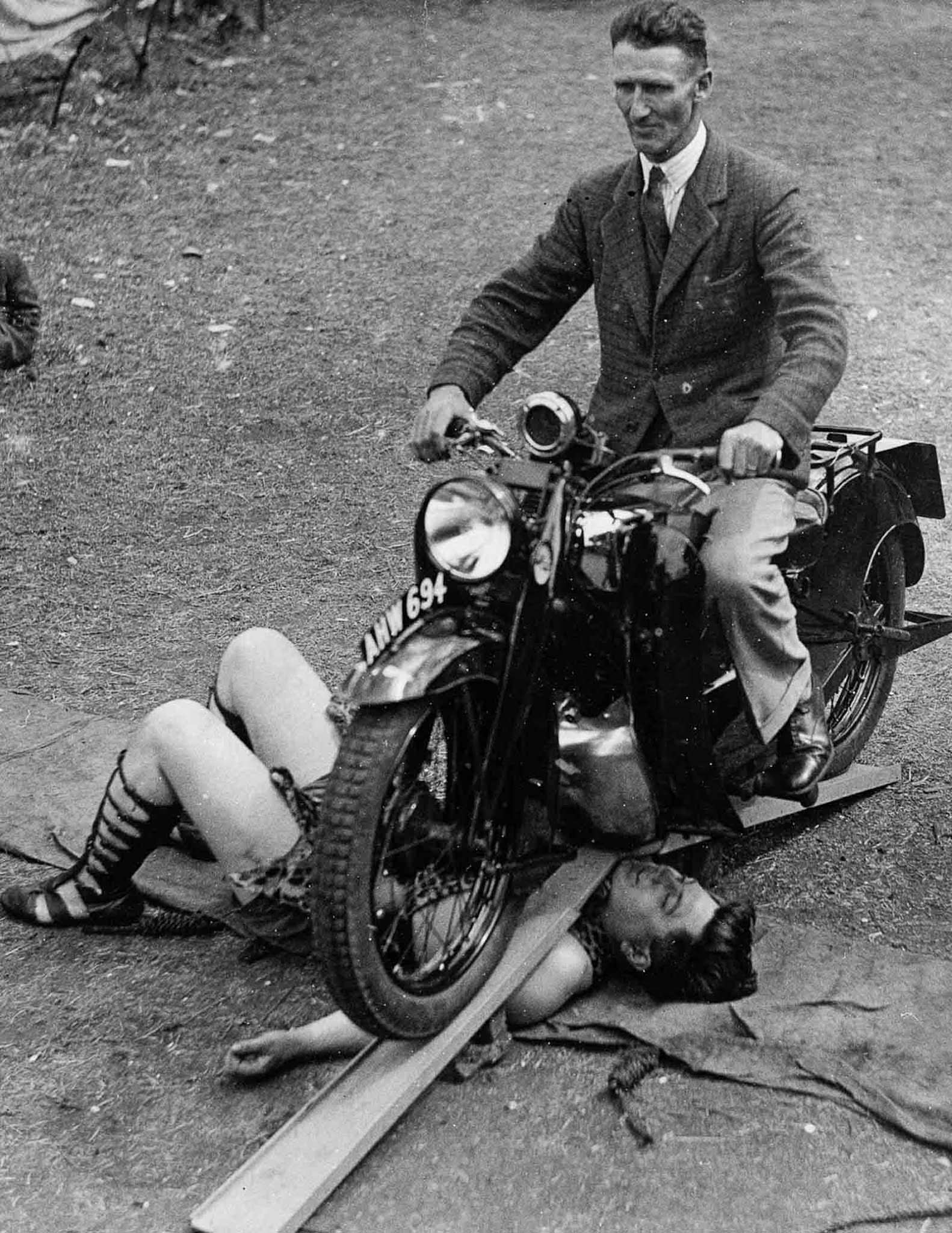
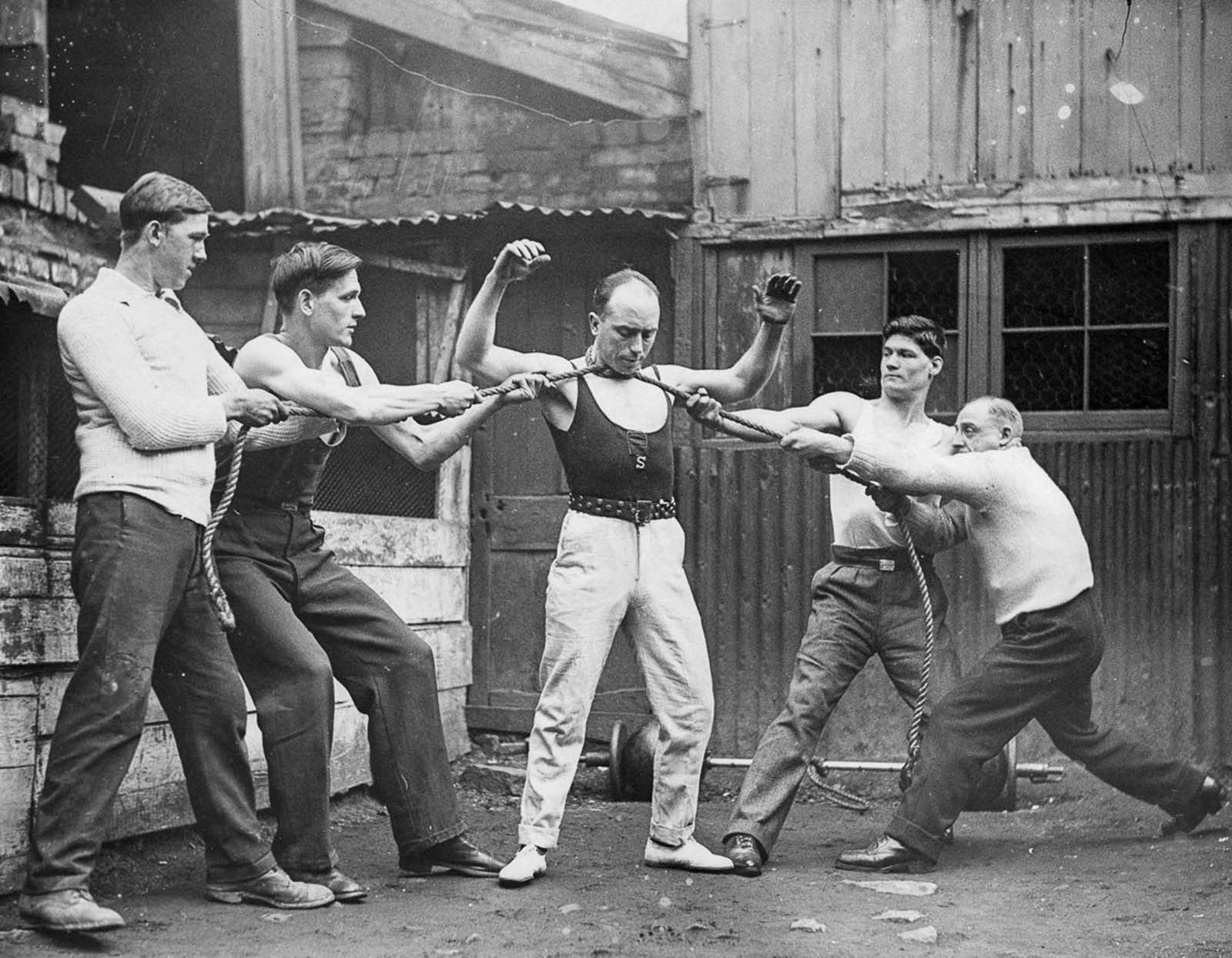
Samson Brown, who claimed to be the world’s strongest man, let a motorcycle roll over his body in 1934. Tom Joyce, who declared himself the strongest man in Bristol, withstood four men pulling a rope tied around his neck that same year. These public challenges — with built-in rivals, boasted titles, and live audiences — were the competitive sport of their time.
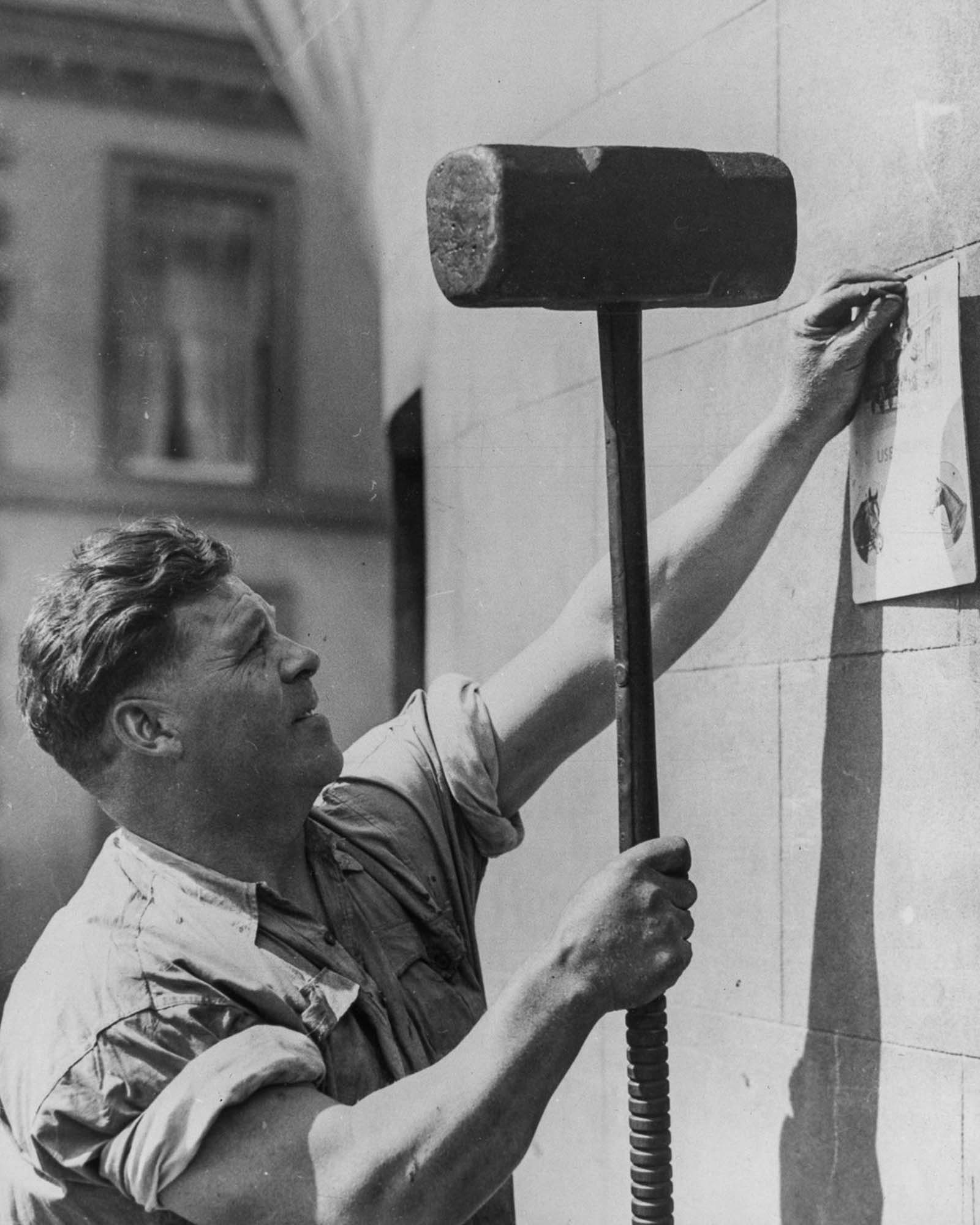
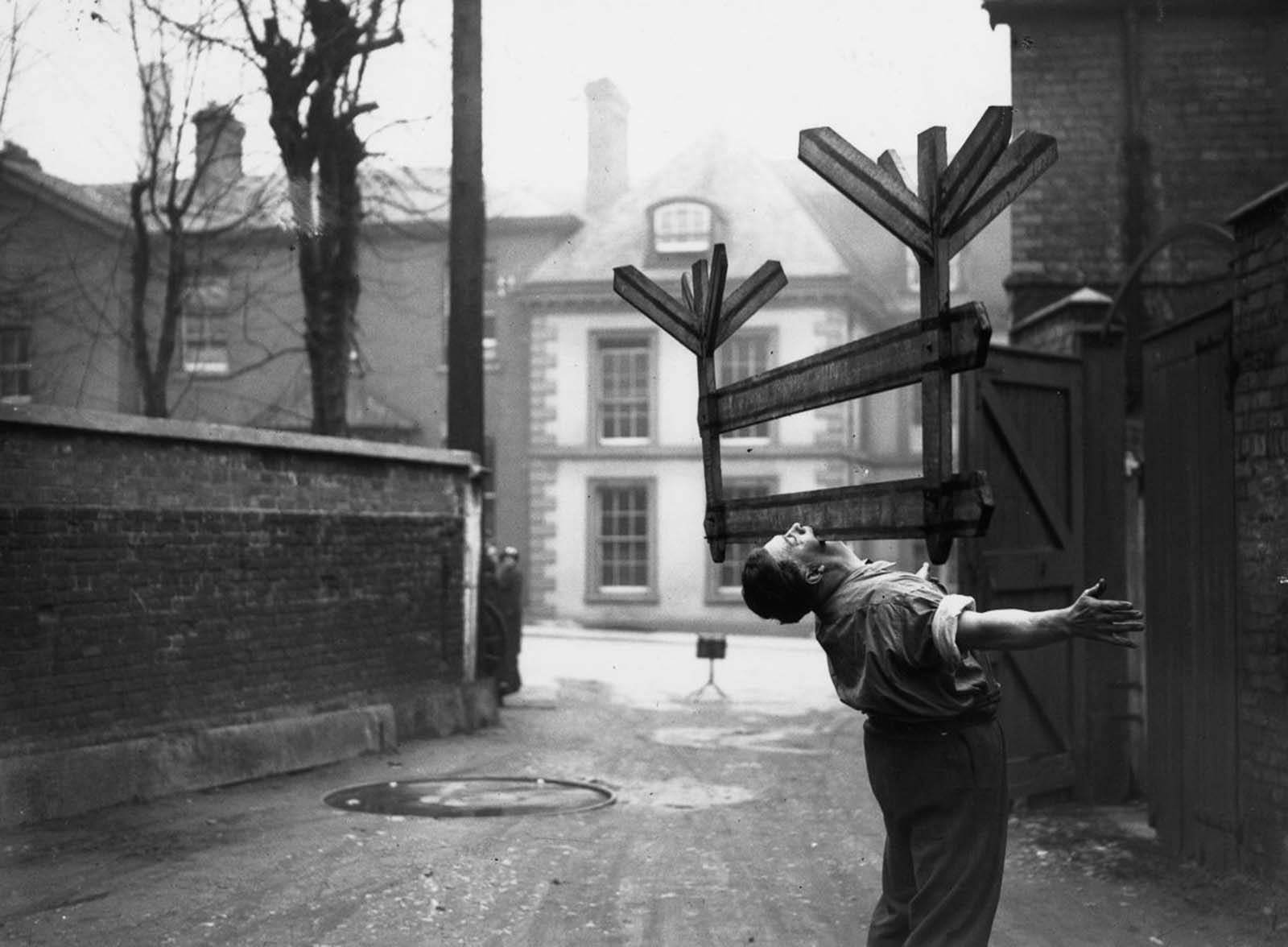
Other strongmen turned everyday objects into props. Joe Price swung a 50-pound hammer to drive a nail in 1934. Joe Smith, a blacksmith from Gloucester, balanced a roadworks sign in his teeth in 1936. Lewis Clark, known as
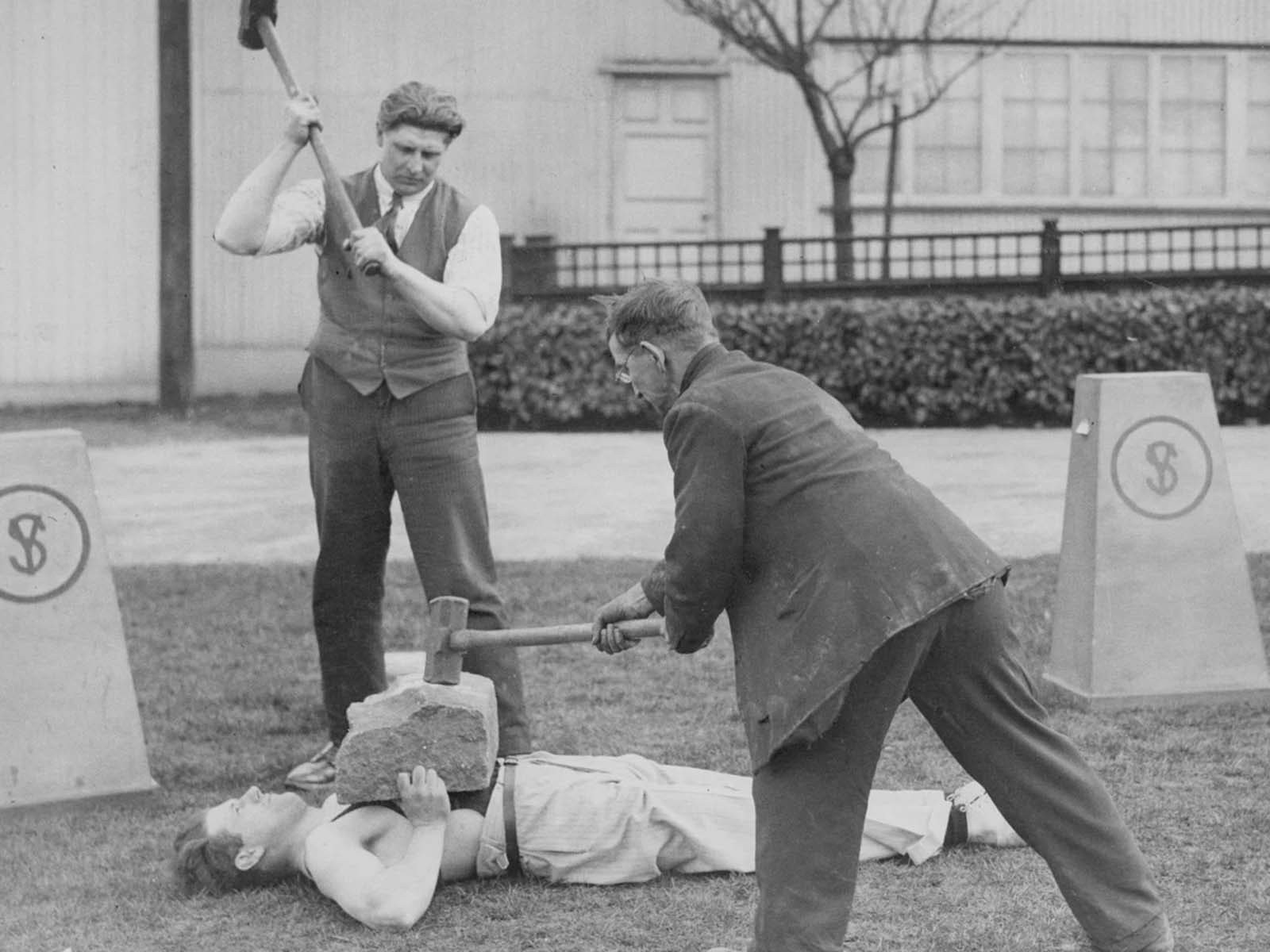
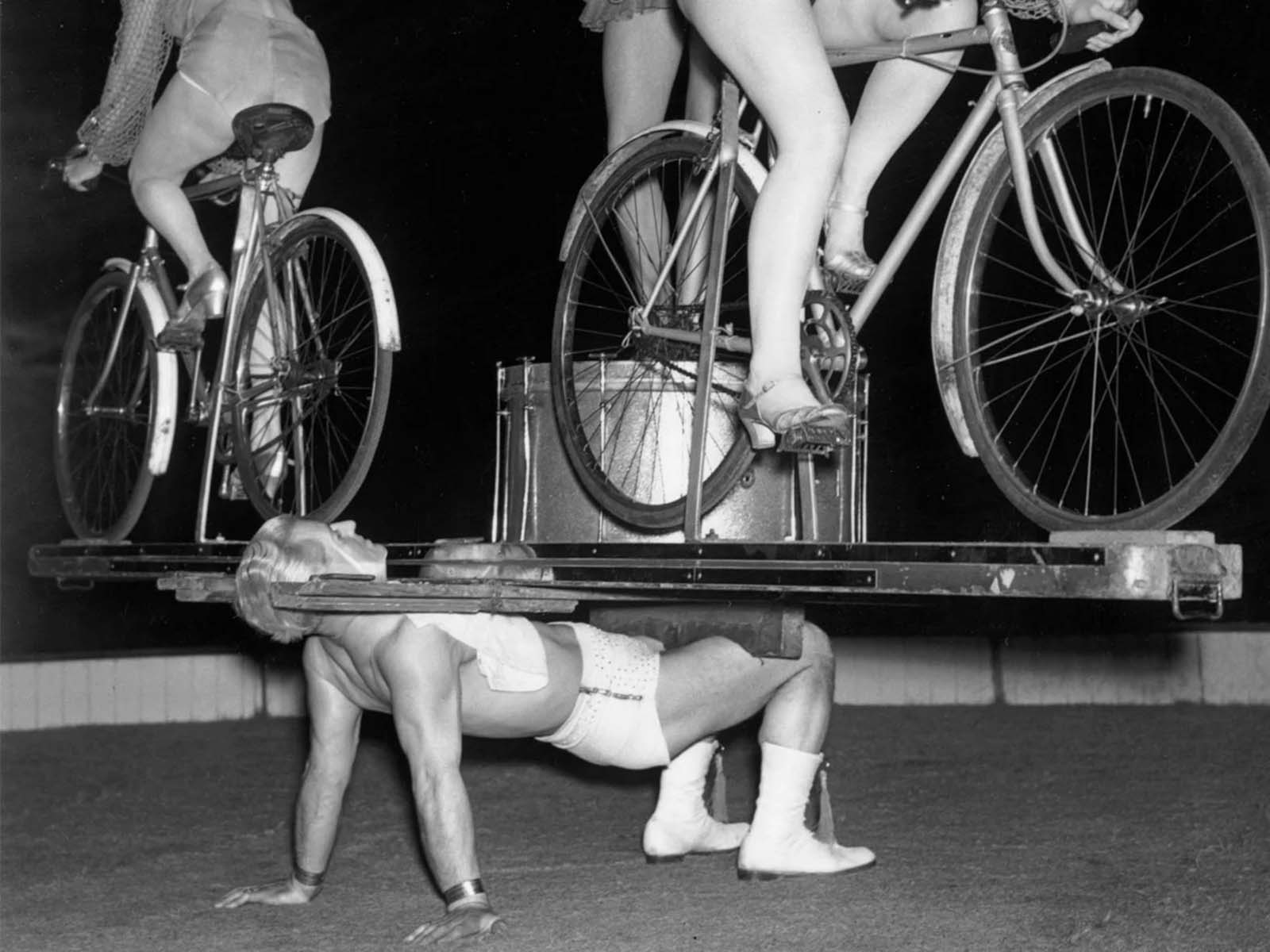
By 1945, the acts were still drawing crowds. A strongman held a rock on his chest while two men attempted to smash it with hammers. At the Chiswick Empire in London, Mr. Briton of Harry Benet’s circus balanced two cyclists and a dancer on his chest — all at once — on September 4, 1945.