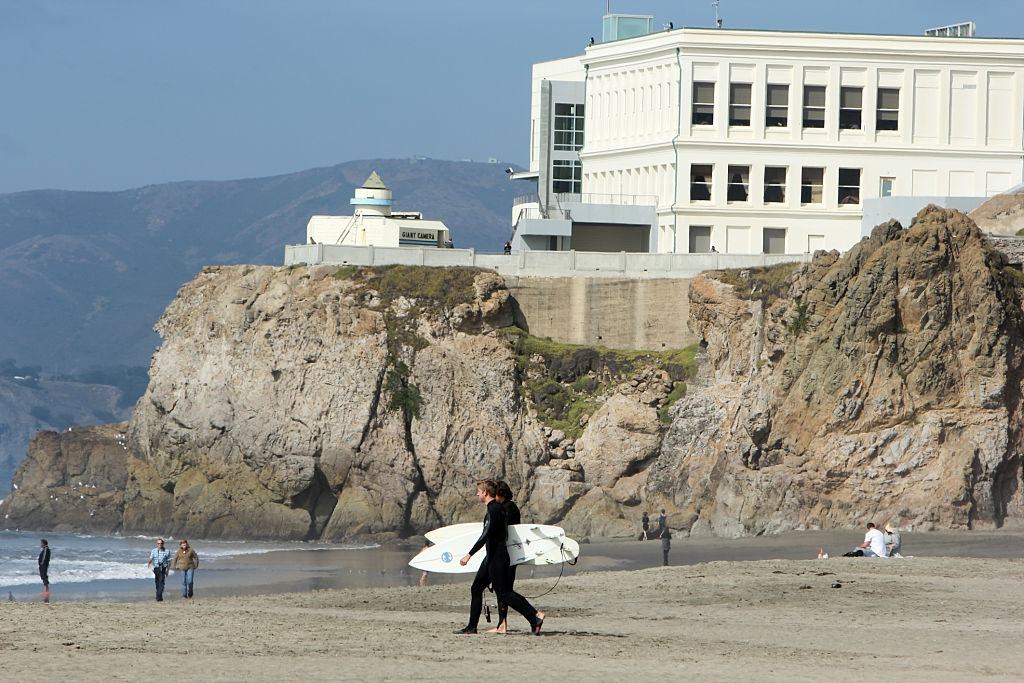
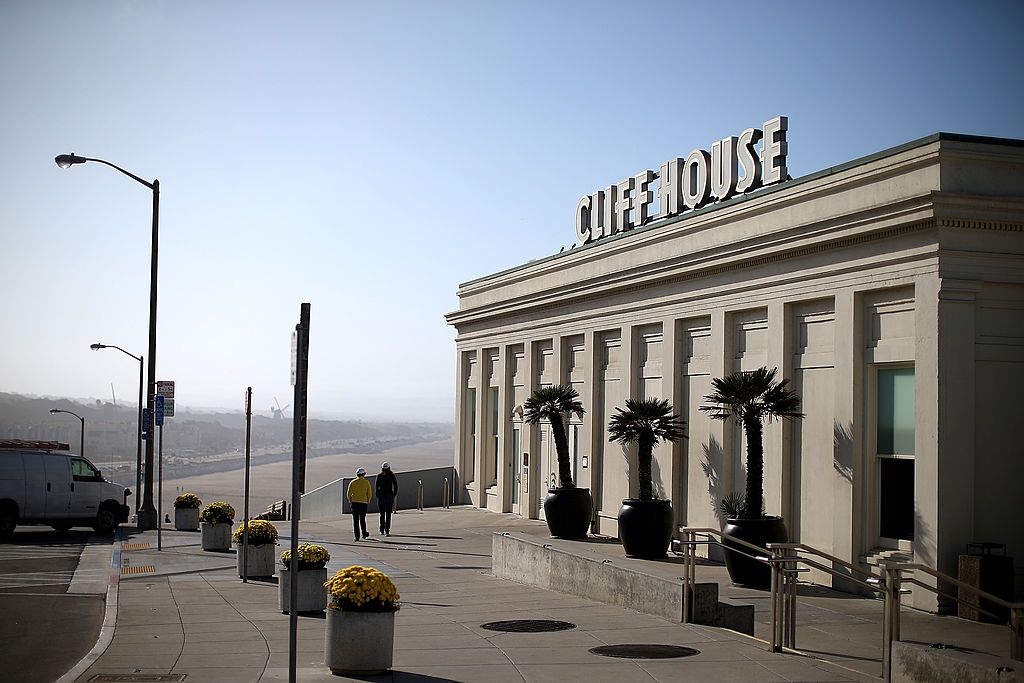
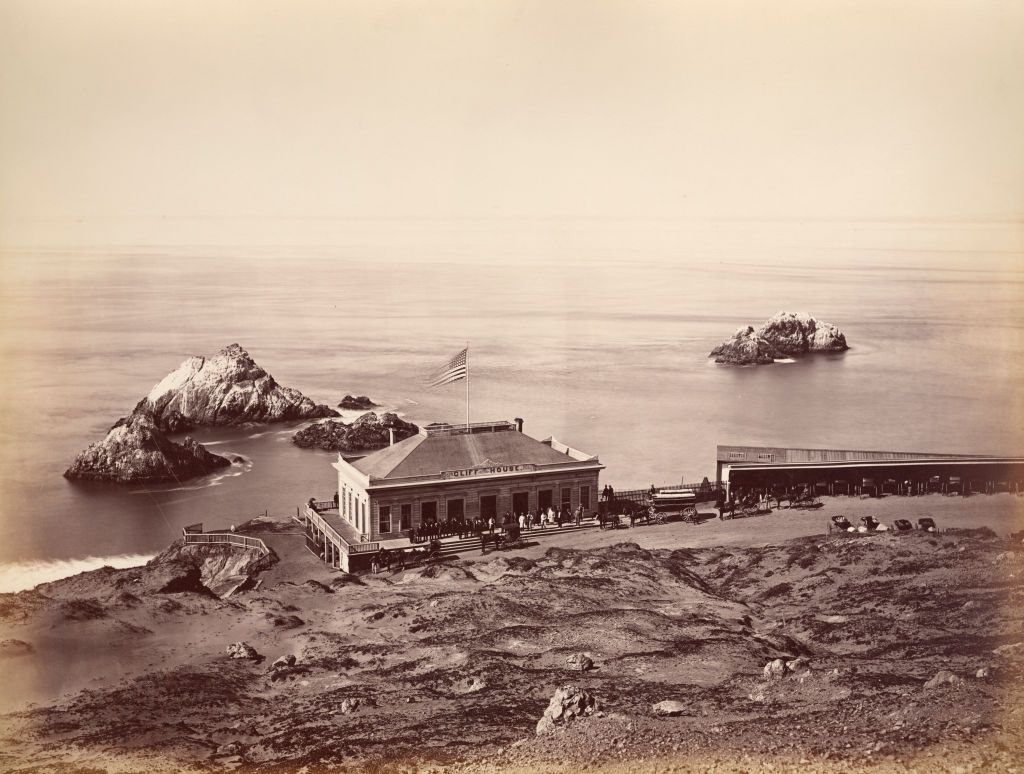
San Francisco’s Cliff House has been rebuilt five times over more than 160 years — struck by explosion, gutted by fire, and reshaped by ambition. Its story begins in 1858, when American businessman Samuel Brannan paid $1,500 for lumber salvaged from a ship that had wrecked on the basalt cliffs near Seal Rocks. Brannan built the first Cliff House on that rugged stretch of coastline and leased it to Captain Junius G. Foster. It quickly became a favorite spot for picnics and day outings, drawing San Franciscans out to the edge of the Pacific.
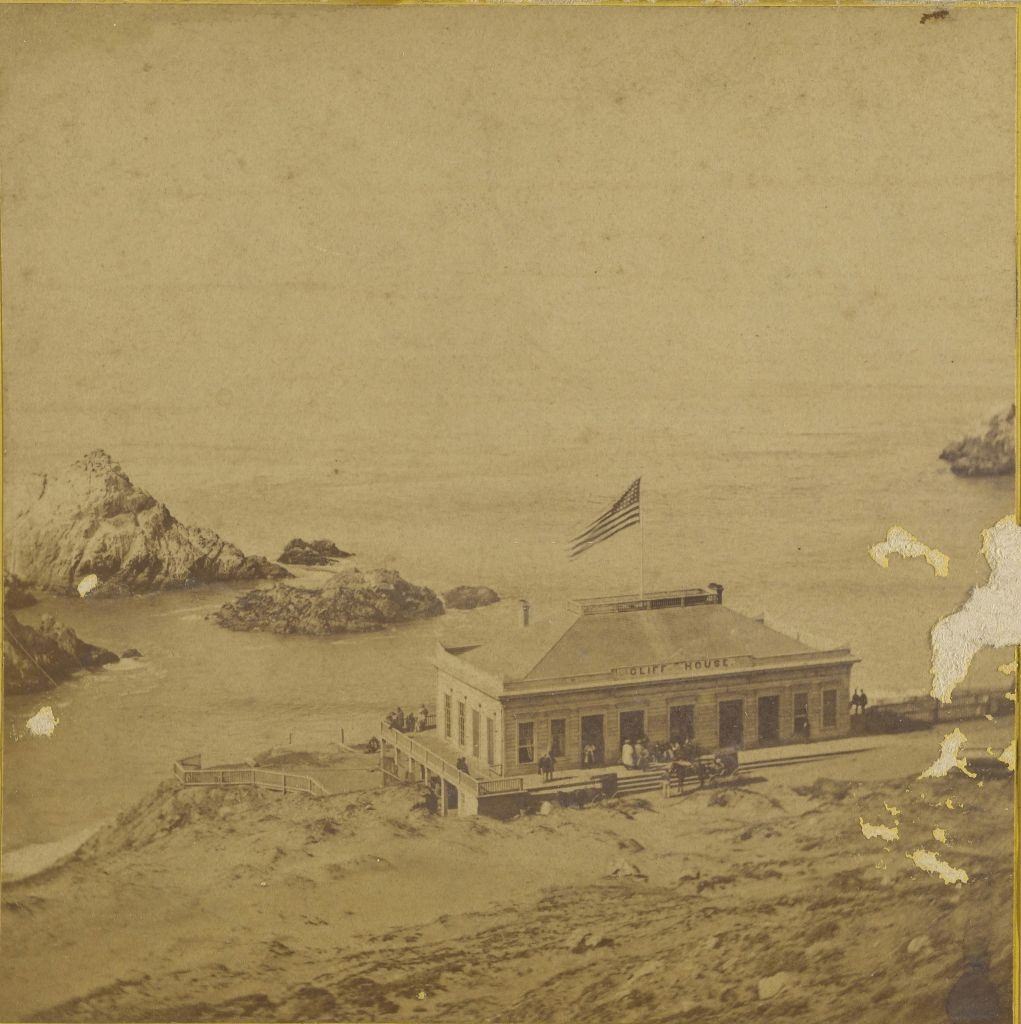
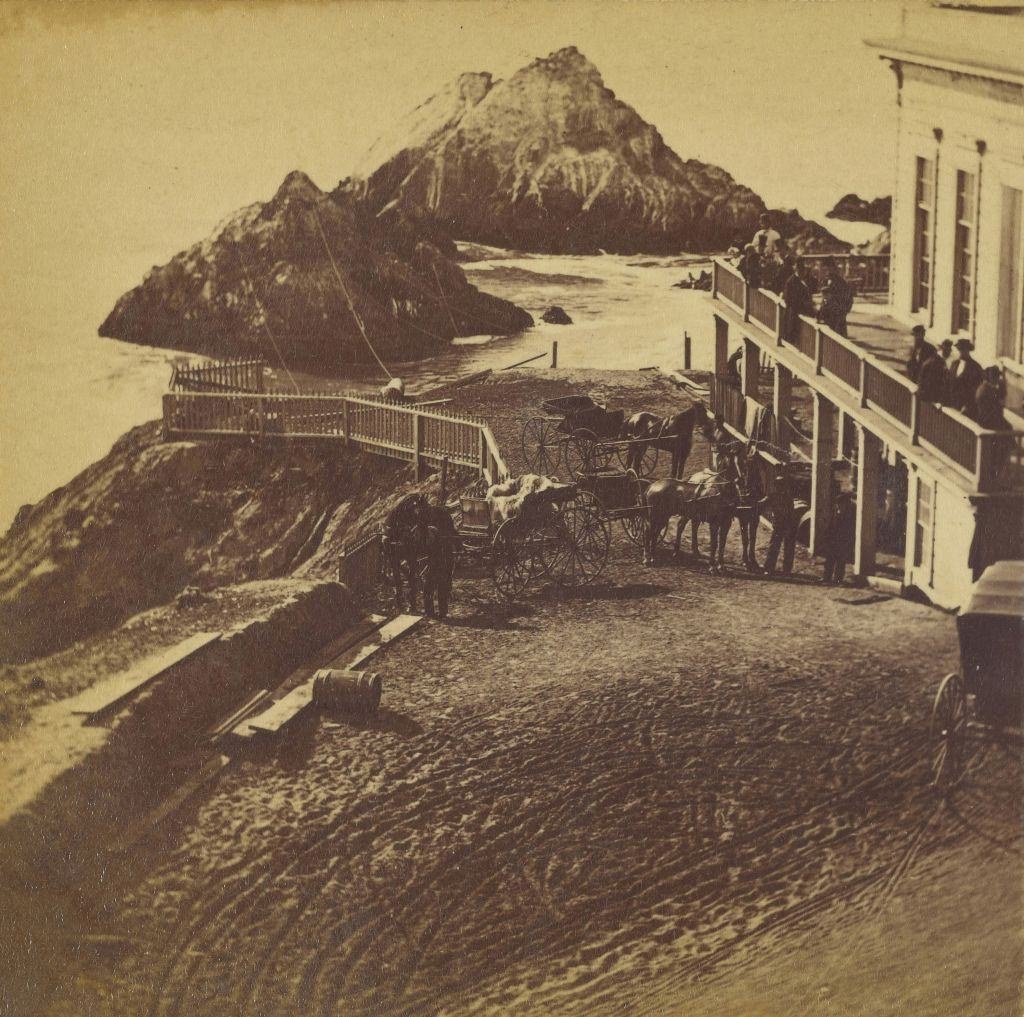
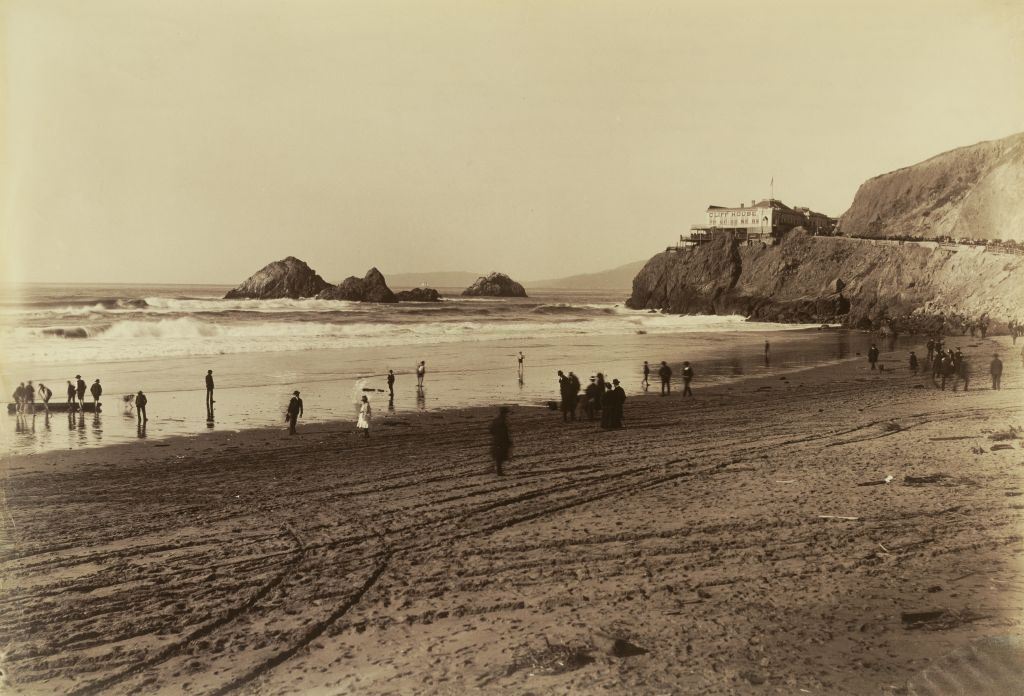
By the late 1860s, the Cliff House was already a well-established destination. Visitors arrived by horse and carriage, making the journey out to the cliffs a social occasion in itself. The rocky shore below attracted sea lions, and the view of Seal Rocks gave the site a natural spectacle that no other venue in the city could match.
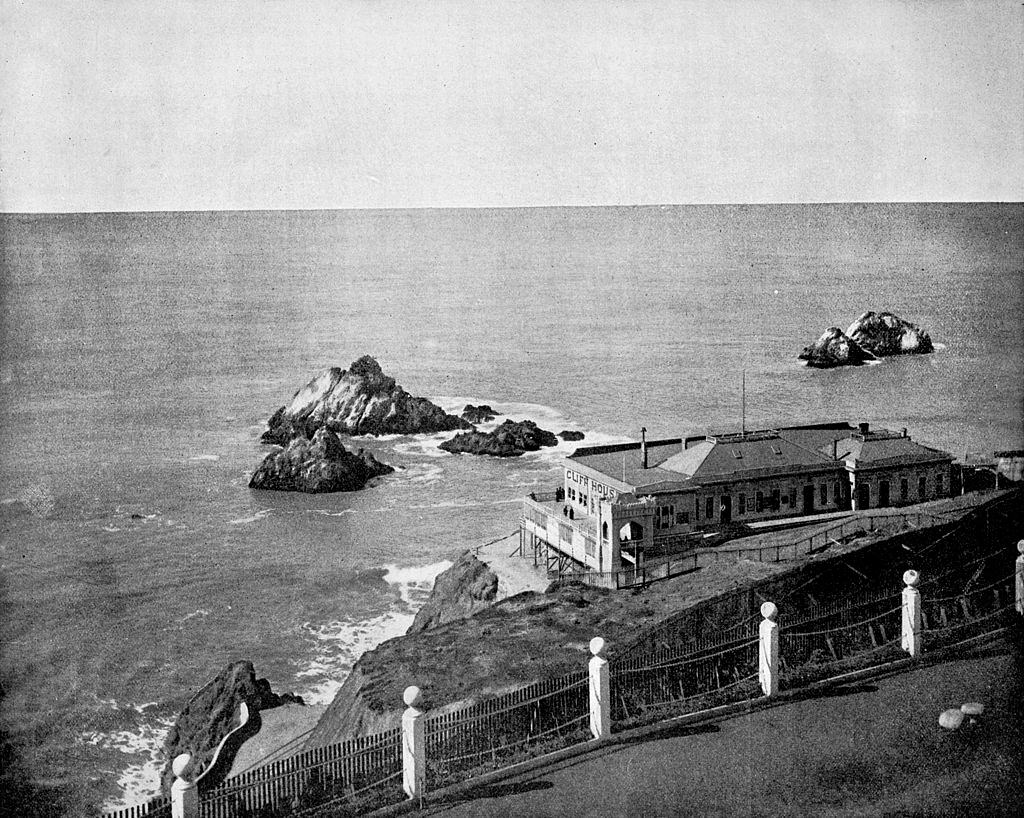
In 1883, German-American engineer and politician Adolph Sutro purchased the Cliff House. He already owned the surrounding land at Sutro Heights and had grand plans for the area. His tenure, however, was immediately tested. The schooner Parallel ran aground nearby, and the resulting dynamite explosion severely damaged the building. Sutro had it repaired, but disaster struck again on Christmas night 1894, when a defective flue sparked a fire that destroyed the structure entirely.
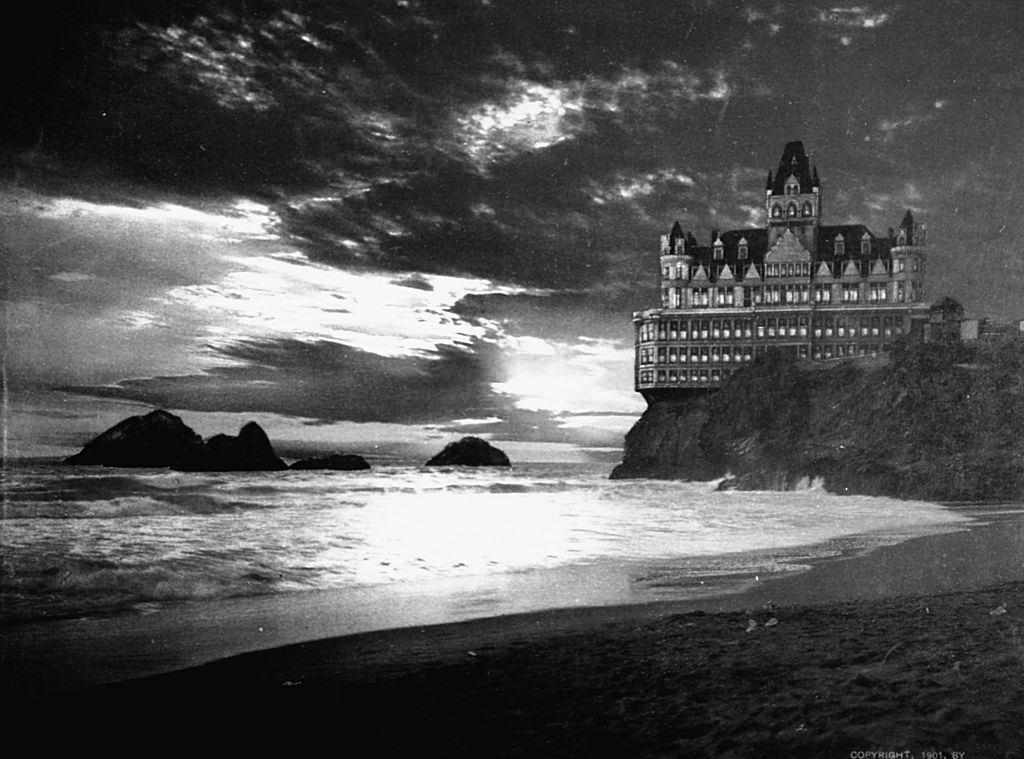
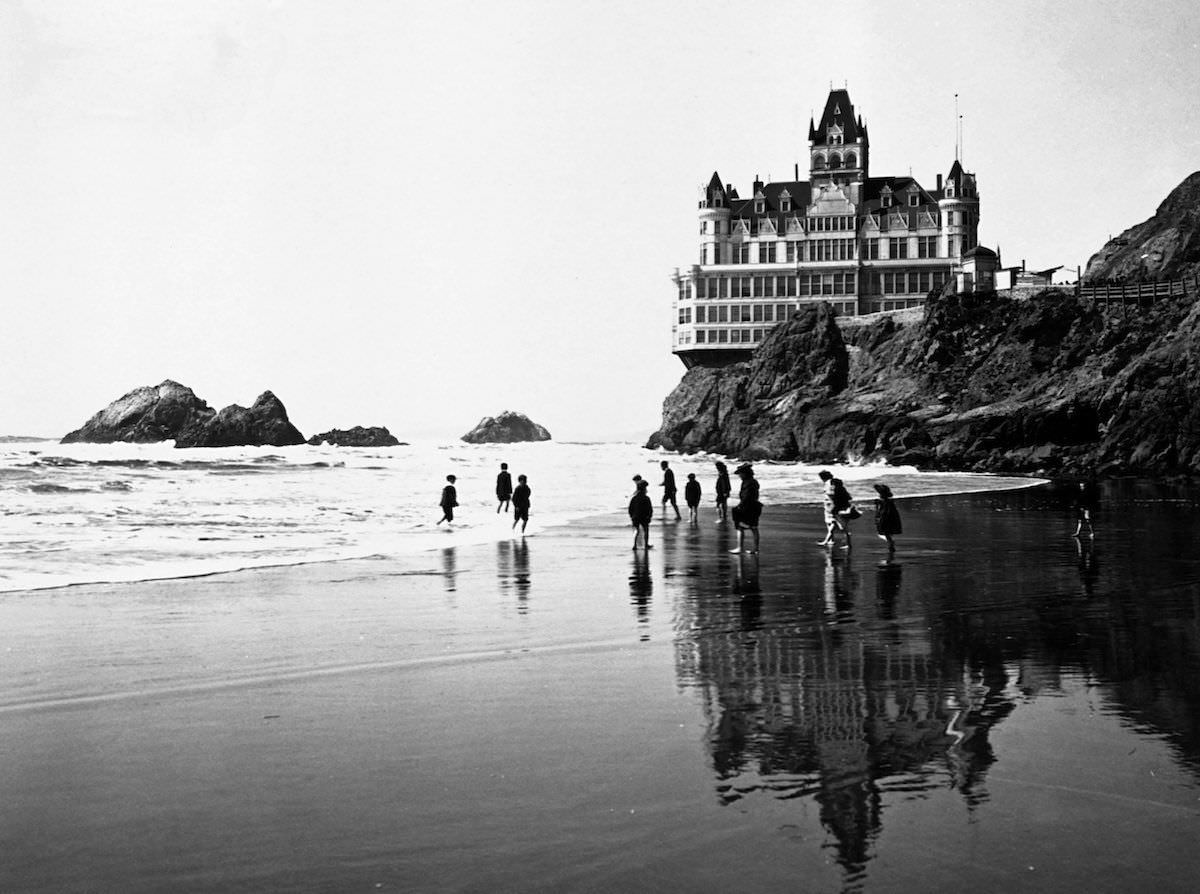
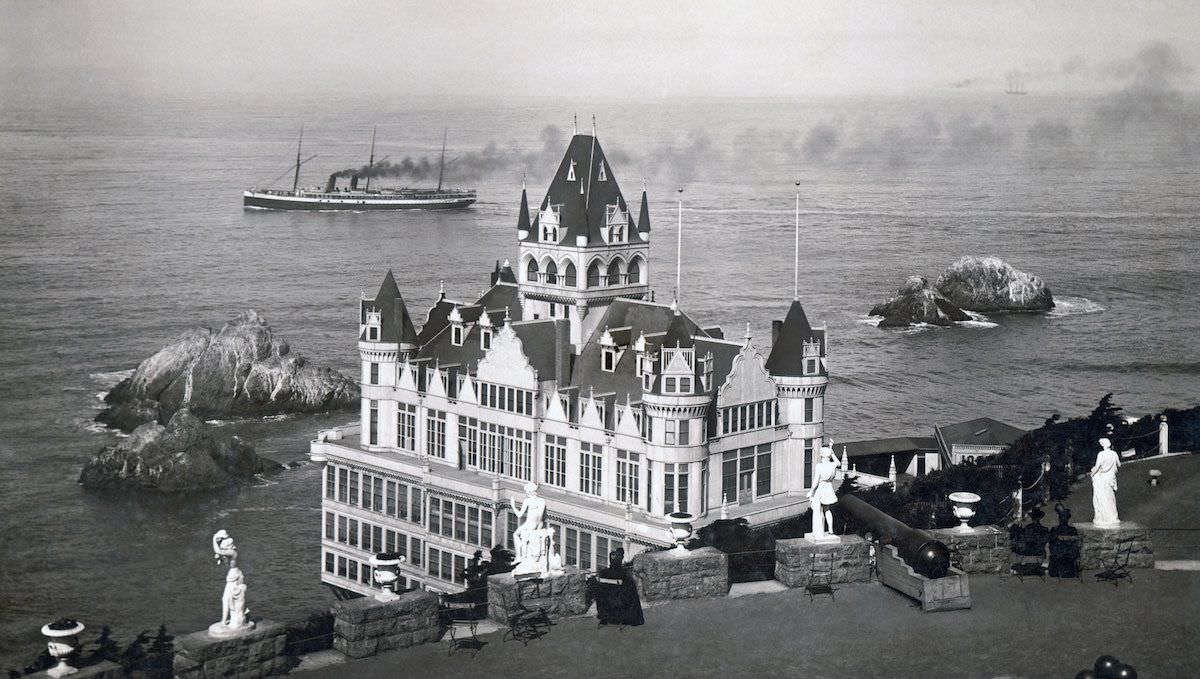
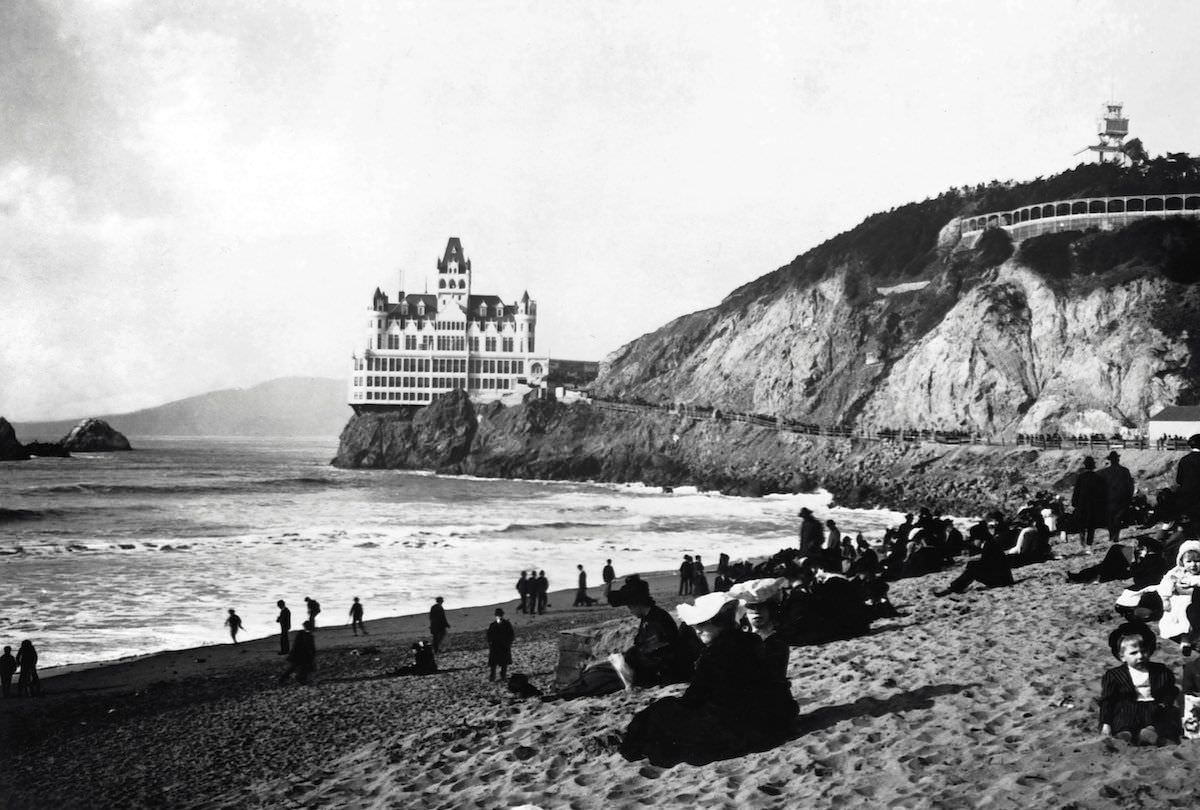
Sutro responded to the 1894 fire by building something far more ambitious. He raised a seven-story Victorian mansion on the same cliffs — an elaborately decorated structure that locals dubbed the “Gingerbread House.” It was one of the most extravagant buildings on the California coast, with towers, turrets, and ornate detailing at every level. The new Cliff House became both a tourist attraction and a symbol of Sutro’s outsized personality.
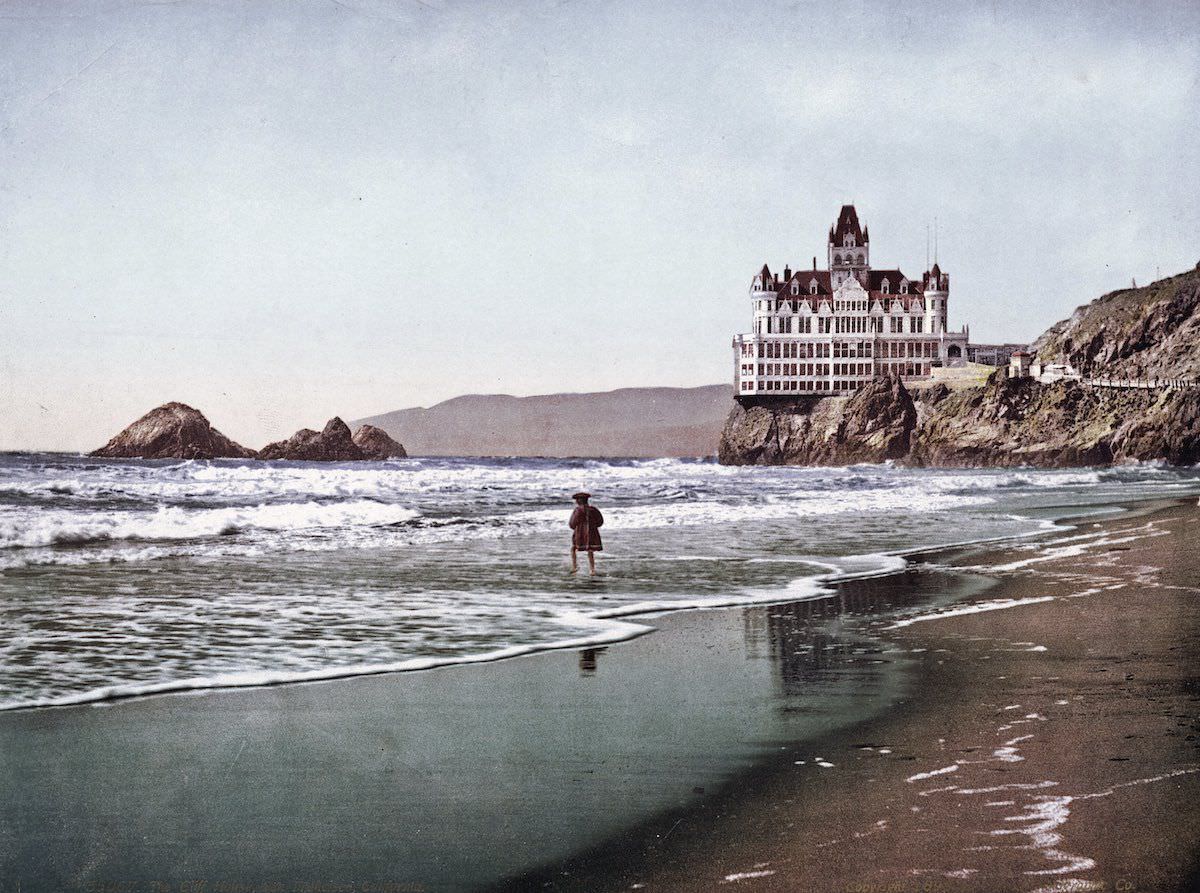
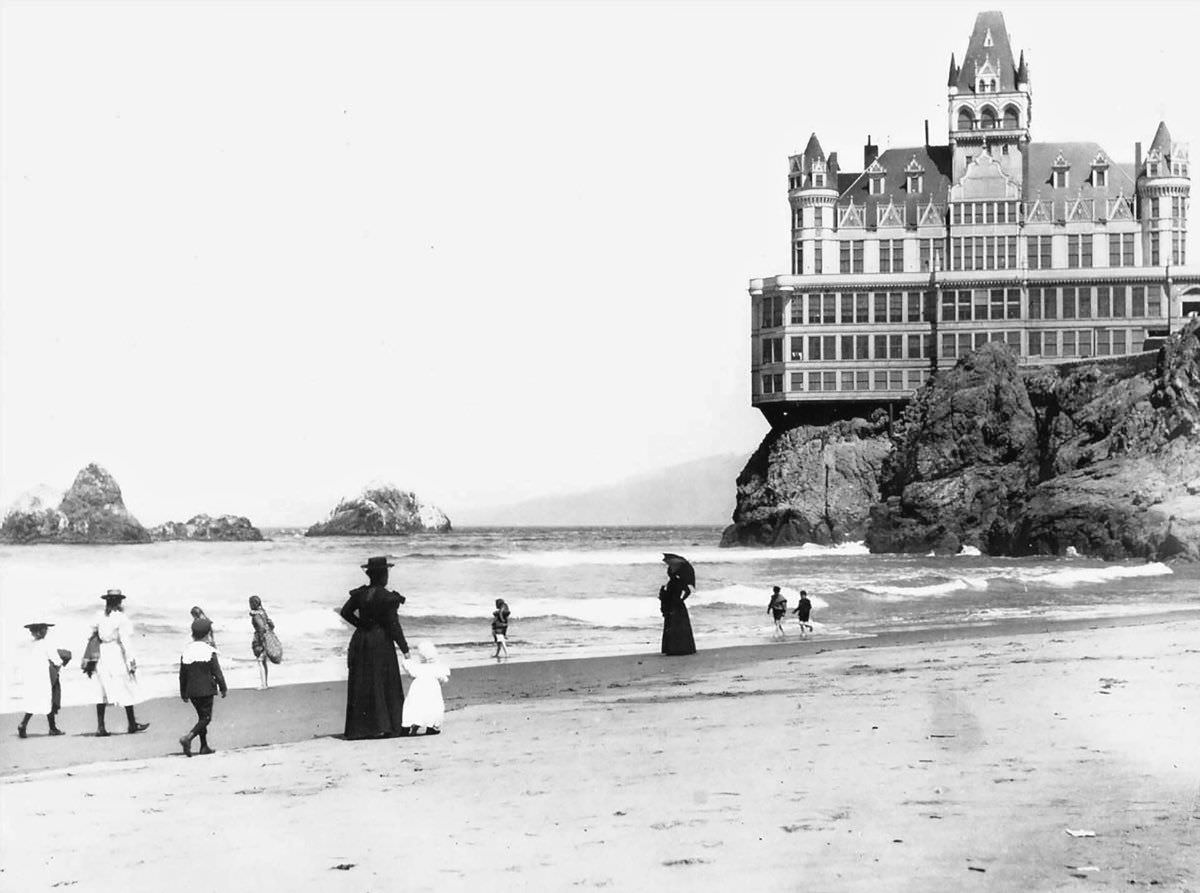
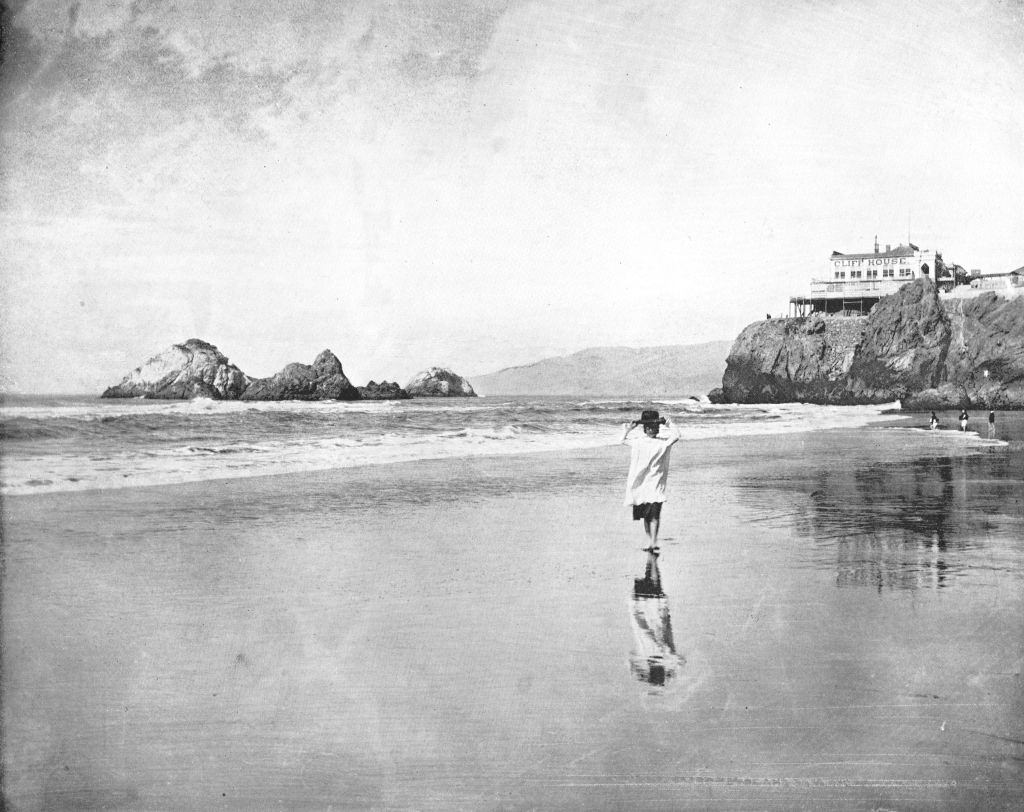
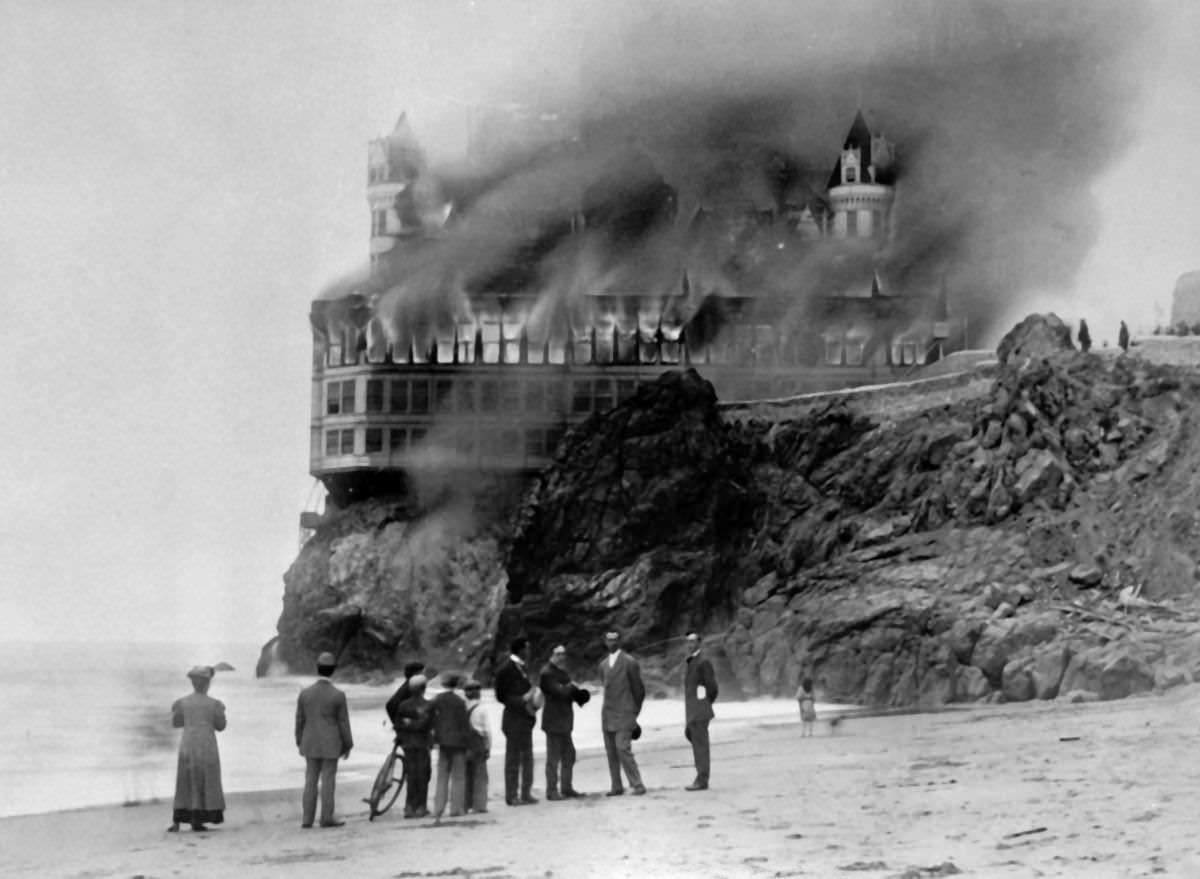
The Victorian Gingerbread House stood through the turn of the century and survived the catastrophic 1906 San Francisco earthquake without major structural damage — a remarkable feat given how much of the city was destroyed. But fire, which had already claimed an earlier version, returned in 1907. Just one year after the earthquake, the seven-story mansion burned to the ground, leaving nothing but the cliffside foundation.
Adolph Sutro had died in 1898, but his daughter, Dr. Emma Merritt, took ownership and oversaw the rebuilding. She replaced the flamboyant Victorian structure with something quieter and more permanent — a neoclassical-style restaurant that sat lower on the cliff and focused attention on the ocean views rather than the architecture itself. This version of the Cliff House would stand for decades.
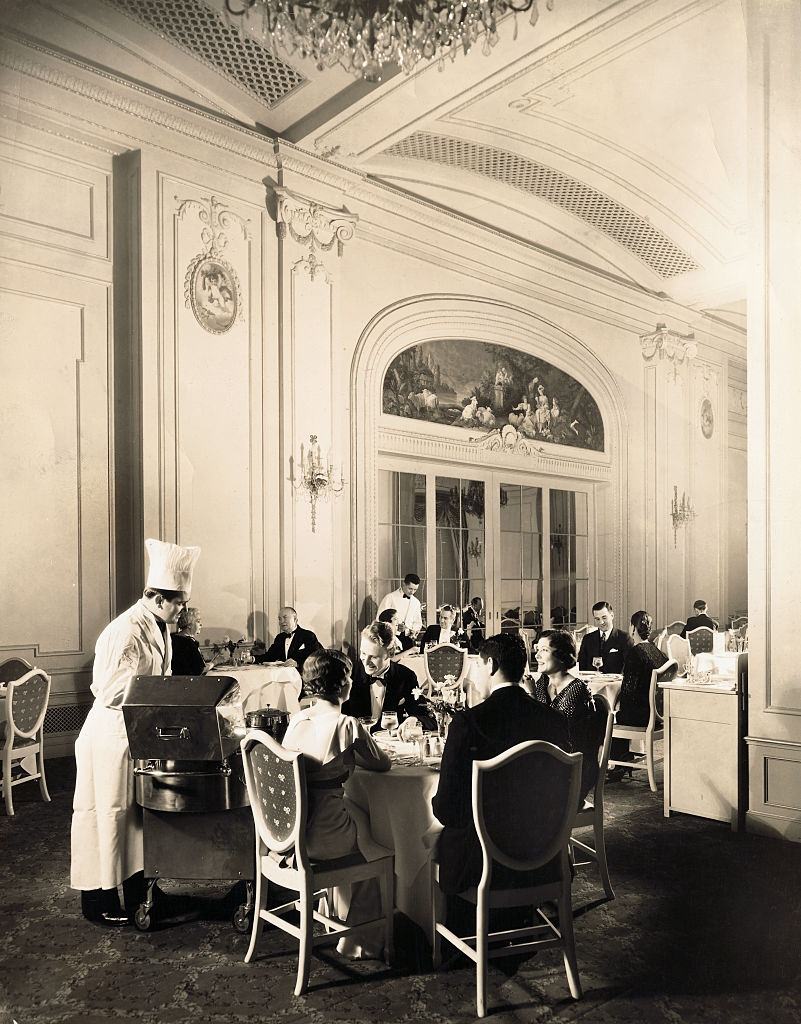
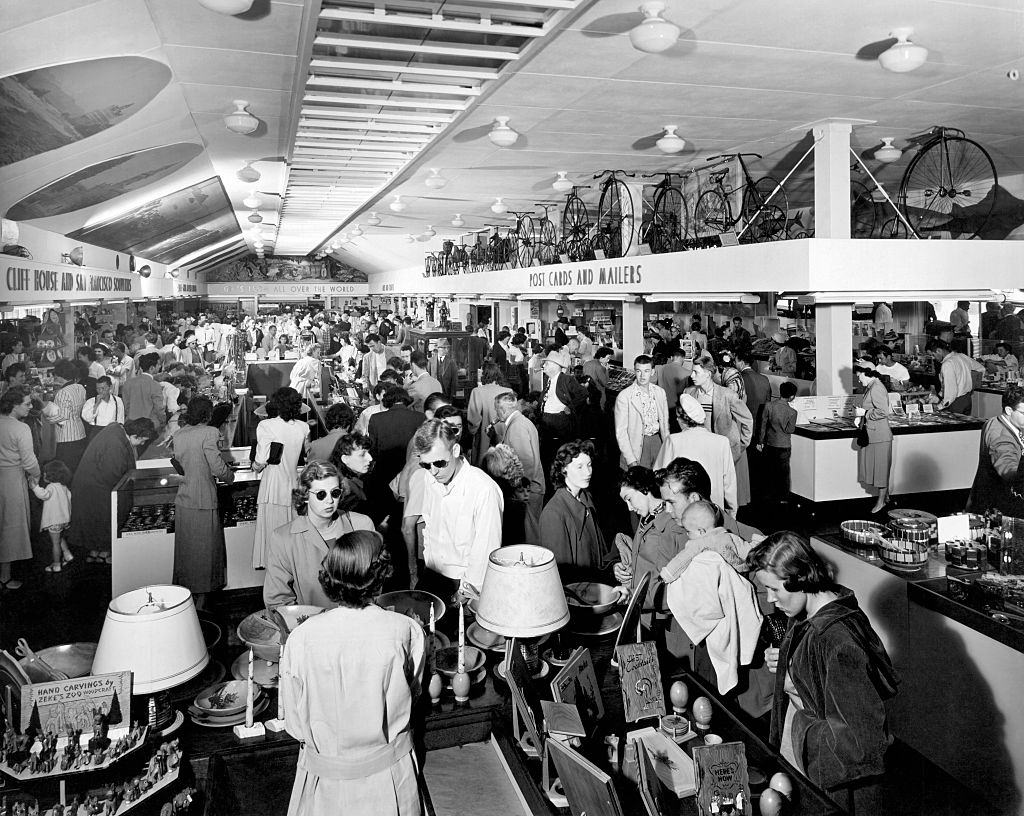
In 1937, brothers George and Leo Whitney purchased the Cliff House and operated it as a commercial restaurant and tourist destination through the mid-twentieth century. Under their management, the site remained one of San Francisco’s most visited landmarks, drawing crowds who came for the food, the views, and the atmosphere of a place with so much layered history.
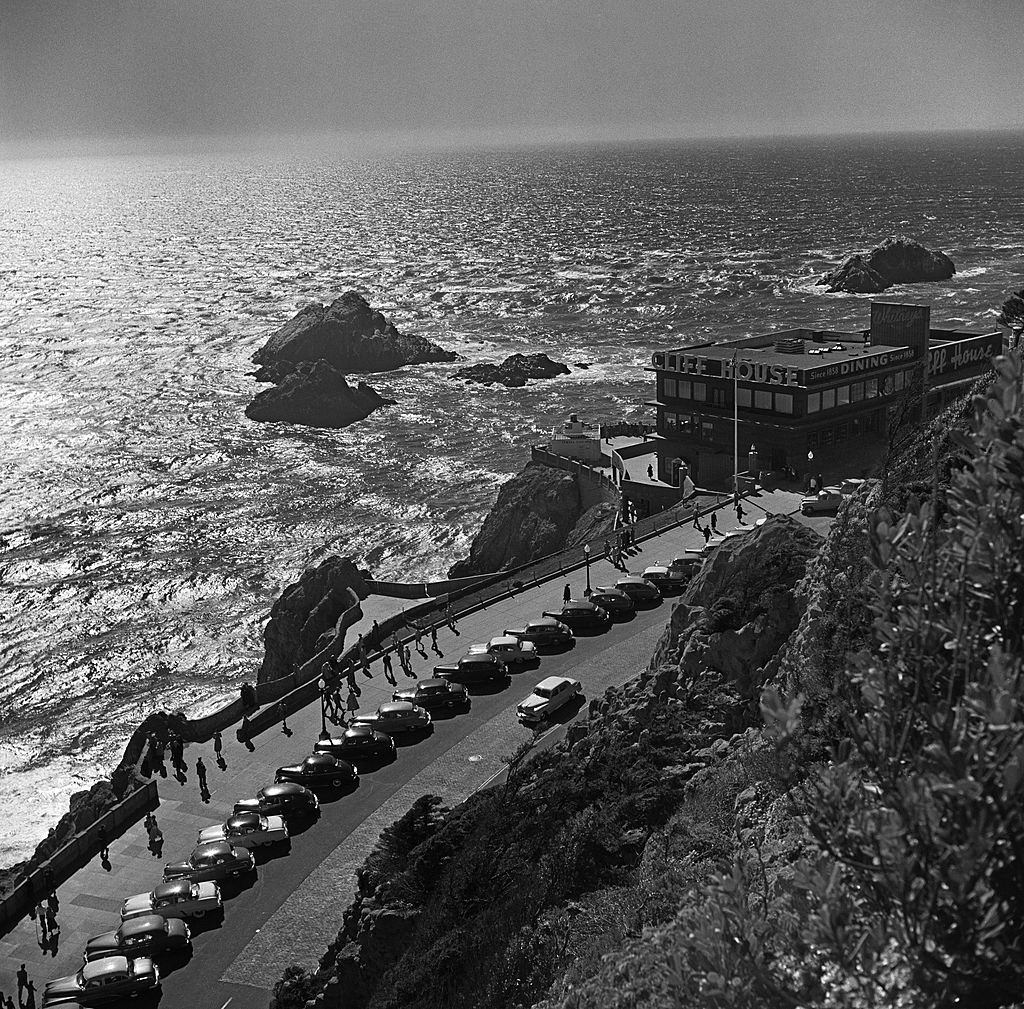
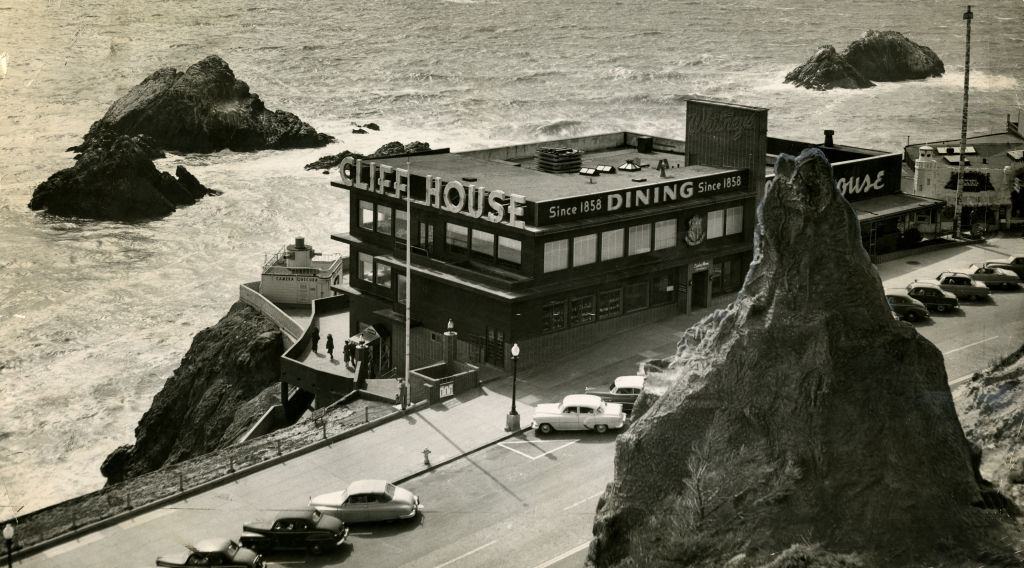
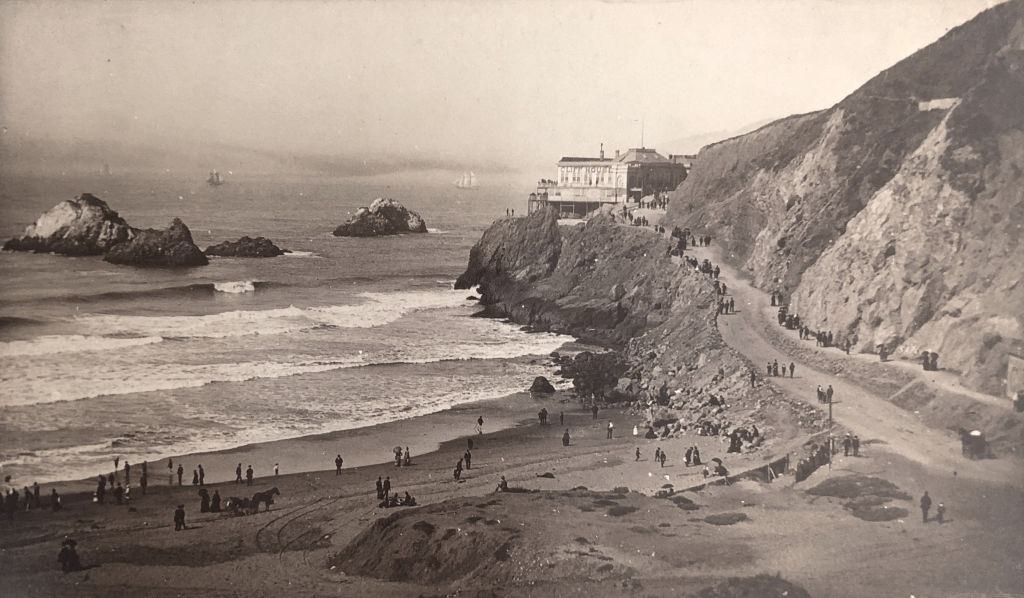
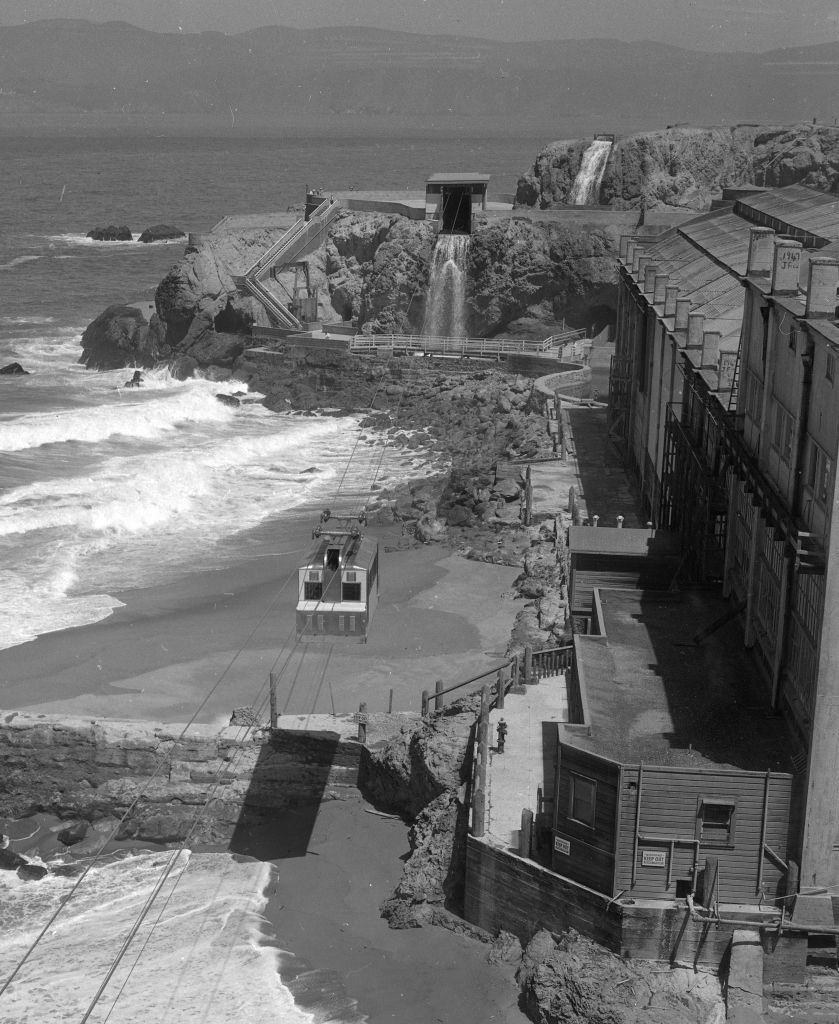
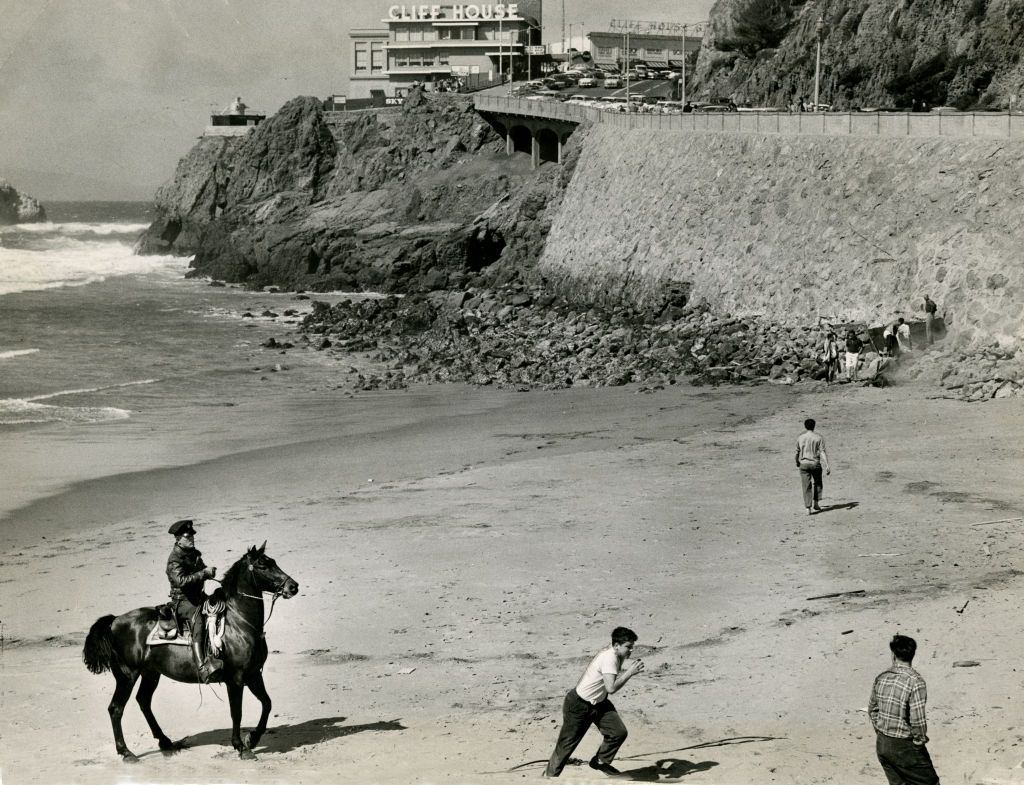
The 1950s brought new attractions to the area. A Sky Tram was built to carry visitors from the Cliff House past the ruins of the nearby Sutro Baths to Point Lobos, offering a aerial view of the coastline that no ground-level vantage point could provide. The beach below the Cliff House remained a busy, sometimes chaotic public space, where local enforcement kept a close eye on the crowds.
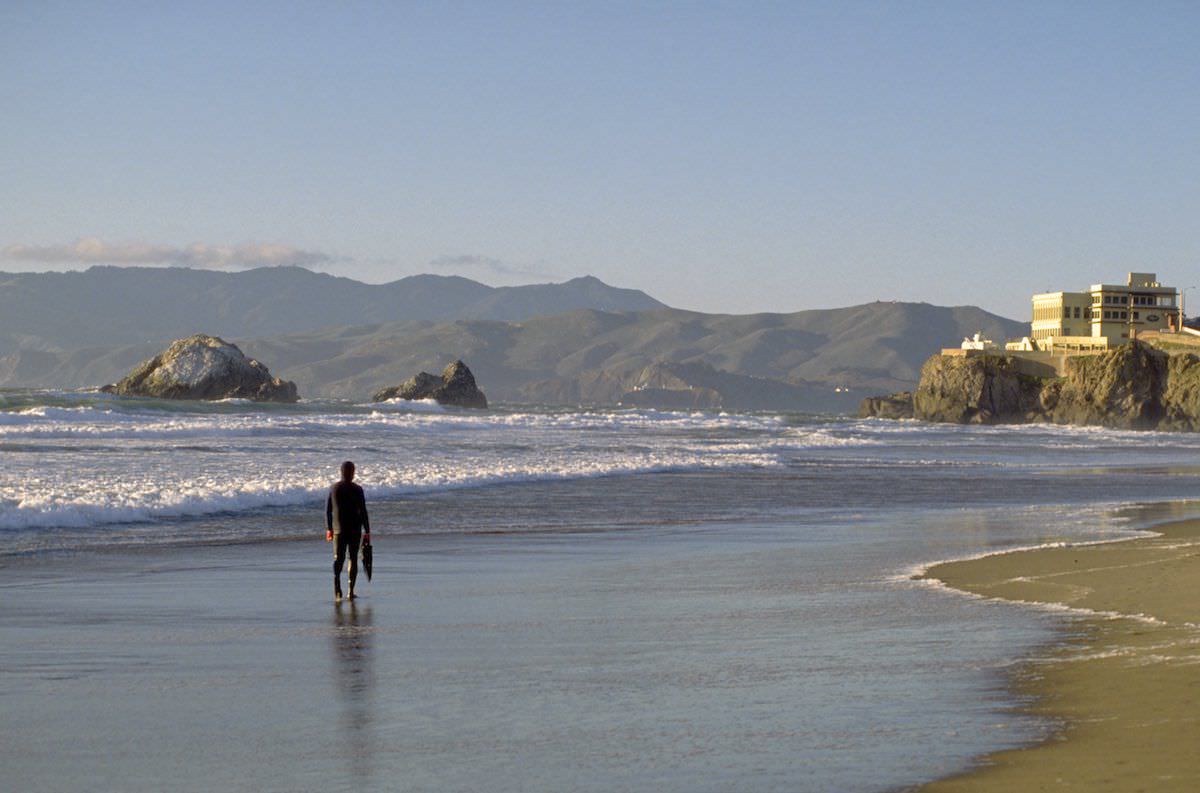
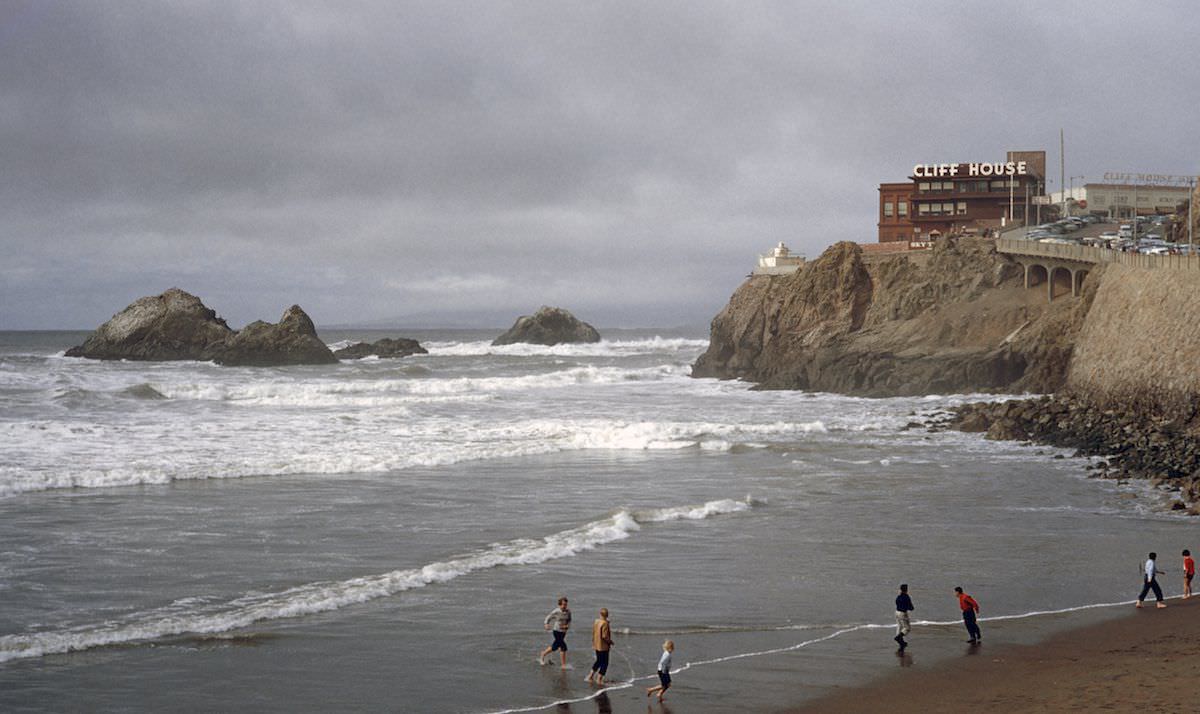
The National Park Service acquired the Cliff House in 1997, bringing it under federal protection as part of the Golden Gate National Recreation Area. In 2003, a major restoration returned the building to its 1909 appearance — the neoclassical form that Dr. Emma Merritt had built after the great fire. The interior features two-story dining rooms with sweeping ocean views and a ceiling of steel beams that echo the structural architecture of the adjacent Sutro Baths ruins, linking the building’s present form to its long history on these cliffs.