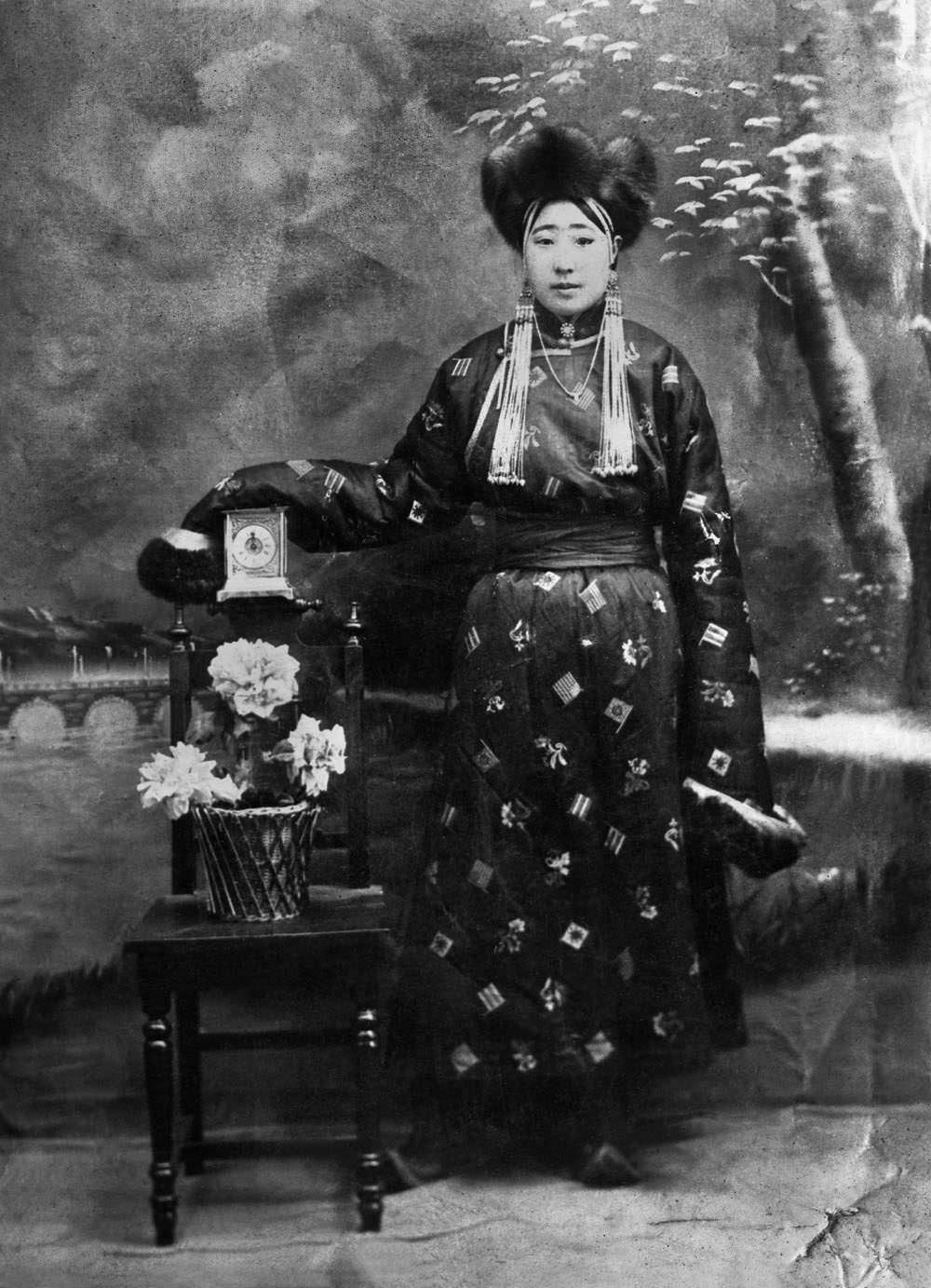
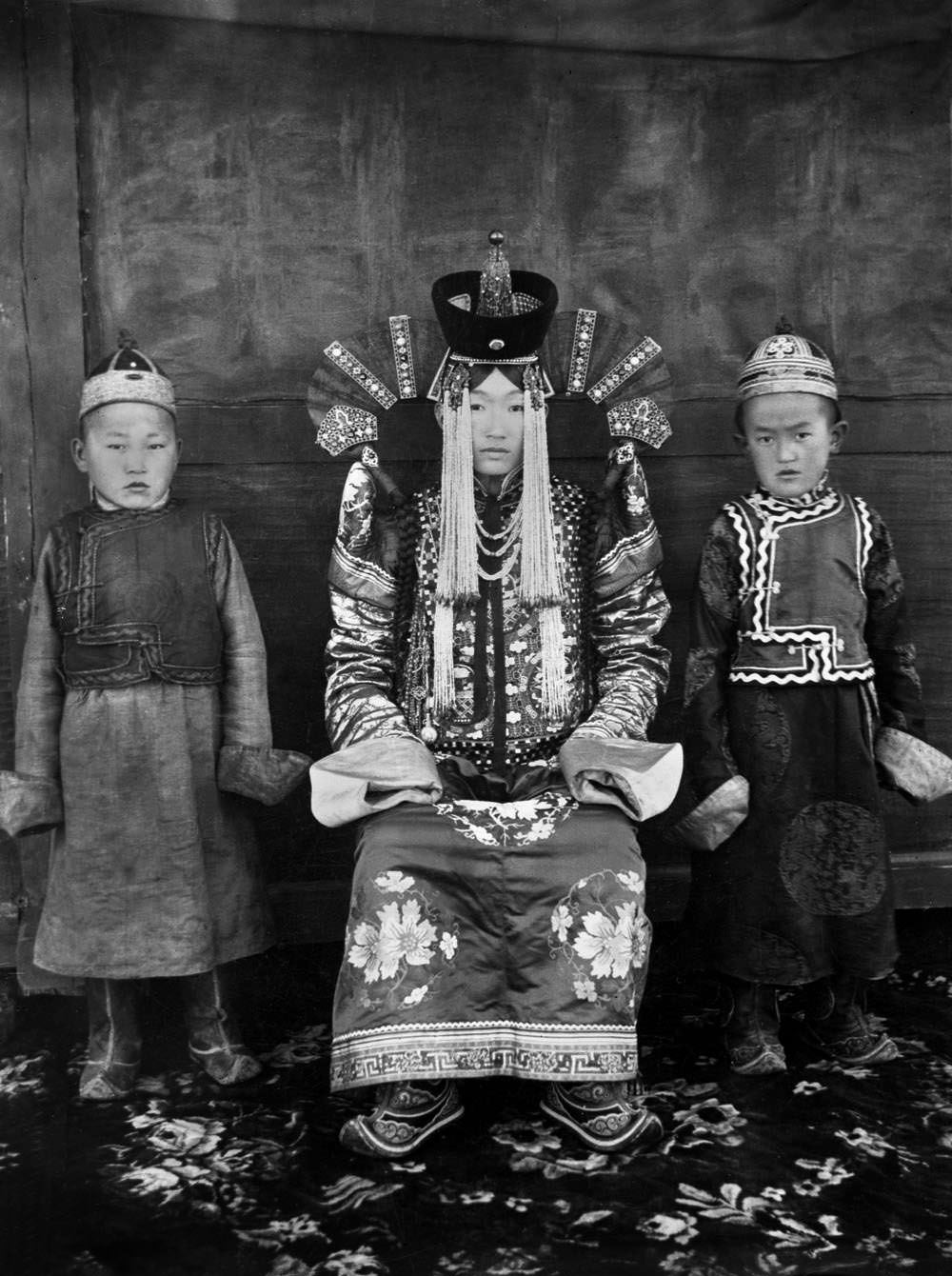
In the early 1900s, a series of remarkable photographs captured the lives of Mongolian aristocracy in stunning detail. These images are now preserved as part of the British Library’s Endangered Archives Programme — a project dedicated to saving rare and fragile historical records before they are lost forever.
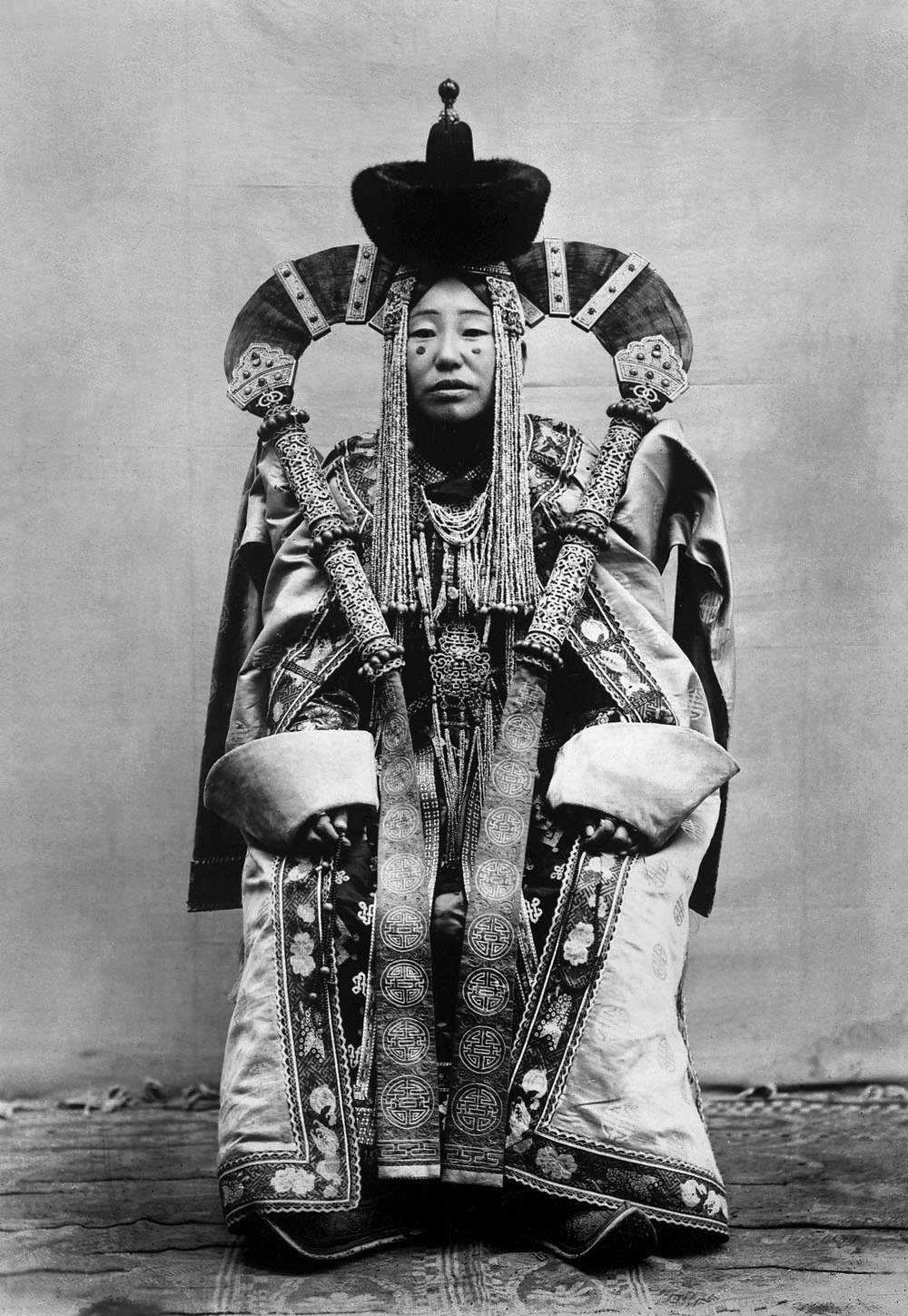
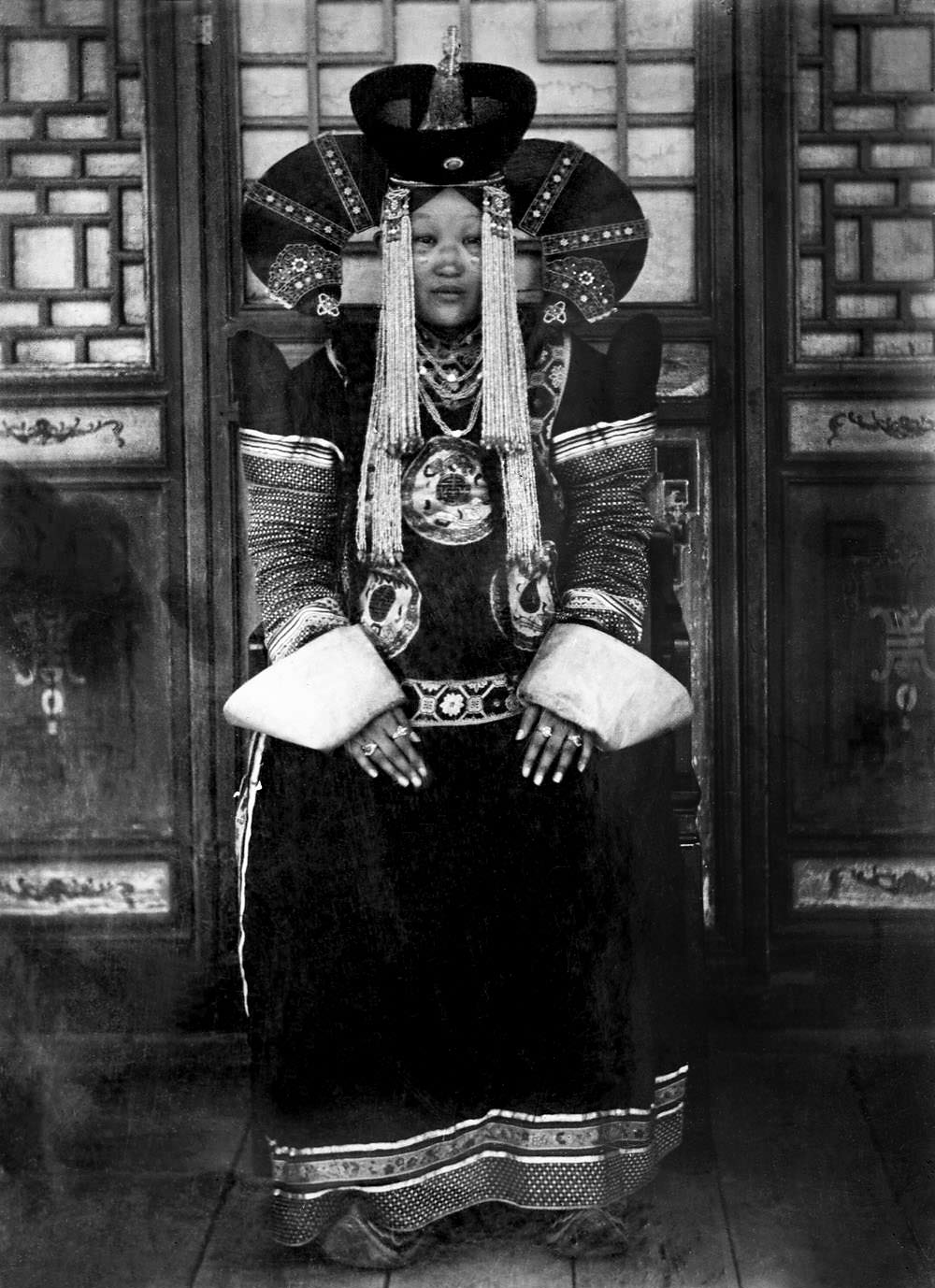
The nobles in these portraits wear silk deel — long, flowing robes that were standard dress for both men and women of the elite class. Each garment is covered in intricate embroidery and bold, vibrant colors that reflect the skill of Mongolian craftspeople at the time.
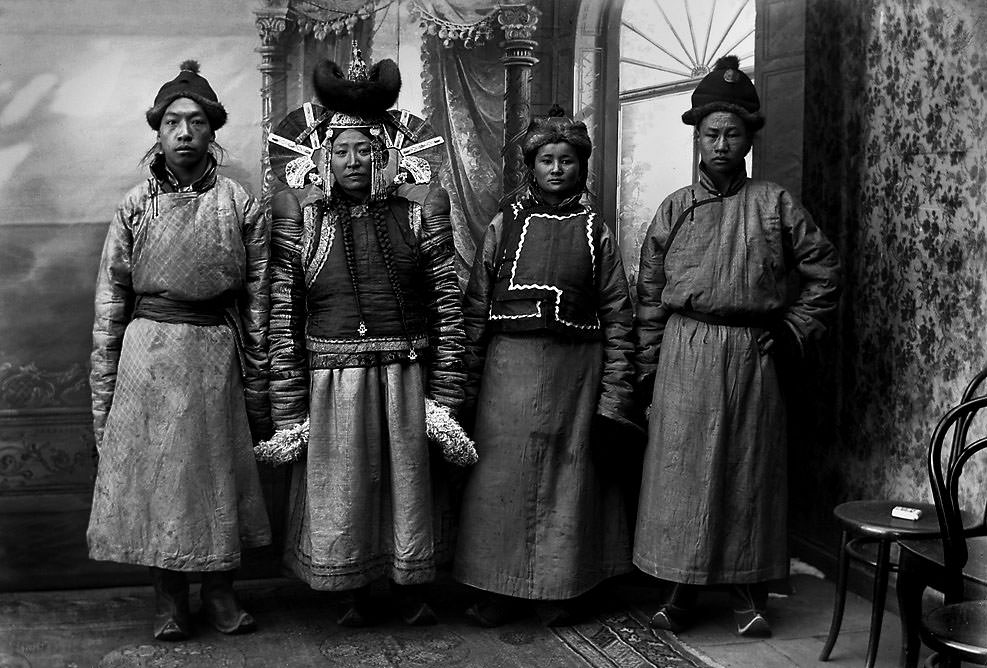
Headwear was a major marker of status. Women wore elaborate headdresses built from layered ornaments, while men donned pointed hats trimmed with fur. Jewelry featuring precious stones and metals completed the look, signaling wealth and rank at a glance.
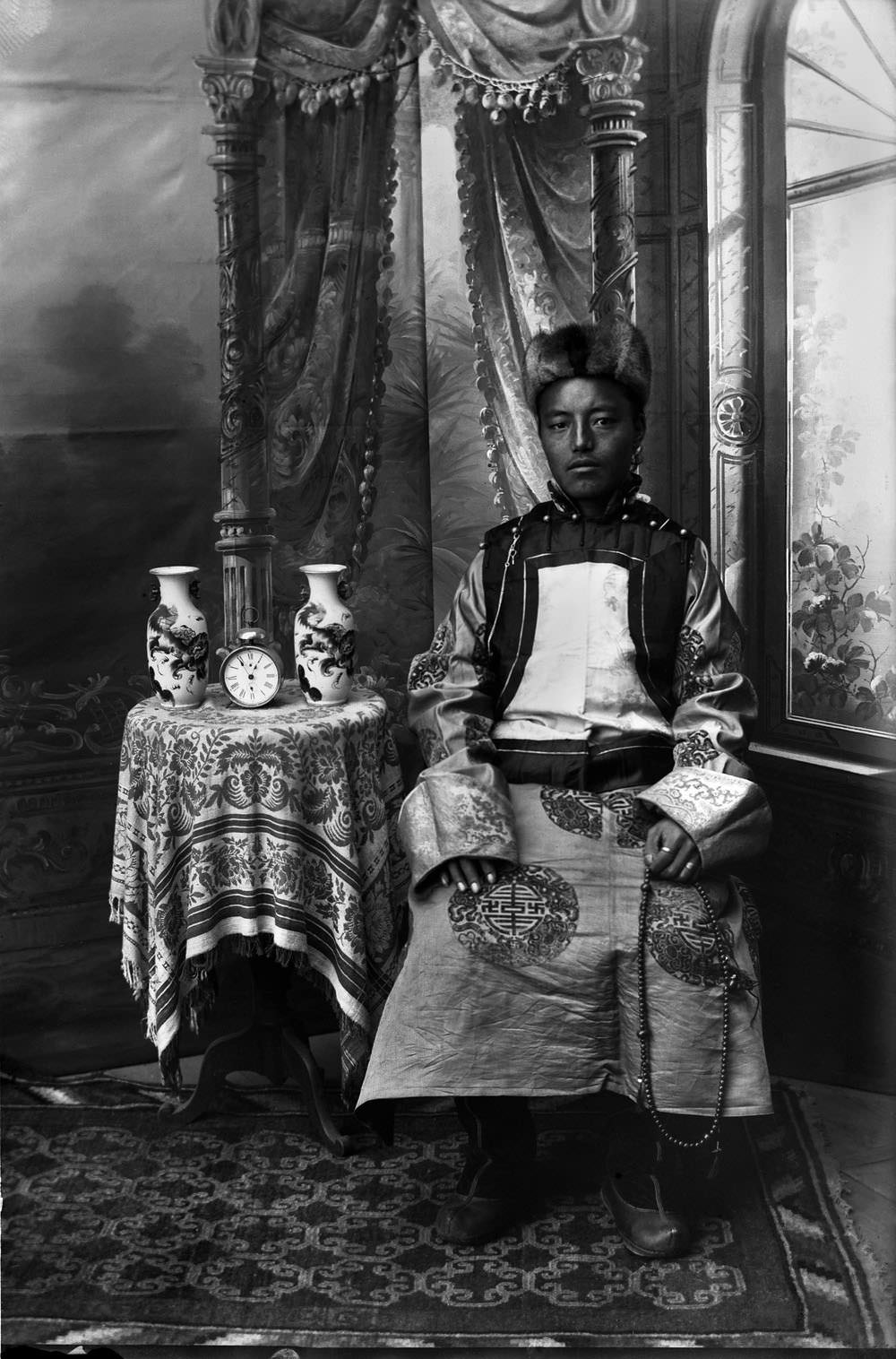
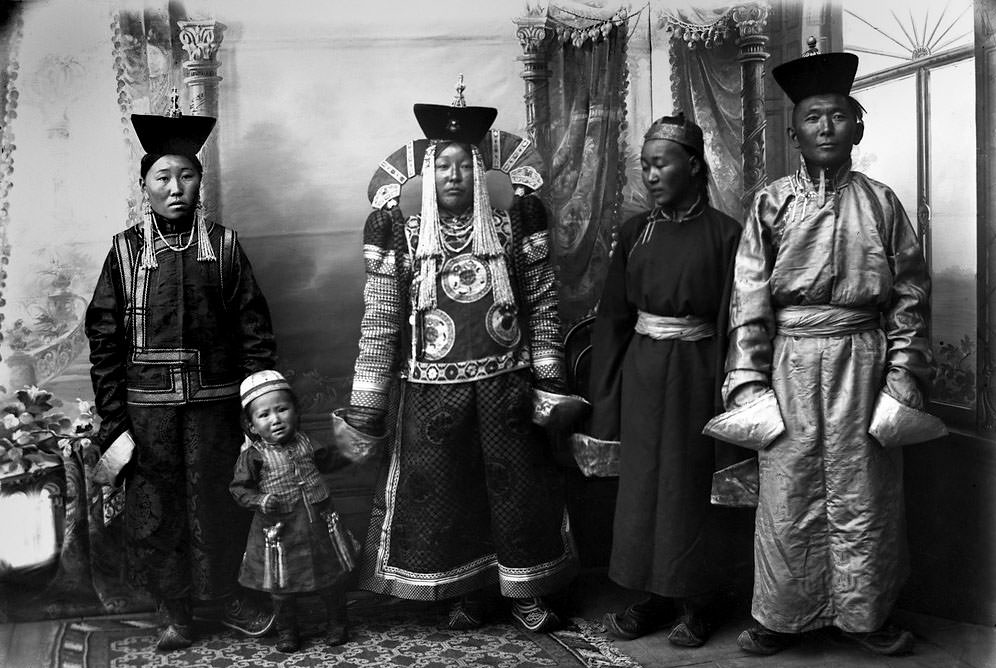
The subjects sit in formal poses with serious, composed expressions. There is no attempt at a casual smile. Instead, their faces carry a quiet authority — a clear reflection of cultural pride and social standing.
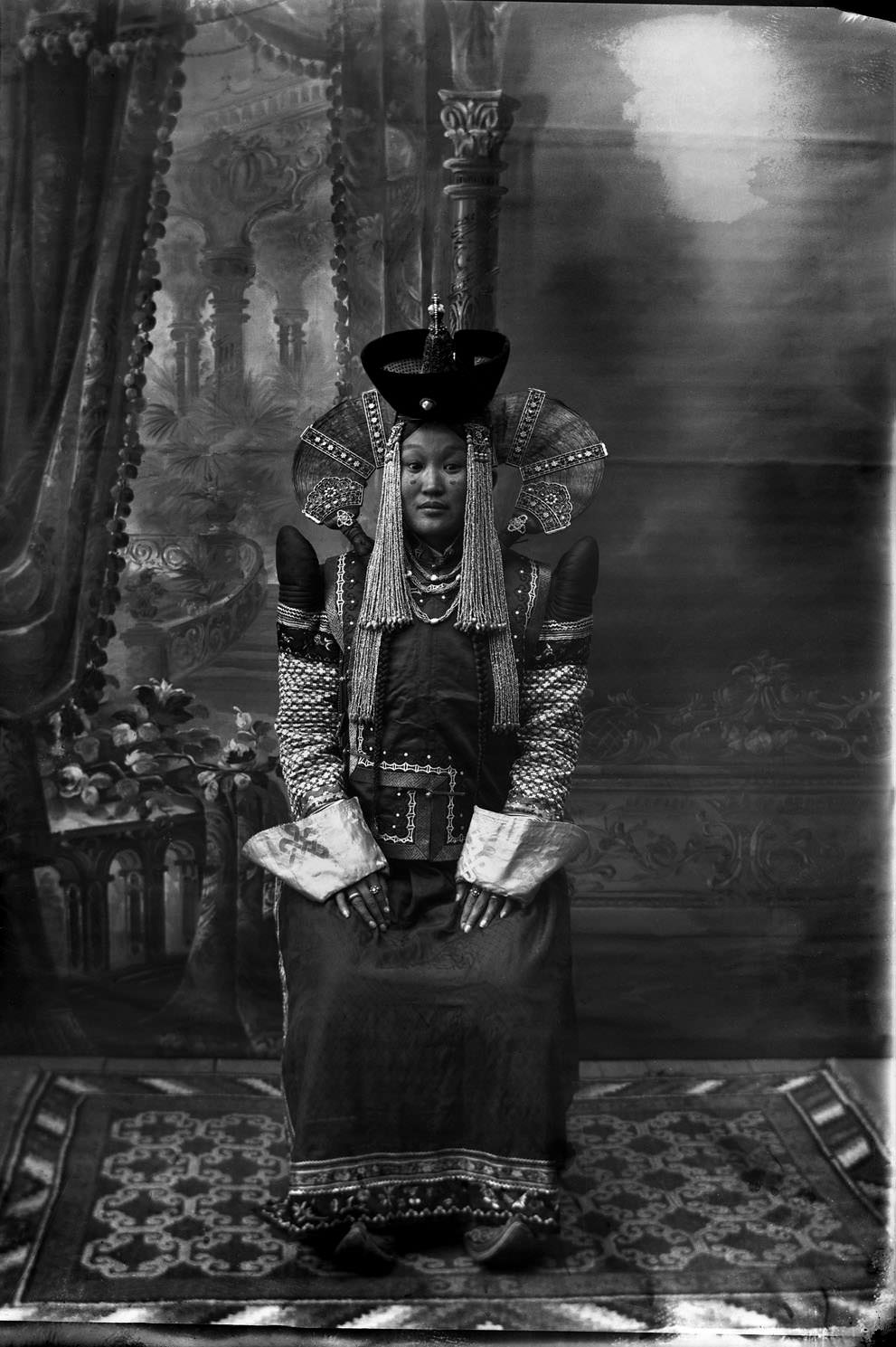
Some portraits show individuals alone, while others feature groups — likely families or members of the same noble clan. Together, these images map out the social structures that organized Mongolian aristocratic society.
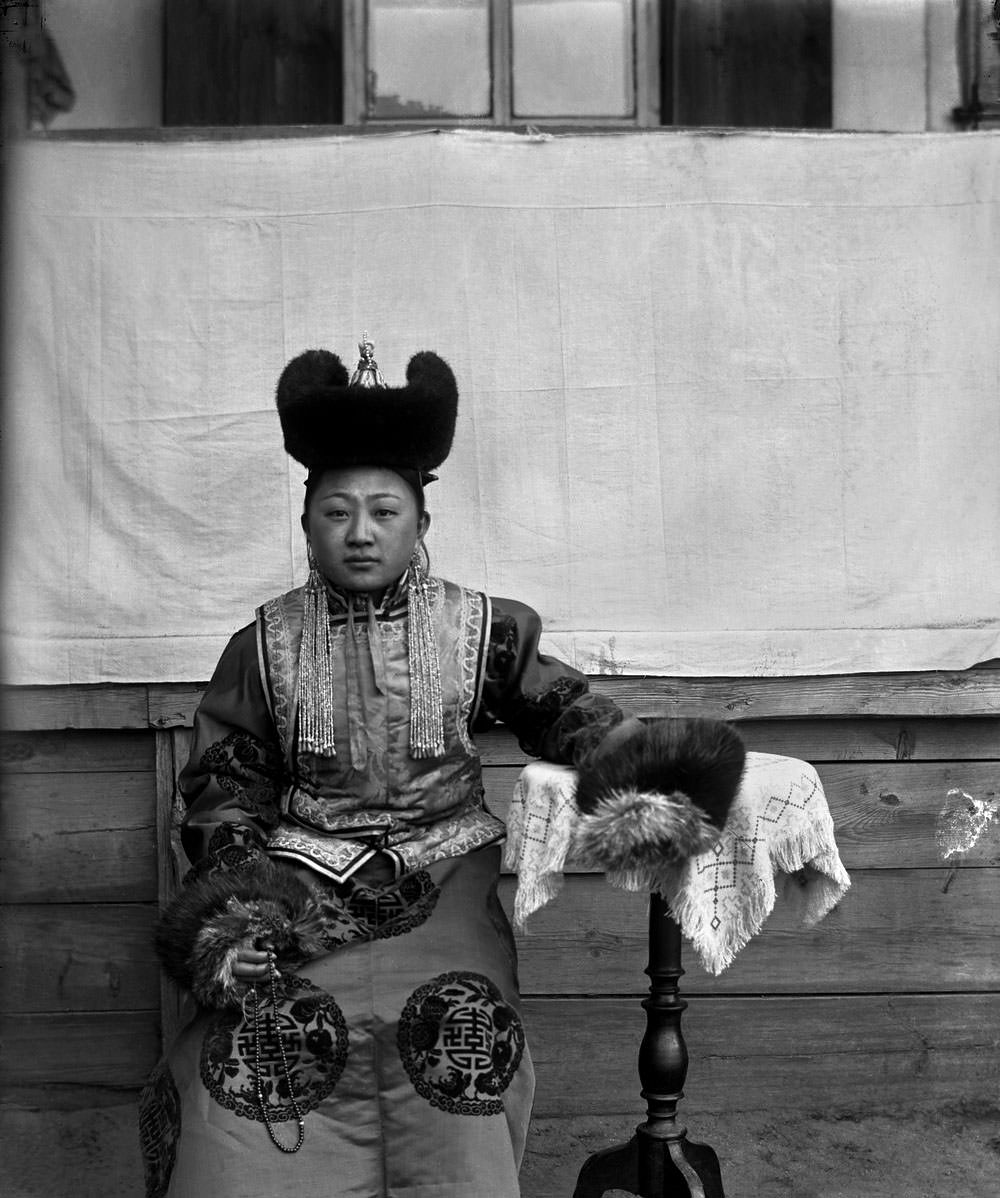
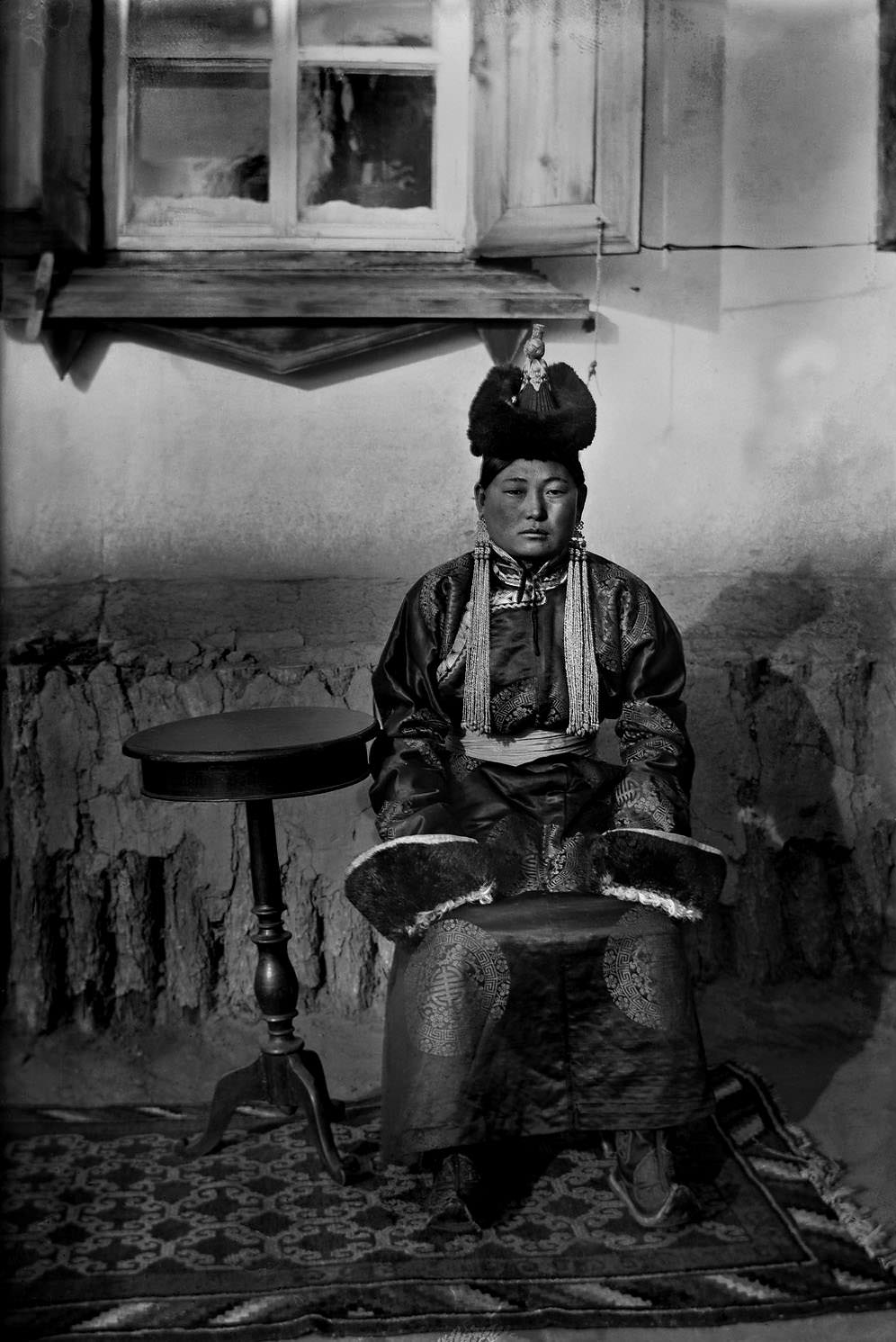
The settings vary widely. Some photographs are taken inside traditional gers — the round, portable homes used by nomadic Mongolians. The patterned walls and furnishings visible in the backgrounds reveal the care and artistry put into these everyday living spaces.
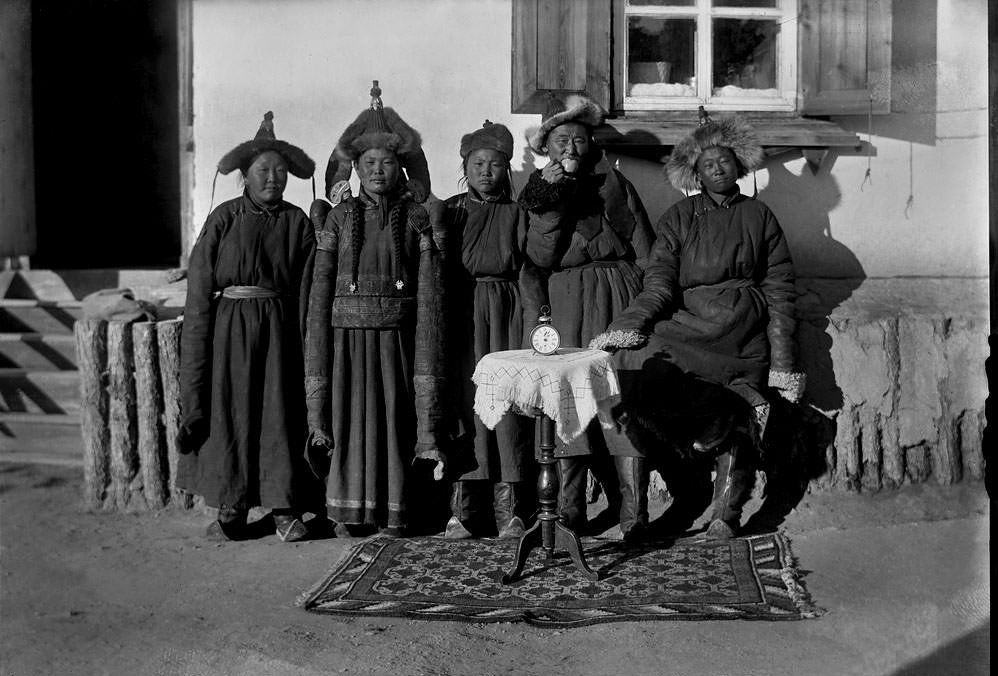
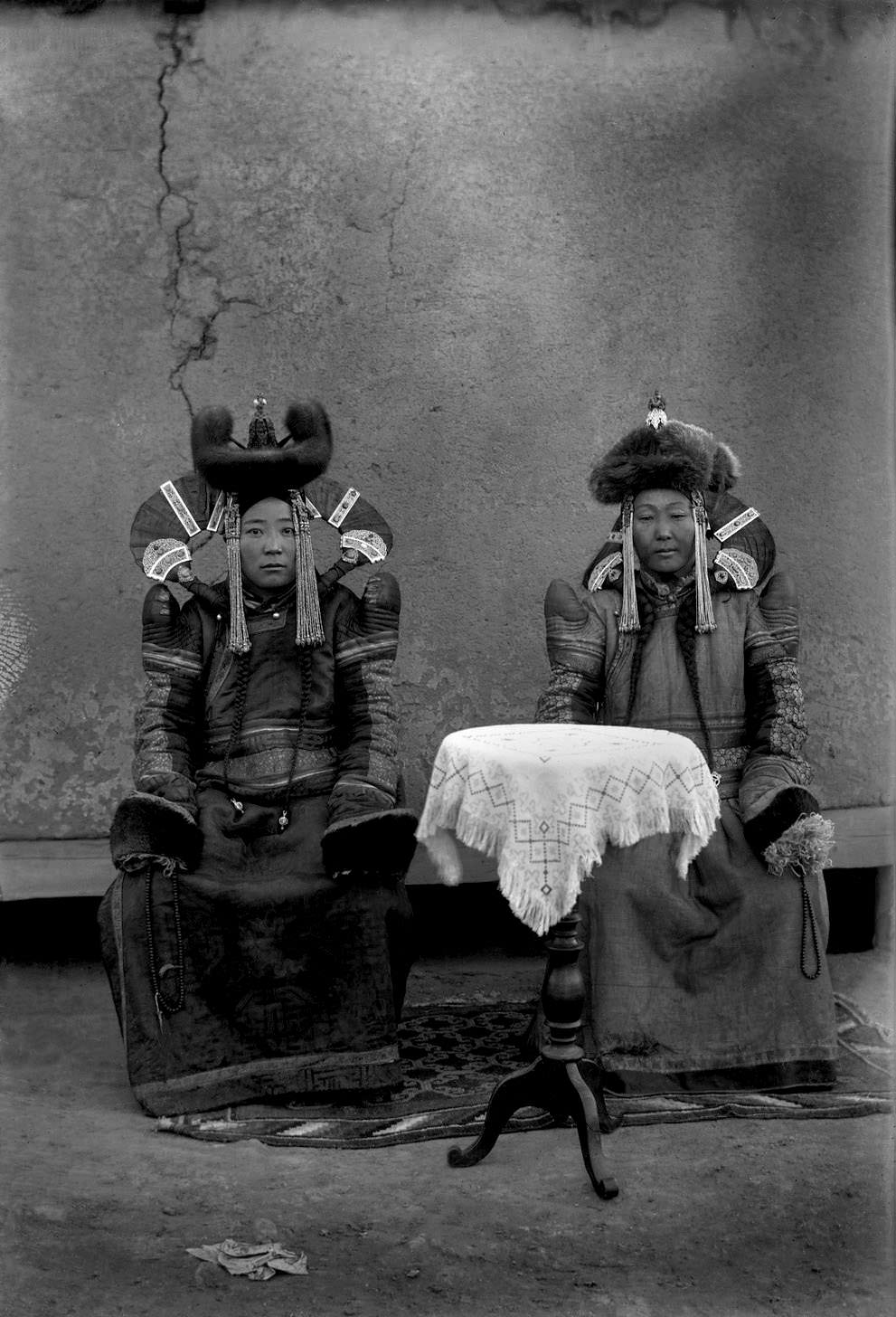
Other portraits are set against the open Mongolian landscape — wide plains, rolling hills, and vast skies that stretch to the horizon. The outdoor settings ground these formal subjects in the natural world they inhabited.
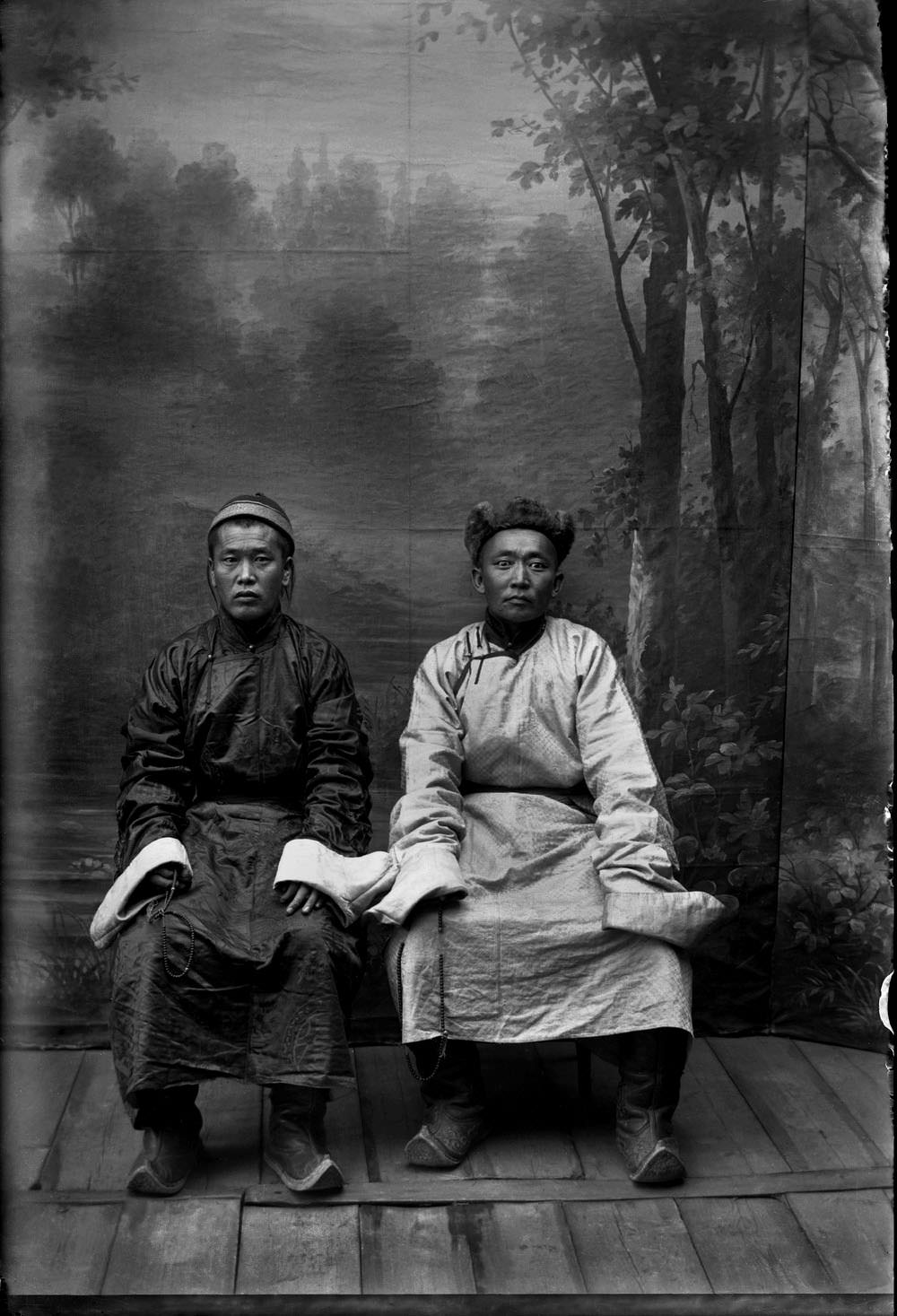
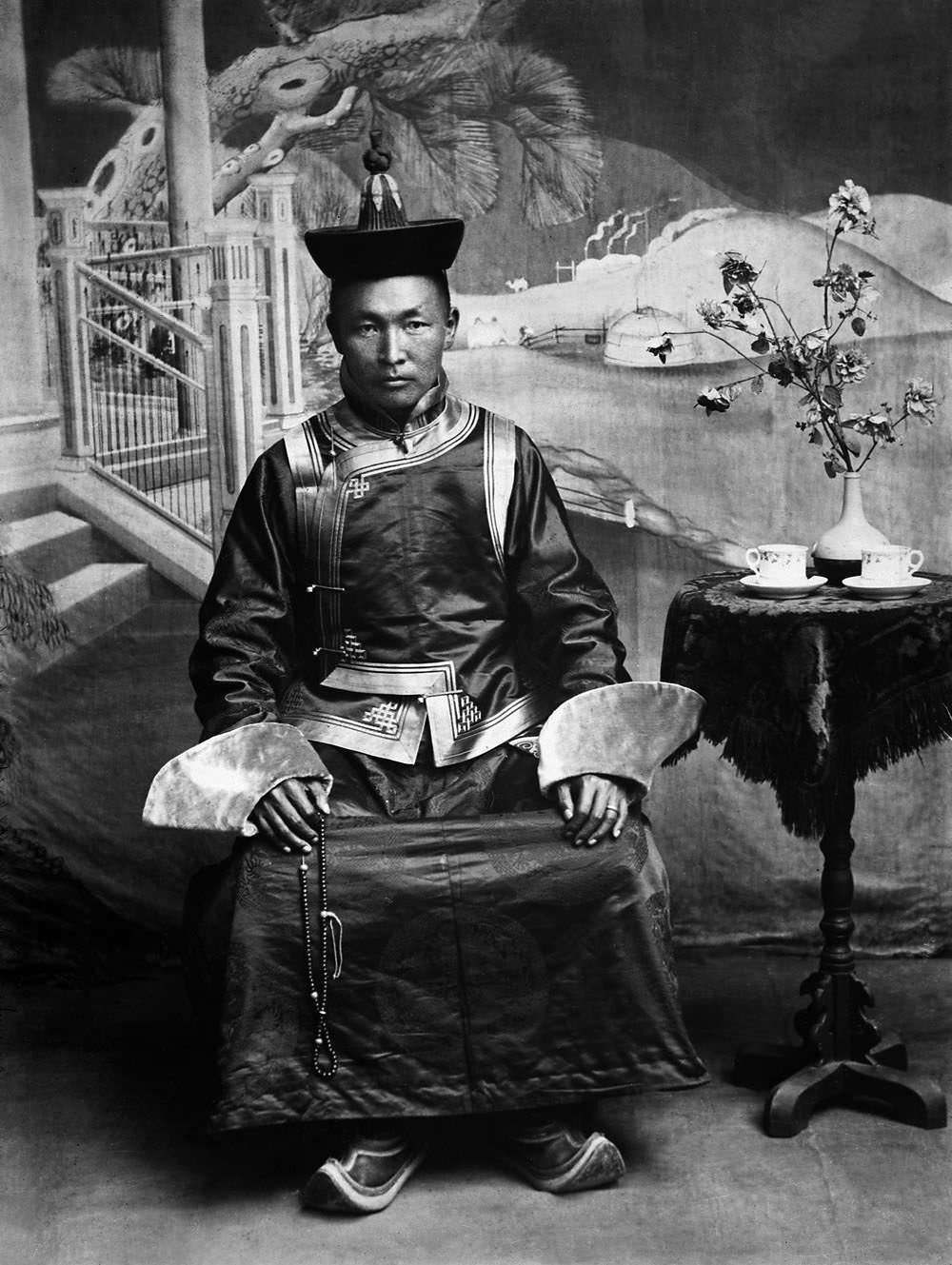
Each photograph is a document of a specific moment in Mongolian history — a time when nomadic traditions, aristocratic customs, and centuries-old craftsmanship still defined daily life among the upper class.
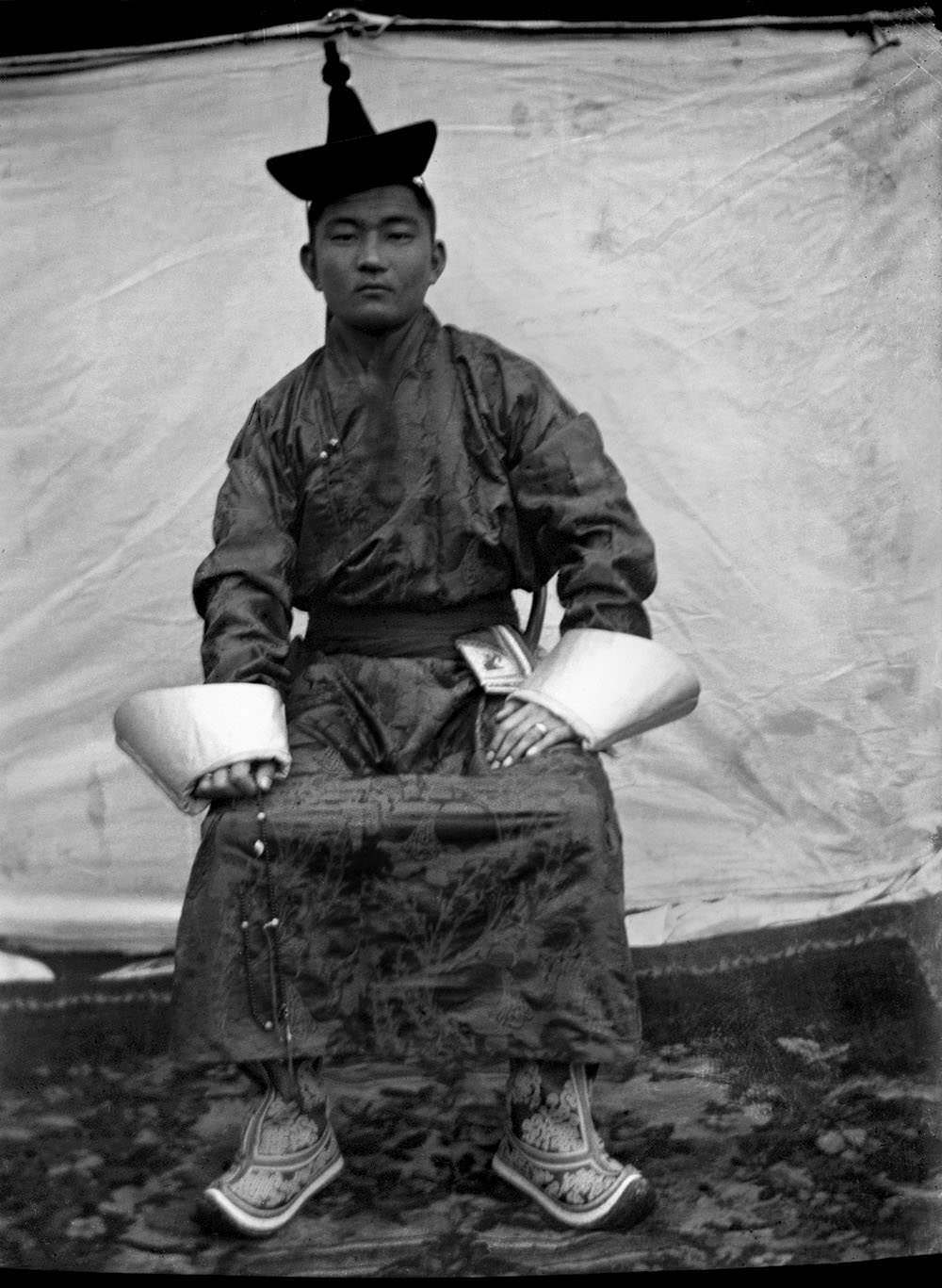
Without the Endangered Archives Programme, many of these images would have deteriorated beyond recovery. Their preservation at the British Library ensures that future generations can study and appreciate the elegance of early 20th-century Mongolian noble life in precise, visual detail.