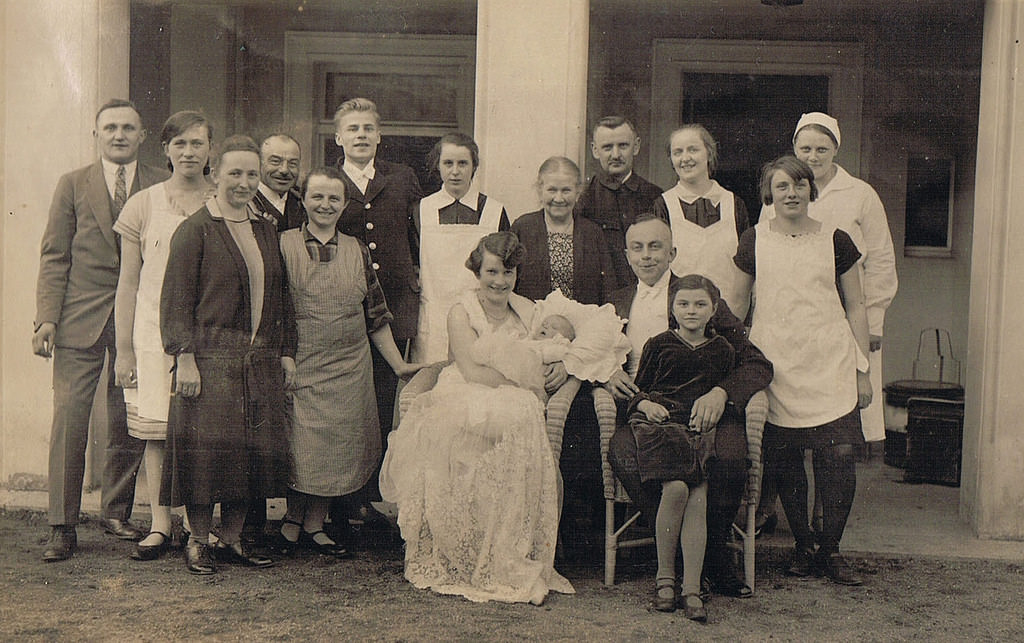
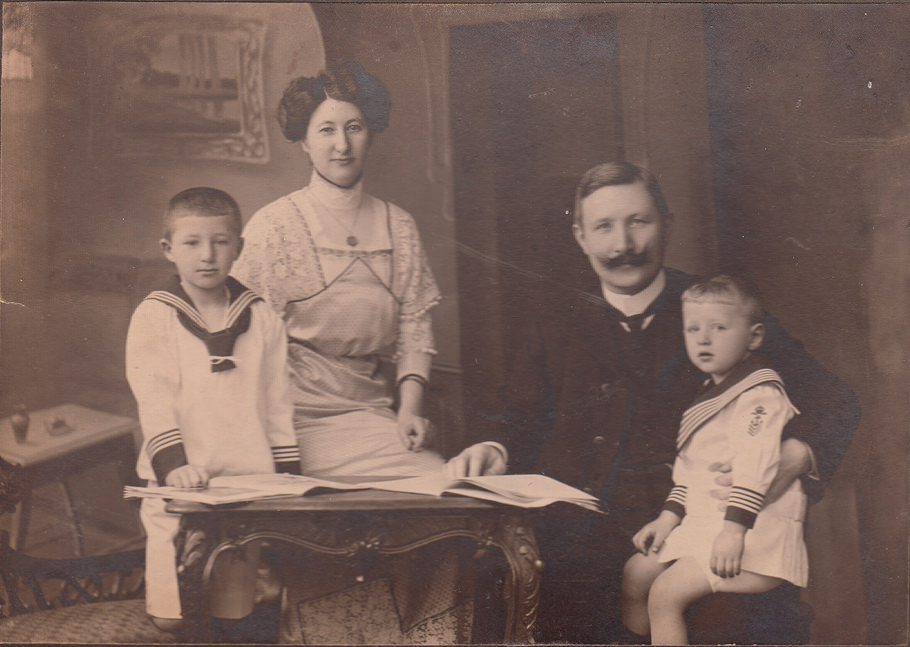
Photography in the early 20th century was still finding its footing. The arrival of the Kodak Brownie camera in 1900 made the medium far more accessible to everyday people. Yet even as casual snapshots grew popular, the formal family portrait remained a deeply respected tradition in Germany. Families dressed in their finest clothes, sat or stood with deliberate posture, and looked directly into the lens — aware that this moment would outlast them.
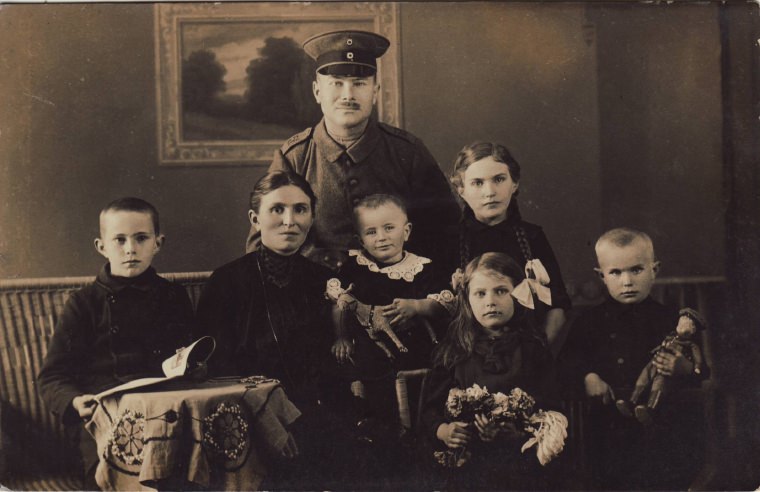
Germany during this period was a country in motion. Industrialization pulled families from rural villages into expanding cities. Political tensions ran high, and the trauma of World War I reshaped entire communities. These portraits capture people living through all of it — not as historical figures, but as parents, children, and neighbors going about their lives.
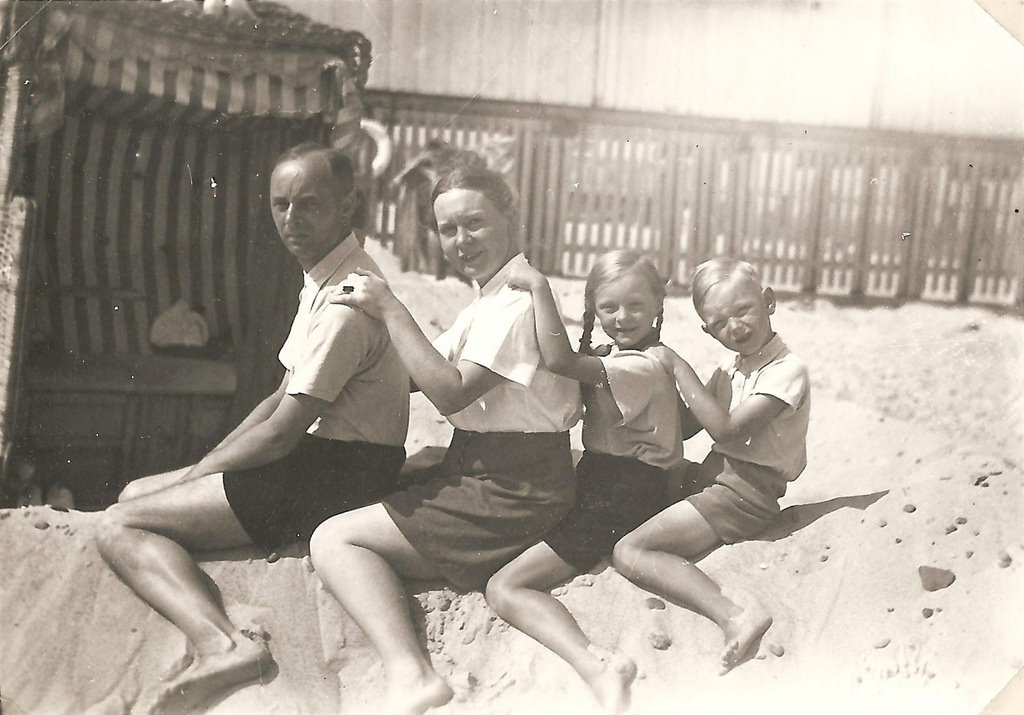
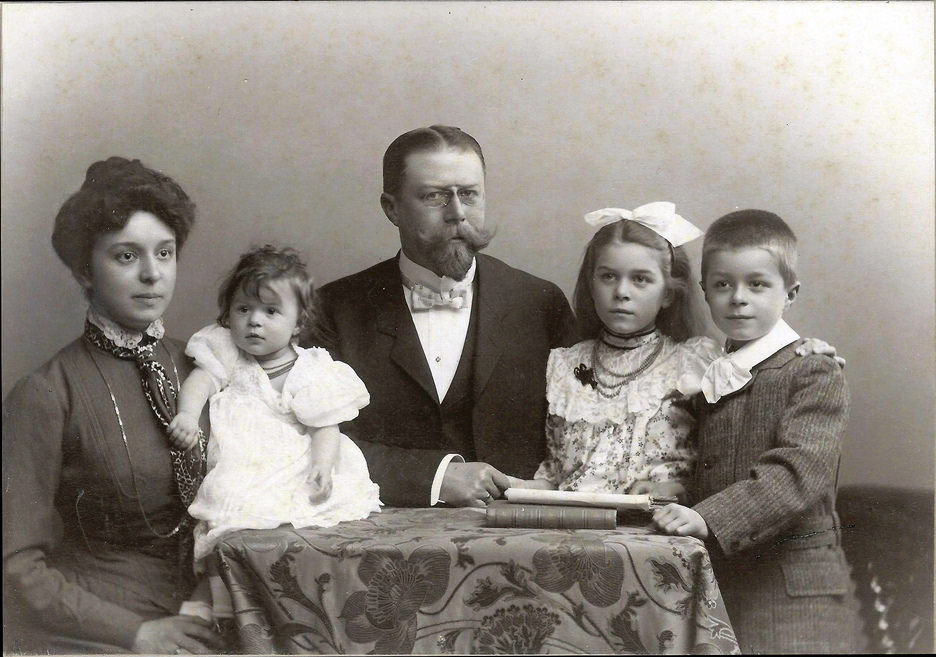
Look closely at the clothing in these photographs. Fathers wear pressed suits with stiff collars. Mothers are dressed in layered blouses and long skirts, their hair pinned neatly. Children appear in their Sunday best — little girls in starched dresses, boys in knickerbockers and button-up shirts. Every outfit was deliberate, chosen to project respectability.
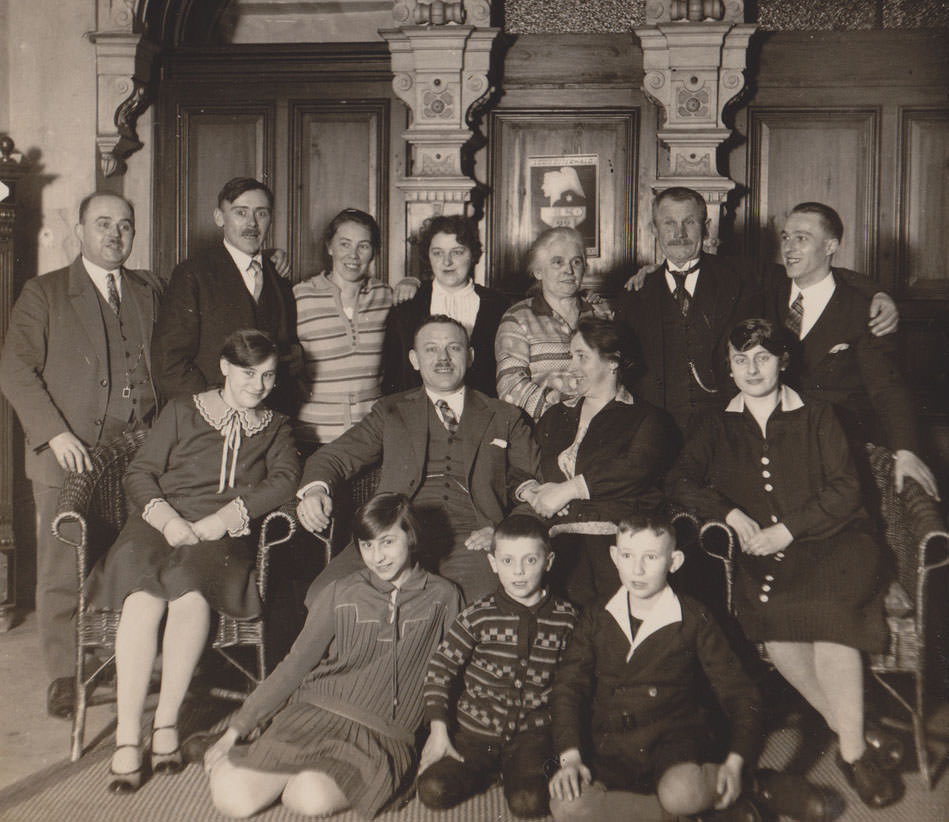
The backgrounds in these portraits are just as telling as the people themselves. Ornate living rooms with patterned rugs, bookshelves packed with volumes, framed artwork on wallpapered walls — these details speak to the values of the households being photographed. A well-furnished home signaled education, stability, and social standing.
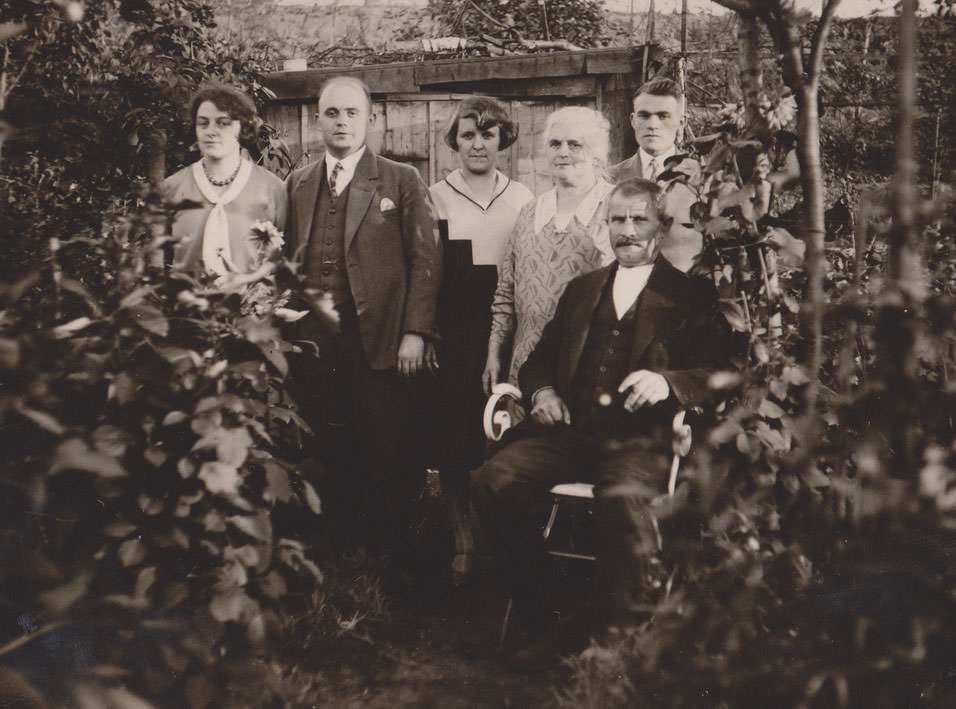
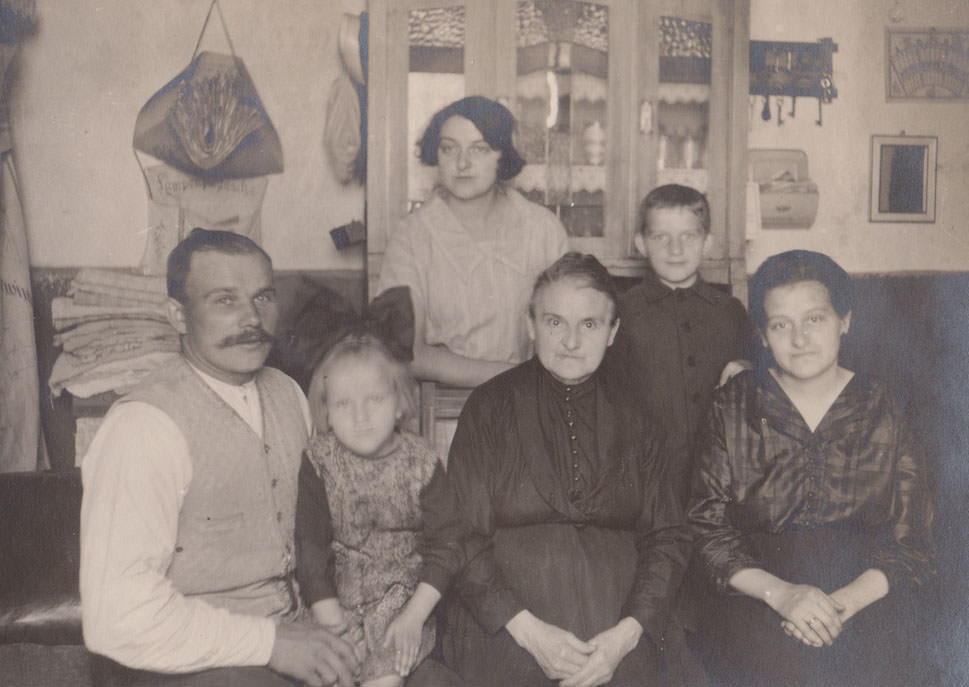
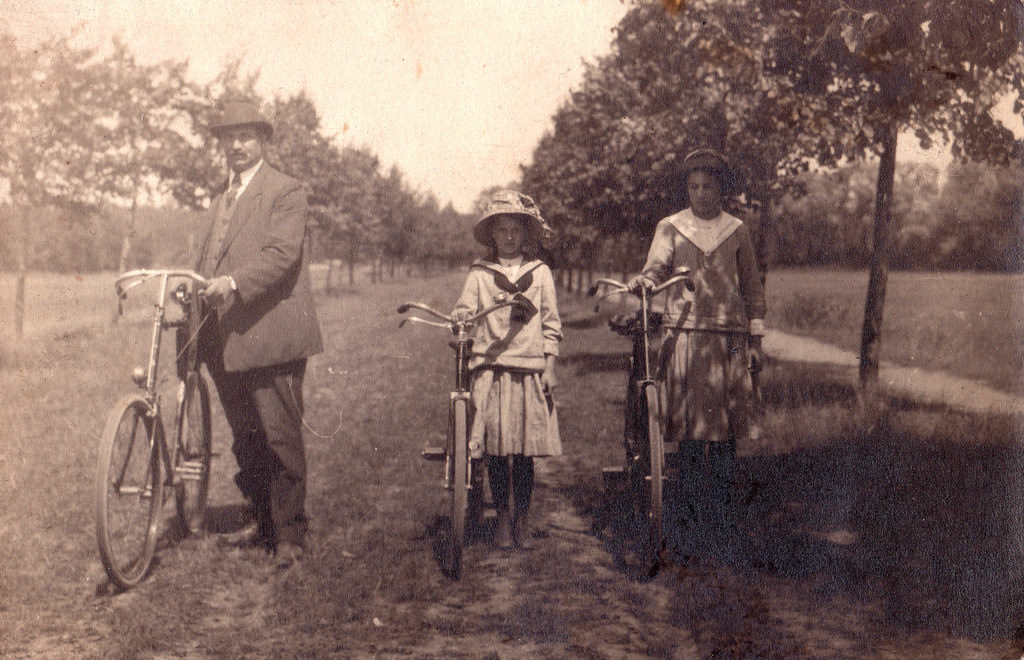
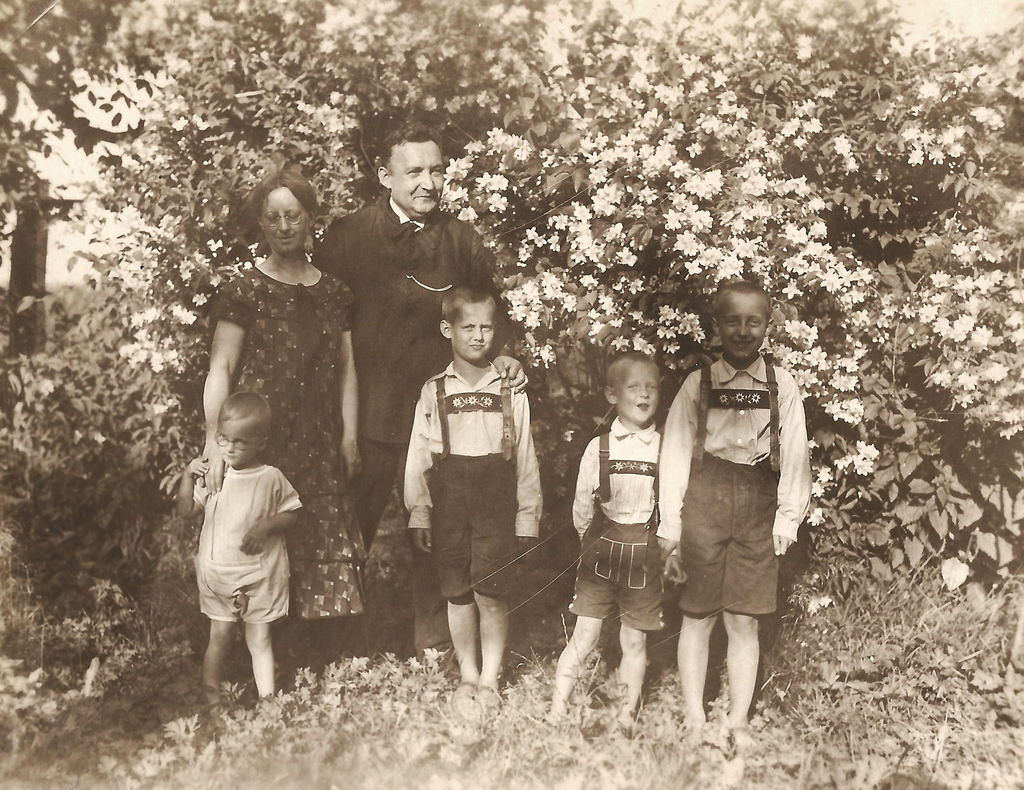
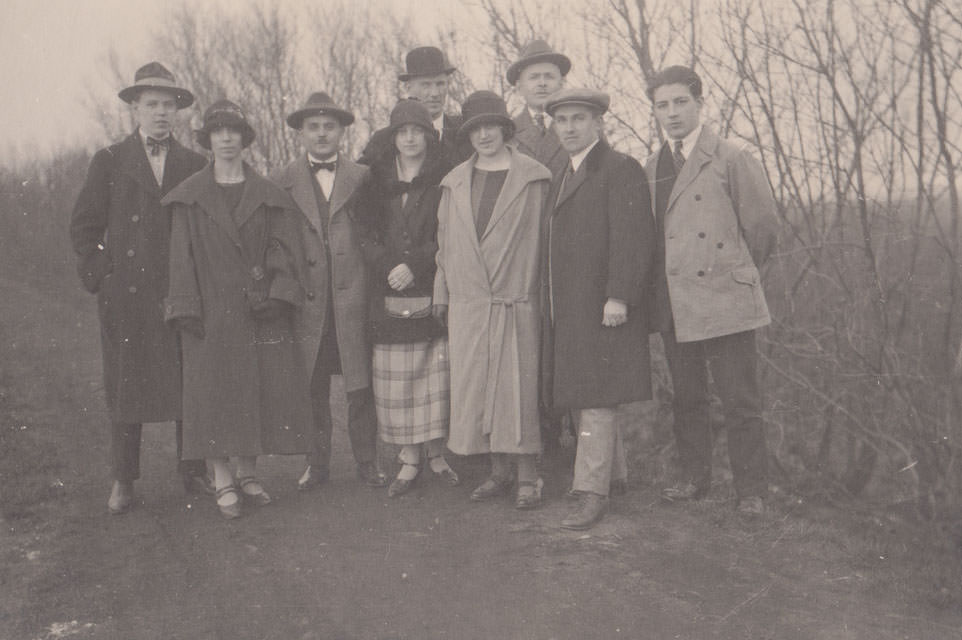
Not all portraits were taken indoors. Outdoor photographs from this era capture families in parks, on streets, and in front of their homes. These settings give a broader sense of the urban and rural landscapes that shaped German life between the wars. The expressions in outdoor shots tend to be slightly more relaxed — a small but meaningful difference from the rigid formality of studio portraits.
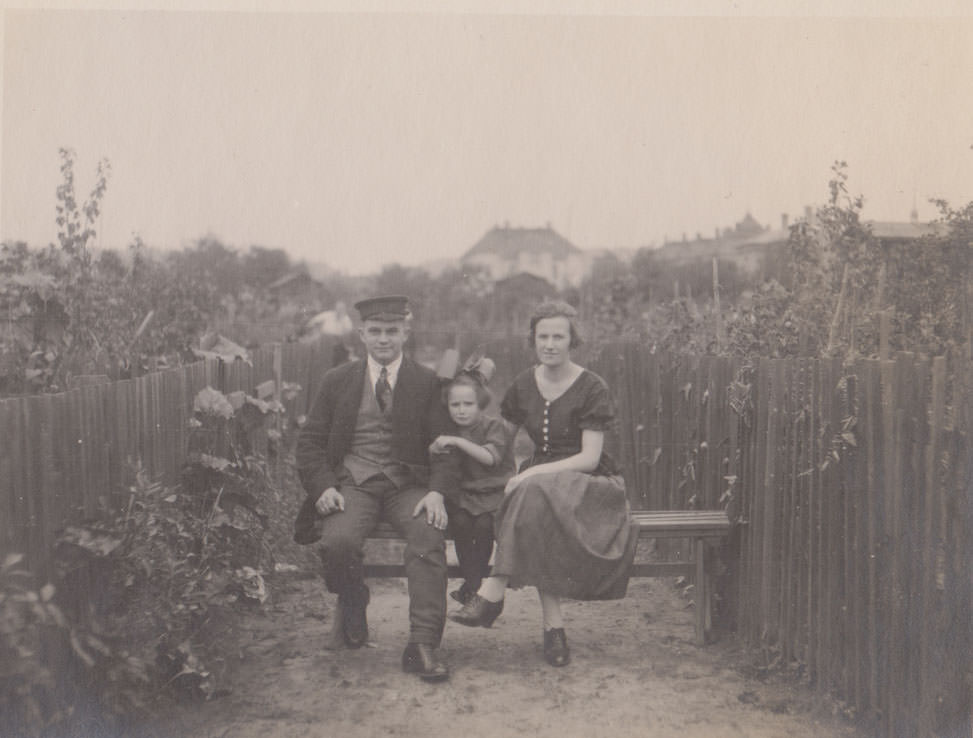
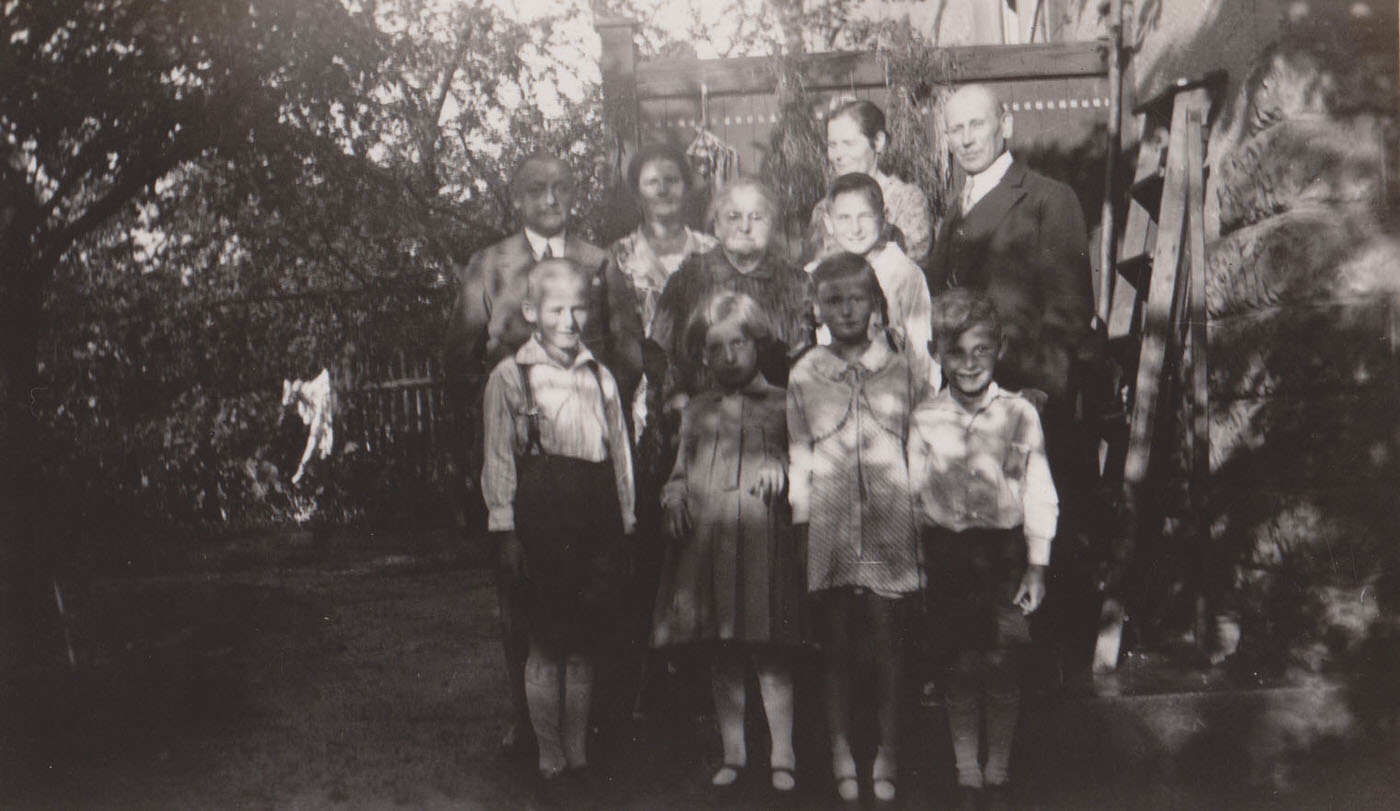
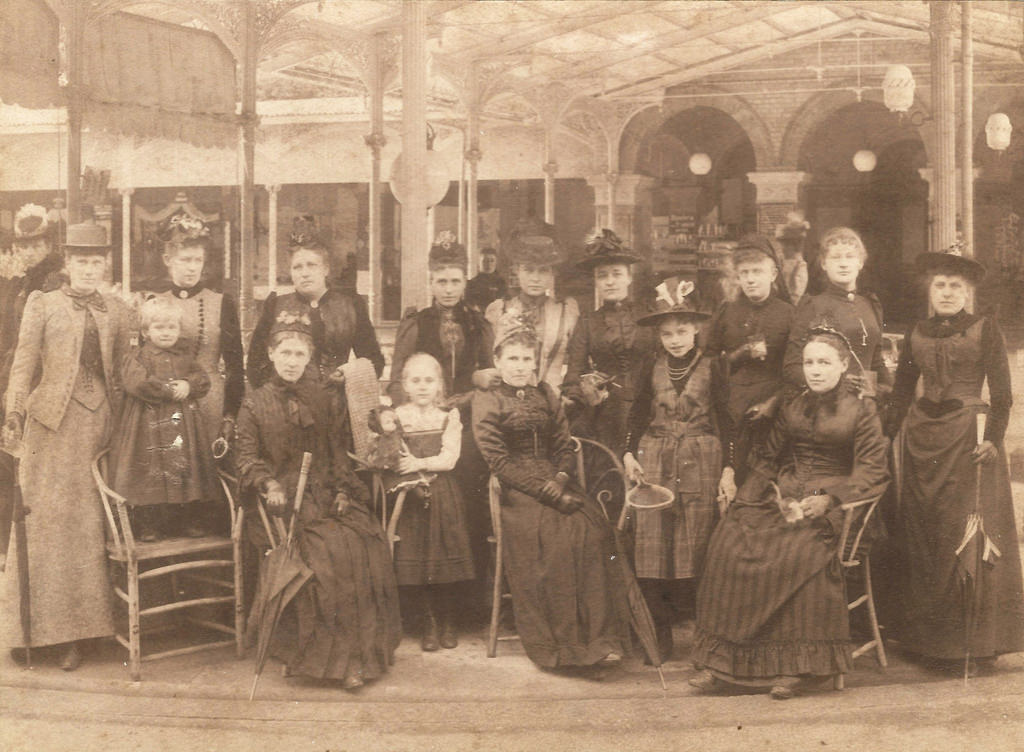
Some of the earliest photographs in this collection date back to the 1890s, when portrait photography was still a slow, expensive process requiring subjects to remain still for extended exposures. The stiff poses in these older images were partly a matter of technical necessity — moving meant blurring the frame.
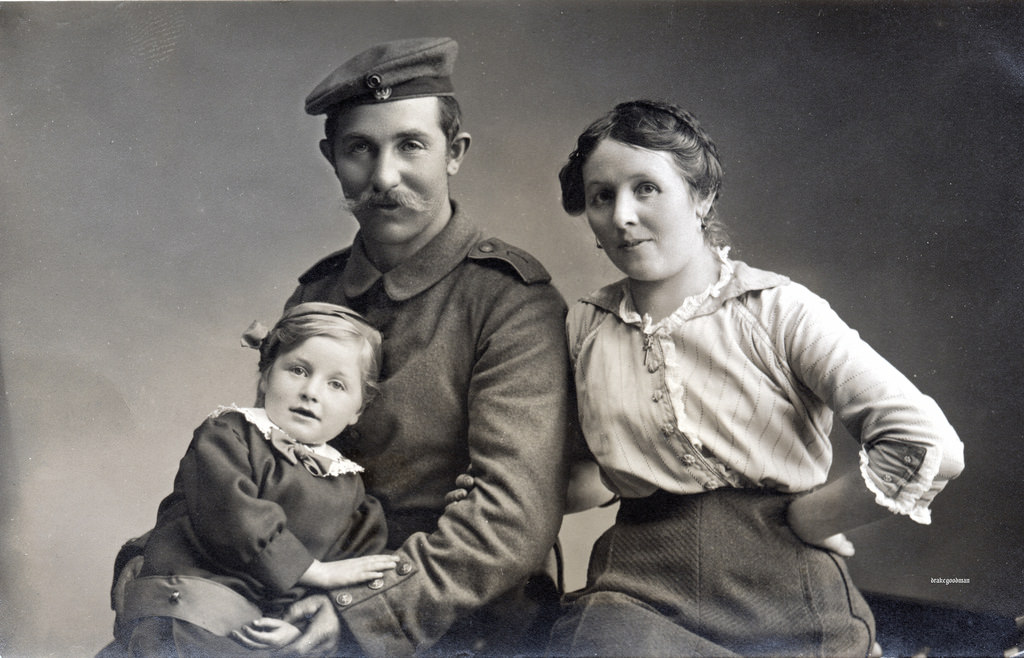
By the 1900s and into the 1910s, portrait studios had become fixtures in most German towns. A family photograph was an event — planned, dressed for, and treasured. The resulting images were often displayed in parlors or sent to relatives as keepsakes.
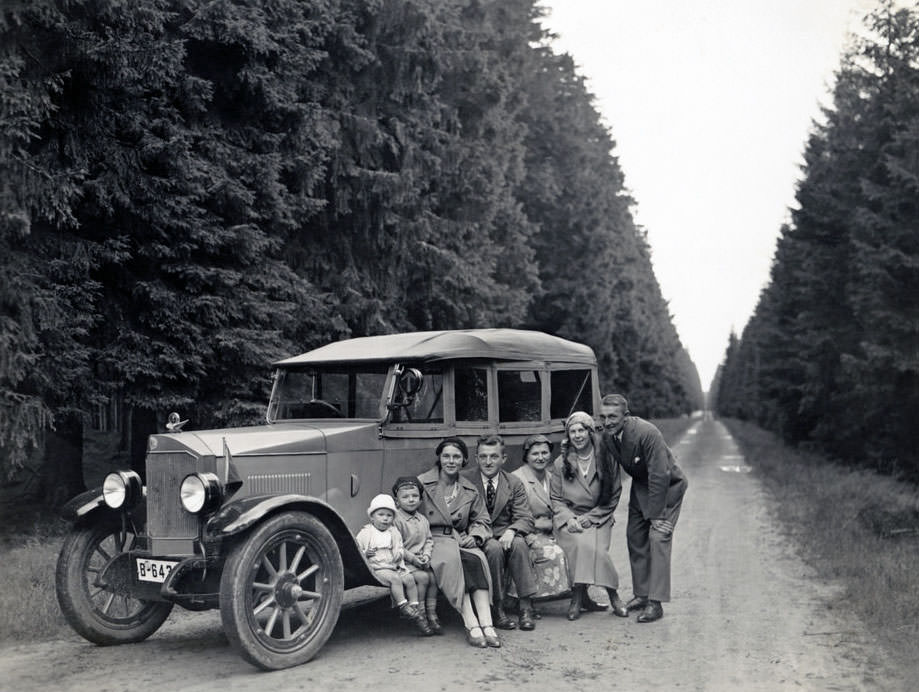
As the 1920s progressed, technology crept into these portraits in new ways. Bicycles appear in some images, symbols of modern mobility and a growing middle class. By the early 1930s, the automobile made its appearance — a Benz parked proudly beside the family, as much a subject of the photograph as the people themselves.