Behind the concrete walls and surveillance networks of the German Democratic Republic, a youth rebellion was taking shape. It did not march in state-approved parades or sing government anthems. It wore torn jackets, played fast and loud, and refused to disappear — even when the Stasi was watching. The East German punk scene of the 1980s was one of the most defiant subcultures the Cold War world produced, and photographer Harald Hauswald was there to document nearly every corner of it.
Hauswald completed his apprenticeship as a photographer in Radebeul before embedding himself within the underground scenes of East Berlin. He did not shoot from a distance. He became part of the communities he documented — attending concerts in backyards, church halls, and street corners. His photographs capture the dignity of the people he portrayed, the slow physical decay of East Berlin’s streets, and the quiet but persistent resistance of youth cultures living under a one-party dictatorship.
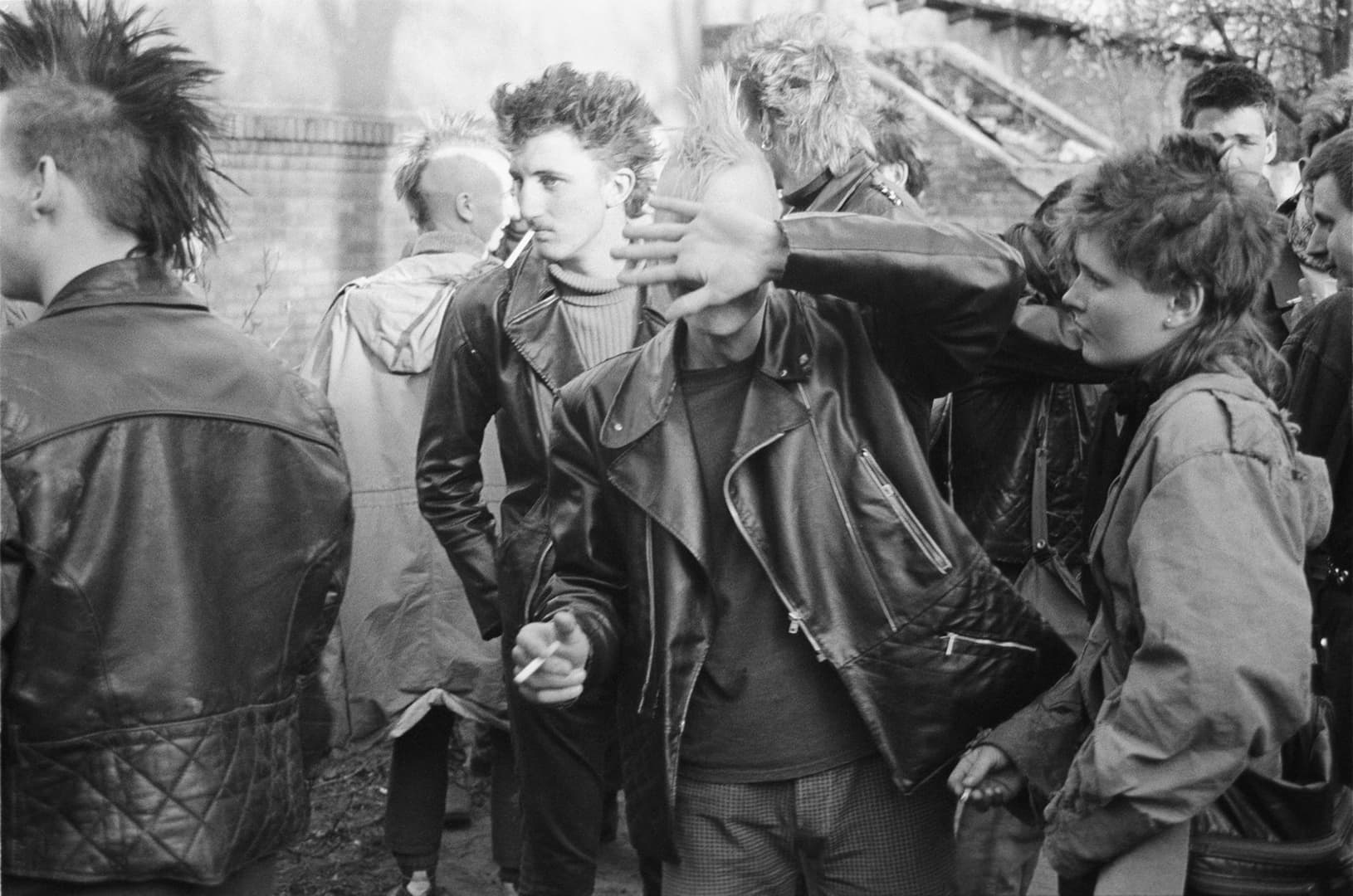
The roots of the East German punk scene trace back to the broader wave of punk and post-punk that swept across Europe in the late 1970s. In West Germany, labels like Hamburg’s ZickZack Records were pushing the genre forward. Alfred Hilsberg, the label’s owner, coined the term Neue Deutsche Welle — meaning New German Wave — to describe the experimental sound that was emerging. Bands on this scene relied heavily on synthesizers and computers, fusing post-punk structures with electronic textures. The sound was sharp, unconventional, and deliberately unsettling.
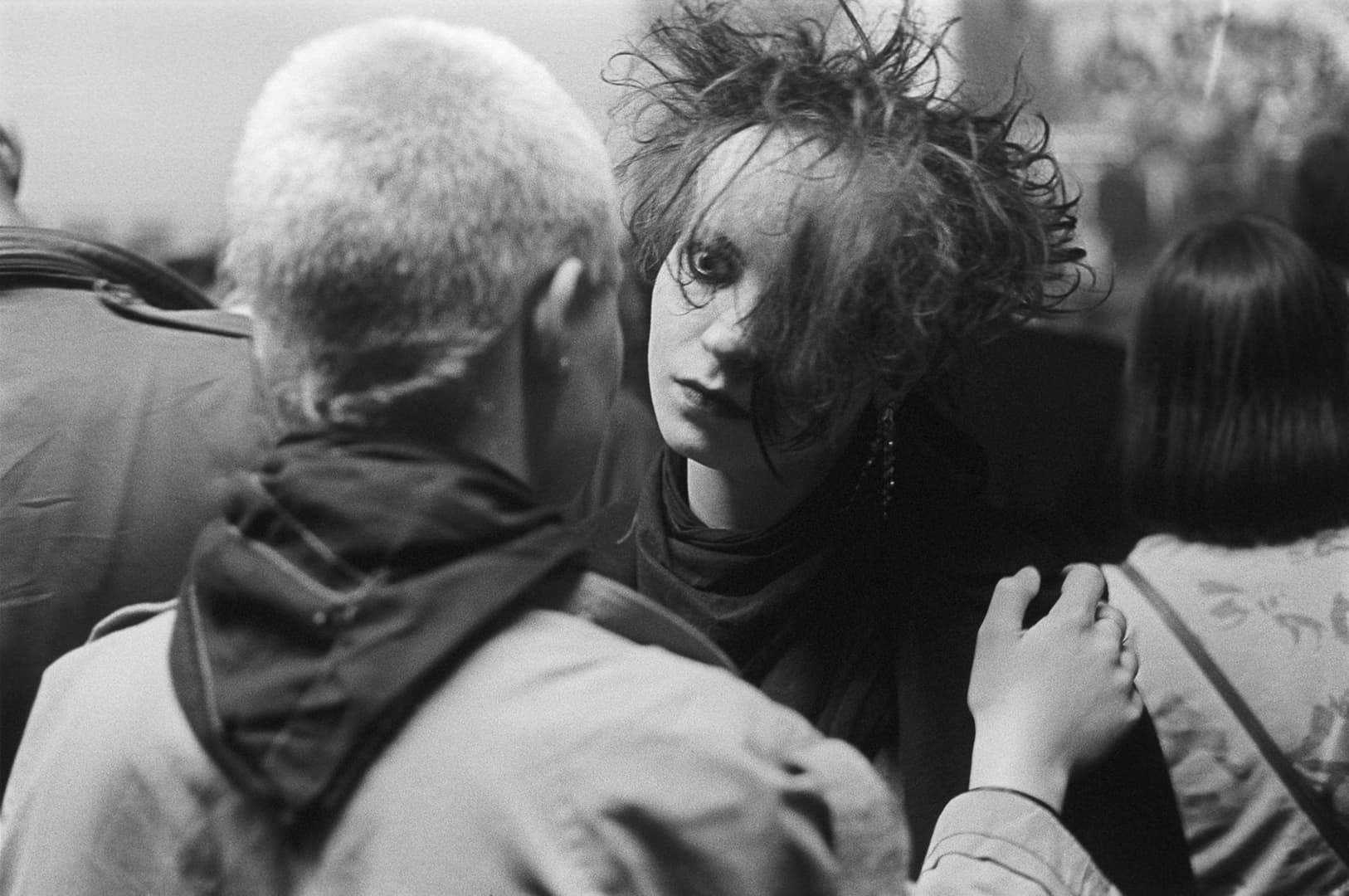
Across the border in East Germany, punk developed under very different conditions. The Socialist Unity Party — the SED — viewed Western youth culture as ideologically hostile. Punk’s anti-authoritarian attitude, its rejection of conformity, and its politically radical, left-wing lyrics made it especially threatening to a government that demanded loyalty and order. The state did not tolerate open rebellion. Punks were regularly harassed, detained, and monitored by the Stasi. Despite this, the scene grew.
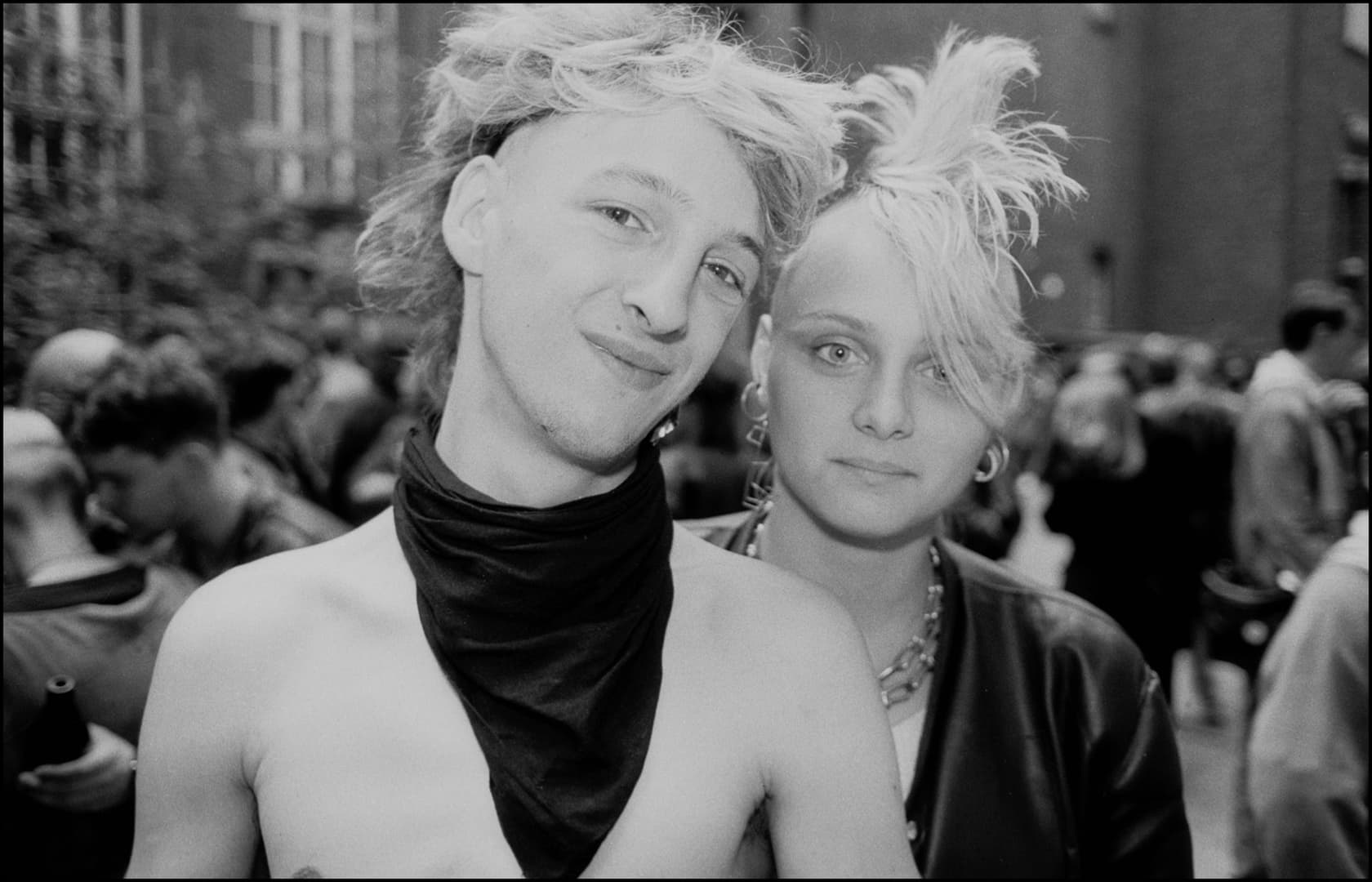
The Protestant church played a critical role in keeping the scene alive. Because churches operated with a degree of independence from the state, they became some of the only spaces where underground culture could exist semi-openly. Punk concerts held in church halls were not state events. They were gatherings of people who had no other place to go. The church provided a legal shelter — not an endorsement, but a roof.
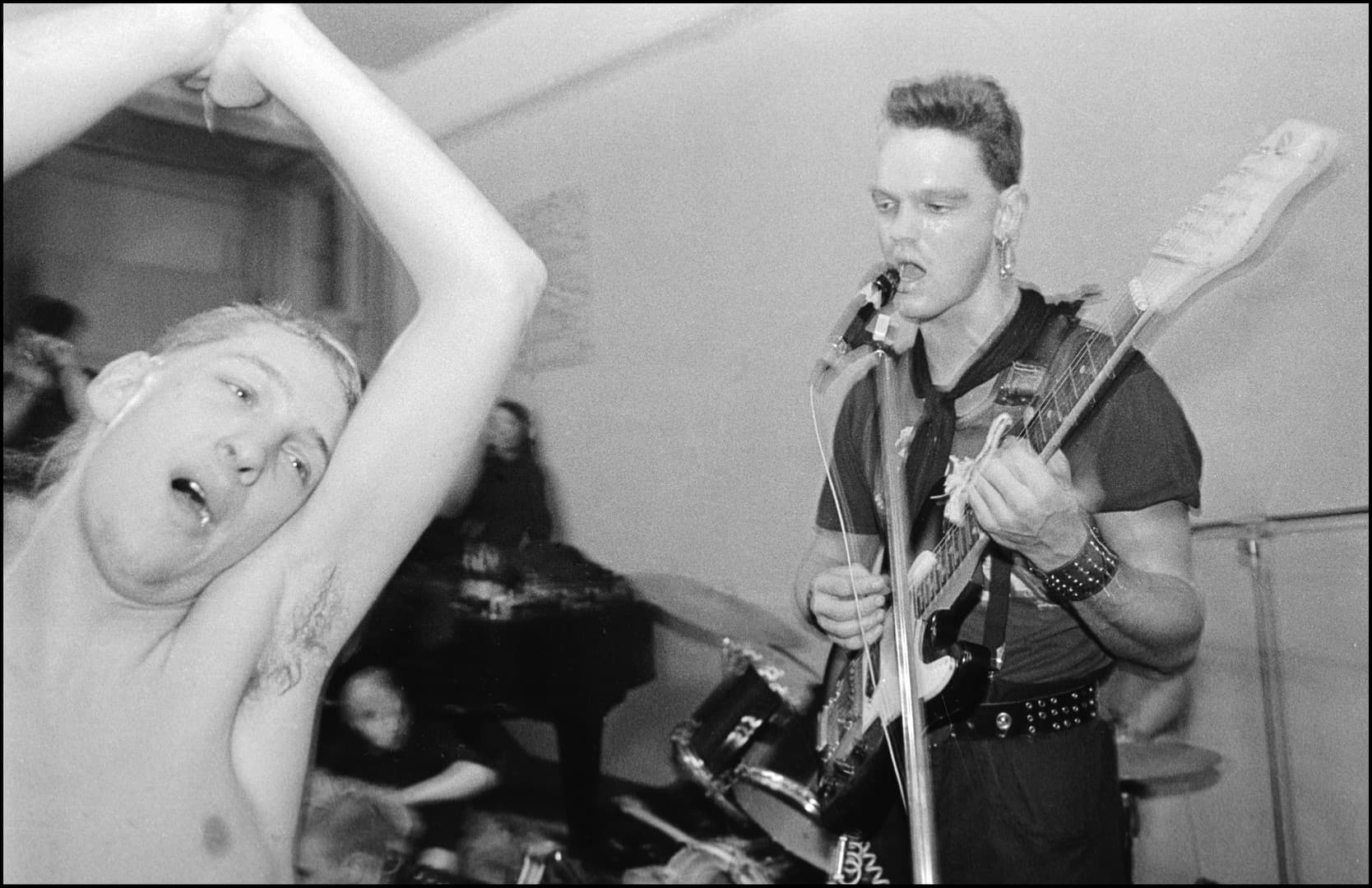
The music itself was defined by speed, rawness, and confrontation. East German punk bands wrote with primitive song structures and fast rhythms. Their lyrics engaged directly with Cold War politics and the failures of the GDR system. The bands that formed in this environment were not chasing commercial success — most had no path to it. They played for each other, in basements, backyards, and borrowed spaces.
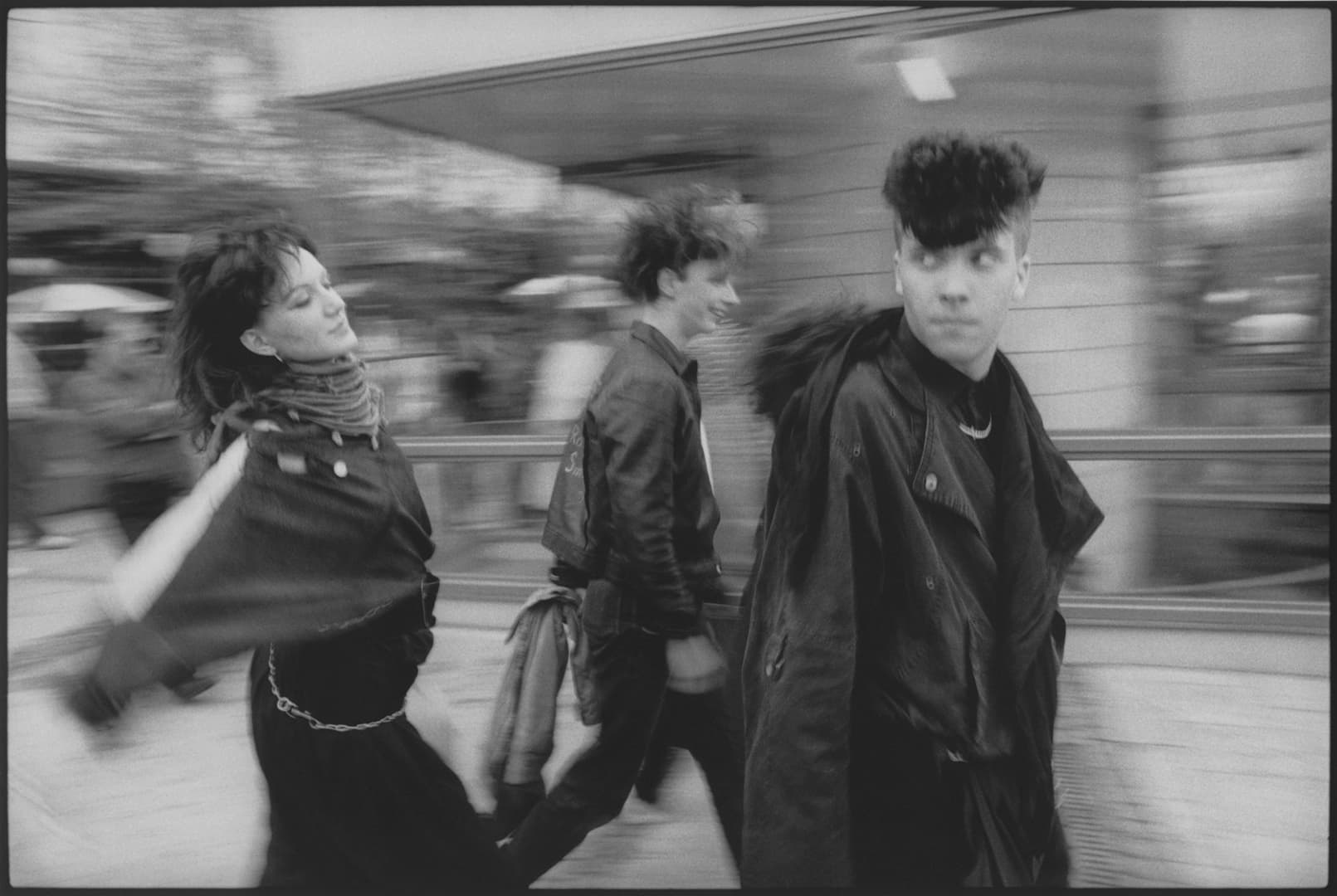
Among the bands that emerged from this underground world, Schleim-Keim became one of the most well-known — achieving recognition even in West Germany. The band was unapologetically raw and openly critical of the GDR government. Their existence alone was an act of defiance in a state that expected its citizens to celebrate the system, not attack it.
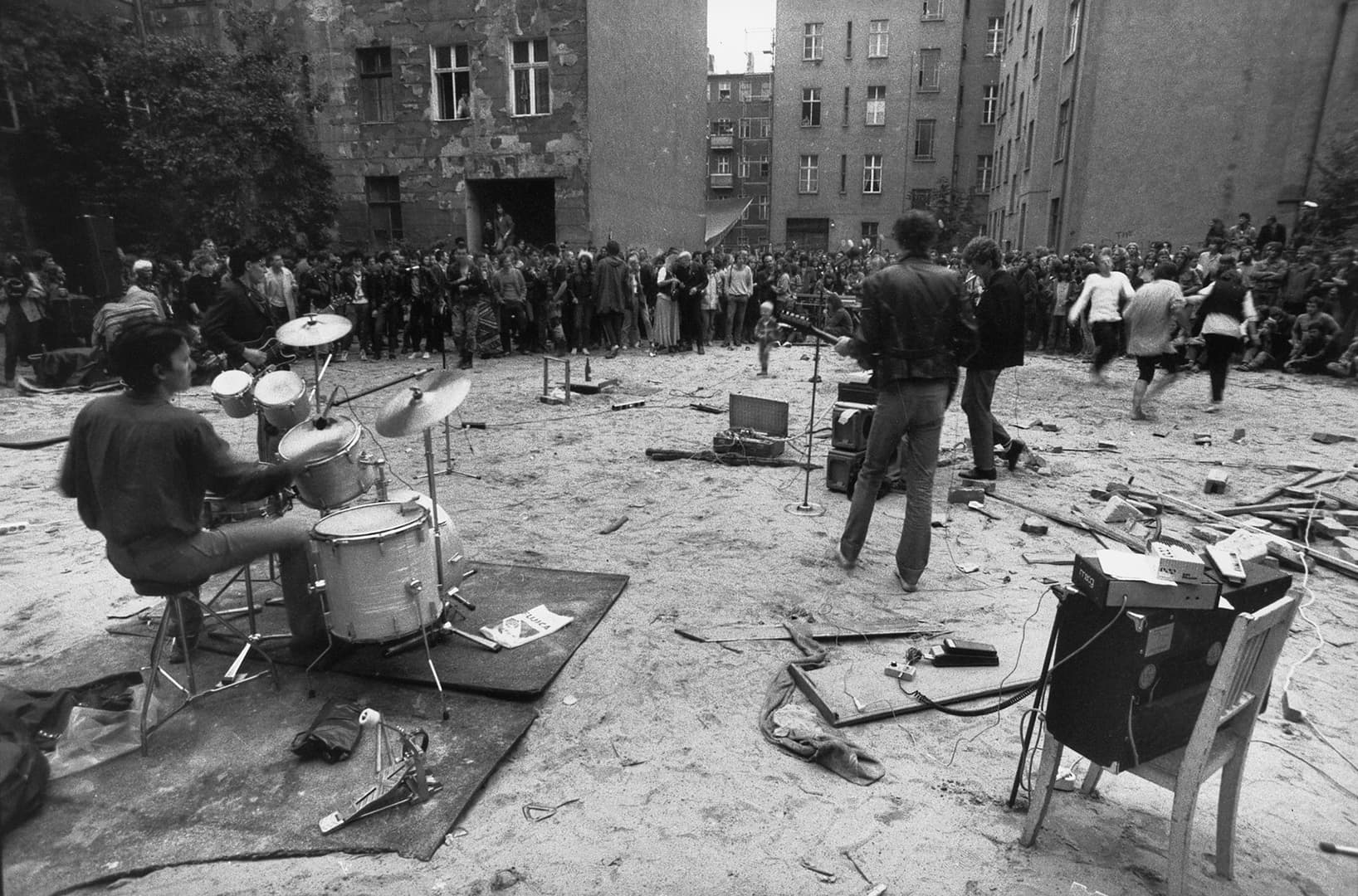
As the 1980s progressed and the GDR entered its final years, the government shifted its approach slightly. Some bands from East Berlin — including Feeling B and Die Skeptiker — were granted amateur licenses by the state, allowing them to perform in official, state-sanctioned venues. This was a calculated move by the government, an attempt to absorb and control underground energy rather than simply suppress it. Both bands faced criticism from parts of the underground community for accepting these terms. But they maintained their ties to the scene and continued performing music that reflected the world they lived in.
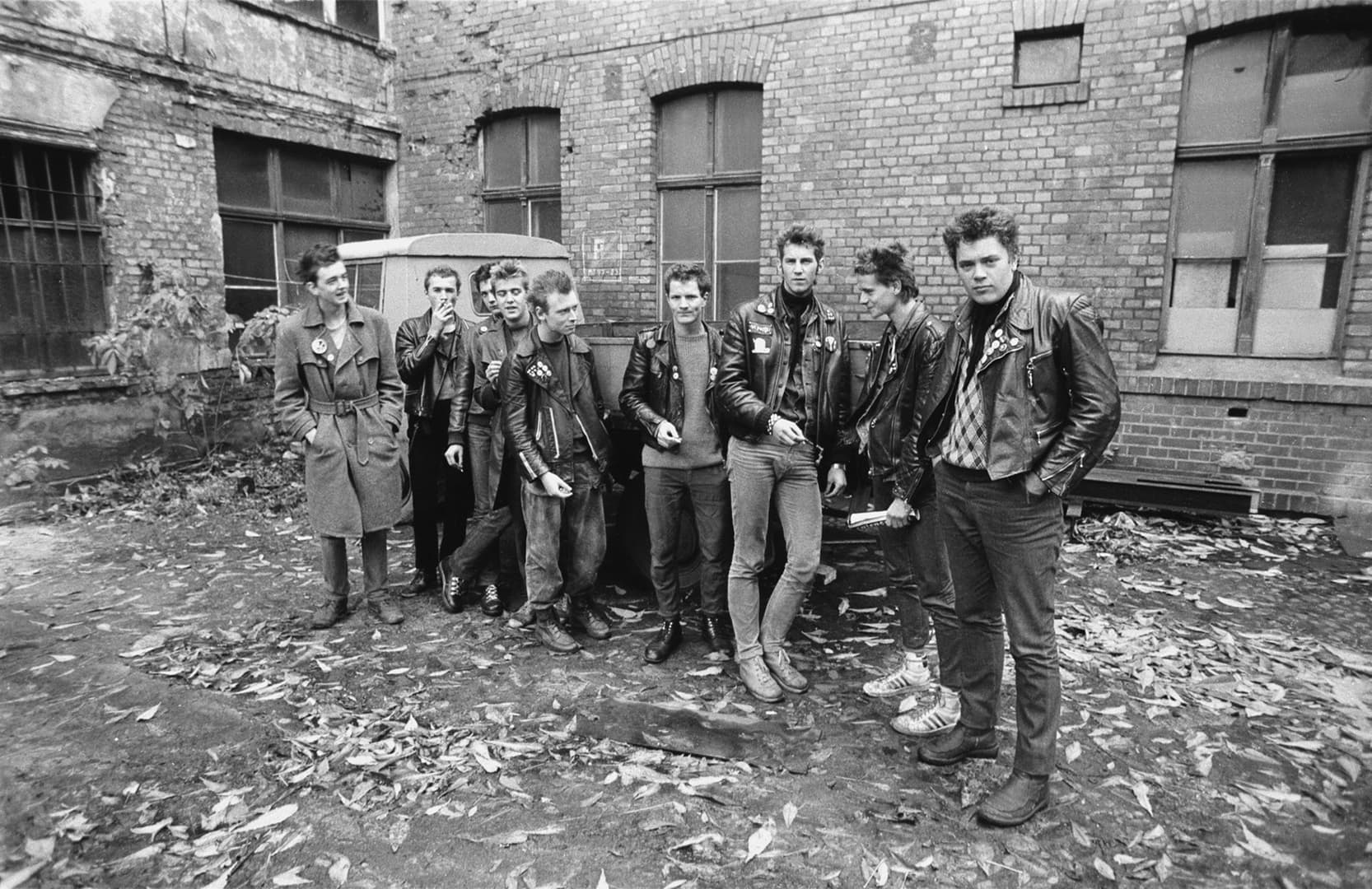
Life on East Berlin’s streets in the 1980s carried a particular texture — one of crumbling facades, limited resources, and public spaces that the state shaped but could not fully control. Hauswald’s camera moved through all of it. He photographed people at ease, at play, and at odds with their surroundings. His images of everyday GDR life recorded not just the punk scene, but the full social environment that produced it.
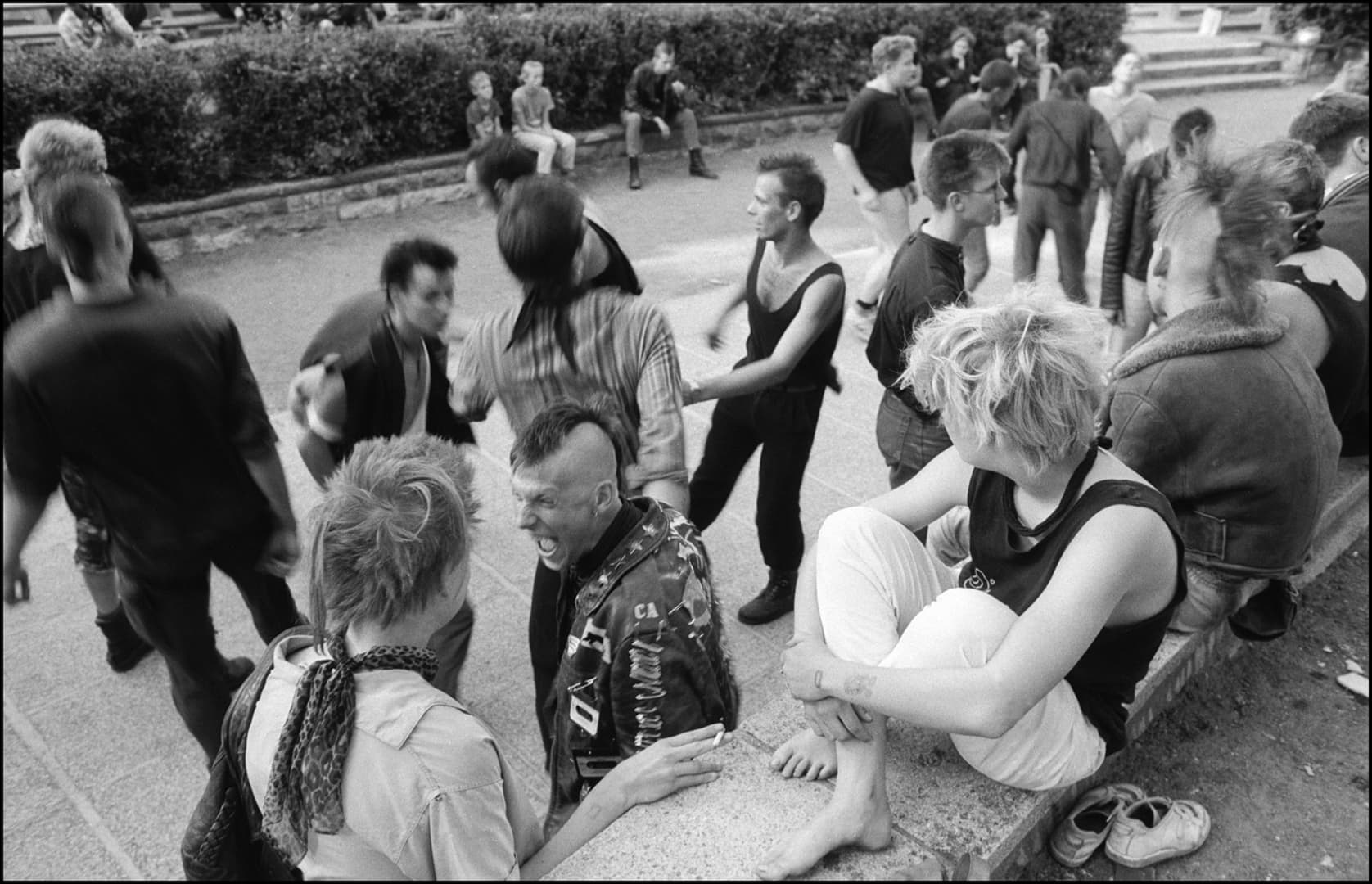
Street parties and backyard concerts were a regular feature of the scene’s social life. These were not permitted events. They happened because people organized them, showed up, and made them happen — in alleyways, courtyards, and neighborhoods that the state had largely written off. The band Rosa Extra performed in exactly these kinds of spaces, bringing music directly into the residential fabric of East Berlin.
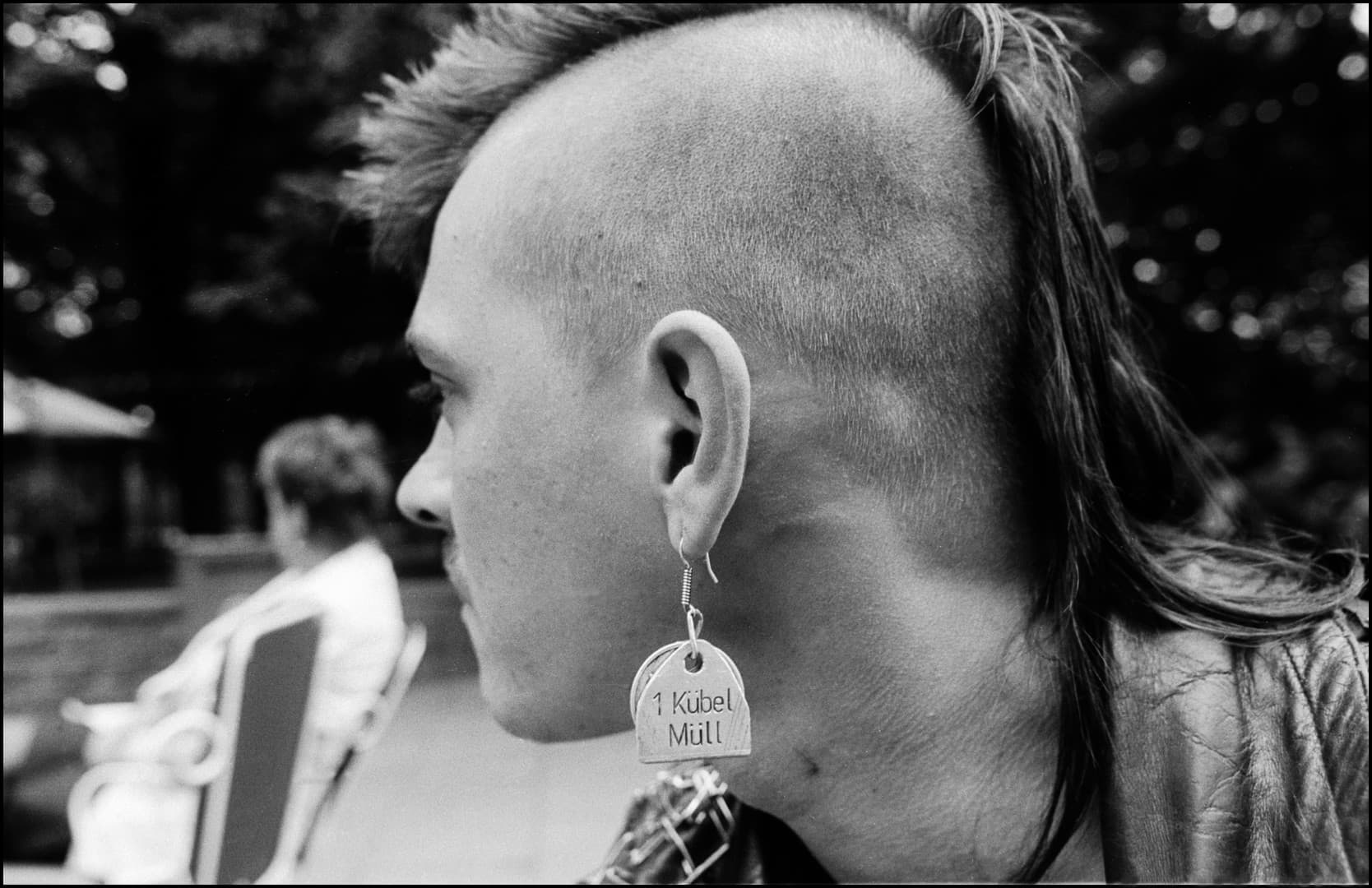
Hauswald’s photographs from this period document a city in visible decline. East Berlin’s buildings showed the wear of neglect, and the people navigating those streets existed in a society that closely monitored their movements, associations, and beliefs. Punk culture was, in this context, more than a music genre. It was a way of asserting an identity the state had not issued and could not easily take away.
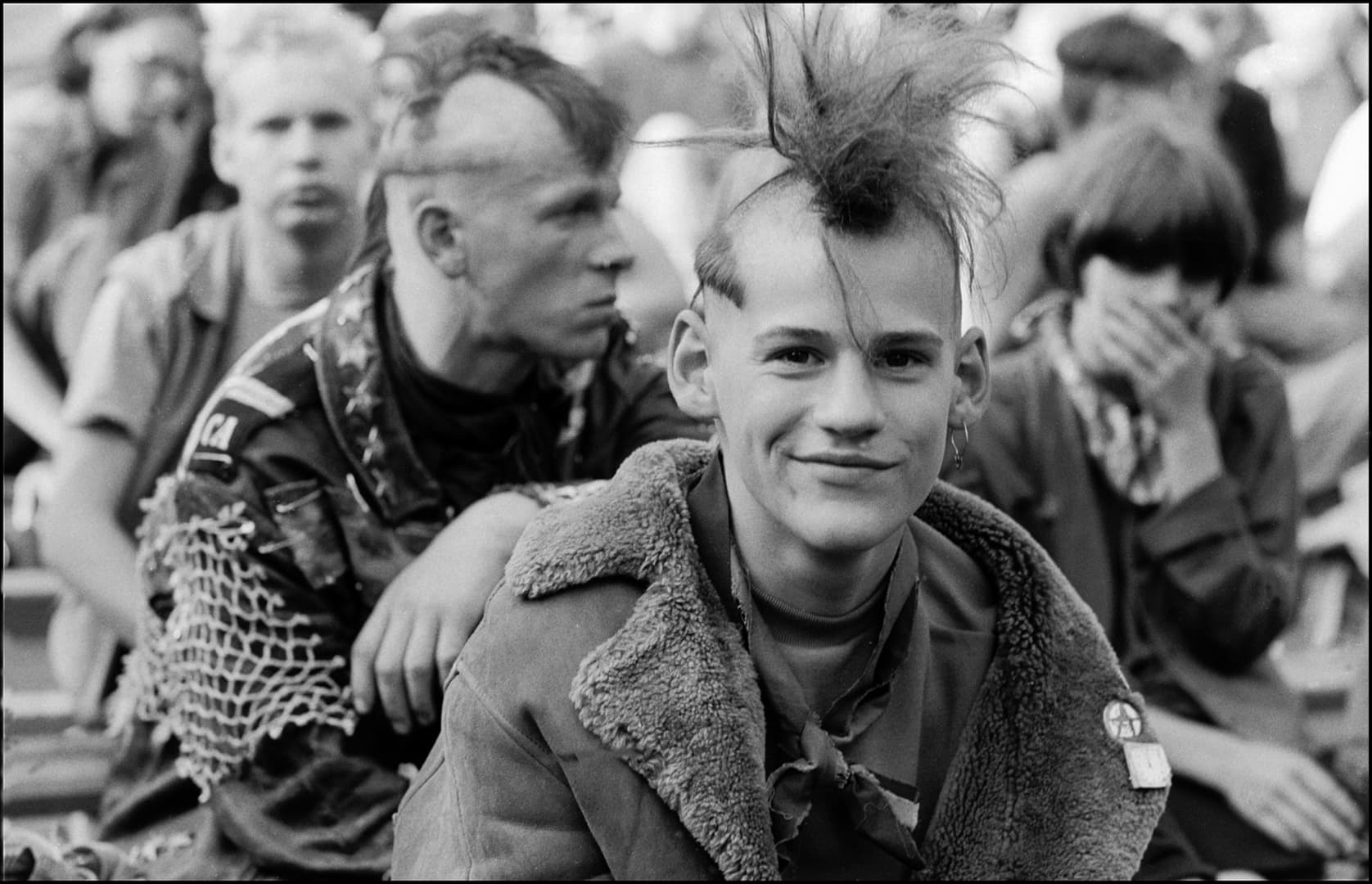
Open-air concerts in the final years of the GDR reflected how much the underground had grown. What began in hidden basements and church halls had expanded into larger, more visible gatherings. By 1990, as the GDR itself was collapsing, these events carried an entirely different energy — one shaped by decades of suppression finally giving way.
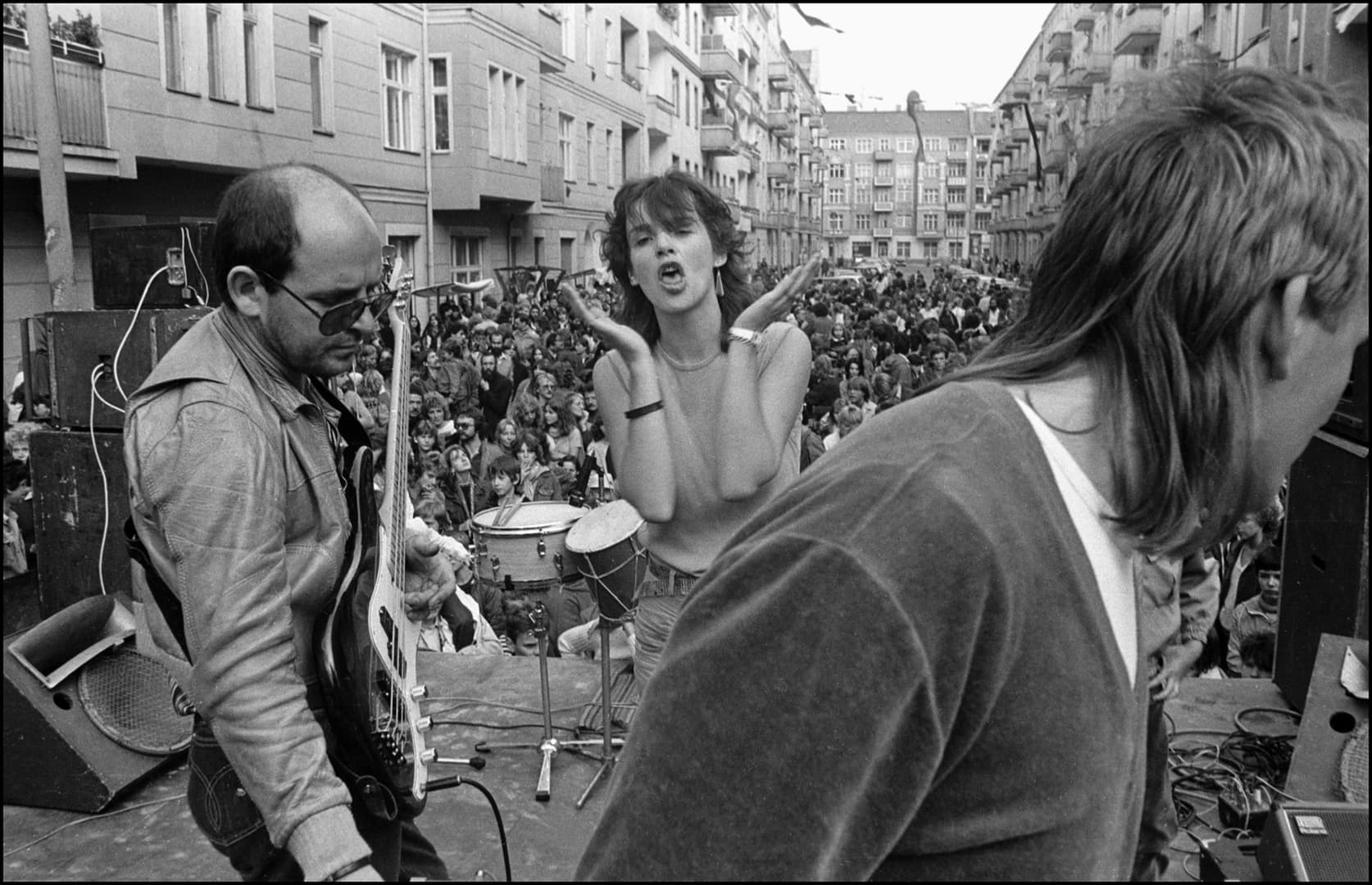
The earliest years of the 1980s were particularly important for establishing what the East German scene would become. Street parties in front of youth clubs, backyard sets, and informal gatherings in 1981 and 1982 were where the scene built its social foundation. These events were not announced in newspapers. Word spread person to person, in a city where trust was hard-earned and surveillance was constant.
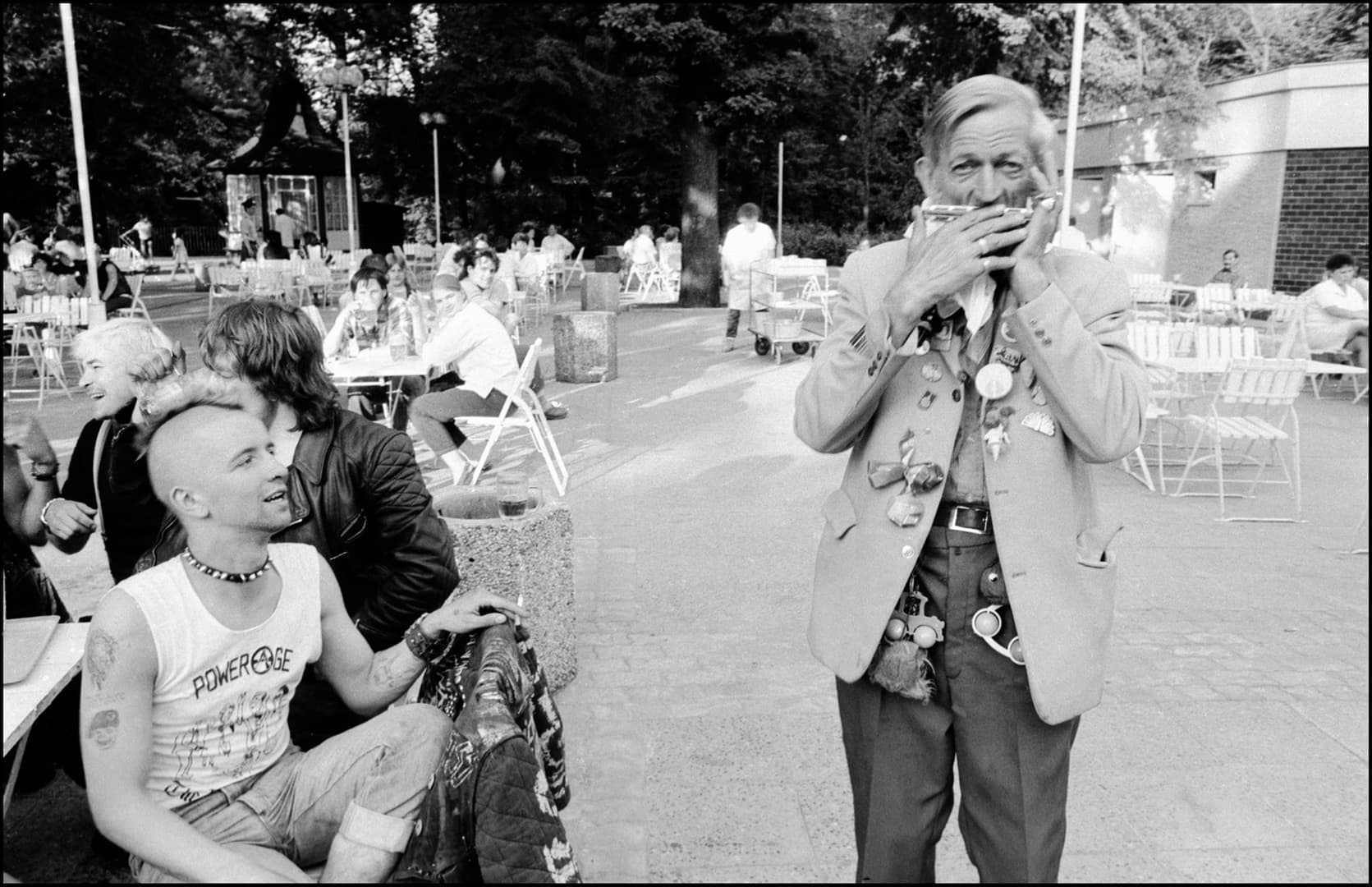
Hauswald photographed individuals as well as crowds. His portraits capture specific people living specific lives within the GDR — not abstract symbols of resistance, but real men and women navigating a system built to contain them. Each face in his archive represents a person who chose, in some way, to exist outside the lines the state had drawn.
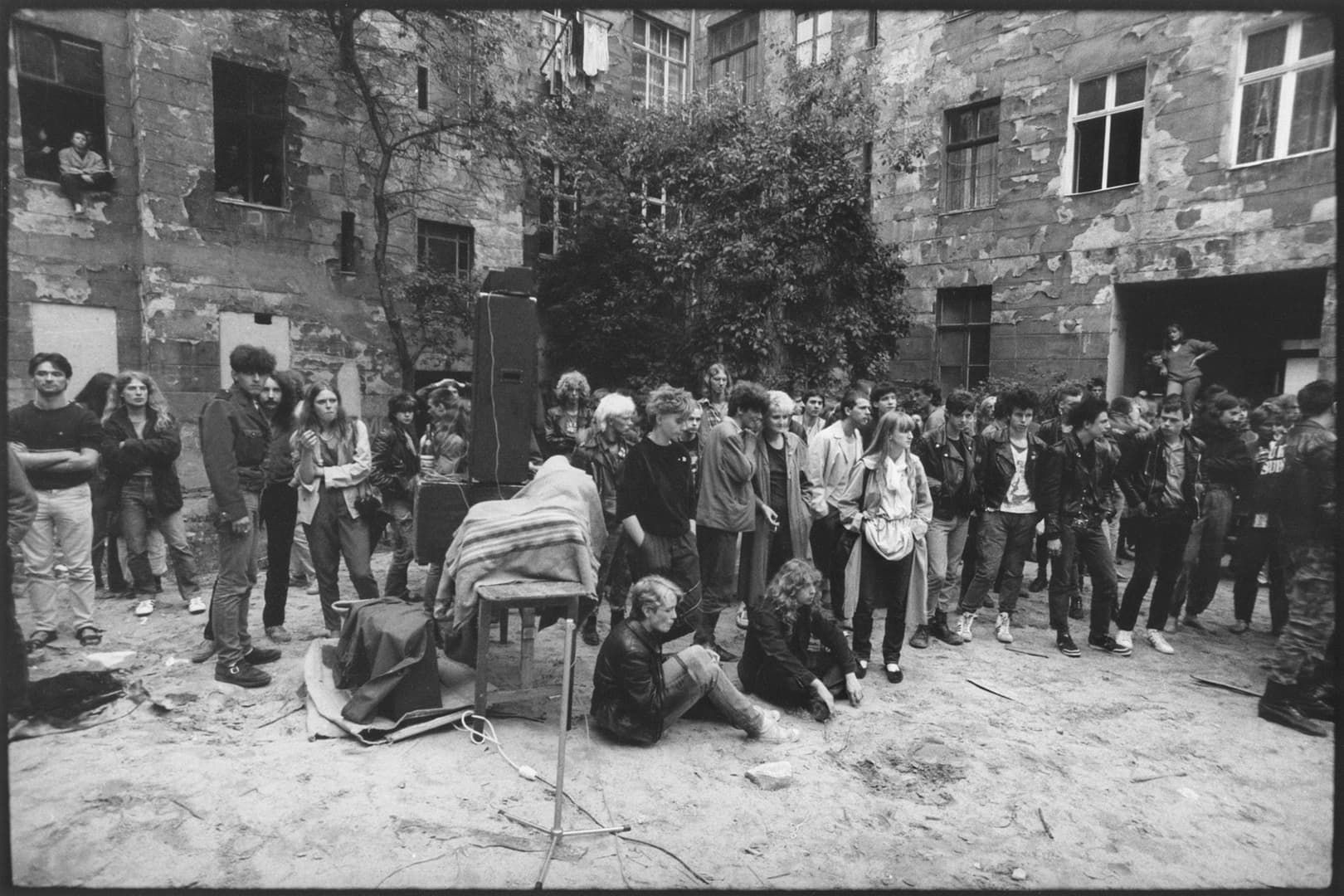
The Schliemannstrasse concerts became a recurring feature of East Berlin’s underground calendar. Rosa Extra returned to these spaces year after year, building a relationship with their audience that had nothing to do with record labels, radio play, or official recognition. The backyard was their stage, and the community that gathered around it was their world.
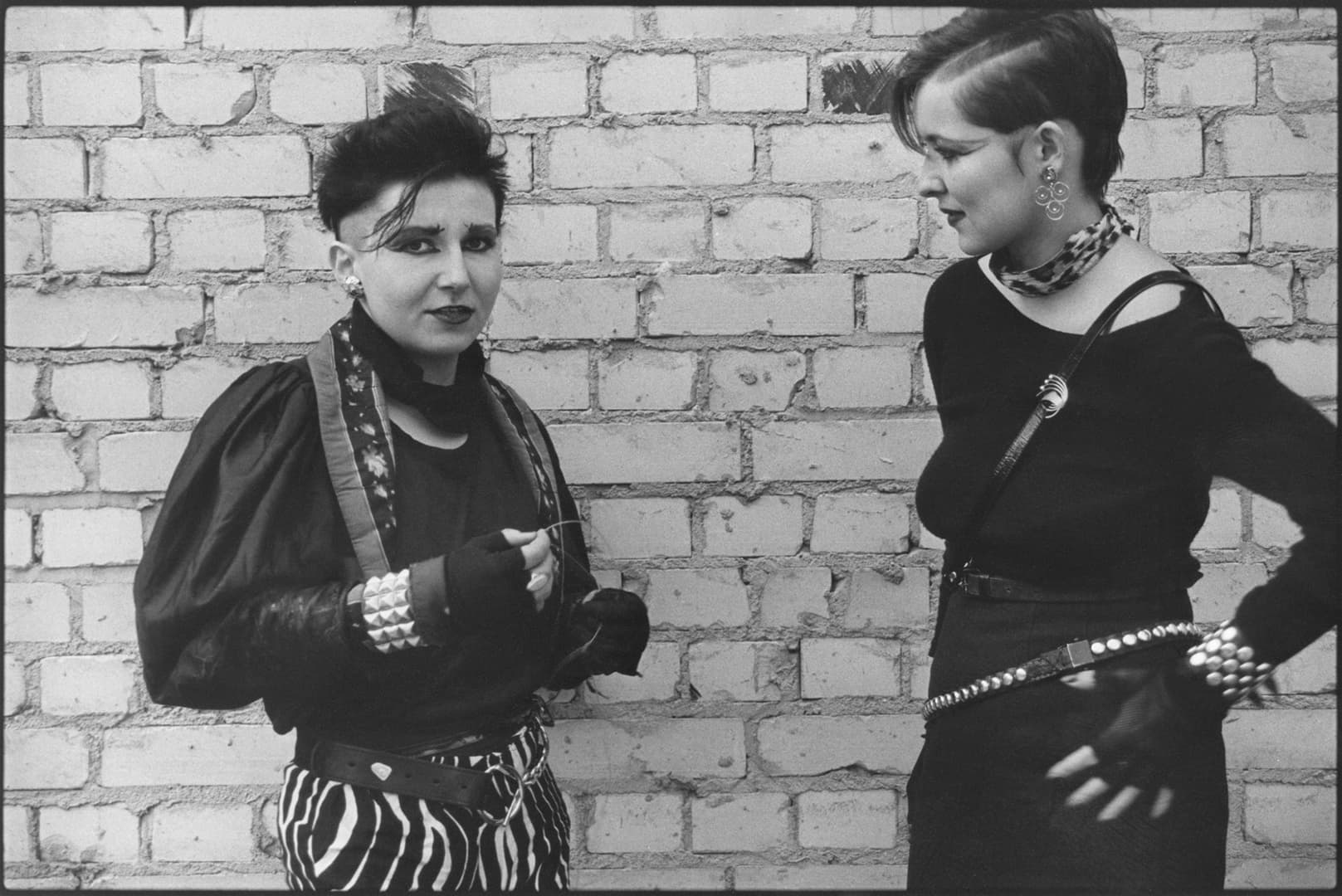
The Hirschhof in Berlin’s Prenzlauer Berg district became one of the most well-known gathering points for the East Berlin alternative scene. It was a courtyard that residents and artists had collectively transformed into a community space — painted, decorated, and actively maintained against the indifference of state housing authorities. Hauswald’s photograph from 1985 captures it at the height of its use as a social and cultural hub. The GDR’s punk and underground communities did not wait for the state to provide them with space. They built it themselves, in the gaps the system left open.