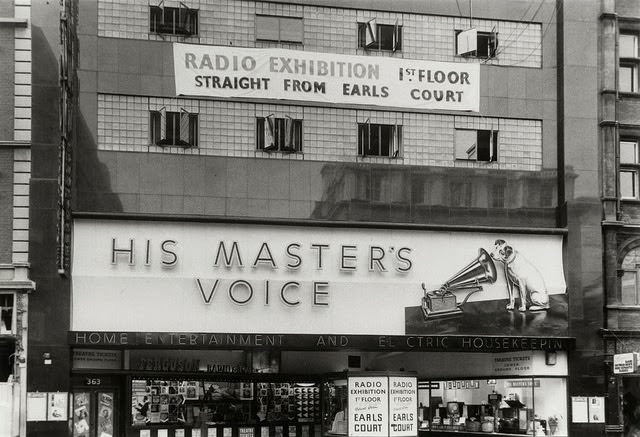
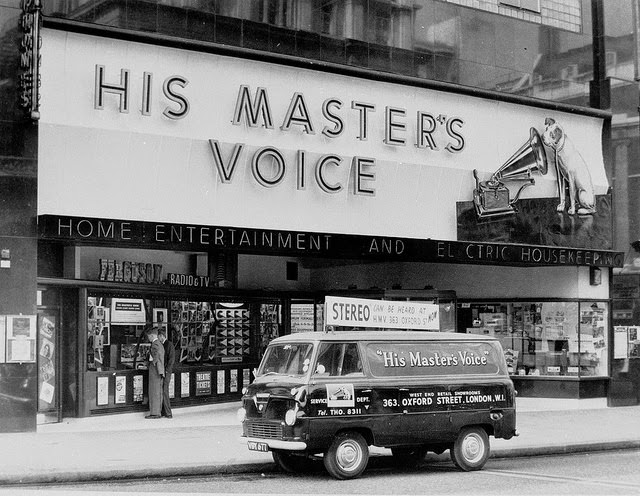
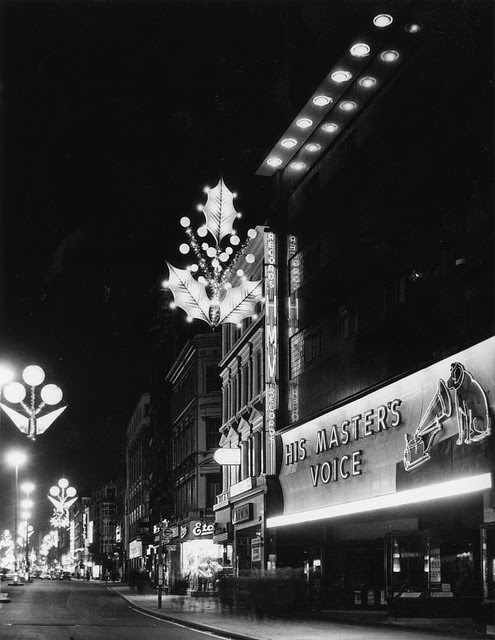
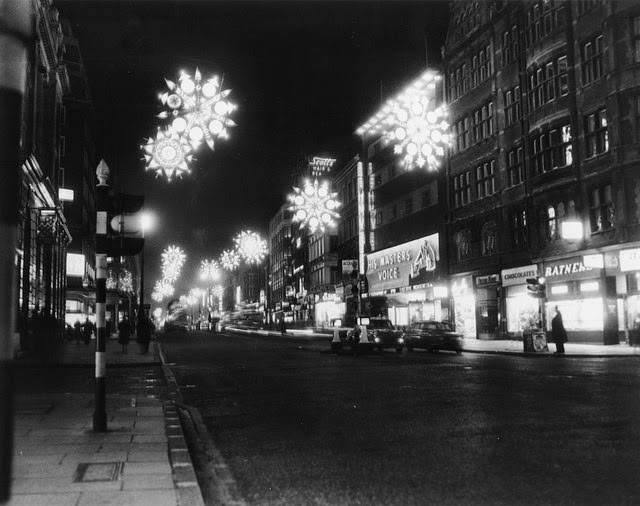
Long before streaming algorithms decided what you’d hear next, a single building on Oxford Street was doing the job better than any machine. The HMV store at 363 Oxford Street was the retail heart of the Electric and Musical Industries (EMI) empire, and in the early 1950s, it was the most important music destination in London. A massive neon sign blazed above the entrance, displaying the famous “His Master’s Voice” logo — Nipper the dog staring into a gramophone horn. For anyone who knew music, that sign meant you were exactly where you needed to be.
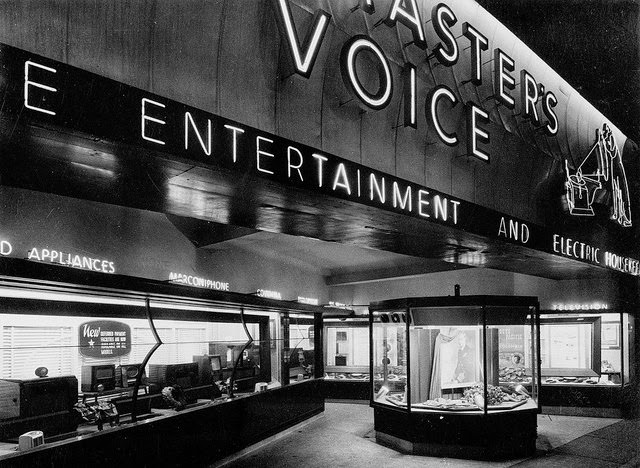
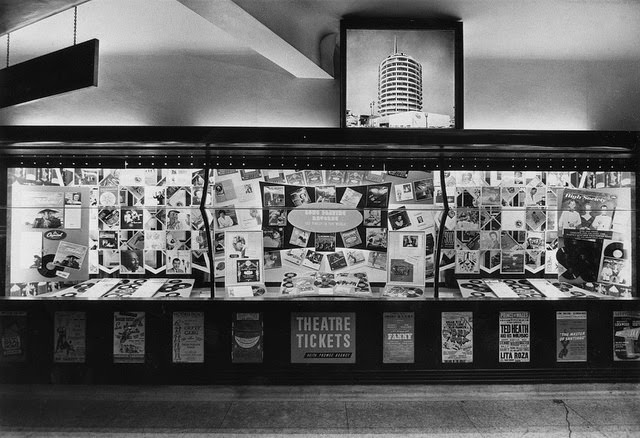
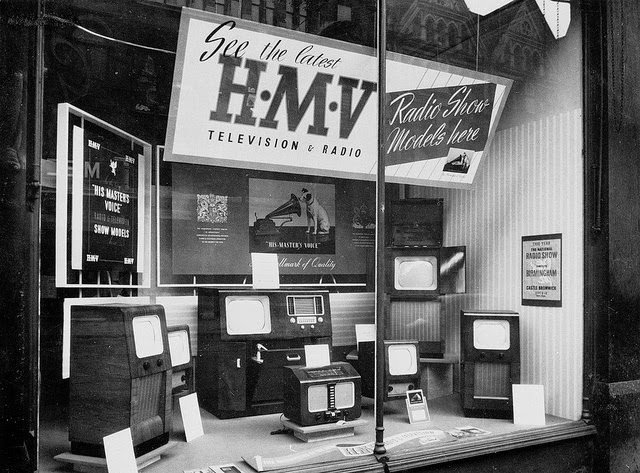
The building was designed to feel grand. Large glass windows along the pavement showcased the latest record players, radiograms, and television sets. It looked more like a department store than a record shop, and that was entirely the point. HMV wasn’t just selling music — it was selling a lifestyle built around sound and technology. Pedestrians stopped at those windows daily, drawn in by displays that reflected the rapid change happening in British homes.
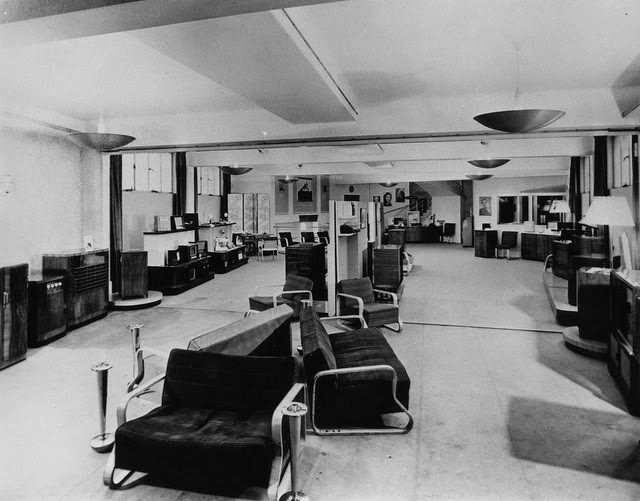
Inside, the store was laid out across multiple floors, each dedicated to a different part of the music and electronics world. The ground floor handled records and browsing. Upper floors held specialist departments, a classical section, electrical appliances, and one of the most unusual retail services in the country. The sheer scale of the operation set it apart from any other shop on the street.
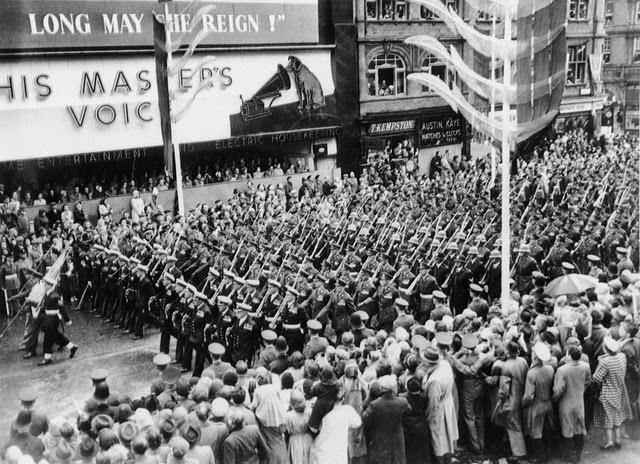
The early 1950s were a time of national celebration and renewed energy in Britain. The coronation of Queen Elizabeth II in 1953 brought crowds into the streets of London, and HMV was right at the centre of that cultural moment — stocking commemorative recordings and capitalising on a public newly hungry for entertainment in their homes.
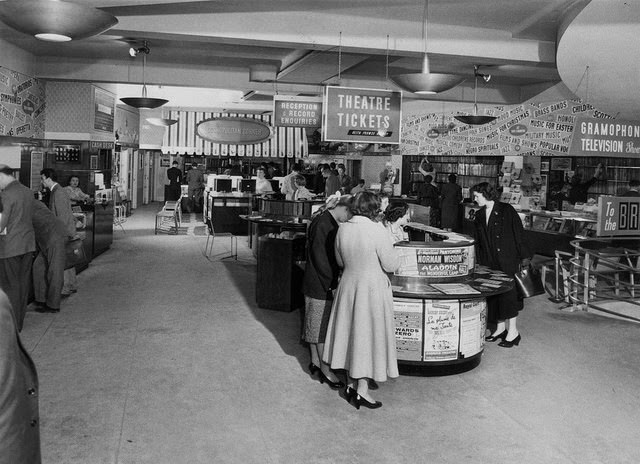
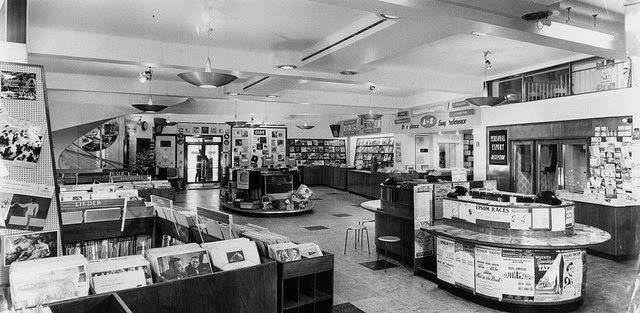
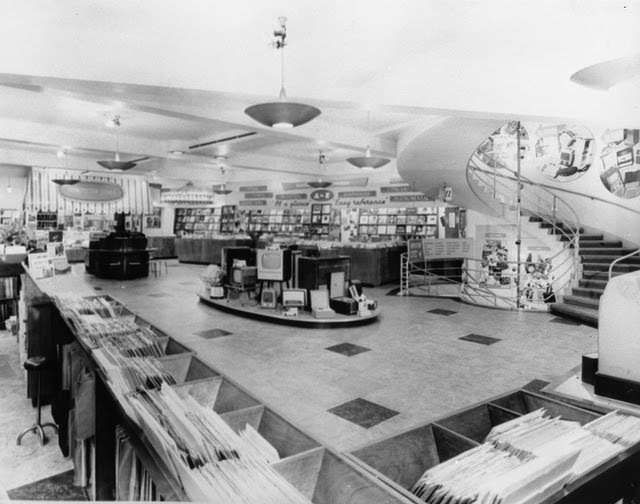
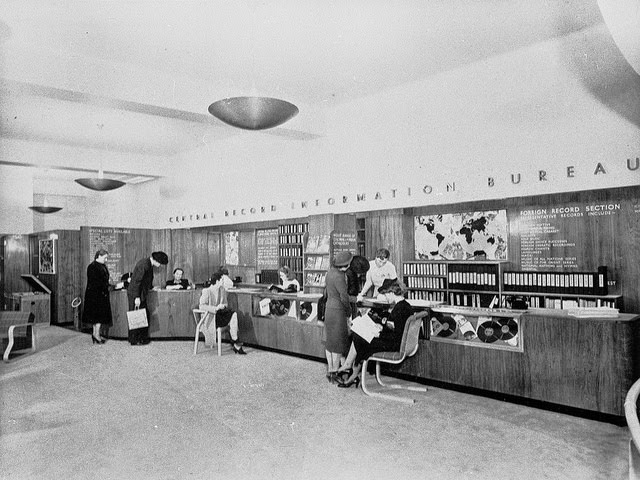
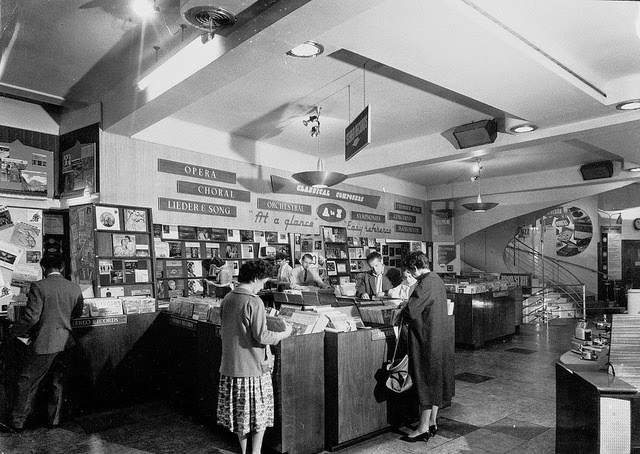
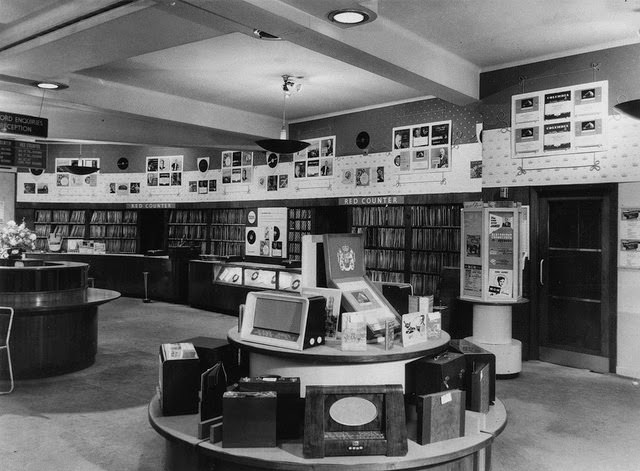
The ground floor was where most customers spent the majority of their time. Record counters ran in long rows, staffed by assistants who knew the stock inside and out. A catalogue reference area let shoppers look up titles before asking for them at the counter. The accounts office sat nearby, handling the steady flow of purchases from a customer base that included everyone from schoolchildren spending their pocket money to professional musicians stocking their collections.
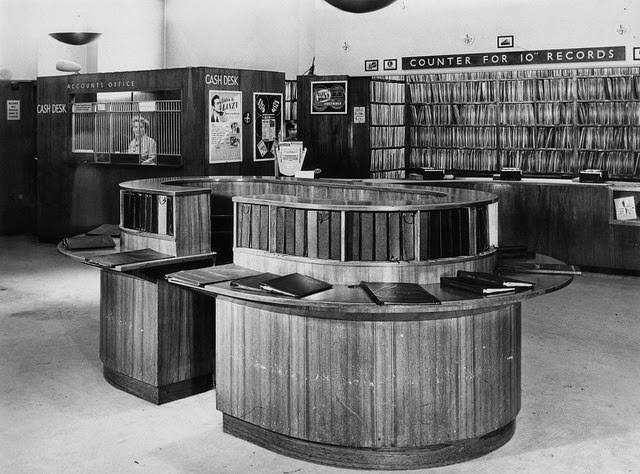
At the start of the decade, the shelves were dominated by heavy, brittle shellac discs spinning at 78 rpm. These were fragile, bulky, and expensive to produce. That began to change as the years progressed. HMV reorganised its stock to feature the new vinyl formats: the 33 rpm Long Player and the 45 rpm single. The LP allowed a full album’s worth of music on one disc. The 45 rpm single, introduced in the mid-1950s, was small, durable, and cheap — and it changed everything about how the store was laid out.
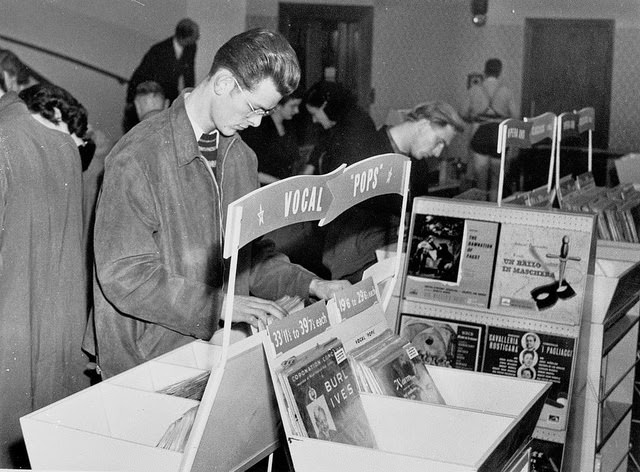
Because 45s were smaller and unbreakable, they required far less shelf space than 78s. This freed up room across the shop floor and allowed HMV to introduce the browser bin — a slanted rack where customers could flip through record sleeves one by one, scanning cover art and reading track listings at their own pace. It was a simple idea, but it transformed record shopping into something active and personal. The browser bin is where music discovery happened, long before anyone invented a playlist.
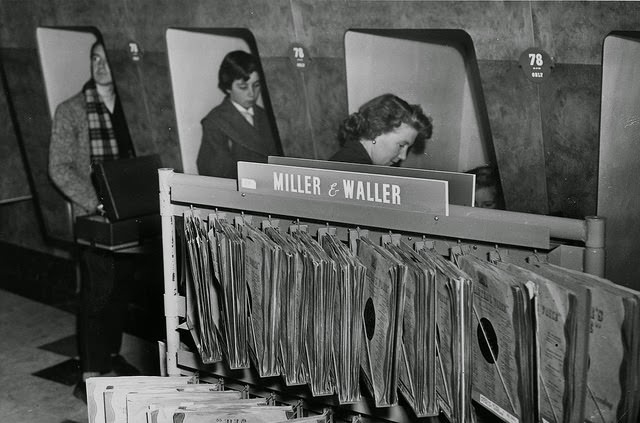
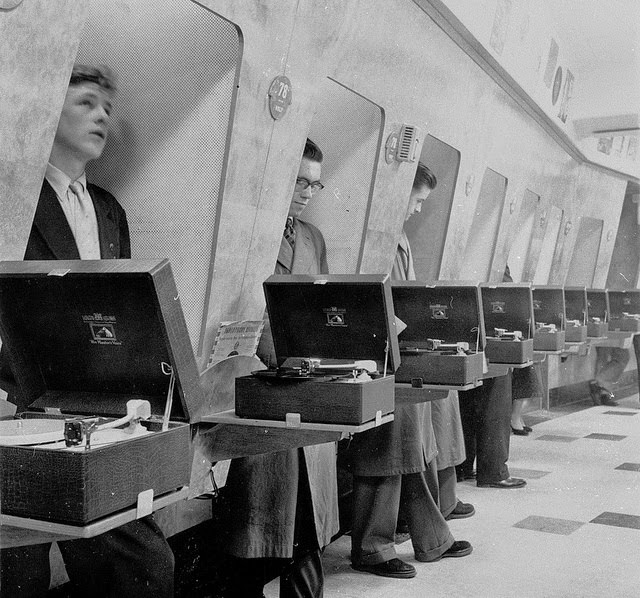
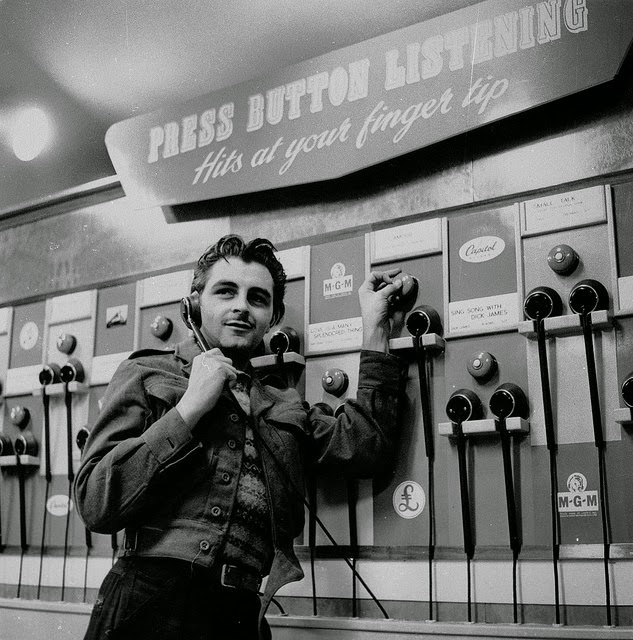
Customers didn’t just browse — they listened. The most popular feature of the store was its row of soundproof listening booths. A shopper selected a record from the counter, then took it into a small private cubicle fitted with a turntable and either headphones or a small speaker. There was no time limit and no pressure to buy. Teenagers spent entire Saturday afternoons rotating through the booths, working their way through new releases. On busy days, the queue for a booth stretched through the shop floor.
The listening booth turned record shopping into a social event. Friends came in groups to share a booth, passing headphones back and forth and debating whether a new release was worth the price. Staff at the counters became trusted advisers, recommending titles based on what a customer had already enjoyed. This was music discovery built on human interaction, not data.
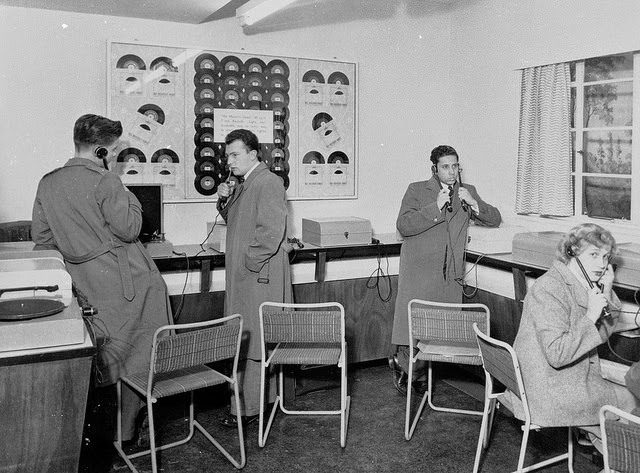
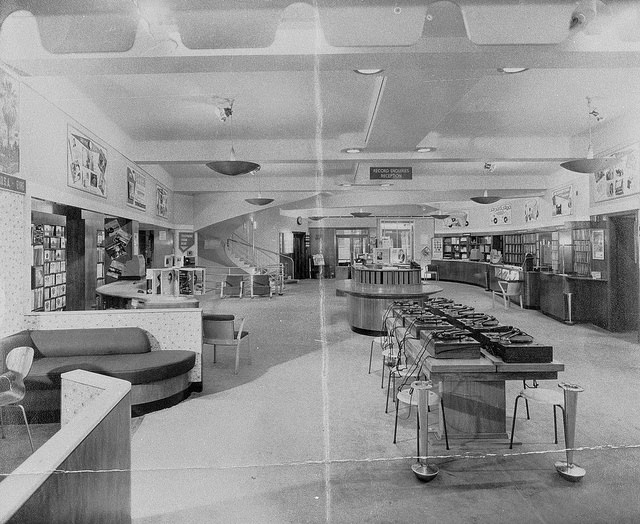
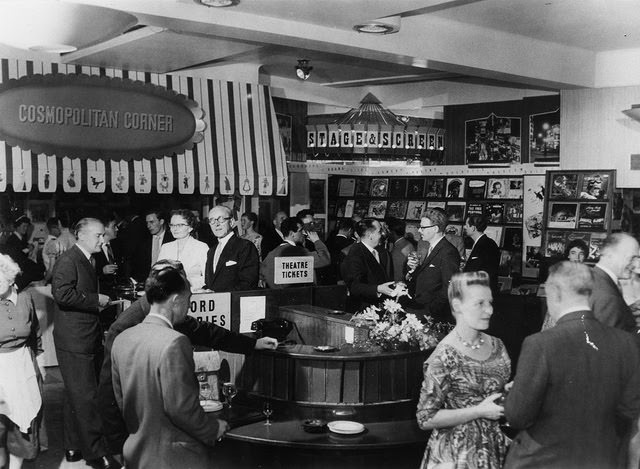
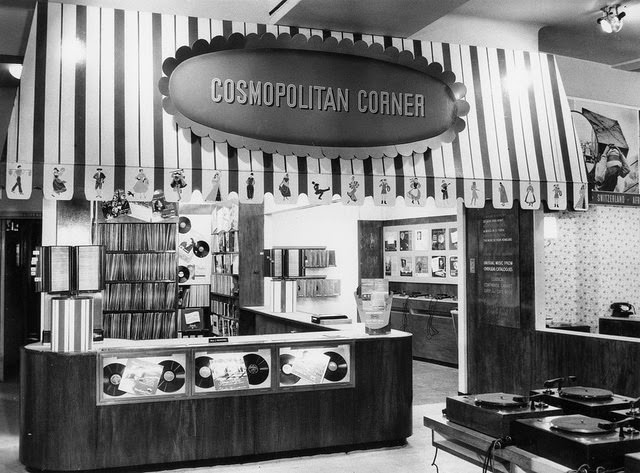
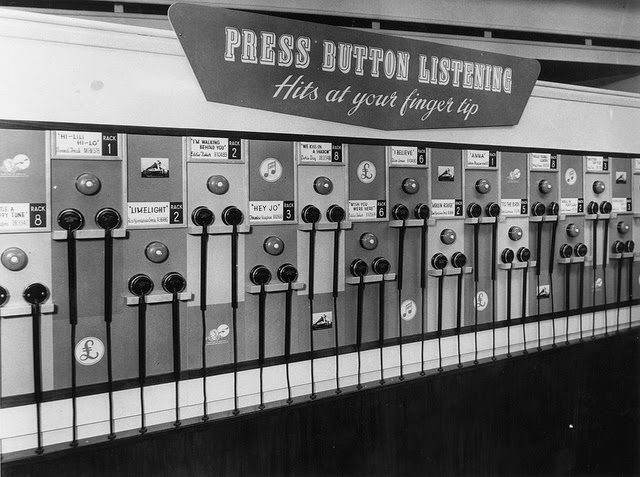
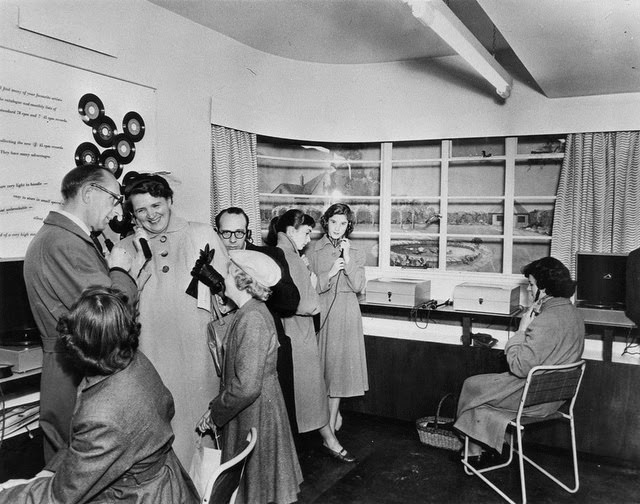
Beyond the booths, the store also featured open listening posts on the shop floor — counters where customers could sample records in a more casual setting without retreating to a private cubicle. These posts kept the energy of the floor high and ensured that music was always playing somewhere in the building.
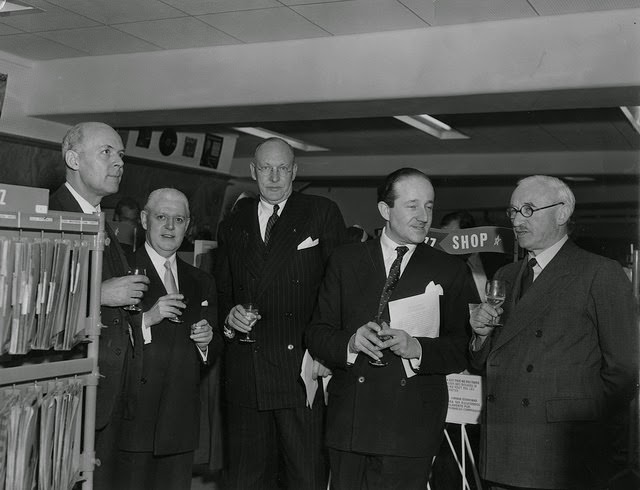
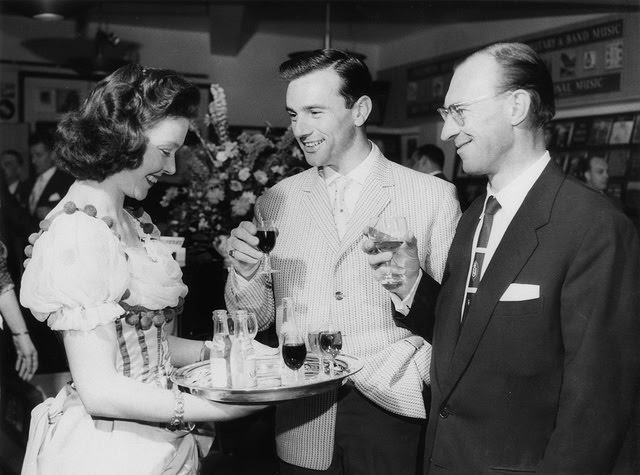
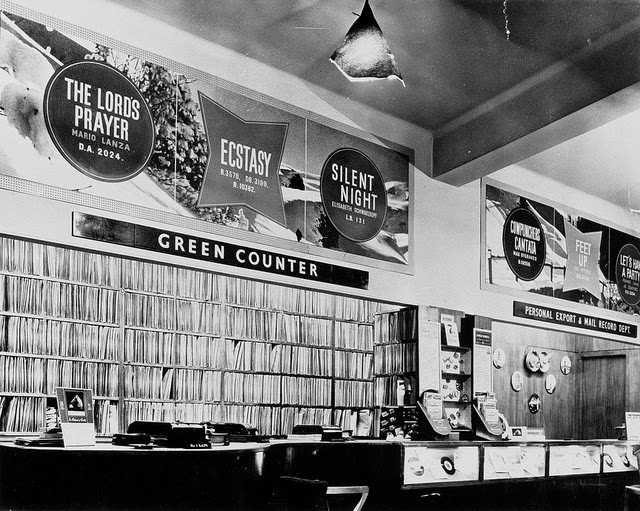
The store’s specialist departments gave it depth that ordinary record shops simply couldn’t match. A dedicated vocal pops section sat alongside a Stage and Screen department, which was launched with American entertainer Eddie Fisher in attendance. A Cosmopolitan Corner catered to international music, stocking titles that wouldn’t have been found anywhere else on Oxford Street. Classical music occupied its own floor entirely, with a personal export department catering to overseas buyers.
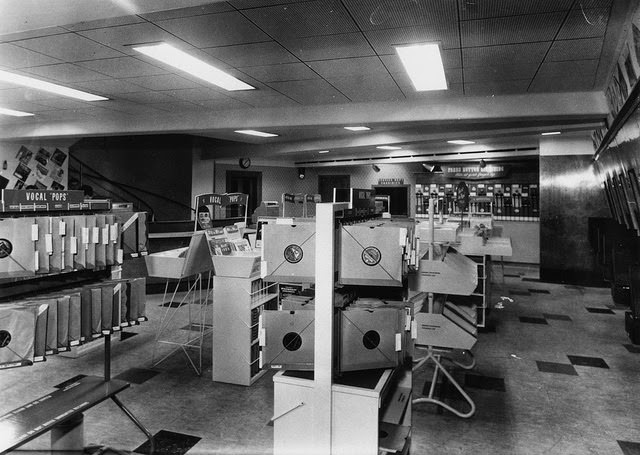
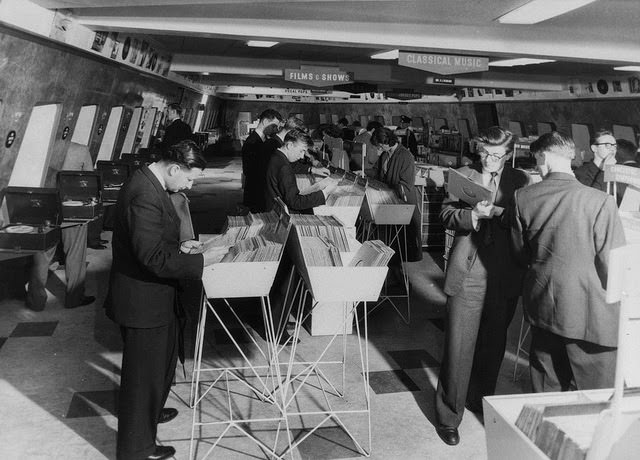
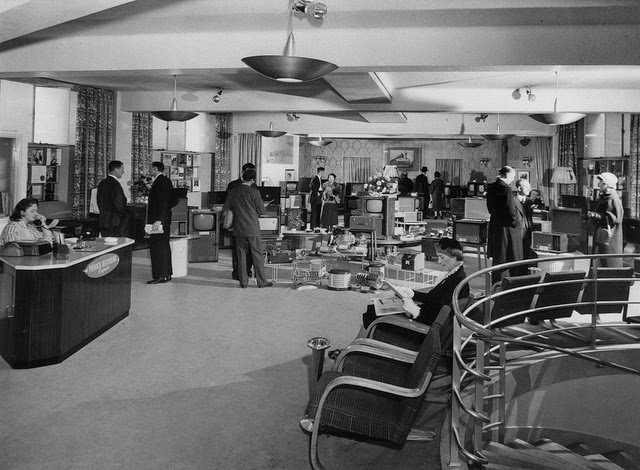
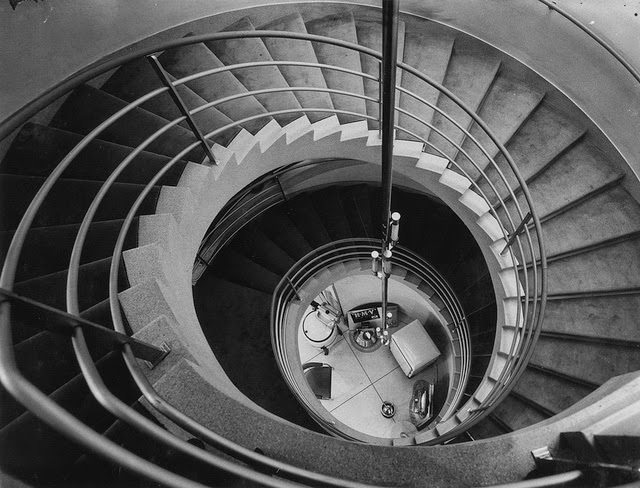
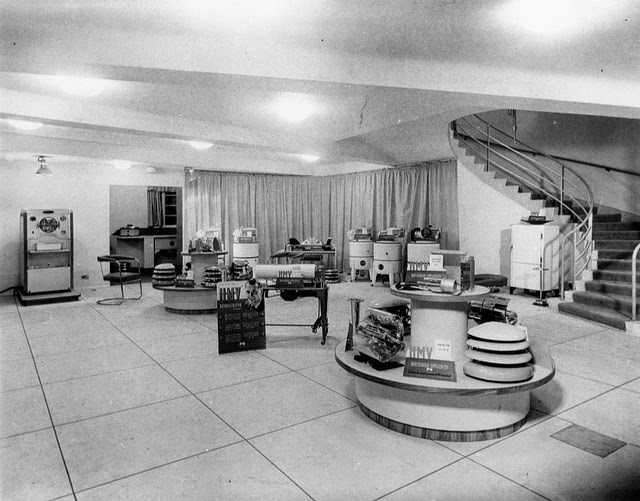
Moving through the store meant travelling between worlds. A spiral staircase connected the floors and became one of the building’s most recognisable features. Staff and customers alike used it daily, passing displays that changed with each season and each new format that arrived on the market.
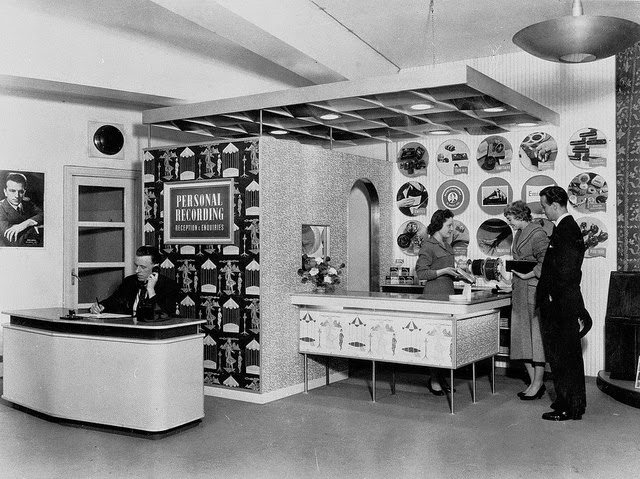
On the upper floor, HMV ran one of its most unusual services: the Personal Recording Studio. Any member of the public could walk in, pay a fee, and record their own voice onto a lacquer disc. A store engineer operated the cutting lathe while the customer spoke or performed into a microphone. The finished disc was packaged in a special HMV envelope and was ready within minutes, playable on any standard gramophone. People used the service to send audio letters to relatives abroad or to preserve amateur musical performances.
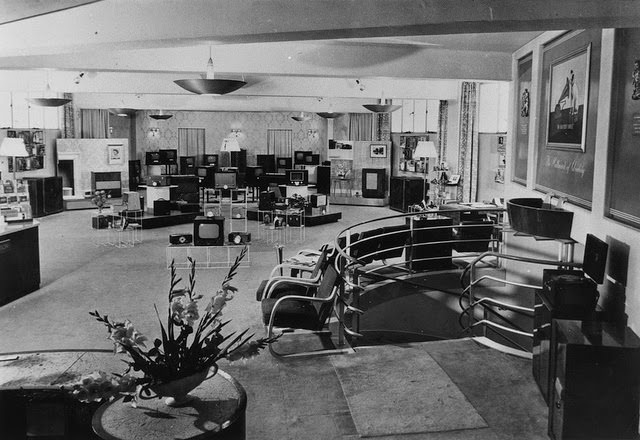
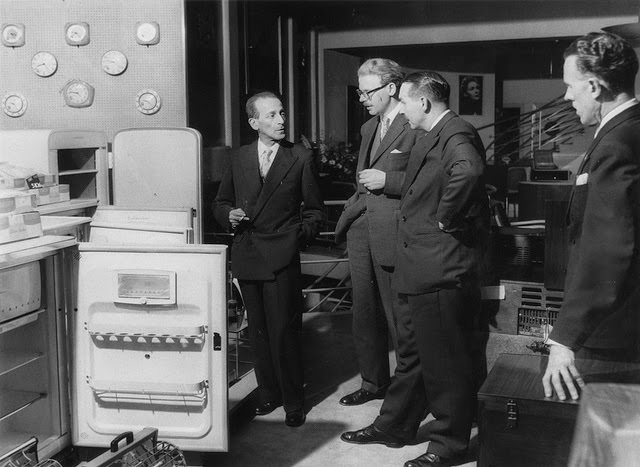
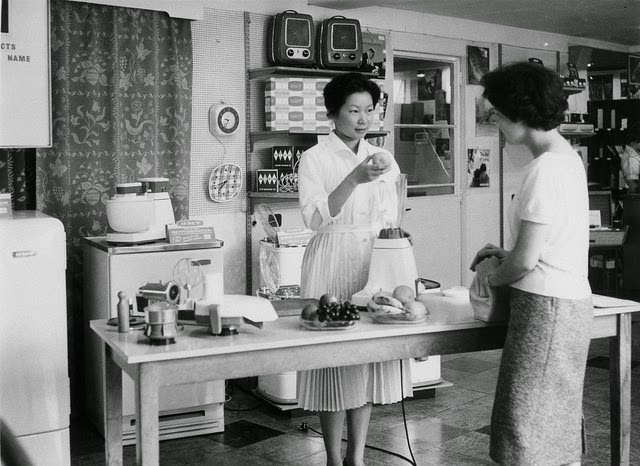
HMV also sold the hardware needed to play all of this music. The television department occupied its own section of the store, stocked with sets at a time when TV ownership was still a novelty in British households. The radio department carried the latest receivers. The lower ground floor housed household appliances, where staff ran live demonstrations of refrigerators and blenders — a reminder that EMI’s retail ambitions extended well beyond music.
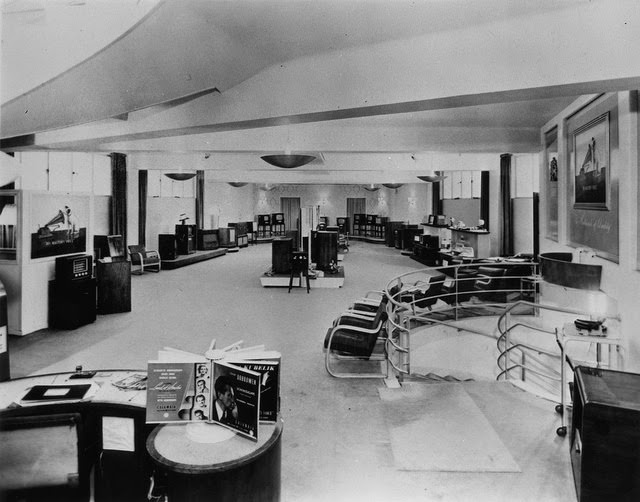
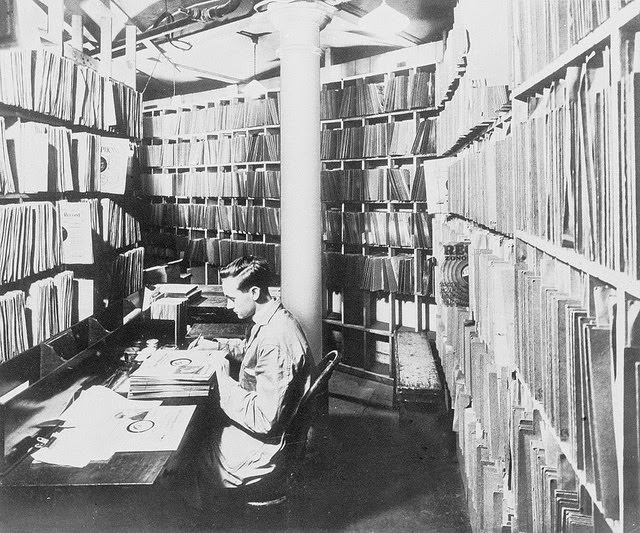
The store’s stockroom reflected the scale of the operation. Row upon row of vinyl was organised, catalogued, and rotated to keep up with the pace of new releases. The Central Records Information Bureau helped customers track down obscure or out-of-print titles, operating as a research service at a time when finding a specific record otherwise meant writing letters and waiting weeks.
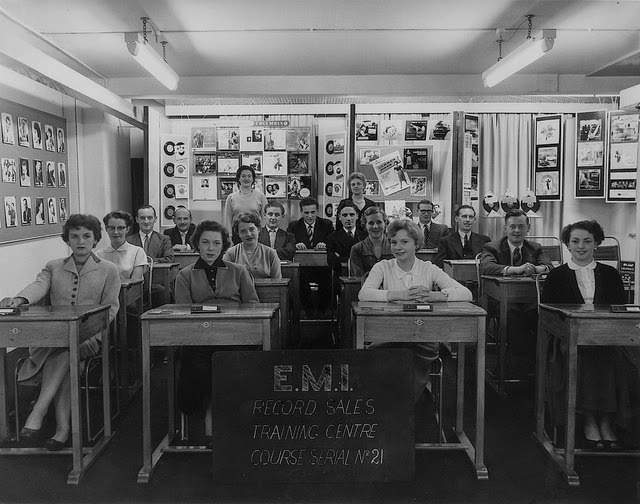
Training the staff who ran all of this was no small task. EMI operated a dedicated Record Sales Training Centre, where employees worked through structured courses designed to make them authoritative on every format, genre, and product in the building. Course Serial No. 21 is documented in photographs from the period, showing staff seated at desks in a classroom setting — learning the stock the same way a student learns a subject.
By the late 1950s, the store had settled into a rhythm shaped by the 45 rpm single. Shoppers flipped through browser bins, queued for listening booths, and debated purchases with staff who treated their recommendations seriously. Christmas brought window displays that stopped pedestrians in their tracks and foot traffic that tested the building to its limits.
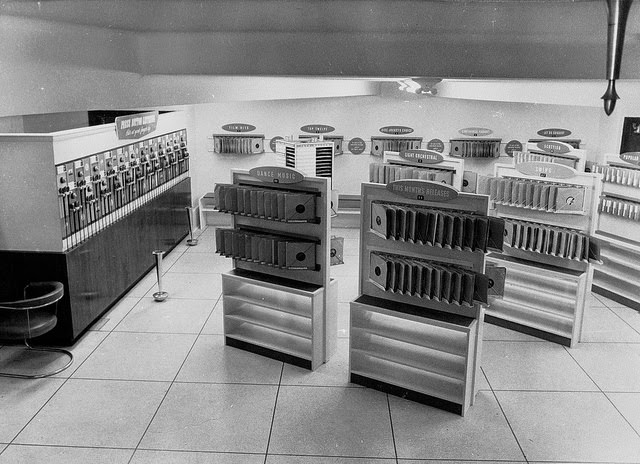
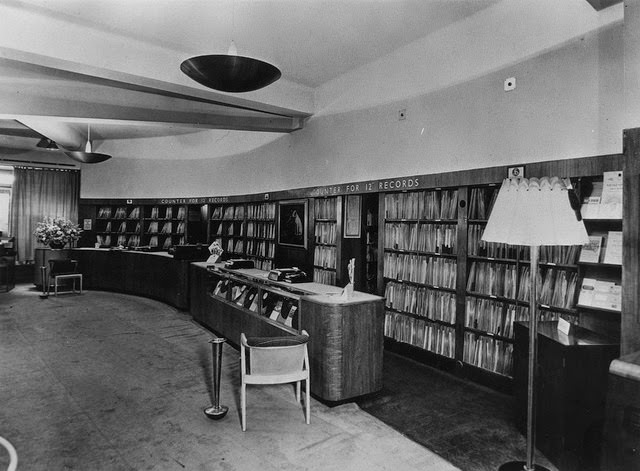
The counters themselves were colour-coded — a red counter and a green counter each serving different parts of the record catalogue. Dedicated counters handled 12-inch records separately from the singles racks. Every detail of the layout was designed to move customers efficiently through a store that stocked thousands of titles across dozens of genres.
The people who worked and shopped at HMV during this decade were part of something that had no real equivalent anywhere else in the country. The store connected the EMI recording empire directly to the public, giving listeners access to the full breadth of what was being made and manufactured at the time.