By early 1964, the Beatles had already conquered Britain. Albums like Please Please Me and With the Beatles had dominated UK charts for months. America was a different story — until it wasn’t. U.S. radio stations began playing their singles on heavy rotation, and “I Want to Hold Your Hand” climbed the American charts faster than any British act before it. Capitol Records poured money into a full marketing campaign: posters, TV spots, and press coverage designed to build excitement. Fans bought records by the thousands, clearing out store stock across the country.
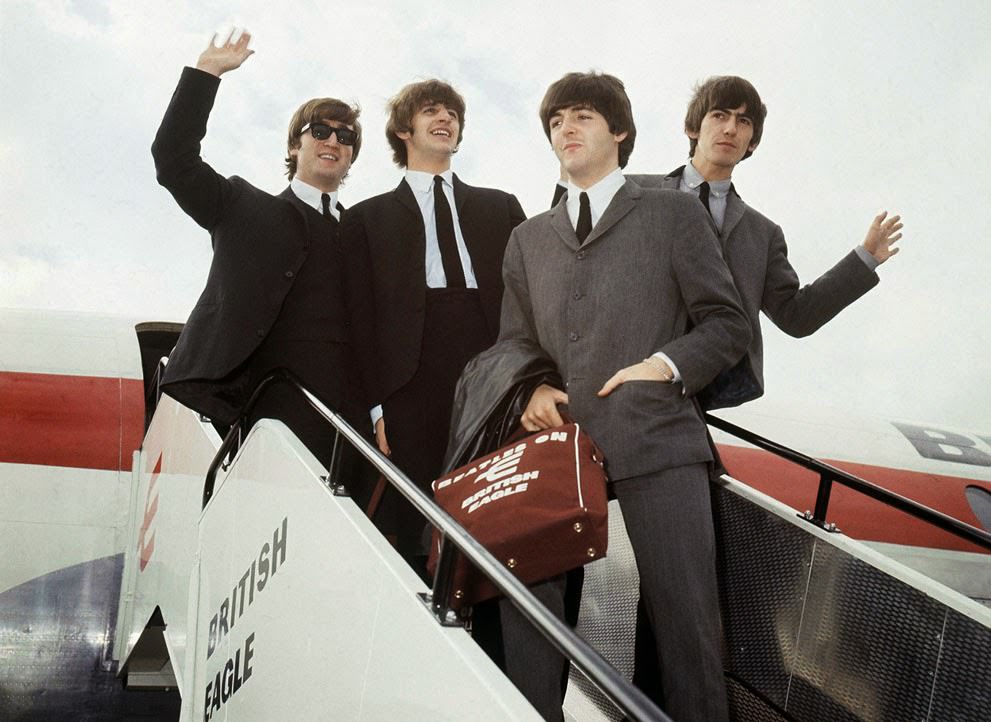
The Beatles leave London airport, 1964.
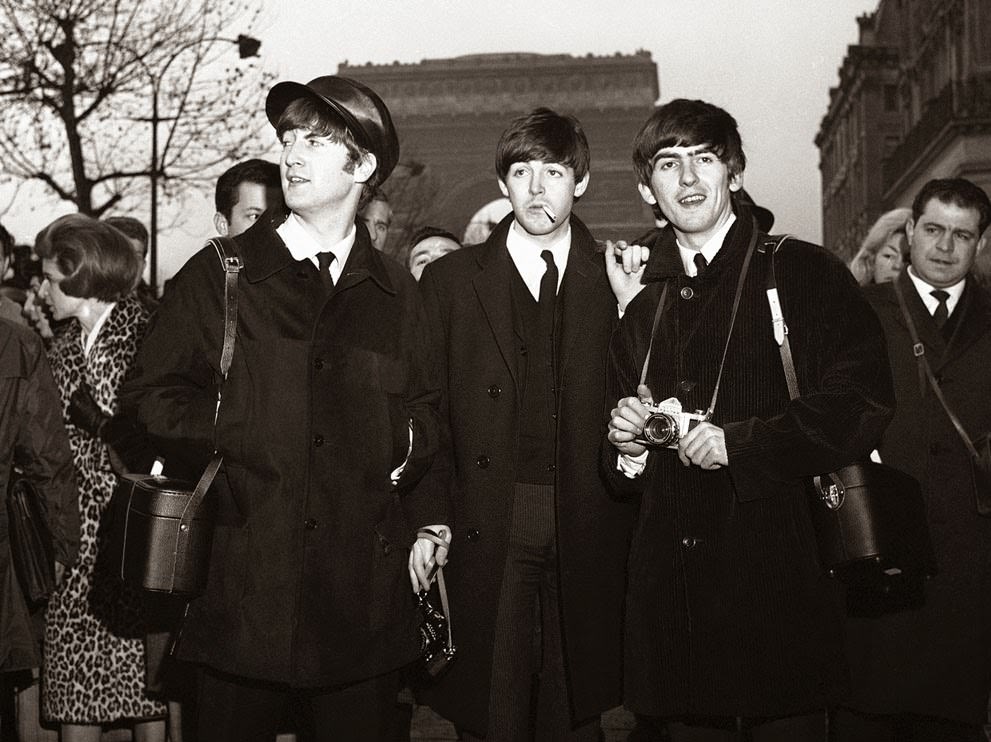
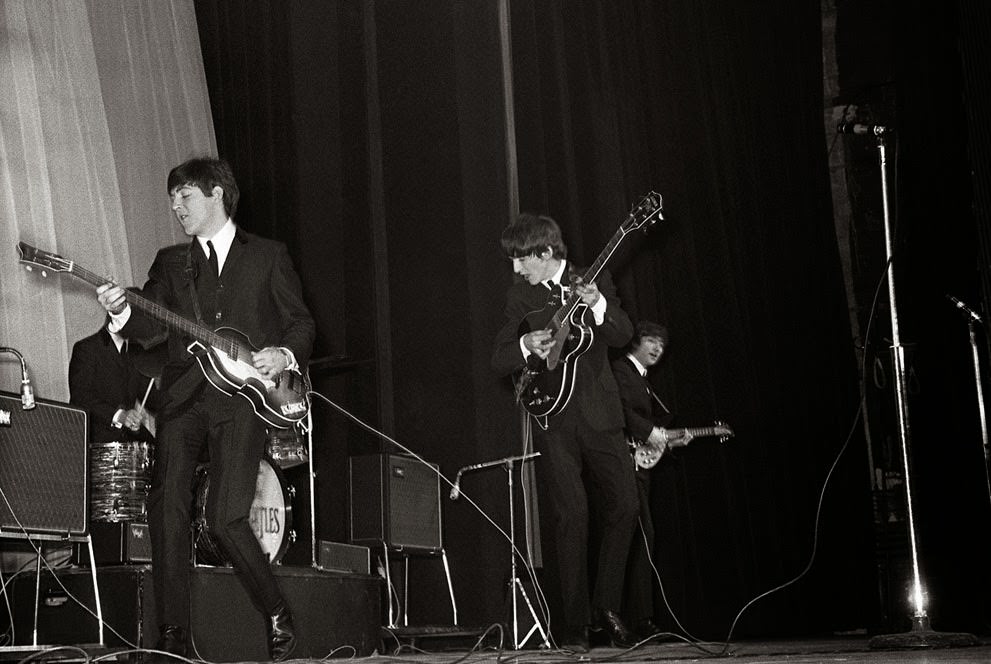
Before America, there was Paris. The Beatles stopped in France in January 1964, sightseeing and rehearsing ahead of their opening night at the Olympia Theatre. It was their first concert outside of Britain, and it gave them a chance to test their stage energy on a new audience.
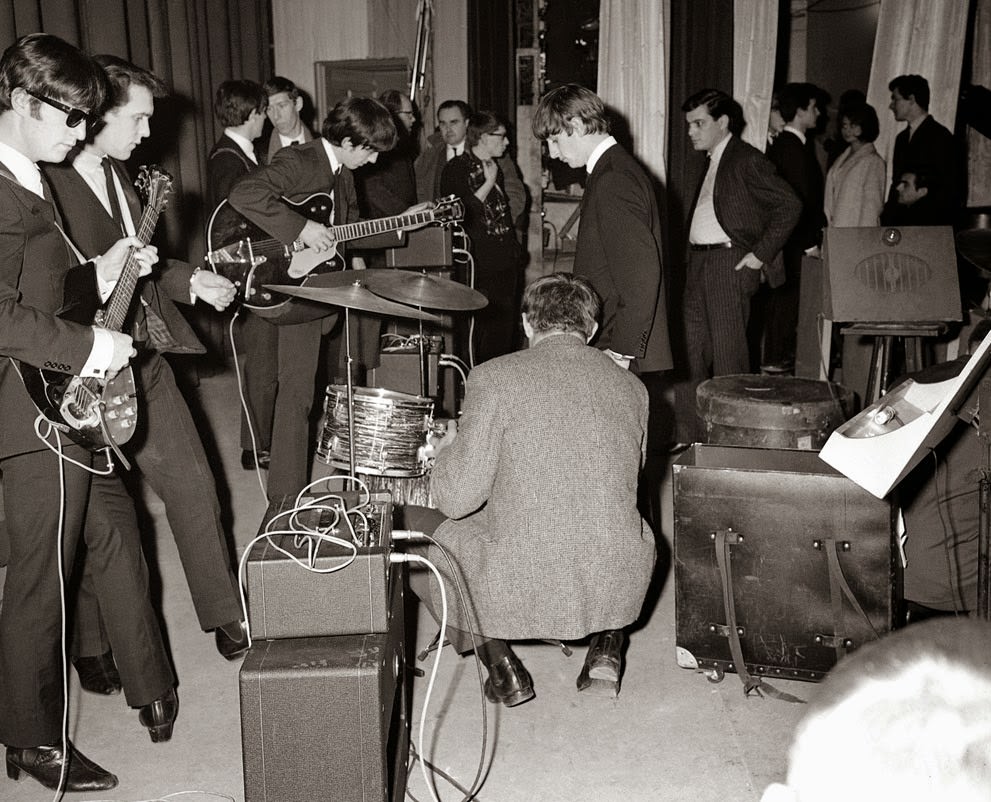
John Lennon, Paul McCartney, and George Harrison sightseeing in Paris, the day before their opening at the Olympia Theatre in Paris, 1964.John Lennon, George Harrison, and Ringo Starr from the Beatles, backstage in Versailles, France, 1964.The Beatles perform their first concert outside of Britain, at the Olympia in Paris, 1964.
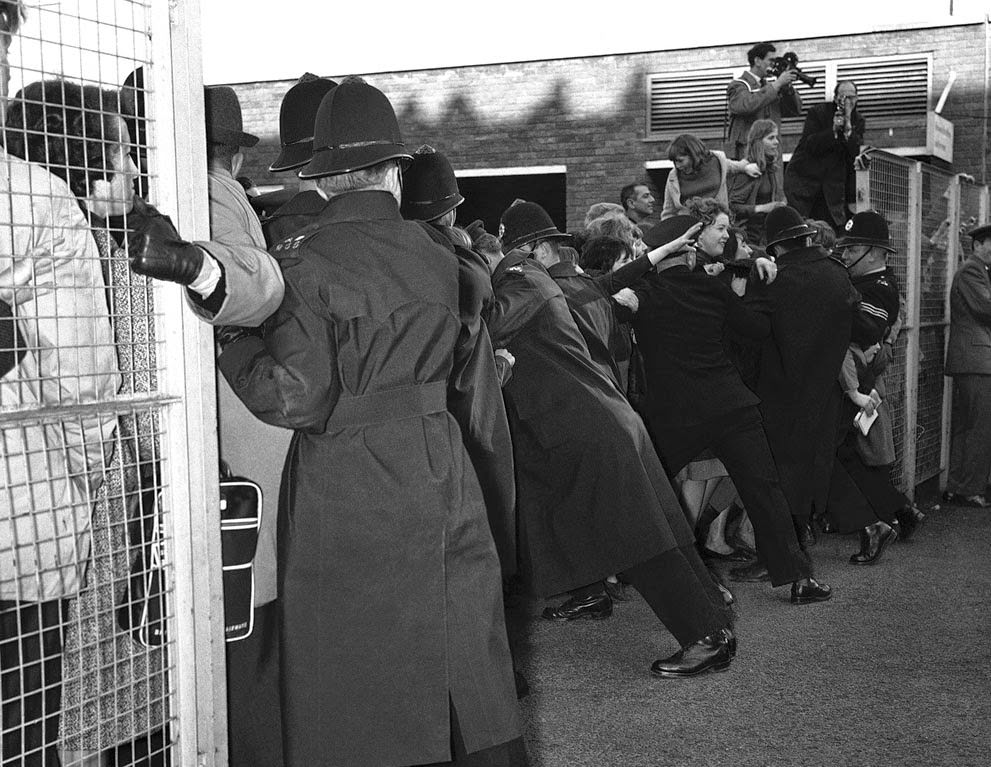
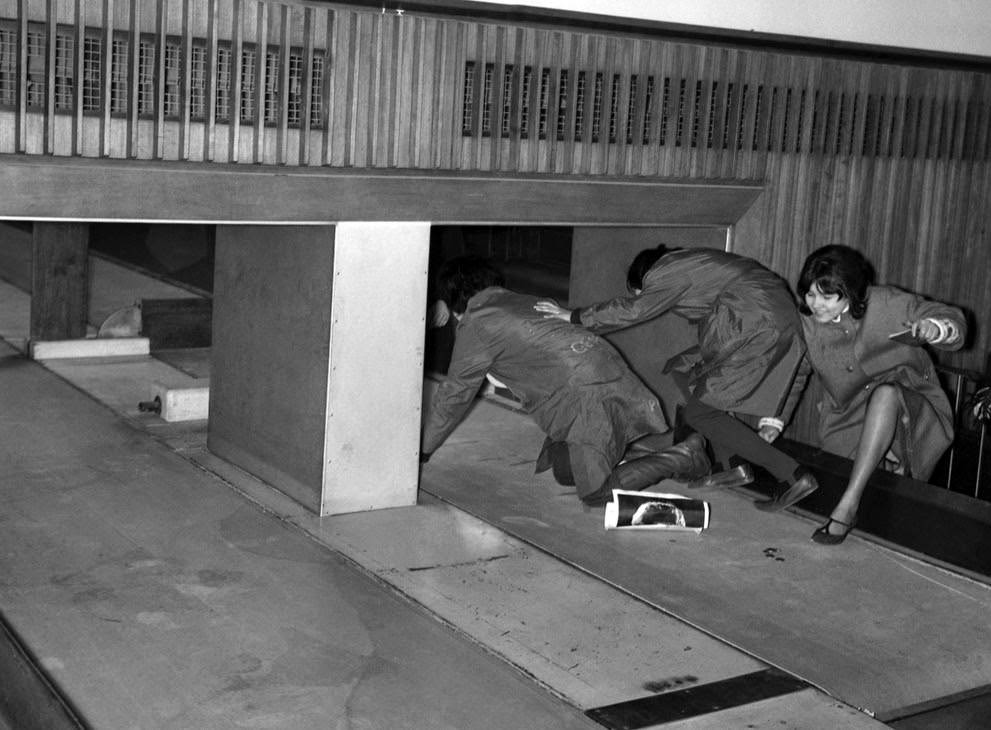
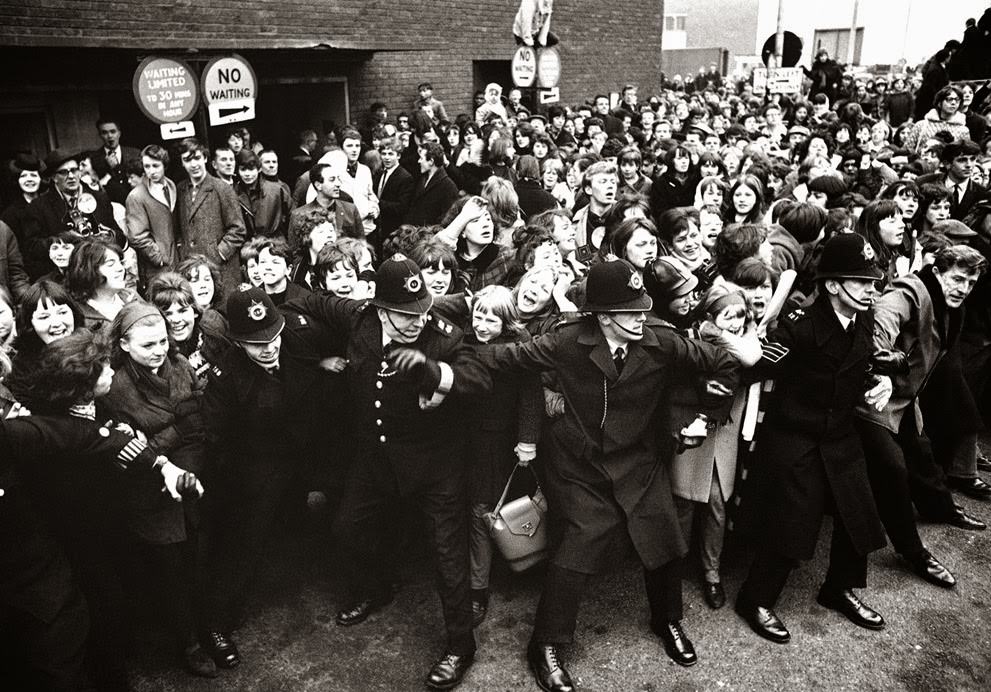
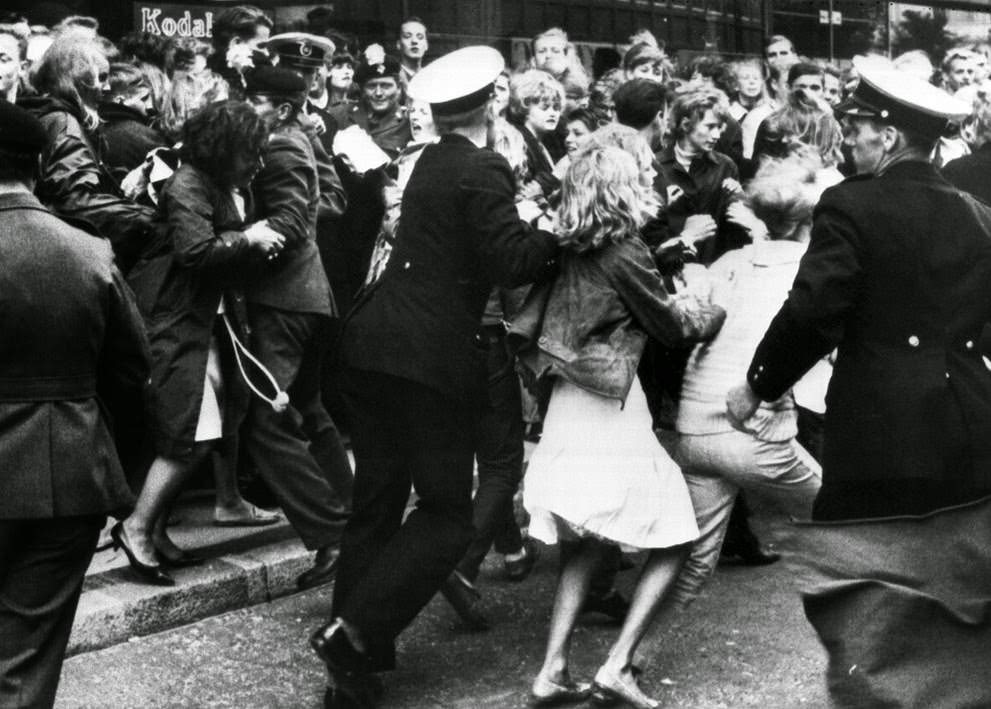
When the Beatles returned to London from Paris, the airport was already a preview of what was coming. Fans fought through police lines to get near them, and some went further — three fans were caught trying to crawl into the baggage conveyor belt at customs just to get inside the terminal.
Police hold back screaming fans fighting to get near the Beatles, when the Liverpool pop group returned to London Airport from Paris, 1964.Three Beatles fans attempt to enter the Customs Hall at London Airport by crawling into the baggage conveyor belt, 1964.
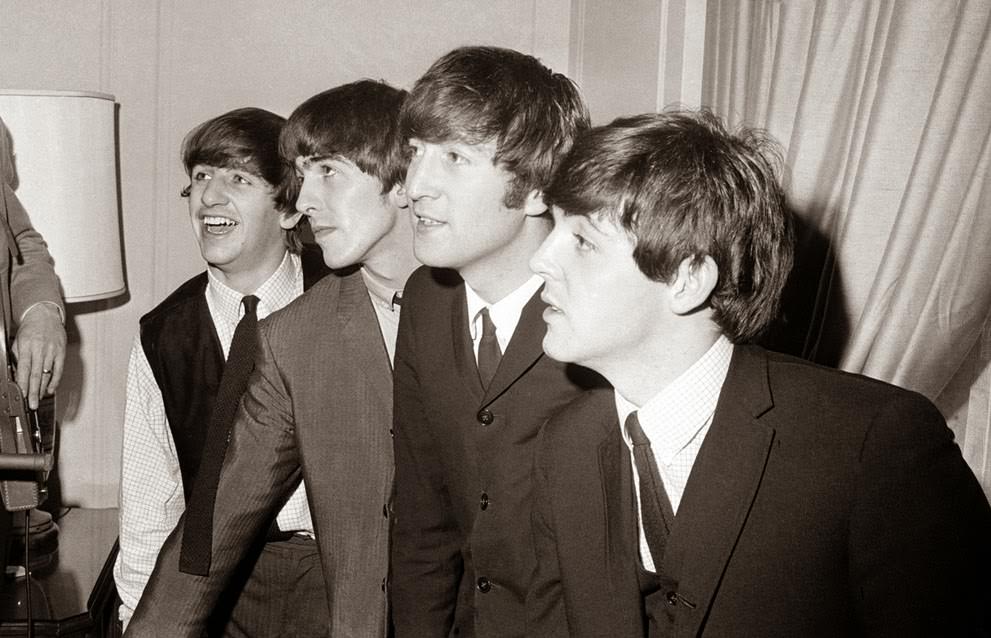
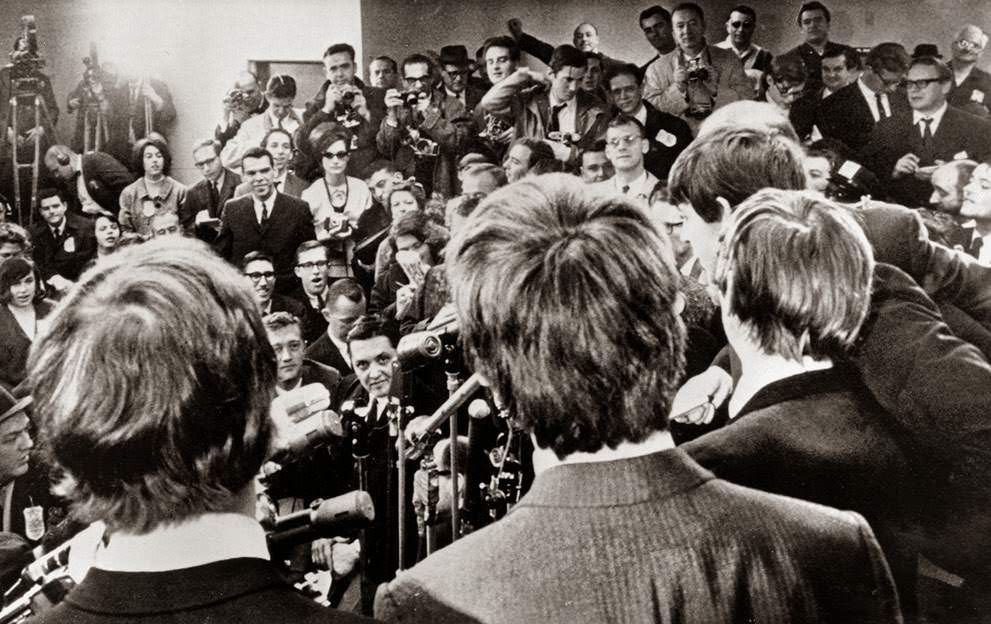
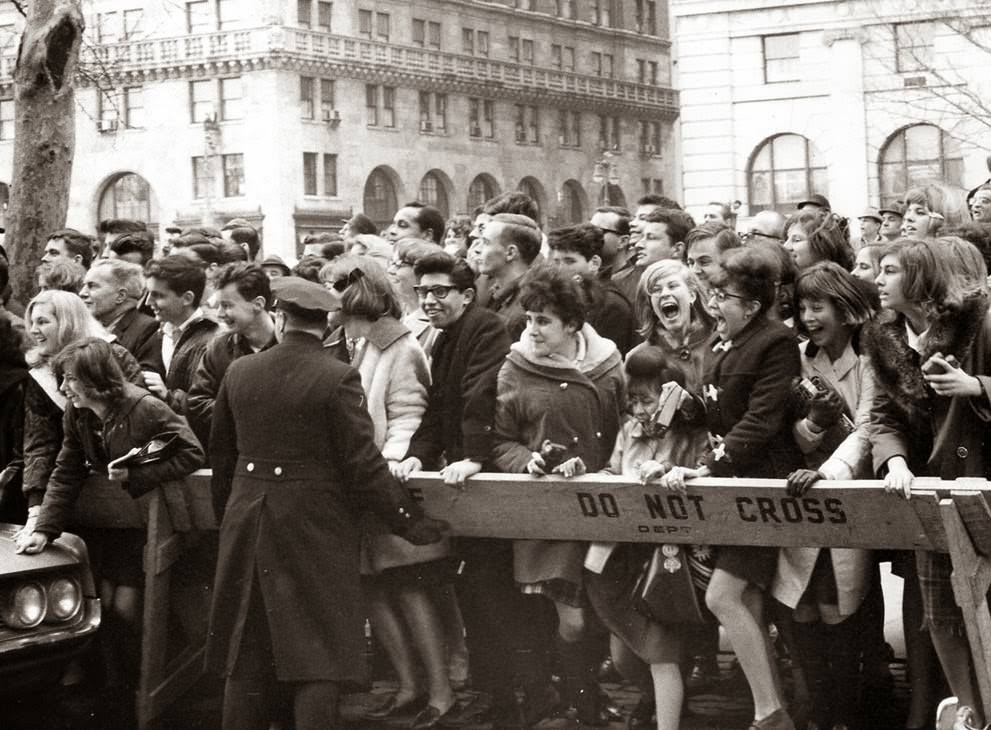
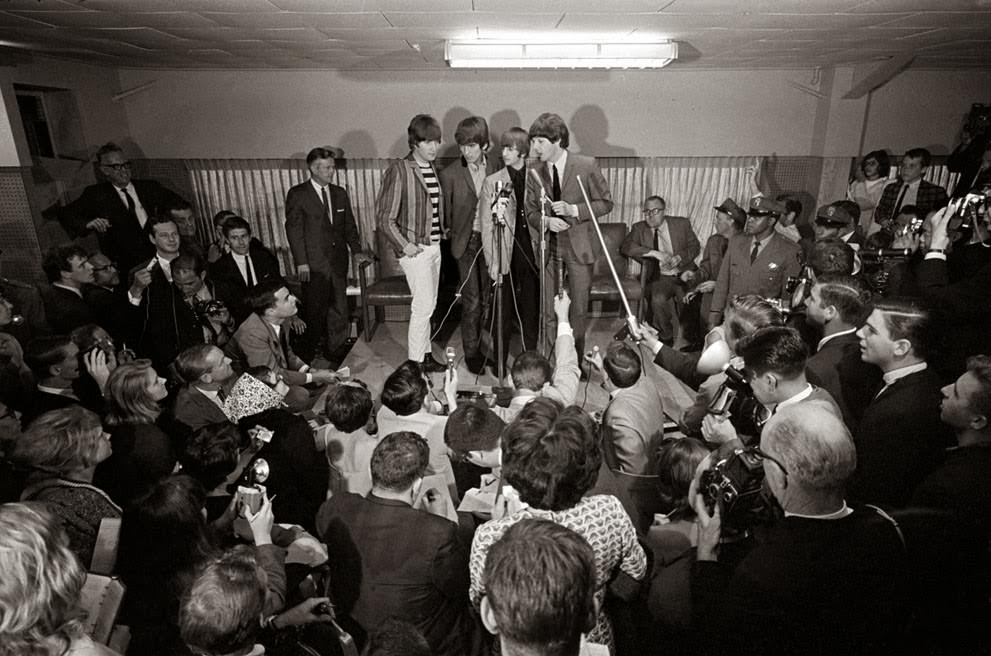
On February 7, 1964, the Beatles landed at New York’s JFK Airport. More than 3,000 screaming fans packed the terminal. Police worked to hold back a wall of teenagers waving handmade signs and cameras. The press conference that followed showed America something unexpected — four young men with sharp humor to match their music. Their wit charmed the room as much as their records had charmed the radio.
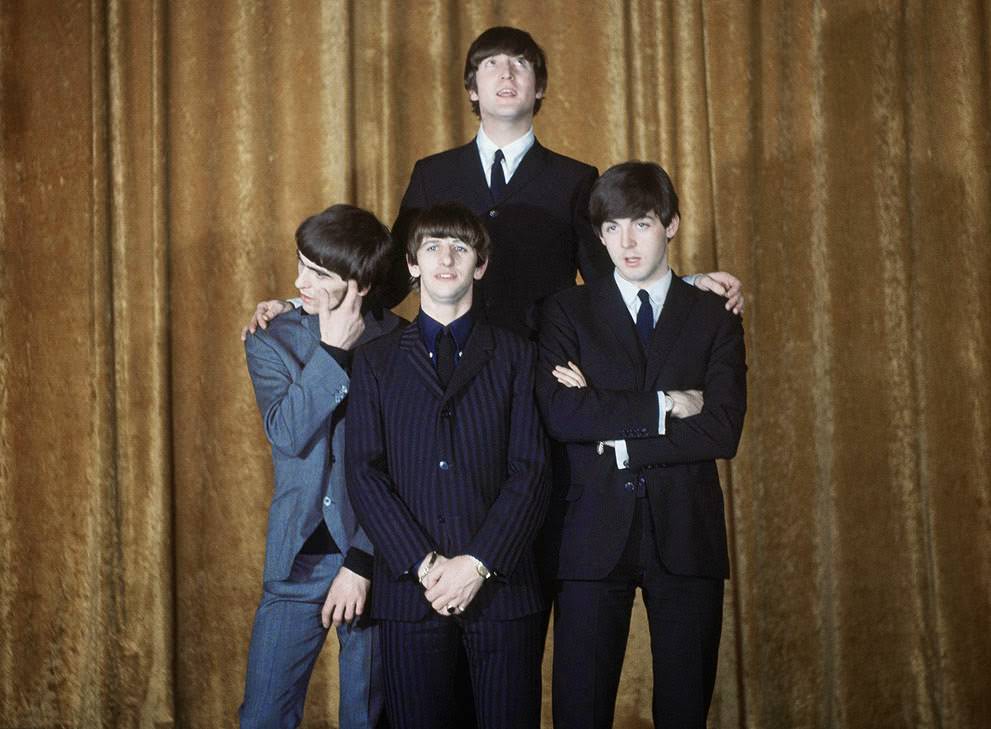
The Beatles in their New York hotel after their arrival in the U.S., 1964.The Beatles face the media on their arrival in New York, 1964.Beatles fans push forward in hopes of getting a view of the band after their arrival for an American tour in New York, 1964.
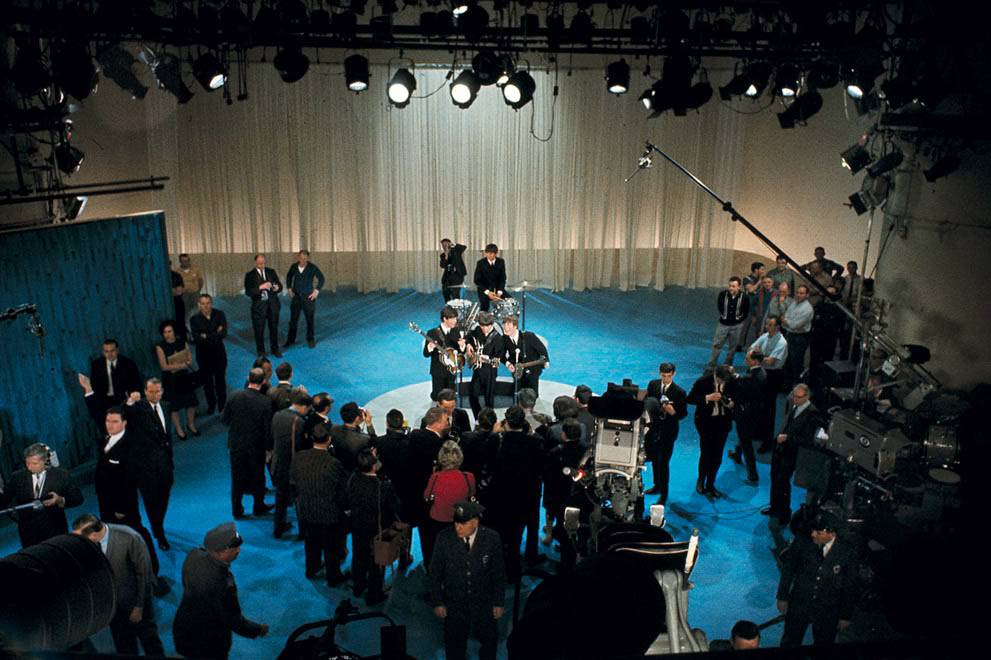
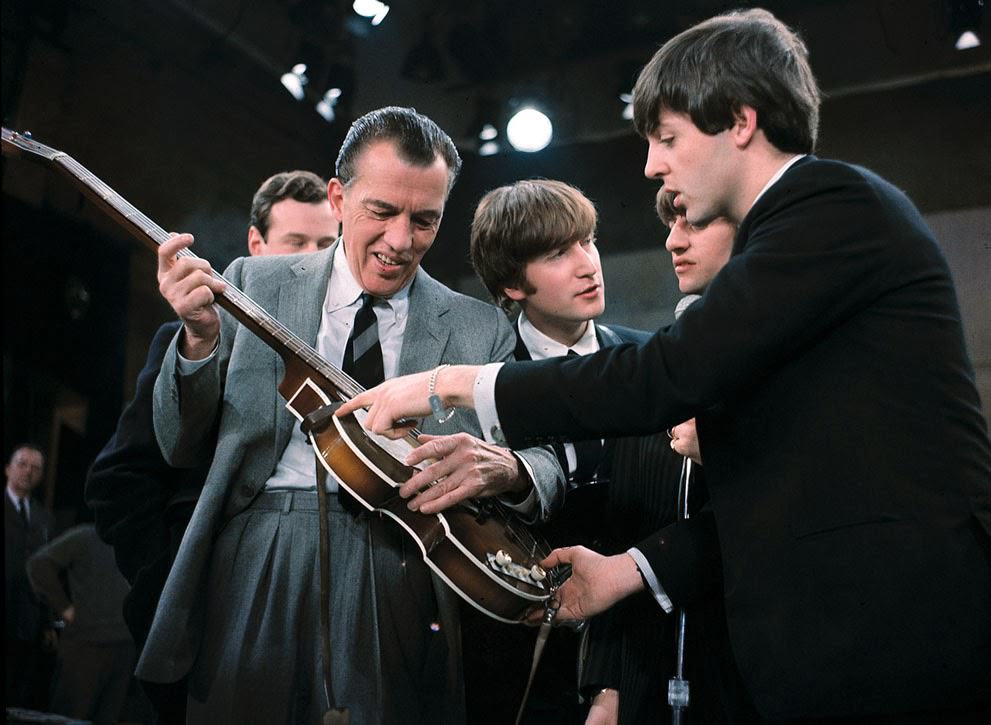
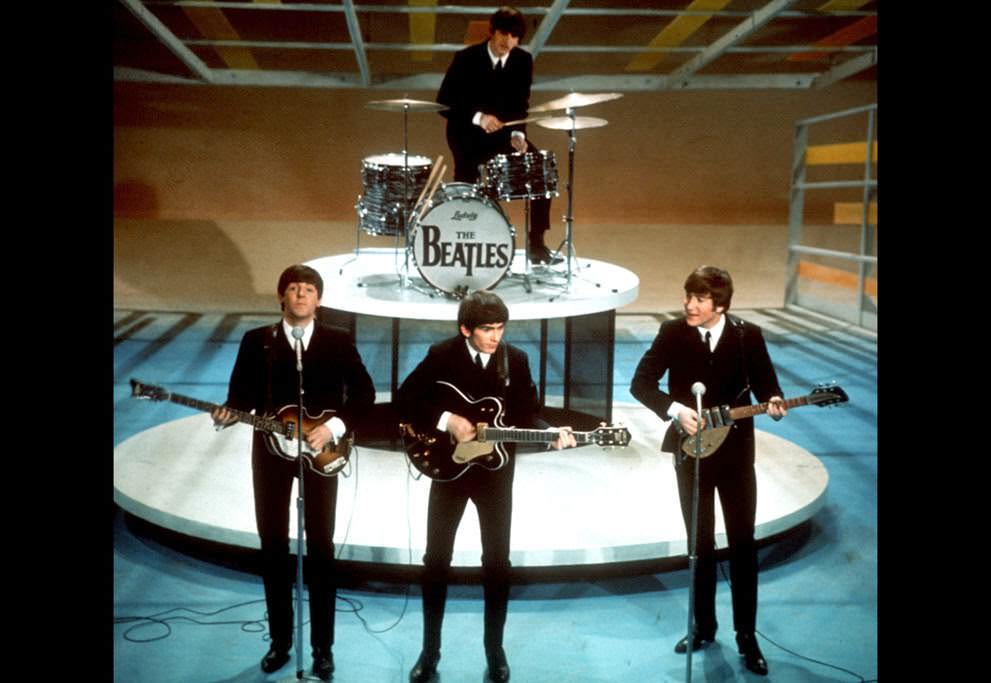
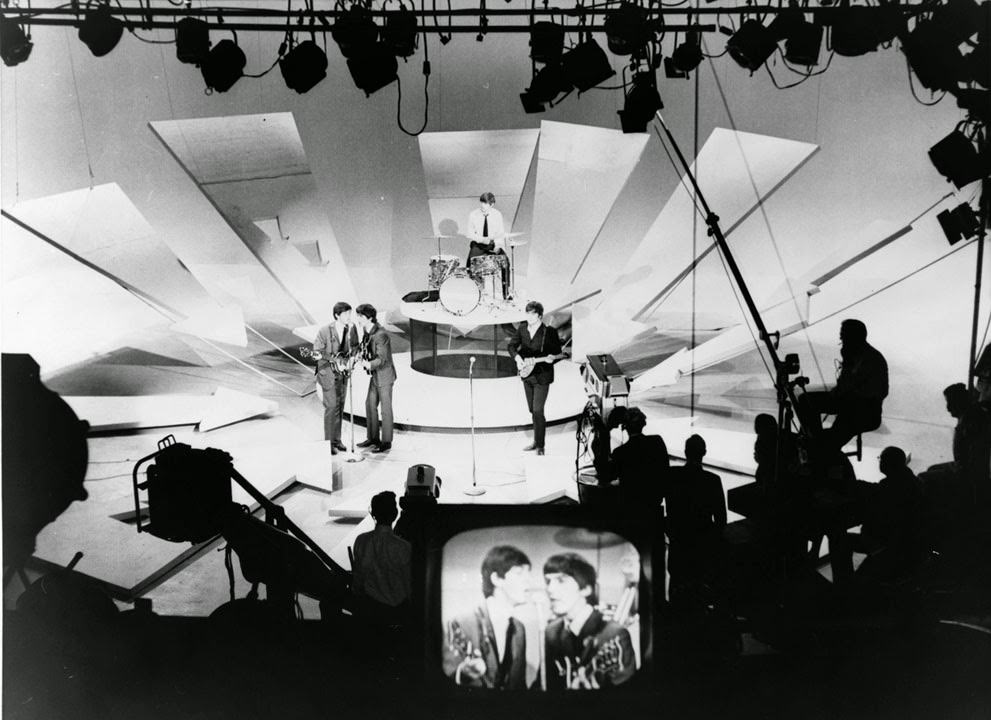
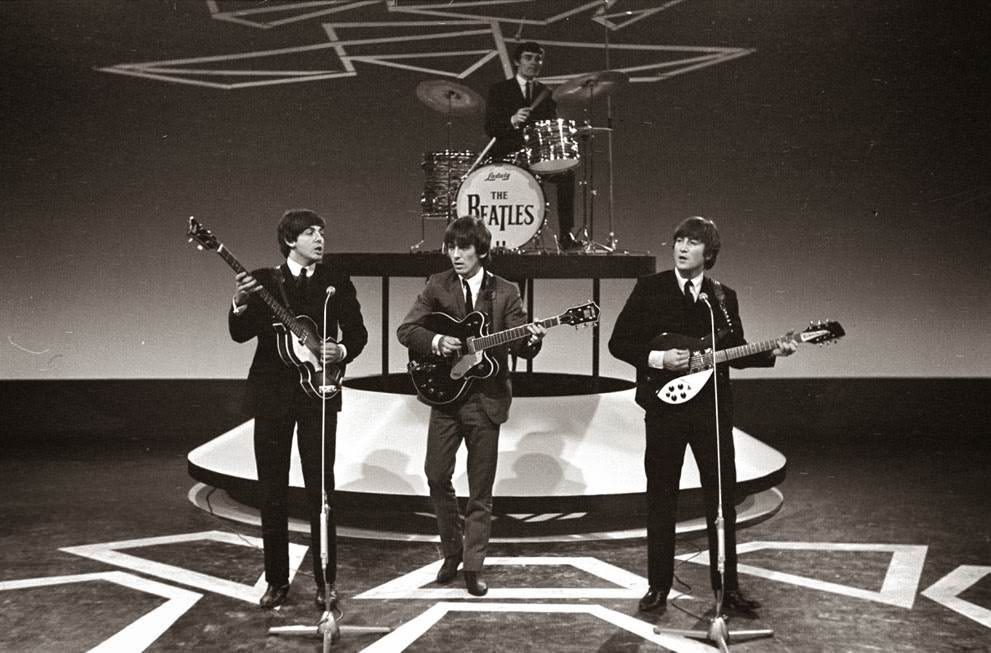
Two days after landing, they walked onto the set of The Ed Sullivan Show. An estimated 73 million people watched — roughly one-third of the entire U.S. population. Viewers saw four young men in sharp suits playing with precision and raw energy. The studio audience’s screaming nearly drowned out the music. Manager Brian Epstein was backstage. Ed Sullivan stood beside Paul McCartney as he showed off his guitar before the broadcast began.
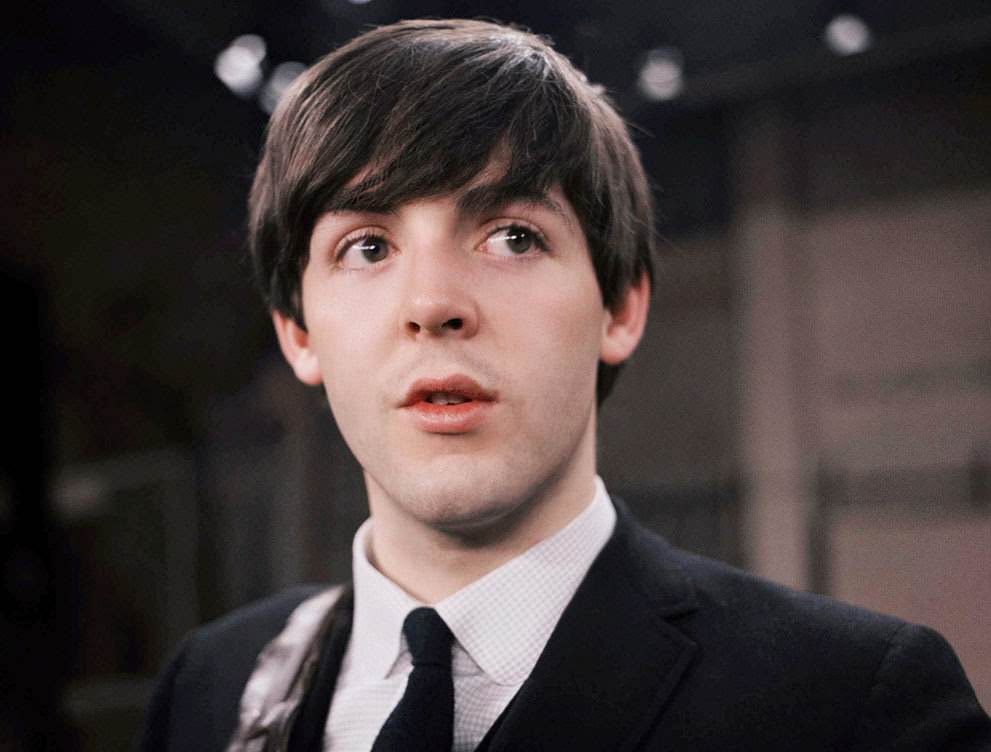
The Beatles on the set of the Ed Sullivan Show in New York, 1964.The Beatles surrounded by photographers on stage at CBS’ Studio 50 before their live television appearance on The Ed Sullivan Show in New York City, 1964.Paul McCartney on the set of the Ed Sullivan Show with the Beatles, 1964.Paul McCartney shows his guitar to Ed Sullivan before the Beatles’ live television appearance in New York; Beatles manager Brian Epstein, John Lennon, and Ringo Starr are behind Sullivan, 1964.The Beatles perform on the Ed Sullivan Show in New York; an estimated 73 million viewers saw the performance, 1964.
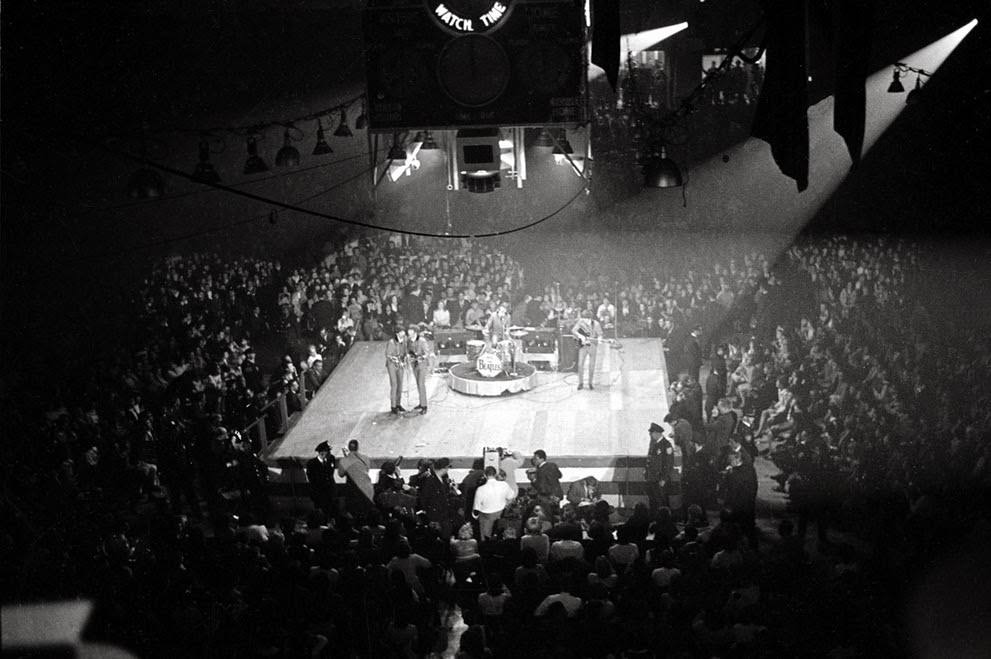
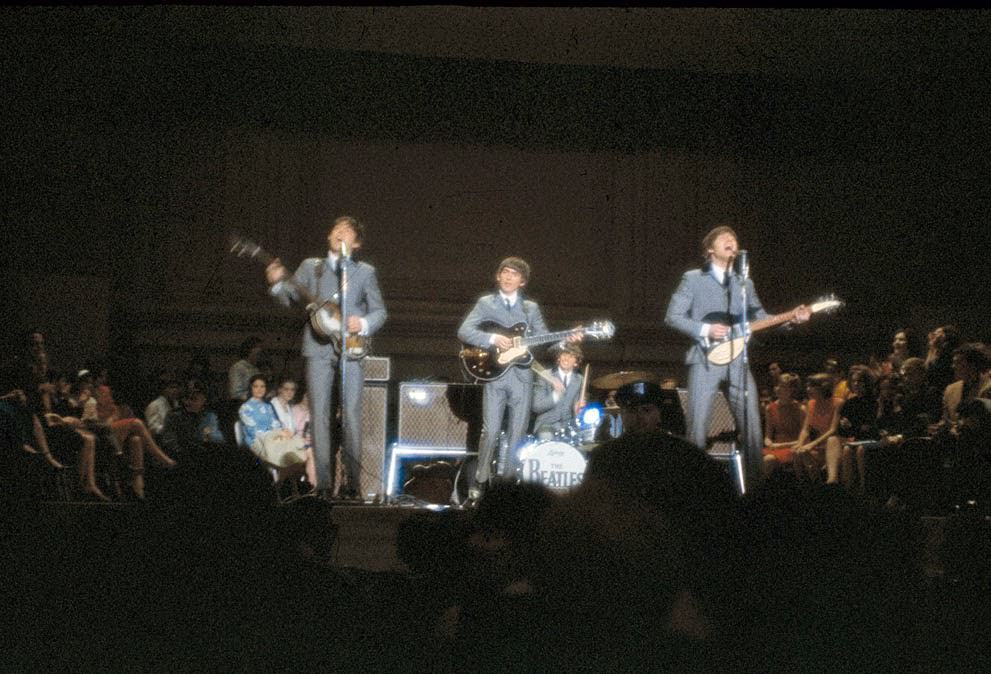
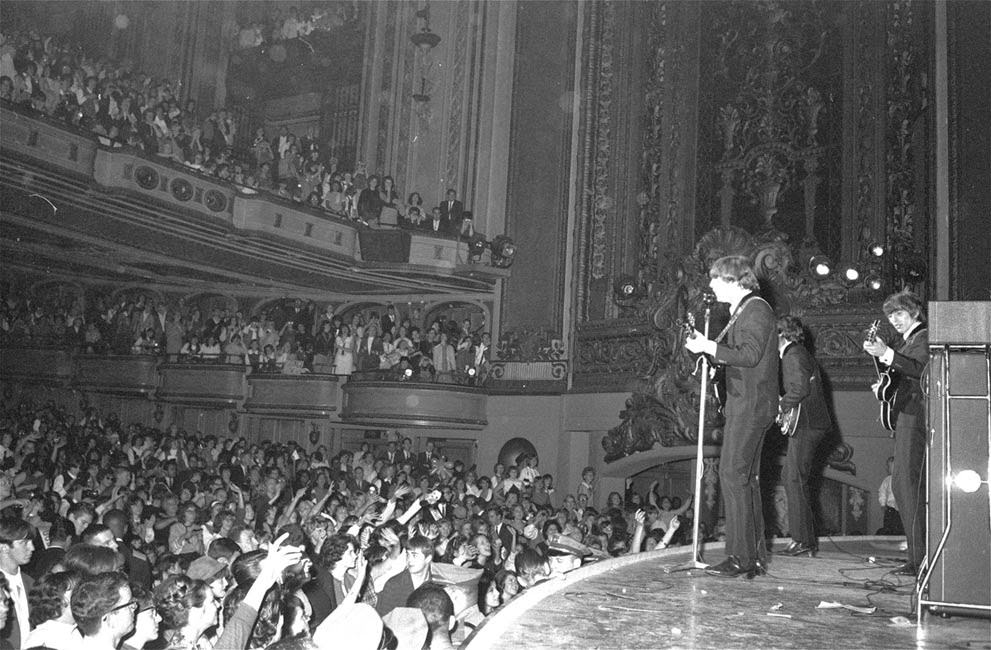
Their American tour launched immediately after. In Washington, D.C., they played a sports arena packed on all sides. The band rotated their entire stage setup between songs so every section of the crowd could see them. Concerts at Carnegie Hall in New York drew the same frenzied reactions, with police escorts required at nearly every stop.
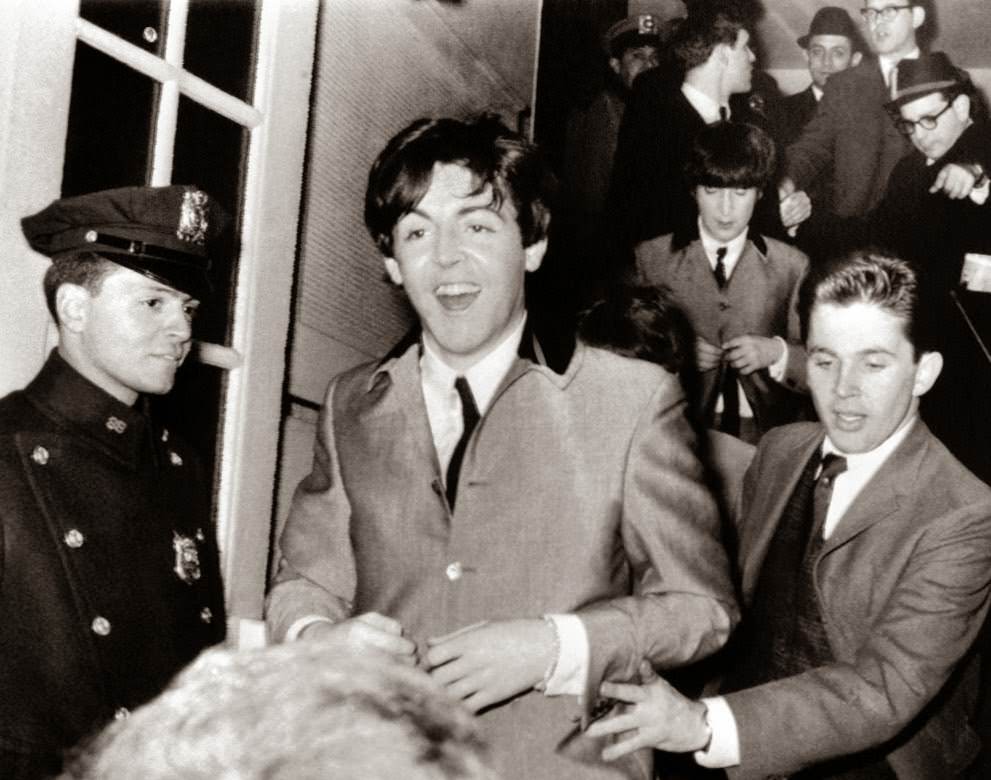
The Beatles perform at the Coliseum in Washington, D.C., during their first American tour, 1964.The Beatles perform at Carnegie Hall in New York City, 1964.Beatle Paul McCartney flashes a smile as he rushes from New York’s Carnegie Hall after two wild performances; band mate John Lennon is behind him, 1964.
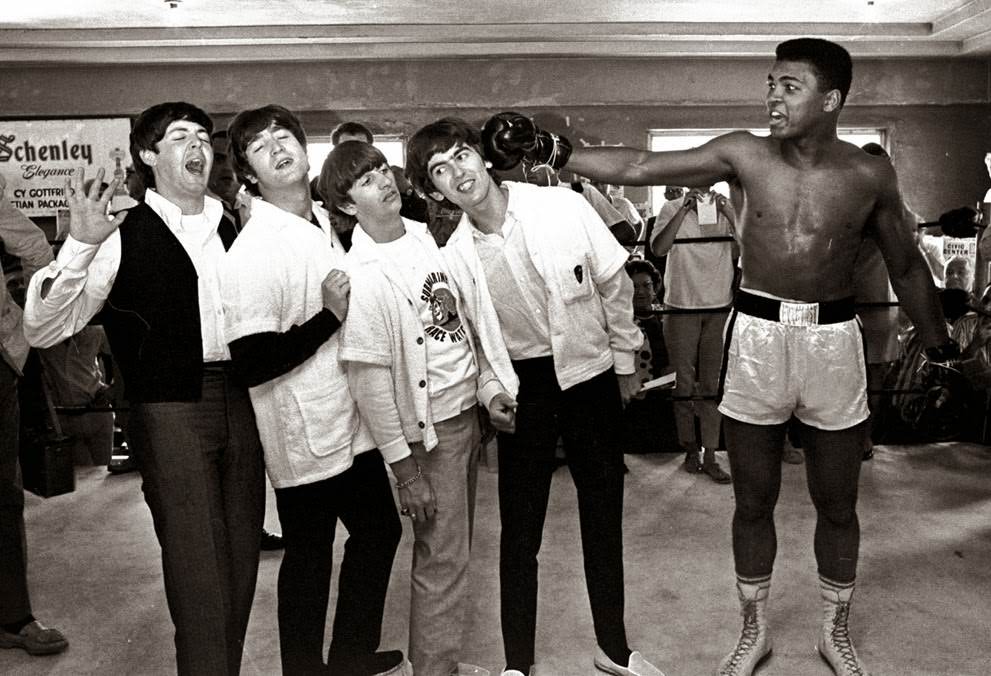
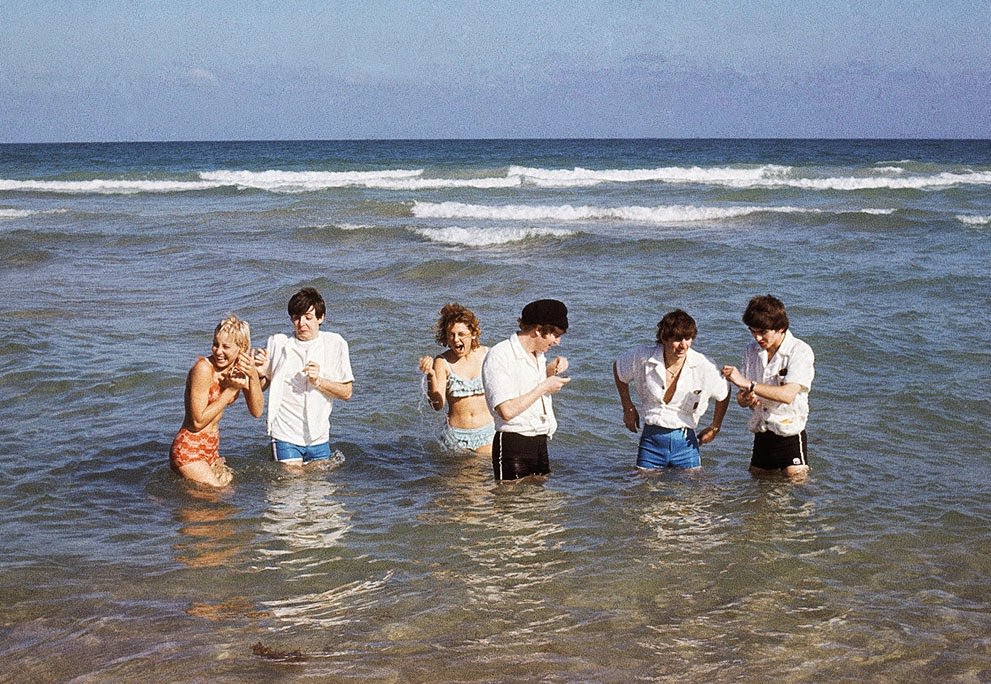
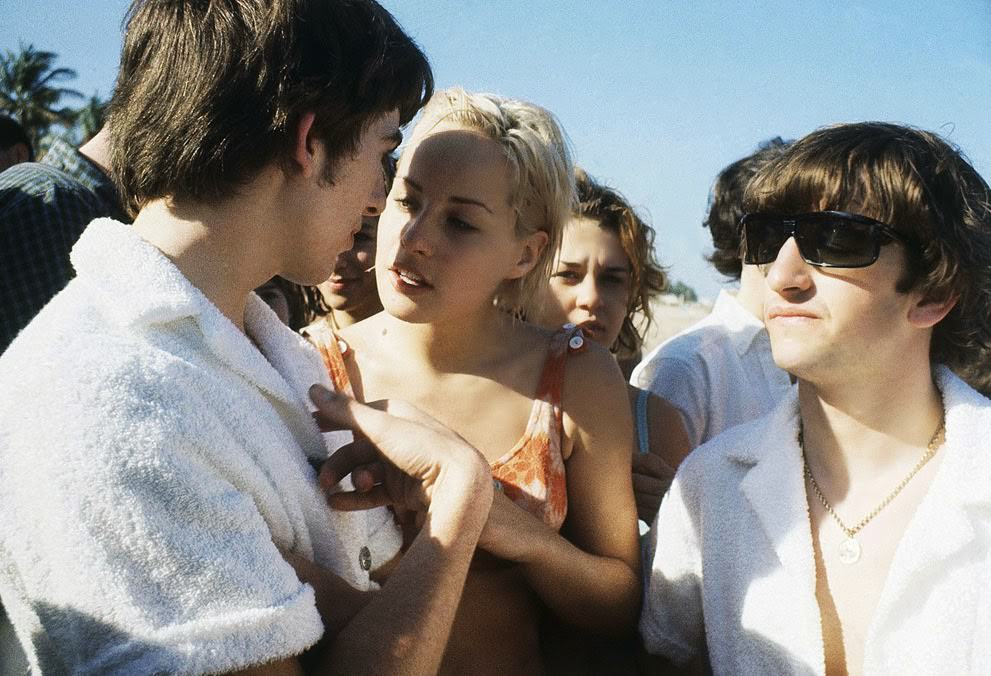
Miami brought a second Ed Sullivan appearance and a stretch of rare downtime. The band visited heavyweight boxing contender Cassius Clay at his training camp, where Clay staged a mock knockout with all four of them. They also hit the surf and beach with a second Sullivan rehearsal packed in between.
The Beatles rehearse for their second appearance on the Ed Sullivan Show, 1964.The Beatles take a fake blow from Cassius Clay, who later changed his name to Muhammad Ali, while visiting the heavyweight contender at his training camp in Miami Beach, Florida, 1964.The Beatles wade in the surf in Miami, Florida, with unidentified women, 1964.George Harrison and Ringo Starr at the beach in Miami, Florida; others are unidentified, 1964.
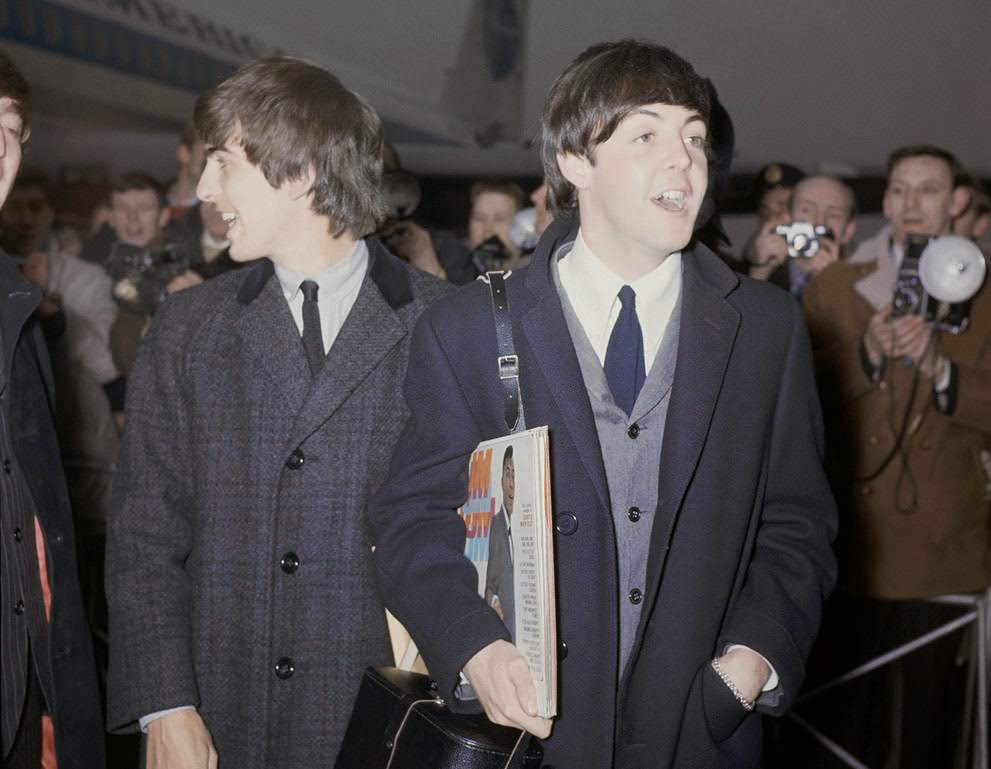
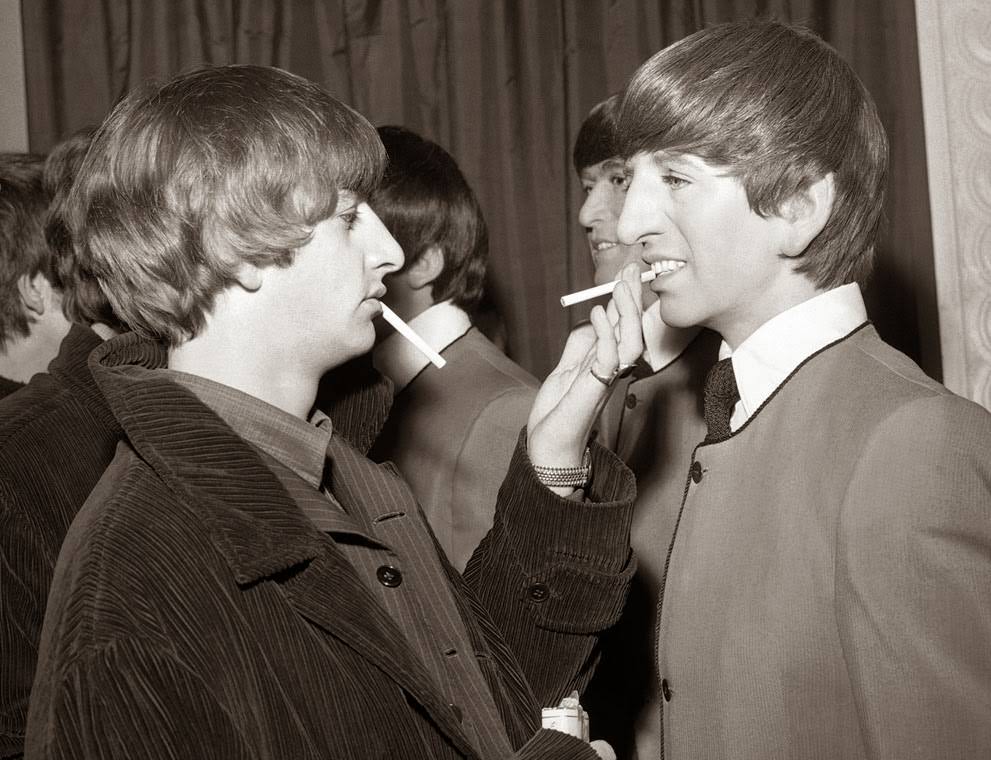
Back in Britain, their return from America drew more than 5,000 fans to London Airport. Police worked with good humor to manage the crowd. The Beatles stepped off the plane carrying record albums, still mid-conversation with each other — unfazed by the chaos around them. Wax figures of all four were unveiled at Madame Tussaud’s, and Ringo Starr marked the occasion by pressing a lit cigarette to his own likeness.
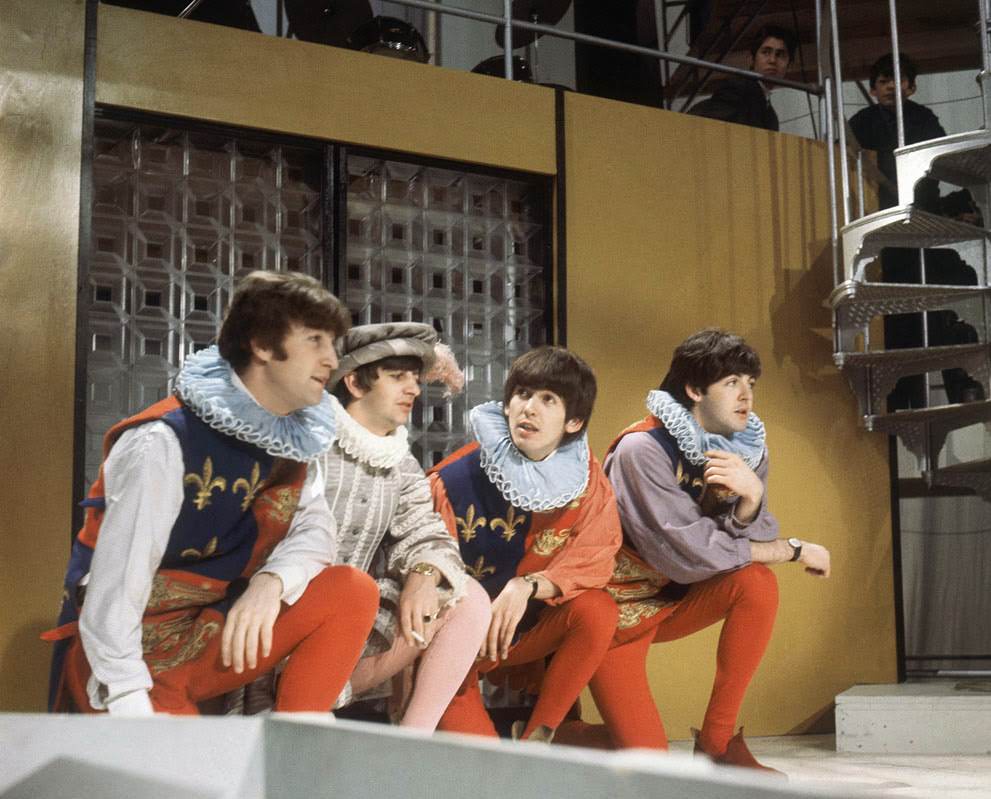
Policemen good-humoredly control screaming Beatles fans as the Liverpool pop group were welcomed by a group of more than 5,000 on their arrival at London Airport on their return from America, 1964.The Beatles arrive at London Airport after their visit to the United States; Paul McCartney is carrying record albums under his arm and George Harrison is talking to John Lennon, 1964.The Beatles surrounded by newsmen and press photographers and overlooked by hundreds of fans after their arrival at London Airport, having flown in from New York, 1964.The Beatles rehearse for their forthcoming television show at Wembley studios in London; Ringo Starr is costumed as Sir Francis Drake, and John Lennon, George Harrison and Paul McCartney play Heralds, 1964.Beatle drummer Ringo Starr eases the pain on a wax likeness of himself with a cigarette, during the unveiling ceremony for four wax models of the Beatles at Madame Tussaud’s Waxworks, in London, 1964.
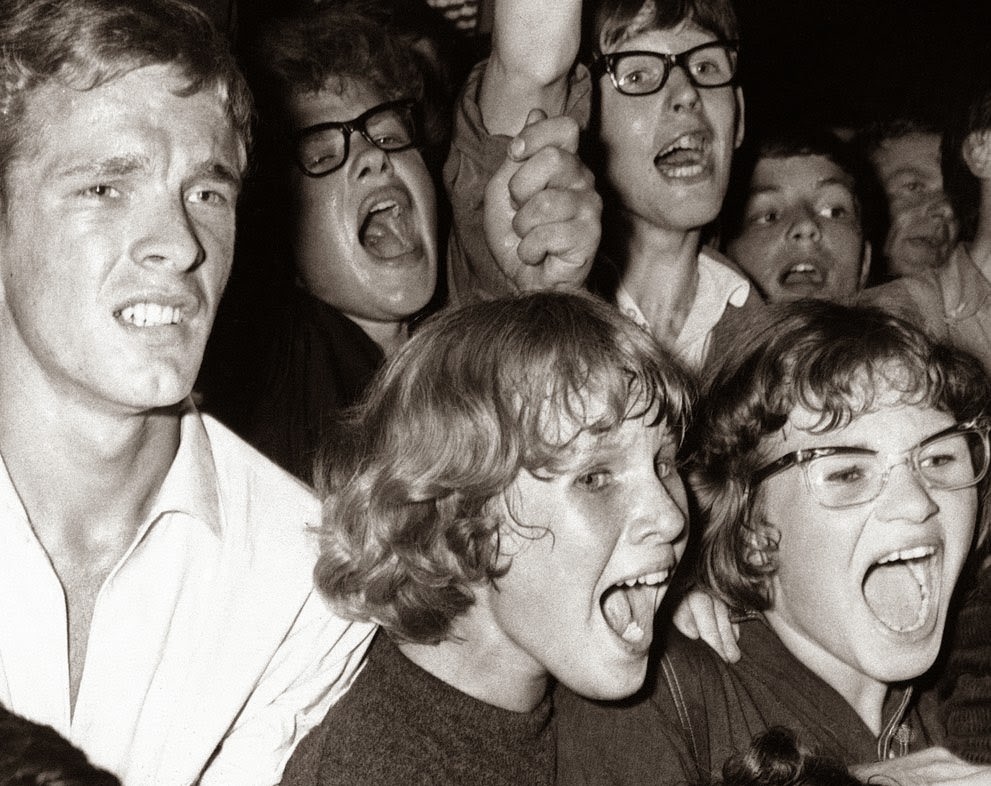
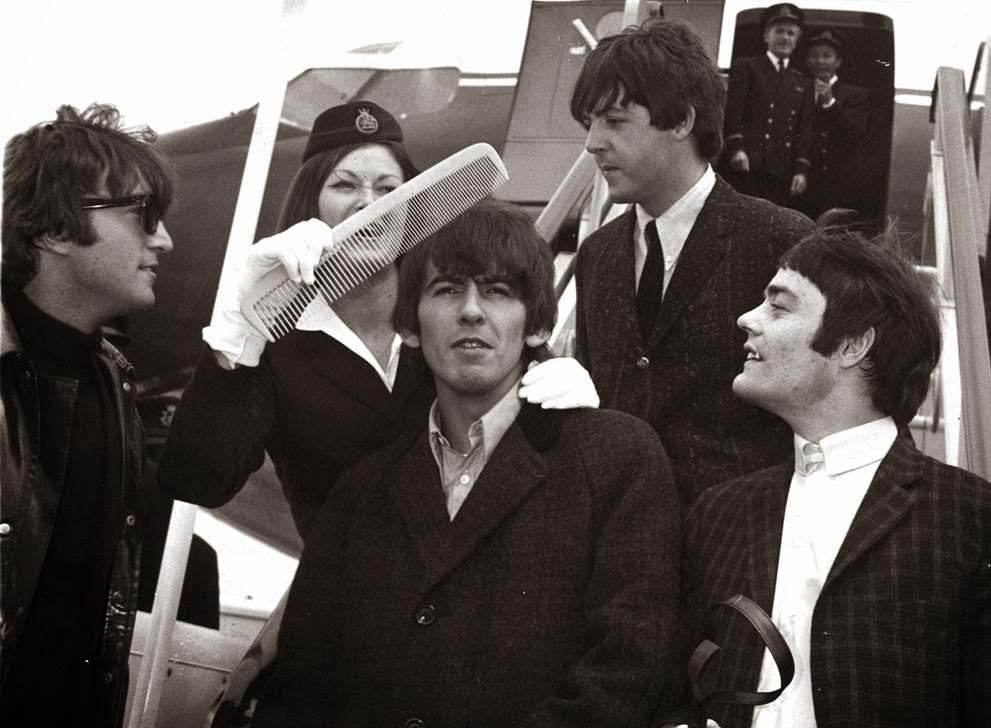
The world tour pushed on through Europe and beyond. Thousands of fans gathered outside the Royal Hotel in Copenhagen hours before the Beatles even arrived. In the Netherlands, Ringo suffered a tonsillitis attack and was briefly hospitalized. Drummer Jimmie Nicol stepped in and finished several shows in his place before Ringo rejoined the tour.
4,000 Beatles fans gathered in the streets around the Royal Hotel in Copenhagen, Denmark, several hours before the British pop group arrived; Danish police try to hold back the fans from rushing the hotel, 1964.The Beatles during television recordings in Hillegom, Netherlands; drummer Ringo Starr was briefly hospitalized after a tonsillectomy, and Jimmie Nicol sat in on drums for several concerts, 1964.Dutch fans scream and shout during a performance by the Beatles in Blokker, Netherlands, 1964.George Harrison gets the big comb treatment from BOAC stewardess Anne Creech, after their arrival at Windy airport in London; John Lennon, Paul McCartney and drummer Jimmy Nicol, who stood in for Ringo Starr for the trip to The Netherlands are also pictured, 1964.
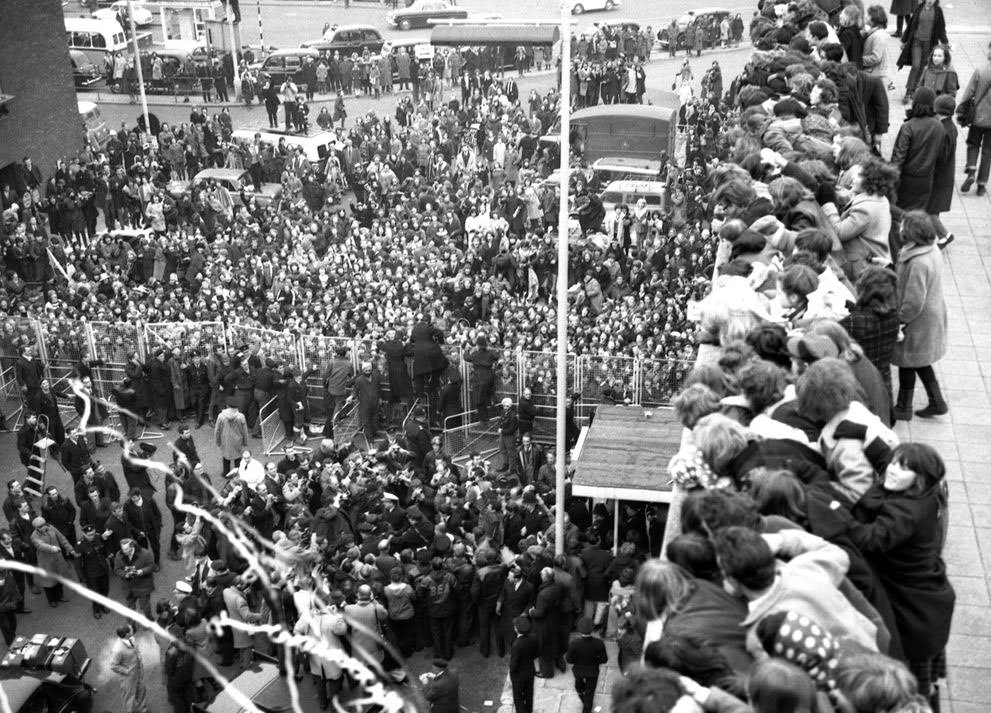
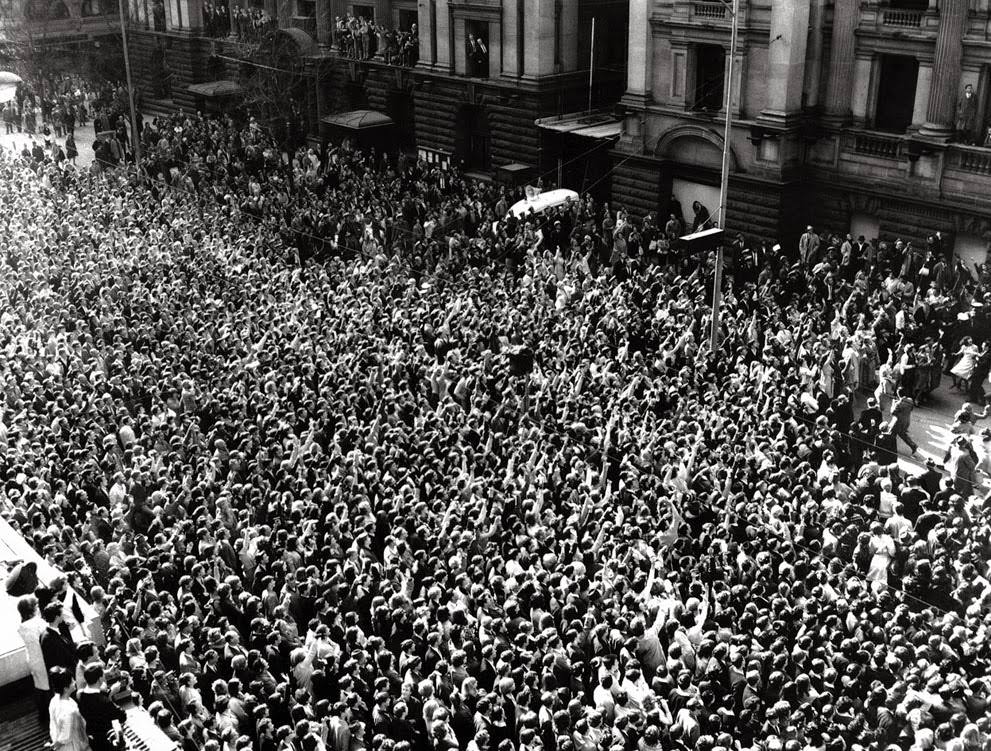
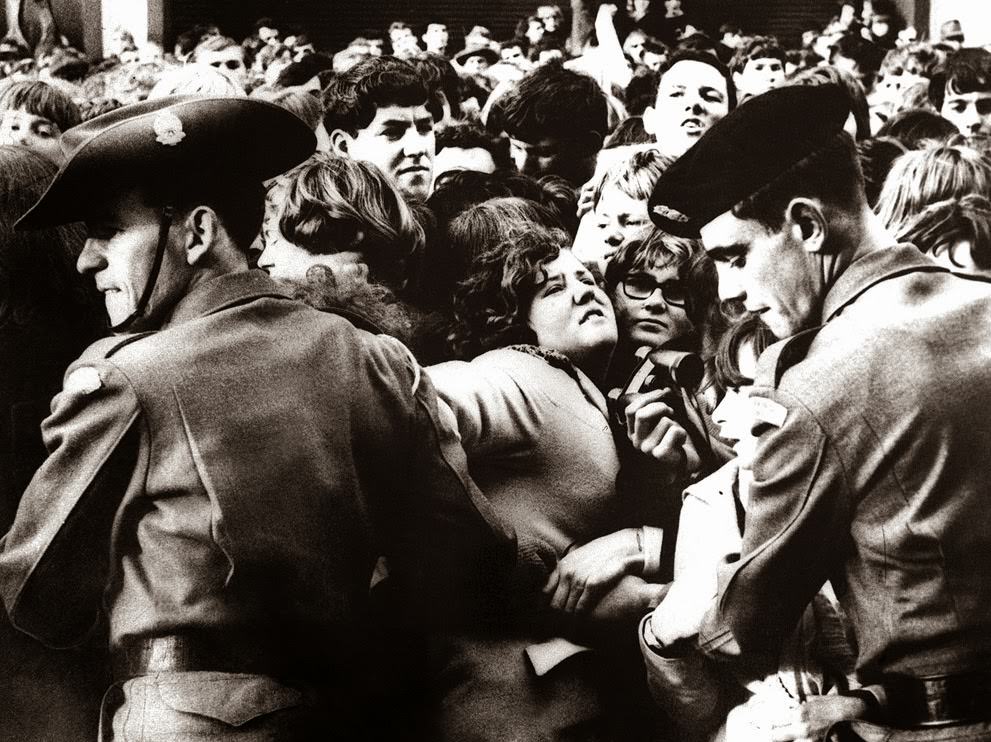
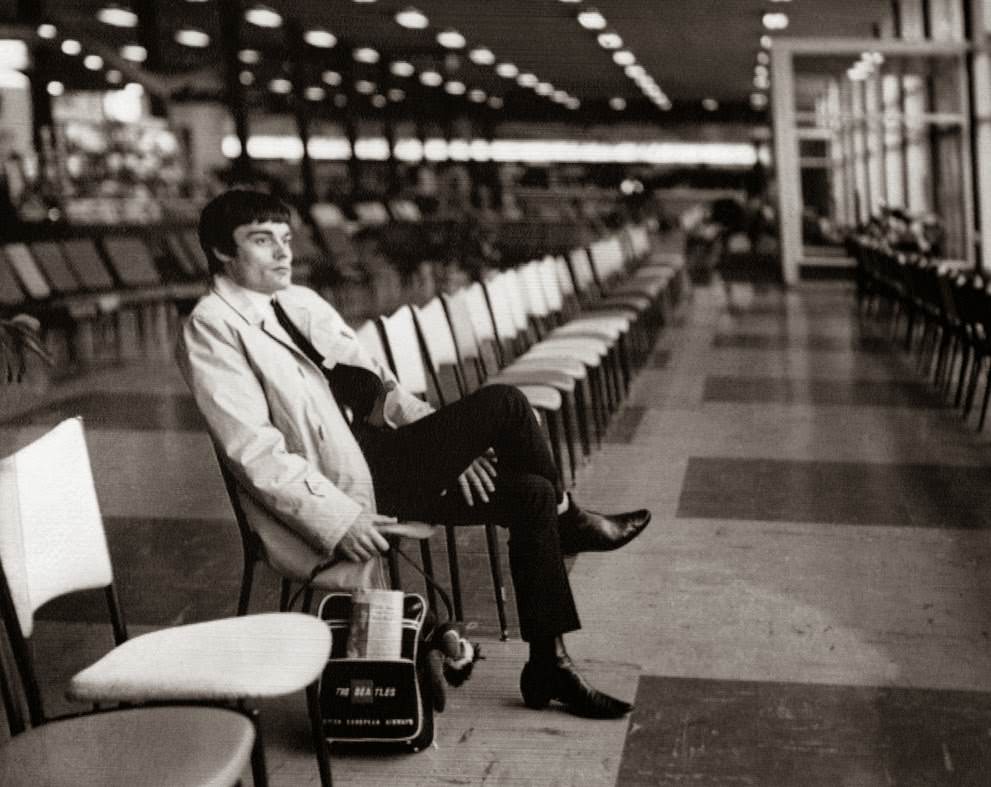
Australia was no different. In Melbourne, 300 police officers and 100 soldiers were deployed to manage 10,000 screaming fans outside the Southern Cross Hotel. Jimmie Nicol, whose brief stint as stand-in drummer had just ended when Ringo rejoined the band, sat alone at Melbourne’s Essendon Airport waiting to fly home — a quiet contrast to the storm surrounding the four Beatles just blocks away.
A section of the huge crowd which gathered outside the Town Hall in Melbourne, Australia, to greet the Beatles, during their tour of Australia and New Zealand, 1964.Two Australian soldiers link arms to control a section of the crowd outside the Southern Cross Hotel in Melbourne on the arrival of the Beatles; some 300 policemen and 100 soldiers made an attempt to contain 10,000 screaming fans, 1964.Drummer Jimmy Nicol, who had been stand-in for tonsillitis-stricken Beatle Ringo Starr, sits alone and contemplative at Melbourne’s Essendon Airport, while waiting to return home; Ringo rejoined the Beatles the day before, 1964.
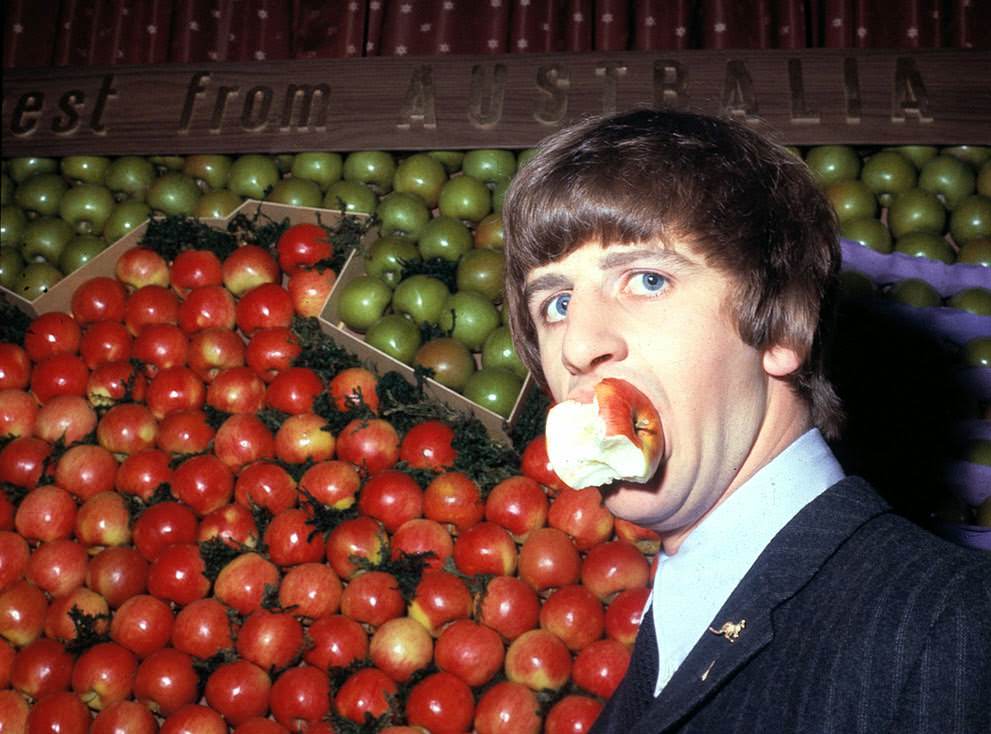
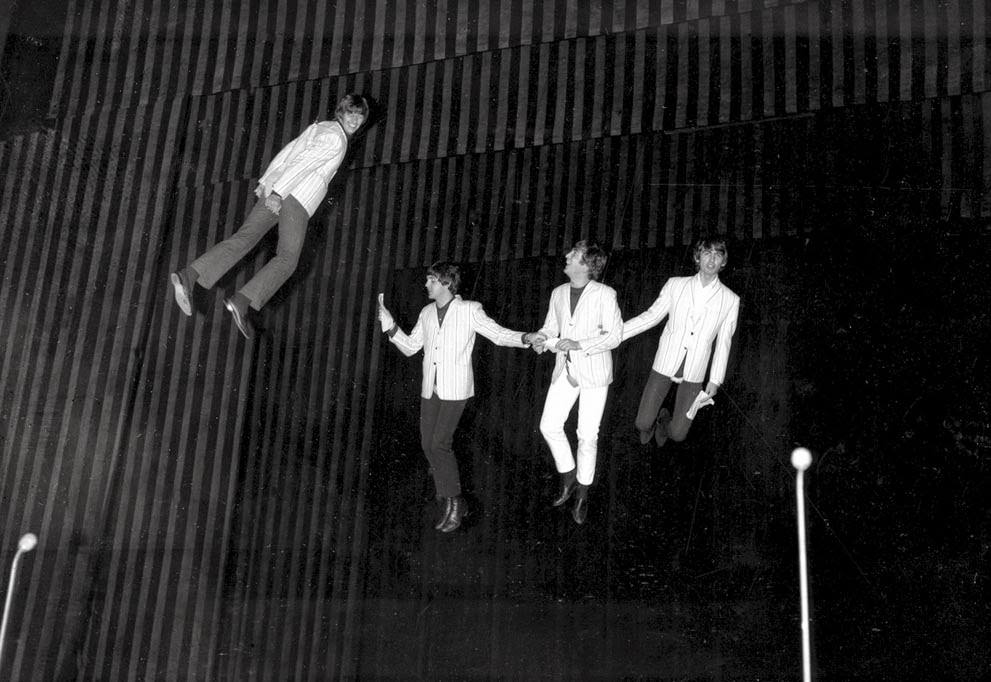
Press conferences became a near-daily event throughout the year. The Beatles sat for interviews in every city, answering the same questions with the same sharp humor they’d shown from the start. Merchandise flooded store shelves globally — wigs, lunchboxes, buttons — while fans at home tracked every move through newspapers and newsreels.
The four members of the Beatles hold a press conference, 1964.Ringo Starr samples an apple during a visit to Australia House in London, 1964.The Beatles are suspended in midair above the stage during rehearsal for their part in the charity show “Night of 100 Stars” at the Palladium in London, 1964.
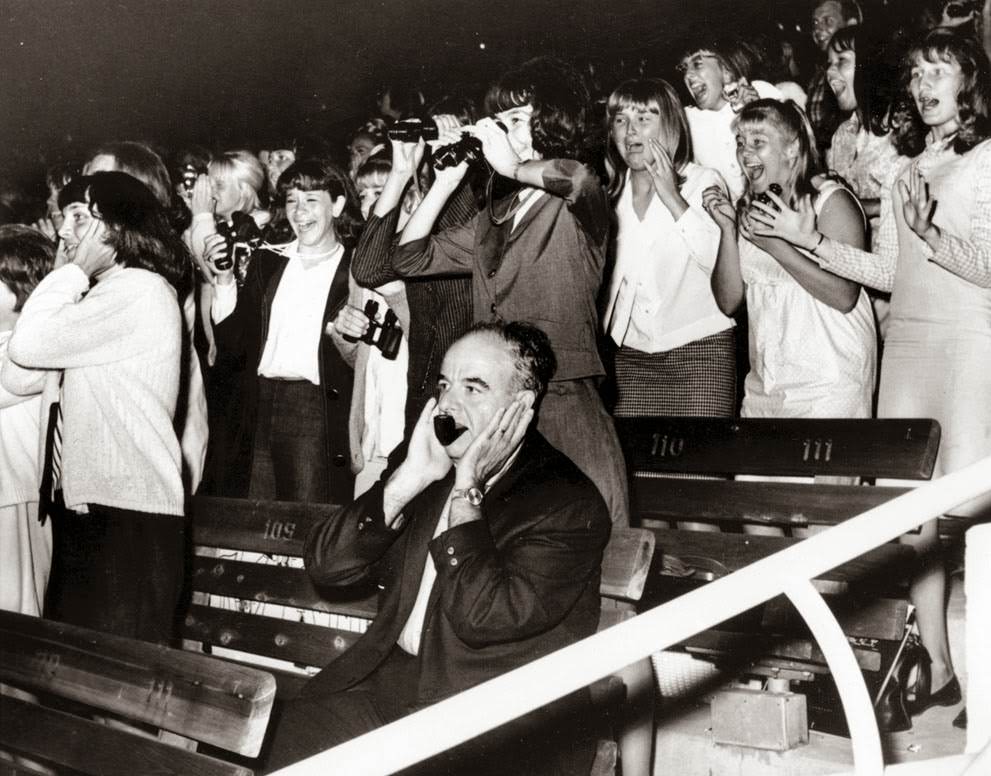
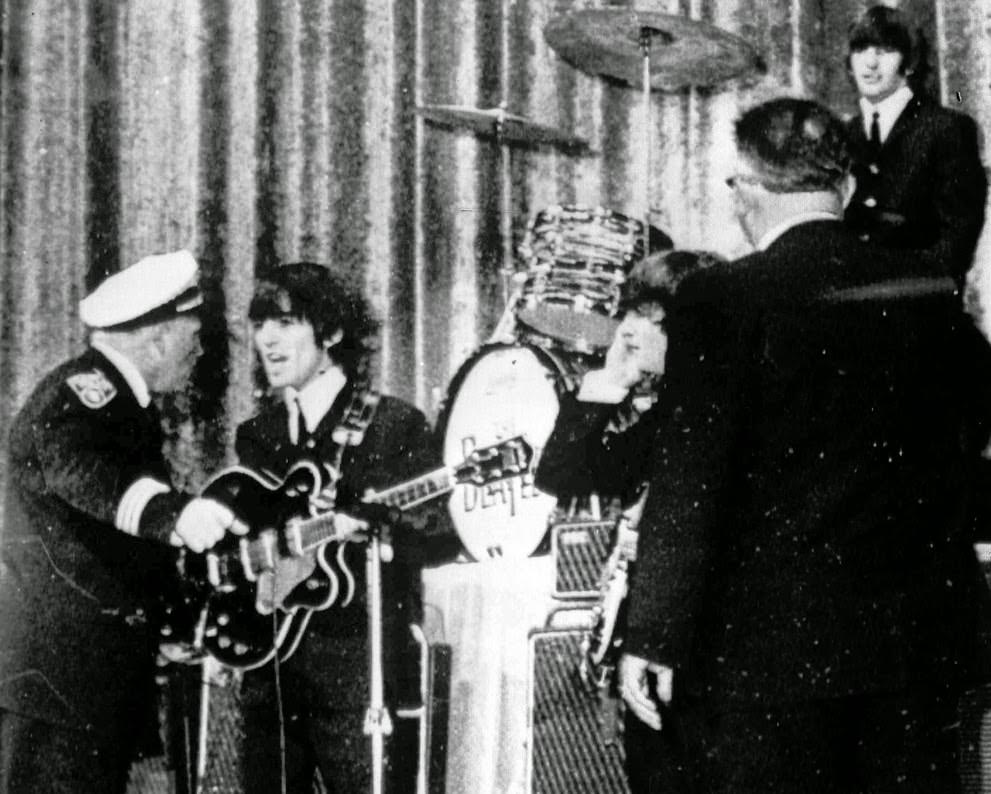
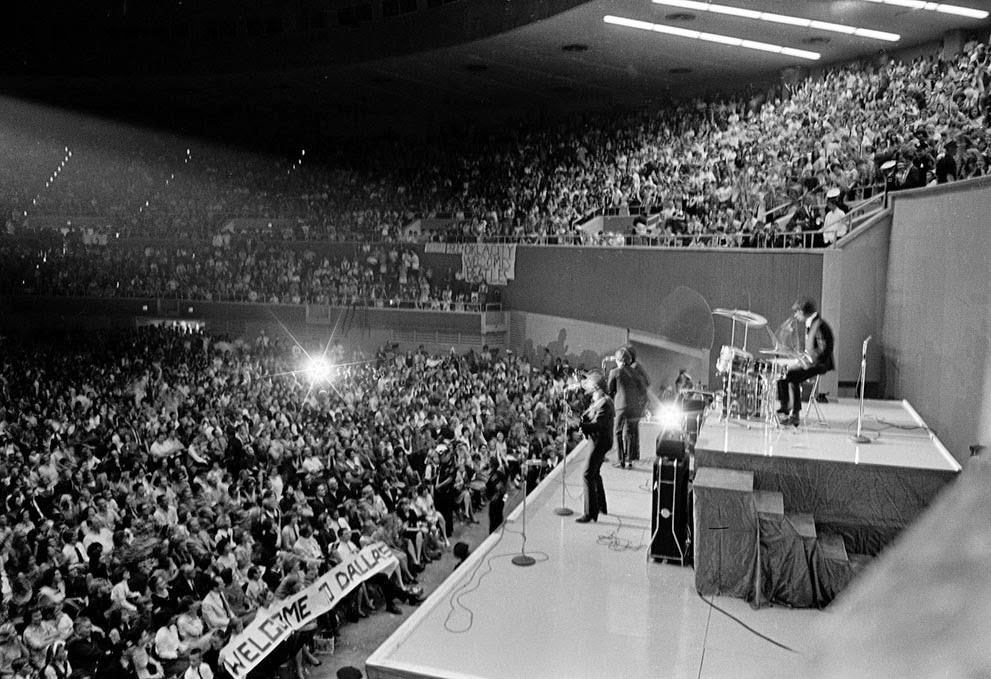
The second U.S. tour that summer was even more intense. At the Hollywood Bowl, 18,000 fans screamed so loudly that one man in the audience covered his ears. In Cleveland, police inspector Carl Bear physically ordered the Beatles off the Public Hall stage after teenagers rushed it. At Los Angeles International Airport, a brief stopover triggered a mass reaction from thousands kept behind security lines — just the sight of the Beatles at a distance was enough.
Just the sight of The Beatles from a distance caused this reaction among a group of girls at the Los Angeles International Airport; airport security kept several thousand youngsters away from the British singers during a brief stopover in Los Angeles en route to San Francisco, 1964.Despite a constant din of screaming teenagers, the Beatles successfully opened their second U.S. tour in San Francisco, 1964.A man covers his ears as 18,000 screaming fans react to The Beatles in the Hollywood Bowl, California, during their U.S. concert tour, 1964.Police Inspector Carl Bear of Cleveland’s Juvenile Bureau orders George Harrison and the other members of the Beatles off the stage of the Public hall in Cleveland, Ohio, as teenagers rushed the stage, 1964.The Beatles perform at the Memorial Coliseum in Dallas, Texas, on their second U.S. tour, 1964.
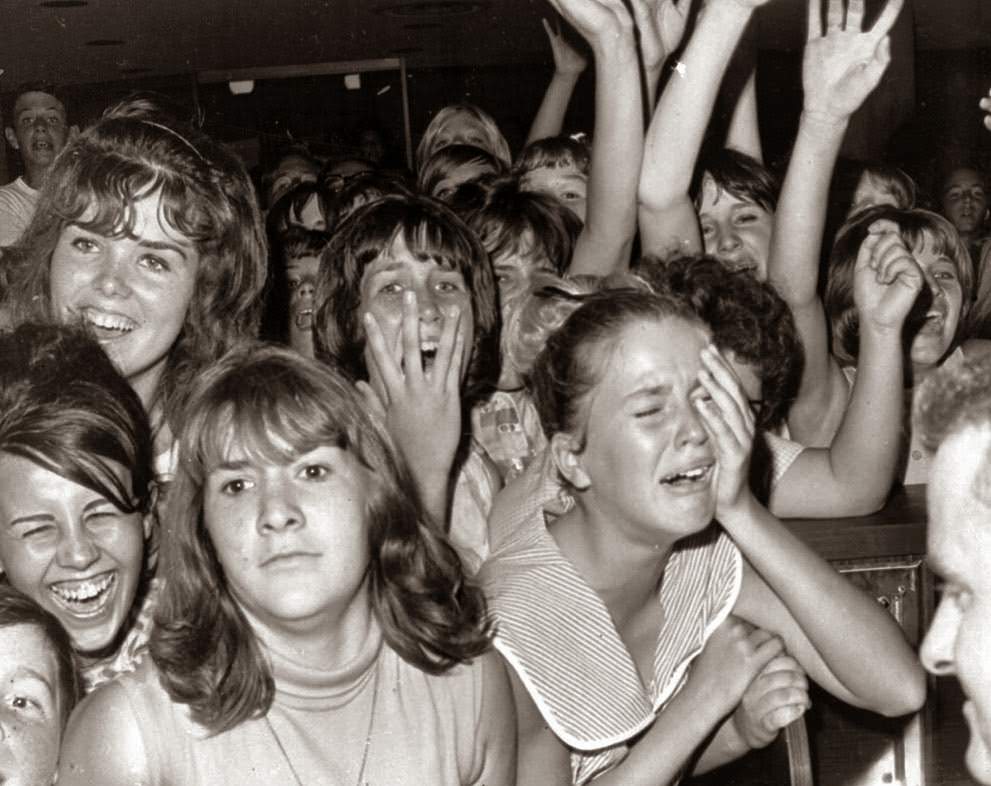
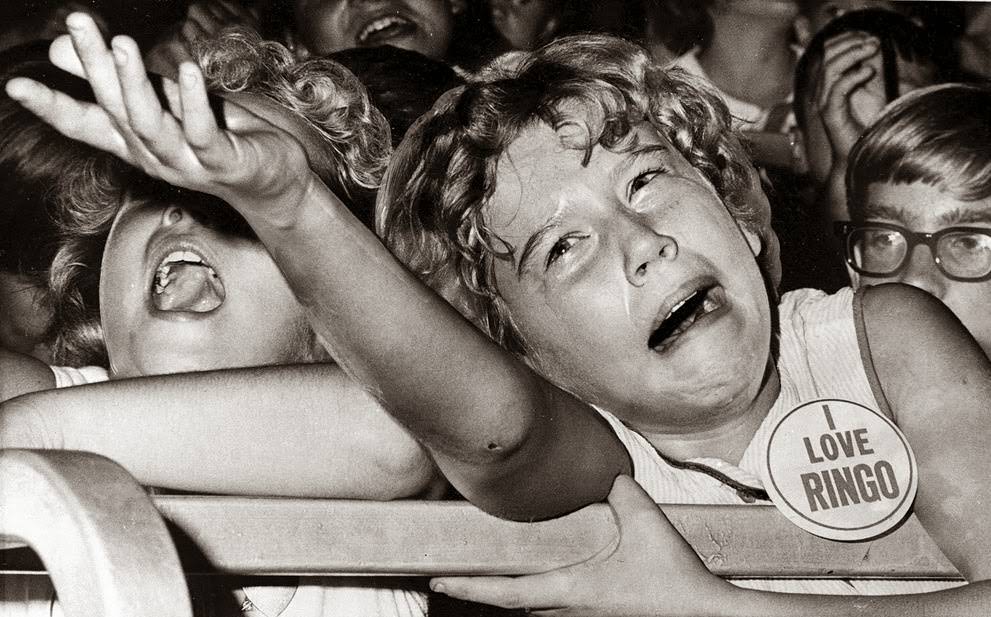
At every venue, the scenes were the same. Fans wept at police barriers, clutching homemade signs and band buttons. At two Indiana State Fair shows in Indianapolis, one tearful fan pleaded with an officer to deliver her Ringo Starr button backstage. The officer didn’t take it. The Beatles, meanwhile, kept playing.
A tearful Beatle lover pleads unsuccessfully with a policeman to carry her fan button to Ringo Starr at two Indiana State Fair shows in Indianapolis, 1964.
Rachel Mitchell is a vintage fashion enthusiast with a passion for all things retro. She is interested vintage fashion styles, trends, and accessories, and provides tips and tricks for incorporating vintage pieces into modern wardrobes.