The classic cars of the early to mid-20th century were more than just sleek designs and powerful engines — they were laboratories for bold, sometimes outlandish ideas. Engineers and designers of that era were not afraid to experiment, producing features that ranged from the brilliantly practical to the downright bizarre. The ten entries below highlight some of the most unusual and inventive features ever fitted to an automobile, reminding us just how creative — and occasionally strange — the golden age of automotive design truly was.
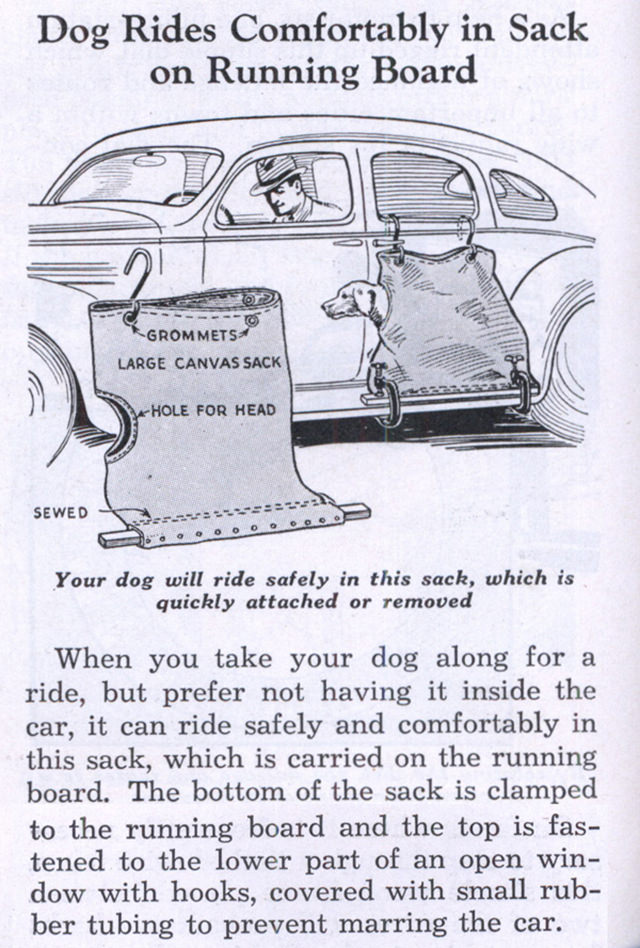
Featured in the June 1935 issue of Popular Mechanics, the Dog Sack was a peculiar automotive accessory designed for pet owners. It was essentially a sack or bag that attached to the exterior of a car, specifically the running board, which was common in vehicles of that era. The idea was to provide a space for the dog to enjoy fresh air while traveling, without bringing dirt, mud, or fur into the vehicle’s interior. The sack had openings to ensure that the dog could breathe and see outside.
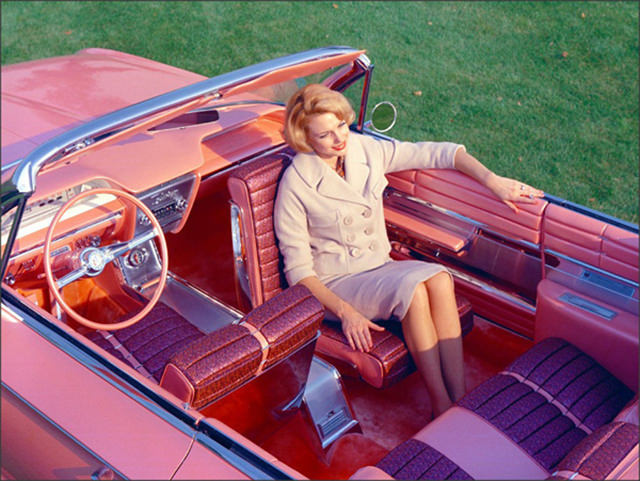
The 1961 Buick Flamingo was a standout show car featured in the final General Motors Motorama. It was essentially a ’61 Buick Electra 225 convertible, but with distinctive and luxurious features. The car was finished in a special Flamingo Pink color, complemented by a two-tone pink leather interior. Among its most notable features were the floating bucket seats, with the passenger seat capable of a 180-degree swivel. This swivel seat allowed the passenger to rotate the seat completely, facing either the rear or the side of the car, enhancing interaction with other passengers and offering a unique perspective of the surroundings. This feature was quite innovative for its time, reflecting the era’s fascination with futuristic design and automotive luxury.

Goodyear’s illuminated tires, introduced in 1961, were a unique automotive innovation. These tires were made from a translucent synthetic rubber and contained internal lighting. The concept involved embedding small, incandescent light bulbs inside the tires, which would illuminate them from within. This design aimed to create a glowing effect on the wheels, enhancing the aesthetic appeal of the vehicle, especially at night. The translucent material of the tires allowed the light to pass through, creating a distinctive and futuristic look.
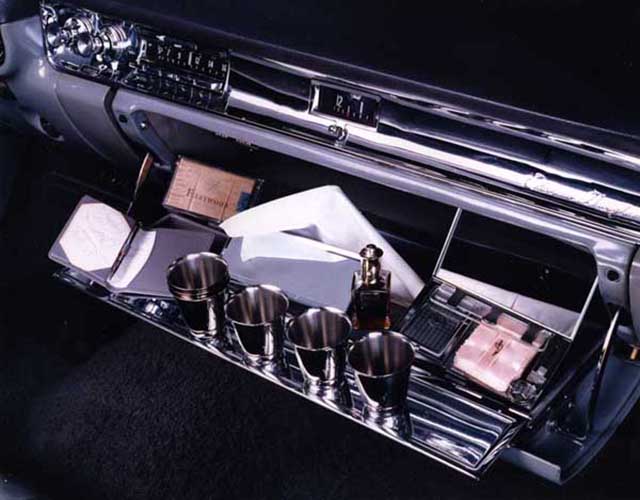
The 1957 Cadillac Eldorado Brougham was a luxury vehicle that included an unusual feature for its time: a magnetized minibar in the glovebox. In an era before strict DUI/DWI laws, this minibar was a symbol of opulence and sophistication. It was designed to securely hold liquor bottles and glasses, using magnetization to keep them in place while the car was in motion. This feature catered to the high-end lifestyle of the 1950s, where social drinking was a common practice, even during travel. Alongside the minibar, the vehicle also included other luxury accessories, such as a complete woman’s grooming compact with essentials like a matching leather notebook, a cigarette case, a comb, and an atomizer filled with “Arpege Extrait de Lanvin” perfume.
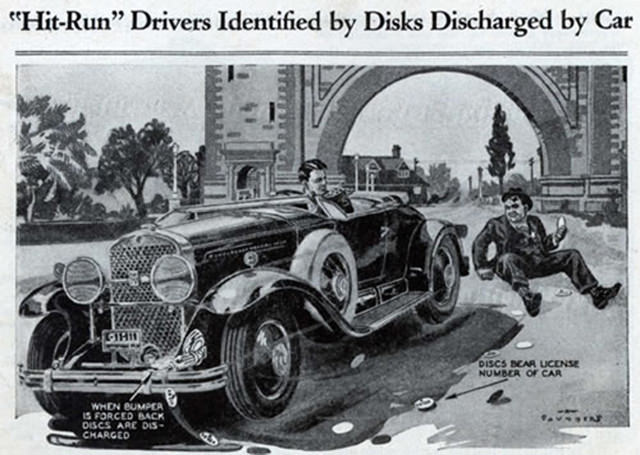
A unique automotive safety concept was proposed in a 1931 issue of Popular Mechanics, aimed at addressing hit-and-run incidents. This invention consisted of a special device mounted on a car’s bumper that would automatically discharge small discs upon impact. These discs were designed to carry crucial identification information, such as the car’s license number and the name of the driver. The idea was that if a vehicle were involved in an accident, especially a hit-and-run, these discs would be ejected at the scene, providing a means for law enforcement and victims to identify the offending driver.

The Amphicar, produced from 1961 to 1968, was a unique vehicle designed to operate both on land and in water, functioning as a car and a boat. It was a convertible equipped with a small, rear-engine four-cylinder Triumph motor. For aquatic operation, it featured twin propellers, allowing it to navigate water. On land, it used a standard four-speed transmission. The Amphicar’s dual functionality came with compromises in performance. On roads, it could reach maximum speeds of around 70 mph, while on water, its speed was limited to about 7 mph. Its seaworthiness was heavily reliant on the functioning of the bilge pump; a failure in this system could lead to the vehicle sinking.
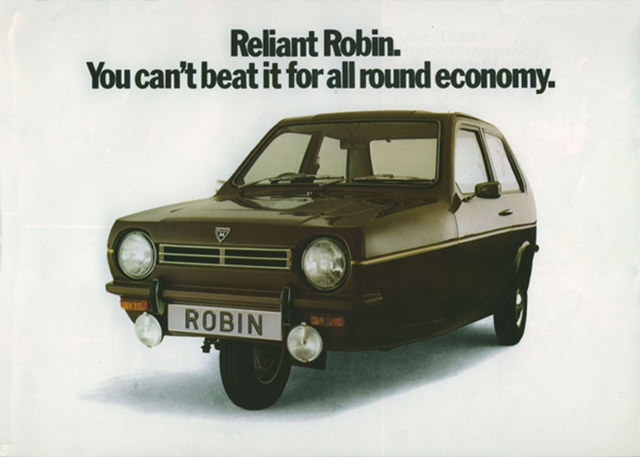
The Reliant Robin, manufactured in the UK from 1969 to 2002, was a distinctive vehicle known for its unique three-wheel design. Classified as a motorcycle due to its lack of a fourth wheel, the Robin was particularly popular in northern England. This classification meant that only a motorcycle license was required to drive it, leading to lower registration and insurance costs, which appealed to the working class. The car’s lightweight build made it surprisingly capable in snowy conditions, as it could glide over snowbanks without getting stuck.
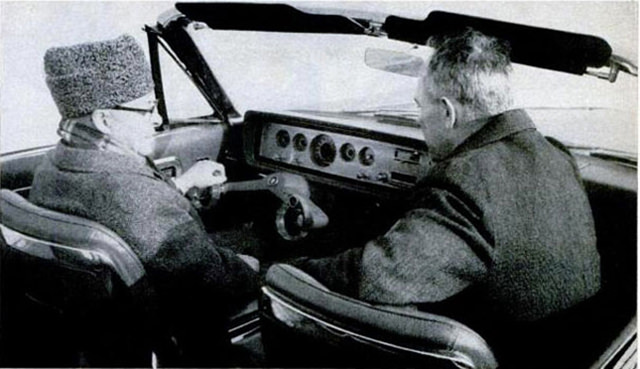
In 1965, Ford introduced the Wrist-Twist steering system, an innovative approach to vehicle steering controls. This system replaced the traditional large steering wheel with two small, side-by-side wheels situated on the dashboard. Each wheel was intended to be controlled by the driver’s wrists, allowing for a more relaxed and comfortable driving posture.
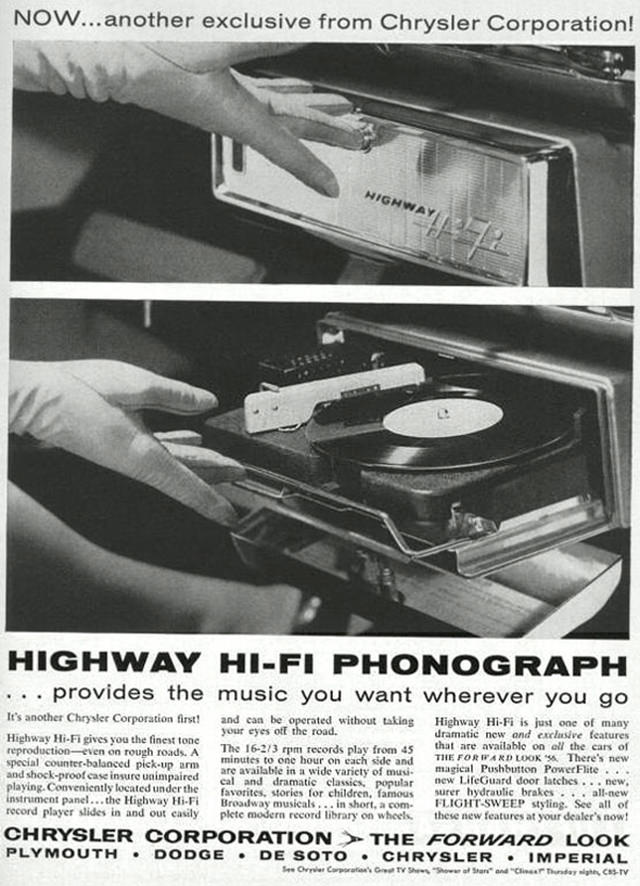
The Highway Hi-Fi was an innovative car audio feature introduced in 1956, available in Chrysler, DeSoto, Dodge, and Plymouth vehicles. It was essentially an in-car record player, a concept that aimed to bring the comfort and entertainment of home music systems into the automotive environment. To address the challenges of playing records in a moving vehicle, the Highway Hi-Fi used specially designed heavier records that were less prone to skipping. These records played at a slower speed of 16 2/3 rpm, which extended the playtime to about 45 minutes per side, a significant improvement for continuous listening during longer drives.
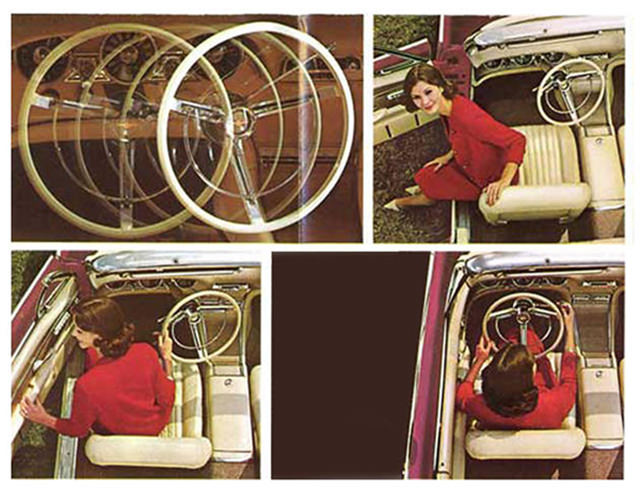
The 1961 Ford Thunderbird introduced an innovative feature known as the Swing-Away Steering Wheel. For an additional cost of $25, buyers could opt for this unique system designed to enhance driver comfort and convenience. The key aspect of the Swing-Away Steering Wheel was its ability to move horizontally. When not driving, the steering column could be shifted to the right by approximately 10.5 inches. This movement allowed for much easier entry and exit from the driver’s seat, particularly beneficial if the driver was carrying items or needed extra space to maneuver.