Hey There! Before You Go. 😧
Get the best vintage content straight into your inbox!

Don't worry, we don't spam

Vintage Vespa Ads and the Celebrities Who Loved Them: A Glimpse into Scooter Glamour

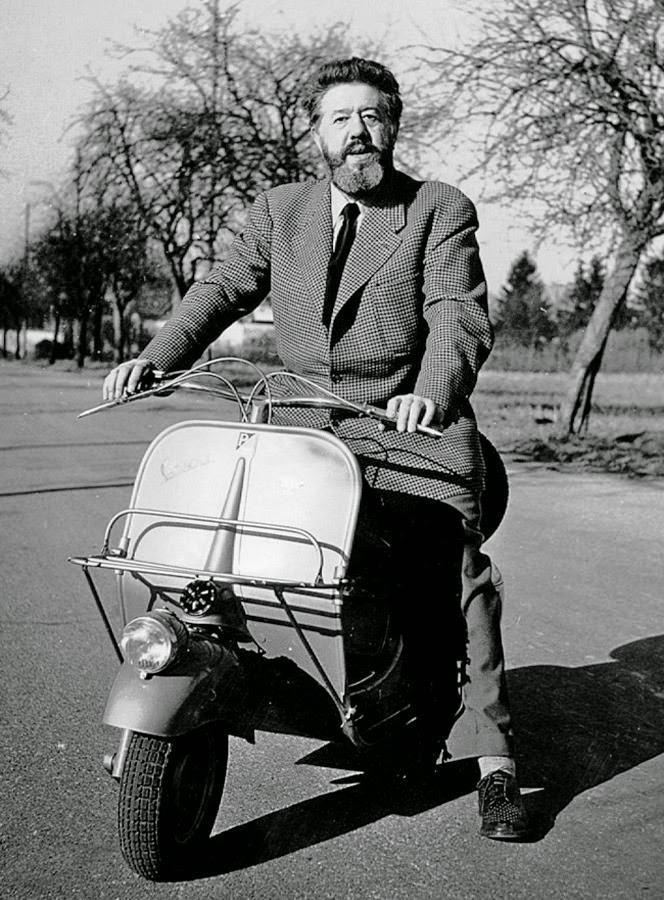
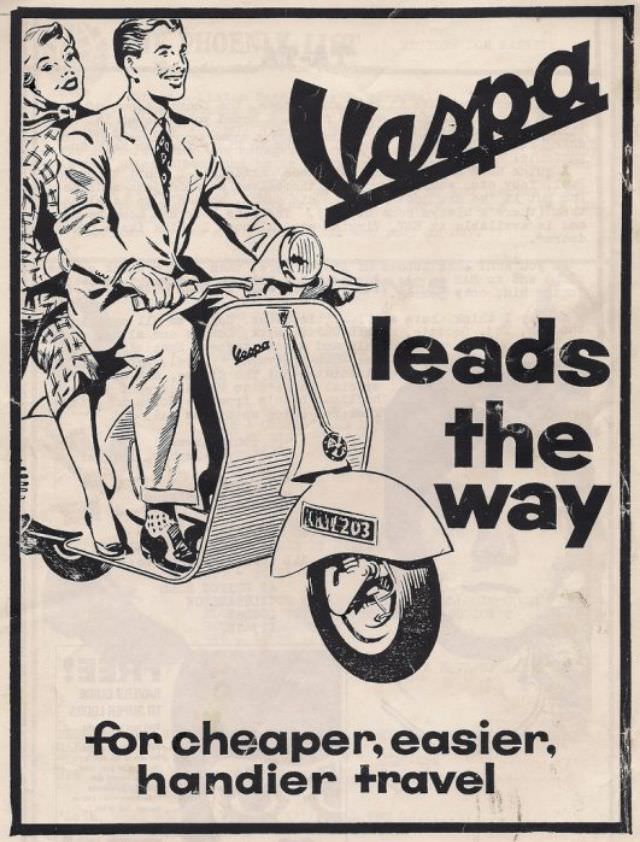
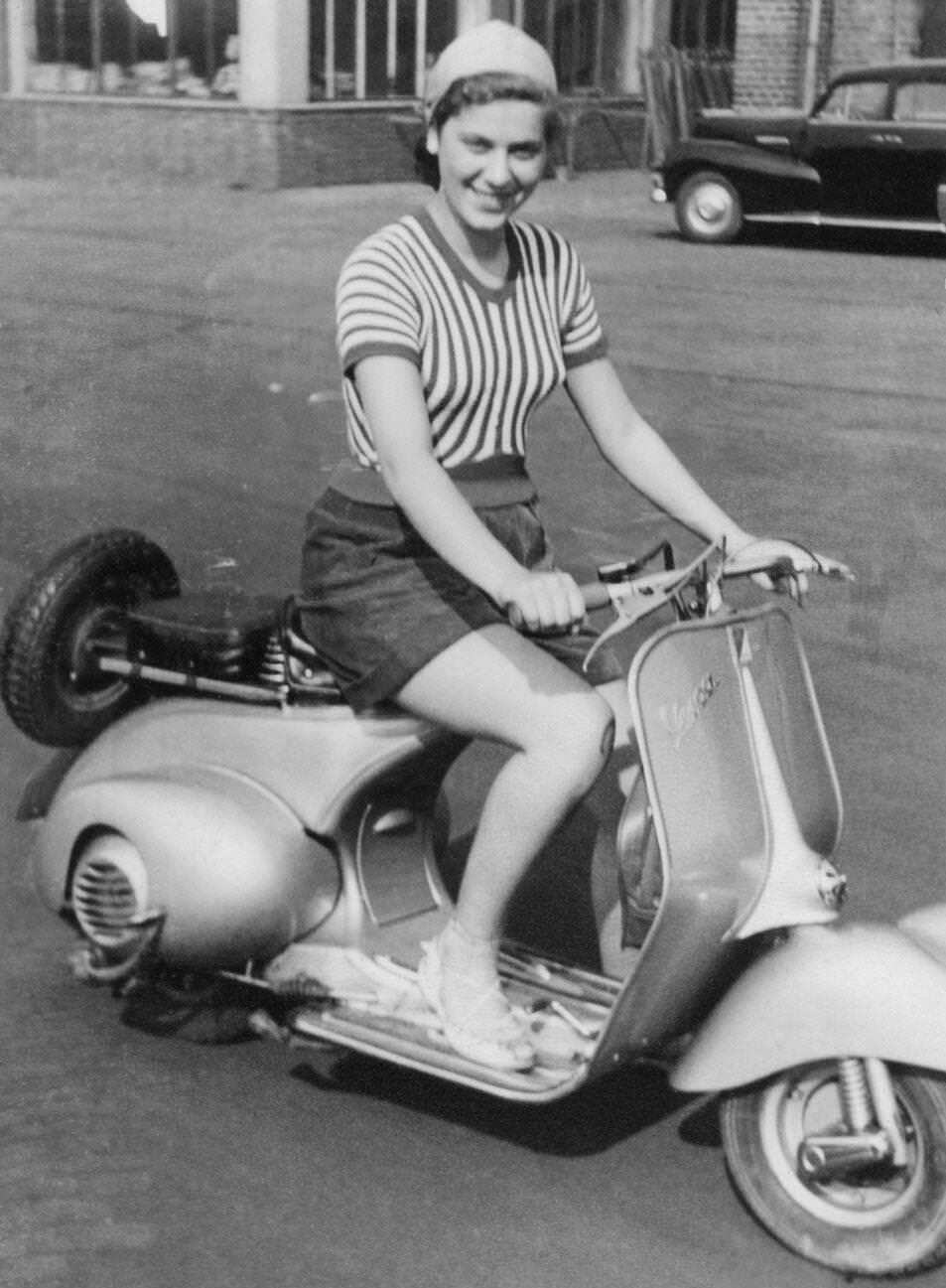
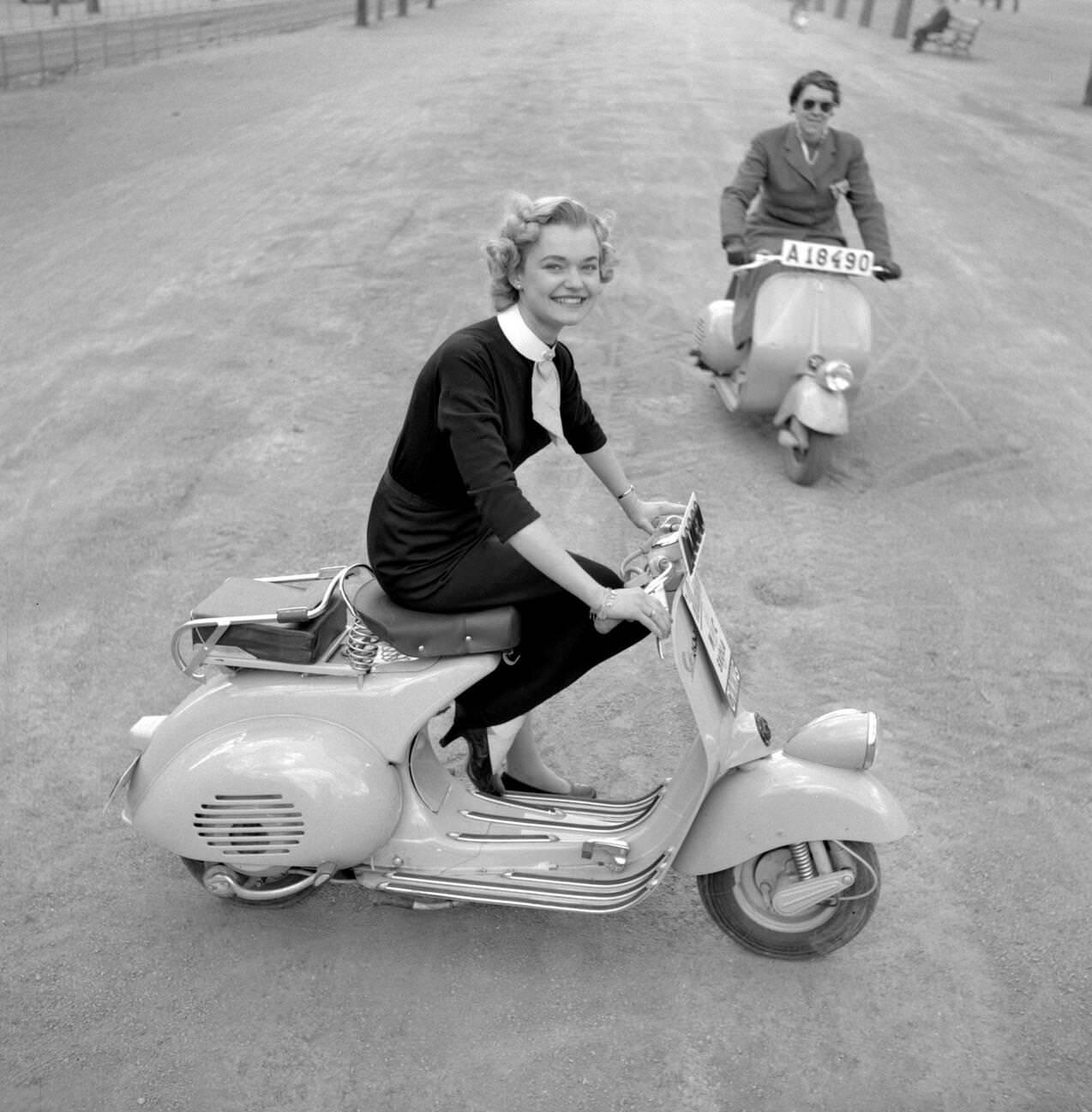
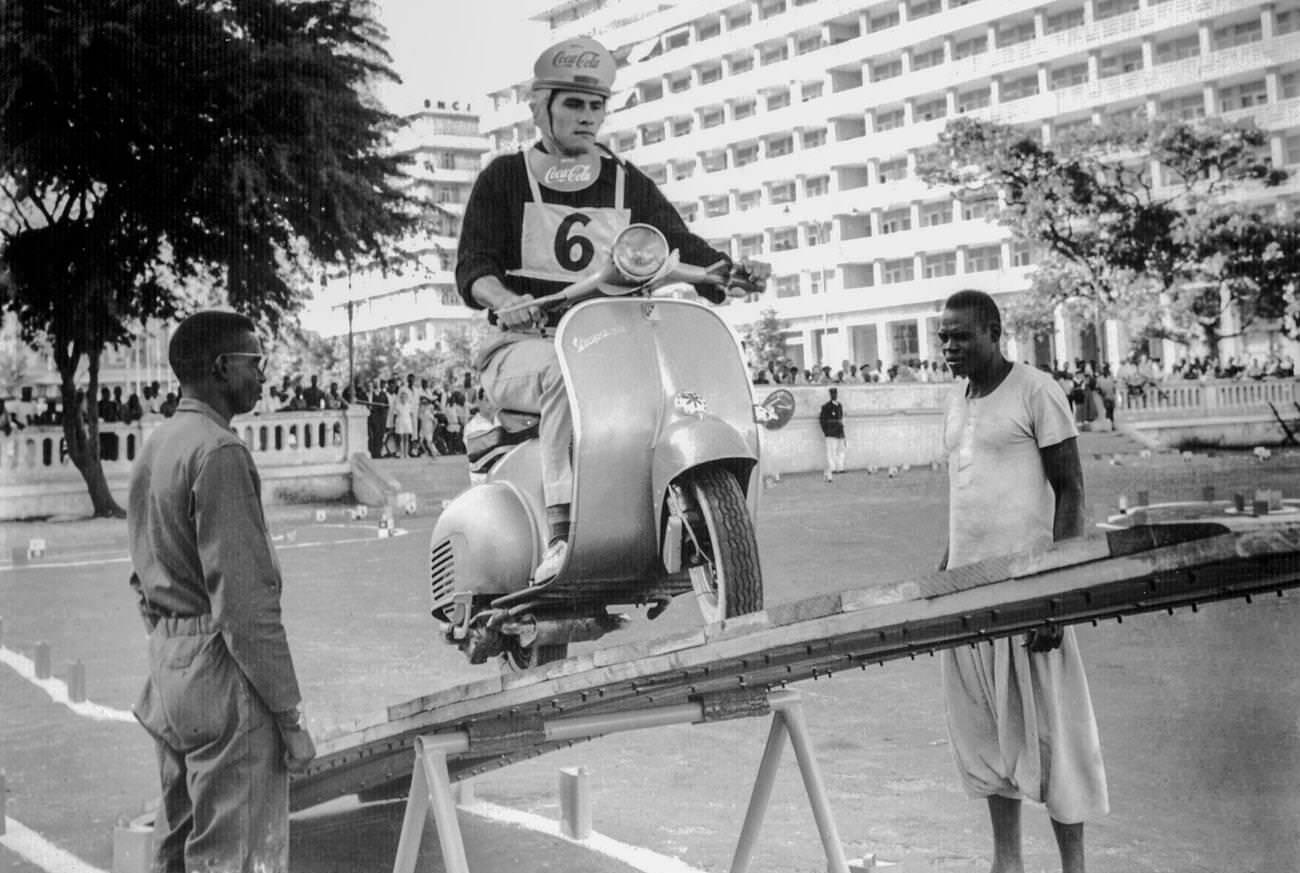
The Vespa was not designed to be glamorous. It was designed to be cheap, simple, and useful. Post-World War II Italy was in ruins, and millions of people needed an affordable way to get around. In 1946, Enrico Piaggio, head of the Piaggio Company, gave aeronautical engineer Corradino D’Ascanio a clear task: build a vehicle anyone could ride and anyone could afford. What D’Ascanio produced was the Vespa 98 — a scooter with a front legshield, a step-through frame, and a silhouette unlike anything else on the road. The name “Vespa” means wasp in Italian, and Piaggio reportedly chose it because of the engine’s buzzing sound and the vehicle’s narrow waist.
Woman posing with a 1928 Auburn 8-115 Phaeton Sedan at a petrol station, Germany, 1928.

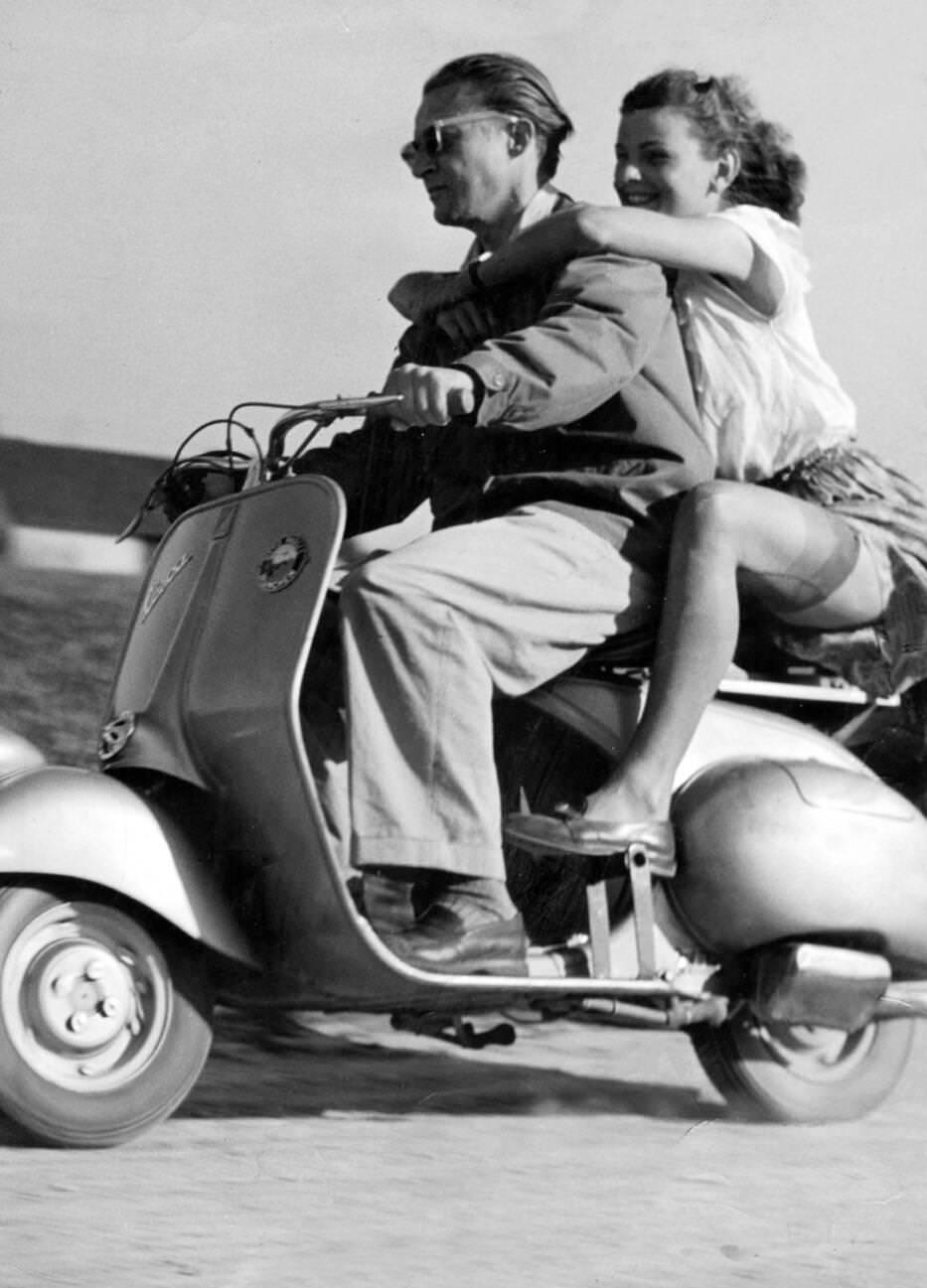
Before the Vespa arrived, personal transportation across Europe was largely a world of automobiles and motorcycles — vehicles that required significant money, skill, or both. Snapshot photographs from the 1920s and 1930s show well-dressed Europeans posing proudly beside large, expensive cars at petrol stations and along country roads. Owning a motorized vehicle was a statement. The Vespa changed that equation entirely, bringing motorized freedom to ordinary people — factory workers, students, and young couples — who could never have afforded a car.
A young couple by a Talbot DS 15/40, rural Austria, circa 1920s.
Three people with an Essex Super Six at a Shell station, Munich, circa 1930s.

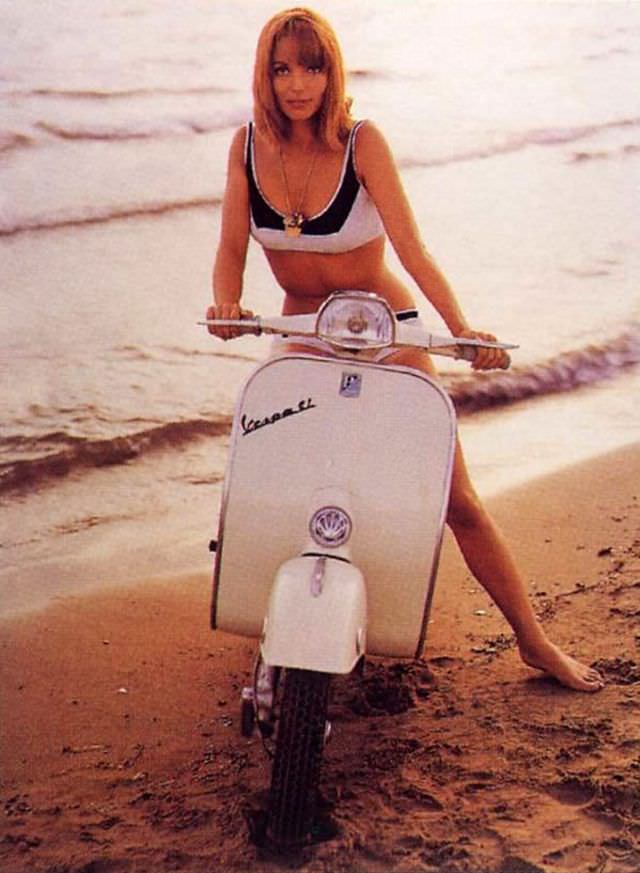
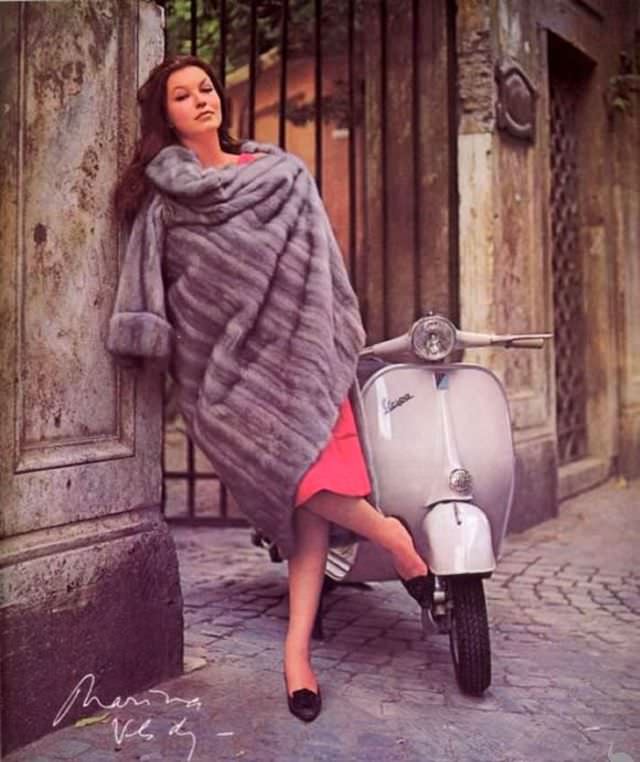
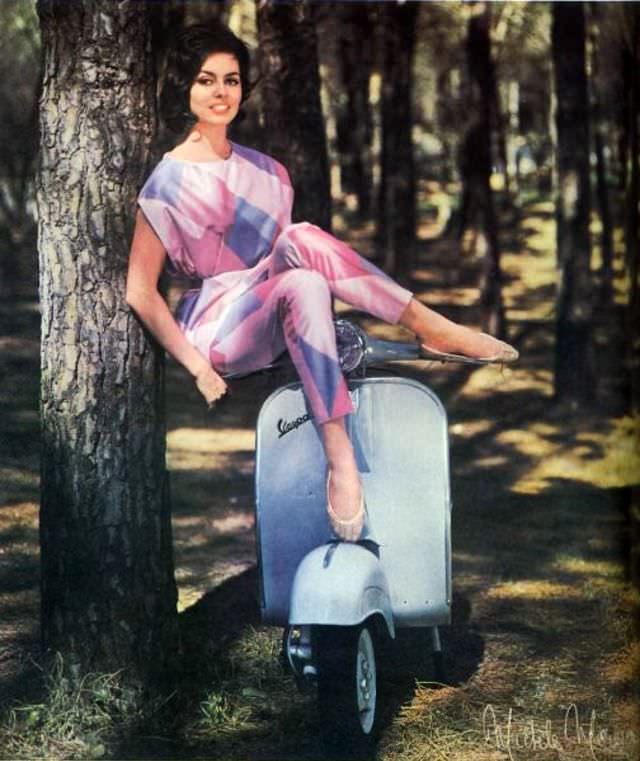
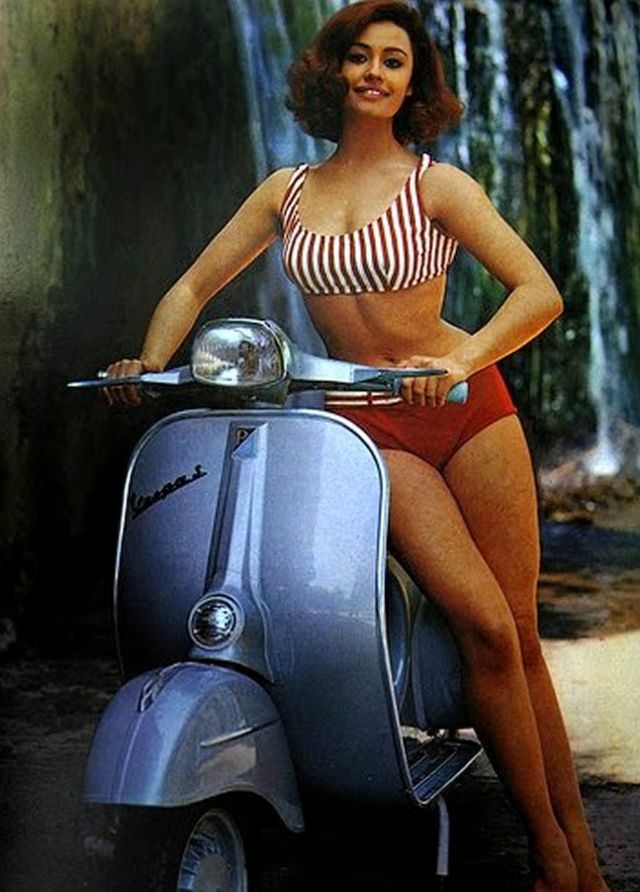
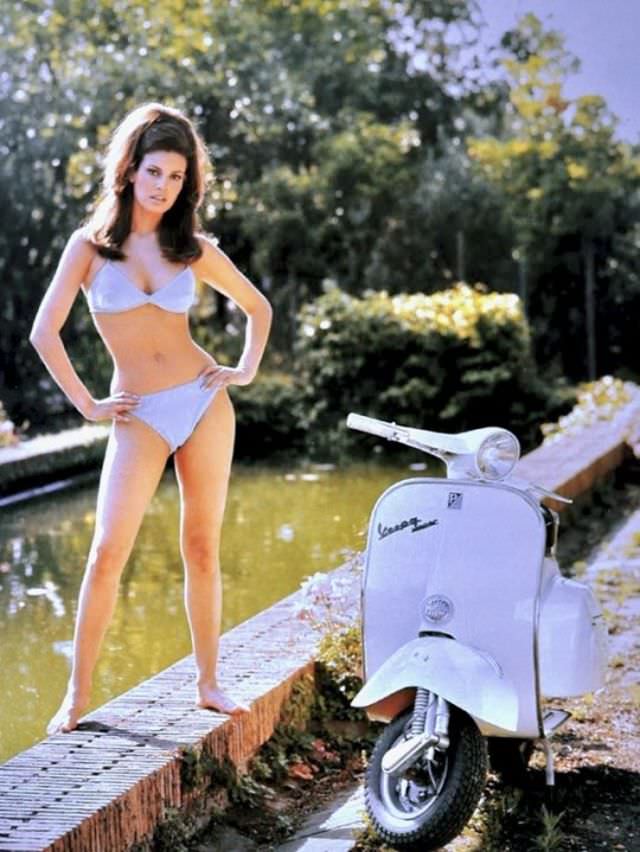
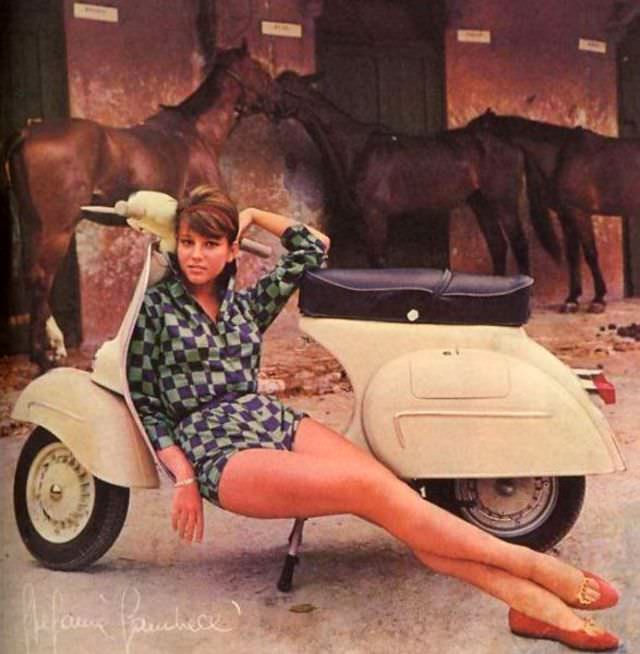
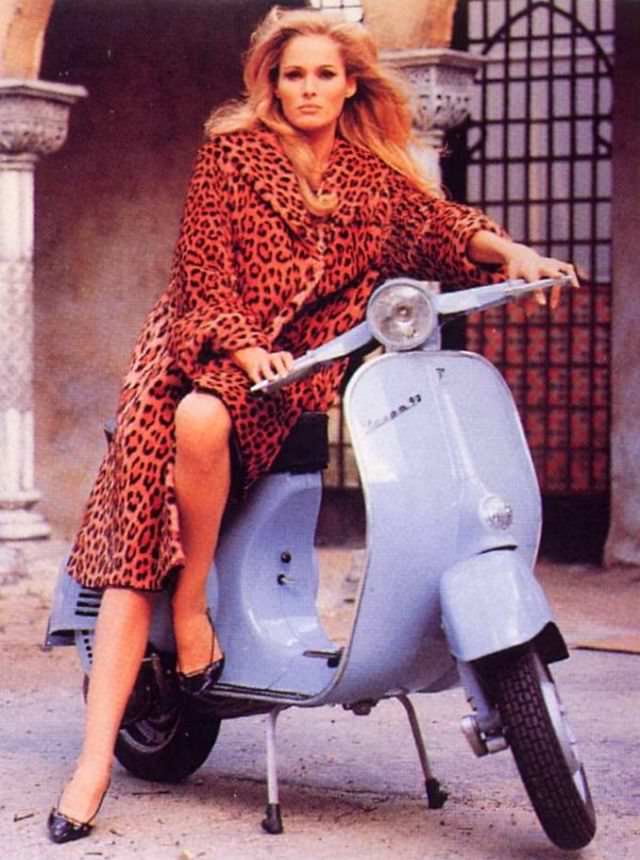
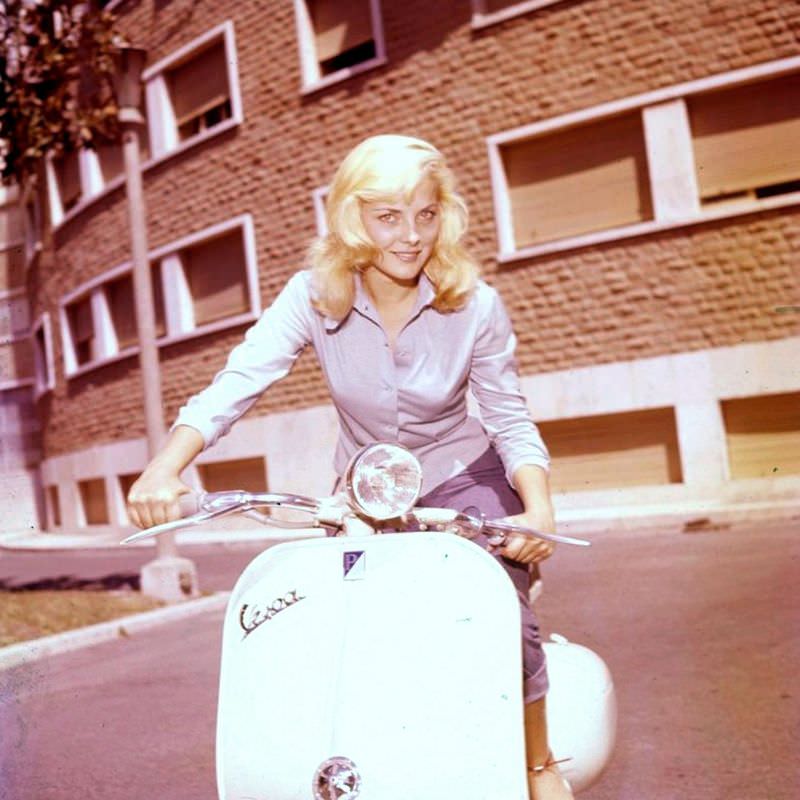
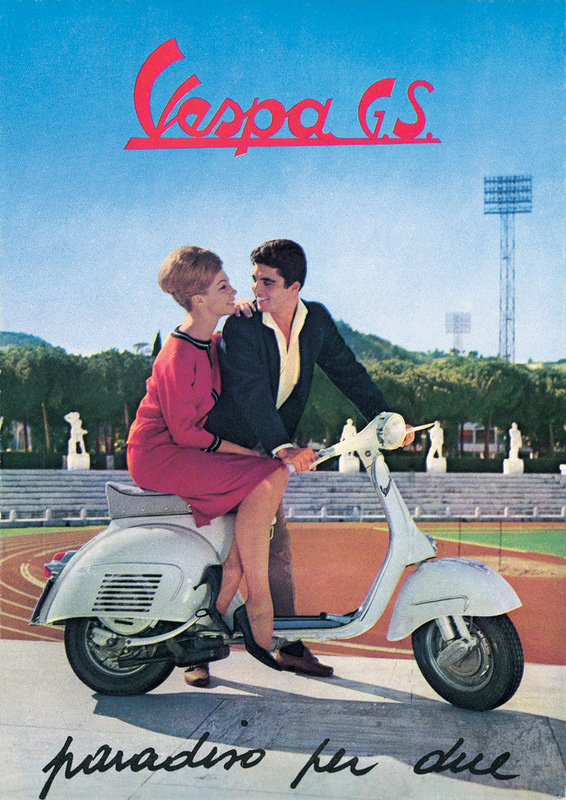
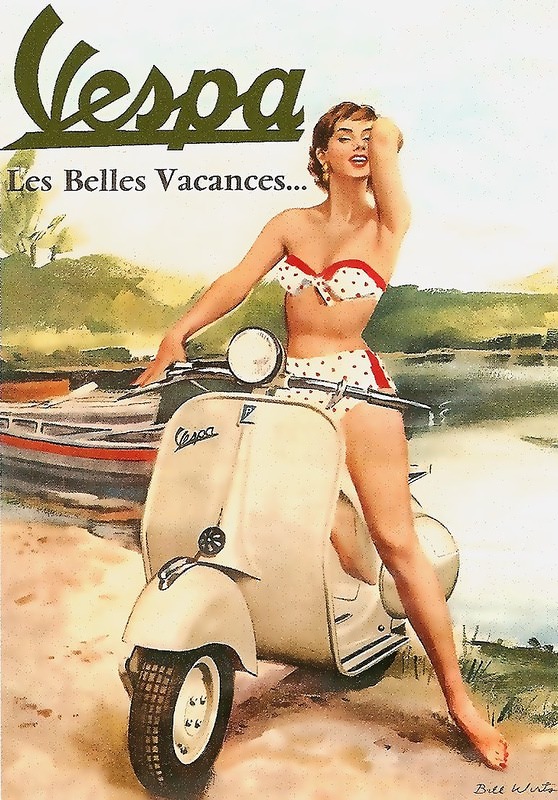
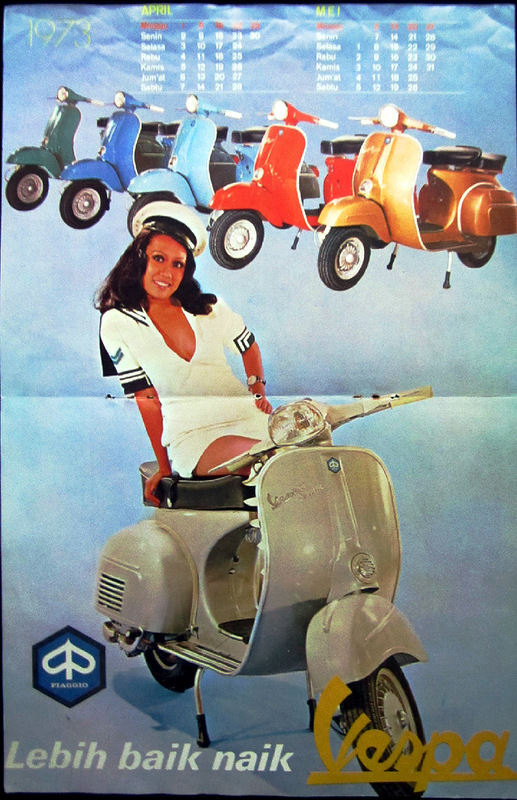
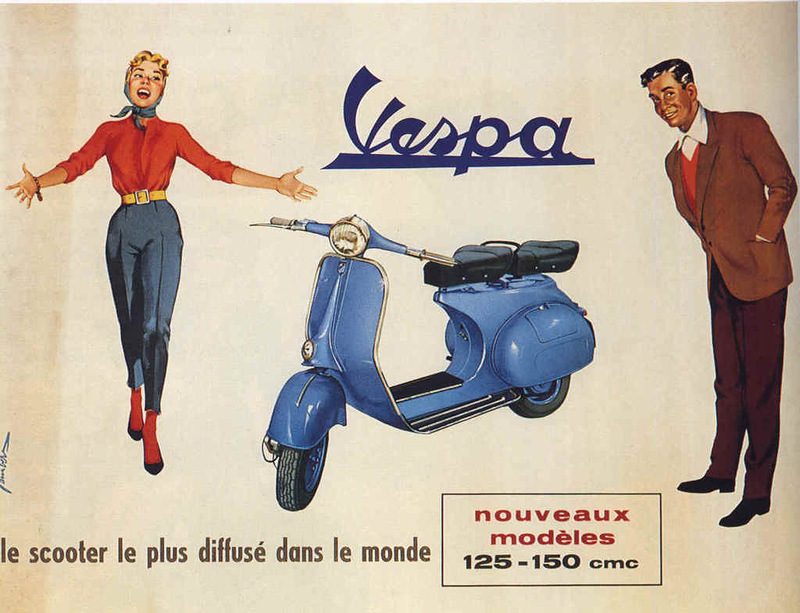
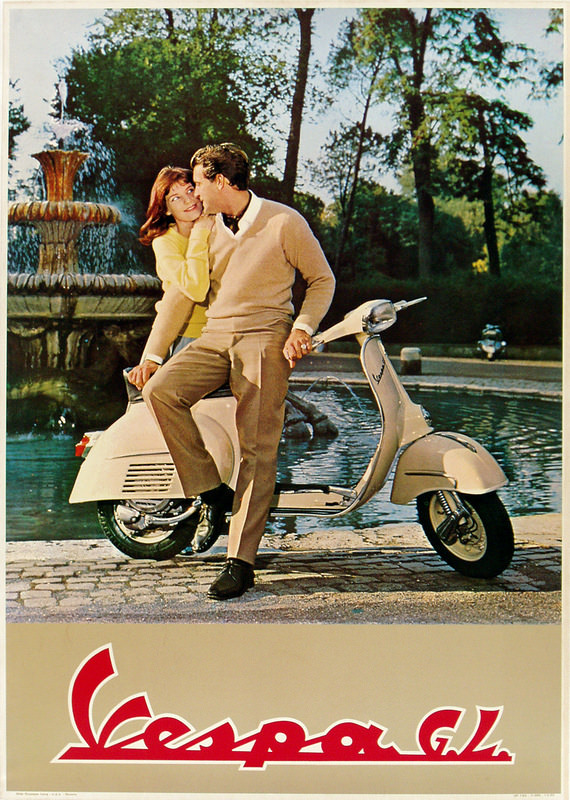
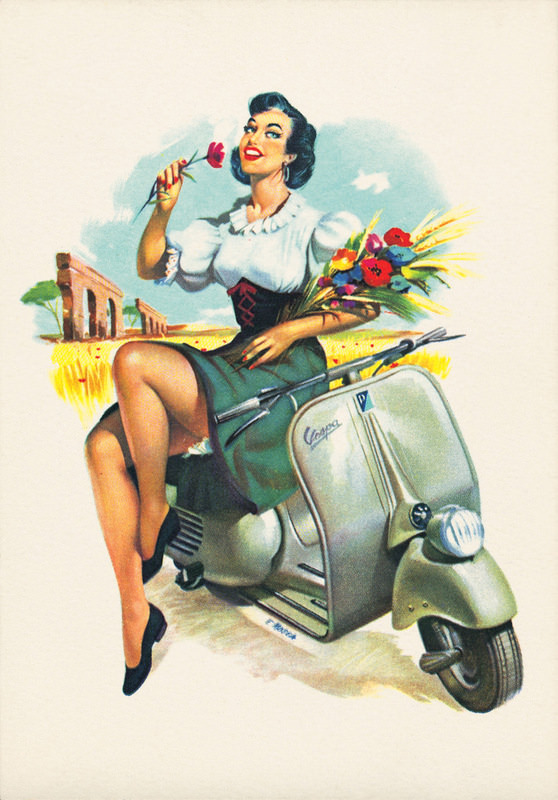
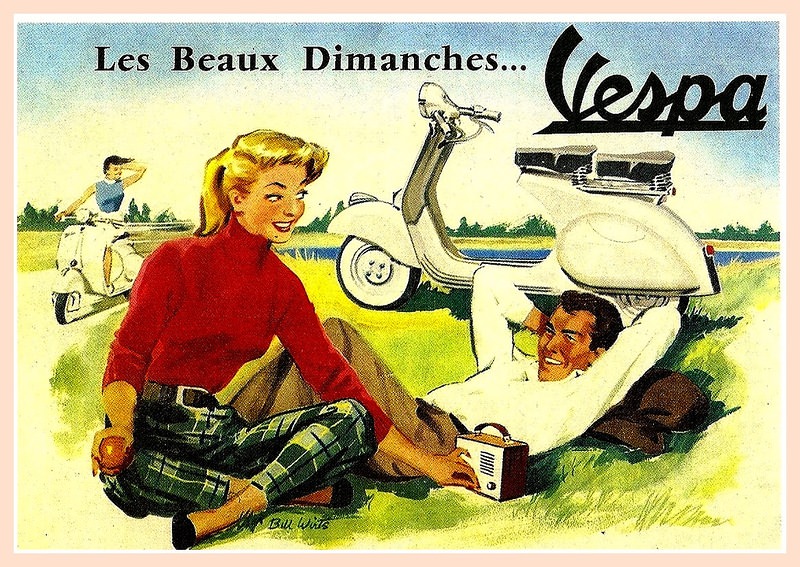
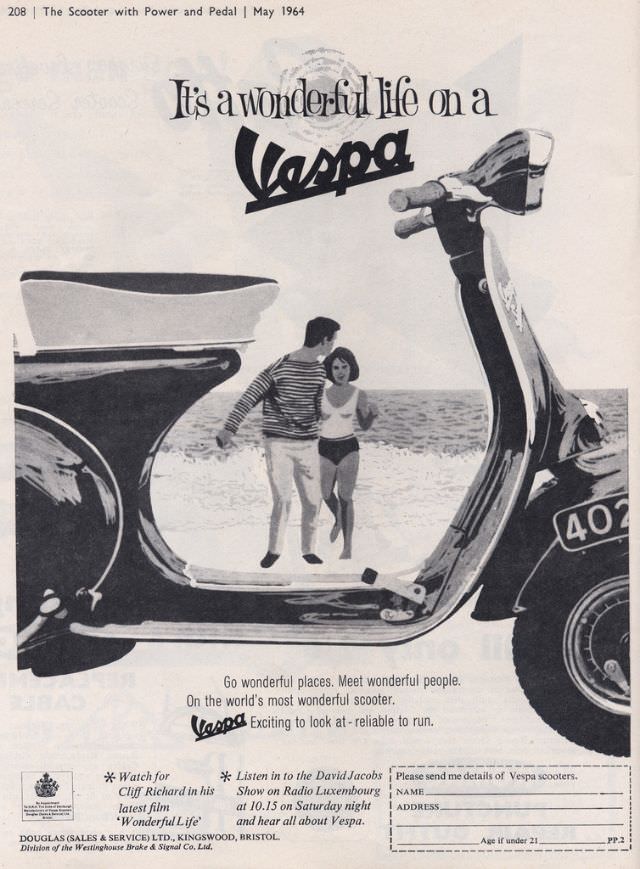
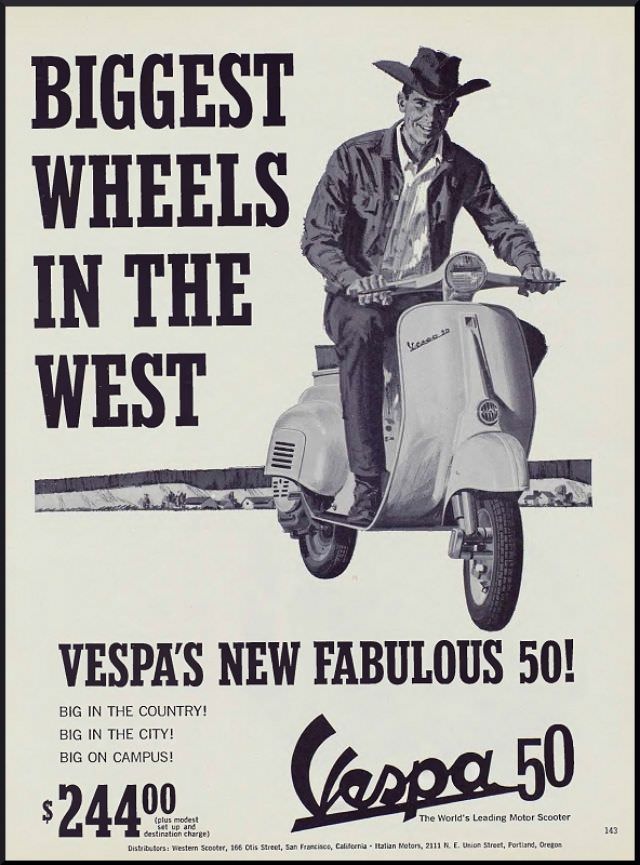
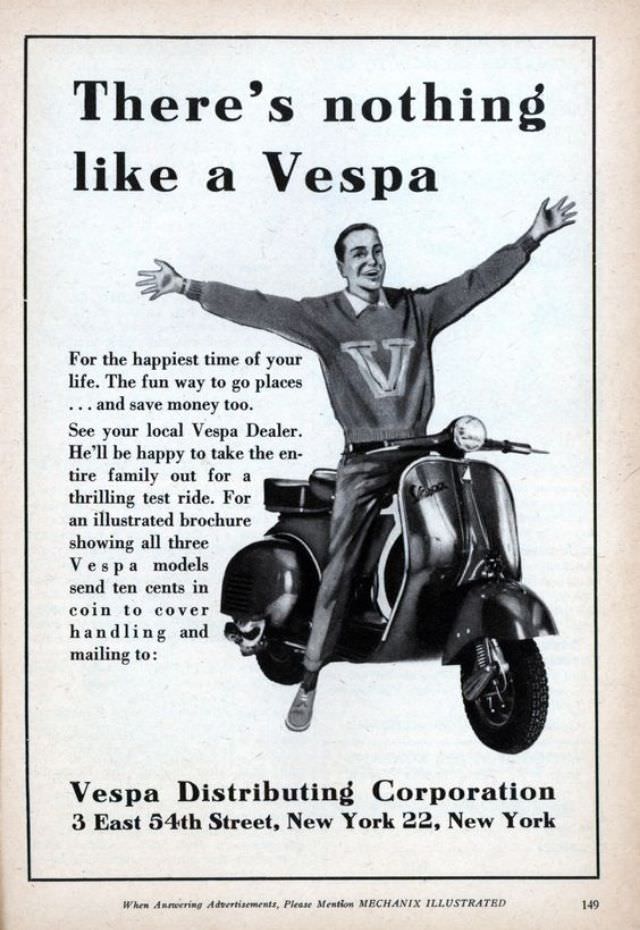
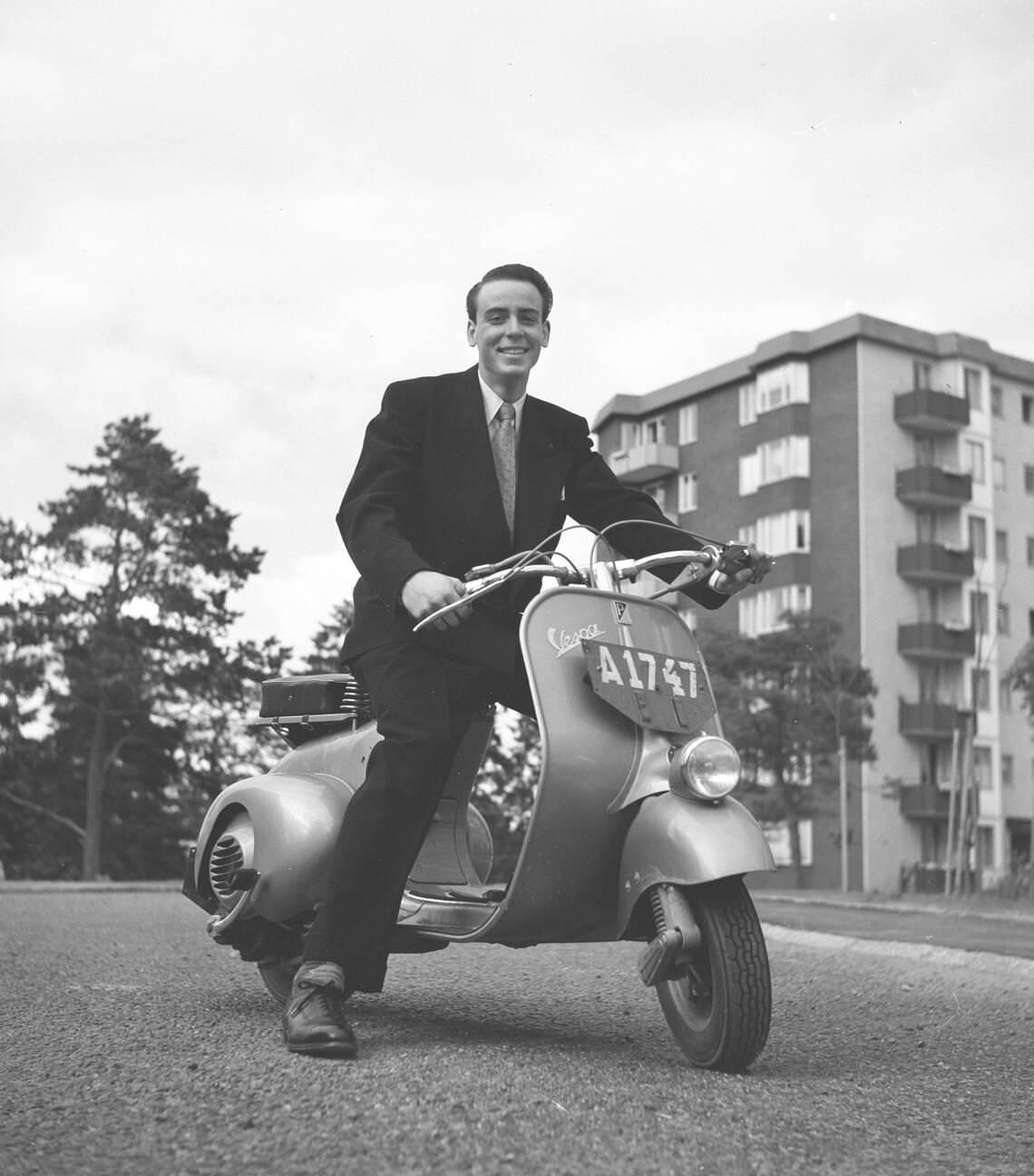
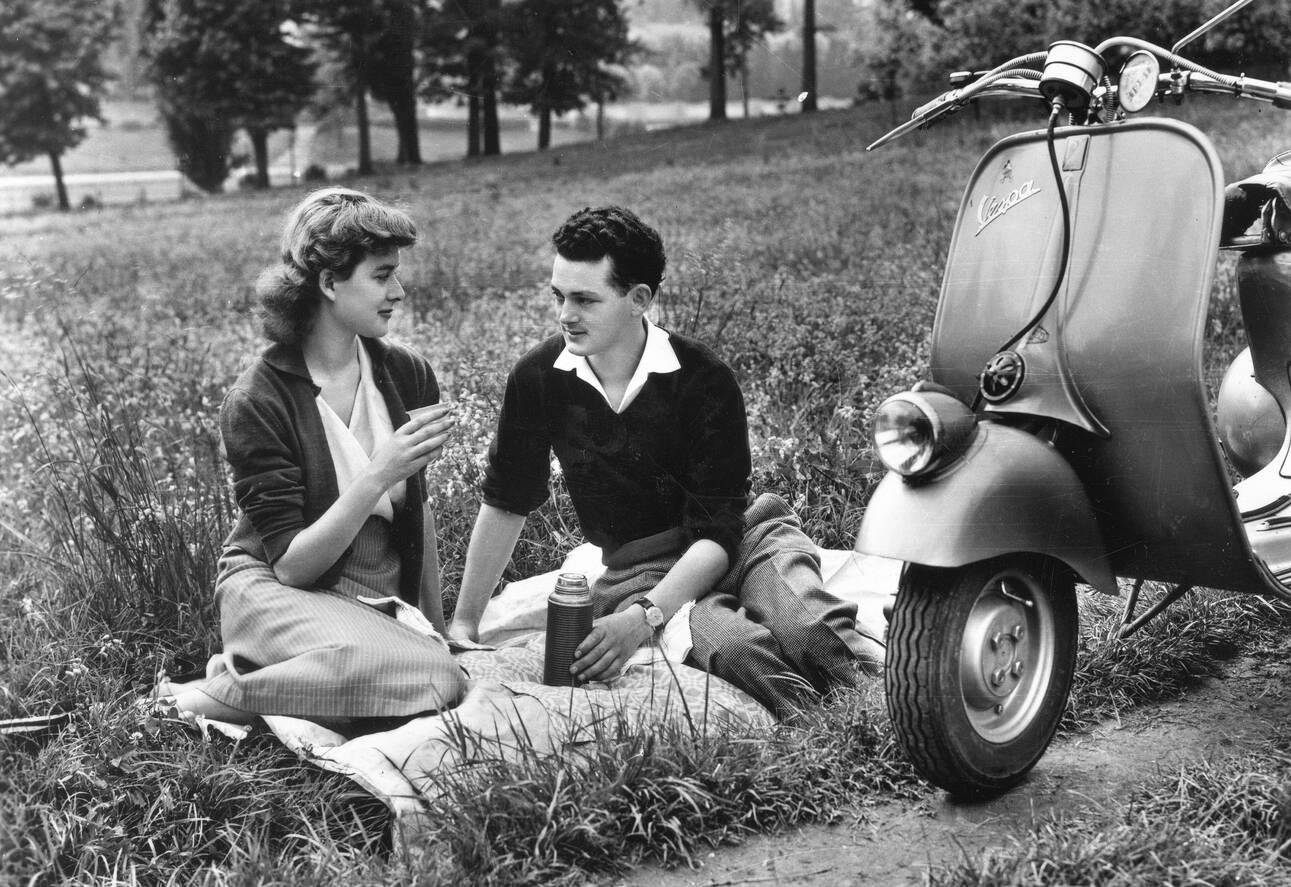
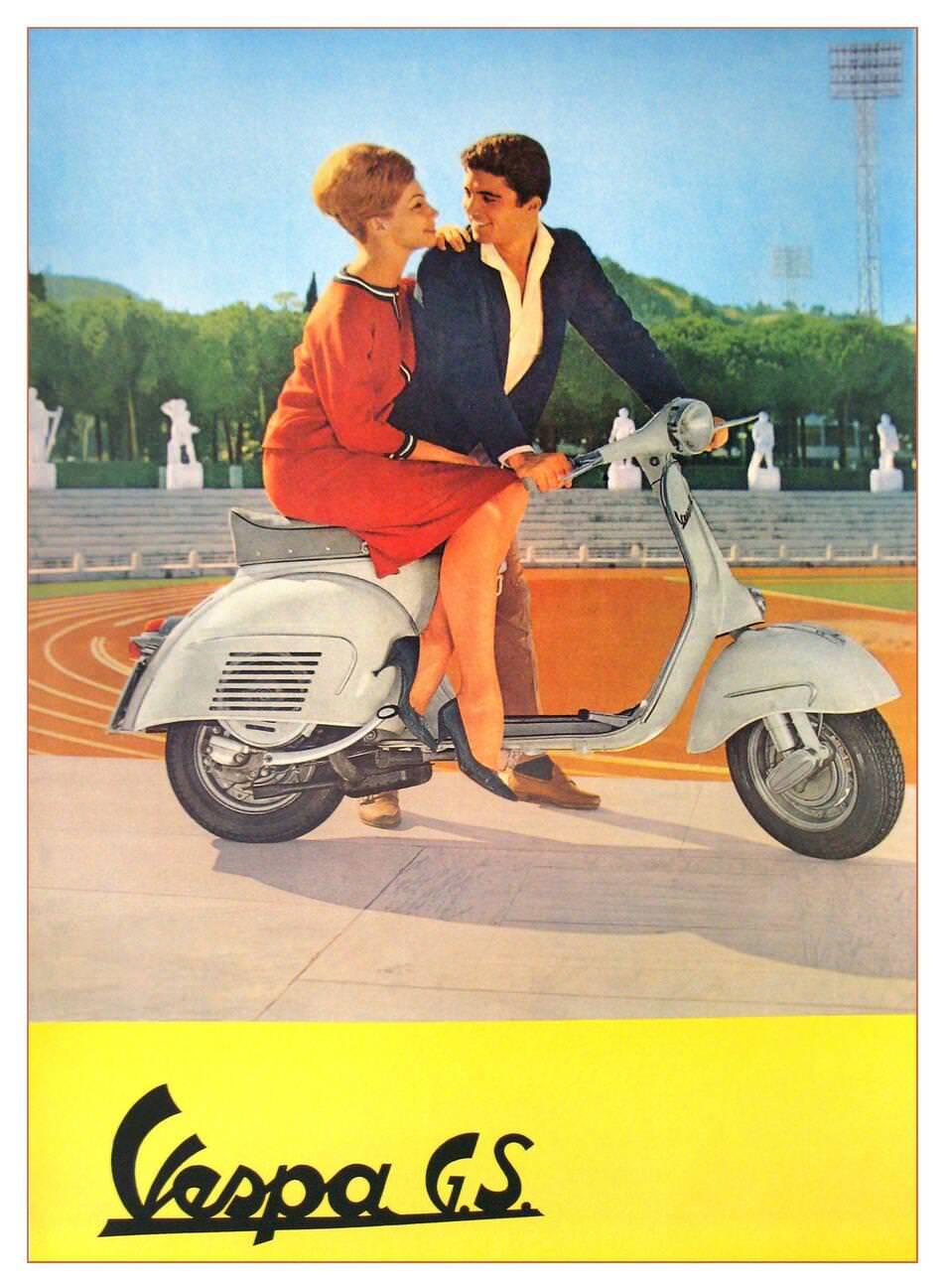
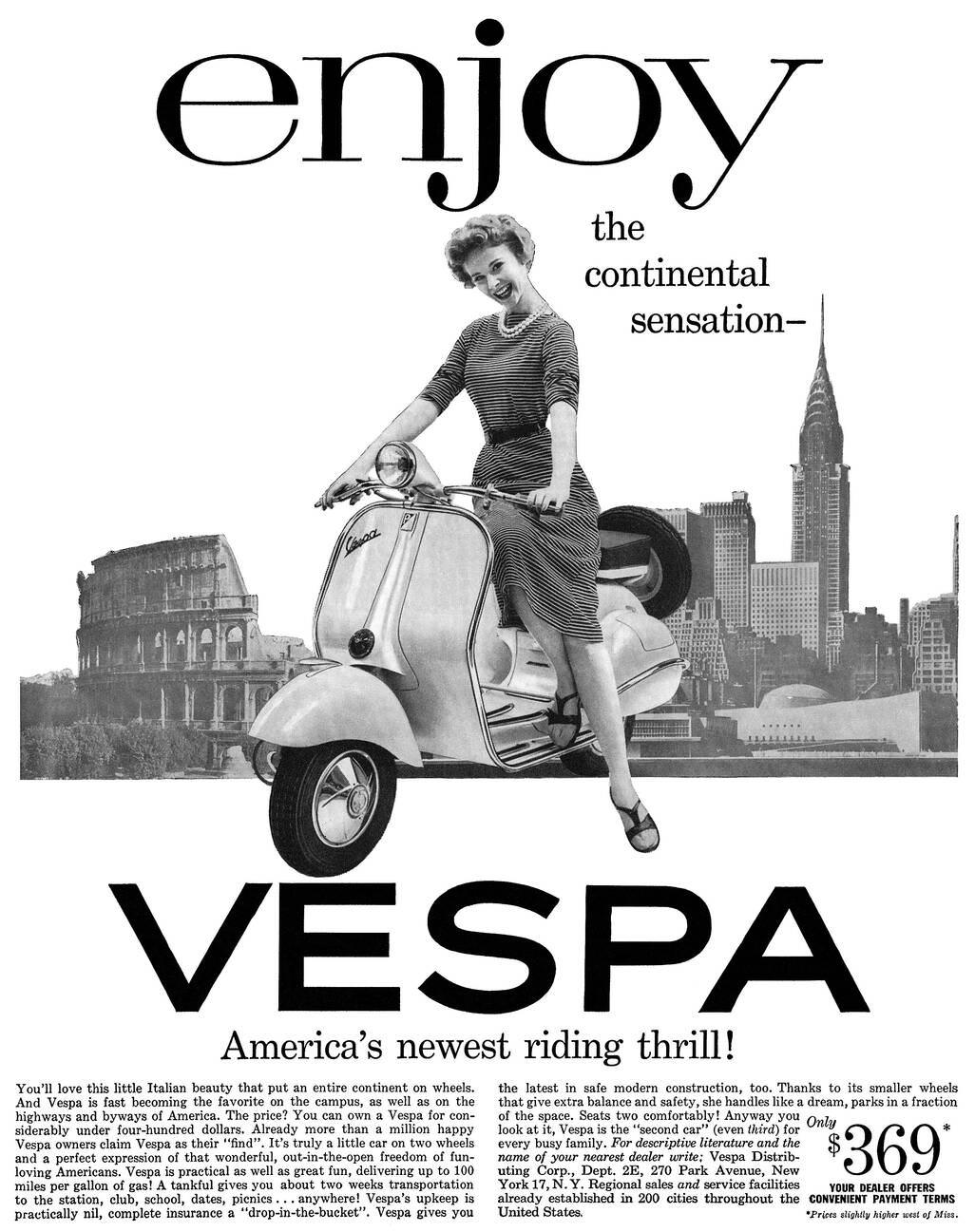
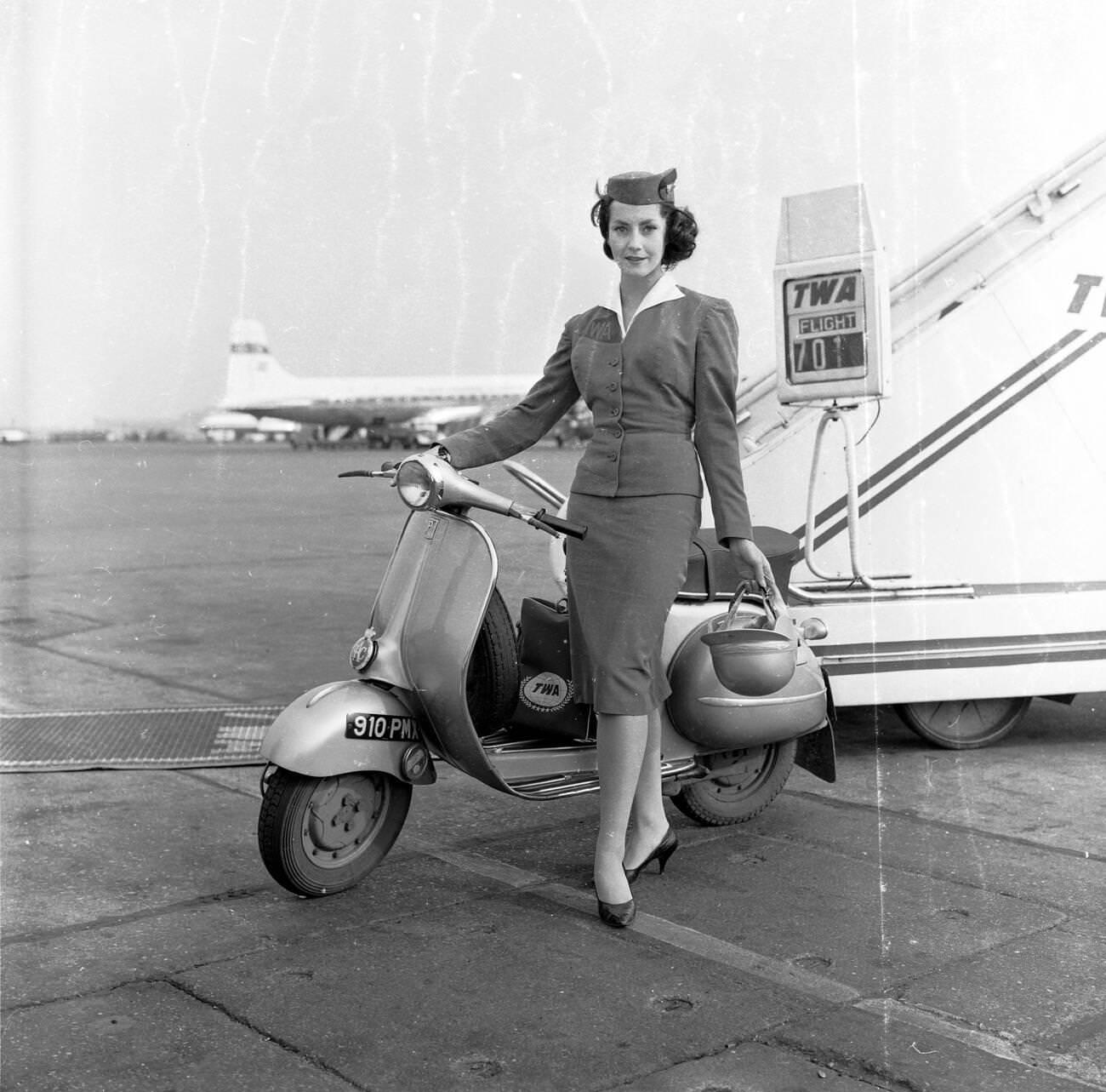
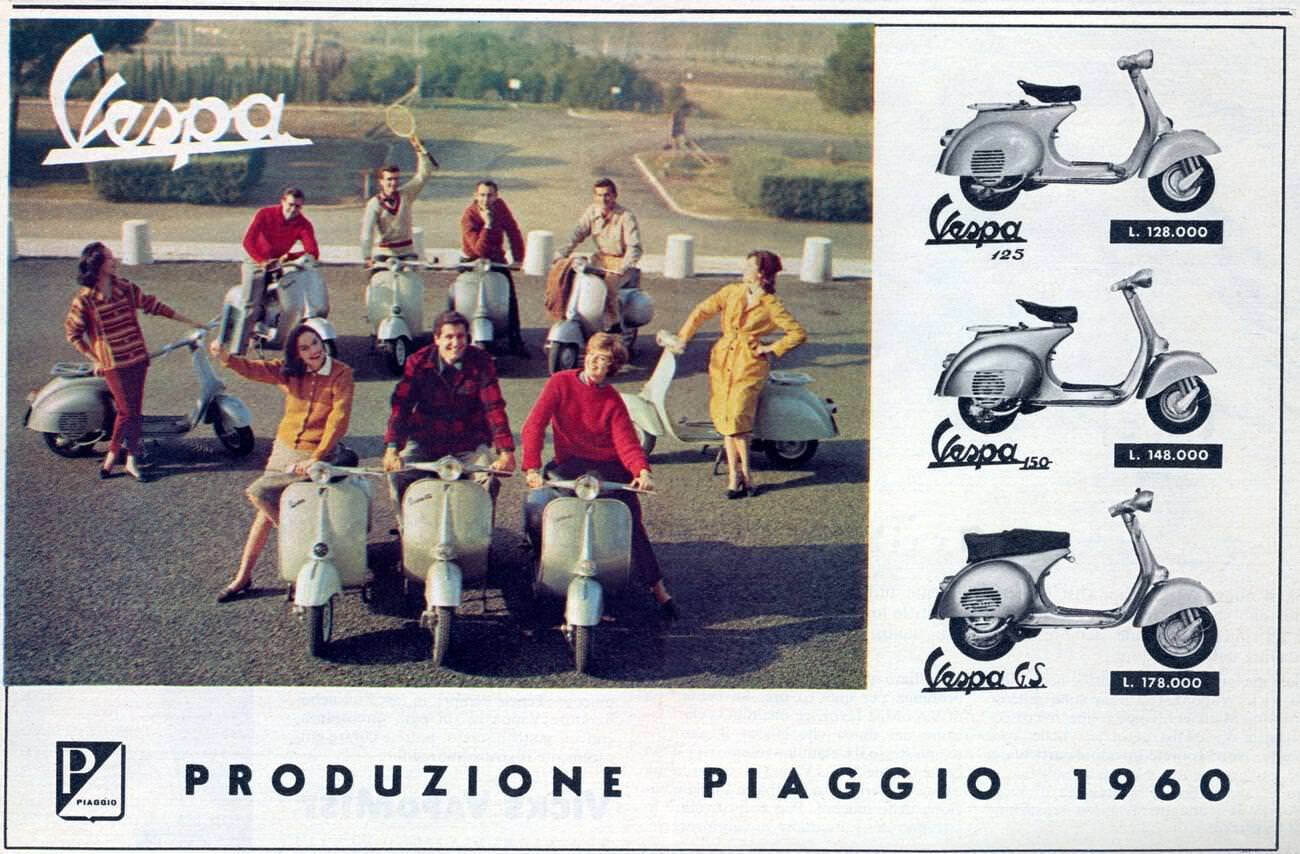
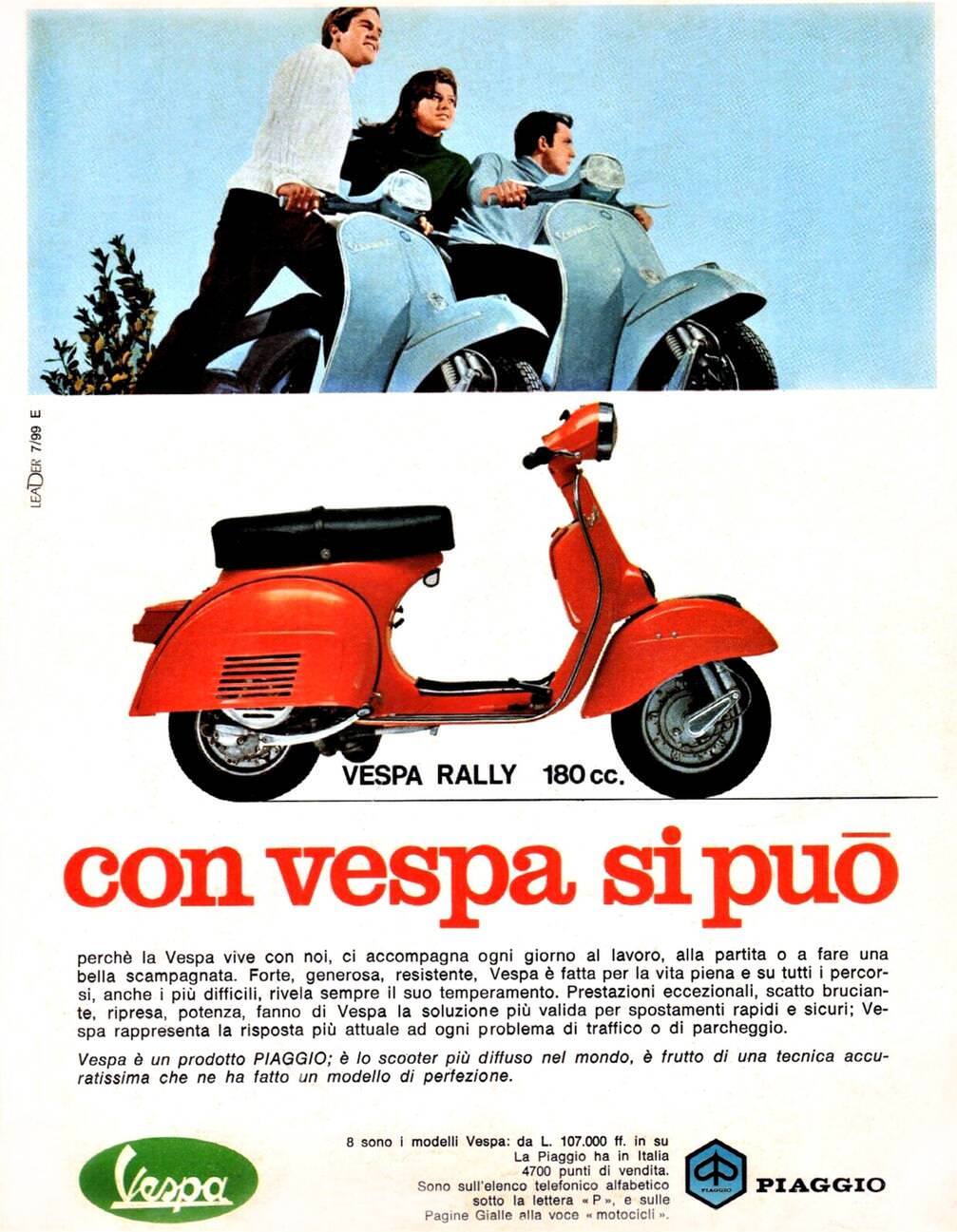
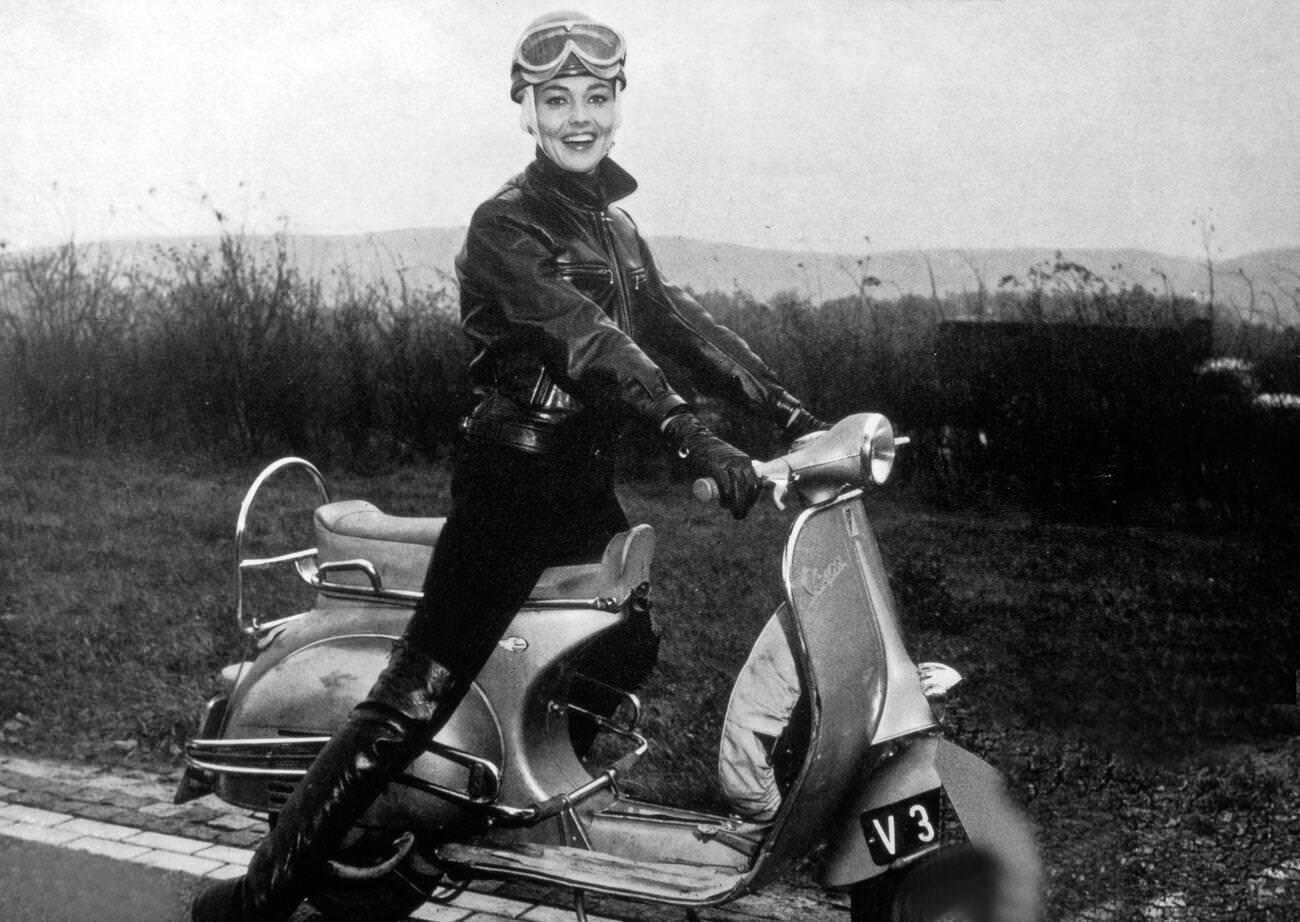
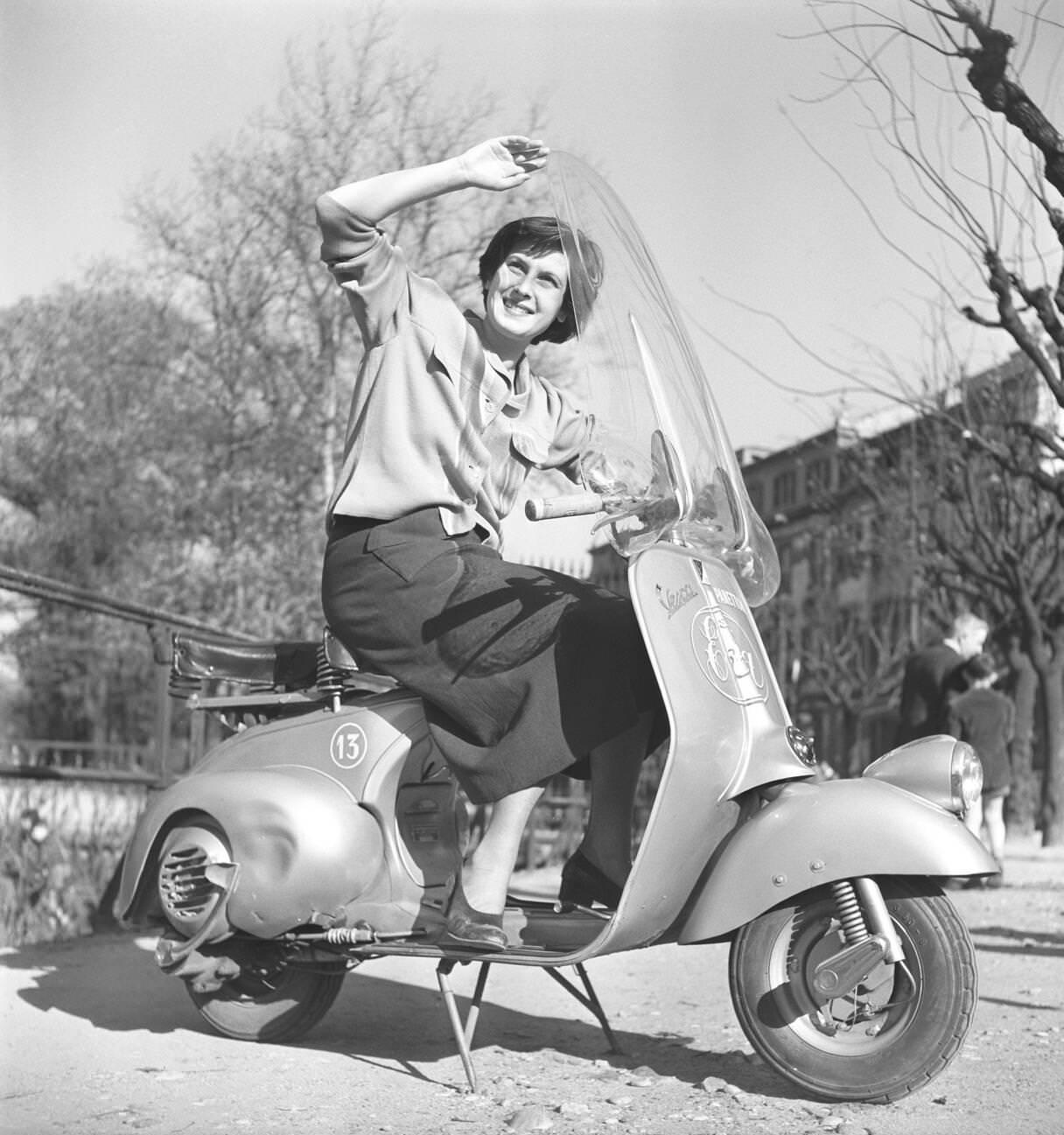
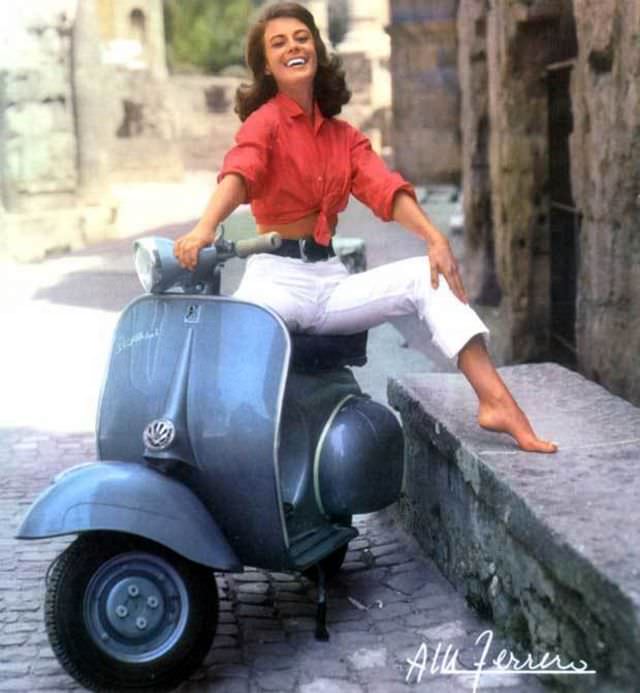
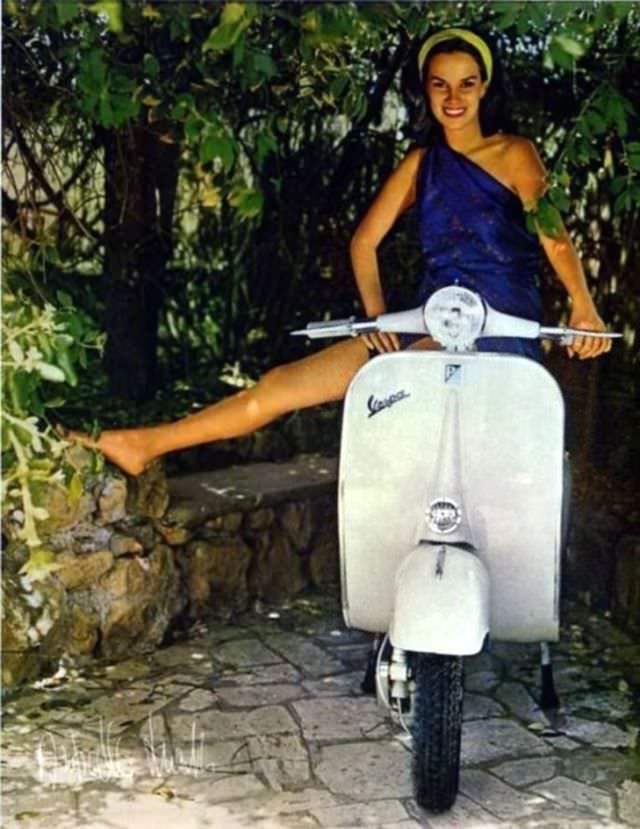
Vintage Vespa advertisements were carefully crafted to sell more than a machine. They sold a feeling. The ads used bright, bold colors and clean graphic design to place the Vespa in scenes of everyday joy — coastal drives, city streets, picnics in the countryside. The people in those ads were always smiling, always stylish. The message was consistent: this scooter belongs to anyone who wants to live well. That approach worked. By the early 1950s, Vespa had sold hundreds of thousands of units and was expanding into markets far beyond Italy.
Man in a double-breasted suit by a BMW 320 Limousine, Thuringia, circa 1930s.
Middle-aged lady with a DKW Meisterklasse Typ F7–700, Allied-occupied Berlin, circa 1930s.

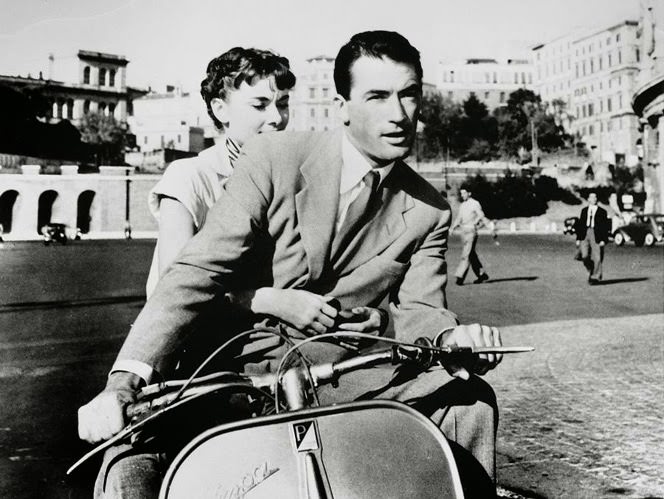
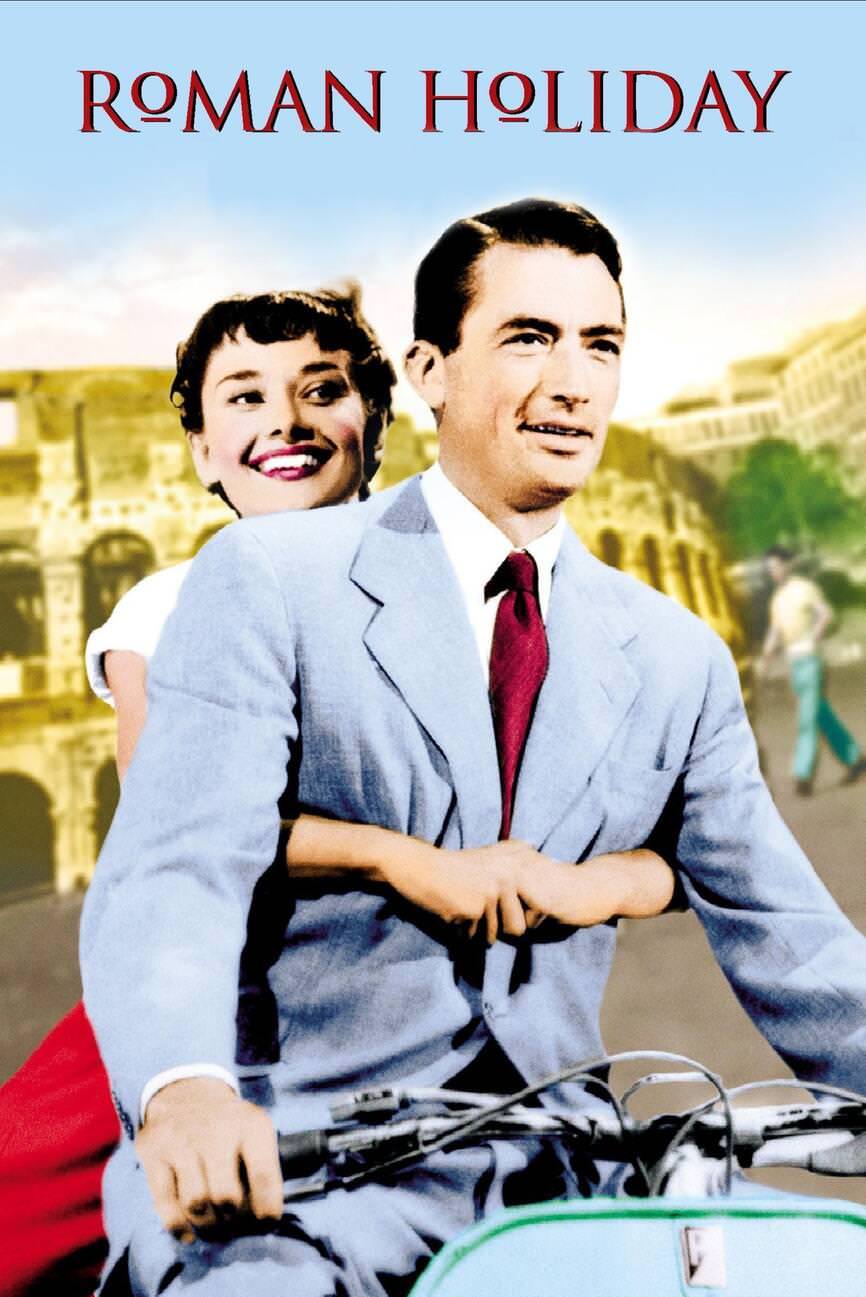
Then came Hollywood. In 1953, Roman Holiday placed a Vespa at the center of one of cinema’s most iconic scenes. Audrey Hepburn and Gregory Peck rode through the streets of Rome together, weaving past fountains and ancient ruins. The scooter wasn’t a prop — it was a co-star. That single film connected the Vespa to romance, spontaneity, and European sophistication in the minds of audiences worldwide. Sales outside Italy surged. Piaggio’s advertising team leaned into the association hard, and the scooter’s identity as a glamorous object was sealed.
Shell petrol station with an Opel Olympia, Germany, late 1930s.
Opel 1,2 Liter Cabrio-Limousine at a Leuna station, circa 1930s.

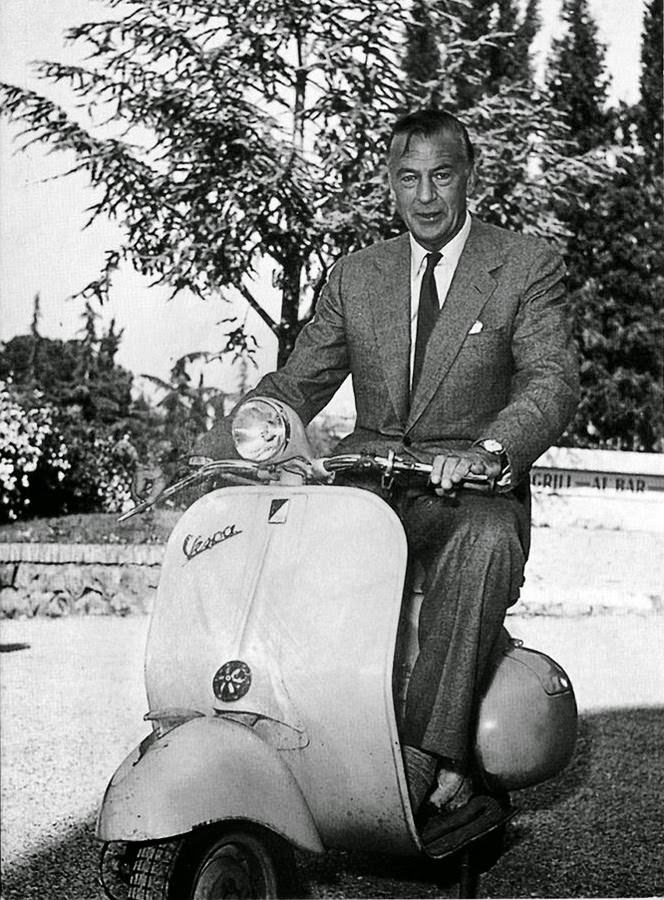
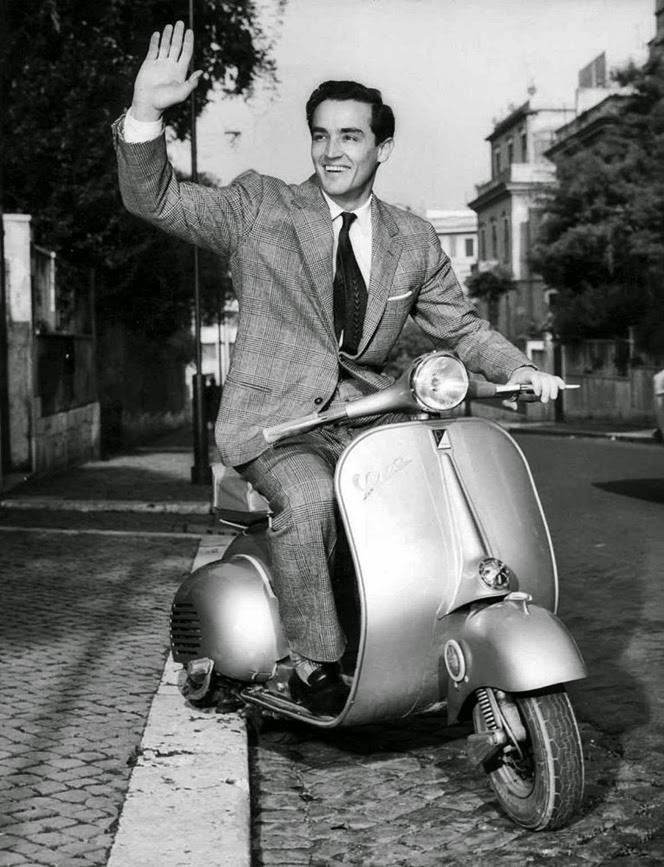
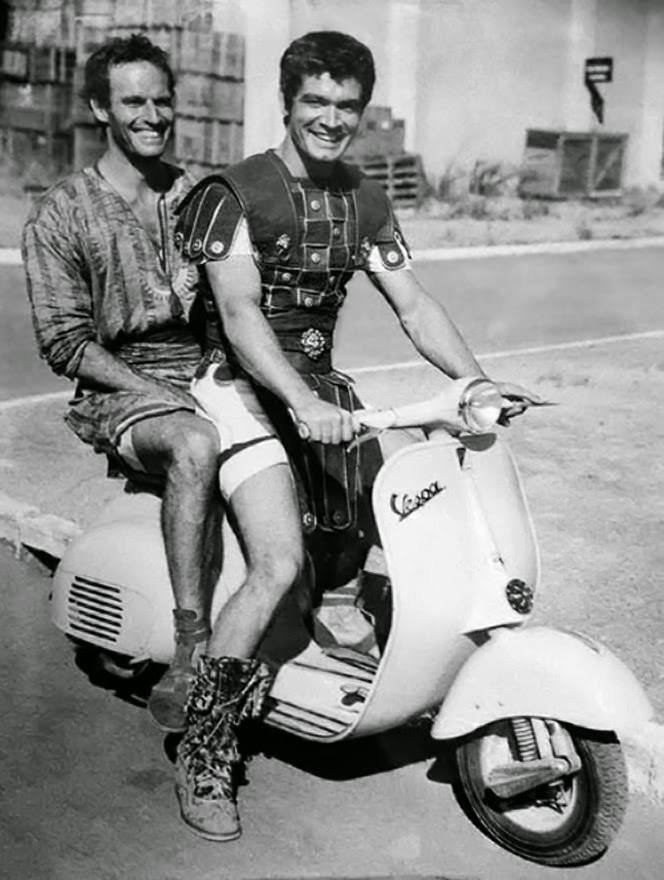
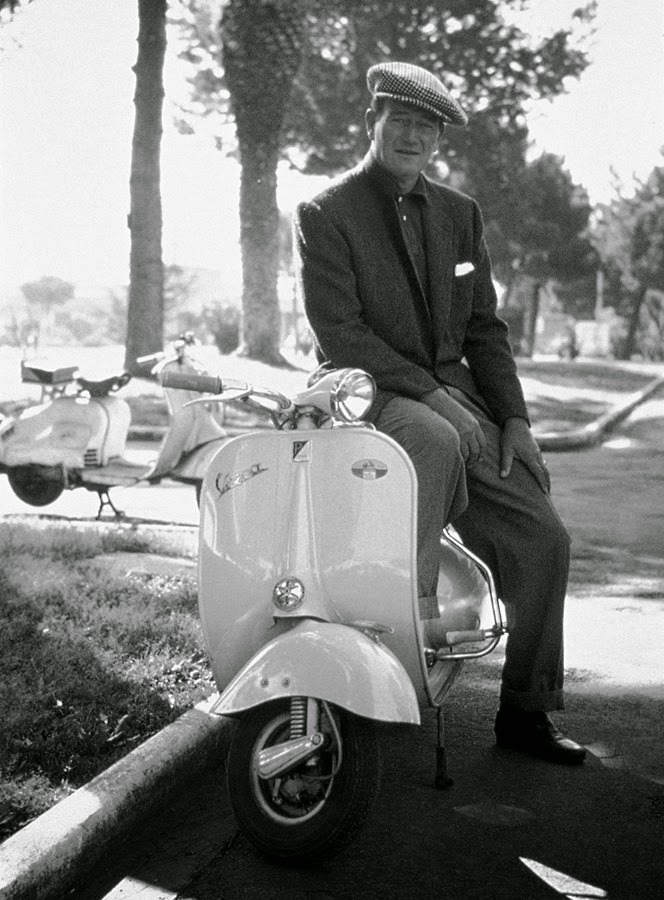
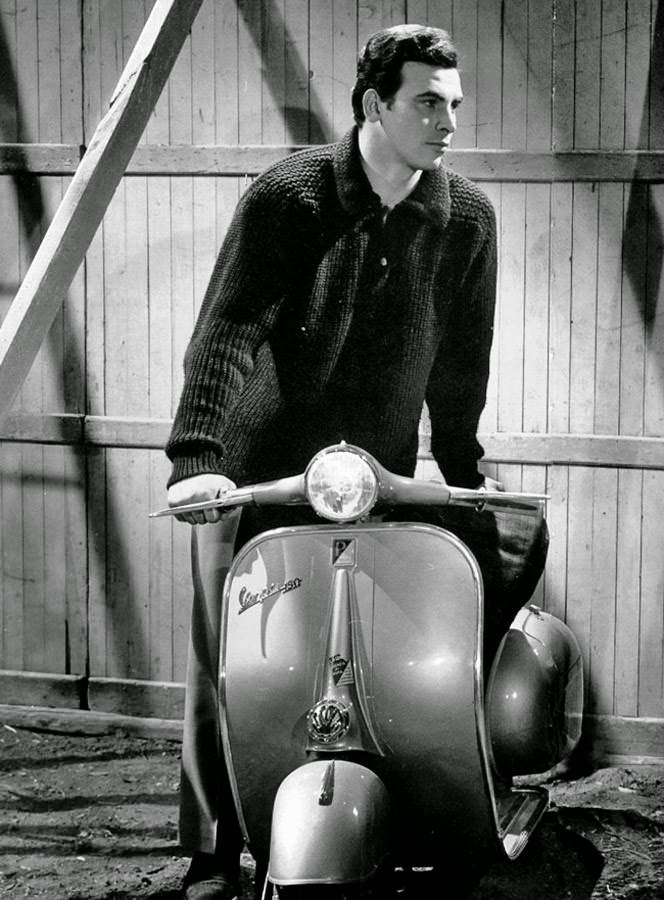
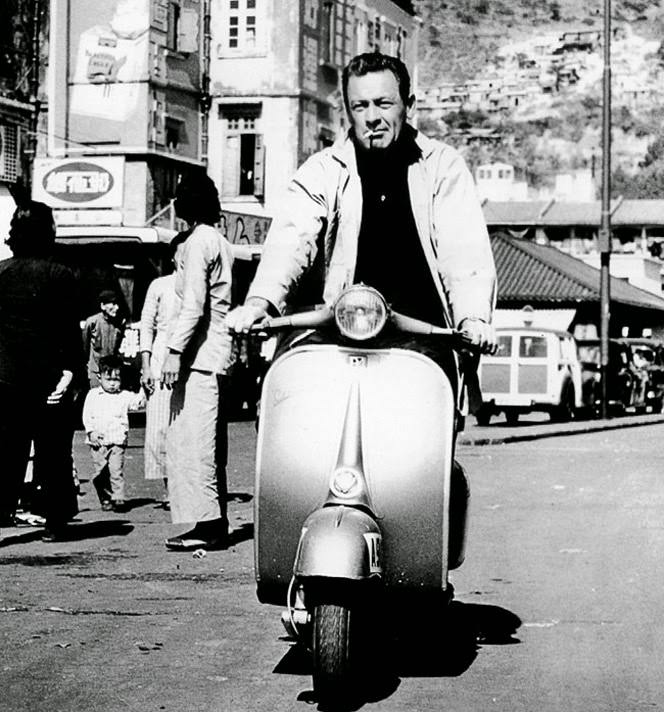
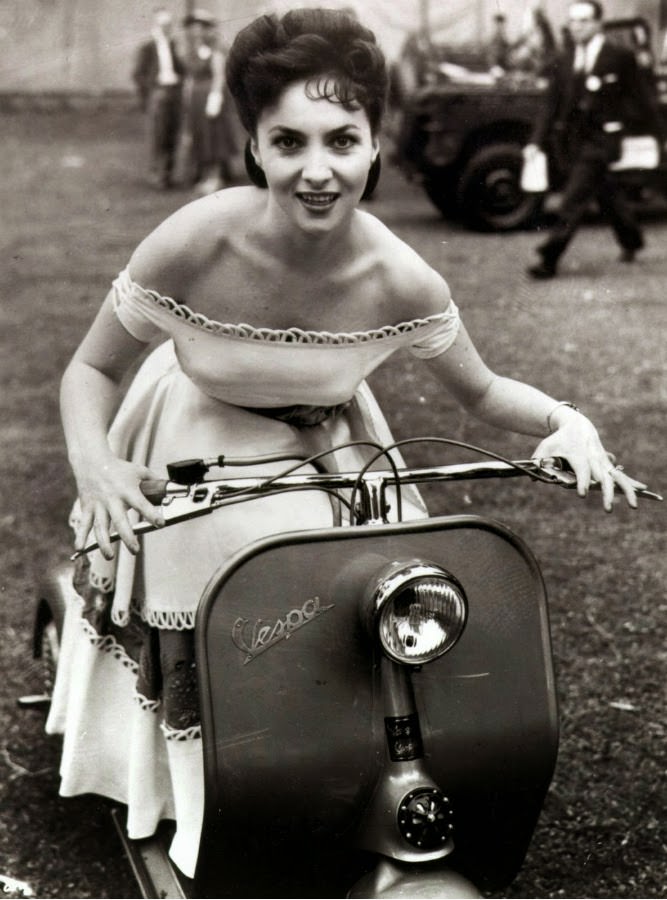
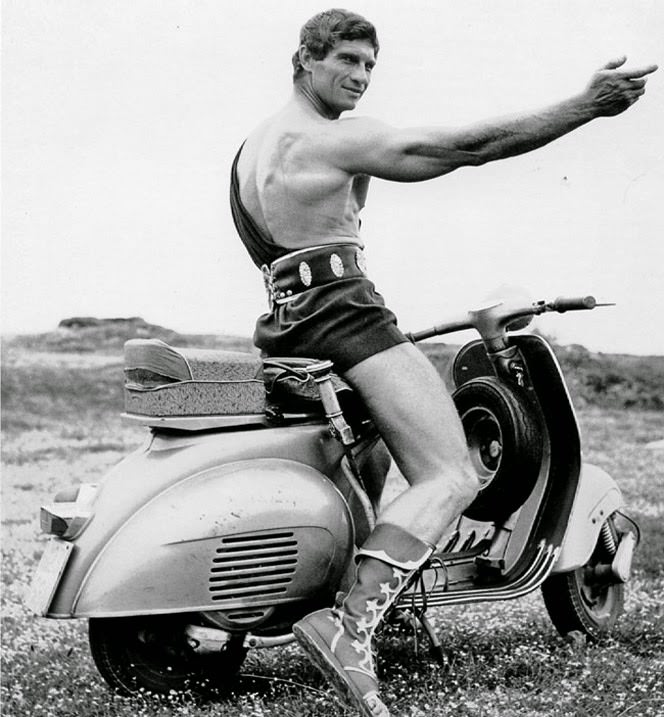
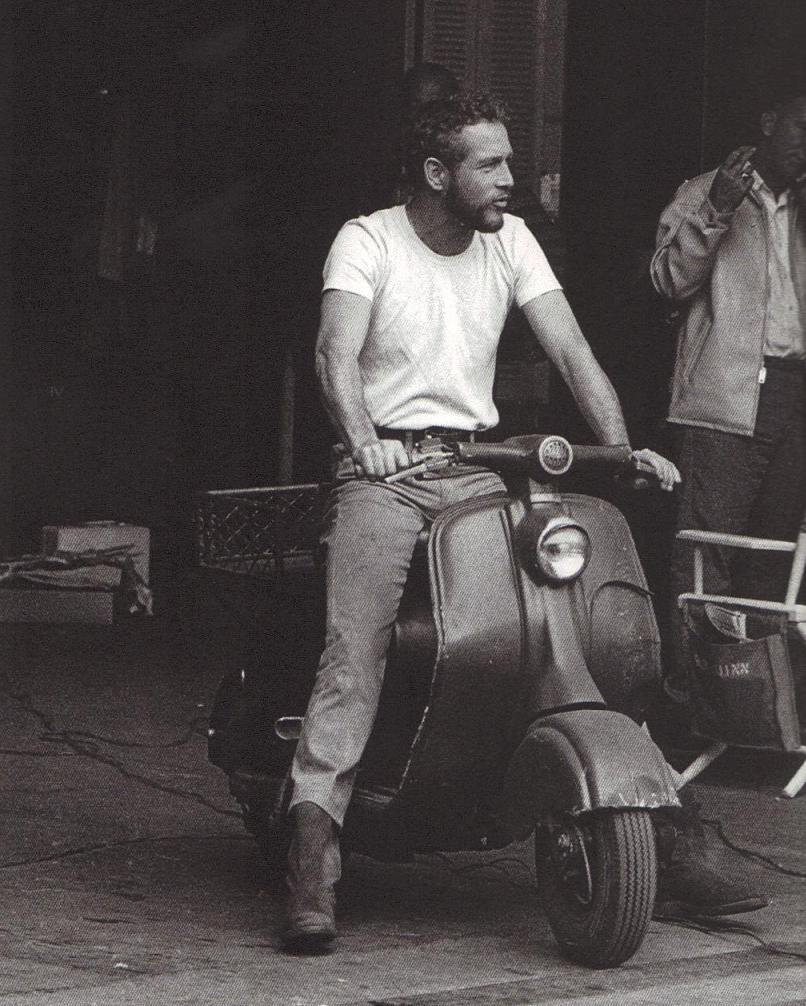
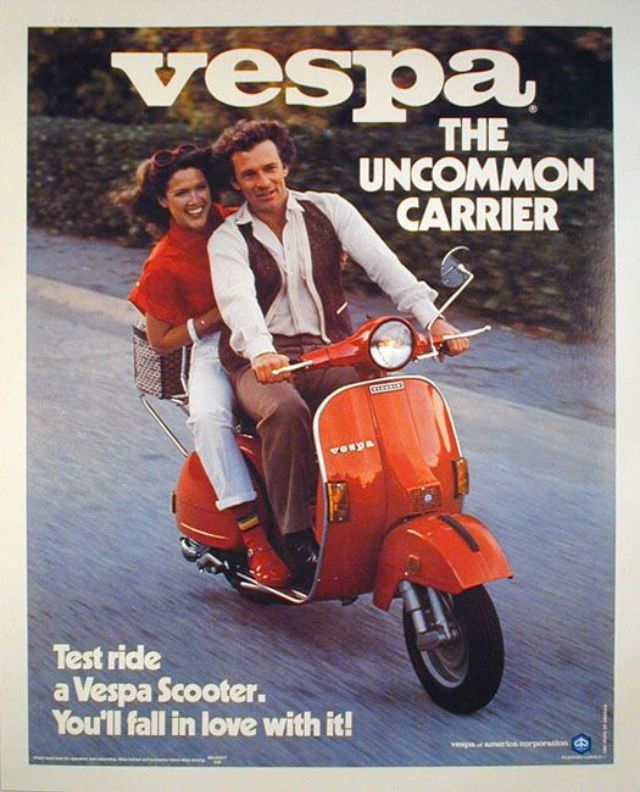
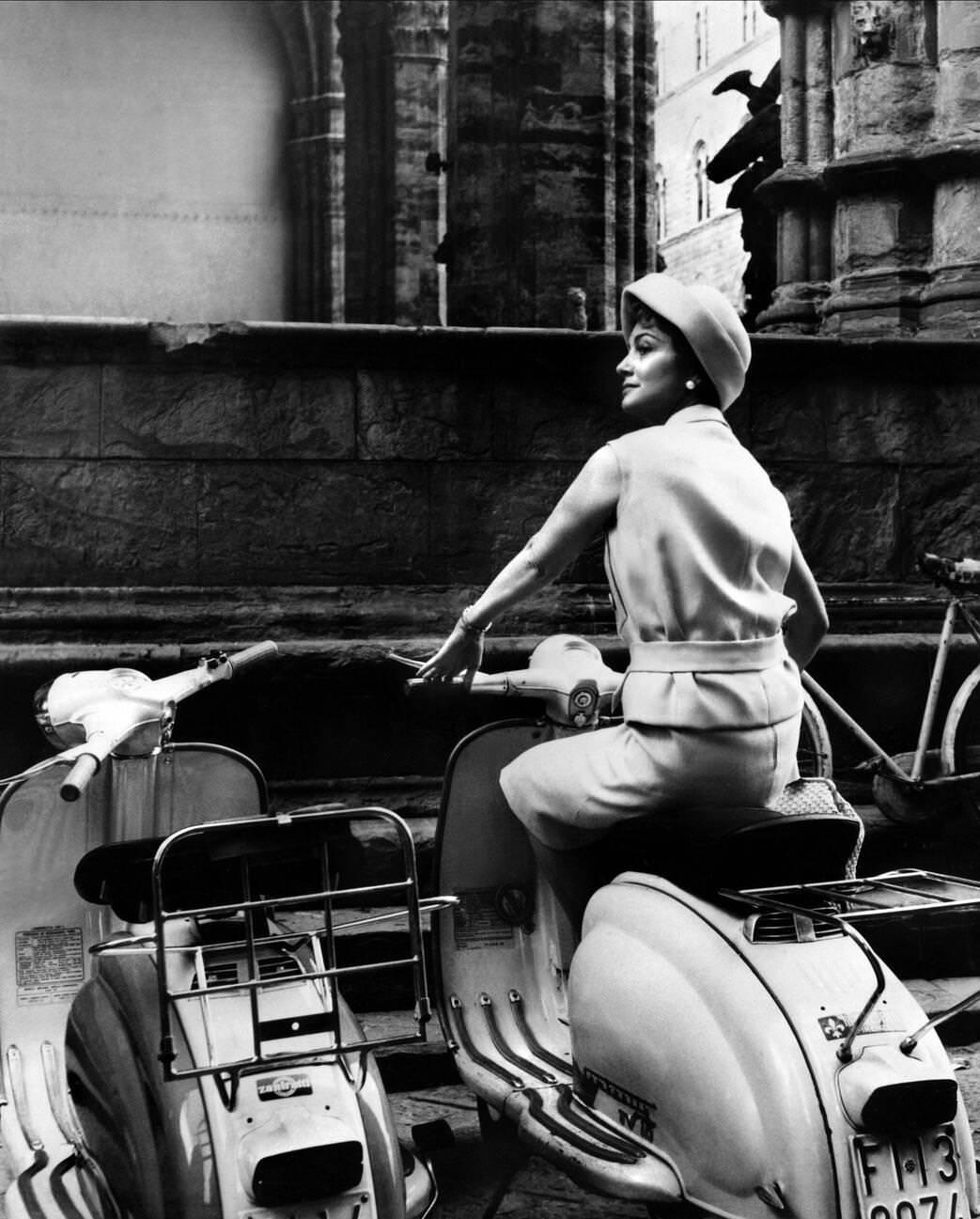
Celebrities from every field reinforced that image throughout the 1950s and 1960s. Actors, musicians, and artists were photographed on their Vespas in Italy, France, the United States, and beyond. These weren’t staged corporate endorsements — many of these figures genuinely owned and rode the scooters. Seeing a recognizable face astride a Vespa in a magazine or newspaper told readers something simple and powerful: this is what stylish people choose.
Opel at Shell station, Grossglockner High Alpine Road, circa 1930s.
Two people with an Audi Front 225 Cabriolet, Bavarian Palatinate, circa 1930s.

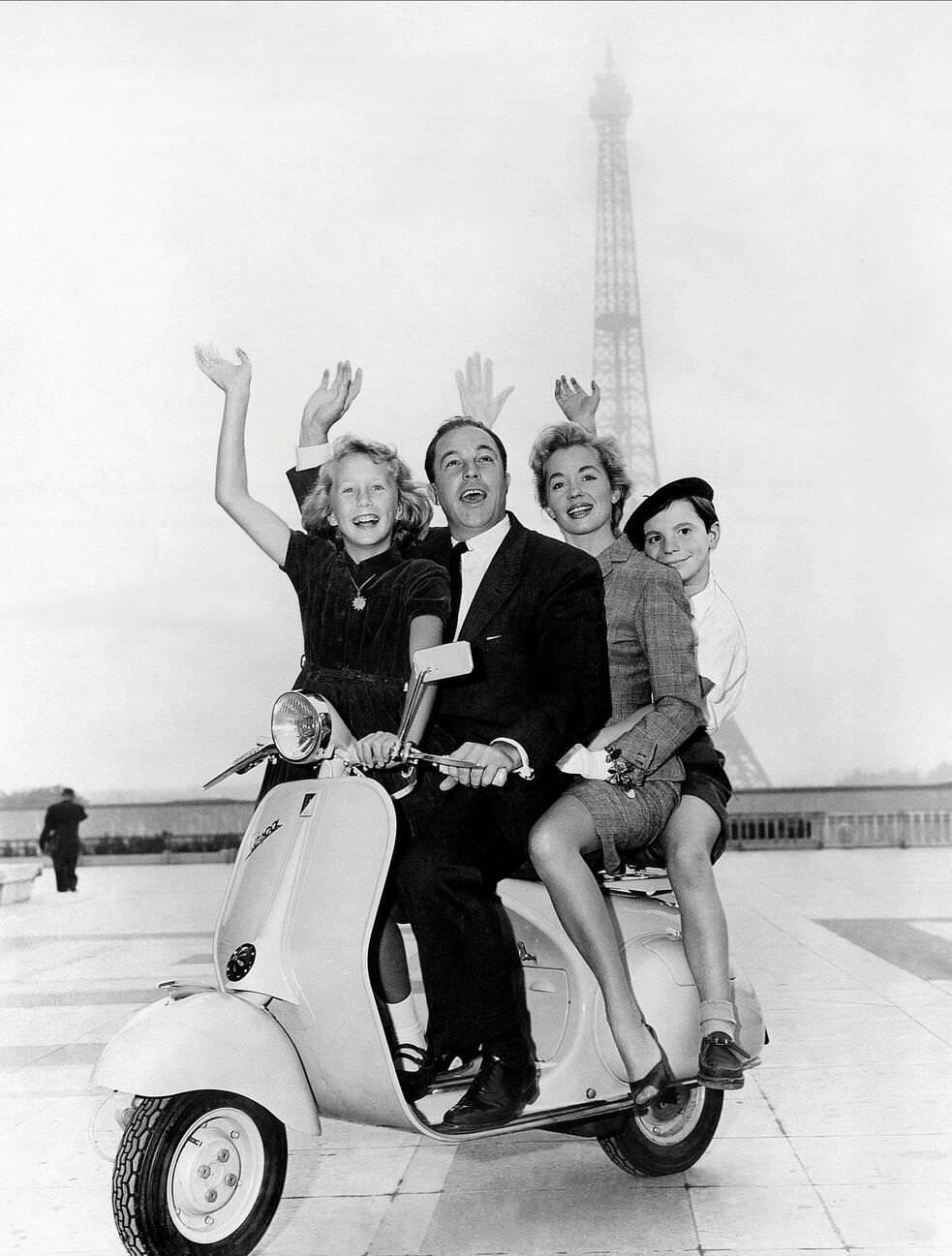
The visual language of Vespa advertising borrowed heavily from the broader culture of mid-century design. Posters featured the same bold lines and saturated color palettes found in travel posters and cinema lobby cards of the era. The scooter appeared against backdrops of the Colosseum, the Eiffel Tower, and sun-drenched Mediterranean coastlines. These images didn’t just advertise a vehicle — they advertised a version of life that people across the world wanted to live.
1930 Packard Standard Eight Convertible Coupe at a Shell station, December 4, 1934.
People with a Morgan three-wheeler, 1934.

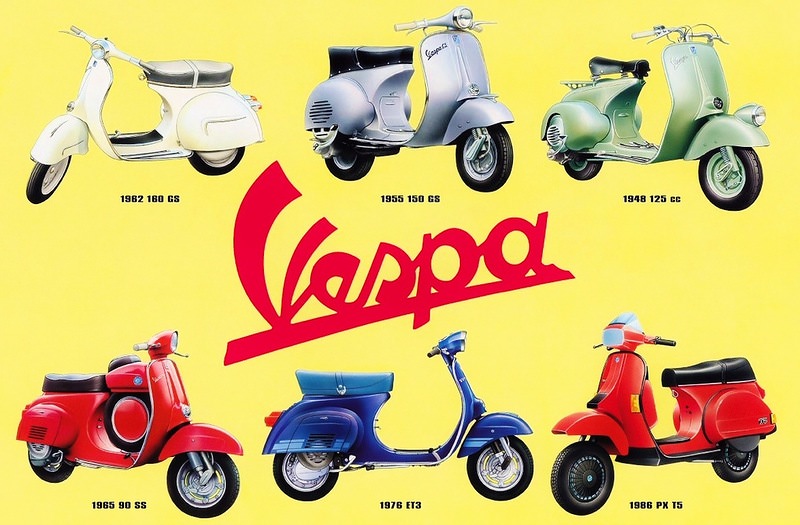
What made Vespa’s advertising particularly effective was its consistency across decades. From the late 1940s through the 1970s, the brand maintained a clear identity. Each new model — from the original 98 to the Vespa GS and later the PX series — was introduced with campaigns that honored what came before while showing the scooter evolving with the times. The design changed in details, but the core visual promise remained the same: freedom, style, and ease.
Young women on a 1936 Packard 120 Touring Sedan, Illinois, circa 1936.
Man with a 1946-48 Chrysler, Hallands län, Sweden, circa 1940s.

The years immediately following World War II saw personal transportation undergoing a massive shift across Europe and North America. Automobiles were becoming more common, but the Vespa carved out its own lane — literally and culturally. While cars were still status symbols tied to wealth and family life, the Vespa represented youth and independence. A young man or woman on a Vespa in 1950 was not making the same statement as a middle-aged driver in a sedan. They were making something entirely their own.
Couple with a 1935 Ford Phaeton, Pennsylvania, 1941.
Couple with a 1949 Chevrolet Fleetline Deluxe, Italy, circa 1949.

Piaggio’s marketing team understood their audience well. They knew that the Vespa’s buyers were not just looking for transport — they were looking for identity. So the ads showed the scooter in the hands of people who seemed to have exactly the life the viewer wanted: carefree, mobile, and dressed well. That gap between what a product costs and what it feels like to own it is the foundation of aspirational marketing, and Vespa executed it with remarkable precision throughout the postwar decades.
People with an Opel Kadett, Syke, Lower Saxony, September 4, 1949.
1952 Studebaker Starliner at a Mobiloil station, circa 1950s.

By the 1950s, the Vespa had become a fixture of popular culture in Europe and was gaining ground in the United States. American magazines ran features on Italian life and street culture, and the Vespa appeared regularly in those pages. Films shot on location in Rome, Paris, and the Amalfi Coast invariably included at least one Vespa weaving through traffic. The scooter had become shorthand for a certain kind of European cool that American audiences found irresistible.
Couple refueling a Simca Vedette, Hamburg, circa 1950s.
Ford Taunus 12 M at Esso station, St. Moritz, circa 1950s.

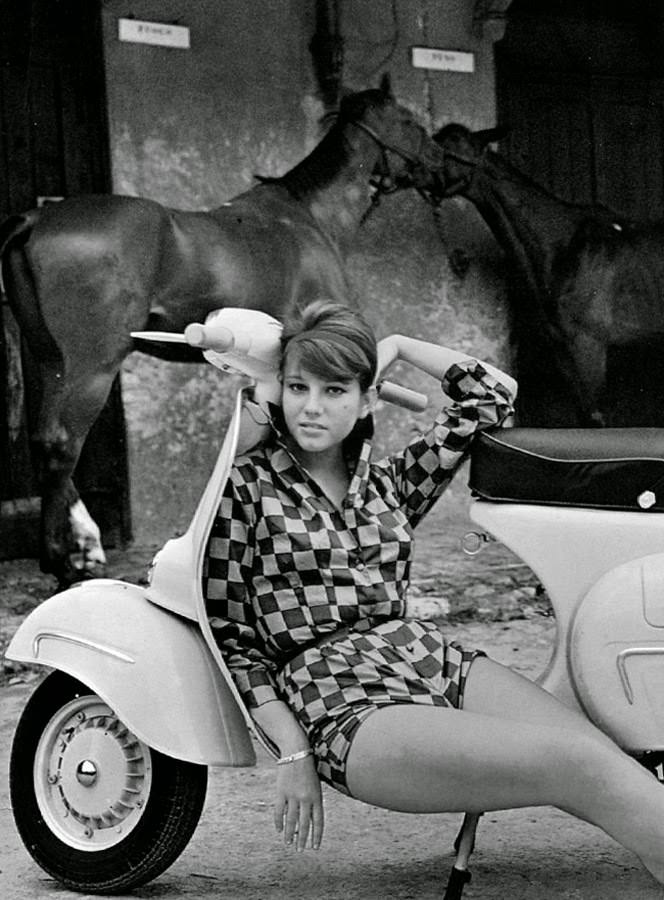
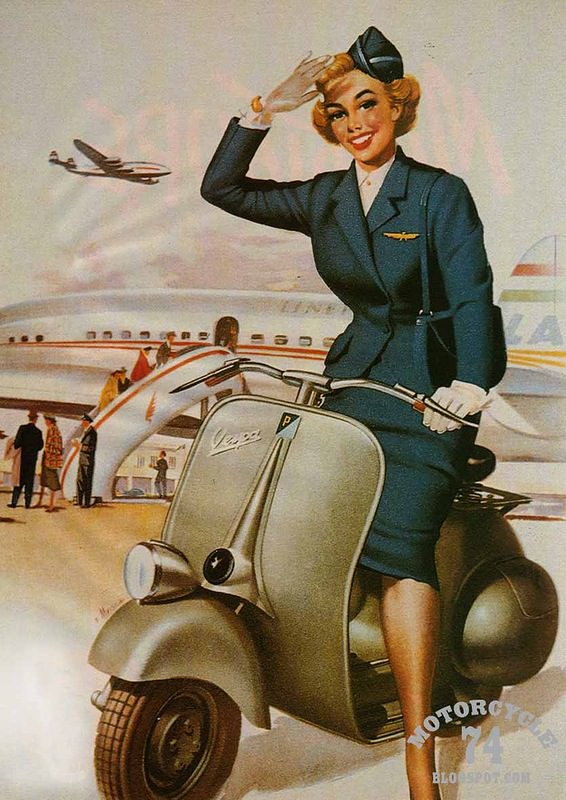
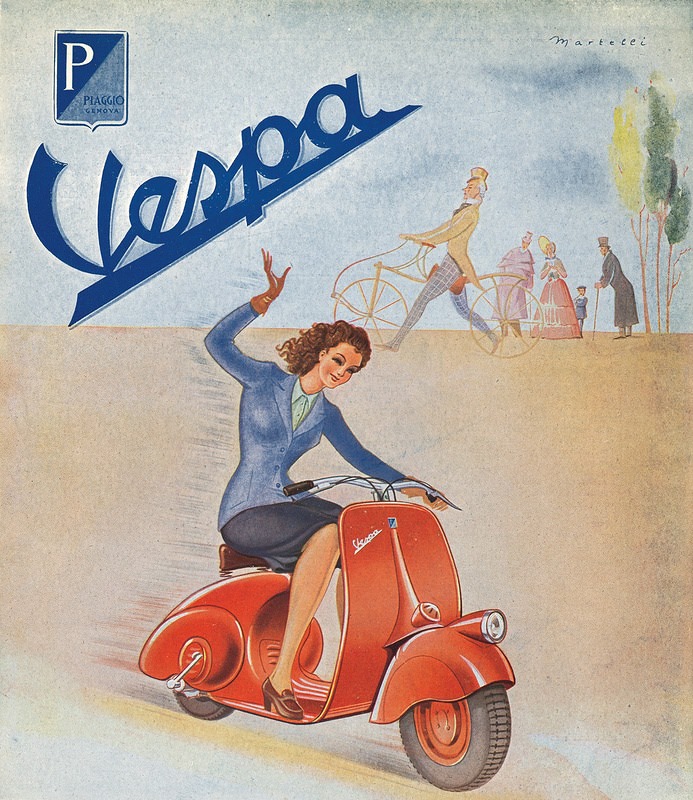
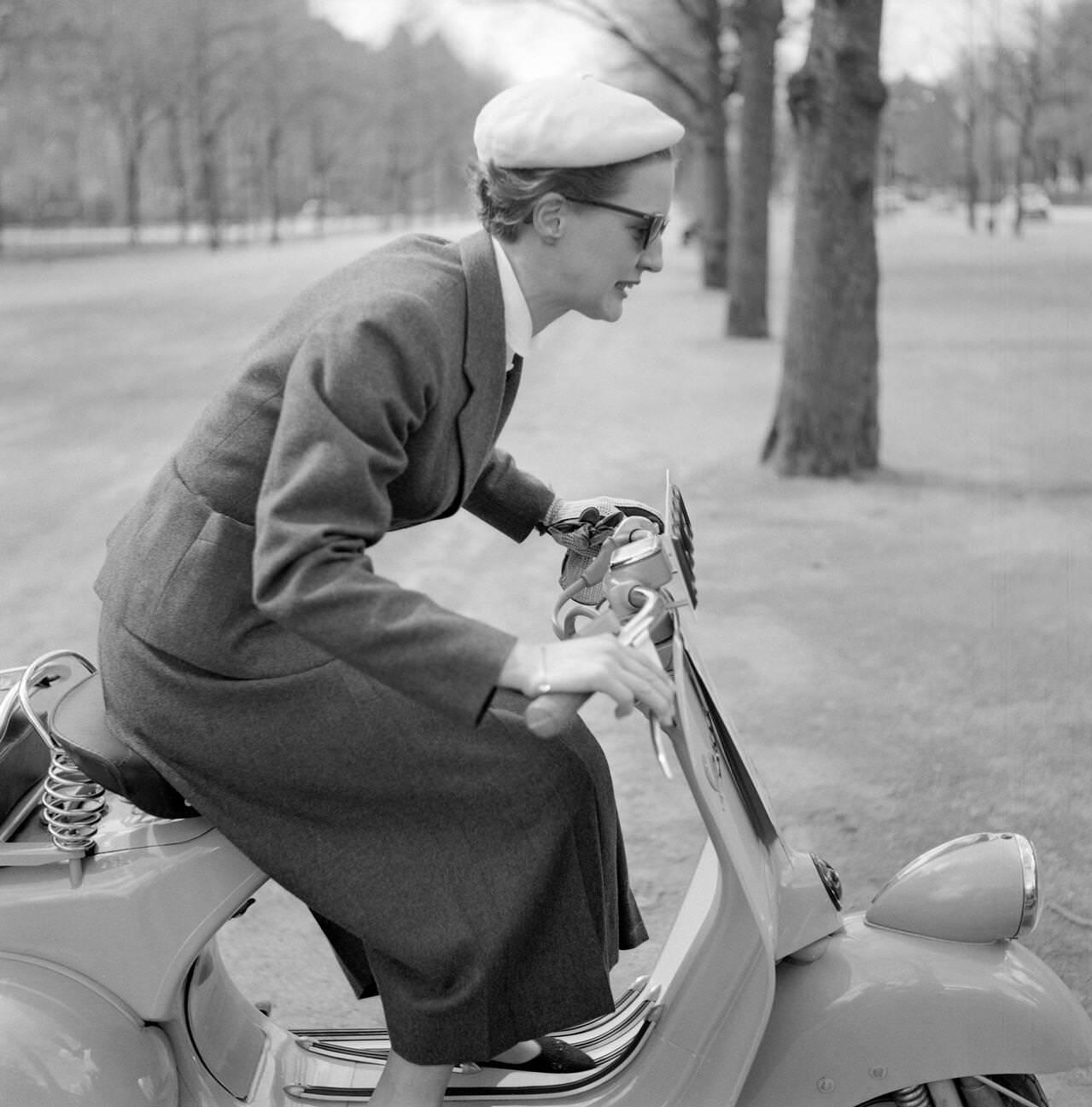
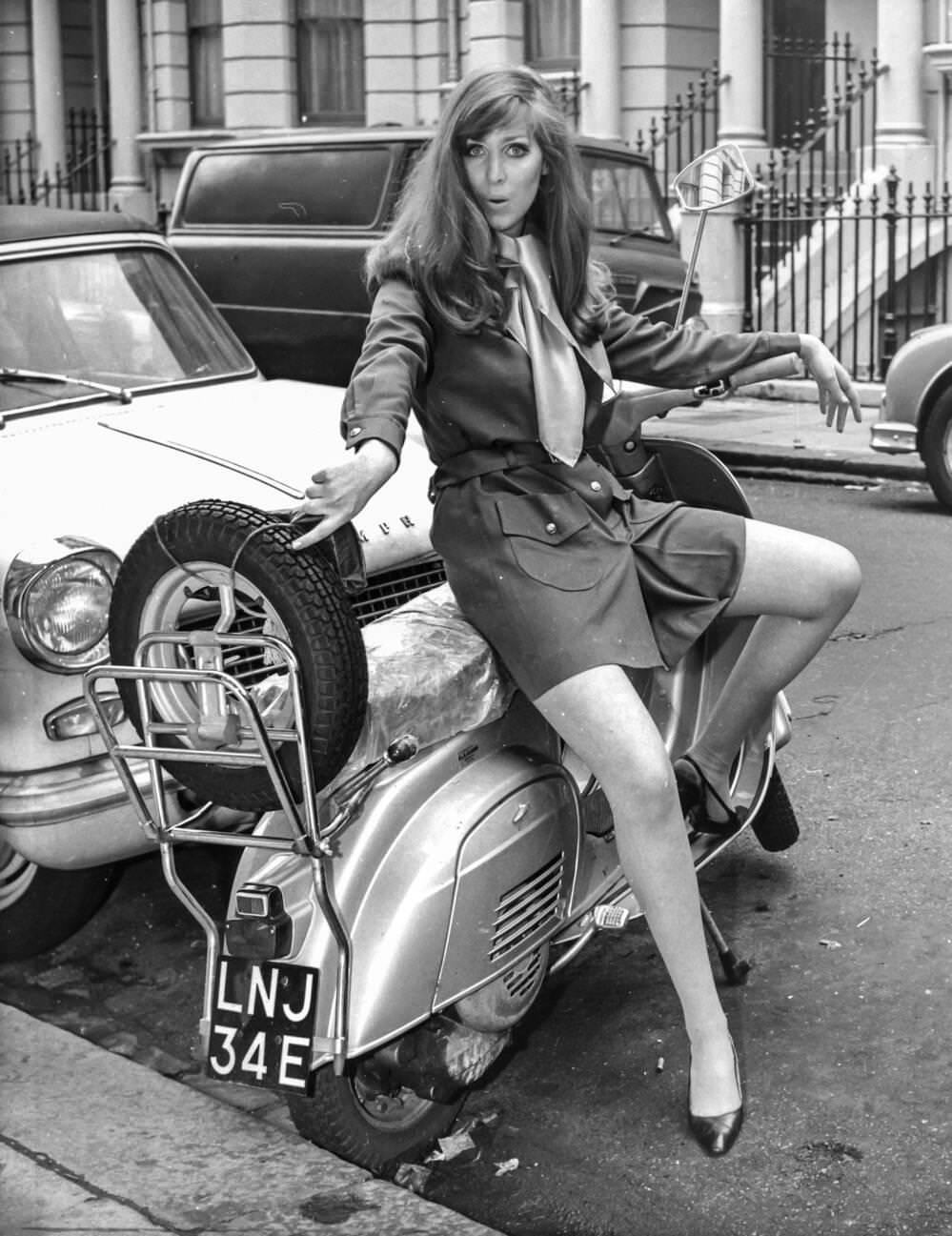
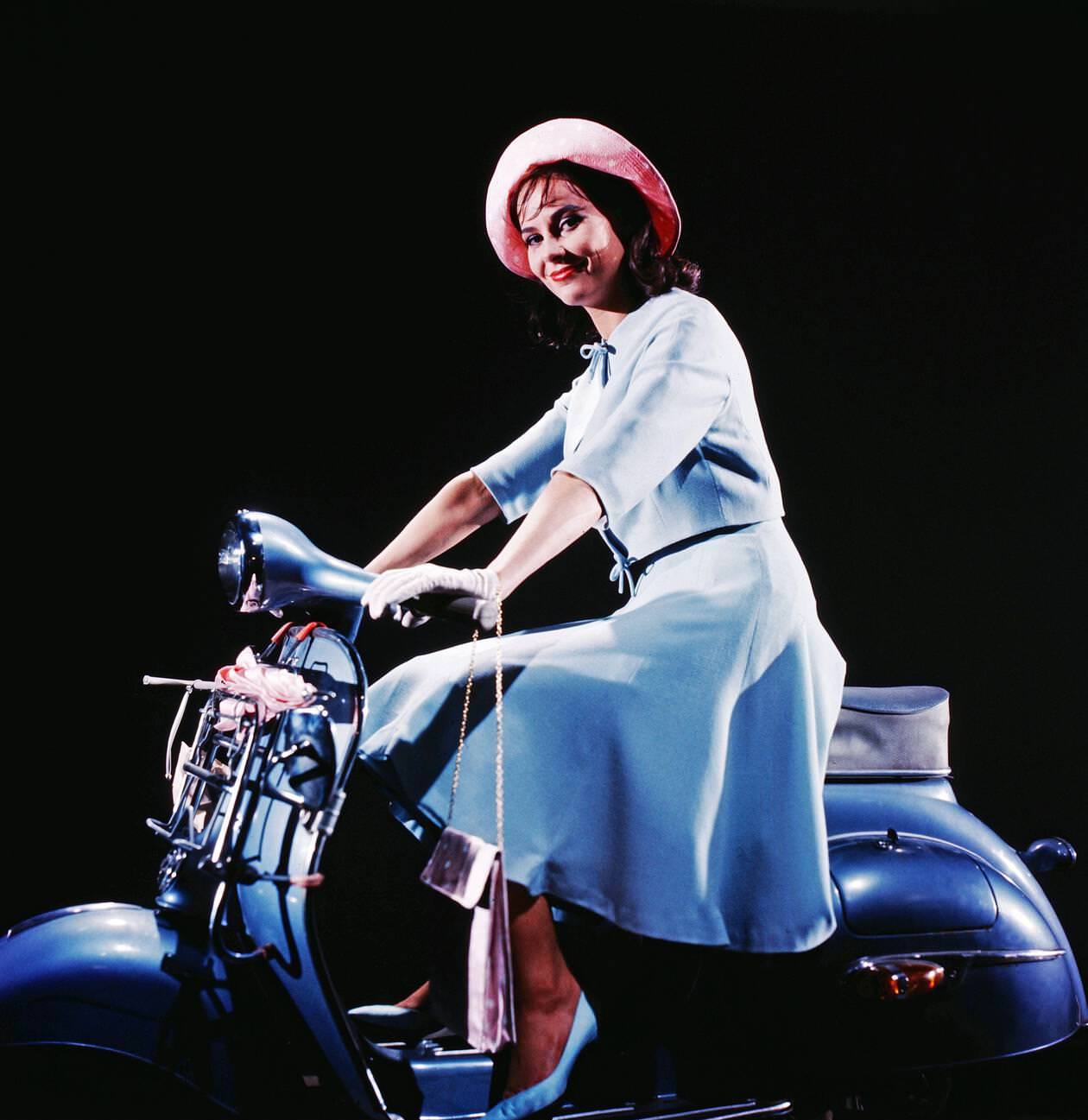
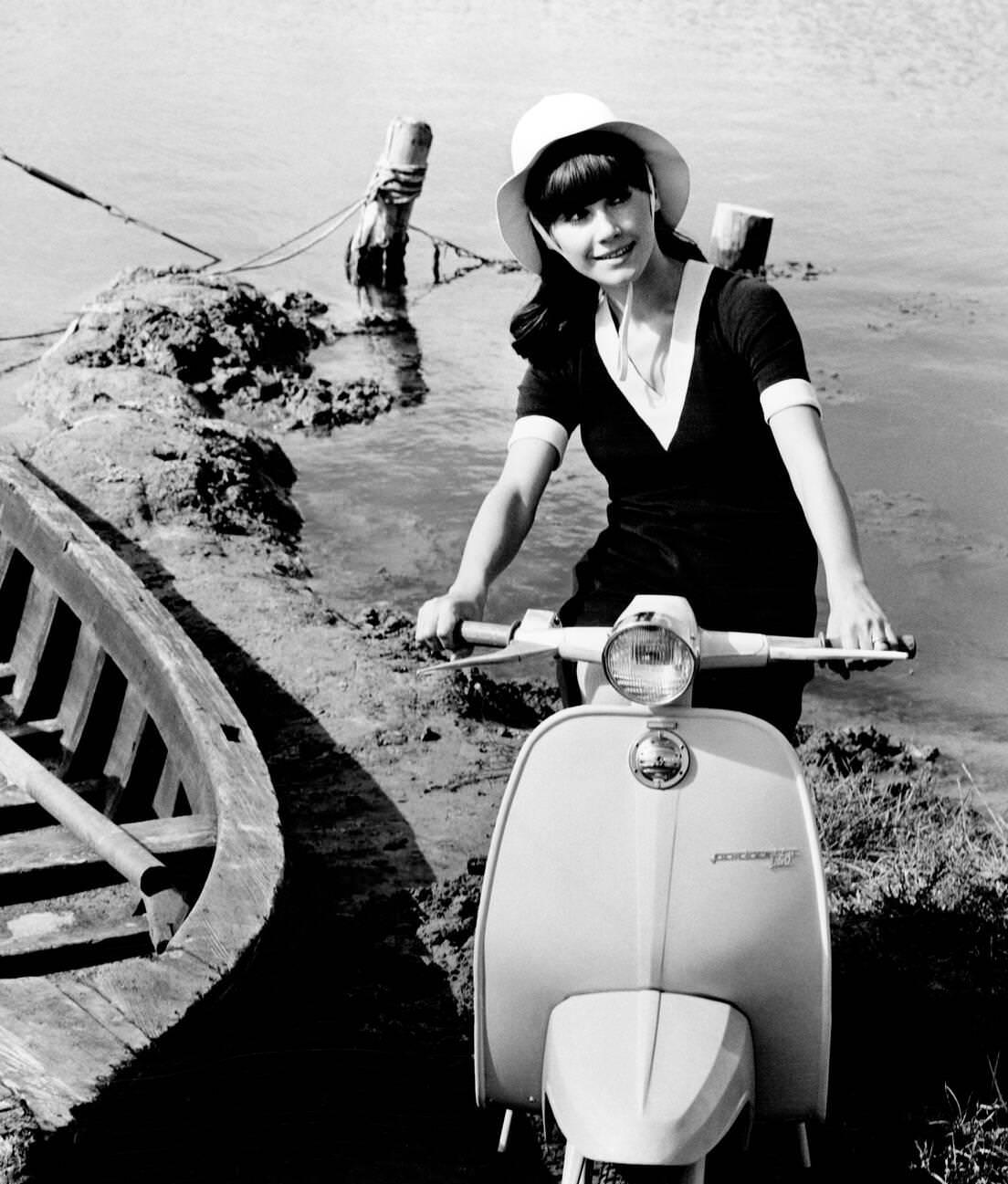
Female riders featured prominently in Vespa’s advertising from early on, which was a deliberate and notable choice. The step-through frame made the scooter easy to mount in a skirt or dress, and Piaggio’s ads showed women riding solo — confidently, independently, without a male figure in sight. At a time when most vehicle advertising spoke exclusively to men, this was a meaningful departure. It expanded Vespa’s market and aligned the brand with a modern image of womanhood that resonated strongly with postwar audiences.
Lady in a Dirndl with a Ford Taunus 17 M De Luxe, circa 1950s.
Woman with a Ford Taunus 12 M, Austrian Alps, circa 1960s.

The Vespa’s connection to film continued well past Roman Holiday. Throughout the late 1950s and into the 1960s, the scooter appeared in French New Wave films, Italian comedies, and British kitchen-sink dramas. Each appearance added another layer to its cultural meaning. In Britain, the Vespa became strongly associated with the Mod subculture — young people who prized sharp clothes, modern music, and Italian style. That connection gave the brand an entirely new audience and a new chapter in its visual identity.
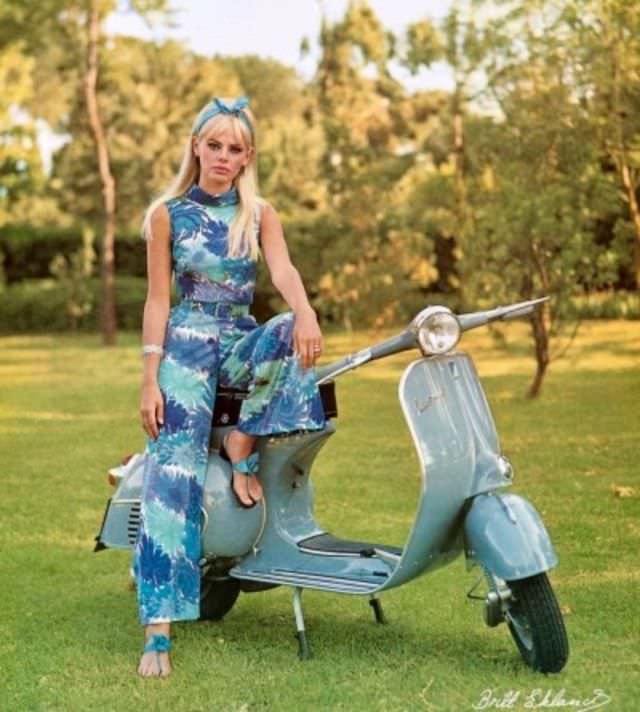
Mercedes-Benz 300 SE Cabriolet in Böblingen, circa 1960s.
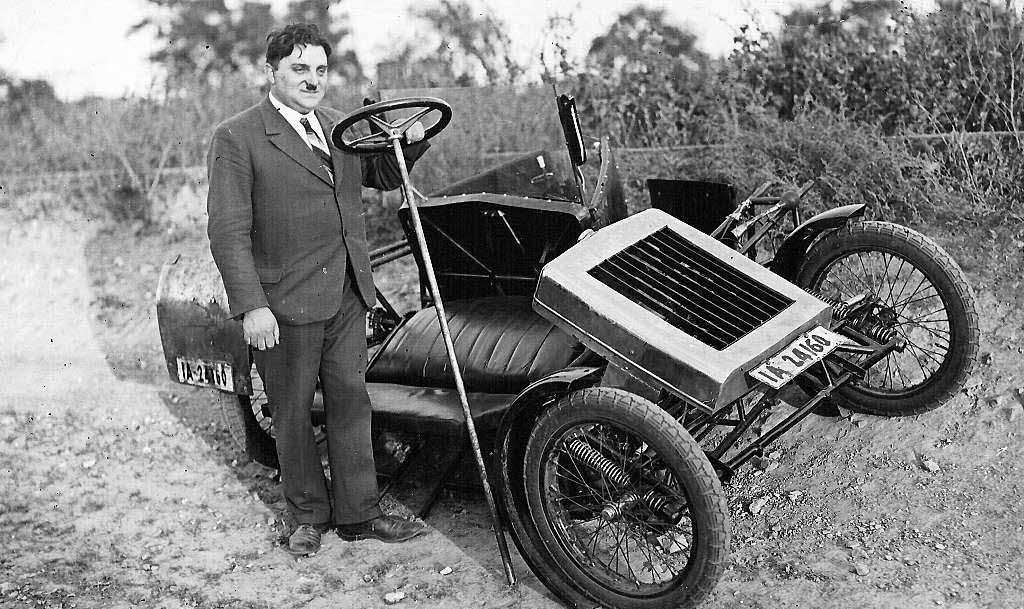
Vintage Vespa Ads and the Celebrities Who Loved Them: A Glimpse into Scooter Glamour
Enjoyed this post? Get new ones in your inbox.

2 thoughts on “Vintage Vespa Ads and the Celebrities Who Loved Them: A Glimpse into Scooter Glamour”

Leave a Comment

Your email address will not be published. Required fields are marked *

Share this Post 🥺

Please take a moment to share this content. Your support is greatly appreciated! 🙌🙏

Share this Post 🥺

Please take a moment to share this content. Your support is greatly appreciated! 🙌🙏
Scroll to Top
 
Hey Friend, Before You Go.. Please like & follow for more interesting content